EP3363541B1 - Katalysatormischung und verfahren zur selektiven oxidation von organischen substraten mit sauerstoff - Google Patents
Katalysatormischung und verfahren zur selektiven oxidation von organischen substraten mit sauerstoff Download PDFInfo
- Publication number
- EP3363541B1 EP3363541B1 EP17156764.7A EP17156764A EP3363541B1 EP 3363541 B1 EP3363541 B1 EP 3363541B1 EP 17156764 A EP17156764 A EP 17156764A EP 3363541 B1 EP3363541 B1 EP 3363541B1
- Authority
- EP
- European Patent Office
- Prior art keywords
- catalyst
- process according
- chosen
- list
- independently
- Prior art date
- Legal status (The legal status is an assumption and is not a legal conclusion. Google has not performed a legal analysis and makes no representation as to the accuracy of the status listed.)
- Not-in-force
Links
Images




Classifications
-
- C—CHEMISTRY; METALLURGY
- C07—ORGANIC CHEMISTRY
- C07C—ACYCLIC OR CARBOCYCLIC COMPOUNDS
- C07C45/00—Preparation of compounds having >C = O groups bound only to carbon or hydrogen atoms; Preparation of chelates of such compounds
- C07C45/27—Preparation of compounds having >C = O groups bound only to carbon or hydrogen atoms; Preparation of chelates of such compounds by oxidation
- C07C45/32—Preparation of compounds having >C = O groups bound only to carbon or hydrogen atoms; Preparation of chelates of such compounds by oxidation with molecular oxygen
- C07C45/33—Preparation of compounds having >C = O groups bound only to carbon or hydrogen atoms; Preparation of chelates of such compounds by oxidation with molecular oxygen of CHx-moieties
-
- B—PERFORMING OPERATIONS; TRANSPORTING
- B01—PHYSICAL OR CHEMICAL PROCESSES OR APPARATUS IN GENERAL
- B01J—CHEMICAL OR PHYSICAL PROCESSES, e.g. CATALYSIS OR COLLOID CHEMISTRY; THEIR RELEVANT APPARATUS
- B01J31/00—Catalysts comprising hydrides, coordination complexes or organic compounds
- B01J31/16—Catalysts comprising hydrides, coordination complexes or organic compounds containing coordination complexes
- B01J31/18—Catalysts comprising hydrides, coordination complexes or organic compounds containing coordination complexes containing nitrogen, phosphorus, arsenic or antimony as complexing atoms, e.g. in pyridine ligands, or in resonance therewith, e.g. in isocyanide ligands C=N-R or as complexed central atoms
- B01J31/1805—Catalysts comprising hydrides, coordination complexes or organic compounds containing coordination complexes containing nitrogen, phosphorus, arsenic or antimony as complexing atoms, e.g. in pyridine ligands, or in resonance therewith, e.g. in isocyanide ligands C=N-R or as complexed central atoms the ligands containing nitrogen
-
- B—PERFORMING OPERATIONS; TRANSPORTING
- B01—PHYSICAL OR CHEMICAL PROCESSES OR APPARATUS IN GENERAL
- B01J—CHEMICAL OR PHYSICAL PROCESSES, e.g. CATALYSIS OR COLLOID CHEMISTRY; THEIR RELEVANT APPARATUS
- B01J31/00—Catalysts comprising hydrides, coordination complexes or organic compounds
- B01J31/16—Catalysts comprising hydrides, coordination complexes or organic compounds containing coordination complexes
- B01J31/22—Organic complexes
- B01J31/2204—Organic complexes the ligands containing oxygen or sulfur as complexing atoms
- B01J31/2208—Oxygen, e.g. acetylacetonates
- B01J31/2226—Anionic ligands, i.e. the overall ligand carries at least one formal negative charge
- B01J31/2243—At least one oxygen and one nitrogen atom present as complexing atoms in an at least bidentate or bridging ligand
-
- B—PERFORMING OPERATIONS; TRANSPORTING
- B01—PHYSICAL OR CHEMICAL PROCESSES OR APPARATUS IN GENERAL
- B01J—CHEMICAL OR PHYSICAL PROCESSES, e.g. CATALYSIS OR COLLOID CHEMISTRY; THEIR RELEVANT APPARATUS
- B01J2231/00—Catalytic reactions performed with catalysts classified in B01J31/00
- B01J2231/70—Oxidation reactions, e.g. epoxidation, (di)hydroxylation, dehydrogenation and analogues
- B01J2231/76—Dehydrogenation
-
- B—PERFORMING OPERATIONS; TRANSPORTING
- B01—PHYSICAL OR CHEMICAL PROCESSES OR APPARATUS IN GENERAL
- B01J—CHEMICAL OR PHYSICAL PROCESSES, e.g. CATALYSIS OR COLLOID CHEMISTRY; THEIR RELEVANT APPARATUS
- B01J2531/00—Additional information regarding catalytic systems classified in B01J31/00
- B01J2531/02—Compositional aspects of complexes used, e.g. polynuclearity
- B01J2531/0213—Complexes without C-metal linkages
- B01J2531/0216—Bi- or polynuclear complexes, i.e. comprising two or more metal coordination centres, without metal-metal bonds, e.g. Cp(Lx)Zr-imidazole-Zr(Lx)Cp
-
- B—PERFORMING OPERATIONS; TRANSPORTING
- B01—PHYSICAL OR CHEMICAL PROCESSES OR APPARATUS IN GENERAL
- B01J—CHEMICAL OR PHYSICAL PROCESSES, e.g. CATALYSIS OR COLLOID CHEMISTRY; THEIR RELEVANT APPARATUS
- B01J2531/00—Additional information regarding catalytic systems classified in B01J31/00
- B01J2531/02—Compositional aspects of complexes used, e.g. polynuclearity
- B01J2531/0238—Complexes comprising multidentate ligands, i.e. more than 2 ionic or coordinative bonds from the central metal to the ligand, the latter having at least two donor atoms, e.g. N, O, S, P
- B01J2531/0258—Flexible ligands, e.g. mainly sp3-carbon framework as exemplified by the "tedicyp" ligand, i.e. cis-cis-cis-1,2,3,4-tetrakis(diphenylphosphinomethyl)cyclopentane
-
- B—PERFORMING OPERATIONS; TRANSPORTING
- B01—PHYSICAL OR CHEMICAL PROCESSES OR APPARATUS IN GENERAL
- B01J—CHEMICAL OR PHYSICAL PROCESSES, e.g. CATALYSIS OR COLLOID CHEMISTRY; THEIR RELEVANT APPARATUS
- B01J2531/00—Additional information regarding catalytic systems classified in B01J31/00
- B01J2531/10—Complexes comprising metals of Group I (IA or IB) as the central metal
- B01J2531/16—Copper
-
- B—PERFORMING OPERATIONS; TRANSPORTING
- B01—PHYSICAL OR CHEMICAL PROCESSES OR APPARATUS IN GENERAL
- B01J—CHEMICAL OR PHYSICAL PROCESSES, e.g. CATALYSIS OR COLLOID CHEMISTRY; THEIR RELEVANT APPARATUS
- B01J2531/00—Additional information regarding catalytic systems classified in B01J31/00
- B01J2531/80—Complexes comprising metals of Group VIII as the central metal
- B01J2531/84—Metals of the iron group
- B01J2531/842—Iron
-
- C—CHEMISTRY; METALLURGY
- C07—ORGANIC CHEMISTRY
- C07C—ACYCLIC OR CARBOCYCLIC COMPOUNDS
- C07C2601/00—Systems containing only non-condensed rings
- C07C2601/12—Systems containing only non-condensed rings with a six-membered ring
- C07C2601/14—The ring being saturated
Definitions
- the subject matter of the invention comprises a process for the selective oxidation of organic substrates, in particular the oxidation of alkanes to ketones or aldehydes using oxygen as the oxidizing agent, and also catalyst mixtures for carrying out the process.
- organic substrates are understood to be all chemical compounds which are known to the person skilled in the art as so-called organic compounds. These can have a very wide variety of structures and can already contain one or more oxygen atoms or other so-called heteroatoms or functional groups and have in common that they contain one or more carbon atoms.
- aldehydes and ketones are often important basic chemicals that are required in large quantities, for example cyclohexanone as a starting product for caprolactam, which in turn is an extremely important starting material for the production of polyamide-6 and is produced on a large scale worldwide.
- the EP 2 818 459 A1 discloses, for example, the production of cyclohexanone in a multi-stage process, the first step being to non-catalytically oxidize cyclohexane with oxygen to cyclohexyl hydroperoxide, giving a very complex and difficult to separate intermediate product mixture.
- this product mixture is first catalytically decomposed with the aid of a transition metal-containing catalyst before the resulting final product mixture can be rectified.
- This process and product preparation are very lengthy and time-consuming.
- the catalysts used in the prior art are those which contain health-threatening pain metals such as cobalt or chromium; they are not combination catalysts in the sense of the invention, and they are also not used in the actual oxidation process with oxygen.
- the object of the present invention is therefore to provide a method which eliminates the disadvantages of the prior art described above, that is to say to make the oxidation of alkanes with oxygen more selective, more efficient and easier to carry out. Furthermore, it is an object of the present invention to provide at least one catalyst mixture with which the process according to the invention is carried out.
- Catalyst 1 two different metal complex compounds
- Catalyst 2 two different metal complex compounds
- the time sequence of The addition of the two catalysts and the exact manner in which the catalysts are combined in the reaction mixture is relevant, depending on the type of substrate, variant of the particular catalyst or the reactivity or specificity aimed for for the overall system.
- the catalyst mixtures according to the invention are not mixed catalysts as are known in the prior art, for example in the form of heterogeneous catalysts based on mixed metal oxides or doped metal oxides.
- the multinuclear homogeneous catalysts multinuclear metal complex compounds known in the prior art. Rather, it is also possible to produce catalyst mixtures according to the invention using mono- or polynuclear homogeneous metal complexes known in the prior art, or to carry out the process according to the invention.
- the catalyst mixtures disclosed here comprise metal complex compounds of the types described below.
- Catalyst 1 is a metal complex of the general formula (I) and catalyst 2 is a metal complex of the general formula (II), the latter metal complexes also being referred to as " ⁇ 4-oxido clusters".
- R-HPTB here denotes multidentate N, N, N ', N'-tetrakis (2-R-benzimidazolylmethyl) 2-hydroxy-1,3-diaminopropane ligands as exemplified in formula (III) in general form using an iron complex are.
- X is halogens, preferably chlorine or bromine.
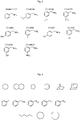
- Further examples of ligands according to the invention are in Fig. 1 shown, this compilation is not to be understood as limiting; Numerous other organic radicals R are known to the person skilled in the art, with which HPTB ligands can be provided, and which are therefore also included in the scope of the invention and its equivalents.
- the metals M and M ' are preferably the metals Fe, Co, Ni (M) and Cu, Ag, Au (M'), although these lists are also not to be understood as limiting.
- Catalyst 2 has the in Fig. 2 shown general structure, wherein the ligands L are nitrogen-containing ligands, as exemplified in Fig. 3 are shown.
- reaction conditions of oxidation processes have to be varied depending on the specific starting material in order to achieve the best possible yields with the least possible outlay for the respective specifically desired product.
- the reaction conditions of the process according to the invention can therefore be varied within wide limits with regard to the catalysts used (cat. 1, cat. 2) and their concentrations, the starting material used, the desired product, pressure, temperature and oxidizing agent, without increasing the scope of the invention and its equivalents leave.
- the oxygen can be supplied in a very wide concentration range, which extends from 100% (pure oxygen) to below 10%, depending on the reactivity of the starting material or the desired oxidation potential in the process. It is usually supplied in gaseous form. Most preferred are concentrations around 20 percent (20% to 25%) and close to 100 percent, since in these cases air can be used with little or no purification (approx. 21% oxygen), or oxygen in its pure form (100 % Oxygen), which is the cheapest form of trading gaseous oxygen. Any other concentrations, for example approximately 10%, 30%, 40%, 50%, 60%, 70%, 80% or 90% or intermediate values of the concentrations mentioned can be used according to the invention.
- Suitable inert gases are all non-oxidizing gases, such as nitrogen, helium, neon, argon and carbon dioxide. This list is also not to be understood as restrictive.
- the correct (also temporal) order of addition of the reagents and the temperature and pressure control of the reaction are extremely important, but also very strongly dependent on the respective educt.
- the method according to the invention therefore extends over particularly wide ranges of possible values of these parameters.
- Another parameter that is very important for carrying out the process according to the invention is the mixing ratio of the at least two metal complex compounds cat. 1 and cat. 2, which form the catalyst mixture.
- this mixing ratio can be varied within a wide range, for example from 1: 100 to 100: 1 (cat. 1: cat. 2) without leaving the scope of the invention or its equivalents.
- a ratio of 100:25 has proven to be advantageous.
- catalyst 1 or catalyst 2 this can also be prepared for use, for example, activated, under protective gas before use or in combination with the other catalyst.
- the invention encompasses a process for the oxidation of organic substrates using oxygen as the oxidizing agent, at least two independently selected catalysts according to the general formulas [M 2 (R-HPTB) X 3 ] (catalyst 1) and [M ' 4 OX 6 L] (Catalyst 2) can be used sequentially or simultaneously to catalyze the oxidation reaction.
- the metal atoms M are two independently selected metals from the list comprising Fe, Co, Ni.
- the radicals R are radicals selected independently of one another from the list comprising H, methyl, ethyl, propyl, benzyl, 2-methylpyridyl.
- X is a halogen atom, independently selected from the list comprising Cl, Br.
- the ligand L is a nitrogen-containing ligand, selected independently of one another the list includes aliphatic amines, aromatic amines, methylaminobenzene and substituted methylaminobenzenes.
- the process is carried out in the presence or in the absence of a solvent or solvent mixture.
- the invention comprises a method as described above, wherein either a) catalyst 1 is first reacted with the organic substrate to be oxidized and then catalyst 2 is added, or b) catalyst 2 is first reacted with the organic substrate to be oxidized and catalyst 1 is then added , or c) catalyst 1 and catalyst 2 are first mixed together and then the organic substrate to be oxidized is added and reacted.
- the invention comprises a method as described in the preceding paragraph, wherein at least one activation step is interposed between the additions of catalyst 1, catalyst 2 and the organic substrate to be oxidized in order to improve the reactivity of the reaction mixture in the particular composition present.
- the activation step is stirring and / or heating and / or cooling and / or gassing with a gas and / or exposure and / or sonication by means of ultrasound and / or addition of further reagents.
- the invention comprises a method as described above, wherein the oxidizing agent oxygen is supplied in gaseous form in a concentration of 1% to 100%, or the oxidizing agent oxygen is supplied in a concentration of 20% to 25%, or the oxidizing agent oxygen in a concentration is fed from 80% to 100%.
- the invention comprises a process as described above, the mixing ratio of catalyst 1 to catalyst 2 being in the range from 1: 100 to 100: 1, and the mixing ratio of catalyst 1 to catalyst 2 being in the range from 100: 20 to 100: 30 lies.
- the latter range is particularly preferred when catalyst 1 is iron complex compounds and catalyst 2 is copper complex compounds.
- the invention comprises a method as described above, the method being carried out at an absolute pressure of 10 2 Pascal to 10 8 Pascal. It is particularly preferred to carry it out at a pressure between 10 4 Pascal and 10 6 Pascal, that is to say in the vicinity of normal pressure (1013 hPa).
- the invention comprises a method as described above, the method being carried out at a temperature in the range from -80 ° C. to +300 ° C. It is particularly preferred to carry out the process between -10.degree. C. and +100.degree. C., that is to say close to room temperature, that is to say about 25.degree. C., since then little or no energy has to be used for the temperature control.
- the invention comprises a method as described above, the method being carried out under irradiation with electromagnetic waves of the wavelength ranges of the UV, the visible or the microwave range.
- the invention comprises a method as described above, the method being carried out in the gas phase.
- catalyst 1 and catalyst 2 are immobilized on a suitable surface and both the oxidizing agent and the organic substrate to be oxidized are brought into contact and reacted in gaseous form with catalyst 1 and catalyst 2.
- the invention comprises a method as described above, the organic substrate to be oxidized being selected from the list comprising cyclopentane, cyclohexane, cycloheptane, cyclooctane, cycloalkanes, methane, ethane, propane, butane, pentane, hexane, heptane, octane, alkanes, Toluene, o-xylene, m-xylene, p-xylene, ethylbenzene, propylbenzene, aromatic compounds with alkyl side chains, adamantane, kuban, cage compounds.
- the organic substrate to be oxidized being selected from the list comprising cyclopentane, cyclohexane, cycloheptane, cyclooctane, cycloalkanes, methane, ethane, propane, butane, pentane, he
- the invention comprises a catalyst mixture for the oxidation of organic substrates using oxygen as the oxidizing agent, which comprises at least two independently selected metal complex compounds according to the general formulas [M 2 (R-HPTB) X 3 ] and [M ' 4 OX 6 L] .
- the metal atoms M are two metals, each independently selected from the list, comprising Fe, Co, Ni.
- the metal atoms M ' is a metal selected from the list comprising Cu, Ag, Au.
- the radicals R are independently selected radicals from the list comprising H, methyl, ethyl, propyl, benzyl, 2-methyl-pyridyl.
- X is a halogen atom, independently selected from the list comprising Cl, Br.
- the ligand L is a nitrogen-containing ligand, independently selected from the list comprising aliphatic amine, aromatic amine, methylaminobenzene and substituted methylaminobenzenes.
- Cat. 1 100 ⁇ mol of Cat 1 is dissolved in 10 mL of methanol, acetonitrile or another suitable polar solvent.
- Cat. 1 can also be freshly generated by combining ligand and metal salt (MX 2 ) in the solvent.
- the starting material for example cyclohexane (1 ml)
- the reaction solution or reaction mixture is then activated, for example by treatment with oxygen.
- the activation can be carried out with pure oxygen or a gas mixture which, in addition to oxygen, contains further constituents, eg. B. protective gases such as nitrogen, helium, argon or can contain carbon dioxide.
- reaction solution After activation, 25 ⁇ mol of cat 2 are added and the reaction solution is stirred in an oxygen stream for 30 minutes at room temperature (RT) or another desired reaction temperature.
- RT room temperature
- the reaction solution is then worked up in a general manner known to the person skilled in the art and the product is purified, if this is necessary.
- the direct analysis of the reaction solution can be carried out, for example, to monitor the progress of the reaction, for example by means of GC after prior calibration with toluene as the internal standard. It shows that only the formation of cyclohexanone occurs; yields of 60% are achieved.
Landscapes
- Chemical & Material Sciences (AREA)
- Organic Chemistry (AREA)
- Inorganic Chemistry (AREA)
- Engineering & Computer Science (AREA)
- Materials Engineering (AREA)
- Chemical Kinetics & Catalysis (AREA)
- Organic Low-Molecular-Weight Compounds And Preparation Thereof (AREA)
- Catalysts (AREA)
Description
- Der Gegenstand der Erfindung umfasst ein Verfahren zur selektiven Oxidation von organischen Substraten, insbesondere der Oxidation von Alkanen zu Ketonen oder Aldehyden unter Verwendung von Sauerstoff als Oxidationsmittel sowie Katalysatormischungen zur Durchführung des Verfahrens.
- Die Oxidation von organischen Substraten ist ein wichtiger Prozeßschritt in zahlreichen Chemischen Produktionsverfahren. Als organische Substrate werden in diesem Zusammenhang alle chemischen Verbindungen verstanden, die dem Fachmann als sogenannte organische Verbindungen geläufig sind. Diese können unterschiedlichster Struktur sein und auch bereits eines oder mehrere Sauerstoffatome oder andere sogenannte Heteroatome bzw. funktionelle Gruppen enthalten und weisen als Gemeinsamkeit auf, ein oder mehrere Kohlenstoffatome zu enthalten.
- Im Stand der Technik sind zahllose verschiedene Oxidationsverfahren für unterschiedlichste organische Substrate bekannt. Insbesondere im Bereich der Herstellung von Aldehyden und Ketonen durch direkte Oxidation besteht jedoch das Problem, dass alle bekannten Oxidationsmittel entweder sehr unselektiv wirken, oder sehr teuer und damit für einen großtechnischen Einsatz ungeeignet sind. Das heißt, man erhält im Zuge der Oxidation (beispielsweise mit Luftsauerstoff) neben dem gewünschten Zielprodukt zahlreiche unerwünschte Nebenprodukte, so dass das erhaltene Produktgemisch mit großem Aufwand und Kosten in die einzelnen Bestandteile aufgetrennt werden muss. Der großtechnische Einsatz eines selektiven Oxidationsmittels zur Herstellung von Aldehyden oder Ketonen ist aus Kostengründen nicht möglich.
- Aldehyde und Ketone sind jedoch oftmals wichtige Basischemikalien, die in großen Mengen benötigt werden, beispielsweise Cyclohexanon als Ausgangsprodukt für Caprolactam, das wiederum ein äußerst wichtiger Ausgangsstoff für die Produktion von Polyamid-6 ist und weltweit in großem Maßstabe produziert wird.
- Die
EP 2 818 459 A1 offenbart beispielsweise die Herstellung von Cyclohexanon in einem mehrstufigen Prozeß, wobei der erste Schritt darin besteht, Cyclohexan nicht-katalytisch mit Sauerstoff zu Cyclohexyl-hydroperoxid zu oxidieren, wobei ein sehr komplexes und schwer auftrennbares intermediäres Produktgemisch erhalten wird. Dieses Produktgemisch wird in einem weiteren Schritt zunächst katalytisch mit Hilfe eines übergangsmetallhaltigen Katalysators zersetzt, bevor die daraus resultierende endgültige Produktmischung rektifiziert werden kann. Dieses Verfahren und die Produktaufbereitung sind sehr langwierig und aufwendig. Zudem handelt es sich bei den im Stand der Technik verwendeten Katalysatoren um solche, die gesundheitlich bedenkliche Schmermetalle wie beispielsweise Kobalt oder Chrom enthalten; es sind keine Kombinationskatalysatoren im Sinne der Erfindung, und sie werden auch nicht im eigentlichen Oxidationsprozeß mit Sauerstoff eingesetzt. - Andere Verfahren, wie sie etwa in der
EP 2 982 663 A1 offenbart sind, gehen von Phenol aus, hydrieren dieses unter Verwendung von Palladiumkatalysatoren zu Cyclohexanol und dehydrieren dieses zu Cyclohexanon mit Hilfe von Kupferoxid/Zinkoxid-Katalysatoren (vgl.US 4,918,239 A ). Diese Verfahren sind ebenfalls sehr langwierig und erfordern eine aufwendige Produktreinigung. Bei den hier verwendeten Kupferoxid/Zinkoxid-Katalysatoren handelt es sich ebenfalls nicht um Kombinations-Katalysatoren im Sinne der vorliegenden Erfindung, da es sich um oxidische/keramische Festkörper, also Heterogenkatalysatoren handelt. Bei diesen ist es bekannt, dass mehrere, unter Umständen verschiedene, Metallzentren in dem Festkörper insgesamt den Katalysator bilden. - Bei der hier kurz diskutierten Herstellung von Cyclohexanon handelt es sich nur um ein besonders eminentes Beispiel für die im Stand der Technik bestehenden Probleme bei der Oxidation von Organischen Substraten mit Sauerstoff. Das vorstehend gesagte gilt in analoger Form für zahlreiche weitere Oxidationsreaktionen.
- Beispielsweise wird in der Publikation von S. Löw et al. (Chem. Eur. J. 2013, 19, 5342ff.) die Oxidation von Cyclohexan zu Cyclohexanon und von n-Hexan zu Hexanol in Gegenwart eines Katalysators beschrieben, der kupferhaltige Clusterverbindungen enthält. Die betreffenden Clusterverbindungen weisen als Liganden Benzylamin bzw. Benzyl-(2-benzylimino-1-methyl-propyliden)-amin auf, und unterscheiden sich deutlich von den erfindungsgemäßen Metallkomplexen der allgemeinen Formel (I).
- In der Publikation von K. L. Klinkel et al. (Chem. Commun., 2006, S. 2919ff.) werden Kobaltkomplexe mit HPTB als Liganden beschrieben, sowie ihre Verwendung als Katalysatoren in der Hydrolyse von Phosphorsäureestern. Hinweise auf die Verwendung von Metallkomplexen mit HPTB-Liganden als Katalysatoren für Oxidationen finden sich darin nicht.
- Keines der beiden letztgenannten Dokumente beschreibt sowohl Metallkomplexe der Formel I als auch Metallkomplexe der Formel II als Katalysatoren.
- Es besteht daher dringender Bedarf daran, die Oxidation von Organischen Substraten mit Sauerstoff selektiver, effizienter und einfacher durchführbar zu gestalten.
- Aufgabe der vorliegenden Erfindung ist es somit, ein Verfahren zur Verfügung zu stellen, das die vorstehend beschriebenen Nachteile des Standes der Technik beseitigt, das heißt, die Oxidation von Alkanen mit Sauerstoff selektiver, effizienter und einfacher durchführbar zu gestalten. Weiterhin ist es Aufgabe der vorliegenden Erfindung, mindestens eine Katalysatormischung bereitzustellen, mit der das erfindungsgemäße Verfahren durchgeführt wird.
- Diese Aufgabe wird erfindungsgemäß gelöst, indem die Oxidation des Alkans mittels Sauerstoff durch den gemeinsamen Einsatz mindestens zweier Katalysatoren entsprechend dem kennzeichnenden Teil des Anspruchs 1 durchgeführt wird. Die abhängigen Ansprüche 2 bis 15 stellen weitere vorteilhafte Ausgestaltungen des erfindungsgemäßen Verfahrens dar. Anspruch 16 offenbart erfindungsgemäße Katalysatormischungen bzw. Kombinationskatalysatoren. Die Begriffe "Katalysatormischung" und "Kombinationskatalysator" werden im Rahmen dieser Offenbarung synonym verwendet und bezeichnen jeweils eine Mischung von mindestens zwei Metallkomplexverbindungen, die gemeinsam die Oxidation von Alkanen mit Sauerstoff katalysieren.
- Dieser überraschende Befund, daß die Verwendung von mindestens zwei Metallkomplexverbindungen die Oxidation von Alkanen mittels Sauerstoff katalysiert, bildet die Grundlage des erfindungsgemäßen Verfahrens.
- Das Verfahren ist in allgemeiner Form anhand des Beispiels Cyclohexan/Cyclohexanon in Schema (A) dargestellt.

- Mit "Kat. 1" und "Kat. 2" werden hierbei zwei verschiedene Metallkomplexverbindungen ("Katalysator 1", "Katalysator 2") bezeichnet, die beide an dem Oxidationsprozeß des Eduktes (Bsp. Cyclohexan) beteiligt sind, wobei die zeitliche Abfolge der Zugabe der beiden Katalysatoren sowie die genaue Art der Zusammenführung der Katalysatoren in der Reaktionsmischung relevant ist, je nach Art des Substrates, Variante des jeweiligen Katalysators oder der für das Gesamtsystem angestrebten Reaktivität bzw. Spezifität.
- Kat. 1 und Kat. 2 bilden somit eine Katalysatormischung bzw. einen Kombinationskatalysator, wobei der genaue Mechanismus, wie die beiden Metallkomplexe miteinander und mit dem Edukt interagieren bis dato noch nicht bekannt ist. Das erfindungsgemäße Verfahren zur Oxidation von Organischen Substraten umfasst somit die folgenden Varianten der sequenziellen Zusammenführung von Kat. 1, Kat. 2 und Edukt sowie Oxidationsmittel:
- a) Kat. 1 wird zunächst mit dem Edukt zusammengeführt, anschließend wird Kat. 2 hinzugefügt,
- b) Kat. 2 wird zunächst mit dem Edukt zusammengeführt, anschließend wird Kat. 1 hinzugefügt,
- c) Kat. 1 und Kat. 2 werden zunächst miteinander vermischt, anschließend wird das Edukt hinzugefügt.
- Vor jeder Edukt bzw. Teil-Katalysatorzugabe (Kat. 1 oder Kat. 2) sowie während der gesamten Reaktionsdauer können - je nach Bedarf - unterschiedlichste Aktivierungsschritte durchgeführt werden wie beispielsweise die Zuleitung von Gasen (auch Sauerstoff), Bestrahlung mit Ultraschall, sichtbarem Licht oder UV-Strahlung. Die Einspeisung von thermischer Energie kann auf jede im Stand der Technik bekannte Art und Weise erfolgen, ohne den Umfang der Erfindung oder Ihrer Äquivalente zu verlassen.
- Bei den erfindungsgemäßen Katalysatormischungen handelt es sich nicht um Mischkatalysatoren, wie sie im Stand der Technik bekannt sind, beispielsweise in Form von Heterogenkatalysatoren auf Basis von Metall-Mischoxiden bzw. dotierten Metalloxiden. Es handelt sich auch nicht um die im Stand der Technik bekannten mehrkernigen Homogenkatalysatoren (mehrkernige MetallKomplexverbindungen). Vielmehr können auch mit im Stand der Technik bekannten ein- oder mehrkernigen homogenen Metallkomplexen erfindungsgemäße Katalysatormischungen hergestellt, bzw. das erfindungsgemäße Verfahren durchgeführt werden.
- Ohne an eine Theorie gebunden zu sein kann zum gegenwärtigen Zeitpunkt und unter Berücksichtigung des aktuellen Standes der Technik davon ausgegangen werden, dass sich im Zuge der Vermischung der beiden Katalysatoren Kat. 1 und Kat. 2 aus ihnen kein neuer Komplex als eigentlich wirksamer Katalysator ausbildet. Das heißt, es ist nicht davon auszugehen, daß sich zwischen den beiden Katalysatoren Kat. 1 und Kat. 2 im Zuge der Bildung der erfindungsgemäßen Katalysatormischung bzw. im Verlaufe der Katalyse eine chemische Bindung ausbildet. Als relativ sicher kann jedoch angesehen werden, dass der zweikernige Metallkomplex (Kat. 1) als sogenanntes Peroxid-Shuttle dient. Sauerstoff wird dabei über diesen Komplex zum Peroxid umgewandelt und auf den vierkernigen Metallkomplex (Kat. 2) übertragen.
- Die hier offenbarten Katalysatormischungen umfassen erfindungsgemäß Metallkomplexverbindungen der nachfolgend beschriebenen Arten.
- Bei Katalysator 1 handelt es sich um Metallkomplexe der allgemeinen Formel (I) und bei Katalysator 2 um Metallkomplexe der allgemeinen Formel (II), wobei letztere Metallkomplexe auch als "µ4-Oxido-Cluster" bezeichnet werden.
[M2(R-HPTB)X3] (I) [M'4OX6L] (II)
- R-HPTB bezeichnet hier mehrzähnige N,N,N',N'-tetrakis(2-R-benzimidazolylmethyl)2-hydroxy-1,3-diaminopropan-Liganden wie sie in Formel (III) beispielhaft in allgemeiner Form anhand eines Eisenkomplexes dargestellt sind. Bei X handelt es sich um Halogene, bevorzugt Chlor oder Brom. Weitere Beispiele für erfindungsgemäße Liganden sind in
Fig. 1 gezeigt, wobei diese Zusammenstellung nicht einschränkend zu verstehen ist; dem Fachmann sind zahlreiche weitere organische Reste R bekannt, mit denen HPTB-Liganden versehen werden können, und die daher vom Umfang der Erfindung sowie ihrer Äquivalente mit umfasst werden. Bei den Metallen M und M' handelt es sich bevorzugt um die Metalle Fe, Co, Ni (M) sowie Cu, Ag, Au (M'), wobei auch diese Aufzählungen nicht einschränkend zu verstehen sind.
- Katalysator 2 weist die in
Fig. 2 gezeigte allgemeine Struktur auf, wobei es sich bei den Liganden L um stickstoffhaltige Liganden handelt, wie sie beispielhaft inFig. 3 gezeigt sind. - Dem Fachmann ist bekannt, dass Oxidationsverfahren von Alkanen bzw. Alkylseitenketten von aromatischen Verbindungen grundsätzlich allgemein anwendbar sind. Es ist daher ohne weiteres ersichtlich, dass das erfindungsgemäße Verfahren in der hier beschriebenen Form, bzw. in äquivalenter Durchführung nicht nur für die Oxidation von Cyclohexan zu Cyclohexanon durchführbar ist, sondern generell für die Oxidation von Alkanen, Cycloalkanen sowie aromatischen Verbindungen mit Alkylseitenketten und Käfigverbindungen verwendet werden kann. Beispiele von Edukten dafür sind in
Fig. 4 zusammengestellt, wobei auch diese Zusammenstellung erfindungsgemäßer Edukte nicht einschränkend zu verstehen ist. - Weiterhin ist dem Fachmann bekannt, dass die genauen Reaktionsbedingungen von Oxidationsverfahren je nach konkretem Edukt variiert werden müssen, um für das jeweilige konkret gewünschte Produkt die bestmöglichen Ausbeuten bei geringstmöglichem Aufwand zu erreichen. Die Reaktionsbedingungen des erfindungsgemäßen Verfahrens können daher hinsichtlich der verwendeten Katalysatoren (Kat. 1, Kat. 2) sowie deren Konzentrationen, eingesetztem Edukt, gewünschtem Produkt, Druck, Temperatur und Oxidationsmittel in weiten Grenzen variiert werden, ohne den Umfang der Erfindung sowie Ihrer Äquivalente zu verlassen.
- Der Sauerstoff kann in dem erfindungsgemäßen Verfahren in einem sehr weiten Konzentrationsbereich zugeführt werden, der sich von 100% (reiner Sauerstoff) bis auf unter 10% erstreckt, je nach Reaktivität des Eduktes bzw. des angestrebten Oxidationspotentials im Verfahren. Üblicherweise wird er gasförmig zugeführt. Am allermeisten bevorzugt sind dabei Konzentrationen um 20 Prozent (20% bis 25%) und nahe 100 Prozent, da in diesen Fällen Luft ohne oder mit nur geringer Aufreinigung verwendet werden kann (ca. 21% Sauerstoff), bzw. Sauerstoff in Reinform (100% Sauerstoff), der die kostengünstigste Handelsform gasförmigen Sauerstoffs darstellt. Beliebige andere Konzentrationen, etwa jeweils ca. 10%, 30%, 40%, 50%, 60%, 70%, 80% oder 90% oder Zwischenwerte der genannten Konzentrationen können erfindungsgemäß verwendet werden. Diese Konzentrationen bzw. Konzentrationsbereiche müssen jedoch unter Verwendung geeigneter Inertgase zunächst hergestellt werden, was das Verfahren etwas kostenaufwendiger werden läßt. Geeignete Inertgase sind alle nicht-oxidierend wirkenden Gase, wie zum Beispiel Stickstoff, Helium, Neon, Argon und Kohlendioxid. Auch diese Auflistung ist nicht einschränkend zu verstehen.
- Äußerst wichtig, aber auch sehr stark vom jeweiligen Edukt abhängig, ist die korrekte (auch zeitliche) Reihenfolge der Zugabe der Reagenzien sowie die Temperatur- und Druckführung der Umsetzung. Diesbezüglich erstreckt sich das erfindungsgemäße Verfahren daher über besonders weite Bereiche möglicher Werte dieser Parameter.
- Ein weiterer für die Durchführung des erfindungsgemäßen Verfahrens sehr wichtiger Parameter ist das Mischungsverhältnis der mindestens zwei Metallkomplexverbindungen Kat. 1 und Kat. 2, die die Katalysatormischung bilden. Je nach gewünschter Aktivität der Katalysatormischung oder Reaktivität des Eduktes ist es erforderlich, die mindestens zwei Metallkomplexverbindungen der Katalysatormischung in unterschiedlichem Verhältnis zueinander einzusetzen. Naturgemäß kann dieses Mischungsverhältnis in weiten Bereichen variiert werden, etwa von 1:100 bis 100:1 (Kat. 1 : Kat. 2) ohne den Umfang der Erfindung oder ihrer Äquivalente zu verlassen. Im Falle der bislang beispielhaft genauer untersuchten Eisen- und Kupferkomplexe hat sich ein Verhältnis von 100:25 als vorteilhaft erwiesen.
- Bei Bedarf und je nach Art des verwendeten Katalysators 1 oder Katalysators 2 kann dieser jeweils auch vor der Verwendung, bzw. der Kombination mit dem anderen Katalysator zuvor unter Schutzgas für die Verwendung vorbereitet, beispielsweise aktiviert, werden.
- Zudem ist die Durchführung des erfindungsgemäßen Verfahrens nicht an einen bestimmten Reaktortyp gebunden oder auf den Labormaßstab begrenzt. Zusammenfassend kann der Gegenstand der Erfindung wie folgt beschrieben werden:
Die Erfindung umfasst ein Verfahren zur Oxidation von organischen Substraten unter Verwendung von Sauerstoff als Oxidationsmittel, wobei mindestens zwei unabhängig voneinander ausgewählte Katalysatoren gemäß den allgemeinen Formeln [M2(R-HPTB)X3] (Katalysator 1) und [M'4OX6L] (Katalysator 2) nacheinander oder gleichzeitig verwendet werden, um die Oxidationsreaktion zu katalysieren. Bei den Metallatomen M handelt es sich um zwei jeweils unabhängig voneinander ausgewählte Metalle aus der Liste umfassend Fe, Co, Ni. Bei den Metallatomen M' handelt es sich um Atome eines Metalls, ausgewählt aus der Liste umfassend Cu, Ag, Au. Bei den Resten R handelt es sich um unabhängig voneinander aus der Liste umfassend H, Methyl, Ethyl, Propyl, Benzyl, 2-Methyl-Pyridyl ausgewählte Reste. Bei X handelt es sich um Halogenatome, unabhängig voneinander ausgewählt aus der Liste umfassend Cl, Br. Bei den Liganden L handelt es sich um stickstoffhaltige Liganden, unabhängig voneinander ausgewählt aus der Liste umfassend aliphatische Amine, aromatische Amine, Methylaminobenzol sowie substituierte Methylaminobenzole. Das Verfahren wird je nach Reaktivität des Edukts sowie von Katalysator 1 und Katalysator 2 in Gegenwart oder in Abwesenheit eines Lösungsmittels oder Lösungsmittelgemisches durchgeführt. - Weiterhin umfasst die Erfindung ein Verfahren wie vorstehend beschrieben, wobei entweder a) Katalysator 1 zunächst mit dem zu oxidierenden organischen Substrat umgesetzt und anschließend Katalysator 2 hinzugefügt wird, oder b) Katalysator 2 zunächst mit dem zu oxidierenden organischen Substrat umgesetzt und anschließend Katalysator 1 hinzugefügt wird, oder c) zunächst Katalysator 1 und Katalysator 2 miteinander vermischt und anschließend das zu oxidierende organische Substrat hinzugefügt und umgesetzt wird.
- Weiterhin umfasst die Erfindung ein Verfahren wie im vorausgegangenen Absatz beschrieben, wobei zwischen den Zugaben von Katalysator 1, Katalysator 2 sowie dem zu oxidierenden organischen Substrat mindestens ein Aktivierungsschritt zwischengeschaltet wird, um die Reaktivität der Reaktionsmischung in der jeweils vorliegenden Zusammensetzung zu verbessern. Dabei handelt es sich bei dem Aktivierungsschritt um Rühren und/oder Heizen und/oder Kühlen und/oder Begasung mit einem Gas und/oder Belichtung und/oder Beschallung mittels Ultraschall und/oder Zugabe weiterer Reagenzien.
- Weiterhin umfasst die Erfindung ein Verfahren wie vorstehend beschrieben, wobei das Oxidationsmittel Sauerstoff gasförmig in einer Konzentration von 1% bis 100% zugeführt wird, oder das Oxidationsmittel Sauerstoff in einer Konzentration von 20% bis 25% zugeführt wird, oder das Oxidationsmittel Sauerstoff in einer Konzentration von 80% bis 100% zugeführt wird.
- Weiterhin umfasst die Erfindung ein Verfahren wie vorstehend beschrieben, wobei das Mischungsverhältnis von Katalysator 1 zu Katalysator 2 im Bereich von 1:100 bis 100:1 liegt, bzw. das Mischungsverhältnis von Katalysator 1 zu Katalysator 2 im Bereich von 100:20 bis 100:30 liegt. Letzterer Bereich ist besonders bevorzugt, wenn es sich bei Katalysator 1 um Eisenkomplexverbindungen handelt und bei Katalysator 2 um Kupfer-Komplexverbindungen.
- Weiterhin umfasst die Erfindung ein Verfahren wie vorstehend beschrieben, wobei das Verfahren bei einem Absolutdruck von 102 Pascal bis 108 Pascal durchgeführt wird. Besonders bevorzugt ist die Durchführung bei einem Druck zwischen 104 Pascal und 106 Pascal, also in der Nähe von Normaldruck (1013 hPa).
- Weiterhin umfasst die Erfindung ein Verfahren wie vorstehend beschrieben, wobei das Verfahren bei einer Temperatur im Bereich von -80 °C bis +300 °C durchgeführt wird. Besonders bevorzugt ist die Durchführung des Verfahrens zwischen -10 °C und +100 °C, also in der Nähe von Raumtemperatur, also ca. 25 °C, da dann nur wenig oder keine Energie für die Temperierung aufgewendet werden muß.
- Weiterhin umfasst die Erfindung ein Verfahren wie vorstehend beschrieben, wobei das Verfahren unter Bestrahlung mit elektromagnetischen Wellen der Wellenlängenbereiche des UV-, des sichtbaren- oder des Mikrowellenbereichs durchgeführt wird.
- Weiterhin umfasst die Erfindung ein Verfahren wie vorstehend beschrieben, wobei das Verfahren in der Gasphase durchgeführt wird. Dabei ist Katalysator 1 und Katalysator 2 auf einer geeigneten Oberfläche immobilisiert und sowohl das Oxidationsmittel als auch das zu oxidierende organische Substrat werden gasförmig mit Katalysator 1 und Katalysator 2 in Kontakt gebracht und umgesetzt.
- Weiterhin umfasst die Erfindung ein Verfahren wie vorstehend beschrieben, wobei das zu oxidierende organische Substrat ausgewählt ist aus der Liste umfassend Cyclopentan, Cyclohexan, Cycloheptan, Cyclooctan, Cycloalkane, Methan, Ethan, Propan, Butan, Pentan, Hexan, Heptan, Octan, Alkane, Toluol, o-Xylol, m-Xylol, p-Xylol, Ethylbenzol, Propylbenzol, aromatische Verbindungen mit Alkylseitenketten, Adamantan, Kuban, Käfigverbindungen.
- Weiterhin umfasst die Erfindung eine Katalysatormischung zur Oxidation von organischen Substraten unter Verwendung von Sauerstoff als Oxidationsmittel, die mindestens zwei unabhängig voneinander ausgewählte Metallkomplexverbindungen gemäß den allgemeinen Formeln [M2(R-HPTB)X3] und [M'4OX6L] umfasst.
- Hierbei handelt es sich bei den Metallatomen M um zwei jeweils unabhängig voneinander ausgewählte Metalle aus der Liste umfassend Fe, Co, Ni. Bei den Metallatomen M' handelt es sich um ein Metall, ausgewählt aus der Liste umfassend Cu, Ag, Au. Bei den Resten R handelt es sich um unabhängig voneinander ausgewählte Reste aus der Liste umfassend H, Methyl, Ethyl, Propyl, Benzyl, 2-Methyl-Pyridyl. Bei X handelt es sich um Halogenatome, unabhängig voneinander ausgewählt aus der Liste umfassend Cl, Br. Bei den Liganden L handelt es sich um stickstoffhaltige Liganden, unabhängig voneinander ausgewählt aus der Liste umfassend aliphatische Amine, aromatische Amine, Methylaminobenzol sowie substituierte Methylaminobenzole.
- Im folgenden wird eine allgemeine Vorschrift zur Durchführung des erfindungsgemäßen Verfahrens offenbart; die detaillierten Versuchsparameter sowie die Versuchsergebnisse konkreter Beispiele sind in Tabelle 1 (
Fig. 5 ) zusammengefasst. Dem Fachmann ist bekannt, dass die Wahl des Lösungsmittels oder Lösungsmittelgemisches in weiten Grenzen variiert werden kann, ohne den Umfang der Erfindung sowie ihrer Äquivalente zu verlassen. Beispielsweise fällt es in den Umfang der Erfindung, als Lösungsmittel neben Methanol oder Acetonitril beliebige weitere polare protische oder aprotische Lösungsmittel zu verwenden, die es gestatten, das Edukt sowie die Katalysatormischung unter den gewählten Reaktionsbedingungen zu lösen. - 100 µmol Kat 1 werden in 10 mL Methanol, Acetonitril oder einem anderen geeigneten polaren Lösungsmittel gelöst. Alternativ kann Kat. 1 auch durch Zusammengeben von Ligand und Metallsalz (MX2) im Lösungsmittel frisch erzeugt werden. Anschließend wird das Edukt, beispielsweise Cyclohexan (1 mL) zugegeben. Die Reaktionslösung bzw. Reaktionsmischung wird sodann, beispielsweise durch Behandlung mit Sauerstoff, aktiviert. Je nach gewünschter Aktivität des Katalysators 1, bzw. vorliegender Reaktivität des Katalysator/Edukt-Komplexes kann die Aktivierung mit reinem Sauerstoff oder einer Gasmischung, die neben Sauerstoff noch weitere Bestandteile, z. B. Schutzgase wie etwa Stickstoff, Helium, Argon oder Kohlendioxid enthalten kann, erfolgen. Nach erfolgter Aktivierung werden 25 µmol Kat 2 hinzugegeben und die Reaktionslösung im Sauerstoffstrom für 30 Minuten bei Raumtemperatur (RT) oder einer anderen gewünschten Reaktionstemperatur gerührt. Anschließend wird die Reaktionslösung in allgemeiner, dem Fachmann bekannter Art und Weise aufgearbeitet und das Produkt gereinigt, sofern dies erforderlich ist. Die direkte Analyse der Reaktionslösung kann, beispielsweise zur Überwachung des Reaktionsfortschritts, beispielsweise mittels GC nach vorheriger Kalibrierung mit Toluol als internem Standard erfolgen. Dabei zeigt sich, dass ausschließlich die Bildung von Cyclohexanon eintritt; es werden Ausbeuten von 60 % erzielt.
-
- Fig. 1
- Beispiele erfindungsgemäßer HPTB-Liganden des Katalysators 1
- Fig. 2
- Allgemeine Struktur des Katalysators 2
- Fig. 3
- Beispiele für erfindungsgemäße Liganden L des Katalysators 2.
- Fig. 4
- Beispiele von erfindungsgemäß verwendbaren Edukten
- Fig. 5
- Tabellarische Zusammenstellung einzelner ausgewählter Ausführungsbeispiele (Tabelle 1)
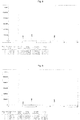
- Fig. 6
- Gaschromatogramm der prozessierten Reaktionsmischung bzw. Reaktionslösung von Versuch 2 gemäß Tabelle 1
- Fig. 7
- Gaschromatogramm der prozessierten Reaktionsmischung bzw. Reaktionslösung von Versuch 3 gemäß Tabelle 1
- Fig. 8
- Gaschromatogramm der prozessierten Reaktionsmischung bzw. Reaktionslösung von Versuch 4 gemäß Tabelle 1
- Fig. 9
- Gaschromatogramm der prozessierten Reaktionsmischung bzw. Reaktionslösung von Versuch 5 gemäß Tabelle 1
- Fig. 10
- Gaschromatogramm der prozessierten Reaktionsmischung bzw. Reaktionslösung von Versuch 6 gemäß Tabelle 1
- Bei den in den Abbildungen der Gaschromatogrammen angegebenen Auswertungsparametern (vgl.
Fig. 6 bis Fig. 10 ) handelt es sich um die von dem Gaschromatographen direkt ausgegebenen Werte. Dem Fachmann ist deren Bedeutung bekannt. InFig. 10 sind - beispielhaft für die AbbildungenFig. 6 bis Fig. 10 die einzelnen Signale im Chromatogramm gekennzeichnet.
Claims (16)
- Verfahren zur Oxidation von Alkanen zu Ketonen oder Aldehyden unter Verwendung von Sauerstoff als Oxidationsmittel, dadurch gekennzeichnet dass mindestens zwei unabhängig voneinander ausgewählte Katalysatoren gemäß den allgemeinen Formeln I (Katalysator 1),
[M2(R-HPTB)X3] (I),
und II (Katalysator 2),
[M'4OX6L] (II),
nacheinander oder gleichzeitig verwendet werden, um die Oxidationsreaktion zu katalysieren, wobei R-HPTB mehrzähnige N,N,N',N'-tetrakis(2-R-benzimidazolyl-methyl)2-hydroxy-1,3-diaminopropan-Liganden bezeichnet, und es sich bei den Metallatomen M um zwei jeweils unabhängig voneinander ausgewählte Metalle aus der Liste umfassend Fe, Co, Ni handelt, und es sich bei den Metallatomen M' um Atome eines Metalls handelt, ausgewählt aus der Liste umfassend Cu, Ag, Au, und es sich bei den Resten R um Reste handelt, unabhängig voneinander ausgewählt aus der Liste umfassend H, Methyl, Ethyl, Propyl, Benzyl, 2-Methyl-Pyridyl, und es sich bei X um Halogenatome handelt, unabhängig voneinander ausgewählt aus der Liste umfassend Cl, Br, und es sich bei den Liganden L um stickstoffhaltige Liganden handelt, unabhängig voneinander ausgewählt aus der Liste umfassend aliphatische Amine, aromatische Amine, Methylaminobenzol sowie substituierte Methylaminobenzole, wobei das Verfahren je nach Reaktivität des Edukts sowie von Katalysator 1 und Katalysator 2 in Gegenwart oder in Abwesenheit eines Lösungsmittels oder Lösungsmittelgemisches durchgeführt wird. - Verfahren gemäß Anspruch 1, dadurch gekennzeichnet, dass entweder- Katalysator 1 zunächst mit dem zu oxidierenden Alkan umgesetzt und anschließend Katalysator 2 hinzugefügt wird, oder- Katalysator 2 zunächst mit dem zu oxidierenden Alkan umgesetzt und anschließend Katalysator 1 hinzugefügt wird, oder- Katalysator 1 und Katalysator 2 zunächst miteinander vermischt und anschließend das zu oxidierende Alkan hinzugefügt und umgesetzt wird.
- Verfahren gemäß Anspruch 2, dadurch gekennzeichnet, dass zwischen den Zugaben von Katalysator 1, Katalysator 2 sowie dem zu oxidierenden Alkan mindestens ein Aktivierungsschritt zwischengeschaltet wird, um die Reaktivität der Reaktionsmischung in der jeweils vorliegenden Zusammensetzung zu verbessern, wobei es sich bei dem Aktivierungsschritt um Rühren und/oder Heizen und/oder Kühlen und/oder Begasung mit einem Gas und/oder Belichtung und/oder Beschallung mittels Ultraschall und/oder Zugabe weiterer Reagenzien handelt.
- Verfahren gemäß einem der Ansprüche 1 bis 3, dadurch gekennzeichnet, dass das Oxidationsmittel Sauerstoff gasförmig in einer Konzentration von 1% bis 100% zugeführt wird.
- Verfahren gemäß Anspruch 4, dadurch gekennzeichnet, dass das Oxidationsmittel Sauerstoff in einer Konzentration von 20% bis 25% zugeführt wird.
- Verfahren gemäß Anspruch 4, dadurch gekennzeichnet, dass das Oxidationsmittel Sauerstoff in einer Konzentration von 80% bis 100% zugeführt wird.
- Verfahren gemäß einem der Ansprüche 1 bis 6, dadurch gekennzeichnet, dass das Mischungsverhältnis von Katalysator 1 zu Katalysator 2 im Bereich von 1:100 bis 100:1 liegt.
- Verfahren gemäß Anspruch 7, dadurch gekennzeichnet, dass das Mischungsverhältnis von Katalysator 1 zu Katalysator 2 im Bereich von 100:20 bis 100:30 liegt.
- Verfahren gemäß einem der Ansprüche 1 bis 8, dadurch gekennzeichnet, dass das Verfahren bei einem Absolutdruck von 102 Pascal bis 108 Pascal durchgeführt wird.
- Verfahren gemäß Anspruch 9, dadurch gekennzeichnet, dass das Verfahren bei einem Absolutdruck von 104 Pascal bis 106 Pascal durchgeführt wird.
- Verfahren gemäß einem der Ansprüche 1 bis 10, dadurch gekennzeichnet, dass das Verfahren bei einer Temperatur im Bereich von -80 °C bis +300 °C durchgeführt wird.
- Verfahren gemäß Anspruch 11, dadurch gekennzeichnet, dass das Verfahren bei einer Temperatur im Bereich von -10 °C bis +100 °C durchgeführt wird.
- Verfahren gemäß einem der Ansprüche 1 bis 12, dadurch gekennzeichnet, dass das Verfahren unter Bestrahlung mit elektromagnetischen Wellen der Wellenlängenbereiche des UV-, des sichtbaren- oder des Mikrowellenbereichs durchgeführt wird.
- Verfahren gemäß einem der Ansprüche 1 bis 13, dadurch gekennzeichnet, dass das Verfahren in der Gasphase durchgeführt wird, wobei Katalysator 1 und Katalysator 2 auf einer geeigneten Oberfläche immobilisiert sind, und sowohl das Oxidationsmittel als auch das zu oxidierende Alkan gasförmig mit Katalysator 1 und Katalysator 2 in Kontakt gebracht und umgesetzt werden.
- Verfahren gemäß einem der Ansprüche 1 bis 14, dadurch gekennzeichnet, dass das zu oxidierende Alkan ausgewählt ist aus der Liste umfassend Cyclopentan, Cyclohexan, Cycloheptan, Cyclooctan, Cycloalkane, Methan, Ethan, Propan, Butan, Pentan, Hexan, Heptan, Octan, Alkane, Toluol, o-Xylol, m-Xylol, p-Xylol, Ethylbenzol, Propylbenzol, aromatische Verbindungen mit Alkylseitenketten, Adamantan, Kuban, Käfigverbindungen.
- Katalysatormischung zur Oxidation von Alkanen unter Verwendung von Sauerstoff als Oxidationsmittel, umfassend mindestens zwei unabhängig voneinander ausgewählte Metallkomplexverbindungen gemäß den allgemeinen Formeln I,
[M2(R-HPTB)X3] (I),
und II,
[M'4OX6L] (II),
wobei R-HPTB mehrzähnige N,N,N',N'-tetrakis(2-R-benzimidazolylmethyl)2-hydroxy-1,3-diaminopropan-Liganden bezeichnet, und es sich bei den Metallatomen M um zwei jeweils unabhängig voneinander ausgewählte Metalle aus der Liste umfassend Fe, Co, Ni handelt, und es sich bei den Metallatomen M' um ein Metall handelt, ausgewählt aus der Liste umfassend Cu, Ag, Au, und es sich bei den Resten R um Reste handelt, unabhängig voneinander ausgewählt aus der Liste umfassend H, Methyl, Ethyl, Propyl, Benzyl, 2-Methyl-Pyridyl, und es sich bei X um Halogenatome handelt, unabhängig voneinander ausgewählt aus der Liste umfassend Cl, Br, und es sich bei den Liganden L um stickstoffhaltige Liganden handelt, unabhängig voneinander ausgewählt aus der Liste umfassend aliphatische Amine, aromatische Amine, Methylaminobenzol sowie substituierte Methylaminobenzole.
Priority Applications (1)
| Application Number | Priority Date | Filing Date | Title |
|---|---|---|---|
| EP17156764.7A EP3363541B1 (de) | 2017-02-17 | 2017-02-17 | Katalysatormischung und verfahren zur selektiven oxidation von organischen substraten mit sauerstoff |
Applications Claiming Priority (1)
| Application Number | Priority Date | Filing Date | Title |
|---|---|---|---|
| EP17156764.7A EP3363541B1 (de) | 2017-02-17 | 2017-02-17 | Katalysatormischung und verfahren zur selektiven oxidation von organischen substraten mit sauerstoff |
Publications (2)
| Publication Number | Publication Date |
|---|---|
| EP3363541A1 EP3363541A1 (de) | 2018-08-22 |
| EP3363541B1 true EP3363541B1 (de) | 2020-06-17 |
Family
ID=58191254
Family Applications (1)
| Application Number | Title | Priority Date | Filing Date |
|---|---|---|---|
| EP17156764.7A Not-in-force EP3363541B1 (de) | 2017-02-17 | 2017-02-17 | Katalysatormischung und verfahren zur selektiven oxidation von organischen substraten mit sauerstoff |
Country Status (1)
| Country | Link |
|---|---|
| EP (1) | EP3363541B1 (de) |
Family Cites Families (3)
| Publication number | Priority date | Publication date | Assignee | Title |
|---|---|---|---|---|
| US4918239A (en) | 1988-12-27 | 1990-04-17 | National Science Council | Method of producing cyclohexanone from cyclohexanol through oxidative dehydrogenation |
| CN102627542B (zh) | 2012-03-28 | 2014-05-21 | 肖藻生 | 一种以环己烷为原料制备环己醇和环己酮的工艺 |
| WO2014163080A1 (ja) | 2013-04-05 | 2014-10-09 | 三井化学株式会社 | シクロヘキサノン化合物の製造方法 |
-
2017
- 2017-02-17 EP EP17156764.7A patent/EP3363541B1/de not_active Not-in-force
Non-Patent Citations (1)
| Title |
|---|
| None * |
Also Published As
| Publication number | Publication date |
|---|---|
| EP3363541A1 (de) | 2018-08-22 |
Similar Documents
| Publication | Publication Date | Title |
|---|---|---|
| EP0380085B1 (de) | Verwendung von rheniumorganischen Verbindungen zur Oxidation von C-C-Mehrfachbindungen, darauf basierende Oxidationsverfahren und neue rheniumorganische Verbindungen | |
| DE10297681B4 (de) | Verfahren zum Herstellen monocyclischer C4-C5-Ketone | |
| DE2061113C3 (de) | Verfahren zur Herstellung von Gemischen aus Ketonen und den entsprechenden Alkoholen | |
| DE69934948T2 (de) | Verfahren zur cooxidation von organischen verbindungen | |
| EP4247553A2 (de) | Katalysatorsystem unfassend zink- oder kobaltcarboxylate und aminophenole und seine verwendung | |
| EP1322583B1 (de) | Verfahren zur isomerisierung von allylalkoholen | |
| DE19920038A1 (de) | Verfahren zur Dihydroxylierung von Olefinen mittels Übergangsmetall-Katalysatoren | |
| EP0255640A1 (de) | Regenerativ-katalytische Oxidehydrierung von Isobuttersäure oder deren Ester | |
| DE2161418C3 (de) | Verfahren zur Herstellung von Bernsteinsäure oder Bernsteinsäureester oder Bernsteinsäurehai ogenid | |
| DE112011103786T5 (de) | Bis(Trifluormethansulfonyl)ethyl tragende Verbindung und Säurekatalysator und Verfahren zum Herstellen derselben | |
| EP3363541A1 (de) | Katalysatormischung und verfahren zur selektiven oxidation von organischen substraten mit sauerstoff | |
| DE2350689A1 (de) | Katalysatoren fuer die dimerisierung von diolefinen | |
| DE4444738A1 (de) | Verfahren zur Herstellung von Carbonylverbindungen durch katalysierte Oxidation von Olefinen und in Mikroemulsionen angeordnete Katalysatoren | |
| EP0645358B1 (de) | Verfahren zur selektiven katalytischen Oxidation organischer Verbindungen | |
| DE69805734T2 (de) | Verfahren zur Hydroxylierung von aromatischen Verbindungen | |
| DE920127C (de) | Verfahren zur Herstellung von Cyclohexanonoxim durch Oxydation von Cyclohexylhydroxylamin | |
| DE2352378C2 (de) | Verfahren zu der Herstellung von Gemischen aus Cycloalkanonen und Cycloalkanolen | |
| DE1080994B (de) | Verfahren zur Herstellung von Aldehyden und Ketonen | |
| DE60007282T2 (de) | Verfahren und zusammensetzung zur hydroxylierung von aromatischen substraten | |
| DE1917038A1 (de) | Verfahren zur Herstellung von Bipyridyliumsalzen und verwandten Verbindungen | |
| DE921624C (de) | Verfahren zur Herstellung von Cyclohexanonoxim durch Oxydation von Cyclohexylhydroxylamin | |
| DE69309980T2 (de) | Verfahren zur Herstellung eines Cycloalkanon und/oder einem Cycloalkanol | |
| EP3700881B1 (de) | Verfahren zur synthese eines ungesättigten makrozyklischen ketons | |
| EP3911623B1 (de) | Verfahren zur herstellung ungesättigter makrozyklischer ketone (ii) | |
| DE69208439T2 (de) | Alkylperoxide und Verwendungen |
Legal Events
| Date | Code | Title | Description |
|---|---|---|---|
| PUAI | Public reference made under article 153(3) epc to a published international application that has entered the european phase |
Free format text: ORIGINAL CODE: 0009012 |
|
| STAA | Information on the status of an ep patent application or granted ep patent |
Free format text: STATUS: THE APPLICATION HAS BEEN PUBLISHED |
|
| AK | Designated contracting states |
Kind code of ref document: A1 Designated state(s): AL AT BE BG CH CY CZ DE DK EE ES FI FR GB GR HR HU IE IS IT LI LT LU LV MC MK MT NL NO PL PT RO RS SE SI SK SM TR |
|
| AX | Request for extension of the european patent |
Extension state: BA ME |
|
| STAA | Information on the status of an ep patent application or granted ep patent |
Free format text: STATUS: REQUEST FOR EXAMINATION WAS MADE |
|
| 17P | Request for examination filed |
Effective date: 20190222 |
|
| RBV | Designated contracting states (corrected) |
Designated state(s): AL AT BE BG CH CY CZ DE DK EE ES FI FR GB GR HR HU IE IS IT LI LT LU LV MC MK MT NL NO PL PT RO RS SE SI SK SM TR |
|
| GRAP | Despatch of communication of intention to grant a patent |
Free format text: ORIGINAL CODE: EPIDOSNIGR1 |
|
| STAA | Information on the status of an ep patent application or granted ep patent |
Free format text: STATUS: GRANT OF PATENT IS INTENDED |
|
| INTG | Intention to grant announced |
Effective date: 20200107 |
|
| GRAS | Grant fee paid |
Free format text: ORIGINAL CODE: EPIDOSNIGR3 |
|
| GRAA | (expected) grant |
Free format text: ORIGINAL CODE: 0009210 |
|
| STAA | Information on the status of an ep patent application or granted ep patent |
Free format text: STATUS: THE PATENT HAS BEEN GRANTED |
|
| AK | Designated contracting states |
Kind code of ref document: B1 Designated state(s): AL AT BE BG CH CY CZ DE DK EE ES FI FR GB GR HR HU IE IS IT LI LT LU LV MC MK MT NL NO PL PT RO RS SE SI SK SM TR |
|
| REG | Reference to a national code |
Ref country code: GB Ref legal event code: FG4D Free format text: NOT ENGLISH |
|
| REG | Reference to a national code |
Ref country code: CH Ref legal event code: EP |
|
| REG | Reference to a national code |
Ref country code: DE Ref legal event code: R096 Ref document number: 502017005698 Country of ref document: DE |
|
| REG | Reference to a national code |
Ref country code: IE Ref legal event code: FG4D Free format text: LANGUAGE OF EP DOCUMENT: GERMAN |
|
| REG | Reference to a national code |
Ref country code: AT Ref legal event code: REF Ref document number: 1280649 Country of ref document: AT Kind code of ref document: T Effective date: 20200715 |
|
| PG25 | Lapsed in a contracting state [announced via postgrant information from national office to epo] |
Ref country code: LT Free format text: LAPSE BECAUSE OF FAILURE TO SUBMIT A TRANSLATION OF THE DESCRIPTION OR TO PAY THE FEE WITHIN THE PRESCRIBED TIME-LIMIT Effective date: 20200617 Ref country code: GR Free format text: LAPSE BECAUSE OF FAILURE TO SUBMIT A TRANSLATION OF THE DESCRIPTION OR TO PAY THE FEE WITHIN THE PRESCRIBED TIME-LIMIT Effective date: 20200918 Ref country code: NO Free format text: LAPSE BECAUSE OF FAILURE TO SUBMIT A TRANSLATION OF THE DESCRIPTION OR TO PAY THE FEE WITHIN THE PRESCRIBED TIME-LIMIT Effective date: 20200917 Ref country code: FI Free format text: LAPSE BECAUSE OF FAILURE TO SUBMIT A TRANSLATION OF THE DESCRIPTION OR TO PAY THE FEE WITHIN THE PRESCRIBED TIME-LIMIT Effective date: 20200617 Ref country code: SE Free format text: LAPSE BECAUSE OF FAILURE TO SUBMIT A TRANSLATION OF THE DESCRIPTION OR TO PAY THE FEE WITHIN THE PRESCRIBED TIME-LIMIT Effective date: 20200617 |
|
| REG | Reference to a national code |
Ref country code: LT Ref legal event code: MG4D |
|
| REG | Reference to a national code |
Ref country code: NL Ref legal event code: MP Effective date: 20200617 |
|
| PG25 | Lapsed in a contracting state [announced via postgrant information from national office to epo] |
Ref country code: HR Free format text: LAPSE BECAUSE OF FAILURE TO SUBMIT A TRANSLATION OF THE DESCRIPTION OR TO PAY THE FEE WITHIN THE PRESCRIBED TIME-LIMIT Effective date: 20200617 Ref country code: BG Free format text: LAPSE BECAUSE OF FAILURE TO SUBMIT A TRANSLATION OF THE DESCRIPTION OR TO PAY THE FEE WITHIN THE PRESCRIBED TIME-LIMIT Effective date: 20200917 Ref country code: RS Free format text: LAPSE BECAUSE OF FAILURE TO SUBMIT A TRANSLATION OF THE DESCRIPTION OR TO PAY THE FEE WITHIN THE PRESCRIBED TIME-LIMIT Effective date: 20200617 Ref country code: LV Free format text: LAPSE BECAUSE OF FAILURE TO SUBMIT A TRANSLATION OF THE DESCRIPTION OR TO PAY THE FEE WITHIN THE PRESCRIBED TIME-LIMIT Effective date: 20200617 |
|
| PG25 | Lapsed in a contracting state [announced via postgrant information from national office to epo] |
Ref country code: AL Free format text: LAPSE BECAUSE OF FAILURE TO SUBMIT A TRANSLATION OF THE DESCRIPTION OR TO PAY THE FEE WITHIN THE PRESCRIBED TIME-LIMIT Effective date: 20200617 Ref country code: NL Free format text: LAPSE BECAUSE OF FAILURE TO SUBMIT A TRANSLATION OF THE DESCRIPTION OR TO PAY THE FEE WITHIN THE PRESCRIBED TIME-LIMIT Effective date: 20200617 |
|
| PG25 | Lapsed in a contracting state [announced via postgrant information from national office to epo] |
Ref country code: PT Free format text: LAPSE BECAUSE OF FAILURE TO SUBMIT A TRANSLATION OF THE DESCRIPTION OR TO PAY THE FEE WITHIN THE PRESCRIBED TIME-LIMIT Effective date: 20201019 Ref country code: ES Free format text: LAPSE BECAUSE OF FAILURE TO SUBMIT A TRANSLATION OF THE DESCRIPTION OR TO PAY THE FEE WITHIN THE PRESCRIBED TIME-LIMIT Effective date: 20200617 Ref country code: SM Free format text: LAPSE BECAUSE OF FAILURE TO SUBMIT A TRANSLATION OF THE DESCRIPTION OR TO PAY THE FEE WITHIN THE PRESCRIBED TIME-LIMIT Effective date: 20200617 Ref country code: IT Free format text: LAPSE BECAUSE OF FAILURE TO SUBMIT A TRANSLATION OF THE DESCRIPTION OR TO PAY THE FEE WITHIN THE PRESCRIBED TIME-LIMIT Effective date: 20200617 Ref country code: EE Free format text: LAPSE BECAUSE OF FAILURE TO SUBMIT A TRANSLATION OF THE DESCRIPTION OR TO PAY THE FEE WITHIN THE PRESCRIBED TIME-LIMIT Effective date: 20200617 Ref country code: CZ Free format text: LAPSE BECAUSE OF FAILURE TO SUBMIT A TRANSLATION OF THE DESCRIPTION OR TO PAY THE FEE WITHIN THE PRESCRIBED TIME-LIMIT Effective date: 20200617 Ref country code: RO Free format text: LAPSE BECAUSE OF FAILURE TO SUBMIT A TRANSLATION OF THE DESCRIPTION OR TO PAY THE FEE WITHIN THE PRESCRIBED TIME-LIMIT Effective date: 20200617 |
|
| PG25 | Lapsed in a contracting state [announced via postgrant information from national office to epo] |
Ref country code: IS Free format text: LAPSE BECAUSE OF FAILURE TO SUBMIT A TRANSLATION OF THE DESCRIPTION OR TO PAY THE FEE WITHIN THE PRESCRIBED TIME-LIMIT Effective date: 20201017 Ref country code: PL Free format text: LAPSE BECAUSE OF FAILURE TO SUBMIT A TRANSLATION OF THE DESCRIPTION OR TO PAY THE FEE WITHIN THE PRESCRIBED TIME-LIMIT Effective date: 20200617 Ref country code: SK Free format text: LAPSE BECAUSE OF FAILURE TO SUBMIT A TRANSLATION OF THE DESCRIPTION OR TO PAY THE FEE WITHIN THE PRESCRIBED TIME-LIMIT Effective date: 20200617 |
|
| REG | Reference to a national code |
Ref country code: DE Ref legal event code: R097 Ref document number: 502017005698 Country of ref document: DE |
|
| PLBE | No opposition filed within time limit |
Free format text: ORIGINAL CODE: 0009261 |
|
| STAA | Information on the status of an ep patent application or granted ep patent |
Free format text: STATUS: NO OPPOSITION FILED WITHIN TIME LIMIT |
|
| PG25 | Lapsed in a contracting state [announced via postgrant information from national office to epo] |
Ref country code: DK Free format text: LAPSE BECAUSE OF FAILURE TO SUBMIT A TRANSLATION OF THE DESCRIPTION OR TO PAY THE FEE WITHIN THE PRESCRIBED TIME-LIMIT Effective date: 20200617 |
|
| 26N | No opposition filed |
Effective date: 20210318 |
|
| PG25 | Lapsed in a contracting state [announced via postgrant information from national office to epo] |
Ref country code: SI Free format text: LAPSE BECAUSE OF FAILURE TO SUBMIT A TRANSLATION OF THE DESCRIPTION OR TO PAY THE FEE WITHIN THE PRESCRIBED TIME-LIMIT Effective date: 20200617 |
|
| PGFP | Annual fee paid to national office [announced via postgrant information from national office to epo] |
Ref country code: DE Payment date: 20210228 Year of fee payment: 5 |
|
| PG25 | Lapsed in a contracting state [announced via postgrant information from national office to epo] |
Ref country code: MC Free format text: LAPSE BECAUSE OF FAILURE TO SUBMIT A TRANSLATION OF THE DESCRIPTION OR TO PAY THE FEE WITHIN THE PRESCRIBED TIME-LIMIT Effective date: 20200617 |
|
| REG | Reference to a national code |
Ref country code: BE Ref legal event code: MM Effective date: 20210228 |
|
| PG25 | Lapsed in a contracting state [announced via postgrant information from national office to epo] |
Ref country code: LI Free format text: LAPSE BECAUSE OF NON-PAYMENT OF DUE FEES Effective date: 20210228 Ref country code: LU Free format text: LAPSE BECAUSE OF NON-PAYMENT OF DUE FEES Effective date: 20210217 Ref country code: CH Free format text: LAPSE BECAUSE OF NON-PAYMENT OF DUE FEES Effective date: 20210228 |
|
| PG25 | Lapsed in a contracting state [announced via postgrant information from national office to epo] |
Ref country code: IE Free format text: LAPSE BECAUSE OF NON-PAYMENT OF DUE FEES Effective date: 20210217 |
|
| PGFP | Annual fee paid to national office [announced via postgrant information from national office to epo] |
Ref country code: GB Payment date: 20220223 Year of fee payment: 6 |
|
| PGFP | Annual fee paid to national office [announced via postgrant information from national office to epo] |
Ref country code: FR Payment date: 20220216 Year of fee payment: 6 |
|
| PG25 | Lapsed in a contracting state [announced via postgrant information from national office to epo] |
Ref country code: BE Free format text: LAPSE BECAUSE OF NON-PAYMENT OF DUE FEES Effective date: 20210228 |
|
| REG | Reference to a national code |
Ref country code: DE Ref legal event code: R119 Ref document number: 502017005698 Country of ref document: DE |
|
| PG25 | Lapsed in a contracting state [announced via postgrant information from national office to epo] |
Ref country code: DE Free format text: LAPSE BECAUSE OF NON-PAYMENT OF DUE FEES Effective date: 20220901 |
|
| REG | Reference to a national code |
Ref country code: AT Ref legal event code: MM01 Ref document number: 1280649 Country of ref document: AT Kind code of ref document: T Effective date: 20220217 |
|
| PG25 | Lapsed in a contracting state [announced via postgrant information from national office to epo] |
Ref country code: AT Free format text: LAPSE BECAUSE OF NON-PAYMENT OF DUE FEES Effective date: 20220217 |
|
| PG25 | Lapsed in a contracting state [announced via postgrant information from national office to epo] |
Ref country code: CY Free format text: LAPSE BECAUSE OF FAILURE TO SUBMIT A TRANSLATION OF THE DESCRIPTION OR TO PAY THE FEE WITHIN THE PRESCRIBED TIME-LIMIT Effective date: 20200617 |
|
| PG25 | Lapsed in a contracting state [announced via postgrant information from national office to epo] |
Ref country code: HU Free format text: LAPSE BECAUSE OF FAILURE TO SUBMIT A TRANSLATION OF THE DESCRIPTION OR TO PAY THE FEE WITHIN THE PRESCRIBED TIME-LIMIT; INVALID AB INITIO Effective date: 20170217 |
|
| GBPC | Gb: european patent ceased through non-payment of renewal fee |
Effective date: 20230217 |
|
| PG25 | Lapsed in a contracting state [announced via postgrant information from national office to epo] |
Ref country code: GB Free format text: LAPSE BECAUSE OF NON-PAYMENT OF DUE FEES Effective date: 20230217 |
|
| PG25 | Lapsed in a contracting state [announced via postgrant information from national office to epo] |
Ref country code: GB Free format text: LAPSE BECAUSE OF NON-PAYMENT OF DUE FEES Effective date: 20230217 Ref country code: FR Free format text: LAPSE BECAUSE OF NON-PAYMENT OF DUE FEES Effective date: 20230228 |
|
| PG25 | Lapsed in a contracting state [announced via postgrant information from national office to epo] |
Ref country code: MK Free format text: LAPSE BECAUSE OF FAILURE TO SUBMIT A TRANSLATION OF THE DESCRIPTION OR TO PAY THE FEE WITHIN THE PRESCRIBED TIME-LIMIT Effective date: 20200617 |
|
| PG25 | Lapsed in a contracting state [announced via postgrant information from national office to epo] |
Ref country code: MT Free format text: LAPSE BECAUSE OF FAILURE TO SUBMIT A TRANSLATION OF THE DESCRIPTION OR TO PAY THE FEE WITHIN THE PRESCRIBED TIME-LIMIT Effective date: 20200617 |
|
| PG25 | Lapsed in a contracting state [announced via postgrant information from national office to epo] |
Ref country code: TR Free format text: LAPSE BECAUSE OF FAILURE TO SUBMIT A TRANSLATION OF THE DESCRIPTION OR TO PAY THE FEE WITHIN THE PRESCRIBED TIME-LIMIT Effective date: 20200617 |