EP3351417A1 - Display apparatus for vehicle and display method for vehicle - Google Patents
Display apparatus for vehicle and display method for vehicle Download PDFInfo
- Publication number
- EP3351417A1 EP3351417A1 EP15904124.3A EP15904124A EP3351417A1 EP 3351417 A1 EP3351417 A1 EP 3351417A1 EP 15904124 A EP15904124 A EP 15904124A EP 3351417 A1 EP3351417 A1 EP 3351417A1
- Authority
- EP
- European Patent Office
- Prior art keywords
- preceding vehicle
- distance
- vehicle
- highlighting indication
- host vehicle
- Prior art date
- Legal status (The legal status is an assumption and is not a legal conclusion. Google has not performed a legal analysis and makes no representation as to the accuracy of the status listed.)
- Granted
Links
Images




Classifications
-
- B—PERFORMING OPERATIONS; TRANSPORTING
- B60—VEHICLES IN GENERAL
- B60W—CONJOINT CONTROL OF VEHICLE SUB-UNITS OF DIFFERENT TYPE OR DIFFERENT FUNCTION; CONTROL SYSTEMS SPECIALLY ADAPTED FOR HYBRID VEHICLES; ROAD VEHICLE DRIVE CONTROL SYSTEMS FOR PURPOSES NOT RELATED TO THE CONTROL OF A PARTICULAR SUB-UNIT
- B60W30/00—Purposes of road vehicle drive control systems not related to the control of a particular sub-unit, e.g. of systems using conjoint control of vehicle sub-units
- B60W30/08—Active safety systems predicting or avoiding probable or impending collision or attempting to minimise its consequences
-
- B—PERFORMING OPERATIONS; TRANSPORTING
- B60—VEHICLES IN GENERAL
- B60R—VEHICLES, VEHICLE FITTINGS, OR VEHICLE PARTS, NOT OTHERWISE PROVIDED FOR
- B60R1/00—Optical viewing arrangements; Real-time viewing arrangements for drivers or passengers using optical image capturing systems, e.g. cameras or video systems specially adapted for use in or on vehicles
-
- G—PHYSICS
- G06—COMPUTING OR CALCULATING; COUNTING
- G06T—IMAGE DATA PROCESSING OR GENERATION, IN GENERAL
- G06T11/00—Two-dimensional [2D] image generation
- G06T11/60—Creating or editing images; Combining images with text
-
- B—PERFORMING OPERATIONS; TRANSPORTING
- B60—VEHICLES IN GENERAL
- B60K—ARRANGEMENT OR MOUNTING OF PROPULSION UNITS OR OF TRANSMISSIONS IN VEHICLES; ARRANGEMENT OR MOUNTING OF PLURAL DIVERSE PRIME-MOVERS IN VEHICLES; AUXILIARY DRIVES FOR VEHICLES; INSTRUMENTATION OR DASHBOARDS FOR VEHICLES; ARRANGEMENTS IN CONNECTION WITH COOLING, AIR INTAKE, GAS EXHAUST OR FUEL SUPPLY OF PROPULSION UNITS IN VEHICLES
- B60K35/00—Instruments specially adapted for vehicles; Arrangement of instruments in or on vehicles
- B60K35/20—Output arrangements, i.e. from vehicle to user, associated with vehicle functions or specially adapted therefor
- B60K35/21—Output arrangements, i.e. from vehicle to user, associated with vehicle functions or specially adapted therefor using visual output, e.g. blinking lights or matrix displays
- B60K35/23—Head-up displays [HUD]
- B60K35/233—Head-up displays [HUD] controlling the size or position in display areas of virtual images depending on the condition of the vehicle or the driver
-
- B—PERFORMING OPERATIONS; TRANSPORTING
- B60—VEHICLES IN GENERAL
- B60K—ARRANGEMENT OR MOUNTING OF PROPULSION UNITS OR OF TRANSMISSIONS IN VEHICLES; ARRANGEMENT OR MOUNTING OF PLURAL DIVERSE PRIME-MOVERS IN VEHICLES; AUXILIARY DRIVES FOR VEHICLES; INSTRUMENTATION OR DASHBOARDS FOR VEHICLES; ARRANGEMENTS IN CONNECTION WITH COOLING, AIR INTAKE, GAS EXHAUST OR FUEL SUPPLY OF PROPULSION UNITS IN VEHICLES
- B60K35/00—Instruments specially adapted for vehicles; Arrangement of instruments in or on vehicles
- B60K35/20—Output arrangements, i.e. from vehicle to user, associated with vehicle functions or specially adapted therefor
- B60K35/21—Output arrangements, i.e. from vehicle to user, associated with vehicle functions or specially adapted therefor using visual output, e.g. blinking lights or matrix displays
- B60K35/23—Head-up displays [HUD]
- B60K35/234—Head-up displays [HUD] controlling the brightness, colour or contrast of virtual images depending on the driving conditions or on the condition of the vehicle or the driver
-
- B—PERFORMING OPERATIONS; TRANSPORTING
- B60—VEHICLES IN GENERAL
- B60K—ARRANGEMENT OR MOUNTING OF PROPULSION UNITS OR OF TRANSMISSIONS IN VEHICLES; ARRANGEMENT OR MOUNTING OF PLURAL DIVERSE PRIME-MOVERS IN VEHICLES; AUXILIARY DRIVES FOR VEHICLES; INSTRUMENTATION OR DASHBOARDS FOR VEHICLES; ARRANGEMENTS IN CONNECTION WITH COOLING, AIR INTAKE, GAS EXHAUST OR FUEL SUPPLY OF PROPULSION UNITS IN VEHICLES
- B60K35/00—Instruments specially adapted for vehicles; Arrangement of instruments in or on vehicles
- B60K35/20—Output arrangements, i.e. from vehicle to user, associated with vehicle functions or specially adapted therefor
- B60K35/28—Output arrangements, i.e. from vehicle to user, associated with vehicle functions or specially adapted therefor characterised by the type of the output information, e.g. video entertainment or vehicle dynamics information; characterised by the purpose of the output information, e.g. for attracting the attention of the driver
-
- B—PERFORMING OPERATIONS; TRANSPORTING
- B60—VEHICLES IN GENERAL
- B60K—ARRANGEMENT OR MOUNTING OF PROPULSION UNITS OR OF TRANSMISSIONS IN VEHICLES; ARRANGEMENT OR MOUNTING OF PLURAL DIVERSE PRIME-MOVERS IN VEHICLES; AUXILIARY DRIVES FOR VEHICLES; INSTRUMENTATION OR DASHBOARDS FOR VEHICLES; ARRANGEMENTS IN CONNECTION WITH COOLING, AIR INTAKE, GAS EXHAUST OR FUEL SUPPLY OF PROPULSION UNITS IN VEHICLES
- B60K35/00—Instruments specially adapted for vehicles; Arrangement of instruments in or on vehicles
- B60K35/20—Output arrangements, i.e. from vehicle to user, associated with vehicle functions or specially adapted therefor
- B60K35/28—Output arrangements, i.e. from vehicle to user, associated with vehicle functions or specially adapted therefor characterised by the type of the output information, e.g. video entertainment or vehicle dynamics information; characterised by the purpose of the output information, e.g. for attracting the attention of the driver
- B60K35/285—Output arrangements, i.e. from vehicle to user, associated with vehicle functions or specially adapted therefor characterised by the type of the output information, e.g. video entertainment or vehicle dynamics information; characterised by the purpose of the output information, e.g. for attracting the attention of the driver for improving awareness by directing driver's gaze direction or eye points
-
- B—PERFORMING OPERATIONS; TRANSPORTING
- B60—VEHICLES IN GENERAL
- B60K—ARRANGEMENT OR MOUNTING OF PROPULSION UNITS OR OF TRANSMISSIONS IN VEHICLES; ARRANGEMENT OR MOUNTING OF PLURAL DIVERSE PRIME-MOVERS IN VEHICLES; AUXILIARY DRIVES FOR VEHICLES; INSTRUMENTATION OR DASHBOARDS FOR VEHICLES; ARRANGEMENTS IN CONNECTION WITH COOLING, AIR INTAKE, GAS EXHAUST OR FUEL SUPPLY OF PROPULSION UNITS IN VEHICLES
- B60K35/00—Instruments specially adapted for vehicles; Arrangement of instruments in or on vehicles
- B60K35/20—Output arrangements, i.e. from vehicle to user, associated with vehicle functions or specially adapted therefor
- B60K35/29—Instruments characterised by the way in which information is handled, e.g. showing information on plural displays or prioritising information according to driving conditions
-
- B—PERFORMING OPERATIONS; TRANSPORTING
- B60—VEHICLES IN GENERAL
- B60K—ARRANGEMENT OR MOUNTING OF PROPULSION UNITS OR OF TRANSMISSIONS IN VEHICLES; ARRANGEMENT OR MOUNTING OF PLURAL DIVERSE PRIME-MOVERS IN VEHICLES; AUXILIARY DRIVES FOR VEHICLES; INSTRUMENTATION OR DASHBOARDS FOR VEHICLES; ARRANGEMENTS IN CONNECTION WITH COOLING, AIR INTAKE, GAS EXHAUST OR FUEL SUPPLY OF PROPULSION UNITS IN VEHICLES
- B60K35/00—Instruments specially adapted for vehicles; Arrangement of instruments in or on vehicles
- B60K35/80—Arrangements for controlling instruments
- B60K35/81—Arrangements for controlling instruments for controlling displays
-
- B—PERFORMING OPERATIONS; TRANSPORTING
- B60—VEHICLES IN GENERAL
- B60W—CONJOINT CONTROL OF VEHICLE SUB-UNITS OF DIFFERENT TYPE OR DIFFERENT FUNCTION; CONTROL SYSTEMS SPECIALLY ADAPTED FOR HYBRID VEHICLES; ROAD VEHICLE DRIVE CONTROL SYSTEMS FOR PURPOSES NOT RELATED TO THE CONTROL OF A PARTICULAR SUB-UNIT
- B60W30/00—Purposes of road vehicle drive control systems not related to the control of a particular sub-unit, e.g. of systems using conjoint control of vehicle sub-units
- B60W30/14—Adaptive cruise control
- B60W30/16—Control of distance between vehicles, e.g. keeping a distance to preceding vehicle
-
- B—PERFORMING OPERATIONS; TRANSPORTING
- B60—VEHICLES IN GENERAL
- B60W—CONJOINT CONTROL OF VEHICLE SUB-UNITS OF DIFFERENT TYPE OR DIFFERENT FUNCTION; CONTROL SYSTEMS SPECIALLY ADAPTED FOR HYBRID VEHICLES; ROAD VEHICLE DRIVE CONTROL SYSTEMS FOR PURPOSES NOT RELATED TO THE CONTROL OF A PARTICULAR SUB-UNIT
- B60W50/00—Details of control systems for road vehicle drive control not related to the control of a particular sub-unit, e.g. process diagnostic or vehicle driver interfaces
- B60W50/08—Interaction between the driver and the control system
- B60W50/14—Means for informing the driver, warning the driver or prompting a driver intervention
-
- G—PHYSICS
- G01—MEASURING; TESTING
- G01P—MEASURING LINEAR OR ANGULAR SPEED, ACCELERATION, DECELERATION, OR SHOCK; INDICATING PRESENCE, ABSENCE, OR DIRECTION, OF MOVEMENT
- G01P1/00—Details of instruments
- G01P1/07—Indicating devices, e.g. for remote indication
-
- G—PHYSICS
- G02—OPTICS
- G02B—OPTICAL ELEMENTS, SYSTEMS OR APPARATUS
- G02B27/00—Optical systems or apparatus not provided for by any of the groups G02B1/00 - G02B26/00, G02B30/00
- G02B27/01—Head-up displays
-
- G—PHYSICS
- G02—OPTICS
- G02B—OPTICAL ELEMENTS, SYSTEMS OR APPARATUS
- G02B27/00—Optical systems or apparatus not provided for by any of the groups G02B1/00 - G02B26/00, G02B30/00
- G02B27/01—Head-up displays
- G02B27/0101—Head-up displays characterised by optical features
-
- G—PHYSICS
- G06—COMPUTING OR CALCULATING; COUNTING
- G06T—IMAGE DATA PROCESSING OR GENERATION, IN GENERAL
- G06T3/00—Geometric image transformations in the plane of the image
- G06T3/40—Scaling of whole images or parts thereof, e.g. expanding or contracting
-
- B—PERFORMING OPERATIONS; TRANSPORTING
- B60—VEHICLES IN GENERAL
- B60K—ARRANGEMENT OR MOUNTING OF PROPULSION UNITS OR OF TRANSMISSIONS IN VEHICLES; ARRANGEMENT OR MOUNTING OF PLURAL DIVERSE PRIME-MOVERS IN VEHICLES; AUXILIARY DRIVES FOR VEHICLES; INSTRUMENTATION OR DASHBOARDS FOR VEHICLES; ARRANGEMENTS IN CONNECTION WITH COOLING, AIR INTAKE, GAS EXHAUST OR FUEL SUPPLY OF PROPULSION UNITS IN VEHICLES
- B60K2360/00—Indexing scheme associated with groups B60K35/00 or B60K37/00 relating to details of instruments or dashboards
- B60K2360/16—Type of output information
- B60K2360/177—Augmented reality
-
- B—PERFORMING OPERATIONS; TRANSPORTING
- B60—VEHICLES IN GENERAL
- B60K—ARRANGEMENT OR MOUNTING OF PROPULSION UNITS OR OF TRANSMISSIONS IN VEHICLES; ARRANGEMENT OR MOUNTING OF PLURAL DIVERSE PRIME-MOVERS IN VEHICLES; AUXILIARY DRIVES FOR VEHICLES; INSTRUMENTATION OR DASHBOARDS FOR VEHICLES; ARRANGEMENTS IN CONNECTION WITH COOLING, AIR INTAKE, GAS EXHAUST OR FUEL SUPPLY OF PROPULSION UNITS IN VEHICLES
- B60K2360/00—Indexing scheme associated with groups B60K35/00 or B60K37/00 relating to details of instruments or dashboards
- B60K2360/16—Type of output information
- B60K2360/179—Distances to obstacles or vehicles
-
- B—PERFORMING OPERATIONS; TRANSPORTING
- B60—VEHICLES IN GENERAL
- B60K—ARRANGEMENT OR MOUNTING OF PROPULSION UNITS OR OF TRANSMISSIONS IN VEHICLES; ARRANGEMENT OR MOUNTING OF PLURAL DIVERSE PRIME-MOVERS IN VEHICLES; AUXILIARY DRIVES FOR VEHICLES; INSTRUMENTATION OR DASHBOARDS FOR VEHICLES; ARRANGEMENTS IN CONNECTION WITH COOLING, AIR INTAKE, GAS EXHAUST OR FUEL SUPPLY OF PROPULSION UNITS IN VEHICLES
- B60K2360/00—Indexing scheme associated with groups B60K35/00 or B60K37/00 relating to details of instruments or dashboards
- B60K2360/18—Information management
- B60K2360/188—Displaying information using colour changes
-
- B—PERFORMING OPERATIONS; TRANSPORTING
- B60—VEHICLES IN GENERAL
- B60K—ARRANGEMENT OR MOUNTING OF PROPULSION UNITS OR OF TRANSMISSIONS IN VEHICLES; ARRANGEMENT OR MOUNTING OF PLURAL DIVERSE PRIME-MOVERS IN VEHICLES; AUXILIARY DRIVES FOR VEHICLES; INSTRUMENTATION OR DASHBOARDS FOR VEHICLES; ARRANGEMENTS IN CONNECTION WITH COOLING, AIR INTAKE, GAS EXHAUST OR FUEL SUPPLY OF PROPULSION UNITS IN VEHICLES
- B60K2360/00—Indexing scheme associated with groups B60K35/00 or B60K37/00 relating to details of instruments or dashboards
- B60K2360/18—Information management
- B60K2360/191—Highlight information
-
- B—PERFORMING OPERATIONS; TRANSPORTING
- B60—VEHICLES IN GENERAL
- B60K—ARRANGEMENT OR MOUNTING OF PROPULSION UNITS OR OF TRANSMISSIONS IN VEHICLES; ARRANGEMENT OR MOUNTING OF PLURAL DIVERSE PRIME-MOVERS IN VEHICLES; AUXILIARY DRIVES FOR VEHICLES; INSTRUMENTATION OR DASHBOARDS FOR VEHICLES; ARRANGEMENTS IN CONNECTION WITH COOLING, AIR INTAKE, GAS EXHAUST OR FUEL SUPPLY OF PROPULSION UNITS IN VEHICLES
- B60K2360/00—Indexing scheme associated with groups B60K35/00 or B60K37/00 relating to details of instruments or dashboards
- B60K2360/20—Optical features of instruments
- B60K2360/33—Illumination features
- B60K2360/334—Projection means
-
- B—PERFORMING OPERATIONS; TRANSPORTING
- B60—VEHICLES IN GENERAL
- B60W—CONJOINT CONTROL OF VEHICLE SUB-UNITS OF DIFFERENT TYPE OR DIFFERENT FUNCTION; CONTROL SYSTEMS SPECIALLY ADAPTED FOR HYBRID VEHICLES; ROAD VEHICLE DRIVE CONTROL SYSTEMS FOR PURPOSES NOT RELATED TO THE CONTROL OF A PARTICULAR SUB-UNIT
- B60W50/00—Details of control systems for road vehicle drive control not related to the control of a particular sub-unit, e.g. process diagnostic or vehicle driver interfaces
- B60W50/08—Interaction between the driver and the control system
- B60W50/14—Means for informing the driver, warning the driver or prompting a driver intervention
- B60W2050/146—Display means
-
- B—PERFORMING OPERATIONS; TRANSPORTING
- B60—VEHICLES IN GENERAL
- B60W—CONJOINT CONTROL OF VEHICLE SUB-UNITS OF DIFFERENT TYPE OR DIFFERENT FUNCTION; CONTROL SYSTEMS SPECIALLY ADAPTED FOR HYBRID VEHICLES; ROAD VEHICLE DRIVE CONTROL SYSTEMS FOR PURPOSES NOT RELATED TO THE CONTROL OF A PARTICULAR SUB-UNIT
- B60W2554/00—Input parameters relating to objects
- B60W2554/80—Spatial relation or speed relative to objects
- B60W2554/801—Lateral distance
-
- G—PHYSICS
- G02—OPTICS
- G02B—OPTICAL ELEMENTS, SYSTEMS OR APPARATUS
- G02B27/00—Optical systems or apparatus not provided for by any of the groups G02B1/00 - G02B26/00, G02B30/00
- G02B27/01—Head-up displays
- G02B27/0101—Head-up displays characterised by optical features
- G02B2027/0138—Head-up displays characterised by optical features comprising image capture systems, e.g. camera
-
- G—PHYSICS
- G02—OPTICS
- G02B—OPTICAL ELEMENTS, SYSTEMS OR APPARATUS
- G02B27/00—Optical systems or apparatus not provided for by any of the groups G02B1/00 - G02B26/00, G02B30/00
- G02B27/01—Head-up displays
- G02B27/0101—Head-up displays characterised by optical features
- G02B2027/014—Head-up displays characterised by optical features comprising information/image processing systems
-
- G—PHYSICS
- G02—OPTICS
- G02B—OPTICAL ELEMENTS, SYSTEMS OR APPARATUS
- G02B27/00—Optical systems or apparatus not provided for by any of the groups G02B1/00 - G02B26/00, G02B30/00
- G02B27/01—Head-up displays
- G02B27/0101—Head-up displays characterised by optical features
- G02B2027/0141—Head-up displays characterised by optical features characterised by the informative content of the display
Definitions
- the present invention relates to a vehicular display apparatus and method that, when a host vehicle follows a preceding vehicle in front, displays a highlighting indication over the preceding vehicle in a superimposing manner.
- Patent Literature 1 discloses a conventional vehicular display apparatus adapted for autonomous cruise control, which enables a host vehicle to follow a preceding vehicle travelling in front.
- the vehicular display apparatus disclosed in Patent Literature 1 uses a head-up display to highlight the following-target preceding vehicle by superimposing a highlighting indication over the preceding vehicle.
- Patent Literature 1 Japanese Patent Application Publication No. 2005-67514
- the above-described conventional vehicular display apparatus poses a problem where, when the following-target preceding vehicle becomes far away from the host vehicle, the highlighting indication superimposed over the preceding vehicle gets smaller, making it difficult for the driver to recognize the highlighting indication.
- the present invention is proposed in view of the above-described circumstances, and aims to provide a vehicular display apparatus and method that enables a driver to easily recognize a highlighting indication even when the following-target preceding vehicle is far away from the host vehicle.
- a vehicular display apparatus and method detects a preceding vehicle travelling in front of a host vehicle, calculates the distance between the preceding vehicle and the host vehicle, and sets a highlighting indication to be displayed over the preceding vehicle in a superimposing manner.
- the vehicular display apparatus causes the highlight level of the highlighting indication to be higher when the distance between the preceding vehicle and the host vehicle is long than when the distance is short, and displays an image of the thus-set highlighting indication on a display area provided so as to overlap with the position of the front window of the host vehicle.
- the present invention enables a driver to easily recognize a highlighting indication even when the following-target preceding vehicle is far away from the host vehicle.
- Fig. 1 is a block diagram illustrating the configuration of a vehicular display apparatus according to the present embodiment.
- a vehicular display apparatus 1 according to the present embodiment includes a control unit 3 and a HUD display unit 5. Further, the vehicular display apparatus 1 is connected to sensors and the like mounted on the vehicle, and connected in particular to a preceding vehicle detection sensor 7 and a vehicle speed sensor 9.
- the vehicular display apparatus 1 thus configured is mounted on a vehicle, and the vehicle mounted with the vehicular display apparatus 1 is equipped with a system such as autonomous cruise control or adaptive cruise control, for following a preceding vehicle in front of the host vehicle.
- the vehicular display apparatus 1 is an apparatus that displays a highlighting indication through the front window of the vehicle using a head-up display (HUD) by superimposing the highlighting indication over the following-target preceding vehicle.
- HUD head-up display
- the control unit 3 is a controller that controls highlighting indication and outputs an image of the highlighting indication to the HUD display unit 5.
- the control unit 3 includes an input interface 11, a preceding vehicle detector 13, a preceding vehicle distance calculator 15, a highlighting indication setter 17, and a HUD image generator 19.
- the input interface 11 is connected to the sensors and the like mounted on the vehicle, in particular the preceding vehicle detection sensor 7 and the vehicle speed sensor 9, and transmits and receives data necessary for control of highlighting indication.
- the preceding vehicle detector 13 detects a preceding vehicle travelling in front of the host vehicle. Specifically, the preceding vehicle detector 13 acquires preceding vehicle information from the preceding vehicle detection sensor 7, and detects a following-target preceding vehicle based on an image of the scene in front of the host vehicle, radar measurement results, and/or the like, included in the preceding vehicle information.
- the preceding vehicle distance calculator 15 calculates the distance between the preceding vehicle detected by the preceding vehicle detector 13 and the host vehicle. Specifically, the preceding vehicle distance calculator 15 may calculate the distance between the preceding vehicle and the host vehicle by analyzing an image of a front camera included in the preceding vehicle detection sensor 7, or may calculate the distance between the preceding vehicle and the host vehicle based on measurement results of a radar included in the preceding vehicle detection sensor 7.
- the highlighting indication setter 17 sets a highlighting indication to be displayed over the following-target preceding vehicle in a superimposing manner, and causes the highlight level of the highlighting indication to be higher when the distance between the preceding vehicle and the host vehicle is long than when the distance is short.
- the highlighting indication setter 17 first sets the display position, display size, spatial frequency, brightness, and/or the like of a following mark to be displayed as a highlighting indication.
- the highlighting indication setter 17 then causes the highlight level of the thus-set following mark to be higher when the distance between the preceding vehicle and the host vehicle is long than when the distance is short. For example, the highlighting indication setter 17 raises the highlight level by increasing the size of the following mark as the distance between the preceding vehicle and the host vehicle increases.
- the highlighting indication setter 17 may raise the highlight level by increasing the spatial frequency or brightness of the following mark as the distance between the preceding vehicle and the host vehicle increases.
- the following mark is an indication mark used to highlight the following-target preceding vehicle, and is displayed in a superimposing manner near the preceding vehicle, at a position adjacent to, e.g., below, the preceding vehicle.
- the highlighting indication setter 17 causes the highlight level of the highlighting indication to be lower when the distance between the preceding vehicle and the host vehicle is short than when the distance is long. For example, the highlighting indication setter 17 lowers the highlight level by decreasing the size of the following mark as the distance between the preceding vehicle and the host vehicle decreases. Alternatively, the highlighting indication setter 17 may lower the highlight level by decreasing the spatial frequency or brightness of the following mark as the distance between the preceding vehicle and the host vehicle decreases.
- the HUD image generator 19 generates images of a head-up display for displaying a following mark, which is a highlighting indication, according to the settings made by the highlighting indication setter 17.
- control unit 3 is formed by a general-purpose electronic circuit including a microcomputer, a microprocessor, and a CPU and a peripheral such as memory. By executing particular programs, the control unit 3 operates as the above-described preceding vehicle detector 13, preceding vehicle distance calculator 15, highlighting indication setter 17, and HUD image generator 19.
- the HUD display unit 5 is a head-up display including a projector for projecting images, a screen and Fresnel mirrors for reflecting the images, and the like, and is configured to display an image of the highlighting indication on a display area provided so as to overlap with the position of the front window of the vehicle.
- the HUD display unit 5 is a head-up display capable of displaying an image over the scene in front of the vehicle in a superimposing manner by projecting a mirror-reflected image beyond the front window as a virtual image.
- the HUD display unit 5 is, however, not limited to a head-up display of such a type.
- the HUD display unit 5 may be of a combiner type using a transparent panel instead of the front window to display an image, or a type displaying an image directly on the front window.
- the head-up display of the present embodiment only has to be capable of displaying information by superimposing the information over the scene that the driver is viewing through the front window without lowering the head of the driver.
- the HUD display unit 5 corresponds to the display unit in claim 1.
- the preceding vehicle detection sensor 7 is a sensor for detecting a preceding vehicle, such as a front camera or a millimeter-wave radar, and outputs preceding vehicle information including a front camera image or millimeter-wave-radar measurement results. Besides the front camera or millimeter-wave radar, the preceding vehicle detection sensor 7 may include an infrared sensor, an inter-vehicle distance sensor, and/or the like.
- the vehicle speed sensor 9 detects the speed of the vehicle based on a pulse signal indicative of the number of rotations of the axle.
- the preceding vehicle detector 13 acquires preceding vehicle information from the preceding vehicle detection sensor 7 to acquire a front camera image or radar measurement results included in the preceding vehicle information.
- Step S20 the preceding vehicle detector 13 analyzes the front camera image and determines whether or not the preceding vehicle detector 13 detects a preceding vehicle travelling in front of the host vehicle. If the preceding vehicle detector 13 cannot detect a preceding vehicle, the processing returns to Step S10. If being able to detect a preceding vehicle, the preceding vehicle detector 13 determines that the detected preceding vehicle is a following-target preceding vehicle, and the processing proceeds to Step S30.
- the preceding vehicle distance calculator 15 calculates the distance between the preceding vehicle detected in Step S20 and the host vehicle.
- the preceding vehicle distance calculator 15 may calculate the distance between the following-target preceding vehicle and the host vehicle based on the radar measurement results, or may calculate the distance between the preceding vehicle and the host vehicle by analyzing the front camera image.
- the highlighting indication setter 17 makes settings regarding a highlighting indication to be displayed over the preceding vehicle in a superimposing manner.
- a following mark is displayed as a highlighting indication.
- the highlighting indication setter 17 sets the display position and the display size of the following mark.
- the highlighting indication setter 17 sets a rectangular frame surrounding the preceding vehicle on the front camera image, and defines a base point at the center of the frame.
- the highlighting indication setter 17 sets the display position of the following mark to a position a predetermined distance below the base point. Note that the predetermined distance is set based on the distance between the preceding vehicle and the host vehicle.
- the highlighting indication setter 17 sets the display size of the following mark.
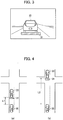
- the display size of the following mark may be set based on the size of the preceding vehicle on the image or based on the distance between the preceding vehicle and the host vehicle. For example, a following mark 31 is set to be slightly wider than a preceding vehicle 33 as illustrated in Fig. 3 .
- the highlighting indication setter 17 places, in the 3D space of the vehicle, the following mark in the set display size at the set display position. Then, as illustrated in Fig. 3 , the following mark 31 appears to be displayed adjacent to the preceding vehicle 33 in a superimposing manner.
- the following mark 31 may be in other shapes, such as a rectangular frame surrounding the preceding vehicle, a triangle, a star, or an arrow.
- the brightness, spatial frequency, and the like of the following mark 31 are set in advance, and such predetermined values are used to display the following mark 31. After the display position and display size of the following mark are set as described above, the processing proceeds to Step S50.
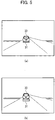
- the highlighting indication setter 17 causes the highlight level of the highlighting indication to be higher when the distance between the preceding vehicle and the host vehicle calculated in Step S30 is long than when the distance is short. Specifically, the highlighting indication setter 17 changes the size of the highlighting indication as the highlight level of the highlighting indication. For example, when the preceding vehicle 33 is at a position a distance L1 away from the host vehicle 35 as illustrated in Fig. 4(a) , the following mark 31 is displayed in a size easily recognizable by the driver as illustrated in Fig. 3 . Then, when the preceding vehicle 33 is far away at a position a distance L2 from the host vehicle 35 as illustrated in Fig 4(b) , the following mark 31 gets smaller as illustrated in Fig.
- the size of the following mark 31 is set based on the size of the preceding vehicle 33 on the image or the distance between the preceding vehicle 33 and the host vehicle 35.
- the highlighting indication setter 17 raises the highlight level by causing the size of the following mark 31 to be larger when the distance between the preceding vehicle and the host vehicle is long than when the distance is short. For example, as illustrated in Fig. 5(b) , the size of following mark 31 is changed to be larger than that in Fig. 5(a) .
- the predetermined distance L1 may be set to an ideal inter-vehicle distance generally thought to be necessary, and the size of the following mark is set such that the following mark is easily recognizable to the driver at this inter-vehicle distance.
- the highlighting indication setter 17 causes the highlight level of the highlighting indication to be lower when the distance between the preceding vehicle and the host vehicle is short than when the distance is long.
- the following mark 31 is displayed in too large a size as illustrated in Fig. 6(a) and may bother the driver.
- the highlighting indication setter 17 lowers the highlight level by causing the size of the following mark 31 to be smaller as illustrated in Fig. 6(b) than when the distance is long. This way, the following mark 31 does not bother the driver even when the preceding vehicle 33 to follow approaches the host vehicle, and is still easily recognizable to the driver.
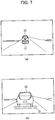
- the highlighting indication setter 17 may change the spatial frequency of the highlighting indication as the highlight level of the highlighting indication. Specifically, in the case where the distance between the preceding vehicle and the host vehicle is longer than the predetermined distance L1, the highlighting indication setter 17 raises the highlight level by causing the spatial frequency of the following mark 31 to be higher when the distance between the preceding vehicle and the host vehicle is long than when the distance is short. For example, as illustrated in Fig. 7(a) , when the preceding vehicle 33 is far away from the host vehicle, the following mark 31 is increased in spatial frequency and displayed with prominent edges. This way, the following mark 31 is easily recognizable to the driver even when the preceding vehicle 33 to follow is far away from the host vehicle.
- the highlighting indication setter 17 lowers the highlight level by causing the spatial frequency of the following mark 31 to be lower when the distance between the preceding vehicle and the host vehicle is short than when the distance is long.
- the following mark 31 is decreased in spatial frequency and displayed with blurry edges. This way, the following mark 31 does not bother the driver even when the preceding vehicle 33 to follow approaches the host vehicle, and is still easily recognizable to the driver.
- the highlighting indication setter 17 may change the brightness of the highlighting indication as the highlight level of the highlighting indication. Specifically, in the case where the distance between the preceding vehicle and the host vehicle is longer than the predetermined distance L1, the highlighting indication setter 17 raises the highlight level by causing the brightness of the following mark 31 to be higher when the distance between the preceding vehicle and the host vehicle is long than when the distance is short. For example, as illustrated in Fig. 8(a) , when the preceding vehicle 33 is far away from the host vehicle, the following mark 31 is increased in brightness and displayed in a bright tone. This way, the following mark 31 is easily recognizable to the driver even when the preceding vehicle 33 to follow is far away from the host vehicle.
- the highlighting indication setter 17 lowers the highlight level by causing the brightness of the following mark 31 to be lower when the distance between the preceding vehicle and the host vehicle is short than when the distance is long.
- the following mark 31 is decreased in brightness and displayed in a dark tone. This way, the following mark 31 does not bother the driver even when the preceding vehicle 33 to follow approaches the host vehicle, and is still easily recognizable to the driver.
- a combination of two or more of the above-described size, spatial frequency, and brightness of a highlighting indication may be used as the highlight level of the highlighting indication.
- Step S60 the HUD image generator 19 generates in the 3D space of the vehicle an image of the highlighting indication set by the series of processing described above, and outputs the image to the HUD display unit 5.
- Step S70 the HUD display unit 5 displays the image of the highlighting indication set in the vehicle's 3D space, on the display area provided so as to overlap with the position of the front window. Thereby, the image of the following mark is displayed over the preceding vehicle in a superimposing manner, and the driver sees the following mark beyond the front window. Once the following mark is thus displayed, the following mark display processing according to the present embodiment ends.
- the vehicular display apparatus 1 sets a highlighting indication to be displayed over a preceding vehicle in a superimposing manner, and causes the highlight level of the highlighting indication to be higher when the distance between the preceding vehicle and the host vehicle is long than when the distance is short. This enables the driver to easily recognize the highlighting indication even when the following-target preceding vehicle is far away from the host vehicle, and therefore achieves improvement in the visibility of the highlighting indication.
- the vehicular display apparatus 1 causes the highlight level of the highlighting indication to be lower when the distance between the preceding vehicle and the host vehicle is short than when the distance is long. This enables the driver not to be bothered by the highlighting indication even when the following-target preceding vehicle approaches the host vehicle, and therefore achieves improvement in the visibility of the highlighting indication.
- the vehicular display apparatus 1 increases the size of the highlighting indication as the highlight level of the highlighting indication. This allows the highlighting indication to be displayed in a large size when the preceding vehicle is far away, and therefore achieves improvement in the visibility of the highlighting indication.
- the vehicular display apparatus 1 increases the spatial frequency of the highlighting indication as the highlight level of the highlighting indication. This allows the spatial frequency to be increased when the preceding vehicle is far away, and therefore achieves improvement in the visibility of the highlighting indication.
- the vehicular display apparatus 1 increases the brightness of the highlighting indication as the highlight level of the highlighting indication. This allows the brightness to be increased when the preceding vehicle is far away, and therefore achieves improvement in the visibility of the highlighting indication.
Landscapes
- Engineering & Computer Science (AREA)
- Mechanical Engineering (AREA)
- Transportation (AREA)
- Chemical & Material Sciences (AREA)
- Combustion & Propulsion (AREA)
- Physics & Mathematics (AREA)
- General Physics & Mathematics (AREA)
- Theoretical Computer Science (AREA)
- Automation & Control Theory (AREA)
- Optics & Photonics (AREA)
- Human Computer Interaction (AREA)
- Multimedia (AREA)
- Instrument Panels (AREA)
- Traffic Control Systems (AREA)
- Controls And Circuits For Display Device (AREA)
Abstract
Description
- The present invention relates to a vehicular display apparatus and method that, when a host vehicle follows a preceding vehicle in front, displays a highlighting indication over the preceding vehicle in a superimposing manner.
- Patent Literature 1 discloses a conventional vehicular display apparatus adapted for autonomous cruise control, which enables a host vehicle to follow a preceding vehicle travelling in front. The vehicular display apparatus disclosed in Patent Literature 1 uses a head-up display to highlight the following-target preceding vehicle by superimposing a highlighting indication over the preceding vehicle.
- Patent Literature 1: Japanese Patent Application Publication No.
2005-67514 - The above-described conventional vehicular display apparatus, however, poses a problem where, when the following-target preceding vehicle becomes far away from the host vehicle, the highlighting indication superimposed over the preceding vehicle gets smaller, making it difficult for the driver to recognize the highlighting indication.
- Thus, the present invention is proposed in view of the above-described circumstances, and aims to provide a vehicular display apparatus and method that enables a driver to easily recognize a highlighting indication even when the following-target preceding vehicle is far away from the host vehicle.
- To solve the above-described problem, a vehicular display apparatus and method according to an aspect of the present invention detects a preceding vehicle travelling in front of a host vehicle, calculates the distance between the preceding vehicle and the host vehicle, and sets a highlighting indication to be displayed over the preceding vehicle in a superimposing manner. The vehicular display apparatus causes the highlight level of the highlighting indication to be higher when the distance between the preceding vehicle and the host vehicle is long than when the distance is short, and displays an image of the thus-set highlighting indication on a display area provided so as to overlap with the position of the front window of the host vehicle.
- The present invention enables a driver to easily recognize a highlighting indication even when the following-target preceding vehicle is far away from the host vehicle.
-
- [
Fig. 1] Fig. 1 is a block diagram illustrating the configuration of a vehicular display apparatus according to an embodiment of the present invention. - [
Fig. 2] Fig. 2 is a flowchart illustrating a processing procedure of following mark display processing performed by the vehicular display apparatus according to the embodiment of the present invention. - [
Fig. 3] Fig. 3 is a diagram illustrating an example of a following mark displayed by the vehicular display apparatus according to the embodiment of the present invention. - [
Fig. 4] Fig. 4 is a diagram illustrating how a following mark is displayed by the vehicular display apparatus according to the embodiment of the present invention. - [
Fig. 5] Fig. 5 is a diagram illustrating how a following mark is displayed by the vehicular display apparatus according to the embodiment of the present invention. - [
Fig. 6] Fig. 6 is a diagram illustrating how a following mark is displayed by the vehicular display apparatus according to the embodiment of the present invention. - [
Fig. 7] Fig. 7 is a diagram illustrating a modification of how a following mark is displayed by the vehicular display apparatus according to the embodiment of the present invention. - [
Fig. 8] Fig. 8 is a diagram illustrating a modification of how a following mark is displayed by the vehicular display apparatus according to the embodiment of the present invention. - An embodiment to which the present invention is applied is described below with reference to the drawings.
-
Fig. 1 is a block diagram illustrating the configuration of a vehicular display apparatus according to the present embodiment. As illustrated inFig. 1 , a vehicular display apparatus 1 according to the present embodiment includes acontrol unit 3 and aHUD display unit 5. Further, the vehicular display apparatus 1 is connected to sensors and the like mounted on the vehicle, and connected in particular to a preceding vehicle detection sensor 7 and avehicle speed sensor 9. The vehicular display apparatus 1 thus configured is mounted on a vehicle, and the vehicle mounted with the vehicular display apparatus 1 is equipped with a system such as autonomous cruise control or adaptive cruise control, for following a preceding vehicle in front of the host vehicle. The vehicular display apparatus 1 is an apparatus that displays a highlighting indication through the front window of the vehicle using a head-up display (HUD) by superimposing the highlighting indication over the following-target preceding vehicle. - The
control unit 3 is a controller that controls highlighting indication and outputs an image of the highlighting indication to theHUD display unit 5. Thecontrol unit 3 includes aninput interface 11, a precedingvehicle detector 13, a precedingvehicle distance calculator 15, ahighlighting indication setter 17, and aHUD image generator 19. - The
input interface 11 is connected to the sensors and the like mounted on the vehicle, in particular the preceding vehicle detection sensor 7 and thevehicle speed sensor 9, and transmits and receives data necessary for control of highlighting indication. - The preceding
vehicle detector 13 detects a preceding vehicle travelling in front of the host vehicle. Specifically, the precedingvehicle detector 13 acquires preceding vehicle information from the preceding vehicle detection sensor 7, and detects a following-target preceding vehicle based on an image of the scene in front of the host vehicle, radar measurement results, and/or the like, included in the preceding vehicle information. - The preceding
vehicle distance calculator 15 calculates the distance between the preceding vehicle detected by the precedingvehicle detector 13 and the host vehicle. Specifically, the precedingvehicle distance calculator 15 may calculate the distance between the preceding vehicle and the host vehicle by analyzing an image of a front camera included in the preceding vehicle detection sensor 7, or may calculate the distance between the preceding vehicle and the host vehicle based on measurement results of a radar included in the preceding vehicle detection sensor 7. - The highlighting indication setter 17 sets a highlighting indication to be displayed over the following-target preceding vehicle in a superimposing manner, and causes the highlight level of the highlighting indication to be higher when the distance between the preceding vehicle and the host vehicle is long than when the distance is short. The highlighting indication setter 17 first sets the display position, display size, spatial frequency, brightness, and/or the like of a following mark to be displayed as a highlighting indication. The
highlighting indication setter 17 then causes the highlight level of the thus-set following mark to be higher when the distance between the preceding vehicle and the host vehicle is long than when the distance is short. For example, thehighlighting indication setter 17 raises the highlight level by increasing the size of the following mark as the distance between the preceding vehicle and the host vehicle increases. Alternatively, thehighlighting indication setter 17 may raise the highlight level by increasing the spatial frequency or brightness of the following mark as the distance between the preceding vehicle and the host vehicle increases. Note that the following mark is an indication mark used to highlight the following-target preceding vehicle, and is displayed in a superimposing manner near the preceding vehicle, at a position adjacent to, e.g., below, the preceding vehicle. - Further, in the case where the distance between the preceding vehicle and the host vehicle is a predetermined distance or shorter, the
highlighting indication setter 17 causes the highlight level of the highlighting indication to be lower when the distance between the preceding vehicle and the host vehicle is short than when the distance is long. For example, thehighlighting indication setter 17 lowers the highlight level by decreasing the size of the following mark as the distance between the preceding vehicle and the host vehicle decreases. Alternatively, thehighlighting indication setter 17 may lower the highlight level by decreasing the spatial frequency or brightness of the following mark as the distance between the preceding vehicle and the host vehicle decreases. - The
HUD image generator 19 generates images of a head-up display for displaying a following mark, which is a highlighting indication, according to the settings made by thehighlighting indication setter 17. - Note that the
control unit 3 is formed by a general-purpose electronic circuit including a microcomputer, a microprocessor, and a CPU and a peripheral such as memory. By executing particular programs, thecontrol unit 3 operates as the above-described precedingvehicle detector 13, precedingvehicle distance calculator 15,highlighting indication setter 17, andHUD image generator 19. - The
HUD display unit 5 is a head-up display including a projector for projecting images, a screen and Fresnel mirrors for reflecting the images, and the like, and is configured to display an image of the highlighting indication on a display area provided so as to overlap with the position of the front window of the vehicle. In particular, theHUD display unit 5 is a head-up display capable of displaying an image over the scene in front of the vehicle in a superimposing manner by projecting a mirror-reflected image beyond the front window as a virtual image. TheHUD display unit 5 is, however, not limited to a head-up display of such a type. For example, theHUD display unit 5 may be of a combiner type using a transparent panel instead of the front window to display an image, or a type displaying an image directly on the front window. In other words, the head-up display of the present embodiment only has to be capable of displaying information by superimposing the information over the scene that the driver is viewing through the front window without lowering the head of the driver. Note that theHUD display unit 5 corresponds to the display unit in claim 1. - The preceding vehicle detection sensor 7 is a sensor for detecting a preceding vehicle, such as a front camera or a millimeter-wave radar, and outputs preceding vehicle information including a front camera image or millimeter-wave-radar measurement results. Besides the front camera or millimeter-wave radar, the preceding vehicle detection sensor 7 may include an infrared sensor, an inter-vehicle distance sensor, and/or the like. The
vehicle speed sensor 9 detects the speed of the vehicle based on a pulse signal indicative of the number of rotations of the axle. - Next, a procedure of following mark display processing performed by the vehicular display apparatus 1 according to the present embodiment is described with reference to the flowchart in
Fig. 2 . - As illustrated in
Fig. 2 , first in Step S10, the precedingvehicle detector 13 acquires preceding vehicle information from the preceding vehicle detection sensor 7 to acquire a front camera image or radar measurement results included in the preceding vehicle information. - In Step S20, the preceding
vehicle detector 13 analyzes the front camera image and determines whether or not the precedingvehicle detector 13 detects a preceding vehicle travelling in front of the host vehicle. If the precedingvehicle detector 13 cannot detect a preceding vehicle, the processing returns to Step S10. If being able to detect a preceding vehicle, the precedingvehicle detector 13 determines that the detected preceding vehicle is a following-target preceding vehicle, and the processing proceeds to Step S30. - In Step S30, the preceding
vehicle distance calculator 15 calculates the distance between the preceding vehicle detected in Step S20 and the host vehicle. The precedingvehicle distance calculator 15 may calculate the distance between the following-target preceding vehicle and the host vehicle based on the radar measurement results, or may calculate the distance between the preceding vehicle and the host vehicle by analyzing the front camera image. - In Step S40, the highlighting
indication setter 17 makes settings regarding a highlighting indication to be displayed over the preceding vehicle in a superimposing manner. In the present embodiment, to highlight the preceding vehicle that the host vehicle is following, a following mark is displayed as a highlighting indication. To this end, the highlightingindication setter 17 sets the display position and the display size of the following mark. First, the highlightingindication setter 17 sets a rectangular frame surrounding the preceding vehicle on the front camera image, and defines a base point at the center of the frame. Then, the highlightingindication setter 17 sets the display position of the following mark to a position a predetermined distance below the base point. Note that the predetermined distance is set based on the distance between the preceding vehicle and the host vehicle. - Next, the highlighting
indication setter 17 sets the display size of the following mark. The display size of the following mark may be set based on the size of the preceding vehicle on the image or based on the distance between the preceding vehicle and the host vehicle. For example, a followingmark 31 is set to be slightly wider than a precedingvehicle 33 as illustrated inFig. 3 . After setting the display position and display size of the following mark as described above, the highlightingindication setter 17 places, in the 3D space of the vehicle, the following mark in the set display size at the set display position. Then, as illustrated inFig. 3 , the followingmark 31 appears to be displayed adjacent to the precedingvehicle 33 in a superimposing manner. Although rectangular or bar-shaped inFig. 3 , the followingmark 31 may be in other shapes, such as a rectangular frame surrounding the preceding vehicle, a triangle, a star, or an arrow. The brightness, spatial frequency, and the like of the followingmark 31 are set in advance, and such predetermined values are used to display the followingmark 31. After the display position and display size of the following mark are set as described above, the processing proceeds to Step S50. - In Step S50, the highlighting
indication setter 17 causes the highlight level of the highlighting indication to be higher when the distance between the preceding vehicle and the host vehicle calculated in Step S30 is long than when the distance is short. Specifically, the highlightingindication setter 17 changes the size of the highlighting indication as the highlight level of the highlighting indication. For example, when the precedingvehicle 33 is at a position a distance L1 away from thehost vehicle 35 as illustrated inFig. 4(a) , the followingmark 31 is displayed in a size easily recognizable by the driver as illustrated inFig. 3 . Then, when the precedingvehicle 33 is far away at a position a distance L2 from thehost vehicle 35 as illustrated inFig 4(b) , the followingmark 31 gets smaller as illustrated inFig. 5(a) , becoming hard for the driver to see. This is because the size of the followingmark 31 is set based on the size of the precedingvehicle 33 on the image or the distance between the precedingvehicle 33 and thehost vehicle 35. Thus, in the case where the distance between the preceding vehicle and the host vehicle is longer than the predetermined distance L1, the highlightingindication setter 17 raises the highlight level by causing the size of the followingmark 31 to be larger when the distance between the preceding vehicle and the host vehicle is long than when the distance is short. For example, as illustrated inFig. 5(b) , the size of followingmark 31 is changed to be larger than that inFig. 5(a) . This way, the followingmark 31 is easily recognizable to the driver even when the precedingvehicle 33 to follow is far away from the host vehicle. Note that the predetermined distance L1 may be set to an ideal inter-vehicle distance generally thought to be necessary, and the size of the following mark is set such that the following mark is easily recognizable to the driver at this inter-vehicle distance. - On the other hand, when the distance between the preceding vehicle and the host vehicle is the predetermined distance L1 or shorter, the following mark is displayed in too large a size, and may bother the driver. Thus, the highlighting
indication setter 17 causes the highlight level of the highlighting indication to be lower when the distance between the preceding vehicle and the host vehicle is short than when the distance is long. For example, when the precedingvehicle 33 approaches the host vehicle, the followingmark 31 is displayed in too large a size as illustrated inFig. 6(a) and may bother the driver. Thus, when the distance between the preceding vehicle and the host vehicle is short, the highlightingindication setter 17 lowers the highlight level by causing the size of the followingmark 31 to be smaller as illustrated inFig. 6(b) than when the distance is long. This way, the followingmark 31 does not bother the driver even when the precedingvehicle 33 to follow approaches the host vehicle, and is still easily recognizable to the driver. - Further, the highlighting
indication setter 17 may change the spatial frequency of the highlighting indication as the highlight level of the highlighting indication. Specifically, in the case where the distance between the preceding vehicle and the host vehicle is longer than the predetermined distance L1, the highlightingindication setter 17 raises the highlight level by causing the spatial frequency of the followingmark 31 to be higher when the distance between the preceding vehicle and the host vehicle is long than when the distance is short. For example, as illustrated inFig. 7(a) , when the precedingvehicle 33 is far away from the host vehicle, the followingmark 31 is increased in spatial frequency and displayed with prominent edges. This way, the followingmark 31 is easily recognizable to the driver even when the precedingvehicle 33 to follow is far away from the host vehicle. - On the other hand, in the case where the distance between the preceding vehicle and the host vehicle is the predetermined distance L1 or shorter, the highlighting
indication setter 17 lowers the highlight level by causing the spatial frequency of the followingmark 31 to be lower when the distance between the preceding vehicle and the host vehicle is short than when the distance is long. For example, as illustrated inFig. 7(b) , when the precedingvehicle 33 approaches the host vehicle, the followingmark 31 is decreased in spatial frequency and displayed with blurry edges. This way, the followingmark 31 does not bother the driver even when the precedingvehicle 33 to follow approaches the host vehicle, and is still easily recognizable to the driver. - Further, the highlighting
indication setter 17 may change the brightness of the highlighting indication as the highlight level of the highlighting indication. Specifically, in the case where the distance between the preceding vehicle and the host vehicle is longer than the predetermined distance L1, the highlightingindication setter 17 raises the highlight level by causing the brightness of the followingmark 31 to be higher when the distance between the preceding vehicle and the host vehicle is long than when the distance is short. For example, as illustrated inFig. 8(a) , when the precedingvehicle 33 is far away from the host vehicle, the followingmark 31 is increased in brightness and displayed in a bright tone. This way, the followingmark 31 is easily recognizable to the driver even when the precedingvehicle 33 to follow is far away from the host vehicle. - On the other hand, in the case where the distance between the preceding vehicle and the host vehicle is the predetermined distance L1 or shorter, the highlighting
indication setter 17 lowers the highlight level by causing the brightness of the followingmark 31 to be lower when the distance between the preceding vehicle and the host vehicle is short than when the distance is long. For example, as illustrated inFig. 8(b) , when the precedingvehicle 33 approaches the host vehicle, the followingmark 31 is decreased in brightness and displayed in a dark tone. This way, the followingmark 31 does not bother the driver even when the precedingvehicle 33 to follow approaches the host vehicle, and is still easily recognizable to the driver. Note that a combination of two or more of the above-described size, spatial frequency, and brightness of a highlighting indication may be used as the highlight level of the highlighting indication. - In Step S60, the
HUD image generator 19 generates in the 3D space of the vehicle an image of the highlighting indication set by the series of processing described above, and outputs the image to theHUD display unit 5. - In Step S70, the
HUD display unit 5 displays the image of the highlighting indication set in the vehicle's 3D space, on the display area provided so as to overlap with the position of the front window. Thereby, the image of the following mark is displayed over the preceding vehicle in a superimposing manner, and the driver sees the following mark beyond the front window. Once the following mark is thus displayed, the following mark display processing according to the present embodiment ends. - As described in detail above, the vehicular display apparatus 1 according to the present embodiment sets a highlighting indication to be displayed over a preceding vehicle in a superimposing manner, and causes the highlight level of the highlighting indication to be higher when the distance between the preceding vehicle and the host vehicle is long than when the distance is short. This enables the driver to easily recognize the highlighting indication even when the following-target preceding vehicle is far away from the host vehicle, and therefore achieves improvement in the visibility of the highlighting indication.
- Further, in the case where the distance between the preceding vehicle and the host vehicle is a predetermined distance or shorter, the vehicular display apparatus 1 according to the present embodiment causes the highlight level of the highlighting indication to be lower when the distance between the preceding vehicle and the host vehicle is short than when the distance is long. This enables the driver not to be bothered by the highlighting indication even when the following-target preceding vehicle approaches the host vehicle, and therefore achieves improvement in the visibility of the highlighting indication.
- Furthermore, the vehicular display apparatus 1 according to the present embodiment increases the size of the highlighting indication as the highlight level of the highlighting indication. This allows the highlighting indication to be displayed in a large size when the preceding vehicle is far away, and therefore achieves improvement in the visibility of the highlighting indication.
- In addition, the vehicular display apparatus 1 according to the present embodiment increases the spatial frequency of the highlighting indication as the highlight level of the highlighting indication. This allows the spatial frequency to be increased when the preceding vehicle is far away, and therefore achieves improvement in the visibility of the highlighting indication.
- In addition, the vehicular display apparatus 1 according to the present embodiment increases the brightness of the highlighting indication as the highlight level of the highlighting indication. This allows the brightness to be increased when the preceding vehicle is far away, and therefore achieves improvement in the visibility of the highlighting indication.
- Note that the embodiment described above is an example of the present invention. Hence, the present invention is not limited to the above embodiment and may of course be implemented in a mode different from the above embodiment by variously changing the above embodiment depending on design or the like without departing from the technical concept of the present invention.
-
- 1
- vehicular display apparatus
- 3
- control unit
- 5
- HUD display unit (display unit)
- 7
- preceding vehicle detection sensor
- 9
- vehicle speed sensor
- 11
- input interface
- 13
- preceding vehicle detector
- 15
- preceding vehicle distance calculator
- 17
- highlighting indication setter
- 19
- HUD image generator
Claims (6)
- A vehicular display apparatus that, when a host vehicle follows a preceding vehicle in front, displays a highlighting indication over the preceding vehicle in a superimposing manner, the apparatus comprising:a preceding vehicle detector that detects a preceding vehicle travelling in front of the host vehicle;a preceding vehicle distance calculator that calculates a distance between the preceding vehicle detected by the preceding vehicle detector and the host vehicle;a highlighting indication setter that sets the highlighting indication to be displayed over the preceding vehicle in a superimposing manner, and causes a highlight level of the highlighting indication to be higher when the distance between the preceding vehicle and the host vehicle calculated by the preceding vehicle distance calculator is long than when the distance is short; anda display unit that displays an image of the highlighting indication set by the highlighting indication setter, on a display area provided so as to overlap with a position of a front window of the host vehicle.
- The vehicular display apparatus according to claim 1, wherein in the case where the distance between the preceding vehicle and the host vehicle calculated by the preceding vehicle distance calculator is a predetermined distance or shorter, the highlighting indication setter causes the highlight level of the highlighting indication to be lower when the distance between the preceding vehicle and the host vehicle is short than when the distance is long.
- The vehicular display apparatus according to claim 1, wherein as the highlight level of the highlighting indication, the highlighting indication setter increases size of the highlighting indication.
- The vehicular display apparatus according to claim 1, wherein as the highlight level of the highlighting indication, the highlighting indication setter increases spatial frequency of the highlighting indication.
- The vehicular display apparatus according to claim 1, wherein as the highlight level of the highlighting indication, the highlighting indication setter increases brightness of the highlighting indication.
- A vehicular display method performed by a vehicular display apparatus that, when a host vehicle follows a preceding vehicle in front, displays a highlighting indication over the preceding vehicle in a superimposing manner, the method comprising:the vehicular display apparatusdetecting a preceding vehicle travelling in front of the host vehicle;calculating a distance between the detected preceding vehicle and the host vehicle;setting the highlighting indication to be displayed over the preceding vehicle in a superimposing manner, and causing a highlight level of the highlighting indication to be higher when the distance between the preceding vehicle and the host vehicle is long than when the distance is short; anddisplaying an image of the thus-set highlighting indication on a display area provided so as to overlap with a position of a front window of the host vehicle.
Applications Claiming Priority (1)
| Application Number | Priority Date | Filing Date | Title |
|---|---|---|---|
| PCT/JP2015/076644 WO2017046937A1 (en) | 2015-09-18 | 2015-09-18 | Display apparatus for vehicle and display method for vehicle |
Publications (3)
| Publication Number | Publication Date |
|---|---|
| EP3351417A1 true EP3351417A1 (en) | 2018-07-25 |
| EP3351417A4 EP3351417A4 (en) | 2018-08-22 |
| EP3351417B1 EP3351417B1 (en) | 2019-02-20 |
Family
ID=58288431
Family Applications (1)
| Application Number | Title | Priority Date | Filing Date |
|---|---|---|---|
| EP15904124.3A Active EP3351417B1 (en) | 2015-09-18 | 2015-09-18 | Display apparatus for vehicle and display method for vehicle |
Country Status (10)
| Country | Link |
|---|---|
| US (1) | US10304228B2 (en) |
| EP (1) | EP3351417B1 (en) |
| JP (1) | JP6443559B2 (en) |
| KR (1) | KR101960644B1 (en) |
| CN (1) | CN108025644B (en) |
| BR (1) | BR112018005380B1 (en) |
| CA (1) | CA2998600C (en) |
| MX (1) | MX366506B (en) |
| RU (1) | RU2675719C1 (en) |
| WO (1) | WO2017046937A1 (en) |
Cited By (2)
| Publication number | Priority date | Publication date | Assignee | Title |
|---|---|---|---|---|
| WO2020224877A1 (en) * | 2019-05-06 | 2020-11-12 | Volkswagen Aktiengesellschaft | Parking assistance system for a motor vehicle |
| WO2023089105A1 (en) * | 2021-11-19 | 2023-05-25 | Wayray Ag | System and method |
Families Citing this family (34)
| Publication number | Priority date | Publication date | Assignee | Title |
|---|---|---|---|---|
| KR101916993B1 (en) * | 2015-12-24 | 2018-11-08 | 엘지전자 주식회사 | Display apparatus for vehicle and control method thereof |
| JP6972549B2 (en) * | 2016-12-28 | 2021-11-24 | 株式会社リコー | HUD device, vehicle device and display method |
| JP7167918B2 (en) * | 2017-08-10 | 2022-11-09 | 日本精機株式会社 | vehicle display |
| JP6820561B2 (en) * | 2017-12-28 | 2021-01-27 | パナソニックIpマネジメント株式会社 | Image processing device, display device, navigation system, image processing method and program |
| WO2020022239A1 (en) * | 2018-07-24 | 2020-01-30 | 日本精機株式会社 | Display control device and head-up display device |
| JP7086798B2 (en) * | 2018-09-12 | 2022-06-20 | 本田技研工業株式会社 | Vehicle control devices, vehicle control methods, and programs |
| CN109703556B (en) * | 2018-12-20 | 2021-01-26 | 斑马网络技术有限公司 | Driving assistance method and device |
| WO2020171042A1 (en) * | 2019-02-19 | 2020-08-27 | 日本精機株式会社 | Vehicular display device and display control program therefor |
| DE102019202591A1 (en) | 2019-02-26 | 2020-08-27 | Volkswagen Aktiengesellschaft | Method for operating a driver information system in an ego vehicle and driver information system |
| DE102019202580A1 (en) | 2019-02-26 | 2020-08-27 | Volkswagen Aktiengesellschaft | Method for operating a driver information system in an ego vehicle and driver information system |
| DE102019202585A1 (en) * | 2019-02-26 | 2020-08-27 | Volkswagen Aktiengesellschaft | Method for operating a driver information system in an ego vehicle and driver information system |
| DE102019202576A1 (en) | 2019-02-26 | 2020-08-27 | Volkswagen Aktiengesellschaft | Method for operating a driver information system in an ego vehicle and driver information system |
| DE102019202592A1 (en) | 2019-02-26 | 2020-08-27 | Volkswagen Aktiengesellschaft | Method for operating a driver information system in an ego vehicle and driver information system |
| DE102019202587A1 (en) | 2019-02-26 | 2020-08-27 | Volkswagen Aktiengesellschaft | Method for operating a driver information system in an ego vehicle and driver information system |
| DE102019202588A1 (en) | 2019-02-26 | 2020-08-27 | Volkswagen Aktiengesellschaft | Method for operating a driver information system in an ego vehicle and driver information system |
| DE102019202581B4 (en) | 2019-02-26 | 2021-09-02 | Volkswagen Aktiengesellschaft | Method for operating a driver information system in an ego vehicle and driver information system |
| DE102019202586A1 (en) | 2019-02-26 | 2020-08-27 | Volkswagen Aktiengesellschaft | Method for operating a driver information system in an ego vehicle and driver information system |
| DE102019202578A1 (en) | 2019-02-26 | 2020-08-27 | Volkswagen Aktiengesellschaft | Method for operating a driver information system in an ego vehicle and driver information system |
| JP7308089B2 (en) * | 2019-07-18 | 2023-07-13 | 株式会社小松製作所 | WORK VEHICLE DISPLAY SYSTEM AND WORK VEHICLE DISPLAY METHOD |
| EP3809359A1 (en) * | 2019-10-14 | 2021-04-21 | Ningbo Geely Automobile Research & Development Co. Ltd. | Vehicle driving challenge system and corresponding method |
| JP7122408B2 (en) * | 2020-10-28 | 2022-08-19 | 株式会社日本総合研究所 | Information processing device and information processing method |
| JP7658183B2 (en) * | 2021-06-10 | 2025-04-08 | トヨタ自動車株式会社 | Vehicle display device, display method, and program |
| JP7501463B2 (en) | 2021-07-15 | 2024-06-18 | トヨタ自動車株式会社 | Vehicle display control device, display method, and display program |
| JP7480756B2 (en) | 2021-07-26 | 2024-05-10 | トヨタ自動車株式会社 | Vehicle display control device, vehicle display device, vehicle display control method, and vehicle display control program |
| JP7537393B2 (en) | 2021-07-27 | 2024-08-21 | トヨタ自動車株式会社 | Control device, display method and program |
| WO2023032956A1 (en) * | 2021-08-31 | 2023-03-09 | 日本精機株式会社 | Display control device, head-up display device, and display control method |
| WO2023054305A1 (en) * | 2021-09-28 | 2023-04-06 | 日本精機株式会社 | Display control device, display device, and display control method |
| JP7517308B2 (en) * | 2021-11-10 | 2024-07-17 | トヨタ自動車株式会社 | Control device, display device, vehicle, and mobile terminal |
| JP7679815B2 (en) | 2022-09-12 | 2025-05-20 | トヨタ自動車株式会社 | Display control device, display control method and program |
| JP2024099429A (en) | 2023-01-12 | 2024-07-25 | 株式会社Soken | Vehicle display control device, vehicle display control method, and vehicle display control program |
| JP2025059826A (en) * | 2023-09-29 | 2025-04-10 | パナソニックオートモーティブシステムズ株式会社 | Display device, display method, and program |
| JP2025063768A (en) * | 2023-10-04 | 2025-04-16 | トヨタ自動車株式会社 | Vehicle display device, vehicle display method, and program |
| FR3161649A1 (en) * | 2024-04-29 | 2025-10-31 | Stellantis Auto Sas | Method and device for controlling a vehicle image projection system with opacity adjustment |
| DE102024208288A1 (en) * | 2024-09-02 | 2026-03-19 | Volkswagen Aktiengesellschaft | User interface, means of transport and method for issuing a notification to a user of a means of transport |
Family Cites Families (26)
| Publication number | Priority date | Publication date | Assignee | Title |
|---|---|---|---|---|
| US6822563B2 (en) * | 1997-09-22 | 2004-11-23 | Donnelly Corporation | Vehicle imaging system with accessory control |
| JP3838613B2 (en) | 1999-08-31 | 2006-10-25 | 本田技研工業株式会社 | In-vehicle display device |
| JP2004310489A (en) * | 2003-04-08 | 2004-11-04 | Nissan Motor Co Ltd | Warning device for vehicles |
| JP2004340825A (en) * | 2003-05-16 | 2004-12-02 | Xanavi Informatics Corp | Navigation system |
| JP2005067514A (en) * | 2003-08-27 | 2005-03-17 | Denso Corp | Vehicle display device |
| US7202815B2 (en) * | 2004-08-12 | 2007-04-10 | Motorola, Inc. | Method and apparatus for location determination |
| JP2009040107A (en) | 2007-08-06 | 2009-02-26 | Denso Corp | Image display control device and image display control system |
| US8311720B2 (en) * | 2009-01-09 | 2012-11-13 | Robert Bosch Gmbh | Lost target function for adaptive cruise control |
| US8164543B2 (en) * | 2009-05-18 | 2012-04-24 | GM Global Technology Operations LLC | Night vision on full windshield head-up display |
| US8396653B2 (en) * | 2010-02-12 | 2013-03-12 | Robert Bosch Gmbh | Dynamic range display for automotive rear-view and parking systems |
| US8403106B2 (en) * | 2010-03-25 | 2013-03-26 | Raytheon Company | Man-portable non-lethal pressure shield |
| US9158738B2 (en) * | 2010-07-09 | 2015-10-13 | Honda Motor Co., Ltd. | Apparatus for monitoring vicinity of a vehicle |
| RU2458351C1 (en) * | 2011-02-01 | 2012-08-10 | Герман Петрович Лосев | Method of displaying data to trackless vehicle driver |
| DE102011006347B4 (en) * | 2011-03-29 | 2023-02-09 | Bayerische Motoren Werke Aktiengesellschaft | Process for outputting graphical driving instructions |
| WO2012172077A1 (en) * | 2011-06-17 | 2012-12-20 | Robert Bosch Gmbh | Method and device for assisting a driver in performing lateral guidance of a vehicle on a carriageway |
| JP5799613B2 (en) * | 2011-07-04 | 2015-10-28 | 日産自動車株式会社 | Vehicle display device |
| SE536537C2 (en) * | 2012-06-11 | 2014-02-11 | Early warning | |
| JP6094399B2 (en) * | 2013-06-24 | 2017-03-15 | 株式会社デンソー | Head-up display and program |
| JP5983547B2 (en) | 2013-07-02 | 2016-08-31 | 株式会社デンソー | Head-up display and program |
| JP6232804B2 (en) * | 2013-07-25 | 2017-11-22 | 株式会社デンソー | Vehicle user interface system |
| JP6264037B2 (en) * | 2013-12-27 | 2018-01-24 | トヨタ自動車株式会社 | Vehicle information display device and vehicle information display method |
| JP5942979B2 (en) * | 2013-12-27 | 2016-06-29 | トヨタ自動車株式会社 | Vehicle information display device and vehicle information display method |
| US9947129B2 (en) * | 2014-03-26 | 2018-04-17 | Carestream Health, Inc. | Method for enhanced display of image slices from 3-D volume image |
| DE112015004431B4 (en) * | 2014-09-29 | 2021-07-29 | Yazaki Corporation | Vehicle display device |
| US9713956B2 (en) * | 2015-03-05 | 2017-07-25 | Honda Motor Co., Ltd. | Vehicle-to-vehicle communication system providing a spatiotemporal look ahead and method thereof |
| US9767687B2 (en) * | 2015-09-11 | 2017-09-19 | Sony Corporation | System and method for driving assistance along a path |
-
2015
- 2015-09-18 CN CN201580083125.8A patent/CN108025644B/en active Active
- 2015-09-18 WO PCT/JP2015/076644 patent/WO2017046937A1/en not_active Ceased
- 2015-09-18 KR KR1020187007431A patent/KR101960644B1/en active Active
- 2015-09-18 CA CA2998600A patent/CA2998600C/en active Active
- 2015-09-18 EP EP15904124.3A patent/EP3351417B1/en active Active
- 2015-09-18 JP JP2017540430A patent/JP6443559B2/en active Active
- 2015-09-18 RU RU2018114061A patent/RU2675719C1/en active
- 2015-09-18 US US15/760,888 patent/US10304228B2/en active Active
- 2015-09-18 MX MX2018002815A patent/MX366506B/en active IP Right Grant
- 2015-09-18 BR BR112018005380-5A patent/BR112018005380B1/en active IP Right Grant
Cited By (3)
| Publication number | Priority date | Publication date | Assignee | Title |
|---|---|---|---|---|
| WO2020224877A1 (en) * | 2019-05-06 | 2020-11-12 | Volkswagen Aktiengesellschaft | Parking assistance system for a motor vehicle |
| US12014448B2 (en) | 2019-05-06 | 2024-06-18 | Volkswagen Aktiengesellschaft | Park assistance system for a motor vehicle |
| WO2023089105A1 (en) * | 2021-11-19 | 2023-05-25 | Wayray Ag | System and method |
Also Published As
| Publication number | Publication date |
|---|---|
| EP3351417B1 (en) | 2019-02-20 |
| KR20180040679A (en) | 2018-04-20 |
| EP3351417A4 (en) | 2018-08-22 |
| CA2998600C (en) | 2018-10-09 |
| CA2998600A1 (en) | 2017-03-23 |
| JP6443559B2 (en) | 2019-01-09 |
| BR112018005380B1 (en) | 2021-12-28 |
| US20180286094A1 (en) | 2018-10-04 |
| US10304228B2 (en) | 2019-05-28 |
| MX2018002815A (en) | 2018-06-15 |
| JPWO2017046937A1 (en) | 2018-08-02 |
| CN108025644A (en) | 2018-05-11 |
| RU2675719C1 (en) | 2018-12-24 |
| CN108025644B (en) | 2019-05-07 |
| MX366506B (en) | 2019-07-11 |
| KR101960644B1 (en) | 2019-03-20 |
| WO2017046937A1 (en) | 2017-03-23 |
| BR112018005380A2 (en) | 2018-10-09 |
Similar Documents
| Publication | Publication Date | Title |
|---|---|---|
| EP3351417B1 (en) | Display apparatus for vehicle and display method for vehicle | |
| EP3351418B1 (en) | Vehicular display device and vehicular display method | |
| JP6330908B2 (en) | Display device for vehicle and display method for vehicle | |
| US11402628B2 (en) | Vehicular display apparatus and vehicular display method | |
| US9697734B2 (en) | Information display device for vehicle and information display method for vehicle | |
| JP5533766B2 (en) | Vehicle display device | |
| EP2894620A1 (en) | Vehicle information display device and vehicle information display method | |
| JP2016111509A (en) | Image processing device for vehicle, image processing method for vehicle and program | |
| JP2019188855A (en) | Visual confirmation device for vehicle | |
| EP3200445B1 (en) | Image capture device, vehicle, and fluctuation detecting method | |
| JP4715604B2 (en) | Peripheral image display device | |
| JP5217860B2 (en) | Blind spot image display device and blind spot image display method | |
| JP2018125749A (en) | Image display device |
Legal Events
| Date | Code | Title | Description |
|---|---|---|---|
| STAA | Information on the status of an ep patent application or granted ep patent |
Free format text: STATUS: THE INTERNATIONAL PUBLICATION HAS BEEN MADE |
|
| PUAI | Public reference made under article 153(3) epc to a published international application that has entered the european phase |
Free format text: ORIGINAL CODE: 0009012 |
|
| STAA | Information on the status of an ep patent application or granted ep patent |
Free format text: STATUS: REQUEST FOR EXAMINATION WAS MADE |
|
| 17P | Request for examination filed |
Effective date: 20180418 |
|
| AK | Designated contracting states |
Kind code of ref document: A1 Designated state(s): AL AT BE BG CH CY CZ DE DK EE ES FI FR GB GR HR HU IE IS IT LI LT LU LV MC MK MT NL NO PL PT RO RS SE SI SK SM TR |
|
| AX | Request for extension of the european patent |
Extension state: BA ME |
|
| A4 | Supplementary search report drawn up and despatched |
Effective date: 20180724 |
|
| RIC1 | Information provided on ipc code assigned before grant |
Ipc: G02B 27/01 20060101ALI20180718BHEP Ipc: B60K 35/00 20060101AFI20180718BHEP |
|
| GRAP | Despatch of communication of intention to grant a patent |
Free format text: ORIGINAL CODE: EPIDOSNIGR1 |
|
| STAA | Information on the status of an ep patent application or granted ep patent |
Free format text: STATUS: GRANT OF PATENT IS INTENDED |
|
| RIC1 | Information provided on ipc code assigned before grant |
Ipc: B60K 35/00 20060101AFI20180921BHEP Ipc: G02B 27/01 20060101ALI20180921BHEP |
|
| DAV | Request for validation of the european patent (deleted) | ||
| DAX | Request for extension of the european patent (deleted) | ||
| INTG | Intention to grant announced |
Effective date: 20181031 |
|
| GRAS | Grant fee paid |
Free format text: ORIGINAL CODE: EPIDOSNIGR3 |
|
| GRAA | (expected) grant |
Free format text: ORIGINAL CODE: 0009210 |
|
| STAA | Information on the status of an ep patent application or granted ep patent |
Free format text: STATUS: THE PATENT HAS BEEN GRANTED |
|
| AK | Designated contracting states |
Kind code of ref document: B1 Designated state(s): AL AT BE BG CH CY CZ DE DK EE ES FI FR GB GR HR HU IE IS IT LI LT LU LV MC MK MT NL NO PL PT RO RS SE SI SK SM TR |
|
| REG | Reference to a national code |
Ref country code: GB Ref legal event code: FG4D |
|
| REG | Reference to a national code |
Ref country code: CH Ref legal event code: EP |
|
| REG | Reference to a national code |
Ref country code: DE Ref legal event code: R096 Ref document number: 602015025159 Country of ref document: DE |
|
| REG | Reference to a national code |
Ref country code: AT Ref legal event code: REF Ref document number: 1097719 Country of ref document: AT Kind code of ref document: T Effective date: 20190315 |
|
| REG | Reference to a national code |
Ref country code: IE Ref legal event code: FG4D |
|
| REG | Reference to a national code |
Ref country code: LT Ref legal event code: MG4D |
|
| REG | Reference to a national code |
Ref country code: NL Ref legal event code: MP Effective date: 20190220 |
|
| PG25 | Lapsed in a contracting state [announced via postgrant information from national office to epo] |
Ref country code: FI Free format text: LAPSE BECAUSE OF FAILURE TO SUBMIT A TRANSLATION OF THE DESCRIPTION OR TO PAY THE FEE WITHIN THE PRESCRIBED TIME-LIMIT Effective date: 20190220 Ref country code: PT Free format text: LAPSE BECAUSE OF FAILURE TO SUBMIT A TRANSLATION OF THE DESCRIPTION OR TO PAY THE FEE WITHIN THE PRESCRIBED TIME-LIMIT Effective date: 20190620 Ref country code: NO Free format text: LAPSE BECAUSE OF FAILURE TO SUBMIT A TRANSLATION OF THE DESCRIPTION OR TO PAY THE FEE WITHIN THE PRESCRIBED TIME-LIMIT Effective date: 20190520 Ref country code: SE Free format text: LAPSE BECAUSE OF FAILURE TO SUBMIT A TRANSLATION OF THE DESCRIPTION OR TO PAY THE FEE WITHIN THE PRESCRIBED TIME-LIMIT Effective date: 20190220 Ref country code: LT Free format text: LAPSE BECAUSE OF FAILURE TO SUBMIT A TRANSLATION OF THE DESCRIPTION OR TO PAY THE FEE WITHIN THE PRESCRIBED TIME-LIMIT Effective date: 20190220 |
|
| PG25 | Lapsed in a contracting state [announced via postgrant information from national office to epo] |
Ref country code: NL Free format text: LAPSE BECAUSE OF FAILURE TO SUBMIT A TRANSLATION OF THE DESCRIPTION OR TO PAY THE FEE WITHIN THE PRESCRIBED TIME-LIMIT Effective date: 20190220 Ref country code: HR Free format text: LAPSE BECAUSE OF FAILURE TO SUBMIT A TRANSLATION OF THE DESCRIPTION OR TO PAY THE FEE WITHIN THE PRESCRIBED TIME-LIMIT Effective date: 20190220 Ref country code: RS Free format text: LAPSE BECAUSE OF FAILURE TO SUBMIT A TRANSLATION OF THE DESCRIPTION OR TO PAY THE FEE WITHIN THE PRESCRIBED TIME-LIMIT Effective date: 20190220 Ref country code: IS Free format text: LAPSE BECAUSE OF FAILURE TO SUBMIT A TRANSLATION OF THE DESCRIPTION OR TO PAY THE FEE WITHIN THE PRESCRIBED TIME-LIMIT Effective date: 20190620 Ref country code: BG Free format text: LAPSE BECAUSE OF FAILURE TO SUBMIT A TRANSLATION OF THE DESCRIPTION OR TO PAY THE FEE WITHIN THE PRESCRIBED TIME-LIMIT Effective date: 20190520 Ref country code: GR Free format text: LAPSE BECAUSE OF FAILURE TO SUBMIT A TRANSLATION OF THE DESCRIPTION OR TO PAY THE FEE WITHIN THE PRESCRIBED TIME-LIMIT Effective date: 20190521 Ref country code: LV Free format text: LAPSE BECAUSE OF FAILURE TO SUBMIT A TRANSLATION OF THE DESCRIPTION OR TO PAY THE FEE WITHIN THE PRESCRIBED TIME-LIMIT Effective date: 20190220 |
|
| REG | Reference to a national code |
Ref country code: AT Ref legal event code: MK05 Ref document number: 1097719 Country of ref document: AT Kind code of ref document: T Effective date: 20190220 |
|
| PG25 | Lapsed in a contracting state [announced via postgrant information from national office to epo] |
Ref country code: EE Free format text: LAPSE BECAUSE OF FAILURE TO SUBMIT A TRANSLATION OF THE DESCRIPTION OR TO PAY THE FEE WITHIN THE PRESCRIBED TIME-LIMIT Effective date: 20190220 Ref country code: SK Free format text: LAPSE BECAUSE OF FAILURE TO SUBMIT A TRANSLATION OF THE DESCRIPTION OR TO PAY THE FEE WITHIN THE PRESCRIBED TIME-LIMIT Effective date: 20190220 Ref country code: AL Free format text: LAPSE BECAUSE OF FAILURE TO SUBMIT A TRANSLATION OF THE DESCRIPTION OR TO PAY THE FEE WITHIN THE PRESCRIBED TIME-LIMIT Effective date: 20190220 Ref country code: IT Free format text: LAPSE BECAUSE OF FAILURE TO SUBMIT A TRANSLATION OF THE DESCRIPTION OR TO PAY THE FEE WITHIN THE PRESCRIBED TIME-LIMIT Effective date: 20190220 Ref country code: DK Free format text: LAPSE BECAUSE OF FAILURE TO SUBMIT A TRANSLATION OF THE DESCRIPTION OR TO PAY THE FEE WITHIN THE PRESCRIBED TIME-LIMIT Effective date: 20190220 Ref country code: CZ Free format text: LAPSE BECAUSE OF FAILURE TO SUBMIT A TRANSLATION OF THE DESCRIPTION OR TO PAY THE FEE WITHIN THE PRESCRIBED TIME-LIMIT Effective date: 20190220 Ref country code: RO Free format text: LAPSE BECAUSE OF FAILURE TO SUBMIT A TRANSLATION OF THE DESCRIPTION OR TO PAY THE FEE WITHIN THE PRESCRIBED TIME-LIMIT Effective date: 20190220 Ref country code: ES Free format text: LAPSE BECAUSE OF FAILURE TO SUBMIT A TRANSLATION OF THE DESCRIPTION OR TO PAY THE FEE WITHIN THE PRESCRIBED TIME-LIMIT Effective date: 20190220 |
|
| REG | Reference to a national code |
Ref country code: DE Ref legal event code: R097 Ref document number: 602015025159 Country of ref document: DE |
|
| PG25 | Lapsed in a contracting state [announced via postgrant information from national office to epo] |
Ref country code: SM Free format text: LAPSE BECAUSE OF FAILURE TO SUBMIT A TRANSLATION OF THE DESCRIPTION OR TO PAY THE FEE WITHIN THE PRESCRIBED TIME-LIMIT Effective date: 20190220 Ref country code: PL Free format text: LAPSE BECAUSE OF FAILURE TO SUBMIT A TRANSLATION OF THE DESCRIPTION OR TO PAY THE FEE WITHIN THE PRESCRIBED TIME-LIMIT Effective date: 20190220 |
|
| PLBE | No opposition filed within time limit |
Free format text: ORIGINAL CODE: 0009261 |
|
| STAA | Information on the status of an ep patent application or granted ep patent |
Free format text: STATUS: NO OPPOSITION FILED WITHIN TIME LIMIT |
|
| PG25 | Lapsed in a contracting state [announced via postgrant information from national office to epo] |
Ref country code: AT Free format text: LAPSE BECAUSE OF FAILURE TO SUBMIT A TRANSLATION OF THE DESCRIPTION OR TO PAY THE FEE WITHIN THE PRESCRIBED TIME-LIMIT Effective date: 20190220 |
|
| 26N | No opposition filed |
Effective date: 20191121 |
|
| PG25 | Lapsed in a contracting state [announced via postgrant information from national office to epo] |
Ref country code: TR Free format text: LAPSE BECAUSE OF FAILURE TO SUBMIT A TRANSLATION OF THE DESCRIPTION OR TO PAY THE FEE WITHIN THE PRESCRIBED TIME-LIMIT Effective date: 20190220 |
|
| PG25 | Lapsed in a contracting state [announced via postgrant information from national office to epo] |
Ref country code: MC Free format text: LAPSE BECAUSE OF FAILURE TO SUBMIT A TRANSLATION OF THE DESCRIPTION OR TO PAY THE FEE WITHIN THE PRESCRIBED TIME-LIMIT Effective date: 20190220 |
|
| REG | Reference to a national code |
Ref country code: CH Ref legal event code: PL |
|
| PG25 | Lapsed in a contracting state [announced via postgrant information from national office to epo] |
Ref country code: IE Free format text: LAPSE BECAUSE OF NON-PAYMENT OF DUE FEES Effective date: 20190918 Ref country code: LU Free format text: LAPSE BECAUSE OF NON-PAYMENT OF DUE FEES Effective date: 20190918 Ref country code: CH Free format text: LAPSE BECAUSE OF NON-PAYMENT OF DUE FEES Effective date: 20190930 Ref country code: LI Free format text: LAPSE BECAUSE OF NON-PAYMENT OF DUE FEES Effective date: 20190930 |
|
| REG | Reference to a national code |
Ref country code: BE Ref legal event code: MM Effective date: 20190930 |
|
| PG25 | Lapsed in a contracting state [announced via postgrant information from national office to epo] |
Ref country code: BE Free format text: LAPSE BECAUSE OF NON-PAYMENT OF DUE FEES Effective date: 20190930 |
|
| PG25 | Lapsed in a contracting state [announced via postgrant information from national office to epo] |
Ref country code: CY Free format text: LAPSE BECAUSE OF FAILURE TO SUBMIT A TRANSLATION OF THE DESCRIPTION OR TO PAY THE FEE WITHIN THE PRESCRIBED TIME-LIMIT Effective date: 20190220 |
|
| PG25 | Lapsed in a contracting state [announced via postgrant information from national office to epo] |
Ref country code: MT Free format text: LAPSE BECAUSE OF FAILURE TO SUBMIT A TRANSLATION OF THE DESCRIPTION OR TO PAY THE FEE WITHIN THE PRESCRIBED TIME-LIMIT Effective date: 20190220 Ref country code: HU Free format text: LAPSE BECAUSE OF FAILURE TO SUBMIT A TRANSLATION OF THE DESCRIPTION OR TO PAY THE FEE WITHIN THE PRESCRIBED TIME-LIMIT; INVALID AB INITIO Effective date: 20150918 |
|
| PG25 | Lapsed in a contracting state [announced via postgrant information from national office to epo] |
Ref country code: SI Free format text: LAPSE BECAUSE OF FAILURE TO SUBMIT A TRANSLATION OF THE DESCRIPTION OR TO PAY THE FEE WITHIN THE PRESCRIBED TIME-LIMIT Effective date: 20190220 |
|
| PG25 | Lapsed in a contracting state [announced via postgrant information from national office to epo] |
Ref country code: MK Free format text: LAPSE BECAUSE OF FAILURE TO SUBMIT A TRANSLATION OF THE DESCRIPTION OR TO PAY THE FEE WITHIN THE PRESCRIBED TIME-LIMIT Effective date: 20190220 |
|
| REG | Reference to a national code |
Ref country code: DE Ref legal event code: R084 Ref document number: 602015025159 Country of ref document: DE |
|
| REG | Reference to a national code |
Ref country code: GB Ref legal event code: 746 Effective date: 20230926 |
|
| PGFP | Annual fee paid to national office [announced via postgrant information from national office to epo] |
Ref country code: DE Payment date: 20250820 Year of fee payment: 11 |
|
| PGFP | Annual fee paid to national office [announced via postgrant information from national office to epo] |
Ref country code: GB Payment date: 20250820 Year of fee payment: 11 |
|
| PGFP | Annual fee paid to national office [announced via postgrant information from national office to epo] |
Ref country code: FR Payment date: 20250821 Year of fee payment: 11 |