EP3350329B1 - Modifizierung der mrna-stabilität bei pflanzentransformationen - Google Patents
Modifizierung der mrna-stabilität bei pflanzentransformationen Download PDFInfo
- Publication number
- EP3350329B1 EP3350329B1 EP16770990.6A EP16770990A EP3350329B1 EP 3350329 B1 EP3350329 B1 EP 3350329B1 EP 16770990 A EP16770990 A EP 16770990A EP 3350329 B1 EP3350329 B1 EP 3350329B1
- Authority
- EP
- European Patent Office
- Prior art keywords
- plant
- utr
- nucleic acid
- sequence
- seq
- Prior art date
- Legal status (The legal status is an assumption and is not a legal conclusion. Google has not performed a legal analysis and makes no representation as to the accuracy of the status listed.)
- Active
Links
Images




Classifications
-
- C—CHEMISTRY; METALLURGY
- C12—BIOCHEMISTRY; BEER; SPIRITS; WINE; VINEGAR; MICROBIOLOGY; ENZYMOLOGY; MUTATION OR GENETIC ENGINEERING
- C12N—MICROORGANISMS OR ENZYMES; COMPOSITIONS THEREOF; PROPAGATING, PRESERVING, OR MAINTAINING MICROORGANISMS; MUTATION OR GENETIC ENGINEERING; CULTURE MEDIA
- C12N15/00—Mutation or genetic engineering; DNA or RNA concerning genetic engineering, vectors, e.g. plasmids, or their isolation, preparation or purification; Use of hosts therefor
- C12N15/09—Recombinant DNA-technology
- C12N15/63—Introduction of foreign genetic material using vectors; Vectors; Use of hosts therefor; Regulation of expression
- C12N15/79—Vectors or expression systems specially adapted for eukaryotic hosts
- C12N15/82—Vectors or expression systems specially adapted for eukaryotic hosts for plant cells, e.g. plant artificial chromosomes (PACs)
- C12N15/8201—Methods for introducing genetic material into plant cells, e.g. DNA, RNA, stable or transient incorporation, tissue culture methods adapted for transformation
- C12N15/8213—Targeted insertion of genes into the plant genome by homologous recombination
-
- C—CHEMISTRY; METALLURGY
- C12—BIOCHEMISTRY; BEER; SPIRITS; WINE; VINEGAR; MICROBIOLOGY; ENZYMOLOGY; MUTATION OR GENETIC ENGINEERING
- C12N—MICROORGANISMS OR ENZYMES; COMPOSITIONS THEREOF; PROPAGATING, PRESERVING, OR MAINTAINING MICROORGANISMS; MUTATION OR GENETIC ENGINEERING; CULTURE MEDIA
- C12N15/00—Mutation or genetic engineering; DNA or RNA concerning genetic engineering, vectors, e.g. plasmids, or their isolation, preparation or purification; Use of hosts therefor
- C12N15/09—Recombinant DNA-technology
- C12N15/11—DNA or RNA fragments; Modified forms thereof; Non-coding nucleic acids having a biological activity
- C12N15/52—Genes encoding for enzymes or proenzymes
-
- A—HUMAN NECESSITIES
- A01—AGRICULTURE; FORESTRY; ANIMAL HUSBANDRY; HUNTING; TRAPPING; FISHING
- A01H—NEW PLANTS OR NON-TRANSGENIC PROCESSES FOR OBTAINING THEM; PLANT REPRODUCTION BY TISSUE CULTURE TECHNIQUES
- A01H4/00—Plant reproduction by tissue culture techniques ; Tissue culture techniques therefor
- A01H4/008—Methods for regeneration to complete plants
-
- C—CHEMISTRY; METALLURGY
- C12—BIOCHEMISTRY; BEER; SPIRITS; WINE; VINEGAR; MICROBIOLOGY; ENZYMOLOGY; MUTATION OR GENETIC ENGINEERING
- C12N—MICROORGANISMS OR ENZYMES; COMPOSITIONS THEREOF; PROPAGATING, PRESERVING, OR MAINTAINING MICROORGANISMS; MUTATION OR GENETIC ENGINEERING; CULTURE MEDIA
- C12N15/00—Mutation or genetic engineering; DNA or RNA concerning genetic engineering, vectors, e.g. plasmids, or their isolation, preparation or purification; Use of hosts therefor
- C12N15/09—Recombinant DNA-technology
- C12N15/63—Introduction of foreign genetic material using vectors; Vectors; Use of hosts therefor; Regulation of expression
- C12N15/79—Vectors or expression systems specially adapted for eukaryotic hosts
- C12N15/82—Vectors or expression systems specially adapted for eukaryotic hosts for plant cells, e.g. plant artificial chromosomes (PACs)
- C12N15/8241—Phenotypically and genetically modified plants via recombinant DNA technology
-
- C—CHEMISTRY; METALLURGY
- C12—BIOCHEMISTRY; BEER; SPIRITS; WINE; VINEGAR; MICROBIOLOGY; ENZYMOLOGY; MUTATION OR GENETIC ENGINEERING
- C12N—MICROORGANISMS OR ENZYMES; COMPOSITIONS THEREOF; PROPAGATING, PRESERVING, OR MAINTAINING MICROORGANISMS; MUTATION OR GENETIC ENGINEERING; CULTURE MEDIA
- C12N9/00—Enzymes; Proenzymes; Compositions thereof; Processes for preparing, activating, inhibiting, separating or purifying enzymes
- C12N9/14—Hydrolases (3)
- C12N9/16—Hydrolases (3) acting on ester bonds (3.1)
- C12N9/22—Ribonucleases [RNase]; Deoxyribonucleases [DNase]
-
- C—CHEMISTRY; METALLURGY
- C12—BIOCHEMISTRY; BEER; SPIRITS; WINE; VINEGAR; MICROBIOLOGY; ENZYMOLOGY; MUTATION OR GENETIC ENGINEERING
- C12Y—ENZYMES
- C12Y301/00—Hydrolases acting on ester bonds (3.1)
-
- C—CHEMISTRY; METALLURGY
- C12—BIOCHEMISTRY; BEER; SPIRITS; WINE; VINEGAR; MICROBIOLOGY; ENZYMOLOGY; MUTATION OR GENETIC ENGINEERING
- C12N—MICROORGANISMS OR ENZYMES; COMPOSITIONS THEREOF; PROPAGATING, PRESERVING, OR MAINTAINING MICROORGANISMS; MUTATION OR GENETIC ENGINEERING; CULTURE MEDIA
- C12N2840/00—Vectors comprising a special translation-regulating system
- C12N2840/10—Vectors comprising a special translation-regulating system regulates levels of translation
Definitions
- the methods can include, for example, modifying the stability of messenger RNA (mRNA) encoding the nuclease by the addition of untranslated regions (UTRs).
- mRNA messenger RNA
- UTRs untranslated regions
- Gene expression the process of converting information from DNA to protein, is regulated by the non-coding portions of the genome, (e.g., promoters, enhancers, locus control regions and silencers), by transcription factors, and by post-transcriptional mechanisms.
- the stability and level of mRNA are extremely important in gene expression. Post-transcriptional control of mRNA nucleo-cytoplasmic transport, translational efficiency, subcellular localization and stability are known to be mediated by cis-acting RNA elements located in the 5' and 3' mRNA UTRs ( Pesole et al., Gene 276: 73-81, 2001 ; and Mignone et al., Genome Biology 3(3):reviews0004.1-0004.10, 2002 ).
- Genome editing via mRNA can be desirable due to its non-transgenic nature.
- mRNA is a fragile molecule that is susceptible to degradation during the plant transformation process, and it may be quickly degraded before translation can reach an acceptable level for an expressed polypeptide to have an effect.
- the present document is based at least in part on the discovery that utilization of certain UTRs in mRNA plant transformations allow for increased stability, localization, and translational efficiency of mRNA molecules. For example, by including one or more particular UTRs in an mRNA transcript, it is possible to increase transient expression of the encoded protein(s).
- methods for genome editing can include the use of an mRNA expression vector as described herein, to produce nuclease transcripts that are more stable and thus better able to transiently express sequence-specific nucleases capable of site-directed genome modification, enabling enhanced engineering of plant species.
- this document features a nucleic acid comprising: (a) a structural coding sequence encoding a rare-cutting endonuclease or a rare-cutting endonuclease subunit; and (b) a 5' untranslated region (UTR), a 3' UTR, or both a 5' UTR and a 3' UTR, wherein the 5' UTR, 3' UTR, or 5' UTR and 3' UTR are operably linked to the structural coding sequence, wherein the 5' UTR comprises the nucleic acid sequence set forth in SEQ ID NO:10, or a nucleic acid sequence having at least 95 percent identity to SEQ ID NO:10 and the 3' UTR comprises the nucleic acid sequence set forth in SEQ ID NO:11, or a nucleic acid sequence having at least 95 percent identity to SEQ ID NO:11.
- a structural coding sequence encoding a rare-cutting endonuclease or a rare-cutting endonuclease
- the 5' UTR can contain the nucleic acid sequence set forth in SEQ ID NO:10, or a nucleic acid sequence having at least 95 percent identity to SEQ ID NO:10.
- the 3' UTR can contain the nucleic acid sequence set forth in SEQ ID NO:11, or a nucleic acid sequence having at least 95 percent identity to SEQ ID NO:11.
- the 5' UTR can contain the nucleic acid sequence set forth in SEQ ID NO:10, or a nucleic acid sequence having at least 95 percent identity to SEQ ID NO:10
- the 3' UTR can contain the nucleic acid sequence set forth in SEQ ID NO:11, or a nucleic acid sequence having at least 95 percent identity to SEQ ID NO:11.
- the rare-cutting endonuclease can be a transcription activator-like effector-endonuclease, a zinc-finger nuclease, a meganuclease, or a programmable RNA-guided endonuclease.
- the nucleic acid can further include a promoter operably linked to the structural coding sequence.
- the nucleic acid of claim 1, wherein the nucleic acid can be a messenger RNA (mRNA) or a DNA.
- this document features an expression vector containing a nucleic acid as described herein.
- this document features a method for synthesizing an expression vector, comprising operably linking together: (a) a promoter sequence; (b) a structural coding sequence; and (c) a 5' UTR nucleic acid sequence having at least 90% identity with SEQ ID NO:10, or a 3' UTR nucleic acid sequence having at least 90% identity with SEQ ID NO:11.
- This document also features a method for modifying the genomic material of a plant, plant part, or plant cell, comprising introducing into the plant, plant part of plant cell a nucleic acid as defined in any one of claims 1 to 4.
- the method can include introducing into the plant, plant part, or plant cell a nucleic acid comprising (a) a structural coding sequence encoding a rare-cutting endonuclease or a rare-cutting endonuclease subunit targeted to a genomic sequence within the plant cell, and (b) a 5' untranslated region (UTR), a 3' UTR, or both a 5' UTR and a 3' UTR, wherein the 5' UTR, 3' UTR, or 5' UTR and 3' UTR are operably linked to the structural coding sequence.
- UTR 5' untranslated region
- the 5' UTR can contain the nucleic acid sequence set forth in SEQ ID NO:10, or a nucleic acid sequence having at least 95 percent identity to SEQ ID NO:10.
- the 3' UTR can contain the nucleic acid sequence set forth in SEQ ID NO:11, or a nucleic acid sequence having at least 95 percent identity to SEQ ID NO:11.
- the 5' UTR can contain the nucleic acid sequence set forth in SEQ ID NO:10, or a nucleic acid sequence having at least 95 percent identity to SEQ ID NO:10
- the 3' UTR can contain the nucleic acid sequence set forth in SEQ ID NO:11, or a nucleic acid sequence having at least 95 percent identity to SEQ ID NO:11.
- the rare-cutting endonuclease can be a transcription activator-like effector-endonuclease, a zinc-finger nuclease, a meganuclease, or a programmable RNA-guided endonuclease.
- the nucleic acid can further include a promoter operably linked to the structural coding sequence.
- the plant, plant part, or plant cell can be a dicotyledonous plant, plant part, or plant cell (e.g., a dicotyledonous plant, plant part, or plant cell from the family Brassicaceae, Solanaceae, Fabaceae, or Roseacaeae).
- the plant, plant part, or plant cell can be a monocotyledous plant, plant part, or plant cell (e.g., a monocotyledonous plant, plant part, or plant cell from the family Poaceae or Liliaceae).
- the nucleic acid can be an mRNA, and in some cases, introducing can include polyethylene glycol- (PEG-) mediated transformation, electroporation-mediated transformation, or biolistics-mediated transformation of the nucleic acid.
- the nucleic acid can be a DNA, and in some cases, the introducing can include PEG-mediated transformation, electroporation-mediated transformation, biolistics-mediated transformation, or Agrobacterium-mediated transformation of the nucleic acid.
- the rare-cutting endonuclease can be a transcription activator-like effector-endonuclease, a zinc-finger nuclease, a meganuclease, or a programmable RNA-guided endonuclease.
- Transient expression of the rare-cutting endonuclease or rare-cutting endonuclease subunit can result in site-directed mutagenesis at the targeted sequence.
- the method can further include regenerating the plant cell or plant part into a plant.
- mRNA is not capable of being inserted into plant genomes.
- the methods set forth herein can provide tools that are capable of producing novel crops without integration of foreign nucleic acids, which reduces the large scale screenings that would otherwise be necessary to identify a GE plant without the inadvertent incorporation of plasmid DNA.
- mRNAs In eukaryotes, mature mRNAs have a tripartite structure made up of a 5' UTR, a coding region, and a 3' UTR.
- the UTRs can play a major role in post-transcriptional translation efficiency ( van der Velden, Int. J. Biochem. Cell Biol. 31:87-106, 1999 ), subcellular localization ( Jansen, Nat. Rev. Mol. Cell Biol. 2:247-256, 2001 ) and stability ( Bashirullah et al., Proc. Natl. Acad. Sci. USA 98(13):7025-7028, 2001 ) of the mRNA.
- mRNA stability can be essential for regulation of gene expression, as the half-life of the mRNA can affect the amount of the corresponding protein that is produced.
- cis -acting elements in the 3' UTR such as AU-rich elements (AREs) are capable of modulating the stability and translation efficiency of mRNA transcripts ( Muhlrad, et al., Genes Dev. 6:2100-2111, 1992 ; Brown et al., Mol. Cell. Biol. 18(11):6548-6559, 1998 ). It is to be noted that in some cases, for example, these elements can induce rapid decay of the corresponding transcripts.
- a reduction in mRNA stability and translation efficiency may be useful in applications where it would be detrimental to have highly targeted mutagenesis by a rare-cutting endonuclease (e.g., disruption of a single copy of a gene).
- the ability of UTRs to increase or decrease transcript half-life can provide novel methods for introducing mRNA into plants, plant parts, or plant cells.
- the mRNA encodes a rare-cutting endonuclease targeted to a particular sequence within a plant, an increased half-life can lead to an increased level of genome engineering at the desired target sequence.
- plant and “plant part” refer to cells, tissues, organs, seeds, and severed parts (e.g., roots, leaves, and flowers) that retain the distinguishing characteristics of the parent plant.
- “Seed” refers to any plant structure that is formed by continued differentiation of the ovule of the plant, following its normal maturation point at flower opening, irrespective of whether it is formed in the presence or absence of fertilization and irrespective of whether or not the seed structure is fertile or infertile.
- Mutagenesis refers to processes in which mutations are introduced into a selected DNA sequence. Mutations induced by endonucleases generally are obtained by a double-strand break, which results in insertion/deletion mutations ("indels") that can be detected by deep-sequencing analysis. Such mutations typically are deletions of several base pairs, and have the effect of inactivating the mutated allele. In the methods described herein, for example, mutagenesis occurs via double-stranded DNA breaks made by nucleases targeted to selected DNA sequences in a plant cell.
- nuclease-induced mutations e.g., nuclease-induced knockouts, such as TALE-nuclease-induced knockouts
- plants can be regenerated from the treated cells using known techniques (e.g., planting seeds in accordance with conventional growing procedures, followed by self-pollination).
- expression refers to the transcription of a particular nucleic acid sequence to produce sense or antisense RNA or mRNA, and/or the translation of an mRNA molecule to produce a polypeptide, with or without subsequent post-translational events.
- modulating refers to increasing or decreasing translational efficiency of an mRNA. This can be accomplished by inserting, removing, or altering a 5' UTR sequence, a 3' UTR sequence, or 5' and 3' UTR sequences.
- nucleic acid refers to a polymer made up of nucleotide monomers.
- a nucleic acid can be single stranded or double stranded, and can be linear or circular. Where single-stranded, a nucleic acid can be a sense strand or an antisense strand.
- a nucleic acid can be composed of DNA (e.g., cDNA, genomic DNA, synthetic DNA, or a combination thereof), RNA, or DNA and RNA. Further, nucleic acids can contain information for gene expression, including, but not limited to, promoters, 5' UTRs, 3' UTRs, coding sequences, and terminators.
- a “vector” is a replicon, such as a plasmid, phage, or cosmid, into which another DNA segment may be inserted so as to bring about the replication of the inserted segment.
- a vector is capable of replication when associated with the proper control elements.
- Suitable vector backbones include, for example, those routinely used in the art such as plasmids, viruses, artificial chromosomes, BACs, YACs, or PACs.
- the term “vector” includes cloning and expression vectors, as well as viral vectors and integrating vectors.
- an "expression vector” is a vector that includes one or more expression control sequences
- an "expression control sequence” is a DNA sequence that controls and regulates the transcription and/or translation of another DNA sequence.
- Suitable expression vectors include, without limitation, plasmids and viral vectors derived from, for example, bacteriophage, baculoviruses, tobacco mosaic virus, herpes viruses, cytomegalovirus, retroviruses, vaccinia viruses, adenoviruses, and adeno-associated viruses.
- regulatory region refers to nucleotide sequences that influence transcription or translation initiation and rate, and stability and/or mobility of the transcript or polypeptide product. Regulatory regions include, without limitation, promoter sequences, enhancer sequences, response elements, protein recognition sites, inducible elements, promoter control elements, protein binding sequences, 5' and 3' UTRs, transcriptional start sites, termination sequences, polyadenylation sequences, introns, and other regulatory regions that can reside within coding sequences, such as secretory signals, Nuclear Localization Sequences (NLS) and protease cleavage sites.
- NLS Nuclear Localization Sequences
- operably linked means incorporated into a genetic construct so that expression control sequences effectively control expression of a coding sequence of interest.
- a coding sequence is “operably linked” and “under the control” of expression control sequences in a cell when RNA polymerase is able to transcribe the coding sequence into RNA, which if an mRNA, then can be translated into the protein encoded by the coding sequence.
- a regulatory region can modulate, e.g., regulate, facilitate or drive, transcription in the plant cell, plant, or plant tissue in which it is desired to express a modified target nucleic acid.
- a promoter is an expression control sequence composed of a region of a DNA molecule, typically within 100 nucleotides upstream of the point at which transcription starts (generally near the initiation site for RNA polymerase II). Promoters are involved in recognition and binding of RNA polymerase and other proteins to initiate and modulate transcription. To bring a coding sequence under the control of a promoter, it typically is necessary to position the translation initiation site of the translational reading frame of the polypeptide between one and about fifty nucleotides downstream of the promoter. A promoter can, however, be positioned as much as about 5,000 nucleotides upstream of the translation start site, or about 2,000 nucleotides upstream of the transcription start site.
- a promoter typically comprises at least a core (basal) promoter.
- a promoter also may include at least one control element such as an upstream element.
- Such elements include upstream activation regions (UARs) and, optionally, other DNA sequences that affect transcription of a polynucleotide such as a synthetic upstream element.
- UARs upstream activation regions
- promoters The choice of promoters to be included depends upon several factors, including, but not limited to, efficiency, selectability, inducibility, desired expression level, and cell or tissue specificity. For example, tissue-, organ- and cell-specific promoters that confer transcription only or predominantly in a particular tissue, organ, and cell type, respectively, can be used. In some embodiments, promoters specific to vegetative tissues such as the stem, parenchyma, ground meristem, vascular bundle, cambium, phloem, cortex, shoot apical meristem, lateral shoot meristem, root apical meristem, lateral root meristem, leaf primordium, leaf mesophyll, or leaf epidermis can be suitable regulatory regions.
- vegetative tissues such as the stem, parenchyma, ground meristem, vascular bundle, cambium, phloem, cortex, shoot apical meristem, lateral shoot meristem, root apical
- seed-preferential promoters can be useful.
- Seed-specific promoters can promote transcription of an operably linked nucleic acid in endosperm and cotyledon tissue during seed development.
- constitutive promoters can promote transcription of an operably linked nucleic acid in most or all tissues of a plant, throughout plant development.
- Other classes of promoters include, but are not limited to, inducible promoters, such as promoters that confer transcription in response to external stimuli such as chemical agents, developmental stimuli, or environmental stimuli.
- Non-limiting examples of promoters that can be included in the nucleic acid constructs provided herein include constitutively expressed promoters such as the cauliflower mosaic virus (CaMV) 35S transcription initiation region and maize ubiquitin-1 promoter, fruit-specific promoters such as the ACC-oxidase ( Barry, Plant J. 9:525-535, 1996 ) and E8 promoters ( Mehta, Nat. Biotechnol. 20:613-618, 2011 ), seed-specific promoters such as the HaG3-A ( Bogue, Mol. Gen. Genet. 222:49-57, 1990 ) and Psl ( de Pater, Plant J.
- constitutively expressed promoters such as the cauliflower mosaic virus (CaMV) 35S transcription initiation region and maize ubiquitin-1 promoter
- fruit-specific promoters such as the ACC-oxidase ( Barry, Plant J. 9:525-535, 1996 ) and E8 promoters ( Mehta, Nat. Biotechn
- promoters floral tissue-specific promoters such as the END1 ( Gómez, Planta 219:967-981, 2004 ) and TomA108 ( Xu, Plant Cell Rep. 25:231-240, 2006 ) promoters, root-specific promoters such as the B33 ( Farran, Transgenic Res. 11:337-346, 2002 ) and RB7 ( Vaughan, J. Exp. Botany 57:3901-3910, 2006 ) promoters, the 1' or 2' promoters derived from T-DNA of Agrobacterium tumefaciens, promoters from a maize leaf-specific gene described by Busk ( Plant J.
- kn1-related genes from maize and other species
- chemical-inducible promoters such as the XVE ( Zuo et al., The Plant Journal 24:265-273, 2000 ) and GVG ( Aoyama and Chua, The Plant Journal 11:605-612, 1997 ) promoter systems.
- a 5' UTR is transcribed, but is not translated, and lies between the start site of the transcript and the translation initiation codon and may include the +1 nucleotide.
- a 3' UTR can be positioned between the translation termination codon and the end of the transcript.
- UTRs can have particular functions such as increasing mRNA message stability or translation attenuation. Examples of 3' UTRs include, without limitation, polyadenylation signals and transcription termination sequences.
- a polyadenylation region at the 3'-end of a coding region can also be operably linked to a coding sequence. The polyadenylation region can be derived from the natural gene, from various other plant genes, or from an Agrobacterium T-DNA.
- rare-cutting endonuclease refers to a natural or engineered protein having endonuclease activity directed to a nucleic acid sequence with a recognition sequence (target sequence) about 12-40 bp in length (e.g., 14-40, 15-36, or 16-32 bp in length; see, e.g., Baker, Nature Methods 9:23-26, 2012 ).
- Typical rare-cutting endonucleases cause cleavage inside their recognition site, leaving 4 nt staggered cuts with 3'-OH or 5'-OH overhangs.
- a rare-cutting endonuclease can be a meganuclease, such as a wild type or variant homing endonuclease (e.g., a homing endonuclease belonging to the dodecapeptide family (LAGLIDADG; SEQ ID NO:9) ( see, WO 2004/067736 ).
- a rare-cutting endonuclease can be a fusion protein that contains a DNA binding domain and a catalytic domain with cleavage activity.
- TALE-nucleases and zinc finger nucleases are examples of fusions of DNA binding domains with the catalytic domain of the endonuclease Fok I.
- Customized TALE-nucleases are commercially available under the trade name TALENTM (Cellectis, Paris, France).
- TALEs are found in plant pathogenic bacteria in the genus Xanthomonas. These proteins play important roles in disease, or trigger defense, by binding host DNA and activating effector-specific host genes (see, e.g., Gu et al., Nature 435:1122-1125, 2005 ; Yang et al., Proc. Natl. Acad. Sci. USA 103:10503-10508, 2006 ; Kay et al. Science 318:648-651, 2007 ; Sugio et al., Proc. Natl. Acad. Sci. USA 104:10720-10725, 2007 ; and Römer et al. Science 318:645-648, 2007 ).
- the RVDs of TALEs correspond to the nucleotides in their target sites in a direct, linear fashion, one RVD to one nucleotide, with some degeneracy and no apparent context dependence.
- This mechanism for protein-DNA recognition enables target site prediction for new target specific TALEs, as well as target site selection and engineering of new TALEs with binding specificity for the selected sites.
- TALE DNA binding domains can be fused to other sequences, such as endonuclease sequences, resulting in chimeric endonucleases targeted to specific, selected DNA sequences, and leading to subsequent cutting of the DNA at or near the targeted sequences.
- Such cuts double-stranded breaks
- TALE-nucleases can be used to facilitate site directed mutagenesis in complex genomes, knocking out or otherwise altering gene function with great precision and high efficiency.
- TALE-nucleases targeted to the Nicotiana benthamiana ALS gene can be used to mutagenize the endogenous gene, confirmed by indels at the target site.
- endonucleases e.g., FokI
- a pair of TALE-nuclease monomers targeted to different DNA sequences e.g., the underlined target sequences shown in FIG. 1 ; SEQ ID NOS:2 and 3
- the inactive monomers can come together to create a functional enzyme that cleaves the DNA. By requiring DNA binding to activate the nuclease, a highly site-specific restriction enzyme can be created.
- RNA-guided endonucleases are a new genome engineering tool that has been developed based on the RNA-guided CRISPR (Clustered Regularly Interspaced Short Palindromic Repeats)-associated nuclease (Cas9) from the type II prokaryotic CRISPR adaptive immune system (see, e.g., Belahj et al., Plant Methods 9:39, 2013 ). This system can cleave DNA sequences that are flanked by a short sequence motif known as a proto-spacer adjacent motif (PAM).
- PAM proto-spacer adjacent motif
- Cleavage is achieved by engineering a specific CRISPR RNA (crRNA) that is complementary to the target sequence that associates with the Cas9 endonuclease.
- crRNA CRISPR RNA
- tracrRNA:crRNA complex acts as a guide RNA that directs the Cas9 endonuclease to the cognate target sequence.
- a synthetic single guide RNA (sgRNA) also has been developed that, on its own, is capable of targeting the Cas9 endonuclease. This tool can be expressed utilizing the UTR sequences described herein, to genetically engineer plant cells.
- the coding sequence of the Cas9 endonuclease and sgRNA or tracrRNA:crRNA can be transiently expressed from the expression plasmids as provided herein.
- RNA-guided endonuclease of a class 2 CRISPR-Cas system also has been described and used for gene editing purposes ( Zetsche et al., Cell 163:759-771, 2015 ).
- This system uses a non-specific endonuclease unit from the Cpfl protein family, with a specificity of cleavage conferred by a single crRNA (lacking tracr RNA).
- the Cpfl coding sequence can be fused to UTR sequences described herein to improve its stability, and thus the efficiency of the resulting gene editing method.
- this document also provides a method for gene editing using a programmable RNA-guide endonuclease system, where the Cas9 or Cpfl coding sequence is fused to a suitable stabilizing UTR sequence, such as those disclosed herein.
- the percent sequence identity between a particular nucleic acid or amino acid sequence and a sequence referenced by a particular sequence identification number is determined as follows. First, a nucleic acid or amino acid sequence is compared to the sequence set forth in a particular sequence identification number using the BLAST 2 Sequences (B12seq) program from the stand-alone version of BLASTZ containing BLASTN version 2.0.14 and BLASTP version 2.0.14. This stand-alone version of BLASTZ can be obtained online at fr.com/blast or at ncbi.nlm.nih.gov. Instructions explaining how to use the B12seq program can be found in the readme file accompanying BLASTZ.
- B12seq BLAST 2 Sequences
- B12seq performs a comparison between two sequences using either the BLASTN or BLASTP algorithm.
- BLASTN is used to compare nucleic acid sequences
- BLASTP is used to compare amino acid sequences.
- the options are set as follows: -i is set to a file containing the first nucleic acid sequence to be compared (e.g., C: ⁇ seq1.txt); -j is set to a file containing the second nucleic acid sequence to be compared (e.g., C: ⁇ seq2.txt); - p is set to blastn; -o is set to any desired file name (e.g., C: ⁇ output.txt); -q is set to -1; - r is set to 2; and all other options are left at their default setting.
- the following command can be used to generate an output file containing a comparison between two sequences: C: ⁇ B12seq -i c: ⁇ seq1.txt -j c: ⁇ seq2.txt -p blastn -o c: ⁇ output.txt -q -1 -r 2.
- B12seq are set as follows: -i is set to a file containing the first amino acid sequence to be compared (e.g., C: ⁇ seq1.txt); -j is set to a file containing the second amino acid sequence to be compared (e.g., C: ⁇ seq2.txt); -p is set to blastp; -o is set to any desired file name (e.g., C: ⁇ output.txt); and all other options are left at their default setting.
- -i is set to a file containing the first amino acid sequence to be compared (e.g., C: ⁇ seq1.txt)
- -j is set to a file containing the second amino acid sequence to be compared (e.g., C: ⁇ seq2.txt)
- -p is set to blastp
- -o is set to any desired file name (e.g., C: ⁇ output.txt); and all other options are left at their
- the following command can be used to generate an output file containing a comparison between two amino acid sequences: C: ⁇ Bl2seq -i c: ⁇ seq1.txt -j c: ⁇ seq2.txt -p blastp -o c: ⁇ output.txt. If the two compared sequences share homology, then the designated output file will present those regions of homology as aligned sequences. If the two compared sequences do not share homology, then the designated output file will not present aligned sequences.
- the number of matches is determined by counting the number of positions where an identical nucleotide or amino acid residue is presented in both sequences.
- the percent sequence identity is determined by dividing the number of matches either by the length of the sequence set forth in the identified sequence (e.g., SEQ ID NO:1), or by an articulated length (e.g., 100 consecutive nucleotides or amino acid residues from a sequence set forth in an identified sequence), followed by multiplying the resulting value by 100.
- SEQ ID NO:1 the length of the sequence set forth in the identified sequence
- an articulated length e.g., 100 consecutive nucleotides or amino acid residues from a sequence set forth in an identified sequence
- percent sequence identity value is rounded to the nearest tenth. For example, 75.11, 75.12, 75.13, and 75.14 are rounded down to 75.1, while 75.15, 75.16, 75.17, 75.18, and 75.19 are rounded up to 75.2. It also is noted that the length value will always be an integer.
- This document provides expression plasmids that contain (a) a coding sequence and (b) a 5' UTR, a 3' UTR, or both a 5' UTR and a 3' UTR.
- the 5' UTR can have the sequence set forth in SEQ ID NO:10, or a sequence with at least 95 percent identity to SEQ ID NO:10.
- the 3' UTR can have the sequence set forth in SEQ ID NO:11, or a sequence with at least 95 percent identity to SEQ ID NO:11.
- the 5' UTR can have the sequence set forth in SEQ ID NO:10, or a sequence with at least 95 percent identity to SEQ ID NO:10
- the 3' UTR can have the sequence set forth in SEQ ID NO:11, or a sequence with at least 95 percent identity to SEQ ID NO:11.
- the expression plasmids provided herein can be constructed for in vitro expression of mRNA transcripts or for expression in planta.
- An expression plasmid as provided herein can contain, for example, (a) a 5' promoter region, (b) a 5' UTR, (c) a structural coding sequence encoding a polypeptide, and (d) a polyadenylated tail [poly(A)-tail], where the 5' promoter region and the 5' UTR are operably linked to the structural coding sequence, such that the polypeptide encoding sequence can be transiently expressed in a plant cell after introduction of the plasmid into the plant cell.
- an expression plasmid as provided herein can contain (a) a 5' promoter region, (b) a structural coding sequence encoding a polypeptide, (c) a 3' UTR, and (d) a poly(A)-tail, where the 5' promoter region and the 3' UTR are operably linked to the structural coding sequence, such that the polypeptide encoding sequence can be transiently expressed in a plant cell after introduction of the plasmid into the plant cell.
- an expression plasmid can contain (a) a 5' promoter region, (b) a 5' UTR, (c) a structural coding sequence encoding a polypeptide, (d) a 3' UTR, and (e) a poly(A)-tail, where the 5' promoter region, 5' UTR, and 3' UTR are operably linked to the structural coding sequence, such that the polypeptide encoding sequence can be transiently expressed in a plant cell after introduction of the plasmid into the plant cell.
- the 5' promoter region can exist naturally in a plant cell, or can be capable of naturally entering a plant cell (e.g., a promoter sequence that may have originated in either a bacterial system such as Agrobacterium, or a viral system such as Geminivirus).
- the 5' promoter region can include a constitutive promoter or an inducible promoter. When the promoter is inducible, the methods provided herein can include inducing the promoter.
- the polypeptide-encoding sequence can encode a rare-cutting endonuclease or rare-cutting endonuclease subunit (e.g., a monomer of an endonuclease that functions as a dimer).
- the rare-cutting endonuclease can be, for example, a transcription activator-like (TAL) effector endonuclease, a ZFN, a meganuclease, or a programmable RNA-guided endonuclease.
- TAL transcription activator-like
- Transient expression of the rare-cutting endonuclease can result in site-directed mutagenesis.
- UTRs derived from Arabidopsis thaliana mRNA transcripts are capable of increasing the stability of mRNA-encoding sequence-specific nucleases when operably linked to the polypeptide-encoding sequence.
- Such UTRs can be from the gene At1G09740 (SEQ ID NOS:10 and 11), which is annotated as being involved in cellular response to iron ion starvation, iron ion transport, nitrate transport, response to molecules of fungal origin, and response to nitrate.
- TAIR The Arabidopsis Information Resource
- the At1G09740 mRNA transcript was determined to have a half-life of 73.8 hours in a genome-wide analysis of mRNA decay rates in A. thaliana ( Narsai et al., Plant Cell 19:3418-3436, 2007 ).
- increased stability granted by the At1G09740 UTRs can allow site-specific nucleases to be expressed at a higher and more sustained level, resulting in increased frequency of targeted mutagenesis.
- UTRs derived from A. thaliana mRNA transcripts can decrease the stability of mRNA encoding sequence-specific nucleases.
- UTRS can be from the gene At5G28050 (SEQ ID NOS:12 and 13), which is annotated as being involved purine nucleoside catabolic process, and functions in zinc ion binding ( The Arabidopsis Information Resource [ TAIR ], supra ).
- the At5G28050 mRNA transcript was determined to have a half-life of 34.1 hours in a genome-wide analysis of mRNA decay rates in A. thaliana (Narsai et al., supra ).
- decreased stability granted by the At5G28050 UTRs can allow site-specific nucleases to be expressed at a lower level, which can be useful in applications that benefit from reduced transcription (e.g., reduced toxicity, reduced off-target cleavage, reduction of gene copies targeted).
- UTR sequences that may be useful in the materials and methods provided herein are described by Narsai et al. ( supra ), which contains a list of several thousand genes with UTRs that could have effects similar to those of the At1G09740 gene.
- host cells containing expression plasmids include, without limitation, plant cells or plant cell lines (e.g., protoplasts, mesophyll cells, hypocotyl cells, or undifferentiated calli cells), bacterial cells, yeast cells, and animal cells (e.g., non-human cells, or cells derived from an animal such as a mammal).
- plant cells or plant cell lines e.g., protoplasts, mesophyll cells, hypocotyl cells, or undifferentiated calli cells
- bacterial cells e.g., bacterial cells, yeast cells, and animal cells (e.g., non-human cells, or cells derived from an animal such as a mammal).
- yeast cells e.g., non-human cells, or cells derived from an animal such as a mammal.
- this document describes methods for modulating (e.g., increasing or decreasing) the transient expression of a polypeptide in a plant cell.
- the methods can include, for example, introducing into a plant cell a nucleic acid that includes (a) a 5' promoter region, (b) an optional 5' UTR, (c) a structural coding sequence encoding a polypeptide, (d) an optional 3' UTR, and (e) a poly(A)-tail, where one or both of the 5' UTR and the 3' UTR are present, where the 5' promoter region, 5' UTR (when present), and 3' UTR (when present) are operably linked to the structural coding sequence such that the polypeptide is transiently expressed in the plant cell.
- the 5' promoter region can exist naturally in a plant cell or can be capable of naturally entering a plant cell
- the 5' promoter region can include a constitutive promoter or an inducible promoter (in which case the methods can include inducing the promoter)
- the polypeptide-encoding sequence can encode a rare-cutting endonuclease or rare-cutting endonuclease subunit targeted to a DNA sequence (e.g., an endogenous genomic sequence) within the plant cell.
- Transient expression of the rare-cutting endonuclease in the plant cell can result in site-directed mutagenesis when the endonuclease cleaves the DNA at its target site.
- a method as provided herein can include contacting a plant cell with an organism that is capable of horizontal gene transfer (e.g., a bacterium, such as an Agrobacterium ), where the organism contains a Ti or Ri plasmid having a T-DNA region that includes the promoter, UTRs, coding sequence, and poly-A tail.
- an organism that is capable of horizontal gene transfer e.g., a bacterium, such as an Agrobacterium
- the organism contains a Ti or Ri plasmid having a T-DNA region that includes the promoter, UTRs, coding sequence, and poly-A tail.
- a method for modulating the transient expression of a polypeptide in a plant cell can include using PEG-mediated, biolistics-mediated, or electroporation-mediated transformation of a plant cell (e.g., a protoplast) to introduce a plasmid containing the nucleic acid.
- the methods can include, for example, (a) introducing into a plant cell a nucleic acid that includes (i) a 5' promoter region, (ii) an optional 5' UTR, (iii) a polypeptide-encoding sequence, (iv) an optional 3' UTR, and (v) a poly(A)-tail, where one or both of the 5' UTR and the 3' UTR are present, and where the 5' promoter region, 5' UTR (when present), and 3' UTR (when present) are operably linked to the structural coding sequence such that the polypeptide is transiently expressed in the plant cell, and (b) regenerating the plant cell into a plant.
- the polypeptide-encoding sequence can encode a rare-cutting endonuclease or a rare-cutting endonuclease subunit, and the regenerated plant can contain one or more mutations generated by transient expression of the rare-cutting endonuclease.
- any suitable method can be used to introduce the plasmid into the plant cell.
- the plant cell can be contacted with an organism capable of horizontal gene transfer (e.g., an Agrobacterium) that contains a modified Ti or Ri plasmid having a T-DNA region that includes the above-referenced nucleic acid, such that the polypeptide-encoding sequence is expressed in the plant cell.
- an organism capable of horizontal gene transfer e.g., an Agrobacterium
- PEG-mediated, biolistics-mediated, or electroporation-mediated transformation can be used to introduce an expression plasmid containing the above-referenced nucleic acid into the plant cell.
- methods for using rare-cutting endonucleases operably linked to a 5' UTR, a 3' UTR, or a 5' UTR and a 3' UTR to generate plants, plant cells, or plant parts having mutations in endogenous genes can include, for example, using vectors as described in the Examples herein.
- one or more nucleic acids encoding TALE-nucleases targeted to selected sequences e.g., the ALS2 sequence shown in FIG.
- TALE-nuclease proteins can be introduced into plant cells (e.g., protoplasts).
- the plant cells, or a plant cell line or plant part(s) generated from the plant cells can subsequently be analyzed to determine whether mutations have been introduced at the target site(s), using nucleic acid-based assays (e.g., PCR and DNA sequencing, or PCR followed by a T7E1 assay; Mussolino et al., Nucleic Acids Res. 39:9283-9293, 2011 ) to detect mutations at the genomic loci.
- nucleic acid-based assays e.g., PCR and DNA sequencing, or PCR followed by a T7E1 assay; Mussolino et al., Nucleic Acids Res. 39:9283-9293, 2011
- an article of manufacture can include host cells transformed with an expression plasmid as provided herein.
- the one or more plasmids and/or the host cells can be packaged using packaging material well known in the art to prepare an article of manufacture.
- An article of manufacture also can have a label (e.g., a tag or label secured to the packaging material, a label printed on the packaging material, or a label inserted within the package). The label can indicate that the plasmid(s) and/or host cells contained within the package can be used to generate genetically modified plants, for example.
- Example 1 Engineering sequence-specific nucleases to mutagenize the ALS2 gene
- TALE-NT 2.0 e.g., Doyle et al., Nucleic Acids Res 40:W117-122, 2012
- TALE-NT 2.0 Doyle et al., Nucleic Acids Res 40:W117-122, 2012
- the TALE-nuclease target sites for the ALS2 gene are shown in FIG. 1 and also in TABLE 1 below; this TALE-nuclease pair is designated ALS2_T1.
- TALE-nucleases were obtained from Cellectis Bioresearch (Paris, France).
- TALE-nucleases targeting the ALS2 gene activity assays were performed in yeast using methods similar to those described elsewhere ( Christian et al., Genetics 186:757-761, 2010 ).
- a target plasmid was constructed with the TALE-nuclease recognition sites cloned into a non-functional ⁇ -galactosidase reporter gene; the plasmid was transformed into yeast using PEG-mediated transformation (Sigma; St. Louis, MO).
- the sequence containing the target sites was flanked by a direct repeat of ⁇ -galactosidase coding sequence, so that if the reporter gene was cleaved by the TALE-nuclease pair (expressed from the translational elongation factor EF-1 alpha (TEF1) promoter), recombination would occur between the direct repeats and function would be restored to the ⁇ -galactosidase gene.
- ⁇ -galactosidase activity therefore served as a measure of TALE-nuclease cleavage activity.
- the ALS2_T1 TALE-nuclease pair displayed cleavage activity. Activities were normalized to the benchmark nuclease, I-SceI. Results are summarized in TABLE 2.
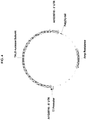
- an mRNA expression vector was synthesized that included the 5' and 3' UTRs from either At1G09740 (SEQ ID NOS:10 and 11), At5G28050 (SEQ ID NOS: 12 and 13 (comparative), actin (SEQ ID NOS:14 and 15) (comparative), or At4G16190 (SEQ ID NOS:16 and 17) (comparative) ( FIG. 3 ).
- the effects of adding these UTRs to the expression constructs was assessed to determine the level of increased stability and/or translational efficiency for the nuclease or nuclease mRNA, as measured by NHEJ frequencies.
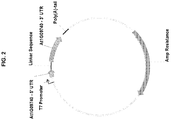
- the pSP72 plasmid (Promega; Madison, WI) ( FIG. 2 ) was modified using restriction enzymes to insert a synthesized cassette (Integrated DNA Technologies; Coralville, IA) containing: (i) 5' UTR sequence, (ii) linker sequence, and (iii) 3' UTR sequence.
- This cassette was synthesized and ligated into the modified pSP72 utilizing sticky end restriction site ligation. After verification in E. coli, this plasmid was subjected to restriction enzyme digests followed by ligation of the TALE-nuclease subunits to yield the desired product ( FIG. 4 ).
- Example 4 Increased NHEJ frequency in N. benthamiana protoplasts using expression vectors containing 5' and 3' UTRs
- TALE-nuclease activity at endogenous target sites in N. benthamiana was measured by expressing the TALE-nucleases operably linked to the 5' and 3' UTRs from either At1G09740 (SEQ ID NOS:10 and 11), At5G28050 (SEQ ID NOS:12 and 13) (comparative), actin (SEQ ID NOS:14 and 15) (comparative), or At4G16190 (SEQ ID NOS:16 and 17) (comparative) in protoplasts and subsequently surveying the target sites for mutations introduced by NHEJ. Methods for protoplast preparation were performed as described elsewhere ( Wright et al., Plant J. 44:693-705, 2005 ).
- CTAB- hexadecyltrimethylammonium bromide-
- a 235-bp fragment encompassing the TALE-nuclease recognition site was amplified by PCR. Sequencing reads with insertion/deletion (indel) mutations in the spacer region were considered to be derived from imprecise repair of a cleaved TALE-nuclease recognition site by NHEJ. Mutagenesis frequency was calculated as the number of sequencing reads with NHEJ mutations out of the total sequencing reads.
- TALE-nucleases were delivered as DNA with the At1G09740 UTRs, a NHEJ frequency of 77.3% was observed at the ALS2 loci, as compared to 27.1% for transformation in which the TALE-nuclease-encoding DNA was delivered with the At5G28050 UTRs, and 70.7% for transformations in which the TALE-nuclease-encoding DNA did not contain the UTRs.
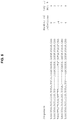
- Examples of TALE-nuclease-induced mutations at ALS2 are shown in FIGS. 5 and 6 .
- a summary of mutation frequencies from all four UTR pairs is shown in FIG. 7 .
- Example 5 Decreased insertion frequencies when TALE-nucleases are delivered by mRNA
Landscapes
- Health & Medical Sciences (AREA)
- Life Sciences & Earth Sciences (AREA)
- Genetics & Genomics (AREA)
- Engineering & Computer Science (AREA)
- Chemical & Material Sciences (AREA)
- Organic Chemistry (AREA)
- Wood Science & Technology (AREA)
- Zoology (AREA)
- Bioinformatics & Cheminformatics (AREA)
- Biomedical Technology (AREA)
- Biotechnology (AREA)
- General Engineering & Computer Science (AREA)
- Molecular Biology (AREA)
- Biochemistry (AREA)
- General Health & Medical Sciences (AREA)
- Microbiology (AREA)
- Plant Pathology (AREA)
- Physics & Mathematics (AREA)
- Biophysics (AREA)
- Cell Biology (AREA)
- Developmental Biology & Embryology (AREA)
- Medicinal Chemistry (AREA)
- Environmental Sciences (AREA)
- Botany (AREA)
- Breeding Of Plants And Reproduction By Means Of Culturing (AREA)
- Micro-Organisms Or Cultivation Processes Thereof (AREA)
- Peptides Or Proteins (AREA)
Claims (12)
- Nukleinsäure, umfassend: (a) eine Strukturcodiersequenz, die eine selten schneidende Endonuklease oder eine Untereinheit einer selten schneidenden Endonuklease codiert; und (b) eine 5'-UTR (Untranslated Region), eine 3'-UTR oder sowohl eine 5'-UTR als auch eine 3'-UTR, wobei die 5'-UTR, 3'-UTR oder 5'-UTR und 3'-UTR in operativer Verknüpfung mit der Strukturcodiersequenz stehen, wobei die 5'-UTR die Nukleinsäuresequenz gemäß SEQ ID NO:10 oder eine Nukleinsäuresequenz mit einer Identität von wenigstens 95 Prozent mit SEQ ID NO:10 und die 3'-UTR die Nukleinsäuresequenz gemäß SEQ ID NO:11 oder eine Nukleinsäuresequenz mit einer Identität von wenigstens 95 Prozent mit SEQ ID NO:11 umfasst.
- Nukleinsäure nach Anspruch 1, wo es sich bei der selten schneidenden Endonuklease um eine transkriptionsaktivatorähnliche Effektor-Endonuklease, eine Zinkfinger-Nuklease, eine Meganuklease oder eine programmierbare RNA-geführte Endonuklease handelt.
- Nukleinsäure nach einem vorhergehenden Anspruch, wobei die Nukleinsäure ferner einen Promotor in operativer Verknüpfung mit der Strukturcodiersequenz umfasst.
- Nukleinsäure nach einem vorhergehenden Anspruch, wobei es sich bei der Nukleinsäure um eine mRNA (messenger RNA) handelt oder wobei es sich bei der Nukleinsäure um eine DNA handelt.
- Expressionsvektor, umfassend die Nukleinsäure nach einem vorhergehenden Anspruch.
- Verfahren zur Synthese eines Expressionsvektors, umfassend In-operative-Verknüpfung-miteinander-Bringen: (a) einer Promotorsequenz; (b) einer Strukturcodiersequenz; und (c) einer 5'-UTR-Nukleinsäuresequenz mit einer Identität von wenigstens 90% mit SEQ ID NO:10 oder einer 3'-UTR-Nukleinsäuresequenz mit einer Identität von wenigstens 90% mit SEQ ID NO:11.
- Verfahren zur Veränderung des genomischen Materials einer Pflanze, eines Pflanzenteils bzw. einer Pflanzenzelle, umfassend Einführen einer Nukleinsäure gemäß einem der Ansprüche 1 bis 4 in die Pflanze, den Pflanzenteil bzw. die Pflanzenzelle durch Transformation.
- Verfahren nach Anspruch 7, wobei es sich bei der Pflanze, den Pflanzenteil bzw. der Pflanzenzelle um eine dikotyle Pflanze, einen dikotylen Pflanzenteil bzw. eine dikotyle Pflanzenzelle handelt, vorzugsweise wobei die dikotyle Pflanze, der dikotyle Pflanzenteil bzw. die dikotyle Pflanzenzelle aus der Familie Brassicaceae, Solanaceae, Fabaceae oder Roseacaeae stammt.
- Verfahren nach Anspruch 7, wobei es sich bei der Pflanze, den Pflanzenteil bzw. der Pflanzenzelle um eine monokotyle Pflanze, einen monokotylen Pflanzenteil bzw. eine monokotyle Pflanzenzelle handelt, vorzugsweise wobei die monokotyle Pflanze, der monokotyle Pflanzenteil bzw. die monokotyle Pflanzenzelle aus der Familie Poaceae oder Liliaceae stammt.
- Verfahren nach einem der Ansprüche 7 bis 9, wobei das Einführen durch Polyethylenglykol (PEG) vermittelte Transformation, durch Elektroporation vermittelte Transformation oder per Genkanone vermittelte Transformation der Nukleinsäure umfasst.
- Verfahren nach einem der Ansprüche 7 bis 10, wobei transiente Expression der selten schneidenden Endonuklease oder Untereinheit der selten schneidenden Endonuklease zu stellengerichteter Mutagenese an der anvisierten Sequenz führt.
- Verfahren nach einem der Ansprüche 7 bis 11, ferner umfassend Regenerieren der Pflanzenzelle bzw. des Pflanzenteils zu einer Pflanze.
Applications Claiming Priority (3)
| Application Number | Priority Date | Filing Date | Title |
|---|---|---|---|
| US201562219842P | 2015-09-17 | 2015-09-17 | |
| US15/056,544 US10837024B2 (en) | 2015-09-17 | 2016-02-29 | Modifying messenger RNA stability in plant transformations |
| PCT/IB2016/055554 WO2017046772A1 (en) | 2015-09-17 | 2016-09-16 | Modifying messenger rna stability in plant transformations |
Publications (2)
| Publication Number | Publication Date |
|---|---|
| EP3350329A1 EP3350329A1 (de) | 2018-07-25 |
| EP3350329B1 true EP3350329B1 (de) | 2021-04-21 |
Family
ID=58276743
Family Applications (1)
| Application Number | Title | Priority Date | Filing Date |
|---|---|---|---|
| EP16770990.6A Active EP3350329B1 (de) | 2015-09-17 | 2016-09-16 | Modifizierung der mrna-stabilität bei pflanzentransformationen |
Country Status (8)
| Country | Link |
|---|---|
| US (1) | US10837024B2 (de) |
| EP (1) | EP3350329B1 (de) |
| JP (1) | JP6924181B2 (de) |
| CN (1) | CN108603195A (de) |
| AU (1) | AU2016325097B2 (de) |
| BR (1) | BR112018005142A2 (de) |
| CA (1) | CA2998825C (de) |
| WO (1) | WO2017046772A1 (de) |
Families Citing this family (3)
| Publication number | Priority date | Publication date | Assignee | Title |
|---|---|---|---|---|
| JPWO2019131426A1 (ja) * | 2017-12-26 | 2021-02-18 | 国立大学法人徳島大学 | 電気穿孔法による植物組織への直接核酸導入法およびその成果物 |
| US20240175048A1 (en) * | 2021-02-25 | 2024-05-30 | Riboz, Llc | Engineered expression constructs to increase protein expression from synthetic ribonucleic acid (rna) |
| CN121725892B (zh) * | 2026-02-13 | 2026-07-07 | 北京悦康科创医药科技股份有限公司 | 信使rna稳定性的预测方法、模型、装置、设备及介质 |
Family Cites Families (83)
| Publication number | Priority date | Publication date | Assignee | Title |
|---|---|---|---|---|
| US4179337A (en) | 1973-07-20 | 1979-12-18 | Davis Frank F | Non-immunogenic polypeptides |
| US4535060A (en) | 1983-01-05 | 1985-08-13 | Calgene, Inc. | Inhibition resistant 5-enolpyruvyl-3-phosphoshikimate synthetase, production and use |
| US4761373A (en) | 1984-03-06 | 1988-08-02 | Molecular Genetics, Inc. | Herbicide resistance in plants |
| US4683195A (en) | 1986-01-30 | 1987-07-28 | Cetus Corporation | Process for amplifying, detecting, and/or-cloning nucleic acid sequences |
| US4940835A (en) | 1985-10-29 | 1990-07-10 | Monsanto Company | Glyphosate-resistant plants |
| CA1293460C (en) | 1985-10-07 | 1991-12-24 | Brian Lee Sauer | Site-specific recombination of dna in yeast |
| US4810648A (en) | 1986-01-08 | 1989-03-07 | Rhone Poulenc Agrochimie | Haloarylnitrile degrading gene, its use, and cells containing the gene |
| ATE57390T1 (de) | 1986-03-11 | 1990-10-15 | Plant Genetic Systems Nv | Durch gentechnologie erhaltene und gegen glutaminsynthetase-inhibitoren resistente pflanzenzellen. |
| US4975374A (en) | 1986-03-18 | 1990-12-04 | The General Hospital Corporation | Expression of wild type and mutant glutamine synthetase in foreign hosts |
| US5276268A (en) | 1986-08-23 | 1994-01-04 | Hoechst Aktiengesellschaft | Phosphinothricin-resistance gene, and its use |
| US5273894A (en) | 1986-08-23 | 1993-12-28 | Hoechst Aktiengesellschaft | Phosphinothricin-resistance gene, and its use |
| US5013659A (en) | 1987-07-27 | 1991-05-07 | E. I. Du Pont De Nemours And Company | Nucleic acid fragment encoding herbicide resistant plant acetolactate synthase |
| US5006333A (en) | 1987-08-03 | 1991-04-09 | Ddi Pharmaceuticals, Inc. | Conjugates of superoxide dismutase coupled to high molecular weight polyalkylene glycols |
| US5162602A (en) | 1988-11-10 | 1992-11-10 | Regents Of The University Of Minnesota | Corn plants tolerant to sethoxydim and haloxyfop herbicides |
| US5501967A (en) | 1989-07-26 | 1996-03-26 | Mogen International, N.V./Rijksuniversiteit Te Leiden | Process for the site-directed integration of DNA into the genome of plants |
| US5484956A (en) | 1990-01-22 | 1996-01-16 | Dekalb Genetics Corporation | Fertile transgenic Zea mays plant comprising heterologous DNA encoding Bacillus thuringiensis endotoxin |
| US5204253A (en) | 1990-05-29 | 1993-04-20 | E. I. Du Pont De Nemours And Company | Method and apparatus for introducing biological substances into living cells |
| US5767366A (en) | 1991-02-19 | 1998-06-16 | Louisiana State University Board Of Supervisors, A Governing Body Of Louisiana State University Agricultural And Mechanical College | Mutant acetolactate synthase gene from Ararbidopsis thaliana for conferring imidazolinone resistance to crop plants |
| US5487994A (en) | 1992-04-03 | 1996-01-30 | The Johns Hopkins University | Insertion and deletion mutants of FokI restriction endonuclease |
| US5436150A (en) | 1992-04-03 | 1995-07-25 | The Johns Hopkins University | Functional domains in flavobacterium okeanokoities (foki) restriction endonuclease |
| US5792640A (en) | 1992-04-03 | 1998-08-11 | The Johns Hopkins University | General method to clone hybrid restriction endonucleases using lig gene |
| US5356802A (en) | 1992-04-03 | 1994-10-18 | The Johns Hopkins University | Functional domains in flavobacterium okeanokoites (FokI) restriction endonuclease |
| DK0604662T3 (da) | 1992-07-07 | 2008-10-20 | Japan Tobacco Inc | Fremgangsmåde til transformering af monocotyledon |
| EP0682699B1 (de) | 1993-02-12 | 2003-05-07 | The Johns-Hopkins University | FUNKTIONELLE DOMÄNEN DER RESTRIKTIONSENDONUKLEASEN AUS -i(FLAVOBAKTERIUM OKEANOKOITES)(FOKI) |
| US6808904B2 (en) | 1994-06-16 | 2004-10-26 | Syngenta Participations Ag | Herbicide-tolerant protox genes produced by DNA shuffling |
| US7285416B2 (en) | 2000-01-24 | 2007-10-23 | Gendaq Limited | Regulated gene expression in plants |
| US6326166B1 (en) | 1995-12-29 | 2001-12-04 | Massachusetts Institute Of Technology | Chimeric DNA-binding proteins |
| US5853973A (en) | 1995-04-20 | 1998-12-29 | American Cyanamid Company | Structure based designed herbicide resistant products |
| US6084155A (en) | 1995-06-06 | 2000-07-04 | Novartis Ag | Herbicide-tolerant protoporphyrinogen oxidase ("protox") genes |
| US6051409A (en) * | 1995-09-25 | 2000-04-18 | Novartis Finance Corporation | Method for achieving integration of exogenous DNA delivered by non-biological means to plant cells |
| JPH10117776A (ja) | 1996-10-22 | 1998-05-12 | Japan Tobacco Inc | インディカイネの形質転換方法 |
| GB9819693D0 (en) | 1998-09-10 | 1998-11-04 | Zeneca Ltd | Glyphosate formulation |
| US6534261B1 (en) | 1999-01-12 | 2003-03-18 | Sangamo Biosciences, Inc. | Regulation of endogenous gene expression in cells using zinc finger proteins |
| US7070934B2 (en) | 1999-01-12 | 2006-07-04 | Sangamo Biosciences, Inc. | Ligand-controlled regulation of endogenous gene expression |
| US7013219B2 (en) | 1999-01-12 | 2006-03-14 | Sangamo Biosciences, Inc. | Regulation of endogenous gene expression in cells using zinc finger proteins |
| AU2982900A (en) | 1999-02-03 | 2000-08-25 | Children's Medical Center Corporation | Gene repair involving the induction of double-stranded dna cleavage at a chromosomal target site |
| US6451732B1 (en) | 1999-06-04 | 2002-09-17 | Syngenta, Limited | Herbicidal compositions of glyphosate trimesium |
| US7067722B2 (en) | 1999-08-26 | 2006-06-27 | Monsanto Technology Llc | Nucleic acid sequences and methods of use for the production of plants with modified polyunsaturated fatty acids |
| EP1276859B1 (de) | 2000-04-28 | 2007-02-07 | Sangamo Biosciences Inc. | Gezielten modifikation der chromatinstruktur |
| US6368227B1 (en) | 2000-11-17 | 2002-04-09 | Steven Olson | Method of swinging on a swing |
| US7273923B2 (en) | 2001-01-22 | 2007-09-25 | Sangamo Biosciences, Inc. | Zinc finger proteins for DNA binding and gene regulation in plants |
| US7262054B2 (en) | 2002-01-22 | 2007-08-28 | Sangamo Biosciences, Inc. | Zinc finger proteins for DNA binding and gene regulation in plants |
| WO2009095742A1 (en) | 2008-01-31 | 2009-08-06 | Cellectis | New i-crei derived single-chain meganuclease and uses thereof |
| EP1504092B2 (de) | 2002-03-21 | 2014-06-25 | Sangamo BioSciences, Inc. | Verfahren und zusammensetzungen zur verwendung von zinkfinger-endonukleasen zur verbesserung der homologen rekombination |
| US7361635B2 (en) | 2002-08-29 | 2008-04-22 | Sangamo Biosciences, Inc. | Simultaneous modulation of multiple genes |
| US20060206949A1 (en) | 2003-01-28 | 2006-09-14 | Sylvain Arnould | Custom-made meganuclease and use thereof |
| US7888121B2 (en) | 2003-08-08 | 2011-02-15 | Sangamo Biosciences, Inc. | Methods and compositions for targeted cleavage and recombination |
| US7189691B2 (en) | 2004-04-01 | 2007-03-13 | The Administrators Of The Tulane Educational Fund | Methods and compositions for treating leukemia |
| WO2007060495A1 (en) | 2005-10-25 | 2007-05-31 | Cellectis | I-crei homing endonuclease variants having novel cleavage specificity and use thereof |
| US20090060921A1 (en) | 2006-01-17 | 2009-03-05 | Biolex Therapeutics, Inc. | Glycan-optimized anti-cd20 antibodies |
| AR059811A1 (es) | 2006-03-10 | 2008-04-30 | Monsanto Technology Llc | Semillas de soja, composiciones de soja, y metodos para producirlas |
| WO2008010009A1 (en) | 2006-07-18 | 2008-01-24 | Cellectis | Meganuclease variants cleaving a dna target sequence from a rag gene and uses thereof |
| WO2008141806A1 (en) | 2007-05-21 | 2008-11-27 | Bayer Bioscience N.V. | Methods and means for producing glycoproteins with altered glycosylation pattern in higher plants |
| US8563314B2 (en) | 2007-09-27 | 2013-10-22 | Sangamo Biosciences, Inc. | Methods and compositions for modulating PD1 |
| AU2008304459B2 (en) | 2007-09-28 | 2013-10-03 | Two Blades Foundation | Bs3 resistance gene and methods of use |
| BRPI0921909A2 (pt) | 2008-11-10 | 2017-06-13 | Two Blades Found | métodos para fabricar um promotor indutível por patógeno, e um gene r, para intensificar a resistência de uma planta, e para identificar uma caixa upa, promotor indutível por patógeno, cassete de expressão, molécula de ácido nucléico, planta transformada, semente da planta transformada, célula hospedeira. |
| US20110239315A1 (en) | 2009-01-12 | 2011-09-29 | Ulla Bonas | Modular dna-binding domains and methods of use |
| EP2206723A1 (de) | 2009-01-12 | 2010-07-14 | Bonas, Ulla | Modulare DNA-bindende Domänen |
| DE112010000876T5 (de) | 2009-02-03 | 2012-09-13 | Wisconsin Alumni Research Foundation | Steuerung Kälte-induzierten Süßens und Verringerung von Acrylamid-Niveaus in Kartoffeln oder Süßkartoffeln |
| US8772008B2 (en) | 2009-05-18 | 2014-07-08 | Sangamo Biosciences, Inc. | Methods and compositions for increasing nuclease activity |
| EP2443234B1 (de) | 2009-06-15 | 2018-08-15 | Icon Genetics GmbH | Nicotiana benthamiana-pflanzen mit mangelnder xylosyltransferase-aktivität |
| CN105557503A (zh) | 2009-07-08 | 2016-05-11 | 密苏里大学管委会 | 利用传统大豆育种技术培育高油酸大豆的方法 |
| US20120178647A1 (en) | 2009-08-03 | 2012-07-12 | The General Hospital Corporation | Engineering of zinc finger arrays by context-dependent assembly |
| CN102612565B (zh) | 2009-08-11 | 2016-04-06 | 桑格摩生物科学股份有限公司 | 靶向修饰的纯合生物体 |
| CN102782140B (zh) | 2009-10-22 | 2016-04-13 | 陶氏农业科学有限公司 | 靶向参与脂肪酸生物合成的植物基因的工程改造锌指蛋白 |
| US8956828B2 (en) | 2009-11-10 | 2015-02-17 | Sangamo Biosciences, Inc. | Targeted disruption of T cell receptor genes using engineered zinc finger protein nucleases |
| WO2011064751A1 (en) | 2009-11-27 | 2011-06-03 | Basf Plant Science Company Gmbh | Chimeric endonucleases and uses thereof |
| AU2010325563B2 (en) | 2009-11-27 | 2017-02-02 | Basf Plant Science Company Gmbh | Chimeric endonucleases and uses thereof |
| CN102725412B (zh) | 2009-11-27 | 2017-09-22 | 巴斯夫植物科学有限公司 | 优化的内切核酸酶及其用途 |
| PT2816112T (pt) | 2009-12-10 | 2018-11-20 | Univ Iowa State Res Found Inc | Modificação do adn modificada pelo efector tal |
| US20110203012A1 (en) | 2010-01-21 | 2011-08-18 | Dotson Stanton B | Methods and compositions for use of directed recombination in plant breeding |
| JP6137596B2 (ja) | 2010-02-08 | 2017-05-31 | サンガモ セラピューティクス, インコーポレイテッド | 遺伝子操作された切断ハーフドメイン |
| US9255259B2 (en) | 2010-02-09 | 2016-02-09 | Sangamo Biosciences, Inc. | Targeted genomic modification with partially single-stranded donor molecules |
| US20130198897A1 (en) | 2010-03-22 | 2013-08-01 | Philip Morris Products S.A. | Modifying enzyme activity in plants |
| US9567573B2 (en) | 2010-04-26 | 2017-02-14 | Sangamo Biosciences, Inc. | Genome editing of a Rosa locus using nucleases |
| AU2011256838B2 (en) | 2010-05-17 | 2014-10-09 | Sangamo Therapeutics, Inc. | Novel DNA-binding proteins and uses thereof |
| EP2392208B1 (de) | 2010-06-07 | 2016-05-04 | Helmholtz Zentrum München Deutsches Forschungszentrum für Gesundheit und Umwelt (GmbH) | Fusionsproteine, die eine DNA-Bindungsdomäne eines TAL-Effektorproteins und eine unspezifische Spaltungsdomäne einer Restriktionsnuklease umfassen, und deren Verwendung |
| WO2011159369A1 (en) | 2010-06-14 | 2011-12-22 | Iowa State University Research Foundation, Inc. | Nuclease activity of tal effector and foki fusion protein |
| PY1202285A (es) | 2011-01-14 | 2015-11-02 | Univ Missouri | Método para desarrollar granos de soja con alto contenido de ácido oleico usando técnicas convencionales de reproducción de la soja |
| US10196664B2 (en) | 2011-10-04 | 2019-02-05 | Icon Genetics Gmbh | Nicotiana benthamiana plants deficient in fucosyltransferase activity |
| BR112015004995B1 (pt) * | 2012-09-07 | 2023-05-02 | Sangamo Biosciences, Inc. | Método para modificação do genoma de uma célula, uso de uma célula, semente ou planta obtida pelo referido método e nuclease de dedo de zinco sítio específica |
| UA118090C2 (uk) | 2012-09-07 | 2018-11-26 | ДАУ АГРОСАЙЄНСІЗ ЕлЕлСі | Спосіб інтегрування послідовності нуклеїнової кислоти, що представляє інтерес, у ген fad2 у клітині сої та специфічний для локусу fad2 білок, що зв'язується, здатний індукувати спрямований розрив |
| US20160145631A1 (en) | 2013-06-14 | 2016-05-26 | Cellectis | Methods for non-transgenic genome editing in plants |
-
2016
- 2016-02-29 US US15/056,544 patent/US10837024B2/en active Active
- 2016-09-16 CN CN201680065901.6A patent/CN108603195A/zh active Pending
- 2016-09-16 AU AU2016325097A patent/AU2016325097B2/en active Active
- 2016-09-16 BR BR112018005142A patent/BR112018005142A2/pt not_active Application Discontinuation
- 2016-09-16 JP JP2018514319A patent/JP6924181B2/ja active Active
- 2016-09-16 EP EP16770990.6A patent/EP3350329B1/de active Active
- 2016-09-16 CA CA2998825A patent/CA2998825C/en active Active
- 2016-09-16 WO PCT/IB2016/055554 patent/WO2017046772A1/en not_active Ceased
Non-Patent Citations (1)
| Title |
|---|
| THOMAS J. STODDARD ET AL: "Targeted Mutagenesis in Plant Cells through Transformation of Sequence-Specific Nuclease mRNA", PLOS ONE, vol. 11, no. 5, 13 May 2016 (2016-05-13), pages e0154634, XP055488392, DOI: 10.1371/journal.pone.0154634 * |
Also Published As
| Publication number | Publication date |
|---|---|
| US20170081672A1 (en) | 2017-03-23 |
| JP2018527004A (ja) | 2018-09-20 |
| EP3350329A1 (de) | 2018-07-25 |
| US10837024B2 (en) | 2020-11-17 |
| AU2016325097B2 (en) | 2022-03-24 |
| WO2017046772A1 (en) | 2017-03-23 |
| CN108603195A (zh) | 2018-09-28 |
| CA2998825A1 (en) | 2017-03-23 |
| AU2016325097A1 (en) | 2018-04-12 |
| JP6924181B2 (ja) | 2021-08-25 |
| BR112018005142A2 (pt) | 2019-10-01 |
| CA2998825C (en) | 2023-12-12 |
Similar Documents
| Publication | Publication Date | Title |
|---|---|---|
| CN107027313B (zh) | 用于多元rna引导的基因组编辑和其它rna技术的方法和组合物 | |
| WO2017054721A1 (en) | A CRISPR/Cas9 System for high efficient site-directed altering of plant genomes | |
| JP2019205470A (ja) | CRISPR/Casシステムを使用した植物ゲノム操作 | |
| Singha et al. | Harnessing tissue-specific genome editing in plants through CRISPR/Cas system: current state and future prospects | |
| AU2016309392A1 (en) | Method for obtaining glyphosate-resistant rice by site-directed nucleotide substitution | |
| CN112852791A (zh) | 腺嘌呤碱基编辑器及其相关生物材料与应用 | |
| CN116286742B (zh) | CasD蛋白、CRISPR/CasD基因编辑系统及其在植物基因编辑中的应用 | |
| JP2022511508A (ja) | ゲノム編集による遺伝子サイレンシング | |
| EP3510160A1 (de) | Zusammensetzungen und verfahren zur regulierung der genexpression für gezielte mutagenese | |
| WO2016138021A1 (en) | Haploid induction | |
| CN106609282A (zh) | 一种用于植物基因组定点碱基替换的载体 | |
| US20190249183A1 (en) | Multiplex gene targeting in plants | |
| CA2998825C (en) | Modifying messenger rna stability in plant transformations | |
| US12371702B2 (en) | Improving agronomic characteristics in maize by modification of endogenous mads box transcription factors | |
| CN115916974A (zh) | 用于产生具有最小化的生物质副产物的植物的方法及其相关的植物 | |
| Bilichak et al. | Genetic engineering of plants using Zn fingers, TALENs, and CRISPRs | |
| US20160222395A1 (en) | Agrobacterium-mediated genome modification without t-dna integration | |
| Grützner et al. | Addition of Multiple Introns to a Cas9 Gene Results in Dramatic Improvement in Efficiency for Generation of Gene Knockouts in Plants | |
| WO2020051283A1 (en) | Generation of heritably gene-edited plants without tissue culture | |
| de Oliveira et al. | EDITING GENOMES VIA CRISPR/CAS9 AND APPLICATIONS IN MAIZE IMPROVEMENT | |
| CN115413297A (zh) | 启动子抑制 | |
| CA3043774C (en) | A method for base editing in plants | |
| CN105087591A (zh) | 水稻根尖特异表达启动子POsRo3 |
Legal Events
| Date | Code | Title | Description |
|---|---|---|---|
| STAA | Information on the status of an ep patent application or granted ep patent |
Free format text: STATUS: THE INTERNATIONAL PUBLICATION HAS BEEN MADE |
|
| PUAI | Public reference made under article 153(3) epc to a published international application that has entered the european phase |
Free format text: ORIGINAL CODE: 0009012 |
|
| STAA | Information on the status of an ep patent application or granted ep patent |
Free format text: STATUS: REQUEST FOR EXAMINATION WAS MADE |
|
| 17P | Request for examination filed |
Effective date: 20180417 |
|
| AK | Designated contracting states |
Kind code of ref document: A1 Designated state(s): AL AT BE BG CH CY CZ DE DK EE ES FI FR GB GR HR HU IE IS IT LI LT LU LV MC MK MT NL NO PL PT RO RS SE SI SK SM TR |
|
| AX | Request for extension of the european patent |
Extension state: BA ME |
|
| DAV | Request for validation of the european patent (deleted) | ||
| DAX | Request for extension of the european patent (deleted) | ||
| STAA | Information on the status of an ep patent application or granted ep patent |
Free format text: STATUS: EXAMINATION IS IN PROGRESS |
|
| 17Q | First examination report despatched |
Effective date: 20190329 |
|
| GRAP | Despatch of communication of intention to grant a patent |
Free format text: ORIGINAL CODE: EPIDOSNIGR1 |
|
| STAA | Information on the status of an ep patent application or granted ep patent |
Free format text: STATUS: GRANT OF PATENT IS INTENDED |
|
| INTG | Intention to grant announced |
Effective date: 20201111 |
|
| GRAS | Grant fee paid |
Free format text: ORIGINAL CODE: EPIDOSNIGR3 |
|
| GRAA | (expected) grant |
Free format text: ORIGINAL CODE: 0009210 |
|
| STAA | Information on the status of an ep patent application or granted ep patent |
Free format text: STATUS: THE PATENT HAS BEEN GRANTED |
|
| AK | Designated contracting states |
Kind code of ref document: B1 Designated state(s): AL AT BE BG CH CY CZ DE DK EE ES FI FR GB GR HR HU IE IS IT LI LT LU LV MC MK MT NL NO PL PT RO RS SE SI SK SM TR |
|
| REG | Reference to a national code |
Ref country code: GB Ref legal event code: FG4D |
|
| REG | Reference to a national code |
Ref country code: CH Ref legal event code: EP |
|
| REG | Reference to a national code |
Ref country code: DE Ref legal event code: R096 Ref document number: 602016056516 Country of ref document: DE Ref country code: IE Ref legal event code: FG4D |
|
| REG | Reference to a national code |
Ref country code: AT Ref legal event code: REF Ref document number: 1384689 Country of ref document: AT Kind code of ref document: T Effective date: 20210515 |
|
| REG | Reference to a national code |
Ref country code: LT Ref legal event code: MG9D |
|
| REG | Reference to a national code |
Ref country code: AT Ref legal event code: MK05 Ref document number: 1384689 Country of ref document: AT Kind code of ref document: T Effective date: 20210421 |
|
| REG | Reference to a national code |
Ref country code: NL Ref legal event code: MP Effective date: 20210421 |
|
| PG25 | Lapsed in a contracting state [announced via postgrant information from national office to epo] |
Ref country code: FI Free format text: LAPSE BECAUSE OF FAILURE TO SUBMIT A TRANSLATION OF THE DESCRIPTION OR TO PAY THE FEE WITHIN THE PRESCRIBED TIME-LIMIT Effective date: 20210421 Ref country code: NL Free format text: LAPSE BECAUSE OF FAILURE TO SUBMIT A TRANSLATION OF THE DESCRIPTION OR TO PAY THE FEE WITHIN THE PRESCRIBED TIME-LIMIT Effective date: 20210421 Ref country code: LT Free format text: LAPSE BECAUSE OF FAILURE TO SUBMIT A TRANSLATION OF THE DESCRIPTION OR TO PAY THE FEE WITHIN THE PRESCRIBED TIME-LIMIT Effective date: 20210421 Ref country code: HR Free format text: LAPSE BECAUSE OF FAILURE TO SUBMIT A TRANSLATION OF THE DESCRIPTION OR TO PAY THE FEE WITHIN THE PRESCRIBED TIME-LIMIT Effective date: 20210421 Ref country code: BG Free format text: LAPSE BECAUSE OF FAILURE TO SUBMIT A TRANSLATION OF THE DESCRIPTION OR TO PAY THE FEE WITHIN THE PRESCRIBED TIME-LIMIT Effective date: 20210721 Ref country code: AT Free format text: LAPSE BECAUSE OF FAILURE TO SUBMIT A TRANSLATION OF THE DESCRIPTION OR TO PAY THE FEE WITHIN THE PRESCRIBED TIME-LIMIT Effective date: 20210421 |
|
| PG25 | Lapsed in a contracting state [announced via postgrant information from national office to epo] |
Ref country code: LV Free format text: LAPSE BECAUSE OF FAILURE TO SUBMIT A TRANSLATION OF THE DESCRIPTION OR TO PAY THE FEE WITHIN THE PRESCRIBED TIME-LIMIT Effective date: 20210421 Ref country code: IS Free format text: LAPSE BECAUSE OF FAILURE TO SUBMIT A TRANSLATION OF THE DESCRIPTION OR TO PAY THE FEE WITHIN THE PRESCRIBED TIME-LIMIT Effective date: 20210821 Ref country code: GR Free format text: LAPSE BECAUSE OF FAILURE TO SUBMIT A TRANSLATION OF THE DESCRIPTION OR TO PAY THE FEE WITHIN THE PRESCRIBED TIME-LIMIT Effective date: 20210722 Ref country code: PT Free format text: LAPSE BECAUSE OF FAILURE TO SUBMIT A TRANSLATION OF THE DESCRIPTION OR TO PAY THE FEE WITHIN THE PRESCRIBED TIME-LIMIT Effective date: 20210823 Ref country code: PL Free format text: LAPSE BECAUSE OF FAILURE TO SUBMIT A TRANSLATION OF THE DESCRIPTION OR TO PAY THE FEE WITHIN THE PRESCRIBED TIME-LIMIT Effective date: 20210421 Ref country code: NO Free format text: LAPSE BECAUSE OF FAILURE TO SUBMIT A TRANSLATION OF THE DESCRIPTION OR TO PAY THE FEE WITHIN THE PRESCRIBED TIME-LIMIT Effective date: 20210721 Ref country code: RS Free format text: LAPSE BECAUSE OF FAILURE TO SUBMIT A TRANSLATION OF THE DESCRIPTION OR TO PAY THE FEE WITHIN THE PRESCRIBED TIME-LIMIT Effective date: 20210421 Ref country code: SE Free format text: LAPSE BECAUSE OF FAILURE TO SUBMIT A TRANSLATION OF THE DESCRIPTION OR TO PAY THE FEE WITHIN THE PRESCRIBED TIME-LIMIT Effective date: 20210421 |
|
| REG | Reference to a national code |
Ref country code: DE Ref legal event code: R097 Ref document number: 602016056516 Country of ref document: DE |
|
| PG25 | Lapsed in a contracting state [announced via postgrant information from national office to epo] |
Ref country code: SM Free format text: LAPSE BECAUSE OF FAILURE TO SUBMIT A TRANSLATION OF THE DESCRIPTION OR TO PAY THE FEE WITHIN THE PRESCRIBED TIME-LIMIT Effective date: 20210421 Ref country code: SK Free format text: LAPSE BECAUSE OF FAILURE TO SUBMIT A TRANSLATION OF THE DESCRIPTION OR TO PAY THE FEE WITHIN THE PRESCRIBED TIME-LIMIT Effective date: 20210421 Ref country code: EE Free format text: LAPSE BECAUSE OF FAILURE TO SUBMIT A TRANSLATION OF THE DESCRIPTION OR TO PAY THE FEE WITHIN THE PRESCRIBED TIME-LIMIT Effective date: 20210421 Ref country code: DK Free format text: LAPSE BECAUSE OF FAILURE TO SUBMIT A TRANSLATION OF THE DESCRIPTION OR TO PAY THE FEE WITHIN THE PRESCRIBED TIME-LIMIT Effective date: 20210421 Ref country code: CZ Free format text: LAPSE BECAUSE OF FAILURE TO SUBMIT A TRANSLATION OF THE DESCRIPTION OR TO PAY THE FEE WITHIN THE PRESCRIBED TIME-LIMIT Effective date: 20210421 Ref country code: ES Free format text: LAPSE BECAUSE OF FAILURE TO SUBMIT A TRANSLATION OF THE DESCRIPTION OR TO PAY THE FEE WITHIN THE PRESCRIBED TIME-LIMIT Effective date: 20210421 Ref country code: RO Free format text: LAPSE BECAUSE OF FAILURE TO SUBMIT A TRANSLATION OF THE DESCRIPTION OR TO PAY THE FEE WITHIN THE PRESCRIBED TIME-LIMIT Effective date: 20210421 |
|
| PLBE | No opposition filed within time limit |
Free format text: ORIGINAL CODE: 0009261 |
|
| STAA | Information on the status of an ep patent application or granted ep patent |
Free format text: STATUS: NO OPPOSITION FILED WITHIN TIME LIMIT |
|
| 26N | No opposition filed |
Effective date: 20220124 |
|
| REG | Reference to a national code |
Ref country code: CH Ref legal event code: PL |
|
| REG | Reference to a national code |
Ref country code: BE Ref legal event code: MM Effective date: 20210930 |
|
| PG25 | Lapsed in a contracting state [announced via postgrant information from national office to epo] |
Ref country code: IS Free format text: LAPSE BECAUSE OF FAILURE TO SUBMIT A TRANSLATION OF THE DESCRIPTION OR TO PAY THE FEE WITHIN THE PRESCRIBED TIME-LIMIT Effective date: 20210821 Ref country code: MC Free format text: LAPSE BECAUSE OF FAILURE TO SUBMIT A TRANSLATION OF THE DESCRIPTION OR TO PAY THE FEE WITHIN THE PRESCRIBED TIME-LIMIT Effective date: 20210421 Ref country code: AL Free format text: LAPSE BECAUSE OF FAILURE TO SUBMIT A TRANSLATION OF THE DESCRIPTION OR TO PAY THE FEE WITHIN THE PRESCRIBED TIME-LIMIT Effective date: 20210421 |
|
| PG25 | Lapsed in a contracting state [announced via postgrant information from national office to epo] |
Ref country code: LU Free format text: LAPSE BECAUSE OF NON-PAYMENT OF DUE FEES Effective date: 20210916 Ref country code: IT Free format text: LAPSE BECAUSE OF FAILURE TO SUBMIT A TRANSLATION OF THE DESCRIPTION OR TO PAY THE FEE WITHIN THE PRESCRIBED TIME-LIMIT Effective date: 20210421 Ref country code: IE Free format text: LAPSE BECAUSE OF NON-PAYMENT OF DUE FEES Effective date: 20210916 Ref country code: BE Free format text: LAPSE BECAUSE OF NON-PAYMENT OF DUE FEES Effective date: 20210930 |
|
| PG25 | Lapsed in a contracting state [announced via postgrant information from national office to epo] |
Ref country code: LI Free format text: LAPSE BECAUSE OF NON-PAYMENT OF DUE FEES Effective date: 20210930 Ref country code: CH Free format text: LAPSE BECAUSE OF NON-PAYMENT OF DUE FEES Effective date: 20210930 |
|
| PG25 | Lapsed in a contracting state [announced via postgrant information from national office to epo] |
Ref country code: HU Free format text: LAPSE BECAUSE OF FAILURE TO SUBMIT A TRANSLATION OF THE DESCRIPTION OR TO PAY THE FEE WITHIN THE PRESCRIBED TIME-LIMIT; INVALID AB INITIO Effective date: 20160916 |
|
| PG25 | Lapsed in a contracting state [announced via postgrant information from national office to epo] |
Ref country code: CY Free format text: LAPSE BECAUSE OF FAILURE TO SUBMIT A TRANSLATION OF THE DESCRIPTION OR TO PAY THE FEE WITHIN THE PRESCRIBED TIME-LIMIT Effective date: 20210421 |
|
| P01 | Opt-out of the competence of the unified patent court (upc) registered |
Effective date: 20230527 |
|
| PG25 | Lapsed in a contracting state [announced via postgrant information from national office to epo] |
Ref country code: MK Free format text: LAPSE BECAUSE OF FAILURE TO SUBMIT A TRANSLATION OF THE DESCRIPTION OR TO PAY THE FEE WITHIN THE PRESCRIBED TIME-LIMIT Effective date: 20210421 |
|
| PG25 | Lapsed in a contracting state [announced via postgrant information from national office to epo] |
Ref country code: TR Free format text: LAPSE BECAUSE OF FAILURE TO SUBMIT A TRANSLATION OF THE DESCRIPTION OR TO PAY THE FEE WITHIN THE PRESCRIBED TIME-LIMIT Effective date: 20210421 |
|
| PG25 | Lapsed in a contracting state [announced via postgrant information from national office to epo] |
Ref country code: MT Free format text: LAPSE BECAUSE OF FAILURE TO SUBMIT A TRANSLATION OF THE DESCRIPTION OR TO PAY THE FEE WITHIN THE PRESCRIBED TIME-LIMIT Effective date: 20210421 |
|
| PGFP | Annual fee paid to national office [announced via postgrant information from national office to epo] |
Ref country code: FR Payment date: 20250908 Year of fee payment: 10 |
|
| PGFP | Annual fee paid to national office [announced via postgrant information from national office to epo] |
Ref country code: DE Payment date: 20251104 Year of fee payment: 10 |
|
| PGFP | Annual fee paid to national office [announced via postgrant information from national office to epo] |
Ref country code: GB Payment date: 20251016 Year of fee payment: 10 |