EP3345733B1 - Verfahren zum pelletieren von biomaterial-verbundstoffen - Google Patents
Verfahren zum pelletieren von biomaterial-verbundstoffen Download PDFInfo
- Publication number
- EP3345733B1 EP3345733B1 EP18158802.1A EP18158802A EP3345733B1 EP 3345733 B1 EP3345733 B1 EP 3345733B1 EP 18158802 A EP18158802 A EP 18158802A EP 3345733 B1 EP3345733 B1 EP 3345733B1
- Authority
- EP
- European Patent Office
- Prior art keywords
- pellets
- biomaterial
- slurry
- water
- polymer
- Prior art date
- Legal status (The legal status is an assumption and is not a legal conclusion. Google has not performed a legal analysis and makes no representation as to the accuracy of the status listed.)
- Active
Links
Images



Classifications
-
- B—PERFORMING OPERATIONS; TRANSPORTING
- B29—WORKING OF PLASTICS; WORKING OF SUBSTANCES IN A PLASTIC STATE IN GENERAL
- B29B—PREPARATION OR PRETREATMENT OF THE MATERIAL TO BE SHAPED; MAKING GRANULES OR PREFORMS; RECOVERY OF PLASTICS OR OTHER CONSTITUENTS OF WASTE MATERIAL CONTAINING PLASTICS
- B29B9/00—Making granules
- B29B9/02—Making granules by dividing preformed material
- B29B9/06—Making granules by dividing preformed material in the form of filamentary material, e.g. combined with extrusion
- B29B9/065—Making granules by dividing preformed material in the form of filamentary material, e.g. combined with extrusion under-water, e.g. underwater pelletizers
-
- B—PERFORMING OPERATIONS; TRANSPORTING
- B29—WORKING OF PLASTICS; WORKING OF SUBSTANCES IN A PLASTIC STATE IN GENERAL
- B29C—SHAPING OR JOINING OF PLASTICS; SHAPING OF MATERIAL IN A PLASTIC STATE, NOT OTHERWISE PROVIDED FOR; AFTER-TREATMENT OF THE SHAPED PRODUCTS, e.g. REPAIRING
- B29C71/00—After-treatment of articles without altering their shape; Apparatus therefor
-
- B—PERFORMING OPERATIONS; TRANSPORTING
- B29—WORKING OF PLASTICS; WORKING OF SUBSTANCES IN A PLASTIC STATE IN GENERAL
- B29C—SHAPING OR JOINING OF PLASTICS; SHAPING OF MATERIAL IN A PLASTIC STATE, NOT OTHERWISE PROVIDED FOR; AFTER-TREATMENT OF THE SHAPED PRODUCTS, e.g. REPAIRING
- B29C48/00—Extrusion moulding, i.e. expressing the moulding material through a die or nozzle which imparts the desired form; Apparatus therefor
- B29C48/25—Component parts, details or accessories; Auxiliary operations
- B29C48/255—Flow control means, e.g. valves
-
- B—PERFORMING OPERATIONS; TRANSPORTING
- B29—WORKING OF PLASTICS; WORKING OF SUBSTANCES IN A PLASTIC STATE IN GENERAL
- B29B—PREPARATION OR PRETREATMENT OF THE MATERIAL TO BE SHAPED; MAKING GRANULES OR PREFORMS; RECOVERY OF PLASTICS OR OTHER CONSTITUENTS OF WASTE MATERIAL CONTAINING PLASTICS
- B29B13/00—Conditioning or physical treatment of the material to be shaped
- B29B13/06—Conditioning or physical treatment of the material to be shaped by drying
- B29B13/065—Conditioning or physical treatment of the material to be shaped by drying of powder or pellets
-
- B—PERFORMING OPERATIONS; TRANSPORTING
- B29—WORKING OF PLASTICS; WORKING OF SUBSTANCES IN A PLASTIC STATE IN GENERAL
- B29B—PREPARATION OR PRETREATMENT OF THE MATERIAL TO BE SHAPED; MAKING GRANULES OR PREFORMS; RECOVERY OF PLASTICS OR OTHER CONSTITUENTS OF WASTE MATERIAL CONTAINING PLASTICS
- B29B7/00—Mixing; Kneading
- B29B7/74—Mixing; Kneading using other mixers or combinations of mixers, e.g. of dissimilar mixers ; Plant
- B29B7/7476—Systems, i.e. flow charts or diagrams; Plants
- B29B7/748—Plants
-
- B—PERFORMING OPERATIONS; TRANSPORTING
- B29—WORKING OF PLASTICS; WORKING OF SUBSTANCES IN A PLASTIC STATE IN GENERAL
- B29B—PREPARATION OR PRETREATMENT OF THE MATERIAL TO BE SHAPED; MAKING GRANULES OR PREFORMS; RECOVERY OF PLASTICS OR OTHER CONSTITUENTS OF WASTE MATERIAL CONTAINING PLASTICS
- B29B7/00—Mixing; Kneading
- B29B7/80—Component parts, details or accessories; Auxiliary operations
- B29B7/88—Adding charges, i.e. additives
- B29B7/90—Fillers or reinforcements, e.g. fibres
- B29B7/92—Wood chips or wood fibres
-
- B—PERFORMING OPERATIONS; TRANSPORTING
- B29—WORKING OF PLASTICS; WORKING OF SUBSTANCES IN A PLASTIC STATE IN GENERAL
- B29B—PREPARATION OR PRETREATMENT OF THE MATERIAL TO BE SHAPED; MAKING GRANULES OR PREFORMS; RECOVERY OF PLASTICS OR OTHER CONSTITUENTS OF WASTE MATERIAL CONTAINING PLASTICS
- B29B9/00—Making granules
- B29B9/02—Making granules by dividing preformed material
- B29B9/06—Making granules by dividing preformed material in the form of filamentary material, e.g. combined with extrusion
-
- B—PERFORMING OPERATIONS; TRANSPORTING
- B29—WORKING OF PLASTICS; WORKING OF SUBSTANCES IN A PLASTIC STATE IN GENERAL
- B29B—PREPARATION OR PRETREATMENT OF THE MATERIAL TO BE SHAPED; MAKING GRANULES OR PREFORMS; RECOVERY OF PLASTICS OR OTHER CONSTITUENTS OF WASTE MATERIAL CONTAINING PLASTICS
- B29B9/00—Making granules
- B29B9/12—Making granules characterised by structure or composition
-
- B—PERFORMING OPERATIONS; TRANSPORTING
- B29—WORKING OF PLASTICS; WORKING OF SUBSTANCES IN A PLASTIC STATE IN GENERAL
- B29B—PREPARATION OR PRETREATMENT OF THE MATERIAL TO BE SHAPED; MAKING GRANULES OR PREFORMS; RECOVERY OF PLASTICS OR OTHER CONSTITUENTS OF WASTE MATERIAL CONTAINING PLASTICS
- B29B9/00—Making granules
- B29B9/16—Auxiliary treatment of granules
-
- B—PERFORMING OPERATIONS; TRANSPORTING
- B29—WORKING OF PLASTICS; WORKING OF SUBSTANCES IN A PLASTIC STATE IN GENERAL
- B29C—SHAPING OR JOINING OF PLASTICS; SHAPING OF MATERIAL IN A PLASTIC STATE, NOT OTHERWISE PROVIDED FOR; AFTER-TREATMENT OF THE SHAPED PRODUCTS, e.g. REPAIRING
- B29C37/00—Component parts, details, accessories or auxiliary operations, not covered by group B29C33/00 or B29C35/00
- B29C37/0092—Drying moulded articles or half products, e.g. preforms, during or after moulding or cooling
-
- B—PERFORMING OPERATIONS; TRANSPORTING
- B29—WORKING OF PLASTICS; WORKING OF SUBSTANCES IN A PLASTIC STATE IN GENERAL
- B29C—SHAPING OR JOINING OF PLASTICS; SHAPING OF MATERIAL IN A PLASTIC STATE, NOT OTHERWISE PROVIDED FOR; AFTER-TREATMENT OF THE SHAPED PRODUCTS, e.g. REPAIRING
- B29C48/00—Extrusion moulding, i.e. expressing the moulding material through a die or nozzle which imparts the desired form; Apparatus therefor
- B29C48/14—Extrusion moulding, i.e. expressing the moulding material through a die or nozzle which imparts the desired form; Apparatus therefor characterised by the particular extruding conditions, e.g. in a modified atmosphere or by using vibration
- B29C48/147—Extrusion moulding, i.e. expressing the moulding material through a die or nozzle which imparts the desired form; Apparatus therefor characterised by the particular extruding conditions, e.g. in a modified atmosphere or by using vibration after the die nozzle
-
- C—CHEMISTRY; METALLURGY
- C08—ORGANIC MACROMOLECULAR COMPOUNDS; THEIR PREPARATION OR CHEMICAL WORKING-UP; COMPOSITIONS BASED THEREON
- C08B—POLYSACCHARIDES; DERIVATIVES THEREOF
- C08B1/00—Preparatory treatment of cellulose for making derivatives thereof, e.g. pre-treatment, pre-soaking, activation
-
- C—CHEMISTRY; METALLURGY
- C08—ORGANIC MACROMOLECULAR COMPOUNDS; THEIR PREPARATION OR CHEMICAL WORKING-UP; COMPOSITIONS BASED THEREON
- C08B—POLYSACCHARIDES; DERIVATIVES THEREOF
- C08B37/00—Preparation of polysaccharides not provided for in groups C08B1/00 - C08B35/00; Derivatives thereof
-
- F—MECHANICAL ENGINEERING; LIGHTING; HEATING; WEAPONS; BLASTING
- F26—DRYING
- F26B—DRYING SOLID MATERIALS OR OBJECTS BY REMOVING LIQUID THEREFROM
- F26B25/00—Details of general application not covered by group F26B21/00 or F26B23/00
- F26B25/001—Handling, e.g. loading or unloading arrangements
- F26B25/002—Handling, e.g. loading or unloading arrangements for bulk goods
-
- B—PERFORMING OPERATIONS; TRANSPORTING
- B29—WORKING OF PLASTICS; WORKING OF SUBSTANCES IN A PLASTIC STATE IN GENERAL
- B29B—PREPARATION OR PRETREATMENT OF THE MATERIAL TO BE SHAPED; MAKING GRANULES OR PREFORMS; RECOVERY OF PLASTICS OR OTHER CONSTITUENTS OF WASTE MATERIAL CONTAINING PLASTICS
- B29B9/00—Making granules
- B29B9/16—Auxiliary treatment of granules
- B29B2009/168—Removing undesirable residual components, e.g. solvents, unreacted monomers; Degassing
-
- B—PERFORMING OPERATIONS; TRANSPORTING
- B29—WORKING OF PLASTICS; WORKING OF SUBSTANCES IN A PLASTIC STATE IN GENERAL
- B29C—SHAPING OR JOINING OF PLASTICS; SHAPING OF MATERIAL IN A PLASTIC STATE, NOT OTHERWISE PROVIDED FOR; AFTER-TREATMENT OF THE SHAPED PRODUCTS, e.g. REPAIRING
- B29C2793/00—Shaping techniques involving a cutting or machining operation
- B29C2793/0027—Cutting off
-
- B—PERFORMING OPERATIONS; TRANSPORTING
- B29—WORKING OF PLASTICS; WORKING OF SUBSTANCES IN A PLASTIC STATE IN GENERAL
- B29C—SHAPING OR JOINING OF PLASTICS; SHAPING OF MATERIAL IN A PLASTIC STATE, NOT OTHERWISE PROVIDED FOR; AFTER-TREATMENT OF THE SHAPED PRODUCTS, e.g. REPAIRING
- B29C2793/00—Shaping techniques involving a cutting or machining operation
- B29C2793/009—Shaping techniques involving a cutting or machining operation after shaping
-
- B—PERFORMING OPERATIONS; TRANSPORTING
- B29—WORKING OF PLASTICS; WORKING OF SUBSTANCES IN A PLASTIC STATE IN GENERAL
- B29C—SHAPING OR JOINING OF PLASTICS; SHAPING OF MATERIAL IN A PLASTIC STATE, NOT OTHERWISE PROVIDED FOR; AFTER-TREATMENT OF THE SHAPED PRODUCTS, e.g. REPAIRING
- B29C48/00—Extrusion moulding, i.e. expressing the moulding material through a die or nozzle which imparts the desired form; Apparatus therefor
- B29C48/001—Combinations of extrusion moulding with other shaping operations
- B29C48/0022—Combinations of extrusion moulding with other shaping operations combined with cutting
-
- B—PERFORMING OPERATIONS; TRANSPORTING
- B29—WORKING OF PLASTICS; WORKING OF SUBSTANCES IN A PLASTIC STATE IN GENERAL
- B29C—SHAPING OR JOINING OF PLASTICS; SHAPING OF MATERIAL IN A PLASTIC STATE, NOT OTHERWISE PROVIDED FOR; AFTER-TREATMENT OF THE SHAPED PRODUCTS, e.g. REPAIRING
- B29C48/00—Extrusion moulding, i.e. expressing the moulding material through a die or nozzle which imparts the desired form; Apparatus therefor
- B29C48/03—Extrusion moulding, i.e. expressing the moulding material through a die or nozzle which imparts the desired form; Apparatus therefor characterised by the shape of the extruded material at extrusion
- B29C48/04—Particle-shaped
-
- B—PERFORMING OPERATIONS; TRANSPORTING
- B29—WORKING OF PLASTICS; WORKING OF SUBSTANCES IN A PLASTIC STATE IN GENERAL
- B29C—SHAPING OR JOINING OF PLASTICS; SHAPING OF MATERIAL IN A PLASTIC STATE, NOT OTHERWISE PROVIDED FOR; AFTER-TREATMENT OF THE SHAPED PRODUCTS, e.g. REPAIRING
- B29C48/00—Extrusion moulding, i.e. expressing the moulding material through a die or nozzle which imparts the desired form; Apparatus therefor
- B29C48/03—Extrusion moulding, i.e. expressing the moulding material through a die or nozzle which imparts the desired form; Apparatus therefor characterised by the shape of the extruded material at extrusion
- B29C48/05—Filamentary, e.g. strands
-
- B—PERFORMING OPERATIONS; TRANSPORTING
- B29—WORKING OF PLASTICS; WORKING OF SUBSTANCES IN A PLASTIC STATE IN GENERAL
- B29C—SHAPING OR JOINING OF PLASTICS; SHAPING OF MATERIAL IN A PLASTIC STATE, NOT OTHERWISE PROVIDED FOR; AFTER-TREATMENT OF THE SHAPED PRODUCTS, e.g. REPAIRING
- B29C48/00—Extrusion moulding, i.e. expressing the moulding material through a die or nozzle which imparts the desired form; Apparatus therefor
- B29C48/25—Component parts, details or accessories; Auxiliary operations
- B29C48/88—Thermal treatment of the stream of extruded material, e.g. cooling
- B29C48/911—Cooling
-
- B—PERFORMING OPERATIONS; TRANSPORTING
- B29—WORKING OF PLASTICS; WORKING OF SUBSTANCES IN A PLASTIC STATE IN GENERAL
- B29K—INDEXING SCHEME ASSOCIATED WITH SUBCLASSES B29B, B29C OR B29D, RELATING TO MOULDING MATERIALS OR TO MATERIALS FOR MOULDS, REINFORCEMENTS, FILLERS OR PREFORMED PARTS, e.g. INSERTS
- B29K2001/00—Use of cellulose, modified cellulose or cellulose derivatives, e.g. viscose, as moulding material
-
- B—PERFORMING OPERATIONS; TRANSPORTING
- B29—WORKING OF PLASTICS; WORKING OF SUBSTANCES IN A PLASTIC STATE IN GENERAL
- B29K—INDEXING SCHEME ASSOCIATED WITH SUBCLASSES B29B, B29C OR B29D, RELATING TO MOULDING MATERIALS OR TO MATERIALS FOR MOULDS, REINFORCEMENTS, FILLERS OR PREFORMED PARTS, e.g. INSERTS
- B29K2005/00—Use of polysaccharides or derivatives as moulding material
-
- B—PERFORMING OPERATIONS; TRANSPORTING
- B29—WORKING OF PLASTICS; WORKING OF SUBSTANCES IN A PLASTIC STATE IN GENERAL
- B29K—INDEXING SCHEME ASSOCIATED WITH SUBCLASSES B29B, B29C OR B29D, RELATING TO MOULDING MATERIALS OR TO MATERIALS FOR MOULDS, REINFORCEMENTS, FILLERS OR PREFORMED PARTS, e.g. INSERTS
- B29K2101/00—Use of unspecified macromolecular compounds as moulding material
-
- B—PERFORMING OPERATIONS; TRANSPORTING
- B29—WORKING OF PLASTICS; WORKING OF SUBSTANCES IN A PLASTIC STATE IN GENERAL
- B29K—INDEXING SCHEME ASSOCIATED WITH SUBCLASSES B29B, B29C OR B29D, RELATING TO MOULDING MATERIALS OR TO MATERIALS FOR MOULDS, REINFORCEMENTS, FILLERS OR PREFORMED PARTS, e.g. INSERTS
- B29K2311/00—Use of natural products or their composites, not provided for in groups B29K2201/00 - B29K2309/00, as reinforcement
- B29K2311/10—Natural fibres, e.g. wool or cotton
-
- B—PERFORMING OPERATIONS; TRANSPORTING
- B29—WORKING OF PLASTICS; WORKING OF SUBSTANCES IN A PLASTIC STATE IN GENERAL
- B29K—INDEXING SCHEME ASSOCIATED WITH SUBCLASSES B29B, B29C OR B29D, RELATING TO MOULDING MATERIALS OR TO MATERIALS FOR MOULDS, REINFORCEMENTS, FILLERS OR PREFORMED PARTS, e.g. INSERTS
- B29K2711/00—Use of natural products or their composites, not provided for in groups B29K2601/00 - B29K2709/00, for preformed parts, e.g. for inserts
- B29K2711/14—Wood, e.g. woodboard or fibreboard
-
- B—PERFORMING OPERATIONS; TRANSPORTING
- B29—WORKING OF PLASTICS; WORKING OF SUBSTANCES IN A PLASTIC STATE IN GENERAL
- B29L—INDEXING SCHEME ASSOCIATED WITH SUBCLASS B29C, RELATING TO PARTICULAR ARTICLES
- B29L2031/00—Other particular articles
- B29L2031/772—Articles characterised by their shape and not otherwise provided for
-
- F—MECHANICAL ENGINEERING; LIGHTING; HEATING; WEAPONS; BLASTING
- F26—DRYING
- F26B—DRYING SOLID MATERIALS OR OBJECTS BY REMOVING LIQUID THEREFROM
- F26B2200/00—Drying processes and machines for solid materials characterised by the specific requirements of the drying goods
- F26B2200/24—Wood particles, e.g. shavings, cuttings, saw dust
Definitions
- the present invention generally relates to a method utilizing underwater pelletizing and subsequent accelerated drying of polymer biomaterial composites and foamed polymer biomaterial composites to produce pellets with significantly reduced moisture content. More specifically, the present invention relates to a method for underwater pelletizing polyolefins, such as polyethylene and polypropylene, substituted polyolefins, such as polyvinyl chloride and polystyrene, polyesters, polyamides, polyurethanes, polycarbonates or copolymers of the foregoing, which contain a solid or semi-solid biomaterial component, such as polysaccharides, including cellulosics and starches, or proteinaceous material, including polypeptides, including expandable composites, with subsequent accelerated drying of those pellets and granules, expandable or otherwise, in a manner such that the moisture content of those pellets or granules is significantly reduced.
- the pelletization and drying process described herein produces pellets and granules having a desired level of moisture approaching
- a major concern is the control of moisture leading to the final product.
- High moisture content leads to potential loss of structural integrity in the finished product due to stress cracking and bubble formation.
- the surface finish may also be compromised by uncontrolled moisture levels.
- temperature constraints imposed by the use of cellulosics which are particularly prone to charring with elevation of the processing temperature. This concern has limited the choice of plastic materials from which the composites can be made.
- Production throughput suffers from rate constraints by the need to reduce the water content before and/or during the formulating process.
- To avoid unnecessary storage and alleviate undesirable moisture-uptake many industries have resorted to composite formulation followed immediately by extrusion or other production techniques to form the final product.
- this invention has taken focus to provide a technique to form the polymer biomaterial composite without unnecessary preliminary drying of the components and to expedite processing to prepare intermediate pellets -suitably dry for later processing, transportation, or multiple-step processing as required.
- This process involves a continuous production sequence of extrusion, pelletization underwater, and accelerated drying to accomplish the desired low moisture content composite.
- a method according to the preamble of claim 1 is known from DE 10 304 097 A1 describing the manufacturing of pellets made from a compound material including wooden fibers, wherein the process water temperature is increased to achieve moisture reduction.
- document WO 2005/051623 A1 describes a manufacturing process for producing PET pellets and crystallization thereof, wherein air injection into the fluid discharge path of the pelletizer and high pelletization temperatures are applied to achieve self-crystallization to avoid agglomeration of the pellets at a later stage.
- pellets is intended to describe the product formed in an underwater pelletizer in its broadest sense and includes granules and any other shaped and sized particles formed in an underwater pelletizer.
- the present invention is directed to a pelletizing method according to claim 1 that produces polymeric pellet composites with minimal underwater residence time such that they retain sufficient heat to self-initiate the drying process and ultimately provide sufficiently low moisture levels of less than one per cent (1%) without the requirement for an additional heating step for the polymeric pellet composites prior to additional processing.
- the pellets To accomplish a high latent heat, the pellets must be separated from the water as quickly as possible with significant increase in the speed with which they flow from the exit of the underwater pelletizer and into and through the drying apparatus.
- the pellets exit the dryer retaining much of their latent heat and can be transported as required on conventional vibrating conveyors or similar vibratory or other handling equipment such that with the additional time the desired moisture level is achieved.
- Storage of the hot pellets in conventional heat retaining containers or heat insulating containers is included in the instant invention that provide time to complete the desired level of drying.
- the desired moisture level obtained is determined by the permissible levels in processing or production steps to follow and is less than one per cent (1%).
- the polymer biomaterial composites which can be pelletized in accordance with the present invention generally include as their basic components a suitable polymer and biomaterial particles. Appropriate additives are also included. The relative percentages of these basic components can vary depending upon the selected polymer and biomaterial particles, but typically have 5% - 95% polymer and 10% - 90% biomaterial particles.
- the separation of the pellets from the water and subsequent increase of the pellet speed to the drying apparatus is accomplished by a combination of pressurized injection of air with simultaneous aspiration of the water.
- air is injected into the transport pipe leading from the water box to the drying apparatus.
- the term "air” hereafter is intended to include air, nitrogen or any other suitable inert gas.
- the injected air serves to aspirate the water into vapor effectively separating it from the pellets.
- the injected air further increases the speed of transport of the pellets to and ultimately through the dryer. This increase in transport speed is sufficiently rapid to allow the pellet to remain at a temperature hot enough to initiate the drying process for the pellets which may be further dried with transport through a centrifugal dryer.
- Other conventional methods of drying the pellet with comparable efficiency may be employed by one skilled in the art and are intended to be included herein.
- the air injected must be at very high velocity.
- the volume of the injected air should be at least 100 cubic meters per hour based on injection through a valve into a 3.81 cm [1.5 inch] diameter pipe. This flow volume will vary in accordance with throughput volume, drying efficiency, and pipe diameter as will be understood by one skilled in the art.
- the rate of the air injection into the slurry piping is preferably regulated through use of a ball valve or other valve mechanism located in the slurry transport pipe after the injection point. Regulation through this valve mechanism allows more control of the residence time for the pellets in the transport pipe and drying apparatus and serves to improve the aspiration of the pellet/water slurry. Vibration is reduced or eliminated in the transport pipe by use of the valve mechanism after the injection point as well.
- Regulation of the air injection provides the necessary control to reduce the transport time from the exit of the pelletizer waterbox through the dryer allowing the pellets to retain significant heat inside. Larger diameter pellets do not lose the heat as quickly as do smaller diameter pellets and therefore can be transported at lower velocity than the smaller pellets. Comparable results are achieved by increasing the air injection velocity as pellet diameter decreases as will be understood by one skilled in the art. Reduction of the residence time between the pelletizer waterbox and the dryer exit leaves sufficient heat in the pellets to achieve the desired moisture level. The retention of heat inside the pellet may be enhanced through use of a heat-retaining vibrating conveyor following pellet release from the dryer and/or through the use of conventional storage containers or heat insulating containers as necessary. This method has been discovered to be effective for the polymers herein described.
- Moisture levels of less than one per cent (1%) may be achieved by the process described herein. Variation of the residence times for polymer and polymer blends may be adjusted as needed to optimize results for the particular formulation as will be understood by one skilled in the art. Additional heating steps are eliminated through use of the process described herein.
- Polymer biomaterial composites are typically formulated from fibrous biomaterial(s), a thermoplastic matrix, a coupling agent or stabilizer, lubricants, fillers, colorants, and various processing aids. They may also contain expanding or foaming agents and cross-linking agents as required by the particular end use application. Components of the formulation may be introduced from various recycle processes.
- the biomaterial or fibrous components provide the material strength and surface properties for a particular product.
- the dimensions of the biomaterial or fibrous components are constrained only by the size of the intermediate pellet desired and to achieve the requisite surface characteristics.
- the moisture uptake and retention of the composite are strongly influenced by the choice of the biomaterial.
- the thermal stability of the biomaterial component is important in consideration of the polymer matrix material. Care should be taken to choose a polymer with a melt temperature or processing temperature which will not lead to charring or degradation of the biomaterial.
- Formulations typically include from 10% to 90% biomaterial, and preferably 30% to 70% biomaterial. The balance is made up of the polymer matrix and other components. Extrusion temperatures are less than 220°C and preferably less than 200°C.
- Biomaterials include but are not limited to polysaccharides, including cellulosics and starches, and proteinaceous materials, including polypeptides.
- Exemplary of cellulosics are wood chips, wood laminate, wood veneer, wood flake, wood fibers, wood particles, ground wood, sawdust, coconut shells, peanut shells, straw, wheat straw, cotton, rice hulls or husks, alfalfa, ricegrass, wheat bran, wheat pulp, bean stalks, corn or maize, corn cobs, corn stalks, sorghum or milo, sugarcane, orange juice residue, bagasse, bamboo ash, fly ash, peat moss, kelp, chaff, rye, millet, barley, oats, soybean, coffee residue, leguminous plants, forage grass, and plant fibers including bamboo, palm, hemp, yucca, and jute.
- paper products such as computer paper, cardboard, newspapers, magazines, books, milk and drink cartons, and paper
- starches examples include potato, sweet potato, cassava, and stover.
- Proteinaceous materials include fermentation solids, distillers' grains and solids, gluten meal, prolamins from wheat and rye as gliadin, from corn as zein, and from sorghum and millet as kafinin.
- the size of the biomaterial particles will vary depending upon whether the particles are fibrous or powder, and on the size and end use of the pellets.
- the size of fibrous particles can typically range from 10 to 900 microns, with an aspect ratio of from 1 to 50, and more preferably from 2 to 20.
- the particle size typically ranges from 15 to 425 microns.
- Thermoplastic materials shown in the prior art for use in polymer biomaterial composites include polyethylene or PE, polyvinyl chloride or PVC, polypropylene or PP, and polystyrene or PS with high density polyethylene or HDPE being the most prevalent in usage.
- PE polyethylene
- PVC polyvinyl chloride
- PP polypropylene
- PP polystyrene or PS with high density polyethylene or HDPE being the most prevalent in usage.
- significant focus has been in the area of PVC or chlorinated PVC, CPVC.
- the choice of materials has often been restricted to those which can be processed at temperatures below the degradation point of the biomaterials.
- thermoset polymers As with careful choice of formulations the variety of polymers can be extended to include polyesters, polyamides, polyurethanes, and polycarbonates.
- Thermoplastic materials as well as thermoset polymers are within the scope of this invention.
- the use of thermosets, as with the choices in polymers, requires cautious attention to the cross-linking temperatures to allow post-curing, cross-linking, to be done at temperatures or by chemical reactions not achieved or initiated during the processes within the scope of this invention.
- Polyethylenes for use in this invention include low density polyethylene or LDPE, linear low density polyethylene or LLDPE, medium density polyethylene or MDPE, high density polyethylene or HDPE, and ultra-high molecular weight polyethylene or UHMWPE also known as ultra-high density polyethylene UHDPE.
- olefinics encompassing polypropylene or PP, polyalphaolefins or PAO including polymers and copolymers exemplary of which are polybutene, polyisobutene, polypentenes, polymethylpentenes, and polyhexenes.
- Polystyrene or PS and poly(alpha-methylstyrenes), acrylonitrile-butadiene-styrene or ABS, acrylic-styrene-acrylonitrile or ASA, styrene-acrylonitrile or SAN, and styrenic block copolymers are included herein by example.
- Amorphous, crystalline, and semicrystalline materials are also included within the scope of this invention.
- Polyvinylchloride or PVC and chloriniated polyvinylchloride or CPVC as described for this invention may be plasticized or unplasticized and may be used as a homopolymer or in copolymers incorporating the olefinics previously cited as well as in polymeric compositions with acrylonitrile, vinylidene dichloride, acrylates, methyl acrylates, methyl methacrylates, hydroxyethylacrylate, vinyl acetate, vinyl toluene, and acrylamide by way of example.
- Polyesters, polyamides, polycarbonates, and polyurethanes within the scope of this invention should be formulated such that the processing temperature of the material is below the degradation point of the biomaterial. As is familiar to those skilled in the art, this can be achieved by use of copolymers within this broad family of condensation chemistry.
- R.sub.1 and R.sub.2 herein described include aliphatic, cycloaliphatic, aromatic and pendant substituted moieties including but not limited to halogens, nitro functionalities, alkyl and aryl groups and may be the same or different.
- polyesters herein described include poly(ethylene terephthalate) or PET, poly(trimethylene terephthalate) or PTT, poly(butylene terephthalate) or PBT, poly(ethylene naphthalate) or PEN, polylactide or PLA, and poly(alpha-hydroxyalkanoates) or PHA and their copolymers.
- R.sub.1 and R.sub.2 herein described include aliphatic, cycloaliphatic, aromatic and pendant substituted moieties including but not limited to halogens, nitro functionalities, alkyl and aryl groups and may be the same or different.
- R herein described includes but is not limited to aliphatic, cycloaliphatic, and aromatic moieties. More preferably, polyamides include polytetramethylene adipamide or nylon 4,6, polyhexamethylene adipamide or nylon 6,6, polyhexamethylene sebacamide or nylon 6,10, poly(hexamethylenediamine-co-dodecanedioic acid) or nylon 6,12, polycaprolactam or nylon 6, polyheptanolactam or nylon 7, polyundecanolactam or nylon 11, polydodecanolactam or nylon 12 and their copolymers.
- polyamides include polytetramethylene adipamide or nylon 4,6, polyhexamethylene adipamide or nylon 6,6, polyhexamethylene sebacamide or nylon 6,10, poly(hexamethylenediamine-co-dodecanedioic acid) or nylon 6,12, polycaprolactam or nylon 6, polyheptanolactam or nylon 7, polyundecanolactam
- R.sub.1 and R.sub.2 herein described include aliphatic, cycloaliphatic, aromatic and pendant substituted moieties including but not limited to halogens, nitro functionalities, alkyl and aryl groups.
- polycarbonates include bisphenol and substituted bisphenol carbonates where bisphenol is of the structural formula HOPhC(CH.sub.3) .sub.2.PHOH or HOPhC(CH.sub.3).(CH.sub.2.CH.sub3).PhOH where Ph describes the phenyl ring and substituents include but are not limited to alkyl, cycloalkyl, aryl, halogen, and nitro functionalities.
- R.sub.1 and R.sub.2 may be the same or different.
- R.sub.1 and R.sub.2 herein described include aliphatic, cycloaliphatic, aromatic and pendant substituted moieties including but not limited to halogens, nitro functionalities, alkyl and aryl groups.
- R herein described includes but is not limited to aliphatic, cycloaliphatic, and aromatic moieties.
- polyurethanes described herein include polyether polyurethane and/or polyester polyurethane copolymers including methylenebis(phenylisocyanate).
- R.sub.1 and R.sub.2 may be the same or different.
- Polyesters and copolymers, polyamide copolymers, polycarbonates and copolymers, and polyurethanes and copolymers may be comprised of at least one diol including ethylene glycol, 1,2-propylene glycol, 1,3-propylene glycol, 1,3-butanediol, 1,4-butanediol, 1,5-pentanediol, 1,3-hexanediol, 1,6-hexanediol, neopentyl glycol, decamethylene glycol, dodecamethylene glycol, 2-butyl-1,3-propanediol, 2,2-dimethyl-1,3-propanediol, 2,2-diethyl-1,3-propanediol, 2-ethyl-2-isobutyl-1,3-propanediol, 2-methyl-1,4-pentanediol, 3-methyl-2,4 -pentanediol
- Polyesters and copolymers, polyamide copolymers, polycarbonates and copolymers, and polyurethane copolymers may be comprised of at least one lactone or hydroxyacid including butyrolactone, caprolactone, lactic acid, glycolic acid, 2-hydroxyethoxyacetic acid, and 3-hydroxypropoxyacetic acid, 3-hydroxybutyric acid by way of example.
- Polyesters and copolymers, polyamides and copolymers, polycarbonate copolymers, and polyurethane copolymers may be comprised of at least one diacid exemplary or which are phthalic acid, isophthalic acid, terephthalic acid, naphthalene-2,6-dicarboxylic acid and isomers, stilbene dicarboxylic acid, 1,3-cyclohexanedicarboxylic acid, diphenyldicarboxylic acids, succinic acid, glutaric acid, adipic acid, azelaic acid, sebacic acid, fumaric acid, pimelic acid, undecanedioic acid, octadecanedioic acid, and cyclohexanediacetic acid.
- diacid exemplary or which are phthalic acid, isophthalic acid, terephthalic acid, naphthalene-2,6-dicarboxylic acid and isomers, stilbene dicarboxylic
- Polyesters and copolymers, polyamides and copolymers, polycarbonate copolymers, and polyurethane copolymers may be comprised of at least one diester including, by example, dimethyl or diethyl phthalate, dimethyl or diethyl isophthalate, dimethyl or diethyl terephthalate, and dimethyl naphthalene-2,6-dicarboxylate.
- Polyamides and copolymers, polyester copolymers, polycarbonate copolymers, and polyurethane copolymers may be comprised of at least one lactam or amino acid including propiolactam, pyrrolidinone, caprolactam, heptanolactam, caprylactam, nonanolactam, decanolactam, undecanolactam, and dodecanolactam by way of example.
- Polyurethanes and copolymers, polyester copolymers, polyamide copolymers, and polycarbonate copolymers may be comprised of at least one isocyanate including but not limited to 4,4'-diphenylmethane diisocyanate and isomers, toluene diisocyanate, isophorone diisocyanate, hexamethylenediisocyanate, ethylene diisocyanate, 4,4'-methylenebis(phenylisocyanate) and isomers, xylylene diisocyanate and isomers, tetramethyl xylylene diisocyanate, 1,5-naphthalenediisocyanate, 1,4-cyclohexyl diisocyanate, diphenylmethane-3,3'-dimethoxy-4,4'-diisocyanate, 1,6-hexanediisocyanate, 1,6-diisocyanato-2,2,4,4-tetramethylhex
- Coupling agents are preferably incorporated into the formulation to confer greater compatibility of the resins for the more,polar biomaterials.
- the coupling agents effectively bond the biomaterials to the plastic matrix and provide enhanced dimensional stability, greater impact resistance, more efficient dispersion of the fibrous materials, reduction of creep, and reduce the water uptake and possible swelling of the intermediate pellets as well as the final products.
- Exemplary of these coupling agents or stabilizers are maleated polypropylene, maleated polyethylene, long-chain chlorinated paraffins or LCCP, paraffin wax, metal soaps, silanes, titanates, zirconates, and surfactants.
- Water-soluble binders serve similar adhesion-promotion and can be included in the polymer biomaterial composites for the present invention. These binders confer greater solubility of the biomaterials and are particularly effective for recycle applications as demonstrated effectively in prior art. Examples of these include polyacrylamide, polyacrylic acid, polyvinyl alcohol, polyethylene glycol, polyvinylpyrrolidone, substituted cellulose, sodium carboxymethyl cellulose, sodium hydroxyethyl cellulose, sodium hydroxypropyl cellulose, and sodium carboxymethylhydroxyethyl cellulose.
- Lubricants are also desirable for the present invention in that they enhance the dispersion of the biomaterials as well and reduce excessive heating due to frictional drag, effectively reducing that drag and the resulting problematic degradation and discoloration. They also facilitate reduction of agglomeration and clumping of the biomaterials. Throughput rates and surface properties are significantly modified by choice of the lubricant(s) . Silicone oil, paraffin wax, oxidized polyethylene, metal stearates, fatty acid amides, oleoyl palmitamide, and ethylene bis-stearamide are included herein by way of example.
- Fillers can also be used to reduce costs and serve to modify properties as is readily understood by those skilled in the art and are included within the scope of this invention.
- Foaming agents including nitrogen, carbon dioxide, butane, pentane, hexane and well-described chemical foaming agents (CFA) follow as examples from prior art disclosures as well.
- Moisture levels as high as 40% have been introduced into the extruder with appropriate venting to achieve acceptable product results.
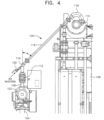
- the underwater pelletizing system is designated generally by reference number 10 and includes an underwater pelletizer 12, such as a Gala underwater pelletizer, with cutter hub and blades 14 exposed in the separated view from the waterbox 16 and die plate 18.
- an underwater pelletizer 12 such as a Gala underwater pelletizer
- the polymer biomaterial composites to be processed are fed from above using at least one polymer vat or hopper 160 typically into an extruder 155 and undergo shear and heat to melt the polymer.
- the polymer biomaterial composites are typically extruded at temperatures less than 220°C to avoid degradation of the biomaterials.
- the melt may continue to feed through a gear pump 22 which provides a smooth and controlled flow rate.
- the polymer melt as required, may be fed into a screen changer 20 ( Figure 1 ) to remove any bulk or oversize solid particles or extraneous material.
- the melt flows into a polymer diverter valve 24 and into die holes in the die plate 18.
- the strands of polymer melt formed by extrusion through the die holes enter into the waterbox 16 and are cut by the rotating cutter hub and blades 14 to form the desired pellets or granules.
- the process water circulated through the pelletizer waterbox as included in this invention is not limited in composition and may contain additives, cosolvents, and processing aids as needed to facilitate pelletization, prevent agglomeration, and/or maintain transport flow as will be understood by those skilled in the art.
- the pellet water slurry so formed exits the waterbox through pipe 28 and is conveyed toward the dryer 32 through slurry line 30.
- air is injected into slurry line 30 at point 70, preferably adjacent to the exit from the waterbox 16 and near the beginning of the slurry line 30.
- This preferred site 70 for air injection facilitates the transport of the pellets by increasing the transport rate, facilitating the aspiration of the water in the slurry, thus allowing the pellets to retain sufficient latent heat to effect the desired drying.
- High velocity air is conveniently and economically injected into the slurry line 30 at point 70 using conventional compressed air lines typically available at manufacturing facilities, such as with a pneumatic compressor.
- Other inert gases including but not limited to nitrogen may be used in accordance with this invention to convey the pellets at a high velocity as described.
- This high velocity air flow is achieved using the compressed gas producing a volume of flow of at least 100 meters.sup.3/hour using a standard ball valve for regulation of a pressure of at least 8 bar through the slurry line 30 which is standard pipe diameter, preferably 3.81 cm [1.5 inch] pipe diameter.
- flow rates and pipe diameters will vary according to the throughput volume, level of moisture desired, and the size of the pellets.
- the high velocity air effectively contacts the pellet water slurry generating water vapor by aspiration, and disperses the pellets throughout the slurry line propagating those pellets at increased velocity to the dryer 32, preferably at a rate of less than one second from the waterbox 16 to the dryer exit 34.
- the high velocity aspiration produces a mixture of pellets and air which may approach 98-99% by volume of air.
- Figure 5 shows the preferred arrangement for air injection into the slurry line.
- the water/pellet slurry exits the pelletizer waterbox 102 into the slurry line 106 through the sight glass 112 and past the angle elbow 114 where the compressed air is injected from the valve 120 into the angled slurry line 116.
- the injected air, pellets and vaporized water proceed past the enlarged elbow 118, through the dryer entrance 110 and into the dryer 108.
- the air injection into the angled elbow 114 is in line with the axis of the slurry line 116 providing the maximum effect of that air injection on the pellet/water slurry resulting in constant aspiration of the mixture.
- the angle formed between the vertical axis of slurry line 106 and the longitudinal axis of slurry line 116 can vary from 0' to 90' or more as required by the variance in the height of the pelletizer 102 relative to the height of the entrance 110 to the dryer 108. This difference in height may be due to the physical positioning of the dryer 108 in relation to the pelletizer 102 or may be a consequence of the difference in the sizes of the dryer and pelletizer.
- the preferred angle range is from 30' to 60' with a more preferred angle of 45°C.
- the enlarged elbow 118 into the dryer entrance 110 facilitates the transition of the high velocity aspirated pellet/water slurry from the incoming slurry line 116 into the entrance of the dryer 110 and reduces the potential for pellet agglomeration into the dryer 108.
- the preferred position of the equipment as described in Figure 5 allows transport of the pellets from the pelletizer 102 to the exit of the dryer 108 in approximately one second which minimizes loss of heat inside the pellet. This is further optimized by insertion of a second valve mechanism or more preferred a second ball valve 150 after the air injection at elbow 114.
- This additional ball valve 150 allows better regulation of the residence time of the pellets in the slurry line 116 and reduces any vibration that may occur in the slurry line.
- the second ball valve 150 allows additional pressurization of the air injected into the chamber and improves the aspiration of the water from the pellet/water slurry. This becomes especially important as the size of the pellets decrease in diameter.
- the pellets are ejected through the exit 126 of the dryer 108 and are preferably directed toward a vibratory unit, such as a vibrating conveyor 84 illustrated schematically in Figure 2a and Figure 2b .
- a vibratory unit such as a vibrating conveyor 84 illustrated schematically in Figure 2a and Figure 2b .
- the agitation which results from the vibratory action of the vibrating conveyor 84 allows heat to be transferred between the pellets as they come in contact with other pellets and the components of the said vibrating conveyor. This allows uniformity of temperature to be achieved and results in improved, lower and more uniform moisture content of the pellets. Agitation alleviates the tendency for pellets to adhere to each other and/or to the components of the vibrating conveyor as a consequence of the increased pellet temperature.
- the residence time of the pellets on the vibrating conveyor can affect the desired moisture content to be achieved.
- the residence time is typically about 20 seconds to about 120 seconds or longer, preferably from 30 seconds to 60 seconds, and more preferably 40 seconds to allow the pellets to dry to the desired degree and to allow the pellets to cool for handling.
- the larger pellets will retain more heat inside and dry more quickly than would be expected for pellets of decreasing diameter.
- the larger the pellet diameter the longer the residence time required for the pellet to cool for handling purposes.
- the desired temperature of the pellet for final packaging is typically lower than would be required for further processing.
- pellets exiting the dryer can have sufficient time to dry and subsequently cool for handling.
- the pellets as delivered can be packaged, stored, or transported as required for additional processing or final product manufacture including intermediate and final expansion of the pellets where applicable.
Landscapes
- Engineering & Computer Science (AREA)
- Mechanical Engineering (AREA)
- Chemical & Material Sciences (AREA)
- Life Sciences & Earth Sciences (AREA)
- Health & Medical Sciences (AREA)
- Organic Chemistry (AREA)
- General Engineering & Computer Science (AREA)
- Materials Engineering (AREA)
- Biochemistry (AREA)
- Chemical Kinetics & Catalysis (AREA)
- Medicinal Chemistry (AREA)
- Polymers & Plastics (AREA)
- Wood Science & Technology (AREA)
- General Health & Medical Sciences (AREA)
- Molecular Biology (AREA)
- Processes Of Treating Macromolecular Substances (AREA)
- Processing And Handling Of Plastics And Other Materials For Molding In General (AREA)
- Compositions Of Macromolecular Compounds (AREA)
- Glanulating (AREA)
Claims (13)
- Verfahren zum Weiterverarbeiten von Polymer-Biomaterial-Verbundwerkstoffen zu Pellets, umfassend die Schritte des Extrudierens von Strängen eines Polymer-Biomaterial-Verbundwerkstoffs bei einer Extrusionstemperatur von weniger als 220 °C durch eine Lochplatte (18) in einen Unterwasserpelletierer (12, 102), Ablängen der Verbundwerkstoff-Stränge in Pellets in diesem Pelletierer, Transportieren dieser Verbundwerkstoff-Pellets von diesem Pelletierer als Wasser- und Pellet-Schlacke durch eine Schlackeleitung zu einem Trockner (32, 108), und Trocknen der Verbundwerkstoff-Pellets
dadurch gekennzeichnet, dass
dieser Schritt des Transportierens dieser Verbundwerkstoff-Pellets das Injizieren von Hochgeschwindigkeitsluft in diese Wasser- und Pellet-Schlacke umfasst, um zu bewirken, dass das Wasser aus den Pellets entschwindet und die Pellets ihre Eigenwärme halten, um die Aufnahme von Feuchtigkeit durch die Pellets zu verringern, und um die Trocknung und den Transport dieser Pellets zu beschleunigen, wobei das Injizieren von Hochgeschwindigkeitsluft, die mit der Pellet-Wasser-Schlacke in Kontakt kommt, um vermittels Aspiration Wasserdampf zu erzeugen, und die Pellets in dieser Schlackeleitung zu verstreuen, wodurch die Pellets in der Schlackeleitung wirksam von dem Wasser getrennt werden, und Weiterführen dieser Pellets mit einer erhöhten Geschwindigkeit an diesen Trockner (32, 108), wobei dieser Trocknungsschritt das Trocknen dieser Polymer-Biomaterial-Verbundwerkstoff-Pellets mit latenter Wärme in diesen Pellets und ohne zusätzliches Erhitzen auf einen Feuchtigkeitsgrad in diesen Polymer-Biomaterial-Verbundwerkstoff-Pellets von weniger als 1 % umfasst. - Verfahren nach Anspruch 1, dadurch gekennzeichnet, dass die Pellets, die den Trockner verlassen, durch eine Rütteleinheit (84) in Bewegung gehalten werden, währenddessen die Pellets weiter trocknen.
- Verfahren nach Anspruch 1, dadurch gekennzeichnet, dass der Schritt des Injizierens der Hochgeschwindigkeitsluft in diese Wasser- und Pellet-Schlacke das Injizieren der Luft in diese Wasser- und Pellet-Schlacke mit einer Flussrate von zumindest 100 m3/h, und bevorzugt etwa 175 m3/h, umfasst, um zu bewirken, dass sich die Geschwindigkeit der Pellets in und durch diesen Trockner erhöht.
- Verfahren nach Anspruch 1, dadurch gekennzeichnet, dass die Luft im Wesentlichen fluchtend mit einer Bewegungsleitung der Schlacke in die Wasser-und Pelletschlacke injiziert wird.
- Verfahren nach Anspruch 4, dadurch gekennzeichnet, dass die Bewegungsleitung der Schlacke sich an einem Winkel zwischen 30° und 60° biegt und die Luft an dieser Biegung injiziert wird.
- Verfahren nach Anspruch 1, dadurch gekennzeichnet, dass die Verweildauer dieser Pellets in dieser Bewegungsleitung durch ein Kugelventil (150) stromabwärts dieser Luftinjektionsvorrichtung geregelt wird.
- Verfahren nach Anspruch 1, dadurch gekennzeichnet, dass dieser Polymer-Biomaterial-Verbundwerkstoff schäumbare, geschäumte und ungeschäumte Verbundwerkstoffe umfasst.
- Verfahren nach Anspruch 1, dadurch gekennzeichnet, dass der Polymer-Biomaterial-Verbundwerkstoff 10% bis 90% Biomaterial aufweist, und bevorzugt 30% bis 70% Biomaterial.
- Verfahren nach Anspruch 5, dadurch gekennzeichnet, dass das Biomaterial ausgewählt ist aus der Gruppe bestehend aus Polysacchariden umfassend Zellstoffe und Stärken, und proteinösen Materialien, umfassend Polypeptide und jedwede Kombination der Vorgenannten.
- Verfahren nach Anspruch 8, dadurch gekennzeichnet, dass dieses Biomaterial Faserpartikel von 10 bis 900 Mikrometer mit einem Aspektverhältnis von 1 bis 50, und bevorzugt von 2 bis 20 umfasst.
- Verfahren nach Anspruch 8, dadurch gekennzeichnet, dass dieses Biomaterial Pulver mit einer Partikelgröße von 15 bis 425 Mikrometer umfasst.
- Verfahren nach Anspruch 1, dadurch gekennzeichnet, dass dieses Polymer ausgewählt ist aus der Gruppe bestehend aus Polyolefinen, substituierten Polyolefinen, Polyestern, Polyamiden, Polyurethanen und Polycarbonaten.
- Verfahren nach Anspruch 1, dadurch gekennzeichnet, dass dieser Polymer-Biomaterial-Verbund ein oder mehr Stoffe umfasst, die zwischen Polymer und Biomaterial eine größere Kompatibilität verleihen.
Applications Claiming Priority (3)
| Application Number | Priority Date | Filing Date | Title |
|---|---|---|---|
| US71239805P | 2005-08-31 | 2005-08-31 | |
| EP06802693.9A EP1919679B1 (de) | 2005-08-31 | 2006-08-31 | Verfahren zum pelletieren von polymer-biomaterial-verbundwerkstoffen |
| PCT/US2006/034007 WO2007027877A1 (en) | 2005-08-31 | 2006-08-31 | Method and apparatus for pelletizing biomaterial composites |
Related Parent Applications (2)
| Application Number | Title | Priority Date | Filing Date |
|---|---|---|---|
| EP06802693.9A Division-Into EP1919679B1 (de) | 2005-08-31 | 2006-08-31 | Verfahren zum pelletieren von polymer-biomaterial-verbundwerkstoffen |
| EP06802693.9A Division EP1919679B1 (de) | 2005-08-31 | 2006-08-31 | Verfahren zum pelletieren von polymer-biomaterial-verbundwerkstoffen |
Publications (2)
| Publication Number | Publication Date |
|---|---|
| EP3345733A1 EP3345733A1 (de) | 2018-07-11 |
| EP3345733B1 true EP3345733B1 (de) | 2024-01-24 |
Family
ID=37809200
Family Applications (2)
| Application Number | Title | Priority Date | Filing Date |
|---|---|---|---|
| EP18158802.1A Active EP3345733B1 (de) | 2005-08-31 | 2006-08-31 | Verfahren zum pelletieren von biomaterial-verbundstoffen |
| EP06802693.9A Active EP1919679B1 (de) | 2005-08-31 | 2006-08-31 | Verfahren zum pelletieren von polymer-biomaterial-verbundwerkstoffen |
Family Applications After (1)
| Application Number | Title | Priority Date | Filing Date |
|---|---|---|---|
| EP06802693.9A Active EP1919679B1 (de) | 2005-08-31 | 2006-08-31 | Verfahren zum pelletieren von polymer-biomaterial-verbundwerkstoffen |
Country Status (15)
| Country | Link |
|---|---|
| US (3) | US20090206507A1 (de) |
| EP (2) | EP3345733B1 (de) |
| JP (1) | JP5301274B2 (de) |
| KR (1) | KR101308562B1 (de) |
| CN (2) | CN104441310A (de) |
| AU (1) | AU2006284773B2 (de) |
| BR (1) | BRPI0615260A2 (de) |
| CA (1) | CA2619945C (de) |
| EA (1) | EA012997B1 (de) |
| MY (1) | MY179540A (de) |
| NO (1) | NO20081560L (de) |
| TW (1) | TWI440658B (de) |
| UA (1) | UA93518C2 (de) |
| WO (1) | WO2007027877A1 (de) |
| ZA (1) | ZA200801845B (de) |
Families Citing this family (32)
| Publication number | Priority date | Publication date | Assignee | Title |
|---|---|---|---|---|
| US9032641B2 (en) | 2005-05-26 | 2015-05-19 | Gala Industries, Inc. | Method and apparatus for making crystalline polymeric pellets and granules |
| CN101184593B (zh) * | 2005-05-26 | 2012-02-08 | 卡拉工业公司 | 用于生产结晶聚合物粒料和颗粒的方法和装置 |
| UA84065C2 (ru) * | 2006-11-09 | 2008-09-10 | Сергей Федорович Петренко | Пьезоэлектрический генератор механических колебаний и пьезоелектрический двигатель на его основе (варианты) |
| US9815223B2 (en) | 2008-05-16 | 2017-11-14 | Gala Industries, Inc. | Method and device for extrusion of hollow pellets |
| US8011912B2 (en) | 2008-06-16 | 2011-09-06 | Gala Industries, Inc. | Positionable gas injection nozzle assembly for an underwater pelletizing system |
| US8007701B2 (en) | 2008-06-16 | 2011-08-30 | Gala Industries, Inc. | Positionable gas injection nozzle assembly for an underwater pelletizing system |
| US9925694B2 (en) * | 2009-02-24 | 2018-03-27 | Gala Industries, Inc. | Continuous bagging processes and systems |
| DE202009015876U1 (de) * | 2009-11-20 | 2010-03-04 | Automatik Plastics Machinery Gmbh | Vorrichtung zum Granulieren |
| DE202010003348U1 (de) * | 2010-03-09 | 2010-07-22 | Automatik Plastics Machinery Gmbh | Vorrichtung zum Herstellen von Granulatkörnern |
| KR101110638B1 (ko) * | 2010-07-15 | 2012-02-15 | 대상 주식회사 | 발포성 전분 비드 및 그의 제조방법 |
| KR101217788B1 (ko) * | 2010-10-21 | 2013-01-02 | 콘프라테크 주식회사 | 식물체 옥수수심을 이용한 바이오매스 펠릿 및 그 제조 방법 |
| WO2012151424A1 (en) * | 2011-05-03 | 2012-11-08 | Gala Industries, Inc. | Method and apparatus for fluidic pelletization, transport, and processing of materials |
| US9604388B2 (en) * | 2012-02-14 | 2017-03-28 | International Paper Company | Process for making composite polymer |
| US9109117B2 (en) * | 2012-02-14 | 2015-08-18 | Weyerhaeuser Nr Company | Process for making composite polymer |
| FR2990209B1 (fr) * | 2012-05-03 | 2014-05-09 | Roquette Freres | Mousses a base d'amidon thermoplastique et de polyolefine |
| WO2014113854A1 (en) * | 2013-01-23 | 2014-07-31 | Vale S.A. | Composite material comprising uhmwpe and iron ore tailing and use of iron ore tailing in preparation of composite material |
| JP6006653B2 (ja) * | 2013-02-04 | 2016-10-12 | 出光興産株式会社 | ポリカーボネート樹脂用押出造粒装置およびポリカーボネート樹脂押出造粒方法 |
| DE102014110535A1 (de) * | 2014-07-25 | 2016-01-28 | Certoplast Vorwerk & Sohn Gmbh | Verfahren zur Herstellung eines Klebebandes |
| US9470455B2 (en) * | 2014-08-11 | 2016-10-18 | Weyerhaeuser Nr Company | Sorting green lumber |
| KR102290338B1 (ko) * | 2014-09-15 | 2021-08-19 | 마그 갈라 인코포레이티드 | 중공 펠릿의 압출을 위한 방법 및 장치 |
| CN107530659B (zh) | 2015-03-05 | 2020-11-13 | 戈拉工业公司 | 回转机构系统和方法 |
| US10500777B2 (en) | 2016-07-01 | 2019-12-10 | Gala Industries, Inc. | Method and apparatus for forming an expandable foam pellet having a hard outer shell by underwater pelletizing, and expandable foam pellets formed thereby |
| KR20180003804A (ko) * | 2016-07-01 | 2018-01-10 | 씨제이제일제당 (주) | 소맥피를 포함한 바이오 플라스틱 조성물 및 이를 이용한 바이오 플라스틱 필름 |
| JP6366767B1 (ja) * | 2017-03-24 | 2018-08-01 | 株式会社日立ハイテクサイエンス | プラスチック標準物質の製造方法 |
| FR3076744B1 (fr) * | 2018-01-18 | 2021-01-15 | Clarins Lab | Procede de fabrication de particules polymeres thermoplastiques biodegradables, et utilisations de ces particules |
| DE102018208930A1 (de) * | 2018-06-06 | 2019-12-12 | Glatt Gesellschaft Mit Beschränkter Haftung | Vorrichtung und Verfahren zur Herstellung und Behandlung von Granulat sowie Adapterstutzen zur Verbindung eines ein Granulat erzeugenden Granulators und eines Fluidisierungsapparates |
| CN110712331A (zh) * | 2018-07-12 | 2020-01-21 | 宁国诚石橡塑制品有限公司 | 一种橡塑制品生产用干燥装置 |
| EP4010432A1 (de) * | 2019-09-13 | 2022-06-15 | ecobrain AG | Herstellungsverfahren von komponenten aus kaffeesatz und ihre verwendung |
| WO2021101094A1 (ko) * | 2019-11-19 | 2021-05-27 | 주식회사 마린이노베이션 | 해조류와 식물성원료를 이용한 친환경 비닐봉투 및 그 제조방법 |
| KR102321938B1 (ko) * | 2019-11-19 | 2021-11-08 | 주식회사 마린이노베이션 | 해조류와 식물성원료를 이용한 친환경 비닐봉투의 제조방법 |
| WO2021221598A1 (ru) * | 2020-04-30 | 2021-11-04 | Havrylenko Maksym Mykolaiovych | Экологический материал для изготовления изделий, способ его производства и оправа для очков из экологического материала |
| CN111546506A (zh) * | 2020-05-18 | 2020-08-18 | 中亿丰建设集团股份有限公司 | 水下钢筋混凝土板切割方法 |
Family Cites Families (41)
| Publication number | Priority date | Publication date | Assignee | Title |
|---|---|---|---|---|
| US3551361A (en) * | 1967-10-13 | 1970-12-29 | Phillips Petroleum Co | Method of foaming an olefin polymer using starch as a nucleating agent |
| US3544525A (en) * | 1968-03-26 | 1970-12-01 | Allied Chem | Process for crystallization,drying and solid-state polymerization of polyesters |
| GB1474774A (en) * | 1973-10-09 | 1977-05-25 | Furukawa Electric Co Ltd | Process and apparatus for producing a foamed thermoplastic resin article |
| US4480061A (en) * | 1982-12-28 | 1984-10-30 | E. I. Du Pont De Nemours And Company | Wood-like articles made from cellulosic filler loaded ethylene interpolymers |
| JPS61151266A (ja) * | 1984-12-25 | 1986-07-09 | Chisso Corp | 熱可塑性樹脂用セルロ−ス系充填剤 |
| US5162392A (en) * | 1989-05-19 | 1992-11-10 | Agri-Tech Industries, Inc. | Injection moldable biodegradable starch polymer composite |
| US4963644A (en) * | 1989-09-18 | 1990-10-16 | The Goodyear Tire & Rubber Company | Process for crystallization of polyethylene naphthalate |
| US5087650A (en) * | 1990-12-05 | 1992-02-11 | Fully Compounded Plastics, Inc. | Biodegradable plastics |
| US6004668A (en) * | 1992-08-31 | 1999-12-21 | Andersen Corporation | Advanced polymer wood composite |
| US20020106498A1 (en) * | 1992-08-31 | 2002-08-08 | Andersen Corporation | Advanced polymer wood composite |
| US5441801A (en) * | 1993-02-12 | 1995-08-15 | Andersen Corporation | Advanced polymer/wood composite pellet process |
| JPH06297452A (ja) * | 1993-04-15 | 1994-10-25 | Yoshida Kogyo Kk <Ykk> | 合成樹脂細粒造粒機 |
| IT1271073B (it) * | 1994-11-21 | 1997-05-26 | M & G Ricerche Spa | Procedimento per la cristallizzazione di resine poliestere |
| US5746958A (en) * | 1995-03-30 | 1998-05-05 | Trex Company, L.L.C. | Method of producing a wood-thermoplastic composite material |
| DE19526405B4 (de) * | 1995-07-19 | 2006-03-30 | Zimmer Ag | Verfahren zur Reduzierung der Carboxyl-Endgruppen linearer Polyester |
| CA2243692A1 (en) * | 1996-02-15 | 1997-08-21 | Ciba Specialty Chemicals Holding Inc. | Increasing the molecular weight of polycondensates |
| US5847016A (en) * | 1996-05-16 | 1998-12-08 | Marley Mouldings Inc. | Polymer and wood flour composite extrusion |
| IT1283166B1 (it) * | 1996-07-18 | 1998-04-07 | Sinco Eng Spa | Procedimento perfezionato per la produzione di resine poliestere |
| US5895617A (en) * | 1996-07-31 | 1999-04-20 | The Japan Steel Works, Ltd. | Method and apparatus for transporting underwater cut pellets |
| US6344504B1 (en) * | 1996-10-31 | 2002-02-05 | Crane Plastics Company Limited Partnership | Extrusion of synthetic wood material |
| US6083601A (en) * | 1997-03-19 | 2000-07-04 | Royal Wood, Inc. | Foam wood extrusion product |
| US5938994A (en) * | 1997-08-29 | 1999-08-17 | Kevin P. Gohr | Method for manufacturing of plastic wood-fiber pellets |
| US6464913B1 (en) * | 1997-09-05 | 2002-10-15 | Crane Plastics Company Limited Partnership | In-line compounding and extrusion system |
| US6280667B1 (en) * | 1999-04-19 | 2001-08-28 | Andersen Corporation | Process for making thermoplastic-biofiber composite materials and articles including a poly(vinylchloride) component |
| US6624217B1 (en) * | 2000-03-31 | 2003-09-23 | Wang You Tong | Plant fiber composite material, its products and a processing method thereof |
| US6586503B1 (en) * | 2000-10-18 | 2003-07-01 | Correct Building Products, L.L.C. | Composite products comprising cellulosic materials and synthetic resins and methods of making the same |
| US6790459B1 (en) * | 2000-11-03 | 2004-09-14 | Andrx Labs, Llc | Methods for treating diabetes via administration of controlled release metformin |
| JP2002302578A (ja) * | 2001-04-04 | 2002-10-18 | Chisso Corp | 有機繊維フィラー含有ポリプロピレン樹脂組成物およびそれを用いた成形品 |
| US6632863B2 (en) * | 2001-10-25 | 2003-10-14 | Crane Plastics Company Llc | Cellulose/polyolefin composite pellet |
| DE10209149A1 (de) | 2002-03-01 | 2003-09-18 | Bayer Ag | Verfahren zur Herstellung von Kunststoffgranulaten |
| US20030186052A1 (en) * | 2002-03-29 | 2003-10-02 | Cytech Fiber Processing Systems, Inc. | Fiber pellets and processes for forming fiber pellets |
| DE10214654B4 (de) * | 2002-04-03 | 2007-04-19 | Bayer, René | Verfahren zur Herstellung natur-und/oder synthesefaserverstärkter Compounds mittels Doppelschneckenextruder |
| US6743507B2 (en) * | 2002-06-07 | 2004-06-01 | Rayonier Products And Financial Services Company | Cellulose fiber reinforced composites having reduced discoloration and improved dispersion and associated methods of manufacture |
| DE10304097A1 (de) | 2003-01-31 | 2004-08-12 | Vgt-Polycom Gmbh | Vorrichtung und Verfahren zur Herstellung eines Granulats |
| US6762275B1 (en) * | 2003-05-27 | 2004-07-13 | The Coca-Cola Company | Method to decrease the acetaldehyde content of melt-processed polyesters |
| CA2528936A1 (en) * | 2003-06-13 | 2004-12-29 | Agri-Polymerix, Llc | Biopolymer structures and components |
| US7204945B2 (en) * | 2003-09-16 | 2007-04-17 | Eastman Chemical Company | Direct coupling of melt polymerization and solid state processing for PET |
| WO2005044901A1 (de) * | 2003-10-17 | 2005-05-19 | Bkg Bruckmann & Kreyenborg Granuliertechnik Gmbh | Verfahren zur thermischen behandlung von polyesterpellets |
| DE102004050356A1 (de) * | 2003-11-21 | 2005-07-28 | Gala Industries, Inc. | Verfahren und Vorrichtung für das Herstellen von kristallinem PET-Granulat |
| US7157032B2 (en) * | 2003-11-21 | 2007-01-02 | Gala Industries, Inc. | Method and apparatus for making crystalline PET pellets |
| CN101184593B (zh) * | 2005-05-26 | 2012-02-08 | 卡拉工业公司 | 用于生产结晶聚合物粒料和颗粒的方法和装置 |
-
2006
- 2006-08-30 TW TW095131972A patent/TWI440658B/zh active
- 2006-08-31 EA EA200800697A patent/EA012997B1/ru not_active IP Right Cessation
- 2006-08-31 MY MYPI20080392A patent/MY179540A/en unknown
- 2006-08-31 KR KR1020087007487A patent/KR101308562B1/ko active Active
- 2006-08-31 EP EP18158802.1A patent/EP3345733B1/de active Active
- 2006-08-31 WO PCT/US2006/034007 patent/WO2007027877A1/en not_active Ceased
- 2006-08-31 CA CA2619945A patent/CA2619945C/en active Active
- 2006-08-31 US US11/990,620 patent/US20090206507A1/en not_active Abandoned
- 2006-08-31 AU AU2006284773A patent/AU2006284773B2/en not_active Ceased
- 2006-08-31 JP JP2008529272A patent/JP5301274B2/ja active Active
- 2006-08-31 EP EP06802693.9A patent/EP1919679B1/de active Active
- 2006-08-31 BR BRPI0615260-0A patent/BRPI0615260A2/pt active IP Right Grant
- 2006-08-31 CN CN201410509883.9A patent/CN104441310A/zh active Pending
- 2006-08-31 CN CNA2006800315931A patent/CN101300117A/zh active Pending
- 2006-08-31 UA UAA200803950A patent/UA93518C2/ru unknown
-
2008
- 2008-02-26 ZA ZA200801845A patent/ZA200801845B/xx unknown
- 2008-03-28 NO NO20081560A patent/NO20081560L/no not_active Application Discontinuation
-
2012
- 2012-02-03 US US13/365,946 patent/US20120228794A1/en not_active Abandoned
-
2015
- 2015-07-13 US US14/798,119 patent/US20160039124A1/en not_active Abandoned
Also Published As
| Publication number | Publication date |
|---|---|
| CN104441310A (zh) | 2015-03-25 |
| JP2009506199A (ja) | 2009-02-12 |
| EA200800697A1 (ru) | 2008-10-30 |
| EP1919679B1 (de) | 2018-07-18 |
| TWI440658B (zh) | 2014-06-11 |
| KR101308562B1 (ko) | 2013-09-13 |
| UA93518C2 (ru) | 2011-02-25 |
| CN101300117A (zh) | 2008-11-05 |
| CA2619945C (en) | 2016-01-19 |
| US20120228794A1 (en) | 2012-09-13 |
| US20160039124A1 (en) | 2016-02-11 |
| WO2007027877A1 (en) | 2007-03-08 |
| EP3345733A1 (de) | 2018-07-11 |
| AU2006284773A1 (en) | 2007-03-08 |
| TW200712102A (en) | 2007-04-01 |
| EP1919679A1 (de) | 2008-05-14 |
| CA2619945A1 (en) | 2007-03-08 |
| EA012997B1 (ru) | 2010-02-26 |
| KR20080049790A (ko) | 2008-06-04 |
| MY179540A (en) | 2020-11-10 |
| EP1919679A4 (de) | 2013-03-13 |
| NO20081560L (no) | 2008-03-28 |
| BRPI0615260A2 (pt) | 2011-05-17 |
| ZA200801845B (en) | 2008-11-26 |
| US20090206507A1 (en) | 2009-08-20 |
| JP5301274B2 (ja) | 2013-09-25 |
| AU2006284773B2 (en) | 2012-09-27 |
Similar Documents
| Publication | Publication Date | Title |
|---|---|---|
| EP3345733B1 (de) | Verfahren zum pelletieren von biomaterial-verbundstoffen | |
| EP1883517B1 (de) | Verfahren und vorrichtung zur herstellung von kristallinen polymerpellets | |
| KR102163344B1 (ko) | 바이오플라스틱의 제조 방법, 이에 의해 제조된 바이오플라스틱 및 이를 사용한 필름, 쉬트 또는 용기 | |
| WO2001032383A1 (en) | Molded lump and production method therefor | |
| US9032641B2 (en) | Method and apparatus for making crystalline polymeric pellets and granules | |
| JP2009538368A (ja) | 流体制御による晶析装置の温度制御 | |
| JP5493499B2 (ja) | 熱可塑性樹脂組成物の製造方法 | |
| US20070265429A1 (en) | Use of a vibratory spiral elevator for crystallizing and/or drying of plastic pellets | |
| US6130261A (en) | Method of recycling polyester foam | |
| JP7166641B2 (ja) | 架橋された樹脂のペレット製造方法 | |
| BRPI0615260B1 (pt) | Método para processar biomateriais compósitos |
Legal Events
| Date | Code | Title | Description |
|---|---|---|---|
| PUAI | Public reference made under article 153(3) epc to a published international application that has entered the european phase |
Free format text: ORIGINAL CODE: 0009012 |
|
| STAA | Information on the status of an ep patent application or granted ep patent |
Free format text: STATUS: THE APPLICATION HAS BEEN PUBLISHED |
|
| AC | Divisional application: reference to earlier application |
Ref document number: 1919679 Country of ref document: EP Kind code of ref document: P |
|
| AK | Designated contracting states |
Kind code of ref document: A1 Designated state(s): AT BE BG CH CY CZ DE DK EE ES FI FR GB GR HU IE IS IT LI LT LU LV MC NL PL PT RO SE SI SK TR |
|
| STAA | Information on the status of an ep patent application or granted ep patent |
Free format text: STATUS: REQUEST FOR EXAMINATION WAS MADE |
|
| 17P | Request for examination filed |
Effective date: 20180710 |
|
| RBV | Designated contracting states (corrected) |
Designated state(s): AT BE BG CH CY CZ DE DK EE ES FI FR GB GR HU IE IS IT LI LT LU LV MC NL PL PT RO SE SI SK TR |
|
| STAA | Information on the status of an ep patent application or granted ep patent |
Free format text: STATUS: EXAMINATION IS IN PROGRESS |
|
| 17Q | First examination report despatched |
Effective date: 20190125 |
|
| APBK | Appeal reference recorded |
Free format text: ORIGINAL CODE: EPIDOSNREFNE |
|
| APBN | Date of receipt of notice of appeal recorded |
Free format text: ORIGINAL CODE: EPIDOSNNOA2E |
|
| APBR | Date of receipt of statement of grounds of appeal recorded |
Free format text: ORIGINAL CODE: EPIDOSNNOA3E |
|
| APAF | Appeal reference modified |
Free format text: ORIGINAL CODE: EPIDOSCREFNE |
|
| APBX | Invitation to file observations in appeal sent |
Free format text: ORIGINAL CODE: EPIDOSNOBA2E |
|
| APBZ | Receipt of observations in appeal recorded |
Free format text: ORIGINAL CODE: EPIDOSNOBA4E |
|
| APBT | Appeal procedure closed |
Free format text: ORIGINAL CODE: EPIDOSNNOA9E |
|
| GRAP | Despatch of communication of intention to grant a patent |
Free format text: ORIGINAL CODE: EPIDOSNIGR1 |
|
| STAA | Information on the status of an ep patent application or granted ep patent |
Free format text: STATUS: GRANT OF PATENT IS INTENDED |
|
| RIC1 | Information provided on ipc code assigned before grant |
Ipc: B29K 711/14 20060101ALN20231010BHEP Ipc: B29K 311/10 20060101ALN20231010BHEP Ipc: B29K 101/00 20060101ALN20231010BHEP Ipc: B29L 31/00 20060101ALN20231010BHEP Ipc: B29K 1/00 20060101ALN20231010BHEP Ipc: B29C 48/91 20190101ALN20231010BHEP Ipc: B29C 48/05 20190101ALN20231010BHEP Ipc: B29C 48/04 20190101ALN20231010BHEP Ipc: B29C 48/00 20190101ALN20231010BHEP Ipc: F26B 25/00 20060101ALI20231010BHEP Ipc: B29C 48/255 20190101ALI20231010BHEP Ipc: B29C 48/14 20190101ALI20231010BHEP Ipc: B29B 13/06 20060101ALI20231010BHEP Ipc: B29B 7/92 20060101ALI20231010BHEP Ipc: B29B 7/74 20060101ALI20231010BHEP Ipc: B29B 9/16 20060101ALI20231010BHEP Ipc: B29B 9/12 20060101ALI20231010BHEP Ipc: B29B 9/06 20060101AFI20231010BHEP |
|
| INTG | Intention to grant announced |
Effective date: 20231106 |
|
| GRAS | Grant fee paid |
Free format text: ORIGINAL CODE: EPIDOSNIGR3 |
|
| GRAA | (expected) grant |
Free format text: ORIGINAL CODE: 0009210 |
|
| STAA | Information on the status of an ep patent application or granted ep patent |
Free format text: STATUS: THE PATENT HAS BEEN GRANTED |
|
| RAP3 | Party data changed (applicant data changed or rights of an application transferred) |
Owner name: MAAG GALA, INC. |
|
| AC | Divisional application: reference to earlier application |
Ref document number: 1919679 Country of ref document: EP Kind code of ref document: P |
|
| AK | Designated contracting states |
Kind code of ref document: B1 Designated state(s): AT BE BG CH CY CZ DE DK EE ES FI FR GB GR HU IE IS IT LI LT LU LV MC NL PL PT RO SE SI SK TR |
|
| REG | Reference to a national code |
Ref country code: GB Ref legal event code: FG4D |
|
| REG | Reference to a national code |
Ref country code: CH Ref legal event code: EP |
|
| REG | Reference to a national code |
Ref country code: IE Ref legal event code: FG4D |
|
| REG | Reference to a national code |
Ref country code: DE Ref legal event code: R096 Ref document number: 602006060541 Country of ref document: DE |
|
| REG | Reference to a national code |
Ref country code: LT Ref legal event code: MG9D |
|
| REG | Reference to a national code |
Ref country code: NL Ref legal event code: MP Effective date: 20240124 |
|
| PG25 | Lapsed in a contracting state [announced via postgrant information from national office to epo] |
Ref country code: NL Free format text: LAPSE BECAUSE OF FAILURE TO SUBMIT A TRANSLATION OF THE DESCRIPTION OR TO PAY THE FEE WITHIN THE PRESCRIBED TIME-LIMIT Effective date: 20240124 |
|
| PG25 | Lapsed in a contracting state [announced via postgrant information from national office to epo] |
Ref country code: NL Free format text: LAPSE BECAUSE OF FAILURE TO SUBMIT A TRANSLATION OF THE DESCRIPTION OR TO PAY THE FEE WITHIN THE PRESCRIBED TIME-LIMIT Effective date: 20240124 |
|
| PG25 | Lapsed in a contracting state [announced via postgrant information from national office to epo] |
Ref country code: IS Free format text: LAPSE BECAUSE OF FAILURE TO SUBMIT A TRANSLATION OF THE DESCRIPTION OR TO PAY THE FEE WITHIN THE PRESCRIBED TIME-LIMIT Effective date: 20240524 |
|
| PG25 | Lapsed in a contracting state [announced via postgrant information from national office to epo] |
Ref country code: LT Free format text: LAPSE BECAUSE OF FAILURE TO SUBMIT A TRANSLATION OF THE DESCRIPTION OR TO PAY THE FEE WITHIN THE PRESCRIBED TIME-LIMIT Effective date: 20240124 |
|
| PG25 | Lapsed in a contracting state [announced via postgrant information from national office to epo] |
Ref country code: GR Free format text: LAPSE BECAUSE OF FAILURE TO SUBMIT A TRANSLATION OF THE DESCRIPTION OR TO PAY THE FEE WITHIN THE PRESCRIBED TIME-LIMIT Effective date: 20240425 |
|
| PG25 | Lapsed in a contracting state [announced via postgrant information from national office to epo] |
Ref country code: ES Free format text: LAPSE BECAUSE OF FAILURE TO SUBMIT A TRANSLATION OF THE DESCRIPTION OR TO PAY THE FEE WITHIN THE PRESCRIBED TIME-LIMIT Effective date: 20240124 |
|
| PG25 | Lapsed in a contracting state [announced via postgrant information from national office to epo] |
Ref country code: LT Free format text: LAPSE BECAUSE OF FAILURE TO SUBMIT A TRANSLATION OF THE DESCRIPTION OR TO PAY THE FEE WITHIN THE PRESCRIBED TIME-LIMIT Effective date: 20240124 Ref country code: IS Free format text: LAPSE BECAUSE OF FAILURE TO SUBMIT A TRANSLATION OF THE DESCRIPTION OR TO PAY THE FEE WITHIN THE PRESCRIBED TIME-LIMIT Effective date: 20240524 Ref country code: GR Free format text: LAPSE BECAUSE OF FAILURE TO SUBMIT A TRANSLATION OF THE DESCRIPTION OR TO PAY THE FEE WITHIN THE PRESCRIBED TIME-LIMIT Effective date: 20240425 Ref country code: FI Free format text: LAPSE BECAUSE OF FAILURE TO SUBMIT A TRANSLATION OF THE DESCRIPTION OR TO PAY THE FEE WITHIN THE PRESCRIBED TIME-LIMIT Effective date: 20240124 Ref country code: ES Free format text: LAPSE BECAUSE OF FAILURE TO SUBMIT A TRANSLATION OF THE DESCRIPTION OR TO PAY THE FEE WITHIN THE PRESCRIBED TIME-LIMIT Effective date: 20240124 Ref country code: BG Free format text: LAPSE BECAUSE OF FAILURE TO SUBMIT A TRANSLATION OF THE DESCRIPTION OR TO PAY THE FEE WITHIN THE PRESCRIBED TIME-LIMIT Effective date: 20240124 |
|
| PG25 | Lapsed in a contracting state [announced via postgrant information from national office to epo] |
Ref country code: PL Free format text: LAPSE BECAUSE OF FAILURE TO SUBMIT A TRANSLATION OF THE DESCRIPTION OR TO PAY THE FEE WITHIN THE PRESCRIBED TIME-LIMIT Effective date: 20240124 Ref country code: PT Free format text: LAPSE BECAUSE OF FAILURE TO SUBMIT A TRANSLATION OF THE DESCRIPTION OR TO PAY THE FEE WITHIN THE PRESCRIBED TIME-LIMIT Effective date: 20240524 |
|
| PG25 | Lapsed in a contracting state [announced via postgrant information from national office to epo] |
Ref country code: SE Free format text: LAPSE BECAUSE OF FAILURE TO SUBMIT A TRANSLATION OF THE DESCRIPTION OR TO PAY THE FEE WITHIN THE PRESCRIBED TIME-LIMIT Effective date: 20240124 Ref country code: PT Free format text: LAPSE BECAUSE OF FAILURE TO SUBMIT A TRANSLATION OF THE DESCRIPTION OR TO PAY THE FEE WITHIN THE PRESCRIBED TIME-LIMIT Effective date: 20240524 Ref country code: PL Free format text: LAPSE BECAUSE OF FAILURE TO SUBMIT A TRANSLATION OF THE DESCRIPTION OR TO PAY THE FEE WITHIN THE PRESCRIBED TIME-LIMIT Effective date: 20240124 Ref country code: LV Free format text: LAPSE BECAUSE OF FAILURE TO SUBMIT A TRANSLATION OF THE DESCRIPTION OR TO PAY THE FEE WITHIN THE PRESCRIBED TIME-LIMIT Effective date: 20240124 |
|
| PG25 | Lapsed in a contracting state [announced via postgrant information from national office to epo] |
Ref country code: DK Free format text: LAPSE BECAUSE OF FAILURE TO SUBMIT A TRANSLATION OF THE DESCRIPTION OR TO PAY THE FEE WITHIN THE PRESCRIBED TIME-LIMIT Effective date: 20240124 |
|
| PG25 | Lapsed in a contracting state [announced via postgrant information from national office to epo] |
Ref country code: CZ Free format text: LAPSE BECAUSE OF FAILURE TO SUBMIT A TRANSLATION OF THE DESCRIPTION OR TO PAY THE FEE WITHIN THE PRESCRIBED TIME-LIMIT Effective date: 20240124 Ref country code: EE Free format text: LAPSE BECAUSE OF FAILURE TO SUBMIT A TRANSLATION OF THE DESCRIPTION OR TO PAY THE FEE WITHIN THE PRESCRIBED TIME-LIMIT Effective date: 20240124 |
|
| REG | Reference to a national code |
Ref country code: DE Ref legal event code: R097 Ref document number: 602006060541 Country of ref document: DE |
|
| PG25 | Lapsed in a contracting state [announced via postgrant information from national office to epo] |
Ref country code: SK Free format text: LAPSE BECAUSE OF FAILURE TO SUBMIT A TRANSLATION OF THE DESCRIPTION OR TO PAY THE FEE WITHIN THE PRESCRIBED TIME-LIMIT Effective date: 20240124 |
|
| PG25 | Lapsed in a contracting state [announced via postgrant information from national office to epo] |
Ref country code: SK Free format text: LAPSE BECAUSE OF FAILURE TO SUBMIT A TRANSLATION OF THE DESCRIPTION OR TO PAY THE FEE WITHIN THE PRESCRIBED TIME-LIMIT Effective date: 20240124 Ref country code: RO Free format text: LAPSE BECAUSE OF FAILURE TO SUBMIT A TRANSLATION OF THE DESCRIPTION OR TO PAY THE FEE WITHIN THE PRESCRIBED TIME-LIMIT Effective date: 20240124 Ref country code: EE Free format text: LAPSE BECAUSE OF FAILURE TO SUBMIT A TRANSLATION OF THE DESCRIPTION OR TO PAY THE FEE WITHIN THE PRESCRIBED TIME-LIMIT Effective date: 20240124 Ref country code: DK Free format text: LAPSE BECAUSE OF FAILURE TO SUBMIT A TRANSLATION OF THE DESCRIPTION OR TO PAY THE FEE WITHIN THE PRESCRIBED TIME-LIMIT Effective date: 20240124 Ref country code: CZ Free format text: LAPSE BECAUSE OF FAILURE TO SUBMIT A TRANSLATION OF THE DESCRIPTION OR TO PAY THE FEE WITHIN THE PRESCRIBED TIME-LIMIT Effective date: 20240124 |
|
| PLBE | No opposition filed within time limit |
Free format text: ORIGINAL CODE: 0009261 |
|
| STAA | Information on the status of an ep patent application or granted ep patent |
Free format text: STATUS: NO OPPOSITION FILED WITHIN TIME LIMIT |
|
| 26N | No opposition filed |
Effective date: 20241025 |
|
| REG | Reference to a national code |
Ref country code: CH Ref legal event code: PL |
|
| PG25 | Lapsed in a contracting state [announced via postgrant information from national office to epo] |
Ref country code: LU Free format text: LAPSE BECAUSE OF NON-PAYMENT OF DUE FEES Effective date: 20240831 |
|
| GBPC | Gb: european patent ceased through non-payment of renewal fee |
Effective date: 20240831 |
|
| PG25 | Lapsed in a contracting state [announced via postgrant information from national office to epo] |
Ref country code: SI Free format text: LAPSE BECAUSE OF FAILURE TO SUBMIT A TRANSLATION OF THE DESCRIPTION OR TO PAY THE FEE WITHIN THE PRESCRIBED TIME-LIMIT Effective date: 20240124 Ref country code: MC Free format text: LAPSE BECAUSE OF FAILURE TO SUBMIT A TRANSLATION OF THE DESCRIPTION OR TO PAY THE FEE WITHIN THE PRESCRIBED TIME-LIMIT Effective date: 20240124 Ref country code: CH Free format text: LAPSE BECAUSE OF NON-PAYMENT OF DUE FEES Effective date: 20240831 |
|
| REG | Reference to a national code |
Ref country code: BE Ref legal event code: MM Effective date: 20240831 |
|
| PG25 | Lapsed in a contracting state [announced via postgrant information from national office to epo] |
Ref country code: GB Free format text: LAPSE BECAUSE OF NON-PAYMENT OF DUE FEES Effective date: 20240831 |
|
| PG25 | Lapsed in a contracting state [announced via postgrant information from national office to epo] |
Ref country code: BE Free format text: LAPSE BECAUSE OF NON-PAYMENT OF DUE FEES Effective date: 20240831 |
|
| PG25 | Lapsed in a contracting state [announced via postgrant information from national office to epo] |
Ref country code: FR Free format text: LAPSE BECAUSE OF NON-PAYMENT OF DUE FEES Effective date: 20240831 |
|
| PG25 | Lapsed in a contracting state [announced via postgrant information from national office to epo] |
Ref country code: IE Free format text: LAPSE BECAUSE OF NON-PAYMENT OF DUE FEES Effective date: 20240831 |
|
| PGFP | Annual fee paid to national office [announced via postgrant information from national office to epo] |
Ref country code: DE Payment date: 20250820 Year of fee payment: 20 |
|
| PGFP | Annual fee paid to national office [announced via postgrant information from national office to epo] |
Ref country code: TR Payment date: 20250825 Year of fee payment: 20 Ref country code: IT Payment date: 20250825 Year of fee payment: 20 |
|
| REG | Reference to a national code |
Ref country code: AT Ref legal event code: UEP Ref document number: 1651841 Country of ref document: AT Kind code of ref document: T Effective date: 20240124 |
|
| PGFP | Annual fee paid to national office [announced via postgrant information from national office to epo] |
Ref country code: AT Payment date: 20250821 Year of fee payment: 20 |
|
| PG25 | Lapsed in a contracting state [announced via postgrant information from national office to epo] |
Ref country code: CY Free format text: LAPSE BECAUSE OF FAILURE TO SUBMIT A TRANSLATION OF THE DESCRIPTION OR TO PAY THE FEE WITHIN THE PRESCRIBED TIME-LIMIT; INVALID AB INITIO Effective date: 20060831 |
|
| PG25 | Lapsed in a contracting state [announced via postgrant information from national office to epo] |
Ref country code: HU Free format text: LAPSE BECAUSE OF FAILURE TO SUBMIT A TRANSLATION OF THE DESCRIPTION OR TO PAY THE FEE WITHIN THE PRESCRIBED TIME-LIMIT; INVALID AB INITIO Effective date: 20060831 |