EP3328811B1 - Long-workability calcium aluminate cement with hardening promoted by a temperature increase, and related use - Google Patents
Long-workability calcium aluminate cement with hardening promoted by a temperature increase, and related use Download PDFInfo
- Publication number
- EP3328811B1 EP3328811B1 EP16757304.7A EP16757304A EP3328811B1 EP 3328811 B1 EP3328811 B1 EP 3328811B1 EP 16757304 A EP16757304 A EP 16757304A EP 3328811 B1 EP3328811 B1 EP 3328811B1
- Authority
- EP
- European Patent Office
- Prior art keywords
- cement
- calcium aluminate
- phase
- calcium
- mineralogical
- Prior art date
- Legal status (The legal status is an assumption and is not a legal conclusion. Google has not performed a legal analysis and makes no representation as to the accuracy of the status listed.)
- Active
Links
Images
Classifications
-
- C—CHEMISTRY; METALLURGY
- C04—CEMENTS; CONCRETE; ARTIFICIAL STONE; CERAMICS; REFRACTORIES
- C04B—LIME, MAGNESIA; SLAG; CEMENTS; COMPOSITIONS THEREOF, e.g. MORTARS, CONCRETE OR LIKE BUILDING MATERIALS; ARTIFICIAL STONE; CERAMICS; REFRACTORIES; TREATMENT OF NATURAL STONE
- C04B28/00—Compositions of mortars, concrete or artificial stone, containing inorganic binders or the reaction product of an inorganic and an organic binder, e.g. polycarboxylate cements
- C04B28/02—Compositions of mortars, concrete or artificial stone, containing inorganic binders or the reaction product of an inorganic and an organic binder, e.g. polycarboxylate cements containing hydraulic cements other than calcium sulfates
- C04B28/06—Aluminous cements
-
- C—CHEMISTRY; METALLURGY
- C04—CEMENTS; CONCRETE; ARTIFICIAL STONE; CERAMICS; REFRACTORIES
- C04B—LIME, MAGNESIA; SLAG; CEMENTS; COMPOSITIONS THEREOF, e.g. MORTARS, CONCRETE OR LIKE BUILDING MATERIALS; ARTIFICIAL STONE; CERAMICS; REFRACTORIES; TREATMENT OF NATURAL STONE
- C04B14/00—Use of inorganic materials as fillers, e.g. pigments, for mortars, concrete or artificial stone; Treatment of inorganic materials specially adapted to enhance their filling properties in mortars, concrete or artificial stone
- C04B14/02—Granular materials, e.g. microballoons
- C04B14/04—Silica-rich materials; Silicates
- C04B14/06—Quartz; Sand
-
- C—CHEMISTRY; METALLURGY
- C04—CEMENTS; CONCRETE; ARTIFICIAL STONE; CERAMICS; REFRACTORIES
- C04B—LIME, MAGNESIA; SLAG; CEMENTS; COMPOSITIONS THEREOF, e.g. MORTARS, CONCRETE OR LIKE BUILDING MATERIALS; ARTIFICIAL STONE; CERAMICS; REFRACTORIES; TREATMENT OF NATURAL STONE
- C04B14/00—Use of inorganic materials as fillers, e.g. pigments, for mortars, concrete or artificial stone; Treatment of inorganic materials specially adapted to enhance their filling properties in mortars, concrete or artificial stone
- C04B14/02—Granular materials, e.g. microballoons
- C04B14/04—Silica-rich materials; Silicates
- C04B14/10—Clay
- C04B14/106—Kaolin
-
- C—CHEMISTRY; METALLURGY
- C04—CEMENTS; CONCRETE; ARTIFICIAL STONE; CERAMICS; REFRACTORIES
- C04B—LIME, MAGNESIA; SLAG; CEMENTS; COMPOSITIONS THEREOF, e.g. MORTARS, CONCRETE OR LIKE BUILDING MATERIALS; ARTIFICIAL STONE; CERAMICS; REFRACTORIES; TREATMENT OF NATURAL STONE
- C04B18/00—Use of agglomerated or waste materials or refuse as fillers for mortars, concrete or artificial stone; Treatment of agglomerated or waste materials or refuse, specially adapted to enhance their filling properties in mortars, concrete or artificial stone
- C04B18/04—Waste materials; Refuse
- C04B18/06—Combustion residues, e.g. purification products of smoke, fumes or exhaust gases
- C04B18/08—Flue dust, i.e. fly ash
-
- C—CHEMISTRY; METALLURGY
- C04—CEMENTS; CONCRETE; ARTIFICIAL STONE; CERAMICS; REFRACTORIES
- C04B—LIME, MAGNESIA; SLAG; CEMENTS; COMPOSITIONS THEREOF, e.g. MORTARS, CONCRETE OR LIKE BUILDING MATERIALS; ARTIFICIAL STONE; CERAMICS; REFRACTORIES; TREATMENT OF NATURAL STONE
- C04B18/00—Use of agglomerated or waste materials or refuse as fillers for mortars, concrete or artificial stone; Treatment of agglomerated or waste materials or refuse, specially adapted to enhance their filling properties in mortars, concrete or artificial stone
- C04B18/04—Waste materials; Refuse
- C04B18/14—Waste materials; Refuse from metallurgical processes
- C04B18/141—Slags
-
- C—CHEMISTRY; METALLURGY
- C04—CEMENTS; CONCRETE; ARTIFICIAL STONE; CERAMICS; REFRACTORIES
- C04B—LIME, MAGNESIA; SLAG; CEMENTS; COMPOSITIONS THEREOF, e.g. MORTARS, CONCRETE OR LIKE BUILDING MATERIALS; ARTIFICIAL STONE; CERAMICS; REFRACTORIES; TREATMENT OF NATURAL STONE
- C04B18/00—Use of agglomerated or waste materials or refuse as fillers for mortars, concrete or artificial stone; Treatment of agglomerated or waste materials or refuse, specially adapted to enhance their filling properties in mortars, concrete or artificial stone
- C04B18/04—Waste materials; Refuse
- C04B18/14—Waste materials; Refuse from metallurgical processes
- C04B18/146—Silica fume
-
- C—CHEMISTRY; METALLURGY
- C04—CEMENTS; CONCRETE; ARTIFICIAL STONE; CERAMICS; REFRACTORIES
- C04B—LIME, MAGNESIA; SLAG; CEMENTS; COMPOSITIONS THEREOF, e.g. MORTARS, CONCRETE OR LIKE BUILDING MATERIALS; ARTIFICIAL STONE; CERAMICS; REFRACTORIES; TREATMENT OF NATURAL STONE
- C04B40/00—Processes, in general, for influencing or modifying the properties of mortars, concrete or artificial stone compositions, e.g. their setting or hardening ability
- C04B40/02—Selection of the hardening environment
- C04B40/0263—Hardening promoted by a rise in temperature
-
- C—CHEMISTRY; METALLURGY
- C04—CEMENTS; CONCRETE; ARTIFICIAL STONE; CERAMICS; REFRACTORIES
- C04B—LIME, MAGNESIA; SLAG; CEMENTS; COMPOSITIONS THEREOF, e.g. MORTARS, CONCRETE OR LIKE BUILDING MATERIALS; ARTIFICIAL STONE; CERAMICS; REFRACTORIES; TREATMENT OF NATURAL STONE
- C04B7/00—Hydraulic cements
- C04B7/32—Aluminous cements
-
- C—CHEMISTRY; METALLURGY
- C09—DYES; PAINTS; POLISHES; NATURAL RESINS; ADHESIVES; COMPOSITIONS NOT OTHERWISE PROVIDED FOR; APPLICATIONS OF MATERIALS NOT OTHERWISE PROVIDED FOR
- C09K—MATERIALS FOR MISCELLANEOUS APPLICATIONS, NOT PROVIDED FOR ELSEWHERE
- C09K8/00—Compositions for drilling of boreholes or wells; Compositions for treating boreholes or wells, e.g. for completion or for remedial operations
- C09K8/42—Compositions for cementing, e.g. for cementing casings into boreholes; Compositions for plugging, e.g. for killing wells
- C09K8/46—Compositions for cementing, e.g. for cementing casings into boreholes; Compositions for plugging, e.g. for killing wells containing inorganic binders, e.g. Portland cement
-
- C—CHEMISTRY; METALLURGY
- C04—CEMENTS; CONCRETE; ARTIFICIAL STONE; CERAMICS; REFRACTORIES
- C04B—LIME, MAGNESIA; SLAG; CEMENTS; COMPOSITIONS THEREOF, e.g. MORTARS, CONCRETE OR LIKE BUILDING MATERIALS; ARTIFICIAL STONE; CERAMICS; REFRACTORIES; TREATMENT OF NATURAL STONE
- C04B2103/00—Function or property of ingredients for mortars, concrete or artificial stone
- C04B2103/0004—Compounds chosen for the nature of their cations
- C04B2103/001—Alkaline earth metal or Mg-compounds
- C04B2103/0012—Mg
-
- C—CHEMISTRY; METALLURGY
- C04—CEMENTS; CONCRETE; ARTIFICIAL STONE; CERAMICS; REFRACTORIES
- C04B—LIME, MAGNESIA; SLAG; CEMENTS; COMPOSITIONS THEREOF, e.g. MORTARS, CONCRETE OR LIKE BUILDING MATERIALS; ARTIFICIAL STONE; CERAMICS; REFRACTORIES; TREATMENT OF NATURAL STONE
- C04B2103/00—Function or property of ingredients for mortars, concrete or artificial stone
- C04B2103/0004—Compounds chosen for the nature of their cations
- C04B2103/0013—Iron group metal compounds
- C04B2103/0014—Fe
-
- C—CHEMISTRY; METALLURGY
- C04—CEMENTS; CONCRETE; ARTIFICIAL STONE; CERAMICS; REFRACTORIES
- C04B—LIME, MAGNESIA; SLAG; CEMENTS; COMPOSITIONS THEREOF, e.g. MORTARS, CONCRETE OR LIKE BUILDING MATERIALS; ARTIFICIAL STONE; CERAMICS; REFRACTORIES; TREATMENT OF NATURAL STONE
- C04B2103/00—Function or property of ingredients for mortars, concrete or artificial stone
- C04B2103/0004—Compounds chosen for the nature of their cations
- C04B2103/0017—Refractory metal compounds
- C04B2103/0019—Ti
-
- Y—GENERAL TAGGING OF NEW TECHNOLOGICAL DEVELOPMENTS; GENERAL TAGGING OF CROSS-SECTIONAL TECHNOLOGIES SPANNING OVER SEVERAL SECTIONS OF THE IPC; TECHNICAL SUBJECTS COVERED BY FORMER USPC CROSS-REFERENCE ART COLLECTIONS [XRACs] AND DIGESTS
- Y02—TECHNOLOGIES OR APPLICATIONS FOR MITIGATION OR ADAPTATION AGAINST CLIMATE CHANGE
- Y02W—CLIMATE CHANGE MITIGATION TECHNOLOGIES RELATED TO WASTEWATER TREATMENT OR WASTE MANAGEMENT
- Y02W30/00—Technologies for solid waste management
- Y02W30/50—Reuse, recycling or recovery technologies
- Y02W30/91—Use of waste materials as fillers for mortars or concrete
Definitions
- the present invention relates generally to the field of cements whose hardening in the presence of water is favored by a rise in temperature.
- a calcium aluminate cement comprising a calcium aluminate with a first crystalline mineralogical phase of calcium dialuminate CA2 comprising a calcium oxide CaO for two aluminum oxides Al 2 O 3 and / or a second mineralogical phase C2AS dicalcium alumina silicate crystalline comprising two calcium oxides CaO for an aluminum oxide Al 2 O 3 and a silicon dioxide SiO 2 .
- a cement composition comprising such a calcium aluminate cement, mixed with water and optionally with other compounds such as fly ash, a granulated blast furnace slag, silica flour, silica smoke, metakaolin, quartz, fine limestone, sand, and adjuvants.
- the invention finds a particularly advantageous application in any application where a temperature rise is necessary or undergone, such as for example the consolidation of oil wells.
- a cement is a mineral powder suitable for being mixed with water to form a cement composition with a pasty or liquid consistency which hardens to form a final hardened material.
- calcium aluminate cements provide hardened end materials with specific chemical properties of high resistance to acid corrosion and mechanical properties of high resistance to high temperatures and pressures.
- cement with water that is to say the duration, also called "open time", during which this cement composition has a viscosity suitable for its use, namely, for example, a low viscosity to allow its injection into cracks, or a moderate viscosity to allow it to be shaped in formwork.
- These reactive properties also determine the curing kinetics of the cement composition during subsequent phases of the reaction of the cement with water. These are in particular the characteristics of the hydraulic setting of the cement composition, the hydraulic setting being an accelerated exothermic phase of the hydration reaction of cement with water, and the speed at which the final hardening of the material occurs after hydraulic setting, i.e. how long the hardened final material reaches a desired mechanical strength.
- a relatively high temperature that is to say greater than about 50 ° C., or even greater than 30 ° C., can accelerate the curing kinetics of a cement composition, and reduce significantly its workability, in particular by favoring the thickening of the cement composition and by triggering the hydraulic setting more quickly.
- cement compositions To reduce the effect of temperature on the reactivity of cement compositions, it is common to add adjuvants to cement compositions, such as setting retarders.
- retarders can be used in the same cement composition, these retarders can interact with each other and / or with the other additives of the cement composition, and it then becomes difficult to predict the hardening kinetics of this cement composition.
- the presence of retarder in the cementitious composition can lead to a lowering of the mechanical resistance of the hardened final material.
- cementitious compositions based on calcium aluminates are generally manufactured on site, that is to say that water is added to the cement directly at the place of use of the cement compositions.
- cementitious compositions based on calcium aluminate cements are prepared in the production lines. production usually used to prepare cementitious compositions based on Portland cement.
- the drilling of wells is a complex process which consists mainly in drilling the rock while introducing a tubular metallic body into it.
- the aqueous suspension then rises to the surface, in the space existing between the rock wall and the tubular body.
- the workability of the aqueous suspension must be such that this aqueous suspension can be injected to the bottom of the tubular body, and that the hydraulic setting of the aqueous suspension must occur at a controlled time after the ascent to the surface of this aqueous suspension, and this taking into account the conditions high temperatures and pressures.
- cement compositions thus formulated to reduce the effect of temperature on their workability and their curing kinetics are particularly complex. They also generate the use of many different chemical compounds, which can have a harmful effect on the environment.
- the present invention provides a new calcium aluminate cement, which has the advantageous chemical and mechanical resistance properties of this type of cement, as well as a time open naturally long without adding a retarder, and even in case of involuntary mixing with Portland cements.
- a cement is proposed according to the invention of calcium aluminates as described in the introduction, in which the mass fraction of all of said first and second mineralogical phases in said calcium aluminate is greater than or equal to 80%.
- the calcium aluminate cement according to the invention exhibits controlled hardening kinetics, without the need to add retarder thereto.
- the Applicant has found that the calcium aluminate cements comprising these mineralogical phases exhibited, at room temperature, an extremely long workability, and that the reactivity of these phases with water was favored by a rise in temperature.
- the reactivity of the calcium aluminate cement according to the invention with water is low and the kinetics of the hydration reaction are very slow.
- the workability of the cement composition based on this cement is therefore controlled without the addition of setting retarders in the form of additional chemical compounds.
- the hardening kinetics are controlled because the hydraulic setting can be triggered and / or accelerated by a rise in temperature.
- these mineralogical phases guarantee the calcium aluminate cement according to the invention reduced interactions with Portland cements, which reduces the problems linked to cross contamination between Portland cements and calcium aluminate cements.
- the calcium aluminate cement according to the invention has properties of mechanical resistance to high temperatures and high pressures, and of chemical resistance to corrosion to acids similar to those of calcium aluminate cements already known in the art. 'state of the art.
- the invention also provides a cement composition
- a cement composition comprising at least the calcium aluminate cement according to the invention mixed with water, and optionally cement additions such as fly ash and / or a granulated blast furnace slag and / or a silica flour and / or silica smoke and / or metakaolin, aggregates such as quartz and / or fine limestone and / or sand, and adjuvants.
- the cementitious composition can also comprise aggregates (for example sand) and / or adjuvants (for example retarders, accelerator or other) known to those skilled in the art.
- aggregates for example sand
- adjuvants for example retarders, accelerator or other
- the pressure is preferably chosen to be high, that is to say greater than or equal to the saturated vapor pressure, so that the water is present in liquid form or at least in the form of saturated vapor.
- step a) of the use according to the invention the cement composition is in the form of an aqueous suspension, and in step b), the cement composition is placed in a wellbore tanker.
- the present invention relates to a calcium aluminate cement suitable for being mixed with water to form a cement composition whose workability is naturally long, and whose reactivity is favored by a rise in temperature.
- cement will denote a powder suitable for being mixed with water to form a cement composition capable of hardening to form a hard final material.
- cement composition will designate the mixing of the cement with water and possibly with other additional compounds.
- the "reactivity” or the “reactive properties” of the cement characterize the ability of this cement to react with water.
- the calcium aluminate cement according to the invention comprises at least one calcium aluminate, that is to say a compound comprising both calcium oxide and aluminum oxide.
- the calcium aluminate of the cement according to the invention comprises calcium oxide commonly called lime CaO, aluminum oxide commonly called alumina Al 2 O 3 , and silicon dioxide commonly called silica SiO 2 .
- the calcium aluminate cement according to the invention comprises a crystalline part and an amorphous part.
- the crystalline and amorphous parts characterize the microscopic state of the calcium aluminate cement according to the invention: the crystalline part of this calcium aluminate cement comprises atoms and / or molecules ordered according to a particular geometry, in crystallized mineralogical phases , while the amorphous part of this calcium aluminate cement comprises atoms and / or molecules which are arranged in a disorderly manner with respect to each other, that is to say in no particular order.
- the calcium aluminate of the cement according to the invention is mainly crystalline.
- the mass fraction of said crystalline part in said calcium aluminate is greater than or equal to 80%.
- the mass of the crystalline part relative to the total mass of the calcium aluminate of the cement according to the invention is greater than or equal to 80%.
- the mass fraction of the amorphous part is less than or equal to 20%.
- the crystalline part has crystallized mineralogical phases which make it possible to more specifically describe the calcium aluminate of the cement according to the invention.
- the quantity and the nature of the crystallized mineralogical phases present in the cement according to the invention account for the chemical composition of said calcium aluminate.
- the crystallized mineralogical phases describe at the both the atomic scale structure and the chemical composition of calcium aluminate, to the extent that they involve several different compounds.
- the mineralogical phases of the calcium aluminate of the cement according to the invention involve lime C, alumina A and silica S.
- mineralogical phases are generally chosen according to the properties which they provide to calcium aluminate cement, in particular in terms of reactivity and mechanical property of the hardened final material.
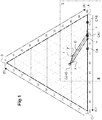
- This mass fraction of lime C is found inside the ternary diagram all along a straight line parallel to the side of the triangle opposite the vertex C.
- the calcium aluminate comprise a single pure phase, it more generally comprises several phases which coexist.
- the mass fraction of all of said first and second CA2, C2AS mineralogical phases in said calcium aluminate is greater than or equal to 80%.
- the cumulative mass of the first and second mineralogical phases CA2, C2AS represents at least 80% of the total mass of the calcium aluminate of the calcium aluminate cement according to the invention.
- the majority mineralogical phase of which is the CA phase is the CA phase
- the majority mineralogical phase or phases are the first and second CA2, C2AS mineralogical phases.
- these third and fourth mineralogical phases CA, CA6 are found in close proximity to the first and second mineralogical phases CA2, C2AS, so that, during the manufacture of the calcium aluminate from the cement according to the invention, it is very likely to form these third and fourth CA mineralogical phases, CA6.
- the mass fraction of all of the third and fourth crystallized mineralogical phases CA, CA6 in said calcium aluminate of the calcium aluminate cement according to the invention is less than or equal to 20%.
- the remaining 20% of the calcium aluminate of the cement according to the invention can also comprise the minority compounds constituting the impurities of the calcium aluminate according to the invention mentioned above: iron oxide Fe 2 O 3 (F), titanium oxide TiO 2 (T), sulfur oxide SO 3 ($), magnesium oxide MgO, or even alkaline compounds.
- the minority compounds can form mineralogical phases with at least one of the majority compounds of calcium aluminate which are alumina A, lime C and silica S.
- the remaining 20% of the calcium aluminate of the calcium aluminate cement according to the invention may comprise an additional mineralogical phase of calcium sulfoaluminate C4A3 $ comprising four calcium oxides CaO for three aluminum oxides Al 2 O 3 and a sulfur oxide SO 3 .
- the calcium aluminate cement according to the invention can thus comprise 0.5% to 15%, preferably from 0.5% to 12%, of this additional mineralogical phase of calcium sulfoaluminate C4A3 $, by mass relative to the total mass of said calcium aluminate.
- the Ye'elimite minority phase has an effect on the reactivity of the cement composition.
- the more the proportion of minority phase Ye'elimite C4A3 $ increases in the cement composition the more the viscosity, at room temperature, of this cement composition increases. This effect is even more pronounced when the temperature surrounding the cement composition increases.
- the Ye'elimite minority phase also has an effect on the reactivity of the cement composition at high temperature.
- the proportion of Ye'elimite C4A3 $ minority phase increases in the cement composition, the longer the setting time at high temperature.
- a calcium aluminate composition comprising a non-zero proportion of Ye'elimite minority phase seems particularly advantageous.
- a proportion of between 3 and 5%, for example equal to 3%, 4% or 5% of the Ye'elimite C4A3 $ phase is appropriate.
- This remaining 20% also includes the amorphous part of the calcium aluminate of the cement according to the invention, if there is one.
- the calcium aluminate of the cement according to the invention belongs to this particular straight line D, then it comprises between 100% of the first mineralogical phase CA2 and 100% of the second mineralogical phase C2AS.
- the calcium aluminate of the cement according to the invention belongs to this particular straight line D, this calcium aluminate is crystalline, and the mass fraction of all of said first and second mineralogical phases CA2, C2AS in the aluminate of calcium in the cement according to the invention is equal to 100%.
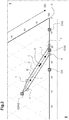
- this calcium aluminate must be located in a zone Z close to this particular straight line D .
- the surface of the ternary diagram delimited by the contour connecting the points [v - CA2 - w - x - C2AS - y - v] corresponds to the zone Z inside which the sum of the first and second phases CA2, C2AS is greater than or equal to 80%.
- composition of point Y of the ternary diagram of figures 1 and 2 is 34.4% in lime C, 48.1% in alumina A, and 17.5% in silica S.
- the ranges of chemical composition in lime C, in alumina A and in silica S of any calcium aluminate belonging to zone Z can also be determined graphically on the ternary diagram using the figure 2 .
- the first and second mineralogical phases CA2, C2AS exhibit a particular reactivity when they are in the presence of water.
- first and second mineralogical phases CA2, C2AS are not very reactive with water at room temperature. In other words, they are adapted to react very slowly with water at room temperature.
- a mineralogical phase reacts with water when it is hydrated by water, and it is possible to characterize this reactivity by a quantity called “degree of hydration” of the mineralogical phase.
- the degree of hydration reflects the capacity of a mineralogical phase to be hydrated by water, that is to say that the molecules constituting the crystal lattice of said mineralogical phase pass into solution in water in the form ion, in other words it is to assess the ability of the bonds existing between the molecules constituting the mineralogical phase to be broken by interaction with water.
- the first and second CA2, C2AS mineralogical phases are adapted to react effectively with water under the effect of a rise in temperature.
- these first and second mineralogical phases CA2, C2AS are adapted to react with water much faster than at room temperature when the curing temperature is between 50 degrees Celsius (° C) and 300 ° C, preferably between 80 ° C and 280 ° C.
- the third CA mineralogical phase is known to be very reactive at room temperature when it is in the presence of water, which is why its mass fraction in the aluminate of calcium of the cement according to the invention is maintained less than or equal to 20% so as to preserve the characteristics of long workability of the cement according to the invention.
- the fourth CA6 mineralogical phase is completely inert, whatever the temperature to which it is subjected, ambient or high. Thus, it does not hydrate even during a rise in temperature.
- the cement according to the invention comprising few of these third and fourth phases CA, CA6 reacts slowly when it is mixed with water at room temperature, without the need to add a retarder, and it is advantageous from an economic point of view.
- this composition according to the invention has both a majority of first and second crystallized mineralogical phases CA2, C2AS and a minority of crystallized mineralogical phases CA, CA6.
- the additional crystallized mineralogical phases notably include, for example, the Ye'elimite C4A3 $ phase.
- This example of calcium aluminate cement according to the invention comprises for example, by mass relative to the total mass of said calcium aluminate between 0.5 and 12% of this phase Ye'elimite C4A3 $.
- the calcium aluminate cement comprises for example 4% of this Ye'elimite phase, included in the 12% of additional crystallized mineralogical phases.
- an operator co-grinds, that is to say mixes and grinds in a single operation, bauxite and limestone until a powder is obtained. comprising particles the maximum diameter of which is less than or equal to 100 micrometers ( ⁇ m).
- the co-grinding operation can be carried out by means of a ball mill or any other mill known to those skilled in the art.
- the powder obtained at the end of this co-grinding operation is then granulated with water, that is to say that the fine powder particles are agglomerated using water to form granules with a diameter greater than that of powder.
- alumina crucible which is itself introduced into an electric oven.
- the electric oven containing the crucible is brought to a temperature of 1400 ° C according to a temperature ramp of 600 ° C per hour. When the electric oven has reached 1400 ° C, a 6 hour cooking stage is applied.
- the calcium aluminate granules are finely ground so as to form the powder forming the calcium aluminate cement according to the invention.
- the calcium aluminate cement powder according to the invention has a specific Blaine surface area measured according to standard NF-EN-196-6, between 2200 square centimeters per gram and 4500 square centimeters per gram.
- the Blaine specific surface area of the calcium aluminate cement according to the invention is between 2,900 and 3,900 square centimeters per gram.
- the cement according to the invention having such a specific Blaine surface is adapted, when it is mixed with water, to have an optimal contact surface with this water.
- the cement according to the invention having this specific Blaine surface is suitable for being homogeneously mixed with a large quantity of water, that is to say that the cement is suitable for being dispersed in a large quantity of water equivalently at any point in the mixture.
- the cement according to the invention does not reuse.
- the calcium aluminate cement according to the invention can be mixed with water to form a cement composition.
- Fly ash corresponds to the ash obtained during combustion at high pressures and temperatures of pulverized coal.
- fly ash very fine fly ash
- pulverized Fuel Ash very fine fly ash
- fly ash of larger dimensions called “Furnace Bottom Ash” in English.
- Commercial products EN4750 "N” fly ash® from Scotash, or class F bottom ash® from FlyAshDirect are examples.
- Table 1 gives the main physicochemical characteristics of these fly ash.
- Fly ash EN450 "N" fly ash Class F bottom ash Society Scotash FlyAshDirect Blaine Specific Area (cm 2 / g) 3110 2000 d50 ( ⁇ m) 14.0 23.1 Density 2.27 2.49 LAW 1000 ° C (%) 4.8 n / A
- the LOI line namely “ Loss on Ignition” in English, or Perte au fur in French, includes volatile elements here.
- Granulated blast furnace slag comes from the surface layer which is formed during the melting of iron in blast furnaces, said surface layer being separated from the molten iron and then cooled in the form of granules to form said slag.
- the commercial product Slag® from Ecocem is an example.
- Table 2 gives the main physico-chemical characteristics of this slag. Table 2 Dairy Slag Society Ecocem Blaine Specific Area (cm 2 / g) 4500 d50 ( ⁇ m) 12.7 Density 2.93
- Silica fume is a pozzolanic material comprising amorphous silica. It is generally a secondary product of the production of silicon and / or ferrosilicon alloys in electric arc furnaces. It can take different aspects: it can in particular be found in the form of a very fine powder, or hard granules a few millimeters in diameter.
- Table 3 gives the main physico-chemical characteristics of these silica fumes.
- Metakaolin is an anhydrous and weakly crystalline aluminum silicate produced by dehydroxylation of kaolin at high temperatures.
- Metasial V800® from the company Soka (Company Kaolinière Armoricaine) is an example.
- Table 4 gives the main physico-chemical characteristics of this metakaolin.
- Table 4 Metakaolin Metasial V800 Society Soka Blaine specific surface (cm 2 / g) 14100 d50 ( ⁇ m) 4.0 Density 2.75
- the cement composition can for example comprise 0%, 5%, 10%, 15%, 20%, 25%, 30%, 35%, 40%, 45% or even 50% of cement additions, by mass per relative to the dry mass of the cement composition, and / or 50%, 55%, 60%, 65%, 70%, 75%, 80%, 85%, 90%, 95% or even 100% cement calcium aluminates according to the invention, by mass relative to the dry mass of the cement composition.
- the calcium aluminate cement present reacts with water, that is to say that a chemical reaction, commonly called “hydration”, takes place between the cement.
- a chemical reaction commonly called “hydration”
- the molecules constituting the crystalline and / or amorphous parts of the cement according to the invention are hydrated by water, namely that they pass into solution in water under form of ions.
- the duration of the thickening phase can vary from one cement to another insofar as it depends a lot on the reactivity of the cement used.
- the open time generally corresponds to the duration of this thickening phase. It usually takes a few hours.
- the duration of the thickening phase can vary from a few minutes to a few hours depending on the envisaged application, the cement and any additives that may be added.
- the thickening phase In the case of an application in oil wells, the thickening phase generally lasts a few hours.
- the duration of the thickening phase also depends on external parameters such as pressure, temperature, and the relative proportion between water and cement.
- the cement composition rapidly passes from a liquid state to a solid state, these states being defined in the mechanical sense of the term, namely that the liquid state is a state in which the cement composition deforms irreversibly when it is subjected to a deformation, while the solid state is a state in which the cement composition can deform elastically when it is subjected to a deformation.
- the cement composition has reached its solid state when, subjected to the Vicat test according to the standard ASTM C91 described later in the example part, the Vicat needle is unable to pass through. entirely the cement composition.
- the cement composition is in its liquid state when, subjected to this same Vicat test, the Vicat needle passes entirely through the cement composition.
- the cementitious composition already has a hardened appearance, so that it can be considered as a hardened final material. However, it continues to harden during the final hardening phase.
- a user forms the cement composition by mixing the calcium aluminate cement with all of said other compounds possibly included in the cement composition, and with water.
- the consistency of the cement composition formed is more or less fluid depending on the mass of water it contains relative to the total mass of said cement composition.
- the amount of water added to the cement according to the invention and to said other possible compounds depends mainly on the application for which the cement composition is intended.
- a user can choose to form a cement composition in the form of a paste which is not very fluid.
- step a) the user can form an aqueous suspension of cement.
- the mass fraction of water in said aqueous suspension is between 15% and 45%.
- the mass fraction of water in this aqueous suspension amounts to a water / cement ratio of between 20% and 70%, said ratio being the ratio between the mass of water and the mass of dry cement forming the aqueous suspension.
- the mass fraction of the water in said aqueous suspension is between 20% and 60%, for example equal to 29%, 31%, 33%, 37%, 52%, or even 55%.
- the mass fraction of water in this aqueous suspension amounts to a water / dry compound ratio of between 25% and 150%, said ratio being the ratio between the mass of water and the mass dry cement composition, including cement and cement additions.
- the water / dry compound ratio of the aqueous suspension is equal to 41%, 48%, 60%, 80%, 110%, or even 120%.
- step b) as long as the cement composition is in the thickening phase, the user can set up the cement composition.
- the user can pour the cement composition into a slot.
- step b) said aqueous suspension is injected into an oil wellbore.
- This injection is made by means of one or more pumps which push the aqueous suspension in a tubular body to the bottom of the wellbore. Once at the bottom of the wellbore, this suspension can rise naturally to the surface, between the rock wall and the tubular body.
- the user can shape it so as to prefabricate objects of the type beam or slab.
- step c) the initiation of the hydraulic setting phase of the cement composition is favored by heating the cement composition to a temperature between 50 ° C and 300 ° C, preferably between 80 ° C and 280 ° C .
- this heating of the cement composition can be voluntary or undergone.
- this aqueous suspension of cement is naturally heated between 50 ° C and 300 ° C by the surrounding rock, after its ascent the surface.
- the temperature is generally between 120 ° C and 180 ° C, and the heating of the cementitious composition is then undergone.
- the aqueous suspension has a satisfactory workability at room temperature, that is to say that its viscosity at room temperature is sufficiently low to allow its injection by means of pumps, and the hardening of said aqueous suspension occurs after its injection into the well, when the surrounding temperature rises.
- the user can also choose to activate the phenomenon of hydraulic setting of the cement composition according to the invention by heating said cement composition to a temperature chosen between 50 ° C. and 300 ° C. This is then voluntary heating.
- the user can thus choose the moment at which the hydraulic setting phase is triggered, by choosing the moment at which he heats the cementitious composition.
- the thickening phase corresponding overall to the open time, ends at the time of this heating.
- the curing kinetics reflect both the rate of thickening of the cement composition, the instant from which its hydraulic setting is initiated, and the mechanical resistance reached by the final cured material obtained from the cement composition after that -this reacted with the available added water, at the desired time depending on the application.
- the characteristics of workability and hardening kinetics can be quantified in different ways, by different test methods and according to different standards. Thus, these characteristics of workability and hardening kinetics can be quantified by different measured characteristic times, for example a gel time, an initial setting time or a thickening time, as defined below.
- first and second cements are calcium aluminate cements of the prior art known under the trade names of Ciment fondu® and SECAR®71.
- the third cement (Ciment3) is a calcium aluminate cement according to the invention.
- composition presents the measured chemical composition of this third cement according to the invention Ciment3, as well as the chemical composition of the raw materials used to obtain it (Bauxite and Limestone). These compositions are given in percentage by mass (%), that is to say that they indicate the mass of compound relative to the total dry mass of cement or of raw material used.
- the LOI line namely Loss on Ignition, or Loss on Fire, groups together volatile elements such as residual humidity in the case of bauxite or carbon dioxide CO2 in the case of limestone.
- Table 5 below gives the mineralogical phases contained in these first, second and third cements (Ciment1, Ciment2, Ciment3).
- the mineralogical phases were measured by a known technique of X-ray diffraction (often abbreviated DRX).
- the notation na means that the cement does not include the corresponding mineralogical phase or that these phases are present in very small quantities which are not measured.
- the Ferrites mineralogical phase essentially comprises the mineralogical phase of tetra-calcium ferro-aluminate C4AF, hereinafter called the sixth crystallized mineralogical phase.
- the crystal lattice of this sixth crystallized mineralogical phase comprises four lime molecules C for an alumina molecule A and an iron oxide Fe 2 O 3 , abbreviated by the letter F.
- the “other” column groups together the impurities included in these cements, namely at least one of the following compounds: iron oxide Fe 2 O 3 , titanium oxide TiO 2 , sulfur oxide SO 3 , magnesium oxide MgO, and compounds alkaline.
- the “Other” column of Cement1 cement of the prior art includes the mineralogical phases CA6 and C4A3 $. More specifically, the cement Ciment1 comprises 0% of phase CA6 and approximately 0.7% of C4A3 $, by mass relative to the total mass of all the phases contained in said Ciment1.
- Cement3 cement comprises 3% of phase CA6 and 4% of phase C4A3 $, by mass relative to the total mass of all the mineralogical phases contained in said Ciment3.
- the proportion of the mineralogical phases which it comprises may vary slightly from one manufacturing campaign to another.
- Ciment3bis having the proportions of mineralogical phases described in table 6 was also obtained under conditions similar to the conditions for obtaining the third cement according to the invention Ciment3.
- Table 6 CA2 (%) * 59.2 C2AS (%) * 22.5 CT ortho. (%) 4.6 CA6 (%) 5.4 CA (%) 0.9 Spinel MA (%) 1.2 C4A3S $ (%) 4.2 C4AF (%) 0.6 Spinel iron (%) 0.7 Alu ⁇ (%) 0.5 C12A7 (%) 0.0 MgO (%) 0.2 CaO (%) 0.2
- This other calcium aluminate cement according to the invention thus comprises 72.5% of CA2 mineralogical phases and 27.5% of C2AS mineralogical phase, by mass compared with only the two CA2, C2AS mineralogical phases.
- CimentRéf A reference cement (CimentRéf) was also used in comparison with the first, second and third cements of calcium aluminates Ciment1, Ciment2, Ciment3.
- This CimentRéf reference cement is a Portland cement of class G conventionally known to those skilled in the art and often used in applications such as petroleum drilling.
- the CimentRéf reference cement has a specific Blaine surface of the order of 3010 cm 2 / g.
- a first test which made it possible to characterize the cements studied consisted in measuring the thickening time of different cement compositions obtained by mixing these cements with water.
- the thickening time is a data making it possible to assess the workability of the cement composition, in particular when it is in the form of an aqueous suspension.
- the thickening time is an estimate of the time after which the cementitious composition can no longer be pumped out. In other words, it is the time after which an aqueous suspension is too viscous to be able to be moved by means of a pump.
- the thickening time corresponds to the time that has elapsed between the time when the water and the cement were mixed to form the cement composition in the form of an aqueous suspension, and the moment when the consistency, called Bearden consistency (Bc), of the cement composition has reached a value such that this cement composition can no longer be pumped, the Bearden consistency being expressed by means of 'a grandeur without unity.
- Bearden consistency Bc
- the thickening time is measured according to ISO standard 10426-1, clause 10.3, from the document “ Petroleum and natural gas industries - Cement and materials for well cementing”, including the first part NF-EN-ISO- 10426-1 is entitled “Part 1 - Specifications” and based on ISO standard 10426-1: 2005, and the thickening time is such that the cement composition has reached a Bearden consistency of 100 Bc, at 23 ° C, under atmospheric pressure of 1 atmosphere (atm).
- this thickening time is carried out for example by means of a stirring blade adapted to rotate in the cement composition while measuring a torque.
- This measured torque makes it possible to appreciate the force that the blade must exert on the cement composition in order to be able to rotate. This couple is thus linked to the Bearden consistency of the cement composition.
- Table 7 below presents different cement compositions which have been formed from the three calcium aluminate cements Ciment1, Ciment2, Ciment3, and Portland cement CimentRéf, as well as the thickening time associated with them, at temperature. ambient (23 ° C).
- these cement compositions were formed at 23 ° C., mixing the cement with the appropriate quantity of water (indicated in table 7) for 15 seconds with stirring at 4000 revolutions per minute. Further stirring at 12,000 rpm for 35 seconds was then carried out.
- the water / cement ratio represents the mass of water which was introduced to form the cement composition, relative to the mass of dry cement.
- Table 7 Name of the cement composition Cement used Water / cement ratio Thickening time (hours: minutes) Compo1 Cement1 0.5 1:21 Compo2 Cement2 0.5 0: 48 Compo3 Cement3 0.38 10:26 CompoRef CementRef 0.44 5:38
- the CompoRéf cement composition comprising CimentRéf confirms that Portland cements have an average thickening time (around 5 hours) at room temperature (23 ° C). This is why these cements are often used in applications requiring a fairly long processing time.
- the cement composition Compo3 comprising the calcium aluminate cement according to the invention Ciment3 has a thickening time greater than 10 hours, which offers the user the possibility of using - for example transporting, pouring, d '' inject, pump, etc. - This cement composition Compo3 for a long time, without having to add a retarder.
- Ciment3 therefore has very high workability without the addition of a setting retarder. Thus, it is particularly suitable for applications requiring a very long open time, and this without chemical pollution linked to the use of setting retarders.
- the viscosity makes it possible to appreciate the hardening kinetics and the workability of these cement compositions.
- the viscosity is measured according to ISO standard 10426-2, clause 12. This standard comes from the second part of the "Petroleum and natural gas industries - Cement and materials for well cementing", the said part being entitled “Part 2 - Testing of well cements” and based on the publication API RP 10B, 22nd edition, of December 1997, addendum 1, of October 1999 .
- the viscosity test is carried out as follows: the cement is mixed with the chosen quantity of water to form the cement composition (procedure detailed above), then this cement composition is placed in a viscometer rotary brand FANN®, model 35.
- the FANN®35 rotary viscometer is called "direct indication".
- two coaxial cylinders are immersed vertically in the cement composition.
- the outer cylinder - also called a sleeve - is rotated by a motor at a speed chosen by the operator.
- the inner sleeve is linked to the frame by a torsion spring.
- the cement composition set in motion by the outer cylinder, exerts a torque on the inner sleeve, and this torque is proportional to the angle of torsion of said spring.
- the direct reading of the torsion angle of the spring (in degrees) is linked to the shear stress (in Pascal) of the cement composition, which translates the viscosity of said cement composition.
- This measurement is commonly called “FANN®35 measurement” (FANN®35 reading ).
- the outer cylinder rotates at a speed of rotation chosen by the operator with a potentiometer, ranging from 3 to 300 revolutions per minute, and a reticle makes it possible to visually measure on a graduated disc the angle of rotation of the spring linked to the inner sleeve, this angle of twist being proportional to the torque generated by the cementitious composition in motion on the sleeve interior.
- Table 8 presents the different cement compositions tested and gives values of the angle of twist of the inner sleeve representative of their respective viscosity V1 and V2 at 23 ° C
- Table 9 presents similar cement compositions and values of the torsion angle of the inner sleeve representative of their viscosity at 50 ° C.
- table 10 presents the same cement compositions as those of table 9 and values of the angle of torsion of the inner sleeve representative of their viscosities at 80 ° vs.
- the values indicated for the viscosities V1 and V2 are here the values of the measured angle of torsion.
- Table 8 Cement composition Cement used Water / cement ratio Blaine Specific Area (cm 2 .g -1 )
- Initial viscosity V1 Viscosity V2 Compo5 Cement2 0.41 4000 14 > 300 Compo6 Cement3 0.41 2200 6 21 Compo7 Cement3 0.41 3080 10 37 Compo8 Cement3 0.41 3470 13 38 Compo9 Cement3 0.41 3700 14 36 Compo10 Cement3 0.41 4100 18 58
- the cement composition Compo5 comprising the calcium aluminate cement of the prior art Ciment2 has an initial viscosity V1 acceptable to be able to be handled, that is to say for an installation, for example by pumping, but its viscosity after 10 minutes is that of a gelled cement composition. Consequently, as soon as the cement composition Compo5 is left stationary for too long, it can no longer be handled. This is particularly troublesome when it is desired to move such a cementitious composition by means of pumps, which would then risk being damaged on restarting after a temporary stop.
- cementitious compositions according to the invention Compo6 to Compo10 are particularly advantageous insofar as their initial viscosities V1 are low (less than 20), which facilitates their transport by means of a pump. Their viscosity V2 after a pause time also remains low enough for them to be pumped.
- the hardening kinetics of the cement compositions comprising the calcium aluminate cement according to the invention Ciment3 is much slower, at room temperature, than those of the cement compositions of the prior art, which is an advantage for uses requiring long handling.
- Table 8 also gives an indication of the reactivity of the calcium aluminate cement Ciment3 according to the invention as a function of the specific Blaine surface. It is observed in fact that the more the Blaine specific surface area increases, the more the initial viscosity and the viscosity after pause increase. Thus, the kinetics of hardening accelerates when the specific Blaine surface increases, which translates the fact that the finest powder grains are more easily hydrated by water because they have a larger reactive surface.
- the viscosity V2 after pause of the cement composition Compo11 is also too high for this cement composition Compo11 to be able to be used in pumps without adding a setting retarder to it.
- cementitious compositions according to the invention Compo12 to Compo14 have low initial viscosities V1 and viscosities V2 after a pause time still allowing their use as well as their transport by means of pumps.
- Table 10 shows that at 80 ° C, the cement composition Compo11 comprising the calcium aluminate cement of the prior art Ciment2 cannot be used because its viscosity is too high as soon as it is mixed with water.
- the initial viscosity V1 of the cement compositions comprising the cement according to the invention Ciment3 at 80 ° C is of the same order of magnitude as at 50 ° C.
- the rise in temperature influences the viscosity V2 after a pause time of the cement compositions Compo12 to Compo14.
- the viscosity after pause increases markedly between 50 ° C and 80 ° C, and all the more if the Blaine specific surface is large. This confirms the fact that the temperature promotes the reaction between the water and the cement according to the Ciment3 invention.
- the Anton Paar rheometer used is referenced MCR_302®. It is fitted with a CC27 cutter and a mixing propeller with 6 straight rectangular blades 16 mm (mm) high by 9 mm long, around an axis 4 mm in diameter.
- the Anton Paar viscometer makes it possible to follow the evolution of the viscosity as a function of time, at a given temperature, when the blade rotates at a chosen speed.
- the rheometer actually measures the torque applied by the cement composition to the rotating blade in said cement composition.
- the torque measured is representative of the viscosity of the cement composition.
- Table 11 shows in parallel the viscosity measured by the Fann®35 viscometer after 10 minutes of rest (V2), and the gel time of the two cement compositions according to the invention comprising the cement Ciment3bis, and of the cement composition of l prior art comprising Portland cement CimentRef.
- Table 11 Cement composition Cement used Water / Cement Ratio Blaine Specific Area (cm 2 .g -1 ) V2 viscosity (Fann®35, 23 ° C) Freezing time (minutes) (Anton Paar, 80 ° C) Compo15 Cement3bis 0.41 3070 38 48 Compo16 Cement3bis 0.48 3070 25 77 CompoRef CimentRef 0.44 3010 30 90
- cement compositions compo15 and compo16 according to the invention show a clear and rapid setting compared to the composition CompoRef. The break in slope of the experimental curve between the thickening phase and the setting phase is then very marked.
- the gel time depends on the water / cement ratio applied to the cement according to the invention.
- the penetrant measurement consists in determining the mass of water appearing on the surface of a given quantity of aqueous suspension, after immobilization of this aqueous suspension for 2 hours.
- the water appearing on the surface is given in percentage (%), by mass relative to the total mass of water added to the aqueous suspension.
- the penetrant measurement is carried out here at 23 ° C., in a cylindrical container of 250 milliliters (ml) of capacity.
- Table 12 gives the percentages of water removed from the three compositions Compo15, Compo16 and CompoRéf studied previously.
- Table 12 Cement composition Cement used Water / Cement Ratio Blaine Specific Area (cm 2 .g -1 ) Water drained (%) Compo15 Cement3bis 0.41 3070 1.0 Compo16 Cement3bis 0.48 3070 2.8 CompoRef CimentRef 0.44 3010 4.8
- the cement according to the invention rewets less than the reference cement, even at higher water / cement ratios, which is favorable for ensuring its compliance with API standards.
- the cement composition is formed by mixing the water and the cement, then the cement composition is left to stand for 24 hours, at a chosen temperature and a selected pressure, before measuring the mechanical resistance according to ISO standard 10426-1. , clause 9.2.
- Table 13 shows the mechanical strengths of the three cement compositions Compo1, Compo2 and Compo3 after 24 hours at 37 ° C and under atmospheric pressure (R1), after 24 hours at 60 ° C and under atmospheric pressure (R2), and after 24 hours at 110 ° C and under pressure of 20.7 MegaPascal (R3).
- the mechanical resistances R1, R2 and R3 are given in MegaPascal (MPa). Table 13 Cement composition Mechanical resistance R1 (MPa) Mechanical resistance R2 (MPa) Mechanical resistance R3 (MPa) Compo1 6.3 6.4 11.8 Compo2 17.4 21.5 25.2 Compo3 0 0.8 23.6
- the cement composition Compo3 comprising the cement according to the invention Ciment3 has zero mechanical resistance at 37 ° C, and almost zero at 60 ° C, which indicates that this cement is only very slightly reactive below 60 ° C.
- this confirms the fact that the reaction of the cement according to the invention with water is naturally delayed at temperatures below 60 ° C, without the need to add retarder to it.
- the cement composition Compo3 also develops a mechanical resistance of the order of twenty megaPascals.
- the reaction between the cement according to the invention and the water is favored by high temperatures.
- the calcium aluminate cement according to the invention exhibits curing kinetics which are naturally controlled by temperature, without the need to add a retarder.
- the mechanical resistance R3 developed by the cement composition Compo3 comprising the calcium aluminate cement according to the invention Ciment3 is similar to that of the calcium aluminate cements usually used and known to date ( around 20 MPa).
- the setting time is measured according to standard ASTM C91, using a Vicat needle.
- the Vicat test consists of mixing water and cement to form the cement composition, then dropping a Vicat needle into the cement composition, which is static, at regular time intervals. As long as the needle sinks to the bottom of the cement composition, it is considered that the setting time has not been reached, as soon as it sinks without being able to reach the bottom of the cement composition, has reached the set time.
- the setting time therefore corresponds to the time which has elapsed between the time when the cement and the water have been mixed to form the cement composition in a liquid state, and the moment when the cement composition has passed into a sufficiently solid state so that the Vicat needle can no longer pass through it entirely but only partially, at a temperature of 23 ° C. and under atmospheric pressure (latm).
- Table 14 below shows the setting times, in minutes, for different cement compositions comprising a certain proportion of calcium aluminate cement mixed with Portland cement.
- the Portland cement used is a class H Portland cement.
- the water / cement ratio is 0.38, that is to say that the mass of water used represents 38% of the total dry mass of cement used.
- Table 14 Calcium aluminate cement used 0% 5% 8% 15% Cement1 400 310 220 20 Cement2 400 190 45 10 Cement3 400 340 320 300
- Table 14 presents the effect on the setting time of the contamination of a Portland cement with a calcium aluminate cement.
- the calcium aluminate cements of the prior art Ciment1 and Ciment2 have a significant effect on the setting time of the Portland cement used. Indeed, while Portland cement alone, corresponding to the first column, has a relatively long setting time of 400 minutes, the setting time observed for a mixture with 15% of calcium aluminate cement Ciment1 and Ciment2 is very short (20 and 10 minutes respectively). This means that a cementitious composition containing a Portland cement and a calcium aluminate cement of the prior art reacts very quickly, preventing the use of such a cementitious composition for applications requiring long implementations. Such cementitious compositions cannot therefore be used in applications of the wellbore type for example.
- the contamination of Portland cement with the cement according to the invention Ciment3 has only little effect, at room temperature, on the setting time of the cement composition.
- the setting time of a cement composition comprising 15% Cement3 and 85% Portland cement corresponds to 75% of the setting time of a cement composition comprising 100% Portland cement.
- Ciment3 is facilitated compared to the other calcium aluminate cements since it is not necessary to thoroughly clean the installations before they can be used. installations for Portland cement.
- the curve obtained also makes it possible to determine the time elapsing between the formation of the cement composition and the moment when the torque reaches 4mN.m.
- This duration makes it possible to quantify the “setting time” of the cement composition. It is a value of this setting time which is not necessarily equal to the setting time value measured by the Vicat test.
- the cement compositions are prepared as follows: 100 g of cement are mixed with 44 g of water (i.e. a water / cement ratio of 0.44), using a Rayneri Turbotest mixer, for 15 seconds at 1000 rpm, then for 120 seconds at 3300 rpm.
- Table 15 presents the results obtained. Table 15 Cements used Times measured at 20 ° C CementRef Cement3bis Cement2 20 ° C (%) (%) (%) (%) gel (min) catch (min) 0 100 0 420 420 10 90 0 420 420 25 75 0 190 260 90 10 0 420 420 90 0 10 10 10 100 0 0 420 420
- Ciment3bis is polluted with up to 10% Portland Ciment CimentRef at 20 ° C, the gel and setting times are not affected, that is to say that they are similar to those obtained for Ciment3bis cement alone.
- Ciment3bis When the cement according to the invention Ciment3bis is polluted with 25% Portland cement CimentRef, the freezing and setting times remain satisfactory: they are respectively around 190 minutes and 260 minutes.
- the use of the calcium aluminate cement according to the invention is facilitated at room temperature compared to the cements of the prior art since it is not necessary to clean the installations after or before using these installations with Portland cement.
- This test is based on observations with a scanning electron microscope allowing an elementary chemical analysis as well as on X-ray diffraction measurements allowing a quantification of the mineralogical phases according to the Rietveld method.
- a cement composition Compo15 was formed by mixing water with the cement according to the invention Ciment3 in a water / cement ratio of 0.44, that is to say so that water represents 44 % by mass relative to the total dry mass of cement.
- a Compo16 cement composition was also formed by mixing water with the cement of the prior art Ciment2 in a water / cement ratio of 0.44.
- Hydrates are compounds formed between water (denoted H) and hydrated chemical compounds resulting from the mineralogical phases initially included in the cements studied.
- the results of the X-ray diffraction test make it possible to estimate the degree of hydration of the mineralogical phases of the cement according to the invention Ciment3 or of the cement of the prior art Ciment2, as a function of the temperature.
- free water means water which is not engaged in bonds with ions coming from the various hydrated mineralogical phases, that is to say which does not already belong to a hydrate formed. In other words, it is water still available to react with (or hydrate) the anhydrous mineralogical phases still existing.
- the "other" phase groups together any impurities (iron oxide Fe 2 O 3 , titanium oxide TiO 2 , sulfur oxide SO 3 , magnesium oxide MgO, and alkaline compounds).
- Table 16 presents the results of the X-ray diffraction test, namely the percentage of each mineralogical phase and of each hydrate present after each treatment undergone by the cement composition Compo15.
- Table 17 presents the results of the X-ray diffraction test, after each treatment undergone by the cement composition Compo16.
- Table 16 Phases D1 D2 D3 D4 CA2 39% 36% 0% 0% C2AS 20% 20% 14% 11% Other 10% 8% 8% 8% Open water 31% 26% 16% 19% CAH10 0% 6% 0% 0% C3AH6 Katoite 0% 0% 27% 22% C3AS (3-x) H4x Hibshite 0% 0% 0% 7% AH3 Gibbsite 0% 4% 14% 0% AH Boehmite 0% 0% 21% 33%
- the “other” phase also includes the CA phase.
- This CA phase is initially present during the mixing between cement3 and water (column D1), and is absent from the mixture after 24 hours of reaction (columns D2, D3 and D4) because it completely reacted with water, whatever the temperature.
- phase CA6 represents 2.3%, by mass, of all the phases included in the composition Compo15 at the time of diffraction D1, 2.6% by mass, of all the phases included in this composition at moment of diffraction D2, 2.2% by mass, of all the phases included in this composition at the time of diffraction D3 and 2% by mass of all phases included in this composition at the time of diffraction D4 .
- the first CA2 mineralogical phase reacts entirely from 120 ° C. In other words, from 120 ° C, the first CA2 mineralogical phase is fully hydrated by water.
- the second C2AS mineralogical phase reacts from 120 ° C, but it is less reactive than the first CA2 mineralogical phase.
- the reactivity of the first mineralogical phase CA2 is favored by a temperature lower than that favoring the reactivity of the second mineralogical phase C2AS.
- the cement according to the invention exhibits chemical resistance properties similar to those of the calcium aluminate cements already known.
- hardening kinetics can be adjusted as a function of the temperature and by choosing the relative proportion of first and second mineralogical phase CA2, C2AS.
- the calcium aluminate cement according to the invention has a low contaminating power on Portland cements.
- the mechanical properties of the hardened final material obtained from the calcium aluminate cement according to the invention are similar to those of the hardened final materials obtained from the known calcium aluminate cements.
- the density determines the capacity of the cement composition used in oil drilling wells to retain the gases and the oil contained in said wells.
- the density is evaluated by relating the mass of the aqueous suspension to its volume.
- the density is expressed in “pounds per gallon (ppg)”, knowing that 1 ppg is worth 0.12 kilograms per cubic decimeter (kg / dm 3 ) or 0.12 gram per cubic centimeter (g / cm 3 ).
- Table 18 below presents the specific gravity of the cement compositions comprising Ciment3bis according to the invention and Portland cement CimentRef.
- Table 18 Cement composition Cement used Water / cement ratio Blaine Specific Area (cm 2 / g) Density (ppg) Compo15 Cement3bis 0.41 3070 16.0 Compo16 Cement3bis 0.48 3070 15.3 CompoRef CementRef 0.44 3010 15.8
- the densities of the cement compositions Compo15 and Compo16 according to the invention are similar to that of the reference Portland cement and therefore suitable for applications in oil drilling.
- a fourth, fifth and sixth cement of calcium aluminates according to the invention (Ciment4, Ciment5, Ciment6) were used to form different cement compositions whose properties have been compared.
- the fourth, fifth and sixth cements Ciment4, Ciment5, Ciment6 are obtained in the laboratory from the following almost pure raw materials: the source of silica Millisil E400®, the source of alumina AL170® and the source of limestone Calcite Normapu®. The precise compositions of these raw materials are given in Table 19 below.
- the temperature ramp applied is 600 ° C per hour.
- Table 19 summarizes the operating conditions and the masses of raw materials mixed to form the cements Ciment4, Ciment5 and Ciment6.
- Table 19 Cement4 Cement5 Cement6 Alumina Al170 720.0g 500.0g 662.0g Silica E400 35.0g 150.0g 63.0g Normapur limestone 429.8g 614.0g 480.7g Cooking (Duration in hours and temperature in degrees Celsius) 12h 1550 ° C 4 p.m. 1525 ° C 4 p.m. 1525 ° C Number of revolutions during fine grinding 7500 9000 8000
- Table 20 below gives the chemical composition of the raw materials used to obtain the laboratory cements Ciment4, Ciment5, Ciment6, as well as the composition of the cements Ciment4, Ciment5 and Ciment6 actually obtained.
- Table 20 Millisil E400 silica source Al170 alumina source CaCO 3 limestone source Cement4 Cement5 Cement6 PaF (%) 0.29 0.63 43.93 n / A n / A n / A SiO 2 (%) 98.51 n / A 0.06 3.4 15.1 6.2 Al 2 O 3 (%) n / A 99.17 0.1 72.3 50.6 66.5 Fe 2 O 3 (%) 0.06 0.03 0.14 1.1 0.2 0.7 CaO (%) 0.02 0.02 55.32 24.3 34.9 27.2 MgO (%) n / A 0.01 n / A n / A n / A SO 3 (%) 0.08 0.07 0.05 0.1 0.1 0.1 K 2 O (%) n / A n / A n / A / A
- Table 21 gives the mineralogical phases contained in the fourth, fifth and sixth cements (Ciment4, Ciment5, Ciment6).
- Table 21 Cement4 Cement5 Cement6 CA (%) 0 0.1 0.4 CA6 0 0 0.4 CA2 (%) 84.8 32.6 70 C2AS (%) 15 66.9 28.8 C2S (%) 0 0 0 0 Ferrites (%) 0 0 0 C4A3 $ 0 0 0 0 Alumina (%) 0 0.3 0.1 Lime (%) 0.1 0.2 0.1 Quartz (%) 0.1 0 0.2 Others (%) 0 0 0 0
- the “alumina” and “lime” lines represent the remains of raw materials that have not formed mineralogical phases.
- the cements Ciment4, Ciment6 and Ciment5 are respectively represented on the diagram of the figure 2 at points J, K and L of the line D.
- the following table 22 gives the Blaine specific surface, the density and the diameter d50 ( ⁇ m) of the Cement4, Ciment5, Ciment6 cements obtained.
- the density corresponds to the density of the cement compared to the density of pure water.
- the density is measured with a pycnometer.
- the diameter d50 corresponds to the median diameter d50 of any set of particles. It is a quantity representative of the statistical distribution of the sizes of these particles, in other words the particle size of this set of particles.
- the median diameter d50 is a reference diameter defined as the diameter below which lies 50% of the particles studied, by volume relative to the total volume of all of said particles studied.
- the term “diameter” is understood here to mean the largest dimension of the particle, whatever its shape.
- Table 22 Blaine Specific Area (cm 2 / g) d50 ( ⁇ m) Density Cement4 3110 33 2.94 Cement5 3690 16 3.00 Cement6 3070 25 2.95
- Cement compositions were formed from the cements according to the invention Ciment4, Ciment5 and Ciment6.
- cementitious compositions were formed at 23 ° C. by mixing 346 grams of cement with 142 grams of water (ie a water / cement ratio of 0.41) for 15 seconds with stirring at 4000 rpm, then for 35 seconds under stirring at 12,000 revolutions per minute.
- the Anton Paar rheometer used is referenced MCR_302®. It is equipped with a CC27 cutter and its stirring propeller with 6 straight rectangular blades 16 mm (mm) high by 9 mm long around an axis 4 mm in diameter.
- the three cement compositions each comprising the cements Ciment4, Ciment5 and Ciment6 have relatively short gel times: 7 minutes for the compositions comprising the cements Ciment4 and Ciment6, and 9 minutes for the composition comprising the cement Ciment5. of the time generated by the cement composition comprising the cement according to the invention Ciment4 on the viscometer blade exerting a shearing speed of 500 s -1 , was plotted at 80 ° C and 23 ° C.
- the composition undergoes gelling about 30 minutes after mixing between water and Ciment4 cement. However, at this temperature, the composition does not undergo a setting phase within 8 hours of the experiment.
- the reactivity of the composition comprising the cement according to the invention Ciment4 is increased by the temperature, since the gel time is shorter and the setting faster.
- the densities of the cement compositions Compo17 to Compo19 according to the invention are similar to that of the reference Portland cement and therefore suitable for applications in oil drilling.
- This propagation time is then compared to the propagation times obtained on standard test pieces, the mechanical strength of which is evaluated by conventional rupture tests.
- compositions obtained are those given in Tables 23 and 24 above.
- the measurement of the propagation times of the ultrasound sounds through the sample is carried out according to the API RP 10B-2 Clause 8 standard, that is to say that the water and the cement are mixed, the cement composition is introduced into the measuring cell where it is placed under a temperature ramp going from 26.6 ° C to 121 ° C in 4 hours, then under a constant temperature of 121 ° C for 20 hours, and where a pressure of 3000psi is applied upon introduction into the measuring cell.
- the mechanical resistance by ultrasound is evaluated during the evolution of the material by raising of temperature and pressure.
- the mechanical strengths of the various cement compositions Compo15 and Compo17 to Compo19 are measured 12 hours after the start of the heat treatment, i.e. after the 4 hours of temperature ramp and the first 8 hours of the temperature plateau, and 24 hours after the start of the heat treatment, that is to say at the end of the heat treatment comprising the 4 hours of temperature ramps and the 20 hours of the temperature level.
- composition Compol9 comprising the Ciment6 manufactured in the laboratory has a mechanical resistance by ultrasound comparable to that of the composition Compo15 comprising the Ciment3bis manufactured industrially, because these cements have an equivalent content in phase CA2 and C2AS.
- the mechanical resistance by ultrasound of the composition Compo14 comprising the Ciment4 is much higher than the mechanical resistance of the composition Compol9 comprising the Ciment6, itself significantly superior to the mechanical resistance of the Compo18 composition comprising Ciment5.
- the cementitious compositions are produced according to the same protocol as for the Anton Paar viscometer tests.
- the cementitious compositions were introduced into a mold comprising three cylindrical cells (diameter 40 mm, height 50 mm), then placed in the autoclave regulated at 180 ° C with a pressure of 10 bar (145 PSI) generated by the vapor pressure .
- the compressive strength of the cement compositions is measured by means of a press module.
- the compression speed is 2.4 kiloNewtons per second.
- composition Compo17 comprising the cement Ciment4 has a mechanical resistance to compression of 2113 PSI (14.6 MPa), that comprising the cement Ciment5 (Compo18) of 561 PSI (3.9 MPa), and that comprising the cement Ciment6 (Compo19 ) of 2330 PSI (16.0 MPa).
- composition Compo18 comprising the cement Ciment5 according to the invention developed a mechanical resistance by ultrasound equal to 10% of that of the composition Compo17 comprising the cement Ciment4, the mechanical resistance of this same composition Compo18 comprising the Cement5 after an autoclave treatment at 180 ° C. is equal to 25% of that comprising the Cement4 (Compo17).
- the cements according to the invention are intended for different applications for which a greater or lesser resistance is sought, at a given instant.
- cements Ciment7, Ciment8, Ciment9 are obtained from the following raw materials: limestone, bauxite A, bauxite B and anhydrous calcium sulphate (abbreviated C $), the respective chemical compositions of which are indicated in Table 26 below.
- Table 25 summarizes the operating conditions and the masses of raw materials mixed to form the cements Ciment7, Ciment8 and Ciment9.
- Table 25 Cement7 Cement8 Cement9 Limestone (g) 34 34 33.4 Bauxite A (g) 58.6 58.6 58.2 Bauxite B (g) 7 6 6 6 Anhydrite C $ (g) 0.4 1.4 2.4 Cooking (Duration in hours and temperature in degrees Celsius) A 12-hour plateau at 1375 ° C, with a temperature ramp of 600 ° C per hour.
- Table 26 gives the chemical composition of the raw materials used to obtain the cements Ciment7, Ciment8, Ciment9 as well as that of the cements Ciment7, Ciment8, Ciment9 obtained.
- Table 26 Limestone Bauxite A Bauxite B Cement 7 Cement 8 Cement 9 SiO2 (%) 0.13 7.66 0.93 6.5 4.9 4.9 Al2O3 (%) 0.29 68.86 77.80 64.3 66.0 64.0 Fe2O3 (%) 0.10 2.36 0.61 0.4 0.4 0.5 CaO (%) 56.21 0.54 0.02 25.9 25.7 26.0 MgO (%) 0.11 0.27 0.08 0.2 0.4 0.4 SO3 (%) 0.05 0.12 0.07 0.2 0.6 1.1 K2O (%) 0.00 0.87 0.05 n / A n / A n / A Na2O (%) 0.05 0.09 0.19 n / A n / A TiO2 (%) 0.02 3.57 4.45 2.4 3.0 2.9 P2O5 (%) 0.
- Table 27 gives the mineralogical phases contained in the cements Ciment7, Ciment8, Ciment9.
- the mineralogical phases were measured by a known technique of X-ray diffraction (often abbreviated DRX).
- Table 27 Cement7 Cement8 Cement9 CA2 54 60 54 C2AS 30 23 22 CA6 9 7 8 CT ortho 4 5 5 C4A3 $ 1 4 8 MY 1 1 1 IT 0 0 0 Ferrite 1 0 1
- Phase MA corresponds to a phase comprising a molecule of magnesium oxide MgO (denoted M according to the rating of cement manufacturers) for an alumina molecule A.
- Each of the cements Ciment7, Ciment8, Ciment9 comprises approximately 70% of the first mineralogical phase CA2 and 30% of the second mineralogical phase C2AS, relative to the total mass of these two mineralogical phases.
- the cements Ciment7, Ciment8 and Ciment9 include various proportions of the Ye'elimite C4A3 $ minority phase, namely 1%, 4% and 8% respectively of C4A3 $ mineralogical phase, by mass ratio to the total mass of the calcium aluminate cement, Ciment7, Ciment8 and Ciment9 respectively.
- Table 28 gives the Blaine specific surface and the diameter d50 ( ⁇ m) of the Cement7, Ciment8 and Ciment9 cements obtained. Table 28 Blaine Specific Area (cm 2 / g) d50 ( ⁇ m) Cement7 2950 34 Cement8 3000 28 Cement9 3080 24
- Cement compositions were formed from the cements according to the invention Ciment7, Ciment8 and Ciment9.
- cementitious compositions were formed at 23 ° C., by mixing 346 grams of cement with 152 grams of water (i.e. a water / cement ratio of 0.44) for 15 seconds with stirring at 4000 revolutions per minute, then for 35 seconds with stirring at 12,000 revolutions per minute.
- Table 29 presents the values of the angle of twist of the retaining spring linked to the inner sleeve representative of the viscosity V1 and V2 of the cement compositions comprising the cements Ciment7, Ciment8, Ciment9, as well as those of the cement compositions comprising the cement Ciment3bis.
- Table 29 Cement composition Cement used Water / cement ratio Blaine area (cm 2 / g) Phase C4A3 $ (%) Viscosity V1 Viscosity V2 Compo15 Cement3 bis 0.41 3070 4 17 38 Compo16 Cement3 bis 0.48 3070 4 9 25 Compo20 Cement7 0.44 2950 1 13 32 Compo21 Cement8 0.44 3000 4 15 46 Compo22 Cement9 0.44 3080 8 17 58
- the viscosities V1 and V2 of the cementitious compositions 20 to 22 comprising the cements Ciment7, Ciment8, Ciment9 are satisfactory because they allow the pumping of these cementitious compositions at room temperature.
- the viscosities V1 and V2 are slightly impacted by the percentage of minority phase Ye'elimite C4A3 $: the viscosities V1 and V2 increase with the increase in phase Ye'elimite.
- the following table 30 gives the viscosity of the various cement compositions Compo16 and Compo20 at Compo22, at 23 ° C., when the outer cylinder of the rheometer rotates at 300 revolutions per minute (during the rise) then at 600 revolutions per minute.
- Table 30 Cement composition Cement used Water / cement ratio Blaine area (cm 2 / g) Phase C4A3 $ (%) Viscosity at 300 rpm Compo16 Cement3 bis 0.48 3070 4 62 Compo20 Cement7 0.44 2950 1 75 Compo21 Cement8 0.44 3000 4 100 Compo22 Cement9 0.44 3080 8 103
- the Anton Paar viscometer makes it possible to follow the evolution of the viscosity as a function of time, at a given temperature, when the blade rotates at a chosen speed.
- the propeller turns at 500s -1 , and the temperature is around 80 ° C.
- the gel times are respectively around 30 minutes for the composition Compo20 comprising 1% of phase C4A3 $, 5 hours and 20 minutes for the composition Compo21 comprising 4% of phase C4A3 $, and 6 hours and 30 minutes for the Compo22 composition comprising 8% of phase C4A3 $.
- the more the amount of Ye'elimite minority phase increases in the cement composition the greater the workability, that is to say the longer the open time, or even more the thickening phase is long.
- the shear stresses at 500 s -1 (linked to the dynamic viscosity) of the cement compositions during the thickening phase are all the greater as the cement compositions comprise more of the minority phase C4A3 $: 150 Pa for the Compo20, around 250 Pa for the Compo21, and around 500 Pa for the Compo22.
- Table 31 presents the results of this experiment.
- Table 31 Cement composition Cement used Water / cement ratio Blaine Specific Area (cm 2 / g) Water drained (%) Compo20 Cement7 0.44 2950 0.3 Compo21 Cement8 0.44 3000 1.1 Compo22 Cement9 0.44 3080 0.7
- the densities of the cement compositions Compo20 to Compo22 according to the invention are suitable for application in oil drilling.
- the cement compositions are prepared as follows: 100 g of cement are mixed with 44 g of water (i.e. a water / cement ratio of 0.44), using a Rayneri Turbotest mixer, for 15 seconds at 1000 rpm, then for 120 seconds at 3300 rpm.
- Table 33 presents the results obtained. Table 33 Cements used Phase C4A3 $ in the Ciment3bis + CSA mixture Measured times CimentRef Cement3bis THAT'S IT 20 ° C (%) (%) (%) (%) (%) (%) (%) (%) (%) (%) Gel (min) Set (min) 25 69 6 8% 240 280 25 75 0 4% 190 260
- CSA cement is a standard commercial calcium sulfoaluminate cement.
- This commercial cement comprises approximately 55% of phase C4A3 $, by mass compared to the total mass of cement.
- the mixture of Ciment3bis cement according to the invention and of CSA cement comprises approximately 8% of phase C4A3 $, by mass relative to the total mass of said cement mixture.
- This cement mixture is polluted by Portland cement at about 25%, or pollutes a Portland cement, at about 25%.
Landscapes
- Chemical & Material Sciences (AREA)
- Engineering & Computer Science (AREA)
- Ceramic Engineering (AREA)
- Organic Chemistry (AREA)
- Materials Engineering (AREA)
- Structural Engineering (AREA)
- Inorganic Chemistry (AREA)
- Life Sciences & Earth Sciences (AREA)
- General Life Sciences & Earth Sciences (AREA)
- Civil Engineering (AREA)
- Environmental & Geological Engineering (AREA)
- Chemical Kinetics & Catalysis (AREA)
- Combustion & Propulsion (AREA)
- Dispersion Chemistry (AREA)
- Health & Medical Sciences (AREA)
- Toxicology (AREA)
- Curing Cements, Concrete, And Artificial Stone (AREA)
- Silicates, Zeolites, And Molecular Sieves (AREA)
- Dental Preparations (AREA)
Description
La présente invention concerne de manière générale le domaine des ciments dont le durcissement en présence d'eau est favorisé par une élévation de température.The present invention relates generally to the field of cements whose hardening in the presence of water is favored by a rise in temperature.
Elle concerne en particulier un ciment d'aluminates de calcium comprenant un aluminate de calcium avec une première phase minéralogique cristallisée de dialuminate de calcium CA2 comportant un oxyde de calcium CaO pour deux oxydes d'aluminium Al2O3 et/ou une deuxième phase minéralogique cristallisée de silicate d'alumine bicalcique C2AS comportant deux oxydes de calcium CaO pour un oxyde d'aluminium Al2O3 et un dioxyde de silicium SiO2.It relates in particular to a calcium aluminate cement comprising a calcium aluminate with a first crystalline mineralogical phase of calcium dialuminate CA2 comprising a calcium oxide CaO for two aluminum oxides Al 2 O 3 and / or a second mineralogical phase C2AS dicalcium alumina silicate crystalline comprising two calcium oxides CaO for an aluminum oxide Al 2 O 3 and a silicon dioxide SiO 2 .
Elle concerne également une composition cimentaire comprenant un tel ciment d'aluminates de calcium, mélangé à de l'eau et éventuellement à d'autres composés tels que des cendres volantes, un laitier granulé de haut-fourneau, une farine de silice, de la fumée de silice, du métakaolin, du quartz, du calcaire fin, du sable, et des adjuvants.It also relates to a cement composition comprising such a calcium aluminate cement, mixed with water and optionally with other compounds such as fly ash, a granulated blast furnace slag, silica flour, silica smoke, metakaolin, quartz, fine limestone, sand, and adjuvants.
L'invention trouve une application particulièrement avantageuse dans toute application où une élévation de température est nécessaire ou subie, comme par exemple la consolidation des puits de forage pétroliers.The invention finds a particularly advantageous application in any application where a temperature rise is necessary or undergone, such as for example the consolidation of oil wells.
Un ciment est une poudre minérale adaptée à être mélangée avec de l'eau pour former une composition cimentaire à consistance pâteuse ou liquide qui durcit pour former un matériau final durci.A cement is a mineral powder suitable for being mixed with water to form a cement composition with a pasty or liquid consistency which hardens to form a final hardened material.
Il existe de nombreux ciments sur le marché qui se distinguent, d'une part, par leurs propriétés réactives avec l'eau, et d'autre part, par les propriétés mécaniques et chimiques des matériaux finaux durcis qu'ils permettent d'obtenir.There are many cements on the market which are distinguished, on the one hand, by their reactive properties with water, and on the other hand, by the mechanical and chemical properties of the hardened final materials which they make it possible to obtain.
Des exemples de ces ciments sont décrits dans les documents
Par exemple encore, les ciments d'aluminates de calcium procurent aux matériaux finaux durcis des propriétés chimiques spécifiques de résistance élevée à la corrosion acide et des propriétés mécaniques de résistance élevée aux hautes températures et pressions.
ciment avec l'eau, c'est-à-dire la durée, aussi appelée « temps ouvert », pendant laquelle cette composition cimentaire présente une viscosité adaptée à son utilisation, à savoir, par exemple, une viscosité faible pour permettre son injection dans des fissures, ou une viscosité modérée pour permettre sa mise en forme dans des coffrages.For example, calcium aluminate cements provide hardened end materials with specific chemical properties of high resistance to acid corrosion and mechanical properties of high resistance to high temperatures and pressures.
cement with water, that is to say the duration, also called "open time", during which this cement composition has a viscosity suitable for its use, namely, for example, a low viscosity to allow its injection into cracks, or a moderate viscosity to allow it to be shaped in formwork.
Ces propriétés réactives déterminent également la cinétique de durcissement de la composition cimentaire lors de phases ultérieures de la réaction du ciment avec l'eau. Il s'agit notamment des caractéristiques de la prise hydraulique de la composition cimentaire, la prise hydraulique étant une phase exothermique accélérée de la réaction d'hydratation du ciment par l'eau, et de la vitesse à laquelle le durcissement final du matériau se produit après la prise hydraulique, à savoir en combien de temps le matériau final durci atteint une résistance mécanique souhaitée.These reactive properties also determine the curing kinetics of the cement composition during subsequent phases of the reaction of the cement with water. These are in particular the characteristics of the hydraulic setting of the cement composition, the hydraulic setting being an accelerated exothermic phase of the hydration reaction of cement with water, and the speed at which the final hardening of the material occurs after hydraulic setting, i.e. how long the hardened final material reaches a desired mechanical strength.
D'autre part, il est connu qu'une température relativement élevée, c'est-à-dire supérieure à 50°C environ, voire supérieure à 30°C, peut accélérer la cinétique de durcissement d'une composition cimentaire, et réduire sensiblement son ouvrabilité notamment en favorisant l'épaississement de la composition cimentaire et en déclenchant la prise hydraulique plus rapidement.On the other hand, it is known that a relatively high temperature, that is to say greater than about 50 ° C., or even greater than 30 ° C., can accelerate the curing kinetics of a cement composition, and reduce significantly its workability, in particular by favoring the thickening of the cement composition and by triggering the hydraulic setting more quickly.
Pour diminuer l'effet de la température sur la réactivité des compositions cimentaires, il est courant d'ajouter des adjuvants aux compositions cimentaires, tels que des retardateurs de prise.To reduce the effect of temperature on the reactivity of cement compositions, it is common to add adjuvants to cement compositions, such as setting retarders.
Cependant, plusieurs retardateurs pouvant être utilisés dans une même composition cimentaire, ces retardateurs peuvent interagir entre eux et/ou avec les autres additifs de la composition cimentaire, et il devient alors difficile de prédire la cinétique de durcissement de cette composition cimentaire.However, since several retarders can be used in the same cement composition, these retarders can interact with each other and / or with the other additives of the cement composition, and it then becomes difficult to predict the hardening kinetics of this cement composition.
De plus, la présence de retardateur dans la composition cimentaire peut conduire à un abaissement de la résistance mécanique du matériau final durci.In addition, the presence of retarder in the cementitious composition can lead to a lowering of the mechanical resistance of the hardened final material.
En outre, il est également connu que, du fait de ces problématiques d'ouvrabilité et de cinétique de durcissement, les compositions cimentaires à base d'aluminates de calcium sont généralement fabriquées sur site, c'est-à-dire que l'eau est rajoutée au ciment directement sur le lieu d'utilisation des compositions cimentaires.In addition, it is also known that, because of these problems of workability and curing kinetics, cementitious compositions based on calcium aluminates are generally manufactured on site, that is to say that water is added to the cement directly at the place of use of the cement compositions.
Il arrive ainsi régulièrement que, sur site, les compositions cimentaires à base de ciments d'aluminates de calcium soient préparées dans les lignes de production utilisées habituellement pour préparer les compositions cimentaires à base de ciment Portland.It often happens that, on site, cementitious compositions based on calcium aluminate cements are prepared in the production lines. production usually used to prepare cementitious compositions based on Portland cement.
Les lignes de production comportant des zones mortes difficiles à purger et/ou à nettoyer, il peut rester un peu de ciment d'une campagne de production à une autre. Ainsi, lors de la préparation d'une composition cimentaire à base d'un ciment Portland, il arrive que ce ciment Portland ait été pollué par des restes de ciment d'aluminate de calcium, ou inversement.Since production lines have dead zones that are difficult to purge and / or clean, there may be some cement left from one production campaign to another. Thus, during the preparation of a cement composition based on a Portland cement, it sometimes happens that this Portland cement has been polluted by remains of calcium aluminate cement, or vice versa.
Or, il s'avère que les ciments Portland et les ciments d'aluminates de calcium interagissent entre eux, et que cette interaction accélère la cinétique de durcissement des compositions cimentaires obtenues. Ainsi, la prise hydraulique d'une composition cimentaire à base d'un mélange de ciment Portland et de ciment d'aluminates de calcium est initiée plus tôt que ce qui est attendu pour une composition cimentaire à base de ciment Portland ou de ciment d'aluminates de calcium seulement. Lorsque ce mélange résulte d'une pollution involontaire, l'accélération de prise peut entraîner un blocage des installations, ce qui est très problématique.However, it turns out that Portland cements and calcium aluminate cements interact with each other, and that this interaction accelerates the hardening kinetics of the cement compositions obtained. Thus, the hydraulic setting of a cement composition based on a mixture of Portland cement and calcium aluminate cement is initiated earlier than what is expected for a cement composition based on Portland cement or cement. calcium aluminates only. When this mixture results from involuntary pollution, the acceleration of setting can lead to a blockage of the installations, which is very problematic.
Une application dans laquelle interviennent généralement des températures élevées, et pour laquelle il est primordial de maîtriser l'ouvrabilité et la cinétique de durcissement des compositions cimentaires formées est la consolidation des puits de forage.One application in which high temperatures generally occur, and for which it is essential to control the workability and the kinetics of hardening of the cement compositions formed is the consolidation of wells.
Le forage des puits, et en particulier des puits pétroliers, est un processus complexe qui consiste principalement à forer la roche tout en y introduisant un corps métallique tubulaire.The drilling of wells, and in particular oil wells, is a complex process which consists mainly in drilling the rock while introducing a tubular metallic body into it.
Il est connu de cimenter les parois des puits de forage à la fois pour renforcer le coffrage de ces puits, pour protéger de la corrosion le corps tubulaire qui y est inséré, et pour sceller ce corps tubulaire dans la roche avoisinante.It is known to cement the walls of boreholes both to reinforce the formwork of these wells, to protect the tubular body inserted therein from corrosion, and to seal this tubular body in the neighboring rock.
Pour ce faire, les industriels utilisent des compositions cimentaires sous forme de suspensions aqueuses communément appelées coulis (ou « slurry » en anglais), comprenant principalement un ciment, éventuellement des agrégats ou ajouts cimentaires spécifiques, dispersé dans une relativement grande quantité d'eau, qu'ils injectent dans le corps tubulaire jusqu'au fond de celui-ci. La suspension aqueuse remonte alors vers la surface, dans l'espace existant entre la paroi rocheuse et le corps tubulaire.To do this, manufacturers use cement compositions in the form of aqueous suspensions commonly called grout (or “ slurry” in English), mainly comprising a cement, possibly aggregates or specific cement additions, dispersed in a relatively large amount of water, which they inject into the tubular body to the bottom thereof. The aqueous suspension then rises to the surface, in the space existing between the rock wall and the tubular body.
On comprend alors que l'ouvrabilité de la suspension aqueuse doit être telle que cette suspension aqueuse puisse être injectée jusqu'au fond du corps tubulaire, et que la prise hydraulique de la suspension aqueuse doit se produire à un moment contrôlé après la remontée vers la surface de cette suspension aqueuse, et ce en tenant compte des conditions souterraines de températures et de pressions élevées.It is then understood that the workability of the aqueous suspension must be such that this aqueous suspension can be injected to the bottom of the tubular body, and that the hydraulic setting of the aqueous suspension must occur at a controlled time after the ascent to the surface of this aqueous suspension, and this taking into account the conditions high temperatures and pressures.
On connaît par exemple du document
On connait également des documents
Cependant, les compositions cimentaires ainsi formulées pour réduire l'effet de la température sur leur ouvrabilité et leur cinétique de durcissement sont particulièrement complexes. Elles engendrent par ailleurs l'utilisation de nombreux composés chimiques différents, ce qui peut avoir un effet néfaste sur l'environnement.However, the cement compositions thus formulated to reduce the effect of temperature on their workability and their curing kinetics are particularly complex. They also generate the use of many different chemical compounds, which can have a harmful effect on the environment.
Il existe donc un besoin de pouvoir bénéficier des propriétés apportées par l'hydratation des aluminates de calcium tout en maîtrisant plus facilement la période d'ouvrabilité en particulier lorsque la température est élevée, et tolérant une certaine pollution par les ciments Portland ou dans les ciments Portland.There is therefore a need to be able to benefit from the properties provided by the hydration of calcium aluminates while more easily controlling the workability period in particular when the temperature is high, and tolerating a certain pollution by Portland cements or in cements Portland.
Afin de remédier aux inconvénients précités de l'état de la technique, la présente invention propose un nouveau ciment d'aluminates de calcium, qui présente les propriétés avantageuses de résistance chimique et de résistance mécanique de ce type de ciment, ainsi qu'un temps ouvert naturellement long sans ajout de retardateur, et même en cas de mélange involontaire avec des ciments Portland.In order to remedy the abovementioned drawbacks of the prior art, the present invention provides a new calcium aluminate cement, which has the advantageous chemical and mechanical resistance properties of this type of cement, as well as a time open naturally long without adding a retarder, and even in case of involuntary mixing with Portland cements.
Plus particulièrement, on propose selon l'invention un ciment d'aluminates de calcium tel que décrit en introduction, dans lequel la fraction massique de l'ensemble desdites première et deuxième phases minéralogiques dans ledit aluminate de calcium est supérieure ou égale à 80%.More particularly, a cement is proposed according to the invention of calcium aluminates as described in the introduction, in which the mass fraction of all of said first and second mineralogical phases in said calcium aluminate is greater than or equal to 80%.
Ainsi, grâce à ces phases minéralogiques cristallisées, le ciment d'aluminates de calcium selon l'invention présente une cinétique de durcissement maîtrisée, sans avoir besoin d'y ajouter de retardateur.Thus, thanks to these crystallized mineralogical phases, the calcium aluminate cement according to the invention exhibits controlled hardening kinetics, without the need to add retarder thereto.
Plus précisément, la Demanderesse a constaté que les ciments d'aluminates de calcium comprenant ces phases minéralogiques présentaient, à température ambiante, une ouvrabilité extrêmement longue, et que la réactivité de ces phases avec l'eau était favorisée par une élévation de température. Ainsi, à température ambiante, la réactivité du ciment d'aluminates de calcium selon l'invention avec l'eau est faible et la cinétique de la réaction d'hydratation est très lente. L'ouvrabilité de la composition cimentaire à base de ce ciment est donc maîtrisée sans ajout de retardateurs de prise sous forme de composés chimiques additionnels.More specifically, the Applicant has found that the calcium aluminate cements comprising these mineralogical phases exhibited, at room temperature, an extremely long workability, and that the reactivity of these phases with water was favored by a rise in temperature. Thus, at room temperature, the reactivity of the calcium aluminate cement according to the invention with water is low and the kinetics of the hydration reaction are very slow. The workability of the cement composition based on this cement is therefore controlled without the addition of setting retarders in the form of additional chemical compounds.
En outre, la cinétique de durcissement est maîtrisée car la prise hydraulique peut être déclenchée et/ou accélérée par une élévation de température.In addition, the hardening kinetics are controlled because the hydraulic setting can be triggered and / or accelerated by a rise in temperature.
De plus, ces phases minéralogiques garantissent au ciment d'aluminates de calcium selon l'invention des interactions réduites avec les ciments Portland, ce qui réduit les problèmes liés à la contamination croisée entre ciments Portland et ciments d'aluminates de calcium.In addition, these mineralogical phases guarantee the calcium aluminate cement according to the invention reduced interactions with Portland cements, which reduces the problems linked to cross contamination between Portland cements and calcium aluminate cements.
Enfin, le ciment d'aluminates de calcium selon l'invention présente des propriétés de résistance mécanique aux hautes températures et aux hautes pressions, et de résistance chimique à la corrosion aux acides similaires à celles des ciments d'aluminates de calcium déjà connus dans l'état de l'art.Finally, the calcium aluminate cement according to the invention has properties of mechanical resistance to high temperatures and high pressures, and of chemical resistance to corrosion to acids similar to those of calcium aluminate cements already known in the art. 'state of the art.
D'autres caractéristiques non limitatives et avantageuses du ciment d'aluminates de calcium conforme à l'invention, prises individuellement ou selon toutes les combinaisons techniquement possibles, sont les suivantes :
- ledit aluminate de calcium comprend également une partie amorphe, dont la fraction massique dans ledit aluminate de calcium est inférieure ou égale à 20% ;
- ledit aluminate de calcium comprend en outre une troisième phase minéralogique cristallisée d'aluminate de monocalcium CA comportant un oxyde de calcium CaO (noté C selon la notation des cimentiers) pour un oxyde d'aluminium Al2O3 (noté A selon la notation des cimentiers) et/ou une quatrième phase minéralogique cristallisée d'hexa-aluminate de calcium CA6 comportant un oxyde de calcium CaO pour six oxydes d'aluminium Al2O3, la fraction massique de l'ensemble des troisième et quatrième phases minéralogiques dans ledit aluminate de calcium étant inférieure ou égale à 20% ;
- ledit aluminate de calcium comprend en outre une phase minéralogique supplémentaire de sulfoaluminate de calcium C4A3$ comportant quatre oxydes de calcium CaO pour trois oxydes d'aluminium Al2O3 et un oxyde de soufre SO3 (noté $ selon la notation des cimentiers) ;
- il comprend, en masse par rapport à la masse totale dudit aluminate de calcium : 0% à 5% d'un oxyde de fer Fe2O3, 0% à 5% d'un oxyde de titane TiO2, 0% à 5% d'un oxyde de soufre SO3, 0% à 5% d'un oxyde de magnésium MgO, 0% à 2% de composés alcalins ;
- il se présente sous la forme d'une poudre ayant une surface spécifique Blaine mesurée selon la norme NF-EN-196-6 comprise entre 2200 centimètres carré par gramme et 4500 centimètres carré par gramme, de préférence entre 2900 et 3900 centimètres carré par gramme ;
- il comprend, en masse par rapport à la masse totale dudit aluminate de calcium : 50% à 60% de première phase minéralogique cristallisée CA2, 26% à 32% de deuxième phase minéralogique cristallisée C2AS (S désignant la silice SiO2 selon la notation des cimentiers), 2,5% à 3,5% de troisième phase minéralogique cristallisée CA, 0,5% à 1,5% d'une cinquième phase minéralogique cristallisée de ferro-aluminate tétracalcique C4AF (F désignant l'oxyde de fer Fe2O3 selon la notation des cimentiers), 10% à 15% de phases minéralogiques cristallisées supplémentaires ;
- le ciment d'aluminates de calcium selon l'invention comprend de 0,5% à 15% de phase minéralogique supplémentaire de sulfoaluminate de calcium C4A3$, en masse par rapport à la masse totale dudit aluminate de calcium.
- said calcium aluminate also comprises an amorphous part, the mass fraction of which in said calcium aluminate is less than or equal to 20%;
- said calcium aluminate further comprises a third crystallized mineralogical phase of monocalcium CA aluminate comprising an oxide of calcium CaO (noted C according to the rating of cement manufacturers) for an aluminum oxide Al 2 O 3 (noted A according to the rating of cement manufacturers) and / or a fourth crystallized mineralogical phase of calcium hexa-aluminate CA6 comprising an oxide calcium CaO for six aluminum oxides Al 2 O 3 , the mass fraction of all of the third and fourth mineralogical phases in said calcium aluminate being less than or equal to 20%;
- said calcium aluminate further comprises an additional mineralogical phase of calcium sulfoaluminate C4A3 $ comprising four calcium oxides CaO for three aluminum oxides Al 2 O 3 and a sulfur oxide SO 3 (noted $ according to the rating of cement manufacturers);
- it comprises, by mass relative to the total mass of said calcium aluminate: 0% to 5% of an iron oxide Fe 2 O 3 , 0% to 5% of a titanium oxide TiO 2 , 0% to 5 % of a sulfur oxide SO 3 , 0% to 5% of a magnesium oxide MgO, 0% to 2% of alkaline compounds;
- it is in the form of a powder having a specific Blaine surface area measured according to standard NF-EN-196-6 of between 2200 square centimeters per gram and 4500 square centimeters per gram, preferably between 2900 and 3900 square centimeters per gram ;
- it comprises, by mass relative to the total mass of said calcium aluminate: 50% to 60% of first crystallized mineralogical phase CA2, 26% to 32% of second crystallized mineralogical phase C2AS (S denoting silica SiO 2 according to the rating of cement manufacturers), 2.5% to 3.5% of a third crystallized mineralogical phase CA, 0.5% to 1.5% of a fifth crystallized mineralogical phase of tetracalcium ferro-aluminate C4AF (F denoting iron oxide Fe 2 O 3 according to the cement manufacturers' rating), 10% to 15% of additional crystallized mineralogical phases;
- the calcium aluminate cement according to the invention comprises from 0.5% to 15% of additional mineralogical phase of calcium sulfoaluminate C4A3 $, by mass relative to the total mass of said calcium aluminate.
L'invention propose également une composition cimentaire comprenant au moins le ciment d'aluminates de calcium selon l'invention mélangé à de l'eau, et éventuellement des ajouts cimentaires tels que des cendres volantes et/ou un laitier granulé de haut-fourneau et/ou une farine de silice et/ou de la fumée de silice et/ou du métakaolin, des granulats tels que du quartz et/ou du calcaire fin et/ou du sable, et des adjuvants.The invention also provides a cement composition comprising at least the calcium aluminate cement according to the invention mixed with water, and optionally cement additions such as fly ash and / or a granulated blast furnace slag and / or a silica flour and / or silica smoke and / or metakaolin, aggregates such as quartz and / or fine limestone and / or sand, and adjuvants.
L'invention propose également une utilisation du ciment d'aluminates de calcium tel que décrit précédemment, selon laquelle
- a) on réalise une composition cimentaire en mélangeant au moins ledit ciment d'aluminates de calcium avec de l'eau,
- b) on met en place ladite composition cimentaire,
- c) on chauffe ladite composition cimentaire à une température comprise entre 50°C et 300°C, de préférence entre 80°C et 280° C, de manière à favoriser la prise de la composition cimentaire.
- a) a cement composition is produced by mixing at least the said calcium aluminate cement with water,
- b) said cement composition is put in place,
- c) heating said cement composition to a temperature between 50 ° C and 300 ° C, preferably between 80 ° C and 280 ° C, so as to promote the setting of the cement composition.
La composition cimentaire peut en outre comprendre des agrégats (par exemple du sable) et/ou des adjuvants (par exemple des retardateurs, accélérateur ou autre) connus de l'homme du métier.The cementitious composition can also comprise aggregates (for example sand) and / or adjuvants (for example retarders, accelerator or other) known to those skilled in the art.
Dans les conditions de températures de l'étape c), la pression est préférentiellement choisie élevée, c'est-à-dire supérieure ou égale à la pression de vapeur saturante, de sorte que l'eau soit présente sous forme liquide ou au moins sous forme de vapeur saturante.Under the temperature conditions of step c), the pressure is preferably chosen to be high, that is to say greater than or equal to the saturated vapor pressure, so that the water is present in liquid form or at least in the form of saturated vapor.
En particulier, cette utilisation du ciment d'aluminates de calcium trouve une application particulièrement avantageuse dans la consolidation des puits de forage, et notamment des puits de forage pétrolier.In particular, this use of calcium aluminate cement finds a particularly advantageous application in the consolidation of wells, and in particular oil wells.
Pour cela, à l'étape a) de l'utilisation selon l'invention, la composition cimentaire se présente sous la forme d'une suspension aqueuse, et à l'étape b), la composition cimentaire est placée dans un puits de forage pétrolier.For this, in step a) of the use according to the invention, the cement composition is in the form of an aqueous suspension, and in step b), the cement composition is placed in a wellbore tanker.
La description qui va suivre en regard des dessins annexés, donnés à titre d'exemples non limitatifs, fera bien comprendre en quoi consiste l'invention et comment elle peut être réalisée.The description which follows with reference to the appended drawings, given by way of nonlimiting examples, will make it clear what the invention consists of and how it can be implemented.
Sur les dessins annexés :
- la
figure 1 est un diagramme ternaire chaux-alumine-silice, représenté en fraction massique de chaux, d'alumine et de silice ; - la
figure 2 est un zoom de lafigure 1 dans la zone d'intérêt [II-II] pour décrire la plage de composition de l'aluminate de calcium selon l'invention.
- the
figure 1 is a ternary lime-alumina-silica diagram, represented as a mass fraction of lime, alumina and silica; - the
figure 2 is a zoom of thefigure 1 in the area of interest [II-II] to describe the range of composition of the calcium aluminate according to the invention.
Au sens de l'invention, et à moins qu'il n'en soit spécifié autrement, l'indication d'un intervalle de valeurs « X à Y » ou « entre X et Y », dans la présente invention, s'entend comme incluant les valeurs X et Y.For the purposes of the invention, and unless otherwise specified, the indication of a range of values "X to Y" or "between X and Y" in the present invention means as including the X and Y values.
La présente invention a trait à un ciment d'aluminates de calcium adapté à être mélangé à de l'eau pour former une composition cimentaire dont l'ouvrabilité est naturellement longue, et dont la réactivité est favorisée par une élévation de température.The present invention relates to a calcium aluminate cement suitable for being mixed with water to form a cement composition whose workability is naturally long, and whose reactivity is favored by a rise in temperature.
Dans la suite de la description, le terme « ciment » désignera une poudre adaptée à être mélangée avec de l'eau pour former une composition cimentaire susceptible de durcir pour former un matériau final dur.In the following description, the term “cement” will denote a powder suitable for being mixed with water to form a cement composition capable of hardening to form a hard final material.
Le terme « composition cimentaire » désignera le mélange du ciment avec de l'eau et éventuellement avec d'autres composés additionnels.The term “cement composition” will designate the mixing of the cement with water and possibly with other additional compounds.
Enfin, comme il sera bien expliqué par la suite, la « réactivité » ou les « propriétés réactives » du ciment caractérisent l'aptitude de ce ciment à réagir avec de l'eau.Finally, as will be well explained below, the "reactivity" or the "reactive properties" of the cement characterize the ability of this cement to react with water.
D'un point de vue chimique, le ciment d'aluminates de calcium selon l'invention comprend au moins un aluminate de calcium, c'est-à-dire un composé comprenant à la fois de l'oxyde de calcium et de l'oxyde d'aluminium.From a chemical point of view, the calcium aluminate cement according to the invention comprises at least one calcium aluminate, that is to say a compound comprising both calcium oxide and aluminum oxide.
Plus précisément, ici, l'aluminate de calcium du ciment selon l'invention comprend de l'oxyde de calcium couramment appelé chaux CaO, de l'oxyde d'aluminium couramment appelé alumine Al2O3, et du dioxyde de silicium couramment appelé silice SiO2.More specifically, here, the calcium aluminate of the cement according to the invention comprises calcium oxide commonly called lime CaO, aluminum oxide commonly called alumina Al 2 O 3 , and silicon dioxide commonly called silica SiO 2 .
De manière à alléger les notations, comme le font classiquement les cimentiers dans leurs notations, nous abrègerons par la suite la chaux CaO par la lettre C, l'alumine Al2O3 par la lettre A et la silice SiO2 par la lettre S.In order to lighten the ratings, as the cement manufacturers conventionally do in their ratings, we will then shorten the lime CaO by the letter C, the alumina Al 2 O 3 by the letter A and the silica SiO 2 by the letter S .
Ces trois composés, à savoir la chaux C, l'alumine A et la silice S, constituent les composés majoritaires présents dans l'aluminate de calcium selon l'invention.These three compounds, namely lime C, alumina A and silica S, constitute the majority compounds present in the calcium aluminate according to the invention.
L'aluminate de calcium selon l'invention peut également comprendre, en masse par rapport à la masse totale dudit aluminate de calcium :
- 0% à 5% d'un oxyde de fer Fe2O3 (abrégé F selon la notation des cimentiers),
- 0% à 5% d'un oxyde de titane TiO2 (abrégé T selon la notation des cimentiers),
- 0% à 5% d'un oxyde de soufre SO3 (abrégé $ selon la notation des cimentiers),
- 0% à 5% d'un oxyde de magnésium MgO (abrégé M selon la notation des cimentiers),
- 0% à 2% de composés alcalins.
- 0% to 5% of an iron oxide Fe 2 O 3 (abbreviated F according to the cement manufacturers' rating),
- 0% to 5% of a titanium oxide TiO 2 (abbreviated T according to the rating of cement manufacturers),
- 0% to 5% of a sulfur oxide SO 3 (abbreviated $ according to the rating of cement manufacturers),
- 0% to 5% of a magnesium oxide MgO (abbreviated M according to the notation cement manufacturers),
- 0% to 2% of alkaline compounds.
Ces autres composés sont minoritaires dans l'aluminate de calcium du ciment selon l'invention. Ils constituent des impuretés qui proviennent généralement des matières premières utilisées pour la fabrication de l'aluminate de calcium.These other compounds are a minority in the calcium aluminate of the cement according to the invention. They constitute impurities which generally come from the raw materials used for the manufacture of calcium aluminate.
D'un point de vue minéralogique, le ciment d'aluminates de calcium selon l'invention comprend une partie cristalline et une partie amorphe.From a mineralogical point of view, the calcium aluminate cement according to the invention comprises a crystalline part and an amorphous part.
Ces parties cristalline et amorphe caractérisent l'état microscopique du ciment d'aluminates de calcium selon l'invention : la partie cristalline de ce ciment d'aluminate de calcium comprend des atomes et/ou molécules ordonnés selon une géométrie particulière, en phases minéralogiques cristallisées, tandis que la partie amorphe de ce ciment d'aluminates de calcium comprend des atomes et/ou molécules qui sont agencés de manière désordonnée les uns par rapport aux autres, c'est-à-dire sans ordre particulier.These crystalline and amorphous parts characterize the microscopic state of the calcium aluminate cement according to the invention: the crystalline part of this calcium aluminate cement comprises atoms and / or molecules ordered according to a particular geometry, in crystallized mineralogical phases , while the amorphous part of this calcium aluminate cement comprises atoms and / or molecules which are arranged in a disorderly manner with respect to each other, that is to say in no particular order.
Ici, l'aluminate de calcium du ciment selon l'invention est principalement cristallin.Here, the calcium aluminate of the cement according to the invention is mainly crystalline.
Plus précisément, de façon avantageuse, dans le ciment d'aluminates de calcium selon l'invention, la fraction massique de ladite partie cristalline dans ledit aluminate de calcium est supérieure ou égale à 80%.More precisely, advantageously, in the calcium aluminate cement according to the invention, the mass fraction of said crystalline part in said calcium aluminate is greater than or equal to 80%.
Autrement dit, la masse de la partie cristalline par rapport à la masse totale de l'aluminate de calcium du ciment selon l'invention, est supérieure ou égale à 80%.In other words, the mass of the crystalline part relative to the total mass of the calcium aluminate of the cement according to the invention is greater than or equal to 80%.
Ainsi, dans le ciment d'aluminates de calcium selon l'invention, la fraction massique de la partie amorphe est inférieure ou égale à 20%.Thus, in the calcium aluminate cement according to the invention, the mass fraction of the amorphous part is less than or equal to 20%.
La partie cristalline présente des phases minéralogiques cristallisées qui permettent de décrire plus spécifiquement l'aluminate de calcium du ciment selon l'invention.The crystalline part has crystallized mineralogical phases which make it possible to more specifically describe the calcium aluminate of the cement according to the invention.
En effet, la quantité et la nature des phases minéralogiques cristallisées présentes dans le ciment selon l'invention rendent compte de la composition chimique dudit aluminate de calcium.Indeed, the quantity and the nature of the crystallized mineralogical phases present in the cement according to the invention account for the chemical composition of said calcium aluminate.
Dans la suite de la description, ces « phases minéralogiques cristallisées » seront parfois appelées « phases minéralogiques ».In the following description, these "crystallized mineralogical phases" will sometimes be called "mineralogical phases".
Ici en particulier, les phases minéralogiques cristallisées décrivent à la fois la structure à l'échelle atomique et la composition chimique de l'aluminate de calcium, dans la mesure où elles font intervenir plusieurs composés différents.Here in particular, the crystallized mineralogical phases describe at the both the atomic scale structure and the chemical composition of calcium aluminate, to the extent that they involve several different compounds.
En particulier, ici, les phases minéralogiques de l'aluminate de calcium du ciment selon l'invention font intervenir la chaux C, l'alumine A et la silice S.In particular, here, the mineralogical phases of the calcium aluminate of the cement according to the invention involve lime C, alumina A and silica S.
De façon générale, les phases minéralogiques cristallisées des aluminates de calcium sont nombreuses. Parmi elles, on compte :
- des phases ne comportant que de la chaux C et de l'alumine A, telles que :
- la phase d'aluminate de monocalcium CaAl2O4 notée CA, dont la maille cristalline comporte une molécule de chaux C pour une molécule d'alumine A,
- la phase de dialuminate de calcium CaAl4O7 notée CA2, dont la maille cristalline comporte une molécule de chaux C pour deux molécules d'alumine A,
- la phase d'hexa-aluminate de calcium notée CA6, dont la maille cristalline comporte une molécule de chaux C pour six molécules d'alumine A,
- la phase d'aluminate tricalcique notée C3A, dont la maille cristalline comporte trois molécules de chaux C pour une molécule d'alumine A,
- la phase d'hepta-aluminate de dodecacalcium notée C12A7, dont la maille cristalline comporte deux molécules de chaux C pour sept molécules d'alumine A ;
- des phases ne comportant que de la chaux C et de la silice S, telles que :
- la phase de silicate monocalcique notée CS, dont la maille cristalline comporte une molécule de chaux C pour une molécule de silice S ;
- la phase de silicate bicalcique notée C2S, dont la maille cristalline comporte deux molécules de chaux C pour une molécule de silice S,
- la phase de silicate tricalcique notée C3S, dont la maille cristalline comporte trois molécules de chaux C pour une molécule de silice S ;
- la phase de bisilicate tricalcique notée C3S2, dont la maille cristalline comporte trois molécules de chaux C pour deux molécules de silice S ;
- des phases ne comportant que de l'alumine A et de la silice S, telles que :
- la phase de bisilicate de tri-aluminate notée A3S2, dont la maille cristalline comporte trois molécules d'alumine A pour deux molécules de silice S ;
- des phases comportant à la fois de la chaux C, de l'alumine A et de la silice S, telles que :
- la phase de silicate d'alumine bicalcique notée C2AS, dont la maille cristalline comporte deux molécules de chaux C pour une molécule d'alumine A et une molécule de silice S,
- la phase de bisilicate d'alumine monocalcique notée CAS2, dont la maille cristalline comporte une molécule de chaux C pour une molécule d'alumine A et deux molécules de silice S ;
cette liste n'étant pas exhaustive.
- phases comprising only lime C and alumina A, such as:
- the monocalcium aluminate phase CaAl 2 O 4 denoted CA, the crystal lattice of which comprises a lime molecule C for an alumina molecule A,
- the calcium dialuminate phase CaAl 4 O 7 denoted CA2, the crystal lattice of which comprises one molecule of lime C for two molecules of alumina A,
- the calcium hexa-aluminate phase denoted CA6, the crystal lattice of which comprises one lime molecule C for six molecules of alumina A,
- the phase of tricalcium aluminate denoted C3A, the crystal lattice of which comprises three molecules of lime C for one molecule of alumina A,
- the dodecacalcium hepta-aluminate phase denoted C12A7, the crystal lattice of which comprises two molecules of lime C for seven molecules of alumina A;
- phases comprising only lime C and silica S, such as:
- the monocalcic silicate phase denoted CS, the crystal lattice of which comprises a lime molecule C for a silica molecule S;
- the bicalcium silicate phase denoted C2S, the crystal lattice of which comprises two lime molecules C for one silica molecule S,
- the tricalcium silicate phase denoted C3S, the crystal lattice of which comprises three molecules of lime C for one molecule of silica S;
- the tricalcium bisilicate phase denoted C3S2, the crystal lattice of which comprises three molecules of lime C for two molecules of silica S;
- phases comprising only alumina A and silica S, such as:
- the tri-aluminate bisilicate phase denoted A3S2, the crystal lattice of which comprises three alumina molecules A for two molecules of silica S;
- phases comprising both lime C, alumina A and silica S, such as:
- the bicalcium alumina silicate phase denoted C2AS, the crystal lattice of which comprises two lime molecules C for an alumina molecule A and a silica molecule S,
- the monocalcic alumina bisilicate phase denoted CAS2, the crystal lattice of which comprises one lime molecule C for one alumina molecule A and two silica molecules S;
this list is not exhaustive.
Ces phases minéralogiques sont généralement choisies en fonction des propriétés qu'elles procurent au ciment d'aluminates de calcium, notamment en termes de réactivité et de propriété mécanique du matériau final durci.These mineralogical phases are generally chosen according to the properties which they provide to calcium aluminate cement, in particular in terms of reactivity and mechanical property of the hardened final material.
Il est courant de représenter graphiquement dans un diagramme ternaire les différentes phases minéralogiques que peut adopter un aluminate de calcium en fonction de la proportion relative de chacun des trois composés chaux C, alumine A et silice S dans ledit aluminate de calcium.It is common to graphically represent in a ternary diagram the different mineralogical phases that a calcium aluminate can adopt as a function of the relative proportion of each of the three compounds lime C, alumina A and silica S in said calcium aluminate.
On a représenté un tel diagramme ternaire sur la
Sur ce diagramme, on peut lire la fraction massique de chaux C contenue dans l'aluminate de calcium sur le côté du triangle situé entre les sommets A et C, la fraction massique désignant la masse de chaux C contenue dans l'aluminate de calcium par rapport à la masse totale de chaux C, d'alumine A et de silice S contenue dans ledit aluminate de calcium.On this diagram, we can read the mass fraction of lime C contained in calcium aluminate on the side of the triangle located between the vertices A and C, the mass fraction designating the mass of lime C contained in calcium aluminate by relative to the total mass of lime C, alumina A and silica S contained in said calcium aluminate.
Cette fraction massique de chaux C se retrouve à l'intérieur du diagramme ternaire tout le long d'une droite parallèle au côté du triangle opposé au sommet C.This mass fraction of lime C is found inside the ternary diagram all along a straight line parallel to the side of the triangle opposite the vertex C.
Similairement, on peut lire la fraction massique d'alumine A contenue dans l'aluminate de calcium sur le côté du triangle situé entre les sommets S et A, et cette fraction massique d'alumine A se retrouve à l'intérieur du diagramme ternaire tout le long de la droite parallèle au côté du triangle opposé au sommet A.Similarly, we can read the mass fraction of alumina A contained in calcium aluminate on the side of the triangle located between the vertices S and A, and this mass fraction of alumina A is found inside the ternary diagram while along the line parallel to the side of the triangle opposite the vertex A.
De même, la fraction massique de silice S contenue dans l'aluminate de calcium sur le côté du triangle situé entre les sommets C et S, et cette fraction massique de silice S se retrouve à l'intérieur du diagramme ternaire tout le long de la droite parallèle au côté du triangle opposé au sommet S.Similarly, the mass fraction of silica S contained in the calcium aluminate on the side of the triangle located between the vertices C and S, and this mass fraction of silica S is found inside the ternary diagram all along the line parallel to the side of the triangle opposite the vertex S.
En outre, sur ce diagramme ternaire, apparaissent des points particuliers qui représentent des phases minéralogiques pures. Autrement dit, si la composition de la partie cristalline de l'aluminate de calcium correspond exactement à la fraction molaire de chaux C, d'alumine A et de silice S de ce point particulier, alors ladite partie cristalline de l'aluminate de calcium comprend 100% de cette phase minéralogique cristallisée particulière. C'est le cas par exemple au niveau du point C2AS, ou du point CA ou encore des points CA2 ou CA6.In addition, on this ternary diagram, particular points appear which represent pure mineralogical phases. In other words, if the composition of the crystalline part of the calcium aluminate corresponds exactly to the molar fraction of lime C, of alumina A and of silica S of this particular point, then said crystalline part of the calcium aluminate comprises 100% of this particular crystallized mineralogical phase. This is the case for example at the point C2AS, or at the point CA or again at points CA2 or CA6.
En pratique, il est rare que l'aluminate de calcium comprennent une seule phase pure, il comprend plus généralement plusieurs phases qui coexistent.In practice, it is rare that the calcium aluminate comprise a single pure phase, it more generally comprises several phases which coexist.
Ici, dans l'aluminate de calcium selon l'invention, les phases minéralogiques cristallisées majoritaires sont les suivantes :
- la phase CA2, dite première phase minéralogique cristallisée,
- la phase C2AS, dite deuxième phase minéralogique cristallisée.
- CA2 phase, called first crystallized mineralogical phase,
- the C2AS phase, called the second crystallized mineralogical phase.
Plus particulièrement, de façon remarquable, la fraction massique de l'ensemble desdites première et deuxième phases minéralogiques CA2, C2AS dans ledit aluminate de calcium est supérieure ou égale à 80%.More particularly, remarkably, the mass fraction of all of said first and second CA2, C2AS mineralogical phases in said calcium aluminate is greater than or equal to 80%.
Autrement dit, la masse cumulée des première et deuxième phases minéralogiques CA2, C2AS représente au moins 80% de la masse totale de l'aluminate de calcium du ciment d'aluminates de calcium selon l'invention.In other words, the cumulative mass of the first and second mineralogical phases CA2, C2AS represents at least 80% of the total mass of the calcium aluminate of the calcium aluminate cement according to the invention.
Ainsi, contrairement aux aluminates de calcium décrits dans l'état de la technique, dont la phase minéralogique majoritaire est la phase CA, ici, la ou les phases minéralogiques majoritaires sont les première et deuxième phases minéralogiques CA2, C2AS.Thus, unlike the calcium aluminates described in the state of the art, the majority mineralogical phase of which is the CA phase, here, the majority mineralogical phase or phases are the first and second CA2, C2AS mineralogical phases.
Les 20% restant de l'aluminate de calcium du ciment selon l'invention, en masse par rapport à la masse totale dudit aluminate de calcium, peuvent comprendre des phases minéralogiques minoritaires telles que :
- la phase CA, dite troisième phase minéralogique cristallisée, et
- la phase CA6, dite quatrième phase minéralogique cristallisée.
- the CA phase, called the third crystallized mineralogical phase, and
- the CA6 phase, called the fourth crystallized mineralogical phase.
En effet, comme le montre le diagramme ternaire des
De préférence, la fraction massique de l'ensemble des troisième et quatrième phases minéralogiques cristallisées CA, CA6 dans ledit aluminate de calcium du ciment d'aluminates de calcium selon l'invention est inférieure ou égale à 20%.Preferably, the mass fraction of all of the third and fourth crystallized mineralogical phases CA, CA6 in said calcium aluminate of the calcium aluminate cement according to the invention is less than or equal to 20%.
Les 20% restant de l'aluminate de calcium du ciment selon l'invention peuvent également comprendre les composés minoritaires constituant les impuretés de l'aluminate de calcium selon l'invention évoquées plus haut : oxyde de fer Fe2O3 (F), oxyde de titane TiO2 (T), oxyde de soufre SO3 ($), oxyde de magnésium MgO, ou encore composés alcalins.The remaining 20% of the calcium aluminate of the cement according to the invention can also comprise the minority compounds constituting the impurities of the calcium aluminate according to the invention mentioned above: iron oxide Fe 2 O 3 (F), titanium oxide TiO 2 (T), sulfur oxide SO 3 ($), magnesium oxide MgO, or even alkaline compounds.
Notamment, les composés minoritaires peuvent former des phases minéralogiques avec au moins un des composés majoritaires de l'aluminate de calcium que sont l'alumine A, la chaux C et la silice S.In particular, the minority compounds can form mineralogical phases with at least one of the majority compounds of calcium aluminate which are alumina A, lime C and silica S.
En particulier, les 20% restant de l'aluminate de calcium du ciment d'aluminates de calcium selon l'invention peuvent comprendre une phase minéralogique supplémentaire de sulfoaluminate de calcium C4A3$ comportant quatre oxydes de calcium CaO pour trois oxydes d'aluminium Al2O3 et un oxyde de soufre SO3.In particular, the remaining 20% of the calcium aluminate of the calcium aluminate cement according to the invention may comprise an additional mineralogical phase of calcium sulfoaluminate C4A3 $ comprising four calcium oxides CaO for three aluminum oxides Al 2 O 3 and a sulfur oxide SO 3 .
Cette phase minéralogique supplémentaire C4A3$ présentant une maille cristalline comportant quatre molécules de chaux C pour trois molécules d'alumine A et une molécule d'oxyde de soufre $ est aussi appelée Ye'elimite.This additional mineralogical phase C4A3 $ presenting a crystalline mesh comprising four molecules of lime C for three molecules of alumina A and one molecule of sulfur oxide $ is also called Ye'elimite.
Le ciment d'aluminates de calcium selon l'invention peut ainsi comprendre 0,5% à 15%, de préférence de 0,5% à 12%, de cette phase minéralogique supplémentaire de sulfoaluminate de calcium C4A3$, en masse par rapport à la masse totale dudit aluminate de calcium.The calcium aluminate cement according to the invention can thus comprise 0.5% to 15%, preferably from 0.5% to 12%, of this additional mineralogical phase of calcium sulfoaluminate C4A3 $, by mass relative to the total mass of said calcium aluminate.
Avantageusement, la phase minoritaire Ye'elimite a un effet sur la réactivité de la composition cimentaire. Notamment, plus la proportion de phase minoritaire Ye'elimite C4A3$ augmente dans la composition cimentaire, plus la viscosité, à température ambiante, de cette composition cimentaire augmente. Cet effet est encore plus prononcé lorsque la température environnant la composition cimentaire augmente.Advantageously, the Ye'elimite minority phase has an effect on the reactivity of the cement composition. In particular, the more the proportion of minority phase Ye'elimite C4A3 $ increases in the cement composition, the more the viscosity, at room temperature, of this cement composition increases. This effect is even more pronounced when the temperature surrounding the cement composition increases.
La phase minoritaire Ye'elimite a également un effet sur la réactivité de la composition cimentaire à température élevée. Notamment plus la proportion de phase minoritaire Ye'elimite C4A3$ augmente dans la composition cimentaire, plus le temps de prise est allongé à température élevée.The Ye'elimite minority phase also has an effect on the reactivity of the cement composition at high temperature. In particular, the proportion of Ye'elimite C4A3 $ minority phase increases in the cement composition, the longer the setting time at high temperature.
Dans le cadre de la fabrication d'un ciment adapté à une application dans le forage de puits pétroliers, le choix d'une composition d'aluminate de calcium comprenant une proportion non nulle de phase minoritaire Ye'elimite semble particulièrement avantageuse. En particulier, une proportion comprise entre 3 et 5 %, par exemple égale à 3%, 4% ou 5% de la phase Ye'elimite C4A3$ est appropriée.In the context of the manufacture of a cement suitable for an application in the drilling of oil wells, the choice of a calcium aluminate composition comprising a non-zero proportion of Ye'elimite minority phase seems particularly advantageous. In particular, a proportion of between 3 and 5%, for example equal to 3%, 4% or 5% of the Ye'elimite C4A3 $ phase is appropriate.
Ces 20% restant comprennent également la partie amorphe de l'aluminate de calcium du ciment selon l'invention, s'il en existe une.This remaining 20% also includes the amorphous part of the calcium aluminate of the cement according to the invention, if there is one.
Sur le diagramme ternaire des
Si l'aluminate de calcium du ciment selon l'invention appartient à cette droite particulière D, alors il comprend entre 100% de première phase minéralogique CA2 et 100% de deuxième phase minéralogique C2AS.If the calcium aluminate of the cement according to the invention belongs to this particular straight line D, then it comprises between 100% of the first mineralogical phase CA2 and 100% of the second mineralogical phase C2AS.
Autrement dit, si l'aluminate de calcium du ciment selon l'invention appartient à cette droite particulière D, cet aluminate de calcium est cristallin, et la fraction massique de l'ensemble desdites première et deuxième phases minéralogiques CA2, C2AS dans l'aluminate de calcium du ciment selon l'invention est égale à 100%.In other words, if the calcium aluminate of the cement according to the invention belongs to this particular straight line D, this calcium aluminate is crystalline, and the mass fraction of all of said first and second mineralogical phases CA2, C2AS in the aluminate of calcium in the cement according to the invention is equal to 100%.
Ainsi, pour que la fraction massique de l'ensemble desdites première et deuxième phases minéralogiques CA2, C2AS dans ledit aluminate de calcium soit supérieure ou égale à 80%, cet aluminate de calcium doit être situé dans une zone Z proche de cette droite particulière D.Thus, for the mass fraction of all of said first and second mineralogical phases CA2, C2AS in said calcium aluminate to be greater than or equal to 80%, this calcium aluminate must be located in a zone Z close to this particular straight line D .
Cette zone Z est représentée graphiquement sur les
- le point v comprend 80% de première phase minéralogique CA2 et 20% de quatrième phase minéralogique CA6,
- le point w comprend 80% de première phase minéralogique CA2 et 20% de troisième phase minéralogique CA,
- le point x comprend 80% de deuxième phase minéralogique C2AS et 20% de troisième phase minéralogique CA, et
- le point y comprend 80% de première phase minéralogique C2AS et 20% de quatrième phase minéralogique CA6.
- point v comprises 80% of the first mineralogical phase CA2 and 20% of the fourth mineralogical phase CA6,
- point w comprises 80% of the first CA 2 mineralogical phase and 20% of the third CA mineralogical phase,
- point x comprises 80% of second mineralogical phase C2AS and 20% of third mineralogical phase CA, and
- the point includes 80% of the first C2AS mineralogical phase and 20% of fourth CA6 mineralogical phase.
Ainsi, la surface du diagramme ternaire délimitée par le contour reliant les points [v - CA2 - w - x - C2AS - y - v] correspond à la zone Z à l'intérieur de laquelle la somme des première et deuxième phases CA2, C2AS est supérieure ou égale à 80%.Thus, the surface of the ternary diagram delimited by the contour connecting the points [v - CA2 - w - x - C2AS - y - v] corresponds to the zone Z inside which the sum of the first and second phases CA2, C2AS is greater than or equal to 80%.
En outre, il est possible de retrouver la composition chimique d'un aluminate de calcium en connaissant sa position dans le diagramme ternaire.In addition, it is possible to find the chemical composition of a calcium aluminate by knowing its position in the ternary diagram.
Par exemple, la composition du point Y du diagramme ternaire des
Ainsi, selon le même principe, les plages de composition chimique en chaux C, en alumine A et en silice S de n'importe quel aluminate de calcium appartenant à la zone Z peuvent également être déterminées graphiquement sur le diagramme ternaire à l'aide de la
Bien entendu, lorsque des composés minoritaires sont présents dans l'aluminate de calcium, il est encore possible de positionner cet aluminate de calcium dans le diagramme ternaire en déterminant les proportions relatives de chaux C, d'alumine A et de silice S par rapport à la masse totale de chaux C, alumine A et silice S compris dans cet aluminate de calcium.Of course, when minority compounds are present in the calcium aluminate, it is still possible to position this calcium aluminate in the ternary diagram by determining the relative proportions of lime C, of alumina A and of silica S with respect to the total mass of lime C, alumina A and silica S included in this calcium aluminate.
Par ailleurs, de manière surprenante, les première et deuxième phases minéralogiques CA2, C2AS présentent une réactivité particulière lorsqu'elles sont en présence d'eau.Furthermore, surprisingly, the first and second mineralogical phases CA2, C2AS exhibit a particular reactivity when they are in the presence of water.
En effet, ces première et deuxième phases minéralogiques CA2, C2AS sont peu réactives avec l'eau à température ambiante. En d'autres termes, elles sont adaptées à réagir très lentement avec l'eau à température ambiante.Indeed, these first and second mineralogical phases CA2, C2AS are not very reactive with water at room temperature. In other words, they are adapted to react very slowly with water at room temperature.
On entend ici qu'une phase minéralogique réagit avec l'eau lorsqu'elle est hydratée par l'eau, et il est possible de caractériser cette réactivité par une grandeur appelée « degré d'hydratation » de la phase minéralogique.It is understood here that a mineralogical phase reacts with water when it is hydrated by water, and it is possible to characterize this reactivity by a quantity called “degree of hydration” of the mineralogical phase.
Le degré d'hydratation traduit la capacité d'une phase minéralogique à être hydratée par l'eau, c'est-à-dire à ce que les molécules constituant la maille cristalline de ladite phase minéralogique passent en solution dans l'eau sous forme d'ions, autrement dit il s'agit d'évaluer l'aptitude des liaisons existant entre les molécules constituant la phase minéralogique à être rompues par interaction avec l'eau.The degree of hydration reflects the capacity of a mineralogical phase to be hydrated by water, that is to say that the molecules constituting the crystal lattice of said mineralogical phase pass into solution in water in the form ion, in other words it is to assess the ability of the bonds existing between the molecules constituting the mineralogical phase to be broken by interaction with water.
Néanmoins, comme il sera démontré dans les exemples, les première et deuxième phases minéralogiques CA2, C2AS sont adaptées à réagir efficacement avec l'eau sous l'effet d'une élévation de température.However, as will be demonstrated in the examples, the first and second CA2, C2AS mineralogical phases are adapted to react effectively with water under the effect of a rise in temperature.
Autrement dit, le degré d'hydratation de ces première et deuxième phases minéralogiques augmente avec la température.In other words, the degree of hydration of these first and second mineralogical phases increases with temperature.
En particulier, ces première et deuxième phases minéralogiques CA2, C2AS sont adaptées à réagir avec l'eau de manière beaucoup plus rapide qu'à température ambiante lorsque la température de cure est comprise entre 50 degrés Celsius (°C) et 300°C, de préférence ente 80°C et 280°C.In particular, these first and second mineralogical phases CA2, C2AS are adapted to react with water much faster than at room temperature when the curing temperature is between 50 degrees Celsius (° C) and 300 ° C, preferably between 80 ° C and 280 ° C.
Avantageusement, il est en outre possible d'ajuster la quantité relative de chacune des première et deuxième phases minéralogiques CA2, C2AS comprises dans le ciment d'aluminates de calcium selon l'invention pour ajuster la réactivité du ciment d'aluminates de calcium selon l'invention à cette température, à partir du degré d'hydratation des première et deuxième phases minéralogiques cristallisées CA2, C2AS à une température donnée.Advantageously, it is also possible to adjust the relative amount of each of the first and second mineralogical phases CA2, C2AS included in the calcium aluminate cement according to the invention to adjust the reactivity of the calcium aluminate cement according to the invention at this temperature, from the degree of hydration of the first and second crystallized mineralogical phases CA2, C2AS at a given temperature.
A l'inverse des première et deuxième phases minéralogiques CA2, C2AS, la troisième phase minéralogique CA est connue pour être très réactive à température ambiante lorsqu'elle est en présence d'eau, c'est pourquoi sa fraction massique dans l'aluminate de calcium du ciment selon l'invention est maintenue inférieure ou égale à 20% de manière à conserver les caractéristiques de longue ouvrabilité du ciment selon l'invention.Unlike the first and second CA2, C2AS mineralogical phases, the third CA mineralogical phase is known to be very reactive at room temperature when it is in the presence of water, which is why its mass fraction in the aluminate of calcium of the cement according to the invention is maintained less than or equal to 20% so as to preserve the characteristics of long workability of the cement according to the invention.
La quatrième phase minéralogique CA6 est, quant à elle, complètement inerte quelle que soit la température à laquelle elle est soumise, ambiante ou élevée. Ainsi, elle ne s'hydrate pas même lors d'une élévation de température.The fourth CA6 mineralogical phase is completely inert, whatever the temperature to which it is subjected, ambient or high. Thus, it does not hydrate even during a rise in temperature.
En revanche, lorsqu'elle est présente dans l'aluminate de calcium, elle contribue significativement au coût élevé de production dudit aluminate de calcium car elle contient beaucoup d'alumine qui est la partie la plus coûteuse dudit aluminate de calcium. C'est pourquoi sa fraction massique dans l'aluminate de calcium du ciment selon l'invention est maintenue inférieure ou égale à 20%.On the other hand, when it is present in calcium aluminate, it contributes significantly to the high cost of production of said calcium aluminate because it contains a lot of alumina which is the most expensive part of said calcium aluminate. This is why its mass fraction in the calcium aluminate of the cement according to the invention is kept less than or equal to 20%.
Ainsi, de façon très avantageuse, le ciment selon l'invention comprenant peu de ces troisième et quatrième phases CA, CA6 réagit lentement lorsqu'il est mélangé à de l'eau à température ambiante, sans avoir besoin d'ajouter de retardateur, et il est avantageux d'un point de vue économique.Thus, very advantageously, the cement according to the invention comprising few of these third and fourth phases CA, CA6 reacts slowly when it is mixed with water at room temperature, without the need to add a retarder, and it is advantageous from an economic point of view.
Par exemple, un ciment d'aluminates de calcium selon l'invention particulièrement intéressant, comprend, en masse par rapport à la masse totale dudit aluminate de calcium :
- 50% à 60% de première phase minéralogique cristallisée CA2 ;
- 26% à 32% de deuxième phase minéralogique cristallisée C2AS ;
- 2,5% à 3,5% de troisième phase minéralogique cristallisée CA ;
- 0,5% à 1,5% d'une cinquième phase minéralogique cristallisée de ferro-aluminate tétracalcique C4AF ;
- 10% à 15% de phases minéralogiques cristallisées supplémentaires.
- 50% to 60% of first crystallized mineralogical phase CA2;
- 26% to 32% of second crystallized mineralogical phase C2AS;
- 2.5% to 3.5% of third crystallized mineralogical phase CA;
- 0.5% to 1.5% of a fifth crystalline mineralogical phase of C4AF tetracalcium ferro-aluminate;
- 10% to 15% of additional crystallized mineralogical phases.
Ainsi, cette composition selon l'invention présente à la fois une majorité de première et deuxième phases minéralogiques cristallisées CA2, C2AS et une minorité de phases minéralogiques cristallisées CA, CA6.Thus, this composition according to the invention has both a majority of first and second crystallized mineralogical phases CA2, C2AS and a minority of crystallized mineralogical phases CA, CA6.
Plus précisément, un exemple de ciment d'aluminate de calcium selon l'invention envisageable comprend exactement, en masse par rapport à la masse totale dudit aluminate de calcium :
- 55% de première phase minéralogique cristallisée CA2 ;
- 29% de deuxième phase minéralogique cristallisée C2AS ;
- 3% de troisième phase minéralogique cristallisée CA ;
- 1% d'une cinquième phase minéralogique cristallisée de ferro-aluminate tétracalcique C4AF ;
- 12% de phases minéralogiques cristallisées supplémentaires.
- 55% of first crystalline CA2 mineralogical phase;
- 29% of the second crystallized mineralogical phase C2AS;
- 3% of third crystallized mineralogical phase CA;
- 1% of a fifth crystalline mineralogical phase of tetracalcium ferro-aluminate C4AF;
- 12% additional crystallized mineralogical phases.
Les phases minéralogiques cristallisées supplémentaires comprennent notamment par exemple la phase Ye'elimite C4A3$. Cet exemple de ciment d'aluminate de calcium selon l'invention comprend par exemple, en masse par rapport à la masse totale dudit aluminate de calcium entre 0,5 et 12% de cette phase Ye'elimite C4A3$.The additional crystallized mineralogical phases notably include, for example, the Ye'elimite C4A3 $ phase. This example of calcium aluminate cement according to the invention comprises for example, by mass relative to the total mass of said calcium aluminate between 0.5 and 12% of this phase Ye'elimite C4A3 $.
Plus précisément, dans l'exemple donné ci-dessus, le ciment d'aluminates de calcium comprend par exemple 4% de cette phase Ye'elimite, compris dans les 12% de phases minéralogiques cristallisées supplémentaires.More specifically, in the example given above, the calcium aluminate cement comprises for example 4% of this Ye'elimite phase, included in the 12% of additional crystallized mineralogical phases.
Sur le diagramme de la
Par ailleurs, pour fabriquer le ciment d'aluminates de calcium selon l'invention, un opérateur co-broie, c'est-à-dire mélange et broie en une seule opération, de la bauxite et du calcaire jusqu'à obtenir une poudre comprenant des particules dont le diamètre maximal est inférieur ou égal à 100 micromètres (µm).Furthermore, to manufacture the calcium aluminate cement according to the invention, an operator co-grinds, that is to say mixes and grinds in a single operation, bauxite and limestone until a powder is obtained. comprising particles the maximum diameter of which is less than or equal to 100 micrometers (µm).
L'opération de co-broyage peut être réalisée au moyen d'un broyeur à boulet ou de tout autre broyeur connu de l'homme du métier.The co-grinding operation can be carried out by means of a ball mill or any other mill known to those skilled in the art.
La poudre obtenue à l'issue de cette opération de co-broyage est ensuite granulée à l'eau, c'est-à-dire que les fines particules de poudre sont agglomérées grâce à l'eau pour former des granules de diamètre supérieur à celui de la poudre.The powder obtained at the end of this co-grinding operation is then granulated with water, that is to say that the fine powder particles are agglomerated using water to form granules with a diameter greater than that of powder.
Ces granules sont ensuite introduites dans un creuset en alumine qui est lui-même introduit dans un four électrique. Le four électrique contenant le creuset est porté à une température de 1400°C selon une rampe de température de 600°C par heure. Lorsque le four électrique a atteint 1400°C, un palier de cuisson de 6 heures est appliqué.These granules are then introduced into an alumina crucible which is itself introduced into an electric oven. The electric oven containing the crucible is brought to a temperature of 1400 ° C according to a temperature ramp of 600 ° C per hour. When the electric oven has reached 1400 ° C, a 6 hour cooking stage is applied.
En sortie du four électrique, les granules d'aluminate de calcium sont broyées finement de manière à former la poudre formant le ciment d'aluminates de calcium selon l'invention.At the outlet of the electric oven, the calcium aluminate granules are finely ground so as to form the powder forming the calcium aluminate cement according to the invention.
De façon avantageuse, la poudre de ciment d'aluminates de calcium selon l'invention présente une surface spécifique Blaine mesurée selon la norme NF-EN-196-6, comprise entre 2200 centimètres carré par gramme et 4500 centimètres carré par gramme.Advantageously, the calcium aluminate cement powder according to the invention has a specific Blaine surface area measured according to standard NF-EN-196-6, between 2200 square centimeters per gram and 4500 square centimeters per gram.
De préférence, la surface spécifique Blaine du ciment d'aluminates de calcium selon l'invention est comprise entre 2900 et 3900 centimètres carré par gramme.Preferably, the Blaine specific surface area of the calcium aluminate cement according to the invention is between 2,900 and 3,900 square centimeters per gram.
Plus la surface spécifique Blaine est élevée, plus les grains constituant la poudre sont fins.The higher the Blaine specific surface, the finer the grains making up the powder.
En outre, avantageusement, le ciment selon l'invention présentant une telle surface spécifique Blaine est adapté lors de son mélange avec de l'eau, à avoir une surface de contact optimale avec cette eau.In addition, advantageously, the cement according to the invention having such a specific Blaine surface is adapted, when it is mixed with water, to have an optimal contact surface with this water.
En outre, le ciment selon l'invention présentant cette surface spécifique Blaine est adapté à être mélangé de façon homogène à une grande quantité d'eau, c'est-à-dire que le ciment est adapté à être dispersé dans une grande quantité d'eau de façon équivalente en tout point du mélange.In addition, the cement according to the invention having this specific Blaine surface is suitable for being homogeneously mixed with a large quantity of water, that is to say that the cement is suitable for being dispersed in a large quantity of water equivalently at any point in the mixture.
Autrement dit, même en présence d'une quantité importante d'eau, le ciment selon l'invention ne ressue pas.In other words, even in the presence of a large amount of water, the cement according to the invention does not reuse.
Le ciment d'aluminates de calcium selon l'invention peut être mélangé à de l'eau pour former une composition cimentaire.The calcium aluminate cement according to the invention can be mixed with water to form a cement composition.
Plus précisément, la composition cimentaire selon l'invention peut comprendre d'autres composés que le ciment d'aluminates de calcium selon l'invention, tels que :
- des ajouts cimentaires choisis parmi : des cendres volantes et/ou un laitier granulé de haut-fourneau et/ou une farine de silice et/ou de la fumée de silice et/ou du métakaolin,
- des granulats de plus ou moins gros diamètres choisis parmi : du quartz et/ou du calcaire fin et/ou du sable, et
- des adjuvants de toute sorte connus de l'homme du métier, par exemple des fluidifiants ou des retardateurs de prise.
- cement additions chosen from: fly ash and / or granulated blast furnace slag and / or silica flour and / or silica smoke and / or metakaolin,
- aggregates of more or less large diameters chosen from: quartz and / or fine limestone and / or sand, and
- adjuvants of any kind known to those skilled in the art, for example thinners or setting retarders.
Ces listes d'autres composés éventuellement compris dans la composition cimentaire sont non limitatives.These lists of other compounds possibly included in the cement composition are non-limiting.
Les cendres volantes correspondent aux cendres obtenues lors de la combustion à hautes pressions et températures du charbon pulvérisé.Fly ash corresponds to the ash obtained during combustion at high pressures and temperatures of pulverized coal.
On peut notamment ajouter des cendres volantes très fines dites cendres volantes pulvérisées (appelées « pulverized Fuel Ash » en anglais) ou des cendres volantes de dimensions plus grosses (appelées « Furnace Bottom Ash » en anglais). Les produits commerciaux EN4750"N" fly ash® de la société Scotash, ou class F bottom ash® de la société FlyAshDirect en sont des exemples.One can in particular add very fine fly ash called pulverized fly ash (called “ pulverized Fuel Ash ” in English) or fly ash of larger dimensions (called “Furnace Bottom Ash” in English). Commercial products EN4750 "N" fly ash® from Scotash, or class F bottom ash® from FlyAshDirect are examples.
Le tableau 1 ci-dessous donne les principales caractéristiques physico-chimiques de ces cendres volantes.
La ligne LOI à savoir « Loss on Ignition » en anglais, ou Perte au feu en français, regroupe ici des éléments volatils.The LOI line, namely “ Loss on Ignition” in English, or Perte au feu in French, includes volatile elements here.
Le laitier granulé de haut fourneau provient de la couche superficielle qui se forme lors de la fusion du fer dans les hauts fourneaux, ladite couche superficielle étant séparée du fer en fusion et refroidie ensuite sous la forme de granules pour former ledit laitier.Granulated blast furnace slag comes from the surface layer which is formed during the melting of iron in blast furnaces, said surface layer being separated from the molten iron and then cooled in the form of granules to form said slag.
Le produit commercial Slag® de la société Ecocem en est un exemple.The commercial product Slag® from Ecocem is an example.
Le tableau 2 ci-dessous donne les principales caractéristiques physico-chimiques de ce laitier.
La fumée de silice est un matériau pouzzolanique comprenant de la silice amorphe. Il s'agit généralement d'un produit secondaire de la production des alliages de silicium et/ou de ferrosilicium dans les fours à arc électrique. Elle peut prendre des aspects différents : on peut notamment la trouver sous forme de poudre très fine, ou de granules dures de quelques millimètres de diamètres.Silica fume is a pozzolanic material comprising amorphous silica. It is generally a secondary product of the production of silicon and / or ferrosilicon alloys in electric arc furnaces. It can take different aspects: it can in particular be found in the form of a very fine powder, or hard granules a few millimeters in diameter.
Les produits commerciaux 971U® de la société Elkem et Dray Powder S® de la société Norchem en sont des exemples.Commercial products 971U® from Elkem and Dray Powder S® from Norchem are examples.
Le tableau 3 ci-dessous donne les principales caractéristiques physico-chimiques de ces fumées de silice.
Le métakaolin est un silicate d'aluminium anhydre et faiblement cristallin produit par déshydroxylation du kaolin à hautes températures.Metakaolin is an anhydrous and weakly crystalline aluminum silicate produced by dehydroxylation of kaolin at high temperatures.
Le produit commercial Metasial V800® de la société Soka (Société Kaolinière Armoricaine) en est un exemple.The commercial product Metasial V800® from the company Soka (Company Kaolinière Armoricaine) is an example.
Le tableau 4 ci-dessous donne les principales caractéristiques physico-chimiques de ce métakaolin.
En pratique, la composition cimentaire peut par exemple comprendre :
de 0% à 50% d'ajouts cimentaires, en masse par rapport à la masse sèche de la composition cimentaire, et/oude 50% à 100% de ciment d'aluminates de calcium selon l'invention, en masse par rapport à la masse sèche de la composition cimentaire ;
- from 0% to 50% of cement additions, by mass relative to the dry mass of the cement composition, and / or
- from 50% to 100% of calcium aluminate cement according to the invention, by mass relative to the dry mass of the cement composition;
Ainsi, la composition cimentaire peut par exemple comprendre 0%, 5%, 10%, 15%, 20%, 25%, 30%, 35%, 40%, 45% ou encore 50% d'ajouts cimentaires, en masse par rapport à la masse sèche de la composition cimentaire, et/ou 50%, 55%, 60%, 65%, 70%, 75%, 80%, 85%, 90%, 95% ou encore 100% de ciment d'aluminates de calcium selon l'invention, en masse par rapport à la masse sèche de la composition cimentaire.Thus, the cement composition can for example comprise 0%, 5%, 10%, 15%, 20%, 25%, 30%, 35%, 40%, 45% or even 50% of cement additions, by mass per relative to the dry mass of the cement composition, and / or 50%, 55%, 60%, 65%, 70%, 75%, 80%, 85%, 90%, 95% or even 100% cement calcium aluminates according to the invention, by mass relative to the dry mass of the cement composition.
Quels que soient les composés compris dans la composition cimentaire, le ciment d'aluminates de calcium présent réagit avec l'eau, c'est-à-dire qu'il se produit une réaction chimique, couramment appelée « hydratation », entre le ciment d'aluminates de calcium et l'eau, au cours de laquelle les molécules constituant les parties cristalline et/ou amorphe du ciment selon l'invention sont hydratées par l'eau, à savoir qu'elles passent en solution dans l'eau sous forme d'ions.Regardless of the compounds included in the cement composition, the calcium aluminate cement present reacts with water, that is to say that a chemical reaction, commonly called "hydration", takes place between the cement. of calcium aluminates and water, during which the molecules constituting the crystalline and / or amorphous parts of the cement according to the invention are hydrated by water, namely that they pass into solution in water under form of ions.
De façon classique, du fait de cette réaction chimique, la consistance de la composition cimentaire formée par le mélange entre l'eau et le ciment selon l'invention est susceptible d'évoluer au cours du temps.Conventionally, due to this chemical reaction, the consistency of the cement composition formed by the mixture between water and cement according to the invention is liable to change over time.
Plus précisément, on peut repérer trois phases d'évolution de ladite composition cimentaire, ces trois phases constituant le « durcissement global » de la composition cimentaire :
- une première phase, dite phase d'épaississement, au cours de laquelle la viscosité de la composition cimentaire augmente lentement, sans empêcher sa mise en œuvre ;
- une deuxième phase, dite phase de prise ou phase de prise hydraulique, au cours de laquelle la composition cimentaire durcit rapidement ; et,
- une troisième phase, dite phase de durcissement final, au cours de laquelle la composition cimentaire continue à durcir plus lentement.
- a first phase, called the thickening phase, during which the viscosity of the cement composition increases slowly, without preventing its implementation;
- a second phase, called setting phase or hydraulic setting phase, during which the cement composition hardens quickly; and,
- a third phase, called the final hardening phase, during which the cement composition continues to harden more slowly.
La durée de la phase d'épaississement peut varier d'un ciment à l'autre dans la mesure où elle dépend beaucoup de la réactivité du ciment utilisé.The duration of the thickening phase can vary from one cement to another insofar as it depends a lot on the reactivity of the cement used.
Le temps ouvert correspond globalement à la durée de cette phase d'épaississement. Elle est de l'ordre de quelques heures en général.The open time generally corresponds to the duration of this thickening phase. It usually takes a few hours.
En pratique, la durée de la phase d'épaississement peut varier de quelques minutes à quelques heures en fonction de l'application envisagée, du ciment et des adjuvants éventuellement ajoutés.In practice, the duration of the thickening phase can vary from a few minutes to a few hours depending on the envisaged application, the cement and any additives that may be added.
Dans le cas d'une application dans les puits de forage pétroliers, la phase d'épaississement dure généralement quelques heures.In the case of an application in oil wells, the thickening phase generally lasts a few hours.
La durée de la phase d'épaississement dépend également de paramètres extérieurs tels que la pression, la température, et la proportion relative entre l'eau et le ciment.The duration of the thickening phase also depends on external parameters such as pressure, temperature, and the relative proportion between water and cement.
Durant la phase de prise hydraulique, la composition cimentaire passe rapidement d'un état liquide à un état solide, ces états étant définis au sens mécanique du terme, à savoir que l'état liquide est un état dans lequel la composition cimentaire se déforme de façon irréversible lorsqu'elle est soumise à une déformation, alors que l'état solide est un état dans lequel la composition cimentaire peut se déformer élastiquement lorsqu'elle est soumise à une déformation.During the hydraulic setting phase, the cement composition rapidly passes from a liquid state to a solid state, these states being defined in the mechanical sense of the term, namely that the liquid state is a state in which the cement composition deforms irreversibly when it is subjected to a deformation, while the solid state is a state in which the cement composition can deform elastically when it is subjected to a deformation.
En pratique, on considère que la composition cimentaire a atteint son état solide lorsque, soumise au test de Vicat selon la norme ASTM C91 décrit plus loin dans la partie exemple, l'aiguille de Vicat est incapable de traverser entièrement la composition cimentaire. Au contraire, on considère que la composition cimentaire est dans son état liquide lorsque, soumise à ce même test de Vicat, l'aiguille de Vicat traverse entièrement la composition cimentaire.In practice, it is considered that the cement composition has reached its solid state when, subjected to the Vicat test according to the standard ASTM C91 described later in the example part, the Vicat needle is unable to pass through. entirely the cement composition. On the contrary, it is considered that the cement composition is in its liquid state when, subjected to this same Vicat test, the Vicat needle passes entirely through the cement composition.
Ainsi, à la fin de la phase de prise hydraulique, la composition cimentaire présente déjà un aspect durci, de sorte qu'elle peut être considérée comme un matériau final durci. Cependant, elle continue à durcir pendant la phase de durcissement final.Thus, at the end of the hydraulic setting phase, the cementitious composition already has a hardened appearance, so that it can be considered as a hardened final material. However, it continues to harden during the final hardening phase.
En pratique, ici, l'invention propose une utilisation du ciment d'aluminates de calcium selon l'invention, selon laquelle
- a) on réalise une composition cimentaire en mélangeant ledit ciment d'aluminates de calcium avec de l'eau,
- b) on met en place ladite composition cimentaire,
- c) on chauffe ladite composition cimentaire à une température comprise entre 50°C et 300°C, de préférence entre 80°C et 280° C, de manière à favoriser la prise de la composition cimentaire.
- a) a cement composition is produced by mixing said calcium aluminate cement with water,
- b) said cement composition is put in place,
- c) heating said cement composition to a temperature between 50 ° C and 300 ° C, preferably between 80 ° C and 280 ° C, so as to promote the setting of the cement composition.
A l'étape a), un utilisateur forme la composition cimentaire en mélangeant le ciment d'aluminates de calcium avec tous lesdits autres composés éventuellement compris dans la composition cimentaire, et avec l'eau.In step a), a user forms the cement composition by mixing the calcium aluminate cement with all of said other compounds possibly included in the cement composition, and with water.
Initialement, c'est-à-dire au moment où l'eau, le ciment et éventuellement lesdits autres composés sont mélangés, la consistance de la composition cimentaire formée est plus ou moins fluide en fonction de la masse d'eau qu'elle contient par rapport à la masse totale de ladite composition cimentaire.Initially, that is to say when water, cement and possibly said other compounds are mixed, the consistency of the cement composition formed is more or less fluid depending on the mass of water it contains relative to the total mass of said cement composition.
La quantité d'eau ajoutée au ciment selon l'invention et auxdits éventuels autres composés dépend principalement de l'application à laquelle est destinée la composition cimentaire.The amount of water added to the cement according to the invention and to said other possible compounds depends mainly on the application for which the cement composition is intended.
Par exemple, un utilisateur peut choisir de former une composition cimentaire sous forme d'une pâte assez peu fluide.For example, a user can choose to form a cement composition in the form of a paste which is not very fluid.
Selon une utilisation particulière du ciment d'aluminates de calcium selon l'invention, à l'étape a), l'utilisateur peut former une suspension aqueuse de ciment.According to a particular use of the calcium aluminate cement according to the invention, in step a), the user can form an aqueous suspension of cement.
Plus précisément, dans le cas où la composition cimentaire est une suspension aqueuse exclusivement formée par de l'eau et le ciment selon l'invention, la fraction massique de l'eau dans ladite suspension aqueuse est comprise entre 15% et 45%.More specifically, in the case where the cement composition is an aqueous suspension exclusively formed by water and the cement according to the invention, the mass fraction of water in said aqueous suspension is between 15% and 45%.
La fraction massique de l'eau dans cette suspension aqueuse, comprise entre 15% et 45%, revient à un ratio eau/ciment compris entre 20% et 70%, ledit ratio étant le rapport entre la masse d'eau et la masse de ciment sèche formant la suspension aqueuse.The mass fraction of water in this aqueous suspension, of between 15% and 45%, amounts to a water / cement ratio of between 20% and 70%, said ratio being the ratio between the mass of water and the mass of dry cement forming the aqueous suspension.
Dans le cas où la composition cimentaire est une suspension aqueuse et comprend de l'eau, le ciment d'aluminates de calcium selon l'invention et des ajouts cimentaires, la fraction massique de l'eau dans ladite suspension aqueuse est comprise entre 20% et 60%, par exemple égale à 29%, 31%, 33%, 37%, 52%, ou encore 55%.In the case where the cement composition is an aqueous suspension and comprises water, the calcium aluminate cement according to the invention and cement additions, the mass fraction of the water in said aqueous suspension is between 20% and 60%, for example equal to 29%, 31%, 33%, 37%, 52%, or even 55%.
La fraction massique de l'eau dans cette suspension aqueuse, comprise entre 20% et 60%, revient à un ratio eau / composés secs compris entre 25% et 150%, ledit ratio étant le rapport entre la masse d'eau et la masse sèche de composition cimentaire, comprenant le ciment et les ajouts cimentaires. Par exemple, le ratio eau / composés secs de la suspension aqueuse est égale à 41%, 48%, 60%, 80%, 110%, ou encore 120%.The mass fraction of water in this aqueous suspension, of between 20% and 60%, amounts to a water / dry compound ratio of between 25% and 150%, said ratio being the ratio between the mass of water and the mass dry cement composition, including cement and cement additions. For example, the water / dry compound ratio of the aqueous suspension is equal to 41%, 48%, 60%, 80%, 110%, or even 120%.
Ces considérations générales sont connues de l'homme du métier et la proportion d'eau à ajouter au ciment et aux éventuels autres composés pour obtenir une composition cimentaire dont la consistance est adaptée à chaque type d'application ne sera pas détaillée plus avant ci-après.These general considerations are known to a person skilled in the art and the proportion of water to be added to the cement and to any other compounds in order to obtain a cement composition whose consistency is suitable for each type of application will not be detailed further below. after.
A l'étape b), tant que la composition cimentaire est dans la phase d'épaississement, l'utilisateur peut mettre en place la composition cimentaire.In step b), as long as the cement composition is in the thickening phase, the user can set up the cement composition.
Par exemple, si la composition cimentaire se présente sous la forme d'une suspension aqueuse, l'utilisateur peut couler la composition cimentaire dans une fente.For example, if the cement composition is in the form of an aqueous suspension, the user can pour the cement composition into a slot.
En particulier, selon l'utilisation particulière du ciment d'aluminates de calcium selon l'invention sous forme de suspension aqueuse, à l'étape b), ladite suspension aqueuse est injectée dans un puits de forage pétrolier.In particular, according to the particular use of the calcium aluminate cement according to the invention in the form of an aqueous suspension, in step b), said aqueous suspension is injected into an oil wellbore.
Cette injection se fait au moyen d'une ou de plusieurs pompes qui poussent la suspension aqueuse dans un corps tubulaire jusqu'au fond du puits de forage. Une fois arrivée au fond du puits de forage, cette suspension peut remonter naturellement vers la surface, entre la paroi rocheuse et le corps tubulaire.This injection is made by means of one or more pumps which push the aqueous suspension in a tubular body to the bottom of the wellbore. Once at the bottom of the wellbore, this suspension can rise naturally to the surface, between the rock wall and the tubular body.
Lorsque la composition cimentaire se trouve sous la forme d'une pâte, l'utilisateur peut la mettre en forme de manière à préfabriquer des objets de type poutre ou dalle.When the cement composition is in the form of a paste, the user can shape it so as to prefabricate objects of the type beam or slab.
A l'étape c), le déclenchement de la phase de prise hydraulique de la composition cimentaire est favorisé par un chauffage de la composition cimentaire à une température comprise entre 50°C et 300°C, depréférence entre 80°C et 280 °C.In step c), the initiation of the hydraulic setting phase of the cement composition is favored by heating the cement composition to a temperature between 50 ° C and 300 ° C, preferably between 80 ° C and 280 ° C .
Plus précisément, ce chauffage de la composition cimentaire peut être volontaire ou subi.More specifically, this heating of the cement composition can be voluntary or undergone.
Ainsi, en pratique, selon l'utilisation particulière de la composition cimentaire sous forme de suspension aqueuse pour les puits de forage pétrolier, cette suspension aqueuse de ciment est naturellement chauffée entre 50°C et 300°C par la roche environnante, après sa remontéevers la surface.Thus, in practice, according to the particular use of the cement composition in the form of an aqueous suspension for oil wells, this aqueous suspension of cement is naturally heated between 50 ° C and 300 ° C by the surrounding rock, after its ascent the surface.
Par exemple, à une profondeur située entre 3000m et 5000m sous la surface, la température est généralement comprise entre 120°C et 180°C, et le chauffage de la composition cimentaire est alors subi.For example, at a depth between 3000m and 5000m below the surface, the temperature is generally between 120 ° C and 180 ° C, and the heating of the cementitious composition is then undergone.
Ainsi, avantageusement, selon l'utilisation particulière du ciment d'aluminates de calcium selon l'invention, la suspension aqueuse présente une ouvrabilité satisfaisante à température ambiante, c'est-à-dire que sa viscosité à température ambiante est suffisamment faible pour permettre son injection au moyen de pompes, et le durcissement de ladite suspension aqueuse se produit après son injection dans le puits, lorsque la température environnante s'élève.Thus, advantageously, according to the particular use of the calcium aluminate cement according to the invention, the aqueous suspension has a satisfactory workability at room temperature, that is to say that its viscosity at room temperature is sufficiently low to allow its injection by means of pumps, and the hardening of said aqueous suspension occurs after its injection into the well, when the surrounding temperature rises.
De façon avantageuse, il n'y a pas besoin d'ajouter de retardateur à la suspension aqueuse ainsi formée.Advantageously, there is no need to add a retarder to the aqueous suspension thus formed.
L'utilisateur peut également choisir d'activer le phénomène de prise hydraulique de la composition cimentaire selon l'invention en chauffant ladite composition cimentaire à une température choisie entre 50°C et 300°C. Il s'agit alors d'un chauffage volontaire.The user can also choose to activate the phenomenon of hydraulic setting of the cement composition according to the invention by heating said cement composition to a temperature chosen between 50 ° C. and 300 ° C. This is then voluntary heating.
Avantageusement, l'utilisateur peut ainsi choisir le moment auquel est déclenchée la phase de prise hydraulique, en choisissant le moment auquel il chauffe la composition cimentaire.Advantageously, the user can thus choose the moment at which the hydraulic setting phase is triggered, by choosing the moment at which he heats the cementitious composition.
Que le chauffage soit volontaire ou subi, la phase d'épaississement, correspondant globalement au temps ouvert, s'achève au moment de ce chauffage.Whether the heating is voluntary or undergone, the thickening phase, corresponding overall to the open time, ends at the time of this heating.
Dans la partie qui suit, des exemples ont été mis œuvre pour évaluer les propriétés du ciment d'aluminates de calcium selon l'invention, et les comparer à celles d'autres ciments existants.In the following section, examples have been used to assess the properties of the calcium aluminate cement according to the invention, and compare them with those of other existing cements.
Pour ce faire, différentes compositions cimentaires ont été formées à partir de différents ciments d'aluminates de calcium, dont le ciment selon l'invention, et ces compositions cimentaires ont été caractérisées à l'aide de plusieurs tests.To do this, different cement compositions were formed from different calcium aluminate cements, including the cement according to the invention, and these cement compositions were characterized using several tests.
Deux aspects principaux permettent de caractériser une composition cimentaire : son ouvrabilité qui traduit le temps ouvert pendant lequel la composition cimentaire présente une viscosité adaptée à son utilisation, et sa cinétique de durcissement.Two main aspects make it possible to characterize a cement composition: its workability which translates the open time during which the cement composition has a viscosity adapted to its use, and its hardening kinetics.
La cinétique de durcissement reflète à la fois la vitesse d'épaississement de la composition cimentaire, l'instant à partir duquel sa prise hydraulique est initiée, et la résistance mécanique atteinte par le matériau final durci obtenu à partir de la composition cimentaire après que celle-ci a réagi avec l'eau ajoutée disponible, à l'échéance souhaitée en fonction de l'application.The curing kinetics reflect both the rate of thickening of the cement composition, the instant from which its hydraulic setting is initiated, and the mechanical resistance reached by the final cured material obtained from the cement composition after that -this reacted with the available added water, at the desired time depending on the application.
Les caractéristiques d'ouvrabilité et de cinétique de durcissement peuvent être quantifiées de différentes manières, par différentes méthodes de test et en fonction de différentes normes. Ainsi, ces caractéristiques d'ouvrabilité et de cinétique de durcissement peuvent être quantifiées par différents temps caractéristiques mesurés, par exemple un temps de gel, un temps de prise initial ou un temps d'épaississement, tels que définis ci-après.The characteristics of workability and hardening kinetics can be quantified in different ways, by different test methods and according to different standards. Thus, these characteristics of workability and hardening kinetics can be quantified by different measured characteristic times, for example a gel time, an initial setting time or a thickening time, as defined below.
Bien entendu, en fonction des utilisations visées pour les compositions cimentaires, l'ouvrabilité et la cinétique de durcissement recherchées peuvent varier.Of course, depending on the intended uses for the cementitious compositions, the workability and the curing kinetics sought may vary.
En pratique, ici, un premier, un deuxième, et un troisième ciment d'aluminates de calcium (Ciment1, Ciment2, Ciment3) ont été utilisés pour former différentes compositions cimentaires dont les propriétés ont été comparées.In practice, here, a first, a second, and a third calcium aluminate cement (Ciment1, Ciment2, Ciment3) were used to form different cement compositions whose properties have been compared.
Plus précisément, les premier et deuxième ciments (Ciment1, Ciment2) sont des ciments d'aluminates de calcium de l'art antérieur connus sous les dénominations commerciales de Ciment fondu® et SECAR®71.More specifically, the first and second cements (Ciment1, Ciment2) are calcium aluminate cements of the prior art known under the trade names of Ciment fondu® and SECAR®71.
Le troisième ciment (Ciment3) est un ciment d'aluminates de calcium selon l'invention.The third cement (Ciment3) is a calcium aluminate cement according to the invention.
Il est obtenu selon le procédé industriel décrit plus haut, en co-broyant 63,5% de Bauxite et 36,5% de Calcaire, en masse par rapport à la masse totale des matières co-broyées.It is obtained according to the industrial process described above, by co-grinding 63.5% of Bauxite and 36.5% of Limestone, by mass relative to the total mass of the co-ground materials.
Le tableau « Composition » ci-dessous présente la composition chimique mesurée de ce troisième ciment selon l'invention Ciment3, ainsi que la composition chimique des matières premières utilisées pour l'obtenir (Bauxite et Calcaire). Ces compositions sont données en pourcentage massique (%), c'est-à-dire qu'elles indiquent la masse de composé par rapport à la masse totale sèche de ciment ou de matière première utilisée.
La ligne LOI à savoir Loss on Ignition, ou Perte au feu, regroupe ici les éléments volatils tels que l'humidité résiduelle dans le cas de la bauxite ou le dioxyde de carbone CO2 dans le cas du calcaire.The LOI line, namely Loss on Ignition, or Loss on Fire, groups together volatile elements such as residual humidity in the case of bauxite or carbon dioxide CO2 in the case of limestone.
Le tableau 5 ci-dessous donne les phases minéralogiques contenues dans ces premier, deuxième et troisième ciments (Ciment1, Ciment2, Ciment3). Les phases minéralogiques ont été mesurées par une technique connue de diffraction de rayons X (souvent abrégée DRX).
La notation na signifie que le ciment ne comprend pas la phase minéralogique correspondante ou que ces phases sont présentes en quantités très faibles non mesurées.The notation na means that the cement does not include the corresponding mineralogical phase or that these phases are present in very small quantities which are not measured.
La phase minéralogique Ferrites comprend essentiellement la phase minéralogique de Ferro-aluminate tétra-calcique C4AF, appelée dans la suite sixième phase minéralogique cristallisée. La maille cristalline de cette sixième phase minéralogique cristallisée comprend quatre molécules de chaux C pour une molécule d'alumine A et un oxyde de fer Fe2O3, abrégé par la lettre F.The Ferrites mineralogical phase essentially comprises the mineralogical phase of tetra-calcium ferro-aluminate C4AF, hereinafter called the sixth crystallized mineralogical phase. The crystal lattice of this sixth crystallized mineralogical phase comprises four lime molecules C for an alumina molecule A and an iron oxide Fe 2 O 3 , abbreviated by the letter F.
La colonne « autres » regroupe les impuretés comprises dans ces ciments, à savoir au moins un des composés suivant : oxyde de fer Fe2O3, oxyde de titane TiO2, oxyde de soufre SO3, oxyde de magnésium MgO, et des composés alcalins.The “other” column groups together the impurities included in these cements, namely at least one of the following compounds: iron oxide Fe 2 O 3 , titanium oxide TiO 2 , sulfur oxide SO 3 , magnesium oxide MgO, and compounds alkaline.
Notamment, la colonne « Autres » du ciment Ciment1 de l'art antérieur comprend les phases minéralogiques CA6 et C4A3$. Plus précisément, le ciment Ciment1 comprend 0% de phase CA6 et environ 0,7% de C4A3$, en masse par rapport à la masse totale de l'ensemble des phases contenues dans ledit Ciment1.In particular, the “Other” column of Cement1 cement of the prior art includes the mineralogical phases CA6 and C4A3 $. More specifically, the cement Ciment1 comprises 0% of phase CA6 and approximately 0.7% of C4A3 $, by mass relative to the total mass of all the phases contained in said Ciment1.
Le ciment Ciment3 comprend 3% de phase CA6 et 4% de phase C4A3$, en masse par rapport à la masse totale de l'ensemble des phases minéralogiques contenues dans ledit Ciment3.Cement3 cement comprises 3% of phase CA6 and 4% of phase C4A3 $, by mass relative to the total mass of all the mineralogical phases contained in said Ciment3.
Compte tenu de la fabrication industrielle de ce troisième ciment d'aluminate de calcium selon l'invention, la proportion des phases minéralogiques qu'il comprend peut varier légèrement d'une campagne de fabrication à une autre.Given the industrial manufacture of this third calcium aluminate cement according to the invention, the proportion of the mineralogical phases which it comprises may vary slightly from one manufacturing campaign to another.
Ainsi, un autre ciment selon l'invention Ciment3bis présentant les proportions de phases minéralogiques décrites dans le tableau 6 a également été obtenu dans des conditions similaires aux conditions d'obtention du troisième ciment selon l'invention Ciment3.
Cet autre ciment d'aluminate de calcium selon l'invention, comprend ainsi 72,5 % de phases minéralogique CA2 et 27,5 % de phase minéralogique C2AS, en masse par rapport aux seules deux phases minéralogiques CA2, C2AS.This other calcium aluminate cement according to the invention thus comprises 72.5% of CA2 mineralogical phases and 27.5% of C2AS mineralogical phase, by mass compared with only the two CA2, C2AS mineralogical phases.
Un ciment de référence (CimentRéf) a également été utilisé en comparaison des premier, deuxième et troisième ciments d'aluminates de calcium Ciment1, Ciment2, Ciment3.A reference cement (CimentRéf) was also used in comparison with the first, second and third cements of calcium aluminates Ciment1, Ciment2, Ciment3.
Ce ciment de référence CimentRéf est un ciment Portland de classe G classiquement connu de l'homme du métier et souvent utilisé dans des applications de type forage pétrolier.This CimentRéf reference cement is a Portland cement of class G conventionally known to those skilled in the art and often used in applications such as petroleum drilling.
Le ciment de référence CimentRéf présente une surface spécifique Blaine de l'ordre de 3010 cm2/g.The CimentRéf reference cement has a specific Blaine surface of the order of 3010 cm 2 / g.
Un premier test ayant permis de caractériser les ciments étudiés a consisté à mesurer le temps d'épaississement de différentes compositions cimentaires obtenues en mélangeant ces ciments avec de l'eau.A first test which made it possible to characterize the cements studied consisted in measuring the thickening time of different cement compositions obtained by mixing these cements with water.
Le temps d'épaississement est une donnée permettant d'apprécier l'ouvrabilité de la composition cimentaire, en particulier lorsqu'elle se présente sous forme d'une suspension aqueuse.The thickening time is a data making it possible to assess the workability of the cement composition, in particular when it is in the form of an aqueous suspension.
Au sens où on l'entend ici, le temps d'épaississement est une estimation de la durée au bout de laquelle la composition cimentaire ne peut plus être pompée. Autrement dit, il s'agit de la durée au bout de laquelle une suspension aqueuse est trop visqueuse pour pouvoir être déplacée au moyen d'une pompe.As understood here, the thickening time is an estimate of the time after which the cementitious composition can no longer be pumped out. In other words, it is the time after which an aqueous suspension is too viscous to be able to be moved by means of a pump.
Plus précisément, le temps d'épaississement correspond à la durée qui s'est écoulée entre le moment où l'eau et le ciment ont été mélangés pour former la composition cimentaire sous forme de suspension aqueuse, et le moment où la consistance, dite consistance Bearden (Bc), de la composition cimentaire a atteint une valeur telle que cette composition cimentaire ne peut plus être pompée, la consistance Bearden étant exprimée au moyen d'une grandeur sans unité.More specifically, the thickening time corresponds to the time that has elapsed between the time when the water and the cement were mixed to form the cement composition in the form of an aqueous suspension, and the moment when the consistency, called Bearden consistency (Bc), of the cement composition has reached a value such that this cement composition can no longer be pumped, the Bearden consistency being expressed by means of 'a grandeur without unity.
Ici, la mesure du temps d'épaississement se fait selon la norme ISO 10426-1, clause 10.3, issue du document « Petroleum and natural gas industries - Cement and materials for well cementing », dont la première partie NF-EN-ISO-10426-1 est intitulée « Part 1 - Spécifications » et basée sur la norme ISO 10426-1:2005, et le temps d'épaississement est tel que la composition cimentaire a atteint une consistance Bearden de 100 Bc, à 23 ° C, sous pression atmosphérique de 1 atmosphère (atm).Here, the thickening time is measured according to ISO standard 10426-1, clause 10.3, from the document “ Petroleum and natural gas industries - Cement and materials for well cementing”, including the first part NF-EN-ISO- 10426-1 is entitled "Part 1 - Specifications" and based on ISO standard 10426-1: 2005, and the thickening time is such that the cement composition has reached a Bearden consistency of 100 Bc, at 23 ° C, under atmospheric pressure of 1 atmosphere (atm).
En pratique, la mesure de ce temps d'épaississement s'effectue par exemple au moyen d'une pale de brassage adaptée à tourner dans la composition cimentaire tout en mesurant un couple. Ce couple mesuré permet d'apprécier la force que la pale doit exercer sur la composition cimentaire pour pouvoir tourner. Ce couple est ainsi relié à la consistance Bearden de la composition cimentaire.In practice, the measurement of this thickening time is carried out for example by means of a stirring blade adapted to rotate in the cement composition while measuring a torque. This measured torque makes it possible to appreciate the force that the blade must exert on the cement composition in order to be able to rotate. This couple is thus linked to the Bearden consistency of the cement composition.
Le tableau 7 ci-dessous présente différentes compositions cimentaires qui ont été formées à partir des trois ciments d'aluminates de calcium Ciment1, Ciment2, Ciment3, et du ciment Portland CimentRéf, ainsi que le temps d'épaississement qui leur est associé, à température ambiante (23°C).Table 7 below presents different cement compositions which have been formed from the three calcium aluminate cements Ciment1, Ciment2, Ciment3, and Portland cement CimentRéf, as well as the thickening time associated with them, at temperature. ambient (23 ° C).
En pratique, ces compositions cimentaires ont été formées à 23°C, en mélangeant le ciment avec la quantité d'eau appropriée (indiquée dans le tableau 7) pendant 15 secondes sous agitation à 4000 tours par minute. Une agitation supplémentaire à 12 000 tours par minute pendant 35 secondes a ensuite été effectuée.In practice, these cement compositions were formed at 23 ° C., mixing the cement with the appropriate quantity of water (indicated in table 7) for 15 seconds with stirring at 4000 revolutions per minute. Further stirring at 12,000 rpm for 35 seconds was then carried out.
Dans ce tableau 7, le ratio eau/ciment représente la masse d'eau qui a été introduite pour former la composition cimentaire, par rapport à la masse de ciment sèche.
Dans le tableau 7, on peut voir que les compositions cimentaires Compo1 et Compo2 formées à partir des ciments d'aluminates de calcium de l'art antérieur Ciment1 et Ciment2 présentent des temps d'épaississement relativement courts (inférieurs à 2 heures) à température ambiante (23°C). Si l'utilisateur a besoin d'un temps supérieur à ces temps d'épaississement pour pouvoir utiliser les compositions cimentaires comprenant les deux ciments Ciment1 et Ciment2, il devra leur ajouter des retardateurs de prise.In Table 7, it can be seen that the cement compositions Compo1 and Compo2 formed from calcium aluminate cements of the prior art Ciment1 and Ciment2 have relatively short thickening times (less than 2 hours) at room temperature (23 ° C). If the user needs a time greater than these thickening times to be able to use the cementitious compositions comprising the two cements Ciment1 and Ciment2, he will have to add setting retarders to them.
La composition cimentaire CompoRéf comprenant le CimentRéf confirme que les ciments Portland présentent un temps d'épaississement moyen (autour de 5 heures) à température ambiante (23°C). C'est pouquoi ces ciments sont souvent utilisés dans les applications nécessitant un temps de mise en œuvre assez long.The CompoRéf cement composition comprising CimentRéf confirms that Portland cements have an average thickening time (around 5 hours) at room temperature (23 ° C). This is why these cements are often used in applications requiring a fairly long processing time.
La composition cimentaire Compo3 comprenant le ciment d'aluminate de calcium selon l'invention Ciment3 présente un temps d'épaississement supérieur à 10 heures, ce qui offre la possibilité à l'utilisateur d'utiliser - par exemple de transporter, de couler, d'injecter, de pomper, etc. - cette composition cimentaire Compo3 pendant un temps long, et ce sans avoir à y ajouter de retardateur.The cement composition Compo3 comprising the calcium aluminate cement according to the invention Ciment3 has a thickening time greater than 10 hours, which offers the user the possibility of using - for example transporting, pouring, d '' inject, pump, etc. - This cement composition Compo3 for a long time, without having to add a retarder.
En outre, elle présente un temps d'épaississement près de deux fois supérieur à celui de la composition cimentaire CompoRéf à température ambiante (23°C), alors même qu'elle comprend moins d'eau et devrait donc être plus réactive que la composition cimentaire CompoRéf.In addition, it has a thickening time almost twice that of the CompoRéf cement composition at room temperature (23 ° C), even though it includes less water and should therefore be more reactive than the composition. Cement CompoRéf.
Le ciment selon l'invention Ciment3 présente donc une ouvrabilité très grande sans ajout de retardateur de prise. Ainsi, il convient particulièrement aux applications nécessitant un temps ouvert très long, et cela sans pollution chimique liée à l'utilisation de retardateurs de prise.The cement according to the invention Ciment3 therefore has very high workability without the addition of a setting retarder. Thus, it is particularly suitable for applications requiring a very long open time, and this without chemical pollution linked to the use of setting retarders.
Un deuxième test ayant permis de caractériser les ciments étudiés a consisté à mesurer la viscosité de certaines compositions cimentaires.A second test which made it possible to characterize the cements studied consisted in measuring the viscosity of certain cement compositions.
La viscosité permet d'apprécier la cinétique de durcissement et l'ouvrabilité de ces compositions cimentaires.The viscosity makes it possible to appreciate the hardening kinetics and the workability of these cement compositions.
Il s'agit ici de mesurer la rhéologie des compositions cimentaires, c'est-à-dire leur aptitude à s'écouler et/ou à se déformer.It is a question here of measuring the rheology of the cement compositions, that is to say their ability to flow and / or to deform.
Au sens où on l'entend ici, la mesure de la viscosité se fait selon la norme ISO 10426-2, clause 12. Cette norme provient de la deuxième partie du
Plus précisément, la mise en œuvre du test de viscosité se fait comme suit : le ciment est mélangé à la quantité choisie d'eau pour former la composition cimentaire (mode opératoire détaillé ci-dessus), puis cette composition cimentaire est placée dans un viscosimètre rotatif de la marque FANN®, modèle 35.More precisely, the viscosity test is carried out as follows: the cement is mixed with the chosen quantity of water to form the cement composition (procedure detailed above), then this cement composition is placed in a viscometer rotary brand FANN®, model 35.
Le viscosimètre rotatif FANN®35 est dit « à indication directe ». En pratique, deux cylindres coaxiaux sont plongés verticalement dans la composition cimentaire. Le cylindre - aussi appelé manchon - extérieur est entrainé en rotation par un moteur à une vitesse choisie par l'opérateur. Le manchon intérieur est lié au bâti par un ressort de torsion. La composition cimentaire, mise en mouvement par le cylindre extérieur, exerce un couple sur le manchon intérieur, et ce couple est proportionnel à l'angle de torsion dudit ressort.The FANN®35 rotary viscometer is called "direct indication". In practice, two coaxial cylinders are immersed vertically in the cement composition. The outer cylinder - also called a sleeve - is rotated by a motor at a speed chosen by the operator. The inner sleeve is linked to the frame by a torsion spring. The cement composition, set in motion by the outer cylinder, exerts a torque on the inner sleeve, and this torque is proportional to the angle of torsion of said spring.
La lecture directe de l'angle de torsion du ressort (en degré) est liée à la contrainte de cisaillement (en Pascal) de la composition cimentaire, qui traduit la viscosité de ladite composition cimentaire. Cette mesure est communément appelée « mesure FANN®35 » (FANN®35 reading).The direct reading of the torsion angle of the spring (in degrees) is linked to the shear stress (in Pascal) of the cement composition, which translates the viscosity of said cement composition. This measurement is commonly called “FANN®35 measurement” (FANN®35 reading ).
En pratique, le cylindre extérieur tourne à une vitesse de rotation choisie par l'opérateur avec un potentiomètre, allant de 3 à 300 tours par minute, et un réticule permet de mesurer visuellement sur un disque gradué l'angle de rotation du ressort lié au manchon intérieur, cet angle de torsion étant proportionnel au couple généré par la composition cimentaire en mouvement sur le manchon intérieur.In practice, the outer cylinder rotates at a speed of rotation chosen by the operator with a potentiometer, ranging from 3 to 300 revolutions per minute, and a reticle makes it possible to visually measure on a graduated disc the angle of rotation of the spring linked to the inner sleeve, this angle of twist being proportional to the torque generated by the cementitious composition in motion on the sleeve interior.
Il est alors possible de suivre l'évolution de l'angle de torsion du ressort lié au manchon intérieur, en fonction de la vitesse de rotation du cylindre extérieur.It is then possible to follow the evolution of the torsion angle of the spring linked to the inner sleeve, as a function of the speed of rotation of the outer cylinder.
Il est en outre possible de tester ponctuellement la composition cimentaire pour estimer sa viscosité directement après le mélange entre le ciment et l'eau (Viscosité initiale V1), ou après une période de repos de 10 minutes (Viscosité V2), à une température de 23°C, de 50°C ou de 80°C et à pression atmosphérique de 1 atmosphère (atm) environ, pour une vitesse de rotation du viscosimètre de 3 tours par minute (rpm).It is also possible to punctually test the cement composition to estimate its viscosity directly after mixing between the cement and the water (Initial viscosity V1), or after a rest period of 10 minutes (Viscosity V2), at a temperature of 23 ° C, 50 ° C or 80 ° C and at atmospheric pressure of about 1 atmosphere (atm), for a rotational speed of the viscometer of 3 revolutions per minute (rpm).
En pratique, comme indiqué précédemment, les valeurs relevées sont celles de l'angle de torsion du ressort lié au manchon intérieur du viscosimètre Fann®35.In practice, as indicated above, the values noted are those of the angle of torsion of the spring linked to the inner sleeve of the Fann®35 viscometer.
Le tableau 8 ci-dessous présente les différentes compositions cimentaires testées et donne des valeurs de l'angle de torsion du manchon intérieur représentatives de leur viscosité respective V1 et V2 à 23°C, le tableau 9 présente des compositions cimentaires similaires et des valeurs de l'angle de torsion du manchon intérieur représentatives de leur viscosité à 50°C, et le tableau 10 présente les mêmes compositions cimentaires que celles du tableau 9 et des valeurs de l'angle de torsion du manchon intérieur représentatives de leurs viscosités à 80 °C.Table 8 below presents the different cement compositions tested and gives values of the angle of twist of the inner sleeve representative of their respective viscosity V1 and V2 at 23 ° C, Table 9 presents similar cement compositions and values of the torsion angle of the inner sleeve representative of their viscosity at 50 ° C., and table 10 presents the same cement compositions as those of table 9 and values of the angle of torsion of the inner sleeve representative of their viscosities at 80 ° vs.
Dans ces trois tableaux 8, 9 et 10, les compositions cimentaires testées dépendent à la fois du ciment utilisé, de la surface spécifique Blaine choisie pour le ciment, et du ratio eau/ciment choisi.In these three tables 8, 9 and 10, the cement compositions tested depend both on the cement used, on the specific Blaine surface chosen for the cement, and on the water / cement ratio chosen.
Les valeurs indiquées pour les viscosités V1 et V2 sont ici les valeurs de l'angle de torsion mesurées.
Ainsi, la composition cimentaire Compo5 comprenant le ciment d'aluminate de calcium de l'art antérieur Ciment2 présente une viscosité initiale V1 acceptable pour pouvoir être manipulée, c'est-à-dire pour une mise en place par exemple par pompage, mais sa viscosité après 10 minutes est celle d'une composition cimentaire gélifiée. Par conséquent, dès que la composition cimentaire Compo5 est laissée immobile trop longtemps, elle ne peut plus être manipulée. Cela est particulièrement gênant lorsqu'on souhaite déplacer une telle composition cimentaire au moyen de pompes, qui risqueraient alors d'être endommagées au redémarrage après un arrêt temporaire.Thus, the cement composition Compo5 comprising the calcium aluminate cement of the prior art Ciment2 has an initial viscosity V1 acceptable to be able to be handled, that is to say for an installation, for example by pumping, but its viscosity after 10 minutes is that of a gelled cement composition. Consequently, as soon as the cement composition Compo5 is left stationary for too long, it can no longer be handled. This is particularly troublesome when it is desired to move such a cementitious composition by means of pumps, which would then risk being damaged on restarting after a temporary stop.
En revanche, les compositions cimentaires selon l'invention Compo6 à Compo10 sont particulièrement avantageuses dans la mesure où leurs viscosités initiale V1 sont faibles (inférieures à 20), ce qui facilite leur transport au moyen de pompe. Leur viscosité V2 après un temps de pause reste également suffisamment faible pour que l'on puisse les pomper.On the other hand, the cementitious compositions according to the invention Compo6 to Compo10 are particularly advantageous insofar as their initial viscosities V1 are low (less than 20), which facilitates their transport by means of a pump. Their viscosity V2 after a pause time also remains low enough for them to be pumped.
Ainsi, la cinétique de durcissement des compositions cimentaires comprenant le ciment d'aluminates de calcium selon l'invention Ciment3 est bien plus lente, à température ambiante, que celles des compositions cimentaires de l'art antérieur, ce qui est un avantage pour des utilisations nécessitant une longue manipulation.Thus, the hardening kinetics of the cement compositions comprising the calcium aluminate cement according to the invention Ciment3 is much slower, at room temperature, than those of the cement compositions of the prior art, which is an advantage for uses requiring long handling.
En outre, le tableau 8 donne également une indication de la réactivité du ciment d'aluminates de calcium Ciment3 selon l'invention en fonction de la surface spécifique Blaine. On remarque en effet que plus la surface spécifique Blaine augmente, plus la viscosité initiale et la viscosité après pause augmentent. Ainsi, la cinétique de durcissement accélère lorsque la surface spécifique Blaine augmente, ce qui traduit le fait que les grains de poudre les plus fins sont plus facilement hydratés par l'eau car ils présentent une plus grande surface réactive.
En comparant les tableaux 8 et 9, on constate que la viscosité initiale de la composition cimentaire Compo11 du tableau 9 comprenant le ciment d'aluminates de calcium de l'art antérieur Ciment2 augmente lorsque la température augmente, alors même qu'elle comprend plus d'eau que la composition cimentaire similaire Compo5 du tableau 8.By comparing Tables 8 and 9, it can be seen that the initial viscosity of the cement composition Compo11 of Table 9 comprising the calcium aluminate cement of the prior art Ciment2 increases when the temperature increases, even though it comprises more than the similar cement composition Compo5 in Table 8.
En outre, comme dans le cas de la composition cimentaire Compo5, la viscosité V2 après pause de la composition cimentaire Compo11 est également trop importante pour que cette composition cimentaire Compo11 puisse être utilisée dans des pompes sans lui ajouter de retardateur de prise.In addition, as in the case of the cement composition Compo5, the viscosity V2 after pause of the cement composition Compo11 is also too high for this cement composition Compo11 to be able to be used in pumps without adding a setting retarder to it.
Par ailleurs, les compositions cimentaires selon l'invention Compo12 à Compo14 présentent des viscosités initiales V1 faibles et des viscosités V2 après un temps de pause permettant encore leur utilisation ainsi que leur transport au moyen de pompes.Furthermore, the cementitious compositions according to the invention Compo12 to Compo14 have low initial viscosities V1 and viscosities V2 after a pause time still allowing their use as well as their transport by means of pumps.
En outre, à cette température (50°C), la surface spécifique Blaine joue un rôle important sur la viscosité : plus la surface spécifique Blaine augmente, plus la viscosité augmente.
Le tableau 10 montre qu'à 80°C, la composition cimentaire Compo11 comprenant le ciment d'aluminate de calcium de l'art antérieur Ciment2 ne peut pas être utilisée car sa viscosité est trop importante dès le mélange avec l'eau.Table 10 shows that at 80 ° C, the cement composition Compo11 comprising the calcium aluminate cement of the prior art Ciment2 cannot be used because its viscosity is too high as soon as it is mixed with water.
La viscosité initiale V1 des compositions cimentaires comprenant le ciment selon l'invention Ciment3 à 80°C est du même ordre de grandeur qu'à 50 °C.The initial viscosity V1 of the cement compositions comprising the cement according to the invention Ciment3 at 80 ° C is of the same order of magnitude as at 50 ° C.
Par contre, l'élévation de température influence la viscosité V2 après un temps de pause des compositions cimentaires Compo12 à Compo14. En effet, la viscosité après pause augmente nettement entre 50°C et 80°C, et d'autant plus si la surface spécifique Blaine est grande. Cela confirme le fait que la température favorise la réaction entre l'eau et le ciment selon l'invention Ciment3.On the other hand, the rise in temperature influences the viscosity V2 after a pause time of the cement compositions Compo12 to Compo14. Indeed, the viscosity after pause increases markedly between 50 ° C and 80 ° C, and all the more if the Blaine specific surface is large. This confirms the fact that the temperature promotes the reaction between the water and the cement according to the Ciment3 invention.
Par ailleurs, d'autres mesures de viscosité peuvent être effectuée avec un viscosimètre (ou rhéomètre) Anton Paar.In addition, other viscosity measurements can be carried out with an Anton Paar viscometer (or rheometer).
En pratique, le rhéomètre Anton Paar utilisé est référencé MCR_302®. Il est muni d'une coupe CC27 et d'une hélice de mélange à 6 pales rectangulaires droites de 16 millimètres (mm) de hauteur sur 9 mm de longueur, autour d'un axe de 4 mm de diamètre.In practice, the Anton Paar rheometer used is referenced MCR_302®. It is fitted with a CC27 cutter and a mixing propeller with 6 straight rectangular blades 16 mm (mm) high by 9 mm long, around an axis 4 mm in diameter.
Le viscosimètre Anton Paar permet de suivre l'évolution de la viscosité en fonction du temps, à une température donnée, lorsque la pale tourne à une vitesse choisie.The Anton Paar viscometer makes it possible to follow the evolution of the viscosity as a function of time, at a given temperature, when the blade rotates at a chosen speed.
Pour ce faire, le rhéomètre mesure en réalité le couple appliqué par la composition cimentaire sur la pale en rotation dans ladite composition cimentaire.To do this, the rheometer actually measures the torque applied by the cement composition to the rotating blade in said cement composition.
Le couple mesuré est représentatif de la viscosité de la composition cimentaire.The torque measured is representative of the viscosity of the cement composition.
Ici, on a suivi l'évolution de ce couple en fonction du temps, à 80°C, lorsque la pale impose un taux de cisaillement de 500 s-1.Here, we followed the evolution of this torque as a function of time, at 80 ° C, when the blade imposes a shear rate of 500 s -1 .
Grâce à la courbe obtenue, il est possible de remonter au début de la prise, à savoir au temps dit « de gel » correspondant au lieu du changement de pente de la courbe représentant le couple en fonction du temps.Thanks to the curve obtained, it is possible to go back to the start of the setting, namely at the so-called “freezing” time corresponding to the place of the change in slope of the curve representing the torque as a function of time.
Le tableau 11 suivant présente en parallèle la viscosité mesurée par le viscosimètre Fann®35 après 10 minutes de repos (V2), et le temps de gel des deux compositions cimentaires selon l'invention comprenant le ciment Ciment3bis, et de la composition cimentaire de l'art antérieur comprenant le ciment Portland CimentRef.
Par ailleurs, les résultats expérimentaux montrent que les compositions cimentaires comprenant le ciment Ciment3bis selon l'invention sont moins visqueuses aux temps courts que celle comprenant le ciment Portland de référence.Furthermore, the experimental results show that the cement compositions comprising the Ciment3bis cement according to the invention are less viscous at short times than that comprising the reference Portland cement.
En outre, les compositions cimentaires compo15 et compo16 selon l'invention montrent une prise nette et rapide comparativement à la composition CompoRef. La rupture de pente de la courbe expérimentale entre la phase d'épaississement et la phase de prise est alors très marquée.In addition, the cement compositions compo15 and compo16 according to the invention show a clear and rapid setting compared to the composition CompoRef. The break in slope of the experimental curve between the thickening phase and the setting phase is then very marked.
Enfin, on notera que le temps de gel dépend du ratio eau/ciment appliqué au ciment selon l'invention.Finally, it will be noted that the gel time depends on the water / cement ratio applied to the cement according to the invention.
La mesure de ressuage consiste à déterminer la masse d'eau apparaissant à la surface d'une quantité donnée de suspension aqueuse, après immobilisation de cette suspension aqueuse pendant 2 heures.The penetrant measurement consists in determining the mass of water appearing on the surface of a given quantity of aqueous suspension, after immobilization of this aqueous suspension for 2 hours.
L'eau apparaissant en surface est donnée en pourcentage (%), en masse par rapport à la masse d'eau totale ajoutée à la suspension aqueuse.The water appearing on the surface is given in percentage (%), by mass relative to the total mass of water added to the aqueous suspension.
Pour que la suspension aqueuse soit acceptée du point de vue des standards du « American Petroleum Institute (API) », le pourcentage maximum d'eau ressuée autorisé est de 5,9%.In order for the aqueous suspension to be accepted from the point of view of the American Petroleum Institute (API) standards, the maximum percentage of water used up is 5.9%.
En pratique, la mesure de ressuage est ici effectuée à 23°C, dans un récipient cylindrique de 250 millilitres (ml) de contenance.In practice, the penetrant measurement is carried out here at 23 ° C., in a cylindrical container of 250 milliliters (ml) of capacity.
Le tableau 12 suivant donne les pourcentages d'eau ressuée des trois compositions Compo15, Compo16 et CompoRéf étudiée précédemment.
On remarque ici que le ciment selon l'invention ressue moins que le ciment de référence, même à des ratios eau/ciment supérieurs, ce qui est favorable pour assurer sa conformité aux standards API.It is noted here that the cement according to the invention rewets less than the reference cement, even at higher water / cement ratios, which is favorable for ensuring its compliance with API standards.
D'autre part, il est également possible d'apprécier la cinétique de durcissement des compositions cimentaires en mesurant la résistance mécanique atteinte par le matériau final durci obtenu après réaction entre l'eau et le ciment.On the other hand, it is also possible to assess the hardening kinetics of cementitious compositions by measuring the mechanical resistance reached by the final hardened material obtained after reaction between water and the cement.
En pratique, on forme la composition cimentaire en mélangeant l'eau et le ciment, puis on laisse la composition cimentaire reposer pendant 24 heures, à une température choisie et une pression choisie, avant de mesurer la résistance mécanique selon la norme ISO 10426-1, clause 9.2.In practice, the cement composition is formed by mixing the water and the cement, then the cement composition is left to stand for 24 hours, at a chosen temperature and a selected pressure, before measuring the mechanical resistance according to ISO standard 10426-1. , clause 9.2.
Le tableau 13 présente les résistances mécaniques des trois compositions cimentaires Compo1, Compo2 et Compo3 après 24 heures à 37°C et sous pression atmosphérique (R1), après 24 heures à 60°C et sous pression atmosphérique (R2), et après 24 heures à 110°C et sous pression de 20,7 MégaPascal (R3).Table 13 shows the mechanical strengths of the three cement compositions Compo1, Compo2 and Compo3 after 24 hours at 37 ° C and under atmospheric pressure (R1), after 24 hours at 60 ° C and under atmospheric pressure (R2), and after 24 hours at 110 ° C and under pressure of 20.7 MegaPascal (R3).
Les résistances mécaniques R1, R2 et R3 sont données en MégaPascal (MPa).
Dès 37°C, la résistance mécanique développée par les compositions cimentaires Compo1 et Compo2 comprenant les ciments d'aluminates de calcium selon l'art antérieur Ciment1 et Ciment2 est importante, ce qui confirme le fait que ces compositions cimentaires Compo1 et Compo2 réagissent à faible température.From 37 ° C, the mechanical resistance developed by the cementitious compositions Compo1 and Compo2 including calcium aluminate cements according to the prior art Ciment1 and Ciment2 is important, which confirms the fact that these cement compositions Compo1 and Compo2 react at low temperature.
Au contraire, la composition cimentaire Compo3 comprenant le ciment selon l'invention Ciment3 présente une résistance mécanique nulle à 37°C, et quasi-nulle à 60°C, ce qui indique que ce ciment n'est que très peu réactif en dessous de 60°C. Ainsi, cela conforte le fait que la réaction du ciment selon l'invention avec l'eau est naturellement retardée à des températures inférieures à 60°C, sans avoir besoin d'y ajouter de retardateur.On the contrary, the cement composition Compo3 comprising the cement according to the invention Ciment3 has zero mechanical resistance at 37 ° C, and almost zero at 60 ° C, which indicates that this cement is only very slightly reactive below 60 ° C. Thus, this confirms the fact that the reaction of the cement according to the invention with water is naturally delayed at temperatures below 60 ° C, without the need to add retarder to it.
Après 24 heures à 110°C, les résistances mécaniques des compositions cimentaires Compo1 et Compo2 sont plus élevées, ce qui prouve que ces compositions cimentaires réagissent plus rapidement à cette température qu'à une température de 37°C.After 24 hours at 110 ° C., the mechanical strengths of the cementitious compositions Compo1 and Compo2 are higher, which proves that these cementitious compositions react more quickly at this temperature than at a temperature of 37 ° C.
A 110°C, la composition cimentaire Compo3 développe également une résistance mécanique de l'ordre d'une vingtaine de mégaPascals. Ainsi, la réaction entre le ciment selon l'invention et l'eau est favorisée par des hautes températures.At 110 ° C, the cement composition Compo3 also develops a mechanical resistance of the order of twenty megaPascals. Thus, the reaction between the cement according to the invention and the water is favored by high temperatures.
Par conséquent, le ciment d'aluminates de calcium selon l'invention présente une cinétique de durcissement naturellement contrôlée par la température, sans avoir besoin d'ajouter de retardateur.Consequently, the calcium aluminate cement according to the invention exhibits curing kinetics which are naturally controlled by temperature, without the need to add a retarder.
En outre, à 110°C, la résistance mécanique R3 dévebppée par la composition cimentaire Compo3 comprenant le ciment d'aluminates de calcium selon l'invention Ciment3 est similaire à celle des ciments d'aluminates de calcium usuellement utilisés et connus à ce jour (de l'ordre de 20 MPa).In addition, at 110 ° C., the mechanical resistance R3 developed by the cement composition Compo3 comprising the calcium aluminate cement according to the invention Ciment3 is similar to that of the calcium aluminate cements usually used and known to date ( around 20 MPa).
Elle est donc adaptée à des applications similaires.It is therefore suitable for similar applications.
Un autre test a porté sur l'effet de la contamination d'un ciment Portland par un ciment selon l'invention.Another test focused on the effect of contamination of a Portland cement with a cement according to the invention.
A cet effet, on a mesuré le temps de prise de différentes compositions cimentaires comprenant à la fois un ciment Portland et un ciment d'aluminates de calcium.To this end, the setting time of various cement compositions comprising both a Portland cement and a calcium aluminate cement has been measured.
Au sens où on l'entend ici, le temps de prise est mesuré selon la norme ASTM C91, à l'aide d'une aiguille de Vicat.As understood here, the setting time is measured according to standard ASTM C91, using a Vicat needle.
Le test de Vicat consiste à mélanger l'eau et le ciment pour former la composition cimentaire, puis à laisser tomber une aiguille de Vicat dans la composition cimentaire, qui est statique, à intervalle de temps régulier. Tant que l'aiguille s'enfonce jusqu'au fond de la composition cimentaire, on considère que le temps de prise n'est pas atteint, dès qu'elle s'enfonce sans pouvoir aller jusqu'au fond de la composition cimentaire, on a atteint le temps de prise.The Vicat test consists of mixing water and cement to form the cement composition, then dropping a Vicat needle into the cement composition, which is static, at regular time intervals. As long as the needle sinks to the bottom of the cement composition, it is considered that the setting time has not been reached, as soon as it sinks without being able to reach the bottom of the cement composition, has reached the set time.
En pratique, le temps de prise correspond donc à la durée qui s'est écoulée entre le moment où le ciment et l'eau ont été mélangés pour former la composition cimentaire dans un état liquide, et le moment où la composition cimentaire est passée dans un état suffisamment solide pour que l'aiguille de Vicat ne puisse plus la traverser entièrement mais seulement partiellement, à une température de 23°C et sous pression atmosphérique(latm).In practice, the setting time therefore corresponds to the time which has elapsed between the time when the cement and the water have been mixed to form the cement composition in a liquid state, and the moment when the cement composition has passed into a sufficiently solid state so that the Vicat needle can no longer pass through it entirely but only partially, at a temperature of 23 ° C. and under atmospheric pressure (latm).
Le tableau 14 ci-dessous présente les temps de prise, en minutes, de différentes compositions cimentaires comprenant une certaine proportion de ciment d'aluminates de calcium mélangée à un ciment Portland. Le ciment Portland utilisé est un ciment Portland de classe H.Table 14 below shows the setting times, in minutes, for different cement compositions comprising a certain proportion of calcium aluminate cement mixed with Portland cement. The Portland cement used is a class H Portland cement.
Dans ce tableau 14, les pourcentages donnent la masse de ciment d'aluminates de calcium ajoutée par rapport à la masse totale sèche de ciment utilisé. Ainsi, le complément pour atteindre 100% correspond à la masse de ciment Portland contenue dans la masse totale sèche de ciment.In this table 14, the percentages give the mass of cement of calcium aluminates added relative to the total dry mass of cement used. Thus, the complement to reach 100% corresponds to the mass of Portland cement contained in the total dry mass of cement.
Le ratio eau/ciment est de 0,38, c'est-à-dire que la masse d'eau utilisée représente 38% de la masse totale sèche de ciment utilisé.
Le tableau 14 présente l'effet sur le temps de prise de la contamination d'un ciment Portland par un ciment d'aluminates de calcium.Table 14 presents the effect on the setting time of the contamination of a Portland cement with a calcium aluminate cement.
D'après le tableau 14, les ciments d'aluminates de calcium de l'art antérieur Ciment1 et Ciment2 ont un effet conséquent sur le temps de prise du ciment Portland utilisé. En effet, alors que le ciment Portland seul, correspondant à la première colonne, présente un temps de prise relativement long de 400 minutes, le temps de prise observé pour un mélange avec 15% de ciment d'aluminates de calcium Ciment1 et Ciment2 est très court (20 et 10 minutes respectivement). Cela signifie qu'une composition cimentaire contenant un ciment Portland et un ciment d'aluminates de calcium de l'art antérieur réagit de façon ultra rapide, empêchant l'utilisation d'une telle composition cimentaire pour des applications nécessitant des mises en œuvre longues. De telles compositions cimentaires ne peuvent donc pas être utilisées dans des applications de type puits de forage par exemple.According to Table 14, the calcium aluminate cements of the prior art Ciment1 and Ciment2 have a significant effect on the setting time of the Portland cement used. Indeed, while Portland cement alone, corresponding to the first column, has a relatively long setting time of 400 minutes, the setting time observed for a mixture with 15% of calcium aluminate cement Ciment1 and Ciment2 is very short (20 and 10 minutes respectively). This means that a cementitious composition containing a Portland cement and a calcium aluminate cement of the prior art reacts very quickly, preventing the use of such a cementitious composition for applications requiring long implementations. Such cementitious compositions cannot therefore be used in applications of the wellbore type for example.
En revanche, la contamination du ciment Portland par le ciment selon l'invention Ciment3 n'a que peu d'effet, à température ambiante, sur le temps de prise de la composition cimentaire. En effet, le temps de prise d'une composition cimentaire comprenant 15% de Ciment3 et 85% de ciment Portland correspond à 75% du temps de prise d'une composition cimentaire comprenant 100% de ciment Portland.On the other hand, the contamination of Portland cement with the cement according to the invention Ciment3 has only little effect, at room temperature, on the setting time of the cement composition. Indeed, the setting time of a cement composition comprising 15% Cement3 and 85% Portland cement corresponds to 75% of the setting time of a cement composition comprising 100% Portland cement.
Par conséquent, l'utilisation du ciment d'aluminates de calcium selon l'invention Ciment3 est facilitée par rapport aux autres ciments d'aluminates de calcium dans la mesure où il n'est pas nécessaire de nettoyer parfaitement les installations avant de pouvoir utiliser ces installations pour un ciment Portland.Consequently, the use of the calcium aluminate cement according to the invention Ciment3 is facilitated compared to the other calcium aluminate cements since it is not necessary to thoroughly clean the installations before they can be used. installations for Portland cement.
Par ailleurs, d'autres tests ont permis de mesurer l'effet de la contamination d'un ciment Portland par un ciment selon l'invention, ou de la contamination d'un ciment selon l'invention par un ciment Portland.Furthermore, other tests made it possible to measure the effect of the contamination of a Portland cement with a cement according to the invention, or of the contamination of a cement according to the invention with a Portland cement.
Ces tests ont consisté à suivre le couple exercé par les compositions cimentaires sur la pale du rhéomètre Anton Paar tournant à une vitesse de cisaillement constante de 500 s-1, en fonction du temps, à 20°C ou à 80°C.These tests consisted in monitoring the torque exerted by the cement compositions on the blade of the Anton Paar rheometer rotating at a constant shear speed of 500 s -1 , as a function of time, at 20 ° C or 80 ° C.
La courbe obtenue permet de déduire le temps de gel (comme cela est expliqué au point 3b. Viscosimètre Anton Paar ci-dessus).The curve obtained makes it possible to deduce the gel time (as explained in point 3b. Anton Paar viscometer above).
La courbe obtenue permet également de déterminer la durée s'écoulant entre la formation de la composition cimentaire et le moment où le couple atteint 4mN.m.The curve obtained also makes it possible to determine the time elapsing between the formation of the cement composition and the moment when the torque reaches 4mN.m.
Cette durée permet de quantifier le « temps de prise » de la composition cimentaire. Il s'agit d'une valeur de ce temps de prise qui n'est pas forcément égale à la valeur de temps de prise mesurée par le test de Vicat.This duration makes it possible to quantify the “setting time” of the cement composition. It is a value of this setting time which is not necessarily equal to the setting time value measured by the Vicat test.
Pour cette mesure, les compositions cimentaires sont préparées comme suit : on mélange 100g de ciment avec 44 g d'eau (soit un ratio eau/ciment de 0,44), à l'aide d'un malaxeur Rayneri Turbotest, pendant 15 secondes à 1000 tours par minute, puis pendant 120 secondes à 3300 tours par minute.For this measurement, the cement compositions are prepared as follows: 100 g of cement are mixed with 44 g of water (i.e. a water / cement ratio of 0.44), using a Rayneri Turbotest mixer, for 15 seconds at 1000 rpm, then for 120 seconds at 3300 rpm.
Le tableau 15 ci-dessous présente les résultats obtenus.
Dans ce tableau 15, les pourcentages sont donnés en masse par rapport à la masse totale de ciment.In this table 15, the percentages are given by mass relative to the total mass of cement.
Lorsque la valeur des temps de gel et/ou de prise est de 420 minutes, cela signifie que l'expérience a été arrêtée avant que le matériau n'ait subi une gélification ou une prise. Dans ces cas, les temps de gel et de prise sont en réalité bien supérieurs à 420 minutes.When the value of the gel and / or setting times is 420 minutes, this means that the experiment was stopped before the material had undergone gelling or setting. In these cases, the freezing and setting times are actually much greater than 420 minutes.
On remarque que lorsque le ciment Portland CimentRef est contaminé avec jusqu'à 10% de ciment selon l'invention Ciment3bis, à 20°C, les temps de gel et prise ne sont pas affectés, c'est-à-dire qu'ils sont similaires à ceux obtenus pour le ciment Portland CimentRéf seul.Note that when Portland cement CimentRef is contaminated with up to 10% cement according to the invention Ciment3bis, at 20 ° C, the gel and setting times are not affected, that is to say that they are similar to those obtained for Portland cement CimentRéf alone.
En revanche, lorsque le ciment Portland est pollué avec 10 % du ciment de l'art antérieur Ciment2 à 20°C, les temps de prise et de gel chutent drastiquement : ils sont tous les deux de 10 minutes.On the other hand, when Portland cement is polluted with 10% of the cement of the prior art Ciment2 at 20 ° C, the setting and gel times drop drastically: they are both 10 minutes.
Par ailleurs, lorsque le ciment selon l'invention Ciment3bis est pollué avec jusqu'à 10% de Ciment Portland CimentRef à 20°C, les temps de gel et de prise ne sont pas affectés, c'est-à-dire qu'ils sont similaires à ceux obtenus pour le ciment Ciment3bis seul.Furthermore, when the cement according to the invention Ciment3bis is polluted with up to 10% Portland Ciment CimentRef at 20 ° C, the gel and setting times are not affected, that is to say that they are similar to those obtained for Ciment3bis cement alone.
Lorsque le ciment selon l'invention Ciment3bis est pollué avec 25% de ciment Portland CimentRef, les temps de gel et de prise restent satisfaisants : ils sont respectivement de l'ordre de 190 minutes et 260 minutes.When the cement according to the invention Ciment3bis is polluted with 25% Portland cement CimentRef, the freezing and setting times remain satisfactory: they are respectively around 190 minutes and 260 minutes.
Ainsi, l'utilisation du ciment d'aluminate de calcium selon l'invention est facilitée à température ambiante par rapport aux ciments de l'art antérieur dans la mesure où il n'est pas nécessaire de nettoyer les installations après ou avant d'utiliser ces installations avec du ciment Portland.Thus, the use of the calcium aluminate cement according to the invention is facilitated at room temperature compared to the cements of the prior art since it is not necessary to clean the installations after or before using these installations with Portland cement.
Un dernier test a consisté à évaluer l'influence de la température sur le degré d'hydratation du ciment selon l'invention Ciment3.A final test consisted in evaluating the influence of temperature on the degree of hydration of the cement according to the invention Ciment3.
Ce test se base sur des observations au microscope électronique à balayage permettant une analyse chimique élémentaire ainsi que sur des mesures de diffractions aux rayons X permettant une quantification des phases minéralogiques selon la méthode Rietveld.This test is based on observations with a scanning electron microscope allowing an elementary chemical analysis as well as on X-ray diffraction measurements allowing a quantification of the mineralogical phases according to the Rietveld method.
En pratique, une composition cimentaire Compo15 a été formée en mélangeant de l'eau avec le ciment selon l'invention Ciment3 dans un ratio eau/ciment de 0,44, c'est-à-dire de sorte que l'eau représente 44% en masse par rapport à la masse totale sèche de ciment.In practice, a cement composition Compo15 was formed by mixing water with the cement according to the invention Ciment3 in a water / cement ratio of 0.44, that is to say so that water represents 44 % by mass relative to the total dry mass of cement.
On a également formé une composition cimentaire Compo16 en mélangeant de l'eau avec le ciment de l'art antérieur Ciment2 dans un ratio eau/ciment de 0,44.A Compo16 cement composition was also formed by mixing water with the cement of the prior art Ciment2 in a water / cement ratio of 0.44.
Ces compositions cimentaires Compo15 et Compo16 ont ensuite été soumises à un test de diffraction aux rayons X dès qu'elles ont été formées (D1), après une cure, c'est-à-dire un repos à 23°C pendant 24 heures (D2), après un passage à l'autoclave pendant 24 heures à 120°C (D3), et après un passage à l'autoclave pendant 24 heures à 180°C (D4).These cementitious compositions Compo15 and Compo16 were then subjected to an X-ray diffraction test as soon as they were formed (D1), after a cure, that is to say a rest at 23 ° C for 24 hours ( D2), after autoclaving for 24 hours at 120 ° C (D3), and after autoclaving for 24 hours at 180 ° C (D4).
Les résultats de ce test de diffraction aux rayons X permettent d'estimer le pourcentage de chaque phase minéralogique présente dans les compositions cimentaires Compo15 et Compo16 ainsi que l'eau libre restante, en masse par rapport à la masse totale de la composition cimentaire Compo15, en fonction du traitement qu'elles ont subi.The results of this X-ray diffraction test make it possible to estimate the percentage of each mineralogical phase present in the cement compositions Compo15 and Compo16 as well as the remaining free water, by mass relative to the total mass of the cement composition Compo15, depending on the treatment they have undergone.
Les résultats permettent également d'estimer le pourcentage d'hydrates formés pendant la réaction d'hydratation de l'eau avec les ciments Ciment3 et Ciment2, en fonction des différents traitements subis. Les hydrates sont des composés formés entre l'eau (notée H) et les composés chimiques hydratés issus des phases minéralogiques comprises initialement dans les ciments étudiés.The results also make it possible to estimate the percentage of hydrates formed during the hydration reaction of water with the cements Ciment3 and Ciment2, according to the various treatments undergone. Hydrates are compounds formed between water (denoted H) and hydrated chemical compounds resulting from the mineralogical phases initially included in the cements studied.
Autrement dit, les résultats du test de diffraction aux rayons X permettent d'estimer le degré d'hydratation des phases minéralogiques du ciment selon l'invention Ciment3 ou du ciment de l'art antérieur Ciment2, en fonction de la température.In other words, the results of the X-ray diffraction test make it possible to estimate the degree of hydration of the mineralogical phases of the cement according to the invention Ciment3 or of the cement of the prior art Ciment2, as a function of the temperature.
On entend par « eau libre », l'eau qui n'est pas engagée dans des liaisons avec des ions provenant des différentes phases minéralogiques hydratées, c'est-à-dire qui n'appartient pas déjà à un hydrate formé. Autrement dit, il s'agit de l'eau encore disponible pour réagir avec (ou hydrater) les phases minéralogiques anhydres encore existantes.The term "free water" means water which is not engaged in bonds with ions coming from the various hydrated mineralogical phases, that is to say which does not already belong to a hydrate formed. In other words, it is water still available to react with (or hydrate) the anhydrous mineralogical phases still existing.
Dans les tableaux 16 et 17, la phase « autres » regroupe les impuretés éventuelles (oxyde de fer Fe2O3, oxyde de titane TiO2, oxyde de soufre SO3, oxyde de magnésium MgO, et des composés alcalins).In Tables 16 and 17, the "other" phase groups together any impurities (iron oxide Fe 2 O 3 , titanium oxide TiO 2 , sulfur oxide SO 3 , magnesium oxide MgO, and alkaline compounds).
Le tableau 16 ci-dessous présente les résultats du test de diffraction aux rayons X, à savoir le pourcentage de chaque phase minéralogique et de chaque hydrate présent après chaque traitement subi par la composition cimentaire Compo15.Table 16 below presents the results of the X-ray diffraction test, namely the percentage of each mineralogical phase and of each hydrate present after each treatment undergone by the cement composition Compo15.
Le tableau 17 présente quant à lui les résultats du test de diffraction aux rayons X, après chaque traitement subi par la composition cimentaire Compo16.
Dans ce tableau 16, la phase « autres » comprend également la phase CA. Cette phase CA est présente initialement lors du mélange entre le ciment3 et l'eau (colonne D1), et est absente du mélange après 24 heures de réaction (colonnes D2, D3 et D4) car elle a totalement réagi avec l'eau, quelle que soit la température.In this table 16, the “other” phase also includes the CA phase. This CA phase is initially present during the mixing between cement3 and water (column D1), and is absent from the mixture after 24 hours of reaction (columns D2, D3 and D4) because it completely reacted with water, whatever the temperature.
La ligne « Autres » comprend en outre la phase CA6. Ici, la phase CA6 représente 2,3%, en masse, de l'ensemble des phases comprises dans la composition Compo15 au moment de la diffraction D1, 2,6% en masse, de l'ensemble des phases comprises dans cette composition au moment de la diffraction D2, 2,2% en masse, de l'ensemble des phases comprises dans cette composition au moment de la diffraction D3 et 2% en masse de l'ensemble des phases comprises dans cette composition au moment de la diffraction D4.The “Other” line also includes the CA6 phase. Here, phase CA6 represents 2.3%, by mass, of all the phases included in the composition Compo15 at the time of diffraction D1, 2.6% by mass, of all the phases included in this composition at moment of diffraction D2, 2.2% by mass, of all the phases included in this composition at the time of diffraction D3 and 2% by mass of all phases included in this composition at the time of diffraction D4 .
Comme le montre le tableau 16, les première et deuxième phases minéralogiques CA2, C2AS réagissent peu, voire pas, en dessous de 120°C.As shown in Table 16, the first and second CA2, C2AS mineralogical phases react little, if at all, below 120 ° C.
Par contre, la première phase minéralogique CA2 réagit entièrement dès 120°C. Autrement dit, à partir de 120°C, la premièe phase minéralogique CA2 est entièrement hydratée par l'eau.On the other hand, the first CA2 mineralogical phase reacts entirely from 120 ° C. In other words, from 120 ° C, the first CA2 mineralogical phase is fully hydrated by water.
La deuxième phase minéralogique C2AS réagit à partir de 120°C, mais elle est moins réactive que la première phase minéralogique CA2.The second C2AS mineralogical phase reacts from 120 ° C, but it is less reactive than the first CA2 mineralogical phase.
Ainsi, la réactivité de la première phase minéralogique CA2 est favorisée par une température inférieure à celle favorisant la réactivité de la deuxième phase minéralogique C2AS.Thus, the reactivity of the first mineralogical phase CA2 is favored by a temperature lower than that favoring the reactivity of the second mineralogical phase C2AS.
Le CA6 ne réagit pas quelle que soit la température, les variations de composition étant attribuées aux incertitudes inhérentes à la méthode de mesure.
En comparant les tableaux 16 et 17, on remarque que les hydrates C3AH6, AH3, et AH formés par la réaction d'hydratation du ciment d'aluminate de calcium de l'art antérieur Ciment2 avec l'eau sont également formés par la réaction d'hydratation du ciment d'aluminates de calcium selon l'invention Ciment3 avec l'eau.By comparing Tables 16 and 17, it can be seen that the hydrates C3AH6, AH3, and AH formed by the hydration reaction of the calcium aluminate cement of the prior art Ciment2 with water are also formed by the hydration reaction of the calcium aluminate cement according to the invention Ciment3 with water.
En outre, lors de la réaction d'hydratation du ciment d'aluminates de calcium selon l'invention Ciment3 avec l'eau, un hydrate supplémentaire C3AS(3-x)H4x est également formé.In addition, during the hydration reaction of the calcium aluminate cement according to the invention Ciment3 with water, an additional hydrate C3AS (3-x) H 4x is also formed.
Ainsi, la présence des mêmes hydrates dans le matériau final durci obtenu à partir du ciment d'aluminates de calcium de l'art antérieur Ciment2 et dans le matériau final durci obtenu à partir du ciment d'aluminates de calcium selon l'invention Ciment3 montre que les propriétés de résistance chimique de ces matériaux finaux durcis sont similaires.Thus, the presence of the same hydrates in the hardened final material obtained from the calcium aluminate cement of the prior art Ciment2 and in the hardened final material obtained from the calcium aluminate cement according to the invention Ciment3 shows that the chemical resistance properties of these hardened end materials are similar.
Par conséquent, le ciment selon l'invention présente des propriétés de résistance chimique similaires à celles des ciments d'aluminates de calcium déjà connus.Consequently, the cement according to the invention exhibits chemical resistance properties similar to those of the calcium aluminate cements already known.
Ainsi, l'ensemble des expériences effectuées montrent que le ciment d'aluminates de calcium selon l'invention présente une cinétique de durcissement lente à température ambiante, ce qui permet de l'utiliser sans retardateur de prise.Thus, all of the experiments carried out show that the calcium aluminate cement according to the invention exhibits slow hardening kinetics at ambient temperature, which makes it possible to use it without setting retarder.
Cette cinétique de durcissement peut être ajustée en fonction de la température et en choisissant la proportion relative de première et de deuxième phase minéralogique CA2, C2AS.These hardening kinetics can be adjusted as a function of the temperature and by choosing the relative proportion of first and second mineralogical phase CA2, C2AS.
En outre, à température ambiante, le ciment d'aluminates de calcium selon l'invention présente un faible pouvoir contaminant sur les ciments Portland.In addition, at room temperature, the calcium aluminate cement according to the invention has a low contaminating power on Portland cements.
Enfin, les propriétés mécaniques du matériau final durci obtenu à partir du ciment d'aluminates de calcium selon l'invention sont semblables à celles des matériaux finaux durcis obtenus à partir des ciments d'aluminates de calcium connus.Finally, the mechanical properties of the hardened final material obtained from the calcium aluminate cement according to the invention are similar to those of the hardened final materials obtained from the known calcium aluminate cements.
Dans le cas des applications aux forages pétroliers, la masse volumique détermine la capacité de la composition cimentaire utilisée dans les puits de forage pétroliers à retenir les gaz et le pétrole contenus dans lesdits puits.In the case of applications for oil drilling, the density determines the capacity of the cement composition used in oil drilling wells to retain the gases and the oil contained in said wells.
La masse volumique est évaluée en rapportant la masse de la suspension aqueuse à son volume.The density is evaluated by relating the mass of the aqueous suspension to its volume.
En pratique, on mesure ici la masse de 250 ml de suspension aqueuse.In practice, the mass of 250 ml of aqueous suspension is measured here.
La masse volumique est exprimée en « pounds per gallon (ppg) », sachant que 1 ppg vaut 0,12 kilogramme par décimètre cube (kg/dm3) ou encore 0,12 gramme par centimètre cube (g/cm3).The density is expressed in “pounds per gallon (ppg)”, knowing that 1 ppg is worth 0.12 kilograms per cubic decimeter (kg / dm 3 ) or 0.12 gram per cubic centimeter (g / cm 3 ).
Le tableau 18 suivant présente la densité propre des compositions cimentaires comportant le Ciment3bis selon l'invention et le ciment Portland CimentRef.
Ainsi, on remarque que les masses volumiques des compositions cimentaires Compo15 etCompo16 selon l'invention sont similaires à celle du ciment Portland de référence et donc adaptées aux applications dans les forages pétroliers.Thus, it is noted that the densities of the cement compositions Compo15 and Compo16 according to the invention are similar to that of the reference Portland cement and therefore suitable for applications in oil drilling.
Un quatrième, un cinquième et un sixième ciment d'aluminates de calcium selon l'invention (Ciment4, Ciment5, Ciment6) ont été utilisés pour former différentes compositions cimentaires dont les propriétés ont été comparées.A fourth, fifth and sixth cement of calcium aluminates according to the invention (Ciment4, Ciment5, Ciment6) were used to form different cement compositions whose properties have been compared.
Les quatrième, cinquième et sixième ciments Ciment4, Ciment5, Ciment6 sont obtenus en laboratoire à partir des matières premières pratiquement pures suivantes : la source de silice Millisil E400®, la source d'alumine AL170® et la source de calcaire Calcite Normapu®. Les compositions précises de ces matières premières sont données dans le tableau 19 ci-dessous.The fourth, fifth and sixth cements Ciment4, Ciment5, Ciment6 are obtained in the laboratory from the following almost pure raw materials: the source of silica Millisil E400®, the source of alumina AL170® and the source of limestone Calcite Normapu®. The precise compositions of these raw materials are given in Table 19 below.
En pratique, les ciments Ciment4, Ciment5 et Ciment6 sont obtenus selon le mode opératoire suivant :
- Pesée des matières premières ;
- Co-broyage des matières premières au tourne-jarre, dans une cuve de 6 litres, de la marque Linatex, pendant environ 16h, jusqu'à obtenir une poudre comprenant des particules dont le diamètre maximal est inférieur ou égal à 100 micromètres (µm) ;
- Granulation à l'eau selon une technique connue de l'homme du métier dite de « granulation à l'assiette » pour obtenir des granules de 1 cm à 3 cm de diamètre environ ;
- Etuvage de ces granules à 110° C, pendant au moins 15h ;
- Cuisson dans un creuset en alumine introduit dans un four électrique ;
- Concassage ;
- Broyage fin au broyeur à boulets en acier de modèle BB10® pour obtenir une surface spécifique Blaine proche de 3000 cm2/g.
- Weighing of raw materials;
- Co-grinding of raw materials with a jar turner, in a 6-liter tank, of the Linatex brand, for approximately 16 hours, until a powder comprising particles whose maximum diameter is less than or equal to 100 micrometers (µm) is obtained ;
- Water granulation according to a technique known to those skilled in the art called "plate granulation" to obtain granules of 1 cm to 3 cm in diameter approximately;
- Steaming these granules at 110 ° C, for at least 15h;
- Cooking in an alumina crucible introduced into an electric oven;
- Crushing;
- Fine grinding with a BB10® steel ball mill to obtain a Blaine specific surface close to 3000 cm 2 / g.
Afin d'atteindre la température de cuisson souhaitée, la rampe de température appliquée est de 600°C par heure.In order to reach the desired cooking temperature, the temperature ramp applied is 600 ° C per hour.
Le tableau 19 suivant résume les conditions opératoires et les masses de matières premières mélangées pour former les ciments Ciment4, Ciment5 et Ciment6.
Le tableau 20 ci-après donne la composition chimique des matières premières utilisées pour obtenir les ciments de laboratoire Ciment4, Ciment5, Ciment6, ainsi que la composition des ciments Ciment4, Ciment5 et Ciment6 effectivement obtenus.
Le tableau 21 ci-dessous donne les phases minéralogiques contenues dans les quatrième, cinquième et sixième ciments (Ciment4, Ciment5, Ciment6).
Les lignes « alumine » et « chaux » représentent les restes de matières premières n'ayant pas formé de phases minéralogiques.The “alumina” and “lime” lines represent the remains of raw materials that have not formed mineralogical phases.
Les ciments Ciment4, Ciment6 et Ciment5 sont respectivement représentés sur le diagramme de la
Le tableau 22 suivant donne la surface spécifique Blaine, la densité et le diamètre d50 (µm) des ciments Ciment4, Ciment5, Ciment6 obtenus.The following table 22 gives the Blaine specific surface, the density and the diameter d50 (µm) of the Cement4, Ciment5, Ciment6 cements obtained.
En pratique, la densité correspond à la masse volumique du ciment rapporté à la masse volumique de l'eau pure. La densité est mesurée au pycnomètre.In practice, the density corresponds to the density of the cement compared to the density of pure water. The density is measured with a pycnometer.
Le diamètre d50 correspond au diamètre médian d50 d'un ensemble quelconque de particules. C'est une grandeur représentative de la distribution statistique des tailles de ces particules, autrement dit de la granulométrie de cet ensemble de particules.The diameter d50 corresponds to the median diameter d50 of any set of particles. It is a quantity representative of the statistical distribution of the sizes of these particles, in other words the particle size of this set of particles.
Le diamètre médian d50 est un diamètre de référence défini comme le diamètre en-dessous duquel se situe 50% des particules étudiées, en volume par rapport au volume total de l'ensemble desdites particules étudiées.The median diameter d50 is a reference diameter defined as the diameter below which lies 50% of the particles studied, by volume relative to the total volume of all of said particles studied.
Autrement dit, pour un ensemble de particules présentant un diamètre médian d50 donné, 50% en volume de ces particules présente un diamètre inférieur à ce diamètre médian d50 donné, et 50% en masse de ces particules présente un diamètre supérieur à ce diamètre médian d50 donné.In other words, for a set of particles having a given median diameter d50, 50% by volume of these particles has a diameter less than this given median diameter, and 50% by mass of these particles has a diameter greater than this median diameter d50 given.
On entend ici par « diamètre » la plus grande dimension de la particule, quelle que soit sa forme.
On a formé des compositions cimentaires à partir des ciments selon l'invention Ciment4, Ciment5 et Ciment6.Cement compositions were formed from the cements according to the invention Ciment4, Ciment5 and Ciment6.
Ces compositions cimentaires ont été formées à 23°C en mélangeant 346 grammes de ciment avec 142 grammes d'eau (soit un ratio eau/ciment de 0,41) pendant 15 secondes sous agitation à 4000 tours par minute, puis pendant 35 secondes sous agitation à 12 000 tours par minute.These cementitious compositions were formed at 23 ° C. by mixing 346 grams of cement with 142 grams of water (ie a water / cement ratio of 0.41) for 15 seconds with stirring at 4000 rpm, then for 35 seconds under stirring at 12,000 revolutions per minute.
Les tests rhéologiques ont été réalisés grâce à un viscosimètre Anton Paar.The rheological tests were carried out using an Anton Paar viscometer.
Comme précédemment, le rhéomètre Anton Paar utilisé est référencé MCR_302®. Il est muni d'une coupe CC27 et de son hélice d'agitation à 6 pales rectangulaires droites de 16 millimètres (mm) de hauteur sur 9 mm de longueur autour d'un axe de 4 mm de diamètre.As before, the Anton Paar rheometer used is referenced MCR_302®. It is equipped with a CC27 cutter and its stirring propeller with 6 straight rectangular blades 16 mm (mm) high by 9 mm long around an axis 4 mm in diameter.
L'évolution, en fonction du temps, du couple généré par les différentes compositions cimentaires sur la pale du viscosimètre exerçant une vitesse de cisaillement de 500 s-1, à 80°C a été tracée.The evolution, as a function of time, of the torque generated by the different cement compositions on the viscometer blade exerting a shearing speed of 500 s -1 , at 80 ° C was plotted.
Les trois compositions cimentaires comprenant chacune les ciments Ciment4, Ciment5 et Ciment6 présentent des temps de gel relativement courts : 7 minutes pour les compositions comprenant les ciments Ciment4 et Ciment6, et 9 minutes pour la composition comprenant le ciment Ciment5.L'évolution, en fonction du temps du couple généré par la composition cimentaire comprenant le ciment selon l'invention Ciment4 sur la pale du viscosimètre exerçant une vitesse de cisaillement de 500s-1, a été tracée à 80°C et à 23° C.The three cement compositions each comprising the cements Ciment4, Ciment5 and Ciment6 have relatively short gel times: 7 minutes for the compositions comprising the cements Ciment4 and Ciment6, and 9 minutes for the composition comprising the cement Ciment5. of the time generated by the cement composition comprising the cement according to the invention Ciment4 on the viscometer blade exerting a shearing speed of 500 s -1 , was plotted at 80 ° C and 23 ° C.
A 23°C, la composition subit une gélification environ 30 minutes après le mélange entre l'eau et le ciment Ciment4. Cependant, à cette température, la composition ne subit pas de phase de prise dans les 8 heures de l'expérience.At 23 ° C, the composition undergoes gelling about 30 minutes after mixing between water and Ciment4 cement. However, at this temperature, the composition does not undergo a setting phase within 8 hours of the experiment.
Au contraire, à 80°C, la prise est relativement rapde : le temps de gel observé est de l'ordre de 7 minutes suivi d'une phase de prise.On the contrary, at 80 ° C, setting is relatively rapid: the gel time observed is of the order of 7 minutes followed by a setting phase.
Ainsi, la réactivité de la composition comprenant le ciment selon l'invention Ciment4 est augmentée par la température, puisque le temps de gel est plus court et la prise plus rapide.Thus, the reactivity of the composition comprising the cement according to the invention Ciment4 is increased by the temperature, since the gel time is shorter and the setting faster.
L'expérience de ressuage décrite précédemment a été reconduite sur les compositions cimentaires comprenant les ciments selon l'invention Ciment4, Ciment5, et Ciment6.
On remarque que les pourcentages d'eau ressuée sont très faibles et tout à fait satisfaisants pour répondre aux standards API.It is noted that the percentages of drained water are very low and entirely satisfactory for meeting API standards.
Comme expliqué au point I.8, on a mesuré la masse volumique des compositions cimentaires Compo17 à Compo19. Les résultats correspondants sont présentés dans le tableau 24 suivant.
Ainsi, on remarque que les masses volumiques des compositions cimentaires Compo17 à Compo19 selon l'invention sont similaires à celle du ciment Portland de référence et donc adaptées aux applications dans les forages pétroliers.Thus, it is noted that the densities of the cement compositions Compo17 to Compo19 according to the invention are similar to that of the reference Portland cement and therefore suitable for applications in oil drilling.
Il s'agit d'un test non destructif qui consiste à mesurer le temps de propagation des ultrasons à travers un échantillon de matériau cimentaire, ici à travers le coulis de départ, de dimension connue, en cours de prise et de durcissement.This is a non-destructive test which consists in measuring the propagation time of ultrasound through a sample of cementitious material, here through the starting grout, of known size, during setting and hardening.
D'une manière générale, plus le matériau durcit, plus le temps nécessaire aux ultrasons pour traverser ce matériau est court.Generally, the more the material hardens, the shorter the time required for ultrasound to pass through this material.
Ainsi, on peut suivre les étapes de structuration du matériau soumis à différentes conditions de température et de pression choisies.Thus, one can follow the stages of structuring of the material subjected to different temperature and pressure conditions chosen.
Ce temps de propagation est ensuite comparé aux temps de propagation obtenus sur des éprouvettes standards dont la résistance mécanique est évaluée par des tests à la rupture classique.This propagation time is then compared to the propagation times obtained on standard test pieces, the mechanical strength of which is evaluated by conventional rupture tests.
Il est alors possible de déduire la valeur de la résistance mécanique du matériau, dite « résistance mécanique par ultrason », en la comparant aux mesures effectuées sur les éprouvettes standards.It is then possible to deduce the value of the mechanical resistance of the material, called "mechanical resistance by ultrasound", by comparing it with the measurements carried out on standard test pieces.
Pour mettre en œuvre ce test, il convient dans un premier temps de fabriquer les compositions cimentaires.To implement this test, it is first necessary to manufacture the cementitious compositions.
En pratique, la fabrication des compositions cimentaires est similaire à celle indiquée dans la partie I.2 des exemples, ce qui correspond à une fabrication selon la norme API RP 10B-2 Clause 5.In practice, the manufacture of cementitious compositions is similar to that indicated in part I.2 of the examples, which corresponds to manufacture according to API RP 10B-2 Clause 5.
Les compositions obtenues sont celles données dans les tableaux 23 et 24 ci-dessus.The compositions obtained are those given in Tables 23 and 24 above.
La mesure des temps de propagation des ultra sons à travers l'échantillon est réalisée selon la norme API RP 10B-2 Clause 8, c'est-à-dire que l'eau et le ciment sont mélangés, la composition cimentaire est introduite dans la cellule de mesure où elle est placée sous une rampe de température allant de 26,6°C à 121 °C en 4 heures, puis sous une température constance de 121 °C pendant 20 heures, et où une pression de 3 000psi est appliquée dès l'introduction dans la cellule de mesure. La résistance mécanique par ultrason est évaluée pendant l'évolution du matériau par élévation de température et de pression.The measurement of the propagation times of the ultrasound sounds through the sample is carried out according to the API RP 10B-2 Clause 8 standard, that is to say that the water and the cement are mixed, the cement composition is introduced into the measuring cell where it is placed under a temperature ramp going from 26.6 ° C to 121 ° C in 4 hours, then under a constant temperature of 121 ° C for 20 hours, and where a pressure of 3000psi is applied upon introduction into the measuring cell. The mechanical resistance by ultrasound is evaluated during the evolution of the material by raising of temperature and pressure.
Ici, les résistances mécaniques des différentes compositions cimentaires Compo15 et Compo17 à Compo19 sont mesurées 12 heures après le début du traitement thermique, soit après les 4 heures de rampe de température et les 8 premières heures du palier de température, et 24 heures après le début du traitement thermique, soit à la fin de traitement thermique comprenant les 4 heures de rampes de températures et les 20 heures du palier de température.Here, the mechanical strengths of the various cement compositions Compo15 and Compo17 to Compo19 are measured 12 hours after the start of the heat treatment, i.e. after the 4 hours of temperature ramp and the first 8 hours of the temperature plateau, and 24 hours after the start of the heat treatment, that is to say at the end of the heat treatment comprising the 4 hours of temperature ramps and the 20 hours of the temperature level.
Les résistances mécaniques des compositions cimentaires sont les suivantes
- après 12 heures de traitement: 34 MégaPascals (MPa) pour la Compo17, 1,5 MPa pour la Compo18, 17 MPa pour la Compo19, et 16 MPa pour la Compo15 ;
- après 24 heures de traitement : 34 MPa pour la Compo17, 3 MPa pour la Compo18, 19 MPa pour la Compo19 et 21 MPa pour la Compo15.
- after 12 hours of treatment: 34 MegaPascals (MPa) for Compo17, 1.5 MPa for Compo18, 17 MPa for Compo19, and 16 MPa for Compo15;
- after 24 hours of treatment: 34 MPa for Compo17, 3 MPa for Compo18, 19 MPa for Compo19 and 21 MPa for Compo15.
Comme le montrent ces résultats, la composition Compol9 comprenant le Ciment6 fabriqué en laboratoire présente une résistance mécanique par ultrason comparable à celle de la composition Compo15 comprenant le Ciment3bis fabriqué industriellement, car ces ciments présentent une teneur équivalente en phase CA2 et C2AS.As these results show, the composition Compol9 comprising the Ciment6 manufactured in the laboratory has a mechanical resistance by ultrasound comparable to that of the composition Compo15 comprising the Ciment3bis manufactured industrially, because these cements have an equivalent content in phase CA2 and C2AS.
Par ailleurs, on peut noter que la résistance mécanique par ultrason de la composition Compo14 comprenant le Ciment4 est nettement supérieure à la résistance mécanique de la composition Compol9 comprenant le Ciment6, elle-même nettement supérieure à la résistance mécanique de la composition Compo18 comprenant le Ciment5.Furthermore, it may be noted that the mechanical resistance by ultrasound of the composition Compo14 comprising the Ciment4 is much higher than the mechanical resistance of the composition Compol9 comprising the Ciment6, itself significantly superior to the mechanical resistance of the Compo18 composition comprising Ciment5.
Par conséquent, on peut déduire que la résistance mécanique par ultrason augmente avec le ratio massique CA2/C2AS des ciments utilisés.Consequently, it can be deduced that the mechanical resistance by ultrasound increases with the mass ratio CA2 / C2AS of the cements used.
Cependant, la résistance mécanique de la composition Compo18 comprenant le Ciment5 est encore très faible, l'hydratation de la composition correspondante n'étant probablement pas encore assez avancée à l'instant de la mesure (24 heures).However, the mechanical resistance of the composition Compo18 comprising the Cement5 is still very low, the hydration of the corresponding composition is probably not yet sufficiently advanced at the time of the measurement (24 hours).
Les compositions cimentaires sont réalisées selon le même protocole que pour les tests au viscosimètre Anton Paar.The cementitious compositions are produced according to the same protocol as for the Anton Paar viscometer tests.
Les compositions cimentaires ont été introduites dans un moule comportant trois cellules cylindriques (diamètre 40 mm, hauteur 50 mm), puis placé dans l'autoclave régulé à 180°C avec une pression de 10 bars (145 PSI) générée par la pression de vapeur.The cementitious compositions were introduced into a mold comprising three cylindrical cells (
Après 24 heures de séjour dans l'autoclave, la résistance à la compression des compositions cimentaires est mesurée au moyen d'un module de presse. La vitesse de compression est de 2.4 kiloNewtons par seconde.After 24 hours of stay in the autoclave, the compressive strength of the cement compositions is measured by means of a press module. The compression speed is 2.4 kiloNewtons per second.
La composition Compo17 comprenant le ciment Ciment4 présente une résistance mécanique à la compression de 2113 PSI (14,6 MPa), celle comprenant le ciment Ciment5 (Compo18) de 561 PSI (3,9 MPa), et celle comprenant le ciment Ciment6 (Compo19) de 2330 PSI (16,0 MPa).The composition Compo17 comprising the cement Ciment4 has a mechanical resistance to compression of 2113 PSI (14.6 MPa), that comprising the cement Ciment5 (Compo18) of 561 PSI (3.9 MPa), and that comprising the cement Ciment6 (Compo19 ) of 2330 PSI (16.0 MPa).
Alors qu'après une cure sous une température de 120°C, telle que subie lors du test réalisé par ultrasons décrit précédemment, la composition Compo18 comprenant le ciment Ciment5 selon l'invention développait une résistance mécanique par ultrason égale à 10% de celle de la composition Compo17 comprenant le ciment Ciment4, la résistance mécanique de cette même composition Compo18 comprenant le Ciment5 après un traitement à 180°C à l'autoclave est égale à 25% de celle comprenant le Ciment4 (Compo17).Whereas after a cure at a temperature of 120 ° C., as undergone during the ultrasound test described above, the composition Compo18 comprising the cement Ciment5 according to the invention developed a mechanical resistance by ultrasound equal to 10% of that of the composition Compo17 comprising the cement Ciment4, the mechanical resistance of this same composition Compo18 comprising the Cement5 after an autoclave treatment at 180 ° C. is equal to 25% of that comprising the Cement4 (Compo17).
Ainsi, plus la température est élevée, plus l'écart de résistance mécanique entre la composition cimentaire comprenant un ciment selon l'invention riche en C2AS et la composition cimentaire comprenant un ciment selon l'invention riche en CA2 a tendance à se réduire.Thus, the higher the temperature, the more the difference in mechanical resistance between the cement composition comprising a cement according to the invention rich in C2AS and the cement composition comprising a cement according to the invention rich in CA2 tends to narrow.
Les ciments selon l'invention sont destinés à des applications différentes pour lesquelles une résistance plus ou moins grande est recherchée, à un instant donné.The cements according to the invention are intended for different applications for which a greater or lesser resistance is sought, at a given instant.
Par ailleurs, trois autres ciments Ciment7, Ciment8, Ciment9 ont également été fabriqués.In addition, three other cements Ciment7, Ciment8, Ciment9 were also manufactured.
Il s'agit de ciments fabriqués en laboratoire et visant à reproduire les ciments obtenus industriellement par le procédé selon l'invention, lorsque les matières premières utilisées contiennent de l'oxyde de soufre SO3, ou lorsque que de l'oxyde de soufre est introduit par le procédé industriel.These are cements produced in the laboratory and intended to reproduce the cements obtained industrially by the process according to the invention, when the raw materials used contain sulfur oxide SO 3 , or when sulfur oxide is introduced by the industrial process.
En pratique, les ciments Ciment7, Ciment8, Ciment9 sont obtenus à partir des matières premières suivantes : du calcaire, de la bauxite A, de la bauxite B et sulfate de calcium anhydre (abrégé C$), dont les compositions chimiques respectives sont indiquées dans le tableau 26 ci-après.In practice, cements Ciment7, Ciment8, Ciment9 are obtained from the following raw materials: limestone, bauxite A, bauxite B and anhydrous calcium sulphate (abbreviated C $), the respective chemical compositions of which are indicated in Table 26 below.
En pratique, 5kg de chacun des ciments Ciment7, Ciment8 et Ciment9 sont obtenus selon le mode opératoire suivant :
- Etuvage des matières premières à 110°C pendant 24 heures pour les assécher ;
- Co-broyage des matières premières dans un broyeur à boulets de laboratoire de type « Blue Circle », à 1500 tours, suivi de l'ouverture du broyeur pour nettoyer la trappe et d'un broyage supplémentaire pendant 400 tours supplémentaires.
- Granulation des matières premières à l'eau selon une technique connue de l'homme du métier dite de « granulation à l'assiette pour obtenir des granules de 5 mm à 20 mm de diamètre environ ;
- Etuvage des granules à 110° C pendant 24 heures pour les assécher ;
- Cuisson des granules dans trois creusets en alumine, dans un four de la marque Nabertherm® à 1375°C pendant 12 heures (une fois la température de 1.375°C atteinte) avec une rampe de montée en température de 10°C par minute ;
- Refroidissement par inertie dans le four ;
- Concassage du matériau obtenu pour former des grains de diamètre inférieur à 3,15 mm ;
- Broyage fin des grains obtenus dans le broyeur à boulets de type « Blue Circle » jusqu'à obtention d'une poudre de surface spécifique Blaine de 3000cm2/g environ.
- Steaming raw materials at 110 ° C for 24 hours to dry them;
- Co-grinding of raw materials in a laboratory ball mill of the “Blue Circle” type, at 1,500 revolutions, followed by the opening of the crusher to clean the hatch and additional grinding for an additional 400 revolutions.
- Granulation of raw materials with water according to a technique known to those skilled in the art called "plate granulation to obtain granules of 5 mm to 20 mm in diameter approximately;
- Steam the granules at 110 ° C for 24 hours to dry them;
- Cooking the granules in three alumina crucibles, in an oven of the Nabertherm® brand at 1375 ° C for 12 hours (once the temperature of 1.375 ° C is reached) with a temperature ramp of 10 ° C per minute;
- Inertia cooling in the oven;
- Crushing of the material obtained to form grains with a diameter less than 3.15 mm;
- Fine grinding of the grains obtained in the "Blue Circle" type ball mill until a Blaine specific surface powder is obtained. 3000cm 2 / g approximately.
Le tableau 25 suivant résume les conditions opératoires et les masses de matières premières mélangées pour former les ciments Ciment7, Ciment8 et Ciment9.
Le tableau 26 ci-après donne la composition chimique des matières premières utilisées pour obtenir les ciments Ciment7, Ciment8, Ciment9 ainsi que celle des ciments Ciment7, Ciment8, Ciment9 obtenus.
Le tableau 27 ci-dessous donne les phases minéralogiques contenues dans les ciments Ciment7, Ciment8, Ciment9. Les phases minéralogiques ont été mesurées par une technique connue de diffraction aux rayons X (souvent abrégée DRX).
La phase MA correspond à une phase comprenant une molécule d'oxyde de magnésium MgO (noté M selon la notation des cimentiers) pour une molécule d'alumine A.Phase MA corresponds to a phase comprising a molecule of magnesium oxide MgO (denoted M according to the rating of cement manufacturers) for an alumina molecule A.
Chacun des ciments Ciment7, Ciment8, Ciment9 comprend environ 70% de première phase minéralogique CA2 et 30% de deuxième phase minéralogique C2AS, par rapport à la masse totale de ces deux phases minéralogiques.Each of the cements Ciment7, Ciment8, Ciment9 comprises approximately 70% of the first mineralogical phase CA2 and 30% of the second mineralogical phase C2AS, relative to the total mass of these two mineralogical phases.
Ainsi, ils sont comparables, par leur composition en ces deux phases, aux ciments Ciment3, Ciment3bis et Ciment6 selon l'invention.Thus, they are comparable, by their composition in these two phases, to Cement3, Ciment3bis and Ciment6 cements according to the invention.
Comme on peut le voir dans le tableau 27, les ciments Ciment7, Ciment8 et Ciment9 comprennent diverses proportions de la phase minoritaire Ye'elimite C4A3$, à savoir respectivement 1%, 4% et 8% de phase minéralogique C4A3$, en masse par rapport à la masse totale du ciment d'aluminate de calcium, respectivement Ciment7, Ciment8 et Ciment9.As can be seen in table 27, the cements Ciment7, Ciment8 and Ciment9 include various proportions of the Ye'elimite C4A3 $ minority phase, namely 1%, 4% and 8% respectively of C4A3 $ mineralogical phase, by mass ratio to the total mass of the calcium aluminate cement, Ciment7, Ciment8 and Ciment9 respectively.
Ainsi, les proportions en phases minéralogiques du Ciment 8 le rendent assimilable aux ciments d'aluminate de calcium selon l'invention Ciment3 et Ciment3bis.Thus, the proportions in mineralogical phases of Cement 8 make it comparable to the calcium aluminate cements according to the invention Ciment3 and Ciment3bis.
Le tableau 28 donne la surface spécifique Blaine et le diamètre d50 (µm) des ciments Ciment7, Ciment8 et Ciment9 obtenus
On a formé des compositions cimentaires à partir des ciments selon l'invention Ciment7, Ciment8 et Ciment9.Cement compositions were formed from the cements according to the invention Ciment7, Ciment8 and Ciment9.
Ces compositions cimentaires ont été formées à 23°C, en mélangeant 346 grammes de ciment avec 152 grammes d'eau (soit un ratio eau/ciment de 0,44) pendant 15 secondes sous agitation à 4000 tours par minute, puis pendant 35 secondes sous agitation à 12 000 tours par minute.These cementitious compositions were formed at 23 ° C., by mixing 346 grams of cement with 152 grams of water (i.e. a water / cement ratio of 0.44) for 15 seconds with stirring at 4000 revolutions per minute, then for 35 seconds with stirring at 12,000 revolutions per minute.
Comme précédemment expliqué dans la partie I. Essais Préliminaires, grâce au viscosimètre FANN®35, il est possible de suivre l'évolution du couple généré par la composition cimentaire sur le manchon intérieur, en fonction de la vitesse de rotation du cylindre extérieur, et de tester ponctuellement la composition cimentaire pour estimer sa viscosité directement après le mélange entre le ciment et l'eau (Viscosité initiale V1), ou après une période de repos de 10 minutes (Viscosité V2), à une température de 23°C.As previously explained in part I. Preliminary tests , thanks to the FANN®35 viscometer, it is possible to follow the evolution of the torque generated by the cement composition on the inner sleeve, as a function of the speed of rotation of the outer cylinder, and to punctually test the cement composition to estimate its viscosity directly after mixing between the cement and the water (initial viscosity V1), or after a rest period of 10 minutes (viscosity V2), at a temperature of 23 ° C.
Le tableau 29 présente les valeurs de l'angle de torsion du ressort de maintien lié au manchon intérieur représentatives de la viscosité V1 et V2 des compositions cimentaires comprenant les ciments Ciment7, Ciment8, Ciment9, ainsi que celles des compositions cimentaires comprenant le ciment Ciment3bis.
Ainsi, comme le montre le tableau 29, les viscosités V1 et V2 des compositions cimentaires 20 à 22 comprenant les ciments Ciment7, Ciment8, Ciment9 sont satisfaisantes car elles permettent le pompage de ces compositions cimentaires à température ambiante.Thus, as shown in Table 29, the viscosities V1 and V2 of the
A 23°C, les viscosités V1 et V2 sont légèrement impactées par le pourcentage de phase minoritaire Ye'elimite C4A3$ : les viscosités V1 et V2 augmentent avec l'augmentation de phase Ye'elimite.At 23 ° C, the viscosities V1 and V2 are slightly impacted by the percentage of minority phase Ye'elimite C4A3 $: the viscosities V1 and V2 increase with the increase in phase Ye'elimite.
Le tableau 30 suivant donne la viscosité des différentes compositions cimentaires Compo16 et Compo20 à Compo22, à 23°C, brsque le cylindre extérieur du rhéomètre tourne à 300 tours par minutes (en cours de montée) puis à 600 tours par minute.
A nouveau, on peut noter qu'à 23°C, la viscosité sous forte contrainte est légèrement impactée par le pourcentage de phase minoritaire Ye'elimite C4A3$ : la viscosité augmente avec l'augmentation de phase Ye'elimite.Again, we can note that at 23 ° C, the viscosity under high stress is slightly impacted by the percentage of minority phase Ye'elimite C4A3 $: the viscosity increases with the increase in phase Ye'elimite.
Comme expliqué précédemment, le viscosimètre Anton Paar permet de suivre l'évolution de la viscosité en fonction du temps, à une température donnée, lorsque la pale tourne à une vitesse choisie.As previously explained, the Anton Paar viscometer makes it possible to follow the evolution of the viscosity as a function of time, at a given temperature, when the blade rotates at a chosen speed.
Ici, l'hélice tourne à 500s-1, et la température est de 80°C environ.Here, the propeller turns at 500s -1 , and the temperature is around 80 ° C.
Grâce à la courbe obtenue, il est possible de remonter au début de la prise, à savoir au temps dit « de gel » correspondant au lieu du changement de pente de la courbe.Thanks to the curve obtained, it is possible to go back to the start of the setting, namely to the so-called “freezing” time corresponding to the place of change in slope of the curve.
L'évolution en fonction du temps du couple généré par les compositions cimentaires Compo20 à Compo22 sur la pale du rhéomètre Anton Par, à 80°C a été mesurée.The evolution as a function of time of the torque generated by the cement compositions Compo20 to Compo22 on the blade of the Anton Par rheometer, at 80 ° C. was measured.
L'effet de la phase minoritaire Ye'elimite C4A3$ est important à 80°C, tant sur le temps de gel (qui marque le début de la phase de prise), que sur la viscosité globale des compositions.The effect of the Ye'elimite C4A3 $ minority phase is significant at 80 ° C., both on the gel time (which marks the start of the setting phase) and on the overall viscosity of the compositions.
En effet, les temps de gel sont respectivement d'environ 30 minutes pour la composition Compo20 comprenant 1% de phaseC4A3$, 5 heures et 20 minutes pour la composition Compo21 comprenant 4% de phase C4A3$, et 6 heures et 30 minutes pour la composition Compo22 comprenant 8% de phase C4A3$.Indeed, the gel times are respectively around 30 minutes for the composition Compo20 comprising 1% of phase C4A3 $, 5 hours and 20 minutes for the composition Compo21 comprising 4% of phase C4A3 $, and 6 hours and 30 minutes for the Compo22 composition comprising 8% of phase C4A3 $.
Ainsi, de façon surprenante, plus la quantité de phase minoritaire Ye'elimite augmente dans la composition cimentaire, plus l'ouvrabilité est grande, c'est-à-dire plus le temps ouvert est long, ou encore plus la phase d'épaississement est longue.Thus, surprisingly, the more the amount of Ye'elimite minority phase increases in the cement composition, the greater the workability, that is to say the longer the open time, or even more the thickening phase is long.
En conséquence, il semble que la phase minoritaire C4A3$ a un effet retardant, à haute température, sur la prise des compositions cimentaires selon l'invention.Consequently, it seems that the C4A3 $ minority phase has a delaying effect, at high temperature, on the setting of the cementitious compositions according to the invention.
En outre, les contraintes en cisaillement à 500 s-1(liées à la viscosité dynamique) des compositions cimentaires pendant la phase d'épaississement sont d'autant plus grandes que les compositions cimentaires comprennent plus de phase minoritaire C4A3$ : 150 Pa pour la Compo20, autour de 250 Pa pour la Compo21, et autour de 500 Pa pour la Compo22.In addition, the shear stresses at 500 s -1 (linked to the dynamic viscosity) of the cement compositions during the thickening phase are all the greater as the cement compositions comprise more of the minority phase C4A3 $: 150 Pa for the Compo20, around 250 Pa for the Compo21, and around 500 Pa for the Compo22.
Ainsi, à 80°C, la viscosité dynamique des compositbns cimentaires pendant la phase d'épaississement semble être fortement impactée par l'augmentation de phase minoritaire Ye'elimite.Thus, at 80 ° C, the dynamic viscosity of cementitious composites during the thickening phase seems to be strongly impacted by the increase in minority phase Ye'elimite.
L'expérience de ressuage décrite précédemment a été reconduite sur les compositions cimentaires comprenant les ciments selon l'invention Ciment7, Ciment8, et Ciment9.The penetrant experiment described above was repeated on the cementitious compositions comprising the cements according to the invention Ciment7, Ciment8, and Ciment9.
Le tableau 31 présente les résultats de cette expérience.
On remarque que les pourcentages d'eau ressuée sont très faibles et tout à fait satisfaisants pour répondre aux standards API.It is noted that the percentages of drained water are very low and entirely satisfactory for meeting API standards.
Comme expliqué au point I.8, on a mesuré la masse volumique des compositions cimentaires Compo20 à Compo22. Les résultats sont présentés dans le tableau 32 suivant.
Ainsi, on remarque que les masses volumiques des compositions cimentaires Compo20 à Compo22 selon l'invention sont adaptées à une application dans les forages pétroliers.Thus, it is noted that the densities of the cement compositions Compo20 to Compo22 according to the invention are suitable for application in oil drilling.
La présence de la phase minoritaire C4A3$ n'a donc pas d'impact sur la masse volumique des compositions cimentaires selon l'invention.The presence of the C4A3 $ minority phase therefore has no impact on the density of the cement compositions according to the invention.
Comme expliqué précédemment au point 1,6b, l'effet de la contamination d'un ciment Portland par un ciment selon l'invention, ou de la contamination d'un ciment selon l'invention par un ciment Portland a été évalué grâce au viscosimètre Anton Paar.As explained above in point 1.6b, the effect of the contamination of a Portland cement with a cement according to the invention, or the contamination of a cement according to the invention with a Portland cement was evaluated using the viscometer Anton Paar.
Pour rappel, on mesure le temps de gel correspondant au moment du changement de pente de la courbe (représentatif du passage de la phase d'épaississement à la phase de prise), et le temps de prise qui correspond à la durée s'écoulant entre la formation de la composition cimentaire et le moment où le couple atteint 4mN.m.As a reminder, we measure the freezing time corresponding to the moment when the slope of the curve changes (representative of the transition from the thickening phase to the setting phase), and the setting time which corresponds to the time elapsing between the formation of the cement composition and the moment when the couple reaches 4mN.m.
Pour cette mesure, les compositions cimentaires sont préparées comme suit : on mélange 100g de ciment avec 44 g d'eau (soit un ratio eau/ciment de 0,44), à l'aide d'un malaxeur Rayneri Turbotest, pendant 15 secondes à 1000 tours par minute, puis pendant 120 secondes à 3300 tours par minute.For this measurement, the cement compositions are prepared as follows: 100 g of cement are mixed with 44 g of water (i.e. a water / cement ratio of 0.44), using a Rayneri Turbotest mixer, for 15 seconds at 1000 rpm, then for 120 seconds at 3300 rpm.
Le tableau 33 ci-dessous présente les résultats obtenus.
Le ciment CSA correspond à un ciment de sulfoaluminate de calcium classique se trouvant dans le commerce.CSA cement is a standard commercial calcium sulfoaluminate cement.
Il s'agit par exemple du ciment KTS 100 commercialisé par la société Polar Bear, ayant une surface spécifique Blaine de 4900 cm2/g. Ce ciment commercial comprend environ 55% de phase C4A3$, en masse par rapport à la masse totale de ciment.This is for example the
L'ajout du ciment de sulfoaluminate de calcium permet d'introduire une quantité donnée de phase C4A3$ dans la composition cimentaire et d'évaluer l'effet de cette phase sur la pollution d'un ciment Portland par un ciment selon l'invention et inversement.The addition of calcium sulfoaluminate cement makes it possible to introduce a given amount of phase C4A3 $ into the cement composition and to evaluate the effect of this phase on the pollution of a Portland cement by a cement according to the invention and Conversely.
Ici, le mélange de ciment Ciment3bis selon l'invention et de ciment CSA comprend environ 8% de phase C4A3$, en masse par rapport à la masse totale dudit mélange de ciment. Ce mélange de ciments subit une pollution par du ciment Portland à hauteur de 25% environ, ou vient polluer un ciment Portland, à hauteur de 25% environ.Here, the mixture of Ciment3bis cement according to the invention and of CSA cement comprises approximately 8% of phase C4A3 $, by mass relative to the total mass of said cement mixture. This cement mixture is polluted by Portland cement at about 25%, or pollutes a Portland cement, at about 25%.
Lorsque le mélange de ciment est pollué par du ciment Portland, on remarque que les temps de gel et de prise sont nettement allongés et passent de 190 minutes et 260 minutes à 240 minutes et 280 minutes.When the cement mixture is polluted with Portland cement, it is noted that the freezing and setting times are markedly lengthened and go from 190 minutes and 260 minutes to 240 minutes and 280 minutes.
Ainsi, l'augmentation de la phase minoritaire C4A3$ permet de diminuer encore l'effet de la pollution d'un ciment selon l'invention par un ciment Portland.Thus, the increase in the C4A3 $ minority phase further reduces the effect of pollution of a cement according to the invention with Portland cement.
Ainsi, il n'est pas nécessaire de nettoyer les installations entre une utilisation d'un ciment selon l'invention et une utilisation d'un ciment Portland.Thus, it is not necessary to clean the installations between using a cement according to the invention and using a Portland cement.
Claims (11)
- Calcium aluminate cement, including a calcium aluminate with a first crystallised mineralogical phase of calcium dialuminate CA2 comprising one calcium oxide CaO for two aluminium oxides Al2O3 and a second crystallised mineralogical phase of dicalcium alumina silicate C2AS comprising two calcium oxides CaO for one aluminium oxide Al2O3 and one silicon dioxide SiO2,
characterised in that the mass fraction of all of said first and second mineralogical phases in said calcium aluminate is greater than or equal to 80%. - The calcium aluminate cement according to claim 1, wherein said calcium aluminate also comprises an amorphous portion, of which the mass fraction in said calcium aluminate is less than or equal to 20%.
- The calcium aluminate cement according to one of claims 1 and 2, wherein said calcium aluminate further comprises a third crystallised mineralogical phase of monocalcium aluminate CA comprising one calcium oxide CaO for one aluminium oxide Al2O3 and/or a fourth crystallised mineralogical phase of hexa-calcium aluminate CA6 comprising one calcium oxide CaO for six aluminium oxides Al2O3, the mass fraction of all of the third and fourth mineralogical phases in said calcium aluminate being less than or equal to 20%.
- The calcium aluminate cement according to one of claims 1 to 3, wherein said calcium aluminate further comprises an additional mineralogical phase of sulfocalcium aluminate C4A3$ comprising four calcium oxides CaO for three aluminium oxides Al2O3 and one sulphur oxide SO3.
- The calcium aluminate cement, according to one of claims 1 to 4, comprising, by weight with respect to the total weight of said calcium aluminate:- 0% to 5% of an iron oxide Fe2O3,- 0% to 5% of a titanium oxide TiO2,- 0% to 5% of a sulphur oxide SO3,- 0% to 5% of a magnesium oxide MgO,- 0% to 2% of alkaline compounds.
- The calcium aluminate cement according to one of claims 1 to 5, having the form of a powder that has a Blaine specific surface area measured according to standard NF-EN-196-6 ranging between 2200 square centimetres per gram and 4500 square centimetres per gram, preferably between 2900 and 3900 square centimetres per gram.
- The calcium aluminate cement according to one of claims 1 to 6, comprising, by weight with respect to the total weight of said calcium aluminate:- 50% to 60% of first crystallised mineralogical phase CA2,- 26% to 32% of second crystallised mineralogical phase C2AS,- 2.5% to 3.5% of third crystallised mineralogical phase CA,- 0.5% to 1.5% of a fifth crystallised mineralogical phase of tetracalcium ferro-aluminate C4AF,- 1 0% to 15% of additional crystallised mineralogical phases.
- The calcium aluminate cement according to one of claims 1 to 7, comprising 0.5% to 15% of additional mineralogical phase of sulfocalcium aluminate C4A3$ by weight with respect to the total weight of said calcium aluminate.
- Cementitious composition comprising at least the calcium aluminate cement according to one of claims 1 to 8 mixed with water, and possibly cementitious additions such as fly ash and/or a granulated blast furnace slag and/or a silica flour and/or silica fume and/or metakaolin, granulates such as quartz and/or fine limestone and/or sand, and adjuvants.
- Use of the calcium aluminate cement according to one of claims 1 to 8, according to which:a) a cementitious composition is realised by mixing at least said calcium aluminate cement with water,b) said cementitious composition is set in place,c) said cementitious composition is heated to a temperature ranging between 50°C and 300°C, preferably between 80°C and 280°C, in such a way as to favour the setting of the cementitious composition.
- The use of the calcium aluminate cement according to claim 10, according to which, in the step a), the cementitious composition has the form of an aqueous suspension, and according to which in the step b), the cementitious composition is placed in an oil drilling well.
Priority Applications (1)
| Application Number | Priority Date | Filing Date | Title |
|---|---|---|---|
| HRP20200865TT HRP20200865T1 (en) | 2015-07-27 | 2016-07-27 | Long-workability calcium aluminate cement with hardening promoted by a temperature increase, and related use |
Applications Claiming Priority (2)
| Application Number | Priority Date | Filing Date | Title |
|---|---|---|---|
| FR1557167A FR3039538B1 (en) | 2015-07-27 | 2015-07-27 | CALCIUM ALUMINATE CEMENT WITH LONG OUVABILITY AND HARDENING PROMOTED BY TEMPERATURE ELEVATION, AND USE THEREOF |
| PCT/FR2016/051948 WO2017017376A1 (en) | 2015-07-27 | 2016-07-27 | Long-workability calcium aluminate cement with hardening promoted by a temperature increase, and related use |
Publications (2)
| Publication Number | Publication Date |
|---|---|
| EP3328811A1 EP3328811A1 (en) | 2018-06-06 |
| EP3328811B1 true EP3328811B1 (en) | 2020-03-11 |
Family
ID=54145920
Family Applications (1)
| Application Number | Title | Priority Date | Filing Date |
|---|---|---|---|
| EP16757304.7A Active EP3328811B1 (en) | 2015-07-27 | 2016-07-27 | Long-workability calcium aluminate cement with hardening promoted by a temperature increase, and related use |
Country Status (13)
| Country | Link |
|---|---|
| US (2) | US10647613B2 (en) |
| EP (1) | EP3328811B1 (en) |
| JP (1) | JP6803370B2 (en) |
| KR (1) | KR102597908B1 (en) |
| CN (1) | CN107848887B (en) |
| BR (1) | BR112018001711B1 (en) |
| DK (1) | DK3328811T3 (en) |
| EA (1) | EA036363B1 (en) |
| ES (1) | ES2796359T3 (en) |
| FR (1) | FR3039538B1 (en) |
| HR (1) | HRP20200865T1 (en) |
| WO (1) | WO2017017376A1 (en) |
| ZA (1) | ZA201800407B (en) |
Families Citing this family (9)
| Publication number | Priority date | Publication date | Assignee | Title |
|---|---|---|---|---|
| FR3039538B1 (en) * | 2015-07-27 | 2017-08-25 | Kerneos | CALCIUM ALUMINATE CEMENT WITH LONG OUVABILITY AND HARDENING PROMOTED BY TEMPERATURE ELEVATION, AND USE THEREOF |
| EP3733628A1 (en) * | 2019-04-29 | 2020-11-04 | Imertech Sas | Autoclaved cement compositions |
| US10759697B1 (en) | 2019-06-11 | 2020-09-01 | MSB Global, Inc. | Curable formulations for structural and non-structural applications |
| CN111574214B (en) * | 2020-04-02 | 2022-03-01 | 北京科技大学 | A kind of calcium hexaaluminate composite material and preparation method thereof |
| PL3967671T3 (en) | 2020-09-14 | 2023-12-04 | Almatis Gmbh | Calcium aluminate cement (cac), its use and preparation |
| CN112521113B (en) * | 2020-12-04 | 2022-06-17 | 交通运输部公路科学研究所 | Low-temperature hydration hardening gel material and preparation method and application thereof |
| JP7181355B1 (en) * | 2021-08-19 | 2022-11-30 | デンカ株式会社 | Cement admixture, method for producing cement admixture, and cement composition |
| CN115144540B (en) * | 2022-06-29 | 2023-07-04 | 安徽理工大学环境友好材料与职业健康研究院(芜湖) | Chemical component detection device for alkali-activated cementing material and application method of chemical component detection device |
| CN116103025B (en) * | 2023-02-20 | 2025-09-12 | 中国石油大学(华东) | Hydrothermal synthetic materials suitable for cementing in ultra-high temperature formations |
Family Cites Families (22)
| Publication number | Priority date | Publication date | Assignee | Title |
|---|---|---|---|---|
| DE111672C (en) * | ||||
| US111672A (en) * | 1871-02-07 | Improvement in clock-pendulum rods | ||
| US1348322A (en) * | 1914-10-22 | 1920-08-03 | Rohne Dishwasher Company | Dish-washing machine |
| US4204878A (en) * | 1976-08-20 | 1980-05-27 | Tashkentsky Nauchnoissledovatelsky I Proektny Institut Stroitelnykh Materialov "Niistromproekt" | Raw mixture for the production of refractory high-alumina cement |
| SU1348322A1 (en) * | 1986-04-22 | 1987-10-30 | Украинский научно-исследовательский институт огнеупоров | Raw mixture for manufacturing roastless light-weight heat-insulating articles |
| JP3558730B2 (en) * | 1995-03-30 | 2004-08-25 | 太平洋セメント株式会社 | Crystalline highly hydrated active substance, cement admixture using the same, and method for accelerating hardening of concrete |
| JP3348813B2 (en) * | 1995-12-18 | 2002-11-20 | 電気化学工業株式会社 | Alumina cement substance, alumina cement containing the same, and amorphous refractory using the same |
| JP3392281B2 (en) * | 1996-01-16 | 2003-03-31 | 電気化学工業株式会社 | Alumina cement composition and amorphous refractory using the same |
| US5900053A (en) | 1997-08-15 | 1999-05-04 | Halliburton Energy Services, Inc. | Light weight high temperature well cement compositions and methods |
| US6796378B2 (en) | 1997-08-15 | 2004-09-28 | Halliburton Energy Services, Inc. | Methods of cementing high temperature wells and cement compositions therefor |
| JP4023916B2 (en) * | 1998-07-02 | 2007-12-19 | 電気化学工業株式会社 | Alumina cement, alumina cement composition, amorphous refractory, and spraying method using the same |
| JP4166109B2 (en) * | 2003-03-31 | 2008-10-15 | 太平洋セメント株式会社 | High durability concrete composition |
| JP2005067930A (en) * | 2003-08-21 | 2005-03-17 | Denki Kagaku Kogyo Kk | Alumina cement, alumina cement composition and amorphous refractory using the same |
| JP2005154180A (en) * | 2003-11-25 | 2005-06-16 | Denki Kagaku Kogyo Kk | Alumina cement composition and amorphous refractory |
| FR2873366B1 (en) * | 2004-07-20 | 2006-11-24 | Lafarge Sa | SULFOALUMINOUS CLINKER HAVING A HIGH BELITE CONTENT, PROCESS FOR PRODUCING SUCH A CLINKER AND USE THEREOF FOR PREPARING HYDRAULIC BINDERS. |
| US8070878B2 (en) | 2007-07-05 | 2011-12-06 | United States Gypsum Company | Lightweight cementitious compositions and building products and methods for making same |
| EP2105419A1 (en) * | 2008-03-28 | 2009-09-30 | Lafarge | Additives for cement |
| US7863224B2 (en) | 2009-03-17 | 2011-01-04 | Halliburton Energy Services Inc. | Wellbore servicing compositions comprising a set retarding agent and methods of making and using same |
| US8720563B2 (en) | 2012-05-09 | 2014-05-13 | Halliburton Energy Services, Inc | Calcium aluminate cement composition containing a set retarder of an organic acid and a polymeric mixture |
| US8992824B2 (en) * | 2012-12-04 | 2015-03-31 | General Electric Company | Crucible and extrinsic facecoat compositions |
| US9061350B2 (en) * | 2013-09-18 | 2015-06-23 | General Electric Company | Ceramic core compositions, methods for making cores, methods for casting hollow titanium-containing articles, and hollow titanium-containing articles |
| FR3039538B1 (en) * | 2015-07-27 | 2017-08-25 | Kerneos | CALCIUM ALUMINATE CEMENT WITH LONG OUVABILITY AND HARDENING PROMOTED BY TEMPERATURE ELEVATION, AND USE THEREOF |
-
2015
- 2015-07-27 FR FR1557167A patent/FR3039538B1/en active Active
-
2016
- 2016-07-27 CN CN201680044233.9A patent/CN107848887B/en active Active
- 2016-07-27 EA EA201890385A patent/EA036363B1/en unknown
- 2016-07-27 US US15/744,227 patent/US10647613B2/en active Active
- 2016-07-27 EP EP16757304.7A patent/EP3328811B1/en active Active
- 2016-07-27 HR HRP20200865TT patent/HRP20200865T1/en unknown
- 2016-07-27 ES ES16757304T patent/ES2796359T3/en active Active
- 2016-07-27 BR BR112018001711-6A patent/BR112018001711B1/en active IP Right Grant
- 2016-07-27 KR KR1020187002635A patent/KR102597908B1/en active Active
- 2016-07-27 WO PCT/FR2016/051948 patent/WO2017017376A1/en not_active Ceased
- 2016-07-27 JP JP2018503779A patent/JP6803370B2/en active Active
- 2016-07-27 DK DK16757304.7T patent/DK3328811T3/en active
-
2018
- 2018-01-19 ZA ZA2018/00407A patent/ZA201800407B/en unknown
-
2020
- 2020-05-11 US US16/872,228 patent/US11208353B2/en active Active
Non-Patent Citations (1)
| Title |
|---|
| None * |
Also Published As
| Publication number | Publication date |
|---|---|
| FR3039538A1 (en) | 2017-02-03 |
| US10647613B2 (en) | 2020-05-12 |
| BR112018001711A2 (en) | 2018-09-18 |
| JP6803370B2 (en) | 2020-12-23 |
| EP3328811A1 (en) | 2018-06-06 |
| EA201890385A1 (en) | 2018-08-31 |
| DK3328811T3 (en) | 2020-06-08 |
| FR3039538B1 (en) | 2017-08-25 |
| US20200270176A1 (en) | 2020-08-27 |
| EA036363B1 (en) | 2020-10-30 |
| BR112018001711B1 (en) | 2022-02-15 |
| US11208353B2 (en) | 2021-12-28 |
| HRP20200865T1 (en) | 2020-09-04 |
| ES2796359T3 (en) | 2020-11-26 |
| KR102597908B1 (en) | 2023-11-03 |
| KR20180034445A (en) | 2018-04-04 |
| CN107848887A (en) | 2018-03-27 |
| WO2017017376A1 (en) | 2017-02-02 |
| ZA201800407B (en) | 2018-12-19 |
| US20180208510A1 (en) | 2018-07-26 |
| CN107848887B (en) | 2023-08-18 |
| JP2018521951A (en) | 2018-08-09 |
Similar Documents
| Publication | Publication Date | Title |
|---|---|---|
| EP3328811A1 (en) | Long-workability calcium aluminate cement with hardening promoted by a temperature increase, and related use | |
| EP3020692B1 (en) | Geosynthsesis binder comprising a calcium- alkaline activator and a silico-aluminous compound | |
| EP1887275B1 (en) | Packing structure for gas container with needle-shaped crystallised material | |
| EP1886982A1 (en) | Crystal phase trim structure for gas containers | |
| FR2999565A1 (en) | CURABLE CEMENT MATERIAL BASED ON HYDRAULIC BINDERS FOR IMPLEMENTATION AT LOW TEMPERATURES | |
| EP3142985B1 (en) | Ultra-fast setting cement based on amorphous calcium aluminate | |
| EP3830053B1 (en) | Use of a clay for producing a pozzolanic material | |
| Allahverdi et al. | Resistance of chemically activated high phosphorous slag content cement against frost-salt attack | |
| EP2103579B1 (en) | Crushed glass and metakaolin based road binder | |
| EP1152992A1 (en) | Clinker hydraulic binder, use and method for making same | |
| EP3303250B1 (en) | Composition comprising an amorphous calcium aluminate and associated production method | |
| JP2019014617A (en) | Geopolymer composition and geopolymer-cured body | |
| EP2643275B1 (en) | Novel cement that is resistant to internal sulphate reactions and to external sulphate attacks | |
| EP3652126B1 (en) | New construction material prepared from a new pozzolanic material | |
| EP3873683B1 (en) | Method for conditioning an acid waste by cementation | |
| BE1021863B1 (en) | RALENTIATED REACTIVITY LIME, METHOD OF MANUFACTURE AND USE THEREOF | |
| CA3185982A1 (en) | Grout for the injection of prestressing cables and method for installing a cable comprising such a grout | |
| FR2960537A1 (en) | SUPERPLASTICIZER BASED ON MINERAL NANOPARTICLES WITH MODIFIED SURFACE FOR MORTAR AND CONCRETE | |
| BE1021476B1 (en) | INORGANIC BINDER COMPOSITION | |
| CA3220017A1 (en) | Improved workability retention in low-clinker hydraulic compositions | |
| FR2779714A1 (en) | HYDRAULIC BINDER BASED ON INDUSTRIAL SILICATE GLASS, AND PROCESS FOR OBTAINING THE SAME | |
| CA2661135A1 (en) | Composition for hydraulic setting | |
| FR3038601A1 (en) | INJECTION GROUT AND USE THEREOF FOR FILLING PIPES | |
| JP2001233658A (en) | Concrete and mixture for manufacture of refractory material and method of manufacturing concrete and refractory material | |
| BE381809A (en) |
Legal Events
| Date | Code | Title | Description |
|---|---|---|---|
| STAA | Information on the status of an ep patent application or granted ep patent |
Free format text: STATUS: THE INTERNATIONAL PUBLICATION HAS BEEN MADE |
|
| PUAI | Public reference made under article 153(3) epc to a published international application that has entered the european phase |
Free format text: ORIGINAL CODE: 0009012 |
|
| STAA | Information on the status of an ep patent application or granted ep patent |
Free format text: STATUS: REQUEST FOR EXAMINATION WAS MADE |
|
| 17P | Request for examination filed |
Effective date: 20180115 |
|
| AK | Designated contracting states |
Kind code of ref document: A1 Designated state(s): AL AT BE BG CH CY CZ DE DK EE ES FI FR GB GR HR HU IE IS IT LI LT LU LV MC MK MT NL NO PL PT RO RS SE SI SK SM TR |
|
| AX | Request for extension of the european patent |
Extension state: BA ME |
|
| DAV | Request for validation of the european patent (deleted) | ||
| DAX | Request for extension of the european patent (deleted) | ||
| STAA | Information on the status of an ep patent application or granted ep patent |
Free format text: STATUS: EXAMINATION IS IN PROGRESS |
|
| 17Q | First examination report despatched |
Effective date: 20181119 |
|
| GRAP | Despatch of communication of intention to grant a patent |
Free format text: ORIGINAL CODE: EPIDOSNIGR1 |
|
| STAA | Information on the status of an ep patent application or granted ep patent |
Free format text: STATUS: GRANT OF PATENT IS INTENDED |
|
| INTG | Intention to grant announced |
Effective date: 20190920 |
|
| GRAS | Grant fee paid |
Free format text: ORIGINAL CODE: EPIDOSNIGR3 |
|
| GRAA | (expected) grant |
Free format text: ORIGINAL CODE: 0009210 |
|
| STAA | Information on the status of an ep patent application or granted ep patent |
Free format text: STATUS: THE PATENT HAS BEEN GRANTED |
|
| AK | Designated contracting states |
Kind code of ref document: B1 Designated state(s): AL AT BE BG CH CY CZ DE DK EE ES FI FR GB GR HR HU IE IS IT LI LT LU LV MC MK MT NL NO PL PT RO RS SE SI SK SM TR |
|
| RAP1 | Party data changed (applicant data changed or rights of an application transferred) |
Owner name: IMERTECH SAS |
|
| REG | Reference to a national code |
Ref country code: GB Ref legal event code: FG4D Free format text: NOT ENGLISH |
|
| REG | Reference to a national code |
Ref country code: CH Ref legal event code: EP |
|
| REG | Reference to a national code |
Ref country code: AT Ref legal event code: REF Ref document number: 1242960 Country of ref document: AT Kind code of ref document: T Effective date: 20200315 |
|
| REG | Reference to a national code |
Ref country code: IE Ref legal event code: FG4D Free format text: LANGUAGE OF EP DOCUMENT: FRENCH |
|
| REG | Reference to a national code |
Ref country code: DE Ref legal event code: R096 Ref document number: 602016031566 Country of ref document: DE |
|
| REG | Reference to a national code |
Ref country code: HR Ref legal event code: TUEP Ref document number: P20200865T Country of ref document: HR |
|
| REG | Reference to a national code |
Ref country code: DK Ref legal event code: T3 Effective date: 20200602 |
|
| REG | Reference to a national code |
Ref country code: FI Ref legal event code: FGE |
|
| REG | Reference to a national code |
Ref country code: SE Ref legal event code: TRGR |
|
| PG25 | Lapsed in a contracting state [announced via postgrant information from national office to epo] |
Ref country code: RS Free format text: LAPSE BECAUSE OF FAILURE TO SUBMIT A TRANSLATION OF THE DESCRIPTION OR TO PAY THE FEE WITHIN THE PRESCRIBED TIME-LIMIT Effective date: 20200311 |
|
| REG | Reference to a national code |
Ref country code: NO Ref legal event code: T2 Effective date: 20200311 |
|
| REG | Reference to a national code |
Ref country code: HR Ref legal event code: ODRP Ref document number: P20200865T Country of ref document: HR Payment date: 20200703 Year of fee payment: 5 |
|
| REG | Reference to a national code |
Ref country code: NL Ref legal event code: MP Effective date: 20200311 |
|
| PG25 | Lapsed in a contracting state [announced via postgrant information from national office to epo] |
Ref country code: GR Free format text: LAPSE BECAUSE OF FAILURE TO SUBMIT A TRANSLATION OF THE DESCRIPTION OR TO PAY THE FEE WITHIN THE PRESCRIBED TIME-LIMIT Effective date: 20200612 Ref country code: BG Free format text: LAPSE BECAUSE OF FAILURE TO SUBMIT A TRANSLATION OF THE DESCRIPTION OR TO PAY THE FEE WITHIN THE PRESCRIBED TIME-LIMIT Effective date: 20200611 Ref country code: LV Free format text: LAPSE BECAUSE OF FAILURE TO SUBMIT A TRANSLATION OF THE DESCRIPTION OR TO PAY THE FEE WITHIN THE PRESCRIBED TIME-LIMIT Effective date: 20200311 |
|
| REG | Reference to a national code |
Ref country code: HR Ref legal event code: T1PR Ref document number: P20200865 Country of ref document: HR |
|
| REG | Reference to a national code |
Ref country code: LT Ref legal event code: MG4D |
|
| PG25 | Lapsed in a contracting state [announced via postgrant information from national office to epo] |
Ref country code: NL Free format text: LAPSE BECAUSE OF FAILURE TO SUBMIT A TRANSLATION OF THE DESCRIPTION OR TO PAY THE FEE WITHIN THE PRESCRIBED TIME-LIMIT Effective date: 20200311 |
|
| PG25 | Lapsed in a contracting state [announced via postgrant information from national office to epo] |
Ref country code: LT Free format text: LAPSE BECAUSE OF FAILURE TO SUBMIT A TRANSLATION OF THE DESCRIPTION OR TO PAY THE FEE WITHIN THE PRESCRIBED TIME-LIMIT Effective date: 20200311 Ref country code: SK Free format text: LAPSE BECAUSE OF FAILURE TO SUBMIT A TRANSLATION OF THE DESCRIPTION OR TO PAY THE FEE WITHIN THE PRESCRIBED TIME-LIMIT Effective date: 20200311 Ref country code: RO Free format text: LAPSE BECAUSE OF FAILURE TO SUBMIT A TRANSLATION OF THE DESCRIPTION OR TO PAY THE FEE WITHIN THE PRESCRIBED TIME-LIMIT Effective date: 20200311 Ref country code: EE Free format text: LAPSE BECAUSE OF FAILURE TO SUBMIT A TRANSLATION OF THE DESCRIPTION OR TO PAY THE FEE WITHIN THE PRESCRIBED TIME-LIMIT Effective date: 20200311 Ref country code: SM Free format text: LAPSE BECAUSE OF FAILURE TO SUBMIT A TRANSLATION OF THE DESCRIPTION OR TO PAY THE FEE WITHIN THE PRESCRIBED TIME-LIMIT Effective date: 20200311 Ref country code: PT Free format text: LAPSE BECAUSE OF FAILURE TO SUBMIT A TRANSLATION OF THE DESCRIPTION OR TO PAY THE FEE WITHIN THE PRESCRIBED TIME-LIMIT Effective date: 20200805 Ref country code: CZ Free format text: LAPSE BECAUSE OF FAILURE TO SUBMIT A TRANSLATION OF THE DESCRIPTION OR TO PAY THE FEE WITHIN THE PRESCRIBED TIME-LIMIT Effective date: 20200311 Ref country code: IS Free format text: LAPSE BECAUSE OF FAILURE TO SUBMIT A TRANSLATION OF THE DESCRIPTION OR TO PAY THE FEE WITHIN THE PRESCRIBED TIME-LIMIT Effective date: 20200711 |
|
| REG | Reference to a national code |
Ref country code: AT Ref legal event code: MK05 Ref document number: 1242960 Country of ref document: AT Kind code of ref document: T Effective date: 20200311 |
|
| REG | Reference to a national code |
Ref country code: ES Ref legal event code: FG2A Ref document number: 2796359 Country of ref document: ES Kind code of ref document: T3 Effective date: 20201126 |
|
| REG | Reference to a national code |
Ref country code: DE Ref legal event code: R097 Ref document number: 602016031566 Country of ref document: DE |
|
| PLBE | No opposition filed within time limit |
Free format text: ORIGINAL CODE: 0009261 |
|
| STAA | Information on the status of an ep patent application or granted ep patent |
Free format text: STATUS: NO OPPOSITION FILED WITHIN TIME LIMIT |
|
| PG25 | Lapsed in a contracting state [announced via postgrant information from national office to epo] |
Ref country code: AT Free format text: LAPSE BECAUSE OF FAILURE TO SUBMIT A TRANSLATION OF THE DESCRIPTION OR TO PAY THE FEE WITHIN THE PRESCRIBED TIME-LIMIT Effective date: 20200311 |
|
| 26N | No opposition filed |
Effective date: 20201214 |
|
| PG25 | Lapsed in a contracting state [announced via postgrant information from national office to epo] |
Ref country code: SI Free format text: LAPSE BECAUSE OF FAILURE TO SUBMIT A TRANSLATION OF THE DESCRIPTION OR TO PAY THE FEE WITHIN THE PRESCRIBED TIME-LIMIT Effective date: 20200311 Ref country code: MC Free format text: LAPSE BECAUSE OF FAILURE TO SUBMIT A TRANSLATION OF THE DESCRIPTION OR TO PAY THE FEE WITHIN THE PRESCRIBED TIME-LIMIT Effective date: 20200311 Ref country code: PL Free format text: LAPSE BECAUSE OF FAILURE TO SUBMIT A TRANSLATION OF THE DESCRIPTION OR TO PAY THE FEE WITHIN THE PRESCRIBED TIME-LIMIT Effective date: 20200311 |
|
| REG | Reference to a national code |
Ref country code: CH Ref legal event code: PL |
|
| PG25 | Lapsed in a contracting state [announced via postgrant information from national office to epo] |
Ref country code: LU Free format text: LAPSE BECAUSE OF NON-PAYMENT OF DUE FEES Effective date: 20200727 Ref country code: LI Free format text: LAPSE BECAUSE OF NON-PAYMENT OF DUE FEES Effective date: 20200731 Ref country code: CH Free format text: LAPSE BECAUSE OF NON-PAYMENT OF DUE FEES Effective date: 20200731 |
|
| REG | Reference to a national code |
Ref country code: HR Ref legal event code: ODRP Ref document number: P20200865 Country of ref document: HR Payment date: 20210705 Year of fee payment: 6 |
|
| PG25 | Lapsed in a contracting state [announced via postgrant information from national office to epo] |
Ref country code: IE Free format text: LAPSE BECAUSE OF NON-PAYMENT OF DUE FEES Effective date: 20200727 |
|
| PG25 | Lapsed in a contracting state [announced via postgrant information from national office to epo] |
Ref country code: MT Free format text: LAPSE BECAUSE OF FAILURE TO SUBMIT A TRANSLATION OF THE DESCRIPTION OR TO PAY THE FEE WITHIN THE PRESCRIBED TIME-LIMIT Effective date: 20200311 Ref country code: CY Free format text: LAPSE BECAUSE OF FAILURE TO SUBMIT A TRANSLATION OF THE DESCRIPTION OR TO PAY THE FEE WITHIN THE PRESCRIBED TIME-LIMIT Effective date: 20200311 |
|
| PG25 | Lapsed in a contracting state [announced via postgrant information from national office to epo] |
Ref country code: MK Free format text: LAPSE BECAUSE OF FAILURE TO SUBMIT A TRANSLATION OF THE DESCRIPTION OR TO PAY THE FEE WITHIN THE PRESCRIBED TIME-LIMIT Effective date: 20200311 Ref country code: AL Free format text: LAPSE BECAUSE OF FAILURE TO SUBMIT A TRANSLATION OF THE DESCRIPTION OR TO PAY THE FEE WITHIN THE PRESCRIBED TIME-LIMIT Effective date: 20200311 |
|
| REG | Reference to a national code |
Ref country code: HR Ref legal event code: ODRP Ref document number: P20200865 Country of ref document: HR Payment date: 20220711 Year of fee payment: 7 |
|
| P01 | Opt-out of the competence of the unified patent court (upc) registered |
Effective date: 20230526 |
|
| REG | Reference to a national code |
Ref country code: HR Ref legal event code: ODRP Ref document number: P20200865 Country of ref document: HR Payment date: 20230704 Year of fee payment: 8 |
|
| REG | Reference to a national code |
Ref country code: HR Ref legal event code: ODRP Ref document number: P20200865 Country of ref document: HR Payment date: 20240709 Year of fee payment: 9 |
|
| PGFP | Annual fee paid to national office [announced via postgrant information from national office to epo] |
Ref country code: SE Payment date: 20250619 Year of fee payment: 10 |
|
| REG | Reference to a national code |
Ref country code: HR Ref legal event code: ODRP Ref document number: P20200865 Country of ref document: HR Payment date: 20250710 Year of fee payment: 10 |
|
| PGFP | Annual fee paid to national office [announced via postgrant information from national office to epo] |
Ref country code: ES Payment date: 20250801 Year of fee payment: 10 |
|
| PGFP | Annual fee paid to national office [announced via postgrant information from national office to epo] |
Ref country code: DE Payment date: 20250620 Year of fee payment: 10 |
|
| PGFP | Annual fee paid to national office [announced via postgrant information from national office to epo] |
Ref country code: HR Payment date: 20250710 Year of fee payment: 10 |
|
| PGFP | Annual fee paid to national office [announced via postgrant information from national office to epo] |
Ref country code: GB Payment date: 20260618 Year of fee payment: 11 Ref country code: DK Payment date: 20260618 Year of fee payment: 11 |
|
| PGFP | Annual fee paid to national office [announced via postgrant information from national office to epo] |
Ref country code: IT Payment date: 20260618 Year of fee payment: 11 |
|
| PGFP | Annual fee paid to national office [announced via postgrant information from national office to epo] |
Ref country code: NO Payment date: 20260619 Year of fee payment: 11 |
|
| PGFP | Annual fee paid to national office [announced via postgrant information from national office to epo] |
Ref country code: FI Payment date: 20260618 Year of fee payment: 11 |
|
| PGFP | Annual fee paid to national office [announced via postgrant information from national office to epo] |
Ref country code: BE Payment date: 20260618 Year of fee payment: 11 |
|
| PGFP | Annual fee paid to national office [announced via postgrant information from national office to epo] |
Ref country code: TR Payment date: 20260625 Year of fee payment: 11 |
|
| PGFP | Annual fee paid to national office [announced via postgrant information from national office to epo] |
Ref country code: FR Payment date: 20260619 Year of fee payment: 11 |
|
| REG | Reference to a national code |
Ref country code: HR Ref legal event code: ODRP Ref document number: P20200865 Country of ref document: HR Payment date: 20260629 Year of fee payment: 11 |