EP3323876B1 - Weinherstellungsprozess unter verwendung der blüten von castanea sativa - Google Patents
Weinherstellungsprozess unter verwendung der blüten von castanea sativa Download PDFInfo
- Publication number
- EP3323876B1 EP3323876B1 EP17726998.2A EP17726998A EP3323876B1 EP 3323876 B1 EP3323876 B1 EP 3323876B1 EP 17726998 A EP17726998 A EP 17726998A EP 3323876 B1 EP3323876 B1 EP 3323876B1
- Authority
- EP
- European Patent Office
- Prior art keywords
- wine
- sulphites
- flowers
- addition
- production
- Prior art date
- Legal status (The legal status is an assumption and is not a legal conclusion. Google has not performed a legal analysis and makes no representation as to the accuracy of the status listed.)
- Active
Links
Images
Classifications
-
- C—CHEMISTRY; METALLURGY
- C12—BIOCHEMISTRY; BEER; SPIRITS; WINE; VINEGAR; MICROBIOLOGY; ENZYMOLOGY; MUTATION OR GENETIC ENGINEERING
- C12G—WINE; PREPARATION THEREOF; ALCOHOLIC BEVERAGES; PREPARATION OF ALCOHOLIC BEVERAGES NOT PROVIDED FOR IN SUBCLASSES C12C OR C12H
- C12G3/00—Preparation of other alcoholic beverages
-
- C—CHEMISTRY; METALLURGY
- C12—BIOCHEMISTRY; BEER; SPIRITS; WINE; VINEGAR; MICROBIOLOGY; ENZYMOLOGY; MUTATION OR GENETIC ENGINEERING
- C12H—PASTEURISATION, STERILISATION, PRESERVATION, PURIFICATION, CLARIFICATION OR AGEING OF ALCOHOLIC BEVERAGES; METHODS FOR ALTERING THE ALCOHOL CONTENT OF FERMENTED SOLUTIONS OR ALCOHOLIC BEVERAGES
- C12H1/00—Pasteurisation, sterilisation, preservation, purification, clarification, or ageing of alcoholic beverages
- C12H1/12—Pasteurisation, sterilisation, preservation, purification, clarification, or ageing of alcoholic beverages without precipitation
- C12H1/14—Pasteurisation, sterilisation, preservation, purification, clarification, or ageing of alcoholic beverages without precipitation with non-precipitating compounds, e.g. sulfiting; Sequestration, e.g. with chelate-producing compounds
-
- C—CHEMISTRY; METALLURGY
- C12—BIOCHEMISTRY; BEER; SPIRITS; WINE; VINEGAR; MICROBIOLOGY; ENZYMOLOGY; MUTATION OR GENETIC ENGINEERING
- C12G—WINE; PREPARATION THEREOF; ALCOHOLIC BEVERAGES; PREPARATION OF ALCOHOLIC BEVERAGES NOT PROVIDED FOR IN SUBCLASSES C12C OR C12H
- C12G1/00—Preparation of wine or sparkling wine
-
- C—CHEMISTRY; METALLURGY
- C12—BIOCHEMISTRY; BEER; SPIRITS; WINE; VINEGAR; MICROBIOLOGY; ENZYMOLOGY; MUTATION OR GENETIC ENGINEERING
- C12H—PASTEURISATION, STERILISATION, PRESERVATION, PURIFICATION, CLARIFICATION OR AGEING OF ALCOHOLIC BEVERAGES; METHODS FOR ALTERING THE ALCOHOL CONTENT OF FERMENTED SOLUTIONS OR ALCOHOLIC BEVERAGES
- C12H1/00—Pasteurisation, sterilisation, preservation, purification, clarification, or ageing of alcoholic beverages
-
- C—CHEMISTRY; METALLURGY
- C12—BIOCHEMISTRY; BEER; SPIRITS; WINE; VINEGAR; MICROBIOLOGY; ENZYMOLOGY; MUTATION OR GENETIC ENGINEERING
- C12G—WINE; PREPARATION THEREOF; ALCOHOLIC BEVERAGES; PREPARATION OF ALCOHOLIC BEVERAGES NOT PROVIDED FOR IN SUBCLASSES C12C OR C12H
- C12G2200/00—Special features
- C12G2200/21—Wine additives, e.g. flavouring or colouring agents
Definitions
- the present invention refers to a method of production of wine without added sulphites, and the wine obtained from that new method. It relates to the impact of using synthetic preservatives, namely sulphites, in wine making, and proposes an alternative solution of natural preservatives for the production of wine.
- sulphites a group of molecules (the most common are sulphur dioxide, sodium and potassium bisulphite, sodium and potassium bisulphate) used in foodstuff, acting as antimicrobial and anti-browning agents, exerting its antimicrobial activity through the removal of SH groups from the sulphites inside the microorganism cells where they react with proteins, DNA, enzymes; while the antioxidant effect occurs through the inhibition of Maillard and the polyphenol-Oxidase enzyme ( Carocho, M., Barreiro, MF, Morales, P., Ferreira, ICFR Adding molecules to food, pros and cons - Comprehensive Reviews in Food Science and Food Safety, 2014, 377-399 ).
- Sulphur dioxide a common used additive in the form of sulphites
- Sulphur dioxide is a fundamental compound in oenology due to its antimicrobial properties and also to its antioxidant and antioxidant and anti-browning properties, being its incorporation a current practice in the wine production process.
- this is one of the most susceptible additives to trigger allergic reactions, which has led to an increasing interest in the substitution of sulphur dioxide for natural products or alternative processes in winemaking ( Izquierdo-Ca ⁇ as, PM, Garc ⁇ a-Romero, E., Huertas-Nebreda, B., Gómez-Alonso, S. Colloidal silver complex as an alternative to sulphur dioxide in winemaking, Food Control, 2012, 23, 73-81 ).
- Sulphites are also commonly used in the preservation of other foodstuff, such as beer, vinegars, crustaceans, minced meat and others, which means that there is a broad potential for these food industries, in the replacement of these synthetic compounds, by natural preservatives which comply with the regulations and with the food safety tests.
- the use of natural products as preservatives to replace the use of synthetic additives has been growing not only due to their preservative capacity but also due to the bioactive properties that these natural agents can confer to the food products, making them functional foods or beverages.
- the great majority of the used natural products present strong bioactivity due to the presence of bioactive molecules, namely phenolic compounds, reported as excellent antioxidants and antimicrobials, which justifies their use as preservatives.
- the films are prepared by covalent bounding of chitosan with other phenolic compounds with high antioxidant activity, for example caffeic acid or grape or wine extracts rich in antioxidant molecules.
- chitosan with other phenolic compounds with high antioxidant activity
- large amounts of chitosan are required, which requires extraction processes based on organisms having this compound (shrimp shells) and further purification. These extraction and purification steps cause significant costs to the industries that are constantly applying for simplified and low-cost treatments and procedures, as also for extraction methods using greener solvents.
- chitosan may present allergenic problems which reduce its applicability in the food industry.
- the present invention is distinguished by the lack of solvents to obtain the matrix rich in polyphenols, since it is added to the wine in its natural form (dehydrated flowers).
- the chestnut tree C. sativa
- the chestnut tree presents a great diversity of components with different uses, such as chestnuts, used for feeding and leaves commonly used in the preparation of infusions and decoctions.
- the flowers are also used in the preparation of "teas” and soft drinks in order to increase the nutritional value of these beverages and also giving a floral aroma ( CN102524895 B ),, being described as excellent sources of phenolic compounds, especially in trigalooyl-hexa-hydroxydiphenol-glucoside, exhibiting strong antioxidant, antimicrobial and also antitumor activity (Carocho, M., et al., 2006). , Barros, L., Bento, A., Santos-Buelga, C., Morales, P., Ferreira, ICFR. C.
- sativa flowers can confer to the wine other bioactive properties besides the preservative effect, coming from the incorporated flowers enabling the consumer to obtain these advantages while enjoying a highly appreciated product.
- chestnut flowers are used directly, without the need of extraction steps, so no extracts are used.
- the male chestnut flowers are harvested, lyophilized and added directly to the green wine, replacing the addition of sulphites, without changing the manufacturing process. From an industrial point of view, it is an economically viable application and it is not very labour since there is no need to extract the bioactive compounds, eliminating the use of organic solvents which are normally used for the extraction of phenolic compounds, and difficult to eliminate by the food industries.
- the present invention is directed into the problem of using toxic synthetic preservatives, namely sulphites, in wine making process, and proposes an alternative solution of natural preservatives for the production of wine.
- the present invention describes the process of producing wine, and the wine obtained thereof, by using flowers of Castanea sativa Mill. as antioxidants and antimicrobials, in alternative to the use of sulphites and without altering physicochemical and sensorial parameters of the wine.
- the method of the invention does not require prior extraction and purification steps of the bioactive composition, therefore representing a low-cost alternative compatible with an industrial use in the wine making industry, unlike other natural conservatives disclosed so far.
- Castanea sativa flowers have no allergenic effect unlike other natural compounds disclosed so far as alternative preservatives and, as an additional effect, the bioactive molecules present in the C. sativa flowers can confer to the wine other bioactive properties besides the preservative effect.
- this invention provides a solution to a well-known problem of toxicity of food preservatives, namely the sulphites in the wine making process. Until now this problem remains unsolved as no industrially feasible solution has ever been presented without side effects and guaranteeing the physicochemical and sensorial parameters of the obtained wine.
- the present invention describes the process of producing wine using flowers of Castanea sativa Mill. as natural preservatives, due to its antioxidant and antimicrobial properties, in alternative to the use of sulphites.
- a preferred embodiment refers to the production of vinho verde (green wine) without added sulphites.
- new investigation fields arise considering the use of natural and bioactive sources with little or no toxicity and of high acceptability by the consumers.
- the flowers of Castanea sativa were added directly to the wine during its production process as an alternative to the addition of sulphites, keeping the rest of the process unchanged.
- the wine is allowed to stand for 2-3 months after which it is re-transferred into another vat and stands until being bottled about 6 months later.
- the wine is also subjected to a series of required analyses, were different parameters with minimum and maximum values that are tabulated according to the legislation, such as the physicochemical and sensorial parameters, are evaluated, in order to verify if there were changes in the wine characteristics by the addition of flowers compared to the same wine with sulphites.
- the present invention concerns a process for the production of wine without the addition of sulphites, characterized in that Castanea sativa flowers are used as natural preservatives, replacing the addition of synthetic sulphites.
- the process for the production of wine without the addition of sulphites comprises the following steps:
- the wine obtained by the above mentioned process said wine having a concentration of free sulphur dioxide less than 10 mg/dm 3 and a concentration of total sulphur dioxide less than 33 mg/dm 3 .
- said wine has a concentration of free sulphur dioxide of 8 mg/dm 3 and a concentration of total sulphur dioxide of 18 mg/dm 3 .
- the wine is vinho verde.
- Vinho verde green wine incorporated with flowers of Castanea sativa Mill
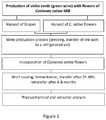
- male flowers are harvested manually in the field, after the fertilization process, without prejudice in the formation of the fruit; the flowers are then lyophilized and incorporated into the green wine, during the production process.
- Vinho verde is produced by the producer Fernando Magalh ⁇ es Pinto Paiva in the city of Amarante.
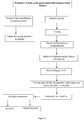
- the grapes are collected and pressed; the wort is transferred to a vat to which the C. sativa flowers are added in an amount selected according to the known bioactivity values (antioxidant and antimicrobial) already studied in order to confer preservative effects to the wine.
- the wort is cooled and transferred to another vat after 24 to 48 hours. Fermentation begins at controlled temperature with indigenous yeasts.
- the wine is allowed to stand for 2-3 months after which it is re-transferred into another vat and stands until being bottled about 6 months later.
- the wine is also subjected to a series of required analyses, were different parameters with minimum and maximum values that are tabulated according to the legislation, such as the physicochemical and sensorial parameters, are evaluated, in order to verify if there were changes in the wine characteristics by the addition of flowers compared to the same wine with sulphites.
- the wine is re-transferred to another vat to obtain a cleaner wine, and the precipitate resulting from the fermentation is discarded. After 6-8 months the wine is bottled.
- the wine with flowers of C. sativa proved to be a promising alternative to the wine with the addition of sulphites, since the incorporation of the flowers did not affect the physicochemical and sensorial characteristics. All the analyzed parameters were within the regulated ranges for each parameter.
- the invention provides the wine industry with an alternative, promising and safe, allowing the consumption of highly appreciated, safer and better accepted product by the consumers, avoiding the addition of synthetic additives of known toxicity.
- the invention describes the process for the production of vinho verde (green wine) by the producer Fernando Magalh ⁇ es Pinto Paiva, using flowers of Castanea sativa Mill as antioxidant and antimicrobial agents, in alternative to the use of synthetic sulphites. More specifically, the present invention uses the flowers of C. sativa with excellent antioxidant and antimicrobial activity already proven. The flowers are directly added in order to replace the need to use synthetic sulphites (compounds with known toxicity) commonly used in the food industry, especially in the wine industry. The resulting product, the wine produced containing C .
- the major advantage of the present invention is the complete elimination of the use of synthetic agents that are strongly related with health problems, guaranteeing consumer's greater safety in the wine consumption since it is a widely consumed and highly appreciated product throughout the world.
Landscapes
- Chemical & Material Sciences (AREA)
- Organic Chemistry (AREA)
- Engineering & Computer Science (AREA)
- General Health & Medical Sciences (AREA)
- Zoology (AREA)
- Biochemistry (AREA)
- Bioinformatics & Cheminformatics (AREA)
- General Engineering & Computer Science (AREA)
- Health & Medical Sciences (AREA)
- Genetics & Genomics (AREA)
- Life Sciences & Earth Sciences (AREA)
- Wood Science & Technology (AREA)
- Food Science & Technology (AREA)
- Distillation Of Fermentation Liquor, Processing Of Alcohols, Vinegar And Beer (AREA)
- Food Preservation Except Freezing, Refrigeration, And Drying (AREA)
- Agricultural Chemicals And Associated Chemicals (AREA)
- Non-Alcoholic Beverages (AREA)
Claims (14)
- Das Verfahren der Herstellung von Wein ohne Zusatz von Sulfiten, zeichnet sich durch die Verwendung der Blüten der Castanea sativa als natürlicher Konservierungsstoff aus, welcher den Zusatz von synthetischen Sulfite ersetzt.
- Das Verfahren der Herstellung von Wein ohne Zusatz von Sulfiten, zeichnet sich durch folgende Schritte aus:a. Ernte der Blüten Castanea sativa Mill;b. Aufbereitung und Lagerung der Blüten C.sativa;c. Ernte and Pressen der Trauben zur Most-Gewinnung;d. Zusetzten des natürlichen Konservierungsstoffes C.sativa Blüten zum Most, als Ersatz für synthetische Sulfite;e. Kühlung des Mosts;f. Fermentation für die Weinproduktion
- Das Verfahren der Herstellung von Wein ohne Zusatz von Sulfiten, gemäß der oben genannten Prinzipien zeichnet sich dadurch aus, dass bei Schritt a, die Blüte der männlichen C.sativa nach der Dünnungsperiode mit Hand geerntet wird.
- Das Verfahren der Herstellung von Wein ohne Zusatz von Sulfiten, gemäß der oben genannten Prinzipien zeichnet sich dadurch aus, dass bei Schritt b, die Blume gefriergetrocknet, pulverisiert und im Trockengefäß gelagert wird.
- Das Verfahren der Herstellung von Wein ohne Zusatz von Sulfiten, gemäß der oben genannten Prinzipien zeichnet sich dadurch aus, dass bei Schritt d, die Menge an Blüte der C. sativa, welche zum Wein gegeben wird 10-25g/50L Wein beträgt.
- Das Verfahren der Herstellung von Wein ohne Zusatz von Sulfiten, gemäß der oben genannten Prinzipien zeichnet sich dadurch aus, dass bei Schritt C, die Trauben am Ende des Sommers geerntet und gepresst werden.
- Das Verfahren der Herstellung von Wein ohne Zusatz von Sulfiten, gemäß der oben genannten Prinzipien zeichnet sich dadurch aus, dass es sich bei dem Wein um Vinho Verde handelt.
- Das Verfahren der Herstellung von Wein ohne Zusatz von Sulfiten, gemäß der oben genannten Prinzipien zeichnet sich dadurch aus, dass bei Schritt e, der Most in einem gekühlten Fass bei 5°C - 9°C gelagert wird.
- Das Verfahren der Herstellung von Wein ohne Zusatz von Sulfiten, gemäß des Anspruchs 7, zeichnet sich durch die Umlagerung in ein Fass zur Fermentierung nach 24-48 Stunden Kühlung aus.
- Das Verfahren der Herstellung von Wein ohne Zusatz von Sulfiten, gemäß der oben genannten Prinzipien zeichnet sich dadurch aus, dass die Fermentation mit der einheimischen Hefe bei 14-16°C über 2-3 Monate durchgeführt wird, es folgt eine Umlagerung in ein anderes Fass.
- Der Wein, welcher durch das in Schritt 1 bis 9 beschriebene Verfahren gewonnen wurde, zeichnet sich durch eine Konzentration von freiem Schwefeldioxid unterhalb von 10mg/dm3 aus und einer Gesamtkonzentration an Schwefeldioxid von weniger als 33mg/dm3.
- Der Wein nach Behauptung 10 zeichnet sich durch eine Konzentration an freiem Schwefeldioxid von 8mg/dm3 und eine Gesamtkonzentration an Schwefeldioxid von 18mg/dm3 aus.
- Der Wein nach den vorher beschriebenen Prinzipien zeichnet sich als vinho verde aus.
- Der Wein nach Behauptung 12 zeichnet sich durch folgende Kriterien aus: Alkoholgehalt mit einem Volumen von 11.0% Volumen; Dichte von 0.9916 g/cm3, gesamtes Trockenextrakt von 20.6 g/dm3, nicht reduzierendes Extrakt von 19.1 g/dm3, Gesamtgehalt an Zucker weniger als 1,5 (LQ) g/dm3, Gesamtgehalt an Säure 7,1g (Weinsäure)/dm3; flüchtige Säure 0,57g(Essigsäure)/dm3; gebundene Säuren 6,4g(Weinsäure)/dm3; pH = 3,24; L-Äpfelsäure weniger als 0,3 (LQ) g/dm3, Weinsäure 3,6g/dm3, negativer Befund bezüglich der Stabilität durch oxidativer Veränderung; gesamt Alkoholgehalt mit einem Volumen von 11,1% Volumen.
Applications Claiming Priority (2)
| Application Number | Priority Date | Filing Date | Title |
|---|---|---|---|
| PT109448A PT109448B (pt) | 2016-06-09 | 2016-06-09 | Flores de castanea sativa mill: a sua aplicação como conservantes naturais de vinhos em alternativa à adição de sulfitos |
| PCT/IB2017/052535 WO2017212351A1 (pt) | 2016-06-09 | 2017-05-02 | Processo de produção de vinho, utilizando flores de castanea sativa mill como conservantes naturais em alternativa à adição de sulfitos |
Publications (2)
| Publication Number | Publication Date |
|---|---|
| EP3323876A1 EP3323876A1 (de) | 2018-05-23 |
| EP3323876B1 true EP3323876B1 (de) | 2019-01-23 |
Family
ID=58873841
Family Applications (1)
| Application Number | Title | Priority Date | Filing Date |
|---|---|---|---|
| EP17726998.2A Active EP3323876B1 (de) | 2016-06-09 | 2017-05-02 | Weinherstellungsprozess unter verwendung der blüten von castanea sativa |
Country Status (5)
| Country | Link |
|---|---|
| US (1) | US20180127693A1 (de) |
| EP (1) | EP3323876B1 (de) |
| ES (1) | ES2720261T3 (de) |
| PT (1) | PT109448B (de) |
| WO (1) | WO2017212351A1 (de) |
Families Citing this family (4)
| Publication number | Priority date | Publication date | Assignee | Title |
|---|---|---|---|---|
| US11578293B2 (en) | 2018-08-06 | 2023-02-14 | Steven M. duBois | Nitrogen infused sparkling wine and methods of making same |
| WO2020183378A1 (en) * | 2019-03-13 | 2020-09-17 | Stone Tree International Limited | Method and means for processing beverages |
| KR20210046420A (ko) * | 2019-10-18 | 2021-04-28 | 제주동백 주식회사 | 동백꽃 또는 그 추출물을 포함하는 와인 제조방법 |
| FR3106137B1 (fr) | 2020-01-14 | 2022-03-25 | Sanbri | Dispositif permettant d’optimiser la conservation des vins en bouteille et de limiter l’ingestion de sulfites par les consommateurs |
Family Cites Families (4)
| Publication number | Priority date | Publication date | Assignee | Title |
|---|---|---|---|---|
| ITMI20020467A1 (it) * | 2002-03-06 | 2003-09-08 | Geospazioimpresa Nord Est 41 1 | Procedimento di vinificazione particolarmente per l'ottenimento di vino atto alla celebrazione della massa |
| EP1892286B1 (de) * | 2006-07-27 | 2011-11-09 | Bioseutica B.V. | Verfahren zur Herstellung von Wein und anhand dieses Verfahrens gewonnener Wein |
| EP2090647A1 (de) * | 2008-01-29 | 2009-08-19 | Chr. Hansen A/S | Verfahren zur Verringerung der Verderblichkeit eines Weins |
| CN105349360A (zh) * | 2015-11-20 | 2016-02-24 | 张恩胜 | 板栗花玫瑰酒 |
-
2016
- 2016-06-09 PT PT109448A patent/PT109448B/pt active IP Right Grant
-
2017
- 2017-05-02 WO PCT/IB2017/052535 patent/WO2017212351A1/pt not_active Ceased
- 2017-05-02 US US15/561,541 patent/US20180127693A1/en not_active Abandoned
- 2017-05-02 EP EP17726998.2A patent/EP3323876B1/de active Active
- 2017-05-02 ES ES17726998T patent/ES2720261T3/es active Active
Non-Patent Citations (1)
| Title |
|---|
| None * |
Also Published As
| Publication number | Publication date |
|---|---|
| PT109448A (pt) | 2017-12-11 |
| WO2017212351A1 (pt) | 2017-12-14 |
| EP3323876A1 (de) | 2018-05-23 |
| PT109448B (pt) | 2020-01-13 |
| US20180127693A1 (en) | 2018-05-10 |
| ES2720261T3 (es) | 2019-07-19 |
Similar Documents
| Publication | Publication Date | Title |
|---|---|---|
| KR101128869B1 (ko) | 스위트 아이스 과실주 제조방법 | |
| Sabir et al. | Quality response of table grapes (Vitis vinifera L.) during cold storage to postharvest cap stem excision and hot water treatments | |
| Dhumal | Recent advances and the developments in the pomegranate processing and utilization: a review | |
| Santos et al. | Physicochemical, antioxidant and sensory quality of brazilian blueberry wine | |
| Durrani et al. | Physicochemical response of apple pulp to chemical preservatives and antioxidant during storage | |
| Panda et al. | Fermentation of sapota (Achras sapota Linn.) fruits to functional wine | |
| EP3323876A1 (de) | Weinherstellungsverfahren mit verwendung von blüten von castanea sativa | |
| JP6071168B2 (ja) | ブレンドトマトジュース及びその製造方法 | |
| Donat et al. | The effect of pre-harvest and post-harvest aloe vera gel treatments on fruit quality and storage performance of table grapes | |
| Singh et al. | Bael preserve-syrup as booster of human health as a health drink | |
| EP2485605B1 (de) | Grünfärbung von tafeloliven mit chlorophyll-verbindungen | |
| Brondino et al. | Influence of a sulphur dioxide active storage system on the quality of Ribes rubrum L. berries | |
| Marina et al. | Effects of Granucol activated carbons on sensory properties of sea-buckthorn (Hippophae rhamnoides L.) wines | |
| Mayfield | Techniques to enhance the attributes of wines produced from grapes grown in Arkansas | |
| CN112715642A (zh) | 一种利用蔗糖保鲜荔枝的方法及应用 | |
| KR101883831B1 (ko) | 오디 탄산음료 및 이의 제조방법 | |
| CN105779204A (zh) | 一种荔枝果酒及其制备方法 | |
| Muslim et al. | An environmentally safe and healthy mango squash from natural ingredients | |
| Aderonke Amanyunose et al. | Changes in the quality characteristics of carrot juice preserved with Aframomum danielli seed extract | |
| Ruse et al. | Changes in physically-chemical parameters of Latvian cranberries during storage. | |
| Nakilcioglu et al. | INFLUENCE OF CHITOSAN COATINGS ON THE POSTHARVEST SHELF LIFE AND QUALITY OF BUTTON MUSHROOMS (AGARICUS BISPORUS) DURING COLD STORAGE | |
| Khandare et al. | Studies on preparation of functional beverages from Karonda (Carissa carandas L) | |
| Kumar et al. | Effect of Pulp Concentration on Physicochemical and Organoleptic Changes in RTS and Juice During Storage | |
| Viškelis et al. | Quality changes of green onions stored in modified atmosphere. | |
| AWASTHI | STANDARDIZATION AND EVALUATION OF BLENDED FRUIT WINE |
Legal Events
| Date | Code | Title | Description |
|---|---|---|---|
| STAA | Information on the status of an ep patent application or granted ep patent |
Free format text: STATUS: UNKNOWN |
|
| STAA | Information on the status of an ep patent application or granted ep patent |
Free format text: STATUS: THE INTERNATIONAL PUBLICATION HAS BEEN MADE |
|
| PUAI | Public reference made under article 153(3) epc to a published international application that has entered the european phase |
Free format text: ORIGINAL CODE: 0009012 |
|
| STAA | Information on the status of an ep patent application or granted ep patent |
Free format text: STATUS: REQUEST FOR EXAMINATION WAS MADE |
|
| 17P | Request for examination filed |
Effective date: 20180126 |
|
| AK | Designated contracting states |
Kind code of ref document: A1 Designated state(s): AL AT BE BG CH CY CZ DE DK EE ES FI FR GB GR HR HU IE IS IT LI LT LU LV MC MK MT NL NO PL PT RO RS SE SI SK SM TR |
|
| AX | Request for extension of the european patent |
Extension state: BA ME |
|
| GRAP | Despatch of communication of intention to grant a patent |
Free format text: ORIGINAL CODE: EPIDOSNIGR1 |
|
| STAA | Information on the status of an ep patent application or granted ep patent |
Free format text: STATUS: GRANT OF PATENT IS INTENDED |
|
| INTG | Intention to grant announced |
Effective date: 20180719 |
|
| GRAJ | Information related to disapproval of communication of intention to grant by the applicant or resumption of examination proceedings by the epo deleted |
Free format text: ORIGINAL CODE: EPIDOSDIGR1 |
|
| STAA | Information on the status of an ep patent application or granted ep patent |
Free format text: STATUS: REQUEST FOR EXAMINATION WAS MADE |
|
| GRAP | Despatch of communication of intention to grant a patent |
Free format text: ORIGINAL CODE: EPIDOSNIGR1 |
|
| STAA | Information on the status of an ep patent application or granted ep patent |
Free format text: STATUS: GRANT OF PATENT IS INTENDED |
|
| INTG | Intention to grant announced |
Effective date: 20180907 |
|
| DAV | Request for validation of the european patent (deleted) | ||
| DAX | Request for extension of the european patent (deleted) | ||
| GRAS | Grant fee paid |
Free format text: ORIGINAL CODE: EPIDOSNIGR3 |
|
| GRAA | (expected) grant |
Free format text: ORIGINAL CODE: 0009210 |
|
| STAA | Information on the status of an ep patent application or granted ep patent |
Free format text: STATUS: THE PATENT HAS BEEN GRANTED |
|
| AK | Designated contracting states |
Kind code of ref document: B1 Designated state(s): AL AT BE BG CH CY CZ DE DK EE ES FI FR GB GR HR HU IE IS IT LI LT LU LV MC MK MT NL NO PL PT RO RS SE SI SK SM TR |
|
| REG | Reference to a national code |
Ref country code: GB Ref legal event code: FG4D |
|
| REG | Reference to a national code |
Ref country code: CH Ref legal event code: EP |
|
| REG | Reference to a national code |
Ref country code: AT Ref legal event code: REF Ref document number: 1091471 Country of ref document: AT Kind code of ref document: T Effective date: 20190215 |
|
| REG | Reference to a national code |
Ref country code: IE Ref legal event code: FG4D |
|
| REG | Reference to a national code |
Ref country code: DE Ref legal event code: R096 Ref document number: 602017001923 Country of ref document: DE |
|
| REG | Reference to a national code |
Ref country code: NL Ref legal event code: MP Effective date: 20190123 |
|
| PG25 | Lapsed in a contracting state [announced via postgrant information from national office to epo] |
Ref country code: NL Free format text: LAPSE BECAUSE OF FAILURE TO SUBMIT A TRANSLATION OF THE DESCRIPTION OR TO PAY THE FEE WITHIN THE PRESCRIBED TIME-LIMIT Effective date: 20190123 |
|
| REG | Reference to a national code |
Ref country code: ES Ref legal event code: FG2A Ref document number: 2720261 Country of ref document: ES Kind code of ref document: T3 Effective date: 20190719 |
|
| PG25 | Lapsed in a contracting state [announced via postgrant information from national office to epo] |
Ref country code: LT Free format text: LAPSE BECAUSE OF FAILURE TO SUBMIT A TRANSLATION OF THE DESCRIPTION OR TO PAY THE FEE WITHIN THE PRESCRIBED TIME-LIMIT Effective date: 20190123 Ref country code: PL Free format text: LAPSE BECAUSE OF FAILURE TO SUBMIT A TRANSLATION OF THE DESCRIPTION OR TO PAY THE FEE WITHIN THE PRESCRIBED TIME-LIMIT Effective date: 20190123 Ref country code: PT Free format text: LAPSE BECAUSE OF FAILURE TO SUBMIT A TRANSLATION OF THE DESCRIPTION OR TO PAY THE FEE WITHIN THE PRESCRIBED TIME-LIMIT Effective date: 20190523 Ref country code: NO Free format text: LAPSE BECAUSE OF FAILURE TO SUBMIT A TRANSLATION OF THE DESCRIPTION OR TO PAY THE FEE WITHIN THE PRESCRIBED TIME-LIMIT Effective date: 20190423 Ref country code: FI Free format text: LAPSE BECAUSE OF FAILURE TO SUBMIT A TRANSLATION OF THE DESCRIPTION OR TO PAY THE FEE WITHIN THE PRESCRIBED TIME-LIMIT Effective date: 20190123 Ref country code: SE Free format text: LAPSE BECAUSE OF FAILURE TO SUBMIT A TRANSLATION OF THE DESCRIPTION OR TO PAY THE FEE WITHIN THE PRESCRIBED TIME-LIMIT Effective date: 20190123 |
|
| REG | Reference to a national code |
Ref country code: AT Ref legal event code: MK05 Ref document number: 1091471 Country of ref document: AT Kind code of ref document: T Effective date: 20190123 |
|
| PG25 | Lapsed in a contracting state [announced via postgrant information from national office to epo] |
Ref country code: BG Free format text: LAPSE BECAUSE OF FAILURE TO SUBMIT A TRANSLATION OF THE DESCRIPTION OR TO PAY THE FEE WITHIN THE PRESCRIBED TIME-LIMIT Effective date: 20190423 Ref country code: HR Free format text: LAPSE BECAUSE OF FAILURE TO SUBMIT A TRANSLATION OF THE DESCRIPTION OR TO PAY THE FEE WITHIN THE PRESCRIBED TIME-LIMIT Effective date: 20190123 Ref country code: GR Free format text: LAPSE BECAUSE OF FAILURE TO SUBMIT A TRANSLATION OF THE DESCRIPTION OR TO PAY THE FEE WITHIN THE PRESCRIBED TIME-LIMIT Effective date: 20190424 Ref country code: LV Free format text: LAPSE BECAUSE OF FAILURE TO SUBMIT A TRANSLATION OF THE DESCRIPTION OR TO PAY THE FEE WITHIN THE PRESCRIBED TIME-LIMIT Effective date: 20190123 Ref country code: RS Free format text: LAPSE BECAUSE OF FAILURE TO SUBMIT A TRANSLATION OF THE DESCRIPTION OR TO PAY THE FEE WITHIN THE PRESCRIBED TIME-LIMIT Effective date: 20190123 Ref country code: IS Free format text: LAPSE BECAUSE OF FAILURE TO SUBMIT A TRANSLATION OF THE DESCRIPTION OR TO PAY THE FEE WITHIN THE PRESCRIBED TIME-LIMIT Effective date: 20190523 |
|
| REG | Reference to a national code |
Ref country code: DE Ref legal event code: R097 Ref document number: 602017001923 Country of ref document: DE |
|
| PG25 | Lapsed in a contracting state [announced via postgrant information from national office to epo] |
Ref country code: CZ Free format text: LAPSE BECAUSE OF FAILURE TO SUBMIT A TRANSLATION OF THE DESCRIPTION OR TO PAY THE FEE WITHIN THE PRESCRIBED TIME-LIMIT Effective date: 20190123 Ref country code: AL Free format text: LAPSE BECAUSE OF FAILURE TO SUBMIT A TRANSLATION OF THE DESCRIPTION OR TO PAY THE FEE WITHIN THE PRESCRIBED TIME-LIMIT Effective date: 20190123 Ref country code: SK Free format text: LAPSE BECAUSE OF FAILURE TO SUBMIT A TRANSLATION OF THE DESCRIPTION OR TO PAY THE FEE WITHIN THE PRESCRIBED TIME-LIMIT Effective date: 20190123 Ref country code: RO Free format text: LAPSE BECAUSE OF FAILURE TO SUBMIT A TRANSLATION OF THE DESCRIPTION OR TO PAY THE FEE WITHIN THE PRESCRIBED TIME-LIMIT Effective date: 20190123 Ref country code: DK Free format text: LAPSE BECAUSE OF FAILURE TO SUBMIT A TRANSLATION OF THE DESCRIPTION OR TO PAY THE FEE WITHIN THE PRESCRIBED TIME-LIMIT Effective date: 20190123 Ref country code: EE Free format text: LAPSE BECAUSE OF FAILURE TO SUBMIT A TRANSLATION OF THE DESCRIPTION OR TO PAY THE FEE WITHIN THE PRESCRIBED TIME-LIMIT Effective date: 20190123 |
|
| PG25 | Lapsed in a contracting state [announced via postgrant information from national office to epo] |
Ref country code: SM Free format text: LAPSE BECAUSE OF FAILURE TO SUBMIT A TRANSLATION OF THE DESCRIPTION OR TO PAY THE FEE WITHIN THE PRESCRIBED TIME-LIMIT Effective date: 20190123 |
|
| PLBE | No opposition filed within time limit |
Free format text: ORIGINAL CODE: 0009261 |
|
| STAA | Information on the status of an ep patent application or granted ep patent |
Free format text: STATUS: NO OPPOSITION FILED WITHIN TIME LIMIT |
|
| PG25 | Lapsed in a contracting state [announced via postgrant information from national office to epo] |
Ref country code: AT Free format text: LAPSE BECAUSE OF FAILURE TO SUBMIT A TRANSLATION OF THE DESCRIPTION OR TO PAY THE FEE WITHIN THE PRESCRIBED TIME-LIMIT Effective date: 20190123 |
|
| 26N | No opposition filed |
Effective date: 20191024 |
|
| PG25 | Lapsed in a contracting state [announced via postgrant information from national office to epo] |
Ref country code: MC Free format text: LAPSE BECAUSE OF FAILURE TO SUBMIT A TRANSLATION OF THE DESCRIPTION OR TO PAY THE FEE WITHIN THE PRESCRIBED TIME-LIMIT Effective date: 20190123 |
|
| PG25 | Lapsed in a contracting state [announced via postgrant information from national office to epo] |
Ref country code: LU Free format text: LAPSE BECAUSE OF NON-PAYMENT OF DUE FEES Effective date: 20190502 |
|
| PG25 | Lapsed in a contracting state [announced via postgrant information from national office to epo] |
Ref country code: TR Free format text: LAPSE BECAUSE OF FAILURE TO SUBMIT A TRANSLATION OF THE DESCRIPTION OR TO PAY THE FEE WITHIN THE PRESCRIBED TIME-LIMIT Effective date: 20190123 |
|
| PG25 | Lapsed in a contracting state [announced via postgrant information from national office to epo] |
Ref country code: LI Free format text: LAPSE BECAUSE OF NON-PAYMENT OF DUE FEES Effective date: 20200531 Ref country code: CH Free format text: LAPSE BECAUSE OF NON-PAYMENT OF DUE FEES Effective date: 20200531 |
|
| PG25 | Lapsed in a contracting state [announced via postgrant information from national office to epo] |
Ref country code: CY Free format text: LAPSE BECAUSE OF FAILURE TO SUBMIT A TRANSLATION OF THE DESCRIPTION OR TO PAY THE FEE WITHIN THE PRESCRIBED TIME-LIMIT Effective date: 20190123 |
|
| PG25 | Lapsed in a contracting state [announced via postgrant information from national office to epo] |
Ref country code: MT Free format text: LAPSE BECAUSE OF FAILURE TO SUBMIT A TRANSLATION OF THE DESCRIPTION OR TO PAY THE FEE WITHIN THE PRESCRIBED TIME-LIMIT Effective date: 20190123 Ref country code: HU Free format text: LAPSE BECAUSE OF FAILURE TO SUBMIT A TRANSLATION OF THE DESCRIPTION OR TO PAY THE FEE WITHIN THE PRESCRIBED TIME-LIMIT; INVALID AB INITIO Effective date: 20170502 |
|
| PG25 | Lapsed in a contracting state [announced via postgrant information from national office to epo] |
Ref country code: SI Free format text: LAPSE BECAUSE OF FAILURE TO SUBMIT A TRANSLATION OF THE DESCRIPTION OR TO PAY THE FEE WITHIN THE PRESCRIBED TIME-LIMIT Effective date: 20190123 |
|
| PG25 | Lapsed in a contracting state [announced via postgrant information from national office to epo] |
Ref country code: MK Free format text: LAPSE BECAUSE OF FAILURE TO SUBMIT A TRANSLATION OF THE DESCRIPTION OR TO PAY THE FEE WITHIN THE PRESCRIBED TIME-LIMIT Effective date: 20190123 |
|
| PGFP | Annual fee paid to national office [announced via postgrant information from national office to epo] |
Ref country code: DE Payment date: 20250528 Year of fee payment: 9 |
|
| PGFP | Annual fee paid to national office [announced via postgrant information from national office to epo] |
Ref country code: GB Payment date: 20250528 Year of fee payment: 9 Ref country code: ES Payment date: 20250605 Year of fee payment: 9 |
|
| PGFP | Annual fee paid to national office [announced via postgrant information from national office to epo] |
Ref country code: IT Payment date: 20250522 Year of fee payment: 9 Ref country code: BE Payment date: 20250601 Year of fee payment: 9 |
|
| PGFP | Annual fee paid to national office [announced via postgrant information from national office to epo] |
Ref country code: FR Payment date: 20250529 Year of fee payment: 9 |
|
| PGFP | Annual fee paid to national office [announced via postgrant information from national office to epo] |
Ref country code: IE Payment date: 20250529 Year of fee payment: 9 |