EP3322982B1 - Eierkartonidentifikationssystem und zugehöriges verfahren - Google Patents
Eierkartonidentifikationssystem und zugehöriges verfahren Download PDFInfo
- Publication number
- EP3322982B1 EP3322982B1 EP16748179.5A EP16748179A EP3322982B1 EP 3322982 B1 EP3322982 B1 EP 3322982B1 EP 16748179 A EP16748179 A EP 16748179A EP 3322982 B1 EP3322982 B1 EP 3322982B1
- Authority
- EP
- European Patent Office
- Prior art keywords
- egg
- eggs
- flat
- measurement device
- egg flat
- Prior art date
- Legal status (The legal status is an assumption and is not a legal conclusion. Google has not performed a legal analysis and makes no representation as to the accuracy of the status listed.)
- Active
Links
Images



Classifications
-
- G—PHYSICS
- G01—MEASURING; TESTING
- G01N—INVESTIGATING OR ANALYSING MATERIALS BY DETERMINING THEIR CHEMICAL OR PHYSICAL PROPERTIES
- G01N33/00—Investigating or analysing materials by specific methods not covered by groups G01N1/00 - G01N31/00
- G01N33/02—Food
- G01N33/08—Eggs, e.g. by candling
-
- G—PHYSICS
- G01—MEASURING; TESTING
- G01N—INVESTIGATING OR ANALYSING MATERIALS BY DETERMINING THEIR CHEMICAL OR PHYSICAL PROPERTIES
- G01N33/00—Investigating or analysing materials by specific methods not covered by groups G01N1/00 - G01N31/00
- G01N33/02—Food
- G01N33/08—Eggs, e.g. by candling
- G01N33/085—Eggs, e.g. by candling by candling
-
- A—HUMAN NECESSITIES
- A01—AGRICULTURE; FORESTRY; ANIMAL HUSBANDRY; HUNTING; TRAPPING; FISHING
- A01K—ANIMAL HUSBANDRY; AVICULTURE; APICULTURE; PISCICULTURE; FISHING; REARING OR BREEDING ANIMALS, NOT OTHERWISE PROVIDED FOR; NEW BREEDS OF ANIMALS
- A01K43/00—Testing, sorting or cleaning eggs ; Conveying devices ; Pick-up devices
-
- A—HUMAN NECESSITIES
- A01—AGRICULTURE; FORESTRY; ANIMAL HUSBANDRY; HUNTING; TRAPPING; FISHING
- A01K—ANIMAL HUSBANDRY; AVICULTURE; APICULTURE; PISCICULTURE; FISHING; REARING OR BREEDING ANIMALS, NOT OTHERWISE PROVIDED FOR; NEW BREEDS OF ANIMALS
- A01K43/00—Testing, sorting or cleaning eggs ; Conveying devices ; Pick-up devices
- A01K43/04—Grading eggs
-
- A—HUMAN NECESSITIES
- A01—AGRICULTURE; FORESTRY; ANIMAL HUSBANDRY; HUNTING; TRAPPING; FISHING
- A01K—ANIMAL HUSBANDRY; AVICULTURE; APICULTURE; PISCICULTURE; FISHING; REARING OR BREEDING ANIMALS, NOT OTHERWISE PROVIDED FOR; NEW BREEDS OF ANIMALS
- A01K45/00—Other aviculture appliances, e.g. devices for determining whether a bird is about to lay
- A01K45/007—Injecting or otherwise treating hatching eggs
-
- G—PHYSICS
- G01—MEASURING; TESTING
- G01N—INVESTIGATING OR ANALYSING MATERIALS BY DETERMINING THEIR CHEMICAL OR PHYSICAL PROPERTIES
- G01N21/00—Investigating or analysing materials by the use of optical means, i.e. using sub-millimetre waves, infrared, visible or ultraviolet light
- G01N21/17—Systems in which incident light is modified in accordance with the properties of the material investigated
- G01N21/59—Transmissivity
Definitions
- the present disclosure generally relates to egg processing devices and systems. More particularly, the present disclosure relates to a system for identifying an egg flat carrying a plurality of eggs through one or more processing stations, and an associated method.
- poultry hatchery management it may be desirable to separate birds based upon various characteristics, such as gender, diseases, genetic traits, etc. For example, it may be desirable to inoculate male birds with a particular vaccine and inoculate female birds with a different vaccine. Sex separation of birds at hatch may be important for other reasons as well. For example, turkeys are conventionally segregated by sex because of the difference in growth rate and nutritional requirements of male and female turkeys. In the layer or table egg industry, it is desirable to keep only females. In the broiler industry, it is desirable to segregate birds based on sex to gain feed efficiencies, improve processing uniformity, and reduce production costs.
- such determination of the desired characteristic may be carried out prior to hatch by means (e.g., bioassay process) in which the results of the characteristic are delayed or otherwise not immediately known. That is, the testing method to identify the desired characteristic may require some minimal amount of time for the analysis to be completed. For example, bioassays may require several minutes to hours after sampling each egg until assay results are available. During the interval, sampled eggs contained in egg flats must be stored and later assay results must be associated to the respective egg flat that was sampled.
- bioassay process e.g., bioassay process
- RFID radio-frequency
- the system includes a first measurement device configured to determine a first measurement of a plurality of eggs carried by an egg flat in a collection of egg flats.
- a processor is in communication with the first measurement device. The processor being is configured to receive the first measurements from the first measurement device.
- a second measurement device is configured to determine a second measurement of the eggs in the collection of egg flats, the second measurement device being positioned downstream from the first measurement device.
- the second measurement device is in communication with the processor such that the processor is capable of receiving the second measurements.
- the processor is configured to compare the second measurements with the first measurements so as to identify a respective egg flat.
- Another aspect provides a method of identifying an egg flat within a collection of egg flats.
- the method comprises conveying a plurality of egg flats through a first measurement device, each egg flat containing eggs.
- the method further comprises determining with the first measurement device a first measurement of a plurality of eggs carried by a respective egg flat.
- the method further comprises storing the first measurements of each egg flat using a processor.
- the method further comprises conveying the egg flats through a second measurement device configured to determine a second measurement of the eggs measured by the first measurement device, and comparing the second measurements with the first measurements so as to identify a respective egg flat.
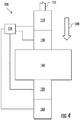
- an exemplary system 100 for identifying an egg flat among a collection of egg flats is illustrated in the figure.
- Egg flats are container- or tray-like structures used to hold a plurality of eggs as the eggs are subjected to various egg processing events such as, for example, incubation, sample withdrawal, and/or injection of a treatment substance.
- Egg flats may be arranged in many different shapes, sizes and geometric configurations, depending on the incubation equipment manufacturer.
- an egg flat 15 may contain an array of pockets that are configured to support a respective plurality of eggs in a generally upright or vertical orientation.
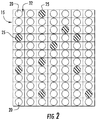
- the illustrated egg flat 15 includes a plurality of rows of pockets 32. Each pocket 32 may be configured to receive one end of a respective egg 20 ( FIG. 2 ) so as to support the respective egg 20 in a substantially vertical position. Each pocket 32 of the illustrated egg flat 15 contains a plurality of tabs 34 that are configured to support a respective egg.
- the illustrated flat 15 holds a plurality of eggs 20 in a substantially upright position and is configured to provide external access to predetermined areas of the eggs 20.
- the system 100 as disclosed herein is capable of providing such egg flat identification so that the bioassay results may be accurately associated downstream with the correct egg flat once the assay results become available and the egg flats are moved from storage.
- the system 100 includes a first measurement device 110 and a second measurement device 120.
- One or more processors 150 or controller may be in communication with the first and second measurement devices 110, 120 such that measurements from the first and second measurement devices 110, 120 may be analyzed for egg flat identification.
- a conveyor 105 may be provided to move egg flats 15 through the system 100.
- the egg flats 15 may be manually or automatically loaded into the system 100 and then transported in a processing direction 200.
- the egg flat 15 may pass through the first measurement device 110 before encountering a first processing station 130 configured to process the eggs and being positioned upstream of the second measurement device 120. In other instances, however, the egg flat 15 may encounter the first processing station 130 prior to passing through the first measurement device 110.
- the first processing station 130 may include any device, apparatus, or system for processing an egg, such as, for example, an injection device for injecting a treatment substance (e.g., a vaccine), a sampling device for withdrawing/extracting a sample, or a removal device for removing eggs from the egg flat.
- the egg flat 15 may first pass through the first measurement device 110 so as to subject the eggs to a measurement, such as opacity using an egg candling device implementing optical measuring means.
- the egg flat 15 may then encounter the sampling device such that a sample of the egg (shell, tissue, blood, fluid, etc.) may be extracted for analysis.
- a sample of the egg shell, tissue, blood, fluid, etc.
- the egg flat 15 may be transported to a holding or storage station 140, awaiting results from the bioassay or diagnostic kit before being moved downstream to a second processing station 160, which may sort, remove, process, or treat (inject) the eggs according to the identified characteristic (e.g., sorted according to gender).
- the second measurement device 120 may be positioned upstream of the second processing station 160 and prior to processing thereby.
- the measurements taken by the second measurement device 120 may be received by the processor 150 for comparison to the measurements taken by the first measurement device 110.
- This comparative process may be used to confirm the identification of an egg flat 15 such that the bioassay results transmitted to the processor 150 may then also be correctly transmitted to the second processing station 160 for appropriate processing.
- the first and second measurement devices 110, 120 may be egg candling devices configured to measure the opacity (i.e., a measurement related to the amount of light passing through an egg when illuminated by a light source) of the eggs carried in the egg flat 15.
- the light received by a detector for measurement of a given egg may be detected in raw form as voltage data, which may then be modified, standardized, corrected or otherwise manipulated into some unit of measure (arbitrary or otherwise).
- a direct light such as a candle or light bulb
- Live eggs include eggs that were fertilized and contain a living embryo.
- Non-live eggs could be infertile eggs (sometimes referred to as "clear" eggs) or eggs with dead embryos.
- infertile eggs allow more light to pass therethrough (particularly as compared to live eggs at later stages of incubation/embryo development) when illuminated since an embryo is not present.
- the egg candling device may implement a plurality of emitter-detector pairs through which the eggs pass such that an opacity measurement may be determined, as disclosed in U.S. Patent No. 5,900,929 .
- the egg candling device may include an emitter assembly positioned above the conveyed egg flats 15 and a receiver assembly positioned below the conveyed egg flats.
- the egg candling device may scan eggs and identify the eggs as live or non-live (e.g., infertile).
- the emitter assembly may include a plurality of emitters that emit light through each egg and a respective receiver of the receiver assembly gathers the light passed through the egg. Light passing through each egg may be measured to determine whether the egg is live or non-live. Accordingly, information based on the measurements taken by the first and second measurement devices 110, 120 may be used to correctly identify an egg flat prior to a downstream processing event.
- the identification of an egg flat 15 is accomplished by identifying or mapping a data pattern based on the measurements taken by the first and second measurement devices 110, 120.
- the identification of an egg flat 15 may be accomplished by identifying or mapping the pattern of egg opacities on the egg flat.
- Non-contact measurement of opacity is advantageous because it avoids marking eggs or attaching anything to the egg flats, while using existing hardware to make the measurements.
- the system 100 may also be capable of confirming that the orientation of the egg flat 15 is correct. That is, the information measured by the first and second measurement devices 110, 120 may be used to confirm that the egg flat 15 is oriented correctly.
- an egg flat may be identified by the position of the infertile (clear) eggs on the egg flat.
- a plurality of infertile eggs 25 may be identified by the first measurement device 110 (e.g., egg candling device).
- the processor 150 receives and stores a data pattern, as shown in FIG. 3 for illustrative purposes (as corresponding to the egg flat 15 illustrated in FIG. 2 where "X" marks the position of an infertile egg), which may be used later to identify this particular egg flat among a collection or plurality of egg flats.
- the measurements from the second measurement device 120 are used for comparison to the measurements determined by the first measurement device 110.
- the second measurements are also patterned such that a comparison of patterns, as carried out by the processor 150, is used to identify an egg flat. While the above example refers to patterning the infertile eggs of an egg flat, the converse may also be used wherein the eggs identified as live form the data pattern. Further, the pattern may be based upon any subset of eggs as identified by the first and second measurement devices 110, 120, such as, for example, infertile eggs, dead eggs, live eggs, etc.
- a measurement of a subset of the eggs in the egg flat may provide all information needed to confirm its identity by the second measurement device 120. That is, in some instances, fewer than all the eggs carried by the egg flat may be measured by the first and second measurement devices 110, 120 in order to form the pattern (or other identification technique) needed to identify the egg flat downstream. In some instances, measurement of a single row of eggs by the first measurement device 110 may be all that is needed to correctly identify the egg flat by the second measurement device 120.
- the value of egg opacity may be used to provide a more specific and error-free identification of the egg flats. Redundancy may allow correction for occasional opacity measurement errors or identifier channels that are loosely calibrated.
- the opacity of live eggs may range over a factor of ten or more, with good repeatability of measurement.
- infertile (clear) eggs may vary in opacity by a factor of ten or more, with values being repeatable, which may be attributed to variations in shell thickness.
- FIG. 5 is a plot of opacity for live and infertile (clear) eggs, illustrating the range of opacity values for live and infertile eggs at day eighteen of incubation. This plot illustrates a range of opacity for live eggs of about a factor of 10, or about 1.0 log (opacity).
- the plot further illustrates a range of opacity for infertile eggs as being a little more than a factor of 10, or about 1.0 log (opacity).
- This wide and stable variation among both live and infertile eggs may allow flats to be identified by the locations of brighter versus darker live or infertile eggs.
- Bin widths of 60% may be used for identification, which may typically be significantly larger than the variation among opacity senor channels and egg variation.
- the plot shows that bin widths of 60% (log (1.6) is 0.2) may provide four or five bins for live eggs and five bins for infertile eggs to define the opacity patterns on each egg flat. This finer gradation of opacity characterization may allow the egg flat identification system to function well with flocks of eggs having high fertility and, therefore, few infertile eggs and potentially more than one egg flat having a small number of infertile eggs in the same pattern.
- the opacity values for all eggs on an egg flat may be determined by the first measurement device 110.
- the opacity values for all the eggs on the egg flat may be stored in a database.
- the egg flat may then go into storage while the bioassay incubates for minutes or hours.
- the egg flats may be removed one by one from the storage area and opacity values measured for all eggs on the egg flat by the second measurement device 120.
- a pattern matching algorithm may then determine which pattern of the egg flats in storage most closely matches the removed egg flat, and the assay results are accordingly associated with each egg.
- a pattern association algorithm may provide that the opacity of each egg on a flat be placed in a predetermined bin.
- the bins may have a width, for example, equal to a multiple of the variation in repetitive opacity measurements for eggs. For example, if repeatability of opacity measurement has a standard deviation of 15%, then each bin might be 50% wide giving bin edges of 1, 1.5, 2.25, 3.5 ... Thus, the opacity of each egg may be translated into one of fifty bin numbers for example. Small variations may cause some samples to be in one bin in the first measurement and an adjacent bin on the second measurement. Bin widths may be set so that being more than one bin apart between measurements is rare.
- an egg flat with eighty-four eggs may be represented by eighty-four numbers between one and fifty.
- pockets 32 or egg flat positions that are missing eggs may also be in a bin (the missing bin, e.g., one bin past the clearest egg bin).
- the missing bin e.g., one bin past the clearest egg bin.
- opacity may again be measured by the second measurement device 120 for each egg on the egg flat and this data converted to a bin representation of eighty-four numbers between one and fifty. Then this pattern of eighty-four numbers may be compared to each egg flat in the archive and an error number generated for each column of this egg flat against each egg flat in the archive. In some instances, the worst column may be discarded and the error score for the other columns may be then generated for this egg flat against each egg flat in the library by a difference between each egg bin and the library egg at the same position. If opacity is in adjacent bins, then no error is assessed. The worst column may be discarded to avoid faulty adjustment of one identifier row or the occasional mis-read of an egg. In some instances, it may be desirable to square one less than the difference to underweight small errors. Similarly, there may be a maximum error assessed to account for the occasional misidentified egg. Also column data may be normalized based on a combination of statistics for each row.
- the comparison between each egg and its counterpart may be done by calculating the ratio of their opacities. For example, if the opacity value is expressed as a log, then the ratio is the arithmetic difference of the two values.
- the error value between the two eggs may then be converted to a binary value according to whether the ratio is greater than a minimum (or the absolute value of the difference of the logs is greater than a fixed value).
- the error value may also be expressed as a numerical value where it is zero for small errors and then increases above a predetermined threshold.
- Identifying a single egg flat as a match may be done if all but one row has zero errors (sum of the error values for all eggs in the row is zero).
- the first row of an egg flat may be compared against the first row of each other egg flat until error values are known for all comparisons.
- the error value of all the second rows may be calculated for all egg flats.
- the error values of all the third rows are compared for all egg flats that had an error value of zero for either the first or second row.
- a measurement algorithm may be accomplished when opacity is stored as a logarithm. Ratios may then be determined by subtraction of one opacity for another.
- a measure of goodness can be binary with differences less than a preset value given a value of one, and differences greater than a preset value given a zero. As previously describe, it may also be accomplished by eliminating a fixed number of eggs with the worst agreement and summing the remaining eggs, thus avoiding the situation where an egg is measured incorrectly by the opacity measuring system. Similarly, redundancy may be achieved by independently comparing columns to confirm the match.
- an algorithm to develop a correspondence metric between two egg flats may use the logarithm of the opacity of each egg. Ratios may be determined by subtracting opacity values.
- a correspondence metric for two flats may be calculated as the root mean square (RMS) value of the opacity differences of eggs on one egg flat with the eggs in the same position on a second egg flat.
- the RMS function may treat positive and negative differences the same, while underweighting small differences.
- the two eggs on the egg flat with the largest differences may be omitted from the RMS calculation.
- the M eggs with the highest difference may be omitted from the RMS calculation (where M is the number of eggs per flat read by any one opacity channel).
- the RMS value for the first row of eggs on each egg flat may be compared with the egg flat being tested as an initial screen followed by calculation for all eggs on each egg flat for egg flats with good correspondence of the first rows thereof.
- a difference between each egg on one egg flat and the egg in same position on the second egg flat may be generated by subtracting the logarithm of the opacity of the first egg on the first egg flat from the logarithm of the opacity of the second egg on the second egg flat, which produces N differences.
- the highest M differences from N differences just generated may then be removed.
- M may be set at one, two or a number equal to the number of eggs passing through one identifier channel.
- the metric of correspondence for the pair of flats may be generated by taking the square root of the sum of the squares of the N-M opacity differences calculated previously. When identifying which of a plurality of egg flats a particular egg flat matches, the lowest correspondence metric for the particular egg flat and each of the plurality of egg flats may be selected.
Landscapes
- Life Sciences & Earth Sciences (AREA)
- Environmental Sciences (AREA)
- Chemical & Material Sciences (AREA)
- Health & Medical Sciences (AREA)
- Engineering & Computer Science (AREA)
- Food Science & Technology (AREA)
- Animal Husbandry (AREA)
- Biodiversity & Conservation Biology (AREA)
- Physics & Mathematics (AREA)
- Analytical Chemistry (AREA)
- Biochemistry (AREA)
- General Health & Medical Sciences (AREA)
- General Physics & Mathematics (AREA)
- Immunology (AREA)
- Pathology (AREA)
- Medicinal Chemistry (AREA)
- Birds (AREA)
- Investigating Or Analysing Materials By Optical Means (AREA)
- Sorting Of Articles (AREA)
- Wrapping Of Specific Fragile Articles (AREA)
Claims (11)
- Eierkarton-Identifikationssystem (100) umfassend:ein erstes Messgerät (110), welches ausgestaltet ist, um eine erste Messung für jedes von mehreren Eiern, die durch einen Eierkarton (15), welcher in einer Sammlung von Eierkartons zu identifizieren ist, befördert werden, zu bestimmen;einen Prozessor (150) in Kommunikation mit dem ersten Messgerät (110), wobei der Prozessor konfiguriert ist, um die ersten Messungen von dem ersten Messgerät (110) aufzunehmen und Datenmuster entsprechend den ersten Messungen von jedem jeweiligen zu identifizierenden Eierkarton (15) zu erzeugen und zu speichern;eine erste Verarbeitungsstation (130) mit einem Probenahmegerät, welches ausgestaltet ist, um eine Probe von jedem Ei zu entnehmen, und ausgestaltet ist, um einen Bioassay darauf auszuführen;ein zweites Messgerät (120), welches ausgestaltet ist, um eine zweite Messung für jedes der mehreren Eier, die durch den Eierkarton (15), welcher in der Sammlung von Eierkartons zu identifizieren ist, befördert werden, zu bestimmen, wobei das zweite Messgerät (120) dem ersten Messgerät (110) nachgelagert angeordnet ist,wobei sich das zweite Messgerät (120) in Kommunikation mit dem Prozessor befindet, so dass der Prozessor ausgestaltet ist, um die zweiten Messungen aufzunehmen und Vergleichsdatenmuster von den zweiten Messungen des zu identifizierenden Eierkartons (15) zu erzeugen;wobei der Prozessor ausgestaltet ist, um die Datenmuster mit den Vergleichsdatenmustern zu vergleichen, um die Identität des zu identifizierenden Eierkartons (15) in der Sammlung von Eierkartons zu bestätigen, so dass die Ergebnisse von dem Bioassay genau dem richtigen Eierkarton zugeordnet sind; undeine zweite Verarbeitungsstation, welche ausgestaltet ist (160), um die Eier gemäß der Bioassay-Ergebnisse zu verarbeiten.
- System nach Anspruch 1, wobei die ersten und die zweiten Messungen Opazitätsmessungen der Eier umfassen.
- System nach Anspruch 1, wobei das erste und das zweite Messgerät Eierdurchleuchtungsgeräte umfassen.
- System nach Anspruch 1, wobei die erste Verarbeitungsstation (130) dem zweiten Messgerät (120) vorgelagert angeordnet ist.
- System nach Anspruch 4, wobei die zweite Verarbeitungsstation (160) dem zweiten Messgerät (120) nachgelagert angeordnet ist, und optional darüber hinaus eine Haltestation (140) umfasst, welche ausgestaltet ist, um die Eierkartons zwischen dem ersten und dem zweiten Messgerät (110, 120) zu halten.
- System nach Anspruch 1, wobei die Datenmuster und die Vergleichsdatenmuster in einer Rohform und/oder einer modifizierten Form verglichen werden.
- Verfahren zum Identifizieren eines Eierkartons in einer Sammlung von Eierkartons, wobei das Verfahren umfasst:Befördern von mehreren Eierkartons durch ein erstes Messgerät (110), wobei jeder Eierkarton mehrere Eier enthält;Bestimmen mit dem ersten Messgerät (110) einer ersten Messung für jedes von mehreren Eiern, welche durch einen Eierkarton befördert werden, welcher unter den mehreren Eierkartons zu identifizieren ist;Erzeugen und Speichern mittels eines Prozessors (150) von Datenmustern gemäß den ersten Messungen des zu identifizierenden Eierkartons;Entnehmen eines Musters von jedem Ei bei einer ersten Verarbeitungsstation (130), um ein Bioassay darauf auszuführen;Befördern eines zu identifizierenden Eierkartons durch ein zweites Messgerät (120) und Bestimmen einer zweiten Messung für jedes der mehreren Eier, welche durch den zu identifizierenden Eierkarton befördert werden, mit dem zweiten Messgerät (120);Erzeugen mittels des Prozessors von Vergleichsdatenmustern gemäß den zweiten Messungen von jedem entsprechenden zu identifizierenden Eierkarton;Vergleichen der Datenmuster mit den Vergleichsdatenmustern, um den unter den mehreren Eierkartons zu identifizierenden Eierkarton zu identifizieren; undBestätigen der Identität des unter der Sammlung von Eierkartons zu identifizierenden Eierkarton (15), in dem die Bioassay-Ergebnisse mit dem richtigen Eierkarton (15) übereinstimmen,Bearbeiten der Eier bei einer zweiten Verarbeitungsstation (160) gemäß den darauf erzielten Bioassay-Ergebnissen.
- Verfahren nach Anspruch 7, wobei das Bestimmen der ersten und zweiten Messungen ein Bestimmen von ersten bzw. zweiten Opazitätsmessungen der Eier mittels eines ersten bzw. zweiten Eierdurchleuchtungsgeräts umfasst.
- Verfahren nach Anspruch 7, wobei das Verarbeiten der Eier dem zweiten Messgeräts (120) nachgelagert geschieht und mindestens eines umfasst ein Entfernen von Eiern aus dem Eierkarton gemäß den Bioassay-Ergebnissen jedes Eies, ein Sortieren der Eier gemäß den Bioassay-Ergebnissen jedes Eies und ein Behandeln der Eier gemäß den Bioassay-Ergebnissen jedes Eies.
- Verfahren nach Anspruch 7, darüber hinaus ein Befördern der Eierkartons zu einem Haltebereich nach einem Passieren durch das erste Messgerät (110), aber vor einem Passieren durch das zweite Messgerät (120) umfassend, wobei die Eierkartons und entsprechende Eier in dem Haltebereich gehalten werden, bis die Bioassay-Ergebnisse jedes Eies in einem Eierkarton bestimmt worden sind.
- Verfahren nach Anspruch 7, wobei das Bioassay-Ergebnis ein Geschlecht des Embryos ist.
Applications Claiming Priority (2)
| Application Number | Priority Date | Filing Date | Title |
|---|---|---|---|
| US201562192112P | 2015-07-14 | 2015-07-14 | |
| PCT/US2016/039966 WO2017011182A1 (en) | 2015-07-14 | 2016-06-29 | Egg flat identification system, and associated method |
Publications (2)
| Publication Number | Publication Date |
|---|---|
| EP3322982A1 EP3322982A1 (de) | 2018-05-23 |
| EP3322982B1 true EP3322982B1 (de) | 2019-12-11 |
Family
ID=56611556
Family Applications (1)
| Application Number | Title | Priority Date | Filing Date |
|---|---|---|---|
| EP16748179.5A Active EP3322982B1 (de) | 2015-07-14 | 2016-06-29 | Eierkartonidentifikationssystem und zugehöriges verfahren |
Country Status (13)
| Country | Link |
|---|---|
| US (1) | US10228357B2 (de) |
| EP (1) | EP3322982B1 (de) |
| JP (1) | JP6689296B2 (de) |
| KR (1) | KR102526942B1 (de) |
| CN (1) | CN107850585B (de) |
| AU (1) | AU2016292784B2 (de) |
| BR (1) | BR112017027842B1 (de) |
| CA (1) | CA2989176C (de) |
| DK (1) | DK3322982T3 (de) |
| ES (1) | ES2769753T3 (de) |
| MX (1) | MX385781B (de) |
| RU (1) | RU2685726C1 (de) |
| WO (1) | WO2017011182A1 (de) |
Families Citing this family (1)
| Publication number | Priority date | Publication date | Assignee | Title |
|---|---|---|---|---|
| RU2759733C1 (ru) * | 2020-12-16 | 2021-11-17 | Общество с ограниченной ответственностью Инженерно-технический центр "УКАВТ" | Способ детектирования некондиционной продукции в лотке с яйцами |
Family Cites Families (17)
| Publication number | Priority date | Publication date | Assignee | Title |
|---|---|---|---|---|
| DE4124633A1 (de) * | 1991-07-25 | 1993-01-28 | Joh Kreyer Apparatebau | Eiersammelanlage mit eierzaehlwerk |
| US5900929A (en) | 1997-01-17 | 1999-05-04 | Embrex, Inc. | Method and apparatus for selectively injecting poultry eggs |
| CN1189616A (zh) * | 1997-01-31 | 1998-08-05 | 天津师范大学 | 早期鉴别禽类胚胎雌雄的方法及检测装置 |
| US6234320B1 (en) * | 1999-05-11 | 2001-05-22 | Embrex, Inc. | Method and apparatus for selectively classifying poultry eggs |
| US7041439B2 (en) * | 2001-04-17 | 2006-05-09 | Embrex, Inc. | Methods and apparatus for selectively processing eggs having identified characteristics |
| US6750954B2 (en) * | 2002-10-08 | 2004-06-15 | Embrex, Inc. | Systems and methods for rapidly and accurately indentifying live eggs within a stream of eggs |
| JP2004184113A (ja) * | 2002-11-29 | 2004-07-02 | Naberu:Kk | 検卵装置 |
| US20060038978A1 (en) * | 2004-08-18 | 2006-02-23 | David Zweig | Automatic candling machine |
| US7333187B2 (en) * | 2004-10-14 | 2008-02-19 | Embrex, Inc. | Methods and apparatus for identifying and diagnosing live eggs using heart rate and embryo motion |
| US20060156989A1 (en) * | 2005-01-18 | 2006-07-20 | Embrex, Inc. | Methods and apparatus for detecting the presence of eggs in an egg flat |
| US8235003B2 (en) * | 2005-07-29 | 2012-08-07 | Embrex, Inc. | Methods and apparatus for identifying live eggs |
| NL2002539C2 (nl) * | 2009-02-17 | 2010-08-18 | Beekhuis Comp Solutions B V | Inrichting voor het verwerken van producten, in het bijzonder eieren, producthouder en identificatie-element. |
| JP2012108040A (ja) * | 2010-11-18 | 2012-06-07 | Yamamoto Co Ltd | 種卵検査装置 |
| US9131666B2 (en) * | 2012-05-18 | 2015-09-15 | Yamamoto Corp. | Hatching egg inspection apparatus |
| JP5896840B2 (ja) * | 2012-06-20 | 2016-03-30 | 株式会社クボタ | 卵を詰めたパック商品の検査装置 |
| US9513270B2 (en) * | 2013-11-18 | 2016-12-06 | Zoetis Services Llc | Non-contact egg identification system for determining egg viability using transmission spectroscopy, and associated method |
| FR3020239B1 (fr) * | 2014-04-24 | 2016-06-10 | Visio Nerf | Procede et installation de remplissage de casiers d'oeufs en defilement |
-
2016
- 2016-06-29 KR KR1020177036371A patent/KR102526942B1/ko active Active
- 2016-06-29 JP JP2017566070A patent/JP6689296B2/ja active Active
- 2016-06-29 BR BR112017027842-1A patent/BR112017027842B1/pt active IP Right Grant
- 2016-06-29 RU RU2017145894A patent/RU2685726C1/ru active
- 2016-06-29 DK DK16748179.5T patent/DK3322982T3/da active
- 2016-06-29 ES ES16748179T patent/ES2769753T3/es active Active
- 2016-06-29 EP EP16748179.5A patent/EP3322982B1/de active Active
- 2016-06-29 WO PCT/US2016/039966 patent/WO2017011182A1/en not_active Ceased
- 2016-06-29 CN CN201680040541.4A patent/CN107850585B/zh active Active
- 2016-06-29 CA CA2989176A patent/CA2989176C/en active Active
- 2016-06-29 AU AU2016292784A patent/AU2016292784B2/en active Active
- 2016-06-29 MX MX2018000524A patent/MX385781B/es unknown
- 2016-07-11 US US15/206,372 patent/US10228357B2/en active Active
Non-Patent Citations (1)
| Title |
|---|
| None * |
Also Published As
| Publication number | Publication date |
|---|---|
| AU2016292784B2 (en) | 2020-12-10 |
| BR112017027842A2 (pt) | 2018-09-04 |
| KR102526942B1 (ko) | 2023-04-28 |
| US20170016871A1 (en) | 2017-01-19 |
| RU2685726C1 (ru) | 2019-04-23 |
| KR20180029202A (ko) | 2018-03-20 |
| JP6689296B2 (ja) | 2020-04-28 |
| JP2018523812A (ja) | 2018-08-23 |
| CN107850585B (zh) | 2020-06-16 |
| CN107850585A (zh) | 2018-03-27 |
| WO2017011182A1 (en) | 2017-01-19 |
| ES2769753T3 (es) | 2020-06-29 |
| AU2016292784A1 (en) | 2018-01-04 |
| CA2989176C (en) | 2020-03-24 |
| DK3322982T3 (da) | 2020-02-17 |
| MX385781B (es) | 2025-03-18 |
| US10228357B2 (en) | 2019-03-12 |
| EP3322982A1 (de) | 2018-05-23 |
| BR112017027842B1 (pt) | 2021-10-05 |
| CA2989176A1 (en) | 2017-01-19 |
| MX2018000524A (es) | 2018-04-13 |
Similar Documents
| Publication | Publication Date | Title |
|---|---|---|
| EP1344056B1 (de) | Verfahren und vorrichtung zur nichtinvasiven erkennung von merkmalen in eiern durch spektrale mehrwellenlängen vergleich | |
| US11673166B2 (en) | Seed imaging | |
| KR102604895B1 (ko) | 알 특성을 비-침투적으로 결정하기 위한 시스템 및 방법 | |
| CN109862783B (zh) | 种蛋检查系统及种蛋检查程序 | |
| EP1910818B1 (de) | Verfahren und vorrichtung zur identifizierung lebender eier | |
| US20230053816A1 (en) | Egg Characteristic Determining Device | |
| WO2019007520A1 (en) | PROCESS FOR PRODUCTION OF CHICKEN USING SEXING OF CHICKEN EMBRYOS | |
| AU2016292784B2 (en) | Egg flat identification system, and associated method | |
| US12514235B2 (en) | Sex determination device and sex determination method | |
| EP4147570B1 (de) | Kükenherstellungsverfahren und kükenherstellungssystem | |
| CN118275369A (zh) | 基于透射光谱信息的受精蛋分类方法及系统 | |
| Wheeler et al. | Animal response prediction | |
| WO2018042225A1 (en) | A method of identifying the state of eggs in the process of incubation and a system for implementing the same | |
| JP6393567B2 (ja) | 有精卵の検査方法及び検査装置 | |
| RU2780420C1 (ru) | Система и способ неинвазивного определения свойств яйца | |
| EP4611536A1 (de) | Verfahren zur bestimmung des geschlechts eines kükens | |
| BR112020001373B1 (pt) | Sistema e método para determinar uma ou mais propriedades do ovo antes da incubação | |
| HK1059353A1 (en) | Method and apparatus for determining the sex of a fertilized egg |
Legal Events
| Date | Code | Title | Description |
|---|---|---|---|
| STAA | Information on the status of an ep patent application or granted ep patent |
Free format text: STATUS: THE INTERNATIONAL PUBLICATION HAS BEEN MADE |
|
| PUAI | Public reference made under article 153(3) epc to a published international application that has entered the european phase |
Free format text: ORIGINAL CODE: 0009012 |
|
| STAA | Information on the status of an ep patent application or granted ep patent |
Free format text: STATUS: REQUEST FOR EXAMINATION WAS MADE |
|
| 17P | Request for examination filed |
Effective date: 20180122 |
|
| AK | Designated contracting states |
Kind code of ref document: A1 Designated state(s): AL AT BE BG CH CY CZ DE DK EE ES FI FR GB GR HR HU IE IS IT LI LT LU LV MC MK MT NL NO PL PT RO RS SE SI SK SM TR |
|
| AX | Request for extension of the european patent |
Extension state: BA ME |
|
| DAV | Request for validation of the european patent (deleted) | ||
| DAX | Request for extension of the european patent (deleted) | ||
| STAA | Information on the status of an ep patent application or granted ep patent |
Free format text: STATUS: EXAMINATION IS IN PROGRESS |
|
| 17Q | First examination report despatched |
Effective date: 20181024 |
|
| GRAP | Despatch of communication of intention to grant a patent |
Free format text: ORIGINAL CODE: EPIDOSNIGR1 |
|
| STAA | Information on the status of an ep patent application or granted ep patent |
Free format text: STATUS: GRANT OF PATENT IS INTENDED |
|
| INTG | Intention to grant announced |
Effective date: 20190621 |
|
| GRAS | Grant fee paid |
Free format text: ORIGINAL CODE: EPIDOSNIGR3 |
|
| GRAA | (expected) grant |
Free format text: ORIGINAL CODE: 0009210 |
|
| STAA | Information on the status of an ep patent application or granted ep patent |
Free format text: STATUS: THE PATENT HAS BEEN GRANTED |
|
| AK | Designated contracting states |
Kind code of ref document: B1 Designated state(s): AL AT BE BG CH CY CZ DE DK EE ES FI FR GB GR HR HU IE IS IT LI LT LU LV MC MK MT NL NO PL PT RO RS SE SI SK SM TR |
|
| REG | Reference to a national code |
Ref country code: GB Ref legal event code: FG4D |
|
| REG | Reference to a national code |
Ref country code: CH Ref legal event code: EP |
|
| REG | Reference to a national code |
Ref country code: AT Ref legal event code: REF Ref document number: 1212691 Country of ref document: AT Kind code of ref document: T Effective date: 20191215 |
|
| REG | Reference to a national code |
Ref country code: DE Ref legal event code: R096 Ref document number: 602016026032 Country of ref document: DE |
|
| REG | Reference to a national code |
Ref country code: IE Ref legal event code: FG4D |
|
| REG | Reference to a national code |
Ref country code: DK Ref legal event code: T3 Effective date: 20200212 |
|
| REG | Reference to a national code |
Ref country code: NL Ref legal event code: FP |
|
| REG | Reference to a national code |
Ref country code: LT Ref legal event code: MG4D |
|
| PG25 | Lapsed in a contracting state [announced via postgrant information from national office to epo] |
Ref country code: FI Free format text: LAPSE BECAUSE OF FAILURE TO SUBMIT A TRANSLATION OF THE DESCRIPTION OR TO PAY THE FEE WITHIN THE PRESCRIBED TIME-LIMIT Effective date: 20191211 Ref country code: BG Free format text: LAPSE BECAUSE OF FAILURE TO SUBMIT A TRANSLATION OF THE DESCRIPTION OR TO PAY THE FEE WITHIN THE PRESCRIBED TIME-LIMIT Effective date: 20200311 Ref country code: LV Free format text: LAPSE BECAUSE OF FAILURE TO SUBMIT A TRANSLATION OF THE DESCRIPTION OR TO PAY THE FEE WITHIN THE PRESCRIBED TIME-LIMIT Effective date: 20191211 Ref country code: SE Free format text: LAPSE BECAUSE OF FAILURE TO SUBMIT A TRANSLATION OF THE DESCRIPTION OR TO PAY THE FEE WITHIN THE PRESCRIBED TIME-LIMIT Effective date: 20191211 Ref country code: GR Free format text: LAPSE BECAUSE OF FAILURE TO SUBMIT A TRANSLATION OF THE DESCRIPTION OR TO PAY THE FEE WITHIN THE PRESCRIBED TIME-LIMIT Effective date: 20200312 Ref country code: LT Free format text: LAPSE BECAUSE OF FAILURE TO SUBMIT A TRANSLATION OF THE DESCRIPTION OR TO PAY THE FEE WITHIN THE PRESCRIBED TIME-LIMIT Effective date: 20191211 Ref country code: NO Free format text: LAPSE BECAUSE OF FAILURE TO SUBMIT A TRANSLATION OF THE DESCRIPTION OR TO PAY THE FEE WITHIN THE PRESCRIBED TIME-LIMIT Effective date: 20200311 |
|
| PG25 | Lapsed in a contracting state [announced via postgrant information from national office to epo] |
Ref country code: HR Free format text: LAPSE BECAUSE OF FAILURE TO SUBMIT A TRANSLATION OF THE DESCRIPTION OR TO PAY THE FEE WITHIN THE PRESCRIBED TIME-LIMIT Effective date: 20191211 Ref country code: RS Free format text: LAPSE BECAUSE OF FAILURE TO SUBMIT A TRANSLATION OF THE DESCRIPTION OR TO PAY THE FEE WITHIN THE PRESCRIBED TIME-LIMIT Effective date: 20191211 |
|
| REG | Reference to a national code |
Ref country code: ES Ref legal event code: FG2A Ref document number: 2769753 Country of ref document: ES Kind code of ref document: T3 Effective date: 20200629 |
|
| PG25 | Lapsed in a contracting state [announced via postgrant information from national office to epo] |
Ref country code: AL Free format text: LAPSE BECAUSE OF FAILURE TO SUBMIT A TRANSLATION OF THE DESCRIPTION OR TO PAY THE FEE WITHIN THE PRESCRIBED TIME-LIMIT Effective date: 20191211 |
|
| PG25 | Lapsed in a contracting state [announced via postgrant information from national office to epo] |
Ref country code: EE Free format text: LAPSE BECAUSE OF FAILURE TO SUBMIT A TRANSLATION OF THE DESCRIPTION OR TO PAY THE FEE WITHIN THE PRESCRIBED TIME-LIMIT Effective date: 20191211 Ref country code: CZ Free format text: LAPSE BECAUSE OF FAILURE TO SUBMIT A TRANSLATION OF THE DESCRIPTION OR TO PAY THE FEE WITHIN THE PRESCRIBED TIME-LIMIT Effective date: 20191211 Ref country code: RO Free format text: LAPSE BECAUSE OF FAILURE TO SUBMIT A TRANSLATION OF THE DESCRIPTION OR TO PAY THE FEE WITHIN THE PRESCRIBED TIME-LIMIT Effective date: 20191211 Ref country code: PT Free format text: LAPSE BECAUSE OF FAILURE TO SUBMIT A TRANSLATION OF THE DESCRIPTION OR TO PAY THE FEE WITHIN THE PRESCRIBED TIME-LIMIT Effective date: 20200506 |
|
| PG25 | Lapsed in a contracting state [announced via postgrant information from national office to epo] |
Ref country code: SK Free format text: LAPSE BECAUSE OF FAILURE TO SUBMIT A TRANSLATION OF THE DESCRIPTION OR TO PAY THE FEE WITHIN THE PRESCRIBED TIME-LIMIT Effective date: 20191211 Ref country code: IS Free format text: LAPSE BECAUSE OF FAILURE TO SUBMIT A TRANSLATION OF THE DESCRIPTION OR TO PAY THE FEE WITHIN THE PRESCRIBED TIME-LIMIT Effective date: 20200411 Ref country code: SM Free format text: LAPSE BECAUSE OF FAILURE TO SUBMIT A TRANSLATION OF THE DESCRIPTION OR TO PAY THE FEE WITHIN THE PRESCRIBED TIME-LIMIT Effective date: 20191211 |
|
| REG | Reference to a national code |
Ref country code: DE Ref legal event code: R097 Ref document number: 602016026032 Country of ref document: DE |
|
| REG | Reference to a national code |
Ref country code: AT Ref legal event code: MK05 Ref document number: 1212691 Country of ref document: AT Kind code of ref document: T Effective date: 20191211 |
|
| PLBE | No opposition filed within time limit |
Free format text: ORIGINAL CODE: 0009261 |
|
| STAA | Information on the status of an ep patent application or granted ep patent |
Free format text: STATUS: NO OPPOSITION FILED WITHIN TIME LIMIT |
|
| 26N | No opposition filed |
Effective date: 20200914 |
|
| PG25 | Lapsed in a contracting state [announced via postgrant information from national office to epo] |
Ref country code: AT Free format text: LAPSE BECAUSE OF FAILURE TO SUBMIT A TRANSLATION OF THE DESCRIPTION OR TO PAY THE FEE WITHIN THE PRESCRIBED TIME-LIMIT Effective date: 20191211 Ref country code: SI Free format text: LAPSE BECAUSE OF FAILURE TO SUBMIT A TRANSLATION OF THE DESCRIPTION OR TO PAY THE FEE WITHIN THE PRESCRIBED TIME-LIMIT Effective date: 20191211 |
|
| PG25 | Lapsed in a contracting state [announced via postgrant information from national office to epo] |
Ref country code: MC Free format text: LAPSE BECAUSE OF FAILURE TO SUBMIT A TRANSLATION OF THE DESCRIPTION OR TO PAY THE FEE WITHIN THE PRESCRIBED TIME-LIMIT Effective date: 20191211 |
|
| REG | Reference to a national code |
Ref country code: CH Ref legal event code: PL |
|
| PG25 | Lapsed in a contracting state [announced via postgrant information from national office to epo] |
Ref country code: PL Free format text: LAPSE BECAUSE OF FAILURE TO SUBMIT A TRANSLATION OF THE DESCRIPTION OR TO PAY THE FEE WITHIN THE PRESCRIBED TIME-LIMIT Effective date: 20191211 |
|
| PG25 | Lapsed in a contracting state [announced via postgrant information from national office to epo] |
Ref country code: LU Free format text: LAPSE BECAUSE OF NON-PAYMENT OF DUE FEES Effective date: 20200629 |
|
| PG25 | Lapsed in a contracting state [announced via postgrant information from national office to epo] |
Ref country code: CH Free format text: LAPSE BECAUSE OF NON-PAYMENT OF DUE FEES Effective date: 20200630 Ref country code: LI Free format text: LAPSE BECAUSE OF NON-PAYMENT OF DUE FEES Effective date: 20200630 Ref country code: IE Free format text: LAPSE BECAUSE OF NON-PAYMENT OF DUE FEES Effective date: 20200629 |
|
| PG25 | Lapsed in a contracting state [announced via postgrant information from national office to epo] |
Ref country code: MT Free format text: LAPSE BECAUSE OF FAILURE TO SUBMIT A TRANSLATION OF THE DESCRIPTION OR TO PAY THE FEE WITHIN THE PRESCRIBED TIME-LIMIT Effective date: 20191211 Ref country code: CY Free format text: LAPSE BECAUSE OF FAILURE TO SUBMIT A TRANSLATION OF THE DESCRIPTION OR TO PAY THE FEE WITHIN THE PRESCRIBED TIME-LIMIT Effective date: 20191211 |
|
| PG25 | Lapsed in a contracting state [announced via postgrant information from national office to epo] |
Ref country code: MK Free format text: LAPSE BECAUSE OF FAILURE TO SUBMIT A TRANSLATION OF THE DESCRIPTION OR TO PAY THE FEE WITHIN THE PRESCRIBED TIME-LIMIT Effective date: 20191211 |
|
| PGFP | Annual fee paid to national office [announced via postgrant information from national office to epo] |
Ref country code: NL Payment date: 20250515 Year of fee payment: 10 |
|
| PGFP | Annual fee paid to national office [announced via postgrant information from national office to epo] |
Ref country code: DE Payment date: 20250509 Year of fee payment: 10 |
|
| PGFP | Annual fee paid to national office [announced via postgrant information from national office to epo] |
Ref country code: GB Payment date: 20250508 Year of fee payment: 10 Ref country code: DK Payment date: 20250527 Year of fee payment: 10 |
|
| PGFP | Annual fee paid to national office [announced via postgrant information from national office to epo] |
Ref country code: BE Payment date: 20250513 Year of fee payment: 10 |
|
| PGFP | Annual fee paid to national office [announced via postgrant information from national office to epo] |
Ref country code: FR Payment date: 20250512 Year of fee payment: 10 |
|
| PGFP | Annual fee paid to national office [announced via postgrant information from national office to epo] |
Ref country code: TR Payment date: 20250523 Year of fee payment: 10 |
|
| PGFP | Annual fee paid to national office [announced via postgrant information from national office to epo] |
Ref country code: ES Payment date: 20250709 Year of fee payment: 10 |
|
| PGFP | Annual fee paid to national office [announced via postgrant information from national office to epo] |
Ref country code: IT Payment date: 20250610 Year of fee payment: 10 |