EP3319720B1 - Chemical looping - Google Patents
Chemical looping Download PDFInfo
- Publication number
- EP3319720B1 EP3319720B1 EP16738512.9A EP16738512A EP3319720B1 EP 3319720 B1 EP3319720 B1 EP 3319720B1 EP 16738512 A EP16738512 A EP 16738512A EP 3319720 B1 EP3319720 B1 EP 3319720B1
- Authority
- EP
- European Patent Office
- Prior art keywords
- fixed bed
- bed reactor
- reactor
- mixture
- oxygen
- Prior art date
- Legal status (The legal status is an assumption and is not a legal conclusion. Google has not performed a legal analysis and makes no representation as to the accuracy of the status listed.)
- Active
Links
Images





Classifications
-
- B—PERFORMING OPERATIONS; TRANSPORTING
- B01—PHYSICAL OR CHEMICAL PROCESSES OR APPARATUS IN GENERAL
- B01J—CHEMICAL OR PHYSICAL PROCESSES, e.g. CATALYSIS OR COLLOID CHEMISTRY; THEIR RELEVANT APPARATUS
- B01J8/00—Chemical or physical processes in general, conducted in the presence of fluids and solid particles; Apparatus for such processes
- B01J8/02—Chemical or physical processes in general, conducted in the presence of fluids and solid particles; Apparatus for such processes with stationary particles, e.g. in fixed beds
- B01J8/0278—Feeding reactive fluids
-
- B—PERFORMING OPERATIONS; TRANSPORTING
- B01—PHYSICAL OR CHEMICAL PROCESSES OR APPARATUS IN GENERAL
- B01J—CHEMICAL OR PHYSICAL PROCESSES, e.g. CATALYSIS OR COLLOID CHEMISTRY; THEIR RELEVANT APPARATUS
- B01J8/00—Chemical or physical processes in general, conducted in the presence of fluids and solid particles; Apparatus for such processes
- B01J8/02—Chemical or physical processes in general, conducted in the presence of fluids and solid particles; Apparatus for such processes with stationary particles, e.g. in fixed beds
-
- B—PERFORMING OPERATIONS; TRANSPORTING
- B01—PHYSICAL OR CHEMICAL PROCESSES OR APPARATUS IN GENERAL
- B01J—CHEMICAL OR PHYSICAL PROCESSES, e.g. CATALYSIS OR COLLOID CHEMISTRY; THEIR RELEVANT APPARATUS
- B01J8/00—Chemical or physical processes in general, conducted in the presence of fluids and solid particles; Apparatus for such processes
- B01J8/02—Chemical or physical processes in general, conducted in the presence of fluids and solid particles; Apparatus for such processes with stationary particles, e.g. in fixed beds
- B01J8/0207—Chemical or physical processes in general, conducted in the presence of fluids and solid particles; Apparatus for such processes with stationary particles, e.g. in fixed beds the fluid flow within the bed being predominantly horizontal
- B01J8/0221—Chemical or physical processes in general, conducted in the presence of fluids and solid particles; Apparatus for such processes with stationary particles, e.g. in fixed beds the fluid flow within the bed being predominantly horizontal in a cylindrical shaped bed
-
- B—PERFORMING OPERATIONS; TRANSPORTING
- B01—PHYSICAL OR CHEMICAL PROCESSES OR APPARATUS IN GENERAL
- B01J—CHEMICAL OR PHYSICAL PROCESSES, e.g. CATALYSIS OR COLLOID CHEMISTRY; THEIR RELEVANT APPARATUS
- B01J8/00—Chemical or physical processes in general, conducted in the presence of fluids and solid particles; Apparatus for such processes
- B01J8/02—Chemical or physical processes in general, conducted in the presence of fluids and solid particles; Apparatus for such processes with stationary particles, e.g. in fixed beds
- B01J8/0285—Heating or cooling the reactor
-
- C—CHEMISTRY; METALLURGY
- C01—INORGANIC CHEMISTRY
- C01B—NON-METALLIC ELEMENTS; COMPOUNDS THEREOF; METALLOIDS OR COMPOUNDS THEREOF NOT COVERED BY SUBCLASS C01C
- C01B3/00—Hydrogen; Gaseous mixtures containing hydrogen; Separation of hydrogen from mixtures containing it; Purification of hydrogen
- C01B3/02—Production of hydrogen or of gaseous mixtures containing a substantial proportion of hydrogen
- C01B3/06—Production of hydrogen or of gaseous mixtures containing a substantial proportion of hydrogen by reaction of inorganic compounds containing electro-positively bound hydrogen, e.g. water, acids, bases, ammonia, with inorganic reducing agents
- C01B3/12—Production of hydrogen or of gaseous mixtures containing a substantial proportion of hydrogen by reaction of inorganic compounds containing electro-positively bound hydrogen, e.g. water, acids, bases, ammonia, with inorganic reducing agents by reaction of water vapour with carbon monoxide
-
- C—CHEMISTRY; METALLURGY
- C01—INORGANIC CHEMISTRY
- C01B—NON-METALLIC ELEMENTS; COMPOUNDS THEREOF; METALLOIDS OR COMPOUNDS THEREOF NOT COVERED BY SUBCLASS C01C
- C01B3/00—Hydrogen; Gaseous mixtures containing hydrogen; Separation of hydrogen from mixtures containing it; Purification of hydrogen
- C01B3/02—Production of hydrogen or of gaseous mixtures containing a substantial proportion of hydrogen
- C01B3/32—Production of hydrogen or of gaseous mixtures containing a substantial proportion of hydrogen by reaction of gaseous or liquid organic compounds with gasifying agents, e.g. water, carbon dioxide, air
- C01B3/34—Production of hydrogen or of gaseous mixtures containing a substantial proportion of hydrogen by reaction of gaseous or liquid organic compounds with gasifying agents, e.g. water, carbon dioxide, air by reaction of hydrocarbons with gasifying agents
-
- C—CHEMISTRY; METALLURGY
- C01—INORGANIC CHEMISTRY
- C01B—NON-METALLIC ELEMENTS; COMPOUNDS THEREOF; METALLOIDS OR COMPOUNDS THEREOF NOT COVERED BY SUBCLASS C01C
- C01B3/00—Hydrogen; Gaseous mixtures containing hydrogen; Separation of hydrogen from mixtures containing it; Purification of hydrogen
- C01B3/50—Separation of hydrogen or hydrogen containing gases from gaseous mixtures, e.g. purification
- C01B3/56—Separation of hydrogen or hydrogen containing gases from gaseous mixtures, e.g. purification by contacting with solids; Regeneration of used solids
- C01B3/58—Separation of hydrogen or hydrogen containing gases from gaseous mixtures, e.g. purification by contacting with solids; Regeneration of used solids including a catalytic reaction
- C01B3/583—Separation of hydrogen or hydrogen containing gases from gaseous mixtures, e.g. purification by contacting with solids; Regeneration of used solids including a catalytic reaction the reaction being the selective oxidation of carbon monoxide
-
- C—CHEMISTRY; METALLURGY
- C01—INORGANIC CHEMISTRY
- C01F—COMPOUNDS OF THE METALS BERYLLIUM, MAGNESIUM, ALUMINIUM, CALCIUM, STRONTIUM, BARIUM, RADIUM, THORIUM, OR OF THE RARE-EARTH METALS
- C01F17/00—Compounds of rare earth metals
- C01F17/30—Compounds containing rare earth metals and at least one element other than a rare earth metal, oxygen or hydrogen, e.g. La4S3Br6
-
- C—CHEMISTRY; METALLURGY
- C10—PETROLEUM, GAS OR COKE INDUSTRIES; TECHNICAL GASES CONTAINING CARBON MONOXIDE; FUELS; LUBRICANTS; PEAT
- C10J—PRODUCTION OF PRODUCER GAS, WATER-GAS, SYNTHESIS GAS FROM SOLID CARBONACEOUS MATERIAL, OR MIXTURES CONTAINING THESE GASES; CARBURETTING AIR OR OTHER GASES
- C10J3/00—Production of combustible gases containing carbon monoxide from solid carbonaceous fuels
-
- B—PERFORMING OPERATIONS; TRANSPORTING
- B01—PHYSICAL OR CHEMICAL PROCESSES OR APPARATUS IN GENERAL
- B01J—CHEMICAL OR PHYSICAL PROCESSES, e.g. CATALYSIS OR COLLOID CHEMISTRY; THEIR RELEVANT APPARATUS
- B01J2208/00—Processes carried out in the presence of solid particles; Reactors therefor
- B01J2208/00008—Controlling the process
- B01J2208/00548—Flow
-
- B—PERFORMING OPERATIONS; TRANSPORTING
- B01—PHYSICAL OR CHEMICAL PROCESSES OR APPARATUS IN GENERAL
- B01J—CHEMICAL OR PHYSICAL PROCESSES, e.g. CATALYSIS OR COLLOID CHEMISTRY; THEIR RELEVANT APPARATUS
- B01J2208/00—Processes carried out in the presence of solid particles; Reactors therefor
- B01J2208/02—Processes carried out in the presence of solid particles; Reactors therefor with stationary particles
- B01J2208/023—Details
- B01J2208/027—Beds
-
- C—CHEMISTRY; METALLURGY
- C01—INORGANIC CHEMISTRY
- C01B—NON-METALLIC ELEMENTS; COMPOUNDS THEREOF; METALLOIDS OR COMPOUNDS THEREOF NOT COVERED BY SUBCLASS C01C
- C01B2203/00—Integrated processes for the production of hydrogen or synthesis gas
- C01B2203/02—Processes for making hydrogen or synthesis gas
- C01B2203/0205—Processes for making hydrogen or synthesis gas containing a reforming step
- C01B2203/0227—Processes for making hydrogen or synthesis gas containing a reforming step containing a catalytic reforming step
- C01B2203/0233—Processes for making hydrogen or synthesis gas containing a reforming step containing a catalytic reforming step the reforming step being a steam reforming step
-
- C—CHEMISTRY; METALLURGY
- C01—INORGANIC CHEMISTRY
- C01B—NON-METALLIC ELEMENTS; COMPOUNDS THEREOF; METALLOIDS OR COMPOUNDS THEREOF NOT COVERED BY SUBCLASS C01C
- C01B2203/00—Integrated processes for the production of hydrogen or synthesis gas
- C01B2203/02—Processes for making hydrogen or synthesis gas
- C01B2203/0283—Processes for making hydrogen or synthesis gas containing a CO-shift step, i.e. a water gas shift step
-
- C—CHEMISTRY; METALLURGY
- C01—INORGANIC CHEMISTRY
- C01B—NON-METALLIC ELEMENTS; COMPOUNDS THEREOF; METALLOIDS OR COMPOUNDS THEREOF NOT COVERED BY SUBCLASS C01C
- C01B2203/00—Integrated processes for the production of hydrogen or synthesis gas
- C01B2203/04—Integrated processes for the production of hydrogen or synthesis gas containing a purification step for the hydrogen or the synthesis gas
- C01B2203/0435—Catalytic purification
- C01B2203/044—Selective oxidation of carbon monoxide
-
- C—CHEMISTRY; METALLURGY
- C01—INORGANIC CHEMISTRY
- C01B—NON-METALLIC ELEMENTS; COMPOUNDS THEREOF; METALLOIDS OR COMPOUNDS THEREOF NOT COVERED BY SUBCLASS C01C
- C01B2203/00—Integrated processes for the production of hydrogen or synthesis gas
- C01B2203/04—Integrated processes for the production of hydrogen or synthesis gas containing a purification step for the hydrogen or the synthesis gas
- C01B2203/0465—Composition of the impurity
- C01B2203/047—Composition of the impurity the impurity being carbon monoxide
-
- C—CHEMISTRY; METALLURGY
- C01—INORGANIC CHEMISTRY
- C01B—NON-METALLIC ELEMENTS; COMPOUNDS THEREOF; METALLOIDS OR COMPOUNDS THEREOF NOT COVERED BY SUBCLASS C01C
- C01B2203/00—Integrated processes for the production of hydrogen or synthesis gas
- C01B2203/12—Feeding the process for making hydrogen or synthesis gas
- C01B2203/1205—Composition of the feed
- C01B2203/1211—Organic compounds or organic mixtures used in the process for making hydrogen or synthesis gas
- C01B2203/1235—Hydrocarbons
- C01B2203/1241—Natural gas or methane
Definitions
- This invention relates to a method of chemical looping using non-stoichiometric materials with a variable degree of non-stoichiometry.
- One application of these methods is in the water gas shift reaction for H 2 production.
- the methods of the invention can overcome limitations, e.g. those associated with chemical equilibria, which prevent chemical processes from proceeding with complete conversion of starting materials to products.
- WGS water-gas shift reaction
- CO carbon monoxide
- H 2 O water
- CO 2 carbon dioxide
- This reaction is important in H 2 production processes and normally takes its water and CO-containing feed stream from e.g. a hydrocarbon steam reforming process performed at temperatures around 800°C or higher.
- the reversible exothermic nature of the WGS reaction means that a complex multistep process is required for H 2 production. H 2 and CO 2 are typically ultimately separated by pressure-swing adsorption.
- Chemical looping is a dynamic process in which a material e.g. a metal oxide (which acts as an oxygen carrier material or OCM) is used to provide an element such as oxygen for a reaction during which the material itself undergoes reduction (see 'Chemical looping and oxygen permeable ceramic membranes for hydrogen production - a review'; Thursfield et al; Energy Environ. Sci., 2012, 5, 7421-59 ).
- the reduced oxide or metal is then reoxidised in either a second reactor or in a second step if a fixed bed is used.
- CL physically (or temporally) separates an overall process into its separate oxidation and reduction steps through the use of a solid phase material capable of itself undergoing oxidation and reduction.
- CL has previously been applied to energy conversion, reforming and WGS processes. Importantly the oxidising and reducing streams fed to a CL process are never mixed with each other and thus an 'unmixed' reaction is performed.
- Reverse flow chemical looping is where the oxidising and reducing gases pass through a reactor in opposite directions.
- a reverse flow chemical looping water gas shift reaction has been carried out using iron oxide as the OCM ( 'Thermodynamic analysis of a cyclic water gas-shift reactor (CWGSR) for hydrogen production'; Heidebrecht et al.; Chemical Engineering Science, 2009, 64, 5057-5065 ).
- OCM 'Thermodynamic analysis of a cyclic water gas-shift reactor (CWGSR) for hydrogen production'; Heidebrecht et al.; Chemical Engineering Science, 2009, 64, 5057-5065 ).
- Non-stoichiometric materials have been used in chemical looping water gas shift reactions ( 'A chemical looping process for hydrogen production using iron-containing perovskites'; Murugan et al; Energy Environ. Sci.; 2011, 4, 4639-4649 ).
- EP 2 551 587 describes a method for chemical loop combustion using pyrolusite as an oxide-reducing mass.
- the variably non-stoichiometric material should have the ability to both donate and accept the element or group X under the reaction conditions.
- the non-stoichiometric oxides of the invention will typically have the ability to transport the element or group X. Thus, ions of the element or group X must be able to diffuse into the material.
- M may represent a single metallic element or a mixture of more than one metallic element.
- the inventors have found that when reversible reactions are performed using a reverse flow chemical looping system with a fixed bed of a variably non-stoichiometric material, a substantially pure product stream can be produced, avoiding the need for energy consuming, costly processes to separate equilibrium mixtures.
- step A) the first position of the fixed bed reactor has the highest X accepting potential and the second position of the fixed bed reactor has the lowest X accepting potential.
- step B when the stream of QX z is exposed to the low accepting potential at the second position only small amounts of X are accepted by the non-stoichiometric material but as the mixture of Q and QX z passes up the potential gradient, the equilibrium is driven further towards Q until at the first position, a mixture which has relatively little QX z is exposed to the highest X accepting potential, effectively driving the reaction towards completion.
- the first position of the fixed bed reactor has the lowest X donating potential and the second position of the fixed bed reactor has the highest X donating potential.
- step A when the stream of P is exposed to the low donating potential at the first position only small amounts of X are donated by the stoichiometric material but as the mixture of P and PX y passes up the potential gradient, the equilibrium is driven further towards PX y until at the second position, a mixture which has relatively little P is exposed to the highest X donating potential, effectively driving the reaction to completion.
- the process of the invention can overcome equilibrium limitations and allow the reaction to proceed with substantially complete conversion of starting materials to products.
- the products PX y and Q are produced in high purities in both step A) and step B) respectively.
- a substantial excess of P would be needed in order to obtain a good conversion of QX z to Q. Only a small amount of that P would be converted to PX y and thus in obtaining a high purity of Q, the vast majority of the P remains unreacted.
- either the transfer conversion for one reaction is very low and the purity of the product of the other reaction is high or the transfer conversion of one reaction is good but the purity of the product of the other reaction is low and subsequent separation steps are necessary.
- both the reaction of P to PX y and the reaction of QX z to Q proceed with high levels of conversion.
- both the conversions for the X transfer reactions and the purity of the products are high.
- both QX z and P are converted to Q and PX y respectively. It may be that greater than 75% of both QX z and P are converted to Q and PX y respectively or that greater than 90% of both QX z and P are converted to Q and PX y respectively.
- the first position of the fixed bed reactor will be a first end of the fixed bed reactor and the second position may be a second end. It is within the scope of the invention that the fixed bed reactor is circular or in the form of a stack or other form which might not be considered to have an end.
- the fixed bed reactor will typically comprise a housing. Thus, the gases are typically supplied to and extracted from the fixed bed reactor through a first port and a second port in the housing, the ports being situated at or in the vicinity of the first position or end of the fixed bed reactor and the second position or end of the fixed bed reactor. There may be a plurality of first ports and/or a plurality of second ports in the vicinity of the first position and the second position respectively.
- the non-stoichiometric material will typically be a solid. Exceptionally, the non-stoichiometric material may be a liquid. Where the non-stoichiometric material is a liquid, it will typically be immobilised, e.g. by using porous solid pellets with the liquid non-stoichiometric material absorbed in the pores. This would limit the amount of mixing of the liquid to that which occurs within the pellet itself and thus the X donating or accepting gradient along the length of the bed can be maintained.
- the chemical species P and Q may each independently be a single atom or they may be more than one atom. Where chemical species P or Q are more than one atom, the atoms of which chemical species P and Q are formed may be of the same element or a different element. Where chemical species P or Q are formed from more than one atom, it may be that the bonds between the component atoms of chemical species P and Q are broken during the formation of PX y and QX z (this will be the case, for example, where Q is H 2 and QX z is H 2 O) or it may be that the bonds remain unbroken (this will be the case, for example, where P is CO and PX y is CO 2 ).
- the bonding, in terms of the number and connectivity of covalent bonds, between the component atoms of P may be the same in P and PX y (this will be the case, for example, where P is CO and PX y is CO 2 ) or it may be different.
- the bonding, in terms of the number and connectivity of covalent bonds, between the component atoms of Q may be the same in Q and QX z or it may be different (this will be the case, for example, where Q is H 2 and QX z is H 2 O).
- P and Q are more than one atom, it will typically be the case that they each form a single molecule but it is conceivable that in one of the forms (i.e.
- P or PX y ; or Q or QX z ) P and/or Q represents multiple molecules (this will be the case were P is a mixture of CO and H 2 and PX y is a mixture of CO 2 and H 2 O).
- QX Z is converted to Q 1 and Q 2 , where Q 1 and Q 2 together contain all the atoms of Q.
- Q 1 and Q 2 X Z are converted to Q, where Q 1 and Q 2 together contain all the atoms of Q.
- P is converted to P 1 X y and P 2 , where P 1 and P 2 together contain all the atoms of P (this will be the case where P is a hydrocarbon and PX y is a mixture of CO and H 2 ).
- P 1 and P 2 are converted to PX y , where P 1 and P 2 together contain all the atoms of P.
- the atoms which P contain may include the element X, in a form which is not transferred under the reaction conditions.
- the atoms which Q contain may include the element X, in a form which is not transferred under the reaction conditions.
- the reaction may in fact be a purification.
- P and Q are the same and PX y and QX z are the same but the P and PX y streams contain significant levels of impurities (other than P and PX y ) whereas the Q and QX z streams are substantially pure (comprising substantially nothing other than Q and QX z ).
- P, PX y , Q and QX z will typically all be gases within the temperature range of the reaction. It is possible, however, that any one or more of P, PX y , Q and QX z is another form of fluid, e.g. a liquid or even a powder.
- P is passed through the reactor in step A) as a mixture with other components.
- a mixture comprising P and PX y is passed through the reactor in step A).
- the mixture will typically comprise more P than PX y .
- the mixture is greater than 70 molar % P, with the remainder being PX y and/or other impurities.
- the mixture is greater than 80 molar % P.
- the mixture is greater than 90 molar % P.
- Other impurities which may be present include impurities from the formation of P. P, or an aforementioned mixture comprising P, may be passed through the reactor as a mixture with an inert diluent (e.g. N 2 ).
- QX z is passed through the reactor in step B) as a mixture with other components.
- a mixture comprising QX z and Q is passed through the reactor in step B).
- the mixture will typically comprise more QX z than Q.
- the mixture is greater than 70 molar % QX z , with the remainder being Q and/or other impurities.
- the mixture is greater than 80 molar% QX z .
- the mixture is greater than 90 molar % QX z .
- Other impurities which may be present include impurities from the formation of QX z .
- QX z may be passed through the reactor as a mixture with an inert diluent (e.g. N 2 ). It may be that a mixture of P and PX y is extracted from the reactor in step A). The mixture extracted will typically comprise more PX y than P. Thus, it may be that the mixture is greater than 70 molar % PX y , with the remainder being P and/or other impurities. It may be that the mixture is greater than 80 molar % PX y . It may be that the mixture is greater than 90 molar % PX y .
- the PX y extracted from the reactor in step A) may also comprise small (i.e. less than 5 molar % in total) amounts of Q and/or QX z .
- a mixture of Q and QX z is extracted from the reactor in step B).
- the mixture extracted will typically comprise more Q than QX z .
- the mixture is greater than 70 molar % Q, with the remainder being QX z and/or other impurities.
- the mixture is greater than 80 molar % Q.
- the mixture is greater than 90 molar % Q.
- the Q extracted from the reactor in step A) may comprise small (i.e. less than 5 molar % in total) amounts of P and/or PX y .
- Q and/or PX y undergoes a purification step once it has been extracted from the reactor.
- reaction rates for the conversion of P to PX y will typically differ from those for QX z to Q.
- step A) and step B) are different.
- durations of step A) and B) are the same.
- the flow rate of P is the same as the flow rate of QX y or it may be that the flow rates are different.
- one or more reactors can be performing step A) at the same time as one or more reactors are performing step B).
- This allows the production of constant streams of PX y and Q.
- the reaction rate for the conversion of P to PX y differs from that of QX z to Q, this may be compensated for by having more reactors performing step A at any given time or by having more reactors performing step B at any given time.
- Step D comprises passing a further donator of X through the reactor bed, the further X donator flowing from the second position of the fixed bed reactor to the first position of the fixed bed reactor.
- Step E comprises passing a further acceptor of X through the reactor bed. This can be used to increase the potency of the system and/or to generate heat to drive an endothermic reaction.
- the further X acceptor may flow from the first position of the fixed bed reactor to the second position of the fixed bed reactor.
- the reactor may be at a temperature of from 300 °C to 1200 °C, e.g. from 500 °C to 1100 °C.
- the reactor may be at a temperature of from 600 °C to 1000 °C.
- the reactor may be at a temperature of from 750 °C to 950 °C.
- the reactor may be at a temperature of from 800 °C to 900 °C.
- the temperatures of the reactor for step A and step B may be different or they may be the same.
- the pressures of the reactor for step A and step B may be different or they may be the same.
- the process of the invention may be a continuous process. Alternatively, the processes of the invention may be performed in a batchwise manner.
- oxidation/reduction processes may also involve the transfer of other elements, e.g. hydrogen.
- X may be a group, e.g. hydroxide group, but will more typically be an element.
- Element X will typically be a non-metal (e.g. an element selected from H, B, C, N, O, F, Si, P, S, Cl, As, Se, Br, Te, I).
- X may be sulphur.
- X may be nitrogen.
- X may be hydrogen.
- X may be a halogen.
- X is oxygen.
- Q may be H 2 , in which case QX z will be H 2 O.
- P may be CO (in which case PX y is CO 2 ), H 2 (in which case PX y is H 2 O), an organic compound (in which case PX y is a mixture of H 2 , CO and possibly H 2 O and CO 2 ) or a mixture thereof.
- the method may be a method of carrying out a water gas shift reaction to produce H 2 .
- X is oxygen
- P is CO
- PX y is CO 2
- QX z is H 2 O
- Q is H 2 .
- the method is a method of producing H 2 , the method comprising sequentially:
- H 2 has been produced via a water-gas shift reaction utilising a non-stoichiometric oxygen carrier.
- a H 2 O to H 2 conversion of 85% was achieved, a considerable improvement on the 70% which was achieved by Heidebrecht et al using iron oxide.
- the high H 2 O to H 2 conversion was achieved without using a large excess of CO (the conversion or CO to CO 2 was also 85%) and the reaction achieves thus both a high yield of oxygen transfer and a high purity of product.
- the non-stoichiometric materials of the invention offer increased longevity relative to materials used in prior art processes.
- the method may be a method of oxidising a reformate gas and producing H 2 .
- X is oxygen
- P is a mixture of H 2 and CO
- PX y is a mixture of H 2 O and CO 2
- QX z is H 2 O and Q is H 2 .
- the method is a method of producing H 2 , the method comprising sequentially:
- the method may comprise a step F before step A, step F comprising providing the mixture of H 2 and CO by reforming, e.g. steam reforming, at least one organic molecule, e.g. methane.
- step F may comprise carrying out a process as described below under Process III.
- Both the CO and the H 2 present in the reformate gas accept an oxygen from the non-stoichiometric material and thus the reductive power of both the H 2 and the CO is used to remove the oxygen from H 2 O to generate a pure H 2 stream.
- the method may be a method of reforming at least one organic molecule, e.g. methane, and also producing H 2 .
- P is at least one organic molecule
- PX y is a mixture of CO and H 2
- QX z is H 2 O and Q is H 2 .
- the organic molecule is methane
- X is oxygen
- P is CH 4
- PX y is CO and 2H 2
- QX z is H 2 O and Q is H 2 .
- the method is a method of producing Hz, the method comprising sequentially:
- the method may comprise a step D, carried out after step B and before step A, step D comprising passing O 2 through the reactor bed, the O 2 flowing from the second position of the fixed bed reactor to the first position of the fixed bed reactor.
- the product of step A is a reformate gas which may itself be subsequently used as a reducing gas for a process of converting H 2 O to H 2 as described above under Process II .
- These two processes might be performed in separate reactors (see Process V below) or they might be performed in the same reactor (see Process VI below).
- the mixture of H 2 and CO obtained in step A may be further oxidised, e.g. by exposing the mixture to O 2 or other oxidative environment, to CO 2 or H 2 O.
- This oxidation will typically be exothermic and can generate heat which can be transferred using conventional means to the fixed bed reactor in which the endothermic reformation reaction is carried out to drive the reaction.
- the method is a method of producing H 2 , the method comprising sequentially:
- Steps K) and L) may be carried out simultaneously. Alternatively, they may be carried out sequentially.
- steps K) and L) are as follows:
- the method is a method of producing H 2 , the method comprising sequentially:
- the method may comprise a step D, carried out after step B and before step A, step D comprising passing O 2 through the reactor bed, the O 2 flowing from the second position of the fixed bed reactor to the first position of the fixed bed reactor.
- the method is a method of producing H 2 , the method comprising sequentially:
- the method may comprise a step D, carried out after step B and before step A, step D comprising passing O 2 through the reactor bed, the O 2 flowing from the second position of the fixed bed reactor to the first position of the fixed bed reactor.
- Examples of other specific processes which could be carried out using the general approach of the first aspect of the invention include the partial unsaturation of a hydrocarbon (e.g. butane; thus, X is hydrogen, P is O 2 , PX y is H 2 O, QX z is C 4 H 10 and Q is C 4 H 8 ) and the conversion of H 2 S to H 2 (thus, X is sulfur, P is CO, PX y is COS, QX z is H 2 S and Q is H 2 ).
- a hydrocarbon e.g. butane; thus, X is hydrogen, P is O 2 , PX y is H 2 O, QX z is C 4 H 10 and Q is C 4 H 8
- the conversion of H 2 S to H 2 thus, X is sulfur, P is CO, PX y is COS, QX z is H 2 S and Q is H 2 ).
- Non-stoichiometric materials suitable for processes of the invention will have similar properties to those used in ion conductive membranes. Thus, use in the processes of the invention of the materials described in Sunarso et al; Journal of Membrane Science, 320, 2008, 13-41 are explicitly incorporated by reference.
- Non-stoichiometric materials suitable for processes in which X is oxygen include oxides based on a fluorite crystal structure (i.e. AO 2(1-q) ); perovskites (i.e. ABO 3(1-q) ); oxides based on a pyrochlore crystal structure (A 2 B 2 O 7(1-q) ); and oxides based on a brownmillerite (A 2 B 2 O 5(1-q) ) crystal structure (where A and B are metallic elements).
- the material may be a perovskite.
- Illustrative perovskites include: BaBi 0.5 Co 0.2 Fe 0.3 O 3- ⁇ ; BaBi 0.4 Co 0.2 Fe 0.4 O 3- ⁇ ; BaBi 0.2 Co 0.2 Fe 0.6 O 3- ⁇ ; BaCe 0.4 Fe 0.6 O 3- ⁇ ; BaCe 0.2 Fe 0.8 O 3- ⁇ ; BaCe 0.15 Fe 0.85 O 3- ⁇ ; BaCo 0.4 Fe 0.5 Zr 0.1 O 3- ⁇ ; Ba 0.5 Sr 0.5 Co 0.8 Fe 0.2 O 3- ⁇ ; Ba 0.5 Sr 0.5 Zn 0.2 Fe 0.8 O 3- ⁇ ; BaTi 0.2 Co 0.4 Fe 0.4 O 3- ⁇ ; BaTi 0.2 Co 0.5 Fe 0.3 O 3- ⁇ ; CaTi 0.8 Fe 0.2 O 3- ⁇ ; Gd 0.6 Sr 0.4 CoO 3- ⁇ ; La 0.6 Ba 0.4 Co 0.8 Fe 0.2 O 3- ⁇ ; La 0.4 Ba 0.6 CO 0.2 Fe 0.8 O 3- ⁇ ; La 0.2 Ba 0.8 Co 0.2 Fe
- Illustrative fluorite-type oxides include: (Bi 2 O 3 ) 0.73 (CaO) 0.27 ; (Bi 2 O 3 ) 0.75 (Er 2 O 3 ) 0.25 ; (Bi 2 O 3 ) 0.6 (Tb 2 O 3.5 ) 0.4 ; (Bi 2 O 3 ) 0.75 (Y 2 O 3 ) 0.25 ; Bi 1.25 Y 0.5 Cu 0.25 O 3 ; Bi 0.5 Cu 0.5 O 3 ; Bi 0.75 Y 0.5 Cu 0.75 O 3 ; Bi 1.5 Y 0.3 Sm 0.2 O 3 ; Bi 2.02 Co 0.13 V 0.85 O z ; Ce 0.8 Pr 0.2 O 2- ⁇ ; Gd 0.15 Ce 0.65 Pr 0.2 O 2- ⁇ ; Gd 0.2 Ce 0.6 Pr 0.2 O 2- ⁇ ; (ZrO 2 ) 0.85 (CaO) 0.15 ; (ZrO 2 ) 0.84 (CaO) 0.16 ; [(ZrO 2 ) 0.9 (CeO
- Illustrative liquid oxide carriers include molten mixtures of nitrates and nitrites of lithium, sodium and/or potassium.
- the mix of alkali metal salts reduces the melting temperature and this gives a wider temperature operating window.
- the mixture of nitrates and nitrites could allow oxygen storage.
- the oxygen chemical potential in the salt mixture thus depends upon the ratio of nitrate to nitrite and will be able to vary continuously as the composition of the salt changes. Thus such mixtures can behave in a way analogous to a non-stoichiometric solid.
- the non-stoichiometric material may comprise lanthanum.
- the non-stoichiometric material may comprise strontium.
- the non-stoichiometric material may comprise iron.
- the non-stoichiometric material may comprise oxygen.
- the non-stoichiometric material may comprise at least two elements selected from lanthanum, strontium, iron and aluminium.
- the non-stoichiometric material may comprise at least three elements selected from lanthanum, strontium, iron and aluminium.
- the non-stoichiometric material may comprise lanthanum, strontium and iron and optionally aluminium.
- the non-stoichiometric material may comprise lanthanum, strontium, iron and oxygen and optionally aluminium.
- the material is selected from La 0.8 Sr 0.2 FeO 3- ⁇ , La 0.8 Sr 0.2 Fe 0.94 Al 0.06 O 3- ⁇ , La 0.7 Sr 0.3 FeO 3- ⁇ , La 0.7 Sr 0.3 Fe 0.94 Al 0.06 O 3- ⁇ , La 0.6 Sr 0.4 FeO 3- ⁇ , La 0.6 Sr 0.4 Fe 0.94 Al 0.06 O 3- ⁇ , La 0.5 Sr 0.5 FeO 3- ⁇ .
- the material is La 0.7 Sr 0.3 FeO 3- ⁇ (LSF).
- Non-stoichiometric materials suitable for processes in which X is sulphur include compounds having the formula Fe (1-a) S, where a is a value between 0.1 and 0.9.
- Non-stoichiometric materials suitable for processes in which X is hydrogen include compounds having the formula PdH b , where 0.02 ⁇ b ⁇ 0.58.
- a non-stoichiometric material is one in which the element X is present with a non-integral value.
- the non-stoichiometric materials suitable for use in the methods of the invention have a variable degree of non-stoichiometry.
- they have the general formula M n X p(1-q) where n and p are integers required for stoichiometric bonding between M and X and 0 ⁇ q ⁇ 1 or 0>q>-1; wherein the material is able to adopt a range of values of q; and wherein M may represent independently at each occurrence a single element or a mixture of more than one element.
- the material will be selected such that the value of q varies according to the chemical environment to which the material is exposed.
- the degree of non-stoichiometry of X may be continuous. In other words it may be that the gradient of the curve of X content versus X chemical potential never has an infinite value. Thus, it may be a material that undergoes no phase transitions as it accepts or donates more of the element X. Alternatively, it may be a material that undergoes a large number of phase transitions as it accepts or donates the element X. Thus, it may be that the material undergoes four or more phase transitions as it accepts or donates the element X (e.g. 6 or more phase transitions or 10 or more phase transitions). It may be, therefore, that the non-stoichiometric material used in the methods of the invention either exhibits no phase transitions as it accepts or donates the element X or it exhibits four or more phase transitions.
- the invention excludes from its scope the non-stoichiometry that naturally results from the randomly occurring thermodynamic defects in a bulk crystal. It may be that q has a value from 0.01 to 0.99. It may be that q has a value from 0.05 to 0.95. Thus it may be that q has a value from 0.1 to 0.9.
- M represents multiple elements, it may be that the elements are present in integer proportions relative to each other or it may be that they are not.
- M n could be represented as M a n1 M b n2 , where n1 and n2 are integers and the sum of n1 and n2 is n.
- n1 and n2 are not integers and the sum of n1 and n2 is 1.
- M n could be represented as M c n3 M d n4 M e n5 where n3 is an integer and where the sum of n4 and n5 is an integer and where the sum of n3, n4 and n5 is n.
- M may represent two or more different elements.
- M may represent up to four different elements.
- Metallic elements include: Li, Be, Na, Mg, K, Ca, Sc, Ti, V, Cr, Mn, Fe, Co, Ni, Cu, Zn, Al, Rb, Sr, Y, Zr, Nb, Mo, Ru, Rh, Pd, Ag, Cd, In, Sn, Sb, Cs, Ba, La, Ce, Pr, Nd, Sm, Eu, Gd, Tb, Dy, Ho, Er, Th, Yb, Lu, Hf, Ta, W, Re, Os, Ir, Pt, Au, Hg, TI, Pb and Bi.
- Illustrative perovskites are of the form ABO 3 where A and B are metallic elements. It may be that A is a lanthanide element and B is a transition metal.
- a lanthanide, or rare earth element is an element between atomic number 57 (lanthanum) and atomic number 71 (lutetium) in the Periodic Table of the Elements as specified by IUPAC.
- yttrium atomic number 39
- An exemplary lanthanide is lanthanum.
- Exemplary transition metals include titanium, vanadium, chromium, manganese, iron, cobalt, nickel, copper and zinc.
- the A component and/or the B component of a perovskite may be doped with other materials to enhance stability and performance.
- the A component may be doped with an alkaline earth metal, e.g. strontium.
- the B component may be doped with aluminium.
- An 'organic molecule' refers to any compound comprising both carbon and hydrogen.
- Organic molecules may also comprise other elements, e.g. oxygen, nitrogen and sulphur.
- Exemplary organic molecules include hydrocarbons, alcohols (e.g. methanol), carboxylic acids (e.g. acetic acid or fatty acids), aromatic compounds (e.g. benzene, toluene), ketones (acetone), aldehydes, etc.
- the methods of the invention can be applied to mixtures of organic molecules, e.g. naphtha or bioreactor product mixtures.
- a 'hydrocarbon' refers to a compound having the general formula C a H 2a+2.
- the hydrocarbon may be a C 1 -C 6 hydrocarbon, i.e. a hydrocarbon of the above mentioned general formula where a is from 1 to 6, or a C 1 -C 4 hydrocarbon, i.e. a hydrocarbon of the above mentioned general formula where a is from 1 to 4.
- Exemplary hydrocarbons include methane, ethane and propane.
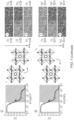
- FIG. 1B shows the equilibrium oxygen content of a metal/metal oxide system as a function of the water to hydrogen ratio in the gas phase to which it is exposed.
- the phase change and hence oxygen uptake and release occurs at one single value of the water to hydrogen ratio i.e. there is a discontinuity in oxygen content of the oxygen-carrier material as a function of oxygen chemical potential.
- the extra reducing potential of the carbon monoxide feed stream is wasted by having a material that cannot reflect this reducing potential; the material lacks a memory of the conditions to which it has been exposed and a thermodynamic irreversibility has been introduced.
- ⁇ varies continuously as the oxidation state of iron in the perovskite lattice changes. This means that if a reducing gas is used with a particular water to hydrogen ratio we should, in principle, be able recover the same water to hydrogen ratio in the product (see Example 1 for a more detailed thermodynamic analysis).
- Water-gas shift was performed in a fixed bed reactor ( Figure 2 ) operated close to plug flow (i.e. with a time constant associated with mixing in the gas phase much less than the duration of reactant pulses) and packed with a non-stoichiometric LSF oxygen-carrier material (see Example 2). It must be emphasised that a fixed bed reactor (no solids mixing) is used.
- a fluidised bed reactor (a common way to implement chemical looping) will have good solids mixing, undesirable in the present context because this solids mixing will erase the 'memory' that the solid has of the gas phase to which it was exposed.
- the oxygen-carrier material was repeatedly reduced in carbon monoxide ( Figure 2A ) and oxidised in water after reversing the direction of flow ( Figure 2B ).
- One hundred complete redox cycles with 5 mol% carbon monoxide in an inert carrier, helium, and 5 mol% water in helium at 820°C (this temperature is sufficiently close to 817°C to mean that the water-gas-shift equilibrium constant is approximately unity) and atmospheric pressure were performed over pre-reduced LSF. Industrially this reaction would be performed at higher carbon monoxide and water partial pressures.
- the equilibrium constant is pressure independent so we may demonstrate the principle of overcoming equilibrium limitation at any pressure and inlet mole fraction.
- K * would never be able to exceed the water-gas-shift equilibrium constant, unity at this temperature. Likewise K * can never exceed unity for an oxygen-carrier material with a single-phase-transition. Nevertheless, it is possible to achieve K * values of greater than unity in the LSF oxygen-carrier material-containing reverse flow integral reactor under repeatable cycles (see Figure 3A ).
- K * values of greater than unity in the LSF oxygen-carrier material-containing reverse flow integral reactor under repeatable cycles (see Figure 3A ).
- a K * of close to unity is expected as the bed prior to this has been reduced to a uniform oxygen chemical potential. When water is introduced, oxidation at the water front begins; the water stream leaves in, or close to, equilibrium with the bed (as the bed has been prereduced this corresponds to a high conversion to hydrogen).
- Figure 4A shows the water and hydrogen mole fractions produced in the first cycle.
- carbon monoxide is introduced from the other end of the bed little carbon dioxide can be formed ( Figure 4A ) because of the reduced nature of the oxygen-carrier material.
- the bed close to the water inlet will gradually become oxidised leading to measurable carbon monoxide conversions when flow is reversed (e.g. Cycle 50, Figure 4B ) while still maintaining high water conversions.
- a maximum in K * is expected (high water conversions with fuel conversion increasing) in agreement with Figure 3A .
- Figure 5 visualises how the state of the oxygen-carrier material is expected to change between reducing and oxidising cycles.
- the change in the average degree of non-stoichiometry (averaged over the whole bed) of the LSF on going from an oxidised bed to a reduced bed can be calculated from an oxygen balance on the gas phase.
- the change in the average degree of non-stoichiometry between oxidation and reduction stabilises at approximately 0.003.
- a relatively small fraction of the available oxygen in the bed is being utilised. This fraction could be increased by using a material if higher surface area or conditions under which oxygen solid state transport is more rapid thus removing oxygen from the oxygen-carrier material surface more quickly.
- increasing the bed residence time would permit higher conversions to hydrogen over a greater duration.
- Equation (S7) Equation (S7) and Equations (S2), (S5). If we mix the reducing and oxidising gases, the outlet gases are all in equilibrium with one another (Equation (S2)). If we use an oxygen-carrier material with a single phase transition, likewise, the best we can hope for is for the outlet gases to be in equilibrium with one another (Equation (S2)). If we use reverse flow with a non-stoichiometric oxygen-carrier material, our outlet gas at the start of the oxidation phase is in equilibrium with the inlet gas from the reducing phase (Equation (S7)).
- the non-stoichiometric perovskite-type material lanthanum strontium ferrite (La 0.7 Sr 0.3 FeO 3- ⁇ or LSF) was used as an oxygen-carrier material.
- This material is non-stoichiometric with the equilibrium degree of non-stoichiometry, ⁇ , determined by the water to hydrogen partial pressure ratio to which the material is exposed.
- the two reactions that control the degree of non-stoichiometry in the LSF are the oxidation and disproportionation of Fe(III) to Fe(ll) and Fe(IV). Using Kröger-Vink notation these reactions can be written as, V O • • + 2 Fe Fe ⁇ + 1 2 O 2 ⁇ O O ⁇ + 2 Fe Fe • 2 Fe Fe ⁇ ⁇ Fe Fe • + Fe Fe /
- p O 2 1 2 K wat p H 2 O p H 2 where K wat is the equilibrium constant for water dissociation: H 2 O ⁇ 1 2 O 2 + H 2
- LSF Powders of LSF (Praxair Speciality Ceramics, LSF has a molecular weight of 227.4 g/mol and density of 1.26 ⁇ 10 3 kg/m 3 ) were pelletized with a hydraulic press, followed by sintering at 1250°C for 4.32 ⁇ 10 4 s (12 hours) in air. These pellets were subsequently crushed and sieved to obtain the desired particle size (80-160 ⁇ m). The resulting particles are referred to as fresh particles.
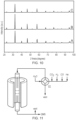
- the particles (6 g (2.62 ⁇ 10 -2 mol)) were then placed in a quartz tube of 1 m length and 8 mm internal diameter; the particles were held in place by quartz wool. The particles were located in the isothermal zone (the temperature and isothermality of which was confirmed by using an additional movable thermocouple) of a furnace (as shown in Figure 7 ).
- Outlet gases containing carbon monoxide, carbon dioxide, water, hydrogen and helium were fed into a soft ionisation quadrupole mass spectrometer (QMS) (QGA Quantitative Gas Analysis unit, Hiden Analytical Ltd., UK) through a heated capillary line for continuous online analysis.
- QMS soft ionisation quadrupole mass spectrometer
- the QMS was calibrated for water against a cold mirror dew point hygrometer (CMH-1, 182 Alpha Moisture Systems, UK). Uncertainty in the measured mole fractions was estimated to be ⁇ 2% of the measured mole fraction.
- the QMS has a resolution of approximately 100 ppm.
- the LSF was employed for 100 cycles for chemical looping in reverse flow mode.
- the reducing (carbon monoxide) and oxidising (water) agents were fed in discrete half cycles with helium purges to separate the half cycles (industrially such purging with inert would not be used and it would be important to ensure that mixing were minimised in the gas phase).
- the experiments were performed at 820°C. Inlet mole fractions of carbon monoxide and water of 5 mol% in a balance of helium were used with a flow rate of 3.7 ⁇ 10 -5 mol/s (50 ml (STP)/min) throughout. The outlet pressure of the reactor was approximately 1 bar.
- the inlet pressure was approximately 1.2 bar due to the pressure drop within the bed (pressure does not affect the equilibrium constant of the water-gas shift reaction).
- Water was delivered by a saturator system (Grant, 179 UK) using helium (99.996% pure, BOC, UK) as a carrier. Cycles were performed with a half cycle durations of 60 seconds. Purges of helium (99.996% pure, BOC, UK) of 120 seconds were employed.
- Cyclic switching between the gases was performed with three- and four-way valves to maintain continuous flow of all reactive gases, as shown in Figure 2 .
- the switching protocol for a cycle began with Valves V1 and V2 arranged to flow helium into the reactor via the carbon monoxide feed side and Valve V3 arranged to flow the helium leaving the reactor to the QMS. After 60 s, Valve V1 was turned to deliver carbon monoxide for 60 s and was then turned back to deliver helium. After a further 60 s, helium flow to Valve V1 was stopped; helium flow to Valve V4 was started; and Valves V2 and V3 were turned simultaneously to change the direction of helium flow to enter at the water feed side.
- Valve V4 was turned to deliver water into the reactor for 60 s, then was turned back to deliver helium for a further 60 s before once again switching the direction of helium flow and repeating the cycle.
- This protocol has the effect of alternately introducing 60-second pulses (half cycles) of carbon monoxide and water separated by 120 s of helium.
- the oxygen-carrier material particles fresh, after prereduction, and after prereduction followed by one hundred redox cycles, were characterised by SEM-EDX and XRD. After redox cycling the bed was separated into five approximately equal lengths to see if there were any axial differences in the microstructural, compositional, or phase properties. No such axial variations were observed and thus here we only show data for the central oxygen-carrier material fraction (in the case of SEMs and XRDs).
- BET surface areas were determined by adsorption/desorption of nitrogen at 77 K in a Beckman Coulter SA3100 instrument. The BET surface area of the LSF was approximately 0.1 m 2 /g.
- the fresh sample ( ⁇ 50 mg) post calcination was placed in the reactor before flushing with a helium flow of 7.4 ⁇ 10 -5 mol/s (100 ml (STP)/min) prior to commencing testing.
- the oxygen-carrier material was subjected to isothermal reduction under 5 mol% carbon monoxide in helium and isothermal oxidation under 5 mol% water in helium with flow rates of 7.4 ⁇ 10 -5 mol/s (100 ml (STP)/min). Reduction and oxidation steps lasted 1800 s (30 minutes).
- Helium was flushed for 300 s (5 minutes) after reduction and 900 s (15 minutes) after oxidation in order to evacuate the reactor of any reactive gas or any product and to avoid mixing of the reducing and oxidising gases.
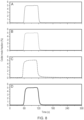
- Figure 12 shows the outlet mole fractions over a full cycle of a reduction and oxidation of LSF. Each half cycle lasted approximately 1800 s (30 minutes), but the oxidation half cycle with 5 mol% water in helium is often slightly longer than 1800 s (30 minutes) as there was a delay in the switching of the Valve V1 ( Figure 11 ) which controls water delivery.
- the reduction half cycle shows a sharp peak in carbon monoxide mole fraction at short times with a magnitude that is much greater than the 5 mol% carbon monoxide delivered. This peak should be ignored as it is an artefact of the system created by pressure changes on opening and closing of the mass flow controllers for helium, carbon monoxide, hydrogen and carbon dioxide. When water is delivered to the reactor no such peak is observed as the water flows continuously and is directed into the reactor via a two-position, four-way Valve, V1, when required.
- the autothermal chemical looping steam-reforming of methane was also performed.
- the reaction of methane and water is not equilibrium limited in an overall sense but nevertheless it is still difficult to get a high hydrogen to water ratio in a chemical looping process because of the thermodynamics of the oxygen-carrier material.
- Carriers of variable non-stoichiometry are inherently much more flexible in terms of the processes in which they can be employed to produce high purity separated streams even in the absence of overall equilibrium limitations.
- the LSF was employed for 50 cycles in reverse flow mode.
- the reducing (methane) and oxidising (water and oxygen) agents were fed in discrete cycles with helium purges to separate the cycles.
- the order of feeding was methane from the reducing inlet followed by water from the oxidising inlet and finally oxygen from the oxidising inlet.
- the experiments were performed at 850°C. Inlet mole fractions of methane, water and oxygen of 5 mol% in a balance of helium (a balance of argon in the case of oxygen) were used with a flow rate of 2.2 ⁇ 10 -5 mol/s (30 ml (STP)/min) throughout.
- Cycles were performed with a duration of 15 minutes for the methane feed, 6 minutes for the water feed and 30 seconds for the oxygen feed. Purges of helium (99.996% pure, BOC, UK) of 90 seconds were employed. Overall conversions of approximately 35% for methane (producing a mixture of carbon monoxide, carbon dioxide, hydrogen and water), 85% for water and 100% for oxygen were achieved.
Landscapes
- Chemical & Material Sciences (AREA)
- Organic Chemistry (AREA)
- Chemical Kinetics & Catalysis (AREA)
- Inorganic Chemistry (AREA)
- Engineering & Computer Science (AREA)
- Combustion & Propulsion (AREA)
- Health & Medical Sciences (AREA)
- General Health & Medical Sciences (AREA)
- Physics & Mathematics (AREA)
- Fluid Mechanics (AREA)
- Geology (AREA)
- Life Sciences & Earth Sciences (AREA)
- Oil, Petroleum & Natural Gas (AREA)
- Organic Low-Molecular-Weight Compounds And Preparation Thereof (AREA)
- Catalysts (AREA)
- Hydrogen, Water And Hydrids (AREA)
- Devices And Processes Conducted In The Presence Of Fluids And Solid Particles (AREA)
- Compounds Of Alkaline-Earth Elements, Aluminum Or Rare-Earth Metals (AREA)
- Carbon And Carbon Compounds (AREA)
- Physical Or Chemical Processes And Apparatus (AREA)
- Pharmaceuticals Containing Other Organic And Inorganic Compounds (AREA)
- Saccharide Compounds (AREA)
- Medicines Containing Material From Animals Or Micro-Organisms (AREA)
Applications Claiming Priority (2)
| Application Number | Priority Date | Filing Date | Title |
|---|---|---|---|
| GBGB1511855.7A GB201511855D0 (en) | 2015-07-07 | 2015-07-07 | Chemical looping |
| PCT/GB2016/052044 WO2017006121A1 (en) | 2015-07-07 | 2016-07-07 | Chemical looping |
Publications (2)
| Publication Number | Publication Date |
|---|---|
| EP3319720A1 EP3319720A1 (en) | 2018-05-16 |
| EP3319720B1 true EP3319720B1 (en) | 2023-06-07 |
Family
ID=54013584
Family Applications (1)
| Application Number | Title | Priority Date | Filing Date |
|---|---|---|---|
| EP16738512.9A Active EP3319720B1 (en) | 2015-07-07 | 2016-07-07 | Chemical looping |
Country Status (10)
| Country | Link |
|---|---|
| US (1) | US10843157B2 (pl) |
| EP (1) | EP3319720B1 (pl) |
| JP (1) | JP6817635B2 (pl) |
| CN (1) | CN107847893B (pl) |
| CA (1) | CA2991460C (pl) |
| ES (1) | ES2954120T3 (pl) |
| GB (1) | GB201511855D0 (pl) |
| PL (1) | PL3319720T3 (pl) |
| RU (1) | RU2717225C2 (pl) |
| WO (1) | WO2017006121A1 (pl) |
Families Citing this family (6)
| Publication number | Priority date | Publication date | Assignee | Title |
|---|---|---|---|---|
| US10662130B2 (en) | 2017-08-15 | 2020-05-26 | Exxonmobil Research And Engineering Company | Process for generation of olefins |
| CN109745991A (zh) * | 2018-12-13 | 2019-05-14 | 大连海事大学 | 用于煤气化的复合金属氧化物催化剂的制备方法及应用 |
| JP7491505B2 (ja) * | 2020-02-05 | 2024-05-28 | Eneos株式会社 | 一酸化炭素の生成方法、前駆体の製造方法およびケミカルルーピングシステム用材料 |
| JPWO2022029888A1 (pl) * | 2020-08-04 | 2022-02-10 | ||
| WO2023140073A1 (ja) * | 2022-01-18 | 2023-07-27 | Eneos株式会社 | ケミカルルーピングシステム、ケミカルルーピングシステム用材料およびケミカルルーピングシステム用材料の製造方法 |
| AU2024313568A1 (en) * | 2023-06-22 | 2026-01-15 | Synhelion Ag | Chemical looping reforming of hydrocarbons |
Family Cites Families (15)
| Publication number | Priority date | Publication date | Assignee | Title |
|---|---|---|---|---|
| US6344271B1 (en) | 1998-11-06 | 2002-02-05 | Nanoenergy Corporation | Materials and products using nanostructured non-stoichiometric substances |
| US7824574B2 (en) | 2006-09-21 | 2010-11-02 | Eltron Research & Development | Cyclic catalytic upgrading of chemical species using metal oxide materials |
| US8323363B2 (en) | 2007-08-30 | 2012-12-04 | Innovative Energy Solution | Reformation of hydrogen-containing fluids in a cyclic flow reactor |
| FR2978450B1 (fr) * | 2011-07-28 | 2014-12-26 | IFP Energies Nouvelles | Procede de combustion en boucle chimique utilisant la pyrolusite comme masse oxydo-reductrice |
| US20130252808A1 (en) * | 2012-03-23 | 2013-09-26 | Yoshihiro Yamazaki | Catalysts for thermochemical fuel production and method of producing fuel using thermochemical fuel production |
| US10144640B2 (en) * | 2013-02-05 | 2018-12-04 | Ohio State Innovation Foundation | Methods for fuel conversion |
| WO2014160223A1 (en) * | 2013-03-13 | 2014-10-02 | Ohio State Innovation Foundation | Oxygen carrying materials and methods for making the same |
| US9481837B2 (en) * | 2013-03-15 | 2016-11-01 | The Babcock & Wilcox Company | Chemical looping processes for partial oxidation of carbonaceous fuels |
| CN103204464A (zh) * | 2013-03-29 | 2013-07-17 | 中国科学院广州能源研究所 | 一种蜂窝状氧载体化学链重整反应器 |
| US9550680B2 (en) * | 2013-06-21 | 2017-01-24 | General Electric Technology Gmbh | Chemical looping integration with a carbon dioxide gas purification unit |
| US9353023B2 (en) * | 2013-08-30 | 2016-05-31 | Exxonmobil Chemical Patents Inc. | Catalytic alkane conversion and olefin separation |
| EP3074119B1 (en) * | 2013-11-27 | 2019-01-09 | Siluria Technologies, Inc. | Reactors and systems for oxidative coupling of methane |
| WO2015131117A1 (en) * | 2014-02-27 | 2015-09-03 | Ohio State Innovation Foundation | Systems and methods for partial or complete oxidation of fuels |
| US20150343416A1 (en) * | 2014-06-03 | 2015-12-03 | Saudi Arabian Oil Company | Activation of Waste Metal Oxide as an Oxygen Carrier for Chemical Looping Combustion Applications |
| WO2016209811A1 (en) * | 2015-06-22 | 2016-12-29 | Bio2Electric, Llc | Systems for promoting endothermic conversions with oxygen transfer agents |
-
2015
- 2015-07-07 GB GBGB1511855.7A patent/GB201511855D0/en not_active Ceased
-
2016
- 2016-07-07 JP JP2017566277A patent/JP6817635B2/ja active Active
- 2016-07-07 WO PCT/GB2016/052044 patent/WO2017006121A1/en not_active Ceased
- 2016-07-07 US US15/741,998 patent/US10843157B2/en active Active
- 2016-07-07 EP EP16738512.9A patent/EP3319720B1/en active Active
- 2016-07-07 CN CN201680039940.9A patent/CN107847893B/zh active Active
- 2016-07-07 RU RU2018104553A patent/RU2717225C2/ru active
- 2016-07-07 PL PL16738512.9T patent/PL3319720T3/pl unknown
- 2016-07-07 ES ES16738512T patent/ES2954120T3/es active Active
- 2016-07-07 CA CA2991460A patent/CA2991460C/en active Active
Also Published As
| Publication number | Publication date |
|---|---|
| CN107847893B (zh) | 2021-07-30 |
| GB201511855D0 (en) | 2015-08-19 |
| JP2018529504A (ja) | 2018-10-11 |
| WO2017006121A1 (en) | 2017-01-12 |
| CA2991460C (en) | 2023-09-12 |
| JP6817635B2 (ja) | 2021-01-20 |
| US20180207599A1 (en) | 2018-07-26 |
| ES2954120T3 (es) | 2023-11-20 |
| CA2991460A1 (en) | 2017-01-12 |
| RU2018104553A (ru) | 2019-08-07 |
| CN107847893A (zh) | 2018-03-27 |
| EP3319720A1 (en) | 2018-05-16 |
| US10843157B2 (en) | 2020-11-24 |
| RU2018104553A3 (pl) | 2019-09-10 |
| RU2717225C2 (ru) | 2020-03-18 |
| PL3319720T3 (pl) | 2023-11-20 |
Similar Documents
| Publication | Publication Date | Title |
|---|---|---|
| EP3319720B1 (en) | Chemical looping | |
| Murugan et al. | A chemical looping process for hydrogen production using iron-containing perovskites | |
| Tsai et al. | Dense Perovskite, La1‐xA′ xFe1‐yCoyO3‐δ (A′= Ba, Sr, Ca), Membrane Synthesis, Applications, and Characterization | |
| CN1982205B (zh) | 复合金属氧化物在氢气的自热产生中的用途 | |
| Wang et al. | Low temperature partial oxidation of methane via BaBi0. 05Co0. 8Nb0. 15O3− δ-Ni phyllosilicate catalytic hollow fiber membrane reactor | |
| US6146549A (en) | Ceramic membranes for catalytic membrane reactors with high ionic conductivities and low expansion properties | |
| Dueso et al. | High-stability, high-capacity oxygen carriers: Iron oxide-perovskite composite materials for hydrogen production by chemical looping | |
| Harada et al. | Ba1. 0Co0. 7Fe0. 2Nb0. 1O3− δ dense ceramic as an oxygen permeable membrane for partial oxidation of methane to synthesis gas | |
| JP5366556B2 (ja) | 酸化反応器および酸化方法 | |
| Tan et al. | La0. 7Sr0. 3FeO3− α perovskite hollow fiber membranes for oxygen permeation and methane conversion | |
| CA2485608A1 (en) | Membrane systems containing an oxygen transport membrane and catalyst | |
| US20020022568A1 (en) | Ceramic membranes for use in catalytic membrane reactors with high ionic conductivities and improved mechanical properties | |
| EP1736437A2 (en) | Process for autothermal generation of hydrogen | |
| Cheng et al. | Structural stability and oxygen permeability of BaCo0. 7Fe0. 2M0. 1O3− δ (M= Ta, Nb, Zr) ceramic membranes for producing hydrogen from coke oven gas | |
| Jiang et al. | A novel catalytic membrane reactor with homologous exsolution-based perovskite catalyst | |
| JP2007527356A (ja) | 水素分離用混合プロトン/電子伝導性セラミック膜 | |
| Jia et al. | Hydrogen permeation through dual-phase ceramic membrane derived from automatic phase-separation of SrCe0. 50Fe0. 50O3-δ precursor | |
| US20180118576A1 (en) | Thermochemical gas reduction process using poly-cation oxide | |
| EP2040822A1 (en) | Oxygen separation membrane | |
| Zhou et al. | Simultaneous production of synthesis gases H2/N2 and H2/CO in a dual-phase mixed conducting membrane reactor | |
| US20240067527A1 (en) | Facile co2 sequestration and fuel production from a hydrocarbon | |
| US12275002B2 (en) | Methane upgrade to ethane and ethylene within ceramic membrane reactors | |
| WO2009045112A1 (en) | Material and method for partial oxidation of natural gas | |
| Abdullah | Hydrogen production via simultaneous methane reforming and water splitting processes using membrane reactor | |
| binti Abdullah | Hydrogen Production via Simultaneous Methane Reforming and Water Splitting Processes using Membrane Reactor |
Legal Events
| Date | Code | Title | Description |
|---|---|---|---|
| STAA | Information on the status of an ep patent application or granted ep patent |
Free format text: STATUS: THE INTERNATIONAL PUBLICATION HAS BEEN MADE |
|
| PUAI | Public reference made under article 153(3) epc to a published international application that has entered the european phase |
Free format text: ORIGINAL CODE: 0009012 |
|
| STAA | Information on the status of an ep patent application or granted ep patent |
Free format text: STATUS: REQUEST FOR EXAMINATION WAS MADE |
|
| 17P | Request for examination filed |
Effective date: 20171219 |
|
| AK | Designated contracting states |
Kind code of ref document: A1 Designated state(s): AL AT BE BG CH CY CZ DE DK EE ES FI FR GB GR HR HU IE IS IT LI LT LU LV MC MK MT NL NO PL PT RO RS SE SI SK SM TR |
|
| AX | Request for extension of the european patent |
Extension state: BA ME |
|
| DAV | Request for validation of the european patent (deleted) | ||
| DAX | Request for extension of the european patent (deleted) | ||
| STAA | Information on the status of an ep patent application or granted ep patent |
Free format text: STATUS: EXAMINATION IS IN PROGRESS |
|
| 17Q | First examination report despatched |
Effective date: 20200721 |
|
| GRAP | Despatch of communication of intention to grant a patent |
Free format text: ORIGINAL CODE: EPIDOSNIGR1 |
|
| STAA | Information on the status of an ep patent application or granted ep patent |
Free format text: STATUS: GRANT OF PATENT IS INTENDED |
|
| INTG | Intention to grant announced |
Effective date: 20220620 |
|
| GRAJ | Information related to disapproval of communication of intention to grant by the applicant or resumption of examination proceedings by the epo deleted |
Free format text: ORIGINAL CODE: EPIDOSDIGR1 |
|
| STAA | Information on the status of an ep patent application or granted ep patent |
Free format text: STATUS: EXAMINATION IS IN PROGRESS |
|
| INTC | Intention to grant announced (deleted) | ||
| GRAP | Despatch of communication of intention to grant a patent |
Free format text: ORIGINAL CODE: EPIDOSNIGR1 |
|
| STAA | Information on the status of an ep patent application or granted ep patent |
Free format text: STATUS: GRANT OF PATENT IS INTENDED |
|
| INTG | Intention to grant announced |
Effective date: 20221207 |
|
| GRAS | Grant fee paid |
Free format text: ORIGINAL CODE: EPIDOSNIGR3 |
|
| GRAA | (expected) grant |
Free format text: ORIGINAL CODE: 0009210 |
|
| STAA | Information on the status of an ep patent application or granted ep patent |
Free format text: STATUS: THE PATENT HAS BEEN GRANTED |
|
| AK | Designated contracting states |
Kind code of ref document: B1 Designated state(s): AL AT BE BG CH CY CZ DE DK EE ES FI FR GB GR HR HU IE IS IT LI LT LU LV MC MK MT NL NO PL PT RO RS SE SI SK SM TR |
|
| REG | Reference to a national code |
Ref country code: GB Ref legal event code: FG4D |
|
| REG | Reference to a national code |
Ref country code: CH Ref legal event code: EP Ref country code: AT Ref legal event code: REF Ref document number: 1573293 Country of ref document: AT Kind code of ref document: T Effective date: 20230615 |
|
| REG | Reference to a national code |
Ref country code: DE Ref legal event code: R096 Ref document number: 602016079916 Country of ref document: DE |
|
| P01 | Opt-out of the competence of the unified patent court (upc) registered |
Effective date: 20230525 |
|
| REG | Reference to a national code |
Ref country code: NL Ref legal event code: FP |
|
| REG | Reference to a national code |
Ref country code: LT Ref legal event code: MG9D |
|
| REG | Reference to a national code |
Ref country code: NO Ref legal event code: T2 Effective date: 20230607 |
|
| PG25 | Lapsed in a contracting state [announced via postgrant information from national office to epo] |
Ref country code: SE Free format text: LAPSE BECAUSE OF FAILURE TO SUBMIT A TRANSLATION OF THE DESCRIPTION OR TO PAY THE FEE WITHIN THE PRESCRIBED TIME-LIMIT Effective date: 20230607 |
|
| REG | Reference to a national code |
Ref country code: AT Ref legal event code: MK05 Ref document number: 1573293 Country of ref document: AT Kind code of ref document: T Effective date: 20230607 |
|
| REG | Reference to a national code |
Ref country code: ES Ref legal event code: FG2A Ref document number: 2954120 Country of ref document: ES Kind code of ref document: T3 Effective date: 20231120 |
|
| PG25 | Lapsed in a contracting state [announced via postgrant information from national office to epo] |
Ref country code: RS Free format text: LAPSE BECAUSE OF FAILURE TO SUBMIT A TRANSLATION OF THE DESCRIPTION OR TO PAY THE FEE WITHIN THE PRESCRIBED TIME-LIMIT Effective date: 20230607 Ref country code: LV Free format text: LAPSE BECAUSE OF FAILURE TO SUBMIT A TRANSLATION OF THE DESCRIPTION OR TO PAY THE FEE WITHIN THE PRESCRIBED TIME-LIMIT Effective date: 20230607 Ref country code: LT Free format text: LAPSE BECAUSE OF FAILURE TO SUBMIT A TRANSLATION OF THE DESCRIPTION OR TO PAY THE FEE WITHIN THE PRESCRIBED TIME-LIMIT Effective date: 20230607 Ref country code: HR Free format text: LAPSE BECAUSE OF FAILURE TO SUBMIT A TRANSLATION OF THE DESCRIPTION OR TO PAY THE FEE WITHIN THE PRESCRIBED TIME-LIMIT Effective date: 20230607 Ref country code: GR Free format text: LAPSE BECAUSE OF FAILURE TO SUBMIT A TRANSLATION OF THE DESCRIPTION OR TO PAY THE FEE WITHIN THE PRESCRIBED TIME-LIMIT Effective date: 20230908 |
|
| PG25 | Lapsed in a contracting state [announced via postgrant information from national office to epo] |
Ref country code: FI Free format text: LAPSE BECAUSE OF FAILURE TO SUBMIT A TRANSLATION OF THE DESCRIPTION OR TO PAY THE FEE WITHIN THE PRESCRIBED TIME-LIMIT Effective date: 20230607 |
|
| PG25 | Lapsed in a contracting state [announced via postgrant information from national office to epo] |
Ref country code: SK Free format text: LAPSE BECAUSE OF FAILURE TO SUBMIT A TRANSLATION OF THE DESCRIPTION OR TO PAY THE FEE WITHIN THE PRESCRIBED TIME-LIMIT Effective date: 20230607 |
|
| PG25 | Lapsed in a contracting state [announced via postgrant information from national office to epo] |
Ref country code: IS Free format text: LAPSE BECAUSE OF FAILURE TO SUBMIT A TRANSLATION OF THE DESCRIPTION OR TO PAY THE FEE WITHIN THE PRESCRIBED TIME-LIMIT Effective date: 20231007 |
|
| PG25 | Lapsed in a contracting state [announced via postgrant information from national office to epo] |
Ref country code: SM Free format text: LAPSE BECAUSE OF FAILURE TO SUBMIT A TRANSLATION OF THE DESCRIPTION OR TO PAY THE FEE WITHIN THE PRESCRIBED TIME-LIMIT Effective date: 20230607 Ref country code: SK Free format text: LAPSE BECAUSE OF FAILURE TO SUBMIT A TRANSLATION OF THE DESCRIPTION OR TO PAY THE FEE WITHIN THE PRESCRIBED TIME-LIMIT Effective date: 20230607 Ref country code: RO Free format text: LAPSE BECAUSE OF FAILURE TO SUBMIT A TRANSLATION OF THE DESCRIPTION OR TO PAY THE FEE WITHIN THE PRESCRIBED TIME-LIMIT Effective date: 20230607 Ref country code: PT Free format text: LAPSE BECAUSE OF FAILURE TO SUBMIT A TRANSLATION OF THE DESCRIPTION OR TO PAY THE FEE WITHIN THE PRESCRIBED TIME-LIMIT Effective date: 20231009 Ref country code: IS Free format text: LAPSE BECAUSE OF FAILURE TO SUBMIT A TRANSLATION OF THE DESCRIPTION OR TO PAY THE FEE WITHIN THE PRESCRIBED TIME-LIMIT Effective date: 20231007 Ref country code: EE Free format text: LAPSE BECAUSE OF FAILURE TO SUBMIT A TRANSLATION OF THE DESCRIPTION OR TO PAY THE FEE WITHIN THE PRESCRIBED TIME-LIMIT Effective date: 20230607 Ref country code: CZ Free format text: LAPSE BECAUSE OF FAILURE TO SUBMIT A TRANSLATION OF THE DESCRIPTION OR TO PAY THE FEE WITHIN THE PRESCRIBED TIME-LIMIT Effective date: 20230607 Ref country code: AT Free format text: LAPSE BECAUSE OF FAILURE TO SUBMIT A TRANSLATION OF THE DESCRIPTION OR TO PAY THE FEE WITHIN THE PRESCRIBED TIME-LIMIT Effective date: 20230607 |
|
| REG | Reference to a national code |
Ref country code: CH Ref legal event code: PL |
|
| REG | Reference to a national code |
Ref country code: DE Ref legal event code: R097 Ref document number: 602016079916 Country of ref document: DE |
|
| PG25 | Lapsed in a contracting state [announced via postgrant information from national office to epo] |
Ref country code: MC Free format text: LAPSE BECAUSE OF FAILURE TO SUBMIT A TRANSLATION OF THE DESCRIPTION OR TO PAY THE FEE WITHIN THE PRESCRIBED TIME-LIMIT Effective date: 20230607 |
|
| PG25 | Lapsed in a contracting state [announced via postgrant information from national office to epo] |
Ref country code: LU Free format text: LAPSE BECAUSE OF NON-PAYMENT OF DUE FEES Effective date: 20230707 |
|
| PG25 | Lapsed in a contracting state [announced via postgrant information from national office to epo] |
Ref country code: MC Free format text: LAPSE BECAUSE OF FAILURE TO SUBMIT A TRANSLATION OF THE DESCRIPTION OR TO PAY THE FEE WITHIN THE PRESCRIBED TIME-LIMIT Effective date: 20230607 Ref country code: LU Free format text: LAPSE BECAUSE OF NON-PAYMENT OF DUE FEES Effective date: 20230707 |
|
| PLBE | No opposition filed within time limit |
Free format text: ORIGINAL CODE: 0009261 |
|
| STAA | Information on the status of an ep patent application or granted ep patent |
Free format text: STATUS: NO OPPOSITION FILED WITHIN TIME LIMIT |
|
| REG | Reference to a national code |
Ref country code: IE Ref legal event code: MM4A |
|
| PG25 | Lapsed in a contracting state [announced via postgrant information from national office to epo] |
Ref country code: DK Free format text: LAPSE BECAUSE OF FAILURE TO SUBMIT A TRANSLATION OF THE DESCRIPTION OR TO PAY THE FEE WITHIN THE PRESCRIBED TIME-LIMIT Effective date: 20230607 Ref country code: CH Free format text: LAPSE BECAUSE OF NON-PAYMENT OF DUE FEES Effective date: 20230731 |
|
| PG25 | Lapsed in a contracting state [announced via postgrant information from national office to epo] |
Ref country code: SI Free format text: LAPSE BECAUSE OF FAILURE TO SUBMIT A TRANSLATION OF THE DESCRIPTION OR TO PAY THE FEE WITHIN THE PRESCRIBED TIME-LIMIT Effective date: 20230607 |
|
| 26N | No opposition filed |
Effective date: 20240308 |
|
| PG25 | Lapsed in a contracting state [announced via postgrant information from national office to epo] |
Ref country code: SI Free format text: LAPSE BECAUSE OF FAILURE TO SUBMIT A TRANSLATION OF THE DESCRIPTION OR TO PAY THE FEE WITHIN THE PRESCRIBED TIME-LIMIT Effective date: 20230607 |
|
| PG25 | Lapsed in a contracting state [announced via postgrant information from national office to epo] |
Ref country code: IE Free format text: LAPSE BECAUSE OF NON-PAYMENT OF DUE FEES Effective date: 20230707 |
|
| PG25 | Lapsed in a contracting state [announced via postgrant information from national office to epo] |
Ref country code: IE Free format text: LAPSE BECAUSE OF NON-PAYMENT OF DUE FEES Effective date: 20230707 |
|
| PG25 | Lapsed in a contracting state [announced via postgrant information from national office to epo] |
Ref country code: BG Free format text: LAPSE BECAUSE OF FAILURE TO SUBMIT A TRANSLATION OF THE DESCRIPTION OR TO PAY THE FEE WITHIN THE PRESCRIBED TIME-LIMIT Effective date: 20230607 |
|
| PG25 | Lapsed in a contracting state [announced via postgrant information from national office to epo] |
Ref country code: BG Free format text: LAPSE BECAUSE OF FAILURE TO SUBMIT A TRANSLATION OF THE DESCRIPTION OR TO PAY THE FEE WITHIN THE PRESCRIBED TIME-LIMIT Effective date: 20230607 |
|
| PG25 | Lapsed in a contracting state [announced via postgrant information from national office to epo] |
Ref country code: CY Free format text: LAPSE BECAUSE OF FAILURE TO SUBMIT A TRANSLATION OF THE DESCRIPTION OR TO PAY THE FEE WITHIN THE PRESCRIBED TIME-LIMIT; INVALID AB INITIO Effective date: 20160707 |
|
| PG25 | Lapsed in a contracting state [announced via postgrant information from national office to epo] |
Ref country code: HU Free format text: LAPSE BECAUSE OF FAILURE TO SUBMIT A TRANSLATION OF THE DESCRIPTION OR TO PAY THE FEE WITHIN THE PRESCRIBED TIME-LIMIT; INVALID AB INITIO Effective date: 20160707 |
|
| PGFP | Annual fee paid to national office [announced via postgrant information from national office to epo] |
Ref country code: NL Payment date: 20250723 Year of fee payment: 10 |
|
| PGFP | Annual fee paid to national office [announced via postgrant information from national office to epo] |
Ref country code: ES Payment date: 20250819 Year of fee payment: 10 |
|
| PGFP | Annual fee paid to national office [announced via postgrant information from national office to epo] |
Ref country code: DE Payment date: 20250722 Year of fee payment: 10 |
|
| PGFP | Annual fee paid to national office [announced via postgrant information from national office to epo] |
Ref country code: NO Payment date: 20250722 Year of fee payment: 10 |
|
| PGFP | Annual fee paid to national office [announced via postgrant information from national office to epo] |
Ref country code: PL Payment date: 20250707 Year of fee payment: 10 Ref country code: IT Payment date: 20250731 Year of fee payment: 10 |
|
| PGFP | Annual fee paid to national office [announced via postgrant information from national office to epo] |
Ref country code: BE Payment date: 20250722 Year of fee payment: 10 Ref country code: GB Payment date: 20250716 Year of fee payment: 10 |
|
| PGFP | Annual fee paid to national office [announced via postgrant information from national office to epo] |
Ref country code: FR Payment date: 20250723 Year of fee payment: 10 |
|
| PG25 | Lapsed in a contracting state [announced via postgrant information from national office to epo] |
Ref country code: TR Free format text: LAPSE BECAUSE OF FAILURE TO SUBMIT A TRANSLATION OF THE DESCRIPTION OR TO PAY THE FEE WITHIN THE PRESCRIBED TIME-LIMIT Effective date: 20230607 |