EP3314880B1 - Erzeugen eines sprachanrufs ausgehend von einer gewählten nummer mit einer temporären routing-nummer - Google Patents
Erzeugen eines sprachanrufs ausgehend von einer gewählten nummer mit einer temporären routing-nummer Download PDFInfo
- Publication number
- EP3314880B1 EP3314880B1 EP16833503.2A EP16833503A EP3314880B1 EP 3314880 B1 EP3314880 B1 EP 3314880B1 EP 16833503 A EP16833503 A EP 16833503A EP 3314880 B1 EP3314880 B1 EP 3314880B1
- Authority
- EP
- European Patent Office
- Prior art keywords
- computing device
- originating
- call
- network
- user
- Prior art date
- Legal status (The legal status is an assumption and is not a legal conclusion. Google has not performed a legal analysis and makes no representation as to the accuracy of the status listed.)
- Active
Links
Images


Classifications
-
- H—ELECTRICITY
- H04—ELECTRIC COMMUNICATION TECHNIQUE
- H04M—TELEPHONIC COMMUNICATION
- H04M3/00—Automatic or semi-automatic exchanges
- H04M3/42—Systems providing special services or facilities to subscribers
- H04M3/42008—Systems for anonymous communication between parties, e.g. by use of disposal contact identifiers
-
- H—ELECTRICITY
- H04—ELECTRIC COMMUNICATION TECHNIQUE
- H04W—WIRELESS COMMUNICATION NETWORKS
- H04W8/00—Network data management
- H04W8/26—Network addressing or numbering for mobility support
-
- H—ELECTRICITY
- H04—ELECTRIC COMMUNICATION TECHNIQUE
- H04M—TELEPHONIC COMMUNICATION
- H04M1/00—Substation equipment, e.g. for use by subscribers
- H04M1/57—Arrangements for indicating or recording the number of the calling subscriber at the called subscriber's set
-
- H—ELECTRICITY
- H04—ELECTRIC COMMUNICATION TECHNIQUE
- H04M—TELEPHONIC COMMUNICATION
- H04M1/00—Substation equipment, e.g. for use by subscribers
- H04M1/72—Mobile telephones; Cordless telephones, i.e. devices for establishing wireless links to base stations without route selection
- H04M1/724—User interfaces specially adapted for cordless or mobile telephones
- H04M1/72469—User interfaces specially adapted for cordless or mobile telephones for operating the device by selecting functions from two or more displayed items, e.g. menus or icons
-
- H—ELECTRICITY
- H04—ELECTRIC COMMUNICATION TECHNIQUE
- H04M—TELEPHONIC COMMUNICATION
- H04M3/00—Automatic or semi-automatic exchanges
- H04M3/42—Systems providing special services or facilities to subscribers
- H04M3/42025—Calling or Called party identification service
- H04M3/42034—Calling party identification service
- H04M3/42042—Notifying the called party of information on the calling party
-
- H—ELECTRICITY
- H04—ELECTRIC COMMUNICATION TECHNIQUE
- H04W—WIRELESS COMMUNICATION NETWORKS
- H04W12/00—Security arrangements; Authentication; Protecting privacy or anonymity
- H04W12/06—Authentication
-
- H—ELECTRICITY
- H04—ELECTRIC COMMUNICATION TECHNIQUE
- H04W—WIRELESS COMMUNICATION NETWORKS
- H04W40/00—Communication routing or communication path finding
- H04W40/02—Communication route or path selection, e.g. power-based or shortest path routing
-
- H—ELECTRICITY
- H04—ELECTRIC COMMUNICATION TECHNIQUE
- H04M—TELEPHONIC COMMUNICATION
- H04M2203/00—Aspects of automatic or semi-automatic exchanges
- H04M2203/15—Aspects of automatic or semi-automatic exchanges related to dial plan and call routing
- H04M2203/152—Temporary dial plan
-
- H—ELECTRICITY
- H04—ELECTRIC COMMUNICATION TECHNIQUE
- H04M—TELEPHONIC COMMUNICATION
- H04M2203/00—Aspects of automatic or semi-automatic exchanges
- H04M2203/60—Aspects of automatic or semi-automatic exchanges related to security aspects in telephonic communication systems
- H04M2203/6081—Service authorization mechanisms
-
- H—ELECTRICITY
- H04—ELECTRIC COMMUNICATION TECHNIQUE
- H04M—TELEPHONIC COMMUNICATION
- H04M3/00—Automatic or semi-automatic exchanges
- H04M3/38—Graded-service arrangements, i.e. some subscribers prevented from establishing certain connections
-
- H—ELECTRICITY
- H04—ELECTRIC COMMUNICATION TECHNIQUE
- H04M—TELEPHONIC COMMUNICATION
- H04M3/00—Automatic or semi-automatic exchanges
- H04M3/42—Systems providing special services or facilities to subscribers
- H04M3/42025—Calling or Called party identification service
- H04M3/42034—Calling party identification service
- H04M3/42059—Making use of the calling party identifier
Definitions
- a computing device such as a wireless phone, that is capable of terminating (e.g., receiving) or originating phone calls is typically associated with a particular phone number.
- the computing device can originate phone calls whose calling number is the particular phone number.
- a person may carry multiple computing devices in order to have the use of different phone numbers. Not only is this cumbersome for the user, but wasteful because the user has to acquire multiple computing devices.
- a user of a computing device such as a smart phone, may select an originating phone number to initiate a voice call that is different from the telephone number that is assigned to the computing device.
- the telephone number that is selected as the originating number may be a number that is assigned to another computing device and/or a different user.
- the wireless service provider e.g., a carrier, such as T-Mobile ®
- IMSI International Mobile Subscriber Identity
- E.164 address e.g., up to a fifteen digit telephone number
- a "device number" is the E.164 address or identity assigned to the computing device by the wireless service provider.
- the wireless service provider may include, or otherwise provide, a telephony client software application that can be installed on the computing device associated with the user.
- the user may install the telephony client on other computing devices that may also be used to place calls.
- a user may place an outgoing call that is originated from a number that is different from the device number that is assigned to the computing device.
- the telephony client may be used by the user to select a telephone number that the call is to originate from (the "originating number").
- the term "call” as used herein refers to a voice call (e.g., where the user desires to speak to another human being). For instance, a user may select one number as the originating number for calls made for business, and another number for calls made for personal use.
- a user might authorize another user, or a group of users, to use a telephone number that is assigned to the user. For instance, a business owner might allow employees of the business to use a business number when making calls from their personal computing device. According to some configurations, the user might use a graphical user interface (GUI), such as the telephony client, or some other interface, to authorize other users to use (e.g., as an originating number) a telephone number that is assigned to the user. After a user is authorized to use a telephone number as an originating number, the user might use to the telephony client to select the telephone number to use as the originating number in an outgoing call.
- GUI graphical user interface
- the computing device After selecting the telephone number to use as the originating number and specifying the destination number (e.g., the receiver or destination of the call), the computing device signals a network associated with the wireless service provider to place the call. For instance, a message may be sent by the computing device to the network that includes the specified originating number and the destination number.
- the network may authenticate the user (or the computing device) to ensure that the user is authorized to initiate a call using the specified number as the originating number. After authentication, the network returns a routing number to the computing device that is used by the computing device when placing the outgoing call.
- the routing number is a temporary routing number (TRN) provided by the home network of the subscriber that is used by the computing device to initiate the call.
- TRN temporary routing number
- the network may store the temporary routing number provided to the computing device along with other information related to the desired outgoing call (e.g., the destination number, and the originating number).
- the computing device After receiving the temporary routing number, the computing device places an outbound call to the temporary routing number.
- the telephony application on the computing device places the outbound call.
- the network receives the call made to the temporary routing number and may authenticate that the user and/or the computing device is authorized to place the outgoing call. For example, a network component may authenticate that the computing device making the call to the TRN was the computing device that was provided with the TRN.
- the network component may also determine the originating number to use to place the outgoing call as well as the destination number to call from the originating number.
- the network may query a database, or some other data store or memory, to determine the selected originating number and the destination number.
- the originating number and the destination number may be included in information received by the network from the computing device.
- the network may initiate the call to the destination number.
- the temporary routing number may then be provided to other computing devices by the network to place outgoing calls. For example, after the call is connected between the computing device and the destination, the TRN may be made available to other users. Instead of placing all calls from a device using a single telephone number (the device number), any telephone number that the user is authorized to use may be selected as the originating number.
- the called party may view the call as being originated by the selected originating number even though the call was originated by a device having a different device number.
- the user may originate an outgoing call from the computing device where the outgoing call appears to have originated from a different number than a phone number associated with the computing device (and different from the device number associated with the user's wireless phone). More details are provided below with regard to FIGS. 1-4 .
- FIG. 1 is a block diagram showing an illustrative environment 100 for originating a voice call from a selected number using a temporary routing number provided by a network associated with a wireless service provider.
- the environment 100 may include a network 102 that is operated by a wireless service provider.
- the environment 100 is illustrated in simplified form and may include many more components.
- the network 102 may include one or more base stations 104 and one or more service nodes 106.
- a base station 104 may handle traffic and signals between electronic devices, such as the computing devices 108A and 108B, and a core network of the network 102.
- the base station 104 may perform the transcoding of speech channels, allocation of radio channels to electronic device, paging, transmission and reception of voice and data, as well as other functions.
- the base station 104 may include several base transceiver stations (BTS), each BTS may include a transceiver, antenna, and additional network switch and control equipment that provide a network cell for facilitating wireless communication between computing devices and the core network of the network 102.
- BTS base transceiver stations
- the base station 104 may be configured as a Node B or an evolved Node B (eNodeB) that may be utilized in an LTE network.
- a NodeB may use the UMTS Terrestrial Radio Access (UTRA) protocols Wideband Code Division Multiple Access (WCDMA) or Time Division Synchronous Code Division Multiple Access (TD-SCDMA) on its air interface.
- UTRA UMTS Terrestrial Radio Access
- WCDMA Wideband Code Division Multiple Access
- TD-SCDMA Time Division Synchronous Code Division Multiple Access
- an eNodeB may use extended UTRA (E-UTRA) protocols Orthogonal Frequency-Division Multiple Access (OFDMA) and Single-carrier frequency-division multiple access (SC-FDMA) on its air interface for LTE.
- OFDMA Orthogonal Frequency-Division Multiple Access
- SC-FDMA Single-carrier frequency-division multiple access
- the core network may be responsible for routing voice communication to other networks, as well as routing data communication to external packet switched networks, such as the Internet.
- the one or more service nodes 106 may be a Gateway GPRS Support Node (GGSN), a mobility management entity (MME), a home subscriber server (HSS), a packet gateway (P-GW), an Authentication, Authorization, and Accounting component (AAA), a gateway such as an ePDG, a multimedia resource function control (MRFC), a multimedia resource function processor (MRFP), a proxy CSCF (P-CSCF), an interrogating CSCF (I-CSCF), and the like, or other nodes.
- the computing device 108 may be a smart phone, a personal digital assistant, a netbook, a laptop computer, and/or another electronic that is capable of sending or receiving voice or data via the network 102 and/or a Wi-Fi network.
- one or more of the service nodes 106 may be configured as an application server that provides support for one more applications, such as application 110. While the service nodes 106 are illustrated within the network 102, one or more other computing devices may be located outside of the network 102. For example, an application server, or some other server or device, may be connected to the network 102 via one or more external packet switched networks, such as the Internet.
- a telephony client application such as application 110
- the computing device 108 may establish data communication with the network 102 through a data connection to the base station 104.
- the base station 104 may route a communication from the communication device 108 through the core network via the service nodes 106.
- the service nodes 106 may be capable of performing subscriber profile insertion with respect to data traffic between the application 110 on the computing device 108 and the application server.
- the application 110 may be a calling application that is requesting to place an outgoing call to a destination number using a selected number as the originating number.
- the user has selected the number "512-222-2222" to use as the originating number.
- the selected number is different from the destination number "509-222-2222" of the computing device 108A.
- the computing device 108A may send a request to the network 102 to place the outgoing call.
- the service nodes 106 may authenticate that the computing device 108 is authorized to use the selected originating number. For example, one or more of the service nodes 106 may identify the computing device 108 by a unique identifier of the computing device 108 (e.g., the IMSI or the E.164 address). In turn, the service nodes 106 may retrieve a profile that corresponds to the IMSI. The profile may include information specifying the numbers that the computing device and/or the user of the computing device 108 is authorized to use as an originating number. Accordingly, when a call request arrives at the network 102, the service nodes 106 may verify that the information in the profile corresponds to a valid request. When the user is authenticated, the service nodes 106 may transmit a temporary routing number back to the application 110 via the network 102 or the Internet 112.
- the service nodes 106 may transmit a temporary routing number back to the application 110 via the network 102 or the Internet 112.
- the application 110 on the computing device 108 may connect to the service nodes 106, or some other component such as an application server, via the Internet 112 or some other network, such as a private network.
- the application 110 may connect to the Internet 112 via Wi-Fi access point 114. Accordingly, data traffic from the application 110 may be routed to the service nodes 106 by the gateway 116 of the network 102.
- the computing device 108 places an outbound call to the temporary routing number.
- the application 110 on the computing device 108 places the outbound call to the temporary number.
- the network 102 receives the call made to the temporary routing number and may authenticate the user and/or the computing device.
- the service nodes 106 may authenticate that the computing device 108 making the call to the TRN was the computing device 108 that was provided with the TRN by the network 102.
- the service nodes 106 may determine an amount of time it took before receiving a call directed to the TRN after providing the TRN to the computing device 108A. In some cases, when the time exceeds a predetermined threshold (e.g., 1 second, 5 seconds, one minute), the service nodes may not authorize the outgoing call to be placed using the selected originating number.
- a predetermined threshold e.g., 1 second, 5 seconds, one minute
- the service nodes 106 may also determine the originating number to use (as specified by the user) to place the outgoing call as well as to determine the destination number to call. In some cases, the service nodes 106 may query a database, or some other data store or memory, to determine the selected originating number and the destination number. In other examples, the originating number and the destination number may be included in information received by the network from the computing device.
- the network 102 may initiate the call to the destination number using the desired originating number specified by the user.
- the destination number may be associated with the computing device 108B.
- the display of the computing device 108B shows that the originating number is "512-222-2222" that was selected by the user of the computing device 108A.
- the device number of the computing device 108A is "509-222-2222" and not the selected originating number of "512-222-2222".
- the called party may view the call as being originated by the selected originating number even though the call was originated by a device in which the telephony client application 110 was installed.
- the service nodes 106 may release the temporary routing number. Releasing the TRN allows the TRN to be provided to other computing devices by the network to place outgoing calls.
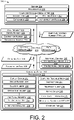
- FIG. 2 is a block diagram illustrating a system 200 that includes a telephony client application for originating a voice call from a selected number using a temporary routing number according to some implementations.
- the system 200 includes a computing device 202 coupled to a server 204 via a network 206.
- the computing device 202 may be configured similarly to the computing device 108.
- the network 206 may be the same network as network 102 illustrated in FIG. 1 .
- the computing device 202 may be a wireless phone, a tablet computer, a laptop computer, a wristwatch, or other type of computing device.
- the computing device may include one or more processors 208 and computer readable media, such as memory (e.g., random access memory (RAM), solid state drives (SSDs), or the like), disk drives (e.g., platter-based hard drives), another type of computer-readable media, or any combination thereof.
- memory e.g., random access memory (RAM), solid state drives (SSDs), or the like
- disk drives e.g., platter-based hard drives
- the computer readable media 210 may be used to store instructions to perform various functions and to store data.
- the computer readable media 210 may include instructions 214, a telephony client 216, a native dialer 218, a location determination module 220, a current mode 222 of operation, and a coverage file 224.
- the computer readable media 210 may also include other types of instructions and data, such as an operating system, device drivers, etc.
- the telephony client 216 may enable a user to select a phone number that is used as the originating number of call to a destination phone number.
- the telephony client 216 may be used by a user to select an originating number from other phone numbers in addition to the phone number associated with the user's wireless phone.
- Non-transitory computer-readable media may include volatile and nonvolatile, removable and non-removable tangible, physical media implemented in technology for storage of information, such as computer readable instructions, data structures, program modules, or other data.
- System memory, removable storage and non-removable storage are all examples of non-transitory computer-readable media.
- Non-transitory computer-readable media include, but are not limited to, RAM, ROM, EEPROM, flash memory or other memory technology, CD-ROM, digital versatile disks (DVD) or other optical storage, magnetic cassettes, magnetic tape, magnetic disk storage or other magnetic storage devices, or any other tangible, physical medium which can be used to store the desired information and which can be accessed by the computing device. Any such non-transitory computer-readable media may be part of the computing device.
- the native dialer 218 may be an application that enables calls to be originated via Voice over Internet Protocol (VoIP) using Session Initiation Protocol (SIP) signaling.
- the location determination module 220 may determine a current location of the computing device 202. For example, the location determination module 220 may determine the current location using the Global Positioning System (GPS). The current location as determined by the location determination module 220 may determine the mode 222. For example, if the current location of the computing device 202 is within a geographic area in which a carrier, associated with a device number 226 of the computing device 202, provides coverage, then the mode 222 may be set to carrier mode.
- GPS Global Positioning System
- the mode 222 may be set to Over-The-Top (OTT) mode.
- OTT Over-The-Top
- the display device 212 may be separate from the computing device 202 or integrated (e.g., as illustrated in FIG. 2 ) with the computing device 202.
- the display device 212 may display various information associated with originating a call.
- the display device 212 may display one or more of the device number 226, or other numbers that are authorized to be used as an originating number 230 that is selected from one of the additional numbers 232.
- the device number 226 may be an identifier (e.g., IMSI or E.264 address) that is associated with the user's wireless phone used to route incoming and outgoing call.
- the computing device 202 is the user's wireless phone
- the device number 226 may be the phone number associated with the user's wireless phone.
- the device number 226 may also be used as a Uniform Resource Identifier (URI), e.g., as an Internet Protocol (IP) Multimedia Private Identity (IMPU), a unique permanently allocated global identity assigned by a home network operator (e.g., the carrier).
- URI Uniform Resource Identifier
- IP Internet Protocol
- IMPU Internet Multimedia Private Identity
- a unique permanently allocated global identity assigned by a home network operator e.g., the carrier.
- the destination number 228 may be the number of another user to call. In other words, the destination number 228 is the location to which the call is routed.
- the originating number 230 to associate with an outgoing call may be selected by a user.
- the originating number 230 may be the device number 226. The user may override this default by selecting the originating number 230 from one of the additional numbers 232.
- the additional numbers 232 may include a first number 234 through to an Nth additional number (N>0).
- the additional numbers 232 may include numbers that are authorized to be utilized by the user.
- the user might be authorized to use numbers associated with (i) family members of a user of the computing device 202, (ii) businesses (or other activities) associated with the user of the computing device 202, (iii) friends, or all or some combination of (i), (ii), and (iii).
- the additional numbers 232 may be associated with additional devices 238.
- the first additional number 234 may be associated with a first additional device 240 and the Nth additional number 236 may be associated with an Nth additional device 242.
- the server 204 may include one or more processors 244 and one or more computer readable media 246.
- the computer readable media 246 may be used to store instructions 248, one or more databases 250, a routing module 252, and an authentication module 254.
- the instructions 248 may be executed by the processors 244 to perform the various functions described herein.
- the databases 250 may include a database storing information, such as which additional numbers are associated with a device number, etc.
- the routing module 252 may be used to setup and route calls from the computing device 202 in which the originating number 230 is different from the device number 226.
- the authentication module 254 may perform various types of authentication, including determining whether the user associated with the device number 226 is authorized to originate calls from the additional numbers 232. For example, the authentication module 254 may be used to authenticate that a user is authorized to use a selected outgoing number. The authentication module 254 may also be used to determine whether a computing device attempting to make an outgoing call is authorized to use the selected originating number 130.
- the network 206 may include one or more networks, such as a cellular network 256 and a data network 258.
- the cellular network 256 may provide wide-area wireless coverage using a technology such as Global System for Mobile (GSM), Code Division Multiple Access (CDMA), Universal Mobile Telephone Service (UMTS), a Universal Terrestrial Radio Access Network (UTRAN), an evolved UTRAN network (E-UTRAN) (e.g., Long Term Evolution (LTE), a Global System for Mobile communication (GSM) EDGE Radio Access Network (GERAN), a voice over LTE (VoLTE), or some other type of network.
- GSM Global System for Mobile
- CDMA Code Division Multiple Access
- UMTS Universal Mobile Telephone Service
- UTRAN Universal Terrestrial Radio Access Network
- E-UTRAN evolved UTRAN network
- LTE Long Term Evolution
- GSM Global System for Mobile communication
- GERAN EDGE Radio Access Network
- VoIP voice over LTE
- While communications between the cellular network 256 and computing devices may be performed using a wide-area wireless network
- the cellular network 256 may include other technologies, such as wired (Plain Old Telephone Service (POTS) lines), optical (e.g., Synchronous Optical NETwork (SONET) technologies, and the like.
- POTS Peripheral Component Interconnect
- SONET Synchronous Optical NETwork
- the data network 258 may include various types of networks for transmitting and receiving data (e.g., data packets), including networks using technologies such as Institute of Electrical and Electronics Engineers (IEEE) 802.11 (“WiFi”), IEEE 8021.15.1 (“Bluetooth”), Asynchronous Transfer Mode (ATM), Internet Protocol (IP), LTE, and the like.
- IEEE Institute of Electrical and Electronics Engineers
- WiFi WiFi
- IEEE 8021.15.1 Bluetooth
- ATM Asynchronous Transfer Mode
- IP Internet Protocol
- LTE Long Term Evolution
- the data packets may be used to carry voice traffic using VoIP or other technologies as well as data traffic.
- the computing device 202 may use the location determination module 220 to determine a current location of the computing device 202 and set the mode 222 to either carrier mode (e.g., when the current location is in a service area of a carrier associated with the device number 226) or OTT mode (e.g., when the current location is outside a service area of a carrier associated with the device number 226).
- carrier mode e.g., when the current location is in a service area of a carrier associated with the device number 226)
- OTT mode e.g., when the current location is outside a service area of a carrier associated with the device number 226).
- the telephony client 216 may send a registration request 260 to register the computing device 202 with a local carrier's network.
- the telephony client 216 may send the registration request 260 to the server 204 to register the computing device 202 with the local carrier associated with the network 206.
- the registration request 260 may indicate whether the computing device is registering in cellular mode (e.g., to use the cellular network 256) or OTT mode (e.g., to use the data network 258).
- cellular mode the computing device 202 may originate calls and terminate calls using the cellular network.
- OTT mode the computing device 202 may originate calls and terminate calls using the data network 258 (e.g., via VoIP).
- the telephony client 216 may prompt the user to select (or enter) the destination number 228 (e.g., the destination of the call) and select (or enter) the originating number 230.
- the originating number 230 may default to the device number 226 and the user may override the default selection by selecting or entering one of the additional numbers 232.
- the originating number 230 may be determined from a user specified setting.
- the originating number 230 may default to a number stored with one or more contacts in an address book associated with a user. For example, the originating number 230 may be determined from an entry in the address book for the contact associated with the destination number.
- the computing device 202 may send, to the server 204, a call request 262 that includes the device number 226, the destination number 228, and the originating number 230.
- the call request 262 informs the server 204 that a call will be placed from a device (e.g., the computing device 202) that is associated with the device number 226 to the destination number 228 and requests that the server 204 modify a call record associated with the call by using the originating number 230 as the caller identifier rather than the device number 228.
- the call record includes data associated with a call that is used within the network to route a call (and for billing purposes).
- the call will appear to the person being called as originating from the originating number 230 rather the device number 228.
- a user may use the user's personal phone (e.g., computing device) to place a call that appears to originate from the user's business (or other activity in which the user engages) rather than the user's personal phone.
- the user is thus able to keep the user's personal phone number private (e.g., because the caller identifier displayed to the called party is the originating number 230) while still making use of the user's personal phone to place calls for the user's business (or other activity).
- a spouse may use the user's computing device (e.g., phone) to place a call that appears to originate from the spouse's computing device rather than the user's computing device.
- the spouse's computing device e.g., phone
- the spouse's computing device is inoperable (e.g., dead battery etc.) or unavailable (e.g., spouse left it behind)
- the spouse can place calls using the user's computing device while the calls appear to originate from the spouse's computing device.
- family members can place calls from a single computing device while making the calls appear as if they were originating from the family member's computing device.
- an employee of a business may use their phone, or other computing device, to place a call that appears to originate from a line that appears to originate from the business.
- the authentication module 254 may authenticate the call request 262 and determine whether the account associated with the device number is authorized to originate calls from the originating number 230. For example, the authentication module 254 may retrieve account information from the database(s) 250 to determine if the account associated with the device number 226 is authorized to originate calls from the originating number 230. When the account associated with the device number 226 is not authorized to originate calls from the originating number 230, the server 204 may send a message to the computing device 202 denying the call request 262. When the account associated with the device number 226 is authorized to originate calls from the originating number 230, the server 204 may create and send a temporary routing number (TRN) 266 to the computing device 202. In some cases, the routing module 252 may store at least a portion of the data associated with the call request 262 and the TRN 266 in the databases 250.
- TRN temporary routing number
- the computing device 202 may receive the TRN 266 and initiate the outgoing call 264.
- the outgoing call 264 may be made using the cellular network 256 when the computing device 202 is in cellular mode.
- the outgoing call 264 may be made using the data network 258 when the computing device 202 is in OTT mode.
- the TRN 266 is part of the signaling between the computing device 202 and the network 206 and may be sent via the data network 258.
- the network 206 determines that special routing is to be used (e.g., because of the TRN), and routes the outgoing call 264 along with the TRN 266 to the routing module 252.
- the routing module 252 may retrieve the data associated with the call request 262 and the TRN 266 from the databases 250.
- the routing module 252 may change the call record associated with the outgoing call 264 such that the outgoing call 264 appears to be originating from the originating number 230 rather than the device number 226.
- the call record may identify the device number 226 as the number from which the outgoing call 264 is being placed.
- the routing module 252 may change the call record associated with the outgoing call 264 by substituting the originating number 230 for the device number 226 in the call record, making the outgoing call 264 appear to have been placed from a device associated with the originating number 230.
- either the device number 226 or the originating number may be billed for the outgoing call 264, depending on the carrier's policy, the user's account preferences, or both. For example, some carriers may charge the device number 226 and disregard the originating number 230, while other carriers may charge the originating number 230 and disregard the device number 226. As another example, some carriers may enable the user to select whether the device number 226 or the originating number is billed for the outgoing call 264.
- each block represents one or more operations that can be implemented in hardware, software, or a combination thereof.
- the blocks represent computer-executable instructions that, when executed by one or more processors, cause the processors to perform the recited operations.
- computer-executable instructions include routines, programs, objects, modules, components, data structures, and the like that perform particular functions or implement particular abstract data types.
- the processes 400 and 500 are described with reference to the systems 100, 200, and 300, as described above, although other models, frameworks, systems and environments may implement these processes.
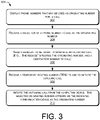
- FIG. 3 is a flow diagram of an example process 300 that includes using a selected number as the originating number for a call according to some implementations.
- the process 300 may be performed by one or more computing devices, such as the computing devices described with regard to FIGS. 1-2 .
- phone numbers that may be used as the originating number for a call may be displayed.
- the originating number may be the device number that is associated with the computing device used to make the call, or may be a number that is associated with another computing device and/or user.
- the user may be authorized to use other numbers that are associated with family members, friends, business associations, and the like.
- any user may authorize another user to use their telephone number.
- a subscriber affiliated with a wireless network provider may authorize other subscribers of the wireless network provider to use one or more number affiliated with the subscriber.
- a selection of a particular phone number to use as the originating number may be received.
- an application such as the application 110, may be used to select the originating number to use when placing an outgoing call.
- the user might use a voice interface to specify the originating number or specify the originating number using some other interface.
- a request may be sent to the network to originate an outgoing call.
- the request may specify the phone number associated with the computing device, (2) the originating phone number (e.g., the phone number that was previously selected at 304), and (3) a destination number that is to be called.
- the computing device may send the request to the network 102 requesting to use the selected number as the originating number.
- a temporary routing number may be received by the computing device.
- the TRN may be provided by the network and be used by the computing device to initiate the call to the destination number.
- the computing device may initiate the call directly to the destination number.
- the outgoing call is initiated from the computing device to the TRN.
- the network Upon receiving the call at the TRN, the network calls the destination number using the specified outgoing number.
- the receiving computing device may display the originating number as specified by the user.
- FIG. 4 is a flow diagram of an example process 400 that includes a network using a selected number as the originating number for a call according to some implementations.
- the process 400 may be performed by one or more computing devices, such as the computing devices described with regard to FIGS. 1-2 .
- a request to place an outgoing call with a specified originating number is received.
- a user may utilize the application 110, or some other interface, to specify an outgoing number to use when making an outgoing call to a destination number.
- the user and/or computing device that is associated with the request to place the call may be authenticated.
- the authentication includes determining that the user is authorized to use the selected outgoing number.
- the authentication may include determining that the selected outgoing number is affiliated with the telecommunications network (e.g., is a number that is provided by the network).
- a temporary routing number is associated with the user and/or the computing device that requested to place the outgoing call.
- the TRN may be any number that is available for use. Generally, the TRN will be used for a short duration (e.g., less than 30 seconds) for the computing device to contact the network and then released after the computing device is connected to the destination.
- the temporary routing number is sent to the computing device requesting to place the outgoing call.
- the TRN may be sent to the computing device within a message that is received by the application 110.
- a call is received from the computing device at the computing device where the temporary routing number is routed.
- the computing device may call the temporary routing number that was provided by the network in order to place an outgoing call to connect to the destination using the selected originating number.
- an authentication of the user and/or the computing device may be performed.
- the authentication may include determining that the call is received by the computing device to which the TRN was sent and/or that the user is authorized to use the TRN to make the outgoing call.
- the destination number and specified originating number may be determined.
- one or more of the service nodes 106 may access a data store, or some other memory, to retrieve the specified originating number and destination number that was specified in the request to make the outgoing call.
- the outgoing call may be initiated from the network.
- the network may call the destination number using the specified originating number as the calling number.
- program modules include routines, programs, objects, components, data structures, etc., and define operating logic for performing particular tasks or implement particular abstract data types.
- software may be stored and distributed in various ways and using different means, and the particular software storage and execution configurations described above may be varied in many different ways.
- software implementing the techniques described above may be distributed on various types of computer-readable media, not limited to the forms of memory that are specifically described.
Landscapes
- Engineering & Computer Science (AREA)
- Signal Processing (AREA)
- Computer Networks & Wireless Communication (AREA)
- Databases & Information Systems (AREA)
- Human Computer Interaction (AREA)
- Computer Security & Cryptography (AREA)
- Telephonic Communication Services (AREA)
- Mobile Radio Communication Systems (AREA)
Claims (8)
- Ein computerimplementiertes Verfahren, durchgeführt durch einen oder mehrere mit spezifischen Anweisungen konfigurierte Prozessoren (244), wobei das computerimplementierte Verfahren Folgendes beinhaltet:Empfangen (402), von einer Rechenvorrichtung (108a; 202), einer Anforderung (262) zum Initiieren eines abgehenden Anrufs von einer ausgewählten Ursprungsnummer (230) zu einer Zielnummer (228), wobei sich die ausgewählte Ursprungsnummer (230) von einer der Rechenvorrichtung (108a; 202) zugeteilten Vorrichtungsnummer (226) unterscheidet;Senden (408), an die Rechenvorrichtung (108a; 202), einer temporären Routingnummer (266);Empfangen (410), von der Rechenvorrichtung (108a; 202), eines an die temporäre Routingnummer (266) gerichteten Anrufs; undInitiieren (416) des abgehenden Anrufs zu der Zielnummer (228), der von der ausgewählten Ursprungsnummer (230) ausgeht;wobei das computerimplementierte Verfahren ferner Folgendes beinhaltet:vor dem Sendeschritt, Assoziieren (406) der temporären Routingnummer (266) mit der ausgewählten Ursprungsnummer (230) und der Zielnummer (228); undvor dem Initiieren des abgehenden Anrufs, Bestimmen (414) der mit dem abgehenden Anruf zu assoziierenden Ursprungsnummer (228) unter Verwendung der temporären Routingnummer (266).
- Computerimplementiertes Verfahren gemäß Anspruch 1, ferner beinhaltend das Authentifizieren (404) der Rechenvorrichtung (108a; 202), um zu bestimmen, dass die Rechenvorrichtung (108a; 202) autorisiert ist, die ausgewählte Ursprungsnummer (230) für den abgehenden Anruf zu verwenden, wobei die ausgewählte Ursprungsnummer (230) aus Telefonnummern ausgewählt ist, die mit einem oder mehreren anderen Teilnehmern eines Netzes (206) assoziiert sind.
- Computerimplementiertes Verfahren gemäß Anspruch 1, wobei das Empfangen (402) der Anforderung (262) zum Initiieren des abgehenden Anrufs mit einem ersten Teilnehmer eines Mobilfunkanbieters assoziiert ist und wobei die Ursprungsnummer (230) mit einem zweiten Teilnehmer des Mobilfunkanbieters assoziiert ist.
- Ein nichttransitorisches computerlesbares Medium (246), das computerausführbare Anweisungen speichert, die bei Ausführung bewirken, dass ein oder mehrere Prozessoren (244) einer Rechenvorrichtung (204) Handlungen durchführen, die Folgendes beinhalten:Empfangen (402), von einer mit einem Mobilfunkdienstleister assoziierten Rechenvorrichtung (108a; 202), einer Anforderung (262) zum Tätigen eines Anrufs von einer Ursprungsnummer (230) zu einer Zielnummer (228), wobei die Ursprungsnummer (230) durch einen Teilnehmer des Mobilfunkdienstleisters aus einer Liste von Nummern ausgewählt wird und sich von einer der Rechenvorrichtung zugeteilten Vorrichtungsnummer unterscheidet;Senden (408), an die Rechenvorrichtung (108a; 202), einer temporären Routingnummer (266), die mit dem Mobilfunkdienstleister assoziiert ist;Empfangen (410), von der Rechenvorrichtung (108a; 202), eines an die temporäre Routingnummer (266) gerichteten Anrufs; undInitiieren (416) des Anrufs von der Ursprungsnummer (230) zu der Zielnummer (228);wobei die Handlungen ferner Folgendes beinhalten:vor der Handlung des Sendens, Speichern der Ursprungsnummer (230) und der Zielnummer (228) und Assoziieren (406) der temporären Routingnummer (266) mit der Ursprungsnummer (230) und der Zielnummer (228); undvor dem Initiieren des Anrufs, Abrufen (414) der Ursprungsnummer (230) und der Zielnummer (228) unter Verwendung der temporären Routingnummer (266).
- Nichttransitorisches computerlesbares Medium gemäß Anspruch 4, wobei die Ursprungsnummer (230) mit einer ersten internationalen Mobilfunk-Teilnehmerkennung (IMSI, International Mobile Subscriber Identity) assoziiert ist, die sich von einer zweiten IMSI, die einem Teilnehmer der Rechenvorrichtung (108a; 202) zugeteilt ist, unterscheidet.
- Nichttransitorisches computerlesbares Medium gemäß Anspruch 4, ferner beinhaltend das Durchführen, an der mit dem Mobilfunkdienstleister assoziierten Rechenvorrichtung (108a; 202), einer Authentifizierung, um zu bestimmen, dass ein mit der Rechenvorrichtung (108a; 202) assoziierter Teilnehmer autorisiert ist, die Ursprungsnummer (230) zu verwenden.
- Nichttransitorisches computerlesbares Medium gemäß Anspruch 4, wobei die Nummern mit einem einzigen Teilnehmer des Mobilfunkdienstleisters assoziiert sind.
- Nichttransitorisches computerlesbares Medium gemäß Anspruch 4, wobei das Empfangen (402) der Anforderung (262) zum Tätigen des Anrufs mit einem ersten Teilnehmer des Mobilfunkdienstleisters assoziiert ist und wobei die Ursprungsnummer (230) mit einem ersten Teilnehmer des Mobilfunkdienstleisters assoziiert ist.
Priority Applications (1)
| Application Number | Priority Date | Filing Date | Title |
|---|---|---|---|
| EP22180080.8A EP4084451B1 (de) | 2015-08-03 | 2016-07-18 | Erzeugen eines sprachanrufs ausgehend von einer gewählten nummer mit einer temporären routing-nummer |
Applications Claiming Priority (2)
| Application Number | Priority Date | Filing Date | Title |
|---|---|---|---|
| US14/816,461 US9826087B2 (en) | 2015-08-03 | 2015-08-03 | Originating a voice call from a selected number using a temporary routing number |
| PCT/US2016/042847 WO2017023528A1 (en) | 2015-08-03 | 2016-07-18 | Originating a voice call from a selected number using a temporary routing number |
Related Child Applications (2)
| Application Number | Title | Priority Date | Filing Date |
|---|---|---|---|
| EP22180080.8A Division EP4084451B1 (de) | 2015-08-03 | 2016-07-18 | Erzeugen eines sprachanrufs ausgehend von einer gewählten nummer mit einer temporären routing-nummer |
| EP22180080.8A Division-Into EP4084451B1 (de) | 2015-08-03 | 2016-07-18 | Erzeugen eines sprachanrufs ausgehend von einer gewählten nummer mit einer temporären routing-nummer |
Publications (3)
| Publication Number | Publication Date |
|---|---|
| EP3314880A1 EP3314880A1 (de) | 2018-05-02 |
| EP3314880A4 EP3314880A4 (de) | 2019-03-20 |
| EP3314880B1 true EP3314880B1 (de) | 2022-08-31 |
Family
ID=57943548
Family Applications (2)
| Application Number | Title | Priority Date | Filing Date |
|---|---|---|---|
| EP22180080.8A Active EP4084451B1 (de) | 2015-08-03 | 2016-07-18 | Erzeugen eines sprachanrufs ausgehend von einer gewählten nummer mit einer temporären routing-nummer |
| EP16833503.2A Active EP3314880B1 (de) | 2015-08-03 | 2016-07-18 | Erzeugen eines sprachanrufs ausgehend von einer gewählten nummer mit einer temporären routing-nummer |
Family Applications Before (1)
| Application Number | Title | Priority Date | Filing Date |
|---|---|---|---|
| EP22180080.8A Active EP4084451B1 (de) | 2015-08-03 | 2016-07-18 | Erzeugen eines sprachanrufs ausgehend von einer gewählten nummer mit einer temporären routing-nummer |
Country Status (4)
| Country | Link |
|---|---|
| US (1) | US9826087B2 (de) |
| EP (2) | EP4084451B1 (de) |
| CN (1) | CN107925703A (de) |
| WO (1) | WO2017023528A1 (de) |
Families Citing this family (14)
| Publication number | Priority date | Publication date | Assignee | Title |
|---|---|---|---|---|
| US9729702B2 (en) | 2015-05-13 | 2017-08-08 | T-Mobile Usa, Inc. | Client application enabling multiple line call termination and origination |
| US9820116B2 (en) | 2015-05-13 | 2017-11-14 | T-Mobile Usa, Inc. | Routing multiple numbers for one telecommunications device |
| US9961199B2 (en) | 2015-09-15 | 2018-05-01 | T-Mobile Usa, Inc. | Communication termination using hunt groups and implicit registration |
| US9584657B1 (en) * | 2015-09-15 | 2017-02-28 | T-Mobile Usa, Inc. | Conveying device information to application server servicing computing device associated with a communication |
| US9967395B1 (en) * | 2017-02-23 | 2018-05-08 | T-Mobile Usa, Inc. | IOT-connected devices and equipment automated login system |
| US10021693B1 (en) * | 2017-08-28 | 2018-07-10 | Sprint Spectrum L.P. | Method and system for invoking uplink coverage boosting in response to threshold low power headroom and threshold low downlink receive signal strength |
| FR3088159A1 (fr) * | 2018-11-05 | 2020-05-08 | Orange | Gestion d'une communication entre un terminal de communication appelant, disposant d'un identifiant d'appel principal et d'un identifiant d'appel secondaire, et un terminal de communication appele. |
| US10477013B1 (en) * | 2018-11-19 | 2019-11-12 | Successful Cultures, Inc | Systems and methods for providing caller identification over a public switched telephone network |
| US11233891B2 (en) | 2019-05-28 | 2022-01-25 | Lisa Reagan | Systems and methods for information gathering, managing and disseminating for assessments and notifications in law enforcement and other environments |
| US11968320B2 (en) | 2019-05-28 | 2024-04-23 | Lisa Reagan | Systems and methods for information gathering, managing and disseminating for assessments and notifications in law enforcement and other environments |
| US11240343B2 (en) * | 2019-09-06 | 2022-02-01 | Microsoft Technology Licensing, Llc | Device profile determination and policy enforcement |
| CN113381965A (zh) * | 2020-03-09 | 2021-09-10 | 中国电信股份有限公司 | 安全认证方法、系统和认证服务平台 |
| CN113497854B (zh) * | 2020-04-01 | 2023-04-28 | 中国移动通信集团重庆有限公司 | 呼叫转移的设置方法及智能终端设备 |
| US12452649B2 (en) | 2023-01-27 | 2025-10-21 | T-Mobile Usa, Inc. | Enabling an efficient transition of multiple mobile devices from one wireless telecommunication network to another |
Family Cites Families (45)
| Publication number | Priority date | Publication date | Assignee | Title |
|---|---|---|---|---|
| US5596624A (en) * | 1994-09-26 | 1997-01-21 | Motorola, Inc. | Method and apparatus for providing increased access to a local communication network |
| US5802160A (en) | 1996-01-19 | 1998-09-01 | Pilgrim Telephone, Inc. | Multi-ring telephone method and system |
| US7822188B1 (en) | 1999-04-01 | 2010-10-26 | Callwave, Inc. | Methods and apparatus for providing expanded telecommunications service |
| JP2002108775A (ja) * | 2000-09-26 | 2002-04-12 | Active:Kk | 指定時刻到来通報装置 |
| AUPR472601A0 (en) | 2001-04-30 | 2001-05-24 | Cellular Roaming Alliance Pty Ltd | Selective call forwarding |
| US20030125072A1 (en) | 2002-01-02 | 2003-07-03 | Dent Paul W. | Method of providing multiple mobile telephones with the same telephone number |
| ATE459223T1 (de) | 2002-07-08 | 2010-03-15 | Huawei Tech Co Ltd | Lokales roaming für teilnehmer |
| US20040101123A1 (en) * | 2002-11-22 | 2004-05-27 | Garcia Michael C. | Method of providing a temporary telephone number |
| US7215881B2 (en) * | 2002-12-19 | 2007-05-08 | Nokia Corporation | Mobile communications equipment with built-in camera |
| DE602004027930D1 (de) | 2003-08-13 | 2010-08-12 | Roamware Inc | Mehrfach-imsi-mehrfach-/-einzel-msisdn (mimm/mism) auf mehreren sims für einen einzigen operator |
| KR100539020B1 (ko) | 2003-11-19 | 2005-12-26 | 주식회사 온세통신 | 대표 번호를 이용하는 통신 서비스 방법 및 그 시스템 |
| US20060105766A1 (en) * | 2004-10-26 | 2006-05-18 | Azada Maria R | Method for delivering a call to a dual-mode mobile unit using a single number |
| KR100651951B1 (ko) | 2004-10-28 | 2006-12-07 | 엘지전자 주식회사 | 이동통신 단말기의 전화번호 설정 방법 |
| KR20060056051A (ko) | 2004-11-19 | 2006-05-24 | 주식회사데이콤 | 동시 다중 호출에 의한 전화 착신 서비스 방법 |
| WO2006077587A2 (en) * | 2005-01-21 | 2006-07-27 | Convergin Israel Ltd. | Service convergence across multiple communication domains |
| US20060177029A1 (en) | 2005-02-10 | 2006-08-10 | Outsmart Ltd. | Virtual multi-line telephone service |
| EP3179675B1 (de) * | 2005-06-13 | 2021-08-04 | BlackBerry Limited | Routing eines anrufs zwischen domänen |
| KR20070060616A (ko) | 2005-12-09 | 2007-06-13 | 주식회사 팬택 | 이동통신단말기의 발신 전화번호 선택 방법 및 상기 방법을수행하는 이동통신단말기 |
| KR20070074291A (ko) | 2006-01-09 | 2007-07-12 | 주식회사 케이티 | 멀티링 서비스 제공 시스템 및 그 제공 방법 |
| US20070167158A1 (en) | 2006-01-13 | 2007-07-19 | Utstarcom Inc. | Method and system to enable roaming on demand in wireless communication networks |
| US8023479B2 (en) | 2006-03-02 | 2011-09-20 | Tango Networks, Inc. | Mobile application gateway for connecting devices on a cellular network with individual enterprise and data networks |
| CN101102362A (zh) | 2006-07-07 | 2008-01-09 | 朗迅科技公司 | 允许通信设备具有多个按优先权分级的号码的系统和方法 |
| JPWO2008062803A1 (ja) | 2006-11-20 | 2010-03-04 | 稲畑産業株式会社 | 電話接続制御方法及び電話接続制御システム |
| US8620264B2 (en) | 2007-08-29 | 2013-12-31 | At&T Intellectual Property I, Lp | Apparatus and method for sharing and assigning multiple numbers to a communication device |
| US8892658B2 (en) | 2008-04-07 | 2014-11-18 | Microsoft Corporation | Break-through mechanism for personas associated with a single device |
| US20110061008A1 (en) | 2008-04-07 | 2011-03-10 | Microsoft Corporation | Single device with multiple personas |
| GB0807976D0 (en) | 2008-05-01 | 2008-06-11 | Romalon Plc | Improvements relating to multi-jurisdictional telecommunications services |
| GB2463494A (en) | 2008-09-15 | 2010-03-17 | Data Connection Ltd | Providing a single telephone dialling number for multiple telephony devices |
| KR101001788B1 (ko) | 2009-04-14 | 2010-12-17 | 박대웅 | 가상 전화번호를 이용하여 통화 연결 서비스를 제공하는 방법 및 장치 |
| TW201041365A (en) | 2009-05-14 | 2010-11-16 | Inventec Appliances Corp | Remote control method between mobile phones |
| JP2013527709A (ja) | 2010-05-20 | 2013-06-27 | アルカテル−ルーセント | 着信側ユーザ・アドレスに呼び出し要求を分岐する方法および装置 |
| US8699413B2 (en) * | 2010-08-03 | 2014-04-15 | At&T Intellectual Property I, L.P. | Network servers, systems, and methods for multiple personas on a mobile device |
| US8315613B1 (en) | 2010-09-23 | 2012-11-20 | Cellco Partnership | Assisting a user to store and place a call back to received international number |
| US9621721B2 (en) | 2010-10-22 | 2017-04-11 | Mitel Networks Corporation | Incoming call redirection |
| KR101212651B1 (ko) | 2010-11-29 | 2012-12-14 | 주식회사 케이티 | 복수의 수신 단말에 대한 멀티링 서비스 제공 시스템 및 방법 |
| US20120290638A1 (en) | 2011-05-13 | 2012-11-15 | Dhiraj Narula | Physician regional access networking agent |
| US8971843B2 (en) | 2011-09-30 | 2015-03-03 | Amana Future, Llc | Communication tracking and billing system |
| CN103379560A (zh) | 2012-04-26 | 2013-10-30 | 深圳富泰宏精密工业有限公司 | 漫游号码自动切换系统及方法 |
| KR101392018B1 (ko) | 2012-06-14 | 2014-05-07 | 주식회사 엘지유플러스 | 단일번호를 이용한 멀티 단말로의 통화 지원 시스템 및 방법 |
| US20140052793A1 (en) | 2012-08-15 | 2014-02-20 | Microsoft Corporation | Message synchronization with extended properties |
| US20140274216A1 (en) | 2013-03-15 | 2014-09-18 | Onbeond, Llc | Mobile communication device |
| US9667783B2 (en) | 2014-02-27 | 2017-05-30 | International Business Machines Corporation | Unified call routing in social hunt groups |
| US9820116B2 (en) | 2015-05-13 | 2017-11-14 | T-Mobile Usa, Inc. | Routing multiple numbers for one telecommunications device |
| US9729702B2 (en) | 2015-05-13 | 2017-08-08 | T-Mobile Usa, Inc. | Client application enabling multiple line call termination and origination |
| US9961199B2 (en) | 2015-09-15 | 2018-05-01 | T-Mobile Usa, Inc. | Communication termination using hunt groups and implicit registration |
-
2015
- 2015-08-03 US US14/816,461 patent/US9826087B2/en active Active
-
2016
- 2016-07-18 WO PCT/US2016/042847 patent/WO2017023528A1/en not_active Ceased
- 2016-07-18 EP EP22180080.8A patent/EP4084451B1/de active Active
- 2016-07-18 CN CN201680044999.7A patent/CN107925703A/zh active Pending
- 2016-07-18 EP EP16833503.2A patent/EP3314880B1/de active Active
Also Published As
| Publication number | Publication date |
|---|---|
| EP4084451B1 (de) | 2025-11-26 |
| US20170041460A1 (en) | 2017-02-09 |
| EP4084451A1 (de) | 2022-11-02 |
| WO2017023528A1 (en) | 2017-02-09 |
| EP3314880A1 (de) | 2018-05-02 |
| EP3314880A4 (de) | 2019-03-20 |
| EP4084451C0 (de) | 2025-11-26 |
| CN107925703A (zh) | 2018-04-17 |
| US9826087B2 (en) | 2017-11-21 |
Similar Documents
| Publication | Publication Date | Title |
|---|---|---|
| EP3314880B1 (de) | Erzeugen eines sprachanrufs ausgehend von einer gewählten nummer mit einer temporären routing-nummer | |
| US10291775B2 (en) | Communication termination using hunt groups and implicit registration | |
| US10200530B2 (en) | Client application enabling multiple line call termination and origination | |
| JP7291137B2 (ja) | ミッションクリティカルデバイスのためのplmn選択 | |
| CN101455115B (zh) | 到双模无线设备的呼叫传递 | |
| US9826370B2 (en) | Location identifiers in mobile messaging | |
| US10602365B2 (en) | Private network service providing method and system | |
| US10506614B2 (en) | Transitioning a conversation between an unlicensed data network and a cellular network | |
| US9948773B2 (en) | Conveying device information to application server servicing computing device associated with a communication | |
| US20180176376A1 (en) | Sip control apparatus, mobile communication system and emergency call control method | |
| KR20180059240A (ko) | 이동통신단말의 기업 전용 통화 제공 시스템 및 방법 |
Legal Events
| Date | Code | Title | Description |
|---|---|---|---|
| STAA | Information on the status of an ep patent application or granted ep patent |
Free format text: STATUS: THE INTERNATIONAL PUBLICATION HAS BEEN MADE |
|
| PUAI | Public reference made under article 153(3) epc to a published international application that has entered the european phase |
Free format text: ORIGINAL CODE: 0009012 |
|
| STAA | Information on the status of an ep patent application or granted ep patent |
Free format text: STATUS: REQUEST FOR EXAMINATION WAS MADE |
|
| 17P | Request for examination filed |
Effective date: 20180125 |
|
| AK | Designated contracting states |
Kind code of ref document: A1 Designated state(s): AL AT BE BG CH CY CZ DE DK EE ES FI FR GB GR HR HU IE IS IT LI LT LU LV MC MK MT NL NO PL PT RO RS SE SI SK SM TR |
|
| AX | Request for extension of the european patent |
Extension state: BA ME |
|
| DAV | Request for validation of the european patent (deleted) | ||
| DAX | Request for extension of the european patent (deleted) | ||
| A4 | Supplementary search report drawn up and despatched |
Effective date: 20190218 |
|
| RIC1 | Information provided on ipc code assigned before grant |
Ipc: H04M 3/38 20060101ALI20190212BHEP Ipc: H04W 40/02 20090101ALI20190212BHEP Ipc: H04W 8/26 20090101ALI20190212BHEP Ipc: H04M 3/42 20060101AFI20190212BHEP Ipc: H04W 12/06 20090101ALI20190212BHEP Ipc: H04M 1/57 20060101ALI20190212BHEP |
|
| STAA | Information on the status of an ep patent application or granted ep patent |
Free format text: STATUS: EXAMINATION IS IN PROGRESS |
|
| 17Q | First examination report despatched |
Effective date: 20210119 |
|
| GRAP | Despatch of communication of intention to grant a patent |
Free format text: ORIGINAL CODE: EPIDOSNIGR1 |
|
| STAA | Information on the status of an ep patent application or granted ep patent |
Free format text: STATUS: GRANT OF PATENT IS INTENDED |
|
| INTG | Intention to grant announced |
Effective date: 20220222 |
|
| GRAS | Grant fee paid |
Free format text: ORIGINAL CODE: EPIDOSNIGR3 |
|
| GRAA | (expected) grant |
Free format text: ORIGINAL CODE: 0009210 |
|
| STAA | Information on the status of an ep patent application or granted ep patent |
Free format text: STATUS: THE PATENT HAS BEEN GRANTED |
|
| AK | Designated contracting states |
Kind code of ref document: B1 Designated state(s): AL AT BE BG CH CY CZ DE DK EE ES FI FR GB GR HR HU IE IS IT LI LT LU LV MC MK MT NL NO PL PT RO RS SE SI SK SM TR |
|
| REG | Reference to a national code |
Ref country code: CH Ref legal event code: EP Ref country code: GB Ref legal event code: FG4D |
|
| REG | Reference to a national code |
Ref country code: AT Ref legal event code: REF Ref document number: 1516164 Country of ref document: AT Kind code of ref document: T Effective date: 20220915 Ref country code: DE Ref legal event code: R096 Ref document number: 602016074716 Country of ref document: DE |
|
| REG | Reference to a national code |
Ref country code: IE Ref legal event code: FG4D |
|
| REG | Reference to a national code |
Ref country code: NL Ref legal event code: FP |
|
| REG | Reference to a national code |
Ref country code: LT Ref legal event code: MG9D |
|
| PG25 | Lapsed in a contracting state [announced via postgrant information from national office to epo] |
Ref country code: SE Free format text: LAPSE BECAUSE OF FAILURE TO SUBMIT A TRANSLATION OF THE DESCRIPTION OR TO PAY THE FEE WITHIN THE PRESCRIBED TIME-LIMIT Effective date: 20220831 Ref country code: RS Free format text: LAPSE BECAUSE OF FAILURE TO SUBMIT A TRANSLATION OF THE DESCRIPTION OR TO PAY THE FEE WITHIN THE PRESCRIBED TIME-LIMIT Effective date: 20220831 Ref country code: NO Free format text: LAPSE BECAUSE OF FAILURE TO SUBMIT A TRANSLATION OF THE DESCRIPTION OR TO PAY THE FEE WITHIN THE PRESCRIBED TIME-LIMIT Effective date: 20221130 Ref country code: LV Free format text: LAPSE BECAUSE OF FAILURE TO SUBMIT A TRANSLATION OF THE DESCRIPTION OR TO PAY THE FEE WITHIN THE PRESCRIBED TIME-LIMIT Effective date: 20220831 Ref country code: LT Free format text: LAPSE BECAUSE OF FAILURE TO SUBMIT A TRANSLATION OF THE DESCRIPTION OR TO PAY THE FEE WITHIN THE PRESCRIBED TIME-LIMIT Effective date: 20220831 Ref country code: FI Free format text: LAPSE BECAUSE OF FAILURE TO SUBMIT A TRANSLATION OF THE DESCRIPTION OR TO PAY THE FEE WITHIN THE PRESCRIBED TIME-LIMIT Effective date: 20220831 |
|
| REG | Reference to a national code |
Ref country code: AT Ref legal event code: MK05 Ref document number: 1516164 Country of ref document: AT Kind code of ref document: T Effective date: 20220831 |
|
| PG25 | Lapsed in a contracting state [announced via postgrant information from national office to epo] |
Ref country code: PL Free format text: LAPSE BECAUSE OF FAILURE TO SUBMIT A TRANSLATION OF THE DESCRIPTION OR TO PAY THE FEE WITHIN THE PRESCRIBED TIME-LIMIT Effective date: 20220831 Ref country code: IS Free format text: LAPSE BECAUSE OF FAILURE TO SUBMIT A TRANSLATION OF THE DESCRIPTION OR TO PAY THE FEE WITHIN THE PRESCRIBED TIME-LIMIT Effective date: 20221231 Ref country code: HR Free format text: LAPSE BECAUSE OF FAILURE TO SUBMIT A TRANSLATION OF THE DESCRIPTION OR TO PAY THE FEE WITHIN THE PRESCRIBED TIME-LIMIT Effective date: 20220831 Ref country code: GR Free format text: LAPSE BECAUSE OF FAILURE TO SUBMIT A TRANSLATION OF THE DESCRIPTION OR TO PAY THE FEE WITHIN THE PRESCRIBED TIME-LIMIT Effective date: 20221201 |
|
| PG25 | Lapsed in a contracting state [announced via postgrant information from national office to epo] |
Ref country code: SM Free format text: LAPSE BECAUSE OF FAILURE TO SUBMIT A TRANSLATION OF THE DESCRIPTION OR TO PAY THE FEE WITHIN THE PRESCRIBED TIME-LIMIT Effective date: 20220831 Ref country code: RO Free format text: LAPSE BECAUSE OF FAILURE TO SUBMIT A TRANSLATION OF THE DESCRIPTION OR TO PAY THE FEE WITHIN THE PRESCRIBED TIME-LIMIT Effective date: 20220831 Ref country code: PT Free format text: LAPSE BECAUSE OF FAILURE TO SUBMIT A TRANSLATION OF THE DESCRIPTION OR TO PAY THE FEE WITHIN THE PRESCRIBED TIME-LIMIT Effective date: 20230102 Ref country code: ES Free format text: LAPSE BECAUSE OF FAILURE TO SUBMIT A TRANSLATION OF THE DESCRIPTION OR TO PAY THE FEE WITHIN THE PRESCRIBED TIME-LIMIT Effective date: 20220831 Ref country code: DK Free format text: LAPSE BECAUSE OF FAILURE TO SUBMIT A TRANSLATION OF THE DESCRIPTION OR TO PAY THE FEE WITHIN THE PRESCRIBED TIME-LIMIT Effective date: 20220831 Ref country code: CZ Free format text: LAPSE BECAUSE OF FAILURE TO SUBMIT A TRANSLATION OF THE DESCRIPTION OR TO PAY THE FEE WITHIN THE PRESCRIBED TIME-LIMIT Effective date: 20220831 Ref country code: AT Free format text: LAPSE BECAUSE OF FAILURE TO SUBMIT A TRANSLATION OF THE DESCRIPTION OR TO PAY THE FEE WITHIN THE PRESCRIBED TIME-LIMIT Effective date: 20220831 |
|
| PG25 | Lapsed in a contracting state [announced via postgrant information from national office to epo] |
Ref country code: SK Free format text: LAPSE BECAUSE OF FAILURE TO SUBMIT A TRANSLATION OF THE DESCRIPTION OR TO PAY THE FEE WITHIN THE PRESCRIBED TIME-LIMIT Effective date: 20220831 Ref country code: EE Free format text: LAPSE BECAUSE OF FAILURE TO SUBMIT A TRANSLATION OF THE DESCRIPTION OR TO PAY THE FEE WITHIN THE PRESCRIBED TIME-LIMIT Effective date: 20220831 |
|
| REG | Reference to a national code |
Ref country code: DE Ref legal event code: R097 Ref document number: 602016074716 Country of ref document: DE |
|
| PG25 | Lapsed in a contracting state [announced via postgrant information from national office to epo] |
Ref country code: AL Free format text: LAPSE BECAUSE OF FAILURE TO SUBMIT A TRANSLATION OF THE DESCRIPTION OR TO PAY THE FEE WITHIN THE PRESCRIBED TIME-LIMIT Effective date: 20220831 |
|
| PLBE | No opposition filed within time limit |
Free format text: ORIGINAL CODE: 0009261 |
|
| STAA | Information on the status of an ep patent application or granted ep patent |
Free format text: STATUS: NO OPPOSITION FILED WITHIN TIME LIMIT |
|
| 26N | No opposition filed |
Effective date: 20230601 |
|
| PG25 | Lapsed in a contracting state [announced via postgrant information from national office to epo] |
Ref country code: SI Free format text: LAPSE BECAUSE OF FAILURE TO SUBMIT A TRANSLATION OF THE DESCRIPTION OR TO PAY THE FEE WITHIN THE PRESCRIBED TIME-LIMIT Effective date: 20220831 |
|
| PG25 | Lapsed in a contracting state [announced via postgrant information from national office to epo] |
Ref country code: MC Free format text: LAPSE BECAUSE OF FAILURE TO SUBMIT A TRANSLATION OF THE DESCRIPTION OR TO PAY THE FEE WITHIN THE PRESCRIBED TIME-LIMIT Effective date: 20220831 |
|
| PG25 | Lapsed in a contracting state [announced via postgrant information from national office to epo] |
Ref country code: MC Free format text: LAPSE BECAUSE OF FAILURE TO SUBMIT A TRANSLATION OF THE DESCRIPTION OR TO PAY THE FEE WITHIN THE PRESCRIBED TIME-LIMIT Effective date: 20220831 |
|
| REG | Reference to a national code |
Ref country code: CH Ref legal event code: PL |
|
| REG | Reference to a national code |
Ref country code: BE Ref legal event code: MM Effective date: 20230731 |
|
| PG25 | Lapsed in a contracting state [announced via postgrant information from national office to epo] |
Ref country code: LU Free format text: LAPSE BECAUSE OF NON-PAYMENT OF DUE FEES Effective date: 20230718 |
|
| GBPC | Gb: european patent ceased through non-payment of renewal fee |
Effective date: 20230718 |
|
| PG25 | Lapsed in a contracting state [announced via postgrant information from national office to epo] |
Ref country code: LU Free format text: LAPSE BECAUSE OF NON-PAYMENT OF DUE FEES Effective date: 20230718 |
|
| REG | Reference to a national code |
Ref country code: IE Ref legal event code: MM4A |
|
| PG25 | Lapsed in a contracting state [announced via postgrant information from national office to epo] |
Ref country code: GB Free format text: LAPSE BECAUSE OF NON-PAYMENT OF DUE FEES Effective date: 20230718 Ref country code: CH Free format text: LAPSE BECAUSE OF NON-PAYMENT OF DUE FEES Effective date: 20230731 |
|
| PG25 | Lapsed in a contracting state [announced via postgrant information from national office to epo] |
Ref country code: IT Free format text: LAPSE BECAUSE OF FAILURE TO SUBMIT A TRANSLATION OF THE DESCRIPTION OR TO PAY THE FEE WITHIN THE PRESCRIBED TIME-LIMIT Effective date: 20220831 Ref country code: BE Free format text: LAPSE BECAUSE OF NON-PAYMENT OF DUE FEES Effective date: 20230731 |
|
| PG25 | Lapsed in a contracting state [announced via postgrant information from national office to epo] |
Ref country code: IE Free format text: LAPSE BECAUSE OF NON-PAYMENT OF DUE FEES Effective date: 20230718 |
|
| PG25 | Lapsed in a contracting state [announced via postgrant information from national office to epo] |
Ref country code: IE Free format text: LAPSE BECAUSE OF NON-PAYMENT OF DUE FEES Effective date: 20230718 |
|
| PG25 | Lapsed in a contracting state [announced via postgrant information from national office to epo] |
Ref country code: BG Free format text: LAPSE BECAUSE OF FAILURE TO SUBMIT A TRANSLATION OF THE DESCRIPTION OR TO PAY THE FEE WITHIN THE PRESCRIBED TIME-LIMIT Effective date: 20220831 |
|
| PG25 | Lapsed in a contracting state [announced via postgrant information from national office to epo] |
Ref country code: BG Free format text: LAPSE BECAUSE OF FAILURE TO SUBMIT A TRANSLATION OF THE DESCRIPTION OR TO PAY THE FEE WITHIN THE PRESCRIBED TIME-LIMIT Effective date: 20220831 |
|
| PGFP | Annual fee paid to national office [announced via postgrant information from national office to epo] |
Ref country code: NL Payment date: 20250620 Year of fee payment: 10 |
|
| PGFP | Annual fee paid to national office [announced via postgrant information from national office to epo] |
Ref country code: FR Payment date: 20250619 Year of fee payment: 10 |
|
| PG25 | Lapsed in a contracting state [announced via postgrant information from national office to epo] |
Ref country code: CY Free format text: LAPSE BECAUSE OF FAILURE TO SUBMIT A TRANSLATION OF THE DESCRIPTION OR TO PAY THE FEE WITHIN THE PRESCRIBED TIME-LIMIT; INVALID AB INITIO Effective date: 20160718 |
|
| PG25 | Lapsed in a contracting state [announced via postgrant information from national office to epo] |
Ref country code: HU Free format text: LAPSE BECAUSE OF FAILURE TO SUBMIT A TRANSLATION OF THE DESCRIPTION OR TO PAY THE FEE WITHIN THE PRESCRIBED TIME-LIMIT; INVALID AB INITIO Effective date: 20160718 |
|
| PGFP | Annual fee paid to national office [announced via postgrant information from national office to epo] |
Ref country code: DE Payment date: 20250620 Year of fee payment: 10 |
|
| PG25 | Lapsed in a contracting state [announced via postgrant information from national office to epo] |
Ref country code: TR Free format text: LAPSE BECAUSE OF FAILURE TO SUBMIT A TRANSLATION OF THE DESCRIPTION OR TO PAY THE FEE WITHIN THE PRESCRIBED TIME-LIMIT Effective date: 20220831 |