EP3307162B1 - Pulsoximetrie - Google Patents
Pulsoximetrie Download PDFInfo
- Publication number
- EP3307162B1 EP3307162B1 EP16807015.9A EP16807015A EP3307162B1 EP 3307162 B1 EP3307162 B1 EP 3307162B1 EP 16807015 A EP16807015 A EP 16807015A EP 3307162 B1 EP3307162 B1 EP 3307162B1
- Authority
- EP
- European Patent Office
- Prior art keywords
- signal
- red
- intensity
- pulsatile
- tissue
- Prior art date
- Legal status (The legal status is an assumption and is not a legal conclusion. Google has not performed a legal analysis and makes no representation as to the accuracy of the status listed.)
- Active
Links
Images






Classifications
-
- A—HUMAN NECESSITIES
- A61—MEDICAL OR VETERINARY SCIENCE; HYGIENE
- A61B—DIAGNOSIS; SURGERY; IDENTIFICATION
- A61B5/00—Measuring for diagnostic purposes; Identification of persons
- A61B5/145—Measuring characteristics of blood in vivo, e.g. gas concentration or pH-value ; Measuring characteristics of body fluids or tissues, e.g. interstitial fluid or cerebral tissue
- A61B5/1455—Measuring characteristics of blood in vivo, e.g. gas concentration or pH-value ; Measuring characteristics of body fluids or tissues, e.g. interstitial fluid or cerebral tissue using optical sensors, e.g. spectral photometrical oximeters
- A61B5/14551—Measuring characteristics of blood in vivo, e.g. gas concentration or pH-value ; Measuring characteristics of body fluids or tissues, e.g. interstitial fluid or cerebral tissue using optical sensors, e.g. spectral photometrical oximeters for measuring blood gases
-
- A—HUMAN NECESSITIES
- A61—MEDICAL OR VETERINARY SCIENCE; HYGIENE
- A61B—DIAGNOSIS; SURGERY; IDENTIFICATION
- A61B5/00—Measuring for diagnostic purposes; Identification of persons
- A61B5/145—Measuring characteristics of blood in vivo, e.g. gas concentration or pH-value ; Measuring characteristics of body fluids or tissues, e.g. interstitial fluid or cerebral tissue
- A61B5/1455—Measuring characteristics of blood in vivo, e.g. gas concentration or pH-value ; Measuring characteristics of body fluids or tissues, e.g. interstitial fluid or cerebral tissue using optical sensors, e.g. spectral photometrical oximeters
- A61B5/14551—Measuring characteristics of blood in vivo, e.g. gas concentration or pH-value ; Measuring characteristics of body fluids or tissues, e.g. interstitial fluid or cerebral tissue using optical sensors, e.g. spectral photometrical oximeters for measuring blood gases
- A61B5/14552—Details of sensors specially adapted therefor
-
- A—HUMAN NECESSITIES
- A61—MEDICAL OR VETERINARY SCIENCE; HYGIENE
- A61B—DIAGNOSIS; SURGERY; IDENTIFICATION
- A61B5/00—Measuring for diagnostic purposes; Identification of persons
- A61B5/68—Arrangements of detecting, measuring or recording means, e.g. sensors, in relation to patient
- A61B5/6801—Arrangements of detecting, measuring or recording means, e.g. sensors, in relation to patient specially adapted to be attached to or worn on the body surface
- A61B5/6802—Sensor mounted on worn items
- A61B5/681—Wristwatch-type devices
-
- A—HUMAN NECESSITIES
- A61—MEDICAL OR VETERINARY SCIENCE; HYGIENE
- A61B—DIAGNOSIS; SURGERY; IDENTIFICATION
- A61B5/00—Measuring for diagnostic purposes; Identification of persons
- A61B5/72—Signal processing specially adapted for physiological signals or for diagnostic purposes
- A61B5/7203—Signal processing specially adapted for physiological signals or for diagnostic purposes for noise prevention, reduction or removal
-
- A—HUMAN NECESSITIES
- A61—MEDICAL OR VETERINARY SCIENCE; HYGIENE
- A61B—DIAGNOSIS; SURGERY; IDENTIFICATION
- A61B5/00—Measuring for diagnostic purposes; Identification of persons
- A61B5/72—Signal processing specially adapted for physiological signals or for diagnostic purposes
- A61B5/7203—Signal processing specially adapted for physiological signals or for diagnostic purposes for noise prevention, reduction or removal
- A61B5/7207—Signal processing specially adapted for physiological signals or for diagnostic purposes for noise prevention, reduction or removal of noise induced by motion artifacts
- A61B5/7214—Signal processing specially adapted for physiological signals or for diagnostic purposes for noise prevention, reduction or removal of noise induced by motion artifacts using signal cancellation, e.g. based on input of two identical physiological sensors spaced apart, or based on two signals derived from the same sensor, for different optical wavelengths
-
- A—HUMAN NECESSITIES
- A61—MEDICAL OR VETERINARY SCIENCE; HYGIENE
- A61B—DIAGNOSIS; SURGERY; IDENTIFICATION
- A61B2560/00—Constructional details of operational features of apparatus; Accessories for medical measuring apparatus
- A61B2560/02—Operational features
- A61B2560/0223—Operational features of calibration, e.g. protocols for calibrating sensors
-
- A—HUMAN NECESSITIES
- A61—MEDICAL OR VETERINARY SCIENCE; HYGIENE
- A61B—DIAGNOSIS; SURGERY; IDENTIFICATION
- A61B2562/00—Details of sensors; Constructional details of sensor housings or probes; Accessories for sensors
- A61B2562/02—Details of sensors specially adapted for in-vivo measurements
- A61B2562/0233—Special features of optical sensors or probes classified in A61B5/00
-
- A—HUMAN NECESSITIES
- A61—MEDICAL OR VETERINARY SCIENCE; HYGIENE
- A61B—DIAGNOSIS; SURGERY; IDENTIFICATION
- A61B5/00—Measuring for diagnostic purposes; Identification of persons
- A61B5/68—Arrangements of detecting, measuring or recording means, e.g. sensors, in relation to patient
- A61B5/6801—Arrangements of detecting, measuring or recording means, e.g. sensors, in relation to patient specially adapted to be attached to or worn on the body surface
- A61B5/6813—Specially adapted to be attached to a specific body part
- A61B5/6814—Head
- A61B5/6815—Ear
- A61B5/6816—Ear lobe
-
- A—HUMAN NECESSITIES
- A61—MEDICAL OR VETERINARY SCIENCE; HYGIENE
- A61B—DIAGNOSIS; SURGERY; IDENTIFICATION
- A61B5/00—Measuring for diagnostic purposes; Identification of persons
- A61B5/68—Arrangements of detecting, measuring or recording means, e.g. sensors, in relation to patient
- A61B5/6801—Arrangements of detecting, measuring or recording means, e.g. sensors, in relation to patient specially adapted to be attached to or worn on the body surface
- A61B5/6813—Specially adapted to be attached to a specific body part
- A61B5/6823—Trunk, e.g., chest, back, abdomen, hip
-
- A—HUMAN NECESSITIES
- A61—MEDICAL OR VETERINARY SCIENCE; HYGIENE
- A61B—DIAGNOSIS; SURGERY; IDENTIFICATION
- A61B5/00—Measuring for diagnostic purposes; Identification of persons
- A61B5/68—Arrangements of detecting, measuring or recording means, e.g. sensors, in relation to patient
- A61B5/6801—Arrangements of detecting, measuring or recording means, e.g. sensors, in relation to patient specially adapted to be attached to or worn on the body surface
- A61B5/6813—Specially adapted to be attached to a specific body part
- A61B5/6824—Arm or wrist
-
- A—HUMAN NECESSITIES
- A61—MEDICAL OR VETERINARY SCIENCE; HYGIENE
- A61B—DIAGNOSIS; SURGERY; IDENTIFICATION
- A61B5/00—Measuring for diagnostic purposes; Identification of persons
- A61B5/68—Arrangements of detecting, measuring or recording means, e.g. sensors, in relation to patient
- A61B5/6801—Arrangements of detecting, measuring or recording means, e.g. sensors, in relation to patient specially adapted to be attached to or worn on the body surface
- A61B5/6813—Specially adapted to be attached to a specific body part
- A61B5/6825—Hand
- A61B5/6826—Finger
-
- A—HUMAN NECESSITIES
- A61—MEDICAL OR VETERINARY SCIENCE; HYGIENE
- A61B—DIAGNOSIS; SURGERY; IDENTIFICATION
- A61B5/00—Measuring for diagnostic purposes; Identification of persons
- A61B5/68—Arrangements of detecting, measuring or recording means, e.g. sensors, in relation to patient
- A61B5/6801—Arrangements of detecting, measuring or recording means, e.g. sensors, in relation to patient specially adapted to be attached to or worn on the body surface
- A61B5/6813—Specially adapted to be attached to a specific body part
- A61B5/6829—Foot or ankle
Definitions
- the present application relates to systems and methods for performing pulse oximetry.
- Pulse oximetry is a method for estimating blood oxygen saturation by utilizing specialized light sources and optical sensors. Tuned light wavelengths are either transmitted through or reflected from a human tissue and are used to estimate a relative proportion of oxygenated blood. This estimated oxygen saturation, termed SpO 2 , is generally strongly related to arterial blood oxygen saturation.
- the main advantages of the pulse oximetry over other methods of determining oxygen saturation, such as blood sampling, is that the pulse oximetry is non-invasive, minimally intrusive, generally not painful, portable if it needs to be, and provides for continuous readings.
- SpO 2 For a healthy human being at normal altitudes, SpO 2 is typically 95% or above, 90% or below indicating hypoxemia, and sustained periods of 80% or below possibly resulting/indicating serious medical complications. SpO 2 can reflect statuses of individuals suffering from various clinical disorders such as the Chronic Obstructive Pulmonary Disease (COPD) or asthma, whether in a stable chronic condition or during an acute phase. Pulse oximetry is also useful in neonatal monitoring, surgical monitoring, or status evaluation when the possibility of oxygen depletion must be considered (pilot monitoring, deep sea diving, and so forth).
- COPD Chronic Obstructive Pulmonary Disease
- Pulse oximetry is also useful in neonatal monitoring, surgical monitoring, or status evaluation when the possibility of oxygen depletion must be considered (pilot monitoring, deep sea diving, and so forth).
- Certain clinical conditions can interfere with either the accuracy of pulse oximetry or affect interpretation of results.
- Diseases which affect peripheral circulation can make the SpO 2 an inaccurate estimate of arterial oxygenation; anemia will impede utilization of blood oxygen, whatever the saturation level.
- Human activity and behavior can also affect results of the pulse oximetry measurements. Movement of the sensor used in pulse oximetry can interfere with signal acquisition. Temperature changes can affect blood flow to the area being monitored with the sensor. Sweating can affect optical quality. Smoking can increase carbon monoxide which competes with oxygen to bind hemoglobin and can confuse most systems. Contrast dye injections can interfere with blood optical qualities.
- Pulse oximetry depends on differences in light absorbance characteristics of oxygenated hemoglobin (oxyhemoglobin) and non-oxygenated hemoglobin (deoxyhemoglobin). The former absorbs light at about 660 nm (in the visible red range) and the latter absorbs light at about 940 nm (infra-red). Both light signals, whether reflected or transmitted, fluctuate with the arterial pulse. The resulting signals, photoplethysmograms (PPGs) can indicate volume changes due to blood flow. Pulse oximetry utilizes the intensity change (light signal fluctuation at each heartbeat) for each wavelength to eliminate the confounding optical effects of other tissues (which remain constant).
- SpO 2 can be estimated using the Beer-Lambert Law, which relates to light absorbance due to the concentration of a substance in media, and empirically-derived reference curves from blood samples of hypoxic volunteers, based on the ratio of these changes in each wavelength (delta 660nm/delta 940nm), although other complex factors are often included in the calculations.
- the light sources are light-emitting diodes (LEDs) optimized for output at each of the target wavelengths.
- LEDs light-emitting diodes
- a single optical sensor (often a photodiode) may be used for both. Each LED can be activated separately, and accompanied by a "dark" period where neither is on (to obtain ambient light levels). The sensor records light transmitted or reflected for each LED. The obtained signals can be processed in real time or offline.
- the sensors can be utilized in either a transmission or a reflectance mode.
- the sensor In the transmission mode, the sensor is typically attached or clipped to a translucent body part (finger, toe, earlobe, and so forth).
- the LED light sources that can be located are on one side of a body part, the sensor can be located on the directly opposite side. The light passes through the entirety of the body part, from one side to the other, and is thus modulated by the pulsating arterial blood flow.
- the light source and the sensor are on the same side of the body part (e.g. forehead, finger, and wrist), and the light is reflected from the skin and the underlying near-surface tissues back to the sensor.
- the document US 7,184,809 B1 describes an apparatus for determining arterial oxygen saturation.
- the apparatus includes first and second radiation emitters that emit light at first and second wavelengths and a radiation detector that receives light at the first and second wavelengths after absorbance through the patient's blood.
- the document US 2011/0060200 A1 describes an apparatus for performing in vivo blood spectrometry.
- the apparatus uses a combination of light emitters and detectors with a light wavelength combination with more than two wavelengths.
- the evaluation of measured signals is based on conventional transmission type signal processing that considers periodic changes in the light absorption as the radiation passes through the tissue.
- the present disclosure provides systems and methods for performing pulse oximetry.
- Embodiments of the present disclosure allow measuring medical parameters, for example, a photoplethysmogram (PPG) of a patient in a non-intrusive manner while, for example, the patient is at home, at work, outdoors, traveling, or is located at some other stationary or mobile environment.
- Some embodiments of the present disclosure include a wearable device.
- the wearable device can be worn at a wrist, ankle, chest, neck, and positioned at other sites of a human body.
- the wearable device can allow measuring the PPG of the patient without requiring the patient to take an active role in the process.
- the PPG data collected by the pulse oximetry during an extended period of time can be analyzed to detect and track trends in medical parameters, for example, oxygen saturation, and to make conclusions concerning symptoms and a progression of one or more chronic diseases from which the patient might suffer.
- a method for performing pulse oximetry includes emitting a light signal for a period of time.
- the method allows detecting a modulated light signal.
- the modulated light signal can include a red signal and an infrared signal.
- the detected signal is a result of an interaction of the light signal with a human tissue.
- the human tissue can include a pulsatile tissue and a non-pulsatile tissue.
- the method includes processing the modulated light signal to estimate at least oxygen saturation in the pulsatile tissue during the time period.
- the processing includes at least removing a non-pulsatile component due to the interaction of the light signal with the non-pulsatile tissue.
- the system 100 can include at least a wearable device 110.
- the wearable device 110 can include sensors 120.
- the wearable device 110 is worn by a patient 130 (for example, on a wrist, ankle, earlobe, neck, chest, fingertip, and the like) for an extended period of time.
- the wearable device 110 can be carried out as a watch, a bracelet, a wristband, a belt, a neck band, and the like.
- the wearable device 110 can be operable to constantly collect, via sensors 120, sensor data from a patient 130. Based on the sensor data, the wearable device 110 can be operable to generate PPG data, and, based on the PPG data, obtain further medical parameters, for example, oxygen saturation, pulse rate, and so forth.
- the system 100 includes a mobile device 140.
- the mobile device 140 can be communicatively coupled to the wearable device 110.
- the mobile device 140 is operable to communicate with the wearable device 110 via a wireless connection such as, for example, Wi-Fi, Bluetooth, Infrared (IR), and the like.
- the mobile device 140 can include a mobile phone, a smart phone, a phablet, a tablet computer, a notebook, and so forth.
- the mobile device 140 can be operable to receive the sensors data and analyze the sensor data to generate PPG data.
- the system 100 may include a cloud-based computing resource 150 (also referred to as a computing cloud).
- the cloud-based computing resource 150 includes one or more server farms/clusters comprising a collection of computer servers and is co-located with network switches and/or routers.
- the mobile device 140 is communicatively coupled to the computing cloud 150.
- the mobile device 140 can be operable to send the sensor data to the computing cloud 150 for further analysis (for example, for extracting medical parameters from the sensor data and storing the results).
- the computing cloud 150 can be operable to run one or more applications and to provide reports regarding health status of the patient, based on trends in medical parameters over time.
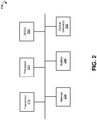
- FIG. 2 is a block diagram illustrating components of wearable device 110, according to an example embodiment.
- the example wearable device 110 includes a transmitter 210, a processor 220, memory storage 230, a battery 240, at least two light-emitting diodes 250, and one or more optical sensors 260.
- the wearable device 110 may comprise additional or different components to provide a particular operation or functionality. Similarly, in other embodiments, the wearable device 110 includes fewer components that perform similar or equivalent functions to those depicted in FIG. 2 .
- the transmitter 210 can be configured to communicate with a network such as the Internet, a Wide Area Network (WAN), a Local Area Network (LAN), a cellular network, and so forth, to send data streams (for example sensor data, PPG data, and messages).
- a network such as the Internet, a Wide Area Network (WAN), a Local Area Network (LAN), a cellular network, and so forth, to send data streams (for example sensor data, PPG data, and messages).
- the processor 220 can include hardware and/or software, which is operable to execute computer programs stored in memory 230.
- the processor 220 can use floating point operations, complex operations, and other operations, including processing and analyzing sensor data.
- the battery 240 is operable to provide electrical power for operation of other components of the wearable device 110.
- the battery 240 is a rechargeable battery.
- the battery 240 is recharged using an inductive charging technology.
- the LEDs 250 are operable to emit light signals of a red wavelength (typically 660 nm) and infrared wavelength (940 nm). Each of the LEDs is activated separately and accompanied by a "dark" period where neither of the LEDs is on to obtain ambient light levels.
- a single LED can be used to emit the both infrared and red light signals.
- the lights can be absorbed by human blood (mostly by hemoglobin).
- the methods for pulse oximetry are based on the fact that oxygenated hemoglobin absorbs more infrared light while deoxygenated hemoglobin absorbs more red light. Oxygenated hemoglobin allows more red light to pass through while deoxygenated hemoglobin allows more infrared light to pass through.
- the optical sensor(s) 260 can receive light signals modulated by a human tissue. Based on the changes in the intensities of the modulated light signals, one or more medical parameters, such as, for example, oxygen saturation, arterial blood flow, pulse rate, and respiration can be determined.
- the LEDs 250 and optical sensor(s) 260 can be utilized in either a transmission or a reflectance mode for pulse oximetry.
- the LEDs 250 and sensor 260 are typically attached or clipped to a translucent body part (e.g., a finger, toe, and earlobe).
- the LEDs 250 are located on one side of the body part while the optical sensor(s) 260 are located directly on the opposite site.
- the light passes through the entirety of the body part, from one side to the other, and is thus modulated by the pulsating arterial blood flow.
- the LEDs 250 and optical sensor(s) 260 are located on the same side of the body part (e.g. a forehead, finger, and wrist), and the light is reflected from the skin and underlying near-surface tissues back to the optical sensor(s) 260.
- FIG. 3A is a block diagram illustrating details of transmission pulse oximetry.
- the light signals 310 emitted by LEDs 250 in red and infrared wavelengths are transmitted through highly perfused pulsatile tissue 320 (for example, blood vessels in a fingertip or an earlobe).
- the light signals 340 modulated across the pulsatile tissue 320 can be detected by optical sensor(s) 260. Some portions of the light signals 310 are reflected by non-pulsatile tissue 330 to produce a reflected light signal 350.
- the transmission pulse oximetry assumes that all detected light passes through pulsating blood vessels and the e ⁇ cd term expresses the attenuation of light by the blood fluid (mostly by hemoglobin) according to the Beer-Lambert law.
- the ratio R expresses the ratio between the attenuation coefficients at the transmission frequencies of red and infrared wavelengths.
- the ratio R can indicate a ratio between oxygenated hemoglobin and deoxygenated hemoglobin.
- the ratio R can be converted to a corresponding oxygen saturation (SpO 2 ) value via an empirically-derived look-up table.
- FIG. 3B is a block diagram illustrating details of reflectance pulse oximetry. Unlike the transmission pulse oximetry, light signals 310 emitted by LEDs 250 is reflected back to the optical sensor(s) 260 from both pulsatile tissue 320 (pulsating arteries) and non-pulsatile tissue 330 (e.g., skin and underlying tissue). In FIG. 3B , the corresponding reflected light signals are denoted as signal 360 and signal 350.
- the reflected signal 350 from non-pulsatile tissue 330 has a negligible significance in conventional transmission oximetry (see FIG. 3A ), as well as in strong signal reflectance oximetry when, for example, operated on a highly perfused tissue such as a fingertip or a forehead.
- the non-pulsatile tissue reflection should be accounted for in order to avoid an erroneous SpO 2 reading. Therefore, the contribution of the non-pulsatile tissue needs to be identified and accounted for, to enable an accurate SpO 2 reading in such cases.
- FIG. 4 shows a plot of example PPG 410 which can be obtained with reflectance pulse oximetry.
- the PPG represents the intensity I of the light signal 310 (either the red signal or the infrared signal) as modulated by a human tissue mostly due to a blood flow.
- Both the high peaks I H and low peaks I L of the PPG 410 include a component I T due to the non-pulsatile tissue reflection.
- the line 420 illustrates a base intensity line for PPG and the line 430 illustrates the addition in intensity of reflected signal I due to non-pulsatile tissue (for example, skin).
- the following embodiments can be used to estimate the additive contribution of the non-pulsatile tissue.
- K 1 While in the transmission oximetry K 1 is small relative to K 2 and may thus be neglected in both red and infrared measurements, it may not be neglected in weak signal cases such as in the general reflectance oximetry or in the low perfusion transmission oximetry.
- L red > 0, L ir > 0 denote arbitrary scalars, representing the bias generated by the non-pulsatile signal components:
- R 1 L red L ir log I H red ⁇ L red I L red ⁇ L red log I H ir ⁇ L ir I L ir ⁇ L ir
- R 1 (I 0 K 1 red , I 0 K 1 ir ) R.
- the correction factor M can be estimated during a calibration process and can be used in subsequent measurements to calibrate the measured R value.
- calibration of the device 110 might be requested by the device itself when the calculated SpO 2 value is not as expected, for example if it is outside a predefined range.
- the device 110 might also signal that calibration is needed if calculated values vary substantially from normal values recorded for a given user, patient, etc. In such as case, the device 110 might proactively request re-calibration. If readings remain outside the expected range, a warning (audible, tactile, visual or the like) may be generation. If recalibration of the device 110 causes the measured values to return to the expected range, then the new calibration parameters are maintained and normal operation resumes.
- Higher Order Statistic In various embodiments, Higher Order Statistic, Principal Component Analysis, and other methods can be used to optimize the calibration process.
- the PPG signal 410 ( FIG. 4 ) can be contaminated by a noise due to environment conditions, activity of a user of the wearable device 110 and behavior of the user. For example, movements of the user can affect the detection by optical sensor(s) 260 of the reflected or absorbed light signal(s). Temperature changes can affect blood flow to the area with the sensor. Sweating of user can also affect the optical quality of the optical sensor(s) 260.
- a band-pass filter can be applied to a raw PPG signal to remove all frequencies outside the range of a heart beat rate typical for a human.
- the band-pass filter can remove all frequencies outside the range from 30 to 300 per minute.
- the noise and waveforms in PPG signal can be separated using an autoregressive (AR) model.
- the PPG waveform can be modeled with a low order AR model.
- the AR model can identify the pulse frequency in the PPG signal even for short time signal segments.
- AR band-pass filter can be constructed.
- the AR band-pass filter can allow passing frequencies within a certain range around the pulse rate frequency (for example +/-10% from the pulse rate frequency) to filter out all frequencies outside the range.
- a clean PPG signal can be generated.
- the clean PPG signal can be used to determine a ratio for SpO 2 oxygen saturation according to embodiments of present disclosure.
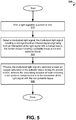
- FIG. 5 is a flow chart of a method 500 for data collected from a single wrist, according to an example embodiment.
- Method 500 can commence at block 510 with emitting a light signal for a period of time.
- the method 500 can proceed with detecting a modulated light signal.
- the modulated light signal can include a red signal and an infrared signal.
- the detected signal can be a result of interaction of the light signal with a human tissue.
- the human tissue can include a pulsatile tissue and a non-pulsatile tissue.
- the method 500 can process the modulated light signal to estimate at least oxygen saturation in the pulsatile tissue during the time period.
- the processing can include at least removing a non-pulsatile component due to the interaction of the light signal with the non-pulsatile tissue.
- the non-pulsatile component is removed by removing a first parameter from maximums and minimums of an intensity associated with the infrared signal and removing a second parameter from maximums and minimums of the intensity associated with the red signal.
- the correction factor can be pre-determined via a calibration process.
- FIG. 6 illustrates example plots of a raw infrared signal 610 and raw red signal 620 measured during a period of 1 minute.
- the red signal 620 can be shifted.
- FIG. 7 illustrates example plots of infrared signal 710 and red signal 720.
- the infrared signal 710 can be obtained from the raw infrared signal 610 by band-pass filtering.
- the red signal 720 is band-passed filtered raw red signal 620.
- FIG. 8 illustrated an example plot of a ratio 800 for determining the SpO 2 saturation.
- the ratio 900 can be determined based on the band-filtered infrared signal 710 and red signal 720 using the method of embodiment No 1 described above.
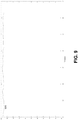
- FIG. 9 illustrates an example plot of SpO 2 oxygen saturation determined based on ratio 800.
- FIG. 10 illustrates an example plot of ratio 1000 for determining SpO 2 oxygen saturation.
- the ratio 1000 can be determined based on band-pass filtered infrared signal 710 and band-pass filtered red signal 720 using the method of embodiment No 2 described above.
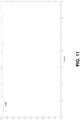
- FIG. 11 illustrates an example plot of SpO 2 oxygen saturation determined based on ratio 1100.
Landscapes
- Health & Medical Sciences (AREA)
- Life Sciences & Earth Sciences (AREA)
- Physics & Mathematics (AREA)
- Engineering & Computer Science (AREA)
- Medical Informatics (AREA)
- Animal Behavior & Ethology (AREA)
- Pathology (AREA)
- Veterinary Medicine (AREA)
- Biomedical Technology (AREA)
- Heart & Thoracic Surgery (AREA)
- Public Health (AREA)
- Molecular Biology (AREA)
- Surgery (AREA)
- Biophysics (AREA)
- General Health & Medical Sciences (AREA)
- Signal Processing (AREA)
- Spectroscopy & Molecular Physics (AREA)
- Optics & Photonics (AREA)
- Artificial Intelligence (AREA)
- Computer Vision & Pattern Recognition (AREA)
- Physiology (AREA)
- Psychiatry (AREA)
- Measurement Of The Respiration, Hearing Ability, Form, And Blood Characteristics Of Living Organisms (AREA)
Claims (11)
- Verfahren für das Durchführen einer Pulsoxymetrie, wobei das Verfahren umfasst:Emittieren eines Lichtsignals (310) für eine Zeitspanne;Erfassen eines modulierten Lichtsignals (340), wobei das modulierte Lichtsignal (340) ein Rotsignal und ein Infrarotsignal (610) umfasst, die einer Wechselwirkung des Lichtsignals (310) mit einem menschlichen Gewebe entspringen, wobei das menschliche Gewebe (320) ein pulsierendes Gewebe (320) und ein nicht pulsierendes Gewebe (330) umfasst, wobei die Wechselwirkung des Lichtsignals (310) mit dem menschlichen Gewebe eine Reflexion des Lichtsignals von dem menschlichen Gewebe umfasst; undVerarbeiten des modulierten Lichtsignals (340), um während der Zeitspanne zumindest eine Sauerstoffsättigung in dem pulsierenden Gewebe (320) zu schätzen, wobei das Verarbeiten zumindest das Entfernen einer nicht pulsierenden Komponente umfasst, die sich aus der Wechselwirkung des Lichtsignals (310) mit dem nicht pulsierenden Gewebe (330) ergibt,wobei das Entfernen der nicht pulsierenden Komponente umfasst:Entfernen eines ersten Parameters aus Maxima und Minima einer Intensität, die dem Infrarotsignal (610) zugeordnet ist; undEntfernen eines zweiten Parameters aus Maxima und Minima einer Intensität, die dem Rotsignal (620) zugeordnet ist,wobei der erste und zweite Parameter einen Bias repräsentiert, der durch die nicht pulsierenden Signalkomponenten generiert wird, wobei der erste Parameter und der zweite Parameter durch das Verwenden eines Kalibrierungsprozesses vorbestimmt sind, um einen wahren Wert für ein



 oder wobei das Entfernen der nicht pulsierenden Komponente das Multiplizieren eines Verhältnisses


- Verfahren nach Anspruch 1, wobei das pulsierende Gewebe (320) eine Arterie umfasst.
- Verfahren nach Anspruch 1 oder 2, wobei das nicht pulsierende Gewebe (330) Haut umfasst.
- Verfahren nach einem der vorstehenden Ansprüche, wobei das menschliche Gewebe einem der folgenden zugeordnet ist: einer Fingerspitze, einem Handgelenk, einem Knöchel, einem Hals, einer Brust, und einem Ohrläppchen.
- Verfahren nach einem der vorstehenden Ansprüche, wobei die Wechselwirkung des Lichtsignals mit dem menschlichen Gewebe eine Absorption des Lichtsignals durch das menschliche Gewebe umfasst.
- System für das Durchführen einer Pulsoxymetrie, wobei das System umfasst:mindestens eine Lichtquelle (250), die betreibbar ist, um ein Lichtsignal (310) für eine Zeitspanne zu emittieren;mindestens ein optischer Sensor (260), der betreibbar ist, um ein moduliertes Lichtsignal (340) zu erfassen, wobei das modulierte Lichtsignal (340) ein Rotsignal (620) und ein Infrarotsignal (610) umfasst, die einer Wechselwirkung des Lichtsignals (310) mit einem menschlichen Gewebe entspringen, wobei das menschliche Gewebe ein pulsierendes Gewebe (320) und ein nicht pulsierendes Gewebe (330) umfasst, wobei die Wechselwirkung des Lichtsignals (310) mit dem menschlichen Gewebe eine Reflexion des Lichtsignals von dem menschlichen Gewebe umfasst; undmindestens ein Prozessor (220), der kommunikativ mit dem mindestens einen optischen Sensor (260) gekoppelt ist und betreibbar ist, um das modulierte Lichtsignal zu verarbeiten, um zumindest eine Sauerstoffsättigung in dem pulsierenden Gewebe (320) während der Zeitspanne zu schätzen, wobei das Verarbeiten zumindest das Entfernen einer nicht pulsierenden Komponente aufgrund der Wechselwirkung des Lichtsignals (310) mit dem nicht pulsierenden Gewebe (330) umfasst,wobei das Entfernen der nicht pulsierenden Komponente umfasst:Entfernen eines ersten Parameters aus Maxima und Minima einer Intensität, die dem Infrarotsignal (610) zugeordnet ist; undEntfernen eines zweiten Parameters aus Maxima und Minima einer Intensität, die dem Rotsignal (620) zugeordnet ist,wobei der erste und zweite Parameter einen Bias repräsentiert, der durch die nicht pulsierenden Signalkomponenten generiert wird, wobei der erste Parameter und der zweite Parameter durch das Verwenden eines Kalibrierungsprozesses vorbestimmt sind, um einen wahren Wert für ein Verhältnis =


 oder wobei das Entfernen der nicht pulsierenden Komponente das Multiplizieren eines Verhältnisses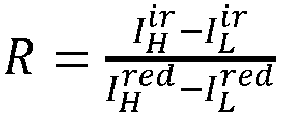


- System nach Anspruch 6, wobei das pulsierende Gewebe (320) eine Arterie umfasst, und/oder wobei das nicht pulsierende Gewebe (330) Haut umfasst.
- System nach Anspruch 6 oder 7, wobei das menschliche Gewebe einem der folgenden zugeordnet ist: einer Fingerspitze, einem Handgelenk, einem Knöchel, einem Hals, einer Brust, und einem Ohrläppchen.
- System nach einem der Ansprüche 6-8, wobei die Wechselwirkung des Lichtsignals mit dem menschlichen Gewebe eine Absorption des Lichtsignals durch das menschliche Gewebe umfasst.
- System nach einem der Ansprüche 6-9, wobei die System einem Anwender signalisiert das System zu kalibrieren, falls gemessene Signalwerte außerhalb eines festgelegten Bereichs liegen, oder wobei das System einem Anwender signalisiert das System zu kalibrieren, falls gemessene Signalwerte von einem für den Anwender festgelegten Durchschnitt abweichen.
- Nicht flüchtiges computerlesbares Speichermedium mit darauf enthaltenen Anweisungen, die, wenn sie von einem Prozessor ausgeführt werden, der kommunikativ mit mindestens einer Lichtquelle (250) und mindestens einem optischen Sensor (260) gekoppelt ist, die Schritte des Verfahrens nach einem der Ansprüche 1-5 durchführen.
Applications Claiming Priority (2)
| Application Number | Priority Date | Filing Date | Title |
|---|---|---|---|
| US14/738,711 US10470692B2 (en) | 2015-06-12 | 2015-06-12 | System for performing pulse oximetry |
| PCT/IL2016/050513 WO2016199123A1 (en) | 2015-06-12 | 2016-05-15 | Pulse oximetry |
Publications (3)
| Publication Number | Publication Date |
|---|---|
| EP3307162A1 EP3307162A1 (de) | 2018-04-18 |
| EP3307162A4 EP3307162A4 (de) | 2019-02-20 |
| EP3307162B1 true EP3307162B1 (de) | 2021-11-17 |
Family
ID=57503129
Family Applications (1)
| Application Number | Title | Priority Date | Filing Date |
|---|---|---|---|
| EP16807015.9A Active EP3307162B1 (de) | 2015-06-12 | 2016-05-15 | Pulsoximetrie |
Country Status (4)
| Country | Link |
|---|---|
| US (1) | US10470692B2 (de) |
| EP (1) | EP3307162B1 (de) |
| CN (1) | CN107920786B (de) |
| WO (1) | WO2016199123A1 (de) |
Cited By (3)
| Publication number | Priority date | Publication date | Assignee | Title |
|---|---|---|---|---|
| US11464457B2 (en) | 2015-06-12 | 2022-10-11 | ChroniSense Medical Ltd. | Determining an early warning score based on wearable device measurements |
| US11571139B2 (en) | 2015-06-12 | 2023-02-07 | ChroniSense Medical Ltd. | Wearable system and method for measuring oxygen saturation |
| US11712190B2 (en) | 2015-06-12 | 2023-08-01 | ChroniSense Medical Ltd. | Wearable device electrocardiogram |
Families Citing this family (9)
| Publication number | Priority date | Publication date | Assignee | Title |
|---|---|---|---|---|
| US10470692B2 (en) | 2015-06-12 | 2019-11-12 | ChroniSense Medical Ltd. | System for performing pulse oximetry |
| US10687742B2 (en) | 2015-06-12 | 2020-06-23 | ChroniSense Medical Ltd. | Using invariant factors for pulse oximetry |
| US11160461B2 (en) | 2015-06-12 | 2021-11-02 | ChroniSense Medical Ltd. | Blood pressure measurement using a wearable device |
| US11160459B2 (en) | 2015-06-12 | 2021-11-02 | ChroniSense Medical Ltd. | Monitoring health status of people suffering from chronic diseases |
| US11000235B2 (en) | 2016-03-14 | 2021-05-11 | ChroniSense Medical Ltd. | Monitoring procedure for early warning of cardiac episodes |
| CN112996439A (zh) * | 2018-08-29 | 2021-06-18 | 堤乐哈修门医学研究基础建设及服务有限公司 | 用于确定生物组织的氧合血含量的系统和方法 |
| US11771350B1 (en) | 2020-09-11 | 2023-10-03 | Apple Inc. | System and method for robust pulse oximetry using asymmetric distance-dependent calibration |
| US11666256B2 (en) * | 2020-10-27 | 2023-06-06 | Michael Edward Labrecque | Pulse oximeter sensor |
| CN117503124A (zh) * | 2023-11-02 | 2024-02-06 | 南方科技大学 | 利用notch滤光片改良的非接触血氧监测装置及方法 |
Citations (1)
| Publication number | Priority date | Publication date | Assignee | Title |
|---|---|---|---|---|
| US20050070775A1 (en) * | 1996-10-10 | 2005-03-31 | Nellcor Puritan Bennett Incorporated | Motion compatible sensor for non-invasive optical blood analysis |
Family Cites Families (77)
| Publication number | Priority date | Publication date | Assignee | Title |
|---|---|---|---|---|
| US3885552A (en) | 1972-11-16 | 1975-05-27 | Pacemaker Diagnostic Clinic Of | Cardiac function monitoring system and method for use in association with cardiac pacer apparatus |
| US3898984A (en) | 1974-02-04 | 1975-08-12 | Us Navy | Ambulatory patient monitoring system |
| US4331154A (en) | 1979-10-15 | 1982-05-25 | Tech Engineering & Design | Blood pressure and heart rate measuring watch |
| IL61465A (en) | 1980-11-12 | 1984-09-30 | Univ Ramot | Method and apparatus for monitoring electrocardiogram(ecg)signals |
| US4802486A (en) | 1985-04-01 | 1989-02-07 | Nellcor Incorporated | Method and apparatus for detecting optical pulses |
| US5316008A (en) | 1990-04-06 | 1994-05-31 | Casio Computer Co., Ltd. | Measurement of electrocardiographic wave and sphygmus |
| JP3363150B2 (ja) * | 1991-03-07 | 2003-01-08 | マシモ・コーポレイション | パルスオキシメータおよびパルスオキシメータの中のプロセッサ |
| US5503148A (en) * | 1994-11-01 | 1996-04-02 | Ohmeda Inc. | System for pulse oximetry SPO2 determination |
| US5692505A (en) * | 1996-04-25 | 1997-12-02 | Fouts; James Michael | Data processing systems and methods for pulse oximeters |
| US6163715A (en) * | 1996-07-17 | 2000-12-19 | Criticare Systems, Inc. | Direct to digital oximeter and method for calculating oxygenation levels |
| JP4555919B2 (ja) | 1997-03-17 | 2010-10-06 | ノンインベイシブ モニタリング システムズ インコーポレイテッド | 生理的サインのフィードバックシステム |
| US6139494A (en) | 1997-10-15 | 2000-10-31 | Health Informatics Tools | Method and apparatus for an integrated clinical tele-informatics system |
| US6519486B1 (en) * | 1998-10-15 | 2003-02-11 | Ntc Technology Inc. | Method, apparatus and system for removing motion artifacts from measurements of bodily parameters |
| US6760609B2 (en) | 1999-07-14 | 2004-07-06 | Providence Health System - Oregon | Adaptive calibration pulsed oximetry method and device |
| NL1012943C2 (nl) | 1999-08-31 | 2001-03-01 | Tno | Detector en beeldvormende inrichting voor het bepalen van concentratieverhoudingen. |
| US9183351B2 (en) | 2000-05-30 | 2015-11-10 | Vladimir Shusterman | Mobile system with network-distributed data processing for biomedical applications |
| US6606510B2 (en) * | 2000-08-31 | 2003-08-12 | Mallinckrodt Inc. | Oximeter sensor with digital memory encoding patient data |
| US6501974B2 (en) | 2001-01-22 | 2002-12-31 | Datex-Ohmeda, Inc. | Compensation of human variability in pulse oximetry |
| US6527725B1 (en) | 2001-01-25 | 2003-03-04 | Colin Corporation | Blood pressure estimating apparatus |
| US7756558B2 (en) * | 2004-05-24 | 2010-07-13 | Trutouch Technologies, Inc. | Apparatus and methods for mitigating the effects of foreign interferents on analyte measurements in spectroscopy |
| US6709402B2 (en) * | 2002-02-22 | 2004-03-23 | Datex-Ohmeda, Inc. | Apparatus and method for monitoring respiration with a pulse oximeter |
| US7738935B1 (en) * | 2002-07-09 | 2010-06-15 | Pacesetter, Inc. | Methods and devices for reduction of motion-induced noise in pulse oximetry |
| KR100944443B1 (ko) | 2002-07-29 | 2010-02-25 | 이데시아 엘티디. | 전자 생체 신원 인식을 위한 방법 및 장치 |
| KR100552681B1 (ko) * | 2003-04-25 | 2006-02-20 | 삼성전자주식회사 | 수면 무호흡 진단 장치 및 방법 |
| RS49856B (sr) | 2004-01-16 | 2008-08-07 | Boško Bojović | Uređaj i postupak za vizuelnu trodimenzionalnu prezentaciju ecg podataka |
| CN1698536A (zh) | 2004-05-20 | 2005-11-23 | 香港中文大学 | 采用自动补偿的无袖带式连续血压测量方法 |
| US7909768B1 (en) * | 2004-07-19 | 2011-03-22 | Pacesetter, Inc. | Reducing data acquisition, power and processing for hemodynamic signal sampling |
| US7544168B2 (en) | 2004-09-30 | 2009-06-09 | Jerusalem College Of Technology | Measuring systolic blood pressure by photoplethysmography |
| US7865223B1 (en) | 2005-03-14 | 2011-01-04 | Peter Bernreuter | In vivo blood spectrometry |
| US8688189B2 (en) | 2005-05-17 | 2014-04-01 | Adnan Shennib | Programmable ECG sensor patch |
| CA2524507A1 (en) | 2005-10-26 | 2007-04-26 | Coeurmetrics Inc | Multi-sensor high-resolution extraction of heart sounds |
| US7184809B1 (en) * | 2005-11-08 | 2007-02-27 | Woolsthorpe Technologies, Llc | Pulse amplitude indexing method and apparatus |
| IL185609A0 (en) * | 2007-08-30 | 2008-01-06 | Dan Furman | Multi function senssor |
| US8152731B2 (en) | 2006-02-10 | 2012-04-10 | Inovise Medical, Inc. | Wavelet transform and pattern recognition method for heart sound analysis |
| US8646447B2 (en) | 2006-11-13 | 2014-02-11 | Resmed Limited | Systems, methods, and/or apparatuses for non-invasive monitoring of respiratory parameters in sleep disordered breathing |
| US20080208069A1 (en) | 2007-02-27 | 2008-08-28 | Michael Sasha John | System and methods of hierarchical cardiac event detection |
| JP5176020B2 (ja) | 2007-03-02 | 2013-04-03 | 国立大学法人 名古屋工業大学 | 生体内管腔体評価装置 |
| WO2009008933A2 (en) | 2007-04-11 | 2009-01-15 | The Board Of Regents Of The University Of Texas System | Optoacoustic monitoring of multiple parameters |
| US8602997B2 (en) | 2007-06-12 | 2013-12-10 | Sotera Wireless, Inc. | Body-worn system for measuring continuous non-invasive blood pressure (cNIBP) |
| US8574161B2 (en) | 2007-06-12 | 2013-11-05 | Sotera Wireless, Inc. | Vital sign monitor for cufflessly measuring blood pressure using a pulse transit time corrected for vascular index |
| WO2009005734A2 (en) | 2007-06-28 | 2009-01-08 | Cardiosoft L.P. | Diagnostic and predictive system and methodology using multiple parameter electrocardiography superscores |
| US8412296B2 (en) | 2007-07-20 | 2013-04-02 | General Electric Company | Non-invasive determination of the concentration of a blood substance |
| US8792949B2 (en) * | 2008-03-31 | 2014-07-29 | Covidien Lp | Reducing nuisance alarms |
| US8956293B2 (en) | 2009-05-20 | 2015-02-17 | Sotera Wireless, Inc. | Graphical ‘mapping system’ for continuously monitoring a patient's vital signs, motion, and location |
| US8792950B2 (en) * | 2009-06-05 | 2014-07-29 | Nonin Medical, Inc. | Oximetry with remote display |
| US9775529B2 (en) * | 2009-06-17 | 2017-10-03 | Sotera Wireless, Inc. | Body-worn pulse oximeter |
| US20110082355A1 (en) | 2009-07-30 | 2011-04-07 | Oxitone Medical Ltd. | Photoplethysmography device and method |
| US8364250B2 (en) | 2009-09-15 | 2013-01-29 | Sotera Wireless, Inc. | Body-worn vital sign monitor |
| US8463347B2 (en) | 2009-09-30 | 2013-06-11 | Nellcor Puritan Bennett Ireland | Systems and methods for normalizing a plethysmograph signal for improved feature analysis |
| US8591411B2 (en) | 2010-03-10 | 2013-11-26 | Sotera Wireless, Inc. | Body-worn vital sign monitor |
| EP2430975A1 (de) | 2010-09-17 | 2012-03-21 | Stichting IMEC Nederland | Analyse von Hauptkomponenten oder unabhängiger Komponenten für die Anwendung auf ambulante Elektrokardiogramme |
| US8761853B2 (en) | 2011-01-20 | 2014-06-24 | Nitto Denko Corporation | Devices and methods for non-invasive optical physiological measurements |
| CA2839954A1 (en) | 2011-06-20 | 2012-12-27 | Yoram Romem | Independent non-interfering wearable health monitoring and alert system |
| US20130338460A1 (en) | 2012-06-18 | 2013-12-19 | David Da He | Wearable Device for Continuous Cardiac Monitoring |
| CA2912358A1 (en) | 2012-08-10 | 2014-02-13 | Cnv Systems Ltd. | Mobile device system for measurement of cardiovascular health |
| US9060699B2 (en) | 2012-09-21 | 2015-06-23 | Beth Israel Deaconess Medical Center, Inc. | Multilead ECG template-derived residua for arrhythmia risk assessment |
| US20140275888A1 (en) | 2013-03-15 | 2014-09-18 | Venture Gain LLC | Wearable Wireless Multisensor Health Monitor with Head Photoplethysmograph |
| US8866606B1 (en) | 2013-07-16 | 2014-10-21 | Rockwilli RMR LLC | Systems and methods for automated personal emergency responses |
| EP3054840B1 (de) | 2013-11-08 | 2020-08-12 | Spangler Scientific LLC | Vorhersage des risikos für akuten herztod |
| US9918666B2 (en) | 2014-01-13 | 2018-03-20 | The Board Of Regents, The University Of Texas System | Systems and methods for physiological signal enhancement and biometric extraction using non-invasive optical sensors |
| CN106163387A (zh) | 2014-04-02 | 2016-11-23 | 皇家飞利浦有限公司 | 用于检测用户的心率的变化的系统和方法 |
| US10028668B2 (en) | 2014-05-06 | 2018-07-24 | Alivecor, Inc. | Blood pressure monitor |
| US9924896B2 (en) | 2014-06-23 | 2018-03-27 | Koninklijke Philips N.V. | Device, system and method for determining the concentration of a substance in the blood of a subject |
| US10478127B2 (en) | 2014-06-23 | 2019-11-19 | Sherlock Solutions, LLC | Apparatuses, methods, processes, and systems related to significant detrimental changes in health parameters and activating lifesaving measures |
| US10265024B2 (en) | 2014-07-26 | 2019-04-23 | Salutron, Inc. | Sensor system for heart rate measurement per axis of shared orientation |
| US20160089033A1 (en) | 2014-09-29 | 2016-03-31 | Microsoft Corporation | Determining timing and context for cardiovascular measurements |
| US11490820B2 (en) | 2015-02-19 | 2022-11-08 | Briteseed, Llc | System and method for determining vessel size and/or edge |
| TW201633999A (zh) | 2015-03-20 | 2016-10-01 | 力智電子股份有限公司 | 光學感測裝置及其運作方法 |
| US11712190B2 (en) | 2015-06-12 | 2023-08-01 | ChroniSense Medical Ltd. | Wearable device electrocardiogram |
| US10687742B2 (en) | 2015-06-12 | 2020-06-23 | ChroniSense Medical Ltd. | Using invariant factors for pulse oximetry |
| US11160461B2 (en) | 2015-06-12 | 2021-11-02 | ChroniSense Medical Ltd. | Blood pressure measurement using a wearable device |
| US11464457B2 (en) | 2015-06-12 | 2022-10-11 | ChroniSense Medical Ltd. | Determining an early warning score based on wearable device measurements |
| US10470692B2 (en) | 2015-06-12 | 2019-11-12 | ChroniSense Medical Ltd. | System for performing pulse oximetry |
| US11160459B2 (en) | 2015-06-12 | 2021-11-02 | ChroniSense Medical Ltd. | Monitoring health status of people suffering from chronic diseases |
| WO2017127530A1 (en) | 2016-01-19 | 2017-07-27 | Zansors Llc | Wireless monitoring system |
| US11000235B2 (en) | 2016-03-14 | 2021-05-11 | ChroniSense Medical Ltd. | Monitoring procedure for early warning of cardiac episodes |
| WO2018025257A1 (en) | 2016-08-02 | 2018-02-08 | ChroniSense Medical Ltd. | Blood pressure measurement using a wearable device |
-
2015
- 2015-06-12 US US14/738,711 patent/US10470692B2/en active Active
-
2016
- 2016-05-15 EP EP16807015.9A patent/EP3307162B1/de active Active
- 2016-05-15 WO PCT/IL2016/050513 patent/WO2016199123A1/en not_active Ceased
- 2016-05-15 CN CN201680042023.6A patent/CN107920786B/zh active Active
Patent Citations (1)
| Publication number | Priority date | Publication date | Assignee | Title |
|---|---|---|---|---|
| US20050070775A1 (en) * | 1996-10-10 | 2005-03-31 | Nellcor Puritan Bennett Incorporated | Motion compatible sensor for non-invasive optical blood analysis |
Cited By (3)
| Publication number | Priority date | Publication date | Assignee | Title |
|---|---|---|---|---|
| US11464457B2 (en) | 2015-06-12 | 2022-10-11 | ChroniSense Medical Ltd. | Determining an early warning score based on wearable device measurements |
| US11571139B2 (en) | 2015-06-12 | 2023-02-07 | ChroniSense Medical Ltd. | Wearable system and method for measuring oxygen saturation |
| US11712190B2 (en) | 2015-06-12 | 2023-08-01 | ChroniSense Medical Ltd. | Wearable device electrocardiogram |
Also Published As
| Publication number | Publication date |
|---|---|
| EP3307162A1 (de) | 2018-04-18 |
| CN107920786A (zh) | 2018-04-17 |
| WO2016199123A1 (en) | 2016-12-15 |
| US20160361003A1 (en) | 2016-12-15 |
| CN107920786B (zh) | 2020-12-29 |
| EP3307162A4 (de) | 2019-02-20 |
| US10470692B2 (en) | 2019-11-12 |
Similar Documents
| Publication | Publication Date | Title |
|---|---|---|
| EP3307162B1 (de) | Pulsoximetrie | |
| US10687742B2 (en) | Using invariant factors for pulse oximetry | |
| US11571139B2 (en) | Wearable system and method for measuring oxygen saturation | |
| EP3493734B1 (de) | Blutdruckmessung mithilfe einer tragbaren vorrichtung | |
| EP3383256B1 (de) | Systeme und verfahren zur detektion der verwendung von photoplethysmographischen vorrichtungen | |
| US11160461B2 (en) | Blood pressure measurement using a wearable device | |
| US9247896B2 (en) | Systems and methods for determining respiration information using phase locked loop | |
| US9788768B2 (en) | Physiological parameter tracking system | |
| US20110112382A1 (en) | Systems and methods for combined physiological sensors | |
| US12303293B2 (en) | Systems and methods for computationally efficient non-invasive blood quality measurement | |
| US20080004513A1 (en) | VCSEL Tissue Spectrometer | |
| US20150018647A1 (en) | Method and apparatus for monitoring a subject for blood oxygen saturation | |
| US20140180044A1 (en) | Methods and systems for determining signal quality of a physiological signal | |
| JP2004202190A (ja) | 生体情報測定装置 | |
| US20180085069A1 (en) | Method and Device for Processing Bio-Signals | |
| US12329503B2 (en) | Method and system for evaluating the quality of ratio of ratios values | |
| US20140221852A1 (en) | Systems and methods for determining respiration information using frequency demodulation | |
| US20240268720A1 (en) | Wearable device with function of determining hemoglobin concentration, method and system for determining hemoglobin concentration | |
| CN112932475B (zh) | 血氧饱和度的计算方法、装置、电子设备及存储介质 | |
| JP2019505275A (ja) | 血液中に存在する化合物の濃度を測定するための装置及び方法 | |
| US9560978B2 (en) | Systems and methods for determining respiration information from a physiological signal using amplitude demodulation | |
| JP2024523719A (ja) | 血行動態交絡因子を説明する、血液循環ヘモグロビンを非侵襲的に測定するための方法および装置 | |
| CN116940280A (zh) | 用于测量血液和组织氧合的可选能量模式 | |
| RU2805810C1 (ru) | Носимое устройство с функцией определения концентрации гемоглобина, способ и система для определения концентрации гемоглобина | |
| Maan et al. | Development of an STM32-Based Non-Invasive Hemoglobin Measurement System Using Multiwavelength Photoplethysmography |
Legal Events
| Date | Code | Title | Description |
|---|---|---|---|
| STAA | Information on the status of an ep patent application or granted ep patent |
Free format text: STATUS: THE INTERNATIONAL PUBLICATION HAS BEEN MADE |
|
| PUAI | Public reference made under article 153(3) epc to a published international application that has entered the european phase |
Free format text: ORIGINAL CODE: 0009012 |
|
| STAA | Information on the status of an ep patent application or granted ep patent |
Free format text: STATUS: REQUEST FOR EXAMINATION WAS MADE |
|
| 17P | Request for examination filed |
Effective date: 20180112 |
|
| AK | Designated contracting states |
Kind code of ref document: A1 Designated state(s): AL AT BE BG CH CY CZ DE DK EE ES FI FR GB GR HR HU IE IS IT LI LT LU LV MC MK MT NL NO PL PT RO RS SE SI SK SM TR |
|
| AX | Request for extension of the european patent |
Extension state: BA ME |
|
| DAV | Request for validation of the european patent (deleted) | ||
| DAX | Request for extension of the european patent (deleted) | ||
| A4 | Supplementary search report drawn up and despatched |
Effective date: 20190121 |
|
| RIC1 | Information provided on ipc code assigned before grant |
Ipc: A61B 5/1455 20060101AFI20190115BHEP Ipc: A61B 5/00 20060101ALI20190115BHEP |
|
| RAP1 | Party data changed (applicant data changed or rights of an application transferred) |
Owner name: CHRONISENSE MEDICAL LTD. |
|
| RIN1 | Information on inventor provided before grant (corrected) |
Inventor name: KARELIN, BORIS Inventor name: LANGE, DANIEL H. |
|
| STAA | Information on the status of an ep patent application or granted ep patent |
Free format text: STATUS: EXAMINATION IS IN PROGRESS |
|
| 17Q | First examination report despatched |
Effective date: 20200806 |
|
| GRAP | Despatch of communication of intention to grant a patent |
Free format text: ORIGINAL CODE: EPIDOSNIGR1 |
|
| STAA | Information on the status of an ep patent application or granted ep patent |
Free format text: STATUS: GRANT OF PATENT IS INTENDED |
|
| INTG | Intention to grant announced |
Effective date: 20210309 |
|
| GRAS | Grant fee paid |
Free format text: ORIGINAL CODE: EPIDOSNIGR3 |
|
| GRAJ | Information related to disapproval of communication of intention to grant by the applicant or resumption of examination proceedings by the epo deleted |
Free format text: ORIGINAL CODE: EPIDOSDIGR1 |
|
| GRAL | Information related to payment of fee for publishing/printing deleted |
Free format text: ORIGINAL CODE: EPIDOSDIGR3 |
|
| STAA | Information on the status of an ep patent application or granted ep patent |
Free format text: STATUS: EXAMINATION IS IN PROGRESS |
|
| GRAP | Despatch of communication of intention to grant a patent |
Free format text: ORIGINAL CODE: EPIDOSNIGR1 |
|
| STAA | Information on the status of an ep patent application or granted ep patent |
Free format text: STATUS: GRANT OF PATENT IS INTENDED |
|
| INTC | Intention to grant announced (deleted) | ||
| INTG | Intention to grant announced |
Effective date: 20210810 |
|
| GRAA | (expected) grant |
Free format text: ORIGINAL CODE: 0009210 |
|
| STAA | Information on the status of an ep patent application or granted ep patent |
Free format text: STATUS: THE PATENT HAS BEEN GRANTED |
|
| AK | Designated contracting states |
Kind code of ref document: B1 Designated state(s): AL AT BE BG CH CY CZ DE DK EE ES FI FR GB GR HR HU IE IS IT LI LT LU LV MC MK MT NL NO PL PT RO RS SE SI SK SM TR |
|
| REG | Reference to a national code |
Ref country code: GB Ref legal event code: FG4D |
|
| REG | Reference to a national code |
Ref country code: IE Ref legal event code: FG4D |
|
| REG | Reference to a national code |
Ref country code: DE Ref legal event code: R096 Ref document number: 602016066371 Country of ref document: DE |
|
| REG | Reference to a national code |
Ref country code: AT Ref legal event code: REF Ref document number: 1447406 Country of ref document: AT Kind code of ref document: T Effective date: 20211215 |
|
| REG | Reference to a national code |
Ref country code: LT Ref legal event code: MG9D |
|
| REG | Reference to a national code |
Ref country code: NL Ref legal event code: MP Effective date: 20211117 |
|
| REG | Reference to a national code |
Ref country code: AT Ref legal event code: MK05 Ref document number: 1447406 Country of ref document: AT Kind code of ref document: T Effective date: 20211117 |
|
| PG25 | Lapsed in a contracting state [announced via postgrant information from national office to epo] |
Ref country code: RS Free format text: LAPSE BECAUSE OF FAILURE TO SUBMIT A TRANSLATION OF THE DESCRIPTION OR TO PAY THE FEE WITHIN THE PRESCRIBED TIME-LIMIT Effective date: 20211117 Ref country code: LT Free format text: LAPSE BECAUSE OF FAILURE TO SUBMIT A TRANSLATION OF THE DESCRIPTION OR TO PAY THE FEE WITHIN THE PRESCRIBED TIME-LIMIT Effective date: 20211117 Ref country code: FI Free format text: LAPSE BECAUSE OF FAILURE TO SUBMIT A TRANSLATION OF THE DESCRIPTION OR TO PAY THE FEE WITHIN THE PRESCRIBED TIME-LIMIT Effective date: 20211117 Ref country code: BG Free format text: LAPSE BECAUSE OF FAILURE TO SUBMIT A TRANSLATION OF THE DESCRIPTION OR TO PAY THE FEE WITHIN THE PRESCRIBED TIME-LIMIT Effective date: 20220217 Ref country code: AT Free format text: LAPSE BECAUSE OF FAILURE TO SUBMIT A TRANSLATION OF THE DESCRIPTION OR TO PAY THE FEE WITHIN THE PRESCRIBED TIME-LIMIT Effective date: 20211117 |
|
| PG25 | Lapsed in a contracting state [announced via postgrant information from national office to epo] |
Ref country code: IS Free format text: LAPSE BECAUSE OF FAILURE TO SUBMIT A TRANSLATION OF THE DESCRIPTION OR TO PAY THE FEE WITHIN THE PRESCRIBED TIME-LIMIT Effective date: 20220317 Ref country code: SE Free format text: LAPSE BECAUSE OF FAILURE TO SUBMIT A TRANSLATION OF THE DESCRIPTION OR TO PAY THE FEE WITHIN THE PRESCRIBED TIME-LIMIT Effective date: 20211117 Ref country code: PT Free format text: LAPSE BECAUSE OF FAILURE TO SUBMIT A TRANSLATION OF THE DESCRIPTION OR TO PAY THE FEE WITHIN THE PRESCRIBED TIME-LIMIT Effective date: 20220317 Ref country code: PL Free format text: LAPSE BECAUSE OF FAILURE TO SUBMIT A TRANSLATION OF THE DESCRIPTION OR TO PAY THE FEE WITHIN THE PRESCRIBED TIME-LIMIT Effective date: 20211117 Ref country code: NO Free format text: LAPSE BECAUSE OF FAILURE TO SUBMIT A TRANSLATION OF THE DESCRIPTION OR TO PAY THE FEE WITHIN THE PRESCRIBED TIME-LIMIT Effective date: 20220217 Ref country code: NL Free format text: LAPSE BECAUSE OF FAILURE TO SUBMIT A TRANSLATION OF THE DESCRIPTION OR TO PAY THE FEE WITHIN THE PRESCRIBED TIME-LIMIT Effective date: 20211117 Ref country code: LV Free format text: LAPSE BECAUSE OF FAILURE TO SUBMIT A TRANSLATION OF THE DESCRIPTION OR TO PAY THE FEE WITHIN THE PRESCRIBED TIME-LIMIT Effective date: 20211117 Ref country code: HR Free format text: LAPSE BECAUSE OF FAILURE TO SUBMIT A TRANSLATION OF THE DESCRIPTION OR TO PAY THE FEE WITHIN THE PRESCRIBED TIME-LIMIT Effective date: 20211117 Ref country code: GR Free format text: LAPSE BECAUSE OF FAILURE TO SUBMIT A TRANSLATION OF THE DESCRIPTION OR TO PAY THE FEE WITHIN THE PRESCRIBED TIME-LIMIT Effective date: 20220218 Ref country code: ES Free format text: LAPSE BECAUSE OF FAILURE TO SUBMIT A TRANSLATION OF THE DESCRIPTION OR TO PAY THE FEE WITHIN THE PRESCRIBED TIME-LIMIT Effective date: 20211117 |
|
| PG25 | Lapsed in a contracting state [announced via postgrant information from national office to epo] |
Ref country code: SM Free format text: LAPSE BECAUSE OF FAILURE TO SUBMIT A TRANSLATION OF THE DESCRIPTION OR TO PAY THE FEE WITHIN THE PRESCRIBED TIME-LIMIT Effective date: 20211117 Ref country code: SK Free format text: LAPSE BECAUSE OF FAILURE TO SUBMIT A TRANSLATION OF THE DESCRIPTION OR TO PAY THE FEE WITHIN THE PRESCRIBED TIME-LIMIT Effective date: 20211117 Ref country code: RO Free format text: LAPSE BECAUSE OF FAILURE TO SUBMIT A TRANSLATION OF THE DESCRIPTION OR TO PAY THE FEE WITHIN THE PRESCRIBED TIME-LIMIT Effective date: 20211117 Ref country code: EE Free format text: LAPSE BECAUSE OF FAILURE TO SUBMIT A TRANSLATION OF THE DESCRIPTION OR TO PAY THE FEE WITHIN THE PRESCRIBED TIME-LIMIT Effective date: 20211117 Ref country code: DK Free format text: LAPSE BECAUSE OF FAILURE TO SUBMIT A TRANSLATION OF THE DESCRIPTION OR TO PAY THE FEE WITHIN THE PRESCRIBED TIME-LIMIT Effective date: 20211117 Ref country code: CZ Free format text: LAPSE BECAUSE OF FAILURE TO SUBMIT A TRANSLATION OF THE DESCRIPTION OR TO PAY THE FEE WITHIN THE PRESCRIBED TIME-LIMIT Effective date: 20211117 |
|
| REG | Reference to a national code |
Ref country code: DE Ref legal event code: R097 Ref document number: 602016066371 Country of ref document: DE |
|
| PLBE | No opposition filed within time limit |
Free format text: ORIGINAL CODE: 0009261 |
|
| STAA | Information on the status of an ep patent application or granted ep patent |
Free format text: STATUS: NO OPPOSITION FILED WITHIN TIME LIMIT |
|
| 26N | No opposition filed |
Effective date: 20220818 |
|
| PG25 | Lapsed in a contracting state [announced via postgrant information from national office to epo] |
Ref country code: AL Free format text: LAPSE BECAUSE OF FAILURE TO SUBMIT A TRANSLATION OF THE DESCRIPTION OR TO PAY THE FEE WITHIN THE PRESCRIBED TIME-LIMIT Effective date: 20211117 |
|
| PG25 | Lapsed in a contracting state [announced via postgrant information from national office to epo] |
Ref country code: SI Free format text: LAPSE BECAUSE OF FAILURE TO SUBMIT A TRANSLATION OF THE DESCRIPTION OR TO PAY THE FEE WITHIN THE PRESCRIBED TIME-LIMIT Effective date: 20211117 |
|
| REG | Reference to a national code |
Ref country code: CH Ref legal event code: PL |
|
| REG | Reference to a national code |
Ref country code: BE Ref legal event code: MM Effective date: 20220531 |
|
| PG25 | Lapsed in a contracting state [announced via postgrant information from national office to epo] |
Ref country code: MC Free format text: LAPSE BECAUSE OF FAILURE TO SUBMIT A TRANSLATION OF THE DESCRIPTION OR TO PAY THE FEE WITHIN THE PRESCRIBED TIME-LIMIT Effective date: 20211117 Ref country code: LU Free format text: LAPSE BECAUSE OF NON-PAYMENT OF DUE FEES Effective date: 20220515 Ref country code: LI Free format text: LAPSE BECAUSE OF NON-PAYMENT OF DUE FEES Effective date: 20220531 Ref country code: CH Free format text: LAPSE BECAUSE OF NON-PAYMENT OF DUE FEES Effective date: 20220531 |
|
| PG25 | Lapsed in a contracting state [announced via postgrant information from national office to epo] |
Ref country code: IE Free format text: LAPSE BECAUSE OF NON-PAYMENT OF DUE FEES Effective date: 20220515 |
|
| PG25 | Lapsed in a contracting state [announced via postgrant information from national office to epo] |
Ref country code: IT Free format text: LAPSE BECAUSE OF FAILURE TO SUBMIT A TRANSLATION OF THE DESCRIPTION OR TO PAY THE FEE WITHIN THE PRESCRIBED TIME-LIMIT Effective date: 20211117 Ref country code: BE Free format text: LAPSE BECAUSE OF NON-PAYMENT OF DUE FEES Effective date: 20220531 |
|
| PG25 | Lapsed in a contracting state [announced via postgrant information from national office to epo] |
Ref country code: HU Free format text: LAPSE BECAUSE OF FAILURE TO SUBMIT A TRANSLATION OF THE DESCRIPTION OR TO PAY THE FEE WITHIN THE PRESCRIBED TIME-LIMIT; INVALID AB INITIO Effective date: 20160515 |
|
| PG25 | Lapsed in a contracting state [announced via postgrant information from national office to epo] |
Ref country code: MK Free format text: LAPSE BECAUSE OF FAILURE TO SUBMIT A TRANSLATION OF THE DESCRIPTION OR TO PAY THE FEE WITHIN THE PRESCRIBED TIME-LIMIT Effective date: 20211117 Ref country code: CY Free format text: LAPSE BECAUSE OF FAILURE TO SUBMIT A TRANSLATION OF THE DESCRIPTION OR TO PAY THE FEE WITHIN THE PRESCRIBED TIME-LIMIT Effective date: 20211117 |
|
| PG25 | Lapsed in a contracting state [announced via postgrant information from national office to epo] |
Ref country code: TR Free format text: LAPSE BECAUSE OF FAILURE TO SUBMIT A TRANSLATION OF THE DESCRIPTION OR TO PAY THE FEE WITHIN THE PRESCRIBED TIME-LIMIT Effective date: 20211117 |
|
| PGFP | Annual fee paid to national office [announced via postgrant information from national office to epo] |
Ref country code: GB Payment date: 20240529 Year of fee payment: 9 |
|
| PGFP | Annual fee paid to national office [announced via postgrant information from national office to epo] |
Ref country code: DE Payment date: 20240523 Year of fee payment: 9 |
|
| PGFP | Annual fee paid to national office [announced via postgrant information from national office to epo] |
Ref country code: FR Payment date: 20240523 Year of fee payment: 9 |
|
| PG25 | Lapsed in a contracting state [announced via postgrant information from national office to epo] |
Ref country code: MT Free format text: LAPSE BECAUSE OF FAILURE TO SUBMIT A TRANSLATION OF THE DESCRIPTION OR TO PAY THE FEE WITHIN THE PRESCRIBED TIME-LIMIT Effective date: 20211117 |
|
| REG | Reference to a national code |
Ref country code: DE Ref legal event code: R119 Ref document number: 602016066371 Country of ref document: DE |
|
| GBPC | Gb: european patent ceased through non-payment of renewal fee |
Effective date: 20250515 |