EP3292144B1 - Use of cd24 for lowering low-density lipoprotein cholesterol levels - Google Patents
Use of cd24 for lowering low-density lipoprotein cholesterol levels Download PDFInfo
- Publication number
- EP3292144B1 EP3292144B1 EP16790128.9A EP16790128A EP3292144B1 EP 3292144 B1 EP3292144 B1 EP 3292144B1 EP 16790128 A EP16790128 A EP 16790128A EP 3292144 B1 EP3292144 B1 EP 3292144B1
- Authority
- EP
- European Patent Office
- Prior art keywords
- protein
- ldl
- subject
- mins
- use according
- Prior art date
- Legal status (The legal status is an assumption and is not a legal conclusion. Google has not performed a legal analysis and makes no representation as to the accuracy of the status listed.)
- Active
Links
Images





Classifications
-
- G—PHYSICS
- G01—MEASURING; TESTING
- G01N—INVESTIGATING OR ANALYSING MATERIALS BY DETERMINING THEIR CHEMICAL OR PHYSICAL PROPERTIES
- G01N33/00—Investigating or analysing materials by specific methods not covered by groups G01N1/00 - G01N31/00
- G01N33/48—Biological material, e.g. blood, urine; Haemocytometers
- G01N33/50—Chemical analysis of biological material, e.g. blood, urine; Testing involving biospecific ligand binding methods; Immunological testing
- G01N33/92—Chemical analysis of biological material, e.g. blood, urine; Testing involving biospecific ligand binding methods; Immunological testing involving lipids, e.g. cholesterol, lipoproteins, or their receptors
-
- A—HUMAN NECESSITIES
- A61—MEDICAL OR VETERINARY SCIENCE; HYGIENE
- A61K—PREPARATIONS FOR MEDICAL, DENTAL OR TOILETRY PURPOSES
- A61K38/00—Medicinal preparations containing peptides
- A61K38/16—Peptides having more than 20 amino acids; Gastrins; Somatostatins; Melanotropins; Derivatives thereof
- A61K38/17—Peptides having more than 20 amino acids; Gastrins; Somatostatins; Melanotropins; Derivatives thereof from animals; from humans
- A61K38/177—Receptors; Cell surface antigens; Cell surface determinants
-
- A—HUMAN NECESSITIES
- A61—MEDICAL OR VETERINARY SCIENCE; HYGIENE
- A61P—SPECIFIC THERAPEUTIC ACTIVITY OF CHEMICAL COMPOUNDS OR MEDICINAL PREPARATIONS
- A61P9/00—Drugs for disorders of the cardiovascular system
- A61P9/10—Drugs for disorders of the cardiovascular system for treating ischaemic or atherosclerotic diseases, e.g. antianginal drugs, coronary vasodilators, drugs for myocardial infarction, retinopathy, cerebrovascula insufficiency, renal arteriosclerosis
-
- C—CHEMISTRY; METALLURGY
- C07—ORGANIC CHEMISTRY
- C07K—PEPTIDES
- C07K14/00—Peptides having more than 20 amino acids; Gastrins; Somatostatins; Melanotropins; Derivatives thereof
- C07K14/435—Peptides having more than 20 amino acids; Gastrins; Somatostatins; Melanotropins; Derivatives thereof from animals; from humans
- C07K14/705—Receptors; Cell surface antigens; Cell surface determinants
- C07K14/70596—Molecules with a "CD"-designation not provided for elsewhere
-
- G—PHYSICS
- G01—MEASURING; TESTING
- G01N—INVESTIGATING OR ANALYSING MATERIALS BY DETERMINING THEIR CHEMICAL OR PHYSICAL PROPERTIES
- G01N33/00—Investigating or analysing materials by specific methods not covered by groups G01N1/00 - G01N31/00
- G01N33/48—Biological material, e.g. blood, urine; Haemocytometers
- G01N33/50—Chemical analysis of biological material, e.g. blood, urine; Testing involving biospecific ligand binding methods; Immunological testing
- G01N33/5005—Chemical analysis of biological material, e.g. blood, urine; Testing involving biospecific ligand binding methods; Immunological testing involving human or animal cells
- G01N33/5008—Chemical analysis of biological material, e.g. blood, urine; Testing involving biospecific ligand binding methods; Immunological testing involving human or animal cells for testing or evaluating the effect of chemical or biological compounds, e.g. drugs, cosmetics
- G01N33/502—Chemical analysis of biological material, e.g. blood, urine; Testing involving biospecific ligand binding methods; Immunological testing involving human or animal cells for testing or evaluating the effect of chemical or biological compounds, e.g. drugs, cosmetics for testing non-proliferative effects
-
- C—CHEMISTRY; METALLURGY
- C07—ORGANIC CHEMISTRY
- C07K—PEPTIDES
- C07K2319/00—Fusion polypeptide
- C07K2319/30—Non-immunoglobulin-derived peptide or protein having an immunoglobulin constant or Fc region, or a fragment thereof, attached thereto
-
- G—PHYSICS
- G01—MEASURING; TESTING
- G01N—INVESTIGATING OR ANALYSING MATERIALS BY DETERMINING THEIR CHEMICAL OR PHYSICAL PROPERTIES
- G01N2333/00—Assays involving biological materials from specific organisms or of a specific nature
- G01N2333/435—Assays involving biological materials from specific organisms or of a specific nature from animals; from humans
- G01N2333/705—Assays involving receptors, cell surface antigens or cell surface determinants
- G01N2333/70596—Molecules with a "CD"-designation not provided for elsewhere in G01N2333/705
-
- G—PHYSICS
- G01—MEASURING; TESTING
- G01N—INVESTIGATING OR ANALYSING MATERIALS BY DETERMINING THEIR CHEMICAL OR PHYSICAL PROPERTIES
- G01N2800/00—Detection or diagnosis of diseases
- G01N2800/32—Cardiovascular disorders
- G01N2800/323—Arteriosclerosis, Stenosis
Definitions
- the present invention relates to the use of a CD24 protein for lowering low-density lipoprotein cholesterol levels.
- Dyslipidemia including high levels of low-density lipoprotein (LDL) cholesterol (LDL-C), is a major risk factor for atherosclerotic cardiovascular disease (ASCVD), which is the leading cause of death and major health care costs worldwide.
- ASCVD atherosclerotic cardiovascular disease
- the association between LDL-C and the risk of ASCVD has been established over decades of genetic and biochemical studies, observational epidemiological and ecological studies, and in vitro and animal experiments. Lowering LDL-C reduces ASCVD events, demonstrating that LDL-C has a central, causal role in coronary heart disease (CHD) and ASCVD. Accordingly, fixed doses of cholesterol-lowering drugs are used as the primary approach for reducing ASCVD risk.
- statins 3-hydroxy-3-methylglutaryl-co-enzyme-A reductase inhibitors.
- Statins lower LDL-C up to 50% from baseline, and reduce ASCVD risk by 15-37%.
- a method for reducing LDL-C levels in a subject by administering a CD24 protein to a subject in need thereof is also provided. Also provided is a method for treating or preventing atherosclerosis in a subject by administering the CD24 protein to a subject in need thereof. Further provided is a method for lowering the risk of cardiovascular disease, which may be atherosclerotic cardiovascular disease, by administering the CD24 protein to a subject in need thereof.
- the subject may have an elevated LDL-C, which may be greater than or equal to 70, 75, or 190 mg/dL.
- the subject may have been previously treated with another LDL-C-lowering drug, which may be a statin or an antagonist of PCSK9.
- the CD24 protein may comprise the sequence of a mature human CD24 or a variant thereof.
- the mature human CD24 may comprise the sequence of SEQ ID NO: 1 or 2.
- the CD24 protein may comprise any or all of the extracellular domain of human CD24.
- the CD24 protein may comprise a signal sequence, which may allow secretion from a cell expressing the protein.
- the signal peptide sequence may comprise the signal peptide of human CD24, which may have SEQ ID NO: 4, or may be one that is found on other transmembrane or secreted proteins, or one modified from the existing signal peptides known in the art.
- the CD24 protein may be soluble and may be glycosylated.
- the CD24 protein may be produced using a eukaryotic protein expression system, which may comprise a vector contained in a Chinese Hamster Ovary cell line or a replication-defective retroviral vector.
- the replication defective retroviral vector may be stably integrated into the genome of a eukaryotic cell.
- the CD24 protein may comprise a protein tag, which may be fused at the N- or C-terminus of the CD24 protein.
- the CD24 protein may comprise a portion of a mammalian immunoglobulin (Ig) protein, which may be human.
- the portion of the Ig protein may be a Fc region.
- the Fc region may comprise the hinge region and CH2 and CH3 domains of the Ig protein and the Ig protein may be IgG1, IgG2, IgG3, IgG4, or IgA.
- the Fc region may also comprise the hinge region and CH2, CH3, and CH4 domains of IgM.
- the CD24 protein may comprise the sequence of SEQ ID NO: 5, 6, 8, 9, 11, or 12.
- the method may comprise comparing the amount of LDL-C in a blood sample obtained from the subject at a time point after administering the CD24 protein to the subject to an amount of LDL-C in a blood sample obtained from the subject before the time point. A decrease in the amount of LDL-C over time may be indicative of an increase in CD24 protein activity.
- the method may further comprise measuring the amount of LDL-C in the blood sample obtained after administering the CD24 protein to the subject.
- the method may also comprise measuring the amount of LDL-C in the blood sample obtained from the subject before the time point.
- the amount of the CD24 protein subsequently administered to the subject may be adjusted according to the amount of LDL-C in the sample obtained after administering the CD24 protein to the subject.
- the amount of the CD24 protein in the subsequent administration may be adjusted to maintain a specific activity of concentration level of the CD24 protein in the subject.
- CD24 is a small glycosyl-phosphatidyl-inositol (GPI)-anchored glycoprotein with widespread expression among both hematopoietic and non-hematopoietic cells, which is encoded by a coding sequence of 240 base pairs.
- GPI glycosyl-phosphatidyl-inositol
- the first 26 constitute the signal peptide, while the last 23 serve as a signal for cleavage to allow for the attachment of the GPI tail.
- the mature human CD24 molecule has only 31 amino acids.
- Amino acid 31 is polymorphic among the human population.
- a C to T transition at nucleotide 226 results in the substitution of alanine (A) with valine (V). Since this residue is in the position immediately N-terminal to the cleavage site, and since the replacement is non-conservative, these two alleles may be expressed at different efficiencies on the cell surface. Transfection studies with copy DNA demonstrated that CD24 v alleles are more efficiently expressed on the cell surface.
- CD24 v/v peripheral blood leukocytes expressed higher levels of CD24, especially on T cells.
- CD24 is a genetic modifier for MS.
- the CD24 v/v genotype is more than twice as frequent as it is in the normal population.
- the CD24 v allele is preferentially transmitted to the MS patients in comparison to healthy controls.
- CD24 v/v individuals took, on average, 7 years to reach EDSS 6.0 from the first clinical symptom, yet the CD24 a/v or CD24 a/a individuals reached EDSS 6.0 in 13 to 15 years.
- mRNA messenger ribonucleic acid
- each intervening number there between with the same degree of precision is explicitly contemplated.
- the numbers 7 and 8 are contemplated in addition to 6 and 9, and for the range 6.0-7.0, the numbers 6.0, 6.1, 6.2, 6.3, 6.4, 6.5, 6.6, 6.7, 6.8, 6.9, and 7.0 are explicitly contemplated.
- a “peptide” or “polypeptide” is a linked sequence of amino acids and may be natural, synthetic, or a modification or combination of natural and synthetic.
- Substantially identical may mean that a first and second amino acid sequence are at least 60%, 65%, 70%, 75%, 80%, 85%, 90%, 95%, 96%, 97%, 98%,or 99% over a region of 1, 2, 3, 4, 5, 6, 7, 8, 9, 10, 11, 12, 13, 14, 15, 16, 17, 18, 19, 20, 21, 22, 23, 24, 25, 26, 27, 28, 29, 30, 31, 32, 33, 34, 35, 36, 37, 38, 39, 40, 41, 42, 43, 44, 45, 46, 47, 48, 49, 50, 55, 60, 65, 70, 75, 80, 85, 90, 95, 100, 110, 120, 130, 140, 150, 160, 170, 180, 190, 200, 210, 220, 230, 240, 250, 260, 270, 280, 290, or 300 amino acids.
- Treatment when referring to protection of an animal from a disease, means preventing, suppressing, repressing, or completely eliminating the disease.
- Preventing the disease involves administering a composition of the present invention to an animal prior to onset of the disease.
- Suppressing the disease involves administering a composition of the present invention to an animal after induction of the disease but before its clinical appearance.
- Repressing the disease involves administering a composition of the present invention to an animal after clinical appearance of the disease.
- a “variant” may mean a peptide or polypeptide that differs in amino acid sequence by the insertion, deletion, or conservative substitution of amino acids, but retain at least one biological activity.
- Representative examples of "biological activity” include the ability to bind to a toll-like receptor and to be bound by a specific antibody.
- Variant may also mean a protein with an amino acid sequence that is substantially identical to a referenced protein with an amino acid sequence that retains at least one biological activity.
- a conservative substitution of an amino acid i.e., replacing an amino acid with a different amino acid of similar properties (e.g., hydrophilicity, degree and distribution of charged regions) is recognized in the art as typically involving a minor change.
- hydropathic index of amino acids As understood in the art. Kyte et al., J. Mol. Biol. 157:105-132 (1982 ). The hydropathic index of an amino acid is based on a consideration of its hydrophobicity and charge. It is known in the art that amino acids of similar hydropathic indexes can be substituted and still retain protein function. In one aspect, amino acids having hydropathic indexes of ⁇ 2 are substituted. The hydrophilicity of amino acids can also be used to reveal substitutions that would result in proteins retaining biological function.
- hydrophilicity of amino acids in the context of a peptide permits calculation of the greatest local average hydrophilicity of that peptide, a useful measure that has been reported to correlate well with antigenicity and immunogenicity.
- U.S. Patent No. 4,554,101 incorporated fully herein by reference.
- Substitution of amino acids having similar hydrophilicity values can result in peptides retaining biological activity, for example immunogenicity, as is understood in the art. Substitutions may be performed with amino acids having hydrophilicity values within ⁇ 2 of each other. Both the hyrophobicity index and the hydrophilicity value of amino acids are influenced by the particular side chain of that amino acid. Consistent with that observation, amino acid substitutions that are compatible with biological function are understood to depend on the relative similarity of the amino acids, and particularly the side chains of those amino acids, as revealed by the hydrophobicity, hydrophilicity, charge, size, and other properties.
- CD24 protein which may comprise the amino acid sequence of mature human CD24 or those from other mammals, which corresponds to the extracellular domain (ECD) of CD24, or a variant thereof.
- ECD extracellular domain
- sequence of the mature human CD24 protein is 31 amino acids long with a variable alanine (A) with valine (V) residue at its C-terminal end: SETTTGTSSNSSQSTSNSGLAPNPTNATTK(V/A) (SEQ ID NO: 1)
- the C-terminal valine or alanine may be immunogenic and may be omitted from the CD24 protein to reduce its immunogenicity. Therefore, the CD24 protein may comprise the amino acid sequence or mature human CD24 lacking the C-terminal amino acid: SETTTGTSSNSSQSTSNSGLAPNPTNATTK (SEQ ID NO: 2)
- the amino acid sequence of the human CD24 ECD shows some sequence conservation with the mouse protein (39% identity; Genbank accession number NP_033976), as shown in Fig. 3 .
- the percent identity is not higher as the CD24 ECD is only 27-31 amino acids in length, depending on the species, and binding to some of its receptor(s), such as Siglec 10/G, is mediated by its sialic acid and/or galactose sugars of the glycoprotein.
- the amino acid sequence identity between the extracellular domains of the human Siglec-10 (GenBank accession number AF310233) and its murine homolog Siglec-G (GenBank accession number NP_766488) receptor proteins is 63%.
- the CD24 protein may comprise the amino acid sequence of mature murine CD24: NQTSVAPFPGNQNISASPNPTNATTRG (SEQ ID NO: 3).
- the amino acid sequence of the human CD24 ECD shows more sequence conservation with the cynomolgus monkey protein (52% identity; UniProt accession number UniProtKB - I7GKK1) than with mouse. Again, this is not surprising given that the percent identity is not higher as the ECD is only 29-31 amino acids in length in these species, and the role of sugar residues in binding to its receptor(s).
- the amino acid sequence of cynomolgous Siglec-10 receptor has not been determined but the amino acid sequence identity between the human and rhesus monkey Siglec-10 (GenBank accession number XP_001116352) proteins is 89%. Therefore, the CD24 protein may also comprise the amino acid sequence of mature cynomolgous (or rhesus) monkey CD24: TVTTSAPLSSNSPQNTSTTPNPANTTTKA (SEQ ID NO: 10)
- the CD24 protein may be soluble.
- the CD24 protein may comprise an N-terminal signal peptide, to allow secretion from a cell expressing the protein.
- the signal peptide sequence may comprise the amino acid sequence MGRAMVARLGLGLLLLALLLPTQIYS (SEQ ID NO: 4).
- the signal sequence may be any of those that are found on other transmembrane or secreted proteins, or those modified from the existing signal peptides known in the art.
- the CD24 protein may be fused at its N- or C-terminal end to a protein tag.
- the protein tag may comprise a portion of a mammalian Ig protein, which may be human or mouse or another species.
- the portion may comprise an Fc region of the Ig protein.
- the Fc region may comprise at least one of the hinge region, CH2, CH3, and CH4 domains of the Ig protein.
- the Ig protein may be human IgG1, IgG2, IgG3, IgG4, or IgA, and the Fc region may comprise the hinge region, and CH2 and CH3 domains of the Ig.
- the Fc region may comprise the human immunoglobulin G1 (IgG1) isotype, which may have the sequence of SEQ ID NO: 7.
- the Ig protein may also be IgM, and the Fc region may comprise the hinge region and CH2, CH3, and CH4 domains of IgM.
- the protein tag may be an affinity tag that aids in the purification of the protein, or a solubility-enhancing tag that enhances the solubility and recovery of functional proteins.
- the protein tag may also increase the valency of the CD24 protein.
- the protein tag may also comprise GST, His, FLAG, Myc, MBP, NusA, thioredoxin (TRX), small ubiquitin-like modifier (SUMO), ubiquitin (Ub), albumin, or a Camelid Ig. Methods for making fusion proteins and purifying fusion proteins are well known in the art.
- the truncated form of native CD24 molecule of 30 amino acids, which lacks the final polymorphic amino acid before the GPI signal cleavage site (that is, a mature CD24 protein having SEQ ID NO: 2), has been used.
- the mature human CD24 sequence is fused to a human IgG1 Fc domain (SEQ ID NO: 7).
- the full length CD24Fc fusion protein is provided in SEQ ID NO: 5 ( Fig. 1 ), and the processed version of CD24Fc fusion protein that is secreted from the cell (i.e. lacking the signal sequence which is cleaved off) is provided in SEQ ID NO: 6.
- Processed polymorphic variants of mature CD24 (that is, mature CD24 protein having SEQ ID NO: 1) fused to IgG1 Fc may comprise SEQ ID NO: 11 or 12.
- the CD24 protein may be heavily glycosylated, and may be involved in functions of CD24 such as costimulation of immune cells and interaction with a damage-associated molecular pattern molecule (DAMP).
- the CD24 protein may be prepared using a eukaryotic expression system.
- the expression system may entail expression from a vector in mammalian cells, such as Chinese Hamster Ovary (CHO) cells.
- the system may also be a viral vector, such as a replication-defective retroviral vector that may be used to infect eukaryotic cells.
- the CD24 protein may also be produced from a stable cell line that expresses the CD24 protein from a vector or a portion of a vector that has been integrated into the cellular genome.
- the stable cell line may express the CD24 protein from an integrated replication-defective retroviral vector.
- the expression system may be GPExTM.
- the CD24 protein may be contained in a pharmaceutical composition, which may comprise a pharmaceutically acceptable amount of the CD24 protein.
- the pharmaceutical composition may comprise a pharmaceutically acceptable carrier.
- the pharmaceutical composition may comprise a solvent, which may keep the CD24 protein stable over an extended period.
- the solvent may be PBS, which may keep the CD24 protein stable for at least 66 months at -20°C (-15 ⁇ -25°C).
- the solvent may be capable of accommodating the CD24 protein in combination with another drug.
- the pharmaceutical composition may be formulated for parenteral administration including, but not limited to, by injection or continuous infusion.
- Formulations for injection may be in the form of suspensions, solutions, or emulsions in oily or aqueous vehicles, and may contain formulation agents including, but not limited to, suspending, stabilizing, and dispersing agents.
- the composition may also be provided in a powder form for reconstitution with a suitable vehicle including, but not limited to, sterile, pyrogen-free water.
- the pharmaceutical composition may also be formulated as a depot preparation, which may be administered by implantation or by intramuscular injection.
- the composition may be formulated with suitable polymeric or hydrophobic materials (as an emulsion in an acceptable oil, for example), ion exchange resins, or as sparingly soluble derivatives (as a sparingly soluble salt, for example).
- the dose of the CD24 protein may ultimately be determined through a clinical trial to determine a dose with acceptable toxicity and clinical efficacy.
- the initial clinical dose may be estimated through pharmacokinetics and toxicity studies in rodents and non-human primates.
- the dose of the CD24 protein may be 0.01 mg/kg to 1000mg/kg, and may be 1 to 500 mg/kg, depending on the desired amount of LDL-C-lowering and the route of administration.
- the CD24 protein may be administered by intravenous infusion or subcutaneous or intramural (that is, within the wall of a cavity or organ) injection, and the dose may be 10-1000 mg, 10-500 mg, 10-240 mg, 10-120 mg, or 10, 30, 60, 120, or 240 mg, where the subject is a human.
- the CD24 protein may be administered to a subject to lower LDL-C levels, which may be elevated, and may further be elevated above a normal range.
- the normal range may be defined by a standard known in the art, such as National Cholesterol Education Panel Adult Treatment Panel (ATP) III or the 2005 update thereto (described in Circulation 2002; 106:3143-421 ; and J Am Coll Cardiol. 2004 Aug 4;44(3): 720-32 ) or as set forth by the National Institute for Health and Care Excellence (NICE) .
- the subject may have a lysosomal acid lipase (LAL) deficiency, familial hypercholesterolemia, or hyperlipidemia.
- LAL lysosomal acid lipase
- the CD24 protein may also be administered to a subject to treat or prevent atherosclerosis, or to lower the risk of a cardiovascular disease event, which may be an atherosclerotic cardiovascular disease (ASCVD) event.
- ASCVD atherosclerotic cardiovascular disease
- the ASCVD event may be an acute coronary syndrome, myocardial infarction, stable or unstable angina, a coronary or other arterial revascularization, stroke, transient ischemic attack, or peripheral arterial disease presumed to be of atherosclerotic origin.
- the subject may be a mammal such as a human.
- the subject may be a male or female.
- the subject may be of any age, but in particular may have an age of 40-75 years, or greater than 75 years.
- the subject may have a LDL-C greater than or equal to 70 mg/dL, 75 mg/dL, or 190 mg/dL.
- the subject may also be diabetic or non-diabetic, be 40-75 years old, and have a LDL-C of 70-189 mg/dL.
- the subject may have a 10-year ASCVD risk (defined as nonfatal myocardial infarction, coronary heart disease death, or nonfatal and fatal stroke) greater than or equal to 7.5%, or of 5-7.5%.
- the subject may have characteristics of a subject for whom LDL-C lowering is recommended according to the 2013 American College of Cardiology/American Heart Association Guidelines ( Stone NJ, et al., 2013 ACC/AHA guideline of the treatment of blood cholesterol to reduce atherosclerotic cardiovascular risk in adults: a report of the American College of Cardiology/American Heart Association Task Force on Practice Guidelines, J Am Coll Cardiol 2014;63:2889-934 ).
- the subject may have familial hypercholesterolemia, which may be caused by a mutation in the LDL receptor gene, apolipoprotein B gene, or pro-protein convertase subtilisin/kexintype 9 gene.
- the subject may have been previously treated with a LDL-C-lowering drug, such as a statin.
- the subject may also have experienced an adverse event as a result of the drug.
- the adverse event may have been a muscle symptom such as pain, tenderness, stiffness, cramping, weakness, or general fatigue, and may have been a creatine phosphokinase level indicative of an increased risk for adverse muscle events (which may be >10 times the upper limit of normal).
- the subject may be recalcitrant to treatment with another cholesterol-lowering drug, and may have a LDL-C greater than or equal to 75 mg/dL after being treated with the other drug, which may be a statin.
- the subject may have graft vs.
- the host disease may have exhibited a 10% or greater increase in LDL-C after having undergone a transplant in comparison to the subject's LDL-C before the transplant.
- the subject may have multiple sclerosis, rheumatoid arthritis, or an autoimmune or inflammatory disease.
- the route of administration of the pharmaceutical composition may be parenteral.
- Parenteral administration includes, but is not limited to, intravenous, intraarterial, intraperitoneal, subcutaneous, intramuscular, intrathecal, intraarticular, and direct injection.
- the pharmaceutical composition may be administered to a human patient, cat, dog, large animal, or an avian.
- the composition may be administered 1, 2, 3, 4, 5, 6, 7, 8, 9, 10, 11, or 12 times per day.
- the CD24 protein may be combined with another treatment such as a drug, including a statin, a bile acid-binding resin, fibrate, niacin, ezetimibe, or a drug that increases LDL receptor levels, including but not limited to an antibody or other inhibitor that antagonizes or blocks the function of PCSK9.
- a drug including a statin, a bile acid-binding resin, fibrate, niacin, ezetimibe, or a drug that increases LDL receptor levels, including but not limited to an antibody or other inhibitor that antagonizes or blocks the function of PCSK9.
- the CD24 protein and the other drug may be administered together or sequentially.
- the CD24 protein may be administered simultaneously or metronomically with other treatments.
- the term “metronomically” as used herein means the administration of the agent at times different from the other treatment and at a certain frequency relative to repeat administration.
- the CD24 protein may be administered at any point prior to another treatment including about 120 hr, 118 hr, 116 hr, 114 hr, 112 hr, 110 hr, 108 hr, 106 hr, 104 hr, 102 hr, 100 hr, 98 hr, 96 hr, 94 hr, 92 hr, 90 hr, 88 hr, 86 hr, 84 hr, 82 hr, 80 hr, 78 hr, 76 hr, 74 hr, 72 hr, 70 hr, 68 hr, 66 hr, 64 hr, 62 hr, 60 hr, 58 hr, 56 hr, 54 hr, 52 hr, 50hr, 48 hr, 46 hr, 44 hr, 42 hr, 40 hr, 38 hr, 36 hr, 34
- the CD24 protein may be administered at any point prior to a second treatment of the CD24 protein including about 120 hr, 118 hr, 116 hr, 114 hr, 112 hr, 110 hr, 108 hr, 106 hr, 104 hr, 102 hr, 100 hr, 98 hr, 96 hr, 94 hr, 92 hr, 90 hr, 88 hr, 86 hr, 84 hr, 82 hr, 80 hr, 78 hr, 76 hr, 74 hr, 72 hr, 70 hr, 68 hr, 66 hr, 64 hr, 62 hr, 60 hr, 58 hr, 56 hr, 54 hr, 52 hr, 50hr, 48 hr, 46 hr, 44 hr, 42 hr, 40 hr, 38 hr
- the CD24 protein may be administered at any point after another treatment including about 1min, 2 mins., 3 mins., 4 mins., 5 mins., 6 mins., 7 mins., 8 mins., 9 mins., 10 mins., 15 mins., 20 mins., 25 mins., 30 mins., 35 mins., 40 mins., 45 mins., 50 mins., 55 mins., 1 hr, 2 hr, 3 hr, 4 hr, 6 hr, 8 hr, 10 hr, 12 hr, 14 hr, 16 hr, 18 hr, 20 hr, 22 hr, 24 hr, 26 hr, 28 hr, 30 hr, 32 hr, 34 hr, 36 hr, 38 hr, 40 hr, 42 hr, 44 hr, 46 hr, 48 hr, 50 hr, 52 hr, 54 hr, 56
- the CD24 protein may be administered at any point prior after a previous CD24 treatment including about 120 hr, 118 hr, 116 hr, 114 hr, 112 hr, 110 hr, 108 hr, 106 hr, 104 hr, 102 hr, 100 hr, 98 hr, 96 hr, 94 hr, 92 hr, 90 hr, 88 hr, 86 hr, 84 hr, 82 hr, 80 hr, 78 hr, 76 hr, 74 hr, 72 hr, 70 hr, 68 hr, 66 hr, 64 hr, 62 hr, 60 hr, 58 hr, 56 hr, 54 hr, 52 hr, 50hr, 48 hr, 46 hr, 44 hr, 42 hr, 40 hr, 38 hr, 36
- the activity of the CD24 protein administered to a subject may be monitored by detecting the concentration of LDL-C in the subject.
- the subject may be undergoing treatment with the CD24 protein, such as treatment for multiple sclerosis, rheumatoid arthritis, graft-versus-host disease, immune-mediated tissue injury, and the like.
- the concentration of LDL-C may be indicative of the level of CD24 protein activity in the subject, where a decrease in LDL-C in the patient indicates greater CD24 protein activity.
- the method may comprise obtaining a sample from the subject and detecting the amount of LDL-C in the sample.
- the sample may be a blood sample such as serum or plasma.
- LDL-C concentrations are well-known in the art, such as an ELISA based assay or a Colorimetric/Fluorometric assay following cholesterol esterase and cholesterol oxidase treatment.
- the amount of LDL-C may be measured by the Friedewald calculation, which may comprise calculating the amount of LDL-C based on amounts of total cholesterol, triglycerides, and high-density lipoprotein cholesterol (HDL-C) measured in the sample.
- the amount of HDL-C may be measured either by a precipitation procedure with dextran sulfate-Mg 2+ or by a direct HDL-C assay.
- the amount of LDL-C may also be measured by the DIRECT LDLTM assay, the homogeneous N-GENEOUSTM LDL assay, or calculated LDL-C values deriving from the ApoB based equation: 0.41TC - 0.32TG + 1.70ApoB - 0.27, ( Clin Chem 1997;43:808-815 )
- the level of LDL-C can be monitored over time and during the course of CD24 protein treatment in order to monitor the response to treatment.
- the amount of CD24 protein being administered to the subject may be adjusted based on the level of CD24 protein activity detected using LDL-C.
- the level of LDL-C can be monitored over a period of time or during the course of CD24 protein treatment. If the LDL-C concentration in the subject is reduced to a level within the range of normal, then the amount of CD24 protein administered to the subject may be reduced, such as by lowering the dose of CD24 protein or administering it less frequently. If the LDL-C concentration remains unchanged or remains above the range of normal, then the amount of CD24 protein administered to the subject may be increased, such as by increasing the dose of CD24 protein or administering it more frequently.
- the concentration of LDL particles may also be measured to monitor CD24 protein activity. The LDL-P concentration may be detected directly using NMR.
- Levels of the CD24 protein administered to the subject may also be monitored, which may be by a method comprising obtaining a sample from the subject and detecting the amount of the CD24 protein in the sample.
- the sample may be a blood sample such serum or plasma.
- Protein detection methods are well-known in the art.
- the CD24 protein in the sample may be detected by any protein detection method, such as an immunoassay including ELISA, Gyros, MSD, Biacore, AlphaLISA, Delfia, Singulex, Luminex, Immuno-PCR, Cell-based assays, RIA, Western blot, an affinity column, and the like.
- the ELISA method may be sandwich ELISA or competitive ELISA.
- the ELISA may comprise contacting the sample to an anti-CD24 protein antibody, contacting the CD24 protein-CD24 protein antibody complex with a labeled antibody that binds to the anti-CD24 protein antibody, and measuring the amount of labeled antibody by detecting a signal produced by the label, where the amount of signal correlates to the amount of CD24 protein in the sample.
- the amount of CD24 protein administered to the subject may be adjusted (such as by adjusting dose and frequency of administration) based on a pharmacokinetic parameter for the CD24 protein.
- the amount of CD24 protein administered to the subject may be adjusted to obtain a plasma CD24 concentration of greater than 1 ng/ml.
- the amount of CD24 protein administered to the subject is adjusted to maintain a steady state plasma concentration greater than 1 ng/mL.
- the amount of CD24 protein administered to the subject may be adjusted to obtain a C max of the CD24 protein of at least about 1 ng/mL.
- the amount of CD24 protein administered to the subject may be adjusted to achieve a drug exposure level, as defined by the AUC 0-inf , of the CD24 protein of at least about 400,000 ng ⁇ hr/mL.
- the present invention has multiple aspects, illustrated by the following non-limiting examples.
- the mature sequence of CD24 was fused to IgG1 Fc.
- the amino acid composition of the CD24 fusion protein is provided in Fig. 1 .
- a replication-defective retroviral vector that drives expression of the CD24Fc fusion protein was then generated.
- the GPExTM an acronym for gene product expression
- the GPExTM offers several important advantages, the most important of which is the, on average, >1000 insertions/cell but with only 1 copy/insertion.
- the retrovirus preferentially inserts into the transcriptional active locus, the GPExTM resulted in a high level of expression of the targeted protein.
- Stable cell lines that produce a high yield of CD24Fc were generated.
- 45 grams of GLP grade products and ⁇ 100 grams of cGMP grade products were produced.
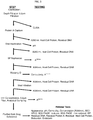
- the methods used for downstream processing of media harvested from the bioreactor are summarized in the flow chart below ( Fig. 2 ).
- the bioreactor culture media was clarified using Cuno 60M02 Maximizer depth filters followed by a Millipore Opticap 0.22um filter. The filtrate was collected into a sterile collection bag. Samples were obtained for CD24-Fc yield quantitation by ELISA.
- the clarified media was passed over a column of Protein A resin (GE Healthcare MabSelect) at a concentration not exceeding 16g/L of resin (based on ELISA) and a contact time of 4 minutes.
- the column was washed with the equilibration buffer (50mM Tris + 0.15M NaCl pH7.5), then with lOmM sodium citrate /citric acid pH 6.0 for 5cvs.
- Bound CD24Fc was eluted from the column using lOmM sodium citrate /citric acid pH 3.5
- the Protein A eluate fraction was immediately brought to pH 3.0 with the addition of 2M Hydrochloric acid and held at this pH for 30 minutes at ambient temperature. It was then brought to pH 5.0 with the addition of 1M Tris base, and filtered to clarity using a 0.65um glass fiber filter (Sartorius Sartopure GF2) and 0.2um (Sartorius Sartopore 2) into a sterile collection bag.
- 2M Hydrochloric acid was then brought to pH 5.0 with the addition of 1M Tris base, and filtered to clarity using a 0.65um glass fiber filter (Sartorius Sartopure GF2) and 0.2um (Sartorius Sartopore 2) into a sterile collection bag.
- the column was washed with the equilibration buffer (lOmM sodium citrate / citric acid pH 5.0) and bound CD24Fc was eluted from the column using lOmM sodium citrate / citric acid + 0.2M NaCl pH5.0.
- the effluent was collected into a sterile collection bag.
- the SP-Sepharose elute was adjusted to pH 7.5 by the addition of 1M Tris base and diluted with WFI to reduce the conductivity.
- the filter was washed with the equilibration buffer (10mM Tris pH 7.5) and the CD24-Fc is contained in the flow through and is collected into a sterile collection bag.
- the Mustang Q flow through was then filtered at a constant pressure of 30 psi through a 0.2mM filter and a Millipore NFP viral filter (nominal pore size 20nm) and was collected into a sterile collection bag.
- the product was concentrated and diafiltered using a 10kDa ultrafiltration membrane (Millipore Prep/Scale) into a lOmM sodium phosphate, 150mM sodium chloride pH 7.2 at approximately 10mg/mL final concentration as determined by absorbance at 280nm.
- Analytical samples were drawn from the bulk whilst in a biosafety cabinet. Labeling was performed and the samples were delivered to QC for testing while the bulk aliquots were stored at 2-8°C pending release.
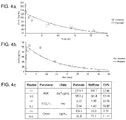
- CD24Fc 1 mg of CD24Fc (CD24Fc) was injected into naive C57BL/6 mice and collected blood samples at different timepoints (5 min, 1 hr, 4 hrs, 24 hrs, 48 hrs, 7 days, 14 days and 21 days) with 3 mice in each timepoint.
- the sera were diluted 1:100 and the levels of CD24Fc was detected using a sandwich ELISA using purified anti-human CD24 (3.3 ⁇ g/ml) as the capturing antibody and peroxidase conjugated goat anti-human IgG Fc (5 ⁇ g/ml) as the detecting antibodies.
- Fig. 4a The decay curve of CD24Fc revealed a typical biphase decay of the protein.
- the first biodistribution phase had a half-life of 12.4 hours.
- the second phase follows a model of first-order elimination from the central compartment.
- the half-life for the second phase was 9.54 days, which is similar to that of antibodies in vivo.
- the initial 2 subjects were 1 study drug recipient and 1 placebo recipient on Day 1.
- the 3rd to 5th and 6th to 8th subjects were dosed after Day 7 (a minimum of 24 hours apart between the subgroups).
- Each subject was dosed at least 1 hour apart in the same subgroup. If necessary, dosing of the rest of subjects was delayed pending review of any significant safety issues that may have arisen during the post-dose period involving the first or second subgroups in that cohort.
- the subsequent cohort was dosed at least 3 weeks after the prior cohort.
- the Screening Visit (Visit 1) occured up to 21 days prior to the beginning of the active treatment period. After providing informed consent, subjects underwent screening procedures for eligibility.
- Subjects were admitted to the Clinical Pharmacology Unit (CPU) on Day -1 (Visit 2), and the randomized treatment period began on Day 1 following a 10-hour minimum overnight fast. Subjects were randomly assigned to treatment with CD24Fc or placebo as a single dose. Subjects remained confined until the morning of Day 4.
- CPU Clinical Pharmacology Unit
- Visit 7 was the final visit for all subjects.
- Duration of Treatment The total study duration for each subject was up to 63 days. Single-dose administration occurred on Day 1.
- Diagnosis and Main Criteria for Inclusion The population for this study was healthy males and females between the ages of 18 and 55 years, inclusive, with a body mass index between 18 kg/m 2 and 30 kg/m 2 , inclusive.
- CD24Fc single dose of 10 mg, 30 mg, 60 mg, 120 mg, or 240 mg administered via IV infusion; lot number: 09MM-036.
- CD24Fc was a fully humanized fusion protein consisting of the mature sequence of human CD24 and the fragment crystallizable region of human immunoglobulin G1 (IgG1Fc).
- CD24Fc was supplied as a sterile, clear, colorless, preservative-free, aqueous solution for IV administration.
- CD24Fc was formulated as single dose injection solution, at a concentration of 10 mg/mL and a pH of 7.2.
- Each CD24Fc vial contained 160 mg of CD24Fc, 5.3 mg of sodium chloride, 32.6 mg of sodium phosphate dibasic heptahydrate, and 140 mg of sodium phosphate monobasic monohydrate in 16 mL ⁇ 0.2 mL of CD24Fc.
- CD24Fc was supplied in clear borosilicate glass vials with chlorobutyl rubber stoppers and aluminum flip-off seals.
- the intent-to-treat (ITT) Population consisted of all subjects who received at least 1 dose of the study drug.
- the ITT Population was the primary analysis population for subject information and safety evaluation.
- This example shows an analysis of the pharmacokinetics of a CD24 protein in humans.
- the mean plasma concentration of CD24Fc increased proportionally to the dose of CD24Fc administered.
- the maximum mean plasma concentration of CD24Fc was reached at 1 hour post-dose.
- the maximum mean plasma concentration of CD24Fc for the 120 mg group was reached at 2 hours post-dose.
- the mean plasma concentration of CD24Fc for all groups had decreased to between 2% and 4% of the maximum mean plasma concentration.
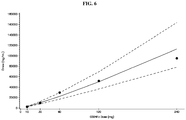
- Fig. 6 shows a dose proportionality plot of CD24Fc C max versus dose for the PK Evaluable Population.
- Fig. 7 shows a dose proportionality plot of CD24Fc AUC 0 - 42d versus dose for the PK Evaluable Population.
- Fig. 8 shows a dose proportionality plot of CD24Fc AUC 0-inf versus dose for the PK Evaluable Population.
- Table 4 shows a power analysis of dose proportionality.
- the C max slope estimate was 1.172 with a 90% CI of 1.105 to 1.240.
- the AUC 0 - 42d slope estimate was 1.088 with a 90% CI of 1.027 to 1.148.
- the AUC 0-inf slope estimate was 1.087 with a 90% CI of 1.026 to 1.1.
- the C max and AUCs of plasma CD24Fc increased proportionally to the doses administered in mouse, monkey and human.
- the plasma CD24Fc reached T max between 1.01 and 1.34 hours.
- the t 1 ⁇ 2 of plasma CD24Fc ranged between 280.83 and 327.10 hours.
Landscapes
- Health & Medical Sciences (AREA)
- Life Sciences & Earth Sciences (AREA)
- Chemical & Material Sciences (AREA)
- Engineering & Computer Science (AREA)
- Immunology (AREA)
- Molecular Biology (AREA)
- General Health & Medical Sciences (AREA)
- Medicinal Chemistry (AREA)
- Urology & Nephrology (AREA)
- Biomedical Technology (AREA)
- Cell Biology (AREA)
- Hematology (AREA)
- Bioinformatics & Cheminformatics (AREA)
- Organic Chemistry (AREA)
- Biochemistry (AREA)
- Biophysics (AREA)
- Proteomics, Peptides & Aminoacids (AREA)
- Gastroenterology & Hepatology (AREA)
- Zoology (AREA)
- Pathology (AREA)
- Analytical Chemistry (AREA)
- Biotechnology (AREA)
- General Physics & Mathematics (AREA)
- Microbiology (AREA)
- Physics & Mathematics (AREA)
- Food Science & Technology (AREA)
- Animal Behavior & Ethology (AREA)
- Veterinary Medicine (AREA)
- Public Health (AREA)
- Toxicology (AREA)
- Pharmacology & Pharmacy (AREA)
- Endocrinology (AREA)
- Genetics & Genomics (AREA)
- General Chemical & Material Sciences (AREA)
- Vascular Medicine (AREA)
- Cardiology (AREA)
- Heart & Thoracic Surgery (AREA)
- Chemical Kinetics & Catalysis (AREA)
- Epidemiology (AREA)
- Nuclear Medicine, Radiotherapy & Molecular Imaging (AREA)
Priority Applications (1)
| Application Number | Priority Date | Filing Date | Title |
|---|---|---|---|
| HRP20201651TT HRP20201651T1 (hr) | 2015-05-07 | 2016-05-06 | Uporaba cd24 za snižavanje razina lipoproteina niske gustoće kolesterola |
Applications Claiming Priority (2)
| Application Number | Priority Date | Filing Date | Title |
|---|---|---|---|
| US201562158157P | 2015-05-07 | 2015-05-07 | |
| PCT/US2016/031109 WO2016179456A1 (en) | 2015-05-07 | 2016-05-06 | Use of cd24 for lowering low-density lipoprotein cholesterol levels |
Publications (3)
| Publication Number | Publication Date |
|---|---|
| EP3292144A1 EP3292144A1 (en) | 2018-03-14 |
| EP3292144A4 EP3292144A4 (en) | 2018-11-14 |
| EP3292144B1 true EP3292144B1 (en) | 2020-08-26 |
Family
ID=57218627
Family Applications (1)
| Application Number | Title | Priority Date | Filing Date |
|---|---|---|---|
| EP16790128.9A Active EP3292144B1 (en) | 2015-05-07 | 2016-05-06 | Use of cd24 for lowering low-density lipoprotein cholesterol levels |
Country Status (18)
| Country | Link |
|---|---|
| US (2) | US10369197B2 (https=) |
| EP (1) | EP3292144B1 (https=) |
| JP (1) | JP6751756B2 (https=) |
| KR (1) | KR20170141216A (https=) |
| CN (1) | CN107531772B (https=) |
| AU (1) | AU2016258084B2 (https=) |
| BR (1) | BR112017022394A2 (https=) |
| CA (1) | CA2982612A1 (https=) |
| EA (1) | EA038520B1 (https=) |
| ES (1) | ES2829235T3 (https=) |
| HK (1) | HK1249521A1 (https=) |
| HR (1) | HRP20201651T1 (https=) |
| HU (1) | HUE051866T2 (https=) |
| IL (1) | IL255086B (https=) |
| MX (1) | MX385941B (https=) |
| PT (1) | PT3292144T (https=) |
| WO (1) | WO2016179456A1 (https=) |
| ZA (1) | ZA201706846B (https=) |
Families Citing this family (10)
| Publication number | Priority date | Publication date | Assignee | Title |
|---|---|---|---|---|
| BR112017022394A2 (pt) * | 2015-05-07 | 2018-07-17 | Oncoimmune Inc | uso de cd24 para diminuir níveis de colesterol das lipoproteínas de baixa densidade |
| WO2018165204A1 (en) * | 2017-03-07 | 2018-09-13 | Oncoimmune, Inc. | Methods of use of soluble cd24 for treating systemic lupus erythematosus |
| WO2019113123A1 (en) * | 2017-12-04 | 2019-06-13 | Precithera, Inc. | TGF-ß RECEPTOR FUSION PROTEINS AND OTHER TGF-ß ANTAGONISTS FOR REDUCING TGF-ß SIGNALING |
| JP2021523929A (ja) * | 2018-03-05 | 2021-09-09 | オンコイミューン, インコーポレイテッド | 後天性免疫不全症候群(hiv/aids)の治療のための可溶性cd24の使用方法 |
| WO2019236474A1 (en) * | 2018-06-04 | 2019-12-12 | Oncoimmune, Inc. | Methods of use of cd24 for the prevention and treatment of leukemia relapse |
| EP3870604B1 (en) | 2018-10-26 | 2022-11-23 | F. Hoffmann-La Roche AG | Multispecific antibody screening method using recombinase mediated cassette exchange |
| EP3921338A4 (en) * | 2019-02-06 | 2022-11-23 | Oncoimmune Inc. | TARGETED CD24-SIGLEC INTERACTIONS TO TREAT AND PREVENT NON-ALCOHOLIC STEATOHEPATITIS |
| US20220000974A1 (en) * | 2019-02-06 | 2022-01-06 | Oncolmmune, Inc. | Targeting CD24-Siglec Interactions for Treating Subjects with Prediabetes or Diabetes |
| WO2021160173A1 (en) * | 2020-02-10 | 2021-08-19 | Oncoimmune, Inc. | Methods of use of soluble cd24 for treating viral pneumonia |
| WO2021160170A1 (en) * | 2020-02-10 | 2021-08-19 | Oncoimmune, Inc. | Methods of use of soluble cd24 for treating sars-cov-2 infection |
Family Cites Families (10)
| Publication number | Priority date | Publication date | Assignee | Title |
|---|---|---|---|---|
| US6544566B1 (en) * | 1999-04-23 | 2003-04-08 | Protein Technologies International, Inc. | Composition containing plant sterol, soy protein and isoflavone for reducing LDL cholesterol |
| EP1267909B1 (en) * | 2000-03-29 | 2010-07-28 | The Ohio State University Research Foundation | Methods of blocking tissue destruction by autoreactive t cells |
| CN1323544A (zh) * | 2000-05-13 | 2001-11-28 | 蛋白质技术国际公司 | 降低低密度脂蛋白胆固醇浓度的组合物和方法 |
| US20110002846A1 (en) * | 2007-12-21 | 2011-01-06 | Univeristy of Rochester | Cd24 as a brain tumor stem cell marker and a diagnostic and therapeutic target in primary neural and glial tumors of the brain |
| US8163281B2 (en) * | 2009-03-04 | 2012-04-24 | The Regents Of The University Of Michigan | Treatment of drug-related side effect and tissue damage by targeting the CD24-HMGB1-Siglec10 axis |
| US8354520B2 (en) * | 2009-12-10 | 2013-01-15 | Kaohsiung Medical University | Composition and method for treating atherosclerosis, method for determining if a subject has atherosclerosis and method of screening an anti-atherosclerotic drug |
| DK2563385T3 (da) * | 2010-04-28 | 2017-11-06 | Oncoimmune Inc | Fremgangsmåder til anvendelse af opløselig cd24 til behandling af reumatoid artritis |
| US20130231464A1 (en) * | 2010-04-28 | 2013-09-05 | Oncolmmune, Inc. | Methods of use of soluble cd24 for therapy of rheumatoid arthritis |
| AU2012267489B2 (en) * | 2011-06-10 | 2017-03-16 | The Trustees Of The University Of Pennsylvania | System and method of cytomic vascular health profiling |
| BR112017022394A2 (pt) * | 2015-05-07 | 2018-07-17 | Oncoimmune Inc | uso de cd24 para diminuir níveis de colesterol das lipoproteínas de baixa densidade |
-
2016
- 2016-05-06 BR BR112017022394A patent/BR112017022394A2/pt not_active IP Right Cessation
- 2016-05-06 JP JP2018510322A patent/JP6751756B2/ja not_active Expired - Fee Related
- 2016-05-06 WO PCT/US2016/031109 patent/WO2016179456A1/en not_active Ceased
- 2016-05-06 EP EP16790128.9A patent/EP3292144B1/en active Active
- 2016-05-06 ES ES16790128T patent/ES2829235T3/es active Active
- 2016-05-06 HK HK18107984.3A patent/HK1249521A1/zh unknown
- 2016-05-06 PT PT167901289T patent/PT3292144T/pt unknown
- 2016-05-06 CN CN201680026449.2A patent/CN107531772B/zh not_active Expired - Fee Related
- 2016-05-06 US US15/572,330 patent/US10369197B2/en not_active Expired - Fee Related
- 2016-05-06 CA CA2982612A patent/CA2982612A1/en not_active Abandoned
- 2016-05-06 EA EA201792418A patent/EA038520B1/ru unknown
- 2016-05-06 MX MX2017014095A patent/MX385941B/es unknown
- 2016-05-06 HR HRP20201651TT patent/HRP20201651T1/hr unknown
- 2016-05-06 KR KR1020177032235A patent/KR20170141216A/ko not_active Ceased
- 2016-05-06 HU HUE16790128A patent/HUE051866T2/hu unknown
- 2016-05-06 AU AU2016258084A patent/AU2016258084B2/en not_active Ceased
-
2017
- 2017-10-10 ZA ZA2017/06846A patent/ZA201706846B/en unknown
- 2017-10-17 IL IL255086A patent/IL255086B/en unknown
-
2019
- 2019-06-17 US US16/443,498 patent/US11026995B2/en not_active Expired - Fee Related
Non-Patent Citations (1)
| Title |
|---|
| None * |
Also Published As
| Publication number | Publication date |
|---|---|
| CA2982612A1 (en) | 2016-11-10 |
| EA201792418A1 (ru) | 2018-02-28 |
| AU2016258084B2 (en) | 2020-01-30 |
| ES2829235T3 (es) | 2021-05-31 |
| WO2016179456A1 (en) | 2016-11-10 |
| US11026995B2 (en) | 2021-06-08 |
| US10369197B2 (en) | 2019-08-06 |
| EP3292144A4 (en) | 2018-11-14 |
| US20190307841A1 (en) | 2019-10-10 |
| MX385941B (es) | 2025-03-18 |
| AU2016258084A1 (en) | 2017-11-02 |
| JP2018515605A (ja) | 2018-06-14 |
| EP3292144A1 (en) | 2018-03-14 |
| PT3292144T (pt) | 2020-11-05 |
| IL255086A0 (en) | 2017-12-31 |
| HUE051866T2 (hu) | 2021-03-29 |
| CN107531772B (zh) | 2021-09-21 |
| BR112017022394A2 (pt) | 2018-07-17 |
| ZA201706846B (en) | 2018-12-19 |
| HK1249521A1 (zh) | 2018-11-02 |
| HRP20201651T1 (hr) | 2020-12-25 |
| KR20170141216A (ko) | 2017-12-22 |
| MX2017014095A (es) | 2018-03-16 |
| IL255086B (en) | 2021-08-31 |
| JP6751756B2 (ja) | 2020-09-09 |
| EA038520B1 (ru) | 2021-09-09 |
| CN107531772A (zh) | 2018-01-02 |
| US20180110828A1 (en) | 2018-04-26 |
Similar Documents
| Publication | Publication Date | Title |
|---|---|---|
| US11026995B2 (en) | Use of CD24 for lowering low-density lipoprotein cholesterol levels | |
| US20200399345A1 (en) | Methods of use of soluble cd24 for therapy of rheumatoid arthritis | |
| EP3743088B1 (en) | Il-22 fc compositions and methods of use | |
| JP2019151655A (ja) | 関節リウマチの治療のための可溶性cd24の使用方法 | |
| US20210162006A1 (en) | Use of CD24 Proteins for Treating Leptin-Deficient Conditions | |
| JP2022118184A (ja) | コンジュゲートされたc1エステラーゼインヒビター及びその使用 | |
| US20230108492A1 (en) | Methods of use of soluble cd24 for treating viral pneumonia | |
| EP3624838B1 (en) | Methods of use of soluble cd24 for neuroprotection and remyelination | |
| KR20190126801A (ko) | 전신 홍반성 루푸스를 치료하기 위한 가용성 cd24의 사용 방법 | |
| EP3921339A2 (en) | Targeting cd24-siglec interactions for treating subjects with prediabetes or diabetes | |
| HK40002090A (en) | Use of cd24 proteins for treating leptin-deficient conditions | |
| HK40017772A (en) | Methods of use of soluble cd24 for treating systemic lupus erythematosus |
Legal Events
| Date | Code | Title | Description |
|---|---|---|---|
| STAA | Information on the status of an ep patent application or granted ep patent |
Free format text: STATUS: THE INTERNATIONAL PUBLICATION HAS BEEN MADE |
|
| PUAI | Public reference made under article 153(3) epc to a published international application that has entered the european phase |
Free format text: ORIGINAL CODE: 0009012 |
|
| STAA | Information on the status of an ep patent application or granted ep patent |
Free format text: STATUS: REQUEST FOR EXAMINATION WAS MADE |
|
| 17P | Request for examination filed |
Effective date: 20171206 |
|
| AK | Designated contracting states |
Kind code of ref document: A1 Designated state(s): AL AT BE BG CH CY CZ DE DK EE ES FI FR GB GR HR HU IE IS IT LI LT LU LV MC MK MT NL NO PL PT RO RS SE SI SK SM TR |
|
| AX | Request for extension of the european patent |
Extension state: BA ME |
|
| DAV | Request for validation of the european patent (deleted) | ||
| DAX | Request for extension of the european patent (deleted) | ||
| A4 | Supplementary search report drawn up and despatched |
Effective date: 20181015 |
|
| RIC1 | Information provided on ipc code assigned before grant |
Ipc: C07K 14/705 20060101ALI20181009BHEP Ipc: A61P 9/10 20060101ALI20181009BHEP Ipc: C12Q 1/60 20060101ALI20181009BHEP Ipc: A61K 38/17 20060101AFI20181009BHEP |
|
| REG | Reference to a national code |
Ref country code: DE Ref legal event code: R079 Ref document number: 602016042816 Country of ref document: DE Free format text: PREVIOUS MAIN CLASS: C07K0014705000 Ipc: A61K0038170000 |
|
| RIC1 | Information provided on ipc code assigned before grant |
Ipc: C12Q 1/60 20060101ALI20190725BHEP Ipc: C07K 14/705 20060101ALI20190725BHEP Ipc: A61K 38/17 20060101AFI20190725BHEP Ipc: G01N 33/92 20060101ALI20190725BHEP Ipc: A61P 9/10 20060101ALI20190725BHEP Ipc: G01N 33/50 20060101ALI20190725BHEP |
|
| GRAP | Despatch of communication of intention to grant a patent |
Free format text: ORIGINAL CODE: EPIDOSNIGR1 |
|
| STAA | Information on the status of an ep patent application or granted ep patent |
Free format text: STATUS: GRANT OF PATENT IS INTENDED |
|
| INTG | Intention to grant announced |
Effective date: 20191001 |
|
| GRAJ | Information related to disapproval of communication of intention to grant by the applicant or resumption of examination proceedings by the epo deleted |
Free format text: ORIGINAL CODE: EPIDOSDIGR1 |
|
| STAA | Information on the status of an ep patent application or granted ep patent |
Free format text: STATUS: REQUEST FOR EXAMINATION WAS MADE |
|
| GRAS | Grant fee paid |
Free format text: ORIGINAL CODE: EPIDOSNIGR3 |
|
| STAA | Information on the status of an ep patent application or granted ep patent |
Free format text: STATUS: GRANT OF PATENT IS INTENDED |
|
| GRAP | Despatch of communication of intention to grant a patent |
Free format text: ORIGINAL CODE: EPIDOSNIGR1 |
|
| INTC | Intention to grant announced (deleted) | ||
| INTG | Intention to grant announced |
Effective date: 20200303 |
|
| GRAJ | Information related to disapproval of communication of intention to grant by the applicant or resumption of examination proceedings by the epo deleted |
Free format text: ORIGINAL CODE: EPIDOSDIGR1 |
|
| GRAL | Information related to payment of fee for publishing/printing deleted |
Free format text: ORIGINAL CODE: EPIDOSDIGR3 |
|
| STAA | Information on the status of an ep patent application or granted ep patent |
Free format text: STATUS: REQUEST FOR EXAMINATION WAS MADE |
|
| GRAJ | Information related to disapproval of communication of intention to grant by the applicant or resumption of examination proceedings by the epo deleted |
Free format text: ORIGINAL CODE: EPIDOSDIGR1 |
|
| GRAP | Despatch of communication of intention to grant a patent |
Free format text: ORIGINAL CODE: EPIDOSNIGR1 |
|
| GRAR | Information related to intention to grant a patent recorded |
Free format text: ORIGINAL CODE: EPIDOSNIGR71 |
|
| STAA | Information on the status of an ep patent application or granted ep patent |
Free format text: STATUS: GRANT OF PATENT IS INTENDED |
|
| GRAA | (expected) grant |
Free format text: ORIGINAL CODE: 0009210 |
|
| STAA | Information on the status of an ep patent application or granted ep patent |
Free format text: STATUS: THE PATENT HAS BEEN GRANTED |
|
| INTC | Intention to grant announced (deleted) | ||
| RAP1 | Party data changed (applicant data changed or rights of an application transferred) |
Owner name: ONCOIMMUNE, INC. |
|
| RIN1 | Information on inventor provided before grant (corrected) |
Inventor name: LIU, YANG Inventor name: ZHENG, PAN |
|
| INTG | Intention to grant announced |
Effective date: 20200716 |
|
| AK | Designated contracting states |
Kind code of ref document: B1 Designated state(s): AL AT BE BG CH CY CZ DE DK EE ES FI FR GB GR HR HU IE IS IT LI LT LU LV MC MK MT NL NO PL PT RO RS SE SI SK SM TR |
|
| REG | Reference to a national code |
Ref country code: GB Ref legal event code: FG4D |
|
| REG | Reference to a national code |
Ref country code: CH Ref legal event code: EP |
|
| REG | Reference to a national code |
Ref country code: AT Ref legal event code: REF Ref document number: 1305709 Country of ref document: AT Kind code of ref document: T Effective date: 20200915 |
|
| REG | Reference to a national code |
Ref country code: IE Ref legal event code: FG4D |
|
| REG | Reference to a national code |
Ref country code: DE Ref legal event code: R096 Ref document number: 602016042816 Country of ref document: DE |
|
| REG | Reference to a national code |
Ref country code: DK Ref legal event code: T3 Effective date: 20201001 |
|
| REG | Reference to a national code |
Ref country code: FI Ref legal event code: FGE |
|
| REG | Reference to a national code |
Ref country code: HR Ref legal event code: TUEP Ref document number: P20201651 Country of ref document: HR |
|
| REG | Reference to a national code |
Ref country code: CH Ref legal event code: NV Representative=s name: PATENTBUERO PAUL ROSENICH AG BUERO- UND GEWERB, LI |
|
| REG | Reference to a national code |
Ref country code: SE Ref legal event code: TRGR Ref country code: RO Ref legal event code: EPE |
|
| REG | Reference to a national code |
Ref country code: PT Ref legal event code: SC4A Ref document number: 3292144 Country of ref document: PT Date of ref document: 20201105 Kind code of ref document: T Free format text: AVAILABILITY OF NATIONAL TRANSLATION Effective date: 20201029 |
|
| REG | Reference to a national code |
Ref country code: NL Ref legal event code: FP |
|
| REG | Reference to a national code |
Ref country code: HR Ref legal event code: T1PR Ref document number: P20201651 Country of ref document: HR |
|
| REG | Reference to a national code |
Ref country code: LT Ref legal event code: MG4D |
|
| PG25 | Lapsed in a contracting state [announced via postgrant information from national office to epo] |
Ref country code: BG Free format text: LAPSE BECAUSE OF FAILURE TO SUBMIT A TRANSLATION OF THE DESCRIPTION OR TO PAY THE FEE WITHIN THE PRESCRIBED TIME-LIMIT Effective date: 20201126 Ref country code: LT Free format text: LAPSE BECAUSE OF FAILURE TO SUBMIT A TRANSLATION OF THE DESCRIPTION OR TO PAY THE FEE WITHIN THE PRESCRIBED TIME-LIMIT Effective date: 20200826 |
|
| REG | Reference to a national code |
Ref country code: NO Ref legal event code: T2 Effective date: 20200826 |
|
| PG25 | Lapsed in a contracting state [announced via postgrant information from national office to epo] |
Ref country code: LV Free format text: LAPSE BECAUSE OF FAILURE TO SUBMIT A TRANSLATION OF THE DESCRIPTION OR TO PAY THE FEE WITHIN THE PRESCRIBED TIME-LIMIT Effective date: 20200826 Ref country code: RS Free format text: LAPSE BECAUSE OF FAILURE TO SUBMIT A TRANSLATION OF THE DESCRIPTION OR TO PAY THE FEE WITHIN THE PRESCRIBED TIME-LIMIT Effective date: 20200826 |
|
| REG | Reference to a national code |
Ref country code: HU Ref legal event code: AG4A Ref document number: E051866 Country of ref document: HU |
|
| PG25 | Lapsed in a contracting state [announced via postgrant information from national office to epo] |
Ref country code: EE Free format text: LAPSE BECAUSE OF FAILURE TO SUBMIT A TRANSLATION OF THE DESCRIPTION OR TO PAY THE FEE WITHIN THE PRESCRIBED TIME-LIMIT Effective date: 20200826 Ref country code: SM Free format text: LAPSE BECAUSE OF FAILURE TO SUBMIT A TRANSLATION OF THE DESCRIPTION OR TO PAY THE FEE WITHIN THE PRESCRIBED TIME-LIMIT Effective date: 20200826 |
|
| REG | Reference to a national code |
Ref country code: HR Ref legal event code: ODRP Ref document number: P20201651 Country of ref document: HR Payment date: 20210421 Year of fee payment: 6 |
|
| REG | Reference to a national code |
Ref country code: DE Ref legal event code: R097 Ref document number: 602016042816 Country of ref document: DE |
|
| PG25 | Lapsed in a contracting state [announced via postgrant information from national office to epo] |
Ref country code: AL Free format text: LAPSE BECAUSE OF FAILURE TO SUBMIT A TRANSLATION OF THE DESCRIPTION OR TO PAY THE FEE WITHIN THE PRESCRIBED TIME-LIMIT Effective date: 20200826 |
|
| REG | Reference to a national code |
Ref country code: ES Ref legal event code: FG2A Ref document number: 2829235 Country of ref document: ES Kind code of ref document: T3 Effective date: 20210531 |
|
| PG25 | Lapsed in a contracting state [announced via postgrant information from national office to epo] |
Ref country code: SK Free format text: LAPSE BECAUSE OF FAILURE TO SUBMIT A TRANSLATION OF THE DESCRIPTION OR TO PAY THE FEE WITHIN THE PRESCRIBED TIME-LIMIT Effective date: 20200826 |
|
| PLBE | No opposition filed within time limit |
Free format text: ORIGINAL CODE: 0009261 |
|
| STAA | Information on the status of an ep patent application or granted ep patent |
Free format text: STATUS: NO OPPOSITION FILED WITHIN TIME LIMIT |
|
| 26N | No opposition filed |
Effective date: 20210527 |
|
| PG25 | Lapsed in a contracting state [announced via postgrant information from national office to epo] |
Ref country code: SI Free format text: LAPSE BECAUSE OF FAILURE TO SUBMIT A TRANSLATION OF THE DESCRIPTION OR TO PAY THE FEE WITHIN THE PRESCRIBED TIME-LIMIT Effective date: 20200826 |
|
| PGFP | Annual fee paid to national office [announced via postgrant information from national office to epo] |
Ref country code: PL Payment date: 20220328 Year of fee payment: 7 |
|
| REG | Reference to a national code |
Ref country code: HR Ref legal event code: ODRP Ref document number: P20201651 Country of ref document: HR Payment date: 20220428 Year of fee payment: 7 |
|
| PGFP | Annual fee paid to national office [announced via postgrant information from national office to epo] |
Ref country code: NL Payment date: 20220414 Year of fee payment: 7 |
|
| REG | Reference to a national code |
Ref country code: AT Ref legal event code: UEP Ref document number: 1305709 Country of ref document: AT Kind code of ref document: T Effective date: 20200826 |
|
| PGFP | Annual fee paid to national office [announced via postgrant information from national office to epo] |
Ref country code: SE Payment date: 20220509 Year of fee payment: 7 Ref country code: RO Payment date: 20220502 Year of fee payment: 7 Ref country code: PT Payment date: 20220426 Year of fee payment: 7 Ref country code: NO Payment date: 20220425 Year of fee payment: 7 Ref country code: MC Payment date: 20220510 Year of fee payment: 7 Ref country code: LU Payment date: 20220518 Year of fee payment: 7 Ref country code: IT Payment date: 20220512 Year of fee payment: 7 Ref country code: IE Payment date: 20220425 Year of fee payment: 7 Ref country code: HU Payment date: 20220424 Year of fee payment: 7 Ref country code: HR Payment date: 20220428 Year of fee payment: 7 Ref country code: ES Payment date: 20220609 Year of fee payment: 7 Ref country code: DK Payment date: 20220425 Year of fee payment: 7 Ref country code: CZ Payment date: 20220419 Year of fee payment: 7 |
|
| PGFP | Annual fee paid to national office [announced via postgrant information from national office to epo] |
Ref country code: TR Payment date: 20220427 Year of fee payment: 7 Ref country code: GR Payment date: 20220426 Year of fee payment: 7 Ref country code: FI Payment date: 20220425 Year of fee payment: 7 Ref country code: CH Payment date: 20220413 Year of fee payment: 7 Ref country code: BE Payment date: 20220412 Year of fee payment: 7 Ref country code: AT Payment date: 20220425 Year of fee payment: 7 |
|
| PGFP | Annual fee paid to national office [announced via postgrant information from national office to epo] |
Ref country code: IS Payment date: 20220422 Year of fee payment: 7 |
|
| REG | Reference to a national code |
Ref country code: FR Ref legal event code: PLFP Year of fee payment: 8 |
|
| PG25 | Lapsed in a contracting state [announced via postgrant information from national office to epo] |
Ref country code: CY Free format text: LAPSE BECAUSE OF FAILURE TO SUBMIT A TRANSLATION OF THE DESCRIPTION OR TO PAY THE FEE WITHIN THE PRESCRIBED TIME-LIMIT Effective date: 20200826 |
|
| PGFP | Annual fee paid to national office [announced via postgrant information from national office to epo] |
Ref country code: FR Payment date: 20230412 Year of fee payment: 8 Ref country code: DE Payment date: 20230412 Year of fee payment: 8 |
|
| PGFP | Annual fee paid to national office [announced via postgrant information from national office to epo] |
Ref country code: GB Payment date: 20230412 Year of fee payment: 8 |
|
| REG | Reference to a national code |
Ref country code: HR Ref legal event code: PBON Ref document number: P20201651 Country of ref document: HR Effective date: 20230506 |
|
| REG | Reference to a national code |
Ref country code: NO Ref legal event code: MMEP |
|
| REG | Reference to a national code |
Ref country code: CH Ref legal event code: PL |
|
| REG | Reference to a national code |
Ref country code: SE Ref legal event code: EUG Ref country code: DK Ref legal event code: EBP Effective date: 20230531 |
|
| REG | Reference to a national code |
Ref country code: NL Ref legal event code: MM Effective date: 20230601 |
|
| REG | Reference to a national code |
Ref country code: AT Ref legal event code: MM01 Ref document number: 1305709 Country of ref document: AT Kind code of ref document: T Effective date: 20230506 |
|
| PG25 | Lapsed in a contracting state [announced via postgrant information from national office to epo] |
Ref country code: MC Free format text: LAPSE BECAUSE OF NON-PAYMENT OF DUE FEES Effective date: 20230531 |
|
| PG25 | Lapsed in a contracting state [announced via postgrant information from national office to epo] |
Ref country code: GR Free format text: LAPSE BECAUSE OF NON-PAYMENT OF DUE FEES Effective date: 20231208 |
|
| REG | Reference to a national code |
Ref country code: BE Ref legal event code: MM Effective date: 20230531 |
|
| PG25 | Lapsed in a contracting state [announced via postgrant information from national office to epo] |
Ref country code: SE Free format text: LAPSE BECAUSE OF NON-PAYMENT OF DUE FEES Effective date: 20230507 Ref country code: RO Free format text: LAPSE BECAUSE OF NON-PAYMENT OF DUE FEES Effective date: 20230506 Ref country code: PT Free format text: LAPSE BECAUSE OF NON-PAYMENT OF DUE FEES Effective date: 20231106 Ref country code: NO Free format text: LAPSE BECAUSE OF NON-PAYMENT OF DUE FEES Effective date: 20230531 Ref country code: MC Free format text: LAPSE BECAUSE OF NON-PAYMENT OF DUE FEES Effective date: 20230531 Ref country code: LU Free format text: LAPSE BECAUSE OF NON-PAYMENT OF DUE FEES Effective date: 20230506 Ref country code: LI Free format text: LAPSE BECAUSE OF NON-PAYMENT OF DUE FEES Effective date: 20230531 Ref country code: HU Free format text: LAPSE BECAUSE OF NON-PAYMENT OF DUE FEES Effective date: 20230507 Ref country code: HR Free format text: LAPSE BECAUSE OF NON-PAYMENT OF DUE FEES Effective date: 20230506 Ref country code: GR Free format text: LAPSE BECAUSE OF NON-PAYMENT OF DUE FEES Effective date: 20231208 Ref country code: FI Free format text: LAPSE BECAUSE OF NON-PAYMENT OF DUE FEES Effective date: 20230506 Ref country code: CZ Free format text: LAPSE BECAUSE OF NON-PAYMENT OF DUE FEES Effective date: 20230506 Ref country code: CH Free format text: LAPSE BECAUSE OF NON-PAYMENT OF DUE FEES Effective date: 20230531 Ref country code: AT Free format text: LAPSE BECAUSE OF NON-PAYMENT OF DUE FEES Effective date: 20230506 |
|
| REG | Reference to a national code |
Ref country code: IE Ref legal event code: MM4A |
|
| PG25 | Lapsed in a contracting state [announced via postgrant information from national office to epo] |
Ref country code: NL Free format text: LAPSE BECAUSE OF NON-PAYMENT OF DUE FEES Effective date: 20230601 |
|
| PG25 | Lapsed in a contracting state [announced via postgrant information from national office to epo] |
Ref country code: IE Free format text: LAPSE BECAUSE OF NON-PAYMENT OF DUE FEES Effective date: 20230506 |
|
| PG25 | Lapsed in a contracting state [announced via postgrant information from national office to epo] |
Ref country code: MK Free format text: LAPSE BECAUSE OF FAILURE TO SUBMIT A TRANSLATION OF THE DESCRIPTION OR TO PAY THE FEE WITHIN THE PRESCRIBED TIME-LIMIT Effective date: 20200826 Ref country code: IT Free format text: LAPSE BECAUSE OF NON-PAYMENT OF DUE FEES Effective date: 20230506 Ref country code: IE Free format text: LAPSE BECAUSE OF NON-PAYMENT OF DUE FEES Effective date: 20230506 Ref country code: DK Free format text: LAPSE BECAUSE OF NON-PAYMENT OF DUE FEES Effective date: 20230531 |
|
| PG25 | Lapsed in a contracting state [announced via postgrant information from national office to epo] |
Ref country code: BE Free format text: LAPSE BECAUSE OF NON-PAYMENT OF DUE FEES Effective date: 20230531 |
|
| REG | Reference to a national code |
Ref country code: ES Ref legal event code: FD2A Effective date: 20240628 |
|
| PG25 | Lapsed in a contracting state [announced via postgrant information from national office to epo] |
Ref country code: ES Free format text: LAPSE BECAUSE OF NON-PAYMENT OF DUE FEES Effective date: 20230507 |
|
| PG25 | Lapsed in a contracting state [announced via postgrant information from national office to epo] |
Ref country code: ES Free format text: LAPSE BECAUSE OF NON-PAYMENT OF DUE FEES Effective date: 20230507 |
|
| PG25 | Lapsed in a contracting state [announced via postgrant information from national office to epo] |
Ref country code: MT Free format text: LAPSE BECAUSE OF FAILURE TO SUBMIT A TRANSLATION OF THE DESCRIPTION OR TO PAY THE FEE WITHIN THE PRESCRIBED TIME-LIMIT Effective date: 20200826 |
|
| REG | Reference to a national code |
Ref country code: DE Ref legal event code: R119 Ref document number: 602016042816 Country of ref document: DE |
|
| GBPC | Gb: european patent ceased through non-payment of renewal fee |
Effective date: 20240506 |
|
| PG25 | Lapsed in a contracting state [announced via postgrant information from national office to epo] |
Ref country code: DE Free format text: LAPSE BECAUSE OF NON-PAYMENT OF DUE FEES Effective date: 20241203 |
|
| PG25 | Lapsed in a contracting state [announced via postgrant information from national office to epo] |
Ref country code: FR Free format text: LAPSE BECAUSE OF NON-PAYMENT OF DUE FEES Effective date: 20240531 |
|
| PG25 | Lapsed in a contracting state [announced via postgrant information from national office to epo] |
Ref country code: GB Free format text: LAPSE BECAUSE OF NON-PAYMENT OF DUE FEES Effective date: 20240506 |
|
| PG25 | Lapsed in a contracting state [announced via postgrant information from national office to epo] |
Ref country code: PL Free format text: LAPSE BECAUSE OF NON-PAYMENT OF DUE FEES Effective date: 20230506 |
|
| PG25 | Lapsed in a contracting state [announced via postgrant information from national office to epo] |
Ref country code: IS Free format text: LAPSE BECAUSE OF NON-PAYMENT OF DUE FEES Effective date: 20231204 |