EP3290202A1 - Elektrochromes giessharzverbundglas und verfahren zu dessen herstellung - Google Patents
Elektrochromes giessharzverbundglas und verfahren zu dessen herstellung Download PDFInfo
- Publication number
- EP3290202A1 EP3290202A1 EP17187863.0A EP17187863A EP3290202A1 EP 3290202 A1 EP3290202 A1 EP 3290202A1 EP 17187863 A EP17187863 A EP 17187863A EP 3290202 A1 EP3290202 A1 EP 3290202A1
- Authority
- EP
- European Patent Office
- Prior art keywords
- acrylate
- electrochromic
- resin composite
- cast resin
- composite glass
- Prior art date
- Legal status (The legal status is an assumption and is not a legal conclusion. Google has not performed a legal analysis and makes no representation as to the accuracy of the status listed.)
- Granted
Links
Images

Classifications
-
- B—PERFORMING OPERATIONS; TRANSPORTING
- B32—LAYERED PRODUCTS
- B32B—LAYERED PRODUCTS, i.e. PRODUCTS BUILT-UP OF STRATA OF FLAT OR NON-FLAT, e.g. CELLULAR OR HONEYCOMB, FORM
- B32B17/00—Layered products essentially comprising sheet glass, or glass, slag, or like fibres
- B32B17/06—Layered products essentially comprising sheet glass, or glass, slag, or like fibres comprising glass as the main or only constituent of a layer, next to another layer of a specific material
- B32B17/10—Layered products essentially comprising sheet glass, or glass, slag, or like fibres comprising glass as the main or only constituent of a layer, next to another layer of a specific material of synthetic resin
- B32B17/10005—Layered products essentially comprising sheet glass, or glass, slag, or like fibres comprising glass as the main or only constituent of a layer, next to another layer of a specific material of synthetic resin laminated safety glass or glazing
- B32B17/10009—Layered products essentially comprising sheet glass, or glass, slag, or like fibres comprising glass as the main or only constituent of a layer, next to another layer of a specific material of synthetic resin laminated safety glass or glazing characterized by the number, the constitution or treatment of glass sheets
- B32B17/10036—Layered products essentially comprising sheet glass, or glass, slag, or like fibres comprising glass as the main or only constituent of a layer, next to another layer of a specific material of synthetic resin laminated safety glass or glazing characterized by the number, the constitution or treatment of glass sheets comprising two outer glass sheets
-
- B—PERFORMING OPERATIONS; TRANSPORTING
- B32—LAYERED PRODUCTS
- B32B—LAYERED PRODUCTS, i.e. PRODUCTS BUILT-UP OF STRATA OF FLAT OR NON-FLAT, e.g. CELLULAR OR HONEYCOMB, FORM
- B32B17/00—Layered products essentially comprising sheet glass, or glass, slag, or like fibres
- B32B17/06—Layered products essentially comprising sheet glass, or glass, slag, or like fibres comprising glass as the main or only constituent of a layer, next to another layer of a specific material
- B32B17/10—Layered products essentially comprising sheet glass, or glass, slag, or like fibres comprising glass as the main or only constituent of a layer, next to another layer of a specific material of synthetic resin
- B32B17/10005—Layered products essentially comprising sheet glass, or glass, slag, or like fibres comprising glass as the main or only constituent of a layer, next to another layer of a specific material of synthetic resin laminated safety glass or glazing
- B32B17/10807—Making laminated safety glass or glazing; Apparatus therefor
- B32B17/10899—Making laminated safety glass or glazing; Apparatus therefor by introducing interlayers of synthetic resin
- B32B17/10908—Making laminated safety glass or glazing; Apparatus therefor by introducing interlayers of synthetic resin in liquid form
-
- G—PHYSICS
- G02—OPTICS
- G02F—OPTICAL DEVICES OR ARRANGEMENTS FOR THE CONTROL OF LIGHT BY MODIFICATION OF THE OPTICAL PROPERTIES OF THE MEDIA OF THE ELEMENTS INVOLVED THEREIN; NON-LINEAR OPTICS; FREQUENCY-CHANGING OF LIGHT; OPTICAL LOGIC ELEMENTS; OPTICAL ANALOGUE/DIGITAL CONVERTERS
- G02F1/00—Devices or arrangements for the control of the intensity, colour, phase, polarisation or direction of light arriving from an independent light source, e.g. switching, gating or modulating; Non-linear optics
- G02F1/01—Devices or arrangements for the control of the intensity, colour, phase, polarisation or direction of light arriving from an independent light source, e.g. switching, gating or modulating; Non-linear optics for the control of the intensity, phase, polarisation or colour
- G02F1/15—Devices or arrangements for the control of the intensity, colour, phase, polarisation or direction of light arriving from an independent light source, e.g. switching, gating or modulating; Non-linear optics for the control of the intensity, phase, polarisation or colour based on an electrochromic effect
-
- B—PERFORMING OPERATIONS; TRANSPORTING
- B32—LAYERED PRODUCTS
- B32B—LAYERED PRODUCTS, i.e. PRODUCTS BUILT-UP OF STRATA OF FLAT OR NON-FLAT, e.g. CELLULAR OR HONEYCOMB, FORM
- B32B17/00—Layered products essentially comprising sheet glass, or glass, slag, or like fibres
- B32B17/06—Layered products essentially comprising sheet glass, or glass, slag, or like fibres comprising glass as the main or only constituent of a layer, next to another layer of a specific material
- B32B17/10—Layered products essentially comprising sheet glass, or glass, slag, or like fibres comprising glass as the main or only constituent of a layer, next to another layer of a specific material of synthetic resin
- B32B17/10005—Layered products essentially comprising sheet glass, or glass, slag, or like fibres comprising glass as the main or only constituent of a layer, next to another layer of a specific material of synthetic resin laminated safety glass or glazing
- B32B17/10165—Functional features of the laminated safety glass or glazing
- B32B17/10431—Specific parts for the modulation of light incorporated into the laminated safety glass or glazing
-
- B—PERFORMING OPERATIONS; TRANSPORTING
- B32—LAYERED PRODUCTS
- B32B—LAYERED PRODUCTS, i.e. PRODUCTS BUILT-UP OF STRATA OF FLAT OR NON-FLAT, e.g. CELLULAR OR HONEYCOMB, FORM
- B32B17/00—Layered products essentially comprising sheet glass, or glass, slag, or like fibres
- B32B17/06—Layered products essentially comprising sheet glass, or glass, slag, or like fibres comprising glass as the main or only constituent of a layer, next to another layer of a specific material
- B32B17/10—Layered products essentially comprising sheet glass, or glass, slag, or like fibres comprising glass as the main or only constituent of a layer, next to another layer of a specific material of synthetic resin
- B32B17/10005—Layered products essentially comprising sheet glass, or glass, slag, or like fibres comprising glass as the main or only constituent of a layer, next to another layer of a specific material of synthetic resin laminated safety glass or glazing
- B32B17/10165—Functional features of the laminated safety glass or glazing
- B32B17/10431—Specific parts for the modulation of light incorporated into the laminated safety glass or glazing
- B32B17/10467—Variable transmission
- B32B17/10495—Variable transmission optoelectronic, i.e. optical valve
- B32B17/10513—Electrochromic layer
-
- B—PERFORMING OPERATIONS; TRANSPORTING
- B32—LAYERED PRODUCTS
- B32B—LAYERED PRODUCTS, i.e. PRODUCTS BUILT-UP OF STRATA OF FLAT OR NON-FLAT, e.g. CELLULAR OR HONEYCOMB, FORM
- B32B17/00—Layered products essentially comprising sheet glass, or glass, slag, or like fibres
- B32B17/06—Layered products essentially comprising sheet glass, or glass, slag, or like fibres comprising glass as the main or only constituent of a layer, next to another layer of a specific material
- B32B17/10—Layered products essentially comprising sheet glass, or glass, slag, or like fibres comprising glass as the main or only constituent of a layer, next to another layer of a specific material of synthetic resin
- B32B17/10005—Layered products essentially comprising sheet glass, or glass, slag, or like fibres comprising glass as the main or only constituent of a layer, next to another layer of a specific material of synthetic resin laminated safety glass or glazing
- B32B17/10807—Making laminated safety glass or glazing; Apparatus therefor
- B32B17/10899—Making laminated safety glass or glazing; Apparatus therefor by introducing interlayers of synthetic resin
- B32B17/10908—Making laminated safety glass or glazing; Apparatus therefor by introducing interlayers of synthetic resin in liquid form
- B32B17/10917—Making laminated safety glass or glazing; Apparatus therefor by introducing interlayers of synthetic resin in liquid form between two pre-positioned glass layers
-
- B—PERFORMING OPERATIONS; TRANSPORTING
- B32—LAYERED PRODUCTS
- B32B—LAYERED PRODUCTS, i.e. PRODUCTS BUILT-UP OF STRATA OF FLAT OR NON-FLAT, e.g. CELLULAR OR HONEYCOMB, FORM
- B32B27/00—Layered products comprising a layer of synthetic resin
- B32B27/06—Layered products comprising a layer of synthetic resin as the main or only constituent of a layer, which is next to another layer of the same or of a different material
-
- B—PERFORMING OPERATIONS; TRANSPORTING
- B32—LAYERED PRODUCTS
- B32B—LAYERED PRODUCTS, i.e. PRODUCTS BUILT-UP OF STRATA OF FLAT OR NON-FLAT, e.g. CELLULAR OR HONEYCOMB, FORM
- B32B27/00—Layered products comprising a layer of synthetic resin
- B32B27/18—Layered products comprising a layer of synthetic resin characterised by the use of special additives
- B32B27/20—Layered products comprising a layer of synthetic resin characterised by the use of special additives using fillers, pigments, thixotroping agents
-
- B—PERFORMING OPERATIONS; TRANSPORTING
- B32—LAYERED PRODUCTS
- B32B—LAYERED PRODUCTS, i.e. PRODUCTS BUILT-UP OF STRATA OF FLAT OR NON-FLAT, e.g. CELLULAR OR HONEYCOMB, FORM
- B32B27/00—Layered products comprising a layer of synthetic resin
- B32B27/30—Layered products comprising a layer of synthetic resin comprising vinyl (co)polymers; comprising acrylic (co)polymers
- B32B27/308—Layered products comprising a layer of synthetic resin comprising vinyl (co)polymers; comprising acrylic (co)polymers comprising acrylic (co)polymers
-
- B—PERFORMING OPERATIONS; TRANSPORTING
- B32—LAYERED PRODUCTS
- B32B—LAYERED PRODUCTS, i.e. PRODUCTS BUILT-UP OF STRATA OF FLAT OR NON-FLAT, e.g. CELLULAR OR HONEYCOMB, FORM
- B32B33/00—Layered products characterised by particular properties or particular surface features, e.g. particular surface coatings; Layered products designed for particular purposes not covered by another single class
-
- B—PERFORMING OPERATIONS; TRANSPORTING
- B32—LAYERED PRODUCTS
- B32B—LAYERED PRODUCTS, i.e. PRODUCTS BUILT-UP OF STRATA OF FLAT OR NON-FLAT, e.g. CELLULAR OR HONEYCOMB, FORM
- B32B38/00—Ancillary operations in connection with laminating processes
-
- B—PERFORMING OPERATIONS; TRANSPORTING
- B32—LAYERED PRODUCTS
- B32B—LAYERED PRODUCTS, i.e. PRODUCTS BUILT-UP OF STRATA OF FLAT OR NON-FLAT, e.g. CELLULAR OR HONEYCOMB, FORM
- B32B7/00—Layered products characterised by the relation between layers; Layered products characterised by the relative orientation of features between layers, or by the relative values of a measurable parameter between layers, i.e. products comprising layers having different physical, chemical or physicochemical properties; Layered products characterised by the interconnection of layers
- B32B7/04—Interconnection of layers
- B32B7/10—Interconnection of layers at least one layer having inter-reactive properties
-
- C—CHEMISTRY; METALLURGY
- C03—GLASS; MINERAL OR SLAG WOOL
- C03C—CHEMICAL COMPOSITION OF GLASSES, GLAZES OR VITREOUS ENAMELS; SURFACE TREATMENT OF GLASS; SURFACE TREATMENT OF FIBRES OR FILAMENTS MADE FROM GLASS, MINERALS OR SLAGS; JOINING GLASS TO GLASS OR OTHER MATERIALS
- C03C17/00—Surface treatment of glass, not in the form of fibres or filaments, by coating
- C03C17/001—General methods for coating; Devices therefor
- C03C17/002—General methods for coating; Devices therefor for flat glass, e.g. float glass
-
- C—CHEMISTRY; METALLURGY
- C03—GLASS; MINERAL OR SLAG WOOL
- C03C—CHEMICAL COMPOSITION OF GLASSES, GLAZES OR VITREOUS ENAMELS; SURFACE TREATMENT OF GLASS; SURFACE TREATMENT OF FIBRES OR FILAMENTS MADE FROM GLASS, MINERALS OR SLAGS; JOINING GLASS TO GLASS OR OTHER MATERIALS
- C03C27/00—Joining pieces of glass to pieces of other inorganic material; Joining glass to glass other than by fusing
- C03C27/06—Joining glass to glass by processes other than fusing
- C03C27/10—Joining glass to glass by processes other than fusing with the aid of adhesive specially adapted for that purpose
-
- E—FIXED CONSTRUCTIONS
- E06—DOORS, WINDOWS, SHUTTERS, OR ROLLER BLINDS IN GENERAL; LADDERS
- E06B—FIXED OR MOVABLE CLOSURES FOR OPENINGS IN BUILDINGS, VEHICLES, FENCES OR LIKE ENCLOSURES IN GENERAL, e.g. DOORS, WINDOWS, BLINDS, GATES
- E06B3/00—Window sashes, door leaves, or like elements for closing wall or like openings; Layout of fixed or moving closures, e.g. windows in wall or like openings; Features of rigidly-mounted outer frames relating to the mounting of wing frames
- E06B3/66—Units comprising two or more parallel glass or like panes permanently secured together
-
- H—ELECTRICITY
- H01—ELECTRIC ELEMENTS
- H01B—CABLES; CONDUCTORS; INSULATORS; SELECTION OF MATERIALS FOR THEIR CONDUCTIVE, INSULATING OR DIELECTRIC PROPERTIES
- H01B1/00—Conductors or conductive bodies characterised by the conductive materials; Selection of materials as conductors
- H01B1/20—Conductive material dispersed in non-conductive organic material
- H01B1/22—Conductive material dispersed in non-conductive organic material the conductive material comprising metals or alloys
-
- H—ELECTRICITY
- H01—ELECTRIC ELEMENTS
- H01B—CABLES; CONDUCTORS; INSULATORS; SELECTION OF MATERIALS FOR THEIR CONDUCTIVE, INSULATING OR DIELECTRIC PROPERTIES
- H01B5/00—Non-insulated conductors or conductive bodies characterised by their form
- H01B5/14—Non-insulated conductors or conductive bodies characterised by their form comprising conductive layers or films on insulating-supports
-
- B—PERFORMING OPERATIONS; TRANSPORTING
- B32—LAYERED PRODUCTS
- B32B—LAYERED PRODUCTS, i.e. PRODUCTS BUILT-UP OF STRATA OF FLAT OR NON-FLAT, e.g. CELLULAR OR HONEYCOMB, FORM
- B32B2255/00—Coating on the layer surface
- B32B2255/20—Inorganic coating
-
- B—PERFORMING OPERATIONS; TRANSPORTING
- B32—LAYERED PRODUCTS
- B32B—LAYERED PRODUCTS, i.e. PRODUCTS BUILT-UP OF STRATA OF FLAT OR NON-FLAT, e.g. CELLULAR OR HONEYCOMB, FORM
- B32B2307/00—Properties of the layers or laminate
- B32B2307/40—Properties of the layers or laminate having particular optical properties
- B32B2307/402—Coloured
-
- B—PERFORMING OPERATIONS; TRANSPORTING
- B32—LAYERED PRODUCTS
- B32B—LAYERED PRODUCTS, i.e. PRODUCTS BUILT-UP OF STRATA OF FLAT OR NON-FLAT, e.g. CELLULAR OR HONEYCOMB, FORM
- B32B2307/00—Properties of the layers or laminate
- B32B2307/40—Properties of the layers or laminate having particular optical properties
- B32B2307/41—Opaque
-
- B—PERFORMING OPERATIONS; TRANSPORTING
- B32—LAYERED PRODUCTS
- B32B—LAYERED PRODUCTS, i.e. PRODUCTS BUILT-UP OF STRATA OF FLAT OR NON-FLAT, e.g. CELLULAR OR HONEYCOMB, FORM
- B32B2307/00—Properties of the layers or laminate
- B32B2307/50—Properties of the layers or laminate having particular mechanical properties
- B32B2307/558—Impact strength, toughness
-
- B—PERFORMING OPERATIONS; TRANSPORTING
- B32—LAYERED PRODUCTS
- B32B—LAYERED PRODUCTS, i.e. PRODUCTS BUILT-UP OF STRATA OF FLAT OR NON-FLAT, e.g. CELLULAR OR HONEYCOMB, FORM
- B32B2605/00—Vehicles
- B32B2605/08—Cars
Definitions
- the invention relates to an electrochromic G veiharzverbundglas that can be used as sun and glare protection.
- a disk structure is manufactured in a particularly simple, one-step casting resin process and thus has the necessary mechanical stability to be used in the field of building glazing or of vehicles and ships use.
- Electrochromic arrangements usually consist of two parallel aligned substrates made of glass or plastic, which are each provided on one side with a conductive transparent electrode.
- a first step an at least one of the two electrodes by evaporation, sputtering or vapor deposition, a mostly inorganic electrochromic Layer deposited.
- a non-electrochromic redox-active substance can also be applied to the second electrode.
- the two layers are connected to an electrolyte, so that the substrates are on the outside.
- Electrochromic layers of organic polymers are usually applied to the electrode by spin coating.
- Organic polymers are usually not only much cheaper, they also offer a greater variety of colors than the mostly blue-coloring metal oxides.
- the electrochromic polymer may also be deposited by electropolymerization directly on the conductive substrate. Typically, this is done from a polar solution, with large amounts of solvent and Leitsalzabfall incurred.
- Desirable are mechanically and thermally extremely stable electrochromic glass composites, as they are obtained only by casting resins.
- Film laminates based on PVB have a lower adhesion property and exhibit stability-influencing unfavorable flow properties at elevated temperatures.
- Conductive resins are commercially available, are mostly based on epoxides, and are rendered conductive by the addition of a substantial amount of metallic nickel or silver particles, giving them a greyish to black appearance. The lack of transparency makes these products unsuitable for use in electrochromic glass composites.
- EP 0 723 675 describes a transparent acrylate-based casting resin, which can take over the function of an electrolyte in an electrochromic arrangement by means of plasticizers and conductive salts. However, it contains no electrochromic substances or precursors. These layers of inorganic metal oxides must be applied to the substrate in a separate step.
- An electrochromic arrangement which provides the stability of cast resin composites in a one-step process and which can be used as electrically switchable sun and glare protection is not yet known.
- a reactive mixture which uses a high proportion of crosslinkable monomers based on acrylates or alkyl acrylates.
- the strong cross-linking creates a very strong glass composite, which is also suitable for overhead glazing or for inspection.
- Such a glass composite should withstand at least a force of 8 kN in the context of the stamping test according to DIN ISO 614 and form a still rigid, non-flowing composite above 60 ° C, as is the case with EVA or PVB-based laminates.
- the transparent conductive coating consists of or substantially contains FTO, ITO, ATO, AZO, carbon nanotubes or silver.
- the resin contains 1 to 10 wt .-% of at least one conductive salt, in particular selected from the group consisting of ClO 4 - , CF 3 SO 3 - , SbF 6 - , N (CF 2 SO 3 ) - , CF 3 CO 2 - , PF 6 - , OH - , BF 4 - , N (C 2 F 4 SO 2 ) - and combinations thereof, in particular in the form of lithium salts.
- at least one conductive salt in particular selected from the group consisting of ClO 4 - , CF 3 SO 3 - , SbF 6 - , N (CF 2 SO 3 ) - , CF 3 CO 2 - , PF 6 - , OH - , BF 4 - , N (C 2 F 4 SO 2 ) - and combinations thereof, in particular in the form of lithium salts.
- the resin may preferably contain up to 5% by weight of one or more n-electron rich organic monomers which irreversibly form electrochromic, highly conjugated polymers by electropolymerization. These can be switched back and forth by varying the voltage and their polarity between a neutral and a charged species, which is usually accompanied by an optically visible color change.
- Suitable electroactive monomers are, for example, pyrrole, thiophene, furan, 3,4-ethylenedioxythiophene, 3,4-ethylenedithiothiophene, 3,4-propylenedioxythiophene, 3,4- (2,2-dialkylpropylenedioxy) thiophene, bithiophene, carbazole, acetylene, phenylene and their derivatives and combinations of these. Also conceivable are organic electrochromic oligomers which are composed of these monomers.
- the cured cast resin with dissolved electrochromic dye preferably has a transparency of at least 80% in the visible region of the spectrum (wavelength range from 380 to 780 nm) and a transparency of at least 85% in the wavelength range from 430 to 780 nm.
- the material of the first and second glass sheets is selected from the group consisting of float glass, TVG or ESG, wherein the glass sheets preferably have a thickness in the range of 2 to 12 mm.
- Two float glass sheets of variable thickness, but ideally between 1-12 mm, provided with a transparent conductive coating are glued together with a spacer made of acrylic adhesive tape to form a hollow composite.
- the adhesive tape whose thickness can be between 0.2-2.0 mm and at the same time defines the distance between the disks, is glued along the edges of the glass to the side of the conductive coating of one disk and the second disk, also coated Side pressed on the tape, creating a cavity between the conductive layers. This is then filled via a funnel or a cannula with the casting resin. Any air pockets are removed with a cannula and syringe and the edges of the composite are sealed.
- the spacer is an adhesive tape, preferably with a thickness in the range of 0.1 to 2.0 mm, in particular from 0.5 to 1.5 mm.
- the cast resin composite glass system according to the invention passes the stamp test according to DIN ISO 614 up to a force of preferably 8 kN, in particular of 10 kN.
- a further preferred embodiment is characterized in that the first and second glass pane of the electrochromic casting resin composite are each a curved glass pane.
- one of the two glass panes has the transparent conductive coating on the convex side, while the other of the two glass panes has the transparent conductive coating on the concave side. This results in a bent electrochromic casting resin composite.
- step c) is preferably carried out by means of a cannula or a funnel, it being possible for air bubbles trapped in the intermediate space during filling to be removed by means of a cannula.
- the crosslinking in step d) is carried out by irradiation, in particular with UV radiation and / or thermally in an oven at temperatures in the range of 80 ° C to 120 ° C.
- At least one polymerization initiator is used, in particular a photoinitiator, preferably selected from the group consisting of 2,2-dimethoxy-2-phenylacetophenone, benzophenone and dimethoxyacetophenone and mixtures thereof, or a thermal initiator, preferably selected from the group consisting of Azoisobutyronitrile, dibenzoyl peroxide, salts of peroxodisulfate. In particular ammonium peroxodisulfate), tert-butyl peroxide, diammonium peroxide and mixtures thereof.
- a photoinitiator preferably selected from the group consisting of 2,2-dimethoxy-2-phenylacetophenone, benzophenone and dimethoxyacetophenone and mixtures thereof
- a thermal initiator preferably selected from the group consisting of Azoisobutyronitrile, dibenzoyl peroxide, salts of peroxodisulfate. In particular ammonium peroxodis
- the polymerization step is carried out at a higher voltage than the later switching voltage and, depending on the desired intensity of the effect, can be between 10 and 1200 s. Should different precursors different Oxidation potential may be included, this step can be repeated, wherein for the first polymerization step, the voltage corresponding to the precursor with the lowest oxidation potential is selected. In the repetition step, the polymerization of the second precursor takes place at the corresponding higher oxidation potential.
- the formed electrochromic layer is characterized by very fast switching times, at which 95% of the maximum color (transmission at absorption maximum of the electrochromic dye is minimal) is reached at 0.05 mW / cm 2 in a maximum of 15 seconds.
- each of the first and second glass panes used in step a) is a bent glass pane.
- one of the two glass panes has the transparent conductive coating on the convex side
- the other of the two glass panes has the transparent conductive coating on the concave side.
- These sheets of glass can be obtained, for example, by bending commercially available FTO / ITO coated sheets in a loose bonded assembly in a special process.
- two curved substrates are obtained, one each with the electrode material on the convex or the concave side.
- This special variant makes it possible to produce a bent casting resin composite with an electrochromic coating, preferably on the concave inner side. This represents a significant difference to previous methods, since the application of the electrochromic coatings is limited in the current process technology reasons on flat surfaces.
- the electrochromic cast resin composite glasses are used for building glazing or glazing of means of transport, in particular vehicles or ships, as sun protection or light aperture.
- the electrochromic laminated glass is prepared by bonding two ITO coated glasses of 5 mm float glass, which are connected by an acrylic adhesive tape of thickness 1.5 mm along the edge.
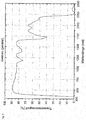
- the spectra of hemispheric transmission in the ON and OFF states are in Fig. 1 to see.
- the switching time to reach the maximum color (transmission (610 nm) ⁇ 48%) is 6 seconds at 1.5 V and 5 mA.
- the time for the discoloration (transmission (610 nm)> 68%) is 8 seconds.
- the electrochromic laminated glass is prepared by bonding two ITO coated glasses of 5 mm float glass, which are connected by an acrylic adhesive tape of thickness 1.5 mm along the edge.
- a mixture of 25.6 g of methyl methacrylate, 22.4 g of 1,4-butanediol diacrylate, 3.2 g of pentaerythritol tetraacrylate, 6.4 g of 2-hydroxyethyl methacrylate, 6.4 g of methacrylic acid, 48 g of ethylene carbonate, 48 g of poly (ethylene glycol ) diacrylate (M 700 g / mol), 16 g of lithium perchlorate, 18.8 g of 3,4- (2,2-dimethyl-propylenedioxy) thiophene (ProDOT-Me 2 ) and 0.28 g of 2,2-dimethoxy 2-phenylacetophenone and prepared in the dark for 30 min.
- the mixture is filled into the cavity between two 300 mm x 300 mm discs and then the edge of the window is sealed with a two-component resin.
- the glass is then left in a UV irradiation chamber for 30 min. hardened.
- a 3.2 V DC voltage for 3 min.
- a transparent poly (ProDOT-Me 2 ) film forms on the anode, which turns blue-violet when the voltage is removed.
- the composite is decolorized by briefly applying (5 seconds) a 1.5V voltage (OFF state), 1.5V of opposite polarity colors the disk blue-violet (ON state).
Landscapes
- Chemical & Material Sciences (AREA)
- Physics & Mathematics (AREA)
- Engineering & Computer Science (AREA)
- Nonlinear Science (AREA)
- Life Sciences & Earth Sciences (AREA)
- Chemical Kinetics & Catalysis (AREA)
- General Chemical & Material Sciences (AREA)
- Geochemistry & Mineralogy (AREA)
- Materials Engineering (AREA)
- Organic Chemistry (AREA)
- Dispersion Chemistry (AREA)
- General Physics & Mathematics (AREA)
- Optics & Photonics (AREA)
- Spectroscopy & Molecular Physics (AREA)
- Structural Engineering (AREA)
- Civil Engineering (AREA)
- Ceramic Engineering (AREA)
- Electrochromic Elements, Electrophoresis, Or Variable Reflection Or Absorption Elements (AREA)
- Joining Of Glass To Other Materials (AREA)
- Laminated Bodies (AREA)
Abstract
Description
- Die Erfindung betrifft ein elektrochromes Gießharzverbundglas, das als Sonnen- und Blendschutz genutzt werden kann. Ein derartiger Scheibenaufbau wird in einem besonders einfachen, einstufigen Gießharzverfahren gefertigt und verfügt damit über die notwendige mechanische Stabilität, um im Bereich der Gebäudeverglasung oder der von Fahrzeugen und Schiffen Verwendung zu finden.
- Sowohl bei elektrochromen Anordnungen als auch Gießharzverbundgläsern handelt es sich um seit Jahrzehnten etablierte Technologien.
- Elektrochrome Anordnungen bestehen üblicherweise aus zwei parallel ausgerichteten Substraten aus Glas oder Kunststoff, die jeweils einseitig mit einer leitfähigen transparenten Elektrode versehen sind. In einem ersten Schritt wird auf mindestens einem der beiden Elektroden durch Verdampfen, Sputtern oder Gasphasenabscheidung eine meist anorganische elektrochrome Schicht abgeschieden. Auf die zweite Elektrode kann wahlweise auch eine nicht elektrochrome redoxaktive Substanz aufgebracht werden. Anschließend werden die beiden Schichten mit einem Elektrolyten verbunden, so dass die Substrate außen liegen.
- Elektrochrome Schichten aus organischen Polymeren hingegen werden meist durch Spin-Coating auf die Elektrode aufgetragen. Organische Polymere sind in der Regel nicht nur deutlich günstiger, sie bieten auch eine größere Farbvielfalt als die zumeist blaufärbenden Metalloxide. In einer weniger gebräuchlichen Variante kann das elektrochrome Polymer auch durch Elektropolymerisation direkt auf dem leitfähigen Substrat abgeschieden werden. Typischerweise geschieht dies aus einer polaren Lösung, wobei große Mengen Lösungsmittel- und Leitsalzabfall anfallen.
- Erstrebenswert sind mechanisch und thermisch äußerst stabile elektrochrome Glasverbunde, wie sie nur durch Gießharze erhalten werden. Folienlaminate auf der Basis von PVB haben eine geringere Adhäsionseigenschaft und zeigen bei erhöhten Temperaturen stabilitätsbeeinflussende ungünstige Fließeigenschaften.
- Gleichzeitig verlangt der Markt nach vielfältigen Farben oder einfacher Graufärbung, Forderungen, die nur durch organische Substanzen erfüllt werden können. Dabei gilt es, Energie- und Materialaufwand während der Produktion gering zu halten. Dies ermöglicht die Gießharztechnologie, die es erlaubt, die farbgebenden Komponenten bereits mit dem Gießharz zu verarbeiten und Materialabfall auf der einen Seite, hohe Energieaufwendungen, die für das Aufdampfen anorganischer elektrochromer Schichten anfallen auf der anderen Seite, zu reduzieren und, am wichtigsten, die Haftfähigkeit zum Substrat zu verbessern, die durch zuvor aufgebrachte Schichten teilweise erheblich verringert wird.
- Leitfähige Gießharze sind kommerziell erhältlich, basieren meist auf Epoxiden und werden durch Zusatz einer beträchtlichen Menge metallischer Nickel-oder Silberpartikel leitfähig gemacht, wodurch sie ein gräulich bis schwarzes Äußerliches erhalten. Der Mangel an Transparenz macht diese Produkte untauglich für die Verwendung in elektrochromen Glasverbunden.
- In
EP 0 723 675 wird ein transparentes Gießharz auf Acrylatbasis beschrieben, das durch Weichmacher und Leitsalze die Funktion eines Elektrolyten in einer elektrochromen Anordnung übernehmen kann. Es enthält allerdings keine elektrochromen Substanzen oder Vorstufen. Diese Schichten aus anorganischen Metalloxiden müssen in einem separaten Schritt auf das Substrat aufgetragen werden. -
DE 10 118 617 beansprucht eine elektrochrome Verglasung für Gebäude durch die Verwendung von Sicherheitsglas und mindestens drei Scheiben, um so zu mechanisch stabileren Verbunden zu kommen. Da dies allerdings für ein deutliches Mehr an Gewicht sorgt, ist diese Lösung für die mobile Verwendung auf Fahrzeugen und Schiffen nicht geeignet. - In
US 20130235323 wird ein in-situ-Verfahren für die Erzeugung einer elektrochromen organischen Polymerschicht innerhalb der elektrochromen Anordnung aus einem Gelelektrolyten. Darin wird allerdings kein stabilisierendes Acrylharz verwendet. Die beschriebene Mischung besitzt daher nicht die mechanische Stabilität für die Verwendung in Glasfassaden mit steuerbarer Transparenz und sind entsprechend nicht als Bauteil für den aktiv schaltbaren Sonnenschutz in der Architektur oder im Schiffbau geeignet. - Eine elektrochrome Anordnung, die in einem ein-Schritt-Verfahren die Stabilität von Gießharzverbunden liefert und sich als elektrisch schaltbarer Sonnen-und Blendschutz gebrauchen lässt, ist bislang nicht bekannt.
- Es war daher Aufgabe der vorliegenden Erfindung, ein elektrochromes Gießharzverbundglas bereitzustellen, das eine besonders hohe mechanische Stabilität zeigt, wobei aber die elektrische Leitfähigkeit und die Transparenz nicht negativ beeinflusst werden sollen.
- Diese Aufgabe wird durch das elektrochrome Gießharzverbundglas mit den Merkmalen des Anspruchs 1 und das Verfahren zu dessen Herstellung mit den Merkmalen des Anspruchs 12 gelöst. Die weiteren abhängigen Ansprüche zeigen vorteilhafte Weiterbildungen auf. In Anspruch 17 werden erfindungsgemäße Verwendungen angegeben.
- Erfindungsgemäß wird ein elektrochromes Gießharzverbundglas bereitgestellt, das folgende Komponenten aufweist:
- eine erste und eine zweite Glasscheibe, die zumindest auf den zueinander zugewandten Seiten eine transparente leitfähige Beschichtung aufweisen,
- einen Abstandshalter zwischen der ersten und zweiten Glasscheibe, durch den ein Zwischenraum zwischen der ersten und zweiten Glasscheibe gebildet wird,
- den Zwischenraum mit einem aus Alkylacrylat- oder Acrylat-Monomeren und/oder deren Salzen gebildeten Harz sowie mindestens einer elektrochromen Verbindung oder Precursoren hiervon gefüllt ist.
- Erfindungsgemäß wird die Erhöhung der Hafteigenschaften des Gießharzes und der damit verbundenen Verbesserung der mechanischen Stabilität bei gleichzeitigem Vermeiden eines Verlustes der elektrischen Leitfähigkeit oder einer Reduktion der Transparenz dadurch, dass ein höherer Anteil der Alkylacrylat- oder Acrylat-Monomere eingesetzt wird, wodurch eine bessere Vernetzung erreicht wird.
- Zur Verbesserung der Hafteigenschaften soll ein reaktives Gemisch verwendet werden, das einen hohen Anteil vernetzbarer Monomere auf Basis von Acrylaten oder Alkylacrylaten verwendet werden. Durch die starke Vernetzung entsteht ein sehr starker Glasverbund, der sich auch für Überkopfverglasung oder zur Begehung eignet. Ein derartiger Glasverbund sollte im Rahmen des Stempeltests gemäß DIN ISO 614 mindestens einer Kraft von 8 kN standhalten und auch oberhalb von 60°C einen weiterhin starren, nicht fließenden Verbund bilden, wie es bei auf EVA oder PVB basierenden Laminaten der Fall ist.
- Die Acrylatmonomere oder Alkylacrylatmonomere, die zur Verbesserung der Hafteigenschaften im Gießharz zur Anwendung kommen, können aus der folgenden Gruppe stammen:
- Methylmethacrylat, Ethylacrylat, Butylacrylat, Hexylacrylat, Isobutylacrylat, tert-Butylacrylat, 1,4-Butandioldiacrylat, 1,4-Butanedioldimethacrylat, Pentaerythritoltetraacrylat, Pentaerythritoltriacrylat, 2-Hydroxyethylacrylat, 2-Hydroxyethylmethacrylat, 4-Hydroxybutylacrylat, 4-Hydroxybutylmethacrtylat, Hydroxypropylacrylat, Methacrylsäure, 2-Methoxyethylacrylat, 2-Carboxyethylacrylat, 2-(Dimethylamino)ethylacrylat, Methyl-2(hydroxymethyl)acrylat, Ethyl-2-(hydroxymethyl)acrylat, Di(ethylenglycol)ethyletheracrylat, 3-(Dimethylamino)propylacrylat, 2-(2-Ethoxyethoxy)ethylacrylat und 2-Hydroxy-3-phenoxypropylacrylat. Darüber hinaus sind Lithium-, Natrium- oder Kaliumsalze von Acrylat oder Alkylacrylaten sowie Oligomere von 2-Carboxyethylacrylat mit bis zu 5 Widerholungseinheiten geeignet. Auch die Verwendung kommerziell erhältlicher transparenter Gießharze mit hoher Klebekraft, beispielsweise Produkte der Firmen Kömmerling GmbH, Lange & Ritter GmbH, Worlée oder TER Chemicals können zur Verbesserung der Hafteigenschaften eingesetzt werden.
- Es ist weiter bevorzugt, dass die transparente leitfähige Beschichtung aus FTO, ITO, ATO, AZO, Kohlenstoffnanoröhrchen oder Silber besteht oder dieses im Wesentlichen enthält.
- Eine weitere bevorzugte Ausführungsform sieht vor, dass das Harz 1 bis 10 Gew.-% mindestens eines Leitsalzes enthält, insbesondere ausgewählt aus der Gruppe bestehend aus ClO4 -, CF3SO3 -, SbF6 -, N(CF2SO3)-, CF3CO2 -, PF6 -, OH-, BF4 -, N(C2F4SO2)- sowie Kombinationen hiervon, insbesondere in Form von Lithiumsalzen.
- Vorzugsweise enthält das Harz 10 bis 50 Gew.-% eines polaren Weichmachers, insbesondere ausgewählt aus der Gruppe bestehend aus
- organischen Ester der Kohlensäure, insbesondere Diethylcarbonat, Propylencarbonat, Methylethylcarbonat, Methylpropylcarbonat, Ethylpropylcarbonat oder Ethylencarbonat,
- Polyether, insbesondere von 1,4-Butandiol, 1,3-Butandiol oder 1,2-Ethandiol, mit oder ohne polymerisierbare Endgruppen, sowie
- Mischungen hiervon.
- Durch die Erhöhung des Anteils vernetzbarer Einheiten steigt der elektrische Widerstand des Gemisches und erschwert oder verhindert eine elektrochrome Schaltung. Durch die Zugabe eines Leitsalzes kann dem entgegengewirkt werden. Polare Weichmacher unterstützen die Dissoziation dieser Leitsalzkomponente, die sich im Gemisch aus vernetzenden Monomeren und Farbstoffmolekülen nur schwer löst. Durch eine geeignete Kombination der Einzelkomponenten können bis zu 10 Gew.-% des Leitsalzes darin vollständig gelöst werden. Dadurch kann eine sehr hohe Leitfähigkeit bei gleichbleibend hoher Stabilität des Gießharzverbundes gewährleistet werden, ein Kompromiss der für optisch transparente Produkte noch nicht ausreichend erreicht wurde.
- Das Harz kann vorzugsweise bis zu 5 Gew.-% eines oder mehrerer n-elektronenreichen organischen Monomers enthalten, die durch Elektropolymerisation irreversibel elektrochrome, stark konjugierte Polymere bilden. Diese lassen sich durch die Variation der Spannung sowie deren Polung zwischen einem neutralen und einer geladenen Spezies hin- und herschalten, was in der Regel mit einer optisch sichtbaren Farbänderung einhergeht. Geeignete elektroaktive Monomere sind beispielsweise Pyrrol, Thiophen, Furan, 3,4-Ethylendioxythiophen, 3,4-Ethylendithiothiophen, 3,4-Propylendioxythiophen, 3,4-(2,2-Dialkylpropylendioxy)thiophen, Bithiophen, Carbazol, Acetylen, Phenylen sowie deren Derivate und Kombinationen dieser. Denkbar sind auch organische elektrochrome Oligomere, die aus diesen Monomeren aufgebaut sind.
- Vorzugsweise weist das ausgehärtete Gießharz mit gelöstem elektrochromen Farbstoff im sichtbaren Bereich des Spektrums (Wellenlängenbereich von 380 bis 780 nm) eine Transparenz von mindestens 80 % und im Wellenlängenbereich von 430 bis 780 nm eine Transparenz von mindestens 85 % aufweist.
- Es ist bevorzugt, dass das Material der ersten und zweiten Glasscheibe ausgewählt ist aus der Gruppe bestehend aus Floatglas, TVG oder ESG, wobei die Glasscheiben bevorzugt eine Dicke im Bereich von 2 bis 12 mm aufweisen.
- Zwei Floatglasscheiben variabler Dicke, jedoch idealerweise zwischen 1-12 mm, die mit einer transparenten leitfähigen Beschichtung versehen sind, werden mit einem Spacer aus Acrylklebeband zu einem hohlen Verbund zusammengeklebt. Dazu wird das Klebeband, dessen Dicke zwischen 0,2-2,0 mm liegen kann und gleichzeitig den Abstand der Scheiben definiert, entlang der Kanten des Glases auf die Seite der leitfähigen Beschichtung der einen Scheibe geklebt und die zweite Scheibe, ebenfalls mit der beschichteten Seite auf das Klebeband gedrückt, so dass ein Hohlraum zwischen den leitfähigen Schichten entsteht. Dieser wird im Anschluss über einen Trichter oder eine Kanüle mit dem Gießharz befüllt. Eventuelle Lufteinschlüsse werden mit einer Kanüle und Spritze entfernt und die Kanten des Verbundes werden versiegelt.
- Eine weitere bevorzugte Ausführungsform sieht vor, dass der Abstandshalter ein Klebeband ist, bevorzugt mit einer Dicke im Bereich von 0,1 bis 2,0 mm, insbesondere von 0,5 bis 1,5 mm.
- Das erfindungsgemäße Gießharzverbundglassystem besteht den Stempeltest nach DIN ISO 614 bis zu einer Kraft von vorzugsweise 8 kN, insbesondere von 10 kN.
- Eine weitere bevorzugte Ausführungsform zeichnet sich dadurch aus, dass es sich bei der ersten und zweiten Glasscheibe des elektrochromen Gießharzverbundes jeweils um eine gebogene Glasscheibe handelt. Hierbei weist eine der beiden Glasscheiben die transparente leitfähige Beschichtung auf der konvexen Seite auf, während die andere der beiden Glasscheiben die transparente leitfähige Beschichtung auf der konkaven Seite aufweist. Es ergibt sich somit ein gebogener elektrochromer Gießharzverbund.
- Erfindungsgemäß wird ebenso ein Verfahren zur Herstellung eines elektrochromen Gießharzverbundglases, wie es zuvor beschrieben wurde, bereitgestellt, das folgende Schritte aufweist:
- a) Bereitstellung einer ersten und einer zweiten Glasscheibe, die zumindest auf einer der Seiten eine transparente leitfähige Beschichtung aufweisen,
- b) Herstellung einer Verbindung der mit der transparenten leitfähigen Beschichtung versehenen Seiten der ersten und zweiten Glasscheibe über mindestens einen Abstandshalter unter Ausbildung eines Zwischenraums zwischen der ersten und zweiten Glasscheibe,
- c) Befüllung des Zwischenraums mit einem Gemisch aus Alkylacrylat- oder Acrylat-Monomeren und mindestens einer elektrochromen Verbindung oder Precursoren hiervon,
- d) Thermische und/oder photochemische Vernetzung dieser Mischung unter Ausbildung eines transparenten, leitfähigen Harzes und
- e) Durch Anlegen einer Gleichspannung ein elektrochromes konjugiertes Polymer gebildet wird.
- Die Befüllung in Schritt c) erfolgt vorzugsweise mittels einer Kanüle oder eines Trichters, wobei gegebenenfalls bei der Befüllung im Zwischenraum eingeschlossene Luftblasen mittels einer Kanüle entfernt werden können.
- Vorzugsweise erfolgt die Vernetzung in Schritt d) durch Bestrahlung, insbesondere mit UV-Strahlung und/oder thermisch in einem Ofen bei Temperaturen im Bereich von 80°C bis 120°C.
- Für die Vernetzung wird vorzugsweise mindestens ein Polymerisationsstarter eingesetzt, insbesondere ein Photostarter, bevorzugt ausgewählt aus der Gruppe bestehend aus 2,2-Dimethoxy-2-phenylacetophenon, Benzophenon und Dimethoxyacetophenon sowie Mischungen hiervon, oder ein thermischer Starter, bevorzugt ausgewählt aus der Gruppe bestehend aus Azoisobutyronitril, Dibenzoylperoxid, Salze des Peroxodisulfats. Insbesondere Ammoniumperoxodisulfat), tert-Butylperoxid, Diammoniumperoxid sowie Mischungen hiervon.
- Das Anlegen einer geringen Gleichspannung an die beiden leitfähigen Beschichtungen der Gläser führt zur Elektropolymerisation und der Abscheidung der elektrochromen Schicht auf der Anode der Anordnung. Der Polymerisationsschritt wird bei einer höheren Spannung als der späteren Schaltspannung vollzogen und kann je nach gewünschter Intensität des Effektes zwischen 10 - 1200 s betragen. Sollten verschiedene Vorläufersubstanzen unterschiedlichen Oxidationspotentials enthalten sein, kann dieser Schritt wiederholt werden, wobei für den ersten Polymerisationsschritt die Spannung entsprechend dem Vorläufer mit dem geringsten Oxidationspotential gewählt wird. Im Wiederholungsschritt erfolgt dann die Polymerisation des zweiten Vorläufers bei dem entsprechenden höheren Oxidationspotential. Die gebildete elektrochrome Schicht zeichnet sich durch sehr schnelle Schaltzeiten aus, bei der 95% der maximalen Färbung (Transmission bei Absorptionsmaximum des elektrochromen Farbstoffs ist minimal) bei 0,05 mW/cm2 in maximal 15 Sekunden erreicht wird.
- Durch die nachgelagerte Bildung der elektrochromen Schicht kommt es zu einer deutlichen Steigerung der Haftfähigkeit des Gießharzes im Vergleich zu Glasverbünden, bei denen die farbändernde Schicht bereits vor der Härtung des Harzes entweder durch Elektro- oder Gasphasenabscheidung bzw. Sputtern gebildet wurde.
- Eine weitere bevorzugte Variante des erfindungsgemäßen Verfahrens zeichnet sich dadurch aus, dass es sich bei der in Schritt a) eingesetzten ersten und zweiten Glasscheibe jeweils um eine gebogene Glasscheibe handelt. Hierbei weist eine der beiden Glasscheiben die transparente leitfähige Beschichtung auf der konvexen Seite auf, während die andere der beiden Glasscheiben die transparente leitfähige Beschichtung auf der konkaven Seite aufweist. Diese Glasscheiben können beispielsweise dadurch erhalten werden, dass kommerziell erhältliche FTO-/ITO-beschichtete Scheiben in einem speziellen Verfahren im losen Verbund gebogen werden. So erhält man zwei gebogene Substrate, je eins mit dem Elektrodenmaterial auf der konvexen bzw. der konkaven Seite. Durch diese spezielle Variante lässt sich ein gebogener Gießharzverbund mit einer elektrochromen Beschichtung, vorzugsweise auf der konkaven Innenseite, herstellen. Dies stellt einen wesentlichen Unterschied zu bisherigen Verfahren dar, da die Aufbringung der elektrochromen Beschichtungen in den gängigen Verfahren technologiebedingt auf plane Flächen beschränkt ist.
- Verwendung finden die elektrochromen Gießharzverbundgläser zur Gebäudeverglasung oder Verglasung von Transportmitteln, insbesondere Fahrzeugen oder Schiffen als Sonnenschutz oder Lichtblende.
- Anhand der nachfolgenden Beispiele und Figur soll der erfindungsgemäße Gegenstand näher erläutert werden, ohne diesen auf die hier gezeigten spezifischen Ausführungsformen einschränken zu wollen.
-
Fig. 1 zeigt ein Transmissionsspektrum für das erfindungsgemäße Gießharzverbundglas gemäß Beispiel 1 im ungeschalteten Zustand (OFF) und geschaltetem Zustand (ON). -
Fig. 2 zeigt ein Transmissionsspektrum für das ausgehärtete Gießharz mit gelöstem, aber unpolymerisiertem elektrochromen Farbstoff. - Das elektrochrome Verbundglas wird durch Verkleben von zwei ITObeschichteten Gläsern aus 5 mm Floatglas, die durch ein Acrylklebeband der Dicke 1,5 mm entlang des Randes verbunden werden, vorbereitet. Es wird ein Gemisch aus 72 g Ködiguard UV der Firma KÖMMERLING GmbH (54 g 2-Ethylhexylacrylat, 9 g Acrylsäure, 7,3 g Methylmethacrylat, 1,7 g Tris-(2-methyoxyethoxy)vinylsilan), 36 g Propylencarbonat, 36 g Poly(ethylenglycol)diacrylat (M = 700 g/mol), 14,4 g Lithiumtrifluormethansulfonsäure, 0,2 g 2,2-Dimethoxy-2-phenylaceton-phenon und 1,6 g Ethylendioxythiophen hergestellt und im Dunkeln für 30 min. gerührt. Mittels einer Kanüle oder eines Trichters wird das Gemisch in den Hohlraum zwischen zwei 300 mm x 300 mm Scheiben gefüllt und anschließend der Rand des Fensters mit einem Zwei-Komponenten-Harz versiegelt. Im Anschluss wird ein Glas in einer UV-Bestrahlungskammer für 30 min. ausgehärtet. Durch Anlegen einer 3,0 V-Gleichspannung für 1 min. bildet sich ein transparenter Polyethylendioxythiophen-Film auf der Anode, der bei Entfernen der Spannung blau wird. Der Verbund wird durch kurzes (5 Sekunden) Anlegen einer 1,5 V-Spannung entfärbt (OFF-Zustand), 1,5 V entgegengesetzter Polung färbt die Scheibe blau (ON-Zustand). Beim Stempeldruckversuch angelehnt an DIN ISO 614 wird eine Kraft von Fmax = 11,1 kN (Weg bei Fmax) erreicht. Die Spektren der hemisphärischen Transmission im ON- und OFF-Zustand sind in
Fig. 1 zu sehen. Die Schaltzeit zum Erreichen der maximalen Färbung (Transmission (610 nm) < 48 %) beträgt bei 1.5 V und 5 mA 6 Sekunden. Die Zeit für die Entfärbung (Transmission (610 nm) > 68 %) beträgt 8 Sekunden. - Das elektrochrome Verbundglas wird durch Verkleben von zwei ITObeschichteten Gläsern aus 5 mm Floatglas, die durch ein Acrylklebeband der Dicke 1,5 mm entlang des Randes verbunden werden, vorbereitet. Es wird ein Gemisch aus 25,6 g Methylmethacrylat, 22,4 g 1,4-Butandioldiacrylat, 3,2 g Pentaerythritoltetraacrylat, 6,4 g 2-Hydroxyethylmethacrylat, 6,4 g Methacrylsäure, 48 g Ethylencarbonat, 48 g Poly(ethylenglycol)diacrylat (M = 700 g/mol), 16 g Lithiumperchlorat, 18,8 g 3,4-(2,2-Dimethyl-propylendioxy)thiophen (ProDOT-Me2) und 0,28 g 2,2-Dimethoxy-2-phenylacetophenon hergestellt und im Dunkeln für 30 min. gerührt. Mittels einer Kanüle oder eines Trichters wird das Gemisch in den Hohlraum zwischen zwei 300 mm x 300 mm Scheiben gefüllt und anschließend der Rand des Fensters mit einem Zwei-Komponenten-Harz versiegelt. Im Anschluss wird das Glas in einer UV-Bestrahlungskammer für 30 min. ausgehärtet. Durch Anlegen einer 3,2 V-Gleichspannung für 3 min. bildet sich ein transparenter Poly(ProDOT-Me2)-Film auf der Anode, der bei Entfernen der Spannung blau-violett wird. Der Verbund wird durch kurzes (5 Sekunden) Anlegen einer 1,5 V-Spannung entfärbt (OFF-Zustand), 1,5 V entgegengesetzter Polung färbt die Scheibe blau-violett (ON-Zustand).
Claims (17)
- Elektrochromes Gießharzverbundglas mit• einer ersten und einer zweiten Glasscheibe, die zumindest auf den zueinander zugewandten Seiten eine transparente leitfähige Beschichtung aufweisen,• einem Abstandshalter zwischen der ersten und zweiten Glasscheibe, durch den ein Zwischenraum zwischen der ersten und zweiten Glasscheibe gebildet wird,• der Zwischenraum mit einem aus Alkylacrylat- oder Acrylat-Monomeren und/oder deren Salzen gebildeten Harz enthaltend mindestens eine elektrochrome Verbindung oder Precursoren hiervon gefüllt ist,dadurch gekennzeichnet, dass das Harz aus 40 bis 80 Gew.-% der Alkylacrylat- oder Acrylat-Monomeren und/oder deren Salzen gebildet ist und einen Vernetzungsgrad von mindestens 15 % aufweist.
- Gießharzverbundglas nach Anspruch 1,
dadurch gekennzeichnet, dass die Alkylacrylat- oder Acrylat-Monomere ausgewählt sind aus der Gruppe bestehend aus Methylmethacrylat, Ethylacrylat, Butylacrylat, Hexylacrylat, Isobutylacrylat, tert-Butyl-acrylat, 1,4-Butandioldiacrylat, 1,4-Butanedioldimethacrylat, Pentaerythritoltetraacrylat, Pentaerythritoltriacrylat, 2-Hydroxyethylacrylat, 2-Hydroxyethylmethacrylat, 4-Hydroxybutylacrylat, 4-Hydroxybutylmethacrylat, Hydroxypropylacrylat, Methacrylsäure, 2-Methoxyethylacrylat, 2-Carboxyethylacrylat, 2-(Dimethylamino)ethylacrylat, Methyl-2-(hydroxymethyl)acrylat, Ethyl-2-(hydroxymethyl)acrylat, Di(ethylenglycol)ethyletheracrylat, 2-Phenoxyethylacrylat, 3-(Dimethylamino)propylacrylat, 2-(2-Ethoxyethoxy)ethylacrylat und 2-Hydroxy-3-phenoxypropylacrylat und Mischungen hiervon. - Gießharzverbundglas nach einem der vorhergehenden Ansprüche,
dadurch gekennzeichnet, dass die Salze der Monomere ausgewählt sind aus der Gruppe bestehend aus Lithium-, Natrium oder Kaliumsalze sowie Oligomere von 2-Carboxyethylacrylat mit bis zu 5 Wiederholungseinheiten. - Gießharzverbundglas nach einem der vorhergehenden Ansprüche,
dadurch gekennzeichnet, dass die transparente leitfähige Beschichtung aus FTO, ITO, ATO, AZO, Kohlenstoffnanoröhrchen oder Silber besteht oder dieses im Wesentlichen enthält. - Gießharzverbundglas nach einem der vorhergehenden Ansprüche,
dadurch gekennzeichnet, dass das Harz 1 bis 10 Gew.-% mindestens eines Leitsalzes enthält, insbesondere ausgewählt aus der Gruppe bestehend aus ClO4 -, CF3SO3 -, SbF6 -, N(CF2SO3)-, CF3CO2 -, PF6 -, OH-, BF4 -, N(C2F4SO2)- sowie Kombinationen hiervon, insbesondere in Form von Lithiumsalzen. - Gießharzverbundglas nach einem der vorhergehenden Ansprüche,
dadurch gekennzeichnet, dass das Harz 10 bis 50 Gew.-% einen polaren Weichmacher enthält, insbesondere ausgewählt aus der Gruppe bestehend aus• organische Ester der Kohlensäure, insbesondere Diethylcarbonat, Propylencarbonat, Methylethylcarbonat, Methylpropylcarbonat, Ethylpropylcarbonat oder Ethylencarbonat,• Polyether, insbesondere von 1,4-Butandiol, 1,3-Butandiol oder 1,2-Ethandiol, mit oder ohne polymerisierbare Endgruppen, sowie• Mischungen hiervon. - Gießharzverbundglas nach einem der vorhergehenden Ansprüche,
dadurch gekennzeichnet, dass das Harz 0,1 bis 5 Gew.-% mindestens eines π-elektronenreichen organischen Monomers enthält, insbesondere ausgewählt aus der Gruppe bestehend aus Pyrrol, Thiophen, Furan, 3,4-Ethylendioxythiophen, 3,4-Ethylendithiothiophen, 3 ,4-Propylendioxythiophen, 3 ,4-(2, 2-Dialkyl propylendioxy)thiophen, Bithiophen, Carbazol, Acetylen, Phenylen sowie Derivate und Kombinationen hiervon. - Gießharzverbundglas nach einem der vorhergehenden Ansprüche,
dadurch gekennzeichnet, dass das Material der ersten und zweiten Glasscheibe ausgewählt ist aus der Gruppe bestehend aus Floatglas, TVG oder ESG, wobei die Glasscheiben bevorzugt eine Dicke im Bereich von 2 bis 12 mm aufweisen. - Gießharzverbundglas nach einem der vorhergehenden Ansprüche,
dadurch gekennzeichnet, dass der Abstandshalter ein Klebeband ist, bevorzugt mit einer Dicke im Bereich von 0,1 bis 2,0 mm, insbesondere von 0,5 bis 1,5 mm. - Gießharzverbundglas nach einem der vorhergehenden Ansprüche,
dadurch gekennzeichnet, dass das Gießharzverbundglas den Stempeltest nach DIN ISO 614 bis zu einer Kraft von 10 kN, insbesondere von 8 kN besteht. - Gießharzverbundglas nach einem der vorhergehenden Ansprüche,
dadurch gekennzeichnet, dass nach Anlegen der zur Schaltung notwendigen Spannung bei einer Leistungsaufnahme von 0,05 mW/cm2 in maximal 15 sek 95% des für den Farbstoff spezifischen Schalthubs erreicht wird. - Verfahren zur Herstellung eines elektrochromen Gießharzverbundglases nach einem der vorhergehenden Ansprüche mit folgenden Schritten:a) Bereitstellung einer ersten und einer zweiten Glasscheibe, die zumindest auf einer Seiten eine transparente leitfähige Beschichtung aufweisen,b) Herstellung einer Verbindung der mit der transparenten leitfähigen Beschichtung versehenen Seiten der ersten und zweiten Glasscheibe über mindestens einen Abstandshalter unter Ausbildung eines Zwischenraums zwischen der ersten und zweiten Glasscheibe,c) Befüllung des Zwischenraums mit einem Gemisch aus Alkylacrylat- oder Acrylat-Monomeren und mindestens einer elektrochromen Verbindung oder Precursoren hiervon,d) Thermische und/oder photochemische Vernetzung dieser Mischung unter Ausbildung eines transparenten, leitfähigen Harzes unde) Durch Anlegen einer Gleichspannung ein elektrochromes konjugiertes Polymer gebildet wird.
- Verfahren nach Anspruch 12,
dadurch gekennzeichnet, dass die Befüllung in Schritt c) mittels einer Kanüle oder einem Trichter erfolgt, wobei gegebenenfalls bei der Befüllung im Zwischenraum eingeschlossene Luftblasen mittels einer Kanüle entfernt werden. - Verfahren nach einem der Ansprüche 12 oder 13,
dadurch gekennzeichnet, dass die Vernetzung in Schritt d) durch Bestrahlung, insbesondere mit UV-Strahlung und/oder thermisch in einem Ofen bei Temperaturen im Bereich von 80 °C bis 120 °C erfolgt. - Verfahren nach einem der Ansprüche 12 bis 14,
dadurch gekennzeichnet, dass für die Vernetzung mindestens ein Polymerisationsstarter, insbesondere ein Photostarter, bevorzugt ausgewählt aus der Gruppe bestehend aus 2,2-Dimethoxy-2-phenylacetophenon, Benzophenon und Dimethoxyacetophenon sowie Mischungen hiervon, oder ein thermischer Starter, bevorzugt ausgewählt aus der Gruppe bestehend aus Azoisobutyronitril, Dibenzoylperoxid, Salze des Peroxodisulfats, insbesondere Ammoniumperoxodisulfat), tert-Butylperoxid, Diammoniumperoxid sowie Mischungen hiervon, verwendet wird. - Verfahren nach einem der Ansprüche 12 bis 15,
dadurch gekennzeichnet, dass in Schritt e) eine Gleichspannung im Bereich von 0,1 V bis 5,0 V über einen Zeitraum von 10 sek bis 60 min angelegt wird. - Verwendung des elektrochromen Gießharzverbundglases nach einem der Ansprüche 1 bis 11 zur Gebäudeverglasung oder Verglasung von Transportmitteln, insbesondere Fahrzeugen oder Schiffen, als Sonnenschutz oder Lichtblende.
Applications Claiming Priority (1)
| Application Number | Priority Date | Filing Date | Title |
|---|---|---|---|
| DE102016216155.5A DE102016216155A1 (de) | 2016-08-29 | 2016-08-29 | Elektrochromes Gießharzverbundglas und Verfahren zu dessen Herstellung |
Publications (2)
| Publication Number | Publication Date |
|---|---|
| EP3290202A1 true EP3290202A1 (de) | 2018-03-07 |
| EP3290202B1 EP3290202B1 (de) | 2019-06-26 |
Family
ID=59886999
Family Applications (1)
| Application Number | Title | Priority Date | Filing Date |
|---|---|---|---|
| EP17187863.0A Active EP3290202B1 (de) | 2016-08-29 | 2017-08-25 | Elektrochromes giessharzverbundglas und verfahren zu dessen herstellung |
Country Status (6)
| Country | Link |
|---|---|
| EP (1) | EP3290202B1 (de) |
| JP (1) | JP2018036648A (de) |
| KR (1) | KR20180025239A (de) |
| CN (1) | CN107791607A (de) |
| DE (1) | DE102016216155A1 (de) |
| ES (1) | ES2746339T3 (de) |
Citations (3)
| Publication number | Priority date | Publication date | Assignee | Title |
|---|---|---|---|---|
| EP0683215A1 (de) * | 1994-05-17 | 1995-11-22 | Flachglas Aktiengesellschaft | Giessharzmischung zum Verkleben von im wesentlichen blattförmigen Gegenständen |
| EP1227362A1 (de) * | 2001-01-24 | 2002-07-31 | Gesimat GmbH, Gesellschaft für intelligente Materialen, und Technologien | Elektrochromes Verbundglas |
| US20130235323A1 (en) * | 2011-09-09 | 2013-09-12 | Gregory Allen Sotzing | Electrochromic devices prepared from the in situ formation of conjugated polymers |
Family Cites Families (1)
| Publication number | Priority date | Publication date | Assignee | Title |
|---|---|---|---|---|
| DE10118617B4 (de) | 2001-04-12 | 2007-11-08 | Econtrol-Glas Gmbh & Co.Kg | Verglasungseinheit für Gebäude |
-
2016
- 2016-08-29 DE DE102016216155.5A patent/DE102016216155A1/de not_active Ceased
-
2017
- 2017-08-25 EP EP17187863.0A patent/EP3290202B1/de active Active
- 2017-08-25 ES ES17187863T patent/ES2746339T3/es active Active
- 2017-08-28 CN CN201710750447.4A patent/CN107791607A/zh active Pending
- 2017-08-28 JP JP2017163619A patent/JP2018036648A/ja active Pending
- 2017-08-29 KR KR1020170109112A patent/KR20180025239A/ko not_active Withdrawn
Patent Citations (3)
| Publication number | Priority date | Publication date | Assignee | Title |
|---|---|---|---|---|
| EP0683215A1 (de) * | 1994-05-17 | 1995-11-22 | Flachglas Aktiengesellschaft | Giessharzmischung zum Verkleben von im wesentlichen blattförmigen Gegenständen |
| EP1227362A1 (de) * | 2001-01-24 | 2002-07-31 | Gesimat GmbH, Gesellschaft für intelligente Materialen, und Technologien | Elektrochromes Verbundglas |
| US20130235323A1 (en) * | 2011-09-09 | 2013-09-12 | Gregory Allen Sotzing | Electrochromic devices prepared from the in situ formation of conjugated polymers |
Also Published As
| Publication number | Publication date |
|---|---|
| KR20180025239A (ko) | 2018-03-08 |
| JP2018036648A (ja) | 2018-03-08 |
| EP3290202B1 (de) | 2019-06-26 |
| DE102016216155A1 (de) | 2018-03-01 |
| ES2746339T3 (es) | 2020-03-05 |
| CN107791607A (zh) | 2018-03-13 |
Similar Documents
| Publication | Publication Date | Title |
|---|---|---|
| DE3752026T2 (de) | Optische Flüssigkristall-Vorrichtung und Verfahren zu ihrer Herstellung. | |
| EP1227362B1 (de) | Elektrochromes Verbundglas | |
| DE69117849T2 (de) | Elektrochrome Fenster und Verfahren zu deren Herstellung | |
| DE69528148T2 (de) | Vorrichtung mit elektrochromer scheibe | |
| DE102008026339A1 (de) | Elektrisch schaltbares Sichtschutzfenster | |
| DE102015104439A1 (de) | Elektrochromes Element mit verbesserter Elektrolytschicht | |
| DE102009012544A1 (de) | Farbstoffsensibilisierte Solarzelle und Verfahren zur Herstellung derselben | |
| EP0961156A2 (de) | Elektrochrome Anordnung mit Gel-Elektrolyt und UV-Schutz | |
| DE60209127T2 (de) | Biegsame elektrochrome struktur und verfahren zu deren herstellung | |
| DE102009012545A1 (de) | Verfahren zur Herstellung der farbstoffsensibilisierten Solarzelle | |
| DE19810932A1 (de) | Elektrochrome Anordnung auf Basis von Poly-(3,4-ethylendioxy-thiophen)-Derivaten | |
| DE19834834A1 (de) | Selbsthaftende elektrochrome Elektrode und diese enthaltende Anordnungen | |
| EP4164880A1 (de) | Verfahren zum laminieren einer verbundscheibe umfassend ein funktionselement mit elektrisch schaltbaren optischen eigenschaften | |
| EP0811871A2 (de) | Elektrochrome Einheit | |
| EP3290202B1 (de) | Elektrochromes giessharzverbundglas und verfahren zu dessen herstellung | |
| DE102011015950A1 (de) | Optisches Bauteil und Verfahren zu dessen Herstellung | |
| DE4226757A1 (de) | Verbundglasscheiben | |
| DE10124363B4 (de) | Thermotrope Folie und Verfahren zu deren Herstellung | |
| WO2000052523A1 (de) | Elektrochromes element | |
| DE4417220A1 (de) | Elektrochrome Scheibenanordnung | |
| DE2035454C3 (de) | Elektrolumineszenz-Leuchtzelle | |
| DE4417219A1 (de) | Gießharzmischung zum Verbinden im wesentlichen plattenförmiger Elemente | |
| DE102006044069A1 (de) | Elektrochrome Anordnung | |
| EP3589667A1 (de) | Zusammensetzung zum herstellen eines polymers, ein verfahren zum herstellen des polymers, besagtes polymer, die verwendung des polymers sowie eine elektrisch dimmbare verglasung, die das polymer umfasst | |
| DE102007037620A1 (de) | Elektrochrome Displays, Herstellung dazu und Verwendung |
Legal Events
| Date | Code | Title | Description |
|---|---|---|---|
| PUAI | Public reference made under article 153(3) epc to a published international application that has entered the european phase |
Free format text: ORIGINAL CODE: 0009012 |
|
| STAA | Information on the status of an ep patent application or granted ep patent |
Free format text: STATUS: THE APPLICATION HAS BEEN PUBLISHED |
|
| AK | Designated contracting states |
Kind code of ref document: A1 Designated state(s): AL AT BE BG CH CY CZ DE DK EE ES FI FR GB GR HR HU IE IS IT LI LT LU LV MC MK MT NL NO PL PT RO RS SE SI SK SM TR |
|
| AX | Request for extension of the european patent |
Extension state: BA ME |
|
| STAA | Information on the status of an ep patent application or granted ep patent |
Free format text: STATUS: REQUEST FOR EXAMINATION WAS MADE |
|
| 17P | Request for examination filed |
Effective date: 20180810 |
|
| RBV | Designated contracting states (corrected) |
Designated state(s): AL AT BE BG CH CY CZ DE DK EE ES FI FR GB GR HR HU IE IS IT LI LT LU LV MC MK MT NL NO PL PT RO RS SE SI SK SM TR |
|
| GRAP | Despatch of communication of intention to grant a patent |
Free format text: ORIGINAL CODE: EPIDOSNIGR1 |
|
| STAA | Information on the status of an ep patent application or granted ep patent |
Free format text: STATUS: GRANT OF PATENT IS INTENDED |
|
| RIC1 | Information provided on ipc code assigned before grant |
Ipc: B32B 17/10 20060101AFI20190131BHEP |
|
| INTG | Intention to grant announced |
Effective date: 20190222 |
|
| GRAS | Grant fee paid |
Free format text: ORIGINAL CODE: EPIDOSNIGR3 |
|
| GRAA | (expected) grant |
Free format text: ORIGINAL CODE: 0009210 |
|
| STAA | Information on the status of an ep patent application or granted ep patent |
Free format text: STATUS: THE PATENT HAS BEEN GRANTED |
|
| AK | Designated contracting states |
Kind code of ref document: B1 Designated state(s): AL AT BE BG CH CY CZ DE DK EE ES FI FR GB GR HR HU IE IS IT LI LT LU LV MC MK MT NL NO PL PT RO RS SE SI SK SM TR |
|
| REG | Reference to a national code |
Ref country code: GB Ref legal event code: FG4D Free format text: NOT ENGLISH |
|
| REG | Reference to a national code |
Ref country code: CH Ref legal event code: EP |
|
| REG | Reference to a national code |
Ref country code: AT Ref legal event code: REF Ref document number: 1147815 Country of ref document: AT Kind code of ref document: T Effective date: 20190715 |
|
| REG | Reference to a national code |
Ref country code: DE Ref legal event code: R096 Ref document number: 502017001623 Country of ref document: DE |
|
| REG | Reference to a national code |
Ref country code: IE Ref legal event code: FG4D Free format text: LANGUAGE OF EP DOCUMENT: GERMAN |
|
| REG | Reference to a national code |
Ref country code: NL Ref legal event code: FP |
|
| REG | Reference to a national code |
Ref country code: SE Ref legal event code: TRGR |
|
| PG25 | Lapsed in a contracting state [announced via postgrant information from national office to epo] |
Ref country code: NO Free format text: LAPSE BECAUSE OF FAILURE TO SUBMIT A TRANSLATION OF THE DESCRIPTION OR TO PAY THE FEE WITHIN THE PRESCRIBED TIME-LIMIT Effective date: 20190926 Ref country code: AL Free format text: LAPSE BECAUSE OF FAILURE TO SUBMIT A TRANSLATION OF THE DESCRIPTION OR TO PAY THE FEE WITHIN THE PRESCRIBED TIME-LIMIT Effective date: 20190626 Ref country code: HR Free format text: LAPSE BECAUSE OF FAILURE TO SUBMIT A TRANSLATION OF THE DESCRIPTION OR TO PAY THE FEE WITHIN THE PRESCRIBED TIME-LIMIT Effective date: 20190626 Ref country code: FI Free format text: LAPSE BECAUSE OF FAILURE TO SUBMIT A TRANSLATION OF THE DESCRIPTION OR TO PAY THE FEE WITHIN THE PRESCRIBED TIME-LIMIT Effective date: 20190626 Ref country code: LT Free format text: LAPSE BECAUSE OF FAILURE TO SUBMIT A TRANSLATION OF THE DESCRIPTION OR TO PAY THE FEE WITHIN THE PRESCRIBED TIME-LIMIT Effective date: 20190626 |
|
| REG | Reference to a national code |
Ref country code: LT Ref legal event code: MG4D |
|
| PG25 | Lapsed in a contracting state [announced via postgrant information from national office to epo] |
Ref country code: BG Free format text: LAPSE BECAUSE OF FAILURE TO SUBMIT A TRANSLATION OF THE DESCRIPTION OR TO PAY THE FEE WITHIN THE PRESCRIBED TIME-LIMIT Effective date: 20190926 Ref country code: RS Free format text: LAPSE BECAUSE OF FAILURE TO SUBMIT A TRANSLATION OF THE DESCRIPTION OR TO PAY THE FEE WITHIN THE PRESCRIBED TIME-LIMIT Effective date: 20190626 Ref country code: LV Free format text: LAPSE BECAUSE OF FAILURE TO SUBMIT A TRANSLATION OF THE DESCRIPTION OR TO PAY THE FEE WITHIN THE PRESCRIBED TIME-LIMIT Effective date: 20190626 Ref country code: GR Free format text: LAPSE BECAUSE OF FAILURE TO SUBMIT A TRANSLATION OF THE DESCRIPTION OR TO PAY THE FEE WITHIN THE PRESCRIBED TIME-LIMIT Effective date: 20190927 |
|
| PG25 | Lapsed in a contracting state [announced via postgrant information from national office to epo] |
Ref country code: SK Free format text: LAPSE BECAUSE OF FAILURE TO SUBMIT A TRANSLATION OF THE DESCRIPTION OR TO PAY THE FEE WITHIN THE PRESCRIBED TIME-LIMIT Effective date: 20190626 Ref country code: RO Free format text: LAPSE BECAUSE OF FAILURE TO SUBMIT A TRANSLATION OF THE DESCRIPTION OR TO PAY THE FEE WITHIN THE PRESCRIBED TIME-LIMIT Effective date: 20190626 Ref country code: CZ Free format text: LAPSE BECAUSE OF FAILURE TO SUBMIT A TRANSLATION OF THE DESCRIPTION OR TO PAY THE FEE WITHIN THE PRESCRIBED TIME-LIMIT Effective date: 20190626 Ref country code: PT Free format text: LAPSE BECAUSE OF FAILURE TO SUBMIT A TRANSLATION OF THE DESCRIPTION OR TO PAY THE FEE WITHIN THE PRESCRIBED TIME-LIMIT Effective date: 20191028 Ref country code: EE Free format text: LAPSE BECAUSE OF FAILURE TO SUBMIT A TRANSLATION OF THE DESCRIPTION OR TO PAY THE FEE WITHIN THE PRESCRIBED TIME-LIMIT Effective date: 20190626 |
|
| PG25 | Lapsed in a contracting state [announced via postgrant information from national office to epo] |
Ref country code: IS Free format text: LAPSE BECAUSE OF FAILURE TO SUBMIT A TRANSLATION OF THE DESCRIPTION OR TO PAY THE FEE WITHIN THE PRESCRIBED TIME-LIMIT Effective date: 20191026 Ref country code: SM Free format text: LAPSE BECAUSE OF FAILURE TO SUBMIT A TRANSLATION OF THE DESCRIPTION OR TO PAY THE FEE WITHIN THE PRESCRIBED TIME-LIMIT Effective date: 20190626 |
|
| REG | Reference to a national code |
Ref country code: ES Ref legal event code: FG2A Ref document number: 2746339 Country of ref document: ES Kind code of ref document: T3 Effective date: 20200305 |
|
| PG25 | Lapsed in a contracting state [announced via postgrant information from national office to epo] |
Ref country code: TR Free format text: LAPSE BECAUSE OF FAILURE TO SUBMIT A TRANSLATION OF THE DESCRIPTION OR TO PAY THE FEE WITHIN THE PRESCRIBED TIME-LIMIT Effective date: 20190626 |
|
| PG25 | Lapsed in a contracting state [announced via postgrant information from national office to epo] |
Ref country code: PL Free format text: LAPSE BECAUSE OF FAILURE TO SUBMIT A TRANSLATION OF THE DESCRIPTION OR TO PAY THE FEE WITHIN THE PRESCRIBED TIME-LIMIT Effective date: 20190626 Ref country code: DK Free format text: LAPSE BECAUSE OF FAILURE TO SUBMIT A TRANSLATION OF THE DESCRIPTION OR TO PAY THE FEE WITHIN THE PRESCRIBED TIME-LIMIT Effective date: 20190626 |
|
| PG25 | Lapsed in a contracting state [announced via postgrant information from national office to epo] |
Ref country code: IS Free format text: LAPSE BECAUSE OF FAILURE TO SUBMIT A TRANSLATION OF THE DESCRIPTION OR TO PAY THE FEE WITHIN THE PRESCRIBED TIME-LIMIT Effective date: 20200320 Ref country code: MC Free format text: LAPSE BECAUSE OF FAILURE TO SUBMIT A TRANSLATION OF THE DESCRIPTION OR TO PAY THE FEE WITHIN THE PRESCRIBED TIME-LIMIT Effective date: 20190626 Ref country code: LU Free format text: LAPSE BECAUSE OF NON-PAYMENT OF DUE FEES Effective date: 20190825 |
|
| REG | Reference to a national code |
Ref country code: DE Ref legal event code: R097 Ref document number: 502017001623 Country of ref document: DE |
|
| PLBE | No opposition filed within time limit |
Free format text: ORIGINAL CODE: 0009261 |
|
| STAA | Information on the status of an ep patent application or granted ep patent |
Free format text: STATUS: NO OPPOSITION FILED WITHIN TIME LIMIT |
|
| PG2D | Information on lapse in contracting state deleted |
Ref country code: IS |
|
| PG25 | Lapsed in a contracting state [announced via postgrant information from national office to epo] |
Ref country code: IE Free format text: LAPSE BECAUSE OF NON-PAYMENT OF DUE FEES Effective date: 20190825 |
|
| 26N | No opposition filed |
Effective date: 20200603 |
|
| PG25 | Lapsed in a contracting state [announced via postgrant information from national office to epo] |
Ref country code: SI Free format text: LAPSE BECAUSE OF FAILURE TO SUBMIT A TRANSLATION OF THE DESCRIPTION OR TO PAY THE FEE WITHIN THE PRESCRIBED TIME-LIMIT Effective date: 20190626 |
|
| PG25 | Lapsed in a contracting state [announced via postgrant information from national office to epo] |
Ref country code: CY Free format text: LAPSE BECAUSE OF FAILURE TO SUBMIT A TRANSLATION OF THE DESCRIPTION OR TO PAY THE FEE WITHIN THE PRESCRIBED TIME-LIMIT Effective date: 20190626 |
|
| PG25 | Lapsed in a contracting state [announced via postgrant information from national office to epo] |
Ref country code: MT Free format text: LAPSE BECAUSE OF FAILURE TO SUBMIT A TRANSLATION OF THE DESCRIPTION OR TO PAY THE FEE WITHIN THE PRESCRIBED TIME-LIMIT Effective date: 20190626 Ref country code: HU Free format text: LAPSE BECAUSE OF FAILURE TO SUBMIT A TRANSLATION OF THE DESCRIPTION OR TO PAY THE FEE WITHIN THE PRESCRIBED TIME-LIMIT; INVALID AB INITIO Effective date: 20170825 |
|
| PG25 | Lapsed in a contracting state [announced via postgrant information from national office to epo] |
Ref country code: MK Free format text: LAPSE BECAUSE OF FAILURE TO SUBMIT A TRANSLATION OF THE DESCRIPTION OR TO PAY THE FEE WITHIN THE PRESCRIBED TIME-LIMIT Effective date: 20190626 |
|
| P01 | Opt-out of the competence of the unified patent court (upc) registered |
Effective date: 20230524 |
|
| PGFP | Annual fee paid to national office [announced via postgrant information from national office to epo] |
Ref country code: NL Payment date: 20240821 Year of fee payment: 8 |
|
| PGFP | Annual fee paid to national office [announced via postgrant information from national office to epo] |
Ref country code: DE Payment date: 20240819 Year of fee payment: 8 |
|
| PGFP | Annual fee paid to national office [announced via postgrant information from national office to epo] |
Ref country code: GB Payment date: 20240822 Year of fee payment: 8 |
|
| PGFP | Annual fee paid to national office [announced via postgrant information from national office to epo] |
Ref country code: BE Payment date: 20240820 Year of fee payment: 8 |
|
| PGFP | Annual fee paid to national office [announced via postgrant information from national office to epo] |
Ref country code: FR Payment date: 20240823 Year of fee payment: 8 |
|
| PGFP | Annual fee paid to national office [announced via postgrant information from national office to epo] |
Ref country code: CH Payment date: 20240901 Year of fee payment: 8 Ref country code: ES Payment date: 20240918 Year of fee payment: 8 |
|
| PGFP | Annual fee paid to national office [announced via postgrant information from national office to epo] |
Ref country code: AT Payment date: 20240819 Year of fee payment: 8 |
|
| PGFP | Annual fee paid to national office [announced via postgrant information from national office to epo] |
Ref country code: IT Payment date: 20240830 Year of fee payment: 8 Ref country code: SE Payment date: 20240821 Year of fee payment: 8 |
|
| REG | Reference to a national code |
Ref country code: DE Ref legal event code: R119 Ref document number: 502017001623 Country of ref document: DE |
|
| REG | Reference to a national code |
Ref country code: CH Ref legal event code: H13 Free format text: ST27 STATUS EVENT CODE: U-0-0-H10-H13 (AS PROVIDED BY THE NATIONAL OFFICE) Effective date: 20260324 |
|
| REG | Reference to a national code |
Ref country code: NL Ref legal event code: MM Effective date: 20250901 |
|
| PG25 | Lapsed in a contracting state [announced via postgrant information from national office to epo] |
Ref country code: AT Free format text: LAPSE BECAUSE OF NON-PAYMENT OF DUE FEES Effective date: 20250825 |
|
| REG | Reference to a national code |
Ref country code: AT Ref legal event code: MM01 Ref document number: 1147815 Country of ref document: AT Kind code of ref document: T Effective date: 20250825 |
|
| PG25 | Lapsed in a contracting state [announced via postgrant information from national office to epo] |
Ref country code: CH Free format text: LAPSE BECAUSE OF NON-PAYMENT OF DUE FEES Effective date: 20250831 |
|
| GBPC | Gb: european patent ceased through non-payment of renewal fee |
Effective date: 20250825 |