EP3283045B1 - One-step method for production of ultra-small lipid structures - Google Patents
One-step method for production of ultra-small lipid structures Download PDFInfo
- Publication number
- EP3283045B1 EP3283045B1 EP16780584.5A EP16780584A EP3283045B1 EP 3283045 B1 EP3283045 B1 EP 3283045B1 EP 16780584 A EP16780584 A EP 16780584A EP 3283045 B1 EP3283045 B1 EP 3283045B1
- Authority
- EP
- European Patent Office
- Prior art keywords
- usls
- lipid
- water
- compounds
- passenger
- Prior art date
- Legal status (The legal status is an assumption and is not a legal conclusion. Google has not performed a legal analysis and makes no representation as to the accuracy of the status listed.)
- Active
Links
Images


Classifications
-
- A—HUMAN NECESSITIES
- A23—FOODS OR FOODSTUFFS; TREATMENT THEREOF, NOT COVERED BY OTHER CLASSES
- A23G—COCOA; COCOA PRODUCTS, e.g. CHOCOLATE; SUBSTITUTES FOR COCOA OR COCOA PRODUCTS; CONFECTIONERY; CHEWING GUM; ICE-CREAM; PREPARATION THEREOF
- A23G1/00—Cocoa; Cocoa products, e.g. chocolate; Substitutes therefor
- A23G1/30—Cocoa products, e.g. chocolate; Substitutes therefor
- A23G1/32—Cocoa products, e.g. chocolate; Substitutes therefor characterised by the composition containing organic or inorganic compounds
- A23G1/36—Cocoa products, e.g. chocolate; Substitutes therefor characterised by the composition containing organic or inorganic compounds characterised by the fats used
-
- A—HUMAN NECESSITIES
- A23—FOODS OR FOODSTUFFS; TREATMENT THEREOF, NOT COVERED BY OTHER CLASSES
- A23J—PROTEIN COMPOSITIONS FOR FOODSTUFFS; WORKING-UP PROTEINS FOR FOODSTUFFS; PHOSPHATIDE COMPOSITIONS FOR FOODSTUFFS
- A23J7/00—Phosphatide compositions for foodstuffs, e.g. lecithin
-
- A—HUMAN NECESSITIES
- A23—FOODS OR FOODSTUFFS; TREATMENT THEREOF, NOT COVERED BY OTHER CLASSES
- A23L—FOODS, FOODSTUFFS OR NON-ALCOHOLIC BEVERAGES, NOT OTHERWISE PROVIDED FOR; PREPARATION OR TREATMENT THEREOF
- A23L2/00—Non-alcoholic beverages; Dry compositions or concentrates therefor; Preparation or treatment thereof
- A23L2/52—Adding ingredients
-
- A—HUMAN NECESSITIES
- A23—FOODS OR FOODSTUFFS; TREATMENT THEREOF, NOT COVERED BY OTHER CLASSES
- A23L—FOODS, FOODSTUFFS OR NON-ALCOHOLIC BEVERAGES, NOT OTHERWISE PROVIDED FOR; PREPARATION OR TREATMENT THEREOF
- A23L27/00—Spices; Flavouring agents or condiments; Artificial sweetening agents; Table salts; Dietetic salt substitutes; Preparation or treatment thereof
- A23L27/84—Flavour masking or reducing agents
-
- A—HUMAN NECESSITIES
- A23—FOODS OR FOODSTUFFS; TREATMENT THEREOF, NOT COVERED BY OTHER CLASSES
- A23L—FOODS, FOODSTUFFS OR NON-ALCOHOLIC BEVERAGES, NOT OTHERWISE PROVIDED FOR; PREPARATION OR TREATMENT THEREOF
- A23L29/00—Foods or foodstuffs containing additives; Preparation or treatment thereof
- A23L29/03—Organic compounds
-
- A—HUMAN NECESSITIES
- A23—FOODS OR FOODSTUFFS; TREATMENT THEREOF, NOT COVERED BY OTHER CLASSES
- A23L—FOODS, FOODSTUFFS OR NON-ALCOHOLIC BEVERAGES, NOT OTHERWISE PROVIDED FOR; PREPARATION OR TREATMENT THEREOF
- A23L29/00—Foods or foodstuffs containing additives; Preparation or treatment thereof
- A23L29/03—Organic compounds
- A23L29/035—Organic compounds containing oxygen as heteroatom
-
- A—HUMAN NECESSITIES
- A23—FOODS OR FOODSTUFFS; TREATMENT THEREOF, NOT COVERED BY OTHER CLASSES
- A23L—FOODS, FOODSTUFFS OR NON-ALCOHOLIC BEVERAGES, NOT OTHERWISE PROVIDED FOR; PREPARATION OR TREATMENT THEREOF
- A23L33/00—Modifying nutritive qualities of foods; Dietetic products; Preparation or treatment thereof
- A23L33/10—Modifying nutritive qualities of foods; Dietetic products; Preparation or treatment thereof using additives
-
- A—HUMAN NECESSITIES
- A23—FOODS OR FOODSTUFFS; TREATMENT THEREOF, NOT COVERED BY OTHER CLASSES
- A23L—FOODS, FOODSTUFFS OR NON-ALCOHOLIC BEVERAGES, NOT OTHERWISE PROVIDED FOR; PREPARATION OR TREATMENT THEREOF
- A23L33/00—Modifying nutritive qualities of foods; Dietetic products; Preparation or treatment thereof
- A23L33/10—Modifying nutritive qualities of foods; Dietetic products; Preparation or treatment thereof using additives
- A23L33/115—Fatty acids or derivatives thereof; Fats or oils
-
- A—HUMAN NECESSITIES
- A23—FOODS OR FOODSTUFFS; TREATMENT THEREOF, NOT COVERED BY OTHER CLASSES
- A23L—FOODS, FOODSTUFFS OR NON-ALCOHOLIC BEVERAGES, NOT OTHERWISE PROVIDED FOR; PREPARATION OR TREATMENT THEREOF
- A23L33/00—Modifying nutritive qualities of foods; Dietetic products; Preparation or treatment thereof
- A23L33/10—Modifying nutritive qualities of foods; Dietetic products; Preparation or treatment thereof using additives
- A23L33/15—Vitamins
-
- A—HUMAN NECESSITIES
- A23—FOODS OR FOODSTUFFS; TREATMENT THEREOF, NOT COVERED BY OTHER CLASSES
- A23L—FOODS, FOODSTUFFS OR NON-ALCOHOLIC BEVERAGES, NOT OTHERWISE PROVIDED FOR; PREPARATION OR TREATMENT THEREOF
- A23L33/00—Modifying nutritive qualities of foods; Dietetic products; Preparation or treatment thereof
- A23L33/10—Modifying nutritive qualities of foods; Dietetic products; Preparation or treatment thereof using additives
- A23L33/16—Inorganic salts, minerals or trace elements
-
- A—HUMAN NECESSITIES
- A61—MEDICAL OR VETERINARY SCIENCE; HYGIENE
- A61K—PREPARATIONS FOR MEDICAL, DENTAL OR TOILETRY PURPOSES
- A61K31/00—Medicinal preparations containing organic active ingredients
- A61K31/33—Heterocyclic compounds
- A61K31/335—Heterocyclic compounds having oxygen as the only ring hetero atom, e.g. fungichromin
- A61K31/35—Heterocyclic compounds having oxygen as the only ring hetero atom, e.g. fungichromin having six-membered rings with one oxygen as the only ring hetero atom
- A61K31/352—Heterocyclic compounds having oxygen as the only ring hetero atom, e.g. fungichromin having six-membered rings with one oxygen as the only ring hetero atom condensed with carbocyclic rings, e.g. methantheline
- A61K31/353—3,4-Dihydrobenzopyrans, e.g. chroman, catechin
-
- A—HUMAN NECESSITIES
- A61—MEDICAL OR VETERINARY SCIENCE; HYGIENE
- A61K—PREPARATIONS FOR MEDICAL, DENTAL OR TOILETRY PURPOSES
- A61K31/00—Medicinal preparations containing organic active ingredients
- A61K31/70—Carbohydrates; Sugars; Derivatives thereof
- A61K31/7135—Compounds containing heavy metals
- A61K31/714—Cobalamins, e.g. cyanocobalamin, i.e. vitamin B12
-
- A—HUMAN NECESSITIES
- A61—MEDICAL OR VETERINARY SCIENCE; HYGIENE
- A61K—PREPARATIONS FOR MEDICAL, DENTAL OR TOILETRY PURPOSES
- A61K33/00—Medicinal preparations containing inorganic active ingredients
-
- A—HUMAN NECESSITIES
- A61—MEDICAL OR VETERINARY SCIENCE; HYGIENE
- A61K—PREPARATIONS FOR MEDICAL, DENTAL OR TOILETRY PURPOSES
- A61K33/00—Medicinal preparations containing inorganic active ingredients
- A61K33/06—Aluminium, calcium or magnesium; Compounds thereof, e.g. clay
-
- A—HUMAN NECESSITIES
- A61—MEDICAL OR VETERINARY SCIENCE; HYGIENE
- A61K—PREPARATIONS FOR MEDICAL, DENTAL OR TOILETRY PURPOSES
- A61K33/00—Medicinal preparations containing inorganic active ingredients
- A61K33/14—Alkali metal chlorides; Alkaline earth metal chlorides
-
- A—HUMAN NECESSITIES
- A61—MEDICAL OR VETERINARY SCIENCE; HYGIENE
- A61K—PREPARATIONS FOR MEDICAL, DENTAL OR TOILETRY PURPOSES
- A61K47/00—Medicinal preparations characterised by the non-active ingredients used, e.g. carriers or inert additives; Targeting or modifying agents chemically bound to the active ingredient
- A61K47/06—Organic compounds, e.g. natural or synthetic hydrocarbons, polyolefins, mineral oil, petrolatum or ozokerite
- A61K47/08—Organic compounds, e.g. natural or synthetic hydrocarbons, polyolefins, mineral oil, petrolatum or ozokerite containing oxygen, e.g. ethers, acetals, ketones, quinones, aldehydes, peroxides
- A61K47/10—Alcohols; Phenols; Salts thereof, e.g. glycerol; Polyethylene glycols [PEG]; Poloxamers; PEG/POE alkyl ethers
-
- A—HUMAN NECESSITIES
- A61—MEDICAL OR VETERINARY SCIENCE; HYGIENE
- A61K—PREPARATIONS FOR MEDICAL, DENTAL OR TOILETRY PURPOSES
- A61K47/00—Medicinal preparations characterised by the non-active ingredients used, e.g. carriers or inert additives; Targeting or modifying agents chemically bound to the active ingredient
- A61K47/06—Organic compounds, e.g. natural or synthetic hydrocarbons, polyolefins, mineral oil, petrolatum or ozokerite
- A61K47/24—Organic compounds, e.g. natural or synthetic hydrocarbons, polyolefins, mineral oil, petrolatum or ozokerite containing atoms other than carbon, hydrogen, oxygen, halogen, nitrogen or sulfur, e.g. cyclomethicone or phospholipids
-
- A—HUMAN NECESSITIES
- A61—MEDICAL OR VETERINARY SCIENCE; HYGIENE
- A61K—PREPARATIONS FOR MEDICAL, DENTAL OR TOILETRY PURPOSES
- A61K8/00—Cosmetics or similar toiletry preparations
- A61K8/02—Cosmetics or similar toiletry preparations characterised by special physical form
- A61K8/14—Liposomes; Vesicles
-
- A—HUMAN NECESSITIES
- A61—MEDICAL OR VETERINARY SCIENCE; HYGIENE
- A61K—PREPARATIONS FOR MEDICAL, DENTAL OR TOILETRY PURPOSES
- A61K8/00—Cosmetics or similar toiletry preparations
- A61K8/18—Cosmetics or similar toiletry preparations characterised by the composition
- A61K8/30—Cosmetics or similar toiletry preparations characterised by the composition containing organic compounds
- A61K8/33—Cosmetics or similar toiletry preparations characterised by the composition containing organic compounds containing oxygen
- A61K8/34—Alcohols
-
- A—HUMAN NECESSITIES
- A61—MEDICAL OR VETERINARY SCIENCE; HYGIENE
- A61K—PREPARATIONS FOR MEDICAL, DENTAL OR TOILETRY PURPOSES
- A61K8/00—Cosmetics or similar toiletry preparations
- A61K8/18—Cosmetics or similar toiletry preparations characterised by the composition
- A61K8/30—Cosmetics or similar toiletry preparations characterised by the composition containing organic compounds
- A61K8/49—Cosmetics or similar toiletry preparations characterised by the composition containing organic compounds containing heterocyclic compounds
- A61K8/4973—Cosmetics or similar toiletry preparations characterised by the composition containing organic compounds containing heterocyclic compounds with oxygen as the only hetero atom
- A61K8/498—Cosmetics or similar toiletry preparations characterised by the composition containing organic compounds containing heterocyclic compounds with oxygen as the only hetero atom having 6-membered rings or their condensed derivatives, e.g. coumarin
-
- A—HUMAN NECESSITIES
- A61—MEDICAL OR VETERINARY SCIENCE; HYGIENE
- A61K—PREPARATIONS FOR MEDICAL, DENTAL OR TOILETRY PURPOSES
- A61K8/00—Cosmetics or similar toiletry preparations
- A61K8/18—Cosmetics or similar toiletry preparations characterised by the composition
- A61K8/30—Cosmetics or similar toiletry preparations characterised by the composition containing organic compounds
- A61K8/55—Phosphorus compounds
- A61K8/553—Phospholipids, e.g. lecithin
-
- A—HUMAN NECESSITIES
- A61—MEDICAL OR VETERINARY SCIENCE; HYGIENE
- A61K—PREPARATIONS FOR MEDICAL, DENTAL OR TOILETRY PURPOSES
- A61K9/00—Medicinal preparations characterised by special physical form
- A61K9/0012—Galenical forms characterised by the site of application
- A61K9/0053—Mouth and digestive tract, i.e. intraoral and peroral administration
-
- A—HUMAN NECESSITIES
- A61—MEDICAL OR VETERINARY SCIENCE; HYGIENE
- A61K—PREPARATIONS FOR MEDICAL, DENTAL OR TOILETRY PURPOSES
- A61K9/00—Medicinal preparations characterised by special physical form
- A61K9/10—Dispersions; Emulsions
- A61K9/107—Emulsions ; Emulsion preconcentrates; Micelles
-
- A—HUMAN NECESSITIES
- A61—MEDICAL OR VETERINARY SCIENCE; HYGIENE
- A61K—PREPARATIONS FOR MEDICAL, DENTAL OR TOILETRY PURPOSES
- A61K9/00—Medicinal preparations characterised by special physical form
- A61K9/10—Dispersions; Emulsions
- A61K9/107—Emulsions ; Emulsion preconcentrates; Micelles
- A61K9/1075—Microemulsions or submicron emulsions; Preconcentrates or solids thereof; Micelles, e.g. made of phospholipids or block copolymers
-
- A—HUMAN NECESSITIES
- A61—MEDICAL OR VETERINARY SCIENCE; HYGIENE
- A61K—PREPARATIONS FOR MEDICAL, DENTAL OR TOILETRY PURPOSES
- A61K9/00—Medicinal preparations characterised by special physical form
- A61K9/10—Dispersions; Emulsions
- A61K9/127—Synthetic bilayered vehicles, e.g. liposomes or liposomes with cholesterol as the only non-phosphatidyl surfactant
-
- A—HUMAN NECESSITIES
- A61—MEDICAL OR VETERINARY SCIENCE; HYGIENE
- A61K—PREPARATIONS FOR MEDICAL, DENTAL OR TOILETRY PURPOSES
- A61K9/00—Medicinal preparations characterised by special physical form
- A61K9/10—Dispersions; Emulsions
- A61K9/127—Synthetic bilayered vehicles, e.g. liposomes or liposomes with cholesterol as the only non-phosphatidyl surfactant
- A61K9/1277—Preparation processes; Proliposomes
-
- A—HUMAN NECESSITIES
- A61—MEDICAL OR VETERINARY SCIENCE; HYGIENE
- A61Q—SPECIFIC USE OF COSMETICS OR SIMILAR TOILETRY PREPARATIONS
- A61Q11/00—Preparations for care of the teeth, of the oral cavity or of dentures; Dentifrices, e.g. toothpastes; Mouth rinses
-
- B—PERFORMING OPERATIONS; TRANSPORTING
- B01—PHYSICAL OR CHEMICAL PROCESSES OR APPARATUS IN GENERAL
- B01J—CHEMICAL OR PHYSICAL PROCESSES, e.g. CATALYSIS OR COLLOID CHEMISTRY; THEIR RELEVANT APPARATUS
- B01J13/00—Colloid chemistry, e.g. the production of colloidal materials or their solutions, not otherwise provided for; Making microcapsules or microballoons
- B01J13/02—Making microcapsules or microballoons
- B01J13/04—Making microcapsules or microballoons by physical processes, e.g. drying, spraying
-
- A—HUMAN NECESSITIES
- A23—FOODS OR FOODSTUFFS; TREATMENT THEREOF, NOT COVERED BY OTHER CLASSES
- A23V—INDEXING SCHEME RELATING TO FOODS, FOODSTUFFS OR NON-ALCOHOLIC BEVERAGES AND LACTIC OR PROPIONIC ACID BACTERIA USED IN FOODSTUFFS OR FOOD PREPARATION
- A23V2002/00—Food compositions, function of food ingredients or processes for food or foodstuffs
-
- A—HUMAN NECESSITIES
- A61—MEDICAL OR VETERINARY SCIENCE; HYGIENE
- A61K—PREPARATIONS FOR MEDICAL, DENTAL OR TOILETRY PURPOSES
- A61K2800/00—Properties of cosmetic compositions or active ingredients thereof or formulation aids used therein and process related aspects
- A61K2800/20—Chemical, physico-chemical or functional or structural properties of the composition as a whole
- A61K2800/26—Optical properties
- A61K2800/262—Transparent; Translucent
-
- A—HUMAN NECESSITIES
- A61—MEDICAL OR VETERINARY SCIENCE; HYGIENE
- A61K—PREPARATIONS FOR MEDICAL, DENTAL OR TOILETRY PURPOSES
- A61K2800/00—Properties of cosmetic compositions or active ingredients thereof or formulation aids used therein and process related aspects
- A61K2800/40—Chemical, physico-chemical or functional or structural properties of particular ingredients
- A61K2800/41—Particular ingredients further characterized by their size
- A61K2800/413—Nanosized, i.e. having sizes below 100 nm
-
- A—HUMAN NECESSITIES
- A61—MEDICAL OR VETERINARY SCIENCE; HYGIENE
- A61K—PREPARATIONS FOR MEDICAL, DENTAL OR TOILETRY PURPOSES
- A61K9/00—Medicinal preparations characterised by special physical form
- A61K9/0087—Galenical forms not covered by A61K9/02 - A61K9/7023
- A61K9/0095—Drinks; Beverages; Syrups; Compositions for reconstitution thereof, e.g. powders or tablets to be dispersed in a glass of water; Veterinary drenches
Definitions
- This invention relates to efficient methods for the production of ultra-small lipid structures (USLS; less than 100 nm in diameter, average), useful for the sequestration of passenger molecules, in a single process step.
- USLS ultra-small lipid structures
- lipid particles, vesicles and other structures per se are known in the art. These structures, used for encapsulating or sequestering material for delivery in a variety of applications, are liposomes, usually comprising a lipid mono-layer or bi-layer surrounding an aqueous or semi-aqueous center, in which a compound can be dissolved or suspended for sequestration in the structure. These types of structures are useful to solubilize compounds not otherwise soluble in an aqueous solvent, to conveniently package compounds for inclusion in pharmaceuticals, foods and beverages, to mask unpleasant tastes, to produce separation of ingredients in a product, to achieve a delayed or extended release of the sequestered contents, and the like.
- loaded lipid structures of a small size i.e., less than about 200 nm
- One method involved dissolving bi-layer-forming lipids in an organic solvent, drying, adding an aqueous solution that contains the dissolved passenger compound to form a thin film, and then to produce the liposomes. This process, however, generally results in structures that are too large for the most advantageous uses.
- a second method involves solvent dilution.
- Lipids for example soy phosphatides
- Water then is added, then more ethanol.
- This material then is placed in an aqueous environment that contains the intended passenger compound to produce liposomes of about 400-500 nm.
- Smaller structures have been produced according to the methods described, for example, in U.S. Patent Nos. 5,879,703 , 5,922,350 , 8,545,874 , 8,545,875 and 8,597,678 .
- These methods involve producing a precursor solution of some type by adding solvents to dilute in multiple steps and then adding a solution of the passenger compound for sequestration to form the lipid structure.
- the invention described herein includes methods of making ultra-small lipid structures and the structures, solutions for making the structures and products containing the structures.
- Embodiments of the invention include a method of making ultra-small lipid structures USLS comprising the single step of diluting a stock solution containing (a) a hydro-organic solvent mixture containing about 0. 1 % to about 20% water and about 80% to about 99.9% of one or more water-miscible organic solvents; (b) about 50 mg/ml to about 250 mg/ml of one or more lipid compounds; and (c) one or more passenger compounds; with water at a dilution ratio of about 1:5 to about 1:200.
- this stock solution further comprises one or more sugars.
- the methods of the invention in certain embodiments further comprise dehydrating the USLS and/or rehydrating the USLS.
- the hydro-organic solvent mixture contains about 10% water.
- the water-miscible organic solvent is selected from the group consisting of ethanol, propanol, butanol, isopropanol, chloroform, acetone, methylene chloride and propyl glycol, and most preferably is ethanol.
- the stock solution contains about 20 mg/ml lipid compound.
- the one or more lipid compounds are mixed phospholipids derived from plant sources containing linolenic acid and linoleic acid as the acyl chains of the phospholipids.
- the one or more lipid compounds comprise soy phospholipids.
- the one or more passenger compounds are hydrophilic, lipophilic, amphipathic or a combination of one or more of hydrophilic, lipophilic, or amphipathic compounds.
- the passenger compounds can comprise a medicament, a nutritional substance, and/or a food component.
- the dilution ratio is about 1:10 to about 1:100. In other preferred embodiments of the invention, the method has a rate of sequestration of the passenger compounds of at least 80%.
- the disclosure includes ultra-small lipid structures (USLS) produced by any of the methods described herein.
- USLS ultra-small lipid structures
- these USLS have an average diameter of 100 nm or less.
- the USLS preferably are shelf stable, and optionally are taste-masking.
- Embodiments of the invention also include an optically clear stock solution for producing ultra-small lipid structures (USLS), which comprises (a) a hydro-organic solvent mixture containing about 0.1% to about 20% water and about 80% to about 99.9% of one or more water-miscible organic solvents; (b) about 50 mg/ml to about 250 mg/ml of one or more lipid compounds; and (c) one or more passenger compounds, wherein dilution of the stock solution with water at a ratio of about 1:5 to about 1:200 produces the USLS as described herein.
- This stock solution preferably is shelf stable.
- Additional embodiments include products containing the USLS, including, but not limited to a food product comprising the USLS, which optionally is chocolate, a medicinal product comprising the USLS, which optionally alters absorption and biodistribution of the one or more passenger compounds compared to products carrying the same passenger compounds but lacking USLS and may be formulated for oral administration, transmucosal administration, or intranasal administration.
- the product is an oral care product comprising the USLS, which can be a liquid mouth rinse, a gel, a chewing gum, or a dissolvable strip.
- the method for producing ultra-small lipid particles as described herein is a simplified process which produces particles with a narrow size range, under 100 nm, containing the sequestered material, in one step. In some embodiments, this process produces a final product that contains, in addition to the main population of USLS, a population of extremely small particles, about 1-5 nm.
- lipid is any of the naturally-occurring or synthetic substances such as waxes, fats and oils that dissolve in alcohol or organic solvents generally, but not in pure water.
- Lipids include, but are not limited to, fatty acids, neutral fats, waxes, steroids, as well as compound lipids such as phospholipids and glycolipids. For example, mono-, di-, and tri-glycerides, cholesterol, and the like also are included. Combinations and mixtures of such compounds are included in the definition of lipids.
- any of such molecules that are lipophilic or amphipathic and that can form vesicular structures (unilamellar or bilamellar) or membranes in an aqueous environment are included in this term.
- Phospholipids, polar lipids, sterols, sterol esters, neutral lipids, fatty acids, or any other such material or mixture of materials can be used and is contemplated for the invention.
- "Lipids" as used with and in the preferred inventive embodiments preferably and conveniently can be phospholipids, such as soy phospholipids.
- medicament refers to any pharmaceutical, nutraceutical, or biological compound for use in treatment of disease, or injury in human medicine or veterinary medicine, and is broadly inclusive. Examples include, but are not limited to drugs, antiseptics, analgesics, antimicrobials, or any pharmaceutical, and the like.
- nutritional substance refers to any compound with nutritive value, including macronutrients and micronutrients, such as vitamins, minerals, salts, plant extracts and the like.
- the terms "particle,” “structure,” “liposome,” and “vesicle,” as used herein in the context of the invention are synonymous and refer to the ultra-small lipid structures (USLS) produced by the methods described below.
- USLS are closed lipid structures composed of lipids, e.g., phospholipids, with or without lipophilic or amphipathic passenger molecules, and which are capable of sequestering an aqueous or semi-aqueous liquid, which liquid also can contain a dissolved passenger compound or material.
- a “passenger” or “sequestered” compound, molecule, or material, as these terms are used herein, is any compound or group of compounds which is contained within a USLS, either in the aqueous core or within the lipid layer of the structure, or dissolved in the stock solution for producing these USLS as described below.
- shelf stable means that the product can sequester compounds for a period of at least one year and preferably for at least two years. This term is relative, and will depend at least to some extent on the stability of the passenger molecules in the product.
- ultra-small lipid structure refers to lipid vesicles having a bilayer or non-bilayer lipid surrounding structure and an aqueous core, with an average diameter of 100 nm or less.
- the particles according to embodiments of the invention are produced using a simple, one-step method in which a hydro-alcoholic solution of dissolved lipids is added to an aqueous solution of the passenger compound(s).
- a hydro-alcoholic solution of dissolved lipids is added to an aqueous solution of the passenger compound(s).
- Sub-two hundred nanometer diameter, sub-one hundred fifty nanometer diameter, or sub-one hundred nanometer diameter structures, with a narrow size range, can be formed with near 100% encapsulation of the aqueous passenger material.
- the USLS according to the invention are lipid structures of less than about 100 nm average diameter. These structures have an outer lipid layer, which can be non-bilayer or bilayer, depending on the size of the finished particle, with an internal aqueous or semi-aqueous core. Below 40 nm, the structures will be predominately non-bilayer. Preferably, the structures contain one or more passenger compounds in the central aqueous core, in the lipid layer structure, or both. These structures are produced in a single dilution process step by mixing water with a stock hydro-organic solution containing lipid material which will form the outer lipid layer of the structure and the passenger molecules to be sequestered in the structure, once formed.
- Sequestration rates of about 80% to about 95% can be achieved using methods according to embodiments of the invention.
- the passenger compound(s) are sequestered at a rate of at least 80% and most preferably at least 90%.
- the stock mixture containing lipid material and the passenger compound(s) in a hydro-organic solvent is an optically clear solution which is stable at room temperature. This solution can be stored indefinitely for later use or for up to 2 years.
- the USLS are surrounded by a bilayer or a non-bilayer lipid layer.
- the structure of the lipids in the final USLS product depends on the choice of lipids and other components to be used to form the USLS stock solution.
- the USLS will retain, in the final formed structure, a portion of the hydro-organic stock solution used to form them. Therefore, the selection of the organic solvent can influence the final structure of the USLS significantly, and help to determine whether it is bilayer or non-bilayer in structure. Smaller molecular weight organic solvents and those with higher polarity will favor the formation of closed ultra-small bilayer structures which contain lipids, hydro-organic solution and sequestered passenger molecules.
- an additional phospholipid species such as phosphatidic acid
- an additional phospholipid species such as phosphatidylserine
- the USLS products made according to the invention contain a population of about 1% to 2% very small (1 nm-5 nm) particles, by which the product can be recognized as a form of fingerprint. These particles are non-bilayer, and due to their extremely small size may not be micellar. Without wishing to be bound by theory, these particles may be small assemblies of phospholipids bound at the polar head groups by water and ethanol.
- Lipids preferred for use with the invention include phospholipids, such as mixed natural phospholipids predominately comprising phosphatidylcholine, containing linolenic acid and linoleic acid as constituents of the acyl chains of the phospholipids. These can be found in soy, rapeseed, sunflower, poultry egg yolk, fish eggs, and bovine milk as known in the art and can be purified from these sources according to well-known methods.
- a preparation comprising about 75-97% mixed soy phosphatides, for example, can be used.
- Suitable commercial preparations having these characteristics are sold under the trade designations Alcolec STM, Alcolec X-tra ATM and Alcolec LKETM.
- the concentration of the lipid layer-forming lipid or lipid mixture in the hydro-organic solvent (stock solution) varies, but cannot exceed the limitations of the solubility of the lipid or lipid mixture in the chosen hydro-organic solution.
- the concentration of the passenger molecule(s) to be sequestered also can vary, but cannot exceed their co-solubility with the lipid material in the hydro-organic solvent or the ability (based upon the individual passenger molecules' physical and chemical characteristics) to sequester in the USLS.
- the lipids are dissolved in a hydro-organic solvent system (see below) in a concentration range from about 50 mg/ml to about 250 mg/ml, preferably about 100 mg/ml to about 200 mg/ml, and most preferably about 150 mg/ml.
- concentrations include, but are not limited to about 50 mg/ml, about 100 mg/ml, about 150 mg/ml, about 200 mg/ml, and about 250 mg/ml.
- Appropriate organic solvents generally are those which produce hydro-organic solvent mixtures in which both the lipids and the intended passenger compounds are sufficiently soluble.
- the most preferable solvent is a mixture of water and a low molecular weight organic solvent.
- Low molecular weight organic solvents such as ethanol, propanol, butanol, isopropanol, chloroform, acetone, methylene chloride or propyl glycol, and the like, or any mixture thereof, are suitable.
- the solvent must be appropriate for the particular intended use of the USLS, and sufficiently miscible with water.
- the solvent must be sufficiently non-toxic in that use and generally must be biocompatible and readily miscible with biological fluids such as blood.
- ethanol reagent grade
- all solvents are reagent grade.
- the water used in the methods according to the invention can be potable water from any source, but preferably is purified water, such as distilled or deionized water. Sterile water can be used.
- USLS are prepared by making a hydro-organic solution of lipids and the passenger compound(s) to be sequestered.
- Appropriate hydro-organic solvent systems contain about 0.1 to about 20% water (v/v), about 0.5 to about 15% water (v/v), about 1 to about 10% water (v/v), and most preferably about 5 to about 10% water (v/v).
- Exemplary amounts of water include, but are not limited to about 1% water (v/v), about 5% water (v/v), about 12% water (v/v), and about 15% water (v/v), most preferably about 10 % (v/v) water.
- the remainder of the solvent (to make up 100%) is one or more organic solvent, such as ethanol.
- the most preferred solvent system is 10% water and 90% reagent grade ethanol.
- the water used according to the methods of the invention preferably is purified, distilled or deionized water, and can be sterile water.
- Materials suitable for sequestration in the structures of the invention include any material that can be dissolved in or suspended in the hydro-organic solution used to form the final ultra-small lipid structures.
- Passenger compounds for sequestration in the USLS thus can be any material capable of being physically sequestered in the USLS, either in the internal (aqueous) core or as an integral component of the external lipid shell, and can be lipophilic, hydrophilic or amphipathic.
- Such materials include medicaments, pharmaceutical compounds, nutritional or nutrient compounds, cosmetics, and the like.
- Passenger molecules such as flavors, scents, nutrients, vitamins, minerals, salts, antimicrobials, anti-inflammatories, anti-parasitics, dyes, radiolabels, radio-opaque compounds, fluorescent compounds, immunomodulating compounds, peptides, proteins, glycoproteins, lipoproteins, hormones, neurotransmitters, tumorocidal agents, growth factors, toxins, analgesics, anesthetics, mono and polysaccharides, and narcotics are non-inclusive examples of the classes of substances which can be used. Any lipophilic, hydrophilic and amphipathic materials or combination of materials can be used, if soluble in the hydro-organic solvent system.
- the invention is advantageously used to mask the taste of ingredients that otherwise would have an unpleasant taste or can be used to achieve a delayed or extended release of the contents of the USLS.
- the USLS can be used to sequester a component that is designed to be tasted, for addition to a pharmaceutical or food product, for example.
- the USLS can be used to produce a delayed release of the contents, for example, to bypass the stomach and release the contents in the intestine, or to separate components of a product that can react with each other during storage.
- any pharmaceutical compound for oral delivery can be used with embodiments of the invention.
- compounds such as antibiotics (e.g., aminoglycosides, beta-lactams, and macrolides), anesthetics (e.g., lidocaine), steroids (e.g., estrogen, progesterone, stilbestrol, testosterone, and estradiol), antifungals (e.g., griseofulvin), antigenic materials (e.g., vaccines, allergy treatments), proteins, immunomodulators, monoclonal antibodies and fragments thereof, and the like are contemplated for use.
- antibiotics e.g., aminoglycosides, beta-lactams, and macrolides
- anesthetics e.g., lidocaine
- steroids e.g., estrogen, progesterone, stilbestrol, testosterone, and estradiol
- antifungals e.g., griseofulvin
- antigenic materials e.g., vaccines, allergy treatments
- proteins immuno
- Vitamins including fat-soluble and water-soluble vitamins, such as vitamin A, B vitamins, vitamin C, vitamin D, vitamin E, vitamin K, or any combination of vitamins also are contemplated for sequestration in the structures of the invention.
- Salts and minerals such as sodium, potassium, magnesium, iron, and the like also can be used with the invention.
- materials such as caffeine, flavorings (e.g., peppermint oil), colorings, salts, carbohydrates, vitamins, proteins, plant extracts (including plant nutraceuticals), and the like are contemplated for use.
- Such materials can be sequestered for the purpose of taste-masking, improvement in mouth-feel, protection from oxidation, and protection from reaction with other components of the product, for example.
- the passenger compound(s) are in solution in the hydro-organic stock solution, and can be present in any concentration which is soluble in the solvent mixture in the presence of the lipid component.
- concentration can be used, depending on the desired final product. Ranges suitable for use with the invention include any concentration that is soluble, for example from about 0.1 mg/ml to about 10 mg/ml, or from about 10 mg/ml to about 100 mg/ml, or from about 100 mg/ml to about 300 mg/ml, or up to the maximum solubility of the substance in the hydro-organic solvent system.
- the amount of organic solvent also can be manipulated, if needed, to increase solubility.
- additional components can be added to the optically clear stock solution, including, for example, sugars such as, but not limited to trehalose, sucrose, maltose and fructose.
- sugars are added to the solution, particularly when it is desired to dehydrate the final product at a later stage.
- the solution in which they are contained may be changed to include these sugars, or the sugars can be added to the USLS if only external sugar is needed for the product.
- a stock solution, as described herein, is diluted in one step at a ratio of from about 1:5 to about 1:100 with water (i.e., one part solution to about 4 parts water, to one part solution to about 99 parts water).
- exemplary ratios for dilution include, but are not limited to 1:5, 1:10, 1:25, 1:50, 1:75, and 1:100.
- a preferred dilution is 1:10 (one part solution to 9 parts water).
- the finished USLS consistently exhibit a tight size distribution with an average particle diameter (measured by DLS techniques) below 100 nm (generally between 50 nm and 90 nm).
- the product also has a very high sequestration rate of the passenger molecules (near 100% encapsulation, or over 80%, or over 90% encapsulation) as demonstrated by the elimination of the passenger molecules' taste in the final product.
- both the stock solution preparations (prior to dilution) and the finished USLS preparations after dilution are optically clear and shelf stable at room temperature.
- the USLS product also can exhibit the presence of a small population (about 1% to 2%) of 1-5 nm particles.
- USLS have been compared to standard commercial preparations of the same passenger molecule prepared by previously available methods. Using standard tests (particle size analysis and the ability of the preparation to mask the taste of passenger molecules effectively in human test volunteers), USLS prepared according to an embodiment of the invention were found to have successfully sequestered the molecule of interest. See the Examples.
- the USLS in the final product can be evaluated by dynamic light scattering (DLS) to determine the presence, size, and size distribution of the lipid structures (USLS).
- DLS dynamic light scattering
- Persons of skill are aware of such techniques and the commercially available instruments for analyses available for counting or measuring of particles in suspension.
- the Wyatt DynaProTM for example, can be used. See the Examples.
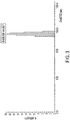
- the inventive USLS exhibit minimal size homogeneity, as is shown by the light scattering data in FIG. 1 , FIG. 2 and FIG. 3 .
- the size of the individual vesicles is believed to be dependent on the passenger molecule, the amphipathic materials used, and the amount of water in the hydro-organic solvent used to dissolve the lipids and passenger molecules. Increasing the amount of water may be used to increase the size of the USLS population. Increasing the concentration of a lipophilic passenger molecule increases the size of the USLS particle population if they are made using a non-bilayer-forming compound. Increasing the concentration of charged, water-soluble compounds decreases the size of the USLS population. Increasing the concentration of amphipathic passenger molecules increases the size of the USLS population.
- the USLS are dehydrated for storage and can be rehydrated.
- the USLS product preferably is dehydrated under vacuum, by freeze-drying or without freezing of the preparation.
- the product is dehydrated using standard freeze-drying equipment or an equivalent apparatus, under reduced pressure or partial vacuum, as is known in the art.
- the material and its surrounding medium can be frozen in liquid nitrogen prior to dehydration.
- the liposomes can also be dehydrated without prior freezing, by simply being placed under reduced pressure. Dehydration without prior freezing takes longer than dehydration with prior freezing, but the overall process is gentler without the freezing step, and thus there is in general less damage to the liposomes and a correspondingly smaller loss of the internal contents of the liposomes.
- dehydration without prior freezing at room temperature and at a reduced pressure provided by a vacuum pump capable of producing a pressure on the order of 1 mm of mercury can take between approximately 24 and 36 hours, while dehydration with prior freezing under the same conditions can take between approximately 12 and 24 hours.
- spray-drying of finished USLS preparations in the presence of cryo-protective sugars can provide a dehydrated preparation of USLS suitable for rehydration at a later time.
- one or more protective sugars can be made available to interact with the USLS and assist in keeping them intact as the water in the system is removed.
- a variety of sugars can be used, including such sugars as trehalose, maltose, sucrose, glucose, lactose, and dextran.
- disaccharide sugars have been found to work better than monosaccharide sugars, with the disaccharide sugars trehalose and sucrose being most effective.
- Other more complicated sugars can also be used. For example, aminoglycosides, including streptomycin and dihydrostreptomycin, have been found to protect liposomes during dehydration.
- the liposomes are dehydrated with the one or more sugars being present at both the inside and outside surfaces of the liposome membranes.
- the sugars are selected from the group consisting of trehalose, maltose, lactose, sucrose, glucose, and dextran, with the most preferred sugars from a performance point of view being trehalose and sucrose.
- the one or more sugars preferably are included as part of either the internal or external media of the USLS to be dehydrated. Most preferably, the sugars are included in both the internal and external media so that they can interact with both the inside and outside surfaces of the lipid layer. Inclusion in the internal medium is accomplished by adding the sugar or sugars to the solute which the liposomes are to encapsulate. Since in most cases this solute also forms the bathing medium for the finished liposomes, inclusion of the sugars in the solute also makes them part of the external medium. Of course, if an external medium other than the original solute is used, the new external medium should include one or more of the protective sugars as well.
- the amount of sugar to be used depends on the type of sugar used and the characteristics of the liposomes to be protected. Persons skilled in the art can test various sugar types and concentrations to determine which combination works best for a particular liposome preparation. See U.S. Patent No. 5,922,350 , which is hereby incorporated by reference, for exemplary methods. In general, sugar concentrations on the order of 100 mM and above have been found necessary to achieve the highest levels of protection. In terms of moles of membrane phospholipid, millimolar levels on the order of 100 mM correspond to approximately 5 moles of sugar per mole of phospholipid.
- the liposomes being dehydrated are of the type which have multiple lipid layers and if the dehydration is carried out to an end point where there is sufficient water left in the preparation so that a substantial portion of the membranes retain their integrity upon rehydration, the use of one or more protective sugars may be omitted. It is preferable if the preparation contains at the end of the dehydration process at least about 2%, and most preferably between about 2% and about 5%, of the original water present in the preparation prior to dehydration.
- liposomes Once liposomes have been dehydrated, they can be stored for extended periods of time until they are to be used.
- the appropriate temperature for storage will depend on the make-up of the liposomes and the temperature sensitivity of the encapsulated material(s).
- various drug preparations are heat labile, and thus dehydrated liposomes containing such drugs should be stored under refrigerated conditions so that the drugs do not lose their potency.
- the dehydration process is preferably carried out at reduced temperatures, rather than at room temperature.
- rehydration is accomplished by adding an aqueous solution, e.g., distilled water, to the dehydrated USLS and allowing them to rehydrate.
- the liposomes can be resuspended into the aqueous solution by gentle swirling of the solution.
- the rehydration can be performed at room temperature or at other temperatures appropriate to the composition of the liposomes and their internal contents. See U.S. Patent No. 5,922,350 for suitable methods for dehydration and rehydration.
- the USLS of the invention can be used in various food, cosmetic and pharmaceutical products, including liquids, solids, and vapors.
- the products are contemplated to be useful in forms such as gels, lotions, creams, emulsions, suspensions, freeze-dried products, spraydried products, powders, and solutions, which can be used for topical application, oral ingestion, intravenous or other injection routes, inhalation or other administration methods and uses.
- the products can be incorporated into solid or liquid foods and supplement compositions for ingestion or administration.
- the USLS can be provided with a pharmaceutical or food product in a separate container, to be added by the user before use.
- USLS according to the invention can be used where taste-masking is desirable, for example in oral dosage forms when the active ingredient has an unpleasant flavor which might decrease compliance.
- a specific preferred example is a chocolate or baked good containing a marijuana component (e.g., tetrahydrocannabinol, marijuana extracts, oils and the like), where the marijuana component is sequestered in USLS.
- a marijuana component e.g., tetrahydrocannabinol, marijuana extracts, oils and the like
- any plant extract, including nutraceuticals, for which taste-masking is desired can be sequestered according to the invention.
- An additional preferred embodiment is a preparation of tumoricidal or other cancer chemotherapeutic medication or combination of medications sequestered in USLS.
- USLS which will be tasted, rather than masked.
- Flavorings such as peppermint oil and other oils can be incorporated into USLS which can be added to a base product to modify or add to the flavor thereof.
- This can give manufacturers and consumers options by, for example, allowing the manufacturer to produce one base flavor of a product and several different USLS-sequestered flavors, for example, or a vitamin-enrichment USLS product, which can optionally be added to the base product.
- Substances that are intended to be tasted can be loosely associated with the exterior of the lipid structure, while those intended to be masked can be sequestered inside the vesicle.
- the USLS can be used to achieve a delayed release of the contents since the USLS can withstand the lower pH of the stomach and survive to be taken up from the intestine.
- the USLS can cross the blood-brain barrier following oral administration, and therefore can be used to administer a compound to neural tissue.
- USLS can be used in transmucosal administration to deliver passenger molecules into the circulatory system.
- Example 1 USLS Production from Dissolved Mixtures of Phospholipids in Hydro-organic Solution
- a mixture of natural soybean phospholipids (188 mg) comprising phosphatidylcholine and lysophosphatidylcholine (about 3% w/w lysophosphatidylcholine by percentage weight of total phospholipids in the mixture) was dissolved in 10 ml of a hydro-organic solvent composed of 90% ethanol and 10% distilled water (v/v). The resulting preparation was optically clear.
- the product When subjected to dynamic light scattering analysis (DLS) using a Wyatt DynaProTM analyzer, the product was found to have no particles above 2 nm in diameter. A population of extremely small particles was observed with an average particle diameter of approximately 1 nm (the limit of detection of the DLS analyzer). The resulting preparation was stable at room temperature and when diluted 1:75 (v/v) in distilled water produced a uniform population of USLS particles with an average diameter of less than 100 nm (average diameter of 82.6 nm). See Figure 1 . The light scattering data showed a radius of 41.3 nm. The diluted preparation also was optically clear and remained stable at room temperature.
- DLS dynamic light scattering analysis
- Example 2 USLS Containing Co-Solubilized Passenger Molecules and Phospholipids in a Hydro-Organic Solution
- a mixture of natural soybean phospholipids (188 mg) comprising phosphatidylcholine and lysophosphatidylcholine (about 3% w/w lysophosphatidylcholine by percentage weight of total phospholipids in the mixture) was dissolved in 10 ml of a hydro-organic solvent composed of 90% ethanol and 10% distilled water (v/v).
- Epigallocatechin gallate (EGCG; 1,500 mg) then was dissolved in this preparation of phospholipids, ethanol and water. The resulting preparation was optically clear, ruby-red in color and stable at room temperature.
- this preparation When subjected to dynamic light scattering analysis (DLS) using a Wyatt DynaProTM analyzer, this preparation containing EGCG was found to be stable at room temperature and to contain no particles above 2 nm in diameter. A population of extremely small particles was observed with an average particle diameter of approximately 1 nm (the limit of detection of the DLS analyzer). When this lipid preparation was diluted 1:75 (v/v) with distilled water, it yielded a uniform population of USLS particles with an average diameter of less than 100 nm (average diameter 81.4 nm). See Figure 2 . The light scattering data showed a radius of 40.7 nm. This product also was optically clear and stable at room temperature.
- DLS dynamic light scattering analysis
- Epigallocatechin gallate (EGCG; 1,500 mg) was dissolved in 10 ml of a hydro-organic solvent composed of 90% ethanol and 10 % distilled water (v/v).
- a mixture of natural soybean phospholipids (188 mg) comprising phosphatidylcholine and lysophosphatidylcholine (about 3% w/w lysophosphatidylcholine by percentage weight of total phospholipids in the mixture) was dissolved in this preparation of EGCG, ethanol and water.
- the resulting lipid preparation was optically clear, ruby-red in color and stable at room temperature.
- this preparation containing EGCG When subjected to dynamic light scattering analysis (DLS) using a Wyatt DynaProTM analyzer, this preparation containing EGCG demonstrated no particles above 2 nm in diameter. A population of extremely small particles was observed with an average particle diameter of approximately 1 nm (the limit of detection of the DLS analyzer). When this lipid preparation was diluted 1:75 (v/v) with distilled water, it yielded a uniform population of USLS particles with an average diameter of less than 100 nm (average diameter 89.7nm). See Figure 3 . The light scattering data showed a radius of 44.9 nm. The final preparation of USLS was optically clear, remaining stable at room temperature. When the product was placed on the tongue of a human volunteer as described in Example 2, the normally bitter taste of the EGCG was masked.
- DLS dynamic light scattering analysis
- a mixture of natural soybean phospholipids (188 mg) comprising phosphatidylcholine and lysophosphatidylcholine (about 3% w/w lysophosphatidylcholine by percentage weight of total phospholipids in the mixture) was dissolved in 10 ml of a hydro-organic solvent composed of 90% ethanol and 10% distilled water (v/v).
- Magnesium gluconate (5.2 g) was dissolved in 150 ml distilled water.
- the hydro-organic solution containing soybean phosphatides was added directly to this magnesium gluconate solution.
- the resulting preparation was optically clear and stable at room temperature.
- this preparation containing magnesium gluconate When subjected to dynamic light scattering analysis (DLS) using a Wyatt DynaProTM analyzer, this preparation containing magnesium gluconate had no particles above 2 nm in diameter. A population of extremely small particles was observed with an average particle diameter of approximately 1 nm (the limit of detection of the DLS analyzer). The preparation was stable at room temperature. When diluted 1:75 (v/v) with distilled water, the solution yielded a uniform population of USLS particles with an average diameter of less than 100 nm (average diameter 63 nm). The ultra-small particle preparation was optically clear and remained stable at room temperature. When the product was placed on the tongue of a human volunteer as described in Example 2, the flavor of the magnesium gluconate was masked.
- DLS dynamic light scattering analysis
- a mixture of natural soybean phospholipids (188 mg) comprising phosphatidylcholine and lysophosphatidylcholine (about 3% w/w lysophosphatidylcholine by percentage weight of total phospholipids in the mixture) was dissolved in 10 ml of a hydro-organic solvent composed of 90% ethanol and 10% distilled water (v/v).
- Magnesium chloride (5.2 g) was dissolved in 150 ml distilled water.
- the hydro-organic solution containing soybean phosphatides was added directly to this solution of magnesium chloride.
- the resulting preparation was optically clear and stable at room temperature.
- this preparation containing magnesium chloride When subjected to dynamic light scattering analysis (DLS) using a Wyatt DynaProTM analyzer, this preparation containing magnesium chloride had no particles above 2 nm in diameter. A population of extremely small particles was observed with an average particle diameter of approximately 1 nm (the limit of detection of the DLS analyzer). The preparation was stable at room temperature. When diluted 1:75 (v/v) in distilled water, the solution produced a uniform population of USLS with an average diameter of less than 100 nm (average diameter 76 nm). The resulting final preparation was optically clear and remained stable at room temperature. When placed on the tongue of a human volunteer as described in Example 2, the taste of the magnesium chloride was masked.
- DLS dynamic light scattering analysis
- a mixture of natural soybean phospholipids (188 mg) comprising phosphatidylcholine and lysophosphatidylcholine (about 3% w/w lysophosphatidylcholine by percentage weight of total phospholipids in the mixture) was dissolved in 10 ml of a hydro-organic solvent composed of 90% ethanol and 10% distilled water (v/v).
- Magnesium lactate (5.2 g) was dissolved in 150 ml of distilled water.
- the hydro-organic solution containing soybean phosphatides was added directly to the solution of magnesium lactate.
- the resulting preparation was optically clear and stable at room temperature.
- this preparation containing magnesium lactate When subjected to dynamic light scattering analysis (DLS) using a Wyatt DynaProTM analyzer, this preparation containing magnesium lactate demonstrated no particles above 2 nm in diameter. A population of extremely small particles was observed with an average particle diameter of approximately 1 nm (the limit of detection of the DLS analyzer). The resulting preparation was stable at room temperature. When diluted 1:75 (v/v) in distilled water, the solution produced a uniform population of USLS with an average diameter of less than 100 nm (average diameter 75 nm). The resulting final preparation was optically clear and remained stable at room temperature. When placed on the tongue of a human volunteer as described in Example 2, the taste of the magnesium lactate was masked.
- DLS dynamic light scattering analysis
- a mixture of natural soybean phospholipids (3,750 mg) comprising phosphatidylcholine and lysophosphatidylcholine (about 3% w/w lysophosphatidylcholine by percentage weight of total phospholipids in the mixture) was dissolved in 200 ml of a hydro-organic solvent composed of 90% ethanol and 10% distilled water (v/v).
- a hydro-organic solvent composed of 90% ethanol and 10% distilled water (v/v).
- Sodium chloride (73 g), potassium chloride (265 g), and sodium citrate (50.5 g) were dissolved in 4800 ml distilled water.
- the hydro-organic solution containing soybean phosphatides was added directly to this solution of electrolyte salts.
- the resulting preparation was optically clear and stable at room temperature.
- this preparation containing electrolyte salts When subjected to dynamic light scattering analysis (DLS) using a Wyatt DynaProTM analyzer, this preparation containing electrolyte salts was found to contain no particles above 2 nm in diameter. A population of extremely small particles was observed with an average particle diameter of approximately 1 nm (the limit of detection of the DLS analyzer). The resulting preparation was stable at room temperature. When diluted 1:75 (v/v) in distilled water, the solution produced a uniform population of USLS with an average diameter of less than 100 nm (average diameter 57 nm) with a small population of particles present in the 1 to 5 nm diameter size range. The resulting final preparation was optically clear and remained stable at room temperature. When placed on the tongue of a human volunteer as described in Example 2, the taste of the electrolyte salts was masked.
- DLS dynamic light scattering analysis
- a mixture of natural soybean phospholipids (188 mg) comprising phosphatidylcholine and lysophosphatidylcholine (about 3% w/w lysophosphatidylcholine by percentage weight of total phospholipids in the mixture) was dissolved in 10 ml of a hydro-organic solvent composed of 90% ethanol and 10% distilled water (v/v).
- Vitamin B12 500 mg was dissolved in 150 ml of distilled water.
- the hydro-organic solution containing soybean phosphatides was added directly to this solution of vitamin B12. The resulting preparation was optically clear and stable at room temperature.
- this preparation containing vitamin B12 When subjected to dynamic light scattering analysis (DLS) using a Wyatt DynaProTM analyzer, this preparation containing vitamin B12 was found to contain no particles above 2 nm in diameter. A population of extremely small particles was observed with an average particle diameter of approximately 1 nm (the limit of detection of the DLS analyzer). The resulting preparation was stable at room temperature. When diluted 1:10 (v/v) in distilled water, the solution produced a uniform population of USLS with an average diameter of less than 100 nm (average diameter 78 nm). The resulting final preparation was optically clear and remained stable at room temperature. When placed on the tongue of a human volunteer as described in Example 2, the taste of the vitamin B12 was masked.
- DLS dynamic light scattering analysis
- Example 9 Pharmacokinetic Parameters of EGCG and USLS-Sequestered EGCG after Oral Administration
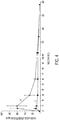
- Groups of 10 200-g male rats were administered EGCG by oral gavage, in the form of the USLS prepared as in Example 3 (2.1 ml; 100 mg/kg body weight) or as an identical preparation of EGCG without USLS. Blood samples were collected at 5, 10, 30, 60, 120, and 480 minutes post administration. See FIG. 4 , which shows the mean concentration of EGCG at the indicated time points, +/- SEM, for USLS-sequestered EGCG (curve A) and EGCG without USLS (curve B).
- the USLS-sequestered compound produced a plasma concentration of 600 ng/ml and a peak plasma concentration of 605 ng/ml at 10 minutes post administration.
- the EGCG administered without sequestration in USLS produced a peak plasma concentration of only 150 ng/ml at 5 minutes post administration. Therefore, the USLS-sequestered product demonstrated a peak plasma concentration 4 times greater than that without USLS.
Landscapes
- Health & Medical Sciences (AREA)
- Life Sciences & Earth Sciences (AREA)
- Chemical & Material Sciences (AREA)
- General Health & Medical Sciences (AREA)
- Animal Behavior & Ethology (AREA)
- Veterinary Medicine (AREA)
- Public Health (AREA)
- Epidemiology (AREA)
- Engineering & Computer Science (AREA)
- Polymers & Plastics (AREA)
- Food Science & Technology (AREA)
- Medicinal Chemistry (AREA)
- Pharmacology & Pharmacy (AREA)
- Nutrition Science (AREA)
- Birds (AREA)
- Mycology (AREA)
- Dispersion Chemistry (AREA)
- Inorganic Chemistry (AREA)
- Molecular Biology (AREA)
- Biophysics (AREA)
- Oil, Petroleum & Natural Gas (AREA)
- Chemical Kinetics & Catalysis (AREA)
- Oral & Maxillofacial Surgery (AREA)
- General Chemical & Material Sciences (AREA)
- Biochemistry (AREA)
- Emergency Medicine (AREA)
- Organic Chemistry (AREA)
- Physiology (AREA)
- Medicinal Preparation (AREA)
- Cosmetics (AREA)
- Coloring Foods And Improving Nutritive Qualities (AREA)
- Pharmaceuticals Containing Other Organic And Inorganic Compounds (AREA)
- Confectionery (AREA)
Applications Claiming Priority (2)
| Application Number | Priority Date | Filing Date | Title |
|---|---|---|---|
| US201562146465P | 2015-04-13 | 2015-04-13 | |
| PCT/US2016/027194 WO2016168236A1 (en) | 2015-04-13 | 2016-04-13 | One-step method for production of ultra-small lipid structures |
Publications (3)
| Publication Number | Publication Date |
|---|---|
| EP3283045A1 EP3283045A1 (en) | 2018-02-21 |
| EP3283045A4 EP3283045A4 (en) | 2018-11-21 |
| EP3283045B1 true EP3283045B1 (en) | 2021-02-17 |
Family
ID=57127009
Family Applications (1)
| Application Number | Title | Priority Date | Filing Date |
|---|---|---|---|
| EP16780584.5A Active EP3283045B1 (en) | 2015-04-13 | 2016-04-13 | One-step method for production of ultra-small lipid structures |
Country Status (10)
| Country | Link |
|---|---|
| US (1) | US11298318B2 (da) |
| EP (1) | EP3283045B1 (da) |
| JP (1) | JP2018512442A (da) |
| KR (1) | KR20180016347A (da) |
| CN (1) | CN107530235B (da) |
| AU (1) | AU2016250068B2 (da) |
| CA (1) | CA2982547A1 (da) |
| DK (1) | DK3283045T3 (da) |
| IL (1) | IL255014B (da) |
| WO (1) | WO2016168236A1 (da) |
Families Citing this family (2)
| Publication number | Priority date | Publication date | Assignee | Title |
|---|---|---|---|---|
| US20140271782A1 (en) | 2013-03-15 | 2014-09-18 | Dermazone Solutions, Inc. | Method for preparing nanolipids with encapsulated alcohol |
| WO2020244798A1 (en) * | 2019-06-05 | 2020-12-10 | Athenion Ag | Method for taste/odor masking of a product for chronic kidney disease patients |
Family Cites Families (18)
| Publication number | Priority date | Publication date | Assignee | Title |
|---|---|---|---|---|
| IL64397A0 (en) | 1981-01-07 | 1982-02-28 | Weder Hans G | Process for the preparation of liposomal medicaments |
| JPH0753661B2 (ja) | 1984-03-08 | 1995-06-07 | フアレス フアーマスーチカル リサーチ エヌブイ | プロ―リポソーム組成物及びリポソームの水性分散物を作る方法 |
| US4880635B1 (en) * | 1984-08-08 | 1996-07-02 | Liposome Company | Dehydrated liposomes |
| IL90561A (en) | 1988-06-08 | 1993-08-18 | Fountain Pharm Inc | Method for making solvent dilution microcarriers |
| US5133965A (en) * | 1988-06-08 | 1992-07-28 | Fountain Pharmaceuticals, Inc. | Dressing material having adsorbed thereon a solvent dilution microcarrier precursor solution |
| ES2145132T3 (es) * | 1993-02-26 | 2000-07-01 | Fountain Pharm Inc | Sistema de suministro de vacunas y solucion precursora estable en almacenamiento para la encapsulacion a distancia de ingredientes activos. |
| US6447800B2 (en) * | 1996-01-18 | 2002-09-10 | The University Of British Columbia | Method of loading preformed liposomes using ethanol |
| EP1530465B2 (en) | 2002-06-26 | 2015-12-16 | MediGene AG | Method of producing a cationic liposomal preparation comprising a lipophilic compound |
| DE60334618D1 (de) * | 2002-06-28 | 2010-12-02 | Protiva Biotherapeutics Inc | Verfahren und vorrichtung zur herstellung von liposomen |
| EP1530456A2 (en) * | 2002-08-23 | 2005-05-18 | Munich Biotech AG | Non-vesicular cationic lipid formulations |
| CA2558255C (en) * | 2004-03-01 | 2014-01-14 | Suntory Limited | Process for producing phospholipid containing long chain polyunsaturated fatty acid as constituent thereof and utilization of the same |
| US20140271782A1 (en) | 2013-03-15 | 2014-09-18 | Dermazone Solutions, Inc. | Method for preparing nanolipids with encapsulated alcohol |
| ES2625111T3 (es) | 2005-12-30 | 2017-07-18 | Nuvessl Inc. | Partículas nanolipídicas |
| US20100173014A1 (en) | 2007-05-24 | 2010-07-08 | Nanosolutions, Llc | Methods of making and using nano scale particles |
| US20140335166A1 (en) | 2013-05-08 | 2014-11-13 | Michael W. Fountain | Methods of Making and Using Nano Scale Particles |
| ES2834006T3 (es) * | 2008-09-27 | 2021-06-16 | Jina Pharmaceuticals Inc | Preparados farmacéuticos a base de lípidos para aplicación tópica |
| KR102284689B1 (ko) * | 2011-10-21 | 2021-08-02 | 셀라토 파마슈티칼즈, 인코포레이티드 | 동결건조된 리포좀 |
| US11090366B2 (en) * | 2011-10-31 | 2021-08-17 | Kane Biotech Inc. | Compositions and methods for reducing oral biofilm |
-
2016
- 2016-04-13 KR KR1020177031553A patent/KR20180016347A/ko not_active Ceased
- 2016-04-13 DK DK16780584.5T patent/DK3283045T3/da active
- 2016-04-13 CN CN201680021854.5A patent/CN107530235B/zh not_active Expired - Fee Related
- 2016-04-13 US US15/565,833 patent/US11298318B2/en active Active
- 2016-04-13 EP EP16780584.5A patent/EP3283045B1/en active Active
- 2016-04-13 CA CA2982547A patent/CA2982547A1/en active Pending
- 2016-04-13 AU AU2016250068A patent/AU2016250068B2/en not_active Ceased
- 2016-04-13 JP JP2017554519A patent/JP2018512442A/ja active Pending
- 2016-04-13 WO PCT/US2016/027194 patent/WO2016168236A1/en not_active Ceased
-
2017
- 2017-10-15 IL IL255014A patent/IL255014B/en active IP Right Grant
Non-Patent Citations (1)
| Title |
|---|
| None * |
Also Published As
| Publication number | Publication date |
|---|---|
| IL255014B (en) | 2021-04-29 |
| DK3283045T3 (da) | 2021-05-10 |
| EP3283045A1 (en) | 2018-02-21 |
| WO2016168236A1 (en) | 2016-10-20 |
| KR20180016347A (ko) | 2018-02-14 |
| EP3283045A4 (en) | 2018-11-21 |
| AU2016250068B2 (en) | 2021-04-29 |
| CA2982547A1 (en) | 2016-10-20 |
| US20180110732A1 (en) | 2018-04-26 |
| CN107530235B (zh) | 2021-09-17 |
| AU2016250068A1 (en) | 2017-11-02 |
| US11298318B2 (en) | 2022-04-12 |
| CN107530235A (zh) | 2018-01-02 |
| JP2018512442A (ja) | 2018-05-17 |
| IL255014A0 (en) | 2017-12-31 |
Similar Documents
| Publication | Publication Date | Title |
|---|---|---|
| Keller | Liposomes in nutrition | |
| Lu et al. | Preparation of a tea polyphenol nanoliposome system and its physicochemical properties | |
| Priprem et al. | Anxiety and cognitive effects of quercetin liposomes in rats | |
| US6592894B1 (en) | Hydrogel-isolated cochleate formulations, process of preparation and their use for the delivery of biologically relevant molecules | |
| JP4463551B2 (ja) | 改良された生物学的利用能を有する製剤における高分子量で親油性で経口摂取可能な生物活性物質 | |
| JP2021181476A (ja) | マルチサプリメント組成物 | |
| JP2010512384A (ja) | ポリフェノール含有組成物 | |
| KR20220159075A (ko) | 피부모사 리포좀 및 보습효능을 포함하는 이의 용도 | |
| KR102072439B1 (ko) | 친환경 용매를 이용한 리포좀 제조방법 | |
| FI120642B (fi) | Mikrokapseloidut liposomikoostumukset | |
| Dwivedi et al. | Phytosome based cosmeceuticals for enhancing percutaneous absorption and delivery | |
| EP3283045B1 (en) | One-step method for production of ultra-small lipid structures | |
| RU2605616C1 (ru) | Липосомальное средство на основе убихинола и способ его получения | |
| Bhingardeve et al. | Phytosome-valuable phyto-phospholipid carriers | |
| WO2001052817A2 (en) | Cochleate formulations and their use for delivering biologically relevant molecules | |
| CN110251466A (zh) | 一种大麻二酚脂质体及制备工艺 | |
| Singh et al. | Novel approaches for dermal and transdermal delivery of herbal drugs | |
| Joshi et al. | Development and characterization of herbosomes complex | |
| Chaves et al. | Current Applications of Liposomes for the Delivery of Bioactives: A Review on the Encapsulation of Vitamins | |
| AU2016100802A4 (en) | Enhanced Trans-Dermal or Trans-Mucosal Delivery of High First-Pass Medications, Flavours and Sensations Using Terpene Micelle Nanosomes | |
| JP3249583B2 (ja) | リポソーム製剤 | |
| HUP0202032A2 (hu) | Nanoemulziós formulációban található bioaktív anyagok emberi szervezetbe való bevitele a szájüreg nyálkahártyáján keresztül, mechanikus pumpájú spray által. | |
| Panichakul et al. | Liposomes Encapsulating Artocarpus lakoocha Roxb. and Glycyrrhiza glabra L. Extracts: Characterization and Shelf Life of Freeze-Dried Vesicles | |
| Joshi et al. | Novel Approach on Herbal Drug Delivery System: Phytosome A Brief Overview | |
| WO2025215637A1 (en) | Formulations for encapsulation of bioactive compounds |
Legal Events
| Date | Code | Title | Description |
|---|---|---|---|
| STAA | Information on the status of an ep patent application or granted ep patent |
Free format text: STATUS: THE INTERNATIONAL PUBLICATION HAS BEEN MADE |
|
| PUAI | Public reference made under article 153(3) epc to a published international application that has entered the european phase |
Free format text: ORIGINAL CODE: 0009012 |
|
| STAA | Information on the status of an ep patent application or granted ep patent |
Free format text: STATUS: REQUEST FOR EXAMINATION WAS MADE |
|
| 17P | Request for examination filed |
Effective date: 20171101 |
|
| AK | Designated contracting states |
Kind code of ref document: A1 Designated state(s): AL AT BE BG CH CY CZ DE DK EE ES FI FR GB GR HR HU IE IS IT LI LT LU LV MC MK MT NL NO PL PT RO RS SE SI SK SM TR |
|
| AX | Request for extension of the european patent |
Extension state: BA ME |
|
| DAV | Request for validation of the european patent (deleted) | ||
| DAX | Request for extension of the european patent (deleted) | ||
| A4 | Supplementary search report drawn up and despatched |
Effective date: 20181019 |
|
| RIC1 | Information provided on ipc code assigned before grant |
Ipc: A23L 33/16 20160101ALI20181015BHEP Ipc: A61K 8/49 20060101ALI20181015BHEP Ipc: A61K 47/10 20170101ALI20181015BHEP Ipc: A61K 9/107 20060101ALI20181015BHEP Ipc: A61K 31/35 20060101ALI20181015BHEP Ipc: A61K 9/127 20060101ALI20181015BHEP Ipc: A23L 33/15 20160101ALI20181015BHEP Ipc: A23G 1/36 20060101ALI20181015BHEP Ipc: A61Q 11/00 20060101ALI20181015BHEP Ipc: A61K 33/06 20060101ALI20181015BHEP Ipc: A61K 8/55 20060101ALI20181015BHEP Ipc: A61K 8/14 20060101AFI20181015BHEP Ipc: A23L 2/52 20060101ALI20181015BHEP Ipc: A61K 9/00 20060101ALI20181015BHEP Ipc: A61K 8/34 20060101ALI20181015BHEP Ipc: A23L 33/10 20160101ALI20181015BHEP Ipc: A61K 47/24 20060101ALI20181015BHEP Ipc: A61K 33/00 20060101ALI20181015BHEP Ipc: A23J 7/00 20060101ALI20181015BHEP Ipc: A61K 33/14 20060101ALI20181015BHEP |
|
| REG | Reference to a national code |
Ref country code: DE Ref legal event code: R079 Ref document number: 602016052643 Country of ref document: DE Free format text: PREVIOUS MAIN CLASS: A61K0008140000 Ipc: A23L0002520000 |
|
| GRAP | Despatch of communication of intention to grant a patent |
Free format text: ORIGINAL CODE: EPIDOSNIGR1 |
|
| STAA | Information on the status of an ep patent application or granted ep patent |
Free format text: STATUS: GRANT OF PATENT IS INTENDED |
|
| RIC1 | Information provided on ipc code assigned before grant |
Ipc: A61K 47/24 20060101ALI20200818BHEP Ipc: A23L 33/10 20160101ALI20200818BHEP Ipc: A61K 33/14 20060101ALI20200818BHEP Ipc: A23L 33/15 20160101ALI20200818BHEP Ipc: A61K 9/107 20060101ALI20200818BHEP Ipc: A61Q 11/00 20060101ALI20200818BHEP Ipc: A23L 27/00 20160101ALI20200818BHEP Ipc: A61K 8/55 20060101ALI20200818BHEP Ipc: A61K 33/06 20060101ALI20200818BHEP Ipc: A61K 8/49 20060101ALI20200818BHEP Ipc: A61K 31/714 20060101ALI20200818BHEP Ipc: A61K 8/14 20060101ALI20200818BHEP Ipc: A61K 9/127 20060101ALI20200818BHEP Ipc: A23L 2/52 20060101AFI20200818BHEP Ipc: A61K 8/34 20060101ALI20200818BHEP Ipc: A23L 33/16 20160101ALI20200818BHEP Ipc: A61K 33/00 20060101ALI20200818BHEP Ipc: A61K 31/353 20060101ALI20200818BHEP Ipc: A23L 29/00 20160101ALI20200818BHEP Ipc: A23J 7/00 20060101ALI20200818BHEP |
|
| INTG | Intention to grant announced |
Effective date: 20200922 |
|
| GRAS | Grant fee paid |
Free format text: ORIGINAL CODE: EPIDOSNIGR3 |
|
| GRAA | (expected) grant |
Free format text: ORIGINAL CODE: 0009210 |
|
| STAA | Information on the status of an ep patent application or granted ep patent |
Free format text: STATUS: THE PATENT HAS BEEN GRANTED |
|
| AK | Designated contracting states |
Kind code of ref document: B1 Designated state(s): AL AT BE BG CH CY CZ DE DK EE ES FI FR GB GR HR HU IE IS IT LI LT LU LV MC MK MT NL NO PL PT RO RS SE SI SK SM TR |
|
| REG | Reference to a national code |
Ref country code: GB Ref legal event code: FG4D |
|
| REG | Reference to a national code |
Ref country code: CH Ref legal event code: EP |
|
| REG | Reference to a national code |
Ref country code: DE Ref legal event code: R096 Ref document number: 602016052643 Country of ref document: DE |
|
| REG | Reference to a national code |
Ref country code: AT Ref legal event code: REF Ref document number: 1360275 Country of ref document: AT Kind code of ref document: T Effective date: 20210315 |
|
| REG | Reference to a national code |
Ref country code: IE Ref legal event code: FG4D |
|
| REG | Reference to a national code |
Ref country code: CH Ref legal event code: NV Representative=s name: SERVOPATENT GMBH, CH |
|
| REG | Reference to a national code |
Ref country code: DK Ref legal event code: T3 Effective date: 20210506 |
|
| REG | Reference to a national code |
Ref country code: SE Ref legal event code: TRGR |
|
| REG | Reference to a national code |
Ref country code: NL Ref legal event code: FP |
|
| REG | Reference to a national code |
Ref country code: LT Ref legal event code: MG9D |
|
| PG25 | Lapsed in a contracting state [announced via postgrant information from national office to epo] |
Ref country code: FI Free format text: LAPSE BECAUSE OF FAILURE TO SUBMIT A TRANSLATION OF THE DESCRIPTION OR TO PAY THE FEE WITHIN THE PRESCRIBED TIME-LIMIT Effective date: 20210217 Ref country code: HR Free format text: LAPSE BECAUSE OF FAILURE TO SUBMIT A TRANSLATION OF THE DESCRIPTION OR TO PAY THE FEE WITHIN THE PRESCRIBED TIME-LIMIT Effective date: 20210217 Ref country code: GR Free format text: LAPSE BECAUSE OF FAILURE TO SUBMIT A TRANSLATION OF THE DESCRIPTION OR TO PAY THE FEE WITHIN THE PRESCRIBED TIME-LIMIT Effective date: 20210518 Ref country code: NO Free format text: LAPSE BECAUSE OF FAILURE TO SUBMIT A TRANSLATION OF THE DESCRIPTION OR TO PAY THE FEE WITHIN THE PRESCRIBED TIME-LIMIT Effective date: 20210517 Ref country code: PT Free format text: LAPSE BECAUSE OF FAILURE TO SUBMIT A TRANSLATION OF THE DESCRIPTION OR TO PAY THE FEE WITHIN THE PRESCRIBED TIME-LIMIT Effective date: 20210617 Ref country code: LT Free format text: LAPSE BECAUSE OF FAILURE TO SUBMIT A TRANSLATION OF THE DESCRIPTION OR TO PAY THE FEE WITHIN THE PRESCRIBED TIME-LIMIT Effective date: 20210217 Ref country code: BG Free format text: LAPSE BECAUSE OF FAILURE TO SUBMIT A TRANSLATION OF THE DESCRIPTION OR TO PAY THE FEE WITHIN THE PRESCRIBED TIME-LIMIT Effective date: 20210517 |
|
| REG | Reference to a national code |
Ref country code: AT Ref legal event code: MK05 Ref document number: 1360275 Country of ref document: AT Kind code of ref document: T Effective date: 20210217 |
|
| PG25 | Lapsed in a contracting state [announced via postgrant information from national office to epo] |
Ref country code: PL Free format text: LAPSE BECAUSE OF FAILURE TO SUBMIT A TRANSLATION OF THE DESCRIPTION OR TO PAY THE FEE WITHIN THE PRESCRIBED TIME-LIMIT Effective date: 20210217 Ref country code: LV Free format text: LAPSE BECAUSE OF FAILURE TO SUBMIT A TRANSLATION OF THE DESCRIPTION OR TO PAY THE FEE WITHIN THE PRESCRIBED TIME-LIMIT Effective date: 20210217 Ref country code: RS Free format text: LAPSE BECAUSE OF FAILURE TO SUBMIT A TRANSLATION OF THE DESCRIPTION OR TO PAY THE FEE WITHIN THE PRESCRIBED TIME-LIMIT Effective date: 20210217 |
|
| PG25 | Lapsed in a contracting state [announced via postgrant information from national office to epo] |
Ref country code: IS Free format text: LAPSE BECAUSE OF FAILURE TO SUBMIT A TRANSLATION OF THE DESCRIPTION OR TO PAY THE FEE WITHIN THE PRESCRIBED TIME-LIMIT Effective date: 20210617 |
|
| PG25 | Lapsed in a contracting state [announced via postgrant information from national office to epo] |
Ref country code: SM Free format text: LAPSE BECAUSE OF FAILURE TO SUBMIT A TRANSLATION OF THE DESCRIPTION OR TO PAY THE FEE WITHIN THE PRESCRIBED TIME-LIMIT Effective date: 20210217 Ref country code: AT Free format text: LAPSE BECAUSE OF FAILURE TO SUBMIT A TRANSLATION OF THE DESCRIPTION OR TO PAY THE FEE WITHIN THE PRESCRIBED TIME-LIMIT Effective date: 20210217 Ref country code: CZ Free format text: LAPSE BECAUSE OF FAILURE TO SUBMIT A TRANSLATION OF THE DESCRIPTION OR TO PAY THE FEE WITHIN THE PRESCRIBED TIME-LIMIT Effective date: 20210217 Ref country code: EE Free format text: LAPSE BECAUSE OF FAILURE TO SUBMIT A TRANSLATION OF THE DESCRIPTION OR TO PAY THE FEE WITHIN THE PRESCRIBED TIME-LIMIT Effective date: 20210217 |
|
| REG | Reference to a national code |
Ref country code: DE Ref legal event code: R097 Ref document number: 602016052643 Country of ref document: DE |
|
| PG25 | Lapsed in a contracting state [announced via postgrant information from national office to epo] |
Ref country code: MC Free format text: LAPSE BECAUSE OF FAILURE TO SUBMIT A TRANSLATION OF THE DESCRIPTION OR TO PAY THE FEE WITHIN THE PRESCRIBED TIME-LIMIT Effective date: 20210217 Ref country code: SK Free format text: LAPSE BECAUSE OF FAILURE TO SUBMIT A TRANSLATION OF THE DESCRIPTION OR TO PAY THE FEE WITHIN THE PRESCRIBED TIME-LIMIT Effective date: 20210217 Ref country code: RO Free format text: LAPSE BECAUSE OF FAILURE TO SUBMIT A TRANSLATION OF THE DESCRIPTION OR TO PAY THE FEE WITHIN THE PRESCRIBED TIME-LIMIT Effective date: 20210217 |
|
| PLBE | No opposition filed within time limit |
Free format text: ORIGINAL CODE: 0009261 |
|
| STAA | Information on the status of an ep patent application or granted ep patent |
Free format text: STATUS: NO OPPOSITION FILED WITHIN TIME LIMIT |
|
| PG25 | Lapsed in a contracting state [announced via postgrant information from national office to epo] |
Ref country code: LU Free format text: LAPSE BECAUSE OF NON-PAYMENT OF DUE FEES Effective date: 20210413 |
|
| 26N | No opposition filed |
Effective date: 20211118 |
|
| PG25 | Lapsed in a contracting state [announced via postgrant information from national office to epo] |
Ref country code: AL Free format text: LAPSE BECAUSE OF FAILURE TO SUBMIT A TRANSLATION OF THE DESCRIPTION OR TO PAY THE FEE WITHIN THE PRESCRIBED TIME-LIMIT Effective date: 20210217 Ref country code: ES Free format text: LAPSE BECAUSE OF FAILURE TO SUBMIT A TRANSLATION OF THE DESCRIPTION OR TO PAY THE FEE WITHIN THE PRESCRIBED TIME-LIMIT Effective date: 20210217 |
|
| PG25 | Lapsed in a contracting state [announced via postgrant information from national office to epo] |
Ref country code: SI Free format text: LAPSE BECAUSE OF FAILURE TO SUBMIT A TRANSLATION OF THE DESCRIPTION OR TO PAY THE FEE WITHIN THE PRESCRIBED TIME-LIMIT Effective date: 20210217 |
|
| PG25 | Lapsed in a contracting state [announced via postgrant information from national office to epo] |
Ref country code: IT Free format text: LAPSE BECAUSE OF FAILURE TO SUBMIT A TRANSLATION OF THE DESCRIPTION OR TO PAY THE FEE WITHIN THE PRESCRIBED TIME-LIMIT Effective date: 20210217 |
|
| PG25 | Lapsed in a contracting state [announced via postgrant information from national office to epo] |
Ref country code: IS Free format text: LAPSE BECAUSE OF FAILURE TO SUBMIT A TRANSLATION OF THE DESCRIPTION OR TO PAY THE FEE WITHIN THE PRESCRIBED TIME-LIMIT Effective date: 20210617 |
|
| PG25 | Lapsed in a contracting state [announced via postgrant information from national office to epo] |
Ref country code: HU Free format text: LAPSE BECAUSE OF FAILURE TO SUBMIT A TRANSLATION OF THE DESCRIPTION OR TO PAY THE FEE WITHIN THE PRESCRIBED TIME-LIMIT; INVALID AB INITIO Effective date: 20160413 |
|
| PG25 | Lapsed in a contracting state [announced via postgrant information from national office to epo] |
Ref country code: CY Free format text: LAPSE BECAUSE OF FAILURE TO SUBMIT A TRANSLATION OF THE DESCRIPTION OR TO PAY THE FEE WITHIN THE PRESCRIBED TIME-LIMIT Effective date: 20210217 |
|
| PG25 | Lapsed in a contracting state [announced via postgrant information from national office to epo] |
Ref country code: MK Free format text: LAPSE BECAUSE OF FAILURE TO SUBMIT A TRANSLATION OF THE DESCRIPTION OR TO PAY THE FEE WITHIN THE PRESCRIBED TIME-LIMIT Effective date: 20210217 |
|
| PGFP | Annual fee paid to national office [announced via postgrant information from national office to epo] |
Ref country code: NL Payment date: 20240415 Year of fee payment: 9 |
|
| PGFP | Annual fee paid to national office [announced via postgrant information from national office to epo] |
Ref country code: IE Payment date: 20240410 Year of fee payment: 9 |
|
| PGFP | Annual fee paid to national office [announced via postgrant information from national office to epo] |
Ref country code: GB Payment date: 20240404 Year of fee payment: 9 |
|
| PGFP | Annual fee paid to national office [announced via postgrant information from national office to epo] |
Ref country code: DE Payment date: 20240403 Year of fee payment: 9 |
|
| PGFP | Annual fee paid to national office [announced via postgrant information from national office to epo] |
Ref country code: DK Payment date: 20240411 Year of fee payment: 9 |
|
| PGFP | Annual fee paid to national office [announced via postgrant information from national office to epo] |
Ref country code: CH Payment date: 20240501 Year of fee payment: 9 |
|
| PGFP | Annual fee paid to national office [announced via postgrant information from national office to epo] |
Ref country code: FR Payment date: 20240408 Year of fee payment: 9 |
|
| PGFP | Annual fee paid to national office [announced via postgrant information from national office to epo] |
Ref country code: SE Payment date: 20240410 Year of fee payment: 9 Ref country code: BE Payment date: 20240422 Year of fee payment: 9 |
|
| PG25 | Lapsed in a contracting state [announced via postgrant information from national office to epo] |
Ref country code: MT Free format text: LAPSE BECAUSE OF FAILURE TO SUBMIT A TRANSLATION OF THE DESCRIPTION OR TO PAY THE FEE WITHIN THE PRESCRIBED TIME-LIMIT Effective date: 20210217 |
|
| REG | Reference to a national code |
Ref country code: DE Ref legal event code: R119 Ref document number: 602016052643 Country of ref document: DE |
|
| REG | Reference to a national code |
Ref country code: DK Ref legal event code: EBP Effective date: 20250430 |
|
| REG | Reference to a national code |
Ref country code: CH Ref legal event code: H13 Free format text: ST27 STATUS EVENT CODE: U-0-0-H10-H13 (AS PROVIDED BY THE NATIONAL OFFICE) Effective date: 20251125 |
|
| REG | Reference to a national code |
Ref country code: SE Ref legal event code: EUG |
|
| REG | Reference to a national code |
Ref country code: NL Ref legal event code: MM Effective date: 20250501 |
|
| PG25 | Lapsed in a contracting state [announced via postgrant information from national office to epo] |
Ref country code: TR Free format text: LAPSE BECAUSE OF FAILURE TO SUBMIT A TRANSLATION OF THE DESCRIPTION OR TO PAY THE FEE WITHIN THE PRESCRIBED TIME-LIMIT Effective date: 20210217 |
|
| GBPC | Gb: european patent ceased through non-payment of renewal fee |
Effective date: 20250413 |
|
| REG | Reference to a national code |
Ref country code: BE Ref legal event code: MM Effective date: 20250430 |
|
| PG25 | Lapsed in a contracting state [announced via postgrant information from national office to epo] |
Ref country code: DE Free format text: LAPSE BECAUSE OF NON-PAYMENT OF DUE FEES Effective date: 20251104 |
|
| PG25 | Lapsed in a contracting state [announced via postgrant information from national office to epo] |
Ref country code: GB Free format text: LAPSE BECAUSE OF NON-PAYMENT OF DUE FEES Effective date: 20250413 |
|
| PG25 | Lapsed in a contracting state [announced via postgrant information from national office to epo] |
Ref country code: FR Free format text: LAPSE BECAUSE OF NON-PAYMENT OF DUE FEES Effective date: 20250430 Ref country code: NL Free format text: LAPSE BECAUSE OF NON-PAYMENT OF DUE FEES Effective date: 20250501 |
|
| PG25 | Lapsed in a contracting state [announced via postgrant information from national office to epo] |
Ref country code: BE Free format text: LAPSE BECAUSE OF NON-PAYMENT OF DUE FEES Effective date: 20250430 |
|
| PG25 | Lapsed in a contracting state [announced via postgrant information from national office to epo] |
Ref country code: CH Free format text: LAPSE BECAUSE OF NON-PAYMENT OF DUE FEES Effective date: 20250430 |
|
| PG25 | Lapsed in a contracting state [announced via postgrant information from national office to epo] |
Ref country code: SE Free format text: LAPSE BECAUSE OF NON-PAYMENT OF DUE FEES Effective date: 20250414 |