EP3268391B1 - Methods of reducing serum levels of fc-containing agents using fcrn antagonsits - Google Patents
Methods of reducing serum levels of fc-containing agents using fcrn antagonsits Download PDFInfo
- Publication number
- EP3268391B1 EP3268391B1 EP16719896.9A EP16719896A EP3268391B1 EP 3268391 B1 EP3268391 B1 EP 3268391B1 EP 16719896 A EP16719896 A EP 16719896A EP 3268391 B1 EP3268391 B1 EP 3268391B1
- Authority
- EP
- European Patent Office
- Prior art keywords
- fcrn
- antagonist
- abdeg
- disease
- autoimmune
- Prior art date
- Legal status (The legal status is an assumption and is not a legal conclusion. Google has not performed a legal analysis and makes no representation as to the accuracy of the status listed.)
- Active
Links
Images







Classifications
-
- A—HUMAN NECESSITIES
- A61—MEDICAL OR VETERINARY SCIENCE; HYGIENE
- A61K—PREPARATIONS FOR MEDICAL, DENTAL OR TOILETRY PURPOSES
- A61K45/00—Medicinal preparations containing active ingredients not provided for in groups A61K31/00 - A61K41/00
- A61K45/06—Mixtures of active ingredients without chemical characterisation, e.g. antiphlogistics and cardiaca
-
- A—HUMAN NECESSITIES
- A61—MEDICAL OR VETERINARY SCIENCE; HYGIENE
- A61K—PREPARATIONS FOR MEDICAL, DENTAL OR TOILETRY PURPOSES
- A61K47/00—Medicinal preparations characterised by the non-active ingredients used, e.g. carriers or inert additives; Targeting or modifying agents chemically bound to the active ingredient
- A61K47/50—Medicinal preparations characterised by the non-active ingredients used, e.g. carriers or inert additives; Targeting or modifying agents chemically bound to the active ingredient the non-active ingredient being chemically bound to the active ingredient, e.g. polymer-drug conjugates
- A61K47/51—Medicinal preparations characterised by the non-active ingredients used, e.g. carriers or inert additives; Targeting or modifying agents chemically bound to the active ingredient the non-active ingredient being chemically bound to the active ingredient, e.g. polymer-drug conjugates the non-active ingredient being a modifying agent
- A61K47/68—Medicinal preparations characterised by the non-active ingredients used, e.g. carriers or inert additives; Targeting or modifying agents chemically bound to the active ingredient the non-active ingredient being chemically bound to the active ingredient, e.g. polymer-drug conjugates the non-active ingredient being a modifying agent the modifying agent being an antibody, an immunoglobulin or a fragment thereof, e.g. an Fc-fragment
- A61K47/6801—Drug-antibody or immunoglobulin conjugates defined by the pharmacologically or therapeutically active agent
- A61K47/6803—Drugs conjugated to an antibody or immunoglobulin, e.g. cisplatin-antibody conjugates
-
- A—HUMAN NECESSITIES
- A61—MEDICAL OR VETERINARY SCIENCE; HYGIENE
- A61K—PREPARATIONS FOR MEDICAL, DENTAL OR TOILETRY PURPOSES
- A61K51/00—Preparations containing radioactive substances for use in therapy or testing in vivo
- A61K51/02—Preparations containing radioactive substances for use in therapy or testing in vivo characterised by the carrier, i.e. characterised by the agent or material covalently linked or complexing the radioactive nucleus
- A61K51/04—Organic compounds
- A61K51/08—Peptides, e.g. proteins, carriers being peptides, polyamino acids, proteins
- A61K51/10—Antibodies or immunoglobulins; Fragments thereof, the carrier being an antibody, an immunoglobulin or a fragment thereof, e.g. a camelised human single domain antibody or the Fc fragment of an antibody
-
- A—HUMAN NECESSITIES
- A61—MEDICAL OR VETERINARY SCIENCE; HYGIENE
- A61P—SPECIFIC THERAPEUTIC ACTIVITY OF CHEMICAL COMPOUNDS OR MEDICINAL PREPARATIONS
- A61P21/00—Drugs for disorders of the muscular or neuromuscular system
- A61P21/04—Drugs for disorders of the muscular or neuromuscular system for myasthenia gravis
-
- A—HUMAN NECESSITIES
- A61—MEDICAL OR VETERINARY SCIENCE; HYGIENE
- A61P—SPECIFIC THERAPEUTIC ACTIVITY OF CHEMICAL COMPOUNDS OR MEDICINAL PREPARATIONS
- A61P25/00—Drugs for disorders of the nervous system
-
- A—HUMAN NECESSITIES
- A61—MEDICAL OR VETERINARY SCIENCE; HYGIENE
- A61P—SPECIFIC THERAPEUTIC ACTIVITY OF CHEMICAL COMPOUNDS OR MEDICINAL PREPARATIONS
- A61P25/00—Drugs for disorders of the nervous system
- A61P25/08—Antiepileptics; Anticonvulsants
-
- A—HUMAN NECESSITIES
- A61—MEDICAL OR VETERINARY SCIENCE; HYGIENE
- A61P—SPECIFIC THERAPEUTIC ACTIVITY OF CHEMICAL COMPOUNDS OR MEDICINAL PREPARATIONS
- A61P37/00—Drugs for immunological or allergic disorders
- A61P37/02—Immunomodulators
- A61P37/06—Immunosuppressants, e.g. drugs for graft rejection
-
- A—HUMAN NECESSITIES
- A61—MEDICAL OR VETERINARY SCIENCE; HYGIENE
- A61P—SPECIFIC THERAPEUTIC ACTIVITY OF CHEMICAL COMPOUNDS OR MEDICINAL PREPARATIONS
- A61P43/00—Drugs for specific purposes, not provided for in groups A61P1/00-A61P41/00
-
- A—HUMAN NECESSITIES
- A61—MEDICAL OR VETERINARY SCIENCE; HYGIENE
- A61P—SPECIFIC THERAPEUTIC ACTIVITY OF CHEMICAL COMPOUNDS OR MEDICINAL PREPARATIONS
- A61P7/00—Drugs for disorders of the blood or the extracellular fluid
-
- C—CHEMISTRY; METALLURGY
- C07—ORGANIC CHEMISTRY
- C07K—PEPTIDES
- C07K16/00—Immunoglobulins [IG], e.g. monoclonal or polyclonal antibodies
-
- C—CHEMISTRY; METALLURGY
- C07—ORGANIC CHEMISTRY
- C07K—PEPTIDES
- C07K16/00—Immunoglobulins [IG], e.g. monoclonal or polyclonal antibodies
- C07K16/18—Immunoglobulins [IG], e.g. monoclonal or polyclonal antibodies against material from animals or humans
- C07K16/28—Immunoglobulins [IG], e.g. monoclonal or polyclonal antibodies against material from animals or humans against receptors, cell surface antigens or cell surface determinants
- C07K16/2803—Immunoglobulins [IG], e.g. monoclonal or polyclonal antibodies against material from animals or humans against receptors, cell surface antigens or cell surface determinants against the immunoglobulin superfamily
- C07K16/283—Immunoglobulins [IG], e.g. monoclonal or polyclonal antibodies against material from animals or humans against receptors, cell surface antigens or cell surface determinants against the immunoglobulin superfamily against Fc-receptors, e.g. CD16, CD32, CD64
-
- C—CHEMISTRY; METALLURGY
- C07—ORGANIC CHEMISTRY
- C07K—PEPTIDES
- C07K16/00—Immunoglobulins [IG], e.g. monoclonal or polyclonal antibodies
- C07K16/18—Immunoglobulins [IG], e.g. monoclonal or polyclonal antibodies against material from animals or humans
- C07K16/28—Immunoglobulins [IG], e.g. monoclonal or polyclonal antibodies against material from animals or humans against receptors, cell surface antigens or cell surface determinants
- C07K16/2875—Immunoglobulins [IG], e.g. monoclonal or polyclonal antibodies against material from animals or humans against receptors, cell surface antigens or cell surface determinants against the NGF/TNF superfamily, e.g. CD70, CD95L, CD153, CD154
-
- C—CHEMISTRY; METALLURGY
- C07—ORGANIC CHEMISTRY
- C07K—PEPTIDES
- C07K16/00—Immunoglobulins [IG], e.g. monoclonal or polyclonal antibodies
- C07K16/18—Immunoglobulins [IG], e.g. monoclonal or polyclonal antibodies against material from animals or humans
- C07K16/28—Immunoglobulins [IG], e.g. monoclonal or polyclonal antibodies against material from animals or humans against receptors, cell surface antigens or cell surface determinants
- C07K16/2887—Immunoglobulins [IG], e.g. monoclonal or polyclonal antibodies against material from animals or humans against receptors, cell surface antigens or cell surface determinants against CD20
-
- C—CHEMISTRY; METALLURGY
- C07—ORGANIC CHEMISTRY
- C07K—PEPTIDES
- C07K16/00—Immunoglobulins [IG], e.g. monoclonal or polyclonal antibodies
- C07K16/40—Immunoglobulins [IG], e.g. monoclonal or polyclonal antibodies against enzymes
-
- A—HUMAN NECESSITIES
- A61—MEDICAL OR VETERINARY SCIENCE; HYGIENE
- A61K—PREPARATIONS FOR MEDICAL, DENTAL OR TOILETRY PURPOSES
- A61K39/00—Medicinal preparations containing antigens or antibodies
- A61K2039/505—Medicinal preparations containing antigens or antibodies comprising antibodies
-
- A—HUMAN NECESSITIES
- A61—MEDICAL OR VETERINARY SCIENCE; HYGIENE
- A61K—PREPARATIONS FOR MEDICAL, DENTAL OR TOILETRY PURPOSES
- A61K39/00—Medicinal preparations containing antigens or antibodies
- A61K2039/505—Medicinal preparations containing antigens or antibodies comprising antibodies
- A61K2039/507—Comprising a combination of two or more separate antibodies
-
- A—HUMAN NECESSITIES
- A61—MEDICAL OR VETERINARY SCIENCE; HYGIENE
- A61K—PREPARATIONS FOR MEDICAL, DENTAL OR TOILETRY PURPOSES
- A61K39/00—Medicinal preparations containing antigens or antibodies
- A61K2039/54—Medicinal preparations containing antigens or antibodies characterised by the route of administration
-
- A—HUMAN NECESSITIES
- A61—MEDICAL OR VETERINARY SCIENCE; HYGIENE
- A61K—PREPARATIONS FOR MEDICAL, DENTAL OR TOILETRY PURPOSES
- A61K39/00—Medicinal preparations containing antigens or antibodies
- A61K2039/545—Medicinal preparations containing antigens or antibodies characterised by the dose, timing or administration schedule
-
- C—CHEMISTRY; METALLURGY
- C07—ORGANIC CHEMISTRY
- C07K—PEPTIDES
- C07K2317/00—Immunoglobulins specific features
- C07K2317/40—Immunoglobulins specific features characterized by post-translational modification
- C07K2317/41—Glycosylation, sialylation, or fucosylation
-
- C—CHEMISTRY; METALLURGY
- C07—ORGANIC CHEMISTRY
- C07K—PEPTIDES
- C07K2317/00—Immunoglobulins specific features
- C07K2317/50—Immunoglobulins specific features characterized by immunoglobulin fragments
- C07K2317/52—Constant or Fc region; Isotype
-
- C—CHEMISTRY; METALLURGY
- C07—ORGANIC CHEMISTRY
- C07K—PEPTIDES
- C07K2317/00—Immunoglobulins specific features
- C07K2317/50—Immunoglobulins specific features characterized by immunoglobulin fragments
- C07K2317/52—Constant or Fc region; Isotype
- C07K2317/524—CH2 domain
-
- C—CHEMISTRY; METALLURGY
- C07—ORGANIC CHEMISTRY
- C07K—PEPTIDES
- C07K2317/00—Immunoglobulins specific features
- C07K2317/50—Immunoglobulins specific features characterized by immunoglobulin fragments
- C07K2317/52—Constant or Fc region; Isotype
- C07K2317/526—CH3 domain
-
- C—CHEMISTRY; METALLURGY
- C07—ORGANIC CHEMISTRY
- C07K—PEPTIDES
- C07K2317/00—Immunoglobulins specific features
- C07K2317/70—Immunoglobulins specific features characterized by effect upon binding to a cell or to an antigen
- C07K2317/73—Inducing cell death, e.g. apoptosis, necrosis or inhibition of cell proliferation
- C07K2317/732—Antibody-dependent cellular cytotoxicity [ADCC]
-
- C—CHEMISTRY; METALLURGY
- C07—ORGANIC CHEMISTRY
- C07K—PEPTIDES
- C07K2317/00—Immunoglobulins specific features
- C07K2317/70—Immunoglobulins specific features characterized by effect upon binding to a cell or to an antigen
- C07K2317/76—Antagonist effect on antigen, e.g. neutralization or inhibition of binding
Definitions
- Immunoglobulin gamma (IgG) antibodies play a key role in the pathology of many disorders, such as autoimmune diseases, inflammatory diseases, and disorders in which the pathology is characterized by over-expression of IgG antibodies (e.g., hypergammaglobulinemia) (see e.g. Junghans, Immunologic Research 16 (1):29 (1997 )).
- IgG antibodies e.g., hypergammaglobulinemia
- the half-life of IgG in the serum is prolonged relative to the serum half-life of other plasma proteins ( Roopenian et al., J. Immunology 170:3528 (2003 ); Junghans and Anderson, Proc. Natl. Acad. Sci. USA 93:5512 (1996 )).
- This long half-life is due, in part, to the binding of the Fc region of IgG to the Fc receptor, FcRn.
- FcRn was originally characterized as a neonatal transport receptor for maternal IgG, it also functions in adults to protect IgG from degradation.
- FcRn binds to pinocytosed IgG and protects the IgG from transport to degradative lysosomes by recycling it back to the extracellular compartment. This recycling is facilitated by the pH dependent binding of IgG to FcRn, where the IgG/FcRn interaction is stronger at acidic endosomal pH than at extracellular physiological pH.
- agents that antagonize the binding of IgG to FcRn may be useful for regulating, treating or preventing antibody-mediated disorders, such as autoimmune diseases, inflammatory diseases, etc.
- One example of a method of antagonizing IgG Fc binding to FcRn involves the generation of blocking antibodies to FcRn (see e.g. WO2002/43658 ).
- the present disclosure relates to novel methods of reducing the serum levels of Fc-containing agents (e.g., antibodies and immunoadhesins) in a subject. These methods generally comprise administering to the subject an effective amount of an isolated FcRn-antagonist that binds specifically to FcRn with increased affinity and reduced pH dependence relative to the native Fc region.
- Fc-containing agents e.g., antibodies and immunoadhesins
- These methods generally comprise administering to the subject an effective amount of an isolated FcRn-antagonist that binds specifically to FcRn with increased affinity and reduced pH dependence relative to the native Fc region.
- the described methods are particularly useful for treating antibody-mediated disorders (e.g. autoimmune diseases).
- the present invention provides an isolated FcRn-antagonist consisting of a variant Fc region for use in a method of treating an autoimmune disease in a subject, the method comprising administering to the subject an effective amount of the isolated FcRn-antagonist consisting of the variant Fc region wherein the amino acid sequence of the Fc domains of the variant Fc region consists of the amino acid sequence set forth in SEQ ID NO:1, 2, or 3, wherein the FcRn-antagonist is administered intravenously, wherein the FcRn-antagonist is administered to the subject in a dose of between 2 and 200 mg/kg, and wherein the FcRn-antagonist is administered to the subject at a frequency of once every 7 days.
- the FcRn-antagonist is administered to the subject at a frequency of once every 7 days.
- the FcRn-antagonist is administered to the subject in a dose of between 2 and 200 mg/kg.
- the FcRn-antagonist is administered intravenously.
- the FcRn-antagonist does not comprise an antibody variable region.
- the FcRn-antagonist does not comprise a CH1 domain.
- the variant Fc region is an IgG1 Fc region.
- the amino acid sequence of the Fc domains of the variant Fc region consists of the amino acid sequence set forth in SEQ ID NO:1.
- the FcRn-antagonist consists of a variant Fc region, wherein the amino acid sequence of the Fc domains of the variant Fc region consists of the amino acid sequence set forth in SEQ ID NO:1, 2, or 3.
- the variant Fc region has an increased affinity for an Fc gamma receptor relative to the affinity of a wild-type IgG1 Fc region for the Fc gamma receptor. In certain embodiments, the variant Fc region has increased affinity for CD16a. In certain embodiments, the Fc domains of the variant Fc region do not comprise an N-linked glycan at EU position 297.
- the variant Fc region is linked to a half-life extender.
- the half-life extender is polyethylene glycol or human serum albumin.
- the subject has an antibody-mediated disease or disorder, as defined in the claims, wherein administration of the FcRn-antagonist to the subject ameliorates the disease or disorder.
- the disease or disorder is treatable using intravenous immunoglobulin (IVIG), plasmapheresis and/or immunoadsorption.
- IVIG intravenous immunoglobulin
- the antibody-mediated disease or disorder is an autoimmune disease.
- the autoimmune disease is selected from the group consisting of allogenic islet graft rejection, alopecia areata, ankylosing spondylitis, antiphospholipid syndrome, autoimmune Addison's disease, Alzheimer's disease, antineutrophil cytoplasmic autoantibodies (ANCA), autoimmune diseases of the adrenal gland, autoimmune hemolytic anemia, autoimmune hepatitis, autoimmune myocarditis, autoimmune neutropenia, autoimmune oophoritis and orchitis, autoimmune thrombocytopenia, autoimmune urticaria, Behcet's disease, bullous pemphigoid, cardiomyopathy, Castleman's syndrome, celiac spruce-dermatitis, chronic fatigue immune disfunction syndrome, chronic inflammatory demyelinating polyneuropathy (CIDP), Churg-Strauss syndrome, cicatrical pemphigoid, CREST syndrome, cold agglutinin disease, Crohn's disease, dermatomyo
- the autoimmune disease is an autoimmune channelopathy.
- the channelopathy is selected from the group consisting of autoimmune limbic encephalitis, epilepsy, neuromyelitis optica, Lambert-Eaton myasthenic syndrome, myasthenia gravis, anti- N-Methyl-D-aspartate (NMDA) receptor encephalitis, anti- ⁇ -Amino-3-hydroxy-5-methyl-4-isoxazolepropionic acid (AMPA) receptor encephalitis, Morvan syndrome, neuromyotonia, pediatric autoimmune neuropychiatric disorders associated with streptococcal infection (PANDAS), and Glycine receptor antibody-associated disorder.
- the antibody-mediated disorder is hyperglobulinemia.
- the FcRn-antagonist is administered to the subject simultaneously or sequentially with an additional therapeutic agent.
- the additional therapeutic agent is an anti-inflammatory agent.
- the additional therapeutic agent is a leucocyte depleting agent.
- the leucocyte depleting agent is a B-cell depleting agent.
- the B-cell depleting agent is an antibody.
- the B-cell depleting agent is an antibody that specifically binds to CD10, CD19, CD20, CD21, CD22, CD23, CD24, CD37, CD53, CD70, CD72, CD74, CD75, CD77, CD79a, CD79b, CD80, CD81, CD82, CD83, CD84, CD85, or CD86.
- the additional therapeutic agent is rituximab, daclizumab, basiliximab, muronomab-CD3, infliximab, adalimumab, omalizumab, efalizumab, natalizumab, tocilizumab, eculizumab, golimumab, canakinumab, ustekinumab, belimumab, or a combination thereof.
- the subject is a human or cynomolgus monkey.
- the present disclosure relates to novel methods of reducing the serum levels of Fc-containing agents (e.g., antibodies and immunoadhesins) in a subject. These methods generally comprise administering to the subject an effective amount of an isolated FcRn-antagonist that binds specifically to FcRn with increased affinity and reduced pH dependence relative to the native Fc region.
- Fc-containing agents e.g., antibodies and immunoadhesins
- These methods generally comprise administering to the subject an effective amount of an isolated FcRn-antagonist that binds specifically to FcRn with increased affinity and reduced pH dependence relative to the native Fc region.
- the described methods are particularly useful for treating antibody-mediated disorders (e.g. autoimmune diseases).
- FcRn-antagonist refers to any agent comprising an Fc region (e.g., a variant Fc region disclosed herein) that binds specifically to FcRn through the Fc region and inhibits the binding of immunoglobulin to FcRn, with the proviso that the agent is not a full length IgG antibody.
- Fc region refers to the portion of a native immunoglobulin formed by the Fc domains of its two heavy chains.
- a native Fc region is homodimeric.
- variable Fc region refers to an Fc region with one or more alterations relative to a native Fc region. Alteration can include amino acid substitutions, additions and/or deletions, linkage of additional moieties, and/or alteration to the native glycans.
- the term encompasses heterodimeric Fc regions where each of the constituent Fc domains is different. Examples of such heterodimeric Fc regions include, without limitation, Fc regions made using the "knobs and holes" technology as described in, for example, US 8216805 .
- the term also encompasses single chain Fc regions where the constituent Fc domains are linked together by a linker moiety, as described in, for example, US20090252729A1 and US20110081345A1 .
- Fc domain refers to the portion of a single immunoglobulin heavy chain beginning in the hinge region just upstream of the papain cleavage site and ending at the C-terminus of the antibody. Accordingly, a complete Fc domain comprises at least a portion of a hinge (e.g., upper, middle, and/or lower hinge region) domain, a CH2 domain, and a CH3 domain.
- a hinge e.g., upper, middle, and/or lower hinge region
- FcRn binding fragment refers to a portion of an Fc region that is sufficient to confer FcRn binding.
- EU position refers to the amino acid position in the EU numbering convention for the Fc region described in Edelman, G.M. et al., Proc. Natl. Acad. USA, 63, 78-85 (1969 ) and Kabat et al, in "Sequences of Proteins of Immunological Interest", U.S. Dept. Health and Human Services, 5th edition, 1991 .
- CH1 domain refers to the first (most amino terminal) constant region domain of an immunoglobulin heavy chain that extends from about EU positions 118-215.
- the CH1 domain is adjacent to the VH domain and amino terminal to the hinge region of an immunoglobulin heavy chain molecule, and does not form a part of the Fc region of an immunoglobulin heavy chain.
- hinge region refers to the portion of a heavy chain molecule that joins the CH1 domain to the CH2 domain. This hinge region comprises approximately 25 residues and is flexible, thus allowing the two N-terminal antigen binding regions to move independently. Hinge regions can be subdivided into three distinct domains: upper, middle, and lower hinge domains ( Roux et al. J. Immunol. 161: 4083 (1998 )).
- the FcRn-antagonists described herein can include all or a portion of a hinge region.
- CH2 domain refers to the portion of a heavy chain immunoglobulin molecule that extends from about EU positions 231-340.
- CH3 domain includes the portion of a heavy chain immunoglobulin molecule that extends approximately 110 residues from N-terminus of the CH2 domain, e.g., from about position 341-446 (EU numbering system).
- FcRn refers to a neonatal Fc receptor.
- exemplary FcRn molecules include human FcRn encoded by the FCGRT gene as set forth in RefSeq NM_004107.
- CD16 refers to Fc ⁇ RIII Fc receptors that are required for Antibody-Dependent Cell-mediated Cytotoxicity (ADCC).
- exemplary CD16 molecules include human CD16a as set forth in RefSeq NM_000569.
- free cysteine refers to native or engineered cysteine amino acid residue that exists in a substantially reduced form in a mature FcRn-antagonist.
- the term "antibody” refers to immunoglobulin molecules comprising four polypeptide chains, two heavy (H) chains and two light (L) chains interconnected by disulfide bonds, as well as multimers thereof (e.g., IgM).
- Each heavy chain comprises a heavy chain variable region (abbreviated VH) and a heavy chain constant region.
- the heavy chain constant region comprises three domains, CH1, CH2 and CH3.
- Each light chain comprises a light chain variable region (abbreviated VL) and a light chain constant region.
- the light chain constant region comprises one domain (CL).
- the VH and VL regions can be further subdivided into regions of hypervariability, termed complementarity determining regions (CDRs), interspersed with regions that are more conserved, termed framework regions (FR).
- CDRs complementarity determining regions
- N-linked glycan refers to the N-linked glycan attached to the nitrogen (N) in the side chain of asparagine in the sequon (i.e., Asn-X-Ser or Asn-X-Thr sequence, where X is any amino acid except proline) present in the CH2 domain of an Fc region.
- N-Glycans are fully described in, for example, Drickamer K, Taylor ME (2006). Introduction to Glycobiology, 2nd ed .
- afucosylated refers to an N-linked glycan which lacks a core fucose molecule as described in US8067232 .
- bisecting GlcNac refers to an N-linked glycan having an N-acetylglucosamine (GlcNAc) molecule linked to a core mannose molecule, as described in US8021856 .
- antibody-mediated disorder refers to any disease or disorder caused or exacerbated by the presence of an antibody in a subject.
- Fc-containing agent is any molecule that comprises an Fc region.
- leucocyte depleting agent refers to an agent that reduces the number of leucocytes in a subject upon administration.
- B-cell depleting agent refers to an agent that reduces the number of B-cells in a subject upon administration.
- T-cell depleting agent refers to an agent that reduces the number of T-cells in a subject upon administration.
- autoimmune channelopathy refers to a diseases caused by autoantibodies against an ion channel subunit or a molecule that regulates the channel.
- the term “treat,” “treating,” and “treatment” refer to therapeutic or preventative measures described herein.
- the methods of “treatment” employ administration of an antibody or antigen binding fragment thereof described herein, for example, to a subject having an IL-6-associated disease or disorder (e.g. inflammation and cancer) or predisposed to having such a disease or disorder, in order to prevent, cure, delay, reduce the severity of, or ameliorate one or more symptoms of the disease or disorder or recurring disease or disorder, or in order to prolong the survival of a subject beyond that expected in the absence of such treatment.
- the term “subject” includes any human or non-human animal.
- immunoadhesin refers to an antibody-like molecule, which comprises a functional domain of a binding protein (e.g., a receptor, ligand, or cell-adhesion molecule) with an Fc region.
- a binding protein e.g., a receptor, ligand, or cell-adhesion molecule
- Described herein are methods of reducing the serum levels of Fc-containing agents (e.g., antibodies and immunoadhesins) in a subject, the methods comprising administering to the subject an effective amount of an isolated FcRn-antagonist that binds specifically to FcRn with increased affinity and reduced pH dependence relative to the native Fc region (e.g., FcRn-antagonists disclosed herein).
- Fc-containing agents e.g., antibodies and immunoadhesins
- the FcRn-antagonist may be administered to the subject in a dose of between about 0.2 and about 200 mg/kg (e.g., between 0.2 and 200 mg/kg).
- the FcRn-antagonist is administered to the subject in a dose of about 0.2, 2, 20, 70, or 200 mg/kg (e.g., 0.2, 2, 20, 70, or 200 mg/kg).
- the FcRn-antagonist is administered to the subject in a dose of about 20 mg/kg (e.g., 20 mg/kg).
- the FcRn-antagonist is administered to the subject in a dose of between 2 and 200 mg/kg.
- the FcRn-antagonist may be administered to the subject at least twice in 20 days.
- the FcRn-antagonist may be administered to the subject at a frequency of once every 1, 2, 3, 4, 5, 6, 7, 8, 9, or 10 days.
- the FcRn-antagonist may be administered to the subject 2, 3, 4, 5, 6, 7, 8, 9, 10, 11, 12, 13, 14, 15, 16, 17, 18, 19, or 20 times in 20 days.
- the FcRn-antagonist is administered to the subject at a frequency of once every 4 days.
- the FcRn-antagonist is administered to the subject every 4 days for 13 days (i.e., on days 1, 5, 9, and 13). In certain examples, 20 mg/kg of the FcRn-antagonist is administered to the subject every 4 days for 13 days (i.e., on days 1, 5, 9, and 13). In accordance with the claims, the FcRn-antagonist is administered to the subject at a frequency of once every 7 days
- the FcRn-antagonist can be administered by any means to the subject.
- Methods of administration include, but are not limited to, intradermal, intramuscular, intraperitoneal, intravenous, subcutaneous, intranasal, epidural, and oral routes.
- the composition may be administered, for example by infusion or bolus injection.
- the FcRn-antagonist is administered intravenously.
- the methods described herein can reduce the serum levels of any Fc-containing agent.
- the Fc-containing agent is an antibody or immunoadhesin.
- the Fc-containing agent is a therapeutic or diagnostic agent.
- the Fc-containing agent is an imaging agent.
- the Fc-containing agent is an antibody-drug conjugate.
- the Fc-containing agent is a pathogenic antibody, e.g., an autoantibody.
- the subject has an antibody-mediated disorder a disease or disorder.
- antibody-mediated disorder a disease or disorder is associated with an autoantibody.
- the reduction of serum levels of Fc-containing agents is particularly applicable to the treatment of antibody-mediated disorders (e.g. autoimmune diseases).
- Fc-containing agents e.g., antibodies and immunoadhesins
- the present invention relates to methods of treating a subject having an antibody-mediated disorder (e.g. an autoimmune disease), the method comprising administering to the subject an effective amount of an FcRn-antagonist composition disclosed herein.
- the antibody-mediated disorder is one that is amenable to treatment by IVIG.
- the antibody-mediated disorder is an autoimmune disease.
- Non-limiting autoimmune diseases include allogenic islet graft rejection, alopecia areata, ankylosing spondylitis, antiphospholipid syndrome, autoimmune Addison's disease, Alzheimer's disease, antineutrophil cytoplasmic autoantibodies (ANCA), autoimmune diseases of the adrenal gland, autoimmune hemolytic anemia, autoimmune hepatitis, autoimmune myocarditis, autoimmune neutropenia, autoimmune oophoritis and orchitis, autoimmune thrombocytopenia, autoimmune urticaria, Behcet's disease, bullous pemphigoid, cardiomyopathy, Castleman's syndrome, celiac spruce-dermatitis, chronic fatigue immune disfunction syndrome, chronic inflammatory demyelinating polyneuropathy (CIDP),
- CIDP chronic inflammatory demyelinating polyneuropathy
- the autoimmune disease is an autoimmune channelopathy.
- Non-limiting channelopathies include neuromyelitis optica, Lambert-Eaton myasthenic syndrome, myasthenia gravis, anti- N-Methyl-D-aspartate (NMDA) receptor encephalitis, anti- ⁇ -Amino-3-hydroxy-5-methyl-4-isoxazolepropionic acid (AMPA) receptor encephalitis, Morvan syndrome, and Glycine receptor antibody-associated disorder.
- the FcRn-antagonists for use, as disclosed herein, are particularly suited to treating antibody-mediated disorders characterized by an over production of serum immunoglobulin. Accordingly, in certain embodiments, the FcRn-antagonist compositions are used to treat hypergammaglobulinemia.
- the FcRn-antagonists for use, as disclosed herein, can also be used in combination with one or more additional therapeutic agents.
- the additional therapeutic agent is an anti-inflammatory agent. Any inflammatory agent can be used in combination with the compositions disclosed herein.
- the therapeutic agent is rituximab, daclizumab, basiliximab, muronomab-cd3, infliximab, adalimumab, omalizumab, efalizumab, natalizumab, tocilizumab, eculizumab, golimumab, canakinumab, ustekinumab, or belimumab.
- the additional therapeutic agent is leucocyte depleting agent (e.g., B-cell or T-cell depleting agent). Any leucocyte depleting agent can be used in combination with the FcRn-antagonists disclosed herein.
- the leucocyte depleting agent is a B-cell depleting agent.
- the leucocyte depleting agent is an antibody against a cell surface marker.
- Suitable cell surface markers include, without limitation, CD10, CD19, CD20, CD21, CD22, CD23, CD24, CD37, CD53, CD70, CD72, CD74, CD75, CD77, CD79a, CD79b, CD80, CD81, CD82, CD83, CD84, CD85, or CD86.
- the FcRn-antagonist and the additional therapeutic agent(s) can be administered to the subject simultaneously or sequentially, via the same or different route(s) of administration.
- the FcRn-antagonists for use, as disclosed herein, are also well suited to rapidly reducing the serum levels of an Fc-containing agent in subject. Such rapid clearance is advantageous in cases where the Fc-containing agent is toxic (e.g., an antibody-drug conjugate or an agent that is immunogenic) because it reduces the exposure of the subject to the drug. Rapid clearance is also advantageous in cases where the Fc-containing agent is an imaging agent that requires a low serum level of the agent to facilitate imaging. Accordingly, in certain embodiments, the FcRn-antagonist compositions are used to reduce the serum levels of an Fc-containing agent (e.g., an imaging agent) in subject that has been administered the Fc-containing agent.
- an Fc-containing agent e.g., an imaging agent
- the serum levels of any Fc-containing agent can be reduced using the FcRn-antagonists disclosed herein.
- Fc-containing agents include imaging agents (e.g., labeled antibodies), antibody drug conjugates, or immunogenic agents (e.g., non-human antibodies or immunoadhesins).
- imaging agents e.g., labeled antibodies
- antibody drug conjugates e.g., antibody drug conjugates
- immunogenic agents e.g., non-human antibodies or immunoadhesins.
- the FcRn-antagonist can be administered simultaneously with the Fc-containing agent or sequentially (e.g., before or after the Fc-containing agent).
- the subject will often develop antibodies (e.g., anti-drug antibodies) against the therapeutic agent, which, in turn, prevent the therapeutic agent from being available for its intended therapeutic purpose or cause an adverse reaction in the subject.
- the FcRn-antagonists for use, as disclosed herein can also be used to remove antibodies (e.g., anti-drug antibodies) against the therapeutic agent that develop in a subject.
- the FcRn-antagonists for use, as disclosed herein, can also be used in combination with a therapeutic protein to enhance the benefit of the therapeutic protein by reducing the levels of IgG; wherein, IgG antibodies are responsible for the decreased bioavailability of a therapeutic protein.
- the FcRn-antagonist is for use in a method of treating an autoimmune disease.
- the FcRn-antagonist is for use in a method of treating a subject having a disorder resulting from an immune response to a clotting factor, the method comprising administering to a subject a therapeutically effective amount of an FcRn-antagonist disclosed herein.
- Suitable clotting factors include, without limitation, fibrinogen, prothrombin, factor V, factor VII, factor VIII, factor IX, factor X, factor XI, factor XII, factor XIII, or von Willebrand's factor.
- This method may be used to regulate or treat, or prevent an immune response to a clotting factor in a patient suffering, e.g., from hemophilia A or hemophilia B.
- the method may be used to regulate or treat an immune response to, e.g., therapeutic erythropoietin in a patient suffering from pure red cell aplasia (PRCA).
- FcRn is responsible for transporting maternal antibodies across the placenta to the fetus in a pregnant woman. Accordingly, if a pregnant female is administered an Fc-containing agent (e.g., a therapeutic antibody), the agent may come in contact with the fetus as a result of the FcRn-mediated transport across the placenta. To avoid any potential deleterious effect of the Fc-containing agent on fetal development, it would be advantageous to block FcRn function.
- an Fc-containing agent e.g., a therapeutic antibody
- an Fc-containing agent e.g., a therapeutic antibody
- the method comprising administering to the woman an FcRn-antagonist compositions disclosed herein, either simultaneously or sequentially (prior or post) with the Fc-containing agent.
- the methods described herein can also be used to treat inflammatory disorders including, but not limited to, asthma, ulcerative colitis and inflammatory bowel syndrome allergy, including allergic rhinitis/sinusitis, skin allergies (urticaria/hives, angioedema, atopic dermatitis), food allergies, drug allergies, insect allergies, mastocytosis, arthritis, including osteoarthritis, rheumatoid arthritis, and spondyloarthropathies.
- inflammatory disorders including, but not limited to, asthma, ulcerative colitis and inflammatory bowel syndrome allergy, including allergic rhinitis/sinusitis, skin allergies (urticaria/hives, angioedema, atopic dermatitis), food allergies, drug allergies, insect allergies, mastocytosis, arthritis, including osteoarthritis, rheumatoid arthritis, and spondyloarthropathies.
- the FcRn-antagonist compositions disclosed herein can be administered in combination with gene therapy to enhance the benefit of the encoded therapeutic protein by reducing the levels of IgG. These methods are particularly useful in situations where IgG antibodies are responsible for the decreased bioavailability of a gene therapy vector or the encoded therapeutic protein.
- the gene therapy vector may be, e.g., a viral vector such as adenovirus and adeno-associated virus.
- Diseases that can be treated using gene therapy include, but are not limited to, cystic fibrosis, hemophilia, PRCA, muscular dystrophy, or lysosomal storage diseases, such as, e.g., Gaucher's disease and Fabry's disease.
- the subject is a human or a cynomolgus monkey.
- the methods described herein generally comprise administering to a subject an effective amount of an isolated FcRn-antagonist, wherein the FcRn-antagonist binds specifically to FcRn with increased affinity and reduced pH dependence relative to the native Fc region.
- these FcRn-antagonists comprise a variant Fc region, or FcRn-binding fragment thereof, that binds specifically to FcRn with increased affinity and reduced pH dependence relative to a native Fc region.
- FcRn-antagonists inhibit the binding of Fc-containing agents (e.g., antibodies and immunoadhesins) to FcRn in vivo, which results in an increased rate of degradation of the Fc-containing agents and, concomitantly, a reduced serum level of these agents.
- Fc-containing agents e.g., antibodies and immunoadhesins
- an isolated variant Fc region (e.g., a variant Fc region comprising the amino acids Y, T, E, K, F, and Y at EU positions 252, 254, 256, 433, 434, and 436 respectively) is a more efficacious FcRn-antagonist in vivo than a full-length antibody comprising the same variant Fc region.
- the FcRn-antagonists as defined in the claims are not full-length antibodies.
- the FcRn-antagonist compositions do not comprise an antibody variable domain.
- the FcRn-antagonist compositions do not comprise an antibody variable domain or a CH1 domain.
- an Fc region can be altered to produce a variant Fc region.
- an Fc region, or FcRn-binding fragment thereof is from a human immunoglobulin. It is understood, however, that the Fc region may be derived from an immunoglobulin of any other mammalian species, including for example, a Camelid species, a rodent (e.g. a mouse, rat, rabbit, guinea pig) or non-human primate (e.g. chimpanzee, macaque) species.
- a rodent e.g. a mouse, rat, rabbit, guinea pig
- non-human primate e.g. chimpanzee, macaque
- the Fc region or portion thereof may be derived from any immunoglobulin class, including IgM, IgG, IgD, IgA and IgE, and any immunoglobulin isotype, including IgGl, IgG2, IgG3 and IgG4.
- the Fc region as defined in the claims is an IgG Fc region (e.g., a human IgG region).
- the Fc region as defined in the claims is an IgG1 Fc region (e.g., a human IgG1 region).
- the Fc region is a chimeric Fc region comprising portions of several different Fc regions. Suitable examples of chimeric Fc regions are set forth in US20110243966A1 .
- a variety of Fc region gene sequences e.g. human constant region gene sequences
- An Fc region can be further truncated or internally deleted to produce a minimal FcRn-binding fragment thereof.
- the ability of an Fc-region fragment to bind to FcRn can be determined using any art recognized binding assay e.g., ELISA.
- the constituent Fc regions do not do comprise any non-disulphide bonded cysteine residues. Accordingly, in certain embodiments the Fc regions do not comprise a free cysteine residue.
- the variant Fc region comprises amino acid alterations, substitutions, insertions and/or deletions that confer the desired characteristics.
- the variant Fc region or fragment comprises the amino acids Y, T, E, K, F, and Y at EU positions 252, 254, 256, 433, 434, and 436 respectively.
- Non-limiting examples of amino acid sequences that can be used in variant Fc regions are set forth in Table 1, herein.
- the amino acid sequence of the Fc domains of the variant Fc region consists of the amino acid sequence set forth in SEQ ID NO:1.
- the amino acid sequence of the Fc domains of the variant Fc region consists of the amino acid sequence set forth in SEQ ID NO:1, 2, or 3.
- an FcRn-antagonist consists of a variant Fc region, wherein the amino acid sequence of the Fc domains of the variant Fc region consists of the amino acid sequence set forth in SEQ ID NO:1, 2, or 3.
- Table 1 Amino acid sequences of non-limiting examples of variant Fc regions SEQ ID NO Amino Acid Sequence 1 2 3 Amino acids at EU positions 252, 254, 256, 433, and 434 are underlined
- the variant Fc region has altered (e.g., increased or decreased) binding affinity for an additional Fc receptor.
- the variant Fc region can have altered (e.g., increased or decreased) binding affinity for one or more of Fc ⁇ receptors e.g., Fc ⁇ RI (CD64), Fc ⁇ RIIA (CD32), Fc ⁇ RIIB (CD32), Fc ⁇ RIIIA (CD16a), and Fc ⁇ RIIIB (CD16b). Any art recognized means of altering the affinity for an additional Fc receptor can be employed.
- the amino acid sequence of the variant Fc region is altered.
- the variant Fc region comprises a non-naturally occurring amino acid residue at one or more positions selected from the group consisting of 234, 235, 236, 239, 240, 241, 243, 244, 245, 247, 252, 254, 256, 262, 263, 264, 265, 266, 267, 269, 296, 297, 298, 299, 313, 325, 326, 327, 328, 329, 330, 332, 333, and 334 as numbered by the EU index as set forth in Kabat.
- the Fc region may comprise a non-naturally occurring amino acid residue at additional and/or alternative positions known to one skilled in the art (see, e.g., U.S. Pat. Nos.
- the variant Fc region comprises at least one non-naturally occurring amino acid residue selected from the group consisting of 234D, 234E, 234N, 234Q, 234T, 234H, 234Y, 2341, 234V, 234F, 235A, 235D, 235R, 235W, 235P, 235S, 235N, 235Q, 235T, 235H, 235Y, 2351, 235V, 235F, 236E, 239D, 239E, 239N, 239Q, 239F, 239T, 239H, 239Y, 2401, 240A, 240T, 240M, 241W, 241 L, 241Y, 241E, 241R.
- the Fc region may comprise additional and/or alternative non-naturally occurring amino acid residues known to one skilled in the art (see, e.g., U.S. Pat. Nos. 5,624,821 ; 6,277,375 ; 6,737,056 ; PCT Patent Publications WO 01/58957 ; WO 02/06919 ; WO 04/016750 ; WO 04/029207 ; WO 04/035752 and WO 05/040217 ).
- Fc variants include without limitations those disclosed in Ghetie et al., 1997, Nat. Biotech. 15:637-40 ; Duncan et al, 1988, Nature 332:563-564 ; Lund et al., 1991, J. Immunol., 147:2657-2662 ; Lund et al, 1992, Mol. Immunol., 29:53-59 ; Alegre et al, 1994, Transplantation 57:1537-1543 ; Hutchins et al., 1995, Proc Natl.
- the variant Fc region is a heterodimer, where the constituent Fc domains are different from each other. Methods of producing Fc heterodimers are known in the art (see e.g., US 8216805 ).
- the variant Fc region is a single chain Fc region, where the constituent Fc domains are linked together by a linker moiety. Methods of producing single chain Fc regions are known in the art (see e.g., US20090252729A1 and US20110081345A1 ).
- autoimmune diseases are either the pathogenic triggers for these diseases or contribute to disease progression and mediate disease through the inappropriate activation of cellular Fc receptors.
- Aggregated autoantibodies and/or autoantibodies complexed with self antigens bind to activating Fc receptors, causing numerous autoimmune diseases (which occur in part because of immunologically mediated inflammation against self tissues) (see e.g., Clarkson et al., NEJM 314(9), 1236-1239 (2013 )); US20040010124A1 ; US20040047862A1 ; and US2004/0265321A1 ).
- Fc ⁇ receptors such as CD16a
- the variant Fc region of the FcRn-antagonist exhibits increased binding to CD16a (e.g., human CD16a).
- CD16a e.g., human CD16a
- the FcRn-antagonist comprises a variant Fc-region comprising an N-linked glycan (e.g., at EU position 297). In this case it is possible to increase the binding affinity of the FcRn-antagonist for CD16a by altering the glycan structure.
- N-linked glycan of Fc regions are well known in the art.
- afucosylated N-linked glycans or N-glycans having a bisecting GlcNac structure have been shown to exhibit increased affinity for CD16a.
- the N-linked glycan is afucosylated.
- Afucosylation can be achieved using any art recognized means.
- an FcRn-antagonist can be expressed in cells lacking fucosyl transferase, such that fucose is not added to the N-linked glycan at EU position 297 of the variant Fc region (see e.g., US 8,067,232 ).
- the N-linked glycan has a bisecting GlcNac structure.
- the bisecting GlcNac structure can be achieved using any art recognized means.
- an FcRn-antagonist can be expressed in cells expressing betal-4-N-acetylglucosaminyltransferase III (GnTIII) , such that bisecting GlcNac is added to the N-linked glycan at EU position 297 of the variant Fc region (see e.g., US 8021856 ).
- GnTIII betal-4-N-acetylglucosaminyltransferase III
- alterations of the N-linked glycan structure can also be achieved by enzymatic means in vitro.
- the FcRn-antagonist comprises a plurality of FcRn-antagonist molecules, wherein at least 50% (optionally, at least 60, 70, 80, 90, 95, or 99%) of the plurality of FcRn-antagonist molecules comprise a variant Fc region, or FcRn-binding fragment thereof, comprising an afucosylated N-linked glycan at EU position 297.
- the FcRn-antagonist comprises a plurality of FcRn-antagonist molecules, wherein at least 50% (optionally, at least 60, 70, 80, 90, 95, or 99%) of the plurality of FcRn-antagonist molecules comprise a variant Fc region or FcRn-binding fragment thereof, comprising an N-linked glycan having a bisecting GlcNac at EU position 297.
- the variant Fc region does not comprise an N-linked glycan.
- the Fc variant can be expressed in a cell that is incapable of N-linked glycosylation.
- the amino acid sequence of the Fc variant can be altered to prevent or inhibit N-linked glycosylation (e.g., by mutation of the NXT sequon).
- the Fc variant can be synthesized in an acellular system (e.g., chemically synthesized).
- FcRn-antagonist molecules may be modified, e.g., by the covalent attachment of a molecule (e.g., a binding or imaging moiety) to the FcRn-antagonist such that covalent attachment does not prevent the FcRn-antagonist from specifically binding to FcRn.
- a molecule e.g., a binding or imaging moiety
- the FcRn-antagonist may be modified by glycosylation, acetylation, pegylation, phosphorylation, amidation, derivatization by known protecting blocking groups, proteolytic cleavage, linkage to a cellular ligand or other protein, etc.
- the FcRn-antagonist comprises a variant Fc region linked to a half-life extender.
- half-life extender refers to any molecule that, when linked to an FcRn-antagonist disclosed herein, increases the half-life of an FcRn-antagonist. Any half-life extender may be linked (either covalently or non-covalently) to the FcRn-antagonist. In certain embodiments, the half-life extender is polyethylene glycol or human serum albumin.
- the FcRn-antagonist is linked to a binding molecule that specifically binds to a half-life extender present in a subject, such as a blood-carried molecule or cell, such as serum albumin (e.g., human serum albumin), IgG, erythrocytes, etc.
- a binding molecule that specifically binds to a half-life extender present in a subject, such as a blood-carried molecule or cell, such as serum albumin (e.g., human serum albumin), IgG, erythrocytes, etc.
- compositions comprising an FcRn-antagonist and a pharmaceutically acceptable carrier or excipient.
- suitable pharmaceutical carriers are described in Remington's Pharmaceutical Sciences by E. W. Martin.
- excipients can include starch, glucose, lactose, sucrose, gelatin, malt, rice, flour, chalk, silica gel, sodium stearate, glycerol monostearate, talc, sodium chloride, dried skim milk, glycerol, propylene, glycol, water, ethanol, and the like.
- the composition can also contain pH buffering reagents, and wetting or emulsifying agents.
- the pharmaceutical composition can be formulated for parenteral administration (e.g., intravenous or intramuscular) by bolus injection.
- parenteral administration e.g., intravenous or intramuscular
- Formulations for injection can be presented in unit dosage form, e.g., in ampoules or in multidose containers with an added preservative.
- the compositions can take such forms as suspensions, solutions, or emulsions in oily or aqueous vehicles, and contain formulatory agents such as suspending, stabilizing and/or dispersing agents.
- the active ingredient can be in powder form for constitution with a suitable vehicle, e.g., pyrogen free water.
- FcRn-antagonists may be linked to chelators such as those described in U.S. Pat. No.5,326,856 .
- the peptide-chelator complex may then be radiolabeled to provide an imaging agent for diagnosis or treatment of diseases or conditions involving the regulation of IgG levels.
- HEL-Abdeg human anti-lysozyme IgG
- Fc-Abdeg human IgG Fc region
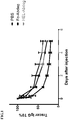
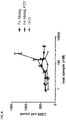
- cynomolgus monkeys were administered 1mg/kg of an anti-murine CD70 hIgG1 tracer antibody (FR70-hIgG1; Oshima et al., Int Immunol 10(4): 517-26 (1998 )) by i.v. bolus injection. Animals were infused 5 minutes later with either 7 mg/kg Fc-Abdeg, 20 mg/kg HEL-Abdeg, or PBS (2 monkeys per group). Infusion was performed within 1 hour and animals were administered a volume of 10 ml/kg.
- an anti-murine CD70 hIgG1 tracer antibody FR70-hIgG1; Oshima et al., Int Immunol 10(4): 517-26 (1998 )
- Animals were infused 5 minutes later with either 7 mg/kg Fc-Abdeg, 20 mg/kg HEL-Abdeg, or PBS (2 monkeys per group). Infusion was performed within 1 hour and animals were administered
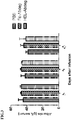
- FcRn In addition to its key role in the IgG salvage pathway, FcRn is also involved in albumin homeostasis ( Chaudhury et al., J Exp Med. 197(3):315-22 (2003 ). FcRn interacts with IgG-Fc and albumin at distinct sites and binding can happen concurrently ( Andersen et al., Nat Commun. 3:610 (2012 )). Conceptually, blockage of IgG recycling using Abdeg-modified molecules should not interfere with albumin-FcRn interaction.
- the antibody-depleting potency of Fc-Abdeg was compared to IVIG.
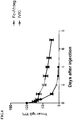
- cynomolgus monkeys were administered with 1 mg/kg tracer antibody (FR70-hIgG1) 2 days prior to dosing with 70 mg/kg Fc-Abdeg or 2 g/kg IVIG (2 monkeys per group).
- Infusion of Fc-Abdeg and IVIG was performed within 4 hours and animals were administered a volume of 20 ml/kg.
- Blood (3x 150 ⁇ 1) samples were taken 5 min prior to dosing ("pre-dose"), and 5 min, 2h, 6h, 24h, 48h, 72h, 96h, 120h, and 168h after completion of the infusion.
- Tracer levels were determined by mCD70-binding ELISA and plotted relative to pre-dose levels ( FIG.4 ). In comparison with IVIG treatment at clinical dose (2 g/kg), 70 mg/kg Fc-Abdeg showed significantly enhanced kinetics of tracer clearance and was also able to clear more efficiently (>95% tracer clearance in 4 days for Abdeg versus ⁇ 75% in 7 days for IVIG).
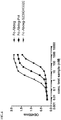
- Fc-Abdeg-POT The binding affinity of Fc-Abdeg for hCD16a was determined and compared to the afucosylated form (Fc-Abdeg-POT).
- Fc-Abdeg-POT The binding affinity of Fc-Abdeg for hCD16a was determined and compared to the afucosylated form.
- Fc-Abdeg-S239D/I332E an Fc-Abdeg variant showing improved affinity for all Fc ⁇ Rs was included ("Fc-Abdeg-S239D/I332E).
- a Maxisorp plate was coated with 100ng/well of Neutravidin Biotin-binding Protein (ThermoScientific, 31000) and incubated overnight at 4°C. The following day, the plate was blocked with PBS+1% casein for 2 hours at room temperature.
- Binding to hCD16a was detected using an HRP-conjugated polyclonal goat anti-human Fc antibody (Jackson ImmunoResearch, 109-035-008) (incubation 1 hour at RT, dilution 1/50,000 in PBS+0.1% casein), followed by addition of 100 ⁇ l room temperature-equilibrated TMB (SDT-reagents #s TMB). Plates were incubated for 10 minutes prior to addition of 100 ⁇ l 0.5N H 2 SO 4 and OD450nm measurement. EC50 values were determined using GraphPad Prism software.
- an ADCC reporter bioassay (Promega, G7016) was used to analyze the competitive hCD16a binding potency of Fc-Abdeg, Fc-Abdeg-POT and Fc-Abdeg-S239D/I332E. Specifically, 10,000 CD20-expressing Raji cells (target cells) were incubated with 60,000 Jurkat cells expressing hCD16a (effector cells) in presence of 100ng/ml anti-CD20 antibody and increasing concentration of competitor. Cells were incubated for 6 hours at 37°C prior to measuring the bioluminescence signal, which is a measure of ADCC-activity.
- the luciferase signal was plotted relative to the signal obtained by 100ng/ml anti-CD20 in the absence of competitor (see FIG.7 ).
- Fc-Abdeg, Fc-Abdeg-POT, Fc-Abdeg-S239D/I332E molecules was tested in a mouse model of acute immune thrombocytopenia. Specifically, C57BL/6 mice were treated with IVIG (20mg/animal), Fc-Abdeg (1 mg/animal), Fc-Abdeg-POT (1 mg/animal), Fc-Abdeg-S239D/I332E (1mg/animal) or saline via the intraperitoneal infusion (5 animals/group). Prior to treatment, a blood sample was withdrawn for a baseline measurement of platelet counts.
- mice were treated with 5 ⁇ g/animal of the anti-mouse platelet antibody MWReg30 ( Nieswandt et al., Blood 94:684-93 (1999 )). Platelet counts were monitored over 24 hours. Platelet counts were normalized relative to the initial counts for each mouse and platelets numbers were determined using flow cytometry via anti-CD61 staining.
- MWReg30 the anti-mouse platelet antibody
- Fc-Abdeg (comprising Fc domains having SEQ ID NO:2) was produced in CHO cells (Evitria, Switzerland) by transient transfection. Following transfection, high titers of Fc-Abdeg were detected in the supernatants (between 200 and 400 mg/ml). A similar favorable production profile was seen when Fc-Abdeg was expressed from an expression construct stably integrated into the CHO GS-XCEED cell line (Lonza, Great-Britain). On average, stable transfectants yielded 3g/L and several clones were identified which produced up to 6g/L Fc-Abdeg in a 10 L stirred tank bioreactor.
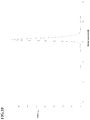
- the manufacturability of the Fc-Abdeg was further investigated by analysis of aggregates and degradation products following protein A-purification of the aforementioned Fc-Abdeg production runs. Specifically, 137 ⁇ g of Fc-Abdeg was loaded on a Superdex 200 10/300 GL gelfiltration column (GE Healthcare) coupled to an ⁇ ktaPurifier chromatography system. Results of this experiment, set forth in FIG.10 , showed that only a very small percentage of Fc-Abdeg aggregates was observed ( ⁇ 0.5%), whilst no Fc-Abdeg degradation products were detected.
- Fc-Abdeg A dose-escalation study of Fc-Abdeg was performed in cynomolgus monkeys to determine the onset of the pharmacodynamics effect as well as the saturating dose.
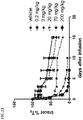
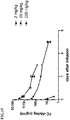
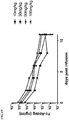
- cynomolgus monkeys were administered 1 mg/kg of an anti-murine CD70 hIgG1 tracer antibody (FR70-hIgG1) by i.v. bolus injection. Animals were infused 48 hours later with various doses of FC-Abdeg (0.2 mg/kg, 2 mg/kg, 20mg/kg or 200mg/kg) or vehicle (PBS). Infusion was performed within 3 hours and animals were administered a volume of 36.36 ml/kg. Each test group consisted of 2 animals.
- FcRn binding is restricted to the gamma subtype of immunoglobulins, and is accountable for their much longer half-life compared to other immunoglobulin subtypes.
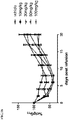
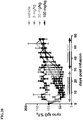
- Blocking the IgG recycling function of FcRn with Fc-Abdeg should therefore not interfere with endogenous non-IgG immunoglobulin levels, a feature which was demonstrated by measuring endogenous IgA and IgM levels in the serum samples of animals treated with 200mg/kg Fc-Abdeg (see Figures 13 and 14 ). Together with the observation set forth in Example 1 showing that Fc-Abdeg treatment does not influence albumin levels, these data demonstrate the specific pharmacodynamic effect of Fc-Abdeg.
- Fc-Abdeg has a short half-life (estimated half-life ⁇ 1.5 days) as has been calculated from its PK profile (see Figure 5 ). At saturating levels, non-FcRn binding Fc-Abdeg will be cleared efficiently due to its own mode of action. In addition, the molecular size of Fc-Abdeg is close to the cutoff for renal clearance ( ⁇ 60kDa).
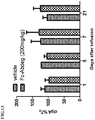
- a single infusion of Fc-Abdeg at a dose of 20mg/kg reduces endogenous IgG levels by 55% in cynomolgus monkeys in approximately 3-4 days.
- Fc-Abdeg was administered at a dose of 20mg/kg.
- Each test group consisted of 2 animals. Infusion procedure was identical to the one described in the Example 1.
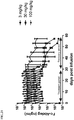
- FC-Abdeg 10 mg/kg, 30 mg/kg, 50 mg/kg and 100mg/kg
- PBS vehicle
- Infusion was performed within two hours and each cohort consisted of four animals (two males and two females).
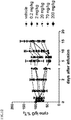
- Endogenous IgG levels were determined by ELISA and plotted relative to pre-dose levels (see Figure 18 ).
- An intermediate pharmacodynamic effect was observed at the 10mg/kg dose and this effect leveled out at doses starting from 30mg/kg.
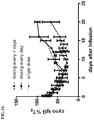
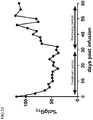
- Cynomolgus monkeys were infused with an i.v. loading dose of 20mg/kg FC-Abdeg and further received daily subcutaneous administration of Fc-Abdeg at 1, 3, or 5 mg/kg beginning 24 hours after the initial dose and continuing for for 12 days. Each test group consisted of two animals. IgG levels were determined by ELISA and plotted relative to pre-dose levels (see Figure 22 ). Data is also presented for a single cynomolgus monkey from the 3 mg/kg cohort in which the treatment persisted beyond 12 days. This monkey was infused with an i.v.
Landscapes
- Health & Medical Sciences (AREA)
- Chemical & Material Sciences (AREA)
- Organic Chemistry (AREA)
- Life Sciences & Earth Sciences (AREA)
- Immunology (AREA)
- General Health & Medical Sciences (AREA)
- Medicinal Chemistry (AREA)
- Bioinformatics & Cheminformatics (AREA)
- Engineering & Computer Science (AREA)
- Animal Behavior & Ethology (AREA)
- Veterinary Medicine (AREA)
- Pharmacology & Pharmacy (AREA)
- Public Health (AREA)
- Proteomics, Peptides & Aminoacids (AREA)
- Molecular Biology (AREA)
- Genetics & Genomics (AREA)
- Biophysics (AREA)
- Biochemistry (AREA)
- Nuclear Medicine, Radiotherapy & Molecular Imaging (AREA)
- Chemical Kinetics & Catalysis (AREA)
- General Chemical & Material Sciences (AREA)
- Epidemiology (AREA)
- Neurology (AREA)
- Neurosurgery (AREA)
- Biomedical Technology (AREA)
- Diabetes (AREA)
- Transplantation (AREA)
- Orthopedic Medicine & Surgery (AREA)
- Physical Education & Sports Medicine (AREA)
- Pain & Pain Management (AREA)
- Hematology (AREA)
- Physics & Mathematics (AREA)
- Optics & Photonics (AREA)
- Medicines Containing Antibodies Or Antigens For Use As Internal Diagnostic Agents (AREA)
- Peptides Or Proteins (AREA)
- Medicines That Contain Protein Lipid Enzymes And Other Medicines (AREA)
- Medicinal Preparation (AREA)
- Medicines Containing Material From Animals Or Micro-Organisms (AREA)
Priority Applications (2)
| Application Number | Priority Date | Filing Date | Title |
|---|---|---|---|
| PL16719896T PL3268391T3 (pl) | 2015-03-09 | 2016-03-08 | Sposoby zmniejszania poziomów środków zawierających Fc w surowicy z zastosowaniem antagonistów FcRn |
| EP21189336.7A EP4006051A1 (en) | 2015-03-09 | 2016-03-08 | Methods of reducing serum levels of fc-containing agents using fcrn antagonists |
Applications Claiming Priority (2)
| Application Number | Priority Date | Filing Date | Title |
|---|---|---|---|
| US201562130076P | 2015-03-09 | 2015-03-09 | |
| PCT/IB2016/000398 WO2016142782A1 (en) | 2015-03-09 | 2016-03-08 | Methods of reducing serum levels of fc-containing agents using fcrn antagonsits |
Related Child Applications (1)
| Application Number | Title | Priority Date | Filing Date |
|---|---|---|---|
| EP21189336.7A Division EP4006051A1 (en) | 2015-03-09 | 2016-03-08 | Methods of reducing serum levels of fc-containing agents using fcrn antagonists |
Publications (2)
| Publication Number | Publication Date |
|---|---|
| EP3268391A1 EP3268391A1 (en) | 2018-01-17 |
| EP3268391B1 true EP3268391B1 (en) | 2021-08-11 |
Family
ID=55863122
Family Applications (2)
| Application Number | Title | Priority Date | Filing Date |
|---|---|---|---|
| EP16719896.9A Active EP3268391B1 (en) | 2015-03-09 | 2016-03-08 | Methods of reducing serum levels of fc-containing agents using fcrn antagonsits |
| EP21189336.7A Pending EP4006051A1 (en) | 2015-03-09 | 2016-03-08 | Methods of reducing serum levels of fc-containing agents using fcrn antagonists |
Family Applications After (1)
| Application Number | Title | Priority Date | Filing Date |
|---|---|---|---|
| EP21189336.7A Pending EP4006051A1 (en) | 2015-03-09 | 2016-03-08 | Methods of reducing serum levels of fc-containing agents using fcrn antagonists |
Country Status (19)
| Country | Link |
|---|---|
| US (1) | US20160264669A1 (enExample) |
| EP (2) | EP3268391B1 (enExample) |
| JP (6) | JP2018509413A (enExample) |
| KR (1) | KR102720769B1 (enExample) |
| AU (2) | AU2016230827B2 (enExample) |
| CA (1) | CA2978253A1 (enExample) |
| DK (1) | DK3268391T3 (enExample) |
| EA (1) | EA038178B1 (enExample) |
| ES (1) | ES2882999T3 (enExample) |
| HU (1) | HUE056775T2 (enExample) |
| IL (2) | IL295425A (enExample) |
| LT (1) | LT3268391T (enExample) |
| MX (2) | MX386491B (enExample) |
| MY (1) | MY188761A (enExample) |
| PL (1) | PL3268391T3 (enExample) |
| PT (1) | PT3268391T (enExample) |
| SG (2) | SG10201908259WA (enExample) |
| WO (1) | WO2016142782A1 (enExample) |
| ZA (1) | ZA202109042B (enExample) |
Cited By (3)
| Publication number | Priority date | Publication date | Assignee | Title |
|---|---|---|---|---|
| US11434291B2 (en) | 2019-05-14 | 2022-09-06 | Provention Bio, Inc. | Methods and compositions for preventing type 1 diabetes |
| US12006366B2 (en) | 2020-06-11 | 2024-06-11 | Provention Bio, Inc. | Methods and compositions for preventing type 1 diabetes |
| US12565529B2 (en) | 2021-05-24 | 2026-03-03 | Provention Bio, Inc. | Methods for treating type 1 diabetes |
Families Citing this family (19)
| Publication number | Priority date | Publication date | Assignee | Title |
|---|---|---|---|---|
| SG11201605203UA (en) | 2013-12-24 | 2016-07-28 | Argen X N V | Fcrn antagonists and methods of use |
| RS64768B1 (sr) * | 2015-01-30 | 2023-11-30 | Momenta Pharmaceuticals Inc | Fcrn antitela i načini njihove upotrebe |
| CA2978253A1 (en) * | 2015-03-09 | 2016-09-15 | Argenx Bvba | Methods of reducing serum levels of fc-containing agents using fcrn antagonists |
| WO2018007999A1 (en) | 2016-07-08 | 2018-01-11 | Staten Biotechnology B.V. | Anti-apoc3 antibodies and methods of use thereof |
| GB201618424D0 (en) * | 2016-11-01 | 2016-12-14 | Argenix Bvba | Treatment of antibody mediated disease |
| CN110506056A (zh) | 2017-04-21 | 2019-11-26 | 斯塔滕生物技术有限公司 | 抗apoc3抗体和其使用方法 |
| PE20210119A1 (es) | 2017-10-31 | 2021-01-19 | Staten Biotechnology B V | Anticuerpos anti-apoc3 y metodos de uso de estos |
| CA3081144A1 (en) * | 2017-12-08 | 2019-06-13 | Argenx Bvba | Use of fcrn antagonists for treatment of generalized myasthenia gravis |
| US12202900B2 (en) | 2018-06-08 | 2025-01-21 | argenx BV | Compositions and methods for treating immune thrombocytopenia |
| WO2020148336A1 (en) * | 2019-01-16 | 2020-07-23 | INSERM (Institut National de la Santé et de la Recherche Médicale) | Use of agents capable of inducing lc3-associated phagocytosis for treating sustained inflammation in patients suffering from chronic liver disease |
| GB2589049C (en) * | 2019-04-11 | 2024-02-21 | argenx BV | Anti-IgE antibodies |
| JP7565951B2 (ja) | 2019-06-07 | 2024-10-11 | アルジェニクス ビーブイ | 皮下投与に好適なFcRnインヒビターの医薬製剤 |
| WO2021016571A2 (en) * | 2019-07-25 | 2021-01-28 | Genzyme Corporation | Methods of treating antibody-mediated disorders with fcrn antagonists |
| JP2023509195A (ja) | 2020-01-08 | 2023-03-07 | アルジェニクス ビーブイ | 天疱瘡症を治療する方法 |
| CN114341184B (zh) * | 2020-02-10 | 2023-04-04 | 北京拓界生物医药科技有限公司 | 抗FcRn抗体、其抗原结合片段及其医药用途 |
| AU2021292200A1 (en) * | 2020-06-17 | 2023-02-02 | The Trustees Of The University Of Pennsylvania | Compositions and methods for treatment of gene therapy patients |
| JP7755725B2 (ja) * | 2021-08-13 | 2025-10-16 | ジャンスー バイオジェッテイ バイオテクノロジー カンパニー リミテッド | Fcrnを特異的に認識する抗体およびその使用 |
| CN119698429A (zh) | 2022-06-15 | 2025-03-25 | 阿根思有限公司 | Fcrn结合分子及使用方法 |
| CN120344557A (zh) * | 2022-11-14 | 2025-07-18 | 阿根思有限公司 | Fcrn拮抗剂分子及其使用方法 |
Family Cites Families (43)
| Publication number | Priority date | Publication date | Assignee | Title |
|---|---|---|---|---|
| JP3101690B2 (ja) | 1987-03-18 | 2000-10-23 | エス・ビィ・2・インコーポレイテッド | 変性抗体の、または変性抗体に関する改良 |
| US5677425A (en) | 1987-09-04 | 1997-10-14 | Celltech Therapeutics Limited | Recombinant antibody |
| US5326856A (en) | 1992-04-09 | 1994-07-05 | Cytogen Corporation | Bifunctional isothiocyanate derived thiocarbonyls as ligands for metal binding |
| CA2118508A1 (en) | 1992-04-24 | 1993-11-11 | Elizabeth S. Ward | Recombinant production of immunoglobulin-like domains in prokaryotic cells |
| US5885573A (en) | 1993-06-01 | 1999-03-23 | Arch Development Corporation | Methods and materials for modulation of the immunosuppressive activity and toxicity of monoclonal antibodies |
| AU691811B2 (en) | 1993-06-16 | 1998-05-28 | Celltech Therapeutics Limited | Antibodies |
| US5731168A (en) | 1995-03-01 | 1998-03-24 | Genentech, Inc. | Method for making heteromultimeric polypeptides |
| US6121022A (en) | 1995-04-14 | 2000-09-19 | Genentech, Inc. | Altered polypeptides with increased half-life |
| US5869046A (en) | 1995-04-14 | 1999-02-09 | Genentech, Inc. | Altered polypeptides with increased half-life |
| US6128119A (en) | 1997-01-10 | 2000-10-03 | Asahi Kogaku Kogyo Kabushiki Kaisha | Beam shaping optical system |
| US6277375B1 (en) | 1997-03-03 | 2001-08-21 | Board Of Regents, The University Of Texas System | Immunoglobulin-like domains with increased half-lives |
| US6528624B1 (en) | 1998-04-02 | 2003-03-04 | Genentech, Inc. | Polypeptide variants |
| US6194551B1 (en) | 1998-04-02 | 2001-02-27 | Genentech, Inc. | Polypeptide variants |
| GB9809951D0 (en) | 1998-05-08 | 1998-07-08 | Univ Cambridge Tech | Binding molecules |
| PL209392B1 (pl) | 1999-01-15 | 2011-08-31 | Genentech Inc | Przeciwciało, komórka gospodarza, sposób wytwarzania przeciwciała oraz zastosowanie przeciwciała |
| US6737056B1 (en) | 1999-01-15 | 2004-05-18 | Genentech, Inc. | Polypeptide variants with altered effector function |
| HUP0204475A2 (en) | 2000-02-11 | 2003-04-28 | Merck Patent Gmbh | Enhancing the circulating half-life of antibody-based fusion proteins |
| US6725230B2 (en) | 2000-07-18 | 2004-04-20 | Aegis Analytical Corporation | System, method and computer program for assembling process data of multi-database origins using a hierarchical display |
| US6946292B2 (en) | 2000-10-06 | 2005-09-20 | Kyowa Hakko Kogyo Co., Ltd. | Cells producing antibody compositions with increased antibody dependent cytotoxic activity |
| WO2002043658A2 (en) | 2000-11-06 | 2002-06-06 | The Jackson Laboratory | Fcrn-based therapeutics for the treatment of auto-immune disorders |
| WO2002040047A2 (en) | 2000-11-20 | 2002-05-23 | Canadian Blood Services | Method for treating thrombocytopenia with monoclonal ivig |
| US7083784B2 (en) | 2000-12-12 | 2006-08-01 | Medimmune, Inc. | Molecules with extended half-lives, compositions and uses thereof |
| NZ571596A (en) | 2001-08-03 | 2010-11-26 | Glycart Biotechnology Ag | Antibody glycosylation variants having increased antibody-dependent cellular cytotoxicity |
| US20040002587A1 (en) | 2002-02-20 | 2004-01-01 | Watkins Jeffry D. | Fc region variants |
| US20040132101A1 (en) | 2002-09-27 | 2004-07-08 | Xencor | Optimized Fc variants and methods for their generation |
| ATE483472T1 (de) | 2002-05-30 | 2010-10-15 | Macrogenics Inc | Cd16a bindungsproteine und verwendung zur behandlung von immunkrankheiten |
| DK1534335T4 (en) | 2002-08-14 | 2015-10-05 | Macrogenics Inc | FCGAMMARIIB-SPECIFIC ANTIBODIES AND PROCEDURES FOR USE THEREOF |
| EP1553975B8 (en) | 2002-09-27 | 2023-04-12 | Xencor, Inc. | Optimized fc variants and methods for their generation |
| DK1562972T3 (da) | 2002-10-15 | 2010-12-06 | Facet Biotech Corp | Modifikation af FcRn-bindingsaffiniteter eller serumhalveringstider for antistoffer ved mutagenese |
| CA2512729C (en) | 2003-01-09 | 2014-09-16 | Macrogenics, Inc. | Identification and engineering of antibodies with variant fc regions and methods of using same |
| CA2512974A1 (en) | 2003-01-13 | 2004-07-29 | Macrogenics, Inc. | Soluble fc.gamma.r fusion proteins and methods of use thereof |
| GB0324368D0 (en) | 2003-10-17 | 2003-11-19 | Univ Cambridge Tech | Polypeptides including modified constant regions |
| WO2006130834A2 (en) * | 2005-05-31 | 2006-12-07 | Board Of Regents, The University Of Texas System | IGGl ANTIBODIES WITH MUTATED FC PORTION FOR INCREASED BINDING TO FCRN RECEPTOR AND USES THEREOF |
| TW200745163A (en) | 2006-02-17 | 2007-12-16 | Syntonix Pharmaceuticals Inc | Peptides that block the binding of IgG to FcRn |
| EP2144930A1 (en) | 2007-04-18 | 2010-01-20 | ZymoGenetics, Inc. | Single chain fc, methods of making and methods of treatment |
| EP2158318A2 (en) | 2007-05-14 | 2010-03-03 | Biogen Idec MA, Inc. | Single-chain fc (scfc) regions, binding polypeptides comprising same, and methods related thereto |
| NZ594343A (en) | 2009-03-25 | 2013-10-25 | Genentech Inc | Novel anti-alpha5beta1 antibodies and uses thereof |
| ES2765874T3 (es) | 2011-05-25 | 2020-06-11 | Innate Pharma Sa | Anticuerpos anti-KIR para el tratamiento de trastornos inflamatorios |
| AU2012328819B2 (en) * | 2011-10-26 | 2017-08-03 | Elanco Tiergesundheit Ag | Monoclonal antibodies and methods of use |
| US20140302028A1 (en) * | 2011-11-18 | 2014-10-09 | Merck Sharp & Dohme Corp. | Fc containing polypeptides having increased anti-inflammatory properties and increased fcrn binding |
| JP6285923B2 (ja) | 2012-06-22 | 2018-02-28 | トラスティーズ・オブ・ダートマス・カレッジ | 新規VISTA−Igコンストラクト及び自己免疫、アレルギー性及び炎症性障害の処置のためのVISTA−Igの使用 |
| SG11201605203UA (en) * | 2013-12-24 | 2016-07-28 | Argen X N V | Fcrn antagonists and methods of use |
| CA2978253A1 (en) * | 2015-03-09 | 2016-09-15 | Argenx Bvba | Methods of reducing serum levels of fc-containing agents using fcrn antagonists |
-
2016
- 2016-03-08 CA CA2978253A patent/CA2978253A1/en active Pending
- 2016-03-08 MY MYPI2017001178A patent/MY188761A/en unknown
- 2016-03-08 EP EP16719896.9A patent/EP3268391B1/en active Active
- 2016-03-08 SG SG10201908259W patent/SG10201908259WA/en unknown
- 2016-03-08 SG SG11201707053SA patent/SG11201707053SA/en unknown
- 2016-03-08 EA EA201791984A patent/EA038178B1/ru unknown
- 2016-03-08 LT LTEPPCT/IB2016/000398T patent/LT3268391T/lt unknown
- 2016-03-08 AU AU2016230827A patent/AU2016230827B2/en active Active
- 2016-03-08 IL IL295425A patent/IL295425A/en unknown
- 2016-03-08 JP JP2017547456A patent/JP2018509413A/ja active Pending
- 2016-03-08 EP EP21189336.7A patent/EP4006051A1/en active Pending
- 2016-03-08 KR KR1020177027256A patent/KR102720769B1/ko active Active
- 2016-03-08 PL PL16719896T patent/PL3268391T3/pl unknown
- 2016-03-08 WO PCT/IB2016/000398 patent/WO2016142782A1/en not_active Ceased
- 2016-03-08 IL IL254403A patent/IL254403B/en unknown
- 2016-03-08 MX MX2017011534A patent/MX386491B/es unknown
- 2016-03-08 ES ES16719896T patent/ES2882999T3/es active Active
- 2016-03-08 US US15/064,195 patent/US20160264669A1/en active Pending
- 2016-03-08 DK DK16719896.9T patent/DK3268391T3/da active
- 2016-03-08 PT PT167198969T patent/PT3268391T/pt unknown
- 2016-03-08 HU HUE16719896A patent/HUE056775T2/hu unknown
-
2017
- 2017-09-08 MX MX2021011633A patent/MX2021011633A/es unknown
-
2021
- 2021-02-04 JP JP2021016293A patent/JP7050191B2/ja active Active
- 2021-11-15 ZA ZA2021/09042A patent/ZA202109042B/en unknown
- 2021-12-02 AU AU2021277720A patent/AU2021277720B2/en active Active
-
2022
- 2022-03-28 JP JP2022051047A patent/JP7391132B2/ja active Active
- 2022-04-26 JP JP2022072043A patent/JP7403575B2/ja active Active
-
2023
- 2023-12-12 JP JP2023209102A patent/JP7823011B2/ja active Active
-
2025
- 2025-10-16 JP JP2025174910A patent/JP2026012786A/ja active Pending
Non-Patent Citations (1)
| Title |
|---|
| None * |
Cited By (3)
| Publication number | Priority date | Publication date | Assignee | Title |
|---|---|---|---|---|
| US11434291B2 (en) | 2019-05-14 | 2022-09-06 | Provention Bio, Inc. | Methods and compositions for preventing type 1 diabetes |
| US12006366B2 (en) | 2020-06-11 | 2024-06-11 | Provention Bio, Inc. | Methods and compositions for preventing type 1 diabetes |
| US12565529B2 (en) | 2021-05-24 | 2026-03-03 | Provention Bio, Inc. | Methods for treating type 1 diabetes |
Also Published As
Similar Documents
| Publication | Publication Date | Title |
|---|---|---|
| AU2021277720B2 (en) | Methods of reducing serum levels of Fc-containing agents using FcRn antagonists | |
| US20220275035A1 (en) | Fcrn antagonists and methods of use | |
| HK40066057A (en) | Methods of reducing serum levels of fc-containing agents using fcrn antagonists | |
| HK1242347A1 (en) | Methods of reducing serum levels of fc-containing agents using fcrn antagonists | |
| HK1242347B (en) | Methods of reducing serum levels of fc-containing agents using fcrn antagonists | |
| HK40034924B (zh) | Fcrn拮抗剂及使用方法 | |
| BR112017019191B1 (pt) | Métodos para reduzir níveis de soro de agentes que contêm fc utilizando antagonistas de fcrn |
Legal Events
| Date | Code | Title | Description |
|---|---|---|---|
| STAA | Information on the status of an ep patent application or granted ep patent |
Free format text: STATUS: THE INTERNATIONAL PUBLICATION HAS BEEN MADE |
|
| PUAI | Public reference made under article 153(3) epc to a published international application that has entered the european phase |
Free format text: ORIGINAL CODE: 0009012 |
|
| STAA | Information on the status of an ep patent application or granted ep patent |
Free format text: STATUS: REQUEST FOR EXAMINATION WAS MADE |
|
| 17P | Request for examination filed |
Effective date: 20170807 |
|
| AK | Designated contracting states |
Kind code of ref document: A1 Designated state(s): AL AT BE BG CH CY CZ DE DK EE ES FI FR GB GR HR HU IE IS IT LI LT LU LV MC MK MT NL NO PL PT RO RS SE SI SK SM TR |
|
| AX | Request for extension of the european patent |
Extension state: BA ME |
|
| DAV | Request for validation of the european patent (deleted) | ||
| DAX | Request for extension of the european patent (deleted) | ||
| REG | Reference to a national code |
Ref country code: HK Ref legal event code: DE Ref document number: 1242347 Country of ref document: HK |
|
| STAA | Information on the status of an ep patent application or granted ep patent |
Free format text: STATUS: EXAMINATION IS IN PROGRESS |
|
| 17Q | First examination report despatched |
Effective date: 20181114 |
|
| GRAP | Despatch of communication of intention to grant a patent |
Free format text: ORIGINAL CODE: EPIDOSNIGR1 |
|
| STAA | Information on the status of an ep patent application or granted ep patent |
Free format text: STATUS: GRANT OF PATENT IS INTENDED |
|
| INTG | Intention to grant announced |
Effective date: 20210316 |
|
| GRAS | Grant fee paid |
Free format text: ORIGINAL CODE: EPIDOSNIGR3 |
|
| GRAA | (expected) grant |
Free format text: ORIGINAL CODE: 0009210 |
|
| STAA | Information on the status of an ep patent application or granted ep patent |
Free format text: STATUS: THE PATENT HAS BEEN GRANTED |
|
| AK | Designated contracting states |
Kind code of ref document: B1 Designated state(s): AL AT BE BG CH CY CZ DE DK EE ES FI FR GB GR HR HU IE IS IT LI LT LU LV MC MK MT NL NO PL PT RO RS SE SI SK SM TR |
|
| RIN1 | Information on inventor provided before grant (corrected) |
Inventor name: BLANCHETOT, CHRISTOPHE Inventor name: DE HAARD, JOHANNES Inventor name: ULRICHTS, PETER Inventor name: DREIER, TORSTEN Inventor name: ONGENAE, NICOLAS, G.H. |
|
| REG | Reference to a national code |
Ref country code: CH Ref legal event code: EP |
|
| REG | Reference to a national code |
Ref country code: PT Ref legal event code: SC4A Ref document number: 3268391 Country of ref document: PT Date of ref document: 20210819 Kind code of ref document: T Free format text: AVAILABILITY OF NATIONAL TRANSLATION Effective date: 20210813 |
|
| REG | Reference to a national code |
Ref country code: FI Ref legal event code: FGE |
|
| REG | Reference to a national code |
Ref country code: DE Ref legal event code: R096 Ref document number: 602016061967 Country of ref document: DE |
|
| REG | Reference to a national code |
Ref country code: DK Ref legal event code: T3 Effective date: 20210907 |
|
| REG | Reference to a national code |
Ref country code: IE Ref legal event code: FG4D Ref country code: AT Ref legal event code: REF Ref document number: 1419304 Country of ref document: AT Kind code of ref document: T Effective date: 20210915 |
|
| REG | Reference to a national code |
Ref country code: RO Ref legal event code: EPE |
|
| REG | Reference to a national code |
Ref country code: NO Ref legal event code: T2 Effective date: 20210811 |
|
| REG | Reference to a national code |
Ref country code: NL Ref legal event code: FP |
|
| REG | Reference to a national code |
Ref country code: SE Ref legal event code: TRGR |
|
| REG | Reference to a national code |
Ref country code: GR Ref legal event code: EP Ref document number: 20210402602 Country of ref document: GR Effective date: 20211111 Ref country code: ES Ref legal event code: FG2A Ref document number: 2882999 Country of ref document: ES Kind code of ref document: T3 Effective date: 20211203 |
|
| PG25 | Lapsed in a contracting state [announced via postgrant information from national office to epo] |
Ref country code: RS Free format text: LAPSE BECAUSE OF FAILURE TO SUBMIT A TRANSLATION OF THE DESCRIPTION OR TO PAY THE FEE WITHIN THE PRESCRIBED TIME-LIMIT Effective date: 20210811 Ref country code: BG Free format text: LAPSE BECAUSE OF FAILURE TO SUBMIT A TRANSLATION OF THE DESCRIPTION OR TO PAY THE FEE WITHIN THE PRESCRIBED TIME-LIMIT Effective date: 20211111 Ref country code: HR Free format text: LAPSE BECAUSE OF FAILURE TO SUBMIT A TRANSLATION OF THE DESCRIPTION OR TO PAY THE FEE WITHIN THE PRESCRIBED TIME-LIMIT Effective date: 20210811 |
|
| REG | Reference to a national code |
Ref country code: HU Ref legal event code: AG4A Ref document number: E056775 Country of ref document: HU |
|
| REG | Reference to a national code |
Ref country code: DE Ref legal event code: R097 Ref document number: 602016061967 Country of ref document: DE |
|
| PG25 | Lapsed in a contracting state [announced via postgrant information from national office to epo] |
Ref country code: SM Free format text: LAPSE BECAUSE OF FAILURE TO SUBMIT A TRANSLATION OF THE DESCRIPTION OR TO PAY THE FEE WITHIN THE PRESCRIBED TIME-LIMIT Effective date: 20210811 Ref country code: SK Free format text: LAPSE BECAUSE OF FAILURE TO SUBMIT A TRANSLATION OF THE DESCRIPTION OR TO PAY THE FEE WITHIN THE PRESCRIBED TIME-LIMIT Effective date: 20210811 Ref country code: EE Free format text: LAPSE BECAUSE OF FAILURE TO SUBMIT A TRANSLATION OF THE DESCRIPTION OR TO PAY THE FEE WITHIN THE PRESCRIBED TIME-LIMIT Effective date: 20210811 Ref country code: AL Free format text: LAPSE BECAUSE OF FAILURE TO SUBMIT A TRANSLATION OF THE DESCRIPTION OR TO PAY THE FEE WITHIN THE PRESCRIBED TIME-LIMIT Effective date: 20210811 |
|
| PLBE | No opposition filed within time limit |
Free format text: ORIGINAL CODE: 0009261 |
|
| STAA | Information on the status of an ep patent application or granted ep patent |
Free format text: STATUS: NO OPPOSITION FILED WITHIN TIME LIMIT |
|
| 26N | No opposition filed |
Effective date: 20220512 |
|
| PG25 | Lapsed in a contracting state [announced via postgrant information from national office to epo] |
Ref country code: SI Free format text: LAPSE BECAUSE OF FAILURE TO SUBMIT A TRANSLATION OF THE DESCRIPTION OR TO PAY THE FEE WITHIN THE PRESCRIBED TIME-LIMIT Effective date: 20210811 |
|
| PG25 | Lapsed in a contracting state [announced via postgrant information from national office to epo] |
Ref country code: MC Free format text: LAPSE BECAUSE OF FAILURE TO SUBMIT A TRANSLATION OF THE DESCRIPTION OR TO PAY THE FEE WITHIN THE PRESCRIBED TIME-LIMIT Effective date: 20210811 |
|
| REG | Reference to a national code |
Ref country code: AT Ref legal event code: UEP Ref document number: 1419304 Country of ref document: AT Kind code of ref document: T Effective date: 20210811 |
|
| P01 | Opt-out of the competence of the unified patent court (upc) registered |
Effective date: 20230523 |
|
| PG25 | Lapsed in a contracting state [announced via postgrant information from national office to epo] |
Ref country code: MK Free format text: LAPSE BECAUSE OF FAILURE TO SUBMIT A TRANSLATION OF THE DESCRIPTION OR TO PAY THE FEE WITHIN THE PRESCRIBED TIME-LIMIT Effective date: 20210811 Ref country code: CY Free format text: LAPSE BECAUSE OF FAILURE TO SUBMIT A TRANSLATION OF THE DESCRIPTION OR TO PAY THE FEE WITHIN THE PRESCRIBED TIME-LIMIT Effective date: 20210811 |
|
| PG25 | Lapsed in a contracting state [announced via postgrant information from national office to epo] |
Ref country code: MT Free format text: LAPSE BECAUSE OF FAILURE TO SUBMIT A TRANSLATION OF THE DESCRIPTION OR TO PAY THE FEE WITHIN THE PRESCRIBED TIME-LIMIT Effective date: 20210811 |
|
| PGFP | Annual fee paid to national office [announced via postgrant information from national office to epo] |
Ref country code: ES Payment date: 20250404 Year of fee payment: 10 |
|
| PGFP | Annual fee paid to national office [announced via postgrant information from national office to epo] |
Ref country code: CH Payment date: 20250401 Year of fee payment: 10 |
|
| REG | Reference to a national code |
Ref country code: CH Ref legal event code: R18 Free format text: ST27 STATUS EVENT CODE: U-0-0-R10-R18 (AS PROVIDED BY THE NATIONAL OFFICE) Effective date: 20260109 |
|
| REG | Reference to a national code |
Ref country code: CH Ref legal event code: Y10 Free format text: ST27 STATUS EVENT CODE: U-0-0-Y10-Y00 (AS PROVIDED BY THE NATIONAL OFFICE) Effective date: 20260119 |
|
| REG | Reference to a national code |
Ref country code: HU Ref legal event code: HC9C Owner name: ARGENX BV, BE Free format text: FORMER OWNER(S): ARGENX BVBA, BE |
|
| REG | Reference to a national code |
Ref country code: DE Ref legal event code: R081 Ref document number: 602016061967 Country of ref document: DE Owner name: ARGENX BV, GHENT, BE Free format text: FORMER OWNER: ARGENX BVBA, ZWIJNAARDE, BE Ref country code: LU Ref legal event code: HC Owner name: ARGENX BV; BE Free format text: FORMER OWNER: ARGENX BVBA Effective date: 20260109 |
|
| REG | Reference to a national code |
Ref country code: NL Ref legal event code: PD Owner name: ARGENX BV; BE Free format text: DETAILS ASSIGNMENT: CHANGE OF OWNER(S), CHANGE OF LEGAL ENTITY; FORMER OWNER NAME: ARGENX BVBA Effective date: 20260216 |
|
| REG | Reference to a national code |
Ref country code: BE Ref legal event code: PD Owner name: ARGENX BV; BE Free format text: DETAILS ASSIGNMENT: CHANGE OF OWNER(S), CHANGE OF LEGAL ENTITY; FORMER OWNER NAME: ARGENX BV Effective date: 20260130 |
|
| REG | Reference to a national code |
Ref country code: CH Ref legal event code: U11 Free format text: ST27 STATUS EVENT CODE: U-0-0-U10-U11 (AS PROVIDED BY THE NATIONAL OFFICE) Effective date: 20260401 |
|
| PGFP | Annual fee paid to national office [announced via postgrant information from national office to epo] |
Ref country code: SE Payment date: 20260320 Year of fee payment: 11 |
|
| PGFP | Annual fee paid to national office [announced via postgrant information from national office to epo] |
Ref country code: GB Payment date: 20260318 Year of fee payment: 11 Ref country code: LT Payment date: 20260224 Year of fee payment: 11 |
|
| REG | Reference to a national code |
Ref country code: BE Ref legal event code: PD Owner name: ARGENX BV; BE Free format text: DETAILS ASSIGNMENT: CHANGE OF OWNER(S), CHANGE OF LEGAL ENTITY; FORMER OWNER NAME: MANNAERTS JAAP Effective date: 20260130 |
|
| PGFP | Annual fee paid to national office [announced via postgrant information from national office to epo] |
Ref country code: NO Payment date: 20260323 Year of fee payment: 11 Ref country code: DE Payment date: 20260318 Year of fee payment: 11 Ref country code: DK Payment date: 20260325 Year of fee payment: 11 Ref country code: IE Payment date: 20260317 Year of fee payment: 11 |
|
| PGFP | Annual fee paid to national office [announced via postgrant information from national office to epo] |
Ref country code: AT Payment date: 20260318 Year of fee payment: 11 |
|
| PGFP | Annual fee paid to national office [announced via postgrant information from national office to epo] |
Ref country code: BE Payment date: 20260317 Year of fee payment: 11 Ref country code: FI Payment date: 20260319 Year of fee payment: 11 Ref country code: LU Payment date: 20260317 Year of fee payment: 11 Ref country code: RO Payment date: 20260302 Year of fee payment: 11 Ref country code: IT Payment date: 20260319 Year of fee payment: 11 |
|
| REG | Reference to a national code |
Ref country code: AT Ref legal event code: HC Ref document number: 1419304 Country of ref document: AT Kind code of ref document: T Owner name: ARGENX BV, BE Effective date: 20260226 |
|
| PGFP | Annual fee paid to national office [announced via postgrant information from national office to epo] |
Ref country code: NL Payment date: 20260317 Year of fee payment: 11 Ref country code: HU Payment date: 20260220 Year of fee payment: 11 |
|
| PGFP | Annual fee paid to national office [announced via postgrant information from national office to epo] |
Ref country code: FR Payment date: 20260317 Year of fee payment: 11 Ref country code: IS Payment date: 20260326 Year of fee payment: 11 |
|
| PGFP | Annual fee paid to national office [announced via postgrant information from national office to epo] |
Ref country code: TR Payment date: 20260224 Year of fee payment: 11 |
|
| PGFP | Annual fee paid to national office [announced via postgrant information from national office to epo] |
Ref country code: CZ Payment date: 20260212 Year of fee payment: 11 Ref country code: PT Payment date: 20260219 Year of fee payment: 11 |
|
| PGFP | Annual fee paid to national office [announced via postgrant information from national office to epo] |
Ref country code: GR Payment date: 20260319 Year of fee payment: 11 Ref country code: PL Payment date: 20260210 Year of fee payment: 11 |
|
| PGFP | Annual fee paid to national office [announced via postgrant information from national office to epo] |
Ref country code: LV Payment date: 20260318 Year of fee payment: 11 |