EP3259289B1 - Method for preparing inhibited starch with improved warehouse storage stability - Google Patents
Method for preparing inhibited starch with improved warehouse storage stability Download PDFInfo
- Publication number
- EP3259289B1 EP3259289B1 EP16752733.2A EP16752733A EP3259289B1 EP 3259289 B1 EP3259289 B1 EP 3259289B1 EP 16752733 A EP16752733 A EP 16752733A EP 3259289 B1 EP3259289 B1 EP 3259289B1
- Authority
- EP
- European Patent Office
- Prior art keywords
- starch
- sodium
- active chlorine
- acid
- potassium
- Prior art date
- Legal status (The legal status is an assumption and is not a legal conclusion. Google has not performed a legal analysis and makes no representation as to the accuracy of the status listed.)
- Active
Links
Images





Classifications
-
- A—HUMAN NECESSITIES
- A23—FOODS OR FOODSTUFFS; TREATMENT THEREOF, NOT COVERED BY OTHER CLASSES
- A23L—FOODS, FOODSTUFFS OR NON-ALCOHOLIC BEVERAGES, NOT OTHERWISE PROVIDED FOR; PREPARATION OR TREATMENT THEREOF
- A23L29/00—Foods or foodstuffs containing additives; Preparation or treatment thereof
- A23L29/20—Foods or foodstuffs containing additives; Preparation or treatment thereof containing gelling or thickening agents
- A23L29/206—Foods or foodstuffs containing additives; Preparation or treatment thereof containing gelling or thickening agents of vegetable origin
- A23L29/212—Starch; Modified starch; Starch derivatives, e.g. esters or ethers
- A23L29/219—Chemically modified starch; Reaction or complexation products of starch with other chemicals
-
- A—HUMAN NECESSITIES
- A23—FOODS OR FOODSTUFFS; TREATMENT THEREOF, NOT COVERED BY OTHER CLASSES
- A23B—PRESERVATION OF FOODS, FOODSTUFFS OR NON-ALCOHOLIC BEVERAGES; CHEMICAL RIPENING OF FRUIT OR VEGETABLES
- A23B2/00—Preservation of foods or foodstuffs, in general
- A23B2/70—Preservation of foods or foodstuffs, in general by treatment with chemicals
- A23B2/725—Preservation of foods or foodstuffs, in general by treatment with chemicals in the form of liquids or solids
- A23B2/729—Organic compounds; Microorganisms; Enzymes
-
- A—HUMAN NECESSITIES
- A23—FOODS OR FOODSTUFFS; TREATMENT THEREOF, NOT COVERED BY OTHER CLASSES
- A23L—FOODS, FOODSTUFFS OR NON-ALCOHOLIC BEVERAGES, NOT OTHERWISE PROVIDED FOR; PREPARATION OR TREATMENT THEREOF
- A23L5/00—Preparation or treatment of foods or foodstuffs, in general; Food or foodstuffs obtained thereby; Materials therefor
- A23L5/40—Colouring or decolouring of foods
- A23L5/49—Removing colour by chemical reaction, e.g. bleaching
-
- C—CHEMISTRY; METALLURGY
- C08—ORGANIC MACROMOLECULAR COMPOUNDS; THEIR PREPARATION OR CHEMICAL WORKING-UP; COMPOSITIONS BASED THEREON
- C08B—POLYSACCHARIDES; DERIVATIVES THEREOF
- C08B30/00—Preparation of starch, degraded or non-chemically modified starch, amylose, or amylopectin
- C08B30/02—Preparatory treatment, e.g. crushing of raw materials or steeping process
-
- C—CHEMISTRY; METALLURGY
- C08—ORGANIC MACROMOLECULAR COMPOUNDS; THEIR PREPARATION OR CHEMICAL WORKING-UP; COMPOSITIONS BASED THEREON
- C08B—POLYSACCHARIDES; DERIVATIVES THEREOF
- C08B31/00—Preparation of derivatives of starch
- C08B31/08—Ethers
- C08B31/10—Alkyl or cycloalkyl ethers
-
- C—CHEMISTRY; METALLURGY
- C08—ORGANIC MACROMOLECULAR COMPOUNDS; THEIR PREPARATION OR CHEMICAL WORKING-UP; COMPOSITIONS BASED THEREON
- C08B—POLYSACCHARIDES; DERIVATIVES THEREOF
- C08B31/00—Preparation of derivatives of starch
- C08B31/18—Oxidised starch
-
- A—HUMAN NECESSITIES
- A23—FOODS OR FOODSTUFFS; TREATMENT THEREOF, NOT COVERED BY OTHER CLASSES
- A23V—INDEXING SCHEME RELATING TO FOODS, FOODSTUFFS OR NON-ALCOHOLIC BEVERAGES AND LACTIC OR PROPIONIC ACID BACTERIA USED IN FOODSTUFFS OR FOOD PREPARATION
- A23V2002/00—Food compositions, function of food ingredients or processes for food or foodstuffs
-
- A—HUMAN NECESSITIES
- A23—FOODS OR FOODSTUFFS; TREATMENT THEREOF, NOT COVERED BY OTHER CLASSES
- A23V—INDEXING SCHEME RELATING TO FOODS, FOODSTUFFS OR NON-ALCOHOLIC BEVERAGES AND LACTIC OR PROPIONIC ACID BACTERIA USED IN FOODSTUFFS OR FOOD PREPARATION
- A23V2250/00—Food ingredients
- A23V2250/02—Acid
- A23V2250/06—Amino acid
-
- A—HUMAN NECESSITIES
- A23—FOODS OR FOODSTUFFS; TREATMENT THEREOF, NOT COVERED BY OTHER CLASSES
- A23V—INDEXING SCHEME RELATING TO FOODS, FOODSTUFFS OR NON-ALCOHOLIC BEVERAGES AND LACTIC OR PROPIONIC ACID BACTERIA USED IN FOODSTUFFS OR FOOD PREPARATION
- A23V2250/00—Food ingredients
- A23V2250/54—Proteins
- A23V2250/55—Peptide, protein hydrolysate
Definitions
- the present invention refers to a method for preparing inhibited starch with improved warehouse storage stability
- Starch is an important ingredient for the food industry and is very commonly used in a great multiplicity of food applications and food production processes. Natural, non-modified starch, known by skilled persons in the art as “native starch”, is sometimes used as such but has several disadvantages.
- the primary function of starch in food applications is as thickening agent with a view to provide the requested viscosity, texture and mouth feel of food products.
- the texture and viscosity property are built up by hydration of the granular starch achieved when the granular starch is heated in an aqueous suspension.
- the granular starch absorbs water when the temperature is increased above the gelatinization temperature, i.e. the starch granule is being hydrated and swollen and its viscosity is considerably increased.
- the hydrated and swollen starch granules are not stable and, consequently, if the temperature is kept for longer time or is increased to higher temperatures the viscosity will reach its so called "peak viscosity". Accordingly, the granular shape will be disrupted and disintegrates. The viscosity will be significantly reduced. Besides the reduced viscosity, another drawback will be an unpleasant long and cohesive texture.
- the requested effect is often referred to as increased starch robustness.
- the granular starch is more resistant to high temperatures, longer heating times, strong shear forces, and acidic conditions or combinations of those parameters.
- the most commonly used method of modification to give starch increased process tolerance is to use the technique known as chemical cross-linking.
- Chemical cross-linking inhibits the starch granule, so that when it is heated in water its swelling is inhibited. If the level of cross-linking is too low a continued heating combined with strong physical force or not will end up in a total or partial starch solution. Chemical cross-linking prevents granular breakdown under such treatments.
- the chemical cross-linking is achieved by substituting the starch with a bi-functional reagent, resulting in a covalent bond between the starch molecules. This can be done with certain approved methods and chemicals, e.g.
- these cross-linking techniques for modifying the property of the swelling of the starch granule can be adapted to the application and the process which the starch is to be used in, so that optimal properties in the form of viscosity and texture are obtained due to the starch as such.
- Non-chemical inhibition of starch granules can be performed with dry heat inhibition, also called alkaline dry roasting, similar to the so called British Gums.
- dry heat inhibition also called alkaline dry roasting
- the starch is subjected to high temperatures in an almost totally moisture free condition in combination with an alkaline pH, which is reached by addition of e.g. sodium hydroxide or soda.
- Temperatures of 120-160°C at a pH of 8-11 and a reaction time of 2-120 hours give different inhibition levels. This technique is well known and disclosed in the literature (Cross-linking of starch by Alkali Roasting, Journal of Applied Polymer Science Vol.
- a weak inhibition can be achieved by subjecting the starch granule to low concentrations of a bleaching agent, i.e. an oxidant (oxidizing agent) at an alkaline pH together with so called oxidation modifiers, which are different nitrogen containing compounds.
- a bleaching agent i.e. an oxidant (oxidizing agent) at an alkaline pH
- so called oxidation modifiers which are different nitrogen containing compounds.
- the residual protein in the starch granule remaining after extraction can be used as the oxidation modifiers, but it generally needs less pure starches than nowadays commercial starches has, i.e. above 0.4% protein content of starch dry matter.
- This inhibition technology is known and is disclosed in U.S. Patent No. 2,317,752 and in the UK Patent Application GB 2506695 .
- the latter two methods of inhibiting starch can be performed only to a limited inhibition level. If higher levels of oxidants are added the starch will instead be oxidized, leading to a de-poly
- the object with the present invention is to fulfill the above-mentioned needs and to provide an inhibited starch having the desired advantageous properties disclosed.
- the present invention refers to a method for preparing an inhibited starch with improved warehouse stability, wherein it comprises the steps of
- the present invention provides a method for inhibiting granular starch to higher inhibition levels for which the achieved inhibition is stable, wherein the inhibited granular starch also has such beneficial properties such as viscosity stability against temperature increase, shear forces, and acidic conditions.
- the inhibited starch will have increased process robustness, i.e. becomes more resistant in certain food processes, like high pressure homogenization, performed at processing temperatures above the natural gelatinization temperature of the starch.
- said inhibited granular starch has an increased gelatinization temperature with a few degrees Celsius, wherein it is more capable of maintaining its natural structure, i.e. the granular shape, in this kind of food processes.
- a further advantage accompanying the present invention are that the unpleasant off-taste normally expressed in conventional inhibited starches made without chemical cross-linking is neutralized or eliminated. Still another advantage is that the protein, more precisely the naturally occurring amino acids therein and peptides therein with a molecular weight below 1 kDa, initially separated from the starch raw material, i.e. the raw material source the native starch has been extracted from, may be used as a source for the amino acid addition involved in the inventive method. This means that the inhibition may be carried out solely from the same raw material as the starch is extracted from, or that it can be made by using synthetic amino acids or amino acids from a foreign protein source.
- native starch used throughout the application text is intended to mean an extracted and purified starch, i.e. having a residual protein content of maximum 0.4 % of DM starch, preferably lower than this value, for which the naturally occurring properties have not been changed, either chemically or physically. Thereby the starch is still in its native state and has unchanged properties.
- native starch is well-known by a man skilled in the art.
- amino acid-like compound used throughout the application text is intended to mean any of a group of organic compounds having one or more amino group -NH 2 , and one or more carboxyl group, -COOH, being substituted or not by any other group.
- amino acid like compound may be used as a complement or an alternative to the amino acid in the method disclosed here.
- amino acid homologs used throughout the application text is intended to mean amino acids of the same skeleton in which the amino group has been substituted with one or more groups.
- protein hydrolysate used throughout the application text is intended to mean a purified protein concentrate from different origins which has been hydrolyzed either by an acid and high temperature of above 95°C, and/or by treating such protein with proteolytic enzymes.
- a result of the hydrolyzation is that the protein cluster is separated into peptides and free amino acids with different molecular weights, i.e. is built up with different number of amino acid building blocks and or separated into single amino acids.
- the expression "protein hydrolysate” means an undefined mixture of peptides and amino acid monomers below 1 kDa in size and therefore can be used as the amino-group containing reactant part in the present invention.
- amino acid derivative used throughout the application text is intended to mean amino acid substituted with another chemical group.
- warehouse storage stability used throughout the application text is intended to mean that such an inhibited starch maintains its inhibition level during storage at typical conditions in warehouses and transports.
- DM used throughout the application text is intended to mean “Dry Matter”, which is a measure of total solids obtained from evaporating a solution under vacuum to dryness. DM may also be referred to as “total solids by drying” or “dry solids”. Alternate expressions with an equivalent meaning are “dry substance” and “dry weight”.
- % w/w DM starch used throughout the application text is intended to mean the percentage of a defined substance calculated as gram per gram of DM starch.
- protein conversion factor used throughout the application text is intended to mean the conversion factor that is used to recalculate the analyzed % amino nitrogen (% N) to protein.
- a well-known method for analyzing the protein content is the so called “Kjeldahl method", in which the percentage of amino nitrogen is measured and subsequently recalculated to the amount of protein by using the conversion factor found in the literature, which depends on the average nitrogen content in different protein sources.
- statorsion spring of 250, 350 or 700 cmg used in the examples of the application text is intended to mean the setting of the Brabender Amylograph torsion spring when evaluating the viscosity profile for such a starch paste.
- Different torsion springs give different responses due to the sensitivity of the spring and therefore it is needed to be defined what torsion spring that have been used to understand the viscosity response level and to be able to compare different Brabender curves.
- the expression and meaning of "torsion spring cmg” is well-known by a man skilled in the art and is often used in the measurement of starch pastes.
- the native starch to be inhibited in the inventive method may be extracted from a large variety of raw material, such as potato starch, maize (corn) starch, tapioca starch, barley starch, rice starch, wheat starch, rye starch, oat starch, amaranth starch, quinoa starch, sago starch, bean starches, pea starch, Floridian starch and different varieties thereof, waxy potato starch, waxy maize (corn) starch, waxy tapioca starch, waxy barley starch, waxy rice starch, waxy sorghum starch, waxy wheat starch, waxy pea starch and high amylose starches, etc.
- raw material such as potato starch, maize (corn) starch, tapioca starch, barley starch, rice starch, wheat starch, rye starch, oat starch, amaranth starch, quinoa starch, sago starch, bean starches, pe
- starch In the starch production process the starch is extracted from the raw material, purified and dried into a powder, so called native starch.
- Starch from all kinds of origin, such as the above-listed raw materials, may be used in food applications, either in its native state or further modified with different technologies, to give desirable properties.
- one of the most commonly used modification method is chemical cross-linking, which is intended to make the starch more resistant against heat, shear forces, and acidic conditions.
- a waxy starch i.e. an amylopectin rich starch with an amylopectin content of the starch DM of more than 90 %
- Amylopectin rich starches are considered to be more stable and do not have the need of stabilization by chemical mono-substitution to hinder retrogradation, such as acetylation and hydroxypropylation.
- the so called waxy starches have better stability properties compared to starches with higher amounts of amylose (non-waxy starches), when it comes to stability of hydrated starch pastes after gelatinization in water. The stability property is also better for waxy starches when it comes to freeze and thaw stability.
- the properties of a native starch, or a chemically modified stabilized mono-substituted starch are changed by inhibiting the starch granule by adding a combination of amino acids and an oxidant (oxidizing agent).
- the inhibited starch is achieved by extracting the native starch and purifying it to a level where the amount of residual protein is below 0.4 % w/w, wherein said starch is considered as a protein free starch.
- the native starch is further mixed with water resulting in starch slurry having a concentration of 5-45 % w/w, more preferably 20-35 % w/w, even more preferably 25-30 % w/w.
- the starch slurry is then heated to 5-70 °C, i.e. below the gelatinization temperature for the particular starch used at the surrounding pH condition, preferably 15-45 °C, more preferably 25-35 °C, during continuous agitation with a view to avoid sedimentation.
- the pH value is adjusted with an acid or alkali to obtain a value of normally 7-12, but this may also lie outside this range as different amino acids require different pH levels during the treatment.
- an acidic pH is to be avoided as the active chlorine used in the process will form chlorine gas, which is undesired due to personal health risks, and a too high alkaline pH will cause alkaline gelatinization to occur.
- At least one kind of amino acid may be added to the starch slurry during agitation.
- the amount of added amino acid is 0.01-10 % w/w DM starch, preferably 0.05-3 % w/w DM starch, more preferably 0.05-2.0 % w/w DM starch.
- the amino acids used in the reaction may have been obtained from a natural source or are synthetically prepared, but are preferably naturally occurring amino acids used separately or in any combinations of two or more thereof. In one useful embodiment said amino acids are derived from the same starch source, i.e. the raw material, from which the starch to be inhibited originates.
- the protein rich fragments are separated from the starch source and are further fractionated, purified, and hydrolyzed to an amino acid rich concentrate, which is used as an inhibition reactant.
- an inhibited starch product can be achieved without addition of any synthetically derived amino acids, or amino acids obtained from other raw materials, to the reaction slurry, which must be considered as beneficial.
- the slurry is left under agitation, e.g. for 5-15 minutes before addition of the oxidant for migration into the starch granule.
- Examples of natural amino acids to add are alanine, cysteine, aspartic acid, glutamic acid, phenylalanine, glycine, histidine, iso-leucine, lysine, leucine, methionine, asparagine, proline, glutamine, arginine, serine, threonine, valine, tryptophan, and tyrosine, or a homolog of these.
- Examples of homologues are the glycine homologues sarcosine (metylglycin), dimetylglycine and betaine (trimetylglycine).
- amino acid-like compounds examples include agaritine, alanosine, aspartame, aspartylglucosamine, glutaurine, taurine, tetrazolylglycine, tricine, and thymectacin.
- Different forms of optic isomers of the above-listed amino acids and amino acid-like compounds are also included as possible to use.
- An oxidant which also may be a bleaching agent, is then added to the starch and an amino acid mixture under agitation.
- the oxidant is a source of active chlorine, and is in one embodiment a hypochlorite.
- the oxidant is sodium hypochlorite, or another kind of alkali metal or alkali earth metal hypochlorite, such as potassium hypochlorite, calcium hypochlorite, and magnesium hypochlorite.
- hypochlorite can be used, the present invention is not limited to such oxidants.
- other sources of active chlorine can be used separately or as a mixture of such different kinds of oxidants providing active chlorine.
- the effect of the oxidant is not fully understood but it is clear that the oxidant is required, and it is assumed that it is, in some way, reacting with the amino acid so that it can be reacted to starch molecules and form cross bonds. In an alternative theory it is assumed that the oxidant and amino acid is working as a catalyst so that the starch molecules can directly interact with each other's to react and form a cross bonding.
- the added amount of oxidant is in the case of sodium hypochlorite as oxidant, calculated as the added amount as active chlorine, 0.03-30 % w/w, preferably 0.1-10 % w/w, more preferably 0.15-4 % w/w.
- the slurry is then left under stirring so that the inhibition reaction can occur.
- reaction time is therefore 1-1200 minutes, preferably 30-240 minutes, more preferably 30-180 minutes.
- the method of analysis of the carboxyl group content is performed according to the official method as described in the "Purity Criteria for modified food starches" and found in FAO/WHO papers or in the EU legislation, with the method adoption to carry out the titration on an ambient tempered solution rather than a hot solution and a 0.01 M NaOH solution instead of 0.1 M NaOH.
- the amount of carboxyl groups formed is shown in table 1 for the product according to example 7c). Accordingly, a potato starch is treated with 0.91 % w/w DM PAAC (Potato Amino Acid Concentrate) and 0.73 % w/w active chlorine, this product is compared with a native potato starch. With potato starch the reading of the titer has to be adjusted for the level of naturally occurring acidic phosphorous groups in the native starch. It can be seen that the amount of carboxylic groups in the starch which is treated with 0.73 % w/w active chlorine on its own is increasing from 0.24 % w/w to 0.38% w/w, i.e.
- starch which has been treated with 0.73 % w/w active chlorine without addition of an amino acid according to the inventive method is oxidized.
- the amount of carboxylic groups are shown in table 2 for the product according to example 1d), i.e. a waxy maize (corn) starch treated with 0.4% w/w active chlorine and 0.133 % w/w glycine.
- This starch product is compared with a native waxy maize (corn) starch as the level of carboxylic groups has to be adjusted with the level that occurs naturally in the native waxy maize (corn) starch. It can be seen that the amount of carboxylic groups in the starch which is treated according to example 1f), i.e. 0.8% w/w of active chlorine is not increasing. Thus, the level is the same as in the native waxy maize (corn) starch, i.e. 0.021 % w/w.
- the amount of carboxylic groups in the starch which is treated according to example 1f), i.e. with 0.8 % w/w of active chlorine and 0.267 % w/w glycine is only slightly increasing from 0.021 % w/w to 0.026 % w/w.
- the increase of carboxylic groups is only 0.005 % w/w DM of starch.
- an organic acid is added prior to the washing and dewatering with a view to eliminate chemical residuals giving the starch product an unpleasant off-taste or smell of pool water, i.e. chlorinated water, which is common for starches that have been treated with hypochlorite.
- the kind of organic acid may be chosen from any one of the organic acids that normally are used in food products but preferred are acids which have the ability to act as a reducing agent, like ascorbic acid, which in the past have been used to reduce the formation of chloramines in drinking water after treatment of the water with sodium hypochlorite or chlorine gas.
- organic acids examples include citric acid, adipic acid, erythorbic acid, sodium lactate, potassium lactate, calcium lactate, ascorbic acid, phosphoric acid, and succinic acid.
- the organic acid may be added separately or in a combination of two or more of these.
- ascorbic acid is used as organic acid, as it has turned out to be particularly effective in reducing the undesired residual reactant.
- the added amount of organic acid is 0.001-5 % w/w DM starch, preferably 0.01-3 % w/w DM starch, more preferably 0.05-1 % w/w DM starch.
- the slurry is left under stirring, e.g. for 15-60 minutes.
- an inorganic acid such as phosphoric acid, sulphuric acid, and hydrochloric acid can be used but the efficiency has been found to be much lower.
- An alternative method of eliminating the taste and smell problem involves adding bisulfite. This is a well-known procedure for those skilled in the art to use with a view to destroy the excess of hypochlorite ion or chlorine gas, so that it no longer possesses any oxidation capability.
- using bisulfite is not preferred, as it in International food legislation is regarded to be a potent allergen, and if there are more than 10 ppm residual levels in the starch it must be labeled as an allergen when used in food products.
- the inhibited starch produced so far according to the inventive method is unstable and only temporary, which means that it loses its inhibition when being stored over time.
- the inhibition When the inhibited starch is present in slurry or after drying of the starch, the inhibition will break down during storage and lose its effect on regulating the swelling of the starch granule, ending up in a starch product comparable with a native non-inhibited starch. It has been found that the inhibition will break down rather rapidly, and after only a few weeks storage time in the warehouse under normal conditions the inhibition is more or less totally lost. The same applies for the inhibited starch produced so far according to the inventive method, as well as when using the method disclosed in U.S. Patent No. 3,463,668 .
- the antioxidant can be selected from all available antioxidants used in food products.
- the added amount of antioxidant is 0.001-10 % w/w DM starch, preferably 0.01-5 % w/w DM starch, more preferably 0.1-3 % w/w DM starch. The slurry is then left under stirring, e.g. for 15-60 minutes.
- Antioxidants used are ascorbic acid, sodium ascorbate, calcium ascorbate, erythorbic acid, sodium erythorbate, sodium lactate, potassium lactate, calcium lactate, citric acid, mono-sodium citrate, di-sodium citrate, tri-sodium citrate, mono-potassium citrate, tri-potassium citrate, mono-calcium citrate, di-calcium citrate, tri-calcium citrate, L-tartaric acid, mono-sodium L-tartrate, di-sodium L-tartrate, mono-potassium L-tartrate, di-potassium L-tartrate, sodium potassium L-tartrate, phosphoric acid, mono-sodium phosphate, di-sodium phosphate, tri-sodium phosphate, mono-potassium phosphate, di-potassium phosphate, tri-potassium phosphate, mono-calcium phosphate, di-calcium phosphate, tri-calcium phosphat
- the temperature at which the inhibition reaction takes place is non-thermic, i.e. may be performed at a temperature below 100 °C, e.g. between 5 and 70°C.
- a temperature below 100 °C e.g. between 5 and 70°C.
- Such an inhibition is possible for slurry, in contrast to the dry heat inhibition process in which the inhibition takes place at an almost moisture free condition of the starch.
- the stabilized inhibited starch in the slurry may then be further modified by use of any known modification method used in starch production, e.g.
- the stabilized inhibited starch may be recovered from the slurry by just further washing and drying and may then be added as an ingredient to a food product.
- Examples of food products in which the inhibited starch may be used are different kinds of sauces, soups, dairy products, e.g. fermented Creme Fraiche and yoghurt; batters and breeding; fruit preparations for dairy products and/or baked products, e.g. bake stable fruit preparations; and milk based desserts, e.g. different puddings, vanilla sauces, ice cream, and mousse, etc.
- Examples 10-12 refer to the method according to the present invention.
- Example 1a) -f) discloses a method for inhibiting a native granular starch to different levels using glycine in combination with sodium hypochlorite.
- the native granular starch raw material used was waxy maize (corn) starch with a residual protein content of less than 0.4 % as analyzed with the Kjeldahl method and calculated with a protein conversion factor of 6.25.
- DM waxy maize (corn) starch was mixed with 1600 g cold tap water in a reaction vessel. The pH was adjusted to 9.0 with a sodium hydroxide solution. The temperature was adjusted to 30°C. 0.29 g (0.033 % w/w) glycine was added during agitation. 9.7 g sodium hypochlorite with active chlorine (107 g/l, density: 1.19 g/cm 3 ) was added during agitation. This corresponds to an addition of 0.1 % w/w active chlorine of DM starch. The vessel was left under agitation for 180 min, and the temperature was kept at 30°C. The starch was neutralized to a pH of 6 with sulfuric acid and was further dewatered and dried to a dry powder with a moisture content of approximately 15%.
- DM waxy maize (corn) starch was mixed with 1600 g cold tap water in a reaction vessel. The pH was adjusted to 9.0 with a sodium hydroxide solution. The temperature was adjusted to 30°C. 0.58 g (0.067 % w/w) glycine was added during agitation. 19.3 g sodium hypochlorite with active chlorine (107 g/l, density: 1.19 g/cm 3 ) was added during agitation. This corresponds to an addition of 0.2 % w/w active chlorine of DM starch. The vessel was left under agitation for 180 min, and the temperature was kept at 30°C. The starch was neutralized to a pH of 6 with sulfuric acid and was further dewatered and dried to a dry powder with a moisture content of approximately 15%.
- DM waxy maize (corn) starch was mixed with 1600 g cold tap water in a reaction vessel. The pH was adjusted to 9.0 with a sodium hydroxide solution. The temperature was adjusted to 30°C. 0.87 g (0.1 % w/w) glycine was added during agitation. 29 g sodium hypochlorite with active chlorine (107 g/l, density: 1.19 g/cm 3 ) was added during agitation. This corresponds to an addition of 0.3 % w/w active chlorine of DM starch. The vessel was left under agitation for 180 min, and the temperature was kept at 30°C. The starch was neutralized to a pH of 6 with sulfuric acid and was further dewatered and dried to a dry powder with a moisture content of approximately 15%.
- DM waxy maize (corn) starch was mixed with 1600 g cold tap water in a reaction vessel. The pH was adjusted to 9.0 with a sodium hydroxide solution. The temperature was adjusted to 30°C. 1.16 g (0.133 % w/w) glycine was added during agitation. 38.7 g sodium hypochlorite with active chlorine (107 g/l, density: 1.19 g/cm 3 ) was added during agitation. This corresponds to an addition of 0.4 % w/w active chlorine of DM starch. The vessel was left under agitation for 180 min, and the temperature was kept at 30°C. The starch was neutralized to a pH of 6 with sulfuric acid and was further dewatered and dried to a dry powder with a moisture content of approximately 15%.
- DM waxy maize (corn) starch was mixed with 1600 g cold tap water in a reaction vessel. The pH was adjusted to 9.0 with a sodium hydroxide solution. The temperature was adjusted to 30°C. 1.74 g (0.20 % w/w) glycine was added during agitation. 57.9 g sodium hypochlorite with active chlorine (107 g/l, density: 1.19 g/cm 3 ) was added during agitation. This corresponds to an addition of 0.6 % w/w active chlorine of DM starch. The vessel was left under agitation for 180 min, and the temperature was kept at 30°C. The starch was neutralized to a pH of 6 with sulfuric acid and was further dewatered and dried to a dry powder with a moisture content of approximately 15%.
- DM waxy maize (corn) starch was mixed with 1600 g cold tap water in a reaction vessel. The pH was adjusted to 9.0 with a sodium hydroxide solution. The temperature was adjusted to 30°C. 2.32 g (0.267 % w/w) glycine was added during agitation. 77.3 g sodium hypochlorite with active chlorine (107 g/l, density: 1.19 g/cm 3 ) was added during agitation. This corresponds to an addition of 0.8 % w/w active chlorine of DM starch. The vessel was left under agitation for 180 min, and the temperature was kept at 30°C. The starch was neutralized to a pH of 6 with sulfuric acid and was further dewatered and dried to a dry powder with a moisture content of approximately 15%.
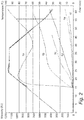
- Figs. 1 and 2 It can be seen in Figs. 1 and 2 that an increased inhibition is reached when higher levels of active chlorine are added. Thus, the inhibition level is proportional to the concentration of active chlorine. It can also be seen that the inhibition level reached at 0.6-0.8 % w/w active chlorine together with glycine is much higher than possible to reach by only adding active chlorine to the same starch in its native state. Thus, the combination of amino acid and active chlorine gives a higher inhibition level.
- Example 2a) and 2b) discloses a method for inhibition of granular starch with glycine in combination with sodium hypochlorite and the inhibition levels that are reached in comparison with inhibition of the same native granular starch without addition of glycine but the same added amount of active chlorine.
- the granular starch raw material was waxy maize (corn) starch with a residual protein content of less than 0.4 % as analyzed with the Kjeldahl method and calculated with a protein conversion factor of 6.25.
- DM waxy corn starch 869.1 g was mixed with 1600 g cold tap water in a reaction vessel. The pH was adjusted to 9.0 with a sodium hydroxide solution. The temperature was adjusted to 30°C. 1.16 g (0.133 % w/w) glycine was added during agitation. 38.7 g sodium hypochlorite with active chlorine (107 g/l, density: 1.19 g/cm 3 ) was added during agitation. This corresponds to an addition of 0.4 % w/w active chlorine of DM starch. The vessel was left under agitation for 180 min, and the temperature was kept at 30°C. The starch was neutralized to a pH of 6 with sulfuric acid and was further dewatered and dried to a dry powder with a moisture content of approximately 15%.
- DM waxy maize (corn) starch was mixed with 1600 gram cold tap water in a reaction vessel. The pH was adjusted to 9.0 with a sodium hydroxide solution. The temperature was adjusted to 30°C. 38.7 g sodium hypochlorite with active chlorine (107 g/l, density: 1.19 g/cm 3 ) was added during agitation. This corresponds to an addition of 0.4 % w/w active chlorine of DM starch. The vessel was left under agitation for 180 min, and the temperature was kept at 30°C.
- the starch was neutralized to a pH of 6 with sulfuric acid and was further dewatered and dried to a dry powder with a moisture content of approximately 15%.
- This example is actually made according to what is disclosed in U.S. Patent No. 2,317,752 to show what differs in behavior compared to the present invention.
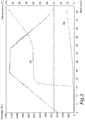
- Fig. 3 and 4 illustrates that a much higher inhibition level is achieved by adding the amino acid glycine to the reaction compared to the inhibition achieved only by adding sodium hypochlorite to the starch with its naturally occurring residual protein content. This demonstrates that a much higher inhibition level is reached by combining an amino acid (in this example glycine) with active chlorine compared to the inhibition reached with active chlorine alone.
- Example 3 discloses a method for inhibition of granular starch with glycine in combination with sodium hypochlorite to different inhibition levels.
- Example 3 further illustrates the problem with the unstable temporary inhibition of the starch granule obtained when the inhibition is achieved by combining an amino acid and an oxidation agent as in the method according to the previous invention disclosed in U.S. Patent No. 3,463,668 .
- the native granular starch used in Example 3 was waxy maize (corn) starch with a residual protein content of less than 0.4% as analyzed with the Kjeldahl method and calculated with a protein conversion factor of 6.25.
- Example 3 The products achieved in Example 3 were stored in ambient conditions and were evaluated with a Brabender Amyloviscograph model E after different storage times at a starch content of 5% DM and using distilled water. A torsion spring of 350 cmg was used. The evaluation was made at neutral pH.
- Example 3 illustrates that the inhibition achieved by combining an amino acid with an oxidation agent, as used in the previous invention disclosed in U.S. Patent No. 3,463,668 , is unstable and that the inhibition level is decreased during storage.
- the curve titled as 3a) represents the viscosity profile at day 1
- the curve titled as 3b) represents storage for 30 days
- the curve titled as 3c) represents storage for 200 days.
- Example 4 discloses a method for inhibition of granular starch with glycine in combination with sodium hypochlorite to different inhibition levels. It further illustrates how the problem with the unstable temporarily inhibition, illustrated in example 3, can be controlled by adding an anti-oxidation agent which stabilizes the achieved inhibition.
- the native granular starch used in Example 4 was waxy maize (corn) starch with a residual protein content of less than 0.4% as analyzed with the Kjeldahl method and calculated with a protein conversion factor of 6.25.
- DM waxy maize (corn) starch was mixed with 1600 g cold tap water in a reaction vessel. The pH was adjusted to 9.0 with a sodium hydroxide solution. The temperature was adjusted to 30°C. 1.16 gram (0.133 % w/w) glycine was added during agitation. 38.7 gram sodium hypochlorite with active chlorine (107 g/l, density: 1.19 g/cm 3 ) was added during agitation. This corresponds to an addition of 0.4 % w/w active chlorine of DM starch. The vessel was left under agitation for 180 min, and the temperature was kept at 30°C. 9.5 g of the antioxidant, citric acid, was added during agitation. The starch slurry was left under agitation for 30 min. The starch slurry was adjusted to a pH of 6 and was further dewatered and dried to a dry powder with a moisture content of approximately 15%.
- Example 4 The products achieved in Example 4 were stored at ambient conditions in contact with surrounding air oxygen and were evaluated with a Brabender Amyloviscograph model E at a solids level of 5% using distilled water after different storage times. A torsion spring of 350 cmg was used. The evaluation was made at neutral pH.
- Example 4 illustrates that the inhibition achieved by a combination between an amino acid and an oxidation agent, which was shown to be unstable in Example 3, is stabilized during storage by addition of an antioxidant after the inhibition reaction, in this example citric acid.
- the curve titled as "4a-d" represents the viscosity profile at day 1-300. It is obvious that there is no change of the viscosity during this extended storage time. Therefore, it has been demonstrated that the unstable inhibition obtained by combining amino acids with an oxidant can be stabilized with an antioxidant added after the inhibition reaction have been taken place.
- Example 5 discloses a method for inhibiting a native granular starch to different inhibition levels using threonine in combination with sodium hypochlorite.
- the addition of threonine is fixed to 0.067 % w/w, and the addition of sodium hypochlorite is made at different levels resulting in different ratios between active chlorine and threonine.
- the native granular starch used in Example 3 was waxy maize (corn) starch with a residual protein content of less than 0.4% as analyzed with the Kjeldahl method and calculated with a protein conversion factor of 6.25.
- DM waxy maize (corn) starch was mixed with 1600 g cold tap water in a reaction vessel. The pH was adjusted to 9.0 with a sodium hydroxide solution. The temperature was adjusted to 30°C. 0.58 g (0.067 % w/w) threonine was added during agitation. 6.48 gram sodium hypochlorite with active chlorine (107 g/l, density: 1.19 g/cm 3 ) was added during agitation. This corresponds to an addition of 0.067 % w/w active chlorine of DM starch. The vessel was left under agitation for 180 min, and the temperature was kept at 30°C. The starch was neutralized to a pH of 6 with sulfuric acid and was further dewatered and dried to a dry powder with a moisture content of approximately 15%
- DM waxy maize (corn) starch was mixed with 1600 g cold tap water in a reaction vessel. The pH was adjusted to 9.0 with a sodium hydroxide solution. The temperature was adjusted to 30°C. 0.58 g (0.067 % w/w) threonine was added during agitation. 12.96 g sodium hypochlorite with active chlorine (107 g/l, density: 1.19 g/cm 3 ) was added during agitation. This corresponds to an addition of 0.133 % w/w active chlorine of DM starch. The vessel was left under agitation for 180 min, and the temperature was kept at 30°C. The starch was neutralized to a pH of 6 with sulfuric acid and was further dewatered and dried to a dry powder with a moisture content of approximately 15%.
- DM waxy maize (corn) starch was mixed with 1600 g cold tap water in a reaction vessel. The pH was adjusted to 9.0 with a sodium hydroxide solution. The temperature was adjusted to 30°C. 0.58 g (0.067 % w/w) threonine was added during agitation. 19.49 g sodium hypochlorite with active chlorine (107 g/l, density: 1.19 g/cm 3 ) was added during agitation. This corresponds to an addition of 0.2 % w/w active chlorine of DM starch. The vessel was left under agitation for 180 min, and the temperature was kept at 30°C. The starch was neutralized to a pH of 6 with sulfuric acid and was further dewatered and dried to a dry powder with a moisture content of approximately 15%.
- DM waxy maize (corn) starch was mixed with 1600 g cold tap water in a reaction vessel. The pH was adjusted to 9.0 with a sodium hydroxide solution. The temperature was adjusted to 30°C. 0.58 g (0.067 % w/w) threonine was added during agitation. 26.12 g sodium hypochlorite with active chlorine (107 g/l, density: 1.19 g/cm 3 ) was added during agitation. This corresponds to an addition of 0.268 % w/w active chlorine of DM starch. The vessel was left under agitation for 180 min, and the temperature was controlled at 30°C. The starch was neutralized to a pH of 6 with sulfuric acid and was further dewatered and dried to a dry powder with a moisture content of approximately 15%.
- DM waxy maize (corn) starch was mixed with 1600 g cold tap water in a reaction vessel. The pH was adjusted to 9.0 with a sodium hydroxide solution. The temperature was adjusted to 30°C. 0.58 g (0.067 % w/w) threonine was added during agitation. 32.65 g sodium hypochlorite with active chlorine (107 g/l, density: 1.19 g/cm 3 ) was added during agitation. This corresponds to an addition of 0.335 % w/w active chlorine of DM starch. The vessel was left under agitation for 180 min, and the temperature was kept at 30°C. The starch was neutralized to a pH of 6 with sulfuric acid and was further dewatered and dried to a dry powder with a moisture content of approximately 15%.
- DM waxy maize (corn) starch was mixed with 1600 g cold tap water in a reaction vessel. The pH was adjusted to 9.0 with a sodium hydroxide solution. The temperature was adjusted to 30°C. 0.58 g (0.067 % w/w) threonine was added during agitation. 38.99 g sodium hypochlorite with active chlorine (107 g/l, density: 1.19 g/cm 3 ) was added during agitation. This corresponds to an addition of 0.335 % w/w active chlorine of DM starch. The vessel was left under agitation for 180 min, and the temperature was kept at 30°C. The starch was neutralized to a pH of 6 with sulfuric acid and was further dewatered and dried to a dry powder with a moisture content of approximately 15%.
- Example 5a)-5e) were evaluated with a Brabender Amyloviscograph model E at a dry solids content of 5% using distilled water and a torsion spring of 350 cmg. The evaluation was made at a neutral pH and at a pH of 3.
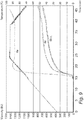
- Fig. 7 and 8 different inhibition levels are reached at different addition levels of active chlorine.
- the inhibition levels are dependent on the ratio of active chlorine and threonine, and the optimal condition is a ratio of 1:5 (threonine : active chlorine).
- the amino acid glycine which has its optimal inhibition level at a ratio of 1:3 (glycine : active chlorine).
- the inhibition level reached at 0.335 % w/w active chlorine and 0.067 % w/w threonine is much higher than what is possible to reach by only adding active chlorine to the same starch in its native state.
- the combination of the amino acid threonine and active chlorine gives a higher inhibition level.
- Example 5 illustrates that threonine in combination with active chlorine can be used to inhibit starch to a higher inhibition level than what is possible with only active chlorine.
- Example 6 discloses a method for inhibiting a native granular starch to different inhibition levels using tryptophan in combination with sodium hypochlorite.
- the addition of tryptophan is fixed to 0.067 % w/w, and the addition of sodium hypochlorite is made at different levels resulting in different ratios between active chlorine and tryptophan.
- the native granular starch raw material was waxy maize (corn) starch with a residual protein content of less than 0.4 % as analyzed with the Kjeldahl method and calculated with a protein conversion factor 6.25.
- DM waxy maize (corn) starch 869.1 g was mixed with 1600 g cold tap water in a reaction vessel. The pH was adjusted to 9.0 with a sodium hydroxide solution. The temperature was adjusted to 30°C. 0.58 g (0.067 % w/w) tryptophan was added during agitation. 6.48 g sodium hypochlorite with active chlorine (107 g/l, density: 1.19 g/cm 3 ) was added during agitation. This corresponds to an addition of 0.067 % w/w active chlorine of DM starch. The vessel was left under agitation for 180 min, and the temperature was kept at 30°C. The starch was neutralized to a pH of 6 with sulfuric acid and was further dewatered and dried to a dry powder with a moisture content of approximately 15%.
- DM waxy maize (corn) starch 869.1 g was mixed with 1600 g cold tap water in a reaction vessel. The pH was adjusted to 9.0 with a sodium hydroxide solution. The temperature was adjusted to 30°C. 0.58 g (0.067 % w/w) tryptophan was added during agitation. 12.96 g sodium hypochlorite with active chlorine (107 g/l, density: 1.19 g/cm 3 ) was added during agitation. This corresponds to an addition of 0.133 % w/w active chlorine of DM starch. The vessel was left under agitation for 180 min, and the temperature was kept at 30°C. The starch was neutralized to a pH of 6 with sulfuric acid and was further dewatered and dried to a dry powder with a moisture content of approximately 15%.
- DM waxy maize (corn) starch 869.1 g was mixed with 1600 g cold tap water in a reaction vessel. The pH was adjusted to 9.0 with a sodium hydroxide solution. The temperature was adjusted to 30°C. 0.58 g (0.067 % w/w) tryptophan was added during agitation. 16.23 g sodium hypochlorite with active chlorine (107 g/l, density: 1.19 g/cm 3 ) was added during agitation. This corresponds to an addition of 0.168 % w/w active chlorine of DM starch. The vessel was left under agitation for 180 min, and the temperature was kept at 30°C. The starch was neutralized to a pH of 6 with sulfuric acid and was further dewatered and dried to a dry powder with a moisture content of approximately 15%.
- DM waxy corn starch 869.1 g was mixed with 1600 g cold tap water in a reaction vessel. The pH was adjusted to 9.0 with a sodium hydroxide solution. The temperature was adjusted to 30°C. 0.58 g (0.067 % w/w) tryptophan was added during agitation. 19.49 g sodium hypochlorite with active chlorine (107 g/l, density: 1.19 g/cm 3 ) was added during agitation. This corresponds to an addition of 0.2 % w/w active chlorine of DM starch. The vessel was left under agitation for 180 min, and the temperature was kept at 30°C. The starch was neutralized to a pH of 6 with sulfuric acid and was further dewatered and dried to a dry powder with a moisture content of approximately 15%.
- DM waxy maize (corn) starch was mixed with 1600 g cold tap water in a reaction vessel. The pH was adjusted to 9.0 with a sodium hydroxide solution. The temperature was adjusted to 30°C. 0.58 g (0.067 % w/w) tryptophan was added during agitation. 22.23 g sodium hypochlorite with active chlorine (107 g/l, density: 1.19 g/cm 3 ) was added during agitation. This corresponds to an addition of 0.23 % w/w active chlorine of DM starch. The vessel was left under agitation for 180 min, and the temperature was kept at 30°C. The starch was neutralized to a pH of 6 with sulfuric acid and was further dewatered and dried to a dry powder with a moisture content of approximately 15%.
- DM waxy maize (corn) starch was mixed with 1600 g cold tap water in a reaction vessel. The pH was adjusted to 9.0 with a sodium hydroxide solution. The temperature was adjusted to 30°C. 0.58 g (0.067 % w/w) tryptophan was added during agitation. 26.12 g sodium hypochlorite with active chlorine (107 g/l, density: 1.19 g/cm 3 ) was added during agitation. This corresponds to an addition of 0.268 % w/w active chlorine of DM starch. The vessel was left under agitation for 180 min, and the temperature was kept at 30°C. The starch was neutralized to a pH of 6 with sulfuric acid and was further dewatered and dried to a dry powder with a moisture content of approximately 15%.
- Example 6a) - 6f) were evaluated with a Brabender Amyloviscograph model E at a dry solids content of 5% using distilled water and a torsion spring of 350 cmg. The evaluation was made at a neutral pH and at a pH of 3.
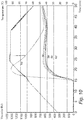
- Fig. 9 and 10 different inhibition levels are reached at different addition levels of active chlorine.
- the inhibition levels are dependent on the ratio of active chlorine and tryptophan, and the optimal condition is a ratio of 1:2.5 (tryptophan : active chlorine).
- the amino acid glycine which has its optimal inhibition level at a ratio of 1:3 (glycine : active chlorine).
- the inhibition level obtained at 0.168 % w/w active chlorine and 0.067 % w/w of tryptophan on DM starch is much higher than what is possible to reach by only adding active chlorine to the same starch in its native state.
- the combination of the amino acid tryptophan and active chlorine gives a higher inhibition level.
- Example 6 illustrates that tryptophan in combination with active chlorine can be used to inhibit starch to a higher inhibition level than what is possible with active chlorine alone.
- Example 7 illustrates that an amino acid or a combination of amino acids can be derived from the starch raw material source and also that it is possible to achieve the improved inhibition level without using a synthetically produced amino acid or an amino acid combination.
- the remaining concentrated solution had a dry matter content of 35 % and was filtrated by use of microfiltration using a 0.45 ⁇ m filter.
- the filtrated, amino acid rich solution hereinafter called PAAC (Potato Amino Acid Concentrate)
- PAAC Potato Amino Acid Concentrate
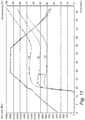
- Example 7a) - 7c) were evaluated with a Brabender Amyloviscograph model E at 5% DM starch using distilled water and a torsion spring of 700 cmg. The evaluation was made at a neutral pH. As appears from Fig. 11 an inhibition is achieved in the examples, and the inhibition is stronger at higher additions of PAAC and active chlorine.
- the examples and the results should be compared with the results from example 8, wherein a native potato starch is treated with the same amount of active chlorine but without the addition of PAAC. Without the addition of PAAC there is no inhibition. Thereby, it is clear that an inhibition is reached by combining an addition of PAAC with active chlorine.
- Example 8 illustrates that a potato starch having a protein content of 0.01-0.1% cannot be inhibited without adding an amino acid.
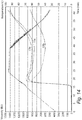
- Example 8 1000 g DM of native granular potato starch with a content of protein residuals below 0.1 %, as analyzed with the Kjeldahl method and calculated with a protein conversion factor of 6.25, was then mixed with 1500 g cold tap water and equilibrated to a temperature of 30°C. The pH was adjusted to 11.0 with a sodium hydroxide solution, and thereafter 0.8 % w/w of active chlorine was added. The product obtained in Example 8 was evaluated with a Brabender Amyloviscograph model E at 5% DM starch using distilled water and a torsion spring of 700 cmg. The evaluation was made at a neutral pH. As appears from Fig. 13 , there has been no inhibition of the starch.
- Example 9 discloses a method for inhibiting a native granular starch using glycine in combination with sodium hypochlorite.
- the example also illustrates how the gelatinization temperature of the granular starch is changed as a result of the achieved inhibition.
- the native granular starch raw material was waxy maize (corn) starch with a residual protein content of less than 0.4% as analyzed with the Kjeldahl method and calculated with a protein conversion factor of 6.25.
- DM waxy maize (corn) starch was mixed with 1600 g cold tap water in a reaction vessel. The pH was adjusted to 9.0 with a sodium hydroxide solution. The temperature was adjusted to 30°C. 0.58 g (0.067 % w/w) glycine was added during agitation. 19.3 g sodium hypochlorite with active chlorine (107 g/l, density: 1.19 g/cm 3 ) was added during agitation. This corresponds to an addition of 0.2 % w/w active chlorine of DM starch. The vessel was left under agitation for 180 min, and the temperature was kept at 30°C. The starch was neutralized to a pH of 6 with sulfuric acid and was further dewatered and dried to a dry powder with a moisture content of approximately 15%.
- Example 9 The products obtained in Example 9 were evaluated with a Brabender Amyloviscograph model E at a DM content of 16% using distilled water and a torsion spring of 250 cmg. The higher concentration used is to give an instant reading when the starch gelatinizes and a better illustration of the changed gelatinization temperature which clearly has increased to a higher value. The evaluation was made at a neutral pH. The results were compared to those for the native waxy maize (corn) starch and an alkali roasted waxy maize (corn) starch with a similar inhibition level.
- Example 10 discloses a method for inhibition of granular starch with glycine in combination with sodium hypochlorite. It further illustrates a method to eliminate residuals giving the starch product an unpleasant off-taste or smell of pool water.
- the native granular starch used in Example 10 was waxy maize (corn) starch with a residual protein content of less than 0.4% as analyzed with the Kjeldahl method and calculated with a protein conversion factor of 6.25.
- DM waxy maize (corn) starch was mixed with 1600 g cold tap water in a reaction vessel. The pH was adjusted to 9.0 with a sodium hydroxide solution. The temperature was adjusted to 30°C. 1.16 gram (0.133 % w/w) glycine was added during agitation. 38.7 gram sodium hypochlorite with active chlorine (107 g/l, density: 1.19 g/cm 3 ) was added during agitation. This corresponds to an addition of 0.4 % w/w active chlorine of DM starch. The vessel was left under agitation for 180 min, and the temperature was kept at 30°C.
- the starch slurry was dewatered to 55% DM and further mixed with 890 gram cold tap water. 3 g of the antioxidant, ascorbic acid, was added during agitation. The starch slurry was left under agitation for 30 minutes. The starch slurry was adjusted to a pH of 6 with sulfuric acid. 10 gram citric acid was added during agitation. The starch slurry was left under agitation 30 minutes and was further adjusted to pH 6 with sodium hydroxide. The starch product was further dewatered and dried to a dry powder with a moisture content of approximately 15%. The achieved starch product according to example 10 was further evaluated in example 11 and 12.
- the starch made according to example 3 and 10 was suspended in distilled water at 5 % DM and cooked.
- the starch pastes were given to a trained panel including 10 people and the starch pastes were tested for off-flavors and smell. All 10 people could feel a chemical off-taste in the starch from example 3, but only 1 from the starch made according to example 10. All 10 felt a "swimming pool" flavor from the starch from example 3, but no one could detect any off- flavors from the starch made according to example 10.
- the starch was suspended in the water and the raspberries were mixed in.
- the mix was heated to boiling under agitation on a stove. When the mix started to boil the sugar was added and dissolved.
- the fruit preparation was cooled down and given to the same trained panel as in example 11 for taste and flavor evaluation.
- sarcosine metalglycin
- dimetylglycin dimetylglycin
- betain trimetylglycin
- DM waxy corn starch 869.1 g was mixed with 1600 g cold tap water in a reaction vessel. The pH was adjusted to 9.0 with a sodium hydroxide solution. The temperature was adjusted to 30°C. 0.58 g (0.067 % w/w) sarcosine (metylglycine) was added during agitation. 19.49 g sodium hypochlorite with active chlorine (107 g/l, density: 1.19 g/cm 3 ) was added during agitation. This corresponds to an addition of 0.2 % w/w active chlorine of DM starch. The vessel was left under agitation for 180 min, and the temperature was kept at 30°C. The starch was neutralized to a pH of 6 with sulfuric acid and was further dewatered and dried to a dry powder with a moisture content of approximately 15%.
- DM waxy corn starch 869.1 g was mixed with 1600 g cold tap water in a reaction vessel. The pH was adjusted to 9.0 with a sodium hydroxide solution. The temperature was adjusted to 30°C. 0.58 g (0.067 % w/w) dimetylglycine was added during agitation. 19.49 g sodium hypochlorite with active chlorine (107 g/l, density: 1.19 g/cm 3 ) was added during agitation. This corresponds to an addition of 0.2 % w/w active chlorine of DM starch. The vessel was left under agitation for 180 min, and the temperature was kept at 30°C. The starch was neutralized to a pH of 6 with sulfuric acid and was further dewatered and dried to a dry powder with a moisture content of approximately 15%.
- DM waxy corn starch 869.1 g was mixed with 1600 g cold tap water in a reaction vessel. The pH was adjusted to 9.0 with a sodium hydroxide solution. The temperature was adjusted to 30°C. 0.58 g (0.067 % w/w) betaine (trimetylglycine) was added during agitation. 19.49 g sodium hypochlorite with active chlorine (107 g/l, density: 1.19 g/cm 3 ) was added during agitation. This corresponds to an addition of 0.2 % w/w active chlorine of DM starch. The vessel was left under agitation for 180 min, and the temperature was kept at 30°C. The starch was neutralized to a pH of 6 with sulfuric acid and was further dewatered and dried to a dry powder with a moisture content of approximately 15%.
- Example 13a)-13c) were evaluated with a Brabender Amyloviscograph model E at a dry solids content of 5% using distilled water and a torsion spring of 350 cmg. The evaluation was made at a neutral pH.
Landscapes
- Chemical & Material Sciences (AREA)
- Life Sciences & Earth Sciences (AREA)
- Engineering & Computer Science (AREA)
- Polymers & Plastics (AREA)
- Chemical Kinetics & Catalysis (AREA)
- Health & Medical Sciences (AREA)
- Food Science & Technology (AREA)
- Biochemistry (AREA)
- Materials Engineering (AREA)
- Medicinal Chemistry (AREA)
- Organic Chemistry (AREA)
- Nutrition Science (AREA)
- Dispersion Chemistry (AREA)
- Zoology (AREA)
- Wood Science & Technology (AREA)
- Polysaccharides And Polysaccharide Derivatives (AREA)
- Food Preservation Except Freezing, Refrigeration, And Drying (AREA)
- Grain Derivatives (AREA)
- Compositions Of Macromolecular Compounds (AREA)
- General Preparation And Processing Of Foods (AREA)
- Microbiology (AREA)
- Seeds, Soups, And Other Foods (AREA)
- Noodles (AREA)
Priority Applications (1)
| Application Number | Priority Date | Filing Date | Title |
|---|---|---|---|
| PL16752733T PL3259289T3 (pl) | 2015-02-16 | 2016-02-15 | Sposób wytwarzania hamowanej skrobi o ulepszonej stabilności przechowywania w magazynie |
Applications Claiming Priority (2)
| Application Number | Priority Date | Filing Date | Title |
|---|---|---|---|
| SE1550169 | 2015-02-16 | ||
| PCT/SE2016/050113 WO2016133447A1 (en) | 2015-02-16 | 2016-02-15 | Method for preparing inhibited starch with improved warehouse storage stability |
Publications (3)
| Publication Number | Publication Date |
|---|---|
| EP3259289A1 EP3259289A1 (en) | 2017-12-27 |
| EP3259289A4 EP3259289A4 (en) | 2018-10-10 |
| EP3259289B1 true EP3259289B1 (en) | 2020-12-02 |
Family
ID=56739125
Family Applications (1)
| Application Number | Title | Priority Date | Filing Date |
|---|---|---|---|
| EP16752733.2A Active EP3259289B1 (en) | 2015-02-16 | 2016-02-15 | Method for preparing inhibited starch with improved warehouse storage stability |
Country Status (18)
| Country | Link |
|---|---|
| US (1) | US10660357B2 (pl) |
| EP (1) | EP3259289B1 (pl) |
| JP (1) | JP6682545B2 (pl) |
| KR (1) | KR102699920B1 (pl) |
| CN (1) | CN107428848B (pl) |
| AU (1) | AU2016220533B2 (pl) |
| BR (1) | BR112017017395B1 (pl) |
| CA (1) | CA2976322C (pl) |
| DK (1) | DK3259289T3 (pl) |
| ES (1) | ES2857473T3 (pl) |
| IL (1) | IL253973B (pl) |
| MA (1) | MA40809B1 (pl) |
| MX (1) | MX395553B (pl) |
| PL (1) | PL3259289T3 (pl) |
| RU (1) | RU2707029C2 (pl) |
| UA (1) | UA122899C2 (pl) |
| WO (1) | WO2016133447A1 (pl) |
| ZA (1) | ZA201706229B (pl) |
Families Citing this family (12)
| Publication number | Priority date | Publication date | Assignee | Title |
|---|---|---|---|---|
| SE541492C2 (en) * | 2017-08-11 | 2019-10-15 | Lyckeby Starch Ab | Method for preparing an inhibited starch |
| CA3075411A1 (en) | 2017-09-12 | 2019-03-21 | Corn Products Development, Inc. | Thermally inhibited waxy cassava starch |
| US11180575B2 (en) * | 2018-12-28 | 2021-11-23 | Corn Products Development, Inc. | Thermally inhibited starch and process for making |
| SE544500C2 (en) * | 2019-02-01 | 2022-06-21 | Sveriges Staerkelseproducenter Foerening U P A | Method for preparing inhibited starch |
| SE543447C2 (en) * | 2019-02-01 | 2021-02-23 | Sveriges Staerkelseproducenter Foerening U P A | Method for preparing inhibited starch |
| RU2705264C1 (ru) * | 2019-04-30 | 2019-11-06 | Федеральное государственное бюджетное научное учреждение "Федеральный научный центр пищевых систем им. В.М. Горбатова" РАН | Способ получения декстрина |
| SE544672C2 (en) * | 2020-05-07 | 2022-10-11 | Liw Innovation Ab | New compositions for oral or nasal use |
| FR3112779B1 (fr) * | 2020-07-24 | 2022-07-01 | Roquette Freres | Procede de fabrication de melanges d’amidons thermiquement modifies |
| WO2022114370A1 (ko) | 2020-11-26 | 2022-06-02 | 영남대학교 산학협력단 | 바이오 에어로졸 포집장치 |
| GB2606234B (en) * | 2021-03-31 | 2024-05-29 | Tate & Lyle Solutions Usa Llc | Inhibited starches, methods for making and using them, and emulsions and foams including them |
| JP7664582B2 (ja) * | 2021-04-20 | 2025-04-18 | 松谷化学工業株式会社 | アイスクリーム保形用組成物 |
| US20250204565A1 (en) * | 2022-04-22 | 2025-06-26 | The Live Green Group, Inc., | Plant-only modified starch replacement system in food products |
Family Cites Families (22)
| Publication number | Priority date | Publication date | Assignee | Title |
|---|---|---|---|---|
| US2317752A (en) * | 1939-10-30 | 1943-04-27 | Nat Starch Products Inc | Modified starch |
| GB1110711A (en) | 1965-01-04 | 1968-04-24 | Lyons & Co Ltd J | Flour treatment process |
| US3463668A (en) * | 1966-09-21 | 1969-08-26 | Nat Starch Chem Corp | Inhibited starch products |
| US3899602A (en) | 1972-09-11 | 1975-08-12 | Nat Starch Chem Corp | Inhibited starch products containing labile and non-labile cross-links |
| US3832342A (en) * | 1972-09-11 | 1974-08-27 | Nat Starch Chem Corp | Inhibited starch products containing labile and non-labile cross-links |
| US3949104A (en) * | 1975-01-20 | 1976-04-06 | A. E. Staley Manufacturing Company | Starch containing concentrates |
| US3977897A (en) | 1975-09-08 | 1976-08-31 | National Starch And Chemical Corporation | Process for preparing a non-chemically inhibited starch |
| US4303452A (en) | 1979-04-16 | 1981-12-01 | Ajinomoto Company Incorporated | Method of producing improved starch by smoking |
| US4303451A (en) | 1980-03-31 | 1981-12-01 | General Foods Corporation | Method for modifying texture and flavor of waxy maize starch |
| JPH072763B2 (ja) | 1985-05-08 | 1995-01-18 | 日澱化學株式会社 | 変性澱粉の製造方法 |
| EP1038882B2 (en) | 1994-07-29 | 2008-10-29 | National Starch and Chemical Investment Holding Corporation | Thermally inhibited starches and flours |
| GB9611595D0 (en) * | 1996-06-04 | 1996-08-07 | Cerestar Holding Bv | Stabilised high viscosity starches |
| JP4190846B2 (ja) * | 2002-10-01 | 2008-12-03 | 王子コーンスターチ株式会社 | 沈殿物の発生しないコーンスチープリカー及びその製造方法 |
| JP4382337B2 (ja) * | 2002-10-04 | 2009-12-09 | 敷島スターチ株式会社 | 酸化澱粉の製造方法 |
| US20070039612A1 (en) * | 2003-09-15 | 2007-02-22 | Sarah Veelaert | Clean label stabilised starch with improved organoleptic properties |
| JP2005171112A (ja) * | 2003-12-12 | 2005-06-30 | Nippon Starch Chemical Co Ltd | 変性澱粉およびその製造方法 |
| US8268989B2 (en) | 2008-05-07 | 2012-09-18 | Corn Products Development Inc. | Thermally inhibited polysaccharides and process of preparing |
| US20090311408A1 (en) | 2008-06-17 | 2009-12-17 | Brunob Ii B.V. | Low swelling starch |
| WO2013172193A1 (ja) * | 2012-05-14 | 2013-11-21 | 日本コーンスターチ株式会社 | 打粉用酸化澱粉およびその製造方法 |
| US10463066B2 (en) * | 2012-05-15 | 2019-11-05 | Tate & Lyle Ingredients Americas Llc | Process for preparing inhibited non-pregelatinized granular starches |
| GB2506695B (en) * | 2012-10-02 | 2015-01-07 | Tate & Lyle Ingredients | Process for preparing an inhibited starch |
| US20180282528A1 (en) * | 2014-11-10 | 2018-10-04 | Board Of Supervisiors Of Louisiana State University And Agricultural And Mechanical College | Stabilized starch |
-
2016
- 2016-02-15 US US15/551,000 patent/US10660357B2/en active Active
- 2016-02-15 BR BR112017017395-6A patent/BR112017017395B1/pt active IP Right Grant
- 2016-02-15 CN CN201680009915.6A patent/CN107428848B/zh active Active
- 2016-02-15 CA CA2976322A patent/CA2976322C/en active Active
- 2016-02-15 ES ES16752733T patent/ES2857473T3/es active Active
- 2016-02-15 KR KR1020177025894A patent/KR102699920B1/ko active Active
- 2016-02-15 AU AU2016220533A patent/AU2016220533B2/en active Active
- 2016-02-15 RU RU2017130695A patent/RU2707029C2/ru active
- 2016-02-15 JP JP2017542475A patent/JP6682545B2/ja active Active
- 2016-02-15 EP EP16752733.2A patent/EP3259289B1/en active Active
- 2016-02-15 WO PCT/SE2016/050113 patent/WO2016133447A1/en not_active Ceased
- 2016-02-15 MX MX2017010520A patent/MX395553B/es unknown
- 2016-02-15 PL PL16752733T patent/PL3259289T3/pl unknown
- 2016-02-15 UA UAA201708099A patent/UA122899C2/uk unknown
- 2016-02-15 DK DK16752733.2T patent/DK3259289T3/da active
- 2016-02-15 MA MA40809A patent/MA40809B1/fr unknown
-
2017
- 2017-08-14 IL IL253973A patent/IL253973B/en unknown
- 2017-09-13 ZA ZA2017/06229A patent/ZA201706229B/en unknown
Non-Patent Citations (1)
| Title |
|---|
| None * |
Also Published As
| Publication number | Publication date |
|---|---|
| EP3259289A4 (en) | 2018-10-10 |
| RU2017130695A (ru) | 2019-03-18 |
| KR20170133342A (ko) | 2017-12-05 |
| MX395553B (es) | 2025-03-25 |
| AU2016220533A1 (en) | 2017-09-07 |
| AU2016220533B2 (en) | 2019-10-03 |
| PL3259289T3 (pl) | 2021-05-31 |
| BR112017017395A2 (pt) | 2018-04-03 |
| RU2707029C2 (ru) | 2019-11-21 |
| US10660357B2 (en) | 2020-05-26 |
| RU2017130695A3 (pl) | 2019-06-24 |
| IL253973B (en) | 2021-08-31 |
| MA40809A1 (fr) | 2017-12-29 |
| JP6682545B2 (ja) | 2020-04-15 |
| BR112017017395B1 (pt) | 2021-11-09 |
| IL253973A0 (en) | 2017-10-31 |
| WO2016133447A1 (en) | 2016-08-25 |
| MA40809B1 (fr) | 2019-10-31 |
| UA122899C2 (uk) | 2021-01-20 |
| KR102699920B1 (ko) | 2024-08-29 |
| JP2018506629A (ja) | 2018-03-08 |
| DK3259289T3 (da) | 2021-03-01 |
| EP3259289A1 (en) | 2017-12-27 |
| ES2857473T3 (es) | 2021-09-29 |
| CA2976322C (en) | 2023-02-21 |
| CN107428848A (zh) | 2017-12-01 |
| MX2017010520A (es) | 2018-04-13 |
| CN107428848B (zh) | 2020-12-25 |
| US20180035703A1 (en) | 2018-02-08 |
| ZA201706229B (en) | 2019-01-30 |
| CA2976322A1 (en) | 2016-08-25 |
Similar Documents
| Publication | Publication Date | Title |
|---|---|---|
| EP3259289B1 (en) | Method for preparing inhibited starch with improved warehouse storage stability | |
| EP3665204B1 (en) | Method for preparing an inhibited starch | |
| EP3917972B1 (en) | Method for preparing inhibited starch | |
| SE2051419A1 (en) | METHOD OF PREPARATION INHIBITED STARCH |
Legal Events
| Date | Code | Title | Description |
|---|---|---|---|
| STAA | Information on the status of an ep patent application or granted ep patent |
Free format text: STATUS: THE INTERNATIONAL PUBLICATION HAS BEEN MADE |
|
| PUAI | Public reference made under article 153(3) epc to a published international application that has entered the european phase |
Free format text: ORIGINAL CODE: 0009012 |
|
| STAA | Information on the status of an ep patent application or granted ep patent |
Free format text: STATUS: REQUEST FOR EXAMINATION WAS MADE |
|
| 17P | Request for examination filed |
Effective date: 20170915 |
|
| AK | Designated contracting states |
Kind code of ref document: A1 Designated state(s): AL AT BE BG CH CY CZ DE DK EE ES FI FR GB GR HR HU IE IS IT LI LT LU LV MC MK MT NL NO PL PT RO RS SE SI SK SM TR |
|
| AX | Request for extension of the european patent |
Extension state: BA ME |
|
| DAV | Request for validation of the european patent (deleted) | ||
| DAX | Request for extension of the european patent (deleted) | ||
| A4 | Supplementary search report drawn up and despatched |
Effective date: 20180907 |
|
| RIC1 | Information provided on ipc code assigned before grant |
Ipc: A23L 29/219 20160101ALI20180903BHEP Ipc: C08B 31/00 20060101AFI20180903BHEP Ipc: C08B 30/12 20060101ALI20180903BHEP |
|
| STAA | Information on the status of an ep patent application or granted ep patent |
Free format text: STATUS: EXAMINATION IS IN PROGRESS |
|
| 17Q | First examination report despatched |
Effective date: 20190807 |
|
| RAP1 | Party data changed (applicant data changed or rights of an application transferred) |
Owner name: SVERIGES STAERKELSEPRODUCENTER, FOERENING U.P.A. |
|
| GRAP | Despatch of communication of intention to grant a patent |
Free format text: ORIGINAL CODE: EPIDOSNIGR1 |
|
| STAA | Information on the status of an ep patent application or granted ep patent |
Free format text: STATUS: GRANT OF PATENT IS INTENDED |
|
| RIC1 | Information provided on ipc code assigned before grant |
Ipc: C08B 31/00 20060101AFI20200604BHEP Ipc: A23L 29/219 20160101ALI20200604BHEP Ipc: C08B 30/12 20060101ALI20200604BHEP |
|
| INTG | Intention to grant announced |
Effective date: 20200623 |
|
| GRAS | Grant fee paid |
Free format text: ORIGINAL CODE: EPIDOSNIGR3 |
|
| GRAA | (expected) grant |
Free format text: ORIGINAL CODE: 0009210 |
|
| STAA | Information on the status of an ep patent application or granted ep patent |
Free format text: STATUS: THE PATENT HAS BEEN GRANTED |
|
| AK | Designated contracting states |
Kind code of ref document: B1 Designated state(s): AL AT BE BG CH CY CZ DE DK EE ES FI FR GB GR HR HU IE IS IT LI LT LU LV MC MK MT NL NO PL PT RO RS SE SI SK SM TR |
|
| REG | Reference to a national code |
Ref country code: GB Ref legal event code: FG4D |
|
| REG | Reference to a national code |
Ref country code: DE Ref legal event code: R083 Ref document number: 602016049041 Country of ref document: DE |
|
| REG | Reference to a national code |
Ref country code: AT Ref legal event code: REF Ref document number: 1340845 Country of ref document: AT Kind code of ref document: T Effective date: 20201215 Ref country code: CH Ref legal event code: PK Free format text: BERICHTIGUNGEN Ref country code: CH Ref legal event code: EP |
|
| REG | Reference to a national code |
Ref country code: IE Ref legal event code: FG4D |
|
| REG | Reference to a national code |
Ref country code: DE Ref legal event code: R096 Ref document number: 602016049041 Country of ref document: DE |
|
| RIN2 | Information on inventor provided after grant (corrected) |
Inventor name: BRYNOLF, MIKAEL Inventor name: STAHL, AKE Inventor name: SAMUELSSON, MATHIAS |
|
| REG | Reference to a national code |
Ref country code: DK Ref legal event code: T3 Effective date: 20210224 |
|
| REG | Reference to a national code |
Ref country code: SE Ref legal event code: TRGR |
|
| REG | Reference to a national code |
Ref country code: NL Ref legal event code: FP |
|
| PG25 | Lapsed in a contracting state [announced via postgrant information from national office to epo] |
Ref country code: GR Free format text: LAPSE BECAUSE OF FAILURE TO SUBMIT A TRANSLATION OF THE DESCRIPTION OR TO PAY THE FEE WITHIN THE PRESCRIBED TIME-LIMIT Effective date: 20210303 Ref country code: FI Free format text: LAPSE BECAUSE OF FAILURE TO SUBMIT A TRANSLATION OF THE DESCRIPTION OR TO PAY THE FEE WITHIN THE PRESCRIBED TIME-LIMIT Effective date: 20201202 Ref country code: RS Free format text: LAPSE BECAUSE OF FAILURE TO SUBMIT A TRANSLATION OF THE DESCRIPTION OR TO PAY THE FEE WITHIN THE PRESCRIBED TIME-LIMIT Effective date: 20201202 Ref country code: NO Free format text: LAPSE BECAUSE OF FAILURE TO SUBMIT A TRANSLATION OF THE DESCRIPTION OR TO PAY THE FEE WITHIN THE PRESCRIBED TIME-LIMIT Effective date: 20210302 |
|
| REG | Reference to a national code |
Ref country code: AT Ref legal event code: MK05 Ref document number: 1340845 Country of ref document: AT Kind code of ref document: T Effective date: 20201202 |
|
| PG25 | Lapsed in a contracting state [announced via postgrant information from national office to epo] |
Ref country code: BG Free format text: LAPSE BECAUSE OF FAILURE TO SUBMIT A TRANSLATION OF THE DESCRIPTION OR TO PAY THE FEE WITHIN THE PRESCRIBED TIME-LIMIT Effective date: 20210302 Ref country code: LV Free format text: LAPSE BECAUSE OF FAILURE TO SUBMIT A TRANSLATION OF THE DESCRIPTION OR TO PAY THE FEE WITHIN THE PRESCRIBED TIME-LIMIT Effective date: 20201202 |
|
| PG25 | Lapsed in a contracting state [announced via postgrant information from national office to epo] |
Ref country code: HR Free format text: LAPSE BECAUSE OF FAILURE TO SUBMIT A TRANSLATION OF THE DESCRIPTION OR TO PAY THE FEE WITHIN THE PRESCRIBED TIME-LIMIT Effective date: 20201202 |
|
| REG | Reference to a national code |
Ref country code: LT Ref legal event code: MG9D |
|
| PG25 | Lapsed in a contracting state [announced via postgrant information from national office to epo] |
Ref country code: LT Free format text: LAPSE BECAUSE OF FAILURE TO SUBMIT A TRANSLATION OF THE DESCRIPTION OR TO PAY THE FEE WITHIN THE PRESCRIBED TIME-LIMIT Effective date: 20201202 Ref country code: SM Free format text: LAPSE BECAUSE OF FAILURE TO SUBMIT A TRANSLATION OF THE DESCRIPTION OR TO PAY THE FEE WITHIN THE PRESCRIBED TIME-LIMIT Effective date: 20201202 Ref country code: EE Free format text: LAPSE BECAUSE OF FAILURE TO SUBMIT A TRANSLATION OF THE DESCRIPTION OR TO PAY THE FEE WITHIN THE PRESCRIBED TIME-LIMIT Effective date: 20201202 Ref country code: CZ Free format text: LAPSE BECAUSE OF FAILURE TO SUBMIT A TRANSLATION OF THE DESCRIPTION OR TO PAY THE FEE WITHIN THE PRESCRIBED TIME-LIMIT Effective date: 20201202 Ref country code: SK Free format text: LAPSE BECAUSE OF FAILURE TO SUBMIT A TRANSLATION OF THE DESCRIPTION OR TO PAY THE FEE WITHIN THE PRESCRIBED TIME-LIMIT Effective date: 20201202 Ref country code: RO Free format text: LAPSE BECAUSE OF FAILURE TO SUBMIT A TRANSLATION OF THE DESCRIPTION OR TO PAY THE FEE WITHIN THE PRESCRIBED TIME-LIMIT Effective date: 20201202 Ref country code: PT Free format text: LAPSE BECAUSE OF FAILURE TO SUBMIT A TRANSLATION OF THE DESCRIPTION OR TO PAY THE FEE WITHIN THE PRESCRIBED TIME-LIMIT Effective date: 20210405 |
|
| PG25 | Lapsed in a contracting state [announced via postgrant information from national office to epo] |
Ref country code: AT Free format text: LAPSE BECAUSE OF FAILURE TO SUBMIT A TRANSLATION OF THE DESCRIPTION OR TO PAY THE FEE WITHIN THE PRESCRIBED TIME-LIMIT Effective date: 20201202 |
|
| REG | Reference to a national code |
Ref country code: DE Ref legal event code: R097 Ref document number: 602016049041 Country of ref document: DE |
|
| REG | Reference to a national code |
Ref country code: ES Ref legal event code: FG2A Ref document number: 2857473 Country of ref document: ES Kind code of ref document: T3 Effective date: 20210929 |
|
| PG25 | Lapsed in a contracting state [announced via postgrant information from national office to epo] |
Ref country code: MC Free format text: LAPSE BECAUSE OF FAILURE TO SUBMIT A TRANSLATION OF THE DESCRIPTION OR TO PAY THE FEE WITHIN THE PRESCRIBED TIME-LIMIT Effective date: 20201202 Ref country code: IS Free format text: LAPSE BECAUSE OF FAILURE TO SUBMIT A TRANSLATION OF THE DESCRIPTION OR TO PAY THE FEE WITHIN THE PRESCRIBED TIME-LIMIT Effective date: 20210402 |
|
| PLBE | No opposition filed within time limit |
Free format text: ORIGINAL CODE: 0009261 |
|
| STAA | Information on the status of an ep patent application or granted ep patent |
Free format text: STATUS: NO OPPOSITION FILED WITHIN TIME LIMIT |
|
| PG25 | Lapsed in a contracting state [announced via postgrant information from national office to epo] |
Ref country code: LI Free format text: LAPSE BECAUSE OF NON-PAYMENT OF DUE FEES Effective date: 20210228 Ref country code: LU Free format text: LAPSE BECAUSE OF NON-PAYMENT OF DUE FEES Effective date: 20210215 Ref country code: AL Free format text: LAPSE BECAUSE OF FAILURE TO SUBMIT A TRANSLATION OF THE DESCRIPTION OR TO PAY THE FEE WITHIN THE PRESCRIBED TIME-LIMIT Effective date: 20201202 Ref country code: CH Free format text: LAPSE BECAUSE OF NON-PAYMENT OF DUE FEES Effective date: 20210228 |
|
| 26N | No opposition filed |
Effective date: 20210903 |
|
| PG25 | Lapsed in a contracting state [announced via postgrant information from national office to epo] |
Ref country code: SI Free format text: LAPSE BECAUSE OF FAILURE TO SUBMIT A TRANSLATION OF THE DESCRIPTION OR TO PAY THE FEE WITHIN THE PRESCRIBED TIME-LIMIT Effective date: 20201202 |
|
| PG25 | Lapsed in a contracting state [announced via postgrant information from national office to epo] |
Ref country code: IS Free format text: LAPSE BECAUSE OF FAILURE TO SUBMIT A TRANSLATION OF THE DESCRIPTION OR TO PAY THE FEE WITHIN THE PRESCRIBED TIME-LIMIT Effective date: 20210402 |
|
| P01 | Opt-out of the competence of the unified patent court (upc) registered |
Effective date: 20230510 |
|
| PG25 | Lapsed in a contracting state [announced via postgrant information from national office to epo] |
Ref country code: CY Free format text: LAPSE BECAUSE OF FAILURE TO SUBMIT A TRANSLATION OF THE DESCRIPTION OR TO PAY THE FEE WITHIN THE PRESCRIBED TIME-LIMIT Effective date: 20201202 |
|
| PG25 | Lapsed in a contracting state [announced via postgrant information from national office to epo] |
Ref country code: HU Free format text: LAPSE BECAUSE OF FAILURE TO SUBMIT A TRANSLATION OF THE DESCRIPTION OR TO PAY THE FEE WITHIN THE PRESCRIBED TIME-LIMIT; INVALID AB INITIO Effective date: 20160215 |
|
| PG25 | Lapsed in a contracting state [announced via postgrant information from national office to epo] |
Ref country code: MK Free format text: LAPSE BECAUSE OF FAILURE TO SUBMIT A TRANSLATION OF THE DESCRIPTION OR TO PAY THE FEE WITHIN THE PRESCRIBED TIME-LIMIT Effective date: 20201202 |
|
| PG25 | Lapsed in a contracting state [announced via postgrant information from national office to epo] |
Ref country code: MT Free format text: LAPSE BECAUSE OF FAILURE TO SUBMIT A TRANSLATION OF THE DESCRIPTION OR TO PAY THE FEE WITHIN THE PRESCRIBED TIME-LIMIT Effective date: 20201202 |
|
| PGFP | Annual fee paid to national office [announced via postgrant information from national office to epo] |
Ref country code: DE Payment date: 20250116 Year of fee payment: 10 |
|
| PGFP | Annual fee paid to national office [announced via postgrant information from national office to epo] |
Ref country code: DK Payment date: 20250116 Year of fee payment: 10 |
|
| PGFP | Annual fee paid to national office [announced via postgrant information from national office to epo] |
Ref country code: ES Payment date: 20250303 Year of fee payment: 10 |
|
| PGFP | Annual fee paid to national office [announced via postgrant information from national office to epo] |
Ref country code: IE Payment date: 20250115 Year of fee payment: 10 Ref country code: SE Payment date: 20250115 Year of fee payment: 10 |
|
| PGFP | Annual fee paid to national office [announced via postgrant information from national office to epo] |
Ref country code: BE Payment date: 20250121 Year of fee payment: 10 |
|
| PGFP | Annual fee paid to national office [announced via postgrant information from national office to epo] |
Ref country code: FR Payment date: 20250115 Year of fee payment: 10 Ref country code: PL Payment date: 20250123 Year of fee payment: 10 |
|
| PGFP | Annual fee paid to national office [announced via postgrant information from national office to epo] |
Ref country code: IT Payment date: 20250116 Year of fee payment: 10 Ref country code: GB Payment date: 20250115 Year of fee payment: 10 |
|
| PG25 | Lapsed in a contracting state [announced via postgrant information from national office to epo] |
Ref country code: TR Free format text: LAPSE BECAUSE OF FAILURE TO SUBMIT A TRANSLATION OF THE DESCRIPTION OR TO PAY THE FEE WITHIN THE PRESCRIBED TIME-LIMIT Effective date: 20201202 |
|
| PGFP | Annual fee paid to national office [announced via postgrant information from national office to epo] |
Ref country code: NL Payment date: 20260129 Year of fee payment: 11 |