EP3255550B1 - Tlb shootdowns for low overhead - Google Patents
Tlb shootdowns for low overhead Download PDFInfo
- Publication number
- EP3255550B1 EP3255550B1 EP16204029.9A EP16204029A EP3255550B1 EP 3255550 B1 EP3255550 B1 EP 3255550B1 EP 16204029 A EP16204029 A EP 16204029A EP 3255550 B1 EP3255550 B1 EP 3255550B1
- Authority
- EP
- European Patent Office
- Prior art keywords
- core
- tlb
- tlb shootdown
- processor
- request
- Prior art date
- Legal status (The legal status is an assumption and is not a legal conclusion. Google has not performed a legal analysis and makes no representation as to the accuracy of the status listed.)
- Active
Links
Images


Classifications
-
- G—PHYSICS
- G06—COMPUTING OR CALCULATING; COUNTING
- G06F—ELECTRIC DIGITAL DATA PROCESSING
- G06F12/00—Accessing, addressing or allocating within memory systems or architectures
- G06F12/02—Addressing or allocation; Relocation
- G06F12/08—Addressing or allocation; Relocation in hierarchically structured memory systems, e.g. virtual memory systems
- G06F12/10—Address translation
- G06F12/1027—Address translation using associative or pseudo-associative address translation means, e.g. translation look-aside buffer [TLB]
-
- G—PHYSICS
- G06—COMPUTING OR CALCULATING; COUNTING
- G06F—ELECTRIC DIGITAL DATA PROCESSING
- G06F9/00—Arrangements for program control, e.g. control units
- G06F9/06—Arrangements for program control, e.g. control units using stored programs, i.e. using an internal store of processing equipment to receive or retain programs
- G06F9/44—Arrangements for executing specific programs
- G06F9/455—Emulation; Interpretation; Software simulation, e.g. virtualisation or emulation of application or operating system execution engines
- G06F9/45533—Hypervisors; Virtual machine monitors
- G06F9/45558—Hypervisor-specific management and integration aspects
-
- G—PHYSICS
- G06—COMPUTING OR CALCULATING; COUNTING
- G06F—ELECTRIC DIGITAL DATA PROCESSING
- G06F9/00—Arrangements for program control, e.g. control units
- G06F9/06—Arrangements for program control, e.g. control units using stored programs, i.e. using an internal store of processing equipment to receive or retain programs
- G06F9/44—Arrangements for executing specific programs
- G06F9/455—Emulation; Interpretation; Software simulation, e.g. virtualisation or emulation of application or operating system execution engines
- G06F9/45533—Hypervisors; Virtual machine monitors
- G06F9/45558—Hypervisor-specific management and integration aspects
- G06F2009/45583—Memory management, e.g. access or allocation
-
- G—PHYSICS
- G06—COMPUTING OR CALCULATING; COUNTING
- G06F—ELECTRIC DIGITAL DATA PROCESSING
- G06F2212/00—Indexing scheme relating to accessing, addressing or allocation within memory systems or architectures
- G06F2212/15—Use in a specific computing environment
- G06F2212/152—Virtualized environment, e.g. logically partitioned system
-
- G—PHYSICS
- G06—COMPUTING OR CALCULATING; COUNTING
- G06F—ELECTRIC DIGITAL DATA PROCESSING
- G06F2212/00—Indexing scheme relating to accessing, addressing or allocation within memory systems or architectures
- G06F2212/68—Details of translation look-aside buffer [TLB]
- G06F2212/682—Multiprocessor TLB consistency
-
- G—PHYSICS
- G06—COMPUTING OR CALCULATING; COUNTING
- G06F—ELECTRIC DIGITAL DATA PROCESSING
- G06F2212/00—Indexing scheme relating to accessing, addressing or allocation within memory systems or architectures
- G06F2212/68—Details of translation look-aside buffer [TLB]
- G06F2212/683—Invalidation
Definitions
- Virtual memory provides the illusion of a contiguous section of memory to each process operating on the processors of a system, but the actual physical memory used by each process may be spread across a system's physical memory.
- virtual memory is typically split into pages, with each page being mapped to a location of the system's physical memory.
- a page table may be used to map the virtual memory page of a piece of data to the corresponding physical address where the data is stored.
- each core of a processor may implement a translation lookaside buffer (TLB) which stores recent translations of virtual memory pages to physical memory addresses.
- TLB translation lookaside buffer
- the TLB for each processing core needs to be updated accordingly. In some scenarios this is accomplished by sending an interrupt, known as a TLB shootdown interrupt, which instructs each targeted processor core to review a software-defined list of unmapped virtual memory page entries, and to remove these entries from their respective TLB.
- the targeted processor cores may remove the unmapped entry from their respective TLB tables, and signal their completion to the initiating processor of the TLB shootdown.
- the OS software on the initiating processor must wait until all responses have returned before further processing may be resumed. Similarly, a receiving processor core must complete the TLB shootdown request before resuming further processing.
- sending and receiving interrupts may be time-consuming as communication between physical processors and virtual processors requires the intervention of the hypervisor.
- virtual processors may be offline (e.g., descheduled by the hypervisor or the physical CPU may be halted), thereby causing the TLB shootdown acknowledgement from those virtual processors to be delayed. In systems with a large number of virtual processors these delays may increase, sometimes super-linearly, resulting in significant performance reductions.
- US 2006/0026359 A1 describes a multiprocessor system and method in which plural memory locations are used for storing TLB-shootdown data respectively for plural processors.
- US 2014/0189285 A1 describes determining which ones of one or more hardware threads are in a state in which TLB information is flushed.
- One aspect includes a method for directing and tracking TLB shootdowns within hardware.
- one or more processors comprising one or more processor cores, may determine that a process executing on a processing core causes one or more virtual memory pages to become disassociated with one or more previously associated physical memory addresses.
- the processing core which is executing that process which caused the disassociation may generate a TLB shootdown request.
- the processing core may transmit the TLB shootdown request to the other cores.
- the TLB shootdown request may include identification information, a shootdown address indicating the disassociated virtual memory page or pages which need to be flushed from the respective TLBs of the other cores, and a notification address indicating where the other cores may acknowledge completion of the TLB shootdown request.
- the method may further include receiving acknowledgments from the other cores, upon their completion of the TLB shootdown request.
- the acknowledgements may be received at the notification address.
- the one or more processors may execute one or more virtual machines, wherein the virtual machines include one or more virtual computer processors.
- the process may be a first process executing in the one or more virtual machines.
- the method may further include determining, by a power management unit, whether a first core which received the TLB shootdown request is in a low power state, and in the event the first core is in a low power state acknowledging the TLB shootdown request by the power management unit.
- the system may comprise one or more computing devices having one or more processors comprising one or more cores.
- the one or more processors may be configured to determine that a process executing on one of the one or more processing cores causes one or more virtual memory pages to become disassociated with one or more previously associated physical memory addresses.
- the processing core that is executing the process which caused the disassociation may be configured to generate a TLB shootdown request.
- the processing core may be further configured to transmit the TLB shootdown request to the other cores.
- the TLB shootdown request may include identification information, a shootdown address indicating the disassociated virtual memory page or pages which need to be flushed from the respective TLBs of the other cores, and a notification address indicating where the other cores may acknowledge completion of the TLB shootdown request.
- TLB shootdowns are transmitted from a first core and received by every other core (or a subset of cores) on a processor. Every receiving core then needs to review its respective TLB to determine whether the TLB contains the virtual page or pages which the TLB shootdown indicates as needing removal. Upon determining that the TLB shootdown was a success, or not necessary, the receiving cores need to individually acknowledge completion of the TLB shootdown to the transmitting core. This may be a time and resource intensive process, especially when the TLB shootdown is initiated by a process instance in a virtual machine whereby communication through multiple layers of software may significantly delay further processing by all of the cores.
- the processing resources needed to complete TLB shootdowns may be reduced by using full hardware implementation to direct and track TLB shootdowns to only those cores which are associated with a TLB that likely requires removal of the virtual memory page or pages. For instance, when a process executing on one or more processing cores causes one or more virtual memory pages to become disassociated with one or more previously associated physical memory addresses, a TLB shootdown request may be generated by the core which caused the disassociation.
- the TLB shootdown request may include identification information which allows each of the receiving cores to quickly determine whether a shootdown is necessary, a shootdown address which indicates the virtual memory page or pages which need to be flushed from the respective TLBs, and a notification address which indicates where the receiving cores may acknowledge completion of the TLB shootdown request.
- the identification information may include an identifier for each VM, each VCPU within the VMs, each processor core, and each process executed within a VCPU and/or processor core may have an identifier.
- the identification information may include one or more advanced programmable interrupt controller IDs (APICIDs), a virtual processor ID (VPID), and a process-context identifier (PCID).
- APICIDs may be tracked and provided by a software application, such as an operating system. For instance, each core of a system may be assigned an APICID by an operating system or by the hardware itself. The operating system may track which cores are executing a particular process and determine the APICIDs of those cores.
- the operating system may use a table to map the virtual processors (VCPUs) of the VM, which are executing the particular process, to the physical core or cores which are executing the VM.
- the APICIDs may be those physical core or cores which are executing the VM.
- Virtual processor IDs may be assigned to both logical processors of a VM and to physical cores. For example, when the process is executing outside a VM, that physical core may be assigned a VPID value of 0. In the event the process is operating in a VM, the hypervisor controlling the VM may assign the VPID value.
- a process-context identifier may be assigned to every process which is executed.
- the PCIDs of each process may be assigned to particular TLB entries associated with a respective process.
- the PCID may be determined.
- the APICIDs, VPID, and PCID associated with the process which requested the TLB shootdown may be considered the identification information.
- a TLB shootdown request may be transmitted to all of the cores operating on the system.
- the TLB shootdown request may include the identification information, a shootdown address, and a notification address.
- a comparison may be made between the receiving core's identification information and the identification information contained in the TLB shootdown request. In this regard, if the receiving core's identification information does not match the identification information contained in the TLB shootdown request, the TLB shootdown request may be ignored, by a hardware mechanism and without affecting the execution of the CPU's instruction stream. Otherwise, the receiving core may review its respective TLB to determine whether it contains the shootdown address, and if so, it will invalidate that address. Upon completion of the invalidation, or if the shootdown address is not within the receiving core's TLB, or if the invalidation is ignored, the receiving core may transmit an invalidation acknowledgement to the notification address and resume its normal functions, such as continuing to process applications.
- the transmitting core may track the number of acknowledgements received from the receiving cores. In this regard, the transmitting core may track the number of acknowledgements received at the notification address until all of the receiving cores which it expects to acknowledge the TLB shootdown request, do so. In some embodiments the transmitting core may continue operation as soon as it sends the TLB shootdown request. To monitor the status of the TLB shootdown request, software, such as the operating system may assure that all acknowledgements have been received.
- TLB shootdown requests may be ignored by processor cores which are not executing a process which caused the TLB shootdown. Additionally, the processor core which transmitted the TLB shootdown may receive acknowledgements that the TLB shootdown was completed or not need to track acknowledgements at all, allowing for the processor core which transmitted the TLB shootdown to continue other operations more quickly.
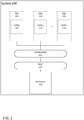
- FIG. 1 illustrates a system 100 where TLB shootdowns may be performed.
- the system includes at least one processor 103.
- the system 100 also includes a page table 131 physical memory 141, secondary memory 151, and a power management unit 161.
- Physical memory 141 and secondary memory 151 can store information accessible by the one or more processors 103, including instructions (not shown) that can be executed by the processor 103.
- the physical and secondary memory can also include data (not shown) that can be retrieved, manipulated or stored by the processor 103.
- the physical and secondary memory can be of any non-transitory type capable of storing information accessible by the processor, such as a hard-drive, memory card, ROM, RAM, DVD, CD-ROM, write-capable, and read-only memories.
- the instructions stored within the physical and secondary memory can be any set of instructions to be executed directly, such as machine code, or indirectly, such as scripts, by the processor.
- the terms "instructions,” “application,” “steps,” and “programs” can be used interchangeably herein.
- the instructions can be stored in object code format for direct processing by a processor, or in any other computing device language including scripts or collections of independent source code modules that are interpreted on demand or compiled in advance. Functions, methods, and routines of the instructions are explained in more detail below.
- the data stored within the physical and secondary memory may be retrieved, stored, and modified by the processor 103 in accordance with the instructions.
- the data can be stored in computer registers, in a relational database as a table having many different fields and records, or XML documents.
- the data can also be formatted in any computing device-readable format such as, but not limited to, binary values, ASCII or Unicode.
- the data can comprise any information sufficient to identify the relevant information, such as numbers, descriptive text, proprietary codes, pointers, references to data stored in other memories such as at other network locations, or information that is used by a function to calculate the relevant data.
- the processor 103 may be any conventional processor, such as processors from Intel Corporation or Advanced Micro Devices. Alternatively, the processor may be a dedicated controller such as an application specific integrated circuit (ASIC), field programmable gate array (FPGA), etc. Additionally, the processor 103 may include multiple processors, multi-core processors, or a combination thereof. Although only one processor 103 is shown in FIG. 1 , one of ordinary skill in the art would recognize that several processors may exist within the system 100. Accordingly, references to a processor will be understood to include references to a collection of processors or dedicated logic that may or may not operate in parallel.
- ASIC application specific integrated circuit
- FPGA field programmable gate array
- the processor 103 may include one or more cores 105-111. Each core may execute program instructions independently of the other cores thereby enabling multiprocessing. Although not shown, each core may contain a cache, or a single cache may be associated with all of the cores.
- the system also includes at least one page table 131.
- the page table 131 may be used to map the virtual memory page of a piece of data cached within the processor 103 to the corresponding physical address where the data is stored, such as in the physical memory 141 or secondary memory 151.
- the page table 131 is shown outside of the processor 103, the page table 131 may be stored within the cache of the processor 103 or in physical 141 or secondary memory 151.
- each core 105-111 of a processor may include a translation lookaside buffer (TLB) 121-127 which stores recent translations of virtual memory pages to physical memory addresses.
- TLB translation lookaside buffer
- the system 100 may include a power management unit 161.
- the power management unit may track the power state of each core within the processor 103. Such states may include an "on” state, an "off' state, or ranges of power states in between the "on” and "off' state. As described in detail below, the power management unit may be programmed to communicate on behalf of each core.
- the system 100 may be configured to operate one or more virtual machines (VMs) 201-205.
- a hypervisor 221 may be installed on a host 231 which is executed on the processor 103.
- the host 231 may run an operating system which includes a hypervisor, such as hypervisor 231, or a virtual machine manager (VMM).
- the hypervisor 221 may operate directly on the processor 103 without a host 231.
- hypervisor and VMM may be used interchangeably.
- the operating system of the host 231 may be Linux, WindowsTM, or any other suitable operating system capable of supporting virtual machines.
- the hypervisor may manage each VM such that the VMs appear to be isolated from one another. That is, each VM 201, 203, and 205 may believe itself to be an independent machine with its own hardware resources.
- the hypervisor 221 may control the VMs access to the system's 100 resources (i.e. memory, network interface controller, etc.).
- the hypervisor 221 may implement a hardware virtualization scheme that allocates hardware resources to the VMs as necessary.
- processor 103 is one of the hardware resources with which VMs 201, 203, and 205 interact via the hypervisor 221.
- the VMs 201, 203, and 205 are software implementations of a computer. That is, VMs 201, 203, and 205 execute an operating system. While only three VMs are shown in the figures, one of ordinary skill in the art would recognize that any number of VMs may be supported by the system 100.
- the operating system of the various VMs 201, 203, and 205 may be the same operating system as the host 231, but do not necessarily have to be.
- the operating system of each VM may be different from other VMs.
- the host 231 may run a Linux-based operating system
- VM 201 may run a WindowsTM operating system
- the VM 203 may run a SolarisTM operating system.
- the various combinations of operating systems would be readily apparent to those skilled in the art and are not discussed in greater detail herein.
- VMs may be nested within other VMs.
- VM 201 may play host to another guest VM.
- Each VM may include its own virtual central processing units (VCPUs) 211-215. Although the VMs of Fig. 2 are shown with only a single VCPU, the VMs may include any number of VCPUs.
- the VCPUs are virtualized processors which are assigned to a physical processor, such as a processor core of processor 103.
- Each VCPU may have its own unique identification, known as a virtual processor ID (VPID).
- VPID virtual processor ID
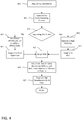
- TLB shootdowns may be reduced by directing and tracking TLB shootdowns to only those cores which are associated with a TLB that likely requires removal of the virtual memory page or pages. For instance, as illustrated in Fig. 4 , when a process executing on one or more processing cores causes one or more virtual memory pages to become disassociated with one or more previously associated physical memory addresses, a TLB shootdown request may be generated by the core which caused the disassociation as shown in block 401.
- the TLB shootdown request may include identification information which allows each of the receiving cores to quickly determine whether a shootdown is necessary, a shootdown address which indicates the virtual memory page or pages which need to be flushed from the respective TLBs, and a notification address which indicates where the receiving cores may acknowledge completion of the TLB shootdown request.
- the identification information may include an identifier for each VM, each VCPU within the VMs, each processor core, and each process executed within a VCPU and/or processor core may have an identifier.
- the identification information may include one or more advanced programmable interrupt controller IDs (APICIDs), a virtual processor ID (VPID), and a process-context identifier (PCID).
- APICIDs may be tracked and provided by a software application, such as the host 231 operating system as illustrated in block 403.
- each core of a system may be assigned an APICID by an operating system, such as the operating system executing on the host 231.
- the operating system may track which cores are executing a particular process and determine the APICIDs of those cores.
- the operating system may use a table to map the virtual processors (VCPUs) of the VM, which are executing the particular process, to the physical core or cores which are executing the VM, as shown in block 405.
- the APICIDs of those physical core or cores which are executing the VM may be assigned as the APICIDs of the TLB shootdown request.
- the APICID will be the real APICIDs which are executing the process, as shown in block 409.
- VM 201 which includes VCPU 211, may be controlled by hypervisor 221, which is in turn installed on the host operating system 231.
- the VCPU 211 may be assigned to core 105 of the processor at a first time and assigned to core 107 at another time, as illustrated by box 301.
- the host operating system 231 may contain a table (not shown) which maps the APICID of VCPU 211 to the APICIDs of processor cores 105 and 107.
- the host operating system may assign the two APICIDs associated with processor cores 105 and 107.
- virtual processor IDs may be assigned to both logical processors of a VM and to physical cores.
- that physical core may be assigned a VPID value of 0 as shown in block 411.
- the hypervisor controlling the VM may assign the VPID value, as shown in block 407.
- the VPID value in the TLB shootdown request of the VCPU's operating within the VM may be ignored, as this VPID value may change as VMs are added or removed from the system 100.
- a process-context identifier may be assigned to every process which is executed.
- the process-context identifier provides a unique tag to each process which is executed by a processor, including VCPUs.
- the PCIDs of each process may be assigned to particular TLB entries associated with a respective process.
- the PCID may be determined by the processor.
- the APICIDs, VPID, and PCID associated with the process which requested the TLB shootdown may be considered the identification information.
- the identification information, shootdown address, and notification address of the TLB shootdown may be written into memory, such as physical memory 141, as a tuple, or may be assigned to registers (not shown) in the processor 103.
- identification information, shootdown address, and notification address of the TLB shootdown may be input into various processor registries, such as the RDX, RAX, RCX, and RDI registers.
- the APICIDs may be input into the RDX register and the VPID and PCIDs may be input into the RDI registers via a write to model specific register command (WRMSR).
- WRMSR write to model specific register command
- the RCX register may be encoded to indicate an interrupt command (e.g., the TLB shootdown request) is going to be sent.
- an existing RCX register value may be 0x830 and RDX may be the destination field (e.g., APICID).
- This new encoding may indicate that a TLB shootdown is being performed. Additionally, other new values may be in other registers. For example, RDI may contain an extended destination field (e.g., VPID and PCID), RSI may contain the notification address, and RBX contains shootdown address encoding. Other encodings may also be used to indicate that a TLB shootdown is being performed. The values may be input into the RAX register, as well as the other registers, via a write to model specific register command (WRMSR).
- WRMSR write to model specific register command
- the APICID may be encoded to indicate whether the TLB shootdown request will be sent in a logical or physical mode.
- physical mode will require separate TLB shootdown requests for each core in the system.
- processor 103 contains four cores, one of which is sending the TLB request. As such, three separate shootdown requests will be sent to each of the other three cores.
- the APICID When the APICID is in logical mode, the other three cores will all be sent the same TLB shootdown request.
- the shootdown address may be included in the tuple or registry.
- the shootdown address may be encoded into the tuple or registry.
- the shootdown address may be encoded as one or more of a one page address of a 4kb page (e.g., an address which matches INVLPG instruction encoding), a start address and number of pages (e.g., encoded as log(num pages) or as (num pages)), or as a list of invalidation addresses.
- a TLB shootdown request may be transmitted to all of the cores operating on the system, as shown in block 417.
- the TLB shootdown request may include the identification information, a shootdown address, and a notification address.
- the operating system may direct TLB shootdowns to only those cores which are associated with a TLB that likely requires removal of a virtual memory page or pages. As such, the OS may direct the TLB shootdown to a subset of the cores.
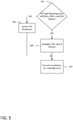
- a comparison may be made between the receiving core's identification information and the identification information contained in the TLB shootdown request, as shown in block 501.
- the receiving core's identification information may be ignored, as shown in block 503. Otherwise, the receiving core may review its respective TLB to determine whether it contains the shootdown address, and if so, it will invalidate that address, as shown in block 505.
- the receiving core may transmit an invalidation acknowledgement to the notification address, as shown in block 507.
- An acknowledgement may also be sent when the receiving core's identification information does not match the identification information contained in the TLB shootdown request.
- the receiving core may resume normal functions, such as continuing to process applications upon completing the TLB shootdown.
- acknowledgements may be sent by all cores which receive the TLB shootdown, even from receiving cores which ignore the TLB shootdown. In other examples, only the cores that obey the shootdown will send the acknowledgment.
- a processor's power management unit may acknowledge completion of a TLB shootdown.
- a core may flush its TLB upon switching to a power state below a certain threshold, such that TLB invalidations to that core have no further effect. If a core receives a TLB shootdown request while in a low power state below the threshold, the power management unit may acknowledge completion of the TLB shootdown request on behalf of the receiving core as the receiving core in the low power state has previously released its entire TLB. By allowing the power management unit to acknowledge completion of the TLB shootdown request, the transmitting core will receive a quicker response to the request than if the transmitting core needed to wait until the receiving core returned to a higher power state.
- processing by the receiving core may not be interrupted by the TLB shootdown request.
- other components within the system 100 such as an advanced programmable interrupt controller (APIC) (not shown) may be used to communicate on behalf of each core.
- the APIC may acknowledge completion of a TLB shootdown.
- other always-powered hardware agents may be extended or created to perform acknowledgments on behalf of the cores. For example, a VCPU that is not currently running will have no TLB entries associated with it, so a always-powered proxy acknowledgment may allow the completion of the TLB shootdown request without input from the VCPU.
- the transmitting core may track the number of acknowledgements received from the receiving cores. In this regard, the transmitting core may track the number of acknowledgements received at the notification address until all of the receiving cores which it expects to acknowledge the TLB shootdown request, do so. For example, based on the APICIDs contained in the TLB shootdown request, the transmitting core may know how many acknowledgements are expected. As such, the transmitting core may monitor the notification address, such as a specific virtual or physical address of a bitvector, until those numbers of acknowledgements are received. In some examples, the transmitting core may continue operation as soon as it sends the TLB shootdown request. To monitor the status of the TLB shootdown request, software, such as the host operating system 231 may assure that all acknowledgements have been received.
- a socket manager may be assigned to each respective processor. Each respective socket manager may then monitor the acknowledgements from all cores within its processor. The socket manager may then report back to the notification address the acknowledgements which are received.
- the socket managers may be assigned to more than a single processor. In this regard, socket managers may be assigned to a subregion of a socket, to a circuit board, to a chassis, etc.
- a TLB shootdown may be triggered by writing to a cacheline.
- each VCPU may hold a cacheline in a shared-state which is unique per VM, VCPU pair.
- the VCPU that is initiating the TLB shootdown may write to this cacheline, resulting in the cacheline being released from its respective cache and triggering a hardware or microcode mechanism that indicates that the core should initiate the TLB shootdown process.
- TLB shootdowns may be targeted to only specific cores.
- software may maintain a mapping of all VCPUs/VMs to cores. Based on this mapping, the TLB shootdown may be directed to only those cores which process the process which triggered the TLB shootdown.
Landscapes
- Engineering & Computer Science (AREA)
- Theoretical Computer Science (AREA)
- Physics & Mathematics (AREA)
- General Engineering & Computer Science (AREA)
- General Physics & Mathematics (AREA)
- Software Systems (AREA)
- Memory System Of A Hierarchy Structure (AREA)
Priority Applications (2)
| Application Number | Priority Date | Filing Date | Title |
|---|---|---|---|
| EP19151501.4A EP3502906B1 (en) | 2016-06-08 | 2016-12-14 | Tlb shootdown for low overhead |
| DK19151501.4T DK3502906T3 (da) | 2016-06-08 | 2016-12-14 | Tlb-shootdown for lav overhead |
Applications Claiming Priority (2)
| Application Number | Priority Date | Filing Date | Title |
|---|---|---|---|
| US201662347495P | 2016-06-08 | 2016-06-08 | |
| US201615293627A | 2016-10-14 | 2016-10-14 |
Related Child Applications (2)
| Application Number | Title | Priority Date | Filing Date |
|---|---|---|---|
| EP19151501.4A Division-Into EP3502906B1 (en) | 2016-06-08 | 2016-12-14 | Tlb shootdown for low overhead |
| EP19151501.4A Division EP3502906B1 (en) | 2016-06-08 | 2016-12-14 | Tlb shootdown for low overhead |
Publications (2)
| Publication Number | Publication Date |
|---|---|
| EP3255550A1 EP3255550A1 (en) | 2017-12-13 |
| EP3255550B1 true EP3255550B1 (en) | 2019-04-03 |
Family
ID=57569990
Family Applications (2)
| Application Number | Title | Priority Date | Filing Date |
|---|---|---|---|
| EP16204029.9A Active EP3255550B1 (en) | 2016-06-08 | 2016-12-14 | Tlb shootdowns for low overhead |
| EP19151501.4A Active EP3502906B1 (en) | 2016-06-08 | 2016-12-14 | Tlb shootdown for low overhead |
Family Applications After (1)
| Application Number | Title | Priority Date | Filing Date |
|---|---|---|---|
| EP19151501.4A Active EP3502906B1 (en) | 2016-06-08 | 2016-12-14 | Tlb shootdown for low overhead |
Country Status (6)
| Country | Link |
|---|---|
| EP (2) | EP3255550B1 (enExample) |
| JP (2) | JP6382924B2 (enExample) |
| CN (2) | CN107480075B (enExample) |
| DE (2) | DE102016124749B4 (enExample) |
| DK (2) | DK3502906T3 (enExample) |
| GB (1) | GB2551226A (enExample) |
Families Citing this family (3)
| Publication number | Priority date | Publication date | Assignee | Title |
|---|---|---|---|---|
| CN108710584B (zh) * | 2018-05-22 | 2021-08-31 | 郑州云海信息技术有限公司 | 一种提高tlb刷新效率的方法 |
| CN114595164B (zh) * | 2022-05-09 | 2022-08-16 | 支付宝(杭州)信息技术有限公司 | 在虚拟化平台中管理tlb高速缓存的方法和装置 |
| WO2025236116A1 (en) * | 2024-05-11 | 2025-11-20 | Yangtze Memory Technologies Co., Ltd. | Data migration in memory systems |
Family Cites Families (21)
| Publication number | Priority date | Publication date | Assignee | Title |
|---|---|---|---|---|
| JPS63286944A (ja) * | 1987-05-20 | 1988-11-24 | Hitachi Ltd | アドレス変換バツフア無効化方式 |
| JPH01109452A (ja) * | 1987-10-22 | 1989-04-26 | Fujitsu Ltd | 変換索引バッファ情報の消去制御方式 |
| JP2806778B2 (ja) * | 1994-01-28 | 1998-09-30 | 甲府日本電気株式会社 | 変換索引バッファクリア命令処理方式 |
| JP4361909B2 (ja) * | 1995-03-20 | 2009-11-11 | 富士通株式会社 | キャッシュコヒーレンス装置 |
| US5906001A (en) * | 1996-12-19 | 1999-05-18 | Intel Corporation | Method and apparatus for performing TLB shutdown operations in a multiprocessor system without invoking interrup handler routines |
| US20040117590A1 (en) * | 2002-12-12 | 2004-06-17 | International Business Machines Corp. | Aliasing support for a data processing system having no system memory |
| US7073043B2 (en) * | 2003-04-28 | 2006-07-04 | International Business Machines Corporation | Multiprocessor system supporting multiple outstanding TLBI operations per partition |
| US7188229B2 (en) * | 2004-01-17 | 2007-03-06 | Sun Microsystems, Inc. | Method and apparatus for memory management in a multi-processor computer system |
| US7281116B2 (en) * | 2004-07-30 | 2007-10-09 | Hewlett-Packard Development Company, L.P. | Multiprocessor system having plural memory locations for respectively storing TLB-shootdown data for plural processor nodes |
| US7454590B2 (en) * | 2005-09-09 | 2008-11-18 | Sun Microsystems, Inc. | Multithreaded processor having a source processor core to subsequently delay continued processing of demap operation until responses are received from each of remaining processor cores |
| JP4908017B2 (ja) * | 2006-02-28 | 2012-04-04 | 富士通株式会社 | Dmaデータ転送装置及びdmaデータ転送方法 |
| US20120203831A1 (en) * | 2011-02-03 | 2012-08-09 | Kent Schoen | Sponsored Stories Unit Creation from Organic Activity Stream |
| CN101398768B (zh) * | 2008-10-28 | 2011-06-15 | 北京航空航天大学 | 一种分布式虚拟机监视器系统的构建方法 |
| CN102262557B (zh) * | 2010-05-25 | 2015-01-21 | 运软网络科技(上海)有限公司 | 通过总线架构构建虚拟机监控器的方法及性能服务框架 |
| US9916257B2 (en) * | 2011-07-26 | 2018-03-13 | Intel Corporation | Method and apparatus for TLB shoot-down in a heterogeneous computing system supporting shared virtual memory |
| CN106708753B (zh) * | 2012-03-30 | 2021-04-02 | 英特尔公司 | 在使用共享虚拟存储器的处理器中加速操作的装置和方法 |
| US9081707B2 (en) * | 2012-12-29 | 2015-07-14 | Intel Corporation | Apparatus and method for tracking TLB flushes on a per thread basis |
| US9411745B2 (en) * | 2013-10-04 | 2016-08-09 | Qualcomm Incorporated | Multi-core heterogeneous system translation lookaside buffer coherency |
| US9619387B2 (en) * | 2014-02-21 | 2017-04-11 | Arm Limited | Invalidating stored address translations |
| WO2016012831A1 (en) | 2014-07-21 | 2016-01-28 | Via Alliance Semiconductor Co., Ltd. | Simultaneous invalidation of all address translation cache entries associated with x86 process context identifier |
| JP6663108B2 (ja) * | 2016-02-29 | 2020-03-11 | 富士通株式会社 | 物理演算処理装置、情報処理装置及び情報処理装置の制御方法 |
-
2016
- 2016-12-14 DK DK19151501.4T patent/DK3502906T3/da active
- 2016-12-14 EP EP16204029.9A patent/EP3255550B1/en active Active
- 2016-12-14 GB GB1621246.6A patent/GB2551226A/en not_active Withdrawn
- 2016-12-14 EP EP19151501.4A patent/EP3502906B1/en active Active
- 2016-12-14 DK DK16204029.9T patent/DK3255550T3/da active
- 2016-12-19 DE DE102016124749.9A patent/DE102016124749B4/de active Active
- 2016-12-19 DE DE202016008132.3U patent/DE202016008132U1/de active Active
- 2016-12-20 JP JP2016246448A patent/JP6382924B2/ja active Active
- 2016-12-21 CN CN201611191432.0A patent/CN107480075B/zh active Active
- 2016-12-21 CN CN202011089886.3A patent/CN112286839B/zh active Active
-
2018
- 2018-08-02 JP JP2018146132A patent/JP6716645B2/ja active Active
Also Published As
| Publication number | Publication date |
|---|---|
| DE102016124749A1 (de) | 2017-12-14 |
| EP3255550A1 (en) | 2017-12-13 |
| JP2017220211A (ja) | 2017-12-14 |
| CN112286839B (zh) | 2024-05-10 |
| CN112286839A (zh) | 2021-01-29 |
| GB2551226A (en) | 2017-12-13 |
| DE202016008132U1 (de) | 2017-04-24 |
| JP6382924B2 (ja) | 2018-08-29 |
| JP2018181378A (ja) | 2018-11-15 |
| DE102016124749B4 (de) | 2023-08-10 |
| JP6716645B2 (ja) | 2020-07-01 |
| EP3502906A1 (en) | 2019-06-26 |
| DK3255550T3 (da) | 2019-07-15 |
| CN107480075A (zh) | 2017-12-15 |
| GB201621246D0 (en) | 2017-01-25 |
| DK3502906T3 (da) | 2021-08-30 |
| CN107480075B (zh) | 2020-10-27 |
| EP3502906B1 (en) | 2021-06-16 |
Similar Documents
| Publication | Publication Date | Title |
|---|---|---|
| US10977191B2 (en) | TLB shootdowns for low overhead | |
| US20240345865A1 (en) | Techniques for virtual machine transfer and resource management | |
| US8380907B2 (en) | Method, system and computer program product for providing filtering of GUEST2 quiesce requests | |
| US20240330199A1 (en) | Secure memory access in a virtualized computing environment | |
| US9697024B2 (en) | Interrupt management method, and computer implementing the interrupt management method | |
| CN113454590B (zh) | 定向中断虚拟化 | |
| CN107491340B (zh) | 跨物理机的巨型虚拟机实现方法 | |
| US9471226B2 (en) | Reverse copy on write for better cache utilization | |
| EP3255550B1 (en) | Tlb shootdowns for low overhead | |
| US10341177B2 (en) | Parallel computing system and migration method | |
| US20240086219A1 (en) | Transmitting interrupts from a virtual machine (vm) to a destination processing unit without triggering a vm exit | |
| US9652296B1 (en) | Efficient chained post-copy virtual machine migration | |
| US11409551B2 (en) | Emulating VPID correctly for a nested hypervisor | |
| US12423132B2 (en) | Efficient queue shadowing for virtual machines | |
| US20230214247A1 (en) | Robust resource removal for virtual machines | |
| WO2019052643A1 (en) | STORAGE I / O PROJECTED IN MEMORY |
Legal Events
| Date | Code | Title | Description |
|---|---|---|---|
| PUAI | Public reference made under article 153(3) epc to a published international application that has entered the european phase |
Free format text: ORIGINAL CODE: 0009012 |
|
| STAA | Information on the status of an ep patent application or granted ep patent |
Free format text: STATUS: THE APPLICATION HAS BEEN PUBLISHED |
|
| AK | Designated contracting states |
Kind code of ref document: A1 Designated state(s): AL AT BE BG CH CY CZ DE DK EE ES FI FR GB GR HR HU IE IS IT LI LT LU LV MC MK MT NL NO PL PT RO RS SE SI SK SM TR |
|
| AX | Request for extension of the european patent |
Extension state: BA ME |
|
| STAA | Information on the status of an ep patent application or granted ep patent |
Free format text: STATUS: REQUEST FOR EXAMINATION WAS MADE |
|
| 17P | Request for examination filed |
Effective date: 20180613 |
|
| RBV | Designated contracting states (corrected) |
Designated state(s): AL AT BE BG CH CY CZ DE DK EE ES FI FR GB GR HR HU IE IS IT LI LT LU LV MC MK MT NL NO PL PT RO RS SE SI SK SM TR |
|
| GRAP | Despatch of communication of intention to grant a patent |
Free format text: ORIGINAL CODE: EPIDOSNIGR1 |
|
| STAA | Information on the status of an ep patent application or granted ep patent |
Free format text: STATUS: GRANT OF PATENT IS INTENDED |
|
| RIC1 | Information provided on ipc code assigned before grant |
Ipc: G06F 12/1027 20160101AFI20180918BHEP Ipc: G06F 12/1072 20160101ALI20180918BHEP |
|
| INTG | Intention to grant announced |
Effective date: 20181019 |
|
| GRAS | Grant fee paid |
Free format text: ORIGINAL CODE: EPIDOSNIGR3 |
|
| GRAA | (expected) grant |
Free format text: ORIGINAL CODE: 0009210 |
|
| STAA | Information on the status of an ep patent application or granted ep patent |
Free format text: STATUS: THE PATENT HAS BEEN GRANTED |
|
| AK | Designated contracting states |
Kind code of ref document: B1 Designated state(s): AL AT BE BG CH CY CZ DE DK EE ES FI FR GB GR HR HU IE IS IT LI LT LU LV MC MK MT NL NO PL PT RO RS SE SI SK SM TR |
|
| REG | Reference to a national code |
Ref country code: GB Ref legal event code: FG4D |
|
| REG | Reference to a national code |
Ref country code: CH Ref legal event code: EP Ref country code: AT Ref legal event code: REF Ref document number: 1116600 Country of ref document: AT Kind code of ref document: T Effective date: 20190415 |
|
| REG | Reference to a national code |
Ref country code: DE Ref legal event code: R096 Ref document number: 602016011831 Country of ref document: DE |
|
| REG | Reference to a national code |
Ref country code: IE Ref legal event code: FG4D |
|
| REG | Reference to a national code |
Ref country code: DK Ref legal event code: T3 Effective date: 20190708 |
|
| REG | Reference to a national code |
Ref country code: NL Ref legal event code: FP |
|
| REG | Reference to a national code |
Ref country code: SE Ref legal event code: TRGR |
|
| REG | Reference to a national code |
Ref country code: LT Ref legal event code: MG4D |
|
| REG | Reference to a national code |
Ref country code: AT Ref legal event code: MK05 Ref document number: 1116600 Country of ref document: AT Kind code of ref document: T Effective date: 20190403 |
|
| PG25 | Lapsed in a contracting state [announced via postgrant information from national office to epo] |
Ref country code: ES Free format text: LAPSE BECAUSE OF FAILURE TO SUBMIT A TRANSLATION OF THE DESCRIPTION OR TO PAY THE FEE WITHIN THE PRESCRIBED TIME-LIMIT Effective date: 20190403 Ref country code: PT Free format text: LAPSE BECAUSE OF FAILURE TO SUBMIT A TRANSLATION OF THE DESCRIPTION OR TO PAY THE FEE WITHIN THE PRESCRIBED TIME-LIMIT Effective date: 20190803 Ref country code: AL Free format text: LAPSE BECAUSE OF FAILURE TO SUBMIT A TRANSLATION OF THE DESCRIPTION OR TO PAY THE FEE WITHIN THE PRESCRIBED TIME-LIMIT Effective date: 20190403 Ref country code: NO Free format text: LAPSE BECAUSE OF FAILURE TO SUBMIT A TRANSLATION OF THE DESCRIPTION OR TO PAY THE FEE WITHIN THE PRESCRIBED TIME-LIMIT Effective date: 20190703 Ref country code: CZ Free format text: LAPSE BECAUSE OF FAILURE TO SUBMIT A TRANSLATION OF THE DESCRIPTION OR TO PAY THE FEE WITHIN THE PRESCRIBED TIME-LIMIT Effective date: 20190403 Ref country code: LT Free format text: LAPSE BECAUSE OF FAILURE TO SUBMIT A TRANSLATION OF THE DESCRIPTION OR TO PAY THE FEE WITHIN THE PRESCRIBED TIME-LIMIT Effective date: 20190403 Ref country code: HR Free format text: LAPSE BECAUSE OF FAILURE TO SUBMIT A TRANSLATION OF THE DESCRIPTION OR TO PAY THE FEE WITHIN THE PRESCRIBED TIME-LIMIT Effective date: 20190403 |
|
| PG25 | Lapsed in a contracting state [announced via postgrant information from national office to epo] |
Ref country code: PL Free format text: LAPSE BECAUSE OF FAILURE TO SUBMIT A TRANSLATION OF THE DESCRIPTION OR TO PAY THE FEE WITHIN THE PRESCRIBED TIME-LIMIT Effective date: 20190403 Ref country code: GR Free format text: LAPSE BECAUSE OF FAILURE TO SUBMIT A TRANSLATION OF THE DESCRIPTION OR TO PAY THE FEE WITHIN THE PRESCRIBED TIME-LIMIT Effective date: 20190704 Ref country code: BG Free format text: LAPSE BECAUSE OF FAILURE TO SUBMIT A TRANSLATION OF THE DESCRIPTION OR TO PAY THE FEE WITHIN THE PRESCRIBED TIME-LIMIT Effective date: 20190703 Ref country code: LV Free format text: LAPSE BECAUSE OF FAILURE TO SUBMIT A TRANSLATION OF THE DESCRIPTION OR TO PAY THE FEE WITHIN THE PRESCRIBED TIME-LIMIT Effective date: 20190403 Ref country code: RS Free format text: LAPSE BECAUSE OF FAILURE TO SUBMIT A TRANSLATION OF THE DESCRIPTION OR TO PAY THE FEE WITHIN THE PRESCRIBED TIME-LIMIT Effective date: 20190403 |
|
| PG25 | Lapsed in a contracting state [announced via postgrant information from national office to epo] |
Ref country code: AT Free format text: LAPSE BECAUSE OF FAILURE TO SUBMIT A TRANSLATION OF THE DESCRIPTION OR TO PAY THE FEE WITHIN THE PRESCRIBED TIME-LIMIT Effective date: 20190403 Ref country code: IS Free format text: LAPSE BECAUSE OF FAILURE TO SUBMIT A TRANSLATION OF THE DESCRIPTION OR TO PAY THE FEE WITHIN THE PRESCRIBED TIME-LIMIT Effective date: 20190803 |
|
| REG | Reference to a national code |
Ref country code: DE Ref legal event code: R097 Ref document number: 602016011831 Country of ref document: DE |
|
| PG25 | Lapsed in a contracting state [announced via postgrant information from national office to epo] |
Ref country code: EE Free format text: LAPSE BECAUSE OF FAILURE TO SUBMIT A TRANSLATION OF THE DESCRIPTION OR TO PAY THE FEE WITHIN THE PRESCRIBED TIME-LIMIT Effective date: 20190403 Ref country code: RO Free format text: LAPSE BECAUSE OF FAILURE TO SUBMIT A TRANSLATION OF THE DESCRIPTION OR TO PAY THE FEE WITHIN THE PRESCRIBED TIME-LIMIT Effective date: 20190403 Ref country code: SK Free format text: LAPSE BECAUSE OF FAILURE TO SUBMIT A TRANSLATION OF THE DESCRIPTION OR TO PAY THE FEE WITHIN THE PRESCRIBED TIME-LIMIT Effective date: 20190403 |
|
| PLBE | No opposition filed within time limit |
Free format text: ORIGINAL CODE: 0009261 |
|
| STAA | Information on the status of an ep patent application or granted ep patent |
Free format text: STATUS: NO OPPOSITION FILED WITHIN TIME LIMIT |
|
| PG25 | Lapsed in a contracting state [announced via postgrant information from national office to epo] |
Ref country code: SM Free format text: LAPSE BECAUSE OF FAILURE TO SUBMIT A TRANSLATION OF THE DESCRIPTION OR TO PAY THE FEE WITHIN THE PRESCRIBED TIME-LIMIT Effective date: 20190403 Ref country code: IT Free format text: LAPSE BECAUSE OF FAILURE TO SUBMIT A TRANSLATION OF THE DESCRIPTION OR TO PAY THE FEE WITHIN THE PRESCRIBED TIME-LIMIT Effective date: 20190403 |
|
| 26N | No opposition filed |
Effective date: 20200106 |
|
| PG25 | Lapsed in a contracting state [announced via postgrant information from national office to epo] |
Ref country code: TR Free format text: LAPSE BECAUSE OF FAILURE TO SUBMIT A TRANSLATION OF THE DESCRIPTION OR TO PAY THE FEE WITHIN THE PRESCRIBED TIME-LIMIT Effective date: 20190403 |
|
| PG25 | Lapsed in a contracting state [announced via postgrant information from national office to epo] |
Ref country code: SI Free format text: LAPSE BECAUSE OF FAILURE TO SUBMIT A TRANSLATION OF THE DESCRIPTION OR TO PAY THE FEE WITHIN THE PRESCRIBED TIME-LIMIT Effective date: 20190403 |
|
| REG | Reference to a national code |
Ref country code: CH Ref legal event code: PL |
|
| PG25 | Lapsed in a contracting state [announced via postgrant information from national office to epo] |
Ref country code: MC Free format text: LAPSE BECAUSE OF FAILURE TO SUBMIT A TRANSLATION OF THE DESCRIPTION OR TO PAY THE FEE WITHIN THE PRESCRIBED TIME-LIMIT Effective date: 20190403 |
|
| PG25 | Lapsed in a contracting state [announced via postgrant information from national office to epo] |
Ref country code: LU Free format text: LAPSE BECAUSE OF NON-PAYMENT OF DUE FEES Effective date: 20191214 |
|
| PG25 | Lapsed in a contracting state [announced via postgrant information from national office to epo] |
Ref country code: LI Free format text: LAPSE BECAUSE OF NON-PAYMENT OF DUE FEES Effective date: 20191231 Ref country code: CH Free format text: LAPSE BECAUSE OF NON-PAYMENT OF DUE FEES Effective date: 20191231 |
|
| PG25 | Lapsed in a contracting state [announced via postgrant information from national office to epo] |
Ref country code: CY Free format text: LAPSE BECAUSE OF FAILURE TO SUBMIT A TRANSLATION OF THE DESCRIPTION OR TO PAY THE FEE WITHIN THE PRESCRIBED TIME-LIMIT Effective date: 20190403 |
|
| PG25 | Lapsed in a contracting state [announced via postgrant information from national office to epo] |
Ref country code: HU Free format text: LAPSE BECAUSE OF FAILURE TO SUBMIT A TRANSLATION OF THE DESCRIPTION OR TO PAY THE FEE WITHIN THE PRESCRIBED TIME-LIMIT; INVALID AB INITIO Effective date: 20161214 Ref country code: MT Free format text: LAPSE BECAUSE OF FAILURE TO SUBMIT A TRANSLATION OF THE DESCRIPTION OR TO PAY THE FEE WITHIN THE PRESCRIBED TIME-LIMIT Effective date: 20190403 |
|
| PG25 | Lapsed in a contracting state [announced via postgrant information from national office to epo] |
Ref country code: MK Free format text: LAPSE BECAUSE OF FAILURE TO SUBMIT A TRANSLATION OF THE DESCRIPTION OR TO PAY THE FEE WITHIN THE PRESCRIBED TIME-LIMIT Effective date: 20190403 |
|
| P01 | Opt-out of the competence of the unified patent court (upc) registered |
Effective date: 20230509 |
|
| PGFP | Annual fee paid to national office [announced via postgrant information from national office to epo] |
Ref country code: DK Payment date: 20241226 Year of fee payment: 9 |
|
| PGFP | Annual fee paid to national office [announced via postgrant information from national office to epo] |
Ref country code: BE Payment date: 20241227 Year of fee payment: 9 Ref country code: NL Payment date: 20241226 Year of fee payment: 9 Ref country code: FI Payment date: 20241226 Year of fee payment: 9 |
|
| PGFP | Annual fee paid to national office [announced via postgrant information from national office to epo] |
Ref country code: GB Payment date: 20241227 Year of fee payment: 9 |
|
| PGFP | Annual fee paid to national office [announced via postgrant information from national office to epo] |
Ref country code: FR Payment date: 20241226 Year of fee payment: 9 |
|
| PGFP | Annual fee paid to national office [announced via postgrant information from national office to epo] |
Ref country code: IE Payment date: 20241227 Year of fee payment: 9 |
|
| PGFP | Annual fee paid to national office [announced via postgrant information from national office to epo] |
Ref country code: SE Payment date: 20241227 Year of fee payment: 9 |
|
| PGFP | Annual fee paid to national office [announced via postgrant information from national office to epo] |
Ref country code: DE Payment date: 20241227 Year of fee payment: 9 |