EP3252105B1 - Carbohydrate based binder system and method of its production - Google Patents
Carbohydrate based binder system and method of its production Download PDFInfo
- Publication number
- EP3252105B1 EP3252105B1 EP17177056.3A EP17177056A EP3252105B1 EP 3252105 B1 EP3252105 B1 EP 3252105B1 EP 17177056 A EP17177056 A EP 17177056A EP 3252105 B1 EP3252105 B1 EP 3252105B1
- Authority
- EP
- European Patent Office
- Prior art keywords
- carbohydrate
- mass
- cellulose
- component
- binder composition
- Prior art date
- Legal status (The legal status is an assumption and is not a legal conclusion. Google has not performed a legal analysis and makes no representation as to the accuracy of the status listed.)
- Active
Links
Images


Classifications
-
- C—CHEMISTRY; METALLURGY
- C09—DYES; PAINTS; POLISHES; NATURAL RESINS; ADHESIVES; COMPOSITIONS NOT OTHERWISE PROVIDED FOR; APPLICATIONS OF MATERIALS NOT OTHERWISE PROVIDED FOR
- C09J—ADHESIVES; NON-MECHANICAL ASPECTS OF ADHESIVE PROCESSES IN GENERAL; ADHESIVE PROCESSES NOT PROVIDED FOR ELSEWHERE; USE OF MATERIALS AS ADHESIVES
- C09J179/00—Adhesives based on macromolecular compounds obtained by reactions forming in the main chain of the macromolecule a linkage containing nitrogen, with or without oxygen, or carbon only, not provided for in groups C09J161/00 - C09J177/00
-
- C—CHEMISTRY; METALLURGY
- C09—DYES; PAINTS; POLISHES; NATURAL RESINS; ADHESIVES; COMPOSITIONS NOT OTHERWISE PROVIDED FOR; APPLICATIONS OF MATERIALS NOT OTHERWISE PROVIDED FOR
- C09D—COATING COMPOSITIONS, e.g. PAINTS, VARNISHES OR LACQUERS; FILLING PASTES; CHEMICAL PAINT OR INK REMOVERS; INKS; CORRECTING FLUIDS; WOODSTAINS; PASTES OR SOLIDS FOR COLOURING OR PRINTING; USE OF MATERIALS THEREFOR
- C09D101/00—Coating compositions based on cellulose, modified cellulose, or cellulose derivatives
-
- B—PERFORMING OPERATIONS; TRANSPORTING
- B24—GRINDING; POLISHING
- B24D—TOOLS FOR GRINDING, BUFFING OR SHARPENING
- B24D3/00—Physical features of abrasive bodies, or sheets, e.g. abrasive surfaces of special nature; Abrasive bodies or sheets characterised by their constituents
- B24D3/02—Physical features of abrasive bodies, or sheets, e.g. abrasive surfaces of special nature; Abrasive bodies or sheets characterised by their constituents the constituent being used as bonding agent
- B24D3/20—Physical features of abrasive bodies, or sheets, e.g. abrasive surfaces of special nature; Abrasive bodies or sheets characterised by their constituents the constituent being used as bonding agent and being essentially organic
-
- C—CHEMISTRY; METALLURGY
- C09—DYES; PAINTS; POLISHES; NATURAL RESINS; ADHESIVES; COMPOSITIONS NOT OTHERWISE PROVIDED FOR; APPLICATIONS OF MATERIALS NOT OTHERWISE PROVIDED FOR
- C09J—ADHESIVES; NON-MECHANICAL ASPECTS OF ADHESIVE PROCESSES IN GENERAL; ADHESIVE PROCESSES NOT PROVIDED FOR ELSEWHERE; USE OF MATERIALS AS ADHESIVES
- C09J101/00—Adhesives based on cellulose, modified cellulose, or cellulose derivatives
- C09J101/02—Cellulose; Modified cellulose
-
- C—CHEMISTRY; METALLURGY
- C03—GLASS; MINERAL OR SLAG WOOL
- C03C—CHEMICAL COMPOSITION OF GLASSES, GLAZES OR VITREOUS ENAMELS; SURFACE TREATMENT OF GLASS; SURFACE TREATMENT OF FIBRES OR FILAMENTS MADE FROM GLASS, MINERALS OR SLAGS; JOINING GLASS TO GLASS OR OTHER MATERIALS
- C03C25/00—Surface treatment of fibres or filaments made from glass, minerals or slags
- C03C25/10—Coating
- C03C25/24—Coatings containing organic materials
- C03C25/26—Macromolecular compounds or prepolymers
- C03C25/32—Macromolecular compounds or prepolymers obtained otherwise than by reactions involving only carbon-to-carbon unsaturated bonds
- C03C25/321—Starch; Starch derivatives
-
- C—CHEMISTRY; METALLURGY
- C08—ORGANIC MACROMOLECULAR COMPOUNDS; THEIR PREPARATION OR CHEMICAL WORKING-UP; COMPOSITIONS BASED THEREON
- C08B—POLYSACCHARIDES; DERIVATIVES THEREOF
- C08B15/00—Preparation of other cellulose derivatives or modified cellulose, e.g. complexes
- C08B15/02—Oxycellulose; Hydrocellulose; Cellulosehydrate, e.g. microcrystalline cellulose
-
- C—CHEMISTRY; METALLURGY
- C08—ORGANIC MACROMOLECULAR COMPOUNDS; THEIR PREPARATION OR CHEMICAL WORKING-UP; COMPOSITIONS BASED THEREON
- C08H—DERIVATIVES OF NATURAL MACROMOLECULAR COMPOUNDS
- C08H8/00—Macromolecular compounds derived from lignocellulosic materials
-
- C—CHEMISTRY; METALLURGY
- C08—ORGANIC MACROMOLECULAR COMPOUNDS; THEIR PREPARATION OR CHEMICAL WORKING-UP; COMPOSITIONS BASED THEREON
- C08L—COMPOSITIONS OF MACROMOLECULAR COMPOUNDS
- C08L79/00—Compositions of macromolecular compounds obtained by reactions forming in the main chain of the macromolecule a linkage containing nitrogen with or without oxygen or carbon only, not provided for in groups C08L61/00 - C08L77/00
- C08L79/02—Polyamines
-
- C—CHEMISTRY; METALLURGY
- C08—ORGANIC MACROMOLECULAR COMPOUNDS; THEIR PREPARATION OR CHEMICAL WORKING-UP; COMPOSITIONS BASED THEREON
- C08L—COMPOSITIONS OF MACROMOLECULAR COMPOUNDS
- C08L89/00—Compositions of proteins; Compositions of derivatives thereof
-
- C—CHEMISTRY; METALLURGY
- C09—DYES; PAINTS; POLISHES; NATURAL RESINS; ADHESIVES; COMPOSITIONS NOT OTHERWISE PROVIDED FOR; APPLICATIONS OF MATERIALS NOT OTHERWISE PROVIDED FOR
- C09J—ADHESIVES; NON-MECHANICAL ASPECTS OF ADHESIVE PROCESSES IN GENERAL; ADHESIVE PROCESSES NOT PROVIDED FOR ELSEWHERE; USE OF MATERIALS AS ADHESIVES
- C09J179/00—Adhesives based on macromolecular compounds obtained by reactions forming in the main chain of the macromolecule a linkage containing nitrogen, with or without oxygen, or carbon only, not provided for in groups C09J161/00 - C09J177/00
- C09J179/02—Polyamines
-
- C—CHEMISTRY; METALLURGY
- C09—DYES; PAINTS; POLISHES; NATURAL RESINS; ADHESIVES; COMPOSITIONS NOT OTHERWISE PROVIDED FOR; APPLICATIONS OF MATERIALS NOT OTHERWISE PROVIDED FOR
- C09J—ADHESIVES; NON-MECHANICAL ASPECTS OF ADHESIVE PROCESSES IN GENERAL; ADHESIVE PROCESSES NOT PROVIDED FOR ELSEWHERE; USE OF MATERIALS AS ADHESIVES
- C09J197/00—Adhesives based on lignin-containing materials
- C09J197/02—Lignocellulosic material, e.g. wood, straw or bagasse
Definitions
- the present invention relates to an aqueous carbohydrate based binder composition, comprising a carbohydrate component and an amine component, wherein the carbohydrate component comprises one or more pentose sugars, as well as to a method of its production.
- Binders are generally useful in the manufacture of articles which are based on non- or only loosely-assembled matter.
- binders are extensively used in the production of products comprising consolidated fibers, e.g. in the form of thermosetting binder compositions which are cured upon heat treatment.
- thermosetting binder compositions include a variety of phenol-aldehyde, urea-aldehyde, melamine-aldehyde, and other condensation-polymerization materials like furane and polyurethane resins.
- Binder compositions based on phenol-aldehyde, resorcinol-aldehyde, phenol/aldehyde/urea, phenol/melamine/urea etc. are frequently used for bonding fibers, textiles, plastics, rubbers, and may other materials.
- cellulosic composite comprising cellulosic material and a binder
- aqueous binder compositions produced from carbohydrate starting materials and their use for bonding mineral fibre products are disclosed in WO2010/106181 .
- Phenol formaldehyde binders provide suitable properties to the final products, are readily available and easy to process.
- environmental considerations have lead to the development of alternative binder systems, such as carbohydrate-based binders, which are obtained e.g. by reacting a carbohydrate with a multiprotic acid (cf. WO 2009/019235 ), or as esterification products obtained by reacting a polycarboxylic acid with a polyol (cf. US 2005/0202224 ). Because these alternative binders are not based on formaldehyde as a reagent, they have been collectively referred to as "formaldehyde-free binders".
- binders which are obtained as reaction products of an amine component and a reducing sugar (or non-carbohydrate carbonyl) component have been identified as a promising class of such formaldehyde-free binders ( WO 2007/014236 ).
- Such binders may be made via a Maillard reaction forming polymeric melanoidins which provide sufficient bonding strength.
- the technical problem underlying the present invention is therefore to provide a binder composition which is mainly based on renewable resources and provides improved cure rates, as well as a method for producing the same.
- aqueous binder composition is not specifically restricted and includes any mixture of at least the afore-mentioned binder components (a) and (b) in water or a water-containing solvent. Such a mixture may be a (partial) solution of one or more of said binder components, or may be present in form of a dispersion, such as an emulsion or a suspension.
- aqueous is not restricted to water only as a solvent, but also includes solvents which are mixtures containing water as one component.
- the aqueous binder composition is a solution or a suspension.
- the solid content of the above aqueous binder composition may, for example, range from 5 to 95 mass%, from 8 to 90 mass%, or from 10 to 85 mass%, based on the mass of the total aqueous binder composition.
- the solid content of the aqueous binder composition may be adjusted to suit each individual application.
- the solid content of the aqueous binder composition may be in the range of 5 to 25 mass%, preferably in the range of 10 to 20 mass%, or more preferably in the range of 12 to 18 mass%, based on the mass of the total aqueous binder composition.
- the solid content of the aqueous binder composition may be in the range of 50 to 90 mass%, preferably in the range of 55 to 85 mass%, or more preferably in the range of 60 to 80 mass%, based on the mass of the total aqueous binder composition.
- carbohydrate component is not specifically restricted and generally includes one or more polyhydroxy aldehydes and/or polyhydroxy ketones, and specifically includes saccharides, such as monosaccharides, disaccharides, oligosaccharides and polysaccharides, or further reducing sugars.
- the carbohydrate component of the present invention may comprise one or more compounds of the general formula C m (H 2 O) n , wherein m and n may be the same or different from each other, but also includes derivatives thereof wherein, for example, amino groups are added (e.g. to yield glycosamines) or oxygene atoms are removed (e.g. to yield deoxycarbohydrates).
- carbohydrate component further includes naturally occurring carbohydrate derivatives, and such derivatives, which may form during the preparation of the carbohydrate component (e.g. during cellulolysis).
- amine component is not specifically restricted and generally includes any compounds acting as a nitrogen-source which can undergo a polymerization reaction with the carbohydrate component of the present invention.
- the amine component may comprise an amine component selected from the group consisting of proteins, peptides, amino acids, organic amines, polyamines, ammonia, ammonium salts of a monomeric polycarboxylic acid, ammonium salts of a polymeric polycarboxylic acid, and ammonium salts of an inorganic acid, or any combination thereof.
- the amine component comprises hexamethylenediamine.
- the amine component may comprise one or more of: triammonium citrate, ammonium sulphate, ammonium phosphate including mono- and diammonium phosphate, diethylenetriamine, aliphatic amines including 1,4-butanediamine, 1,5-pentanediamine, 1,7-heptanediamine, 1,8-octanediamine, 1,9-nonanediamine, 1,10-decanediamine, 1,11-undecanediamine, 1,12-dodecanediamine, 1,5-diamino-2-methylpentane, a Jeffamine, a polyamine, a polyamine comprising two or more primary amine groups, separated by an alkyl group, particularly an alkyl group comprising at least 4 carbon atoms, a heteroalkyl group, a cycloalkyl group, a heterocycloalkyl group, as well as derivatives and combinations thereof.
- ammonium is not specifically restricted and, for example, includes compounds of the general formulae [ + NH 4 ] X , [ + NH 3 R 1 ] X , and [ + NH 2 R 1 R 2 ] X , wherein x is an integer of at least 1, and R 1 and R 2 are each independently selected from alkyl, cycloalkyl, alkenyl, cycloalkenyl, heterocyclyl, aryl, and heteroaryl.
- pentose is not specifically restricted and includes any natural and synthetic carbohydrates containing five carbon atoms.
- pentose includes the monosaccharides xylose, arabinose, ribose, lyxose, ribulose and xylulose, including their D- and L-stereoisomers, as well as any combination thereof.
- the pentoses of the present invention also include such derivatives, which are formed e.g. through addition of an amino group (pentosamines), removal of an oxygen atom (deoxypentoses), rearrangement reactions, protonation or deprotonation.
- the one or more pentose(s) are present in the carbohydrate component in a total amount of 3 to 70 mass%, based on the mass of the total carbohydrate component (a).
- the amount of said one or more pentose(s) may be adjusted, e.g. to achieve improved cure rates of the binder composition, and may, for example be in the range of 3 to 65 mass%, 3 to 60 mass% or 3 to 55 mass%, based on the mass of the total carbohydrate component (a).
- the amount of said one or more pentose(s) may be in the range of 5 to 70 mass% or in the range of 10 to 70 mass%, or in the range of 15 to 70 mass%, based on the mass of the total carbohydrate component (a).
- pentose contents of 50 mass% or less, 45 mass% and less, as well as 40 mass% and less.
- the carbohydrate component (a) further comprises one or more hexose(s) in a total amount of 97 to 30 mass%, based on the mass of the total carbohydrate component (a).
- the amount of said one or more hexose(s) may be adjusted, e.g. to achieve improved cure rates of the binder composition, and may, for example be in the range of 97 to 35 mass%, 97 to 40 mass% or 97 to 45 mass%, based on the mass of the total carbohydrate component (a).
- the amount of said one or more hexose(s) may be in the range of 95 to 30 mass%, in the range of 90 to 30 mass%, or in the range of 85 to 30 mass%, based on the mass of the total carbohydrate component (a).
- the term "hexose” is not specifically restricted and includes any natural and synthetic carbohydrates containing six carbon atoms.
- the term “hexose” includes the monosaccharides allose, altrose, glucose, mannose, gulose, idose, galactose, talose, fructose, psicose, sorbose, tagatose, including their D- and L-stereoisomers, as well as any combination thereof.
- the hexoses of the present invention also include such derivatives, which are formed e.g.
- the hexose is or includes dextrose.
- the ratio of the one or more pentose(s) to the one or more hexose(s) may be adjusted, e.g. within the above-mentioned ranges, in order to achieve improved cure properties or increased binding performance in the final product.
- said desired ratio of pentose(s) to hexose(s) depends on the type and amount of said hexose and pentose fractions within the carbohydrate component of the above-defined binder.
- the sources of the carbohydrates constituting the carbohydrate component (a) of the binder composition as defined above are preferably renewable sources, such as cellulose-based sources present in (energy) plants, plant products, wood (chips), used paper, paper mill waste, brewery waste, timber bark, etc.
- the present invention relates to a binder composition as defined above, wherein said binder composition further comprises an amino acid component (c).
- amino acid component is not specifically restricted, and includes all natural and synthestic amino acids, as well as oligomers thereof, such as peptides, and polymers thereof, such as proteins.
- amino acid component (c) comprises one or more amino acids in an amount of 1 to 25 mass%, 2 to 20 mass% or 3 to 15 mass%, based on the total mass of the solid content of the binder composition as defined above.
- Said amino acid component (c) is suited to further improve the properties of the binder composition, for example, in respect of ease of applicability to a product and/or enhanced rigidity and/or stability of color.
- amino acids constituting the amino acid component (c) of the binder composition defined above are obtained from renewable sources, such as cellulose-based sources present in (energy) plants, plant products, wood, used paper, paper mill waste, etc.
- the above-defined binder composition may be cured by a variety of technologies known in the art, such as application of heat, irradiation, addition of curing-initiators, etc.
- the present invention relates to a binder obtainable by heating the binder composition as defined above.
- the present invention relates to a method of producing an aqueous binder composition in accordance with claim 5.
- the expression “hydrolyzing” used herein is not specifically restricted and generally refers to all chemical and physico-chemical reactions which yield carbohydrate compounds from a cellulose-based carbohydrate source.
- the expression “hydrolyzing” includes heat/pressure treatment, acidic and/or basic treatment, enzymatic treatment, or treatment with synthetic catalysts, as well as metal chloride hydrolysis e.g. using zinc chloride or calcium chloride, as well as any combination thereof.
- the process of "hydrolyzing" the cellulose-based carbohydrate source may be carried out in a single process or may contain a sequence of processes.
- a cellulose-based carbohydrate source may be hydrolyzed by an acidic treatment, or may be hydrolyzed by a combination of an enzymatic treatment and a subsequent acidic treatment.
- the present invention relates to a method as defined above, wherein step (i) of hydrolyzing one or more cellulose-based carbohydrate source(s) independently comprises treatment with heat/pressure, enzymatic and/or acidic treatment and/or metal chloride hydrolysis of each of said one or more cellulose-based carbohydrate source(s).
- cellulose-based carbohydrate source is not specifically restricted and includes any natural or synthetic material, or mixture of materials, which contains cellulose or cellulose derivatives.
- cellulose is not specifically restricted and does not only refer to cellulose as such, but also includes any other carbohydrate oligomers and polymers which occur in plant biomass, such as hemicellulose or derivatives thereof.
- the term “cellulose” further includes any breakdown-products resulting from natural and synthetic cellulolysis, such as cellodextrins, as well as lower molecular weight poly- and oligosaccharides.
- a cellulose-based carbohydrate source will contain a variety of different carbohydrate polymers. For example, most plant biomass contains lignocellulose comprising a mixture of cellulose and hemicellulose.
- the step of isolating the carbohydrates from the one or more hydrolized cellulose-based carbohydrate source(s) is not specifically restricted and includes any chemical or physical treatment to obtain a composition containing one or more carbohydrates.
- the term "isolating" may include a simple step of separating solids, such as plant fibers, from the hydrolyzing reaction mixture to obtain a carbohydrate solution comprising one or more carbohydrates.
- the "isolating"-step may include a combination of a variety of techniques, such as filtration, centrifugation, crystallization, precipitation, solvent removal by evaporation, etc, in order to obtain a carbohydrate-containing composition having a desired purity or constitution.
- the hydrolysis and isolating steps of the method as defined above may preferably be adjusted - considering the type and amount of cellulose-based carbohydrate to be hydrolyzed - to obtain a carbohydrate fraction, comprising one or more pentose(s) in the required amount to readily prepare the binder composition of the present invention.
- the steps of hydrolyzing said sources and isolating the thus obtained carbohydrates may be adjusted to readily obtain an aqueous solution of said carbohydrate component (a) comprising 3 to 70 mass% of one or more pentose(s), and one or more hexose(s) in a total amount of 97 to 30 mass%, based on the mass of the total carbohydrate component present in said aqueous solution.
- an aqueous solution of a carbohydrate component (a) comprising 3 to 65 mass%, 3 to 60 mass%, or 3 to 55 mass% of the one or more pentose(s), based on the mass of the total carbohydrate component (a), may be obtained after the hydrolysis and isolation steps of the above-defined method.
- the amount of said one or more pentose(s) of said carbohydrate component (a) present in the aqueous solution obtained after the afore-mentioned hydrolysis and isolation steps may be in the range of 5 to 70 mass%, in the range of 10 to 70 mass%, or in the range of 15 to 70 mass%, based on the mass of the total carbohydrate component (a) present in said aqueous solution.
- Further examples of the pentose content in said aqueous solution of said carbohydrate component (a) obtained from the above-mentioned steps of hydrolyzing and isolating include 50 mass% or less, 45 mass% or less, and 40 mass% or less.
- the step of using the isolated carbohydrates from the one or more cellulose-based carbohydrate source(s) to form a carbohydrate component is not specifically restricted and includes any techniques suited to arrive at a desired carbohydrate composition constituting the carbohydrate component (a) as defined above.
- the carbohydrate component may be formed by using carbohydrate mixtures, e.g. as a solid mixture or in form of a solution or dispersion, obtained after the isolating step as such, or may be formed by combining two or more carbohydrate mixtures obtained from cellulose-hydrolyzation.
- the step of using the isolated carbohydrates from the one or more cellulose-based carbohydrate source(s) to form a carbohydrate component also includes the case wherein one or more carbohydrates are added to carbohydrate mixture obtained after cellulose-hydrolyzation and carbohydrate isolation.
- a carbohydrate mixture obtained from hydrolysis of a specific cellulose-based carbohydrate source, containing mainly xylose as a pentose may be supplemented with other pentoses or one or more hexoses, such as dextrose.
- an aqueous solution of a carbohydrate component (a) comprising 97 to 35 mass%, 97 to 40 mass%, or 97 to 45 mass% of the one or more hexose(s), based on the mass of the total carbohydrate component (a), may be obtained after the hydrolysis and isolation steps of the above-defined method.
- the amount of said one or more hexose(s) of said carbohydrate component (a) present in the aqueous solution obtained after the afore-mentioned hydrolysis and isolation steps may be in the range of 95 to 30 mass%, in the range of 90 to 30 mass%, or in the range of 85 to 30 mass%, based on the mass of the total carbohydrate component (a) present in said aqueous solution.
- the steps of hydrolyzing the one or more cellulose-based carbohydrate source(s) and of isolating the resulting carbohydrates may preferably be adjusted to readily yield an aqueous solution of a carbohydrate component comprising 3 to 70 mass%, 3 to 65 mass%, 3 to 60 mass%, 3 to 55 mass%, 5 to 70 mass%, 10 to 70 mass%, or 15 to 70 mass% of one or more pentose(s), and 97 to 30 mass%, 97 to 35 mass%, 97 to 40 mass%, 97 to 45 mass%, 95 to 30 mass%, 90 to 30 mass%, or 85 to 30 mass% of one or more hexose(s), based on the mass of the total carbohydrate component present in said solution.
- a carbohydrate component comprising 3 to 70 mass%, 3 to 65 mass%, 3 to 60 mass%, 3 to 55 mass%, 5 to 70 mass%, 10 to 70 mass%, or 15 to 70 mass% of one or more pentose(s), and 97 to 30 mass%
- the at least one pentose is selected from the group consisting of xylose, arabinose, ribose, lyxose, ribulose and xylulose, or any combination thereof.
- a cellulose-based carbohydrate source which yields, upon hydrolysis, a significant amount of one or more pentose(s) readily usable in the preparation of the binder composition as defined above.
- such cellulose-based carbohydrate source(s) are selected from the group consisting of agricultural residues such as corn stover and sugarcane bagasse; dedicated energy crops such as sugar beet, switchgrass, Miscanthus, hemp, willow and corn; wood residues, such as wood chips, timber bark, saw mill discards and paper mill discards; municipal paper waste, such as used paper and low grade paper waste; as well as industrial cellulose sources, such as brewery waste and dairy products.
- the above cellulose sources include all sorts of cellulose-containing waste, such as paper waste e.g. coming up in industrial paper production processes (for example paper pulp discards), non-recyclable low grade paper waste, contaminated cellulose-containing waste, or cellulose-containing composite materials, etc.
- paper waste e.g. coming up in industrial paper production processes (for example paper pulp discards), non-recyclable low grade paper waste, contaminated cellulose-containing waste, or cellulose-containing composite materials, etc.
- step (iii) of forming the carbohydrate component (a) includes combining carbohydrates and/or carbohydrate mixtures obtained from at least two different cellulose-based carbohydrate sources.
- one or more carbohydrates or carbohydrate mixtures obtained from different cellulose-based carbohydrate sources may be combined.
- the chemical composition of such carbohydrate mixtures resulting from hydrolysis of each of the different cellulose-based carbohydrate sources may be identified by suitable analytical methods known in the art and subsequently combined as desired.
- a further embodiment of the present invention relates to the method as defined above, wherein said binder composition further comprises an amino acid component (c).
- an amino acid component may be useful in order to obtain an improved binder composition, e.g. with respect to increased cure rates.
- the present invention relates to the above-defined method, wherein said amino acid component (c) is formed by using amino acids obtained from step (i) of hydrolyzing one or more cellulose-based carbohydrate source(s).
- a single cellulose-based carbohydrate source may also be hydrolyzed more than once, e.g. by using different methods or conditions of hydrolyzation in order to obtain different carbohydrate (and/or amino acid) compositions and maximize the carbohydrate (and/or amino acid) yield from a single source.
- a cellulose-based carbohydrate source such as a plant biomass
- the same cellulose-based carbohydrate source may then be subsequently subjected to another hydrolyzation step in order to e.g. effectively break down the cellulose part contained therein, thus yielding mainly hexoses, such as glucose.
- the total number of hydrolyzation steps employed to a single cellulose-based carbohydrate source is not limited herein and includes, for example, three, four, five or six subsequent hydrolysis steps.
- the respective carbohydrate/amino acid fractions obtained from each of said hydrolysis steps may be combined in a manner to adjust a desired composition regarding the content of pentose(s), hexose(s) and amino acid(s).
- amino acids obtained from the same hydrolysis and isolating steps employed for obtaining the carbohydrate component or parts thereof may be used.
- hydrolysis of a cellulose-based carbohydrate source may, next to the afore-mentioned carbohydrates, simultaneously yield one or more amino acids, which may then be readily used in the binder composition of the present invention.
- Such a process would be highly beneficial in terms of product efficiency and use of resources.
- Binder compositions in accordance with the present invention and/or produced by a method in accordance with the present invention may be applied to, for example, a collection of loose matter and cured or cross-linked, for example by heating; the binder may hold a collection of loose matter together.
- the binder may be used to impregnate a surface and/or to provide a coating at a surface.
- binders and binder compositions described herein may be used in respect of products comprising a product selected from the group consisting of: mineral wool insulation, glass wool insulation, stone wool insulation, a collection of fibers, a collection of particles, a collection of cellulose containing particles or fibers, a wood board, an orientated strand board, a wood particle board, plywood, an abrasive, a non-woven fiber product, a woven fiber product, a foundry mould, a refractory product, a briquette, a friction material, a filter, and an impregnated laminate.
- a product selected from the group consisting of: mineral wool insulation, glass wool insulation, stone wool insulation, a collection of fibers, a collection of particles, a collection of cellulose containing particles or fibers, a wood board, an orientated strand board, a wood particle board, plywood, an abrasive, a non-woven fiber product, a woven fiber product, a foundry mould, a refrac
- the amount of a cured binder may be ⁇ 2% or > 3% or > 4% and/or ⁇ 15% or ⁇ 12 % or ⁇ 10% or ⁇ 8% by weight with respect to the total weight of binder and mineral wool. This may be measured by loss on ignition.
- the amount of a cured binder (weight of dry binder to weight of dry wood or to weight of dry cellulosic containing material) may be ⁇ 7% or ⁇ 10% or ⁇ 12% and/or ⁇ 25% or ⁇ 20 % or ⁇ 18% or ⁇ 15%.
- the binder system of the present invention is free of environmentally problematic reactants/products and is particularly formaldehyde-free, and at the same time shows excellent cure rates which enable the reduction of cure time or cure temperature, thus providing a more efficient production, e.g. of fiber-based products such as glass or rock wool.
- the binder system of the present invention may be produced by a method according to which cellulose-based, and thus renewable carbohydrate sources are used for preparing the carbohydrate component of said binder composition.
- Said cellulose-based carbohydrate sources may be energy plants known to contain high amounts of cellulose, or cellulose-containing wastes of all sorts, such as (low grade) paper waste, or waste incurred during industrial paper production.
- Example 1 Cure rates of xylose-containing binder compositions using hexamethylenediamine (“HMDA”)
- Aqueous binder compositions were prepared according to the formulations provided in Table 1, below. The overall compositions are based on 80 mass% sugars + 20 mass% hexamethylenediamine, calculated solids 70 mass%.
- Table 1 Components (g) Formulations (mass% of pentose in brackets) Gelling time (s) HMDA DMH Xylose Water Mannose Arabinose DMH 851 10.00 30.80 - 9.20 - - 7/8 DMH+ 1/8 Xylose (9,68) 528 10.18 27.43 2.94 9.45 - - 3/4 DMH+ 1/4 Xylose (20,01) 451 10.36 23.94 5.99 9.71 - - 5/8 DMH+ 3/8 Xylose (31,05) 359 10.56 20.32 9.15 9.97 - - 1/2 DMH+ 1/2 Xylose (43,23) 305 10.69 16.47 12.54 10.30 - - 3/8 DMH+ 5/8 Xylose (55, 55) 286 10.96 12.
- the ratios pentose versus hexose were calculated on a molarity basis (with the content in mass% of the pentose(s) provided in brackets), and the calculated solids were kept the same to allow a like for like comparison of the formulations.
- the two last formulations containing sugar mixtures reflect typical carbohydrate mixtures obtained when hydrolyzing soft wood and sugar beet.
- a pentose here: xylose or a mixture of xylose/arabinose
- the amount of pentose in the carbohydrate component should be adjusted to optimize cure speed.
- Example 2 Cure rates of xylose-containing binder compositions using (NH 4 ) 2 SO 4
- aqueous binder compositions (up to 100 mL) were prepared according to the formulations provided in Table 2, below.
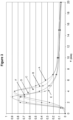
- Table 2 Formulations 85.3% Glucose + 0.8% Xylose + 13.9% (NH 4 ) 2 SO 4 46.6% Glucose + 38.4% Xylose + 15.0% (NH 4 ) 2 SO 4 83.7% Xylose + 16.3% (NH 4 ) 2 SO 4 Glucose (g) 16.20 8.20 - Xylose (g) 0.15 6.75 13.51 (NH 4 ) 2 SO 4 (g) 2.64 2.64 2.64
- the resulting cure rates can be taken from Figure 2 , from which it is apparent that small (catalytic) amounts of a pentose are not sufficient to significantly accelerate the cure rate.
- Example 3 Cure rates of glucose-xylose containing binder compositions using (NH 4 ) 2 SO 4
Landscapes
- Chemical & Material Sciences (AREA)
- Organic Chemistry (AREA)
- Engineering & Computer Science (AREA)
- Chemical Kinetics & Catalysis (AREA)
- Life Sciences & Earth Sciences (AREA)
- Materials Engineering (AREA)
- Polymers & Plastics (AREA)
- Health & Medical Sciences (AREA)
- Medicinal Chemistry (AREA)
- Biochemistry (AREA)
- Wood Science & Technology (AREA)
- Mechanical Engineering (AREA)
- General Chemical & Material Sciences (AREA)
- General Life Sciences & Earth Sciences (AREA)
- Geochemistry & Mineralogy (AREA)
- Compositions Of Macromolecular Compounds (AREA)
- Adhesives Or Adhesive Processes (AREA)
- Processing Of Solid Wastes (AREA)
- Dry Formation Of Fiberboard And The Like (AREA)
- Paper (AREA)
Applications Claiming Priority (3)
| Application Number | Priority Date | Filing Date | Title |
|---|---|---|---|
| GBGB1115172.7A GB201115172D0 (en) | 2011-09-02 | 2011-09-02 | Carbohydrate based binder system and method of its production |
| EP12755843.5A EP2817374B1 (en) | 2011-09-02 | 2012-09-02 | Carbohydrate based binder system and method of its production |
| PCT/EP2012/067044 WO2013030390A1 (en) | 2011-09-02 | 2012-09-02 | Carbohydrate based binder system and method of its production |
Related Parent Applications (1)
| Application Number | Title | Priority Date | Filing Date |
|---|---|---|---|
| EP12755843.5A Division EP2817374B1 (en) | 2011-09-02 | 2012-09-02 | Carbohydrate based binder system and method of its production |
Publications (2)
| Publication Number | Publication Date |
|---|---|
| EP3252105A1 EP3252105A1 (en) | 2017-12-06 |
| EP3252105B1 true EP3252105B1 (en) | 2023-08-02 |
Family
ID=44882112
Family Applications (2)
| Application Number | Title | Priority Date | Filing Date |
|---|---|---|---|
| EP17177056.3A Active EP3252105B1 (en) | 2011-09-02 | 2012-09-02 | Carbohydrate based binder system and method of its production |
| EP12755843.5A Revoked EP2817374B1 (en) | 2011-09-02 | 2012-09-02 | Carbohydrate based binder system and method of its production |
Family Applications After (1)
| Application Number | Title | Priority Date | Filing Date |
|---|---|---|---|
| EP12755843.5A Revoked EP2817374B1 (en) | 2011-09-02 | 2012-09-02 | Carbohydrate based binder system and method of its production |
Country Status (18)
| Country | Link |
|---|---|
| US (2) | US20150010949A1 (enExample) |
| EP (2) | EP3252105B1 (enExample) |
| JP (2) | JP6340316B2 (enExample) |
| KR (2) | KR101995606B1 (enExample) |
| CN (2) | CN103917602A (enExample) |
| AU (1) | AU2012300777B2 (enExample) |
| BR (1) | BR112014005018B1 (enExample) |
| CA (1) | CA2846757C (enExample) |
| DK (1) | DK2817374T3 (enExample) |
| ES (2) | ES2638895T3 (enExample) |
| GB (1) | GB201115172D0 (enExample) |
| MX (1) | MX351615B (enExample) |
| MY (1) | MY163341A (enExample) |
| PH (1) | PH12014500473A1 (enExample) |
| PL (2) | PL2817374T3 (enExample) |
| RU (1) | RU2615431C2 (enExample) |
| UA (1) | UA113742C2 (enExample) |
| WO (1) | WO2013030390A1 (enExample) |
Families Citing this family (19)
| Publication number | Priority date | Publication date | Assignee | Title |
|---|---|---|---|---|
| GB201206193D0 (en) * | 2012-04-05 | 2012-05-23 | Knauf Insulation Ltd | Binders and associated products |
| PL3102587T3 (pl) | 2014-02-07 | 2019-01-31 | Knauf Insulation, Inc. | Nieutwardzone wyroby o ulepszonym okresie trwałości |
| GB201408909D0 (en) * | 2014-05-20 | 2014-07-02 | Knauf Insulation Ltd | Binders |
| KR101871542B1 (ko) * | 2014-06-10 | 2018-06-27 | 주식회사 케이씨씨 | 공정수의 재활용이 가능한 수성 접착제 조성물 및 이를 사용하여 섬유상 재료를 결속하는 방법 |
| HUE031364T2 (en) * | 2014-08-25 | 2017-07-28 | Rockwool Int | Bio binder |
| US9868857B2 (en) * | 2014-12-30 | 2018-01-16 | Georgia-Pacific Chemicals Llc | Composite products containing a powdered binder and methods for making and using same |
| GB201609616D0 (en) | 2016-06-02 | 2016-07-20 | Knauf Insulation Ltd | Method of manufacturing composite products |
| GB201610063D0 (en) | 2016-06-09 | 2016-07-27 | Knauf Insulation Ltd | Binders |
| GB201701569D0 (en) | 2017-01-31 | 2017-03-15 | Knauf Insulation Ltd | Improved binder compositions and uses thereof |
| CN110366588B (zh) * | 2017-02-24 | 2021-08-24 | 松下知识产权经营株式会社 | 用于热压成型的粘合剂、木质板及其制造方法 |
| EP3836802A1 (en) | 2018-08-15 | 2021-06-23 | Cambridge Glycoscience Ltd | Novel compositions, their use, and methods for their formation |
| CN109517580B (zh) * | 2018-11-10 | 2021-01-08 | 宁波工程学院 | 一种竹液-胶原多肽复合胶黏剂的制备方法 |
| JP6821724B2 (ja) * | 2019-02-22 | 2021-01-27 | 株式会社事業革新パートナーズ | 樹脂組成物及びその樹脂組成物を使用した成形方法 |
| JP7672391B2 (ja) | 2019-08-16 | 2025-05-07 | ケンブリッジ グリコサイエンス エルティーディー | バイオマスを処理してオリゴ糖および関連組成物を生成する方法 |
| EP4072318A2 (en) | 2019-12-12 | 2022-10-19 | Cambridge Glycoscience Ltd | Low sugar multiphase foodstuffs |
| JP7279090B2 (ja) * | 2021-01-06 | 2023-05-22 | 株式会社事業革新パートナーズ | 容器又は平板の成形物及びその樹脂ペレットの製造方法 |
| IT202100023066A1 (it) | 2021-09-07 | 2023-03-07 | Stm Tech S R L | Nuova composizione legante per molteplici applicazioni |
| IT202100023075A1 (it) | 2021-09-07 | 2023-03-07 | Stm Tech S R L | Nuova composizione legante per molteplici applicazioni |
| US20250303608A1 (en) * | 2022-05-10 | 2025-10-02 | Unilin, Bv | Glue for boards |
Family Cites Families (27)
| Publication number | Priority date | Publication date | Assignee | Title |
|---|---|---|---|---|
| US1801053A (en) | 1925-01-22 | 1931-04-14 | Meigsoid Corp | Carbohydrate product and process of making same |
| NL240145A (enExample) | 1958-06-12 | |||
| DE1905054A1 (de) * | 1968-02-05 | 1969-08-21 | Dierks Forests Inc | Mischung zur Herstellung eines Bindemittels und Verfahren zu ihrer Verwendung |
| US3784408A (en) * | 1970-09-16 | 1974-01-08 | Hoffmann La Roche | Process for producing xylose |
| US4217414A (en) * | 1976-11-01 | 1980-08-12 | Cpc International Inc. | Process for separating and recovering vital wheat gluten from wheat flour and the like |
| US4524164A (en) * | 1983-12-02 | 1985-06-18 | Chemical Process Corporation | Thermosetting adhesive resins |
| EP0492016B1 (en) | 1990-12-28 | 2002-09-18 | K.C. Shen Technology International Ltd. | Thermosetting resin material and composite products from lignocellulose |
| NL1004379C2 (nl) * | 1996-10-29 | 1998-05-08 | Borculo Cooep Weiprod | Toepassing van suikeraminen en suikeramiden als lijm, alsmede nieuwe suikeraminen en suikeramiden. |
| FI101690B1 (fi) | 1997-01-14 | 1998-08-14 | Neste Oy | Kuitulevyjen valmistusmenetelmä |
| WO1998037147A2 (en) | 1997-02-20 | 1998-08-27 | Kronospan Gmbh | Adhesive composition and its use |
| FR2863620B1 (fr) * | 2003-12-16 | 2007-05-25 | Roquette Freres | Utilisation d'au moins un cetose de 3 a 5 atomes de carbone comme substitut d'agents reticulants de proteines |
| US7842382B2 (en) | 2004-03-11 | 2010-11-30 | Knauf Insulation Gmbh | Binder compositions and associated methods |
| JP4527435B2 (ja) | 2004-04-19 | 2010-08-18 | 関西ペイント株式会社 | 硬化型組成物及び該組成物を用いた塗装方法 |
| KR101410624B1 (ko) | 2005-07-26 | 2014-06-20 | 크나우프 인설레이션 게엠베하 | 접착제 및 이들로 만들어진 물질 |
| AU2006286158A1 (en) * | 2005-09-02 | 2007-03-08 | Colbar Lifescience Ltd. | Cross-linked polysaccharide and protein matrices and methods for their preparation |
| GB0715100D0 (en) | 2007-08-03 | 2007-09-12 | Knauf Insulation Ltd | Binders |
| PL2223941T3 (pl) * | 2009-02-27 | 2019-04-30 | Rohm & Haas | Szybkoutwardzalna kompozycja węglowodanowa |
| EP2223940B1 (en) * | 2009-02-27 | 2019-06-05 | Rohm and Haas Company | Polymer modified carbohydrate curable binder composition |
| EP2230222A1 (en) | 2009-03-19 | 2010-09-22 | Rockwool International A/S | Aqueous binder composition for mineral fibres |
| BRPI1013829A2 (pt) | 2009-04-20 | 2019-09-24 | Qteros Inc | composições e métodos para fermentação de biomassa |
| US8372900B2 (en) * | 2009-08-19 | 2013-02-12 | Johns Manville | Cellulosic composite with binder comprising salt of inorganic acid |
| US8708162B2 (en) | 2009-08-19 | 2014-04-29 | Johns Manville | Polymeric fiber webs with binder comprising salt of inorganic acid |
| US8193107B2 (en) | 2009-08-20 | 2012-06-05 | Georgia-Pacific Chemicals Llc | Modified binders for making fiberglass products |
| JP5616277B2 (ja) * | 2010-04-22 | 2014-10-29 | ローム アンド ハース カンパニーRohm And Haas Company | 5−炭素還元糖からの耐久性熱硬化性バインダー組成物および木材バインダーとしての使用 |
| US20130059075A1 (en) * | 2010-05-07 | 2013-03-07 | Knauf Insulation | Carbohydrate polyamine binders and materials made therewith |
| JP5977015B2 (ja) | 2010-11-30 | 2016-08-24 | ローム アンド ハース カンパニーRohm And Haas Company | 還元糖およびアミンの安定な反応性熱硬化性配合物 |
| EP2549006A1 (en) | 2011-07-22 | 2013-01-23 | Rockwool International A/S | Urea-modified binder for mineral fibres |
-
2011
- 2011-09-02 GB GBGB1115172.7A patent/GB201115172D0/en not_active Ceased
-
2012
- 2012-09-02 KR KR1020147008114A patent/KR101995606B1/ko active Active
- 2012-09-02 ES ES12755843.5T patent/ES2638895T3/es active Active
- 2012-09-02 CN CN201280050591.2A patent/CN103917602A/zh active Pending
- 2012-09-02 DK DK12755843.5T patent/DK2817374T3/en active
- 2012-09-02 CN CN201811186180.1A patent/CN109370514A/zh active Pending
- 2012-09-02 CA CA2846757A patent/CA2846757C/en active Active
- 2012-09-02 PL PL12755843T patent/PL2817374T3/pl unknown
- 2012-09-02 ES ES17177056T patent/ES2959602T3/es active Active
- 2012-09-02 UA UAA201402442A patent/UA113742C2/uk unknown
- 2012-09-02 WO PCT/EP2012/067044 patent/WO2013030390A1/en not_active Ceased
- 2012-09-02 PH PH1/2014/500473A patent/PH12014500473A1/en unknown
- 2012-09-02 EP EP17177056.3A patent/EP3252105B1/en active Active
- 2012-09-02 KR KR1020197018293A patent/KR102100602B1/ko active Active
- 2012-09-02 JP JP2014527688A patent/JP6340316B2/ja active Active
- 2012-09-02 EP EP12755843.5A patent/EP2817374B1/en not_active Revoked
- 2012-09-02 MX MX2014002382A patent/MX351615B/es active IP Right Grant
- 2012-09-02 PL PL17177056.3T patent/PL3252105T3/pl unknown
- 2012-09-02 RU RU2014112507A patent/RU2615431C2/ru active
- 2012-09-02 MY MYPI2014000575A patent/MY163341A/en unknown
- 2012-09-02 US US14/342,069 patent/US20150010949A1/en not_active Abandoned
- 2012-09-02 AU AU2012300777A patent/AU2012300777B2/en active Active
- 2012-09-02 BR BR112014005018-0A patent/BR112014005018B1/pt active IP Right Grant
-
2017
- 2017-01-19 JP JP2017007620A patent/JP2017066424A/ja not_active Withdrawn
-
2020
- 2020-01-19 US US16/746,892 patent/US20200148925A1/en not_active Abandoned
Also Published As
Similar Documents
| Publication | Publication Date | Title |
|---|---|---|
| EP3252105B1 (en) | Carbohydrate based binder system and method of its production | |
| US11725124B2 (en) | Binders and associated products | |
| JP2014525488A5 (enExample) | ||
| EP2928935B1 (en) | Binders | |
| US10927246B2 (en) | Benzoic sulfimide binders and insulation articles comprising the same | |
| EP3728444B1 (en) | Binders and associated products |
Legal Events
| Date | Code | Title | Description |
|---|---|---|---|
| PUAI | Public reference made under article 153(3) epc to a published international application that has entered the european phase |
Free format text: ORIGINAL CODE: 0009012 |
|
| STAA | Information on the status of an ep patent application or granted ep patent |
Free format text: STATUS: THE APPLICATION HAS BEEN PUBLISHED |
|
| AC | Divisional application: reference to earlier application |
Ref document number: 2817374 Country of ref document: EP Kind code of ref document: P |
|
| AK | Designated contracting states |
Kind code of ref document: A1 Designated state(s): AL AT BE BG CH CY CZ DE DK EE ES FI FR GB GR HR HU IE IS IT LI LT LU LV MC MK MT NL NO PL PT RO RS SE SI SK SM TR |
|
| STAA | Information on the status of an ep patent application or granted ep patent |
Free format text: STATUS: REQUEST FOR EXAMINATION WAS MADE |
|
| 17P | Request for examination filed |
Effective date: 20180606 |
|
| RBV | Designated contracting states (corrected) |
Designated state(s): AL AT BE BG CH CY CZ DE DK EE ES FI FR GB GR HR HU IE IS IT LI LT LU LV MC MK MT NL NO PL PT RO RS SE SI SK SM TR |
|
| STAA | Information on the status of an ep patent application or granted ep patent |
Free format text: STATUS: EXAMINATION IS IN PROGRESS |
|
| 17Q | First examination report despatched |
Effective date: 20191129 |
|
| GRAP | Despatch of communication of intention to grant a patent |
Free format text: ORIGINAL CODE: EPIDOSNIGR1 |
|
| STAA | Information on the status of an ep patent application or granted ep patent |
Free format text: STATUS: GRANT OF PATENT IS INTENDED |
|
| INTG | Intention to grant announced |
Effective date: 20210714 |
|
| GRAJ | Information related to disapproval of communication of intention to grant by the applicant or resumption of examination proceedings by the epo deleted |
Free format text: ORIGINAL CODE: EPIDOSDIGR1 |
|
| STAA | Information on the status of an ep patent application or granted ep patent |
Free format text: STATUS: EXAMINATION IS IN PROGRESS |
|
| INTC | Intention to grant announced (deleted) | ||
| GRAP | Despatch of communication of intention to grant a patent |
Free format text: ORIGINAL CODE: EPIDOSNIGR1 |
|
| STAA | Information on the status of an ep patent application or granted ep patent |
Free format text: STATUS: GRANT OF PATENT IS INTENDED |
|
| INTG | Intention to grant announced |
Effective date: 20211223 |
|
| GRAS | Grant fee paid |
Free format text: ORIGINAL CODE: EPIDOSNIGR3 |
|
| GRAJ | Information related to disapproval of communication of intention to grant by the applicant or resumption of examination proceedings by the epo deleted |
Free format text: ORIGINAL CODE: EPIDOSDIGR1 |
|
| GRAL | Information related to payment of fee for publishing/printing deleted |
Free format text: ORIGINAL CODE: EPIDOSDIGR3 |
|
| STAA | Information on the status of an ep patent application or granted ep patent |
Free format text: STATUS: EXAMINATION IS IN PROGRESS |
|
| INTC | Intention to grant announced (deleted) | ||
| GRAP | Despatch of communication of intention to grant a patent |
Free format text: ORIGINAL CODE: EPIDOSNIGR1 |
|
| STAA | Information on the status of an ep patent application or granted ep patent |
Free format text: STATUS: GRANT OF PATENT IS INTENDED |
|
| INTG | Intention to grant announced |
Effective date: 20221027 |
|
| P01 | Opt-out of the competence of the unified patent court (upc) registered |
Effective date: 20230427 |
|
| GRAA | (expected) grant |
Free format text: ORIGINAL CODE: 0009210 |
|
| STAA | Information on the status of an ep patent application or granted ep patent |
Free format text: STATUS: THE PATENT HAS BEEN GRANTED |
|
| AC | Divisional application: reference to earlier application |
Ref document number: 2817374 Country of ref document: EP Kind code of ref document: P |
|
| AK | Designated contracting states |
Kind code of ref document: B1 Designated state(s): AL AT BE BG CH CY CZ DE DK EE ES FI FR GB GR HR HU IE IS IT LI LT LU LV MC MK MT NL NO PL PT RO RS SE SI SK SM TR |
|
| REG | Reference to a national code |
Ref country code: GB Ref legal event code: FG4D |
|
| REG | Reference to a national code |
Ref country code: CH Ref legal event code: EP |
|
| REG | Reference to a national code |
Ref country code: DE Ref legal event code: R096 Ref document number: 602012079930 Country of ref document: DE |
|
| REG | Reference to a national code |
Ref country code: IE Ref legal event code: FG4D |
|
| REG | Reference to a national code |
Ref country code: LT Ref legal event code: MG9D |
|
| REG | Reference to a national code |
Ref country code: NL Ref legal event code: MP Effective date: 20230802 |
|
| PG25 | Lapsed in a contracting state [announced via postgrant information from national office to epo] |
Ref country code: GR Free format text: LAPSE BECAUSE OF FAILURE TO SUBMIT A TRANSLATION OF THE DESCRIPTION OR TO PAY THE FEE WITHIN THE PRESCRIBED TIME-LIMIT Effective date: 20231103 |
|
| PG25 | Lapsed in a contracting state [announced via postgrant information from national office to epo] |
Ref country code: IS Free format text: LAPSE BECAUSE OF FAILURE TO SUBMIT A TRANSLATION OF THE DESCRIPTION OR TO PAY THE FEE WITHIN THE PRESCRIBED TIME-LIMIT Effective date: 20231202 |
|
| PG25 | Lapsed in a contracting state [announced via postgrant information from national office to epo] |
Ref country code: SE Free format text: LAPSE BECAUSE OF FAILURE TO SUBMIT A TRANSLATION OF THE DESCRIPTION OR TO PAY THE FEE WITHIN THE PRESCRIBED TIME-LIMIT Effective date: 20230802 Ref country code: RS Free format text: LAPSE BECAUSE OF FAILURE TO SUBMIT A TRANSLATION OF THE DESCRIPTION OR TO PAY THE FEE WITHIN THE PRESCRIBED TIME-LIMIT Effective date: 20230802 Ref country code: PT Free format text: LAPSE BECAUSE OF FAILURE TO SUBMIT A TRANSLATION OF THE DESCRIPTION OR TO PAY THE FEE WITHIN THE PRESCRIBED TIME-LIMIT Effective date: 20231204 Ref country code: NO Free format text: LAPSE BECAUSE OF FAILURE TO SUBMIT A TRANSLATION OF THE DESCRIPTION OR TO PAY THE FEE WITHIN THE PRESCRIBED TIME-LIMIT Effective date: 20231102 Ref country code: NL Free format text: LAPSE BECAUSE OF FAILURE TO SUBMIT A TRANSLATION OF THE DESCRIPTION OR TO PAY THE FEE WITHIN THE PRESCRIBED TIME-LIMIT Effective date: 20230802 Ref country code: LV Free format text: LAPSE BECAUSE OF FAILURE TO SUBMIT A TRANSLATION OF THE DESCRIPTION OR TO PAY THE FEE WITHIN THE PRESCRIBED TIME-LIMIT Effective date: 20230802 Ref country code: LT Free format text: LAPSE BECAUSE OF FAILURE TO SUBMIT A TRANSLATION OF THE DESCRIPTION OR TO PAY THE FEE WITHIN THE PRESCRIBED TIME-LIMIT Effective date: 20230802 Ref country code: IS Free format text: LAPSE BECAUSE OF FAILURE TO SUBMIT A TRANSLATION OF THE DESCRIPTION OR TO PAY THE FEE WITHIN THE PRESCRIBED TIME-LIMIT Effective date: 20231202 Ref country code: HR Free format text: LAPSE BECAUSE OF FAILURE TO SUBMIT A TRANSLATION OF THE DESCRIPTION OR TO PAY THE FEE WITHIN THE PRESCRIBED TIME-LIMIT Effective date: 20230802 Ref country code: GR Free format text: LAPSE BECAUSE OF FAILURE TO SUBMIT A TRANSLATION OF THE DESCRIPTION OR TO PAY THE FEE WITHIN THE PRESCRIBED TIME-LIMIT Effective date: 20231103 Ref country code: FI Free format text: LAPSE BECAUSE OF FAILURE TO SUBMIT A TRANSLATION OF THE DESCRIPTION OR TO PAY THE FEE WITHIN THE PRESCRIBED TIME-LIMIT Effective date: 20230802 |
|
| REG | Reference to a national code |
Ref country code: ES Ref legal event code: FG2A Ref document number: 2959602 Country of ref document: ES Kind code of ref document: T3 Effective date: 20240227 |
|
| PG25 | Lapsed in a contracting state [announced via postgrant information from national office to epo] |
Ref country code: SM Free format text: LAPSE BECAUSE OF FAILURE TO SUBMIT A TRANSLATION OF THE DESCRIPTION OR TO PAY THE FEE WITHIN THE PRESCRIBED TIME-LIMIT Effective date: 20230802 Ref country code: RO Free format text: LAPSE BECAUSE OF FAILURE TO SUBMIT A TRANSLATION OF THE DESCRIPTION OR TO PAY THE FEE WITHIN THE PRESCRIBED TIME-LIMIT Effective date: 20230802 Ref country code: EE Free format text: LAPSE BECAUSE OF FAILURE TO SUBMIT A TRANSLATION OF THE DESCRIPTION OR TO PAY THE FEE WITHIN THE PRESCRIBED TIME-LIMIT Effective date: 20230802 Ref country code: DK Free format text: LAPSE BECAUSE OF FAILURE TO SUBMIT A TRANSLATION OF THE DESCRIPTION OR TO PAY THE FEE WITHIN THE PRESCRIBED TIME-LIMIT Effective date: 20230802 Ref country code: CZ Free format text: LAPSE BECAUSE OF FAILURE TO SUBMIT A TRANSLATION OF THE DESCRIPTION OR TO PAY THE FEE WITHIN THE PRESCRIBED TIME-LIMIT Effective date: 20230802 Ref country code: SK Free format text: LAPSE BECAUSE OF FAILURE TO SUBMIT A TRANSLATION OF THE DESCRIPTION OR TO PAY THE FEE WITHIN THE PRESCRIBED TIME-LIMIT Effective date: 20230802 |
|
| REG | Reference to a national code |
Ref country code: CH Ref legal event code: PL |
|
| REG | Reference to a national code |
Ref country code: DE Ref legal event code: R097 Ref document number: 602012079930 Country of ref document: DE |
|
| PG25 | Lapsed in a contracting state [announced via postgrant information from national office to epo] |
Ref country code: LU Free format text: LAPSE BECAUSE OF NON-PAYMENT OF DUE FEES Effective date: 20230902 |
|
| PG25 | Lapsed in a contracting state [announced via postgrant information from national office to epo] |
Ref country code: LU Free format text: LAPSE BECAUSE OF NON-PAYMENT OF DUE FEES Effective date: 20230902 Ref country code: MC Free format text: LAPSE BECAUSE OF FAILURE TO SUBMIT A TRANSLATION OF THE DESCRIPTION OR TO PAY THE FEE WITHIN THE PRESCRIBED TIME-LIMIT Effective date: 20230802 |
|
| PLBE | No opposition filed within time limit |
Free format text: ORIGINAL CODE: 0009261 |
|
| STAA | Information on the status of an ep patent application or granted ep patent |
Free format text: STATUS: NO OPPOSITION FILED WITHIN TIME LIMIT |
|
| REG | Reference to a national code |
Ref country code: IE Ref legal event code: MM4A |
|
| PG25 | Lapsed in a contracting state [announced via postgrant information from national office to epo] |
Ref country code: IE Free format text: LAPSE BECAUSE OF NON-PAYMENT OF DUE FEES Effective date: 20230902 |
|
| 26N | No opposition filed |
Effective date: 20240503 |
|
| PG25 | Lapsed in a contracting state [announced via postgrant information from national office to epo] |
Ref country code: CH Free format text: LAPSE BECAUSE OF NON-PAYMENT OF DUE FEES Effective date: 20230930 |
|
| PG25 | Lapsed in a contracting state [announced via postgrant information from national office to epo] |
Ref country code: IE Free format text: LAPSE BECAUSE OF NON-PAYMENT OF DUE FEES Effective date: 20230902 Ref country code: CH Free format text: LAPSE BECAUSE OF NON-PAYMENT OF DUE FEES Effective date: 20230930 Ref country code: SI Free format text: LAPSE BECAUSE OF FAILURE TO SUBMIT A TRANSLATION OF THE DESCRIPTION OR TO PAY THE FEE WITHIN THE PRESCRIBED TIME-LIMIT Effective date: 20230802 |
|
| PG25 | Lapsed in a contracting state [announced via postgrant information from national office to epo] |
Ref country code: BG Free format text: LAPSE BECAUSE OF FAILURE TO SUBMIT A TRANSLATION OF THE DESCRIPTION OR TO PAY THE FEE WITHIN THE PRESCRIBED TIME-LIMIT Effective date: 20230802 |
|
| REG | Reference to a national code |
Ref country code: AT Ref legal event code: UEP Ref document number: 1594730 Country of ref document: AT Kind code of ref document: T Effective date: 20230802 |
|
| PG25 | Lapsed in a contracting state [announced via postgrant information from national office to epo] |
Ref country code: BG Free format text: LAPSE BECAUSE OF FAILURE TO SUBMIT A TRANSLATION OF THE DESCRIPTION OR TO PAY THE FEE WITHIN THE PRESCRIBED TIME-LIMIT Effective date: 20230802 |
|
| PG25 | Lapsed in a contracting state [announced via postgrant information from national office to epo] |
Ref country code: CY Free format text: LAPSE BECAUSE OF FAILURE TO SUBMIT A TRANSLATION OF THE DESCRIPTION OR TO PAY THE FEE WITHIN THE PRESCRIBED TIME-LIMIT; INVALID AB INITIO Effective date: 20120902 |
|
| PG25 | Lapsed in a contracting state [announced via postgrant information from national office to epo] |
Ref country code: HU Free format text: LAPSE BECAUSE OF FAILURE TO SUBMIT A TRANSLATION OF THE DESCRIPTION OR TO PAY THE FEE WITHIN THE PRESCRIBED TIME-LIMIT; INVALID AB INITIO Effective date: 20120902 |
|
| PGFP | Annual fee paid to national office [announced via postgrant information from national office to epo] |
Ref country code: DE Payment date: 20250929 Year of fee payment: 14 |
|
| PGFP | Annual fee paid to national office [announced via postgrant information from national office to epo] |
Ref country code: PL Payment date: 20250821 Year of fee payment: 14 Ref country code: TR Payment date: 20250822 Year of fee payment: 14 Ref country code: IT Payment date: 20250919 Year of fee payment: 14 |
|
| PGFP | Annual fee paid to national office [announced via postgrant information from national office to epo] |
Ref country code: BE Payment date: 20250929 Year of fee payment: 14 Ref country code: GB Payment date: 20250929 Year of fee payment: 14 |
|
| PGFP | Annual fee paid to national office [announced via postgrant information from national office to epo] |
Ref country code: FR Payment date: 20250925 Year of fee payment: 14 Ref country code: AT Payment date: 20250929 Year of fee payment: 14 |
|
| PGFP | Annual fee paid to national office [announced via postgrant information from national office to epo] |
Ref country code: ES Payment date: 20251001 Year of fee payment: 14 |