EP3247707B1 - 4-methylsulfonyl-substituted piperidine urea compounds useful for the treatment of cardiac disorders such as dilated cardiomyopathy (dcm) - Google Patents
4-methylsulfonyl-substituted piperidine urea compounds useful for the treatment of cardiac disorders such as dilated cardiomyopathy (dcm) Download PDFInfo
- Publication number
- EP3247707B1 EP3247707B1 EP16702652.5A EP16702652A EP3247707B1 EP 3247707 B1 EP3247707 B1 EP 3247707B1 EP 16702652 A EP16702652 A EP 16702652A EP 3247707 B1 EP3247707 B1 EP 3247707B1
- Authority
- EP
- European Patent Office
- Prior art keywords
- compound
- piperidine
- sulfonyl
- ppm
- nmr
- Prior art date
- Legal status (The legal status is an assumption and is not a legal conclusion. Google has not performed a legal analysis and makes no representation as to the accuracy of the status listed.)
- Active
Links
Images
Classifications
-
- C—CHEMISTRY; METALLURGY
- C07—ORGANIC CHEMISTRY
- C07D—HETEROCYCLIC COMPOUNDS
- C07D413/00—Heterocyclic compounds containing two or more hetero rings, at least one ring having nitrogen and oxygen atoms as the only ring hetero atoms
- C07D413/14—Heterocyclic compounds containing two or more hetero rings, at least one ring having nitrogen and oxygen atoms as the only ring hetero atoms containing three or more hetero rings
-
- A—HUMAN NECESSITIES
- A61—MEDICAL OR VETERINARY SCIENCE; HYGIENE
- A61K—PREPARATIONS FOR MEDICAL, DENTAL OR TOILETRY PURPOSES
- A61K31/00—Medicinal preparations containing organic active ingredients
- A61K31/33—Heterocyclic compounds
- A61K31/395—Heterocyclic compounds having nitrogen as a ring hetero atom, e.g. guanethidine or rifamycins
- A61K31/435—Heterocyclic compounds having nitrogen as a ring hetero atom, e.g. guanethidine or rifamycins having six-membered rings with one nitrogen as the only ring hetero atom
- A61K31/44—Non condensed pyridines; Hydrogenated derivatives thereof
- A61K31/445—Non condensed piperidines, e.g. piperocaine
- A61K31/4523—Non condensed piperidines, e.g. piperocaine containing further heterocyclic ring systems
- A61K31/4545—Non condensed piperidines, e.g. piperocaine containing further heterocyclic ring systems containing a six-membered ring with nitrogen as a ring hetero atom, e.g. pipamperone, anabasine
-
- A—HUMAN NECESSITIES
- A61—MEDICAL OR VETERINARY SCIENCE; HYGIENE
- A61K—PREPARATIONS FOR MEDICAL, DENTAL OR TOILETRY PURPOSES
- A61K31/00—Medicinal preparations containing organic active ingredients
- A61K31/33—Heterocyclic compounds
- A61K31/395—Heterocyclic compounds having nitrogen as a ring hetero atom, e.g. guanethidine or rifamycins
- A61K31/435—Heterocyclic compounds having nitrogen as a ring hetero atom, e.g. guanethidine or rifamycins having six-membered rings with one nitrogen as the only ring hetero atom
- A61K31/44—Non condensed pyridines; Hydrogenated derivatives thereof
- A61K31/445—Non condensed piperidines, e.g. piperocaine
- A61K31/4523—Non condensed piperidines, e.g. piperocaine containing further heterocyclic ring systems
- A61K31/454—Non condensed piperidines, e.g. piperocaine containing further heterocyclic ring systems containing a five-membered ring with nitrogen as a ring hetero atom, e.g. pimozide, domperidone
-
- A—HUMAN NECESSITIES
- A61—MEDICAL OR VETERINARY SCIENCE; HYGIENE
- A61K—PREPARATIONS FOR MEDICAL, DENTAL OR TOILETRY PURPOSES
- A61K31/00—Medicinal preparations containing organic active ingredients
- A61K31/33—Heterocyclic compounds
- A61K31/395—Heterocyclic compounds having nitrogen as a ring hetero atom, e.g. guanethidine or rifamycins
- A61K31/495—Heterocyclic compounds having nitrogen as a ring hetero atom, e.g. guanethidine or rifamycins having six-membered rings with two or more nitrogen atoms as the only ring heteroatoms, e.g. piperazine or tetrazines
- A61K31/496—Non-condensed piperazines containing further heterocyclic rings, e.g. rifampin, thiothixene or sparfloxacin
-
- A—HUMAN NECESSITIES
- A61—MEDICAL OR VETERINARY SCIENCE; HYGIENE
- A61K—PREPARATIONS FOR MEDICAL, DENTAL OR TOILETRY PURPOSES
- A61K31/00—Medicinal preparations containing organic active ingredients
- A61K31/33—Heterocyclic compounds
- A61K31/395—Heterocyclic compounds having nitrogen as a ring hetero atom, e.g. guanethidine or rifamycins
- A61K31/495—Heterocyclic compounds having nitrogen as a ring hetero atom, e.g. guanethidine or rifamycins having six-membered rings with two or more nitrogen atoms as the only ring heteroatoms, e.g. piperazine or tetrazines
- A61K31/50—Pyridazines; Hydrogenated pyridazines
- A61K31/501—Pyridazines; Hydrogenated pyridazines not condensed and containing further heterocyclic rings
-
- A—HUMAN NECESSITIES
- A61—MEDICAL OR VETERINARY SCIENCE; HYGIENE
- A61K—PREPARATIONS FOR MEDICAL, DENTAL OR TOILETRY PURPOSES
- A61K31/00—Medicinal preparations containing organic active ingredients
- A61K31/33—Heterocyclic compounds
- A61K31/395—Heterocyclic compounds having nitrogen as a ring hetero atom, e.g. guanethidine or rifamycins
- A61K31/495—Heterocyclic compounds having nitrogen as a ring hetero atom, e.g. guanethidine or rifamycins having six-membered rings with two or more nitrogen atoms as the only ring heteroatoms, e.g. piperazine or tetrazines
- A61K31/505—Pyrimidines; Hydrogenated pyrimidines, e.g. trimethoprim
- A61K31/506—Pyrimidines; Hydrogenated pyrimidines, e.g. trimethoprim not condensed and containing further heterocyclic rings
-
- A—HUMAN NECESSITIES
- A61—MEDICAL OR VETERINARY SCIENCE; HYGIENE
- A61K—PREPARATIONS FOR MEDICAL, DENTAL OR TOILETRY PURPOSES
- A61K45/00—Medicinal preparations containing active ingredients not provided for in groups A61K31/00 - A61K41/00
- A61K45/06—Mixtures of active ingredients without chemical characterisation, e.g. antiphlogistics and cardiaca
-
- A—HUMAN NECESSITIES
- A61—MEDICAL OR VETERINARY SCIENCE; HYGIENE
- A61P—SPECIFIC THERAPEUTIC ACTIVITY OF CHEMICAL COMPOUNDS OR MEDICINAL PREPARATIONS
- A61P43/00—Drugs for specific purposes, not provided for in groups A61P1/00-A61P41/00
-
- A—HUMAN NECESSITIES
- A61—MEDICAL OR VETERINARY SCIENCE; HYGIENE
- A61P—SPECIFIC THERAPEUTIC ACTIVITY OF CHEMICAL COMPOUNDS OR MEDICINAL PREPARATIONS
- A61P9/00—Drugs for disorders of the cardiovascular system
-
- A—HUMAN NECESSITIES
- A61—MEDICAL OR VETERINARY SCIENCE; HYGIENE
- A61P—SPECIFIC THERAPEUTIC ACTIVITY OF CHEMICAL COMPOUNDS OR MEDICINAL PREPARATIONS
- A61P9/00—Drugs for disorders of the cardiovascular system
- A61P9/04—Inotropic agents, i.e. stimulants of cardiac contraction; Drugs for heart failure
-
- A—HUMAN NECESSITIES
- A61—MEDICAL OR VETERINARY SCIENCE; HYGIENE
- A61P—SPECIFIC THERAPEUTIC ACTIVITY OF CHEMICAL COMPOUNDS OR MEDICINAL PREPARATIONS
- A61P9/00—Drugs for disorders of the cardiovascular system
- A61P9/10—Drugs for disorders of the cardiovascular system for treating ischaemic or atherosclerotic diseases, e.g. antianginal drugs, coronary vasodilators, drugs for myocardial infarction, retinopathy, cerebrovascula insufficiency, renal arteriosclerosis
-
- C—CHEMISTRY; METALLURGY
- C07—ORGANIC CHEMISTRY
- C07D—HETEROCYCLIC COMPOUNDS
- C07D401/00—Heterocyclic compounds containing two or more hetero rings, having nitrogen atoms as the only ring hetero atoms, at least one ring being a six-membered ring with only one nitrogen atom
- C07D401/02—Heterocyclic compounds containing two or more hetero rings, having nitrogen atoms as the only ring hetero atoms, at least one ring being a six-membered ring with only one nitrogen atom containing two hetero rings
-
- C—CHEMISTRY; METALLURGY
- C07—ORGANIC CHEMISTRY
- C07D—HETEROCYCLIC COMPOUNDS
- C07D401/00—Heterocyclic compounds containing two or more hetero rings, having nitrogen atoms as the only ring hetero atoms, at least one ring being a six-membered ring with only one nitrogen atom
- C07D401/02—Heterocyclic compounds containing two or more hetero rings, having nitrogen atoms as the only ring hetero atoms, at least one ring being a six-membered ring with only one nitrogen atom containing two hetero rings
- C07D401/12—Heterocyclic compounds containing two or more hetero rings, having nitrogen atoms as the only ring hetero atoms, at least one ring being a six-membered ring with only one nitrogen atom containing two hetero rings linked by a chain containing hetero atoms as chain links
-
- C—CHEMISTRY; METALLURGY
- C07—ORGANIC CHEMISTRY
- C07D—HETEROCYCLIC COMPOUNDS
- C07D401/00—Heterocyclic compounds containing two or more hetero rings, having nitrogen atoms as the only ring hetero atoms, at least one ring being a six-membered ring with only one nitrogen atom
- C07D401/14—Heterocyclic compounds containing two or more hetero rings, having nitrogen atoms as the only ring hetero atoms, at least one ring being a six-membered ring with only one nitrogen atom containing three or more hetero rings
-
- C—CHEMISTRY; METALLURGY
- C07—ORGANIC CHEMISTRY
- C07D—HETEROCYCLIC COMPOUNDS
- C07D405/00—Heterocyclic compounds containing both one or more hetero rings having oxygen atoms as the only ring hetero atoms, and one or more rings having nitrogen as the only ring hetero atom
- C07D405/14—Heterocyclic compounds containing both one or more hetero rings having oxygen atoms as the only ring hetero atoms, and one or more rings having nitrogen as the only ring hetero atom containing three or more hetero rings
-
- C—CHEMISTRY; METALLURGY
- C07—ORGANIC CHEMISTRY
- C07D—HETEROCYCLIC COMPOUNDS
- C07D407/00—Heterocyclic compounds containing two or more hetero rings, at least one ring having oxygen atoms as the only ring hetero atoms, not provided for by group C07D405/00
- C07D407/02—Heterocyclic compounds containing two or more hetero rings, at least one ring having oxygen atoms as the only ring hetero atoms, not provided for by group C07D405/00 containing two hetero rings
-
- C—CHEMISTRY; METALLURGY
- C07—ORGANIC CHEMISTRY
- C07D—HETEROCYCLIC COMPOUNDS
- C07D407/00—Heterocyclic compounds containing two or more hetero rings, at least one ring having oxygen atoms as the only ring hetero atoms, not provided for by group C07D405/00
- C07D407/14—Heterocyclic compounds containing two or more hetero rings, at least one ring having oxygen atoms as the only ring hetero atoms, not provided for by group C07D405/00 containing three or more hetero rings
-
- C—CHEMISTRY; METALLURGY
- C07—ORGANIC CHEMISTRY
- C07D—HETEROCYCLIC COMPOUNDS
- C07D409/00—Heterocyclic compounds containing two or more hetero rings, at least one ring having sulfur atoms as the only ring hetero atoms
- C07D409/02—Heterocyclic compounds containing two or more hetero rings, at least one ring having sulfur atoms as the only ring hetero atoms containing two hetero rings
-
- C—CHEMISTRY; METALLURGY
- C07—ORGANIC CHEMISTRY
- C07D—HETEROCYCLIC COMPOUNDS
- C07D411/00—Heterocyclic compounds containing two or more hetero rings, at least one ring having oxygen and sulfur atoms as the only ring hetero atoms
- C07D411/14—Heterocyclic compounds containing two or more hetero rings, at least one ring having oxygen and sulfur atoms as the only ring hetero atoms containing three or more hetero rings
-
- C—CHEMISTRY; METALLURGY
- C07—ORGANIC CHEMISTRY
- C07D—HETEROCYCLIC COMPOUNDS
- C07D413/00—Heterocyclic compounds containing two or more hetero rings, at least one ring having nitrogen and oxygen atoms as the only ring hetero atoms
- C07D413/02—Heterocyclic compounds containing two or more hetero rings, at least one ring having nitrogen and oxygen atoms as the only ring hetero atoms containing two hetero rings
- C07D413/12—Heterocyclic compounds containing two or more hetero rings, at least one ring having nitrogen and oxygen atoms as the only ring hetero atoms containing two hetero rings linked by a chain containing hetero atoms as chain links
-
- C—CHEMISTRY; METALLURGY
- C07—ORGANIC CHEMISTRY
- C07D—HETEROCYCLIC COMPOUNDS
- C07D417/00—Heterocyclic compounds containing two or more hetero rings, at least one ring having nitrogen and sulfur atoms as the only ring hetero atoms, not provided for by group C07D415/00
- C07D417/02—Heterocyclic compounds containing two or more hetero rings, at least one ring having nitrogen and sulfur atoms as the only ring hetero atoms, not provided for by group C07D415/00 containing two hetero rings
- C07D417/12—Heterocyclic compounds containing two or more hetero rings, at least one ring having nitrogen and sulfur atoms as the only ring hetero atoms, not provided for by group C07D415/00 containing two hetero rings linked by a chain containing hetero atoms as chain links
-
- C—CHEMISTRY; METALLURGY
- C07—ORGANIC CHEMISTRY
- C07D—HETEROCYCLIC COMPOUNDS
- C07D417/00—Heterocyclic compounds containing two or more hetero rings, at least one ring having nitrogen and sulfur atoms as the only ring hetero atoms, not provided for by group C07D415/00
- C07D417/14—Heterocyclic compounds containing two or more hetero rings, at least one ring having nitrogen and sulfur atoms as the only ring hetero atoms, not provided for by group C07D415/00 containing three or more hetero rings
-
- C—CHEMISTRY; METALLURGY
- C07—ORGANIC CHEMISTRY
- C07D—HETEROCYCLIC COMPOUNDS
- C07D471/00—Heterocyclic compounds containing nitrogen atoms as the only ring hetero atoms in the condensed system, at least one ring being a six-membered ring with one nitrogen atom, not provided for by groups C07D451/00 - C07D463/00
- C07D471/02—Heterocyclic compounds containing nitrogen atoms as the only ring hetero atoms in the condensed system, at least one ring being a six-membered ring with one nitrogen atom, not provided for by groups C07D451/00 - C07D463/00 in which the condensed system contains two hetero rings
- C07D471/04—Ortho-condensed systems
Definitions
- DCM Dilated cardiomyopathy
- ischemic attributed due to coronary artery disease
- non-ischemic primary diseases of the myocardium
- DCM refers to non-ischemic primary diseases of the myocardium.
- DCM can be assigned a clinical diagnosis of "idiopathic" DCM if no identifiable cause (except genetic) can be found. Idiopathic DCM can be further subcategorized based upon whether a genetic cause can be identified.
- DCM Downere gene mutations that cause DCM are highly penetrant, but there is wide variability in clinical severity and clinical course. Some genotypes are associated with a more malignant course, but there is considerable variability between and even within families carrying the same mutation. While many patients with DCM report minimal or no symptoms for extended periods of time, DCM is a progressive disease with a significant cumulative burden of morbidity and mortality. The hallmark of DCM is a dilated left ventricle, more spherical in shape than usual, and with decreased systolic function. Patients usually present with symptoms of heart failure: dyspnea, orthopnea, exercise intolerance, fatigue, abdominal discomfort and poor appetite.
- Signs include sinus tachycardia, a gallop rhythm, murmur of mitral regurgitation, rales, jugular venous distension, hepatomegaly, peripheral edema and cool extremities can be found. As with many other disorders, symptoms tend to worsen with age. The patient journey is punctuated by hospitalizations for decompensated heart failure and an increased risk for sudden arrhythmic death and death from pump failure.
- Plasma biomarkers such as B-type natriuretic peptide (BNP) or its N-terminal pro-protein (NT-proBNP) can help with diagnosis and management of DCM, especially to distinguish heart failure from comorbid pulmonary disease.
- Coronary angiography can identify if heart failure is due to ischemic etiology.
- Endomyocardial biopsy can distinguish DCM from disease processes that might require alternative management strategy, such as myocarditis, storage disease, sarcoidosis or hemochromatosis.
- Beta-blocker, ACE inhibitor or ARB, mineralcorticoid receptor blocker, and loop diuretics continue to be standard treatment options for the treatment of heart failure symptoms and reduction of risk for cardiovascular death and heart failure hospitalization.
- Implantable cardioverter defibrillators (ICD) for patients with left ventricular ejection fraction of less than 30% can reduce sudden arrhythmic death.
- cardiac resynchronization therapy (CRT) has been shown to improve heart failure-free survival in select patients. Despite these interventions, morbidity and mortality for heart failure remain high, and hospitalization for heart failure remains the most common reason for hospitalization in the elderly.
- the present invention provides new therapeutic agents and methods that remedy the unmet need for improved treatment of DCM and related cardiac disorders.
- WO2009011850 has an abstract, which states "disclosed herein are novel compounds of Formula (I), wherein the variables are defined as herein.
- the compounds of Formula (I) are useful as kinase inhibitors and as such would be useful in treating certain conditions and diseases, especially inflammatory conditions and diseases as well as proliferative disorders such as cancer".
- EP2500345 has an abstract, which states "disclosed is a compound represented by formula (1) or a pharmacologically acceptable salt thereof.
- A represents a group that is represented by formula (A-1);
- R 1a and R 1b may be the same or different and each independently represents a C 1-6 alkyl group which may be substituted by one to three halogen atoms;
- m and n each independently represents an integer of 0-5;
- X 1 represents a hydroxyl group or an aminocarbonyl group;
- Z 1 represents a single bond or the like; and
- R 2 represents an optionally substituted C 1-6 alkyl group, an optionally substituted C 6-10 aryl group or the like.
- US2005250789 has an abstract, which states "the present invention provides compounds of Formula I or II: salt form or prodrug thereof, wherein variables are defined herein, that are modulators of metalloproteases such as matrix metalloproteases (MMPs) and ADAMs.
- MMPs matrix metalloproteases
- ADAMs ADAMs.
- the compounds or compositions described herein can be used to treat diseases associated with metalloprotease activity including, for example, arthritis, cancer, cardiovascular disorders, skin disorders, inflammation or allergic conditions.
- US2010113377 has an abstract, which states "methods for treating or preventing cardiomyopathy in a subject by administering an al adrenergic receptor agonist, wherein the treatment does not result in increased blood pressure are provided".
- Ar 1 is a 5- to 6-membered heteroaryl having at least one nitrogen atom ring member; and is optionally substituted with from 1-3 R a .
- Ar 2 is a 5- to 10-membered aryl or heteroaryl which is optionally substituted with from 1-5 R b .
- the symbols R 1 and R 2 are each independently a member selected from H, F, C 1 -C 4 alkyl, C 1 -C 4 deuteroalkyl, and C 1 -C 4 haloalkyl; or optionally R 1 and R 2 can be combined to form a C 3 - to C 5 carbocyclic ring which is optionally substituted with one or two F.
- the symbol R 3 represents a member selected from H, F, OH and C 1 -C 4 alkyl.
- each R a is independently selected from the group consisting of halo, CN, hydroxyl, C 1 -C 4 alkyl, C 1 -C 4 haloalkyl, C 1 -C 4 hydroxyalkyl, C 1 -C 4 alkoxy, C 1 -C 4 haloalkoxy, -COR a1 , -CO 2 R a1 , -SO 2 R a1 , -SO 2 NR a1 R a2 , and -CONR a1 R a2 , wherein each R a1 and R a2 is independently selected from the group consisting of H and C 1 -C 4 alkyl or optionally R a1 and R a2 when attached to a nitrogen atom are combined to form a 4- to 6- membered ring; or optionally, two R a substituents on adjacent ring members are combined to form a 5- or 6-membered ring having 0,
- the invention provides a pharmaceutical composition containing a compound or a pharmaceutically acceptable salt thereof as described herein and a pharmaceutically acceptable excipient, according to claim 15.
- the invention provides a compound or pharmaceutically acceptable salt thereof as described herein, for use for treating dilated cardiomyopathy, or a cardiac disorder having a pathophysiological feature of DCM, such as disorders with systolic dysfunction or a reduction in systolic reserve, or for use for treating a disease or disorder selected from the group consisting of systolic dysfunction, diastolic dysfunction, HFrEF, HFpEF, chronic heart failure and acute heart failure, according to claim 17.
- the method includes administering to a subject in need thereof an effective amount of a compound or pharmaceutically acceptable salt thereof as described herein.
- the invention provides a compound or a pharmaceutically acceptable salt thereof as described herein, for use for treating a disease or disorder characterized by left ventricular systolic dysfunction or symptoms or reduced exercise capacity due to systolic dysfunction; in conjunction with therapies aimed at treating heart failure, according to claim 18.
- the invention provides a compound or a pharmaceutically acceptable salt thereof as described herein, for use for treating treating dilated cardiomyopathy (DCM), or a cardiac disorder having a pathophysiological feature associated with DCM, in combination with therapies that retard the progression of heart failure by down-regulating neurohormonal stimulation of the heart and attempt to prevent cardiac remodeling (e.g., ACE inhibitors, angiotensin receptor blockers (ARBs), ⁇ -blockers, aldosterone receptor antagonists, or neural endopeptidase inhibitors); therapies that improve cardiac function by stimulating cardiac contractility (e.g., positive inotropic agents, such as the ⁇ -adrenergic agonist dobutamine or the phosphodiesterase inhibitor milrinone); and/or therapies that reduce cardiac preload (e.g., diuretics, such as furosemide) or afterload (vasodilators of any class, including but not limited to calcium channel blockers, phosphodiesterase inhibitors, endothelin receptor antagonists, renin
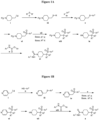
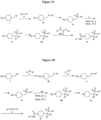
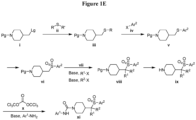
- Figures 1A, 1B , 1C, 1D and 1E shows schematic routes for the synthesis of the compounds or pharmaceutically acceptable salts described herein.
- a series of 4-methylsulfonyl-substituted piperidine ureas and pharmaceutically acceptable salts thereof has been found to increase contractility by enhancing phosphate release from myosin without prolonging systole or shortening diastole.
- the compounds can improve systolic function in patients with DCM, helping them to overcome the debilitating exertional dyspnea and fatigue that often accompanies the disease.
- the compounds can also be used to treat other cardiac disorders characterized by diminished cardiac output.
- alkyl refers to a straight or branched, saturated, aliphatic radical having the number of carbon atoms indicated. Alkyl can include any number of carbons, such as C 1-2 , C 1-3 , C 1-4 , C 1-5 , C 1-6 , C 1-7 , C 1-8 , C 2-3 , C 2-4 , C 2-5 , C 2-6 , C 3-4 , C 3-5 , C 3-6 , C 4-5 , C 4-6 and C 5-6 .
- C 1-6 alkyl includes, but is not limited to, methyl, ethyl, propyl, isopropyl, butyl, isobutyl, sec-butyl, tert-butyl, pentyl, isopentyl, hexyl, etc.
- Alkyl can refer to alkyl groups having up to 20 carbons atoms, such as, but not limited to heptyl, octyl, nonyl, decyl, etc. Unless stated otherwise, alkyl groups are unsubstituted.
- a "substituted alkyl" group can be substituted with one or more moieties selected from halo, hydroxy, amino, alkylamino, nitro, cyano, and alkoxy.
- cycloalkyl refers to a saturated or partially unsaturated, monocyclic, fused bicyclic or bridged polycyclic ring assembly containing from 3 to 12 ring atoms, or the number of atoms indicated. Cycloalkyl can include any number of carbons, such as C 3-6 , C 4-6 , C 5-6 , C 3-8 , C 4-8 , C 5-8 , and C 6-8 . Saturated monocyclic cycloalkyl rings include, for example, cyclopropyl, cyclobutyl, cyclopentyl, cyclohexyl, and cyclooctyl.
- Saturated bicyclic and polycyclic cycloalkyl rings include, for example, norbornane, [2.2.2] bicyclooctane, decahydronaphthalene and adamantane. Cycloalkyl groups can also be partially unsaturated, having one or more double bonds in the ring.
- cycloalkyl groups that are partially unsaturated include, but are not limited to, cyclobutene, cyclopentene, cyclohexene, cyclohexadiene (1,3- and 1,4-isomers), cycloheptene, cycloheptadiene, cyclooctene, cyclooctadiene (1,3-, 1,4- and 1,5-isomers), norbornene, and norbornadiene. Unless otherwise stated, cycloalkyl groups are unsubstituted. A "substituted cycloalkyl" group can be substituted with one or more moieties selected from halo, hydroxy, amino, alkylamino, nitro, cyano, and alkoxy.
- heterocycloalkyl refers to a saturated ring system having from 3 to 12 ring members and from 1 to 4 heteroatoms selected from N, O and S. Additional heteroatoms including, but not limited to, B, Al, Si and P can also be present in a heterocycloalkyl group. The heteroatoms can be oxidized to form moieties such as, but not limited to, -S(O)- and -S(O) 2 -. Heterocycloalkyl groups can include any number of ring atoms, such as, 3 to 6, 4 to 6, 5 to 6, or 4 to 7 ring members.
- heterocycloalkyl groups any suitable number of heteroatoms can be included in the heterocycloalkyl groups, such as 1, 2, 3, or 4, or 1 to 2, 1 to 3, 1 to 4, 2 to 3, 2 to 4, or 3 to 4.
- heterocycloalkyl groups include, but are not limited to, aziridine, azetidine, pyrrolidine, piperidine, azepane, azocane, quinuclidine, pyrazolidine, imidazolidine, piperazine (1,2-, 1,3- and 1,4-isomers), oxirane, oxetane, tetrahydrofuran, oxane (tetrahydropyran), oxepane, thiirane, thietane, thiolane (tetrahydrothiophene), thiane (tetrahydrothiopyran), oxazolidine, isoxazolidine, thiazolidine, isothiazolidine, diox
- Heterocycloalkyl groups are unsubstituted, but can be described, in some embodiments as substituted. "Substituted heterocycloalkyl" groups can be substituted with one or more moieties selected from halo, hydroxy, amino, alkylamino, nitro, cyano, and alkoxy.
- aryl or "aromatic ring” means, unless otherwise stated, a polyunsaturated, typically aromatic, hydrocarbon group which can be a single ring or multiple rings (up to three rings) which are fused together or linked covalently.
- aryl groups include phenyl, naphthyl and biphenyl.
- heteroaryl refers to a monocyclic or fused bicyclic or tricyclic aromatic ring assembly containing 5 to 16 ring atoms, where from 1 to 5 of the ring atoms are a heteroatom such as N, O or S. Additional heteroatoms including, but not limited to, B, Al, Si and P can also be present in a heteroaryl group. The heteroatoms can be oxidized to form moieties such as, but not limited to, -S(O)- and -S(O) 2 -. Heteroaryl groups can include any number of ring atoms, such as, 5 to 6, 5 to 8, 6 to 8, 5 to 9, 5 to 10, 5 to 11, or 5 to 12 ring members.
- heteroaryl groups can have from 5 to 8 ring members and from 1 to 4 heteroatoms, or from 5 to 8 ring members and from 1 to 3 heteroatoms, or from 5 to 6 ring members and from 1 to 4 heteroatoms, or from 5 to 6 ring members and from 1 to 3 heteroatoms.
- heteroaryl groups include, but are not limited to, pyrrole, pyridine, imidazole, pyrazole, triazole, tetrazole, pyrazine, pyrimidine, pyridazine, triazine (1,2,3-, 1,2,4- and 1,3,5-isomers), thiophene, furan, thiazole, isothiazole, oxazole, and isoxazole.
- Heteroaryl groups are unsubstituted, but can be described, in some embodiments as substituted. "Substituted heteroaryl" groups can be substituted with one or more moieties selected from halo, hydroxy, amino, alkylamino, nitro, cyano, and alkoxy.
- alkoxy refers to an alkyl group having an oxygen atom that connects the alkyl group to the point of attachment: i . e ., alkyl-O-.
- alkoxy groups can have any suitable number of carbon atoms, such as C 1-6 or C 1-4 .
- Alkoxy groups include, for example, methoxy, ethoxy, propoxy, iso-propoxy, butoxy, 2-butoxy, iso-butoxy, sec-butoxy, tert-butoxy, pentoxy, hexoxy, etc. Alkoxy groups are unsubstituted, but can be described, in some embodiments as substituted. "Substituted alkoxy" groups can be substituted with one or more moieties selected from halo, hydroxy, amino, alkylamino, nitro, cyano, and alkoxy.
- halo and halogen refer to fluorine, chlorine, bromine and iodine.
- the term "pharmaceutically acceptable” refers to a substance that is compatible with a compound of the invention, as well as with any other ingredients with which the compound is formulated. Furthermore, a pharmaceutically acceptable substance is not deleterious to the recipient of the substance.
- salt refers to an acid or base salt of a compound of the invention.
- Pharmaceutically acceptable salts can be derived, for example, from mineral acids (hydrochloric acid, hydrobromic acid, phosphoric acid, and the like), organic acids (acetic acid, propionic acid, glutamic acid, citric acid and the like), and quaternary ammonium ions. It is understood that the pharmaceutically acceptable salts are non-toxic. Additional information on suitable pharmaceutically acceptable salts can be found in Remington's Pharmaceutical Sciences, 17th ed., Mack Publishing Company, Easton, Pa., 1985 .
- the neutral form of a compound may be regenerated by contacting the salt with a base or acid and isolating the parent compound in the conventional manner.
- the parent form of the compound differs from the various salt forms in certain physical properties, such as solubility in polar solvents, but otherwise the salts are equivalent to the parent form of the compound for the purposes of the invention.
- Certain compounds of the present invention possess asymmetric carbon atoms (optical centers) or double bonds; the racemates, diastereomers, geometric isomers, regioisomers and individual isomers (e.g., separate enantiomers) are all intended to be encompassed within the scope of the present invention.
- a stereochemical depiction it is meant to refer the compound in which one of the isomers is present and substantially free of the other isomer.
- “Substantially free of" another isomer indicates at least a 70/30 ratio of the two isomers at the stereochemical center shown, more preferably 80/20, 90/10, or 95/5 or more. In some embodiments, one of the isomers will be present in an amount of at least 99%.
- the compounds of the present invention may also contain unnatural proportions of atomic isotopes at one or more of the atoms that constitute such compounds.
- Unnatural proportions of an isotope may be defined as ranging from the amount found in nature to an amount consisting of 100% of the atom in question.
- the compounds may incorporate radioactive isotopes, such as tritium ( 3 H), iodine-125 ( 125 I) or carbon-14 ( 14 C), or non-radioactive isotopes, such as deuterium ( 2 H) or carbon-13 ( 13 C).
- radioactive isotopes such as tritium ( 3 H), iodine-125 ( 125 I) or carbon-14 ( 14 C), or non-radioactive isotopes, such as deuterium ( 2 H) or carbon-13 ( 13 C).
- isotopic variations can provide additional utilities to those described elsewhere within this application.
- isotopic variants of the compounds of the invention may find additional utility, including but not limited to, as diagnostic and/or imaging reagents, or as cytotoxic/radiotoxic therapeutic agents. Additionally, isotopic variants of the compounds of the invention can have altered pharmacokinetic and pharmacodynamic characteristics, which can contribute to enhanced safety, tolerability or efficacy during treatment. All isotopic variations of the compounds of the present invention, whether radioactive or not, are intended to be encompassed within the scope of the present invention.
- C 1 -C 4 deuteroalkyl refers to an alkyl group with the indicated number of carbon atoms and having hydrogen atoms replaced by deuterium in a number of from one to a per-deutero form, wherein the deuterium replacement is greater than the natural abundance of deuterium - typically 50%, 60%, 70%, 80%, 90%, 95% or more deuterium replacement.
- Examples of C 1 -C 4 deuteroalkyl are -CDs, -CH 2 CD 3 , -CD 2 CD 3 , -CH 2 CH 2 CH 2 D, and the like.
- the term "pharmaceutical composition” refers to a product comprising a compound of the invention, an excipient as defined herein, and other optional ingredients in specified amounts, as well as any product which results directly or indirectly from combination of the specified ingredients in the specified amounts.
- excipient refers to a substance that aids the administration of an active agent to a subject.
- Pharmaceutical excipients useful in the present invention include, but are not limited to, binders, fillers, disintegrants, lubricants, coatings, sweeteners, flavors and colors.
- binders include, but are not limited to, binders, fillers, disintegrants, lubricants, coatings, sweeteners, flavors and colors.
- the terms “treat,” “treating” and “treatment” refer to any indicia of success in the treatment or amelioration of a pathology, injury, condition, or symptom related to dilated cardiomyopathy, including any objective or subjective parameter such as abatement; remission; diminishing of symptoms; making the pathology, injury, condition, or symptom more tolerable to the patient; decreasing the frequency or duration of the pathology, injury, condition, or symptom; or, in some situations, preventing the onset of the pathology, injury, condition, or symptom.
- Treatment or amelioration can be based on any objective or subjective parameter; including, e.g., the result of a physical examination.
- compounds are provided of Formula I, or a pharmaceutically acceptable salt thereof, wherein Ar 1 is selected from the group consisting of pyridyl, pyridazinyl, oxazolyl, isoxazolyl, pyrazolyl, 1 ,2,3-thiadiazolyl, isothiazolyl, and thiazolyl, each of which is optionally substituted with from 1 or 2 R a .
- compounds are provided of Formula I, or a pharmaceutically acceptable salt thereof, wherein Ar 2 is selected from the group consisting of phenyl, pyridyl and pyrazolyl, each of which is optionally substituted with from 1 to 3 R b .
- R b is selected from the group consisting of halo, CN, C 1 -C 4 alkyl, C 1 -C 4 haloalkyl, C 1 -C 4 alkoxy and C 1 -C 4 haloalkoxy.
- compounds are provided of Formula I, or a pharmaceutically acceptable salt thereof, wherein R 1 is selected from the group consisting of H, F and CH 3 .
- compounds are provided of Formula I, or a pharmaceutically acceptable salt thereof, wherein R 2 is selected from the group consisting of H, F and CH 3 .
- compounds are provided of Formula I, or a pharmaceutically acceptable salt thereof, R 1 and R 2 taken together with the carbon atom to which each is attached to form a cyclopropane or cyclobutane ring.
- compounds are provided of Formula I, or a pharmaceutically acceptable salt thereof, wherein R 1 and R 2 are each F.
- compounds are provided of Formula I, or a pharmaceutically acceptable salt thereof, wherein R 1 ⁇ R 2 , and one of R 1 or R 2 is selected from F and CH 3 to form a quaternary chiral center.
- compounds are provided of Formula I, or a pharmaceutically acceptable salt thereof, wherein R 1 ⁇ R 2 , and one of R 1 or R 2 is selected from F and CH 3 to form a quaternary chiral center having a R configuration.
- compounds are provided of Formula I, or a pharmaceutically acceptable salt thereof, wherein R 3 is H or F.
- compounds are provided of Formula I, or a pharmaceutically acceptable salt thereof, wherein Ar 1 is 4-pyridinyl and Ar 2 is phenyl, optionally substituted with from 1 to 3 R b .
- R 3 is H, and each of R 1 and R 2 is F.
- R 3 is H, and each of R 1 and R 2 is CH 3 .
- R 3 is H, R 1 is CH 3 , and R 2 is F.
- compounds are provided of Formula I, or a pharmaceutically acceptable salt thereof, wherein Ar 1 is 4-pyridazinyl and Ar 2 is phenyl, optionally substituted with from 1 to 3 R b .
- R 3 is H, and each of R 1 and R 2 are F.
- R 3 is H, and each of R 1 and R 2 are CH 3 .
- R 3 is H, R 1 is CH 3 , and R 2 is F.
- compounds are provided of Formula I, or a pharmaceutically acceptable salt thereof, wherein Ar 1 is selected from the group consisting of oxazol-5-yl, isoxazol-3-yl, isoxazol-4-yl, pyrazol-3-yl, pyrazol-4-yl, 1 ,2,3-thiadiazol-5-yl, isothiazol-5-yl, and thiazol-5-yl, each of which is optionally substituted with one R a .
- R 3 is H, and each of R 1 and R 2 are F.
- R 3 is H, and each of R 1 and R 2 are CH 3 .
- R 3 is H, R 1 is CH 3 , and R 2 is F.
- compounds are provided of Formula I, or a pharmaceutically acceptable salt thereof, wherein R 1 and R 2 are not the same, and at least one of R 1 and R 2 is F or CH 3 to form a chiral center at the carbon atom bearing R 1 and R 2 that has a R-configuration.
- compounds are provided of Formula I, or a pharmaceutically acceptable salt thereof, selected from Table 2 and having an activity level of ++ or +++.
- compounds are provided of Formula I, or a pharmaceutically acceptable salt thereof, selected from:
- the compounds or their pharmaceutically acceptable salts provided herein can have any combination of the Ar 1 , Ar 2 , R 1 , R 2 , R 3 , R a , R a1 , R a2 , R b , R b1 and R b2 groups recited above.
- Selected embodiments recited for R 2 can be combined with any of the selected embodiments recited for R 1 which, in turn, can be combined with any of the selected embodiments recited for R 3 or Ar 1 or Ar 2 .
- the compounds of formula ( I ) can be prepared by methods as generally outlined in Figures 1A, 1B and 1C , or as provided in the Examples and outlined in Table 1.
- One skilled in the art will appreciate that the compounds of invention can be prepared using other synthetic methods, including transformations as described in, for example, LaRock (Comprehensive Organic Transformations: A Guide to Functional Group Preparations, Wiley, 1999 ), as substitutes for transformations provided in the Examples.
- compositions containing a compound of formula I or a pharmaceutically acceptable salt thereof and a pharmaceutically acceptable excipient.
- the compositions are useful for treating dilated cardiomyopathy in humans and other subjects.
- compositions for the administration of the compounds or their pharmaceutically acceptable salts provided herein may conveniently be presented in unit dosage form and may be prepared by any of the methods known in the art of pharmacy and drug delivery. All methods include the step of bringing the active ingredient into association with a carrier containing one or more accessory ingredients.
- the pharmaceutical compositions are prepared by uniformly and intimately bringing the active ingredient into association with a liquid carrier or a finely divided solid carrier or both, and then, if necessary, shaping the product into the desired formulation.
- the active agent is generally included in an amount sufficient to increase myocardial contractility (i.e. to improve the systolic dysfunction in DCM) and to improve or not worsen left ventricular relaxation in diastole.
- Such improved relaxation can alleviate symptoms in dilated cardiomyopathy and other etiologies of diastolic dysfunction, such as heart failure with preserved ejection fraction (HFpEF). It can also ameliorate the effects of diastolic dysfunction causing impairment of coronary blood flow, improving the latter as an adjunctive agent in angina pectoris and ischemic heart disease. It can also confer benefits on salutary left ventricular remodeling in DCM and other causes of left ventricular dysfunction due to ischemic heart disease or chronic volume or pressure overload from, e.g., myocardial infarction, valvular heart disease or systemic hypertension
- compositions containing the active ingredient may be in a form suitable for oral use, for example, as tablets, troches, lozenges, aqueous or oily suspensions, dispersible powders or granules, emulsions, hard or soft capsules, syrups, elixirs, solutions, buccal patch, oral gel, chewing gum, chewable tablets, effervescent powder and effervescent tablets.
- Compositions intended for oral use may be prepared according to any method known to the art for the manufacture of pharmaceutical compositions and such compositions may contain one or more agents selected from the group consisting of sweetening agents, flavoring agents, coloring agents, antioxidants and preserving agents in order to provide pharmaceutically elegant and palatable preparations.
- Tablets contain the active ingredient in admixture with non-toxic pharmaceutically acceptable excipients which are suitable for the manufacture of tablets.
- excipients may be for example, inert diluents, such as cellulose, silicon dioxide, aluminum oxide, calcium carbonate, sodium carbonate, glucose, mannitol, sorbitol, lactose, calcium phosphate or sodium phosphate; granulating and disintegrating agents, for example, corn starch, or alginic acid; binding agents, for example PVP, cellulose, PEG, starch, gelatin or acacia, and lubricating agents, for example magnesium stearate, stearic acid or talc.
- inert diluents such as cellulose, silicon dioxide, aluminum oxide, calcium carbonate, sodium carbonate, glucose, mannitol, sorbitol, lactose, calcium phosphate or sodium phosphate
- granulating and disintegrating agents for example, corn starch, or alginic acid
- the tablets may be uncoated or they may be coated, enterically or otherwise, by known techniques to delay disintegration and absorption in the gastrointestinal tract and thereby provide a sustained action over a longer period.
- a time delay material such as glyceryl monostearate or glyceryl distearate may be employed. They may also be coated to form osmotic therapeutic tablets for controlled release.
- Formulations for oral use may also be presented as hard gelatin capsules wherein the active ingredient is mixed with an inert solid diluent, for example, calcium carbonate, calcium phosphate or kaolin, or as soft gelatin capsules wherein the active ingredient is mixed with water or an oil medium, for example peanut oil, liquid paraffin, or olive oil.
- emulsions can be prepared with a non-water miscible ingredient such as oils and stabilized with surfactants such as mono-diglycerides, PEG esters and the like.
- Aqueous suspensions contain the active materials in admixture with excipients suitable for the manufacture of aqueous suspensions.
- excipients are suspending agents, for example sodium carboxymethylcellulose, methylcellulose, hydroxy-propylmethylcellulose, sodium alginate, polyvinyl-pyrrolidone, gum tragacanth and gum acacia; dispersing or wetting agents may be a naturally-occurring phosphatide, for example lecithin, or condensation products of an alkylene oxide with fatty acids, for example polyoxy-ethylene stearate, or condensation products of ethylene oxide with long chain aliphatic alcohols, for example heptadecaethyleneoxycetanol, or condensation products of ethylene oxide with partial esters derived from fatty acids and a hexitol such as polyoxyethylene sorbitol monooleate, or condensation products of ethylene oxide with partial esters derived from fatty acids and hexitol anhydrides, for example polyethylene sorbitan mono
- the aqueous suspensions may also contain one or more preservatives, for example ethyl, or n-propyl, p-hydroxybenzoate, one or more coloring agents, one or more flavoring agents, and one or more sweetening agents, such as sucrose or saccharin.
- preservatives for example ethyl, or n-propyl, p-hydroxybenzoate
- coloring agents for example ethyl, or n-propyl, p-hydroxybenzoate
- coloring agents for example ethyl, or n-propyl, p-hydroxybenzoate
- flavoring agents for example ethyl, or n-propyl, p-hydroxybenzoate
- sweetening agents such as sucrose or saccharin.
- Oily suspensions may be formulated by suspending the active ingredient in a vegetable oil, for example arachis oil, olive oil, sesame oil or coconut oil, or in a mineral oil such as liquid paraffin.
- the oily suspensions may contain a thickening agent, for example beeswax, hard paraffin or cetyl alcohol. Sweetening agents such as those set forth above, and flavoring agents may be added to provide a palatable oral preparation. These compositions may be preserved by the addition of an anti-oxidant such as ascorbic acid.
- Dispersible powders and granules suitable for preparation of an aqueous suspension by the addition of water provide the active ingredient in admixture with a dispersing or wetting agent, suspending agent and one or more preservatives.
- a dispersing or wetting agent e.g., glycerol, glycerol, glycerol, glycerol, glycerol, glycerol, glycerin, glycerin, glycerin, glycerin, glycerin, sorbitol, sorbitol, sorbitol, sorbitol, sorbitol, sorbitol, sorbitol, sorbitol, sorbitol, sorbitol, glycerol, glycerol, glycerol, glycerol, glycerol, glycerol, glycerol, glycerol, glycerol
- the pharmaceutical compositions provided herein may also be in the form of oil-in-water emulsions.
- the oily phase may be a vegetable oil, for example olive oil or arachis oil, or a mineral oil, for example liquid paraffin or mixtures of these.
- Suitable emulsifying agents may be naturally-occurring gums, for example gum acacia or gum tragacanth, naturally-occurring phosphatides, for example soy bean, lecithin, and esters or partial esters derived from fatty acids and hexitol anhydrides, for example sorbitan monooleate, and condensation products of the said partial esters with ethylene oxide, for example polyoxyethylene sorbitan monooleate.
- the emulsions may also contain sweetening and flavoring agents.
- Syrups and elixirs may be formulated with sweetening agents, for example glycerol, propylene glycol, sorbitol or sucrose. Such formulations may also contain a demulcent, a preservative and flavoring and coloring agents.
- Oral solutions can be prepared in combination with, for example, cyclodextrin, PEG and surfactants.
- the pharmaceutical compositions may be in the form of a sterile injectable aqueous or oleagenous suspension.
- This suspension may be formulated according to the known art using those suitable dispersing or wetting agents and suspending agents which have been mentioned above.
- the sterile injectable preparation may also be a sterile injectable solution or suspension in a non-toxic parenterally-acceptable diluent or solvent, for example as a solution in 1 ,3-butane diol.
- the acceptable vehicles and solvents that may be employed are water, Ringer's solution and isotonic sodium chloride solution.
- sterile, fixed oils are conventionally employed as a solvent or suspending medium.
- any bland fixed oil may be employed including synthetic mono- or diglycerides.
- fatty acids such as oleic acid find use in the preparation of injectables.
- the compounds or their pharmaceutically acceptable salts provided herein may also be administered in the form of suppositories for rectal administration of the drug.
- These compositions can be prepared by mixing the drug with a suitable non-irritating excipient which is solid at ordinary temperatures but liquid at the rectal temperature and will therefore melt in the rectum to release the drug.
- a suitable non-irritating excipient which is solid at ordinary temperatures but liquid at the rectal temperature and will therefore melt in the rectum to release the drug.
- Such materials include cocoa butter and polyethylene glycols.
- the compounds can be administered via ocular delivery by means of solutions or ointments.
- transdermal delivery of the subject compounds can be accomplished by means of iontophoretic patches and the like.
- creams, ointments, jellies, solutions or suspensions, etc., containing the compounds or their pharmaceutically acceptable salts provided herein are employed.
- topical application is also meant to include the use of mouth washes and gargles.
- the compounds of this invention may also be coupled to a carrier that is a suitable polymer for targetable drug carriers.
- a carrier that is a suitable polymer for targetable drug carriers.
- suitable polymers can include polyvinylpyrrolidone, pyran copolymer, polyhydroxy-propyl-methacrylamide-phenol, polyhydroxyethyl-aspartamide-phenol, or polyethyleneoxide-polylysine substituted with palmitoyl residues.
- the compounds or their pharmaceutically acceptable salts provided herein may be coupled to a carrier that is a biodegradable polymer useful in achieving controlled release of a drug, such as polylactic acid, polyglycolic acid, copolymers of polylactic and polyglycolic acid, polyepsilon caprolactone, polyhydroxy butyric acid, polyorthoesters, polyacetals, polydihydropyrans, polycyanoacrylates and cross linked or amphipathic block copolymers of hydrogels.
- a carrier that is a biodegradable polymer useful in achieving controlled release of a drug, such as polylactic acid, polyglycolic acid, copolymers of polylactic and polyglycolic acid, polyepsilon caprolactone, polyhydroxy butyric acid, polyorthoesters, polyacetals, polydihydropyrans, polycyanoacrylates and cross linked or amphipathic block copolymers of hydrogels.
- any such method shall not form part of the presently claimed invention.
- the scope of the presently claimed invention is limited to compounds for use in such therapeutic methods, as defined in claims 17 to 22.
- the mutations that lead to DCM cause significant perturbations in myosin mechanics. These mutations exert their effects via distinct mechanisms depending on their locations in the myosin gene.
- the compounds or their pharmaceutically acceptable salts provided herein can bind directly to the mutant sarcomeric proteins and correct for their aberrant function, either in cis (by affecting the same specific function) or in trans (by altering a complementary function).
- these compounds can provide therapeutic benefit for DCM patients by counteracting the hypocontractile and/or impaired relaxation associated with this disease. Additionally, these compounds that increase systolic function hold promise of treating a wide spectrum of disorders in which symptoms and/or clinical outcomes are attributable to systolic dysfunction (left or right sided heart failure) or a reduction in systolic reserve (eg. HFpEF).
- systolic dysfunction left or right sided heart failure
- a reduction in systolic reserve eg. HFpEF
- Described herein is a method of treating dilated cardiomyopathy (DCM) or a cardiac disorder having one or more pathophysiological features associated with DCM, such as disorders with systolic dysfunction or a reduction in systolic reserve.
- the method includes administering to a subject in need thereof an effective amount of a compound provided herein.
- the compounds of the invention or their pharmaceutically acceptable salts can alter the natural history of DCM and other diseases rather than merely palliating symptoms.
- the mechanisms conferring clinical benefit to DCM patients can extend to patients with other forms of heart disease sharing similar pathophysiology, with or without demonstrable genetic influence.
- an effective treatment for DCM, by improving ventricular contraction can also be effective in a broader population characterized by systolic dysfunction.
- the compounds of the invention or their pharmaceutically acceptable salts can specifically target the root causes of the conditions or act upon other downstream pathways.
- the compounds of the invention or their pharmaceutically acceptable salts can also confer benefit to patients suffering from heart failure with reduced ejection fraction (HFrEF), HFpEF, chronic congestive heart failure, acute heart failure, right-sided (or right ventricular) heart failure, cardiogenic shock and inotropic support after cardiac surgery.
- Compounds of the invention or their pharmaceutically acceptable salts can potentially improve cardiac function in the following patient segments: idiopathic dilated cardiomyopathy, genetically defined or familial dilated cardiomyopathy, ischemic or post-infarction pliomyopathy, viral cardiomyopathy or myocarditis, toxic cardiomyopathies (eg.
- Compounds of the invention or their pharmaceutically acceptable salts can also promote salutary ventricular reverse remodeling of left ventricular dysfunction due to ischemia or volume or pressure overload; e . g ., myocardial infarctions, chronic mitral regurgitation, chronic aortic stenosis, or chronic systemic hypertension. By reducing left ventricular filling pressures the compounds could improve the symptom of dyspnea and reduce the risk of pulmonary edema and respiratory failure.
- Reducing or eliminating functional mitral regurgitation and/or lowering left atrial pressures may reduce the risk of paroxysmal or permanent atrial fibrillation, and with it reduce the attendant risk of arterial thromboembolic complications including but not limited to cerebral arterial embolic stroke.
- the compounds or their pharmaceutically acceptable salts may reduce the severity of the chronic ischemic state associated with DCM and thereby reduce the risk of Sudden Cardiac Death (SCD) or its equivalent in patients with implantable cardioverter-defibrillators (frequent and/or repeated ICD discharges) and/or the need for potentially toxic antiarrhythmic medications.
- SCD Sudden Cardiac Death
- the compounds or their pharmaceutically acceptable salts could be valuable in reducing or eliminating the need for concomitant medications with their attendant potential toxicities, drug-drug interactions, and/or side effects.
- the compounds or their pharmaceutically acceptable salts may reduce interstitial myocardial fibrosis and/or slow the progression, arrest, or reverse left ventricular stiffness and diastolic dysfunction.
- the compounds or their pharmaceutically acceptable salts provided herein may be administered by oral, parenteral (e.g., intramuscular, intraperitoneal, intravenous, ICV, intracisternal injection or infusion, subcutaneous injection, or implant), by implantation (e.g., as when the compound is coupled to a stent device), by inhalation spray, nasal, vaginal, rectal, sublingual, or topical routes of administration and may be formulated, alone or together, in suitable dosage unit formulations containing conventional non-toxic pharmaceutically acceptable carriers, adjuvants and vehicles appropriate for each route of administration.
- parenteral e.g., intramuscular, intraperitoneal, intravenous, ICV, intracisternal injection or infusion, subcutaneous injection, or implant
- implantation e.g., as when the compound is coupled to a stent device
- inhalation spray e.g., nasal, vaginal, rectal, sublingual, or topical routes of administration and may be formulated, alone or together, in
- an appropriate dosage level will generally be about 0.001 to 100 mg per kg patient body weight per day which can be administered in single or multiple doses.
- the dosage level will be about 0.01 to about 25 mg/kg per day; more preferably about 0.05 to about 10 mg/kg per day.
- a suitable dosage level may be about 0.01 to 25 mg/kg per day, about 0.05 to 10 mg/kg per day, or about 0.1 to 5 mg/kg per day. Within this range the dosage may be 0.005 to 0.05, 0.05 to 0.5 or 0.5 to 5.0 mg/kg per day.
- compositions are preferably provided in the form of tablets containing 1.0 to 1000 milligrams of the active ingredient, particularly 1.0, 5.0, 10.0, 15.0, 20.0, 25.0, 50.0, 75.0, 100.0, 150.0, 200.0, 250.0, 300.0, 400.0, 500.0, 600.0, 750.0, 800.0, 900.0, and 1000.0 milligrams of the active ingredient for the symptomatic adjustment of the dosage to the patient to be treated.
- the compounds may be administered on a regimen of 1 to 4 times per day, preferably once or twice per day.
- the specific dose level and frequency of dosage for any particular patient may be varied and will depend upon a variety of factors including the activity of the specific compound employed, the metabolic stability and length of action of that compound, the age, body weight, hereditary characteristics, general health, sex and diet of the subject, as well as the mode and time of administration, rate of excretion, drug combination, and the severity of the particular condition for the subject undergoing therapy.
- compositions provided herein may be used in combination with other drugs that are used in the treatment, prevention, suppression or amelioration of the diseases or conditions for which compounds and compositions provided herein are useful. Such other drugs may be administered, by a route and in an amount commonly used therefor, contemporaneously or sequentially with a compound or composition provided herein. When a compound or composition provided herein is used contemporaneously with one or more other drugs, a pharmaceutical composition containing such other drugs in addition to the compound or composition provided herein is preferred. Accordingly, the pharmaceutical compositions provided herein include those that also contain one or more other active ingredients or therapeutic agents, in addition to a compound or composition provided herein.
- Suitable additional active agents include, for example: therapies that retard the progression of heart failure by down-regulating neurohormonal stimulation of the heart and attempt to prevent cardiac remodeling (e . g ., ACE inhibitors, angiotensin receptor blockers (ARBs), ⁇ -blockers, aldosterone receptor antagonists, or neural endopeptidase inhibitors); therapies that improve cardiac function by stimulating cardiac contractility (e . g ., positive inotropic agents, such as the ⁇ -adrenergic agonist dobutamine or the phosphodiesterase inhibitor milrinone); and therapies that reduce cardiac preload ( e .
- therapies that retard the progression of heart failure by down-regulating neurohormonal stimulation of the heart and attempt to prevent cardiac remodeling e . g ., ACE inhibitors, angiotensin receptor blockers (ARBs), ⁇ -blockers, aldosterone receptor antagonists, or neural endopeptidase inhibitors
- therapies that improve cardiac function by stimulating cardiac contractility e . g .,
- diuretics such as furosemide
- afterload vasodilators of any class, including but not limited to calcium channel blockers, phosphodiesterase inhibitors, endothelin receptor antagonists, renin inhibitors, or smooth muscle myosin modulators.
- the compounds or their pharmaceutically acceptable salts may be used in combination with a beta-blocker (a drug class with known side-effects due to negative inotropic effect) to confer unique tolerability of beta-blocker titration to target doses.
- the compounds or their pharmaceutically acceptable salts may be used in combination with a lusitropic agent for the treatment of diastolic heart failure (or HFpEF, a disorder with diastolic dysfunction and reduced systolic reserve).
- the weight ratio of the compound provided herein to the second active ingredient may be varied and will depend upon the effective dose of each ingredient. Generally, an effective dose of each will be used.
- aq aqueous; BBrs: boron tribromide; BTC: Bis(trichloromethyl) carbonate; CH 2 Cl 2 : dichloromethane; CH 3 CN: acetonitrile; CHsOH: methanol; DAST: Diethylaminosulfur trifluoride; DIAD: diisopropyl azodicarboxylate; DIEA: diisopropyl ethylamine; DMF: dimethyl formamide; DMSO: dimethyl sulfoxide; dppf: [1,1'-Bis(diphenylphosphino)ferrocene]dichloropalladium(II), complex with dichloromethane; DPPA: Diphenylphosphoryl azide; equiv.: equivalent(s); EtsN: trimethylamine; Et 2 O: diethyl ether; EtOH: ethanol; h, hr: hour(s); HATU: (1-[Bis(di
- Compound 1 4-(((1-Isopropyl-1H-pyrazol-4-yl)sulfonyl)methyl)-N-(pyridin-4-yl)piperidine-1-carboxamide.
- N,N-diisopropylethylamine 143 mg, 1.11 mmol, 3.00 equiv
- the residue was purified by Prep-HPLC [Column: X Bridge C18, 19*150 mm, 5 um; Mobile Phase A: Water/10mmol/L NH 4 HCO 3 , Mobile Phase B: ACN; Flow rate: 30 mL/min; Gradient: 25%B to 65%B in 8 min; Detector UV, 254nm] to provide 8.7 mg (6%) of a white solid.
- reaction mixture was stirred for 3.5 h while cooling to room temperature.
- the reaction mixture was diluted with EtOAc (5 mL) and H 2 O (2 mL) and the two layers were separated. The organic layer was concentrated and the resulting residue was purified using reverse phase high pressure liquid chromatography (0 - 90% CH 3 CN in H 2 O (both containing 0.1%TFA)) to provide the desired product as a white solid (0.047 g, 4%).
- reaction mixture was concentrated and the resulting residue was purified using reverse phase high pressure liquid chromatography (0 - 90% (v/v) CH 3 CN in H 2 O (both containing 0.1%TFA)) to provide the desired product as a white solid (0.032 g, 70%).
- the resulting solution was stirred for an additional 10 min while the temperature was maintained at 70 °C.
- the resulting solution was extracted with EtOAc (100 mL) and the organic layers combined.
- the resulting solution was washed with brine (50 mL), dried over anhydrous Na 2 SO 4 , filtered, and then concentrated.
- the resulting residue was purified by silica gel column with (EtOAc/petroleum ether (1:2 (v/v))) to provide the desired product as a white solid (0.700 g, 35%).
- the resulting solution was stirred for 30 min at -78 °C before iodomethane (3.00 g, 21.14 mmol) was added dropwise.
- the resulting solution was stirred for an additional 30 min at -78 °C before being quenched by the addition of n-hexane (50 mL).
- the reaction mixture was warmed to room temperature, the solids were removed by filtration, and the filtrate was concentrated.
- the resulting residue was purified by prep-HPLC (ACN/H 2 O 10:90 (v/v) increasing to ACN/H 2 O 80:20 (v/v) within 50 min; Detector, UV 254nm) to provide the product as a white solid (1.5 g, 83%).
- the resulting solution was stirred for an additional 1 h at -78 °C before being quenched by the addition of ice water (50 mL).
- the resulting mixture was extracted with EtOAc (3x50 mL), and the organic layers combined, then dried over Na 2 SO 4 and concentrated.
- the resulting residue was purified by prep-HPLC (ACN/H 2 O 0:100 (v/v) increasing to ACN/H 2 O 100:0 (v/v) within 50 min; Detector, UV 254nm) to provide the product as a white solid (0.200 g, 43%).
- reaction mixture was stirred at -78 °C for 30 minutes before being quenched by the addition of saturated NH 4 Cl (aq) (100 mL) and extracted with EtzO (3x200 mL). The combined organic layers were washed with saturated Na 2 S 2 O 3(aq) (2x100 mL) and brine (2x50 mL), dried over anhydrous MgSO 4 , filtered and concentrated to provide the desired product as a yellow solid (8.0 g, crude) that was used as is in the next reaction.
- reaction mixture was stirred for 30 min at -78 °C before being quenched by the addition of saturated NH 4 Cl (aq) (100 mL).
- the resulting solution was extracted with EtOAc (3x500 mL), washed with brine (300 mL), dried over anhydrous Na 2 SO 4 , filtered and then concentrated to provide the desired product as a white solid (30 g, crude) which was used as is in the next reaction without further purification.
- reaction mixture was stirred for 30 min at - 78 °C and then was quenched by the addition of saturated NH 4 Cl (aq) (500 mL).
- the reaction mixture was extracted with EtOAc (3x500 mL), washed with brine (500 mL), dried over anhydrous Na 2 SO 4 , filtered, and concentrated.
- reaction mixture was stirred for 15 min at -78 °C before being quenched by the addition of saturated NH 4 Cl (aq) (500 mL).
- the resulting solution was extracted with EtOAc (3x500 mL), washed with brine (300 mL), dried over anhydrous Na 2 SO 4 , filtered and then concentrated to provide the desired product as a white solid (15 g, crude), which was used directly to next step without purification.
- the resulting residue was purified by Prep-HPLC (Column: X Bridge C18, 19*250 mm, 10 um; Mobile Phase A: Water/10 mM NH 4 HCO 3 , Mobile Phase B: ACN; Flow rate: 30 mL/min; Gradient: 15-60%B in 6 min; 254nm) to provide (0.0356 g, 24%) of the desired product as a white solid.
- the resulting solution was allowed to react, with stirring, for an additional 1 h while the temperature was maintained at -60 °C in a liquid nitrogen bath. The reaction was then quenched by the addition of NH 4 Cl (sat.) (50 mL). The resulting solution was extracted with EtOAc (3x100 mL), washed with brine (2x100 mL), dried over anhydrous sodium sulfate, filtered and concentrated.
- Small molecule agents were assessed for their ability to activate the enzymatic activity of bovine cardiac myosin using a biochemical assay that couples the release of ADP (adenosine diphosphate) from cardiac myosin to an enzymatic coupling system consisting of pyruvate kinase and lactate dehydrogenase (PK/LDH) and monitoring the absorbance decrease of NADH (at 340 nm) as a function of time.
- PK converts ADP to ATP (adenosine triphosphate) by converting PEP (phosphoenolpyruvate) to pyruvate.
- a dilution series of compound was created in DMSO such that the final desired concentration of compound would be achieved in a volume of 100 ⁇ L with a fixed DMSO concentration of 3.3% (v/v).
- a 1 ⁇ L of the dilution series was added to a 384 well plate to achieve a 10 point dose response.
- the enzymatic reaction was started with the addition of 15 ⁇ L of a solution containing ATP, PEP and NADH. The reaction progress was followed in a PerkinElmer Envision plate reader at ambient temperature using clear bottom plates.
- the plate reader was configured to read absorbance at 340 nm in kinetics mode for 15 minutes. Data were recorded as the slope of the absorbance response to time. The slopes of the absorbance response as a function of time were normalized to slopes on the plate containing DMSO. This normalized rate was then plotted as a function of small molecule concentration and the data was fitted to a four-parameter fit using EXCEL XLfit. The concentration at which the total response is increased by twenty or fifty percent is reported as AC 20 or AC 50 . Any agent that failed to achieve the corresponding percent activation at the highest concentration tested is reported as an AC 20 or AC 50 greater than the highest concentration tested (ie. AC 50 > 50 uM). Table 2.
- Myosin Activation of Selected Compounds a Compound No. Myosin Activation 1 + 2 +++ 3 +++ 4 ++ 5 ++ 6 ++ 7 +++ 8 +++ 9 +++ 10 + 11 ++ 12 + 13 + 13.1 ++ 14 +++ 15 +++ 16 ++ 17 +++ 18 +++ 19 + 20 +++ 21 + 22 + 23 ++ 24 ++ 25 ++ 26 ++ 27 + 28 ++ 29 + 30 ++ 31 ++ 32 +++ 33 + 34 + 35 +++ 36 + 37 +++ 38 + 39 + 40 +++ 40 + 42 +++ 43 +++ 44 + 45 +++ 46 ++ 47 ++ 48 ++ 49 ++ 50 ++ 51 ++ 52 ++ 53 +++ 54 ++ 55 ++ 56 +++ 57 ++ 58 + 59 ++ 60 ++ 61 ++ 62 + 63 ++ 64 ++ 65 ++ 66 ++ 67 ++ 68 + 69 ++ 70 ++ 71 ++ 72 +++ 73 ++ 74 +++ 75 ++ 76 ++
- Contractility of adult rat ventricular myocytes is determined by edge detection with an IonOptix contractility system. Aliquots of myocytes in Tyrode buffer (137 mM NaCl, 3.7 mM KCI, 0.5 mM MgCl 2 , 1.5 mM CaCl 2 , 4 mM HEPES, 11 mM glucose) are placed in a perfusion chamber (Series 20 RC-27NE; Warner Instruments), allowed to adhere to the coverslip, and then perfused with 37°C Tyrode buffer. Myocytes are filed stimulated at 1Hz and 10V.
- myocytes with clear striations, quiescent prior to pacing, with a cell length of 120-180 microns, a basal fractional shortening equal to 3-8% of the cell length, and a contraction velocity greater than 100 microns per second are used for contractility experiments.
- myocytes are first perfused for 60 seconds with Tyrodes buffer followed by 5 minutes of compound and a 140 second washout with Tyrodes buffer. Data is continuously recorded using IonOptix software. Contractility data is analyzed using lonwizard software (lonOptix). For each cell, 10-20 contractility transients were averaged and compared under basal (no compound) and compound-treated conditions.
- Compound activity is measured by effects on fractional shortening (FS), where fractional shortening is the ratio of the peak length of the cell at contraction divided by the basal cell length normalized to 100% for an untreated cell.
- Table 3. Activation of Cardiomyocyte Contraction by Selected Compounds a Compound No. Activity at 10 uM Activity at 3.0 uM Activity at 1.0 uM 5 +++ ++ 6 ++ 7 ++ ++ 18 +++ 20 ++ + 32 ++ 129 +++ 149 ++ 246 +++ 287 ++ ++ a + represents fractional shorting activation ⁇ 20% over basal. ++ represents fractional shorting activation values from 20% to 50% over basal. +++ represents fractional shortening activation values greater than 50% over basal.
Landscapes
- Chemical & Material Sciences (AREA)
- Organic Chemistry (AREA)
- Health & Medical Sciences (AREA)
- Medicinal Chemistry (AREA)
- Pharmacology & Pharmacy (AREA)
- Life Sciences & Earth Sciences (AREA)
- Animal Behavior & Ethology (AREA)
- General Health & Medical Sciences (AREA)
- Public Health (AREA)
- Veterinary Medicine (AREA)
- Epidemiology (AREA)
- Bioinformatics & Cheminformatics (AREA)
- Engineering & Computer Science (AREA)
- Cardiology (AREA)
- General Chemical & Material Sciences (AREA)
- Chemical Kinetics & Catalysis (AREA)
- Nuclear Medicine, Radiotherapy & Molecular Imaging (AREA)
- Heart & Thoracic Surgery (AREA)
- Hospice & Palliative Care (AREA)
- Vascular Medicine (AREA)
- Urology & Nephrology (AREA)
- Pharmaceuticals Containing Other Organic And Inorganic Compounds (AREA)
- Hydrogenated Pyridines (AREA)
- Plural Heterocyclic Compounds (AREA)
- Nitrogen Condensed Heterocyclic Rings (AREA)
- Medicines That Contain Protein Lipid Enzymes And Other Medicines (AREA)
Priority Applications (5)
| Application Number | Priority Date | Filing Date | Title |
|---|---|---|---|
| SI201631723T SI3247707T1 (sl) | 2015-01-22 | 2016-01-21 | S 4-metilsulfonilom substituirane spojine piperidina sečnine, uporabne za zdravljenje srčnih motenj, kot je dilatacijska kardiomiopatija (dcm) |
| SM20230259T SMT202300259T1 (it) | 2015-01-22 | 2016-01-21 | Composti di piperidin urea 4-metilsolfonil-sostituita utili per il trattamento di disturbi cardiaci come la cardiomiopatia dilatativa (dcm) |
| RS20230542A RS64432B1 (sr) | 2015-01-22 | 2016-01-21 | 4-metilsulfonil-supstituisana jedinjenja piperidin uree korisna za lečenje srčanih poremećaja kao što je dilatirana kardiomiopatija (dcm) |
| EP23170487.5A EP4234017A3 (en) | 2015-01-22 | 2016-01-21 | 4-methylsulfonyl-substituted piperidine urea compounds useful for the treatment of cardiac disorders such as dilated cardiomyopathy (dcm) |
| HRP20230737TT HRP20230737T1 (hr) | 2015-01-22 | 2016-01-21 | 4-metilsulfonil-supstituirani spojevi piperidin uree korisni za liječenje srčanih poremećaja kao što je dilatirana kardiomiopatija (dcm) |
Applications Claiming Priority (2)
| Application Number | Priority Date | Filing Date | Title |
|---|---|---|---|
| US201562106571P | 2015-01-22 | 2015-01-22 | |
| PCT/US2016/014365 WO2016118774A1 (en) | 2015-01-22 | 2016-01-21 | 4-methylsulfonyl-substituted piperidine urea compounds for the treatment of dilated cardiomyopathy (dcm) |
Related Child Applications (2)
| Application Number | Title | Priority Date | Filing Date |
|---|---|---|---|
| EP23170487.5A Division EP4234017A3 (en) | 2015-01-22 | 2016-01-21 | 4-methylsulfonyl-substituted piperidine urea compounds useful for the treatment of cardiac disorders such as dilated cardiomyopathy (dcm) |
| EP23170487.5A Division-Into EP4234017A3 (en) | 2015-01-22 | 2016-01-21 | 4-methylsulfonyl-substituted piperidine urea compounds useful for the treatment of cardiac disorders such as dilated cardiomyopathy (dcm) |
Publications (2)
| Publication Number | Publication Date |
|---|---|
| EP3247707A1 EP3247707A1 (en) | 2017-11-29 |
| EP3247707B1 true EP3247707B1 (en) | 2023-05-31 |
Family
ID=55275230
Family Applications (2)
| Application Number | Title | Priority Date | Filing Date |
|---|---|---|---|
| EP16702652.5A Active EP3247707B1 (en) | 2015-01-22 | 2016-01-21 | 4-methylsulfonyl-substituted piperidine urea compounds useful for the treatment of cardiac disorders such as dilated cardiomyopathy (dcm) |
| EP23170487.5A Pending EP4234017A3 (en) | 2015-01-22 | 2016-01-21 | 4-methylsulfonyl-substituted piperidine urea compounds useful for the treatment of cardiac disorders such as dilated cardiomyopathy (dcm) |
Family Applications After (1)
| Application Number | Title | Priority Date | Filing Date |
|---|---|---|---|
| EP23170487.5A Pending EP4234017A3 (en) | 2015-01-22 | 2016-01-21 | 4-methylsulfonyl-substituted piperidine urea compounds useful for the treatment of cardiac disorders such as dilated cardiomyopathy (dcm) |
Country Status (36)
Families Citing this family (20)
| Publication number | Priority date | Publication date | Assignee | Title |
|---|---|---|---|---|
| US10758525B2 (en) | 2015-01-22 | 2020-09-01 | MyoKardia, Inc. | 4-methylsulfonyl-substituted piperidine urea compounds |
| JP7308816B2 (ja) | 2017-09-13 | 2023-07-14 | アムジェン インコーポレイテッド | ビスアミド筋節活性化化合物及びその使用 |
| MD3740481T3 (ro) | 2018-01-19 | 2025-06-30 | Cytokinetics Inc | Analogi de dihidrobenzofuran și inden în calitate de inhibitori ai sarcomerului cardiac |
| AU2019213854C1 (en) * | 2018-02-01 | 2023-12-14 | MyoKardia, Inc. | Pyrazole compounds and preparation thereof |
| US11964967B2 (en) | 2018-06-26 | 2024-04-23 | Cytokinetics, Inc. | Cardiac sarcomere inhibitors |
| EP3814343B1 (en) | 2018-06-26 | 2023-01-11 | Cytokinetics, Inc. | Cardiac sarcomere inhibitors |
| GB201813312D0 (en) | 2018-08-15 | 2018-09-26 | Modern Biosciences Ltd | Compounds and their therapeutic use |
| KR20210068422A (ko) | 2018-08-31 | 2021-06-09 | 싸이토키네틱스, 인코포레이티드 | 심장 근절 억제제 |
| GB201905520D0 (en) | 2019-04-18 | 2019-06-05 | Modern Biosciences Ltd | Compounds and their therapeutic use |
| CN114173782A (zh) * | 2019-05-19 | 2022-03-11 | 迈奥卡迪亚公司 | 利用化合物(r)-4-(1-((3-(二氟甲基)-1-甲基-1h-吡唑-4-基)磺酰基)-1-氟乙基)-n-(异噁唑-3-基)哌啶-1-甲酰胺治疗心缩功能障碍和具有减小的射血分数的心脏衰竭 |
| JP2022540678A (ja) | 2019-07-16 | 2022-09-16 | マイオカーディア,インク | (r)-4-(1-((3-(ジフルオロメチル)-1-メチル-1h-ピラゾール-4-イル)スルホニル)-1-フルオロエチル)-n-(イソキサゾール-3-イル)ピペリジン-1-カルボキシアミドの多形体 |
| CN110407744A (zh) * | 2019-08-13 | 2019-11-05 | 上海毕得医药科技有限公司 | 一种1-(4-氨基吡啶-2-基)乙酮的合成方法 |
| PE20230309A1 (es) | 2020-05-05 | 2023-02-14 | Nuvalent Inc | Agentes quimioterapeuticos de eteres macrociclicos heteroaromaticos |
| JP7519463B2 (ja) | 2020-05-05 | 2024-07-19 | ヌバレント, インク. | ヘテロ芳香族大環状エーテル化学療法剤 |
| EP4164644A1 (en) * | 2020-06-15 | 2023-04-19 | MyoKardia, Inc. | Treatment of atrial dysfunction |
| KR102541297B1 (ko) | 2020-08-18 | 2023-06-09 | 가톨릭대학교 산학협력단 | 확장성 심근병 모델 및 이의 제조방법 |
| CA3209557A1 (en) | 2021-03-04 | 2022-09-09 | Bradley P. Morgan | Cardiac sarcomere inhibitors |
| CN118234725A (zh) | 2021-10-01 | 2024-06-21 | 纽威伦特公司 | 杂芳族大环醚化合物的固体形式、药物组合物及制备 |
| CN116082326B (zh) * | 2022-12-16 | 2024-12-27 | 药康众拓(江苏)医药科技有限公司北京分公司 | 一种氘代吡唑磺酰甲基-哌啶异噁唑脲类化合物及其用途 |
| WO2025244956A1 (en) | 2024-05-20 | 2025-11-27 | MyoKardia, Inc. | Methods of manufacturing danicamtiv |
Family Cites Families (6)
| Publication number | Priority date | Publication date | Assignee | Title |
|---|---|---|---|---|
| US20050250789A1 (en) | 2004-04-20 | 2005-11-10 | Burns David M | Hydroxamic acid derivatives as metalloprotease inhibitors |
| KR101276136B1 (ko) * | 2004-06-17 | 2013-06-18 | 싸이토키네틱스, 인코포레이티드 | 화합물, 조성물 및 방법 |
| US20090069288A1 (en) * | 2007-07-16 | 2009-03-12 | Breinlinger Eric C | Novel therapeutic compounds |
| US8324178B2 (en) * | 2008-10-31 | 2012-12-04 | The Regents Of The University Of California | Method of treatment using alpha-1-adrenergic agonist compounds |
| WO2010068452A1 (en) * | 2008-11-25 | 2010-06-17 | Janssen Pharmaceutica Nv | Heteroaryl-substituted urea modulators of fatty acid amide hydrolase |
| CN102596949B (zh) * | 2009-11-11 | 2015-08-19 | 大日本住友制药株式会社 | 8-氮杂双环[3.2.1]辛烷-8-甲酰胺衍生物 |
-
2016
- 2016-01-21 SG SG10201913047UA patent/SG10201913047UA/en unknown
- 2016-01-21 MX MX2017009540A patent/MX385960B/es unknown
- 2016-01-21 PH PH1/2017/501279A patent/PH12017501279B1/en unknown
- 2016-01-21 EP EP16702652.5A patent/EP3247707B1/en active Active
- 2016-01-21 DK DK16702652.5T patent/DK3247707T3/da active
- 2016-01-21 PL PL16702652.5T patent/PL3247707T3/pl unknown
- 2016-01-21 MX MX2022007040A patent/MX2022007040A/es unknown
- 2016-01-21 EA EA201791656A patent/EA036923B1/ru not_active IP Right Cessation
- 2016-01-21 RS RS20230542A patent/RS64432B1/sr unknown
- 2016-01-21 TN TNP/2017/000320A patent/TN2017000320A1/en unknown
- 2016-01-21 AU AU2016209200A patent/AU2016209200B2/en active Active
- 2016-01-21 CA CA2974370A patent/CA2974370C/en active Active
- 2016-01-21 IL IL313678A patent/IL313678A/en unknown
- 2016-01-21 US US15/003,662 patent/US9925177B2/en active Active
- 2016-01-21 CN CN202410163448.9A patent/CN118164961A/zh active Pending
- 2016-01-21 SM SM20230259T patent/SMT202300259T1/it unknown
- 2016-01-21 CR CR20170370A patent/CR20170370A/es unknown
- 2016-01-21 PH PH1/2021/553074A patent/PH12021553074A1/en unknown
- 2016-01-21 LT LTEPPCT/US2016/014365T patent/LT3247707T/lt unknown
- 2016-01-21 FI FIEP16702652.5T patent/FI3247707T3/fi active
- 2016-01-21 PT PT167026525T patent/PT3247707T/pt unknown
- 2016-01-21 JP JP2017538593A patent/JP6712275B2/ja active Active
- 2016-01-21 PE PE2021001384A patent/PE20212253A1/es unknown
- 2016-01-21 EP EP23170487.5A patent/EP4234017A3/en active Pending
- 2016-01-21 KR KR1020237033324A patent/KR102688851B1/ko active Active
- 2016-01-21 WO PCT/US2016/014365 patent/WO2016118774A1/en not_active Ceased
- 2016-01-21 SI SI201631723T patent/SI3247707T1/sl unknown
- 2016-01-21 CN CN202010152637.8A patent/CN111393414B/zh active Active
- 2016-01-21 HR HRP20230737TT patent/HRP20230737T1/hr unknown
- 2016-01-21 PE PE2017001241A patent/PE20171511A1/es unknown
- 2016-01-21 KR KR1020177022900A patent/KR102585550B1/ko active Active
- 2016-01-21 BR BR112017015627-0A patent/BR112017015627B1/pt active IP Right Grant
- 2016-01-21 MX MX2021010778A patent/MX394704B/es unknown
- 2016-01-21 CN CN201680017126.7A patent/CN107428719B/zh active Active
- 2016-01-21 HU HUE16702652A patent/HUE063410T2/hu unknown
- 2016-01-21 KR KR1020247024828A patent/KR20240119163A/ko active Pending
- 2016-01-21 IL IL295547A patent/IL295547A/en unknown
- 2016-01-21 UA UAA201708527A patent/UA119905C2/uk unknown
- 2016-01-21 SG SG11201705928XA patent/SG11201705928XA/en unknown
- 2016-01-21 ES ES16702652T patent/ES2953480T3/es active Active
- 2016-01-21 MY MYPI2017702553A patent/MY203427A/en unknown
-
2017
- 2017-07-14 ZA ZA2017/04777A patent/ZA201704777B/en unknown
- 2017-07-18 IL IL253552A patent/IL253552B/en active IP Right Grant
- 2017-07-19 DO DO2017000166A patent/DOP2017000166A/es unknown
- 2017-07-20 GT GT201700163A patent/GT201700163A/es unknown
- 2017-07-20 CL CL2017001871A patent/CL2017001871A1/es unknown
- 2017-08-17 CO CONC2017/0008398A patent/CO2017008398A2/es unknown
- 2017-08-21 EC ECIEPI201754181A patent/ECSP17054181A/es unknown
-
2019
- 2019-11-28 IL IL271034A patent/IL271034A/en active IP Right Grant
-
2020
- 2020-09-30 AU AU2020244490A patent/AU2020244490B2/en active Active
- 2020-12-06 IL IL279247A patent/IL279247A/en unknown
-
2021
- 2021-09-13 IL IL286369A patent/IL286369A/en unknown
-
2022
- 2022-08-24 DO DO2022000172A patent/DOP2022000172A/es unknown
-
2023
- 2023-01-24 AU AU2023200361A patent/AU2023200361B2/en active Active
-
2024
- 2024-11-21 AU AU2024266781A patent/AU2024266781A1/en active Pending
Also Published As
Similar Documents
| Publication | Publication Date | Title |
|---|---|---|
| EP3247707B1 (en) | 4-methylsulfonyl-substituted piperidine urea compounds useful for the treatment of cardiac disorders such as dilated cardiomyopathy (dcm) | |
| JP7792915B2 (ja) | Cd38阻害薬 | |
| US20250275952A1 (en) | 4-methylsulfonyl-substituted piperidine urea compounds | |
| HK40100462A (en) | 4-methylsulfonyl-substituted piperidine urea compounds useful for the treatment of cardiac disorders such as dilated cardiomyopathy (dcm) | |
| HK1246775B (en) | 4-methylsulfonyl-substituted piperidine urea compounds useful for the treatment of cardiac disorders such as dilated cardiomyopathy (dcm) | |
| NZ772098B2 (en) | 4-methylsulfonyl-substituted piperidine urea compounds for the treatment of dilated cardiomyopathy (DCM) | |
| HK40027481A (en) | 4-methylsulfonyl-substituted piperidine urea compounds for the treatment of dilated cardiomyopathy (dcm) | |
| HK40027481B (zh) | 用於治疗扩张性心肌病(dcm)的4-甲基磺酰基取代的哌啶脲化合物 |
Legal Events
| Date | Code | Title | Description |
|---|---|---|---|
| REG | Reference to a national code |
Ref country code: HR Ref legal event code: TUEP Ref document number: P20230737T Country of ref document: HR |
|
| STAA | Information on the status of an ep patent application or granted ep patent |
Free format text: STATUS: THE INTERNATIONAL PUBLICATION HAS BEEN MADE |
|
| PUAI | Public reference made under article 153(3) epc to a published international application that has entered the european phase |
Free format text: ORIGINAL CODE: 0009012 |
|
| STAA | Information on the status of an ep patent application or granted ep patent |
Free format text: STATUS: REQUEST FOR EXAMINATION WAS MADE |
|
| 17P | Request for examination filed |
Effective date: 20170822 |
|
| AK | Designated contracting states |
Kind code of ref document: A1 Designated state(s): AL AT BE BG CH CY CZ DE DK EE ES FI FR GB GR HR HU IE IS IT LI LT LU LV MC MK MT NL NO PL PT RO RS SE SI SK SM TR |
|
| AX | Request for extension of the european patent |
Extension state: BA ME |
|
| DAV | Request for validation of the european patent (deleted) | ||
| REG | Reference to a national code |
Ref country code: HK Ref legal event code: DE Ref document number: 1246775 Country of ref document: HK |
|
| STAA | Information on the status of an ep patent application or granted ep patent |
Free format text: STATUS: EXAMINATION IS IN PROGRESS |
|
| 17Q | First examination report despatched |
Effective date: 20190401 |
|
| GRAP | Despatch of communication of intention to grant a patent |
Free format text: ORIGINAL CODE: EPIDOSNIGR1 |
|
| STAA | Information on the status of an ep patent application or granted ep patent |
Free format text: STATUS: GRANT OF PATENT IS INTENDED |
|
| INTG | Intention to grant announced |
Effective date: 20210721 |
|
| GRAJ | Information related to disapproval of communication of intention to grant by the applicant or resumption of examination proceedings by the epo deleted |
Free format text: ORIGINAL CODE: EPIDOSDIGR1 |
|
| STAA | Information on the status of an ep patent application or granted ep patent |
Free format text: STATUS: EXAMINATION IS IN PROGRESS |
|
| RAP3 | Party data changed (applicant data changed or rights of an application transferred) |
Owner name: MYOKARDIA, INC. |
|
| RIN1 | Information on inventor provided before grant (corrected) |
Inventor name: ZHONG, MIN Inventor name: SRAN, ARVINDER Inventor name: SONG, YONGHONG Inventor name: MCDOWELL, ROBERT Inventor name: KIM, JAE Inventor name: AUBELE, DANIELLE Inventor name: OSLOB, JOHAN |
|
| INTC | Intention to grant announced (deleted) | ||
| GRAP | Despatch of communication of intention to grant a patent |
Free format text: ORIGINAL CODE: EPIDOSNIGR1 |
|
| STAA | Information on the status of an ep patent application or granted ep patent |
Free format text: STATUS: GRANT OF PATENT IS INTENDED |
|
| INTG | Intention to grant announced |
Effective date: 20220125 |
|
| GRAJ | Information related to disapproval of communication of intention to grant by the applicant or resumption of examination proceedings by the epo deleted |
Free format text: ORIGINAL CODE: EPIDOSDIGR1 |
|
| STAA | Information on the status of an ep patent application or granted ep patent |
Free format text: STATUS: EXAMINATION IS IN PROGRESS |
|
| GRAP | Despatch of communication of intention to grant a patent |
Free format text: ORIGINAL CODE: EPIDOSNIGR1 |
|
| STAA | Information on the status of an ep patent application or granted ep patent |
Free format text: STATUS: GRANT OF PATENT IS INTENDED |
|
| INTC | Intention to grant announced (deleted) | ||
| INTG | Intention to grant announced |
Effective date: 20220706 |
|
| GRAJ | Information related to disapproval of communication of intention to grant by the applicant or resumption of examination proceedings by the epo deleted |
Free format text: ORIGINAL CODE: EPIDOSDIGR1 |
|
| STAA | Information on the status of an ep patent application or granted ep patent |
Free format text: STATUS: EXAMINATION IS IN PROGRESS |
|
| GRAP | Despatch of communication of intention to grant a patent |
Free format text: ORIGINAL CODE: EPIDOSNIGR1 |
|
| STAA | Information on the status of an ep patent application or granted ep patent |
Free format text: STATUS: GRANT OF PATENT IS INTENDED |
|
| INTC | Intention to grant announced (deleted) | ||
| INTG | Intention to grant announced |
Effective date: 20221206 |
|
| GRAS | Grant fee paid |
Free format text: ORIGINAL CODE: EPIDOSNIGR3 |
|
| GRAA | (expected) grant |
Free format text: ORIGINAL CODE: 0009210 |
|
| STAA | Information on the status of an ep patent application or granted ep patent |
Free format text: STATUS: THE PATENT HAS BEEN GRANTED |
|
| AK | Designated contracting states |
Kind code of ref document: B1 Designated state(s): AL AT BE BG CH CY CZ DE DK EE ES FI FR GB GR HR HU IE IS IT LI LT LU LV MC MK MT NL NO PL PT RO RS SE SI SK SM TR |
|
| REG | Reference to a national code |
Ref country code: GB Ref legal event code: FG4D Ref country code: CH Ref legal event code: EP |
|
| REG | Reference to a national code |
Ref country code: AT Ref legal event code: REF Ref document number: 1570876 Country of ref document: AT Kind code of ref document: T Effective date: 20230615 Ref country code: DE Ref legal event code: R096 Ref document number: 602016079690 Country of ref document: DE |
|
| P01 | Opt-out of the competence of the unified patent court (upc) registered |
Effective date: 20230516 |
|
| REG | Reference to a national code |
Ref country code: IE Ref legal event code: FG4D |
|
| REG | Reference to a national code |
Ref country code: DK Ref legal event code: T3 Effective date: 20230630 |
|
| REG | Reference to a national code |
Ref country code: NL Ref legal event code: FP |
|
| REG | Reference to a national code |
Ref country code: FI Ref legal event code: FGE |
|
| REG | Reference to a national code |
Ref country code: NO Ref legal event code: T2 Effective date: 20230531 |
|
| REG | Reference to a national code |
Ref country code: PT Ref legal event code: SC4A Ref document number: 3247707 Country of ref document: PT Date of ref document: 20230831 Kind code of ref document: T Free format text: AVAILABILITY OF NATIONAL TRANSLATION Effective date: 20230828 |
|
| REG | Reference to a national code |
Ref country code: SE Ref legal event code: TRGR |
|
| REG | Reference to a national code |
Ref country code: HR Ref legal event code: T1PR Ref document number: P20230737 Country of ref document: HR |
|
| REG | Reference to a national code |
Ref country code: SK Ref legal event code: T3 Ref document number: E 42135 Country of ref document: SK |
|
| REG | Reference to a national code |
Ref country code: GR Ref legal event code: EP Ref document number: 20230401379 Country of ref document: GR Effective date: 20231010 |
|
| REG | Reference to a national code |
Ref country code: ES Ref legal event code: FG2A Ref document number: 2953480 Country of ref document: ES Kind code of ref document: T3 Effective date: 20231113 |
|
| REG | Reference to a national code |
Ref country code: EE Ref legal event code: FG4A Ref document number: E023567 Country of ref document: EE Effective date: 20230824 |
|
| REG | Reference to a national code |
Ref country code: HU Ref legal event code: AG4A Ref document number: E063410 Country of ref document: HU |
|
| REG | Reference to a national code |
Ref country code: HR Ref legal event code: ODRP Ref document number: P20230737 Country of ref document: HR Payment date: 20231212 Year of fee payment: 9 |
|
| REG | Reference to a national code |
Ref country code: DE Ref legal event code: R097 Ref document number: 602016079690 Country of ref document: DE |
|
| PLBE | No opposition filed within time limit |
Free format text: ORIGINAL CODE: 0009261 |
|
| STAA | Information on the status of an ep patent application or granted ep patent |
Free format text: STATUS: NO OPPOSITION FILED WITHIN TIME LIMIT |
|
| 26N | No opposition filed |
Effective date: 20240301 |
|
| PGFP | Annual fee paid to national office [announced via postgrant information from national office to epo] |
Ref country code: LT Payment date: 20241219 Year of fee payment: 10 |
|
| PGFP | Annual fee paid to national office [announced via postgrant information from national office to epo] |
Ref country code: MC Payment date: 20241230 Year of fee payment: 10 |
|
| PGFP | Annual fee paid to national office [announced via postgrant information from national office to epo] |
Ref country code: BE Payment date: 20241220 Year of fee payment: 10 Ref country code: NL Payment date: 20241214 Year of fee payment: 10 Ref country code: PL Payment date: 20241216 Year of fee payment: 10 Ref country code: GR Payment date: 20241211 Year of fee payment: 10 |
|
| PGFP | Annual fee paid to national office [announced via postgrant information from national office to epo] |
Ref country code: GB Payment date: 20241128 Year of fee payment: 10 |
|
| PGFP | Annual fee paid to national office [announced via postgrant information from national office to epo] |
Ref country code: FR Payment date: 20241209 Year of fee payment: 10 Ref country code: BG Payment date: 20241216 Year of fee payment: 10 |
|
| PGFP | Annual fee paid to national office [announced via postgrant information from national office to epo] |
Ref country code: LV Payment date: 20241203 Year of fee payment: 10 Ref country code: EE Payment date: 20241203 Year of fee payment: 10 |
|
| PGFP | Annual fee paid to national office [announced via postgrant information from national office to epo] |
Ref country code: IS Payment date: 20241210 Year of fee payment: 10 |
|
| PGFP | Annual fee paid to national office [announced via postgrant information from national office to epo] |
Ref country code: IE Payment date: 20241209 Year of fee payment: 10 |
|
| PGFP | Annual fee paid to national office [announced via postgrant information from national office to epo] |
Ref country code: RO Payment date: 20241230 Year of fee payment: 10 Ref country code: SK Payment date: 20241212 Year of fee payment: 10 |
|
| PGFP | Annual fee paid to national office [announced via postgrant information from national office to epo] |
Ref country code: SE Payment date: 20241212 Year of fee payment: 10 |
|
| REG | Reference to a national code |
Ref country code: HR Ref legal event code: ODRP Ref document number: P20230737 Country of ref document: HR Payment date: 20241209 Year of fee payment: 10 |
|
| PGFP | Annual fee paid to national office [announced via postgrant information from national office to epo] |
Ref country code: LU Payment date: 20250114 Year of fee payment: 10 |
|
| PGFP | Annual fee paid to national office [announced via postgrant information from national office to epo] |
Ref country code: SI Payment date: 20241213 Year of fee payment: 10 |
|
| PGFP | Annual fee paid to national office [announced via postgrant information from national office to epo] |
Ref country code: HU Payment date: 20241218 Year of fee payment: 10 |
|
| PGFP | Annual fee paid to national office [announced via postgrant information from national office to epo] |
Ref country code: PT Payment date: 20250122 Year of fee payment: 10 Ref country code: DE Payment date: 20241203 Year of fee payment: 10 Ref country code: HR Payment date: 20250128 Year of fee payment: 10 |
|
| PGFP | Annual fee paid to national office [announced via postgrant information from national office to epo] |
Ref country code: DK Payment date: 20250113 Year of fee payment: 10 Ref country code: FI Payment date: 20250114 Year of fee payment: 10 Ref country code: SM Payment date: 20250130 Year of fee payment: 10 |
|
| PGFP | Annual fee paid to national office [announced via postgrant information from national office to epo] |
Ref country code: ES Payment date: 20250206 Year of fee payment: 10 |
|
| PGFP | Annual fee paid to national office [announced via postgrant information from national office to epo] |
Ref country code: NO Payment date: 20250109 Year of fee payment: 10 |
|
| PGFP | Annual fee paid to national office [announced via postgrant information from national office to epo] |
Ref country code: AT Payment date: 20241227 Year of fee payment: 10 Ref country code: CH Payment date: 20250201 Year of fee payment: 10 |
|
| PGFP | Annual fee paid to national office [announced via postgrant information from national office to epo] |
Ref country code: CZ Payment date: 20241231 Year of fee payment: 10 |
|
| PGFP | Annual fee paid to national office [announced via postgrant information from national office to epo] |
Ref country code: IT Payment date: 20241210 Year of fee payment: 10 |
|
| PGFP | Annual fee paid to national office [announced via postgrant information from national office to epo] |
Ref country code: RS Payment date: 20250115 Year of fee payment: 10 |
|
| PGFP | Annual fee paid to national office [announced via postgrant information from national office to epo] |
Ref country code: TR Payment date: 20250113 Year of fee payment: 10 Ref country code: MT Payment date: 20250116 Year of fee payment: 10 |
|
| PGFP | Annual fee paid to national office [announced via postgrant information from national office to epo] |
Ref country code: AL Payment date: 20250109 Year of fee payment: 10 |
|
| REG | Reference to a national code |
Ref country code: AT Ref legal event code: UEP Ref document number: 1570876 Country of ref document: AT Kind code of ref document: T Effective date: 20230531 |
|
| PGFP | Annual fee paid to national office [announced via postgrant information from national office to epo] |
Ref country code: CY Payment date: 20241219 Year of fee payment: 10 |
|
| PGFP | Annual fee paid to national office [announced via postgrant information from national office to epo] |
Ref country code: MK Payment date: 20241205 Year of fee payment: 10 |