EP3223947B1 - Methods and apparatuses for gene purification and imaging - Google Patents
Methods and apparatuses for gene purification and imaging Download PDFInfo
- Publication number
- EP3223947B1 EP3223947B1 EP15816281.8A EP15816281A EP3223947B1 EP 3223947 B1 EP3223947 B1 EP 3223947B1 EP 15816281 A EP15816281 A EP 15816281A EP 3223947 B1 EP3223947 B1 EP 3223947B1
- Authority
- EP
- European Patent Office
- Prior art keywords
- hybridized
- sample
- cartridge
- probes
- binding
- Prior art date
- Legal status (The legal status is an assumption and is not a legal conclusion. Google has not performed a legal analysis and makes no representation as to the accuracy of the status listed.)
- Active
Links
Images













Classifications
-
- C—CHEMISTRY; METALLURGY
- C12—BIOCHEMISTRY; BEER; SPIRITS; WINE; VINEGAR; MICROBIOLOGY; ENZYMOLOGY; MUTATION OR GENETIC ENGINEERING
- C12N—MICROORGANISMS OR ENZYMES; COMPOSITIONS THEREOF; PROPAGATING, PRESERVING, OR MAINTAINING MICROORGANISMS; MUTATION OR GENETIC ENGINEERING; CULTURE MEDIA
- C12N15/00—Mutation or genetic engineering; DNA or RNA concerning genetic engineering, vectors, e.g. plasmids, or their isolation, preparation or purification; Use of hosts therefor
- C12N15/09—Recombinant DNA-technology
- C12N15/10—Processes for the isolation, preparation or purification of DNA or RNA
- C12N15/1003—Extracting or separating nucleic acids from biological samples, e.g. pure separation or isolation methods; Conditions, buffers or apparatuses therefor
- C12N15/1006—Extracting or separating nucleic acids from biological samples, e.g. pure separation or isolation methods; Conditions, buffers or apparatuses therefor by means of a solid support carrier, e.g. particles, polymers
- C12N15/1013—Extracting or separating nucleic acids from biological samples, e.g. pure separation or isolation methods; Conditions, buffers or apparatuses therefor by means of a solid support carrier, e.g. particles, polymers by using magnetic beads
-
- B—PERFORMING OPERATIONS; TRANSPORTING
- B01—PHYSICAL OR CHEMICAL PROCESSES OR APPARATUS IN GENERAL
- B01L—CHEMICAL OR PHYSICAL LABORATORY APPARATUS FOR GENERAL USE
- B01L3/00—Containers or dishes for laboratory use, e.g. laboratory glassware; Droppers
- B01L3/50—Containers for the purpose of retaining a material to be analysed, e.g. test tubes
- B01L3/502—Containers for the purpose of retaining a material to be analysed, e.g. test tubes with fluid transport, e.g. in multi-compartment structures
- B01L3/5027—Containers for the purpose of retaining a material to be analysed, e.g. test tubes with fluid transport, e.g. in multi-compartment structures by integrated microfluidic structures, i.e. dimensions of channels and chambers are such that surface tension forces are important, e.g. lab-on-a-chip
- B01L3/502723—Containers for the purpose of retaining a material to be analysed, e.g. test tubes with fluid transport, e.g. in multi-compartment structures by integrated microfluidic structures, i.e. dimensions of channels and chambers are such that surface tension forces are important, e.g. lab-on-a-chip characterised by venting arrangements
-
- B—PERFORMING OPERATIONS; TRANSPORTING
- B01—PHYSICAL OR CHEMICAL PROCESSES OR APPARATUS IN GENERAL
- B01L—CHEMICAL OR PHYSICAL LABORATORY APPARATUS FOR GENERAL USE
- B01L3/00—Containers or dishes for laboratory use, e.g. laboratory glassware; Droppers
- B01L3/50—Containers for the purpose of retaining a material to be analysed, e.g. test tubes
- B01L3/502—Containers for the purpose of retaining a material to be analysed, e.g. test tubes with fluid transport, e.g. in multi-compartment structures
- B01L3/5027—Containers for the purpose of retaining a material to be analysed, e.g. test tubes with fluid transport, e.g. in multi-compartment structures by integrated microfluidic structures, i.e. dimensions of channels and chambers are such that surface tension forces are important, e.g. lab-on-a-chip
- B01L3/502761—Containers for the purpose of retaining a material to be analysed, e.g. test tubes with fluid transport, e.g. in multi-compartment structures by integrated microfluidic structures, i.e. dimensions of channels and chambers are such that surface tension forces are important, e.g. lab-on-a-chip specially adapted for handling suspended solids or molecules independently from the bulk fluid flow, e.g. for trapping or sorting beads, for physically stretching molecules
-
- C—CHEMISTRY; METALLURGY
- C12—BIOCHEMISTRY; BEER; SPIRITS; WINE; VINEGAR; MICROBIOLOGY; ENZYMOLOGY; MUTATION OR GENETIC ENGINEERING
- C12Q—MEASURING OR TESTING PROCESSES INVOLVING ENZYMES, NUCLEIC ACIDS OR MICROORGANISMS; COMPOSITIONS OR TEST PAPERS THEREFOR; PROCESSES OF PREPARING SUCH COMPOSITIONS; CONDITION-RESPONSIVE CONTROL IN MICROBIOLOGICAL OR ENZYMOLOGICAL PROCESSES
- C12Q1/00—Measuring or testing processes involving enzymes, nucleic acids or microorganisms; Compositions therefor; Processes of preparing such compositions
- C12Q1/68—Measuring or testing processes involving enzymes, nucleic acids or microorganisms; Compositions therefor; Processes of preparing such compositions involving nucleic acids
- C12Q1/6813—Hybridisation assays
- C12Q1/6816—Hybridisation assays characterised by the detection means
-
- C—CHEMISTRY; METALLURGY
- C12—BIOCHEMISTRY; BEER; SPIRITS; WINE; VINEGAR; MICROBIOLOGY; ENZYMOLOGY; MUTATION OR GENETIC ENGINEERING
- C12Q—MEASURING OR TESTING PROCESSES INVOLVING ENZYMES, NUCLEIC ACIDS OR MICROORGANISMS; COMPOSITIONS OR TEST PAPERS THEREFOR; PROCESSES OF PREPARING SUCH COMPOSITIONS; CONDITION-RESPONSIVE CONTROL IN MICROBIOLOGICAL OR ENZYMOLOGICAL PROCESSES
- C12Q1/00—Measuring or testing processes involving enzymes, nucleic acids or microorganisms; Compositions therefor; Processes of preparing such compositions
- C12Q1/68—Measuring or testing processes involving enzymes, nucleic acids or microorganisms; Compositions therefor; Processes of preparing such compositions involving nucleic acids
- C12Q1/6813—Hybridisation assays
- C12Q1/6816—Hybridisation assays characterised by the detection means
- C12Q1/6825—Nucleic acid detection involving sensors
-
- C—CHEMISTRY; METALLURGY
- C12—BIOCHEMISTRY; BEER; SPIRITS; WINE; VINEGAR; MICROBIOLOGY; ENZYMOLOGY; MUTATION OR GENETIC ENGINEERING
- C12Q—MEASURING OR TESTING PROCESSES INVOLVING ENZYMES, NUCLEIC ACIDS OR MICROORGANISMS; COMPOSITIONS OR TEST PAPERS THEREFOR; PROCESSES OF PREPARING SUCH COMPOSITIONS; CONDITION-RESPONSIVE CONTROL IN MICROBIOLOGICAL OR ENZYMOLOGICAL PROCESSES
- C12Q1/00—Measuring or testing processes involving enzymes, nucleic acids or microorganisms; Compositions therefor; Processes of preparing such compositions
- C12Q1/68—Measuring or testing processes involving enzymes, nucleic acids or microorganisms; Compositions therefor; Processes of preparing such compositions involving nucleic acids
- C12Q1/6813—Hybridisation assays
- C12Q1/6834—Enzymatic or biochemical coupling of nucleic acids to a solid phase
- C12Q1/6837—Enzymatic or biochemical coupling of nucleic acids to a solid phase using probe arrays or probe chips
-
- G—PHYSICS
- G01—MEASURING; TESTING
- G01N—INVESTIGATING OR ANALYSING MATERIALS BY DETERMINING THEIR CHEMICAL OR PHYSICAL PROPERTIES
- G01N33/00—Investigating or analysing materials by specific methods not covered by groups G01N1/00 - G01N31/00
- G01N33/48—Biological material, e.g. blood, urine; Haemocytometers
- G01N33/50—Chemical analysis of biological material, e.g. blood, urine; Testing involving biospecific ligand binding methods; Immunological testing
- G01N33/53—Immunoassay; Biospecific binding assay; Materials therefor
- G01N33/543—Immunoassay; Biospecific binding assay; Materials therefor with an insoluble carrier for immobilising immunochemicals
- G01N33/54366—Apparatus specially adapted for solid-phase testing
-
- B—PERFORMING OPERATIONS; TRANSPORTING
- B01—PHYSICAL OR CHEMICAL PROCESSES OR APPARATUS IN GENERAL
- B01L—CHEMICAL OR PHYSICAL LABORATORY APPARATUS FOR GENERAL USE
- B01L2200/00—Solutions for specific problems relating to chemical or physical laboratory apparatus
- B01L2200/06—Fluid handling related problems
- B01L2200/0631—Purification arrangements, e.g. solid phase extraction [SPE]
-
- B—PERFORMING OPERATIONS; TRANSPORTING
- B01—PHYSICAL OR CHEMICAL PROCESSES OR APPARATUS IN GENERAL
- B01L—CHEMICAL OR PHYSICAL LABORATORY APPARATUS FOR GENERAL USE
- B01L2200/00—Solutions for specific problems relating to chemical or physical laboratory apparatus
- B01L2200/06—Fluid handling related problems
- B01L2200/0647—Handling flowable solids, e.g. microscopic beads, cells, particles
- B01L2200/0668—Trapping microscopic beads
-
- B—PERFORMING OPERATIONS; TRANSPORTING
- B01—PHYSICAL OR CHEMICAL PROCESSES OR APPARATUS IN GENERAL
- B01L—CHEMICAL OR PHYSICAL LABORATORY APPARATUS FOR GENERAL USE
- B01L2200/00—Solutions for specific problems relating to chemical or physical laboratory apparatus
- B01L2200/10—Integrating sample preparation and analysis in single entity, e.g. lab-on-a-chip concept
-
- B—PERFORMING OPERATIONS; TRANSPORTING
- B01—PHYSICAL OR CHEMICAL PROCESSES OR APPARATUS IN GENERAL
- B01L—CHEMICAL OR PHYSICAL LABORATORY APPARATUS FOR GENERAL USE
- B01L2300/00—Additional constructional details
- B01L2300/06—Auxiliary integrated devices, integrated components
- B01L2300/0627—Sensor or part of a sensor is integrated
-
- B—PERFORMING OPERATIONS; TRANSPORTING
- B01—PHYSICAL OR CHEMICAL PROCESSES OR APPARATUS IN GENERAL
- B01L—CHEMICAL OR PHYSICAL LABORATORY APPARATUS FOR GENERAL USE
- B01L2300/00—Additional constructional details
- B01L2300/08—Geometry, shape and general structure
- B01L2300/0861—Configuration of multiple channels and/or chambers in a single devices
- B01L2300/0867—Multiple inlets and one sample wells, e.g. mixing, dilution
-
- B—PERFORMING OPERATIONS; TRANSPORTING
- B01—PHYSICAL OR CHEMICAL PROCESSES OR APPARATUS IN GENERAL
- B01L—CHEMICAL OR PHYSICAL LABORATORY APPARATUS FOR GENERAL USE
- B01L2300/00—Additional constructional details
- B01L2300/08—Geometry, shape and general structure
- B01L2300/0887—Laminated structure
-
- B—PERFORMING OPERATIONS; TRANSPORTING
- B01—PHYSICAL OR CHEMICAL PROCESSES OR APPARATUS IN GENERAL
- B01L—CHEMICAL OR PHYSICAL LABORATORY APPARATUS FOR GENERAL USE
- B01L2300/00—Additional constructional details
- B01L2300/18—Means for temperature control
- B01L2300/1805—Conductive heating, heat from thermostatted solids is conducted to receptacles, e.g. heating plates, blocks
- B01L2300/1827—Conductive heating, heat from thermostatted solids is conducted to receptacles, e.g. heating plates, blocks using resistive heater
-
- B—PERFORMING OPERATIONS; TRANSPORTING
- B01—PHYSICAL OR CHEMICAL PROCESSES OR APPARATUS IN GENERAL
- B01L—CHEMICAL OR PHYSICAL LABORATORY APPARATUS FOR GENERAL USE
- B01L2400/00—Moving or stopping fluids
- B01L2400/04—Moving fluids with specific forces or mechanical means
- B01L2400/0403—Moving fluids with specific forces or mechanical means specific forces
- B01L2400/043—Moving fluids with specific forces or mechanical means specific forces magnetic forces
-
- B—PERFORMING OPERATIONS; TRANSPORTING
- B01—PHYSICAL OR CHEMICAL PROCESSES OR APPARATUS IN GENERAL
- B01L—CHEMICAL OR PHYSICAL LABORATORY APPARATUS FOR GENERAL USE
- B01L2400/00—Moving or stopping fluids
- B01L2400/04—Moving fluids with specific forces or mechanical means
- B01L2400/0475—Moving fluids with specific forces or mechanical means specific mechanical means and fluid pressure
- B01L2400/0487—Moving fluids with specific forces or mechanical means specific mechanical means and fluid pressure fluid pressure, pneumatics
-
- B—PERFORMING OPERATIONS; TRANSPORTING
- B01—PHYSICAL OR CHEMICAL PROCESSES OR APPARATUS IN GENERAL
- B01L—CHEMICAL OR PHYSICAL LABORATORY APPARATUS FOR GENERAL USE
- B01L3/00—Containers or dishes for laboratory use, e.g. laboratory glassware; Droppers
- B01L3/50—Containers for the purpose of retaining a material to be analysed, e.g. test tubes
- B01L3/502—Containers for the purpose of retaining a material to be analysed, e.g. test tubes with fluid transport, e.g. in multi-compartment structures
- B01L3/5027—Containers for the purpose of retaining a material to be analysed, e.g. test tubes with fluid transport, e.g. in multi-compartment structures by integrated microfluidic structures, i.e. dimensions of channels and chambers are such that surface tension forces are important, e.g. lab-on-a-chip
- B01L3/502715—Containers for the purpose of retaining a material to be analysed, e.g. test tubes with fluid transport, e.g. in multi-compartment structures by integrated microfluidic structures, i.e. dimensions of channels and chambers are such that surface tension forces are important, e.g. lab-on-a-chip characterised by interfacing components, e.g. fluidic, electrical, optical or mechanical interfaces
Definitions
- the present innovations generally address molecular sample digital counting, and more particularly, include methods and apparatuses for nucleic acid and protein sample purification and imaging of associated molecular barcodes.
- the present invention provides systems, devices and methods for nucleic acid or protein purification and imaging.
- the invention is defined by the appended claims.
- An aspect of the present invention provides a cartridge configured for purifying a hybridized target molecule sample and imaging the hybridized target molecule.
- the cartridge comprises a sample input area, a first binding chamber, a first elution channel, a second binding chamber, a second elution channel, and a binding area.
- the sample input area is configured to hold a target molecule sample, the sample comprising a plurality of hybridized complexes comprising a plurality of target molecules each hybridized with a first probe and a second probe, a plurality of non-hybridized first probes, and a plurality of non-hybridized second probes.
- the first binding chamber is configured to receive and/or contain a first affinity matrix and to receive the sample.
- the first affinity matrix is functionalized with first molecules configured to bind with the non-hybridized first probes and hybridized complexes of the sample during a first period of time.
- the first binding chamber is additionally configured to receive a first buffer to remove non-hybridized second probes from the sample after the non-hybridized first probes and hybridized complexes of the sample bind with the first affinity matrix.
- the first elution channel is operatively configured to a first heater, and configured to receive the first affinity matrix after the first period of time and configured for heating the first affinity matrix to elute a first eluted sample comprising the plurality of hybridized complexes and plurality of non-hybridized first probes.
- the second binding chamber is configured to receive and/or contain a second affinity matrix and to receive the first eluted sample.
- the second affinity matrix is functionalized with second molecules configured to bind with the hybridized complexes during a second period of time.
- the second binding chamber is additionally configured to receive a second buffer to remove at least non-hybridized first probes.
- the second elution channel is operatively configured to a second heater, and configured to receive the second affinity matrix after the second period of time and configured for heating the second affinity matrix to elute a second eluted sample comprising the plurality of hybridized complexes.
- the binding area has an active binding surface configured to receive the second eluted sample and bind with the hybridized complexes.
- the target molecule may be a nucleic acid or a protein.
- the first affinity matrix and the second affinity matrix respectively, correspond to a first set of magnetic beads (e.g., oligonucleotide-coupled magnetic beads, e.g., F magnetic beads) and a second set of magnetic beads (e.g., oligonucleotide-coupled magnetic beads, e.g., G magnetic beads), respectively.
- the cartridge may further comprise a plurality of buffer input areas, a plurality of first binding chambers, a plurality of waste output areas, and/or a plurality of bead pads.
- the cartridge may further comprise a bubble vent.
- the bubble vent may be configured to separate the sample input and/or the first binding chamber and/or to eliminate air bubbles.
- the active binding surface may comprise streptavidin, an avidin (e.g., NeutravidinTM), or oligonucleotides.
- the first probes include capture probes.
- the second probes include reporter probes.
- the cartridge may be operatively coupled to a plurality of off-card buffer input valves operatively coupled to a fluidic manifold and/or a plurality of waste valves.
- the cartridge further comprises a plurality of on-card buffer input valves operatively coupled to a fluidic manifold.
- the plurality of off-card buffer input valves may be configured to receive the first buffer and/or the second buffer from the fluidic manifold and/or provide the buffer to the cartridge.
- the flow of the second eluted sample onto the binding area may be done in small steps that may be re-ordered based on pressure profiles.
- the binding area may be further configured to receive a solution (e.g., comprising includes G-hooks, anti-fade media, and/or fiducials) formulated to immobilize the second eluted sample on the active binding surface after stretching with flow.
- the cartridge configured for purifying a hybridized target molecule sample and imaging the hybridized target molecule.
- the cartridge comprises a buffer input area, a bubble vent, a first binding chamber, a first elution channel, a second binding chamber, a second elution channel, and a binding area.
- the buffer input area may be configured to hold a target molecule sample, e.g., comprising a plurality of hybridized complexes (which include a plurality of target molecules, reporter probes, and/or capture probes), a plurality of non-hybridized reporter probes, and/or a plurality of non-hybridized capture probes.
- the bubble vent may be configured to separate the sample input and the first binding chamber and/or to eliminate air bubbles.
- the first binding chamber may be configured to receive and/or contain F magnetic beads and/or to receive the sample.
- the first binding chamber may be additionally configured to receive a first buffer to remove non-hybridized reporter probes from the sample after the non-hybridized reporter probes and/or hybridized complexes of the sample bind with the F magnetic beads, which may be functionalized with first molecules configured to bind with the non-hybridized reporter probes and/or hybridized complexes of the sample during a first period of time.
- the first elution channel may be configured to receive the F magnetic beads after the first period of time and/or configured for heating the F magnetic beads to elute a first eluted sample comprising the plurality of hybridized complexes and/or plurality of non-hybridized reporter probes.
- the second binding chamber may be configured to receive and/or contain G magnetic beads and/or to receive the first eluted sample.
- the second binding chamber may be additionally configured to receive a second buffer to remove at least non-hybridized capture probes.
- the G magnetic beads may be functionalized with second molecules configured to bind with the hybridized complexes during a second period of time.
- the second elution channel may be configured to receive the G magnetic beads after the second period of time and/or configured for heating the G magnetic beads to elute a second eluted sample comprising the plurality of hybridized complexes.
- the binding area may have an active binding surface configured to receive the second eluted sample and/or bind with the hybridized complexes.
- the cartridge may be operatively coupled to a plurality of off-card buffer input valves operatively coupled to a fluidic manifold.
- the plurality of off-card buffer input valves may be configured to receive the first buffer and/or the second buffer from the fluidic manifold and/or provide the first and/or buffer to the cartridge.
- the plurality of waste valves may be configured to collect the first and/or second buffer from the cartridge.
- the target molecule may be a nucleic acid or a protein.
- the active binding surface may comprise streptavidin, an avidin (e.g., NeutravidinTM), or oligonucleotides.
- Yet another aspect of the present invention provides a system for imaging a plurality of hybridized complexes.
- the system comprises a cartridge of the invention, a cartridge tray operatively coupled to the system and configured to hold the cartridge, a magnet operatively coupled to the imaging device below the cartridge tray, a fluidic manifold operatively coupled to the system above the cartridge tray and configured to hold and control the flow of a plurality of buffers, a plurality of off-card buffer input valves operatively coupled to the fluidic manifold and the cartridge; a plurality of waste valves operatively coupled to the system above the cartridge tray, and an imaging reference surface operatively coupled to the imaging device above the cartridge tray.
- the magnet may be configured to move the first magnetic beads and/or the second magnetic beads within the first and/or second binding chambers and/or the first and/or second elution channels. In embodiments, the magnet may be configured to move parallel to the cartridge tray.
- the plurality of off-card buffer input valves may be configured to receive the plurality of buffers from the fluidic manifold and/or provide the plurality of buffers to the cartridge.
- the plurality of waste valves may be configured to collect the plurality of buffers from the cartridge.
- the system further comprises a cam contact pad operatively coupled to the imaging device and configured to allow preloading against at least one contact pad, at least one adjustable contact between a moving clamp and a base of the imaging device, the at least one adjustable contact configured to allow for datum A adjustment, and a clamp motor operatively coupled to the imaging device and configured to move the moving clamp.
- a cam contact pad operatively coupled to the imaging device and configured to allow preloading against at least one contact pad, at least one adjustable contact between a moving clamp and a base of the imaging device, the at least one adjustable contact configured to allow for datum A adjustment
- a clamp motor operatively coupled to the imaging device and configured to move the moving clamp.
- at least one of the plurality of off-card buffer input valves and the plurality of waste valves operatively coupled to the system above the cartridge tray may be pneumatically controlled.
- Also disclosed herein is a method for purifying a hybridized target molecule sample and imaging the hybridized target molecule.
- the method comprises steps of:
- the target molecule may be a nucleic acid or a protein.
- the first affinity matrix and the second affinity matrix respectively, correspond to a first set of magnetic beads and a second set of magnetic beads, respectively.
- the active binding surface may surface may comprise streptavidin, an avidin (e.g., NeutravidinTM), or oligonucleotides.
- a further aspect of the present invention provides a method for purifying a hybridized target molecule sample and imaging the hybridized target molecule.
- the method comprising steps of:
- the target molecule may be a nucleic acid or a protein.
- the first affinity matrix and the second affinity matrix respectively, correspond to a first set of magnetic beads (e.g., F magnetic beads) and a second set of magnetic beads (e.g., G magnetic beads).
- the active binding surface may surface may comprise streptavidin, an avidin (e.g., NeutravidinTM), or oligonucleotides.
- the first probes include reporter probes.
- the second probes include capture probes.
- the first binding chamber may be an F binding chamber.
- the first period of time may be a period of about 8 minutes.
- the first magnetic beads may be heated to about 47 °C for about 7 minutes.
- the second binding chamber may be a G binding chamber.
- the second buffer may be F-elution fluid.
- the second period of time may be a period of about 7 minutes.
- the second buffer may be added to the second binding chamber in increments of 2 ⁇ L forward and 1 ⁇ L backward.
- the second buffer may be added in increments of about +2.8 ⁇ L, +2 ⁇ L, -1 ⁇ L, +2 ⁇ L, -1 ⁇ L, +1.5 ⁇ L, and 7 ⁇ L.
- the second magnetic beads may be heated to about 47 °C for about 7 minutes.
- the method further comprises a step of moving a quantity of the first eluted sample across an affinity matrix pad in a first direction and a second direction.
- the first buffer may be pumped to move sample-bead mixture through the first bead pad in a first direction and a second direction.
- the first buffer may be added in increments of approximately +15 ⁇ L, and - 15 ⁇ L. Any of the above aspects and embodiments can be combined with any other aspect or embodiment.
- a user reading a sample may wish to use a single device to both purify and detect the sample.
- using a single device for both purposes may reduce processing time, likelihood of contamination, cost of performing imaging analysis, reduce the overall system cost, reduce hands on time/steps, and/or the like.
- FIGURES 1A-E show block diagrams illustrating a purification and imaging process according to some embodiments.
- a user of the instrument may hybridize and/or otherwise prepare a sample for processing.
- the user may wish to hybridize a target nucleic acid 114, e.g., using probes configured to bind to the target nucleic acid 114, and including affinity tags configured to bind to magnetic beads.
- Target nucleic acids 114 may include all forms of nucleic acids (e.g., RNA, DNA, microRNA, and/or the like).
- Proteins, and/or any other molecules which can be attached to the capture and/or reporter probes may also be hybridized for analysis.
- hybridization may involve mixing target nucleic acids with capture probes 116 and reporter probes 120.
- a capture probe 116 may include a biotin moiety used to bind the complex to an imaging surface, and/or an F tag configured to bind to F magnetic beads.
- a reporter probe 120 may include a fluorescent barcode used in the imaging process, and/or a G tag configured to bind to G magnetic beads.
- two approximately 50 base pair probes hybridize directly to each target molecule in solution to form a hybridized tripartite complex.
- the reporter probe carries a specific fluorescent barcode
- the capture probe contains a biotin moiety that later binds the tripartite complex to the imaging surface.
- Both probes contain affinity tags (called "F” or "G") that are required for magnetic bead-based purification and immobilization
- the user may pipet 102 a sample (e.g., a hybridized nucleic acid sample and/or a like hybridized biological sample) into a sample cartridge configured to be placed in a cartridge tray of the instrument (which may be handled automatically via aspects/embodiments of the present disclosure).
- the hybridized biological sample may also include non-hybridized probes which may not have bound to the genes (e.g., excess probes).
- the cartridge may also have pads (e.g., glass fiber pads) configured to hold magnetic beads. Magnetic beads can be of a plurality of varieties, such as F beads, G beads, and/or the like.
- F beads are magnetic beads coupled to DNA oligonucleotides which are the reverse complement of repeated sequences found on the capture probe, and are used as an affinity matrix to separate hybridized complexes and free capture and/or reporter probes during purification.
- the magnetic beads may be dried down with buffer and a sugar (e.g., trehalose) to stabilize the beads and to prepare them for suspension in a sample.
- the cartridge may also be configured with on-card buffer input valves configured to receive buffer from off-card buffer valves (e.g., see 902 of FIGURE 9A ), and pneumatic valves configured to control flow between binding chambers, elution chambers, and/or like areas used for purification processes and waste containers configured to hold used elution fluids.
- the cartridge may be a multi-layer cartridge (e.g., see 402 in FIGURE 4 ) comprising the following components: Layers Materials Color 1 250 ⁇ m Melinex® white 2 250 ⁇ m ACA Blue 3 250 ⁇ m PDMS Yellow 4 120 ⁇ m PDMS Red 5 250 ⁇ m ACA green 6 3 mm PMMA grey
- the sample may be introduced to dry magnetic beads (e.g. F magnetic beads (e.g., F beads, anti-F magnetic beads) which are coupled to a 15-mer DNA oligonucleotide, 5'-GCT GTG ATG ATA GAC-3' (SEQ ID NO: 1), complementary to the repeats on the capture probe) configured to remove excess of at least one type of probe (e.g., the reporter probes) from the hybridized sample (e.g., see 104 of FIGURE 1A ).
- the F beads may be dried down in 5X SSPE and 40% trehalose on pads (e.g., see 309 of FIGURE 3A ; bead pad is partially hidden under bubble vent).
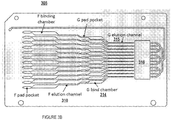
- the F beads and the sample may be combined in a binding chamber (e.g., see 308 of FIGURES 3A & 3B ) configured to facilitate the binding of the F beads to the hybridized tripartite complex molecules (e.g., see 126 of FIGURE 1C ), and to allow for the beads to be washed such that at least some of the unhybridized probes (e.g., reporter probes) are washed from the sample (e.g., see 128 of FIGURE 1C ).
- a binding chamber e.g., see 308 of FIGURES 3A & 3B
- the hybridized tripartite complex molecules e.g., see 126 of FIGURE 1C
- the beads e.g., see 126 of FIGURE 1C
- the binding chamber may be configured with an elution channel (e.g., see 310 of FIGURES 3A & 3B ) which may allow for the beads be heated (e.g., to 47°C) and the sample to be eluted (e.g., see 130 of FIGURE 1C ).
- an elution channel e.g., see 310 of FIGURES 3A & 3B
- the beads be heated (e.g., to 47°C) and the sample to be eluted (e.g., see 130 of FIGURE 1C ).
- the sample may then be passed to a second magnetic bead binding chamber (e.g., see 106 of FIGURE 1A & 314 of FIGURES 3A & 3B ) which may be configured to hold another set of magnetic beads (e.g., G magnetic beads, also known as G beads and/or anti-G magnetic beads, which are coupled to a 15-mer DNA oligonucleotide, 5'-GGT CTG TGT GAT GTT -3' (SEQ ID NO: 2), complementary to the repeats on the reporter probe) which may be able to bind to the reporter probes of the hybridized tripartite complex molecules (e.g., see 132 of FIGURE 1C ).
- G magnetic beads also known as G beads and/or anti-G magnetic beads, which are coupled to a 15-mer DNA oligonucleotide, 5'-GGT CTG TGT GAT GTT -3' (SEQ ID NO: 2), complementary to the repeats on the reporter probe
- SEQ ID NO: 2 complementary to
- the second magnetic bead binding chamber may also allow for washing the sample to remove excess molecules of another type of probe (e.g., capture probes) from the hybridized sample (e.g., see 134 of FIGURE 1C ).
- the G beads may be dried down on a pad in 20X SSPE and 40% trehalose (e.g., see 312 of FIGURE 3A ).
- the G-bead binding chamber may also be configured with an elution channel (e.g., see 315 of FIGURES 3A & 3B ) which may also facilitate elution (e.g., at 47°C) of the hybridized tripartite complex molecules from the beads (e.g., see 136 of FIGURE 1C ).
- an elution channel e.g., see 315 of FIGURES 3A & 3B
- elution channel e.g., see 315 of FIGURES 3A & 3B
- elution channel e.g., see 47°C
- porous polymer matrix instead of magnetic beads.
- the surface can be activated by attaching oligonucleotides.
- porous polymer materials are very inexpensive substrates and offer significant cost reduction compared to magnetic beads.
- One effective porous polymer matrixes is high density polyethylene with pore sizes of 25, 75 and 125 mm nominal.
- the sample (which may now be purified of the excess probe molecules) may then be passed to an imaging surface 108 (e.g., a streptavidin surface) to be stretched and immobilized for imaging 110.
- an imaging surface 108 e.g., a streptavidin surface
- the biotin moieties in the capture probes within the tripartite complexes may bind to the imaging surface 138.
- the instrument may then flow buffer and/or like fluids on the imaging surface of the microfluidic cartridge 140 (e.g., see 316 of FIGURE 3A ) to elongate and align the complexes on the surface.
- the buffer and/or like fluid may also contain a molecule (e.g., biotinylated anti-G oligonucleotides and/or like molecules) which may facilitate binding of reporter probes in the tripartite complexes to the imaging surface 142.
- the instrument may then detect the complexes in the sample in order to generate a resulting graphic and/or numerical representation of the detected molecules 112.
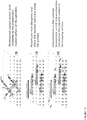
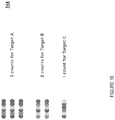
- the instrument may include an epifluorescence microscope configured to count the fluorescent barcodes of the reporter probes in the tripartite complexes, and to match the count to corresponding molecular targets in order to identify the molecule in the sample (e.g., see Figure 1E ).
- samples move to the imaging surface, which is coated with streptavidin.
- Biotin moieties on each capture probe bind to the imaging surface.
- Flow within the micro fluidic cartridge then elongates and aligns the tripartite complexes.
- the immobilization buffer contains biotinylated anti-G oligonucleotides that anchor the reporter probes to the imaging surface.
- samples are imaged by an epifluorescence microscope with the nCounter® instrument. Barcodes are counted and matched with their corresponding targets. Coutns for each target are exported in a comma-separated value file.
- FIGURE 2 shows a logic flow diagram illustrating a purification and imaging process according some embodiments.
- the user may hybridize a sample (e.g., a biological sample; see 114 in FIGURE 1B ) with excess capture and reporter probes 202 at approximately 65°C.
- the user may then place the hybridized sample (e.g., via pipetting a portion of the hybridized sample) into a sample input area 204 (e.g., also see 302 of FIGURE 3A , 602 of FIGURE 6A ) configured to hold the biological sample.
- the sample input ports in the sample input area may be coned to allow for easier pipetting.
- the user may use a single-channel or multi-channel pipet to transfer the sample.
- the user may seal the sample inputs (e.g., with transparent tape as shown at 604 of FIGURE 6B ) and may remove a seal (e.g., opaque tape as shown at 606 of FIGURE 6B ) from a buffer input area (e.g., see 304 of FIGURE 3A ) configured to receive buffer from the instrument.
- a seal e.g., opaque tape as shown at 606 of FIGURE 6B
- a buffer input area e.g., see 304 of FIGURE 3A
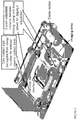
- FIGURES 8-9B illustrate a clamp motor and/or other mechanisms for holding, moving, and heating the cartridge, as well as imaging the sample on the cartridge and transferring fluids to and from the cartridge.
- the cartridge tray may be loaded into an instrument nest as the tray moves inside the device, and may connect to a fluidic manifold and imaging reference surfaces operatively connected above the cartridge, with heaters and bottom contact points positioned below the cartridge and configured to push the cartridge up against the fluidic manifold, and imaging reference points with cam mechanism and springs (e.g., see FIGURE 8 and FIGURE 9B ).
- the instrument may include a fluidic manifold 906 operatively coupled to off-card buffer input valves 902 and waste valves 904, which may connect to the cartridge and provide fluids to the cartridge, or remove used fluids from the cartridge, respectively.
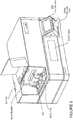
- the device may automatically determine whether the cartridge has been correctly loaded, and may also make sure that reagent (e.g., buffer) and waste bottles (e.g., 502 in FIGURE 5 ) are correctly connected to the cartridge, and that the reagent bottles have sufficient levels of buffer and/or similar fluids.
- the user may be prompted to replace reagent bottles if more fluid is required (e.g., via screen 504 in FIGURE 5 ), and/or the like.
- the instrument may then move the sample from the sample input area via a flow (e.g., 30 ⁇ L), through a bubble vent and/or trap (e.g., a hydrophobic membrane; see 306 in FIGURE 3A ) configured with an air bubble to separate the sample from the buffer.
- a bubble vent and/or trap e.g., a hydrophobic membrane; see 306 in FIGURE 3A
- This bubble prevents sample dispersion by separating the two liquids.
- binding chambers e.g., such as the F binding chamber and the G binding chamber
- the F binding chamber may hold dry F magnetic beads which may be configured to bind to excess probe molecules (e.g., excess reporter probe molecules) in the hybridized sample (e.g., see 126 of FIGURE 1C ).
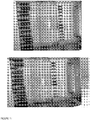
- the instrument may move the sample & beads (e.g., 15 ⁇ L back and forth repeatedly) with a pump over the porous bead pads 210 in order to better facilitate resuspension and binding of the F beads to the excess capture probes and to the sample molecules (e.g., see FIGURE 11 ).
- the F beads may settle out of the solution; therefore the movement may be necessary in order to keep them suspended in the solution.
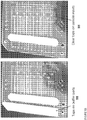
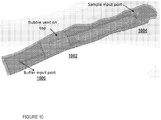
- the bubble vent (e.g., see 1002 in FIGURE 10 ) may be physically positioned between the sample input area (e.g., see 1004 in FIGURE 10 ) and F-binding chamber (e.g., see 308 in FIGURES 3A & 3B ), and may be configured to eliminate bubbles, especially the large bubble between the sample and buffer after mixing and binding has finished. However, it is important the bubble between the sample and buffer does not pass the bubble vent during this mixing process in order to maintain sufficient backpressure to pull the sample back instead of pulling air through the bubble vent.
- moving a magnet pair back and forth across the chamber may be done instead of moving the sample back and forth with flow.
- Magnets may be used in pairs to generate a complex magnetic field suitable for mixing.
- the dead spot above and between the magnets may be critical for good mixing.
- the magnet speed may be related to chamber size and bead amounts (for example).
- the binding process may, in some embodiments, last at least 8 minutes (for example).
- the bubble from the bubble vent may then be removed 212 during the mixing of the hybridized sample to the F beads.
- a magnet e.g., an F magnet; see 1202 in FIGURE 12
- the elution buffer may facilitate removal of at least one type of non-hybridized probes (e.g., non-hybridized reporter or capture probes; (e.g., see 128 of FIGURE 1C )) from the F beads.
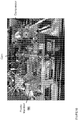
- beads may be moved around in the F binding chamber by moving the magnet (e.g., see 1302 in FIGURE 13A ). This movement and spreading out of the beads may allow for better washing of the captured beads.
- the beads via the magnet, may then be pushed into an F elution channel 218 (e.g., also see 310 of FIGURES 3A and 3B ), which may be connected to a heater (e.g., an F heater; see 1304 in FIGURE 13B ) which may be configured to heat the F beads 220 (e.g., to 47°C for four minutes) in order to elute the sample molecules from the F beads (e.g., see 130 of FIGURE 1C ).
- a heater e.g., an F heater; see 1304 in FIGURE 13B
- the F beads after the heating process, may be returned to the F binding chamber 222 (e.g., see FIGURE 14 ) as the eluted sample is moved into a second binding chamber 224 (e.g., a G binding chamber; see 314 in FIGURES 3A or 3B ), configured to facilitate the binding of a second set of dry magnetic beads (e.g., G magnetic beads) to the hybridized tripartite complex molecules.
- a second binding chamber 224 e.g., a G binding chamber; see 314 in FIGURES 3A or 3B
- a second set of dry magnetic beads e.g., G magnetic beads
- a stepwise fluid introduction and flow mixing process may be utilized with the G magnetic beads and the eluted sample in order to achieve proper bead re-suspension and sample binding 226.
- the G magnetic beads may bind to reporter probes and/or other probes which may still be attached to the sample molecules (e.g., see 132 of FIGURE 1C ).
- introduction of the F-eluted sample into the G binding chamber may be performed in repeated small steps of 2 ⁇ L forward followed by 1 ⁇ L backward.
- the back and forth of fluid may help resuspend the G beads and make the systems insensitive to small differences in bead pad/bead pocket size. This back and forth mixing can occur through the porous pad.
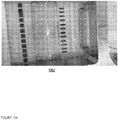
- an exact flow profile may be +5 ⁇ L, -4 ⁇ L, +5 ⁇ L, -4 ⁇ L, +5 ⁇ L. Binding may occur for a specified period of time, before another 7 ⁇ L is introduced. In some embodiments (e.g., see FIGURE 15 ), elutions may be flowed one lane at a time 1502 until all elutions have been flowed into lanes 1504 (e.g., the process may take 7 minutes).
- An imaging chamber may be washed 228 in order to remove molecules (e.g., trehalose and free avidin) while the G beads are bound to the eluted sample.
- a magnet e.g., a G magnet; see 1204 in FIGURE 12
- a magnet may be moved under the G binding chamber 230 in order to collect all of the G beads and hold them as a heater (e.g., the F heater) heats the F binding & elution chamber 232 (e.g., to 35°C).
- an elution buffer (e.g., warmed by the heater) may be washed over the G beads in order to facilitate removal of excess non-hybridized capture probes from the G beads (e.g., see 134 of FIGURE 1C ).
- the beads may then be moved to a G elution chamber (e.g., see 315 in FIGURES 3A and 3B and 1602 and 1604 in FIGURE 16 ) via the magnet 234, such that a second heater (e.g., a G heater; see 1306 in FIGURE 13B and 1702 in FIGURE 17 ) configured to release the purified sample (e.g. tripartite complexes) from the G beads, may be initiated 236.
- a second heater e.g., a G heater; see 1306 in FIGURE 13B and 1702 in FIGURE 17
- the G heater may be run at 47°C for 4 minutes to release the sample from the beads (e.g., see 136 of FIGURE 1C ).
- the magnet may then move the G beads back to the binding chamber 238, and the purified sample may be moved 240 (e.g., see FIGURE 18 ) into a binding area of an SA surface (e.g., see 316 in FIGURES 3A and 3B ).
- Flow rate into the chamber may be performed in steps that are about half the volume of the chamber or less (e.g., approximately 0.25 ⁇ L every 78 seconds).
- the small elution volume and the controlled flow allows for faster and more efficient binding.
- the variation in displacement volume from the pump by itself may not affect variability; however the difference in displacement volumes due to the valves may have a big effect on variability.
- the displacement of each valve may be estimated (e.g., see 1902 in FIGURE 19A ) by using the pressure reading difference of closed vs open state of the valve.
- Minimization of lane to lane variability may require minimization of displacement volume variability by re-ordering the lanes. To minimize the variability, the instrument may start pushing from the valve that has highest displacement volume then the second highest and so forth finishing with the smallest.
- the transition from smallest to highest may have the most negative effect; to correct that, the instrument may be configured to push an extra 0.083 ⁇ L on that single lane (e.g., 0.333 ⁇ L instead of 0.25 ⁇ L; see 1904 of FIGURE 19B ).
- the SA surface may be a surface coated with streptavidin, and may bind to the hybridized probes in the sample 2002 (e.g., see also 138 in FIGURE 1D ).
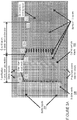
- the molecules in the purified, second-eluted sample may be stretched and immobilized 242 on the SA surface (e.g., also see 2102 in FIGURE 21 and 140 & 142 of Figure 1D ), e.g., via a single solution comprising at least G-hooks (biotinylated anti-G 15mer oligo), mounting media (anti-fade), and fiducials (multispectral biotinylated fluorescent 100nm beads, i.e., diffraction limited), and being added to the SA surface at a particular flow rate (e.g., see 2104 in FIGURE 21 , which is a graph indicating flow rates that may be utilized).
- the G hooks are used to immobilize down the second end of the reporter during stretching.
- the mounting media is present to prevent photo bleaching and photo-destruction of the DNA (due to light interaction with dyes that create free-radicals that can break the DNA backbone).
- the fiducials produce a fluorescent signal (in all channels) that is used to align images.
- G-hooks, mounting media, fiducials, and the stretching buffer were required to be in separate solutions in previously-described electrostretching-based immobilization processes.
- the process may replace four buffers and may eliminate the need for electrodes and a power supply. It may also eliminate a G-hook contamination problem, which is caused by G-hooks slicking to the electrodes in previous designs and carrying over into subsequent sample runs.
- the instrument may then detect the stretched molecules 244 from the SA surface on the cartridge and produce an output (e.g. an image, a report, and/or the like) for the user (e.g., see 144 of FIGURE 1E ).
- the instrument may have a low cost optics subcomponent that uses a three LED illumination system.
- the instrument may also perform binding gradient and area optimization based on density.
- the binding to the Streptavidin surface may generate a reporter binding gradient over the channel - higher density at one end (inlet) with gradual decrease toward the other end (outlet).
- the location of imaging area may be selected for the optimal data collection. Selecting the final scan area in the high density side (close to the inlet end) may generally collect more data. However, in the case of too high binding density, the scan may start from a less dense area by moving the scan area farther from the inlet end. This scheme increases the dynamic range of sample concentration.
- mounting media may be exchanged to minimize photo-destruction and minimize non-specific binding of residual non-functional reporters by eliminating free reporters. If any free reporters are left floating free in the imaging chamber, the flow of imaging buffer wash them out, thus preventing binding via G-hooks in solution.
- Embodiments of the present disclosure provide superior detection and quantification of gene expression and protein synthesis.
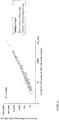
- embodiments effectively detect targets from three nCounter® PanCancer Panels: the PanCancer Pathways panel, the PanCancer Progression panel, and the PanCancer Immune Profiling panel.
- data obtained from embodiments are correlated with data obtained from the nCounter® Analysis System.
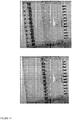
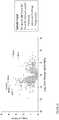
- embodiments enable identification of differentially expressed genes in lymphoma samples.
- embodiments can detect gene expression in purified total RNA or in raw cell lysates; it is notable that assays require limited sample preparation.
- embodiments provide reliable, trustworthy detection of gene expression with various sample types, including, but not limited to, fresh-frozen tissue and Formalin-Fixed Paraffin-Embedded (FFPE) tissues.
- FFPE Formalin-Fixed Paraffin-Embedded
- embodiments effectively detect gene expression for the PanCancer Progression Panel and with highly correlated results with respect to results obtained with the nCounter® Analysis System.
- embodiments of the present invention (identified as "SPRINT") used half as much sample input (by weight) as used with the nCounter® Analysis System (identified as "Analysis System”).
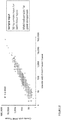
- embodiments effectively detect targets in the Human Immunology Panel.
- nCounter SPRINT Profiler data obtained from embodiments (identified as “nCounter SPRINT Profiler”) are correlated with data obtained from the nCounter® Analysis System.
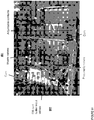
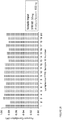
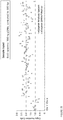
- embodiments effectively quantify targets in a copy number variation (CNV) assay. Similar copy number data were obtained for DNA samples run on embodiments of the present invention (identified as “nCounter SPRINT Profiler”) and the nCounter® Analysis System.
- copy number data for each gene is directly above a tick mark on the X-axis.
- a vertically-related pair comprising a square (data from embodiments of the present invention) and circle (data from the nCounter® Analysis System) represent data for a particular gene.
- embodiments effectively detect miRNA targets.
- data obtained from embodiments are correlated with data obtained from the nCounter® Analysis System. As shown in FIGURE 30 , embodiments effectively detect RNA and protein targets.
- data obtained from embodiments (identified as "nCounter SPRINT Profiler") are correlated with data obtained from the nCounter® Analysis System.
- embodiments of the subject disclosure may include methods, systems and devices which may further include any and all elements from any other disclosed methods, systems, and devices, including any and all elements corresponding to gene purification and imaging.
- elements from one and/or another disclosed embodiment may be interchangeable with elements from other disclosed embodiments.
- one or more features/elements of disclosed embodiments may be removed and still result in patentable subject matter (and thus, resulting in yet more embodiments of the subject disclosure).
- some embodiments of the present disclosure are distinguishable from the prior art for expressly not requiring one and/or another features disclosed in the prior art (e.g., some embodiments may include negative limitations).
Landscapes
- Chemical & Material Sciences (AREA)
- Health & Medical Sciences (AREA)
- Life Sciences & Earth Sciences (AREA)
- Organic Chemistry (AREA)
- Engineering & Computer Science (AREA)
- Analytical Chemistry (AREA)
- Zoology (AREA)
- Wood Science & Technology (AREA)
- General Health & Medical Sciences (AREA)
- Proteomics, Peptides & Aminoacids (AREA)
- Physics & Mathematics (AREA)
- Genetics & Genomics (AREA)
- Biotechnology (AREA)
- Bioinformatics & Cheminformatics (AREA)
- General Engineering & Computer Science (AREA)
- Molecular Biology (AREA)
- Immunology (AREA)
- Microbiology (AREA)
- Biochemistry (AREA)
- Biophysics (AREA)
- Hematology (AREA)
- Biomedical Technology (AREA)
- Chemical Kinetics & Catalysis (AREA)
- Clinical Laboratory Science (AREA)
- Dispersion Chemistry (AREA)
- Fluid Mechanics (AREA)
- Plant Pathology (AREA)
- Crystallography & Structural Chemistry (AREA)
- Urology & Nephrology (AREA)
- Cell Biology (AREA)
- Food Science & Technology (AREA)
- Medicinal Chemistry (AREA)
- General Physics & Mathematics (AREA)
- Pathology (AREA)
- Apparatus Associated With Microorganisms And Enzymes (AREA)
- Measuring Or Testing Involving Enzymes Or Micro-Organisms (AREA)
- Automatic Analysis And Handling Materials Therefor (AREA)
- Nanotechnology (AREA)
Applications Claiming Priority (2)
| Application Number | Priority Date | Filing Date | Title |
|---|---|---|---|
| US201462083681P | 2014-11-24 | 2014-11-24 | |
| PCT/US2015/062109 WO2016085841A1 (en) | 2014-11-24 | 2015-11-23 | Methods and apparatuses for gene purification and imaging |
Publications (2)
| Publication Number | Publication Date |
|---|---|
| EP3223947A1 EP3223947A1 (en) | 2017-10-04 |
| EP3223947B1 true EP3223947B1 (en) | 2019-10-30 |
Family
ID=55022671
Family Applications (1)
| Application Number | Title | Priority Date | Filing Date |
|---|---|---|---|
| EP15816281.8A Active EP3223947B1 (en) | 2014-11-24 | 2015-11-23 | Methods and apparatuses for gene purification and imaging |
Country Status (10)
| Country | Link |
|---|---|
| US (2) | US10246700B2 (enExample) |
| EP (1) | EP3223947B1 (enExample) |
| JP (3) | JP7144142B2 (enExample) |
| KR (1) | KR102602507B1 (enExample) |
| CN (1) | CN107249741B (enExample) |
| AU (1) | AU2015353747B2 (enExample) |
| CA (1) | CA2968519C (enExample) |
| ES (1) | ES2756399T3 (enExample) |
| SG (1) | SG11201704177SA (enExample) |
| WO (1) | WO2016085841A1 (enExample) |
Cited By (1)
| Publication number | Priority date | Publication date | Assignee | Title |
|---|---|---|---|---|
| US11568958B2 (en) | 2017-12-29 | 2023-01-31 | Clear Labs, Inc. | Automated priming and library loading device |
Families Citing this family (50)
| Publication number | Priority date | Publication date | Assignee | Title |
|---|---|---|---|---|
| JP2014531908A (ja) | 2011-10-14 | 2014-12-04 | プレジデント アンド フェローズ オブ ハーバード カレッジ | 構造アッセンブリによる配列決定 |
| ES2991004T3 (es) | 2011-12-22 | 2024-12-02 | Harvard College | Métodos para la detección de analitos |
| EP2971184B1 (en) | 2013-03-12 | 2019-04-17 | President and Fellows of Harvard College | Method of generating a three-dimensional nucleic acid containing matrix |
| LT3013984T (lt) | 2013-06-25 | 2023-06-12 | Prognosys Biosciences, Inc. | Biologinių taikinių erdvinių modelių mėginyje nustatymo būdai |
| WO2016007839A1 (en) | 2014-07-11 | 2016-01-14 | President And Fellows Of Harvard College | Methods for high-throughput labelling and detection of biological features in situ using microscopy |
| EP3223947B1 (en) | 2014-11-24 | 2019-10-30 | Nanostring Technologies, Inc. | Methods and apparatuses for gene purification and imaging |
| CN120425026A (zh) | 2015-04-10 | 2025-08-05 | 十程基因技术瑞典公司 | 生物样本的空间区别、多重核酸分析 |
| AU2017257624B2 (en) | 2016-04-25 | 2023-05-25 | President And Fellows Of Harvard College | Hybridization chain reaction methods for in situ molecular detection |
| WO2017222453A1 (en) | 2016-06-21 | 2017-12-28 | Hauling Thomas | Nucleic acid sequencing |
| EP4589017A3 (en) | 2017-10-06 | 2025-10-08 | 10x Genomics, Inc. | Rna templated ligation |
| WO2020076976A1 (en) | 2018-10-10 | 2020-04-16 | Readcoor, Inc. | Three-dimensional spatial molecular indexing |
| EP3976817A1 (en) | 2019-05-31 | 2022-04-06 | 10X Genomics, Inc. | Method of detecting target nucleic acid molecules |
| US12157124B2 (en) | 2019-11-06 | 2024-12-03 | 10X Genomics, Inc. | Imaging system hardware |
| GB201919032D0 (en) | 2019-12-20 | 2020-02-05 | Cartana Ab | Method of detecting an analyte |
| US12405264B2 (en) | 2020-01-17 | 2025-09-02 | 10X Genomics, Inc. | Electrophoretic system and method for analyte capture |
| US12110548B2 (en) | 2020-02-03 | 2024-10-08 | 10X Genomics, Inc. | Bi-directional in situ analysis |
| US12215379B2 (en) | 2020-02-17 | 2025-02-04 | 10X Genomics, Inc. | In situ analysis of chromatin interaction |
| AU2021225020A1 (en) | 2020-02-21 | 2022-08-18 | 10X Genomics, Inc. | Methods and compositions for integrated in situ spatial assay |
| US12188085B2 (en) | 2020-03-05 | 2025-01-07 | 10X Genomics, Inc. | Three-dimensional spatial transcriptomics with sequencing readout |
| GB202003827D0 (en) * | 2020-03-17 | 2020-04-29 | Applied Biotect Ltd | Mircofludic device and method |
| WO2021236625A1 (en) | 2020-05-19 | 2021-11-25 | 10X Genomics, Inc. | Electrophoresis cassettes and instrumentation |
| EP4414459B1 (en) | 2020-05-22 | 2025-09-03 | 10X Genomics, Inc. | Simultaneous spatio-temporal measurement of gene expression and cellular activity |
| US12031177B1 (en) | 2020-06-04 | 2024-07-09 | 10X Genomics, Inc. | Methods of enhancing spatial resolution of transcripts |
| AU2021288090A1 (en) | 2020-06-10 | 2023-01-19 | 10X Genomics, Inc. | Fluid delivery methods |
| US12209273B2 (en) | 2020-06-12 | 2025-01-28 | 10X Genomics, Inc. | Nucleic acid assays using click chemistry bioconjugation |
| US12297499B2 (en) | 2020-08-17 | 2025-05-13 | 10X Genomics, Inc. | Multicomponent nucleic acid probes for sample analysis |
| US20220049303A1 (en) | 2020-08-17 | 2022-02-17 | Readcoor, Llc | Methods and systems for spatial mapping of genetic variants |
| ES2993269T3 (en) | 2020-09-18 | 2024-12-26 | 10X Genomics Inc | Sample handling apparatus and image registration methods |
| US12071667B2 (en) | 2020-11-04 | 2024-08-27 | 10X Genomics, Inc. | Sequence analysis using meta-stable nucleic acid molecules |
| US12509717B2 (en) | 2020-12-11 | 2025-12-30 | 10X Genomics, Inc. | Methods and compositions for multimodal in situ analysis |
| US12060603B2 (en) | 2021-01-19 | 2024-08-13 | 10X Genomics, Inc. | Methods for internally controlled in situ assays using padlock probes |
| EP4421491A3 (en) | 2021-02-19 | 2024-11-27 | 10X Genomics, Inc. | Method of using a modular assay support device |
| US12275984B2 (en) | 2021-03-02 | 2025-04-15 | 10X Genomics, Inc. | Sequential hybridization and quenching |
| ES2988400T3 (es) | 2021-07-30 | 2024-11-20 | 10X Genomics Inc | Métodos y composiciones para sincronizar reacciones in situ |
| US12139751B2 (en) | 2021-07-30 | 2024-11-12 | 10X Genomics, Inc. | Circularizable probes for in situ analysis |
| US12391984B2 (en) | 2021-08-03 | 2025-08-19 | 10X Genomics, Inc. | Compositions and methods for rolling circle amplification |
| US12460251B2 (en) | 2021-08-03 | 2025-11-04 | 10X Genomics, Inc. | Stabilization and/or compaction of nucleic acid molecules |
| EP4446426A3 (en) | 2021-08-16 | 2024-11-13 | 10x Genomics, Inc. | Probes comprising a split barcode region and methods of use |
| USD1064308S1 (en) | 2021-09-17 | 2025-02-25 | 10X Genomics, Inc. | Sample handling device |
| WO2023122033A1 (en) | 2021-12-20 | 2023-06-29 | 10X Genomics, Inc. | Self-test for pathology/histology slide imaging device |
| US12497653B2 (en) | 2022-01-21 | 2025-12-16 | 10X Genomics, Inc. | Multiple readout signals for analyzing a sample |
| CN118974836A (zh) | 2022-03-08 | 2024-11-15 | 10X基因组学有限公司 | 将光学拥挤最小化的原位代码设计方法 |
| AU2023237896A1 (en) | 2022-03-24 | 2024-10-17 | Digital Biology Inc. | Tissue spatial omics |
| WO2023188896A1 (ja) * | 2022-03-29 | 2023-10-05 | ソニーグループ株式会社 | 生体粒子解析システム、情報処理装置、及び生体粒子解析方法 |
| EP4505177A1 (en) | 2022-04-01 | 2025-02-12 | 10x Genomics, Inc. | Compositions and methods for targeted masking of autofluorescence |
| EP4522769A1 (en) | 2022-05-11 | 2025-03-19 | 10X Genomics, Inc. | Compositions and methods for in situ sequencing |
| US20240035071A1 (en) | 2022-06-17 | 2024-02-01 | 10X Genomics, Inc. | Catalytic de-crosslinking of samples for in situ analysis |
| CN119895052A (zh) | 2022-07-19 | 2025-04-25 | 数码生物公司 | 基于条形码扩散的空间组学 |
| EP4511510B1 (en) | 2022-08-16 | 2025-12-10 | 10X Genomics, Inc. | Ap50 polymerases and uses thereof |
| WO2025029831A1 (en) | 2023-07-31 | 2025-02-06 | 10X Genomics, Inc. | Methods and systems for targeted rna cleavage and target rna-primed rolling circle amplification |
Family Cites Families (26)
| Publication number | Priority date | Publication date | Assignee | Title |
|---|---|---|---|---|
| US7473767B2 (en) | 2001-07-03 | 2009-01-06 | The Institute For Systems Biology | Methods for detection and quantification of analytes in complex mixtures |
| EP1585957A2 (en) | 2001-11-27 | 2005-10-19 | Burstein Technologies, Inc. | Magneto-optical bio-discs and systems including related methods |
| US7217542B2 (en) * | 2002-10-31 | 2007-05-15 | Hewlett-Packard Development Company, L.P. | Microfluidic system for analyzing nucleic acids |
| EP1954708A4 (en) | 2005-11-23 | 2009-05-13 | Univ Utah Res Found | Methods and compositions involving intrinsic genes |
| WO2007076132A2 (en) | 2005-12-23 | 2007-07-05 | Nanostring Technologies, Inc. | Compositions comprising oriented, immobilized macromolecules and methods for their preparation |
| CA2640385C (en) | 2005-12-23 | 2014-07-15 | Nanostring Technologies, Inc. | Nanoreporters and methods of manufacturing and use thereof |
| ES2393758T3 (es) * | 2006-03-15 | 2012-12-27 | Micronics, Inc. | Ensayos integrados de ácidos nucleicos |
| CA2653095C (en) | 2006-05-22 | 2013-07-16 | Nanostring Technologies, Inc. | Systems and methods for analyzing nanoreporters |
| WO2008124847A2 (en) | 2007-04-10 | 2008-10-16 | Nanostring Technologies, Inc. | Methods and computer systems for identifying target-specific sequences for use in nanoreporters |
| EP1990638A1 (en) * | 2007-05-11 | 2008-11-12 | Koninklijke Philips Electronics N.V. | Flow-through biosensor |
| JP5740302B2 (ja) | 2008-05-30 | 2015-06-24 | ザ ユニバーシティー オブ ノースカロライナ アット チャペル ヒル | 乳癌の予後を予測するための遺伝子発現プロフィール |
| EP2331704B1 (en) | 2008-08-14 | 2016-11-30 | Nanostring Technologies, Inc | Stable nanoreporters |
| EP3236264A3 (en) | 2009-10-13 | 2017-11-08 | Nanostring Technologies, Inc | Protein detection via nanoreporters |
| US9714446B2 (en) | 2010-02-11 | 2017-07-25 | Nanostring Technologies, Inc. | Compositions and methods for the detection of small RNAs |
| WO2011116088A2 (en) | 2010-03-16 | 2011-09-22 | Nanostring Technologies, Inc. | Compositions and methods for the detection of genomic features |
| AU2012229123B2 (en) | 2011-03-15 | 2017-02-02 | British Columbia Cancer Agency Branch | Methods of treating breast cancer with anthracycline therapy |
| WO2012135340A2 (en) | 2011-03-28 | 2012-10-04 | Nanostring Technologies, Inc. | Compositions and methods for diagnosing cancer |
| US20130017971A1 (en) | 2011-06-24 | 2013-01-17 | Nanostring Technologies, Inc. | Multivariate Diagnostic Assays and Methods for Using Same |
| US9181588B2 (en) | 2011-11-30 | 2015-11-10 | The University Of Utah Research Foundation | Methods of treating breast cancer with taxane therapy |
| WO2013177245A2 (en) * | 2012-05-22 | 2013-11-28 | Nanostring Technologies, Inc. | Nano46 genes and methods to predict breast cancer outcome |
| EP2867370A4 (en) | 2012-06-29 | 2016-06-29 | Nanostring Technologies Inc | METHOD FOR THE TREATMENT OF BREAST CANCER WITH GEMCITABIN THERAPY |
| US20140200167A1 (en) * | 2012-08-01 | 2014-07-17 | Nanomdx, Inc. | Functionally integrated device for multiplex genetic identification |
| WO2014075067A1 (en) | 2012-11-12 | 2014-05-15 | Nanostring Technologies, Inc. | Methods to predict breast cancer outcome |
| CA2914816A1 (en) | 2013-06-14 | 2014-12-18 | Nanostring Technologies, Inc. | Multiplexable tag-based reporter system |
| JP2016537010A (ja) | 2013-09-09 | 2016-12-01 | ブリティッシュ コロンビア キャンサー エージェンシー ブランチ | 予後を予測するための方法及びキット、並びに、放射線照射療法を用いた乳癌の治療方法及びキット |
| EP3223947B1 (en) | 2014-11-24 | 2019-10-30 | Nanostring Technologies, Inc. | Methods and apparatuses for gene purification and imaging |
-
2015
- 2015-11-23 EP EP15816281.8A patent/EP3223947B1/en active Active
- 2015-11-23 US US14/948,776 patent/US10246700B2/en active Active
- 2015-11-23 CA CA2968519A patent/CA2968519C/en active Active
- 2015-11-23 ES ES15816281T patent/ES2756399T3/es active Active
- 2015-11-23 JP JP2017527737A patent/JP7144142B2/ja active Active
- 2015-11-23 SG SG11201704177SA patent/SG11201704177SA/en unknown
- 2015-11-23 CN CN201580074230.5A patent/CN107249741B/zh active Active
- 2015-11-23 AU AU2015353747A patent/AU2015353747B2/en not_active Ceased
- 2015-11-23 KR KR1020177017400A patent/KR102602507B1/ko active Active
- 2015-11-23 WO PCT/US2015/062109 patent/WO2016085841A1/en not_active Ceased
-
2019
- 2019-02-11 US US16/272,073 patent/US11098301B2/en not_active Expired - Fee Related
-
2020
- 2020-07-09 JP JP2020118680A patent/JP2020191881A/ja active Pending
-
2022
- 2022-08-05 JP JP2022125527A patent/JP2022140792A/ja active Pending
Non-Patent Citations (1)
| Title |
|---|
| None * |
Cited By (2)
| Publication number | Priority date | Publication date | Assignee | Title |
|---|---|---|---|---|
| US11568958B2 (en) | 2017-12-29 | 2023-01-31 | Clear Labs, Inc. | Automated priming and library loading device |
| US11581065B2 (en) | 2017-12-29 | 2023-02-14 | Clear Labs, Inc. | Automated nucleic acid library preparation and sequencing device |
Also Published As
| Publication number | Publication date |
|---|---|
| WO2016085841A1 (en) | 2016-06-02 |
| JP2020191881A (ja) | 2020-12-03 |
| JP2017538115A (ja) | 2017-12-21 |
| KR20170119672A (ko) | 2017-10-27 |
| KR102602507B1 (ko) | 2023-11-14 |
| AU2015353747B2 (en) | 2021-02-25 |
| CN107249741B (zh) | 2021-04-02 |
| CA2968519A1 (en) | 2016-06-02 |
| JP7144142B2 (ja) | 2022-09-29 |
| CA2968519C (en) | 2024-01-09 |
| EP3223947A1 (en) | 2017-10-04 |
| US10246700B2 (en) | 2019-04-02 |
| US11098301B2 (en) | 2021-08-24 |
| SG11201704177SA (en) | 2017-06-29 |
| US20160145602A1 (en) | 2016-05-26 |
| CN107249741A (zh) | 2017-10-13 |
| JP2022140792A (ja) | 2022-09-27 |
| AU2015353747A1 (en) | 2017-06-08 |
| US20190316115A1 (en) | 2019-10-17 |
| ES2756399T3 (es) | 2020-04-27 |
Similar Documents
| Publication | Publication Date | Title |
|---|---|---|
| EP3223947B1 (en) | Methods and apparatuses for gene purification and imaging | |
| US10532352B2 (en) | Sample analysis system | |
| KR102502083B1 (ko) | 휴대용 핵산 분석 시스템 및 고성능 미세유체 전기활성 중합체 작동기 | |
| CN107407685B (zh) | 快速精确分配、可视化和分析单个细胞的方法 | |
| RU2552215C2 (ru) | Устройство и способ отбора нуклеиновых кислот с помощью микроматриц | |
| Hernández-Neuta et al. | Microfluidic magnetic fluidized bed for DNA analysis in continuous flow mode | |
| US20090093064A1 (en) | Method of determining the presence of a mineral within a material | |
| KR20150036262A (ko) | 증폭된 뉴클레오티드 서열의 신속한 검출 방법 및 장치 | |
| CN101458251A (zh) | 高通量检测生物大分子的磁性颗粒微阵列装置及其使用方法 | |
| Lund-Olesen et al. | Capture of DNA in microfluidic channel using magnetic beads: Increasing capture efficiency with integrated microfluidic mixer | |
| US20120034703A1 (en) | Devices, Systems and Methods for Processing of Magnetic Particles | |
| CA3162752A1 (en) | Method for performing a biological assay | |
| HK1242251A1 (en) | Methods and apparatuses for gene purification and imaging | |
| HK1242251B (en) | Methods and apparatuses for gene purification and imaging | |
| DK2217729T3 (en) | Method of concentrating nucleic acid molecules | |
| US20170051344A1 (en) | Purification Chemistries and Formats for Sanger DNA Sequencing Reactions on a Micro-Fluidics Device | |
| Laser et al. | Instrumentation for Molecular Testing |
Legal Events
| Date | Code | Title | Description |
|---|---|---|---|
| STAA | Information on the status of an ep patent application or granted ep patent |
Free format text: STATUS: THE INTERNATIONAL PUBLICATION HAS BEEN MADE |
|
| PUAI | Public reference made under article 153(3) epc to a published international application that has entered the european phase |
Free format text: ORIGINAL CODE: 0009012 |
|
| STAA | Information on the status of an ep patent application or granted ep patent |
Free format text: STATUS: REQUEST FOR EXAMINATION WAS MADE |
|
| 17P | Request for examination filed |
Effective date: 20170525 |
|
| AK | Designated contracting states |
Kind code of ref document: A1 Designated state(s): AL AT BE BG CH CY CZ DE DK EE ES FI FR GB GR HR HU IE IS IT LI LT LU LV MC MK MT NL NO PL PT RO RS SE SI SK SM TR |
|
| AX | Request for extension of the european patent |
Extension state: BA ME |
|
| DAV | Request for validation of the european patent (deleted) | ||
| DAX | Request for extension of the european patent (deleted) | ||
| REG | Reference to a national code |
Ref country code: HK Ref legal event code: DE Ref document number: 1242251 Country of ref document: HK |
|
| STAA | Information on the status of an ep patent application or granted ep patent |
Free format text: STATUS: EXAMINATION IS IN PROGRESS |
|
| 17Q | First examination report despatched |
Effective date: 20180716 |
|
| REG | Reference to a national code |
Ref country code: DE Ref legal event code: R079 Ref document number: 602015040803 Country of ref document: DE Free format text: PREVIOUS MAIN CLASS: B01L0003000000 Ipc: C12Q0001681600 |
|
| GRAP | Despatch of communication of intention to grant a patent |
Free format text: ORIGINAL CODE: EPIDOSNIGR1 |
|
| STAA | Information on the status of an ep patent application or granted ep patent |
Free format text: STATUS: GRANT OF PATENT IS INTENDED |
|
| RIC1 | Information provided on ipc code assigned before grant |
Ipc: B01L 3/00 20060101ALI20190425BHEP Ipc: C12Q 1/6825 20180101ALI20190425BHEP Ipc: C12Q 1/6816 20180101AFI20190425BHEP |
|
| INTG | Intention to grant announced |
Effective date: 20190517 |
|
| RAP1 | Party data changed (applicant data changed or rights of an application transferred) |
Owner name: NANOSTRING TECHNOLOGIES, INC. |
|
| GRAS | Grant fee paid |
Free format text: ORIGINAL CODE: EPIDOSNIGR3 |
|
| GRAA | (expected) grant |
Free format text: ORIGINAL CODE: 0009210 |
|
| STAA | Information on the status of an ep patent application or granted ep patent |
Free format text: STATUS: THE PATENT HAS BEEN GRANTED |
|
| AK | Designated contracting states |
Kind code of ref document: B1 Designated state(s): AL AT BE BG CH CY CZ DE DK EE ES FI FR GB GR HR HU IE IS IT LI LT LU LV MC MK MT NL NO PL PT RO RS SE SI SK SM TR |
|
| REG | Reference to a national code |
Ref country code: GB Ref legal event code: FG4D |
|
| REG | Reference to a national code |
Ref country code: CH Ref legal event code: EP |
|
| REG | Reference to a national code |
Ref country code: DE Ref legal event code: R096 Ref document number: 602015040803 Country of ref document: DE |
|
| REG | Reference to a national code |
Ref country code: AT Ref legal event code: REF Ref document number: 1196171 Country of ref document: AT Kind code of ref document: T Effective date: 20191115 |
|
| REG | Reference to a national code |
Ref country code: IE Ref legal event code: FG4D |
|
| REG | Reference to a national code |
Ref country code: CH Ref legal event code: NV Representative=s name: TR-IP CONSULTING LLC, CH |
|
| REG | Reference to a national code |
Ref country code: CH Ref legal event code: PCAR Free format text: NEW ADDRESS: ROUTE DU COUTSET 18, 1485 NUVILLY (CH) |
|
| REG | Reference to a national code |
Ref country code: LT Ref legal event code: MG4D |
|
| REG | Reference to a national code |
Ref country code: ES Ref legal event code: FG2A Ref document number: 2756399 Country of ref document: ES Kind code of ref document: T3 Effective date: 20200427 |
|
| PG25 | Lapsed in a contracting state [announced via postgrant information from national office to epo] |
Ref country code: PT Free format text: LAPSE BECAUSE OF FAILURE TO SUBMIT A TRANSLATION OF THE DESCRIPTION OR TO PAY THE FEE WITHIN THE PRESCRIBED TIME-LIMIT Effective date: 20200302 Ref country code: LV Free format text: LAPSE BECAUSE OF FAILURE TO SUBMIT A TRANSLATION OF THE DESCRIPTION OR TO PAY THE FEE WITHIN THE PRESCRIBED TIME-LIMIT Effective date: 20191030 Ref country code: SE Free format text: LAPSE BECAUSE OF FAILURE TO SUBMIT A TRANSLATION OF THE DESCRIPTION OR TO PAY THE FEE WITHIN THE PRESCRIBED TIME-LIMIT Effective date: 20191030 Ref country code: GR Free format text: LAPSE BECAUSE OF FAILURE TO SUBMIT A TRANSLATION OF THE DESCRIPTION OR TO PAY THE FEE WITHIN THE PRESCRIBED TIME-LIMIT Effective date: 20200131 Ref country code: NO Free format text: LAPSE BECAUSE OF FAILURE TO SUBMIT A TRANSLATION OF THE DESCRIPTION OR TO PAY THE FEE WITHIN THE PRESCRIBED TIME-LIMIT Effective date: 20200130 Ref country code: PL Free format text: LAPSE BECAUSE OF FAILURE TO SUBMIT A TRANSLATION OF THE DESCRIPTION OR TO PAY THE FEE WITHIN THE PRESCRIBED TIME-LIMIT Effective date: 20191030 Ref country code: FI Free format text: LAPSE BECAUSE OF FAILURE TO SUBMIT A TRANSLATION OF THE DESCRIPTION OR TO PAY THE FEE WITHIN THE PRESCRIBED TIME-LIMIT Effective date: 20191030 Ref country code: BG Free format text: LAPSE BECAUSE OF FAILURE TO SUBMIT A TRANSLATION OF THE DESCRIPTION OR TO PAY THE FEE WITHIN THE PRESCRIBED TIME-LIMIT Effective date: 20200130 Ref country code: LT Free format text: LAPSE BECAUSE OF FAILURE TO SUBMIT A TRANSLATION OF THE DESCRIPTION OR TO PAY THE FEE WITHIN THE PRESCRIBED TIME-LIMIT Effective date: 20191030 Ref country code: NL Free format text: LAPSE BECAUSE OF FAILURE TO SUBMIT A TRANSLATION OF THE DESCRIPTION OR TO PAY THE FEE WITHIN THE PRESCRIBED TIME-LIMIT Effective date: 20191030 |
|
| REG | Reference to a national code |
Ref country code: NL Ref legal event code: MP Effective date: 20191030 |
|
| PG25 | Lapsed in a contracting state [announced via postgrant information from national office to epo] |
Ref country code: IS Free format text: LAPSE BECAUSE OF FAILURE TO SUBMIT A TRANSLATION OF THE DESCRIPTION OR TO PAY THE FEE WITHIN THE PRESCRIBED TIME-LIMIT Effective date: 20200229 Ref country code: HR Free format text: LAPSE BECAUSE OF FAILURE TO SUBMIT A TRANSLATION OF THE DESCRIPTION OR TO PAY THE FEE WITHIN THE PRESCRIBED TIME-LIMIT Effective date: 20191030 Ref country code: RS Free format text: LAPSE BECAUSE OF FAILURE TO SUBMIT A TRANSLATION OF THE DESCRIPTION OR TO PAY THE FEE WITHIN THE PRESCRIBED TIME-LIMIT Effective date: 20191030 |
|
| PG25 | Lapsed in a contracting state [announced via postgrant information from national office to epo] |
Ref country code: AL Free format text: LAPSE BECAUSE OF FAILURE TO SUBMIT A TRANSLATION OF THE DESCRIPTION OR TO PAY THE FEE WITHIN THE PRESCRIBED TIME-LIMIT Effective date: 20191030 |
|
| PG25 | Lapsed in a contracting state [announced via postgrant information from national office to epo] |
Ref country code: RO Free format text: LAPSE BECAUSE OF FAILURE TO SUBMIT A TRANSLATION OF THE DESCRIPTION OR TO PAY THE FEE WITHIN THE PRESCRIBED TIME-LIMIT Effective date: 20191030 Ref country code: DK Free format text: LAPSE BECAUSE OF FAILURE TO SUBMIT A TRANSLATION OF THE DESCRIPTION OR TO PAY THE FEE WITHIN THE PRESCRIBED TIME-LIMIT Effective date: 20191030 Ref country code: LU Free format text: LAPSE BECAUSE OF NON-PAYMENT OF DUE FEES Effective date: 20191123 Ref country code: EE Free format text: LAPSE BECAUSE OF FAILURE TO SUBMIT A TRANSLATION OF THE DESCRIPTION OR TO PAY THE FEE WITHIN THE PRESCRIBED TIME-LIMIT Effective date: 20191030 Ref country code: MC Free format text: LAPSE BECAUSE OF FAILURE TO SUBMIT A TRANSLATION OF THE DESCRIPTION OR TO PAY THE FEE WITHIN THE PRESCRIBED TIME-LIMIT Effective date: 20191030 Ref country code: CZ Free format text: LAPSE BECAUSE OF FAILURE TO SUBMIT A TRANSLATION OF THE DESCRIPTION OR TO PAY THE FEE WITHIN THE PRESCRIBED TIME-LIMIT Effective date: 20191030 |
|
| REG | Reference to a national code |
Ref country code: DE Ref legal event code: R097 Ref document number: 602015040803 Country of ref document: DE |
|
| REG | Reference to a national code |
Ref country code: AT Ref legal event code: MK05 Ref document number: 1196171 Country of ref document: AT Kind code of ref document: T Effective date: 20191030 |
|
| REG | Reference to a national code |
Ref country code: BE Ref legal event code: MM Effective date: 20191130 |
|
| PG25 | Lapsed in a contracting state [announced via postgrant information from national office to epo] |
Ref country code: SM Free format text: LAPSE BECAUSE OF FAILURE TO SUBMIT A TRANSLATION OF THE DESCRIPTION OR TO PAY THE FEE WITHIN THE PRESCRIBED TIME-LIMIT Effective date: 20191030 Ref country code: SK Free format text: LAPSE BECAUSE OF FAILURE TO SUBMIT A TRANSLATION OF THE DESCRIPTION OR TO PAY THE FEE WITHIN THE PRESCRIBED TIME-LIMIT Effective date: 20191030 |
|
| PLBE | No opposition filed within time limit |
Free format text: ORIGINAL CODE: 0009261 |
|
| STAA | Information on the status of an ep patent application or granted ep patent |
Free format text: STATUS: NO OPPOSITION FILED WITHIN TIME LIMIT |
|
| 26N | No opposition filed |
Effective date: 20200731 |
|
| PG25 | Lapsed in a contracting state [announced via postgrant information from national office to epo] |
Ref country code: BE Free format text: LAPSE BECAUSE OF NON-PAYMENT OF DUE FEES Effective date: 20191130 Ref country code: AT Free format text: LAPSE BECAUSE OF FAILURE TO SUBMIT A TRANSLATION OF THE DESCRIPTION OR TO PAY THE FEE WITHIN THE PRESCRIBED TIME-LIMIT Effective date: 20191030 Ref country code: SI Free format text: LAPSE BECAUSE OF FAILURE TO SUBMIT A TRANSLATION OF THE DESCRIPTION OR TO PAY THE FEE WITHIN THE PRESCRIBED TIME-LIMIT Effective date: 20191030 |
|
| PG25 | Lapsed in a contracting state [announced via postgrant information from national office to epo] |
Ref country code: CY Free format text: LAPSE BECAUSE OF FAILURE TO SUBMIT A TRANSLATION OF THE DESCRIPTION OR TO PAY THE FEE WITHIN THE PRESCRIBED TIME-LIMIT Effective date: 20191030 |
|
| PG25 | Lapsed in a contracting state [announced via postgrant information from national office to epo] |
Ref country code: HU Free format text: LAPSE BECAUSE OF FAILURE TO SUBMIT A TRANSLATION OF THE DESCRIPTION OR TO PAY THE FEE WITHIN THE PRESCRIBED TIME-LIMIT; INVALID AB INITIO Effective date: 20151123 Ref country code: MT Free format text: LAPSE BECAUSE OF FAILURE TO SUBMIT A TRANSLATION OF THE DESCRIPTION OR TO PAY THE FEE WITHIN THE PRESCRIBED TIME-LIMIT Effective date: 20191030 |
|
| PG25 | Lapsed in a contracting state [announced via postgrant information from national office to epo] |
Ref country code: TR Free format text: LAPSE BECAUSE OF FAILURE TO SUBMIT A TRANSLATION OF THE DESCRIPTION OR TO PAY THE FEE WITHIN THE PRESCRIBED TIME-LIMIT Effective date: 20191030 |
|
| PG25 | Lapsed in a contracting state [announced via postgrant information from national office to epo] |
Ref country code: MK Free format text: LAPSE BECAUSE OF FAILURE TO SUBMIT A TRANSLATION OF THE DESCRIPTION OR TO PAY THE FEE WITHIN THE PRESCRIBED TIME-LIMIT Effective date: 20191030 |
|
| P01 | Opt-out of the competence of the unified patent court (upc) registered |
Effective date: 20230511 |
|
| PGFP | Annual fee paid to national office [announced via postgrant information from national office to epo] |
Ref country code: GB Payment date: 20231127 Year of fee payment: 9 |
|
| PGFP | Annual fee paid to national office [announced via postgrant information from national office to epo] |
Ref country code: ES Payment date: 20231201 Year of fee payment: 9 |
|
| PGFP | Annual fee paid to national office [announced via postgrant information from national office to epo] |
Ref country code: IT Payment date: 20231122 Year of fee payment: 9 Ref country code: IE Payment date: 20231127 Year of fee payment: 9 Ref country code: FR Payment date: 20231127 Year of fee payment: 9 Ref country code: DE Payment date: 20231129 Year of fee payment: 9 Ref country code: CH Payment date: 20231202 Year of fee payment: 9 |
|
| REG | Reference to a national code |
Ref country code: GB Ref legal event code: 732E Free format text: REGISTERED BETWEEN 20240711 AND 20240717 |
|
| REG | Reference to a national code |
Ref country code: DE Ref legal event code: R119 Ref document number: 602015040803 Country of ref document: DE |
|
| REG | Reference to a national code |
Ref country code: CH Ref legal event code: PL |
|
| REG | Reference to a national code |
Ref country code: CH Ref legal event code: PL |
|
| GBPC | Gb: european patent ceased through non-payment of renewal fee |
Effective date: 20241123 |
|
| PG25 | Lapsed in a contracting state [announced via postgrant information from national office to epo] |
Ref country code: CH Free format text: LAPSE BECAUSE OF NON-PAYMENT OF DUE FEES Effective date: 20241130 |
|
| PG25 | Lapsed in a contracting state [announced via postgrant information from national office to epo] |
Ref country code: DE Free format text: LAPSE BECAUSE OF NON-PAYMENT OF DUE FEES Effective date: 20250603 |
|
| PG25 | Lapsed in a contracting state [announced via postgrant information from national office to epo] |
Ref country code: IT Free format text: LAPSE BECAUSE OF NON-PAYMENT OF DUE FEES Effective date: 20241123 |
|
| PG25 | Lapsed in a contracting state [announced via postgrant information from national office to epo] |
Ref country code: GB Free format text: LAPSE BECAUSE OF NON-PAYMENT OF DUE FEES Effective date: 20241123 |
|
| PG25 | Lapsed in a contracting state [announced via postgrant information from national office to epo] |
Ref country code: FR Free format text: LAPSE BECAUSE OF NON-PAYMENT OF DUE FEES Effective date: 20241130 |
|
| PG25 | Lapsed in a contracting state [announced via postgrant information from national office to epo] |
Ref country code: IE Free format text: LAPSE BECAUSE OF NON-PAYMENT OF DUE FEES Effective date: 20241123 |
|
| REG | Reference to a national code |
Ref country code: ES Ref legal event code: FD2A Effective date: 20260107 |