EP3205144B1 - Channel structure for a cellular internet of things system - Google Patents
Channel structure for a cellular internet of things system Download PDFInfo
- Publication number
- EP3205144B1 EP3205144B1 EP15775318.7A EP15775318A EP3205144B1 EP 3205144 B1 EP3205144 B1 EP 3205144B1 EP 15775318 A EP15775318 A EP 15775318A EP 3205144 B1 EP3205144 B1 EP 3205144B1
- Authority
- EP
- European Patent Office
- Prior art keywords
- cell
- pbch
- channel
- synchronization signal
- signal
- Prior art date
- Legal status (The legal status is an assumption and is not a legal conclusion. Google has not performed a legal analysis and makes no representation as to the accuracy of the status listed.)
- Active
Links
Images


Classifications
-
- H—ELECTRICITY
- H04—ELECTRIC COMMUNICATION TECHNIQUE
- H04W—WIRELESS COMMUNICATION NETWORKS
- H04W56/00—Synchronisation arrangements
- H04W56/004—Synchronisation arrangements compensating for timing error of reception due to propagation delay
- H04W56/005—Synchronisation arrangements compensating for timing error of reception due to propagation delay compensating for timing error by adjustment in the receiver
-
- H—ELECTRICITY
- H04—ELECTRIC COMMUNICATION TECHNIQUE
- H04W—WIRELESS COMMUNICATION NETWORKS
- H04W36/00—Hand-off or reselection arrangements
-
- H—ELECTRICITY
- H04—ELECTRIC COMMUNICATION TECHNIQUE
- H04W—WIRELESS COMMUNICATION NETWORKS
- H04W4/00—Services specially adapted for wireless communication networks; Facilities therefor
- H04W4/70—Services for machine-to-machine communication [M2M] or machine type communication [MTC]
-
- H—ELECTRICITY
- H04—ELECTRIC COMMUNICATION TECHNIQUE
- H04W—WIRELESS COMMUNICATION NETWORKS
- H04W52/00—Power management, e.g. Transmission Power Control [TPC] or power classes
- H04W52/02—Power saving arrangements
- H04W52/0209—Power saving arrangements in terminal devices
- H04W52/0212—Power saving arrangements in terminal devices managed by the network, e.g. network or access point is leader and terminal is follower
- H04W52/0216—Power saving arrangements in terminal devices managed by the network, e.g. network or access point is leader and terminal is follower using a pre-established activity schedule, e.g. traffic indication frame
-
- H—ELECTRICITY
- H04—ELECTRIC COMMUNICATION TECHNIQUE
- H04W—WIRELESS COMMUNICATION NETWORKS
- H04W72/00—Local resource management
- H04W72/04—Wireless resource allocation
- H04W72/044—Wireless resource allocation based on the type of the allocated resource
-
- H—ELECTRICITY
- H04—ELECTRIC COMMUNICATION TECHNIQUE
- H04W—WIRELESS COMMUNICATION NETWORKS
- H04W72/00—Local resource management
- H04W72/20—Control channels or signalling for resource management
-
- H—ELECTRICITY
- H04—ELECTRIC COMMUNICATION TECHNIQUE
- H04W—WIRELESS COMMUNICATION NETWORKS
- H04W72/00—Local resource management
- H04W72/20—Control channels or signalling for resource management
- H04W72/23—Control channels or signalling for resource management in the downlink direction of a wireless link, i.e. towards a terminal
-
- H—ELECTRICITY
- H04—ELECTRIC COMMUNICATION TECHNIQUE
- H04W—WIRELESS COMMUNICATION NETWORKS
- H04W72/00—Local resource management
- H04W72/30—Resource management for broadcast services
-
- H—ELECTRICITY
- H04—ELECTRIC COMMUNICATION TECHNIQUE
- H04W—WIRELESS COMMUNICATION NETWORKS
- H04W74/00—Wireless channel access
- H04W74/08—Non-scheduled access, e.g. ALOHA
- H04W74/0833—Random access procedures, e.g. with 4-step access
-
- H—ELECTRICITY
- H04—ELECTRIC COMMUNICATION TECHNIQUE
- H04W—WIRELESS COMMUNICATION NETWORKS
- H04W76/00—Connection management
- H04W76/10—Connection setup
-
- Y—GENERAL TAGGING OF NEW TECHNOLOGICAL DEVELOPMENTS; GENERAL TAGGING OF CROSS-SECTIONAL TECHNOLOGIES SPANNING OVER SEVERAL SECTIONS OF THE IPC; TECHNICAL SUBJECTS COVERED BY FORMER USPC CROSS-REFERENCE ART COLLECTIONS [XRACs] AND DIGESTS
- Y02—TECHNOLOGIES OR APPLICATIONS FOR MITIGATION OR ADAPTATION AGAINST CLIMATE CHANGE
- Y02D—CLIMATE CHANGE MITIGATION TECHNOLOGIES IN INFORMATION AND COMMUNICATION TECHNOLOGIES [ICT], I.E. INFORMATION AND COMMUNICATION TECHNOLOGIES AIMING AT THE REDUCTION OF THEIR OWN ENERGY USE
- Y02D30/00—Reducing energy consumption in communication networks
- Y02D30/70—Reducing energy consumption in communication networks in wireless communication networks
Definitions
- the following relates generally to wireless communication, and more specifically to a channel structure for a cellular internet of things (IoT) system.
- IoT internet of things
- Wireless communications systems are widely deployed to provide various types of communication content such as voice, video, packet data, messaging, broadcast, and so on. These systems may be multiple-access systems capable of supporting communication with multiple users by sharing the available system resources (e.g ., time, frequency, and power). Examples of such multiple-access systems include code division multiple access (CDMA) systems, time division multiple access (TDMA) systems, frequency division multiple access (FDMA) systems, and orthogonal frequency division multiple access (OFDMA) systems, (e.g ., a Long Term Evolution (LTE) system).
- CDMA code division multiple access
- TDMA time division multiple access
- FDMA frequency division multiple access
- OFDMA orthogonal frequency division multiple access
- a wireless multiple-access communications system may include a number of base stations, each simultaneously supporting communication for multiple communication devices, which may be otherwise known as a user equipment (UE).
- a base station may communicate with UEs on downlink channels (e.g ., for transmissions from a base station to a UE) and uplink channels (e.g ., for transmissions from a UE to a base station).
- Some UEs may provide for automated communication.
- Automated UEs may include those implementing Machine-to-Machine (M2M) communication or Machine Type Communication (MTC).
- M2M or MTC may refer to data communication technologies that allow devices to communicate with one another or a base station without human intervention.
- M2M or MTC devices may include UEs and may be used as part of an Internet of Things (IoT).
- IoT Internet of Things
- Some M2M or MTC devices in an IoT may include parking meters, water and gas meters, and other sensors that may infrequently communicate small amounts of data.
- a UE may be a power limited device designed for low throughput or infrequent data transfers. In some cases a UE may not be configured to transmit and receive simultaneously. A wireless system designed to serve devices with a large battery capacity and high throughput may not be appropriate for such devices. Similarly, a wireless system based on simultaneous uplink and downlink communication may preclude these devices from effectively communicating over the network. However, rebuilding network components such as base stations may be cost prohibitive.
- EP 2615765 A2 relates to a method for transmitting/receiving downlink data channel signal transmission information in a cellular radio communication system using a Cooperative Multi-Point scheme.
- WO 2014/109566 A1 relates to a method for reducing the amount of upper layer signals.
- WO 2013/125873 A1 relates to a terminal's initial access method in a wireless communication system.
- US 2010/0182903 A1 relates to techniques for transmitting overload indicators over the air to UEs in neighbour cells.
- the present disclosure may relate generally to wireless communications systems, and more particularly to improved systems, methods, and apparatuses for a channel structure for a cellular IoT system.
- a UE may synchronize with a cell using a waveform known to the UE beforehand, and common to a group of cells in the local region. The UE may then determine a physical broadcast channel (PBCH) time. The UE may receive the PBCH and use it to determine a physical layer identification (ID) for the cell and a frequency for uplink transmissions.
- the PBCH may also indicate a channel configuration, which may enable the UE to perform a random access procedure.
- the channel configuration may include a time and frequency resource configuration of a shared traffic channel.
- the UE may determine resources for data transmission based on an index of a control channel transmission. In some cases, there may be a predetermined delay between control channel transmissions and data channel transmissions. The UE may then enter a low power state during the delay.
- the apparatus may include means for receiving a first synchronization signal from a first cell on a common synchronization channel of the first cell, wherein the first synchronization signal is a waveform known to the UE prior to receiving the signal, means for estimating a symbol time of the first synchronization signal, means for determining a PBCH symbol time of the first cell based on the estimated symbol time of the first synchronization signal, means for receiving a PBCH signal based at least in part on the PBCH symbol time, and means for determining a physical layer ID of the first cell based on the received PBCH signal.
- the apparatus may include a processor, memory in electronic communication with the processor, and instructions stored in the memory, wherein the instructions are executable by the processor to receive a first synchronization signal from a first cell on a common synchronization channel of the first cell, wherein the first synchronization signal is a waveform known to the UE prior to receiving the signal, estimate a symbol time of the first synchronization signal, determine a PBCH symbol time of the first cell based on the estimated symbol time of the first synchronization signal, receive a PBCH signal based at least in part on the PBCH symbol time, and determine a physical layer ID of the first cell based on the received PBCH signal.
- a non-transitory computer-readable medium storing code for wireless communication at a UE is described.
- the code may include instructions executable to receive a first synchronization signal from a first cell on a common synchronization channel of the first cell, wherein the first synchronization signal is a waveform known to the UE prior to receiving the signal, estimate a symbol time of the first synchronization signal, determine a PBCH symbol time of the first cell based on the estimated symbol time of the first synchronization signal, receive a PBCH signal based at least in part on the PBCH symbol time, and determine a physical layer ID of the first cell based on the received PBCH signal.
- Some examples of the method, apparatuses, and/or non-transitory computer-readable medium described above may further include identifying a configuration message based on the PBCH signal, transmitting a random access signal to the first cell based on the received configuration message, establishing a first connection to the first cell, receiving a second synchronization signal from a second cell on a common synchronization channel of the second cell, the second cell being different from the first cell, wherein the first and second synchronization signals use the same waveform, establishing a second connection to the second cell based on the second synchronization signal, and exchanging data with the first or second cell based on a channel structure specified by the configuration message.
- the first cell and the second cell are elements of a set of cells sharing the known waveform, wherein each cell from the set of cells has an overlapping coverage area with another cell from the set of cells.
- Some examples of the method, apparatuses, and/or non-transitory computer-readable medium described above may further include estimating a carrier frequency of the first synchronization signal, comparing the estimated carrier frequency of the first synchronization signal and a local carrier frequency generated by a local oscillator of the UE, generating an uplink carrier frequency as a function of the comparison, and transmitting an uplink signal with the generated uplink carrier frequency.
- the PBCH signal comprises a configuration message specifying a time and frequency resource configuration of a shared data traffic channel for transmitting payload data traffic, and receiving a control channel transmission that specifies an ID of the UE and an index of a time frequency resource for a data channel transmission on the shared data traffic channel.
- Some examples of the method, apparatuses, and/or non-transitory computer-readable medium described above may further include receiving the data channel transmission on the time frequency resource of the shared data traffic channel. Additionally or alternatively, some examples may include transmitting the data channel transmission on the time frequency resource of the shared data traffic channel.
- a transmission power of the control channel transmission is proportional to a transmission power of the data channel transmission. Additionally or alternatively, in some examples the transmission power of the control channel transmission is based on a path loss of the UE.
- the control channel transmission comprises a delay between a timing of the control channel transmission and a timing of the data channel transmission, initiating a sleep wake up timer based on the timing of the data channel transmission, entering a power saving mode based at least in part on initiating the sleep wake up timer, and receiving the data channel transmission upon expiration of the sleep wake up timer.
- control channel transmission comprises a delay between a timing of the control channel transmission and a timing of the data channel transmission, initiating a sleep wake up timer based on the timing of the data channel transmission, entering a power saving mode based at least in part on initiating the sleep wake up timer, and transmitting the data channel transmission upon expiration of the sleep wake up timer.
- Some examples of the method, apparatuses, and/or non-transitory computer-readable medium described above may further include exchanging data using a set of channels with segments arranged according to a flexible time and frequency tiling pattern of a flexible channel structure.
- the flexible channel structure comprises a configuration of a shared channel tiling pattern based on a predetermined table and the configuration is specified by the configuration message transmitted in the PBCH signal.
- an index of the time frequency resource indicates an index of the predetermined table. Additionally or alternatively, in some examples a length of the PBCH signal is fixed and known to the UE prior to receiving the PBCH signal.
- Some examples of the method, apparatuses, and/or non-transitory computer-readable medium described above may further include exchanging data with a network based on machine type communication (MTC) procedures.
- MTC machine type communication
- a network of automated devices which communicate wirelessly may, in some cases, be referred to as the internet of things (IoT).
- IoT internet of things
- Devices which communicate over the IoT network e.g ., machine type communication (MTC) devices
- MTC machine type communication
- the automated devices may have relatively low throughput applications (e.g ., a water level sensor sending an update to a base station).
- MTC machine type communication
- the automated devices may have relatively low throughput applications (e.g ., a water level sensor sending an update to a base station).
- There may be a number of wireless communication systems available for use by the automated devices including cellular systems operating in licensed spectrum. However, cellular systems may be used for devices which use high through-put applications.
- Devices that operate according to low throughput conditions e.g ., infrequent and small data transfers
- an automated device may be designed to operate for long periods of time without battery replacement.
- a channel structure may have fixed lengths for the physical common synchronization channel (PCSCH) and physical broadcast channel (PBCH) in every frame.
- PCSCH physical common synchronization channel
- PBCH physical broadcast channel
- the PCSCH transmission may be a known waveform that is the same for all cells in a local group.
- the PBCH, physical downlink control channel (PDCCH), physical downlink shared channel (PDSCH), and physical uplink shared channels (PUSCH) may be separated.
- the channel configuration may be dynamically updated, and in some instances PBCH may indicate a change to the channel configuration from one frame to another.
- PBCH may comprise information specifying the time/frequency configuration of physical random access channel (PRACH), PDCCH, and PDSCH/PUSCH.
- PRACH physical random access channel
- PBCH may also convey an index of the present PDSCH/PUSCH configuration.
- the information conveyed by PBCH may indicate to a device the time/frequency configuration of the PDSCH segments, thereby allowing the device to decode PDCCH.
- PDCCH may specify the index of the PDSCH/PUSCH segment and the ID of the assigned automated device.
- a device may wake up at the beginning of a frame, decode the control message, and then become active when its PDSCH or PUSCH is assigned.
- communication between an IoT device and a base station may be improved by using open loop timing synchronization to determine transmit symbol time.
- uplink signals from different IoT devices communicating with a same base station in the IoT network may arrive within a window of time, the length of which may be up to the maximum round-trip delay between the IoT devices and the base station.
- the length of a cyclic prefix used in an uplink transmission by an IoT device may be extended, while the length of a cyclic prefix used in a downlink transmission to the IoT device may remain shorter than the extended uplink cyclic prefix.
- a device may utilize orthogonal frequency division multiple access (OFDMA) for demodulating downlink messages and a combination of Gaussian minimum shift keying (GMSK) and single carrier frequency division multiple access (SC-FDMA) for uplink modulation.
- OFDMA orthogonal frequency division multiple access
- GMSK Gaussian minimum shift keying
- SC-FDMA single carrier frequency division multiple access
- the uplink modulation process may include generating a symbol vector with an M-point discrete Fourier transform (DFT), filtering the symbol vector with a frequency domain Gaussian filter, generating a sample vector from the filtered symbol vector utilizing an inverse DFT, and modulating the sample vector utilizing GMSK.
- the uplink modulation may be based on a narrowband resource allocation received from a base station.
- a base station may allocate, to a device, time or frequency resources for transmitting physical random access channel (PRACH) signals.
- PRACH physical random access channel
- the resource allocation may be apportioned based on a type and class of PRACH signal.
- a UE may be assigned a first subset of resources to transmit regularly scheduled traffic and a second subset of resources to transmit on-demand traffic.
- Regularly scheduled traffic may include, for example, sensor measurements reported to the base station on a predetermined time interval (e.g ., 24 hour time interval).
- an on-demand traffic may include an impromptu transmission, initiated based on a detection of at least one reporting trigger (e.g ., sensing an abnormality at the device).
- a device may perform an initial access procedure to establish a connection with a serving cell.
- the device may then arrange a regular transmission schedule with the serving cell including a discontinuous transmission (DTX) cycle and an acknowledgement schedule.
- the device may enter a low power mode and refrain from any transmission during the a sleep interval of the DTX cycle.
- the device may then wake up and transmit a message to the serving cell after the sleep interval without performing an another access procedure.
- the device may perform another access procedure to transmit at times not covered by the regular transmission schedule. For example, if an acknowledgement (ACK) for the message isn't received, the device may perform another access procedure for retransmission.
- ACK acknowledgement
- an IoT device may use stored control information from a first communication session with the base station to determine the power and timing control information for a subsequent second communication session.
- a device may establish a first communication session with the base station and receive, during the first communication session, closed loop control information from the base station to aid the device in adjusting transmit signal symbol timing or power control levels associated with an uplink transmission.
- the device may store, in its memory, the transmit power and symbol timing information derived from the closed loop control information during the first communication session. Subsequently, the device may utilize the stored closed loop control information from the first communication session to determine the transmit signal power or symbol timing to establish a second communication session with the base station.
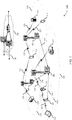
- the base stations 105 may communicate, either directly or indirectly (e.g ., through core network 130), with each other over backhaul links 134 (e.g ., XI, etc.), which may be wired or wireless communication links.
- backhaul links 134 e.g ., XI, etc.
- the base stations 105 may wirelessly communicate with the UEs 115 via one or more base station antennas. Each of the base stations 105 may provide communication coverage for a respective geographic coverage area 110.
- base stations 105 may be referred to as a base transceiver station, a radio base station, an access point, a radio transceiver, a NodeB, eNodeB (eNB), Home NodeB, a Home eNodeB, or some other suitable terminology.
- the geographic coverage area 110 for a base station 105 may be divided into sectors making up only a portion of the coverage area (not shown).
- the wireless communications system 100 may include base stations 105 of different types (e.g ., macro and/or small cell base stations). There may be overlapping geographic coverage areas 110 for different technologies
- a femto cell may also cover a small geographic area (e.g ., a home) and may provide restricted access by UEs 115 having an association with the femto cell (e.g ., UEs 115 in a closed subscriber group (CSG), UEs 115 for users in the home, and the like).
- An eNB for a macro cell may be referred to as a macro eNB.
- An eNB for a small cell may be referred to as a small cell eNB, a pico eNB, a femto eNB, or a home eNB.
- An eNB may support one or multiple ( e.g ., two, three, four, and the like) cells (e.g ., component carriers).
- the wireless communications system 100 may support synchronous or asynchronous operation.
- the base stations 105 may have similar frame timing, and transmissions from different base stations 105 may be approximately aligned in time.
- the base stations 105 may have different frame timing, and transmissions from different base stations 105 may not be aligned in time.
- the techniques described herein may be used for either synchronous or asynchronous operations.
- the communication networks may be packet-based networks that operate according to a layered protocol stack.
- PDCP packet data convergence protocol
- a radio link control (RLC) layer may perform packet segmentation and reassembly to communicate over logical channels.
- RLC radio link control
- a medium access control (MAC) layer may perform priority handling and multiplexing of logical channels into transport channels.
- the MAC layer may also use hybrid automatic repeat request (HARQ) to provide retransmission at the MAC layer to improve link efficiency.
- HARQ hybrid automatic repeat request
- the radio resource control (RRC) protocol layer may provide establishment, configuration, and maintenance of an RRC connection between a UE 115 and the base stations 105.
- the RRC protocol layer may also be used for core network 130 support of radio bearers for the user plane data.
- the transport channels may be mapped to physical channels.
- Automated wireless devices may include those implementing Machine-to-Machine (M2M) communication or Machine Type Communication (MTC).
- M2M and/or MTC may refer to data communication technologies that allow devices to communicate with one another or a base station without human intervention.
- M2M and/or MTC may refer to communications from devices that integrate sensors or meters to measure or capture information and relay that information to a central server or application program that can make use of the information or present the information to humans interacting with the program or application.
- Some UEs 115 may be MTC devices, such as those designed to collect information or enable automated behavior of machines.
- MTC devices examples include smart metering, inventory monitoring, water level monitoring, equipment monitoring, healthcare monitoring, wildlife monitoring, weather and geological event monitoring, fleet management and tracking, remote security sensing, physical access control, and transaction-based business charging.
- An MTC device may operate using half-duplex (one-way) communications at a reduced peak rate.
- MTC devices may also be configured to enter a power saving "deep sleep" mode when not engaging in active communications.
- the UEs 115 in wireless communications system 100 that are M2M or MTC devices may also be part of an IoT.
- wireless communications system 100 may also include or be part of an IoT system.
- the communication links 125 shown in wireless communications system 100 may include uplink (UL) transmissions from a UE 115 to a base station 105, and/or downlink (DL) transmissions, from a base station 105 to a UE 115.
- the downlink transmissions may also be called forward link transmissions while the uplink transmissions may also be called reverse link transmissions.
- Each communication link 125 may include one or more carriers, where each carrier may be a signal made up of multiple sub-carriers (e.g ., waveform signals of different frequencies) modulated according to the various radio technologies described above.
- Each modulated signal may be sent on a different sub-carrier and may carry control information (e.g ., reference signals, control channels, etc.), overhead information, user data, etc.
- base stations 105 and/or UEs 115 may include multiple antennas for employing antenna diversity schemes to improve communication quality and reliability between base stations 105 and UEs 115. Additionally or alternatively, base stations 105 and/or UEs 115 may employ multiple input multiple output (MIMO) techniques that may take advantage of multi-path environments to transmit multiple spatial layers carrying the same or different coded data.
- MIMO multiple input multiple output
- the UE 115 may receive a master information block (MIB), which may be transmitted in the PBCH.
- the MIB may contain system bandwidth information, a system frame number (SFN), and a physical HARQ indicator channel (PHICH) configuration.
- SIBs system information block
- SIB1 may contain cell access parameters and scheduling information for other SIBs. Decoding SIB1 may enable the UE 115 to receive SIB2.
- SIB2 may contain RRC configuration information related to random access channel (RACH) procedures, paging, PUCCH, PUSCH, power control, SRS, and cell barring.
- RACH random access channel
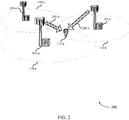
- FIG. 2 illustrates an example of a wireless communications subsystem 200 for a channel structure for a cellular IoT system in accordance with various aspects of the present disclosure.
- Wireless communications subsystem 200 may include UE 115-a, which may be an example of a UE 115 described above with reference to FIG. 1 .
- Wireless communications subsystem 200 may also include base stations 105-a, 105-b, and 105-c, which may be examples of a base station 105 described above with reference to FIG. 1 .
- Base stations 105-a, 105-b, and 105-c may have coverage areas 110-a, 110-b, and 110-c, respectively, which may overlap, and which may be examples of coverage area 110 described with reference to FIG. 1 .
- Base stations 105-a, 105-b and 105-c may each be a part of a local group of cells utilizing a common synchronization channel.
- UE 115-a may communicate with base station 105-a via an uplink and downlink, as described above in FIG. 1 .
- UE 115-a may perform an initial access procedure in which a known waveform is used.
- known waveform 205-a used for initial acquisition of base station 105-a may be the same as known waveform 205-b used for subsequent connection to base station 105-b.
- One or more cells associated with base station 105-c and other cells in the local group may also utilize the same known waveform.
- the known waveforms 205-a and 205-b may be transmitted on a physical common synchronization channel (PCSCH).
- PCSCH physical common synchronization channel
- PBCH may also utilize a known waveform and PCSCH may be a different known waveform 205.
- Known waveform 205 may be used for initial access for any base station 105 with overlapping coverage area 110, or for any base station common to a group of cells in a local region, but without overlapping coverage area 110.
- the known waveform may convey system information such as PBCH timing.
- UE 115-a may utilize the system information to synchronize to PBCH and thus access information carried by PBCH (e.g ., the MIB).
- PBCH may convey information such as network configuration, access control, and channel configuration.
- PBCH may convey time/frequency information of PRACH, PDCCH, and PDSCH/PUSCH.
- PBCH may indicate the configuration of PRACH so that new UEs 115 may determine where to access.
- PBCH may indicate the configuration of PDCCH so that active UEs 115 may determine how to decode control information.
- PBCH may also indicate the configuration of PDSCH/PUSCH so that active UEs may determine how to receive and/or send data traffic.
- UE 115-a may synchronize with a cell using a waveform 205-a (or 205-b) which is known to UE 115-a beforehand, and common to a group of cells (e.g ., cells associated with base stations 105-a, 105-b, 105-c) in the local region.
- PCSCH and PBCH may utilize different known waveforms.
- the UE 115-a may determine a PBCH time from information conveyed by the known synchronization waveform 205-a.
- UE 115-a may then receive PBCH and use it to determine a physical layer ID for the cell and a frequency for uplink transmissions.
- the PBCH may also indicate a channel configuration, which may enable UE 115-a to perform a RACH.
- the channel configuration may include a time and frequency resource configuration of a shared traffic channel.
- UE 115-a may determine resources for data transmission based on an index of a control channel transmission.
- FIG. 3A illustrates an example of a downlink channel multiplexing configuration 301 for a channel structure for a cellular IoT system in accordance with various aspects of the present disclosure.
- Downlink channel multiplexing configuration 301 may be used by a base station 105 to communicate with a UE 115 as described above with reference to FIGs. 1 or 2 .
- a downlink signal may comprise radio resources allocated to channels in time-multiplexed manner (e.g ., channels may be allocated time slots).
- Downlink channel multiplexing configuration 301 depicts an example scenario in which downlink channels PCSCH 305, PBCH 310, PDCCH 315, and PDSCH 320 are time-multiplexed.
- each channel may be assigned a different number of slots (i.e ., half-subframes).
- PDCCH 315 may be allocated 2 slots.
- PDCCH 315 may convey paging, RACH response, HARQ, power control, and DL/UL assignment information.
- PDCCH 315 may convey information a UE 115 may use to access its assigned data traffic on PDSCH 320.
- PCSCH 305 and PBCH 310 are shown with equal time allocations.
- a time-multiplexed channel may be allocated any amount of available radio resources.
- the radio resources allocated to a channel may be the same for every frame, or different for different frames.
- PCSCH 305 and PBCH 310 may be of fixed lengths for every frame, while PDCCH 315 and PDSCH 320 may be of variable lengths.
- FIG. 3B illustrates an example of an uplink channel multiplexing configuration 302 for a channel structure for a cellular IoT system in accordance with various aspects of the present disclosure.
- Uplink channel multiplexing configuration 302 may be used by a UE 115 to communicate with a base station 105, as described above with reference to FIGs. 1 or 2 .
- an uplink signal may comprise channels which have been allocated radio resources in frequency-multiplexed manner (e.g ., channels may be allocated certain frequencies).
- uplink channel multiplexing configuration 302 may allocate different sets of frequencies for PRACH 325, PUSCH 330, and PUCCH 335.
- PRACH 325 may be used for initial random access and on-demand request for PUSCH of active UEs 115.
- PUSCH may comprise data traffic and PUCCH may convey uplink control information (UCI) such as channel quality information and acknowledgement (ACK) /negative acknowledgement (NACK) information.
- UCI uplink control information
- ACK channel quality information and acknowledgement
- NACK negative acknowledgement
- the allocated uplink frequencies may be contiguous, as shown in FIG. 3B , but in other examples they may be non-contiguous.
- Based on the frequency channel multiplexing a UE 115 may transmit information related to the multiple channels simultaneously using the corresponding frequency tones.
- a UE 115 may synchronize with a cell of a base station 105 using a waveform known to the UE 115 beforehand, and common to a group of cells in the local region.
- PCSCH 305 may utilize a known waveform and may be time-multiplexed.
- PBCH may also be a known waveform.
- the UE 115 may use information conveyed by the known wave form to determine a PBCH 310 transmission time.
- the UE 115 may then receive PBCH 310 and use it to determine a physical layer ID for the cell and a frequency for uplink transmissions.
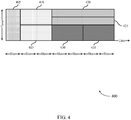
- FIG. 4 illustrates an example of a resource allocation 400 with time-and frequency-multiplexed segments for a channel structure for a cellular IoT system in accordance with various aspects of the present disclosure.
- Resource allocation 400 may be an example of PDSCH 320 or PUSCH 330, as described with reference to FIGs. 1 , 2 , 3A and 3B .
- Resource allocation 400 may be provided by a base station 105 to a UE 115 as described above with reference to FIGs. 1 or 2 and may be used in conjunction with a common synchronization channel and a multiplexing configuration as described above with reference to FIGs. 2 , 3A and 3B .
- Resource allocation 400 depicts an illustrative example including four tones, but the number of tones available may be more than four. In some cases, the number of tones for flexible allocation may be equal to the number of subcarriers in the carrier ( e.g ., 1200 subcarriers for a 20MHz carrier).
- a segment may comprise all the tones available for allocation, (e.g ., segment 405 or a portion of the available tones ( e.g. , segment 420 and segment 425). In some instances, ( e.g ., segment 420 and segment 425) may comprise the smallest narrowband carrier in terms of bandwidth ( e.g ., a 15 KHz subcarrier). Other resource segments (e.g., segments 410, 415, 430, and 435) may use an intermediate bandwidth.
- the number of slots used by a resource segment may be inversely proportional to the number of tones in the segment. For example, segment 405, which comprises four tones available for allocation, may use only one slot while segment 410, which comprises two tones available, may use twice as many time slots.
- Segment 420 which comprises only one tone, may use four-times as many slots.
- the time-frequency resources of resource allocation 400 may be assigned to the same UE 115 or different UEs 115, and may be dynamically and flexibly allocated. For example, segments 405, 410, and 415 may be allocated to one UE 115, segments 420 and 425 may be allocated to a second UE 115 and segments 430 and 435 may be allocated to a third UE 115.
- the bandwidth of the segments assigned to a UE 115 may correspond to the power limitations of the device. For example, a power limited UE 115 may be allocated a wider bandwidth to enable the device to power down radio components during a longer sleep period.
- a UE 115 may synchronize with a cell using a waveform known to the UE 115 beforehand, and common to a group of cells in the local region. The UE 115 may then use information conveyed by PCSCH 305 to determine a PBCH 310 time. The UE 115 may receive the PBCH 310 and use it to determine a physical layer ID for the cell and a frequency for uplink transmissions.
- the PBCH 310 may also indicate a channel configuration, which may enable the UE 115 to perform a random access procedure.
- the channel configuration may include a flexible time and frequency resource configuration utilizing segments with different numbers of tones and slots as illustrated in the example resource allocation 400.
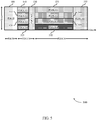
- FIG. 5 illustrates an example of a downlink channel segment configuration 500 for a channel structure for a cellular IoT system in accordance with various aspects of the present disclosure.
- Downlink channel segment configuration 500 may be used for communication between a UE 115 and a base station 105 as described in reference to FIGs. 1-4 .
- shared channels such as PDSCH 320 or PUSCH 330 may be transmitted at different times on various frequencies arranged in a time/frequency tiling as illustrated by downlink channel segment configuration 500.
- PDSCH 320 may be organized into segments that may be tiled across radio resources.
- a UE 115 may identify assigned PDSCH segments by determining the index of successfully decoded PDCCH.
- the UE 115 may receive PBCH 505 which may convey information regarding the configuration of a PDCCH 315 and a corresponding configuration of a PDSCH 320.
- the UE 115 may attempt to decode the PDCCH segments (e.g ., PDCCH1 510, PDCCH2 515, PDCCH3 520, and PDCCH4 525) and determine the index of each successfully decoded segment ( i.e ., each segment directed toward the UE 115).
- PDSCH segments e.g., PDSCH1 535, PDSCH2 540, PDSCH3 545, and PDSCH4 550 assigned to the UE 115 may have an index corresponding to the PDCCH segments for the UE 115.
- a UE 115 may decode channel segment PDCCH1 510 to identify assigned channel segment PDSCH1 535.
- a UE 115 may decode multiple channel segments (e.g ., PDCCH segments 1-4) to identify multiple corresponding PDSCH segments ( e.g ., PDSCH segments 1-4).
- a UE 115 may decode channel segment PDCCH5 530 to determine it has been assigned channel segment PDSCH5 555. In such an instance, the UE 115 may determine that it may sleep during channel segments PDSCH1 535, PDSCH2 540, PDSCH3 545, and PDSCH4 550. The UE 115 may then wake up to receive channel segment PDSCH5 555. In other words, an active UE 115 may wake up at the beginning of a frame, decode the control messages (e.g ., PBCH 505 and PDCCH 315), enter a low power mode, and then re-activate radio components when an assigned PDSCH segment (or PUSCH segment) such as PDSCH5 555 is scheduled.
- the control messages e.g ., PBCH 505 and PDCCH 315
- a base station 105 may implement an activity time-out mechanism to move an active UE 115 into sleep mode. Additionally, a UE 115 may send a termination message to base station 105 (e.g., together with traffic in an assigned PUSCH segment).
- a UE 115 may synchronize with a cell using a waveform known to the UE 115 beforehand, and common to a group of cells in the local region. The UE 115 may then determine timing for a PBCH 505.
- the PBCH 505 may indicate the downlink channel segment configuration 500.
- the UE 115 may determine resources for data transmission (e.g ., PDSCH5 555) based on an index of a control channel transmission (e.g ., PDCCH5 525).
- there may be a predetermined delay between the control channel transmission and data channel transmission such that the UE 115 may then enter a low power state during the delay.
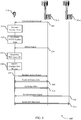
- FIG. 6 illustrates an example of a process flow diagram 600 for cell acquisition utilizing a channel structure for a cellular IoT system in accordance with various aspects of the present disclosure.
- Process flow diagram 600 for cell acquisition may include a UE 115-b, which may be an example of a UE 115 described above with reference to FIGs. 1 and 2 .
- Process flow diagram 600 for cell acquisition may also include base stations 105-d and 105-e, which may be examples of a base station 105 described above with reference to FIGs. 1 and 2 .
- Base station 105-d and base station 105-e may have overlapping coverage areas 110 and may be part of a local group of cells sharing a known waveform (for PCSCH or PBCH).
- UE 115-b may receive a first synchronization signal from base station 105-e on a common synchronization channel.
- the first synchronization signal may be a waveform known to UE 115-b prior to receiving the signal.
- UE 115-b may estimate a carrier frequency based on the first synchronization signal. For example, UE 115-b may compare the estimated carrier frequency of the first synchronization signal and a frequency generated by a local oscillator of UE 115-b and use the feedback to fine tune the oscillator. In some instances, UE 115-b may generate an uplink carrier frequency based on the comparison and transmit an uplink signal with the generated uplink carrier frequency.
- UE 115-b may estimate a symbol time of the first synchronization signal.
- UE 115-b may then determine a PBCH symbol time based on the estimated symbol time of the first synchronization signal.
- UE 115-b may receive a PBCH signal based on the PBCH symbol time.
- the length of the PBCH may be fixed, and known a priori to UE 115-b.
- UE 115-b may determine a physical layer ID of the first cell based on the received PBCH signal.
- UE 115-b may identify a configuration message based on the PBCH signal.
- the UE 115-b may receive a control channel transmission that specifies an ID for UE 115-b and an index of a time frequency resource for a data channel transmission on the shared data traffic channel.
- the PBCH signal may comprise a configuration message specifying a time/frequency configuration of the shared data traffic channel.
- the resource configuration may be for a DL shared channel or for an UL shared channel.
- UE 115-b may receive data according to the indicated time frequency resources and in some cases, UE 115-b may transmit data using the resources.
- the transmission power of the control channel transmission is proportional to a transmission power of the data channel transmission. In some examples, the transmission power is based on a path loss between base station 105-d (or 105-e) and UE 115-b.
- UE 115-b may transmit a random access signal to the first cell based on the received configuration message. Subsequently, at step 640, UE 115-b may establish a first connection to the first cell.
- UE 115-b may exchange data with base station 105-d based on the channel structure specified by the configuration message.
- the channel structure may be flexible and may include a configuration for a shared channel tiling pattern based on a predetermined table.
- the predetermined table may include configuration options that may be specified by the configuration message transmitted in PBCH.
- UE 115-b may exchange data with a network based on machine type communication (MTC) procedures.
- MTC machine type communication
- the control channel transmission may indicate a delay between the control channel transmission and the data channel transmission.
- UE 115-b may then initiate a wake up timer based on the delay, enter a low power mode, and wake up (for transmission or reception of data) upon expiration of the sleep wake up timer.
- UE 115-b may receive a second synchronization signal (using the same waveform as the first synchronization signal) from base station 105-e on a common synchronization. For example, if channel quality between UE 115-b and base station 105-d deteriorates, UE 115-b may be directed to handover to base station 105-e.
- UE 115-b may establish a second connection with base station 105-e based on the second synchronization signal.
- UE 115-b may then receive a new channel configuration from base station 105-e and exchange data based on the new configuration.
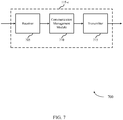
- FIG. 7 shows a block diagram 700 of a UE 115-c configured for a channel structure for a cellular IoT system in accordance with various aspects of the present disclosure.
- UE 115-c may be an example of aspects of a UE 115 described with reference to FIGs. 1-6 .
- UE 115-c may include a receiver 705, a communication management module 710, and/or a transmitter 715.
- UE 115-c may also include a processor. Each of these components may be in communication with each other.
- the communication management module 710 may receive a first synchronization signal from a first cell on a common synchronization channel of the first cell, wherein the first synchronization signal is a waveform known to the UE 115 prior to receiving the signal, estimate a symbol time of the first synchronization signal, determine a PBCH symbol time of the first cell based on the estimated symbol time of the first synchronization signal, receive a PBCH signal based at least in part on the PBCH symbol time, and determine a physical layer ID of the first cell based on the received PBCH signal.
- the transmitter 715 may transmit signals received from other components of UE 115-c.
- the transmitter 715 may be collocated with the receiver 705 in a transceiver module.
- the transmitter 715 may include a single antenna, or it may include a plurality of antennas.
- the transmitter 715 may transmit an uplink signal with the generated uplink carrier frequency.
- the transmitter 715 may transmit the data channel transmission on the time frequency resource of the shared data traffic channel.
- the transmitter 715 may be put into a low power mode during a sleep interval and then powered up to transmit a data channel transmission upon expiration of a sleep wake up timer.
- the receiver 705-a may receive information which may be passed on to communication management module 710-a, and to other components of UE 115-d.
- the communication management module 710-a may perform the operations described above with reference to FIG. 7 .
- the transmitter 715-a may transmit signals received from other components of UE 115-d.
- the synchronization module 805 may receive a first synchronization signal from a first cell on a common synchronization channel of the first cell, wherein the first synchronization signal is a waveform known to the UE prior to receiving the signal as described above with reference to FIGs. 2-6 .
- the synchronization module 805 may also estimate a symbol time of the first synchronization signal.
- the synchronization module 805 may also receive a second synchronization signal from a second cell on a common synchronization channel of the second cell, the second cell being different from the first cell, wherein the first and second synchronization signals use the same waveform.
- the PBCH timing module 810 may determine a PBCH symbol time of the first cell based on the estimated symbol time of the first synchronization signal as described above with reference to FIGs. 2-6 .
- the PBCH timing module 810 may also receive a PBCH signal based at least in part on the PBCH symbol time.
- a length of the PBCH signal may be fixed and known to the UE prior to receiving the PBCH signal.
- the cell ID module 815 may determine a physical layer ID of the first cell based on the received PBCH signal as described above with reference to FIGs. 2-6 .
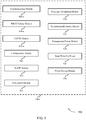
- FIG. 9 shows a block diagram 900 of a communication management module 710-b for a channel structure for a cellular IoT system in accordance with various aspects of the present disclosure.
- the communication management module 710-b may be an example of aspects of a communication management module 710 described with reference to FIGs. 7-8 .
- the communication management module 710-b may include a synchronization module 805-a, a PBCH timing module 810-a, and a cell ID module 815-a. Each of these modules may perform the functions described above with reference to FIG. 8 .
- the communication management module 710-b may also include a configuration module 905, a RACH module 910, a connection module 915, a frequency estimation module 920, a transmission resource module 925, a transmission power module 930, a sleep wake up timer 935, and a power saving module 940.
- the configuration module 905 may identify a configuration message based on a PBCH signal as described above with reference to FIGs. 2-6 .
- the configuration module 905 may also exchange data with a first or second cell based on a channel structure specified by the configuration message.
- the PBCH signal comprises a configuration message specifying a time and frequency resource configuration of a shared data traffic channel for transmitting payload data traffic.
- the control channel transmission comprises a delay between a timing of the control channel transmission and a timing of the data channel transmission. In some examples, the control channel transmission comprises a delay between a timing of the control channel transmission and a timing of the data channel transmission.
- the configuration module 905 may also exchange data using a set of channels with segments arranged according to a flexible time and frequency tiling pattern of a flexible channel structure.
- the flexible channel structure comprises a configuration of a shared channel tiling pattern based on a predetermined table and the configuration may be specified by the configuration message transmitted in the PBCH signal.
- an index of the time frequency resource indicates an index of the predetermined table.
- the RACH module 910 may transmit (in coordination with transmitter 715) a random access signal to the first cell based on the received configuration message as described above with reference to FIGs. 2-6 .
- the connection module 915 may establish a first connection to the first cell as described above with reference to FIGs. 2-6 .
- the connection module 915 may also establish a second connection to the second cell based on the second synchronization signal.
- the first cell and the second cell are elements of a set of cells sharing the known waveform, wherein each cell from the set of cells has an overlapping coverage area with another cell from the set of cells.
- the frequency estimation module 920 may estimate a carrier frequency of the first synchronization signal as described above with reference to FIGs. 2-6 .
- the frequency estimation module 920 may also compare the estimated carrier frequency of the first synchronization signal and a local carrier frequency generated by a local oscillator of the UE. The frequency estimation module 920 may then generate an uplink carrier frequency as a function of the comparison.
- the transmission resource module 925 may receive a control channel transmission that specifies an ID of the UE and an index of a time frequency resource for a data channel transmission on the shared data traffic channel as described above with reference to FIGs. 2-6 .
- the transmission power module 930 may be configured such that a transmission power of the control channel transmission may be proportional to a transmission power of the data channel transmission as described above with reference to FIGs. 2-6 . In some examples, the transmission power of the control channel transmission may be based on a path loss of the UE.
- the sleep wake up timer 935 may initiate a sleep wake up timer based on the timing of the data channel transmission as described above with reference to FIGs. 2-6 .
- the sleep wake up timer 935 may also initiate a sleep wake up timer based on the timing of the data channel transmission.
- the power saving module 940 may enter (or cause the UE to enter) a power saving mode based at least in part on initiating the sleep wake up timer as described above with reference to FIGs. 2-6 .
- the power saving module 940 may also enter (and then terminate) a power saving mode based at least in part on the sleep wake up timer.
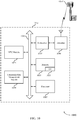
- FIG. 10 shows a diagram of a system 1000 including a UE 115-e configured for a channel structure for a cellular IoT system in accordance with various aspects of the present disclosure.
- System 1000 may include UE 115-e, which may be an example of a UE 115 described above with reference to FIGs. 1-9 .
- UE 115-e may include a communication management module 1010, which may be an example of a communication management module 710 described with reference to FIGs. 7-9 .
- UE 115-e may also include a MTC module 1025.
- UE 115-e may also include components for bi-directional voice and data communications including components for transmitting communications and components for receiving communications. For example, UE 115-e may communicate bi-directionally with base station 105-f.
- the MTC module 1025 may exchange data with a network based on MTC procedures as described above with reference to FIGs. 2-6 .
- the MTC module 1025 may facilitate improved communication between the UE 115-e and a base station 105-f by using open loop timing synchronization to determine transmit symbol time.
- the MTC module 1025 may also facilitate the use of an extended cyclic prefix length in uplink transmissions, while non-extended cyclic prefix lengths may be used with downlink transmissions.
- uplink signals from different UEs 115 may arrive at a base station 105-f within a window of time (e.g ., the maximum round-trip delay between the UE 115 and the base station 105-f) covered by the uplink cyclic prefix.
- a window of time e.g ., the maximum round-trip delay between the UE 115 and the base station 105-f
- UE 115-e may utilize orthogonal frequency division multiple access (OFDMA) for demodulating downlink messages and a combination of Gaussian minimum shift keying (GMSK) and single carrier frequency division multiple access (SC-FDMA) for uplink modulation.
- OFDMA orthogonal frequency division multiple access
- GMSK Gaussian minimum shift keying
- SC-FDMA single carrier frequency division multiple access
- the uplink modulation process may include generating a symbol vector with an M-point discrete Fourier transform (DFT), filtering the symbol vector with a frequency domain Gaussian filter, generating a sample vector from the filtered symbol vector utilizing an inverse DFT, and modulating the sample vector utilizing GMSK.
- the uplink modulation may be based on a narrowband resource allocation received from a base station.
- the MTC module 1025 may be configured to identify time or frequency resources allocated to UE 115-e by base station 105-f.
- the resource allocation may be apportioned based on a type and class of PRACH signal scheduled for transmission. For instance, the MTC module 1025 may determine that UE 115-e is assigned a first subset of resources to transmit regularly scheduled traffic and a second subset of resources to transmit on-demand traffic.
- Regularly scheduled traffic may include, for example, sensor measurements reported to the base station on a predetermined time interval ( e.g ., 24 hour time interval).
- an on-demand traffic may include an impromptu transmission, initiated based on a detection of at least one reporting trigger ( e.g ., sensing an abnormality at UE 115-e).
- the MTC module 1025 may facilitate using stored control information from a first communication session with the base station to determine the power and timing control information for a subsequent second communication session. Specifically, in this example, the MTC module 1025 may establish a first communication session with the base station 105-f and receive, during the first communication session, closed loop control information from the base station 105-f to aid the UE 115-e in adjusting transmit signal symbol timing or power control levels associated with an uplink transmission. In such instance, the MTC module 1025 may facilitate storing, in the memory 1015, the transmit power and symbol timing information derived from the closed loop control information during the first communication session. Subsequently, the MTC module 1025 may utilize the stored closed loop control information from the first communication session to determine the transmit signal power or symbol timing to establish a second communication session with the base station 105-f.
- the UE 115-e may also include a processor module 1005, and memory 1015 (including software (SW)) 1020, a transceiver module 1035, and one or more antenna(s) 1040, each of which may communicate, directly or indirectly, with each other ( e.g ., via buses 1045).
- the transceiver module 1035 may communicate bi-directionally, via the antenna(s) 1040 and/or wired or wireless links, with one or more networks, as described above.
- the transceiver module 1035 may communicate bi-directionally with a base station 105 and/or another UE 115.
- the transceiver module 1035 may include a modem to modulate the packets and provide the modulated packets to the antenna(s) 1040 for transmission, and to demodulate packets received from the antenna(s) 1040. While UE 115-e may include a single antenna 1040, UE 115-e may also have multiple antennas 1040 capable of concurrently transmitting and/or receiving multiple wireless transmissions.
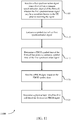
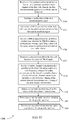
- FIG. 11 shows a flowchart illustrating a method 1100 for a channel structure for a cellular IoT system in accordance with various aspects of the present disclosure.
- the operations of method 1100 may be implemented by a UE 115 or its components as described with reference to FIGs. 1-10 .
- the operations of method 1100 may be performed by the communication management module 710 as described with reference to FIGs. 7-11 .
- a UE 115 may execute a set of codes to control the functional elements of the UE 115 to perform the functions described below. Additionally or alternatively, the UE 115 may perform aspects the functions described below using special-purpose hardware.
- the UE 115 may estimate a symbol time of the first synchronization signal as described above with reference to FIGs. 2-6 .
- the operations of block 1110 may be performed by the synchronization module 805 as described above with reference to FIG. 8 .
- the UE 115 may receive a PBCH signal based at least in part on the PBCH symbol time as described above with reference to FIGs. 2-6 .
- the operations of block 1120 may be performed by the PBCH timing module 810 as described above with reference to FIG. 8 .
- the UE 115 may determine a physical layer ID of the first cell based on the received PBCH signal as described above with reference to FIGs. 2-6 .
- the operations of block 1125 may be performed by the cell ID module 815 as described above with reference to FIG. 8 .
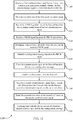
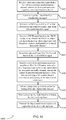
- FIG. 12 shows a flowchart illustrating a method 1200 for a channel structure for a cellular IoT system in accordance with various aspects of the present disclosure.
- the operations of method 1200 may be implemented by a UE 115 or its components as described with reference to FIGs. 1-10 .
- the operations of method 1200 may be performed by the communication management module 710 as described with reference to FIGs. 7-11 .
- a UE 115 may execute a set of codes to control the functional elements of the UE 115 to perform the functions described below. Additionally or alternatively, the UE 115 may perform aspects the functions described below using special-purpose hardware.
- the method 1200 may also incorporate aspects of method 1100 of FIG. 11 .
- the UE 115 may receive a first synchronization signal from a first cell on a common synchronization channel of the first cell, wherein the first synchronization signal is a waveform known to the UE prior to receiving the signal as described above with reference to FIGs. 2-6 .
- the operations of block 1205 may be performed by the synchronization module 805 as described above with reference to FIG. 8 .
- the UE 115 may determine a PBCH symbol time of the first cell based on the estimated symbol time of the first synchronization signal as described above with reference to FIGs. 2-6 .
- the operations of block 1215 may be performed by the PBCH timing module 810 as described above with reference to FIG. 8 .
- the UE 115 may receive a PBCH signal based at least in part on the PBCH symbol time as described above with reference to FIGs. 2-6 .
- the operations of block 1220 may be performed by the PBCH timing module 810 as described above with reference to FIG. 8 .
- the UE 115 may determine a physical layer ID of the first cell based on the received PBCH signal as described above with reference to FIGs. 2-6 .
- the operations of block 1225 may be performed by the cell ID module 815 as described above with reference to FIG. 8 .
- the UE 115 may identify a configuration message based on the PBCH signal as described above with reference to FIGs. 2-6 .
- the operations of block 1230 may be performed by the configuration module 905 as described above with reference to FIG. 9 .
- the UE 115 may transmit a random access signal to the first cell based on the received configuration message as described above with reference to FIGs. 2-6 .
- the operations of block 1235 may be performed by the RACH module 910 as described above with reference to FIG. 9 .
- the UE 115 may establish a first connection to the first cell as described above with reference to FIGs. 2-6 .
- the operations of block 1240 may be performed by the connection module 915 as described above with reference to FIG. 9 .
- the UE 115 may receive a second synchronization signal from a second cell on a common synchronization channel of the second cell, the second cell being different from the first cell, wherein the first and second synchronization signals use the same waveform as described above with reference to FIGs. 2-6 .
- the operations of block 1245 may be performed by the synchronization module 805 as described above with reference to FIG. 8 .
- the UE 115 may establish a second connection to the second cell based on the second synchronization signal as described above with reference to FIGs. 2-6 .
- the operations of block 1250 may be performed by the connection module 915 as described above with reference to FIG. 9 .
- the UE 115 may exchange data with the first or second cell based on a channel structure specified by the configuration message as described above with reference to FIGs. 2-6 .
- the operations of block 1255 may be performed by the configuration module 905 as described above with reference to FIG. 9 .
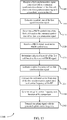
- FIG. 13 shows a flowchart illustrating a method 1300 for a channel structure for a cellular IoT system in accordance with various aspects of the present disclosure.
- the operations of method 1300 may be implemented by a UE 115 or its components as described with reference to FIGs. 1-10 .
- the operations of method 1300 may be performed by the communication management module 710 as described with reference to FIGs. 7-11 .
- a UE 115 may execute a set of codes to control the functional elements of the UE 115 to perform the functions described below. Additionally or alternatively, the UE 115 may perform aspects the functions described below using special-purpose hardware.
- the method 1300 may also incorporate aspects of methods 1100, and 1200 of FIGs. 11-12 .
- the UE 115 may receive a first synchronization signal from a first cell on a common synchronization channel of the first cell, wherein the first synchronization signal is a waveform known to the UE prior to receiving the signal as described above with reference to FIGs. 2-6 .
- the operations of block 1305 may be performed by the synchronization module 805 as described above with reference to FIG. 8 .
- the UE 115 may estimate a symbol time of the first synchronization signal as described above with reference to FIGs. 2-6 .
- the operations of block 1310 may be performed by the synchronization module 805 as described above with reference to FIG. 8 .
- the UE 115 may determine a PBCH symbol time of the first cell based on the estimated symbol time of the first synchronization signal as described above with reference to FIGs. 2-6 .
- the operations of block 1315 may be performed by the PBCH timing module 810 as described above with reference to FIG. 8 .
- the UE 115 may receive a PBCH signal based at least in part on the PBCH symbol time as described above with reference to FIGs. 2-6 .
- the operations of block 1320 may be performed by the PBCH timing module 810 as described above with reference to FIG. 8 .
- the UE 115 may determine a physical layer ID of the first cell based on the received PBCH signal as described above with reference to FIGs. 2-6 .
- the operations of block 1325 may be performed by the cell ID module 815 as described above with reference to FIG. 8 .
- the UE 115 may estimate a carrier frequency of the first synchronization signal as described above with reference to FIGs. 2-6 .
- the operations of block 1330 may be performed by the frequency estimation module 920 as described above with reference to FIG. 9 .
- the UE 115 may compare the estimated carrier frequency of the first synchronization signal and a local carrier frequency generated by a local oscillator of the UE as described above with reference to FIGs. 2-6 .
- the operations of block 1335 may be performed by the frequency estimation module 920 as described above with reference to FIG. 9 .
- the UE 115 may generate an uplink carrier frequency as a function of the comparison as described above with reference to FIGs. 2-6 .
- the operations of block 1340 may be performed by the frequency estimation module 920 as described above with reference to FIG. 9 .
- the UE 115 may transmit an uplink signal with the generated uplink carrier frequency as described above with reference to FIGs. 2-6 .
- the operations of block 1345 may be performed by the transmitter 715 as described above with reference to FIG. 7 .
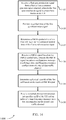
- FIG. 14 shows a flowchart illustrating a method 1400 for a channel structure for a cellular IoT system in accordance with various aspects of the present disclosure.
- the operations of method 1400 may be implemented by a UE 115 or its components as described with reference to FIGs. 1-10 .
- the operations of method 1400 may be performed by the communication management module 710 as described with reference to FIGs. 7-11 .
- a UE 115 may execute a set of codes to control the functional elements of the UE 115 to perform the functions described below. Additionally or alternatively, the UE 115 may perform aspects the functions described below using special-purpose hardware.
- the method 1400 may also incorporate aspects of methods 1100, 1200, and 1300 of FIGs. 11-13 .
- the UE 115 may receive a first synchronization signal from a first cell on a common synchronization channel of the first cell, wherein the first synchronization signal is a waveform known to the UE prior to receiving the signal as described above with reference to FIGs. 2-6 .
- the operations of block 1405 may be performed by the synchronization module 805 as described above with reference to FIG. 8 .
- the UE 115 may estimate a symbol time of the first synchronization signal as described above with reference to FIGs. 2-6 .
- the operations of block 1410 may be performed by the synchronization module 805 as described above with reference to FIG. 8 .
- the UE 115 may determine a PBCH symbol time of the first cell based on the estimated symbol time of the first synchronization signal as described above with reference to FIGs. 2-6 .
- the operations of block 1415 may be performed by the PBCH timing module 810 as described above with reference to FIG. 8 .
- the UE 115 may receive a PBCH signal based at least in part on the PBCH symbol time as described above with reference to FIGs. 2-6 .
- the PBCH signal may comprise a configuration message specifying a time and frequency resource configuration of a shared data traffic channel for transmitting payload data traffic
- the operations of block 1420 may be performed by the PBCH timing module 810 as described above with reference to FIG. 8 .
- the UE 115 may determine a physical layer ID of the first cell based on the received PBCH signal as described above with reference to FIGs. 2-6 .
- the operations of block 1425 may be performed by the cell ID module 815 as described above with reference to FIG. 8 .
- the UE 115 may receive a control channel transmission that specifies an ID of the UE and an index of a time frequency resource for a data channel transmission on the shared data traffic channel as described above with reference to FIGs. 2-6 .
- the operations of block 1430 may be performed by the transmission resource module 925 as described above with reference to FIG. 9 .
- FIG. 15 shows a flowchart illustrating a method 1500 for a channel structure for a cellular IoT system in accordance with various aspects of the present disclosure.
- the operations of method 1500 may be implemented by a UE 115 or its components as described with reference to FIGs. 1-10 .
- the operations of method 1500 may be performed by the communication management module 710 as described with reference to FIGs. 7-11 .
- a UE 115 may execute a set of codes to control the functional elements of the UE 115 to perform the functions described below. Additionally or alternatively, the UE 115 may perform aspects the functions described below using special-purpose hardware.
- the method 1500 may also incorporate aspects of methods 1100, 1200, 1300, and 1400 of FIGs. 11-14 .
- the UE 115 may receive a first synchronization signal from a first cell on a common synchronization channel of the first cell, wherein the first synchronization signal is a waveform known to the UE prior to receiving the signal as described above with reference to FIGs. 2-6 .
- the operations of block 1505 may be performed by the synchronization module 805 as described above with reference to FIG. 8 .
- the UE 115 may estimate a symbol time of the first synchronization signal as described above with reference to FIGs. 2-6 .
- the operations of block 1510 may be performed by the synchronization module 805 as described above with reference to FIG. 8 .
- the UE 115 may determine a PBCH symbol time of the first cell based on the estimated symbol time of the first synchronization signal as described above with reference to FIGs. 2-6 .
- the operations of block 1515 may be performed by the PBCH timing module 810 as described above with reference to FIG. 8 .
- the UE 115 may determine a physical layer ID of the first cell based on the received PBCH signal as described above with reference to FIGs. 2-6 .
- the operations of block 1525 may be performed by the cell ID module 815 as described above with reference to FIG. 8 .
- the UE 115 may receive a control channel transmission that specifies an ID of the UE and an index of a time frequency resource for a data channel transmission on the shared data traffic channel as described above with reference to FIGs. 2-6 .
- the control channel transmission may comprise a delay between a timing of the control channel transmission and a timing of the data channel transmission.
- the operations of block 1530 may be performed by the transmission resource module 925 as described above with reference to FIG. 9 .
- the UE 115 may initiate a sleep wake up timer based on the timing of the data channel transmission as described above with reference to FIGs. 2-6 .
- the operations of block 1535 may be performed by the sleep wake up timer 935 as described above with reference to FIG. 9 .
- the UE 115 may enter a power saving mode based at least in part on initiating the sleep wake up timer as described above with reference to FIGs. 2-6 .
- the operations of block 1540 may be performed by the power saving module 940 as described above with reference to FIG. 9 .
- the UE 115 may receive the data channel transmission upon expiration of the sleep wake up timer as described above with reference to FIGs. 2-6 .
- the operations of block 1545 may be performed by the receiver 705 as described above with reference to FIG. 7 .
- the UE 115 may receive a first synchronization signal from a first cell on a common synchronization channel of the first cell, wherein the first synchronization signal is a waveform known to the UE prior to receiving the signal as described above with reference to FIGs. 2-6 .
- the operations of block 1605 may be performed by the synchronization module 805 as described above with reference to FIG. 8 .
- the UE 115 may estimate a symbol time of the first synchronization signal as described above with reference to FIGs. 2-6 .
- the operations of block 1610 may be performed by the synchronization module 805 as described above with reference to FIG. 8 .
- the UE 115 may determine a PBCH symbol time of the first cell based on the estimated symbol time of the first synchronization signal as described above with reference to FIGs. 2-6 .
- the operations of block 1615 may be performed by the PBCH timing module 810 as described above with reference to FIG. 8 .
- the UE 115 may receive a PBCH signal based at least in part on the PBCH symbol time as described above with reference to FIGs. 2-6 .
- the PBCH signal may comprise a configuration message specifying a time and frequency resource configuration of a shared data traffic channel for transmitting payload data traffic
- the operations of block 1620 may be performed by the PBCH timing module 810 as described above with reference to FIG. 8 .
- the UE 115 may initiate a sleep wake up timer based on the timing of the data channel transmission as described above with reference to FIGs. 2-6 .
- the operations of block 1640 may be performed by the sleep wake up timer 935 as described above with reference to FIG. 9 .
- the UE 115 may enter a power saving mode based at least in part on initiating the sleep wake up timer as described above with reference to FIGs. 2-6 .
- the operations of block 1645 may be performed by the power saving module 940 as described above with reference to FIG. 9 .
- the UE 115 may transmit the data channel transmission upon expiration of the sleep wake up timer as described above with reference to FIGs. 2-6 .
- the operations of block 1650 may be performed by the transmitter 715 as described above with reference to FIG. 7 .
- methods 1100, 1200, 1300, 1400, 1500, and 1600 may provide for a channel structure for a cellular IoT system. It should be noted that methods 1100, 1200, 1300, 1400, 1500, and 1600 describe possible implementation, and that the operations and the steps may be rearranged or otherwise modified such that other embodiments are possible. In some examples, aspects from two or more of the methods 1100, 1200, 1300, 1400, 1500, and 1600 may be combined.
- Information and signals may be represented using any of a variety of different technologies and techniques.
- data, instructions, commands, information, signals, bits, symbols, and chips that may be referenced throughout the above description may be represented by voltages, currents, electromagnetic waves, magnetic fields or particles, optical fields or particles, or any combination thereof.
- the functions described herein may be implemented in hardware, software executed by a processor, firmware, or any combination thereof. If implemented in software executed by a processor, the functions may be stored on or transmitted over as one or more instructions or code on a computer-readable medium. Other examples and embodiments are within the scope of the disclosure and appended claims. For example, due to the nature of software, functions described above can be implemented using software executed by a processor, hardware, firmware, hardwiring, or combinations of any of these. Features implementing functions may also be physically located at various positions, including being distributed such that portions of functions are implemented at different physical locations.
- Computer-readable media includes both computer storage media and communication media including any medium that facilitates transfer of a computer program from one place to another.
- a storage medium may be any available medium that can be accessed by a general purpose or special purpose computer.
- computer-readable media can comprise RAM, ROM, electrically erasable programmable read only memory (EEPROM), compact disk (CD) ROM or other optical disk storage, magnetic disk storage or other magnetic storage devices, or any other medium that can be used to carry or store desired program code means in the form of instructions or data structures and that can be accessed by a general-purpose or special-purpose computer, or a general-purpose or special-purpose processor.
- any connection is properly termed a computer-readable medium.
- Disk and disc include CD, laser disc, optical disc, digital versatile disc (DVD), floppy disk and Blu-ray disc where disks usually reproduce data magnetically, while discs reproduce data optically with lasers. Combinations of the above are also included within the scope of computer-readable media.
- CDMA code division multiple access
- TDMA time division multiple access
- FDMA frequency division multiple access
- OFDMA orthogonal frequency division multiple access
- SC-FDMA single carrier frequency division multiple access
- a CDMA system may implement a radio technology such as CDMA2000, Universal Terrestrial Radio Access (UTRA), etc.
- CDMA2000 covers IS-2000, IS-95, and IS-856 standards.
- IS-2000 Releases 0 and A are commonly referred to as CDMA2000 IX, IX, etc.
- IS-856 (TIA-856) is commonly referred to as CDMA2000 1xEV-DO, High Rate Packet Data (HRPD), etc.
- UTRA includes Wideband CDMA (WCDMA) and other variants of CDMA.
- a TDMA system may implement a radio technology such as Global System for Mobile Communications (GSM).
- GSM Global System for Mobile Communications
- An OFDMA system may implement a radio technology such as Ultra Mobile Broadband (UMB), Evolved UTRA (E-UTRA), IEEE 802.11 (Wi-Fi), IEEE 802.16 (WiMAX), IEEE 802.20, Flash-OFDM, etc.
- UMB Ultra Mobile Broadband
- E-UTRA Evolved UTRA
- Wi-Fi Wi-Fi
- WiMAX IEEE 802.16
- IEEE 802.20 Flash-OFDM
- UTRA and E-UTRA are part of Universal Mobile Telecommunications system (UMTS).
- 3GPP Long Term Evolution (LTE) and LTE-Advanced (LTE-A) are new releases of Universal Mobile Telecommunications System (UMTS) that use E-UTRA.
- UTRA, E-UTRA, UMTS, LTE, LTE-A, and Global System for Mobile communications are described in documents from an organization named "3rd Generation Partnership Project” (3GPP).
- CDMA2000 and UMB are described in documents from an organization named “3rd Generation Partnership Project 2" (3GPP2).
- the techniques described herein may be used for the systems and radio technologies mentioned above as well as other systems and radio technologies.
Landscapes
- Engineering & Computer Science (AREA)
- Computer Networks & Wireless Communication (AREA)
- Signal Processing (AREA)
- Mobile Radio Communication Systems (AREA)
Applications Claiming Priority (2)
| Application Number | Priority Date | Filing Date | Title |
|---|---|---|---|
| US14/511,173 US9374796B2 (en) | 2014-10-10 | 2014-10-10 | Channel structure for a cellular internet of things system |
| PCT/US2015/051158 WO2016057193A1 (en) | 2014-10-10 | 2015-09-21 | Channel structure for a cellular internet of things system |
Publications (2)
| Publication Number | Publication Date |
|---|---|
| EP3205144A1 EP3205144A1 (en) | 2017-08-16 |
| EP3205144B1 true EP3205144B1 (en) | 2018-07-25 |
Family
ID=54252401
Family Applications (1)
| Application Number | Title | Priority Date | Filing Date |
|---|---|---|---|
| EP15775318.7A Active EP3205144B1 (en) | 2014-10-10 | 2015-09-21 | Channel structure for a cellular internet of things system |
Country Status (6)
| Country | Link |
|---|---|
| US (1) | US9374796B2 (enExample) |
| EP (1) | EP3205144B1 (enExample) |
| JP (1) | JP6602857B2 (enExample) |
| KR (1) | KR20170066416A (enExample) |
| CN (1) | CN106797532B (enExample) |
| WO (1) | WO2016057193A1 (enExample) |
Cited By (1)
| Publication number | Priority date | Publication date | Assignee | Title |
|---|---|---|---|---|
| WO2026128142A1 (en) * | 2024-12-09 | 2026-06-18 | Qualcomm Incorporated | System information version indication |
Families Citing this family (34)
| Publication number | Priority date | Publication date | Assignee | Title |
|---|---|---|---|---|
| US11310740B2 (en) * | 2014-11-04 | 2022-04-19 | Qualcomm Incorporated | Discontinuous reception mode with two-stage wake-up |
| US10064145B2 (en) * | 2015-01-26 | 2018-08-28 | Electronics And Telecommunications Research Institute | Method of receiving downlink signal of high speed moving terminal, adaptive communication method and adaptive communication apparatus in mobile wireless backhaul network |
| CA3119206A1 (en) * | 2015-01-30 | 2016-08-04 | Scientific Drilling International, Inc. | Collaborative telemetry |
| WO2016200229A1 (en) * | 2015-06-11 | 2016-12-15 | Lg Electronics Inc. | Method and apparatus for supporting time division duplex for celluar internet-of-things in wireless communication system |
| EP3761727B1 (en) * | 2015-07-27 | 2022-06-08 | Huawei Technologies Co., Ltd. | Information transmission methods and devices |
| US10809999B2 (en) * | 2015-07-30 | 2020-10-20 | Apple Inc. | Secure firmware upgrade for cellular IoT |
| KR102706132B1 (ko) | 2015-11-04 | 2024-09-11 | 인터디지탈 패튼 홀딩스, 인크 | 감소된 대역폭 mtc(machine type communication) 디바이스를 위한 페이징 절차를 구현하는 방법 및 mtc 디바이스 |
| WO2017155238A1 (ko) * | 2016-03-11 | 2017-09-14 | 엘지전자 주식회사 | 시스템 정보 신호 수신 방법 및 사용자기기와, 시스템 정보 신호 전송 방법 및 기지국 |
| US11044776B2 (en) * | 2016-03-27 | 2021-06-22 | Lg Electronics Inc. | Method for attempting network access from NB-IoT RAT |
| EP3443714A4 (en) * | 2016-04-15 | 2019-11-20 | Indian Institute Of Technology Hyderabad | METHOD AND TRANSMITTER FOR GENERATING A WAVEFORM WITH OPTIMIZED PAPER |
| US20170325174A1 (en) | 2016-05-09 | 2017-11-09 | Ofinno Technologies, Llc | Uplink transmission power control in a wireless device and wireless network |
| KR102313906B1 (ko) * | 2016-05-13 | 2021-10-18 | 한국전자통신연구원 | 제어 채널을 위한 자원의 설정 정보를 전송하는 방법 및 장치, 상향링크 drs를 위한 자원의 설정 정보를 전송하는 방법 및 장치, 서브프레임/슬롯의 타입을 지시하는 지시자를 전송하는 방법 및 장치, 그리고 하향링크 심볼의 개수를 전송하는 방법 및 장치 |
| WO2017214933A1 (zh) * | 2016-06-16 | 2017-12-21 | 华为技术有限公司 | 一种低功耗终端接入网络的方法及装置 |
| JP6884798B2 (ja) | 2016-06-21 | 2021-06-09 | オッポ広東移動通信有限公司Guangdong Oppo Mobile Telecommunications Corp., Ltd. | 信号を伝送する方法、ネットワーク装置及び端末装置 |
| JP7051812B2 (ja) * | 2016-08-12 | 2022-04-11 | 富士通株式会社 | 情報指示装置、方法及び通信システム |
| JP6786715B2 (ja) | 2016-10-07 | 2020-11-18 | エルジー エレクトロニクス インコーポレイティド | 無線通信システムにおけるnrのためのエネルギーセービングメカニズムをサポートするための方法及び装置 |
| US10084582B2 (en) * | 2016-12-22 | 2018-09-25 | Qualcomm Incorporated | Techniques for signaling dynamic control region for PRACH transmission |
| US10841034B2 (en) | 2017-03-16 | 2020-11-17 | British Telecommunications Public Limited Company | Branched communications network |
| GB2560569A (en) * | 2017-03-16 | 2018-09-19 | British Telecomm | Synchronisation in a communications network |
| WO2018166693A1 (en) | 2017-03-16 | 2018-09-20 | British Telecommunications Public Limited Company | Broadcasting in a communications network |
| US10727968B2 (en) * | 2017-09-15 | 2020-07-28 | Qualcomm Incorporated | Synchronization signal block and control resource set multiplexing |
| KR102338504B1 (ko) * | 2018-02-08 | 2021-12-14 | 삼성전자 주식회사 | 무선 통신 시스템에서 개선된 동기화를 수행하는 방법 및 장치 |
| CN110557812B (zh) * | 2018-06-04 | 2021-11-16 | 大唐移动通信设备有限公司 | 信号传输方法及装置 |
| WO2020124548A1 (zh) | 2018-12-21 | 2020-06-25 | Oppo广东移动通信有限公司 | 时频资源确定方法、装置、芯片及计算机程序 |
| CN109788450B (zh) * | 2019-01-15 | 2019-12-13 | 深圳市中天网景科技有限公司 | 一种物联网卡的流量共享方法、系统和终端 |
| US11368939B2 (en) | 2019-05-24 | 2022-06-21 | Apple Inc. | Sidelink enhancement for user equipment |
| US12556904B2 (en) * | 2019-06-07 | 2026-02-17 | Qualcomm Incorporated | Waveform capability indication |
| US11374671B2 (en) * | 2019-08-09 | 2022-06-28 | Qualcomm Incorporated | Physical cell identifier (PCI) selection based on primary synchronization signal (PSS) waveform |
| CN111148142B (zh) * | 2019-12-31 | 2022-07-12 | 重庆大学 | 基于异常检测和集成学习的休眠小区检测方法 |
| US11909691B2 (en) * | 2020-11-06 | 2024-02-20 | Qualcomm Incorporated | On-demand negative acknowledgment resource request |
| US11825415B2 (en) | 2021-08-11 | 2023-11-21 | Qualcomm Incorporated | Power savings for voice services |
| US11770643B2 (en) * | 2022-02-15 | 2023-09-26 | Kcf Technologies, Inc. | Machine-triggered health data collections with automatically set delay |
| KR20250123326A (ko) * | 2024-02-08 | 2025-08-18 | 삼성전자주식회사 | 무선 통신 시스템에서 저전력 통신을 위한 전송 자원 설정의 방법 및 장치 |
| CN120454929A (zh) * | 2024-02-08 | 2025-08-08 | 北京三星通信技术研究有限公司 | 无线通信系统中的基站、用户设备及其执行的方法 |
Family Cites Families (21)
| Publication number | Priority date | Publication date | Assignee | Title |
|---|---|---|---|---|
| US7548506B2 (en) * | 2001-10-17 | 2009-06-16 | Nortel Networks Limited | System access and synchronization methods for MIMO OFDM communications systems and physical layer packet and preamble design |
| US7983702B2 (en) * | 2007-07-09 | 2011-07-19 | Qualcomm Incorporated | Synchronization of a peer-to-peer communication network |
| US7925261B2 (en) * | 2007-11-30 | 2011-04-12 | Qualcomm Incorporated | Methods and apparatus for resovling frequency errors during transistion between communication networks |
| US8233428B2 (en) * | 2008-08-13 | 2012-07-31 | Telefonaktiebolaget Lm Ericsson (Publ) | Using a synchronization channel to send quick paging signals |
| US8238482B2 (en) * | 2008-10-14 | 2012-08-07 | Apple Inc. | Techniques for improving channel estimation and tracking in a wireless communication system |
| US8982750B2 (en) | 2009-01-16 | 2015-03-17 | Qualcomm Incorporated | Method and apparatus for transmitting overload indicator over the air |
| US8416891B2 (en) * | 2009-07-16 | 2013-04-09 | Telefonaktiebolaget L M Ericsson (Publ) | Optimized physical broadcast channel reception |
| CN102577549A (zh) * | 2009-10-05 | 2012-07-11 | 住友电气工业株式会社 | 基站装置 |
| WO2012121751A1 (en) | 2011-03-07 | 2012-09-13 | Intel Corporation | Grouped machine-to-machine communications |
| CN102469060B (zh) * | 2011-06-30 | 2013-04-10 | 重庆重邮信科通信技术有限公司 | 一种ofdm系统同步估计方法 |
| WO2013017154A1 (en) | 2011-07-29 | 2013-02-07 | Fujitsu Limited | Control channel for wireless communication |
| KR101962245B1 (ko) * | 2011-09-23 | 2019-03-27 | 삼성전자 주식회사 | 광대역 단말과 협대역 단말을 함께 운용하는 무선통신시스템에서 협대역 단말의 시스템 접속 방법 및 장치 |
| WO2013100516A1 (en) * | 2011-12-26 | 2013-07-04 | Samsung Electronics Co., Ltd. | Apparatus and method for transmitting/receiving reference signal transmission information in cellular radio communication system using cooperative multi-point scheme |
| JP6184979B2 (ja) | 2012-01-11 | 2017-08-23 | サムスン エレクトロニクス カンパニー リミテッド | 協調マルチポイント方式を使用するセルラー無線通信システムにおけるダウンリンクデータチャネル信号送信情報を送受信する装置及び方法 |
| US9603081B2 (en) | 2012-02-21 | 2017-03-21 | Lg Electronics Inc. | Initial access method and device in wireless communication system |
| KR101784123B1 (ko) * | 2012-03-27 | 2017-10-10 | 후지쯔 가부시끼가이샤 | 무선 통신 시스템에서의 프레즌스 표시 |
| CN103716874B (zh) * | 2012-10-03 | 2017-06-16 | 三菱电机株式会社 | 帧同步检测装置以及接收装置 |
| US9603163B2 (en) | 2012-11-01 | 2017-03-21 | Lg Electronics Inc. | Method and apparatus for supporting scheduling groups of devices characteristics in a wireless communication system |
| KR20140075252A (ko) | 2012-12-11 | 2014-06-19 | 한국전자통신연구원 | 제어 채널 구성, 제어 정보 검출 장치 및 방법 |
| JP5809660B2 (ja) * | 2013-01-09 | 2015-11-11 | 株式会社Nttドコモ | 無線通信システムおよび通信制御方法 |
| WO2014109566A1 (ko) | 2013-01-09 | 2014-07-17 | 엘지전자 주식회사 | 신호 수신 방법 및 사용자기기와 신호 전송 방법 및 기지국 |
-
2014
- 2014-10-10 US US14/511,173 patent/US9374796B2/en active Active
-
2015
- 2015-09-21 JP JP2017518950A patent/JP6602857B2/ja not_active Expired - Fee Related
- 2015-09-21 WO PCT/US2015/051158 patent/WO2016057193A1/en not_active Ceased
- 2015-09-21 EP EP15775318.7A patent/EP3205144B1/en active Active
- 2015-09-21 KR KR1020177009549A patent/KR20170066416A/ko not_active Ceased
- 2015-09-21 CN CN201580054580.5A patent/CN106797532B/zh active Active
Non-Patent Citations (1)
| Title |
|---|
| None * |
Cited By (1)
| Publication number | Priority date | Publication date | Assignee | Title |
|---|---|---|---|---|
| WO2026128142A1 (en) * | 2024-12-09 | 2026-06-18 | Qualcomm Incorporated | System information version indication |
Also Published As
| Publication number | Publication date |
|---|---|
| JP2017530656A (ja) | 2017-10-12 |
| EP3205144A1 (en) | 2017-08-16 |
| WO2016057193A1 (en) | 2016-04-14 |
| CN106797532A (zh) | 2017-05-31 |
| US20160105860A1 (en) | 2016-04-14 |
| US9374796B2 (en) | 2016-06-21 |
| KR20170066416A (ko) | 2017-06-14 |
| JP6602857B2 (ja) | 2019-11-06 |
| CN106797532B (zh) | 2020-04-03 |
Similar Documents
| Publication | Publication Date | Title |
|---|---|---|
| US9374796B2 (en) | Channel structure for a cellular internet of things system | |
| AU2015328558B2 (en) | Open-loop timing and cyclic prefixes in cellular internet of things communication | |
| CA2974198C (en) | Frequency resource allocation for a narrow-band cellular internet of things system | |
| EP3205167B1 (en) | Random access procedure in a cellular internet of things system | |
| CN108476111B (zh) | 用于无线通信的方法和装备 | |
| US10660033B2 (en) | Regularly scheduled sessions in a cellular internet of things system | |
| CN107078891B (zh) | 用于覆盖增强的物理广播信道 | |
| US20160105886A1 (en) | Memory based power and timing control in a cellular internet of things system | |
| EP3205061A1 (en) | Power efficiency by combining gmsk and sc-fdma for uplink transmissions in a cellular internet-of-things system |
Legal Events
| Date | Code | Title | Description |
|---|---|---|---|
| STAA | Information on the status of an ep patent application or granted ep patent |
Free format text: STATUS: THE INTERNATIONAL PUBLICATION HAS BEEN MADE |
|
| PUAI | Public reference made under article 153(3) epc to a published international application that has entered the european phase |
Free format text: ORIGINAL CODE: 0009012 |
|
| STAA | Information on the status of an ep patent application or granted ep patent |
Free format text: STATUS: REQUEST FOR EXAMINATION WAS MADE |
|
| 17P | Request for examination filed |
Effective date: 20170301 |
|
| AK | Designated contracting states |
Kind code of ref document: A1 Designated state(s): AL AT BE BG CH CY CZ DE DK EE ES FI FR GB GR HR HU IE IS IT LI LT LU LV MC MK MT NL NO PL PT RO RS SE SI SK SM TR |
|
| AX | Request for extension of the european patent |
Extension state: BA ME |
|
| DAV | Request for validation of the european patent (deleted) | ||
| DAX | Request for extension of the european patent (deleted) | ||
| REG | Reference to a national code |
Ref country code: DE Ref legal event code: R079 Ref document number: 602015014103 Country of ref document: DE Free format text: PREVIOUS MAIN CLASS: H04W0036000000 Ipc: H04W0004000000 |
|
| GRAP | Despatch of communication of intention to grant a patent |
Free format text: ORIGINAL CODE: EPIDOSNIGR1 |
|
| STAA | Information on the status of an ep patent application or granted ep patent |
Free format text: STATUS: GRANT OF PATENT IS INTENDED |
|
| RIC1 | Information provided on ipc code assigned before grant |
Ipc: H04W 72/04 20090101ALI20180124BHEP Ipc: H04W 74/08 20090101ALI20180124BHEP Ipc: H04W 4/00 20180101AFI20180124BHEP Ipc: H04W 56/00 20090101ALI20180124BHEP Ipc: H04W 72/00 20090101ALI20180124BHEP Ipc: H04W 36/00 20090101ALN20180124BHEP |
|
| INTG | Intention to grant announced |
Effective date: 20180208 |
|
| GRAS | Grant fee paid |
Free format text: ORIGINAL CODE: EPIDOSNIGR3 |
|
| GRAA | (expected) grant |
Free format text: ORIGINAL CODE: 0009210 |
|
| STAA | Information on the status of an ep patent application or granted ep patent |
Free format text: STATUS: THE PATENT HAS BEEN GRANTED |
|
| AK | Designated contracting states |
Kind code of ref document: B1 Designated state(s): AL AT BE BG CH CY CZ DE DK EE ES FI FR GB GR HR HU IE IS IT LI LT LU LV MC MK MT NL NO PL PT RO RS SE SI SK SM TR |
|
| REG | Reference to a national code |
Ref country code: GB Ref legal event code: FG4D |
|
| REG | Reference to a national code |
Ref country code: CH Ref legal event code: EP |
|
| REG | Reference to a national code |
Ref country code: AT Ref legal event code: REF Ref document number: 1023078 Country of ref document: AT Kind code of ref document: T Effective date: 20180815 |
|
| REG | Reference to a national code |
Ref country code: IE Ref legal event code: FG4D |
|
| REG | Reference to a national code |
Ref country code: DE Ref legal event code: R096 Ref document number: 602015014103 Country of ref document: DE |
|
| REG | Reference to a national code |
Ref country code: DE Ref legal event code: R082 Ref document number: 602015014103 Country of ref document: DE Representative=s name: MAUCHER JENKINS PATENTANWAELTE & RECHTSANWAELT, DE |
|
| REG | Reference to a national code |
Ref country code: NL Ref legal event code: MP Effective date: 20180725 |
|
| REG | Reference to a national code |
Ref country code: LT Ref legal event code: MG4D |
|
| PG25 | Lapsed in a contracting state [announced via postgrant information from national office to epo] |
Ref country code: NL Free format text: LAPSE BECAUSE OF FAILURE TO SUBMIT A TRANSLATION OF THE DESCRIPTION OR TO PAY THE FEE WITHIN THE PRESCRIBED TIME-LIMIT Effective date: 20180725 |
|
| REG | Reference to a national code |
Ref country code: AT Ref legal event code: MK05 Ref document number: 1023078 Country of ref document: AT Kind code of ref document: T Effective date: 20180725 |
|
| PG25 | Lapsed in a contracting state [announced via postgrant information from national office to epo] |
Ref country code: BG Free format text: LAPSE BECAUSE OF FAILURE TO SUBMIT A TRANSLATION OF THE DESCRIPTION OR TO PAY THE FEE WITHIN THE PRESCRIBED TIME-LIMIT Effective date: 20181025 Ref country code: LT Free format text: LAPSE BECAUSE OF FAILURE TO SUBMIT A TRANSLATION OF THE DESCRIPTION OR TO PAY THE FEE WITHIN THE PRESCRIBED TIME-LIMIT Effective date: 20180725 Ref country code: IS Free format text: LAPSE BECAUSE OF FAILURE TO SUBMIT A TRANSLATION OF THE DESCRIPTION OR TO PAY THE FEE WITHIN THE PRESCRIBED TIME-LIMIT Effective date: 20181125 Ref country code: PL Free format text: LAPSE BECAUSE OF FAILURE TO SUBMIT A TRANSLATION OF THE DESCRIPTION OR TO PAY THE FEE WITHIN THE PRESCRIBED TIME-LIMIT Effective date: 20180725 Ref country code: AT Free format text: LAPSE BECAUSE OF FAILURE TO SUBMIT A TRANSLATION OF THE DESCRIPTION OR TO PAY THE FEE WITHIN THE PRESCRIBED TIME-LIMIT Effective date: 20180725 Ref country code: SE Free format text: LAPSE BECAUSE OF FAILURE TO SUBMIT A TRANSLATION OF THE DESCRIPTION OR TO PAY THE FEE WITHIN THE PRESCRIBED TIME-LIMIT Effective date: 20180725 Ref country code: NO Free format text: LAPSE BECAUSE OF FAILURE TO SUBMIT A TRANSLATION OF THE DESCRIPTION OR TO PAY THE FEE WITHIN THE PRESCRIBED TIME-LIMIT Effective date: 20181025 Ref country code: FI Free format text: LAPSE BECAUSE OF FAILURE TO SUBMIT A TRANSLATION OF THE DESCRIPTION OR TO PAY THE FEE WITHIN THE PRESCRIBED TIME-LIMIT Effective date: 20180725 Ref country code: RS Free format text: LAPSE BECAUSE OF FAILURE TO SUBMIT A TRANSLATION OF THE DESCRIPTION OR TO PAY THE FEE WITHIN THE PRESCRIBED TIME-LIMIT Effective date: 20180725 Ref country code: GR Free format text: LAPSE BECAUSE OF FAILURE TO SUBMIT A TRANSLATION OF THE DESCRIPTION OR TO PAY THE FEE WITHIN THE PRESCRIBED TIME-LIMIT Effective date: 20181026 |
|
| PG25 | Lapsed in a contracting state [announced via postgrant information from national office to epo] |
Ref country code: HR Free format text: LAPSE BECAUSE OF FAILURE TO SUBMIT A TRANSLATION OF THE DESCRIPTION OR TO PAY THE FEE WITHIN THE PRESCRIBED TIME-LIMIT Effective date: 20180725 Ref country code: LV Free format text: LAPSE BECAUSE OF FAILURE TO SUBMIT A TRANSLATION OF THE DESCRIPTION OR TO PAY THE FEE WITHIN THE PRESCRIBED TIME-LIMIT Effective date: 20180725 Ref country code: AL Free format text: LAPSE BECAUSE OF FAILURE TO SUBMIT A TRANSLATION OF THE DESCRIPTION OR TO PAY THE FEE WITHIN THE PRESCRIBED TIME-LIMIT Effective date: 20180725 |
|
| REG | Reference to a national code |
Ref country code: DE Ref legal event code: R097 Ref document number: 602015014103 Country of ref document: DE |
|
| PG25 | Lapsed in a contracting state [announced via postgrant information from national office to epo] |
Ref country code: MC Free format text: LAPSE BECAUSE OF FAILURE TO SUBMIT A TRANSLATION OF THE DESCRIPTION OR TO PAY THE FEE WITHIN THE PRESCRIBED TIME-LIMIT Effective date: 20180725 Ref country code: EE Free format text: LAPSE BECAUSE OF FAILURE TO SUBMIT A TRANSLATION OF THE DESCRIPTION OR TO PAY THE FEE WITHIN THE PRESCRIBED TIME-LIMIT Effective date: 20180725 Ref country code: RO Free format text: LAPSE BECAUSE OF FAILURE TO SUBMIT A TRANSLATION OF THE DESCRIPTION OR TO PAY THE FEE WITHIN THE PRESCRIBED TIME-LIMIT Effective date: 20180725 Ref country code: IT Free format text: LAPSE BECAUSE OF FAILURE TO SUBMIT A TRANSLATION OF THE DESCRIPTION OR TO PAY THE FEE WITHIN THE PRESCRIBED TIME-LIMIT Effective date: 20180725 Ref country code: CZ Free format text: LAPSE BECAUSE OF FAILURE TO SUBMIT A TRANSLATION OF THE DESCRIPTION OR TO PAY THE FEE WITHIN THE PRESCRIBED TIME-LIMIT Effective date: 20180725 Ref country code: ES Free format text: LAPSE BECAUSE OF FAILURE TO SUBMIT A TRANSLATION OF THE DESCRIPTION OR TO PAY THE FEE WITHIN THE PRESCRIBED TIME-LIMIT Effective date: 20180725 |
|
| REG | Reference to a national code |
Ref country code: CH Ref legal event code: PL |
|
| PG25 | Lapsed in a contracting state [announced via postgrant information from national office to epo] |
Ref country code: SM Free format text: LAPSE BECAUSE OF FAILURE TO SUBMIT A TRANSLATION OF THE DESCRIPTION OR TO PAY THE FEE WITHIN THE PRESCRIBED TIME-LIMIT Effective date: 20180725 Ref country code: SK Free format text: LAPSE BECAUSE OF FAILURE TO SUBMIT A TRANSLATION OF THE DESCRIPTION OR TO PAY THE FEE WITHIN THE PRESCRIBED TIME-LIMIT Effective date: 20180725 Ref country code: DK Free format text: LAPSE BECAUSE OF FAILURE TO SUBMIT A TRANSLATION OF THE DESCRIPTION OR TO PAY THE FEE WITHIN THE PRESCRIBED TIME-LIMIT Effective date: 20180725 |
|
| PLBE | No opposition filed within time limit |
Free format text: ORIGINAL CODE: 0009261 |
|
| STAA | Information on the status of an ep patent application or granted ep patent |
Free format text: STATUS: NO OPPOSITION FILED WITHIN TIME LIMIT |
|
| REG | Reference to a national code |
Ref country code: BE Ref legal event code: MM Effective date: 20180930 |
|
| REG | Reference to a national code |
Ref country code: IE Ref legal event code: MM4A |
|
| PG25 | Lapsed in a contracting state [announced via postgrant information from national office to epo] |
Ref country code: LU Free format text: LAPSE BECAUSE OF NON-PAYMENT OF DUE FEES Effective date: 20180921 |
|
| 26N | No opposition filed |
Effective date: 20190426 |
|
| PG25 | Lapsed in a contracting state [announced via postgrant information from national office to epo] |
Ref country code: IE Free format text: LAPSE BECAUSE OF NON-PAYMENT OF DUE FEES Effective date: 20180921 |
|
| PG25 | Lapsed in a contracting state [announced via postgrant information from national office to epo] |
Ref country code: BE Free format text: LAPSE BECAUSE OF NON-PAYMENT OF DUE FEES Effective date: 20180930 Ref country code: SI Free format text: LAPSE BECAUSE OF FAILURE TO SUBMIT A TRANSLATION OF THE DESCRIPTION OR TO PAY THE FEE WITHIN THE PRESCRIBED TIME-LIMIT Effective date: 20180725 Ref country code: FR Free format text: LAPSE BECAUSE OF NON-PAYMENT OF DUE FEES Effective date: 20180925 Ref country code: LI Free format text: LAPSE BECAUSE OF NON-PAYMENT OF DUE FEES Effective date: 20180930 Ref country code: CH Free format text: LAPSE BECAUSE OF NON-PAYMENT OF DUE FEES Effective date: 20180930 |
|
| PG25 | Lapsed in a contracting state [announced via postgrant information from national office to epo] |
Ref country code: MT Free format text: LAPSE BECAUSE OF NON-PAYMENT OF DUE FEES Effective date: 20180921 |
|
| PG25 | Lapsed in a contracting state [announced via postgrant information from national office to epo] |
Ref country code: TR Free format text: LAPSE BECAUSE OF FAILURE TO SUBMIT A TRANSLATION OF THE DESCRIPTION OR TO PAY THE FEE WITHIN THE PRESCRIBED TIME-LIMIT Effective date: 20180725 |
|
| PG25 | Lapsed in a contracting state [announced via postgrant information from national office to epo] |
Ref country code: PT Free format text: LAPSE BECAUSE OF FAILURE TO SUBMIT A TRANSLATION OF THE DESCRIPTION OR TO PAY THE FEE WITHIN THE PRESCRIBED TIME-LIMIT Effective date: 20180725 |
|
| PG25 | Lapsed in a contracting state [announced via postgrant information from national office to epo] |
Ref country code: HU Free format text: LAPSE BECAUSE OF FAILURE TO SUBMIT A TRANSLATION OF THE DESCRIPTION OR TO PAY THE FEE WITHIN THE PRESCRIBED TIME-LIMIT; INVALID AB INITIO Effective date: 20150921 Ref country code: MK Free format text: LAPSE BECAUSE OF NON-PAYMENT OF DUE FEES Effective date: 20180725 Ref country code: CY Free format text: LAPSE BECAUSE OF FAILURE TO SUBMIT A TRANSLATION OF THE DESCRIPTION OR TO PAY THE FEE WITHIN THE PRESCRIBED TIME-LIMIT Effective date: 20180725 |
|
| PGFP | Annual fee paid to national office [announced via postgrant information from national office to epo] |
Ref country code: DE Payment date: 20250808 Year of fee payment: 11 |
|
| PGFP | Annual fee paid to national office [announced via postgrant information from national office to epo] |
Ref country code: GB Payment date: 20250814 Year of fee payment: 11 |