EP3200878B1 - Hiv vaccines comprising one or more population episensus antigens - Google Patents
Hiv vaccines comprising one or more population episensus antigens Download PDFInfo
- Publication number
- EP3200878B1 EP3200878B1 EP15847978.2A EP15847978A EP3200878B1 EP 3200878 B1 EP3200878 B1 EP 3200878B1 EP 15847978 A EP15847978 A EP 15847978A EP 3200878 B1 EP3200878 B1 EP 3200878B1
- Authority
- EP
- European Patent Office
- Prior art keywords
- hiv
- seq
- vaccine
- antigen
- gag
- Prior art date
- Legal status (The legal status is an assumption and is not a legal conclusion. Google has not performed a legal analysis and makes no representation as to the accuracy of the status listed.)
- Active
Links
Images



Classifications
-
- A—HUMAN NECESSITIES
- A61—MEDICAL OR VETERINARY SCIENCE; HYGIENE
- A61K—PREPARATIONS FOR MEDICAL, DENTAL OR TOILETRY PURPOSES
- A61K39/00—Medicinal preparations containing antigens or antibodies
- A61K39/12—Viral antigens
- A61K39/21—Retroviridae, e.g. equine infectious anemia virus
-
- A—HUMAN NECESSITIES
- A61—MEDICAL OR VETERINARY SCIENCE; HYGIENE
- A61P—SPECIFIC THERAPEUTIC ACTIVITY OF CHEMICAL COMPOUNDS OR MEDICINAL PREPARATIONS
- A61P31/00—Antiinfectives, i.e. antibiotics, antiseptics, chemotherapeutics
- A61P31/12—Antivirals
- A61P31/14—Antivirals for RNA viruses
- A61P31/18—Antivirals for RNA viruses for HIV
-
- A—HUMAN NECESSITIES
- A61—MEDICAL OR VETERINARY SCIENCE; HYGIENE
- A61P—SPECIFIC THERAPEUTIC ACTIVITY OF CHEMICAL COMPOUNDS OR MEDICINAL PREPARATIONS
- A61P37/00—Drugs for immunological or allergic disorders
- A61P37/02—Immunomodulators
- A61P37/04—Immunostimulants
-
- C—CHEMISTRY; METALLURGY
- C12—BIOCHEMISTRY; BEER; SPIRITS; WINE; VINEGAR; MICROBIOLOGY; ENZYMOLOGY; MUTATION OR GENETIC ENGINEERING
- C12N—MICROORGANISMS OR ENZYMES; COMPOSITIONS THEREOF; PROPAGATING, PRESERVING, OR MAINTAINING MICROORGANISMS; MUTATION OR GENETIC ENGINEERING; CULTURE MEDIA
- C12N15/00—Mutation or genetic engineering; DNA or RNA concerning genetic engineering, vectors, e.g. plasmids, or their isolation, preparation or purification; Use of hosts therefor
- C12N15/09—Recombinant DNA-technology
- C12N15/63—Introduction of foreign genetic material using vectors; Vectors; Use of hosts therefor; Regulation of expression
- C12N15/79—Vectors or expression systems specially adapted for eukaryotic hosts
- C12N15/85—Vectors or expression systems specially adapted for eukaryotic hosts for animal cells
- C12N15/86—Viral vectors
- C12N15/867—Retroviral vectors
-
- A—HUMAN NECESSITIES
- A61—MEDICAL OR VETERINARY SCIENCE; HYGIENE
- A61K—PREPARATIONS FOR MEDICAL, DENTAL OR TOILETRY PURPOSES
- A61K39/00—Medicinal preparations containing antigens or antibodies
- A61K2039/51—Medicinal preparations containing antigens or antibodies comprising whole cells, viruses or DNA/RNA
- A61K2039/53—DNA (RNA) vaccination
-
- A—HUMAN NECESSITIES
- A61—MEDICAL OR VETERINARY SCIENCE; HYGIENE
- A61K—PREPARATIONS FOR MEDICAL, DENTAL OR TOILETRY PURPOSES
- A61K39/00—Medicinal preparations containing antigens or antibodies
- A61K2039/70—Multivalent vaccine
-
- A—HUMAN NECESSITIES
- A61—MEDICAL OR VETERINARY SCIENCE; HYGIENE
- A61K—PREPARATIONS FOR MEDICAL, DENTAL OR TOILETRY PURPOSES
- A61K39/00—Medicinal preparations containing antigens or antibodies
- A61K39/12—Viral antigens
-
- C—CHEMISTRY; METALLURGY
- C07—ORGANIC CHEMISTRY
- C07K—PEPTIDES
- C07K2319/00—Fusion polypeptide
-
- C—CHEMISTRY; METALLURGY
- C12—BIOCHEMISTRY; BEER; SPIRITS; WINE; VINEGAR; MICROBIOLOGY; ENZYMOLOGY; MUTATION OR GENETIC ENGINEERING
- C12N—MICROORGANISMS OR ENZYMES; COMPOSITIONS THEREOF; PROPAGATING, PRESERVING, OR MAINTAINING MICROORGANISMS; MUTATION OR GENETIC ENGINEERING; CULTURE MEDIA
- C12N15/00—Mutation or genetic engineering; DNA or RNA concerning genetic engineering, vectors, e.g. plasmids, or their isolation, preparation or purification; Use of hosts therefor
- C12N15/09—Recombinant DNA-technology
- C12N15/63—Introduction of foreign genetic material using vectors; Vectors; Use of hosts therefor; Regulation of expression
- C12N15/79—Vectors or expression systems specially adapted for eukaryotic hosts
- C12N15/85—Vectors or expression systems specially adapted for eukaryotic hosts for animal cells
- C12N15/86—Viral vectors
-
- C—CHEMISTRY; METALLURGY
- C12—BIOCHEMISTRY; BEER; SPIRITS; WINE; VINEGAR; MICROBIOLOGY; ENZYMOLOGY; MUTATION OR GENETIC ENGINEERING
- C12N—MICROORGANISMS OR ENZYMES; COMPOSITIONS THEREOF; PROPAGATING, PRESERVING, OR MAINTAINING MICROORGANISMS; MUTATION OR GENETIC ENGINEERING; CULTURE MEDIA
- C12N2710/00—MICROORGANISMS OR ENZYMES; COMPOSITIONS THEREOF; PROPAGATING, PRESERVING, OR MAINTAINING MICROORGANISMS; MUTATION OR GENETIC ENGINEERING; CULTURE MEDIA dsDNA viruses
- C12N2710/00011—Details
- C12N2710/16011—Herpesviridae
- C12N2710/16111—Cytomegalovirus, e.g. human herpesvirus 5
- C12N2710/16141—Use of virus, viral particle or viral elements as a vector
- C12N2710/16143—Use of virus, viral particle or viral elements as a vector viral genome or elements thereof as genetic vector
-
- C—CHEMISTRY; METALLURGY
- C12—BIOCHEMISTRY; BEER; SPIRITS; WINE; VINEGAR; MICROBIOLOGY; ENZYMOLOGY; MUTATION OR GENETIC ENGINEERING
- C12N—MICROORGANISMS OR ENZYMES; COMPOSITIONS THEREOF; PROPAGATING, PRESERVING, OR MAINTAINING MICROORGANISMS; MUTATION OR GENETIC ENGINEERING; CULTURE MEDIA
- C12N2740/00—Reverse transcribing RNA viruses
- C12N2740/00011—Details
- C12N2740/10011—Retroviridae
- C12N2740/16011—Human Immunodeficiency Virus, HIV
- C12N2740/16034—Use of virus or viral component as vaccine, e.g. live-attenuated or inactivated virus, VLP, viral protein
-
- C—CHEMISTRY; METALLURGY
- C12—BIOCHEMISTRY; BEER; SPIRITS; WINE; VINEGAR; MICROBIOLOGY; ENZYMOLOGY; MUTATION OR GENETIC ENGINEERING
- C12N—MICROORGANISMS OR ENZYMES; COMPOSITIONS THEREOF; PROPAGATING, PRESERVING, OR MAINTAINING MICROORGANISMS; MUTATION OR GENETIC ENGINEERING; CULTURE MEDIA
- C12N2740/00—Reverse transcribing RNA viruses
- C12N2740/00011—Details
- C12N2740/10011—Retroviridae
- C12N2740/16011—Human Immunodeficiency Virus, HIV
- C12N2740/16211—Human Immunodeficiency Virus, HIV concerning HIV gagpol
- C12N2740/16222—New viral proteins or individual genes, new structural or functional aspects of known viral proteins or genes
-
- C—CHEMISTRY; METALLURGY
- C12—BIOCHEMISTRY; BEER; SPIRITS; WINE; VINEGAR; MICROBIOLOGY; ENZYMOLOGY; MUTATION OR GENETIC ENGINEERING
- C12N—MICROORGANISMS OR ENZYMES; COMPOSITIONS THEREOF; PROPAGATING, PRESERVING, OR MAINTAINING MICROORGANISMS; MUTATION OR GENETIC ENGINEERING; CULTURE MEDIA
- C12N2740/00—Reverse transcribing RNA viruses
- C12N2740/00011—Details
- C12N2740/10011—Retroviridae
- C12N2740/16011—Human Immunodeficiency Virus, HIV
- C12N2740/16211—Human Immunodeficiency Virus, HIV concerning HIV gagpol
- C12N2740/16234—Use of virus or viral component as vaccine, e.g. live-attenuated or inactivated virus, VLP, viral protein
-
- C—CHEMISTRY; METALLURGY
- C12—BIOCHEMISTRY; BEER; SPIRITS; WINE; VINEGAR; MICROBIOLOGY; ENZYMOLOGY; MUTATION OR GENETIC ENGINEERING
- C12N—MICROORGANISMS OR ENZYMES; COMPOSITIONS THEREOF; PROPAGATING, PRESERVING, OR MAINTAINING MICROORGANISMS; MUTATION OR GENETIC ENGINEERING; CULTURE MEDIA
- C12N2740/00—Reverse transcribing RNA viruses
- C12N2740/00011—Details
- C12N2740/10011—Retroviridae
- C12N2740/16011—Human Immunodeficiency Virus, HIV
- C12N2740/16311—Human Immunodeficiency Virus, HIV concerning HIV regulatory proteins
- C12N2740/16322—New viral proteins or individual genes, new structural or functional aspects of known viral proteins or genes
-
- C—CHEMISTRY; METALLURGY
- C12—BIOCHEMISTRY; BEER; SPIRITS; WINE; VINEGAR; MICROBIOLOGY; ENZYMOLOGY; MUTATION OR GENETIC ENGINEERING
- C12N—MICROORGANISMS OR ENZYMES; COMPOSITIONS THEREOF; PROPAGATING, PRESERVING, OR MAINTAINING MICROORGANISMS; MUTATION OR GENETIC ENGINEERING; CULTURE MEDIA
- C12N2740/00—Reverse transcribing RNA viruses
- C12N2740/00011—Details
- C12N2740/10011—Retroviridae
- C12N2740/16011—Human Immunodeficiency Virus, HIV
- C12N2740/16311—Human Immunodeficiency Virus, HIV concerning HIV regulatory proteins
- C12N2740/16334—Use of virus or viral component as vaccine, e.g. live-attenuated or inactivated virus, VLP, viral protein
Definitions
- the present subject matter relates, in general, to HIV and, in particular, to HIV vaccines.
- HIV human immunodeficiency virus
- AIDS acquired immune deficiency syndrome
- HDAC histone-deacetylase
- US2014186384 relates to anti-HIV immunogens and nucleic acid molecules that encode them.
- US2010183651 relates to a method for generating vaccine sequences that preserves contiguous epitope length stretches of amino acids or nucleotides from an input pool of sequences.
- Santra et al. Virology. 2012 5;428(2):121-7 relates to a comparison of the immunogenicity of 2-valent and 3-valent HIV-1 envelope mosaic immunogens in rhesus monkeys. Barouch et al. Nat. Med.
- WO03035097 relates generally to the field of identification and determination of bioactive amino acid sequences.
- Bock et al. Genome Biol. 2009 10(2): R14 . relates to a genome-scale data-mining software tool that enables users to identify epigenetic and gene regulatory features in large datasets of genomic regions.
- WO2014138209 relates to CMV vectors that include a heterologous protein antigen, an active UL131 protein (or an ortholog thereof), an active UL128 protein (or an ortholog thereof), but wherein the CMV vector lacks an active UL130 protein (or an ortholog thereof).
- WO2014107744 relates to stabilized human immunodeficiency (HIV) envelope (Env) trimers.
- WO03025003 relates to a nucleotide sequence that encodes an HIV-1 gag protein or fragment thereof containing a gag epitope and a second HIV antigen or a fragment encoding an epitope of said second HIV antigen, operably linked to a heterologous promoter.
- WO2005035779 relates to a method of eliciting a T cell response against a T cell epitope in a host mammalian subject, which method comprises: (i) a first immunisation that comprises at least two administrations which are from 1 to 14 days apart to the subject, wherein each administration comprises administering a nucleotide of interest (NOI) encoding the T cell epitope, and optionally (ii) a second immunisation that comprises at least one administration to the subject of (a) a NOI encoding the T cell epitope, or (b) a protein comprising the T cell epitope, wherein the time between the first administration of the first immunisation, and the first administration of the second immunisation, is from 21 to 365 days.
- NOI nucleotide of interest
- the invention provides an HIV-1 vaccine comprising a human cytomegalovirus (HCMV) backbone or a rhesus cytomegalovirus (RhCMV) backbone, wherein the HCMV or RhCMV backbone comprises a nucleic acid sequence encoding a fusion antigen comprising a Gag/Nef fusion, wherein the Gag/Nef fusion consists of the amino acid sequence of SEQ ID NO: 706, and wherein the HCMV backbone lacks the UL130-128 gene region.
- HCMV human cytomegalovirus
- RhCMV rhesus cytomegalovirus
- the invention also provides an HIV-1 vaccine of the invention for use in a method of treating HIV-1 in a subject in need thereof.
- the invention also provides an HIV-1 vaccine of the invention for use in a method of protecting from an HIV-1 infection in a subject.
- HIV/SIV polypeptides comprising one or more EpiGraph antigen sequences comprising amino acid sequences corresponding to HIV/SIV Gag, Nef, Pol, Env, including full-length sequences, portions thereof, or any combination thereof. Also disclosed herein are HIV/SIV polypeptides comprising one or more population episensus antigen sequences comprising amino acid sequences corresponding to HIV/SIV Gag, Nef, Pol, Env, or a combination thereof. Also disclosed herein are one or more carriers comprising HIV/SIV polypeptides comprising one or more population episensus antigen sequences.
- HIV/SIV polypeptides comprising one or more tailored antigen sequences comprising amino acid sequences corresponding to HIV/SIV Gag, Nef, Pol, Env, or a combination thereof.
- the HIV/SIV polypeptides of the present disclosure can comprise one or more HIV-1 tailored antigens, wherein the polypeptide comprises an amino acid sequence selected from the group consisting of: SEQ ID NOs: 692-696 and SEQ ID NOs: 754-789.
- one or more carriers comprising HIV/SIV polypeptides comprising one or more tailored antigen sequences. EpiGraph antigen sequences having SEQ ID NOs: 691-789 are disclosed herein.
- HIV-1 vaccines comprising one or more carriers and one or more population episensus antigens. Also disclosed herein are HIV-1 vaccines comprising a vector capable of expressing a population episensus antigen and one or more tailored antigens.
- the HIV-1 population episensus antigen may comprise epitopes from Gag, Pol, Nef, Env, Tat, Rev, Vpr, Vif, or Vpu.
- the HIV-1 population episensus antigen may be a fusion antigen comprising two or more HIV-1 population episensus antigens.
- the HIV-1 population episensus antigen may be central to the HIV-1 B clade epidemic in the United States.
- the HIV-1 population episensus antigen may be central to the HIV-1 C clade epidemic in South Africa.
- the HIV-1 population episensus antigen may be central to the HIV-1 2-clade regional epidemic in Thailand.
- the HIV-1 population episensus antigen may be central to the HIV-1 M-group global set.
- the HIV-1 population episensus antigen may comprise epitopes from Gag.
- the HIV-1 population episensus antigen may comprise epitopes from a conserved region of HIV-1.
- the HIV-1 population episensus antigen may comprise epitopes from a conserved region of Gag, Pol, or Nef.
- the epitopes from the conserved region of Gag may be epitopes from the p24 capsid protein of Gag.
- the HIV-1 tailored antigen may comprise epitopes from Gag, Pol, Nef, Env, Tat, Rev, Vpr, Vif, or Vpu.
- the HIV-1 tailored antigen may be central to the HIV-1 M-group global set.
- the HIV-1 tailored antigen may be central to the HIV-1 C clade epidemic in South Africa.
- the HIV-1 tailored antigen may be central to the HIV-1 B clade epidemic in the United States.
- HIV-1 vaccines for use in methods of preventing or treating HIV-1 infection in a subject comprising administering an effective amount of the described HIV-1 vaccines to the subject in need thereof.
- methods of designing and producing an HIV-1 vaccine for a subject comprising sequencing HIV-1 viruses in an individual, selecting vaccine antigens designed to optimally cover the diversity within a geographic area, and inserting the vaccine antigens into a vector.
- the disclosed vaccines for use in methods of treating an HIV-1 infection in a subject comprising administering an effective amount of the disclosed vaccines to the subject in need thereof.
- HIV-1 vaccines comprising one or more carriers and a population episensus antigen determined using the EpiGraph approach. Further disclosed herein are methods of designing vaccine antigens to optimally cover the diversity within a geographic area using a vaccine antigen amino acid sequence generated using the EpiGraph method of antigen amino acid sequence selection and producing said designed vaccine antigen. Further disclosed herein are methods of designing and producing an HIV-1 vaccine for a subject comprising determining the amino acid sequence of HIV-1 viruses in an individual by sequencing, selecting vaccine antigens designed to optimally cover the diversity within a geographic area using a vaccine antigen amino acid sequence generated using the EpiGraph method of antigen amino acid sequence selection, and inserting the vaccine antigens into a vector.
- a vaccine for use in methods of inducing an effector memory T cell response comprising determining one or more EpiGraph amino acid sequences, generating a vaccine comprising the one or more EpiGraph antigen amino acid sequences and one or more carriers, and administering the vaccine to a subject in need thereof.
- HIV-1 vaccines for use in methods of treating HIV-1 in a subject comprising administering an effective amount of the described HIV-1 vaccines to the subject in need thereof.
- HIV-1 vaccines for use in methods of protecting from an HIV-1 infection in a subject comprising administering an effective amount of the described HIV-1 vaccines to the subject in need thereof.
- the term "effective amount” refers to an amount effective, at dosages, and for periods of time necessary, to achieve the desired result with respect to the treatment of the relevant disorder, condition, or side effect. It will be appreciated that the effective amount of components of the present invention will vary from patient to patient not only with the particular vaccine, component or composition selected, the route of administration, and the ability of the components to elicit a desired result in the individual, but also with factors such as the disease state or severity of the condition to be alleviated, hormone levels, age, sex, weight of the individual, the state of being of the patient, and the severity of the pathological condition being treated, concurrent medication or special diets then being followed by the particular patient, and other factors which those skilled in the art will recognize, with the appropriate dosage being at the discretion of the attending physician. Dosage regimes may be adjusted to provide the improved therapeutic response. An effective amount is also one in which any toxic or detrimental effects of the components are outweighed by the therapeutically beneficial effects.
- administering means either directly administering a compound or composition of the present invention, or administering a prodrug, derivative or analog which will form an equivalent amount of the active compound or substance within the body.
- subject refers to an animal, for example a human, to whom treatment, including prophylactic treatment, with the pharmaceutical composition disclosed herein, is provided.
- subject refers to human and non-human animals.
- non-human animals and “non-human mammals” are used interchangeably herein and include all vertebrates, e.g., mammals, such as non-human primates, (particularly higher primates), sheep, dog, rodent, (e.g., mouse or rat), guinea pig, goat, pig, cat, rabbits, cows, horses and non-mammals such as reptiles, amphibians, chickens, and turkeys.
- tail refers to a set of antigens intended to be delivered in combination to a patient.
- epitope refers to an epitope based consensus sequence. It is a sequence whose epitopes match, as closely as possible, the epitopes in a reference set of natural sequences.
- epitope and “potential epitope” refer to a sequence of k characters (typically k is in the range of 8-12), often in the context of a k-character subsequence of a much longer natural or vaccine antigen sequence. T cells can recognize such peptides in an immune response.
- EpiGraph refers to a new computational strategy developed to create sequences that provide an optimal episensus sequence, or set of sequences that combined provide optimal coverage of a population of diverse viral sequences.
- EpiGraph sequence or "Episensus antigen” refer to the vaccine inserts designed based on the EpiGraph algorithm.
- population episensus antigen refers to a sequence derived with the EpiGraph algorithm, which are "central” to a population of HIV sequences.
- the population could be a specific HIV clade, cluster of sequences derived using our Tailored epitope based clustering algorithm, or the global epidemic.
- "Central” is defined in terms of sharing potential epitopes, so it is a computationally-derived sequence that provides the maximal average epitope coverage of the population.
- EpiGraph sequences can be used as a solution for a prophylactic, preventive vaccine, or can be adopted as part of more complex strategies for the design of therapeutic vaccines that would be tailored to match individual infections.
- the term "tailored vaccine set” refers to a set of vaccine antigen sequences designed for manufacture, from which a subset antigens could be selected to best match a patient's virus for delivery as a therapeutic vaccine.
- tailored antigen or “tailored episensus antigen” refers to one or more amino acid sequences from the “tailored vaccine set” that would be specifically selected based on a best match to a patient's infecting HIV-1 strain. for delivery to that patient as a therapeutic vaccine.
- treatment or “therapy” (as well as different forms thereof, including curative or palliative) refer to treatment of an infected person.
- treating includes alleviating or reducing at least one adverse or negative effect or symptom of a condition, disease or disorder. This condition, disease or disorder can be HIV infection.
- prevention refers to preventing a subject from becoming infected with, or reducing the risk of a subject from becoming infected with, or halting transmission of, or the reducing the risk of transmission of, for example, HIV, SIV, or a related virus.
- “Pharmaceutically acceptable” refers to those compounds, materials, compositions, and/or dosage forms which are, within the scope of sound medical judgment, suitable for contact with the tissues of human beings and animals without excessive toxicity, irritation, allergic response, or other problem complications commensurate with a reasonable benefit/risk ratio.
- Vectors that can be used include, but are not limited to, plasmids, bacterial vectors, and viral vectors.
- Viral vectors include cytomegalovirus (CMV) vectors.
- CMV cytomegalovirus
- An advantage of these CMV vectors for use in therapeutic vaccine delivery is that they create a new CD8+ T cell epitope paradigm and induce more potent and enduring responses. It has been shown in animal models that vaccines based on these viral vectors can clear viral infections ( Hansen, S. G. 2013. Science 340:1237874 ), and so these approaches have promise for a therapeutic vaccine, a setting in which tailored vaccines can be useful.
- viral vectors can include poxvirus (vaccinia), including vaccinia Ankara and canary pox; adenoviruses, including adenovirus type 5 (Ad5); rubella; sendai virus; rhabdovirus; alphaviruses; and adeno-associated viruses.
- vaccinia poxvirus
- Ad5 adenovirus type 5
- rubella rubella
- sendai virus rhabdovirus
- alphaviruses alphaviruses
- adeno-associated viruses e.g., vaccinia
- EpiGraph vaccine antigens could be delivered as DNA, RNA or protein components of a vaccine. As this is an antigen design strategy, EpiGraph-designed vaccine antigens would be compatible with essentially any mode of vaccine antigen delivery.
- Vaccines designed using EpiGraph amino acid sequences may have a single antigen.
- Vaccines designed using EpiGraph amino acid sequences may have sets of antigens.
- the EpiGraph antigen sequences may be used in a prophylactic vaccine setting.
- the EpiGraph strategy may be used to make sequences that fully optimize epitope coverage for a prophylactic vaccine. This could be one sequence, or several sequences designed to complement each other as a preventative vaccine. EpiGraph vaccines could be used in any vector , including, but not limited to, plasmids, bacterial vectors, and viral vectors.
- the natural sequences are characterized by a large graph of nodes, each node corresponding to an epitope that appears in the natural sequences.
- a path through this graph of nodes and edges corresponds to a single string that contains k-mer substrings corresponding to each of the nodes in the graph.
- Each node is weighted according to how many sequences in the reference set exhibit a substring corresponding to that node.
- the EpiGraph algorithm uses a dynamic programming scheme to find the path through this full graph that maximizes the sum of these weights, and therefore provides the greatest coverage.
- An HIV-1 vaccine may comprise a vector and a population episensus antigen, or combination of optimized EpiGraph antigens designed to be used as a set.
- vectors that could be used for the vaccine.
- one type of vector that can be used is a viral vector.
- viral vectors can include a human cytomegalovirus (HCMV), a poxvirus, adenoviruses, rubella, sendai virus, rhabdovirus, alphavirus or adeno-associated virus.
- the vaccine could also be delivered as a gene encoding the EpiGraph protein, either using DNA, RNA, or included as an expressed protein or part of a protein.
- EpiGraph antigen of the disclosed vaccines may be derived from the HIV-1 Gag protein.
- the HIV-1 Gag protein may have been inactivated by eliminating a myristoylation sequence in the N-terminus of the HIV-1 Gag protein.
- the EpiGraph antigen may be derived from the HIV-1 Pol or Nef protein, or indeed any other HIV protein, including Env, Tat, Rev, Vif, or Vpu.
- the population episensus antigen may be determined using the EpiGraph approach. This population episensus antigen could then be used to create a vaccine. Alternatively, EpiGraphs could be designed as a combination of sequences designed to be used as a set. HIV-1 can be split into clades based on geographic location. The population episensus antigen may be central to the HIV-1 B clade epidemic in the United States in the disclosed vaccines. The population episensus antigen may be central to the HIV-1 C clade epidemic in South Africa in the disclosed vaccines. The population episensus antigen may be central to the HIV-1 2-clade regional epidemic in Thailand in the disclosed vaccines. The population episensus antigen may be central to the HIV-1 M-group global set in the disclosed vaccines.
- the HIV-1 population episensus antigen may comprise epitopes from Gag, Pol, Nef, Env, Tat, Rev, Vpr, Vif, or Vpu.
- the HIV-1 population episensus antigen may comprise epitopes from Gag and comprise the amino acid sequence of SEQ ID NO: 691, SEQ ID NO: 697, SEQ ID NO: 698, SEQ ID NO: 699, or SEQ ID NO: 700.
- the HIV-1 population episensus antigen may comprise epitopes from a conserved region of HIV-1.
- the HIV-1 population episensus antigen may comprise epitopes from a conserved region of Gag, Pol, or Nef.
- the epitopes from the conserved region of Gag may be epitopes from the p24 capsid protein of Gag.
- the HIV-1 population episensus antigen may be a fusion antigen comprising two or more HIV-1 population episensus antigens.
- the fusion antigen may comprise a HIV-1 population episensus antigen comprising Gag epitopes and a HIV-1 population episensus antigen comprising Nef epitopes.
- the fusion antigen may comprise a HIV-1 population episensus antigen comprising epitopes from a conserved region of Gag and a HIV-1 population episensus antigen comprising epitopes from a conserved region of Nef.
- the epitopes of the fusion antigen from the conserved region of Gag may be epitopes from the p24 capsid protein of Gag.
- the HIV-1 population episensus antigen may be central to the HIV-1 B clade epidemic in the United States.
- the HIV-1 B clade population episensus antigen may comprise Gag epitopes and comprise the amino acid sequence of SEQ ID NO: 730, SEQ ID NO: 732, or SEQ ID NO: 778.
- the HIV-1 B clade population episensus antigen may comprise epitopes from the p24 capsid protein of Gag and comprise the amino acid sequence of SEQ ID NO: 731, SEQ ID NO: 733, or SEQ ID NO: 779.
- the HIV-1 B clade population episensus antigen may comprise Nef epitopes and comprises the amino acid sequence of SEQ ID NO: 734 or SEQ ID NO: 736.
- the HIV-1 B clade population episensus antigen may comprise epitopes from a conserved region of Nef and comprise the amino acid sequence of SEQ ID NO: 735 or SEQ ID NO: 737.
- the HIV-1 B clade population episensus antigen may comprise Pol epitopes and comprise the amino acid sequence of SEQ ID NO: 703, SEQ ID NO: 704, SEQ ID NO: 738, or SEQ ID NO: 740.
- the HIV-1 B clade population episensus antigen may comprise epitopes from a conserved region of Pol and comprise the amino acid sequence of SEQ ID NO: 739 or SEQ ID NO: 741.
- the HIV-1 B clade population episensus antigen may be a fusion antigen comprising (1) a HIV-1 B clade population episensus antigen comprising Gag epitopes and (2) a HIV-1 B clade population episensus antigen comprising Nef epitopes, wherein the fusion antigen comprises the amino acid sequence of SEQ ID NO: 701 or SEQ ID NO: 702.
- the HIV-1 B clade population episensus antigen may be a fusion antigen comprising (1) a HIV-1 B clade population episensus antigen comprising epitopes from the p24 capsid protein of Gag and (2) a HIV-1 B clade population episensus antigen comprising epitopes from a conserved region of Nef.
- the HIV-1 population episensus antigen may be central to the HIV-1 C clade epidemic in South Africa.
- the HIV-1 C clade population episensus antigen may comprise Gag epitopes and comprise the amino acid sequence of SEQ ID NO: 742, SEQ ID NO: 744, or SEQ ID NO: 766.
- the HIV-1 C clade population episensus antigen may comprise epitopes from the p24 capsid protein of Gag and comprise the amino acid sequence of SEQ ID NO: 743, SEQ ID NO: 745, or SEQ ID NO: 767.
- the HIV-1 C clade population episensus antigen may comprise Nef epitopes and comprise the amino acid sequence of SEQ ID NO: 746 or SEQ ID NO: 748.
- the HIV-1 C clade population episensus antigen may comprise epitopes from a conserved region of Nef and comprise the amino acid sequence of SEQ ID NO: 747 or SEQ ID NO: 749.
- the HIV-1 C clade population episensus antigen may comprise Pol epitopes and comprise the amino acid sequence of SEQ ID NO: 750 or SEQ ID NO: 752.
- the HIV-1 C clade population episensus antigen may comprise epitopes from a conserved region of Pol and comprise the amino acid sequence of SEQ ID NO: 751 or SEQ ID NO: 753.
- the HIV-1 C clade population episensus antigen may be a fusion antigen comprising (1) a HIV-1 C clade population episensus antigen comprising Gag epitopes and (2) a HIV-1 C clade population episensus antigen comprising Nef epitopes.
- the HIV-1 C clade population episensus antigen may be a fusion antigen comprising (1) a HIV-1 C clade population episensus antigen comprising epitopes from the p24 capsid protein of Gag and (2) a HIV-1 C clade population episensus antigen comprising epitopes from a conserved region of Nef.
- the HIV-1 2-clade population episensus antigen may be a fusion antigen comprising (1) a HIV-1 2-clade population episensus antigen comprising Gag epitopes and (2) a HIV-1 2-clade population episensus antigen comprising Nef epitopes.
- the HIV-1 2-clade population episensus antigen may be a fusion antigen comprising (1) a HIV-1 2-clade population episensus antigen comprising epitopes from the p24 capsid protein of Gag and (2) a HIV-1 2-clade population episensus antigen comprising epitopes from a conserved region of Nef.
- the HIV-1 population episensus antigen may be central to the HIV-1 M-group global set.
- the HIV-1 M-group population episensus antigen may comprise Gag epitopes and comprise the amino acid sequence of SEQ ID NO: 718, SEQ ID NO: 720, or SEQ ID NO: 754.
- the HIV-1 M-group population episensus antigen may comprise epitopes from the p24 capsid protein of Gag and comprise the amino acid sequence of SEQ ID NO: 719, SEQ ID NO: 721, or SEQ ID NO: 755.
- the HIV-1 M-group population episensus antigen may comprise Nef epitopes and comprise the amino acid sequence of SEQ ID NO: 722 or SEQ ID NO: 724.
- the HIV-1 M-group population episensus antigen may comprise epitopes from a conserved region of Nef and comprise the amino acid sequence of SEQ ID NO: 723 or SEQ ID NO: 725.
- the HIV-1 M-group population episensus antigen may be a fusion antigen comprising (1) a HIV-1 M-group population episensus antigen comprising Gag epitopes and (2) a HIV-1 M-group population episensus antigen comprising Nef epitopes, wherein the fusion antigen comprises the amino acid sequence of SEQ ID NO: 705 or SEQ ID NO: 707.
- the HIV-1 M-group population episensus antigen may be a fusion antigen comprising (1) a HIV-1 M-group population episensus antigen comprising epitopes from the p24 capsid protein of Gag and (2) a HIV-1 M-group population episensus antigen comprising epitopes from a conserved region of Nef, wherein the fusion antigen comprises the amino acid sequence of SEQ ID NO: 706 or SEQ ID NO: 708.
- the HIV-1 vaccine comprises a nucleic acid sequence encoding a fusion antigen comprising a Gag/Nef fusion, wherein the Gag/Nef fusion consists of the amino acid sequence of SEQ ID NO: 706.
- the HIV-1 M-group population episensus antigen may comprise Pol epitopes and comprise the amino acid sequence of SEQ ID NO: 709, SEQ ID NO: 711, SEQ ID NO: 726, or SEQ ID NO: 728.
- the HIV-1 M-group population episensus antigen may comprise epitopes from a conserved region of Pol and comprises the amino acid sequence of SEQ ID NO: 710, SEQ ID NO: 712, SEQ ID NO: 727, or SEQ ID NO: 729.
- the disclosed vaccines may further comprise a HCMV vector comprising a HCMV backbone and a tailored antigen selected to be a best match natural HIV-1 strain.
- the disclosed vaccines may further comprise a HCMV vector comprising a HCMV backbone and a tailored antigen selected to be a best match different HIV-1 strain.
- the HIV-1 vaccine comprises a human cytomegalovirus (HCMV) backbone or a rhesus cytomegalovirus (RhCMV) backbone, wherein the HCMV backbone lacks the UL130-128 region.
- the HIV-1 tailored antigen may comprise epitopes from Gag, Pol, Nef, Env, Tat, Rev, Vpr, Vif, or Vpu.
- the tailored antigen may comprise a sequence selected from: SEQ ID NOs. 692-696; SEQ ID NOs. 756-765; SEQ ID NOs. 769-777; or SEQ ID NOs. 780-789.
- the HIV-1 tailored antigen may comprise epitopes from Gag and comprise the amino acid sequence of SEQ ID NO: 692, SEQ ID NO: 693, SEQ ID NO: 694, SEQ ID NO: 695, or SEQ ID NO: 696.
- the HIV-1 tailored antigen may be central to the HIV-1 M-group global set.
- the HIV-1 M-group tailored antigen may comprise Gag epitopes and comprise an amino acid sequence selected from the group consisting of: SEQ ID NOs: 756-765.
- the HIV-1 M-group tailored antigen may comprise epitopes from the p24 capsid protein of Gag and comprise the amino acid sequence of SEQ ID NO: 757, SEQ ID NO: 759, SEQ ID NO: 761, SEQ ID NO: 763, or SEQ ID NO: 765.
- the HIV-1 tailored antigen may be central to the HIV-1 C clade epidemic in South Africa.
- the HIV-1 C clade tailored antigen may comprise Gag epitopes and comprise an amino acid sequence selected from the group consisting of: SEQ ID NOs: 768-777.
- the HIV-1 C clade tailored antigen may comprise epitopes from the p24 capsid protein of Gag and comprise the amino acid sequence of SEQ ID NO: 769, SEQ ID NO: 771, SEQ ID NO: 773, SEQ ID NO: 775, or SEQ ID NO: 777.
- the HIV-1 tailored antigen may be central to the HIV-1 B clade epidemic in the United States.
- the HIV-1 B clade tailored antigen may comprise Gag epitopes and comprise an amino acid sequence selected from the group consisting of: SEQ ID NOs: 780-789.
- the HIV-1 B clade tailored antigen may comprise epitopes from the p24 capsid protein of Gag and comprise the amino acid sequence of SEQ ID NO: 781, SEQ ID NO: 783, SEQ ID NO: 785, SEQ ID NO: 787, or SEQ ID NO: 789.
- Disclosed vaccines for use in methods of treating HIV-1 in a subject may comprise administering an effective amount of one of the disclosed vaccines to the subject in need thereof.
- the selecting vaccine antigens to optimally cover the diversity within a geographical area may use a vaccine antigen sequence generated using the EpiGraph method of antigen sequence selection.
- Disclosed vaccines for use in methods of treating an HIV-1 infection in a subject may comprise administering an effective amount of any of these disclosed vaccines to the subject in need thereof.
- a vaccine for use in methods of inducing an effector memory T cell response comprising determining one or more EpiGraph sequences, generating a vaccine comprising the one or more EpiGraph amino sequences and a vector; and, administering the vaccine to a subject in need thereof.
- one or more EpiGraph amino acid sequences for use in methods of inducing an effector memory T cell response wherein the one or more EpiGraph amino sequences comprises SEQ ID NO: 697, SEQ ID NO: 698, SEQ ID NO: 699, or SEQ ID NO: 700.
- This vaccine may be a prophylactic or therapeutic vaccine.
- TEM effector memory T cell
- TCM central memory T cells
- TEM are persistently maintained in lymphoid tissues and extralymphoid effector sites and are immediately ready to mediate anti-viral effector function, thus providing a constant immune shield at the portals of viral entry and sites of viral reactivation.
- the most qualified vector system to induce and indefinitely maintain TEM is derived from CMV. Presumably due to continuous, low-level reactivation and/or gene expression in persistently infected cells, CMV maintains just the right amount of persistent, low level immune stimulation required for TEM maintenance without triggering T cell exhaustion.
- the tailored antigen cocktail may be used in a therapeutic vaccine setting.
- the tailored vaccine can use a k-means clustering strategy to a defined set of 6-10 sequences that provide very good coverage of epitopes in a population of people that are infected with a highly variable pathogen, such as HIV.
- the virus infecting a subject can be sequenced and 2 or 3 tailored vaccines will be delivered that best cover the infecting virus. Epitope coverage will be optimized while epitope mismatches will be will be minimized between the vaccine and the infecting strain.
- An HIV-1 vaccine may comprise a HCMV backbone vector, which lacks certain CMV gene regions, and a population episensus antigen.
- the HCMV backbone may lack the UL131A-128 gene region. Deletion of the tegument protein pp71 (UL82) gene may also be included.
- the HIV-1 vaccine comprises a human cytomegalovirus (HCMV) backbone or a rhesus cytomegalovirus (RhCMV) backbone, wherein the HCMV backbone lacks the UL130-128 region.
- HCMV human cytomegalovirus
- RhCMV rhesus cytomegalovirus
- the vaccines disclosed herein may comprise a second tailored antigen sequence.
- the vaccines may comprise a second, a third, or more tailored antigen sequences.
- the episensus antigen can comprise the amino acid sequence of SEQ ID NO: 691.
- the tailored antigen can comprise the amino acid sequence of SEQ ID NO: 692, SEQ ID NO: 693, SEQ ID NO: 694, SEQ ID NO: 695 or SEQ ID NO: 696.
- the first tailored antigen sequence and the second tailored antigen sequence may comprise two of the amino acid sequences of SEQ ID NO: 692, SEQ ID NO: 693, SEQ ID NO: 694, SEQ ID NO: 695 and SEQ ID NO: 696.
- the first tailored antigen sequence, the second tailored antigen sequence and the third tailored antigen sequence may comprise three of the amino acid sequences of SEQ ID NO: 692, SEQ ID NO: 693, SEQ ID NO: 694, SEQ ID NO: 695 and SEQ ID NO: 696.
- Tailored antigen sequences disclosed herein may comprise SEQ ID NO: 692, SEQ ID NO: 693, SEQ ID NO: 694, SEQ ID NO: 695 or SEQ ID NO: 696.
- the disclosed vaccines may further comprise a HCMV vector comprising a HCMV backbone and a tailored antigen selected to be a best match natural HIV-1 strain.
- the disclosed vaccines may further comprise a HCMV vector comprising a HCMV backbone and a tailored antigen selected to be a best match different (and distant) HIV-1 strain.
- the episensus antigen and the tailored antigen of the disclosed vaccines may be derived from the HIV-1 Gag protein.
- the HIV-1 Gag protein may have been inactivated by eliminating a myristoylation sequence in the N-terminus of the HIV-1 Gag protein.
- IThe episensus antigen and the tailored antigen may be derived from the HIV-1 Pol or Nef protein.
- the disclosed vaccines for use in methods of treating HIV-1 in a subject may comprise administering an effective amount of one of the disclosed vaccines to the subject in need thereof. Also disclosed are methods of designing and producing an HIV-1 vaccine for a subject comprising sequencing HIV-1 viruses in an individual, selecting vaccine antigens designed to optimally cover the diversity within a geographic area, and, inserting the vaccine antigens into a vector.
- Any of the disclosed vaccines for use in methods of treating an HIV-1 infection in a subject may comprise administering an effective amount of any of disclosed vaccines to the subject.
- Example 1 Graphical model for optimal epitope coverage of aligned sequences.
- a frequency f (e) can be associated which counts the fraction of sequences in S for which the epitope appears.
- the consensus and the k 3 episensus disagree: The consensus used the most popular letter in each position.
- Table 1 expands this example to illustrate overlapping epitope strings.
- Table 1: Shown are six sequences and their associated k 3 epitopes. The bottom line shows the consensus sequences (formed from the most common character at each position) and the most common epitopes at each position. But these epitopes (in particular, EFG and CHS) are inconsistent with each other, so they cannot be combined into a single episensus solution.
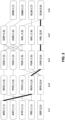
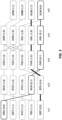
- Figure 2 shows nodes of an epitope graph, where each node includes the epitope k-character string, and the frequency ( f ) that the epitope is observed at that position in the aligned sequence set, and the cumulative best score S of consistent paths that end on that node.
- the nodes were arranged in columns with each column corresponding to the position t associated with the epitope.
- the lines connecting these nodes correspond to adjacent epitopes that were consistent.
- the aim is to and a consistent path through this graph that maximized the sum of the frequency values in each node.
- the argmax operator may not have a unique value; if it does not, then there will be multiple solutions to the episensus problem, all of which are optimal in the sense of coverage.
- Gaps In order to align sequences, insertions and deletions have to be dealt with, and this introduces gaps into the aligned sequences.
- the sequences ARCCDEGH [SEQ ID NO: 806] and ARCDEFGH [SEQ ID NO: 807] were better aligned as ARCCDE-GH [SEQ ID NO: 808] and ARC-DEFGH [SEQ ID NO: 809].
- Placeholder epitopes were developed to deal with these gaps in the EpiGraph algorithm.
- a "substrate" sequence that is generally taken to be the consensus sequence was used. Then, all the epitopes at all the positions were taken and sorted according to how often they appear. Starting from the least frequent epitope, each epitope was dropped onto the substrate by replacing the characters in the substrate at the positions [ t : t + k - 1] with the characters in the epitope. When the most frequently occurring epitope was dropped onto the substrate, a string was used as the episensus solution q. Since the most frequent epitopes overwrite the rarer epitopes, higher epitope coverage was achieved. And since a single sequence q is always updated, the final solution will be composed of consistent epitopes.
- the algorithm may not be fully deterministic because some epitopes might have identical frequencies, and if their positions are overlapping, then the final result may depend on what order they are dropped. On implementation, the order that the sort algorithm gives is taken, but there is an opportunity to randomize those orders and to make multiple runs of the algorithm, with some runs possibly giving higher scores.
- Each epitope was "dropped" onto the substrate by replacing the characters in the substrate at the positions [ t : t + k - 1] with the characters in the epitope.
- episensus solution q Since the most frequent epitopes overwrite the rarer epitopes, a high epitope coverage was achieved. Since a single sequence q was always being updated, the final solution was composed of consistent epitopes.
- the algorithm may not be fully deterministic because some epitopes might have identical frequencies, and if their positions are overlapping, then the final result may depend on what order they are dropped. In implementation, the order that the sort algorithm gives is taken, but there is an opportunity to randomize those orders and to make multiple runs of the algorithm, with some runs possibly giving higher scores. The utility of this randomized multiple-run approach has not been investigated.
- the aligned cocktail of vaccines (M > 1) problem.
- all M of the mosaic sequences are optimized at the same time.
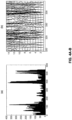
- Figure 4 illustrates what the graph looks like for such a large dataset.
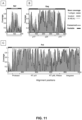
- Figure 4 shows a graph associated with a dataset of 690 US B-clade Gag protein sequences (SEQ ID NOs. 1-690), each aligned to 556 positions. Results are shown in Table 2. Horizontal axis is the position t , and the columns of nodes indicate the different epitopes at each position. The nodes were arranged so that the most frequent are at the bottom. The nodes and edges (indicating consistency of adjacent nodes) are shown. The full graph is shown in (a); a close-up inset of the same graph is shown in (b).
- the numerator is the sum of the frequencies of epitopes that appear in q, and the denominator normalizes by the sum over all epitopes that appear in any of the sequences in S.
- This formulation can be expressed as a directed graph. Each node in the graph corresponds to a distinct epitope e, and a directed edge connects two length-k epitopes ( e a ; e d ) if those epitopes overlap by k-1 characters.
- this directed graph has no cycles, then EpiGraph finds a path through the graph that rigorously maximizes coverage, providing the optimal solution. Furthermore, this optimization is done with computational effort that scales only linearly with the size (as measured in nodes and edges) of the graph. In practice the directed graph created from S may not be acyclic, though it is often very nearly so, especially for larger values of k. For this case, the graph was "de-cycled,” by iteratively identifying cycles and then removing low-value edges until no cycles remain.
- a polyvalent "cocktail" of m > 1 antigens can be created by running EpiGraph sequentially, and optimizing complementary epitope coverage. This is achieved by treating the epitopes e that were included in the first antigens as if their frequencies were zero, and then running Epigraph on these modified frequencies. If any of the epitopes in the first antigens are required to complete a path (and generate a complete protein), they will still be available, but they will be disfavored, since they no longer contribute to the coverage score. This sequential solution can be improved using iterative refinement.
- Example 3 Tailored therapeutic vaccines.
- Optimality was defined in terms of k -mer coverage. This is defined by replacing each sequence with a "bag of epitopes," i.e., an unordered list of all the k -mers that appear in the sequence.
- a bag of epitopes can be defined for a set of sequences by making a list of all k -mers that appear in any of the sequences in the set.
- the coverage of a given sequence S by a set of sequences Q ⁇ q 1 , q 2 ,..., q N ⁇ is given by the fraction of epitopes in S 's bag that are also in the collective bag of the Q sequences, where Q might be a polyvalent combination in a vaccine cocktail. It is this coverage that was optimized.
- Another quantity of interest was the fraction of epitopes in the Q-bag that are not in the S-bag. Although it is not (currently) used directly in the optimization, a smaller fraction of these extraneous epitopes is preferred, and these numbers are calculated for comparisons and experimental design.
- Episensus This approach solves for a single central sequence within a population or within a cluster. Two algorithms were tested for finding the episensus. The first is the drop-in-place algorithm. This starts with the consensus as a "substrate”. Excluding very rare k-mers, (those that are only found 1 time in the population), start with rare low frequency variants and replace the consensus k-mers with the rare variant, then keep replacing with variants, going up through the list of all k-mers based on their frequency, replacing and overwriting with more and more frequent variants until the most frequent variants across k-mers are left "standing”; overlapping k-mers with higher frequency will naturally tend to override peptides that overlap with lower frequencies.
- the second algorithm is EpiGraph, was described in Example 1. Epigraph sequences are more quickly calculated than GA mosaics, and so were readily incorporated into a clustering algorithm required to design a Tailored vaccine.
- the EpiGraph solution was very close to a consensus, and was also very close to the single best mosaic, with only one amino acid difference from the other two centroids.
- Iterative This is an iterative version of the sequential algorithm. It also produces a set of N vaccine option sequences, usually with better coverage than the sequential approach, but without the preferential ordering that the sequential algorithm produces. Starting with a sequential solution q 1 , q 2 , ..., q N , all the epitopes that are in the data sequence set are identified, and then the epitopes that are covered by q 2 , ..., q N are excluded. By solving for the episensus using the remaining (non-excluded) epitopes, a new value is obtained for q 1 . The next step does the same thing with q 2 , excluding epitopes in q 1 , q 3 , ..., q N . And so on for q 3 through q N .
- Mosaic (GA mosaic): defined using the original genetic algorithm (GA).
- GA refers to the genetic algorithm termed Mosaic and/or antigen sequences produced by the GA.
- a set of mosaics of size N are solved for all at once, or the best single mosaic can be solved for, fixed, and solved for a complementary set of 5 to make a total of 6 vaccine option sequences. This strategy was employed to enable direct comparisons with clustering strategies described below.
- Nat . 1 is the best single strain
- Nat . 2 the best complement to Nat . 1
- Nat. 3 the best complement to (Nat . 1+Nat . 2).
- Vaccine options have been explored that are designed according to the following general strategies, comparing new ideas to specifically address therapeutic vaccine population sequences that have been designed in the past to optimize for population coverage.
- Consensus Find a single universal sequence that best covers the population. Candidates for this 1-universal sequence included: a population consensus, the best single GA mosaic, the episensus, and the most "epi-centric" natural strain.
- EpiGraph Find either 2 or 3 population-based sequences and give them to everyone in the population. This population-based strategy was compared using the GA mosaic, the best natural strains, and the sequential and iterative mosaic solution. Since EpiGraphs are now available, and an improvement over Mosaics as we can also exclude rare epitopes, we use them.
- each individual would get only the vaccine sequences that best matched his or her infection: Manufacture, for example, 6 vaccine antigen sequences, and pick the best one, or the best combination of 2 or 3 from among those 6 for delivery to the patient; i.e., choose those that provide the best coverage of a patient's infecting strain, with the fewest mismatched epitopes.
- Manufacture for example, 6 vaccine antigen sequences, and pick the best one, or the best combination of 2 or 3 from among those 6 for delivery to the patient; i.e., choose those that provide the best coverage of a patient's infecting strain, with the fewest mismatched epitopes.
- a set of 6 Gag protein antigens for manufacture in a Tailored design, targeting either a global M group vaccine, a contemporary B clade vaccine, and a contemporary C clade vaccine for Southern Africa are provided.
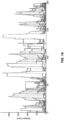
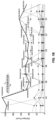
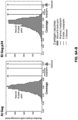
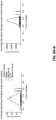
- a comparison of coverage of natural contemporary B clade sequences using 2 natural B clade sequences, M group EpiGraphs, B clade EpiGraphs, or B clade tailored is shown in the Figure 6A-B ; B clade Tailored designs provide the best epitope coverage.
- the single underlined numbers indicate that on average >60% of the 12-mers in natural sequences are covered by the vaccine (GOOD), while the double underlined numbers indicate that over 70% of the 12-mers on average are not present in the natural stains.
- Hybrid tailored pair fix the population center, add 1 of 5 centroids to best complement a fixed sequence to cover each of the test sequences -- 1+5-Epi-C5 2 1 1/5 6 0.6255 0.6310 -0.0055 ** 1+5-GA Mosaic 2 1 1/5 6 0.5922 0.6394 -0.0472 1+5-Natural 2 1 1/5 6 0.5724 0.6395 -0.0671 6-seqMosaic 2 1 1/5 6 0.6071 0.6330 -0.0259 6-iterMosaic 2 1 1/5 6 0.5280 0.7039 -0.1759
- Hybrid best three - fix the population center, and 2 of 5 centroids to best complement a fixed sequence so cover the test sequence.
- Example 4 Design and optimization of a clade B HIV-1 "tailored” antigen cocktail
- HIV diversity at the population level begins with rapid evolution within each infected host. Much of the within host diversity is a direct consequence of immune escape ( Bar, K. J. 2012. PLoS Pathog 8:e1002721 ., Liu, M. K. 2013. J. Clin. Invest. 123:380-93 , and escape variants arise soon after infection ( Fischer, W. 2010. PLoS One 5:e12303 ).
- the goal of prophylactic vaccines is to rapidly eliminate the infecting strain or prevent it from infecting in the first place. Since it is not known which strain will be transmitted, prophylactic vaccines have to elicit immune responses that would be active against any variant that might be encountered. In contrast, an immunotherapy can be directed against a known viral population present within a given host.
- the implementation of a tailored vaccine design strategy requires manufacturing a manageable number of vaccine reagents that maximally capture the epitope diversity of the target population, sequencing HIV from the infected vaccine recipient, and then selecting from among the vaccine reagent pool the subset of antigen inserts that best matches the subject.
- the tailored vaccine strategy is thus conceptually distinct from mosaic vaccine design.
- clade B 98% of approximately 150,000 HIV sequences that have been sampled in the U.S. are clade B.
- the US-sampled B-clade Gag sequences currently available from the Los Alamos HIV database were used. There were 690 intact Gag sequences in this set (SEQ ID NOs. 1-690), each derived from a different infected subject, representing a cross-section of the diversity in US HIV strains.
- SEQ ID NOs. 1-690 690 intact Gag sequences in this set (SEQ ID NOs. 1-690), each derived from a different infected subject, representing a cross-section of the diversity in US HIV strains.
- a novel computational strategy was devised that couples the use of an epitope-based consensus (or "episensus") sequence algorithm with k-means-like clustering.
- the episensus seeks the most common epitope (e.g., 12-mer) starting in each position of the alignment.
- epitope e.g., 12-mer
- the goal is to deal with those conflicts in a way that leads to maximal epitope coverage of a population by a vaccine.
- a k-means like approach was used to partition the 690 Gag sequences into distinct clusters based on epitope similarity, and separate episensus sequences were generated for each cluster to serve as the central sequence of the cluster. Coverage of individual variants levels off after 5-6 clusters, and 6 vaccine vectors with 6 HIV antigen variants is feasible to manufacture, so a set of 6 antigens was initially targeted.
- the algorithm starts with 6 randomly selected natural strains as initial centroid sequences, and assigns each of the remaining sequences to whichever of the 6 is closest. Within each of the 6 clusters, a new centroid sequence is computed, based on the episensus of the sequences in that cluster.
- the central sequence was computed for the whole population (the population episensus), and subsequent clustering was based exclusively on epitopes that were not found in the central sequence.
- the cluster episensus sequences complement the population episensus.
- the 6-sequence reagent pool consists of the one population episensus and five complementary-cluster centroid sequences, and subjects would be given a two-antigen tailored vaccine, the population episensus paired with the best complementary sequence.
- This strategy yielded more diverse sequences in the reference set, and improved potential coverage of natural Gag sequences in the test population as seen in Table 4. Table 4.
- a tailored vaccine, 2- or 3-antigen design was made for each of the 690 variants, selected from the population episensus and the 5 cluster derived complementary sequences. This was compared to the potential epitope coverage of population-based vaccine strategies where every vaccinee would be given the same vaccine, either mosaic or best-natural combinations.
- Delivery indicates the number of antigens that would be included in a vaccine cocktail.
- Manufactured indicates the size of the reference pool of vaccine antigens that would need to be synthesized to choose among for the tailored approach to be used.
- the "% matched” indicates the average number of potential epitopes perfectly matched between each of the natural Gag variants and the vaccine; the higher this value, the more likely vaccine responses will be cross-reactive with natural variants.
- the "% non-matched" represents the fraction of potential epitopes in the vaccine that are not found in a given natural Gag sequence, calculated for each of the 690 sequences separately then averaged. The higher this value, the greater the potential the vaccine to elicit vaccine-specific responses that may detract from cross-reactive responses. The improvement factor indicates the increase in coverage using the proposed new vaccine design options, over using a single best natural strain.
- the code can also be applied to tailoring vaccines using multiple sequences rather than use one representative each from infected individuals, and applying the tailored vaccine design strategy to different populations (the C clade epidemic in Southern Africa, the 2-clade regional epidemic in Thailand, and global M group set) are explored.
- Tailored vaccine antigens can provide better coverage (compared to population-based antigens) of natural sequences when the infecting strain is known.
- dual expression vectors are generated, with each expressing a complete Gag antigen and a second HIV antigen.
- the second HIV antigen can be, for example, a fusion protein of reverse transcriptase (RT) and the central part of Nef. Integrase is not included, as it is a rather poor stimulator of T cell responses.
- CMV vectors e.g., RhCMV or HCMV vectors
- panels of up to six HCMV vectors containing tailored Gag sequences based on the EpiGraph algorithm developed are generated (one vector expressing a Gag population episensus antigen and five vectors that each express a complementary cluster-based Gag antigen), and panels of antigens covering RT and the central region of Nef are also designed.
- One vector expressing a Gag population episensus antigen plus two vectors each expressing a different Gag antigen can be selected from among the five complementary cluster-based antigens are provided.
- These vectors can also contain one of two complementary HIV-1 EpiGraph RT/nef sequences.
- one RT/nef mosaic is included in the population episensus vector and the other is used in the tailored vectors.
- a panel of HCMV-based vaccine vectors that can enter vaccine production is generated by sequencing the resulting vectors and characterizing them for antigen expression and growth in vitro.
- Synthetic codon-optimized DNA inserts are generated corresponding to Gag, RT and Nef mosaic and the tailored antigens designed in Example 3.
- Example 6 Transient expression of viral antigens developed using the EpiGraph approach.
- Antigens designed to maximize the epitope frequency using the EpiGraph algorithm resemble natural sequences but no longer code for native proteins. While the theoretical guidelines for expression of these artificial sequences are adhered to in the construction of these sequences, proteins encoded by them may exhibit unanticipated expression profiles or fail to express a stable full length protein.
- Amino acids deleted include; "DTG” associated with protease activity (positions 81 - 83), “YMDD” associated with reverse transcriptase activity (positions 338 - 341), “E” associated with RNaseH activity (position 633), “D” associated with Integrase activity (position 779), “D” associated with Integrase activity (position 831), and “E” associated with Integrase activity (position 867).
- Synthetic DNA was rehydrated in water and digested with restriction endonucleases (5' NheI, 3' BamHI) followed by heat inactivation.
- the plasmid vector was linearized with compatible endonucleases and treated with calf intestinal phosphatase to prevent recircularization of empty vector.
- Vector and insert fragments were resolved by agarose gel electrophoresis to confirm digest fragment sizes and cleaned for ligation by PCR purification kit (Thermo Scientific). Inserts were ligated to linearized vector at approximately 3:1 insert to vector ratio for 15 minutes at room temperature using a rapid ligation kit (Roche, Indianapolis, IN), transformed into chemically competent E. coli (DH5-alpha), and plated on antibiotic selection plates. DNA from resulting colonies was screened by restriction digestion for inserts.
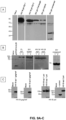
- Clones containing each of the correct inserts in the appropriate orientation relative to vector promoter and poly(A) sequences were grown in liquid culture for plasmid DNA purification. Actively growing sub-confluent Hela cells in 12 well tissue culture plates received 500ul of fresh media (DMEM 10% FBS) while liposomes were prepared. To generate liposomes containing plasmid DNA, 250ul of serum free media was mixed with 500ng of plasmid DNA, and 250ul of serum free media was mixed with 2ul of lipid (Lipofectamine 2000, Invitrogen). After 5 minutes incubation at room temperature these solutions were combined, mixed, and incubated for 20 minutes.
- the DNA containing liposomes (500ul) formed during this process were added dropwise to the culture and allowed to incubate 12-16 hours after which time the transfection mixture was replaced with fresh media. After an additional day of incubation cultures were harvested by scraping and centrifugation. Supernatants were removed by aspiration and cell pellets lysed by resuspension in 100ul gel loading dye containing 5% SDS and 10% 2-mercaptoethanol and centrifugation through QiaShred column (Qiagen, Valencia, CA).
- SDS poly-acrylamide gel electrophoresis SDS-page
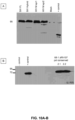
- western blotting developed with antibodies to the V5 or hemagglutinin epitope tag engineered into each construct. Briefly, 10% polyacrylamide gels were prepared and loaded with 10ul (10% of each sample) and electrophoresed at 110 - 120 volts for 90 minutes. The resolved proteins were transferred to PVDF membranes by semi-dry blotting at 20 volts for 45 - 50 minutes. Non-specific binding was blocked with a solution of 10% nonfat dry milk in phosphate buffered saline with 0.1% tween-20 (PBS-T) for 60 minutes.
- PBS-T phosphate buffered saline with 0.1% tween-20
- HA (Sigma) or V5 (Santa Cruz) antibodies were diluted in 5% milk solution and incubated with membranes for 1 hour followed by 3 washes with PBS-T prior to addition of 1:2000 dilution of horseradish peroxidase conjugated goat anti-mouse (Santa Cruz) secondary antibody for 1 hour. Subsequently blots are washed three times in PBS-T and developed with enzyme linked chemi-luminescence (ECL kit (Thermo-Pierce) and visualized with X-ray film.
- ECL kit enzyme linked chemi-luminescence
- Example 7 Engineering of EpiGraph designed antigens into CMV vector BAC constructs and expression from reconstituted virus.
- EpiGraph antigens were designed to maximize the coverage of T-cell epitopes representative of the spectrum of viral sequences and clades of HIV from which they were generated. To utilize these antigens most effectively they have been engineered into CMV vectors which have demonstrated three times the CD8 + T cell spectrum of competing platforms. Broad antigen presentation and lifelong expression profiles of CMV vectors have demonstrated the capacity to protect and cure rhesus monkeys infected with SIV.
- the EpiGraph antigen design algorithm in combination with CMV vectors may provide even greater coverage of HIV within and across clades when applied to broadly prophylactic vaccines or tailored focused vaccines.
- BAC recombineering facilitates the manipulation of large DNA sequences utilizing temperature and metabolite regulated recombination enzymes in the context of E. coli strain EL250 containing a parental BAC.
- Recombination is a sequential two-step process consisting of insertion of the antigen sequence with an antibiotic resistance gene (kanamycin) into the target region followed by removal of the kanamycin cassette.
- the insertion fragments are amplified by PCR from template DNA containing the antigen of interest plus kanamycin using primers with long (50+ bp) homology arms.
- Purified insert 500 ng was combined with 100 ul competent E. coli on ice, moved to a 0.2 cm cuvette (Fisher), and electroporated using the Bio-rad MicroPulser apparatus. Following electroporation, the bacteria were diluted by addition of 900 ul LB culture media and allowed to recover at 30°C for 2 hours prior to plating on chloramphenicol/kanamycin plates. Plates were incubated at 30°C for two days and colonies were screened by restriction digest and PCR for recombination events.
- BAC constructs positive for recombination proceeded to the second step where the kanamycin cassette was excised by arabinose induction of the Flip recombinase mediated by flanking FRT sites.
- Five ml cultures were grown overnight in LB + chloramphenicol and diluted 1:10 the following morning. After three hours of growth the bacteria were treated with L-arabinose (Arcos, 0.1% final concentration) and induced for 1.5 hours at 30°C. Following induction the bacteria were streaked on chloramphenicol plates and incubated for two days at 30°C. Colonies were then replica plated on chloramphenicol/kanamycin and chloramphenicol plates to screen for clones that had lost kanamycin resistance. These clones were further screened by restriction digest and PCR to confirm the construct.
- BAC DNA was transferred into mammalian host cells permissive for viral growth.
- BAC DNA purified from 10 ml of an overnight culture was electroporated into approximately 1/5 of a confluent flask of telomerized fibroblasts ( ⁇ 200,000 cells). In brief, cells were pelleted (1,500 rpm, 5 minutes) and resuspended in 700 ul Opti-Mem. This cell mixture was then added to 50 ul of BAC DNA and mixed gently before transfer to a 4mm cuvette. Electroporation was done using the Bio-rad GenePulser II at 0.25 kV and 0.95 uF.
- cells were plated into 100 mm dishes containing DMEM + 10% FBS and media was changed the next day to remove cell debris. Cells were observed daily for the formation of plaques and harvested at full CPE. The remaining attached cells were harvested by cell scraper and pelleted by centrifugation (1,500 rpm, 5 minutes), and the supernatant containing reconstituted virus vector was retained for passage of the recombinant virus. Cell pellets were lysed by resuspension in 100ul gel loading dye containing 5% SDS and 10% 2-mercaptoethanol and centrifugation through QiaShred column (Qiagen, Valencia, CA).
- HA (Sigma) or V5 (Santa Cruz) antibodies were diluted in 5% milk solution and incubated with membranes for 1 hour followed by 3 washes with PBS-T prior to addition of 1:2000 dilution of horseradish peroxidase conjugated goat anti-mouse (Santa Cruz) secondary antibody for 1 hour. Subsequently blots were washed three times in PBS-T and developed with enzyme linked chemi-luminescence (ECL kit (Thermo-Pierce) and visualized with X-ray film.
- ECL kit enzyme linked chemi-luminescence
- the Epigraph algorithm were used to create a set of vaccine antigens using CMV vectors initially, however, other vaccine delivery systems can be utilized.
- M group (global) was considered, as well as B and C clade (geographically limited use to regions where these particular clades are endemic). Gag, Pol and Nef Epigraph vaccine antigens were generated. B and M group are expressed.
- Epigraphs use a graph theory/dynamical programming approach to design antigens that maximize potential T-cell epitope (PTE) coverage. Under certain conditions they are mathematically optimal, and they are very computationally efficient. Epigraphs have an additional tangible benefit relative to Mosaic antigens, in that the benefit of excluding ever-more rare epitopes in the constructs can be balanced by tolerating minimal PTE coverage costs. These Epigraphs were designed with that in mind, allowing a slight coverage cost (0.005) to ensure that even the rarest epitopes represented in the Epigraph antigens were observed in many of the population sequences (the precise number depends on the input data set).
- Nseqs is the number of sequences in the input alignment: Nseqs Clade Protein 1729 B Gag 1780 B Nef 1072 B Pol 940 C Gag 749 C Nef 414 C Pol 4596 M Gag 4040 M Nef 2780 M Pol
- Paired Epigraph antigen sets for a bivalent vaccine were sequentially solved using the Epigraph algorithm for unaligned sequences.
- the sequential solution was used, which allows the use of first Epigraph as a monovalent vaccine in isolation. This means that they are designed so that the best single Epigraph antigen, an "episensus", is solved first to provide the optimal PTE coverage of a population, and then it is fixed for inclusion in the bivalent design.
- the complement is then solved to give best population PTE coverage by a bivalent pair of antigens that contain the first Epigraph, the episensus.
- the coverage costs were minimal relative to a simultaneous antigen solution.
- the basic Epigraph antigens were designed as full proteins, and these -were - expressed in CMV vectors and tested as either Gag/Nef fusion proteins, or Pol with deletions made for safety, or as the most conserved regions of Gag and Nef fused, or the most conserved regions of Pol fused. Lists of each of the full protein form for expression in the CMV vector are included below with examples for the M group and the B clade.
- the conserved regions within Gag, Pol and Nef were defined based on the potential for PTE coverage by a bivalent (i.e., 2 antigen) vaccine. That is, they were based on the potential for two optimized antigens to provide PTE coverage of the B clade. Sequences for the conserved regions are shown in the listing below. Boundaries were selected to capture the most conserved half of each the three proteins (Gag, Pol and Nef), in the longest contiguous fragment possible, so the conserved regions are interspersed with more variable sections. In Gag, the boundaries simply reflect the boundaries of the p24 Capsid protein.
- Tailored antigens either Gag or the most conserved part of Gag, p24 were used. For one design, the full M group 2015 alignments of 4596 sequences were used, to provide a global solution. An alignment of 189 contemporary B clade sequences were isolated in the US, or an alignment of 199 contemporary C clade sequences from Southern Africa. "Contemporary” refers to viruses that were isolated after 2004; all sequences sampled in the past decade were used to get a reasonable sampling of sequences from each region. Sequences that were not fully resolved or were incomplete were excluded. Regional subtype-specific contemporary viruses were selected because they represent good matches for populations that would be likely for initial proof of concept studies for evaluating for Tailored vaccines; by using single subtype regional sets we could limit the population diversity to enhance the potential for success of an HIV therapeutic vaccine.
- These therapeutic vaccine antigens are designed for used in treatment scenarios where they could be matched, or "tailored", to the sequenced infecting virus of the person who would receive the vaccine. 6 vaccine antigens would be manufactured, the best matched 2 or 3 from that set to the individuals infecting virus would be given to an individual to maximize matches between the vaccine and their infecting strain.
- Matched PTE scores and mismatched scores for delivery of the n best matched antigens out of a pool of m, for Gag proteins or the interior p24 region, where the n are selected to best cover each individual sequence in the target population.
- the target populations are the contemporary C clade infected population sampled in Southern Africa, or the contemporary B clade population sampled in the USA.
- Tailored 3 n m Coverage Extras Vaccine evaluated against data set 1 1 0.39886 318.437 M Epigraph 2 2 0.57907 681.980 M Epigraph 1 1 0.59591 200.809 C Epigraph 2 2 0.70758 550.618 C Epigraph 2 3 0.71875 559.206 C Tailored 3 3 0.73852 778.603 C Tailored 2 4 0.72609 550.397 C Tailored 3 4 0.75294 805.658 C Tailored 2 5 0.73124 549.452 C Tailored 3 5 0.75975 800.337 C Tailored 2 6 0.73440 527.623 C Tailored 3 6 0.76513 767.759 C Tailored
- Tailored 2 n m Coverage Extras Vaccine evaluated against data set 1 1 0.48548 114.739 M Epigraph 2 2 0.76864 230.593 M Epigraph 1 1 0.73525 59.040 C Epigraph 2 2 0.84494 204.578 C Epigraph 2 2 0.84494 204.578 C Tailored 2 3 0.86153 205.387 C Tailored 3 3 0.88154 338.417 C Tailored 2 4 0.87000 188.307 C Tailored 3 4 0.89175 290.854 C Tailored 2 5 0.87699 187.849 C Tailored 3 5 0.89945 295.930 C Tailored 2 6 0.87996 191.538 C Tailored 3 6 0.90373 290.985 C Tailored
- the vaccine arms for initial testing in CMV include: 1) A single population episensus Gag antigen, central to the U.S. B clade epidemic; 2) The population episensus plus a tailored Gag protein selected to be a best match natural HIV-1 strain; 3) The population episensus plus a tailored Gag protein selected to be a best match different (and distant) natural HIV-1 strain; 4) The population episensus plus both Gag proteins from cohort 2 and 3.
- the resulting immune responses are analyzed using overlapping 15-mer peptides (4 amino acid overlap) corresponding to the vaccine antigen (to determine the total vaccine-elicited Gag-specific responses) and then to both the "target" HIV-1 strain and selected non-target HIV strains (see below) to measure the strain-specific responses and the level of epitope matching (comparing target vs. non-target HIV Gag sequences). It is determined whether computationally designed inserts and vector combinations provide higher magnitude and broader T cell responses to the target strain, while minimizing non-target strain matched responses. The results of this analysis allow for experimentally testing the predictions for epitope matching generated in Example 1.
- cohorts of 5 Rhesus Macaques are inoculated with 10 6 PFU of HCMV vectors as follows: cohort 1 receives a single vector containing the clade B episensus sequence, cohort 2 receives the episensus vector plus a single tailored vaccine vector, cohort 3 receives the episensus plus a different tailored vaccine vector and cohort 4 receives the episensus plus both tailored vaccine vectors.
- the vaccines are "tailored" towards 2 representative transmitted/founder HIV strains selected from a small set of 9 B clade U.S. HIV infections that were extensively sequenced longitudinally; this panel represents a spectrum of natural infection comparable to what might be encountered in a human clinical trial.
- Rhesus monkeys are inoculated subcutaneously at day 0 and week 12 and followed longitudinally for one year. Since vaccination by HCMV-vectors is not affected by pre-existing anti-RhCMV immunity, animals naturally infected with RhCMV are used for these experiments.
- Flow cytometric intracellular cytokine analysis is used to determine the CD4+ and CD8+ T cell response to individual consecutive 15mer peptides comprising the vaccine sequences within the vaccine inserts administered to each animal (which will comprise the total vaccine-elicited responses). It is then determined whether these epitope-specific T cells recognize epitope variants in both the target strain and the other 8 non-target strains.
- the magnitude, functional avidity, and functional characteristics IFN-y, TNF- ⁇ , IL-2 and MIP-1 ⁇ production and CD107 externalization
- the degree of functional cross-reactivity is compared to determine the degree of functional cross-reactivity.
- truncation analysis is used to identify the core epitope for similar comparative analysis.
- blocking mAbs specific for MHC-I and MHC-II, and the invariant chain-derived, MHC-II-specific binding peptide CLIP is used to inhibit influenza-specific CD8+ T cell responses in PBMC, as has been done previously for SIV responses.
- the immunological analysis allows for testing the hypothesis that T cells induced by tailored vaccines are superior with respect to epitope coverage of a given natural HIV reservoir compared to non-tailored vaccines.
- the tailored 2 antigen cocktail could likely generate T cell responses with at least 25% higher frequency of cross-reactive responses to its matched natural strain compared to episensus alone (Table 5). Testing is also done to determine whether inclusion of 3 complementary tailored antigens in a cocktail induces more cross-reactivity, or if antigen dilution or the presence of greater numbers of vaccine-specific epitopes necessitated by adding 3 instead of 2 antigens actually diminishes the magnitude or breadth of the cross reactive response to the natural protein.
- CMV-based T cell responses are expected to be much broader and therefore cover a much higher percentage of sequences than reported previously for other vectors. Thus, even with a relatively small number of animals there should be sufficient epitope responses to evaluate the impact of sequence variation on the cross-reactive potential of the responses.
- the number and magnitude of all responses to the vaccines is determined by using vaccine-matched sets of peptides. Once the targeted peptides are determined, using just those peptides that are positive in each animal, the impact of natural variation on each vaccine-responsive peptide is determined.
- the natural variants that are tested are based on the variation found in a reference panel, including both tailored and poorly matched Gags.
- Nonparametric and computational re-sampling statistical methods are used as the primary tools to evaluate the impact of epitope variation on diminishing magnitude or abrogation of recognition. These analyses are complemented, however, by using generalized linear models as needed to explore the impact of more complex interactions on T cell response cross-reactivity.
Landscapes
- Health & Medical Sciences (AREA)
- Life Sciences & Earth Sciences (AREA)
- Virology (AREA)
- Chemical & Material Sciences (AREA)
- General Health & Medical Sciences (AREA)
- Animal Behavior & Ethology (AREA)
- Medicinal Chemistry (AREA)
- Pharmacology & Pharmacy (AREA)
- Public Health (AREA)
- Veterinary Medicine (AREA)
- Immunology (AREA)
- Microbiology (AREA)
- Mycology (AREA)
- Epidemiology (AREA)
- Organic Chemistry (AREA)
- Genetics & Genomics (AREA)
- Engineering & Computer Science (AREA)
- Communicable Diseases (AREA)
- Bioinformatics & Cheminformatics (AREA)
- Molecular Biology (AREA)
- General Chemical & Material Sciences (AREA)
- Chemical Kinetics & Catalysis (AREA)
- Nuclear Medicine, Radiotherapy & Molecular Imaging (AREA)
- Wood Science & Technology (AREA)
- Biomedical Technology (AREA)
- Biotechnology (AREA)
- General Engineering & Computer Science (AREA)
- Hematology (AREA)
- Zoology (AREA)
- Tropical Medicine & Parasitology (AREA)
- AIDS & HIV (AREA)
- Oncology (AREA)
- Biochemistry (AREA)
- Physics & Mathematics (AREA)
- Plant Pathology (AREA)
- Biophysics (AREA)
- Medicines Containing Antibodies Or Antigens For Use As Internal Diagnostic Agents (AREA)
- Peptides Or Proteins (AREA)
- Medicines Containing Material From Animals Or Micro-Organisms (AREA)
- Micro-Organisms Or Cultivation Processes Thereof (AREA)
Applications Claiming Priority (3)
| Application Number | Priority Date | Filing Date | Title |
|---|---|---|---|
| US201462059506P | 2014-10-03 | 2014-10-03 | |
| US201462059497P | 2014-10-03 | 2014-10-03 | |
| PCT/US2015/054067 WO2016054654A1 (en) | 2014-10-03 | 2015-10-05 | Hiv vaccines comprising one or more population episensus antigens |
Publications (3)
| Publication Number | Publication Date |
|---|---|
| EP3200878A1 EP3200878A1 (en) | 2017-08-09 |
| EP3200878A4 EP3200878A4 (en) | 2018-05-30 |
| EP3200878B1 true EP3200878B1 (en) | 2025-06-04 |
Family
ID=55631703
Family Applications (1)
| Application Number | Title | Priority Date | Filing Date |
|---|---|---|---|
| EP15847978.2A Active EP3200878B1 (en) | 2014-10-03 | 2015-10-05 | Hiv vaccines comprising one or more population episensus antigens |
Country Status (16)
| Country | Link |
|---|---|
| US (3) | US10894078B2 (enExample) |
| EP (1) | EP3200878B1 (enExample) |
| JP (3) | JP2017531693A (enExample) |
| KR (1) | KR102633096B1 (enExample) |
| CN (1) | CN108064181A (enExample) |
| AU (2) | AU2015327797A1 (enExample) |
| CA (1) | CA2963573C (enExample) |
| EA (1) | EA201790680A1 (enExample) |
| HK (1) | HK1254806A1 (enExample) |
| IL (1) | IL251469B2 (enExample) |
| MA (1) | MA40783A (enExample) |
| MX (3) | MX391149B (enExample) |
| SG (1) | SG11201702729YA (enExample) |
| UA (1) | UA126890C2 (enExample) |
| WO (1) | WO2016054654A1 (enExample) |
| ZA (1) | ZA202206809B (enExample) |
Families Citing this family (13)
| Publication number | Priority date | Publication date | Assignee | Title |
|---|---|---|---|---|
| MA40783A (fr) | 2014-10-03 | 2017-08-08 | Los Alamos Nat Security Llc | Vaccins contre le vih comprenant un ou plusieurs antigènes episensus de population |
| US11980663B2 (en) | 2015-07-08 | 2024-05-14 | American Gene Technologies International Inc. | HIV pre-immunization and immunotherapy |
| JP7153332B2 (ja) | 2016-02-08 | 2022-10-14 | アメリカン ジーン テクノロジーズ インターナショナル インコーポレイテッド | Hivワクチン接種および免疫療法 |
| CA3028982A1 (en) | 2016-07-08 | 2018-01-11 | American Gene Technologies International Inc. | Hiv pre-immunization and immunotherapy |
| US20210317192A9 (en) * | 2019-05-29 | 2021-10-14 | Massachusetts Institute Of Technology | Hiv-1 specific immunogen compositions and methods of use |
| AU2020315598B2 (en) | 2019-07-16 | 2024-12-12 | Gilead Sciences, Inc. | HIV vaccines and methods of making and using |
| BR112022003474A2 (pt) | 2019-08-29 | 2022-05-24 | Triad Nat Security Llc | Vacinas do vírus da hepatite b |
| CN116847882A (zh) * | 2021-01-14 | 2023-10-03 | 吉利德科学公司 | Hiv疫苗及其使用方法 |
| CA3202466A1 (en) * | 2021-01-14 | 2022-07-21 | Jiani LI | Hiv vaccines and methods of using |
| CN117836311A (zh) * | 2021-08-31 | 2024-04-05 | 维尔生物科技公司 | 用于产生cmv载体的方法 |
| US20240384296A1 (en) | 2021-08-31 | 2024-11-21 | Vir Biotechnology, Inc. | Recombinant hcmv vectors and uses thereof |
| TW202436326A (zh) * | 2023-02-13 | 2024-09-16 | 長怡 王 | 包含hiv th/ctl 抗原決定位胜肽的疫苗用於預防及治療hiv感染及aids患者 |
| CN116524994B (zh) * | 2023-02-20 | 2026-01-30 | 中国科学院天津工业生物技术研究所 | 一种基于贪婪算法的菌株构建排程设计方法 |
Citations (3)
| Publication number | Priority date | Publication date | Assignee | Title |
|---|---|---|---|---|
| WO2003025003A2 (en) * | 2001-09-20 | 2003-03-27 | Glaxo Group Limited | Hiv-gag codon-optimised dna vaccines |
| WO2005035779A2 (en) * | 2003-10-10 | 2005-04-21 | Powderject Vaccines, Inc | Method |
| WO2014107744A1 (en) * | 2013-01-07 | 2014-07-10 | Beth Israel Deaconess Medical Center, Inc. | Stabilized human immunodeficiency virus (hiv) envelope (env) trimer vaccines and methods of using the same |
Family Cites Families (26)
| Publication number | Priority date | Publication date | Assignee | Title |
|---|---|---|---|---|
| FI116851B (fi) * | 2001-05-03 | 2006-03-15 | Fit Biotech Oyj Plc | Ilmentämisvektori, sen käyttöjä ja menetelmä sen valmistamiseksi sekä sitä sisältäviä tuotteita |
| AUPR842501A0 (en) * | 2001-10-23 | 2001-11-15 | Epipop Pty Ltd | A method for identification and development of therapeutic agents |
| US20030190308A1 (en) * | 2002-03-19 | 2003-10-09 | Braun Ralph P. | Adjuvant |
| GB0225788D0 (en) * | 2002-11-05 | 2002-12-11 | Glaxo Group Ltd | Vaccine |
| WO2005012502A2 (en) * | 2003-03-28 | 2005-02-10 | Idm Pharma, Inc. | Methods of identifying optimal variants of peptide epitopes |
| AU2011203095A1 (en) | 2003-09-17 | 2011-07-21 | Duke University | Consensus/Ancestral Immunogens |
| CA2539325C (en) * | 2003-09-17 | 2016-03-22 | Duke University | Consensus/ancestral immunogens |
| AU2005285513B2 (en) | 2004-05-25 | 2011-02-24 | Oregon Health And Science University | SIV and HIV vaccination using RhCMV- and HCMV-based vaccine vectors |
| US8119140B2 (en) | 2005-08-23 | 2012-02-21 | Los Alamos Security, LLC | Immunogenic compositions comprising human immunodeficiency virus (HIV) mosaic Nef proteins |
| KR102511874B1 (ko) | 2006-07-28 | 2023-03-20 | 더 트러스티스 오브 더 유니버시티 오브 펜실바니아 | 개선된 백신 및 이의 사용 방법 |
| WO2008118497A1 (en) * | 2007-03-27 | 2008-10-02 | President And Fellows Of Harvard College | Rhadinovirus vectors for expressing of immunodeficiency virus antigen |
| US20100183651A1 (en) | 2007-03-30 | 2010-07-22 | Finnefrock Adam C | Broadly Representative Antigen Sequences and Method for Selection |
| PL2358757T3 (pl) | 2008-11-18 | 2019-02-28 | Beth Israel Deaconess Medical Center | Szczepionki antywirusowe o ulepszonej immunogenności komórkowej |
| JP2013507107A (ja) * | 2009-10-08 | 2013-03-04 | バヴァリアン・ノルディック・アクティーゼルスカブ | Hivに対するヒトにおける広範なt細胞応答の生成 |
| WO2011119920A2 (en) | 2010-03-25 | 2011-09-29 | Oregon Health & Science University | Cmv glycoproteins and recombinant vectors |
| PT3351636T (pt) | 2010-05-14 | 2020-09-24 | Univ Oregon Health & Science | Vectores de hcmv e rhcmv recombinantes codificadores de um antigénio heterólogo isolado a partir de um vírus paramyxoviridae e seus usos |
| US8557787B2 (en) | 2011-05-13 | 2013-10-15 | The Board Of Trustees Of The Leland Stanford Junior University | Diagnostic, prognostic and therapeutic uses of long non-coding RNAs for cancer and regenerative medicine |
| ES2667425T3 (es) | 2011-06-10 | 2018-05-10 | Oregon Health & Science University | Glucoproteínas y vectores recombinantes de CMV |
| EP2620446A1 (en) | 2012-01-27 | 2013-07-31 | Laboratorios Del Dr. Esteve, S.A. | Immunogens for HIV vaccination |
| EP2820035B1 (en) | 2012-03-02 | 2019-01-09 | The Government of the United States of America as represented by The Secretary of the Department of Health and Human Services | Method of altering the immundominance hierarchy of hiv gag by dna vaccine expressing conserved regions |
| LT2964769T (lt) | 2013-03-05 | 2018-12-10 | Oregon Health & Science University | Citomegalo viruso vektoriai, leidžiantys kontroliuoti ląstelių nukreipimą į taikinį |
| JP2017507672A (ja) | 2014-02-28 | 2017-03-23 | ヤンセン ファッシンズ アンド プリベンション ベーフェーJanssen Vaccines & Prevention B.V. | 複製型組み換えアデノウイルスベクター、組成物およびこれらの使用方法 |
| NZ728208A (en) | 2014-07-16 | 2018-07-27 | Univ Oregon Health & Science | Human cytomegalovirus comprising exogenous antigens |
| MA40765B1 (fr) | 2014-09-26 | 2021-04-30 | Beth Israel Deaconess Medical Ct Inc | Méthodes et compositions d'induction d'une immunité protectrice contre l'infection par le virus de l'immunodéficience humaine |
| MA40783A (fr) | 2014-10-03 | 2017-08-08 | Los Alamos Nat Security Llc | Vaccins contre le vih comprenant un ou plusieurs antigènes episensus de population |
| PL3390430T3 (pl) | 2015-12-15 | 2020-03-31 | Janssen Vaccines & Prevention B.V. | Antygeny ludzkiego wirusa niedoboru odporności, wektory, kompozycje i sposoby ich zastosowania |
-
2015
- 2015-10-04 MA MA040783A patent/MA40783A/fr unknown
- 2015-10-05 UA UAA201704021A patent/UA126890C2/uk unknown
- 2015-10-05 MX MX2017004275A patent/MX391149B/es unknown
- 2015-10-05 JP JP2017538177A patent/JP2017531693A/ja active Pending
- 2015-10-05 US US15/516,491 patent/US10894078B2/en active Active
- 2015-10-05 WO PCT/US2015/054067 patent/WO2016054654A1/en not_active Ceased
- 2015-10-05 HK HK18113892.2A patent/HK1254806A1/zh unknown
- 2015-10-05 KR KR1020177012171A patent/KR102633096B1/ko active Active
- 2015-10-05 CN CN201580063643.3A patent/CN108064181A/zh active Pending
- 2015-10-05 AU AU2015327797A patent/AU2015327797A1/en not_active Abandoned
- 2015-10-05 EA EA201790680A patent/EA201790680A1/ru unknown
- 2015-10-05 SG SG11201702729YA patent/SG11201702729YA/en unknown
- 2015-10-05 CA CA2963573A patent/CA2963573C/en active Active
- 2015-10-05 EP EP15847978.2A patent/EP3200878B1/en active Active
- 2015-10-05 IL IL251469A patent/IL251469B2/en unknown
-
2017
- 2017-03-31 MX MX2022003664A patent/MX2022003664A/es unknown
- 2017-03-31 MX MX2022003663A patent/MX2022003663A/es unknown
-
2020
- 2020-08-31 US US17/008,335 patent/US11554168B2/en active Active
- 2020-08-31 US US17/008,289 patent/US11628215B2/en active Active
- 2020-10-09 JP JP2020170852A patent/JP7212020B2/ja active Active
-
2021
- 2021-08-19 AU AU2021218141A patent/AU2021218141B2/en active Active
-
2022
- 2022-06-20 ZA ZA2022/06809A patent/ZA202206809B/en unknown
-
2023
- 2023-01-12 JP JP2023003194A patent/JP7441340B2/ja active Active
Patent Citations (3)
| Publication number | Priority date | Publication date | Assignee | Title |
|---|---|---|---|---|
| WO2003025003A2 (en) * | 2001-09-20 | 2003-03-27 | Glaxo Group Limited | Hiv-gag codon-optimised dna vaccines |
| WO2005035779A2 (en) * | 2003-10-10 | 2005-04-21 | Powderject Vaccines, Inc | Method |
| WO2014107744A1 (en) * | 2013-01-07 | 2014-07-10 | Beth Israel Deaconess Medical Center, Inc. | Stabilized human immunodeficiency virus (hiv) envelope (env) trimer vaccines and methods of using the same |
Non-Patent Citations (6)
| Title |
|---|
| BORROW PERSEPHONE ET AL: "Antiviral pressure exerted by HIV-l-specific cytotoxic T lymphocytes (CTLs) during primary infection demonstrated by rapid selection of CTL escape virus", NATURE MEDICINE, NATURE PUBLISHING GROUP US, NEW YORK, vol. 3, no. 2, 1 February 1997 (1997-02-01), pages 205 - 211, ISSN: 1078-8956, DOI: 10.1038/NM0297-205 * |
| GARCIA-PEREZ ET AL: "A single-residue change in the HIV-1 V3 loop associated with maraviroc resistance impairs CCR5 binding affinity while increasing replicative capacity - PMC", RETROVIROLOGY, vol. 12, no. 1, 1 December 2015 (2015-12-01), GB, ISSN: 1742-4690, Retrieved from the Internet <URL:https://www.ncbi.nlm.nih.gov/pmc/articles/PMC4470041/> DOI: 10.1186/s12977-015-0177-1 * |
| GUO DONGXING ET AL: "A Single Residue within the V5 Region of HIV-1 Envelope Facilitates Viral Escape from the Broadly Neutralizing Monoclonal Antibody VRC01", JOURNAL OF BIOLOGICAL CHEMISTRY, vol. 287, no. 51, 1 December 2012 (2012-12-01), US, pages 43170 - 43179, ISSN: 0021-9258, DOI: 10.1074/jbc.M112.399402 * |
| JAMES THEILER ET AL: "Epigraph: A Vaccine Design Tool Applied to an HIV Therapeutic Vaccine and a Pan-Filovirus Vaccine", SCIENTIFIC REPORTS, vol. 6, no. 1, 5 October 2016 (2016-10-05), DOI: 10.1038/srep33987 * |
| JEFFREY R CURRIER ET AL: "Defining epitope coverage requirements for T cell-based HIV vaccines: Theoretical considerations and practical applications", JOURNAL OF TRANSLATIONAL MEDICINE, BIOMED CENTRAL, vol. 9, no. 1, 8 December 2011 (2011-12-08), pages 212, ISSN: 1479-5876, DOI: 10.1186/1479-5876-9-212 * |
| KORBER BETTE T. ET AL: "T-Cell Vaccine Strategies for Human Immunodeficiency Virus, the Virus with a Thousand Faces", JOURNAL OF VIROLOGY, vol. 83, no. 17, 1 September 2009 (2009-09-01), US, pages 8300 - 8314, ISSN: 0022-538X, Retrieved from the Internet <URL:https://www.ncbi.nlm.nih.gov/pmc/articles/PMC2738160/pdf/0114-09.pdf> DOI: 10.1128/JVI.00114-09 * |
Also Published As
Similar Documents
| Publication | Publication Date | Title |
|---|---|---|
| US11628215B2 (en) | HIV vaccines comprising one or more population episensus antigens | |
| Doria-Rose et al. | Human immunodeficiency virus type 1 subtype B ancestral envelope protein is functional and elicits neutralizing antibodies in rabbits similar to those elicited by a circulating subtype B envelope | |
| Lu et al. | Humoral and cellular immune responses induced by 3a DNA vaccines against severe acute respiratory syndrome (SARS) or SARS-like coronavirus in mice | |
| JP7635208B2 (ja) | B型肝炎ウイルスワクチン | |
| HK1241309B (en) | Hiv vaccines comprising one or more population episensus antigens | |
| HK1241309A1 (en) | Hiv vaccines comprising one or more population episensus antigens | |
| Manickavasagam | Spike protein of SARS-CoV-2: Impact of single amino acid mutation and effect of drug binding to the variant-in silico analysis | |
| EA040402B1 (ru) | Вакцины против вируса иммунодефицита человека (вич), содержащие один или более эписенсусных (episensus) антигенов для популяции | |
| Kadam et al. | Molecular and structural insights into COVID-19 pandemic | |
| Perdiguero et al. | B and T Cell Bi-Cistronic Multiepitopic Vaccine Induces Broad Immunogenicity and Provides Protection Against SARS-CoV-2 | |
| BR122021016789B1 (pt) | Vacinas contra hiv-1 compreendendo um ou mais antígenos epissenso de população, usos das mesmas para proteger um indivíduo de uma infecção por hiv-1, tratar hiv-1 e induzir uma resposta de células t de memória efetoras, bem como polipeptídeo e método para projetar e produzir as ditas vacinas | |
| BR112017006865B1 (pt) | Vacina contra hiv-1 compreendendo um ou mais antígenos epissenso de população, uso da mesma para proteger um indivíduo de uma infecção por hiv-1 ou para tratar hiv-1 e polipeptídeo | |
| HK40074198A (en) | Hepatitis b virus vaccines | |
| Moreira Folegatti | Clinical assessment of ChAdOx1 vectored vaccines against emerging pathogens | |
| WO2025083402A1 (en) | Coronavirus vaccines | |
| Zur Megede et al. | Evaluation of human immunodeficiency virus type 1 subtype C gag, pol, and gagpol DNA and alphavirus replicon vaccines | |
| CN102321653A (zh) | 人鼠嵌合型cd4质粒及其多抗在抑制hiv感染中的应用 |
Legal Events
| Date | Code | Title | Description |
|---|---|---|---|
| STAA | Information on the status of an ep patent application or granted ep patent |
Free format text: STATUS: THE INTERNATIONAL PUBLICATION HAS BEEN MADE |
|
| PUAI | Public reference made under article 153(3) epc to a published international application that has entered the european phase |
Free format text: ORIGINAL CODE: 0009012 |
|
| STAA | Information on the status of an ep patent application or granted ep patent |
Free format text: STATUS: REQUEST FOR EXAMINATION WAS MADE |
|
| 17P | Request for examination filed |
Effective date: 20170503 |
|
| AK | Designated contracting states |
Kind code of ref document: A1 Designated state(s): AL AT BE BG CH CY CZ DE DK EE ES FI FR GB GR HR HU IE IS IT LI LT LU LV MC MK MT NL NO PL PT RO RS SE SI SK SM TR |
|
| AX | Request for extension of the european patent |
Extension state: BA ME |
|
| A4 | Supplementary search report drawn up and despatched |
Effective date: 20180426 |
|
| RIC1 | Information provided on ipc code assigned before grant |
Ipc: A61P 31/18 20060101AFI20180420BHEP Ipc: A61K 39/21 20060101ALI20180420BHEP |
|
| REG | Reference to a national code |
Ref country code: HK Ref legal event code: DE Ref document number: 1241309 Country of ref document: HK |
|
| STAA | Information on the status of an ep patent application or granted ep patent |
Free format text: STATUS: EXAMINATION IS IN PROGRESS |
|
| 17Q | First examination report despatched |
Effective date: 20190326 |
|
| RAP1 | Party data changed (applicant data changed or rights of an application transferred) |
Owner name: TRIAD NATIONAL SECURITY, LLC Owner name: OREGON HEALTH & SCIENCE UNIVERSITY Owner name: VIR BIOTECHNOLOGY, INC. |
|
| RAP3 | Party data changed (applicant data changed or rights of an application transferred) |
Owner name: VIR BIOTECHNOLOGY, INC. Owner name: OREGON HEALTH & SCIENCE UNIVERSITY Owner name: TRIAD NATIONAL SECURITY, LLC |
|
| GRAP | Despatch of communication of intention to grant a patent |
Free format text: ORIGINAL CODE: EPIDOSNIGR1 |
|
| STAA | Information on the status of an ep patent application or granted ep patent |
Free format text: STATUS: GRANT OF PATENT IS INTENDED |
|
| INTG | Intention to grant announced |
Effective date: 20250107 |
|
| GRAS | Grant fee paid |
Free format text: ORIGINAL CODE: EPIDOSNIGR3 |
|
| GRAA | (expected) grant |
Free format text: ORIGINAL CODE: 0009210 |
|
| STAA | Information on the status of an ep patent application or granted ep patent |
Free format text: STATUS: THE PATENT HAS BEEN GRANTED |
|
| AK | Designated contracting states |
Kind code of ref document: B1 Designated state(s): AL AT BE BG CH CY CZ DE DK EE ES FI FR GB GR HR HU IE IS IT LI LT LU LV MC MK MT NL NO PL PT RO RS SE SI SK SM TR |
|
| REG | Reference to a national code |
Ref country code: GB Ref legal event code: FG4D |
|
| REG | Reference to a national code |
Ref country code: CH Ref legal event code: EP |
|
| REG | Reference to a national code |
Ref country code: DE Ref legal event code: R096 Ref document number: 602015091778 Country of ref document: DE |
|
| REG | Reference to a national code |
Ref country code: IE Ref legal event code: FG4D |
|
| REG | Reference to a national code |
Ref country code: NL Ref legal event code: MP Effective date: 20250604 |
|
| PG25 | Lapsed in a contracting state [announced via postgrant information from national office to epo] |
Ref country code: FI Free format text: LAPSE BECAUSE OF FAILURE TO SUBMIT A TRANSLATION OF THE DESCRIPTION OR TO PAY THE FEE WITHIN THE PRESCRIBED TIME-LIMIT Effective date: 20250604 Ref country code: ES Free format text: LAPSE BECAUSE OF FAILURE TO SUBMIT A TRANSLATION OF THE DESCRIPTION OR TO PAY THE FEE WITHIN THE PRESCRIBED TIME-LIMIT Effective date: 20250604 |
|
| REG | Reference to a national code |
Ref country code: LT Ref legal event code: MG9D |
|
| PG25 | Lapsed in a contracting state [announced via postgrant information from national office to epo] |
Ref country code: NO Free format text: LAPSE BECAUSE OF FAILURE TO SUBMIT A TRANSLATION OF THE DESCRIPTION OR TO PAY THE FEE WITHIN THE PRESCRIBED TIME-LIMIT Effective date: 20250904 Ref country code: GR Free format text: LAPSE BECAUSE OF FAILURE TO SUBMIT A TRANSLATION OF THE DESCRIPTION OR TO PAY THE FEE WITHIN THE PRESCRIBED TIME-LIMIT Effective date: 20250905 |
|
| PG25 | Lapsed in a contracting state [announced via postgrant information from national office to epo] |
Ref country code: PL Free format text: LAPSE BECAUSE OF FAILURE TO SUBMIT A TRANSLATION OF THE DESCRIPTION OR TO PAY THE FEE WITHIN THE PRESCRIBED TIME-LIMIT Effective date: 20250604 |
|
| PG25 | Lapsed in a contracting state [announced via postgrant information from national office to epo] |
Ref country code: BG Free format text: LAPSE BECAUSE OF FAILURE TO SUBMIT A TRANSLATION OF THE DESCRIPTION OR TO PAY THE FEE WITHIN THE PRESCRIBED TIME-LIMIT Effective date: 20250604 |
|
| PG25 | Lapsed in a contracting state [announced via postgrant information from national office to epo] |
Ref country code: HR Free format text: LAPSE BECAUSE OF FAILURE TO SUBMIT A TRANSLATION OF THE DESCRIPTION OR TO PAY THE FEE WITHIN THE PRESCRIBED TIME-LIMIT Effective date: 20250604 |
|
| PG25 | Lapsed in a contracting state [announced via postgrant information from national office to epo] |
Ref country code: RS Free format text: LAPSE BECAUSE OF FAILURE TO SUBMIT A TRANSLATION OF THE DESCRIPTION OR TO PAY THE FEE WITHIN THE PRESCRIBED TIME-LIMIT Effective date: 20250904 |
|
| PG25 | Lapsed in a contracting state [announced via postgrant information from national office to epo] |
Ref country code: LV Free format text: LAPSE BECAUSE OF FAILURE TO SUBMIT A TRANSLATION OF THE DESCRIPTION OR TO PAY THE FEE WITHIN THE PRESCRIBED TIME-LIMIT Effective date: 20250604 |
|
| REG | Reference to a national code |
Ref country code: CH Ref legal event code: U11 Free format text: ST27 STATUS EVENT CODE: U-0-0-U10-U11 (AS PROVIDED BY THE NATIONAL OFFICE) Effective date: 20251101 |
|
| PG25 | Lapsed in a contracting state [announced via postgrant information from national office to epo] |
Ref country code: NL Free format text: LAPSE BECAUSE OF FAILURE TO SUBMIT A TRANSLATION OF THE DESCRIPTION OR TO PAY THE FEE WITHIN THE PRESCRIBED TIME-LIMIT Effective date: 20250604 |
|
| PG25 | Lapsed in a contracting state [announced via postgrant information from national office to epo] |
Ref country code: PT Free format text: LAPSE BECAUSE OF FAILURE TO SUBMIT A TRANSLATION OF THE DESCRIPTION OR TO PAY THE FEE WITHIN THE PRESCRIBED TIME-LIMIT Effective date: 20251006 |
|
| REG | Reference to a national code |
Ref country code: AT Ref legal event code: MK05 Ref document number: 1799820 Country of ref document: AT Kind code of ref document: T Effective date: 20250604 |
|
| PG25 | Lapsed in a contracting state [announced via postgrant information from national office to epo] |
Ref country code: IS Free format text: LAPSE BECAUSE OF FAILURE TO SUBMIT A TRANSLATION OF THE DESCRIPTION OR TO PAY THE FEE WITHIN THE PRESCRIBED TIME-LIMIT Effective date: 20251004 |
|
| PGFP | Annual fee paid to national office [announced via postgrant information from national office to epo] |
Ref country code: DE Payment date: 20251029 Year of fee payment: 11 |
|
| PGFP | Annual fee paid to national office [announced via postgrant information from national office to epo] |
Ref country code: GB Payment date: 20251027 Year of fee payment: 11 |
|
| PG25 | Lapsed in a contracting state [announced via postgrant information from national office to epo] |
Ref country code: SM Free format text: LAPSE BECAUSE OF FAILURE TO SUBMIT A TRANSLATION OF THE DESCRIPTION OR TO PAY THE FEE WITHIN THE PRESCRIBED TIME-LIMIT Effective date: 20250604 Ref country code: AT Free format text: LAPSE BECAUSE OF FAILURE TO SUBMIT A TRANSLATION OF THE DESCRIPTION OR TO PAY THE FEE WITHIN THE PRESCRIBED TIME-LIMIT Effective date: 20250604 |
|
| PGFP | Annual fee paid to national office [announced via postgrant information from national office to epo] |
Ref country code: FR Payment date: 20251027 Year of fee payment: 11 |
|
| PGFP | Annual fee paid to national office [announced via postgrant information from national office to epo] |
Ref country code: BE Payment date: 20251027 Year of fee payment: 11 |
|
| PGFP | Annual fee paid to national office [announced via postgrant information from national office to epo] |
Ref country code: CH Payment date: 20251101 Year of fee payment: 11 |
|
| PG25 | Lapsed in a contracting state [announced via postgrant information from national office to epo] |
Ref country code: CZ Free format text: LAPSE BECAUSE OF FAILURE TO SUBMIT A TRANSLATION OF THE DESCRIPTION OR TO PAY THE FEE WITHIN THE PRESCRIBED TIME-LIMIT Effective date: 20250604 |
|
| PGFP | Annual fee paid to national office [announced via postgrant information from national office to epo] |
Ref country code: IE Payment date: 20251027 Year of fee payment: 11 |
|
| PG25 | Lapsed in a contracting state [announced via postgrant information from national office to epo] |
Ref country code: EE Free format text: LAPSE BECAUSE OF FAILURE TO SUBMIT A TRANSLATION OF THE DESCRIPTION OR TO PAY THE FEE WITHIN THE PRESCRIBED TIME-LIMIT Effective date: 20250604 |
|
| PG25 | Lapsed in a contracting state [announced via postgrant information from national office to epo] |
Ref country code: SK Free format text: LAPSE BECAUSE OF FAILURE TO SUBMIT A TRANSLATION OF THE DESCRIPTION OR TO PAY THE FEE WITHIN THE PRESCRIBED TIME-LIMIT Effective date: 20250604 Ref country code: RO Free format text: LAPSE BECAUSE OF FAILURE TO SUBMIT A TRANSLATION OF THE DESCRIPTION OR TO PAY THE FEE WITHIN THE PRESCRIBED TIME-LIMIT Effective date: 20250604 |
|
| PG25 | Lapsed in a contracting state [announced via postgrant information from national office to epo] |
Ref country code: IT Free format text: LAPSE BECAUSE OF FAILURE TO SUBMIT A TRANSLATION OF THE DESCRIPTION OR TO PAY THE FEE WITHIN THE PRESCRIBED TIME-LIMIT Effective date: 20250604 |
|
| VS25 | Lapsed in a validation state [announced via postgrant information from nat. office to epo] |
Ref country code: MA Free format text: FAILURE TO ELECT DOMICILE IN THE NATIONAL COUNTRY Effective date: 20250905 |
|
| REG | Reference to a national code |
Ref country code: DE Ref legal event code: R097 Ref document number: 602015091778 Country of ref document: DE |
|
| VS25 | Lapsed in a validation state [announced via postgrant information from nat. office to epo] |
Ref country code: MA Free format text: LAPSE BECAUSE OF FAILURE TO SUBMIT A TRANSLATION OF THE DESCRIPTION OR TO PAY THE FEE WITHIN THE PRESCRIBED TIME-LIMIT Effective date: 20250604 |
|
| PLBE | No opposition filed within time limit |
Free format text: ORIGINAL CODE: 0009261 |
|
| STAA | Information on the status of an ep patent application or granted ep patent |
Free format text: STATUS: NO OPPOSITION FILED WITHIN TIME LIMIT |
|
| PG25 | Lapsed in a contracting state [announced via postgrant information from national office to epo] |
Ref country code: DK Free format text: LAPSE BECAUSE OF FAILURE TO SUBMIT A TRANSLATION OF THE DESCRIPTION OR TO PAY THE FEE WITHIN THE PRESCRIBED TIME-LIMIT Effective date: 20250604 |
|
| REG | Reference to a national code |
Ref country code: CH Ref legal event code: L10 Free format text: ST27 STATUS EVENT CODE: U-0-0-L10-L00 (AS PROVIDED BY THE NATIONAL OFFICE) Effective date: 20260416 |
|
| 26N | No opposition filed |
Effective date: 20260305 |
|
| PG25 | Lapsed in a contracting state [announced via postgrant information from national office to epo] |
Ref country code: LU Free format text: LAPSE BECAUSE OF NON-PAYMENT OF DUE FEES Effective date: 20251005 |
|
| PG25 | Lapsed in a contracting state [announced via postgrant information from national office to epo] |
Ref country code: LT Free format text: LAPSE BECAUSE OF FAILURE TO SUBMIT A TRANSLATION OF THE DESCRIPTION OR TO PAY THE FEE WITHIN THE PRESCRIBED TIME-LIMIT Effective date: 20250604 |
|
| PG25 | Lapsed in a contracting state [announced via postgrant information from national office to epo] |
Ref country code: MC Free format text: LAPSE BECAUSE OF FAILURE TO SUBMIT A TRANSLATION OF THE DESCRIPTION OR TO PAY THE FEE WITHIN THE PRESCRIBED TIME-LIMIT Effective date: 20250604 |
|
| PG25 | Lapsed in a contracting state [announced via postgrant information from national office to epo] |
Ref country code: SE Free format text: LAPSE BECAUSE OF FAILURE TO SUBMIT A TRANSLATION OF THE DESCRIPTION OR TO PAY THE FEE WITHIN THE PRESCRIBED TIME-LIMIT Effective date: 20250604 |