EP3188688B1 - Methods and biocompatible compositions to achieve sustained drug release in the eye - Google Patents
Methods and biocompatible compositions to achieve sustained drug release in the eye Download PDFInfo
- Publication number
- EP3188688B1 EP3188688B1 EP15838075.8A EP15838075A EP3188688B1 EP 3188688 B1 EP3188688 B1 EP 3188688B1 EP 15838075 A EP15838075 A EP 15838075A EP 3188688 B1 EP3188688 B1 EP 3188688B1
- Authority
- EP
- European Patent Office
- Prior art keywords
- drug
- wafer
- hydrophobic polymer
- nanomesh
- release
- Prior art date
- Legal status (The legal status is an assumption and is not a legal conclusion. Google has not performed a legal analysis and makes no representation as to the accuracy of the status listed.)
- Active
Links
Images





Classifications
-
- A—HUMAN NECESSITIES
- A61—MEDICAL OR VETERINARY SCIENCE; HYGIENE
- A61K—PREPARATIONS FOR MEDICAL, DENTAL OR TOILETRY PURPOSES
- A61K9/00—Medicinal preparations characterised by special physical form
- A61K9/70—Web, sheet or filament bases ; Films; Fibres of the matrix type containing drug
- A61K9/7007—Drug-containing films, membranes or sheets
-
- A—HUMAN NECESSITIES
- A61—MEDICAL OR VETERINARY SCIENCE; HYGIENE
- A61F—FILTERS IMPLANTABLE INTO BLOOD VESSELS; PROSTHESES; DEVICES PROVIDING PATENCY TO, OR PREVENTING COLLAPSING OF, TUBULAR STRUCTURES OF THE BODY, e.g. STENTS; ORTHOPAEDIC, NURSING OR CONTRACEPTIVE DEVICES; FOMENTATION; TREATMENT OR PROTECTION OF EYES OR EARS; BANDAGES, DRESSINGS OR ABSORBENT PADS; FIRST-AID KITS
- A61F9/00—Methods or devices for treatment of the eyes; Devices for putting in contact-lenses; Devices to correct squinting; Apparatus to guide the blind; Protective devices for the eyes, carried on the body or in the hand
- A61F9/0008—Introducing ophthalmic products into the ocular cavity or retaining products therein
-
- A—HUMAN NECESSITIES
- A61—MEDICAL OR VETERINARY SCIENCE; HYGIENE
- A61K—PREPARATIONS FOR MEDICAL, DENTAL OR TOILETRY PURPOSES
- A61K31/00—Medicinal preparations containing organic active ingredients
- A61K31/557—Eicosanoids, e.g. leukotrienes or prostaglandins
- A61K31/5575—Eicosanoids, e.g. leukotrienes or prostaglandins having a cyclopentane, e.g. prostaglandin E2, prostaglandin F2-alpha
-
- A—HUMAN NECESSITIES
- A61—MEDICAL OR VETERINARY SCIENCE; HYGIENE
- A61K—PREPARATIONS FOR MEDICAL, DENTAL OR TOILETRY PURPOSES
- A61K31/00—Medicinal preparations containing organic active ingredients
- A61K31/56—Compounds containing cyclopenta[a]hydrophenanthrene ring systems; Derivatives thereof, e.g. steroids
-
- A—HUMAN NECESSITIES
- A61—MEDICAL OR VETERINARY SCIENCE; HYGIENE
- A61K—PREPARATIONS FOR MEDICAL, DENTAL OR TOILETRY PURPOSES
- A61K31/00—Medicinal preparations containing organic active ingredients
- A61K31/56—Compounds containing cyclopenta[a]hydrophenanthrene ring systems; Derivatives thereof, e.g. steroids
- A61K31/57—Compounds containing cyclopenta[a]hydrophenanthrene ring systems; Derivatives thereof, e.g. steroids substituted in position 17 beta by a chain of two carbon atoms, e.g. pregnane or progesterone
- A61K31/573—Compounds containing cyclopenta[a]hydrophenanthrene ring systems; Derivatives thereof, e.g. steroids substituted in position 17 beta by a chain of two carbon atoms, e.g. pregnane or progesterone substituted in position 21, e.g. cortisone, dexamethasone, prednisone or aldosterone
-
- A—HUMAN NECESSITIES
- A61—MEDICAL OR VETERINARY SCIENCE; HYGIENE
- A61K—PREPARATIONS FOR MEDICAL, DENTAL OR TOILETRY PURPOSES
- A61K47/00—Medicinal preparations characterised by the non-active ingredients used, e.g. carriers or inert additives; Targeting or modifying agents chemically bound to the active ingredient
- A61K47/06—Organic compounds, e.g. natural or synthetic hydrocarbons, polyolefins, mineral oil, petrolatum or ozokerite
- A61K47/08—Organic compounds, e.g. natural or synthetic hydrocarbons, polyolefins, mineral oil, petrolatum or ozokerite containing oxygen, e.g. ethers, acetals, ketones, quinones, aldehydes, peroxides
- A61K47/10—Alcohols; Phenols; Salts thereof, e.g. glycerol; Polyethylene glycols [PEG]; Poloxamers; PEG/POE alkyl ethers
-
- A—HUMAN NECESSITIES
- A61—MEDICAL OR VETERINARY SCIENCE; HYGIENE
- A61K—PREPARATIONS FOR MEDICAL, DENTAL OR TOILETRY PURPOSES
- A61K47/00—Medicinal preparations characterised by the non-active ingredients used, e.g. carriers or inert additives; Targeting or modifying agents chemically bound to the active ingredient
- A61K47/30—Macromolecular organic or inorganic compounds, e.g. inorganic polyphosphates
- A61K47/32—Macromolecular compounds obtained by reactions only involving carbon-to-carbon unsaturated bonds, e.g. carbomers, poly(meth)acrylates, or polyvinyl pyrrolidone
-
- A—HUMAN NECESSITIES
- A61—MEDICAL OR VETERINARY SCIENCE; HYGIENE
- A61K—PREPARATIONS FOR MEDICAL, DENTAL OR TOILETRY PURPOSES
- A61K47/00—Medicinal preparations characterised by the non-active ingredients used, e.g. carriers or inert additives; Targeting or modifying agents chemically bound to the active ingredient
- A61K47/30—Macromolecular organic or inorganic compounds, e.g. inorganic polyphosphates
- A61K47/34—Macromolecular compounds obtained otherwise than by reactions only involving carbon-to-carbon unsaturated bonds, e.g. polyesters, polyamino acids, polysiloxanes, polyphosphazines, copolymers of polyalkylene glycol or poloxamers
-
- A—HUMAN NECESSITIES
- A61—MEDICAL OR VETERINARY SCIENCE; HYGIENE
- A61K—PREPARATIONS FOR MEDICAL, DENTAL OR TOILETRY PURPOSES
- A61K9/00—Medicinal preparations characterised by special physical form
- A61K9/0012—Galenical forms characterised by the site of application
- A61K9/0048—Eye, e.g. artificial tears
-
- A—HUMAN NECESSITIES
- A61—MEDICAL OR VETERINARY SCIENCE; HYGIENE
- A61K—PREPARATIONS FOR MEDICAL, DENTAL OR TOILETRY PURPOSES
- A61K9/00—Medicinal preparations characterised by special physical form
- A61K9/0012—Galenical forms characterised by the site of application
- A61K9/0048—Eye, e.g. artificial tears
- A61K9/0051—Ocular inserts or implants
-
- A—HUMAN NECESSITIES
- A61—MEDICAL OR VETERINARY SCIENCE; HYGIENE
- A61K—PREPARATIONS FOR MEDICAL, DENTAL OR TOILETRY PURPOSES
- A61K9/00—Medicinal preparations characterised by special physical form
- A61K9/14—Particulate form, e.g. powders, Processes for size reducing of pure drugs or the resulting products, Pure drug nanoparticles
- A61K9/16—Agglomerates; Granulates; Microbeadlets ; Microspheres; Pellets; Solid products obtained by spray drying, spray freeze drying, spray congealing,(multiple) emulsion solvent evaporation or extraction
- A61K9/1605—Excipients; Inactive ingredients
- A61K9/1629—Organic macromolecular compounds
- A61K9/1641—Organic macromolecular compounds obtained otherwise than by reactions only involving carbon-to-carbon unsaturated bonds, e.g. polyethylene glycol, poloxamers
- A61K9/1647—Polyesters, e.g. poly(lactide-co-glycolide)
-
- A—HUMAN NECESSITIES
- A61—MEDICAL OR VETERINARY SCIENCE; HYGIENE
- A61M—DEVICES FOR INTRODUCING MEDIA INTO, OR ONTO, THE BODY; DEVICES FOR TRANSDUCING BODY MEDIA OR FOR TAKING MEDIA FROM THE BODY; DEVICES FOR PRODUCING OR ENDING SLEEP OR STUPOR
- A61M31/00—Devices for introducing or retaining media, e.g. remedies, in cavities of the body
- A61M31/002—Devices for releasing a drug at a continuous and controlled rate for a prolonged period of time
-
- A—HUMAN NECESSITIES
- A61—MEDICAL OR VETERINARY SCIENCE; HYGIENE
- A61P—SPECIFIC THERAPEUTIC ACTIVITY OF CHEMICAL COMPOUNDS OR MEDICINAL PREPARATIONS
- A61P27/00—Drugs for disorders of the senses
- A61P27/02—Ophthalmic agents
-
- A—HUMAN NECESSITIES
- A61—MEDICAL OR VETERINARY SCIENCE; HYGIENE
- A61P—SPECIFIC THERAPEUTIC ACTIVITY OF CHEMICAL COMPOUNDS OR MEDICINAL PREPARATIONS
- A61P27/00—Drugs for disorders of the senses
- A61P27/02—Ophthalmic agents
- A61P27/04—Artificial tears; Irrigation solutions
-
- A—HUMAN NECESSITIES
- A61—MEDICAL OR VETERINARY SCIENCE; HYGIENE
- A61P—SPECIFIC THERAPEUTIC ACTIVITY OF CHEMICAL COMPOUNDS OR MEDICINAL PREPARATIONS
- A61P27/00—Drugs for disorders of the senses
- A61P27/02—Ophthalmic agents
- A61P27/06—Antiglaucoma agents or miotics
-
- A—HUMAN NECESSITIES
- A61—MEDICAL OR VETERINARY SCIENCE; HYGIENE
- A61F—FILTERS IMPLANTABLE INTO BLOOD VESSELS; PROSTHESES; DEVICES PROVIDING PATENCY TO, OR PREVENTING COLLAPSING OF, TUBULAR STRUCTURES OF THE BODY, e.g. STENTS; ORTHOPAEDIC, NURSING OR CONTRACEPTIVE DEVICES; FOMENTATION; TREATMENT OR PROTECTION OF EYES OR EARS; BANDAGES, DRESSINGS OR ABSORBENT PADS; FIRST-AID KITS
- A61F9/00—Methods or devices for treatment of the eyes; Devices for putting in contact-lenses; Devices to correct squinting; Apparatus to guide the blind; Protective devices for the eyes, carried on the body or in the hand
- A61F9/0008—Introducing ophthalmic products into the ocular cavity or retaining products therein
- A61F9/0017—Introducing ophthalmic products into the ocular cavity or retaining products therein implantable in, or in contact with, the eye, e.g. ocular inserts
Definitions
- This application relates to compositions for administration to the ocular surface, the anterior chamber, and the posterior chamber of the eye for treating ocular diseases and disorders.
- ophthalmic drugs are hydrophobic small molecules. For this reason, liquid eye-drops are typically suspensions due to the limited solubility of ophthalmic drugs in water. For drug suspensions to be bioavailable, the drug must be solubilized first in the eye prior to absorption. The fast clearance rate of fluid from the eye results in low drug absorption rates and inefficient delivery.
- prostaglandins for glaucoma treatment contain a commonly used preservative, benzalkonium chloride, which has been correlated with ocular toxicity in both in-vivo and in-vitro studies, including corneal neurotoxicity.
- benzalkonium chloride has been correlated with ocular toxicity in both in-vivo and in-vitro studies, including corneal neurotoxicity.
- Chronic use of a preservative has been correlated with apoptosis of conjunctival cells and induction of inflammation.
- preservative-free strategies for glaucoma treatments should be part of the design space for future therapeutic regimens.
- sustained-release delivery systems were designed to provide continuous release of a therapeutic agent to avoid the peak and trough therapeutic agent levels that occur in the aqueous humor with topical dosing.
- Sustained release delivery systems for front-of-the-eye ocular delivery include, e.g., viscous solutions to enhance residence time, punctal plugs, and drug-coated contact lenses. All of these systems have advantages over eye-drops and distinct disadvantages. For example, in addition to manufacturing challenges, drug-eluting contact lenses impact the vision field with inherent alterations in the visual acuity of the lens as the drug depletes, and punctal plugs require installation by a clinician.
- drugs are typically injected in the vitreous, sub-tenon's, or suprachoroidal tissue space. Multiple injections into the back of the eye can increase the risk of infections and retinal detachment. Thus, sustained release systems have become the answer to the treatment of chronic ocular disorders, obviating the need for frequent injections.
- Biodegradable implants and poly(lactic-co-glycolic acid) (PLGA) microspheres have been most commonly used for sustained release drug delivery.
- the manufacturing process generates microspheres which have a size distribution.
- the size distribution of the delivery system can vary widely, resulting in wide variations in drug release. Wide size distributions can result in a release rate that is not precise or predictable, since the rate of diffusion of a drug through a matrix is dependent upon its path length.
- Other factors affecting release rate are polymer composition, rate of hydration of the microsphere matrix, and erosion of the matrix due to biodegradation.
- matrices with smaller sizes have shorter diffusion path-lengths and faster degradation rates, leading to faster drug release.
- microspheres tend to aggregate into a mass when injected into a tissue, also leading to unpredictable drug release rates. This is a major issue, since the aggregated microspheres behave like a much larger delivery system, having drug release rates dependent on the dimensions and characteristics of the aggregations. Since the shape and internal characteristic of the aggregates is unpredictable and can vary with each injection, the rate of release of the drug will vary with each administration. This leads to variability and unpredictability of drug pharmacokinetics.
- United States Patent 8409606 describes a medical prosthesis for blocking or reducing tear flow through a tear duct of a human eye while delivering a drug to the eye.
- the prosthesis contains a dehydrated, cross-linked synthetic hydrophilic polymer containing a therapeutic agent.
- the prosthesis is sized to be readily inserted into the patient's tear duct and quickly swells upon insertion to at least 1 mm in cross-sectional width to conformably fit the canaliculus into which it is inserted.
- the prosthesis requires a specialized instrument to allow a doctor to insert it into the eye of the patient.
- United States Patent Application Publication 2013/0090612 describes devices which are designed to rest on the surface of the eye out of the field of vision but surrounding the cornea along at least a portion of conjunctival sac of the upper and lower lids of the eye.
- the devices have reservoirs containing eye medications.
- Some of the devices described in the application are completely non-bioerodible and others partially bioerodible.
- intracameral implants including at least one therapeutic agent for treatment of an ocular condition.
- the implants are not anchored to the ocular tissue, but rather are held in place by currents and gravity present in the anterior chamber of an eye.
- the polymeric, biodegradable implants described provide sustained release of at least one therapeutic agent to both the trabecular meshwork and associated ocular tissue and the fluids within the anterior chamber of an eye.
- the intracameral implants must be injected by a clinician and cannot be removed if unanticipated adverse effects occur without additional surgical intervention.
- United States Patent Application Publication 2012/0276186 describes a sustained release, biodegradable polyethylene glycol (PEG) intraocular latanoprost implant for reducing elevated intraocular pressure.
- the implant can be configured as a film about 100 ⁇ m to about 500 ⁇ m thick and about 2 to about 6 mm in diameter when unrolled, or an extruded filament with a diameter between about 500 ⁇ m to 1.5 mm and a length between about 5 ⁇ m to about 10 mm.
- Either implant is inserted into the eye of an individual via a needle to provide for extended release of latanoprost for at least 30 days.
- the implant requires a doctor to put it in place and it cannot be easily removed in the event of an allergic reaction.
- United States Patent Application Publication 2004/0241207 describes a contact lens with embedded drug nanoparticles having a particle size less than about 200 nm.
- the embedded drug is capable of diffusion into and migration through the contact lens and into the post-lens tear film when the contact lens is placed on the eye.
- the technology has significant challenges both in manufacturing and maintaining the refractive power of the lenses due to light deflection occurring as a result of embedded drug particles.
- US 2009/269391 A1 and US 2009/269392 A1 disclose electrospun fibers that are utilized as a drug delivery system, both through direct use in the eye and by inclusion of the fibers in a contact lens.
- the fibers are loaded with therapeutic drugs by a variety of methods and processed by coating and cross-linking the fibers.
- a nanostructured biocompatible wafer for placement in the conjunctival cul-de-sac as defined in claim 1 is provided.
- the wafer comprises a tissue-reactive mucoadhesive polymer and a mesh formed of a plurality of hydrophobic polymer fibers, wherein the tissue-reactive mucoadhesive polymer is coated on the wafer or intercalated with the hydrophobic fibers;
- the wafer has a thickness of 0.05 mm to 0.5 mm, a hydrated flexural modulus of less than 25 MPa, and an oxygen permeability of 15 Dk to 30 Dk;
- the mesh has a pore size of 50 nm to 1000 nm; and the hydrophobic polymer fibers have a diameter of 100 nm to 1500 nm, and wherein the tissue-reactive mucoadhesive polymer is PEG-succinimidyl glutarate, PEG-amine, polylysine, xanthan gum,
- the above nanostructured biocompatible wafer further comprising a first drug, preferably, wherein the first drug is contained within the hydrophobic polymer fibers, or wherein the first drug is contained in microparticles deposited on the hydrophobic polymer fibers, wherein the first drug is travoprost, brinzolamide, latanoprost, unoprostone bimatoprost, timolol, or combinations thereof, for use in a method for treating glaucoma in a subject, in which the nanostructured biocompatible wafer is to be placed into a conjunctival cul-de-sac of the subject, and is to be maintained in the conjunctival cul-de-sac for a period of 2 weeks to 6 months.
- a first drug preferably, wherein the first drug is contained within the hydrophobic polymer fibers, or wherein the first drug is contained in microparticles deposited on the hydrophobic polymer fibers, wherein the first drug is travopros
- the above nanostructured biocompatible wafer further comprising a first drug, preferably, wherein the first drug is contained within the hydrophobic polymer fibers, or wherein the first drug is contained in microparticles deposited on the hydrophobic polymer fibers, wherein the first drug is loteprednol etabonate, dexamethasone, triamcinolone acetonide, fluticasone propionate, fluticasone furoate, prednisolone, or combinations thereof, for use in a method for treating an ocular surface disorder in a subject, and in which the nanostructured biocompatible wafer is to be placed into a conjunctival cul-de-sac of the subject, preferably wherein the ocular surface disorder is dry eye.
- a first drug preferably, wherein the first drug is contained within the hydrophobic polymer fibers, or wherein the first drug is contained in microparticles deposited on the hydrophobic polymer fibers, wherein the first drug is lotepre
- the above nanostructured biocompatible wafer further comprising a first drug, preferably, wherein the first drug is contained within the hydrophobic polymer fibers, or wherein the first drug is contained in microparticles deposited on the hydrophobic polymer fibers, wherein the first drug is besifloxacin, netilmycin, azithromycin, cyclosporine, mupirocin, vancomycin, voriconazole, or combinations thereof, for use in a method for treating an ocular surface infection in a subject, in which the nanostructured biocompatible wafer is to be placed into a conjunctival cul-de-sac of the subject, and is to be maintained in the conjunctival cul-de-sac for a period of 1 to 2 months, preferably wherein the ocular surface infection is caused by methicillin-resistant Staphylococcus aureus or wherein the ocular surface infection is caused by a fungus.
- a first drug preferably, wherein the first drug is contained
- Biodegradable polymer means a polymer or polymers which degrade in vivo, and wherein erosion of the polymer or polymers over time occurs concurrent with, or subsequent to release of the therapeutic agent.
- biodegradable and “bioerodible” are used interchangeably herein.
- a biodegradable polymer may be a homopolymer, a copolymer, or a polymer containing more than two different polymeric units.
- the polymer can be a gel or hydrogel type polymer.
- Eye condition means a disease, ailment, or condition which affects or involves the ocular region.
- the eye includes the eyeball and the tissues and fluids which constitute the eyeball, the periocular muscles, and the portion of the optic nerve which is within or adjacent to the eyeball.
- An anterior ocular condition is a disease, ailment, or condition which affects or which involves an anterior, i.e., front of the eye, ocular region or site, such as a periocular muscle, an eye lid, or an eye ball tissue or fluid which is located anterior to the posterior wall of the lens capsule or ciliary muscles.
- an anterior ocular condition primarily affects or involves the conjunctiva, the cornea, the anterior chamber, the iris, the posterior chamber (behind the retina but in front of the posterior wall of the lens capsule), the lens, or the lens capsule and blood vessels and nerve which vascularize or innervate an anterior ocular region or site.
- an anterior ocular condition can include diseases such as aphakia, pseudophakia, astigmatism, blepharospasm, cataract, conjunctival diseases, conjunctivitis, corneal diseases, corneal ulcer, dry eye syndromes, eyelid diseases, lacrimal apparatus diseases, lacrimal duct obstruction, myopia, presbyopia, pupil disorders, refractive disorders, and strabismus.
- diseases such as aphakia, pseudophakia, astigmatism, blepharospasm, cataract, conjunctival diseases, conjunctivitis, corneal diseases, corneal ulcer, dry eye syndromes, eyelid diseases, lacrimal apparatus diseases, lacrimal duct obstruction, myopia, presbyopia, pupil disorders, refractive disorders, and strabismus.
- a posterior ocular condition is a disease, ailment, or condition which primarily affects or involves a posterior ocular region or site such as choroid or sclera (in a position posterior to a plane through the posterior wall of the lens capsule), vitreous, vitreous chamber, retina, optic nerve, optic disc, and blood vessels and nerves which vascularize or innervate a posterior ocular region or site.
- a posterior ocular region or site such as choroid or sclera (in a position posterior to a plane through the posterior wall of the lens capsule), vitreous, vitreous chamber, retina, optic nerve, optic disc, and blood vessels and nerves which vascularize or innervate a posterior ocular region or site.
- a posterior ocular condition includes diseases such as acute macular neuroretinopathy, Behcet's disease, choroidal neovascularization, diabetic uveitis, histoplasmosis, infections such as fungal or viral infections, macular degeneration (e.g., acute macular degeneration, non-exudative age related macular degeneration and exudative age related macular degeneration), edema (e.g., macular edema, cystoid macular edema and diabetic macular edema), multifocal choroiditis, ocular trauma which affects a posterior ocular site or location, ocular tumors, retinal disorders such as central retinal vein occlusion, diabetic retinopathy, proliferative diabetic retinopathy, proliferative vitreoretinopathy (PVR), retinal arterial occlusive disease, retinal detachment, uveitic retinal disease, sympathetic ophthalmia, Vogt Ko
- Eye region or "ocular site” means any area of the eyeball, including the anterior and posterior segment of the eye.
- Conjunctival cul-de-sac is the conjunctival region in the lower eye socket that is exposed when the bottom eyelid is pulled downward.
- tissue engineered refers to polymers that integrate themselves into the tissues with which they come in contact thereby embedding the therapeutic agent therein into the tissue for sustained release activity.
- sustained release or “controlled release” refers to the release of at least one therapeutic bioactive agent from an implant at a predetermined rate. Sustained release implies that the therapeutic bioactive agent is not released from the implant sporadically in an unpredictable fashion and does not “burst” from the implant upon contact with a biological environment unless specifically intended to do so. However, the term “sustained release” as used herein does not preclude a “burst phenomenon” associated with deployment.
- “Therapeutically effective amount” means the level or amount of agent needed to treat an ocular condition, or reduce or prevent ocular injury or damage without causing significant negative or adverse side effects to the eye or a region of the eye.
- Glaucoma is a disease of the anterior chamber. Intraocular pressure (IOP) variation appears to be an independent risk factor for glaucomatous damage.
- IOP Intraocular pressure
- Electrospinning refers to a process that generates polymer fibers to generate a weave, or a mesh-like material. Electrospinning uses an electrical charge to draw very fine (typically on the micro or nano scale) fibers from a liquid.
- Microencapsulation refers to a process that generates polymeric encapsulates containing a drug.
- a drug-containing nanostructured biodegradable, biocompatible, flexible mesh wafer that can be placed by a caregiver or a patient into the patient's conjunctival cul-de-sac (see Figure 1A ) to deliver a medication short-term or long-term.
- the drug release rate can be modulated to achieve therapeutic drug concentrations at the target tissue to persist for at least 1 week, 1 month, 2 months, 3 months or 6 months.
- the nanomesh wafer resulted from a bioengineering approach to administer medications to the eye, unlike the related art discussed above.
- the thickness of the nanomesh wafer, its flexural modulus, and its oxygen permeability are important aspects for long term biocompatibility, in addition to its sustained release profile and timely biodegradation.
- the interconnected nano-sized pores and mesh structure of this drug delivery system are conduits for fluid flow in, around, and through the wafer, much like an extra-cellular matrix. This allows the wafer to be highly hydrated, reducing foreign body reaction and conjunctival surface damage.
- the nanomesh wafer can be formed of monolithic, co-axial, or tri-axial fibers, with one drug or multiple drugs, with varied compositions that control biodegradation and drug release. See Figures 5A, 5B, and 5C .
- One important aspect of the nanomesh wafer is the presence of components in the mesh that crosslink with other components in the mesh as well as with the tissue to hold the device in-place long term.
- Another important aspect of the mesh is the inclusion of membrane-compatible components that make the nanomesh wafer highly biocompatible with ocular tissue.
- the nanomesh wafer solves the drawbacks of eye-drop delivery of ophthalmic medications described above. It is a platform sustained-release drug delivery system and can be used to deliver drugs to treat disorders of the anterior chamber and ocular surface. These include but are not limited to, corneal keratitis, allergic conjunctivitis, post-surgical inflammation, (cataract, glaucoma, corneal transplant), blepharitis, corneal tear/injury, dry eye, fungal infections, and corneal methicillin resistant Staphylococcus aureus (MRSA) infection, and glaucoma.
- the nanomesh wafer is appropriately sized to fit into the conjunctival cul-de-sac. It is flexible and contains ingredients that impart flexibility to render it biocompatible with the tissue surface. As such, the modulus of the insert is less or equal to that of the tissue surface.
- the nanomesh wafer can be placed on the surface of the eye on the conjunctiva. It is neither an injectable nor an implant. It is an insert that rapidly hydrates and adheres to the ocular surface. The nanomesh wafer is not placed on the cornea and does not disrupt the visual field.
- the size of the nanomesh wafer can be appropriately sized to fit the conjunctival space of the human eye.
- the size of the nanomesh wafer is 0.1 ⁇ 0.05 mm thick, 5 ⁇ 0.5 mm wide, and 10 ⁇ 0.5 mm long.
- the wafer is a drug-containing nanostructured mesh that has interconnecting open-celled pores. See Figures 1C , ID, and IE.
- the mesh size of the interconnecting pores can be 100-200 nm, 200-300 nm, or 300-600 nm. Alternatively, the mesh size is a combination between 100-600 nm.
- the thickness of the nanomesh wafer is between 0.05-0.5 mm, preferably between 0.05-0.1 mm.
- the nanostructured wafer can be biodegradable, and can be formed of, but not limited to the hydrophobic polymers polylactide-co-glycolide (PLGA), polylactic acid (PLA), polycaprolactone (PCL), and poly(trimethylene carbonate).
- PLGA polylactide-co-glycolide
- PLA polylactic acid
- PCL polycaprolactone
- the biodegradable polymers are available commercially and approved for human use.
- the nanostructured wafer is not biodegradable.
- This wafer can be formed of polymers having high oxygen permeability.
- polysiloxanes and polymethylmethacrylate (PMMA) polymers can be used to form the nanostructured wafer.
- PMMA polymethylmethacrylate
- the non-biodegradable wafer can be removed intact from the conjunctival cul-de-sac at any time during or following treatment.
- the nanostructured wafer is formed of a mix of biodegradable and non-biodegradable polymers.
- the polymers can be any of those listed in the preceding paragraphs.
- the nanostructured wafer can be produced to have a hydrated flexural modulus similar to that of conjunctival tissue.
- the hydrated flexural modulus of the wafer is between 10 and less than 25 MPa.
- the nanostructured wafer can have high oxygen permeability.
- the oxygen permeability is of 15 Dk to 30 Dk (e.g., 15, 20, 25, and 30). In a particular embodiment, the oxygen permeability of the wafer is 25 Dk.
- the drug incorporated in the nanomesh will be contained in the biodegradable portions.
- the drug and the biodegradable hydrophobic polymer are dissolved in a suitable organic solvent such as ethyl acetate, ethanol or acetone and electrospun using optimized conditions on to a collector plate.
- the biodegradable polymer or polymer blend releases drug as the matrix degrades and as the drug finds diffusive paths through the matrix.
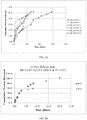
- the rate of degradation is modulated by the composition of the nanomesh wafer. See Figures 2A, 2B , and 2C .
- nanomesh wafer is designed to bind to the ocular conjunctiva either by ionic bonding or by light complexation of proteins on the tissue surface with moieties on the nanomesh. As such, these moieties may be thiolated, or aminated.
- the nanomesh wafer can contain mucoadhesive tissue-reactive components that have reactive groups that react with the ocular tissue surface. Mucoadhesive properties can be incorporated by inclusion of a charged polymer on the surface or intercalated with the drug-loaded fibers.
- the charged polymer can be xanthan gum, guar gum, chitosan, hyaluronic acid, polyacrylic acid or polylysine.
- the nanomesh wafer can be applied as a dry drug-containing system, which will rapidly hydrate and adhere to the conjunctival tissue.
- the wafer is applied moist in a fully hydrated state.
- the hydrating liquid can be, but is not limited to an albumin solution, a solution containing hyaluronic acid, or saline.
- the nanomesh can be drug-free and utilized as a wound healing aid.
- the nanomesh wafer can contain more than one distinct layer, one over the other, with each layer imparting specific functional properties to the wafer.
- the layers may be intercalated within each other like a "weave,” imparting properties of mechanical strength, flexibility, or biocompatibility.
- one layer can contain a drug in a polymer matrix and the other layer can contain the tissue-reactive ingredient.
- One layer may contain one drug and another may contain another drug.
- an antibiotic and an anti-inflammatory steroid may be incorporated in separate layers with different release rates engineered for each drug.
- the nanostructured mesh wafer described above can be produced by co-axial fiber spinning.
- the fiber produced by this process will be a co-axial filament, with the core (2) being the drug-containing biodegradable polymer and the outer layer (1) being a mucoadhesive polymer.
- the fiber can be produced as a tri-axial filament having an inner drug-containing polymer (5), a second drug-containing polymer (4) surrounding the inner drug-containing polymer (5), and an outer polymer layer (3) formed of a mucoadhesive polymer.
- a tri-axial filament can be prepared that contains three drug-containing cores (7, 8, 9) embedded in a layer (10) of a mucoadhesive polymer that can also contain a drug.
- biodegradable drug-containing microspheres can be sprayed onto the mesh to create a microsphere/mesh composite, to achieve the requisite drug release properties.
- the nanomesh wafer can be prepared through various methods of fiber spinning.
- the fibers can be formed by electrospinning, electrospraying, melt extrusion, solvent extrusion, micro-weaving, melt spinning, wet spinning, fiber drawing, or a combination of these techniques.
- the nanomesh wafer can be formed by a combination of solution casting and fiber spinning.
- the layers may be formed by using a fine micronized ultrasonic spray of a solution containing a mucoadhesive polymer described above over a previously formed nanomesh mat.
- the ultrasonic spray will form a monolayer of the mucoadhesive polymer on the nanomesh wafer.
- the mesh can also be produced by 3D printing techniques.
- the nanomesh wafer can be produced in rolls or sheets, dried under vacuum, and cut to size.
- the nanomesh wafer can be manufactured from polymeric materials that quickly meld with the conjunctival tissue of the conjunctival cul-de-sac.
- the drug-containing wafer Upon insertion, the drug-containing wafer is designed to hydrate and mold itself to the conjunctiva and begin sustained release of an anti-glaucoma therapeutic through the cornea and into the anterior chamber of the eye.
- the nanomesh wafer described above can be preservative-free to avoid preservative-induced toxicity after long-term use.
- the nanomesh wafer contains a preservative.
- the wafer can be sterilized and packed in a foil sterile pack that is impermeable to moisture and gases.
- the nanomesh wafer can be sterilized by ethylene oxide, gamma irradiation, or UV light.
- each component of the wafer prior to forming fibers is sterile filtered and the nanomesh wafer is formed aseptically.
- the drug incorporated into the nanomesh wafer can be a small molecule or a macromolecule such as a protein, a peptide, and a nucleic acid.
- the drug incorporated into the nanomesh wafer can be a glaucoma drug.
- the drug can be, but is not limited to, a prostaglandin, a prostaglandin analogue, and a prostamide.
- the prostaglandin incorporated into the nanomesh can be latanoprost, tafluprost, unoprostone, or bimatoprost.
- any drug that lowers IOP can be incorporated into the nanomesh wafer.
- brinzolamide and timolol can be incorporated into the nanomesh wafer.
- the nanomesh wafer can contain a total amount of prostaglandin, per wafer, from 0.5-1000 ⁇ g, e.g., 0.5-50 ⁇ g, 1-200 ⁇ g, 50-100 ⁇ g, 100-200 ⁇ g, and 200-1000 ⁇ g.
- the amount of prostaglandin in the wafer will be in the range of 100-350 ⁇ g.
- the nanomesh wafer can be for use in a method for treating glaucoma by the sustained release of travoprost for 30 days. See Figure 2A and 2B .
- the nanomesh wafer can be for use in treating glaucoma by sustained release of brinzolamide for 30 days. See Figure 4D .
- the glaucoma medication may be released for a longer period of time, e.g., 60 days.
- the glaucoma medication may be released for 90 days, 120 days, or 180 days.
- the nanomesh wafer can be manufactured to modulated travoprost release such that a "burst" is followed by sustained release.
- a particular release rate of travoprost can be achieved by changing the composition of the wafer. See Figure 2A and EXAMPLE 1 below.
- the wafer may contain two anti-glaucoma drugs in combination to achieve the required therapeutic effect.
- the two glaucoma drugs can be brinzolamide and travoprost.
- the two drugs are brinzolamide and brimonidine tartrate.
- the nanomesh wafer can contain both an anti-inflammatory and an anti-microbial.
- the nanomesh wafer contains loteprednol etabonate and tobramycin.
- the duration of drug release can be optimized to release the drug in the range between, e.g., 1-7 days, 1-15 days, 1-30 days, 1-45 days, 1-60 days, 1-75 days, 1-90 days and 1-180 days.
- the absolute amount of drug per nanomesh wafer can be between 0.001-0.1 ⁇ g, 0.01-0.1 ⁇ g, 0.1-0.5 ⁇ g, 0.5-1 ⁇ g, 1-10 ⁇ g, 10-100 ⁇ g, 100-500 ⁇ g, 500-1000 ⁇ g, 1000-2000 ⁇ g, 2000-5000 ⁇ g, and 5000-10000 ⁇ g.
- drug-containing nanomesh wafers can be for use in treating infections of the eye and disorders related to microbial infections, such as conjunctivitis, keratitis, blepharitis and rosacea.
- Ophthalmic antibiotics are available from a variety of drug classes including aminoglycosides, macrolides, polypeptides, quinolones, and sulfonamides. In addition, many are available as combination products with other antibiotics or corticosteroids. Any of these existing approved ophthalmic antibiotics can be loaded into the nanomesh wafer described herein.
- the antimicrobial incorporated in the nanomesh wafer described above can be, but is not limited to moxifloxacin, azythromycin, mupirocin, erythromycin, ciprofloxacin, netilmycin, besifloxacin, gatifloxacin, gentamycin sulfate, levofloxacin, ofloxacin, sulfacetamide sodium, tobramycin, bacitracin zinc, Polymyxin B sulfate, neomycin, and neomycin sulfate.
- the nanomesh wafer offers advantages over current ocular antimicrobial formulations. More specifically, the nanomesh wafer described above can efficiently deliver a small dose of antibiotic to ocular tissues at concentrations greater than the minimum bacteriocidal concentration to effectively eliminate the bacteria. Lower concentrations of drug that are less than the minimum bacteriocidal concentration, such as the doses achieved by antibiotic eye drops can lead to the bacteria evolving to become drug resistant. This mode of delivery can lower the incidence of MRSA.
- the nanomesh wafer contains mupirocin, a drug utilized to treat MRSA in nasal linings.
- the nanomesh wafer can contain an anti-viral drug.
- the anti-viral incorporated in the nanomesh can, in a particular embodiment, be used to treat herpes simplex virus (HSV).
- HSV herpes simplex virus
- the anti-viral used to treat HSV can be, e.g., acyclovir, valacyclovir, and famciclovir.
- the anti-viral incorporated in the nanomesh can be used to treat viral conjunctivitis.
- the drug incorporated in the nanomesh wafer can be for use in treating ocular rosacea.
- Patients displaying clinical symptoms of ocular rosacea typically also have dermal rosacea.
- Ocular rosacea is characterized by redness, crusting of the eyelid, itching and irritation.
- the drug can be a therapeutic that is currently in testing or under FDA approval for dermal rosacea.
- the drug can be one that is used to lower inflammation in tissues.
- the drug can be oxymetazoline hydrochloride, cetirizine hydrochloride, fluticasone propionate, fluticasone furoate.
- the drug used to treat ocular rosacea can be an anti-allergy medication.
- the drug incorporated in the nanomesh can be for use in preventing or treating ocular pain.
- the drug incorporated in the nanomesh is an analgesic.
- the drug is selected from bromfenac sesquihydrate, amfenac, nepafenac, aspirin, ibuprofen, ketorolac tromethamine, or any other drug that has analgesic and anti-inflammatory activity.
- the drug incorporated in the nanomesh can be an anesthetic.
- the drug can be but is not limited to lidocaine and novocaine.
- the nanomesh can be formulated to contain wound healing components.
- the nanomesh may contain purified 1->3 beta glucan, or 1->6 beta glucan.
- the nanomesh contains purified tamarind seed polysaccharide.
- the nanomesh contains a combination of albumin, lecithin, collagen, hyaluronic acid, beta glucan, and tamarind seed polysaccharide.
- the nanomesh can contain components that will lubricate the ocular surface.
- examples of such components are xanthan gum, hyaluronic acid, and tamarind seed polysaccharide, or combinations thereof.
- the nanomesh can contain lipids and a mucoadhesive.
- the nanomesh can be for use in treating dry eye in a sustained fashion.
- the nanomesh can contain a dry-eye medication, such as cyclosporine.
- the nanomesh wafer can contain an anti-inflammatory.
- the anti-inflammatory incorporated in the nanomesh includes but is not limited to loteprednol etabonate, fluticasone propionate, dexamethasone, dexamethasone phosphate, prednisolone, prednisolone phosphate, budesonide, triamcinolone acetonide, indomethacin, diclofenac, nepafenac, bromfenac, pranoprofen, and any other drug that may have anti-inflammatory activity.
- the nanomesh wafer can be for use in treating allergic conjunctivitis by sustained release of loteprednol etabonate for 20-60 days, as shown in Figure 4A .
- the nanomesh contains an anti-fungal medication.
- Itraconazole, Posaconazole, Voraconazole and other anti-fungal compounds known to have anti-fungal activity can be incorporated into the nanomesh wafer.
- the nanomesh wafer is designed to be non-irritating to the surface of the eye.
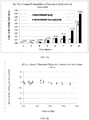
- a novel correlation of wafer thickness to ocular irritation is disclosed. See EXAMPLE 1 below.
- the wafer to be non-irritating it should be ⁇ 0.5 mm thick.
- the non-irritating nature of the wafer is also a function of its composition and flexibility.
- an injectable sustained-release formulation containing micro- or nano-sized drug encapsulates for treating ocular disorders is disclosed.
- the injectable sustained-release formulation is not according to the invention and can be used to deliver both front-of-the-eye medications and back-of-the-eye medications.
- the sustained-release formulation is injected into the tissue in the conjunctival cul-de-sac via a syringe to obviate the need for multiple eye-drop administrations.
- medication-containing encapsulates are injected into the vitreous, sub-retinal space, supra-choroidal space, sub-Tenon's space or any other space known to the clinician to access the posterior ocular space.
- the formulation is not limited to treating disorders of the eye.
- the formulation can be used to treat a multitude of conditions and disorders in different tissues, e.g., the eye, skin, wounds, urogenital tract, brain, pulmonary, and nose.
- the injectable sustained-release formulation contains encapsulates that are precisely engineered to a defined size, shape, and specific internal microstructure. Size, shape, and microstructure are modulated to release a drug or multiple drugs from a multi-layered matrix at rates requisite to achieve a therapeutic effect over a specified period of time, e.g., fast and sustained, while maintaining drug concentrations below levels known to cause toxic symptoms.
- the release of drug is controlled by composition, size, and size distribution and internal microstructure of the encapsulates.
- the injectable encapsulates are micro- or nano-sized encapsulates that are (a) injectable through a needle with an outer diameter of 0.413-0.261 mm and an inner diameter of 0.21-0.133 mm (27 G - 31 G), (b) remain dispersed in tissue or tissue fluids such as the vitreous, i.e., minimal clumping, and (c) display a sustained and predictable drug release.
- the internal microstructure of the encapsulates is designed to be solid with the release rate controlled by a combination of diffusion and degradation.
- the surface of the encapsulates has been designed to be smooth, with a surface coating that supports good flow characteristics.
- the internal microstructure of the encapsulates can consist of concentric rings (cross-sections shown in Figures 5A and 5B ), with each ring consisting of a polymer composition that is engineered to release a drug at a specific rate.
- the internal microstructure of the delivery system can be bi-axial, with two concentric rings characterizing each axis (See cross-sectional view, Figure 5A ), creating a core matrix and a corona matrix, each containing a drug.
- the matrix can be monolithic, with a single homogeneous composition with incorporated drug.
- Each concentric ring can be formed of a different matrix.
- the microstructure can also be multi-axial, with three or more concentric rings each containing different drugs and/or matrix components.
- the internal microstructure of the encapsulates can be co-axial with multiple axes within a larger axis ( Figure 5C ).
- the shape of the encapsulates can be cylindrical, disc-like, spherical, square, and rectangular, depending upon the process utilized to fabricate the encapsulates.
- the internal cross-sectional microstructure of the encapsulates is multi-layered, with the architecture and thickness of each layer specific and defined.
- the composition of each layer is varied by varying the composition of polymer blends used to fabricate each layer.
- the composition of the polymer blend in each layer can be varied to modulate the release of drug.
- microstructure of the encapsulates can consist of localized regions of one polymer composition (discontinuous phase) contained in another polymer composition that comprise the continuous phase of the matrix (see Figure 5C ).
- the first layer consists of a first drug incorporated in a polymeric matrix, the composition of which is engineered to release the first drug at a certain rate (rate 1).
- the second layer consists of a second drug incorporated in a polymer matrix, the composition of which is engineered to release the second drug at another rate (rate 2).
- the matrix in layer 1 containing the first drug can release the drug within hours, weeks, or months, while the matrix in layer 2 containing the second drug can also release the drug within hours, weeks, or months.
- the drug may be the same in each matrix. Alternatively, the drug may be different for each matrix.
- the size of the encapsulates can be less than 100 nm, between 10-100 nm, 101-200 nm, 201-400 nm, 401-600 nm, 601-800 nm, 801-1000 nm, 1 micron-10 microns, 10-20 microns, 20-30 microns, 30-40 microns, 40-50 microns, 50-60 microns, 60-70 microns, 70-80 microns, 80-100 microns, 100-150 microns, 150-300 microns, 300 microns-1000 microns.
- the aspect ratio of the encapsulates can be 1:1, 1:2, 1:3, 1:4, 1:5, 1:6, 1:7, 1:8, 1:9 and 1:10.
- the shape of the encapsulates may be rod-shaped, wafer-like, discoid, cuboid, cylindrical and rectangular.
- the matrices forming the encapsulates can be biodegradable, with the rate of biodegradation modulated by combining various biodegradable polymers.
- the biodegradable polymers can be, but are not limited to, polydioxanone, PLG, PCL, poly(caprolactone-co-glycolide), poly(esteramide), poly(trimethylene carbonate), poly(ethylene oxide-co-lactide), polyethylene glycol and combinations thereof.
- the matrices may be blended with polymers and excipients that lend biocompatibility such as PVA, hyaluronic acids of different molecular weights, chitosans of various molecular weights, PEG-cholesterols, albumins, lecithins, phosphatidyl choline, phosphatidic acid, lauric acid, stearic acid, myristic acid, sorbitans, PEG-castor oils, capric acid, vitamin E-PEGs, PEG-fatty acids and combinations of these ingredients.
- polymers and excipients that lend biocompatibility such as PVA, hyaluronic acids of different molecular weights, chitosans of various molecular weights, PEG-cholesterols, albumins, lecithins, phosphatidyl choline, phosphatidic acid, lauric acid, stearic acid, myristic acid, sorbitans, PEG-castor oils, capric acid, vitamin
- the surface characteristics of the encapsulates can be optimized to be non-adherent to each other and to the tissue space.
- One way to enhance dispersion into the tissues is to optimize the surface of the encapsulates with coatings that provide "slippage" into the crevices of the tissues.
- coatings that are PEG-based, or polysiloxane-based, among others, can be used.
- Molecules such as silicones, lecithins, phosphatidyl cholines, albumins, and collagen can also be used for this purpose.
- the dispersion of the encapsulates in the injectable formulation will result in efficient dispersion of the drug within the tissue.
- the encapsulates can be prepared by melt extrusion or melt spinning techniques through mono-axial, di-axial, or tri-axial tube needles, following by cutting to a precise size.
- the drug molecules being released are identical, with each matrix layer releasing the drug at a different rate, to achieve for example, a burst initial release of drug from one layer, followed by a slower sustained release of drug from another layer.
- encapsulates are 3D printing, electrospinning through co-axial needles followed by cutting the filaments to size, and formation of core-shell microspheres by water-oil-water, oil-water, or oil/oil techniques.
- Drugs can be encapsulated in biodegradable microspheres by dissolution of the drug and the polymer in an organic solvent, then generating uniform "droplets" by ultrasonic spraying into a solvent system that precipitates the polymer-encapsulated drug into spheres.
- the size can be controlled by controlling the size of the droplets.
- the precipitating bath may contain a silicone polymer, or an ingredient that incorporates a slippage inducing excipient onto the surface of the microspheres.
- the precipitating bath may contain a water-soluble polyurethane with emulsifying properties.
- the drug-containing encapsulates are injected into the sub-choroidal space of the eye.
- the encapsulates are designed to disperse and spread in this space surrounding the retina. Drug from the matrices in the encapsulates can be released into the retina in a uniform flux.
- the encapsulate can be manufactured to remain discreet and punctate, releasing a predicted amount of drug per unit time.
- the encapsulates in the injectable formulation can be surface-coated with excipients that are known dispersants of particles to minimize clumping after administration.
- excipients include, but not are limited to, PEG40-stearate, PEG-lecithin, polymers of the structure PEO-PPO-PEO, glycocholic acid, and cholic acid.
- the coating on the encapsulates may be positively charged, negatively charged, or neutral.
- the encapsulates can be surface-coated with silicones by ultrasonic spraying.
- surface coating may be added by a washing step that contains injectable silicone and ethanol, enabling deposition of a very fine layer of silicone. Only injectable silicones are utilized for this purpose. Microspheres that have been coated with silicones will "roll” when injected and will immediately disperse.
- the encapsulates can be spray-coated with silica, titanium dioxide, albumin, or polyvinyl alcohol.
- the encapsulates are dispersed in a biocompatible gel such as hyaluronic acid, albumin, collagen, or combinations thereof. In another example, the encapsulates are dispersed in a synthetic simulated fluid.
- the encapsulates are dispersed in a biological fluid, such as serum plasma extracted from blood stock, a simulated ocular fluid, or amino acids and poly-amino acids found in biological systems.
- a biological fluid such as serum plasma extracted from blood stock, a simulated ocular fluid, or amino acids and poly-amino acids found in biological systems.
- the injectable sustained-release formulation can be delivered intravenously, either targeted or non-targeted.
- the encapsulates in the formulation can be surface coated with a targeting antibody.
- the surface characteristics of the encapsulates can be modified to encourage phagocytosis, or to elicit an appropriate immune reaction.
- the injectable sustained-release formulation can be a vaccine, either therapeutic or prophylactic.
- the encapsulates in the formulation will be targeted to antigen presenting cells to elicit the desired immune response to the antigen in question.
- the encapsulates can be surface-modified to have molecules that elicit phagocytic uptake by monocytes and macrophages.
- molecules that have adjuvant activity can be used. Beta 1 ⁇ 4/1 ⁇ 6 glucan, zymosan, aluminum hydroxide, and other adjuvants known to those skilled in the art, may be utilized.
- the encapsulates in the formulation contain beta glucan, not just on the surface, but also in the interior of the encapsulates as an active, or as co-active with another drug.
- ⁇ -amyloid can bind beta glucan, thus acting as a homing signal for the encapsulates to bind to ⁇ -amyloid.
- the molecules being released from each distinct matrix may be a combination of a therapeutic and an adjuvant.
- the surface characteristics of the encapsulates can be positively charged to adhere easily to the tissue surface, or to enhance permeation into cells.
- the surface of the encapsulates can be optimized to interact with the proteins in the tissue space.
- the encapsulates are coated with polymers known to those skilled in the art to be compatible and non-toxic to cells.
- the encapsulates can be coated with polymers such as albumin, lecithin, phosphatidylcholine, PEG-distearoylphosphatidyl choline (PEG2K/5K-DSPE), PEG-cholesterol, PEG, PEG-fatty acid (PEG-stearate, PEG-laureate, etc.) to prevent macro-encapsulation of the encapsulates as they release the drug over a sustained period of time.
- polymers such as albumin, lecithin, phosphatidylcholine, PEG-distearoylphosphatidyl choline (PEG2K/5K-DSPE), PEG-cholesterol, PEG, PEG-fatty acid (PEG-stearate, PEG-laureate, etc.
- the drug contained within the matrices of the encapsulates may be hydrophilic, or hydrophobic.
- the drug can be a small molecule, a protein, a peptide, a peptide nucleic acid (PNA), oligonucleotide (ODN), DNA, an aptamer, or RNA.
- the matrices can contain multiple small molecules, each with a distinct therapeutic intent.
- the injectable sustained-release formulation is injected into the conjunctival cul-de-sac of each eye to treat an ocular condition.
- the encapsulates in the injectable sustained-release formulation release at least 10 ng per day of a bioactive agent for a period greater than 2 weeks.
- the encapsulates release an effective amount of the one or more active agents for a period greater than 14 days in vivo , preferably greater than 60 days in vivo , more preferably up to 72 days in vivo , more preferably greater than 90 days in vivo , even more preferably over 100 days in vivo , and most preferably greater than 120 days in vivo.
- the encapsulates will be injected into ocular tissue to treat glaucoma.
- the drug is latanoprost, bimatoprost, travoprost, or their salts, esters, and prodrugs.
- the molecules being released from each distinct matrix may be a combination of a therapeutic and a p-glycoprotein (PGP) inhibitor.
- PGP p-glycoprotein
- the molecules being released are a small molecule and a biologic, e.g., an anti-VEGF molecule to treat ARMD and a steroid to treat inflammation.
- a biologic e.g., an anti-VEGF molecule to treat ARMD and a steroid to treat inflammation.
- the steroid is triamcinolone acetonide and the anti-VEGF molecule is avastin.
- the steroid is fluocinolone and the anti-VEGF molecule is PEGaptanib.
- the anti-VEGF molecule is ranibizumab, bevacizumab, or aflibercept.
- the molecules being released from the matrices are an antimicrobial and a steroid.
- the anti-cancer molecule is an EGFR inhibitor.
- the EGFR inhibitor is Ertolinib.
- the steroid is triamcinolone acetonide and the antimicrobial is tobramycin.
- Other antimicrobials that can be used are cortisporin, erythromycin, cyclosporin, and others in this class known to those skilled in the art.
- corticosteroids and NSAIDs that can be incorporated into one of the matrices include, but are not limited to, dexamethasone, dexamethasone sodium phosphate, fluticasone propionate, fluticasone furoate, and difluprednate.
- one of the drugs is an antihistamine.
- one of the drugs is an anti-allergy medication.
- the drug-encapsulates are delivered as an intranasal wash, or an intranasal spray.
- the drug-encapsulates deliver an anti-allergy medication and a decongestant to the nasal passage.
- the intranasally-delivered matrix co-delivers an anti-allergy drug and an anti-inflammatory drug.
- the drug-encapsulates are administered to the lung as a spray-dried powder formulated with excipients made suitable for pulmonary administration.
- the drug-encapsulates are nebulized for pulmonary administration.
- one of the encapsulate layers contains a targeting moiety such as an antibody or a molecule targeting the encapsulates to a specific receptor.
- a second layer would contain a therapeutic to treat the disease.
- one of the layers may contain a biocompatible bioadhesive that can hold the delivery system to the tissue, while the layer contains a therapeutic, either a small molecule or a biologic.
- a bioadhesive molecule is polyacrylic acid and the therapeutic is a steroid.
- one of the layers may contain a cell-permeating component, while the other layer contained the therapeutic.
- the cell-permeating component is polysorbate 20, polysorbate 60, or polysorbate 80.
- the cell-permeating component is magainin, melittin, or any cell-permeating peptide known to those skilled in the art.
- the method requires injecting the sustained-release formulation having loteprednol-containing microencapsulates into the conjunctival space after cataract surgery.
- the micro-encapsulates will release loteprednol etabonate over a period of three weeks at a sustained rate of 1-5 ⁇ g/day.
- One aspect to successful drug therapy is the ability to treat the patient with multiple drugs, often with various drug release regimens. This results in the patient having to receive multiple drugs, often multiple injections, or multiple pills.
- Oncology treatments often involve a combined drug regimen where multidrug cocktails are utilized to develop an effective therapy for the patient.
- a combined regimen is in the treatment of retinoblastoma, where the drug regimen could be sustained release of two different anti-cancer drugs.
- Another example of a combined drug regimen could be in the release of two different drugs, for the treatment of glioblastoma.
- the combined drug regimen could be precise and controlled release of a steroid and an anti-cancer drug.
- the combined drug regimen could be precise and controlled release of an anti-microbial and an anti-cancer drug.
- the drug-containing encapsulates are small enough in dimensions to be sterile-filtered.
- the drug-containing encapsulates can be less than 0.22 microns in size, between 0.2-0.5 microns in size, 0.5-1 microns in size, 1-2 microns in size, 2-10 microns in size, 10-20 microns in size, 20-40 microns in size, 40-60 microns in size, 60-100 microns in size, 100-200 microns in size, or 200-500 microns in size.
- the encapsulated drug in any given matrix may be released 100% in less than a day, or release in a sustained manner up to 14 days, or release in a sustained rate up to 14-30 days, or release in a sustained manner up to 30-150 days, or release in a sustained manner up to 150-180 days, or up to one year.
- the therapeutic agents utilized with the drug-containing encapsulates can include one or more drugs set forth below, either alone or in combination.
- the drugs utilized may also be the equivalent of, derivatives of, or analogs of one or more of the drugs listed below.
- the drugs may include but are not limited to pharmaceutical agents including anti-glaucoma medications, ocular agents, antimicrobial agents (e.g., antibiotic, antiviral, antiparasitic, antifungal agents), anti-inflammatory agents (including steroids or non-steroidal anti-inflammatory), biological agents including hormones, enzymes or enzyme-related components, antibodies or antibody-related components, oligonucleotides (including DNA, RNA, short-interfering RNA, antisense oligonucleotides, and the like), DNA/RNA vectors, viruses (either wild type or genetically modified) or viral vectors, peptides, proteins, enzymes, extracellular matrix components, and live cells configured to produce one or more biological components.
- pharmaceutical agents including anti-glaucoma medications, ocular agents
- Another example of a combined regimen would be in the treatment of macular edema caused by diabetic retinopathy (DR), or ARMD, among other posterior eye diseases.
- DR diabetic retinopathy
- ARMD ARMD
- the injectable sustained drug delivery system which can release sustained, constant rates of multiple drugs simultaneously, could significantly alter the landscape of therapies available for these ocular diseases.
- front-of-the-eye diseases can be treated by a single injectable sustained release drug delivery formulation that could release sustained, constant rates of multiple drugs.
- Another example of a drug combination regimen that can be accomplished using the injectable sustained-release formulation described above is sustained release of an antibiotic and an anti-inflammatory after surgery.
- antiinflammatories and analgesics used after cataract surgery are bromfenac, nevanac, durezol, fluticasone propionate, fluticasone furoate, dexamethasone, triamcinolone acetonide, ketorolac tromethamine, flurbiprofen, morphine, and codeine.
- One embodiment of a two drug-combination regimen is sustained release of an anti-microbial agent and an anti-inflammatory for the treatment of dermis-related diseases.
- the anti-microbial is an anti-fungal molecule.
- One embodiment of combined drug treatment could be in the treatment of urological diseases, with a concomitant administration of an antimicrobial and an anti-inflammatory.
- the combined regimen is the administration of an imaging agent and a therapeutic.
- the injectable sustained-release formulation can be used for treating dermal disorders, CNS disorders, GI disorders, Alzheimer's disease or other disease of the brain, cardiovascular diseases, rectal diseases, and vaginal diseases.
- the injectable sustained-release formulation can be used for diagnostics. In another embodiment, the injectable sustained-release formulation can be used to deliver cosmetics or substances to improve appearance of the skin. In another example, the injectable sustained-release formulation can be utilized to deliver a therapeutic and a cosmetic.
- the injectable sustained-release formulation can be incorporated into wound dressings.
- drug-loaded nanomesh wafers were prepared by electrospinning. This process makes use of electrostatic and mechanical force to spin fibers from the tip of a fine spinneret (See Figure 1B ).
- the spinneret is maintained at positive or negative charge by a DC power supply.
- the electrostatic repelling force overcomes the surface tension force of the polymer solution, the liquid spills out of the spinneret and forms an extremely fine continuous filament.
- the dry mesh thus produced is porous and flexible, allowing it to be cut to a desired size.
- Raw materials were travoprost (Cayman Chemicals), PLGA RG503H (Evonik), PEG40-Stearate (Sigma-Aldrich), PEG3.35K (Carbowax), F127 (Spectrum), and PVP (Plastone, ISP).
- Factors that control mesh properties are process conditions, molecular weight, conductivity of the solution, pH of the solution, distance from the tip to the collector and viscosity of the solution. Percent swelling of the mesh is controlled by the composition of the mesh; a mesh with high water-soluble content had higher hydration. For the purpose of an ocular insert, rapid hydration of the mesh causes formation of a tissue-compatible matrix. TABLE 1. Solutions to prepare Nanomesh Wafer with Travoprost Lot No.
- Nanofiber Electrospinning Conditions (3.25 inches correspond to 8.255 cm; a 22 G needle has an outer diameter of 0.718 mm and an inner diameter of 0.413 mm) Lot No. Flow Rate (mL/hour) Voltage (kV) Needle (gauge) Distance from Tip to Collector (inches) Cycle ML-ES-06-5 0.8 20 22 3.25 15 ML-ES-06-7 0.8 20 22 3.25 15 ML-ES-06-8 1.5 22 22 3.25 15 ML-ES-06-11 1.5 22 22 3.25 15 ML-ES-06-12 1.5 22 22 3.25 15 ML-ES-06-16 2 16 22 3.25 15 ML-ES-06-21 2 16 22 3.25 15 ML-ES-06-31 2 16 22 3.25 15
- the estimated travoprost content is 0.1575 mg for a prototype that is 10 mm x 1.5 mm x 0.22 mm (length x width x thickness). In a 30 day release profile, this would provide approximately 5.25 ⁇ g/day released on the ocular surface for absorption. It is estimated that 1.5 ⁇ g /day is needed for effective glaucoma therapy.
- travoprost The amount of travoprost in samples was determined by HPLC. For this analysis, a stock solution was prepared gravimetrically by weighing out 9.5 mg of travoprost and dissolving it in 0.9416 g methanol in a 1.5 mL centrifuge tube. This yielded a 9.9884 mg/g travoprost stock solution. Standards were prepared with concentrations between 0.007 and 142 ⁇ g/g, series diluted from the original 9.9884 mg/g travoprost stock solution. Standards prepared had a range of 0.00692 and 14.79 ⁇ g/mL.
- Nanomesh wafers (ML-ES-06-31) were tested for photo-oxidative degradation by high intensity UV light (254 nm, for 24 hours). The data demonstrated that > 98% of the encapsulated travoprost was intact, indicating protection of the drug from UV light exposure during use. In contrast, 50% of the travoprost in buffer alone was degraded under these conditions.
- NI non-irritating
- Slit-lamp exam to include signs of ocular surface irritation (conjunctival hyperemia, chemosis, discharge, corneal opacity and fluorescein staining), inflammation (anterior chamber cells and flare, ulceris), pupil diameter (calipers), and IOP (TonoVet rebound tonometer).
- Tear samples are collected using Schirmer strips for bioanalysis of travoprost and travoprost acid. On day 1, evaluations are conducted at baseline, 0.25, 0.5, 1, 2, 4, and 8 hours after nanomesh placement, followed by twice daily evaluations on days 2 and 3, then weekly for a total of 4 weeks.
- Nanomesh prototypes are optimized to match the hydrated flexural modulus of the ocular conjunctiva.
- the optimal moduli range for a nanomesh wafer is ideally ⁇ 25 MPa to be biocompatible.
- the optimal oxygen permeability range for nanomesh wafers is in the range of 20-30 Dk.
- Table 7 Solution Preparation for Loteprednol Etabonate Nanomesh Composition % in mesh % in solution Lot No. API 20 RG503H Ethyl acetate Ethanol ML-ES-03-48 6.53 0.74 26.56 59.56 11.19 ML-ES-03-50 10.15 0.71 26.74 59.20 10.25
- Table 8 Loteprednol Etabonate in Nanofiber Electrospinning Conditions (3.25 inches correspond to 8.255 cm; a 22 G needle has an outer diameter of 0.718 mm and an inner diameter of 0.413 mm) Lot No.
- Thickness for these two nanomesh wafers were measured three times on three random areas. The standard deviation below 0.01 revealed the uniformity of loteprednol etabonate nanomesh wafers.
- the total amount of encapsulated travoprost in each nanomesh wafer was measured by HPLC.
- the encapsulation for ML-ES-03-48 was 61.77 mg/g which was close to the target 6% in the mesh, and the encapsulation for ML-ES-03-50 was 96.27 mg/g which was also close to the target 10% in the mesh.
- nanomesh prototypes released drug in 1 hour.
- ML-ES-03-48 released 99.08 % in 40 days, which was close to a desired target of releasing 100% in 30 days, while the cumulative release of ML-ES-03-50 in 40 days was comparatively slow, which may have resulted from lower PEG.S than ML-ES-03-48.
- the flexural strength of these two nanomesh wafer prototypes was excellent. They can both be bent and flexed between thumb and index finger. It was observed that ML-ES-03-48 and ML-ES-03-50 were made uniformly.
- Nanomesh wafers can be prepared by incorporating 5% 4-arm PEG3K-succinimidyl glutarate (SG) and 4-arm 5% PEG-NH 2 with 26% PLGA (RG503H), 0.7% PEG-Stearate in the electrospinning solution in the same solvents shown in Table 7 above, with 49% ethyl acetate and 11% ethanol and the active pharmaceutical ingredient (API), in this case, loteprednol etabonate.
- the conditions of the electrospinning are shown in Table 8 above.
- Loteprednol etabonate is a "soft" steroid which is rapidly converted into inactive metabolites by nonspecific esterases in the ocular tissue.
- a micro-encapsulated loteprednol etabonate injectable sustained-release formulation is disclosed that can be injected in the conjunctival sac immediately after surgery.
- the injectable sustained-release formulation is designed to release a drug over a 2 to 3 week period with a single injection.
- PLG was used as the biodegradable polymer microencapsulate.
- PLG microencapsulates were prepared by an emulsion process to achieve a narrow size distribution, optimum size, and injectability. Loteprednol etabonate was purchased from Sigma, Inc. PLG (50:50 L:G) of different molecular weights were utilized to assess the effect on in-vitro release. A blend of PLG terminated with acid end groups and ester end groups was prepared to assess the effect on in-vitro drug release.
- the microencapsulates were prepared as follows:
- Particle Size Distribution (PSD):
- Samples were suspended 20 mg/mL in a diluent, diluted with an equivalent volume of water. 500 ⁇ L of the suspension was dispersed in a dispersal medium (a thirty fold dilution of the diluent in distilled water). Particle size was measured on a Horiba LA-950 Laser Diffraction Particle Analyzer.
- Dry encapsulates were characterized by scanning electron microscopy.
- Encapsulation (mg/G): 20 mg of the microencapsulate was dissolved in 1 mL of acetonitrile, and 10 mL of isopropanol added drop-wise while mixing. 1 mL of the slurry was centrifuged (5 min.; 6000 RPM), and the supernatant was removed for HPLC analysis. HPLC analysis was performed on a RP C18 column.
- microencapsulates were reconstituted in 1 mL of PBS, pH 7.4 and rotated at 37 °C, in a 2 mL polypropylene centrifuge tube. At the 1 hour time-point, the centrifuge tubes were spun down at 15,000 RPM. One mL of the supernatant was removed for analysis by HPLC.
- microencapsulates 200-300 mg were weighed into 1 mL SpectraPor cassettes (cellulose membranes, MWCO 1000 kDal). The cassettes containing the microencapsulates were placed in 45 mL of PBS and incubated at 50 °C. Time point samples were obtained after 1 hour and daily over the course of 20 days. The samples were analyzed by HPLC.
Landscapes
- Health & Medical Sciences (AREA)
- Chemical & Material Sciences (AREA)
- Life Sciences & Earth Sciences (AREA)
- General Health & Medical Sciences (AREA)
- Animal Behavior & Ethology (AREA)
- Public Health (AREA)
- Veterinary Medicine (AREA)
- Medicinal Chemistry (AREA)
- Pharmacology & Pharmacy (AREA)
- Epidemiology (AREA)
- Engineering & Computer Science (AREA)
- Bioinformatics & Cheminformatics (AREA)
- Ophthalmology & Optometry (AREA)
- General Chemical & Material Sciences (AREA)
- Chemical Kinetics & Catalysis (AREA)
- Nuclear Medicine, Radiotherapy & Molecular Imaging (AREA)
- Organic Chemistry (AREA)
- Inorganic Chemistry (AREA)
- Heart & Thoracic Surgery (AREA)
- Biomedical Technology (AREA)
- Vascular Medicine (AREA)
- Oil, Petroleum & Natural Gas (AREA)
- Proteomics, Peptides & Aminoacids (AREA)
- Anesthesiology (AREA)
- Hematology (AREA)
- Medicinal Preparation (AREA)
- Pharmaceuticals Containing Other Organic And Inorganic Compounds (AREA)
- Medicines That Contain Protein Lipid Enzymes And Other Medicines (AREA)
- Acyclic And Carbocyclic Compounds In Medicinal Compositions (AREA)
- Materials For Medical Uses (AREA)
Applications Claiming Priority (2)
| Application Number | Priority Date | Filing Date | Title |
|---|---|---|---|
| US201462046918P | 2014-09-06 | 2014-09-06 | |
| PCT/US2015/048795 WO2016037169A1 (en) | 2014-09-06 | 2015-09-08 | Methods and biocompatible compositions to achieve sustained drug release in the eye |
Publications (3)
| Publication Number | Publication Date |
|---|---|
| EP3188688A1 EP3188688A1 (en) | 2017-07-12 |
| EP3188688A4 EP3188688A4 (en) | 2018-07-25 |
| EP3188688B1 true EP3188688B1 (en) | 2021-11-03 |
Family
ID=55440434
Family Applications (1)
| Application Number | Title | Priority Date | Filing Date |
|---|---|---|---|
| EP15838075.8A Active EP3188688B1 (en) | 2014-09-06 | 2015-09-08 | Methods and biocompatible compositions to achieve sustained drug release in the eye |
Country Status (12)
| Country | Link |
|---|---|
| US (2) | US9931306B2 (enExample) |
| EP (1) | EP3188688B1 (enExample) |
| JP (2) | JP7026507B2 (enExample) |
| KR (1) | KR102456032B1 (enExample) |
| CN (2) | CN106604695B (enExample) |
| AU (2) | AU2015311637B2 (enExample) |
| CA (1) | CA2960213C (enExample) |
| ES (1) | ES2900025T3 (enExample) |
| MY (1) | MY178327A (enExample) |
| SG (1) | SG11201701714RA (enExample) |
| WO (1) | WO2016037169A1 (enExample) |
| ZA (2) | ZA201701467B (enExample) |
Families Citing this family (23)
| Publication number | Priority date | Publication date | Assignee | Title |
|---|---|---|---|---|
| US9931306B2 (en) * | 2014-09-06 | 2018-04-03 | Integral Biosystems Llc | Methods and biocompatible compositions to achieve sustained drug release in the eye |
| WO2017062770A1 (en) * | 2015-10-08 | 2017-04-13 | Silverberg Noah | Punctal plug and bioadhesives |
| CA3038115A1 (en) * | 2016-09-30 | 2018-04-05 | Mati Therapeutics Inc. | Ophthalmic drug sustained release formulation and uses thereof |
| WO2018067882A1 (en) | 2016-10-05 | 2018-04-12 | Titan Pharmaceuticals, Inc. | Implantable devices for drug delivery with reduced burst release |
| EP3630024B1 (en) * | 2017-05-22 | 2022-04-06 | California Institute of Technology | Small molecule transport device with anti-condensation filler for drug delivery or waste removal |
| JP2020527591A (ja) * | 2017-07-17 | 2020-09-10 | ウルフクリーク バイオテック プライベート リミテッド | 活性薬剤送達のための微粒子製剤 |
| JP7373207B2 (ja) | 2018-03-01 | 2023-11-02 | バー‐イラン、ユニバーシティー | 眼の状態の矯正に使用するためのシステム、方法、及び材料組成物 |
| MA52774A (fr) * | 2018-06-05 | 2021-04-14 | Corneat Vision Ltd | Timbre de greffe ophtalmique synthétique |
| CN109853054A (zh) * | 2019-02-27 | 2019-06-07 | 上海交通大学医学院附属第九人民医院 | 一种同轴静电纺丝三维打印生物支架的装置及搭建方法 |
| EP3701974B1 (en) * | 2019-02-28 | 2024-08-28 | Agency for Science, Technology and Research | A material suitable for use as a vitreous substitute and related methods |
| CA3132635A1 (en) * | 2019-03-05 | 2020-09-10 | Aerie Pharmaceuticals, Inc. | Pharmaceutical compositions for treating ocular diseases or disorders |
| WO2020198798A1 (en) * | 2019-04-02 | 2020-10-08 | Cytomatrix Limited | A composition for the delivery of biologically active agents and uses thereof |
| TWI826685B (zh) | 2019-05-02 | 2023-12-21 | 瑞士商愛爾康公司 | 可溶解聚合物眼睛插入物及其使用方法 |
| CA3149866A1 (en) | 2019-10-24 | 2021-04-29 | Denis E. Labombard | Ocular device and drug delivery system, with case |
| BR112022011067A2 (pt) * | 2019-12-10 | 2022-08-23 | Alcon Inc | Insertos oculares poliméricos dissolvíveis com um polímero biodegradável |
| EP4142664A4 (en) * | 2020-04-27 | 2024-05-29 | Ocular Therapeutix, Inc. | METHODS FOR TREATING ALLERGIC CONJUNCTIVITIS |
| KR102467288B1 (ko) * | 2020-06-09 | 2022-11-17 | 동국대학교 산학협력단 | 결막 접촉용 약물 전달기 |
| EP3928805A1 (en) * | 2020-06-26 | 2021-12-29 | Royal College of Surgeons in Ireland | A device for use in the delivery of an active agent |
| US20220160668A1 (en) * | 2020-11-23 | 2022-05-26 | Sight Sciences, Inc. | Formulations and methods for treating conditions of the eye |
| WO2022250977A1 (en) * | 2021-05-26 | 2022-12-01 | The Texas A&M University System | Biodegradable mucoadhesive pharmaceutical formulations and methods thereof |
| CN114869862A (zh) * | 2022-04-24 | 2022-08-09 | 温州医科大学附属眼视光医院 | 一种带引流功能的青光眼手术缓释抗瘢痕膜及制备方法 |
| AU2024330194A1 (en) * | 2023-08-31 | 2026-04-02 | University Of Tennessee Research Foundation | Sustained release ocular implants |
| TW202547517A (zh) * | 2024-06-06 | 2025-12-16 | 美商視爾普斯眼科公司 | 用於治療眼部疾病之組合物及方法 |
Family Cites Families (25)
| Publication number | Priority date | Publication date | Assignee | Title |
|---|---|---|---|---|
| US5026559A (en) * | 1989-04-03 | 1991-06-25 | Kinaform Technology, Inc. | Sustained-release pharmaceutical preparation |
| US5177168A (en) * | 1989-10-17 | 1993-01-05 | Polymer Technology Corp. | Polymeric compositions useful in oxygen permeable contact lenses |
| JPH10509696A (ja) | 1994-10-12 | 1998-09-22 | フォーカル, インコーポレイテッド | 生分解性ポリマーを介する標的化送達 |
| US8273366B2 (en) | 2002-06-05 | 2012-09-25 | University Of Florida Research Foundation, Incorporated | Ophthalmic drug delivery system |
| CA2601864A1 (en) * | 2005-04-08 | 2006-10-19 | Surmodics, Inc. | Sustained release implants and methods for subretinal delivery of bioactive agents to treat or prevent retinal disease |
| CA2609687C (en) * | 2005-05-24 | 2014-04-22 | Inspire M.D Ltd. | Stent apparatuses for treatment via body lumens and methods of use |
| AU2006348901C1 (en) * | 2006-09-28 | 2013-11-14 | Essity Hygiene And Health Aktiebolag | Absorbent article, belt structure, manufacturing method for a belt structure and manufacturing method for an absorbent article |
| US8614103B2 (en) * | 2006-10-27 | 2013-12-24 | Lpath, Inc. | Compositions and methods for treating sphingosine-1-phosphate (S1P) related ocular diseases and conditions |
| CA2670944A1 (en) * | 2006-12-18 | 2008-06-26 | Alcon Research, Ltd. | Devices and methods for ophthalmic drug delivery |
| US8974814B2 (en) * | 2007-11-12 | 2015-03-10 | California Institute Of Technology | Layered drug delivery polymer monofilament fibers |
| US8361492B2 (en) * | 2008-04-29 | 2013-01-29 | Ocugenics, LLC | Drug delivery system and methods of use |
| US8083347B2 (en) | 2008-04-29 | 2011-12-27 | Ocugenics, LLC | Drug delivery system and methods of use |
| US20100104654A1 (en) * | 2008-10-27 | 2010-04-29 | Allergan, Inc. | Prostaglandin and prostamide drug delivery systems and intraocular therapeutic uses thereof |
| US20100291182A1 (en) | 2009-01-21 | 2010-11-18 | Arsenal Medical, Inc. | Drug-Loaded Fibers |
| JP5890182B2 (ja) | 2009-02-12 | 2016-03-22 | インセプト エルエルシー | ヒドロゲルプラグによる薬物送達 |
| US20100247606A1 (en) * | 2009-03-25 | 2010-09-30 | Allergan, Inc. | Intraocular sustained release drug delivery systems and methods for treating ocular conditions |
| US8961600B2 (en) * | 2009-06-25 | 2015-02-24 | Optonol Ltd. | Method of using a fiber matrix for maintaining space in soft tissues |
| KR102337046B1 (ko) | 2010-01-22 | 2021-12-08 | 알러간, 인코포레이티드 | 전방내 서방성 치료제 이식물 |
| US20110229551A1 (en) * | 2010-03-17 | 2011-09-22 | Notus Laboratories, Inc. | Drug delivery compositions and methods using nanofiber webs |
| US9028860B2 (en) * | 2010-04-28 | 2015-05-12 | Poly-Med, Inc. | Partially microcellular, selectively hydrophilic composite construct for ocular drug delivery |
| WO2012114138A1 (fr) * | 2011-02-21 | 2012-08-30 | Cerebel-Invest Sa | Implants biodégradables pour la libération contrôlée sous-conjonctivale d'une molécule active |
| EP3494959A3 (en) | 2011-04-29 | 2019-09-11 | Allergan, Inc. | Sustained release latanoprost implant |
| CA2848397C (en) | 2011-09-14 | 2022-04-26 | Forsight Vision5, Inc. | Ocular insert apparatus and methods |
| CN203089455U (zh) * | 2013-02-01 | 2013-07-31 | 浙江大学医学院附属第二医院 | 襻上镶嵌有药物缓释微囊的人工晶状体 |
| US9931306B2 (en) * | 2014-09-06 | 2018-04-03 | Integral Biosystems Llc | Methods and biocompatible compositions to achieve sustained drug release in the eye |
-
2015
- 2015-09-08 US US15/509,083 patent/US9931306B2/en active Active
- 2015-09-08 CA CA2960213A patent/CA2960213C/en active Active
- 2015-09-08 EP EP15838075.8A patent/EP3188688B1/en active Active
- 2015-09-08 CN CN201580047771.9A patent/CN106604695B/zh active Active
- 2015-09-08 AU AU2015311637A patent/AU2015311637B2/en active Active
- 2015-09-08 MY MYPI2017700768A patent/MY178327A/en unknown
- 2015-09-08 SG SG11201701714RA patent/SG11201701714RA/en unknown
- 2015-09-08 JP JP2017504772A patent/JP7026507B2/ja active Active
- 2015-09-08 CN CN201811209851.1A patent/CN109481447A/zh active Pending
- 2015-09-08 KR KR1020177006261A patent/KR102456032B1/ko active Active
- 2015-09-08 ES ES15838075T patent/ES2900025T3/es active Active
- 2015-09-08 WO PCT/US2015/048795 patent/WO2016037169A1/en not_active Ceased
-
2017
- 2017-02-27 ZA ZA2017/01467A patent/ZA201701467B/en unknown
- 2017-08-25 ZA ZA2017/05792A patent/ZA201705792B/en unknown
-
2018
- 2018-04-03 US US15/944,065 patent/US10328033B2/en active Active
-
2019
- 2019-10-16 AU AU2019250153A patent/AU2019250153B2/en active Active
-
2021
- 2021-09-30 JP JP2021160573A patent/JP2022001582A/ja not_active Withdrawn
Non-Patent Citations (1)
| Title |
|---|
| None * |
Also Published As
| Publication number | Publication date |
|---|---|
| AU2019250153B2 (en) | 2021-02-04 |
| JP2022001582A (ja) | 2022-01-06 |
| CN106604695A (zh) | 2017-04-26 |
| MY178327A (en) | 2020-10-08 |
| EP3188688A1 (en) | 2017-07-12 |
| ES2900025T3 (es) | 2022-03-15 |
| JP7026507B2 (ja) | 2022-02-28 |
| SG11201701714RA (en) | 2017-04-27 |
| US20170296483A1 (en) | 2017-10-19 |
| KR102456032B1 (ko) | 2022-10-18 |
| US9931306B2 (en) | 2018-04-03 |
| US20180280313A1 (en) | 2018-10-04 |
| JP2017526655A (ja) | 2017-09-14 |
| AU2019250153A1 (en) | 2019-10-31 |
| EP3188688A4 (en) | 2018-07-25 |
| ZA201705792B (en) | 2018-12-19 |
| WO2016037169A1 (en) | 2016-03-10 |
| AU2015311637B2 (en) | 2019-07-18 |
| AU2015311637A1 (en) | 2017-03-23 |
| KR20170052582A (ko) | 2017-05-12 |
| CA2960213A1 (en) | 2016-03-10 |
| CN106604695B (zh) | 2018-10-23 |
| US10328033B2 (en) | 2019-06-25 |
| CN109481447A (zh) | 2019-03-19 |
| CA2960213C (en) | 2023-03-28 |
| ZA201701467B (en) | 2018-04-25 |
| NZ729467A (en) | 2024-04-26 |
Similar Documents
| Publication | Publication Date | Title |
|---|---|---|
| AU2019250153B2 (en) | Methods and biocompatible compositions to achieve sustained drug release in the eye | |
| CN111743878B (zh) | 用于眼科应用和/或其它应用的组合物以及方法 | |
| Chennamaneni et al. | Development of a novel bioerodible dexamethasone implant for uveitis and postoperative cataract inflammation | |
| EP2178502A2 (en) | Sustained delivery of drugs from biodegradable polymeric microparticles | |
| CN111714472A (zh) | 显示提高的粘膜转移的药物纳米粒子 | |
| US11911385B1 (en) | Methotrexate treatment methods | |
| GB2570113A (en) | Ocular drug delivery system | |
| HK1235660B (en) | Methods and biocompatible compositions to achieve sustained drug release in the eye | |
| HK40003833A (zh) | 用於在眼中实现持续药物释放的方法和生物相容性组合物 | |
| Lavik et al. | Sustained intraocular delivery of drugs from biodegradable polymeric microparticles | |
| HK40039406B (en) | Compositions and methods for ophthalmic and/or other applications | |
| HK40039406A (en) | Compositions and methods for ophthalmic and/or other applications | |
| HK40039407A (en) | Compositions and methods for ophthalmic and/or other applications | |
| HK40038231A (en) | Pharmaceutical nanoparticles showing improved mucosal transport | |
| JP2015074641A (ja) | 眼内薬物送達デバイスおよび付随する方法 | |
| HK40038232A (en) | Pharmaceutical nanoparticles showing improved mucosal transport | |
| HK40037930A (en) | Pharmaceutical nanoparticles showing improved mucosal transport | |
| HK1226949B (en) | Compositions and methods for ophthalmic and/or other applications | |
| HK1226949A1 (en) | Compositions and methods for ophthalmic and/or other applications |
Legal Events
| Date | Code | Title | Description |
|---|---|---|---|
| STAA | Information on the status of an ep patent application or granted ep patent |
Free format text: STATUS: THE INTERNATIONAL PUBLICATION HAS BEEN MADE |
|
| PUAI | Public reference made under article 153(3) epc to a published international application that has entered the european phase |
Free format text: ORIGINAL CODE: 0009012 |
|
| STAA | Information on the status of an ep patent application or granted ep patent |
Free format text: STATUS: REQUEST FOR EXAMINATION WAS MADE |
|
| 17P | Request for examination filed |
Effective date: 20170406 |
|
| AK | Designated contracting states |
Kind code of ref document: A1 Designated state(s): AL AT BE BG CH CY CZ DE DK EE ES FI FR GB GR HR HU IE IS IT LI LT LU LV MC MK MT NL NO PL PT RO RS SE SI SK SM TR |
|
| AX | Request for extension of the european patent |
Extension state: BA ME |
|
| DAV | Request for validation of the european patent (deleted) | ||
| DAX | Request for extension of the european patent (deleted) | ||
| REG | Reference to a national code |
Ref country code: HK Ref legal event code: DE Ref document number: 1235660 Country of ref document: HK |
|
| RIC1 | Information provided on ipc code assigned before grant |
Ipc: A61P 27/06 20060101ALI20180314BHEP Ipc: A61P 27/04 20060101ALI20180314BHEP Ipc: A61K 9/16 20060101ALI20180314BHEP Ipc: A61P 27/02 20060101ALI20180314BHEP Ipc: A61K 9/70 20060101AFI20180314BHEP |
|
| A4 | Supplementary search report drawn up and despatched |
Effective date: 20180622 |
|
| RIC1 | Information provided on ipc code assigned before grant |
Ipc: A61P 27/04 20060101ALI20180618BHEP Ipc: A61K 9/70 20060101AFI20180618BHEP Ipc: A61P 27/06 20060101ALI20180618BHEP Ipc: A61P 27/02 20060101ALI20180618BHEP Ipc: A61K 9/16 20060101ALI20180618BHEP |
|
| STAA | Information on the status of an ep patent application or granted ep patent |
Free format text: STATUS: EXAMINATION IS IN PROGRESS |
|
| 17Q | First examination report despatched |
Effective date: 20200417 |
|
| REG | Reference to a national code |
Ref country code: DE Ref legal event code: R079 Ref document number: 602015074742 Country of ref document: DE Free format text: PREVIOUS MAIN CLASS: A61F0002000000 Ipc: A61K0009700000 |
|
| RIC1 | Information provided on ipc code assigned before grant |
Ipc: A61K 9/70 20060101AFI20210412BHEP Ipc: A61K 31/56 20060101ALI20210412BHEP Ipc: A61P 27/02 20060101ALI20210412BHEP Ipc: A61P 27/06 20060101ALI20210412BHEP |
|
| GRAP | Despatch of communication of intention to grant a patent |
Free format text: ORIGINAL CODE: EPIDOSNIGR1 |
|
| STAA | Information on the status of an ep patent application or granted ep patent |
Free format text: STATUS: GRANT OF PATENT IS INTENDED |
|
| INTG | Intention to grant announced |
Effective date: 20210525 |
|
| RIN1 | Information on inventor provided before grant (corrected) |
Inventor name: BARMAN, SHIKHA P. Inventor name: LIU, MOLI Inventor name: BARMAN, KOUSHIK Inventor name: WARD, KEVIN L. Inventor name: HACKETT, BRENDAN |
|
| GRAS | Grant fee paid |
Free format text: ORIGINAL CODE: EPIDOSNIGR3 |
|
| GRAA | (expected) grant |
Free format text: ORIGINAL CODE: 0009210 |
|
| STAA | Information on the status of an ep patent application or granted ep patent |
Free format text: STATUS: THE PATENT HAS BEEN GRANTED |
|
| AK | Designated contracting states |
Kind code of ref document: B1 Designated state(s): AL AT BE BG CH CY CZ DE DK EE ES FI FR GB GR HR HU IE IS IT LI LT LU LV MC MK MT NL NO PL PT RO RS SE SI SK SM TR |
|
| REG | Reference to a national code |
Ref country code: GB Ref legal event code: FG4D |
|
| REG | Reference to a national code |
Ref country code: AT Ref legal event code: REF Ref document number: 1443361 Country of ref document: AT Kind code of ref document: T Effective date: 20211115 Ref country code: CH Ref legal event code: EP |
|
| REG | Reference to a national code |
Ref country code: IE Ref legal event code: FG4D |
|
| REG | Reference to a national code |
Ref country code: DE Ref legal event code: R096 Ref document number: 602015074742 Country of ref document: DE |
|
| REG | Reference to a national code |
Ref country code: LT Ref legal event code: MG9D |
|
| REG | Reference to a national code |
Ref country code: NL Ref legal event code: MP Effective date: 20211103 |
|
| REG | Reference to a national code |
Ref country code: ES Ref legal event code: FG2A Ref document number: 2900025 Country of ref document: ES Kind code of ref document: T3 Effective date: 20220315 Ref country code: AT Ref legal event code: MK05 Ref document number: 1443361 Country of ref document: AT Kind code of ref document: T Effective date: 20211103 |
|
| PG25 | Lapsed in a contracting state [announced via postgrant information from national office to epo] |
Ref country code: RS Free format text: LAPSE BECAUSE OF FAILURE TO SUBMIT A TRANSLATION OF THE DESCRIPTION OR TO PAY THE FEE WITHIN THE PRESCRIBED TIME-LIMIT Effective date: 20211103 Ref country code: LT Free format text: LAPSE BECAUSE OF FAILURE TO SUBMIT A TRANSLATION OF THE DESCRIPTION OR TO PAY THE FEE WITHIN THE PRESCRIBED TIME-LIMIT Effective date: 20211103 Ref country code: FI Free format text: LAPSE BECAUSE OF FAILURE TO SUBMIT A TRANSLATION OF THE DESCRIPTION OR TO PAY THE FEE WITHIN THE PRESCRIBED TIME-LIMIT Effective date: 20211103 Ref country code: BG Free format text: LAPSE BECAUSE OF FAILURE TO SUBMIT A TRANSLATION OF THE DESCRIPTION OR TO PAY THE FEE WITHIN THE PRESCRIBED TIME-LIMIT Effective date: 20220203 Ref country code: AT Free format text: LAPSE BECAUSE OF FAILURE TO SUBMIT A TRANSLATION OF THE DESCRIPTION OR TO PAY THE FEE WITHIN THE PRESCRIBED TIME-LIMIT Effective date: 20211103 |
|
| PG25 | Lapsed in a contracting state [announced via postgrant information from national office to epo] |
Ref country code: IS Free format text: LAPSE BECAUSE OF FAILURE TO SUBMIT A TRANSLATION OF THE DESCRIPTION OR TO PAY THE FEE WITHIN THE PRESCRIBED TIME-LIMIT Effective date: 20220303 Ref country code: SE Free format text: LAPSE BECAUSE OF FAILURE TO SUBMIT A TRANSLATION OF THE DESCRIPTION OR TO PAY THE FEE WITHIN THE PRESCRIBED TIME-LIMIT Effective date: 20211103 Ref country code: PT Free format text: LAPSE BECAUSE OF FAILURE TO SUBMIT A TRANSLATION OF THE DESCRIPTION OR TO PAY THE FEE WITHIN THE PRESCRIBED TIME-LIMIT Effective date: 20220303 Ref country code: PL Free format text: LAPSE BECAUSE OF FAILURE TO SUBMIT A TRANSLATION OF THE DESCRIPTION OR TO PAY THE FEE WITHIN THE PRESCRIBED TIME-LIMIT Effective date: 20211103 Ref country code: NO Free format text: LAPSE BECAUSE OF FAILURE TO SUBMIT A TRANSLATION OF THE DESCRIPTION OR TO PAY THE FEE WITHIN THE PRESCRIBED TIME-LIMIT Effective date: 20220203 Ref country code: NL Free format text: LAPSE BECAUSE OF FAILURE TO SUBMIT A TRANSLATION OF THE DESCRIPTION OR TO PAY THE FEE WITHIN THE PRESCRIBED TIME-LIMIT Effective date: 20211103 Ref country code: LV Free format text: LAPSE BECAUSE OF FAILURE TO SUBMIT A TRANSLATION OF THE DESCRIPTION OR TO PAY THE FEE WITHIN THE PRESCRIBED TIME-LIMIT Effective date: 20211103 Ref country code: HR Free format text: LAPSE BECAUSE OF FAILURE TO SUBMIT A TRANSLATION OF THE DESCRIPTION OR TO PAY THE FEE WITHIN THE PRESCRIBED TIME-LIMIT Effective date: 20211103 Ref country code: GR Free format text: LAPSE BECAUSE OF FAILURE TO SUBMIT A TRANSLATION OF THE DESCRIPTION OR TO PAY THE FEE WITHIN THE PRESCRIBED TIME-LIMIT Effective date: 20220204 |
|
| PG25 | Lapsed in a contracting state [announced via postgrant information from national office to epo] |
Ref country code: SM Free format text: LAPSE BECAUSE OF FAILURE TO SUBMIT A TRANSLATION OF THE DESCRIPTION OR TO PAY THE FEE WITHIN THE PRESCRIBED TIME-LIMIT Effective date: 20211103 Ref country code: SK Free format text: LAPSE BECAUSE OF FAILURE TO SUBMIT A TRANSLATION OF THE DESCRIPTION OR TO PAY THE FEE WITHIN THE PRESCRIBED TIME-LIMIT Effective date: 20211103 Ref country code: RO Free format text: LAPSE BECAUSE OF FAILURE TO SUBMIT A TRANSLATION OF THE DESCRIPTION OR TO PAY THE FEE WITHIN THE PRESCRIBED TIME-LIMIT Effective date: 20211103 Ref country code: EE Free format text: LAPSE BECAUSE OF FAILURE TO SUBMIT A TRANSLATION OF THE DESCRIPTION OR TO PAY THE FEE WITHIN THE PRESCRIBED TIME-LIMIT Effective date: 20211103 Ref country code: DK Free format text: LAPSE BECAUSE OF FAILURE TO SUBMIT A TRANSLATION OF THE DESCRIPTION OR TO PAY THE FEE WITHIN THE PRESCRIBED TIME-LIMIT Effective date: 20211103 Ref country code: CZ Free format text: LAPSE BECAUSE OF FAILURE TO SUBMIT A TRANSLATION OF THE DESCRIPTION OR TO PAY THE FEE WITHIN THE PRESCRIBED TIME-LIMIT Effective date: 20211103 |
|
| REG | Reference to a national code |
Ref country code: DE Ref legal event code: R097 Ref document number: 602015074742 Country of ref document: DE |
|
| PLBE | No opposition filed within time limit |
Free format text: ORIGINAL CODE: 0009261 |
|
| STAA | Information on the status of an ep patent application or granted ep patent |
Free format text: STATUS: NO OPPOSITION FILED WITHIN TIME LIMIT |
|
| 26N | No opposition filed |
Effective date: 20220804 |
|
| PG25 | Lapsed in a contracting state [announced via postgrant information from national office to epo] |
Ref country code: AL Free format text: LAPSE BECAUSE OF FAILURE TO SUBMIT A TRANSLATION OF THE DESCRIPTION OR TO PAY THE FEE WITHIN THE PRESCRIBED TIME-LIMIT Effective date: 20211103 |
|
| PG25 | Lapsed in a contracting state [announced via postgrant information from national office to epo] |
Ref country code: SI Free format text: LAPSE BECAUSE OF FAILURE TO SUBMIT A TRANSLATION OF THE DESCRIPTION OR TO PAY THE FEE WITHIN THE PRESCRIBED TIME-LIMIT Effective date: 20211103 |
|
| PG25 | Lapsed in a contracting state [announced via postgrant information from national office to epo] |
Ref country code: MC Free format text: LAPSE BECAUSE OF FAILURE TO SUBMIT A TRANSLATION OF THE DESCRIPTION OR TO PAY THE FEE WITHIN THE PRESCRIBED TIME-LIMIT Effective date: 20211103 |
|
| REG | Reference to a national code |
Ref country code: CH Ref legal event code: PL |
|
| REG | Reference to a national code |
Ref country code: BE Ref legal event code: MM Effective date: 20220930 |
|
| PG25 | Lapsed in a contracting state [announced via postgrant information from national office to epo] |
Ref country code: LU Free format text: LAPSE BECAUSE OF NON-PAYMENT OF DUE FEES Effective date: 20220908 |
|
| P01 | Opt-out of the competence of the unified patent court (upc) registered |
Effective date: 20230614 |
|
| PG25 | Lapsed in a contracting state [announced via postgrant information from national office to epo] |
Ref country code: LI Free format text: LAPSE BECAUSE OF NON-PAYMENT OF DUE FEES Effective date: 20220930 Ref country code: IE Free format text: LAPSE BECAUSE OF NON-PAYMENT OF DUE FEES Effective date: 20220908 Ref country code: CH Free format text: LAPSE BECAUSE OF NON-PAYMENT OF DUE FEES Effective date: 20220930 |
|
| PG25 | Lapsed in a contracting state [announced via postgrant information from national office to epo] |
Ref country code: BE Free format text: LAPSE BECAUSE OF NON-PAYMENT OF DUE FEES Effective date: 20220930 |
|
| PG25 | Lapsed in a contracting state [announced via postgrant information from national office to epo] |
Ref country code: HU Free format text: LAPSE BECAUSE OF FAILURE TO SUBMIT A TRANSLATION OF THE DESCRIPTION OR TO PAY THE FEE WITHIN THE PRESCRIBED TIME-LIMIT; INVALID AB INITIO Effective date: 20150908 |
|
| PG25 | Lapsed in a contracting state [announced via postgrant information from national office to epo] |
Ref country code: CY Free format text: LAPSE BECAUSE OF FAILURE TO SUBMIT A TRANSLATION OF THE DESCRIPTION OR TO PAY THE FEE WITHIN THE PRESCRIBED TIME-LIMIT Effective date: 20211103 |
|
| PG25 | Lapsed in a contracting state [announced via postgrant information from national office to epo] |
Ref country code: MK Free format text: LAPSE BECAUSE OF FAILURE TO SUBMIT A TRANSLATION OF THE DESCRIPTION OR TO PAY THE FEE WITHIN THE PRESCRIBED TIME-LIMIT Effective date: 20211103 |
|
| PG25 | Lapsed in a contracting state [announced via postgrant information from national office to epo] |
Ref country code: MT Free format text: LAPSE BECAUSE OF FAILURE TO SUBMIT A TRANSLATION OF THE DESCRIPTION OR TO PAY THE FEE WITHIN THE PRESCRIBED TIME-LIMIT Effective date: 20211103 |
|
| PGFP | Annual fee paid to national office [announced via postgrant information from national office to epo] |
Ref country code: DE Payment date: 20250929 Year of fee payment: 11 |
|
| PGFP | Annual fee paid to national office [announced via postgrant information from national office to epo] |
Ref country code: IT Payment date: 20250919 Year of fee payment: 11 |
|
| PGFP | Annual fee paid to national office [announced via postgrant information from national office to epo] |
Ref country code: GB Payment date: 20250929 Year of fee payment: 11 |
|
| PGFP | Annual fee paid to national office [announced via postgrant information from national office to epo] |
Ref country code: FR Payment date: 20250925 Year of fee payment: 11 |
|
| PG25 | Lapsed in a contracting state [announced via postgrant information from national office to epo] |
Ref country code: TR Free format text: LAPSE BECAUSE OF FAILURE TO SUBMIT A TRANSLATION OF THE DESCRIPTION OR TO PAY THE FEE WITHIN THE PRESCRIBED TIME-LIMIT Effective date: 20211103 |
|
| PGFP | Annual fee paid to national office [announced via postgrant information from national office to epo] |
Ref country code: ES Payment date: 20251001 Year of fee payment: 11 |