EP3186257B1 - Novel chromone oxime derivative and its use as allosteric modulator of metabotropic glutamate receptors - Google Patents
Novel chromone oxime derivative and its use as allosteric modulator of metabotropic glutamate receptors Download PDFInfo
- Publication number
- EP3186257B1 EP3186257B1 EP15770814.0A EP15770814A EP3186257B1 EP 3186257 B1 EP3186257 B1 EP 3186257B1 EP 15770814 A EP15770814 A EP 15770814A EP 3186257 B1 EP3186257 B1 EP 3186257B1
- Authority
- EP
- European Patent Office
- Prior art keywords
- compound
- disorders
- disease
- pharmaceutical composition
- formula
- Prior art date
- Legal status (The legal status is an assumption and is not a legal conclusion. Google has not performed a legal analysis and makes no representation as to the accuracy of the status listed.)
- Active
Links
- ZTEDNASHAWNBKQ-NCELDCMTSA-N O/N=C1/c(cc(CCCN2CCOCC2)cc2)c2OC(c2cc([s]cc3)c3cn2)=C1 Chemical compound O/N=C1/c(cc(CCCN2CCOCC2)cc2)c2OC(c2cc([s]cc3)c3cn2)=C1 ZTEDNASHAWNBKQ-NCELDCMTSA-N 0.000 description 1
- ZZDQKZBQRFBMBW-HKOYGPOVSA-N O/N=C1/c(cc(cc2)OCCN3CCOCC3)c2OC(c2cc([s]cc3)c3cn2)=C1 Chemical compound O/N=C1/c(cc(cc2)OCCN3CCOCC3)c2OC(c2cc([s]cc3)c3cn2)=C1 ZZDQKZBQRFBMBW-HKOYGPOVSA-N 0.000 description 1
Images




Classifications
-
- C—CHEMISTRY; METALLURGY
- C07—ORGANIC CHEMISTRY
- C07D—HETEROCYCLIC COMPOUNDS
- C07D495/00—Heterocyclic compounds containing in the condensed system at least one hetero ring having sulfur atoms as the only ring hetero atoms
- C07D495/02—Heterocyclic compounds containing in the condensed system at least one hetero ring having sulfur atoms as the only ring hetero atoms in which the condensed system contains two hetero rings
- C07D495/04—Ortho-condensed systems
-
- A—HUMAN NECESSITIES
- A61—MEDICAL OR VETERINARY SCIENCE; HYGIENE
- A61K—PREPARATIONS FOR MEDICAL, DENTAL OR TOILETRY PURPOSES
- A61K31/00—Medicinal preparations containing organic active ingredients
- A61K31/33—Heterocyclic compounds
- A61K31/335—Heterocyclic compounds having oxygen as the only ring hetero atom, e.g. fungichromin
- A61K31/35—Heterocyclic compounds having oxygen as the only ring hetero atom, e.g. fungichromin having six-membered rings with one oxygen as the only ring hetero atom
- A61K31/352—Heterocyclic compounds having oxygen as the only ring hetero atom, e.g. fungichromin having six-membered rings with one oxygen as the only ring hetero atom condensed with carbocyclic rings, e.g. methantheline
- A61K31/353—3,4-Dihydrobenzopyrans, e.g. chroman, catechin
-
- A—HUMAN NECESSITIES
- A61—MEDICAL OR VETERINARY SCIENCE; HYGIENE
- A61K—PREPARATIONS FOR MEDICAL, DENTAL OR TOILETRY PURPOSES
- A61K31/00—Medicinal preparations containing organic active ingredients
- A61K31/33—Heterocyclic compounds
- A61K31/395—Heterocyclic compounds having nitrogen as a ring hetero atom, e.g. guanethidine or rifamycins
- A61K31/40—Heterocyclic compounds having nitrogen as a ring hetero atom, e.g. guanethidine or rifamycins having five-membered rings with one nitrogen as the only ring hetero atom, e.g. sulpiride, succinimide, tolmetin, buflomedil
- A61K31/407—Heterocyclic compounds having nitrogen as a ring hetero atom, e.g. guanethidine or rifamycins having five-membered rings with one nitrogen as the only ring hetero atom, e.g. sulpiride, succinimide, tolmetin, buflomedil condensed with other heterocyclic ring systems, e.g. ketorolac, physostigmine
-
- A—HUMAN NECESSITIES
- A61—MEDICAL OR VETERINARY SCIENCE; HYGIENE
- A61K—PREPARATIONS FOR MEDICAL, DENTAL OR TOILETRY PURPOSES
- A61K31/00—Medicinal preparations containing organic active ingredients
- A61K31/33—Heterocyclic compounds
- A61K31/395—Heterocyclic compounds having nitrogen as a ring hetero atom, e.g. guanethidine or rifamycins
- A61K31/435—Heterocyclic compounds having nitrogen as a ring hetero atom, e.g. guanethidine or rifamycins having six-membered rings with one nitrogen as the only ring hetero atom
- A61K31/4353—Heterocyclic compounds having nitrogen as a ring hetero atom, e.g. guanethidine or rifamycins having six-membered rings with one nitrogen as the only ring hetero atom ortho- or peri-condensed with heterocyclic ring systems
- A61K31/4365—Heterocyclic compounds having nitrogen as a ring hetero atom, e.g. guanethidine or rifamycins having six-membered rings with one nitrogen as the only ring hetero atom ortho- or peri-condensed with heterocyclic ring systems the heterocyclic ring system having sulfur as a ring hetero atom, e.g. ticlopidine
-
- A—HUMAN NECESSITIES
- A61—MEDICAL OR VETERINARY SCIENCE; HYGIENE
- A61K—PREPARATIONS FOR MEDICAL, DENTAL OR TOILETRY PURPOSES
- A61K31/00—Medicinal preparations containing organic active ingredients
- A61K31/33—Heterocyclic compounds
- A61K31/395—Heterocyclic compounds having nitrogen as a ring hetero atom, e.g. guanethidine or rifamycins
- A61K31/535—Heterocyclic compounds having nitrogen as a ring hetero atom, e.g. guanethidine or rifamycins having six-membered rings with at least one nitrogen and one oxygen as the ring hetero atoms, e.g. 1,2-oxazines
- A61K31/5375—1,4-Oxazines, e.g. morpholine
- A61K31/5377—1,4-Oxazines, e.g. morpholine not condensed and containing further heterocyclic rings, e.g. timolol
-
- A—HUMAN NECESSITIES
- A61—MEDICAL OR VETERINARY SCIENCE; HYGIENE
- A61K—PREPARATIONS FOR MEDICAL, DENTAL OR TOILETRY PURPOSES
- A61K9/00—Medicinal preparations characterised by special physical form
- A61K9/0012—Galenical forms characterised by the site of application
- A61K9/0053—Mouth and digestive tract, i.e. intraoral and peroral administration
-
- A—HUMAN NECESSITIES
- A61—MEDICAL OR VETERINARY SCIENCE; HYGIENE
- A61P—SPECIFIC THERAPEUTIC ACTIVITY OF CHEMICAL COMPOUNDS OR MEDICINAL PREPARATIONS
- A61P25/00—Drugs for disorders of the nervous system
-
- A—HUMAN NECESSITIES
- A61—MEDICAL OR VETERINARY SCIENCE; HYGIENE
- A61P—SPECIFIC THERAPEUTIC ACTIVITY OF CHEMICAL COMPOUNDS OR MEDICINAL PREPARATIONS
- A61P25/00—Drugs for disorders of the nervous system
- A61P25/04—Centrally acting analgesics, e.g. opioids
-
- A—HUMAN NECESSITIES
- A61—MEDICAL OR VETERINARY SCIENCE; HYGIENE
- A61P—SPECIFIC THERAPEUTIC ACTIVITY OF CHEMICAL COMPOUNDS OR MEDICINAL PREPARATIONS
- A61P25/00—Drugs for disorders of the nervous system
- A61P25/08—Antiepileptics; Anticonvulsants
-
- A—HUMAN NECESSITIES
- A61—MEDICAL OR VETERINARY SCIENCE; HYGIENE
- A61P—SPECIFIC THERAPEUTIC ACTIVITY OF CHEMICAL COMPOUNDS OR MEDICINAL PREPARATIONS
- A61P25/00—Drugs for disorders of the nervous system
- A61P25/14—Drugs for disorders of the nervous system for treating abnormal movements, e.g. chorea, dyskinesia
-
- A—HUMAN NECESSITIES
- A61—MEDICAL OR VETERINARY SCIENCE; HYGIENE
- A61P—SPECIFIC THERAPEUTIC ACTIVITY OF CHEMICAL COMPOUNDS OR MEDICINAL PREPARATIONS
- A61P25/00—Drugs for disorders of the nervous system
- A61P25/14—Drugs for disorders of the nervous system for treating abnormal movements, e.g. chorea, dyskinesia
- A61P25/16—Anti-Parkinson drugs
-
- A—HUMAN NECESSITIES
- A61—MEDICAL OR VETERINARY SCIENCE; HYGIENE
- A61P—SPECIFIC THERAPEUTIC ACTIVITY OF CHEMICAL COMPOUNDS OR MEDICINAL PREPARATIONS
- A61P25/00—Drugs for disorders of the nervous system
- A61P25/18—Antipsychotics, i.e. neuroleptics; Drugs for mania or schizophrenia
-
- A—HUMAN NECESSITIES
- A61—MEDICAL OR VETERINARY SCIENCE; HYGIENE
- A61P—SPECIFIC THERAPEUTIC ACTIVITY OF CHEMICAL COMPOUNDS OR MEDICINAL PREPARATIONS
- A61P25/00—Drugs for disorders of the nervous system
- A61P25/22—Anxiolytics
-
- A—HUMAN NECESSITIES
- A61—MEDICAL OR VETERINARY SCIENCE; HYGIENE
- A61P—SPECIFIC THERAPEUTIC ACTIVITY OF CHEMICAL COMPOUNDS OR MEDICINAL PREPARATIONS
- A61P25/00—Drugs for disorders of the nervous system
- A61P25/24—Antidepressants
-
- A—HUMAN NECESSITIES
- A61—MEDICAL OR VETERINARY SCIENCE; HYGIENE
- A61P—SPECIFIC THERAPEUTIC ACTIVITY OF CHEMICAL COMPOUNDS OR MEDICINAL PREPARATIONS
- A61P25/00—Drugs for disorders of the nervous system
- A61P25/28—Drugs for disorders of the nervous system for treating neurodegenerative disorders of the central nervous system, e.g. nootropic agents, cognition enhancers, drugs for treating Alzheimer's disease or other forms of dementia
-
- A—HUMAN NECESSITIES
- A61—MEDICAL OR VETERINARY SCIENCE; HYGIENE
- A61P—SPECIFIC THERAPEUTIC ACTIVITY OF CHEMICAL COMPOUNDS OR MEDICINAL PREPARATIONS
- A61P25/00—Drugs for disorders of the nervous system
- A61P25/30—Drugs for disorders of the nervous system for treating abuse or dependence
- A61P25/32—Alcohol-abuse
-
- A—HUMAN NECESSITIES
- A61—MEDICAL OR VETERINARY SCIENCE; HYGIENE
- A61P—SPECIFIC THERAPEUTIC ACTIVITY OF CHEMICAL COMPOUNDS OR MEDICINAL PREPARATIONS
- A61P29/00—Non-central analgesic, antipyretic or antiinflammatory agents, e.g. antirheumatic agents; Non-steroidal antiinflammatory drugs [NSAID]
-
- A—HUMAN NECESSITIES
- A61—MEDICAL OR VETERINARY SCIENCE; HYGIENE
- A61P—SPECIFIC THERAPEUTIC ACTIVITY OF CHEMICAL COMPOUNDS OR MEDICINAL PREPARATIONS
- A61P29/00—Non-central analgesic, antipyretic or antiinflammatory agents, e.g. antirheumatic agents; Non-steroidal antiinflammatory drugs [NSAID]
- A61P29/02—Non-central analgesic, antipyretic or antiinflammatory agents, e.g. antirheumatic agents; Non-steroidal antiinflammatory drugs [NSAID] without antiinflammatory effect
-
- A—HUMAN NECESSITIES
- A61—MEDICAL OR VETERINARY SCIENCE; HYGIENE
- A61P—SPECIFIC THERAPEUTIC ACTIVITY OF CHEMICAL COMPOUNDS OR MEDICINAL PREPARATIONS
- A61P3/00—Drugs for disorders of the metabolism
-
- A—HUMAN NECESSITIES
- A61—MEDICAL OR VETERINARY SCIENCE; HYGIENE
- A61P—SPECIFIC THERAPEUTIC ACTIVITY OF CHEMICAL COMPOUNDS OR MEDICINAL PREPARATIONS
- A61P3/00—Drugs for disorders of the metabolism
- A61P3/02—Nutrients, e.g. vitamins, minerals
-
- A—HUMAN NECESSITIES
- A61—MEDICAL OR VETERINARY SCIENCE; HYGIENE
- A61P—SPECIFIC THERAPEUTIC ACTIVITY OF CHEMICAL COMPOUNDS OR MEDICINAL PREPARATIONS
- A61P3/00—Drugs for disorders of the metabolism
- A61P3/08—Drugs for disorders of the metabolism for glucose homeostasis
-
- A—HUMAN NECESSITIES
- A61—MEDICAL OR VETERINARY SCIENCE; HYGIENE
- A61P—SPECIFIC THERAPEUTIC ACTIVITY OF CHEMICAL COMPOUNDS OR MEDICINAL PREPARATIONS
- A61P3/00—Drugs for disorders of the metabolism
- A61P3/08—Drugs for disorders of the metabolism for glucose homeostasis
- A61P3/10—Drugs for disorders of the metabolism for glucose homeostasis for hyperglycaemia, e.g. antidiabetics
-
- A—HUMAN NECESSITIES
- A61—MEDICAL OR VETERINARY SCIENCE; HYGIENE
- A61P—SPECIFIC THERAPEUTIC ACTIVITY OF CHEMICAL COMPOUNDS OR MEDICINAL PREPARATIONS
- A61P31/00—Antiinfectives, i.e. antibiotics, antiseptics, chemotherapeutics
- A61P31/12—Antivirals
- A61P31/14—Antivirals for RNA viruses
- A61P31/18—Antivirals for RNA viruses for HIV
-
- A—HUMAN NECESSITIES
- A61—MEDICAL OR VETERINARY SCIENCE; HYGIENE
- A61P—SPECIFIC THERAPEUTIC ACTIVITY OF CHEMICAL COMPOUNDS OR MEDICINAL PREPARATIONS
- A61P35/00—Antineoplastic agents
-
- A—HUMAN NECESSITIES
- A61—MEDICAL OR VETERINARY SCIENCE; HYGIENE
- A61P—SPECIFIC THERAPEUTIC ACTIVITY OF CHEMICAL COMPOUNDS OR MEDICINAL PREPARATIONS
- A61P43/00—Drugs for specific purposes, not provided for in groups A61P1/00-A61P41/00
-
- A—HUMAN NECESSITIES
- A61—MEDICAL OR VETERINARY SCIENCE; HYGIENE
- A61P—SPECIFIC THERAPEUTIC ACTIVITY OF CHEMICAL COMPOUNDS OR MEDICINAL PREPARATIONS
- A61P5/00—Drugs for disorders of the endocrine system
-
- A—HUMAN NECESSITIES
- A61—MEDICAL OR VETERINARY SCIENCE; HYGIENE
- A61P—SPECIFIC THERAPEUTIC ACTIVITY OF CHEMICAL COMPOUNDS OR MEDICINAL PREPARATIONS
- A61P5/00—Drugs for disorders of the endocrine system
- A61P5/14—Drugs for disorders of the endocrine system of the thyroid hormones, e.g. T3, T4
Definitions
- the present invention provides a novel chromone oxime derivative which is a modulator of nervous system receptors sensitive to the neuroexcitatory amino acid glutamate and, furthermore, presents an advantageously high brain exposure upon oral administration.
- These properties make the chromone oxime derivative according to the invention particularly suitable as a medicament, e.g., in the treatment or prevention of acute and chronic neurological and/or psychiatric disorders.
- glutamate is involved in numerous nervous functions. Important roles are therefore attributed to glutamatergic receptors, in particular as regards the conduction of nerve impulse, synaptic plasticity, the development of the nervous system, learning and memory.
- Glutamate is also the main endogenous neurotoxin, being responsible for the neuronal death observed after ischemia, hypoxia, epileptic fits or traumatisms of the brain. Therefore glutamate receptors are clearly considered to be involved in various disorders of the nervous system and neurodegenerative diseases.
- the glutamatergic system includes glutamate receptors and transporters as well as enzymes of glutamate metabolism.
- glutamatergic receptors Two main types of glutamatergic receptors have been characterized: ionotropic (iGluRs) and metabotropic (mGluRs) receptors.
- Ionotropic glutamate receptors have been identified based on their pharmacology and subsequently through molecular biology.
- the iGluR family includes the NMDA (N-methyl-D-aspartate), AMPA (alpha-amino-3-hydroxy-5-methyl-4-isoxazole propionic acid) and the kainate receptor subfamilies, so named for the chemical agonist that selectively binds to the subfamily members.
- iGluRs are voltage-gated ion channels that allow cation influx upon glutamate binding. They are directly responsible for the generation of action potentials, they initiate neuroplastic changes in the CNS and are responsible for many diseases, including chronic pain. Metabotropic glutamate receptors are a family of seven transmembrane domain G-protein-coupled receptors (GPCR). So far, eight mGluR subtypes have been identified (mGluR1-mGluR8) and classified into three groups (I-III) based upon sequence homology, transduction mechanism and pharmacological profile. mGluRs belong to family 3 of the GPCR superfamily, and as such, they are characterized by a large extracellular amino terminal domain (ATD) where the glutamate binding site is located.
- GPCR G-protein-coupled receptors
- mGluRs are localized throughout the nervous system (central and peripheral) and have been shown to play a role in homeostasis in many organ systems. They have been found to play an important role in particular in the induction of the long-term potentiation (LTP) and the long-term depression (LTD) of synaptic transmission, in the regulation of baroceptive reflexes, spatial learning, motor learning, postural and kinetic integration, and are considered to be involved in acute or chronic degenerative diseases such as Parkinson's disease, levodopa-induced dyskinesia, Alzheimer's disease, Amyotrophic Lateral Sclerosis, spinocerebellar ataxia, epilepsy or Huntington's disease, as well as neuropsychiatric disorders such as anxiety, depression, autism spectrum disorder, post-traumatic stress disorder and schizophrenia.
- LTD long-term depression
- glutamatergic pathways are involved in the physiopathology of a number of neuronal damages and injuries.
- Many nervous system disorders including epilepsy and chronic or acute degenerative processes such as for example Alzheimer's disease, Huntington's disease, Parkinson's disease and Amyotrophic Lateral Sclerosis (Mattson MP., Neuromolecular Med., 3(2), 65-94, 2003 ), but also AIDS-induced dementia, multiple sclerosis, spinal muscular atrophy, retinopathy, stroke, ischemia, hypoxia, hypoglycaemia and various traumatic brain injuries, involve neuronal cell death caused by imbalanced levels of glutamate.
- compounds modulating glutamate level or signalling may be of great therapeutic value for diseases and/or disorders not directly mediated by glutamate levels and/or glutamate receptors malfunctioning, but which could be affected by alteration of glutamate levels or signaling.
- the amino acid L-glutamate (referred to herein simply as glutamate) is the major excitatory neurotransmitter in the mammalian central and peripheral nervous system (CNS and PNS, respectively). It participates in all functions of the nervous system and affects nervous system development at all stages, from neuron migration, differentiation and death to the formation and elimination of synapses. Glutamate is ubiquitously distributed at high concentrations in the nervous system and is involved in virtually all physiological functions, such as learning and memory, motor control, development of synaptic plasticity, sensory perception, vision, respiration and regulation of cardiovascular function (Meldrum, 2000). Abnormalities in the glutamatergic system are known to incur neurotoxicity and other deleterious effects on neurotransmission, neuroenergetics, and cell viability. Accordingly, a considerable number of studies have been conducted to investigate the potential association between the glutamatergic system and neurological or psychiatric disorders.
- Glutamate operates through two classes of receptors ( B syndromener-Osborne H et al., J. Med. Chem. 43(14), 2609-45, 2000 ).
- the first class of glutamate receptors is directly coupled to the opening of cation channels in the cellular membrane of the neurons. Therefore they are called ionotropic glutamate receptors (iGluRs).
- the iGluRs are divided into three subtypes, which are named according to their selective agonists: N-methyl-D-aspartate (NMDA), ⁇ -amino-3-hydroxy-5-methyl-4-isoxazole-propionic acid (AMPA), and kainate (KA).
- the second class of glutamate receptors consists of G-protein-coupled receptors (GPCRs) called metabotropic glutamate receptors (mGluRs). These mGluRs are localized both pre- and post-synaptically. They are coupled to multiple second messenger systems and their role is to regulate the activity of the ionic channels or enzymes producing second messengers via G-proteins binding the GTP ( Conn PJ and Pin JP., Annu. Rev. Pharmacol. Toxicol., 37, 205-37, 1997 ).
- GPCRs G-protein-coupled receptors
- mGluRs metabotropic glutamate receptors
- mGluRs modulate the efficacy of the synapses by regulating either the post-synaptic channels and their receptors, or the pre-synaptic release or recapture of glutamate. Therefore, mGluRs play an important role in a variety of physiological processes such as long-term potentiation (LTP) and long-term depression (LTD) of synaptic transmission, regulation of baroreceptive reflexes, spatial learning, motor learning, and postural and kinetic integration.
- LTP long-term potentiation
- LTD long-term depression
- Group I includes mGluR1 and mGluR5, group II mGluR2 and mGluR3 and group III mGluR4, mGluR6, mGluR7 and mGluR8 ( Pin JP and Acher F., Curr. Drug Targets CNS Neurol. Disord., 1(3), 297-317, 2002 ; Schoepp DD et al., Neuropharmacology, 38(10), 1431-76, 1999 ).
- mGluR ligands/modulators can be classified in two families depending on their site of interaction with the receptor (see B syndromener-Osborne H et al., J. Med. Chem. 43(14), 2609-45, 2000 for review).
- the first family consists in orthosteric ligands (or competitive ligands) able to interact with the glutamate binding-site of the mGluRs, which is localized in the large extracellular N-terminal part of the receptor (about 560 amino acids).
- orthosteric ligands examples include S-DHPG or LY-367385 for group I mGluRs, LY-354740 or (2R-4R)-APDC for group II mGluRs and ACPT-I or L-AP4 for group III mGluRs.
- the second family of mGluRs ligands consists in allosteric ligands/modulators that interact with a different site from the extracellular active site of the receptor (see Bridges TM et al., ACS Chem Biol, 3(9), 530-41, 2008 for review). Their action results in a modulation of the effects induced by the endogenous ligand glutamate.
- allosteric modulators are Ro-674853, MPEP or JNJ16259685 for group I mGluRs and CBiPES, LY181837 or LY487379 for group II mGluRs.
- Group III mGluR modulators showed positive results in several animal models of schizophrenia ( Palucha-Poniewiera A et al., Neuropharmacology, 55(4), 517-24, 2008 ) and chronic pain ( Goudet C et al., Pain, 137(1), 112-24, 2008 ; Zhang HM et al., Neuroscience, 158(2), 875-84, 2009 ).
- Group III mGluR were also shown to exert the excitotoxic actions of homocysteine and homocysteic acid contributing to the neuronal pathology and immunosenescence that occur in Alzheimer Disease ( Boldyrev AA and Johnson P, J. Alzheimers Dis. 11(2), 219-28, 2007 ). Moreover, group III mGluR modulators showed promising results in animal models of Parkinson's disease and neurodegeneration ( Conn PJ et al., Nat. Rev. Neuroscience, 6(10), 787-98, 2005 for review; Vernon AC et al., J. Pharmacol. Exp.
- mGluR4 modulators were also shown to exert anxiolytic activity ( Stachowicz K et al., Eur. J. Pharmacol., 498(1-3), 153-6, 2004 ) and anti-depressive actions ( Palucha A et al., Neuropharmacology 46(2), 151-9, 2004 ; Klak K et al., Amino Acids 32(2), 169-72, 2006 ).
- mGluR4 were also shown to be involved in glucagon secretion inhibition ( Uehara S., Diabetes 53(4), 998-1006, 2004 ). Therefore, orthosteric or positive allosteric modulators of mGluR4 have potential for the treatment of type 2 diabetes through its hypoglycemic effect.
- mGluR4 was shown to be expressed in prostate cancer cell-line ( Pessimissis N et al., Anticancer Res. 29(1), 371-7, 2009 ) or colorectal carcinoma ( Chang HJ et al., Cli. Cancer Res. 11(9), 3288-95, 2005 ) and its activation with PHCCC was shown to inhibit growth of medulloblastomas ( lacovelii L et al., J. Neurosci. 26(32) 8388-97, 2006 ). mGluR4 modulators may therefore have also potential role for the treatment of cancers.
- mGluR4 modulators may also be useful as taste agents, flavour agents, flavour enhancing agents or food additives.
- Chromone-derived core structures for pharmaceutically active compounds were described in the patent application WO 2004/092154 . In the latter application, they are disclosed as inhibitors of protein kinases.
- EP-A-0 787 723 relates to specific cyclopropachromencarboxylic acid derivatives which are said to have mGluR antagonistic activity.
- the chromone oxime derivatives provided in this document are highly potent modulators of mGluRs, particularly positive allosteric modulators of mGluR4, and can advantageously be used as pharmaceuticals, in particular in the treatment or prevention of acute and chronic neurological and/or psychiatric disorders.
- a novel chromone oxime derivative from the class of compounds described in WO 2011/051478 does not only show potent activity as a positive allosteric modulator of mGluRs but also has highly advantageous pharmacokinetic properties.
- this novel compound of formula (I) as shown below has been found to exhibit an improved brain exposure after oral administration as compared to the compounds taught in WO 2011/051478 .
- the present invention thus solves the problem of providing a novel potent modulator of mGluRs, particularly a positive allosteric modulator of mGluR4, that has improved pharmacokinetic properties and, in particular, improved brain penetration.
- the present invention thus relates to a compound of the following formula (I): or a pharmaceutically acceptable salt or solvate thereof.
- the compound of formula (I) is also referred to as "PXT002331" in this specification.
- the invention relates to the compound 6-(3-morpholin-4-yl-propyl)-2-(thieno[3,2-c]pyridin-6-yl)-4H-chromen-4-one oxime or a pharmaceutically acceptable salt, or solvate thereof.
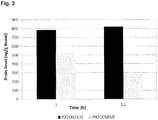
- the compound of formula (I) according to the present invention has been found to substantially retain the potent therapeutic activity of the structurally related compound according to Example 127 of WO 2011/051478 while, unexpectedly, showing considerably improved pharmacokinetic properties and, in particular, a greatly improved brain exposure, as also demonstrated in Example 2.
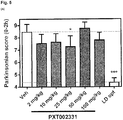
- the compound of formula (I) has further been demonstrated to show potent anti-parkinsonian efficacy in an MPTP-macaque model of Parkinson's disease, particularly at doses lower than or equal to 25 mg/kg by oral administration, as detailed in Example 3.
- the compound of formula (I) is useful as a brain penetrant modulator of mGluRs of the nervous system.
- the compound of formula (I) is useful as a brain penetrant allosteric modulator of the mGluRs and can most advantageously be used as a brain penetrant positive allosteric modulator of mGluR4.
- the present invention also relates to a pharmaceutical composition
- a pharmaceutical composition comprising the compound of formula (I) or a pharmaceutically acceptable salt or solvate thereof in combination with a pharmaceutically acceptable excipient. Accordingly, the invention relates to the compound of formula (I) or a pharmaceutically acceptable salt or solvate thereof for use as a medicament.
- the present invention further relates to the compound of formula (I) or a pharmaceutically acceptable salt or solvate thereof, or a pharmaceutical composition comprising any of the aforementioned entities in combination with a pharmaceutically acceptable excipient, for use in the treatment or prevention of a condition associated with altered glutamatergic signalling and/or functions, or a condition which can be affected by alteration of glutamate level or signalling.
- a pharmaceutically acceptable salt or solvate thereof for the preparation of a medicament for the treatment or prevention of a condition associated with altered glutamatergic signalling and/or functions, or a condition which can be affected by alteration of glutamate level or signalling is also within the scope of the invention.
- the disclosure relates to a method of treating or preventing a condition associated with altered glutamatergic signalling and/or functions, or a condition which can be affected by alteration of glutamate level or signalling in a mammal.
- the invention provides a method of treating or preventing a condition associated with altered glutamatergic signalling and/or functions, or a condition which can be affected by alteration of glutamate level or signalling, the method comprising the administration of the compound of formula (I) or a pharmaceutically acceptable salt or solvate thereof, or a pharmaceutical composition comprising any of the aforementioned entities in combination with a pharmaceutically acceptable excipient, to a subject in need thereof (preferably a mammal, and more preferably a human).
- the conditions associated with altered glutamatergic signalling and/or functions, or conditions which can be affected by alteration of glutamate level or signalling, which can be treated and/or prevented with the compound or the pharmaceutical composition according to the invention include for example: epilepsy, including newborn, infantile, childhood and adult syndromes, partial (localization-related) and generalized epilepsies, with partial and generalized, convulsive and non-convulsive seizures, with and without impairment of consciousness, and status epilepticus; dementias and related diseases, including dementias of the Alzheimer's type (DAT), Alzheimer's disease, Pick's disease, vascular dementias, Lewy-body disease, dementias due to metabolic, toxic and deficiency diseases (including alcoholism, hypothyroidism, and vitamin B12 deficiency), AIDS-dementia complex, Creutzfeld-Jacob disease and atypical subacute spongiform encephalopathy; parkinsonism and movement disorders, including Parkinson's disease, multiple system atrophy, progressive supran
- the conditions associated with altered glutamatergic signalling and/or functions, or conditions which can be affected by alteration of glutamate level or signalling, which are to be treated and/or prevented by the compound or the pharmaceutical composition according to the invention include: dementias and related diseases, including dementias of the Alzheimer's type (DAT), Alzheimer's disease, Pick's disease, vascular dementias, Lewy-body disease, dementias due to metabolic, toxic and deficiency diseases (including alcoholism, hypothyroidism, and vitamin B12 deficiency), AIDS-dementia complex, Creutzfeld-Jacob disease and atypical subacute spongiform encephalopathy; parkinsonism and movement disorders, including Parkinson's disease, multiple system atrophy, progressive supranuclear palsy, corticobasai degeneration, hepatolenticular degeneration, chorea (including Huntington's disease and hemiballismus), athetosis, dystonias (including spasmodic torticollis
- the present invention thus relates to the compound of formula (I) or a pharmaceutically acceptable salt or solvate or a pharmaceutical composition comprising any of the aforementioned entities in combination with a pharmaceutically acceptable excipient, for use in the treatment or prevention of a disease/disorder/condition selected from: dementias and related diseases, including dementias of the Alzheimer's type (DAT), Alzheimer's disease, Pick's disease, vascular dementias, Lewy-body disease, dementias due to metabolic, toxic and deficiency diseases (including alcoholism, hypothyroidism, and vitamin B12 deficiency), AIDS-dementia complex, Creutzfeld-Jacob disease and atypical subacute spongiform encephalopathy; parkinsonism and movement disorders, including Parkinson's disease, multiple system atrophy, progressive supranuclear palsy, corticobasal degeneration, hepatolenticular degeneration, chorea (including Huntington's disease and hemiballismus), athetosis, dystonias
- the invention particularly relates to the compound of formula (I) or a pharmaceutically acceptable salt or solvate thereof, or a pharmaceutical composition comprising any of the aforementioned entities in combination with a pharmaceutically acceptable excipient, for use in the treatment or prevention of Parkinson's disease.
- the scope of the invention embraces all pharmaceutically acceptable salt forms of the compound of formula (I) which may be formed, e.g., by protonation of an atom carrying an electron lone pair which is susceptible to protonation, such as an amino group, with an inorganic or organic acid, or as a salt of a hydroxy group with a physiologically acceptable cation as they are well known in the art.
- Exemplary base addition salts comprise, for example, alkali metal salts such as sodium or potassium salts; alkaline-earth metal salts such as calcium or magnesium salts; ammonium salts; aliphatic amine salts such as trimethylamine, triethylamine, dicyclohexylamine, ethanolamine, diethanolamine, triethanolamine, procaine salts, meglumine salts, diethanol amine salts or ethylenediamine salts; aralkyl amine salts such as N,N-dibenzylethylenediamine salts, benetamine salts; heterocyclic aromatic amine salts such as pyridine salts, picoline salts, quinoline salts or isoquinoline salts; quaternary ammonium salts such as tetramethylammonium salts, tetraethylammonium salts, benzyltrimethylammonium salts, benzyltriethylammonium salts, benzyltribut
- Exemplary acid addition salts comprise, for example, mineral acid salts such as hydrochloride, hydrobromide, hydroiodide, sulfate salts, nitrate salts, phosphate salts (such as, e.g., phosphate, hydrogenphosphate, or dihydrogenphosphate salts), carbonate salts, hydrogencarbonate salts or perchlorate salts; organic acid salts such as acetate, propionate, butyrate, pentanoate, hexanoate, heptanoate, octanoate, cyclopentanepropionate, undecanoate, lactate, maleate, oxalate, fumarate, tartrate, malate, citrate, nicotinate, benzoate, salicylate or ascorbate salts; sulfonate salts such as methanesuifonate, ethanesulfonate, 2-hydroxyethanesulfonate, benzenesulfonate
- Preferred pharmaceutically acceptable salts of the compound of formula (I) include a hydrochloride salt, a hydrobromide salt, a mesylate salt, a sulfate salt, a tartrate salt, a fumarate salt, an acetate salt, a citrate salt, and a phosphate salt.
- a particularly preferred pharmaceutically acceptable salt of the compound of formula (I) is a hydrochloride salt. Accordingly, it is preferred that the compound of formula (I) is in the form of a hydrochloride salt, a hydrobromide salt, a mesylate salt, a sulfate salt, a tartrate salt, a fumarate salt, an acetate salt, a citrate salt, or a phosphate salt.
- the compound of formula (I) is in the form of a hydrochloride salt. Even more preferably, the compound of formula (I) is in the form of a bishydrochloride monohydrate salt (i.e., • 2 HCl • H 2 O).
- the scope of the invention embraces solid forms of the compound of the formula (I) in any solvated form, including e.g. solvates with water, for example hydrates, or with organic solvents such as, e.g., methanol, ethanol or acetonitrile, i.e. as a methanolate, ethanolate or acetonitrilate, respectively; or in the form of any polymorph. It is to be understood that such solvates of the compound of the formula (I) also include solvates of a pharmaceutically acceptable salt of the compound of the formula (I).
- the present invention embraces all possible isomers, including configurational or conformational isomers, of the compound of formula (I), either in admixture or in pure or substantially pure form.
- the compound of formula (I) is the (E)-isomer, which is particularly advantageous in terms of its activity. Accordingly, it is preferred that at least 70 mol-%, more preferably at least 80 mol-%, even more preferably at least 90 mol-%, even more preferably at least 95 mol-%, even more preferably at least 98 mol-%, and yet even more preferably at least 99 mol-% of the compound of formula (I) is present in the form of the (E)-isomer.
- At least 70 mol-%, more preferably at least 80 mol-%, even more preferably at least 90 mol-%, even more preferably at least 95 mol-%, even more preferably at least 98 mol-%, and yet even more preferably at least 99 mol-% of the compound of formula (I) or the pharmaceutically acceptable salt or solvate thereof which is contained in the pharmaceutical composition of the present invention is in the form of the (E)-isomer, i.e., has the (E)-configuration at the oxime group comprised in the compound of formula (I).
- prodrugs of the compound of the formula (I) which are not within the present scope derivatives which have chemically or metabolically cleavable groups and become, by solvolysis or under physiological conditions, the compound of the formula (I) which is pharmaceutically active in vivo.
- Prodrugs of the compound of the formula (I) may be formed in a conventional manner with a functional group of the compound, such as a hydroxy group.
- the prodrug derivative form often offers advantages of solubility, tissue compatibility or delayed release in a mammalian organism (see, Bundgaard, H., Design of Prodrugs, pp. 7-9, 21-24, Elsevier, Amsterdam 1985 ).
- Such prodrugs include, e.g., an acyloxy derivative prepared by reacting the hydroxyl group of the compound of formula (I) with a suitable acylhalide or a suitable acid anhydride.
- O-acyl-oxime or acyloxy derivative
- the oxime -OH group of the compound of formula (I) may also be in the form of an O-alkyl-oxime such as, e.g., -O-CH 3 , -O-C 2 H 5 , -O-C 3 H 7 or -O-(tert-butyl).
- the pharmaceutically acceptable prodrug according to the present invention is preferably a compound of formula (I), wherein the oxime -OH group is in the form of an O-acyl-oxime group, an O-alkyl-oxime group, an O-dialkylphosphinyloxy group, an O-phosphoric acid group, or an O-sulfuric acid group.
- the compound of formula (I) may be administered per se or may be formulated as a medicament.
- pharmaceutical compositions comprising as an active ingredient the compound of the formula (I) as defined herein above.
- the pharmaceutical compositions may optionally comprise one or more pharmaceutically acceptable excipients, such as carriers, diluents, fillers, disintegrants, lubricating agents, binders, colorants, pigments, stabilizers, preservatives, or antioxidants.
- the pharmaceutical compositions can be formulated by techniques known to the person skilled in the art, such as the techniques published in Remington's Pharmaceutical Sciences, 20th Editi on.
- the pharmaceutical compositions can be formulated as dosage forms for oral, parenteral, such as intramuscular, intravenous, subcutaneous, intradermal, intraarterial, rectal, nasal, topical, aerosol or vaginal administration.
- Dosage forms for oral administration include coated and uncoated tablets, soft gelatin capsules, hard gelatin capsules, lozenges, troches, solutions, emulsions, suspensions, syrups, elixirs, powders and granules for reconstitution, dispersible powders and granules, medicated gums, chewing tablets and effervescent tablets.
- Dosage forms for parenteral administration include solutions, emulsions, suspensions, dispersions and powders and granules for reconstitution. Emulsions are a preferred dosage form for parenteral administration.
- Dosage forms for rectal and vaginal administration include suppositories and ovula.
- Dosage forms for nasal administration can be administered via inhalation and insufflation, for example by a metered inhaler.
- Dosage forms for topical administration include creams, gels, ointments, salves, patches and transdermal delivery systems.
- the compound of formula (I) according to the invention or the above described pharmaceutical compositions comprising the compound of formula (I) may be administered to a subject by any convenient route of administration, whether systemically/peripherally or at the site of desired action, including but not limited to one or more of: oral (e.g. as a tablet, capsule, or as an ingestible solution), topical (e.g., transdermal, intranasal, ocular, buccal, and sublingual), parenteral (e. g., using injection techniques or infusion techniques, and including, for example, by injection, e.g.
- oral e.g. as a tablet, capsule, or as an ingestible solution
- topical e.g., transdermal, intranasal, ocular, buccal, and sublingual
- parenteral e. g., using injection techniques or infusion techniques, and including, for example, by injection, e.g.
- parenteral administration examples include one or more of: intravenously, intraarterially, intraperitoneally, intrathecally, intraventricularly, intraurethrally, intrasternally, intracranially, intramuscularly or subcutaneously administering the compound or the pharmaceutical compositions, and/or by using infusion techniques.
- parenteral administration the compound is best used in the form of a sterile aqueous solution which may contain other substances, for example, enough salts or glucose to make the solution isotonic with blood.
- the aqueous solutions should be suitably buffered (preferably to a pH of from 3 to 9), if necessary.
- the preparation of suitable parenteral formulations under sterile conditions is readily accomplished by standard pharmaceutical techniques well known to those skilled in the art.
- Said compound or pharmaceutical compositions can also be administered orally in the form of tablets, capsules, ovules, elixirs, solutions or suspensions, which may contain flavoring or coloring agents, for immediate-, delayed-, modified-, sustained-, pulsed- or controlled-release applications.
- the peroral admininstration of the compound or pharmaceutical composition according to the invention is particularly preferred.
- the tablets may contain excipients such as microcrystalline cellulose, lactose, sodium citrate, calcium carbonate, dibasic calcium phosphate and glycine, disintegrants such as starch (preferably corn, potato or tapioca starch), sodium starch glycolate, croscarmellose sodium and certain complex silicates, and granulation binders such as polyvinylpyrrolidone, hydroxypropylmethylcellulose (HPMC), hydroxypropylcellulose (HPC), sucrose, gelatin and acacia. Additionally, lubricating agents such as magnesium stearate, stearic acid, glyceryl behenate and talc may be included. Solid compositions of a similar type may also be employed as fillers in gelatin capsules.
- excipients such as microcrystalline cellulose, lactose, sodium citrate, calcium carbonate, dibasic calcium phosphate and glycine
- disintegrants such as starch (preferably corn, potato or tapioca starch), sodium starch glyco
- Preferred excipients in this regard include lactose, starch, a cellulose, milk sugar or high molecular weight polyethylene glycols.
- the agent may be combined with various sweetening or flavoring agents, coloring matter or dyes, with emulsifying and/or suspending agents and with diluents such as water, ethanol, propylene glycol and glycerin, and combinations thereof.
- said compound or pharmaceutical compositions can be administered in the form of a suppository or pessary, or it may be applied topically in the form of a gel, hydrogel, lotion, solution, cream, ointment or dusting powder.
- the compound of the present invention may also be dermally or transdermally administered, for example, by the use of a skin patch.
- Said compound or pharmaceutical compositions may also be administered by the pulmonary route, rectal routes, or the ocular route.
- they can be formulated as micronized suspensions in isotonic, pH adjusted, sterile saline, or, preferably, as solutions in isotonic, pH adjusted, sterile saline, optionally in combination with a preservative such as a benzylalkonium chloride.
- a preservative such as a benzylalkonium chloride.
- they may be formulated in an ointment such as petrolatum.
- said compound or pharmaceutical compositions can be formulated as a suitable ointment containing the active compound suspended or dissolved in, for example, a mixture with one or more of the following: mineral oil, liquid petrolatum, white petrolatum, propylene glycol, emulsifying wax and water.
- they can be formulated as a suitable lotion or cream, suspended or dissolved in, for example, a mixture of one or more of the following: mineral oil, sorbitan monostearate, a polyethylene glycol, liquid paraffin, polysorbate 60, cetyl esters wax, 2-octyldodecanol, benzyl alcohol and water.
- a physician will determine the actual dosage which will be most suitable for an individual subject.
- the specific dose level and frequency of dosage for any particular individual subject may be varied and will depend upon a variety of factors including the activity of the specific compound employed, the metabolic stability and length of action of that compound, the age, body weight, general health, sex, diet, mode and time of administration, rate of excretion, drug combination, the severity of the particular condition, and the individual subject undergoing therapy.
- a proposed, yet non-limiting dose of the compound of formula (I) for administration to a human may be 0.05 to 2000 mg, preferably 0.1 mg to 1000 mg, of the active ingredient per unit dose.
- the unit dose may be administered, for example, 1 to 4 times per day.
- the dose will depend on the route of administration.
- a further, particularly preferred dose of the compound of formula (I) for peroral administration to a mammal is about 1 to about 25 mg/kg bodyweight (e.g., 1 mg/kg, 2 mg/kg, 5 mg/kg, 10 mg/kg, 15 mg/kg, 20 mg/kg, or 25 mg/kg), which dose may be administered, e.g., 1, 2, 3 or 4 times per day (preferably twice per day).
- the compound of formula (i) is to be administered to a subject (e.g., a mammal, preferably a human) twice a day at a dose, per each administration, of 2 to 25 mg/kg bodyweight.
- a subject e.g., a mammal, preferably a human
- a dose per each administration, of 2 to 25 mg/kg bodyweight. It will be appreciated that it may be necessary to make routine variations to the dosage depending on the age and weight of the patient/subject as well as the severity of the condition to be treated. The precise dose and route of administration will ultimately be at the discretion of the attendant physician or veterinarian.
- the compound of formula (I) according to the invention can be administered in monotherapy (e.g., without concomitantly administering any further therapeutic agents, or without concomitantly administering any further therapeutic agents against the same disease that is to be treated or prevented with the compound of formula (I), such as Parkinson's disease).
- the compound of formula (I) can also be administered in combination with one or more other therapeutic agents.
- the dose of each compound may differ from that when the corresponding compound is used alone.
- the combination of the compound of formula (I) with one or more other therapeutic agents may comprise the simultaneous/concomitant administration of the compound of formula (I) and the other therapeutic agent(s) (either in a single pharmaceutical formulation or in separate pharmaceutical formulations), or the sequential/separate administration of the compound of formula (I) and the other therapeutic agent(s).
- an antiparkinson drug such as, e.g., levodopa
- levodopa may be administered in combination with the compound of formula (I).
- the compound of formula (I) can also be radio-labeled by carrying out its synthesis (e.g., as described in Example 1) using precursors comprising at least one atom which is a radioisotope.
- precursors comprising at least one atom which is a radioisotope.
- radioisotopes of carbon atoms, hydrogen atoms, sulfur atoms, or iodine atoms are employed, such as, e.g., 14 C, 3 H, 35 S, or 125 I.
- Compounds labeled with 3 H can also be prepared by subjecting the compound of formula (I) to a hydrogen exchange reaction such as, e.g., a platinum-catalyzed exchange reaction in tritiated acetic acid (i.e., acetic acid comprising 3 H instead of 1 H), an acid-catalyzed exchange reaction in tritiated trifluoroacetic acid, or a heterogeneous-catalyzed exchange reaction with tritium gas.
- a hydrogen exchange reaction such as, e.g., a platinum-catalyzed exchange reaction in tritiated acetic acid (i.e., acetic acid comprising 3 H instead of 1 H), an acid-catalyzed exchange reaction in tritiated trifluoroacetic acid, or a heterogeneous-catalyzed exchange reaction with tritium gas.
- a hydrogen exchange reaction such as, e.g., a platinum-catalyzed exchange reaction in tritiated ace
- the subject or patient may be an animal (e.g., a non-human animal), a vertebrate animal, a mammal, a rodent (e.g., a guinea pig, a hamster, a rat, a mouse), a murine (e.g., a mouse), a canine (e.g., a dog), a feline (e.g., a cat), an equine (e.g., a horse), a primate, a simian (e.g., a monkey or ape), a monkey (e.g., a marmoset, a baboon), an ape (e.g., a gorilla, chimpanzee, orang-utan, gibbon), or a human.
- an animal e.g., a non-human animal
- a vertebrate animal e.g., a mammal
- a rodent e.g
- animals are to be treated which are economically, agronomically or scientifically important.
- Scientifically important organisms include, but are not limited to, mice, rats, and rabbits. Lower organisms such as, e.g., fruit flies like Drosophila melagonaster and nematodes like Caenorhabditis elegans may also be used in scientific approaches.
- Non-limiting examples of agronomically important animals are sheep, cattle and pigs, while, for example, cats and dogs may be considered as economically important animals.
- the subject/patient is a mammal; more preferably, the subject/patient is a human.
- Treatment of a disorder or disease as used herein is well known in the art.
- Treatment of a disorder or disease implies that a disorder or disease is suspected or has been diagnosed in a patient/subject.
- a patient/subject suspected of suffering from a disorder or disease typically shows specific clinical and/or pathological symptoms which a skilled person can easily attribute to a specific pathological condition (i.e., diagnose a disorder or disease).
- the "treatment" of a disorder or disease may, for example, lead to a halt in the progression of the disorder or disease (e.g., no deterioration of symptoms) or a delay in the progression of the disorder or disease (in case the halt in progression is of a transient nature only).
- the "treatment” of a disorder or disease may also lead to a partial response (e.g., amelioration of symptoms) or complete response (e.g., disappearance of symptoms) of the subject/patient suffering from the disorder or disease.
- the "treatment” of a disorder or disease may also refer to an amelioration of the disorder or disease, which may, for example, lead to a halt in the progression of the disorder or disease or a delay in the progression of the disorder or disease.
- Such a partial or complete response may be followed by a relapse. It is to be understood that a subject/patient may experience a broad range of responses to a treatment (e.g., the exemplary responses as described herein above).
- Treatment of a disorder or disease may, inter alia, comprise curative treatment (preferably leading to a complete response and eventually to healing of the disorder or disease) and palliative treatment (including symptomatic relief).
- prevention or "prophylaxis" of a disorder or disease as used herein is well known in the art.
- a patient/subject suspected of being prone to suffer from a disorder or disease as defined herein may, in particular, benefit from a prevention/prophylaxis of the disorder or disease.
- Said subject/patient may have a susceptibility or predisposition for a disorder or disease, including but not limited to hereditary predisposition.
- Such a predisposition can be determined by standard assays, using, for example, genetic markers or phenotypic indicators.
- a disorder or disease to be prevented in accordance with the present invention has not been diagnosed or cannot be diagnosed in said patient/subject (for example, said patient/subject does not show any clinical or pathological symptoms).
- prevention or “prophylaxis” comprises the use of compound of the present invention before any clinical and/or pathological symptoms are diagnosed or determined or can be diagnosed or determined by the attending physician.
- the terms “prophylaxis” and “prevention” are used herein interchangeably.
- the present disclosure particularly relates to the following items:
- the compound of formula (I) according to the invention can be prepared from readily available starting materials by several synthetic approaches, using solution-phase or solid-phase chemistry protocols, or mixed solution and solid phase protocols.
- the compound of formula (I) can be prepared using the synthetic schemes depicted below.
- the commercially available bromo acetophenone I is reacted with commercial thieno[3,2-c]pyridine methyl ester II in a solvent such as tetrahydrofuran (THF) and in the presence of a weak base like potassium tert-butoxide (tBuOK) to yield the intermediate diketone III .
- This procedure is known as Baker Venkataraman rearrangement ( Baker, W., J.Chem.Soc, 1933, 1381 ).
- the intermediate diketone III is then cyclized under acidic conditions in the presence of a strong dehydrating agent like sulfuric acid (H 2 SO 4 ) in refluxing acetic acid (AcOH) to yield the chromone IV .
- a strong dehydrating agent like sulfuric acid (H 2 SO 4 ) in refluxing acetic acid (AcOH) to yield the chromone IV .
- Introduction of the oxime may be obtained by reacting the derivative IV with hydroxyl amine hydrochloride (HONH 2 , HCl) in pyridine or ethanol under microwave conditions to yield directly the chromone oxime advanced intermediate that would lead to PXT002331 in a couple of reaction steps.
- This advanced intermediate leading to PXT002331 can be also obtained by using a two-step procedure as depicted above using tert -butyl hydroxylamine hydrochloride (tBuONH 2 , HCl) in ethanol followed in a subsequent step by deprotection of the tert -butyl group under acidic conditions like hydrochloric acid (HCl) in a mixture of polar solvent such as THF and acetic acid.
- HCl hydrochloric acid
- alkylene side chain is obtained by a palladium catalyzed cross-coupling reaction such as Negishi cross-coupling using a commercially available zinc reagent and appropriate ligand/palladium catalytic system.
- a palladium catalyzed cross-coupling reaction such as Negishi cross-coupling using a commercially available zinc reagent and appropriate ligand/palladium catalytic system.
- Subsequent functionalization followed by standard reductive amination using weak reducing agents such as triacetoxy borohydride yield advanced intermediate VII in good yields.
- Final deprotection of the oxime protecting group under acidic conditions lead to the compound of formula (I), i.e. PXT002331.
- the mass directed preparative HPLC purifications were performed with a mass directed auto purification Fraction lynx from Waters equipped with a Sunfire Prep C18 OBD column 19x100 mm 5 ⁇ m, unless otherwise reported. All purifications were performed with a gradient of ACN/H 2 O or ACN/H 2 O/HCOOH (0.1%).
- the reaction mixture was cooled to room temperature (RT) to give a thick orange suspension and poured into ice water (5.0 L).
- the aqueous layer was neutralized by addition of an aqueous HCl solution (1.5 N) under vigorous stirring.
- the resulting yellow solid was collected by filtration, washed with water and dried under suction.
- the crude mass was again further dried overnight under pressure at 45°C for 16 h, which yielded 156 g of a yellow solid.
- the yellow solid (156 g) was then suspended at RT in glacial acetic acid (1.0 L) and concentrated H 2 SO 4 (10 mL). This mixture was heated at 110°C for 2 hours. The reaction mixture turned into a brown suspension. After confirming completion of the reaction (by LC/MS), the crude mass was suspended in ice water (2.0 L) and neutralized by addition of an aqueous NaOH solution (1 N). The precipitated beige solid obtained was collected by filtration, washed with water and dried under suction. The material was further dried one night at 50°C under high vacuum to yield 140.0 g of the title compound as a beige solid.
- Step 4 6-(2-[1,3]Dioxolan-2-yl-ethyl)-2-(thieno[3,2-c]pyridin-6-yl)-4H-chromen-4-one O- tert- butyl-oxime ( 5 )
- reaction mixture was heated at 100°C for 14 hours. After confirming completion of the reaction by LC/MS, the reaction mixture was quenched with water (20 mL) and concentrated under vacuum. The resulting crude yellow oil was purified by chromatography on silica gel using cyclohexane/ethyl acetate (80/20) as eluent to afford 85 g of the title compound as a yellow solid.
- Step 5 3-(4- tert -Butoxyimino-2-(thieno[3,2-c]pyridin-6-yl)-4H-chromen-6-yl)-propionaldehyde ( 6 )
- Step 6 6-(3-Morpholin-4-yl-propyl)-2-(thieno[3,2-c]pyridin-6-yl)-4H-chromen-4-one O-tert-butyl oxime ( 7 )
- Step 7 6-(3-Morpholin-4-yl-propyl)-2-(thieno[3,2-c]pyridin-6-yl)-4H-chromen-4-one oxime
- the compound of formula (I) according to the invention (i.e., PXT002331) was tested for its agonistic and/or positive allosteric modulator activity on human mGluR4 using the calcium assay described in Example 171 of WO 2011/051478 .
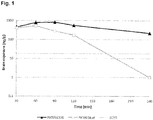
- PXT002331 was found to show an unexpected, highly advantageous oral in vivo PK profile when compared to PXT001858, as described in the following.
- PXT002331 and PXT001858 were administered per os ( p.o. ) at 10 mg/kg to male Sprague-Dawley rats. Volume of administration was 10 ml/kg. In parallel, PXT002331 was also administered intravenously (i.v.) at 1 mg/kg, with a volume of administration of 2 ml/kg. Blood samples (200 ⁇ l) were collected at time ranging from 15 minutes to 24 hours for the p.o. administration and from 5 minutes to 24 hours for the i.v. administration in ice-cold tubes containing 0.2% K 2 EDTA. Tubes were centrifuged at 10,000 rpm for 5 minutes at 4°C.
- the plasma (supernatant) was separated in another tube and stored at -80°C until analysis.
- Two groups of 3 animals were used for each route of administration: in one group, blood samples were collected to determine the kinetics of plasma exposure over a 24-hour period, and in the second group, blood and brain were collected at one terminal time point (0.5, 1.0, 1.5, 2.0, 4.0 hours) to determine the kinetics of brain exposure and brain/plasma ratio.
- the respective parent compound (free base) was analysed in plasma samples and in brain homogenate using a LC-MS/MS method. Concentrations are expressed in ng/ml of plasma or in ng/g of brain tissue.
- PXT002331 showed a comparable plasma exposure than PXT001858 as reflected by its AUC (1.1-fold) and Cmax (0.7-fold). Oral bioavailability of PXT002331 in this experiment was 39%.
- a posteriori one potential hypothesis might rely on the difference of phase II conjugation in the intestine and liver during oral absorption. When both compounds were assayed in vitro in the presence of UGT (UDP-Glucuronosyl transferase), PXT002331 showed a much lower level of glucuronidation as compared to PXT001858 (see table below). Nonetheless, this difference observed in vitro cannot by itself explain the unexpected advantageous PK results obtained with PXT002331.
- Example 3 In vivo evaluation of the compound of formula (I) in an MPTP monkey model of Parkinson's disease
- the anti-parkinsonian efficacy of the compound of formula (I) according to the present invention was evaluated in the 1-methyl-4-phenyl-1,2,3,6-tetrahydropyridine (MPTP) macaque model of Parkinson's disease (using macaques of the species Macaca fascicularis ), which reproduces most of the clinical and pathological hallmarks of Parkinson's disease and is considered a "gold standard" (see Porras G et al., Cold Spring Harb Perspect Med., 2(3):a009308, 2012 and references cited therein for a general description of the MPTP model).
- MPTP 1-methyl-4-phenyl-1,2,3,6-tetrahydropyridine
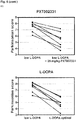
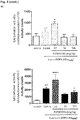
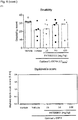
- the anti-parkinsonian efficacy of PXT002331 was further evaluated in combination with low (suboptimal) doses of L-dopa (levodopa; 4-9 mg/kg) (see Figures 5B and 5C ).
- Doses were orally administered twice a day during 4 days, and assessment of parkinsonian scores took place at day 4 (between 1 and 2 h after L-dopa administration, i.e., between 2 and 3 h after PXT002331 administration).
- each monkey was equipped with a detector of movements and signals were collected with 24 light beams and a video track recorder in order to descriminate all types of movements.
- the locomotor activity was measured during 1 hour.
- PXT002331 is highly advantageous for use in the treatment or prevention of Parkinson's disease, both in monotherapy (without the concomitant use of further antiparkinson drugs) and in cotherapy using further antiparkinson drugs such as L-dopa (levodopa).
Landscapes
- Health & Medical Sciences (AREA)
- Chemical & Material Sciences (AREA)
- Organic Chemistry (AREA)
- Life Sciences & Earth Sciences (AREA)
- Veterinary Medicine (AREA)
- Public Health (AREA)
- General Health & Medical Sciences (AREA)
- Medicinal Chemistry (AREA)
- Animal Behavior & Ethology (AREA)
- Pharmacology & Pharmacy (AREA)
- Bioinformatics & Cheminformatics (AREA)
- Nuclear Medicine, Radiotherapy & Molecular Imaging (AREA)
- General Chemical & Material Sciences (AREA)
- Chemical Kinetics & Catalysis (AREA)
- Engineering & Computer Science (AREA)
- Biomedical Technology (AREA)
- Neurosurgery (AREA)
- Neurology (AREA)
- Diabetes (AREA)
- Epidemiology (AREA)
- Pain & Pain Management (AREA)
- Endocrinology (AREA)
- Hematology (AREA)
- Obesity (AREA)
- Psychiatry (AREA)
- Psychology (AREA)
- Nutrition Science (AREA)
- Addiction (AREA)
- Virology (AREA)
- Rheumatology (AREA)
- Emergency Medicine (AREA)
- Physiology (AREA)
- Molecular Biology (AREA)
- Hospice & Palliative Care (AREA)
- Tropical Medicine & Parasitology (AREA)
- AIDS & HIV (AREA)
- Communicable Diseases (AREA)
- Oncology (AREA)
- Pharmaceuticals Containing Other Organic And Inorganic Compounds (AREA)
- Acyclic And Carbocyclic Compounds In Medicinal Compositions (AREA)
Priority Applications (8)
| Application Number | Priority Date | Filing Date | Title |
|---|---|---|---|
| RS20190289A RS58592B1 (sr) | 2014-08-27 | 2015-08-27 | Novi derivat hromon oksima i njegova upotreba kao alosterni modulator metabotropnih glutamatnih receptora |
| MEP-2019-59A ME03339B (me) | 2014-08-27 | 2015-08-27 | Novi derivat hromon oksima i njegova upotreba kao alosterni modulator metabotropnih glutamatnih receptora |
| PL15770814T PL3186257T3 (pl) | 2014-08-27 | 2015-08-27 | Nowa pochodna oksymu kromonu i jej zastosowanie jako allosterycznego modulatora metabotropowych receptorów glutaminianu |
| EP19217991.9A EP3696183A1 (en) | 2014-08-27 | 2015-08-27 | Novel chromone oxime derivative and its use as allosteric modulator of metabotropic glutamate receptors |
| HRP20190343TT HRP20190343T1 (hr) | 2014-08-27 | 2015-08-27 | Novi kromon oksim derivat i njegova uporaba kao alosterni modulator metabotropnih receptora glutamata |
| SI201530640T SI3186257T1 (sl) | 2014-08-27 | 2015-08-27 | Novi derivat kromon oksima in njegova uporaba kot alosterični modulator metabotropnih glutamatnih receptorjev |
| EP19151429.8A EP3502115A1 (en) | 2014-08-27 | 2015-08-27 | Novel chromone oxime derivative and its use as allosteric modulator of metabotropic glutamate receptors |
| SM20190152T SMT201900152T1 (it) | 2014-08-27 | 2015-08-27 | Nuovo derivato di cromone ossima e suo uso come modulatore allosterico di recettori metabotropici del glutammato |
Applications Claiming Priority (2)
| Application Number | Priority Date | Filing Date | Title |
|---|---|---|---|
| EP14182468 | 2014-08-27 | ||
| PCT/EP2015/069601 WO2016030444A1 (en) | 2014-08-27 | 2015-08-27 | Novel chromone oxime derivative and its use as allosteric modulator of metabotropic glutamate receptors |
Related Child Applications (2)
| Application Number | Title | Priority Date | Filing Date |
|---|---|---|---|
| EP19151429.8A Division EP3502115A1 (en) | 2014-08-27 | 2015-08-27 | Novel chromone oxime derivative and its use as allosteric modulator of metabotropic glutamate receptors |
| EP19217991.9A Division EP3696183A1 (en) | 2014-08-27 | 2015-08-27 | Novel chromone oxime derivative and its use as allosteric modulator of metabotropic glutamate receptors |
Publications (2)
| Publication Number | Publication Date |
|---|---|
| EP3186257A1 EP3186257A1 (en) | 2017-07-05 |
| EP3186257B1 true EP3186257B1 (en) | 2019-02-06 |
Family
ID=51421865
Family Applications (3)
| Application Number | Title | Priority Date | Filing Date |
|---|---|---|---|
| EP15770814.0A Active EP3186257B1 (en) | 2014-08-27 | 2015-08-27 | Novel chromone oxime derivative and its use as allosteric modulator of metabotropic glutamate receptors |
| EP19217991.9A Withdrawn EP3696183A1 (en) | 2014-08-27 | 2015-08-27 | Novel chromone oxime derivative and its use as allosteric modulator of metabotropic glutamate receptors |
| EP19151429.8A Withdrawn EP3502115A1 (en) | 2014-08-27 | 2015-08-27 | Novel chromone oxime derivative and its use as allosteric modulator of metabotropic glutamate receptors |
Family Applications After (2)
| Application Number | Title | Priority Date | Filing Date |
|---|---|---|---|
| EP19217991.9A Withdrawn EP3696183A1 (en) | 2014-08-27 | 2015-08-27 | Novel chromone oxime derivative and its use as allosteric modulator of metabotropic glutamate receptors |
| EP19151429.8A Withdrawn EP3502115A1 (en) | 2014-08-27 | 2015-08-27 | Novel chromone oxime derivative and its use as allosteric modulator of metabotropic glutamate receptors |
Country Status (26)
| Country | Link |
|---|---|
| US (3) | US10017521B2 (enExample) |
| EP (3) | EP3186257B1 (enExample) |
| JP (1) | JP6430015B2 (enExample) |
| KR (1) | KR101870589B1 (enExample) |
| CN (2) | CN106715444B (enExample) |
| AU (1) | AU2015308438B2 (enExample) |
| CA (1) | CA2956191C (enExample) |
| CY (1) | CY1121352T1 (enExample) |
| DK (1) | DK3186257T3 (enExample) |
| ES (1) | ES2714073T3 (enExample) |
| HR (1) | HRP20190343T1 (enExample) |
| HU (1) | HUE041941T2 (enExample) |
| IL (1) | IL250287B (enExample) |
| LT (1) | LT3186257T (enExample) |
| MA (3) | MA52702A (enExample) |
| ME (1) | ME03339B (enExample) |
| MX (1) | MX369643B (enExample) |
| NZ (1) | NZ728853A (enExample) |
| PL (1) | PL3186257T3 (enExample) |
| PT (1) | PT3186257T (enExample) |
| RS (1) | RS58592B1 (enExample) |
| RU (1) | RU2672569C2 (enExample) |
| SI (1) | SI3186257T1 (enExample) |
| SM (1) | SMT201900152T1 (enExample) |
| TR (1) | TR201903332T4 (enExample) |
| WO (1) | WO2016030444A1 (enExample) |
Families Citing this family (3)
| Publication number | Priority date | Publication date | Assignee | Title |
|---|---|---|---|---|
| EP3186257B1 (en) * | 2014-08-27 | 2019-02-06 | Prexton Therapeutics SA | Novel chromone oxime derivative and its use as allosteric modulator of metabotropic glutamate receptors |
| WO2017032874A1 (en) * | 2015-08-27 | 2017-03-02 | Prexton Therapeutics Sa | Brain-penetrant chromone oxime derivative for the therapy of levodopa-induced dyskinesia |
| CA3102326A1 (en) | 2018-07-26 | 2020-01-30 | Domain Therapeutics | Substituted quinazolinone derivatives and their use as positive allosteric modulators of mglur4 |
Family Cites Families (14)
| Publication number | Priority date | Publication date | Assignee | Title |
|---|---|---|---|---|
| US4065467A (en) | 1973-12-27 | 1977-12-27 | Carlo Erba, S. P. A. | 5:6-Benzo δ-pyrone derivatives and process for their preparation |
| US4777252A (en) | 1987-08-13 | 1988-10-11 | E. R. Squibb & Sons, Inc. | 2-oxo-1-[[(substituted sulfonyl)amino]-carbonyl]azetidines |
| JP3993651B2 (ja) * | 1994-10-21 | 2007-10-17 | アスビオファーマ株式会社 | シクロプロパクロメンカルボン酸誘導体 |
| EP1298129A3 (en) | 2001-09-28 | 2003-06-04 | Central Glass Company, Limited | Process for producing 4-sustituted benzopyran derivatives |
| MY141521A (en) | 2002-12-12 | 2010-05-14 | Hoffmann La Roche | 5-substituted-six-membered heteroaromatic glucokinase activators |
| WO2004092154A1 (en) | 2003-04-03 | 2004-10-28 | Vertex Pharmaceuticals Incorporated | Compositions useful as inhibitors of protein kinases |
| US20070027216A1 (en) | 2005-07-15 | 2007-02-01 | Bridget Larson | Novel hydrochloride salts of levodopa |
| US20100144756A1 (en) | 2007-07-13 | 2010-06-10 | Bolea Christelle | Novel heteroaromatic derivatives and their use as positive allosteric modulators of metabotropic glutamate receptors |
| GB0713686D0 (en) | 2007-07-13 | 2007-08-22 | Addex Pharmaceuticals Sa | New compounds 2 |
| WO2011051478A1 (en) | 2009-10-30 | 2011-05-05 | Domain Therapeutics | Novel oxime derivatives and their use as allosteric modulators of metabotropic glutamate receptors |
| PT3252057T (pt) | 2009-12-04 | 2024-06-04 | Sunovion Pharmaceuticals Inc | Compostos multicíclicos e métodos de utilização dos mesmos |
| US20140349994A1 (en) * | 2012-01-18 | 2014-11-27 | Addex Pharma S.A. | Novel 2-Amino-4,5,6,8-Tetrahydropyrazolo[3,4-b]Thiazolo [4,5-d]Azepine Derivatives and Their Use as Allosteric Modulators of Metabotropic Glutamate Receptors |
| EP3186257B1 (en) | 2014-08-27 | 2019-02-06 | Prexton Therapeutics SA | Novel chromone oxime derivative and its use as allosteric modulator of metabotropic glutamate receptors |
| WO2017032874A1 (en) | 2015-08-27 | 2017-03-02 | Prexton Therapeutics Sa | Brain-penetrant chromone oxime derivative for the therapy of levodopa-induced dyskinesia |
-
2015
- 2015-08-27 EP EP15770814.0A patent/EP3186257B1/en active Active
- 2015-08-27 LT LTEP15770814.0T patent/LT3186257T/lt unknown
- 2015-08-27 SI SI201530640T patent/SI3186257T1/sl unknown
- 2015-08-27 CA CA2956191A patent/CA2956191C/en not_active Expired - Fee Related
- 2015-08-27 MA MA052702A patent/MA52702A/fr unknown
- 2015-08-27 MA MA040530A patent/MA40530A/fr unknown
- 2015-08-27 DK DK15770814.0T patent/DK3186257T3/en active
- 2015-08-27 SM SM20190152T patent/SMT201900152T1/it unknown
- 2015-08-27 HR HRP20190343TT patent/HRP20190343T1/hr unknown
- 2015-08-27 US US15/506,941 patent/US10017521B2/en not_active Expired - Fee Related
- 2015-08-27 JP JP2017530425A patent/JP6430015B2/ja not_active Expired - Fee Related
- 2015-08-27 CN CN201580045432.7A patent/CN106715444B/zh not_active Expired - Fee Related
- 2015-08-27 AU AU2015308438A patent/AU2015308438B2/en not_active Ceased
- 2015-08-27 HU HUE15770814A patent/HUE041941T2/hu unknown
- 2015-08-27 WO PCT/EP2015/069601 patent/WO2016030444A1/en not_active Ceased
- 2015-08-27 EP EP19217991.9A patent/EP3696183A1/en not_active Withdrawn
- 2015-08-27 PL PL15770814T patent/PL3186257T3/pl unknown
- 2015-08-27 PT PT15770814T patent/PT3186257T/pt unknown
- 2015-08-27 MX MX2017002429A patent/MX369643B/es active IP Right Grant
- 2015-08-27 EP EP19151429.8A patent/EP3502115A1/en not_active Withdrawn
- 2015-08-27 KR KR1020177005768A patent/KR101870589B1/ko not_active Expired - Fee Related
- 2015-08-27 TR TR2019/03332T patent/TR201903332T4/tr unknown
- 2015-08-27 NZ NZ728853A patent/NZ728853A/en not_active IP Right Cessation
- 2015-08-27 ME MEP-2019-59A patent/ME03339B/me unknown
- 2015-08-27 CN CN201910567865.9A patent/CN110343118A/zh active Pending
- 2015-08-27 MA MA048048A patent/MA48048A/fr unknown
- 2015-08-27 ES ES15770814T patent/ES2714073T3/es active Active
- 2015-08-27 RU RU2017109818A patent/RU2672569C2/ru active
- 2015-08-27 RS RS20190289A patent/RS58592B1/sr unknown
-
2017
- 2017-01-25 IL IL250287A patent/IL250287B/en active IP Right Grant
-
2018
- 2018-06-05 US US16/000,338 patent/US10442818B2/en active Active
-
2019
- 2019-03-08 CY CY20191100277T patent/CY1121352T1/el unknown
- 2019-09-30 US US16/587,670 patent/US20200024285A1/en not_active Abandoned
Non-Patent Citations (1)
| Title |
|---|
| None * |
Also Published As
Similar Documents
| Publication | Publication Date | Title |
|---|---|---|
| EP3341380B1 (en) | Brain-penetrant chromone oxime derivative for the therapy of levodopa-induced dyskinesia | |
| US20200024285A1 (en) | Novel chromone oxime derivative and its use as allosteric modulator of metabotropic glutamate receptors | |
| US8765953B2 (en) | Compounds and methods for the treatment of pain and other diseases | |
| WO2012118498A1 (en) | Compounds and methods for the treatment of pain and other disorders | |
| CN115697997B (zh) | 具有gpr52促效活性的经取代的3-苯氧基氮杂环丁烷-1-基-吡嗪 | |
| US8530453B2 (en) | Compounds and methods for the treatment of pain and other diseases | |
| HK40010218A (en) | Novel chromone oxime derivative and its use as allosteric modulator of metabotropic glutamate receptors | |
| HK1233257A1 (en) | Novel chromone oxime derivative and its use as allosteric modulator of metabotropic glutamate receptors | |
| HK1233257B (en) | Novel chromone oxime derivative and its use as allosteric modulator of metabotropic glutamate receptors | |
| HK1249904A1 (en) | Brain-penetrant chromone oxime derivative for the therapy of levodopa-induced dyskinesia | |
| HK1249904B (en) | Brain-penetrant chromone oxime derivative for the therapy of levodopa-induced dyskinesia |
Legal Events
| Date | Code | Title | Description |
|---|---|---|---|
| STAA | Information on the status of an ep patent application or granted ep patent |
Free format text: STATUS: THE INTERNATIONAL PUBLICATION HAS BEEN MADE |
|
| PUAI | Public reference made under article 153(3) epc to a published international application that has entered the european phase |
Free format text: ORIGINAL CODE: 0009012 |
|
| STAA | Information on the status of an ep patent application or granted ep patent |
Free format text: STATUS: REQUEST FOR EXAMINATION WAS MADE |
|
| 17P | Request for examination filed |
Effective date: 20170327 |
|
| AK | Designated contracting states |
Kind code of ref document: A1 Designated state(s): AL AT BE BG CH CY CZ DE DK EE ES FI FR GB GR HR HU IE IS IT LI LT LU LV MC MK MT NL NO PL PT RO RS SE SI SK SM TR |
|
| AX | Request for extension of the european patent |
Extension state: BA ME |
|
| REG | Reference to a national code |
Ref country code: HK Ref legal event code: DE Ref document number: 1233257 Country of ref document: HK |
|
| GRAP | Despatch of communication of intention to grant a patent |
Free format text: ORIGINAL CODE: EPIDOSNIGR1 |
|
| STAA | Information on the status of an ep patent application or granted ep patent |
Free format text: STATUS: GRANT OF PATENT IS INTENDED |
|
| INTG | Intention to grant announced |
Effective date: 20180815 |
|
| GRAS | Grant fee paid |
Free format text: ORIGINAL CODE: EPIDOSNIGR3 |
|
| GRAA | (expected) grant |
Free format text: ORIGINAL CODE: 0009210 |
|
| STAA | Information on the status of an ep patent application or granted ep patent |
Free format text: STATUS: THE PATENT HAS BEEN GRANTED |
|
| AK | Designated contracting states |
Kind code of ref document: B1 Designated state(s): AL AT BE BG CH CY CZ DE DK EE ES FI FR GB GR HR HU IE IS IT LI LT LU LV MC MK MT NL NO PL PT RO RS SE SI SK SM TR |
|
| AX | Request for extension of the european patent |
Extension state: BA ME |
|
| REG | Reference to a national code |
Ref country code: GB Ref legal event code: FG4D |
|
| REG | Reference to a national code |
Ref country code: CH Ref legal event code: EP Ref country code: AT Ref legal event code: REF Ref document number: 1094840 Country of ref document: AT Kind code of ref document: T Effective date: 20190215 |
|
| REG | Reference to a national code |
Ref country code: HR Ref legal event code: TUEP Ref document number: P20190343 Country of ref document: HR |
|
| REG | Reference to a national code |
Ref country code: IE Ref legal event code: FG4D |
|
| REG | Reference to a national code |
Ref country code: DE Ref legal event code: R096 Ref document number: 602015024391 Country of ref document: DE |
|
| REG | Reference to a national code |
Ref country code: RO Ref legal event code: EPE |
|
| REG | Reference to a national code |
Ref country code: PT Ref legal event code: SC4A Ref document number: 3186257 Country of ref document: PT Date of ref document: 20190327 Kind code of ref document: T Free format text: AVAILABILITY OF NATIONAL TRANSLATION Effective date: 20190313 |
|
| REG | Reference to a national code |
Ref country code: CH Ref legal event code: NV Representative=s name: VALIPAT S.A. C/O BOVARD SA NEUCHATEL, CH Ref country code: MA Ref legal event code: VAGR Ref document number: 40530 Country of ref document: MA Date of ref document: 20190329 Kind code of ref document: B1 |
|
| REG | Reference to a national code |
Ref country code: DK Ref legal event code: T3 Effective date: 20190325 |
|
| REG | Reference to a national code |
Ref country code: SE Ref legal event code: TRGR |
|
| REG | Reference to a national code |
Ref country code: NL Ref legal event code: FP |
|
| REG | Reference to a national code |
Ref country code: NO Ref legal event code: T2 Effective date: 20190206 |
|
| REG | Reference to a national code |
Ref country code: EE Ref legal event code: FG4A Ref document number: E017122 Country of ref document: EE Effective date: 20190306 |
|
| REG | Reference to a national code |
Ref country code: ES Ref legal event code: FG2A Ref document number: 2714073 Country of ref document: ES Kind code of ref document: T3 Effective date: 20190527 |
|
| REG | Reference to a national code |
Ref country code: HR Ref legal event code: T1PR Ref document number: P20190343 Country of ref document: HR |
|
| REG | Reference to a national code |
Ref country code: SK Ref legal event code: T3 Ref document number: E 30300 Country of ref document: SK |
|
| REG | Reference to a national code |
Ref country code: GR Ref legal event code: EP Ref document number: 20190400994 Country of ref document: GR Effective date: 20190524 |
|
| REG | Reference to a national code |
Ref country code: HU Ref legal event code: AG4A Ref document number: E041941 Country of ref document: HU |
|
| REG | Reference to a national code |
Ref country code: HR Ref legal event code: ODRP Ref document number: P20190343 Country of ref document: HR Payment date: 20190715 Year of fee payment: 5 |
|
| REG | Reference to a national code |
Ref country code: DE Ref legal event code: R097 Ref document number: 602015024391 Country of ref document: DE |
|
| PLBE | No opposition filed within time limit |
Free format text: ORIGINAL CODE: 0009261 |
|
| STAA | Information on the status of an ep patent application or granted ep patent |
Free format text: STATUS: NO OPPOSITION FILED WITHIN TIME LIMIT |
|
| 26N | No opposition filed |
Effective date: 20191107 |
|
| REG | Reference to a national code |
Ref country code: HR Ref legal event code: ODRP Ref document number: P20190343 Country of ref document: HR Payment date: 20200806 Year of fee payment: 6 |
|
| PGFP | Annual fee paid to national office [announced via postgrant information from national office to epo] |
Ref country code: NL Payment date: 20200814 Year of fee payment: 6 |
|
| PGFP | Annual fee paid to national office [announced via postgrant information from national office to epo] |
Ref country code: GR Payment date: 20200715 Year of fee payment: 6 Ref country code: MC Payment date: 20200729 Year of fee payment: 6 Ref country code: SK Payment date: 20200716 Year of fee payment: 6 Ref country code: LT Payment date: 20200716 Year of fee payment: 6 Ref country code: DE Payment date: 20200812 Year of fee payment: 6 Ref country code: FI Payment date: 20200811 Year of fee payment: 6 Ref country code: TR Payment date: 20200819 Year of fee payment: 6 Ref country code: EE Payment date: 20200703 Year of fee payment: 6 Ref country code: RO Payment date: 20200727 Year of fee payment: 6 Ref country code: CY Payment date: 20200708 Year of fee payment: 6 Ref country code: SM Payment date: 20200730 Year of fee payment: 6 Ref country code: NO Payment date: 20200811 Year of fee payment: 6 Ref country code: IE Payment date: 20200811 Year of fee payment: 6 Ref country code: ES Payment date: 20200901 Year of fee payment: 6 Ref country code: IS Payment date: 20200708 Year of fee payment: 6 Ref country code: CZ Payment date: 20200826 Year of fee payment: 6 Ref country code: PT Payment date: 20200813 Year of fee payment: 6 Ref country code: FR Payment date: 20200715 Year of fee payment: 6 Ref country code: GB Payment date: 20200819 Year of fee payment: 6 Ref country code: LU Payment date: 20200810 Year of fee payment: 6 Ref country code: DK Payment date: 20200811 Year of fee payment: 6 |
|
| PGFP | Annual fee paid to national office [announced via postgrant information from national office to epo] |
Ref country code: IT Payment date: 20200713 Year of fee payment: 6 Ref country code: SI Payment date: 20200720 Year of fee payment: 6 Ref country code: MK Payment date: 20200710 Year of fee payment: 6 Ref country code: PL Payment date: 20200715 Year of fee payment: 6 Ref country code: AT Payment date: 20200728 Year of fee payment: 6 Ref country code: BG Payment date: 20200717 Year of fee payment: 6 Ref country code: SE Payment date: 20200811 Year of fee payment: 6 Ref country code: CH Payment date: 20200814 Year of fee payment: 6 Ref country code: RS Payment date: 20200720 Year of fee payment: 6 Ref country code: LV Payment date: 20200717 Year of fee payment: 6 Ref country code: BE Payment date: 20200715 Year of fee payment: 6 Ref country code: HU Payment date: 20200719 Year of fee payment: 6 |
|
| PGFP | Annual fee paid to national office [announced via postgrant information from national office to epo] |
Ref country code: HR Payment date: 20200806 Year of fee payment: 6 Ref country code: MT Payment date: 20200817 Year of fee payment: 6 Ref country code: AL Payment date: 20200722 Year of fee payment: 6 |
|
| VSFP | Annual fee paid to validation state [announced via postgrant information from national office to epo] |
Ref country code: MA Payment date: 20190802 Year of fee payment: 5 |
|
| REG | Reference to a national code |
Ref country code: AT Ref legal event code: UEP Ref document number: 1094840 Country of ref document: AT Kind code of ref document: T Effective date: 20190206 |
|
| VSFP | Annual fee paid to validation state [announced via postgrant information from national office to epo] |
Ref country code: MA Payment date: 20200831 Year of fee payment: 6 |
|
| REG | Reference to a national code |
Ref country code: DE Ref legal event code: R119 Ref document number: 602015024391 Country of ref document: DE |
|
| REG | Reference to a national code |
Ref country code: EE Ref legal event code: MM4A Ref document number: E017122 Country of ref document: EE Effective date: 20210831 |
|
| REG | Reference to a national code |
Ref country code: HR Ref legal event code: PBON Ref document number: P20190343 Country of ref document: HR Effective date: 20210827 |
|
| REG | Reference to a national code |
Ref country code: DK Ref legal event code: EBP Effective date: 20210831 |
|
| REG | Reference to a national code |
Ref country code: FI Ref legal event code: MAE |
|
| REG | Reference to a national code |
Ref country code: LT Ref legal event code: MM4D Effective date: 20210827 |
|
| REG | Reference to a national code |
Ref country code: NO Ref legal event code: MMEP |
|
| REG | Reference to a national code |
Ref country code: SE Ref legal event code: EUG |
|
| REG | Reference to a national code |
Ref country code: CH Ref legal event code: PL |
|
| PG25 | Lapsed in a contracting state [announced via postgrant information from national office to epo] |
Ref country code: MC Free format text: LAPSE BECAUSE OF NON-PAYMENT OF DUE FEES Effective date: 20210831 |
|
| REG | Reference to a national code |
Ref country code: NL Ref legal event code: MM Effective date: 20210901 |
|
| REG | Reference to a national code |
Ref country code: AT Ref legal event code: MM01 Ref document number: 1094840 Country of ref document: AT Kind code of ref document: T Effective date: 20210827 |
|
| REG | Reference to a national code |
Ref country code: BE Ref legal event code: MM Effective date: 20210831 |
|
| GBPC | Gb: european patent ceased through non-payment of renewal fee |
Effective date: 20210827 |
|
| REG | Reference to a national code |
Ref country code: SK Ref legal event code: MM4A Ref document number: E 30300 Country of ref document: SK Effective date: 20210827 |
|
| PG25 | Lapsed in a contracting state [announced via postgrant information from national office to epo] |
Ref country code: RS Free format text: LAPSE BECAUSE OF NON-PAYMENT OF DUE FEES Effective date: 20210827 Ref country code: LT Free format text: LAPSE BECAUSE OF NON-PAYMENT OF DUE FEES Effective date: 20210827 Ref country code: LI Free format text: LAPSE BECAUSE OF NON-PAYMENT OF DUE FEES Effective date: 20210831 Ref country code: HU Free format text: LAPSE BECAUSE OF NON-PAYMENT OF DUE FEES Effective date: 20210828 Ref country code: FI Free format text: LAPSE BECAUSE OF NON-PAYMENT OF DUE FEES Effective date: 20210827 Ref country code: CH Free format text: LAPSE BECAUSE OF NON-PAYMENT OF DUE FEES Effective date: 20210831 Ref country code: BG Free format text: LAPSE BECAUSE OF NON-PAYMENT OF DUE FEES Effective date: 20220228 Ref country code: AT Free format text: LAPSE BECAUSE OF NON-PAYMENT OF DUE FEES Effective date: 20210827 |
|
| REG | Reference to a national code |
Ref country code: SI Ref legal event code: KO00 Effective date: 20220406 |
|
| PG25 | Lapsed in a contracting state [announced via postgrant information from national office to epo] |
Ref country code: SM Free format text: LAPSE BECAUSE OF NON-PAYMENT OF DUE FEES Effective date: 20220308 Ref country code: SE Free format text: LAPSE BECAUSE OF NON-PAYMENT OF DUE FEES Effective date: 20210828 Ref country code: RO Free format text: LAPSE BECAUSE OF NON-PAYMENT OF DUE FEES Effective date: 20210827 Ref country code: PT Free format text: LAPSE BECAUSE OF NON-PAYMENT OF DUE FEES Effective date: 20220228 Ref country code: NO Free format text: LAPSE BECAUSE OF NON-PAYMENT OF DUE FEES Effective date: 20210831 Ref country code: LV Free format text: LAPSE BECAUSE OF NON-PAYMENT OF DUE FEES Effective date: 20210827 Ref country code: LU Free format text: LAPSE BECAUSE OF NON-PAYMENT OF DUE FEES Effective date: 20210827 Ref country code: GR Free format text: LAPSE BECAUSE OF NON-PAYMENT OF DUE FEES Effective date: 20220308 Ref country code: EE Free format text: LAPSE BECAUSE OF NON-PAYMENT OF DUE FEES Effective date: 20210831 Ref country code: CZ Free format text: LAPSE BECAUSE OF NON-PAYMENT OF DUE FEES Effective date: 20210827 Ref country code: CY Free format text: LAPSE BECAUSE OF NON-PAYMENT OF DUE FEES Effective date: 20210827 |
|
| PG25 | Lapsed in a contracting state [announced via postgrant information from national office to epo] |
Ref country code: NL Free format text: LAPSE BECAUSE OF NON-PAYMENT OF DUE FEES Effective date: 20210901 Ref country code: AL Free format text: LAPSE BECAUSE OF FAILURE TO SUBMIT A TRANSLATION OF THE DESCRIPTION OR TO PAY THE FEE WITHIN THE PRESCRIBED TIME-LIMIT Effective date: 20190206 |
|
| PG25 | Lapsed in a contracting state [announced via postgrant information from national office to epo] |
Ref country code: SK Free format text: LAPSE BECAUSE OF NON-PAYMENT OF DUE FEES Effective date: 20210827 Ref country code: IT Free format text: LAPSE BECAUSE OF NON-PAYMENT OF DUE FEES Effective date: 20210827 Ref country code: IE Free format text: LAPSE BECAUSE OF NON-PAYMENT OF DUE FEES Effective date: 20210827 Ref country code: HR Free format text: LAPSE BECAUSE OF NON-PAYMENT OF DUE FEES Effective date: 20210827 Ref country code: GB Free format text: LAPSE BECAUSE OF NON-PAYMENT OF DUE FEES Effective date: 20210827 Ref country code: FR Free format text: LAPSE BECAUSE OF NON-PAYMENT OF DUE FEES Effective date: 20210831 Ref country code: DK Free format text: LAPSE BECAUSE OF NON-PAYMENT OF DUE FEES Effective date: 20210831 Ref country code: DE Free format text: LAPSE BECAUSE OF NON-PAYMENT OF DUE FEES Effective date: 20220301 Ref country code: BE Free format text: LAPSE BECAUSE OF NON-PAYMENT OF DUE FEES Effective date: 20210831 |
|
| REG | Reference to a national code |
Ref country code: ES Ref legal event code: FD2A Effective date: 20220930 |
|
| PG25 | Lapsed in a contracting state [announced via postgrant information from national office to epo] |
Ref country code: ES Free format text: LAPSE BECAUSE OF NON-PAYMENT OF DUE FEES Effective date: 20210828 |
|
| VS25 | Lapsed in a validation state [announced via postgrant information from nat. office to epo] |
Ref country code: MA Free format text: LAPSE BECAUSE OF NON-PAYMENT OF DUE FEES Effective date: 20210828 |
|
| PG25 | Lapsed in a contracting state [announced via postgrant information from national office to epo] |
Ref country code: PL Free format text: LAPSE BECAUSE OF NON-PAYMENT OF DUE FEES Effective date: 20210827 |
|
| PG25 | Lapsed in a contracting state [announced via postgrant information from national office to epo] |
Ref country code: MT Free format text: LAPSE BECAUSE OF NON-PAYMENT OF DUE FEES Effective date: 20210827 |
|
| PG25 | Lapsed in a contracting state [announced via postgrant information from national office to epo] |
Ref country code: AL Free format text: LAPSE BECAUSE OF FAILURE TO SUBMIT A TRANSLATION OF THE DESCRIPTION OR TO PAY THE FEE WITHIN THE PRESCRIBED TIME-LIMIT Effective date: 20210827 |
|
| PG25 | Lapsed in a contracting state [announced via postgrant information from national office to epo] |
Ref country code: IS Free format text: LAPSE BECAUSE OF NON-PAYMENT OF DUE FEES Effective date: 20220303 |
|
| VSFP | Annual fee paid to validation state [announced via postgrant information from national office to epo] |
Ref country code: MA Payment date: 20200831 Year of fee payment: 6 Ref country code: MA Payment date: 20190802 Year of fee payment: 5 |