EP3178922B1 - Bakterielle cytochrom-p450-proteinvariante und verfahren zur verringerung der konzentration von fluoriertem methan in einer probe damit - Google Patents
Bakterielle cytochrom-p450-proteinvariante und verfahren zur verringerung der konzentration von fluoriertem methan in einer probe damit Download PDFInfo
- Publication number
- EP3178922B1 EP3178922B1 EP16202662.9A EP16202662A EP3178922B1 EP 3178922 B1 EP3178922 B1 EP 3178922B1 EP 16202662 A EP16202662 A EP 16202662A EP 3178922 B1 EP3178922 B1 EP 3178922B1
- Authority
- EP
- European Patent Office
- Prior art keywords
- amino acid
- variant
- seq
- sample
- residue corresponding
- Prior art date
- Legal status (The legal status is an assumption and is not a legal conclusion. Google has not performed a legal analysis and makes no representation as to the accuracy of the status listed.)
- Not-in-force
Links
Images




Classifications
-
- C—CHEMISTRY; METALLURGY
- C12—BIOCHEMISTRY; BEER; SPIRITS; WINE; VINEGAR; MICROBIOLOGY; ENZYMOLOGY; MUTATION OR GENETIC ENGINEERING
- C12N—MICROORGANISMS OR ENZYMES; COMPOSITIONS THEREOF; PROPAGATING, PRESERVING, OR MAINTAINING MICROORGANISMS; MUTATION OR GENETIC ENGINEERING; CULTURE MEDIA
- C12N9/00—Enzymes; Proenzymes; Compositions thereof; Processes for preparing, activating, inhibiting, separating or purifying enzymes
- C12N9/0004—Oxidoreductases (1.)
- C12N9/0071—Oxidoreductases (1.) acting on paired donors with incorporation of molecular oxygen (1.14)
- C12N9/0077—Oxidoreductases (1.) acting on paired donors with incorporation of molecular oxygen (1.14) with a reduced iron-sulfur protein as one donor (1.14.15)
-
- B—PERFORMING OPERATIONS; TRANSPORTING
- B01—PHYSICAL OR CHEMICAL PROCESSES OR APPARATUS IN GENERAL
- B01D—SEPARATION
- B01D53/00—Separation of gases or vapours; Recovering vapours of volatile solvents from gases; Chemical or biological purification of waste gases, e.g. engine exhaust gases, smoke, fumes, flue gases, aerosols
- B01D53/34—Chemical or biological purification of waste gases
- B01D53/46—Removing components of defined structure
- B01D53/68—Halogens or halogen compounds
- B01D53/70—Organic halogen compounds
-
- B—PERFORMING OPERATIONS; TRANSPORTING
- B01—PHYSICAL OR CHEMICAL PROCESSES OR APPARATUS IN GENERAL
- B01D—SEPARATION
- B01D53/00—Separation of gases or vapours; Recovering vapours of volatile solvents from gases; Chemical or biological purification of waste gases, e.g. engine exhaust gases, smoke, fumes, flue gases, aerosols
- B01D53/34—Chemical or biological purification of waste gases
- B01D53/74—General processes for purification of waste gases; Apparatus or devices specially adapted therefor
- B01D53/84—Biological processes
- B01D53/85—Biological processes with gas-solid contact
-
- C—CHEMISTRY; METALLURGY
- C02—TREATMENT OF WATER, WASTE WATER, SEWAGE, OR SLUDGE
- C02F—TREATMENT OF WATER, WASTE WATER, SEWAGE, OR SLUDGE
- C02F3/00—Biological treatment of water, waste water, or sewage
- C02F3/34—Biological treatment of water, waste water, or sewage characterised by the microorganisms used
- C02F3/342—Biological treatment of water, waste water, or sewage characterised by the microorganisms used characterised by the enzymes used
-
- C—CHEMISTRY; METALLURGY
- C02—TREATMENT OF WATER, WASTE WATER, SEWAGE, OR SLUDGE
- C02F—TREATMENT OF WATER, WASTE WATER, SEWAGE, OR SLUDGE
- C02F3/00—Biological treatment of water, waste water, or sewage
- C02F3/34—Biological treatment of water, waste water, or sewage characterised by the microorganisms used
- C02F3/348—Biological treatment of water, waste water, or sewage characterised by the microorganisms used characterised by the way or the form in which the microorganisms are added or dosed
-
- C—CHEMISTRY; METALLURGY
- C12—BIOCHEMISTRY; BEER; SPIRITS; WINE; VINEGAR; MICROBIOLOGY; ENZYMOLOGY; MUTATION OR GENETIC ENGINEERING
- C12N—MICROORGANISMS OR ENZYMES; COMPOSITIONS THEREOF; PROPAGATING, PRESERVING, OR MAINTAINING MICROORGANISMS; MUTATION OR GENETIC ENGINEERING; CULTURE MEDIA
- C12N15/00—Mutation or genetic engineering; DNA or RNA concerning genetic engineering, vectors, e.g. plasmids, or their isolation, preparation or purification; Use of hosts therefor
- C12N15/09—Recombinant DNA-technology
- C12N15/63—Introduction of foreign genetic material using vectors; Vectors; Use of hosts therefor; Regulation of expression
- C12N15/70—Vectors or expression systems specially adapted for E. coli
-
- C—CHEMISTRY; METALLURGY
- C12—BIOCHEMISTRY; BEER; SPIRITS; WINE; VINEGAR; MICROBIOLOGY; ENZYMOLOGY; MUTATION OR GENETIC ENGINEERING
- C12N—MICROORGANISMS OR ENZYMES; COMPOSITIONS THEREOF; PROPAGATING, PRESERVING, OR MAINTAINING MICROORGANISMS; MUTATION OR GENETIC ENGINEERING; CULTURE MEDIA
- C12N9/00—Enzymes; Proenzymes; Compositions thereof; Processes for preparing, activating, inhibiting, separating or purifying enzymes
- C12N9/0004—Oxidoreductases (1.)
- C12N9/0006—Oxidoreductases (1.) acting on CH-OH groups as donors (1.1)
-
- C—CHEMISTRY; METALLURGY
- C12—BIOCHEMISTRY; BEER; SPIRITS; WINE; VINEGAR; MICROBIOLOGY; ENZYMOLOGY; MUTATION OR GENETIC ENGINEERING
- C12N—MICROORGANISMS OR ENZYMES; COMPOSITIONS THEREOF; PROPAGATING, PRESERVING, OR MAINTAINING MICROORGANISMS; MUTATION OR GENETIC ENGINEERING; CULTURE MEDIA
- C12N9/00—Enzymes; Proenzymes; Compositions thereof; Processes for preparing, activating, inhibiting, separating or purifying enzymes
- C12N9/0004—Oxidoreductases (1.)
- C12N9/0071—Oxidoreductases (1.) acting on paired donors with incorporation of molecular oxygen (1.14)
-
- C—CHEMISTRY; METALLURGY
- C12—BIOCHEMISTRY; BEER; SPIRITS; WINE; VINEGAR; MICROBIOLOGY; ENZYMOLOGY; MUTATION OR GENETIC ENGINEERING
- C12Y—ENZYMES
- C12Y101/00—Oxidoreductases acting on the CH-OH group of donors (1.1)
- C12Y101/01—Oxidoreductases acting on the CH-OH group of donors (1.1) with NAD+ or NADP+ as acceptor (1.1.1)
- C12Y101/01049—Glucose-6-phosphate dehydrogenase (1.1.1.49)
-
- C—CHEMISTRY; METALLURGY
- C12—BIOCHEMISTRY; BEER; SPIRITS; WINE; VINEGAR; MICROBIOLOGY; ENZYMOLOGY; MUTATION OR GENETIC ENGINEERING
- C12Y—ENZYMES
- C12Y114/00—Oxidoreductases acting on paired donors, with incorporation or reduction of molecular oxygen (1.14)
- C12Y114/14—Oxidoreductases acting on paired donors, with incorporation or reduction of molecular oxygen (1.14) with reduced flavin or flavoprotein as one donor, and incorporation of one atom of oxygen (1.14.14)
- C12Y114/14001—Unspecific monooxygenase (1.14.14.1)
-
- C—CHEMISTRY; METALLURGY
- C12—BIOCHEMISTRY; BEER; SPIRITS; WINE; VINEGAR; MICROBIOLOGY; ENZYMOLOGY; MUTATION OR GENETIC ENGINEERING
- C12Y—ENZYMES
- C12Y114/00—Oxidoreductases acting on paired donors, with incorporation or reduction of molecular oxygen (1.14)
- C12Y114/15—Oxidoreductases acting on paired donors, with incorporation or reduction of molecular oxygen (1.14) with reduced iron-sulfur protein as one donor, and incorporation of one atom of oxygen (1.14.15)
- C12Y114/15001—Camphor 5-monooxygenase (1.14.15.1)
-
- B—PERFORMING OPERATIONS; TRANSPORTING
- B01—PHYSICAL OR CHEMICAL PROCESSES OR APPARATUS IN GENERAL
- B01D—SEPARATION
- B01D2251/00—Reactants
- B01D2251/95—Specific microorganisms
-
- B—PERFORMING OPERATIONS; TRANSPORTING
- B01—PHYSICAL OR CHEMICAL PROCESSES OR APPARATUS IN GENERAL
- B01D—SEPARATION
- B01D2257/00—Components to be removed
- B01D2257/20—Halogens or halogen compounds
- B01D2257/206—Organic halogen compounds
- B01D2257/2066—Fluorine
-
- C—CHEMISTRY; METALLURGY
- C02—TREATMENT OF WATER, WASTE WATER, SEWAGE, OR SLUDGE
- C02F—TREATMENT OF WATER, WASTE WATER, SEWAGE, OR SLUDGE
- C02F2101/00—Nature of the contaminant
- C02F2101/30—Organic compounds
- C02F2101/36—Organic compounds containing halogen
-
- C—CHEMISTRY; METALLURGY
- C02—TREATMENT OF WATER, WASTE WATER, SEWAGE, OR SLUDGE
- C02F—TREATMENT OF WATER, WASTE WATER, SEWAGE, OR SLUDGE
- C02F3/00—Biological treatment of water, waste water, or sewage
- C02F3/02—Aerobic processes
-
- C—CHEMISTRY; METALLURGY
- C02—TREATMENT OF WATER, WASTE WATER, SEWAGE, OR SLUDGE
- C02F—TREATMENT OF WATER, WASTE WATER, SEWAGE, OR SLUDGE
- C02F3/00—Biological treatment of water, waste water, or sewage
- C02F3/28—Anaerobic digestion processes
-
- Y—GENERAL TAGGING OF NEW TECHNOLOGICAL DEVELOPMENTS; GENERAL TAGGING OF CROSS-SECTIONAL TECHNOLOGIES SPANNING OVER SEVERAL SECTIONS OF THE IPC; TECHNICAL SUBJECTS COVERED BY FORMER USPC CROSS-REFERENCE ART COLLECTIONS [XRACs] AND DIGESTS
- Y02—TECHNOLOGIES OR APPLICATIONS FOR MITIGATION OR ADAPTATION AGAINST CLIMATE CHANGE
- Y02A—TECHNOLOGIES FOR ADAPTATION TO CLIMATE CHANGE
- Y02A50/00—TECHNOLOGIES FOR ADAPTATION TO CLIMATE CHANGE in human health protection, e.g. against extreme weather
- Y02A50/20—Air quality improvement or preservation, e.g. vehicle emission control or emission reduction by using catalytic converters
-
- Y—GENERAL TAGGING OF NEW TECHNOLOGICAL DEVELOPMENTS; GENERAL TAGGING OF CROSS-SECTIONAL TECHNOLOGIES SPANNING OVER SEVERAL SECTIONS OF THE IPC; TECHNICAL SUBJECTS COVERED BY FORMER USPC CROSS-REFERENCE ART COLLECTIONS [XRACs] AND DIGESTS
- Y02—TECHNOLOGIES OR APPLICATIONS FOR MITIGATION OR ADAPTATION AGAINST CLIMATE CHANGE
- Y02W—CLIMATE CHANGE MITIGATION TECHNOLOGIES RELATED TO WASTEWATER TREATMENT OR WASTE MANAGEMENT
- Y02W10/00—Technologies for wastewater treatment
- Y02W10/10—Biological treatment of water, waste water, or sewage
Definitions
- the present disclosure relates to a recombinant microorganism including an exogenous gene encoding a bacterial cytochrome P450 protein (in the following also referred to as P450, recombinant P450 or recombinant P450 protein), a composition including the recombinant P450 protein, which is used for removing fluorinated methane represented by CH n F 4-n (n is an integer of 0 to 3) in a sample, and a method of reducing a concentration of CH n F 4-n in the sample.
- a recombinant microorganism including an exogenous gene encoding a bacterial cytochrome P450 protein (in the following also referred to as P450, recombinant P450 or recombinant P450 protein), a composition including the recombinant P450 protein, which is used for removing fluorinated methane represented by CH n F 4-n (n is an integer of 0 to 3) in a sample, and a
- F-gas fluorinated gases
- PFCs perfluorocarbons
- HFCs hydrofluorocarbons
- SF 6 sulfur hexafluoride
- WO 2008/016709 A2 refers to a method and system for selectively fluorinating organic molecules on a target site wherein the target site is activated and then fluorinated.
- the target side is oxidized by an oxidizing agent, e.g. a P450 oxygenase.
- P450 BM3 from Bacillus megaterium as well as P450 CAM from Pseudomonas putida are disclosed.
- US 6,794,168 B1 to the process of oxidising a substrate which is a halo aromatic compound, with a monooxygenase enzyme.
- the enzyme may be P450 CAM .
- the process may be carried out in cells, animals or plants. Variants of P450 CAM or P450 BM3 are mentioned.
- An aspect provides a recombinant microorganism including an exogenous gene encoding a bacterial cytochrome P450 protein variant as defined in claim 1.
- Another aspect provides a composition for removing fluorinated methane represented by CH n F 4-n (n is an integer of 0 to 3) in a sample, as defined in claim 5,.
- Still another aspect provides a method of reducing a concentration of CH n F 4-n in a sample as defined in claim 9.
- Still another aspect provides the variant of bacterial cytochrome P450 protein as defined in claim 4 and a polynucleotide encoding the same as defined in claim 14.
- An aspect provides a recombinant microorganism including an exogenous gene encoding a bacterial cytochrome P450 protein variant as defined in claim 1.
- Cytochromes P450 belong to the superfamily of proteins containing a heme cofactor, and therefore, are hemoproteins. Cytochromes P450 use a variety of small and large molecules as substrates in enzymatic reactions. They are, in general, terminal oxidase enzymes in electron transfer chains, broadly categorized as P450-containing systems.
- Cytochrome P450 (CYP101) derived from P. putida is part of a camphor-hydroxylating catalytic cycle consisting of two electron transfer steps from putidaredoxin, which is a 2Fe-2S cluster-containing protein cofactor.
- Cytochrome P450BM3 (CYP102) derived from B. megaterium catalyzes the NADPH-dependent hydroxylation of several long-chain fatty acids at the ⁇ -1 through ⁇ -3 positions. Cytochrome P450BM3 constitutes a natural fusion protein between the CYP domain and an electron donating cofactor.
- the cytochrome P450 protein variant is P450Cam or P450BM3.
- P450Cam may be derived from Pseudomonas putida PpG786.
- P450BM3 may be derived from Bacillus megaterium (ATCC 14581).
- the cytochrome P450Cam protein may be a complex of CamA, CamB, and CamC, which constitutes the bacterial CYP101 system.
- CamA may be FAD-containing reductase.
- CamA may be NADH or NADPH-dependent.
- the CamA may belong to EC 1.18.1.5.
- CamB may be [2Fe2S]-type ferredoxin.
- CamC, also called P450Cam (CYP101) may include cytochrome P450 and may belong to EC 1.14.15.1.
- CamA, CamB, and CamC may have amino acid sequences of SEQ ID NOS: 2, 4, and 6, respectively.
- Genes encoding CamA, CamB, and CamC may have nucleotide sequences of SEQ ID NOS: 1, 3, and 5, respectively.
- the P450Cam variant has an amino acid alteration at an amino acid residue corresponding to position F351 of an amino acid sequence of SEQ ID NO: 6, and has an activity belonging to EC 1.14.15.1.
- the amino acid alteration is replacement of the amino acid residue corresponding to position F351 with Y, T, N, Q, H, or D (e.g., a F351Y, F351T, F351N, F351Q, F351H, or F351D variant).
- EC 1.14.15.1 may represent an enzyme that catalyzes the reaction of (+)-camphor+reduced putidaredoxin + O 2 ⁇ (+)-exo-5-hydroxycamphor + oxidized putidaredoxin + H 2 O.
- a gene encoding the P450Cam variant is a gene encoding the F351Y, F351T, F351N, F351Q, F351H, or F351D variant in P450Cam having the amino acid sequence of SEQ ID NO: 6.
- the gene may have a nucleotide sequence of SEQ ID NO: 51, 52, 53, 54, 55, or 56, or corresponding sequence by virtue of the degeneracy of the genetic code (e.g., a codon-optimized sequence).
- the microorganism may further include a gene encoding CamA and a gene encoding CamB.
- P450BM3 may be a polypeptide having an amino acid sequence of SEQ ID NO: 8.
- a gene encoding P450BM3 may have a nucleotide sequence of SEQ ID NO: 7.
- the variant has an amino acid alteration at an amino acid residue corresponding to the position N320 of the amino acid sequence of SEQ ID NO: 8, and has an activity belonging to EC 1.14.14.1.
- the variant has replacement of the amino acid residue corresponding to the position N320 of SEQ ID NO: 8 with W, F, G, P, S, or E (e.g., a N320W, N320F, N320G, N320P, N320S, or N320E variant).
- a gene encoding the P450BM3 variant is a gene encoding the variant having a N320W, N320F, N320G, N320P, N320S, or N320E substation in P450BM3 having the amino acid sequence of SEQ ID NO: 8.
- the gene may have a nucleotide sequence of SEQ ID NO: 45, 46, 47, 48, 49, or 50, or corresponding sequence by virtue of the degeneracy of the genetic code (e.g., a codon-optimized sequence).
- EC 1.14.14.1 may catalyze the following reaction: RH + [reduced NADPH-hemoprotein reductase] + O 2 ⁇ ROH + [oxidized NADPH---hemoprotein reductase] + H 2 O.
- the range included in the "corresponding" sequence may be a range of E-value 0.00001 and H-value 0.001.
- the P450 variant can comprise SEQ ID NO: 6 with the described substitution at F351 of SEQ ID NO: 6, or can comprise SEQ ID NO: 8.
- the p450 variant comprises an amino acid sequence with at least 75, 80, 85, 90, 91, 93, 94, 95, 95, 97, 98, or 99% sequence identity to SEQ ID NO: 6 or SEQ ID NO: 8, including the amino acid alteration at F351 of SEQ ID NO: 6 or N320 of SEQ ID NO: 8.
- fragments e.g., N or C terminal truncations or internal deletions
- NCBI ID 1 gi
- NCBI ID NO. NCBI ID NO. NCBI ID 1 gi
- the recombinant microorganism may be bacteria or fungi.
- the bacteria may be Gram-positive or Gram-negative bacteria.
- the Gram-negative bacteria may belong to the family Enterobacteriaceae.
- the Gram-negative bacteria may belong to the genus Escherichia, the genus Samonella , the genus Xanthomonas, or the genus Pseudomonas.
- the genus Escherichia microorganism may be E. coli.
- the genus Xanthomonas microorganism may include Xanthobacter autotrophicus.
- Gram-positive bacteria may belong to the genus Corynebacterium or the genus Bacillus.
- the recombinant microorganism may have a genetic modification that increases the level (activity or protein level) of an enzyme that catalyzes a NADPH production reaction to increase an intracellular NADPH level by the reaction.
- the genetic modification can be amplification of an endogenous gene or introduction of an exogenous gene.
- the enzyme may be a protein belonging to EC 1.1.1.49.
- the enzyme may be glucose-6-phosphate dehydrogenase (G6PD or G6PDH).
- the recombinant microorganism may further include an exogenous gene encoding G6PDH.
- compositions including the recombinant microorganism and/or the recombinant P450 protein variant which is useful for removing a halogenated methane such as fluorinated methane represented by CH n F 4-n (n is an integer of 0 to 3) in a sample.
- a halogenated methane such as fluorinated methane represented by CH n F 4-n (n is an integer of 0 to 3) in a sample.
- the recombinant P450 protein variant is the same as described above.
- fluorinated methane represented by CH n F 4-n may be, CHF 3 , CH 2 F 2 , CH 3 F, or CF 4 .
- the term "removing" includes reducing of a concentration of fluorinated methane in the sample. The reducing includes complete removal.
- the recombinant P450 protein variant may be in a recombinant microorganism, or the composition can comprise a lysate thereof, or a water-soluble material fraction of the lysate.
- the bacterial cytochrome P450 variant may be expressed from an exogenous gene.
- the recombinant microorganism may be bacteria or fungi.
- the bacteria may be Gram-positive or Gram-negative bacteria.
- the Gram-negative bacteria may belong to the family Enterobacteriaceae.
- the Gram-negative bacteria may belong to the genus Escherichia, the genus Samonella , the genus Xanthomonas, or the genus Pseudomonas.
- the genus Escherichia microorganism may be E. coli.
- the genus Xanthomonas microorganism may include Xanthobacter autotrophicus.
- Gram-positive bacteria may belong to the genus Corynebacterium or the genus Bacillus.
- Removing fluorinated methane may include cleaving of C-F bonds of fluorinated methane, converting of fluorinated methane into other materials, or reducing of the concentration of fluorinated methane in the sample by intracellular accumulation.
- the converting may be introducing of a hydrophilic group such as a hydroxyl group into fluorinated methane or introducing of a carbon-carbon double bond or a carbon-carbon triple bond thereto.
- the sample may be in a liquid or gas state.
- the sample may be industrial waste water or waste gas.
- Still another aspect provides a method of reducing a concentration of fluorinated methane in a sample; the method includes contacting
- the contacting may be gas-liquid contact of contacting a gas sample with a liquid containing the recombinant P450 protein variant. Further, the contacting may be liquid-liquid contact of contacting a liquid sample with a liquid containing the recombinant P450 protein variant.
- the liquid-liquid contact includes mixing thereof.
- the recombinant P450 protein variant may be in a recombinant microorganism that expresses bacterial cytochrome P450 protein, or a lysate thereof or the water-soluble material fraction of the lysate, or the recombinant P450 protein itself (e.g., isolated protein).
- the contacting may be performed in the sealed container under conditions where the recombinant microorganism may survive or be viable.
- the conditions where the recombinant microorganism may survive or be viable may be conditions where the recombinant microorganism may be allowed to proliferate or to be in a resting state.
- the contacting may be culturing of the microorganism in the presence of fluorinated methane. The culturing may be performed under aerobic or anaerobic conditions.
- the recombinant microorganism may be bacteria or fungi.
- the bacteria may be Gram-positive or Gram-negative bacteria.
- the Gram-negative bacteria may belong to the family Enterobacteriaceae.
- the Gram-negative bacteria may belong to the genus Escherichia, the genus Samonella , the genus Xanthomonas, or the genus Pseudomonas.
- the genus Escherichia microorganism may be E. coli.
- the genus Xanthomonas microorganism may include Xanthobacter autotrophicus.
- Gram-positive bacteria may belong to the genus Corynebacterium or the genus Bacillus.
- the sample may be in a liquid or gas state.
- the sample may be industrial waste water or waste gas.
- Still another aspect provides the variant of bacterial cytochrome P450 protein and a polynucleotide encoding the same.
- the variant may be as described above.
- the variant has an amino acid alteration at an amino acid residue corresponding to position F351 of an amino acid sequence of SEQ ID NO: 6, and has an activity belonging to EC 1.14.15.1.
- the variant has replacement of the amino acid residue at position F351 with Y, T, N, Q, H or D, in camC of P450Cam having the amino acid sequence of SEQ ID NO: 6.
- the variant may be a F351Y, F351T, F351N, F351Q, F351H, or F351D mutant in camC of P450Cam having the amino acid sequence of SEQ ID NO: 6.
- the variant may have an amino acid alteration at an amino acid residue corresponding to position N320 of an amino acid sequence of SEQ ID NO: 8, and has an activity belonging to EC 1.14.14.1.
- the variant has replacement of the amino acid residue at the position N320 with W, T, G, P, S, or E in P450BM3 having the amino acid sequence of SEQ ID NO: 8.
- the variant may be N320W, N320F, N320G, N320P, N320S, or N320E in P450BM3 having the amino acid sequence of SEQ ID NO: 8.
- the polynucleotide encoding the variant can be codon optimized for use in various organisms.
- the polynucleotide encoding the variant may be included in a vector.
- the vector may be any vector, as long as it is used to introduce the polynucleotide into microorganisms.
- the vector may be a plasmid or viral vector.
- the polynucleotide may be operably linked to suitable regulatory sequences.
- the recombinant microorganism according to an aspect may be used for removing fluorinated methane represented by CH n F 4-n (or other halogenated methane) in the sample.
- the variant of the recombinant P450 protein according to an aspect may be used for removing fluorinated methane in the sample.
- composition including the recombinant P450 protein variant according to another aspect may be used for removing fluorinated methane in the sample.
- the method of reducing the concentration of fluorinated methane in the sample according to still another aspect may efficiently reduce the concentration of fluorinated methane in the sample.
- a headspace concentration of fluorinated methane can be reduced, by at least 3, 4, 5, 10, 15, or 20% when measured according to the protocol of any of the Examples below.
- the activity of the p450 variant can be a multiple of 1.5, 2, 2.5, 3, 3.5, 4, or greater, of the wild-type enzyme ( in vitro or in an otherwise genetically identical strain).
- Example 1 Recombinant E. coli expressing P450Cam gene and Removal of halomethane in sample by using the same
- a recombinant E . coli expressing a P450Cam gene was prepared, and an effect of removing halomethane, i.e., CHF 3 , CF 4 , or CHCl 3 in a sample by using the same was examined.
- camC, camA, and camB genes were amplified from CAM plasmid of Pseudomonas putida PpG786 strain, respectively.
- camC, camA, and camB genes have nucleotide sequences of SEQ ID NO: 5, SEQ ID NO: 1, and SEQ ID NO: 3, respectively. These genes encode amino acid sequences of SEQ ID NO: 6, SEQ ID NO: 2, and SEQ ID NO: 4, respectively.
- P. putida PpG786 strain DSM 7162 was cultured in an LB medium at 30°C under stirring at 230 rpm overnight, and then CAM plasmid was isolated using a total DNA extraction kit (Invitrogen Biotechnology).
- PCR was performed using the CAM plasmid as a template and a set of primers having nucleotide sequences of SEQ ID NOS: 11 and 12; a set of primers having nucleotide sequences of SEQ ID NOS: 13 and 14; and a set of primers having nucleotide sequences of SEQ ID NOS: 15 and 16 to amplify and obtain camA, camB, and camC genes, respectively.
- the camC gene which was amplified by PCR using a set of primers of nucleotide sequences of SEQ ID NOS: 11 and 12 was ligated with pETDuet (Novagen, Cat. No.71146-3), which was digested with restriction enzymes, NcoI and HindII, using an InFusion Cloning Kit (Clontech Laboratories, Inc.) to prepare a pETDuet-camC vector.
- the prepared pETDuet-camC vector was digested with restriction enzymes, Ndel and XhoI, and ligated with the amplified camA and the amplified camB gene fragment using the InFusion Cloning Kit (Clontech Laboratories, Inc.) to prepare a pETDuet-camC-camAB vector.
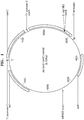
- FIG. 1 shows a vector map of the pETDuet-camC-camAB vector.
- E. coli BL21 strain was introduced with the prepared pETDuet-camC-camAB vector by a heat shock method, and then cultured on a LB plate containing 100 ⁇ g/mL of ampicillin. A strain showing ampicillin resistance was selected. Finally, the strain thus selected was designated as a recombinant E. coli BL21/pETDuet-camC-camAB.
- E. coli BL21/pETDuet-camC-camAB strain prepared in section (1) affects removal of CHF 3 or CHCl 3 in a sample.
- E. coli BL21/pETDuet-camC-camAB was cultured in a TB medium at 30°C under stirring at 230 rpm. At OD 600 of about 0.5, 0.5 mM of IPTG was added thereto, followed by culturing at 25°C and 230 rpm overnight. The cells were harvested and suspended in an M9 medium to a cell density of OD 600 of 2.5.
- the terrific broth (TB) medium included 12 g of tryptone, 24 g of yeast extract, 5 g of glycerol, and 89 mM phosphate buffer per 1 L of distilled water. Further, the M9 medium included 6 g of Na 2 HPO 4 , 3 g of KH 2 PO 4 , 0.5 g of NaCl, and 1 g of NH 4 Cl per 1 L of distilled water.
- gas-phase CHF 3 was injected through a rubber stopper of a cap of the serum bottle using a syringe to its headspace concentration of 200 ppm. Further, liquid-phase CHCl 3 was injected through the rubber stopper of the cap of the serum bottle using the syringe to its concentration of 0.02 mM in the medium. Thereafter, the serum bottle was incubated for 18 hrs to 152 hrs, while stirring at 30°C and 200 rpm. Each experiment was performed in triplicate.
- 0.5 ml of the headspace gas containing no medium in the serum bottle was collected using a 1.0 ml-headspace syringe and injected into GC (Agilent 7890, Palo Alto, CA, USA).
- the injected CHF 3 or CHCl 3 was separated through a CP-PoraBOND Q column (25 m length, 0.32 mm i.d., 5 um film thickness, Agilent), and changes in the CHF 3 or CHCl 3 concentration were analyzed by mass spectrometry (Agilent 5973, Palo Alto, CA, USA).
- helium was used, and applied to the column at a flow rate of 1.5 ml/min.
- GC conditions were as follows: An inlet temperature was 250°C, an initial temperature was maintained at 40°C for 2 minutes, and temperature was raised to 290°C at a rate of 20°C/min.
- MS conditions were as follows: Ionization energy was 70 eV, an interface temperature was 280°C, an ion source temperature was 230°C, and a quadrupole temperature was 150°C.
- FIG. 2 shows changes in a headspace concentration of CHF 3 over time when E. coli BL21/pETDuet-camC-camAB was cultured in the medium contacted with CHF 3 -containing gas.
- FIG. 3A shows changes in a headspace concentration of CHCl 3 over time when E. coli BL21/pETDuet-camC-camAB was cultured in a CHCl 3 -containing medium.
- NC represents a negative control group
- 'CAM' represents an experiment performed by using E. coli BL21/pETDuet-camC-camAB.
- FIG. 2 when the E. coli BL21/pETDuet-camC-camAB was cultured for 62 hours and 152 hours, the headspace concentration of CHF 3 was decreased by about 5.6% and about 17.3%, respectively, compared to the control group.
- FIG. 3A when the E. coli BL21/pETDuet-camC-camAB was cultured for 18 hours, the headspace concentration of CHCl 3 was decreased by about 14.8%, compared to the control group.
- the experiment was performed in the same manner as the procedure performed for CHF 3 in Section (2), except that CF 4 was used instead of CHF 3 and gas-phase CF 4 was injected through a rubber stopper of a cap of the serum bottle using a syringe to its headspace concentration of 1000 ppm, and then the serum bottle was incubated for 7 days, while stirring at 30°C and 200 rpm.
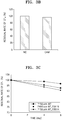
- the results are as shown in FIG. 3B .
- FIG. 3B shows changes in a headspace concentration of CF 4 over time when E. coli BL21/pETDuet-camC-camAB was cultured in a medium contacted with CF 4 -containing gas.
- the headspace concentration of CF 4 was decreased by about 3.57%, compared to the control group.
- mutants were prepared in order to improve the activity of removing fluorinated methane in a sample by P450Cam.
- Phenylalanine hereinafter, referred to as "F351”
- F351X 19 natural amino acids other than phenylalanine
- camC corresponds to heme domain and F351 is one of conserved amino acids in the amino acid sequences of camC derived from many different species.
- Preparation of the F351X mutants of SEQ ID NO: 6 was performed using a QuikChange II Site-Directed Mutagenesis Kit (Agilent Technology, USA). Site-directed mutagenesis using the kit was performed using PfuUltra high-fidelity (HF) DNA polymerase for mutagenic primer-directed replication of both plasmid strands with the highest fidelity.
- the basic procedure utilized a supercoiled double-stranded DNA (dsDNA) vector with an insert of interest and two synthetic oligonucleotide primers, both containing the desired mutation.
- Extension of the oligonucleotide primers generated a mutated plasmid containing staggered nicks.
- the product was treated with Dpn I.
- the Dpn I endonuclease (target sequence: 5'-Gm 6 ATC-3') was specific for methylated and hemimethylated DNA and was used to digest the parental DNA template and to select for mutation-containing synthesized DNA.
- the nicked vector DNA incorporating the desired mutations was then transformed into XL1-Blue supercompetent cells.
- the sequence identifiers for the primer sets used to produce the mutations are given in the following Table 6. [Table 6] NO.
- PCR was performed using the pETDuet-camC-camAB vector prepared in (1) as a template and each of the primer sets described in Table 6 as a primer and PfuUlta HF DNA polymerase to obtain mutated vectors. These vector products were treated with Dpnl to select mutation-containing synthesized DNAs. The vector DNA incorporating the desired mutations was then transformed into XL1-Blue supercompetent cells to clone a pETDuet-camCmt-camAB vector.
- control group represents E. coli introduced with the pETDuet vector instead of the pETDuet-camCmt-camAB vector, and F351* represents wild-type camC.
- FIG. 3C shows changes of CF 4 in a sample over time by E. coli BL21/pETDuet-camCmt-camAB introduced with the mutant camC gene.
- E. coli P450CAM strain namely, F351N or F351H mutant gene-containing strain
- the CF 4 level was further decreased by about 7.02% or about 8.92%, compared to the control group.
- the wild-type strain further decreased the CF 4 level by about 3.14%, compared to the control group.
- Example 2 Recombinant E . coli expressing P450BM3 gene and Removal of halomethane in sample by using the same
- a recombinant E. coli expressing a P450BM3 gene was prepared, and an effect of removing halomethane, i.e., CHF 3 , CF 4 , or CHCl 3 in a sample by using the same was examined.
- P450 BM3 gene of Bacillus megaterium (ATCC 14581) strain was amplified.
- P450 BM3 gene has a nucleotide sequence of SEQ ID NO: 7, and encodes an amino acid sequence of SEQ ID NO: 8.
- B. megaterium (ATCC 14581) was cultured in an LB medium at 30°C under stirring at 230 rpm overnight, and then a genomic DNA was isolated using the total DNA extraction kit (Invitrogen Biotechnology). PCR was performed using this genomic DNA as a template and a set of primers having nucleotide sequences of SEQ ID NOS: 17 and 18 to amplify and obtain the P450BM3 gene.
- FIG. 4 shows a vector map of the pET28a-P450BM3 vector.
- a zwf gene encoding glucose 6-phosphate dehydrogenase of E. coli K12 was amplified.
- the Zwf gene has a nucleotide sequence of SEQ ID NO: 9, and encodes an amino acid sequence of SEQ ID NO: 10.
- E. coli was cultured in an LB medium at 37°C under stirring at 230 rpm overnight, and then a genomic DNA was isolated using the total DNA extraction kit (Invitrogen Biotechnology). PCR was performed using this genomic DNA as a template and a set of primers having nucleotide sequences of SEQ ID NOS: 19 and 20 to amplify and obtain the zwf gene.
- the zwf gene thus amplified was ligated with pACYCDuet (Novagen, Cat. No. 71147-3), which was digested with restriction enzymes, Ncol and Sacl, using the InFusion Cloning Kit (Clontech Laboratories, Inc.) to prepare a pACYCDuet-zwf vector.
- FIG. 5 shows a vector map of the pACYCDuet-zwf vector.
- E. coli BL21 strain was introduced with the prepared pET28a-P450 BM3 vector by a heat shock method, and then cultured on a LB plate containing 50 ⁇ g/mL of kanamycin. A strain showing kanamycin resistance was selected. Finally, the strain thus selected was designated as a recombinant E. coli BL21/pET28a-P450BM3.
- E. coli BL21 strain was introduced with the prepared pET28a-P450 BM3 vector and pACYCDuet-zwf vector by a heat shock method, and then cultured on a LB plate containing 50 ⁇ g/mL of kanamycin and 35 ⁇ g/mL of chloramphenicol. A strain showing kanamycin resistance and chloramphenicol resistance was selected. Finally, the strain thus selected was designated as a recombinant E. coli BL21/pET28a-P450 BM3 +pACYCDuet-zwf.
- E. coli BL21/pET28a-P450 BM3 or BL21/pET28a-P450BM3+pACYCDuet-zwf strain was cultured in the TB medium at 30°C under stirring at 230 rpm. At OD 600 of about 0.5, 0.2 mM of IPTG was added thereto, followed by culturing at 25°C and 230 rpm overnight. The cells were harvested and suspended in the M9 medium to a cell density of OD 600 of 2.5. 10 ml of this cell suspension was added to a 60 ml-serum bottle, and then the bottle was sealed.
- the TB medium and the M9 medium are the same as those described in Example 1.
- gas-phase CHF 3 was injected through a rubber stopper of a cap of the serum bottle using a syringe to a headspace concentration of 200 ppm. Further, liquid-phase CHCl 3 was injected through the rubber stopper of the cap of the serum bottle using the syringe to its concentration of 0.02 mM in the medium. Thereafter, the serum bottle was incubated for 15 hrs to 142 hrs, while stirring at 30°C and 230 rpm. Each experiment was performed in triplicate.
- the headspace concentration of CHF 3 or CHCl 3 in the serum bottle was analyzed under the same conditions as described in (2) of Example 1.
- FIG. 6 shows changes in headspace concentration of CHF 3 over time when E. coli BL21/pET28a-P450BM3 or BL21/pET28a-P450BM3+pACYCDuet-zwf was cultured for 142 hours in a medium contacted with CHF 3 -containing gas.
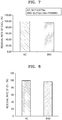
- FIG. 7 shows changes in headspace concentration of CHCl 3 over time when E. coli BL21/pET28a-P450BM3 was cultured for 15 hours in a CHCl 3 -containing medium.
- NC represents a negative control group
- 'BM3' represents an experiment performed by using E. coli BL21/pET28a-P450BM3
- 'BM3+Zwf' represents an experiment performed by using E. coli BL21/pET28a-P450BM3+pACYCDuet-zwf.
- FIG. 6 when the E. coli BL21/pET28a-P450BM3 and E.
- coli BL21/pET28a-P450BM3+pACYCDuet-zwf were cultured for 70 hours and 142 hours, the headspace concentration of CHF 3 was decreased, compared to the control group, by about 3.93% and about 4.57% upon culturing for 70 hours and by about 4.15% and about 11.03% upon culturing for 142 hours, respectively. Further, as shown in FIG. 7 , when they were cultured for 15 hours, the headspace concentration of CHCl 3 was decreased by about 4.1%, compared to the control group.
- the experiment was performed in the same manner as the procedure performed for CHF 3 in Section (2), except that CF 4 was used instead of CHF 3 and gas-phase CF 4 was injected through a rubber stopper of a cap of the serum bottle using a syringe to its headspace concentration of 1000 ppm, and then the serum bottle was incubated for 7 days, while stirring at 30°C and 200 rpm.
- the results are as shown in FIG. 8 .
- FIG. 8 shows changes in a headspace concentration of CF 4 over time when E. coli BL21/pET28a-P450BM3 was cultured for 7 days in a medium contacted with CF 4 -containing gas.
- the headspace concentration of CF 4 was decreased by about 3.03%, compared to the control group.
- mutants were prepared in order to improve the activity of removing fluorinated methane in a sample by P450BM3.
- Asparagine hereinafter, referred to as "N320”
- N320X 19 natural amino acids other than asparagine
- each of the genes encoding the mutants was introduced into E. coli , and their activity of removing CF 4 in a sample was examined.
- N320 is included in the heme-containing P450 oxygenase domain, and N320 is one of conserved amino acids in the amino acid sequences of enzymes having the same function.
- PCR was performed using the pET28a-P450BM3 vector prepared in (1) as a template and each of the primer sets described in Table 8 as a primer and PfuUlta HF DNA polymerase to obtain mutated vectors. These vector products were treated with Dpnl to select mutation-containing synthesized DNAs. The vector DNA incorporating the desired mutations was then transformed into XL1-Blue supercompetent cells to clone a pET28a-P450BM3mt vector.
- control group represents E. coli introduced with the pET28a vector instead of the pET28a-P450BM3mt vector, and N320* represents wild-type P450BM3.
- FIG. 9 shows changes of CF 4 in a sample over time by E. coli BL21/pET28a-P450BM3mt introduced with the mutant P450BM3 gene.
- the CF 4 level was further decreased by about 14.3%, compared to the control group.
- the wild-type strain further decreased the CF 4 level by about 5.5%, compared to the control group.
Landscapes
- Life Sciences & Earth Sciences (AREA)
- Chemical & Material Sciences (AREA)
- Engineering & Computer Science (AREA)
- Health & Medical Sciences (AREA)
- Organic Chemistry (AREA)
- Genetics & Genomics (AREA)
- Bioinformatics & Cheminformatics (AREA)
- Zoology (AREA)
- Wood Science & Technology (AREA)
- Biomedical Technology (AREA)
- General Engineering & Computer Science (AREA)
- Microbiology (AREA)
- Biochemistry (AREA)
- General Health & Medical Sciences (AREA)
- Molecular Biology (AREA)
- Environmental & Geological Engineering (AREA)
- Biotechnology (AREA)
- Medicinal Chemistry (AREA)
- Oil, Petroleum & Natural Gas (AREA)
- Biodiversity & Conservation Biology (AREA)
- Hydrology & Water Resources (AREA)
- Water Supply & Treatment (AREA)
- Chemical Kinetics & Catalysis (AREA)
- General Chemical & Material Sciences (AREA)
- Analytical Chemistry (AREA)
- Physics & Mathematics (AREA)
- Biophysics (AREA)
- Plant Pathology (AREA)
- Micro-Organisms Or Cultivation Processes Thereof (AREA)
Claims (15)
- Rekombinanter Mikroorganismus, umfassend ein exogenes Gen, das eine Variante eines bakteriellen Cytochrom P450 Proteins kodiert, wobei es sich bei der Variante um eine P450Cam-Variante handelt, die eine Aminosäureveränderung an einem Aminosäurerest aufweist, welcher der Position F351 einer Aminosäuresequenz der SEQ ID NO: 6 entspricht, und eine zu EC 1.14.15.1 gehörende Aktivität aufweist oder um eine P450BM3-Variante, die eine Aminosäureveränderung an einem Aminosäurerest aufweist, welcher der Position N320 einer Aminosäuresequenz der SEQ ID NO: 8 entspricht, und eine zu EC 1.14.14.1 gehörende Aktivität aufweist, wobei es sich bei der Aminosäureveränderung um den Austausch des Aminosäurerests, welcher der Position F351 entspricht, gegen Y, T, N, Q, H oder D oder den Austausch des Aminosäurerests, welcher der Position N320 entspricht, gegen W, F, G, P, S oder E handelt.
- Rekombinanter Mikroorganismus nach Anspruch 1, ferner umfassend ein exogenes Gen, das ein zu EC 1.1.1.49 gehörendes Protein kodiert.
- Rekombinanter Mikroorganismus nach Anspruch 2, wobei das exogene Gen Glucose-6-Phosphatdehydrogenase kodiert.
- Variante des bakteriellen P450Cam, die eine Aminosäureveränderung an einem Aminosäurerest aufweist, welcher der Position F351 einer Aminosäuresequenz der SEQ ID NO: 6 entspricht, und eine zu EC 1.14.15.1 gehörende Aktivität aufweist, oder Variante des bakteriellen P450BM3, die eine Aminosäureveränderung an einem Aminosäurerest aufweist, welcher der Position N320 einer Aminosäuresequenz der SEQ ID NO: 8 entspricht, und eine zu EC 1.14.14.1 gehörende Aktivität aufweist, wobei es sich bei der Aminosäureveränderung um den Austausch des Aminosäurerests, welcher der Position F351 entspricht, gegen Y, T, N, Q, H oder D oder den Austausch des Aminosäurerests, welcher der Position N320 entspricht, gegen W, F, G, P, S oder E handelt.
- Zusammensetzung zum Entfernen von fluoriertem Methan, dargestellt durch CHnF4-n, wobei es sich bei n um eine ganze Zahl von 0 bis 3 handelt, in einer Probe, wobei die Zusammensetzung den rekombinanten Mikroorganismus nach einem der Ansprüche 1 bis 3, ein Lysat davon oder eine wasserlösliche Fraktion des Lysats und/oder die Variante des bakteriellen P450Cam nach Anspruch 4 und/oder die Variante des bakteriellen P450BM3 nach Anspruch 4 umfasst.
- Rekombinanter Mikroorganismus nach einem der Ansprüche 1 bis 3 oder Zusammensetzung nach Anspruch 5, wobei es sich bei dem Mikroorganismus um ein grampositives oder gramnegatives Bakterium handelt.
- Rekombinanter Mikroorganismus oder Zusammensetzung nach Anspruch 6, wobei das gramnegative Bakterium zur Familie Enterobacteriaceae gehört.
- Rekombinanter Mikroorganismus oder Zusammensetzung nach Anspruch 6, wobei das gramnegative Bakterium zur Gattung Escherichia, zur Gattung Salmonella, zur Gattung Xanthomonas oder zur Gattung Pseudomonas gehört oder wobei das grampositive Bakterium zur Gattung Corynebacterium oder zur Gattung Bacillus gehört.
- Verfahren zum Reduzieren einer Konzentration von fluoriertem Methan in einer Probe, wobei das Verfahren umfasst,(a) einen rekombinanten Mikroorganismus, umfassend ein exogenes Gen, das ein bakterielles Cytochrom P450 Protein oder eine Variante davon kodiert, wobei es sich bei der Variante um eine P450Cam-Variante handelt, die eine Aminosäureveränderung an einem Aminosäurerest aufweist, welcher der Position F351 einer Aminosäuresequenz der SEQ ID NO: 6 entspricht, und eine zu EC 1.14.15.1 gehörende Aktivität aufweist, oder um eine P450BM3-Variante, die eine Aminosäureveränderung an einem Aminosäurerest aufweist, welcher der Position N320 einer Aminosäuresequenz der SEQ ID NO: 8 entspricht, und eine zu EC 1.14.14.1 gehörende Aktivität aufweist, und/oder(b) den rekombinanten Mikroorganismus nach einem der Ansprüche 1 bis 3 und 6 bis 8, ein Lysat davon oder eine wasserlösliche Fraktion des Lysats und/oder(c) die Variante des bakteriellen P450Cam nach Anspruch 4 und/oder(d) die Variante des bakteriellen P450BM3 nach Anspruch 4 und/oder(e) die Zusammensetzung nach einem der Ansprüche 5 bis 8 mit der Probe in Kontakt zu bringen, die fluoriertes Methan umfasst, dargestellt durch CHnF4-n, wobei es sich bei n um eine ganze Zahl von 0 bis 3 handelt, um die Konzentration von fluoriertem Methan in der Probe zu reduzieren.
- Verfahren nach Anspruch 9, wobei das In-Kontakt-Bringen in einem versiegelten Behälter durchgeführt wird.
- Verfahren nach Anspruch 10, wobei das Verfahren umfasst, den rekombinanten Mikroorganismus nach einem der Ansprüche 1 bis 3, 6 bis 8 und Punkt a) von Anspruch 9 mit der Probe in Kontakt zu bringen, und wobei das In-Kontakt-Bringen in einem versiegelten Behälter unter Bedingungen durchgeführt wird, bei denen der rekombinante Organismus überlebt oder lebensfähig ist.
- Verfahren nach einem der Ansprüche 9 bis 11, wobei es sich beim In-Kontakt-Bringen um Züchten des rekombinanten Mikroorganismus nach einem der Ansprüche 1 bis 3, 6 bis 8 und Punkt a) von Anspruch 9 in Anwesenheit von fluoriertem Methan handelt.
- Verfahren nach einem der Ansprüche 9 bis 12, wobei die Probe in einem flüssigen oder gasförmigen Zustand vorliegt, wobei es sich bei der Probe vorzugsweise um Industrieabwasser oder Abgas handelt.
- Polynucleotid, welches eine Variante des bakteriellen P450Cam kodiert, die eine Aminosäureveränderung an einem Aminosäurerest aufweist, welcher der Position F351 einer Aminosäuresequenz der SEQ ID NO: 6 entspricht, und zu EC 1.14.15.1 gehört oder Polynucleotid, welches eine Variante des bakteriellen P450BM3 kodiert, die eine Aminosäureveränderung an einem Aminosäurerest aufweist, welcher der Position N320 einer Aminosäuresequenz der SEQ ID NO: 8 entspricht, und zu EC 1.14.14.1 gehört, wobei es sich bei der Aminosäureveränderung um den Austausch des Aminosäurerests, welcher der Position F351 entspricht, gegen Y, T, N, Q, H oder D oder den Austausch des Aminosäurerests, welcher der Position N320 entspricht, gegen W, F, G, P, S oder E handelt.
- Vektor, umfassend das Polynucleotid nach Anspruch 14.
Applications Claiming Priority (5)
| Application Number | Priority Date | Filing Date | Title |
|---|---|---|---|
| KR20150173293 | 2015-12-07 | ||
| KR1020160048960A KR20160134487A (ko) | 2015-05-13 | 2016-04-21 | 히드록실라제 활성을 갖는 단백질을 코딩하는 유전자를 포함하는 미생물, 및 그를 이용한 시료 중 플루오르화된 메탄의 농도를 감소시키는 방법 |
| KR1020160075831A KR20170067125A (ko) | 2015-12-07 | 2016-06-17 | 박테리아 시토크롬 p450 단백질 및 그를 이용한 시료 중 플루오르화된 메탄의 농도를 감소시키는 방법 |
| KR1020160109543A KR20180023734A (ko) | 2016-08-26 | 2016-08-26 | 박테리아 시토크롬 p450 단백질 변이체 및 그를 이용한 시료 중 플루오르화된 메탄의 농도를 감소시키는 방법 |
| KR1020160109544A KR20180023735A (ko) | 2016-08-26 | 2016-08-26 | 박테리아 시토크롬 p450 단백질 변이체 및 그를 이용한 시료 중 플루오르화된 메탄의 농도를 감소시키는 방법 |
Publications (2)
| Publication Number | Publication Date |
|---|---|
| EP3178922A1 EP3178922A1 (de) | 2017-06-14 |
| EP3178922B1 true EP3178922B1 (de) | 2019-05-22 |
Family
ID=57442608
Family Applications (1)
| Application Number | Title | Priority Date | Filing Date |
|---|---|---|---|
| EP16202662.9A Not-in-force EP3178922B1 (de) | 2015-12-07 | 2016-12-07 | Bakterielle cytochrom-p450-proteinvariante und verfahren zur verringerung der konzentration von fluoriertem methan in einer probe damit |
Country Status (2)
| Country | Link |
|---|---|
| US (1) | US10358632B2 (de) |
| EP (1) | EP3178922B1 (de) |
Families Citing this family (4)
| Publication number | Priority date | Publication date | Assignee | Title |
|---|---|---|---|---|
| KR20180041008A (ko) | 2016-10-13 | 2018-04-23 | 삼성전자주식회사 | 데할로게나제 변이체, 상기 변이체를 코딩하는 폴리뉴클레오티드, 상기 폴리뉴클레오티드를 포함하는 재조합 미생물, 상기 재조합 미생물을 포함하는 조성물 및 이를 이용한 플루오로화 메탄의 농도를 감소시키는 방법 |
| US12188069B2 (en) | 2018-01-31 | 2025-01-07 | The Regents Of The University Of Michigan | Biocatalyst and methods for synthesizing mixed disulfide conjugates of thienopyridine compounds |
| CN108671740B (zh) * | 2018-05-14 | 2019-05-28 | 大江环境股份有限公司 | 一种包含蒙氏假单胞菌的生物活性填料在净化含硫废气中的应用 |
| CN112359027B (zh) | 2021-01-13 | 2021-04-13 | 凯莱英生命科学技术(天津)有限公司 | 细胞色素p450酶突变体及其应用 |
Family Cites Families (21)
| Publication number | Priority date | Publication date | Assignee | Title |
|---|---|---|---|---|
| US5316940A (en) | 1992-04-24 | 1994-05-31 | Board Of Regents, The University Of Texas System | Constitutive soluble methane monooxygenase mutants of methanotrophic bacteria such as Methylosinus trichosporium A.T.C.C. 55314 |
| JP2603183B2 (ja) | 1993-02-25 | 1997-04-23 | 環境庁国立環境研究所長 | 有機塩素化合物分解菌の活性化方法 |
| US5414200A (en) | 1994-03-07 | 1995-05-09 | A.L. Sandpiper Corporation | Non-metallized and subtoichiometric metallized reactions with ammonia and other weak bases in the dehalogenation of refrigerants |
| US5637499A (en) | 1994-04-29 | 1997-06-10 | Lockheed Idaho Technologies Company | Method for enhancing microbial utilization rates of gases using perfluorocarbons |
| EP0970224A1 (de) | 1997-02-13 | 2000-01-12 | The Dow Chemical Company | Rekombinante haloaliphatische dehalogenasen |
| GB9914373D0 (en) * | 1999-06-18 | 1999-08-18 | Isis Innovation | Process for oxidising aromatic compounds |
| KR100392185B1 (ko) | 2000-05-23 | 2003-07-22 | 이엔브이이십일(주) | 미생물 활성 반응층을 이용한 매립가스 추출 및 매립가스산화처리 방법과 그 장치 |
| KR20030051897A (ko) | 2000-12-01 | 2003-06-25 | 다이버사 코포레이션 | 데할로게나제 활성을 가진 효소 및 이의 사용 방법 |
| EP1433856A4 (de) | 2001-09-06 | 2009-09-23 | Ajinomoto Kk | Verfahren zur herstellung von alkohol unter verwendung eines mikroorganismus |
| JP4251554B2 (ja) | 2002-04-12 | 2009-04-08 | メルシャン株式会社 | 大腸菌における放線菌由来チトクロームp−450遺伝子の発現系 |
| KR100487610B1 (ko) | 2003-01-10 | 2005-05-03 | 재단법인서울대학교산학협력재단 | 영양물질을 함유한 산소생성제를 이용한 메탄 및 휘발성유기화합물의 처리방법 |
| JP2005013872A (ja) | 2003-06-26 | 2005-01-20 | Taisei Corp | 揮発性炭化水素に汚染された水および空気を浄化する方法 |
| US6945925B2 (en) | 2003-07-31 | 2005-09-20 | Joel Pooler | Biosequestration and organic assimilation of greenhouse gases |
| KR20060064617A (ko) | 2003-08-11 | 2006-06-13 | 코덱시스, 인코포레이티드 | 개량된 할로히드린 디할로게나제 및 관련 폴리뉴클레오티드 |
| KR20050028278A (ko) | 2003-09-18 | 2005-03-22 | 안태호 | Nadph-p450 옥시도리덕타제 유전자와의 동시발현에 의한재조합 시토크롬 p450 효소들의 단백질 발현 증가 |
| US7579176B2 (en) | 2003-10-15 | 2009-08-25 | Newlight Technologies, Llc | Method for the production of polyhydroxyalkanoic acid |
| US8715988B2 (en) | 2005-03-28 | 2014-05-06 | California Institute Of Technology | Alkane oxidation by modified hydroxylases |
| EP2069513A4 (de) * | 2006-08-04 | 2012-03-21 | California Inst Of Techn | Verfahren und systeme zur selektiven fluorinierung organischer moleküle |
| JP5503834B2 (ja) | 2006-09-29 | 2014-05-28 | 大成建設株式会社 | 汚染空気浄化装置 |
| WO2012177655A2 (en) | 2011-06-24 | 2012-12-27 | Arizona Board Of Regents For And On Behalf Of Arizona State University | Methods and systems for tracking bioremediation processes |
| US20140072965A1 (en) | 2012-09-07 | 2014-03-13 | University Of Tennessee Research Foundation | 1, 2-Dichloropropane-to-Propene Reductive Dehalogenase Genes |
-
2016
- 2016-12-07 EP EP16202662.9A patent/EP3178922B1/de not_active Not-in-force
- 2016-12-07 US US15/372,327 patent/US10358632B2/en not_active Expired - Fee Related
Non-Patent Citations (1)
| Title |
|---|
| None * |
Also Published As
| Publication number | Publication date |
|---|---|
| US10358632B2 (en) | 2019-07-23 |
| US20170159030A1 (en) | 2017-06-08 |
| EP3178922A1 (de) | 2017-06-14 |
Similar Documents
| Publication | Publication Date | Title |
|---|---|---|
| Johannes et al. | Directed evolution of a thermostable phosphite dehydrogenase for NAD (P) H regeneration | |
| US10344286B2 (en) | Microorganism including gene encoding protein having hydroxylase activity and method of reducing concentration of fluorinated methane in sample using the same | |
| Kuntze et al. | 6‐Oxocyclohex‐1‐ene‐1‐carbonyl‐coenzyme A hydrolases from obligately anaerobic bacteria: characterization and identification of its gene as a functional marker for aromatic compounds degrading anaerobes | |
| EP3321364B1 (de) | Promotorsystem zur induktion der expression durch 3-hydroxypropionsäure und verfahren zur biologischen herstellung von 3-hydroxypropionsäure damit | |
| US9428773B2 (en) | Methods of producing acetoin and 2,3-butanediol using photosynthetic microorganisms | |
| Li et al. | Characterization of a novel Rieske-type alkane monooxygenase system in Pusillimonas sp. strain T7-7 | |
| US10150080B2 (en) | Microorganism including gene encoding protein having dehalogenase activity and method of reducing concentration of fluorinated methane in sample using the same | |
| Oberender et al. | Identification and characterization of a succinyl-coenzyme A (CoA): benzoate CoA transferase in Geobacter metallireducens | |
| Ohhata et al. | An extremely oligotrophic bacterium, Rhodococcus erythropolis N9T-4, isolated from crude oil | |
| US10358632B2 (en) | Bacterial cytochrome P450 protein variant and method of reducing concentration of fluorinated methane in sample using the same | |
| US11162081B2 (en) | Ketoreductase mutant and application thereof | |
| Ying et al. | Characterization of an allylic/benzyl alcohol dehydrogenase from Yokenella sp. strain WZY002, an organism potentially useful for the synthesis of α, β-unsaturated alcohols from allylic aldehydes and ketones | |
| Rehdorf et al. | Cloning, expression, characterization, and biocatalytic investigation of the 4-hydroxyacetophenone monooxygenase from Pseudomonas putida JD1 | |
| Machielsen et al. | Laboratory evolution of Pyrococcus furiosus alcohol dehydrogenase to improve the production of (2S, 5S)-hexanediol at moderate temperatures | |
| Wischgoll et al. | Decarboxylating and nondecarboxylating glutaryl-coenzyme A dehydrogenases in the aromatic metabolism of obligately anaerobic bacteria | |
| Hölsch et al. | Identification, cloning, and characterization of a novel ketoreductase from the cyanobacterium Synechococcus sp. strain PCC 7942 | |
| Ferrari et al. | Unravelling the role of the group 6 soluble di‐iron monooxygenase (SDIMO) SmoABCD in alkane metabolism and chlorinated alkane degradation | |
| Makino et al. | Engineering of phenylacetaldehyde reductase for efficient substrate conversion in concentrated 2-propanol | |
| US20170183638A1 (en) | Soluble methane monooxygenase protein variant and method of reducing concentration of fluorinated methane in sample using the same | |
| US10036072B2 (en) | Mercury methylation genes in bacteria and archaea | |
| Di Salle et al. | A novel thermostable sulfite oxidase from Thermus thermophilus: characterization of the enzyme, gene cloning and expression in Escherichia coli | |
| KR20180023734A (ko) | 박테리아 시토크롬 p450 단백질 변이체 및 그를 이용한 시료 중 플루오르화된 메탄의 농도를 감소시키는 방법 | |
| KR20180023735A (ko) | 박테리아 시토크롬 p450 단백질 변이체 및 그를 이용한 시료 중 플루오르화된 메탄의 농도를 감소시키는 방법 | |
| Steinbach et al. | Cyclohexane-1, 2-dione hydrolase from denitrifying Azoarcus sp. strain 22Lin, a novel member of the thiamine diphosphate enzyme family | |
| KR20180023736A (ko) | 가용성 메탄 모노옥시게나제 단백질 변이체 및 그를 이용한 시료 중 플루오르화 메탄의 농도를 감소시키는 방법 |
Legal Events
| Date | Code | Title | Description |
|---|---|---|---|
| PUAI | Public reference made under article 153(3) epc to a published international application that has entered the european phase |
Free format text: ORIGINAL CODE: 0009012 |
|
| STAA | Information on the status of an ep patent application or granted ep patent |
Free format text: STATUS: THE APPLICATION HAS BEEN PUBLISHED |
|
| AK | Designated contracting states |
Kind code of ref document: A1 Designated state(s): AL AT BE BG CH CY CZ DE DK EE ES FI FR GB GR HR HU IE IS IT LI LT LU LV MC MK MT NL NO PL PT RO RS SE SI SK SM TR |
|
| AX | Request for extension of the european patent |
Extension state: BA ME |
|
| STAA | Information on the status of an ep patent application or granted ep patent |
Free format text: STATUS: REQUEST FOR EXAMINATION WAS MADE |
|
| 17P | Request for examination filed |
Effective date: 20171013 |
|
| RBV | Designated contracting states (corrected) |
Designated state(s): AL AT BE BG CH CY CZ DE DK EE ES FI FR GB GR HR HU IE IS IT LI LT LU LV MC MK MT NL NO PL PT RO RS SE SI SK SM TR |
|
| STAA | Information on the status of an ep patent application or granted ep patent |
Free format text: STATUS: EXAMINATION IS IN PROGRESS |
|
| 17Q | First examination report despatched |
Effective date: 20180215 |
|
| GRAP | Despatch of communication of intention to grant a patent |
Free format text: ORIGINAL CODE: EPIDOSNIGR1 |
|
| STAA | Information on the status of an ep patent application or granted ep patent |
Free format text: STATUS: GRANT OF PATENT IS INTENDED |
|
| INTG | Intention to grant announced |
Effective date: 20180730 |
|
| GRAJ | Information related to disapproval of communication of intention to grant by the applicant or resumption of examination proceedings by the epo deleted |
Free format text: ORIGINAL CODE: EPIDOSDIGR1 |
|
| STAA | Information on the status of an ep patent application or granted ep patent |
Free format text: STATUS: EXAMINATION IS IN PROGRESS |
|
| GRAP | Despatch of communication of intention to grant a patent |
Free format text: ORIGINAL CODE: EPIDOSNIGR1 |
|
| STAA | Information on the status of an ep patent application or granted ep patent |
Free format text: STATUS: GRANT OF PATENT IS INTENDED |
|
| INTC | Intention to grant announced (deleted) | ||
| INTG | Intention to grant announced |
Effective date: 20181214 |
|
| GRAS | Grant fee paid |
Free format text: ORIGINAL CODE: EPIDOSNIGR3 |
|
| GRAA | (expected) grant |
Free format text: ORIGINAL CODE: 0009210 |
|
| STAA | Information on the status of an ep patent application or granted ep patent |
Free format text: STATUS: THE PATENT HAS BEEN GRANTED |
|
| AK | Designated contracting states |
Kind code of ref document: B1 Designated state(s): AL AT BE BG CH CY CZ DE DK EE ES FI FR GB GR HR HU IE IS IT LI LT LU LV MC MK MT NL NO PL PT RO RS SE SI SK SM TR |
|
| REG | Reference to a national code |
Ref country code: GB Ref legal event code: FG4D |
|
| REG | Reference to a national code |
Ref country code: CH Ref legal event code: EP |
|
| REG | Reference to a national code |
Ref country code: IE Ref legal event code: FG4D |
|
| REG | Reference to a national code |
Ref country code: DE Ref legal event code: R096 Ref document number: 602016014241 Country of ref document: DE |
|
| REG | Reference to a national code |
Ref country code: AT Ref legal event code: REF Ref document number: 1136110 Country of ref document: AT Kind code of ref document: T Effective date: 20190615 |
|
| REG | Reference to a national code |
Ref country code: NL Ref legal event code: MP Effective date: 20190522 |
|
| REG | Reference to a national code |
Ref country code: LT Ref legal event code: MG4D |
|
| PG25 | Lapsed in a contracting state [announced via postgrant information from national office to epo] |
Ref country code: AL Free format text: LAPSE BECAUSE OF FAILURE TO SUBMIT A TRANSLATION OF THE DESCRIPTION OR TO PAY THE FEE WITHIN THE PRESCRIBED TIME-LIMIT Effective date: 20190522 Ref country code: PT Free format text: LAPSE BECAUSE OF FAILURE TO SUBMIT A TRANSLATION OF THE DESCRIPTION OR TO PAY THE FEE WITHIN THE PRESCRIBED TIME-LIMIT Effective date: 20190922 Ref country code: ES Free format text: LAPSE BECAUSE OF FAILURE TO SUBMIT A TRANSLATION OF THE DESCRIPTION OR TO PAY THE FEE WITHIN THE PRESCRIBED TIME-LIMIT Effective date: 20190522 Ref country code: FI Free format text: LAPSE BECAUSE OF FAILURE TO SUBMIT A TRANSLATION OF THE DESCRIPTION OR TO PAY THE FEE WITHIN THE PRESCRIBED TIME-LIMIT Effective date: 20190522 Ref country code: NL Free format text: LAPSE BECAUSE OF FAILURE TO SUBMIT A TRANSLATION OF THE DESCRIPTION OR TO PAY THE FEE WITHIN THE PRESCRIBED TIME-LIMIT Effective date: 20190522 Ref country code: LT Free format text: LAPSE BECAUSE OF FAILURE TO SUBMIT A TRANSLATION OF THE DESCRIPTION OR TO PAY THE FEE WITHIN THE PRESCRIBED TIME-LIMIT Effective date: 20190522 Ref country code: SE Free format text: LAPSE BECAUSE OF FAILURE TO SUBMIT A TRANSLATION OF THE DESCRIPTION OR TO PAY THE FEE WITHIN THE PRESCRIBED TIME-LIMIT Effective date: 20190522 Ref country code: HR Free format text: LAPSE BECAUSE OF FAILURE TO SUBMIT A TRANSLATION OF THE DESCRIPTION OR TO PAY THE FEE WITHIN THE PRESCRIBED TIME-LIMIT Effective date: 20190522 Ref country code: NO Free format text: LAPSE BECAUSE OF FAILURE TO SUBMIT A TRANSLATION OF THE DESCRIPTION OR TO PAY THE FEE WITHIN THE PRESCRIBED TIME-LIMIT Effective date: 20190822 |
|
| PG25 | Lapsed in a contracting state [announced via postgrant information from national office to epo] |
Ref country code: LV Free format text: LAPSE BECAUSE OF FAILURE TO SUBMIT A TRANSLATION OF THE DESCRIPTION OR TO PAY THE FEE WITHIN THE PRESCRIBED TIME-LIMIT Effective date: 20190522 Ref country code: GR Free format text: LAPSE BECAUSE OF FAILURE TO SUBMIT A TRANSLATION OF THE DESCRIPTION OR TO PAY THE FEE WITHIN THE PRESCRIBED TIME-LIMIT Effective date: 20190823 Ref country code: BG Free format text: LAPSE BECAUSE OF FAILURE TO SUBMIT A TRANSLATION OF THE DESCRIPTION OR TO PAY THE FEE WITHIN THE PRESCRIBED TIME-LIMIT Effective date: 20190822 Ref country code: RS Free format text: LAPSE BECAUSE OF FAILURE TO SUBMIT A TRANSLATION OF THE DESCRIPTION OR TO PAY THE FEE WITHIN THE PRESCRIBED TIME-LIMIT Effective date: 20190522 |
|
| REG | Reference to a national code |
Ref country code: AT Ref legal event code: MK05 Ref document number: 1136110 Country of ref document: AT Kind code of ref document: T Effective date: 20190522 |
|
| PG25 | Lapsed in a contracting state [announced via postgrant information from national office to epo] |
Ref country code: CZ Free format text: LAPSE BECAUSE OF FAILURE TO SUBMIT A TRANSLATION OF THE DESCRIPTION OR TO PAY THE FEE WITHIN THE PRESCRIBED TIME-LIMIT Effective date: 20190522 Ref country code: AT Free format text: LAPSE BECAUSE OF FAILURE TO SUBMIT A TRANSLATION OF THE DESCRIPTION OR TO PAY THE FEE WITHIN THE PRESCRIBED TIME-LIMIT Effective date: 20190522 Ref country code: RO Free format text: LAPSE BECAUSE OF FAILURE TO SUBMIT A TRANSLATION OF THE DESCRIPTION OR TO PAY THE FEE WITHIN THE PRESCRIBED TIME-LIMIT Effective date: 20190522 Ref country code: EE Free format text: LAPSE BECAUSE OF FAILURE TO SUBMIT A TRANSLATION OF THE DESCRIPTION OR TO PAY THE FEE WITHIN THE PRESCRIBED TIME-LIMIT Effective date: 20190522 Ref country code: DK Free format text: LAPSE BECAUSE OF FAILURE TO SUBMIT A TRANSLATION OF THE DESCRIPTION OR TO PAY THE FEE WITHIN THE PRESCRIBED TIME-LIMIT Effective date: 20190522 Ref country code: SK Free format text: LAPSE BECAUSE OF FAILURE TO SUBMIT A TRANSLATION OF THE DESCRIPTION OR TO PAY THE FEE WITHIN THE PRESCRIBED TIME-LIMIT Effective date: 20190522 |
|
| REG | Reference to a national code |
Ref country code: DE Ref legal event code: R097 Ref document number: 602016014241 Country of ref document: DE |
|
| PG25 | Lapsed in a contracting state [announced via postgrant information from national office to epo] |
Ref country code: IT Free format text: LAPSE BECAUSE OF FAILURE TO SUBMIT A TRANSLATION OF THE DESCRIPTION OR TO PAY THE FEE WITHIN THE PRESCRIBED TIME-LIMIT Effective date: 20190522 Ref country code: SM Free format text: LAPSE BECAUSE OF FAILURE TO SUBMIT A TRANSLATION OF THE DESCRIPTION OR TO PAY THE FEE WITHIN THE PRESCRIBED TIME-LIMIT Effective date: 20190522 |
|
| PLBE | No opposition filed within time limit |
Free format text: ORIGINAL CODE: 0009261 |
|
| STAA | Information on the status of an ep patent application or granted ep patent |
Free format text: STATUS: NO OPPOSITION FILED WITHIN TIME LIMIT |
|
| PG25 | Lapsed in a contracting state [announced via postgrant information from national office to epo] |
Ref country code: TR Free format text: LAPSE BECAUSE OF FAILURE TO SUBMIT A TRANSLATION OF THE DESCRIPTION OR TO PAY THE FEE WITHIN THE PRESCRIBED TIME-LIMIT Effective date: 20190522 |
|
| 26N | No opposition filed |
Effective date: 20200225 |
|
| PG25 | Lapsed in a contracting state [announced via postgrant information from national office to epo] |
Ref country code: PL Free format text: LAPSE BECAUSE OF FAILURE TO SUBMIT A TRANSLATION OF THE DESCRIPTION OR TO PAY THE FEE WITHIN THE PRESCRIBED TIME-LIMIT Effective date: 20190522 |
|
| PG25 | Lapsed in a contracting state [announced via postgrant information from national office to epo] |
Ref country code: SI Free format text: LAPSE BECAUSE OF FAILURE TO SUBMIT A TRANSLATION OF THE DESCRIPTION OR TO PAY THE FEE WITHIN THE PRESCRIBED TIME-LIMIT Effective date: 20190522 |
|
| REG | Reference to a national code |
Ref country code: DE Ref legal event code: R119 Ref document number: 602016014241 Country of ref document: DE |
|
| REG | Reference to a national code |
Ref country code: CH Ref legal event code: PL |
|
| REG | Reference to a national code |
Ref country code: BE Ref legal event code: MM Effective date: 20191231 |
|
| PG25 | Lapsed in a contracting state [announced via postgrant information from national office to epo] |
Ref country code: MC Free format text: LAPSE BECAUSE OF FAILURE TO SUBMIT A TRANSLATION OF THE DESCRIPTION OR TO PAY THE FEE WITHIN THE PRESCRIBED TIME-LIMIT Effective date: 20190522 |
|
| PG25 | Lapsed in a contracting state [announced via postgrant information from national office to epo] |
Ref country code: LU Free format text: LAPSE BECAUSE OF NON-PAYMENT OF DUE FEES Effective date: 20191207 Ref country code: DE Free format text: LAPSE BECAUSE OF NON-PAYMENT OF DUE FEES Effective date: 20200701 Ref country code: FR Free format text: LAPSE BECAUSE OF NON-PAYMENT OF DUE FEES Effective date: 20191231 Ref country code: IE Free format text: LAPSE BECAUSE OF NON-PAYMENT OF DUE FEES Effective date: 20191207 |
|
| PG25 | Lapsed in a contracting state [announced via postgrant information from national office to epo] |
Ref country code: CH Free format text: LAPSE BECAUSE OF NON-PAYMENT OF DUE FEES Effective date: 20191231 Ref country code: LI Free format text: LAPSE BECAUSE OF NON-PAYMENT OF DUE FEES Effective date: 20191231 Ref country code: BE Free format text: LAPSE BECAUSE OF NON-PAYMENT OF DUE FEES Effective date: 20191231 |
|
| PG25 | Lapsed in a contracting state [announced via postgrant information from national office to epo] |
Ref country code: CY Free format text: LAPSE BECAUSE OF FAILURE TO SUBMIT A TRANSLATION OF THE DESCRIPTION OR TO PAY THE FEE WITHIN THE PRESCRIBED TIME-LIMIT Effective date: 20190522 |
|
| PG25 | Lapsed in a contracting state [announced via postgrant information from national office to epo] |
Ref country code: IS Free format text: LAPSE BECAUSE OF FAILURE TO SUBMIT A TRANSLATION OF THE DESCRIPTION OR TO PAY THE FEE WITHIN THE PRESCRIBED TIME-LIMIT Effective date: 20190922 |
|
| PG25 | Lapsed in a contracting state [announced via postgrant information from national office to epo] |
Ref country code: HU Free format text: LAPSE BECAUSE OF FAILURE TO SUBMIT A TRANSLATION OF THE DESCRIPTION OR TO PAY THE FEE WITHIN THE PRESCRIBED TIME-LIMIT; INVALID AB INITIO Effective date: 20161207 Ref country code: MT Free format text: LAPSE BECAUSE OF FAILURE TO SUBMIT A TRANSLATION OF THE DESCRIPTION OR TO PAY THE FEE WITHIN THE PRESCRIBED TIME-LIMIT Effective date: 20190522 |
|
| GBPC | Gb: european patent ceased through non-payment of renewal fee |
Effective date: 20201207 |
|
| PG25 | Lapsed in a contracting state [announced via postgrant information from national office to epo] |
Ref country code: GB Free format text: LAPSE BECAUSE OF NON-PAYMENT OF DUE FEES Effective date: 20201207 |
|
| PG25 | Lapsed in a contracting state [announced via postgrant information from national office to epo] |
Ref country code: MK Free format text: LAPSE BECAUSE OF FAILURE TO SUBMIT A TRANSLATION OF THE DESCRIPTION OR TO PAY THE FEE WITHIN THE PRESCRIBED TIME-LIMIT Effective date: 20190522 |