EP3178842B1 - Polyvalent vaccine - Google Patents
Polyvalent vaccine Download PDFInfo
- Publication number
- EP3178842B1 EP3178842B1 EP16184203.4A EP16184203A EP3178842B1 EP 3178842 B1 EP3178842 B1 EP 3178842B1 EP 16184203 A EP16184203 A EP 16184203A EP 3178842 B1 EP3178842 B1 EP 3178842B1
- Authority
- EP
- European Patent Office
- Prior art keywords
- env
- sequences
- coverage
- seq
- natural
- Prior art date
- Legal status (The legal status is an assumption and is not a legal conclusion. Google has not performed a legal analysis and makes no representation as to the accuracy of the status listed.)
- Not-in-force
Links
Images



























Classifications
-
- A—HUMAN NECESSITIES
- A61—MEDICAL OR VETERINARY SCIENCE; HYGIENE
- A61K—PREPARATIONS FOR MEDICAL, DENTAL OR TOILETRY PURPOSES
- A61K39/00—Medicinal preparations containing antigens or antibodies
- A61K39/12—Viral antigens
- A61K39/21—Retroviridae, e.g. equine infectious anemia virus
-
- A—HUMAN NECESSITIES
- A61—MEDICAL OR VETERINARY SCIENCE; HYGIENE
- A61K—PREPARATIONS FOR MEDICAL, DENTAL OR TOILETRY PURPOSES
- A61K39/00—Medicinal preparations containing antigens or antibodies
- A61K39/12—Viral antigens
-
- A—HUMAN NECESSITIES
- A61—MEDICAL OR VETERINARY SCIENCE; HYGIENE
- A61P—SPECIFIC THERAPEUTIC ACTIVITY OF CHEMICAL COMPOUNDS OR MEDICINAL PREPARATIONS
- A61P31/00—Antiinfectives, i.e. antibiotics, antiseptics, chemotherapeutics
- A61P31/12—Antivirals
-
- A—HUMAN NECESSITIES
- A61—MEDICAL OR VETERINARY SCIENCE; HYGIENE
- A61P—SPECIFIC THERAPEUTIC ACTIVITY OF CHEMICAL COMPOUNDS OR MEDICINAL PREPARATIONS
- A61P31/00—Antiinfectives, i.e. antibiotics, antiseptics, chemotherapeutics
- A61P31/12—Antivirals
- A61P31/14—Antivirals for RNA viruses
- A61P31/18—Antivirals for RNA viruses for HIV
-
- A—HUMAN NECESSITIES
- A61—MEDICAL OR VETERINARY SCIENCE; HYGIENE
- A61P—SPECIFIC THERAPEUTIC ACTIVITY OF CHEMICAL COMPOUNDS OR MEDICINAL PREPARATIONS
- A61P37/00—Drugs for immunological or allergic disorders
-
- A—HUMAN NECESSITIES
- A61—MEDICAL OR VETERINARY SCIENCE; HYGIENE
- A61P—SPECIFIC THERAPEUTIC ACTIVITY OF CHEMICAL COMPOUNDS OR MEDICINAL PREPARATIONS
- A61P37/00—Drugs for immunological or allergic disorders
- A61P37/02—Immunomodulators
- A61P37/04—Immunostimulants
-
- C—CHEMISTRY; METALLURGY
- C07—ORGANIC CHEMISTRY
- C07K—PEPTIDES
- C07K14/00—Peptides having more than 20 amino acids; Gastrins; Somatostatins; Melanotropins; Derivatives thereof
- C07K14/005—Peptides having more than 20 amino acids; Gastrins; Somatostatins; Melanotropins; Derivatives thereof from viruses
-
- C—CHEMISTRY; METALLURGY
- C12—BIOCHEMISTRY; BEER; SPIRITS; WINE; VINEGAR; MICROBIOLOGY; ENZYMOLOGY; MUTATION OR GENETIC ENGINEERING
- C12N—MICROORGANISMS OR ENZYMES; COMPOSITIONS THEREOF; PROPAGATING, PRESERVING, OR MAINTAINING MICROORGANISMS; MUTATION OR GENETIC ENGINEERING; CULTURE MEDIA
- C12N7/00—Viruses; Bacteriophages; Compositions thereof; Preparation or purification thereof
-
- A—HUMAN NECESSITIES
- A61—MEDICAL OR VETERINARY SCIENCE; HYGIENE
- A61K—PREPARATIONS FOR MEDICAL, DENTAL OR TOILETRY PURPOSES
- A61K39/00—Medicinal preparations containing antigens or antibodies
- A61K2039/51—Medicinal preparations containing antigens or antibodies comprising whole cells, viruses or DNA/RNA
- A61K2039/53—DNA (RNA) vaccination
-
- A—HUMAN NECESSITIES
- A61—MEDICAL OR VETERINARY SCIENCE; HYGIENE
- A61K—PREPARATIONS FOR MEDICAL, DENTAL OR TOILETRY PURPOSES
- A61K39/00—Medicinal preparations containing antigens or antibodies
- A61K2039/70—Multivalent vaccine
-
- C—CHEMISTRY; METALLURGY
- C12—BIOCHEMISTRY; BEER; SPIRITS; WINE; VINEGAR; MICROBIOLOGY; ENZYMOLOGY; MUTATION OR GENETIC ENGINEERING
- C12N—MICROORGANISMS OR ENZYMES; COMPOSITIONS THEREOF; PROPAGATING, PRESERVING, OR MAINTAINING MICROORGANISMS; MUTATION OR GENETIC ENGINEERING; CULTURE MEDIA
- C12N2710/00—MICROORGANISMS OR ENZYMES; COMPOSITIONS THEREOF; PROPAGATING, PRESERVING, OR MAINTAINING MICROORGANISMS; MUTATION OR GENETIC ENGINEERING; CULTURE MEDIA dsDNA viruses
- C12N2710/00011—Details
- C12N2710/24011—Poxviridae
- C12N2710/24111—Orthopoxvirus, e.g. vaccinia virus, variola
- C12N2710/24141—Use of virus, viral particle or viral elements as a vector
- C12N2710/24143—Use of virus, viral particle or viral elements as a vector viral genome or elements thereof as genetic vector
-
- C—CHEMISTRY; METALLURGY
- C12—BIOCHEMISTRY; BEER; SPIRITS; WINE; VINEGAR; MICROBIOLOGY; ENZYMOLOGY; MUTATION OR GENETIC ENGINEERING
- C12N—MICROORGANISMS OR ENZYMES; COMPOSITIONS THEREOF; PROPAGATING, PRESERVING, OR MAINTAINING MICROORGANISMS; MUTATION OR GENETIC ENGINEERING; CULTURE MEDIA
- C12N2740/00—Reverse transcribing RNA viruses
- C12N2740/00011—Details
- C12N2740/10011—Retroviridae
- C12N2740/16011—Human Immunodeficiency Virus, HIV
- C12N2740/16022—New viral proteins or individual genes, new structural or functional aspects of known viral proteins or genes
-
- C—CHEMISTRY; METALLURGY
- C12—BIOCHEMISTRY; BEER; SPIRITS; WINE; VINEGAR; MICROBIOLOGY; ENZYMOLOGY; MUTATION OR GENETIC ENGINEERING
- C12N—MICROORGANISMS OR ENZYMES; COMPOSITIONS THEREOF; PROPAGATING, PRESERVING, OR MAINTAINING MICROORGANISMS; MUTATION OR GENETIC ENGINEERING; CULTURE MEDIA
- C12N2740/00—Reverse transcribing RNA viruses
- C12N2740/00011—Details
- C12N2740/10011—Retroviridae
- C12N2740/16011—Human Immunodeficiency Virus, HIV
- C12N2740/16034—Use of virus or viral component as vaccine, e.g. live-attenuated or inactivated virus, VLP, viral protein
-
- C—CHEMISTRY; METALLURGY
- C12—BIOCHEMISTRY; BEER; SPIRITS; WINE; VINEGAR; MICROBIOLOGY; ENZYMOLOGY; MUTATION OR GENETIC ENGINEERING
- C12N—MICROORGANISMS OR ENZYMES; COMPOSITIONS THEREOF; PROPAGATING, PRESERVING, OR MAINTAINING MICROORGANISMS; MUTATION OR GENETIC ENGINEERING; CULTURE MEDIA
- C12N2740/00—Reverse transcribing RNA viruses
- C12N2740/00011—Details
- C12N2740/10011—Retroviridae
- C12N2740/16011—Human Immunodeficiency Virus, HIV
- C12N2740/16111—Human Immunodeficiency Virus, HIV concerning HIV env
- C12N2740/16122—New viral proteins or individual genes, new structural or functional aspects of known viral proteins or genes
-
- C—CHEMISTRY; METALLURGY
- C12—BIOCHEMISTRY; BEER; SPIRITS; WINE; VINEGAR; MICROBIOLOGY; ENZYMOLOGY; MUTATION OR GENETIC ENGINEERING
- C12N—MICROORGANISMS OR ENZYMES; COMPOSITIONS THEREOF; PROPAGATING, PRESERVING, OR MAINTAINING MICROORGANISMS; MUTATION OR GENETIC ENGINEERING; CULTURE MEDIA
- C12N2740/00—Reverse transcribing RNA viruses
- C12N2740/00011—Details
- C12N2740/10011—Retroviridae
- C12N2740/16011—Human Immunodeficiency Virus, HIV
- C12N2740/16111—Human Immunodeficiency Virus, HIV concerning HIV env
- C12N2740/16134—Use of virus or viral component as vaccine, e.g. live-attenuated or inactivated virus, VLP, viral protein
-
- C—CHEMISTRY; METALLURGY
- C12—BIOCHEMISTRY; BEER; SPIRITS; WINE; VINEGAR; MICROBIOLOGY; ENZYMOLOGY; MUTATION OR GENETIC ENGINEERING
- C12N—MICROORGANISMS OR ENZYMES; COMPOSITIONS THEREOF; PROPAGATING, PRESERVING, OR MAINTAINING MICROORGANISMS; MUTATION OR GENETIC ENGINEERING; CULTURE MEDIA
- C12N2740/00—Reverse transcribing RNA viruses
- C12N2740/00011—Details
- C12N2740/10011—Retroviridae
- C12N2740/16011—Human Immunodeficiency Virus, HIV
- C12N2740/16211—Human Immunodeficiency Virus, HIV concerning HIV gagpol
- C12N2740/16234—Use of virus or viral component as vaccine, e.g. live-attenuated or inactivated virus, VLP, viral protein
-
- C—CHEMISTRY; METALLURGY
- C12—BIOCHEMISTRY; BEER; SPIRITS; WINE; VINEGAR; MICROBIOLOGY; ENZYMOLOGY; MUTATION OR GENETIC ENGINEERING
- C12N—MICROORGANISMS OR ENZYMES; COMPOSITIONS THEREOF; PROPAGATING, PRESERVING, OR MAINTAINING MICROORGANISMS; MUTATION OR GENETIC ENGINEERING; CULTURE MEDIA
- C12N2740/00—Reverse transcribing RNA viruses
- C12N2740/00011—Details
- C12N2740/10011—Retroviridae
- C12N2740/16011—Human Immunodeficiency Virus, HIV
- C12N2740/16311—Human Immunodeficiency Virus, HIV concerning HIV regulatory proteins
- C12N2740/16334—Use of virus or viral component as vaccine, e.g. live-attenuated or inactivated virus, VLP, viral protein
Definitions
- the present disclosure relates, in general, to an immunogenic composition (e.g., a vaccine) and, in particular, to a polyvalent immunogenic composition, such as a polyvalent HIV vaccine, and to methods of using same.
- an immunogenic composition e.g., a vaccine
- a polyvalent immunogenic composition such as a polyvalent HIV vaccine
- the disclosure further relates to methods that use a genetic algorithm to create sets of polyvalent antigens suitable for use, for example, in vaccination strategies.
- the vaccine preferably elicits an immune response capable of either preventing infection or, minimally, controlling viral replication if infection occurs, despite the failure of immune responses to natural infection to eliminate the virus ( Nabel, Vaccine 20:1945-1947 (2002 )) or to protect from superinfection ( Altfeld et al, Nature 420:434-439 (2002 )).
- Potent vaccines are needed, with optimized vectors, immunization protocols, and adjuvants ( Nabel, Vaccine 20:1945-1947 (2002 )), combined with antigens that can stimulate cross-reactive responses against the diverse spectrum of circulating viruses ( Gaschen et al, Science 296:2354-2360 (2002 ), Korber et al, Br. Med. Bull. 58:19-42 (2001 )).
- influenza vaccinologists have confronted for decades highlight the challenge posed by HIV-1: human influenza strains undergoing antigenic drift diverge from one another by around 1-2% per year, yet vaccine antigens often fail to elicit cross-reactive B-cell responses from one year to the next, requiring that contemporary strains be continuously monitored and vaccines be updated every few years ( Korber et al, Br. Med. Bull. 58:19-42 (2001 )).
- co-circulating individual HIV-1 strains can differ from one another by 20% or more in relatively conserved proteins, and up to 35% in the Envelope protein ( Gaschen et al, Science 296:2354-2360 (2002 ), Korber et al, Br. Med. Bull. 58:19-42 (2001 )).
- Retroviruses 19:133-144 (2003 ) Even areas with predominantly single-subtype epidemics must address extensive within-clade diversity ( Williamson et al, AIDS Res. Hum. Retroviruses 19:133-44 (2003 )) but, since international travel can be expected to further blur geographic distinctions, all nations would benefit from a global vaccine.
- CTL Cytotoxic T-lymphocytes
- HLA human leukocyte antigen
- Env protein is the primary target for neutralizing antibodies against HIV; since immune protection will likely require both B-cell and T-cell responses ( Moore and Burton, Nat. Med. 10:769-71 (2004 )), Env vaccine antigens will also need to be optimized separately to elicit antibody responses.
- T-cell-directed vaccine components in contrast, can target the more conserved proteins, but even the most conserved HIV-1 proteins are diverse enough that variation is an issue.
- Artificial central-sequence vaccine approaches e.g., consensus sequences, in which every amino acid is found in a plurality of sequences, or maximum likelihood reconstructions of ancestral sequences ( Gaschen et al, Science 296:2354-60 (2002 ), Gao et al, J. Virol.
- Single amino acid changes can allow an epitope to escape T-cell surveillance; since many T-cell epitopes differ between HIV-1 strains at one or more positions, potential responses to any single vaccine antigen are limited. Whether a particular mutation results in escape depends upon the specific epitope/T-cell combination, although some changes broadly affect between-subtype cross-reactivity ( Norris et al, AIDS Res. Hum. Retroviruses 20:315-25 (2004 )). Including multiple variants in a polyvalent vaccine could enable responses to a broader range of circulating variants, and could also prime the immune system against common escape mutants ( Jones et al, J. Exp. Med. 200:1243-56 (2004 )).
- Escape from one T-cell receptor may create a variant that is susceptible to another ( Allen et al, J. Virol. 79:12952-60 (2005 ), Feeney et al, J. Immunol. 174:7524-30 (2005 )), so stimulating polyclonal responses to epitope variants may be beneficial ( Killian et al, Aids 19:887-96 (2005 )). Escape mutations that inhibit processing ( Milicic et al, J. Immunol. 175:4618-26 (2005 )) or HLA binding ( Ammaranond et al, AIDS Res. Hum. Retroviruses 21:395-7 (2005 )) cannot be directly countered by a T-cell with a different specificity, but responses to overlapping epitopes may block even some of these escape routes.
- the present disclosure relates to a polyvalent vaccine comprising several "mosaic" proteins (or genes encoding these proteins).
- the candidate vaccine antigens can be cocktails of k composite proteins ( k being the number of sequence variants in the cocktail), optimized to include the maximum number of potential T-cell epitopes in an input set of viral proteins.
- the mosaics are generated from natural sequences: they resemble natural proteins and include the most common forms of potential epitopes. Since CD8+ epitopes are contiguous and typically nine amino-acids long, sets of mosaics can be scored by "coverage" of nonamers (9-mers) in the natural sequences (fragments of similar lengths are also well represented). 9-Mers not found at least three times can be excluded.
- This strategy provides the level of diversity coverage achieved by a massively polyvalent multiple-peptide vaccine but with important advantages: it allows vaccine delivery as intact proteins or genes, excludes low-frequency or unnatural epitopes that are not relevant to circulating strains, and its intact protein antigens are more likely to be processed as in a natural infection.
- US2005/137387 is directed to ancestral and COT nucleic acid and amino acid sequences, methods for producing such sequences and uses thereof.
- WO2005/012502 is directed to methods of identifying optimal variants of peptide epitopes.
- WO2005/035555 is directed to HIV/SIV env chimeras that promote trimerization and maintain targets of neutralizing antibodies.
- WO02/04493 is directed to polynucleotides encoding immunogenic HIV type C polypeptide and uses thereof.
- US6710173 is directed to stabilized viral envelope proteins and uses thereof.
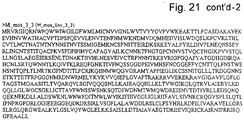
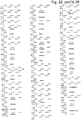
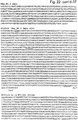
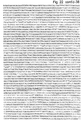
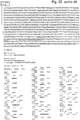
- the present invention relates to an isolated and purified nucleic acid comprising a nucleotide sequence encoding a mosaic clade M human immunodeficiency virus type 1 (HIV-1) Env polypeptide comprising an amino acid sequence selected from the group consisting of M_mos_Env_3_1 SEQ ID NO:177, M_mos_Env_3_2 SEQ ID NO:178 and M_mos_Env_3_3 SEQ ID NO:179.
- HIV-1 human immunodeficiency virus type 1
- the invention also relates to a composition comprising an isolated and purified nucleic acid according to the invention and a carrier.
- the invention further relates to a trivalent composition
- a trivalent composition comprising nucleotide sequences encoding M_mos_Env_3_1 SEQ ID NO: 177, M_mos_Env_3_2 SEQ ID NO:178 and M_mos_Env_3_3 SEQ ID NO:179 and a carrier.
- the invention also provides a nucleic acid of the invention wherein the nucleic acid is operably linked to a promoter and is present in a vector.
- The also relates to a recombinant polypeptide comprising the polypeptide sequence of M_mos_Env_3_1 SEQ ID NO:177, M_mos_Env_3_2 SEQ ID NO:178 and M_mos_Env_3_3 SEQ ID NO:179
- the present disclosure results from the realization that a polyvalent set of antigens comprising synthetic viral proteins, the sequences of which provide maximum coverage of non-rare short stretches of circulating viral sequences, constitutes a good vaccine candidate.
- the disclosure provides a "genetic algorithm" strategy to create such sets of polyvalent antigens as mosaic blends of fragments of an arbitrary set of natural protein sequences provided as inputs.
- the proteins Gag and the inner core (but not the whole) of Nef are ideal candidates for such antigens.
- the disclosure further provides optimized sets for these proteins.
- the genetic algorithm strategy of the disclosure uses unaligned protein sequences from the general population as an input data set, and thus has the virtue of being "alignment independent”. It creates artificial mosaic proteins that resemble proteins found in nature - the success of the consensus antigens in small animals models suggest this works well.
- 9 Mers are the focus of the studies described herein, however, different length peptides can be selected depending on the intended target. In accordance with the present approach, 9 mers (for example) that do not exist in nature or that are very rare can be excluded - this is an improvement relative to consensus sequences since the latter can contain some 9 mers (for example) that have not been found in nature, and relative to natural strains that almost invariably contain some 9 mers (for example) that are unique to that strain.
- the definition of fitness used for the genetic algorithm is that the most "fit" polyvalent cocktail is the combination of mosaic strains that gives the best coverage (highest fraction of perfect matches) of all of the 9 mers in the population and is subject to the constraint that no 9 mer is absent or rare in the population.
- the mosaics protein sets of the disclosure can be optimized with respect to different input data sets - this allows use of current data to assess virtues of a subtype or region specific vaccines from a T cell perspective.
- options that have been compared include:
- the approach described herein can be used to design peptide reagents to test HIV immune responses, and be applied to other variable pathogens as well.
- the present approach can be adapted to the highly variable virus Hepatitis C.
- proteins/polypeptides/peptides can be formulated into compositions with a pharmaceutically acceptable carrier and/or adjuvant using techniques well known in the art. Suitable routes of administration include systemic (e.g. intramuscular or subcutaneous), oral, intravaginal, intrarectal and intranasal.
- the immunogens of the disclosure can be chemically synthesized and purified using methods which are well known to the ordinarily skilled artisan.
- the immunogens can also be synthesized by well-known recombinant DNA techniques.
- Nucleic acids encoding the immunogens of the disclosure can be used as components of, for example, a DNA vaccine wherein the encoding sequence is administered as naked DNA or, for example, a minigene encoding the immunogen can be present in a viral vector.
- the encoding sequences can be expressed, for example, in mycobacterium, in a recombinant chimeric adenovirus, or in a recombinant attenuated vesicular stomatitis virus.
- the encoding sequence can also be present, for example, in a replicating or non-replicating adenoviral vector, an adeno-associated virus vector, an attenuated mycobacterium tuberculosis vector, a Bacillus Calmette Guerin (BCG) vector, a vaccinia or Modified Vaccinia Ankara (MVA) vector, another pox virus vector, recombinant polio and other enteric virus vector, Salmonella species bacterial vector, Shigella species bacterial vector, decielean Equine Encephalitis Virus (VEE) vector, a Semliki Forest Virus vector, or a Tobacco Mosaic Virus vector.
- a replicating or non-replicating adenoviral vector an adeno-associated virus vector, an attenuated mycobacterium tuberculosis vector, a Bacillus Calmette Guerin (BCG) vector, a vaccinia or Modified Vaccinia Ankara (MVA)
- the encoding sequence can also be expressed as a DNA plasmid with, for example, an active promoter such as a CMV promoter.
- an active promoter such as a CMV promoter.
- Other live vectors can also be used to express the sequences of the disclosure.
- Expression of the immunogen of the disclosure can be induced in a patient's own cells, by introduction into those cells of nucleic acids that encode the immunogen, preferably using codons and promoters that optimize expression in human cells. Examples of methods of making and using DNA vaccines are disclosed in U.S. Pat. Nos. 5,580,859 , 5,589,466 , and 5,703,055 .
- adjuvants can be included in the compositions of the disclosure (or otherwise administered to enhance the immunogenic effect).
- suitable adjuvants include TRL-9 agonists, TRL-4 agonists, and TRL-7, 8 and 9 agonist combinations (as well as alum).
- Adjuvants can take the form of oil and water emulsions. Squalene adjuvants can also be used.
- composition of the disclosure comprises an immunologically effective amount of the immunogen of this disclosure, or nucleic acid sequence encoding same, in a pharmaceutically acceptable delivery system.
- the compositions can be used for prevention and/or treatment of virus infection (e.g. HIV infection).
- virus infection e.g. HIV infection
- the compositions of the disclosure can be formulated using adjuvants, emulsifiers, pharmaceutically-acceptable carriers or other ingredients routinely provided in vaccine compositions.
- Optimum formulations can be readily designed by one of ordinary skill in the art and can include formulations for immediate release and/or for sustained release, and for induction of systemic immunity and/or induction of localized mucosal immunity (e.g, the formulation can be designed for intranasal, intravaginal or intrarectal administration).
- compositions can be administered by any convenient route including subcutaneous, intranasal, oral, intramuscular, or other parenteral or enteral route.
- the immunogens can be administered as a single dose or multiple doses.
- Optimum immunization schedules can be readily determined by the ordinarily skilled artisan and can vary with the patient, the composition and the effect sought.
- the disclosure contemplates the direct use of both the immunogen of the disclosure and/or nucleic acids encoding same and/or the immunogen expressed as as indicated above.
- a minigene encoding the immunogen can be used as a prime and/or boost.
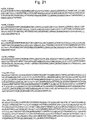
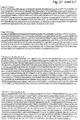
- the disclosure includes any and all amino acid sequences disclosed herein, as well as nucleic acid sequences encoding same (and nucleic acids complementary to such encoding sequences).
- HIV-1 Main (M) group Specifically disclosed herein are vaccine antigen sets optimized for single B or C subtypes, targeting regional epidemics, as well as for all HIV-1 variants in global circulation [the HIV-1 Main (M) group].
- M the HIV-1 Main
- the focus is on designing polyvalent vaccines specifically for T -cell responses. HIV-1 specific T-cells are likely to be crucial to an HIV-1-specific vaccine response: CTL responses are correlated with slow disease progression in humans ( Oxenius et al, J. Infect. Dis. 189:1199-1208 (2004 )), and the importance of CTL responses in nonhuman primate vaccination models is well-established.
- Vaccine elicited cellular immune responses help control pathogenic SIV or SHIV, and reduce the likelihood of disease after challenge with pathogenic virus ( Barouch et al, Science 290:486-492 (2000 )).
- Temporary depletion of CD8+ T cells results in increased viremia in SIV-infected rhesus macaques ( Schmitz et al, Science 283:857-860 (1999 )).
- escape mutations has been associated with disease progression, indicating that CTL responses help constrain viral replication in vivo ( Barouch et al, J. Virol. 77:7367-7375 (2003 )), and so vaccine-stimulated memory responses that could block potential escape routes may be of value.
- Env highly variable Envelope
- vaccine antigens will also need to be tailored to elicit these antibody responses
- T-cell vaccine components can target more conserved proteins to trigger responses that are more likely to cross-react. But even the most conserved HIV-1 proteins are diverse enough that variation will be an issue.
- Artificial central-sequence vaccine approaches, consensus and ancestral sequences Gaschen et al, Science 296:2354-2360 (2002 ), Gao et al, J. Virol. 79:1154-1163 (2005 ), Doria-Rose et al, J. Virol.
- a single amino acid substitution can mediate T-cell escape, and as one or more amino acids in many T-cell epitopes differ between HIV-1 strains, the potential effectiveness of responses to any one vaccine antigen is limited. Whether a particular mutation will diminish T-cell cross-reactivity is epitope- and T-cell-specific, although some changes can broadly affect between-clade cross-reactivity ( Norris et al, AIDS Res. Hum. Retroviruses 20:315-325 (2004 )). Including more variants in a polyvalent vaccine could enable responses to a broader range of circulating variants. It could also prime the immune system against common escape variants ( Jones et al, J. Exp. Med.
- HIV-1 sequence data The reference alignments from the 2005 HIV sequence database (http://hiv.lanl.gov), which contain one sequence per person, were used, supplemented by additional recently available C subtype Gag and Nef sequences from Durban, South Africa (GenBank accession numbers AY856956-AY857186) ( Kiepiela et al, Nature 432:769-75 (2004 )). This set contained 551 Gag and 1,131 Nef M group sequences from throughout the globe; recombinant sequences were included as well as pure subtype sequences for exploring M group diversity.
- GAs are computational analogues of biological processes (evolution, populations, selection, recombination) used to find solutions to problems that are difficult to solve analytically ( Holland, Adaptation in Natural and Artificial Systems: An Introductory Analysis with Applicatins to Biology, Control, and Artificial Intelligence, (M.I.T. Press, Cambridge, MA (1992 ))). Solutions for a given input are "evolved” though a process of random modification and selection according to a “fitness" (optimality) criterion. GAs come in many flavors; a "steady-state co-evolutionary multi-population" GA was implemented.
- Step-state refers to generating one new candidate solution at a time, rather than a whole new population at once; and "co-evolutionary” refers to simultaneously evolving several distinct populations that work together to form a complete solution.
- the input is an unaligned set of natural sequences; a candidate solution is a set of k pseudo-natural "mosaic" sequences, each of which is formed by concatenating sections of natural sequences.
- the fitness criterion is population coverage , defined as the proportion of all 9-amino-acid sequence fragments (potential epitopes) in the input sequences that are found in the cocktail.
- Mosaic sequence lengths fall within the distribution of natural sequence lengths as a consequence of mosaic construction: recombination is only allowed at identical regions, reinforced by an explicit software prohibition against excessive lengths to prevent reduplication of repeat regions. (Such "in frame” insertion of reduplicated epitopes could provide another way of increasing coverage without generating unnatural 9-mers, but their inclusion would create “unnatural” proteins.)
- the cocktail contains one randomly chosen "winner” from each population.
- the fitness score for any individual sequence in a population is the coverage value for the cocktail consisting of that sequence plus the current winners from the other populations. The individual fitness of any sequence in a population therefore depends dynamically upon the best sequences found in the other populations.
- optimization proceeds one population at a time. For each iteration, two "parent" sequences are chosen. The first parent is chosen using "2-tournament” selection: two sequences are picked at random from the current population, scored, and the better one is chosen. This selects parents with a probability inversely proportional to their fitness rank within the population, without the need to actually compute the fitness of all individuals. The second parent is chosen in the same way (50% of the time), or is selected at random from the set of natural sequences. 2-point homologous crossover between the parents is then used to generate a "child” sequence. Any child containing a 9-mer that was very rare in the natural population (found less than 3 times) is rejected immediately.
- the new sequence is scored, and its fitness is compared with the fitnesses of four randomly chosen sequences from the same population. If any of the four randomly chosen sequences has a score lower than that of the new sequence, it is replaced in the population by the new sequence. Whenever a sequence is encountered that yields a better score than the current population "winner”, that sequence becomes the winner for the current population and so is subsequently used in the cocktail to evaluate sequences in other populations. A few such optimization cycles (typically 10) are applied to each population in turn, and this process continues cycling through the populations until evolution stalls ( i.e ., no improvement has been made for a defined number of generations).
- the GA also enables optional inclusion of one or more fixed sequences of interest (for example, a consensus) in the cocktail and will evolve the other elements of the cocktail in order to optimally complement that fixed strain. As these solutions were suboptimal, they are not included here.
- An additional program selects from the input file the k best natural strains that in combination provide the best population coverage.
- Vaccine design optimization strategies Figure 1 shows an idealized level of 9-mer coverage. In reality, high-frequency 9-mers often conflict: because of local co-variation, the optimal amino acid for one 9-mer may differ from that for an overlapping 9-mer. To design mosaic protein sets that optimize population coverage, the relative benefits of each amino acid must be evaluated in combination with nearby variants. For example, Alanine (Ala) and Glutamate (Glu) might each frequently occur in adjacent positions, but if the Ala-Glu combination is never observed in nature, it should be excluded from the vaccine.
- Several optimization strategies were investigated: a greedy algorithm, a semi-automated compatible-9mer assembly strategy, an alignment-based genetic algorithm (GA), and an alignment-independent GA.
- the alignment-independent GA generated mosaics with the best population coverage.
- This GA generates a user-specified number of mosaic sequences from a set of unaligned protein sequences, explicitly excluding rare or unnatural epitope-length fragments (potentially introduced at recombination breakpoints) that could induce non-protective vaccine-antigen-specific responses.
- These candidate vaccine sequences resemble natural proteins, but are assembled from frequency-weighted fragments of database sequences recombined at homologous breakpoints ( Fig. 2 ); they approach maximal coverage of 9-mers for the input population.
- the initial design focused on protein regions meeting specific criteria: i) relatively low variability, ii) high levels of recognition in natural infection, iii) a high density of known epitopes and iv) either early responses upon infection or CD8+ T-cell responses associated with good outcomes in infected patients.
- an assessment was made of the level of 9-mer coverage achieved by mosaics for different HIV proteins ( Fig. 3 ). For each protein, a set of four mosaics was generated using either the M group or the B- and C-subtypes alone; coverage was scored on the C subtype.
- Nef is the HIV protein most frequently recognized by T-cells ( Frahm et al, J. Virol. 78:2187-200 (2004 )) and the target for the earliest response in natural infection ( Lichterfeld et al, Aids 18:1383-92 (2004 )). While overall it is variable ( Fig. 3 ), its central region is as conserved as Gag ( Fig. 1 ). It is not yet clear what optimum proteins for inclusion in a vaccine might be, and mosaics could be designed to maximize the potential coverage of even the most variable proteins ( Fig. 3 ), but the prospects for global coverage are better for conserved proteins.
- Nef Newcastle et al, J. Virol. 78:2187-200 (2004 )
- the conserved portion of Nef that were included contains the most highly recognized peptides in HIV-1 ( Frahm et al, J. Virol. 78:2187-200 (2004 )), but as a protein fragment, would not allow Nef's immune inhibitory functions ( e.g . HLA class I down-regulation ( Blagoveshchenskaya, Cell 111:853-66 (2002 ))).
- Gag and Nef are densely packed with overlapping well-characterized CD8+ and CD4+ T-cell epitopes, presented by many different HLA molecules (http://www.hiv.lanl.gov//content/immunology/maps/maps.html), and Gag-specific CD8+ ( Masemola et al, J. Virol. 78:3233-43 (2004 )) and CD4+ ( Oxenius et al, J. Infect. Dis. 189:1199-208 (2004 )) T-cell responses have been associated with low viral set points in infected individuals ( Masemola et al, J. Virol. 78:3233-43 (2004 )).
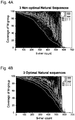
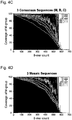
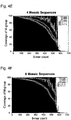
- Figure 5 summarizes total coverage for the different vaccine design strategies, from single proteins through combinations of mosaic proteins, and compares within-subtype optimization to M group optimization.
- the performance of a single mosaic is comparable to the best single natural strain or a consensus sequence.
- the optimized natural-sequence cocktail does better than the consensus cocktail: the consensus sequences are more similar to each other than are natural strains, and are therefore somewhat redundant. Including even just two mosaic variants, however, markedly increases coverage, and four and six mosaic proteins give progressively better coverage than polyvalent cocktails of natural or consensus strains.
- Within-subtype optimized mosaics perform best - with four mosaic antigens 80-85% of the 9-mers are perfectly matched - but between-subtype coverage of these sets falls off dramatically, to 50-60%.
- mosaic proteins optimized using the full M group give coverage of approximately 75-80% for individual subtypes, comparable to the coverage of the M group as a whole ( Figs. 5 and 6 ). If imperfect 8/9 matches are allowed, both M group optimized and within-subtype optimized mosaics approach 90% coverage.
- the mosaics exclude unique or very rare 9-mers, while natural strains generally contain 9-mers present in no other sequence.
- natural M group Gag sequences had a median of 35 (range 0-148) unique 9-mers per sequence.
- Retention of HLA-anchor motifs was also explored, and anchor motif frequencies were found to be comparable between four mosaics and three natural strains.
- Natural antigens did exhibit an increase in number of motifs per antigen, possibly due to inclusion of strain-specific motifs ( Fig. 8 ).
- variable proteins like Env have limited coverage of 9-mers, although mosaics improve coverage relative to natural strains.
- three M group natural proteins one each selected from the A, B, and C clades, and currently under study for vaccine design ( Seaman et al, J. Virol. 79:2956-63 (2005 )) perfectly match only 39% of the 9-mers in M group proteins, and 65% have at least 8/9 matches.
- three M group Env mosaics match 47% of 9-mers perfectly, and 70% have at least an 8/9 match.
- the code written to design polyvalent mosaic antigens is available, and could readily be applied to any input set of variable proteins, optimized for any desired number of antigens.
- the code also allows selection of optimal combinations of k natural strains, enabling rational selection of natural antigens for polyvalent vaccines. Included in Table 1 are the best natural strains for Gag and Nef population coverage of current database alignments. TABLE 1 Natural sequence cocktails having the best available 9-mer coverage for different genes, subtype sets, and numbers of sequences Gag, B-subtype, 1 natural sequence B.US.86.AD87_ AF004394 Gag, B-subtype, 3 natural sequences B.US.86.AD87_ _AF004394 B.U S.97.Ac_06_AY247251 B.US.88.WR27_AF2B6365 Gag, B-subtype, 4 natural sequences B.US.86.AD87_ AF004394 B.US.97.Ac_ 06_AY247251 B.US._R3_PDC1_AY206652 B.US.88.W R27_AF286365 Gag, B-subtype, 6 natural sequences B.CN._.C
- the above-described study focuses on the design of T-cell vaccine components to counter HIV diversity at the moment of infection, and to block viral escap e routes and thereby minimize disease progression in infected individuals.
- the polyvalent mosaic protein strategy developed here for HIV-1 vaccine design could be applied to any variable protein, to other pathogens, and to other immunological problems. For example, incorporating a minimal number of variant peptides into T-cell response assays could markedly increase sensitivity without excessive cost: a set of k mosaic proteins provides the maximum coverage possible for k antigens.
- the mosaic protein design improves on consensus or natural immunogen design by co-optimizing reagents for a polyclonal vaccine, excluding rare CD8+ T-cell epitopes, and incorporating variants that, by virtue of their frequency at the population level, are likely to be involved in escape pathways.
- the mosaic antigens maximize the number of epitope-length variants that are present in a small, practical number of vaccine antigens.
- T-cell mosaic antigens would be best employed in the context of a strong polyvalent immune response; improvements in other areas of vaccine design and a combination of the best strategies, incorporating mosaic antigens to cover diversity, may ultimately enable an effective cross-reactive vaccine-induced immune response against HIV-1.
- Group M consensus envelope and trivalent mosaic envelopes (both of which were designed by in silico modeling and are predicted to be superior than wildtype envelopes) will be compared to a monovalent wild-type envelope and trivalent wild-type transmitted envelopes in a 4 arm immunogenicity clinical trial.
- the mosaic antigens have been designed based on the current Los Alamos database, a set that includes more full length envelopes sampled globally from more than 2000 individuals with a large set of sequences of transmitted viruses primarily from the CHAVI database.
- the selection of the natural strains to be used for the comparison is based on the following criteria:
- For the monovalent natural antigen use will be made of the single transmitted virus that is the best choice in terms of providing coverage of potential T cell epitopes in the global database.
- the database is biased towards B clade envelopes, so the single best acute Env is a B clade representative.
- One A, one B and one C subtype transmitted virus sequence is proposed for inclusion in the trivalent set, to compensate for the biases in sampling inherent in the global sequence collection, and to better reflect the circulating pandemic strains.
- the A and C natural sequences are those that optimally complement the best B clade sequence to provide potential epitope coverage of the database.
- Vaccine antigens have been selected from among available SGA sequenced acute samples, each representing a transmitted virus. Therefore, this study, although primarily a T cell study, will also provide important additional data regarding the ability of transmitted envelope vaccines to elicit neutralizing antibodies.
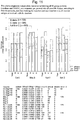
- Mosaics and naturals are optimized for the first red bar on the left for each vaccine (the total).
- the “total” represents all sequences, database + CHAVI.
- the "B” is the subset that are B clade, "C” the subset that are C clade, and "N” the remaining M group sequences that are not B or C (all other clades and recombinants).
- B is most common, the single best natural is of course a B, and B thus has the best coverage for Nat.1.
- Con S as expected, provides much more even coverage for all clades, and provides better coverage for all the groups except B clade.
- the mosaics will minimize rare 9-mers but in Env they cannot be excluded or it is not possible to span certain really variable regions to make intact proteins. For all other HIV proteins tested, it was possible to exclude 9-mers that were found at 3 times or less. Still, the 3 best natural Envs contain more than twice the number of rare 9-mer variants relative to the 3 Env mosaics.
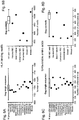
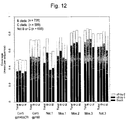
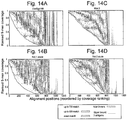
- Figure 12 includes additional summaries of coverage; ConS gp160 contains quite a few conserved 9-mers that are missed in gp140DCFI, as one would expect. ConS provides slightly less coverage than a single mosaic, but it is already known that ConS works very well in macaques so serves as a good positive control. 1, 2, and 3 mosaics give increasingly better coverage, and Nat.3 is not as good as Mos.3.
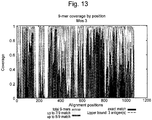
- Figure 13 is alignment dependent, and based on the database alignment (the tow plots above this are alignment independent). Each position represents the 9-mer it initiates as one moves across the protein.
- the upper bound (black dashed lined) is the sum of the frequencies of the three most common 9-mers starting from each position; it represents the maximal limit that could be achieved for coverage with 3 proteins, and this is not quite achievable in practice because there can be conflicts in a given position for overlapping 9-mers, although the 3 mosaic combination very nearly achieves it.
- the reason the "total 9-mers" shown in grey varies is because of insertions and deletions in the alignment.
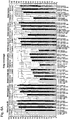
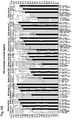
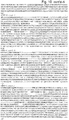
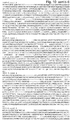
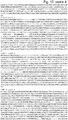
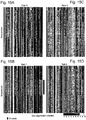
- the plots shown in Fig. 15 map every amino acid in every sequence in the full database alignment.
- a row of pixels is a sequence, a column is an alignment position.
- White patches are insertions to maintain the alignment. All 9-mers that encompass an amino acid are considered. If every 9-mer that spans the amino acid has a perfect match in the vaccine cocktail, the pixel is yellow, so yellow is good. If one is off, light orange, two off, darker orange... through no spanning 9-mer matches represented by black. Note: lots of yellow for 3 mosaics, relative to the other vaccines. There is a big patch of the most yellow for the B clade in Nat.1 as the single best natural is a B clade. Note, all those dark bits: in these regions the sequences in the database are different than any 9-mer in the vaccine, so cross-reactivity would be several limited.
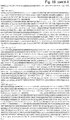
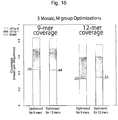
- 9-mers were selected because that is the most common size of an optimal CD8+ T cell epitope. They range from 8-12, and optimal CD4+ T cell epitopes can be even be larger or smaller. As it turns out, coverage of 9-mers is best when optimized for 9-mer coverage, but if optimization on a different size yields very little decrease in coverage for 9-mers. The same goes for all lengths, 8-12, the peak coverage is for the size selected but the coverage is excellent for other lengths, as the solutions are related. 9-versus 12-mers are shown in Fig. 16 , 12 being the most extreme value one might reasonably consider. The coverage is nearly identical for 9-mers optimized for 9 or 12, or for 12-mers optimized for 9 or 12; it is 1-2% higher for the length selected for optimization.
- the exploration of coverage using the full database as a source for a natural cocktail is dominated by B clade infections, closely followed by C clade.
- the single best optimal natural selected by the vaccine design program to cover 9-mers in the (database + CHAVI) data set is a B. If one picks from among any sequence in the database, YU-2 comes up as the best single sequence. To get better representation of other clades, the best B was fixed, and then the next best sequence was added to complement YU-2, which is (logically) a C clade sequence, DU467. Those two were then fixed, and the third complement of the antigen was selected.
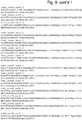
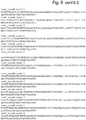
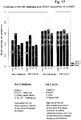
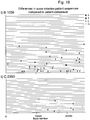
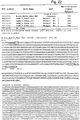
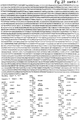
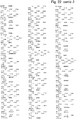
- Figs. 17 and 18 illustrate the minimal loss of coverage in selecting from acute SGA sequences, and a highlighter plot of each of the 3 patients env sequences, that shows that the consensus of each patient is equivalent to the most common strains, and thus an excellent estimate of the actual transmitted virus.
- the DNAs to be used will be in the form of the full gp160 Env.
- the gp160 would be in the PCMVR plasmid (Gary Nabel) and will be the identical plasmid used in all VRC DNA immunization trials. Dose is anticipated to be 4 mg.
- the following DNA constructs will be used:
- NYVAC (vP866) is a recombinant poxvirus vector which has an 18 gene deletion versus wild-type virus.
- the NYVAC vector will be licensed from Sanofi-Pasteur and manufactured by a third party contractor and will be propagated on a CEF cell substrate.
- the Env construct expressed in NYVAC will be gp140C (entire Env with transmembrane and cytoplasmic domain deleted and gp41/gp120 cleavage site mutated) or will be a full gp160.
- the choice of construct design will depend on the ability to make the NYVAC with gp160 forms vs gp140.
- the dose of NYVAC is anticipated to be ⁇ 1x10 ⁇ 7 TCID50.
- the following NYVAC constructs will be used:
- Vaccinations will be given by intramuscular injection.
- rVV recombinant vaccinia
- Mosaic gag and nef genes, group M consensus gag and nef genes were generated by converting amino acid sequences of said Gag and Nef, group M consensus Gag and Nef CON-S to nucleotide sequences using a strategy for optimal gene expression.
- mosaic gag and nef genes, group M consensus gag and nef genes were subcloned into WLV0001-AM DNA vaccine vector. Endotoxin-free plasmid DNA preparation were produced by Puresyn, Inc. (Malvern, PA) for the immunization of rhesus monkeys.
- group M consensus gag and nef genes were generated. The methods used were as previously described ( Liao et al, Virology 353:268-282 (2006 ); Earl, BioTechniques 23:1094-1097 (1997 )). Experimental groups and vaccination schedule.
- rhesus monkeys Three groups of rhesus monkeys were immunized with either 10mg of the empty DNA vector plasmid (group 1, 6 monkeys), or 5mg each of group M gag and nef plasmid DNA (group 2, 12 monkeys) or 1.25mg each of 4 mosaic gag and 4 nef plasmid DNA (group 3, 12 monkeys) intramuscularly at Day O and Day 30.
- the monkeys will be boosted with the corresponding rVV expressing the initial immunizing immunogen (10 ⁇ 9 pfu/monkey) 5 month post-immunization with the 2 nd DNA immunization.
- Myristoylation of Gag and Nef has a potential down regulation effect on immune responses and thus the myristoylation of Gag and Nef has been mutated in the sequences used in this study.
Landscapes
- Health & Medical Sciences (AREA)
- Life Sciences & Earth Sciences (AREA)
- Chemical & Material Sciences (AREA)
- Virology (AREA)
- General Health & Medical Sciences (AREA)
- Medicinal Chemistry (AREA)
- Organic Chemistry (AREA)
- Immunology (AREA)
- Public Health (AREA)
- Pharmacology & Pharmacy (AREA)
- Veterinary Medicine (AREA)
- Animal Behavior & Ethology (AREA)
- Microbiology (AREA)
- Genetics & Genomics (AREA)
- Mycology (AREA)
- Epidemiology (AREA)
- Bioinformatics & Cheminformatics (AREA)
- Engineering & Computer Science (AREA)
- Communicable Diseases (AREA)
- Nuclear Medicine, Radiotherapy & Molecular Imaging (AREA)
- General Chemical & Material Sciences (AREA)
- Chemical Kinetics & Catalysis (AREA)
- Biochemistry (AREA)
- Molecular Biology (AREA)
- Zoology (AREA)
- Wood Science & Technology (AREA)
- Hematology (AREA)
- Gastroenterology & Hepatology (AREA)
- Biophysics (AREA)
- Proteomics, Peptides & Aminoacids (AREA)
- Oncology (AREA)
- General Engineering & Computer Science (AREA)
- Biotechnology (AREA)
- Biomedical Technology (AREA)
- AIDS & HIV (AREA)
- Tropical Medicine & Parasitology (AREA)
- Medicines Containing Antibodies Or Antigens For Use As Internal Diagnostic Agents (AREA)
- Peptides Or Proteins (AREA)
- Medicines That Contain Protein Lipid Enzymes And Other Medicines (AREA)
- Pharmaceuticals Containing Other Organic And Inorganic Compounds (AREA)
Applications Claiming Priority (3)
| Application Number | Priority Date | Filing Date | Title |
|---|---|---|---|
| US12/192,015 US7951377B2 (en) | 2005-08-23 | 2008-08-14 | Mosaic clade M human immunodeficiency virus type 1 (HIV-1) envelope immunogens |
| EP09806982A EP2318430A4 (en) | 2008-08-14 | 2009-08-14 | POLYVALENT VACCINE |
| PCT/US2009/004664 WO2010019262A2 (en) | 2008-08-14 | 2009-08-14 | Polyvalent vaccine |
Related Parent Applications (1)
| Application Number | Title | Priority Date | Filing Date |
|---|---|---|---|
| EP09806982A Division EP2318430A4 (en) | 2008-08-14 | 2009-08-14 | POLYVALENT VACCINE |
Publications (2)
| Publication Number | Publication Date |
|---|---|
| EP3178842A1 EP3178842A1 (en) | 2017-06-14 |
| EP3178842B1 true EP3178842B1 (en) | 2020-10-07 |
Family
ID=41669535
Family Applications (2)
| Application Number | Title | Priority Date | Filing Date |
|---|---|---|---|
| EP16184203.4A Not-in-force EP3178842B1 (en) | 2008-08-14 | 2009-08-14 | Polyvalent vaccine |
| EP09806982A Withdrawn EP2318430A4 (en) | 2008-08-14 | 2009-08-14 | POLYVALENT VACCINE |
Family Applications After (1)
| Application Number | Title | Priority Date | Filing Date |
|---|---|---|---|
| EP09806982A Withdrawn EP2318430A4 (en) | 2008-08-14 | 2009-08-14 | POLYVALENT VACCINE |
Country Status (9)
| Country | Link |
|---|---|
| US (6) | US7951377B2 (enExample) |
| EP (2) | EP3178842B1 (enExample) |
| JP (2) | JP2011530309A (enExample) |
| CN (1) | CN102177175A (enExample) |
| AU (1) | AU2009282442B2 (enExample) |
| BR (1) | BRPI0917205A2 (enExample) |
| CA (1) | CA2733898C (enExample) |
| IL (1) | IL211184B (enExample) |
| WO (1) | WO2010019262A2 (enExample) |
Families Citing this family (21)
| Publication number | Priority date | Publication date | Assignee | Title |
|---|---|---|---|---|
| AU2006283101B2 (en) | 2005-08-23 | 2013-03-07 | Beth Israel Deaconess Medical Center | Polyvalent vaccine |
| US7951377B2 (en) | 2005-08-23 | 2011-05-31 | Los Alamos National Security, Llc | Mosaic clade M human immunodeficiency virus type 1 (HIV-1) envelope immunogens |
| PT2358757T (pt) | 2008-11-18 | 2018-12-04 | Beth Israel Deaconess Medical Ct Inc | Vacinas antivirais com imunogenicidade celular melhorada |
| EP2739300B1 (en) | 2011-07-05 | 2019-06-19 | Duke University | N-terminal deleted gp120 immunogens |
| CA2850745C (en) * | 2011-10-03 | 2022-12-13 | Duke University | Vaccine |
| CN104955450A (zh) | 2012-12-13 | 2015-09-30 | 达拉斯贝勒研究院 | 用于治疗葡萄糖转运体1缺乏症的三庚酸甘油酯 |
| WO2015048785A2 (en) * | 2013-09-30 | 2015-04-02 | Los Alamos National Security, Llc | Mosaic conserved region hiv immunogenic polypeptides |
| JP6769869B2 (ja) * | 2013-10-16 | 2020-10-14 | ニユー・イングランド・バイオレイブス・インコーポレイテツド | 強化された特性を有する逆転写酵素 |
| EP3119890A4 (en) | 2014-03-19 | 2017-12-27 | Duke University | Swarm immunization with envelopes from ch505 |
| JP2017512499A (ja) * | 2014-03-25 | 2017-05-25 | デューク ユニバーシティ | モザイクhiv−1配列およびその使用 |
| EP3126502A4 (en) | 2014-03-31 | 2018-01-17 | Duke University | Compositions comprising ch848 envelopes and uses thereof |
| US10232034B2 (en) | 2014-09-28 | 2019-03-19 | Duke University | Compositions comprising CH505 envelopes, and trimers |
| WO2017151801A1 (en) | 2016-03-01 | 2017-09-08 | Duke University | Compositions comprising hiv envelopes to induce ch235 lineage antibodies |
| US11318197B2 (en) | 2016-03-03 | 2022-05-03 | Duke University | Compositions and methods for inducing HIV-1 antibodies |
| WO2017152146A2 (en) | 2016-03-03 | 2017-09-08 | Duke University | Compositions and methods for inducing hiv-1 antibodies |
| WO2018067580A1 (en) | 2016-10-03 | 2018-04-12 | Duke University | Methods to identify immunogens by targeting improbable mutations |
| WO2018075559A1 (en) | 2016-10-17 | 2018-04-26 | Beth Israel Deaconess Medical Center, Inc. | Signature-based human immunodeficiency virus (hiv) envelope (env) trimer vaccines and methods of using the same |
| EP3630174A4 (en) | 2017-05-25 | 2021-07-07 | Duke University | MODIFIED COMPOSITIONS CONTAINING HIV ENVELOPE PROTEINS |
| US12138304B2 (en) | 2018-10-01 | 2024-11-12 | Duke University | HIV-1 envelope stabilizing mutations |
| EP3999107A1 (en) | 2019-07-16 | 2022-05-25 | Gilead Sciences, Inc. | Hiv vaccines and methods of making and using |
| US12053517B2 (en) | 2021-01-14 | 2024-08-06 | Gilead Sciences, Inc. | HIV vaccines and methods of using |
Family Cites Families (21)
| Publication number | Priority date | Publication date | Assignee | Title |
|---|---|---|---|---|
| US5703055A (en) | 1989-03-21 | 1997-12-30 | Wisconsin Alumni Research Foundation | Generation of antibodies through lipid mediated DNA delivery |
| US6139843A (en) * | 1991-04-02 | 2000-10-31 | Albert Einstein College Of Medicine Of Yeshiva University | Peptide compositions for the treatment of HIV |
| US6541011B2 (en) * | 1998-02-11 | 2003-04-01 | Maxygen, Inc. | Antigen library immunization |
| US6503753B1 (en) * | 1998-02-13 | 2003-01-07 | Adan Rios | Method for the development of an HIV vaccine |
| US20030180314A1 (en) * | 1998-07-10 | 2003-09-25 | Degroot Anne | Immunogenic, cross-clade, HIV peptides |
| US7935805B1 (en) * | 1998-12-31 | 2011-05-03 | Novartis Vaccines & Diagnostics, Inc | Polynucleotides encoding antigenic HIV Type C polypeptides, polypeptides and uses thereof |
| US6710173B1 (en) * | 1999-06-25 | 2004-03-23 | Progenics Pharmaceuticals, Inc. | Stabilized viral envelope proteins and uses thereof |
| US7655774B2 (en) * | 2000-02-18 | 2010-02-02 | University Of Washington | Ancestral and COT viral sequences, proteins and immunogenic compositions |
| US20040115621A1 (en) * | 2000-02-18 | 2004-06-17 | Allen Rodrigo | Ancestral viruses and vaccines |
| US6733993B2 (en) * | 2000-09-15 | 2004-05-11 | Merck & Co., Inc. | Enhanced first generation adenovirus vaccines expressing codon optimized HIV1-gag, pol, nef and modifications |
| US7195768B2 (en) | 2001-11-07 | 2007-03-27 | Duke University | Polyvalent immunogen |
| WO2003039470A2 (en) * | 2001-11-07 | 2003-05-15 | Duke University | Polyvalent immunogen of hiv |
| WO2005012502A2 (en) * | 2003-03-28 | 2005-02-10 | Idm Pharma, Inc. | Methods of identifying optimal variants of peptide epitopes |
| ATE520708T1 (de) * | 2003-03-28 | 2011-09-15 | Us Gov Health & Human Serv | Immunogenetische hiv-1 multi-klade, multivalente konstrukte und deren verwendung |
| EP1675613B1 (en) * | 2003-09-15 | 2012-05-23 | THE GOVERNMENT OF THE UNITED STATES OF AMERICA, as represented by THE SECRETARY, DEPARTMENT OF HEALTH AND HUMAN SERVICES | Hiv vaccines based on env of multiple clades of hiv |
| JP4773352B2 (ja) * | 2003-09-17 | 2011-09-14 | デューク ユニバーシティ | コンセンサス/先祖免疫原 |
| WO2005035555A1 (en) * | 2003-10-10 | 2005-04-21 | The Government Of The United States Of America, As Represented By The Secretary, Department Of Health And Human Services | Hiv/siv env chimeras that promote trimerization and maintain targets of neutralizing antibodies |
| US7951377B2 (en) | 2005-08-23 | 2011-05-31 | Los Alamos National Security, Llc | Mosaic clade M human immunodeficiency virus type 1 (HIV-1) envelope immunogens |
| AU2006283101B2 (en) | 2005-08-23 | 2013-03-07 | Beth Israel Deaconess Medical Center | Polyvalent vaccine |
| EP1954309A2 (en) | 2005-10-17 | 2008-08-13 | Novartis AG | Multiclade hiv vaccines |
| US20130273103A1 (en) | 2010-09-28 | 2013-10-17 | Los Alamos National Security, Llc | Polyvalent immunogen |
-
2008
- 2008-08-14 US US12/192,015 patent/US7951377B2/en not_active Expired - Fee Related
-
2009
- 2009-08-14 EP EP16184203.4A patent/EP3178842B1/en not_active Not-in-force
- 2009-08-14 CN CN2009801404211A patent/CN102177175A/zh active Pending
- 2009-08-14 JP JP2011523001A patent/JP2011530309A/ja active Pending
- 2009-08-14 CA CA2733898A patent/CA2733898C/en not_active Expired - Fee Related
- 2009-08-14 AU AU2009282442A patent/AU2009282442B2/en not_active Ceased
- 2009-08-14 BR BRPI0917205A patent/BRPI0917205A2/pt not_active IP Right Cessation
- 2009-08-14 US US12/737,761 patent/US9044445B2/en not_active Expired - Fee Related
- 2009-08-14 EP EP09806982A patent/EP2318430A4/en not_active Withdrawn
- 2009-08-14 WO PCT/US2009/004664 patent/WO2010019262A2/en not_active Ceased
-
2011
- 2011-02-10 IL IL211184A patent/IL211184B/en active IP Right Grant
- 2011-04-26 US US13/094,734 patent/US9011873B2/en not_active Expired - Fee Related
-
2014
- 2014-06-11 JP JP2014120307A patent/JP2014207910A/ja active Pending
-
2015
- 2015-04-17 US US14/689,995 patent/US9821053B2/en active Active
- 2015-05-29 US US14/726,373 patent/US9844590B2/en active Active
-
2017
- 2017-12-15 US US15/843,233 patent/US20180185471A1/en not_active Abandoned
Non-Patent Citations (1)
| Title |
|---|
| SANDRINE L. HULOT ET AL: "ABSTRACT", JOURNAL OF VIROLOGY., vol. 89, no. 12, 8 April 2015 (2015-04-08), US, pages 6462 - 6480, XP055625234, ISSN: 0022-538X, DOI: 10.1128/JVI.00383-15 * |
Also Published As
| Publication number | Publication date |
|---|---|
| US20090198042A1 (en) | 2009-08-06 |
| US7951377B2 (en) | 2011-05-31 |
| US9044445B2 (en) | 2015-06-02 |
| US20110301328A1 (en) | 2011-12-08 |
| EP2318430A4 (en) | 2012-08-29 |
| WO2010019262A2 (en) | 2010-02-18 |
| AU2009282442B2 (en) | 2015-06-04 |
| EP3178842A1 (en) | 2017-06-14 |
| JP2014207910A (ja) | 2014-11-06 |
| IL211184B (en) | 2019-02-28 |
| US20120121631A1 (en) | 2012-05-17 |
| US9844590B2 (en) | 2017-12-19 |
| IL211184A0 (en) | 2011-04-28 |
| US9011873B2 (en) | 2015-04-21 |
| CA2733898C (en) | 2017-06-20 |
| JP2011530309A (ja) | 2011-12-22 |
| WO2010019262A3 (en) | 2010-05-27 |
| CA2733898A1 (en) | 2010-02-18 |
| BRPI0917205A2 (pt) | 2015-11-10 |
| AU2009282442A1 (en) | 2010-02-18 |
| US20160067329A1 (en) | 2016-03-10 |
| CN102177175A (zh) | 2011-09-07 |
| US20150265700A1 (en) | 2015-09-24 |
| EP2318430A2 (en) | 2011-05-11 |
| US20180185471A1 (en) | 2018-07-05 |
| US9821053B2 (en) | 2017-11-21 |
Similar Documents
| Publication | Publication Date | Title |
|---|---|---|
| EP3178842B1 (en) | Polyvalent vaccine | |
| US9011875B2 (en) | Human immunodeficiency virus type 1 clade M mosaic gag polypeptides | |
| US7195768B2 (en) | Polyvalent immunogen | |
| US20120207782A1 (en) | Hiv dna vaccine regulated by a caev-derived promoter | |
| AU2015221518A1 (en) | Polyvalent Vaccine | |
| US20170107260A1 (en) | Mosaic hiv-1 sequences and uses thereof | |
| Zur Megede et al. | Evaluation of human immunodeficiency virus type 1 subtype C gag, pol, and gagpol DNA and alphavirus replicon vaccines | |
| Robert-Guroff et al. | L. Jean Patterson, Nina Malkevitch, David Venzon, Joel |
Legal Events
| Date | Code | Title | Description |
|---|---|---|---|
| PUAI | Public reference made under article 153(3) epc to a published international application that has entered the european phase |
Free format text: ORIGINAL CODE: 0009012 |
|
| STAA | Information on the status of an ep patent application or granted ep patent |
Free format text: STATUS: THE APPLICATION HAS BEEN PUBLISHED |
|
| AC | Divisional application: reference to earlier application |
Ref document number: 2318430 Country of ref document: EP Kind code of ref document: P |
|
| AK | Designated contracting states |
Kind code of ref document: A1 Designated state(s): AT BE BG CH CY CZ DE DK EE ES FI FR GB GR HR HU IE IS IT LI LT LU LV MC MK MT NL NO PL PT RO SE SI SK SM TR |
|
| STAA | Information on the status of an ep patent application or granted ep patent |
Free format text: STATUS: REQUEST FOR EXAMINATION WAS MADE |
|
| 17P | Request for examination filed |
Effective date: 20171214 |
|
| RBV | Designated contracting states (corrected) |
Designated state(s): AT BE BG CH CY CZ DE DK EE ES FI FR GB GR HR HU IE IS IT LI LT LU LV MC MK MT NL NO PL PT RO SE SI SK SM TR |
|
| STAA | Information on the status of an ep patent application or granted ep patent |
Free format text: STATUS: EXAMINATION IS IN PROGRESS |
|
| 17Q | First examination report despatched |
Effective date: 20191014 |
|
| GRAP | Despatch of communication of intention to grant a patent |
Free format text: ORIGINAL CODE: EPIDOSNIGR1 |
|
| STAA | Information on the status of an ep patent application or granted ep patent |
Free format text: STATUS: GRANT OF PATENT IS INTENDED |
|
| INTG | Intention to grant announced |
Effective date: 20200512 |
|
| GRAS | Grant fee paid |
Free format text: ORIGINAL CODE: EPIDOSNIGR3 |
|
| GRAA | (expected) grant |
Free format text: ORIGINAL CODE: 0009210 |
|
| STAA | Information on the status of an ep patent application or granted ep patent |
Free format text: STATUS: THE PATENT HAS BEEN GRANTED |
|
| AC | Divisional application: reference to earlier application |
Ref document number: 2318430 Country of ref document: EP Kind code of ref document: P |
|
| AK | Designated contracting states |
Kind code of ref document: B1 Designated state(s): AT BE BG CH CY CZ DE DK EE ES FI FR GB GR HR HU IE IS IT LI LT LU LV MC MK MT NL NO PL PT RO SE SI SK SM TR |
|
| REG | Reference to a national code |
Ref country code: GB Ref legal event code: FG4D |
|
| REG | Reference to a national code |
Ref country code: CH Ref legal event code: EP Ref country code: AT Ref legal event code: REF Ref document number: 1321056 Country of ref document: AT Kind code of ref document: T Effective date: 20201015 |
|
| REG | Reference to a national code |
Ref country code: IE Ref legal event code: FG4D |
|
| REG | Reference to a national code |
Ref country code: DE Ref legal event code: R096 Ref document number: 602009062908 Country of ref document: DE |
|
| REG | Reference to a national code |
Ref country code: NL Ref legal event code: MP Effective date: 20201007 |
|
| REG | Reference to a national code |
Ref country code: AT Ref legal event code: MK05 Ref document number: 1321056 Country of ref document: AT Kind code of ref document: T Effective date: 20201007 |
|
| PG25 | Lapsed in a contracting state [announced via postgrant information from national office to epo] |
Ref country code: PT Free format text: LAPSE BECAUSE OF FAILURE TO SUBMIT A TRANSLATION OF THE DESCRIPTION OR TO PAY THE FEE WITHIN THE PRESCRIBED TIME-LIMIT Effective date: 20210208 Ref country code: NO Free format text: LAPSE BECAUSE OF FAILURE TO SUBMIT A TRANSLATION OF THE DESCRIPTION OR TO PAY THE FEE WITHIN THE PRESCRIBED TIME-LIMIT Effective date: 20210107 Ref country code: NL Free format text: LAPSE BECAUSE OF FAILURE TO SUBMIT A TRANSLATION OF THE DESCRIPTION OR TO PAY THE FEE WITHIN THE PRESCRIBED TIME-LIMIT Effective date: 20201007 Ref country code: FI Free format text: LAPSE BECAUSE OF FAILURE TO SUBMIT A TRANSLATION OF THE DESCRIPTION OR TO PAY THE FEE WITHIN THE PRESCRIBED TIME-LIMIT Effective date: 20201007 Ref country code: GR Free format text: LAPSE BECAUSE OF FAILURE TO SUBMIT A TRANSLATION OF THE DESCRIPTION OR TO PAY THE FEE WITHIN THE PRESCRIBED TIME-LIMIT Effective date: 20210108 |
|
| REG | Reference to a national code |
Ref country code: LT Ref legal event code: MG4D |
|
| PG25 | Lapsed in a contracting state [announced via postgrant information from national office to epo] |
Ref country code: ES Free format text: LAPSE BECAUSE OF FAILURE TO SUBMIT A TRANSLATION OF THE DESCRIPTION OR TO PAY THE FEE WITHIN THE PRESCRIBED TIME-LIMIT Effective date: 20201007 Ref country code: AT Free format text: LAPSE BECAUSE OF FAILURE TO SUBMIT A TRANSLATION OF THE DESCRIPTION OR TO PAY THE FEE WITHIN THE PRESCRIBED TIME-LIMIT Effective date: 20201007 Ref country code: LV Free format text: LAPSE BECAUSE OF FAILURE TO SUBMIT A TRANSLATION OF THE DESCRIPTION OR TO PAY THE FEE WITHIN THE PRESCRIBED TIME-LIMIT Effective date: 20201007 Ref country code: PL Free format text: LAPSE BECAUSE OF FAILURE TO SUBMIT A TRANSLATION OF THE DESCRIPTION OR TO PAY THE FEE WITHIN THE PRESCRIBED TIME-LIMIT Effective date: 20201007 Ref country code: SE Free format text: LAPSE BECAUSE OF FAILURE TO SUBMIT A TRANSLATION OF THE DESCRIPTION OR TO PAY THE FEE WITHIN THE PRESCRIBED TIME-LIMIT Effective date: 20201007 Ref country code: IS Free format text: LAPSE BECAUSE OF FAILURE TO SUBMIT A TRANSLATION OF THE DESCRIPTION OR TO PAY THE FEE WITHIN THE PRESCRIBED TIME-LIMIT Effective date: 20210207 Ref country code: BG Free format text: LAPSE BECAUSE OF FAILURE TO SUBMIT A TRANSLATION OF THE DESCRIPTION OR TO PAY THE FEE WITHIN THE PRESCRIBED TIME-LIMIT Effective date: 20210107 |
|
| PG25 | Lapsed in a contracting state [announced via postgrant information from national office to epo] |
Ref country code: HR Free format text: LAPSE BECAUSE OF FAILURE TO SUBMIT A TRANSLATION OF THE DESCRIPTION OR TO PAY THE FEE WITHIN THE PRESCRIBED TIME-LIMIT Effective date: 20201007 |
|
| REG | Reference to a national code |
Ref country code: DE Ref legal event code: R097 Ref document number: 602009062908 Country of ref document: DE |
|
| PG25 | Lapsed in a contracting state [announced via postgrant information from national office to epo] |
Ref country code: LT Free format text: LAPSE BECAUSE OF FAILURE TO SUBMIT A TRANSLATION OF THE DESCRIPTION OR TO PAY THE FEE WITHIN THE PRESCRIBED TIME-LIMIT Effective date: 20201007 Ref country code: SM Free format text: LAPSE BECAUSE OF FAILURE TO SUBMIT A TRANSLATION OF THE DESCRIPTION OR TO PAY THE FEE WITHIN THE PRESCRIBED TIME-LIMIT Effective date: 20201007 Ref country code: CZ Free format text: LAPSE BECAUSE OF FAILURE TO SUBMIT A TRANSLATION OF THE DESCRIPTION OR TO PAY THE FEE WITHIN THE PRESCRIBED TIME-LIMIT Effective date: 20201007 Ref country code: EE Free format text: LAPSE BECAUSE OF FAILURE TO SUBMIT A TRANSLATION OF THE DESCRIPTION OR TO PAY THE FEE WITHIN THE PRESCRIBED TIME-LIMIT Effective date: 20201007 Ref country code: SK Free format text: LAPSE BECAUSE OF FAILURE TO SUBMIT A TRANSLATION OF THE DESCRIPTION OR TO PAY THE FEE WITHIN THE PRESCRIBED TIME-LIMIT Effective date: 20201007 Ref country code: RO Free format text: LAPSE BECAUSE OF FAILURE TO SUBMIT A TRANSLATION OF THE DESCRIPTION OR TO PAY THE FEE WITHIN THE PRESCRIBED TIME-LIMIT Effective date: 20201007 |
|
| PLBE | No opposition filed within time limit |
Free format text: ORIGINAL CODE: 0009261 |
|
| STAA | Information on the status of an ep patent application or granted ep patent |
Free format text: STATUS: NO OPPOSITION FILED WITHIN TIME LIMIT |
|
| PG25 | Lapsed in a contracting state [announced via postgrant information from national office to epo] |
Ref country code: DK Free format text: LAPSE BECAUSE OF FAILURE TO SUBMIT A TRANSLATION OF THE DESCRIPTION OR TO PAY THE FEE WITHIN THE PRESCRIBED TIME-LIMIT Effective date: 20201007 |
|
| 26N | No opposition filed |
Effective date: 20210708 |
|
| PG25 | Lapsed in a contracting state [announced via postgrant information from national office to epo] |
Ref country code: IT Free format text: LAPSE BECAUSE OF FAILURE TO SUBMIT A TRANSLATION OF THE DESCRIPTION OR TO PAY THE FEE WITHIN THE PRESCRIBED TIME-LIMIT Effective date: 20201007 |
|
| PGFP | Annual fee paid to national office [announced via postgrant information from national office to epo] |
Ref country code: FR Payment date: 20210825 Year of fee payment: 13 |
|
| PG25 | Lapsed in a contracting state [announced via postgrant information from national office to epo] |
Ref country code: SI Free format text: LAPSE BECAUSE OF FAILURE TO SUBMIT A TRANSLATION OF THE DESCRIPTION OR TO PAY THE FEE WITHIN THE PRESCRIBED TIME-LIMIT Effective date: 20201007 |
|
| PGFP | Annual fee paid to national office [announced via postgrant information from national office to epo] |
Ref country code: DE Payment date: 20210827 Year of fee payment: 13 Ref country code: GB Payment date: 20210827 Year of fee payment: 13 |
|
| REG | Reference to a national code |
Ref country code: CH Ref legal event code: PL |
|
| PG25 | Lapsed in a contracting state [announced via postgrant information from national office to epo] |
Ref country code: MC Free format text: LAPSE BECAUSE OF FAILURE TO SUBMIT A TRANSLATION OF THE DESCRIPTION OR TO PAY THE FEE WITHIN THE PRESCRIBED TIME-LIMIT Effective date: 20201007 |
|
| REG | Reference to a national code |
Ref country code: BE Ref legal event code: MM Effective date: 20210831 |
|
| PG25 | Lapsed in a contracting state [announced via postgrant information from national office to epo] |
Ref country code: LI Free format text: LAPSE BECAUSE OF NON-PAYMENT OF DUE FEES Effective date: 20210831 Ref country code: CH Free format text: LAPSE BECAUSE OF NON-PAYMENT OF DUE FEES Effective date: 20210831 |
|
| PG25 | Lapsed in a contracting state [announced via postgrant information from national office to epo] |
Ref country code: IS Free format text: LAPSE BECAUSE OF FAILURE TO SUBMIT A TRANSLATION OF THE DESCRIPTION OR TO PAY THE FEE WITHIN THE PRESCRIBED TIME-LIMIT Effective date: 20210207 Ref country code: LU Free format text: LAPSE BECAUSE OF NON-PAYMENT OF DUE FEES Effective date: 20210814 |
|
| PG25 | Lapsed in a contracting state [announced via postgrant information from national office to epo] |
Ref country code: IE Free format text: LAPSE BECAUSE OF NON-PAYMENT OF DUE FEES Effective date: 20210814 Ref country code: BE Free format text: LAPSE BECAUSE OF NON-PAYMENT OF DUE FEES Effective date: 20210831 |
|
| REG | Reference to a national code |
Ref country code: DE Ref legal event code: R119 Ref document number: 602009062908 Country of ref document: DE |
|
| GBPC | Gb: european patent ceased through non-payment of renewal fee |
Effective date: 20220814 |
|
| PG25 | Lapsed in a contracting state [announced via postgrant information from national office to epo] |
Ref country code: HU Free format text: LAPSE BECAUSE OF FAILURE TO SUBMIT A TRANSLATION OF THE DESCRIPTION OR TO PAY THE FEE WITHIN THE PRESCRIBED TIME-LIMIT; INVALID AB INITIO Effective date: 20090814 Ref country code: CY Free format text: LAPSE BECAUSE OF FAILURE TO SUBMIT A TRANSLATION OF THE DESCRIPTION OR TO PAY THE FEE WITHIN THE PRESCRIBED TIME-LIMIT Effective date: 20201007 |
|
| PG25 | Lapsed in a contracting state [announced via postgrant information from national office to epo] |
Ref country code: FR Free format text: LAPSE BECAUSE OF NON-PAYMENT OF DUE FEES Effective date: 20220831 Ref country code: DE Free format text: LAPSE BECAUSE OF NON-PAYMENT OF DUE FEES Effective date: 20230301 |
|
| PG25 | Lapsed in a contracting state [announced via postgrant information from national office to epo] |
Ref country code: GB Free format text: LAPSE BECAUSE OF NON-PAYMENT OF DUE FEES Effective date: 20220814 |
|
| PG25 | Lapsed in a contracting state [announced via postgrant information from national office to epo] |
Ref country code: MK Free format text: LAPSE BECAUSE OF FAILURE TO SUBMIT A TRANSLATION OF THE DESCRIPTION OR TO PAY THE FEE WITHIN THE PRESCRIBED TIME-LIMIT Effective date: 20201007 |
|
| PG25 | Lapsed in a contracting state [announced via postgrant information from national office to epo] |
Ref country code: MT Free format text: LAPSE BECAUSE OF FAILURE TO SUBMIT A TRANSLATION OF THE DESCRIPTION OR TO PAY THE FEE WITHIN THE PRESCRIBED TIME-LIMIT Effective date: 20201007 |
|
| PG25 | Lapsed in a contracting state [announced via postgrant information from national office to epo] |
Ref country code: TR Free format text: LAPSE BECAUSE OF FAILURE TO SUBMIT A TRANSLATION OF THE DESCRIPTION OR TO PAY THE FEE WITHIN THE PRESCRIBED TIME-LIMIT Effective date: 20201007 |