EP3153524B1 - Antibody variants having modifications in the constant region - Google Patents
Antibody variants having modifications in the constant region Download PDFInfo
- Publication number
- EP3153524B1 EP3153524B1 EP16185985.5A EP16185985A EP3153524B1 EP 3153524 B1 EP3153524 B1 EP 3153524B1 EP 16185985 A EP16185985 A EP 16185985A EP 3153524 B1 EP3153524 B1 EP 3153524B1
- Authority
- EP
- European Patent Office
- Prior art keywords
- region
- seq
- replaced
- monovalent antibody
- amino acid
- Prior art date
- Legal status (The legal status is an assumption and is not a legal conclusion. Google has not performed a legal analysis and makes no representation as to the accuracy of the status listed.)
- Active
Links
Images





Classifications
-
- C—CHEMISTRY; METALLURGY
- C07—ORGANIC CHEMISTRY
- C07K—PEPTIDES
- C07K16/00—Immunoglobulins [IG], e.g. monoclonal or polyclonal antibodies
- C07K16/18—Immunoglobulins [IG], e.g. monoclonal or polyclonal antibodies against material from animals or humans
- C07K16/28—Immunoglobulins [IG], e.g. monoclonal or polyclonal antibodies against material from animals or humans against receptors, cell surface antigens or cell surface determinants
- C07K16/2863—Immunoglobulins [IG], e.g. monoclonal or polyclonal antibodies against material from animals or humans against receptors, cell surface antigens or cell surface determinants against receptors for growth factors, growth regulators
-
- A—HUMAN NECESSITIES
- A61—MEDICAL OR VETERINARY SCIENCE; HYGIENE
- A61K—PREPARATIONS FOR MEDICAL, DENTAL OR TOILETRY PURPOSES
- A61K39/00—Medicinal preparations containing antigens or antibodies
- A61K39/395—Antibodies; Immunoglobulins; Immune serum, e.g. antilymphocytic serum
- A61K39/39533—Antibodies; Immunoglobulins; Immune serum, e.g. antilymphocytic serum against materials from animals
- A61K39/3955—Antibodies; Immunoglobulins; Immune serum, e.g. antilymphocytic serum against materials from animals against proteinaceous materials, e.g. enzymes, hormones, lymphokines
-
- A—HUMAN NECESSITIES
- A61—MEDICAL OR VETERINARY SCIENCE; HYGIENE
- A61K—PREPARATIONS FOR MEDICAL, DENTAL OR TOILETRY PURPOSES
- A61K47/00—Medicinal preparations characterised by the non-active ingredients used, e.g. carriers or inert additives; Targeting or modifying agents chemically bound to the active ingredient
- A61K47/50—Medicinal preparations characterised by the non-active ingredients used, e.g. carriers or inert additives; Targeting or modifying agents chemically bound to the active ingredient the non-active ingredient being chemically bound to the active ingredient, e.g. polymer-drug conjugates
- A61K47/51—Medicinal preparations characterised by the non-active ingredients used, e.g. carriers or inert additives; Targeting or modifying agents chemically bound to the active ingredient the non-active ingredient being chemically bound to the active ingredient, e.g. polymer-drug conjugates the non-active ingredient being a modifying agent
- A61K47/68—Medicinal preparations characterised by the non-active ingredients used, e.g. carriers or inert additives; Targeting or modifying agents chemically bound to the active ingredient the non-active ingredient being chemically bound to the active ingredient, e.g. polymer-drug conjugates the non-active ingredient being a modifying agent the modifying agent being an antibody, an immunoglobulin or a fragment thereof, e.g. an Fc-fragment
- A61K47/6835—Medicinal preparations characterised by the non-active ingredients used, e.g. carriers or inert additives; Targeting or modifying agents chemically bound to the active ingredient the non-active ingredient being chemically bound to the active ingredient, e.g. polymer-drug conjugates the non-active ingredient being a modifying agent the modifying agent being an antibody, an immunoglobulin or a fragment thereof, e.g. an Fc-fragment the modifying agent being an antibody or an immunoglobulin bearing at least one antigen-binding site
- A61K47/6849—Medicinal preparations characterised by the non-active ingredients used, e.g. carriers or inert additives; Targeting or modifying agents chemically bound to the active ingredient the non-active ingredient being chemically bound to the active ingredient, e.g. polymer-drug conjugates the non-active ingredient being a modifying agent the modifying agent being an antibody, an immunoglobulin or a fragment thereof, e.g. an Fc-fragment the modifying agent being an antibody or an immunoglobulin bearing at least one antigen-binding site the antibody targeting a receptor, a cell surface antigen or a cell surface determinant
-
- A—HUMAN NECESSITIES
- A61—MEDICAL OR VETERINARY SCIENCE; HYGIENE
- A61K—PREPARATIONS FOR MEDICAL, DENTAL OR TOILETRY PURPOSES
- A61K51/00—Preparations containing radioactive substances for use in therapy or testing in vivo
- A61K51/02—Preparations containing radioactive substances for use in therapy or testing in vivo characterised by the carrier, i.e. characterised by the agent or material covalently linked or complexing the radioactive nucleus
- A61K51/04—Organic compounds
- A61K51/08—Peptides, e.g. proteins, carriers being peptides, polyamino acids, proteins
- A61K51/10—Antibodies or immunoglobulins; Fragments thereof, the carrier being an antibody, an immunoglobulin or a fragment thereof, e.g. a camelised human single domain antibody or the Fc fragment of an antibody
- A61K51/1027—Antibodies or immunoglobulins; Fragments thereof, the carrier being an antibody, an immunoglobulin or a fragment thereof, e.g. a camelised human single domain antibody or the Fc fragment of an antibody against receptors, cell-surface antigens or cell-surface determinants
- A61K51/103—Antibodies or immunoglobulins; Fragments thereof, the carrier being an antibody, an immunoglobulin or a fragment thereof, e.g. a camelised human single domain antibody or the Fc fragment of an antibody against receptors, cell-surface antigens or cell-surface determinants against receptors for growth factors or receptors for growth regulators
-
- A—HUMAN NECESSITIES
- A61—MEDICAL OR VETERINARY SCIENCE; HYGIENE
- A61P—SPECIFIC THERAPEUTIC ACTIVITY OF CHEMICAL COMPOUNDS OR MEDICINAL PREPARATIONS
- A61P29/00—Non-central analgesic, antipyretic or antiinflammatory agents, e.g. antirheumatic agents; Non-steroidal antiinflammatory drugs [NSAID]
-
- A—HUMAN NECESSITIES
- A61—MEDICAL OR VETERINARY SCIENCE; HYGIENE
- A61P—SPECIFIC THERAPEUTIC ACTIVITY OF CHEMICAL COMPOUNDS OR MEDICINAL PREPARATIONS
- A61P35/00—Antineoplastic agents
-
- A—HUMAN NECESSITIES
- A61—MEDICAL OR VETERINARY SCIENCE; HYGIENE
- A61P—SPECIFIC THERAPEUTIC ACTIVITY OF CHEMICAL COMPOUNDS OR MEDICINAL PREPARATIONS
- A61P37/00—Drugs for immunological or allergic disorders
- A61P37/02—Immunomodulators
-
- A—HUMAN NECESSITIES
- A61—MEDICAL OR VETERINARY SCIENCE; HYGIENE
- A61P—SPECIFIC THERAPEUTIC ACTIVITY OF CHEMICAL COMPOUNDS OR MEDICINAL PREPARATIONS
- A61P43/00—Drugs for specific purposes, not provided for in groups A61P1/00-A61P41/00
-
- C—CHEMISTRY; METALLURGY
- C07—ORGANIC CHEMISTRY
- C07K—PEPTIDES
- C07K16/00—Immunoglobulins [IG], e.g. monoclonal or polyclonal antibodies
-
- A—HUMAN NECESSITIES
- A61—MEDICAL OR VETERINARY SCIENCE; HYGIENE
- A61K—PREPARATIONS FOR MEDICAL, DENTAL OR TOILETRY PURPOSES
- A61K39/00—Medicinal preparations containing antigens or antibodies
- A61K2039/505—Medicinal preparations containing antigens or antibodies comprising antibodies
-
- C—CHEMISTRY; METALLURGY
- C07—ORGANIC CHEMISTRY
- C07K—PEPTIDES
- C07K2317/00—Immunoglobulins specific features
- C07K2317/20—Immunoglobulins specific features characterized by taxonomic origin
- C07K2317/21—Immunoglobulins specific features characterized by taxonomic origin from primates, e.g. man
-
- C—CHEMISTRY; METALLURGY
- C07—ORGANIC CHEMISTRY
- C07K—PEPTIDES
- C07K2317/00—Immunoglobulins specific features
- C07K2317/50—Immunoglobulins specific features characterized by immunoglobulin fragments
- C07K2317/52—Constant or Fc region; Isotype
-
- C—CHEMISTRY; METALLURGY
- C07—ORGANIC CHEMISTRY
- C07K—PEPTIDES
- C07K2317/00—Immunoglobulins specific features
- C07K2317/50—Immunoglobulins specific features characterized by immunoglobulin fragments
- C07K2317/52—Constant or Fc region; Isotype
- C07K2317/524—CH2 domain
-
- C—CHEMISTRY; METALLURGY
- C07—ORGANIC CHEMISTRY
- C07K—PEPTIDES
- C07K2317/00—Immunoglobulins specific features
- C07K2317/50—Immunoglobulins specific features characterized by immunoglobulin fragments
- C07K2317/52—Constant or Fc region; Isotype
- C07K2317/526—CH3 domain
-
- C—CHEMISTRY; METALLURGY
- C07—ORGANIC CHEMISTRY
- C07K—PEPTIDES
- C07K2317/00—Immunoglobulins specific features
- C07K2317/50—Immunoglobulins specific features characterized by immunoglobulin fragments
- C07K2317/52—Constant or Fc region; Isotype
- C07K2317/53—Hinge
-
- C—CHEMISTRY; METALLURGY
- C07—ORGANIC CHEMISTRY
- C07K—PEPTIDES
- C07K2317/00—Immunoglobulins specific features
- C07K2317/70—Immunoglobulins specific features characterized by effect upon binding to a cell or to an antigen
- C07K2317/76—Antagonist effect on antigen, e.g. neutralization or inhibition of binding
Definitions
- the present invention relates to modified antibodies that may be used in therapeutic applications.
- the invention also relates to methods for producing the antibodies, pharmaceutical compositions comprising the antibodies and use thereof for different therapeutic applications.
- Native antibodies and immunoglobulins are usually heterotetrameric glycoproteins of about 150,000 daltons, composed of two identical light (L) chains and two identical heavy (H) chains. Each light chain is linked to a heavy chain by one covalent disulfide bond, while the number of disulfide linkages varies between the heavy chains of different immunoglobulin isotypes.
- Each light chain is comprised of a light chain variable region (abbreviated herein as VL) and a light chain constant region (abbreviated herein as CL).
- Each heavy chain is comprised of a heavy chain variable region (VH) and a heavy chain constant region (CH) consisting of three domain, CH1, CH2 and CH3).
- the hinge region normally comprises one or more cysteine residues, which may form disulphide bridges with the cysteine residues of the hinge region of the other heavy chain in the antibody molecule.
- therapeutic antibodies have become a major focus area for therapeutic applications, and many antibody drug products have been approved or are in the process of being approved for use as therapeutic drugs.
- the desired characteristics of therapeutic antibodies may vary according to the specific condition which is to be treated. For some indications, only antigen binding is required, for instance where the therapeutic effect of the antibody is to block interaction between the antigen and one or more specific molecules otherwise capable of binding to the antigen. For such indications, the use of Fab fragments, the only function of which is to bind antigen, may be preferred. For other indications, further effects may also be required, such as for instance the ability to induce complement activation and/or the ability to for instance bind Fc receptors, protect from catabolism, recruit immune cells, etc.
- the Fc region may be required.
- Some full-length antibodies may exhibit agonistic effects (which may be considered to be undesirable) upon binding to the target antigen, even though the antibody works as an antagonist when used as a Fab fragment. In some instances, this effect may be attributed to "cross-linking" of the bivalent antibodies, which in turn promotes target dimerization, which may lead to activation, especially when the target is a receptor. In the case of soluble antigens, dimerization may form undesirable immune complexes.
- monovalent antibodies may thus be preferable.
- the presently available Fab fragments show inferior pharmacokinetics due to their small size resulting to filtration in the kidneys as well as their inability to interact with the Brambell receptor FcRn ( Junghans RP et al., Proc Natl Acad Sci USA 93(11), 5512-6 (1996 )), therefore being unstable in vivo and having very rapid clearance after administration.
- Ig half-molecules which have a dimeric configuration consisting of only one light chain and only one heavy chain, have been described as the result of rare deletions in human and murine plasmacytomas. Studies on the biochemical nature of these half-molecules showed that they consist of IgG1 molecules in which the heavy chain CH1, hinge and CH2 regions appeared normal, whereas deletions were found in the CH3 region.
- Murine IgA half-molecules which were generated by somatic mutation have also been described ( Mushinski, JF, J Immunol 106, 41 (1971 ); Mushinski, JF et al., J Immunol 117, 1668 (1976 ); Potter, M et al., J Mol Biol 93, 537 (1964 ); Robinson, EA et al., J Biol Chem 249, 6605 (1974 ); Zack, DJ et al., J Exp Med 154, 1554 (1981 )). These molecules were shown to all contain deletions of the CH3 domain or mutations at the CH2-CH3 boundary.
- WO2007059782 (Genmab ) describes human monovalent antibodies comprising a light chain and a heavy chain, wherein
- WO2007059782 these monovalent antibodies have a more favorable in vivo half-life than Fab fragments.
- WO2008145140 describes variants of these monovalent antibodies wherein intermolecular CH3-CH3 interactions are destabilized.
- the present application describes alternative and improved variants of the monovalent antibodies disclosed in WO2007059782 and WO2008145140 . These variants remain monovalent even under conditions that favor intermolecular CH3-CH3 interactions.
- Human IgG4 molecules exist in various molecular forms which differ by the absence or presence of inter-heavy chain disulphide bonds located in the hinge region. Thus IgG4 molecules exist in which two, one or no inter-heavy chain disulphide bonds have been formed ( Schuurman, J. et al., Mol Immunol 38, 1 (2001 )). Under physiological conditions, these molecular forms of IgG4 may be in equilibrium with each other. Human IgG4s exist as tetramers in solution consisting of two Ig heavy and two light chains, as common for immunoglobulin G molecules, irrespective of the absence or presence of these interchain disulphide bonds (Schuurman 2001 supra; Gregory, L. et al. Mol Immunol 24, 821 (1987 )).
- IgG4 antibodies having different antigen-binding specificities administration of two recombinant monoclonal IgG4 antibodies having different antigen-binding specificities to a mouse leads to in vivo formation of bispecific antibodies.
- the phenomenon can be reproduced in vitro by incubating IgG4 antibodies with cells or under reducing conditions. It has been shown that IgG4 antibodies having different antigen-binding specificities engage in Fab arm exchange which is stochastic and in which all IgG4 molecules seem to participate. Thus, IgG4 antibodies form bispecific antibodies without concomitant formation of aggregates.
- IgG4 antibodies therefore have unusual properties which are undesirable in vivo: IgG4 antibodies are unstable, dynamic, molecules which engage in Fab arm exchange. An administered therapeutic IgG4 antibody may exchange with endogenous IgG4 antibodies with undesired specificities. The random nature of this process introduces unpredictability which is highly undesirable for human immunotherapy.
- the present invention relates to stabilized forms of IgG4 antibodies that have a reduced ability to undergo Fab-arm exchange.
- Stabilized forms of IgG4 have previously been described in WO2008145142 (Genmab ). It has now surprisingly been found that specific alternative substitutions in human IgG4 can prevent Fab arm exchange, and thus stabilize IgG4.
- the present invention relates to positions in the constant region of antibodies, in particular the CH3 region of IgG4, which affect the strength of CH3-CH3 interactions. Mutations that either stabilize or destabilize this interaction are disclosed herein.
- the destabilizing mutations When introduced in the monovalent antibody context described in WO2007059782 , the destabilizing mutations contribute to keeping the antibodies monovalent even under conditions that favor intermolecular CH3-CH3 interactions. When introduced in the IgG4 context, the stabilizing mutations contribute to preventing undesired Fab arm exchange.
- the invention relates to a monovalent antibody of the IgG4 type, which comprises
- the invention relates to a pharmaceutical composition
- a pharmaceutical composition comprising the monovalent antibody according the invention as defined herein.
- the present disclosure relates to a method of treating a disease or disorder as described herein, wherein said method comprises administering to a subject in need of such treatment a therapeutically effective amount of a monovalent antibody according to the invention.
- the disclosure also relates to a stabilized IgG4 antibody for use as a medicament, comprising a heavy chain and a light chain, wherein said heavy chain comprises a human IgG4 constant region having the sequence set forth in SEQ ID NO:2, wherein Lys (K) in position 250 has been replaced by Gln (Q) or Glu (E) and wherein the antibody optionally comprises one or more further substitutions, deletions and/or insertions in the constant region as set forth in SEQ ID NO:2.
- the mutations at position 250 stabilize the IgG4 molecule and prevent undesired Fab arm exchange.
- antibody as referred to herein includes whole antibody molecules, antigen binding fragments, monovalent antibodies, and single chains thereof.
- Antibody molecules belong to a family of plasma proteins called immunoglobulins, whose basic building block, the immunoglobulin fold or domain, is used in various forms in many molecules of the immune system and other biological recognition systems.
- Native antibodies and immunoglobulins are usually heterotetrameric glycoproteins of about 150,000 daltons, composed of two identical light (L) chains and two identical heavy (H) chains. Each light chain is linked to a heavy chain by one covalent disulfide bond, while the number of disulfide linkages varies between the heavy chains of different immunoglobulin isotypes.
- Each heavy and light chain may also have regularly spaced intrachain disulfide bridges.
- Each light chain is comprised of a light chain variable region (abbreviated herein as VL) and a light chain constant region (abbreviated herein as CL).
- Each heavy chain is comprised of a heavy chain variable region (VH) and a heavy chain constant region (CH) consisting of three domains, CH1, CH2 and CH3, and the hinge region).
- the three CH domains and the hinge region have been indicated for IgG1, IgG2, IgG3 and IgG4 in SEQ ID NO: 7, 8, 9 and 2, respectively (see below)
- the constant domain of the light chain is aligned with the first constant domain (CH1) of the heavy chain
- the light chain variable domain is aligned with the variable domain of the heavy chain forming what is known as the "Fab fragment”.
- CH1 and CH2 of the heavy chain are separated form each other by the so-called hinge region, which allows the Fab "arms" of the antibody molecule to swing to some degree.
- the hinge region normally comprises one or more cysteine residues, which are capable of forming disulphide bridges with the cysteine residues of the hinge region of the other heavy chain in the antibody molecule.
- variable regions of the heavy and light chains contain a binding domain that interacts with an antigen.
- the constant regions of the antibodies may mediate the binding of the immunoglobulin to host tissues or factors, including various cells of the immune system (for instance effector cells) and the first component (C1q) of the classical complement system
- immunoglobulins can be assigned to different classes. There are at least five (5) major classes of immunoglobulins: IgA, IgD, IgE, IgG and IgM, and several of these may be further divided into subclasses (isotypes), for instance IgG1, IgG2, IgG3 and IgG4; IgA1 and IgA2.
- the genes for the heavy chains constant domains that correspond to the different classes of immunoglobulins are called alpha ( ⁇ ), delta ( ⁇ ), epsilon ( ⁇ ), gamma ( ⁇ ) and mu ( ⁇ ), respectively.
- Immunoglobulin subclasses are encoded by different genes such as y1, y2, ⁇ 3 and ⁇ 4.
- the genes for the light chains of antibodies are assigned to one of two clearly distinct types, called kappa ( ⁇ ) and lambda ( ⁇ ), based on the amino sequences of their constant domain.
- the subunit structures and three-dimensional configurations of different classes of immunoglobulins are well known.
- Distinct allotypes of immunoglobulins exist within the human population such as G1m(a), G1m(x), G1m(f) and G1m(z) for IgG1 heavy chain and Km1, Km1,2 and Km3 for the kappa light chain. These allotypes differ at distinct amino acids in their region encoding the constant regions.
- antibody also encompasses "derivatives" of antibodies, wherein one or more of the amino acid residues have been derivatised, for instance by acylation or glycosylation, without significantly affecting or altering the binding characteristics of the antibody containing the amino acid sequences.
- antibody covers variants, e.g. variants wherein the in vivo half-life of the antibodies has been improved by modifying the salvage receptor epitope of the Ig constant domain or an Ig-like constant domain such that the molecule does not comprise an intact CH2 domain or an intact Ig Fc region, cf. US 6121022 and US 6194551 .
- the in vivo half-life may be furthermore increased by making mutations in the Fc region, for instance by substituting threonine for leucine at the position corresponding to position 252 of an intact antibody molecule, threonine for serine at the position corresponding to position 254 of an intact antibody molecule, or threonine for phenylalanine at the position corresponding to position 256 of an intact antibody molecule, cf. US 6277375 .
- antibodies, and particularly Fab or other fragments may be pegylated to increase the half-life. This can be carried out by pegylation reactions known in the art, as described, for example, in Focus on Growth Factors 3, 4-10 (1992 ), EP 154 316 and EP 401 384 .
- antibody half-molecule is used herein to mean an antibody molecule as described above, but comprising no more than one light chain and no more than one heavy chain, and which exists in water solutions as a heterodimer of said single light and single heavy chain. Such antibody is by nature monovalent as only one antigen-binding portion is present.
- human antibody is intended to include antibodies having variable and constant regions derived from human germline immunoglobulin sequences.
- the human antibodies of the invention may include amino acid residues not encoded by human germline immunoglobulin sequences (for instance mutations introduced by random or site-specific mutagenesis in vitro or by somatic mutation in vivo).
- the term "human antibody”, as used herein is not intended to include antibodies in which CDR1 or CDR2 sequences derived from the germline of another mammalian species, such as a mouse, or the CDR3 region derived from an antibody from another species, such as mouse, have been grafted onto human framework sequences.
- transgenic mice carrying parts of the human immune system rather than the mouse system.
- transgenic and transchromosomic mice include mice referred to herein as HuMAb mice and KM mice, respectively, and are collectively referred to herein as "transgenic mice”.
- the HuMAb mouse contains a human immunoglobulin gene miniloci that encodes unrearranged human heavy ( ⁇ and ⁇ ) and ⁇ light chain immunoglobulin sequences, together with targeted mutations that inactivate the endogenous ⁇ and ⁇ chain loci ( Lonberg, N. et al., Nature 368, 856-859 (1994 )). Accordingly, the mice exhibit reduced expression of mouse IgM or ⁇ and in response to immunization, the introduced human heavy and light chain transgenes, undergo class switching and somatic mutation to generate high affinity human IgG, ⁇ monoclonal antibodies (Lonberg, N. et al. (1994), supra; reviewed in Lonberg, N.
- HuMAb mice The preparation of HuMAb mice is described in detail in Taylor, L. et al., Nucleic Acids Research 20, 6287-6295 (1992 ), Chen, J. et al., International Immunology 5, 647-656 (1993 ), Tuaillon et al., J. Immunol. 152, 2912-2920 (1994 ), Taylor, L.
- the HCo7 mice have a JKD disruption in their endogenous light chain (kappa) genes (as described in Chen et al., EMBO J. 12, 821-830 (1993 )), a CMD disruption in their endogenous heavy chain genes (as described in Example 1 of WO 01/14424 ), a KCo5 human kappa light chain transgene (as described in Fishwild et al., Nature Biotechnology 14, 845-851 (1996 )), and a HCo7 human heavy chain transgene (as described in US 5,770,429 ).
- the HCo12 mice have a JKD disruption in their endogenous light chain (kappa) genes (as described in Chen et al., EMBO J. 12, 821-830 (1993 )), a CMD disruption in their endogenous heavy chain genes (as described in Example 1 of WO 01/14424 ), a KCo5 human kappa light chain transgene (as described in Fishwild et al., Nature Biotechnology 14, 845-851 (1996 )), and a HCo12 human heavy chain transgene (as described in Example 2 of WO 01/14424 ).
- the endogenous mouse kappa light chain gene has been homozygously disrupted as described in Chen et al., EMBO J. 12, 811-820 (1993 ) and the endogenous mouse heavy chain gene has been homozygously disrupted as described in Example 1 of WO 01/09187 .
- This mouse strain carries a human kappa light chain transgene, KCo5, as described in Fishwild et al., Nature Biotechnology 14, 845-851 (1996 ).
- This mouse strain also carries a human heavy chain transchromosome composed of chromosome 14 fragment hCF (SC20) as described in WO 02/43478 .
- Splenocytes from these transgenic mice may be used to generate hybridomas that secrete human monoclonal stabilized IgG4 antibodies according to well known techniques.
- Such transgenic non-human animals, non-human animals comprising an operable nucleic acid sequence coding for expression of antibody used in the invention, non-human animals stably transfected with one or more target-encoding nucleic acid sequences, and the like, are additional features of the present invention.
- K D (M), as used herein, refers to the dissociation equilibrium constant of a particular antibody-antigen interaction.
- monoclonal antibody or “monoclonal antibody composition” as used herein refer to a preparation of antibody molecules of single molecular composition.
- a monoclonal antibody composition displays a single binding specificity and affinity for a particular epitope.
- human monoclonal antibody refers to antibodies displaying a single binding specificity which have variable and constant regions derived from human germline immunoglobulin sequences.
- monovalent antibody means in the present context that an antibody molecule is capable of binding a single molecule of the antigen, and thus is not able of antigen crosslinking.
- specific binding refers to the binding of an antibody, or antigen-binding fragment thereof, to a predetermined antigen.
- the antibody binds with an affinity corresponding to a K D of about 10 -7 M or less, such as about 10 -8 M or less, such as about 10 -9 M or less, about 10 -10 M or less, or about 10 -11 M or even less, when measured for instance using sulfon plasmon resonance on BIAcore or as apparent affinities based on IC 50 values in FACS or ELISA, and binds to the predetermined antigen with an affinity corresponding to a K D that is at least ten-fold lower, such as at least 100 fold lower, for instance at least 1000 fold lower, such as at least 10,000 fold lower, for instance at least 100,000 fold lower than its affinity for binding to a non-specific antigen (e.g., BSA, casein) other than the predetermined antigen or a closely-related antigen.
- a non-specific antigen e.g., BSA, casein
- the amount with which the affinity is lower is dependent on the K D of the antigen binding peptide, so that when the K D of the antigen binding peptide is very low (that is, the antigen binding peptide is highly specific), then the amount with which the affinity for the antigen is lower than the affinity for a non-specific antigen may be at least 10,000 fold.
- transgenic, non-human animal refers to a non-human animal having a genome comprising one or more human heavy and/or light chain transgenes or transchromosomes (either integrated or non-integrated into the animal's natural genomic DNA) and which is capable of expressing human antibodies.
- a transgenic mouse can have a human light chain transgene and either a human heavy chain transgene or human heavy chain transchromosome, such that the mouse produces human antibodies when immunized with an antigen and/or cells expressing an antigen.
- the human heavy chain transgene can be integrated into the chromosomal DNA of the mouse, as is the case for transgenic, for instance HuMAb mice, such as HCo7 or HCo12 mice, or the human heavy chain transgene can be maintained extrachromosomally, as is the case for transchromosomal KM mice as described in WO 02/43478 .
- Such transgenic and transchromosomal mice are capable of producing multiple classes and isotypes of monovalent antibodies to a given antigen (for instance IgM, IgG, IgA and/or IgE) by undergoing V-D-J recombination and isotype switching.
- acceptor site for N-linked glycosylation refers to a site on a polypeptide which is susceptible of becoming glycosylated on an Asn residue.
- the typical consensus site for this type of glycosylation is Asn-X-Ser/Thr, wherein X can be any amino acid, except for Pro.
- the characteristic IgG structure in which two heavy-light chain heterodimers are linked is maintained by the inter-heavy chain disulphide bridges of the hinge region and the non-covalent interactions of the CH3 domains.
- the invention relates to a monovalent antibody of the IgG4 subtype, which comprises
- the monovalent antibody may comprise
- the antibody is of the IgG4 type and the constant region of the heavy chain has been modified so that one or more of the following combinations of amino acid substitutions have been made relative the sequence set forth in SEQ ID NO: 4:
- the variable region and the C H region of the monovalent antibody are connected to each other via peptide bonds and are produced from a single open reading frame.
- the monovalent antibodies according to the invention are capable of binding to the FcRn.
- binding may be determined by use of methods for determining binding as it is known in the art, for instance by use of ELISA assays.
- the binding of a monovalent antibody of the invention to FcRn may for instance be compared to the binding of a F(ab') 2 fragment, which F(ab') 2 fragment has a VH region and a VL region, which are identical to the VH region and the VL region of the monovalent antibody of the invention, to FcRn in the same assay.
- the binding of a monovalent antibody of the invention to FcRn is more than 10 times stronger than the binding of the F(ab') 2 fragment to FcRn.
- the antibody (further) comprises a CH1 region.
- the monovalent antibody consists of said variable region and said CH region.
- variable region is a VH region. In a further embodiment, the variable region is a VL region. In an even further embodiment, the antibody does not comprise a CL region.
- the monovalent antibody of the invention comprises a heavy chain and a light chain, wherein the heavy chain comprises
- the light chain and the heavy chain of the monovalent antibody defined above are connected to each other via one or more disulfide bonds. It is evident that for such disulphide bonds, neither of the binding partners in the disulphide bond is present in the region corresponding to the hinge region. In one embodiment however the light chain and the heavy chain of the monovalent antibody are connected to each other via one or more amide bonds.
- VL region and the CL region of the light chain are connected to each other via peptide bonds and produced from a single open reading frame.
- VH and VL region of an antibody molecule of the invention may be derived from the same antigen specific antibody.
- the sequence of the CL region of the light chain of the antibody molecule may be derived from the sequence of CL region of an immunoglobulin.
- the CL region may be the constant region of the kappa light chain of human IgG.
- the CL region comprises the amino acid sequence of SEQ ID No: 2.
- the CL region may be the constant region of the lambda light chain of human IgG.
- the CL region may comprise the amino acid sequence of SEQ ID No: 4.
- the monovalent antibody of the present disclosure may be an IgG1, IgG2, IgG3, IgG4, IgA or IgD antibody, such as an IgG1, IgG2 or IgG4 antibody.
- the monovalent antibody is a human antibody.
- a monovalent antibody of the present disclosure may also be a variant of any of the above isotypes.
- a variant IgG4 antibody may be an antibody that differs from a IgG4 antibody by one or more suitable amino acid residue alterations, that is substitutions, deletions, insertions, or terminal sequence additions, for instance in the constant domain, and/or the variable regions (or any one or more CDRs thereof) in a single variant antibody.
- amino acid sequence alterations desirably do not substantially change the structural characteristics of the parent sequence (e.g., a replacement amino acid should not tend to disrupt secondary structure that characterizes the function of the parent sequence), but which may be associated with advantageous properties, such as changing the functional or pharmacokinetic properties of the antibodies, for example increasing the half-life, altering the immunogenicity, providing a site for covalent or non-covalent binding to another molecule, reducing susceptibility to proteolysis or reducing susceptibility to oxidation.
- advantageous properties such as changing the functional or pharmacokinetic properties of the antibodies, for example increasing the half-life, altering the immunogenicity, providing a site for covalent or non-covalent binding to another molecule, reducing susceptibility to proteolysis or reducing susceptibility to oxidation.
- variants include variants which have a modification of the CH3 region, such as a substitution or deletion at any one or more of the positions 225, 234, 236, 238, 273 or 275 of SEQ ID NO: 4 or the corresponding residues in non-lgG4 isotypes. Modifications at these positions may e.g. further reduce intermolecular interactions between hinge-modified antibodies of the invention.
- the monovalent antibody of the present disclosure comprises the CH3 region as set as set forth in SEQ ID NO: 7, but wherein the CH3 region has been modified so that one or more of the following amino acid substitutions have been made: Arg (R) in position 238 may have been replaced by Gln (Q); Asp (D) in position 239 may have been replaced by Glu (E); Thr (T) in position 249 may have been replaced by Ala (A); Leu (L) in position 251 may have been replaced by Ala (A); Leu (L) in position 251 may have been replaced by Val (V); Phe (F) in position 288 may have been replaced by Ala (A); Phe (F) in position 288 may have been replaced by Leu (L); Tyr (Y) in position 290 may have been replaced by Ala (A); Lys (K) in position 292 may have been replaced by Arg (R); Lys (K) in position 292 may have been replaced by Ala (A); Gln (Q) in position 302 may have been replaced
- Arg (R) in position 238 may have been replaced by Gln (Q); Asp (D) in position 239 may have been replaced by Glu (E); Lys (K) in position 292 may have been replaced by Arg (R); Gln (Q) in position 302 may have been replaced by Glu (E); and Pro (P) in position 328 may have been replaced by Leu (L).
- the monovalent antibody may further comprise the CH1 and/or CH2 regions as set forth in SEQ ID NO: 7, with the proviso that the CH2 region has been modified so that it does not comprise any acceptor sites for N-linked glycosylation.
- the monovalent antibody of the disclosure may comprise CL region having the amino acid sequence as set forth in SEQ ID NO: 6, but wherein the sequence has been modified so that the terminal cysteine residue in position 106 has been replaced with another amino acid residue or has been deleted.
- the monovalent antibody of the disclosure may comprise the lambda CL region having the amino acid sequence as set forth in SEQ ID NO: 5, but wherein the sequence has been modified so that the cysteine residue in position 104 has been replaced with another amino acid residue or has been deleted.
- the monovalent antibody of the invention comprises the CH1 region as set forth in SEQ ID NO: 7, but wherein the CH1 region has been modified so that Ser (S) in position 14 has been replaced by a cysteine residue.
- the monovalent antibody of the invention comprises the CH3 region as set forth in SEQ ID NO: 8, but wherein the CH3 region has been modified so that one or more of the of the following amino acid substitutions have been made: Arg (R) in position 234 has been replaced by Gln (Q); Thr (T) in position 245 has been replaced by Ala (A); Leu (L) in position 247 has been replaced by Ala (A); Leu (L) in position 247 has been replaced by Val (V); Met (M) in position 276 has been replaced by Val (V); Phe (F) in position 284 has been replaced by Ala (A); Phe (F) in position 284 has been replaced by Leu (L); Tyr (Y) in position 286 has been replaced by Ala (A); Lys (K) in position 288 has been replaced by Arg (R); Lys (K) in position 288 has been replaced by Ala (A); Gln (Q) in position 298 has been replaced by Glu (E); and Pro (
- Arg (R) in position 234 may have been replaced by Gln (Q); Met (M) in position 276 may have been replaced by Val (V); Lys (K) in position 288 may have been replaced by Arg (R); Gln (Q) in position 298 may have been replaced by Glu (E); and Pro (P) in position 324 may have been replaced by Leu (L).
- Met (M) in position 276 may have been replaced by Val (V)
- Lys (K) in position 288 may have been replaced by Arg (R)
- Gln (Q) in position 298 may have been replaced by Glu (E)
- Pro (P) in position 324 may have been replaced by Leu (L).
- the monovalent antibody further comprises the CH1 and/or CH2 regions as set forth in SEQ ID NO: 8, with the proviso that the CH2 region has been modified so that it does not comprise any acceptor sites for N-linked glycosylation.
- the monovalent antibody of the invention comprises the CH3 region as set forth in SEQ ID NO: 9, but wherein the CH3 region has been modified so that one or more of the following amino acid substitutions have been made: Arg (R) in position 285 has been replaced by Gln (Q); Thr (T) in position 296 has been replaced by Ala (A); Leu (L) in position 298 has been replaced by Ala (A); Leu (L) in position 298 has been replaced by Val (V); Ser (S) in position 314 has been replaced by Asn (N); Asn (N) in position 322 has been replaced by Lys (K); Met (M) in position 327 has been replaced by Val (V); Phe (F) in position 335 has been replaced by Ala (A); Phe (F) in position 335 has been replaced by Leu (L); Tyr (Y) in position 337 has been replaced by Ala (A); Lys (K) in position 339 has been replaced by Arg (R); Lys (K) in
- Lys (K) in position 339 has been replaced by Arg (R).
- the monovalent antibody may further comprise the CH1 and/or CH2 regions as set forth in SEQ ID NO: 9, with the proviso that the CH2 region has been modified so that it does not comprise any acceptor sites for N-linked glycosylation.
- the monovalent antibody according to the invention may have been further modified e.g. in the CH2 and/or CH3 region, for example, to reduce the ability of the monovalent antibody to dimerize or to improve the pharmacokinetic profile, e.g. via improving the binding to FcRn.
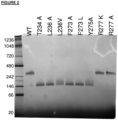
- modifications include the following substitutions (reference is here made to IgG4 residues given in SEQ ID NO:4, but the same substitutions may be made in corresppnding residues in other isotypes, such as IgG1. These corresponding residues may be found by simply alignment of the sequence): in the CH3 region: T234A, L236A, L236V, F273A, F273L, Y275A, E225A, D267A, L236E, L236G, F273D, F273T, Y275E, and in the CH2 region: T118Q, M296L, M120Y, S122T, T124E, N302A, T175A, E248A, N302A. Two or more of the above mentioned substitutions made combined to obtain the combined effects.
- the monovalent antibody comprises the CH3 region as set forth in SEQ ID NO: 4.
- the monovalent antibody may comprise the CH3 region as set forth in SEQ ID NO: 4, but:
- the monovalent antibody may comprise the CH3 region as set forth in SEQ ID NO: 4, but:
- the monovalent antibody may comprise the CH3 region as set forth in SEQ ID NO: 4, but:
- the monovalent antibody comprises the CH2 region as set forth in SEQ ID NO: 4, but wherein Thr (T) in position 118 has been replaced by Gln (Q) and/or Met (M) in position 296 has been replaced by Leu (L).
- the monovalent antibody comprises the CH2 region as set forth in SEQ ID NO: 4, but wherein one, two or all three of the following substitutions have been made: Met (M) in position 120 has been replaced by Tyr (Y); Ser (S) in position 122 has been replaced by Thr (T); and Thr (T) in position 124 has been replaced by Glu (E).
- the monovalent antibody comprises the CH2 region as set forth in SEQ ID NO: 4, but wherein Asn (N) in position 302 has been replaced by Ala (A).
- the monovalent antibody comprises the CH2 region as set forth in SEQ ID NO: 4, but wherein Asn (N) in position 302 has been replaced by Ala (A) and Thr (T) in position 175 has been replaced by Ala (A) and Glu (E) in position 248 has been replaced by Ala (A).
- the antibody of the disclosure may comprise the CH3 region as set forth in SEQ ID NO: 4, and wherein the CH3 region has been modified so that one or more of the following amino acid substitutions have been made: Thr (T) in position 234 has been replaced by Ala (A); Leu (L) in position 236 has been replaced by Ala (A); Leu (L) in position 236 has been replaced by Val (V); Phe (F) in position 273 has been replaced by Ala (A); Phe (F) in position 273 has been replaced by Leu (L); Tyr (Y) in position 275 has been replaced by Ala (A); Arg (R) in position 277 has been replaced by Ala (A).
- Preferred substitutions include: replacement of Leu (L) in position 236 by Val (V), replacement of Phe (F) in position 273 by Ala (A) and replacement of of Tyr (Y) in position 275 by Ala (A).
- the monovalent antibody may be one that not bind to the synthetic antigen (Tyr, Glu)-Ala-Lys.
- the hinge region is a region of an antibody situated between the CH1 and CH2 regions of the constant domain of the heavy chain.
- the extent of the hinge region is determined by the separate exon, which encodes the hinge region.
- the hinge region is normally involved in participating in ensuring the correct assembly of the four peptide chains of an antibody into the traditional tetrameric form via the formation of disulphide bonds, or bridges, between one or more cysteine residues in the hinge region of one of the heavy chains and one or more cysteine residues in the hinge region of the other heavy chain.
- a modification of the hinge region so that none of the amino acid residues in the hinge region are capable of participating in the formation of disulphide bonds may thus for instance comprise the deletion and/or substitution of the cysteine residues present in the unmodified hinge region.
- a region corresponding to the hinge region should for the purpose of this specification be construed to mean the region between region CH1 and CH2 of a heavy chain of an antibody.
- a region may also comprise no amino acid residues at all, corresponding to a deletion of the hinge region, resulting in the CH1 and CH2 regions being connected to each other without any intervening amino acid residues.
- Such a region may also comprise only one or a few amino acid residues, which residues need not be the amino acid residues present in the N- or C-terminal of the original hinge region.
- the CH region may have been modified such that the region corresponding to the hinge region of the CH region does not comprise any cysteine residues.
- the CH region has been modified such that at least all cysteine residues have been deleted and/or substituted with other amino acid residues.
- the CH region may have been modified such that the cysteine residues of the hinge region have been substituted with amino acid residues that have an uncharged polar side chain or a nonpolar side chain.
- the amino acids with uncharged polar side chains are independently selected from asparagine, glutamine, serine, threonine, tyrosine, and tryptophan
- the amino acid with the nonpolar side chain are independently selected from alanine, valine, leucine, isoleucine, proline, phenylalanine, and methionine.
- the monovalent antibody may be a human IgG4, wherein the amino acids corresponding to amino acids 106 and 109 of the CH sequence of SEQ ID No: 2 have been deleted.
- the monovalent antibody may be a human IgG4, wherein one of the amino acid residues corresponding to amino acid residues 106 and 109 of the sequence of SEQ ID No: 2 has been substituted with an amino acid residue different from cysteine, and the other of the amino acid residues corresponding to amino acid residues 106 and 109 of the sequence of SEQ ID No: 2 has been deleted.
- amino acid residue corresponding to amino acid residue 106 may have been substituted with an amino acid residue different from cysteine, and the amino acid residue corresponding to amino acid residue 109 has been deleted.
- amino acid residue corresponding to amino acid residue 106 may have been deleted, and the amino acid residue corresponding to amino acid residue 109 may have been substituted with an amino acid residue different from cysteine.
- the monovalent antibody is a human IgG4, wherein at least the amino acid residues corresponding to amino acid residues 106 to 109 of the CH sequence of SEQ ID No: 2 have been deleted.
- the monovalent antibody is a human IgG4, wherein at least the amino acid residues corresponding to amino acid residues 99 to 110 of the sequence of SEQ ID No: 2 have been deleted.
- the CH region comprises the amino acid sequence of SEQ ID No: 4.
- the monovalent antibody is a human IgG4, wherein the CH region has been modified such that the entire hinge region has been deleted.
- the sequence of the antibody may have been modified so that it does not comprise any acceptor sites for N-linked glycosylation.
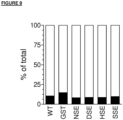
- the NST acceptor site for N-linked glycosylation in the CH2 region may have been modified to a sequence selected from the group consisting of: GST, MST, CSE, DSE, DSP, ESP, GSP, HSE, NSE, PSP and SSE.
- the monovalent antibody of the invention may be monovalent in the presence of physiological concentrations of polyclonal human IgG.
- the antibodies of the present disclosure have the advantage of having a long half-life in vivo, leading to a longer therapeutic window, as compared to e.g. a FAB fragment of the same antibody which has a considerably shorter half-life in vivo.
- the monovalent antibodies of the disclosure will have a potential having a better distribution in vivo, in example by being able to penetrate solid tumors. This leads to a great use potential of the monovalent antibodies of the invention, e.g. for treatment of cancer, since the antibodies of the invention could be used either to inhibit a target molecule, or as a target specific delivery mechanism for other drugs that would treat the disease.
- the monovalent antibody of the disclosure may have a plasma concentration above 10 ⁇ g/ml for more than 7 days when administered in vivo at a dose of 4 mg per kg, as measured in an pharmacokinetic study in SCID mice (for instance as shown in the WO2007059782 ).
- the clearance rate of a monovalent antibody of the disclosure may be measured by use of pharmacokinetic methods as it is known in the art.
- the antibody may for instance be injected intravenously (other routes such as i.p. or i.m. may also be used) in a human or animal after which blood samples are drawn by venipuncture at several time points, for instance 1 hour, 4 hours, 24 hours, 3 days, 7 days, 14 days, 21 days and 28 days after initial injection).
- Monovalent antibodies of the disclosure may have a plasma residence time, which is as much as 100 times longer than the plasma residence time of for instance Fab fragments which are frequently used as monovalent antibodies.
- a monovalent antibody of the disclosure may have a plasma clearance, which is more than 10 times slower than the plasma clearance of a F(ab') 2 fragment, which has a comparable molecular size. This may be an indication of the capability of the antibodies of the invention to bind to FcRn.
- FcRn is a major histocompatibility complex class I-related receptor and plays a role in the passive delivery of immunoglobulin (Ig)Gs from mother to young and in the regulation of serum IgG levels by protecting IgG from intracellular degradation ( Ghetie V et al., Annu Rev Immunol. 18, 739-66 (2000 )).
- the F(ab') 2 fragment may be directed at the same antigen as the monovalent antibody of the disclosure.
- the F(ab') 2 fragment may be directed at the same epitope as the monovalent antibody of the invention.
- the VH region and the VL region of the F(ab') 2 fragment may be identical to the VH region and the VL region of the monovalent antibody of the invention.
- a monovalent antibody of the present disclosure may have a half-life of at least 5 days when administered in vivo.
- the half-life of a monovalent antibody of the disclosure may be measured by any method known in the art, for instance as described above.
- a monovalent antibody of the invention may have a half-life of at least 5 days and up to 14 days, when administered in vivo.
- the monovalent antibody of the disclosure may have a half-life of at least 5 days and up to 21 days, when administered in vivo.
- the monovalent antibody has a serum half-life of at least 5 days, such as of at least 14 days, for example of from 5 and up to 21 days when administered in vivo to a human being or a SCID mouse.
- the monovalent antibody of the disclosure may bind to a tumor antigen with a dissociation constant (k d ) of 10 -7 M or less, such as 10 -8 M or less.
- the monovalent antibody of the disclosure may bind to a cell surface receptor with a dissociation constant (k d ) of 10 -7 M or less, such as 10 -8 M or less, which cell surface receptor is activated upon receptor dimerization.
- k d dissociation constant
- the monovalent antibody may bind to a target with a dissociation constant (k d ) of 10 -7 M or less, such as 10 -8 M or less, which target is selected from: erythropoietin, beta-amyloid, thrombopoietin, interferon-alpha (2a and 2b), -beta (1b), -gamma, TNFR I (CD120a), TNFR II (CD120b), IL-1R type 1 (CD121a), IL-1R type 2 (CD121b), IL-2, IL2R (CD25), IL-2R-beta (CD123), IL-3, IL-4, IL-3R (CD123), IL-4R (CD124), IL-5R (CD125), IL-6R-alpha (CD126), -beta (CD130), IL-10, IL-11, IL-15BP, IL-15R, IL-20, IL-21, TCR variable chain, RANK, RANK-
- a monovalent antibody of the invention may specifically bind a cell surface receptor that is activated upon receptor dimerization.
- Monovalent antibodies such as the monovalent antibodies of the disclosure, may often be useful in the treatment of diseases or disorders, where receptor activation is undesirable, since the antibody molecules of the disclosure due to their monovalent nature are unable to induce such dimerization and thereby such activation.
- examples of such receptors could be erb-B1, erb-B2, erb-B3, erb-B4 and members of the ephrins and ephrin receptors such as ephrin-A1 through A6, ephA1 through A8, ephrin B1 through B3 and eph-B1 through eph-B6.
- a monovalent antibody of the disclosure when bound to a target molecule, inhibits target molecule multimerization (such as dimerization).
- monovalent antibodies such as the monovalent antibodies of the disclosure, may often be useful in the treatment of diseases or disorders, where multimerization of the target antigen is undesirable, since the antibody molecules of the disclosuredue to their monovalent nature are unable to induce such multimerization.
- multimerization may form undesirable immune complexes.
- examples of such targets could be Toll-like receptors such as TLR-3 and TLR-9, or angiopoietin-1, or angiopoietin-2, or TNF receptor family members such as CD30, CD40 and CD95.
- a monovalent antibody of the disclosure is an inhibitor of TNF-alpha.
- the monovalent antibody of the disclosure may be a monovalent form of adalimumab, etanercept, or infliximab.
- the monovalent antibody may to a target with a dissociation constant (k d ) of 10 -7 M or less, such as 10 -8 M or less, which target is selected from VEGF, c-Met, CD20, CD38, IL-8, CD25, CD74, FcalphaRl, FcepsilonRl, acetyl choline receptor, fas, fasL, TRAIL, hepatitis virus, hepatitis C virus, envelope E2 of hepatitis C virus, tissue factor, a complex of tissue factor and Factor VII, EGFr, CD4, and CD28.
- k d dissociation constant
- An anti-VEGF monovalent antibody may be used for treatment of AMD (acute macular degeneration), and other diseases.
- the anti-VEGF monovalent antibody may be is a monovalent form of bevacizumab (Avastin).
- the monovalent antibody may be a human IgG4 antibody and which binds to c-Met with a dissociation constant (k d ) of 10 -7 M or less, such as 10 -8 M or less.
- a monovalent antibody of the invention may be incapable of effector binding.
- the expression "incapable of effector binding” or “inability of effector binding” in the present context means that a monovalent antibody of the disclosure may be incapable of binding to the C1q component of the first component of complement (C1) and therefore is unable of activating the classical pathway of complement mediated cytotoxicity.
- the monovalent antibodies of the disclosure are unable to interact with Fc receptors and may therefore be unable to trigger Fc receptor-mediated effector functions such as phagocytosis, cell activation, induction of cytokine release
- the invention relates to a nucleic acid construct encoding the monovalent antibody of the invention as described herein.
- Said nucleic acid construct may be an expression vector.
- the invention relates to a method of preparing a monovalent antibody according to the invention comprising culturing a host cell comprising a nucleic acid construct according to invention, so that the monovalent antibody is produced, and recovering the said monovalent antibody from the cell culture.
- a DNA sequence encoding the antibody may be prepared synthetically by established standard methods.
- the DNA sequence may then be inserted into a recombinant expression vector, which may be any vector, which may conveniently be subjected to recombinant DNA procedures.
- a recombinant expression vector which may be any vector, which may conveniently be subjected to recombinant DNA procedures.
- the choice of vector will often depend on the host cell into which it is to be introduced.
- the vector may be an autonomously replicating vector, i.e. a vector that exists as an extrachromosomal entity, the replication of which is independent of chromosomal replication, for instance a plasmid.
- the vector may be one which, when introduced into a host cell, is integrated into the host cell genome and replicated together with the chromosome(s) into which it has been integrated.
- a DNA sequence encoding the antibody should be operably connected to a suitable promoter sequence.
- the coding DNA sequence may also be operably connected to a suitable terminator and the vector may further comprise elements such as polyadenylation signals (for instance from SV40 or the adenovirus 5 Elb region), transcriptional enhancer sequences (for instance the SV40 enhancer) and translational enhancer sequences (for instance the ones encoding adenovirus VA RNAs). Other such signals and enhancers are known in the art.
- the DNA sequences encoding different parts of the polypeptide chain(s) of the antibody may be individually expressed in a host cell, or may be fused, giving a DNA construct encoding the fusion polypeptide, such as a polypeptide comprising both light and heavy chains, inserted into a recombinant expression vector, and expressed in host cells.
- the invention relates to an isolated host cell comprising a nucleic acid construct according to the invention, wherein said host cell is a prokaryotic cell, such as an E. coli cell or a eukaryotic cell, such as a mammalian cell, fungal cell or plant cell.
- a prokaryotic cell such as an E. coli cell or a eukaryotic cell, such as a mammalian cell, fungal cell or plant cell.
- the disclosure also relates to a non-human transgenic animal comprising a nucleic acid construct according to the invention.
- suitable mammalian cell lines are the HEK293 (ATCC CRL-1573), COS (ATCC CRL-1650), BHK (ATCC CRL-1632, ATCC CCL-10), NS/0 (ECACC 85110503) or CHO (ATCC CCL-61) cell lines.
- Other suitable cell lines are known in the art.
- the expression system may in particular be a mammalian expression system, such as a mammalian cell expression system comprising various clonal variations of HEK293 cells.
- host cells of the expression system may be cotransfected with two expression vectors simultaneously, wherein first of said two expression vectors comprises a DNA sequence encoding the heavy chain of the antibody, and second of said two expression vectors comprises a DNA sequence encoding the light chain of the antibody.
- the two sequences may also be present on the same expression vector, or they may be fused giving a DNA construct encoding the fusion polypeptide, such as a polypeptide comprising both light and heavy chains.
- the recombinantly produced monovalent antibody may then be recovered from the culture medium by conventional procedures including separating the host cells from the medium by centrifugation or filtration, precipitating the proteinaceous components of the supernatant or filtrate by means of a salt, for instance ammonium sulphate, purification by a variety of chromatographic procedures, for instance HPLC, ion exchange chromatography, affinity chromatography, Protein A chromatography, Protein G chromatography, or the like.
- a salt for instance ammonium sulphate
- the present disclosure also relates to a method of preparing a monovalent antibody of the invention, wherein said method comprises the steps of:
- Said host cell may be a prokaryotic host cell.
- the host cell may be an E. coli cell.
- the E. coli cells may be of a strain deficient in endogenous protease activities.
- Said host cell may be an eukaryotic cell.
- the host cell may be a HEK-293F cell.
- the host cell may be a CHO cell.
- compositions may be formulated with pharmaceutically acceptable carriers or diluents as well as any other known adjuvants and excipients in accordance with conventional techniques such as those disclosed in Remington: The Science and Practice of Pharmacy, 19th Edition, Gennaro, Ed., Mack Publishing Co., Easton, PA, 1995 .
- pharmaceutically acceptable carrier includes any and all solvents, dispersion media, coatings, antibacterial and antifungal agents, isotonicity agents, antioxidants and absorption delaying agents, and the like that are physiologically compatible.
- the pharmaceutical composition may be administered by any suitable route and mode.
- the route and/or mode of administration will vary depending upon the desired results.
- the monovalent antibodies of the present invention which may be used in the form of a pharmaceutically acceptable salt or in a suitable hydrated form, and/or the pharmaceutical compositions of the present invention, are formulated into pharmaceutically acceptable dosage forms by conventional methods known to those of skill in the art.
- Dosage regimens are adjusted to provide the optimum desired response (for instance a therapeutic response). For example, a single bolus may be administered, several divided doses may be administered over time or the dose may be proportionally reduced or increased as indicated by the exigencies of the therapeutic situation. It is especially advantageous to formulate parenteral compositions in dosage unit form for ease of administration and uniformity of dosage.
- Dosage unit form as used herein refers to physically discrete units suited as unitary dosages for the subjects to be treated; each unit contains a predetermined quantity of monovalent antibody calculated to produce the desired therapeutic effect in association with the required pharmaceutical carrier.
- Actual dosage levels of the monovalent antibodies in the pharmaceutical compositions of the present invention may be varied so as to obtain an amount of the active ingredient which is effective to achieve the desired therapeutic response for a particular patient, composition, and mode of administration.
- the selected dosage level will depend upon a variety of pharmacokinetic factors including the activity of the particular monovalent antibodies of the present invention employed, the route of administration, the time of administration, the rate of excretion of the particular monovalent antibody being employed, the duration of the treatment, other drugs, compounds and/or materials used in combination with the particular compositions employed, the age, sex, weight, condition, general health and prior medical history of the patient being treated, and like factors well known in the medical arts.
- a physician or veterinarian having ordinary skill in the art can readily determine and prescribe the effective amount of the pharmaceutical composition required.
- the physician or veterinarian could start doses of the compounds of the invention employed in the pharmaceutical composition at levels lower than that required in order to achieve the desired therapeutic effect and gradually increase the dosage until the desired effect is achieved.
- a suitable dose of a pharmaceutical composition of the invention will be that amount of the monovalent antibody which is the lowest dose effective to produce a therapeutic effect.
- Such an effective dose will generally depend upon the factors described above.
- the physician or veterinarian may start with a high loading dose followed by repeated administration of lower doses to rapidly build up a therapeutically effective dose and maintain it over longer periods of time.
- a pharmaceutical composition of the invention may contain one or a combination of different monovalent antibodies of the invention.
- the pharmaceutical compositions may include a combination of multiple (for instance two or more) monovalent antibodies of the invention which act by different mechanisms.
- the monovalent antibodies may also be thus combined with divalent antibodies.
- the monovalent antibody of the present invention have numerous in vitro and in vivo diagnostic and therapeutic utilities involving the diagnosis and treatment of disorders involving cells expressing the antigen which the antibody can recognize and bind to. In certain pathological conditions, it is necessary and/or desirable to utilize monovalent antibodies. Also, in some instances, it is preferred that a therapeutic antibody effects its therapeutic action without involving immune system-mediated activities, such as the effector functions, ADCC, phagocytosis and CDC. In such situations, it is desirable to generate forms of antibodies in which such activities are substantially reduced or eliminated. It is also advantageous if the antibody is of a form that can be made efficiently and with high yield.
- the present invention provides such antibodies, which may be used for a variety of purposes, for example as therapeutics, prophylactics and diagnostics.
- a monovalent antibody of the disclosure may be directed to CD74 and inhibits MIF-induced signaling, but lacks Fc-mediated effector functions.
- a monovalent antibody of the disclosure may prevent binding of a virus or other pathogen to its receptor, such as inhibition of HIV binding to CD4 or coreceptor such as CCR5 or CXCR4.
- the invention relates to the monovalent antibody according to the invention as described herein for use as a medicament.
- the invention relates to the monovalent antibody according to the invention for use in the treatment of cancer
- the disclosure relates to the monovalent antibody according to the disclosure for use in the treatment of a disorder involving undesired angiogenesis.
- the disclsoure relates to the monovalent antibody according to the disclsoure for use in the treatment of a disease or disorder, which disease or disorder is treatable by administration of an antibody against a certain target, wherein the involvement of immune system-mediated activities is not necessary or is undesirable for achieving the effects of the administration of the antibody, and wherein said antibody specifically binds said antigen.
- the disclosure relates to the monovalent antibody according to the disclosure for use in the treatment of a disease or disorder, which disease or disorder is treatable by blocking or inhibiting a soluble antigen, wherein multimerization of said antigen may form undesirable immune complexes, and wherein said antibody specifically binds said antigen.
- the disclosure relates to the monovalent antibody according to the disclosure for use in the treatment of a disease or disorder, which disease or disorder is treatable by blocking or inhibiting a cell membrane bound receptor, wherein said receptor may be activated by dimerization of said receptor, and wherein said antibody specifically binds said receptor.
- the treatment may comprise administering one or more further therapeutic agents.
- the disclosure relates to the use of the monovalent antibody according to the disclosure as described herein as a medicament.
- the disclosure also relates to a method of treating a disease or disorder as defined herein, wherein said method comprises administering to a subject in need of such treatment a therapeutically effective amount of a monovalent antibody according the invention, a pharmaceutical composition according to the invention or a nucleic acid construct according to the invention.
- the treatment may comprise administering one or more further therapeutic agents.
- the disclosure relates to the use of the monovalent antibody according to the disclosure in the preparation of a medicament for the treatment of a disease or disorder as defined herein.
- the disease or disorder to be treated may be treatable by interference with cell activation through Fc ⁇ RI, by interference with Fc ⁇ RI function, by inhibition of subsequent Fc ⁇ RI activated IgE mediated responses, or by binding of soluble Fc ⁇ RI.
- the monovalent antibody may be directed against Fc ⁇ RI and induces apoptosis of Fc ⁇ RI expressing cells.
- Such disease or disorder may for instance be allergic asthma or other allergic diseases such as allergic rhinitis, seasonal/perennial allergies, hay fever, nasal allergies, atopic dermatitis, eczema, hives, urticaria, contact allergies, allergic conjunctivitis, ocular allergies, food and drug allergies, latex allergies, or insect allergies, or IgA nephropathy, such as IgA pemphigus.
- the monovalent antibody of the invention may be directed at Fc ⁇ RI.
- Such monovalent antibodies may also be used for in vitro or in vivo screening for Fc ⁇ RI in sample or patient or in an immunotoxin or radiolabel approach to treating these diseases and disorders.
- the disease or disorder to be treated is treatable by downregulating Fc receptor ⁇ -chain mediated signaling through Fc ⁇ R1 or Fc ⁇ receptors.
- Monomeric binding of antibody to Fc ⁇ RI is known to effect such inhibition.
- Monovalent antibodies may thus be used to inhibit immune activation through a range of Fc receptors including Fcy, Fc ⁇ and Fc ⁇ receptors.
- the monovalent antibody of the disclosure may bind an Fc ⁇ , Fc ⁇ or Fc ⁇ receptor, such as CD32b.
- the monovalent antibody of the disclosure may be directed at CD25. Such monovalent antibodies may also be used for in vitro or in vivo screening for CD25 in sample or patient or in an immunotoxin or radiolabel approach to treating these diseases and disorders.
- the disease or disorder to be treated may be one that is treatable by antagonizing and/or inhibiting IL-15 or IL15 receptor functions.
- Such disease or disorder may for instance be arthritides, gout, connective, neurological, gastrointestinal, hepatic, allergic, hematologic, skin, pulmonary, malignant, endocrinological, vascular, infectious, kidney, cardiac, circulatory, metabolic, bone, and muscle disorders.
- the monovalent antibody of the disclosure may be directed at IL-15.
- Such monovalent antibodies may also be used for in vitro or in vivo screening for IL-15 in a sample or patient or in an immunotoxin or radiolabel approach to treating these diseases and disorders.
- the disease or disorder to be treated may be treatable by interfering with CD20 activity, by depleting B cells, interfering with B cell growth and/or proliferation through for instance an immunotoxin or radiolabel approach.
- Such disease or disorder may for instance be rheumatoid arthritis, (auto)immune and inflammatory disorders (as described above for IL-8 related diseases and disorders), non-Hodgkin's lymphoma, B-CLL, lymphoid neoplasms, malignancies and hematological disorders, infectious diseases and connective, neurological, gastrointestinal, hepatic, allergic, hematologic, skin, pulmonary, malignant, endocrinological, vascular, infectious, kidney, cardiac, circulatory, metabolic, bone and muscle disorders, and immune mediated cytopenia.
- the monovalent antibody of the invention may be directed at CD20. Such monovalent antibodies may also be used for in vitro or in vivo screening for CD20 in a sample or patient.
- the disease or disorder to be treated may be treatable by interfering with CD38 activity, by depleting CD38 expressing cells, interfering with CD38 + cell growth and/or proliferation through for instance an immunotoxin or radiolabel approach.
- the disease or disorder to be treated may be treatable by blocking ligand-EGF r interaction, blocking EGF r function, depletion of EGF r expressing cells/interference with EGFr+ cell growth and/or proliferation through for instance an immunotoxin or radiolabel approach.
- the monovalent antibody of the invention may be directed at EGFr. Such monovalent antibodies may also be used for in vitro or in vivo screening for EGFr in a sample or patient.
- the disease or disorder to be treated may be treatable by interfering with CD4 function, depletion of CD4 expressing cells/interference with CD4+ cell growth and/or proliferation through for instance an immunotoxin or radiolabel approach.
- Such disease or disorder may for instance be rheumatoid arthritis, (auto)immune and inflammatory disorders (as described above for IL-8 related diseases and disorders), cutaneous T cell lymphomas, non-cutaneous T cell lymphomas, lymphoid neoplasms, malignancies and hematological disorders, infectious diseases, and connective, neurological, gastrointestinal, hepatic, allergic, hematologic, skin, pulmonary, malignant, endocrinological, vascular, infectious, kidney, cardiac, circulatory, metabolic, bone, and muscle disorders, and immune mediated cytopenia.
- the monovalent antibody of the invention may be directed at CD4. Such monovalent antibodies may also be used for in vitro or in vivo screening for CD4 in a sample or patient.
- a monovalent antibody directed at CD4 may be used for treatment of HIV infection, or for the treatment of AIDS.
- the monovalent antibodies of the disclosure may beare monovalent antibodies of the CD4 antibodies disclosed in WO97/13852 .
- the disease or disorder to be treated may be treatable by antagonizing and/or inhibiting CD28 functions, such as preventing of co-stimulatory signals needed in T cell activation.
- such disease or disorder may for instance be an inflammatory, autoimmune and immune disorder as indicated above.
- the monovalent antibody of the invention is directed at CD28.
- the disease or disorder to be treated may be treatable by altering Tissue Factor functions, such as altering coagulation or inhibition of tissue factor signalling.
- Tissue Factor functions such as altering coagulation or inhibition of tissue factor signalling.
- such disease or disorder may for instance be vascular diseases, such as myocardial vascular disease, cerebral vascular disease, retinopathia and macular degeneration, and inflammatory disorders as indicated above.
- the monovalent antibodies may be directed at Tissue factor, or at a complex of Factor VII and Tissue Factor.
- the disease or disorder to be treated may be treatable by interfering with Hepatitis C Virus (HCV) infection.
- HCV Hepatitis C Virus
- the monovalent antibody of the disclosure may be directed at HCV or an HCV receptor such as CD81.
- the monovalent antibody may be a monovalent antibody according to the invention of an antibody as disclosed in WO2000/05266 .
- the disease or disorder to be treated may be treatable by prevention of binding of allergen to IgE-sensitized on mast cell.
- disease or disorder may for instance be allergen-immunotherapy of allergic diseases such as asthma, allergic rhinitis, seasonal/perennial allergies, hay fever, nasal allergies, atopic dermatitis, eczema, hives, urticaria, contact allergies, allergic conjunctivitis, ocular allergies, food and drug allergies, latex allergies, and insect allergies.
- the monovalent antibody(s) of the disclosure may be IgG4 hingeless antibodies directed towards allergen(s).
- An immunoconjugate comprising a monovalent antibody conjugated with a cytotoxic agent may be administered to the patient.
- the immunoconjugate and/or antigen to which it is bound may be internalized by the cell, resulting in increased therapeutic efficacy of the immunoconjugate in killing the target cell to which it binds.
- the cytotoxic agent may target or interfere with nucleic acid in the target cell.
- cytotoxic agents include any of the chemotherapeutic agents noted herein (such as a maytansinoid or a calicheamicin), a radioactive isotope, or a ribonuclease or a DNA endonuclease.
- Monovalent antibodies of the disclosure may be used either alone or in combination with other compositions in a therapy.
- a monovalent antibody of the disclosure may be co-administered with one or more other antibodies, such as monovalent antibodies of the present disclosure, one or more chemotherapeutic agent(s) (including cocktails of chemotherapeutic agents), one or more other cytotoxic agent(s), one or more anti-angiogenic agent(s), one or more cytokines, one or more growth inhibitory agent(s), one or more anti-inflammatory agent(s), one or more disease modifying antirheumatic drug(s) (DMARD), or one or more immunosuppressive agent(s), depending on the disease or condition to be treated.
- chemotherapeutic agent(s) including cocktails of chemotherapeutic agents
- one or more other cytotoxic agent(s) include one or more anti-angiogenic agent(s), one or more cytokines, one or more growth inhibitory agent(s), one or more anti-inflammatory agent(s), one or more disease modifying
- a monovalent antibody of the disclosure inhibits tumor growth
- one or more other therapeutic agent(s) which also inhibits tumor growth
- anti-VEGF antibodies blocking VEGF activities may be combined with anti-ErbB antibodies (for instance Trastuzumab (Herceptin), an anti-HER2 antibody) in a treatment of metastatic breast cancer.
- the patient may receive combined radiation therapy (for instance external beam irradiation or therapy with a radioactive labeled agent, such as an antibody).
- combined therapies noted above include combined administration (where the two or more agents are included in the same or separate formulations), and separate administration, in which case, administration of the antibody of the invention may occur prior to, and/or following, administration of the adjunct therapy or therapies.
- the monovalent antibody of the disclosure is a monovalent form of trastuzumab, for treatment of Her2 positive cancer.
- a monovalent antibody of the disclosure when used alone or in combination with other agents such as chemotherapeutic agents, will depend on the type of disease to be treated, the type of antibody, the severity and course of the disease, whether the monovalent antibody is administered for preventive, therapeutic or diagnostic purposes, previous therapy, the patient's clinical history and response to the antibody, and the discretion of the attending physician.
- the monovalent antibody may be suitably administered to the patient at one time or over a series of treatments.
- Such dosages may be administered intermittently, for instance every week or every three weeks (for instance such that the patient receives from about two to about twenty, for instance about six doses of the monovalent antibody).
- An initial higher loading dose, followed by one or more lower doses may be administered.
- An exemplary dosing regimen comprises administering an initial loading dose of about 4 mg/kg, followed by a weekly maintenance dose of about 2 mg/kg of the monovalent antibody.
- the monovalent antibodies of the disclosure may be administered in a weekly dosage of from 50 mg to 4000 mg, for instance of from 250 mg to 2000 mg, such as for example 300 mg, 500 mg, 700 mg, 1000 mg, 1500 mg or 2000 mg, for up to 8 times, such as from 4 to 6 times.
- the weekly dosage may be divided into two or three subdosages and administered over more than one day.
- a dosage of 300 mg may be administered over 2 days with 100 mg on day one (1), and 200 mg on day two (2).
- a dosage of 500 mg may be administered over 3 days with 100 mg on day one (1), 200 mg on day two (2), and 200 mg on day three (3)
- a dosage of 700 mg may be administered over 3 days with 100 mg on day 1 (one), 300 mg on day 2 (two), and 300 mg on day 3 (three).
- the regimen may be repeated one or more times as necessary, for example, after 6 months or 12 months.
- the dosage may be determined or adjusted by measuring the amount of circulating monovalent antibodies of the invention upon administration in a biological sample for instance by using anti-idiotypic antibodies which target said monovalent antibodies.
- the monovalent antibodies of the disclosure may be administered by maintenance therapy, such as, for instance once a week for a period of 6 months or more.
- the monovalent antibodies of the disclosure may be administered by a regimen including one infusion of a monovalent antibody of the invention followed by an infusion of same monovalent antibody conjugated to a radioisotope.
- the regimen may be repeated, for instance 7 to 9 days later.
- the invention relates to the use of a monovalent antibody according to the invention as a diagnostic agent.
- K409 forms a hydrogen bond with D399' on the opposite CH3 domain. Furthermore, K409 is part of a water-binding pocket together with S364 and T411 in the same CH3 domain and K370' on the opposite CH3 domain. The presence of the water molecule prevents an electrostatic clash between K409 and K370'.
- the K409R substitution (as in IgG4) was modelled in the 1L6X structure by optimizing the side chain conformations of the arginine residue and its surrounding residues, using the FASTER algorithm ( Desmet, J., et al.,; Proteins, 2002. 48(1): p. 31-43 ).
- the guanidinium group of R409 takes up the position of the water molecule and causes an electrostatic clash with K370'.
- the side-chains of T411 and K370' loose their interactions compared to the case with water present (as in IgG1), but D399 keeps its interaction with the side chain at position R409.
- KABAT indicates amino acid numbering according to Kabat ( Kabat et al., Sequences of Proteins of Immunological Interest, 5th Ed. Public Health Service, National Institutes of Health, Bethesda, MD. (1991 ).
- EU index indicates amino acid numbering according to EU index as outlined in Kabat et al., Sequences of Proteins of Immunological Interest, 5th Ed. Public Health Service, National Institutes of Health, Bethesda, MD. (1991 )).
- the above-described mutations were introduced into the CH3 region of hingeless anti-EGFR antibody 2F8-HG, described in WO2007059782 .
- the mutations were introduced into pTomG42F8HG (described in WO2007059782 ) using site-directed mutagenesis.
- the constructs were expressed transiently and purified as described in WO2007059782 .
- Figure 1 shows a summary of the monomer/dimer ratios obtained for each HG mutant using non-covalent nano-electrospray mass spectrometry.
- CH3 mutants showed a substantial increase in monomer/dimer ratio compared to 2F8-HG (WT).
- the percentage molecules present as monomers increased from 15 % in 2F8-HG (WT) to >80% in most CH3 mutants, except for mutation R277A.
- HG mutation R277K which introduces an IgG1 sequence into the IgG4 backbone, was used as negative control. As expected, this mutant behaved as dimer.
- 2F8-HG (WT) and R277K and R277A showed a protein band corresponding to the size of a full tetrameric (two heavy and two light chains) molecule.
- the CH3 mutants T234A, L236A, L236V, F273A, F273L, and Y275A were shown to be half molecules (only one heavy and one light chain).
- Binding of 2F8-HG (WT) and variants was determined in the absence and presence of 200 ⁇ g/ml polyclonal human IgG (Intravenous Immunoglobulin, IVIG, Sanquin Netherlands) (as described in Example 57 of WO2007059782 ).
- Figures 3 and 4 show that the binding curve of 2F8-HG in the presence of IVIG clearly right-shifts with respect to the binding curve of 2F8-HG without IVIG.
- This difference in avidity for the EGF r coat is consistent with the idea that, in the presence of IVIG, 2F8-HG binds monovalently (see Example 57 of WO2007059782 ).
- the binding curves of several of the tested mutations, 2F8-HG-T234A, 2F8-HG-L236V, 2F8-HG-L236A and 2F8-HG-Y275A become insensitive to the addition of IVIG and were super-imposable on the monovalent binding curve of 2F8-HG in the presence of IVIG.
- CH3 mutants of 2F8-HG were shown to bind EGF r with lower apparent affinities than 2F8-HG in a binding ELISA coated with EGF r protein (see above).
- the potency of 2F8-HG CH3 mutants to inhibit ligand-induced EGF r phosphorylation in cells in vitro was compared to that of 2F8-HG (WT) and 2F8-Fab fragments in the Phosphorylation Inhibition Assay (PIA) as described in example 54 of WO2007059782 .
- CH3 HG mutants were less potent to inhibit EGF r phosphorylation than 2F8-HG (WT) and the control mutants R277K and R277A, in line with the increase in monomer/dimer ratio of these mutants ( figure 5 ).
- the monomer/dimer configuration of CH3 mutants F273A, L236V, and Y275A was further investigated at different concentrations, ranging from 0.01-10 ⁇ M using non-covalent nano-electrospray mass spectrometry as described in WO2007059782 .
- the monomer/dimer configuration of these CH3 mutants was compared to the configuration of 2F8-HG (WT) and R277K.
- Figure 6 shows that all HG mutants were 100% monomeric at low concentrations (except for R277K which behaved as dimer). With increased concentration of HG mutants, a decrease in monomericity was observed. However, the figure shows that the CH3 mutants exhibited such decrease in monomericity at much higher concentration than 2F8-HG (WT). Hence, the CH3 mutants contained a higher percentage of monomer molecules at higher molar concentrations.
- Figure 7 shows that all HG mutants (except for R277K, K238A and K238T) had a higher relative K D , which translates into an increase in monomeric behavior compared to 2F8-HG (WT).
- the R277K, K238A and K238T mutants showed a lower relative K D , meaning that they stabilize the CH3-CH3 interaction.
- the table below shows the 27 sequence variants which contain only medium epitopes, specific for no more than three different DRB1 allotypes.
- the GST and NSE mutations as identified by the above-described analysis were introduced into pTomG42F8HG (described in WO 2007059782 ) using site-directed mutagenesis.
- the constructs were expressed transiently and binding was determined in the absence and presence of polyclonal human IgG (Intravenous Immunoglobulin, IVIG, Sanquin Netherlands) (as described in Example 57 of WO 2007059782 ).
- Figure 8 shows that the binding curves of 2F8-HG-GST and 2F8-HG-NSE in the absence and presence of IVIG were identical to the binding curve of 2F8-HG in the absence and presence of IVIG, respectively. This is consistent with the hypothesis that deglycosylation does not effect the binding affinity of the HG-molecules or sensitivity to IVIG.
- HPAEC-PAD High pH Anion Exchange Chromatography - Pulse Amperometric Detection
- HG mutant samples were prepared in aqueous 50 mM ammonium acetate solutions and introduced into an LC-T nano-electrospray ionization orthogonal time-of-flight mass spectrometer (Micromass, Manchester, UK), operating in positive ion mode.
- Source pressure conditions in the LC-T mass spectrometer and nano-electrospray voltages were optimized for optimal transmission, the pressure in the interface region was adjusted by reducing the pumping capacity of the rotary pump by closing the valve (Pirani Pressure 6.67e0 mbar).
- Spraying conditions were as follows: needle voltage 1275 V, cone voltage 200 V, and source temperature 80 °C.
- Borosilicate glass capillaries Kwik-FilTM, World Precision Instruments Inc., Sarasota, FL
- P-97 puller Sutter Instrument Co., Novato, CA
- They were subsequently coated with a thin gold layer using an Edwards Scancoat six Pirani 501 sputter coater (Edwards High Vacuum International, Crawley, UK).
- Figure 9 shows a summary of the monomer/dimer ratios obtained for each HG mutant using non-covalent nano-electrospray mass spectrometry at 1 ⁇ M protein concentrations.
- the data indicate that in the absence of polyclonal human IgG, 2F8-HG may behave as a bivalent antibody.
- Non-glycosylation HG mutants 2F8-HG-GST, 2F8-HG-NSE, 2F8-HG-DSE, 2F8-HG-HSE, and 2F8-HG-SSE were shown to bind EGF r with apparent affinities similar to 2F8-HG (WT) in a binding ELISA, using EGFr protein as coat (see above).
- the potency of non-glycosylation 2F8-HG mutants to inhibit ligand-induced EGF r phosphorylation in cells in vitro was compared to that of 2F8-HG (WT) and 2F8-Fab fragments in the Phosphorylation Inhibition Assay (PIA) as described in example 54 of WO2007059782 .
- Figure 10 shows that the potency of non-glycosylation HG mutants to inhibit EGF-induced phosphorylation of EGF r in vitro was similar to that of 2F8-HG (WT).
- Figure 11 shows that absence of glycosylation of 2F8-HG did not affect plasma clearance.
- IgG1-P228S an IgG1 with an IgG4 core-hinge
- IgG1-P228S two CH3 domain swap mutants
- IgG1-CH3( ⁇ 4) and IgG1-P228S-CH3(y4) two CH3 point mutant in which lysine present at position 409 of IgG1 (within the CH3 domain)
- IgG1-K409R one IgG1 with an IgG4 core hinge and K409R mutation
- Figure 12 one IgG1 with an IgG4 core hinge and K409R mutation
- IgG4 mutants Two IgG4 mutants were made: one CH3 point mutant in which arginine present at position 409 of IgG4 (within the CH3 domain) (corresponds to 289 in SEQ ID NO:2) is replaced for lysine (IgG4-R409K), and one CH3 swap mutant (IgG4-CH3(y1)) ( Figure 12 ). These mutants were also made with either Bet v 1 or Fel d 1 specificity.
- Site directed mutagenesis was used to introduce a P228S mutation in the hinge of IgG1 using pEE-G1-wt a Bet v 1 as a template.
- Quickchange site-directed mutagenesis kit (Stratagene) was used to create the pEE-G1-CPSC mutant.
- the polymerase chain reaction (PCR) mix consisted of 5 ⁇ l pEE-G1 a Betv1 DNA template ( ⁇ 35 ng), 1,5 ⁇ l mutagenic primer-forward ( ⁇ 150 ng), 1,5 ⁇ l mutagenic primer-reverse ( ⁇ 150 ng), 1 ⁇ l dNTP mix, 5 ⁇ l reaction buffer (10x), 36 ⁇ l H2O and finally 1 ⁇ l Pfu Turbo DNA polymerase. Then the mix was applied to the PCR: 30" 95°C, 30" 95°C (denaturating), 1' 55°C (annealing) and 17 minutes 68°C (elongating). This cycle was repeated 20 times.
- DNA digesting and ligation was used to create CH3 domain swap mutant constructs IgG1-CH3( ⁇ 4) and IgG1-P228S-CH3( ⁇ 4).
- Digestion reactions to obtain CH3 domains and vectors without CH3 domains were as follows: ⁇ 1500 ng DNA (pEE-G1-betv1, pEE-G1-CPSC and pEE-G4-betv1), 2 ⁇ l BSA, 2 ⁇ l Neb3 buffer, 1 ⁇ l Sall and H 2 O added to a volume of 20 ⁇ l. Incubation at 37°C for 30'.
- DNA was purified and eluted with 30 ⁇ l H 2 O before 1 ⁇ l SanDI and 3 ⁇ l universal buffer was added and incubated at 37°C for 30'. Fragments were subjected to gel electrophoresis on 1% agarose gels with ethidium bromide. Fragments were cut from the gel under ultraviolet light and dissolved using a DNA purification kit (Amersham).
- the pEE-G4-wt Sall/SanDI (which contained IgG4 CH3 domain) fragment was ligated into pEE-G1-wt and pEE-G1-CPSC using following procedure: 1 ⁇ l template DNA (Sall/SanDl digested pEE-G1-wt and pEE-G1-CPSC), 5 ⁇ l Sall/SanDl insert, 4 ⁇ l Ligate-it buffer, 9 ⁇ l H2O and 1 ⁇ l ligase in a total volume of 20 ⁇ l. Ligation was stopped after 5'.
- Site-directed mutagenesis was used to introduce point mutations (K409R or R409K) into the pEE- ⁇ 4 wt, pEE-y1 and PEE-y1-P228S constructs.
- Site-directed mutagenesis was performed using the QuickChange II XL Site-Directed Mutagenesis Kit (Stratagene, Amsterdam, The Netherlands) according to the manufacturer's instructions, with changes as indicated below to increase mutagenic efficiency. This method included the introduction of a silent extra Accl site to screen for successful mutagenesis.
- a prePCR mix was used containing 3 ⁇ l 10x pfu reaction buffer, 1 ⁇ l dNTP mix (10 mM), 275 ng forward or reverse primer, 50 ng template DNA and 0.75 ⁇ l Pfu turbo hotstart polymerase.
- a prePCR was run using a GeneAmp PCR system 9700 (Applied Biosystems): initial denaturation at 94oC for 5 min; 4 cycles of 94oC for 30 sec, 50 oC for 1 min and 68 oC for 14 min. 25 ⁇ l of forward primer containing prePCR mix was added to 25 ⁇ l of reverse primer containing prePCR mix.
- PCR mixtures were stored at 4°C until further processing.
- PCR mixtures were incubated with 1 ⁇ l Dpn I for 60 min at 37°C and stored at 4°C until further processing.
- 2 ⁇ l of the digested PCR products was transformed in One Shot DNH5 ⁇ T1 R competent E. coli cells (Invitrogen, Breda, The Netherlands) according to the manufacturer's instructions (Invitrogen).
- cells were plated on Luria-Bertani (LB) agar plates containing 50 ⁇ g/ml ampicillin. Plates were incubated for 16-18 hours at 37°C until bacterial colonies became evident.
- LB Luria-Bertani
- plasmid was isolated from the bacteria and the mutation was confirmed by DNA sequencing. To check if no unwanted extra mutations were introduced the whole HC coding region was sequenced and did not contain any additional mutations.
- GSH reduced glutathione
- the concentration of bispecific IgG was measured in the heterologous cross-linking assay.
- a sample was incubated for 24h with 0.5 mg Sepharose-coupled cat extract, in which Fel d 1 antigen is present, in a total volume of 300 ⁇ l in PBS-IAT.
- the Sepharose was washed with PBS-T and incubated for 24h with 125 I-labeled Bet v 1, after which the Sepharose was washed with PBS-T and the amount of radioactivity bound relative to the amount of radioactivity added was measured.
- the concentration of bispecific IgG (Fel d 1-Bet v 1) was calculated using the same calibration curve as used in the Bet v 1 binding test, which was obtained from purified Bet v 1 binding IgG. Tests were performed using antibody-containing supernatants in FreeStyle 293 expression medium, GIBCO/Invitrogen Corporation.
- Hingeless IgG4 antibody (HG) molecules form dimers by low affinity non-covalent interactions.
- WO/2007/059782 describes that this dimerization process can be inhibited by using HG IgG4 molecules in the presence of an excess of irrelevant antibodies.
- WO/2007/059782 describes a hingeless IgG4 anti-EGFR antibody 2F8-HG.
- pKappa2F8 A vector for the production of the light chain of 2F8 antibodies: The VL region encoding antibody 2F8 was codon optimized and cloned in the pKappa2F2 vector (a vector encoding the codon optimized cDNA region of antibody 2F2 (described in WO2004035607 ) in vector pEE12.4 (Lonza)), replacing the 2F2 VL region with the 2F8 VL region. The resulting vector was named pKappa-2F8.
- Hingeless IgG4 anti-EGFR antibody 2F8-HG has been described in WO/2007/059782 .
- the additional mutations given in the Table below were introduced into the CH3 region of hingeless IgG4 antibody 2F8-HG by site-directed mutagenesis.
- KABAT indicates amino acid numbering according to Kabat ( Kabat et al., Sequences of Proteins of Immunological Interest, 5th Ed. Public Health Service, National Institutes of Health, Bethesda, MD. (1991 ).
- EU index indicates amino acid numbering according to EU index as outlined in Kabat et al., Sequences of Proteins of Immunological Interest, 5th Ed. Public Health Service, National Institutes of Health, Bethesda, MD. (1991 )). See also Figure 14 for comparison of numbering methods.
- the mutations were introduced into pHG2F8 using site-directed mutagenesis.
- constructs were expressed transiently in HEK-293F cells by cotransfecting the heavy-chain- and light-chain-encoding plasmids and binding to purified EGFr was determined in the absence and presence of 200 ⁇ g/ml polyclonal human IgG (Intravenous Immunoglobulin, IVIG, Sanquin Netherlands).
- Binding affinities were determined using an ELISA in which purified EGFr (Sigma, St Louis, MO) was coated to 96-well Microlon ELISA plates (Greiner, Germany), 50 ng/well. Plates were blocked with PBS supplemented with 0.05% Tween 20 and 2% chicken serum. Subsequently, samples, serially diluted in a buffer containing 100 ⁇ g/ml polyclonal human IgG (Intravenous Immunoglobulin, IVIG, Sanquin Netherlands) were added and incubated for 1 h at room temperature (RT).
- Plates were subsequently incubated with peroxidase-conjugated rabbit-anti-human kappa light chain (DAKO, Glostrup, Denmark) as detecting antibody and developed with 2,2'-azino-bis (3-ethylbenzthiazoline-6-sulfonic acid) (ABTS; Roche, Mannheim, Germany). Absorbance was measured in a microplate reader (Biotek, Winooski, VT) at 405 nm.
- DAKO peroxidase-conjugated rabbit-anti-human kappa light chain
- ABTS 2,2'-azino-bis (3-ethylbenzthiazoline-6-sulfonic acid)
- IgG1-CD20 and IgG1-EGFr, IgG4-CD20 and IgG4-EGFr, or IgG4-CH3mutant-CD20 and IgG4-CH3mutant-EGFr were mixed and incubated with 0.5 mM GSH as described above.
- Bispecific activity was determined as described in Example 33 of PCT application, WO 2008/119353 (Genmab A/S) .
- FIG. 16 shows that bispecific anti-EGFr/CD20 antibodies were formed in mixtures of IgG4 antibodies as well as in mixtures of CH3 domain mutants Q235R, E299Q, L325P, R289A and S244D.
- No bispecific activity was measured in mixtures of CH3 domain mutants R289K, R289M, R289L, K250E and K250Q, indicating that these mutations stabilized dimerization of human IgG4 antibodies.
- the CH3 domain mutant T291V was unique in that it slowed down the exchange reaction, but reached the same level of exchange as wild-type IgG4 after 24 hrs.
- KABAT indicates amino acid numbering according to Kabat ( Kabat et al., Sequences of Proteins of Immunological Interest, 5th Ed. Public Health Service, National Institutes of Health, Bethesda, MD. (1991 ).
- EU index indicates amino acid numbering according to EU index as outlined in Kabat et al., Sequences of Proteins of Immunological Interest, 5th Ed. Public Health Service, National Institutes of Health, Bethesda, MD. (1991 )). See also figure 15 for comparison of numbering methods.
- Figure 18 shows the correlation between the K D values of the CH3 mutants in relation to the % of bispecific activity (after 24 hrs compared to WT IgG4). Mutants that are stabilized do not show bispecific activity, indicating that Fab-arm exchange does not occur in these mutants. Mutants that have K D values comparable to WT IgG4 behave similar in the generation of bispecific antibodies. Figure 16 and figure 18 together show that mutants that have a weaker CH3-CH3 interaction do form bispecific antibodies, but the amount of bispecific antibodies is much lower and are not stable over time.
Landscapes
- Health & Medical Sciences (AREA)
- Chemical & Material Sciences (AREA)
- Life Sciences & Earth Sciences (AREA)
- Medicinal Chemistry (AREA)
- Immunology (AREA)
- Organic Chemistry (AREA)
- General Health & Medical Sciences (AREA)
- Pharmacology & Pharmacy (AREA)
- Animal Behavior & Ethology (AREA)
- Public Health (AREA)
- Veterinary Medicine (AREA)
- Proteomics, Peptides & Aminoacids (AREA)
- Bioinformatics & Cheminformatics (AREA)
- Engineering & Computer Science (AREA)
- Biochemistry (AREA)
- Epidemiology (AREA)
- Biophysics (AREA)
- Genetics & Genomics (AREA)
- Molecular Biology (AREA)
- Nuclear Medicine, Radiotherapy & Molecular Imaging (AREA)
- General Chemical & Material Sciences (AREA)
- Chemical Kinetics & Catalysis (AREA)
- Cell Biology (AREA)
- Physics & Mathematics (AREA)
- Optics & Photonics (AREA)
- Endocrinology (AREA)
- Microbiology (AREA)
- Mycology (AREA)
- Rheumatology (AREA)
- Pain & Pain Management (AREA)
- Peptides Or Proteins (AREA)
- Medicines Containing Antibodies Or Antigens For Use As Internal Diagnostic Agents (AREA)
- Micro-Organisms Or Cultivation Processes Thereof (AREA)
- Medicines That Contain Protein Lipid Enzymes And Other Medicines (AREA)
- Preparation Of Compounds By Using Micro-Organisms (AREA)
- Medicinal Preparation (AREA)
Applications Claiming Priority (3)
| Application Number | Priority Date | Filing Date | Title |
|---|---|---|---|
| DKPA200801709 | 2008-12-03 | ||
| PCT/EP2009/066290 WO2010063785A2 (en) | 2008-12-03 | 2009-12-03 | Antibody variants having modifications in the constant region |
| EP09771325.9A EP2373687B1 (en) | 2008-12-03 | 2009-12-03 | Igg4 antibody variants having modifications in the constant region |
Related Parent Applications (2)
| Application Number | Title | Priority Date | Filing Date |
|---|---|---|---|
| EP09771325.9A Division-Into EP2373687B1 (en) | 2008-12-03 | 2009-12-03 | Igg4 antibody variants having modifications in the constant region |
| EP09771325.9A Division EP2373687B1 (en) | 2008-12-03 | 2009-12-03 | Igg4 antibody variants having modifications in the constant region |
Publications (2)
| Publication Number | Publication Date |
|---|---|
| EP3153524A1 EP3153524A1 (en) | 2017-04-12 |
| EP3153524B1 true EP3153524B1 (en) | 2025-04-23 |
Family
ID=41692881
Family Applications (2)
| Application Number | Title | Priority Date | Filing Date |
|---|---|---|---|
| EP16185985.5A Active EP3153524B1 (en) | 2008-12-03 | 2009-12-03 | Antibody variants having modifications in the constant region |
| EP09771325.9A Active EP2373687B1 (en) | 2008-12-03 | 2009-12-03 | Igg4 antibody variants having modifications in the constant region |
Family Applications After (1)
| Application Number | Title | Priority Date | Filing Date |
|---|---|---|---|
| EP09771325.9A Active EP2373687B1 (en) | 2008-12-03 | 2009-12-03 | Igg4 antibody variants having modifications in the constant region |
Country Status (7)
| Country | Link |
|---|---|
| US (5) | US9085625B2 (enExample) |
| EP (2) | EP3153524B1 (enExample) |
| JP (2) | JP5746040B2 (enExample) |
| AU (3) | AU2009324092A1 (enExample) |
| CA (2) | CA2745439C (enExample) |
| SG (1) | SG10201610247QA (enExample) |
| WO (1) | WO2010063785A2 (enExample) |
Families Citing this family (65)
| Publication number | Priority date | Publication date | Assignee | Title |
|---|---|---|---|---|
| EP2626372B1 (en) | 2007-03-29 | 2018-03-21 | Genmab A/S | Bispecific antibodies and methods for production thereof |
| EP2615175B1 (en) | 2007-05-31 | 2018-08-08 | Genmab A/S | Monovalent human antibodies |
| EP3663318A1 (en) | 2008-01-07 | 2020-06-10 | Amgen Inc. | Method for making antibody fc-heterodimeric molecules using electrostatic steering effects |
| CA2745439C (en) * | 2008-12-03 | 2019-10-15 | Genmab A/S | Antibody variants having modifications in the constant region |
| CA2766166A1 (en) | 2009-07-08 | 2011-01-13 | Amgen Inc. | Design of stable and aggregation free antibody fc molecules through ch3 domain interface engineering |
| PT2560993T (pt) | 2010-04-20 | 2024-09-16 | Genmab As | Proteínas contendo anticorpo heterodimérico fc e métodos para a produção das mesmas |
| JP2013537416A (ja) * | 2010-08-13 | 2013-10-03 | メディミューン リミテッド | 変異型Fc領域を含むモノマーポリペプチド及び使用方法 |
| GB201014033D0 (en) | 2010-08-20 | 2010-10-06 | Ucb Pharma Sa | Biological products |
| US9884909B2 (en) | 2010-12-01 | 2018-02-06 | Alderbio Holdings Llc | Anti-NGF compositions and use thereof |
| US9078878B2 (en) | 2010-12-01 | 2015-07-14 | Alderbio Holdings Llc | Anti-NGF antibodies that selectively inhibit the association of NGF with TrkA, without affecting the association of NGF with p75 |
| US11214610B2 (en) | 2010-12-01 | 2022-01-04 | H. Lundbeck A/S | High-purity production of multi-subunit proteins such as antibodies in transformed microbes such as Pichia pastoris |
| US9539324B2 (en) | 2010-12-01 | 2017-01-10 | Alderbio Holdings, Llc | Methods of preventing inflammation and treating pain using anti-NGF compositions |
| US9783601B2 (en) | 2010-12-01 | 2017-10-10 | Alderbio Holdings Llc | Methods of preventing inflammation and treating pain using anti-NGF compositions |
| US9067988B2 (en) | 2010-12-01 | 2015-06-30 | Alderbio Holdings Llc | Methods of preventing or treating pain using anti-NGF antibodies |
| IN2014CN03887A (enExample) * | 2011-10-27 | 2015-10-16 | Genmab As | |
| US20130273089A1 (en) | 2011-11-03 | 2013-10-17 | Tolera Therapeutics, Inc. | Antibody and methods for selective inhibition of t-cell responses |
| BR112014010532A2 (pt) | 2011-11-03 | 2017-04-18 | Tolera Therapeutics Inc | anticorpo e métodos para inibição seletiva de respostas de célula-t |
| SG11201402485UA (en) | 2011-11-21 | 2014-06-27 | Genentech Inc | Purification of anti-c-met antibodies |
| GB201203071D0 (en) * | 2012-02-22 | 2012-04-04 | Ucb Pharma Sa | Biological products |
| GB201203051D0 (en) * | 2012-02-22 | 2012-04-04 | Ucb Pharma Sa | Biological products |
| WO2013138643A1 (en) * | 2012-03-16 | 2013-09-19 | The United States Of America, As Represented By The Secretary, Department Of Health & Human Services | Soluble engineered monomeric fc |
| WO2014066744A2 (en) | 2012-10-25 | 2014-05-01 | True North Therapeutics, Inc. | Anti-complement c1s antibodies and uses thereof |
| ES2912396T3 (es) | 2012-11-02 | 2022-05-25 | Bioverativ Usa Inc | Anticuerpos anti-C1s del complemento y uso de los mismos |
| TWI682941B (zh) | 2013-02-01 | 2020-01-21 | 美商再生元醫藥公司 | 含嵌合恆定區之抗體 |
| JP6636803B2 (ja) | 2013-02-05 | 2020-01-29 | エンクマフ エスアーエールエル | Bcmaに対する抗体の選択のための方法 |
| EP2762496A1 (en) | 2013-02-05 | 2014-08-06 | EngMab AG | Method for the selection of antibodies against BCMA |
| EP2789630A1 (en) | 2013-04-09 | 2014-10-15 | EngMab AG | Bispecific antibodies against CD3e and ROR1 |
| CR20160319A (es) | 2013-12-12 | 2016-11-08 | Jiangsu Hengrui Medicine Co | Anticuerpo pd-1, fragmento de union al antigeno de este y uso médico de este |
| CA3265373A1 (en) | 2014-02-20 | 2025-10-30 | H. Lundbeck A/S | Anti-acth antibodies and use thereof |
| JP6825909B2 (ja) | 2014-02-28 | 2021-02-03 | アラコス インコーポレイテッド | シグレック−8関連疾患を処置するための方法および組成物 |
| US10618963B2 (en) | 2014-03-12 | 2020-04-14 | Yeda Research And Development Co. Ltd | Reducing systemic regulatory T cell levels or activity for treatment of disease and injury of the CNS |
| US10519237B2 (en) | 2014-03-12 | 2019-12-31 | Yeda Research And Development Co. Ltd | Reducing systemic regulatory T cell levels or activity for treatment of disease and injury of the CNS |
| US9394365B1 (en) | 2014-03-12 | 2016-07-19 | Yeda Research And Development Co., Ltd | Reducing systemic regulatory T cell levels or activity for treatment of alzheimer's disease |
| KR20200029627A (ko) | 2014-03-12 | 2020-03-18 | 예다 리서치 앤드 디벨럽먼트 캄파니 리미티드 | Cns의 질환 및 손상을 치료하기 위한 전신적 조절 t 세포 수준 또는 활성의 감소 |
| TWI754319B (zh) | 2014-03-19 | 2022-02-01 | 美商再生元醫藥公司 | 用於腫瘤治療之方法及抗體組成物 |
| EP3204415B1 (en) | 2014-10-09 | 2020-06-17 | EngMab Sàrl | Bispecific antibodies against cd3epsilon and ror1 |
| ES2809455T3 (es) | 2014-11-17 | 2021-03-04 | Regeneron Pharma | Métodos para tratamiento tumoral usando anticuerpo biespecífico CD3xCD20 |
| EP3233907B1 (en) | 2014-12-19 | 2021-03-03 | Genmab A/S | Rodent bispecific heterodimeric proteins |
| DK3277725T3 (da) | 2015-03-30 | 2021-01-11 | Regeneron Pharma | Konstante tungkædeområder med reduceret binding til FC-gammareceptorer |
| JP6786526B2 (ja) | 2015-06-03 | 2020-11-18 | ザ メディカル カレッジ オブ ウィスコンシン インクThe Medical College Of Wisconsin, Inc. | 改変されたccl20ロックド二量体ポリペプチド |
| US11571462B2 (en) | 2015-06-03 | 2023-02-07 | The Medical College Of Wisconsin, Inc. | Engineered CCL20 locked dimer polypeptide |
| CA2992797A1 (en) | 2015-08-03 | 2017-02-09 | Engmab Sarl | Monoclonal antibodies against bcma |
| MY195059A (en) | 2015-09-23 | 2023-01-05 | Regeneron Pharma | Optimized Anti-CD3 Bispecific Antibodies and Uses Thereof |
| BR112018006237A2 (pt) | 2015-09-29 | 2018-10-09 | Celgene Corp | proteínas de ligação a pd-1 e métodos de uso das mesmas |
| US10604577B2 (en) | 2015-10-22 | 2020-03-31 | Allakos Inc. | Methods and compositions for treating systemic mastocytosis |
| CA3025162A1 (en) | 2016-05-26 | 2017-11-30 | Qilu Puget Sound Biotherapeutics Corporation | Mixtures of antibodies |
| EP3515943A4 (en) | 2016-09-19 | 2020-05-06 | Celgene Corporation | METHODS OF TREATING VITILIGO WITH PD-1 BINDING PROTEINS |
| EP3515944A4 (en) | 2016-09-19 | 2020-05-06 | Celgene Corporation | METHOD FOR TREATING IMMUNE DISEASES USING PD-1 BINDING PROTEINS |
| IL326479A (en) * | 2016-10-12 | 2026-04-01 | Bioverativ Usa Inc | Anti-c1s antibodies and methods of use thereof |
| US11124577B2 (en) | 2016-11-02 | 2021-09-21 | Engmab Sàrl | Bispecific antibody against BCMA and CD3 and an immunological drug for combined use in treating multiple myeloma |
| MX2019013136A (es) * | 2017-05-05 | 2020-07-14 | Allakos Inc | Metodos y composiciones para tratar trastornos gastrointestinales inflamatorios. |
| BR112019022912A2 (pt) | 2017-05-05 | 2020-05-26 | Allakos Inc. | Métodos e composições para tratar doenças oculares alérgicas |
| CN109034253B (zh) * | 2018-08-01 | 2021-06-29 | 华中科技大学 | 一种基于多尺度语义特征的慢性静脉疾病图像分类方法 |
| ES3009025T3 (en) | 2018-08-31 | 2025-03-25 | Regeneron Pharma | Dosing strategy that mitigates cytokine release syndrome for cd3/cd20 bispecific antibodies |
| CA3118692A1 (en) | 2018-11-06 | 2020-05-14 | Alsatech, Inc. | Cell-based gene therapy for neurodegenerative diseases |
| TWI874341B (zh) | 2018-12-18 | 2025-03-01 | 美商健生生物科技公司 | 產生異二聚體抗體之方法 |
| EP3725370A1 (en) | 2019-04-19 | 2020-10-21 | ImmunoBrain Checkpoint, Inc. | Modified anti-pd-l1 antibodies and methods and uses for treating a neurodegenerative disease |
| AU2020294879A1 (en) * | 2019-06-19 | 2021-12-16 | F. Hoffmann-La Roche Ag | Method for the generation of a bivalent, bispecific antibody expressing cell by targeted integration of multiple expression cassettes in a defined organization |
| CN112646041B (zh) * | 2019-10-12 | 2023-11-10 | 上海睿智化学研究有限公司 | 包含抗体ch3域的异源二聚体及含其的抗体、融合蛋白 |
| CA3169626A1 (en) | 2020-03-19 | 2021-09-23 | Genentech, Inc. | Isoform-selective anti-tgf-beta antibodies and methods of use |
| GB2595299B (en) | 2020-05-21 | 2022-08-03 | Mabsolve Ltd | Modified immunoglobulin FC regions |
| AU2023281650A1 (en) | 2022-05-30 | 2024-10-17 | Hanall Biopharma Co., Ltd. | Anti-fcrn antibody or antigen binding fragment thereof with improved stability |
| MA71249A (fr) | 2022-06-24 | 2025-04-30 | Bioverativ Usa Inc. | Méthodes de traitement de maladies médiées par complément |
| US12030945B2 (en) | 2022-10-25 | 2024-07-09 | Seismic Therapeutic, Inc. | Variant IgG Fc polypeptides and uses thereof |
| WO2026039779A1 (en) | 2024-08-15 | 2026-02-19 | Yale University | Humanized 3e10 antibodies and antigen binding fragments optimized for rad51 binding |
Citations (1)
| Publication number | Priority date | Publication date | Assignee | Title |
|---|---|---|---|---|
| WO2008145141A1 (en) * | 2007-05-31 | 2008-12-04 | Genmab A/S | Method for extending the half-life of exogenous or endogenous soluble molecules |
Family Cites Families (39)
| Publication number | Priority date | Publication date | Assignee | Title |
|---|---|---|---|---|
| DE3572982D1 (en) | 1984-03-06 | 1989-10-19 | Takeda Chemical Industries Ltd | Chemically modified lymphokine and production thereof |
| GB8823869D0 (en) | 1988-10-12 | 1988-11-16 | Medical Res Council | Production of antibodies |
| EP0401384B1 (en) | 1988-12-22 | 1996-03-13 | Kirin-Amgen, Inc. | Chemically modified granulocyte colony stimulating factor |
| US5877397A (en) | 1990-08-29 | 1999-03-02 | Genpharm International Inc. | Transgenic non-human animals capable of producing heterologous antibodies of various isotypes |
| US5661016A (en) | 1990-08-29 | 1997-08-26 | Genpharm International Inc. | Transgenic non-human animals capable of producing heterologous antibodies of various isotypes |
| US5545806A (en) | 1990-08-29 | 1996-08-13 | Genpharm International, Inc. | Ransgenic non-human animals for producing heterologous antibodies |
| US5874299A (en) | 1990-08-29 | 1999-02-23 | Genpharm International, Inc. | Transgenic non-human animals capable of producing heterologous antibodies |
| US5770429A (en) | 1990-08-29 | 1998-06-23 | Genpharm International, Inc. | Transgenic non-human animals capable of producing heterologous antibodies |
| US5814318A (en) | 1990-08-29 | 1998-09-29 | Genpharm International Inc. | Transgenic non-human animals for producing heterologous antibodies |
| US5633425A (en) | 1990-08-29 | 1997-05-27 | Genpharm International, Inc. | Transgenic non-human animals capable of producing heterologous antibodies |
| US5625126A (en) | 1990-08-29 | 1997-04-29 | Genpharm International, Inc. | Transgenic non-human animals for producing heterologous antibodies |
| US5789650A (en) | 1990-08-29 | 1998-08-04 | Genpharm International, Inc. | Transgenic non-human animals for producing heterologous antibodies |
| ES2246502T3 (es) | 1990-08-29 | 2006-02-16 | Genpharm International, Inc. | Animales no humanos transgenicos capaces de producir anticuerpos heterologos. |
| US6300129B1 (en) | 1990-08-29 | 2001-10-09 | Genpharm International | Transgenic non-human animals for producing heterologous antibodies |
| AU2235992A (en) | 1991-06-14 | 1993-01-12 | Genpharm International, Inc. | Transgenic immunodeficient non-human animals |
| EP0593592B1 (en) | 1991-07-08 | 1998-03-25 | The University Of Massachusetts At Amherst | Thermotropic liquid crystal segmented block copolymer |
| AU6819494A (en) | 1993-04-26 | 1994-11-21 | Genpharm International, Inc. | Transgenic non-human animals capable of producing heterologous antibodies |
| US6121022A (en) | 1995-04-14 | 2000-09-19 | Genentech, Inc. | Altered polypeptides with increased half-life |
| US6277375B1 (en) | 1997-03-03 | 2001-08-21 | Board Of Regents, The University Of Texas System | Immunoglobulin-like domains with increased half-lives |
| US6194551B1 (en) | 1998-04-02 | 2001-02-27 | Genentech, Inc. | Polypeptide variants |
| JP4593783B2 (ja) | 1998-07-21 | 2010-12-08 | ゲンマブ・アクティーゼルスカブ | 抗c型肝炎ウイルス抗体およびその使用 |
| CN1399645A (zh) | 1999-07-29 | 2003-02-26 | 米德列斯公司 | Her2/neu的人单克隆抗体 |
| NZ517202A (en) | 1999-08-24 | 2004-05-28 | Medarex Inc | Human CTLA-4 antibodies and their uses |
| DE60131456T2 (de) | 2000-11-30 | 2008-07-10 | Medarex, Inc., Milpitas | Transchromosomale transgen-nagetiere zur herstellung von humanen antikörpern |
| US7595378B2 (en) | 2001-06-13 | 2009-09-29 | Genmab A/S | Human monoclonal antibodies to epidermal growth factor receptor (EGFR) |
| KR100944575B1 (ko) | 2002-10-17 | 2010-02-25 | 젠맵 에이/에스 | Cd20에 대한 인간 모노클로날 항체 |
| PT1718677E (pt) | 2003-12-19 | 2012-07-18 | Genentech Inc | Fragmentos de anticorpo monovalentes úteis como agentes terapêuticos |
| JP4958555B2 (ja) * | 2004-09-22 | 2012-06-20 | 協和発酵キリン株式会社 | 安定化されたヒトIgG4抗体 |
| KR101866623B1 (ko) | 2005-11-28 | 2018-07-04 | 젠맵 에이/에스 | 재조합 1가 항체 및 그의 제조 방법 |
| EP1960431B1 (en) | 2005-12-15 | 2014-10-01 | Genmab A/S | Use of effector-function-deficient antibodies for treatment of auto-immune diseases |
| EP2626372B1 (en) | 2007-03-29 | 2018-03-21 | Genmab A/S | Bispecific antibodies and methods for production thereof |
| EP2152751A1 (en) * | 2007-05-31 | 2010-02-17 | Genmab A/S | Fusion or linked proteins with extended half life |
| US20100255012A1 (en) * | 2007-05-31 | 2010-10-07 | Genmab A/S | Recombinant fucose modified monovalent half-antibodies obtained by molecular engineering |
| CA2689895A1 (en) * | 2007-05-31 | 2008-12-04 | Genmab A/S | Non-glycosylated recombinant monovalent antibodies |
| EP2615175B1 (en) * | 2007-05-31 | 2018-08-08 | Genmab A/S | Monovalent human antibodies |
| AU2008255352B2 (en) * | 2007-05-31 | 2014-05-22 | Genmab A/S | Stable IgG4 antibodies |
| CA2745439C (en) * | 2008-12-03 | 2019-10-15 | Genmab A/S | Antibody variants having modifications in the constant region |
| UA109633C2 (uk) * | 2008-12-09 | 2015-09-25 | Антитіло людини проти тканинного фактора | |
| CN104262483A (zh) * | 2009-01-26 | 2015-01-07 | 根马布股份公司 | 用于生成抗体混合物的方法 |
-
2009
- 2009-12-03 CA CA2745439A patent/CA2745439C/en active Active
- 2009-12-03 SG SG10201610247QA patent/SG10201610247QA/en unknown
- 2009-12-03 US US13/132,423 patent/US9085625B2/en active Active
- 2009-12-03 CA CA3053156A patent/CA3053156A1/en active Pending
- 2009-12-03 EP EP16185985.5A patent/EP3153524B1/en active Active
- 2009-12-03 AU AU2009324092A patent/AU2009324092A1/en not_active Abandoned
- 2009-12-03 WO PCT/EP2009/066290 patent/WO2010063785A2/en not_active Ceased
- 2009-12-03 EP EP09771325.9A patent/EP2373687B1/en active Active
- 2009-12-03 JP JP2011539023A patent/JP5746040B2/ja active Active
-
2015
- 2015-05-07 JP JP2015094864A patent/JP6489924B2/ja active Active
- 2015-06-15 US US14/739,768 patent/US10000570B2/en active Active
- 2015-06-15 US US14/739,771 patent/US20150368345A1/en not_active Abandoned
-
2016
- 2016-02-03 AU AU2016200663A patent/AU2016200663B2/en active Active
-
2018
- 2018-02-26 AU AU2018201377A patent/AU2018201377B2/en active Active
- 2018-05-11 US US15/977,725 patent/US20180319888A1/en not_active Abandoned
-
2020
- 2020-11-16 US US17/099,328 patent/US20210155699A1/en not_active Abandoned
Patent Citations (1)
| Publication number | Priority date | Publication date | Assignee | Title |
|---|---|---|---|---|
| WO2008145141A1 (en) * | 2007-05-31 | 2008-12-04 | Genmab A/S | Method for extending the half-life of exogenous or endogenous soluble molecules |
Also Published As
| Publication number | Publication date |
|---|---|
| US20110293607A1 (en) | 2011-12-01 |
| AU2016200663B2 (en) | 2017-11-30 |
| JP5746040B2 (ja) | 2015-07-08 |
| EP2373687B1 (en) | 2016-10-26 |
| CA2745439C (en) | 2019-10-15 |
| JP2015180648A (ja) | 2015-10-15 |
| US20210155699A1 (en) | 2021-05-27 |
| AU2016200663A1 (en) | 2016-02-18 |
| EP3153524A1 (en) | 2017-04-12 |
| AU2018201377A1 (en) | 2018-03-15 |
| WO2010063785A2 (en) | 2010-06-10 |
| JP6489924B2 (ja) | 2019-03-27 |
| US9085625B2 (en) | 2015-07-21 |
| US20150368345A1 (en) | 2015-12-24 |
| US20180319888A1 (en) | 2018-11-08 |
| US20150376282A1 (en) | 2015-12-31 |
| EP2373687A2 (en) | 2011-10-12 |
| SG10201610247QA (en) | 2017-02-27 |
| WO2010063785A3 (en) | 2010-07-29 |
| CA2745439A1 (en) | 2010-06-10 |
| JP2012510282A (ja) | 2012-05-10 |
| AU2018201377B2 (en) | 2020-05-21 |
| AU2009324092A1 (en) | 2011-06-23 |
| CA3053156A1 (en) | 2010-06-10 |
| US10000570B2 (en) | 2018-06-19 |
Similar Documents
| Publication | Publication Date | Title |
|---|---|---|
| EP2373687B1 (en) | Igg4 antibody variants having modifications in the constant region | |
| JP5078990B2 (ja) | グリコシル化抗体 | |
| EP3875485A1 (en) | Bispecific antibody binding to cd20 and cd3 and uses thereof | |
| US20120020988A1 (en) | Antibodies specifically binding to human TSLPR and methods of use | |
| JP2010528993A (ja) | 安定なIgG4抗体 | |
| JP7834654B2 (ja) | St2抗原結合タンパク質 | |
| WO2023208016A1 (en) | Single-chain fragment variable comprising mutant light chain framework region | |
| AU2016246152A9 (en) | Interleukin-2 muteins for the expansion of T-regulatory cells | |
| HK1163128B (en) | Igg4 antibody variants having modifications in the constant region | |
| HK1163128A (en) | Igg4 antibody variants having modifications in the constant region | |
| RU2844750C1 (ru) | Антитела, связывающиеся с cd3 и cd19 | |
| WO2026077414A1 (en) | ANTIBODIES BINDING IL-7R Alpha AND USES THEREOF | |
| TW202535927A (zh) | 與ceacam5結合之抗體 |
Legal Events
| Date | Code | Title | Description |
|---|---|---|---|
| PUAI | Public reference made under article 153(3) epc to a published international application that has entered the european phase |
Free format text: ORIGINAL CODE: 0009012 |
|
| STAA | Information on the status of an ep patent application or granted ep patent |
Free format text: STATUS: THE APPLICATION HAS BEEN PUBLISHED |
|
| AC | Divisional application: reference to earlier application |
Ref document number: 2373687 Country of ref document: EP Kind code of ref document: P |
|
| AK | Designated contracting states |
Kind code of ref document: A1 Designated state(s): AT BE BG CH CY CZ DE DK EE ES FI FR GB GR HR HU IE IS IT LI LT LU LV MC MK MT NL NO PL PT RO SE SI SK SM TR |
|
| AX | Request for extension of the european patent |
Extension state: AL BA RS |
|
| STAA | Information on the status of an ep patent application or granted ep patent |
Free format text: STATUS: REQUEST FOR EXAMINATION WAS MADE |
|
| 17P | Request for examination filed |
Effective date: 20171012 |
|
| RAX | Requested extension states of the european patent have changed |
Extension state: BA Payment date: 20171012 Extension state: RS Payment date: 20171012 Extension state: AL Payment date: 20171012 |
|
| RBV | Designated contracting states (corrected) |
Designated state(s): AT BE BG CH CY CZ DE DK EE ES FI FR GB GR HR HU IE IS IT LI LT LU LV MC MK MT NL NO PL PT RO SE SI SK SM TR |
|
| RAP1 | Party data changed (applicant data changed or rights of an application transferred) |
Owner name: GENMAB A/S |
|
| STAA | Information on the status of an ep patent application or granted ep patent |
Free format text: STATUS: EXAMINATION IS IN PROGRESS |
|
| 17Q | First examination report despatched |
Effective date: 20180312 |
|
| RIC1 | Information provided on ipc code assigned before grant |
Ipc: A61P 43/00 20060101ALI20200612BHEP Ipc: A61P 37/02 20060101ALI20200612BHEP Ipc: A61P 35/00 20060101ALI20200612BHEP Ipc: A61P 29/00 20060101ALI20200612BHEP Ipc: C07K 16/00 20060101AFI20200612BHEP Ipc: C07K 16/28 20060101ALI20200612BHEP Ipc: A61K 39/395 20060101ALI20200612BHEP Ipc: A61K 47/68 20170101ALI20200612BHEP |
|
| RAP3 | Party data changed (applicant data changed or rights of an application transferred) |
Owner name: GENMAB A/S |
|
| GRAP | Despatch of communication of intention to grant a patent |
Free format text: ORIGINAL CODE: EPIDOSNIGR1 |
|
| STAA | Information on the status of an ep patent application or granted ep patent |
Free format text: STATUS: GRANT OF PATENT IS INTENDED |
|
| INTG | Intention to grant announced |
Effective date: 20241113 |
|
| GRAS | Grant fee paid |
Free format text: ORIGINAL CODE: EPIDOSNIGR3 |
|
| GRAA | (expected) grant |
Free format text: ORIGINAL CODE: 0009210 |
|
| STAA | Information on the status of an ep patent application or granted ep patent |
Free format text: STATUS: THE PATENT HAS BEEN GRANTED |
|
| RIN1 | Information on inventor provided before grant (corrected) |
Inventor name: LASTERS, IGNACE Inventor name: SCHUURMAN, JANINE Inventor name: VAN DE WINKEL, JAN Inventor name: PARREN, PAUL Inventor name: LOVERIX, STEFAN Inventor name: LABRIJN, ARAN FRANK |
|
| AC | Divisional application: reference to earlier application |
Ref document number: 2373687 Country of ref document: EP Kind code of ref document: P |
|
| AK | Designated contracting states |
Kind code of ref document: B1 Designated state(s): AT BE BG CH CY CZ DE DK EE ES FI FR GB GR HR HU IE IS IT LI LT LU LV MC MK MT NL NO PL PT RO SE SI SK SM TR |
|
| P01 | Opt-out of the competence of the unified patent court (upc) registered |
Free format text: CASE NUMBER: APP_13341/2025 Effective date: 20250318 |
|
| REG | Reference to a national code |
Ref country code: GB Ref legal event code: FG4D |
|
| REG | Reference to a national code |
Ref country code: CH Ref legal event code: EP |
|
| REG | Reference to a national code |
Ref country code: DE Ref legal event code: R096 Ref document number: 602009065502 Country of ref document: DE |
|
| REG | Reference to a national code |
Ref country code: IE Ref legal event code: FG4D |
|
| REG | Reference to a national code |
Ref country code: NL Ref legal event code: MP Effective date: 20250423 |
|
| PG25 | Lapsed in a contracting state [announced via postgrant information from national office to epo] |
Ref country code: NL Free format text: LAPSE BECAUSE OF FAILURE TO SUBMIT A TRANSLATION OF THE DESCRIPTION OR TO PAY THE FEE WITHIN THE PRESCRIBED TIME-LIMIT Effective date: 20250423 |
|
| REG | Reference to a national code |
Ref country code: AT Ref legal event code: MK05 Ref document number: 1787705 Country of ref document: AT Kind code of ref document: T Effective date: 20250423 |
|
| PG25 | Lapsed in a contracting state [announced via postgrant information from national office to epo] |
Ref country code: ES Free format text: LAPSE BECAUSE OF FAILURE TO SUBMIT A TRANSLATION OF THE DESCRIPTION OR TO PAY THE FEE WITHIN THE PRESCRIBED TIME-LIMIT Effective date: 20250423 Ref country code: PT Free format text: LAPSE BECAUSE OF FAILURE TO SUBMIT A TRANSLATION OF THE DESCRIPTION OR TO PAY THE FEE WITHIN THE PRESCRIBED TIME-LIMIT Effective date: 20250825 Ref country code: FI Free format text: LAPSE BECAUSE OF FAILURE TO SUBMIT A TRANSLATION OF THE DESCRIPTION OR TO PAY THE FEE WITHIN THE PRESCRIBED TIME-LIMIT Effective date: 20250423 |
|
| REG | Reference to a national code |
Ref country code: LT Ref legal event code: MG9D |
|
| PG25 | Lapsed in a contracting state [announced via postgrant information from national office to epo] |
Ref country code: GR Free format text: LAPSE BECAUSE OF FAILURE TO SUBMIT A TRANSLATION OF THE DESCRIPTION OR TO PAY THE FEE WITHIN THE PRESCRIBED TIME-LIMIT Effective date: 20250724 Ref country code: NO Free format text: LAPSE BECAUSE OF FAILURE TO SUBMIT A TRANSLATION OF THE DESCRIPTION OR TO PAY THE FEE WITHIN THE PRESCRIBED TIME-LIMIT Effective date: 20250723 |
|
| PG25 | Lapsed in a contracting state [announced via postgrant information from national office to epo] |
Ref country code: PL Free format text: LAPSE BECAUSE OF FAILURE TO SUBMIT A TRANSLATION OF THE DESCRIPTION OR TO PAY THE FEE WITHIN THE PRESCRIBED TIME-LIMIT Effective date: 20250423 |
|
| PG25 | Lapsed in a contracting state [announced via postgrant information from national office to epo] |
Ref country code: BG Free format text: LAPSE BECAUSE OF FAILURE TO SUBMIT A TRANSLATION OF THE DESCRIPTION OR TO PAY THE FEE WITHIN THE PRESCRIBED TIME-LIMIT Effective date: 20250423 |
|
| PG25 | Lapsed in a contracting state [announced via postgrant information from national office to epo] |
Ref country code: HR Free format text: LAPSE BECAUSE OF FAILURE TO SUBMIT A TRANSLATION OF THE DESCRIPTION OR TO PAY THE FEE WITHIN THE PRESCRIBED TIME-LIMIT Effective date: 20250423 |
|
| PG25 | Lapsed in a contracting state [announced via postgrant information from national office to epo] |
Ref country code: AT Free format text: LAPSE BECAUSE OF FAILURE TO SUBMIT A TRANSLATION OF THE DESCRIPTION OR TO PAY THE FEE WITHIN THE PRESCRIBED TIME-LIMIT Effective date: 20250423 |
|
| PG25 | Lapsed in a contracting state [announced via postgrant information from national office to epo] |
Ref country code: IS Free format text: LAPSE BECAUSE OF FAILURE TO SUBMIT A TRANSLATION OF THE DESCRIPTION OR TO PAY THE FEE WITHIN THE PRESCRIBED TIME-LIMIT Effective date: 20250823 |
|
| PG25 | Lapsed in a contracting state [announced via postgrant information from national office to epo] |
Ref country code: LV Free format text: LAPSE BECAUSE OF FAILURE TO SUBMIT A TRANSLATION OF THE DESCRIPTION OR TO PAY THE FEE WITHIN THE PRESCRIBED TIME-LIMIT Effective date: 20250423 |
|
| PGFP | Annual fee paid to national office [announced via postgrant information from national office to epo] |
Ref country code: DE Payment date: 20251104 Year of fee payment: 17 |
|
| PGFP | Annual fee paid to national office [announced via postgrant information from national office to epo] |
Ref country code: GB Payment date: 20251030 Year of fee payment: 17 |
|
| PG25 | Lapsed in a contracting state [announced via postgrant information from national office to epo] |
Ref country code: DK Free format text: LAPSE BECAUSE OF FAILURE TO SUBMIT A TRANSLATION OF THE DESCRIPTION OR TO PAY THE FEE WITHIN THE PRESCRIBED TIME-LIMIT Effective date: 20250423 Ref country code: SM Free format text: LAPSE BECAUSE OF FAILURE TO SUBMIT A TRANSLATION OF THE DESCRIPTION OR TO PAY THE FEE WITHIN THE PRESCRIBED TIME-LIMIT Effective date: 20250423 |
|
| PGFP | Annual fee paid to national office [announced via postgrant information from national office to epo] |
Ref country code: FR Payment date: 20251117 Year of fee payment: 17 |
|
| PG25 | Lapsed in a contracting state [announced via postgrant information from national office to epo] |
Ref country code: CZ Free format text: LAPSE BECAUSE OF FAILURE TO SUBMIT A TRANSLATION OF THE DESCRIPTION OR TO PAY THE FEE WITHIN THE PRESCRIBED TIME-LIMIT Effective date: 20250423 |
|
| PG25 | Lapsed in a contracting state [announced via postgrant information from national office to epo] |
Ref country code: EE Free format text: LAPSE BECAUSE OF FAILURE TO SUBMIT A TRANSLATION OF THE DESCRIPTION OR TO PAY THE FEE WITHIN THE PRESCRIBED TIME-LIMIT Effective date: 20250423 |
|
| REG | Reference to a national code |
Ref country code: DE Ref legal event code: R097 Ref document number: 602009065502 Country of ref document: DE |
|
| PG25 | Lapsed in a contracting state [announced via postgrant information from national office to epo] |
Ref country code: SK Free format text: LAPSE BECAUSE OF FAILURE TO SUBMIT A TRANSLATION OF THE DESCRIPTION OR TO PAY THE FEE WITHIN THE PRESCRIBED TIME-LIMIT Effective date: 20250423 Ref country code: RO Free format text: LAPSE BECAUSE OF FAILURE TO SUBMIT A TRANSLATION OF THE DESCRIPTION OR TO PAY THE FEE WITHIN THE PRESCRIBED TIME-LIMIT Effective date: 20250423 |
|
| PG25 | Lapsed in a contracting state [announced via postgrant information from national office to epo] |
Ref country code: IT Free format text: LAPSE BECAUSE OF FAILURE TO SUBMIT A TRANSLATION OF THE DESCRIPTION OR TO PAY THE FEE WITHIN THE PRESCRIBED TIME-LIMIT Effective date: 20250423 |
|
| PLBE | No opposition filed within time limit |
Free format text: ORIGINAL CODE: 0009261 |
|
| STAA | Information on the status of an ep patent application or granted ep patent |
Free format text: STATUS: NO OPPOSITION FILED WITHIN TIME LIMIT |
|
| REG | Reference to a national code |
Ref country code: CH Ref legal event code: L10 Free format text: ST27 STATUS EVENT CODE: U-0-0-L10-L00 (AS PROVIDED BY THE NATIONAL OFFICE) Effective date: 20260304 |
|
| 26N | No opposition filed |
Effective date: 20260126 |
|
| PG25 | Lapsed in a contracting state [announced via postgrant information from national office to epo] |
Ref country code: LT Free format text: LAPSE BECAUSE OF FAILURE TO SUBMIT A TRANSLATION OF THE DESCRIPTION OR TO PAY THE FEE WITHIN THE PRESCRIBED TIME-LIMIT Effective date: 20250423 |
|
| PG25 | Lapsed in a contracting state [announced via postgrant information from national office to epo] |
Ref country code: MC Free format text: LAPSE BECAUSE OF FAILURE TO SUBMIT A TRANSLATION OF THE DESCRIPTION OR TO PAY THE FEE WITHIN THE PRESCRIBED TIME-LIMIT Effective date: 20250423 |
|
| REG | Reference to a national code |
Ref country code: CH Ref legal event code: H13 Free format text: ST27 STATUS EVENT CODE: U-0-0-H10-H13 (AS PROVIDED BY THE NATIONAL OFFICE) Effective date: 20260723 |
|
| PG25 | Lapsed in a contracting state [announced via postgrant information from national office to epo] |
Ref country code: SE Free format text: LAPSE BECAUSE OF FAILURE TO SUBMIT A TRANSLATION OF THE DESCRIPTION OR TO PAY THE FEE WITHIN THE PRESCRIBED TIME-LIMIT Effective date: 20250423 |