EP3149581B1 - Workload automation and data lineage analysis - Google Patents
Workload automation and data lineage analysis Download PDFInfo
- Publication number
- EP3149581B1 EP3149581B1 EP15729617.9A EP15729617A EP3149581B1 EP 3149581 B1 EP3149581 B1 EP 3149581B1 EP 15729617 A EP15729617 A EP 15729617A EP 3149581 B1 EP3149581 B1 EP 3149581B1
- Authority
- EP
- European Patent Office
- Prior art keywords
- data
- job
- information
- data lineage
- identifying
- Prior art date
- Legal status (The legal status is an assumption and is not a legal conclusion. Google has not performed a legal analysis and makes no representation as to the accuracy of the status listed.)
- Active
Links
Images


Classifications
-
- G—PHYSICS
- G06—COMPUTING OR CALCULATING; COUNTING
- G06F—ELECTRIC DIGITAL DATA PROCESSING
- G06F9/00—Arrangements for program control, e.g. control units
- G06F9/06—Arrangements for program control, e.g. control units using stored programs, i.e. using an internal store of processing equipment to receive or retain programs
- G06F9/46—Multiprogramming arrangements
- G06F9/50—Allocation of resources, e.g. of the central processing unit [CPU]
- G06F9/5005—Allocation of resources, e.g. of the central processing unit [CPU] to service a request
- G06F9/5027—Allocation of resources, e.g. of the central processing unit [CPU] to service a request the resource being a machine, e.g. CPUs, Servers, Terminals
- G06F9/5038—Allocation of resources, e.g. of the central processing unit [CPU] to service a request the resource being a machine, e.g. CPUs, Servers, Terminals considering the execution order of a plurality of tasks, e.g. taking priority or time dependency constraints into consideration
Definitions
- Workload automation generally refers to the process of setting up jobs so they can be run to completion without human interaction. All input parameters http://en.wikipedia.org/wiki/Parameter - Computing are predefined through scripts, command line arguments, workflow automation systems, control files, or job control languages. Jobs are scheduled based on available processing resources and predefined dependencies.
- Data lineage describes a data's origins and where it moves and how it changes over time. This term can also describe what happens to data as it goes through diverse processes. Data lineage can help with efforts to analyze how information is used and to track key bits of information that serve a particular purpose.
- US patent application published as US 2009/241117 describes techniques for executing a batch of one or more workflows on one or more domains.
- the techniques include receiving a request for workflow execution, sending at least one of one or more individual jobs in each workflow and dependency information to a scheduler, computing, by the scheduler, one or more outputs, wherein the one or more outputs are based on one or more performance objectives, and integrating orchestration of one or more workflows and scheduling of at least one of one or more jobs and one or more data transfers, wherein the integrating is used to execute a batch of one or more workflows based on at least one of one or more outputs of the scheduler, static information and run-time information.
- a holistic view of the data processing system can be examined.
- Data lineage information that describes data dependencies can be combined with workflow automation information that describes scheduling dependencies.
- the impact of a change in either the data lineage or the job scheduling information can be determined. This may help the developer or administrator of technical processes to monitor and adjust workflows in a more efficient and less disruptive manner. Overall, process failures, resource consumption, and data processing duration can thereby each be reduced.
- Job dependency information and data lineage information can be combined to provide a holistic view of the state of the enterprise.
- job dependency information and data lineage information is fragmented across different information systems and databases.
- Job dependency information describes an order that is established between the execution of different jobs or tasks.
- Data lineage information describes how data sources and sinks are related across the enterprise. A user may wish to answer questions; such as if a particular job is going to be late or which reports or data sinks are going to be affected.
- the system described herein integrates these disparate data sources.
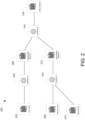
- a data source “U.S. Feed” 202 provides data to a "Transform A” 204 transform.
- the Transform A 204 performs operations on the data provided by the “U.S. Feed” 202 and stores the result in the "Intermediate Dataset 1" 206 data store.
- Data sources “Mexico Feed” 208 and “Brazil Feed” 214 provide data to a "Transform C” 210 transform.
- the "Transform C” 210 transform performs operations on the data provided by the "Mexico Feed” 208 and the "Brazil Feed” 214 and stores the result in an "Intermediate Dataset 2" 212 data store.
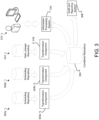
- the combined repository 306 preferably is a scalable object-oriented database system designed to support the development and execution of graph-based applications and the interchange of metadata between the graph-based applications and other systems (e.g., other operating systems).
- the combined repository 306 is a storage system for all kinds of metadata, including documentation, record formats (e.g., fields and data types of records in a table), transform functions, graphs, jobs, and monitoring information.
- the combined repository 306 can also store data objects that represent actual data to be processed by a computing system.
- the combination of data lineage information and job dependency information stored in the combined repository 306 can be used to generate reports and information not otherwise available. Combining these two sources of data together enables a holistic view of the jobs not otherwise available. For example, the combination of data can be used to provide an answer to the question "if a job is late what does that mean for any given data set?" The job may not directly affect dataset 1, but may indirectly affect it because of scheduling directives in the workload automation systems.
- An information processing system 310 can present a user 312 with a graphical user interface and can allow a user to drill down and view the particulars of the scheduling information and/or the data lineage, including navigating between the job scheduling information and the data lineage information based on the links described above.
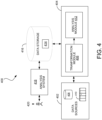
- FIG. 4 shows an example of a data processing system 400 in which the data analysis techniques can be used.
- the system 400 includes a data source 402 that may include one or more sources of data, such as storage devices or connections to online data streams, including, for example, data repositories of workload automation system. Each data store may store or provide data in any of a variety of formats (e.g., database tables, spreadsheet files, flat text files, or a native format used by a mainframe).
- An execution environment 404 includes a pre-processing module 406 and an execution module 412.
- the execution environment 404 may be hosted, for example, on one or more general-purpose computers under the control of a suitable operating system, such as a version of the UNIX operating system.
- the execution environment 404 can include a multiple-node parallel computing environment including a configuration of computer systems using multiple central processing units (CPUs) or processor cores, either local (e.g., multiprocessor systems such as symmetric multi-processing (SMP) computers), or locally distributed (e.g., multiple processors coupled as clusters or massively parallel processing (MPP) systems), or remote, or remotely distributed (e.g., multiple processors coupled via a local area network (LAN) and/or wide-area network (WAN)), or any combination thereof.
- CPUs central processing units
- processor cores either local (e.g., multiprocessor systems such as symmetric multi-processing (SMP) computers), or locally distributed (e.g., multiple processors coupled as clusters or massively parallel processing (MPP) systems), or remote, or remotely distributed (e.g., multiple processors coupled via a local area network (LAN) and/or wide-area network (WAN)), or any combination thereof.
- SMP symmetric multi-processing
- MPP massive
- the transformation module 406 reads data from the data sources 402, transforms the data into a canonical format and stores the information in data storage 416.
- Storage devices providing the data source 402 may be local to the execution environment 404 (for example, being stored on a storage medium connected to a computer hosting the execution environment 404 (e.g., hard drive 408)), or may be remote to the execution environment 404 (for example, being hosted on a remote system (e.g., mainframe 410) in communication with a computer hosting the execution environment 404, over a remote connection (e.g., provided by a cloud computing infrastructure)).
- the analysis module 412 uses the stored information generated by the transformation module 406 combined with the data lineage information to perform analysis of the combined data in a manner that is not otherwise possible. For example, a change in a schedule of a job may impact data stores beyond those directly affected by the job. Jobs can affect other jobs and each of those jobs can affect data sources. In some scenarios, changes to a data source can, in turn, affect additional jobs.
- the stored information may be stored in a data storage system 416.
- the data storage system 416 is also accessible to an analysis system 418 interacting with a user 420. The user 420 is able to perform a drill down analysis of the combined data.
- the analysis system 418 and execution environment 404 are, in some implementations, designed using a system for executing computation applications as dataflow graphs that include vertices (representing data processing components or datasets) connected by directed links (representing flows of work elements, i.e., data) between the vertices.
- vertices representing data processing components or datasets
- directed links representing flows of work elements, i.e., data
- U.S. Publication No. 2007/0011668 titled "Managing Parameters for Graph-Based Applications”
- a system for executing such graph-based computations is described in U.S. Patent 5,966,072 , titled “EXECUTING COMPUTATIONS EXPRESSED AS GRAPHS,”.
- Dataflow graphs made in accordance with this system provide methods for getting information into and out of individual processes represented by graph components, for moving information between the processes, and for defining a running order for the processes.
- This system includes algorithms that choose inter-process communication methods from any available methods (for example, communication paths according to the links of the graph can use TCP/IP or UNIX domain sockets, or use shared memory to pass data between the processes).
- the transformation module 406 can receive data from a variety of types of systems that may embody the data source 402, including different forms of database systems.
- the data may be organized as records having values for respective fields (also called “attributes” or “columns”), including possibly null values.
- the transformation module 406 typically starts with some initial format information that describes records in that data source.
- the record structure of the data source may not be known initially and may instead be determined after analysis of the data source or the data.
- the initial information about records can include, for example, the number of bits that represent a distinct value, the order of fields within a record, and the type of value (e.g., string, signed/unsigned integer) represented by the bits.
- FIG. 5 is a flowchart of an exemplary process 500 for identifying the impact of changes to scheduling information.
- the process may be performed by a computer system performing the process.
- Data lineage information is obtained 502.
- the data lineage information may be obtained from a data store as described above.
- the data lineage information identifies dependency relationships between data stores and transformation.
- the transformation can accept data from one data store and produces data for another data store.
- Job dependency information is obtained 504.
- the job dependency information can be obtained through the processes discussed above.
- the job dependency information specifies an order of execution of a plurality of jobs.
- Links between at least some of the elements of the job dependency information and the data lineage information can be identified.
- the links may be direct (for example, the job may cause the transformation to execute 506).
- the links may also be indirect (for example, the job may cause a dataflow graph to execute, where the dataflow graph includes a transformation).
- the links may be determined based on the files and data stores that are referenced by the job scheduling information and the data lineage information.
- An impact of a change in a planned execution of an application of the plurality of applications on a data store is determined 508.
- the impact is determined based on the job dependency information, the links, and the data lineage information.
- a user may submit a query that identifies at least one job, an executable program, or a data store.
- a user may wish to determine the impact if a particular job, executable program, or data source is unavailable or if a particular job fails or fails to execute on time.
- a workload automation system may identify that a job has failed or failed to complete on time.
- a job may fail, for example, when an error occurs during processing that cannot be handled by the job itself.
- a job may also fail, for example, when a period of time passes.
- the process can identifies all of the jobs that are dependent on the identified job, executable program, or data store.
- the process identifies links between the identified job and dependent jobs and data lineage elements.
- a data lineage element can be a data element that describes a relationship or a portion of a relationship between data sources, data sinks, and data transformations.
- the data lineage elements that are linked to the identified job and dependent job are used to determine data lineage elements that are dependent on the job. That is, all of the data lineage elements that are accessed subsequent to the data lineage elements can be identified by the links.
- additional links may relate the data lineage elements back to the additional jobs.
- the additional job may in turn link back to additional data lineage elements.
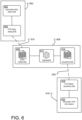
- FIG. 6 illustrates a simplified example of dependency information that may be determined based on the combination of job dependency information and data lineage information.
- a job 600 includes two sub-jobs: (1) a generated daily sales.dat job 602 and (2) a FTP daily sales.dat job 604.
- the daily sales file.dat is used by a data flow graph 606 as identified by the data lineage information.
- the FTP daily dales.dat job is linked to the daily sales.dat data source 608 as illustrated by the dotted line 610.
- the input file.dat 608 is aggregated with other data, not shown, by the aggregate transform 612.
- the aggregate transform 612 creates the data source quarterly.dat 614.
- Another job 616 includes a file watch quarterly.
- the generate 10-K information job 622 uses the quarterly.dat file to generate 10-K information for the SEC.
- the system can determine that a problem generating the daily sales.dat file can result in a delay with generating the 10-K, even though the generate daily sales job and the generate 10-K information job are not linked by the job dependency information.
- the software may include procedures in one or more computer programs that execute on one or more programmed or programmable computing systems (which may be of various architectures, such as distributed, client/server, or grid), each including at least one processor, at least one data storage system (including volatile and/or non-volatile memory and/or storage elements), at least one user interface (for receiving input using at least one input device or port, and for providing output using at least one output device or port).
- the software may include one or more modules of a larger program, for example, that provides services related to the design, configuration, and execution of dataflow graphs.
- the modules of the program e.g., elements of a dataflow graph
- the software may be provided on a tangible, non-transitory medium, such as a CD-ROM or other computer-readable medium (e.g., readable by a general or special purpose computing system or device), or delivered (e.g., encoded in a propagated signal) over a communication medium of a network to a tangible, non-transitory medium of a computing system where it is executed.
- Some or all of the processing may be performed on a special purpose computer, or using special-purpose hardware, such as coprocessor or field-programmable gate arrays (FPGAs) or dedicated, application-specific integrated circuits (ASICs).
- the processing may be implemented in a distributed manner in which different parts of the computation specified by the software are performed by different computing elements.
- Each such computer program is preferably stored on or downloaded to a computer-readable storage medium (e.g., solid state memory or media, or magnetic or optical media) of a storage device accessible by a general or special purpose programmable computer, for configuring and operating the computer when the storage device medium is read by the computer to perform the processing described herein.
- a computer-readable storage medium e.g., solid state memory or media, or magnetic or optical media
- the inventive system may also be considered to be implemented as a tangible, non-transitory medium, configured with a computer program, where the medium so configured causes a computer to operate in a specific and predefined manner to perform one or more of the processing steps described herein.
Landscapes
- Engineering & Computer Science (AREA)
- Software Systems (AREA)
- Theoretical Computer Science (AREA)
- Physics & Mathematics (AREA)
- General Engineering & Computer Science (AREA)
- General Physics & Mathematics (AREA)
- Stored Programmes (AREA)
- Information Retrieval, Db Structures And Fs Structures Therefor (AREA)
- Debugging And Monitoring (AREA)
Applications Claiming Priority (3)
| Application Number | Priority Date | Filing Date | Title |
|---|---|---|---|
| US201462004406P | 2014-05-29 | 2014-05-29 | |
| US14/470,501 US10705877B2 (en) | 2014-05-29 | 2014-08-27 | Workload automation and data lineage analysis |
| PCT/US2015/032193 WO2015183738A1 (en) | 2014-05-29 | 2015-05-22 | Workload automation and data lineage analysis |
Publications (2)
| Publication Number | Publication Date |
|---|---|
| EP3149581A1 EP3149581A1 (en) | 2017-04-05 |
| EP3149581B1 true EP3149581B1 (en) | 2025-05-14 |
Family
ID=53404861
Family Applications (1)
| Application Number | Title | Priority Date | Filing Date |
|---|---|---|---|
| EP15729617.9A Active EP3149581B1 (en) | 2014-05-29 | 2015-05-22 | Workload automation and data lineage analysis |
Country Status (7)
| Country | Link |
|---|---|
| US (2) | US10705877B2 (enExample) |
| EP (1) | EP3149581B1 (enExample) |
| JP (2) | JP6674904B2 (enExample) |
| AU (3) | AU2015267334B2 (enExample) |
| CA (1) | CA2949955C (enExample) |
| SG (2) | SG10201807358YA (enExample) |
| WO (1) | WO2015183738A1 (enExample) |
Families Citing this family (22)
| Publication number | Priority date | Publication date | Assignee | Title |
|---|---|---|---|---|
| US10705877B2 (en) | 2014-05-29 | 2020-07-07 | Ab Initio Technology Llc | Workload automation and data lineage analysis |
| US11892913B2 (en) | 2015-01-05 | 2024-02-06 | Rubrik, Inc. | Data lineage based multi-data store recovery |
| US10579627B2 (en) * | 2016-01-08 | 2020-03-03 | Microsoft Technology Licensing, Llc | Database operation using metadata of data sources |
| EP3475886A1 (en) | 2016-08-22 | 2019-05-01 | Oracle International Corporation | System and method for metadata-driven external interface generation of application programming interfaces |
| WO2018102691A1 (en) | 2016-12-01 | 2018-06-07 | Ab Initio Technology Llc | Generating, accessing, and displaying lineage metadata |
| US10514993B2 (en) * | 2017-02-14 | 2019-12-24 | Google Llc | Analyzing large-scale data processing jobs |
| US10431002B2 (en) * | 2017-02-23 | 2019-10-01 | International Business Machines Corporation | Displaying data lineage using three dimensional virtual reality model |
| US10642801B2 (en) | 2017-08-29 | 2020-05-05 | Bank Of America Corporation | System for determining the impact to databases, tables and views by batch processing |
| US10514948B2 (en) * | 2017-11-09 | 2019-12-24 | Cloudera, Inc. | Information based on run-time artifacts in a distributed computing cluster |
| US10635700B2 (en) | 2017-11-09 | 2020-04-28 | Cloudera, Inc. | Design-time information based on run-time artifacts in transient cloud-based distributed computing clusters |
| DE112018006630T5 (de) | 2017-12-28 | 2020-09-24 | Intel Corporation | Visual fog |
| US10936367B2 (en) * | 2018-10-28 | 2021-03-02 | Microsoft Technology Licensing, Llc | Provenance driven job relevance assessment |
| US10445170B1 (en) | 2018-11-21 | 2019-10-15 | Fmr Llc | Data lineage identification and change impact prediction in a distributed computing environment |
| US11194845B2 (en) | 2019-04-19 | 2021-12-07 | Tableau Software, LLC | Interactive lineage analyzer for data assets |
| US10719336B1 (en) * | 2019-05-14 | 2020-07-21 | Microsoft Technology Licensing, Llc | Dependency version conflict auto-resolution |
| US11681721B2 (en) * | 2020-05-08 | 2023-06-20 | Jpmorgan Chase Bank, N.A. | Systems and methods for spark lineage data capture |
| US11349957B2 (en) | 2020-05-14 | 2022-05-31 | Bank Of America Corporation | Automatic knowledge management for data lineage tracking |
| US11520801B2 (en) | 2020-11-10 | 2022-12-06 | Bank Of America Corporation | System and method for automatically obtaining data lineage in real time |
| US11789779B2 (en) * | 2021-03-01 | 2023-10-17 | Bank Of America Corporation | Electronic system for monitoring and automatically controlling batch processing |
| US11797574B2 (en) | 2021-07-30 | 2023-10-24 | Bank Of America Corporation | Hierarchic distributed ledger for data lineage |
| US12608234B2 (en) * | 2022-10-16 | 2026-04-21 | Oracle International Corporation | Workload analyzer for monitoring and optimizing workload performance |
| CN118811354B (zh) * | 2024-09-19 | 2024-11-19 | 联诚科技集团股份有限公司 | 一种实现模拟量模块烧写程序和自动校准的测试装置 |
Family Cites Families (35)
| Publication number | Priority date | Publication date | Assignee | Title |
|---|---|---|---|---|
| JP3181994B2 (ja) | 1992-09-03 | 2001-07-03 | 株式会社日立製作所 | ジョブフロー仕様書自動作成方法 |
| US5966072A (en) | 1996-07-02 | 1999-10-12 | Ab Initio Software Corporation | Executing computations expressed as graphs |
| JP2000066931A (ja) | 1998-08-19 | 2000-03-03 | Sony Corp | データベースシステム、データ変更方法およびデータベースプログラムが記録されたコンピュータ読み取り可能な記録媒体 |
| JP2001022695A (ja) | 1999-07-12 | 2001-01-26 | Nec Software Chubu Ltd | システム構成要素間の対応関係管理・照会システムとその対応関係管理・照会方法および情報記録媒体 |
| US7289964B1 (en) * | 1999-08-31 | 2007-10-30 | Accenture Llp | System and method for transaction services patterns in a netcentric environment |
| JP4399127B2 (ja) | 2001-05-14 | 2010-01-13 | 株式会社日立製作所 | 文書管理方法及び装置並びにその処理プログラム及びそれを格納した記憶媒体 |
| US20060010425A1 (en) * | 2001-10-29 | 2006-01-12 | Willadsen Gloria J | Methods and apparatus for automated mangement of software |
| US20050071842A1 (en) * | 2003-08-04 | 2005-03-31 | Totaletl, Inc. | Method and system for managing data using parallel processing in a clustered network |
| US7366735B2 (en) | 2004-04-09 | 2008-04-29 | Oracle International Corporation | Efficient extraction of XML content stored in a LOB |
| JP2008500627A (ja) * | 2004-05-27 | 2008-01-10 | コーニンクレッカ フィリップス エレクトロニクス エヌ ヴィ | 信号処理装置 |
| JP4866844B2 (ja) | 2004-06-16 | 2012-02-01 | オラクル・インターナショナル・コーポレイション | Lobに格納されたxml内容の効率的な抽出 |
| JP2006120021A (ja) | 2004-10-22 | 2006-05-11 | Cannac:Kk | 問題解決支援装置、問題解決支援方法、及び問題解決支援プログラム |
| JP2006268509A (ja) | 2005-03-24 | 2006-10-05 | Nomura Research Institute Ltd | ジョブ設定装置およびジョブ設定方法 |
| US7716630B2 (en) | 2005-06-27 | 2010-05-11 | Ab Initio Technology Llc | Managing parameters for graph-based computations |
| JP2007241642A (ja) * | 2006-03-08 | 2007-09-20 | Kubota Systems Inc | 解析方法、解析装置及びコンピュータプログラム |
| JP4476233B2 (ja) * | 2006-03-24 | 2010-06-09 | 日本証券テクノロジー株式会社 | バッチ系のシステムリソース管理方式 |
| US20090024111A1 (en) * | 2007-07-16 | 2009-01-22 | German Borodulin | Urethral catheter assembly for combining catheterization with injection of therapeutic liquid into the urethral channel |
| US8387066B1 (en) * | 2007-09-28 | 2013-02-26 | Emc Corporation | Dependency-based task management using set of preconditions to generate scheduling data structure in storage area network |
| US20090165015A1 (en) * | 2007-12-21 | 2009-06-25 | Schlumberger Technology Corporation | Managing dependencies among applications using satisfiability engine |
| JP2009163566A (ja) | 2008-01-08 | 2009-07-23 | Nomura Research Institute Ltd | ジョブ解析支援装置 |
| US8869165B2 (en) | 2008-03-20 | 2014-10-21 | International Business Machines Corporation | Integrating flow orchestration and scheduling of jobs and data activities for a batch of workflows over multiple domains subject to constraints |
| US8261363B2 (en) | 2008-04-29 | 2012-09-04 | Ricoh Company, Ltd. | Managing electronic data with identification data |
| US20110119680A1 (en) | 2009-11-16 | 2011-05-19 | Yahoo! Inc. | Policy-driven schema and system for managing data system pipelines in multi-tenant model |
| US8510751B2 (en) * | 2010-03-18 | 2013-08-13 | International Business Machines Corporation | Optimizing workflow engines |
| EP2609507B1 (en) | 2010-08-25 | 2019-05-15 | Ab Initio Technology LLC | Evaluating dataflow graph characteristics |
| US8856291B2 (en) * | 2012-02-14 | 2014-10-07 | Amazon Technologies, Inc. | Providing configurable workflow capabilities |
| US10147063B2 (en) * | 2012-07-16 | 2018-12-04 | International Business Machines Corporation | Transforming project management representations into business process representations |
| US8943505B2 (en) * | 2012-08-24 | 2015-01-27 | National Instruments Corporation | Hardware assisted real-time scheduler using memory monitoring |
| US20140189703A1 (en) * | 2012-12-28 | 2014-07-03 | General Electric Company | System and method for distributed computing using automated provisoning of heterogeneous computing resources |
| CA2906816C (en) * | 2013-03-15 | 2020-06-30 | Amazon Technologies, Inc. | Scalable analysis platform for semi-structured data |
| US9477523B1 (en) * | 2013-06-25 | 2016-10-25 | Amazon Technologies, Inc. | Scheduling data access jobs based on job priority and predicted execution time using historical execution data |
| US9304817B2 (en) * | 2013-11-25 | 2016-04-05 | Xerox Corporation | Method and apparatus for a user-driven priority based job scheduling in a data processing platform |
| US10310903B2 (en) * | 2014-01-17 | 2019-06-04 | Red Hat, Inc. | Resilient scheduling of broker jobs for asynchronous tasks in a multi-tenant platform-as-a-service (PaaS) system |
| US9805326B2 (en) * | 2014-04-24 | 2017-10-31 | International Business Machines Corporation | Task management integrated design environment for complex data integration applications |
| US10705877B2 (en) | 2014-05-29 | 2020-07-07 | Ab Initio Technology Llc | Workload automation and data lineage analysis |
-
2014
- 2014-08-27 US US14/470,501 patent/US10705877B2/en active Active
-
2015
- 2015-05-22 EP EP15729617.9A patent/EP3149581B1/en active Active
- 2015-05-22 CA CA2949955A patent/CA2949955C/en active Active
- 2015-05-22 WO PCT/US2015/032193 patent/WO2015183738A1/en not_active Ceased
- 2015-05-22 SG SG10201807358YA patent/SG10201807358YA/en unknown
- 2015-05-22 SG SG11201608958TA patent/SG11201608958TA/en unknown
- 2015-05-22 AU AU2015267334A patent/AU2015267334B2/en active Active
- 2015-05-22 JP JP2016567355A patent/JP6674904B2/ja active Active
-
2019
- 2019-12-18 AU AU2019283853A patent/AU2019283853B2/en not_active Expired - Fee Related
-
2020
- 2020-03-09 JP JP2020039456A patent/JP6985441B2/ja active Active
- 2020-06-19 US US16/906,193 patent/US11748165B2/en active Active
-
2021
- 2021-02-02 AU AU2021200669A patent/AU2021200669B2/en active Active
Also Published As
| Publication number | Publication date |
|---|---|
| JP6985441B2 (ja) | 2021-12-22 |
| AU2019283853A1 (en) | 2020-01-23 |
| AU2021200669B2 (en) | 2022-11-17 |
| CA2949955C (en) | 2022-12-06 |
| AU2015267334A1 (en) | 2016-11-17 |
| CA2949955A1 (en) | 2015-12-03 |
| JP2017522630A (ja) | 2017-08-10 |
| EP3149581A1 (en) | 2017-04-05 |
| JP2020126656A (ja) | 2020-08-20 |
| US20150347193A1 (en) | 2015-12-03 |
| SG10201807358YA (en) | 2018-09-27 |
| AU2021200669A1 (en) | 2021-03-04 |
| JP6674904B2 (ja) | 2020-04-01 |
| WO2015183738A1 (en) | 2015-12-03 |
| US20200319932A1 (en) | 2020-10-08 |
| SG11201608958TA (en) | 2016-11-29 |
| AU2019283853B2 (en) | 2020-11-19 |
| US11748165B2 (en) | 2023-09-05 |
| AU2015267334B2 (en) | 2019-10-03 |
| US10705877B2 (en) | 2020-07-07 |
Similar Documents
| Publication | Publication Date | Title |
|---|---|---|
| AU2021200669B2 (en) | Workload automation and data lineage analysis | |
| US10466981B1 (en) | System and method for generative programming in an integrated development environment (IDE) | |
| WO2018106589A1 (en) | Differencing of executable dataflow graphs | |
| JP6412924B2 (ja) | Etlマップ設計のためのプロジェクタおよびセレクタコンポーネントタイプの使用 | |
| US11494713B2 (en) | Robotic process automation analytics platform | |
| US10116512B2 (en) | Service discovery and/or effort estimation in networked computing environments | |
| AU2020279774B2 (en) | Static and runtime analysis of computer program systems | |
| Malensek et al. | Using distributed analytics to enable real-time exploration of discrete event simulations | |
| HK1229921B (en) | Workload automation and data lineage analysis | |
| HK1229921A1 (en) | Workload automation and data lineage analysis | |
| Pautasso et al. | Autonomic computing for virtual laboratories | |
| CA3141609C (en) | Static and runtime analysis of computer program ecosystems | |
| Figueira | A framework for dataflow orchestration in lambda architectures | |
| de Oliveira et al. | Background Knowledge | |
| Praveen | Data Engineering Concepts: From Basics To Advance Techniques | |
| Kuznetsov et al. | The archive solution for distributed workflow management agents of the CMS experiment at LHC | |
| Moroasi | Multi-Tenancy Management on Containerized Microservices Using the Actor Model | |
| LUPPINO | Report Flow: An Orchestration Platform for Data Workflows | |
| Nandakumar | Workflow based orchestrations for serverless workloads with ephemeral statestore | |
| Stallone | Monkey: A Distributed Orchestrator for a Virtual Pseudo-Homogenous Computational Cluster Consisting of Heterogeneous Sources | |
| van Heusden et al. | Getting the Most out of HTC with Workflows | |
| Sundaravarathan | MEWSE-multi engine workflow submission and execution on Apache yarn | |
| de Oliveira Donas-Botto | A Framework for Dataflow Orchestration in Lambda Architectures | |
| Thayalakumar | Smart Distributed Processing Technologies For Hedge Fund Management | |
| Vallath | Real Application Testing |
Legal Events
| Date | Code | Title | Description |
|---|---|---|---|
| STAA | Information on the status of an ep patent application or granted ep patent |
Free format text: STATUS: THE INTERNATIONAL PUBLICATION HAS BEEN MADE |
|
| PUAI | Public reference made under article 153(3) epc to a published international application that has entered the european phase |
Free format text: ORIGINAL CODE: 0009012 |
|
| STAA | Information on the status of an ep patent application or granted ep patent |
Free format text: STATUS: REQUEST FOR EXAMINATION WAS MADE |
|
| 17P | Request for examination filed |
Effective date: 20161117 |
|
| AK | Designated contracting states |
Kind code of ref document: A1 Designated state(s): AL AT BE BG CH CY CZ DE DK EE ES FI FR GB GR HR HU IE IS IT LI LT LU LV MC MK MT NL NO PL PT RO RS SE SI SK SM TR |
|
| AX | Request for extension of the european patent |
Extension state: BA ME |
|
| DAV | Request for validation of the european patent (deleted) | ||
| DAX | Request for extension of the european patent (deleted) | ||
| REG | Reference to a national code |
Ref country code: HK Ref legal event code: DE Ref document number: 1229921 Country of ref document: HK |
|
| STAA | Information on the status of an ep patent application or granted ep patent |
Free format text: STATUS: EXAMINATION IS IN PROGRESS |
|
| 17Q | First examination report despatched |
Effective date: 20180305 |
|
| P01 | Opt-out of the competence of the unified patent court (upc) registered |
Effective date: 20230510 |
|
| GRAP | Despatch of communication of intention to grant a patent |
Free format text: ORIGINAL CODE: EPIDOSNIGR1 |
|
| STAA | Information on the status of an ep patent application or granted ep patent |
Free format text: STATUS: GRANT OF PATENT IS INTENDED |
|
| INTG | Intention to grant announced |
Effective date: 20250120 |
|
| GRAS | Grant fee paid |
Free format text: ORIGINAL CODE: EPIDOSNIGR3 |
|
| GRAA | (expected) grant |
Free format text: ORIGINAL CODE: 0009210 |
|
| STAA | Information on the status of an ep patent application or granted ep patent |
Free format text: STATUS: THE PATENT HAS BEEN GRANTED |
|
| AK | Designated contracting states |
Kind code of ref document: B1 Designated state(s): AL AT BE BG CH CY CZ DE DK EE ES FI FR GB GR HR HU IE IS IT LI LT LU LV MC MK MT NL NO PL PT RO RS SE SI SK SM TR |
|
| REG | Reference to a national code |
Ref country code: GB Ref legal event code: FG4D |
|
| REG | Reference to a national code |
Ref country code: CH Ref legal event code: EP |
|
| REG | Reference to a national code |
Ref country code: DE Ref legal event code: R096 Ref document number: 602015091646 Country of ref document: DE |
|
| REG | Reference to a national code |
Ref country code: IE Ref legal event code: FG4D |
|
| REG | Reference to a national code |
Ref country code: NL Ref legal event code: MP Effective date: 20250514 |
|
| PG25 | Lapsed in a contracting state [announced via postgrant information from national office to epo] |
Ref country code: FI Free format text: LAPSE BECAUSE OF FAILURE TO SUBMIT A TRANSLATION OF THE DESCRIPTION OR TO PAY THE FEE WITHIN THE PRESCRIBED TIME-LIMIT Effective date: 20250514 Ref country code: ES Free format text: LAPSE BECAUSE OF FAILURE TO SUBMIT A TRANSLATION OF THE DESCRIPTION OR TO PAY THE FEE WITHIN THE PRESCRIBED TIME-LIMIT Effective date: 20250514 Ref country code: PT Free format text: LAPSE BECAUSE OF FAILURE TO SUBMIT A TRANSLATION OF THE DESCRIPTION OR TO PAY THE FEE WITHIN THE PRESCRIBED TIME-LIMIT Effective date: 20250915 |
|
| REG | Reference to a national code |
Ref country code: LT Ref legal event code: MG9D |
|
| PG25 | Lapsed in a contracting state [announced via postgrant information from national office to epo] |
Ref country code: GR Free format text: LAPSE BECAUSE OF FAILURE TO SUBMIT A TRANSLATION OF THE DESCRIPTION OR TO PAY THE FEE WITHIN THE PRESCRIBED TIME-LIMIT Effective date: 20250815 Ref country code: NO Free format text: LAPSE BECAUSE OF FAILURE TO SUBMIT A TRANSLATION OF THE DESCRIPTION OR TO PAY THE FEE WITHIN THE PRESCRIBED TIME-LIMIT Effective date: 20250814 |
|
| PG25 | Lapsed in a contracting state [announced via postgrant information from national office to epo] |
Ref country code: NL Free format text: LAPSE BECAUSE OF FAILURE TO SUBMIT A TRANSLATION OF THE DESCRIPTION OR TO PAY THE FEE WITHIN THE PRESCRIBED TIME-LIMIT Effective date: 20250514 Ref country code: PL Free format text: LAPSE BECAUSE OF FAILURE TO SUBMIT A TRANSLATION OF THE DESCRIPTION OR TO PAY THE FEE WITHIN THE PRESCRIBED TIME-LIMIT Effective date: 20250514 |
|
| REG | Reference to a national code |
Ref country code: AT Ref legal event code: MK05 Ref document number: 1795374 Country of ref document: AT Kind code of ref document: T Effective date: 20250514 |
|
| PG25 | Lapsed in a contracting state [announced via postgrant information from national office to epo] |
Ref country code: BG Free format text: LAPSE BECAUSE OF FAILURE TO SUBMIT A TRANSLATION OF THE DESCRIPTION OR TO PAY THE FEE WITHIN THE PRESCRIBED TIME-LIMIT Effective date: 20250514 |
|
| PG25 | Lapsed in a contracting state [announced via postgrant information from national office to epo] |
Ref country code: HR Free format text: LAPSE BECAUSE OF FAILURE TO SUBMIT A TRANSLATION OF THE DESCRIPTION OR TO PAY THE FEE WITHIN THE PRESCRIBED TIME-LIMIT Effective date: 20250514 |
|
| PG25 | Lapsed in a contracting state [announced via postgrant information from national office to epo] |
Ref country code: AT Free format text: LAPSE BECAUSE OF FAILURE TO SUBMIT A TRANSLATION OF THE DESCRIPTION OR TO PAY THE FEE WITHIN THE PRESCRIBED TIME-LIMIT Effective date: 20250514 |
|
| PG25 | Lapsed in a contracting state [announced via postgrant information from national office to epo] |
Ref country code: RS Free format text: LAPSE BECAUSE OF FAILURE TO SUBMIT A TRANSLATION OF THE DESCRIPTION OR TO PAY THE FEE WITHIN THE PRESCRIBED TIME-LIMIT Effective date: 20250814 |
|
| PG25 | Lapsed in a contracting state [announced via postgrant information from national office to epo] |
Ref country code: IS Free format text: LAPSE BECAUSE OF FAILURE TO SUBMIT A TRANSLATION OF THE DESCRIPTION OR TO PAY THE FEE WITHIN THE PRESCRIBED TIME-LIMIT Effective date: 20250914 |
|
| PG25 | Lapsed in a contracting state [announced via postgrant information from national office to epo] |
Ref country code: LV Free format text: LAPSE BECAUSE OF FAILURE TO SUBMIT A TRANSLATION OF THE DESCRIPTION OR TO PAY THE FEE WITHIN THE PRESCRIBED TIME-LIMIT Effective date: 20250514 |
|
| REG | Reference to a national code |
Ref country code: CH Ref legal event code: H13 Free format text: ST27 STATUS EVENT CODE: U-0-0-H10-H13 (AS PROVIDED BY THE NATIONAL OFFICE) Effective date: 20251223 |
|
| PG25 | Lapsed in a contracting state [announced via postgrant information from national office to epo] |
Ref country code: SM Free format text: LAPSE BECAUSE OF FAILURE TO SUBMIT A TRANSLATION OF THE DESCRIPTION OR TO PAY THE FEE WITHIN THE PRESCRIBED TIME-LIMIT Effective date: 20250514 Ref country code: DK Free format text: LAPSE BECAUSE OF FAILURE TO SUBMIT A TRANSLATION OF THE DESCRIPTION OR TO PAY THE FEE WITHIN THE PRESCRIBED TIME-LIMIT Effective date: 20250514 |
|
| PG25 | Lapsed in a contracting state [announced via postgrant information from national office to epo] |
Ref country code: LU Free format text: LAPSE BECAUSE OF NON-PAYMENT OF DUE FEES Effective date: 20250522 |
|
| PG25 | Lapsed in a contracting state [announced via postgrant information from national office to epo] |
Ref country code: CH Free format text: LAPSE BECAUSE OF NON-PAYMENT OF DUE FEES Effective date: 20250531 |
|
| PG25 | Lapsed in a contracting state [announced via postgrant information from national office to epo] |
Ref country code: CZ Free format text: LAPSE BECAUSE OF FAILURE TO SUBMIT A TRANSLATION OF THE DESCRIPTION OR TO PAY THE FEE WITHIN THE PRESCRIBED TIME-LIMIT Effective date: 20250514 |
|
| PG25 | Lapsed in a contracting state [announced via postgrant information from national office to epo] |
Ref country code: EE Free format text: LAPSE BECAUSE OF FAILURE TO SUBMIT A TRANSLATION OF THE DESCRIPTION OR TO PAY THE FEE WITHIN THE PRESCRIBED TIME-LIMIT Effective date: 20250514 |
|
| PG25 | Lapsed in a contracting state [announced via postgrant information from national office to epo] |
Ref country code: SK Free format text: LAPSE BECAUSE OF FAILURE TO SUBMIT A TRANSLATION OF THE DESCRIPTION OR TO PAY THE FEE WITHIN THE PRESCRIBED TIME-LIMIT Effective date: 20250514 Ref country code: RO Free format text: LAPSE BECAUSE OF FAILURE TO SUBMIT A TRANSLATION OF THE DESCRIPTION OR TO PAY THE FEE WITHIN THE PRESCRIBED TIME-LIMIT Effective date: 20250514 |
|
| PG25 | Lapsed in a contracting state [announced via postgrant information from national office to epo] |
Ref country code: IT Free format text: LAPSE BECAUSE OF FAILURE TO SUBMIT A TRANSLATION OF THE DESCRIPTION OR TO PAY THE FEE WITHIN THE PRESCRIBED TIME-LIMIT Effective date: 20250514 |
|
| REG | Reference to a national code |
Ref country code: BE Ref legal event code: MM Effective date: 20250531 |
|
| REG | Reference to a national code |
Ref country code: DE Ref legal event code: R097 Ref document number: 602015091646 Country of ref document: DE |
|
| PG25 | Lapsed in a contracting state [announced via postgrant information from national office to epo] |
Ref country code: MC Free format text: LAPSE BECAUSE OF FAILURE TO SUBMIT A TRANSLATION OF THE DESCRIPTION OR TO PAY THE FEE WITHIN THE PRESCRIBED TIME-LIMIT Effective date: 20250514 |
|
| PLBE | No opposition filed within time limit |
Free format text: ORIGINAL CODE: 0009261 |
|
| STAA | Information on the status of an ep patent application or granted ep patent |
Free format text: STATUS: NO OPPOSITION FILED WITHIN TIME LIMIT |
|
| REG | Reference to a national code |
Ref country code: CH Ref legal event code: L10 Free format text: ST27 STATUS EVENT CODE: U-0-0-L10-L00 (AS PROVIDED BY THE NATIONAL OFFICE) Effective date: 20260325 |
|
| PG25 | Lapsed in a contracting state [announced via postgrant information from national office to epo] |
Ref country code: IE Free format text: LAPSE BECAUSE OF NON-PAYMENT OF DUE FEES Effective date: 20250522 |
|
| PG25 | Lapsed in a contracting state [announced via postgrant information from national office to epo] |
Ref country code: BE Free format text: LAPSE BECAUSE OF NON-PAYMENT OF DUE FEES Effective date: 20250531 |
|
| 26N | No opposition filed |
Effective date: 20260217 |
|
| PG25 | Lapsed in a contracting state [announced via postgrant information from national office to epo] |
Ref country code: LT Free format text: LAPSE BECAUSE OF FAILURE TO SUBMIT A TRANSLATION OF THE DESCRIPTION OR TO PAY THE FEE WITHIN THE PRESCRIBED TIME-LIMIT Effective date: 20250514 |
|
| PGFP | Annual fee paid to national office [announced via postgrant information from national office to epo] |
Ref country code: GB Payment date: 20260526 Year of fee payment: 12 |
|
| PGFP | Annual fee paid to national office [announced via postgrant information from national office to epo] |
Ref country code: DE Payment date: 20260527 Year of fee payment: 12 |
|
| PGFP | Annual fee paid to national office [announced via postgrant information from national office to epo] |
Ref country code: FR Payment date: 20260521 Year of fee payment: 12 |
|
| PG25 | Lapsed in a contracting state [announced via postgrant information from national office to epo] |
Ref country code: CY Free format text: LAPSE BECAUSE OF FAILURE TO SUBMIT A TRANSLATION OF THE DESCRIPTION OR TO PAY THE FEE WITHIN THE PRESCRIBED TIME-LIMIT Effective date: 20250514 Ref country code: SE Free format text: LAPSE BECAUSE OF FAILURE TO SUBMIT A TRANSLATION OF THE DESCRIPTION OR TO PAY THE FEE WITHIN THE PRESCRIBED TIME-LIMIT Effective date: 20250514 |