EP3148970B1 - Androgen receptor modulators and methods for their use - Google Patents
Androgen receptor modulators and methods for their use Download PDFInfo
- Publication number
- EP3148970B1 EP3148970B1 EP15728354.0A EP15728354A EP3148970B1 EP 3148970 B1 EP3148970 B1 EP 3148970B1 EP 15728354 A EP15728354 A EP 15728354A EP 3148970 B1 EP3148970 B1 EP 3148970B1
- Authority
- EP
- European Patent Office
- Prior art keywords
- compound
- acid
- compounds
- haloalkyl
- cancer
- Prior art date
- Legal status (The legal status is an assumption and is not a legal conclusion. Google has not performed a legal analysis and makes no representation as to the accuracy of the status listed.)
- Not-in-force
Links
- 0 CCCNC[C@@](CCC(Cl)(Cl)Cl)C(N([C@@](CC*)C(OC)=C1)C1=O)=O Chemical compound CCCNC[C@@](CCC(Cl)(Cl)Cl)C(N([C@@](CC*)C(OC)=C1)C1=O)=O 0.000 description 43
- WCKVHTWCIZSNPP-GHMZBOCLSA-N CC(C)(C)C(N[C@H](CCC(Cl)(Cl)Cl)C(N([C@H](CCC(Cl)(Cl)Cl)C(OC)=C1)C1=O)=O)=O Chemical compound CC(C)(C)C(N[C@H](CCC(Cl)(Cl)Cl)C(N([C@H](CCC(Cl)(Cl)Cl)C(OC)=C1)C1=O)=O)=O WCKVHTWCIZSNPP-GHMZBOCLSA-N 0.000 description 2
- HESZRJZVLWPOMW-ZIAGYGMSSA-N CC(C)C[C@H](C(OC)=C1)N(C([C@@H](CCC(Cl)(Cl)Cl)NC(CCC#C)=O)=O)C1=O Chemical compound CC(C)C[C@H](C(OC)=C1)N(C([C@@H](CCC(Cl)(Cl)Cl)NC(CCC#C)=O)=O)C1=O HESZRJZVLWPOMW-ZIAGYGMSSA-N 0.000 description 2
- VZFSSSZAWFEDLX-UHFFFAOYSA-N CCS(NC(CCC(Cl)(Cl)Cl)C(N(C(CCC(Cl)(Cl)Cl)C(OC)=C1)C1=O)=O)(=O)=O Chemical compound CCS(NC(CCC(Cl)(Cl)Cl)C(N(C(CCC(Cl)(Cl)Cl)C(OC)=C1)C1=O)=O)(=O)=O VZFSSSZAWFEDLX-UHFFFAOYSA-N 0.000 description 2
- VZFSSSZAWFEDLX-UWVGGRQHSA-N CCS(N[C@@H](CCC(Cl)(Cl)Cl)C(N([C@@H](CCC(Cl)(Cl)Cl)C(OC)=C1)C1=O)=O)(=O)=O Chemical compound CCS(N[C@@H](CCC(Cl)(Cl)Cl)C(N([C@@H](CCC(Cl)(Cl)Cl)C(OC)=C1)C1=O)=O)(=O)=O VZFSSSZAWFEDLX-UWVGGRQHSA-N 0.000 description 2
- VZFSSSZAWFEDLX-VHSXEESVSA-N CCS(N[C@@H](CCC(Cl)(Cl)Cl)C(N([C@H](CCC(Cl)(Cl)Cl)C(OC)=C1)C1=O)=O)(=O)=O Chemical compound CCS(N[C@@H](CCC(Cl)(Cl)Cl)C(N([C@H](CCC(Cl)(Cl)Cl)C(OC)=C1)C1=O)=O)(=O)=O VZFSSSZAWFEDLX-VHSXEESVSA-N 0.000 description 2
- WCKVHTWCIZSNPP-UHFFFAOYSA-N CC(C)(C)C(NC(CCC(Cl)(Cl)Cl)C(N(C(CCC(Cl)(Cl)Cl)C(OC)=C1)C1=O)=O)=O Chemical compound CC(C)(C)C(NC(CCC(Cl)(Cl)Cl)C(N(C(CCC(Cl)(Cl)Cl)C(OC)=C1)C1=O)=O)=O WCKVHTWCIZSNPP-UHFFFAOYSA-N 0.000 description 1
- WCKVHTWCIZSNPP-QWRGUYRKSA-N CC(C)(C)C(N[C@@H](CCC(Cl)(Cl)Cl)C(N([C@@H](CCC(Cl)(Cl)Cl)C(OC)=C1)C1=O)=O)=O Chemical compound CC(C)(C)C(N[C@@H](CCC(Cl)(Cl)Cl)C(N([C@@H](CCC(Cl)(Cl)Cl)C(OC)=C1)C1=O)=O)=O WCKVHTWCIZSNPP-QWRGUYRKSA-N 0.000 description 1
- WCKVHTWCIZSNPP-WDEREUQCSA-N CC(C)(C)C(N[C@@H](CCC(Cl)(Cl)Cl)C(N([C@H](CCC(Cl)(Cl)Cl)C(OC)=C1)C1=O)=O)=O Chemical compound CC(C)(C)C(N[C@@H](CCC(Cl)(Cl)Cl)C(N([C@H](CCC(Cl)(Cl)Cl)C(OC)=C1)C1=O)=O)=O WCKVHTWCIZSNPP-WDEREUQCSA-N 0.000 description 1
- WCKVHTWCIZSNPP-MNOVXSKESA-N CC(C)(C)C(N[C@H](CCC(Cl)(Cl)Cl)C(N([C@@H](CCC(Cl)(Cl)Cl)C(OC)=C1)C1=O)=O)=O Chemical compound CC(C)(C)C(N[C@H](CCC(Cl)(Cl)Cl)C(N([C@@H](CCC(Cl)(Cl)Cl)C(OC)=C1)C1=O)=O)=O WCKVHTWCIZSNPP-MNOVXSKESA-N 0.000 description 1
- MNPJDNHRUIMEGM-UHFFFAOYSA-N CC(C)(C)OC(NC(CCC(Cl)(Cl)Cl)C(N(C(CCC(Cl)(Cl)Cl)C(OC)=C1)C1=O)=O)=O Chemical compound CC(C)(C)OC(NC(CCC(Cl)(Cl)Cl)C(N(C(CCC(Cl)(Cl)Cl)C(OC)=C1)C1=O)=O)=O MNPJDNHRUIMEGM-UHFFFAOYSA-N 0.000 description 1
- MNPJDNHRUIMEGM-QWRGUYRKSA-N CC(C)(C)OC(N[C@@H](CCC(Cl)(Cl)Cl)C(N([C@@H](CCC(Cl)(Cl)Cl)C(OC)=C1)C1=O)=O)=O Chemical compound CC(C)(C)OC(N[C@@H](CCC(Cl)(Cl)Cl)C(N([C@@H](CCC(Cl)(Cl)Cl)C(OC)=C1)C1=O)=O)=O MNPJDNHRUIMEGM-QWRGUYRKSA-N 0.000 description 1
- IGOIJIKDJDTQHK-WAQLSPKVSA-N CC(C)(C)OC(N[C@@H](CCC(Cl)(Cl)Cl)C(N([C@@H](CCC(Cl)(Cl)Cl)C(OC)=C1)C1O)=O)=O Chemical compound CC(C)(C)OC(N[C@@H](CCC(Cl)(Cl)Cl)C(N([C@@H](CCC(Cl)(Cl)Cl)C(OC)=C1)C1O)=O)=O IGOIJIKDJDTQHK-WAQLSPKVSA-N 0.000 description 1
- MNPJDNHRUIMEGM-MNOVXSKESA-N CC(C)(C)OC(N[C@H](CCC(Cl)(Cl)Cl)C(N([C@@H](CCC(Cl)(Cl)Cl)C(OC)=C1)C1=O)=O)=O Chemical compound CC(C)(C)OC(N[C@H](CCC(Cl)(Cl)Cl)C(N([C@@H](CCC(Cl)(Cl)Cl)C(OC)=C1)C1=O)=O)=O MNPJDNHRUIMEGM-MNOVXSKESA-N 0.000 description 1
- UMSMRPWCSNCYTJ-UHFFFAOYSA-O CC(C)(C)[O](CCCC(N(C(CCC(Cl)(Cl)Cl)C(OC)=C1)C1=O)=O)C([NH3+])=O Chemical compound CC(C)(C)[O](CCCC(N(C(CCC(Cl)(Cl)Cl)C(OC)=C1)C1=O)=O)C([NH3+])=O UMSMRPWCSNCYTJ-UHFFFAOYSA-O 0.000 description 1
- FUKRHFVIVSNXJG-UHFFFAOYSA-N CC(C)CC(C(N(C(CCC(Cl)(Cl)Cl)C(OC)=C1)C1=O)=O)NC(OC(C)(C)C)=O Chemical compound CC(C)CC(C(N(C(CCC(Cl)(Cl)Cl)C(OC)=C1)C1=O)=O)NC(OC(C)(C)C)=O FUKRHFVIVSNXJG-UHFFFAOYSA-N 0.000 description 1
- PUGCYALXAUUXDU-UHFFFAOYSA-N CC(C)CC(C(OC)=C1)N(C(C(CCC(Cl)(Cl)Cl)NC(OC(C)(C)C)=O)=O)C1=O Chemical compound CC(C)CC(C(OC)=C1)N(C(C(CCC(Cl)(Cl)Cl)NC(OC(C)(C)C)=O)=O)C1=O PUGCYALXAUUXDU-UHFFFAOYSA-N 0.000 description 1
- PUGCYALXAUUXDU-OLZOCXBDSA-N CC(C)C[C@@H](C(OC)=C1)N(C([C@@H](CCC(Cl)(Cl)Cl)NC(OC(C)(C)C)=O)=O)C1=O Chemical compound CC(C)C[C@@H](C(OC)=C1)N(C([C@@H](CCC(Cl)(Cl)Cl)NC(OC(C)(C)C)=O)=O)C1=O PUGCYALXAUUXDU-OLZOCXBDSA-N 0.000 description 1
- JUXIXHAQEAHEAA-FWHMADFJSA-N CC(C)C[C@H](C(N(C1(C(CC(Cl)(Cl)Cl)C1)C(OC)=C1)C1=O)=O)NC(OC(C)(C)C)=O Chemical compound CC(C)C[C@H](C(N(C1(C(CC(Cl)(Cl)Cl)C1)C(OC)=C1)C1=O)=O)NC(OC(C)(C)C)=O JUXIXHAQEAHEAA-FWHMADFJSA-N 0.000 description 1
- OBIZICKENHNKIR-ZIAGYGMSSA-N CC(C)C[C@H](C(OC)=C1)N(C([C@@H](CCC(Cl)(Cl)Cl)NC(COC(C)(C)C)=O)=O)C1=O Chemical compound CC(C)C[C@H](C(OC)=C1)N(C([C@@H](CCC(Cl)(Cl)Cl)NC(COC(C)(C)C)=O)=O)C1=O OBIZICKENHNKIR-ZIAGYGMSSA-N 0.000 description 1
- PUGCYALXAUUXDU-CHWSQXEVSA-N CC(C)C[C@H](C(OC)=C1)N(C([C@@H](CCC(Cl)(Cl)Cl)NC(OC(C)(C)C)=O)=O)C1=O Chemical compound CC(C)C[C@H](C(OC)=C1)N(C([C@@H](CCC(Cl)(Cl)Cl)NC(OC(C)(C)C)=O)=O)C1=O PUGCYALXAUUXDU-CHWSQXEVSA-N 0.000 description 1
- PVGAGAAEZJPCLD-PVSHWOEXSA-N CC(C1)(CN(C([C@@H](CCC(Cl)(Cl)Cl)N)=O)C1=O)OC Chemical compound CC(C1)(CN(C([C@@H](CCC(Cl)(Cl)Cl)N)=O)C1=O)OC PVGAGAAEZJPCLD-PVSHWOEXSA-N 0.000 description 1
- TWQBZJPDHOBVDT-VTGJNACWSA-N CC(C1)([C@H](CCC(Cl)(Cl)Cl)N(C([C@H](CCC(Cl)(Cl)Cl)N)=O)C1=O)OC Chemical compound CC(C1)([C@H](CCC(Cl)(Cl)Cl)N(C([C@H](CCC(Cl)(Cl)Cl)N)=O)C1=O)OC TWQBZJPDHOBVDT-VTGJNACWSA-N 0.000 description 1
- HEJYKTFAPFLCGO-UHFFFAOYSA-N CCC(NC(CC(C)C)C(N(C(CCC(Cl)(Cl)Cl)C(OC)=C1)C1=O)=O)=O Chemical compound CCC(NC(CC(C)C)C(N(C(CCC(Cl)(Cl)Cl)C(OC)=C1)C1=O)=O)=O HEJYKTFAPFLCGO-UHFFFAOYSA-N 0.000 description 1
- PDVNUBYZGZXBEU-UHFFFAOYSA-N CCC(NC(CCC(Cl)(Cl)Cl)C(N(C(CC(C)C)C(OC)=C1)C1=O)=O)=O Chemical compound CCC(NC(CCC(Cl)(Cl)Cl)C(N(C(CC(C)C)C(OC)=C1)C1=O)=O)=O PDVNUBYZGZXBEU-UHFFFAOYSA-N 0.000 description 1
- FCBYZQMTXRRUBO-UHFFFAOYSA-N CCC(NC(CCC(Cl)(Cl)Cl)C(N(C(CCC(Cl)(Cl)Cl)C(OC)=C1)C1=O)=O)=O Chemical compound CCC(NC(CCC(Cl)(Cl)Cl)C(N(C(CCC(Cl)(Cl)Cl)C(OC)=C1)C1=O)=O)=O FCBYZQMTXRRUBO-UHFFFAOYSA-N 0.000 description 1
- HEJYKTFAPFLCGO-RYUDHWBXSA-N CCC(N[C@@H](CC(C)C)C(N([C@@H](CCC(Cl)(Cl)Cl)C(OC)=C1)C1=O)=O)=O Chemical compound CCC(N[C@@H](CC(C)C)C(N([C@@H](CCC(Cl)(Cl)Cl)C(OC)=C1)C1=O)=O)=O HEJYKTFAPFLCGO-RYUDHWBXSA-N 0.000 description 1
- PFMAZJZPMRIAFQ-VIFPVBQESA-N CCC(N[C@@H](CCC(Cl)(Cl)Cl)C(N(CC(OC)=C1)C1=O)=O)=O Chemical compound CCC(N[C@@H](CCC(Cl)(Cl)Cl)C(N(CC(OC)=C1)C1=O)=O)=O PFMAZJZPMRIAFQ-VIFPVBQESA-N 0.000 description 1
- PDVNUBYZGZXBEU-NWDGAFQWSA-N CCC(N[C@@H](CCC(Cl)(Cl)Cl)C(N([C@H](CC(C)C)C(OC)=C1)C1=O)=O)=O Chemical compound CCC(N[C@@H](CCC(Cl)(Cl)Cl)C(N([C@H](CC(C)C)C(OC)=C1)C1=O)=O)=O PDVNUBYZGZXBEU-NWDGAFQWSA-N 0.000 description 1
- FCBYZQMTXRRUBO-VHSXEESVSA-N CCC(N[C@@H](CCC(Cl)(Cl)Cl)C(N([C@H](CCC(Cl)(Cl)Cl)C(OC)=C1)C1=O)=O)=O Chemical compound CCC(N[C@@H](CCC(Cl)(Cl)Cl)C(N([C@H](CCC(Cl)(Cl)Cl)C(OC)=C1)C1=O)=O)=O FCBYZQMTXRRUBO-VHSXEESVSA-N 0.000 description 1
- AMTXHGDQRVCTAI-VAALMUBNSA-N CCC(N[C@@H](CCCC=C)C(N([C@@H](CCC(Cl)(Cl)Cl)C([U]C)=C1)C1=O)=O)=O Chemical compound CCC(N[C@@H](CCCC=C)C(N([C@@H](CCC(Cl)(Cl)Cl)C([U]C)=C1)C1=O)=O)=O AMTXHGDQRVCTAI-VAALMUBNSA-N 0.000 description 1
- HEJYKTFAPFLCGO-VXGBXAGGSA-N CCC(N[C@H](CC(C)C)C(N([C@H](CCC(Cl)(Cl)Cl)C(OC)=C1)C1=O)=O)=O Chemical compound CCC(N[C@H](CC(C)C)C(N([C@H](CCC(Cl)(Cl)Cl)C(OC)=C1)C1=O)=O)=O HEJYKTFAPFLCGO-VXGBXAGGSA-N 0.000 description 1
- PDVNUBYZGZXBEU-NEPJUHHUSA-N CCC(N[C@H](CCC(Cl)(Cl)Cl)C(N([C@@H](CC(C)C)C(OC)=C1)C1=O)=O)=O Chemical compound CCC(N[C@H](CCC(Cl)(Cl)Cl)C(N([C@@H](CC(C)C)C(OC)=C1)C1=O)=O)=O PDVNUBYZGZXBEU-NEPJUHHUSA-N 0.000 description 1
- PDVNUBYZGZXBEU-VXGBXAGGSA-N CCC(N[C@H](CCC(Cl)(Cl)Cl)C(N([C@H](CC(C)C)C(OC)=C1)C1=O)=O)=O Chemical compound CCC(N[C@H](CCC(Cl)(Cl)Cl)C(N([C@H](CC(C)C)C(OC)=C1)C1=O)=O)=O PDVNUBYZGZXBEU-VXGBXAGGSA-N 0.000 description 1
- FCBYZQMTXRRUBO-NXEZZACHSA-N CCC(N[C@H](CCC(Cl)(Cl)Cl)C(N([C@H](CCC(Cl)(Cl)Cl)C(OC)=C1)C1=O)=O)=O Chemical compound CCC(N[C@H](CCC(Cl)(Cl)Cl)C(N([C@H](CCC(Cl)(Cl)Cl)C(OC)=C1)C1=O)=O)=O FCBYZQMTXRRUBO-NXEZZACHSA-N 0.000 description 1
- MSYPQJMJDGKDGR-OLZOCXBDSA-N CCCC(N[C@H](CCC(Cl)(Cl)Cl)C(N([C@@H](CC(C)C)C(OC)=C1)C1=O)=O)=O Chemical compound CCCC(N[C@H](CCC(Cl)(Cl)Cl)C(N([C@@H](CC(C)C)C(OC)=C1)C1=O)=O)=O MSYPQJMJDGKDGR-OLZOCXBDSA-N 0.000 description 1
- AYOFKQGOIDZIGC-MNOVXSKESA-N CCCC(N[C@H](CCC(Cl)(Cl)Cl)C(N([C@@H](CCC(Cl)(Cl)Cl)C(OC)=C1)C1=O)=O)=O Chemical compound CCCC(N[C@H](CCC(Cl)(Cl)Cl)C(N([C@@H](CCC(Cl)(Cl)Cl)C(OC)=C1)C1=O)=O)=O AYOFKQGOIDZIGC-MNOVXSKESA-N 0.000 description 1
- WOQHTWDRDXZQIY-UHFFFAOYSA-N CCS([NH-])(=O)=[O]C(CCC(N(C1(C(CC(Cl)(Cl)Cl)C1)C(OC)=C1)C1=O)=O)C(Cl)(Cl)Cl Chemical compound CCS([NH-])(=O)=[O]C(CCC(N(C1(C(CC(Cl)(Cl)Cl)C1)C(OC)=C1)C1=O)=O)C(Cl)(Cl)Cl WOQHTWDRDXZQIY-UHFFFAOYSA-N 0.000 description 1
- GVBHDAVHVVDBOF-UHFFFAOYSA-N COC(C(CCC(Cl)(Cl)Cl)N1C(C(CCC(Cl)(Cl)Cl)NC(CCC#C)=O)=O)=CC1=O Chemical compound COC(C(CCC(Cl)(Cl)Cl)N1C(C(CCC(Cl)(Cl)Cl)NC(CCC#C)=O)=O)=CC1=O GVBHDAVHVVDBOF-UHFFFAOYSA-N 0.000 description 1
- SXAYGAHBVRBWKE-UHFFFAOYSA-N COC(C(CCC(Cl)(Cl)Cl)N1C(C(CCC(Cl)(Cl)Cl)NC2OC2CCC#C)=O)=CC1=O Chemical compound COC(C(CCC(Cl)(Cl)Cl)N1C(C(CCC(Cl)(Cl)Cl)NC2OC2CCC#C)=O)=CC1=O SXAYGAHBVRBWKE-UHFFFAOYSA-N 0.000 description 1
- WXJLNWXWRZFPCM-UHFFFAOYSA-N COC(CN1C(CCCC(Cl)(Cl)Cl)=O)=CC1=O Chemical compound COC(CN1C(CCCC(Cl)(Cl)Cl)=O)=CC1=O WXJLNWXWRZFPCM-UHFFFAOYSA-N 0.000 description 1
- GVBHDAVHVVDBOF-VXGBXAGGSA-N COC([C@@H](CCC(Cl)(Cl)Cl)N1C([C@@H](CCC(Cl)(Cl)Cl)NC(CCC#C)=O)=O)=CC1=O Chemical compound COC([C@@H](CCC(Cl)(Cl)Cl)N1C([C@@H](CCC(Cl)(Cl)Cl)NC(CCC#C)=O)=O)=CC1=O GVBHDAVHVVDBOF-VXGBXAGGSA-N 0.000 description 1
- MEGIJQXLSYCGPB-JGVFFNPUSA-N COC([C@@H](CCC(Cl)(Cl)Cl)N1C([C@H](CCC(Cl)(Cl)Cl)N)=O)=CC1=O Chemical compound COC([C@@H](CCC(Cl)(Cl)Cl)N1C([C@H](CCC(Cl)(Cl)Cl)N)=O)=CC1=O MEGIJQXLSYCGPB-JGVFFNPUSA-N 0.000 description 1
- GVBHDAVHVVDBOF-NWDGAFQWSA-N COC([C@@H](CCC(Cl)(Cl)Cl)N1C([C@H](CCC(Cl)(Cl)Cl)NC(CCC#C)=O)=O)=CC1=O Chemical compound COC([C@@H](CCC(Cl)(Cl)Cl)N1C([C@H](CCC(Cl)(Cl)Cl)NC(CCC#C)=O)=O)=CC1=O GVBHDAVHVVDBOF-NWDGAFQWSA-N 0.000 description 1
- MEGIJQXLSYCGPB-SFYZADRCSA-N COC([C@H](CCC(Cl)(Cl)Cl)N1C([C@@H](CCC(Cl)(Cl)Cl)N)=O)=CC1=O Chemical compound COC([C@H](CCC(Cl)(Cl)Cl)N1C([C@@H](CCC(Cl)(Cl)Cl)N)=O)=CC1=O MEGIJQXLSYCGPB-SFYZADRCSA-N 0.000 description 1
- GVBHDAVHVVDBOF-RYUDHWBXSA-N COC([C@H](CCC(Cl)(Cl)Cl)N1C([C@H](CCC(Cl)(Cl)Cl)NC(CCC#C)=O)=O)=CC1=O Chemical compound COC([C@H](CCC(Cl)(Cl)Cl)N1C([C@H](CCC(Cl)(Cl)Cl)NC(CCC#C)=O)=O)=CC1=O GVBHDAVHVVDBOF-RYUDHWBXSA-N 0.000 description 1
Images
Classifications
-
- C—CHEMISTRY; METALLURGY
- C07—ORGANIC CHEMISTRY
- C07D—HETEROCYCLIC COMPOUNDS
- C07D207/00—Heterocyclic compounds containing five-membered rings not condensed with other rings, with one nitrogen atom as the only ring hetero atom
- C07D207/02—Heterocyclic compounds containing five-membered rings not condensed with other rings, with one nitrogen atom as the only ring hetero atom with only hydrogen or carbon atoms directly attached to the ring nitrogen atom
- C07D207/30—Heterocyclic compounds containing five-membered rings not condensed with other rings, with one nitrogen atom as the only ring hetero atom with only hydrogen or carbon atoms directly attached to the ring nitrogen atom having two double bonds between ring members or between ring members and non-ring members
- C07D207/34—Heterocyclic compounds containing five-membered rings not condensed with other rings, with one nitrogen atom as the only ring hetero atom with only hydrogen or carbon atoms directly attached to the ring nitrogen atom having two double bonds between ring members or between ring members and non-ring members with hetero atoms or with carbon atoms having three bonds to hetero atoms with at the most one bond to halogen, e.g. ester or nitrile radicals, directly attached to ring carbon atoms
- C07D207/36—Oxygen or sulfur atoms
- C07D207/38—2-Pyrrolones
-
- A—HUMAN NECESSITIES
- A61—MEDICAL OR VETERINARY SCIENCE; HYGIENE
- A61K—PREPARATIONS FOR MEDICAL, DENTAL OR TOILETRY PURPOSES
- A61K31/00—Medicinal preparations containing organic active ingredients
- A61K31/33—Heterocyclic compounds
- A61K31/395—Heterocyclic compounds having nitrogen as a ring hetero atom, e.g. guanethidine or rifamycins
- A61K31/40—Heterocyclic compounds having nitrogen as a ring hetero atom, e.g. guanethidine or rifamycins having five-membered rings with one nitrogen as the only ring hetero atom, e.g. sulpiride, succinimide, tolmetin, buflomedil
- A61K31/4015—Heterocyclic compounds having nitrogen as a ring hetero atom, e.g. guanethidine or rifamycins having five-membered rings with one nitrogen as the only ring hetero atom, e.g. sulpiride, succinimide, tolmetin, buflomedil having oxo groups directly attached to the heterocyclic ring, e.g. piracetam, ethosuximide
-
- A—HUMAN NECESSITIES
- A61—MEDICAL OR VETERINARY SCIENCE; HYGIENE
- A61P—SPECIFIC THERAPEUTIC ACTIVITY OF CHEMICAL COMPOUNDS OR MEDICINAL PREPARATIONS
- A61P15/00—Drugs for genital or sexual disorders; Contraceptives
-
- A—HUMAN NECESSITIES
- A61—MEDICAL OR VETERINARY SCIENCE; HYGIENE
- A61P—SPECIFIC THERAPEUTIC ACTIVITY OF CHEMICAL COMPOUNDS OR MEDICINAL PREPARATIONS
- A61P17/00—Drugs for dermatological disorders
-
- A—HUMAN NECESSITIES
- A61—MEDICAL OR VETERINARY SCIENCE; HYGIENE
- A61P—SPECIFIC THERAPEUTIC ACTIVITY OF CHEMICAL COMPOUNDS OR MEDICINAL PREPARATIONS
- A61P17/00—Drugs for dermatological disorders
- A61P17/10—Anti-acne agents
-
- A—HUMAN NECESSITIES
- A61—MEDICAL OR VETERINARY SCIENCE; HYGIENE
- A61P—SPECIFIC THERAPEUTIC ACTIVITY OF CHEMICAL COMPOUNDS OR MEDICINAL PREPARATIONS
- A61P17/00—Drugs for dermatological disorders
- A61P17/14—Drugs for dermatological disorders for baldness or alopecia
-
- A—HUMAN NECESSITIES
- A61—MEDICAL OR VETERINARY SCIENCE; HYGIENE
- A61P—SPECIFIC THERAPEUTIC ACTIVITY OF CHEMICAL COMPOUNDS OR MEDICINAL PREPARATIONS
- A61P21/00—Drugs for disorders of the muscular or neuromuscular system
-
- A—HUMAN NECESSITIES
- A61—MEDICAL OR VETERINARY SCIENCE; HYGIENE
- A61P—SPECIFIC THERAPEUTIC ACTIVITY OF CHEMICAL COMPOUNDS OR MEDICINAL PREPARATIONS
- A61P27/00—Drugs for disorders of the senses
- A61P27/02—Ophthalmic agents
-
- A—HUMAN NECESSITIES
- A61—MEDICAL OR VETERINARY SCIENCE; HYGIENE
- A61P—SPECIFIC THERAPEUTIC ACTIVITY OF CHEMICAL COMPOUNDS OR MEDICINAL PREPARATIONS
- A61P35/00—Antineoplastic agents
-
- A—HUMAN NECESSITIES
- A61—MEDICAL OR VETERINARY SCIENCE; HYGIENE
- A61P—SPECIFIC THERAPEUTIC ACTIVITY OF CHEMICAL COMPOUNDS OR MEDICINAL PREPARATIONS
- A61P43/00—Drugs for specific purposes, not provided for in groups A61P1/00-A61P41/00
Definitions
- This invention generally relates to androgen receptor modulators and their use for treatment of various indications.
- the invention relates to small molecule androgen receptor modulators and their use for treatment of various cancers, for example all stages of prostate cancer, including androgen dependent, androgen-sensitive and castration-resistant prostate cancers.
- Androgens mediate their effects through the androgen receptor (AR). Androgens play a role in a wide range of developmental and physiological responses and are involved in male sexual differentiation, maintenance of spermatogenesis, and male gonadotropin regulation ( R. K. Ross, G. A. Coetzee, C. L. Pearce, J. K. Reichardt, P. Bretsky, L. N. Kolonel, B. E. Henderson, E. Lander, D. Altshuler & G. Daley, Eur Urol 35, 355-36 1 (1999 ); A. A. Thomson, Reproduction 121, 187-195 (2001 ); N. Tanji, K. Aoki & M. Yokoyama, Arch Androl 47, 1-7 (2001 )).
- AR androgen receptor
- Androgens also play a role in female cancers.
- ovarian cancer where elevated levels of androgens are associated with an increased risk of developing ovarian cancer ( K. J. Helzlsouer, A. J. Alberg, G. B. Gordon, C. Longcope, T. L. Bush, S. C. Hoffman & G. W. Comstock, JAMA 274, 1926 -1930 (1995 ); R. J. Edmondson, J. M. Monaghan & B. R. Davies, Br J Cancer 86 , 879-885 (2002 )). androgen receptor (AR) has been detected in a majority of ovarian cancers ( H. A. Risch, J Natl Cancer Inst 90, 1774-1786 (1998 ); B.
- prostate cancer An effective treatment available for advanced prostate cancer is the withdrawal of androgens which are essential for the survival of prostate epithelial cells. Androgen ablation therapy causes a temporary reduction in tumor burden concomitant with a decrease in serum prostate-specific antigen (PSA).
- PSA serum prostate-specific antigen
- prostate cancer can eventually grow again in the absence of testicular androgens (castration-resistant disease) ( Huber et al 1987 Scand J. Urol Nephrol. 104, 33-39 ). Castration-resistant prostate cancer is biochemically characterized before the onset of symptoms by a rising titre of serum PSA ( Miller et al 1992 J. Urol. 147, 956 -96 1 ). Once the disease becomes castration-resistant most patients succumb to their disease within two years.
- the androgen receptor (AR) has distinct functional domains that include the carboxy-terminal ligand-binding domain (LBD), a DNA-binding domain (DBD) comprising two zinc finger motifs, and an N-terminus domain (NTD) that contains one or more transcriptional activation domains. Binding of androgen (ligand) to the LBD of androgen receptor (AR) results in its activation such that the receptor can effectively bind to its specific DNA consensus site, termed the androgen response element (ARE), on the promoter and enhancer regions of "normally" androgen regulated genes, such as PSA, to initiate transcription.
- LBD carboxy-terminal ligand-binding domain
- DBD DNA-binding domain
- NTD N-terminus domain
- Androgen receptor can be activated in the absence of androgen by stimulation of the cAMP-dependent protein kinase (PKA) pathway, with interleukin-6 (IL-6) and by various growth factors ( Culig et al 1994 Cancer Res. 54, 5474-5478 ; Nazareth et al 1996 J. Biol. Chem. 271, 19900-19907 ; Sadar 1999 J. Biol. Chem. 274, 7777-7783 ; Ueda et al 2002 A J. Biol. Chem. 277, 7076 -7085 ; and Ueda et al 2002 B J. Biol. Chem. 277, 38087-38094 ).
- PKA cAMP-dependent protein kinase pathway
- IL-6 interleukin-6
- the androgen receptor (AR) may be activated in the absence of testicular androgens by alternative signal transduction pathways in castration-resistant disease, which is consistent with the finding that nuclear androgen receptor (AR) protein is present in secondary prostate cancer tumors ( Kim et al 2002 Am. J. Pathol. 16 0, 219-226 ; and van der Kwast et al 1991 Inter. J. Cancer 48, 189-193 ).
- AR androgen receptor
- nonsteroidal antiandrogens such as bicalutamide, nilutamide, flutamide, enzalutamide, and investigational drugs ARN-509 and ODM-201
- steroidal antiandrogen cyproterone acetate
- the androgen receptor (AR) -NTD is also a target for drug development (e.g. WO 2000/001813 ) and compounds have been found that are capable of inhibiting AR-NTD transactivation ( WO 2010/020055 ).
- the NTD contains Activation-Function-1 (AF-1) which is the essential region required for AR transcriptional activity ( Jenster et al 1991. Mol Endocrinol. 5, 1396 -404 ).
- AF-1 Activation-Function-1
- the AR-NTD importantly plays a role in activation of androgen receptor (AR) in the absence of androgens ( Sadar, M.D. 1999 J. Biol. Chem. 274, 7777-7783 ; Sadar MD et al 1999 Endocr Relat Cancer.
- the androgen receptor (AR) -NTD is important in hormonal progression of prostate cancer as shown by application of decoy molecules ( Quayle et al 2007, Proc Natl Acad Sci U S A. 104,1331-1336 ).
- This invention is based in part on the unexpected discovery that certain Sintokamide-related compounds have desirable properties for use as modulators of androgen receptor (AR).
- the compounds described herein are potent modulators of androgen receptor (AR).
- Pharmaceutical compositions comprising a compound of Structure I, a pharmaceutically acceptable carrier and an optional additional therapeutic agent are also provided.
- the present disclosure provides the use of a compound of Structure I or a composition comprising the same, for modulating androgen receptor (AR) activity.
- a compound of Structure I or a composition comprising the same, for modulating androgen receptor (AR) activity.
- Related methods for modulating androgen receptor (AR) are also provided.
- the application also describes pharmaceutically acceptable compounds of Structure (I) being isotopically-labelled by having one or more atoms replaced by an atom having a different atomic mass or mass number.
- isotopes that can be incorporated into the disclosed compounds include isotopes of hydrogen, carbon, nitrogen, oxygen, phosphorous, fluorine, chlorine, and iodine, such as 2 H, 3 H, 11 C, 13 C, 14 C, 13 N, 15 N, 15 O, 17 O, 18 O, 31 P, 32 P, 35 S, 18 F, 36 C1, 123 I, and 125 I, respectively.
- substitution with heavier isotopes such as deuterium, i.e. 2 H, may afford certain therapeutic advantages resulting from greater metabolic stability, for example, increased in vivo half-life or reduced dosage requirements, and hence may be preferred in some circumstances.
- Solid compound and “stable structure” are meant to indicate a compound that is sufficiently robust to survive isolation to a useful degree of purity from a reaction mixture, and formulation into an efficacious therapeutic agent.
- “Mammal” includes humans and both domestic animals such as laboratory animals and household pets (e.g. , cats, dogs, swine, cattle, sheep, goats, horses, rabbits), and non-domestic animals such as wildlife and the like.
- Optional or “optionally” means that the subsequently described event of circumstances may or may not occur, and that the description includes instances where said event or circumstance occurs and instances in which it does not.
- optionally substituted aryl means that the aryl radical may or may not be substituted and that the description includes both substituted aryl radicals and aryl radicals having no substitution.
- “Pharmaceutically acceptable carrier, diluent or excipient” includes without limitation any adjuvant, carrier, excipient, glidant, sweetening agent, diluent, preservative, dye/colorant, flavor enhancer, surfactant, wetting agent, dispersing agent, suspending agent, stabilizer, isotonic agent, solvent, or emulsifier which has been approved by the United States Food and Drug Administration as being acceptable for use in humans or domestic animals.
- “Pharmaceutically acceptable acid addition salt” refers to those salts which retain the biological effectiveness and properties of the free bases, which are not biologically or otherwise undesirable, and which are formed with inorganic acids such as, but are not limited to, hydrochloric acid, hydrobromic acid, sulfuric acid, nitric acid, phosphoric acid and the like, and organic acids such as, but not limited to, acetic acid, 2,2-dichloroacetic acid, adipic acid, alginic acid, ascorbic acid, aspartic acid, benzenesulfonic acid, benzoic acid, 4-acetamidobenzoic acid, camphoric acid, camphor-10-sulfonic acid, capric acid, caproic acid, caprylic acid, carbonic acid, cinnamic acid, citric acid, cyclamic acid, dodecylsulfuric acid, ethane-1,2-disulfonic acid, ethanesulfonic acid, 2-hydroxyethanesulfonic
- Salts derived from organic bases include, but are not limited to, salts of primary, secondary, and tertiary amines, substituted amines including naturally occurring substituted amines, cyclic amines and basic ion exchange resins, such as ammonia, isopropylamine, trimethylamine, diethylamine, triethylamine, tripropylamine, diethanolamine, ethanolamine, deanol, 2-dimethylaminoethanol, 2-diethylaminoethanol, dicyclohexylamine, lysine, arginine, histidine, caffeine, procaine, hydrabamine, choline, betaine, benethamine, benzathine, ethylenediamine, glucosamine, methylglucamine, theobromine, triethanolamine, tromethamine, purines, piperazine, piperidine, N -ethylpiperidine, polyamine resins and the like.
- Particularly preferred organic bases are iso
- a “pharmaceutical composition” refers to a formulation of a compound of the invention and a medium generally accepted in the art for the delivery of the biologically active compound to mammals, e.g., humans.
- a medium includes all pharmaceutically acceptable carriers, diluents or excipients therefor.
- an “effective amount” refers to a therapeutically effective amount or a prophylactically effective amount.
- a “therapeutically effective amount” refers to an amount effective, at dosages and for periods of time necessary, to achieve the desired therapeutic result, such as reduced tumor size, increased life span or increased life expectancy.
- a therapeutically effective amount of a compound may vary according to factors such as the disease state, age, sex, and weight of the subject, and the ability of the compound to elicit a desired response in the subject. Dosage regimens may be adjusted to provide the optimum therapeutic response.
- a therapeutically effective amount is also one in which any toxic or detrimental effects of the compound are outweighed by the therapeutically beneficial effects.
- a “prophylactically effective amount” refers to an amount effective, at dosages and for periods of time necessary, to achieve the desired prophylactic result, such as smaller tumors, increased life span, increased life expectancy or prevention of the progression of prostate cancer to CRPC.
- a prophylactic dose is used in subjects prior to or at an earlier stage of disease, so that a prophylactically effective amount may be less than a therapeutically effective amount.
- Treating covers the treatment of the disease or condition of interest in a mammal, preferably a human, having the disease or condition of interest, and includes:
- the compounds of the invention, or their pharmaceutically acceptable salts may contain one or more asymmetric centers and may thus give rise to enantiomers, diastereomers, and other stereoisomeric forms that may be defined, in terms of absolute stereochemistry, as ( R ) - or ( S )- or, as (D)- or (L)- for amino acids.
- the present invention is meant to include all such possible isomers, as well as their racemic and optically pure forms.
- Optically active (+) and (-), ( R )- and ( S )-, or (D)- and (L)- isomers may be prepared using chiral synthons or chiral reagents, or resolved using conventional techniques, for example, chromatography and fractional crystallization.
- stereoisomer refers to a compound made up of the same atoms bonded by the same bonds but having different three-dimensional structures, which are not interchangeable.
- the present invention contemplates various stereoisomers and mixtures thereof and includes “enantiomers”, which refers to two stereoisomers whose molecules are nonsuperimposeable mirror images of one another.
- a “tautomer” refers to a proton shift from one atom of a molecule to another atom of the same molecule accompanied by a switch of a single bond and adjacent double bond.
- the present invention includes tautomers of any said compounds.
- certain embodiments of the present invention are directed to compounds useful for modulation of androgen receptor (AR).
- AR androgen receptor
- the compounds find utility for treatment of various cancers, including various types of prostate cancers.
- the compounds described herein have improved properties relative to other known androgen receptor (AR) modulators, such as previously known Sintokamide compounds.
- straight chain haloalkyl refers to an unbranched alkyl (e.g. n-propyl, n-butyl, n-pentyl, and the like) comprising at least one halogen substituent.
- the compound has one of the following structures (la), (Ib), (Ic) or (Id):
- Y 1 is O.
- Y 2 is O.
- both Y 1 and Y 2 are O.
- Y 1 is S.
- Y 2 is S.
- both Y 1 and Y 2 are S.
- Y 1 is O and Y 2 is S. In even more embodiments, Y 1 is S and Y 2 is O.
- R 1 is H. In other embodiments, R 1 is C 1 -C 6 alkyl. In other different embodiments, R 1 is C 1 -C 6 haloalkyl
- R 2 is H.
- both R 1 and R 2 are H.
- R 7 is C 1 -C 6 alkyl.
- the C 1 -C 6 alkyl is saturated and in other embodiments the C 1 -C 6 alkyl is unsaturated.
- the C 1 -C 6 alkyl is unsubstituted, and in different embodiments the C 1 -C 6 alkyl is substituted.
- Specific examples of various different embodiments of R 7 C 1 -C 6 alkyl moieties include, but are not limited to, ethyl, t -butyl or
- the C 1 -C 6 alkoxy may be substituted or unsubstituted.
- the C 1 -C 6 alkoxy is t -butoxy.
- R 2 is -S(O) n R 8 .
- R 8 is C 1 -C 6 alkyl. In other embodiments, the C 1 -C 6 alkyl is unsubstituted, and in different embodiments the C 1 -C 6 alkyl is substituted. In some more specific embodiments, R 8 is ethyl. In yet further embodiments, n is 2.
- R 5 is C 1 -C 6 alkoxy or C 1 -C 6 haloalkoxy. In still more embodiments of any of the foregoing compounds, R 5 is C 1 -C 6 alkoxy, such as methoxy. In other embodiments, R 6 is H. For example, in some embodiments R 5 is C 1 -C 6 alkoxy, such as methoxy, and R 6 is H. In some other embodiments R 5 is OH, and R 6 is H.
- R 3 is a straight-chain C 1 -C 6 haloalkyl, such as 3,3,3-trichloropropyl
- R 4 is C 1 -C 6 alkyl or C 1 -C 6 haloalkyl.
- R 4 is C 1 -C 6 haloalkyl.
- R 4 is a branched C 1 -C 6 alkyl such as 2-methylpropyl.
- R 4 is a branched C 1 -C 6 haloalkyl.
- R 4 is a straight-chain C 1 -C 6 haloalkyl, such as 3,3,3-trichloropropyl.
- R 4 is a straight-chain C 1 -C 6 haloalkyl, such as 3,3,3-trichloropropyl
- R 3 is C 1 -C 6 alkyl or C 1 -C 6 haloalkyl.
- R 3 is a branched C 1 -C 6 alkyl such as 2-methylpropyl.
- R 3 is C 1 -C 6 haloalkyl.
- R 3 is a branched C 1 -C 6 haloalkyl.
- R 3 is a straight-chain C 1 -C 6 haloalkyl, such as 3,3,3-trichloropropyl.
- At least one of R 3 or R 4 is a straight-chain C 1 -C 6 chloroalkyl, and the other one of R 3 or R 4 is C 1 -C 6 chloroalkyl.
- the C 1 -C 6 chloroalkyl comprises a perchloro-substituted carbon.
- R 3 or R 4 , or both is 3,3,3-trichloropropyl.
- one of R 3 or R 4 is 3,3,3-trichloropropyl and the other of R 3 or R 4 is 3,3-dichloropropyl.
- the compounds described herein are meant to include all racemic mixtures and all individual enantiomers or combinations thereof, whether or not they are specifically depicted herein. Accordingly, the compounds include racemic mixtures, enantiomers and diastereomers of any of the compounds described herein. Tautomers of any of the compounds of Structure I are also included within the scope of the invention.
- compounds of Structure I contain at least two stereocenters marked with an ⁇ below:
- the scope of the invention includes all possible stereoisomers.
- the invention also includes the following stereoisomers (Ia), (Ib), (Ic) and (Id):
- Table 1 Representative Compounds No. Structure No. Structure 1-1 1-1a 1-1b 1-lc 1-1d 1-2 1-2a 1-2b 1-2c 1-2d 1-3 1-3a 1-3b 1-3c 1-3d 1-4 1-4a 1-4b 1-4c 1-4d 1-5 1-5a 1-5b 1-5c 1-5d 1-6 1-6a 1-6b 1-6c 1-6d 1-7 1-7a 1-7b 1-7c 1-7d 1-8 1-8a 1-8b 1-8c 1-8d 1-9 1-9a l-9b 1-9c 1-9d 1-10 1-10a 1-10b 1-10c 1-10d 1-11 1-11a 1-11b 1-11c 1-11d 1-12 1-12a 1-12b 1-12c 1-12d 1-13 1-13a 1-13b 1-13c 1-13d N/A N/A
- Compounds as described herein may be in the free form or in the form of a salt thereof.
- compounds as described herein may be in the form of a pharmaceutically acceptable salt, which are known in the art ( Berge et al., J. Pharm. Sci. 1977, 66, 1 ).
- Pharmaceutically acceptable salt as used herein includes, for example, salts that have the desired pharmacological activity of the parent compound (salts which retain the biological effectiveness and/or properties of the parent compound and which are not biologically and/or otherwise undesirable).
- Compounds as described herein having one or more functional groups capable of forming a salt may be, for example, formed as a pharmaceutically acceptable salt.
- Compounds containing one or more basic functional groups may be capable of forming a pharmaceutically acceptable salt with, for example, a pharmaceutically acceptable organic or inorganic acid.
- Pharmaceutically acceptable salts may be derived from, for example, and without limitation, acetic acid, adipic acid, alginic acid, aspartic acid, ascorbic acid, benzoic acid, benzenesulfonic acid, butyric acid, cinnamic acid, citric acid, camphoric acid, camphorsulfonic acid, cyclopentanepropionic acid, diethylacetic acid, digluconic acid, dodecylsulfonic acid, ethanesulfonic acid, formic acid, fumaric acid, glucoheptanoic acid, gluconic acid, glycerophosphoric acid, glycolic acid, hemisulfonic acid, heptanoic acid, hexanoic acid, hydrochloric acid, hydrobromic acid, hydriodic
- Compounds containing one or more acidic functional groups may be capable of forming pharmaceutically acceptable salts with a pharmaceutically acceptable base, for example, and without limitation, inorganic bases based on alkaline metals or alkaline earth metals or organic bases such as primary amine compounds, secondary amine compounds, tertiary amine compounds, quaternary amine compounds, substituted amines, naturally occurring substituted amines, cyclic amines or basic ion-exchange resins.
- inorganic bases based on alkaline metals or alkaline earth metals or organic bases such as primary amine compounds, secondary amine compounds, tertiary amine compounds, quaternary amine compounds, substituted amines, naturally occurring substituted amines, cyclic amines or basic ion-exchange resins.
- Pharmaceutically acceptable salts may be derived from, for example, and without limitation, a hydroxide, carbonate, or bicarbonate of a pharmaceutically acceptable metal cation such as ammonium, sodium, potassium, lithium, calcium, magnesium, iron, zinc, copper, manganese or aluminum, ammonia, benzathine, meglumine, methylamine, dimethylamine, trimethylamine, ethylamine, diethylamine, triethylamine, isopropylamine, tripropylamine, tributylamine, ethanolamine, diethanolamine, 2-dimethylaminoethanol, 2-diethylaminoethanol, dicyclohexylamine, lysine, arginine, histidine, caffeine, hydrabamine, choline, betaine, ethylenediamine, glucosamine, glucamine, methylglucamine, theobromine, purines, piperazine, piperidine, procaine, N-ethylpiperidine, theo
- compounds as described herein may contain both acidic and basic groups and may be in the form of inner salts or zwitterions, for example, and without limitation, betaines.
- Salts as described herein may be prepared by conventional processes known to a person skilled in the art, for example, and without limitation, by reacting the free form with an organic acid or inorganic acid or base, or by anion exchange or cation exchange from other salts. Those skilled in the art will appreciate that preparation of salts may occur in situ during isolation and purification of the compounds or preparation of salts may occur by separately reacting an isolated and purified compound.
- compounds and all different forms thereof may be in the solvent addition form, for example, solvates.
- Solvates contain either stoichiometric or non-stoichiometric amounts of a solvent in physical association the compound or salt thereof.
- the solvent may be, for example, and without limitation, a pharmaceutically acceptable solvent.
- hydrates are formed when the solvent is water or alcoholates are formed when the solvent is an alcohol.
- compounds and all different forms thereof may include crystalline and amorphous forms, for example, polymorphs, pseudopolymorphs, conformational polymorphs, amorphous forms, or a combination thereof.
- Polymorphs include different crystal packing arrangements of the same elemental composition of a compound. Polymorphs usually have different X-ray diffraction patterns, infrared spectra, melting points, density, hardness, crystal shape, optical and electrical properties, stability and/or solubility. Those skilled in the art will appreciate that various factors including recrystallization solvent, rate of crystallization and storage temperature may cause a single crystal form to dominate.
- Compounds and all different forms thereof may include isomers such as geometrical isomers, optical isomers based on asymmetric carbon, stereoisomers, tautomers, individual enantiomers, individual diastereomers, racemates, diastereomeric mixtures and combinations thereof, and are not limited by the description of the Structure illustrated for the sake of convenience.
- the present disclosure also provides a pharmaceutical composition
- a pharmaceutical composition comprising any one or more of the compounds (e.g., compounds of structure I) disclosed herein and a pharmaceutically acceptable carrier.
- the pharmaceutical composition may be for treating one or more of the following: prostate cancer, breast cancer, ovarian cancer, endometrial cancer, bladder cancer, pancreatic cancer, hepatocellular cancer, kidney cancer, liver cancer, salivary gland carcinoma, hair loss, acne, hirsutism, ovarian cysts, polycystic ovary disease, precocious puberty, spinal and bulbar muscular atrophy, and age-related macular degeneration.
- compositions in accordance with this invention may comprise a compound of Structure I, or a salt of such a compound, preferably a pharmaceutically or physiologically acceptable salt and a pharmaceutically acceptable carrier.
- Pharmaceutical preparations will typically comprise one or more carriers, excipients or diluents acceptable for the mode of administration of the preparation, be it by injection, inhalation, topical administration, lavage, or other modes suitable for the selected treatment. Suitable carriers, excipients or diluents are those known in the art for use in such modes of administration.
- a sustained release patch or implant may be employed to provide release over a prolonged period of time.
- Many techniques known to one of skill in the art are described in Remington: the Science & Practice of Pharmacy by Alfonso Gennaro, 20th ed., Lippencott Williams & Wilkins, (2000 ).
- Formulations for parenteral administration may, for example, contain excipients, polyalkylene glycols such as polyethylene glycol, oils of vegetable origin, or hydrogenated naphthalenes.
- Biocompatible, biodegradable lactide polymer, lactide/glycolide copolymer, or polyoxyethylene-polyoxypropylene copolymers may be used to control the release of the compounds.
- Formulations for inhalation may contain excipients, for example, lactose, or may be aqueous solutions containing, for example, polyoxyethylene-9-lauryl ether, glycocholate and deoxycholate, or may be oily solutions for administration in the form of nasal drops, or as a gel.
- General Reaction Scheme I wherein PG represents a protecting group and all other "R" groups are as defined herein, provides an exemplary method for preparation of compounds of structure (I) wherein Y 1 and Y 2 are O, R 5 is methoxy and R 6 is H ( i.e. , a compound of structure (I')).
- appropriate amino acids or amino acid esters B and A , respectively
- these compounds can be prepared from an appropriate a, b-unsaturated ester as illustrated in the examples.
- Chiral reagents, such as Ellman's sulfonamide may be employed to impart the desired stereochemistry of the amino acid (or ester) reagents.
- General Reaction Scheme I illustrates an embodiment wherein Y 1 and Y 2 are O, R 5 is methoxy and R 6 is H; however, the disclosed compounds are not limited to these embodiments.
- Other embodiments may be prepared according to methods analogous to those described above and in the examples. For example, additional synthetic modifications may be employed to arrive at different embodiments and/or different starting materials may be employed such that the desired structure is obtained without need for further modification. Further, various of the described synthetic procedures may result in a mixture of stereoisomers (e.g ., enantiomers and/or diastereomers). Such stereoisomers can be separated using known techniques and/or stereospecific or stereoselective reagents and/or methods may be employed to arrive at the desired stereoisomer.
- references to methods of treatment in the subsequent paragraphs of this description are to be interpreted as references to the compounds, pharmaceutical compositions and medicaments of the present invention for use in a method for treatment of the human (or animal) body by therapy (or for diagnosis).
- the present compounds find use in any number of methods.
- the compounds are useful in methods for modulating androgen receptor (AR).
- the present disclosure provides the use of a composition comprising any one of the foregoing compounds of Structure (I) for modulating androgen receptor (AR) activity.
- modulating androgen receptor (AR) activity is in a mammalian cell.
- Modulating androgen receptor (AR) may be in a subject in need thereof (e.g., a mammalian subject) and for treatment of any of the described conditions or diseases.
- modulating androgen receptor (AR) activity is for treatment of at least one indication selected from the group consisting of: prostate cancer, breast cancer, ovarian cancer, endometrial cancer, bladder cancer, pancreatic cancer, hepatocellular cancer, kidney cancer, liver cancer, salivary gland carcinoma, hair loss, acne, hirsutism, ovarian cysts, polycystic ovary disease, precocious puberty, spinal and bulbar muscular atrophy, and age-related macular degeneration.
- the indication is prostate cancer.
- the prostate cancer is castration resistant prostate cancer (also referred to as hormone refractory, androgen-independent, androgen deprivation resistant, androgen ablation resistant, androgen depletion-independent, castration-recurrent, anti-androgen-recurrent). While in other embodiments, the prostate cancer is androgen-dependent prostate cancer.
- the present disclosure provides a method of modulating androgen receptor (AR) activity, the method comprising administering a composition comprising any one of the foregoing compounds of Structure (I), or pharmaceutically acceptable salt, stereoisomer or tautomer thereof to a subject (e.g., mammal) in need thereof.
- a composition comprising any one of the foregoing compounds of Structure (I), or pharmaceutically acceptable salt, stereoisomer or tautomer thereof to a subject (e.g., mammal) in need thereof.
- modulating androgen receptor (AR) activity is for the treatment of one or more of the following: prostate cancer, breast cancer, ovarian cancer, endometrial cancer, bladder cancer, pancreatic cancer, hepatocellular cancer, kidney cancer, liver cancer, salivary gland carcinoma, hair loss, acne, hirsutism, ovarian cysts, polycystic ovary disease, precocious puberty, spinal and bulbar muscular atrophy, and age-related macular degeneration.
- the prostate cancer is castration resistant prostate cancer (also referred to as hormone refractory, androgen-independent, androgen deprivation resistant, androgen ablation resistant, androgen depletion-independent, castration-recurrent, anti-androgen-recurrent).
- the prostate cancer is androgen-dependent prostate cancer.
- the modulating of the androgen receptor (AR) activity may be in a mammalian cell.
- the modulating of the androgen receptor (AR) activity may be in a mammal.
- the mammal may be a human.
- the administering may be to a mammal.
- the administering may be to a mammal in need thereof and in an effective amount for the treatment of at least one indication selected from the group consisting of: prostate cancer, breast cancer, ovarian cancer, endometrial cancer, bladder cancer, pancreatic cancer, hepatocellular cancer, kidney cancer, liver cancer, salivary gland carcinoma, hair loss, acne, hirsutism, ovarian cysts, polycystic ovary disease, precocious puberty, spinal and bulbar muscular atrophy ( e . g ., Kennedy's disease), and age-related macular degeneration.
- the mammalian cell may be a human cell.
- the modulating androgen receptor (AR) activity may be for inhibiting androgen receptor (AR) N-terminal domain activity.
- the modulating androgen receptor (AR) activity may be for inhibiting androgen receptor (AR) activity.
- the modulating may be in vivo.
- the modulating androgen receptor (AR) activity may be for treatment of at least one indication selected from the group consisting of: prostate cancer, breast cancer, ovarian cancer, endometrial cancer, bladder cancer, pancreatic cancer, hepatocellular cancer, kidney cancer, liver cancer, salivary gland carcinoma, hair loss, acne, hirsutism, ovarian cysts, polycystic ovary disease, precocious puberty, spinal and bulbar muscular atrophy ( e . g ., Kennedy's disease), and age-related macular degeneration.
- the indication may be prostate cancer.
- the prostate cancer may be castration-resistant prostate cancer.
- the prostate cancer may be androgen-dependent prostate cancer.
- Compounds and all different forms thereof as described herein may be used, for example, and without limitation, in combination with other treatment methods for at least one indication selected from the group consisting of: prostate cancer, breast cancer, ovarian cancer, endometrial cancer, bladder cancer, pancreatic cancer, hepatocellular cancer, kidney cancer, liver cancer, salivary gland carcinoma, hair loss, acne, hirsutism, ovarian cysts, polycystic ovary disease, precocious puberty, spinal and bulbar muscular atrophy, and age-related macular degeneration.
- compounds and all their different forms as described herein may be used as neoadjuvant (prior), adjunctive (during), and/or adjuvant (after) therapy with surgery, radiation (brachytherapy or external beam), or other therapies (e . g ., HIFU), and in combination with chemotherapies, androgen ablation, antiandrogens or any other therapeutic approach.
- the present disclosure provides a combination of any one or more of a compound of Structure I with one or more currently-used or experimental pharmacological therapies which are or may be utilized to treat any of the above disease states (e.g., castration resistant prostate cancer or Kennedy's disease).
- Methods, uses and pharmaceutical compositions comprising the above combination are also provided.
- the compound of structure (I) may either be administered together with the additional pharmacological therapy or the compounds may be administered separately.
- a method for modulating androgen receptor (AR) e.g., for treatment of any of the above conditions by administering to a subject in need thereof a pharmaceutical composition comprising a compound of structure I and an additional therapeutic agent.
- AR androgen receptor
- Pharmaceutical compositions (and uses thereof) comprising any one of the foregoing compounds of Formula (I), an additional therapeutic agent and a pharmaceutically acceptable carrier are also provided.
- the additional therapeutic agent is for treating prostate cancer, breast cancer, ovarian cancer, endometrial cancer, bladder cancer, pancreatic cancer, hepatocellular cancer, kidney cancer, liver cancer, salivary gland carcinoma, hair loss, acne, hirsutism, ovarian cysts, polycystic ovary disease, precocious puberty, spinal and bulbar muscular atrophy or age-related macular degeneration.
- the disclosed compounds which are thought to interfere with androgen receptor (AR) principally through binding to the N-terminus domain of the androgen receptor (AR), are expected to demonstrate beneficial synergistic therapeutic effects when used in concert with existing approved and in-development agents. That is, the biological impact of using the agents in concert with one another produces a biological and therapeutic effect which is greater than the simple additive effect of each of them separately.
- one embodiment comprises the use of the disclosed compounds in combination therapy with one or more currently-used or experimental pharmacological therapies which are utilized for treating the above disease states irrespective of the biological mechanism of action of such pharmacological therapies, including without limitation pharmacological therapies which directly or indirectly inhibit the androgen receptor (AR), pharmacological therapies which are cyto-toxic in nature, and pharmacological therapies which interfere with the biological production or function of androgen (hereinafter, the "Other Therapeutic Agents").
- AR androgen receptor
- Other Therapeutic Agents pharmacological therapies which interfere with the biological production or function of androgen
- combination therapy is meant the administration of any one or more of a compound of Structure I with one or more of another therapeutic agent to the same patient such that their pharmacological effects are contemporaneous with one another, or if not contemporaneous, that their effects are synergistic with one another even though dosed sequentially rather than contemporaneously.
- Such administration includes without limitation dosing of one or more of a compound of Structure I and one or more of the Other Therapeutic Agent(s) as separate agents without any comingling prior to dosing, as well as formulations which include one or more Other Androgen-Blocking Therapeutic Agents mixed with one or more compound of Structure I as a pre-mixed formulation.
- Administration of the compound(s) of Structure I in combination with Other Therapeutic Agents for treatment of the above disease states also includes dosing by any dosing method including without limitation, topical delivery, intravenous delivery, oral delivery, intra-peritoneal delivery, intra-muscular delivery, or intra-tumoral delivery.
- the one or more of the Other Therapeutic Agent may be administered to the patient before administration of the compound(s) of Structure I.
- the compound(s) of Structure I may be co-administered with one or more of the Other Therapeutic Agents.
- the one or more Other Therapeutic Agent may be administered to the patient after administration of the compound(s) of Structure I.
- Non-limiting examples of the Other Pharmacological Agents comprise, without limitation: the chemical entity known as enzalutamide (4-(3-(4-cyano-3-(trifluoromethyl)phenyl)-5,5-dimethyl-4-oxo-2-thioxoimidazolidin-1-yl)-2-fluoro-N-methylbenzamide) and related compounds, which appears to be a blocker of the androgen receptor (AR) LBD and is an FDA-approved treatment for prostate cancer; the chemical entity known as Galeterone and related compounds which appears to be a blocker of the androgen receptor (AR) LBD, and a CYP17 lyase inhibitor, and also appears to decrease overall androgen receptor (AR) levels in prostate cancer cells.
- enzalutamide (4-(3-(4-cyano-3-(trifluoromethyl)phenyl)-5,5-dimethyl-4-oxo-2-thioxoimidazolidin-1-yl)-2-fluoro
- Galeterone is currently in development as a treatment for prostate cancer; the chemical entity known as ARN-509 and related compounds which appears to be a blocker of the androgen receptor (AR) LBD and is currently in development as a treatment for prostate cancer; the chemical entity known as ODM-201 and related compounds, the chemical entity known as abiraterone (or CB-76 30; (3S,8R,9S,10R,13S,14S)-10,13-dimethyl-17-(pyridin-3-yl) 2,3,4,7,8,9,10,11,12,13,14,15-dodecahydro-1H-cyclopenta[a]phenanthren-3-ol), and related molecules, which appears to block the production of androgen and is an FDA-approved treatment for prostate cancer; the chemical entity known as bicalutamide (N-[4-cyano-3-(trifluoromethyl)phenyl]-3-[(4-fluorophenyl)sulfonyl]-2-hydroxy-2-
- any of the compounds of structure (I) in combination with inhibitors of: PI3K, BET bromodomains and/or PARP for treatment of the above noted conditions (e.g., prostate cancer).
- Combinations of the compounds disclosed herein in combination with Radium 233, which is an FDA approved therapeutic, is also contemplated for the same purpose.
- the present disclosure provides the use of any one of the foregoing pharmaceutical compositions (including compositions comprising a compound of Structure I and an additional therapeutic agent) for modulating androgen receptor (AR) activity.
- modulating androgen receptor (AR) activity is in a mammalian cell.
- modulating androgen receptor (AR) activity is for treatment of at least one indication selected from the group consisting of: prostate cancer, breast cancer, ovarian cancer, endometrial cancer, bladder cancer, pancreatic cancer, hepatocellular cancer, kidney cancer, liver cancer, salivary gland carcinoma, hair loss, acne, hirsutism, ovarian cysts, polycystic ovary disease, precocious puberty, spinal and bulbar muscular atrophy, and age-related macular degeneration.
- the indication is prostate cancer.
- the prostate cancer is castration resistant prostate cancer, and in other embodiments the prostate cancer is androgen-dependent prostate cancer.
- the present disclosure also provides a method of modulating androgen receptor (AR) activity, the method comprising administering any one of the foregoing pharmaceutical compositions (including compositions comprising a compound of Structure I and an additional therapeutic agent) to a subject in need thereof.
- modulating androgen receptor (AR) activity is for the treatment of one or more of the following: prostate cancer, breast cancer, ovarian cancer, endometrial cancer, bladder cancer, pancreatic cancer, hepatocellular cancer, kidney cancer, liver cancer, salivary gland carcinoma, hair loss, acne, hirsutism, ovarian cysts, polycystic ovary disease, precocious puberty, spinal and bulbar muscular atrophy, and age-related macular degeneration.
- the indication is prostate cancer.
- the prostate cancer is castration resistant prostate cancer, while in other aspects, the prostate cancer is androgen-dependent prostate cancer.
- a "subject” may be a human, non-human primate, mammal, rat, mouse, cow, horse, pig, sheep, goat, dog, cat and the like.
- Diagnostic methods for various cancers such as prostate cancer, breast cancer, ovarian cancer, salivary gland carcinoma, bladder cancer, pancreatic cancer, hepatocellular cancer, kidney cancer, liver cancer, or endometrial cancer, and diagnostic methods for acne, hirsutism, alopecia, benign prostatic hyperplasia, ovarian cysts, polycystic ovary disease, precocious puberty, spinal and bulbar muscular atrophy, or age-related macular degeneration and the clinical delineation of cancer, such as prostate cancer, breast cancer, ovarian cancer, salivary gland carcinoma, bladder cancer, pancreatic cancer, hepatocellular cancer, kidney cancer, liver cancer, or endometrial cancer, diagnoses and the clinical delineation of acne, hirsutism, alopecia, benign prostatic hyperplasia, ovarian cysts, polycystic ovary disease, precocious puberty, spinal and bulbar muscular atrophy, or age-related macular degeneration are known to those of ordinary skill in
- AR androgen receptor
- Some compounds and compositions of this invention may inhibit ligand-only activity and may interfere with a mechanism specific to ligand-dependent activation (e.g., accessibility of the ligand binding domain (LBD) to androgen).
- LBD ligand binding domain
- Numerous disorders in addition to prostate cancer involve the androgen axis (e.g., acne, hirsutism, alopecia, benign prostatic hyperplasia) and compounds interfering with this mechanism may be used to treat such conditions.
- Compounds or pharmaceutical compositions in accordance with this invention or for use in this invention may be administered by means of a medical device or appliance such as an implant, graft, prosthesis, stent, etc.
- a medical device or appliance such as an implant, graft, prosthesis, stent, etc.
- implants may be devised which are intended to contain and release such compounds or compositions.
- An example would be an implant made of a polymeric material adapted to release the compound over a period of time.
- dosage values may vary with the severity of the condition to be alleviated.
- specific dosage regimens may be adjusted over time according to the individual need and the professional judgment of the person administering or supervising the administration of the compositions.
- Dosage ranges set forth herein are exemplary only and do not limit the dosage ranges that may be selected by medical practitioners.
- the amount of active compound(s) in the composition may vary according to factors such as the disease state, age, sex, and weight of the subject. Dosage regimens may be adjusted to provide the optimum therapeutic response. For example, a single bolus may be administered, several divided doses may be administered over time or the dose may be proportionally reduced or increased as indicated by the exigencies of the therapeutic situation. It may be advantageous to formulate parenteral compositions in dosage unit form for ease of administration and uniformity of dosage.
- Thin-layer chromatography plates were visualized by exposure to ultraviolet light and a "Seebach” staining solution (700 mL water, 10.5 g Cerium (IV) sulphate tetrahydrate, 15.0 g molybdato phosphoric acid, 17.5 g sulphuric acid) followed by heating ( ⁇ 1 min) with a heating gun ( ⁇ 250 °C).
- Organic solutions were concentrated on Büchi R-114 rotatory evaporators at reduced pressure (15-30 torr, house vacuum) at 25-40 °C.
- Proton nuclear magnetic resonance ( 1 H NMR) spectra were recorded at 25 °C using a Bruker 400 with inverse probe and Bruker 400 spectrometers, are reported in parts per million on the ⁇ scale, and are referenced from the residual protium in the NMR solvent (CDCl 3 : ⁇ 7.27 (CHCl 3 )).
- Carbon-13 nuclear magnetic resonance ( 13 C NMR) spectra were recorded with a Bruker 400 spectrometer, are reported in parts per million on the ⁇ scale, and are referenced from the carbon resonances of the solvent (CDCl 3 : ⁇ 77.23).
- LNCaP cells were employed for these experiments because they express endogenous androgen receptor (AR) and secrete prostate-specific antigen (PSA) ( Horoszewicz et al 1983 Cancer Res. 43, 1809-1818 ).
- LNCaP cells can be grown either as monolayers in cell culture or as tumors in the well-characterized xenograft model that progresses to CRPC in castrated hosts ( Sato et al 1996 J. Steroid Biochem. Mol. Biol. 58, 139-146 ; Gleave et al 1991 Cancer Res. 51, 3753-3761 ; Sato et al 1997 Cancer Res. 57, 1584-1589 ; and Sadar et al 2002 Mol. Cancer Ther.
- R1881 (a synthetic androgen) is employed since it is stable and avoids problems associated with the labile physiological ligand dihydrotestosterone (DHT).
- DHT labile physiological ligand dihydrotestosterone
- PSA 6.1 kb
- enhance/promoter which contains several AREs and is highly inducible by androgens as well as by FSK and IL 6 ( Ueda et al 2002 A J. Biol. Chem. 277, 7076-7085 ) .
- HCl gas was generated by dripping HCl (100 mL, conc.) onto anhydrous CaCl 2 granule (100 g).
- HCl gas was generated by dripping HCl (100 mL, conc.) onto anhydrous CaCl 2 granule (100 g).
- MeOH MeOH
- the aqueous layer was extracted with EtOAc (3 ⁇ 30 mL). The combined organic extract was dried over anhydrous MgSO 4 , filtered, and evaporated in vacuo.
- 1-7d (2.5 mg, 0.0058 mmol) was prepared from 11 (100 mg, 0.223 mmol) as a colourless oil.
- the crude residue was purified by silica gel flash chromatography eluting with hexanes/EtOAc (5:1 ⁇ 3:2). The yield from 1-13d was 72 %.
- 1-7c (3.9 mg, 0.00914 mmol) was prepared from 1-13c (8.5 mg, 0.0228 mmol) as a colourless oil in a yield of 40 %.
- the crude residue was purified by silica gel flash chromatography eluting with hexanes/EtOAc (3:2 ⁇ 1:1).
- 1-8d (4.0 mg, 0.0093 mmol) was prepared from 13 (79.2 mg, 0.176 mmol) as a colourless oil.
- the crude residue was purified by silica gel flash chromatography eluting with hexanes/EtOAc (5:1 ⁇ 3:2). The yield from 1-12d was 23 %.
- 17 70 mg, 0.130 mmol was prepared from 16 (36 mg, 0.153 mmol) and 14 (49 mg, 0.153 mmol) as a colourless oil in a yield of 85 %.
- the crude residue was purified by silica gel flash chromatography eluting with hexanes/EtOAc (6:1 ⁇ 3:1).
- 1-1b (2.2 mg, 0.0042 mmol) was prepared from 1-3b (8.9 mg, 0.0193 mmol) as a colourless oil in a yield of 22 %.
- the crude residue was purified by silica gel flash chromatography eluting with hexanes/EtOAc (3:2 ⁇ 1:1).
- 1-9c (1.6 mg, 0.0035 mmol) was prepared from free amine analogue of 1-13c (6.0 mg, 0.0161 mmol) and pentynoyl chloride, and isolated as a colourless oil in a yield of 21 %.
- 1-2d (1.6 mg, 0.0035 mmol) was prepared from 1-4d (5 mg, 0.0108 mmol) and pentynoyl chloride as a colourless oil in a yield of 39 %.
- the crude residue was purified by silica gel flash chromatography eluting with hexanes/EtOAc (10:1 ⁇ 5:1).
- 1-2c (1.6 mg, 0.0035 mmol) was prepared from 1-4c (5 mg, 0.0108 mmol) and pentynoyl chloride as a colourless oil in a yield of 37 %.
- the crude residue was purified by silica gel flash chromatography eluting with hexanes/EtOAc (5:1 ⁇ 2:1).
- 1-6d (1.3 mg, 0.0023 mmol) was prepared from 1-4d (5 mg, 0.0108 mmol) and ethanesulfonyl chloride as a colourless oil in a yield of 21 %.
- the crude residue was purified by silica gel flash chromatography eluting with hexanes/EtOAc (25:2 ⁇ 5:1).
- 1-6c (1.2 mg, 0.0021 mmol) was prepared from 1-4c (5 mg, 0.013 mmol) and ethanesulfonyl chloride as a colourless oil in a yield of 20 %.
- the crude residue was purified by silica gel flash chromatography eluting with hexanes/EtOAc (5:1 ⁇ 5:2). [ ⁇ ] 20 D -13.8° ( c 0.36, CHCl 3 ); 1 H NMR (600 MHz, CDCl 3 ) ⁇ 5.31 (br.
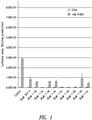
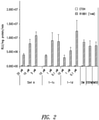
- LNCaP Long Biological replicate plasmid cells were seeded on 24-well plates overnight before transfection with PSA(6.1kb)-luciferase plasmid (0.25 ug /well) in serum-free, red phenol-free media. The next day, cells were pre-treated with compounds of the invention for 1 hour before the addition of synthetic androgen, R1881 (1 nM) to transactivate androgen receptor (AR) . After 48 h of incubation with R1881, the cells were harvested, and relative luciferase activity was determined as a read-out for androgen receptor (AR) transcriptional activity relative to a control. Test compounds were added to the cells at various concentrations and activity for each treatment was normalized to the predicted maximal activity induction (in the absence of test compounds, vehicle only). Transfection experiments were performed using triplicate wells.
- toxicity is assessed by both microscopic examination and reduction of protein levels.
- Solubility is assessed both macroscopically (cloudy media) and microscopically (formation of granules or crystals).
Landscapes
- Health & Medical Sciences (AREA)
- Chemical & Material Sciences (AREA)
- Organic Chemistry (AREA)
- General Health & Medical Sciences (AREA)
- Veterinary Medicine (AREA)
- Public Health (AREA)
- Medicinal Chemistry (AREA)
- Animal Behavior & Ethology (AREA)
- Life Sciences & Earth Sciences (AREA)
- Pharmacology & Pharmacy (AREA)
- Nuclear Medicine, Radiotherapy & Molecular Imaging (AREA)
- General Chemical & Material Sciences (AREA)
- Chemical Kinetics & Catalysis (AREA)
- Bioinformatics & Cheminformatics (AREA)
- Engineering & Computer Science (AREA)
- Epidemiology (AREA)
- Dermatology (AREA)
- Endocrinology (AREA)
- Reproductive Health (AREA)
- Neurology (AREA)
- Orthopedic Medicine & Surgery (AREA)
- Physical Education & Sports Medicine (AREA)
- Ophthalmology & Optometry (AREA)
- Pharmaceuticals Containing Other Organic And Inorganic Compounds (AREA)
- Pyrrole Compounds (AREA)
- Acyclic And Carbocyclic Compounds In Medicinal Compositions (AREA)
- Medicines That Contain Protein Lipid Enzymes And Other Medicines (AREA)
Applications Claiming Priority (2)
| Application Number | Priority Date | Filing Date | Title |
|---|---|---|---|
| US201462005714P | 2014-05-30 | 2014-05-30 | |
| PCT/US2015/033385 WO2015184393A1 (en) | 2014-05-30 | 2015-05-29 | Androgen receptor modulators and methods for their use |
Publications (2)
| Publication Number | Publication Date |
|---|---|
| EP3148970A1 EP3148970A1 (en) | 2017-04-05 |
| EP3148970B1 true EP3148970B1 (en) | 2022-03-16 |
Family
ID=53373659
Family Applications (1)
| Application Number | Title | Priority Date | Filing Date |
|---|---|---|---|
| EP15728354.0A Not-in-force EP3148970B1 (en) | 2014-05-30 | 2015-05-29 | Androgen receptor modulators and methods for their use |
Country Status (8)
| Country | Link |
|---|---|
| US (2) | US9682933B2 (enExample) |
| EP (1) | EP3148970B1 (enExample) |
| JP (3) | JP2017516862A (enExample) |
| AU (3) | AU2015266654A1 (enExample) |
| CA (1) | CA2948643C (enExample) |
| IL (1) | IL249203B (enExample) |
| NZ (1) | NZ726348A (enExample) |
| WO (1) | WO2015184393A1 (enExample) |
Families Citing this family (7)
| Publication number | Priority date | Publication date | Assignee | Title |
|---|---|---|---|---|
| MX339300B (es) | 2008-08-22 | 2016-05-19 | British Columbia Cancer Agency | Inhibidores de molecula pequeña de la activacion n-terminal del receptor de androgenos. |
| JP2017516862A (ja) * | 2014-05-30 | 2017-06-22 | ブリティッシュ コロンビア キャンサー エージェンシー ブランチ | アンドロゲン受容体調節物質及びその使用方法 |
| TWI726969B (zh) | 2016-01-11 | 2021-05-11 | 比利時商健生藥品公司 | 用作雄性激素受體拮抗劑之經取代之硫尿囊素衍生物 |
| SG11202007873VA (en) * | 2018-03-05 | 2020-09-29 | Klinikum Rechts Der Isar Der Technischen Univ Muenchen | Treatment of tumors by a combination of an oncolytic adenovirus and a cdk4/6 inhibitor |
| WO2021021629A1 (en) * | 2019-07-26 | 2021-02-04 | University Of Florida Research Foundation, Incorporated | Discovery, total synthesis, and bioactivity of doscadenamides |
| WO2021044061A1 (en) * | 2019-09-05 | 2021-03-11 | Klinikum Rechts Der Isar Der Technischen Universität München | Treatment of tumors by a combination of an oncolytic adenovirus, a cdk4/6 inhibitor and a further therapeutically active agent |
| US12133846B2 (en) | 2019-10-15 | 2024-11-05 | Wayne State University | Electrophilic androgen receptor (AR) antagonists for AR downregulation and ferroptosis induction in cancer cells |
Family Cites Families (7)
| Publication number | Priority date | Publication date | Assignee | Title |
|---|---|---|---|---|
| JPH0317057A (ja) | 1989-06-15 | 1991-01-25 | Fujisawa Pharmaceut Co Ltd | 新規5員環複素環化合物 |
| AU4494399A (en) | 1998-06-30 | 2000-01-24 | University Of British Columbia, The | Inhibitors of androgen-independent activation of androgen receptor |
| US7772433B2 (en) | 2002-02-28 | 2010-08-10 | University Of Tennessee Research Foundation | SARMS and method of use thereof |
| EP1760076A1 (en) * | 2005-09-02 | 2007-03-07 | Ferring B.V. | FAP Inhibitors |
| MX339300B (es) * | 2008-08-22 | 2016-05-19 | British Columbia Cancer Agency | Inhibidores de molecula pequeña de la activacion n-terminal del receptor de androgenos. |
| AU2011312490B2 (en) * | 2010-09-28 | 2015-06-25 | Radius Pharmaceuticals, Inc. | Selective androgen receptor modulators |
| JP2017516862A (ja) | 2014-05-30 | 2017-06-22 | ブリティッシュ コロンビア キャンサー エージェンシー ブランチ | アンドロゲン受容体調節物質及びその使用方法 |
-
2015
- 2015-05-29 JP JP2017515034A patent/JP2017516862A/ja active Pending
- 2015-05-29 WO PCT/US2015/033385 patent/WO2015184393A1/en not_active Ceased
- 2015-05-29 NZ NZ726348A patent/NZ726348A/en not_active IP Right Cessation
- 2015-05-29 AU AU2015266654A patent/AU2015266654A1/en not_active Abandoned
- 2015-05-29 US US14/726,129 patent/US9682933B2/en active Active
- 2015-05-29 EP EP15728354.0A patent/EP3148970B1/en not_active Not-in-force
- 2015-05-29 CA CA2948643A patent/CA2948643C/en active Active
-
2016
- 2016-11-24 IL IL249203A patent/IL249203B/en active IP Right Grant
-
2017
- 2017-06-19 US US15/626,526 patent/US10071962B2/en active Active
-
2019
- 2019-10-31 AU AU2019257509A patent/AU2019257509B2/en not_active Ceased
-
2020
- 2020-05-22 JP JP2020089519A patent/JP6925481B2/ja not_active Expired - Fee Related
-
2021
- 2021-08-03 JP JP2021127354A patent/JP2021176908A/ja active Pending
- 2021-08-10 AU AU2021215137A patent/AU2021215137A1/en not_active Abandoned
Also Published As
| Publication number | Publication date |
|---|---|
| JP2017516862A (ja) | 2017-06-22 |
| CA2948643A1 (en) | 2015-12-03 |
| AU2019257509B2 (en) | 2021-05-13 |
| EP3148970A1 (en) | 2017-04-05 |
| AU2021215137A1 (en) | 2021-09-02 |
| JP2021176908A (ja) | 2021-11-11 |
| US9682933B2 (en) | 2017-06-20 |
| IL249203A0 (en) | 2017-01-31 |
| JP2020143126A (ja) | 2020-09-10 |
| WO2015184393A1 (en) | 2015-12-03 |
| US10071962B2 (en) | 2018-09-11 |
| US20170283377A1 (en) | 2017-10-05 |
| NZ726348A (en) | 2022-09-30 |
| AU2019257509A1 (en) | 2019-11-21 |
| AU2015266654A1 (en) | 2016-12-01 |
| JP6925481B2 (ja) | 2021-08-25 |
| IL249203B (en) | 2020-08-31 |
| CA2948643C (en) | 2022-09-06 |
| US20150344424A1 (en) | 2015-12-03 |
Similar Documents
| Publication | Publication Date | Title |
|---|---|---|
| AU2019257509B2 (en) | Androgen receptor modulators and methods for their use | |
| AU2014262333B2 (en) | Ester derivatives of androgen receptor modulators and methods for their use | |
| US9365510B2 (en) | Aziridine bisphenol ethers and related compounds and methods for their use | |
| US11779550B2 (en) | Bisphenol ether derivatives and methods for using the same | |
| EP2744773B1 (en) | Fluorinated bisphenol ether compounds and methods for their use | |
| KR102409651B1 (ko) | 비스페놀 유도체 및 안드로겐 수용체 활성도 조절제로서의 이의 용도 | |
| EP3245193B1 (en) | Heterocyclic compounds for cancer imaging and treatment and methods for their use | |
| EP3252032A1 (en) | Diglycidic ether derivative therapeutics and methods for their use | |
| JP2016530285A (ja) | 癌の撮像及び治療のためのハロゲン化化合物、及びその使用方法 | |
| US11952349B2 (en) | Anti-cancer nuclear hormone receptor-targeting compounds | |
| WO2016058080A1 (en) | Fluoro-chloro bisphenol ether compounds and methods for their use | |
| HK40073885A (en) | Heterocyclic compounds for cancer imaging and treatment and methods for their use | |
| OA18988A (en) | Ester derivatives of androgen receptor modulators and methods for their use. | |
| HK40073885B (en) | Heterocyclic compounds for cancer imaging and treatment and methods for their use |
Legal Events
| Date | Code | Title | Description |
|---|---|---|---|
| STAA | Information on the status of an ep patent application or granted ep patent |
Free format text: STATUS: THE INTERNATIONAL PUBLICATION HAS BEEN MADE |
|
| PUAI | Public reference made under article 153(3) epc to a published international application that has entered the european phase |
Free format text: ORIGINAL CODE: 0009012 |
|
| STAA | Information on the status of an ep patent application or granted ep patent |
Free format text: STATUS: REQUEST FOR EXAMINATION WAS MADE |
|
| 17P | Request for examination filed |
Effective date: 20161215 |
|
| AK | Designated contracting states |
Kind code of ref document: A1 Designated state(s): AL AT BE BG CH CY CZ DE DK EE ES FI FR GB GR HR HU IE IS IT LI LT LU LV MC MK MT NL NO PL PT RO RS SE SI SK SM TR |
|
| AX | Request for extension of the european patent |
Extension state: BA ME |
|
| RIN1 | Information on inventor provided before grant (corrected) |
Inventor name: YAN, LUPING Inventor name: ANDERSEN, RAYMOND, J. Inventor name: SADAR, MARIANNE, DOROTHY Inventor name: MAWJI, NASRIN, R. Inventor name: BANUELOS, CARMEN, ADRIANA |
|
| DAV | Request for validation of the european patent (deleted) | ||
| DAX | Request for extension of the european patent (deleted) | ||
| STAA | Information on the status of an ep patent application or granted ep patent |
Free format text: STATUS: EXAMINATION IS IN PROGRESS |
|
| 17Q | First examination report despatched |
Effective date: 20180821 |
|
| RIC1 | Information provided on ipc code assigned before grant |
Ipc: A61P 17/00 20060101ALI20210902BHEP Ipc: A61P 21/00 20060101ALI20210902BHEP Ipc: A61P 43/00 20060101ALI20210902BHEP Ipc: A61P 15/00 20060101ALI20210902BHEP Ipc: A61K 31/495 20060101ALI20210902BHEP Ipc: A61P 35/00 20060101ALI20210902BHEP Ipc: C07D 207/38 20060101AFI20210902BHEP |
|
| GRAP | Despatch of communication of intention to grant a patent |
Free format text: ORIGINAL CODE: EPIDOSNIGR1 |
|
| STAA | Information on the status of an ep patent application or granted ep patent |
Free format text: STATUS: GRANT OF PATENT IS INTENDED |
|
| INTG | Intention to grant announced |
Effective date: 20211008 |
|
| GRAS | Grant fee paid |
Free format text: ORIGINAL CODE: EPIDOSNIGR3 |
|
| GRAA | (expected) grant |
Free format text: ORIGINAL CODE: 0009210 |
|
| STAA | Information on the status of an ep patent application or granted ep patent |
Free format text: STATUS: THE PATENT HAS BEEN GRANTED |
|
| AK | Designated contracting states |
Kind code of ref document: B1 Designated state(s): AL AT BE BG CH CY CZ DE DK EE ES FI FR GB GR HR HU IE IS IT LI LT LU LV MC MK MT NL NO PL PT RO RS SE SI SK SM TR |
|
| REG | Reference to a national code |
Ref country code: GB Ref legal event code: FG4D |
|
| REG | Reference to a national code |
Ref country code: CH Ref legal event code: EP |
|
| REG | Reference to a national code |
Ref country code: DE Ref legal event code: R096 Ref document number: 602015077554 Country of ref document: DE |
|
| REG | Reference to a national code |
Ref country code: IE Ref legal event code: FG4D |
|
| REG | Reference to a national code |
Ref country code: AT Ref legal event code: REF Ref document number: 1475784 Country of ref document: AT Kind code of ref document: T Effective date: 20220415 |
|
| REG | Reference to a national code |
Ref country code: LT Ref legal event code: MG9D |
|
| REG | Reference to a national code |
Ref country code: NL Ref legal event code: MP Effective date: 20220316 |
|
| PG25 | Lapsed in a contracting state [announced via postgrant information from national office to epo] |
Ref country code: SE Free format text: LAPSE BECAUSE OF FAILURE TO SUBMIT A TRANSLATION OF THE DESCRIPTION OR TO PAY THE FEE WITHIN THE PRESCRIBED TIME-LIMIT Effective date: 20220316 Ref country code: RS Free format text: LAPSE BECAUSE OF FAILURE TO SUBMIT A TRANSLATION OF THE DESCRIPTION OR TO PAY THE FEE WITHIN THE PRESCRIBED TIME-LIMIT Effective date: 20220316 Ref country code: NO Free format text: LAPSE BECAUSE OF FAILURE TO SUBMIT A TRANSLATION OF THE DESCRIPTION OR TO PAY THE FEE WITHIN THE PRESCRIBED TIME-LIMIT Effective date: 20220616 Ref country code: LT Free format text: LAPSE BECAUSE OF FAILURE TO SUBMIT A TRANSLATION OF THE DESCRIPTION OR TO PAY THE FEE WITHIN THE PRESCRIBED TIME-LIMIT Effective date: 20220316 Ref country code: HR Free format text: LAPSE BECAUSE OF FAILURE TO SUBMIT A TRANSLATION OF THE DESCRIPTION OR TO PAY THE FEE WITHIN THE PRESCRIBED TIME-LIMIT Effective date: 20220316 Ref country code: BG Free format text: LAPSE BECAUSE OF FAILURE TO SUBMIT A TRANSLATION OF THE DESCRIPTION OR TO PAY THE FEE WITHIN THE PRESCRIBED TIME-LIMIT Effective date: 20220616 |
|
| REG | Reference to a national code |
Ref country code: AT Ref legal event code: MK05 Ref document number: 1475784 Country of ref document: AT Kind code of ref document: T Effective date: 20220316 |
|
| PG25 | Lapsed in a contracting state [announced via postgrant information from national office to epo] |
Ref country code: LV Free format text: LAPSE BECAUSE OF FAILURE TO SUBMIT A TRANSLATION OF THE DESCRIPTION OR TO PAY THE FEE WITHIN THE PRESCRIBED TIME-LIMIT Effective date: 20220316 Ref country code: GR Free format text: LAPSE BECAUSE OF FAILURE TO SUBMIT A TRANSLATION OF THE DESCRIPTION OR TO PAY THE FEE WITHIN THE PRESCRIBED TIME-LIMIT Effective date: 20220617 Ref country code: FI Free format text: LAPSE BECAUSE OF FAILURE TO SUBMIT A TRANSLATION OF THE DESCRIPTION OR TO PAY THE FEE WITHIN THE PRESCRIBED TIME-LIMIT Effective date: 20220316 |
|
| PG25 | Lapsed in a contracting state [announced via postgrant information from national office to epo] |
Ref country code: NL Free format text: LAPSE BECAUSE OF FAILURE TO SUBMIT A TRANSLATION OF THE DESCRIPTION OR TO PAY THE FEE WITHIN THE PRESCRIBED TIME-LIMIT Effective date: 20220316 |
|
| PG25 | Lapsed in a contracting state [announced via postgrant information from national office to epo] |
Ref country code: SM Free format text: LAPSE BECAUSE OF FAILURE TO SUBMIT A TRANSLATION OF THE DESCRIPTION OR TO PAY THE FEE WITHIN THE PRESCRIBED TIME-LIMIT Effective date: 20220316 Ref country code: SK Free format text: LAPSE BECAUSE OF FAILURE TO SUBMIT A TRANSLATION OF THE DESCRIPTION OR TO PAY THE FEE WITHIN THE PRESCRIBED TIME-LIMIT Effective date: 20220316 Ref country code: RO Free format text: LAPSE BECAUSE OF FAILURE TO SUBMIT A TRANSLATION OF THE DESCRIPTION OR TO PAY THE FEE WITHIN THE PRESCRIBED TIME-LIMIT Effective date: 20220316 Ref country code: PT Free format text: LAPSE BECAUSE OF FAILURE TO SUBMIT A TRANSLATION OF THE DESCRIPTION OR TO PAY THE FEE WITHIN THE PRESCRIBED TIME-LIMIT Effective date: 20220718 Ref country code: ES Free format text: LAPSE BECAUSE OF FAILURE TO SUBMIT A TRANSLATION OF THE DESCRIPTION OR TO PAY THE FEE WITHIN THE PRESCRIBED TIME-LIMIT Effective date: 20220316 Ref country code: EE Free format text: LAPSE BECAUSE OF FAILURE TO SUBMIT A TRANSLATION OF THE DESCRIPTION OR TO PAY THE FEE WITHIN THE PRESCRIBED TIME-LIMIT Effective date: 20220316 Ref country code: CZ Free format text: LAPSE BECAUSE OF FAILURE TO SUBMIT A TRANSLATION OF THE DESCRIPTION OR TO PAY THE FEE WITHIN THE PRESCRIBED TIME-LIMIT Effective date: 20220316 Ref country code: AT Free format text: LAPSE BECAUSE OF FAILURE TO SUBMIT A TRANSLATION OF THE DESCRIPTION OR TO PAY THE FEE WITHIN THE PRESCRIBED TIME-LIMIT Effective date: 20220316 |
|
| PG25 | Lapsed in a contracting state [announced via postgrant information from national office to epo] |
Ref country code: PL Free format text: LAPSE BECAUSE OF FAILURE TO SUBMIT A TRANSLATION OF THE DESCRIPTION OR TO PAY THE FEE WITHIN THE PRESCRIBED TIME-LIMIT Effective date: 20220316 Ref country code: IS Free format text: LAPSE BECAUSE OF FAILURE TO SUBMIT A TRANSLATION OF THE DESCRIPTION OR TO PAY THE FEE WITHIN THE PRESCRIBED TIME-LIMIT Effective date: 20220716 Ref country code: AL Free format text: LAPSE BECAUSE OF FAILURE TO SUBMIT A TRANSLATION OF THE DESCRIPTION OR TO PAY THE FEE WITHIN THE PRESCRIBED TIME-LIMIT Effective date: 20220316 |
|
| REG | Reference to a national code |
Ref country code: DE Ref legal event code: R119 Ref document number: 602015077554 Country of ref document: DE |
|
| REG | Reference to a national code |
Ref country code: CH Ref legal event code: PL |
|
| PLBE | No opposition filed within time limit |
Free format text: ORIGINAL CODE: 0009261 |
|
| STAA | Information on the status of an ep patent application or granted ep patent |
Free format text: STATUS: NO OPPOSITION FILED WITHIN TIME LIMIT |
|
| REG | Reference to a national code |
Ref country code: BE Ref legal event code: MM Effective date: 20220531 |
|
| PG25 | Lapsed in a contracting state [announced via postgrant information from national office to epo] |
Ref country code: MC Free format text: LAPSE BECAUSE OF FAILURE TO SUBMIT A TRANSLATION OF THE DESCRIPTION OR TO PAY THE FEE WITHIN THE PRESCRIBED TIME-LIMIT Effective date: 20220316 Ref country code: LU Free format text: LAPSE BECAUSE OF NON-PAYMENT OF DUE FEES Effective date: 20220529 Ref country code: LI Free format text: LAPSE BECAUSE OF NON-PAYMENT OF DUE FEES Effective date: 20220531 Ref country code: DK Free format text: LAPSE BECAUSE OF FAILURE TO SUBMIT A TRANSLATION OF THE DESCRIPTION OR TO PAY THE FEE WITHIN THE PRESCRIBED TIME-LIMIT Effective date: 20220316 Ref country code: CH Free format text: LAPSE BECAUSE OF NON-PAYMENT OF DUE FEES Effective date: 20220531 |
|
| 26N | No opposition filed |
Effective date: 20221219 |
|
| PG25 | Lapsed in a contracting state [announced via postgrant information from national office to epo] |
Ref country code: SI Free format text: LAPSE BECAUSE OF FAILURE TO SUBMIT A TRANSLATION OF THE DESCRIPTION OR TO PAY THE FEE WITHIN THE PRESCRIBED TIME-LIMIT Effective date: 20220316 |
|
| PG25 | Lapsed in a contracting state [announced via postgrant information from national office to epo] |
Ref country code: IE Free format text: LAPSE BECAUSE OF NON-PAYMENT OF DUE FEES Effective date: 20220529 |
|
| PG25 | Lapsed in a contracting state [announced via postgrant information from national office to epo] |
Ref country code: DE Free format text: LAPSE BECAUSE OF NON-PAYMENT OF DUE FEES Effective date: 20221201 Ref country code: BE Free format text: LAPSE BECAUSE OF NON-PAYMENT OF DUE FEES Effective date: 20220531 |
|
| PG25 | Lapsed in a contracting state [announced via postgrant information from national office to epo] |
Ref country code: IT Free format text: LAPSE BECAUSE OF FAILURE TO SUBMIT A TRANSLATION OF THE DESCRIPTION OR TO PAY THE FEE WITHIN THE PRESCRIBED TIME-LIMIT Effective date: 20220316 |
|
| PG25 | Lapsed in a contracting state [announced via postgrant information from national office to epo] |
Ref country code: HU Free format text: LAPSE BECAUSE OF FAILURE TO SUBMIT A TRANSLATION OF THE DESCRIPTION OR TO PAY THE FEE WITHIN THE PRESCRIBED TIME-LIMIT; INVALID AB INITIO Effective date: 20150529 |
|
| PG25 | Lapsed in a contracting state [announced via postgrant information from national office to epo] |
Ref country code: MK Free format text: LAPSE BECAUSE OF FAILURE TO SUBMIT A TRANSLATION OF THE DESCRIPTION OR TO PAY THE FEE WITHIN THE PRESCRIBED TIME-LIMIT Effective date: 20220316 Ref country code: CY Free format text: LAPSE BECAUSE OF FAILURE TO SUBMIT A TRANSLATION OF THE DESCRIPTION OR TO PAY THE FEE WITHIN THE PRESCRIBED TIME-LIMIT Effective date: 20220316 |
|
| PGFP | Annual fee paid to national office [announced via postgrant information from national office to epo] |
Ref country code: GB Payment date: 20240527 Year of fee payment: 10 |
|
| PGFP | Annual fee paid to national office [announced via postgrant information from national office to epo] |
Ref country code: FR Payment date: 20240527 Year of fee payment: 10 |
|
| PG25 | Lapsed in a contracting state [announced via postgrant information from national office to epo] |
Ref country code: MT Free format text: LAPSE BECAUSE OF FAILURE TO SUBMIT A TRANSLATION OF THE DESCRIPTION OR TO PAY THE FEE WITHIN THE PRESCRIBED TIME-LIMIT Effective date: 20220316 |
|
| PG25 | Lapsed in a contracting state [announced via postgrant information from national office to epo] |
Ref country code: TR Free format text: LAPSE BECAUSE OF FAILURE TO SUBMIT A TRANSLATION OF THE DESCRIPTION OR TO PAY THE FEE WITHIN THE PRESCRIBED TIME-LIMIT Effective date: 20220316 |
|
| GBPC | Gb: european patent ceased through non-payment of renewal fee |
Effective date: 20250529 |
|
| PG25 | Lapsed in a contracting state [announced via postgrant information from national office to epo] |
Ref country code: GB Free format text: LAPSE BECAUSE OF NON-PAYMENT OF DUE FEES Effective date: 20250529 |
|
| PG25 | Lapsed in a contracting state [announced via postgrant information from national office to epo] |
Ref country code: FR Free format text: LAPSE BECAUSE OF NON-PAYMENT OF DUE FEES Effective date: 20250531 |