EP3135482A1 - Doppelsicherheitsspiegel und herstellungsverfahren dafür - Google Patents
Doppelsicherheitsspiegel und herstellungsverfahren dafür Download PDFInfo
- Publication number
- EP3135482A1 EP3135482A1 EP16171366.4A EP16171366A EP3135482A1 EP 3135482 A1 EP3135482 A1 EP 3135482A1 EP 16171366 A EP16171366 A EP 16171366A EP 3135482 A1 EP3135482 A1 EP 3135482A1
- Authority
- EP
- European Patent Office
- Prior art keywords
- layer
- glue
- plates
- glass material
- painted
- Prior art date
- Legal status (The legal status is an assumption and is not a legal conclusion. Google has not performed a legal analysis and makes no representation as to the accuracy of the status listed.)
- Granted
Links
Images
Classifications
-
- B—PERFORMING OPERATIONS; TRANSPORTING
- B32—LAYERED PRODUCTS
- B32B—LAYERED PRODUCTS, i.e. PRODUCTS BUILT-UP OF STRATA OF FLAT OR NON-FLAT, e.g. CELLULAR OR HONEYCOMB, FORM
- B32B17/00—Layered products essentially comprising sheet glass, or glass, slag, or like fibres
- B32B17/06—Layered products essentially comprising sheet glass, or glass, slag, or like fibres comprising glass as the main or only constituent of a layer, next to another layer of a specific material
- B32B17/10—Layered products essentially comprising sheet glass, or glass, slag, or like fibres comprising glass as the main or only constituent of a layer, next to another layer of a specific material of synthetic resin
- B32B17/10005—Layered products essentially comprising sheet glass, or glass, slag, or like fibres comprising glass as the main or only constituent of a layer, next to another layer of a specific material of synthetic resin laminated safety glass or glazing
- B32B17/10009—Layered products essentially comprising sheet glass, or glass, slag, or like fibres comprising glass as the main or only constituent of a layer, next to another layer of a specific material of synthetic resin laminated safety glass or glazing characterized by the number, the constitution or treatment of glass sheets
- B32B17/10036—Layered products essentially comprising sheet glass, or glass, slag, or like fibres comprising glass as the main or only constituent of a layer, next to another layer of a specific material of synthetic resin laminated safety glass or glazing characterized by the number, the constitution or treatment of glass sheets comprising two outer glass sheets
-
- B—PERFORMING OPERATIONS; TRANSPORTING
- B32—LAYERED PRODUCTS
- B32B—LAYERED PRODUCTS, i.e. PRODUCTS BUILT-UP OF STRATA OF FLAT OR NON-FLAT, e.g. CELLULAR OR HONEYCOMB, FORM
- B32B17/00—Layered products essentially comprising sheet glass, or glass, slag, or like fibres
- B32B17/06—Layered products essentially comprising sheet glass, or glass, slag, or like fibres comprising glass as the main or only constituent of a layer, next to another layer of a specific material
- B32B17/10—Layered products essentially comprising sheet glass, or glass, slag, or like fibres comprising glass as the main or only constituent of a layer, next to another layer of a specific material of synthetic resin
- B32B17/10005—Layered products essentially comprising sheet glass, or glass, slag, or like fibres comprising glass as the main or only constituent of a layer, next to another layer of a specific material of synthetic resin laminated safety glass or glazing
- B32B17/10165—Functional features of the laminated safety glass or glazing
- B32B17/10174—Coatings of a metallic or dielectric material on a constituent layer of glass or polymer
- B32B17/1022—Metallic coatings
-
- B—PERFORMING OPERATIONS; TRANSPORTING
- B32—LAYERED PRODUCTS
- B32B—LAYERED PRODUCTS, i.e. PRODUCTS BUILT-UP OF STRATA OF FLAT OR NON-FLAT, e.g. CELLULAR OR HONEYCOMB, FORM
- B32B17/00—Layered products essentially comprising sheet glass, or glass, slag, or like fibres
- B32B17/06—Layered products essentially comprising sheet glass, or glass, slag, or like fibres comprising glass as the main or only constituent of a layer, next to another layer of a specific material
- B32B17/10—Layered products essentially comprising sheet glass, or glass, slag, or like fibres comprising glass as the main or only constituent of a layer, next to another layer of a specific material of synthetic resin
- B32B17/10005—Layered products essentially comprising sheet glass, or glass, slag, or like fibres comprising glass as the main or only constituent of a layer, next to another layer of a specific material of synthetic resin laminated safety glass or glazing
- B32B17/1055—Layered products essentially comprising sheet glass, or glass, slag, or like fibres comprising glass as the main or only constituent of a layer, next to another layer of a specific material of synthetic resin laminated safety glass or glazing characterized by the resin layer, i.e. interlayer
- B32B17/1077—Layered products essentially comprising sheet glass, or glass, slag, or like fibres comprising glass as the main or only constituent of a layer, next to another layer of a specific material of synthetic resin laminated safety glass or glazing characterized by the resin layer, i.e. interlayer containing polyurethane
-
- B—PERFORMING OPERATIONS; TRANSPORTING
- B32—LAYERED PRODUCTS
- B32B—LAYERED PRODUCTS, i.e. PRODUCTS BUILT-UP OF STRATA OF FLAT OR NON-FLAT, e.g. CELLULAR OR HONEYCOMB, FORM
- B32B17/00—Layered products essentially comprising sheet glass, or glass, slag, or like fibres
- B32B17/06—Layered products essentially comprising sheet glass, or glass, slag, or like fibres comprising glass as the main or only constituent of a layer, next to another layer of a specific material
- B32B17/10—Layered products essentially comprising sheet glass, or glass, slag, or like fibres comprising glass as the main or only constituent of a layer, next to another layer of a specific material of synthetic resin
- B32B17/10005—Layered products essentially comprising sheet glass, or glass, slag, or like fibres comprising glass as the main or only constituent of a layer, next to another layer of a specific material of synthetic resin laminated safety glass or glazing
- B32B17/1055—Layered products essentially comprising sheet glass, or glass, slag, or like fibres comprising glass as the main or only constituent of a layer, next to another layer of a specific material of synthetic resin laminated safety glass or glazing characterized by the resin layer, i.e. interlayer
- B32B17/10788—Layered products essentially comprising sheet glass, or glass, slag, or like fibres comprising glass as the main or only constituent of a layer, next to another layer of a specific material of synthetic resin laminated safety glass or glazing characterized by the resin layer, i.e. interlayer containing ethylene vinylacetate
-
- B—PERFORMING OPERATIONS; TRANSPORTING
- B32—LAYERED PRODUCTS
- B32B—LAYERED PRODUCTS, i.e. PRODUCTS BUILT-UP OF STRATA OF FLAT OR NON-FLAT, e.g. CELLULAR OR HONEYCOMB, FORM
- B32B17/00—Layered products essentially comprising sheet glass, or glass, slag, or like fibres
- B32B17/06—Layered products essentially comprising sheet glass, or glass, slag, or like fibres comprising glass as the main or only constituent of a layer, next to another layer of a specific material
- B32B17/10—Layered products essentially comprising sheet glass, or glass, slag, or like fibres comprising glass as the main or only constituent of a layer, next to another layer of a specific material of synthetic resin
- B32B17/10005—Layered products essentially comprising sheet glass, or glass, slag, or like fibres comprising glass as the main or only constituent of a layer, next to another layer of a specific material of synthetic resin laminated safety glass or glazing
- B32B17/10807—Making laminated safety glass or glazing; Apparatus therefor
- B32B17/10899—Making laminated safety glass or glazing; Apparatus therefor by introducing interlayers of synthetic resin
- B32B17/10908—Making laminated safety glass or glazing; Apparatus therefor by introducing interlayers of synthetic resin in liquid form
-
- B—PERFORMING OPERATIONS; TRANSPORTING
- B32—LAYERED PRODUCTS
- B32B—LAYERED PRODUCTS, i.e. PRODUCTS BUILT-UP OF STRATA OF FLAT OR NON-FLAT, e.g. CELLULAR OR HONEYCOMB, FORM
- B32B17/00—Layered products essentially comprising sheet glass, or glass, slag, or like fibres
- B32B17/06—Layered products essentially comprising sheet glass, or glass, slag, or like fibres comprising glass as the main or only constituent of a layer, next to another layer of a specific material
- B32B17/10—Layered products essentially comprising sheet glass, or glass, slag, or like fibres comprising glass as the main or only constituent of a layer, next to another layer of a specific material of synthetic resin
- B32B17/10005—Layered products essentially comprising sheet glass, or glass, slag, or like fibres comprising glass as the main or only constituent of a layer, next to another layer of a specific material of synthetic resin laminated safety glass or glazing
- B32B17/10807—Making laminated safety glass or glazing; Apparatus therefor
- B32B17/10981—Pre-treatment of the layers
Definitions
- the present invention concerns in general the glazing technology.
- the present invention concerns a double safety mirror.
- the present invention concerns furthermore a method of production of a double safety mirror.
- the safety glazing are laminated or stratified glazing that do not break in a plurality of physically disjointed parts when being hit by an object.
- said safety glazing comprise an intermediate layer with a rigidity less than the glass one, and more in detail a plastic layer, that intervenes as a damper impeding the fragments of glass to separate.
- PVB polyvinyl - buryral
- the scope of the present invention is therefore to realize a safety mirror, which has enhanced features of resistance.
- the scope of the present invention is furthermore to a method of production of a safety mirror, which allows for obtaining a stronger mirror, capable, in case of impact, on not breaking in a plurality of physically disjointed parts.
- a safety mirror characterized in that it comprises a sandwich in turn comprising a couple of plates of glass material planarly parallel and separated each other by a layer of plastic buffer material realizing a breakage-preventing layer of said safety mirror; at least one plate of the said couple of plates of glass material has a painted side which faces towards said layer of plastic buffer material; and wherein said a painted side is a flamed side, and wherein said layer of plastic buffer material is a mixing-for-compression layer of at least a layer of gluing material in advance arranged on at least one of the painted sides.
- said layer of plastic buffer material comprises at least one layer of hot-melt glue (so called hot melt ), of a thermoplastic elastomeric (TPE) type, and wherein said hot-melt glue (so called hot melt ), of a thermoplastic elastomeric (TPE) type has to a temperature of 140°C a viscosity comprised in the interval 1000-2000 Pa*s.
- said glue is a glue in pellet kept in waterproof container.
- said layer of plastic buffer material is realized starting from a couple of layers of gluing material being then joint together.
- each layer of gluing material has a density comprised in the interval between 100g/m 2 and 200g/m 2 .
- the density is comprised in the interval between 200g/m 2 and 400g/m 2 .
- the values of said density are valid in particular in case of use of a glue with thermoplastic elastomeric material.
- said safety mirror has a lap-shear test resistance, on an area of gluing equivalent to 24 x 12.5 mm, higher than 0,4MPa.
- a layer of reflecting material realized in silver or in aluminum.
- said method comprises a step of heating of a painted side of each of said plates by means of a naked flame, wherein said naked flame is a blue flame containing OH radicals deriving from the combustion of gases at least partially comprising methane or propane.
- said plastic buffer material is realized starting from a fluid glue, and wherein said method comprises a step of deposition by means of deposition rollers of said fluid glue on said painted side of said at least one of the plates of the said couple of plates of glass material, before said step of superimposition of said painted sides.
- each layer of gluing material is superimposed to a respective painted side, and therefore there is a layer of gluing material for each plate of glass material.
- said plastic buffer material derives from a fluid glue and said method comprises a step of extraction from waterproof containers of plurality of pellet of said glue, starting from a waterproof container, preferably in vacuum and a step of deposition of a fused portion of said pellet of said glue on said painted side by means of a step of de-humidification of the air with which said glue comes into contact before the deposition on the side of each of said plates of glass material.
- said step of pre-heating comprises bringing said plates of glass material to a temperature comprised in the interval between [50-150] °C, preferably 100°C.
- said step of step of deposition by means of deposition rollers of said fluid glue comprises a step of preventive heating of the said glue to a temperature comprised between [100-200]°C and a step of heating of said deposition roller up to 150°C.
- the presence of a heated deposition roller is important for keeping the homogeneity of temperature of the glue.
- said method comprises a step of deposition of said fluid glue for an amount comprised between 100g/m 2 and 200g/m 2 on each of the painted sides.
- Said amount of glue shall be intended as being purely exemplificative and non-limiting.
- said step of superimposition of the said painted sides with said layer of gluing material takes place after an interval of time between 5s and 60s after said step of deposition of the said fluid glue.
- said glue is an hot-melt type glue (so called hot melt ), of a thermoplastic elastomeric (TPE) type.
- said glue of thermoplastic elastomeric type comprises at least one among:
- the safety mirror has been conceived for allowing that also in case of shock there are not dangerous fractures of the glass plates of which it is composed; in detail, this means that when broken, the safety mirror 100 object of the present invention breaks but the single parts of glass rest anyway jointed for a maximal part to the resting part of the structure, and do not unglue from this last.
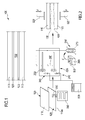
- first and a second plate of glass material 110 each one having a first and a second side; the first side of each of the two plates is directed outwards the safety mirror 100, while the second side, opposed respective to the first, is directed inwards the safety mirror 100.
- the second side is painted, and therefore has a painted layer 120 superimposed to the glassy layer and of a significantly smaller thickness.
- the painted layer 120 represents a layer which is necessary for protecting the thin layer of silver or aluminum, preferably but in a non-limiting extent is deposited on a side of the plate of glass material by means of electrolysis, that realizes a reflective layer.
- a layer 130 of plastic buffer material a material capable of absorbing the shocks deforming significantly more than the glass, and wherein said material has features of plastic deformability and return to the original shape following of an impact.
- the plastic material layer that as it will be further described in the following part of the description is realized starting from a fluid glue, represents a layer of mixing of two layers of fluid glue that were deposited in advance on the plates of glass material 110.
- a safety mirror 100 composed by a sandwich that, once observed in section an proceeding axially from one side to the other has, in order: a first plate of glass material 110, a painted layer 120 superimposed to the second side of the first plate of glass material 110, the layer of buffer plastic material 130, a second painted layer 120 superimposed to the second side of the second plate of glass material 110, and the second plate of glass material.
- said painted layer 120 is fixed to the underlying layer in an infrared oven, that preferably but in a non-limiting extent is brought to a temperature comprised between 100°C and 200°C
- the safety mirror realized by means of the present invention is characterized in that it is realized through a peculiar production process suitable of increasing the robustness and security thereof in case of impact of any object against the surface.
- the process of production of the safety mirror 100 object of the present invention is conveniently realized by two or more production machines for producing said safety mirror.
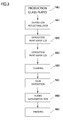
- the process of production of the mirror starts from the production of two glassy laminates that will be cut for producing said two plates of glass material 110 (block 1000).
- the cutting and grinding process of the plates takes place according to known techniques.
- a first phase of working comprises therefore the painting of one of the two faces of each of the two plates of glass material 110, so that to realize said painted layer 120 (block 1002) that protects the layer of reflecting material previously applied (block 1001) to the plate of glass material 110.
- both the plates of glass material 110, in a first station of the machine for producing said safety mirror are preheated (block 1003) by means of for example and in a non-limiting extent an electric heater 200 that heats the plates of glass material with radiation 210.
- the two plates of glass material 110 come therefore in a second station of the machine for producing said safety mirror 110, being made to slide on a conveying belt or on an equivalent motion means.
- said second station 220 there is a plurality of gas supplying nozzles 240, arranged in proximity of each of the two plates of glass material.
- Said nozzle 240 are fed by means or respective conduits from a gas source, for example a tank 230, preferably containing propane or methane.
- a gas source for example a tank 230, preferably containing propane or methane.
- the two plates of glass material 110 are therefore subsequently flamed (block 1004) with naked flame, fed specifically by said nozzles 240, from the side where there is the painted layer 120.
- the applicant has observed that using a blue flame, therefore a flame with high tax of combusted oxygen and therefore an oxidizing flame, releases OH-radicals suitable of enhancing the features of uniform heating of the mirror surface, and as well of advantageously activating the sites wherein the glue can "grip" to another surface, so that the subsequent step of deposition of the glue - as it will be better described hereinafter - is more efficient and concurs with increasing the overall resistance of the safety mirror.
- the applicant underlines that said process of activation of the sites wherein the glue can grip, directly derives from a combination of heating and chemical combination of the flame with the glue itself.
- a layer of fluid glue is deposed by means of supplying nozzles 260 (block 1005).
- heated deposition rollers 250 allows for using a glue that at ambient temperature is significantly more viscous (or either semi-solid), while instead the absence of heated deposition rollers would necessarily cause the use of a glue being too fluid for a correct application. Said proceeding is therefore the preferable one, since it has the best distribution and adhesion of the fluid glue on both the plates of glass material 110.
- the layer of fluid glue could also be deposited on a single plate of glass material 110, in a double amount [g/m 2 ], even if not obtaining the same equal superficial adhesion on both the plates, since the glue that would be deposited on the second plate of glass material at a time forcedly subsequent respective to that wherein it is distended on the first plate of glass material 110, with the riks of partial polymerization of the glue, partially soluble with a slight increase of the temperature of deposition and with a speed-up of the coupling process of the plates described in the present invention.
- the glue that better guarantees the adhesion and, when solidified, realizes a layer of plastic buffer material 130 capable of conferring the best features of robustness to the safety mirror, is a glue, that in a preferred and non-limiting production embodiment is a glue characterized by a viscosity comprised in the interval [1000-2000] Pa*s and more preferably1250 Pa*s (a 140 °C).
- the glue which is preferable is therefore a hot-melt glue (so called hot melt ), of a thermoplastic elastomeric (TPE) type, and more precisely a glue selected between the glues listed in the herewith following list:
- the applicant has observed that the best final robustness of the mirror is obtained in case the plates of glass material 110 before the deposition of the glue, are at a temperature around 100°C and anyway not beyond the interval [50-150]°C.
- the applicant has furthermore illustrated that keeping the temperature in the optimal neighborhood of 100°C - temperature that represents the optimal compromise between the correct heating and optimization of the subsequent glue distribution with its fusion - allows for reducing the overall heating of the material respective to the known art, obtaining an economically more convenient process.
- the polyester based glue is collected from waterproof or hermetic containers 290, possibly but non forcedly in vacuum condition, having a plurality of pellets 300, that are transferred and kept in a controlled atmosphere within the tank 270 being for example heated through an electric serpentine 280.
- said controlled atmosphere is obtained by de-humidifier filters arranged in a closed environment that surrounds the tank 270 and the pellets containers 290.
- the applicant has in fact observed that the presence of an excess of humidity in the atmosphere, also starting from pellets 300, starts a chemical reaction an activates a partial polymerization of the glue too early, and this causes a reduction of the adhesive and plasticity featurs of the layer of glue that influence negatively the final production of the safety mirror in terms of resistance to the impact and in the shear test.
- the tank is heated in such a way to keep the temperature of the glue therein contained in the interval comprised between 100°C and 200°C; the glue is therefore collected and sent towarsd the supplying nozzels for then being deposited on the plates of glass material 110, and in detail on the painted sides with painted layer 120.
- the amount of glue to be deposited results be the double. Therefore, where it is present on the painted side only one deposited layer, the density is comprised in the interval between 200g/m 2 and 400g/m 2 . Therefore, into the second station 220, the speed of sliding of the deposition rollers 250 and the amount of fluid glue fed by the supplying nozzles 260 is such as it is anyway deposited an overall layer of glue in a measure comprised between 100g/m 2 and 200g/m 2 of fluid glue. Said amount of deposited glue per unit of surface shall not be intended as limiting, since many types of glue can be used as already yet described.
- deposition rollers anyway allows for having a layer of glue on each of the two plates of glass, realized in such a way to not to have bubbles therein enclosed - bubbles that could reduce the overall adhesion of the layer and therefore the robustness of the safety mirror 100, and as well have the exposed side of said layer as uniform as possible.
- the two plates of glass material 110 are simultaneously treated both in terms of flaming, both in terms of deposition of layer of fluid glue. The applicant has observed that this represents the most optimal solution for reaching the uniformity of behavior of each of the two sub-ensembles of glass material 110 plates - layer of glue.
- said coupling takes place by means of a step of superimposition and pressing of the two sub-ensembles that is performed in a third station of the machine for producing the safety mirror.
- the two sub-ensembles plate of glass material 110 - layer of glue are superimposed in such a way to result planarly parallel and oriented in such a way that the two layers of glue are faced one towards the other, so that they can bond each other ans uniformly mix to the end of realizing the layer of plastic buffer material 130.
- no more than 60s can lapse between the deposition of the fluid glue on the painted layer 120 and the coupling of the two sub-ensembles to the end of pressing.
- said pressing takes place by means of a couple of pressing means 320, that act on the side of each of the plates of glass material 110 that is opposed respective to the side has the painted layer 120, acting with a force F perpendicular to the plane detected by the plates of glass material.
- At least one of the two plates of glass material can comprise metal inclusions suitable for providing transparency and/or color of the same different than the total transparency and neutrality of color typical of the white mirrors.
- the safety mirror 100 object of the present invention has been fractured, in detail, on the plate of glass opposed respective to that onto which the ball impacted. Even though fractured, the plate opposed respective to that onto which the ball ha impacted did not disperse fragments of glass, that rested stuck with the other and/or anayway still at least partially glued to the intermediate plastic buffer layer. From the previous test is therefore possible to attribute an impact resistance significantly higher respective to that it could be obtained by a traditional process in detail using very liquid glues deposited with cold rollers.
- the safety mirror 100 object of the present invention realized through the method up to here described, has a peculiar property not olny of impeding the dispersion of fragments, but also of fracturing on the opposite side respective to that it it hit.
- This vantage allows a significantly higher safety, in particular in those applications in bathroom or similar.
- the safety mirror 100 object of the present invention cracks anyway facing either to the wall or inwards respective to the bathroom cabinet. Therefore, neither the lines of fracture can risk to directly wound the user that clumsily impacts thereto, since the fractures and cracks lay on the opposite side, not directly accessible to the user itself.
- the fracture of the opposite plate releases fragments of glass, it is clear that said fragments would rest anyway dispersed on the opposite side respective to the side onto which the user impacts, further reducing the risk of wounding also respective to the conventional type safety mirrors.
- the safety mirror 100 object of the present invention has been also performed a bar reciprocal sliding test.
- the force obtained for causing a division thereof is equal or higher than0.4 MPa.
- the mirror object of the present invention realized by means of the previously described process, is very robust not only in terms of impact but also is optimized in reducing the risk of separation of the two plates of glass material two to a reciprocal sliding.
Landscapes
- Joining Of Glass To Other Materials (AREA)
Priority Applications (1)
| Application Number | Priority Date | Filing Date | Title |
|---|---|---|---|
| PL16171366T PL3135482T3 (pl) | 2015-08-24 | 2016-05-25 | Bezpieczne lustro podwójne i sposób jego wytwarzania |
Applications Claiming Priority (2)
| Application Number | Priority Date | Filing Date | Title |
|---|---|---|---|
| CH01214/15A CH711444B1 (it) | 2015-08-24 | 2015-08-24 | Doppio specchio di sicurezza e metodo di realizzazione dello stesso. |
| ITUB2015A003198A ITUB20153198A1 (it) | 2015-08-24 | 2015-08-24 | Doppio specchio di sicurezza e metodo di realizzazione dello stesso. |
Publications (2)
| Publication Number | Publication Date |
|---|---|
| EP3135482A1 true EP3135482A1 (de) | 2017-03-01 |
| EP3135482B1 EP3135482B1 (de) | 2020-11-18 |
Family
ID=56026778
Family Applications (1)
| Application Number | Title | Priority Date | Filing Date |
|---|---|---|---|
| EP16171366.4A Active EP3135482B1 (de) | 2015-08-24 | 2016-05-25 | Doppelsicherheitsspiegel und herstellungsverfahren dafür |
Country Status (4)
| Country | Link |
|---|---|
| EP (1) | EP3135482B1 (de) |
| DK (1) | DK3135482T3 (de) |
| ES (1) | ES2843259T3 (de) |
| PL (1) | PL3135482T3 (de) |
Citations (8)
| Publication number | Priority date | Publication date | Assignee | Title |
|---|---|---|---|---|
| US1885232A (en) * | 1930-10-20 | 1932-11-01 | Duplate Corp | Mirror |
| US1934802A (en) * | 1930-02-11 | 1933-11-14 | Pittsburgh Plate Glass Co | Moving picture screen and method of making it |
| US2062646A (en) * | 1936-02-07 | 1936-12-01 | Joseph H Fox | Method of framing double face pocketbook mirrors |
| US2468568A (en) * | 1945-09-27 | 1949-04-26 | Safetee Glass Company | Laminated mirror |
| GB2097328A (en) * | 1981-04-24 | 1982-11-03 | Glaverbel | Laminated reflective panels |
| US5246764A (en) | 1991-10-21 | 1993-09-21 | Monsanto Company | Laminated glazing with improved impact strength |
| EP0882997A1 (de) * | 1997-06-06 | 1998-12-09 | Globe-Amerada Glass Company | Laminierter Sicherheitsspiegel mit reflektierender Beschichtung auf der Bindungsschicht |
| US20070223096A1 (en) * | 2006-03-23 | 2007-09-27 | Guardian Industries Corp., & Centre Luxembourgeois De Recherches Pour Le Verre Et Al Caramique S.A. | Parabolic trough or dish reflector for use in concentrating solar power apparatus and method of making same |
-
2016
- 2016-05-25 ES ES16171366T patent/ES2843259T3/es active Active
- 2016-05-25 EP EP16171366.4A patent/EP3135482B1/de active Active
- 2016-05-25 PL PL16171366T patent/PL3135482T3/pl unknown
- 2016-05-25 DK DK16171366.4T patent/DK3135482T3/da active
Patent Citations (8)
| Publication number | Priority date | Publication date | Assignee | Title |
|---|---|---|---|---|
| US1934802A (en) * | 1930-02-11 | 1933-11-14 | Pittsburgh Plate Glass Co | Moving picture screen and method of making it |
| US1885232A (en) * | 1930-10-20 | 1932-11-01 | Duplate Corp | Mirror |
| US2062646A (en) * | 1936-02-07 | 1936-12-01 | Joseph H Fox | Method of framing double face pocketbook mirrors |
| US2468568A (en) * | 1945-09-27 | 1949-04-26 | Safetee Glass Company | Laminated mirror |
| GB2097328A (en) * | 1981-04-24 | 1982-11-03 | Glaverbel | Laminated reflective panels |
| US5246764A (en) | 1991-10-21 | 1993-09-21 | Monsanto Company | Laminated glazing with improved impact strength |
| EP0882997A1 (de) * | 1997-06-06 | 1998-12-09 | Globe-Amerada Glass Company | Laminierter Sicherheitsspiegel mit reflektierender Beschichtung auf der Bindungsschicht |
| US20070223096A1 (en) * | 2006-03-23 | 2007-09-27 | Guardian Industries Corp., & Centre Luxembourgeois De Recherches Pour Le Verre Et Al Caramique S.A. | Parabolic trough or dish reflector for use in concentrating solar power apparatus and method of making same |
Also Published As
| Publication number | Publication date |
|---|---|
| DK3135482T3 (da) | 2021-01-18 |
| ES2843259T3 (es) | 2021-07-16 |
| PL3135482T3 (pl) | 2021-06-14 |
| EP3135482B1 (de) | 2020-11-18 |
Similar Documents
| Publication | Publication Date | Title |
|---|---|---|
| CA3049528C (en) | Panel and methods for manufacturing panels | |
| AU2002360716B2 (en) | Glass lamination process and apparatus | |
| CN1271646A (zh) | 切割由脆性材料和塑料制成的层压制品的方法和装置 | |
| NO802710L (no) | Brannhemmende panel av glass eller glasslignende materiale | |
| CN108025588B (zh) | 生产装饰墙板或地板镶板的方法 | |
| WO2000067999A1 (en) | Laminated glass floor tile and flooring made therefrom and method for making same | |
| UA127075C2 (uk) | Спосіб виробництва термопластичної зносостійкої плівки, будівельна панель і спосіб її виробництва | |
| RU2720685C1 (ru) | Способ получения гнутого многослойного оконного стекла, содержащего тонкий стеклянный лист | |
| KR20140122288A (ko) | 적층 글레이징의 냉간 벤딩 | |
| WO2007092597A3 (en) | Electrochemically activated anolyte and catholyte liquid | |
| CA2534385A1 (en) | Process for the surface finishing of materials via application in particular of transparent layers based on polymethacrylates | |
| CN101367287A (zh) | 聚氨酯多层复合板的生产方法 | |
| CN107848326B (zh) | 用于制造由承载板和装饰纸构成的层压板的方法 | |
| US20030044579A1 (en) | Anti-spalling laminated safety glass | |
| RU2013116766A (ru) | Облегченные ковровые продукты и способ их изготовления | |
| EP3135482B1 (de) | Doppelsicherheitsspiegel und herstellungsverfahren dafür | |
| ES2103867T3 (es) | Revestimiento de tejados termosellable con materia inerte mineral. | |
| GB970931A (en) | Improvements relating to the manufacture of laminates | |
| EP1814726A1 (de) | Verfahren und vorrichtung zum laminieren von glasscheiben | |
| NO955174L (no) | Fremgangsmåte ved påföring av markeringer eller merking på et underlag | |
| AU7761391A (en) | Method of laminating glass | |
| KR20180121672A (ko) | 유리 제조 방법들 및 장치 | |
| CH711444A2 (it) | Doppio specchio di sicurezza e metodo di realizzazione dello stesso. | |
| US20120227901A1 (en) | Method of lamination using radio frequency heating and pressure | |
| CN104311158B (zh) | 一种哑光釉下彩抛釉砖的生产方法 |
Legal Events
| Date | Code | Title | Description |
|---|---|---|---|
| PUAI | Public reference made under article 153(3) epc to a published international application that has entered the european phase |
Free format text: ORIGINAL CODE: 0009012 |
|
| STAA | Information on the status of an ep patent application or granted ep patent |
Free format text: STATUS: THE APPLICATION HAS BEEN PUBLISHED |
|
| STAA | Information on the status of an ep patent application or granted ep patent |
Free format text: STATUS: REQUEST FOR EXAMINATION WAS MADE |
|
| AK | Designated contracting states |
Kind code of ref document: A1 Designated state(s): AL AT BE BG CH CY CZ DE DK EE ES FI FR GB GR HR HU IE IS IT LI LT LU LV MC MK MT NL NO PL PT RO RS SE SI SK SM TR |
|
| AX | Request for extension of the european patent |
Extension state: BA ME |
|
| 17P | Request for examination filed |
Effective date: 20170215 |
|
| RBV | Designated contracting states (corrected) |
Designated state(s): AL AT BE BG CH CY CZ DE DK EE ES FI FR GB GR HR HU IE IS IT LI LT LU LV MC MK MT NL NO PL PT RO RS SE SI SK SM TR |
|
| STAA | Information on the status of an ep patent application or granted ep patent |
Free format text: STATUS: EXAMINATION IS IN PROGRESS |
|
| 17Q | First examination report despatched |
Effective date: 20180315 |
|
| GRAP | Despatch of communication of intention to grant a patent |
Free format text: ORIGINAL CODE: EPIDOSNIGR1 |
|
| STAA | Information on the status of an ep patent application or granted ep patent |
Free format text: STATUS: GRANT OF PATENT IS INTENDED |
|
| RIC1 | Information provided on ipc code assigned before grant |
Ipc: A45D 42/00 20060101ALN20200608BHEP Ipc: B32B 17/10 20060101AFI20200608BHEP |
|
| RIC1 | Information provided on ipc code assigned before grant |
Ipc: B32B 17/10 20060101AFI20200617BHEP Ipc: A45D 42/00 20060101ALN20200617BHEP |
|
| INTG | Intention to grant announced |
Effective date: 20200630 |
|
| GRAS | Grant fee paid |
Free format text: ORIGINAL CODE: EPIDOSNIGR3 |
|
| GRAA | (expected) grant |
Free format text: ORIGINAL CODE: 0009210 |
|
| STAA | Information on the status of an ep patent application or granted ep patent |
Free format text: STATUS: THE PATENT HAS BEEN GRANTED |
|
| AK | Designated contracting states |
Kind code of ref document: B1 Designated state(s): AL AT BE BG CH CY CZ DE DK EE ES FI FR GB GR HR HU IE IS IT LI LT LU LV MC MK MT NL NO PL PT RO RS SE SI SK SM TR |
|
| REG | Reference to a national code |
Ref country code: GB Ref legal event code: FG4D |
|
| REG | Reference to a national code |
Ref country code: CH Ref legal event code: EP |
|
| REG | Reference to a national code |
Ref country code: IE Ref legal event code: FG4D |
|
| REG | Reference to a national code |
Ref country code: DE Ref legal event code: R096 Ref document number: 602016047955 Country of ref document: DE |
|
| REG | Reference to a national code |
Ref country code: AT Ref legal event code: REF Ref document number: 1335294 Country of ref document: AT Kind code of ref document: T Effective date: 20201215 |
|
| REG | Reference to a national code |
Ref country code: FI Ref legal event code: FGE |
|
| REG | Reference to a national code |
Ref country code: DK Ref legal event code: T3 Effective date: 20210115 |
|
| REG | Reference to a national code |
Ref country code: NO Ref legal event code: T2 Effective date: 20201118 |
|
| REG | Reference to a national code |
Ref country code: CH Ref legal event code: NV Representative=s name: FIAMMENGHI-FIAMMENGHI, CH |
|
| REG | Reference to a national code |
Ref country code: SE Ref legal event code: TRGR |
|
| REG | Reference to a national code |
Ref country code: NL Ref legal event code: FP |
|
| PG25 | Lapsed in a contracting state [announced via postgrant information from national office to epo] |
Ref country code: PT Free format text: LAPSE BECAUSE OF FAILURE TO SUBMIT A TRANSLATION OF THE DESCRIPTION OR TO PAY THE FEE WITHIN THE PRESCRIBED TIME-LIMIT Effective date: 20210318 Ref country code: RS Free format text: LAPSE BECAUSE OF FAILURE TO SUBMIT A TRANSLATION OF THE DESCRIPTION OR TO PAY THE FEE WITHIN THE PRESCRIBED TIME-LIMIT Effective date: 20201118 Ref country code: GR Free format text: LAPSE BECAUSE OF FAILURE TO SUBMIT A TRANSLATION OF THE DESCRIPTION OR TO PAY THE FEE WITHIN THE PRESCRIBED TIME-LIMIT Effective date: 20210219 |
|
| PG25 | Lapsed in a contracting state [announced via postgrant information from national office to epo] |
Ref country code: BG Free format text: LAPSE BECAUSE OF FAILURE TO SUBMIT A TRANSLATION OF THE DESCRIPTION OR TO PAY THE FEE WITHIN THE PRESCRIBED TIME-LIMIT Effective date: 20210218 Ref country code: IS Free format text: LAPSE BECAUSE OF FAILURE TO SUBMIT A TRANSLATION OF THE DESCRIPTION OR TO PAY THE FEE WITHIN THE PRESCRIBED TIME-LIMIT Effective date: 20210318 Ref country code: LV Free format text: LAPSE BECAUSE OF FAILURE TO SUBMIT A TRANSLATION OF THE DESCRIPTION OR TO PAY THE FEE WITHIN THE PRESCRIBED TIME-LIMIT Effective date: 20201118 |
|
| REG | Reference to a national code |
Ref country code: LT Ref legal event code: MG9D |
|
| PG25 | Lapsed in a contracting state [announced via postgrant information from national office to epo] |
Ref country code: HR Free format text: LAPSE BECAUSE OF FAILURE TO SUBMIT A TRANSLATION OF THE DESCRIPTION OR TO PAY THE FEE WITHIN THE PRESCRIBED TIME-LIMIT Effective date: 20201118 |
|
| REG | Reference to a national code |
Ref country code: ES Ref legal event code: FG2A Ref document number: 2843259 Country of ref document: ES Kind code of ref document: T3 Effective date: 20210716 |
|
| PG25 | Lapsed in a contracting state [announced via postgrant information from national office to epo] |
Ref country code: SM Free format text: LAPSE BECAUSE OF FAILURE TO SUBMIT A TRANSLATION OF THE DESCRIPTION OR TO PAY THE FEE WITHIN THE PRESCRIBED TIME-LIMIT Effective date: 20201118 Ref country code: RO Free format text: LAPSE BECAUSE OF FAILURE TO SUBMIT A TRANSLATION OF THE DESCRIPTION OR TO PAY THE FEE WITHIN THE PRESCRIBED TIME-LIMIT Effective date: 20201118 Ref country code: SK Free format text: LAPSE BECAUSE OF FAILURE TO SUBMIT A TRANSLATION OF THE DESCRIPTION OR TO PAY THE FEE WITHIN THE PRESCRIBED TIME-LIMIT Effective date: 20201118 Ref country code: EE Free format text: LAPSE BECAUSE OF FAILURE TO SUBMIT A TRANSLATION OF THE DESCRIPTION OR TO PAY THE FEE WITHIN THE PRESCRIBED TIME-LIMIT Effective date: 20201118 Ref country code: LT Free format text: LAPSE BECAUSE OF FAILURE TO SUBMIT A TRANSLATION OF THE DESCRIPTION OR TO PAY THE FEE WITHIN THE PRESCRIBED TIME-LIMIT Effective date: 20201118 |
|
| REG | Reference to a national code |
Ref country code: DE Ref legal event code: R097 Ref document number: 602016047955 Country of ref document: DE |
|
| PLBE | No opposition filed within time limit |
Free format text: ORIGINAL CODE: 0009261 |
|
| STAA | Information on the status of an ep patent application or granted ep patent |
Free format text: STATUS: NO OPPOSITION FILED WITHIN TIME LIMIT |
|
| 26N | No opposition filed |
Effective date: 20210819 |
|
| PG25 | Lapsed in a contracting state [announced via postgrant information from national office to epo] |
Ref country code: AL Free format text: LAPSE BECAUSE OF FAILURE TO SUBMIT A TRANSLATION OF THE DESCRIPTION OR TO PAY THE FEE WITHIN THE PRESCRIBED TIME-LIMIT Effective date: 20201118 Ref country code: IT Free format text: LAPSE BECAUSE OF FAILURE TO SUBMIT A TRANSLATION OF THE DESCRIPTION OR TO PAY THE FEE WITHIN THE PRESCRIBED TIME-LIMIT Effective date: 20201118 |
|
| PG25 | Lapsed in a contracting state [announced via postgrant information from national office to epo] |
Ref country code: SI Free format text: LAPSE BECAUSE OF FAILURE TO SUBMIT A TRANSLATION OF THE DESCRIPTION OR TO PAY THE FEE WITHIN THE PRESCRIBED TIME-LIMIT Effective date: 20201118 |
|
| PG25 | Lapsed in a contracting state [announced via postgrant information from national office to epo] |
Ref country code: MC Free format text: LAPSE BECAUSE OF FAILURE TO SUBMIT A TRANSLATION OF THE DESCRIPTION OR TO PAY THE FEE WITHIN THE PRESCRIBED TIME-LIMIT Effective date: 20201118 Ref country code: LU Free format text: LAPSE BECAUSE OF NON-PAYMENT OF DUE FEES Effective date: 20210525 |
|
| PG25 | Lapsed in a contracting state [announced via postgrant information from national office to epo] |
Ref country code: IE Free format text: LAPSE BECAUSE OF NON-PAYMENT OF DUE FEES Effective date: 20210525 |
|
| PG25 | Lapsed in a contracting state [announced via postgrant information from national office to epo] |
Ref country code: IS Free format text: LAPSE BECAUSE OF FAILURE TO SUBMIT A TRANSLATION OF THE DESCRIPTION OR TO PAY THE FEE WITHIN THE PRESCRIBED TIME-LIMIT Effective date: 20210318 |
|
| PG25 | Lapsed in a contracting state [announced via postgrant information from national office to epo] |
Ref country code: HU Free format text: LAPSE BECAUSE OF FAILURE TO SUBMIT A TRANSLATION OF THE DESCRIPTION OR TO PAY THE FEE WITHIN THE PRESCRIBED TIME-LIMIT; INVALID AB INITIO Effective date: 20160525 |
|
| REG | Reference to a national code |
Ref country code: AT Ref legal event code: UEP Ref document number: 1335294 Country of ref document: AT Kind code of ref document: T Effective date: 20201118 |
|
| PG25 | Lapsed in a contracting state [announced via postgrant information from national office to epo] |
Ref country code: CY Free format text: LAPSE BECAUSE OF FAILURE TO SUBMIT A TRANSLATION OF THE DESCRIPTION OR TO PAY THE FEE WITHIN THE PRESCRIBED TIME-LIMIT Effective date: 20201118 |
|
| PG25 | Lapsed in a contracting state [announced via postgrant information from national office to epo] |
Ref country code: MK Free format text: LAPSE BECAUSE OF FAILURE TO SUBMIT A TRANSLATION OF THE DESCRIPTION OR TO PAY THE FEE WITHIN THE PRESCRIBED TIME-LIMIT Effective date: 20201118 |
|
| PG25 | Lapsed in a contracting state [announced via postgrant information from national office to epo] |
Ref country code: MT Free format text: LAPSE BECAUSE OF FAILURE TO SUBMIT A TRANSLATION OF THE DESCRIPTION OR TO PAY THE FEE WITHIN THE PRESCRIBED TIME-LIMIT Effective date: 20201118 |
|
| PGFP | Annual fee paid to national office [announced via postgrant information from national office to epo] |
Ref country code: NL Payment date: 20250526 Year of fee payment: 10 |
|
| PGFP | Annual fee paid to national office [announced via postgrant information from national office to epo] |
Ref country code: FI Payment date: 20250526 Year of fee payment: 10 |
|
| PGFP | Annual fee paid to national office [announced via postgrant information from national office to epo] |
Ref country code: PL Payment date: 20250506 Year of fee payment: 10 Ref country code: DE Payment date: 20250529 Year of fee payment: 10 |
|
| PGFP | Annual fee paid to national office [announced via postgrant information from national office to epo] |
Ref country code: GB Payment date: 20250527 Year of fee payment: 10 Ref country code: DK Payment date: 20250526 Year of fee payment: 10 Ref country code: ES Payment date: 20250602 Year of fee payment: 10 |
|
| PGFP | Annual fee paid to national office [announced via postgrant information from national office to epo] |
Ref country code: NO Payment date: 20250530 Year of fee payment: 10 |
|
| PGFP | Annual fee paid to national office [announced via postgrant information from national office to epo] |
Ref country code: BE Payment date: 20250527 Year of fee payment: 10 |
|
| PGFP | Annual fee paid to national office [announced via postgrant information from national office to epo] |
Ref country code: FR Payment date: 20250526 Year of fee payment: 10 |
|
| PGFP | Annual fee paid to national office [announced via postgrant information from national office to epo] |
Ref country code: CH Payment date: 20250601 Year of fee payment: 10 |
|
| PGFP | Annual fee paid to national office [announced via postgrant information from national office to epo] |
Ref country code: AT Payment date: 20250505 Year of fee payment: 10 |
|
| PGFP | Annual fee paid to national office [announced via postgrant information from national office to epo] |
Ref country code: TR Payment date: 20250515 Year of fee payment: 10 |
|
| PGFP | Annual fee paid to national office [announced via postgrant information from national office to epo] |
Ref country code: CZ Payment date: 20250507 Year of fee payment: 10 |
|
| PGFP | Annual fee paid to national office [announced via postgrant information from national office to epo] |
Ref country code: SE Payment date: 20250527 Year of fee payment: 10 |