EP3128805A2 - Verfahren zur zuordnung drahtloser sensoren zu physischen orten - Google Patents
Verfahren zur zuordnung drahtloser sensoren zu physischen orten Download PDFInfo
- Publication number
- EP3128805A2 EP3128805A2 EP16182233.3A EP16182233A EP3128805A2 EP 3128805 A2 EP3128805 A2 EP 3128805A2 EP 16182233 A EP16182233 A EP 16182233A EP 3128805 A2 EP3128805 A2 EP 3128805A2
- Authority
- EP
- European Patent Office
- Prior art keywords
- environment
- sensor
- tag
- sensors
- server
- Prior art date
- Legal status (The legal status is an assumption and is not a legal conclusion. Google has not performed a legal analysis and makes no representation as to the accuracy of the status listed.)
- Granted
Links
Images


Classifications
-
- G—PHYSICS
- G06—COMPUTING OR CALCULATING; COUNTING
- G06K—GRAPHICAL DATA READING; PRESENTATION OF DATA; RECORD CARRIERS; HANDLING RECORD CARRIERS
- G06K19/00—Record carriers for use with machines and with at least a part designed to carry digital markings
- G06K19/06—Record carriers for use with machines and with at least a part designed to carry digital markings characterised by the kind of the digital marking, e.g. shape, nature, code
- G06K19/067—Record carriers with conductive marks, printed circuits or semiconductor circuit elements, e.g. credit or identity cards also with resonating or responding marks without active components
- G06K19/07—Record carriers with conductive marks, printed circuits or semiconductor circuit elements, e.g. credit or identity cards also with resonating or responding marks without active components with integrated circuit chips
- G06K19/077—Constructional details, e.g. mounting of circuits in the carrier
- G06K19/07749—Constructional details, e.g. mounting of circuits in the carrier the record carrier being capable of non-contact communication, e.g. constructional details of the antenna of a non-contact smart card
-
- H—ELECTRICITY
- H04—ELECTRIC COMMUNICATION TECHNIQUE
- H04W—WIRELESS COMMUNICATION NETWORKS
- H04W4/00—Services specially adapted for wireless communication networks; Facilities therefor
- H04W4/02—Services making use of location information
-
- H—ELECTRICITY
- H04—ELECTRIC COMMUNICATION TECHNIQUE
- H04W—WIRELESS COMMUNICATION NETWORKS
- H04W64/00—Locating users or terminals or network equipment for network management purposes, e.g. mobility management
- H04W64/003—Locating users or terminals or network equipment for network management purposes, e.g. mobility management locating network equipment
-
- H—ELECTRICITY
- H04—ELECTRIC COMMUNICATION TECHNIQUE
- H04L—TRANSMISSION OF DIGITAL INFORMATION, e.g. TELEGRAPHIC COMMUNICATION
- H04L61/00—Network arrangements, protocols or services for addressing or naming
- H04L61/45—Network directories; Name-to-address mapping
-
- G—PHYSICS
- G06—COMPUTING OR CALCULATING; COUNTING
- G06K—GRAPHICAL DATA READING; PRESENTATION OF DATA; RECORD CARRIERS; HANDLING RECORD CARRIERS
- G06K19/00—Record carriers for use with machines and with at least a part designed to carry digital markings
- G06K19/06—Record carriers for use with machines and with at least a part designed to carry digital markings characterised by the kind of the digital marking, e.g. shape, nature, code
- G06K19/067—Record carriers with conductive marks, printed circuits or semiconductor circuit elements, e.g. credit or identity cards also with resonating or responding marks without active components
- G06K19/07—Record carriers with conductive marks, printed circuits or semiconductor circuit elements, e.g. credit or identity cards also with resonating or responding marks without active components with integrated circuit chips
- G06K19/0723—Record carriers with conductive marks, printed circuits or semiconductor circuit elements, e.g. credit or identity cards also with resonating or responding marks without active components with integrated circuit chips the record carrier comprising an arrangement for non-contact communication, e.g. wireless communication circuits on transponder cards, non-contact smart cards or RFIDs
-
- G—PHYSICS
- G06—COMPUTING OR CALCULATING; COUNTING
- G06K—GRAPHICAL DATA READING; PRESENTATION OF DATA; RECORD CARRIERS; HANDLING RECORD CARRIERS
- G06K7/00—Methods or arrangements for sensing record carriers, e.g. for reading patterns
- G06K7/10—Methods or arrangements for sensing record carriers, e.g. for reading patterns by electromagnetic radiation, e.g. optical sensing; by corpuscular radiation
- G06K7/10009—Methods or arrangements for sensing record carriers, e.g. for reading patterns by electromagnetic radiation, e.g. optical sensing; by corpuscular radiation sensing by radiation using wavelengths larger than 0.1 mm, e.g. radio-waves or microwaves
- G06K7/10366—Methods or arrangements for sensing record carriers, e.g. for reading patterns by electromagnetic radiation, e.g. optical sensing; by corpuscular radiation sensing by radiation using wavelengths larger than 0.1 mm, e.g. radio-waves or microwaves the interrogation device being adapted for miscellaneous applications
-
- H—ELECTRICITY
- H04—ELECTRIC COMMUNICATION TECHNIQUE
- H04B—TRANSMISSION
- H04B5/00—Near-field transmission systems, e.g. inductive or capacitive transmission systems
- H04B5/70—Near-field transmission systems, e.g. inductive or capacitive transmission systems specially adapted for specific purposes
- H04B5/77—Near-field transmission systems, e.g. inductive or capacitive transmission systems specially adapted for specific purposes for interrogation
-
- H—ELECTRICITY
- H04—ELECTRIC COMMUNICATION TECHNIQUE
- H04L—TRANSMISSION OF DIGITAL INFORMATION, e.g. TELEGRAPHIC COMMUNICATION
- H04L67/00—Network arrangements or protocols for supporting network services or applications
- H04L67/01—Protocols
- H04L67/12—Protocols specially adapted for proprietary or special-purpose networking environments, e.g. medical networks, sensor networks, networks in vehicles or remote metering networks
-
- H—ELECTRICITY
- H04—ELECTRIC COMMUNICATION TECHNIQUE
- H04W—WIRELESS COMMUNICATION NETWORKS
- H04W4/00—Services specially adapted for wireless communication networks; Facilities therefor
- H04W4/30—Services specially adapted for particular environments, situations or purposes
- H04W4/38—Services specially adapted for particular environments, situations or purposes for collecting sensor information
-
- H—ELECTRICITY
- H04—ELECTRIC COMMUNICATION TECHNIQUE
- H04W—WIRELESS COMMUNICATION NETWORKS
- H04W4/00—Services specially adapted for wireless communication networks; Facilities therefor
- H04W4/70—Services for machine-to-machine communication [M2M] or machine type communication [MTC]
-
- H—ELECTRICITY
- H04—ELECTRIC COMMUNICATION TECHNIQUE
- H04W—WIRELESS COMMUNICATION NETWORKS
- H04W4/00—Services specially adapted for wireless communication networks; Facilities therefor
- H04W4/80—Services using short range communication, e.g. near-field communication [NFC], radio-frequency identification [RFID] or low energy communication
-
- H—ELECTRICITY
- H04—ELECTRIC COMMUNICATION TECHNIQUE
- H04W—WIRELESS COMMUNICATION NETWORKS
- H04W84/00—Network topologies
- H04W84/18—Self-organising networks, e.g. ad-hoc networks or sensor networks
-
- H—ELECTRICITY
- H04—ELECTRIC COMMUNICATION TECHNIQUE
- H04L—TRANSMISSION OF DIGITAL INFORMATION, e.g. TELEGRAPHIC COMMUNICATION
- H04L2101/00—Indexing scheme associated with group H04L61/00
- H04L2101/60—Types of network addresses
- H04L2101/618—Details of network addresses
- H04L2101/622—Layer-2 addresses, e.g. medium access control [MAC] addresses
-
- H—ELECTRICITY
- H04—ELECTRIC COMMUNICATION TECHNIQUE
- H04L—TRANSMISSION OF DIGITAL INFORMATION, e.g. TELEGRAPHIC COMMUNICATION
- H04L2101/00—Indexing scheme associated with group H04L61/00
- H04L2101/60—Types of network addresses
- H04L2101/69—Types of network addresses using geographic information, e.g. room number
-
- H—ELECTRICITY
- H04—ELECTRIC COMMUNICATION TECHNIQUE
- H04Q—SELECTING
- H04Q2209/00—Arrangements in telecontrol or telemetry systems
- H04Q2209/40—Arrangements in telecontrol or telemetry systems using a wireless architecture
- H04Q2209/47—Arrangements in telecontrol or telemetry systems using a wireless architecture using RFID associated with sensors
-
- H—ELECTRICITY
- H04—ELECTRIC COMMUNICATION TECHNIQUE
- H04W—WIRELESS COMMUNICATION NETWORKS
- H04W4/00—Services specially adapted for wireless communication networks; Facilities therefor
- H04W4/30—Services specially adapted for particular environments, situations or purposes
- H04W4/40—Services specially adapted for particular environments, situations or purposes for vehicles, e.g. vehicle-to-pedestrians [V2P]
- H04W4/42—Services specially adapted for particular environments, situations or purposes for vehicles, e.g. vehicle-to-pedestrians [V2P] for mass transport vehicles, e.g. buses, trains or aircraft
-
- H—ELECTRICITY
- H04—ELECTRIC COMMUNICATION TECHNIQUE
- H04W—WIRELESS COMMUNICATION NETWORKS
- H04W4/00—Services specially adapted for wireless communication networks; Facilities therefor
- H04W4/30—Services specially adapted for particular environments, situations or purposes
- H04W4/40—Services specially adapted for particular environments, situations or purposes for vehicles, e.g. vehicle-to-pedestrians [V2P]
- H04W4/48—Services specially adapted for particular environments, situations or purposes for vehicles, e.g. vehicle-to-pedestrians [V2P] for in-vehicle communication
Definitions
- the present disclosure relates generally to sensor networks. More specifically, the present disclosure relates to mapping wireless sensors to their physical locations.
- Arrays of sensors may be deployed over an area or throughout an environment to sense changes in variables within that environment. There are many examples of such arrays, ranging from seismic sensors deployed over a wide geographical area, to safety and security detectors used as part of a home security system, to electrodes attached to the scalp of a patient about to undergo neurological monitoring.
- the map locations of the sensors in an array may be important because both the amount of a change in a variable and the location where that variable changed may be important, such as in each of the three simple examples given above.
- sensors may be connected by wires or cables to a server that receives their signals.
- the server knows which sensor is sending a particular signal because the sensor's media access control (MAC) address is part of the message from the sensor and the sensor is linked by a physical wire.
- MAC media access control
- a MAC address only identifies a specific piece of hardware on a network, hardware electrically connected to the server, but it does not identify its physical location in the normal sense of an address.
- the wire lead runs to the physical location of each sensor.
- the physical location of each sensor is confirmed as its wire is run.
- running wires is not always possible. Wireless sensors may be needed instead.
- Wireless sensors are needed is the first of the three examples given above, when there are seismic sensors deployed over a large area, perhaps one crossed by roads or completely inaccessible by vehicle. Wireless sensors are also preferred when wiring takes up space or adds weight and cost but they still need to be mapped.
- the present disclosure describes a network of wireless sensors in an environment, each sensor in communication with a server and its database and mapped for that server to its physical location so the server knows where each sensor is.
- a configuration of objects is established.
- Radio frequency identification (RFID) tags are attached to those objects and include both information about the objects and also the machine-readable MAC addresses of nearby sensors.
- the sensors may be attached to surfaces of the same objects as their RFID tags are attached or to those objects having a known relationship with those objects.
- the physical locations of the sensors can then be determined, or inferred, from the locations of the RFID tags of objects that are assigned locations in the configured environment.
- a machine such as an RFID scanner, reads the RFID tags to obtain both the MAC addresses of the sensors and the location-related information of the associated objects and downloads that information to the server.
- the server stores the MAC addresses in its database in association with corresponding RFID tag.
- the server knows where each sensor is in the environment through the association of unique MAC addresses with particular RFID tags on specific objects assigned to specific locations in the environment dictated by the environment's configuration, so that, if any specific sensor detects a change, the server can respond to that sensor's wireless signal in the appropriate manner.
- An aspect of the system in combination, is a server configured for receiving and processing digital information and wireless signals, a database in communication with that server configured to store and retrieve the information, tags and sensors deployed throughout the environment, each of the tags storing position-related digital information and the identity of nearby sensors that are in wireless communication with the server, the wireless sensors being configured to sense changes in variables and to emit signals upon sensing changes to which the server is programmed to respond, and a machine configured for reading the tags and outputting the information to the server, namely, the position-related digital information and the identities of the wireless sensors, wherein the server stores information and identities in the database so that it can associate the wireless sensors with the positions in the environment in responding to signals from those sensors.
- An aspect of the disclosure is the use of radio-frequency identification tags to facilitate storage and transfer of information about the sensors and objects.
- the sensor environment includes a configuration of objects.
- the configuration of objects is stored in a configuration database and the tags and sensors are deployed in the environment with the objects to which they are attached.
- the sensors and tags may be on the same object or on different objects but in spaced relationship to a tag on one of the objects.
- the environment may be the interior of a vehicle such as the cabin of a passenger aircraft and the objects may be a row of passenger seats.
- Each tag may be attached to a unique row and the sensors may be attached to a unique seat in that row.
- the tag may store the identities of the sensors for each seat in the row in a pre-determined order such as the seat's position in that row.
- Another aspect of the disclosure is a method for setting up a wireless network in an environment.
- the method includes deploying wireless sensors in the environment, each of the sensors having its own identity in the form of a MAC address and configured to sense a change in that environment and emit a signal related to that change.
- the signal contains the MAC address.
- Machine-readable tags are also deployed in the environment. Each tag includes location-related digital information to which the identity of the sensors may be added. The tags are scanned to obtain the location-related digital information and sensor identity. This information is output to the server and stored in the database.
- the server associates the signals from the wireless sensors with the location-related digital information of the tags and to the identities of the sensors sending wireless signals, and responds as programmed.
- Still another aspect of the method includes the steps of configuring the environment, encoding tags with location-related digital information and attaching them to objects in that configuration.
- Another aspect of the method of the disclosure is defining a configuration of objects in the environment and using a server to store that configuration.
- the wireless sensors are attached to the objects that carry the sensors' identities added to the RFID tags on the objects.
- the objects contemplated in the present disclosure for the wireless sensor array installed according to the present method include, but are not limited to, vehicles such as, aircraft.
- RFID tags are often assigned to objects as a matter of routine quality control to carry information about the manufacture of those objects with the objects, which information is sometimes referred to as the objects' birth records.
- sensor MAC addresses ties sensors' identities to that object and the information regarding both can be easily read by an RFID scanner at one time and then associated automatically when loaded to a configuration database. The verification of configuration of the objects by reading the tags thus automatically maps the sensors to the configuration.
- passenger utilities such as fans, lighting, entertainment
- switches that could be position sensors or capacitance sensors so that passengers can operate these utilities from their seats without having hard-wired sensors, thereby saving weight, reducing materials, and simplifying interior design and assembly.
- aspects of the present disclosure are directed to networks of wireless sensors, and to the establishment of wireless sensor networks in which the locations of the sensors are mapped according to the present method.
- the present system and method maps the location of a wireless sensor 10 in a wireless network within an environment 14 so that a server 18 can identify sensor 10 and respond to wireless electrical signals sent from sensor 10.
- environment means a two-dimensional or three-dimensional space that is the subject of interest as distinguished from space outside environment 14 that is not of interest.
- Environment 14 has a configuration that includes an arrangement of objects such as object 12.
- Objects are physical objects, such as walls, floors, windows, and furnishings.
- the term sensor includes devices that are intended to detect changes in variables such as physical, chemical, electrical, and magnetic changes, and in this case, a wireless sensor, which emits a wireless electro-magnetic signal in response to sensing the change in the variable.
- server refers to a computer server or integrated circuit programmed with firmware or software for receiving and processing electromagnetic signals carrying digital data.
- Server 18 is associated with a database 22, or memory, that enables server 18 to store and retrieve digital information.
- sensor 10 is associated with a tag 26.
- Tag 26 carries location-related information relevant to an object 12 and also identity information relevant to sensor 10.
- a reader 30, as seen in FIG. 1 is able to read the information carried on tag 26 and can thus read tag 26 to obtain the location-related information regarding object 12 and the identity information about sensor 10 and then forward that information to a database, such as database 22.
- the information may be passed via another database 34 that is in communication with database 22 and server 18.
- Database 34 may be used as a configuration database storing information about the configuration of environment 14, including information about its objects 12 and their locations within environment 14.
- Sensor 10 and tag 26 may be associated with object 12 in environment 14 if location-related information relevant to object 12 is on tag 26 and when sensor 10 is either physically close to an object 12 or spatially separated from object 12 but a rule relates sensor 10 and object 12 functionally, as will be explained in detail below.
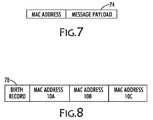
- sensor 10 When sensor 10 senses a change, it sends a wireless signal, as indicated schematically in FIG. 2 to server 18. That signal contains the identity of sensor 10 in the form of a media access control (MAC) address in addition to the message 74 or "payload" of the wireless signal, as shown in FIG. 7 .
- MAC media access control
- server 18 On receipt of the wireless signal by server 18, it accesses database 22 to find identity information in database 22 that corresponds to the MAC address in the message from sensor 10.
- a MAC address is the identity information associated with a sensor in database 22 and every sensor 10 has its own, unique MAC address.
- Server 18 finds the location-related information associated with the identity information of sensor 10. The location-related information relates to the sensor's identity, as given by its MAC address, to the location-related information, which comes from tag 26.
- Tag 26 is attached to object 12 in environment 14. It carries, in addition to the MAC address of sensor 10, information about object 12, which may include the so-called birth information 78 about object 12. birth information 78, as indicated in FIG. 8 includes the manufacturer's identity, part number, part serial number, and date of manufacture.
- server 18 Once server 18 knows this information about object 12, it can reference the configuration to determine where object 12 is located in environment and the location of sensor 10 will be known by inference. Server 18 may then respond to the wireless message from sensor 10 that informed server 18 of a change in a variable. That response may be particular to the location of object 12 in environment 14.
- sensor 10 may detect low lubricant levels in connection with a manufacturing process. Perhaps there is a sensor that detects lubricant level in a vessel deployed along a production line required for that manufacturing process.
- the production line thus defines an environment configured with various machines. Each machine is an object, and conducts one of the processing steps which requires lubricant.
- a signal received by server 18 from sensor 10 near one such machine indicates low levels of lubricant.
- Server 18 may respond by activating a transfer of lubricant from a lubricant reservoir to the vessel.
- server 18 identifies tag 26 as being associated with an object - in this example, the vessel -, which has a known location on the production line according to the line's known configuration.
- the lubricant level sensor may be attached to the vessel, but the MAC address for the sensor is carried in an RFID tag on the vessel along with location-related information, such as the birth record for the vessel, so the mapping of the physical location of the sensor to the vessel is based on a relationship, namely, that sensor senses a variable important to that production line. Accordingly, sensor 10 sends a wireless message identifying itself by its MAC address that will enable server 18 to associate that MAC address with the location-related information of the RFID tag corresponding to the vessel that is low on lubricant, and respond as programmed to the wireless signal received by transferring additional lubricant to the vessel.
- sensors are mapped using an RFID scanner to read the tags on the vessel of each line and uploading that information to the configuration database 34 which can be transferred to database 22 where it can be accessed by server 18.
- FIGS. 3 and 4 The steps for setting up the present system for mapping a wireless network are shown in FIGS. 3 and 4 .
- the environment 14 is defined to be the two- or three- dimensional space that is of interest. Environment 14 is configured, which means that sensors 10 and objects 12 are arranged within environment 14.
- the configuration information is stored in configuration database 34.
- Each sensor 10 has its own media access control (MAC) number so that each sensor 10 has a unique identity and one that is sent by each sensor 10 as part of a wireless message when it reports a change in the variable sensed by a wireless electronic signal.
- FIG. 7 illustrates such a message which may begin with the MAC address to identify sensor 10 and then the payload of the message follows.
- MAC media access control
- Tags 26 are prepared by encoding location-related information for each object 12 and identity information for each sensor 10 onto tag 26.
- the location-related information may be birth information particular to object 12 and relates to location because object 12 is assigned a particular location in environment 14, so that information relates to the location of object 12 through the configuration.
- Tag 26 is applied to object 12 by attaching it to the surface of object 12 or embedding it in object 12.
- Sensor 10 may also be attached to object 12 or attached proximate to object 12.
- Object 12 is installed in environment 14 in accordance with the configuration in configuration database 34.
- the particular sensor 10 whose identity information has been added to a tag 26 is that sensor attached to or positioned proximate to tag 26.
- the location of object 12, or, more precisely, tag 26 on object 12, serves as a proxy for the location of sensor 10, and the location of sensor 10 is therefore be proximate to tag 26.
- the position of sensor 10 is the result of a rule that satisfies the requirement that when sensor 10 sends its wireless message to server 18 in response to sensing a change, and server 18 responds to that message, the response addresses the change sensed by sensor 10.
- sensor 10 senses that a light switch has been changed from the "off" position to the "on” position, and sends that message to server 18, the light that is turned on by server 18 is the one that is effective to respond to the message from sensor 10 because it illuminates the area proximate to sensor 10.
- the message sent by sensor 10 may result in a light going on in the galley area of the aircraft identifying the seat where the passenger is sitting.
- the rule is again satisfied because the response addresses the change sensed by sensor 10, namely, a passenger wanted an attendant and the response notified the attendant.
- Tags 26 are read by reader 30 which is configured to read location-related information and identities of sensors 10 from tags 26.
- FIG. 8 illustrates the content of a tag 26.
- Tag 26 contains a MAC address for sensor 10 and birth information for object 12.
- Tags 26 may contain this information in the form of bar coded tags or radio frequency identification (RFID) tags which are both passive devices. The latter respond to a radio frequency signal by emitting a radio-frequency response containing the coded information.
- RFID tags 26 enable reader 30 to read the coded information without having to be aimed directly at the code on tags 26. Reader sends the information to configuration database 34, which stores the configuration for environment 14.
- RFID radio frequency identification
- the information stored on tags 26 is uploaded to on-board database 22 from configuration database 34.
- Configuration database 34 verifies that the actual configuration of objects matches the configuration design for environment 14.
- On-board database 22 responds to server 18 once the configuration of environment 14 has been verified.
- Sensor 10 sends a wireless signal in response to a sensed change in a variable.
- the signal includes the identity of sensor 10 and a message payload as shown in FIG. 7 .
- Server 18 receives the signal and compares the identity of sensor 10 to the sensor identities in on-board database 22 to identify sensor 10 and the object 12 associated with it.
- the location-related information stored in database 22 in association with the sensor's identity establishes which sensor 10 in environment 14 is the sensor that sent the signal.
- Server 18 then responds to the message sent by sensor 10 in accordance with its programming.
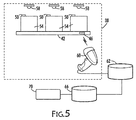
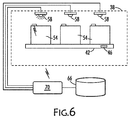
- an aircraft cabin 38 is defined as an environment and configured with rows 42 of seats 54.
- an RFID tag 46 is attached to each seat 54 in row 42.
- Sensors 50 may operate overhead lights 58, for example, and, when sensor 50 senses a change - an increase in pressure, a change in capacitance, or movement of a switch from off to on - it sends a signal that turns on an overhead light.
- a reader 60 reads RFID tag 46 and sends the results to a configuration database 62 to confirm that the configuration of cabin 38 is proper.
- Tag 46 contains the birth record for seat row 42 and MAC addresses for each of seats 10A, 10B and 10C in a pre-determined order, such as alphabetically, as shown in FIG. 8 .
- An on-board database 66 receives the information regarding the sensor identity associated with seat 10A and the location-related information from tag 46.
- server 70 receives it and extracts the identity of the wireless sensor 50 that sent the message. It accesses onboard database 66 to locate tag 46 associated with sensor 50, and determines sensor 50 is associated with seat 10A in row 42 because its identity is listed alphabetically first in tag 46 of row 42, as shown in FIG 8 .
- Server 70 therefore activates light 58 which directs light to the area of seat 10A.
- Sensor 50 may be a button that senses pressure or a change in capacitance or other detectable change caused by the passenger.
- sensor 10 is wireless, it can be placed close to seat 10A - in the armrest for example rather than overhead near light 58 -- so that the passenger can easily reach it rather than if it were placed near light 58 where it may require the passenger to unbuckle a seat belt and stand up while the aircraft is in flight.
- the present system thus removes a source of inconvenience for the passenger -- and potentially a safety hazard - and also the need for additional wiring to the armrest.
- the present system would also simplify aircraft construction, reduce weight, and minimize the use of material resources.
- the interior of the aircraft cabin is an environment, in this case a closed environment.
- the cabin environment has a configuration, which may include surfaces such as the floor, walls and ceiling and the surfaces of objects such as rows of seats and overhead compartments.
- a closed environment is not required in the present invention.
- the environment may be open or partially open.
- the environment may be a parking lot or parking garage with individual parking meters or parking spaces.
- the parking lot and parking garage however define a space of interest for placing sensors. Beyond the parking lot and outside the parking garage are of no interest in these environments.
- the sensors in this example may be motion detectors that sense the presence of cars near parking meters in the parking lot or in parking spaces in a parking garage or sensors that detects whether a particular vehicle is parked in a particular position assigned to it.
- Tags in this example may be placed on the floor of a parking space, on the car, or on a parking meter, depending on what the sensor is to measure.
- a computer server For a computer server to respond to a signal from a wireless sensor that has detected a change, it must know the location of the sensor that sent the signal. If location-related information about that sensor is in a database that can be queried by the server, it can determine that location.
- a server on the floor of each parking space may be able to tell when the garage is full by the number of sensors sending a "car present" message and the server may respond by illuminating a sign at the garage entrance saying "Parking Lot Full” or, alternatively, messages can be sent from two sensors for each space and one tag on the floor of the space saying whether (1) a car is in the space and (2) there is money inserted in the parking meter.
- Variables sensed by sensors may be the position of a switch or button, the temperature, humidity, air pressure, motion, contaminants, radiation, or any other detectable change.
- Location-related information is information that can be associated with a location so that location is determined or is readily determinable once the location-related information is known.
- the information on the RFID tags can be either location information or information that is not strictly location information but relatable to location (i.e., through the known configuration of objects in the environment of interest). It must be information that associates or "maps" the physical assets to their locations.
- Location-related information may be the location itself or it may be information that, when evaluated in connection with the configuration of an environment, such as a rows of seats in an aircraft passenger cabin or the number of a particular parking space on the third floor of the parking garage, uniquely determines a specific location in the configured environment.
- Location-related information acts as a proxy for the location of the sensor so that the response to a wireless message from the sensor is relevant to the sensor, as defined by the user.
- the location identified by the server receiving the wireless message is associated with the sensor that sent the message so that the response by the server is appropriate for the signal received from that sensor.
- the location-related information will be relevant to the sensor if it identifies the location or is in the vicinity of the sensor.
- the connection is based on a rule rather than physical proximity wherein, by following the rule, the response by the server is the appropriate response required by the signal.
- an RFID tag on a row of seats may include a set of MAC numbers, one for each of the seats in the row but a rule is required to know which of the seats carries the sensor that sent the signal.
- That rule may be that the first MAC number is seat A, the second is seat B, and so on.
- Seat C may be most proximate to the tag but not be the sensor that sent the signal. If that sensor is the one associated with seat A, the most remote seat to the tag is listed first, the signal carrying that MAC address will result in the light above sear A being illuminated.
- a multi-story building that has an air handling and conditioning system run by a computer server, there may be an array of sensors attached to the walls of every floor. Some of the sensors sense temperature; others sensors sense humidity or ambient light levels. As the sun passes overhead, shining first on one side of the building and later on the other side, the temperature sensors may sense a change in temperature throughout the day from the external, solar heat through the windows, and perhaps from changes in humidity and from the level of lighting.
- the air handling system may shift the flow of colder air to favor the warmer side of the building to compensate for the heat loading on that side and perhaps dehumidify the air to achieve a comfort level despite warmer or cooler temperature levels in different parts of the building in order to minimize energy demands for cooling the building.
- sensors may be located anywhere within an area of a particular floor as long as they are close enough to the area the server is to affect when they sense and report the changes in the ambient conditions because there is sufficient mixing of the air for the micro climate of that area of the environment of the building.
Landscapes
- Engineering & Computer Science (AREA)
- Computer Networks & Wireless Communication (AREA)
- Signal Processing (AREA)
- Health & Medical Sciences (AREA)
- Physics & Mathematics (AREA)
- General Health & Medical Sciences (AREA)
- General Physics & Mathematics (AREA)
- Theoretical Computer Science (AREA)
- Computing Systems (AREA)
- Medical Informatics (AREA)
- Toxicology (AREA)
- Computer Hardware Design (AREA)
- Microelectronics & Electronic Packaging (AREA)
- Computer Vision & Pattern Recognition (AREA)
- Artificial Intelligence (AREA)
- Electromagnetism (AREA)
- Arrangements For Transmission Of Measured Signals (AREA)
- Radar Systems Or Details Thereof (AREA)
Applications Claiming Priority (1)
| Application Number | Priority Date | Filing Date | Title |
|---|---|---|---|
| US14/816,514 US9661458B2 (en) | 2015-08-03 | 2015-08-03 | Method for associating wireless sensors to physical locations |
Publications (3)
| Publication Number | Publication Date |
|---|---|
| EP3128805A2 true EP3128805A2 (de) | 2017-02-08 |
| EP3128805A3 EP3128805A3 (de) | 2017-03-08 |
| EP3128805B1 EP3128805B1 (de) | 2020-06-17 |
Family
ID=56799227
Family Applications (1)
| Application Number | Title | Priority Date | Filing Date |
|---|---|---|---|
| EP16182233.3A Active EP3128805B1 (de) | 2015-08-03 | 2016-08-01 | Verfahren und system zur zuordnung drahtloser sensoren zu physischen orten |
Country Status (7)
| Country | Link |
|---|---|
| US (1) | US9661458B2 (de) |
| EP (1) | EP3128805B1 (de) |
| JP (1) | JP6735613B2 (de) |
| KR (1) | KR102688417B1 (de) |
| CN (1) | CN106412800B (de) |
| CA (1) | CA2933121C (de) |
| SG (1) | SG10201606188PA (de) |
Cited By (3)
| Publication number | Priority date | Publication date | Assignee | Title |
|---|---|---|---|---|
| DE102022104331A1 (de) | 2022-02-23 | 2023-08-24 | Vega Grieshaber Kg | System und Verfahren zum Übermitteln von Sensordaten und Positionsinformationen sowie Kommunikationsmodul und Sensor |
| EP4428497A1 (de) | 2023-03-07 | 2024-09-11 | VEGA Grieshaber KG | System und verfahren zum speichern von positionsinformationen in einem feldgerät |
| DE102023113814A1 (de) | 2023-05-25 | 2024-11-28 | Vega Grieshaber Kg | System und Verfahren zum Ermitteln einer Positionsinformation sowie entsprechendes Messsystem |
Families Citing this family (13)
| Publication number | Priority date | Publication date | Assignee | Title |
|---|---|---|---|---|
| DE102015210116B3 (de) * | 2015-06-02 | 2016-11-24 | Robert Bosch Gmbh | Parkplatzverwaltungssystem |
| US10997664B1 (en) * | 2015-09-17 | 2021-05-04 | United Services Automobile Association (Usaa) | Systems and methods for recommending action after assessing risk of property damage |
| US10354501B2 (en) * | 2016-11-08 | 2019-07-16 | The Boeing Company | Autonomous, low energy, access indication system |
| GB2563674B (en) * | 2017-06-23 | 2020-07-15 | Gen Electric | Methods and systems to identify smart sensor locations by the application of physical stimulus |
| US10862988B2 (en) * | 2017-12-18 | 2020-12-08 | The Chinese University Of Hong Kong | On-demand real-time sensor data distribution system |
| CN109087495A (zh) * | 2018-10-21 | 2018-12-25 | 浙江海洋大学 | 一种浅海水下环境检测系统及方法 |
| CN109640246B (zh) * | 2018-10-22 | 2022-03-01 | 北京无线体育俱乐部有限公司 | 信息获取方法、设备、系统及存储介质 |
| CN114792466A (zh) * | 2021-01-26 | 2022-07-26 | 国网山西省电力公司信息通信分公司 | 基于5G和LoRa联合组网的电网环境监测系统和方法 |
| CN113242523B (zh) * | 2021-03-23 | 2022-12-09 | 杭州医惠物联网科技有限公司 | 一种室内双频rfid定位多楼层切换方法 |
| CN113723987B (zh) * | 2021-07-16 | 2024-08-09 | 北京小马有数科技有限公司 | 一种触碰类型识别的方法、系统、计算机设备及存储介质 |
| CN113592053A (zh) * | 2021-08-03 | 2021-11-02 | 北京易艾斯德科技有限公司 | 基于数字温度传感器的位置检测方法、装置及存储介质 |
| CN114630317B (zh) * | 2021-12-14 | 2025-09-23 | 杭州安脉盛智能技术有限公司 | 一种Wi-Fi无线振动传感器自动配置参数的方法 |
| US20240388626A1 (en) * | 2023-05-16 | 2024-11-21 | Digitectura Technologies Pvt. Ltd | Method and sensor system for managing sensors in environment |
Family Cites Families (19)
| Publication number | Priority date | Publication date | Assignee | Title |
|---|---|---|---|---|
| JP2005024441A (ja) * | 2003-07-04 | 2005-01-27 | Ntn Corp | Icタグ・センサ付き軸受の異常検査システム |
| JP2005016846A (ja) * | 2003-06-26 | 2005-01-20 | Taisei Corp | ワイヤレスセンサを用いた屋内環境の制御システム |
| JP2005190160A (ja) * | 2003-12-25 | 2005-07-14 | Calsonic Kansei Corp | 車両内個人認証システム |
| MXPA06012818A (es) * | 2004-05-06 | 2007-08-17 | Ut Battelle Llc | Sistema de seguridad y rastreo de activos de la marina (mast). |
| US7394381B2 (en) * | 2004-05-06 | 2008-07-01 | Ut-Battelle, Llc | Marine asset security and tracking (MAST) system |
| KR100741353B1 (ko) * | 2005-09-02 | 2007-07-20 | 주식회사 맥스포 | Usn/rfid 태그 통합모듈 |
| EP1973299A1 (de) | 2007-03-23 | 2008-09-24 | Lufthansa Technik AG | Drahtlos ansteuerbare, elektrische Funktionseinheit für ein Luftfahrzeug |
| KR101025446B1 (ko) * | 2008-10-27 | 2011-03-30 | 주식회사 이엠따블유 | 습도에 따라 rf 신호의 출력을 조절하는 rfid 시스템및 상기 rfid 시스템에서의 제어 방법 |
| US10181060B2 (en) * | 2009-12-07 | 2019-01-15 | The Boeing Company | Methods and systems for real time RFID locating onboard an aircraft |
| WO2011072616A1 (zh) * | 2009-12-18 | 2011-06-23 | 上海科斗电子科技有限公司 | 电子扫描式物品查找系统及其电子标签 |
| US8774829B2 (en) * | 2010-07-16 | 2014-07-08 | Qualcomm Incorporated | Sensor node positioning for location determination |
| KR101064890B1 (ko) * | 2011-01-20 | 2011-09-16 | 폰 시스템주식회사 | 재해 비상 방송통신 광통합 시스템 |
| US8791823B2 (en) * | 2011-06-03 | 2014-07-29 | The Boeing Company | Aircraft part control system |
| CN102325345B (zh) | 2011-06-13 | 2013-11-27 | 南京邮电大学 | 一种基于标签传感网的集装箱物流跟踪与定位方法 |
| US20140077944A1 (en) | 2012-09-17 | 2014-03-20 | Lonny Baskin | Personal area mapping |
| TWI628672B (zh) | 2013-08-21 | 2018-07-01 | 克里斯多福B 雪羅 | 用於傳輸資料之網路化排線及組裝用於網路化排線之連接器罩之方法 |
| US9251455B2 (en) * | 2013-08-22 | 2016-02-02 | Verily Life Sciences Llc | Using unique identifiers to retrieve configuration data for tag devices |
| US20150058473A1 (en) | 2013-08-26 | 2015-02-26 | Cisco Technology, Inc. | Network address mapping to nearby location identification |
| CN104680213A (zh) | 2015-02-12 | 2015-06-03 | 无锡识凌科技有限公司 | 一种设备之间快速连接及数据传输的控制方法 |
-
2015
- 2015-08-03 US US14/816,514 patent/US9661458B2/en active Active
-
2016
- 2016-06-14 CA CA2933121A patent/CA2933121C/en active Active
- 2016-06-21 JP JP2016122386A patent/JP6735613B2/ja active Active
- 2016-06-21 KR KR1020160076970A patent/KR102688417B1/ko active Active
- 2016-07-27 SG SG10201606188PA patent/SG10201606188PA/en unknown
- 2016-08-01 CN CN201610622114.9A patent/CN106412800B/zh active Active
- 2016-08-01 EP EP16182233.3A patent/EP3128805B1/de active Active
Non-Patent Citations (1)
| Title |
|---|
| None |
Cited By (3)
| Publication number | Priority date | Publication date | Assignee | Title |
|---|---|---|---|---|
| DE102022104331A1 (de) | 2022-02-23 | 2023-08-24 | Vega Grieshaber Kg | System und Verfahren zum Übermitteln von Sensordaten und Positionsinformationen sowie Kommunikationsmodul und Sensor |
| EP4428497A1 (de) | 2023-03-07 | 2024-09-11 | VEGA Grieshaber KG | System und verfahren zum speichern von positionsinformationen in einem feldgerät |
| DE102023113814A1 (de) | 2023-05-25 | 2024-11-28 | Vega Grieshaber Kg | System und Verfahren zum Ermitteln einer Positionsinformation sowie entsprechendes Messsystem |
Also Published As
| Publication number | Publication date |
|---|---|
| KR102688417B1 (ko) | 2024-07-24 |
| CA2933121C (en) | 2021-02-16 |
| CN106412800B (zh) | 2020-04-24 |
| JP6735613B2 (ja) | 2020-08-05 |
| KR20170016272A (ko) | 2017-02-13 |
| US20170041739A1 (en) | 2017-02-09 |
| CA2933121A1 (en) | 2017-02-03 |
| US9661458B2 (en) | 2017-05-23 |
| SG10201606188PA (en) | 2017-03-30 |
| CN106412800A (zh) | 2017-02-15 |
| EP3128805A3 (de) | 2017-03-08 |
| JP2017041231A (ja) | 2017-02-23 |
| EP3128805B1 (de) | 2020-06-17 |
Similar Documents
| Publication | Publication Date | Title |
|---|---|---|
| US9661458B2 (en) | Method for associating wireless sensors to physical locations | |
| JPH0612591A (ja) | 遠隔識別センサシステム | |
| US8676437B2 (en) | Vehicle test system including plurality of apparatuses mutually communicable via network | |
| CN108292471B (zh) | 通过家用器具操控车辆的装载和/或卸载设备的方法及控制车辆至预确定的停车区域的方法 | |
| US7924151B2 (en) | Field device management | |
| US9183419B2 (en) | Passive RFID assisted active RFID tag | |
| US12267700B2 (en) | Method and system for commissioning environmental sensors | |
| US20170286907A1 (en) | Product movement and distribution systems and methods | |
| US11425548B2 (en) | Method to identify tractor and trailers and the order of hook up | |
| US20190317914A1 (en) | System of automation components and method for operating the same | |
| CA3102974C (en) | INSPECTION TRACKING SYSTEM | |
| US10752085B2 (en) | Temperature sensor for a vehicle | |
| JP6848365B2 (ja) | 物流管理システム | |
| US12403747B2 (en) | Vehicle control device and vehicle control method | |
| JP2007205754A (ja) | 移動情報検出装置 | |
| JP7687440B2 (ja) | 車両制御装置及び車両制御方法 | |
| KR20250154307A (ko) | 무선통신 이용 방식의 다채널 온도 탐지에 의한 냉동 차량의 온도 모니터링 시스템 | |
| WO2025157422A1 (en) | Control of mobile robots via a global safety map | |
| DE202023000008U1 (de) | WLAN-Navigations-Technologie |
Legal Events
| Date | Code | Title | Description |
|---|---|---|---|
| PUAI | Public reference made under article 153(3) epc to a published international application that has entered the european phase |
Free format text: ORIGINAL CODE: 0009012 |
|
| STAA | Information on the status of an ep patent application or granted ep patent |
Free format text: STATUS: REQUEST FOR EXAMINATION WAS MADE |
|
| PUAL | Search report despatched |
Free format text: ORIGINAL CODE: 0009013 |
|
| 17P | Request for examination filed |
Effective date: 20160801 |
|
| AK | Designated contracting states |
Kind code of ref document: A2 Designated state(s): AL AT BE BG CH CY CZ DE DK EE ES FI FR GB GR HR HU IE IS IT LI LT LU LV MC MK MT NL NO PL PT RO RS SE SI SK SM TR |
|
| AX | Request for extension of the european patent |
Extension state: BA ME |
|
| AK | Designated contracting states |
Kind code of ref document: A3 Designated state(s): AL AT BE BG CH CY CZ DE DK EE ES FI FR GB GR HR HU IE IS IT LI LT LU LV MC MK MT NL NO PL PT RO RS SE SI SK SM TR |
|
| AX | Request for extension of the european patent |
Extension state: BA ME |
|
| RIC1 | Information provided on ipc code assigned before grant |
Ipc: H04W 4/00 20090101ALI20170201BHEP Ipc: H04W 84/18 20090101AFI20170201BHEP Ipc: H04L 29/12 20060101ALI20170201BHEP Ipc: H04L 29/08 20060101ALI20170201BHEP Ipc: H04W 4/02 20090101ALI20170201BHEP Ipc: H04B 5/00 20060101ALI20170201BHEP |
|
| RIC1 | Information provided on ipc code assigned before grant |
Ipc: H04B 5/00 20060101ALI20191209BHEP Ipc: H04L 29/12 20060101ALI20191209BHEP Ipc: H04W 4/38 20180101ALI20191209BHEP Ipc: H04W 84/18 20090101AFI20191209BHEP Ipc: H04W 4/80 20180101ALI20191209BHEP Ipc: H04W 4/02 20180101ALI20191209BHEP Ipc: H04L 29/08 20060101ALI20191209BHEP |
|
| GRAP | Despatch of communication of intention to grant a patent |
Free format text: ORIGINAL CODE: EPIDOSNIGR1 |
|
| STAA | Information on the status of an ep patent application or granted ep patent |
Free format text: STATUS: GRANT OF PATENT IS INTENDED |
|
| INTG | Intention to grant announced |
Effective date: 20200123 |
|
| GRAS | Grant fee paid |
Free format text: ORIGINAL CODE: EPIDOSNIGR3 |
|
| GRAA | (expected) grant |
Free format text: ORIGINAL CODE: 0009210 |
|
| STAA | Information on the status of an ep patent application or granted ep patent |
Free format text: STATUS: THE PATENT HAS BEEN GRANTED |
|
| AK | Designated contracting states |
Kind code of ref document: B1 Designated state(s): AL AT BE BG CH CY CZ DE DK EE ES FI FR GB GR HR HU IE IS IT LI LT LU LV MC MK MT NL NO PL PT RO RS SE SI SK SM TR |
|
| REG | Reference to a national code |
Ref country code: GB Ref legal event code: FG4D |
|
| REG | Reference to a national code |
Ref country code: CH Ref legal event code: EP |
|
| REG | Reference to a national code |
Ref country code: DE Ref legal event code: R096 Ref document number: 602016038109 Country of ref document: DE |
|
| REG | Reference to a national code |
Ref country code: IE Ref legal event code: FG4D |
|
| REG | Reference to a national code |
Ref country code: AT Ref legal event code: REF Ref document number: 1282903 Country of ref document: AT Kind code of ref document: T Effective date: 20200715 |
|
| PG25 | Lapsed in a contracting state [announced via postgrant information from national office to epo] |
Ref country code: FI Free format text: LAPSE BECAUSE OF FAILURE TO SUBMIT A TRANSLATION OF THE DESCRIPTION OR TO PAY THE FEE WITHIN THE PRESCRIBED TIME-LIMIT Effective date: 20200617 Ref country code: GR Free format text: LAPSE BECAUSE OF FAILURE TO SUBMIT A TRANSLATION OF THE DESCRIPTION OR TO PAY THE FEE WITHIN THE PRESCRIBED TIME-LIMIT Effective date: 20200918 Ref country code: NO Free format text: LAPSE BECAUSE OF FAILURE TO SUBMIT A TRANSLATION OF THE DESCRIPTION OR TO PAY THE FEE WITHIN THE PRESCRIBED TIME-LIMIT Effective date: 20200917 Ref country code: LT Free format text: LAPSE BECAUSE OF FAILURE TO SUBMIT A TRANSLATION OF THE DESCRIPTION OR TO PAY THE FEE WITHIN THE PRESCRIBED TIME-LIMIT Effective date: 20200617 Ref country code: SE Free format text: LAPSE BECAUSE OF FAILURE TO SUBMIT A TRANSLATION OF THE DESCRIPTION OR TO PAY THE FEE WITHIN THE PRESCRIBED TIME-LIMIT Effective date: 20200617 |
|
| REG | Reference to a national code |
Ref country code: LT Ref legal event code: MG4D |
|
| REG | Reference to a national code |
Ref country code: NL Ref legal event code: MP Effective date: 20200617 |
|
| PG25 | Lapsed in a contracting state [announced via postgrant information from national office to epo] |
Ref country code: HR Free format text: LAPSE BECAUSE OF FAILURE TO SUBMIT A TRANSLATION OF THE DESCRIPTION OR TO PAY THE FEE WITHIN THE PRESCRIBED TIME-LIMIT Effective date: 20200617 Ref country code: LV Free format text: LAPSE BECAUSE OF FAILURE TO SUBMIT A TRANSLATION OF THE DESCRIPTION OR TO PAY THE FEE WITHIN THE PRESCRIBED TIME-LIMIT Effective date: 20200617 Ref country code: RS Free format text: LAPSE BECAUSE OF FAILURE TO SUBMIT A TRANSLATION OF THE DESCRIPTION OR TO PAY THE FEE WITHIN THE PRESCRIBED TIME-LIMIT Effective date: 20200617 Ref country code: BG Free format text: LAPSE BECAUSE OF FAILURE TO SUBMIT A TRANSLATION OF THE DESCRIPTION OR TO PAY THE FEE WITHIN THE PRESCRIBED TIME-LIMIT Effective date: 20200917 |
|
| REG | Reference to a national code |
Ref country code: AT Ref legal event code: MK05 Ref document number: 1282903 Country of ref document: AT Kind code of ref document: T Effective date: 20200617 |
|
| PG25 | Lapsed in a contracting state [announced via postgrant information from national office to epo] |
Ref country code: AL Free format text: LAPSE BECAUSE OF FAILURE TO SUBMIT A TRANSLATION OF THE DESCRIPTION OR TO PAY THE FEE WITHIN THE PRESCRIBED TIME-LIMIT Effective date: 20200617 Ref country code: NL Free format text: LAPSE BECAUSE OF FAILURE TO SUBMIT A TRANSLATION OF THE DESCRIPTION OR TO PAY THE FEE WITHIN THE PRESCRIBED TIME-LIMIT Effective date: 20200617 |
|
| PG25 | Lapsed in a contracting state [announced via postgrant information from national office to epo] |
Ref country code: ES Free format text: LAPSE BECAUSE OF FAILURE TO SUBMIT A TRANSLATION OF THE DESCRIPTION OR TO PAY THE FEE WITHIN THE PRESCRIBED TIME-LIMIT Effective date: 20200617 Ref country code: PT Free format text: LAPSE BECAUSE OF FAILURE TO SUBMIT A TRANSLATION OF THE DESCRIPTION OR TO PAY THE FEE WITHIN THE PRESCRIBED TIME-LIMIT Effective date: 20201019 Ref country code: CZ Free format text: LAPSE BECAUSE OF FAILURE TO SUBMIT A TRANSLATION OF THE DESCRIPTION OR TO PAY THE FEE WITHIN THE PRESCRIBED TIME-LIMIT Effective date: 20200617 Ref country code: RO Free format text: LAPSE BECAUSE OF FAILURE TO SUBMIT A TRANSLATION OF THE DESCRIPTION OR TO PAY THE FEE WITHIN THE PRESCRIBED TIME-LIMIT Effective date: 20200617 Ref country code: EE Free format text: LAPSE BECAUSE OF FAILURE TO SUBMIT A TRANSLATION OF THE DESCRIPTION OR TO PAY THE FEE WITHIN THE PRESCRIBED TIME-LIMIT Effective date: 20200617 Ref country code: AT Free format text: LAPSE BECAUSE OF FAILURE TO SUBMIT A TRANSLATION OF THE DESCRIPTION OR TO PAY THE FEE WITHIN THE PRESCRIBED TIME-LIMIT Effective date: 20200617 Ref country code: SM Free format text: LAPSE BECAUSE OF FAILURE TO SUBMIT A TRANSLATION OF THE DESCRIPTION OR TO PAY THE FEE WITHIN THE PRESCRIBED TIME-LIMIT Effective date: 20200617 Ref country code: IT Free format text: LAPSE BECAUSE OF FAILURE TO SUBMIT A TRANSLATION OF THE DESCRIPTION OR TO PAY THE FEE WITHIN THE PRESCRIBED TIME-LIMIT Effective date: 20200617 |
|
| PG25 | Lapsed in a contracting state [announced via postgrant information from national office to epo] |
Ref country code: SK Free format text: LAPSE BECAUSE OF FAILURE TO SUBMIT A TRANSLATION OF THE DESCRIPTION OR TO PAY THE FEE WITHIN THE PRESCRIBED TIME-LIMIT Effective date: 20200617 Ref country code: PL Free format text: LAPSE BECAUSE OF FAILURE TO SUBMIT A TRANSLATION OF THE DESCRIPTION OR TO PAY THE FEE WITHIN THE PRESCRIBED TIME-LIMIT Effective date: 20200617 Ref country code: IS Free format text: LAPSE BECAUSE OF FAILURE TO SUBMIT A TRANSLATION OF THE DESCRIPTION OR TO PAY THE FEE WITHIN THE PRESCRIBED TIME-LIMIT Effective date: 20201017 |
|
| REG | Reference to a national code |
Ref country code: DE Ref legal event code: R097 Ref document number: 602016038109 Country of ref document: DE |
|
| PG25 | Lapsed in a contracting state [announced via postgrant information from national office to epo] |
Ref country code: MC Free format text: LAPSE BECAUSE OF FAILURE TO SUBMIT A TRANSLATION OF THE DESCRIPTION OR TO PAY THE FEE WITHIN THE PRESCRIBED TIME-LIMIT Effective date: 20200617 |
|
| REG | Reference to a national code |
Ref country code: CH Ref legal event code: PL |
|
| PLBE | No opposition filed within time limit |
Free format text: ORIGINAL CODE: 0009261 |
|
| STAA | Information on the status of an ep patent application or granted ep patent |
Free format text: STATUS: NO OPPOSITION FILED WITHIN TIME LIMIT |
|
| PG25 | Lapsed in a contracting state [announced via postgrant information from national office to epo] |
Ref country code: DK Free format text: LAPSE BECAUSE OF FAILURE TO SUBMIT A TRANSLATION OF THE DESCRIPTION OR TO PAY THE FEE WITHIN THE PRESCRIBED TIME-LIMIT Effective date: 20200617 Ref country code: CH Free format text: LAPSE BECAUSE OF NON-PAYMENT OF DUE FEES Effective date: 20200831 Ref country code: LU Free format text: LAPSE BECAUSE OF NON-PAYMENT OF DUE FEES Effective date: 20200801 Ref country code: LI Free format text: LAPSE BECAUSE OF NON-PAYMENT OF DUE FEES Effective date: 20200831 |
|
| 26N | No opposition filed |
Effective date: 20210318 |
|
| REG | Reference to a national code |
Ref country code: BE Ref legal event code: MM Effective date: 20200831 |
|
| PG25 | Lapsed in a contracting state [announced via postgrant information from national office to epo] |
Ref country code: SI Free format text: LAPSE BECAUSE OF FAILURE TO SUBMIT A TRANSLATION OF THE DESCRIPTION OR TO PAY THE FEE WITHIN THE PRESCRIBED TIME-LIMIT Effective date: 20200617 |
|
| PG25 | Lapsed in a contracting state [announced via postgrant information from national office to epo] |
Ref country code: BE Free format text: LAPSE BECAUSE OF NON-PAYMENT OF DUE FEES Effective date: 20200831 Ref country code: IE Free format text: LAPSE BECAUSE OF NON-PAYMENT OF DUE FEES Effective date: 20200801 |
|
| PG25 | Lapsed in a contracting state [announced via postgrant information from national office to epo] |
Ref country code: TR Free format text: LAPSE BECAUSE OF FAILURE TO SUBMIT A TRANSLATION OF THE DESCRIPTION OR TO PAY THE FEE WITHIN THE PRESCRIBED TIME-LIMIT Effective date: 20200617 Ref country code: MT Free format text: LAPSE BECAUSE OF FAILURE TO SUBMIT A TRANSLATION OF THE DESCRIPTION OR TO PAY THE FEE WITHIN THE PRESCRIBED TIME-LIMIT Effective date: 20200617 Ref country code: CY Free format text: LAPSE BECAUSE OF FAILURE TO SUBMIT A TRANSLATION OF THE DESCRIPTION OR TO PAY THE FEE WITHIN THE PRESCRIBED TIME-LIMIT Effective date: 20200617 |
|
| PG25 | Lapsed in a contracting state [announced via postgrant information from national office to epo] |
Ref country code: MK Free format text: LAPSE BECAUSE OF FAILURE TO SUBMIT A TRANSLATION OF THE DESCRIPTION OR TO PAY THE FEE WITHIN THE PRESCRIBED TIME-LIMIT Effective date: 20200617 |
|
| P01 | Opt-out of the competence of the unified patent court (upc) registered |
Effective date: 20230516 |
|
| PGFP | Annual fee paid to national office [announced via postgrant information from national office to epo] |
Ref country code: DE Payment date: 20250827 Year of fee payment: 10 |
|
| PGFP | Annual fee paid to national office [announced via postgrant information from national office to epo] |
Ref country code: GB Payment date: 20250827 Year of fee payment: 10 |
|
| PGFP | Annual fee paid to national office [announced via postgrant information from national office to epo] |
Ref country code: FR Payment date: 20250825 Year of fee payment: 10 |