EP3104848B1 - Einen antimuscarin-wirkstoff enthaltende inhalierbare partikelzubereitungen - Google Patents
Einen antimuscarin-wirkstoff enthaltende inhalierbare partikelzubereitungen Download PDFInfo
- Publication number
- EP3104848B1 EP3104848B1 EP15709543.1A EP15709543A EP3104848B1 EP 3104848 B1 EP3104848 B1 EP 3104848B1 EP 15709543 A EP15709543 A EP 15709543A EP 3104848 B1 EP3104848 B1 EP 3104848B1
- Authority
- EP
- European Patent Office
- Prior art keywords
- particles
- tolterodine
- diisopropyl
- phenylpropanamine
- hydroxy
- Prior art date
- Legal status (The legal status is an assumption and is not a legal conclusion. Google has not performed a legal analysis and makes no representation as to the accuracy of the status listed.)
- Active
Links
Images






Classifications
-
- A—HUMAN NECESSITIES
- A61—MEDICAL OR VETERINARY SCIENCE; HYGIENE
- A61K—PREPARATIONS FOR MEDICAL, DENTAL OR TOILETRY PURPOSES
- A61K9/00—Medicinal preparations characterised by special physical form
- A61K9/0012—Galenical forms characterised by the site of application
- A61K9/007—Pulmonary tract; Aromatherapy
- A61K9/0073—Sprays or powders for inhalation; Aerolised or nebulised preparations generated by other means than thermal energy
- A61K9/0075—Sprays or powders for inhalation; Aerolised or nebulised preparations generated by other means than thermal energy for inhalation via a dry powder inhaler [DPI], e.g. comprising micronized drug mixed with lactose carrier particles
-
- A—HUMAN NECESSITIES
- A61—MEDICAL OR VETERINARY SCIENCE; HYGIENE
- A61K—PREPARATIONS FOR MEDICAL, DENTAL OR TOILETRY PURPOSES
- A61K31/00—Medicinal preparations containing organic active ingredients
- A61K31/13—Amines
- A61K31/135—Amines having aromatic rings, e.g. ketamine, nortriptyline
- A61K31/137—Arylalkylamines, e.g. amphetamine, epinephrine, salbutamol, ephedrine or methadone
Definitions
- This invention relates to powder formulations comprising particles of an antimuscarinic agent, in particular tolterodine or a tolterodine-related compound, and to methods of forming such powder formulations.
- this invention relates to powder formulations comprising tolterodine or a tolterodine-related compound, such as pharmaceutical powder compositions for administration by inhalation or insufflation, the use of such compositions as medicaments, as well as methods of treatment involving administration of the compositions.
- the compositions may be useful in particular for the treatment of urinary disorder, asthma, a group of breathing disorders termed Chronic Obstructive Pulmonary Disease (COPD), and allergic rhinitis.
- COPD Chronic Obstructive Pulmonary Disease
- U.S. Pat. No. 5,382,600 discloses (substituted) 3,3-diphenylpropylamines useful for treating urinary incontinence.
- it discloses 2-[(1R)-3-(diisopropylamino)-1-phenylpropyl)-4-methylphenol, also known as N,N-diisopropyl-3-(2-hydroxy-5-methylphenyl)-3-phenylpropylamine, with the generic name of tolterodine, as being useful to treat urinary incontinence.
- Tolterodine is the compound of Example 22 of U.S. Pat. No. 5,382,600 .
- Tolterodine may be prepared, for example, as described in WO98/29402 .
- tolterodine is a muscarinic receptor antagonist. It is presently being sold in a number of different countries for treatment of urinary incontinence under the name Detrol®, as well as generically. When tolterodine is used to treat urinary incontinence it is administered perorally as a tablet.
- the major, active metabolite of tolterodine is the 5-hydroxymethyl derivative of tolterodine.
- U.S. Pat. No. 5,559,269 and H Postlind et al, Drug Metabolism and Disposition, 26(4): 289-293 (1998 ) disclose hydroxytolterodine.
- U.S. Pat. No. 5,559,269 discloses this compound as being useful to treat urinary incontinence.
- Pharmacol. Toxicol., 81: 169-172 (1997 ) discloses that hydroxytolterodine has antimuscarinic activity.
- WO98/29402 mentions tolterodine salts of the following acids: methanesulfonic, hydrochloric, hydrobromic, sulfuric, phosphoric, nitric, benzoic, citric, tartaric, fumaric, maleic, CH 3 -(CH 2 ) n -COOH where n is 0 thru 4, and HOOC-(CH 2 ) n -COOH where n is as defined above.
- tolterodine is film-coated tablets containing 1 mg, 2 mg or 4 mg of tolterodine L-tartrate for release in the gastrointestinal tract. Consumers constantly require alternative delivery forms with favourable efficacy and/or which simplify the treatment, thus improving their quality of life.
- WO03/090734 discloses the use of tolterodine for treating asthma, COPD, and allergic rhinitis and suggests inhalable or insufflable compositions of tolterodine.
- This document discloses tolterodine salts of aliphatic mono- and dicarboxylic acids comprising from 7 to 24 carbon atoms, alkanedisulfonic acids comprising from 2 to 4 carbon atoms, and naphthoic acid derivatives comprising from 11 to 27 carbon atoms.
- WO03/039464 discloses the use of inhalable or insufflable compositions of tolterodine for treating urinary disorder.
- inhalable or insufflable powder formulations comprising an antimuscarinic agent, in particular tolterodine
- an antimuscarinic agent in particular tolterodine
- organic solvent particle precipitation/crystallisation of tolterodine L-tartrate leads to lengthy needle shaped (acicular) crystals, with the consequence that direct preparation of the particle sizes required for effective drug deposition in central and deep lung compartments is not possible by conventional crystallisation.
- a conventional solution to preparing suitable powder formulations is to mill/micronise larger, acicular material.
- This approach whilst producing particles in respirable ranges, generally results in highly charged, very cohesive material which causes severe downstream handling and processing issues.
- amorphous hygroscopic domains varying in content between batches of product tend to be formed which can lead to particle recrystallisation and growth upon uptake of water.
- milling produces irregular shaped and sized particle as a result of uncontrolled particle fracture and breakage.
- a further problem with milling is that a disturbed particle size distribution is generally obtained.
- a bimodal distribution may be obtained due to the presence of a proportion of primary particles, a significant amount of larger particles and a degree of agglomeration. It is also generally observed that for micronised powders a large number of smaller particles adhere to the surfaces of larger particles, due to the highly charged and energised surfaces after milling/micronisation. Such material will not aerosolise readily and easily.
- US2011/200678A1 discloses a spray-dry method or forming fine particles.
- Tolterodine I-tartrate is listed as a representative example of a physiological active substance to which the method may be applied.
- the examples produced by this method are said to be amorphous.
- aspects and embodiments of the invention embrace powder formulations comprising or consisting of particles of an antimuscarinic agent, namely tolterodine or a tolterodine-related compound selected from (R)-N, N-diisopropyl-3-(2-hydroxy-5-hydroxymethylphenyl)-3-phenylpropanamine, (S)-N, N-diisopropyl-3-(2-hydroxy-5-methylphenyl)-3-phenylpropanamine, (S)-N, N-diisopropyl-3-(2-hydroxy-5-hydroxymethylphenyl)-3-phenylpropanamine, (R, S)-N, N-diisopropyl-3-(2-hydroxy-5-methylphenyl)-3-phenylpropanamine, and (2-[(1R)-3-(di(propan-2-yl)amino)-1-phenylpropyl]-4-(hydroxymethyl)phenyl]2-methylpropanoate), or a pharmaceutically
- the particles of the antimuscarinic agent may have a D 50 of 4 ⁇ m or less and a D 90 of 10 ⁇ m or less.
- Such particles have been found to be readily inhalable or insufflable, and can be obtained by supercritical anti-solvent (SAS) precipitation to particularly facilitate inhalation or insufflation.
- SAS supercritical anti-solvent
- SAS precipitation of the antimuscarinic agent can provide particles that are more readily inhalable than milled particles.
- SAS precipitation leads to antimuscarinic particles with more readily inhalable shapes and sizes.
- the highly charged and energised surfaces seen in milled particles can be avoided.
- a powder formulation comprising or consisting of particles of tolterodine or a tolterodine-related compound selected from (R)-N, N-diisopropyl-3-(2-hydroxy-5-hydroxymethylphenyl)-3-phenylpropanamine, (S)-N, N-diisopropyl-3-(2-hydroxy-5-methylphenyl)-3-phenylpropanamine, (S)-N, N-diisopropyl-3-(2-hydroxy-5-hydroxymethylphenyl)-3-phenylpropanamine, (R, S)-N, N-diisopropyl-3-(2-hydroxy-5-methylphenyl)-3-phenylpropanamine, and (2-[(1R)-3-(di(propan-2-yl)amino)-1-phenylpropyl]-4-(hydroxymethyl)phenyl] 2-methylpropanoate), or a pharmaceutically acceptable salt thereof, said particles of tolterodine or a tol
- D 50 is the particle diameter where a cumulative particle diameter distribution reaches 50% by volume, i.e. 50% by volume of the particles have a smaller diameter than this value, and 50% by volume of the particles have a larger diameter than this value.
- D 90 is the particle diameter where a cumulative particle diameter distribution reaches 90% by volume, i.e. 90% by volume of the particles have a smaller diameter than this value, and 10% by volume of the particles have a larger diameter than this value.
- All particle sizes (diameters) herein are volume based particle diameters, measured for example by laser diffraction, and relate to the maximum particle diameter. Particle diameters may be determined using a Sympatec HelosTM laser diffraction particle size analyser fitted with a AspirosTM dry powder microdosing system, using an aerosolisation pressure of 4 bar.
- the powder formulation may be a dry powder formulation.
- the powder formulation may be suitable for inhalation and/or insufflation.
- the powder formulation may advantageously comprise, or consist of, antimuscarinic agent particles having a D 50 of 4 ⁇ m or less, or 3.5 ⁇ m or less, or 3 ⁇ m or less, or 2.5 ⁇ m or less, or 2 ⁇ m or less; and/or having a D 90 of 10 ⁇ m or less, or 8 ⁇ m or less, or 6 ⁇ m or less, or 5 ⁇ m or less.
- the D 50 and D 90 may be as low as possible. However, a narrow distribution of particle diameters aids aerosolisation.
- the D 50 is 1 ⁇ m or more.
- the D 90 is 2 ⁇ m or more.
- the volume mean diameter of the particles of the antimuscarinic agent may be 7 ⁇ m or less, in particular 5 ⁇ m or less, or even 3 ⁇ m or less.
- the particles of the antimuscarinic agent may have a monomodal particle size distribution.
- Antimuscarinic agents are muscarinic receptor antagonists, i.e. agents that block the activity of the muscarinic acetylcholine receptor. Antimuscarinic agents may be non-selective or selective to one or more muscarinic receptor subtypes, of which five (M 1 to M 5 ) have been determined. In an embodiment, the antimuscarinic agent acts on the M 2 and M 3 subtypes.
- the antimuscarinic agent referred to herein is tolterodine or a tolterodine-related compound, or a pharmaceutically acceptable salt thereof.
- tolterodine is (R)-N, N-diisopropyl-3-(2-hydroxy-5-methylphenyl)-3-phenylpropanamine.
- the term "tolterodine-related compound” is meant to encompass the major, active metabolite of tolterodine, i.e. (R)-N, N-diisopropyl-3-(2-hydroxy-5-hydroxymethylphenyl)-3-phenylpropanamine ("hydroxytolterodine”); the corresponding (S)-enantiomer to tolterodine, i.e.
- prodrug form is fesoterodine (2-[(1R)-3-(Di(propan-2-yl)amino)-1-phenylpropyl]-4-(hydroxymethyl)phenyl] 2-methylpropanoate), which is bioactivated to hydroxytolterodine.
- the antimuscarinic agent comprises tolterodine.
- the antimuscarinic agent is a salt of tolterodine or a tolterodine-related compound and one of the following acids: methanesulfonic, hydrochloric, hydrobromic, sulfuric, phosphoric, nitric, benzoic, citric, tartaric, fumaric, maleic, CH 3 -(CH 2 ) n -COOH where n is 0 to 4, and HOOC-(CH 2 ) n -COOH where n is 0 to 4, aliphatic mono- and dicarboxylic acids comprising from 7 to 24 carbon atoms, alkanedisulfonic acids comprising from 2 to 4 carbon atoms, and naphthoic acid derivatives comprising from 11 to 27 carbon atoms.
- the antimuscarinic agent is a tartrate, in particular an L-tartrate salt.
- the particles of the antimuscarinic agent may consist essentially or entirely of the antimuscarinic agent.
- the particles of the antimuscarinic agent are in crystalline form.
- crystalline form is meant any form of the antimuscarinic agent that is essentially free and preferably entirely free of amorphous portions of the antimuscarinic agent.
- essentially free of amorphous portions is meant that the form contains less than 10% by weight, preferably less than 5% by weight, and most preferably less than 1% by weight antimuscarinic agent in an amorphous form, wherein the weight percentages relate to the total amount of antimuscarinic agent.
- Crystalline portions of an antimuscarinic agent may be characterized for example by DSC measurement and/or Powder X-ray Diffraction (PXRD) as is known in the art. Taking the example of tolterodine L-tartrate, crystalline particles of this salt are readily distinguishable by having a sharp melting endotherm of 214 to 216°C (onset) that decomposes on melt.
- PXRD Powder X-ray Diffraction
- an acicular crystal habit is meant that the antimuscarinic agent forms, under conventional solvent evaporation crystallisation conditions, crystals with a length in one dimension that is at least 4 times, such as at least 6 times, or even at least 8 times, the length in any other dimension.
- the crystals are needle-shaped.
- SAS precipitation can advantageously overcome the problems associated with acicular crystal habits and milling, enabling more effective delivery of antimuscarinic agents with an acicular crystal habit.
- the antimuscarinic agent is tolterodine L-tartrate.
- organic solvent particle precipitation/crystallisation of tolterodine L-tartrate leads to the formation of acicular crystals unsuitable for inhalation or insufflation.
- This compound has an acicular crystal habit under solvent evaporation crystallization conditions.
- particles exhibiting a reduced length needle-shaped habit (“torpedo shaped" beneficial for facile fluidisation and aerosolisation) and having an inhalable or insufflable particle size can be obtained by SAS precipitation of tolterodine L-tartrate.
- Advantageous powder formulations comprising or consisting of particles of the antimuscarinic agent may be formed by SAS precipitation of said particles. Limitations and problems associated with milling/micronising, for example as described hereinabove, may be avoided.
- SAS precipitation involves contacting a supercritical or near critical anti-solvent (fluid) with a solution, in the present case a solution of the antimuscarinic agent.
- aspects and embodiments of the invention embrace anti-solvent precipitation methods, in particular SAS precipitation methods, of forming powder formulations comprising or consisting of particles of the antimuscarinic agent.
- the powder formulation according to the first aspect may suitably be obtainable, or obtained by any anti-solvent precipitation method of any aspect or embodiment of the invention.
- a method of forming a powder formulation comprising contacting a fluid anti-solvent with a solution of an antimuscarinic agent as hereinabove defined to precipitate particles of the antimuscarinic agent.
- the powder formulation and/or particles may be as defined or described hereinabove in relation to foregoing aspects of the invention.
- the anti-solvent may in principle be any fluid consistent with achieving desired particle formation.
- an anti-solvent for precipitation is generally chosen such that the product, in this case the antimuscarinic agent, is substantially insoluble therein.
- the role of the anti-solvent is thus to extract the solvent from the solution of antimuscarinic agent and to precipitate particles of the antimuscarinic agent.
- An example of a suitable anti-solvent is carbon dioxide.
- the anti-solvent is a supercritical fluid, although in some embodiments near-critical fluids may also be suitable.
- a "supercritical fluid” is a fluid at or above its critical pressure (Pc) and critical temperature (Tc) simultaneously.
- Pc critical pressure
- Tc critical temperature
- the pressure of the fluid is likely to be in the range between 1.01 and 7.0 of its critical pressure, and its temperature in the range between 1.01 and 4.0 of its critical temperature (in Kelvin).
- some fluids e.g., helium and neon
- non-critical fluid encompasses both high pressure liquids, which are fluids at or above their critical pressure but below (although preferably close to) their critical temperature, and dense vapors, which are fluids at or above their critical temperature but below (although preferably close to) their critical pressure.
- a high pressure liquid might have a pressure between about 1.01 and 7 times its Pc, and a temperature between about 0.5 and 0.99 times its Tc.
- a dense vapour might, correspondingly, have a pressure between about 0.5 and 0.99 times its Pc, and a temperature between about 1.01 and 4 times its Tc.
- the fluid anti-solvent and the solution of antimuscarinic agent may form a supercritical or near-critical mixture on contact.
- the anti-solvent is carbon dioxide having a pressure in the range of from 75 to 150 bar absolute. In an embodiment, the carbon dioxide has a temperature in the range of from 35 to 80°C.
- the anti-solvent has a density in the range of from 0.20 to 0.75 g/cm 3 . In an embodiment, the anti-solvent has a density in the range of from 0.30 to 0.75 g/cm 3 , e.g. in the range of from 0.30 to 0.50 g/cm 3 , in particular in the range of from 0.30 to 0.40 g/cm 3 .
- a high excess of the anti-solvent is contacted with the solution of antimuscarinic agent.
- the ratio of the mass fraction of contacted anti-solvent to the mass fraction of contacted tolterodine solution may be 30 or more, or advantageously 200 or more.
- the ratio of the mass fraction of contacted anti-solvent to the mass fraction of contacted tolterodine solution is 30 or more and the fluid anti-solvent has a density in the range of from 0.30 to 0.75 g/cm 3 .
- Formulations comprising or consisting of advantageously inhalable or insufflable particles of the antimuscarinic agent can be formed under particular precipitation conditions.
- a method of forming a powder formulation comprising or consisting of the antimuscarinic agent, in particular tolterodine L-tartrate, the method comprising: contacting a stream of anti-solvent with a stream of tolterodine L-tartrate solution to form particles of antimuscarinic agent, the stream of anti-solvent having a density in the range of from 0.20 to 0.75 g/cm 3 , wherein: (i) the ratio of the mass fraction of contacted anti-solvent to the mass fraction of contacted tolterodine solution is 30 or more and the anti-solvent has a density in the range of from 0.30 to 0.75 g/cm 3 ; and/or (ii) the ratio of the mass fraction of contacted anti-solvent to the mass fraction of contacted tolterodine solution is 200 or more.
- the anti-solvent may suitably be carbon dioxide, in particular supercritical or near-critical carbon dioxide, as afore
- the ratio of the mass fraction of contacted anti-solvent to the mass fraction of contacted tolterodine solution is 30 or more and the anti-solvent has a density in the range of from 0.30 to 0.75 g/cm 3 ; and/or (ii) the ratio of the mass fraction of contacted anti-solvent to the mass fraction of contacted tolterodine solution is 200 or more, it is possible to produce particles of tolterodine L-tartrate that have a D 50 of 4 ⁇ m or less and a D 90 of 10 ⁇ m or less. Such particles have been found to be readily inhalable or insufflable.
- the solution of the antimuscarinic agent may be prepared in any suitable manner and in any suitable solvent system.
- the solution comprises 5 mg/ml or more of antimuscarinic agent, suitably 10 mg/ml or more of antimuscarinic agent (based on the volume of solvent system in the solution at standard atmosphere and pressure).
- the maximum amount of antimuscarinic agent in the solution is generally limited only by the solubility of the agent in the solvent system.
- the solution comprises 100 mg/ml or less, suitably 50 mg/ml or less of antimuscarinic agent (based on the volume of solvent system in the solution at standard atmosphere and pressure).
- the solvent system of the solution may be chosen consistent with the solubility of the antimuscarinic agent.
- the solvent system comprises an organic solvent.
- the solvent system may comprise an alcohol.
- the solvent system may comprise or consist of methanol, especially where the antimuscarinic agent comprises tolterodine, in particular tolterodine L-tartrate.
- the anti-solvent and the solution of antimuscarinic agent may be contacted in any manner consistent with desired particle formation.
- the anti-solvent and solution are contacted such that extraction of a solvent system of the solution occurs by the action of the anti-solvent.
- this may occur in a precipitation chamber, for example a chamber in which temperature and pressure may be controlled to desired levels.
- Mixing energy may be provided by shear between the anti-solvent and the solution, as is known in the art.
- the anti-solvent and solution may be contacted such that dispersion and extraction of the solvent system occur substantially simultaneously by the action of the anti-solvent.
- the energy of mixing may be arranged to provide a virtually instantaneous homogeneous fluid mixture of the anti-solvent and solution.
- the method comprises contacting a relatively high velocity anti-solvent stream, with a relatively low velocity stream solution of antimuscarinic agent.
- the relative velocities of the two fluid streams may suitably be managed by varying the diameter and cross sectional area of respective jets or nozzles for delivering the streams, and controlling the flow rate of each fluid stream.
- the velocity of a stream may be controlled by an orifice plate of fixed diameter. This diameter may be arranged so as to maintain a set temperature and pressure on the upstream side of the orifice plate, while maintaining a specific flow rate through the orifice.
- the velocity of the resulting stream can be calculated using the density of the fluid upstream of the orifice plate (by referencing the fluid temperature and pressure), the mass flow of the fluid, the cross sectional area of the orifice, and the differential pressure across the orifice (equation given in Crystallization process in turbulent supercritical flows, Shekunov, B Yu, Hanna M, York P J Crystal Growth, 198-199, 1345-1351 (1999 )).
- the amount of kinetic energy suitable for mixing the two fluid streams and initiating supersaturation varies between each solute and each solvent mixture used.
- the anti-solvent velocity is in the range of from 12 to 360 m/sec -1 .
- the velocity of the solution of antimuscarinic agent is typically lower than the velocity of the anti-solvent stream and not critical to the invention.
- the velocity ratio between the anti-solvent stream and the solution is in the range of from 500:1 to 1000:1.
- the anti-solvent and solution may be introduced into a precipitation chamber via respective passages with respective outlets, the outlets being arranged relative to one another such that anti-solvent introduced through a first passage and solution introduced through a second passage both enter the precipitation chamber at substantially the same point, which is substantially the point at which the anti-solvent and solution meet.
- the anti-solvent and the solution may, for example, be co-fed into a precipitation chamber via a nozzle having co-axial passages which terminate adjacent to one another.
- one or more streams of the anti-solvent may be arranged to impinge on a stream of the solution to provide good levels of mixing and dispersion.
- other mixing architectures are also possible.
- Suitable apparatus are known, inter alia, from WO-95/01221 , WO-96/00610 , WO-98/36825 , WO-99/44733 , WO-99/59710 , WO-01/03821 , and WO-03/008082 , which are incorporated herein by reference.
- compositions comprising or consisting of a therapeutically effective amount of a powder formulation according to the invention, e.g. as described hereinabove, or as obtainable by a method according to the invention, e.g. as described hereinabove.
- the invention provides a pharmaceutical composition
- a pharmaceutical composition comprising or consisting of a therapeutically effective amount of particles of an antimuscarinic agent as hereinabove defined, said particles being obtainable by supercritical anti-solvent (SAS) precipitation and having a D 50 of 4 ⁇ m or less and a D 90 of 10 ⁇ m or less.
- SAS supercritical anti-solvent
- the pharmaceutical composition is a dry powder composition.
- the composition may take any suitable forms known in the art.
- the particles may be suspended in a non-solvent vehicle.
- the pharmaceutical composition has the form of a physical mixture and comprises a suitable pharmaceutical excipient for the particles of antimuscarinic agent.
- the pharmaceutical composition comprises an excipient.
- excipient Suitable amounts of excipient are known to a skilled person.
- one or more excipients may be present in an amount of from 50 to 99 % by weight of the total composition, suitably 60 to 95% by weight of the total composition.
- the excipient may be of conventional type and may be obtained by any suitable process.
- An example of a suitable excipient is inhalable lactose.
- the pharmaceutical composition may comprise a formulation and/or particles as described or defined in respect of foregoing aspects of the invention.
- the pharmaceutical composition comprises or consists of particles of tolterodine L-tartrate.
- the pharmaceutical compositions may be for treating, in a human or other mammal, a disorder selected from the group consisting of: urinary disorder, asthma, COPD, and allergic rhinitis.
- a disorder selected from the group consisting of: urinary disorder, asthma, COPD, and allergic rhinitis.
- the treatment is by inhalation or insufflation.
- the treatment is by pulmonary delivery.
- the disorder may be one requiring rapid relief, e.g. rapid symptomatic relief, or fast onset of the antimuscarinic agent.
- the treatment may thus be for providing rapid relief, e.g. rapid symptomatic relief, or onset of the antimuscarinic agent within a short period of time, e.g. less than 10 minutes, or less than 5 minutes, or less than 2 minutes, or less than 30 seconds.
- Rapid relief or fast onset may, for example, be defined as achieving at least 50% of peak plasma exposure to the antimuscarinic agent, more preferably at least 70% of peak plasma exposure to the antimuscarinic agent within the relevant time.
- rapid relief or fast onset may be defined as an improvement of at least 10%, preferably at least 20%, more preferably at least 30% or even at least 40% in at least one grading system associated with the disorder within the relevant time.
- a suitable grading system for urinary disorders are the urgency perception score "UPS” ( J Urol. 2007 Jan;177(1):199-202 ), the Indevus Urgency Severity Scale “IUSS” ( J Urol. 2005 Aug;174(2):604-7 ), or the patient perception of intensity of urgency scale “PPIUS” ( BMC Urology 2012, 12:26 ).
- UPS urgency perception score
- IUSS Indevus Urgency Severity Scale
- PPIUS intensity of urgency scale
- Other suitable grading systems are also known in the art.
- the pharmaceutical composition may be for treating urinary incontinence, in particular urge incontinence, stress incontinence or mixed incontinence. Treatment of such symptoms/disorders benefits particularly from rapid relief.
- a method of treating a disorder in a human or other mammal comprising administering to said human or other mammal in need of such a treatment, a therapeutically effective amount of a pharmaceutical composition according to the invention.
- said administration is performed by inhalation or insufflation.
- compositions of the invention may in particular be optimized for the treatment of urinary disorder, in particular urge incontinence, stress incontinence or mixed incontinence, by inhalation or insufflation.
- a dry pharmaceutical powder composition comprising or consisting of particles of tolterodine L-tartrate, said particles being obtainable by supercritical anti-solvent (SAS) precipitation and having a D 50 of 4 ⁇ m or less and a D 90 of 10 ⁇ m or less, for the treatment of urinary disorder by inhalation or insufflation.
- SAS supercritical anti-solvent
- aspects of the invention embrace particular amounts of the powder formulations and pharmaceutical powder compositions.
- aspects of the invention embrace inhalation or insufflation devices comprising a pharmaceutical composition according to the invention.
- the invention resides in an inhalation or insufflation device, for example a metered-dose inhaler or a dry powder inhaler, having therein for dispense a pharmaceutical composition according to the invention or as obtainable by a method according to the invention.
- an inhalation or insufflation device for example a metered-dose inhaler or a dry powder inhaler, having therein for dispense a pharmaceutical composition according to the invention or as obtainable by a method according to the invention.
- references to properties are - unless stated otherwise - to properties measured under standard temperature and pressure, i.e. at atmospheric pressure and at a temperature of 20°C.
- the particle size analysis of milled tolterodine L-tartrate shows a relatively broad distribution, with a relatively high percentage of particles larger than 5 microns (approx 20%).
- Tolterodine L-tartrate forms acicular (needle-like) crystals.
- Acicular particles grow extremely fast in one dimension. This presents particular challenges in the context of precipitation of inhalable or insufflable particles.
- Specific particle formation conditions for providing readily inhalable or insufflable particles, in particular particles with D 50 and D 90 percentiles between 1 to 4 ⁇ m and 2 to 10 ⁇ m and volume mean diameter ⁇ 7 ⁇ m, more preferably ⁇ 5 ⁇ m respectively were investigated.
- the method used to generate particles of inhalable tolterodine L-tartrate was a SAS (Supercritical Anti-Solvent) process
- a stream of the solution of tolterodine L-tartrate was contacted with a stream of supercritical or near critical carbon dioxide in a precipitation chamber, with the help of a mixing nozzle arrangement, to form particles of tolterodine L-tartrate.
- Table 1 refers to the following particle formation conditions/results:
- Examples 1 to 33 each produced, fine, free flowing powders. These Examples show that readily inhalable or insufflable particles of tolterodine L-tartrate, in particular particles with D 50 and D 90 percentiles between 1 to 4 ⁇ m and 2 to 10 ⁇ m and volume mean diameter ⁇ 7 ⁇ m, more preferably ⁇ 5 ⁇ m, were obtained when:
- Example 1 Confirmation of chemical and polymorphic identity of the particles obtained in Example 1 was assessed by both powder X-ray diffraction (PXRD) and differential scanning calorimetry (DSC). Specifically, assessment of crystallinity was carried out using the Bruker AXS (Karlsruhe, Germany) model D8 Advance X-Ray Diffractometer. Data was collected between 2° and 40° 2 ⁇ in a stepwise mode (step: 0.04 °/ min). DSC experiments were run on a TA Instruments Q2000 DSC equipped with RCS90 refrigerated cooling system at 10°C/min and TGA experiments were carried out on TA Instruments Q5000 TGA at 10°C/min.
- PXRD powder X-ray diffraction
- DSC differential scanning calorimetry
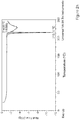
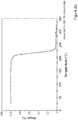
- Figures 1 , 2a and 2b show the Powder X-ray Diffraction pattern and thermal analysis of particles produced in Example 1.
- the PXRD analysis shows that the SCF processed material is crystalline with characteristic peaks of tolterodine L-tartrate.
- the DSC (Differential Scanning Calorimetry) data show that the particles displayed a sharp melting endotherm of 214°C (onset) that decomposed on melt.
- the particles consist of the crystalline form of tolterodine L-tartrate.
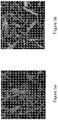
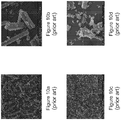
- Example 1 SEM (scanning electron microscope) examination of the particles of Example 1 showed a torpedo shaped morphology for particles ( Figure 3a ) with a narrow particle size distribution suitable for respiratory drug delivery. Notably, these particles have a different shape to the milled particles of Figures 10c and 10d and do not suffer from the agglomeration seen in the milled particles.
- the particle size distribution for the material is more regular, with a narrower particle size spread when compared with milled material. All particles appear independent without any 'smaller' particle adherence to the surfaces of other particles, a reflection of the improved and smoother surface topography, which facilitates particle aerosolisation.
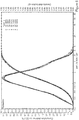
- FIG. 3b A comparison between Figures 3b and 3c illustrates the markedly narrower particle size distributions obtained at three aerosolisation pressures for the SCF processed material.
- Example 1 Chemical purity of the particles obtained in Example 1 was assessed by High Pressure Liquid Chromatography using a Waters 2790 separations module coupled with a Waters 996 photodiode array detector.
- the HPLC method used a C 18 column (5 ⁇ m, 150 x 4.6mm) protected with a pre-column.
- the mobile phase consisted of acetonitrile-20mM ammonium acetate (50:50 v/v), using a flow rate of 1.2 ml/min. The sample eluted at 3.7 min.
- Examples C1 to C5 show that, outside the above-identified operating parameters, the tolterodine L-tartrate particles had a D 90 in excess of 10 ⁇ m and in some cases a D 50 in excess of 4 ⁇ m. Such particles would be less suitable for inhalation or insufflation on account of their larger size, or indeed may be wholly unsuitable.
- the SEM of the particles obtained from example C1 shows a majority of the particles is clearly larger than 10 ⁇ m. No full particle size analysis is provided for this sample as particle size analysis of these particles would result in communition of particles during analysis and therefore no meaningful data would be collected.
- the SEM of the particles obtained from example C2 also shows a majority of the particles is clearly larger than 10 ⁇ m. This precipitate was a free flowing powder, but no full particle size analysis is provided for this sample as particle size analysis of these particles resulted in communition of particles during analysis and therefore no meaningful data could be collected.
- the SEM of the particles obtained from example C3 were a fine, free flowing powder.
- a particle size analysis was conducted and confirmed a D 90 in excess of 10 ⁇ m.
- the SEM of the particles obtained from example C4 were a fine, free flowing powder.
- a particle size analysis was conducted and confirmed a D 90 in excess of 10 ⁇ m.
- the SEM of the particles obtained from example C5 were a fine, free flowing powder.
- a particle size analysis was conducted and confirmed a D 90 in excess of 10 ⁇ m and a D 50 in excess of 4 ⁇ m.
- Hydroxymethyl tolterodine was precipitated, in the general manner of Examples 1 to 33, from acetonitrile solution (50.0 mg/ml) using a carbon dioxide temperature of 40°C, a carbon dioxide pressure of 85 bar, a carbon dioxide density of 0.353, a hydroxymethyl tolterodine solution flow of 0.32 g/min and carbon dioxide flow of 36 g/min.
- the product was a fine, free flowing powder that had D 50 and D 90 percentiles of 1.2 ⁇ m and 3.1 ⁇ m and volume mean diameter 1.5 ⁇ m respectively.
- the sample was amorphous by PXRD.
- Example 36 Bioavailability of inhaled studies in rats for tolterodine L-tartrate precipitated in Example 1
- Tolterodine L-tartrate produced as described in Example 1 for aerosol administration, was prepared in a capsule actuator which is able to load, pierce, aerosolise the contents and discharge individual capsules through a sequential mechanised cycle (manufactured by Huntington Life Sciences, Cambs, UK). Compressed air is used to aerosolise the contents of the caps.
- the rats were placed in a carousel-style, nose only, exposure chamber and allowed to inhale for 10 minutes.
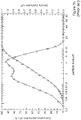
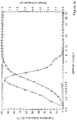
- Aerosol administration ( Figures 7 , 8 and 9 ) produced an instant rise in tolterodine plasma concentration.
- the data show that exposure was rapid with about 80% peak exposure at the first measurable data point.
- the exposure target of 8 nM was detected in four out of the five rats in group 2 at 0.3mg/kg dose level with rapid elimination of the drug from the plasma in less than 10 minutes in all rats in the 3 groups.
- Example 37 In vitro aerosolisation studies of DPI formulation of tolterodine L-tartrate / powdered lactose blend (1:9w / w)
- compositions were prepared by blending 2g tolterodine L-tartrate obtained by the method of Example 1 with 18g ⁇ -lactose monohydrate (size fraction 63-90 ⁇ m) in a Turbula Mixer for 30 minutes. After blending 10 mg of powder blend was filled into size 3 hard gelatin capsules and individual capsules were fitted into a Cyclohaler dry powder inhaler device prior to activating the device with the ACI connected and in operation.
- the dose emission data are shown in Table 2 and Table 3 for batch 1 and 2 respectively.
- the lactose powder used was Inhalable Lactose (Respitose, supplied by DFE Pharma Limited).
- Table 2 90L/min Loaded dose ( ⁇ g) 1000.00 TED ( ⁇ g) 660.00 FPD ( ⁇ g) 460.00 FPF% of TED 68.91 MMAD(um) 1.20 GSD 2.30
- Tables 1 and 2 show generally good agreement between the aerosolisation of the two batches of the tolterodine dry powder formulation.
- the FPF% values at 90L/min of 68.91 and 67.51 % indicate very good performance of the tolterodine powder formulation.
- Example 1 The particles of Example 1 were thus found to perform especially well in a 'prototype' formulation and 'off the shelf inhaler device', with two batches showing a FPF of 68.91 and 67.51% of emitted dose.
- a comparative figure for a micronised/milled 'prototype' formulation would be expected to be more around FPF% of 20 - 25%.
- particle size data also show that a much higher percentage of particles larger than 5 microns (approx 20% compared with 10%) are present in the micronised sample compared with the material of Example 1.
- the fact that one 5 micron sized particle has the same volume, and therefore mass, as x1000 1 micron sized particles means that a much higher proportion of a dose of the micronised material is likely to be poorly deposited in the central and deep lung compartments of the respiratory tract compared with the material of Example 1.
- Example 37 It can be concluded from Example 37 that the material of Examples 1 to 33, in particular of Example 1, is especially suitable for inhalation and insufflation.
- the material according to the Examples was shown to have a greatly superior FPF%.
- Example 37 Given the high FPF reported in Example 37, it is expected that the material, once inhaled or insufflated, provides for rapid absorption of tolterodine, at a faster rate than a comparable dose of micronized tolterodine. Smaller particles tend to be more readily absorbed. This is also consistent with the data obtained in Example 36.
- compositions comprising the material of any of Examples 1 to 33, e.g. a pharmaceutical composition as described in Example 37, for use in treating, in a human or other mammal, a disorder selected from the group consisting of: urinary disorder, asthma, COPD, and allergic rhinitis by inhalation or insufflation, in particular pulmonary delivery.
- compositions according to the invention for treatment, in a human or other mammal, of urinary disorder by inhalation or insufflation.
- the composition will be therapeutically effective with a minimum of deleterious side effects.
- compositions according to the invention for treatment, in a human or other mammal, of asthma by inhalation or insufflation.
- the composition will be therapeutically effective with a minimum of deleterious side effects.
- compositions according to the invention for treatment, in a human or other mammal, of COPD by inhalation or insufflation.
- the composition will be therapeutically effective with a minimum of deleterious side effects.
- compositions according to the invention for treatment, in a human or other mammal, of allergic rhinitis by inhalation or insufflation.
- the composition will be therapeutically effective with a minimum of deleterious side effects.
- the compositions will provide rapid symptomatic relief or fast onset of tolterodine as hereinabove defined.
- a pharmaceutical composition according to the invention e.g. as described in Example 37, for treatment providing rapid relief from urinary incontinence, in particular urge incontinence, stress incontinence or mixed incontinence, in a human or other mammal, by inhalation or insufflation.
- the composition will be effective with a minimum of deleterious side effects.
Landscapes
- Health & Medical Sciences (AREA)
- Public Health (AREA)
- Animal Behavior & Ethology (AREA)
- Veterinary Medicine (AREA)
- Engineering & Computer Science (AREA)
- Chemical & Material Sciences (AREA)
- Medicinal Chemistry (AREA)
- Pharmacology & Pharmacy (AREA)
- Epidemiology (AREA)
- Bioinformatics & Cheminformatics (AREA)
- General Health & Medical Sciences (AREA)
- Life Sciences & Earth Sciences (AREA)
- Pulmonology (AREA)
- Otolaryngology (AREA)
- Emergency Medicine (AREA)
- Acyclic And Carbocyclic Compounds In Medicinal Compositions (AREA)
- Pharmaceuticals Containing Other Organic And Inorganic Compounds (AREA)
- Medicinal Preparation (AREA)
Claims (15)
- Pulverformulierung, umfassend Teilchen von Tolterodin oder einer Tolterodin-ähnlichen Verbindung, ausgewählt aus (R)-N, N-Diisopropyl-3-(2-hydroxy-5-hydroxymethylphenyl)-3-phenylpropanamin, (S)-N, N-Diisopropyl-3-(2-hydroxy-5-methylphenyl)-3-phenylpropanamin, (S)-N, N-Diisopropyl-3-(2-hydroxy-5-hydroxymethylphenyl)-3-phenylpropanamin, (R, S)-N, N-Diisopropyl-3-(2-hydroxy-5-methylphenyl)-3-phenylpropanamin und (2-[(1R)-3-(Di(propan-2-yl)amino)-1-phenylpropyl]-4-(hydroxymethyl)phenyl]-2-methylpropanoat), oder einem pharmazeutisch annehmbaren Salz derselben, wobei die Teilchen erhältlich sind durch überkritische Anti-Lösemittel- (SAS; supercritical anti-solvent) Ausfällung und einen D50 von 4 µm oder weniger und einen D90 von 10 µm oder weniger besitzen.
- Pulverformulierung nach Anspruch 1, worin die Teilchen einen D50 von 2,5 µm oder weniger besitzen und/oder die Teilchen einen D90 von 6 µm oder weniger besitzen und/oder der D50 der Teilchen 1 µm oder mehr beträgt und/oder der D90 der Teilchen 2 µm oder mehr beträgt und/oder der mittlere Volumendurchmesser der Teilchen 7 µm oder weniger beträgt.
- Pulverformulierung nach einem der vorhergehenden Ansprüche, worin die Teilchen eine monomodale Teilchengröße-Verteilung aufweisen.
- Pulverformulierung nach einem der vorhergehenden Ansprüche, worin die Teilchen Tolterodin umfassen.
- Pulverformulierung nach einem der vorhergehenden Ansprüche, worin die Teilchen Tolterodin-L-tartrat umfassen.
- Verfahren zum Bilden einer Pulverformulierung nach einem der vorhergehenden Ansprüche, wobei das Verfahren das Kontaktieren eines überkritischen Fluids mit einer Lösung von Tolterodin, einer Tolterodin-ähnlichen Verbindung, ausgewählt aus (R)-N, N-Diisopropyl-3-(2-hydroxy-5-hydroxymethylphenyl)-3-phenylpropanamin, (S)-N, N-Diisopropyl-3-(2-hydroxy-5-methylphenyl)-3-phenylpropanamin, (S)-N, N-Diisopropyl-3-(2-hydroxy-5-hydroxymethylphenyl)-3-phenylpropanamin, (R, S)-N, N-Diisopropyl-3-(2-hydroxy-5-methylphenyl)-3-phenylpropanamin und (2-[(1R)-3-(Di(propan-2-yl)amino)-1-phenylpropyl]-4-(hydroxymethyl)phenyl]-2-methylpropanoat), oder einem pharmazeutisch annehmbaren Salz derselben umfasst, um die Teilchen auszufällen.
- Verfahren nach Anspruch 6, worin das Anti-Lösemittel eine Dichte im Bereich von 0,20 bis 0,75 g/cm3 besitzt und worin der Massenanteil des kontaktierten Anti-Lösemittels zum Massenanteil der kontaktierten Lösung 30 oder mehr beträgt.
- Verfahren nach Anspruch 6 oder Anspruch 7, worin der Massenanteil des kontaktierten Anti-Lösemittels zum Massenanteil der kontaktierten Lösung 200 oder mehr beträgt.
- Pharmazeutische Zusammensetzung, umfassend eine therapeutisch wirksame Menge von Teilchen von Tolterodin, einer Tolterodin-ähnlichen Verbindung, ausgewählt aus (R)-N, N-Diisopropyl-3-(2-hydroxy-5-hydroxymethylphenyl)-3-phenylpropanamin, (S)-N, N-Diisopropyl-3-(2-hydroxy-5-methylphenyl)-3-phenylpropanamin, (S)-N, N-Diisopropyl-3-(2-hydroxy-5-hydroxymethylphenyl)-3-phenylpropanamin, (R, S)-N, N-Diisopropyl-3-(2-hydroxy-5-methylphenyl)-3-phenylpropanamin und (2-[(1R)-3-(Di(propan-2-yl)amino)-1-phenylpropyl]-4-(hydroxymethyl)phenyl]-2-methylpropanoat), oder einem pharmazeutisch annehmbaren Salz derselben, wobei die Zusammensetzung eine Pulverformulierung nach einem der Ansprüche 1 bis 5 umfasst oder aus dieser besteht.
- Pharmazeutische Zusammensetzung nach Anspruch 9, worin die Zusammensetzung eine trockene Pulverzusammensetzung ist.
- Pharmazeutische Zusammensetzung nach Anspruch 9 oder Anspruch 10 zur Verwendung als Arzneimittel.
- Pharmazeutische Zusammensetzung nach Anspruch 9 oder Anspruch 10 zur Verwendung bei der Behandlung einer Krankheit, ausgewählt aus der Gruppe, bestehend aus Harnwegserkrankungen, Asthma, COPD und allergischer Rhinitis, worin die Behandlung durch Inhalation oder Insufflation erfolgt.
- Pharmazeutische Zusammensetzung nach Anspruch 9 oder Anspruch 10 zur Verwendung bei der Behandlung einer Harnwegserkrankung durch Inhalation oder Insufflation.
- Pharmazeutische Zusammensetzung nach Anspruch 9 oder Anspruch 10 zur Verwendung bei der Behandlung Dranginkontinenz, Stressinkontinenz oder gemischter Inkontinenz.
- Dosier-Inhalator oder Trockenpulver-Inhalator, enthaltend darin zum Dispensieren eine pharmazeutische Zusammensetzung nach Anspruch 9 oder Anspruch 10.
Applications Claiming Priority (2)
| Application Number | Priority Date | Filing Date | Title |
|---|---|---|---|
| GB201402556A GB201402556D0 (en) | 2014-02-13 | 2014-02-13 | Improvements relating to inhalable particles |
| PCT/GB2015/050406 WO2015121664A1 (en) | 2014-02-13 | 2015-02-13 | Improvements relating to inhalable particles |
Publications (2)
| Publication Number | Publication Date |
|---|---|
| EP3104848A1 EP3104848A1 (de) | 2016-12-21 |
| EP3104848B1 true EP3104848B1 (de) | 2020-05-06 |
Family
ID=50440107
Family Applications (1)
| Application Number | Title | Priority Date | Filing Date |
|---|---|---|---|
| EP15709543.1A Active EP3104848B1 (de) | 2014-02-13 | 2015-02-13 | Einen antimuscarin-wirkstoff enthaltende inhalierbare partikelzubereitungen |
Country Status (6)
| Country | Link |
|---|---|
| US (3) | US20170056325A1 (de) |
| EP (1) | EP3104848B1 (de) |
| CN (1) | CN106163505B (de) |
| ES (1) | ES2803030T3 (de) |
| GB (1) | GB201402556D0 (de) |
| WO (1) | WO2015121664A1 (de) |
Families Citing this family (2)
| Publication number | Priority date | Publication date | Assignee | Title |
|---|---|---|---|---|
| GB201402556D0 (en) | 2014-02-13 | 2014-04-02 | Crystec Ltd | Improvements relating to inhalable particles |
| GB202318661D0 (en) * | 2023-12-06 | 2024-01-17 | Crystec Ltd | Tranexamic acid compositions |
Family Cites Families (51)
| Publication number | Priority date | Publication date | Assignee | Title |
|---|---|---|---|---|
| US5382600A (en) | 1988-01-22 | 1995-01-17 | Pharmacia Aktiebolag | 3,3-diphenylpropylamines and pharmaceutical compositions thereof |
| SE9203318D0 (sv) | 1992-11-06 | 1992-11-06 | Kabi Pharmacia Ab | Novel 3,3-diphenylpropylamines, their use and preparation |
| GB9313642D0 (en) | 1993-07-01 | 1993-08-18 | Glaxo Group Ltd | Method and apparatus for the formation of particles |
| GB9413202D0 (en) | 1994-06-30 | 1994-08-24 | Univ Bradford | Method and apparatus for the formation of particles |
| US6465016B2 (en) | 1996-08-22 | 2002-10-15 | Research Triangle Pharmaceuticals | Cyclosporiine particles |
| WO1998010649A1 (en) | 1996-09-13 | 1998-03-19 | University Technology Corporation | Biocompatible cationic detergents and uses therefor |
| KR20000057548A (ko) | 1996-12-13 | 2000-09-25 | 알프레드 엘. 미첼슨 | 광학적 전송물질 및 결합재 |
| GB9703673D0 (en) | 1997-02-21 | 1997-04-09 | Bradford Particle Design Ltd | Method and apparatus for the formation of particles |
| GB9804379D0 (en) | 1998-03-02 | 1998-04-22 | Bradford Particle Design Ltd | Method of particle formation |
| GB9810559D0 (en) | 1998-05-15 | 1998-07-15 | Bradford Particle Design Ltd | Method and apparatus for particle formation |
| US7939105B2 (en) | 1998-11-20 | 2011-05-10 | Jagotec Ag | Process for preparing a rapidly dispersing solid drug dosage form |
| SE9804001D0 (sv) | 1998-11-23 | 1998-11-23 | Astra Ab | New process |
| SE9804000D0 (sv) | 1998-11-23 | 1998-11-23 | Astra Ab | New composition of matter |
| GB9915975D0 (en) | 1999-07-07 | 1999-09-08 | Bradford Particle Design Ltd | Method for the formation of particles |
| GB9919693D0 (en) | 1999-08-19 | 1999-10-20 | Rhone Poulenc Rorer Ltd | Process |
| JP2003509453A (ja) | 1999-09-21 | 2003-03-11 | アールティーピー・ファーマ・インコーポレーテッド | 生物学的に活性な物質の、表面改質された粒状組成物 |
| EP1242112A4 (de) | 1999-12-21 | 2005-02-09 | Rxkinetix Inc | Partikel-enthaltende medikamente und methode zu deren herstellung |
| US6596206B2 (en) | 2001-03-30 | 2003-07-22 | Picoliter Inc. | Generation of pharmaceutical agent particles using focused acoustic energy |
| US6906344B2 (en) | 2001-05-24 | 2005-06-14 | Semiconductor Energy Laboratory Co., Ltd. | Thin film transistor with plural channels and corresponding plural overlapping electrodes |
| TW586963B (en) | 2001-07-20 | 2004-05-11 | Nektar Therapeutics Uk Ltd | Method and apparatus for preparing target substance in particulate form and fluid inlet assembly for said apparatus |
| GB0117696D0 (en) * | 2001-07-20 | 2001-09-12 | Bradford Particle Design Plc | Particle information |
| US20030091513A1 (en) | 2001-10-03 | 2003-05-15 | Mohsen Nahed M. | Method to generate water soluble or nonwater soluble in nanoparticulates directly in suspension or dispersion media |
| US7112340B2 (en) | 2001-10-19 | 2006-09-26 | Baxter International Inc. | Compositions of and method for preparing stable particles in a frozen aqueous matrix |
| GB0125604D0 (en) | 2001-10-25 | 2001-12-19 | Glaxo Group Ltd | Novel process |
| BR0206300A (pt) | 2001-11-05 | 2008-04-08 | Upjohn Co | composição farmacêutica para tratar distúrbio urinário em um mamìfero e uso |
| US7005449B2 (en) | 2002-04-23 | 2006-02-28 | Pharmacia & Upjohn Company | Tolterodine salts |
| GB0216562D0 (en) * | 2002-04-25 | 2002-08-28 | Bradford Particle Design Ltd | Particulate materials |
| US20050026848A1 (en) | 2003-07-31 | 2005-02-03 | Robinson Cynthia B. | Combination of dehydroepiandrosterone or dehydroepiandrosterone-sulfate with a methylxanthine derivative for treatment of asthma or chronic obstructive pulmonary disease |
| JP5250205B2 (ja) | 2003-12-24 | 2013-07-31 | シプラ・リミテッド | トルテロジン、その組成物及び使用、及びその製造方法 |
| GB0409703D0 (en) | 2004-04-30 | 2004-06-02 | Vectura Ltd | Pharmaceutical compositions |
| AR057333A1 (es) | 2005-05-27 | 2007-11-28 | Medichem Sa | Proceso para la preparacion de 3,3-diarilpropilaminas |
| US8158152B2 (en) | 2005-11-18 | 2012-04-17 | Scidose Llc | Lyophilization process and products obtained thereby |
| BRPI0716658A2 (pt) | 2006-08-11 | 2015-02-10 | Panacea Biotec Ltd | Partículas para distribuição de ingredientes ativos, processo de fabricação e suas composições |
| JP2010505605A (ja) | 2006-10-06 | 2010-02-25 | ニューサウス イノベーションズ ピーティーワイ リミテッド | 粒子の形成 |
| US20110171274A1 (en) | 2008-07-21 | 2011-07-14 | Actavis Group Ptc Ehf | Fesoterodine Substantially Free of Dehydroxy Impurity |
| US20100047292A1 (en) | 2008-08-20 | 2010-02-25 | Baxter International Inc. | Methods of processing microparticles and compositions produced thereby |
| US8323615B2 (en) | 2008-08-20 | 2012-12-04 | Baxter International Inc. | Methods of processing multi-phasic dispersions |
| GB0909154D0 (en) | 2008-09-25 | 2009-07-08 | Nanomaterials Tech Pte Ltd | A process for making particles for delivery of drug nanoparticles |
| CN101507908B (zh) | 2009-04-09 | 2010-12-01 | 北京化工大学 | 微通道套管式装置及其应用 |
| AU2010253770B9 (en) | 2009-05-29 | 2015-02-12 | Pearl Therapeutics, Inc. | Compositions for respiratory delivery of active agents and associated methods and systems |
| KR100924236B1 (ko) * | 2009-06-23 | 2009-10-29 | 충남대학교산학협력단 | 균일한 입도분포를 가지는 초미세입자의 신규한 제조방법 및 장치 |
| CN101756905A (zh) | 2010-02-04 | 2010-06-30 | 东北林业大学 | 一种水溶性纳米化甘草酸粉体的超临界反溶剂制备方法 |
| UA107499C2 (uk) | 2010-06-22 | 2015-01-12 | Chiesi Farm Spa | Склад сухого порошку, який містить антимускариновий засіб |
| WO2012098044A1 (en) | 2011-01-17 | 2012-07-26 | Cambrex Profarmaco Milano S.R.L. | Process for the preparation of n,n-diisopropyl-3-(2-hydroxy-5-methylphenyl)- 3-phenyl propylamine and its salts starting from a novel intermediate |
| KR101481859B1 (ko) | 2011-05-20 | 2015-01-14 | 에스케이케미칼주식회사 | 초기 약물 방출이 감소된 고분자 미립자의 제조방법 및 그 방법에 의해 제조된 고분자 미립자 |
| GB201113662D0 (en) | 2011-08-08 | 2011-09-21 | Prosonix Ltd | Pharmaceutical compositions |
| KR20130078083A (ko) | 2011-12-30 | 2013-07-10 | 을지대학교 산학협력단 | 초임계 반용매법를 이용한 트리클로산 미세입자 제조방법과 그 응용 |
| UA115989C2 (uk) * | 2012-07-05 | 2018-01-25 | Арвен Айлак Санайі Ве Тіджарет А.С. | Фармацевтична композиція для інгалятора сухого порошку, що містить антагоністи мускаринових рецепторів тривалої дії |
| EP2705838A1 (de) | 2012-09-06 | 2014-03-12 | Xspray Microparticles Ab | Tiotropium-Zubereitungen |
| EA201591415A1 (ru) | 2013-01-31 | 2016-01-29 | Просоникс Лимитед | Фармацевтические композиции, включающие многокомпонентные кристаллические частицы, подходящие для применения в ингаляционной терапии |
| GB201402556D0 (en) | 2014-02-13 | 2014-04-02 | Crystec Ltd | Improvements relating to inhalable particles |
-
2014
- 2014-02-13 GB GB201402556A patent/GB201402556D0/en not_active Ceased
-
2015
- 2015-02-13 ES ES15709543T patent/ES2803030T3/es active Active
- 2015-02-13 WO PCT/GB2015/050406 patent/WO2015121664A1/en not_active Ceased
- 2015-02-13 CN CN201580008393.3A patent/CN106163505B/zh active Active
- 2015-02-13 US US15/118,760 patent/US20170056325A1/en not_active Abandoned
- 2015-02-13 EP EP15709543.1A patent/EP3104848B1/de active Active
-
2019
- 2019-12-16 US US16/715,332 patent/US11351115B2/en active Active
-
2022
- 2022-05-05 US US17/737,434 patent/US11759420B2/en active Active
Non-Patent Citations (1)
| Title |
|---|
| None * |
Also Published As
| Publication number | Publication date |
|---|---|
| US20170056325A1 (en) | 2017-03-02 |
| EP3104848A1 (de) | 2016-12-21 |
| WO2015121664A1 (en) | 2015-08-20 |
| US11351115B2 (en) | 2022-06-07 |
| GB201402556D0 (en) | 2014-04-02 |
| US20200230053A1 (en) | 2020-07-23 |
| CN106163505B (zh) | 2020-04-24 |
| US11759420B2 (en) | 2023-09-19 |
| US20220331243A1 (en) | 2022-10-20 |
| ES2803030T3 (es) | 2021-01-22 |
| CN106163505A (zh) | 2016-11-23 |
Similar Documents
| Publication | Publication Date | Title |
|---|---|---|
| EP2670395B1 (de) | Trockenpulverformulierungen enthaltend partikel, welche mindestens zwei wirkstoffe enthalten, zur behandlung von obstruktiven oder inflammatorischen atemwegserkrankungen | |
| RS66876B1 (sr) | Formulacija suvog praha koja sadrži inhibitor fosfodiesteraze | |
| RS65494B1 (sr) | Kombinacije antagonista muskarinskog receptora i agonista beta-2-adrenoreceptora | |
| US11759420B2 (en) | Inhalable particles | |
| CA2951483C (en) | Inhalation particles comprising a combination of an anticholinergic, a corticosteroid and a beta-adrenergic | |
| US20100269825A1 (en) | Inhalation particles comprising a salt of 8-hydroxy-2-[[(1r)-2-(4-methoxyphenyl)-1-methylethyl]amino] ethyl]-2(1h)-quinolinone and a corticosteroid | |
| JP2016506946A (ja) | 吸入療法用の多成分結晶粒子 | |
| EP3621590B1 (de) | Verfahren zur herstellung einer trockenpulverformulierung mit einem anticholinergikum, einem corticosteroid und einem beta-adrenergikum | |
| KR20210044336A (ko) | 흡입 제형용 건조 분말 및 이의 제조방법 | |
| JP7712916B2 (ja) | 吸入用乾燥粉末製剤のための新規担体粒子 | |
| KR102696616B1 (ko) | 흡입 제형용 건조 분말 및 이의 제조방법 | |
| CN112972384B (zh) | 一种格隆溴铵和茚达特罗原料药微粉混合物的制备方法 | |
| RU2823554C1 (ru) | Новые частицы носителя для сухих порошковых составов для ингаляции | |
| WO2025120213A1 (en) | Tranexamic acid compositions | |
| RU2795231C2 (ru) | Новые частицы носителя для сухих порошковых составов для ингаляции | |
| EP2360147A1 (de) | Verfahren zur Herstellung von kristallinen Partikeln von einem Salz von 8-Hydroxy-5-[(1R)-1-hydroxy-2-[[(1R)-2-(4-methoxyphenyl)-1-methylethyl]amino] ethyl]-2(1H)-chinolinon (Carmoterol) | |
| HK40050575A (en) | Inhalation particles comprising a combination of an anticholinergic, a corticosteroid and a beta-adrenergic | |
| TW201618759A (zh) | 具有經改善之組合型活性成分之穩定性的吸入型調配物乾粉末 | |
| HK1232434A1 (en) | Inhalation particles comprising a combination of an anticholinergic, a corticosteroid and a beta-adrenergic |
Legal Events
| Date | Code | Title | Description |
|---|---|---|---|
| STAA | Information on the status of an ep patent application or granted ep patent |
Free format text: STATUS: THE INTERNATIONAL PUBLICATION HAS BEEN MADE |
|
| PUAI | Public reference made under article 153(3) epc to a published international application that has entered the european phase |
Free format text: ORIGINAL CODE: 0009012 |
|
| STAA | Information on the status of an ep patent application or granted ep patent |
Free format text: STATUS: REQUEST FOR EXAMINATION WAS MADE |
|
| 17P | Request for examination filed |
Effective date: 20160908 |
|
| AK | Designated contracting states |
Kind code of ref document: A1 Designated state(s): AL AT BE BG CH CY CZ DE DK EE ES FI FR GB GR HR HU IE IS IT LI LT LU LV MC MK MT NL NO PL PT RO RS SE SI SK SM TR |
|
| AX | Request for extension of the european patent |
Extension state: BA ME |
|
| DAX | Request for extension of the european patent (deleted) | ||
| STAA | Information on the status of an ep patent application or granted ep patent |
Free format text: STATUS: EXAMINATION IS IN PROGRESS |
|
| 17Q | First examination report despatched |
Effective date: 20180329 |
|
| REG | Reference to a national code |
Ref country code: DE Ref legal event code: R079 Ref document number: 602015052116 Country of ref document: DE Free format text: PREVIOUS MAIN CLASS: A61K0031137000 Ipc: A61P0013020000 |
|
| GRAP | Despatch of communication of intention to grant a patent |
Free format text: ORIGINAL CODE: EPIDOSNIGR1 |
|
| STAA | Information on the status of an ep patent application or granted ep patent |
Free format text: STATUS: GRANT OF PATENT IS INTENDED |
|
| RIC1 | Information provided on ipc code assigned before grant |
Ipc: A61P 13/02 20060101AFI20191114BHEP Ipc: A61K 31/137 20060101ALI20191114BHEP Ipc: A61K 9/14 20060101ALI20191114BHEP |
|
| INTG | Intention to grant announced |
Effective date: 20191206 |
|
| GRAS | Grant fee paid |
Free format text: ORIGINAL CODE: EPIDOSNIGR3 |
|
| GRAA | (expected) grant |
Free format text: ORIGINAL CODE: 0009210 |
|
| STAA | Information on the status of an ep patent application or granted ep patent |
Free format text: STATUS: THE PATENT HAS BEEN GRANTED |
|
| AK | Designated contracting states |
Kind code of ref document: B1 Designated state(s): AL AT BE BG CH CY CZ DE DK EE ES FI FR GB GR HR HU IE IS IT LI LT LU LV MC MK MT NL NO PL PT RO RS SE SI SK SM TR |
|
| REG | Reference to a national code |
Ref country code: GB Ref legal event code: FG4D |
|
| REG | Reference to a national code |
Ref country code: AT Ref legal event code: REF Ref document number: 1265833 Country of ref document: AT Kind code of ref document: T Effective date: 20200515 Ref country code: CH Ref legal event code: EP |
|
| REG | Reference to a national code |
Ref country code: DE Ref legal event code: R096 Ref document number: 602015052116 Country of ref document: DE |
|
| REG | Reference to a national code |
Ref country code: IE Ref legal event code: FG4D |
|
| REG | Reference to a national code |
Ref country code: CH Ref legal event code: NV Representative=s name: LATSCHA SCHOELLHORN PARTNER AG, CH |
|
| REG | Reference to a national code |
Ref country code: LT Ref legal event code: MG4D |
|
| REG | Reference to a national code |
Ref country code: NL Ref legal event code: MP Effective date: 20200506 |
|
| PG25 | Lapsed in a contracting state [announced via postgrant information from national office to epo] |
Ref country code: GR Free format text: LAPSE BECAUSE OF FAILURE TO SUBMIT A TRANSLATION OF THE DESCRIPTION OR TO PAY THE FEE WITHIN THE PRESCRIBED TIME-LIMIT Effective date: 20200807 Ref country code: NO Free format text: LAPSE BECAUSE OF FAILURE TO SUBMIT A TRANSLATION OF THE DESCRIPTION OR TO PAY THE FEE WITHIN THE PRESCRIBED TIME-LIMIT Effective date: 20200806 Ref country code: LT Free format text: LAPSE BECAUSE OF FAILURE TO SUBMIT A TRANSLATION OF THE DESCRIPTION OR TO PAY THE FEE WITHIN THE PRESCRIBED TIME-LIMIT Effective date: 20200506 Ref country code: SE Free format text: LAPSE BECAUSE OF FAILURE TO SUBMIT A TRANSLATION OF THE DESCRIPTION OR TO PAY THE FEE WITHIN THE PRESCRIBED TIME-LIMIT Effective date: 20200506 Ref country code: FI Free format text: LAPSE BECAUSE OF FAILURE TO SUBMIT A TRANSLATION OF THE DESCRIPTION OR TO PAY THE FEE WITHIN THE PRESCRIBED TIME-LIMIT Effective date: 20200506 Ref country code: PT Free format text: LAPSE BECAUSE OF FAILURE TO SUBMIT A TRANSLATION OF THE DESCRIPTION OR TO PAY THE FEE WITHIN THE PRESCRIBED TIME-LIMIT Effective date: 20200907 Ref country code: IS Free format text: LAPSE BECAUSE OF FAILURE TO SUBMIT A TRANSLATION OF THE DESCRIPTION OR TO PAY THE FEE WITHIN THE PRESCRIBED TIME-LIMIT Effective date: 20200906 |
|
| PG25 | Lapsed in a contracting state [announced via postgrant information from national office to epo] |
Ref country code: LV Free format text: LAPSE BECAUSE OF FAILURE TO SUBMIT A TRANSLATION OF THE DESCRIPTION OR TO PAY THE FEE WITHIN THE PRESCRIBED TIME-LIMIT Effective date: 20200506 Ref country code: HR Free format text: LAPSE BECAUSE OF FAILURE TO SUBMIT A TRANSLATION OF THE DESCRIPTION OR TO PAY THE FEE WITHIN THE PRESCRIBED TIME-LIMIT Effective date: 20200506 Ref country code: RS Free format text: LAPSE BECAUSE OF FAILURE TO SUBMIT A TRANSLATION OF THE DESCRIPTION OR TO PAY THE FEE WITHIN THE PRESCRIBED TIME-LIMIT Effective date: 20200506 Ref country code: BG Free format text: LAPSE BECAUSE OF FAILURE TO SUBMIT A TRANSLATION OF THE DESCRIPTION OR TO PAY THE FEE WITHIN THE PRESCRIBED TIME-LIMIT Effective date: 20200806 |
|
| REG | Reference to a national code |
Ref country code: AT Ref legal event code: MK05 Ref document number: 1265833 Country of ref document: AT Kind code of ref document: T Effective date: 20200506 |
|
| PG25 | Lapsed in a contracting state [announced via postgrant information from national office to epo] |
Ref country code: NL Free format text: LAPSE BECAUSE OF FAILURE TO SUBMIT A TRANSLATION OF THE DESCRIPTION OR TO PAY THE FEE WITHIN THE PRESCRIBED TIME-LIMIT Effective date: 20200506 Ref country code: AL Free format text: LAPSE BECAUSE OF FAILURE TO SUBMIT A TRANSLATION OF THE DESCRIPTION OR TO PAY THE FEE WITHIN THE PRESCRIBED TIME-LIMIT Effective date: 20200506 |
|
| REG | Reference to a national code |
Ref country code: ES Ref legal event code: FG2A Ref document number: 2803030 Country of ref document: ES Kind code of ref document: T3 Effective date: 20210122 |
|
| PG25 | Lapsed in a contracting state [announced via postgrant information from national office to epo] |
Ref country code: CZ Free format text: LAPSE BECAUSE OF FAILURE TO SUBMIT A TRANSLATION OF THE DESCRIPTION OR TO PAY THE FEE WITHIN THE PRESCRIBED TIME-LIMIT Effective date: 20200506 Ref country code: RO Free format text: LAPSE BECAUSE OF FAILURE TO SUBMIT A TRANSLATION OF THE DESCRIPTION OR TO PAY THE FEE WITHIN THE PRESCRIBED TIME-LIMIT Effective date: 20200506 Ref country code: EE Free format text: LAPSE BECAUSE OF FAILURE TO SUBMIT A TRANSLATION OF THE DESCRIPTION OR TO PAY THE FEE WITHIN THE PRESCRIBED TIME-LIMIT Effective date: 20200506 Ref country code: SM Free format text: LAPSE BECAUSE OF FAILURE TO SUBMIT A TRANSLATION OF THE DESCRIPTION OR TO PAY THE FEE WITHIN THE PRESCRIBED TIME-LIMIT Effective date: 20200506 Ref country code: DK Free format text: LAPSE BECAUSE OF FAILURE TO SUBMIT A TRANSLATION OF THE DESCRIPTION OR TO PAY THE FEE WITHIN THE PRESCRIBED TIME-LIMIT Effective date: 20200506 Ref country code: AT Free format text: LAPSE BECAUSE OF FAILURE TO SUBMIT A TRANSLATION OF THE DESCRIPTION OR TO PAY THE FEE WITHIN THE PRESCRIBED TIME-LIMIT Effective date: 20200506 |
|
| REG | Reference to a national code |
Ref country code: DE Ref legal event code: R097 Ref document number: 602015052116 Country of ref document: DE |
|
| PG25 | Lapsed in a contracting state [announced via postgrant information from national office to epo] |
Ref country code: PL Free format text: LAPSE BECAUSE OF FAILURE TO SUBMIT A TRANSLATION OF THE DESCRIPTION OR TO PAY THE FEE WITHIN THE PRESCRIBED TIME-LIMIT Effective date: 20200506 Ref country code: SK Free format text: LAPSE BECAUSE OF FAILURE TO SUBMIT A TRANSLATION OF THE DESCRIPTION OR TO PAY THE FEE WITHIN THE PRESCRIBED TIME-LIMIT Effective date: 20200506 |
|
| PLBE | No opposition filed within time limit |
Free format text: ORIGINAL CODE: 0009261 |
|
| STAA | Information on the status of an ep patent application or granted ep patent |
Free format text: STATUS: NO OPPOSITION FILED WITHIN TIME LIMIT |
|
| 26N | No opposition filed |
Effective date: 20210209 |
|
| PG25 | Lapsed in a contracting state [announced via postgrant information from national office to epo] |
Ref country code: SI Free format text: LAPSE BECAUSE OF FAILURE TO SUBMIT A TRANSLATION OF THE DESCRIPTION OR TO PAY THE FEE WITHIN THE PRESCRIBED TIME-LIMIT Effective date: 20200506 |
|
| PG25 | Lapsed in a contracting state [announced via postgrant information from national office to epo] |
Ref country code: MC Free format text: LAPSE BECAUSE OF FAILURE TO SUBMIT A TRANSLATION OF THE DESCRIPTION OR TO PAY THE FEE WITHIN THE PRESCRIBED TIME-LIMIT Effective date: 20200506 |
|
| PG25 | Lapsed in a contracting state [announced via postgrant information from national office to epo] |
Ref country code: LU Free format text: LAPSE BECAUSE OF NON-PAYMENT OF DUE FEES Effective date: 20210213 |
|
| PG25 | Lapsed in a contracting state [announced via postgrant information from national office to epo] |
Ref country code: IE Free format text: LAPSE BECAUSE OF NON-PAYMENT OF DUE FEES Effective date: 20210213 |
|
| PG25 | Lapsed in a contracting state [announced via postgrant information from national office to epo] |
Ref country code: HU Free format text: LAPSE BECAUSE OF FAILURE TO SUBMIT A TRANSLATION OF THE DESCRIPTION OR TO PAY THE FEE WITHIN THE PRESCRIBED TIME-LIMIT; INVALID AB INITIO Effective date: 20150213 |
|
| PG25 | Lapsed in a contracting state [announced via postgrant information from national office to epo] |
Ref country code: CY Free format text: LAPSE BECAUSE OF FAILURE TO SUBMIT A TRANSLATION OF THE DESCRIPTION OR TO PAY THE FEE WITHIN THE PRESCRIBED TIME-LIMIT Effective date: 20200506 |
|
| P01 | Opt-out of the competence of the unified patent court (upc) registered |
Effective date: 20230527 |
|
| REG | Reference to a national code |
Ref country code: DE Ref legal event code: R082 Ref document number: 602015052116 Country of ref document: DE Representative=s name: MAIWALD GMBH, DE |
|
| PG25 | Lapsed in a contracting state [announced via postgrant information from national office to epo] |
Ref country code: MK Free format text: LAPSE BECAUSE OF FAILURE TO SUBMIT A TRANSLATION OF THE DESCRIPTION OR TO PAY THE FEE WITHIN THE PRESCRIBED TIME-LIMIT Effective date: 20200506 |
|
| PG25 | Lapsed in a contracting state [announced via postgrant information from national office to epo] |
Ref country code: MT Free format text: LAPSE BECAUSE OF FAILURE TO SUBMIT A TRANSLATION OF THE DESCRIPTION OR TO PAY THE FEE WITHIN THE PRESCRIBED TIME-LIMIT Effective date: 20200506 |
|
| PGFP | Annual fee paid to national office [announced via postgrant information from national office to epo] |
Ref country code: ES Payment date: 20250331 Year of fee payment: 11 |
|
| REG | Reference to a national code |
Ref country code: CH Ref legal event code: U11 Free format text: ST27 STATUS EVENT CODE: U-0-0-U10-U11 (AS PROVIDED BY THE NATIONAL OFFICE) Effective date: 20260301 |
|
| PGFP | Annual fee paid to national office [announced via postgrant information from national office to epo] |
Ref country code: GB Payment date: 20260219 Year of fee payment: 12 |
|
| PGFP | Annual fee paid to national office [announced via postgrant information from national office to epo] |
Ref country code: DE Payment date: 20260218 Year of fee payment: 12 |
|
| PGFP | Annual fee paid to national office [announced via postgrant information from national office to epo] |
Ref country code: BE Payment date: 20260218 Year of fee payment: 12 Ref country code: IT Payment date: 20260219 Year of fee payment: 12 |
|
| PGFP | Annual fee paid to national office [announced via postgrant information from national office to epo] |
Ref country code: FR Payment date: 20260218 Year of fee payment: 12 |
|
| PGFP | Annual fee paid to national office [announced via postgrant information from national office to epo] |
Ref country code: TR Payment date: 20260209 Year of fee payment: 12 |
|
| PGFP | Annual fee paid to national office [announced via postgrant information from national office to epo] |
Ref country code: CH Payment date: 20260301 Year of fee payment: 12 |