EP3091840B1 - Zusammensetzungen auf milchbasis mit vollständig denaturiertem retentat aus milch, verwendung des retentats, verfahren zur herstellung der zusammensetung auf milchbasis - Google Patents
Zusammensetzungen auf milchbasis mit vollständig denaturiertem retentat aus milch, verwendung des retentats, verfahren zur herstellung der zusammensetung auf milchbasis Download PDFInfo
- Publication number
- EP3091840B1 EP3091840B1 EP15879114.5A EP15879114A EP3091840B1 EP 3091840 B1 EP3091840 B1 EP 3091840B1 EP 15879114 A EP15879114 A EP 15879114A EP 3091840 B1 EP3091840 B1 EP 3091840B1
- Authority
- EP
- European Patent Office
- Prior art keywords
- composition
- milk
- denatured
- retentate
- beverage
- Prior art date
- Legal status (The legal status is an assumption and is not a legal conclusion. Google has not performed a legal analysis and makes no representation as to the accuracy of the status listed.)
- Active
Links
Images


Classifications
-
- A—HUMAN NECESSITIES
- A23—FOODS OR FOODSTUFFS; TREATMENT THEREOF, NOT COVERED BY OTHER CLASSES
- A23C—DAIRY PRODUCTS, e.g. MILK, BUTTER OR CHEESE; MILK OR CHEESE SUBSTITUTES; PREPARATION THEREOF
- A23C9/00—Milk preparations; Milk powder or milk powder preparations
- A23C9/152—Milk preparations; Milk powder or milk powder preparations containing additives
- A23C9/1524—Inert gases, noble gases, oxygen, aerosol gases; Processes for foaming
-
- A—HUMAN NECESSITIES
- A23—FOODS OR FOODSTUFFS; TREATMENT THEREOF, NOT COVERED BY OTHER CLASSES
- A23C—DAIRY PRODUCTS, e.g. MILK, BUTTER OR CHEESE; MILK OR CHEESE SUBSTITUTES; PREPARATION THEREOF
- A23C21/00—Whey; Whey preparations
- A23C21/06—Mixtures of whey with milk products or milk components
-
- A—HUMAN NECESSITIES
- A23—FOODS OR FOODSTUFFS; TREATMENT THEREOF, NOT COVERED BY OTHER CLASSES
- A23C—DAIRY PRODUCTS, e.g. MILK, BUTTER OR CHEESE; MILK OR CHEESE SUBSTITUTES; PREPARATION THEREOF
- A23C9/00—Milk preparations; Milk powder or milk powder preparations
- A23C9/14—Milk preparations; Milk powder or milk powder preparations in which the chemical composition of the milk is modified by non-chemical treatment
- A23C9/142—Milk preparations; Milk powder or milk powder preparations in which the chemical composition of the milk is modified by non-chemical treatment by dialysis, reverse osmosis or ultrafiltration
- A23C9/1422—Milk preparations; Milk powder or milk powder preparations in which the chemical composition of the milk is modified by non-chemical treatment by dialysis, reverse osmosis or ultrafiltration by ultrafiltration, microfiltration or diafiltration of milk, e.g. for separating protein and lactose; Treatment of the UF permeate
-
- A—HUMAN NECESSITIES
- A23—FOODS OR FOODSTUFFS; TREATMENT THEREOF, NOT COVERED BY OTHER CLASSES
- A23C—DAIRY PRODUCTS, e.g. MILK, BUTTER OR CHEESE; MILK OR CHEESE SUBSTITUTES; PREPARATION THEREOF
- A23C9/00—Milk preparations; Milk powder or milk powder preparations
- A23C9/15—Reconstituted or recombined milk products containing neither non-milk fat nor non-milk proteins
- A23C9/1512—Reconstituted or recombined milk products containing neither non-milk fat nor non-milk proteins containing isolated milk or whey proteins, caseinates or cheese; Enrichment of milk products with milk proteins in isolated or concentrated form, e.g. ultrafiltration retentate
-
- A—HUMAN NECESSITIES
- A23—FOODS OR FOODSTUFFS; TREATMENT THEREOF, NOT COVERED BY OTHER CLASSES
- A23C—DAIRY PRODUCTS, e.g. MILK, BUTTER OR CHEESE; MILK OR CHEESE SUBSTITUTES; PREPARATION THEREOF
- A23C9/00—Milk preparations; Milk powder or milk powder preparations
- A23C9/152—Milk preparations; Milk powder or milk powder preparations containing additives
-
- A—HUMAN NECESSITIES
- A23—FOODS OR FOODSTUFFS; TREATMENT THEREOF, NOT COVERED BY OTHER CLASSES
- A23J—PROTEIN COMPOSITIONS FOR FOODSTUFFS; WORKING-UP PROTEINS FOR FOODSTUFFS; PHOSPHATIDE COMPOSITIONS FOR FOODSTUFFS
- A23J1/00—Obtaining protein compositions for foodstuffs; Bulk opening of eggs and separation of yolks from whites
- A23J1/20—Obtaining protein compositions for foodstuffs; Bulk opening of eggs and separation of yolks from whites from milk, e.g. casein; from whey
-
- A—HUMAN NECESSITIES
- A23—FOODS OR FOODSTUFFS; TREATMENT THEREOF, NOT COVERED BY OTHER CLASSES
- A23J—PROTEIN COMPOSITIONS FOR FOODSTUFFS; WORKING-UP PROTEINS FOR FOODSTUFFS; PHOSPHATIDE COMPOSITIONS FOR FOODSTUFFS
- A23J3/00—Working-up of proteins for foodstuffs
- A23J3/04—Animal proteins
- A23J3/08—Dairy proteins
-
- A—HUMAN NECESSITIES
- A23—FOODS OR FOODSTUFFS; TREATMENT THEREOF, NOT COVERED BY OTHER CLASSES
- A23L—FOODS, FOODSTUFFS OR NON-ALCOHOLIC BEVERAGES, NOT OTHERWISE PROVIDED FOR; PREPARATION OR TREATMENT THEREOF
- A23L2/00—Non-alcoholic beverages; Dry compositions or concentrates therefor; Preparation or treatment thereof
- A23L2/52—Adding ingredients
- A23L2/54—Mixing with gases
-
- A—HUMAN NECESSITIES
- A23—FOODS OR FOODSTUFFS; TREATMENT THEREOF, NOT COVERED BY OTHER CLASSES
- A23L—FOODS, FOODSTUFFS OR NON-ALCOHOLIC BEVERAGES, NOT OTHERWISE PROVIDED FOR; PREPARATION OR TREATMENT THEREOF
- A23L2/00—Non-alcoholic beverages; Dry compositions or concentrates therefor; Preparation or treatment thereof
- A23L2/52—Adding ingredients
- A23L2/66—Proteins
-
- A—HUMAN NECESSITIES
- A23—FOODS OR FOODSTUFFS; TREATMENT THEREOF, NOT COVERED BY OTHER CLASSES
- A23C—DAIRY PRODUCTS, e.g. MILK, BUTTER OR CHEESE; MILK OR CHEESE SUBSTITUTES; PREPARATION THEREOF
- A23C2210/00—Physical treatment of dairy products
- A23C2210/30—Whipping, foaming, frothing or aerating dairy products
-
- A—HUMAN NECESSITIES
- A23—FOODS OR FOODSTUFFS; TREATMENT THEREOF, NOT COVERED BY OTHER CLASSES
- A23V—INDEXING SCHEME RELATING TO FOODS, FOODSTUFFS OR NON-ALCOHOLIC BEVERAGES AND LACTIC OR PROPIONIC ACID BACTERIA USED IN FOODSTUFFS OR FOOD PREPARATION
- A23V2002/00—Food compositions, function of food ingredients or processes for food or foodstuffs
Definitions
- the present invention relates to an improved beverage and method of manufacture. More specifically the invention is directed towards a dairy-based beverage which retains certain desirable sensory perception characteristics such as a good mouthfeel and perceived thickness.
- milkshakes which lack ice-cream and subsequently have a lower fat content.
- a disadvantage of milkshakes is a loss of sensory characteristics, particularly the indulgent mouthfeel provided by a high fat beverage.
- NZ 563869 is directed towards using hydrophobin proteins and a surfactant to better retain gas bubbles within food products to improve the texture.
- NZ 587796 is directed towards using alternan (polysaccharides made up of glucose units) as a thickening agent for various foodstuffs or beverages. Even within this document, there is reference to many thickening agents such as starch, gums, and so forth that are well known as conventional thickening agents to improve overall mouthfeel of a product without resorting to, in some cases, increased fat content.
- NZ 552132 discloses an acidic milk drink that has a low fat, low calorie acidic milk drink yet with achieving a good flavour and light texture. It relies on inclusion of polydextrose and sugar.
- US 2007/0065555 discloses a stabilised dairy foam which includes milk, a surfactant, a polysaccharide and a polymer.
- US 4,840,813 describes low and non-fat aerated frozen dairy desserts having the organoleptic characteristics of high fat ice cream.
- the dessert compositions comprise milk solids non-fat, a defined whey protein concentrate, sweeteners and water.
- NZ 564378 methods of preparing frothy milk based beverages such as cappuccinos are described, including conventional techniques such as applying pressure and heat to produce bubble formation.
- the same Applicant developed a novel composition for producing aerated beverages which has excellent sensory perception results. Unlike the prior art described herein, it avoided use of high fat levels and using exogenous foreign excipients to achieve the beneficial mouth feel, look and taste following aeration.
- the previous invention was based on the use of recombined milk which had much lower levels of fat (about 1.5 to 5% w/w), yet surprisingly showed excellent sensory perception results. Using recombined milk (preferably with a heat denatured retentate added), it was shown that the sensory results were considerably better than standard 3.5% w/w fat milk, and were even comparable to 9% w/w fat thick-shakes.
- a milk-based composition characterised in that the composition includes:
- a use of a milk-derived, fully denatured retentate to create a non-aerated or aerated milk-based composition or beverage with less than about 0.5% w/w fat wherein the composition includes about 3.5 to 6 % w/w protein, and a ratio of denatured to un-denatured protein between about 10:90 to 90:10, optionally to form microbubbles in an aerated skimmed milk composition.
- the same inventors produced a significantly improved composition which has further commercial advantages.
- the composition displays beneficial stable micro-bubbles, providing a rich mouth feel.
- the new composition's fat content was kept at essentially zero (about 0.2% w/w) and still showed remarkable foaming and sensory perception results. This is a significant and unexpected result as the composition is substantially devoid of any fat, which was thought to be needed to contribute significantly to the desired characteristics, in terms of viscosity, mouth feel and stability.
- the inventors then identified a significant phenomenon, in that if the ratio of denatured to un-denatured protein in the composition is in the range of between about 30:70 and 70:30, the beneficial results (foam volume and foam quality (i.e. micro-foam), which gives the mouth feel are particularly well pronounced, as will be illustrated further in this specification.
- the denatured protein may typically be provided by the denatured retentate, and the un-denatured protein may be provided by the skimmed milk source (or other component, as discussed further below).
- the use of the denatured retentate appears to be a key in converting an otherwise unstable system such as aerated skimmed milk into a composition that produces very stable, velvety foams.
- milk based compositions such as those described in WO 2012/110705 , WO 2013/004895 and WO 2012/056106 , which are used for different applications such as low lactose milk or whey protein products, include milk derived ultra filtrate retentates.
- any heat treatment which has been in processing these compositions are performed under different conditions due to their different purpose (i.e. simply to sterilise the final composition, or to pre-treat the raw milk to develop certain characteristics, not the isolated retentate itself).
- the term "aerated” or variations thereof should be taken as meaning a beverage which has been adapted, developed, or prepared to include air or gas bubbles (i.e. typically, although not solely, atmospheric air) dispersed homogenously within, or just within a portion of, the beverage for a period of time.
- air or gas bubbles i.e. typically, although not solely, atmospheric air
- non-aerated used throughout this specification should be taken as meaning a composition or beverage that has not been manipulated to include a higher than normal level of air or gas bubbles. Of course, most compositions or beverage will have some underlying natural level of dissolved gas or air trapped within it, and the term “non-aerated” is intended to encompass this.
- composition according to the present invention helps to produce such bubbles under mechanical aeration, improve stability and provide a number of other benefits which will be discussed throughout this specification.
- an aerated beverage does not correspond to previously known carbonation techniques.
- the present invention could also be used with carbonated beverages if so desired.
- carbonation is seen to be disadvantageous as it lowers the pH of neutral milk.
- coffee lowers the pH of milk, so application of carbonation techniques would disadvantageously lower the pH further and result in stability issues which are avoided by the present invention.
- bubbles should also be understood to encompass foam within or as part of a liquid, and so forth.
- Micro-foams are discussed throughout this specification, which are well known in the art to be distinct to macro-foams. Micro-foams can be advantageous over macro-foams as they provide a beneficial velvety foam, and are often linked to a good mouth feel and overall taste.
- composition may be provided as a powdered form, a solid form and/or as a liquid form (or combinations thereof).
- the term "beverage” should be taken as meaning any liquid fit for animal (typically human) internal consumption. Examples include, but are clearly not limited to, cold drinks such as milkshakes, thick-shakes, frozen beverages, smoothies, frappuccinos, or hot drinks such as hot chocolate, fluffies (frothy hot milk drinks for children), or coffee-based drinks, or a frothy portion thereof, such as mochaccinos, cappuccinos, and so forth.
- cold drinks such as milkshakes, thick-shakes, frozen beverages, smoothies, frappuccinos, or hot drinks such as hot chocolate, fluffies (frothy hot milk drinks for children), or coffee-based drinks, or a frothy portion thereof, such as mochaccinos, cappuccinos, and so forth.
- the present invention may also be used for nutritional or medicinal based beverages, for instance to improve the flavour, texture and mouthfeel of either medicines or supplements or as a carrier of functional ingredients.
- the term "beverage” should be understood to also encompass food and/or culinary products that have a liquid or semi-liquid based composition.
- the present invention could be utilised for desserts which normally are heated or cooled in order to increased volume or overall mouthfeel before eating.
- Another example tested by the Applicant is quiche, where the composition was successfully used to replace cream.
- the present invention provides an alternative to such foods, where the volume (if aerated) or overall mouthfeel may be provided by the composition.
- bubble retention should be referred to frequently and should be understood to mean the extent, duration and/or persistency of the increased volume of the beverage due to foam/air/gas entrapped within the beverage following aeration.
- An acceptable level of bubble retention will depend on the circumstance. However, in most cases a beverage is normally consumed within 20 minutes, so an acceptable duration would be approximately this timeframe or more.
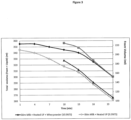
- bubble duration is measured through total (liquid and foam) volume vs. time.
- milk based composition should be taken as meaning a mixture, either solid, semi-solid, or which includes milk-derived components. This would encompass a composition with dried skimmed milk powder, reconstituted skimmed milk, and/or skimmed milk.
- milk should not be limited to milk from cows or goats, but should also encompass other milk sources such as buffalo, sheep, horses or camels for example.
- the composition only has milk-based components in it.
- a goal of the project was to develop and market a composition to be used for aerated beverages, where the base composition only utilised milk-based components, for instance without relying on not high fat or exogenous thickeners. Not only is this advantageous from a public viewpoint as providing a more "natural" product, but it also avoids complicated processing techniques and increases in costs, and potential instability which might arise from combining multiple components that don't normally co-exist.
- the composition may be supplemented with other non-milk based additives such as flavourings if so desired.
- the milk-based composition may be used to prepare flavoured compositions, such as ready to use coffee sachets.
- skimmed milk source should be taken as meaning milk which has substantially all the fat (cream) has been removed from the whole milk.
- fat cream
- skimmed milk we herein define skimmed milk as having less than 0.3% w/w fat. This is comparable to semi-skimmed milk which typically has 1.5 - 1.7% w/w fat, and whole milk which typically has 3.3 - 4% w/w fat.
- recombined milk included a milk fat component, a non-fat milk component (often skimmed or partially defatted milk powder) and typically a fluid such as water.
- the milk fat component is anhydrous milk fat, or freshly frozen milk-fat for recombining (FFMR), or butter, or ghee.
- a key and unexpected advantage is that, in using the combination of a skimmed milk source and the denatured milk-derived retentate (essentially without fat), the composition still shows advantageous sensory perception and bubble retention results compared to currently available full fat and low fat milk options.
- the composition has a fat content below 0.3% w/w. If using a standard skimmed milk of 0.3% w/w fat, the resulting composition may have less fat after dilution with other excipients.
- the composition has less than 0.25% fat.
- the composition has about 0.2 % w/w fat or less.
- the inventors have shown the composition works when using skimmed milk with 0.2 % w/w fat, which is essentially zero. It is fully expected that if one were to use a 0.0% fat skimmed milk powder, the same results would be seen in both aerated and non-aerated samples.
- the present invention showed a remarkable ability as a base to be used for preparing aerated beverages with good sensory characteristics and bubble retention.
- composition includes a milk-derived, denatured retentate.
- This retentate is a key to the invention, and its characteristics, advantages and preferred features will be discussed below.
- the denatured retentate is thought to be a key to enabling formation of micro-bubbles, and hence the rich mouth feel.
- Dry foams or otherwise known as macro-foams
- macro-foams do not significantly contribute to a good mouth feel.
- micro-bubbles also termed wet foam
- wet foam do contribute significantly to a rich mouthfeel and are caused where the air and liquid phases are mixed together (not separated).
- the denatured retentate is also significantly contributing to the improved mouthfeel in comparison to controls.
- milk-derived retentate should be taken as meaning a retained portion (typically high in protein content) of a milk which does not pass through a cross flow membrane or filter, and therefore can be collected and used for a particular purpose.
- retentates are well characterised and utilised ( Properties of Ultrafiltrated Skim Milk Retentate Powders, Journal of Dairy Science, Volume 69, Issue 2, Pages 329-339, February 986 ).
- the methodology for producing the retentate according to the present invention may rely on any such processes to prepare the retentate, although preferred features are discussed below which have been found to be particularly beneficial for the present invention.
- the milk-based retentate is an ultra-filtrated retentate.
- Ultra-filtration is a low pressure fractionation of selected milk components by molecular size.
- UF separates on the basis of molecular weight and the molecular weight cut off (MWCO) can range from about 1000 to 300,000.
- MWCO molecular weight cut off
- the portion of stream which passes through membrane is referred as permeate.
- the remainder of the stream, termed retentate contains the solutes or suspended solids which have been rejected by the membrane.
- the membrane will concentrate high molecular weight species while allowing dissolved salts and low molecular weight materials to pass.
- UF membranes are used in numerous industries for concentration, clarification and diafiltration of large process streams.
- Goodman Fielder New Zealand's UF plant for retentate production uses a polyethersufone (PES) spiral wound membrane organized into three loops (modules) with MWCO of 30,000.
- PES polyethersufone
- This membrane is commonly used in dairy industry to concentrate whey and casein proteins, skim milk for various dairy applications such as milk standardization for cheese/yoghurt, and protein/calcium fortifications in milks/yoghurt.
- the retentate of the present invention includes both whey protein and casein, which the inventors consider may be important to the results seen in the present invention.
- the inventors consider heat treatment of milks at or above 70°C cause denaturation of whey proteins ( ⁇ -lactoglobulin), some of which may complex with casein micelles (involving K-casein) or can simply self aggregate to form polymeric products.
- ⁇ -lactoglobulin denaturation of whey proteins
- casein micelles involving K-casein
- the degree of interaction between ⁇ -Ig and K-casein might depend on the time and temperature of heating, concentrations of protein, pH and presence of salts.
- Denatured whey proteins associated with casein micelle appear as appendages or filaments on the micellar surface in electron micrographs. These aggregates are thought to be responsible for an observed increase in viscosity, and potentially are the cause of the improved functional (such as foamability) and foam stability and sensorial properties observed in the present invention.
- the retentate is fully denatured.
- the term "denatured” should be taken as meaning that all of the proteins within the milk-derived retentate have partially or fully lost their quaternary, tertiary or secondary structure which is present in their native state, as a result of an external stress or compound imposed on the retentate.
- denaturation There are numerous methods to achieve denaturation which should not be beyond the scope of the present invention. For example, heat denaturation, acid / base denaturation, use of organic solvents such as methanol and ethanol, cross-linking agents such as formaldehyde and/or radiation.
- the retentate is heat denatured.
- Heat denaturation is preferred as a denaturant because of its simplicity, and because it retains an over-riding commercial preference to not include exogenous (non-milk based) materials or non-food grade materials or processes. Heat denaturation will be discussed further below.
- the milk-derived retentate contributes at least 10% w/w of overall protein to the composition.
- the protein content composition can be important to achieve particularly optimal results, as is discussed further below.
- the use of the retentate beneficially also provides a substantial amount of protein to the composition and in this way further aids in the composition's advantages.
- the milk-derived, denatured retentate contributes approximately between 10 to 90 % w/w of the overall protein to the composition.
- the milk-derived, denatured retentate contributes approximately between 30 to 70% w/w of the overall protein to the composition.
- the milk-derived, denatured retentate contributes approximately between 40 to 60% w/w of the overall protein to the composition.
- a test product was prepared such that the retentate contributed 75% w/w of the total protein (4.3% w/w protein from the retentate out of a total of 5.7% w/w protein). Contrary to expectations, the sample was very watery and had a poor mouth feel. This may be due to low total solid content in the final product as retentate is devoid/low in lactose.
- a further advantage of the retentate contributing more than 30% w/w of total protein is that the retentate may be richer in calcium. Therefore, the beverages according to the present invention may easily provide about 50% of RDI of calcium, assuming a serving size of 200 mL.
- milk-base retentate contributes about 40-60 % w/w of the total protein in the composition.
- this also corresponds to the approximate ratio of denatured to un-denatured protein ratio, as discussed below (denatured protein being provided by the heated retentate).
- the composition includes between 3.5 to 6 % w/w protein.
- the minimum protein level tested thus far in the composition was 3.5% w/w, however it is reasonable to expect that this is not the minimum amount which still provides the desired effects.
- the most optimum protein level seen in initial trials was at 5.7% w/w as reflected in the results.
- the composition includes a ratio of denatured to un-denatured protein of approximately 30:70 to 70:30.
- the composition includes a ratio of denatured to un-denatured protein of approximately 40:60 to 60:40.
- the composition includes a ratio of denatured to un-denatured protein of approximately 45:55 to 55:45.
- the composition includes a ratio of denatured to un-denatured protein of approximately 50:50.
- Total solids can be an important factor which may contribute to both viscosity and mouthfeel.
- the total solid content is configured to be between about 9.0 % w/w to about 12 % w/w.
- the present invention provides the ability to retain a markedly improved result with essentially no fat
- one issue faced by the inventor is that the "no fat" composition has slightly less total solids (about 1.5% w/w less) than the recombined milk variety as previously developed.
- the total solid level may be manipulated to achieve the desired level.
- the total solid content is configured to be approximately 10.5% w/w.
- the total solid content may be increased to fall within the preferred range, by adding components such as whey powder (12.5% protein, 74.5% lactose, 0.9% fat), skimmed milk powder or lactose powder.
- Whey powder is preferred because it is cost effective and easier to handle than most other options.
- the composition is substantially void of phospholipid.
- the method includes agitating the composition in a liquid aerated beverage form to introduce entrapped bubbles into the beverage.
- the inventors have trialled two different whisking speeds (9000 rpm and 13000 rpm) for the test samples. It was surprisingly found that at both high and low speeds, the beneficial bubble formation, retention and sensory-perception results were substantially better than the market control product (1.5% fat commercial pasteurized milk). Even at low whisking speed (9000 rpm), which may be more desirable from a usage perspective, the test samples was comparable to the Carrageenan test sample, (0.035% carrageenan added to baseline control product) and outperformed it on the grounds of overall mouthfeel and creaminess.
- Another significant advantage of the present invention is its versatility to both hot and cold (or intermediate temperature drinks). Many conventional drinks or processes such as that described in NZ 564378 are essentially limited to one or the other. Commercially, having a solution to the problems that satisfies both hot and cold beverage requirements is hugely beneficial.
- the invention is provided as a ready to drink (RTD) beverage that can be aerated by shaking before drinking in a bottle itself or in a closed container.
- RTD ready to drink
- the milk-based retentate is heat treated to denature (fully or partially) at least the some or all of the whey proteins.
- heating the retentate causes the whey protein to denature. It is possible the whey protein, once denatured, binds to casein micelles (also in the retentate) and leads to different characteristics than seen with just heating a solution containing only the whey proteins. It may also be possible that the protein aggregate formed by heat treatment adsorb onto the bubble-water interface which in some way improves the bubble retention.
- Heat treatment may be performed through numerous methods as described further below.
- the method includes heating the milk-derived retentate completely separate to the skimmed milk in the composition. This supports the previous preferred embodiment regarding the ratio of denatured to un-denatured protein in the composition.
- the retentate is heated between 60-95°C for a duration of 5-120 minutes.
- the retentate is heated between 80-90°C for a duration of 70-85 minutes.
- the foaming and/or mouthfeel characteristics of the beverage were significantly heightened when the latter conditions were used. For instance, if a lesser time / temperature parameters are used, decreased levels of denaturation may be observed, and the beneficial results may not be as pronounced.
- the retentate can be heated using a heat exchanger using the desired temperature in a short period of time. Then the heat can be maintained in an insulated temperature controlled environment.
- time frame represents an industrial heating environment where the temperature is already raised to that level prior to heating.
- the milk-based retentate has been prepared through ultra-filtration.
- ultra-filtration methods include that no coagulation of protein occurs, it is a very common and easy process, it is non-erosive, requires no chemical treatment, uses existing capabilities of most plants, and is in liquid form.
- Component Amount (% w/w) Heated retentate 24 Skim milk (0.06% w/w fat) 74.5 Whey powder (12.5% protein, 74.5% lactose, 0.9% fat) 1.5 Total 100
- NB the total protein equates to 5.7% w/w, provided from the UF retentate, skim milk and whey powder.
- the total solids (TS) equates to 10.5% w/w.
- the beverage can be spray dried.
- the drying method can be freeze drying, drum drying or tray drying.
- Example 4 Method of aerating a beverage including the composition
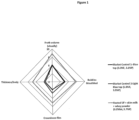
- Figure 1 illustrates sensory results of the composition as shown in Example 1, after being aerated according to Example 3.
- Figure 1 showed that the test composition performed significantly better foamability and associated sensory characteristics than blue and light blue top milk, despite having only 0.2% fat content.
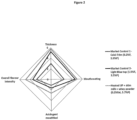
- Figure 2 illustrates sensory results of non-aerated samples. It shows that the test composition had better texture profiles than "Calci-trim". Calci-trim includes a similar level of fat (0.2%) and protein (5.9%) to the test composition. Therefore, a key difference is the denatured retentate in the test composition which is leading to the beneficial results seen. The test composition also slightly better texture profiles compared to non-aerated 1.5% fat (light blue) milk.
- Total solid content is considered to be a highly beneficial aspect to control which can contribute to both improved foamability and foam stability characteristics.
- test composition containing 10.5% total protein outperformed the test composition containing 9.5% total solids, especially over the first 13 minutes following aeration when a beverage is most likely to be consumed. After 13 minutes both products foam stability declined, but at an equal rate.
- compositions As illustrated in Figures 4 and 5 , it was identified that by configuring the composition to include approximately 50:50 ratio of denatured to un-denatured protein provided the most optimal foamability and stability results. However, there is clearly a beneficial range between about 10:90 to 90:10 ratio of denatured to un-denatured protein.
- Example 8 Stability (viscosity / particle size and pH vs time)
- Viscosity Particle size D(3,2) D(4,3) pH Week 0 3.24 0.1 0.121 6.7 Week 1 3.41 0.1 0.121 6.61 Week 2 3.49 0.1 0.121 6.64
- the heated retentate shows considerably higher viscosity levels than the unheated retentate.
- the "no fat" composition (skim milk + heated retentate and whey powder) has a higher viscosity that its closest counterpart; Calci-trim.
- Sample Viscosity (mPa.S) Unheated Ret (12.5%P) 16.45 Heated Ret (12.5%P) 42 Market Green top (0.4%F, 3.7%P) 2.14 Market Calci trim (0.2%F, 5.9%P) 3.01 No Fat milk - Skim milk + heated UF + whey powder(0.2%F, 5.7%P) 3.24
Landscapes
- Life Sciences & Earth Sciences (AREA)
- Chemical & Material Sciences (AREA)
- Engineering & Computer Science (AREA)
- Food Science & Technology (AREA)
- Polymers & Plastics (AREA)
- Health & Medical Sciences (AREA)
- Nutrition Science (AREA)
- Biochemistry (AREA)
- Zoology (AREA)
- Water Supply & Treatment (AREA)
- Dairy Products (AREA)
- Non-Alcoholic Beverages (AREA)
- Coloring Foods And Improving Nutritive Qualities (AREA)
Claims (14)
- Zusammensetzung auf Milchbasis, dadurch gekennzeichnet, dass die Zusammensetzung beinhaltet:- eine Magermilchquelle;- weniger als 0,5 % w/w Fett; und- ein vollständig denaturiertes Retentat aus Milch;und wobei die Zusammensetzung etwa 3,5 bis 6 % w/w Protein beinhaltet und ein Verhältnis von denaturiertem zu nicht denaturiertem Protein im Bereich zwischen etwa 10:90 bis 90:10 beinhaltet.
- Zusammensetzung nach Anspruch 1, wobei die Zusammensetzung ein Verhältnis von denaturiertem zu nicht denaturiertem Protein im Bereich zwischen etwa 30:70 bis 70:30 oder im Bereich zwischen etwa 40:60 bis 60:40 oder im Bereich zwischen etwa 45:55 bis 55:45, beispielsweise ungefähr 50:50, beinhaltet.
- Zusammensetzung nach Anspruch 1 oder 2, wobei die Zusammensetzung nur Komponenten auf Milchbasis enthält.
- Zusammensetzung nach einem der obigen Ansprüche, wobei die Zusammensetzung einen Fettgehalt unterhalb von 0,3 % w/w aufweist.
- Zusammensetzung nach einem der obigen Ansprüche, wobei das Retentat aus Milch ultrafiltriert ist.
- Zusammensetzung nach einem der obigen Ansprüche, wobei das Retentat aus Milch hitzedenaturiert ist.
- Zusammensetzung nach einem der obigen Ansprüche, wobei das denaturierte Retentat aus Milch mindestens 10 % w/w des Gesamtproteins zur Zusammensetzung, beispielsweise zwischen 10 bis 90 % w/w oder zwischen 30 bis 70 % w/w oder zwischen 40 bis 60 % w/w des Gesamtproteins zur Zusammensetzung beiträgt.
- Zusammensetzung nach einem der obigen Ansprüche, wobei die Zusammensetzung so konfiguriert ist, dass sie einen Gesamtfeststoffgehalt zwischen etwa 9 % w/w bis etwa 12 % w/w, beispielsweise ungefähr 10,5 % w/w, beinhaltet.
- Zusammensetzung nach einem der obigen Ansprüche, wobei die Zusammensetzung im Wesentlichen frei von Phospholipid ist.
- Zusammensetzung nach einem der obigen Ansprüche, wobei die Zusammensetzung etwa 5,7 % w/w Protein beinhaltet.
- Zusammensetzung nach einem der obigen Ansprüche, wobei die Zusammensetzung in Form eines luftdurchsetzten Getränks auf Milchbasis oder eines nicht luftdurchsetzten Getränks auf Milchbasis vorliegt, optional, wobei das luftdurchsetzte Getränk auf Milchbasis ausgewählt ist aus der Gruppe bestehend ausa) einer Heiß- und Kaltanwendungb) einem Milk-Shake,c) kaffeebasiertem Getränkd) einem trinkfertigen (RTD-) Getränk, das vor dem Trinken in der Flasche selbst oder in einem geschlossenen Behälter durch Schütteln mit Luft durchsetzt werden kann;e) einem aus einer Pulverform hergestellten Getränkf) einem Smoothieg) einer aus einer Kapsel für Kaffee- oder Getränkeautomaten hergestellten Zusammensetzung, als pulverförmige oder flüssige Milchquelleh) einem kalten Cappuccinoi) einem Gemisch mit einem Saftj) einem angereicherten Getränk mit funktionellen Zutatenk) einem kohlensäurehaltigen Getränkl) einem gefrorenen Getränkm) einem mit flüssigem Stickstoff versetzten/gespülten Getränk.
- Verwendung eines vollständig denaturierten Retentats aus Milch zur Erzeugung einer/eines luftdurchsetzten oder nicht luftdurchsetzten Zusammensetzung oder Getränks auf Milchbasis mit weniger als 0,5 % w/w Fett, wobei die Zusammensetzung etwa 3,5 bis 6 % w/w Protein und ein Verhältnis von denaturiertem zu nicht denaturiertem Protein zwischen etwa 10:90 bis 90:10 beinhaltet, optional, um Mikrobläschen in einer luftdurchsetzten Magermilchzusammensetzung zu bilden.
- Verfahren zur Herstellung einer Zusammensetzung auf Milchbasis, gekennzeichnet durch die Schritte desa) vollständigen Denaturierens eines Retentats aus Milch bei 60-95 °C für eine Dauer von 5-120 Minuten, beispielsweise bei 85-90 °C für eine Dauer von 70-90 Minuten;b) Hinzufügens des denaturierten Retentats zu einer Magermilchquelle, um die Zusammensetzung auf Milchbasis zu produzieren, wobei die Zusammensetzung etwa 3,5 bis 6 % w/w Protein und ein Verhältnis von denaturiertem zu nicht denaturiertem Protein zwischen etwa 10:90 bis 90:10 beinhaltet.
- Verfahren nach Anspruch 13, wobei die Zusammensetzung in Form eines luftdurchsetzten Getränks auf Milchbasis vorliegt, ferner umfassend den Schritt des:
c) Einbringens eingeschlossener Blasen in die Zusammensetzung, optional durch Quirlen der Zusammensetzung zwischen 9.000 bis 13.000 U/min.
Applications Claiming Priority (2)
| Application Number | Priority Date | Filing Date | Title |
|---|---|---|---|
| PCT/NZ2015/000004 WO2016118021A1 (en) | 2015-01-23 | 2015-01-23 | Milk based compositions comprising milk derived, denatured retentate |
| NZ704054A NZ704054B (en) | 2015-01-23 | An Improved Beverage and Method of Manufacture |
Publications (3)
| Publication Number | Publication Date |
|---|---|
| EP3091840A1 EP3091840A1 (de) | 2016-11-16 |
| EP3091840A4 EP3091840A4 (de) | 2017-08-16 |
| EP3091840B1 true EP3091840B1 (de) | 2025-05-21 |
Family
ID=55812088
Family Applications (1)
| Application Number | Title | Priority Date | Filing Date |
|---|---|---|---|
| EP15879114.5A Active EP3091840B1 (de) | 2015-01-23 | 2015-01-23 | Zusammensetzungen auf milchbasis mit vollständig denaturiertem retentat aus milch, verwendung des retentats, verfahren zur herstellung der zusammensetung auf milchbasis |
Country Status (10)
| Country | Link |
|---|---|
| US (1) | US10750757B2 (de) |
| EP (1) | EP3091840B1 (de) |
| CN (1) | CN107205412A (de) |
| AU (1) | AU2015378723B2 (de) |
| CA (1) | CA2938823C (de) |
| ES (1) | ES3034829T3 (de) |
| GB (1) | GB2537314B (de) |
| MY (1) | MY192882A (de) |
| PH (1) | PH12016501526B1 (de) |
| WO (1) | WO2016118021A1 (de) |
Families Citing this family (4)
| Publication number | Priority date | Publication date | Assignee | Title |
|---|---|---|---|---|
| JP6824222B2 (ja) * | 2018-05-18 | 2021-02-03 | サントリーホールディングス株式会社 | 泡保持性を有する発泡性飲料および発泡性飲料における泡保持性を改善する方法 |
| CN113226050A (zh) * | 2018-12-28 | 2021-08-06 | 三得利控股株式会社 | 具有泡保持性的发泡性饮料及改善发泡性饮料的泡保持性的方法 |
| US20220256876A1 (en) * | 2019-07-31 | 2022-08-18 | Societe Des Produits Nestle S.A. | Plant-based milk alternative with new taste experience |
| JP7328854B2 (ja) * | 2019-09-26 | 2023-08-17 | 株式会社カネカ | シリアル食品用低脂肪成分調整牛乳及びその製造方法 |
Family Cites Families (22)
| Publication number | Priority date | Publication date | Assignee | Title |
|---|---|---|---|---|
| CH634969A5 (fr) | 1978-10-06 | 1983-03-15 | Nestle Sa | Procede de recuperation des proteines du lait. |
| US4840813A (en) | 1987-08-24 | 1989-06-20 | General Mills, Inc. | Low and non-fat frozen dairy desserts and method of preparation |
| FR2638063B1 (fr) | 1988-10-24 | 1992-01-03 | Union Laitieren Normande | Nouveaux produits alimentaires, a base de retentat d'ultrafiltration de lait et leur procede de preparation |
| CA2046741C (en) | 1991-05-16 | 1999-06-29 | Yashavantkumar Jayasinh Asher | Whey protein concentrate and its use in ice cream |
| WO1993002567A2 (en) | 1991-08-01 | 1993-02-18 | Ault Foods Limited | Whey and ice cream products and processes |
| GB9508221D0 (en) | 1995-04-22 | 1995-06-07 | Scottish & Newcastle Plc | Beverage,method of producing a beverage,and a product containing a beverage |
| US20110244076A1 (en) | 1998-12-29 | 2011-10-06 | Clark George H | Carbonated dairy nutrient beverage and method of making a carbonated dairy nutrient beverage to supply the same nutrition of skim milk in the human diet |
| US20070166447A1 (en) * | 2002-08-27 | 2007-07-19 | Select Milk Producers, Inc. | Dairy compositions and method of making |
| JP4537120B2 (ja) | 2004-05-27 | 2010-09-01 | 株式会社ヤクルト本社 | 酸性乳飲料 |
| US7537138B2 (en) | 2005-06-20 | 2009-05-26 | Nestec S.A. | Methods and systems for delivering foamed beverages from liquid concentrates |
| US20070065555A1 (en) | 2005-07-08 | 2007-03-22 | Durafizz, Llc | Stabilized edible foams |
| EP2007213A4 (de) * | 2006-03-23 | 2011-07-06 | Fonterra Co Operative Group | Verfahren für die herstellung eines getrockneten modifizierten molkenproteins |
| PL1839492T3 (pl) * | 2006-03-27 | 2012-02-29 | Nestec Sa | Micele białka serwatkowego |
| BRPI0705417B1 (pt) | 2006-12-20 | 2016-08-16 | Unilever Nv | produto alimentício aerado e processos para a produção de um produto alimentício aerado |
| CN101156629B (zh) | 2007-08-03 | 2011-03-30 | 内蒙古蒙牛乳业(集团)股份有限公司 | 一种营养活力充气乳饮料 |
| EP2098123A1 (de) | 2008-03-07 | 2009-09-09 | Bayer CropScience AG | Verwendung von Alternan als Verdickungsmittel und Verdickungsmittelzusammensetzungen enthaltend Alternan und ein weiteres Verdickungsmittel. |
| WO2011099876A1 (en) | 2010-02-15 | 2011-08-18 | Fonterra Co-Operative Group Limited | Dairy product and process |
| CN103153073A (zh) | 2010-08-05 | 2013-06-12 | 雀巢产品技术援助有限公司 | 含乳蛋白质的液体饮料产品 |
| FI123201B (fi) | 2010-10-29 | 2012-12-14 | Valio Oy | Maitopohjainen tuote ja valmistusmenetelmä |
| FI124323B (fi) | 2011-02-18 | 2014-06-30 | Valio Oy | Maitopohjainen tuote ja menetelmä sen valmistamiseksi |
| FI124711B (fi) | 2011-07-06 | 2014-12-15 | Valio Oy | Maitopohjainen formulaatio |
| WO2015099542A1 (en) * | 2013-12-23 | 2015-07-02 | Goodman Fielder New Zealand Limited | An improved beverage and method of manufacture |
-
2015
- 2015-01-23 CN CN201580010226.2A patent/CN107205412A/zh active Pending
- 2015-01-23 ES ES15879114T patent/ES3034829T3/es active Active
- 2015-01-23 WO PCT/NZ2015/000004 patent/WO2016118021A1/en not_active Ceased
- 2015-01-23 EP EP15879114.5A patent/EP3091840B1/de active Active
- 2015-01-23 PH PH1/2016/501526A patent/PH12016501526B1/en unknown
- 2015-01-23 GB GB1613581.6A patent/GB2537314B/en active Active
- 2015-01-23 MY MYPI2016702966A patent/MY192882A/en unknown
- 2015-01-23 US US15/320,435 patent/US10750757B2/en active Active
- 2015-01-23 AU AU2015378723A patent/AU2015378723B2/en active Active
- 2015-01-23 CA CA2938823A patent/CA2938823C/en active Active
Non-Patent Citations (2)
| Title |
|---|
| DATABASE BIOSIS [online] BIOSCIENCES INFORMATION SERVICE, PHILADELPHIA, PA, US; 1987, MANJI B ET AL: "DETERMINATION OF WHEY PROTEIN DENATURATION IN HEAT-PROCESSED MILKS COMPARISON OF THREE METHODS", XP002771476, Database accession no. PREV198784086869 * |
| MANJI B ET AL: "DETERMINATION OF WHEY PROTEIN DENATURATION IN HEAT-PROCESSED MILKS COMPARISON OF THREE METHODS", JOURNAL OF DAIRY SCIENCE, vol. 70, no. 7, 1987, pages 1355 - 1361, ISSN: 0022-0302 * |
Also Published As
| Publication number | Publication date |
|---|---|
| CA2938823C (en) | 2022-05-03 |
| PH12016501526A1 (en) | 2017-02-06 |
| CN107205412A (zh) | 2017-09-26 |
| MY192882A (en) | 2022-09-13 |
| AU2015378723B2 (en) | 2019-08-22 |
| NZ704054A (en) | 2016-04-29 |
| US10750757B2 (en) | 2020-08-25 |
| PH12016501526B1 (en) | 2024-05-17 |
| US20170223977A1 (en) | 2017-08-10 |
| GB2537314A (en) | 2016-10-12 |
| GB2537314B (en) | 2021-04-21 |
| GB2537314A8 (en) | 2017-03-15 |
| ES3034829T3 (en) | 2025-08-25 |
| WO2016118021A1 (en) | 2016-07-28 |
| AU2015378723A1 (en) | 2016-09-01 |
| CA2938823A1 (en) | 2016-07-28 |
| AU2015378723A9 (en) | 2019-08-22 |
| EP3091840A4 (de) | 2017-08-16 |
| EP3091840A1 (de) | 2016-11-16 |
Similar Documents
| Publication | Publication Date | Title |
|---|---|---|
| KR102069396B1 (ko) | 유 미네랄-강화 액상 유제품 및 상기 유 미네랄-강화 액상 유제품의 제조 방법 | |
| AU2015270620B2 (en) | Packaged dairy beverage | |
| EP3091840B1 (de) | Zusammensetzungen auf milchbasis mit vollständig denaturiertem retentat aus milch, verwendung des retentats, verfahren zur herstellung der zusammensetung auf milchbasis | |
| US11044921B2 (en) | Natural dairy based creamers and method of making the same | |
| EP3703503B1 (de) | Trinkfertige milchgetränke mit verbesserter textur und stabilität | |
| EP3086652B1 (de) | Verfahren zur herstellung eines verbesserten getränks | |
| JP4911173B2 (ja) | 微細気泡含有果実または野菜ピューレとその製造方法 | |
| CN108347954A (zh) | 含乳饮品的浓缩物、饮品胶囊及用胶囊制备饮品的方法 | |
| NZ704054B (en) | An Improved Beverage and Method of Manufacture | |
| US20100189855A1 (en) | Method of Making a Beverage Comprising Fruit and Milk | |
| US20090220644A1 (en) | Microfoamed fresh dairy product and method for making same | |
| JP2019176847A (ja) | 乳成分含有起泡食品の口当たり改善方法およびミルク感向上方法 | |
| EP3148342A1 (de) | Verpacktes milchgetränk |
Legal Events
| Date | Code | Title | Description |
|---|---|---|---|
| PUAI | Public reference made under article 153(3) epc to a published international application that has entered the european phase |
Free format text: ORIGINAL CODE: 0009012 |
|
| 17P | Request for examination filed |
Effective date: 20160808 |
|
| AK | Designated contracting states |
Kind code of ref document: A1 Designated state(s): AL AT BE BG CH CY CZ DE DK EE ES FI FR GB GR HR HU IE IS IT LI LT LU LV MC MK MT NL NO PL PT RO RS SE SI SK SM TR |
|
| AX | Request for extension of the european patent |
Extension state: BA ME |
|
| RAP1 | Party data changed (applicant data changed or rights of an application transferred) |
Owner name: GOODMAN FIELDER NEW ZEALAND LIMITED |
|
| RIN1 | Information on inventor provided before grant (corrected) |
Inventor name: HALL, CHRISTOPHER EDWARD Inventor name: ELLIS, ASHLING Inventor name: TANEJA, NAMRATA Inventor name: SINGH, HARJINDER Inventor name: OLNEY, SONYA DIANNE Inventor name: YE, AIQIAN Inventor name: DAS, SHANTANU |
|
| A4 | Supplementary search report drawn up and despatched |
Effective date: 20170718 |
|
| RIC1 | Information provided on ipc code assigned before grant |
Ipc: A23C 9/15 20060101ALI20170707BHEP Ipc: A23C 9/142 20060101AFI20170707BHEP |
|
| DAX | Request for extension of the european patent (deleted) | ||
| STAA | Information on the status of an ep patent application or granted ep patent |
Free format text: STATUS: EXAMINATION IS IN PROGRESS |
|
| 17Q | First examination report despatched |
Effective date: 20190225 |
|
| RAP1 | Party data changed (applicant data changed or rights of an application transferred) |
Owner name: GOODMAN FIELDER PTE. LTD |
|
| GRAP | Despatch of communication of intention to grant a patent |
Free format text: ORIGINAL CODE: EPIDOSNIGR1 |
|
| STAA | Information on the status of an ep patent application or granted ep patent |
Free format text: STATUS: GRANT OF PATENT IS INTENDED |
|
| INTG | Intention to grant announced |
Effective date: 20240930 |
|
| GRAJ | Information related to disapproval of communication of intention to grant by the applicant or resumption of examination proceedings by the epo deleted |
Free format text: ORIGINAL CODE: EPIDOSDIGR1 |
|
| STAA | Information on the status of an ep patent application or granted ep patent |
Free format text: STATUS: EXAMINATION IS IN PROGRESS |
|
| GRAP | Despatch of communication of intention to grant a patent |
Free format text: ORIGINAL CODE: EPIDOSNIGR1 |
|
| STAA | Information on the status of an ep patent application or granted ep patent |
Free format text: STATUS: GRANT OF PATENT IS INTENDED |
|
| INTC | Intention to grant announced (deleted) | ||
| INTG | Intention to grant announced |
Effective date: 20241218 |
|
| GRAS | Grant fee paid |
Free format text: ORIGINAL CODE: EPIDOSNIGR3 |
|
| GRAA | (expected) grant |
Free format text: ORIGINAL CODE: 0009210 |
|
| STAA | Information on the status of an ep patent application or granted ep patent |
Free format text: STATUS: THE PATENT HAS BEEN GRANTED |
|
| AK | Designated contracting states |
Kind code of ref document: B1 Designated state(s): AL AT BE BG CH CY CZ DE DK EE ES FI FR GB GR HR HU IE IS IT LI LT LU LV MC MK MT NL NO PL PT RO RS SE SI SK SM TR |
|
| REG | Reference to a national code |
Ref country code: GB Ref legal event code: FG4D |
|
| REG | Reference to a national code |
Ref country code: CH Ref legal event code: EP |
|
| REG | Reference to a national code |
Ref country code: DE Ref legal event code: R096 Ref document number: 602015091715 Country of ref document: DE |
|
| REG | Reference to a national code |
Ref country code: IE Ref legal event code: FG4D |
|
| P01 | Opt-out of the competence of the unified patent court (upc) registered |
Free format text: CASE NUMBER: APP_28402/2025 Effective date: 20250613 |
|
| REG | Reference to a national code |
Ref country code: ES Ref legal event code: FG2A Ref document number: 3034829 Country of ref document: ES Kind code of ref document: T3 Effective date: 20250825 |
|
| REG | Reference to a national code |
Ref country code: NL Ref legal event code: MP Effective date: 20250521 |
|
| PG25 | Lapsed in a contracting state [announced via postgrant information from national office to epo] |
Ref country code: PT Free format text: LAPSE BECAUSE OF FAILURE TO SUBMIT A TRANSLATION OF THE DESCRIPTION OR TO PAY THE FEE WITHIN THE PRESCRIBED TIME-LIMIT Effective date: 20250922 Ref country code: FI Free format text: LAPSE BECAUSE OF FAILURE TO SUBMIT A TRANSLATION OF THE DESCRIPTION OR TO PAY THE FEE WITHIN THE PRESCRIBED TIME-LIMIT Effective date: 20250521 |
|
| REG | Reference to a national code |
Ref country code: LT Ref legal event code: MG9D |
|
| PG25 | Lapsed in a contracting state [announced via postgrant information from national office to epo] |
Ref country code: GR Free format text: LAPSE BECAUSE OF FAILURE TO SUBMIT A TRANSLATION OF THE DESCRIPTION OR TO PAY THE FEE WITHIN THE PRESCRIBED TIME-LIMIT Effective date: 20250822 Ref country code: NO Free format text: LAPSE BECAUSE OF FAILURE TO SUBMIT A TRANSLATION OF THE DESCRIPTION OR TO PAY THE FEE WITHIN THE PRESCRIBED TIME-LIMIT Effective date: 20250821 |
|
| PG25 | Lapsed in a contracting state [announced via postgrant information from national office to epo] |
Ref country code: NL Free format text: LAPSE BECAUSE OF FAILURE TO SUBMIT A TRANSLATION OF THE DESCRIPTION OR TO PAY THE FEE WITHIN THE PRESCRIBED TIME-LIMIT Effective date: 20250521 Ref country code: PL Free format text: LAPSE BECAUSE OF FAILURE TO SUBMIT A TRANSLATION OF THE DESCRIPTION OR TO PAY THE FEE WITHIN THE PRESCRIBED TIME-LIMIT Effective date: 20250521 |
|
| PG25 | Lapsed in a contracting state [announced via postgrant information from national office to epo] |
Ref country code: BG Free format text: LAPSE BECAUSE OF FAILURE TO SUBMIT A TRANSLATION OF THE DESCRIPTION OR TO PAY THE FEE WITHIN THE PRESCRIBED TIME-LIMIT Effective date: 20250521 |
|
| PG25 | Lapsed in a contracting state [announced via postgrant information from national office to epo] |
Ref country code: HR Free format text: LAPSE BECAUSE OF FAILURE TO SUBMIT A TRANSLATION OF THE DESCRIPTION OR TO PAY THE FEE WITHIN THE PRESCRIBED TIME-LIMIT Effective date: 20250521 |
|
| PG25 | Lapsed in a contracting state [announced via postgrant information from national office to epo] |
Ref country code: RS Free format text: LAPSE BECAUSE OF FAILURE TO SUBMIT A TRANSLATION OF THE DESCRIPTION OR TO PAY THE FEE WITHIN THE PRESCRIBED TIME-LIMIT Effective date: 20250821 |
|
| PG25 | Lapsed in a contracting state [announced via postgrant information from national office to epo] |
Ref country code: IS Free format text: LAPSE BECAUSE OF FAILURE TO SUBMIT A TRANSLATION OF THE DESCRIPTION OR TO PAY THE FEE WITHIN THE PRESCRIBED TIME-LIMIT Effective date: 20250921 |
|
| PG25 | Lapsed in a contracting state [announced via postgrant information from national office to epo] |
Ref country code: LV Free format text: LAPSE BECAUSE OF FAILURE TO SUBMIT A TRANSLATION OF THE DESCRIPTION OR TO PAY THE FEE WITHIN THE PRESCRIBED TIME-LIMIT Effective date: 20250521 |
|
| REG | Reference to a national code |
Ref country code: AT Ref legal event code: MK05 Ref document number: 1795973 Country of ref document: AT Kind code of ref document: T Effective date: 20250521 |
|
| PG25 | Lapsed in a contracting state [announced via postgrant information from national office to epo] |
Ref country code: SM Free format text: LAPSE BECAUSE OF FAILURE TO SUBMIT A TRANSLATION OF THE DESCRIPTION OR TO PAY THE FEE WITHIN THE PRESCRIBED TIME-LIMIT Effective date: 20250521 Ref country code: AT Free format text: LAPSE BECAUSE OF FAILURE TO SUBMIT A TRANSLATION OF THE DESCRIPTION OR TO PAY THE FEE WITHIN THE PRESCRIBED TIME-LIMIT Effective date: 20250521 Ref country code: DK Free format text: LAPSE BECAUSE OF FAILURE TO SUBMIT A TRANSLATION OF THE DESCRIPTION OR TO PAY THE FEE WITHIN THE PRESCRIBED TIME-LIMIT Effective date: 20250521 |
|
| PG25 | Lapsed in a contracting state [announced via postgrant information from national office to epo] |
Ref country code: CZ Free format text: LAPSE BECAUSE OF FAILURE TO SUBMIT A TRANSLATION OF THE DESCRIPTION OR TO PAY THE FEE WITHIN THE PRESCRIBED TIME-LIMIT Effective date: 20250521 |
|
| PG25 | Lapsed in a contracting state [announced via postgrant information from national office to epo] |
Ref country code: EE Free format text: LAPSE BECAUSE OF FAILURE TO SUBMIT A TRANSLATION OF THE DESCRIPTION OR TO PAY THE FEE WITHIN THE PRESCRIBED TIME-LIMIT Effective date: 20250521 |
|
| PG25 | Lapsed in a contracting state [announced via postgrant information from national office to epo] |
Ref country code: SK Free format text: LAPSE BECAUSE OF FAILURE TO SUBMIT A TRANSLATION OF THE DESCRIPTION OR TO PAY THE FEE WITHIN THE PRESCRIBED TIME-LIMIT Effective date: 20250521 Ref country code: RO Free format text: LAPSE BECAUSE OF FAILURE TO SUBMIT A TRANSLATION OF THE DESCRIPTION OR TO PAY THE FEE WITHIN THE PRESCRIBED TIME-LIMIT Effective date: 20250521 |
|
| REG | Reference to a national code |
Ref country code: DE Ref legal event code: R097 Ref document number: 602015091715 Country of ref document: DE |
|
| PLBE | No opposition filed within time limit |
Free format text: ORIGINAL CODE: 0009261 |
|
| STAA | Information on the status of an ep patent application or granted ep patent |
Free format text: STATUS: NO OPPOSITION FILED WITHIN TIME LIMIT |
|
| REG | Reference to a national code |
Ref country code: CH Ref legal event code: L10 Free format text: ST27 STATUS EVENT CODE: U-0-0-L10-L00 (AS PROVIDED BY THE NATIONAL OFFICE) Effective date: 20260402 |
|
| PGFP | Annual fee paid to national office [announced via postgrant information from national office to epo] |
Ref country code: GB Payment date: 20260114 Year of fee payment: 12 |
|
| PGFP | Annual fee paid to national office [announced via postgrant information from national office to epo] |
Ref country code: ES Payment date: 20260217 Year of fee payment: 12 |
|
| PGFP | Annual fee paid to national office [announced via postgrant information from national office to epo] |
Ref country code: DE Payment date: 20260120 Year of fee payment: 12 |
|
| PGFP | Annual fee paid to national office [announced via postgrant information from national office to epo] |
Ref country code: IT Payment date: 20260130 Year of fee payment: 12 |
|
| PGFP | Annual fee paid to national office [announced via postgrant information from national office to epo] |
Ref country code: FR Payment date: 20260128 Year of fee payment: 12 |