EP3083370B1 - Device and method for providing a distance signal requiring increased operator responsibility - Google Patents
Device and method for providing a distance signal requiring increased operator responsibility Download PDFInfo
- Publication number
- EP3083370B1 EP3083370B1 EP14789562.7A EP14789562A EP3083370B1 EP 3083370 B1 EP3083370 B1 EP 3083370B1 EP 14789562 A EP14789562 A EP 14789562A EP 3083370 B1 EP3083370 B1 EP 3083370B1
- Authority
- EP
- European Patent Office
- Prior art keywords
- distance
- scale
- signalling
- minimum distance
- signal
- Prior art date
- Legal status (The legal status is an assumption and is not a legal conclusion. Google has not performed a legal analysis and makes no representation as to the accuracy of the status listed.)
- Active
Links
Images
Classifications
-
- B—PERFORMING OPERATIONS; TRANSPORTING
- B60—VEHICLES IN GENERAL
- B60Q—ARRANGEMENT OF SIGNALLING OR LIGHTING DEVICES, THE MOUNTING OR SUPPORTING THEREOF OR CIRCUITS THEREFOR, FOR VEHICLES IN GENERAL
- B60Q9/00—Arrangement or adaptation of signal devices not provided for in one of main groups B60Q1/00 - B60Q7/00, e.g. haptic signalling
- B60Q9/002—Arrangement or adaptation of signal devices not provided for in one of main groups B60Q1/00 - B60Q7/00, e.g. haptic signalling for parking purposes, e.g. for warning the driver that his vehicle has contacted or is about to contact an obstacle
- B60Q9/007—Arrangement or adaptation of signal devices not provided for in one of main groups B60Q1/00 - B60Q7/00, e.g. haptic signalling for parking purposes, e.g. for warning the driver that his vehicle has contacted or is about to contact an obstacle providing information about the distance to an obstacle, e.g. varying sound
-
- B—PERFORMING OPERATIONS; TRANSPORTING
- B60—VEHICLES IN GENERAL
- B60K—ARRANGEMENT OR MOUNTING OF PROPULSION UNITS OR OF TRANSMISSIONS IN VEHICLES; ARRANGEMENT OR MOUNTING OF PLURAL DIVERSE PRIME-MOVERS IN VEHICLES; AUXILIARY DRIVES FOR VEHICLES; INSTRUMENTATION OR DASHBOARDS FOR VEHICLES; ARRANGEMENTS IN CONNECTION WITH COOLING, AIR INTAKE, GAS EXHAUST OR FUEL SUPPLY OF PROPULSION UNITS IN VEHICLES
- B60K35/00—Instruments specially adapted for vehicles; Arrangement of instruments in or on vehicles
- B60K35/10—Input arrangements, i.e. from user to vehicle, associated with vehicle functions or specially adapted therefor
-
- B—PERFORMING OPERATIONS; TRANSPORTING
- B60—VEHICLES IN GENERAL
- B60K—ARRANGEMENT OR MOUNTING OF PROPULSION UNITS OR OF TRANSMISSIONS IN VEHICLES; ARRANGEMENT OR MOUNTING OF PLURAL DIVERSE PRIME-MOVERS IN VEHICLES; AUXILIARY DRIVES FOR VEHICLES; INSTRUMENTATION OR DASHBOARDS FOR VEHICLES; ARRANGEMENTS IN CONNECTION WITH COOLING, AIR INTAKE, GAS EXHAUST OR FUEL SUPPLY OF PROPULSION UNITS IN VEHICLES
- B60K35/00—Instruments specially adapted for vehicles; Arrangement of instruments in or on vehicles
- B60K35/20—Output arrangements, i.e. from vehicle to user, associated with vehicle functions or specially adapted therefor
- B60K35/21—Output arrangements, i.e. from vehicle to user, associated with vehicle functions or specially adapted therefor using visual output, e.g. blinking lights or matrix displays
- B60K35/22—Display screens
-
- B—PERFORMING OPERATIONS; TRANSPORTING
- B60—VEHICLES IN GENERAL
- B60K—ARRANGEMENT OR MOUNTING OF PROPULSION UNITS OR OF TRANSMISSIONS IN VEHICLES; ARRANGEMENT OR MOUNTING OF PLURAL DIVERSE PRIME-MOVERS IN VEHICLES; AUXILIARY DRIVES FOR VEHICLES; INSTRUMENTATION OR DASHBOARDS FOR VEHICLES; ARRANGEMENTS IN CONNECTION WITH COOLING, AIR INTAKE, GAS EXHAUST OR FUEL SUPPLY OF PROPULSION UNITS IN VEHICLES
- B60K35/00—Instruments specially adapted for vehicles; Arrangement of instruments in or on vehicles
- B60K35/20—Output arrangements, i.e. from vehicle to user, associated with vehicle functions or specially adapted therefor
- B60K35/26—Output arrangements, i.e. from vehicle to user, associated with vehicle functions or specially adapted therefor using acoustic output
-
- B—PERFORMING OPERATIONS; TRANSPORTING
- B60—VEHICLES IN GENERAL
- B60K—ARRANGEMENT OR MOUNTING OF PROPULSION UNITS OR OF TRANSMISSIONS IN VEHICLES; ARRANGEMENT OR MOUNTING OF PLURAL DIVERSE PRIME-MOVERS IN VEHICLES; AUXILIARY DRIVES FOR VEHICLES; INSTRUMENTATION OR DASHBOARDS FOR VEHICLES; ARRANGEMENTS IN CONNECTION WITH COOLING, AIR INTAKE, GAS EXHAUST OR FUEL SUPPLY OF PROPULSION UNITS IN VEHICLES
- B60K35/00—Instruments specially adapted for vehicles; Arrangement of instruments in or on vehicles
- B60K35/20—Output arrangements, i.e. from vehicle to user, associated with vehicle functions or specially adapted therefor
- B60K35/28—Output arrangements, i.e. from vehicle to user, associated with vehicle functions or specially adapted therefor characterised by the type of the output information, e.g. video entertainment or vehicle dynamics information; characterised by the purpose of the output information, e.g. for attracting the attention of the driver
-
- B—PERFORMING OPERATIONS; TRANSPORTING
- B60—VEHICLES IN GENERAL
- B60K—ARRANGEMENT OR MOUNTING OF PROPULSION UNITS OR OF TRANSMISSIONS IN VEHICLES; ARRANGEMENT OR MOUNTING OF PLURAL DIVERSE PRIME-MOVERS IN VEHICLES; AUXILIARY DRIVES FOR VEHICLES; INSTRUMENTATION OR DASHBOARDS FOR VEHICLES; ARRANGEMENTS IN CONNECTION WITH COOLING, AIR INTAKE, GAS EXHAUST OR FUEL SUPPLY OF PROPULSION UNITS IN VEHICLES
- B60K2360/00—Indexing scheme associated with groups B60K35/00 or B60K37/00 relating to details of instruments or dashboards
- B60K2360/16—Type of output information
- B60K2360/179—Distances to obstacles or vehicles
-
- B—PERFORMING OPERATIONS; TRANSPORTING
- B60—VEHICLES IN GENERAL
- B60W—CONJOINT CONTROL OF VEHICLE SUB-UNITS OF DIFFERENT TYPE OR DIFFERENT FUNCTION; CONTROL SYSTEMS SPECIALLY ADAPTED FOR HYBRID VEHICLES; ROAD VEHICLE DRIVE CONTROL SYSTEMS FOR PURPOSES NOT RELATED TO THE CONTROL OF A PARTICULAR SUB-UNIT
- B60W50/00—Details of control systems for road vehicle drive control not related to the control of a particular sub-unit, e.g. process diagnostic or vehicle driver interfaces
- B60W50/08—Interaction between the driver and the control system
- B60W50/14—Means for informing the driver, warning the driver or prompting a driver intervention
- B60W2050/146—Display means
Definitions
- Parking assistance systems for passenger vehicles are often based on ultrasound signals. Measurements by means of a camera are only in the development, while measurements by means of electromagnetic waves, such as radar or by measuring the capacitance change alternatives for the ultrasound-based environment detection represent. Particularly in the case of acoustic environment detection, the distance to reflective environmental objects is detected by transit time measurement of sound pulses and displayed to the driver by means of a human-machine interface (English: "human-machine interface", HMI). Pure audible warning systems today use a beep with a first tone frequency for the front and a beep of a second tone frequency for the attached at the rear of the vehicle sensor cluster. These beeps are output as short pulses via loudspeaker to the driver of the vehicle.
Landscapes
- Engineering & Computer Science (AREA)
- Transportation (AREA)
- Mechanical Engineering (AREA)
- Chemical & Material Sciences (AREA)
- Combustion & Propulsion (AREA)
- Human Computer Interaction (AREA)
- Measurement Of Velocity Or Position Using Acoustic Or Ultrasonic Waves (AREA)
- Radar Systems Or Details Thereof (AREA)
- Traffic Control Systems (AREA)
Description
Die vorliegende Erfindung betrifft eine Vorrichtung sowie ein Verfahren zum Signalisieren eines Abstandssignals, wie sie beispielsweise in Kraftfahrzeugen zum Zwecke der Einparkassistenz verwendet werden. Insbesondere betrifft die vorliegende Erfindung eine Vergrößerung des Anwendungsbereiches in Richtung besonders geringer Objektabstände.The present invention relates to an apparatus and a method for signaling a distance signal, as used for example in motor vehicles for the purpose of Einparkassistenz. In particular, the present invention relates to an enlargement of the field of application in the direction of particularly small object distances.
Parkassistenzsysteme für Personenkraftfahrzeuge basieren häufig auf Ultraschallsignalen. Messungen mittels Kamera sind erst in der Entwicklung begriffen, während Messungen mittels elektromagnetischer Wellen, wie z.B. Radar bzw. mittels Messung der Kapazitätsänderung Alternativen für die ultraschallbasierte Umfelddetektion darstellen. Insbesondere bei der akustischen Umfelddetektion wird mittels Laufzeitmessung von Schallpulsen der Abstand zu reflektierenden Umgebungsobjekten erfasst und mittels Mensch-Maschine-Schnittstelle (englisch: "Human-Machine-Interface", HMI) dem Fahrer dargestellt. Rein akustisch warnende Systeme verwenden heute einen Signalton mit einer ersten Tonfrequenz für das vordere und einen Signalton einer zweiten Tonfrequenz für das am Fahrzeugheck angebrachte Sensorcluster. Diese Signaltöne werden als kurze Pulse via Lautsprecher an den Fahrer des Fahrzeugs ausgegeben. Die Häufigkeit dieser ausgegebenen Signaltonpulse wird verwendet, um den Abstand zu einem Objekt zu kodieren. Dabei wird bei einem großen Abstand ein zeitlich großer Abstand zwischen den ausgegebenen Signalpulsen verwendet, welche im Zuge geringerer Objektabstände ebenfalls verringert werden. Eine Vollwarnung, z.B. in Form eines Dauertons, wird zumeist dann ausgegeben, wenn die Zuverlässigkeit des Systems eine vordefinierte Grenze erreicht hat.Parking assistance systems for passenger vehicles are often based on ultrasound signals. Measurements by means of a camera are only in the development, while measurements by means of electromagnetic waves, such as radar or by measuring the capacitance change alternatives for the ultrasound-based environment detection represent. Particularly in the case of acoustic environment detection, the distance to reflective environmental objects is detected by transit time measurement of sound pulses and displayed to the driver by means of a human-machine interface (English: "human-machine interface", HMI). Pure audible warning systems today use a beep with a first tone frequency for the front and a beep of a second tone frequency for the attached at the rear of the vehicle sensor cluster. These beeps are output as short pulses via loudspeaker to the driver of the vehicle. The frequency of these output beep pulses is used to encode the distance to an object. In this case, a time-large distance between the output signal pulses is used at a large distance, which are also reduced in the course of smaller object distances. A full warning, eg in the form of a continuous tone, is usually issued when the reliability of the system has reached a predefined limit.
Die
Die
Die
Die
Den bekannten Messsystemen ist gemeinsam, dass lediglich ein Minimalabstand einem Vollausschlag bzw. einer Vollwarnung eines Messsignals zugeordnet ist. Als Vollwarnung wird landläufig der Abstand bezeichnet, ab welchem das Messsystem nicht mehr sicher bestimmen kann, ob eine weitere Bewegung in Richtung des Objektes kollisionsfrei möglich bzw. sinnvoll ist. Handelt es sich bei dem nächstgelegen reflektierenden Objekt beispielsweise um einen zerklüfteten Felsstein, kann die Gefahr einer weiteren Annäherung mittels akustischer Messtechnik allein nicht bestimmt werden, weil nicht sicher festgestellt werden kann, ob der Reflexionspunkt, der durch die Abstandsdetektion bestimmt wurde, tatsächlich der zum Fahrzeug nächstgelegene befindliche Abstand ist. Aufgrund dieses Unwissens und damit verbundenen Restrisikos wird heute die Vollwarnung bei ca. 30 cm ausgegeben. In Einzelfällen sind Umfelddetektionssysteme bekannt, bei welchen erst ab 20 cm die Vollwarnung ausgegeben wird. Weiß jedoch der Fahrer z.B. infolge seiner Beobachtungen während der Annäherung bzw. aus Erfahrung, dass sich vor dem Fahrzeug ein Objekt in einem bislang unkritischen Abstand befindet, könnte der Fahrer eigenverantwortlich dichter an dieses Objekt heranfahren (z.B. an eine senkrecht vor dem Wandler befindliche Säule während eines Lenkmanövers). Es ist daher eine Aufgabe der vorliegenden Erfindung, einen Fahrer beim Manövrieren in einem Abstandsbereich zu unterstützen, der die Übernahme einer erhöhten Eigenverantwortung erfordert.The known measuring systems have in common that only a minimum distance is associated with a full scale or a full warning of a measuring signal. As a full warning, the distance is commonly referred to, from which the measuring system can no longer be determined with certainty, whether a further movement in the direction of the object without collision is possible or meaningful. For example, if the nearest reflecting object is a jagged rock, the danger of further approach by means of acoustic measurement alone can not be determined because it can not be determined with certainty whether the point of reflection determined by the distance detection actually becomes that of the vehicle nearest available distance is. Due to this ignorance and the associated residual risk, the full warning is issued today at about 30 cm. In individual cases environment detection systems are known in which the full warning is issued only from 20 cm. However, if the driver knows, e.g. As a result of his observations during the approach or experience that an object is at a previously uncritical distance in front of the vehicle, the driver could autonomously approach this object more closely (for example to a column located vertically in front of the converter during a steering maneuver). It is therefore an object of the present invention to assist a driver in maneuvering in a range of distances requiring the assumption of increased personal responsibility.
Die vorstehend genannte Aufgabe wird erfindungsgemäß durch ein Verfahren sowie eine Vorrichtung zum Signalisieren eines Abstandssignals gelöst. Dabei wird zunächst ein erster vordefinierter Minimalabstand durch einen Vollausschlag einer ersten Medienskala signalisiert. Der erste vordefinierte Minimalabstand ist beispielsweise ein solcher Abstand, bis zu welchem das Abstandssignal derart sicher ermittelt werden kann, dass eine Kollision mit Sicherheit ausgeschlossen werden kann. Diesem Minimalabstand ist der Vollausschlag einer ersten Medienskala zugeordnet, wobei die Medienskala eine Wiedergabe ermittelter Abstände quantitativ und/oder qualitativ ermöglicht. Im Stand der Technik haben sich als Medienskalen unterschiedliche akustische und/oder optische Signale bewährt, welche sämtlich und/oder in Kombination auch zur Realisierung der vorliegenden Erfindung verwendet werden können. Nach dem Erreichen des ersten vordefinierten Minimalabstandes wird ein unterhalb des ersten Minimalabstandes liegender Abstand von einem Umgebungsobjekt ermittelt. Mit anderen Worten wird das Abstandssignal dahingehend interpretiert, dass das zugrundeliegende Umgebungsobjekt näher an einen zur Ermittlung verwendeten Sensor herangerückt ist. Dabei dringt das Umgebungsobjekt beispielsweise in einen Abstandsbereich ein, in welchem eine Kollision aus technischen und/oder reaktionszeitbedingten Gründen nicht hundertprozentig ausgeschlossen werden kann. Im Ansprechen auf das Erreichen des Abstandes unterhalb des ersten Minimalabstandes wird anschließend mittels einer zweiten Medienskala dieser Abstand dem Anwender signalisiert. Die zweite Medienskala unterscheidet sich von der ersten Medienskala zumindest dahingehend, dass eine zusätzliche Information der bloßen Wiedergabe des Abstandssignals über die erste Medienskala hinzutritt, über welche der Anwender darüber informiert wird, dass er in einem Abstandsbereich manövriert, der eine erhöhte Eigenverantwortung für den Fahrer erfordert. Die erste Medienskala kann während des Verwendens der zweiten Medienskala deaktiviert oder weiter verwendet werden (z.B. durch Anzeigen des Vollausschlages). Auf diese Weise kann die vorliegende Erfindung auch bestehende Abstandsmesssysteme (Umfelddetektionssysteme) dahingehend verbessern, dass die technisch grundsätzlich mögliche Erkennung sehr geringer Abstände für den Anwender nutzbar wird, sofern dieser bereit ist, die Manöver unter Übernahme einer erhöhten Eigenverantwortung durchzuführen.The above object is achieved by a method and an apparatus for signaling a distance signal. Initially, a first predefined minimum distance is signaled by a full scale deflection of a first media scale. The first predefined minimum distance is, for example, such a distance up to which the distance signal can be determined so reliably that a collision can be ruled out with certainty. This minimum distance is the full scale of a first Associated media scale, the media scale allows a reproduction of determined distances quantitatively and / or qualitatively. In the prior art, different acoustic and / or optical signals have proven to be useful as media scales, which all and / or in combination can also be used to implement the present invention. After reaching the first predefined minimum distance, a distance below the first minimum distance is determined by an environment object. In other words, the distance signal is interpreted to mean that the underlying environment object has moved closer to a sensor used for the determination. In this case, the surrounding object penetrates, for example, into a distance range in which a collision can not be completely excluded for technical and / or reaction time-related reasons. In response to reaching the distance below the first minimum distance of this distance is then signaled to the user by means of a second media scale. The second media scale differs from the first media scale at least in that additional information is added to the mere reproduction of the distance signal over the first media scale, which informs the user that he is maneuvering in a range of distances that requires increased self-responsibility for the driver , The first media scale may be disabled or continued to be used while using the second media scale (eg by displaying the full scale). In this way, the present invention can also improve existing distance measuring systems (environment detection systems) to the extent that the technically possible detection of very small distances for the user is available, if he is willing to perform the maneuver taking over increased ownership.
Die Unteransprüche zeigen bevorzugte Weiterbildungen der Erfindung.The dependent claims show preferred developments of the invention.
Weiter bevorzugt kann das Abstandssignal einem Abstand eines Fortbewegungsmittels zu einem Umgebungsobjekt zugeordnet sein. Das Fortbewegungsmittel kann beispielsweise ein Pkw sein. Das Umgebungsobjekt kann beispielsweise ein Hindernis in der Fahrzeugumgebung (Fremdfahrzeug, Laternenpfahl, Bordstein o.Ä.) sein. Das Ermitteln der Abstände kann wie in bewährten Systemen durch Auswertung von Ultraschallechos erfolgen. Das Signalisieren der ermittelten Abstände kann akustisch und/oder optisch unter Verwendung einer HMI, eines Kombiinstrumentes und/oder unter Verwendung von Lautsprechern eines Entertainmentsystems erfolgen. Auf diese Weise kann im Wesentlichen auf bereits verwendete Hardware zurückgegriffen werden, so dass die vorliegende Erfindung kostengünstig durch Softwarecode realisiert werden kann.More preferably, the distance signal can be assigned to a distance of a means of transportation to an environment object. The means of transportation may be for example a passenger car. The environment object may, for example, be an obstacle in the vehicle environment (foreign vehicle, lamppost, curb, or the like). The determination of the distances can take place as in proven systems by evaluation of ultrasonic echoes. The signaling of the determined distances can acoustically and / or optically Use of an HMI, a combination instrument and / or using speakers of an entertainment system done. In this way, essentially used hardware can be used, so that the present invention can be implemented inexpensively by software code.
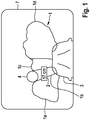
Ein erstes Beispiel für die Natur der ersten vordefinierten Medienskala ist beispielsweise eine Farbskala. Im Zuge einer Annäherung wird dem Anwender ein hoher Abstand von einem erkannten Umgebungsobjekt grün, ein verringerter Abstand gelb und ein sehr geringer Abstand rot dargestellt. Dabei ist rot auch diejenige Farbe, welche zur Signalisierung einer Vollwarnung verwendet wird. Alternativ oder zusätzlich kann (je nach Beschaffenheit der Anzeigeeinheit) der Abstand grafisch und/oder durch Anzeige von den Restabstand charakterisierender Zahlenwerte, bevorzugt einheitenbehafteter Zahlenwerte, bevorzugt unter Berücksichtigung einer Sicherheitsreserve, angezeigt werden. Dabei kann beispielsweise ein Teil eines Ego-Fahrzeugs dargestellt werden und fächerförmig aufgespannte Sektoren in dessen Umgebung zur Visualisierung ermittelter Abstände zu Umgebungsobjekten verwendet werden. Eine Einblendung von Zahlenwerten, ggf. mit Einheiten, ist optional ebenfalls möglich. Im Stand der Technik bereits bekannte Systeme verwenden mitunter entlang einer Linie angeordnete Beleuchtungseinheiten (z.B. LEDs), welche bei abnehmendem Abstand in zunehmender Anzahl erleuchtet werden. Auch unterschiedliche Farben der Beleuchtungseinheiten sind bekannt, während gelbe Beleuchtungseinheiten für unkritische Abstände und rote Beleuchtungseinheiten für kritische Abstände und Vollausschlag stehen. Ebenfalls ist es bekannt, intermittierende akustische Ausgaben zur Auralisierung eines ermittelten Abstandes zu verwenden. Hierbei wird die Wiederholfrequenz erhöht, wenn sich der Abstand verringert. Als Vollwarnung wird ein Dauerton ausgegeben. Mitunter unterscheiden sich die Tonfrequenzen für Warnungen bezüglich der Fahrzeugfront bzw. des Fahrzeughecks. Die vorgenannten Optionen können einzeln oder in Verbindung miteinander als erste Medienskala verwendet werden, durch welche das Abstandssignal bis zum Erreichen des ersten vordefinierten Minimalabstandes signalisiert wird. Für die zweite Medienskala wird zumindest eine der obigen Optionen zusätzlich zur ersten Medienskala oder anstelle der ersten Medienskala verwendet. Auf diese Weise wird dem Anwender durch das Wechseln der Medienskala signalisiert, dass er die nachfolgenden Signalisierungen unter erhöhter Eigenverantwortung auszuwerten hat.A first example of the nature of the first predefined media scale is, for example, a color gamut. In the course of an approach, the user is shown a high distance from a detected environmental object green, a reduced distance yellow and a very small distance red. Red is also that color which is used to signal a full warning. Alternatively or additionally (depending on the nature of the display unit), the distance can be displayed graphically and / or by displaying numerical values characterizing the remaining distance, preferably unit-based numerical values, preferably taking into account a safety reserve. In this case, for example, a part of an ego vehicle can be represented and fan-shaped spanned sectors in its surroundings can be used for visualizing determined distances to surrounding objects. An insertion of numerical values, possibly with units, is also possible as an option. Systems already known in the prior art sometimes use lighting units (eg LEDs) arranged along a line, which are illuminated in increasing numbers as the distance decreases. Different colors of the lighting units are known, while yellow lighting units for uncritical distances and red lighting units stand for critical distances and full scale. It is also known to use intermittent acoustic outputs for auralizing a determined distance. This increases the refresh rate as the distance decreases. As a full warning, a continuous tone is output. Sometimes the sound frequencies differ for warnings regarding the front of the vehicle or the rear of the vehicle. The aforementioned options can be used individually or in conjunction with each other as the first media scale, by which the distance signal is signalized until reaching the first predefined minimum distance. For the second media scale, at least one of the above options is used in addition to the first media scale or instead of the first media scale. In this way, the user is signaled by changing the media scale that he has to evaluate the subsequent signaling under increased personal responsibility.
Der unterhalb des ersten Minimalabstandes liegende Abstand wird erfindungsgemäß einem Bereich einer erhöhten Messunsicherheit zugeordnet. Mit anderen Worten können Echos in diesem Bereich mitunter schwerer erkannt und einem bestimmten Abstand zum reflektierenden Objekt zugeordnet werden. Dies kann beispielsweise dadurch bedingt sein, dass ausschwingende Membranen von Sende-Empfangseinheiten verwendet werden, um eintreffende Echos zu empfangen. Ein Unterscheiden zwischen Ausschwingsignal und empfangenem Echosignal kann daher gewisse Messunsicherheiten bedingen, welche eine erhöhte Eigenverantwortung bei ihrer Interpretation erfordern. Mit anderen Worten ist ein erhöhter Aufmerksamkeitsgrad bei der Interpretation durch den Anwender erforderlich. Anders ausgedrückt erhöht sich der Verifikationsbedarf bei der Auswertung durch den Anwender. Die Verifikation kann der Anwender entweder erfahrungsbasiert vornehmen oder zusätzliche (optische/akustische) Kontrollen vor der Durchführung eines bevorstehenden Manövers vornehmen.The distance lying below the first minimum distance is assigned according to the invention to a region of increased measurement uncertainty. In other words, echoes in this area can sometimes be harder to detect and associated with a certain distance from the reflecting object. This may be due, for example, to the fact that resonant membranes of transceiver units are used to receive incoming echoes. A distinction between the decay signal and the received echo signal can therefore cause certain measurement uncertainties, which require an increased sense of responsibility in their interpretation. In other words, an increased level of attention is required in the interpretation by the user. In other words, the verification requirement increases in the evaluation by the user. The verification can either be done by the user based on experience or additional (optical / acoustic) checks prior to the execution of an upcoming maneuver.
Erfindungsgemäß kann die zweite Medienskala zur Signalisierung mindestens zweier unterschiedlicher Abstände eingerichtet sein. Mit anderen Worten können unterschiedliche Abstände signalisiert werden, obwohl sie sich jenseits der Vollwarnung auf der ersten Medienskala befinden. Auf diese Weise ist auch die zweite Medienskala eingerichtet, den ermittelten Abstand quantitativ zu erfassen bzw. wiederzugeben. Der Anwender wird somit im Gegensatz zum Stand der Technik nicht lediglich darüber informiert, dass ein aktuelles Manöver jenseits der Vollwarnung liegt, sondern im Rahmen der technischen Möglichkeiten auch über die Höhe des ermittelten Abstandes informiert.According to the invention, the second media scale can be set up to signal at least two different distances. In other words, different distances can be signaled, even though they are on the first media scale beyond full alert. In this way, the second media scale is set up to quantitatively record or reproduce the determined distance. In contrast to the state of the art, the user is therefore not merely informed that a current maneuver is beyond the full warning, but also informs about the height of the determined distance within the scope of the technical possibilities.
Der erste Minimalabstand kann beispielsweise in einem Bereich zwischen 15 cm und 40 cm, insbesondere zwischen 15 cm und 35 cm bzw. zwischen 20 cm und 30 cm liegen. Insbesondere der Bereich zwischen 20 cm und 30 cm liegt im Rahmen dessen, was gemäß dem Stand der Technik mit einer Vollwarnung quittiert wird.The first minimum distance may be, for example, in a range between 15 cm and 40 cm, in particular between 15 cm and 35 cm or between 20 cm and 30 cm. In particular, the range between 20 cm and 30 cm is within the scope of what is acknowledged according to the prior art with a full warning.
Zur Erhöhung der Aussagekraft eines signalisierten Abstandes kann bei Überschreiten des Minimalabstandes ein optischer Zoom auf einen Bereich des geringsten Abstandes in einer optischen Anzeige einer zweiten Medienskala durchgeführt werden. Mit anderen Worten wird eine optische Vergrößerung desjenigen Bereiches vorgenommen, in welchem sich der fahrsicherheitstechnisch kritische Abstand befindet. Insbesondere kann beim Überschreiten der Vollwarnung auf der ersten Medienskala der Zoom durchgeführt werden, durch welchen der Anwender eine zusätzliche Information über das Erfordernis einer erhöhten Eigenverantwortung erhält.To increase the informational value of a signaled distance, when the minimum distance is exceeded, an optical zoom can be performed on a region of the smallest distance in an optical display of a second media scale. In other words, an optical magnification made of that area in which the driving safety critical distance is located. In particular, when the full warning is exceeded on the first media scale, the zoom can be performed, through which the user receives additional information about the requirement of increased personal responsibility.
Gemäß einem zweiten Aspekt der vorliegenden Erfindung wird eine Vorrichtung zum Signalisieren eines Abstandssignals mit einem Signalwandler zum Ermitteln des Abstandssignals, einer Auswerteeinheit sowie einer Signalisierungseinheit vorgeschlagen. Der Signalwandler kann beispielsweise als Ultraschallwandler ausgeführt sein. Insbesondere kann er als Ultraschallsendeempfänger ausgestaltet sein. Die Auswerteeinheit kann einen Prozessor (z.B. einen Mikrocontroller und/oder einen Nanocontroller) umfassen, um die Schritte zu steuern, wie sie in Verbindung mit dem erstgenannten Erfindungsaspekt im Detail beschrieben worden sind. Die Signalisierungseinheit kann beispielsweise Komponenten eines Infotainmentsystems umfassen und/oder Einheiten eines Kombiinstrumentes einbeziehen. Eine klassische Ausführungsform einer Signalisierungseinheit ist auch eine HMI, auf welcher komplexe Darstellungen zur hochauflösenden Signalisierung von Abstandssignalen möglich sind. Durch die vorgenannten Komponenten ist die erfindungsgemäße Vorrichtung eingerichtet, ein Verfahren auszuführen, wie es oben im Detail beschrieben worden ist.According to a second aspect of the present invention, an apparatus for signaling a distance signal with a signal converter for determining the distance signal, an evaluation unit and a signaling unit is proposed. The signal converter can be designed, for example, as an ultrasonic transducer. In particular, it can be designed as an ultrasonic transceiver. The evaluation unit may comprise a processor (e.g., a microcontroller and / or a nanocontroller) to control the steps as described in detail in connection with the first aspect of the invention. The signaling unit may include, for example, components of an infotainment system and / or include units of a combination instrument. A classic embodiment of a signaling unit is also an HMI, on which complex representations for high-resolution signaling of distance signals are possible. By means of the abovementioned components, the device according to the invention is set up to carry out a method as has been described in detail above.
Die Merkmale, Merkmalskombinationen sowie die sich aus diesen ergebenden Vorteile entsprechen den in Verbindung mit dem erstgenannten Erfindungsaspekt beschriebenen derart ersichtlich, dass zur Vermeidung von Wiederholungen auf die obigen Ausführungen verwiesen wird.The features, combinations of features as well as the advantages resulting therefrom correspond to those described in connection with the first-mentioned aspect of the invention such that, in order to avoid repetition, reference is made to the above statements.
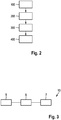
Nachfolgend werden Ausführungsbeispiele der Erfindung unter Bezugnahme auf die begleitenden Zeichnungen im Detail beschrieben. In den Zeichnungen ist:
- Figur 1
- eine schematische Ansicht einer Anzeige gemäß einem Ausführungsbeispiel einer erfindungsgemäßen Vorrichtung;
- Figur 2
- ein Flussdiagramm veranschaulichend Schritte eines Ausführungsbeispiels eines erfindungsgemäßen Verfahrens; und
Figur 3- eine schematische Ansicht über Komponenten eines Ausführungsbeispiels einer erfindungsgemäßen Vorrichtung.
- FIG. 1
- a schematic view of a display according to an embodiment of a device according to the invention;
- FIG. 2
- a flowchart illustrating steps of an embodiment of a method according to the invention; and
- FIG. 3
- a schematic view of components of an embodiment of a device according to the invention.
Die vorstehenden Ausführungsbeispiele zur Realisierung der vorliegenden Erfindung stellen lediglich eine Auswahl aus einer Menge zahlloser Realisierungsmöglichkeiten dar, welche sich für die vorliegende Erfindung ergeben. Zusätzlich zu den genannten Maßnahmen können auch extrem breitbandige kurze Impulse ("Knack"-Laute) mit zunehmender Annäherung in immer kürzeren Abständen zueinander wiedergegeben werden, so dass bei Erreichen der geringsten Nahmessgrenze ein niederfrequentes Dauerknacken ausgegeben wird. Zusätzlich kann bei Verwendung einer grafischen Darstellung der entsprechende Stoßfängerbereich des Fahrzeugs farbig blinkend in dem kollisionsrelevanten Bereich dargestellt werden, wobei die Blinkfrequenz in Abhängigkeit des Abstandes reziprok erhöht wird. Diese Blinkfrequenz kann als Flackern (z.B. ≥ 16 Hz) visualisiert werden. Zusätzlich können weitere Farben (z.B. magenta und/oder dunkelrot und/oder schwarz) zur Kennzeichnung des besonders kritischen Bereiches mittels eines Symbols, einer Zahl und/oder eines Flächenbereichs verwendet werden. Auch hier können Blinkeffekte zusätzlich verwendet werden.The above embodiments for realizing the present invention are merely a selection from a number of countless implementation possibilities that result for the present invention. In addition to the measures mentioned, even extremely broadband short pulses ("click" sounds) can be reproduced with increasing proximity at ever shorter distances from one another, so that a low-frequency continuous cracking is output when the lowest local measuring limit is reached. In addition, when using a graphical representation of the corresponding bumper area of the vehicle can be displayed in color flashing in the collision-relevant area, the flashing frequency is increased reciprocally as a function of the distance. This flashing frequency can be visualized as flickering (e.g., ≥16 Hz). In addition, other colors (e.g., magenta and / or dark red and / or black) may be used to indicate the most critical area by means of a symbol, number, and / or area. Again, blink effects can be used additionally.
Auch wenn die erfindungsgemäßen Aspekte und vorteilhaften Ausführungsformen anhand der in Verbindung mit den beigefügten Zeichnungsfiguren erläuterten Ausführungsbeispiele im Detail beschrieben worden sind, sind für den Fachmann Modifikationen und Kombinationen von Merkmalen der dargestellten Ausführungsbeispiele möglich, ohne den Bereich der vorliegenden Erfindung zu verlassen, deren Schutzbereich durch die beigefügten Ansprüche definiert wird.Although the aspects and advantageous embodiments of the invention have been described in detail with reference to the embodiments explained in connection with the accompanying drawings, modifications and combinations of features of the illustrated embodiments are possible for the skilled person, without departing from the scope of the present invention, the scope of protection the appended claims are defined.
Claims (8)
- Method for signalling a distance signal, comprising the steps of:- signalling (200) a first predefined minimum distance by way of a full scale of a first media scale (1),- ascertaining (300) a distance that falls below the first minimum distance and, as a reaction thereto,- signalling (400) the distance that falls below the first minimum distance by way of a second media scale (2),
characterized in that- the distance that falls below the first minimum distance is associated with a range of greater measurement uncertainty. - Method according to Claim 1, wherein the distance signal is associated with a distance of a transport means (3) from an environment object (4).
- Method according to Claim 1 or 2, wherein the first predefined media scale (1) comprises at least one item selected from the group consisting of- a colour scale, and- a visualization of a distance, in particular graphically and/or in unit-related number values, and- a multiplicity of separate illumination units arranged one behind the other, and- an acoustic output, which is intermittent in dependence on an ascertained distance, of a first or second tone frequency, and wherein- the second media scale (2) comprises at least one of the above items that is not one the first medium scale (1) comprises.
- Method according to one of the preceding claims, wherein the distance that falls below the first minimum distance is associated with a greater verification requirement by a user.
- Method according to one of the preceding claims, wherein the second media scale (2) is set up for signalling at least two different distances that fall below the first minimum distance.
- Method according to one of the preceding claims, wherein the first minimum distance lies in a range between 15 cm and 40 cm, in particular between 15 cm and 35 cm, preferably between 20 cm and 30 cm.
- Method according to one of the preceding claims, wherein, upon exceeding of the minimum distance, the signalling of the distance signal is presented in optically magnified fashion in the region of the lowest distance.
- Apparatus for signalling a distance signal, comprising:- a signal converter (5) for ascertaining the distance signal,- an evaluation unit (6), and- a signalling unit (7),- wherein the apparatus (10) is set up to perform a method according to one of the preceding claims.
Applications Claiming Priority (2)
| Application Number | Priority Date | Filing Date | Title |
|---|---|---|---|
| DE102013226343.0A DE102013226343A1 (en) | 2013-12-18 | 2013-12-18 | Device and method for signaling a distance signal under increased personal responsibility |
| PCT/EP2014/072981 WO2015090692A1 (en) | 2013-12-18 | 2014-10-27 | Device and method for providing a distance signal requiring increased operator responsibility |
Publications (2)
| Publication Number | Publication Date |
|---|---|
| EP3083370A1 EP3083370A1 (en) | 2016-10-26 |
| EP3083370B1 true EP3083370B1 (en) | 2019-12-11 |
Family
ID=51795629
Family Applications (1)
| Application Number | Title | Priority Date | Filing Date |
|---|---|---|---|
| EP14789562.7A Active EP3083370B1 (en) | 2013-12-18 | 2014-10-27 | Device and method for providing a distance signal requiring increased operator responsibility |
Country Status (3)
| Country | Link |
|---|---|
| EP (1) | EP3083370B1 (en) |
| DE (1) | DE102013226343A1 (en) |
| WO (1) | WO2015090692A1 (en) |
Family Cites Families (10)
| Publication number | Priority date | Publication date | Assignee | Title |
|---|---|---|---|---|
| DE4425419C1 (en) | 1994-07-19 | 1995-12-14 | Daimler Benz Ag | Short-range ultrasonic distance warning system in a motor vehicle, especially as a parking aid |
| JP4096445B2 (en) * | 1999-03-31 | 2008-06-04 | アイシン精機株式会社 | Parking assistance device |
| JP2004114977A (en) * | 2002-09-30 | 2004-04-15 | Aisin Seiki Co Ltd | Mobile peripheral monitoring device |
| GB0320102D0 (en) * | 2003-08-28 | 2003-10-01 | Nissan Technical Ct Europ Ltd | Parking aid |
| DE102004010752A1 (en) | 2004-03-05 | 2005-09-22 | Robert Bosch Gmbh | Distance warning and distance warning unit method |
| KR100696392B1 (en) * | 2005-12-07 | 2007-03-19 | 주식회사단해 | Vehicle outside monitoring system and method |
| DE102006058885A1 (en) * | 2006-12-13 | 2008-06-26 | Siemens Ag | Device for assisting a parking operation of a vehicle |
| DE102008017030A1 (en) | 2008-04-03 | 2009-10-08 | Valeo Schalter Und Sensoren Gmbh | Drive assisting method for use during parking car on side parking space, involves enabling collision free departure of vehicle from space when vehicle adopts or attains intermediate position, and turning vehicle when performing measurement |
| JP5093602B2 (en) * | 2008-06-04 | 2012-12-12 | アイシン精機株式会社 | Peripheral recognition support device |
| DE102009029770A1 (en) * | 2009-05-19 | 2010-11-25 | Volkswagen Ag | Distance warning device for parking assistance system of motor vehicle, has warning unit for warning driver during fall short of predetermined border margin by warning signal |
-
2013
- 2013-12-18 DE DE102013226343.0A patent/DE102013226343A1/en not_active Ceased
-
2014
- 2014-10-27 EP EP14789562.7A patent/EP3083370B1/en active Active
- 2014-10-27 WO PCT/EP2014/072981 patent/WO2015090692A1/en not_active Ceased
Non-Patent Citations (1)
| Title |
|---|
| None * |
Also Published As
| Publication number | Publication date |
|---|---|
| WO2015090692A1 (en) | 2015-06-25 |
| EP3083370A1 (en) | 2016-10-26 |
| DE102013226343A1 (en) | 2015-06-18 |
Similar Documents
| Publication | Publication Date | Title |
|---|---|---|
| EP1450330B1 (en) | Alarm device for vehicles | |
| DE112015003771B4 (en) | System and method for warning of an impending collision between towing vehicle and trailer when reversing a towing vehicle with a trailer | |
| EP1557321B1 (en) | Vehicle driver warning procedure | |
| EP2774133B1 (en) | Method for outputting alert messages of a driver assistance system and associated driver assistance system | |
| DE102011083770A1 (en) | Method for the computer-aided processing of the near field of a vehicle | |
| DE102012005075A1 (en) | A method of warning against a possible collision of an object with a vehicle door of a stationary motor vehicle | |
| DE102011121285A1 (en) | parking aid | |
| DE102011018159A1 (en) | Device and method for driver assistance | |
| EP2643188A1 (en) | Method and device for assisting a driver of a motor vehicle when exiting a parking space, and motor vehicle | |
| DE102009041555A1 (en) | Method and device for warning a driver in front of an object | |
| DE102004010752A1 (en) | Distance warning and distance warning unit method | |
| DE102009019024A1 (en) | Method for preventing collisions during opening of doors of vehicle, has determining detected positions and/or dimensions of objects with respect to predetermined position of vehicle under inclusion of sensor data of vehicle sensor system | |
| DE102009041556A1 (en) | Vehicle i.e. passenger car, has dead angle assisting device comprising sensors at front side, where sensors are arranged along longitudinal side in distributed manner and determine distance of object by vehicle in assisting device | |
| DE112015002362T5 (en) | SAFETY TESTING AUXILIARY DEVICE | |
| DE102018004573A1 (en) | Method for informing a driver of a vehicle | |
| DE102007036250A1 (en) | Method for displaying warning for vehicle, involves detecting moving obstacles by side of vehicle, where warning is delivered to another vehicle side in vehicle environment | |
| DE102016005114A1 (en) | Method for operating a service vehicle | |
| EP3372449B1 (en) | Technique for monitoring a dead angle area | |
| EP2226217B1 (en) | Information system for passenger of a vehicle using acoustic and tactile means | |
| DE102007038973A1 (en) | Motor vehicle, has sensor e.g. parking space sensor, arranged on exterior mirror at passenger's side, and monitoring dead angle of exterior mirror, where monitoring is executable upto definite speed of vehicle | |
| DE102009046656A1 (en) | A method of detecting a parking space suitable for parking a vehicle | |
| EP4154499B1 (en) | Reduction of the risk of collision with an obscured motor vehicle | |
| DE102015013043A1 (en) | Method for avoiding a collision or at least for reducing a collision severity of a vehicle | |
| EP1835303B1 (en) | Method for operating an surroundings recognition system of a vehicle, in particular the recognition system for the immediate vicinity or parking assistance and corresponding system | |
| DE102008010832B4 (en) | Method and device for outputting warning and / or information signals for a vehicle |
Legal Events
| Date | Code | Title | Description |
|---|---|---|---|
| PUAI | Public reference made under article 153(3) epc to a published international application that has entered the european phase |
Free format text: ORIGINAL CODE: 0009012 |
|
| 17P | Request for examination filed |
Effective date: 20160718 |
|
| AK | Designated contracting states |
Kind code of ref document: A1 Designated state(s): AL AT BE BG CH CY CZ DE DK EE ES FI FR GB GR HR HU IE IS IT LI LT LU LV MC MK MT NL NO PL PT RO RS SE SI SK SM TR |
|
| AX | Request for extension of the european patent |
Extension state: BA ME |
|
| DAX | Request for extension of the european patent (deleted) | ||
| REG | Reference to a national code |
Ref country code: DE Ref legal event code: R079 Ref document number: 502014013249 Country of ref document: DE Free format text: PREVIOUS MAIN CLASS: B62D0015020000 Ipc: B60K0035000000 |
|
| GRAP | Despatch of communication of intention to grant a patent |
Free format text: ORIGINAL CODE: EPIDOSNIGR1 |
|
| STAA | Information on the status of an ep patent application or granted ep patent |
Free format text: STATUS: GRANT OF PATENT IS INTENDED |
|
| RIC1 | Information provided on ipc code assigned before grant |
Ipc: B62D 15/02 20060101ALI20190503BHEP Ipc: B60Q 9/00 20060101ALI20190503BHEP Ipc: B60K 35/00 20060101AFI20190503BHEP Ipc: B60W 50/14 20120101ALI20190503BHEP |
|
| INTG | Intention to grant announced |
Effective date: 20190522 |
|
| GRAS | Grant fee paid |
Free format text: ORIGINAL CODE: EPIDOSNIGR3 |
|
| GRAA | (expected) grant |
Free format text: ORIGINAL CODE: 0009210 |
|
| STAA | Information on the status of an ep patent application or granted ep patent |
Free format text: STATUS: THE PATENT HAS BEEN GRANTED |
|
| AK | Designated contracting states |
Kind code of ref document: B1 Designated state(s): AL AT BE BG CH CY CZ DE DK EE ES FI FR GB GR HR HU IE IS IT LI LT LU LV MC MK MT NL NO PL PT RO RS SE SI SK SM TR |
|
| REG | Reference to a national code |
Ref country code: GB Ref legal event code: FG4D Free format text: NOT ENGLISH |
|
| REG | Reference to a national code |
Ref country code: CH Ref legal event code: EP |
|
| REG | Reference to a national code |
Ref country code: AT Ref legal event code: REF Ref document number: 1211846 Country of ref document: AT Kind code of ref document: T Effective date: 20191215 |
|
| REG | Reference to a national code |
Ref country code: DE Ref legal event code: R096 Ref document number: 502014013249 Country of ref document: DE |
|
| REG | Reference to a national code |
Ref country code: IE Ref legal event code: FG4D Free format text: LANGUAGE OF EP DOCUMENT: GERMAN |
|
| REG | Reference to a national code |
Ref country code: NL Ref legal event code: MP Effective date: 20191211 |
|
| REG | Reference to a national code |
Ref country code: LT Ref legal event code: MG4D |
|
| RAP2 | Party data changed (patent owner data changed or rights of a patent transferred) |
Owner name: ROBERT BOSCH GMBH |
|
| PG25 | Lapsed in a contracting state [announced via postgrant information from national office to epo] |
Ref country code: NO Free format text: LAPSE BECAUSE OF FAILURE TO SUBMIT A TRANSLATION OF THE DESCRIPTION OR TO PAY THE FEE WITHIN THE PRESCRIBED TIME-LIMIT Effective date: 20200311 Ref country code: LT Free format text: LAPSE BECAUSE OF FAILURE TO SUBMIT A TRANSLATION OF THE DESCRIPTION OR TO PAY THE FEE WITHIN THE PRESCRIBED TIME-LIMIT Effective date: 20191211 Ref country code: GR Free format text: LAPSE BECAUSE OF FAILURE TO SUBMIT A TRANSLATION OF THE DESCRIPTION OR TO PAY THE FEE WITHIN THE PRESCRIBED TIME-LIMIT Effective date: 20200312 Ref country code: FI Free format text: LAPSE BECAUSE OF FAILURE TO SUBMIT A TRANSLATION OF THE DESCRIPTION OR TO PAY THE FEE WITHIN THE PRESCRIBED TIME-LIMIT Effective date: 20191211 Ref country code: BG Free format text: LAPSE BECAUSE OF FAILURE TO SUBMIT A TRANSLATION OF THE DESCRIPTION OR TO PAY THE FEE WITHIN THE PRESCRIBED TIME-LIMIT Effective date: 20200311 Ref country code: LV Free format text: LAPSE BECAUSE OF FAILURE TO SUBMIT A TRANSLATION OF THE DESCRIPTION OR TO PAY THE FEE WITHIN THE PRESCRIBED TIME-LIMIT Effective date: 20191211 Ref country code: SE Free format text: LAPSE BECAUSE OF FAILURE TO SUBMIT A TRANSLATION OF THE DESCRIPTION OR TO PAY THE FEE WITHIN THE PRESCRIBED TIME-LIMIT Effective date: 20191211 |
|
| PG25 | Lapsed in a contracting state [announced via postgrant information from national office to epo] |
Ref country code: RS Free format text: LAPSE BECAUSE OF FAILURE TO SUBMIT A TRANSLATION OF THE DESCRIPTION OR TO PAY THE FEE WITHIN THE PRESCRIBED TIME-LIMIT Effective date: 20191211 Ref country code: HR Free format text: LAPSE BECAUSE OF FAILURE TO SUBMIT A TRANSLATION OF THE DESCRIPTION OR TO PAY THE FEE WITHIN THE PRESCRIBED TIME-LIMIT Effective date: 20191211 |
|
| PG25 | Lapsed in a contracting state [announced via postgrant information from national office to epo] |
Ref country code: AL Free format text: LAPSE BECAUSE OF FAILURE TO SUBMIT A TRANSLATION OF THE DESCRIPTION OR TO PAY THE FEE WITHIN THE PRESCRIBED TIME-LIMIT Effective date: 20191211 |
|
| PG25 | Lapsed in a contracting state [announced via postgrant information from national office to epo] |
Ref country code: PT Free format text: LAPSE BECAUSE OF FAILURE TO SUBMIT A TRANSLATION OF THE DESCRIPTION OR TO PAY THE FEE WITHIN THE PRESCRIBED TIME-LIMIT Effective date: 20200506 Ref country code: CZ Free format text: LAPSE BECAUSE OF FAILURE TO SUBMIT A TRANSLATION OF THE DESCRIPTION OR TO PAY THE FEE WITHIN THE PRESCRIBED TIME-LIMIT Effective date: 20191211 Ref country code: ES Free format text: LAPSE BECAUSE OF FAILURE TO SUBMIT A TRANSLATION OF THE DESCRIPTION OR TO PAY THE FEE WITHIN THE PRESCRIBED TIME-LIMIT Effective date: 20191211 Ref country code: RO Free format text: LAPSE BECAUSE OF FAILURE TO SUBMIT A TRANSLATION OF THE DESCRIPTION OR TO PAY THE FEE WITHIN THE PRESCRIBED TIME-LIMIT Effective date: 20191211 Ref country code: NL Free format text: LAPSE BECAUSE OF FAILURE TO SUBMIT A TRANSLATION OF THE DESCRIPTION OR TO PAY THE FEE WITHIN THE PRESCRIBED TIME-LIMIT Effective date: 20191211 Ref country code: EE Free format text: LAPSE BECAUSE OF FAILURE TO SUBMIT A TRANSLATION OF THE DESCRIPTION OR TO PAY THE FEE WITHIN THE PRESCRIBED TIME-LIMIT Effective date: 20191211 |
|
| PG25 | Lapsed in a contracting state [announced via postgrant information from national office to epo] |
Ref country code: SM Free format text: LAPSE BECAUSE OF FAILURE TO SUBMIT A TRANSLATION OF THE DESCRIPTION OR TO PAY THE FEE WITHIN THE PRESCRIBED TIME-LIMIT Effective date: 20191211 Ref country code: SK Free format text: LAPSE BECAUSE OF FAILURE TO SUBMIT A TRANSLATION OF THE DESCRIPTION OR TO PAY THE FEE WITHIN THE PRESCRIBED TIME-LIMIT Effective date: 20191211 Ref country code: IS Free format text: LAPSE BECAUSE OF FAILURE TO SUBMIT A TRANSLATION OF THE DESCRIPTION OR TO PAY THE FEE WITHIN THE PRESCRIBED TIME-LIMIT Effective date: 20200411 |
|
| REG | Reference to a national code |
Ref country code: DE Ref legal event code: R097 Ref document number: 502014013249 Country of ref document: DE |
|
| PLBE | No opposition filed within time limit |
Free format text: ORIGINAL CODE: 0009261 |
|
| STAA | Information on the status of an ep patent application or granted ep patent |
Free format text: STATUS: NO OPPOSITION FILED WITHIN TIME LIMIT |
|
| PG25 | Lapsed in a contracting state [announced via postgrant information from national office to epo] |
Ref country code: DK Free format text: LAPSE BECAUSE OF FAILURE TO SUBMIT A TRANSLATION OF THE DESCRIPTION OR TO PAY THE FEE WITHIN THE PRESCRIBED TIME-LIMIT Effective date: 20191211 |
|
| 26N | No opposition filed |
Effective date: 20200914 |
|
| PG25 | Lapsed in a contracting state [announced via postgrant information from national office to epo] |
Ref country code: SI Free format text: LAPSE BECAUSE OF FAILURE TO SUBMIT A TRANSLATION OF THE DESCRIPTION OR TO PAY THE FEE WITHIN THE PRESCRIBED TIME-LIMIT Effective date: 20191211 |
|
| PG25 | Lapsed in a contracting state [announced via postgrant information from national office to epo] |
Ref country code: IT Free format text: LAPSE BECAUSE OF FAILURE TO SUBMIT A TRANSLATION OF THE DESCRIPTION OR TO PAY THE FEE WITHIN THE PRESCRIBED TIME-LIMIT Effective date: 20191211 |
|
| PG25 | Lapsed in a contracting state [announced via postgrant information from national office to epo] |
Ref country code: PL Free format text: LAPSE BECAUSE OF FAILURE TO SUBMIT A TRANSLATION OF THE DESCRIPTION OR TO PAY THE FEE WITHIN THE PRESCRIBED TIME-LIMIT Effective date: 20191211 |
|
| REG | Reference to a national code |
Ref country code: CH Ref legal event code: PL |
|
| PG25 | Lapsed in a contracting state [announced via postgrant information from national office to epo] |
Ref country code: LU Free format text: LAPSE BECAUSE OF NON-PAYMENT OF DUE FEES Effective date: 20201027 Ref country code: MC Free format text: LAPSE BECAUSE OF FAILURE TO SUBMIT A TRANSLATION OF THE DESCRIPTION OR TO PAY THE FEE WITHIN THE PRESCRIBED TIME-LIMIT Effective date: 20191211 |
|
| REG | Reference to a national code |
Ref country code: BE Ref legal event code: MM Effective date: 20201031 |
|
| PG25 | Lapsed in a contracting state [announced via postgrant information from national office to epo] |
Ref country code: CH Free format text: LAPSE BECAUSE OF NON-PAYMENT OF DUE FEES Effective date: 20201031 Ref country code: BE Free format text: LAPSE BECAUSE OF NON-PAYMENT OF DUE FEES Effective date: 20201031 Ref country code: LI Free format text: LAPSE BECAUSE OF NON-PAYMENT OF DUE FEES Effective date: 20201031 |
|
| PG25 | Lapsed in a contracting state [announced via postgrant information from national office to epo] |
Ref country code: IE Free format text: LAPSE BECAUSE OF NON-PAYMENT OF DUE FEES Effective date: 20201027 |
|
| REG | Reference to a national code |
Ref country code: AT Ref legal event code: MM01 Ref document number: 1211846 Country of ref document: AT Kind code of ref document: T Effective date: 20201027 |
|
| PG25 | Lapsed in a contracting state [announced via postgrant information from national office to epo] |
Ref country code: AT Free format text: LAPSE BECAUSE OF NON-PAYMENT OF DUE FEES Effective date: 20201027 |
|
| PGFP | Annual fee paid to national office [announced via postgrant information from national office to epo] |
Ref country code: GB Payment date: 20211022 Year of fee payment: 8 |
|
| PGFP | Annual fee paid to national office [announced via postgrant information from national office to epo] |
Ref country code: FR Payment date: 20211022 Year of fee payment: 8 |
|
| PG25 | Lapsed in a contracting state [announced via postgrant information from national office to epo] |
Ref country code: TR Free format text: LAPSE BECAUSE OF FAILURE TO SUBMIT A TRANSLATION OF THE DESCRIPTION OR TO PAY THE FEE WITHIN THE PRESCRIBED TIME-LIMIT Effective date: 20191211 Ref country code: MT Free format text: LAPSE BECAUSE OF FAILURE TO SUBMIT A TRANSLATION OF THE DESCRIPTION OR TO PAY THE FEE WITHIN THE PRESCRIBED TIME-LIMIT Effective date: 20191211 Ref country code: CY Free format text: LAPSE BECAUSE OF FAILURE TO SUBMIT A TRANSLATION OF THE DESCRIPTION OR TO PAY THE FEE WITHIN THE PRESCRIBED TIME-LIMIT Effective date: 20191211 |
|
| PG25 | Lapsed in a contracting state [announced via postgrant information from national office to epo] |
Ref country code: MK Free format text: LAPSE BECAUSE OF FAILURE TO SUBMIT A TRANSLATION OF THE DESCRIPTION OR TO PAY THE FEE WITHIN THE PRESCRIBED TIME-LIMIT Effective date: 20191211 |
|
| GBPC | Gb: european patent ceased through non-payment of renewal fee |
Effective date: 20221027 |
|
| PG25 | Lapsed in a contracting state [announced via postgrant information from national office to epo] |
Ref country code: FR Free format text: LAPSE BECAUSE OF NON-PAYMENT OF DUE FEES Effective date: 20221031 |
|
| PG25 | Lapsed in a contracting state [announced via postgrant information from national office to epo] |
Ref country code: GB Free format text: LAPSE BECAUSE OF NON-PAYMENT OF DUE FEES Effective date: 20221027 |
|
| PGFP | Annual fee paid to national office [announced via postgrant information from national office to epo] |
Ref country code: DE Payment date: 20251209 Year of fee payment: 12 |