EP3076902B1 - Verfahren zur reparatur eines annulus und kollagengelzusammensetzung - Google Patents
Verfahren zur reparatur eines annulus und kollagengelzusammensetzung Download PDFInfo
- Publication number
- EP3076902B1 EP3076902B1 EP14867162.1A EP14867162A EP3076902B1 EP 3076902 B1 EP3076902 B1 EP 3076902B1 EP 14867162 A EP14867162 A EP 14867162A EP 3076902 B1 EP3076902 B1 EP 3076902B1
- Authority
- EP
- European Patent Office
- Prior art keywords
- collagen
- tissue
- composition
- cross
- cells
- Prior art date
- Legal status (The legal status is an assumption and is not a legal conclusion. Google has not performed a legal analysis and makes no representation as to the accuracy of the status listed.)
- Active
Links
Images

Classifications
-
- A—HUMAN NECESSITIES
- A61—MEDICAL OR VETERINARY SCIENCE; HYGIENE
- A61L—METHODS OR APPARATUS FOR STERILISING MATERIALS OR OBJECTS IN GENERAL; DISINFECTION, STERILISATION OR DEODORISATION OF AIR; CHEMICAL ASPECTS OF BANDAGES, DRESSINGS, ABSORBENT PADS OR SURGICAL ARTICLES; MATERIALS FOR BANDAGES, DRESSINGS, ABSORBENT PADS OR SURGICAL ARTICLES
- A61L27/00—Materials for grafts or prostheses or for coating grafts or prostheses
- A61L27/14—Macromolecular materials
- A61L27/22—Polypeptides or derivatives thereof, e.g. degradation products
- A61L27/24—Collagen
-
- A—HUMAN NECESSITIES
- A61—MEDICAL OR VETERINARY SCIENCE; HYGIENE
- A61L—METHODS OR APPARATUS FOR STERILISING MATERIALS OR OBJECTS IN GENERAL; DISINFECTION, STERILISATION OR DEODORISATION OF AIR; CHEMICAL ASPECTS OF BANDAGES, DRESSINGS, ABSORBENT PADS OR SURGICAL ARTICLES; MATERIALS FOR BANDAGES, DRESSINGS, ABSORBENT PADS OR SURGICAL ARTICLES
- A61L27/00—Materials for grafts or prostheses or for coating grafts or prostheses
- A61L27/36—Materials for grafts or prostheses or for coating grafts or prostheses containing ingredients of undetermined constitution or reaction products thereof, e.g. transplant tissue, natural bone, extracellular matrix
- A61L27/3641—Materials for grafts or prostheses or for coating grafts or prostheses containing ingredients of undetermined constitution or reaction products thereof, e.g. transplant tissue, natural bone, extracellular matrix characterised by the site of application in the body
- A61L27/3645—Connective tissue
- A61L27/3654—Cartilage, e.g. meniscus
- A61L27/3658—Intervertebral discs
-
- A—HUMAN NECESSITIES
- A61—MEDICAL OR VETERINARY SCIENCE; HYGIENE
- A61L—METHODS OR APPARATUS FOR STERILISING MATERIALS OR OBJECTS IN GENERAL; DISINFECTION, STERILISATION OR DEODORISATION OF AIR; CHEMICAL ASPECTS OF BANDAGES, DRESSINGS, ABSORBENT PADS OR SURGICAL ARTICLES; MATERIALS FOR BANDAGES, DRESSINGS, ABSORBENT PADS OR SURGICAL ARTICLES
- A61L27/00—Materials for grafts or prostheses or for coating grafts or prostheses
- A61L27/36—Materials for grafts or prostheses or for coating grafts or prostheses containing ingredients of undetermined constitution or reaction products thereof, e.g. transplant tissue, natural bone, extracellular matrix
- A61L27/38—Materials for grafts or prostheses or for coating grafts or prostheses containing ingredients of undetermined constitution or reaction products thereof, e.g. transplant tissue, natural bone, extracellular matrix containing added animal cells
-
- A—HUMAN NECESSITIES
- A61—MEDICAL OR VETERINARY SCIENCE; HYGIENE
- A61L—METHODS OR APPARATUS FOR STERILISING MATERIALS OR OBJECTS IN GENERAL; DISINFECTION, STERILISATION OR DEODORISATION OF AIR; CHEMICAL ASPECTS OF BANDAGES, DRESSINGS, ABSORBENT PADS OR SURGICAL ARTICLES; MATERIALS FOR BANDAGES, DRESSINGS, ABSORBENT PADS OR SURGICAL ARTICLES
- A61L27/00—Materials for grafts or prostheses or for coating grafts or prostheses
- A61L27/36—Materials for grafts or prostheses or for coating grafts or prostheses containing ingredients of undetermined constitution or reaction products thereof, e.g. transplant tissue, natural bone, extracellular matrix
- A61L27/38—Materials for grafts or prostheses or for coating grafts or prostheses containing ingredients of undetermined constitution or reaction products thereof, e.g. transplant tissue, natural bone, extracellular matrix containing added animal cells
- A61L27/3804—Materials for grafts or prostheses or for coating grafts or prostheses containing ingredients of undetermined constitution or reaction products thereof, e.g. transplant tissue, natural bone, extracellular matrix containing added animal cells characterised by specific cells or progenitors thereof, e.g. fibroblasts, connective tissue cells, kidney cells
-
- A—HUMAN NECESSITIES
- A61—MEDICAL OR VETERINARY SCIENCE; HYGIENE
- A61L—METHODS OR APPARATUS FOR STERILISING MATERIALS OR OBJECTS IN GENERAL; DISINFECTION, STERILISATION OR DEODORISATION OF AIR; CHEMICAL ASPECTS OF BANDAGES, DRESSINGS, ABSORBENT PADS OR SURGICAL ARTICLES; MATERIALS FOR BANDAGES, DRESSINGS, ABSORBENT PADS OR SURGICAL ARTICLES
- A61L27/00—Materials for grafts or prostheses or for coating grafts or prostheses
- A61L27/36—Materials for grafts or prostheses or for coating grafts or prostheses containing ingredients of undetermined constitution or reaction products thereof, e.g. transplant tissue, natural bone, extracellular matrix
- A61L27/38—Materials for grafts or prostheses or for coating grafts or prostheses containing ingredients of undetermined constitution or reaction products thereof, e.g. transplant tissue, natural bone, extracellular matrix containing added animal cells
- A61L27/3804—Materials for grafts or prostheses or for coating grafts or prostheses containing ingredients of undetermined constitution or reaction products thereof, e.g. transplant tissue, natural bone, extracellular matrix containing added animal cells characterised by specific cells or progenitors thereof, e.g. fibroblasts, connective tissue cells, kidney cells
- A61L27/3817—Cartilage-forming cells, e.g. pre-chondrocytes
-
- A—HUMAN NECESSITIES
- A61—MEDICAL OR VETERINARY SCIENCE; HYGIENE
- A61L—METHODS OR APPARATUS FOR STERILISING MATERIALS OR OBJECTS IN GENERAL; DISINFECTION, STERILISATION OR DEODORISATION OF AIR; CHEMICAL ASPECTS OF BANDAGES, DRESSINGS, ABSORBENT PADS OR SURGICAL ARTICLES; MATERIALS FOR BANDAGES, DRESSINGS, ABSORBENT PADS OR SURGICAL ARTICLES
- A61L27/00—Materials for grafts or prostheses or for coating grafts or prostheses
- A61L27/36—Materials for grafts or prostheses or for coating grafts or prostheses containing ingredients of undetermined constitution or reaction products thereof, e.g. transplant tissue, natural bone, extracellular matrix
- A61L27/38—Materials for grafts or prostheses or for coating grafts or prostheses containing ingredients of undetermined constitution or reaction products thereof, e.g. transplant tissue, natural bone, extracellular matrix containing added animal cells
- A61L27/3804—Materials for grafts or prostheses or for coating grafts or prostheses containing ingredients of undetermined constitution or reaction products thereof, e.g. transplant tissue, natural bone, extracellular matrix containing added animal cells characterised by specific cells or progenitors thereof, e.g. fibroblasts, connective tissue cells, kidney cells
- A61L27/3834—Cells able to produce different cell types, e.g. hematopoietic stem cells, mesenchymal stem cells, marrow stromal cells, embryonic stem cells
-
- A—HUMAN NECESSITIES
- A61—MEDICAL OR VETERINARY SCIENCE; HYGIENE
- A61L—METHODS OR APPARATUS FOR STERILISING MATERIALS OR OBJECTS IN GENERAL; DISINFECTION, STERILISATION OR DEODORISATION OF AIR; CHEMICAL ASPECTS OF BANDAGES, DRESSINGS, ABSORBENT PADS OR SURGICAL ARTICLES; MATERIALS FOR BANDAGES, DRESSINGS, ABSORBENT PADS OR SURGICAL ARTICLES
- A61L27/00—Materials for grafts or prostheses or for coating grafts or prostheses
- A61L27/50—Materials characterised by their function or physical properties, e.g. injectable or lubricating compositions, shape-memory materials, surface modified materials
-
- A—HUMAN NECESSITIES
- A61—MEDICAL OR VETERINARY SCIENCE; HYGIENE
- A61L—METHODS OR APPARATUS FOR STERILISING MATERIALS OR OBJECTS IN GENERAL; DISINFECTION, STERILISATION OR DEODORISATION OF AIR; CHEMICAL ASPECTS OF BANDAGES, DRESSINGS, ABSORBENT PADS OR SURGICAL ARTICLES; MATERIALS FOR BANDAGES, DRESSINGS, ABSORBENT PADS OR SURGICAL ARTICLES
- A61L27/00—Materials for grafts or prostheses or for coating grafts or prostheses
- A61L27/50—Materials characterised by their function or physical properties, e.g. injectable or lubricating compositions, shape-memory materials, surface modified materials
- A61L27/54—Biologically active materials, e.g. therapeutic substances
-
- A—HUMAN NECESSITIES
- A61—MEDICAL OR VETERINARY SCIENCE; HYGIENE
- A61P—SPECIFIC THERAPEUTIC ACTIVITY OF CHEMICAL COMPOUNDS OR MEDICINAL PREPARATIONS
- A61P19/00—Drugs for skeletal disorders
- A61P19/02—Drugs for skeletal disorders for joint disorders, e.g. arthritis, arthrosis
-
- A—HUMAN NECESSITIES
- A61—MEDICAL OR VETERINARY SCIENCE; HYGIENE
- A61P—SPECIFIC THERAPEUTIC ACTIVITY OF CHEMICAL COMPOUNDS OR MEDICINAL PREPARATIONS
- A61P43/00—Drugs for specific purposes, not provided for in groups A61P1/00-A61P41/00
-
- A—HUMAN NECESSITIES
- A61—MEDICAL OR VETERINARY SCIENCE; HYGIENE
- A61F—FILTERS IMPLANTABLE INTO BLOOD VESSELS; PROSTHESES; DEVICES PROVIDING PATENCY TO, OR PREVENTING COLLAPSING OF, TUBULAR STRUCTURES OF THE BODY, e.g. STENTS; ORTHOPAEDIC, NURSING OR CONTRACEPTIVE DEVICES; FOMENTATION; TREATMENT OR PROTECTION OF EYES OR EARS; BANDAGES, DRESSINGS OR ABSORBENT PADS; FIRST-AID KITS
- A61F2/00—Filters implantable into blood vessels; Prostheses, i.e. artificial substitutes or replacements for parts of the body; Appliances for connecting them with the body; Devices providing patency to, or preventing collapsing of, tubular structures of the body, e.g. stents
- A61F2/02—Prostheses implantable into the body
- A61F2/30—Joints
- A61F2/44—Joints for the spine, e.g. vertebrae, spinal discs
- A61F2/442—Intervertebral or spinal discs, e.g. resilient
- A61F2002/444—Intervertebral or spinal discs, e.g. resilient for replacing the nucleus pulposus
-
- A—HUMAN NECESSITIES
- A61—MEDICAL OR VETERINARY SCIENCE; HYGIENE
- A61L—METHODS OR APPARATUS FOR STERILISING MATERIALS OR OBJECTS IN GENERAL; DISINFECTION, STERILISATION OR DEODORISATION OF AIR; CHEMICAL ASPECTS OF BANDAGES, DRESSINGS, ABSORBENT PADS OR SURGICAL ARTICLES; MATERIALS FOR BANDAGES, DRESSINGS, ABSORBENT PADS OR SURGICAL ARTICLES
- A61L2300/00—Biologically active materials used in bandages, wound dressings, absorbent pads or medical devices
- A61L2300/40—Biologically active materials used in bandages, wound dressings, absorbent pads or medical devices characterised by a specific therapeutic activity or mode of action
- A61L2300/412—Tissue-regenerating or healing or proliferative agents
-
- A—HUMAN NECESSITIES
- A61—MEDICAL OR VETERINARY SCIENCE; HYGIENE
- A61L—METHODS OR APPARATUS FOR STERILISING MATERIALS OR OBJECTS IN GENERAL; DISINFECTION, STERILISATION OR DEODORISATION OF AIR; CHEMICAL ASPECTS OF BANDAGES, DRESSINGS, ABSORBENT PADS OR SURGICAL ARTICLES; MATERIALS FOR BANDAGES, DRESSINGS, ABSORBENT PADS OR SURGICAL ARTICLES
- A61L2300/00—Biologically active materials used in bandages, wound dressings, absorbent pads or medical devices
- A61L2300/60—Biologically active materials used in bandages, wound dressings, absorbent pads or medical devices characterised by a special physical form
- A61L2300/64—Animal cells
-
- A—HUMAN NECESSITIES
- A61—MEDICAL OR VETERINARY SCIENCE; HYGIENE
- A61L—METHODS OR APPARATUS FOR STERILISING MATERIALS OR OBJECTS IN GENERAL; DISINFECTION, STERILISATION OR DEODORISATION OF AIR; CHEMICAL ASPECTS OF BANDAGES, DRESSINGS, ABSORBENT PADS OR SURGICAL ARTICLES; MATERIALS FOR BANDAGES, DRESSINGS, ABSORBENT PADS OR SURGICAL ARTICLES
- A61L2400/00—Materials characterised by their function or physical properties
- A61L2400/06—Flowable or injectable implant compositions
-
- A—HUMAN NECESSITIES
- A61—MEDICAL OR VETERINARY SCIENCE; HYGIENE
- A61L—METHODS OR APPARATUS FOR STERILISING MATERIALS OR OBJECTS IN GENERAL; DISINFECTION, STERILISATION OR DEODORISATION OF AIR; CHEMICAL ASPECTS OF BANDAGES, DRESSINGS, ABSORBENT PADS OR SURGICAL ARTICLES; MATERIALS FOR BANDAGES, DRESSINGS, ABSORBENT PADS OR SURGICAL ARTICLES
- A61L2430/00—Materials or treatment for tissue regeneration
- A61L2430/38—Materials or treatment for tissue regeneration for reconstruction of the spine, vertebrae or intervertebral discs
Definitions
- the present invention relates to a collagen gel composition for use in repairing an annulus by injecting the composition into, around, or near an annulus repair site under conditions to repair an annulus, the collagen gel composition comprising: collagen gel and a cross-linking agent; wherein the cross-linking agent is riboflavin; wherein the cross-linking agent is included in the composition in an amount sufficient to cause cross-linking of the collagen gel and enable integration of the collagen gel composition with tissue that comes into contact with the collagen gel composition and the collagen is included in the composition at a concentration of 10 to 180 mg/ml.
- IVD intervertebral disc
- Partial discectomies alleviate the pain of a damaged IVD; however, the resulting annular defect is often left untreated. This increases the likeliness of recurrent disc herniations through the open defect.
- Annulus repair strategies have been devised to address a range of defects in damaged AF tissue. These therapies aim to mechanically close lesions in the AF to prevent prolapse and perhaps slow or inhibit degeneration.
- the multiple purse string suture (“MPSS”) method for closing the annulus fibrosus employs a system of sutures and anchors to pull the remaining tissue together.
- the MPSS is developed into a product called Xclose.
- implantable barriers that physically bridge the defect, such as the Intrinsic Barricaid and New-Vert OSA system.
- a research group has also developed barbed plugs that can be inserted into the annulus defect. Although these methods are commercially available, they have numerous drawbacks and limitations. Suture methods introduce small punctures around the initial defect through which the anchors are introduced.
- Tissue-engineered fibrin hydrogels are being developed for annulus repair. These gels are able to adhere; however, their potential for biological healing is unknown. Furthermore, the native annulus is comprised of type I collagen, so introduction of fibrin (a factor commonly associated with blood clotting and scar tissue) induced unwanted side effects when tested in vivo.
- Annular defects persist because of the very limited intrinsic healing capability of the AF, which does not significantly improve upon simple mechanical closure ( Bron et al., “Repair, Regenerative and Supportive Therapies of the Annulus Fibrosus: Achievements and Challenges,” Eur. Spine J. 18:301-13 (2009 ); Melrose et al., “Recent Advances in Annular Pathobiology Provide Insights into Rim-Lesion Mediated Intervertebral Disc Degeneration and Potential New Approaches to Annular Repair Strategies," Eur. Spine J.
- HDC Injectable high-density collagen
- US2004/010251 describes a therapeutic method for treating mammalian intervertebral discs.
- a preparation of cross-linked collagen is injected under pressure into the intradiscal space.
- the intervertebral distance in injected discs is immediately increased by the treatment.
- At least some mechanical properties of the treated vertebral column are preserved or partially restored.
- the method may be used to relieve back pain in patients, to increase patient height and to stabilized the spinal column.
- the therapeutic method may result in at least a partial regeneration of the nucleus pulposus, and/or development of cartilaginous or fibrocartilaginous tissues or dense fibrous tissues.
- WO2008/13962 describes a method and a composition for photochemical cross linking of collagen by photoactive agent in-vivo are presented.
- the method includes a non-toxic photoactive formulation of the composition with collagen, which is administered to treatment area locally; followed by irradiation with suitable wavelength.
- liposomal formulated mTHPC is added to the collagen and is irradiated with a 652 nm laser, resulting in producing efficient collagen scaffolds with strengthen and stabilized microstructure, thus improving the physiochemical properties of the collagen scaffold.
- the present invention relates to a collagen gel composition for use in repairing an annulus that includes collagen gel and a cross-linking agent; wherein the cross-linking agent is riboflavin; wherein the cross-linking agent is included in the composition in an amount sufficient to cause cross-linking of the collagen gel and enable integration of the collagen gel composition with tissue that comes into contact with the collagen gel composition and the collagen is included in the composition at a concentration of 10 to 180 mg/ml.
- the collagen gel composition is injected into, around, or near an annulus repair site under conditions to repair the annulus.
- the cross-linking agent is included with or added to the collagen gel in an amount sufficient to cause cross-linking of the collagen gel and enable integration of the collagen gel composition with tissue near where said collagen gel composition is injected.
- the cross-linking agent is included in the composition in an amount sufficient to cause cross-linking of the collagen gel and enable integration of the collagen gel composition with tissue that comes into contact with the collagen gel composition.
- the gel composition is injectable and of low viscosity upon delivery, and thus can be delivered to a variety of shapes and sizes to partially or completely seal an annulus defect. Delivery of the gel composition does not cause damage to any of the surrounding tissue and has been shown to integrate with neighboring native disc tissue. Furthermore, since the method involves injecting a gel composition of a biological material, there is no chance of catastrophic failure leaving destructive shards in the surrounding disc space. As mentioned supra , the native annulus is comprised of mostly type-I collagen, therefore delivery of cross-linked type-I collagen gel to repair the region provides a substrate for long-term tissue growth and biological repair of the defect.
- high-density type I collagen is shown to repair annular defects for up to 5 weeks after induction of a needle-puncture defect in the AF of the rat-tail spine. This capability correlates positively with RF cross-linking.
- the needle-punctured rat-tail has been shown to be a suitable in vivo model for studying biomaterials for annular repair.
- the goal of the experiments set forth in the Examples infra was to evaluate the ability of HDC to repair a needle-puncture AF defect in the rat-tail spine. Specifically, the goal was to test whether injected HDC gel can prevent nuclear tissue extrusion and/or consequent IVD degeneration, as determined by histological and radiological outcomes.
- riboflavin a photoactive initiator of collagen cross-linking
- the rat-tail model was used to screen these various compositions of collagen gels.
- the present invention relates to a collagen gel composition for use in repairing an annulus that includes collagen gel and a cross-linking agent; wherein the cross-linking agent is riboflavin; and wherein the cross-linking agent is included in the composition in an amount sufficient to cause cross-linking of the collagen gel and enable integration of the collagen gel composition with tissue that comes into contact with the collagen gel composition and the collagen is included in the composition at a concentration of 10 to 180 mg/ml.
- the collagen gel composition is injected into, around, or near an annulus repair site under conditions to repair the annulus.
- the cross-linking agent is included with or added to the collagen gel in an amount sufficient to cause cross-linking of the collagen gel and enable integration of the collagen gel composition with tissue near where said collagen gel composition is injected.
- the cross-linking agent is included in the composition in an amount sufficient to cause cross-linking of the collagen gel and enable integration of the collagen gel composition with tissue that comes into contact with the collagen gel composition.
- Intervertebral discs separate the spinal vertebrae from one another and act as natural shock absorbers by cushioning impacts and absorbing the stress and strain transmitted to the spinal column.
- Intervertebral disc tissues are primarily composed of three regions, the end plates, the annulus fibrosus ("AF") and the nucleus pulposus ("NP").
- the annulus fibrosus is a tough collagen-fiber composite that has an outer rim of type I collagen fibers surrounding a less dense fibrocartilage and a transitional zone. These collagen fibers are organized as cylindrical layers. In each layer the fibers are parallel to one another; however, the fiber orientation between layers varies between 30 and 60 degrees. This organization provides support during torsional, bending, and compressive stresses on the spine.
- the end plates which are found at the upper and lower surfaces of the disc, work in conjunction with the annulus fibrosus to contain the gel-like matrix of the nucleus pulposus within the intervertebral disc.
- the nucleus pulposus is made up of a soft matrix of proteoglycans and randomly oriented type II collagen fibers in water. The proteoglycan and water content are greatest at the center of the disc and decrease toward the disc periphery.
- the collagen gel composition is used to repair, e.g. , the annulus fibrosus structure of an IVD.
- the term “repair” refers to any correction, reinforcement, reconditioning, remedy, making up for, making sound, renewal, mending, patching, or the like that restores, preserves, and/or augments function and/or structure. Accordingly, the term “repair” can also mean to correct, to reinforce, to recondition, to remedy, to make up for, to make sound, to renew, to mend, to patch, to preserve ( i.e. , from further injury or degradation), or to otherwise restore function and/or structure. "Repair” includes full repair and partial repair of an intervertebral disc annulus defect.
- the term “repair” also includes treatment, prevention, or amelioration of at least one symptom associated with or caused by an intervertebral disc annulus defect.
- treatment prevention, or amelioration
- prevention is meant delaying or preventing the onset, reversing, alleviating, ameliorating, inhibiting, slowing down or stopping the progression, aggravation or deterioration the progression or severity of a condition associated with an intervertebral disc annulus defect or injury.
- the collagen gel composition is to "repair" the AF of an intervertebral disc, and following treatment to repair the annulus, at least about 75%, 76%, 77%, 78%, 79%, 80%, 81%, 82%, 83%, 84%, 85%, 86%, 87%, 88%, 89%, 90%, or more of the disc height is maintained after a period of days, weeks, months, or years.
- the collagen gel composition (described infra ) is injected into, around, or near an annulus repair site under conditions effective to repair the annulus.
- the injection of the composition can be performed, for example, using a guide needle (but a guide needle is not required) inserted into the annulus fibrosus of the affected intervertebral disc.
- An injection needle can then be inserted through the guide needle. It may or may not be necessary to penetrate the annulus fibrosus with the injection needle.
- the location of the tip of the guide needle or the location of the tip of the injection needle can be verified using imaging technology, e.g. , fluoroscopy, magnetic resonance imaging, computed tomography, or any other similar technology well known in the art.
- injecting does not cause damage to surrounding tissue.
- injecting results in the injected gel composition integrating with native tissue of the annulus.
- the collagen gel composition may be carried out in any mammal, including humans.
- Types I, II, III, and IV of collagen have been mainly used as sources of biomaterials.
- Type I collagen can be found in most connective tissues, is the most abundant collagen type in a living organism, and is found in tendons, corium, and bone. Industrially, in many cases, collagen can be extracted from those portions of an organism.
- Type II is a collagen that forms cartilage.
- Type III collagen is found in small quantities in the same tissues as type I collagen.
- Type IV collagen forms a basal membrane.
- Types I, II, and III are present as collagen fibers in living organisms, and have a main function of maintaining the strength of a tissue or organ.
- Type IV which does not have ability for fibrogenesis, forms a net-like assembly constructed of four molecules and may take part in cell differentiation in a basal membrane.
- collagen refers to any one or more of the types of collagen known in the art or to be discovered.
- the collagen in the collagen gel composition may be type I collagen. This is the same type of collagen as the natural AF. When type I collagen is delivered to a tissue that already contains type I collagen, the chances of immune response to the gel composition (following injection) and any negative interaction with the surrounding tissue is eliminated.
- the collagen may be soluble or insoluble and may be derived from any tissue in any animal.
- collagen gel may be prepared using collagen derived from skin and tendon, including rat tail tendon, calf skin collagen, and/or calf extensor tendon.
- Collagen gel is included in the composition of the present invention at a concentration of about 10-180 mg/ml, about 20-160 mg/ml, about 30-140 mg/ml, about 40-120 mg/ml, about 50-100 mg/ml, about 60-80 mg/ml, greater than about 50 mg/ml, greater than about 100 mg/ml, greater than about 150 mg/ml, less than about 200 mg/ml, less than about 150 mg/ml, less than about 100 mg/ml, or less than about 50 mg/ml.
- a cross-linking agent is included, which agent is included in an amount sufficient to cause cross-linking of the collagen gel.
- the agent may also cause some cross-linking with surrounding collagen fibers. This means, for example, that there is good adhesion of injected gel with tissue surrounding the defect.
- the composition of the present invention when injected, stably integrates into surrounding tissue. According to one embodiment, this means that the composition of the present invention is, upon injection into an annulus repair site, able to stay in place at the repair site, because it integrates with surrounding tissue.
- the cross-linking of collagen-based materials may be used to suppress the antigenicity of the material in order to prevent the hyperacute rejection reaction.
- Cross-linking may also be used to improve mechanical properties and enhance resistance to degradation.
- the cross-linking may be photo-induced, using UV or visible light treatment.
- Various aspects of the light exposure can be varied such as time of exposure (0-600 or more seconds) and intensity (up to 2,000 mw/cm 2 ) of the light.
- UV irradiation at, e.g. , 200-300 nm
- the collagen gel may comprise hydroxyl containing components such as polysaccharides or GAGs, which may optimize UV and/or visible cross-linking treatment.
- the collagens may be cross-linked using visible light in the presence of photosensitizer dyes such as methylene blue and rose bengal stain.
- Cross-linking may also be carried out by radiation treatment, using electron beam and/or gamma rays. Radiation-induced cross-linking does not require the use of cytotoxic cross-linkers and no subsequent treatment steps are necessary. Another advantage of radiation-induced cross-linking is that gamma rays can penetrate the biomaterial to depths that may not be achieved using other methodologies such as visible light or UV light-induced cross-linking.
- the cross-linking agent is riboflavin.
- a cross-linking agent e.g. , riboflavin mixed into the gel helps promote cross-linking not only within the collagen gel, but also with the surrounding native collagen fibers.
- the collagen gel composition of the present invention polymerizes in the region of the defect, which allows collagen in the composition to exploit natural interactions with the surrounding native collagen to promote cohesion and mechanical healing at a defect site. Polymerization in a defect site also allows the gel to spread and conform to different defect shapes and sizes.
- the cross-linking agent may be included in the composition at a concentration of up to about 1.5 mM, about 2.0 mM, about 2.5 mM, about 3.0 mM, about 3.5 mM, about 4.0 mM, about 4.5 mM, about 5.0 mM, about 5.5 mM, about 6.0 mM, about 6.5 mM, about 7.0 mM, or about 7.5 mM, or at a concentration greater than about 7.5 mM.
- the collagen gel composition of the present invention is highly mechanically, chemically, and biologically tunable.
- the collagen is processed in a way that allows varying collagen density and cross-linker concentration, both of which affect mechanical properties.
- Various growth factors and agents, including therapeutic agents can be added to the composition to elicit specific responses from cells and the surrounding tissue.
- the collagen gel composition of the present invention may further comprise living cells.
- the cells may be stem or progenitor cells, differentiated cells, terminally differentiated cells, or combinations thereof.
- the cells may be pluripotent or unipotent stem cells, or induced pluripotent stem cells.
- the cells may be human embryonic stem cells, derived via a technology which does not necessitate the destruction of the human embryo, for example via an established cell line.
- Mesenchymal stem cells also referred to as marrow stromal cells, multipotent stromal cells, or MSCs
- MSCs are pluripotent stem cells which can differentiate into a variety of cell types including osteoblasts, tenocytes, chondrocytes, myocytes, adipocytes.
- the cells may be MSCs or any cell within the MSC lineage. Progenitor cells can go through several rounds of cell division before terminally differentiating into a mature cell, and the cells may be these intermediary cells.
- the cells may be selected from MSCs (marrow stromal cells, mesenchymal stem cells, multipotent stromal cells), chondrocytes, fibrochondrocytes, osteocytes, osteoblasts, osteoclasts, synoviocytes, adipocytes, bone marrow cells, mesenchymal cells, stromal cells, genetically transformed cells, or combinations thereof.
- the cells may be autologous or heterologous.
- the cells may include one or more of the following: embryonic stem cells; precursor cells derived from adipose tissue and/or bone marrow; peripheral blood progenitor cells; stem cells and/or non-stem cells isolated from adult tissue and/or juvenile; genetically transformed cells; a combination of chondrocytes and other cells; a combination of osteocytes and other cells; a combination of synoviocytes and other cells; a combination of bone marrow cells and other cells; a combination of mesenchymal cells and other cells; a combination of stromal cells and other cells; a combination of stem cells and other cells; a combination of embryonic stem cells and other cells; a combination of precursor cells isolated from adult tissue and other cells; a combination of peripheral blood progenitor cells and other cells; a combination of stem cells isolated from adult tissue and other cells; and a combination of genetically transformed cells and other cells.
- human cells are preferred for use in the composition and method of the present invention, the cells are not limited to cells from human sources.
- Cells from other mammalian species including, but not limited to, equine, canine, porcine, bovine, feline, caprine, and ovine sources may be used.
- Murine cells, cells from rodent sources, may also be used.
- Cell donors may vary in development and age. Cells may be derived from donor tissues of embryos, neonates, or older individuals including adults.
- the living cells may be selected from chondrocytes, fibroblasts, stem cells, and combinations thereof.
- Cells included in the collagen gel composition of the present invention may be engineered, e.g. , to express a particular protein.
- nucleic acid molecules encoding a certain protein can be incorporated into host cells using conventional recombinant DNA technology. Generally, this involves inserting the DNA molecule into an expression system to which the DNA molecule is heterologous ( i.e. , not normally present). The heterologous DNA molecule is inserted into the expression system or vector in sense orientation and correct reading frame. The vector contains the necessary elements (promoters, suppressers, operators, transcription termination sequences, etc.) for the transcription and translation of the inserted protein-coding sequences.
- a recombinant gene or DNA construct can be prepared prior to its insertion into an expression vector.
- a promoter-effective DNA molecule can be operably coupled 5' of a DNA molecule encoding the protein and a transcription termination (i.e. , polyadenylation sequence) can be operably coupled 3' thereof.
- Polynucleotides encoding a desired protein can be inserted into an expression system or vector to which the molecule is heterologous.
- the heterologous nucleic acid molecule is inserted into the expression system or vector in proper sense (5' ⁇ 3') orientation relative to the promoter and any other 5' regulatory molecules, and correct reading frame.
- the preparation of the nucleic acid constructs can be carried out using standard cloning methods well known in the art as described by Sambrook & Russell, Molecular Cloning: A Laboratory Manual (Cold Springs Laboratory Press, 2001 ).
- U.S. Patent No. 4,237,224 to Cohen and Boyer also describes the production of expression systems in the form of recombinant plasmids using restriction enzyme cleavage and ligation with DNA ligase.
- Suitable expression vectors include those which contain replicon and control sequences that are derived from species compatible with the host cell. For example, if E. coli is used as a host cell, plasmids such as pUC19, pUC18, or pBR322 may be used. When using insect host cells, appropriate transfer vectors compatible with insect host cells include, pVL1392, pVL1393, pAcGP67, and pAcSecG2T, which incorporate a secretory signal fused to the desired protein, and pAcGHLT and pAcHLT, which contain GST and 6xHis tags (BD Biosciences, Franklin Lakes, NJ).
- Suitable viral vectors include adenoviral vectors, adeno-associated viral vectors, vaccinia viral vectors, nodaviral vectors, and retroviral vectors.
- Other suitable expression vectors are described in Sambrook and Russell, Molecular Cloning: A Laboratory Manual (Cold Springs Laboratory Press, 2001 ).
- Many known techniques and protocols for manipulation of nucleic acids for example in preparation of nucleic acid constructs, mutagenesis, sequencing, introduction of DNA into cells and gene expression, and analysis of proteins, are described in detail in Current Protocols in Molecular Biology (Fred M. Ausubel et al. eds., 2003 ).
- RNA transcription and messenger RNA e.g., DNA transcription and messenger RNA (“mRNA”) translation
- mRNA messenger RNA
- Transcription of DNA is dependent upon the presence of a promoter, which is a DNA sequence that directs the binding of RNA polymerase, and thereby promotes mRNA synthesis. Promoters vary in their "strength" (i.e. , their ability to promote transcription). For the purposes of expressing a cloned gene, it is desirable to use strong promoters to obtain a high level of transcription and, hence, expression. Depending upon the host system utilized, any one of a number of suitable promoters may be used.
- Common promoters suitable for directing expression in mammalian cells include, without limitation, SV40, MMTV, metallothionein-1, adenovirus Ela, CMV, immediate early, immunoglobulin heavy chain promoter and enhancer, and RSV-LTR.
- the promoters can be constitutive or, alternatively, tissue-specific or inducible.
- the composition of the present invention is injectable. Since the collagen gel composition of the present invention is injectable, it can be delivered to different defect sites with minimally invasive surgical techniques and standard medical equipment. Other AF repair compositions and techniques require larger surgery sites to allow for anchoring to surrounding tissue. Also, unlike the composition of the present invention, other existing AF repair techniques cannot conform to different defect shapes and sizes prompting surgeons to remove more natural tissue to make a uniform defect.
- the collagen gel composition of the present invention has low viscosity upon delivery and polymerizes in any defect independent of defect size and shape. Furthermore, the use of, e.g. , riboflavin to cross-link in situ is new and unique in that a more mechanically stable gel can form without compromising the gel/AF interface.
- Collagen was harvested and reconstituted from rat-tail tendon as previously described ( Cross et al., "Dense Type I Collagen Matrices That Support Cellular Remodeling and Microfabrication for Studies of Tumor Angiogenesis and Vasculogenesis In Vitro," Biomaterials 31:8596-607 (2010 ); Bowles et al., “Self-Assembly of Aligned Tissue-Engineered Annulus Fibrosus and Intervertebral Disc Composite Via Collagen Gel Contraction,” Tissue Eng Part A 16:1339-48 (2010 ). Fibers were digested in 0.1% acetic acid, frozen for 48 hours, lyophilized, and reconstituted at 20 mg/mL in 0.1% acetic acid.
- the target level between the 3rd and 4th vertebra of the tail was localized under radiographical control.
- the animals were anesthetized and placed in the prone position. A 2-cm longitudinal skin incision was made over the marked level. The AF was then exposed, and great care was taken to preserve it without damage. Subsequently, the AF was punctured using an 18-gauge needle attached to a syringe containing the collagen gel. Approximately 0.5 mL of the gel was injected around the defect immediately after puncture. The gel was cured in situ when RF was added to the collagen. The control group was punctured and left untreated. To standardize the puncture technique, the needle was always inserted in the same orientation (with the needle bevel up) and to the same depth (until the bevel completely penetrated the AF).
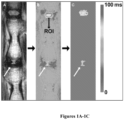
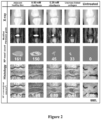
- Magnetic resonance image was obtained on a 7T MRI (Bruker 7T USR Preclinical MRI System) at 1, 2, and 5 weeks postpuncture ( Figure 1A ).
- Bruker's (Bruker BioSpin Corporation, Billerica, MA) proprietary program TopSpin was used for the fitting process.
- a color map was assigned to the resulting T2 map ( Figure 1B ).
- a modified Pfirrmann scale Yu et al., "MRI Assessment of Lumbar Intervertebral Disc Degeneration with Lumbar Degenerative Disease Using the Pfirrmann Grading Systems," PLoS One 7:e48074 (2012 ) was used that outlines 4 grades of degeneration as defined by NP signal intensity, homogeneity, and loss of disc height (Table 1).
- Table 1 Modified Magnetic Resonance Imaging Pfirrmann Grading Grade Structural Changes Within NP Signal Intensity Intervertebral Disc Height I Homogenous and bright Hyperintense Normal II Heterogeneous Intermediate Normal III Heterogeneous and gray Intermediate Decreased IV Heterogeneous and black Hypointense Decreased or collapsed NP indicates nucleus pulposus.
- Disc heights were obtained in a digital radiographical cabinet. Great care was taken to achieve true lateral radiographs of the index segment.
- the IVD height was expressed as a disc height index, calculated by dividing disc height by adjacent vertebral body height on the basis of the modified method of Lu et al., "Effects of Chondroitinase ABC and Chymopapain on Spinal Motion Segment Biomechanics. An In Vivo Biomechanical, Radiologic, and Histologic Canine Study," Spine 22:1828-34 (1997 ).
- the disc height was measured preoperatively and postoperatively at 1-, 2-, and 5-week time points.
- This system is based on AF/NP cellularity, morphology, and border ( Han et al., "A Simple Disc Degeneration Model Induced by Percutaneous Needle Puncture in the Rat Tail," Spine 33:1925-34 (2008 ).
- the grading system ranges from 5 (a healthy disc) to 15 (a terminally degenerated disc).
- the NP voxel count and disc height data were evaluated using nested multilevel analysis of variance modeling, with nesting in punctured and healthy adjacent levels, untreated puncture versus collagen injection, and RF concentrations. Analysis was done in JMP 9.0 (SAS Institute Inc., SAS Campus Drive Cary, NC). p ⁇ 0.05 indicated a statistically significant correlation between the variables and measured outcomes.
- the control IVDs had an average NP voxel count ranging from 140 to 153 voxels at 1, 2, and 5 weeks; the voxel count for the 0.5 mM RF group was between 129 (SD +/- 16.3) and 140 (SD +/- 22.5).
- the 0.25 mM RF group exhibited lower values: 71 voxels (SD +/- 59.14) at week 1 and 57 voxels (SD +/- 56.40) at the second and fifth weeks.
- the NP voxel counts of both RF groups remained constant between weeks 2 and 5.
- the uncross-linked collagen group showed 46 (SD +/- 25) voxels at week 1, which continuously dropped to 14 (SD +/- 15.6) at week 5.
- the untreated group showed the lowest voxel counts values at each time point, decreasing to 5 (SD +/- 4.17) after 5 weeks ( Figure 3A ).
- Increasing RF concentration (0 mM, 0.25 mM, and 0.5 mM) proved to increase NP voxel count values significantly (P ⁇ 0.0001).
- the uncross-linked collagen group maintained 67% (SD +/- 16.86) and the untreated group maintained 53% (SD +/- 13.82) of disc height.
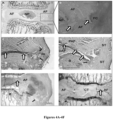
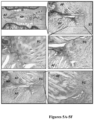
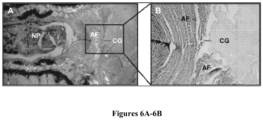
- This fibrous cap was composed of fibroblasts embedded in a dense collagen matrix that stained more intensely with Safranin-O and Alcian blue than surrounding AF and scar tissue.
- the 0.25-mM RF group showed formation of either a similar cap ( Figures 4A and 4B ) or a thin fibrous string repairing the outer part of the AF ( Figure 4C ). In both cross-linked groups, the inner two-thirds of the AF showed no signs of tissue repair.
- IVDs showed an average Han degeneration grade of 6.8.
- IVDs in the 0.25-mM RF group showed a decline in NP cells with clusters formation and reached an average Han grade of 9.3.
- NP proximal to punctured IVDs had an average NP cross-sectional area of 1.59 mm 2 .
- Means of 0.5-mM RF, 0.25-mM RF, and uncross-linked collagen groups were 1.29 mm 2 , 0.78 mm 2 , and 0.78 mm 2 , respectively. No measurable NP tissue remained in the disc space of untreated IVDs.
- the first objective of this study was to test the ability of HDC to repair annular defects in a needle-punctured rat-tail model. It was found that collagen can preserve the ability of the AF to retain nuclear tissue in the disc space and thereby prevent degenerative changes to the IVD. The potential of collagen gel to induce formation of fibrous tissue that partially restores annular integrity was also observed. The second objective was to evaluate whether adding RF affects the quality of AF repair. It was found that RF improved retention of NP size and disc height for up to 5 or more weeks after needle puncture.
- cross-linking may have positively influenced AF repair.
- Chemical cross-linking is known to increase the stiffness and decrease the hydraulic permeability of collagen gels ( Cheng et al., "Genipin-Crosslinked Cartilage-Derived Matrix as a Scaffold for Human Adipose-Derived Stem Cell Chondrogenesis,” Tissue Eng. Part A 19:484-96 (2013 ); Stewart et al., “Collagen Cross-Links Reduce Corneal Permeability," Invest. Ophthalmol. Vis. Sci.
- cross-linking may enhance collagen adhesion to the AF tissue as has been shown with other biopolymer gels ( Schek et al., "Genipin-Crosslinked Fibrin Hydrogels as a Potential Adhesive to Augment Intervertebral Disc Annulus Repair," Eur. Cell. Mater. 21:373-83 (2011 ). This prevents detachment of the implanted material from the annulus and subsequent loss of NP tissue.
- RF is already used clinically to cross-link collagen fibers of the cornea to treat keratoconus ( Hashemi et al., "Corneal Collagen Cross-Linking with Riboflavin and Ultraviolet Irradiation for Keratoconus: Long-Term Results,” Ophthalmology 120:1515-20 (2013 ), but it has never been applied to repair IVD tissue.
- RF serves as a photosensitizer to induce production of oxygen radicals, which then induce chemical bonds between collagen fibrils, thereby cross-linking them ( Tirella et al., "Riboflavin and Collagen: New Crosslinking Methods to Tailor the Stiffness of Hydrogels," Mater. Lett. 74:58-61 (2012 ).
- the rat-tail model proved to be suitable for testing various compositions of collagen gels.
- An 18-gauge needle creates a large defect comprising almost the entire posterior wall of the AF in the rat-tail disc. This defect is proportionally much larger than defects induced by annulotomy during discectomies or punctures for discographies. High intradiscal pressure combined with the liquid consistency of the NP leads to rapid extrusion of nuclear tissue if left untreated.
Landscapes
- Health & Medical Sciences (AREA)
- Life Sciences & Earth Sciences (AREA)
- Engineering & Computer Science (AREA)
- Chemical & Material Sciences (AREA)
- Biomedical Technology (AREA)
- Medicinal Chemistry (AREA)
- Veterinary Medicine (AREA)
- Public Health (AREA)
- General Health & Medical Sciences (AREA)
- Animal Behavior & Ethology (AREA)
- Epidemiology (AREA)
- Oral & Maxillofacial Surgery (AREA)
- Transplantation (AREA)
- Dermatology (AREA)
- Cell Biology (AREA)
- Chemical Kinetics & Catalysis (AREA)
- Botany (AREA)
- Zoology (AREA)
- Urology & Nephrology (AREA)
- Rheumatology (AREA)
- Biophysics (AREA)
- Pharmacology & Pharmacy (AREA)
- Developmental Biology & Embryology (AREA)
- Bioinformatics & Cheminformatics (AREA)
- Hematology (AREA)
- Organic Chemistry (AREA)
- Nuclear Medicine, Radiotherapy & Molecular Imaging (AREA)
- General Chemical & Material Sciences (AREA)
- Vascular Medicine (AREA)
- Molecular Biology (AREA)
- Physical Education & Sports Medicine (AREA)
- Immunology (AREA)
- Orthopedic Medicine & Surgery (AREA)
- Materials For Medical Uses (AREA)
- Medicinal Preparation (AREA)
- Medicines Containing Material From Animals Or Micro-Organisms (AREA)
- Medicines That Contain Protein Lipid Enzymes And Other Medicines (AREA)
Claims (7)
- Kollagengelzusammensetzung zur Verwendung bei der Reparatur eines Ringes durch Injektion der Zusammensetzung in, um oder in der Nähe einer Ringreparaturstelle unter Bedingungen zur Reparatur eines Ringes, die Kollagengelzusammensetzung umfassend:Kollagengel undein Vernetzungsmittel;wobei das Vernetzungsmittel Riboflavin ist;wobei das Vernetzungsmittel in der Zusammensetzung in einer Menge eingeschlossen ist, die ausreicht, um eine Vernetzung des Kollagengels zu bewirken und eine Integration der Kollagengelzusammensetzung mit Gewebe zu ermöglichen, das mit der Kollagengelzusammensetzung in Kontakt kommt, und das Kollagen in der Zusammensetzung in einer Konzentration von 10 bis 180 mg/ml eingeschlossen ist.
- Zusammensetzung zur Verwendung nach Anspruch 1, wobei es sich bei dem Kollagen um Typ-I-Kollagen handelt.
- Zusammensetzung zur Verwendung nach Anspruch 1, ferner umfassend:
lebende Zellen. - Zusammensetzung zur Verwendung nach Anspruch 3, wobei die lebenden Zellen ausgewählt sind aus Chondrozyten, Fibroblasten, Stammzellen und Kombinationen davon.
- Zusammensetzung zur Verwendung nach Anspruch 1, wobei die Zusammensetzung injizierbar ist.
- Zusammensetzung zur Verwendung nach Anspruch 1, wobei die Injektion keine Schädigung des umgebenden Gewebes verursacht.
- Zusammensetzung zur Verwendung nach Anspruch 6, wobei die Integration mit dem nativen Gewebe des Rings erfolgt.
Applications Claiming Priority (2)
| Application Number | Priority Date | Filing Date | Title |
|---|---|---|---|
| US201361911325P | 2013-12-03 | 2013-12-03 | |
| PCT/US2014/068395 WO2015084972A1 (en) | 2013-12-03 | 2014-12-03 | Method of repairing an annulus and collagen gel composition |
Publications (3)
| Publication Number | Publication Date |
|---|---|
| EP3076902A1 EP3076902A1 (de) | 2016-10-12 |
| EP3076902A4 EP3076902A4 (de) | 2017-08-16 |
| EP3076902B1 true EP3076902B1 (de) | 2025-02-05 |
Family
ID=53274080
Family Applications (1)
| Application Number | Title | Priority Date | Filing Date |
|---|---|---|---|
| EP14867162.1A Active EP3076902B1 (de) | 2013-12-03 | 2014-12-03 | Verfahren zur reparatur eines annulus und kollagengelzusammensetzung |
Country Status (5)
| Country | Link |
|---|---|
| US (1) | US20160303284A1 (de) |
| EP (1) | EP3076902B1 (de) |
| JP (3) | JP7004501B2 (de) |
| CN (2) | CN105979912B (de) |
| WO (1) | WO2015084972A1 (de) |
Families Citing this family (9)
| Publication number | Priority date | Publication date | Assignee | Title |
|---|---|---|---|---|
| US9622911B2 (en) | 2010-09-30 | 2017-04-18 | Cxl Ophthalmics, Llc | Ophthalmic treatment device, system, and method of use |
| WO2013149075A1 (en) | 2012-03-29 | 2013-10-03 | Cxl Ophthalmics, Llc | Compositions and methods for treating or preventing diseases associated with oxidative stress |
| EP4420725A3 (de) | 2012-03-29 | 2025-04-16 | Epion Therapeutics, Inc. | Augenbehandlungslösungen, abgabevorrichtungen und abgabeverstärkungsverfahren |
| WO2015084972A1 (en) * | 2013-12-03 | 2015-06-11 | Cornell University | Method of repairing an annulus and collagen gel composition |
| EP3463499A1 (de) * | 2016-05-26 | 2019-04-10 | TDBT IP Inc. | 3d-druckbares biogel und verfahren zur verwendung |
| WO2018213310A1 (en) | 2017-05-15 | 2018-11-22 | Cornell University | Device and system for repairing intervertebral disc herniation and methods of use |
| DE102018128822A1 (de) * | 2018-11-16 | 2020-05-20 | Albert-Ludwigs-Universität Freiburg | Riboflavin zur behandlung von kollagenreichen geweben bei erkrankungen von gelenken insbesondere der bandscheibe |
| CN112641997B (zh) * | 2021-01-11 | 2022-12-23 | 常州市第二人民医院 | 髓核间充质干细胞联合胶原复合支架的制备方法 |
| KR20230122898A (ko) * | 2022-02-15 | 2023-08-22 | 주식회사 나이벡 | 체내 흡수성 광경화성 조성물, 이를 포함하는 체내 흡수성 조직 재생 유도재 및 이를 이용한 이식 방법 |
Citations (1)
| Publication number | Priority date | Publication date | Assignee | Title |
|---|---|---|---|---|
| WO2008013962A2 (en) * | 2006-07-28 | 2008-01-31 | Ceramoptec Industries, Inc. | Method and mixture for in-vivo photochemical cross-linking of collagen |
Family Cites Families (25)
| Publication number | Priority date | Publication date | Assignee | Title |
|---|---|---|---|---|
| US4237224A (en) | 1974-11-04 | 1980-12-02 | Board Of Trustees Of The Leland Stanford Jr. University | Process for producing biologically functional molecular chimeras |
| AUPO599897A0 (en) * | 1997-04-03 | 1997-05-01 | Vidal, Linus | Clear collagen for facial implants |
| US6428802B1 (en) * | 1999-12-29 | 2002-08-06 | Children's Medical Center Corp. | Preparing artificial organs by forming polylayers of different cell populations on a substrate |
| AU2002358957A1 (en) | 2001-12-10 | 2003-06-23 | Colbar Lifescience Ltd. | Methods, devices, and preparations for intervertebral disc treatment |
| US6812211B2 (en) * | 2002-03-19 | 2004-11-02 | Michael Andrew Slivka | Method for nonsurgical treatment of the intervertebral disc and kit therefor |
| TW523120U (en) * | 2002-06-26 | 2003-03-01 | Young Optics Inc | Assembling structure of hollow integration post |
| US7285363B2 (en) * | 2002-11-08 | 2007-10-23 | The University Of Connecticut | Photoactivators, methods of use, and the articles derived therefrom |
| EP1594423B1 (de) * | 2003-02-14 | 2009-01-07 | DePuy Spine, Inc. | In-situ hergestellte intervertebrale fusionsvorrichtung |
| US20040193274A1 (en) * | 2003-03-28 | 2004-09-30 | Trieu Hai H. | Materials and methods for augmenting and/or repairing intervertebral discs |
| EP1529543A1 (de) * | 2003-11-04 | 2005-05-11 | Institut National De La Sante Et De La Recherche Medicale (Inserm) | Verwendung eines hydrogels zur Chondrozyten-Kultur |
| AU2006244873A1 (en) * | 2005-05-13 | 2006-11-16 | Netech Inc. | Medical composition for promotion of skin regeneration |
| US20070212385A1 (en) * | 2006-03-13 | 2007-09-13 | David Nathaniel E | Fluidic Tissue Augmentation Compositions and Methods |
| US8399619B2 (en) * | 2006-06-30 | 2013-03-19 | Warsaw Orthopedic, Inc. | Injectable collagen material |
| WO2008147867A2 (en) * | 2007-05-23 | 2008-12-04 | Allergan, Inc. | Cross-linked collagen and uses thereof |
| US20090149923A1 (en) * | 2007-12-07 | 2009-06-11 | 21X Corporation Dba Priavision, Inc. | Method for equi-dosed time fractionated pulsed uva irradiation of collagen/riboflavin mixtures for ocular structural augmentation |
| KR20100123829A (ko) * | 2008-01-11 | 2010-11-25 | 신세스 게엠바하 | 생체접착성 하이드로겔 |
| AU2009201541B2 (en) * | 2008-04-23 | 2014-12-04 | Integra Lifesciences Corporation | Flowable collagen material for dural closure |
| EP2303290B1 (de) * | 2008-06-25 | 2018-07-25 | Mesoblast, Inc. | Reparatur und/oder rekonstitution von bandscheiben |
| US9044335B2 (en) * | 2009-05-05 | 2015-06-02 | Cornell University | Composite tissue-engineered intervertebral disc with self-assembled annular alignment |
| GB0908927D0 (en) * | 2009-05-22 | 2009-07-01 | Univ Reading The | Synthetic graft |
| GB201003656D0 (en) * | 2010-03-05 | 2010-04-21 | Tigenix Ltd | Fabrication process |
| CN101864178A (zh) * | 2010-06-17 | 2010-10-20 | 复旦大学 | 一种可注射的化学交联蛋白质/多肽水凝胶及其制备方法 |
| DE102011011092A1 (de) | 2011-02-09 | 2012-08-23 | Amedrix Gmbh | Gelierendes Kollagen und Mittel zu dessen Bereitstellung |
| CN103476440B (zh) * | 2011-02-25 | 2016-10-19 | 新特斯有限责任公司 | 促进成骨的植入物以及诱导骨生长的方法 |
| WO2015084972A1 (en) * | 2013-12-03 | 2015-06-11 | Cornell University | Method of repairing an annulus and collagen gel composition |
-
2014
- 2014-12-03 WO PCT/US2014/068395 patent/WO2015084972A1/en not_active Ceased
- 2014-12-03 CN CN201480074205.2A patent/CN105979912B/zh active Active
- 2014-12-03 JP JP2016536123A patent/JP7004501B2/ja active Active
- 2014-12-03 US US15/101,740 patent/US20160303284A1/en active Pending
- 2014-12-03 CN CN202110870859.8A patent/CN113663129A/zh active Pending
- 2014-12-03 EP EP14867162.1A patent/EP3076902B1/de active Active
-
2020
- 2020-03-23 JP JP2020050722A patent/JP2020114403A/ja active Pending
-
2023
- 2023-03-22 JP JP2023045065A patent/JP2023068099A/ja active Pending
Patent Citations (1)
| Publication number | Priority date | Publication date | Assignee | Title |
|---|---|---|---|---|
| WO2008013962A2 (en) * | 2006-07-28 | 2008-01-31 | Ceramoptec Industries, Inc. | Method and mixture for in-vivo photochemical cross-linking of collagen |
Also Published As
| Publication number | Publication date |
|---|---|
| US20160303284A1 (en) | 2016-10-20 |
| CN113663129A (zh) | 2021-11-19 |
| WO2015084972A1 (en) | 2015-06-11 |
| EP3076902A4 (de) | 2017-08-16 |
| EP3076902A1 (de) | 2016-10-12 |
| JP2016538934A (ja) | 2016-12-15 |
| JP2023068099A (ja) | 2023-05-16 |
| JP2020114403A (ja) | 2020-07-30 |
| JP7004501B2 (ja) | 2022-01-21 |
| CN105979912A (zh) | 2016-09-28 |
| CN105979912B (zh) | 2021-08-20 |
Similar Documents
| Publication | Publication Date | Title |
|---|---|---|
| EP3076902B1 (de) | Verfahren zur reparatur eines annulus und kollagengelzusammensetzung | |
| Grunert et al. | Riboflavin crosslinked high-density collagen gel for the repair of annular defects in intervertebral discs: An in vivo study | |
| Grunert et al. | Annular repair using high-density collagen gel: a rat-tail in vivo model | |
| EP1465558B1 (de) | Verwendung von vernetztem kollagen zur behandlung von bandscheiben | |
| KR102024447B1 (ko) | 척추 디스크를 치료하기 위한 작용제 및 작용제를 포함하는 의료 키트 | |
| Moriguchi et al. | In vivo annular repair using high-density collagen gel seeded with annulus fibrosus cells | |
| JP2010537968A (ja) | 脊髄疾患、障害、又は症状の治療に好適な組成物 | |
| US20210046125A1 (en) | Decellularized tissues, hydrogels thereof, and uses thereof | |
| Sloan Jr et al. | Initial investigation of individual and combined annulus fibrosus and nucleus pulposus repair ex vivo | |
| US12343450B2 (en) | Biologic filler for restoring and regenerating tissue | |
| Xu et al. | A novel rat model of annulus fibrosus injury for intervertebral disc degeneration | |
| Liu et al. | bFGF-chitosan scaffolds effectively repair 20 mm sciatic nerve defects in adult rats | |
| US20230301787A1 (en) | Acellular Bioactive Scaffold Device and Methods of Fabrication and Treatment Relating Thereto | |
| Nakashima et al. | Regeneration of intervertebral disc by the intradiscal application of cross-linked hyaluronate hydrogel and cross-linked chondroitin sulfate hydrogel in a rabbit model of intervertebral disc injury | |
| Wang et al. | The implantation of non-cell-based materials to prevent the recurrent disc herniation: an in vivo porcine model using quantitative discomanometry examination | |
| Cao et al. | The Clinical Efficacy of Autologous Platelet‐Rich Plasma Interventional Circulatory Perfusion Combined with Radiofrequency Ablation and Thermocoagulation in the Treatment of Discogenic Low Back Pain | |
| CN117414349A (zh) | 可持续供给外泌体的细胞多孔微针贴片及其制备方法 | |
| JP7023288B2 (ja) | 脳損傷修復材 | |
| Sloan | Tissue-Engineered Annulus Fibrosus Repair and Nucleus Pulposus Augmentation in Pre-Clinical Models of Intervertebral Disc Degeneration | |
| Borde | Repair of focal defects in the annulus fibrosus using an in situ-photocrosslinkable collagen hydrogel | |
| Prest | Development of a peripheral nerve specific extracellular matrix-based hydrogel and its use in augmenting peripheral nerve injury and repair | |
| KR20250101218A (ko) | 탈세포화된 피부조직 유래 세포외기질 및 하이드로겔을 포함하는 조성물 및 이의 용도 | |
| Simionescu et al. | Shape-memory sponge hydrogel biomaterial | |
| Hoyland et al. | Intervertebral disc tissue engineering | |
| Härtl | Annulus Fibrosus Repair Using High-Density Collagen Gel: An In vivo Ovine Model |
Legal Events
| Date | Code | Title | Description |
|---|---|---|---|
| PUAI | Public reference made under article 153(3) epc to a published international application that has entered the european phase |
Free format text: ORIGINAL CODE: 0009012 |
|
| 17P | Request for examination filed |
Effective date: 20160627 |
|
| AK | Designated contracting states |
Kind code of ref document: A1 Designated state(s): AL AT BE BG CH CY CZ DE DK EE ES FI FR GB GR HR HU IE IS IT LI LT LU LV MC MK MT NL NO PL PT RO RS SE SI SK SM TR |
|
| AX | Request for extension of the european patent |
Extension state: BA ME |
|
| RIN1 | Information on inventor provided before grant (corrected) |
Inventor name: HARTL, ROGER Inventor name: GRUNERT, PETER Inventor name: BONASSAR, LAWRENCE Inventor name: BORDE, BRANDON |
|
| RIN1 | Information on inventor provided before grant (corrected) |
Inventor name: BONASSAR, LAWRENCE Inventor name: GRUNERT, PETER Inventor name: BORDE, BRANDON Inventor name: HARTL, ROGER |
|
| DAX | Request for extension of the european patent (deleted) | ||
| A4 | Supplementary search report drawn up and despatched |
Effective date: 20170713 |
|
| RIC1 | Information provided on ipc code assigned before grant |
Ipc: A61L 27/50 20060101AFI20170707BHEP Ipc: A61L 27/24 20060101ALI20170707BHEP Ipc: A61F 2/44 20060101ALI20170707BHEP Ipc: A61L 27/38 20060101ALI20170707BHEP |
|
| REG | Reference to a national code |
Ref country code: HK Ref legal event code: DE Ref document number: 1229682 Country of ref document: HK |
|
| STAA | Information on the status of an ep patent application or granted ep patent |
Free format text: STATUS: EXAMINATION IS IN PROGRESS |
|
| 17Q | First examination report despatched |
Effective date: 20190207 |
|
| P01 | Opt-out of the competence of the unified patent court (upc) registered |
Effective date: 20230530 |
|
| REG | Reference to a national code |
Ref country code: DE Ref legal event code: R079 Free format text: PREVIOUS MAIN CLASS: A61L0027500000 Ipc: A61L0027240000 Ref country code: DE Ref legal event code: R079 Ref document number: 602014091522 Country of ref document: DE Free format text: PREVIOUS MAIN CLASS: A61L0027500000 Ipc: A61L0027240000 |
|
| RIC1 | Information provided on ipc code assigned before grant |
Ipc: A61F 2/44 20060101ALI20240119BHEP Ipc: A61P 43/00 20060101ALI20240119BHEP Ipc: A61P 19/02 20060101ALI20240119BHEP Ipc: A61L 27/50 20060101ALI20240119BHEP Ipc: A61L 27/38 20060101ALI20240119BHEP Ipc: A61L 27/24 20060101AFI20240119BHEP |
|
| GRAP | Despatch of communication of intention to grant a patent |
Free format text: ORIGINAL CODE: EPIDOSNIGR1 |
|
| STAA | Information on the status of an ep patent application or granted ep patent |
Free format text: STATUS: GRANT OF PATENT IS INTENDED |
|
| INTG | Intention to grant announced |
Effective date: 20240812 |
|
| GRAS | Grant fee paid |
Free format text: ORIGINAL CODE: EPIDOSNIGR3 |
|
| GRAA | (expected) grant |
Free format text: ORIGINAL CODE: 0009210 |
|
| STAA | Information on the status of an ep patent application or granted ep patent |
Free format text: STATUS: THE PATENT HAS BEEN GRANTED |
|
| AK | Designated contracting states |
Kind code of ref document: B1 Designated state(s): AL AT BE BG CH CY CZ DE DK EE ES FI FR GB GR HR HU IE IS IT LI LT LU LV MC MK MT NL NO PL PT RO RS SE SI SK SM TR |
|
| REG | Reference to a national code |
Ref country code: GB Ref legal event code: FG4D |
|
| REG | Reference to a national code |
Ref country code: CH Ref legal event code: EP |
|
| REG | Reference to a national code |
Ref country code: DE Ref legal event code: R096 Ref document number: 602014091522 Country of ref document: DE |
|
| REG | Reference to a national code |
Ref country code: IE Ref legal event code: FG4D |
|
| PG25 | Lapsed in a contracting state [announced via postgrant information from national office to epo] |
Ref country code: RS Free format text: LAPSE BECAUSE OF FAILURE TO SUBMIT A TRANSLATION OF THE DESCRIPTION OR TO PAY THE FEE WITHIN THE PRESCRIBED TIME-LIMIT Effective date: 20250505 |
|
| PG25 | Lapsed in a contracting state [announced via postgrant information from national office to epo] |
Ref country code: FI Free format text: LAPSE BECAUSE OF FAILURE TO SUBMIT A TRANSLATION OF THE DESCRIPTION OR TO PAY THE FEE WITHIN THE PRESCRIBED TIME-LIMIT Effective date: 20250205 |
|
| PG25 | Lapsed in a contracting state [announced via postgrant information from national office to epo] |
Ref country code: PL Free format text: LAPSE BECAUSE OF FAILURE TO SUBMIT A TRANSLATION OF THE DESCRIPTION OR TO PAY THE FEE WITHIN THE PRESCRIBED TIME-LIMIT Effective date: 20250205 |
|
| PG25 | Lapsed in a contracting state [announced via postgrant information from national office to epo] |
Ref country code: ES Free format text: LAPSE BECAUSE OF FAILURE TO SUBMIT A TRANSLATION OF THE DESCRIPTION OR TO PAY THE FEE WITHIN THE PRESCRIBED TIME-LIMIT Effective date: 20250205 |
|
| REG | Reference to a national code |
Ref country code: LT Ref legal event code: MG9D |
|
| PG25 | Lapsed in a contracting state [announced via postgrant information from national office to epo] |
Ref country code: IS Free format text: LAPSE BECAUSE OF FAILURE TO SUBMIT A TRANSLATION OF THE DESCRIPTION OR TO PAY THE FEE WITHIN THE PRESCRIBED TIME-LIMIT Effective date: 20250605 Ref country code: NO Free format text: LAPSE BECAUSE OF FAILURE TO SUBMIT A TRANSLATION OF THE DESCRIPTION OR TO PAY THE FEE WITHIN THE PRESCRIBED TIME-LIMIT Effective date: 20250505 |
|
| PG25 | Lapsed in a contracting state [announced via postgrant information from national office to epo] |
Ref country code: NL Free format text: LAPSE BECAUSE OF FAILURE TO SUBMIT A TRANSLATION OF THE DESCRIPTION OR TO PAY THE FEE WITHIN THE PRESCRIBED TIME-LIMIT Effective date: 20250205 |
|
| PG25 | Lapsed in a contracting state [announced via postgrant information from national office to epo] |
Ref country code: HR Free format text: LAPSE BECAUSE OF FAILURE TO SUBMIT A TRANSLATION OF THE DESCRIPTION OR TO PAY THE FEE WITHIN THE PRESCRIBED TIME-LIMIT Effective date: 20250205 |
|
| PG25 | Lapsed in a contracting state [announced via postgrant information from national office to epo] |
Ref country code: LV Free format text: LAPSE BECAUSE OF FAILURE TO SUBMIT A TRANSLATION OF THE DESCRIPTION OR TO PAY THE FEE WITHIN THE PRESCRIBED TIME-LIMIT Effective date: 20250205 Ref country code: PT Free format text: LAPSE BECAUSE OF FAILURE TO SUBMIT A TRANSLATION OF THE DESCRIPTION OR TO PAY THE FEE WITHIN THE PRESCRIBED TIME-LIMIT Effective date: 20250605 |
|
| PG25 | Lapsed in a contracting state [announced via postgrant information from national office to epo] |
Ref country code: BG Free format text: LAPSE BECAUSE OF FAILURE TO SUBMIT A TRANSLATION OF THE DESCRIPTION OR TO PAY THE FEE WITHIN THE PRESCRIBED TIME-LIMIT Effective date: 20250205 Ref country code: GR Free format text: LAPSE BECAUSE OF FAILURE TO SUBMIT A TRANSLATION OF THE DESCRIPTION OR TO PAY THE FEE WITHIN THE PRESCRIBED TIME-LIMIT Effective date: 20250506 |
|
| REG | Reference to a national code |
Ref country code: AT Ref legal event code: MK05 Ref document number: 1764782 Country of ref document: AT Kind code of ref document: T Effective date: 20250205 |
|
| PG25 | Lapsed in a contracting state [announced via postgrant information from national office to epo] |
Ref country code: SE Free format text: LAPSE BECAUSE OF FAILURE TO SUBMIT A TRANSLATION OF THE DESCRIPTION OR TO PAY THE FEE WITHIN THE PRESCRIBED TIME-LIMIT Effective date: 20250205 |
|
| PG25 | Lapsed in a contracting state [announced via postgrant information from national office to epo] |
Ref country code: SM Free format text: LAPSE BECAUSE OF FAILURE TO SUBMIT A TRANSLATION OF THE DESCRIPTION OR TO PAY THE FEE WITHIN THE PRESCRIBED TIME-LIMIT Effective date: 20250205 |
|
| PG25 | Lapsed in a contracting state [announced via postgrant information from national office to epo] |
Ref country code: DK Free format text: LAPSE BECAUSE OF FAILURE TO SUBMIT A TRANSLATION OF THE DESCRIPTION OR TO PAY THE FEE WITHIN THE PRESCRIBED TIME-LIMIT Effective date: 20250205 |
|
| PG25 | Lapsed in a contracting state [announced via postgrant information from national office to epo] |
Ref country code: AT Free format text: LAPSE BECAUSE OF FAILURE TO SUBMIT A TRANSLATION OF THE DESCRIPTION OR TO PAY THE FEE WITHIN THE PRESCRIBED TIME-LIMIT Effective date: 20250205 |
|
| PG25 | Lapsed in a contracting state [announced via postgrant information from national office to epo] |
Ref country code: EE Free format text: LAPSE BECAUSE OF FAILURE TO SUBMIT A TRANSLATION OF THE DESCRIPTION OR TO PAY THE FEE WITHIN THE PRESCRIBED TIME-LIMIT Effective date: 20250205 Ref country code: CZ Free format text: LAPSE BECAUSE OF FAILURE TO SUBMIT A TRANSLATION OF THE DESCRIPTION OR TO PAY THE FEE WITHIN THE PRESCRIBED TIME-LIMIT Effective date: 20250205 |
|
| PG25 | Lapsed in a contracting state [announced via postgrant information from national office to epo] |
Ref country code: RO Free format text: LAPSE BECAUSE OF FAILURE TO SUBMIT A TRANSLATION OF THE DESCRIPTION OR TO PAY THE FEE WITHIN THE PRESCRIBED TIME-LIMIT Effective date: 20250205 |
|
| PG25 | Lapsed in a contracting state [announced via postgrant information from national office to epo] |
Ref country code: SK Free format text: LAPSE BECAUSE OF FAILURE TO SUBMIT A TRANSLATION OF THE DESCRIPTION OR TO PAY THE FEE WITHIN THE PRESCRIBED TIME-LIMIT Effective date: 20250205 |
|
| REG | Reference to a national code |
Ref country code: DE Ref legal event code: R097 Ref document number: 602014091522 Country of ref document: DE |
|
| PLBE | No opposition filed within time limit |
Free format text: ORIGINAL CODE: 0009261 |
|
| STAA | Information on the status of an ep patent application or granted ep patent |
Free format text: STATUS: NO OPPOSITION FILED WITHIN TIME LIMIT |
|
| PGFP | Annual fee paid to national office [announced via postgrant information from national office to epo] |
Ref country code: GB Payment date: 20251229 Year of fee payment: 12 |
|
| 26N | No opposition filed |
Effective date: 20251106 |
|
| PGFP | Annual fee paid to national office [announced via postgrant information from national office to epo] |
Ref country code: IT Payment date: 20251219 Year of fee payment: 12 |
|
| PGFP | Annual fee paid to national office [announced via postgrant information from national office to epo] |
Ref country code: FR Payment date: 20251226 Year of fee payment: 12 |
|
| PGFP | Annual fee paid to national office [announced via postgrant information from national office to epo] |
Ref country code: DE Payment date: 20251229 Year of fee payment: 12 |