EP3071713B1 - Nucleic acid amplification - Google Patents
Nucleic acid amplification Download PDFInfo
- Publication number
- EP3071713B1 EP3071713B1 EP14864826.4A EP14864826A EP3071713B1 EP 3071713 B1 EP3071713 B1 EP 3071713B1 EP 14864826 A EP14864826 A EP 14864826A EP 3071713 B1 EP3071713 B1 EP 3071713B1
- Authority
- EP
- European Patent Office
- Prior art keywords
- primer
- region
- nucleic acid
- nucleotide
- template
- Prior art date
- Legal status (The legal status is an assumption and is not a legal conclusion. Google has not performed a legal analysis and makes no representation as to the accuracy of the status listed.)
- Active
Links
Images







Classifications
-
- C—CHEMISTRY; METALLURGY
- C12—BIOCHEMISTRY; BEER; SPIRITS; WINE; VINEGAR; MICROBIOLOGY; ENZYMOLOGY; MUTATION OR GENETIC ENGINEERING
- C12Q—MEASURING OR TESTING PROCESSES INVOLVING ENZYMES, NUCLEIC ACIDS OR MICROORGANISMS; COMPOSITIONS OR TEST PAPERS THEREFOR; PROCESSES OF PREPARING SUCH COMPOSITIONS; CONDITION-RESPONSIVE CONTROL IN MICROBIOLOGICAL OR ENZYMOLOGICAL PROCESSES
- C12Q1/00—Measuring or testing processes involving enzymes, nucleic acids or microorganisms; Compositions therefor; Processes of preparing such compositions
- C12Q1/68—Measuring or testing processes involving enzymes, nucleic acids or microorganisms; Compositions therefor; Processes of preparing such compositions involving nucleic acids
- C12Q1/6844—Nucleic acid amplification reactions
-
- C—CHEMISTRY; METALLURGY
- C12—BIOCHEMISTRY; BEER; SPIRITS; WINE; VINEGAR; MICROBIOLOGY; ENZYMOLOGY; MUTATION OR GENETIC ENGINEERING
- C12Q—MEASURING OR TESTING PROCESSES INVOLVING ENZYMES, NUCLEIC ACIDS OR MICROORGANISMS; COMPOSITIONS OR TEST PAPERS THEREFOR; PROCESSES OF PREPARING SUCH COMPOSITIONS; CONDITION-RESPONSIVE CONTROL IN MICROBIOLOGICAL OR ENZYMOLOGICAL PROCESSES
- C12Q2525/00—Reactions involving modified oligonucleotides, nucleic acids, or nucleotides
- C12Q2525/10—Modifications characterised by
- C12Q2525/161—Modifications characterised by incorporating target specific and non-target specific sites
-
- C—CHEMISTRY; METALLURGY
- C12—BIOCHEMISTRY; BEER; SPIRITS; WINE; VINEGAR; MICROBIOLOGY; ENZYMOLOGY; MUTATION OR GENETIC ENGINEERING
- C12Q—MEASURING OR TESTING PROCESSES INVOLVING ENZYMES, NUCLEIC ACIDS OR MICROORGANISMS; COMPOSITIONS OR TEST PAPERS THEREFOR; PROCESSES OF PREPARING SUCH COMPOSITIONS; CONDITION-RESPONSIVE CONTROL IN MICROBIOLOGICAL OR ENZYMOLOGICAL PROCESSES
- C12Q2531/00—Reactions of nucleic acids characterised by
- C12Q2531/10—Reactions of nucleic acids characterised by the purpose being amplify/increase the copy number of target nucleic acid
- C12Q2531/119—Strand displacement amplification [SDA]
Definitions
- Y 2 may contain a sequence having the general structure in the 5' to 3' direction of [(H'-S) N2 ] wherein H' and S represent nucleotide sequences as described above, and N2 is any integer between 0 and 2000.
- the first portion contains at least 5, 10, 15, 20, 25, 30, 35, 40, 50, 60, 70, 80, 90, or 100 and no more than 10, 15, 20, 25, 30, 35, 40, 50, 60, 70, 80, 90, 100, or 200 nucleotides.
- the template-binding region in a method, reaction mixture, vessel, or kit provided herein involving a primer comprising a template-binding region, contains at least 4, 5, 6, 7, 8, 9, 10, 11, 12, 13,14, 15, 20, 25, 30, 35, 40, 50, 60, 70, 80, 90, or 100 nucleotides. In embodiments, in a method, reaction mixture, vessel, or kit provided herein involving a primer comprising a template-binding region, the template-binding region contains no more than 4, 5, 6, 7, 8, 9, 10, 11, 12, 13,14, 15, 20, 25, 30, 35, 40, 50, 60, 70, 80, 90, or 100 nucleotides.
- each strand of the double-stranded nucleic acid template may contain no more than 8, 9, 10, 11, 12, 13,14, 15, 20, 25, 30, 35, 40, 50, 60, 70, 80, 90, 100, 200, 500, 1000, 2000, 5000, or 10,000 nucleotides.
- a reaction mixture, vessel, or kit provided herein does not contain a recombinase enzyme.
- a kit provided herein comprises a nucleic acid having the nucleotide sequence of the target nucleic acid of interest.
- the first region may contain the 5' end of the primer and the second region may contain the 3' end of the primer.
- a reference to "treating" a given object to a condition or other object or the like refers to directly or indirectly exposing the given object to the recited condition or other object.
- a “treating” step may involve a distinct related action (e.g. adding an enzyme to a vessel, shaking a vessel, etc.)
- not every “treating” step requires a distinct related action.
- a reaction involving one or more reagents can be set up in a vessel, and once the reaction has been initiated, multiple events or steps may occur in the vessel without further human or mechanical intervention with the contents of the vessel.
- One or more of these multiple events or steps in the vessel may be described as "treating" an object in the vessel, even if no separate intervention with the contents of the vessel occurs after the initiation of the reaction.
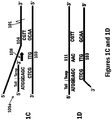
- the second primer 106 may comprise two regions: i) a tail region and ii) a template-binding region.
- the tail region of the first primer 106 may contain three components: a) the 5' terminal nucleotide of the primer, b) an innermost nucleotide, wherein the innermost nucleotide is downstream from the 5' terminal nucleotide, and c) a middle section between the 5' terminal nucleotide and the innermost nucleotide, comprising one or more nucleotides.
- the tail region of the second primer may contain a nucleotide sequence which is complementary to the nucleotide sequence of the tail region of the first primer, if the sequences of the primers are aligned such that the 5' terminal nucleotide of the second primer is aligned with the innermost nucleotide of the tail region of the first primer and the 5' terminal nucleotide of the first primer is aligned with the innermost nucleotide of the tail region of the second primer.
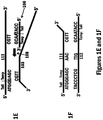
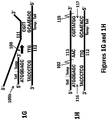
- an extension product of the second copy of the first primer 113a, 113b may be generated from each copy of the extension product of the second primer 112a, 112b, respectively. Additional procedures for the generation of a first copy 115a and a second copy 115b of the secondary nucleic acid may also be performed and used with methods provided herein.
- the first copy of the second strand of the double-stranded nucleic acid template is separated from the second copy of the second strand of the double-stranded nucleic acid template by the sequence, in 5'-3' order: ATGG.
- ATGG is also the sequence, in 5'-3' order, of the tail region of the first primer 105.
- the CCAT of the first concatemer strand is annealed to the ATGG of the second concatemer strand.
- conditions such that a cross-over structure 118 or extension products of the strands of a cross-over structure are formed may include any condition sufficient to support polymerase-based nucleic acid synthesis, including any condition discussed elsewhere herein.
- the conditions may be the same as used to generate an extension product of the first copy of the first primer 111, an extension product of the second primer 112, or an extension product of the second copy of the first primer 111, or they may be different.
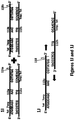
- the first portion 801 and second portion 802 may each contain between 10 and 30 nucleotides, although the first portion 801 and second portion 802 may be other lengths as described elsewhere herein, as well.
- the first portion 801 and second portion 802 may contain the same or a different number of nucleotides.
- the polynucleotide template 800 may contain other portions in addition to the first portion 801 and second portion 802.
- the first portion 801 and second portion 802 may constitute the entirety of the polynucleotide template 800.
- the polynucleotide template 800 may have the length of a nucleic acid template described elsewhere herein.
- the polynucleotide template 800 may be a portion of a primary nucleic acid.
- the polynucleotide template may be present in a sample obtained from a subject.
- nucleotide sequence of the second portion of the polynucleotide template 802 is represented by the letter B
- the nucleotide sequence of the partner nucleotide sequence 830 is represented by the letter B'
- the nucleotide sequence of the second region of the second primer 822 is represented by the letter B, where B and B' are complementary to each other.
- the nucleotide sequence of the second portion of the polynucleotide template 802 (B) may be the same as the nucleotide sequence of the second region of the second primer 822 (B).
- concatemer molecules generated herein may have a length selected from a range having a minimum value of 30, 40, 50, 60, 70, 80, 90, 100, 150, 200, 250, 300, 400, 500, 600, 700, 800, 900, 1000, 1500, 2000, 3000, 4000, 5000, 6000, 7000, 8000, 9000, 10,000, 15,000, or 20,000 nucleotides in length, and a maximum value of 40, 50, 60, 70, 80, 90, 100, 150, 200, 250, 300, 400, 500, 600, 700, 800, 900, 1000, 1500, 2000, 3000, 4000, 5000, 6000, 7000, 8000, 9000, 10,000, 15,000, 20,000, or 25,000 nucleotides in length.
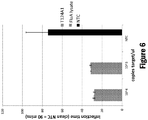
- reaction products may be identified by analysis of turbidity of amplification reactions. For example, in embodiments, increased turbidity may be correlated with formation of reaction products and reaction by-products (e.g. pyrophosphate complexed with magnesium).
- reaction by-products e.g. pyrophosphate complexed with magnesium
- the PNA probe may be included in a reaction mixture provided herein at the start of the reaction.
- the PNA probe may be added to the reaction mixture at a time after the initiation of the reaction or after the completion of the reaction.
- a dye may be added to a reaction mixture at the same time a PNA probe is added, or at a different time.
- a dye may be added to the reaction mixture at the start of the reaction, and the PNA may be added at point after the initiation of the reaction.
- a kit provided herein may further contain a PNA probe which is complementary to a nucleotide sequence to be amplified by reagents of the kit, and dye which binds to PNA-DNA duplexes.
- specific amplification products of a nucleic acid template of interest may be identified within, for example, 30 seconds, 1 minute, 3 minutes, 5 minutes, 10 minutes, 15 minutes, 20 minutes, 30 minutes, 45 minutes, 60 minutes, 90 minutes, 120 minutes, 180 minutes, or 240 minutes of initiation of an amplification reaction.
- a primary nucleic acid may be between 2 and 100,000, between 5 and 100,000, between 10 and 100,000, between 15 and 100,000, between 20 and 100,000, between 25 and 100,000, between 30 and 100,000, between 50 and 100,000, between 70 and 100,000, between 100 and 100,000, between 200 and 100,000, between 2 and 10,000, between 5 and 10,000, between 10 and 10,000, between 15 and 10,000, between 20 and 10,000, between 25 and 10,000, between 30 and 10,000, between 50 and 10,000, between 70 and 10,000, between 100 and 10,000, between 200 and 10,000, between 2 and 5,000, between 5 and 5,000, between 10 and 5,000, between 15 and 5,000, between 20 and 5,000, between 25 and 5,000, between 30 and 5,000, between 50 and 5,000, between 70 and 5,000, between 100 and 5,000, between 200 and 5,000, between 2 and 3,000, between 5 and 3,000, between 10 and 3,000, between 15 and 3,000, between 20 and 3,000, between 25 and 3,000, between 30 and 3,000, between 50 and 3,000, between 70 and 5,000, between 100 and 5,000, between 200 and 5,000, between 2 and
- a nucleic acid template may be of any length of nucleotides.
- a nucleic acid template may be at least 2, 3, 4, 5, 6, 7, 8, 9, 10, 12, 14, 16, 18, 20, 25, 30, 35, 40, 45, 50, 60, 70, 80, 90, 100, 150, 200, 250, 300, 350, 400, 500, 750, 1000, or 1500 nucleotides in length.
- the tail region of a first primer or a second primer provided herein may be of any length.
- the tail regions of a first primer and a second primer directed to the same template contain the same number of nucleotides.
- the tail region of a first or second primer may be at least 2, 3, 4, 5, 6, 7, 8, 9, 10, 11, 12, 13, 14, 15, 16, 17, 18, 19, 20, 21, 22, 23, 24, 25, 26, 27, 28, 29, 30, 35, 40, 45, 50, 60, 70, 80, 90, 100, 150, 200, 250, 300, 350, 400, 500, 750, 1000, or 1500 nucleotides in length.
- the tail region of the primer 901 may move towards and may temporarily anneal to the internal motif 902 present in the extension product of a first copy of the first primer. After temporarily annealing to the internal motif 902 in the extension product of the first copy of the first primer, the tail region of the primer 901 may move back to its original position annealed to the extension product of the second primer 112, and optionally, it may repeatedly move back and forth between these configurations (depicted by the arrows in Figure 9 ).
- an internal motif may contain at least 2, 3, 4, 5, 6, 7, 8, 9, 10, 11, 12, 13, 14, 15, 16, 17, 18, 19, 20, 25, 30, 35, 40, 45, 50, or 75 and no more than 3, 4, 5, 6, 7, 8, 9, 10, 11, 12, 13, 14, 15, 16, 17, 18, 19, 20, 25, 30, 35, 40, 45, 50, 75, or 100 nucleotides (in which the upper value is above the lower value).
- the nucleotide sequence in the primer which is complementary to the internal motif contains the same number of nucleotides as in the internal motif.
- the nucleotide sequence in the primer which is complementary to the internal motif may be perfectly complementary to the internal motif, or there may be one or more mismatched nucleotides between the nucleotide sequence in the primer and the internal motif.
- an "internal motif' is a portion of the target nucleic acid strand to which the tail region of one primer of a primer pair to amplify the target nucleic acid provided herein is complementary, and which has the same or a similar nucleotide sequence as the tail region of the other primer of the primer pair.
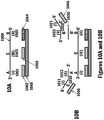
- the polynucleotide template 1000 may be incubated in a reaction mixture containing a first primer 1010 and a second primer 1020 ( Fig. 10B ).
- the reaction mixture contains multiple copies of each primer, such as, for example, at least 4, 5, 6, 10, 15, 20, 50, 100, 1000, 10,000, 100,000, or 1 million copies or more of each of the primers.
- the first primer 1010 may have a first region 1011 (also indicated with an "(i)") and a second region 1012 (also indicated with an "(ii)").
- the first region of the first primer 1011 may have a 5' end, and the second region of the first primer 1012 may have a 3' end.
- a polymerase provided herein may have strand displacement activity.
- Polymerases having strand displacement activity include, for example, exo-Bca DNA polymerase, phi29 DNA polymerase, Klenow Fragment of E. coli DNA Polymerase 1, Vent R DNA polymerase, Deep Vent R DNA polymerase, 9°N m DNA polymerase, Bst 2.0 DNA polymerase, and Large Fragment of Bst DNA Polymerase.
- Other polymerases having strand displacement activity may also be used.
- dATP, dTTP, dGTP, and dCTP at a concentration between, for example, 50 and 500 micromolar each of dATP, dTTP, dGTP, and dCTP, or any range therein including, for example, between 50-350, 100-500, 100-300, 200-500, or 300-400 micromolar each of dATP, dTTP, dGTP, and dCTP); salt (e.g. KCl or potassium acetate, at a concentration between, for example, 1 and 200 millimolar, or any range therein including, for example, between 1-100, 1-50, 1-20, 1-10, 10-20, 10-50, or 10-200 millimolar); buffer (e.g.
- the temperature used for a method or step thereof provided herein may be selected to be appropriate for the enzyme(s) being used in the step of the method.
- the temperature(s) of the reaction is selected such that it does not significantly impair the activity of the polymerase (e.g. the temperature of the reaction may be selected such that polymerase has a half-life of at least 24, 12, 6, 4, 3, 2, 1, 0.75, 0.5, 0.25, or 0.1 hours).
- methods may be performed at a temperature that impairs the activity of the enzyme(s) being used in the method (e.g.
- a primer used for analysis of a nucleotide of interest in a target nucleic acid may contain a critical nucleotide (i.e. a nucleotide which corresponds to the same position of a nucleotide of interest in the target nucleic acid) at the 3' terminus of the primer.
- the annealing of the 3' terminal nucleotide of the primer may be dependent on the presence of the nucleotide of interest in the target nucleic acid. If the 3' terminal nucleotide of the primer does not anneal with a nucleotide in the target nucleic acid (e.g.
- primers may be prepared to assay for either the presence or absence of a nucleotide of interest (e.g.
- a target nucleic acid may have an internal motif which commonly has the sequence, in the 5' to 3' direction of: GTAACGAG.
- different variants of the target nucleic acid may have different nucleotides in the 5 th position in the internal motif (i.e. the position of the "C").
- the sample can be divided into at least 4 portions, and the four portions can be used for a first reaction mixture, a second reaction mixture, a third reaction mixture, and a fourth reaction mixture.
- the method outlined above may be performed with a first, second, third, and fourth portion of the sample, and with a first primer pair, second primer pair, third primer pair, and fourth primer pair, wherein the first primer pair, second primer pair, third primer pair, and fourth primer pair differ from each other by only a single nucleotide in the respective tail / first region of the primers, as described above.
- an influenza panel may be performed using methods provided herein for amplification of nucleic acids from one or more strains of influenza.
- one or more nucleic acids from one or more of Influenza A, Influenza A H3N2, Influenza A H5N1, Influenza A H7N9 - HA gene, Influenza A H7N9 - NA gene, or Influenza B may be amplified.
- Other panels that may be performed using methods provided herein include, for example, a respiratory panel, a sexually transmitted disease panel, a blood-borne pathogen panel, or a hospital acquired infections panel. Any of these panels may include assays for at least 2, 3, 4, 5, 10, 15, or 20 different pathogens or genes.
- the assays and methods disclosed herein may be performed on a device, or on a system, for processing a sample.
- the assays and methods disclosed herein can be readily incorporated into and used in a device for processing a sample, or a system for processing a sample, which may be an automated assay device, or may be an automated assay system.
- a device and such a system, may be useful for the practice of the methods disclosed herein.
- a device may be useful for receiving a sample.
- a device may be useful for preparing, or for processing a sample.
- a device may be useful for performing an assay on a sample.
- a device may be useful for obtaining data from a sample.
- a device may be useful for transmitting data obtained from a sample.
- a device may be useful for disposing of a sample following processing or assaying of a sample.
- a device such as a sample processing device, may have a fluid handling system.
- a fluid handling system may perform, or may aid in performing, transport, dilution, extraction, aliquotting, mixing, and other actions with a fluid, such as a sample.
- a fluid handling system may be contained within a device housing.
- a fluid handling system may permit the collection, delivery, processing and/or transport of a fluid, dissolution of dry reagents, mixing of liquid and/or dry reagents with a liquid, as well as collection, delivery, processing and/or transport of non-fluidic components, samples, or materials.
- a plurality of assays may be run simultaneously; may be run sequentially; or some assays may be run simultaneously while others are run sequentially.
- One or more control assays and/or calibrators e.g., including a configuration with a control of a calibrator for the assay/tests
- control assays and assay on calibrators can also be incorporated into the device; control assays and assay on calibrators may be performed simultaneously with assays performed on a sample, or may be performed before or after assays performed on a sample, or any combination thereof.
- all sample assay actions or steps are performed by a single device.
- all of a plurality of assay actions or steps are performed within a housing of a single device.
- the amount of time from accepting a sample within the device to transmitting data and/or to analysis from the device regarding such a sample may depend on the type or number of steps, tests, or assays performed on the sample.
- the amount of time from accepting a sample within the device to transmitting data and/or to analysis from the device regarding such a sample may take about 3 hours or less, 2 hours or less, 1 hour or less, 50 minutes or less, 45 minutes or less, 40 minutes or less, 30 minutes or less, 20 minutes or less, 15 minutes or less, 10 minutes or less, 5 minutes or less, 4 minutes or less, 3 minutes or less, 2 minutes or less, or 1 minute or less.
- a sample processing device may be configured to transmit data obtained from a sample.
- a sample processing device may be configured to communicate over a network.
- a sample processing device may include a communication module that may interface with the network.
- a sample processing device may be connected to the network via a wired connection or wirelessly.
- the network may be a local area network (LAN) or a wide area network (WAN) such as the Internet.
- the network may be a personal area network.
- the network may include the cloud.
- the sample processing device may be connected to the network without requiring an intermediary device, or an intermediary device may be required to connect a sample processing device to a network.
- the Example 7 First Primer Extension Product will have the nucleotide sequence in the 5' to 3' direction of: 5' CTAGAAAC ACCAGTTGGTTACCTG AGCCAA GTTTCTAG GCGCTAAGT CCTCAGTT CAAGCGA 3' (SEQ ID NO: 94).
- the first non-underlined sequence is the sequence of the first region of the Example 7 First Primer
- the first underlined sequence is a sequence which is complementary to the first portion of the Example 7 Template
- the second underlined sequence is the sequence of the internal motif of the Example 7 First Primer Extension Product
- the third underlined sequence is a sequence which is complementary to the second portion of the Example 7 Template.
- a method provided herein was used for identifying a SNP / mutation in a target nucleic acid.
- Two versions of the target nucleic acid were provided, which differed by a single nucleotide.
- the first strand of Version 1 of the nucleic acid template (“Version 1 Template”; also referred to as the "wild-type” sequence) has the sequence, in the 5' to 3' direction: GCATTCATCACGTTT TTGCGAGTCCTT TCC A TCCC ACCAACAGCAGGGATTCTGA AG AGATGGGGACAGTT (SEQ ID NO: 97).
- the portion of the Version 1 Template Primer 1 Extension Product corresponding to the sequence of the first / tail region of the Example 8 Primer 1 sequence is perfectly complementary to the internal motif sequence of the Version 1 Template Primer 1 Extension Product (i.e. there are no mis-matches between any of the 8 sets of paired nucleotides).
- the portion of the Version 2 Template Primer 1 Extension Product corresponding to the sequence of the first / tail region of the Example 8 Primer 1 sequence may temporarily anneal to the internal motif of the Version 2 Template Primer 1 Extension Product, such that the "T” in the 1 st position anneals to the "A” in the 52 nd position, the "C” in the 2 nd position anneals to the "G” in the 51 st position, the "C” in the 3 rd position anneals to the "G” in the 50 th position, etc., up to the "C” in the 8 th position annealing to the "G” in the 45 th position.
- the sequence "TCCATCCC” in the Version 1 Template Primer 1 Extension Product is perfectly complementary to the internal motif in the Version 1 Template Primer 1 Extension Product (8 out of 8 nucleotides can properly pair), whereas the sequence 'TCCATCCC" in the Version 2 Template Primer 1 Extension Product is not perfectly complementary to the internal motif in the Version 2 Template Primer 1 Extension Product (only 7 out of 8 nucleotides can properly pair).
- greater complementarity between the portion of an Extension Product corresponding to a primer tail and an internal motif in the Extension Product results in a more stable annealing between these two portions.
- an Extension Product When an Extension Product is configured such that these two portions are annealed, it may accelerate the rate of a reaction provided herein, for example, by permitting the binding of a new primer to un-annealed nucleotides in a complementary strand exposed by the internal annealing of regions of an Extension Product or by the increased rate of concatemer formation according to methods provided herein.
- the first primer (“Example 9 Primer 1”) has a sequence of: 5' ATTCAGAA TCTGGAAAACCACTC 3' (SEQ ID NO: 107).
- the underlined sequence is the first / tail region of the Example 9 Primer 1
- the non-underlined sequence is the second / template-binding region of the Example 9 Primer 1.
- the second primer (“Example 9 Primer 2”) has a sequence of: 5' TTCTGAAT AAGATGTTCCTTGGAT 3' (SEQ ID NO: 108).
- the underlined sequence is the first / tail region of the Example 9 Primer 2
- the non-underlined sequence is the second / template-binding region of the Example 9 Primer 2.
Landscapes
- Chemical & Material Sciences (AREA)
- Life Sciences & Earth Sciences (AREA)
- Organic Chemistry (AREA)
- Engineering & Computer Science (AREA)
- Zoology (AREA)
- Wood Science & Technology (AREA)
- Proteomics, Peptides & Aminoacids (AREA)
- Health & Medical Sciences (AREA)
- Molecular Biology (AREA)
- Chemical Kinetics & Catalysis (AREA)
- Immunology (AREA)
- Microbiology (AREA)
- Biophysics (AREA)
- Analytical Chemistry (AREA)
- Physics & Mathematics (AREA)
- Biotechnology (AREA)
- Biochemistry (AREA)
- Bioinformatics & Cheminformatics (AREA)
- General Engineering & Computer Science (AREA)
- General Health & Medical Sciences (AREA)
- Genetics & Genomics (AREA)
- Measuring Or Testing Involving Enzymes Or Micro-Organisms (AREA)
- Apparatus Associated With Microorganisms And Enzymes (AREA)
- Enzymes And Modification Thereof (AREA)
Priority Applications (1)
| Application Number | Priority Date | Filing Date | Title |
|---|---|---|---|
| EP21173022.1A EP3957741A1 (en) | 2013-11-22 | 2014-09-17 | Nucleic acid amplification |
Applications Claiming Priority (5)
| Application Number | Priority Date | Filing Date | Title |
|---|---|---|---|
| US201361908027P | 2013-11-22 | 2013-11-22 | |
| US14/214,850 US9725760B2 (en) | 2013-03-15 | 2014-03-15 | Nucleic acid amplification |
| PCT/US2014/030034 WO2014145296A2 (en) | 2013-03-15 | 2014-03-15 | Nuclei acid amplification |
| US201462001050P | 2014-05-20 | 2014-05-20 | |
| PCT/US2014/056151 WO2015076919A1 (en) | 2013-11-22 | 2014-09-17 | Nucleic Acid Amplification |
Related Child Applications (1)
| Application Number | Title | Priority Date | Filing Date |
|---|---|---|---|
| EP21173022.1A Division EP3957741A1 (en) | 2013-11-22 | 2014-09-17 | Nucleic acid amplification |
Publications (3)
| Publication Number | Publication Date |
|---|---|
| EP3071713A1 EP3071713A1 (en) | 2016-09-28 |
| EP3071713A4 EP3071713A4 (en) | 2017-08-02 |
| EP3071713B1 true EP3071713B1 (en) | 2021-05-12 |
Family
ID=53179994
Family Applications (2)
| Application Number | Title | Priority Date | Filing Date |
|---|---|---|---|
| EP14864826.4A Active EP3071713B1 (en) | 2013-11-22 | 2014-09-17 | Nucleic acid amplification |
| EP21173022.1A Withdrawn EP3957741A1 (en) | 2013-11-22 | 2014-09-17 | Nucleic acid amplification |
Family Applications After (1)
| Application Number | Title | Priority Date | Filing Date |
|---|---|---|---|
| EP21173022.1A Withdrawn EP3957741A1 (en) | 2013-11-22 | 2014-09-17 | Nucleic acid amplification |
Country Status (12)
| Country | Link |
|---|---|
| EP (2) | EP3071713B1 (cg-RX-API-DMAC7.html) |
| JP (3) | JP2017500020A (cg-RX-API-DMAC7.html) |
| KR (1) | KR20160088316A (cg-RX-API-DMAC7.html) |
| CN (2) | CN106255763B (cg-RX-API-DMAC7.html) |
| AU (1) | AU2014353462A1 (cg-RX-API-DMAC7.html) |
| BR (1) | BR112016011692A2 (cg-RX-API-DMAC7.html) |
| CA (1) | CA2927315A1 (cg-RX-API-DMAC7.html) |
| ES (1) | ES2879823T3 (cg-RX-API-DMAC7.html) |
| HK (1) | HK1232259A1 (cg-RX-API-DMAC7.html) |
| IL (1) | IL245687A0 (cg-RX-API-DMAC7.html) |
| MX (1) | MX370616B (cg-RX-API-DMAC7.html) |
| WO (1) | WO2015076919A1 (cg-RX-API-DMAC7.html) |
Families Citing this family (5)
| Publication number | Priority date | Publication date | Assignee | Title |
|---|---|---|---|---|
| AU2014233213A1 (en) * | 2013-03-15 | 2015-09-17 | Theranos Ip Company, Llc | Thermostable blunt-end ligase and methods of use |
| EP3194590A4 (en) * | 2014-09-17 | 2018-05-09 | Theranos, Inc. | Hybrid multi-step nucleic acid amplification |
| US10822648B1 (en) | 2016-07-29 | 2020-11-03 | Labrador Diagnostics Llc | Hybrid multi-step nucleic acid amplification |
| CN110819738A (zh) * | 2019-11-20 | 2020-02-21 | 拱北海关技术中心 | 高致病性h7n9禽流感病毒的检测方法及其引物和探针 |
| AU2021366658A1 (en) * | 2020-10-21 | 2023-06-22 | Illumina Cambridge Limited | Sequencing templates comprising multiple inserts and compositions and methods for improving sequencing throughput |
Family Cites Families (10)
| Publication number | Priority date | Publication date | Assignee | Title |
|---|---|---|---|---|
| US5928905A (en) * | 1995-04-18 | 1999-07-27 | Glaxo Group Limited | End-complementary polymerase reaction |
| BR0014182A (pt) * | 1999-09-13 | 2002-05-21 | Nugen Technologies Inc | Processos e composições para amplificação isotérmica linear de sequências polinucleotìdicas |
| DE60141087D1 (de) * | 2000-06-26 | 2010-03-04 | Nugen Technologies Inc | Methoden und zusammensetzungen zur auf transkription basierenden vervielfältigung von nukleinsäuren |
| JP4280519B2 (ja) * | 2003-03-07 | 2009-06-17 | アークレイ株式会社 | Dna増幅法およびそのためのキット |
| GB0504774D0 (en) * | 2005-03-08 | 2005-04-13 | Lingvitae As | Method |
| GB0618046D0 (en) * | 2006-09-13 | 2006-10-25 | Lingvitae As | Method |
| WO2008070352A2 (en) * | 2006-10-27 | 2008-06-12 | Complete Genomics, Inc. | Efficient arrays of amplified polynucleotides |
| GB0910302D0 (en) * | 2009-06-15 | 2009-07-29 | Lumora Ltd | Nucleic acid amplification |
| CN101935697B (zh) * | 2010-04-16 | 2015-11-25 | 中生方政生物技术有限公司 | 用于核酸序列检测的方法和试剂盒 |
| JP5299981B1 (ja) * | 2011-09-08 | 2013-09-25 | 独立行政法人理化学研究所 | プライマーセット及びそれを用いた標的核酸配列の増幅方法並びに変異核酸の検出方法 |
-
2014
- 2014-09-17 EP EP14864826.4A patent/EP3071713B1/en active Active
- 2014-09-17 JP JP2016533175A patent/JP2017500020A/ja not_active Withdrawn
- 2014-09-17 CN CN201480073710.5A patent/CN106255763B/zh active Active
- 2014-09-17 AU AU2014353462A patent/AU2014353462A1/en not_active Abandoned
- 2014-09-17 KR KR1020167013498A patent/KR20160088316A/ko not_active Withdrawn
- 2014-09-17 BR BR112016011692A patent/BR112016011692A2/pt not_active Application Discontinuation
- 2014-09-17 MX MX2016006602A patent/MX370616B/es active IP Right Grant
- 2014-09-17 CA CA2927315A patent/CA2927315A1/en not_active Abandoned
- 2014-09-17 CN CN202210640563.1A patent/CN114807321A/zh active Pending
- 2014-09-17 WO PCT/US2014/056151 patent/WO2015076919A1/en not_active Ceased
- 2014-09-17 ES ES14864826T patent/ES2879823T3/es active Active
- 2014-09-17 HK HK17105960.6A patent/HK1232259A1/zh unknown
- 2014-09-17 EP EP21173022.1A patent/EP3957741A1/en not_active Withdrawn
-
2016
- 2016-05-17 IL IL245687A patent/IL245687A0/en unknown
-
2019
- 2019-09-06 JP JP2019163192A patent/JP2019201670A/ja active Pending
-
2022
- 2022-09-13 JP JP2022145326A patent/JP2022172384A/ja active Pending
Non-Patent Citations (1)
| Title |
|---|
| None * |
Also Published As
| Publication number | Publication date |
|---|---|
| ES2879823T3 (es) | 2021-11-23 |
| WO2015076919A1 (en) | 2015-05-28 |
| CA2927315A1 (en) | 2015-05-28 |
| CN114807321A (zh) | 2022-07-29 |
| BR112016011692A2 (pt) | 2017-09-26 |
| KR20160088316A (ko) | 2016-07-25 |
| IL245687A0 (en) | 2016-06-30 |
| MX2016006602A (es) | 2016-07-22 |
| JP2017500020A (ja) | 2017-01-05 |
| CN106255763A (zh) | 2016-12-21 |
| MX370616B (es) | 2019-12-17 |
| AU2014353462A1 (en) | 2016-05-05 |
| CN106255763B (zh) | 2022-06-24 |
| JP2019201670A (ja) | 2019-11-28 |
| EP3957741A1 (en) | 2022-02-23 |
| JP2022172384A (ja) | 2022-11-15 |
| EP3071713A4 (en) | 2017-08-02 |
| EP3071713A1 (en) | 2016-09-28 |
| HK1232259A1 (zh) | 2018-01-05 |
Similar Documents
| Publication | Publication Date | Title |
|---|---|---|
| US11649487B2 (en) | Nucleic acid amplification | |
| US11767547B2 (en) | Nucleic acid amplification | |
| JP2022172384A (ja) | 核酸増幅 | |
| US11254960B2 (en) | Nucleic acid amplification | |
| HK40061523A (en) | Nucleic acid amplification | |
| HK40060957A (en) | Nucleic acid amplification | |
| HK40016308A (en) | Nucleic acid amplification | |
| HK40016308B (en) | Nucleic acid amplification |
Legal Events
| Date | Code | Title | Description |
|---|---|---|---|
| PUAI | Public reference made under article 153(3) epc to a published international application that has entered the european phase |
Free format text: ORIGINAL CODE: 0009012 |
|
| 17P | Request for examination filed |
Effective date: 20160615 |
|
| AK | Designated contracting states |
Kind code of ref document: A1 Designated state(s): AL AT BE BG CH CY CZ DE DK EE ES FI FR GB GR HR HU IE IS IT LI LT LU LV MC MK MT NL NO PL PT RO RS SE SI SK SM TR |
|
| AX | Request for extension of the european patent |
Extension state: BA ME |
|
| RIN1 | Information on inventor provided before grant (corrected) |
Inventor name: TABAKMAN, SCOTT Inventor name: RICHARDSON, AARON Inventor name: PATEL, PRANAV Inventor name: BELHOCINE, KAMILA Inventor name: LEE, JOSEPHINE |
|
| DAX | Request for extension of the european patent (deleted) | ||
| A4 | Supplementary search report drawn up and despatched |
Effective date: 20170629 |
|
| RIC1 | Information provided on ipc code assigned before grant |
Ipc: C12Q 1/68 20060101AFI20170623BHEP Ipc: C12N 15/11 20060101ALI20170623BHEP Ipc: C12M 1/00 20060101ALI20170623BHEP |
|
| RAP1 | Party data changed (applicant data changed or rights of an application transferred) |
Owner name: THERANOS, INC. |
|
| STAA | Information on the status of an ep patent application or granted ep patent |
Free format text: STATUS: REQUEST FOR EXAMINATION WAS MADE |
|
| RAP1 | Party data changed (applicant data changed or rights of an application transferred) |
Owner name: THERANOS IP COMPANY, LLC |
|
| STAA | Information on the status of an ep patent application or granted ep patent |
Free format text: STATUS: EXAMINATION IS IN PROGRESS |
|
| 17Q | First examination report despatched |
Effective date: 20190301 |
|
| REG | Reference to a national code |
Ref country code: DE Ref legal event code: R079 Ref document number: 602014077463 Country of ref document: DE Free format text: PREVIOUS MAIN CLASS: C12Q0001680000 Ipc: C12Q0001684400 |
|
| RIC1 | Information provided on ipc code assigned before grant |
Ipc: C12Q 1/6844 20180101AFI20200408BHEP Ipc: C12N 15/11 20060101ALI20200408BHEP |
|
| GRAP | Despatch of communication of intention to grant a patent |
Free format text: ORIGINAL CODE: EPIDOSNIGR1 |
|
| STAA | Information on the status of an ep patent application or granted ep patent |
Free format text: STATUS: GRANT OF PATENT IS INTENDED |
|
| INTG | Intention to grant announced |
Effective date: 20200518 |
|
| RAP1 | Party data changed (applicant data changed or rights of an application transferred) |
Owner name: LABRADOR DIAGNOSTICS LLC |
|
| GRAJ | Information related to disapproval of communication of intention to grant by the applicant or resumption of examination proceedings by the epo deleted |
Free format text: ORIGINAL CODE: EPIDOSDIGR1 |
|
| STAA | Information on the status of an ep patent application or granted ep patent |
Free format text: STATUS: EXAMINATION IS IN PROGRESS |
|
| INTC | Intention to grant announced (deleted) | ||
| GRAS | Grant fee paid |
Free format text: ORIGINAL CODE: EPIDOSNIGR3 |
|
| STAA | Information on the status of an ep patent application or granted ep patent |
Free format text: STATUS: GRANT OF PATENT IS INTENDED |
|
| GRAP | Despatch of communication of intention to grant a patent |
Free format text: ORIGINAL CODE: EPIDOSNIGR1 |
|
| INTG | Intention to grant announced |
Effective date: 20201127 |
|
| GRAA | (expected) grant |
Free format text: ORIGINAL CODE: 0009210 |
|
| STAA | Information on the status of an ep patent application or granted ep patent |
Free format text: STATUS: THE PATENT HAS BEEN GRANTED |
|
| AK | Designated contracting states |
Kind code of ref document: B1 Designated state(s): AL AT BE BG CH CY CZ DE DK EE ES FI FR GB GR HR HU IE IS IT LI LT LU LV MC MK MT NL NO PL PT RO RS SE SI SK SM TR |
|
| REG | Reference to a national code |
Ref country code: GB Ref legal event code: FG4D |
|
| REG | Reference to a national code |
Ref country code: CH Ref legal event code: EP |
|
| REG | Reference to a national code |
Ref country code: DE Ref legal event code: R096 Ref document number: 602014077463 Country of ref document: DE |
|
| REG | Reference to a national code |
Ref country code: IE Ref legal event code: FG4D |
|
| REG | Reference to a national code |
Ref country code: AT Ref legal event code: REF Ref document number: 1392212 Country of ref document: AT Kind code of ref document: T Effective date: 20210615 |
|
| REG | Reference to a national code |
Ref country code: NL Ref legal event code: FP |
|
| REG | Reference to a national code |
Ref country code: LT Ref legal event code: MG9D |
|
| REG | Reference to a national code |
Ref country code: AT Ref legal event code: MK05 Ref document number: 1392212 Country of ref document: AT Kind code of ref document: T Effective date: 20210512 |
|
| PG25 | Lapsed in a contracting state [announced via postgrant information from national office to epo] |
Ref country code: BG Free format text: LAPSE BECAUSE OF FAILURE TO SUBMIT A TRANSLATION OF THE DESCRIPTION OR TO PAY THE FEE WITHIN THE PRESCRIBED TIME-LIMIT Effective date: 20210812 Ref country code: AT Free format text: LAPSE BECAUSE OF FAILURE TO SUBMIT A TRANSLATION OF THE DESCRIPTION OR TO PAY THE FEE WITHIN THE PRESCRIBED TIME-LIMIT Effective date: 20210512 Ref country code: LT Free format text: LAPSE BECAUSE OF FAILURE TO SUBMIT A TRANSLATION OF THE DESCRIPTION OR TO PAY THE FEE WITHIN THE PRESCRIBED TIME-LIMIT Effective date: 20210512 Ref country code: FI Free format text: LAPSE BECAUSE OF FAILURE TO SUBMIT A TRANSLATION OF THE DESCRIPTION OR TO PAY THE FEE WITHIN THE PRESCRIBED TIME-LIMIT Effective date: 20210512 Ref country code: HR Free format text: LAPSE BECAUSE OF FAILURE TO SUBMIT A TRANSLATION OF THE DESCRIPTION OR TO PAY THE FEE WITHIN THE PRESCRIBED TIME-LIMIT Effective date: 20210512 |
|
| REG | Reference to a national code |
Ref country code: ES Ref legal event code: FG2A Ref document number: 2879823 Country of ref document: ES Kind code of ref document: T3 Effective date: 20211123 |
|
| PG25 | Lapsed in a contracting state [announced via postgrant information from national office to epo] |
Ref country code: LV Free format text: LAPSE BECAUSE OF FAILURE TO SUBMIT A TRANSLATION OF THE DESCRIPTION OR TO PAY THE FEE WITHIN THE PRESCRIBED TIME-LIMIT Effective date: 20210512 Ref country code: IS Free format text: LAPSE BECAUSE OF FAILURE TO SUBMIT A TRANSLATION OF THE DESCRIPTION OR TO PAY THE FEE WITHIN THE PRESCRIBED TIME-LIMIT Effective date: 20210912 Ref country code: GR Free format text: LAPSE BECAUSE OF FAILURE TO SUBMIT A TRANSLATION OF THE DESCRIPTION OR TO PAY THE FEE WITHIN THE PRESCRIBED TIME-LIMIT Effective date: 20210813 Ref country code: SE Free format text: LAPSE BECAUSE OF FAILURE TO SUBMIT A TRANSLATION OF THE DESCRIPTION OR TO PAY THE FEE WITHIN THE PRESCRIBED TIME-LIMIT Effective date: 20210512 Ref country code: RS Free format text: LAPSE BECAUSE OF FAILURE TO SUBMIT A TRANSLATION OF THE DESCRIPTION OR TO PAY THE FEE WITHIN THE PRESCRIBED TIME-LIMIT Effective date: 20210512 Ref country code: PT Free format text: LAPSE BECAUSE OF FAILURE TO SUBMIT A TRANSLATION OF THE DESCRIPTION OR TO PAY THE FEE WITHIN THE PRESCRIBED TIME-LIMIT Effective date: 20210913 Ref country code: NO Free format text: LAPSE BECAUSE OF FAILURE TO SUBMIT A TRANSLATION OF THE DESCRIPTION OR TO PAY THE FEE WITHIN THE PRESCRIBED TIME-LIMIT Effective date: 20210812 Ref country code: PL Free format text: LAPSE BECAUSE OF FAILURE TO SUBMIT A TRANSLATION OF THE DESCRIPTION OR TO PAY THE FEE WITHIN THE PRESCRIBED TIME-LIMIT Effective date: 20210512 |
|
| PG25 | Lapsed in a contracting state [announced via postgrant information from national office to epo] |
Ref country code: RO Free format text: LAPSE BECAUSE OF FAILURE TO SUBMIT A TRANSLATION OF THE DESCRIPTION OR TO PAY THE FEE WITHIN THE PRESCRIBED TIME-LIMIT Effective date: 20210512 Ref country code: SM Free format text: LAPSE BECAUSE OF FAILURE TO SUBMIT A TRANSLATION OF THE DESCRIPTION OR TO PAY THE FEE WITHIN THE PRESCRIBED TIME-LIMIT Effective date: 20210512 Ref country code: SK Free format text: LAPSE BECAUSE OF FAILURE TO SUBMIT A TRANSLATION OF THE DESCRIPTION OR TO PAY THE FEE WITHIN THE PRESCRIBED TIME-LIMIT Effective date: 20210512 Ref country code: CZ Free format text: LAPSE BECAUSE OF FAILURE TO SUBMIT A TRANSLATION OF THE DESCRIPTION OR TO PAY THE FEE WITHIN THE PRESCRIBED TIME-LIMIT Effective date: 20210512 Ref country code: EE Free format text: LAPSE BECAUSE OF FAILURE TO SUBMIT A TRANSLATION OF THE DESCRIPTION OR TO PAY THE FEE WITHIN THE PRESCRIBED TIME-LIMIT Effective date: 20210512 Ref country code: DK Free format text: LAPSE BECAUSE OF FAILURE TO SUBMIT A TRANSLATION OF THE DESCRIPTION OR TO PAY THE FEE WITHIN THE PRESCRIBED TIME-LIMIT Effective date: 20210512 |
|
| REG | Reference to a national code |
Ref country code: DE Ref legal event code: R097 Ref document number: 602014077463 Country of ref document: DE |
|
| PLBE | No opposition filed within time limit |
Free format text: ORIGINAL CODE: 0009261 |
|
| STAA | Information on the status of an ep patent application or granted ep patent |
Free format text: STATUS: NO OPPOSITION FILED WITHIN TIME LIMIT |
|
| 26N | No opposition filed |
Effective date: 20220215 |
|
| PG25 | Lapsed in a contracting state [announced via postgrant information from national office to epo] |
Ref country code: IS Free format text: LAPSE BECAUSE OF FAILURE TO SUBMIT A TRANSLATION OF THE DESCRIPTION OR TO PAY THE FEE WITHIN THE PRESCRIBED TIME-LIMIT Effective date: 20210912 Ref country code: MC Free format text: LAPSE BECAUSE OF FAILURE TO SUBMIT A TRANSLATION OF THE DESCRIPTION OR TO PAY THE FEE WITHIN THE PRESCRIBED TIME-LIMIT Effective date: 20210512 Ref country code: AL Free format text: LAPSE BECAUSE OF FAILURE TO SUBMIT A TRANSLATION OF THE DESCRIPTION OR TO PAY THE FEE WITHIN THE PRESCRIBED TIME-LIMIT Effective date: 20210512 |
|
| PG25 | Lapsed in a contracting state [announced via postgrant information from national office to epo] |
Ref country code: LU Free format text: LAPSE BECAUSE OF NON-PAYMENT OF DUE FEES Effective date: 20210917 |
|
| PGFP | Annual fee paid to national office [announced via postgrant information from national office to epo] |
Ref country code: NL Payment date: 20220819 Year of fee payment: 9 |
|
| PGFP | Annual fee paid to national office [announced via postgrant information from national office to epo] |
Ref country code: IT Payment date: 20220811 Year of fee payment: 9 |
|
| PGFP | Annual fee paid to national office [announced via postgrant information from national office to epo] |
Ref country code: BE Payment date: 20220819 Year of fee payment: 9 |
|
| PGFP | Annual fee paid to national office [announced via postgrant information from national office to epo] |
Ref country code: ES Payment date: 20221005 Year of fee payment: 9 |
|
| PGFP | Annual fee paid to national office [announced via postgrant information from national office to epo] |
Ref country code: CH Payment date: 20221001 Year of fee payment: 9 |
|
| PG25 | Lapsed in a contracting state [announced via postgrant information from national office to epo] |
Ref country code: HU Free format text: LAPSE BECAUSE OF FAILURE TO SUBMIT A TRANSLATION OF THE DESCRIPTION OR TO PAY THE FEE WITHIN THE PRESCRIBED TIME-LIMIT; INVALID AB INITIO Effective date: 20140917 |
|
| P01 | Opt-out of the competence of the unified patent court (upc) registered |
Effective date: 20230516 |
|
| PG25 | Lapsed in a contracting state [announced via postgrant information from national office to epo] |
Ref country code: CY Free format text: LAPSE BECAUSE OF FAILURE TO SUBMIT A TRANSLATION OF THE DESCRIPTION OR TO PAY THE FEE WITHIN THE PRESCRIBED TIME-LIMIT Effective date: 20210512 |
|
| PG25 | Lapsed in a contracting state [announced via postgrant information from national office to epo] |
Ref country code: MK Free format text: LAPSE BECAUSE OF FAILURE TO SUBMIT A TRANSLATION OF THE DESCRIPTION OR TO PAY THE FEE WITHIN THE PRESCRIBED TIME-LIMIT Effective date: 20210512 |
|
| REG | Reference to a national code |
Ref country code: CH Ref legal event code: PL |
|
| REG | Reference to a national code |
Ref country code: NL Ref legal event code: MM Effective date: 20231001 |
|
| REG | Reference to a national code |
Ref country code: BE Ref legal event code: MM Effective date: 20230930 |
|
| PG25 | Lapsed in a contracting state [announced via postgrant information from national office to epo] |
Ref country code: NL Free format text: LAPSE BECAUSE OF NON-PAYMENT OF DUE FEES Effective date: 20231001 |
|
| PG25 | Lapsed in a contracting state [announced via postgrant information from national office to epo] |
Ref country code: NL Free format text: LAPSE BECAUSE OF NON-PAYMENT OF DUE FEES Effective date: 20231001 |
|
| PG25 | Lapsed in a contracting state [announced via postgrant information from national office to epo] |
Ref country code: CH Free format text: LAPSE BECAUSE OF NON-PAYMENT OF DUE FEES Effective date: 20230930 |
|
| PG25 | Lapsed in a contracting state [announced via postgrant information from national office to epo] |
Ref country code: CH Free format text: LAPSE BECAUSE OF NON-PAYMENT OF DUE FEES Effective date: 20230930 |
|
| PG25 | Lapsed in a contracting state [announced via postgrant information from national office to epo] |
Ref country code: BE Free format text: LAPSE BECAUSE OF NON-PAYMENT OF DUE FEES Effective date: 20230930 |
|
| PG25 | Lapsed in a contracting state [announced via postgrant information from national office to epo] |
Ref country code: MT Free format text: LAPSE BECAUSE OF FAILURE TO SUBMIT A TRANSLATION OF THE DESCRIPTION OR TO PAY THE FEE WITHIN THE PRESCRIBED TIME-LIMIT Effective date: 20210512 |
|
| PGFP | Annual fee paid to national office [announced via postgrant information from national office to epo] |
Ref country code: DE Payment date: 20240702 Year of fee payment: 11 Ref country code: IE Payment date: 20240702 Year of fee payment: 11 |
|
| PGFP | Annual fee paid to national office [announced via postgrant information from national office to epo] |
Ref country code: GB Payment date: 20240701 Year of fee payment: 11 |
|
| PGFP | Annual fee paid to national office [announced via postgrant information from national office to epo] |
Ref country code: FR Payment date: 20240702 Year of fee payment: 11 |
|
| REG | Reference to a national code |
Ref country code: ES Ref legal event code: FD2A Effective date: 20241104 |
|
| PG25 | Lapsed in a contracting state [announced via postgrant information from national office to epo] |
Ref country code: IT Free format text: LAPSE BECAUSE OF NON-PAYMENT OF DUE FEES Effective date: 20230917 |
|
| PG25 | Lapsed in a contracting state [announced via postgrant information from national office to epo] |
Ref country code: IT Free format text: LAPSE BECAUSE OF NON-PAYMENT OF DUE FEES Effective date: 20230917 |
|
| PG25 | Lapsed in a contracting state [announced via postgrant information from national office to epo] |
Ref country code: ES Free format text: LAPSE BECAUSE OF NON-PAYMENT OF DUE FEES Effective date: 20230918 |
|
| PG25 | Lapsed in a contracting state [announced via postgrant information from national office to epo] |
Ref country code: ES Free format text: LAPSE BECAUSE OF NON-PAYMENT OF DUE FEES Effective date: 20230918 |
|
| PG25 | Lapsed in a contracting state [announced via postgrant information from national office to epo] |
Ref country code: TR Free format text: LAPSE BECAUSE OF FAILURE TO SUBMIT A TRANSLATION OF THE DESCRIPTION OR TO PAY THE FEE WITHIN THE PRESCRIBED TIME-LIMIT Effective date: 20210512 |