EP3071704B2 - System und verfahren zum sortieren von sperma - Google Patents
System und verfahren zum sortieren von sperma Download PDFInfo
- Publication number
- EP3071704B2 EP3071704B2 EP14864395.0A EP14864395A EP3071704B2 EP 3071704 B2 EP3071704 B2 EP 3071704B2 EP 14864395 A EP14864395 A EP 14864395A EP 3071704 B2 EP3071704 B2 EP 3071704B2
- Authority
- EP
- European Patent Office
- Prior art keywords
- sperm
- chamber
- filter
- flow path
- sample
- Prior art date
- Legal status (The legal status is an assumption and is not a legal conclusion. Google has not performed a legal analysis and makes no representation as to the accuracy of the status listed.)
- Active
Links
Images




Classifications
-
- G—PHYSICS
- G01—MEASURING; TESTING
- G01N—INVESTIGATING OR ANALYSING MATERIALS BY DETERMINING THEIR CHEMICAL OR PHYSICAL PROPERTIES
- G01N15/00—Investigating characteristics of particles; Investigating permeability, pore-volume or surface-area of porous materials
- G01N15/10—Investigating individual particles
-
- B—PERFORMING OPERATIONS; TRANSPORTING
- B01—PHYSICAL OR CHEMICAL PROCESSES OR APPARATUS IN GENERAL
- B01L—CHEMICAL OR PHYSICAL LABORATORY APPARATUS FOR GENERAL USE
- B01L3/00—Containers or dishes for laboratory use, e.g. laboratory glassware; Droppers
- B01L3/50—Containers for the purpose of retaining a material to be analysed, e.g. test tubes
- B01L3/502—Containers for the purpose of retaining a material to be analysed, e.g. test tubes with fluid transport, e.g. in multi-compartment structures
- B01L3/5027—Containers for the purpose of retaining a material to be analysed, e.g. test tubes with fluid transport, e.g. in multi-compartment structures by integrated microfluidic structures, i.e. dimensions of channels and chambers are such that surface tension forces are important, e.g. lab-on-a-chip
- B01L3/502707—Containers for the purpose of retaining a material to be analysed, e.g. test tubes with fluid transport, e.g. in multi-compartment structures by integrated microfluidic structures, i.e. dimensions of channels and chambers are such that surface tension forces are important, e.g. lab-on-a-chip characterised by the manufacture of the container or its components
-
- B—PERFORMING OPERATIONS; TRANSPORTING
- B01—PHYSICAL OR CHEMICAL PROCESSES OR APPARATUS IN GENERAL
- B01L—CHEMICAL OR PHYSICAL LABORATORY APPARATUS FOR GENERAL USE
- B01L3/00—Containers or dishes for laboratory use, e.g. laboratory glassware; Droppers
- B01L3/50—Containers for the purpose of retaining a material to be analysed, e.g. test tubes
- B01L3/502—Containers for the purpose of retaining a material to be analysed, e.g. test tubes with fluid transport, e.g. in multi-compartment structures
- B01L3/5027—Containers for the purpose of retaining a material to be analysed, e.g. test tubes with fluid transport, e.g. in multi-compartment structures by integrated microfluidic structures, i.e. dimensions of channels and chambers are such that surface tension forces are important, e.g. lab-on-a-chip
- B01L3/502753—Containers for the purpose of retaining a material to be analysed, e.g. test tubes with fluid transport, e.g. in multi-compartment structures by integrated microfluidic structures, i.e. dimensions of channels and chambers are such that surface tension forces are important, e.g. lab-on-a-chip characterised by bulk separation arrangements on lab-on-a-chip devices, e.g. for filtration or centrifugation
-
- C—CHEMISTRY; METALLURGY
- C12—BIOCHEMISTRY; BEER; SPIRITS; WINE; VINEGAR; MICROBIOLOGY; ENZYMOLOGY; MUTATION OR GENETIC ENGINEERING
- C12M—APPARATUS FOR ENZYMOLOGY OR MICROBIOLOGY; APPARATUS FOR CULTURING MICROORGANISMS FOR PRODUCING BIOMASS, FOR GROWING CELLS OR FOR OBTAINING FERMENTATION OR METABOLIC PRODUCTS, i.e. BIOREACTORS OR FERMENTERS
- C12M47/00—Means for after-treatment of the produced biomass or of the fermentation or metabolic products, e.g. storage of biomass
- C12M47/04—Cell isolation or sorting
-
- C—CHEMISTRY; METALLURGY
- C12—BIOCHEMISTRY; BEER; SPIRITS; WINE; VINEGAR; MICROBIOLOGY; ENZYMOLOGY; MUTATION OR GENETIC ENGINEERING
- C12N—MICROORGANISMS OR ENZYMES; COMPOSITIONS THEREOF; PROPAGATING, PRESERVING, OR MAINTAINING MICROORGANISMS; MUTATION OR GENETIC ENGINEERING; CULTURE MEDIA
- C12N5/00—Undifferentiated human, animal or plant cells, e.g. cell lines; Tissues; Cultivation or maintenance thereof; Culture media therefor
- C12N5/06—Animal cells or tissues; Human cells or tissues
- C12N5/0602—Vertebrate cells
- C12N5/0608—Germ cells
- C12N5/061—Sperm cells, spermatogonia
-
- C—CHEMISTRY; METALLURGY
- C12—BIOCHEMISTRY; BEER; SPIRITS; WINE; VINEGAR; MICROBIOLOGY; ENZYMOLOGY; MUTATION OR GENETIC ENGINEERING
- C12N—MICROORGANISMS OR ENZYMES; COMPOSITIONS THEREOF; PROPAGATING, PRESERVING, OR MAINTAINING MICROORGANISMS; MUTATION OR GENETIC ENGINEERING; CULTURE MEDIA
- C12N5/00—Undifferentiated human, animal or plant cells, e.g. cell lines; Tissues; Cultivation or maintenance thereof; Culture media therefor
- C12N5/06—Animal cells or tissues; Human cells or tissues
- C12N5/0602—Vertebrate cells
- C12N5/0608—Germ cells
- C12N5/0612—Germ cells sorting of gametes, e.g. according to sex or motility
-
- G—PHYSICS
- G01—MEASURING; TESTING
- G01N—INVESTIGATING OR ANALYSING MATERIALS BY DETERMINING THEIR CHEMICAL OR PHYSICAL PROPERTIES
- G01N1/00—Sampling; Preparing specimens for investigation
- G01N1/28—Preparing specimens for investigation including physical details of (bio-)chemical methods covered elsewhere, e.g. G01N33/50, C12Q
- G01N1/40—Concentrating samples
- G01N1/4005—Concentrating samples by transferring a selected component through a membrane
-
- G—PHYSICS
- G01—MEASURING; TESTING
- G01N—INVESTIGATING OR ANALYSING MATERIALS BY DETERMINING THEIR CHEMICAL OR PHYSICAL PROPERTIES
- G01N15/00—Investigating characteristics of particles; Investigating permeability, pore-volume or surface-area of porous materials
-
- B—PERFORMING OPERATIONS; TRANSPORTING
- B01—PHYSICAL OR CHEMICAL PROCESSES OR APPARATUS IN GENERAL
- B01L—CHEMICAL OR PHYSICAL LABORATORY APPARATUS FOR GENERAL USE
- B01L2300/00—Additional constructional details
- B01L2300/06—Auxiliary integrated devices, integrated components
- B01L2300/0681—Filter
-
- B—PERFORMING OPERATIONS; TRANSPORTING
- B01—PHYSICAL OR CHEMICAL PROCESSES OR APPARATUS IN GENERAL
- B01L—CHEMICAL OR PHYSICAL LABORATORY APPARATUS FOR GENERAL USE
- B01L2300/00—Additional constructional details
- B01L2300/08—Geometry, shape and general structure
- B01L2300/0803—Disc shape
-
- B—PERFORMING OPERATIONS; TRANSPORTING
- B01—PHYSICAL OR CHEMICAL PROCESSES OR APPARATUS IN GENERAL
- B01L—CHEMICAL OR PHYSICAL LABORATORY APPARATUS FOR GENERAL USE
- B01L2300/00—Additional constructional details
- B01L2300/08—Geometry, shape and general structure
- B01L2300/0809—Geometry, shape and general structure rectangular shaped
- B01L2300/0816—Cards, e.g. flat sample carriers usually with flow in two horizontal directions
-
- B—PERFORMING OPERATIONS; TRANSPORTING
- B01—PHYSICAL OR CHEMICAL PROCESSES OR APPARATUS IN GENERAL
- B01L—CHEMICAL OR PHYSICAL LABORATORY APPARATUS FOR GENERAL USE
- B01L2300/00—Additional constructional details
- B01L2300/08—Geometry, shape and general structure
- B01L2300/0887—Laminated structure
-
- C—CHEMISTRY; METALLURGY
- C12—BIOCHEMISTRY; BEER; SPIRITS; WINE; VINEGAR; MICROBIOLOGY; ENZYMOLOGY; MUTATION OR GENETIC ENGINEERING
- C12M—APPARATUS FOR ENZYMOLOGY OR MICROBIOLOGY; APPARATUS FOR CULTURING MICROORGANISMS FOR PRODUCING BIOMASS, FOR GROWING CELLS OR FOR OBTAINING FERMENTATION OR METABOLIC PRODUCTS, i.e. BIOREACTORS OR FERMENTERS
- C12M21/00—Bioreactors or fermenters specially adapted for specific uses
- C12M21/06—Bioreactors or fermenters specially adapted for specific uses for in vitro fertilization
-
- G—PHYSICS
- G01—MEASURING; TESTING
- G01N—INVESTIGATING OR ANALYSING MATERIALS BY DETERMINING THEIR CHEMICAL OR PHYSICAL PROPERTIES
- G01N15/00—Investigating characteristics of particles; Investigating permeability, pore-volume or surface-area of porous materials
- G01N15/01—Investigating characteristics of particles; Investigating permeability, pore-volume or surface-area of porous materials specially adapted for biological cells, e.g. blood cells
-
- G—PHYSICS
- G01—MEASURING; TESTING
- G01N—INVESTIGATING OR ANALYSING MATERIALS BY DETERMINING THEIR CHEMICAL OR PHYSICAL PROPERTIES
- G01N1/00—Sampling; Preparing specimens for investigation
- G01N1/28—Preparing specimens for investigation including physical details of (bio-)chemical methods covered elsewhere, e.g. G01N33/50, C12Q
- G01N1/40—Concentrating samples
- G01N1/4077—Concentrating samples by other techniques involving separation of suspended solids
- G01N2001/4088—Concentrating samples by other techniques involving separation of suspended solids filtration
-
- G—PHYSICS
- G01—MEASURING; TESTING
- G01N—INVESTIGATING OR ANALYSING MATERIALS BY DETERMINING THEIR CHEMICAL OR PHYSICAL PROPERTIES
- G01N15/00—Investigating characteristics of particles; Investigating permeability, pore-volume or surface-area of porous materials
- G01N2015/0003—Determining electric mobility, velocity profile, average speed or velocity of a plurality of particles
-
- G—PHYSICS
- G01—MEASURING; TESTING
- G01N—INVESTIGATING OR ANALYSING MATERIALS BY DETERMINING THEIR CHEMICAL OR PHYSICAL PROPERTIES
- G01N15/00—Investigating characteristics of particles; Investigating permeability, pore-volume or surface-area of porous materials
- G01N15/10—Investigating individual particles
- G01N2015/1006—Investigating individual particles for cytology
-
- G—PHYSICS
- G01—MEASURING; TESTING
- G01N—INVESTIGATING OR ANALYSING MATERIALS BY DETERMINING THEIR CHEMICAL OR PHYSICAL PROPERTIES
- G01N15/00—Investigating characteristics of particles; Investigating permeability, pore-volume or surface-area of porous materials
- G01N15/10—Investigating individual particles
- G01N2015/1028—Sorting particles
-
- G—PHYSICS
- G01—MEASURING; TESTING
- G01N—INVESTIGATING OR ANALYSING MATERIALS BY DETERMINING THEIR CHEMICAL OR PHYSICAL PROPERTIES
- G01N2800/00—Detection or diagnosis of diseases
- G01N2800/36—Gynecology or obstetrics
- G01N2800/367—Infertility, e.g. sperm disorder, ovulatory dysfunction
Definitions
- the present invention relates generally to systems and methods for sperm sorting.
- ARTs Assisted reproductive technology
- IVF in vitro fertilization
- ICSI intracytoplasmic sperm injection
- IUI intrauterine insemination
- centrifugation based sperm sorting techniques such as swim-up, compromise on sperm quality during the repetitive centrifugation steps. Quality of a sperm sample is degraded during swim-up technique due to ROS generation. ROS exposure can greatly harm the DNA of seemingly motile and healthy sperm.
- the centrifugation-based sperm sorting techniques are labor intensive, and outcome can vary from technician to technician.
- Microfluidic-based sperm sorting devices have very low throughput and can only process small semen volumes, such as 2 ⁇ l - 50 ⁇ l, which limits their application to reproductive clinics, where normal sperm sample can have volume of ⁇ 1.5ml.
- an embryologist In a clinical ICSI procedure, an embryologist will have on average 20 oocytes that can be handled in four petri dishes, and will need 20 sperm. The embryologist would like to choose these 20 sperm in an oligospermic sample among a few hundred sperm. Such scenario would require real-time monitoring of individual sperm and collection from outlet when 20 sperm reach the outlet, which is not attainable using current clinical or microfluidic technologies.
- in vitro fertilization is performed using 0.5 million healthy sperm suspended in a 5-20 ⁇ l suspension to be introduced to an oocyte.
- current sorting systems such as described above, do not provide the throughput needed to meet these criteria.
- devices for detecting the presence of a preselected analyte in a fluid sample comprise a substrate microfabricated to define a sample inlet port, and a mesoscale flow system that includes a sample flow channel extending from the inlet port.
- the mesoscale flow system further includes an analyte detection region in fluid communication with the flow channel comprised of a binding moiety for specifically binding the analyte.
- a device for separating motile sperm from a sample comprises a vessel having an inlet port, an outlet port, and a medium into which motile sperm in the sample can migrate into the vessel via the inlet.
- the device further comprises an actuator operable to open the sample outlet port, thereby allowing the sample separation medium to flow out of the vessel through the sample outlet port.
- a mesoscale fluidic system for analyzing cellular motility in a sample in particular the motility of cells in a sperm sample, and a method of estimating the quantity and quality of motile cells in a sample, and of extracting motile cells from non-motile cells, in particular using the mesoscale fluidic system, are disclosed in WO 2014/177157 A1 .
- the mesoscale fluidic system comprises a substrate having a sample chamber with a cell permeable filter defining a sample application compartment and a conditioning medium compartment, and an analysis chamber.
- the sample chamber includes an inlet port in the sample application compartment, and the analysis chamber includes an entry port and an exit port.
- the conditioning medium compartment is in fluid communication with the entry port of the analysis chamber.
- the present invention is defined in the appended independent claims. Preferred embodiments are defined in the dependent claims. It overcomes the aforementioned drawbacks by providing a system and method that integrates micro- and macro- fluidics to sort sperm in a manner that allows efficient selection of sperm that are favorably suited to fertilization.
- the present invention recognizes that sperm suited to fertilization is most desirable and can be selected or sorted using a system presents and environment that is akin to that presented in the fertilization process.
- a system is provided where macro reservoirs are connected by micropores to approximate the female genital track.
- a system and method is provide whereby the most motile, morphologically normal, mature, and functional sperm pass selectively through the micropores against gravity leaving behind dead or less functional sperm.
- the present invention is a chemical-free, centrifugation-free, and flow-free technology, where functional sperm are isolated from unprocessed semen sample with high retrieval rate.
- a system for sorting sperm includes a housing and a microfluidic system supported by the housing.
- the system also includes an inlet providing access to the microfluidic system to deliver sperm to the microfluidic system and an outlet providing access to the microfluidic system to harvest sorted sperm from the microfluidic system.
- the microfluidic system provides a flow path for sperm from the inlet to the outlet and includes at least one channel extending from the inlet to the outlet to allow sperm delivered to the microfluidic system through the inlet to progress along the flow path toward the outlet.
- the microfluidic system also includes a filter including a plurality of micropores and arranged in the flow path between the inlet and the outlet to cause sperm traveling along the flow path to move against the filter and gravity to reach the outlet.
- a method for sorting sperm includes delivering a sample of sperm to an inlet connected to a microfluidic system and allowing sperm in the sample of sperm to traverse a flow path through the microfluidic system toward an outlet providing access to the microfluidic system to harvest sorted sperm from the microfluidic system.
- the method also includes filtering the sperm prior to reaching the outlet using a filter having a plurality of micropores and gravity to restrict movement of the sperm through the filter .
- the method further includes harvesting sperm passing to the outlet after passing through the filter and overcoming gravity.
- the present invention recognizes that the vaginal mucus becomes watery and forms tiny microchannels that help guide sperm through to the egg.
- the present invention recognizes exhaustion as a mechanism for sorting sperm and has been experimentally and theoretically demonstrated to leverage exhaustion to sort healthy sperm using coarse-grained multi-scale simulation.
- the present invention provides a macro-micro fluidic sperm sorting (MMSS) system to efficiently, reliably, and successfully sort sperm. As will be described, healthy motile sperm is fully collected at the outlets post-sorting. This system improves the efficiency of sperm selection process with minimal perturbation, thereby controlling against DNA fragmentation, accumulation of debris, and generation of ROS.
- MMSS macro-micro fluidic sperm sorting
- the present invention can simultaneously sort, monitor, and evaluate sperm.
- the present system enables evaluation of each sperm individually, for example, based on velocity response, using a wide field-of-view (FOV) lensless imaging technology.
- the system provides a microchip-based, wide-FOV, lensless technology utilizing shadow imaging.
- the present invention can be used to harvest morphometrical information, which is a reliable indicator of male fertility.
- the system 10 may be a polydimethylsiloxane- (PDMS) based, polymethylmethacrylate- (PM-MA) based, or other microfluidic system.
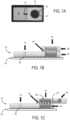
- the system 10 includes a housing 12 having an inlet 14 and a collection chamber 16 having a filter 18 arranged therein.
- the filter 18 may be a polycarbonate filter or other filter having suitable materials properties, such as pore or passage size, as will be described.
- the inlet 14 and collection chamber 16 are connected through a passage or flow path 20 extending along a microfluidic chip 22.
- the microfluidic chip 22 may include a microchip that may be disposable and that handles unprocessed semen samples (either fresh orfrozen, processed or raw), for example of 10 ⁇ l-3ml, and sorts sperm rapidly, such as in less than 30 minutes, without the need for complex instrumentation or trained operators.
- the flow path 20 extends from the inlet 14 to the collection chamber 16.
- a first or bottom chamber 24 is located proximate to the microfluidic chip 22 and a second or top chamber 26 is located distally with respect to the microfluidic chip 22, above the first or bottom chamber 24.
- the first chamber 24 is designed to collect the semen of a sample, whether fresh or frozen, processed or raw, presented to the inlet 14 and the second chamber 26 is designed to filter the motile sperms.
- the system described above with respect to Fig. 1B includes, according to the invention, an additional collection or "concentration" chamber 25 that is connected to the top chamber by a fluid connection 27. That is, in this regard, the sperm may be concentrated in the collection chamber 25 to facilitate easier harvesting.
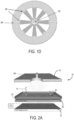
- the collection chamber25 may be connected through a plurality of channels 28 each having an inlet 29 opposite the concentration chamber 25.
- sperm from multiple flow paths 20 of Fig. 1C or from multiple collection chambers 16 may be delivered to a common concentration chamber 25.
- Such variations on the above-described design can be used to facilitate the use of multiple filters and multiple channels to handle even larger volumes or for higher throughput applications.
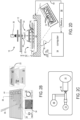
- FIG. 2A an exploded view of one optional configuration of the system 10 that includes an integrated imaging system is illustrated.
- the imaging system may form a lensless, wide-FOV imaging platform.
- components of the integrated imaging system such as a light 30, an imaging sensor 31, and a glass protection layer 32 combined with the above-described system 10.
- the light 30 illuminates sperm 34 introduced to the microfluidic chip 22 through the inlet 14.
- the illuminated sperm 34 can be imaged by the imaging sensor 31, which may be a charge-coupled device (CCD), complementary metal-oxide-semiconductor (CMOS), or other imaging device. More, specifically, referring to Fig.
- CCD charge-coupled device
- CMOS complementary metal-oxide-semiconductor
- sperm and semen 34 may be introduced into the outlet 14 using, for example, a pipette 36.
- the sperm traverse across a media 38 along the microfluidic chip 22, which may include the aforementioned glass 32, as well as a PMMA or other material layer 40, with a double-sided adhesive (DSA) layer 42 arranged there between to affix the glass 32 and PMMA layer 40 together.
- DSA double-sided adhesive
- the sperm 34 traverse the microfluidic chip 22 to the outlet 16, where a mineral oil 44 may be found.
- a thin layer of sterile, embryo-tested mineral oil may be placed on top of the media 38 in the inlet 14 and outlet 16 to avoid medium evaporation.
- a multichannel design may be utilized where the inlet 14 and collection chamber 16 are connected by multiple channels 46.
- a PBS collection buffer 48 may also be included, for example, to use in washings.
- the chip substrate housing the channels may be disposable.
- lensless imaging can be used to record the shadow image of each individual sperm 34 onto an optoelectronic sensor array plane 31.
- This system 10 targets detecting/counting cells or monitoring in real-time the dynamic location of hundreds of thousands of individual cells on-chip over an ultra-wide FOV, for example, an FOV that is a few centimeters by a few centimeters. This technology provides these features with reduced complexity and ease of miniaturization.
- FIG. 2D One particular example of the system 10 including the imaging capabilities is illustrated in Fig. 2D .
- a standard microscope cannot monitor a whole microfluidic sorting chip and analyze sperm in real time. This challenge can be addressed by integrating lensless imaging with microchannels providing parallel on-chip monitoring and counting of sperm.
- the design permits miniaturization of this technology to make it suitable for an embryology/clinical lab and point-of-care settings.
- the system 10 in the example in Fig. 2D , includes the light source 30 that is directed through an aperture 50 in the housing 12, such as a 50 ⁇ m aperture, to focus monochromatic light 52 toward a the microfluidic chip 22, across which the sperm 34 traverse, as described above.
- the system 10 may be coupled with a computer system 54 connected through a data connection 56, which may be wired or wireless, and a rechargeable battery or other power source 58 coupled through a power connection 60 to provide operational power for the imaging capabilities.
- a combination of polymethyl-methacrylate (PMMA) of 1.5 mm thickness and double-sided adhesive (DSA) film of 50 ⁇ m thickness could be used to create microchannels.
- the DSA film can be cut to create microchannels of different lengths ranging from 5 mm to 40 mm using a laser cutter.
- Inlet and outlet ports extend through the PMMA with a diameter of 0.65 mm and 2 mm, respectively.
- the DSA film is then placed directly onto the PMMA in effect joining the two.
- a glass slide is placed onto the other side of the DSA film, such that the height of the channel is determined by the adhesive layer thickness.
- the larger outlet size is particularly designed to extract sorted sperm out of the channel easily accessible by a pipette.
- the distance between inlet and outlet determined the channel length.
- the length of the channel is defined as the distance between inlet and outlet.
- a polycarbonate filter can be integrated into these microchips.
- This filter-based device can be designed using 3 mm thick PMMA cut to an area of 50 mm by 30 mm and another cut to an area of 30mm by 30mm. Cylinders of 20 mm diameter can be cut into both PMMA components and align vertically onto one another using 150 ⁇ m DSA. A 0.6 mm semen injection inlet is also cut into the larger device component at a 10 mm distance.
- the system can be assembled using a whatman nucleopore filter located between the two PMMA components.
- the system 10 can be used in large-scale semen processing.
- the sperm 34 is introduced through the inlet 14 to be place in the microfluidic chip 22.
- the sperm 34 can be imaged using the light 30 and imaging sensor 31.
- the sperm 34 move toward the outlet 16.
- This outlet/collection chamber presents two chambers 24, 26.
- the first chamber 24 includes a filter presenting micropores and the second chamber 26 includes anotherfilterincluding micropores.
- the system 10 presents macro reservoirs 14, 16 connected by micropores to approximate the female genital track.
- the sperm 34 move collectively, influenced by each other, such as would naturally occur, along the medium 38 toward the outlet 16.
- the most motile, morphologically normal, mature, and functional sperm pass selectively through the micropores against gravity leaving behind dead or less functional sperm in the first chamber 24. That is, the sperm head is of spherical shape and has size of about 3 ⁇ m x 4.5 ⁇ m.sperm tails are about 45-50 ⁇ m long. If a filter having micropores of diameter larger than sperm head is placed in the first and second chambers 24, 26, only sperm that are motile can make their way through the micropores, whereas dead, dying, or damaged sperm cannot pass through the micropores because of their long tails. Instead, these dead, dying, and/or damaged sperm succumb to gravity and remain in the first chamber 24.
- a microchip-based system is provided that is designed such that it does not require any centrifugation steps to retrieve healthy, motile, and morphologically normal sperm with minimal ROS generation.
- the device design makes sperm sorting procedure less labor intensive and inexpensive.
- the system incorporates utilizes exhaustion in space-constrained channels as a mechanism for sperm sorting.
- the system can isolate motile and morphologically normal sperm without any centrifugation step.
- a current coarse-grained model of sperm motility is used to model filter-based microfluidic devices in three dimensions, incorporating effects of cooperatively rising from hydrodynamic interactions between sperm, with channel walls, and with the filter surfaces and holes. This model allows the design of device parameters such as micropore size and incubation times.
- the poly (methyl methacrylate) (PMMA, 3mm thick; McMaster Carr, Atlanta, GA) and double side adhesive (DSA, 120 ⁇ m thick, St. Paul, MN) were cut using a laser cutter(Versa Laser TM , Scottsdale, AZ).
- the design for the chip was generated on Coral Draw4 and implemented onto USLE Engrave software for cutting.
- Primary components of the MMSS chip included one 3mm PMMA cut to an area of 50mm x 30mm (bottom chamber) and another cut to an area of 30mm x 30mm (top chamber). A 0.6mm injection point was also cut into the bottom PM-MA sheet at a 5mm distance from the chambers. Cylinders of 20mm diameter were cut into both PMMA components.
- the bottom PMMA chamber was first attached to glass slide using DSA.
- Top PMMA chamber was aligned and attached with bottom chamber using DSA.
- the Nuclepore TM track-etched polycarbonate membrane filters (Whatman Ltd, 25mm diameter, 3 ⁇ m, 5 ⁇ m, 8 ⁇ m) were sandwiched between two PMMA chambers during chip assembly. Thus, it was considered that at least 1 ⁇ m and less than 10 ⁇ m may be a range of advantageous pore sizes.
- a perspective view of the assembled chip is shown in Fig. 3 .
- MMSS chip Thawed, unprocessed semen sample (stock sperm) was injected into the inlet of MMSS chip until it filled the first/bottom chamber.
- the first/bottom chamber was designed to hold up to 560 ⁇ l of the semen sample.
- the stock semen sample was diluted 4 times with 1 percent bovine serum albumin (BSA) in human tubal fluid (HTF) before injection into MMSS chip.
- BSA bovine serum albumin
- HTF human tubal fluid
- Chips were then stored at 37 degrees C in incubator for 15, 30, 45, and 60 min intervals before fluid from top chamber was collected into eppendorph tubes for analysis.
- a standard Makler Haemocytometer was used to analyze the sperm samples for concentration and motility using optical microscope. Briefly, 1 ⁇ l of sperm sample was pipetted onto Makler Haemocytometer and covered with cover-lid provided with Haemocytometer. Sperm were counted by personnel familiar with method using a click-counter for at least three times. The sperm that were moving forward were considered motile.
- the sperm samples were analyzed for viability using LIVE/DEAD ®sperm Viability Kit (L-7011, Molecular Probes ® ).
- SYBR 14 dye was used to stain live whereas Propidium Iodide (PI) was used to stain dead sperm.
- Samples were stained according to manufacturer's protocol. Briefly, first SYBR 14 dye was added into sperm sample to the final concentration of 100nM. The sample was incubated for 5 min at 37°C. To stain the dead sperm, P1 dye was added to the sample to the final concentration of 10 ⁇ M and allowed to incubate for 5 additional min.
- the sperm samples were smeared on a glass cover slip and imaged using fluorescent microscope Zeiss Axio Observer.Z1. Green and red emission filters were used for SYBR 14 and PI, respectively.
- sperm samples were analyzed using the method described by WHO laboratory manual for sperm analysis. Briefly, sperm was retrieved from the MMSS chips (3 ⁇ m, 5 ⁇ m, 8 ⁇ m) after 30 min. Slides were prepared by putting 6 ⁇ m of sperm sample onto a glass slide and covered by using a 18x18mm cover slip to give the sample a depth of 20.7 ⁇ m. To avoid drying up of samples, slides were made periodically, not simultaneously. Each slide was analyzed under 20x (Carl Zeiss) using light microscopy with live images of the sample being projected onto a computer monitor. Using a video capturing software (Snagit, TechSmith), movement of sperm samples were captured at random locations for 5 secs.
- VSL straight line velocity
- VCL curvilinear velocity
- VAP average path velocity
- sperm suspension from 5 ⁇ m, and 8 ⁇ m MMSS chips were collected after 30 mins.
- Sperm retrieved from 3 ⁇ m MMSS chip were not analyzed for sperm morphology, as sperm concentration is too low for morphology analysis.
- a 10 ⁇ L sperm suspension was then taken and placed on a clean and sterile microscope slide and feathered smears were prepared. Smears were air dried and prepared for fixation.
- Aspermac staining protocol similar to the one provided by FertiPro was followed to stain sperm for morphology assessments. Briefly, dried smears were submerged into Spermac fixative solution for at least 5 min and then rinsed with DI water.
- the sperm was considered morphologically normal if it falls within WHO morphology criteria (Head: spherical head; acrosome covering 40-70% of head area; head length 3.7-4.7 ⁇ m; head width 2.5-32 ⁇ m; length-to-width ratio 1.3-1.8; no more than 2 small vacuoles; post-acrosome region should not contain any vacuole.
- Midpiece no residual cytoplasm in midpiece; length of midpiece should be approximately same as head length; no broken neck.
- Principal piece no sharp angles or bends indicative of tail break; thinner than midpiece, length of principal piece should be approximately 10 times the head length).
- sperm suspension from 5, and 8 ⁇ m MMSS chips were collected after 30 mins.
- Sperm retrieved from 3 ⁇ m MMSS chip were not analyzed for nuclear maturity, as sperm concentration is too low for this analysis.
- Dried smears were fixed with the Spermac fixative solution for 5 min and subsequently rinsed with DI water.
- a 5% aniline blue in 4% acetic acid solution was prepared and was poured over smears. Smears were soaked for 5 min in staining solution and then rinsed with DI water.
- Sperm heads that stained dark blue were declared immature, while those that remained unstained were considered mature.
- ROS generation was examined by using flow cytometry in conjunction with two fluorescent dyes, dyhydroethidium (DHE) and SYTOX green.
- DHE dyhydroethidium
- SYTOX green is indicative of cell viability, it produces a green fluorescence when the cell is dead.
- four control samples were prepared in which all consisted of 200 ⁇ l of recovered sperm suspension mixed with 20 ⁇ l of hydrogen peroxide. This was followed by an incubation at 37 degrees C for 30 mins.
- Dyes were incubated for 15 mins and then transferred to the flow cytometer for measurement 15 min prior to test samples. FACSCalibur flow cytometer (Becton Becton Dickinson, San Jose, CA) was used during experiments. Argon laser excitation at 488nm was coupled with emission measurements using 530/30 band pass (green) and 585/42 band pass (red) filters for FL1 and FL2, respectively. Non-sperm events were gated out, and at least 10,000 cells were examined.
- test samples 500 ⁇ L sample from thawed semen, the swim up suspension, 3, 5, and 8 ⁇ m filter pore size microchips were collected. DHE and SYTOX at 5 ⁇ M and 50nM respectively were added to each sample and allowed to incubate for 15 min. Samples were taken to the flow cytometer for measurement.
- TUNEL assay kit In situ Cell Death Detection Kit, Fluorescein by Roche Applied Science was used to quantify DNA fragmentation for raw semen, swim-up, and retrieved sperm population from microchip devices with filters of 3, 5 and 8 ⁇ m pore size. All these samples were attained as previously mentioned in ROS Detection section. Initially, all the sperm suspensions were washed twice by centrifuging at 500Xg for 5 min with PBS and 1% BSA. Once washed, the concentrations of sperm cells were adjusted to 2 ⁇ 10 6 cells/ml.sperm suspensions were then fixed with 4% paraformaldehyde in PBS (200 ⁇ L for every 100 ⁇ L of cell suspension) for 30 min at room temperature.
- Sperm cells were washed twice at 500Xg for 6 min with PBS and 1 % BSA and permeabilized with 0.1% TritonX in 0.1% sodium citrate for 2 min in/on ice.sperm were washed twice followed by 1 hour incubation at 37°C with 5 ⁇ l of enzyme (TdT) solution and 45 ⁇ l of label (dUTP-Flourescein) solution. Similarly, a negative and positive control sample was prepared. However, prior to staining, the positive control was incubated with DNase for 40 min at 37 °C. During staining, the negative control was only incubated with label solution (without enzyme solution).
- TdT enzyme
- dUTP-Flourescein label
- the MMSS chips were fabricated and assembled as described above. Briefly, it is a two-chamber chip separated by polycarbonate filters of various diameters, such as, for example, 3, 5, 8 ⁇ m.
- the sperm sample was injected into the bottom chamber and sorted motile/healthy sperm were collected from the top retrieval chamber.
- the presence of the filters with, for example, uniform sized pores between two chambers was designed such that the most motile and healthy sperm could translocate through the filter pores.
- Scanning electron microscope (SEM) images of polycarbonate filters used for sperm sorting showed uniform pore diameters as shown in Fig. 4 .
- the sperm head is of spherical shape and has size of about 3 ⁇ m x 4.5 ⁇ m.
- Sperm tail is about 45-50 ⁇ m long. If a filter of diameter larger than sperm head is placed between this two-chamber chip, only sperm which are motile can make their way through the micropores whereas dead/dying sperm cannot pass through the micropores because of their long tails.
- sperm retrieval rate is an important parameter for any sperm sorting device especially for the situation where sperm samples have low sperm count (oligospermic and azoospermic specimens).
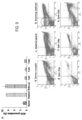
- the sperm retrieval rate was analyzed over a period of time; 15, 30, 45, and 60 min time points is illustrated in Fig. 5B .
- Motile sperm are considered viable. To substantiate our finding that the sorted sperm are viable, we performed the live/dead staining for sorted sperm for 30 min time point. The viability of sorted sperm was significantly higher than stock sperm sample; 41.0 percent ⁇ 0.45 (stock sperm), 91.32 percent ⁇ 3.43 (3 ⁇ m MMSS chip), 89.83 percent ⁇ 5.82 (5 ⁇ m MMSS chip), 91.59 percent ⁇ 4.44 (3 ⁇ m MMSS chip).
- the sperm retrieval rate increased if diluted sperm sample is used instead of undiluted stock sperm, as shown in Fig. 5B .
- Maximum retrieval rate was found to be 52.68 percent ⁇ 4.97 for 8 ⁇ m chip after 30 minutes time point.
- sperm has increased mean free path before hitting another sperm. This phenomena might has helped sperm in reaching and crossing thefiltermicroporefaster.
- the filter has fixed number of pores ( ⁇ 14 percent porosity). As lesser number of sperm were trying to cross the filter pores in diluted sample, it was more probable for each sperm to find an empty pore and translocate through it.
- VCL curvilinear velocity
- VSL straight line velocity
- VAP average path velocity
- average sperm VCL was increased from 52.7 ⁇ 6.0 ⁇ m/sec (stock sperm) to 59.9 ⁇ 3.5 ⁇ m/sec, 75.3 ⁇ 3.1 ⁇ m/sec, and 75.6 ⁇ 4.5 ⁇ m/sec for 3, 5, and 8 ⁇ m MMSS chips, respectively, as illustrated in Fig. 6A .
- Average sperm VSL increased from 44.4 ⁇ 5.6 ⁇ m/sec (stock sperm) to 52.1 ⁇ 3.5 ⁇ m/sec, 63.4 ⁇ 3.5 ⁇ m/sec, and 64.1 ⁇ 3.9 ⁇ m/sec for 3, 5 and 8 ⁇ m chips, respectively, as illustrated in Fig. 6B .
- Average sperm VAP increased from 48.4 ⁇ 5.8 ⁇ m/sec (stock sperm) to 54.1 ⁇ 3.4 ⁇ m/sec, 68.0 ⁇ 2.9 ⁇ m/sec, and 67.5 ⁇ 4.1 ⁇ m/sec for 3, 5, and 8 ⁇ m chips, respectively, as illustrated in Fig. 6C .
- Higher sperm velocities indicate that the sorted sperm are healthier than stock sample.
- sperm sorted using 5 and 8 ⁇ m MMSS chips gave higher VCL, VSL, and VAP velocities than 3 ⁇ m filter chip. This is probably due the fact that mostly immature motile sperm having head sizes smaller than 3 ⁇ m could pass through the 3 ⁇ m micropores. Only exception to this was the filter areas where two or more 3 ⁇ m pores were joined together to make up a larger pore.
- sperm were stained withspermac Stain.
- sperm were considered morphologically normal based on the strict criteria defined by WHO. Any sperm sample having >4 percent morphologically normal sperm is considered normal.
- sperm sorted using 5 ⁇ m MMSS chips did not improve the sperm quality in term of overall morphology, though the sorted sperm were motile.
- Sperm sorted using 8 ⁇ m MMSS chips showed significantly improved morphology over stock and sperm sorted using 5 ⁇ m MMSS chip; 30.0 percent ⁇ 7.6 (8 ⁇ m MMSS chip), 17.0 percent ⁇ 3.2 (5 ⁇ m MMSS chip), and 17.6 percent ⁇ 0.5 (stock sperm).
- sperm were stained with aniline blue and analyzed for nuclear maturity. Aniline blue staining can discriminate the lysine-rich nuclei of immature sperm and arginine/cysteine-rich nuclei of mature sperm. The nuclei of immature sperm were stained with aniline blue and showed a color contrast between nuclei and acrosome. Representative images of sperm stained with aniline blue and their assessment criteria is shown in Fig. 7 .
- Sperm sorted using 5 ⁇ m filter chip did not show any improvement over stock sperm in terms of nuclei maturity. Whereas, sperm sorted using 8 ⁇ m filter chip showed higher nuclear maturity than stock sperm sample, as shown in Fig. 8 .; 0.8 percent ⁇ 5.1 (8 ⁇ m MMSS chip), 25 percent ⁇ 4.6 (5 ⁇ m MMSS chip), and 26.9 percent ⁇ 5.8 (stock sperm).
- Sorted sperm was analyzed for ROS generation. We have compared the ROS generation in the sperm after washing method, conventional swim-up method and MMSS chips. We found that sperm sorted by MMSS chips produced significantly lesser ROS than swim-up and washing method ( Fig. 9 ).sperm washing and swim-up method produced ROS in 10.1% ⁇ 0.3% and 10.6% ⁇ 1.1% of the sperm respectively, whereas sperm sorted using MMSS chips showed ROS production in only 0.8% ⁇ 0.4% (3 ⁇ m MMSS chip), 0.7% ⁇ 0.1% (5 ⁇ m MMSS chip) and 1.0% ⁇ 0.1% (8 ⁇ m MMSS chip) of the sperm. Unsorted semen sample showed ROS generation in 1.8% ⁇ 0.6% of the sperm, which clearly indicated that the increased generation of ROS in swim-up and washing methods came from centrifugation steps.
- DNA fragmentation The analysis of sperm DNA fragmentation can differentiate fertile and infertile men, and sperm samples showing higher level of DNA fragmentation results lower fertilization rates in IVF/ICSI, impaired embryo progression and lower pregnancy rates.
- Sperm sorted using MMSS chips were analyzed for DNA fragmentation. DNA fragmentation (%) was 1.1% ⁇ 0.3% (8 ⁇ m MMSS), 2.1% ⁇ 0.7% (5 ⁇ m MMSS chip), 3.4% ⁇ 0.8% (3 ⁇ m MMSS chip), 3.7% ⁇ 1.2% (swim-up method), and 31.2% ⁇ 1.2% (unsorted semen).
- the sorted sperm using 5 ⁇ m and 8 ⁇ m chips showed significantly lower DNA fragmentation (%) than unsorted semen sample and sperm sorted using swim-up method ( Fig. 10 ).
- the ideal sperm sorting technique should (i) be rapid and cost-effective, (ii) be less labor intensive, (iii) process larger sperm volumes, (iv) have higher retrieval efficiency to isolate motile sperm from dead/non-motile sperm, (v) isolate sperm with higher velocity, (vi) isolate morphologically normal and mature sperm, (vii) reduce ROS generation and morphological damage by eliminating centrifugation steps, (viii) reduce the percentage of sperm DNA fragmentation.
- These parameters are generally desirable features for any sperm-sorting device and the system of the present invention offers a platform providing these features.
- the total material cost to fabricate one chip is less than a dollar (50 cents for filter, ⁇ 50 cents for PMMA and DSA).
- the MMSS chip rapidly (approximately 30 minutes) isolated motile sperm from non-motile ones with the higher retrieval rate (28.58 percent ⁇ 2.81 percent retrieval from stock sperm) than swim-up technique ( ⁇ 20 percent).
- the retrieval was further increased to 52.68 percent ⁇ 4.97 (8 ⁇ m filter) by using diluted sample. Although sperm dilution gave higher retrieval of healthy sperm, it reduced the actual stock sperm volume that could be processed at a time.
- the stock sperm may be desirably diluted before processing for (i) low volume ejaculates, and (ii) ejaculated with very low sperm count.
- MMSS chip design is highly scalable and can process large semen volumes by using larger filters (for example, ⁇ 1.5 ml). Processing a large semen sample is needed to retrieve enough sperm for IVF procedures. Furthermore, high volume processing is very important for the samples having low sperm count or low sperm motility.
- Sperm having higher velocity parameters can increase the ICSI fertilization rates.
- Sperm sorted by MMSS chip showed significantly enhanced velocity parameters (VCL, VSL and VAP) compared to stock sperm that clearly demonstrated that sorted sperm were of higher quality.
- Sperm morphology is another important indicator for a successful fertilization. Morphologically normal sperm increase the fertilization rate during IVF procedures. Sorting sperm using 8 ⁇ m MMSS chip improved sperm morphology by 1.7 folds, which is a significant improvement, as illustrated in Fig. 7 . It is also interesting to note down the association of sperm motility and morphology. We found that morphologically normal sperm also showed better velocities, which demonstrated that these two functional parameters (sperm velocity and morphology) are associated.
- DNA fragmentation is another very important indicator for male infertility. According to some reports, sperm DNA integrity can be considered as an independent marker for fertilization.sperm sorted using MMSS chips showed a significant improvement in DNA fragmentation compared to unsorted semen sample, as shown in Fig. 10 . Currently, sperm swim-up method is considered standard to sort sperm with lower DNA fragmentation. It is interesting to note here that the sperm sorted with 5 and 8 ⁇ m MMSS chips showed ever lower DNA fragmentation than swim-up method. We believe based on these functional assays that the sperm sorted using 8 ⁇ m MMSS chip are of better quality compared to conventional methods. The sorting of morphologically normal, mature, motile and functional sperm would potentially improve IVF/ICSI outcomes.
- steps 100 in a process for sorting sperm are provided.
- the steps 100 beginning at process block 102, include receiving a sample of sperm to an inlet of a microfluidic system, such as described above.
- the sperm of the sample are allowed to traverse a flow path through the microfluidic system toward an outlet providing access to the microfluidic system for harvesting of sorted sperm from the microfluidic system.
- the sperm are subjected to a filter prior to reaching the outlet.
- the filter has a plurality of micropores and is oriented restrict movement of the sperm through the filter using gravity.
- sorted sperm is provided at the outlet.
- the sorted sperm includes sperm passing to the outlet after passing through the filter and overcoming gravity.
- the present disclosure provides system and methods for (i) development of a chemical free and flow free system to sort healthy sperm, analyze motility, speed and morphology, (ii) isolation of the sorted healthy sperm, and (iii) developing a better understanding of exhaustion and collective motion of sperm.
- This platform is an innovation beyond the existing clinical procedures such as the swim-up and microdrop techniques. It is also novel beyond the reported microfluidic based sperm sorting devices, as it uses a new ground-breaking knowledge of exhaustion in space-constrained channels for sorting and analyzing sperm. Given that clinical reproductive medicine has been a challenging field that is labor intensive, such an easy-to-use microchip can lead to improved selection of healthy sperm and decreased dependence on operator skills, facilitating repeatable, and reliable operational steps.
Landscapes
- Health & Medical Sciences (AREA)
- Life Sciences & Earth Sciences (AREA)
- Chemical & Material Sciences (AREA)
- Engineering & Computer Science (AREA)
- Biomedical Technology (AREA)
- General Health & Medical Sciences (AREA)
- Wood Science & Technology (AREA)
- Zoology (AREA)
- Bioinformatics & Cheminformatics (AREA)
- Organic Chemistry (AREA)
- Biochemistry (AREA)
- Genetics & Genomics (AREA)
- Biotechnology (AREA)
- Analytical Chemistry (AREA)
- General Engineering & Computer Science (AREA)
- Microbiology (AREA)
- Pathology (AREA)
- Immunology (AREA)
- General Physics & Mathematics (AREA)
- Physics & Mathematics (AREA)
- Dispersion Chemistry (AREA)
- Cell Biology (AREA)
- Developmental Biology & Embryology (AREA)
- Molecular Biology (AREA)
- Reproductive Health (AREA)
- Hematology (AREA)
- Clinical Laboratory Science (AREA)
- Chemical Kinetics & Catalysis (AREA)
- Sustainable Development (AREA)
- Apparatus Associated With Microorganisms And Enzymes (AREA)
- Investigating Or Analysing Biological Materials (AREA)
- Micro-Organisms Or Cultivation Processes Thereof (AREA)
- Investigating Materials By The Use Of Optical Means Adapted For Particular Applications (AREA)
- Measuring Or Testing Involving Enzymes Or Micro-Organisms (AREA)
Claims (11)
- System (10) zum Sortieren von Sperma, umfassend:ein Gehäuse (12) mit einer unteren und einer oberen Komponente, die miteinander verbunden sind;ein mikrofluidisches System, das von dem Gehäuse (12) getragen wird;einen Einlass (14), der sich durch die untere Komponente erstreckt und Zugang zum mikrofluidischen System bietet, um dem mikrofluidischen System Sperma zuzuführen;eine Sammelkammer (16), die so konfiguriert ist, dass sie bewegliche Spermien zum Sammeln durchlässt und unbewegliche Spermien einschränkt, wobei die Sammelkammer (16) eine erste Kammer (24), die sich durch die untere Komponente erstreckt, und eine zweite Kammer (26), die sich durch die obere Komponente erstreckt und über der ersten Kammer (24) angeordnet ist, umfasst,einen mikrofluidischen Chip (22), der unterhalb der unteren Komponente angeordnet ist, um einen geschlossenen Boden der ersten Kammer bereitzustellen;mindestens einen Kanal, der sich von dem Einlass (14) zu der Sammelkammer (16) erstreckt, um zu ermöglichen, dass Spermien, die dem mikrofluidischen System durch den Einlass (14) zugeführt werden, sich entlang eines Strömungsweges (20) zu der Sammelkammer (16) bewegen;einen Filter (18), der eine Vielzahl von Mikroporen enthält und in der Sammelkammer (16) angeordnet ist, um zu bewirken, dass Spermien, die sich entlang des Strömungsweges (20) bewegen, sich gegen den Filter (18) und die Schwerkraft bewegen, um die zweite Kammer (26) zu erreichen, wobei der Filter (18) sandwichartig zwischen der unteren Komponente und der oberen Komponente angeordnet ist; undeine Konzentrationskammer (25), die sich in die obere Komponente erstreckt und mit der zweiten Kammer (26) durch eine Fluidverbindung (27) in der oberen Komponente verbunden ist, wobei die Konzentrationskammer (25) so konfiguriert ist, dass sie die beweglichen Spermien aus der zweiten Kammer (26) konzentriert und die Ernte aus der Konzentrationskammer (25) erleichtert.
- System (10) nach Anspruch 1, wobei die Vielzahl von Mikroporen so bemessen ist, dass ein Kopf des Spermas durch sie hindurchtreten kann.
- System (10) nach Anspruch 1, wobei die Vielzahl von Mikroporen Mikroporen mit einer Größe von mindestens 1 µm oder einer Größe von weniger als 10 µm umfasst.
- System (10) nach Anspruch 1, wobei der Filter (18) einen Polycarbonatfilter enthält.
- System (10) nach Anspruch 1, ferner umfassend ein Abbildungssystem, das so konfiguriert ist, dass es die Spermien im Strömungsweg (20) abbildet, und das mindestens ein Licht (30), das so konfiguriert ist, dass es die Spermien im Strömungsweg (20) beleuchtet, und einen Abbildungssensor (31) umfasst, der in der Nähe des Strömungswegs (20) angeordnet ist, um die Spermien abzubilden.
- System (10) nach Anspruch 5, wobei das Abbildungssystem so konfiguriert ist, dass es ein Schattenbild des Spermas entlang des Strömungswegs (20) aufzeichnet.
- System (10) nach Anspruch 1, wobei die untere Komponente und die obere Komponente aus Polymethylmethacrylat (PMMA) bestehen.
- Verfahren zum Sortieren von Sperma, umfassend:Zuführen einer Spermaprobe zu einem Einlass (14), der mit einem mikrofluidischen System verbunden ist, das von einem Gehäuse (12) getragen wird, wobei sich der Einlass (14) durch eine untere Komponente des Gehäuses (12) erstreckt;Ermöglichen, dass Spermien in der Spermienprobe einen Strömungsweg (20) durch das mikrofluidische System vom Einlass (14) zu einer Sammelkammer (16) durchlaufen, die Zugang zum mikrofluidischen System bietet, um sortierte Spermien aus dem mikrofluidischen System zu ernten, wobei die Sammelkammer (16) eine erste Kammer (24) umfasst, die sich durch die untere Komponente des Gehäuses (12) erstreckt und am Boden durch einen mikrofluidischen Chip (22) geschlossen ist, der unterhalb der unteren Komponente angeordnet ist, und eine zweite Kammer (26), die sich durch eine obere Komponente des Gehäuses (12) erstreckt und über der ersten Kammer (24) angeordnet ist, umfasst;Filtern des Spermas unter Verwendung eines Filters (18), der in der Sammelkammer (16) angeordnet ist, wobei der Filter (18) Mikroporen aufweist und sandwichartig zwischen der unteren Komponente und der oberen Komponente angeordnet ist;wodurch die Bewegung der Spermien durch den Filter (18) aufgrund der Schwerkraft weiter eingeschränkt wird;Ermöglichen, dass sich das Sperma, nachdem es den Filter (18) passiert und die Schwerkraft überwunden hat, in einer Konzentrationskammer (25) konzentriert, die sich in die obere Komponente erstreckt und mit der zweiten Kammer (26) durch eine Fluidverbindung (27) in der oberen Komponente verbunden ist; undEntnehmen der Spermien aus der Konzentrationskammer (25).
- Verfahren nach Anspruch 8, ferner umfassend, dass nicht-motile Spermien daran gehindert werden, die zweite Kammer (26) unter Verwendung des Filters (18) und der Schwerkraft zu erreichen.
- Verfahren nach Anspruch 8, ferner umfassend das Abbilden des Spermas innerhalb des mikrofluidischen Systems.
- Verfahren nach Anspruch 10, bei dem das Abbilden der Spermien das Aufzeichnen eines Schattenbildes der Spermien umfasst, während die Spermien den Strömungsweg durchqueren, wobei mindestens ein Licht (30), das so konfiguriert ist, dass es die Spermien innerhalb des Strömungswegs beleuchtet, und ein Abbildungssensor (31) verwendet werden, der in der Nähe des Strömungswegs (20) angeordnet ist.
Priority Applications (2)
| Application Number | Priority Date | Filing Date | Title |
|---|---|---|---|
| EP23190670.2A EP4269984A3 (de) | 2013-11-20 | 2014-11-19 | System und verfahren zum sortieren von sperma |
| EP22164720.9A EP4039817A1 (de) | 2013-11-20 | 2014-11-19 | System und verfahren zum sortieren von sperma |
Applications Claiming Priority (2)
| Application Number | Priority Date | Filing Date | Title |
|---|---|---|---|
| US201361906740P | 2013-11-20 | 2013-11-20 | |
| PCT/US2014/066405 WO2015077333A1 (en) | 2013-11-20 | 2014-11-19 | System and method for sperm sorting |
Related Child Applications (4)
| Application Number | Title | Priority Date | Filing Date |
|---|---|---|---|
| EP22164720.9A Division EP4039817A1 (de) | 2013-11-20 | 2014-11-19 | System und verfahren zum sortieren von sperma |
| EP22164720.9A Division-Into EP4039817A1 (de) | 2013-11-20 | 2014-11-19 | System und verfahren zum sortieren von sperma |
| EP23190670.2A Division EP4269984A3 (de) | 2013-11-20 | 2014-11-19 | System und verfahren zum sortieren von sperma |
| EP23190670.2A Division-Into EP4269984A3 (de) | 2013-11-20 | 2014-11-19 | System und verfahren zum sortieren von sperma |
Publications (4)
| Publication Number | Publication Date |
|---|---|
| EP3071704A1 EP3071704A1 (de) | 2016-09-28 |
| EP3071704A4 EP3071704A4 (de) | 2017-10-04 |
| EP3071704B1 EP3071704B1 (de) | 2022-03-30 |
| EP3071704B2 true EP3071704B2 (de) | 2024-06-19 |
Family
ID=53180097
Family Applications (3)
| Application Number | Title | Priority Date | Filing Date |
|---|---|---|---|
| EP14864395.0A Active EP3071704B2 (de) | 2013-11-20 | 2014-11-19 | System und verfahren zum sortieren von sperma |
| EP23190670.2A Pending EP4269984A3 (de) | 2013-11-20 | 2014-11-19 | System und verfahren zum sortieren von sperma |
| EP22164720.9A Pending EP4039817A1 (de) | 2013-11-20 | 2014-11-19 | System und verfahren zum sortieren von sperma |
Family Applications After (2)
| Application Number | Title | Priority Date | Filing Date |
|---|---|---|---|
| EP23190670.2A Pending EP4269984A3 (de) | 2013-11-20 | 2014-11-19 | System und verfahren zum sortieren von sperma |
| EP22164720.9A Pending EP4039817A1 (de) | 2013-11-20 | 2014-11-19 | System und verfahren zum sortieren von sperma |
Country Status (11)
| Country | Link |
|---|---|
| US (9) | US10422737B2 (de) |
| EP (3) | EP3071704B2 (de) |
| JP (2) | JP6524082B2 (de) |
| CN (4) | CN115369011A (de) |
| AU (1) | AU2014353050B2 (de) |
| BR (1) | BR112016011233B1 (de) |
| CA (1) | CA2931201C (de) |
| DK (1) | DK3071704T4 (de) |
| ES (1) | ES2915379T5 (de) |
| PL (1) | PL3071704T5 (de) |
| WO (1) | WO2015077333A1 (de) |
Families Citing this family (44)
| Publication number | Priority date | Publication date | Assignee | Title |
|---|---|---|---|---|
| US20160067710A1 (en) * | 2013-05-03 | 2016-03-10 | Motilitycount Aps | Device for analysis of cellular motility |
| EP3071704B2 (de) | 2013-11-20 | 2024-06-19 | Brigham and Women's Hospital, Inc. | System und verfahren zum sortieren von sperma |
| US10417481B2 (en) | 2015-06-22 | 2019-09-17 | The Brigham And Women's Hospital, Inc. | Home evaluation of the quality of semen samples |
| WO2017083981A1 (en) * | 2015-11-20 | 2017-05-26 | The Governing Council Of The University Of Toronto | Devices and methods for quantification of male fertility |
| CN115322960A (zh) | 2016-01-22 | 2022-11-11 | 小利兰·斯坦福大学托管委员会 | 一种用于从未处理的精液中选择性分选高活动和形态正常的精子的微流体装置 |
| AR107746A1 (es) * | 2017-02-24 | 2018-05-30 | Herberto Ernesto Hector Repetto | Dispositivo y método de separación de células móviles |
| CN107099444B (zh) * | 2017-04-17 | 2024-04-09 | 隗慧林 | 精子分选芯片、精子检测设备及精子检测方法 |
| KR101966223B1 (ko) * | 2017-09-29 | 2019-04-05 | 한국과학기술연구원 | 정자 관찰 구조체 및 이를 포함하는 정자 관찰 시스템 |
| EP3687416A1 (de) * | 2017-09-29 | 2020-08-05 | Nanovare SAS | Vorrichtungen und verfahren zur analyse männlicher unfruchtbarkeit |
| US11517900B2 (en) * | 2017-10-27 | 2022-12-06 | University Of Utah Research Foundation | Microfluidic system for sperm separation and enrichment from various types of sperm samples |
| FR3081292B1 (fr) * | 2018-05-24 | 2020-06-05 | Imv Technologies | Dispositif de collecte de semence animale |
| US12491515B2 (en) | 2018-08-21 | 2025-12-09 | Florida Atlantic University Research Corporation | Systems and methods for sperm selection |
| CN110874821B (zh) * | 2018-08-31 | 2023-05-30 | 赛司医疗科技(北京)有限公司 | 一种自动过滤精液中非精子成分的图像处理方法 |
| US11879830B2 (en) * | 2018-09-28 | 2024-01-23 | Arizona Board Of Regents On Behalf Of The University Of Arizona | Quantitative large area binding sensor for detecting biomarkers |
| EP3864392A4 (de) * | 2018-10-08 | 2022-08-10 | Bioelectronica Corporation | Systeme und verfahren zur optischen verarbeitung von proben |
| AU2019359389A1 (en) * | 2018-10-10 | 2021-05-27 | Peter T. Falkner | System and method for intrauterine insemination |
| EP3904937B1 (de) * | 2018-12-28 | 2025-04-09 | Evident Corporation | Mikroskopsystem |
| JP2022533249A (ja) * | 2019-05-24 | 2022-07-21 | ユニバーシテイ・オブ・コネチカツト | 流体分析デバイス |
| CN110172390A (zh) * | 2019-05-30 | 2019-08-27 | 南京精竞生物科技有限公司 | 一种高活力精子筛选微流控装置 |
| CN110551618B (zh) * | 2019-09-27 | 2021-04-23 | 中国科学技术大学 | 一种精子分选装置 |
| WO2021124111A1 (en) * | 2019-12-16 | 2021-06-24 | King Abdullah University Of Science And Technology | Microfluidic device for highly motile sperm selection |
| EP3865849A1 (de) | 2020-02-14 | 2021-08-18 | Smart-Pick GmbH | Spermaentnahmesystem |
| CN111323361B (zh) * | 2020-03-17 | 2022-05-10 | 南通大学 | 一种快速分离精子头、精子尾和正常有活力精子的方法 |
| US12357991B2 (en) | 2020-05-15 | 2025-07-15 | David Sinton | Sperm selection device, kit, and methods |
| CN112662550B (zh) * | 2020-10-16 | 2023-11-10 | 熹微(苏州)生物医药科技有限公司 | 一种从精液样本中分离精子的装置和方法 |
| CA3199361A1 (en) | 2020-11-17 | 2022-05-27 | Peter T. Falkner | Medical device for preventing reflux in the cervix |
| CN112980661A (zh) * | 2021-02-01 | 2021-06-18 | 广州蓝日生物科技有限公司 | 一种精子优选装置及其操作方法 |
| AR125716A1 (es) | 2021-04-21 | 2023-08-09 | Selectivity S A S | Un dispositivo de inseminación y un proceso que lo utiliza |
| EP4130228A3 (de) * | 2021-08-02 | 2023-02-15 | Bonraybio Co., Ltd. | Spermasortiervorrichtung und -verfahren |
| TWI856300B (zh) * | 2021-08-02 | 2024-09-21 | 邦睿生技股份有限公司 | 精子分選裝置及方法 |
| TWI778747B (zh) * | 2021-08-13 | 2022-09-21 | 國立陽明交通大學 | 精蟲分選裝置 |
| US20230180739A1 (en) * | 2021-12-14 | 2023-06-15 | Michael AWADALLA | New swim up method for sperm washing |
| EP4289922B1 (de) | 2022-06-08 | 2025-07-23 | iPreg Incorporation | Vertikale thermische gradientenausrüstung und verfahren zur progressiven spermasortierung |
| US20230399598A1 (en) * | 2022-06-08 | 2023-12-14 | Ipreg Incorporation. | Vertical thermal gradient equipment and method for progressive sperm sorting |
| WO2024007019A2 (en) * | 2022-07-01 | 2024-01-04 | DxNow, Inc. | Multi-well systems and methods for sorting sperm |
| CN115491301B (zh) * | 2022-09-05 | 2023-09-15 | 武汉大学 | 一种集成精子获能、精子分选、体外受精和胚胎培养的微流控芯片及其制备方法与应用 |
| CN115651895B (zh) * | 2022-09-28 | 2025-08-29 | 武汉大学 | 一种基于精子趋流性的精子分选液及其制备方法 |
| PL444279A1 (pl) * | 2023-03-31 | 2024-10-07 | Politechnika Warszawska | Zestaw do pasywnej selekcji plemników i jego zastosowanie |
| EP4579604A1 (de) | 2023-12-27 | 2025-07-02 | Fundació Institut de Ciències Fotòniques | Verfahren, computerprogramm und system zur bestimmung der spermaqualität |
| US12397296B2 (en) | 2024-02-07 | 2025-08-26 | Flow Health Services Incorporated | Systems and methods for motile sperm determination |
| TWI896020B (zh) * | 2024-03-05 | 2025-09-01 | 國立清華大學 | 精子分選裝置及精子分選方法 |
| CN118109296B (zh) * | 2024-03-22 | 2024-11-05 | 中国科学技术大学 | 精子固定微结构平台及装置 |
| WO2025251290A1 (zh) * | 2024-06-07 | 2025-12-11 | 曾繁根 | 一种自动化精子分选装置及精子分选方法 |
| CN119955624B (zh) * | 2025-04-10 | 2025-07-22 | 江西农业大学 | 一种提高猪精液保存时间和精子活力的装置及方法 |
Citations (5)
| Publication number | Priority date | Publication date | Assignee | Title |
|---|---|---|---|---|
| US20050165270A1 (en) † | 2002-09-19 | 2005-07-28 | Fertiligent Ltd. | Insemination device |
| WO2012162181A2 (en) † | 2011-05-20 | 2012-11-29 | The Brigham And Women's Hospital, Inc. | Analysis and sorting of motile cells |
| CN103937658A (zh) † | 2014-03-28 | 2014-07-23 | 武汉介观生物科技有限责任公司 | 一种稀有细胞检测芯片及其应用 |
| WO2014177157A1 (en) † | 2013-05-03 | 2014-11-06 | Motilitycount Aps | Device for analysis of cellular motility |
| WO2015077333A1 (en) † | 2013-11-20 | 2015-05-28 | Brigham And Women's Hospital , Inc. | System and method for sperm sorting |
Family Cites Families (33)
| Publication number | Priority date | Publication date | Assignee | Title |
|---|---|---|---|---|
| US5028526A (en) * | 1989-04-17 | 1991-07-02 | Alice Deutsch | Method for semen analysis |
| WO1993022058A1 (en) * | 1992-05-01 | 1993-11-11 | Trustees Of The University Of Pennsylvania | Polynucleotide amplification analysis using a microfabricated device |
| US5744366A (en) * | 1992-05-01 | 1998-04-28 | Trustees Of The University Of Pennsylvania | Mesoscale devices and methods for analysis of motile cells |
| US5296375A (en) * | 1992-05-01 | 1994-03-22 | Trustees Of The University Of Pennsylvania | Mesoscale sperm handling devices |
| AU704277B2 (en) * | 1994-11-14 | 1999-04-15 | Trustees Of The University Of Pennsylvania, The | Mesoscale sample preparation device and systems for determination and processing of analytes |
| US6129214A (en) | 1997-12-19 | 2000-10-10 | Bar-Ami; Shalom | Sperm strainer system |
| US5908380A (en) * | 1998-01-12 | 1999-06-01 | Zavos; Panayiotis M. | Compartmentalized Zavos sperm swim-up column |
| GB9817795D0 (en) * | 1998-08-14 | 1998-10-14 | Genosis Inc | A method and device for separation and detection of spermatozoa in a sample |
| US20050158700A1 (en) * | 2000-02-16 | 2005-07-21 | David Brickwood | Devices for motile sperm separation |
| GB0003596D0 (en) * | 2000-02-16 | 2000-04-05 | Genosis Ltd | Sperm separation |
| GB0021665D0 (en) | 2000-09-04 | 2000-10-18 | Genosis Ltd | Fluid dispensing apparatus |
| GB0115103D0 (en) * | 2001-06-20 | 2001-08-15 | Abed Farhang | Apparatus for and methods of preparing sperm |
| AT410280B (de) * | 2001-10-05 | 2003-03-25 | Zech Josef Dr | Einrichtung zur gewinnung von samenzellen aus samenflüssigkeit |
| WO2003089081A1 (en) * | 2002-04-16 | 2003-10-30 | Walker Digital, Llc | Gaming device methods and apparatus employing audio/video programming outcome presentation |
| US20040059186A1 (en) * | 2002-09-19 | 2004-03-25 | Amnon Weichselbaum | Insemination device |
| US6929945B2 (en) * | 2002-12-09 | 2005-08-16 | Advanced Fluidix Laboratories Llc | Male fertility assay method and device |
| AU2003272043A1 (en) | 2003-09-25 | 2005-04-11 | Yeda Research And Development Co. Ltd. | Apparatus and methods for selecting capacitated spermatozoa and uses thereof |
| US20060270021A1 (en) * | 2004-06-07 | 2006-11-30 | Shuichi Takayama | Integrated microfluidic sperm isolation and insemination device |
| WO2007129292A1 (en) | 2006-05-09 | 2007-11-15 | Fertiligent Ltd. | Insemination device |
| US8097588B2 (en) | 2007-02-08 | 2012-01-17 | Sanford-Burnham Medical Research Institute | Trophinin-binding peptides and uses thereof |
| CN101446583A (zh) * | 2008-12-29 | 2009-06-03 | 广州市第一人民医院 | 用于分选精子的微流控芯片结构及方法 |
| CN102449163A (zh) | 2009-04-03 | 2012-05-09 | 加利福尼亚大学董事会 | 分选细胞和其它生物微粒的方法和装置 |
| EP2421360B1 (de) * | 2009-04-22 | 2014-05-07 | Lotus Bio (Nymphaea) Ltd. | System zur trennung von spermien |
| TW201040524A (en) * | 2009-05-15 | 2010-11-16 | Nat Univ Tsing Hua | Method of using microfluidic chip to sort high motility sperm |
| EP2438016B1 (de) * | 2009-06-05 | 2021-06-02 | IntegenX Inc. | Universelles probenpräparationssystem und seine verwendung in einem integrierten analysesystem |
| US8941062B2 (en) * | 2010-11-16 | 2015-01-27 | 1087 Systems, Inc. | System for identifying and sorting living cells |
| WO2012126478A1 (en) * | 2011-03-21 | 2012-09-27 | Motilitycount Aps | Device for analysis of cellular motility |
| US9487583B2 (en) * | 2011-03-30 | 2016-11-08 | National University Corporation University Of Toyama | Method for selecting plasma cells or plasmablasts, method for producing target antigen specific antibodies, and novel monoclonal antibodies |
| GB2493359B (en) * | 2011-08-02 | 2014-12-10 | Amsafe Bridport Ltd | Transportation of a load |
| WO2013040428A1 (en) * | 2011-09-14 | 2013-03-21 | Dcb-Usa Llc | Microfluidic chips for acquiring sperms with high motility, productions and applications thereof |
| WO2013129947A1 (en) | 2012-02-29 | 2013-09-06 | Auckland Uniservices Limited | Method and apparatus for the isolation of motile sperm |
| US9700887B2 (en) * | 2012-06-05 | 2017-07-11 | 3M Innovative Properties Company | Multiwell plate |
| CN104099293A (zh) | 2014-06-30 | 2014-10-15 | 浙江星博生物科技有限公司 | 一种基于微孔薄膜的精子优选方法 |
-
2014
- 2014-11-19 EP EP14864395.0A patent/EP3071704B2/de active Active
- 2014-11-19 JP JP2016533083A patent/JP6524082B2/ja active Active
- 2014-11-19 EP EP23190670.2A patent/EP4269984A3/de active Pending
- 2014-11-19 WO PCT/US2014/066405 patent/WO2015077333A1/en not_active Ceased
- 2014-11-19 CA CA2931201A patent/CA2931201C/en active Active
- 2014-11-19 US US15/037,844 patent/US10422737B2/en active Active
- 2014-11-19 DK DK14864395.0T patent/DK3071704T4/da active
- 2014-11-19 CN CN202211178132.4A patent/CN115369011A/zh active Pending
- 2014-11-19 AU AU2014353050A patent/AU2014353050B2/en active Active
- 2014-11-19 EP EP22164720.9A patent/EP4039817A1/de active Pending
- 2014-11-19 CN CN202310769977.9A patent/CN117025364A/zh active Pending
- 2014-11-19 BR BR112016011233-4A patent/BR112016011233B1/pt active IP Right Grant
- 2014-11-19 PL PL14864395.0T patent/PL3071704T5/pl unknown
- 2014-11-19 ES ES14864395T patent/ES2915379T5/es active Active
- 2014-11-19 CN CN202211219344.2A patent/CN115595240A/zh active Pending
- 2014-11-19 CN CN201480073593.2A patent/CN105960463A/zh active Pending
-
2019
- 2019-04-25 JP JP2019083509A patent/JP6850824B2/ja active Active
- 2019-08-19 US US16/544,762 patent/US11009444B2/en active Active
-
2021
- 2021-05-17 US US17/322,464 patent/US11709122B2/en active Active
-
2022
- 2022-07-25 US US17/872,872 patent/US11788943B2/en active Active
-
2023
- 2023-06-23 US US18/213,715 patent/US11841309B2/en active Active
- 2023-09-13 US US18/367,772 patent/US11946846B2/en active Active
- 2023-09-22 US US18/371,952 patent/US11982610B2/en active Active
-
2024
- 2024-04-05 US US18/628,507 patent/US12487164B2/en active Active
- 2024-09-11 US US18/882,174 patent/US20250003857A1/en active Pending
Patent Citations (5)
| Publication number | Priority date | Publication date | Assignee | Title |
|---|---|---|---|---|
| US20050165270A1 (en) † | 2002-09-19 | 2005-07-28 | Fertiligent Ltd. | Insemination device |
| WO2012162181A2 (en) † | 2011-05-20 | 2012-11-29 | The Brigham And Women's Hospital, Inc. | Analysis and sorting of motile cells |
| WO2014177157A1 (en) † | 2013-05-03 | 2014-11-06 | Motilitycount Aps | Device for analysis of cellular motility |
| WO2015077333A1 (en) † | 2013-11-20 | 2015-05-28 | Brigham And Women's Hospital , Inc. | System and method for sperm sorting |
| CN103937658A (zh) † | 2014-03-28 | 2014-07-23 | 武汉介观生物科技有限责任公司 | 一种稀有细胞检测芯片及其应用 |
Non-Patent Citations (1)
| Title |
|---|
| Selection of Functional Human Sperm with Higher DNA Integrity and Fewer Reactive Oxygen Species (Asghar Waseem et al) † |
Also Published As
Similar Documents
| Publication | Publication Date | Title |
|---|---|---|
| US11841309B2 (en) | System and method for sperm sorting | |
| EP2152859B1 (de) | Verfahren und vorrichtung für nicht-invasive pränatale diagnose | |
| TW200920841A (en) | Microfluidic apparatus for manipulating imaging and analyzing cells of a cytological specimen | |
| Casciani et al. | Are we approaching automated assisted reproductive technology? Sperm analysis, oocyte manipulation, and insemination | |
| HK40077737A (en) | System and method for sperm sorting | |
| JP2020506699A (ja) | 生体試料を処理するための方法およびシステム | |
| HK1228960A1 (en) | System and method for sperm sorting | |
| EP2494036A2 (de) | Verfahren und systeme zur reduzierung der dna-fragmentierung in einer population von spermazellen |
Legal Events
| Date | Code | Title | Description |
|---|---|---|---|
| PUAI | Public reference made under article 153(3) epc to a published international application that has entered the european phase |
Free format text: ORIGINAL CODE: 0009012 |
|
| 17P | Request for examination filed |
Effective date: 20160520 |
|
| AK | Designated contracting states |
Kind code of ref document: A1 Designated state(s): AL AT BE BG CH CY CZ DE DK EE ES FI FR GB GR HR HU IE IS IT LI LT LU LV MC MK MT NL NO PL PT RO RS SE SI SK SM TR |
|
| AX | Request for extension of the european patent |
Extension state: BA ME |
|
| RIN1 | Information on inventor provided before grant (corrected) |
Inventor name: ASGHAR, WASEEM Inventor name: DEMIRCI, UTKAN |
|
| DAX | Request for extension of the european patent (deleted) | ||
| A4 | Supplementary search report drawn up and despatched |
Effective date: 20170904 |
|
| RIC1 | Information provided on ipc code assigned before grant |
Ipc: C12Q 1/02 20060101AFI20170829BHEP Ipc: C12N 5/071 20100101ALI20170829BHEP Ipc: C12N 5/076 20100101ALI20170829BHEP Ipc: B01L 3/00 20060101ALI20170829BHEP Ipc: G01N 1/40 20060101ALI20170829BHEP |
|
| STAA | Information on the status of an ep patent application or granted ep patent |
Free format text: STATUS: EXAMINATION IS IN PROGRESS |
|
| 17Q | First examination report despatched |
Effective date: 20200130 |
|
| GRAP | Despatch of communication of intention to grant a patent |
Free format text: ORIGINAL CODE: EPIDOSNIGR1 |
|
| STAA | Information on the status of an ep patent application or granted ep patent |
Free format text: STATUS: GRANT OF PATENT IS INTENDED |
|
| INTG | Intention to grant announced |
Effective date: 20211015 |
|
| GRAS | Grant fee paid |
Free format text: ORIGINAL CODE: EPIDOSNIGR3 |
|
| GRAA | (expected) grant |
Free format text: ORIGINAL CODE: 0009210 |
|
| STAA | Information on the status of an ep patent application or granted ep patent |
Free format text: STATUS: THE PATENT HAS BEEN GRANTED |
|
| AK | Designated contracting states |
Kind code of ref document: B1 Designated state(s): AL AT BE BG CH CY CZ DE DK EE ES FI FR GB GR HR HU IE IS IT LI LT LU LV MC MK MT NL NO PL PT RO RS SE SI SK SM TR |
|
| REG | Reference to a national code |
Ref country code: GB Ref legal event code: FG4D |
|
| REG | Reference to a national code |
Ref country code: CH Ref legal event code: EP |
|
| REG | Reference to a national code |
Ref country code: DE Ref legal event code: R096 Ref document number: 602014083044 Country of ref document: DE |
|
| REG | Reference to a national code |
Ref country code: AT Ref legal event code: REF Ref document number: 1479226 Country of ref document: AT Kind code of ref document: T Effective date: 20220415 |
|
| REG | Reference to a national code |
Ref country code: DK Ref legal event code: T3 Effective date: 20220412 |
|
| REG | Reference to a national code |
Ref country code: IE Ref legal event code: FG4D |
|
| REG | Reference to a national code |
Ref country code: ES Ref legal event code: FG2A Ref document number: 2915379 Country of ref document: ES Kind code of ref document: T3 Effective date: 20220622 |
|
| REG | Reference to a national code |
Ref country code: LT Ref legal event code: MG9D |
|
| PG25 | Lapsed in a contracting state [announced via postgrant information from national office to epo] |
Ref country code: SE Free format text: LAPSE BECAUSE OF FAILURE TO SUBMIT A TRANSLATION OF THE DESCRIPTION OR TO PAY THE FEE WITHIN THE PRESCRIBED TIME-LIMIT Effective date: 20220330 Ref country code: RS Free format text: LAPSE BECAUSE OF FAILURE TO SUBMIT A TRANSLATION OF THE DESCRIPTION OR TO PAY THE FEE WITHIN THE PRESCRIBED TIME-LIMIT Effective date: 20220330 Ref country code: NO Free format text: LAPSE BECAUSE OF FAILURE TO SUBMIT A TRANSLATION OF THE DESCRIPTION OR TO PAY THE FEE WITHIN THE PRESCRIBED TIME-LIMIT Effective date: 20220630 Ref country code: LT Free format text: LAPSE BECAUSE OF FAILURE TO SUBMIT A TRANSLATION OF THE DESCRIPTION OR TO PAY THE FEE WITHIN THE PRESCRIBED TIME-LIMIT Effective date: 20220330 Ref country code: HR Free format text: LAPSE BECAUSE OF FAILURE TO SUBMIT A TRANSLATION OF THE DESCRIPTION OR TO PAY THE FEE WITHIN THE PRESCRIBED TIME-LIMIT Effective date: 20220330 Ref country code: BG Free format text: LAPSE BECAUSE OF FAILURE TO SUBMIT A TRANSLATION OF THE DESCRIPTION OR TO PAY THE FEE WITHIN THE PRESCRIBED TIME-LIMIT Effective date: 20220630 |
|
| REG | Reference to a national code |
Ref country code: NL Ref legal event code: MP Effective date: 20220330 |
|
| REG | Reference to a national code |
Ref country code: AT Ref legal event code: MK05 Ref document number: 1479226 Country of ref document: AT Kind code of ref document: T Effective date: 20220330 |
|
| PG25 | Lapsed in a contracting state [announced via postgrant information from national office to epo] |
Ref country code: LV Free format text: LAPSE BECAUSE OF FAILURE TO SUBMIT A TRANSLATION OF THE DESCRIPTION OR TO PAY THE FEE WITHIN THE PRESCRIBED TIME-LIMIT Effective date: 20220330 Ref country code: GR Free format text: LAPSE BECAUSE OF FAILURE TO SUBMIT A TRANSLATION OF THE DESCRIPTION OR TO PAY THE FEE WITHIN THE PRESCRIBED TIME-LIMIT Effective date: 20220701 Ref country code: FI Free format text: LAPSE BECAUSE OF FAILURE TO SUBMIT A TRANSLATION OF THE DESCRIPTION OR TO PAY THE FEE WITHIN THE PRESCRIBED TIME-LIMIT Effective date: 20220330 |
|
| PG25 | Lapsed in a contracting state [announced via postgrant information from national office to epo] |
Ref country code: NL Free format text: LAPSE BECAUSE OF FAILURE TO SUBMIT A TRANSLATION OF THE DESCRIPTION OR TO PAY THE FEE WITHIN THE PRESCRIBED TIME-LIMIT Effective date: 20220330 |
|
| PG25 | Lapsed in a contracting state [announced via postgrant information from national office to epo] |
Ref country code: SM Free format text: LAPSE BECAUSE OF FAILURE TO SUBMIT A TRANSLATION OF THE DESCRIPTION OR TO PAY THE FEE WITHIN THE PRESCRIBED TIME-LIMIT Effective date: 20220330 Ref country code: SK Free format text: LAPSE BECAUSE OF FAILURE TO SUBMIT A TRANSLATION OF THE DESCRIPTION OR TO PAY THE FEE WITHIN THE PRESCRIBED TIME-LIMIT Effective date: 20220330 Ref country code: RO Free format text: LAPSE BECAUSE OF FAILURE TO SUBMIT A TRANSLATION OF THE DESCRIPTION OR TO PAY THE FEE WITHIN THE PRESCRIBED TIME-LIMIT Effective date: 20220330 Ref country code: PT Free format text: LAPSE BECAUSE OF FAILURE TO SUBMIT A TRANSLATION OF THE DESCRIPTION OR TO PAY THE FEE WITHIN THE PRESCRIBED TIME-LIMIT Effective date: 20220801 Ref country code: EE Free format text: LAPSE BECAUSE OF FAILURE TO SUBMIT A TRANSLATION OF THE DESCRIPTION OR TO PAY THE FEE WITHIN THE PRESCRIBED TIME-LIMIT Effective date: 20220330 Ref country code: AT Free format text: LAPSE BECAUSE OF FAILURE TO SUBMIT A TRANSLATION OF THE DESCRIPTION OR TO PAY THE FEE WITHIN THE PRESCRIBED TIME-LIMIT Effective date: 20220330 |
|
| PG25 | Lapsed in a contracting state [announced via postgrant information from national office to epo] |
Ref country code: IS Free format text: LAPSE BECAUSE OF FAILURE TO SUBMIT A TRANSLATION OF THE DESCRIPTION OR TO PAY THE FEE WITHIN THE PRESCRIBED TIME-LIMIT Effective date: 20220730 Ref country code: AL Free format text: LAPSE BECAUSE OF FAILURE TO SUBMIT A TRANSLATION OF THE DESCRIPTION OR TO PAY THE FEE WITHIN THE PRESCRIBED TIME-LIMIT Effective date: 20220330 |
|
| REG | Reference to a national code |
Ref country code: DE Ref legal event code: R026 Ref document number: 602014083044 Country of ref document: DE |
|
| PLBI | Opposition filed |
Free format text: ORIGINAL CODE: 0009260 |
|
| PLAB | Opposition data, opponent's data or that of the opponent's representative modified |
Free format text: ORIGINAL CODE: 0009299OPPO |
|
| PLAX | Notice of opposition and request to file observation + time limit sent |
Free format text: ORIGINAL CODE: EPIDOSNOBS2 |
|
| 26 | Opposition filed |
Opponent name: MOTILITYCOUNT APS Effective date: 20221223 |
|
| R26 | Opposition filed (corrected) |
Opponent name: MOTILITYCOUNT APS Effective date: 20221223 |
|
| PLBB | Reply of patent proprietor to notice(s) of opposition received |
Free format text: ORIGINAL CODE: EPIDOSNOBS3 |
|
| PG25 | Lapsed in a contracting state [announced via postgrant information from national office to epo] |
Ref country code: SI Free format text: LAPSE BECAUSE OF FAILURE TO SUBMIT A TRANSLATION OF THE DESCRIPTION OR TO PAY THE FEE WITHIN THE PRESCRIBED TIME-LIMIT Effective date: 20220330 |
|
| PG25 | Lapsed in a contracting state [announced via postgrant information from national office to epo] |
Ref country code: MC Free format text: LAPSE BECAUSE OF FAILURE TO SUBMIT A TRANSLATION OF THE DESCRIPTION OR TO PAY THE FEE WITHIN THE PRESCRIBED TIME-LIMIT Effective date: 20220330 |
|
| REG | Reference to a national code |
Ref country code: CH Ref legal event code: PL |
|
| P01 | Opt-out of the competence of the unified patent court (upc) registered |
Effective date: 20230620 |
|
| REG | Reference to a national code |
Ref country code: BE Ref legal event code: MM Effective date: 20221130 |
|
| PG25 | Lapsed in a contracting state [announced via postgrant information from national office to epo] |
Ref country code: LI Free format text: LAPSE BECAUSE OF NON-PAYMENT OF DUE FEES Effective date: 20221130 Ref country code: IT Free format text: LAPSE BECAUSE OF FAILURE TO SUBMIT A TRANSLATION OF THE DESCRIPTION OR TO PAY THE FEE WITHIN THE PRESCRIBED TIME-LIMIT Effective date: 20220330 Ref country code: CH Free format text: LAPSE BECAUSE OF NON-PAYMENT OF DUE FEES Effective date: 20221130 |
|
| PG25 | Lapsed in a contracting state [announced via postgrant information from national office to epo] |
Ref country code: LU Free format text: LAPSE BECAUSE OF NON-PAYMENT OF DUE FEES Effective date: 20221119 |
|
| PLBP | Opposition withdrawn |
Free format text: ORIGINAL CODE: 0009264 |
|
| PG25 | Lapsed in a contracting state [announced via postgrant information from national office to epo] |
Ref country code: IE Free format text: LAPSE BECAUSE OF NON-PAYMENT OF DUE FEES Effective date: 20221119 |
|
| REG | Reference to a national code |
Ref country code: CH Ref legal event code: PK Free format text: BERICHTIGUNGEN |
|
| RIC2 | Information provided on ipc code assigned after grant |
Ipc: C12N 5/076 20100101ALI20231024BHEP Ipc: C12N 5/071 20100101ALI20231024BHEP Ipc: G01N 15/10 20060101ALI20231024BHEP Ipc: C12M 1/00 20060101ALI20231024BHEP Ipc: C12M 3/00 20060101ALI20231024BHEP Ipc: G01N 1/40 20060101ALI20231024BHEP Ipc: G01N 15/00 20060101ALI20231024BHEP Ipc: B01L 3/00 20060101AFI20231024BHEP |
|
| PG25 | Lapsed in a contracting state [announced via postgrant information from national office to epo] |
Ref country code: BE Free format text: LAPSE BECAUSE OF NON-PAYMENT OF DUE FEES Effective date: 20221130 |
|
| PG25 | Lapsed in a contracting state [announced via postgrant information from national office to epo] |
Ref country code: HU Free format text: LAPSE BECAUSE OF FAILURE TO SUBMIT A TRANSLATION OF THE DESCRIPTION OR TO PAY THE FEE WITHIN THE PRESCRIBED TIME-LIMIT; INVALID AB INITIO Effective date: 20141119 |
|
| PG25 | Lapsed in a contracting state [announced via postgrant information from national office to epo] |
Ref country code: CY Free format text: LAPSE BECAUSE OF FAILURE TO SUBMIT A TRANSLATION OF THE DESCRIPTION OR TO PAY THE FEE WITHIN THE PRESCRIBED TIME-LIMIT Effective date: 20220330 |
|
| PUAH | Patent maintained in amended form |
Free format text: ORIGINAL CODE: 0009272 |
|
| STAA | Information on the status of an ep patent application or granted ep patent |
Free format text: STATUS: PATENT MAINTAINED AS AMENDED |
|
| PG25 | Lapsed in a contracting state [announced via postgrant information from national office to epo] |
Ref country code: MK Free format text: LAPSE BECAUSE OF FAILURE TO SUBMIT A TRANSLATION OF THE DESCRIPTION OR TO PAY THE FEE WITHIN THE PRESCRIBED TIME-LIMIT Effective date: 20220330 |
|
| 27A | Patent maintained in amended form |
Effective date: 20240619 |
|
| AK | Designated contracting states |
Kind code of ref document: B2 Designated state(s): AL AT BE BG CH CY CZ DE DK EE ES FI FR GB GR HR HU IE IS IT LI LT LU LV MC MK MT NL NO PL PT RO RS SE SI SK SM TR |
|
| REG | Reference to a national code |
Ref country code: DE Ref legal event code: R102 Ref document number: 602014083044 Country of ref document: DE |
|
| REG | Reference to a national code |
Ref country code: DK Ref legal event code: T4 Effective date: 20240821 |
|
| PG25 | Lapsed in a contracting state [announced via postgrant information from national office to epo] |
Ref country code: MT Free format text: LAPSE BECAUSE OF FAILURE TO SUBMIT A TRANSLATION OF THE DESCRIPTION OR TO PAY THE FEE WITHIN THE PRESCRIBED TIME-LIMIT Effective date: 20220330 |
|
| PGFP | Annual fee paid to national office [announced via postgrant information from national office to epo] |
Ref country code: DE Payment date: 20241127 Year of fee payment: 11 |
|
| PGFP | Annual fee paid to national office [announced via postgrant information from national office to epo] |
Ref country code: DK Payment date: 20241126 Year of fee payment: 11 |
|
| PGFP | Annual fee paid to national office [announced via postgrant information from national office to epo] |
Ref country code: PL Payment date: 20241104 Year of fee payment: 11 |
|
| PGFP | Annual fee paid to national office [announced via postgrant information from national office to epo] |
Ref country code: GB Payment date: 20241127 Year of fee payment: 11 |
|
| PGFP | Annual fee paid to national office [announced via postgrant information from national office to epo] |
Ref country code: FR Payment date: 20241128 Year of fee payment: 11 |
|
| REG | Reference to a national code |
Ref country code: ES Ref legal event code: DC2A Ref document number: 2915379 Country of ref document: ES Kind code of ref document: T5 Effective date: 20250123 |
|
| PGFP | Annual fee paid to national office [announced via postgrant information from national office to epo] |
Ref country code: CZ Payment date: 20241104 Year of fee payment: 11 |
|
| PGFP | Annual fee paid to national office [announced via postgrant information from national office to epo] |
Ref country code: ES Payment date: 20241202 Year of fee payment: 11 |
|
| PGFP | Annual fee paid to national office [announced via postgrant information from national office to epo] |
Ref country code: TR Payment date: 20241111 Year of fee payment: 11 |