EP3047362B1 - Editieren von bilderstil mittels geste auf einem berührungsbildschirm . - Google Patents
Editieren von bilderstil mittels geste auf einem berührungsbildschirm . Download PDFInfo
- Publication number
- EP3047362B1 EP3047362B1 EP14766077.3A EP14766077A EP3047362B1 EP 3047362 B1 EP3047362 B1 EP 3047362B1 EP 14766077 A EP14766077 A EP 14766077A EP 3047362 B1 EP3047362 B1 EP 3047362B1
- Authority
- EP
- European Patent Office
- Prior art keywords
- image
- effect
- video
- quadrant
- user
- Prior art date
- Legal status (The legal status is an assumption and is not a legal conclusion. Google has not performed a legal analysis and makes no representation as to the accuracy of the status listed.)
- Not-in-force
Links
Images






Classifications
-
- G—PHYSICS
- G11—INFORMATION STORAGE
- G11B—INFORMATION STORAGE BASED ON RELATIVE MOVEMENT BETWEEN RECORD CARRIER AND TRANSDUCER
- G11B27/00—Editing; Indexing; Addressing; Timing or synchronising; Monitoring; Measuring tape travel
- G11B27/02—Editing, e.g. varying the order of information signals recorded on, or reproduced from, record carriers
- G11B27/031—Electronic editing of digitised analogue information signals, e.g. audio or video signals
-
- G—PHYSICS
- G06—COMPUTING OR CALCULATING; COUNTING
- G06F—ELECTRIC DIGITAL DATA PROCESSING
- G06F3/00—Input arrangements for transferring data to be processed into a form capable of being handled by the computer; Output arrangements for transferring data from processing unit to output unit, e.g. interface arrangements
- G06F3/01—Input arrangements or combined input and output arrangements for interaction between user and computer
- G06F3/048—Interaction techniques based on graphical user interfaces [GUI]
- G06F3/0484—Interaction techniques based on graphical user interfaces [GUI] for the control of specific functions or operations, e.g. selecting or manipulating an object, an image or a displayed text element, setting a parameter value or selecting a range
- G06F3/04847—Interaction techniques to control parameter settings, e.g. interaction with sliders or dials
-
- G—PHYSICS
- G06—COMPUTING OR CALCULATING; COUNTING
- G06F—ELECTRIC DIGITAL DATA PROCESSING
- G06F3/00—Input arrangements for transferring data to be processed into a form capable of being handled by the computer; Output arrangements for transferring data from processing unit to output unit, e.g. interface arrangements
- G06F3/01—Input arrangements or combined input and output arrangements for interaction between user and computer
- G06F3/048—Interaction techniques based on graphical user interfaces [GUI]
- G06F3/0481—Interaction techniques based on graphical user interfaces [GUI] based on specific properties of the displayed interaction object or a metaphor-based environment, e.g. interaction with desktop elements like windows or icons, or assisted by a cursor's changing behaviour or appearance
- G06F3/0482—Interaction with lists of selectable items, e.g. menus
-
- G—PHYSICS
- G06—COMPUTING OR CALCULATING; COUNTING
- G06F—ELECTRIC DIGITAL DATA PROCESSING
- G06F3/00—Input arrangements for transferring data to be processed into a form capable of being handled by the computer; Output arrangements for transferring data from processing unit to output unit, e.g. interface arrangements
- G06F3/01—Input arrangements or combined input and output arrangements for interaction between user and computer
- G06F3/048—Interaction techniques based on graphical user interfaces [GUI]
- G06F3/0484—Interaction techniques based on graphical user interfaces [GUI] for the control of specific functions or operations, e.g. selecting or manipulating an object, an image or a displayed text element, setting a parameter value or selecting a range
- G06F3/04845—Interaction techniques based on graphical user interfaces [GUI] for the control of specific functions or operations, e.g. selecting or manipulating an object, an image or a displayed text element, setting a parameter value or selecting a range for image manipulation, e.g. dragging, rotation, expansion or change of colour
-
- G—PHYSICS
- G06—COMPUTING OR CALCULATING; COUNTING
- G06F—ELECTRIC DIGITAL DATA PROCESSING
- G06F3/00—Input arrangements for transferring data to be processed into a form capable of being handled by the computer; Output arrangements for transferring data from processing unit to output unit, e.g. interface arrangements
- G06F3/01—Input arrangements or combined input and output arrangements for interaction between user and computer
- G06F3/048—Interaction techniques based on graphical user interfaces [GUI]
- G06F3/0487—Interaction techniques based on graphical user interfaces [GUI] using specific features provided by the input device, e.g. functions controlled by the rotation of a mouse with dual sensing arrangements, or of the nature of the input device, e.g. tap gestures based on pressure sensed by a digitiser
- G06F3/0488—Interaction techniques based on graphical user interfaces [GUI] using specific features provided by the input device, e.g. functions controlled by the rotation of a mouse with dual sensing arrangements, or of the nature of the input device, e.g. tap gestures based on pressure sensed by a digitiser using a touch-screen or digitiser, e.g. input of commands through traced gestures
- G06F3/04883—Interaction techniques based on graphical user interfaces [GUI] using specific features provided by the input device, e.g. functions controlled by the rotation of a mouse with dual sensing arrangements, or of the nature of the input device, e.g. tap gestures based on pressure sensed by a digitiser using a touch-screen or digitiser, e.g. input of commands through traced gestures for inputting data by handwriting, e.g. gesture or text
-
- G—PHYSICS
- G06—COMPUTING OR CALCULATING; COUNTING
- G06F—ELECTRIC DIGITAL DATA PROCESSING
- G06F40/00—Handling natural language data
- G06F40/10—Text processing
- G06F40/166—Editing, e.g. inserting or deleting
- G06F40/169—Annotation, e.g. comment data or footnotes
-
- G—PHYSICS
- G06—COMPUTING OR CALCULATING; COUNTING
- G06T—IMAGE DATA PROCESSING OR GENERATION, IN GENERAL
- G06T11/00—Two-dimensional [2D] image generation
- G06T11/10—Texturing; Colouring; Generation of textures or colours
-
- G—PHYSICS
- G06—COMPUTING OR CALCULATING; COUNTING
- G06T—IMAGE DATA PROCESSING OR GENERATION, IN GENERAL
- G06T11/00—Two-dimensional [2D] image generation
- G06T11/60—Creating or editing images; Combining images with text
-
- G—PHYSICS
- G11—INFORMATION STORAGE
- G11B—INFORMATION STORAGE BASED ON RELATIVE MOVEMENT BETWEEN RECORD CARRIER AND TRANSDUCER
- G11B27/00—Editing; Indexing; Addressing; Timing or synchronising; Monitoring; Measuring tape travel
- G11B27/02—Editing, e.g. varying the order of information signals recorded on, or reproduced from, record carriers
-
- G—PHYSICS
- G11—INFORMATION STORAGE
- G11B—INFORMATION STORAGE BASED ON RELATIVE MOVEMENT BETWEEN RECORD CARRIER AND TRANSDUCER
- G11B27/00—Editing; Indexing; Addressing; Timing or synchronising; Monitoring; Measuring tape travel
- G11B27/02—Editing, e.g. varying the order of information signals recorded on, or reproduced from, record carriers
- G11B27/022—Electronic editing of analogue information signals, e.g. audio or video signals
- G11B27/029—Insert-editing
-
- H—ELECTRICITY
- H04—ELECTRIC COMMUNICATION TECHNIQUE
- H04N—PICTORIAL COMMUNICATION, e.g. TELEVISION
- H04N21/00—Selective content distribution, e.g. interactive television or video on demand [VOD]
- H04N21/20—Servers specifically adapted for the distribution of content, e.g. VOD servers; Operations thereof
- H04N21/23—Processing of content or additional data; Elementary server operations; Server middleware
- H04N21/239—Interfacing the upstream path of the transmission network, e.g. prioritizing client content requests
- H04N21/2393—Interfacing the upstream path of the transmission network, e.g. prioritizing client content requests involving handling client requests
-
- H—ELECTRICITY
- H04—ELECTRIC COMMUNICATION TECHNIQUE
- H04N—PICTORIAL COMMUNICATION, e.g. TELEVISION
- H04N21/00—Selective content distribution, e.g. interactive television or video on demand [VOD]
- H04N21/20—Servers specifically adapted for the distribution of content, e.g. VOD servers; Operations thereof
- H04N21/25—Management operations performed by the server for facilitating the content distribution or administrating data related to end-users or client devices, e.g. end-user or client device authentication, learning user preferences for recommending movies
- H04N21/262—Content or additional data distribution scheduling, e.g. sending additional data at off-peak times, updating software modules, calculating the carousel transmission frequency, delaying a video stream transmission, generating play-lists
-
- H—ELECTRICITY
- H04—ELECTRIC COMMUNICATION TECHNIQUE
- H04N—PICTORIAL COMMUNICATION, e.g. TELEVISION
- H04N21/00—Selective content distribution, e.g. interactive television or video on demand [VOD]
- H04N21/40—Client devices specifically adapted for the reception of or interaction with content, e.g. set-top-box [STB]; Operations thereof
- H04N21/43—Processing of content or additional data, e.g. demultiplexing additional data from a digital video stream; Elementary client operations, e.g. monitoring of home network or synchronising decoder's clock; Client middleware
- H04N21/431—Generation of visual interfaces for content selection or interaction; Content or additional data rendering
- H04N21/4312—Generation of visual interfaces for content selection or interaction; Content or additional data rendering involving specific graphical features, e.g. screen layout, special fonts or colors, blinking icons, highlights or animations
-
- H—ELECTRICITY
- H04—ELECTRIC COMMUNICATION TECHNIQUE
- H04N—PICTORIAL COMMUNICATION, e.g. TELEVISION
- H04N21/00—Selective content distribution, e.g. interactive television or video on demand [VOD]
- H04N21/40—Client devices specifically adapted for the reception of or interaction with content, e.g. set-top-box [STB]; Operations thereof
- H04N21/47—End-user applications
- H04N21/478—Supplemental services, e.g. displaying phone caller identification, shopping application
- H04N21/4788—Supplemental services, e.g. displaying phone caller identification, shopping application communicating with other users, e.g. chatting
-
- H—ELECTRICITY
- H04—ELECTRIC COMMUNICATION TECHNIQUE
- H04N—PICTORIAL COMMUNICATION, e.g. TELEVISION
- H04N21/00—Selective content distribution, e.g. interactive television or video on demand [VOD]
- H04N21/80—Generation or processing of content or additional data by content creator independently of the distribution process; Content per se
- H04N21/83—Generation or processing of protective or descriptive data associated with content; Content structuring
- H04N21/84—Generation or processing of descriptive data, e.g. content descriptors
-
- H—ELECTRICITY
- H04—ELECTRIC COMMUNICATION TECHNIQUE
- H04N—PICTORIAL COMMUNICATION, e.g. TELEVISION
- H04N21/00—Selective content distribution, e.g. interactive television or video on demand [VOD]
- H04N21/80—Generation or processing of content or additional data by content creator independently of the distribution process; Content per se
- H04N21/85—Assembly of content; Generation of multimedia applications
- H04N21/858—Linking data to content, e.g. by linking an URL to a video object, by creating a hotspot
-
- H—ELECTRICITY
- H04—ELECTRIC COMMUNICATION TECHNIQUE
- H04N—PICTORIAL COMMUNICATION, e.g. TELEVISION
- H04N23/00—Cameras or camera modules comprising electronic image sensors; Control thereof
- H04N23/60—Control of cameras or camera modules
- H04N23/63—Control of cameras or camera modules by using electronic viewfinders
- H04N23/631—Graphical user interfaces [GUI] specially adapted for controlling image capture or setting capture parameters
-
- H—ELECTRICITY
- H04—ELECTRIC COMMUNICATION TECHNIQUE
- H04N—PICTORIAL COMMUNICATION, e.g. TELEVISION
- H04N23/00—Cameras or camera modules comprising electronic image sensors; Control thereof
- H04N23/60—Control of cameras or camera modules
- H04N23/63—Control of cameras or camera modules by using electronic viewfinders
- H04N23/633—Control of cameras or camera modules by using electronic viewfinders for displaying additional information relating to control or operation of the camera
- H04N23/635—Region indicators; Field of view indicators
-
- H—ELECTRICITY
- H04—ELECTRIC COMMUNICATION TECHNIQUE
- H04N—PICTORIAL COMMUNICATION, e.g. TELEVISION
- H04N23/00—Cameras or camera modules comprising electronic image sensors; Control thereof
- H04N23/60—Control of cameras or camera modules
- H04N23/667—Camera operation mode switching, e.g. between still and video, sport and normal or high- and low-resolution modes
-
- G—PHYSICS
- G06—COMPUTING OR CALCULATING; COUNTING
- G06T—IMAGE DATA PROCESSING OR GENERATION, IN GENERAL
- G06T2207/00—Indexing scheme for image analysis or image enhancement
- G06T2207/10—Image acquisition modality
- G06T2207/10016—Video; Image sequence
-
- G—PHYSICS
- G06—COMPUTING OR CALCULATING; COUNTING
- G06T—IMAGE DATA PROCESSING OR GENERATION, IN GENERAL
- G06T2207/00—Indexing scheme for image analysis or image enhancement
- G06T2207/10—Image acquisition modality
- G06T2207/10024—Color image
Definitions
- Portable electronic devices are becoming more ubiquitous. These devices, such as mobile phones, music players, cameras, tablets and the like often contain a combination of devices, thus rendering carrying multiple objects redundant.
- current touch screen mobile phones such as the Apple iPhone or Samsung Galaxy android phone contain video and still cameras, global positioning navigation system, internet browser, text and telephone, video and music player, and more.
- These devices are often enabled on multiple networks, such as WiFi, wired, and cellular, such as 3G, to transmit and received data.
- WO2010095783 defines moving a touch position (for instance a drag on a touch-screen) with a first command depending on the distance change and a second command different from the first command and depending on the rotation angle.
- US2013239057 defines a combination of edit effects on a whole image using a plurality of sliders , each slider being associated with an image property and movably positioned on a slider track.
- a method and apparatus for editing images or video, changing attributes of an image or video, and adding effects to an image or video is a method and apparatus for editing images or video, changing attributes of an image or video, and adding effects to an image or video.
- the invention is defined in the embodiments corresponding to figure 11 . All other embodiments are examples or background information useful to understand the invention.
- the user interface for video style editing is a system where video or image filters, styles or effects can be quickly edited on a touch screen device or the like.
- Video or image filters, styles or effects may include sepia toning, interlacing, blending, noise, Gaussian blur, sharpening, ripple, puzzle, distort, etc. Many filters, styles and effects exist and most can be implemented using this system.
- an image or video is displayed on a touch sensitive screen, such as a mobile phone screen.
- the display is divided into quadrants, which each quadrant controlling a different effect. For example, four looks may be applied in the quadrants, such as four different styles associated with a theme, such as vintage, with 70's effect, sepia, Poloroid, etc. Other examples of themes may be color, edge contrast, etc. Touching a touch screen in the middle of the quadrants may apply a combined filter according to the theme, or may apply no effect. Moving a finger out from a center point on the screen increases the intensity of the effect assigned to that quadrant, such sepia. Moving between quadrants merges the effects.
- Normalized value can be applied weighted on the diagonal. Effects can change after certain thresholds, such as .5, introduces change in color, .9 introduces new effect, etc.
- the magnitude of any given user vector determines the intensity of a layered series of individual images processes, which by design create a coherent predetermined look.
- FIG. 1 a block diagram of an exemplary embodiment of mobile electronic device is shown. While the depicted mobile electronic device is a mobile phone 100, the invention may equally be implemented on any number of devices, such as music players, cameras, tablets, global positioning navigation systems etc.
- a mobile phone typically includes the ability to send and receive phone calls and text messages, interface with the Internet either through the cellular network or a local wireless network, take pictures and videos, play back audio and video content, and run applications such as word processing, programs, or video games.
- Many mobile phones include GPS and also include a touch screen panel as part of the user interface.
- the mobile phone includes a main processor 150 that is coupled to each of the other major components.
- the main processor or processors, routes the information between the various components, such as the network interfaces, camera 140, touch screen 170, and other input/output I/O interfaces 180.
- the main processor 150 also processes audio and video content for play back either directly on the device or on an external device through the audio/video interface.
- the main processor 150 is operative to control the various sub devices, such as the camera 140, touch screen 170, and the USB interface 130.
- the main processor 150 is further operative to execute subroutines in the mobile phone used to manipulate data similar to a computer.
- the main processor may be used to manipulate image files after a photo has been taken by the camera function 140. These manipulations may include cropping, compression, color and brightness adjustment, and the like.
- the cell network interface 110 is controlled by the main processor 150 and is used to receive and transmit information over a cellular wireless network.
- This information may be encoded in various formats, such as time division multiple access (TDMA), code division multiple access (CDMA) or Orthogonal frequency-division multiplexing (OFDM).
- Information is transmitted and received from the device trough a cell network interface 110.
- the interface may consist of multiple antennas encoders, demodulators and the like used to encode and decode information into the appropriate formats for transmission.
- the cell network interface 110 may be used to facilitate voice or text transmissions, or transmit and receive information from the internet. This information may include video, audio, and or images.
- the wireless network interface 120 is used to transmit and receive information over a wifi network.
- This information can be encoded in various formats according to different wifi standards, such as 802.11g, 802.11b, 802.11ac and the like.
- the interface may consist of multiple antennas encoders, demodulators and the like used to encode and decode information into the appropriate formats for transmission and decode information for demodulation.
- the wifi network interface 120 may be used to facilitate voice or text transmissions, or transmit and receive information from the internet. This information may include video, audio, and or images.
- the universal serial bus (USB) interface 130 is used to transmit and receive information over a wired like, typically to a computer or other USB enabled device.
- the USB interface 120 can be used to transmit and receive information, connect to the internet, transmit and receive voice and text calls. Additionally, this wired link may be used to connect the USB enabled device to another network using the mobile devices cell network interace 110 or the wifi network interface 120.
- the USB interface 120 can be used by the main processor 150 to send and receive configuration information to a computer.
- a memory 160 may be coupled to the main processor 150.
- the memory 160 may be used for storing specific information related to operation of the mobile device and needed by the main processor 150.
- the memory 160 may be used for storing audio, video, photos, or other data stored and retrieved by a user.
- the input output (I/O) interface 180 includes buttons, a speaker/microphone for use with phone calls, audio recording and playback, or voice activation control.
- the mobile device may include a touch screen 170 coupled to the main processor 150 through a touch screen controller.
- the touch screen 170 may be either a single touch or multi touch screen using one or more of a capacitive and resistive touch sensor.
- the smartphone may also include additional user controls such as but not limited to an on/off button, an activation button, volume controls, ringer controls, and a multi-button keypad or keyboard
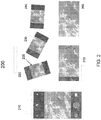
- FIG. 2 an exemplary mobile device display having an active display 200 is shown.
- the exemplary mobile device application is operative for allowing a user to record in any framing and freely rotate their device while shooting, visualizing the final output in an overlay on the device's viewfinder during shooting and ultimately correcting for their orientation in the final output.
- an optimal target aspect ratio is chosen for each possible orientation, such as portrait 210, where the device's screen and related optical sensor is taller than wide, or landscape 250, where the device's screen and related optical sensor is wider than tall.
- An inset rectangle 225 is inscribed within the overall sensor that is best-fit to the maximum boundaries of the sensor given the desired optimal aspect ratio for the given (current) orientation. The boundaries of the sensor are slightly padded in order to provide 'breathing room' for correction.
- This inset rectangle 225 is transformed to compensate for rotation 220, 230, 240 by essentially rotating in the inverse of the device's own rotation, which is sampled from the device's integrated gyroscope.
- the transformed inner rectangle 225 is inscribed optimally inside the maximum available bounds of the overall sensor minus the padding. Depending on the device's current most orientation, the dimensions of the transformed inner rectangle 225 are adjusted to interpolate between the two optimal aspect ratios, relative to the amount of rotation.
- the inscribed rectangle would interpolate optimally between 1:1 and 16:9 as it is rotated from one orientation to another.
- the inscribed rectangle is sampled and then transformed to fit an optimal output dimension.
- the optimal output dimension is 4:3 and the sampled rectangle is 1:1
- the sampled rectangle would either be aspect filled (fully filling the 1:1 area optically, cropping data as necessary) or aspect fit (fully fitting inside the 1:1 area optically, blacking out any unused area with 'letter boxing' or 'pillar boxing'.
- the result is a fixed aspect asset where the content framing adjusts based on the dynamically provided aspect ratio during correction. So for example a 16:9 video comprised of 1:1 to 16:9 content would oscillate between being optically filled 260 (during 16:9 portions) and fit with pillar boxing 250 (during 1:1 portions).
- the output format will be a landscape aspect ratio (pillar boxing the portrait segments). If a user records a video that is mostly portrait the opposite applies (the video will be portrait and fill the output optically, cropping any landscape content that falls outside the bounds of the output rectangle).
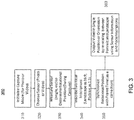
- the system is initialized in response to the capture mode of the camera being initiated. This initialization may be initiated according to a hardware or software button, or in response to another control signal generated in response to a user action.
- the mobile device sensor 320 is chosen in response to user selections. User selections may be made through a setting on the touch screen device, through a menu system, or in response to how the button is actuated. For example, a button that is pushed once may select a photo sensor, while a button that is held down continuously may indicate a video sensor. Additionally, holding a button for a predetermined time, such as 3 seconds, may indicate that a video has been selected and video recording on the mobile device will continue until the button is actuated a second time.
- the system requests a measurement from a rotational sensor 320.
- the rotational sensor may be a gyroscope, accelerometer, axis orientation sensor, light sensor or the like, which is used to determine a horizontal and/or vertical indication of the position of the mobile device.
- the measurement sensor may send periodic measurements to the controlling processor thereby continuously indicating the vertical and/or horizontal orientation of the mobile device.
- the controlling processor can continuously update the display and save the video or image in a way which has a continuous consistent horizon.
- the mobile device After the rotational sensor has returned an indication of the vertical and/or horizontal orientation of the mobile device, the mobile device depicts an inset rectangle on the display indicating the captured orientation of the video or image 340.
- the system processor continuously synchronizes inset rectangle with the rotational measurement received from the rotational sensor 350. They user may optionally indicate a preferred final video or image ration, such as 1:1, 9:16, 16:9, or any ratio decided by the user.
- the system may also store user selections for different ratios according to orientation of the mobile device. For example, the user may indicate a 1:1 ratio for video recorded in the vertical orientation, but a 16:9 ratio for video recorded in the horizontal orientation.
- the system may continuously or incrementally rescale video 360 as the mobile device is rotated.
- a video may start out with a 1:1 orientation, but could gradually be rescaled to end in a 16:9 orientation in response to a user rotating from a vertical to horizontal orientation while filming.
- a user may indicate that the beginning or ending orientation determines the final ratio of the video.
- FIG. 4 an exemplary mobile device display having a capture initialization 400 is shown.
- An exemplary mobile device is show depicting a touch tone display for capturing images or video.
- the capture mode of the exemplary device may be initiated in response to a number of actions. Any of hardware buttons 410 of the mobile device may be depressed to initiate the capture sequence.
- a software button 420 may be activated through the touch screen to initiate the capture sequence.
- the software button 420 may be overlaid on the image 430 displayed on the touch screen.
- the image 430 acts as a viewfinder indicating the current image being captured by the image sensor.
- An inscribed rectangle 440 as described previous may also be overlaid on the image to indicate an aspect ratio of the image or video be captured.
- the system waits for an indication to initiate image capture.
- the device begins to save the data sent from the image sensor 520.
- the system initiates a timer.
- the system then continues to capture data from the image sensor as video data.
- the system stops saving data from the image sensor and stops the timer.
- the system compares the timer value to a predetermined time threshold 540.
- the predetermined time threshold may be a default value determined by the software provider, such as 1 second for example, or it may be a configurable setting determined by a user. If the timer value is less than the predetermined threshold 540, the system determines that a still image was desired and saves the first frame of the video capture as a still image in a still image format, such as jpeg or the like 560. The system may optionally chose another frame as the still image. If the timer value is greater than the predetermined threshold 540, the system determines that a video capture was desired. The system then saves the capture data as a video file in a video file format, such as mpeg or the like 550.
- the system then may then return to the initialization mode, waiting for the capture mode to be initiated again. If the mobile device is equipped with different sensors for still image capture and video capture, the system may optionally save a still image from the still image sensor and start saving capture data from the video image sensor.
- the timer value is compared to the predetermined time threshold, the desired data is saved, while the unwanted data is not saved. For example, if the timer value exceeds the threshold time value, the video data is saved and the image data is discarded.
- FIG. 6 an exemplary embodiment of automatic video segmentation 600 is shown.
- the system is directed towards automatic video segmentation that aims to compute and output video that is sliced into segments that are as close to a predetermined time interval in seconds as possible. Additionally the segments may be longer or shorter dependant in response to attributes of the video being segmented. For example, it is not desirable to bisect content in an awkward way, such as in the middle of a spoken word.
- a timeline 610 is shown, depicting a video segmented into nine segments (1-9). Each of the segments is approximately 8 seconds long. The original video has a length of at least 1 minute and 4 seconds.
- the time interval chosen for each video segment is 8 seconds. This initial time interval may be longer or shorter, or may be optionally configurable by the user.
- An 8 second base timing interval was chosen as it currently represents a manageable data segment having a reasonable data transmission size for downloading over various network types.
- An approximately 8 second clip would have a reasonable average duration to expect an end user to peruse a single clip of video content delivered in an exploratory manner on a mobile platform.
- a clip of approximately 8 seconds may be a perceptually memorable duration of time where an end user can theoretically retain a better visual memory of more of the content it displays.
- 8 seconds is an even phrase length of 8 beats at 120 beats per minute, the most common tempo of modern Western music.
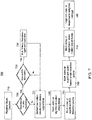
- FIG. 7 a method of segmenting a video 700 in accordance with the present invention is shown.
- a number of approaches to analyzing the video content may be applied within the system.
- an initial determination may be made regarding the nature of the video content as to whether it originated from another application or was recorded using the current mobile device 720. If the content originated from another source or application, the video content is analyzed first for obvious edit boundaries using scene break detection 725. Any statistically significant boundaries may be marked, with emphasis on the boundaries on or nearest to the desired 8 second interval 730. If the video content was recorded using the current mobile device, the sensor data may be logged while recording 735.
- This may include the delta of movement of the device on all axes from the device's accelerometer and/or the rotation of the device on all axes based on the device's gyroscope.
- This logged data may be analyzed to find motion onsets, deltas that are statistically significant relative to the mean magnitude over time for any given vector. These deltas are logged with emphasis on the boundaries nearest to the desired 8 second interval 740.
- the video content can be further perceptually analyzed for additional cues that can inform edit selection.
- the device hardware, firmware or OS provides any integrated region of interest (ROI) detection, including face ROI selection, it is utilized to mark any ROIs in the scene 745.
- ROI region of interest
- the onset appearance or disappearance of these ROIs i.e. the moments nearest when they appear in frame and disappear from frame
- Audio-based onset detection upon overall amplitude will look for statistically significant changes (increases or decreases) in amplitude relative to either the zero crossing, a noise floor or a running average power level 750. Statistically significant changes will be logged with emphasis on those nearest to the desired 8 second interval. Audio-based onset detection upon amplitude within spectral band ranges will rely on converting the audio signal using a FFT algorithm into a number of overlapping FFT bins. Once converted, each bin may be discreetly analyzed for statistically significant changes in amplitude relative to its own running average. All bins are in turn averaged together and the most statistically significant results across all bands are logged as onsets, with emphasis on those nearest to the desired 8 second interval. Within this method the audio can be pre-processed with comb filters to selectively emphasize/deemphasize bands, for example, the bands in the range of normal human speech can be emphasized whereas high frequency bands synonymous with noise can be deemphasized.
- Visual analysis of the average motion within content can be determined for a video content to help establish an appropriate segmentation point 755.
- the magnitude of the average motion in-frame can be determined and used to look for statistically significant changes over time, logging results with emphasis on those nearest to the desired 8 second interval.
- the average color and luminance of the content can be determined using a simple, low resolution analysis of the recorded data, logging statistically significant changes with emphasis on those nearest to the desired 8 second interval.
- the final logged output may be analyzed weighting each result into an overall average 760.
- This post-processing pass of the analysis data finds the most viable points in time based on the weighted and averaged outcome of all individual analysis processes.
- the final, strongest average points on or nearest the desired 8 second interval are computed as output that forms the model for fragmentation edit decisions.
- the post processing step 760 may consider any or all of the previously mentioned marked points on the video as indicators of preferred segmentation points.
- the different determination factors can be weighted. Also, determination points that vary too far from the preferred segment length, such as 8 seconds, may be weighted lower than those closest to the preferred segment length.
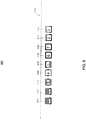
- the light box application is directed towards a method and system for using a list-driven selection process to improve video and media time-based editing.
- the light box application is shown in both the vertical 810 and the horizontal orientation 820.
- the light box application may be initiated after a segmented video has been saved. Alternatively, the light box application may be initiated in response to a user command.
- Each of the segments is initially listed chronologically with a preview generated for each.
- the preview may be a single image taken from the video segment or a portion of the video segment.
- Additional media content or data can be added to the light box application. For example, photos or videos received from other sources may be included in the light box list to permit a user to share or edit the received content or combine these received contents with newly generated content.
- the application permits video and media time-based editing into a simple list driven selection process.
- the light box application may be used as a center point for sharing editorial decisions.
- the light box allows users to quickly and easily view content and decide what to keep, what to discard, and how and when to share with others.
- the light box function may work with the camera, with channel browsing or as a point to import media from other places.
- the light box view may contain a list of recent media or grouped sets of media. Each item, image or video, is displayed as at thumbnail, with a caption, aduration, and a possible group count.
- the caption may be generated automatically or by the user.
- the duration may be simplified, so as to present to the user the weight and pace of the media content.
- the light box title bar may include the category of the light box set with its item count, along with navigation to go back, import an item, or open a menu.
- the light box landscape view 820 offers a different layout, with media items listed on one side and optionally, a method of sharing in some immediately assessable form on the other side. This may include links or previews of facebook, twitter, or other social media applications.
- FIG. 9 various exemplary operations 900 that can performed within the light box application are shown.
- Media that is captured by an integrated camera feature for example, imported from the device's existing media library, possibly recorded with or created by other applications or downloaded from web based sources, or curated from content published directly within the related application are all collected into the light box in a preview mode 905.
- the light box presents media in a simple vertical list, categorized into groups based on events, such as groupings of time, within which the media was collected. Each item is represented by a list row including a thumbnail or simplified duration for the given piece of media. By tapping on any item the media can be previewed in an expanded panel that displays in direct relation to the item.
- the light box application may optionally have an expanded items view 910, which previews the item.
- the expanded items view 910 exposes options to processing the media item, captioning, and sharing it. Tapping the close button closes the item or tapping another item below it closes the item and opens another.
- Scrolling up or down within the light box application permits the user to navigate the media items 915.
- the header may remain at the top of the list, or it may float atop the content. Scrolling to the end of a list may enable navigation to other, older lists 920.
- the headings of the older lists may be revealed under tension while dragging. Dragging past tension transitions to the older lists. Holding and dragging on an item allows the user to reorder items or combine items by dragging one onto another 925. Swiping an item to the left removes the item from the light box 930. Removing items may or may not remove them from the device, or may just remove the item from the light box application.
- Dragging and dropping items onto other items may be used to combine the items into a group 935, or combine the dragged item into a group. Pinching items together combines all items that were within the pinch range into a group 940. When previewing combined items, they play sequentially and show an item count that can be tapped to expand the combined items below the preview window 945. The regular light box items may then be pushed down to permit the expanded items to be displayed as rows.
- Items can be manipulated by dragging on them from within the light box application. Items can be removed from the light box application by dragging left on any item the item for example 930. By dragging right on any item, the item can be promoted to publish immediately 950, which transitions to a screen allowing the user to share the given item's media on one or many sharing locations 955. Tapping a share button when previewing may also enable the sharing of an item. By pressing holding on any item it becomes draggable, at which point the item can be dragged up and down to re-organize its position in the overall list. Time in the list is represented vertically, top-to-bottom. For example, the top most item is first in time were the media to be performed sequentially.
- Any whole group of items can be collectively previewed (played sequentially as a single preview comprised of all items in order of time), can be collectively deleted or published using the same gestures and means of control as a single list item.
- playback can be controlled by dragging left-to-right on the related list item row. The current position in time is marked by a small line that can be dragged to offset time during playback by the user.
- a selection range is defined which can be pinched and dragged in order to trim the original media as the final playback output.
- any additional adjacent frames captured can be selectively 'scrubbed'. For example if during a single photo capture the camera records several frames of output, this gesture can allow the user to cycle through and select the best frame as the final still frame.
- the light box media is built upon a central, ubiquitous storage location on the device so that other applications who incorporate the same light box view all share from the same current pool of media. This makes multi-application collaboration on multimedia asset editing simple and synchronous.
- effect looks are controlled in real time on video or photos, with their intensity and values accessible to the user via fluid, gestural controls.
- This provides the user an experience that is less like editing and more like artistry while dynamically changing the look of the finished product.
- Effect parameters are controlled directly on-screen, atop the photo or video media view itself. No visible controls need to be presented to users. Instead, the user gestures by touching and dragging with one or multiple fingers, pinching in and out and rotating to control features of any given effect.
- the users get real time feedback in the form of seeing the applied results of the effect on the photo or video content immediately. No visual indicators of value, parameter or range are displayed aside possibly a small highlight of their touch positions to emphasis the gesturing is taking place.
- a uniform language of effect control is applied where by touching and holding briefly in place a gesture is initiated.
- Feedback may be provided by placing a highlight circle at and around the user's touch position.
- the center point of the display (the median of both the horizontal and vertical axes) may be considered the 0,0 point, whereby no effect is applied.
- a color look effect for example a LUT color grade
- the effect is mixed into the source with increasing strengths. For example, at approximately 50% of the distance from the center to the top the effect is mixed at full 100%. Beyond 50%, up to 100%, the effect may be exaggerated to more extreme values.
- Another aspect of the exemplary system according to the present invention may introduce parallel effects on the same effects menu, such as a boost of contrast and/or saturation.
- the specific complimentary boost is creatively determined on a look-by-look basis.
- By dragging left to right the color temperature of the effect or similar chromatic alteration may be applied.
- left-to-right single-finger gesture movement may apply to a change in color tone.
- a complimentary effect may be applied that from a creative look point of view is similar to or complimentary to the effect applied when dragging upwards.
- This could be, for example, a standard Bleach Bypass effect on the upward vector paired with a standard Cross Process effect on the downward vector. In other cases the downward drag could simply invert color or otherwise control a variation the principal, upward, effect.
- users may be able to select a secondary layer of effect from the first layer of effect. For example, by touching and holding with two fingers, a user can initiate a pinch/rotate gesture to control a secondary layer of effect that defines the output look.
- Pinching in and out may control the scale and intensity of an overlay-style effect layer that is composited atop the source media. For example a vignette, 'noise' or other aesthetic overlay, radial or linear blurring, bokeh, or other heavily stylized layer or post processing treatment. Dragging left to right may control the position of such overlay relative to the source, or its offset in repetition in the event that it is tile-based.
- Rotating such as by rotating two fingers relative to one another around a virtual center point acts as a 'dial' that can vary the nuance of a given effect. For example with a vignette this may control the decay rate of the blurring.
- One desirable feature according to the present invention would be to formalize gestures for modifying the parameters of looks-based effects so that users become familiar with how to control effects while totally reliant on exploration and direct feedback in the form of output results.
- Effects controls may be initiated from a video preview screen 1003 using the look effects menu 1005.
- the look effects menu 1005 may be initiated by tapping an effects icon.
- the look effects menu 1005 may be initiated by a gesture, such as holding a finger on the screen and then performing a gesture, such as a circle.
- the look effects menu 1005 may alternatively be initiated by touching the screen holding the contact for a period of time in the same location. Once the period of time is met, the look effects menu 1005 will be initiated.
- the look effects menu 1005 may be toggled open and closed by repeating this gesture or by repeatedly tapping the effects icon.
- the look effects menu 1005 could present a series of effects in a scrolling strip, where each effect is depicted as a thumbnail processing the effect on a scaled representation of the current frame. Each thumbnail may have an effect label and the currently highlighted effect being active. Tapping the current effect may toggle the effect on and off.
- Pinching 1020 in and out may be used to control a selected look effect. For example, pinching in and out may control the intensity of a designed vignette or overlay styled for the effect. Depending on the intended look of the effect, this may control a darker or lighter effect, center focus or blur, chromatic aberration, or other stylized post processing.
- the effect intensity ranges may vary from a value of 0 for pinched close together, to 1 for pinched fully apart. The pinched fully apart condition would be met when the two pinch points exceed a certain threshold distance.
- Rotating 1025 may also be used to control a selected look effect. Rotating two fingers left to right may dial the intensity of any composited overlay texture, such as noise, grain, or the like. A rightward turn may be used to increase the texture contrast and visibility and a leftward turn may decrease it. Not all effects need be paired with an obvious texture, but a general-purpose application of such may be to add subtle noise or similar.
- Effects looks may be initiated and controlled on video in a gesture manner.
- a user may gesture on the screen to control effects on top of the primary viewfinder in real time.
- effect controls may be enabled 1010.
- a brief hold may be used to differentiate control of effects from control of focus or other base interactions.
- dragging in all directions may control the effect using a 4-pole scheme.
- Effects may be arranged whereby two complimentary processes take place on opposing Y axis, for example negative one to zero controls the intensity of Bleach Bypass, whereas zero to one controls the intensity of Cross Process.
- the effect is off or near off.
- the effect is at a full normal intensity. Between approx 0.5 and 1.0, the effect may pass through rather extreme or exaggerated intensity levels.
- color tonality or other color contour is controlled on the X axis.
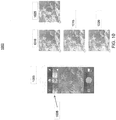
- FIG. 11 another effects control application 1100 according to the present invention is shown.
- effect looks are controlled in real time on video or photos, with their intensity and values accessible to the user via gestural controls.
- a user interface for video style editing is a system where video or image filters, styles or effects can be combined in one user interface for easy effect control by the user.
- Video or image filters, styles or effects may include sepia toning, interlacing, blending, noise, Gaussian blur, sharpening, ripple, puzzle, distort, etc. Many filters, styles and effects exist and most can be implemented using this system.
- An image or video is displayed on a touch sensitive screen, such as a mobile phone screen 1102.
- the interface is enabled in response to a user input 1103, the display is virtually divided into quadrants, which each quadrant controlling a different effect.
- the user interface may be initiated by a menu selection.
- the user may be presented with a number of visual themes, such as 70's look, color inversion, black and white, classic film grains, etc.
- a number of visual looks or effects are associated with each theme. For example, with the 70's theme, looks such as damaged, Kodachrome, bokeh, and Vintage Analog may be associated with the theme.
- Other examples of themes may be color, edge contrast, etc.
- the system applies a combined effect with the look assigned to the upper quadrant being dominant.
- the effect assigned to the left quadrant becomes more dominant and the effect of the upper quadrant, less dominant.
- the intensity of the left quadrant effect becomes greater.
- the intensity of the left quadrant effect becomes less.
- the left quadrant effect is reduced or eliminated and the right quadrant effect becomes more intense.
- An alternative embodiment has a different effect assigned to a direct on the screen.
- looks such as damaged, Kodachrome, bokeh, and Vintage Analog may be each associated with a direct.
- a look assigned to the up direction is intensified and a look assigned to the down direction is weakened.
- a look assigned to the left direction is intensified and a look assigned to the right direction may be weakened.
- the user may be able to lift their finger after sliding to the right for example, move their finger to the left without touching the screen and retouch the screen and slide right again. This would have the effect of further intensifying the look assigned to the right direction.
- a direct is associated with a look. Sliding on a diagonal may intensify two different looks. The rate at which the two looks are intensified is dependant on the angle of the touch slide user input.
- the normalized value can be applied weighted as the touch indicator is moved from center to the edge of the screen. Effects can change after certain thresholds, such as .5, introduces change in color, .9 introduces new effect, etc.
- the magnitude of any given user vector determines the intensity of a layered series of individual images processes, which by design create a coherent predetermined look.
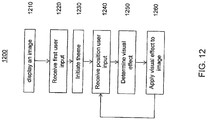
- Fig. 12 a method of implementing a video style 1200 according to the present invention is shown.
- the method may be performed by any device with a camera or a device capable of displaying images or video.
- a touch screen can be used to generate user inputs, a touchpad. a remote control device, or keypad.
- the method is operative to alter the look of an image or video by applying image filters.
- the system is operative to display an image 1210 on the screen of the device.
- the image is displayed throughout the process such that filter effects and the like can be immediately viewed after implementation and users are given real time feedback into the look of the image.
- the system is then operative to receive a first user input 1220.
- the user initiated the theme selection menu.
- the theme selection menu may be a traditional word menu, or a menu depicting the image with a sample of the theme applied Fig. 11 , 1103.
- a control signal is generated to identify which theme has been selected.
- the system Responsive to the first user input, the system initiates a theme 1230.
- the image is then displayed on the screen with regions of the image associated with a look associated with the theme. Boundaries may be visually shown on the image or may not. Boundary display may be a user selectable option.
- the system is then operative to receive a second user input 1240.
- the user applies touch or pressure to a portion of the touch screen.
- a control signal generated indicating a position on the screen. For example, if the screen is represented as a 100 x 100 matrix, the user may have applied touch to point 40, 56 in the matrix.
- the point may be associated with a lower, left side quadrant when the lower left side quadrant is associated with a particular visual look.
- the system determines a visual effect to apply 1250 to the image in response to the second user input.
- the system is operative to receive the control signal indicating the touch position.
- the system determines which visual effect to apply to the image.
- Each position is assigned a particular filter. Thus, moving the position along the screen does not necessarily mean that the looks are altered proportionately. A look can be exponentially intensified as the position moves closer to the edge of a quadrant for example.
- the system applies the visual effect to the image 1260 and the image is displayed. This provides the user immediate visual feedback.
- the system then returns to step 1240 to await a change in the position. If a change in the position is determined, a new visual look is applied to the image.
- the user may initiate a command to save or transmit the image or video. In response to this command, the image or video may be saved in a memory with the visual look associated with the last received position information applied.
Landscapes
- Engineering & Computer Science (AREA)
- Theoretical Computer Science (AREA)
- Multimedia (AREA)
- General Engineering & Computer Science (AREA)
- Signal Processing (AREA)
- Physics & Mathematics (AREA)
- General Physics & Mathematics (AREA)
- Human Computer Interaction (AREA)
- Databases & Information Systems (AREA)
- Computational Linguistics (AREA)
- Audiology, Speech & Language Pathology (AREA)
- General Health & Medical Sciences (AREA)
- Artificial Intelligence (AREA)
- Health & Medical Sciences (AREA)
- User Interface Of Digital Computer (AREA)
- Two-Way Televisions, Distribution Of Moving Picture Or The Like (AREA)
- Processing Or Creating Images (AREA)
- Information Transfer Between Computers (AREA)
- Television Signal Processing For Recording (AREA)
- Image Processing (AREA)
Claims (7)
- Verfahren zum Ändern eines Bilds in Echtzeit gemäß Themen, wobei einer Anzahl visueller Effekte Themen zugeordnet sind, wobei das Verfahren die folgenden Schritte umfasst:- Anzeigen eines Bilds (1102) auf einem Berührungsbildschirm als Reaktion auf eine Nutzereingabe;- Initiieren eines Themas aus einem Menü (1103) als Reaktion auf eine erste durch den Nutzer initiierte Auswahl;- Anzeigen einer geänderten Version des Bilds (1110) auf dem Berührungsbildschirm, wobei die Anzeige mindestens zwei Quadranten zeigt, wobei dem ersten Quadranten ein erster visueller Effekt des initiierten Themas zuwiesen wird und dem zweiten Quadranten ein zweiter visueller Effekt des initiierten Themas zuwiesen wird, wobei sich der erste und der zweite visuelle Effekt unterscheiden;- Empfangen eines ersten Steuersignals (1115), das einer ersten durch den Nutzer initiierten Auswahl entspricht, wobei die durch den Nutzer initiierte Auswahl dadurch getroffen wird, dass der Berührungsbildschirm in der Mitte eines der Quadranten berührt wird;- Initiieren einer ersten Effektesteuerbetriebsart (1015, 1240) als Reaktion auf das erste Steuersignal;- Empfangen eines zweiten Steuersignals, das einer Geste von dem ersten Quadranten zu dem zweiten Quadranten auf dem Berührungsbildschirm entspricht;- Bestimmen eines vereinigten visuellen Effekts als Reaktion auf das zweite Steuersignal, wobei der vereinigte visuelle Effekt eine gewichtete Kombination des ersten Bildeffekts und des zweiten Bildeffekts ist; und- Anzeigen einer geänderten Version des Bilds (1125) als Reaktion auf den vereinigten visuellen Effekt.
- Verfahren nach Anspruch 1, wobei das Bild gleichzeitig mit der Änderung des zweiten Steuersignals allmählich geändert wird.
- Verfahren nach Anspruch 1 oder 2, wobei die Kombination des ersten Bildeffekts und des zweiten Bildeffekts als Reaktion auf eine Änderung des zweiten Steuersignals geändert wird.
- Verfahren nach Anspruch 1 oder 3, das ferner den folgenden Schritt umfasst:- Definieren eines dritten Quadranten des Bilds und eines vierten Quadranten des Bilds;- Zuweisen des dritten Bildeffekts zu dem dritten Quadranten und des vierten Bildeffekts zu dem vierten Quadranten.
- Verfahren nach Anspruch 1, wobei die Anzeige ferner zum Anzeigen einer Begrenzung des ersten Quadranten in dem Bild betreibbar ist und wobei der erste Bildeffekt als Reaktion auf eine Entfernung der Position von einem Zentrum des Bilds in einer nichtlinearen Stärke angewendet wird.
- Vorrichtung, die umfasst:- eine berührungsempfindliche Steuervorrichtung (100) zum Empfangen durch den Nutzer initiierter Gesten als Reaktion auf Nutzergestensteuerungen, sodass in der Nähe des Bilds auf dem Berührungsbildschirm keine sichtbaren Steuerungen dargestellt werden;- einen Controller (180) zum Erzeugen mehrerer Steuersignale als Reaktion auf die durch den Nutzer initiierten Gesten;- einen Prozessor (150) zum Initiieren einer Vielzahl von Aussehenseffekteoptionen aus einem Menü (1005) als Reaktion auf durch den Nutzer initiierte Auswahlen; und- eine Anzeige (180), die dafür betreibbar ist, das Bild anzuzeigen, wobei die Anzeige ferner dafür betreibbar ist, die geänderte Version des Bilds anzuzeigen;- sodass die Vorrichtung dafür ausgelegt ist, das Verfahren nach einem der Ansprüche 1 bis 5 zu implementieren.
- Vorrichtung nach Anspruch 6, wobei die berührungsempfindliche Steuervorrichtung, der Controller und die Anzeige Teile einer Berührungsbildschirmanzeige sind.
Applications Claiming Priority (3)
| Application Number | Priority Date | Filing Date | Title |
|---|---|---|---|
| US201361878245P | 2013-09-16 | 2013-09-16 | |
| US201462003281P | 2014-05-27 | 2014-05-27 | |
| PCT/US2014/053381 WO2015038356A1 (en) | 2013-09-16 | 2014-08-29 | Gesture based interactive graphical user interface for video editing on smartphone/camera with touchscreen |
Publications (3)
| Publication Number | Publication Date |
|---|---|
| EP3047362A1 EP3047362A1 (de) | 2016-07-27 |
| EP3047362B1 true EP3047362B1 (de) | 2019-04-17 |
| EP3047362B8 EP3047362B8 (de) | 2019-06-12 |
Family
ID=51539355
Family Applications (3)
| Application Number | Title | Priority Date | Filing Date |
|---|---|---|---|
| EP14766055.9A Ceased EP3047396A1 (de) | 2013-09-16 | 2014-08-27 | Videodurchsuche durch suchen von mehreren benutzerkommentaren und deren überlagerung in den inhalt |
| EP14767199.4A Not-in-force EP3047644B1 (de) | 2013-09-16 | 2014-08-28 | Verfahren und vorrichtung zur erzeugung einer textfarbe für eine gruppe von bildern |
| EP14766077.3A Not-in-force EP3047362B8 (de) | 2013-09-16 | 2014-08-29 | Editieren von bilderstil mittels geste auf einem berührungsbildschirm . |
Family Applications Before (2)
| Application Number | Title | Priority Date | Filing Date |
|---|---|---|---|
| EP14766055.9A Ceased EP3047396A1 (de) | 2013-09-16 | 2014-08-27 | Videodurchsuche durch suchen von mehreren benutzerkommentaren und deren überlagerung in den inhalt |
| EP14767199.4A Not-in-force EP3047644B1 (de) | 2013-09-16 | 2014-08-28 | Verfahren und vorrichtung zur erzeugung einer textfarbe für eine gruppe von bildern |
Country Status (6)
| Country | Link |
|---|---|
| US (3) | US20160227285A1 (de) |
| EP (3) | EP3047396A1 (de) |
| JP (4) | JP2016538657A (de) |
| KR (3) | KR20160056888A (de) |
| CN (3) | CN105580013A (de) |
| WO (4) | WO2015038338A1 (de) |
Families Citing this family (71)
| Publication number | Priority date | Publication date | Assignee | Title |
|---|---|---|---|---|
| US9237386B2 (en) | 2012-08-31 | 2016-01-12 | Google Inc. | Aiding discovery of program content by providing deeplinks into most interesting moments via social media |
| US9401947B1 (en) * | 2013-02-08 | 2016-07-26 | Google Inc. | Methods, systems, and media for presenting comments based on correlation with content |
| JP2016538657A (ja) * | 2013-09-16 | 2016-12-08 | トムソン ライセンシングThomson Licensing | 複数のユーザコメントを検索してコンテンツにオーバーレイすることによるビデオのブラウジング |
| US20150348325A1 (en) * | 2014-05-27 | 2015-12-03 | Thomson Licensing | Method and system for stabilization and reframing |
| US9942464B2 (en) * | 2014-05-27 | 2018-04-10 | Thomson Licensing | Methods and systems for media capture and seamless display of sequential images using a touch sensitive device |
| EP3206408B1 (de) | 2014-10-10 | 2020-12-30 | Sony Corporation | Codierungsvorrichtung und -verfahren, wiedergabevorrichtung und -verfahren und programm |
| JP2018510396A (ja) * | 2014-12-12 | 2018-04-12 | ナグラビジョン エス アー | ユーザインタフェースの色を管理するための方法及びグラフィックプロセッサ |
| US10109092B1 (en) * | 2015-03-24 | 2018-10-23 | Imagical LLC | Automated text layout, color and other stylization on an image or video, and the tracking and application of user color preferences |
| CN104935980B (zh) * | 2015-05-04 | 2019-03-15 | 腾讯科技(北京)有限公司 | 互动信息处理方法、客户端及服务平台 |
| CN104936035B (zh) | 2015-06-19 | 2018-04-17 | 腾讯科技(北京)有限公司 | 一种弹幕处理方法及系统 |
| US10671234B2 (en) | 2015-06-24 | 2020-06-02 | Spotify Ab | Method and an electronic device for performing playback of streamed media including related media content |
| CN104980809B (zh) * | 2015-06-30 | 2019-03-12 | 北京奇艺世纪科技有限公司 | 一种弹幕处理方法和装置 |
| CN105893012A (zh) * | 2015-12-01 | 2016-08-24 | 乐视网信息技术(北京)股份有限公司 | 用于在安卓系统中生成视频截图的方法和装置 |
| CN106940621B (zh) * | 2016-01-05 | 2020-03-03 | 腾讯科技(深圳)有限公司 | 图片处理的方法和装置 |
| CN105635822A (zh) * | 2016-01-07 | 2016-06-01 | 天脉聚源(北京)科技有限公司 | 一种视频弹幕处理方法及装置 |
| US10622021B2 (en) * | 2016-02-19 | 2020-04-14 | Avcr Bilgi Teknolojileri A.S | Method and system for video editing |
| US9940007B2 (en) | 2016-02-24 | 2018-04-10 | International Business Machines Corporation | Shortening multimedia content |
| US9716825B1 (en) | 2016-06-12 | 2017-07-25 | Apple Inc. | User interface for camera effects |
| CN106227737B (zh) * | 2016-07-11 | 2019-12-03 | 北京创意魔方广告有限公司 | 快速生成广告图片平台 |
| KR102630191B1 (ko) * | 2016-08-18 | 2024-01-29 | 삼성전자 주식회사 | 전자 장치 및 전자 장치 제어 방법 |
| EP3482286A1 (de) * | 2016-11-17 | 2019-05-15 | Google LLC | Mediendarstellung mit ausrichtungsmetadaten |
| CN108230077A (zh) * | 2016-12-21 | 2018-06-29 | 北京嘀嘀无限科技发展有限公司 | 移动网络设备的预约车辆显示方法和装置 |
| US10652618B2 (en) * | 2017-02-16 | 2020-05-12 | Facebook, Inc. | Transmitting video clips of viewers' reactions during a broadcast of a live video stream |
| CN106878632B (zh) * | 2017-02-28 | 2020-07-10 | 北京知慧教育科技有限公司 | 一种视频数据的处理方法和装置 |
| CN107172444B (zh) * | 2017-03-30 | 2019-07-09 | 武汉斗鱼网络科技有限公司 | 一种网络直播重连方法及系统 |
| DK180859B1 (en) | 2017-06-04 | 2022-05-23 | Apple Inc | USER INTERFACE CAMERA EFFECTS |
| CN107818785A (zh) * | 2017-09-26 | 2018-03-20 | 平安普惠企业管理有限公司 | 一种从多媒体文件中提取信息的方法及终端设备 |
| US11363352B2 (en) | 2017-09-29 | 2022-06-14 | International Business Machines Corporation | Video content relationship mapping |
| US10587919B2 (en) | 2017-09-29 | 2020-03-10 | International Business Machines Corporation | Cognitive digital video filtering based on user preferences |
| CN108600851B (zh) * | 2018-03-26 | 2019-05-07 | 掌阅科技股份有限公司 | 用于电子书的直播方法、电子设备及计算机存储介质 |
| US10375313B1 (en) | 2018-05-07 | 2019-08-06 | Apple Inc. | Creative camera |
| US11722764B2 (en) | 2018-05-07 | 2023-08-08 | Apple Inc. | Creative camera |
| CN108804184B (zh) * | 2018-05-29 | 2021-10-01 | 维沃移动通信有限公司 | 一种显示控制方法及终端设备 |
| CN108829845A (zh) * | 2018-06-20 | 2018-11-16 | 北京奇艺世纪科技有限公司 | 一种音频文件播放方法、装置及电子设备 |
| US10650861B2 (en) * | 2018-06-22 | 2020-05-12 | Tildawatch, Inc. | Video summarization and collaboration systems and methods |
| WO2020018592A1 (en) * | 2018-07-17 | 2020-01-23 | Methodical Mind, Llc. | Graphical user interface system |
| DK201870623A1 (en) | 2018-09-11 | 2020-04-15 | Apple Inc. | USER INTERFACES FOR SIMULATED DEPTH EFFECTS |
| CN109143628B (zh) * | 2018-09-14 | 2021-09-28 | 武汉帆茂电子科技有限公司 | 一种在液晶模组实时显示Flick,Vcom数值的装置及方法 |
| US11321857B2 (en) | 2018-09-28 | 2022-05-03 | Apple Inc. | Displaying and editing images with depth information |
| US11128792B2 (en) | 2018-09-28 | 2021-09-21 | Apple Inc. | Capturing and displaying images with multiple focal planes |
| CN109344318B (zh) * | 2018-10-15 | 2020-05-15 | 北京字节跳动网络技术有限公司 | 用于处理信息的方法和装置 |
| CN109408748A (zh) * | 2018-10-15 | 2019-03-01 | 北京字节跳动网络技术有限公司 | 用于处理信息的方法和装置 |
| US11678031B2 (en) | 2019-04-19 | 2023-06-13 | Microsoft Technology Licensing, Llc | Authoring comments including typed hyperlinks that reference video content |
| US11785194B2 (en) | 2019-04-19 | 2023-10-10 | Microsoft Technology Licensing, Llc | Contextually-aware control of a user interface displaying a video and related user text |
| US11706521B2 (en) | 2019-05-06 | 2023-07-18 | Apple Inc. | User interfaces for capturing and managing visual media |
| US10645294B1 (en) | 2019-05-06 | 2020-05-05 | Apple Inc. | User interfaces for capturing and managing visual media |
| US11770601B2 (en) | 2019-05-06 | 2023-09-26 | Apple Inc. | User interfaces for capturing and managing visual media |
| CN110366002B (zh) * | 2019-06-14 | 2022-03-11 | 北京字节跳动网络技术有限公司 | 视频文件合成方法、系统、介质和电子设备 |
| US11336832B1 (en) * | 2019-08-30 | 2022-05-17 | Gopro, Inc. | Systems and methods for horizon leveling videos |
| US11054973B1 (en) | 2020-06-01 | 2021-07-06 | Apple Inc. | User interfaces for managing media |
| CN111601150A (zh) * | 2020-06-05 | 2020-08-28 | 百度在线网络技术(北京)有限公司 | 视频的处理方法和装置 |
| CN111752440A (zh) * | 2020-06-29 | 2020-10-09 | 北京字节跳动网络技术有限公司 | 一种多媒体内容展示方法及装置 |
| EP4173257A1 (de) | 2020-06-30 | 2023-05-03 | Snap Inc. | Skelettverfolgung für virtuelle echtzeiteffekte |
| CN111787223B (zh) * | 2020-06-30 | 2021-07-16 | 维沃移动通信有限公司 | 视频拍摄方法、装置和电子设备 |
| CN111857517B (zh) * | 2020-07-28 | 2022-05-17 | 腾讯科技(深圳)有限公司 | 视频的信息处理方法、装置、电子设备及存储介质 |
| US11212449B1 (en) | 2020-09-25 | 2021-12-28 | Apple Inc. | User interfaces for media capture and management |
| CN112328136B (zh) * | 2020-11-27 | 2023-09-19 | 腾讯科技(深圳)有限公司 | 评论信息的显示方法、装置、设备及存储介质 |
| CN114615510B (zh) | 2020-12-08 | 2024-04-02 | 抖音视界有限公司 | 直播界面显示方法及设备 |
| CN113411553B (zh) * | 2021-01-05 | 2025-09-23 | 腾讯科技(深圳)有限公司 | 图像处理方法、装置、电子设备及存储介质 |
| US12254644B2 (en) | 2021-03-31 | 2025-03-18 | Leica Camera Ag | Imaging system and method |
| US11893668B2 (en) | 2021-03-31 | 2024-02-06 | Leica Camera Ag | Imaging system and method for generating a final digital image via applying a profile to image information |
| US11778339B2 (en) | 2021-04-30 | 2023-10-03 | Apple Inc. | User interfaces for altering visual media |
| US11539876B2 (en) | 2021-04-30 | 2022-12-27 | Apple Inc. | User interfaces for altering visual media |
| US12112024B2 (en) | 2021-06-01 | 2024-10-08 | Apple Inc. | User interfaces for managing media styles |
| CN114666648B (zh) * | 2022-03-30 | 2023-04-28 | 阿里巴巴(中国)有限公司 | 视频播放方法及电子设备 |
| CN117119249A (zh) * | 2022-05-17 | 2023-11-24 | 脸萌有限公司 | 特效视频确定方法、装置、电子设备及存储介质 |
| US12167161B1 (en) * | 2022-09-13 | 2024-12-10 | Gopro, Inc. | Systems and methods for horizon leveling videos |
| US12450854B2 (en) | 2022-09-22 | 2025-10-21 | Apple Inc. | User interfaces for capturing media and manipulating virtual objects |
| US12530847B2 (en) * | 2023-01-23 | 2026-01-20 | Snap Inc. | Image generation from text and 3D object |
| US20240373121A1 (en) | 2023-05-05 | 2024-11-07 | Apple Inc. | User interfaces for controlling media capture settings |
| CN119545069B (zh) * | 2025-01-17 | 2025-05-27 | 北京达佳互联信息技术有限公司 | 一种信息显示方法及装置 |
Citations (2)
| Publication number | Priority date | Publication date | Assignee | Title |
|---|---|---|---|---|
| WO2010095783A1 (ko) * | 2009-02-23 | 2010-08-26 | 한국과학기술원 | 터치 스크린 제어 방법 및 이를 이용하는 터치 스크린 장치 |
| US20110090155A1 (en) * | 2009-10-15 | 2011-04-21 | Qualcomm Incorporated | Method, system, and computer program product combining gestural input from multiple touch screens into one gestural input |
Family Cites Families (56)
| Publication number | Priority date | Publication date | Assignee | Title |
|---|---|---|---|---|
| KR910006465B1 (ko) * | 1988-12-31 | 1991-08-26 | 삼성전자 주식회사 | 영상신호와 보색관계를 가지는 문자를 영상신호에 삽입하는 문자 합성장치 |
| US6711291B1 (en) * | 1999-09-17 | 2004-03-23 | Eastman Kodak Company | Method for automatic text placement in digital images |
| KR20040041082A (ko) * | 2000-07-24 | 2004-05-13 | 비브콤 인코포레이티드 | 멀티미디어 북마크와 비디오의 가상 편집을 위한 시스템및 방법 |
| US20040128317A1 (en) * | 2000-07-24 | 2004-07-01 | Sanghoon Sull | Methods and apparatuses for viewing, browsing, navigating and bookmarking videos and displaying images |
| JP2002049907A (ja) * | 2000-08-03 | 2002-02-15 | Canon Inc | デジタルアルバム作成装置およびデジタルアルバム作成方法 |
| KR20020026111A (ko) * | 2000-09-30 | 2002-04-06 | 구자홍 | 디지털 방송 수신기의 자동 온스크린 디스플레이 색상변경방법 |
| US7774817B2 (en) * | 2001-01-31 | 2010-08-10 | Microsoft Corporation | Meta data enhanced television programming |
| US7050109B2 (en) * | 2001-03-02 | 2006-05-23 | General Instrument Corporation | Methods and apparatus for the provision of user selected advanced close captions |
| KR100828354B1 (ko) * | 2003-08-20 | 2008-05-08 | 삼성전자주식회사 | 자막 위치 제어 장치 및 방법 |
| JP4704224B2 (ja) * | 2005-03-04 | 2011-06-15 | 富士フイルム株式会社 | アルバム作成装置、アルバム作成方法、及びプログラム |
| WO2007105918A1 (en) * | 2006-03-15 | 2007-09-20 | Ktf Technologies, Inc. | Apparatuses for overlaying images, portable devices having the same and methods of overlaying images |
| US7735101B2 (en) * | 2006-03-28 | 2010-06-08 | Cisco Technology, Inc. | System allowing users to embed comments at specific points in time into media presentation |
| US7646392B2 (en) * | 2006-05-03 | 2010-01-12 | Research In Motion Limited | Dynamic theme color palette generation |
| FR2910769B1 (fr) * | 2006-12-21 | 2009-03-06 | Thomson Licensing Sas | Procede de creation d'un resume d'un document audiovisuel comportant un sommaire et des reportages, et recepteur mettant en oeuvre le procede |
| JP4673862B2 (ja) * | 2007-03-02 | 2011-04-20 | 株式会社ドワンゴ | コメント配信システム、コメント配信サーバ、端末装置、コメント配信方法、及びプログラム |
| TR200709081A2 (tr) * | 2007-12-28 | 2009-07-21 | Vestel Elektron�K Sanay� Ve T�Caret A.�. | Görüntü sistemleri için dinamik renkli kullanıcı. |
| JP5151753B2 (ja) * | 2008-07-10 | 2013-02-27 | 株式会社Jvcケンウッド | ファイル検索装置、ファイル検索方法および音楽再生装置ならびにプログラム |
| JP5346941B2 (ja) * | 2008-09-16 | 2013-11-20 | パナソニック株式会社 | データ表示装置、集積回路、データ表示方法、データ表示プログラム及び記録媒体 |
| CN102369501A (zh) * | 2009-02-23 | 2012-03-07 | 胜利电子株式会社 | 触摸屏控制方法及触摸屏装置 |
| US8860865B2 (en) * | 2009-03-02 | 2014-10-14 | Burning Moon, Llc | Assisted video creation utilizing a camera |
| WO2010114528A1 (en) * | 2009-03-31 | 2010-10-07 | Hewlett-Packard Development Company, L.P. | Background and foreground color pair |
| US20100306232A1 (en) * | 2009-05-28 | 2010-12-02 | Harris Corporation | Multimedia system providing database of shared text comment data indexed to video source data and related methods |
| US20100303365A1 (en) * | 2009-05-29 | 2010-12-02 | Min Zhang | Methods and apparatus to monitor a multimedia presentation including multiple content windows |
| WO2010141260A1 (en) * | 2009-06-01 | 2010-12-09 | Telcordia Technologies, Inc. | System and method for processing commentary that is related to content |
| KR101944469B1 (ko) * | 2009-07-16 | 2019-01-31 | 블루핀 랩스, 인코포레이티드 | 컴퓨터 실행 방법, 시스템 및 컴퓨터 판독 가능 매체 |
| CN101667188A (zh) * | 2009-07-24 | 2010-03-10 | 刘雪英 | 一种在博客上实现音频视频留言和评论的方法和系统 |
| US8780134B2 (en) * | 2009-09-30 | 2014-07-15 | Nokia Corporation | Access to control of multiple editing effects |
| US8436821B1 (en) * | 2009-11-20 | 2013-05-07 | Adobe Systems Incorporated | System and method for developing and classifying touch gestures |
| US9628673B2 (en) * | 2010-04-28 | 2017-04-18 | Microsoft Technology Licensing, Llc | Near-lossless video summarization |
| US20110280476A1 (en) * | 2010-05-13 | 2011-11-17 | Kelly Berger | System and method for automatically laying out photos and coloring design elements within a photo story |
| US8811948B2 (en) * | 2010-07-09 | 2014-08-19 | Microsoft Corporation | Above-lock camera access |
| US8588548B2 (en) * | 2010-07-29 | 2013-11-19 | Kodak Alaris Inc. | Method for forming a composite image |
| US20130300761A1 (en) * | 2010-11-12 | 2013-11-14 | Colormodules Inc. | Method and system for color matching and color recommendation |
| US20120127198A1 (en) * | 2010-11-22 | 2012-05-24 | Microsoft Corporation | Selection of foreground characteristics based on background |
| CN102547433A (zh) * | 2010-12-07 | 2012-07-04 | 华录文化产业有限公司 | 一种基于播放时间点的互动评论方法和装置 |
| CN102693242B (zh) * | 2011-03-25 | 2015-05-13 | 开心人网络科技(北京)有限公司 | 一种网络评论信息的共享方法和系统 |
| CN102780921B (zh) * | 2011-05-10 | 2015-04-29 | 华为终端有限公司 | 在观看节目时获取评论信息的方法、系统和装置 |
| US9066145B2 (en) * | 2011-06-30 | 2015-06-23 | Hulu, LLC | Commenting correlated to temporal point of video data |
| JP5156879B1 (ja) * | 2011-08-25 | 2013-03-06 | パナソニック株式会社 | 情報提示制御装置及び情報提示制御方法 |
| US9354763B2 (en) * | 2011-09-26 | 2016-05-31 | The University Of North Carolina At Charlotte | Multi-modal collaborative web-based video annotation system |
| US20130091522A1 (en) * | 2011-10-05 | 2013-04-11 | Sony Corporation, A Japanese Corporation | Method to display additional information on screen |
| JP5845801B2 (ja) * | 2011-10-18 | 2016-01-20 | ソニー株式会社 | 画像処理装置、画像処理方法、及び、プログラム |
| CN102523492B (zh) * | 2011-11-18 | 2015-04-22 | 深圳创维-Rgb电子有限公司 | 一种互动评论系统的评论方法、电视机及移动终端 |
| US20130145248A1 (en) * | 2011-12-05 | 2013-06-06 | Sony Corporation | System and method for presenting comments with media |
| US20130204833A1 (en) * | 2012-02-02 | 2013-08-08 | Bo PANG | Personalized recommendation of user comments |
| JP2015084004A (ja) * | 2012-02-10 | 2015-04-30 | パナソニック株式会社 | 通信装置 |
| US20130239063A1 (en) * | 2012-03-06 | 2013-09-12 | Apple Inc. | Selection of multiple images |
| US9041727B2 (en) * | 2012-03-06 | 2015-05-26 | Apple Inc. | User interface tools for selectively applying effects to image |
| US9131192B2 (en) * | 2012-03-06 | 2015-09-08 | Apple Inc. | Unified slider control for modifying multiple image properties |
| CN102722580A (zh) * | 2012-06-07 | 2012-10-10 | 杭州电子科技大学 | 一种下载视频网站动态生成视频评论的方法 |
| JP5571269B2 (ja) * | 2012-07-20 | 2014-08-13 | パナソニック株式会社 | コメント付き動画像生成装置およびコメント付き動画像生成方法 |
| US9397844B2 (en) * | 2012-09-11 | 2016-07-19 | Apple Inc. | Automated graphical user-interface layout |
| CN102905170B (zh) * | 2012-10-08 | 2015-05-13 | 北京导视互动网络技术有限公司 | 视频的弹幕方法及系统 |
| CN103034722B (zh) * | 2012-12-13 | 2016-03-30 | 合一网络技术(北京)有限公司 | 一种网络视频评论聚合装置及方法 |
| US20140188997A1 (en) * | 2012-12-31 | 2014-07-03 | Henry Will Schneiderman | Creating and Sharing Inline Media Commentary Within a Network |
| JP2016538657A (ja) * | 2013-09-16 | 2016-12-08 | トムソン ライセンシングThomson Licensing | 複数のユーザコメントを検索してコンテンツにオーバーレイすることによるビデオのブラウジング |
-
2014
- 2014-08-27 JP JP2016541997A patent/JP2016538657A/ja active Pending
- 2014-08-27 CN CN201480050989.5A patent/CN105580013A/zh active Pending
- 2014-08-27 WO PCT/US2014/052870 patent/WO2015038338A1/en not_active Ceased
- 2014-08-27 US US15/022,006 patent/US20160227285A1/en not_active Abandoned
- 2014-08-27 KR KR1020167006543A patent/KR20160056888A/ko not_active Withdrawn
- 2014-08-27 EP EP14766055.9A patent/EP3047396A1/de not_active Ceased
- 2014-08-28 US US15/022,240 patent/US20160232696A1/en not_active Abandoned
- 2014-08-28 WO PCT/US2014/053251 patent/WO2015038351A1/en not_active Ceased
- 2014-08-28 JP JP2016542001A patent/JP2016539430A/ja active Pending
- 2014-08-28 CN CN201480058814.9A patent/CN105874780B/zh not_active Expired - Fee Related
- 2014-08-28 EP EP14767199.4A patent/EP3047644B1/de not_active Not-in-force
- 2014-08-28 WO PCT/US2014/053061 patent/WO2015038342A1/en not_active Ceased
- 2014-08-28 KR KR1020167006818A patent/KR20160058103A/ko not_active Withdrawn
- 2014-08-29 US US15/022,333 patent/US20160283097A1/en not_active Abandoned
- 2014-08-29 CN CN201480059283.5A patent/CN105706437A/zh active Pending
- 2014-08-29 EP EP14766077.3A patent/EP3047362B8/de not_active Not-in-force
- 2014-08-29 JP JP2016542004A patent/JP2016537744A/ja active Pending
- 2014-08-29 WO PCT/US2014/053381 patent/WO2015038356A1/en not_active Ceased
- 2014-08-29 KR KR1020167006896A patent/KR20160055813A/ko not_active Withdrawn
-
2019
- 2019-07-03 JP JP2019124769A patent/JP2019194904A/ja not_active Withdrawn
Patent Citations (2)
| Publication number | Priority date | Publication date | Assignee | Title |
|---|---|---|---|---|
| WO2010095783A1 (ko) * | 2009-02-23 | 2010-08-26 | 한국과학기술원 | 터치 스크린 제어 방법 및 이를 이용하는 터치 스크린 장치 |
| US20110090155A1 (en) * | 2009-10-15 | 2011-04-21 | Qualcomm Incorporated | Method, system, and computer program product combining gestural input from multiple touch screens into one gestural input |
Also Published As
| Publication number | Publication date |
|---|---|
| EP3047396A1 (de) | 2016-07-27 |
| EP3047362B8 (de) | 2019-06-12 |
| WO2015038351A1 (en) | 2015-03-19 |
| JP2016537744A (ja) | 2016-12-01 |
| WO2015038342A1 (en) | 2015-03-19 |
| US20160227285A1 (en) | 2016-08-04 |
| EP3047644B1 (de) | 2018-08-08 |
| CN105706437A (zh) | 2016-06-22 |
| CN105580013A (zh) | 2016-05-11 |
| JP2019194904A (ja) | 2019-11-07 |
| WO2015038356A1 (en) | 2015-03-19 |
| US20160232696A1 (en) | 2016-08-11 |
| WO2015038338A1 (en) | 2015-03-19 |
| WO2015038356A9 (en) | 2015-07-23 |
| JP2016539430A (ja) | 2016-12-15 |
| CN105874780B (zh) | 2019-04-09 |
| KR20160056888A (ko) | 2016-05-20 |
| EP3047644A1 (de) | 2016-07-27 |
| JP2016538657A (ja) | 2016-12-08 |
| KR20160058103A (ko) | 2016-05-24 |
| US20160283097A1 (en) | 2016-09-29 |
| WO2015038351A8 (en) | 2016-07-21 |
| EP3047362A1 (de) | 2016-07-27 |
| CN105874780A (zh) | 2016-08-17 |
| KR20160055813A (ko) | 2016-05-18 |
Similar Documents
| Publication | Publication Date | Title |
|---|---|---|
| EP3047362B1 (de) | Editieren von bilderstil mittels geste auf einem berührungsbildschirm . | |
| AU2013381005B2 (en) | Method and apparatus for using a list driven selection process to improve video and media time based editing | |
| EP3047642B1 (de) | Farberkennungsverfahren und -vorrichtung zur erzeugung einer textfarbe | |
| JP6175518B2 (ja) | 自動ビデオセグメント化のための方法および装置 | |
| US20150348588A1 (en) | Method and apparatus for video segment cropping | |
| JP2019220207A (ja) | 撮影効果のためにジェスチャを使用するための方法および装置 |
Legal Events
| Date | Code | Title | Description |
|---|---|---|---|
| PUAI | Public reference made under article 153(3) epc to a published international application that has entered the european phase |
Free format text: ORIGINAL CODE: 0009012 |
|
| 17P | Request for examination filed |
Effective date: 20160325 |
|
| AK | Designated contracting states |
Kind code of ref document: A1 Designated state(s): AL AT BE BG CH CY CZ DE DK EE ES FI FR GB GR HR HU IE IS IT LI LT LU LV MC MK MT NL NO PL PT RO RS SE SI SK SM TR |
|
| AX | Request for extension of the european patent |
Extension state: BA ME |
|
| DAX | Request for extension of the european patent (deleted) | ||
| STAA | Information on the status of an ep patent application or granted ep patent |
Free format text: STATUS: EXAMINATION IS IN PROGRESS |
|
| 17Q | First examination report despatched |
Effective date: 20170331 |
|
| REG | Reference to a national code |
Ref country code: DE Ref legal event code: R079 Ref document number: 602014044939 Country of ref document: DE Free format text: PREVIOUS MAIN CLASS: G06F0003048000 Ipc: G06F0003048800 |
|
| GRAP | Despatch of communication of intention to grant a patent |
Free format text: ORIGINAL CODE: EPIDOSNIGR1 |
|
| STAA | Information on the status of an ep patent application or granted ep patent |
Free format text: STATUS: GRANT OF PATENT IS INTENDED |
|
| RIC1 | Information provided on ipc code assigned before grant |
Ipc: G06F 3/048 20130101ALN20181031BHEP Ipc: G11B 27/031 20060101ALI20181031BHEP Ipc: G06F 3/0488 20130101AFI20181031BHEP |
|
| RIC1 | Information provided on ipc code assigned before grant |
Ipc: G06F 3/0488 20130101AFI20181109BHEP Ipc: G11B 27/031 20060101ALI20181109BHEP Ipc: G06F 3/048 20130101ALN20181109BHEP |
|
| INTG | Intention to grant announced |
Effective date: 20181126 |
|
| GRAS | Grant fee paid |
Free format text: ORIGINAL CODE: EPIDOSNIGR3 |
|
| GRAA | (expected) grant |
Free format text: ORIGINAL CODE: 0009210 |
|
| STAA | Information on the status of an ep patent application or granted ep patent |
Free format text: STATUS: THE PATENT HAS BEEN GRANTED |
|
| AK | Designated contracting states |
Kind code of ref document: B1 Designated state(s): AL AT BE BG CH CY CZ DE DK EE ES FI FR GB GR HR HU IE IS IT LI LT LU LV MC MK MT NL NO PL PT RO RS SE SI SK SM TR |
|
| REG | Reference to a national code |
Ref country code: GB Ref legal event code: FG4D |
|
| REG | Reference to a national code |
Ref country code: CH Ref legal event code: EP |
|
| RAP2 | Party data changed (patent owner data changed or rights of a patent transferred) |
Owner name: INTERDIGITAL CE PATENT HOLDINGS |
|
| REG | Reference to a national code |
Ref country code: AT Ref legal event code: REF Ref document number: 1122301 Country of ref document: AT Kind code of ref document: T Effective date: 20190515 Ref country code: IE Ref legal event code: FG4D |
|
| REG | Reference to a national code |
Ref country code: DE Ref legal event code: R096 Ref document number: 602014044939 Country of ref document: DE |
|
| REG | Reference to a national code |
Ref country code: CH Ref legal event code: PK Free format text: BERICHTIGUNG B8 |
|
| REG | Reference to a national code |
Ref country code: NL Ref legal event code: FP |
|
| REG | Reference to a national code |
Ref country code: LT Ref legal event code: MG4D |
|
| PG25 | Lapsed in a contracting state [announced via postgrant information from national office to epo] |
Ref country code: LT Free format text: LAPSE BECAUSE OF FAILURE TO SUBMIT A TRANSLATION OF THE DESCRIPTION OR TO PAY THE FEE WITHIN THE PRESCRIBED TIME-LIMIT Effective date: 20190417 Ref country code: HR Free format text: LAPSE BECAUSE OF FAILURE TO SUBMIT A TRANSLATION OF THE DESCRIPTION OR TO PAY THE FEE WITHIN THE PRESCRIBED TIME-LIMIT Effective date: 20190417 Ref country code: NO Free format text: LAPSE BECAUSE OF FAILURE TO SUBMIT A TRANSLATION OF THE DESCRIPTION OR TO PAY THE FEE WITHIN THE PRESCRIBED TIME-LIMIT Effective date: 20190717 Ref country code: PT Free format text: LAPSE BECAUSE OF FAILURE TO SUBMIT A TRANSLATION OF THE DESCRIPTION OR TO PAY THE FEE WITHIN THE PRESCRIBED TIME-LIMIT Effective date: 20190817 Ref country code: SE Free format text: LAPSE BECAUSE OF FAILURE TO SUBMIT A TRANSLATION OF THE DESCRIPTION OR TO PAY THE FEE WITHIN THE PRESCRIBED TIME-LIMIT Effective date: 20190417 Ref country code: AL Free format text: LAPSE BECAUSE OF FAILURE TO SUBMIT A TRANSLATION OF THE DESCRIPTION OR TO PAY THE FEE WITHIN THE PRESCRIBED TIME-LIMIT Effective date: 20190417 Ref country code: FI Free format text: LAPSE BECAUSE OF FAILURE TO SUBMIT A TRANSLATION OF THE DESCRIPTION OR TO PAY THE FEE WITHIN THE PRESCRIBED TIME-LIMIT Effective date: 20190417 Ref country code: ES Free format text: LAPSE BECAUSE OF FAILURE TO SUBMIT A TRANSLATION OF THE DESCRIPTION OR TO PAY THE FEE WITHIN THE PRESCRIBED TIME-LIMIT Effective date: 20190417 |
|
| PG25 | Lapsed in a contracting state [announced via postgrant information from national office to epo] |
Ref country code: BG Free format text: LAPSE BECAUSE OF FAILURE TO SUBMIT A TRANSLATION OF THE DESCRIPTION OR TO PAY THE FEE WITHIN THE PRESCRIBED TIME-LIMIT Effective date: 20190717 Ref country code: LV Free format text: LAPSE BECAUSE OF FAILURE TO SUBMIT A TRANSLATION OF THE DESCRIPTION OR TO PAY THE FEE WITHIN THE PRESCRIBED TIME-LIMIT Effective date: 20190417 Ref country code: RS Free format text: LAPSE BECAUSE OF FAILURE TO SUBMIT A TRANSLATION OF THE DESCRIPTION OR TO PAY THE FEE WITHIN THE PRESCRIBED TIME-LIMIT Effective date: 20190417 Ref country code: PL Free format text: LAPSE BECAUSE OF FAILURE TO SUBMIT A TRANSLATION OF THE DESCRIPTION OR TO PAY THE FEE WITHIN THE PRESCRIBED TIME-LIMIT Effective date: 20190417 Ref country code: GR Free format text: LAPSE BECAUSE OF FAILURE TO SUBMIT A TRANSLATION OF THE DESCRIPTION OR TO PAY THE FEE WITHIN THE PRESCRIBED TIME-LIMIT Effective date: 20190718 |
|
| REG | Reference to a national code |
Ref country code: AT Ref legal event code: MK05 Ref document number: 1122301 Country of ref document: AT Kind code of ref document: T Effective date: 20190417 |
|
| PG25 | Lapsed in a contracting state [announced via postgrant information from national office to epo] |
Ref country code: IS Free format text: LAPSE BECAUSE OF FAILURE TO SUBMIT A TRANSLATION OF THE DESCRIPTION OR TO PAY THE FEE WITHIN THE PRESCRIBED TIME-LIMIT Effective date: 20190817 |
|
| REG | Reference to a national code |
Ref country code: DE Ref legal event code: R097 Ref document number: 602014044939 Country of ref document: DE |
|
| PG25 | Lapsed in a contracting state [announced via postgrant information from national office to epo] |
Ref country code: RO Free format text: LAPSE BECAUSE OF FAILURE TO SUBMIT A TRANSLATION OF THE DESCRIPTION OR TO PAY THE FEE WITHIN THE PRESCRIBED TIME-LIMIT Effective date: 20190417 Ref country code: DK Free format text: LAPSE BECAUSE OF FAILURE TO SUBMIT A TRANSLATION OF THE DESCRIPTION OR TO PAY THE FEE WITHIN THE PRESCRIBED TIME-LIMIT Effective date: 20190417 Ref country code: EE Free format text: LAPSE BECAUSE OF FAILURE TO SUBMIT A TRANSLATION OF THE DESCRIPTION OR TO PAY THE FEE WITHIN THE PRESCRIBED TIME-LIMIT Effective date: 20190417 Ref country code: AT Free format text: LAPSE BECAUSE OF FAILURE TO SUBMIT A TRANSLATION OF THE DESCRIPTION OR TO PAY THE FEE WITHIN THE PRESCRIBED TIME-LIMIT Effective date: 20190417 Ref country code: CZ Free format text: LAPSE BECAUSE OF FAILURE TO SUBMIT A TRANSLATION OF THE DESCRIPTION OR TO PAY THE FEE WITHIN THE PRESCRIBED TIME-LIMIT Effective date: 20190417 Ref country code: SK Free format text: LAPSE BECAUSE OF FAILURE TO SUBMIT A TRANSLATION OF THE DESCRIPTION OR TO PAY THE FEE WITHIN THE PRESCRIBED TIME-LIMIT Effective date: 20190417 |
|
| PLBE | No opposition filed within time limit |
Free format text: ORIGINAL CODE: 0009261 |
|
| STAA | Information on the status of an ep patent application or granted ep patent |
Free format text: STATUS: NO OPPOSITION FILED WITHIN TIME LIMIT |
|
| PG25 | Lapsed in a contracting state [announced via postgrant information from national office to epo] |
Ref country code: SM Free format text: LAPSE BECAUSE OF FAILURE TO SUBMIT A TRANSLATION OF THE DESCRIPTION OR TO PAY THE FEE WITHIN THE PRESCRIBED TIME-LIMIT Effective date: 20190417 Ref country code: IT Free format text: LAPSE BECAUSE OF FAILURE TO SUBMIT A TRANSLATION OF THE DESCRIPTION OR TO PAY THE FEE WITHIN THE PRESCRIBED TIME-LIMIT Effective date: 20190417 |
|
| 26N | No opposition filed |
Effective date: 20200120 |
|
| PG25 | Lapsed in a contracting state [announced via postgrant information from national office to epo] |
Ref country code: TR Free format text: LAPSE BECAUSE OF FAILURE TO SUBMIT A TRANSLATION OF THE DESCRIPTION OR TO PAY THE FEE WITHIN THE PRESCRIBED TIME-LIMIT Effective date: 20190417 |
|
| PG25 | Lapsed in a contracting state [announced via postgrant information from national office to epo] |
Ref country code: SI Free format text: LAPSE BECAUSE OF FAILURE TO SUBMIT A TRANSLATION OF THE DESCRIPTION OR TO PAY THE FEE WITHIN THE PRESCRIBED TIME-LIMIT Effective date: 20190417 Ref country code: CH Free format text: LAPSE BECAUSE OF NON-PAYMENT OF DUE FEES Effective date: 20190831 Ref country code: LI Free format text: LAPSE BECAUSE OF NON-PAYMENT OF DUE FEES Effective date: 20190831 Ref country code: MC Free format text: LAPSE BECAUSE OF FAILURE TO SUBMIT A TRANSLATION OF THE DESCRIPTION OR TO PAY THE FEE WITHIN THE PRESCRIBED TIME-LIMIT Effective date: 20190417 Ref country code: LU Free format text: LAPSE BECAUSE OF NON-PAYMENT OF DUE FEES Effective date: 20190829 |
|
| REG | Reference to a national code |
Ref country code: BE Ref legal event code: MM Effective date: 20190831 |
|
| PG25 | Lapsed in a contracting state [announced via postgrant information from national office to epo] |
Ref country code: IE Free format text: LAPSE BECAUSE OF NON-PAYMENT OF DUE FEES Effective date: 20190829 |
|
| PG25 | Lapsed in a contracting state [announced via postgrant information from national office to epo] |
Ref country code: BE Free format text: LAPSE BECAUSE OF NON-PAYMENT OF DUE FEES Effective date: 20190831 |
|
| PGFP | Annual fee paid to national office [announced via postgrant information from national office to epo] |
Ref country code: NL Payment date: 20200827 Year of fee payment: 7 |
|
| PGFP | Annual fee paid to national office [announced via postgrant information from national office to epo] |
Ref country code: DE Payment date: 20200827 Year of fee payment: 7 Ref country code: FR Payment date: 20200824 Year of fee payment: 7 Ref country code: GB Payment date: 20200825 Year of fee payment: 7 |
|
| PG25 | Lapsed in a contracting state [announced via postgrant information from national office to epo] |
Ref country code: CY Free format text: LAPSE BECAUSE OF FAILURE TO SUBMIT A TRANSLATION OF THE DESCRIPTION OR TO PAY THE FEE WITHIN THE PRESCRIBED TIME-LIMIT Effective date: 20190417 |
|
| PG25 | Lapsed in a contracting state [announced via postgrant information from national office to epo] |
Ref country code: MT Free format text: LAPSE BECAUSE OF FAILURE TO SUBMIT A TRANSLATION OF THE DESCRIPTION OR TO PAY THE FEE WITHIN THE PRESCRIBED TIME-LIMIT Effective date: 20190417 Ref country code: HU Free format text: LAPSE BECAUSE OF FAILURE TO SUBMIT A TRANSLATION OF THE DESCRIPTION OR TO PAY THE FEE WITHIN THE PRESCRIBED TIME-LIMIT; INVALID AB INITIO Effective date: 20140829 |
|
| REG | Reference to a national code |
Ref country code: DE Ref legal event code: R119 Ref document number: 602014044939 Country of ref document: DE |
|
| REG | Reference to a national code |
Ref country code: NL Ref legal event code: MM Effective date: 20210901 |
|
| GBPC | Gb: european patent ceased through non-payment of renewal fee |
Effective date: 20210829 |
|
| PG25 | Lapsed in a contracting state [announced via postgrant information from national office to epo] |
Ref country code: NL Free format text: LAPSE BECAUSE OF NON-PAYMENT OF DUE FEES Effective date: 20210901 Ref country code: MK Free format text: LAPSE BECAUSE OF FAILURE TO SUBMIT A TRANSLATION OF THE DESCRIPTION OR TO PAY THE FEE WITHIN THE PRESCRIBED TIME-LIMIT Effective date: 20190417 |
|
| PG25 | Lapsed in a contracting state [announced via postgrant information from national office to epo] |
Ref country code: GB Free format text: LAPSE BECAUSE OF NON-PAYMENT OF DUE FEES Effective date: 20210829 Ref country code: FR Free format text: LAPSE BECAUSE OF NON-PAYMENT OF DUE FEES Effective date: 20210831 Ref country code: DE Free format text: LAPSE BECAUSE OF NON-PAYMENT OF DUE FEES Effective date: 20220301 |