EP3020825A1 - Method for measuring glycated hemoglobin - Google Patents
Method for measuring glycated hemoglobin Download PDFInfo
- Publication number
- EP3020825A1 EP3020825A1 EP14823357.0A EP14823357A EP3020825A1 EP 3020825 A1 EP3020825 A1 EP 3020825A1 EP 14823357 A EP14823357 A EP 14823357A EP 3020825 A1 EP3020825 A1 EP 3020825A1
- Authority
- EP
- European Patent Office
- Prior art keywords
- fpox
- seq
- artificial sequence
- description
- amino acid
- Prior art date
- Legal status (The legal status is an assumption and is not a legal conclusion. Google has not performed a legal analysis and makes no representation as to the accuracy of the status listed.)
- Granted
Links
Images



Classifications
-
- G—PHYSICS
- G01—MEASURING; TESTING
- G01N—INVESTIGATING OR ANALYSING MATERIALS BY DETERMINING THEIR CHEMICAL OR PHYSICAL PROPERTIES
- G01N33/00—Investigating or analysing materials by specific methods not covered by groups G01N1/00 - G01N31/00
- G01N33/48—Biological material, e.g. blood, urine; Haemocytometers
- G01N33/50—Chemical analysis of biological material, e.g. blood, urine; Testing involving biospecific ligand binding methods; Immunological testing
- G01N33/72—Chemical analysis of biological material, e.g. blood, urine; Testing involving biospecific ligand binding methods; Immunological testing involving blood pigments, e.g. haemoglobin, bilirubin or other porphyrins; involving occult blood
- G01N33/721—Haemoglobin
- G01N33/723—Glycosylated haemoglobin
-
- C—CHEMISTRY; METALLURGY
- C12—BIOCHEMISTRY; BEER; SPIRITS; WINE; VINEGAR; MICROBIOLOGY; ENZYMOLOGY; MUTATION OR GENETIC ENGINEERING
- C12Q—MEASURING OR TESTING PROCESSES INVOLVING ENZYMES, NUCLEIC ACIDS OR MICROORGANISMS; COMPOSITIONS OR TEST PAPERS THEREFOR; PROCESSES OF PREPARING SUCH COMPOSITIONS; CONDITION-RESPONSIVE CONTROL IN MICROBIOLOGICAL OR ENZYMOLOGICAL PROCESSES
- C12Q1/00—Measuring or testing processes involving enzymes, nucleic acids or microorganisms; Compositions therefor; Processes of preparing such compositions
- C12Q1/26—Measuring or testing processes involving enzymes, nucleic acids or microorganisms; Compositions therefor; Processes of preparing such compositions involving oxidoreductase
-
- G—PHYSICS
- G01—MEASURING; TESTING
- G01N—INVESTIGATING OR ANALYSING MATERIALS BY DETERMINING THEIR CHEMICAL OR PHYSICAL PROPERTIES
- G01N33/00—Investigating or analysing materials by specific methods not covered by groups G01N1/00 - G01N31/00
- G01N33/48—Biological material, e.g. blood, urine; Haemocytometers
- G01N33/50—Chemical analysis of biological material, e.g. blood, urine; Testing involving biospecific ligand binding methods; Immunological testing
- G01N33/72—Chemical analysis of biological material, e.g. blood, urine; Testing involving biospecific ligand binding methods; Immunological testing involving blood pigments, e.g. haemoglobin, bilirubin or other porphyrins; involving occult blood
- G01N33/721—Haemoglobin
- G01N33/725—Haemoglobin using peroxidative activity
Definitions
- the present invention relates to methods for measuring glycated hemoglobin in samples.
- Glycated proteins are contained in biological samples such as body fluid and hair, and body fluid includes blood in a living body, and such.
- concentration of glycated proteins present in the blood depends on the concentration of sugars such as glucose dissolved in the serum, and recently, in the field of clinical diagnosis, measurement of the concentration of hemoglobin Alc (hereinafter, HbA1c; Non-Patent Document 1), which is a glycated protein in the blood, is being used to diagnose and monitor diabetes mellitus.
- Non-Patent Document 2 instrumental analytical methods using high-performance liquid chromatography (HPLC)
- Non-Patent Document 3 immunoassays using antigen-antibody reactions
- enzymatic assays have been developed, and for example, a method using a protease and a glycated peptide oxidase (Patent Document 1) has been developed.
- Enzymatic assays can be applied to versatile automated analyzers, and since the operations are also simple, they are being developed actively.
- the glycated peptide oxidase used in enzymatic assays is an enzyme that catalyzes the reaction which produces a sugar osone (an ⁇ -keto aldehyde), a peptide, and hydrogen peroxide by oxidatively cleaving, in the presence of oxygen molecules, the C-N bond in the ketose derivative produced by Amadori rearrangement of glucosylamine produced by the reaction between the hemiacetal of glucose and the N-terminal amino group of a peptide.
- a sugar osone an ⁇ -keto aldehyde
- hydrogen peroxide by oxidatively cleaving, in the presence of oxygen molecules, the C-N bond in the ketose derivative produced by Amadori rearrangement of glucosylamine produced by the reaction between the hemiacetal of glucose and the N-terminal amino group of a peptide.
- glycated peptides to which conventionally-known glycated peptide oxidases for example, Patent Documents 2, 3, 4, and 5, and Non-Patent Document 4
- Patent Documents 6 and 7 the glycated peptide oxidases that act on glycated peptides with longer amino acid chain length and on glycated proteins have not been known.
- the only method that has been reported is the method which comprises making a protease act on a glycated protein, making a glycated peptide oxidase act on the produced glycated peptide, and measuring the generated hydrogen peroxide.
- this method which comprises making a protease act on glycated hemoglobin, making a glycated peptide oxidase act on the produced glycated peptide, and measuring the generated hydrogen peroxide, in case other measurements besides the glycated hemoglobin measurements are taken simultaneously using an automatic analyzer or such, the protease in the reagent for measuring glycated hemoglobin may act on other reagents and may affect the measured values.
- An objective of the present invention is to provide a method for measuring glycated hemoglobin, which comprises directly oxidizing glycated hemoglobin and measuring a substance produced or consumed by the oxidation, without making a protease act on glycated hemoglobin.
- the present invention relates to the following (1) to (4).
- the present invention provides methods for measuring glycated hemoglobin, which comprises directly oxidizing glycated hemoglobin in a sample, and measuring a substance produced or consumed by the oxidation.
- a measurement method of the present invention is a method for measuring glycated hemoglobin, which comprises directly oxidizing glycated hemoglobin and measuring a substance produced or consumed by the oxidation.
- HbAlc is preferred as a glycated hemoglobin in the present invention.
- the method for directly oxidizing glycated hemoglobin may be any method as long as glycated hemoglobin can be oxidized directly, a method for oxidation that uses an enzyme is preferred.
- the sample used in the measurement method of the present invention is not particularly limited so long as it contains glycated hemoglobin, and examples include biological samples such as whole blood, plasma, serum, blood cells, cell samples, urine, spinal fluid, sweat, tear fluid, saliva, skin, mucous membrane, and hair.
- biological samples such as whole blood, plasma, serum, blood cells, cell samples, urine, spinal fluid, sweat, tear fluid, saliva, skin, mucous membrane, and hair.
- whole blood, plasma, serum, blood cells and such are preferred, and whole blood, blood cells, and such are particularly preferred.
- Whole blood includes samples of whole blood-derived blood cell fractions admixed with plasma. With regard to these samples, samples subjected to pretreatments such as hemolysis, separation, dilution, concentration, and purification can be used.
- Hemoglobin is a hemeprotein consisting of two of each of the two types of subunits, the ⁇ -chain and the ⁇ -chain, and has a molecular weight of 64,000.
- the sequence of the three amino acids at the N terminus of the ⁇ -chain of hemoglobin is valine-leucine-serine and the sequence of the three amino acids at the N terminus of the ⁇ -chain is valine-histidine-leucine.
- HbAlc is defined as hemoglobin in which the N-terminal valine residue of the ⁇ -chain is particularly glycated; however, hemoglobin is known to have multiple glycation sites within the molecule, including the N terminus of the ⁇ -chain ( The Journal of Biological Chemistry (1980), 256,3120-3127 ).
- glycated hemoglobin to be measured in a sample can be measured, for example, by sequentially performing the following steps (i) and (ii):
- step (i) may be any enzyme as long as glycated hemoglobin can be oxidized directly, for example, the following enzymes may be used. Examples include
- the proteins used in the method of the present invention have glycated hemoglobin oxidase activity, desirably, the proteins have 90% or higher, preferably 94% or higher, more preferably 96% or higher, even more preferably 98% or higher, particularly preferably 99% or higher homology to the amino acid sequence represented by any one of SEQ ID NOs: 3 to 34.
- An aqueous medium is not particularly limited as long as it enables the measuring method of the present invention and examples of the aqueous medium include a deionized water, a distilled water, and a buffer solution; and, a buffer solution is preferred.
- a buffer agent to be used in the buffer solution include tris(hydroxymethyl)aminomethane buffer (Tris buffer), a phosphate buffer, a borate buffer, and a Good's buffer.
- Examples of the Good's buffer include 2-morpholinoethanesulfonic acid (MES), bis(2-hydroxyethyl)iminotris(hydroxymethyl)methane (Bis-Tris), N -(2-acetamido)iminodiacetic acid (ADA), piperazine- N , N '-bis(2-ethanesulfonic acid) (PIPES), N -(2-acetamido)-2-aminoethanesulfonic acid (ACES), 3-morpholino-2-hydroxypropanesulfonic acid (MOPSO), N , N -bis(2-hydroxyethyl)-2-aminoethanesulfonic acid (BES), 3-morpholinopropanesulfonic acid (MOPS), N -[tris(hydroxymethyl)methyl]-2-aminoethanesulfonic acid (TES), 2-[4-(2-hydroxyethyl)-1-piperazinyl]ethanesulfonic acid (HEPES),
- the concentration of the buffer is not particularly limited as long as it is suitable for measurement, and the concentration is preferably 0.001 mol/L to 2.0 mol/L, and more preferably 0.005 mol/L to 1.0 mol/L.
- a denaturing agent of glycated hemoglobin or an oxidizing agent may coexist.
- a sample containing glycated hemoglobin can be treated with the denaturing agent or the oxidizing agent in advance.
- the denaturing agent is not particularly limited, as long as it enables the measurement method of the present invention and examples thereof include a nonionic surfactant, a cationic surfactant, an anionic surfactant, and an amphoteric surfactant.
- the oxidizing agent is not particularly limited as long as it enables the measurement method of the present invention and examples thereof include potassium iodate, potassium periodate, and potassium bromate.
- the reaction temperature is for example, 10°C to 50°C and preferably 20°C to 40°C
- the reaction time is 1 second to 120 minutes, preferably 1 to 90 minutes, and particularly preferably 1 to 60 minutes.
- step (i) products formed in the reaction solution due to the reaction between the glycated hemoglobin and the enzyme include hydrogen peroxide, sugar osone ( ⁇ -keto aldehyde), and hemoglobin.
- a substance consumed by the reaction between the glycated hemoglobin and the enzyme is, for example, an oxygen molecule.
- Oxygen molecule consumed in step (i) is measured, for example, by an electrochemical measurement method using an oxygen electrode.
- the method for measuring glycated hemoglobin in a sample which comprises making glycated hemoglobin oxidase act on glycated hemoglobin in the sample to directly oxidize the glycated hemoglobin, and measuring the thus produced hydrogen peroxide, is preferred.
- Hydrogen peroxide produced in step (i) of the present invention can be measured using, for example, an optical technique or an electrochemical technique.
- the optical technique include an absorbance method and a luminescence method.
- Specific examples include an optical determination using a reagent for measuring hydrogen peroxide and an electrochemical determination using a hydrogen peroxide electrode.
- a reagent for measuring hydrogen peroxide is a reagent for converting the produced hydrogen peroxide into a detectable substance.
- the detectable substance include dye and light; and, a dye is preferred.
- the reagent for measuring hydrogen peroxide comprises a peroxidative active substance such as peroxidase and an oxidative coloring chromogen.
- the oxidative coloring chromogen include an oxidative coupling-type chromogen and a leuco-type chromogen which are described later.
- the reagent for measuring hydrogen peroxide comprises a chemiluminescent substance.
- a bioluminescent substance is included in a chemiluminescent substance, and examples of the chemiluminescent substance include luminol, isoluminol, lucigenin, an acridinium ester, and an oxalate ester.
- hydrogen peroxide can be measured by reacting hydrogen peroxide with the oxidative coloring chromogen in the presence of a peroxidative active substance to form a dye and then measuring the formed dye.
- a reagent for measuring hydrogen peroxide which comprises a chemiluminescent substance hydrogen peroxide can be measured by reacting hydrogen peroxide with a chemiluminescent substance to form photons and then measuring the formed photons.
- An oxidative coupling-type chromogen is a chromogen which reacts with hydrogen peroxide in the presence of a peroxidative active substance such as peroxidase to produce a dye by an oxidative coupling reaction.
- a peroxidative active substance such as peroxidase
- Specific examples of the oxidative coupling-type chromogen include a coupler such as 4-aminoantipyrine, and a phenolic or anilinic hydrogen donor.
- a coupler and a phenolic or anilinic hydrogen donor compound undergo oxidative coupling in the presence of hydrogen peroxide and a peroxidative active substance to produce a dye.
- Examples of a coupler include 4-aminoantipyrine (4-AA) and 3-methyl-2-benzothiazolinone hydrazone.
- phenolic hydrogen donor examples include phenol, 4-chlorophenol, 3-methylphenol, and 3-hydroxy-2,4,6-triiodobenzoic acid (HTIB).
- anilinic hydrogen donor examples include N -(3-sulfopropyl)aniline, N -ethyl- N -(2-hydroxy-3-sulfopropyl)-3-methylaniline (TOOS), N -ethyl- N -(2-hydroxy-3-sulfopropyl)-3,5-dimethylaniline (MAOS), N -ethyl- N -(2-hydroxy-3-sulfopropyl)-3,5-dimethoxyaniline (DAOS), N -ethyl- N -(3-sulfopropyl)-3-methylaniline (TOPS), N -(2-hydroxy-3-sulfopropyl)-3,5-dimethoxyaniline (HDAOS), N , N -dimethyl-3-methylaniline, N , N -di(3-sulfopropyl)-3,5-dimethoxyaniline, N -ethyl- N -(3-(
- a leuco chromogen is a chromogen which produces a dye by itself by reacting with hydrogen peroxide in the presence of a peroxidative active substance such as peroxidase.
- a peroxidative active substance such as peroxidase.
- Specific examples thereof include 10- N -carboxymethylcarbamoyl-3,7-bis(dimethylamino)-10 H -phenothiazine (CCAP), 10- N -methylcarbamoyl-3,7-bis(dimethylamino)-10 H -phenothiazine (MCDP), N -(carboxymethylaminocarbonyl)-4,4'-bis(dimethylamino)diphenylamine sodium salt (DA-64), 10-(carboxymethylaminocarbonyl)-3,7-bis(dimethylamino)phenothiazine sodium salt (DA-67), 4,4'-bis(dimethylamino)diphenylamine, bis[3-
- the concentration of the peroxidative active substance is not particularly limited as long as it is suitable for the measurement; and, in case peroxidase is used as a peroxidative active substance, the concentration is preferably 1 U/mL to 100 U/mL and more preferably 2 U/mL to 50 U/mL.
- the concentration of the oxidative coloring chromogen is not particularly limited as long as it is suitable for measurement; and, it is preferably 0.01 g/L to 10 g/L and more preferably 0.02 g/L to 5 g/L.
- the electrode to be used is not particularly limited as long as it is a material that allows transfer of electrons with the hydrogen peroxide, and examples thereof include platinum, gold, and silver.
- known methods such as amperometry, potentiometry, and coulometry can be used.
- the resulting oxidation or reduction current or its electrical quantity can also be measured.
- Any substance having a function of transferring electrons can be used as an electron-transfer substance, and examples thereof include a substance such as a ferrocene derivative and a quinone derivative. Furthermore, the oxidation or reduction current or its electrical quantity obtained by interposing an electron-transfer substance between the electrode and the hydrogen peroxide produced by the oxidase reaction can be measured.
- step (i) a sugar osone (an ⁇ -keto aldehyde) is produced together with hydrogen peroxide; therefore, HbAlc in a sample can also be measured by measuring the produced sugar osone (an ⁇ -keto aldehyde).
- HbAlc in a sample can also be measured by measuring the produced sugar osone (an ⁇ -keto aldehyde).
- Expression plasmid pTrc-FPOX-9 of glycated peptide oxidase FPOX-9 represented by the amino acid sequence of SEQ ID NO: 2 is extracted from glycated peptide oxidase FPOX-9-expressing Escherichia coli XLI-Blue MRF' strain deposited under Accession No. FERM BP-11026, by using a commercially available plasmid extraction kit.
- Expression plasmid pTrc-FPOX-15 of glycated peptide oxidase FPOX-15 having the amino acid sequence represented by SEQ ID NO: 1 is constructed through site-specific introduction of amino acid substitutions by a PCR method using the pTrcFPOX-9 expression plasmid as a template DNA and a primer pair in which a codon corresponding to the target amino acid position is replaced with a codon corresponding to the substituting amino acid.
- Site-specific amino acid substitutions are introduced to pTrc-FPOX-15 by a method similar to that described above to construct expression plasmids for each of the glycated hemoglobin oxidases, which are FPOX-18A having the amino acid sequence represented by SEQ ID NO: 3, FPOX-18B having the amino acid sequence represented by SEQ ID NO: 4, FPOX-18C having the amino acid sequence represented by SEQ ID NO: 5, FPOX-18D having the amino acid sequence represented by SEQ ID NO: 6, FPOX-19 having the amino acid sequence represented by SEQ ID NO: 7, and FPOX-20 having the amino acid sequence represented by SEQ ID NO: 8.
- the constructed glycated hemoglobin oxidase expression plasmids are used to transform E. coli strains to produce recombinant glycated hemoglobin oxidase-expressing E. coli strains.
- the recombinant glycated hemoglobin oxidase-expressing E. coli strains are inoculated into Luria-Bertani (hereinafter written as LB) medium containing 50 to 100 mg/L ampicillin, and are shake-cultured at 37°C.
- LB Luria-Bertani
- IPTG isopropyl- ⁇ -thiogalactoside
- the bacterial cells obtained as described above are suspended in a buffer, and disrupted by sonication for one to ten minutes, and after centrifugation, the supernatants are fractionated to prepare crude extract solutions of the enzymes.
- Purified enzymes are prepared from the crude extract solutions by techniques such as anion exchange column chromatography and ammonium sulfate precipitation, using as indicators the enzyme activity and the color tone presented by the coenzyme flavin-adenine dinucleotide (hereinafter written as FAD) harbored by the enzymes.
- FAD coenzyme flavin-adenine dinucleotide
- Concentrations of the purified enzymes are determined by measuring the absorbance at 452 nm which is derived from FAD, a coenzyme of the protein, comparing the obtained absorbance to the results in the calibration curve that indicates the relationship between glycated hemoglobin oxidase concentration and absorbance, which was prepared in advance using glycated peptide oxidase with known activity.
- glycated hemoglobin oxidase activity can be measured, for example, by the following method.
- the above-mentioned steps (i) and (ii) may be carried out in an aqueous medium.
- the aqueous medium include the aforementioned aqueous medium and a buffer is preferred.
- the buffer concentration may be, for example, the aforementioned buffer concentration.
- the reaction temperature is for example, 10°C to 50°C and preferably 20°C to 40°C
- the reaction time is 1 second to 120 minutes, preferably 1 to 90 minutes, and particularly preferably 1 to 60 minutes.
- Example 1 Construction of a protein having glycated hemoglobin oxidase activity by introduction of site-specific amino acid substitutions
- Glycated peptide oxidase FPOX-9-expressing E. coli XL1-Blue MRF' strain deposited under Accession No. FERM BP-11026 was inoculated into 3 mL of LB medium containing 50 mg/L ampicillin, and shaking culture was performed overnight at 37°C. The culture solution was centrifuged at 8,000 rpm for 2 minutes to collect the bacterial cells.
- Expression plasmid pTrc-FPOX-9 comprising a DNA consisting of the nucleotide sequence represented by SEQ ID NO: 36, which expresses glycated peptide oxidase FPOX-9 having the amino acid sequence represented by SEQ ID NO: 2 was extracted from the obtained bacterial cells using "Wizard Plus SV Minipreps DNA Purification" manufactured by Promega.
- pTrc-FPOX-15 comprising a DNA consisting of the nucleotide sequence represented by SEQ ID NO: 35 was produced from pTrc-FPOX-9 and by transforming the E. coli DH5 ⁇ strain using pTrc-FPOX-15, an E. coli strain that expresses glycated peptide oxidase FPOX-15 having the amino acid sequence represented by SEQ ID NO: 1 was produced. The bacterial strain was inoculated into 3 mL of LB medium containing 50 mg/L ampicillin, and shaking culture was performed overnight at 37°C.
- the culture solution was centrifuged at 8,000 rpm for 2 minutes to collect the bacterial cells.
- the FPOX-15 expression plasmid pTrc-FPOX-15 was extracted from the obtained bacterial cells using "Wizard Plus SV Minipreps DNA Purification" manufactured by Promega.
- PCR was carried out using DNA polymerase "KOD -Plus-" of a PCR kit manufactured by TOYOBO by following the protocol provided in the kit using the following reagent composition and PCR conditions to obtain a PCR product (expression plasmid containing mutations).
- DNA polymerase "KOD -Plus-" of a PCR kit manufactured by TOYOBO by following the protocol provided in the kit using the following reagent composition and PCR conditions to obtain a PCR product (expression plasmid containing mutations).
- the template DNA, the forward primer, and the reverse primer were used such that their concentrations in the reaction solution would be 1 to 2 mg/L, 0.3 ⁇ mol/L, and 0.3 ⁇ mol/L, respectively.
- reaction buffer - template DNA 1 to 2 ng/ ⁇ L - forward primer 0.3 ⁇ mol/L - reverse primer 0.3 ⁇ mol/L - dNTP solution mixture 0.2 mmol/L each - MgSO 4 1 mmol/L - DNA polymerase 0.02 U/ ⁇ L - sterilized water added to fill up to 50 ⁇ L
- Colonies grown on LB agar medium containing 50 mg/L ampicillin were selected, plasmids were extracted using "Wizard Plus SV Minipreps DNA Purification" manufactured by Promega, and the clones introduced with the amino acid substitutions of interest were selected by analyzing their sequences on a DNA sequencer.
- the primers used for the sequence analysis were primers having DNAs consisting of the nucleotide sequences represented by SEQ ID NOs: 69 and 70 which respectively reflect the nucleotide sequences just before and after the multicloning site of the pTrc99a vector (4,176-bp, manufactured by GE Healthcare Bio-Sciences), and a primer having a DNA consisting of the nucleotide sequence represented by SEQ ID NO: 71 which is the nucleotide sequence of positions 530 to 548 in the nucleotide sequence of FPOX-15 having the nucleotide sequence represented by SEQ ID NO: 35.
- Each of the site-specific amino acid substitutions shown in Table 1 was introduced into the pTrc-FPOX-15 expression plasmid by the above-mentioned method to construct the glycated hemoglobin oxidase.
- Each of the site-specific amino acid substitutions of NOs. 1 to 19 were carried out using the respectively indicated primer pairs having the DNAs consisting of the nucleotide sequences represented by the SEQ ID NOs. Table 1 No.
- the pTrc-FPOX-18A plasmid that expresses FPOX-18A having the amino acid sequence represented by SEQ ID NO: 3 was constructed by stepwise introduction of the site-specific amino acid substitutions of Nos. 1 to 4 of Table 1 into pTrc-FPOX-15.
- pTrc-FPOX-18A comprises a DNA consisting of the nucleotide sequence encoding FPOX-18A represented by SEQ ID NO: 37.
- the pTrc-FPOX-18B plasmid that expresses FPOX-18B having the amino acid sequence represented by SEQ ID NO: 4 was constructed by stepwise introduction of the site-specific amino acid substitutions of Nos.
- pTrc-FPOX-18B comprises a DNA consisting of the nucleotide sequence encoding FPOX-18B represented by SEQ ID NO: 38.
- the pTrc-FPOX-18C plasmid that expresses FPOX-18C having the amino acid sequence represented by SEQ ID NO: 5 was constructed by introducing the site-specific amino acid substitution of No. 6 of Table 1 into pTrc-FPOX-18B.
- pTrc-FPOX-18C comprises a DNA consisting of the nucleotide sequence encoding FPOX-18C represented by SEQ ID NO: 39.
- the pTrc-FPOX-18D plasmid that expresses FPOX-18D having the amino acid sequence represented by SEQ ID NO: 6 was constructed by introducing the site-specific amino acid substitution of No. 7 of Table 1 into pTrc-FPOX-18B.
- pTrc-FPOX-18D comprises a DNA consisting of the nucleotide sequence encoding FPOX-18D represented by SEQ ID NO: 40.
- the pTrc-FPOX-19 plasmid that expresses FPOX-19 having the amino acid sequence represented by SEQ ID NO: 7 was constructed by introducing the site-specific amino acid substitution of No. 8 of Table 1 into pTrc-FPOX-18D.
- pTrc-FPOX-19 comprises a DNA consisting of the nucleotide sequence encoding FPOX-19 represented by SEQ ID NO: 41.
- the pTrc-FPOX-20 plasmid that expresses FPOX-20 having the amino acid sequence represented by SEQ ID NO: 8 was constructed by introducing the site-specific amino acid substitution of No. 9 of Table 1 into pTrc-FPOX-19.
- pTrc-FPOX-20 comprises a DNA consisting of the nucleotide sequence encoding FPOX-20 represented by SEQ ID NO: 42.
- each of the expression plasmids pTrc-FPOX-21 to pTrc-FPOX-46 comprising DNAs consisting of the nucleotide sequences encoding the mutant FPOX-21 to FPOX-46 respectively having the amino acid sequences represented by SEQ ID NOs: 9 to 34 respectively was carried out by using pTrc-FPOX-19 as a template, and by performing stepwise introduction of a combination of the site-specific mutations of Nos. 10 to 19 in Table 1 and accumulating the mutations as indicated in Table 2.
- Table 2 Mutant Amino acid mutation(s) based on FPOX-19 Position(s) of mutation and amino acids before and after substitution No.
- Transformant E. coli strains expressing each of the glycated hemoglobin oxidases were produced by transforming the E. coli DH5 ⁇ strain by introducing each of the 32 types of glycated hemoglobin oxidase expression plasmids described above, which are pTrc-FPOX-18A, pTrc-FPOX-18B, pTrc-FPOX-18C, pTrc-FPOX-18D, and pTrc-FPOX-19 to pTrc-FPOX-46.
- E. coli strains obtained above E . coli strains expressing each of the proteins FPOX-19, FPOX-20, FPOX-32, and FPOX-42 were used, and by following the glycated peptide oxidase expression and purification methods described in International Publication WO 2010/041715 , the glycated hemoglobin oxidases were purified, and were used for the methods for measuring glycated hemoglobin of the present invention.
- the protein concentrations of the purified glycated hemoglobin oxidases were determined by the following method based on FAD harbored by glycated hemoglobin oxidases.
- glycated peptide oxidase FPOX-CE (manufactured by Kikkoman Co.) was diluted using 10 mmol/L phosphate buffer (pH7.0) to prepare FPOX-CE solutions having each of the following concentrations: 0.7, 1.4, 2.8, 5.6, and 11.2 mg/mL.
- the FPOX-CE solutions prepared at each of the concentrations were subjected to absorbance measurements at 452 nm (main wavelength) / 600 nm (sub-wavelength) using the "Ultrospec 2100 pro" spectrophotometer manufactured by GE Healthcare to produce a calibration curve indicating the relationship between FPOX-CE concentration and absorbance.
- purified glycated hemoglobin oxidase was used as a sample instead of the aforementioned FPOX-CE, but otherwise the same method was used to measure the absorbance of the purified protein. Protein concentrations of the purified glycated hemoglobin oxidases were determined by comparing the measured absorbance values with the values of the above-described calibration curve.
- Example 2 Correlation between the method of the present invention for measuring glycated hemoglobin and the method for measuring glycated hemoglobin that uses the HPLC method (KO500 method) and the hemoglobin-SLS method
- Example 1 Using each of the mutants FPOX-19, FPOX-20, FPOX-32, and FPOX-42 obtained in Example 1 as an enzyme, and using hemolysate samples derived from human blood cells, whose HbAlc concentrations have been determined by both of the HPLC method (KO500 method) and the hemoglobin-SLS method, as a test sample, the change in absorbance for each of the samples was determined using the following reagents and measurement procedure. In the measurement of hemoglobin concentration by the hemoglobin-SLS method, Hemoglobin B-test Wako (manufactured by Wako Pure Chemical Industries) was used.
- Hemoglobin B-test Wako manufactured by Wako Pure Chemical Industries
- the absorbance of the solution before reaction Abs (before reaction) at 660 nm (main wavelength) / 750 nm (sub-wavelength), and the absorbance of the solution after reaction Abs (after reaction) at 660 nm (main wavelength) / 750 nm (sub-wavelength) were measured using a fully automated microplate EIA analyzer (AP-96, manufactured by Kyowa Medex Co., Ltd.).
- the absorbance change due to the reaction ⁇ 'Abs (reaction) was determined by subtracting the absorbance Abs (before reaction) from the absorbance AbS (after reaction).
- HbAlc concentration in each of the hemolysate samples derived from human blood cells was determined by correlating the reaction absorbance ⁇ 'Abs (reaction) values for each of the hemolysate samples derived from human blood cells to the values of the above-mentioned calibration curve. HbAlc concentration determined this way was compared with the HbAlc concentration determined by the control method using both of the HPLC method (KO500 method) and the hemoglobin-SLS method.
- the present invention provides a method for measuring glycated hemoglobin, which is useful for diagnosing lifestyle-related disease such as diabetes mellitus.
Landscapes
- Health & Medical Sciences (AREA)
- Life Sciences & Earth Sciences (AREA)
- Engineering & Computer Science (AREA)
- Chemical & Material Sciences (AREA)
- Hematology (AREA)
- Molecular Biology (AREA)
- Immunology (AREA)
- Biomedical Technology (AREA)
- Urology & Nephrology (AREA)
- Physics & Mathematics (AREA)
- Biochemistry (AREA)
- Microbiology (AREA)
- General Health & Medical Sciences (AREA)
- Biotechnology (AREA)
- Analytical Chemistry (AREA)
- Organic Chemistry (AREA)
- Medicinal Chemistry (AREA)
- General Physics & Mathematics (AREA)
- Pathology (AREA)
- Food Science & Technology (AREA)
- Cell Biology (AREA)
- Zoology (AREA)
- Proteomics, Peptides & Aminoacids (AREA)
- Wood Science & Technology (AREA)
- Biophysics (AREA)
- Bioinformatics & Cheminformatics (AREA)
- General Engineering & Computer Science (AREA)
- Genetics & Genomics (AREA)
- Measuring Or Testing Involving Enzymes Or Micro-Organisms (AREA)
- Investigating Or Analysing Biological Materials (AREA)
Abstract
Description
- The present invention relates to methods for measuring glycated hemoglobin in samples.
- Glycated proteins are contained in biological samples such as body fluid and hair, and body fluid includes blood in a living body, and such. The concentration of glycated proteins present in the blood depends on the concentration of sugars such as glucose dissolved in the serum, and recently, in the field of clinical diagnosis, measurement of the concentration of hemoglobin Alc (hereinafter, HbA1c; Non-Patent Document 1), which is a glycated protein in the blood, is being used to diagnose and monitor diabetes mellitus. As a method for measuring this HbA1c, instrumental analytical methods using high-performance liquid chromatography (HPLC) (Non-Patent Document 2), immunoassays using antigen-antibody reactions (for example, Non-Patent Document 3), and such had been known, but in recent years, enzymatic assays have been developed, and for example, a method using a protease and a glycated peptide oxidase (Patent Document 1) has been developed. Enzymatic assays can be applied to versatile automated analyzers, and since the operations are also simple, they are being developed actively.
- The glycated peptide oxidase used in enzymatic assays is an enzyme that catalyzes the reaction which produces a sugar osone (an α-keto aldehyde), a peptide, and hydrogen peroxide by oxidatively cleaving, in the presence of oxygen molecules, the C-N bond in the ketose derivative produced by Amadori rearrangement of glucosylamine produced by the reaction between the hemiacetal of glucose and the N-terminal amino group of a peptide.
- In the case of enzymatic assays, a method is known in which HbAlc is first degraded with a protease, and α-glycated valyl histidine (hereinafter, denoted as α-FVH) is produced from the N terminus of the β-chain of hemoglobin; next, glycated peptide oxidase is made to act on the produced α-FVH to produce hydrogen peroxide, a quinone dye is produced in the presence of peroxidase by the produced hydrogen peroxide, and the produced amount is determined by colorimetry using a spectrophotometer (Patent Document 1).
- However, the glycated peptides to which conventionally-known glycated peptide oxidases (for example,
Patent Documents 2, 3, 4, and 5, and Non-Patent Document 4) can act are ordinarily dipeptides, the largest being hexapeptides (Patent Documents 6 and 7), and glycated peptide oxidases that act on glycated peptides with longer amino acid chain length and on glycated proteins have not been known. Therefore, as described above, with regard to enzyme assays, the only method that has been reported is the method which comprises making a protease act on a glycated protein, making a glycated peptide oxidase act on the produced glycated peptide, and measuring the generated hydrogen peroxide. - With regard to this method which comprises making a protease act on glycated hemoglobin, making a glycated peptide oxidase act on the produced glycated peptide, and measuring the generated hydrogen peroxide, in case other measurements besides the glycated hemoglobin measurements are taken simultaneously using an automatic analyzer or such, the protease in the reagent for measuring glycated hemoglobin may act on other reagents and may affect the measured values.
-
- [Patent Document 1] Japanese Patent Application Kokai Publication No. (
JP-A) 2001-95598 - [Patent Document 2] International Publication No.
WO 2004/104203 pamphlet. - [Patent Document 3]
JP-A (Kokai) 2003-235585 - [Patent Document 4] International Publication No.
WO 2004/038033 pamphlet. - [Patent Document 5] International Publication No.
WO 2010/041715 pamphlet. - [Patent Document 6] International Publication No.
WO 2004/038034 pamphlet. - [Patent Document 7] International Publication No.
WO 2008/108385 pamphlet. -
- [Non-Patent Document 1] Clin Chem Lab Med, Vol. 36, p. 299-308 (1998).
- [Non-Patent Document 2] Diabetes, Vol. 27(2), p. 102-107 (1978).
- [Non-Patent Document 3] Nihon Rinsho Kensa Jidoka Gakkai Kaishi (Journal of the Japan Society for Clinical Laboratory Automation), Vol. 18, No. 4, p. 620 (1993).
- [Non-Patent Document 4] Appl Microbiol Biotechnol, Vol. 78, No. 5, p.775-781 (2008).
- An objective of the present invention is to provide a method for measuring glycated hemoglobin, which comprises directly oxidizing glycated hemoglobin and measuring a substance produced or consumed by the oxidation, without making a protease act on glycated hemoglobin.
- The present invention relates to the following (1) to (4).
- (1) A method for measuring glycated hemoglobin in a sample, wherein the method comprises directly oxidizing glycated hemoglobin in a sample, and measuring a substance produced or consumed by the oxidation.
- (2) The method of (1), wherein the glycated hemoglobin is directly oxidized using an enzyme.
- (3) The method of (1) or (2), wherein the produced substance is hydrogen peroxide.
- (4) The method of (1) to (3), wherein the glycated hemoglobin is hemoglobin A1c.
- The present invention provides methods for measuring glycated hemoglobin, which comprises directly oxidizing glycated hemoglobin in a sample, and measuring a substance produced or consumed by the oxidation.
-
-
Fig. 1 shows a graph indicating the correlation between HbAlc concentrations determined by the HbA1c measurement method of the present invention which directly oxidizes HbA1c using FPOX-19, and HbA1c concentrations determined by the HbA1c measurement method that uses both of the HPLC method (KO500 method) and the hemoglobin-SLS method. -
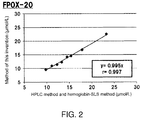
Fig. 2 shows a graph indicating the correlation between HbAlc concentrations determined by the HbA1c measurement method of the present invention which directly oxidizes HbAlc using FPOX-20, and HbAlc concentrations determined by the HbAlc measurement method that uses both of the HPLC method (KO500 method) and the hemoglobin-SLS method. -
Fig. 3 shows a graph indicating the correlation between HbAlc concentrations determined by the HbA1c measurement method of the present invention which directly oxidizes HbAlc using FPOX-32, and HbAlc concentrations determined by the HbAlc measurement method that uses both of the HPLC method (KO500 method) and the hemoglobin-SLS method. -
Fig. 4 shows a graph indicating the correlation between HbAlc concentrations determined by the HbA1c measurement method of the present invention which directly oxidizes HbA1c using FPOX-42, and HbA1c concentrations determined by the HbA1c measurement method that uses both of the HPLC method (KO500 method) and the hemoglobin-SLS method. - A measurement method of the present invention is a method for measuring glycated hemoglobin, which comprises directly oxidizing glycated hemoglobin and measuring a substance produced or consumed by the oxidation. HbAlc is preferred as a glycated hemoglobin in the present invention. While the method for directly oxidizing glycated hemoglobin may be any method as long as glycated hemoglobin can be oxidized directly, a method for oxidation that uses an enzyme is preferred.
- The measurement method of the present invention is described below.
- The sample used in the measurement method of the present invention is not particularly limited so long as it contains glycated hemoglobin, and examples include biological samples such as whole blood, plasma, serum, blood cells, cell samples, urine, spinal fluid, sweat, tear fluid, saliva, skin, mucous membrane, and hair. As a sample, whole blood, plasma, serum, blood cells and such are preferred, and whole blood, blood cells, and such are particularly preferred. Whole blood includes samples of whole blood-derived blood cell fractions admixed with plasma. With regard to these samples, samples subjected to pretreatments such as hemolysis, separation, dilution, concentration, and purification can be used.
- Hemoglobin is a hemeprotein consisting of two of each of the two types of subunits, the α-chain and the β-chain, and has a molecular weight of 64,000. The sequence of the three amino acids at the N terminus of the α-chain of hemoglobin is valine-leucine-serine and the sequence of the three amino acids at the N terminus of the β-chain is valine-histidine-leucine. HbAlc is defined as hemoglobin in which the N-terminal valine residue of the β-chain is particularly glycated; however, hemoglobin is known to have multiple glycation sites within the molecule, including the N terminus of the α-chain (The Journal of Biological Chemistry (1980), 256,3120-3127).
- In the present invention, glycated hemoglobin to be measured in a sample can be measured, for example, by sequentially performing the following steps (i) and (ii):
- (i) oxidizing glycated hemoglobin by making an enzyme act on glycated hemoglobin in the sample; and
- (ii) measuring a substance produced or consumed in the above-mentioned step (i).
- While the enzyme used in step (i) may be any enzyme as long as glycated hemoglobin can be oxidized directly, for example, the following enzymes may be used. Examples include
- [1] proteins having the amino acid sequence represented by any one of SEQ ID NOs: 3 to 34 (they are called FPOX-18A, FPOX-18B, FPOX-18C, FPOX-18D, FPOX-19, FPOX-20, FPOX-21, FPOX-22, FPOX-23, FPOX-24, FPOX-25, FPOX-26, FPOX-27, FPOX-28, FPOX-29, FPOX-30, FPOX-31, FPOX-32, FPOX-33, FPOX-34, FPOX-35, FPOX-36, FPOX-37, FPOX-38, FPOX-39, FPOX-40, FPOX-41, FPOX-42, FPOX-43, FPOX-44, FPOX-45, and FPOX-46, respectively); and
- [2] proteins comprising an amino acid sequence having 90% or higher homology to the amino acid sequence represented by any one of SEQ ID NOs: 3 to 34, and also having the activity of directly oxidizing glycated hemoglobin (hereinafter referred to as the glycated hemoglobin oxidase activity). Hereinafter, proteins having glycated hemoglobin oxidase activity are referred to as glycated hemoglobin oxidases. One type of the glycated hemoglobin oxidases can be used individually or two or more types can be used in combination.
- In order for the proteins used in the method of the present invention to have glycated hemoglobin oxidase activity, desirably, the proteins have 90% or higher, preferably 94% or higher, more preferably 96% or higher, even more preferably 98% or higher, particularly preferably 99% or higher homology to the amino acid sequence represented by any one of SEQ ID NOs: 3 to 34.
- Homology of amino acid sequences and nucleotide sequences can be determined using the BLAST algorithm by Karlin and Altshul [Pro. Natl. Acad. Sci. USA, 90, 5873 (1993)] or FASTA [Methods Enzymol., 183, 63 (1990)]. Programs called BLASTN and BLASTX have been developed based on this BLAST algorithm [J. Mol. Biol., 215, 403 (1990)]. In case nucleotide sequences are analyzed by BLASTN based on BLAST, parameters are set, for example, at score = 100 and wordlength = 12. In case amino acid sequences are analyzed by BLASTX based on BLAST, parameters are set, for example, at score = 50 and wordlength = 3. In case using the BLAST and Gapped BLAST programs, the default parameters of each program are used.
- The above-mentioned steps (i) and (ii) can be carried out in an aqueous medium. An aqueous medium is not particularly limited as long as it enables the measuring method of the present invention and examples of the aqueous medium include a deionized water, a distilled water, and a buffer solution; and, a buffer solution is preferred. Examples of a buffer agent to be used in the buffer solution include tris(hydroxymethyl)aminomethane buffer (Tris buffer), a phosphate buffer, a borate buffer, and a Good's buffer.
- Examples of the Good's buffer include 2-morpholinoethanesulfonic acid (MES), bis(2-hydroxyethyl)iminotris(hydroxymethyl)methane (Bis-Tris), N-(2-acetamido)iminodiacetic acid (ADA), piperazine-N,N'-bis(2-ethanesulfonic acid) (PIPES), N-(2-acetamido)-2-aminoethanesulfonic acid (ACES), 3-morpholino-2-hydroxypropanesulfonic acid (MOPSO), N,N-bis(2-hydroxyethyl)-2-aminoethanesulfonic acid (BES), 3-morpholinopropanesulfonic acid (MOPS), N-[tris(hydroxymethyl)methyl]-2-aminoethanesulfonic acid (TES), 2-[4-(2-hydroxyethyl)-1-piperazinyl]ethanesulfonic acid (HEPES), 3-[N,N-bis(2-hydroxyethyl)amino]-2-hydroxypropanesulfonic acid (DIPSO), N-[tris(hydroxymethyl)methyl]-2-hydroxy-3-aminopropanesulfonic acid (TAPSO), piperazine-N,N'-bis(2-hydroxy-3-propanesulfonic acid) (POPSO), 3-[4-(2-hydroxyethyl)-1-piperazinyl]-2-hydroxypropanesulfonic acid (HEPPSO), 3-[4-(2-hydroxyethyl)-1-piperazinyl]propanesulfonic acid [(H)EPPS], N-[tris(hydroxymethyl)methyl]-glycine (Tricine), N,N-bis(2-hydroxyethyl)glycine (Bicine), N-tris(hydroxymethyl)methyl-3-aminopropanesulfonic acid (TAPS), N-cyclohexyl-2-aminoethanesulfonic acid (CHES), N-cyclohexyl-3-amino-2-hydroxypropanesulfonic acid (CAPSO), and N-cyclohexyl-3-aminopropanesulfonic acid (CAPS).
- The concentration of the buffer is not particularly limited as long as it is suitable for measurement, and the concentration is preferably 0.001 mol/L to 2.0 mol/L, and more preferably 0.005 mol/L to 1.0 mol/L.
- In step (i) mentioned above, a denaturing agent of glycated hemoglobin or an oxidizing agent may coexist. Alternatively, a sample containing glycated hemoglobin can be treated with the denaturing agent or the oxidizing agent in advance. The denaturing agent is not particularly limited, as long as it enables the measurement method of the present invention and examples thereof include a nonionic surfactant, a cationic surfactant, an anionic surfactant, and an amphoteric surfactant. The oxidizing agent is not particularly limited as long as it enables the measurement method of the present invention and examples thereof include potassium iodate, potassium periodate, and potassium bromate.
- For the reactions in each step, the reaction temperature is for example, 10°C to 50°C and preferably 20°C to 40°C, and the reaction time is 1 second to 120 minutes, preferably 1 to 90 minutes, and particularly preferably 1 to 60 minutes.
- In step (i), products formed in the reaction solution due to the reaction between the glycated hemoglobin and the enzyme include hydrogen peroxide, sugar osone (α-keto aldehyde), and hemoglobin. Furthermore, in step (i), a substance consumed by the reaction between the glycated hemoglobin and the enzyme is, for example, an oxygen molecule. Oxygen molecule consumed in step (i) is measured, for example, by an electrochemical measurement method using an oxygen electrode.
- In the method for measuring glycated hemoglobin of the present invention, the method for measuring glycated hemoglobin in a sample, which comprises making glycated hemoglobin oxidase act on glycated hemoglobin in the sample to directly oxidize the glycated hemoglobin, and measuring the thus produced hydrogen peroxide, is preferred. Hydrogen peroxide produced in step (i) of the present invention can be measured using, for example, an optical technique or an electrochemical technique. Examples of the optical technique include an absorbance method and a luminescence method. Specific examples include an optical determination using a reagent for measuring hydrogen peroxide and an electrochemical determination using a hydrogen peroxide electrode.
- A reagent for measuring hydrogen peroxide is a reagent for converting the produced hydrogen peroxide into a detectable substance. Examples of the detectable substance include dye and light; and, a dye is preferred.
- In case the detectable substance is a dye, the reagent for measuring hydrogen peroxide comprises a peroxidative active substance such as peroxidase and an oxidative coloring chromogen. Examples of the oxidative coloring chromogen include an oxidative coupling-type chromogen and a leuco-type chromogen which are described later.
- In case the detectable substance is a light, the reagent for measuring hydrogen peroxide comprises a chemiluminescent substance. A bioluminescent substance is included in a chemiluminescent substance, and examples of the chemiluminescent substance include luminol, isoluminol, lucigenin, an acridinium ester, and an oxalate ester.
- In case using a reagent comprising a peroxidative active substance such as peroxidase and an oxidative coloring chromogen as a reagent for measuring hydrogen peroxide, hydrogen peroxide can be measured by reacting hydrogen peroxide with the oxidative coloring chromogen in the presence of a peroxidative active substance to form a dye and then measuring the formed dye. Furthermore, in case using a reagent for measuring hydrogen peroxide which comprises a chemiluminescent substance, hydrogen peroxide can be measured by reacting hydrogen peroxide with a chemiluminescent substance to form photons and then measuring the formed photons.
- An oxidative coupling-type chromogen is a chromogen which reacts with hydrogen peroxide in the presence of a peroxidative active substance such as peroxidase to produce a dye by an oxidative coupling reaction. Specific examples of the oxidative coupling-type chromogen include a coupler such as 4-aminoantipyrine, and a phenolic or anilinic hydrogen donor. A coupler and a phenolic or anilinic hydrogen donor compound undergo oxidative coupling in the presence of hydrogen peroxide and a peroxidative active substance to produce a dye.
- Examples of a coupler include 4-aminoantipyrine (4-AA) and 3-methyl-2-benzothiazolinone hydrazone.
- Examples of a phenolic hydrogen donor include phenol, 4-chlorophenol, 3-methylphenol, and 3-hydroxy-2,4,6-triiodobenzoic acid (HTIB).
- Examples of an anilinic hydrogen donor include N-(3-sulfopropyl)aniline, N-ethyl-N-(2-hydroxy-3-sulfopropyl)-3-methylaniline (TOOS), N-ethyl-N-(2-hydroxy-3-sulfopropyl)-3,5-dimethylaniline (MAOS), N-ethyl-N-(2-hydroxy-3-sulfopropyl)-3,5-dimethoxyaniline (DAOS), N-ethyl-N-(3-sulfopropyl)-3-methylaniline (TOPS), N-(2-hydroxy-3-sulfopropyl)-3,5-dimethoxyaniline (HDAOS), N,N-dimethyl-3-methylaniline, N,N-di(3-sulfopropyl)-3,5-dimethoxyaniline, N-ethyl-N-(3-sulfopropyl)-3-methoxyaniline, N-ethyl-N-(3-sulfopropyl)aniline, N-ethyl-N-(3-sulfopropyl)-3,5-dimethoxyaniline, N-(3-sulfopropyl)-3,5-dimethoxyaniline, N-ethyl-N-(3-sulfopropyl)-3,5-dimethylaniline, N-ethyl-N-(2-hydroxy-3-sulfopropyl)-3-methoxyaniline, N-ethyl-N-(2-hydroxy-3-sulfopropyl)aniline, N-ethyl-N-(3-methylphenyl)-N'-succinylethylenediamine (EMSE), N-ethyl-N-(3-methylphenyl)-N'-acetylethylenediamine, N-ethyl-N-(2-hydroxy-3-sulfopropyl)-4-fluoro-3,5-dimethoxyaniline (F-DAOS), N-[2-(succinylamino)ethyl]-2-methoxy-5-methylaniline (MASE), and N-ethyl-N-[2-(succinylamino)ethyl]-2-methoxy-5-methylaniline (Et-MASE).
- A leuco chromogen is a chromogen which produces a dye by itself by reacting with hydrogen peroxide in the presence of a peroxidative active substance such as peroxidase. Specific examples thereof include 10-N-carboxymethylcarbamoyl-3,7-bis(dimethylamino)-10H-phenothiazine (CCAP), 10-N-methylcarbamoyl-3,7-bis(dimethylamino)-10H-phenothiazine (MCDP), N-(carboxymethylaminocarbonyl)-4,4'-bis(dimethylamino)diphenylamine sodium salt (DA-64), 10-(carboxymethylaminocarbonyl)-3,7-bis(dimethylamino)phenothiazine sodium salt (DA-67), 4,4'-bis(dimethylamino)diphenylamine, bis[3-bis(4-chlorophenyl)methyl-4-dimethylaminophenyl]amine (BCMA), N,N,N',N',N",N"-hexa-3-sulfopropyl-4,4',4"-triaminotriphenylmethane (TPM-PS), diaminobentidine, hydroxyphenylpropionic acid, tetramethylbentidine, and 0-phenylenediamine.
- In the measurement of hydrogen peroxide, the concentration of the peroxidative active substance is not particularly limited as long as it is suitable for the measurement; and, in case peroxidase is used as a peroxidative active substance, the concentration is preferably 1 U/mL to 100 U/mL and more preferably 2 U/mL to 50 U/mL. The concentration of the oxidative coloring chromogen is not particularly limited as long as it is suitable for measurement; and, it is preferably 0.01 g/L to 10 g/L and more preferably 0.02 g/L to 5 g/L.
- In case hydrogen peroxide is measured using a hydrogen peroxide electrode, the electrode to be used is not particularly limited as long as it is a material that allows transfer of electrons with the hydrogen peroxide, and examples thereof include platinum, gold, and silver. As a method for measurement, known methods such as amperometry, potentiometry, and coulometry can be used. By interposing an electron-transfer substance in the reaction between the electrode and the oxidase or substrate, the resulting oxidation or reduction current or its electrical quantity can also be measured.
- Any substance having a function of transferring electrons can be used as an electron-transfer substance, and examples thereof include a substance such as a ferrocene derivative and a quinone derivative. Furthermore, the oxidation or reduction current or its electrical quantity obtained by interposing an electron-transfer substance between the electrode and the hydrogen peroxide produced by the oxidase reaction can be measured.
- In step (i), a sugar osone (an α-keto aldehyde) is produced together with hydrogen peroxide; therefore, HbAlc in a sample can also be measured by measuring the produced sugar osone (an α-keto aldehyde). By making glucose oxidase act on the α-keto aldehyde and by measuring the produced hydrogen peroxide as well, highly sensitive measurements can be carried out (
JP-A (Kokai) 2000-333696 - An example of a method for producing glycated hemoglobin oxidase which is a protein used in a method of the present invention is shown below.
- Expression plasmid pTrc-FPOX-9 of glycated peptide oxidase FPOX-9 represented by the amino acid sequence of SEQ ID NO: 2 is extracted from glycated peptide oxidase FPOX-9-expressing Escherichia coli XLI-Blue MRF' strain deposited under Accession No. FERM BP-11026, by using a commercially available plasmid extraction kit.
- Expression plasmid pTrc-FPOX-15 of glycated peptide oxidase FPOX-15 having the amino acid sequence represented by SEQ ID NO: 1 is constructed through site-specific introduction of amino acid substitutions by a PCR method using the pTrcFPOX-9 expression plasmid as a template DNA and a primer pair in which a codon corresponding to the target amino acid position is replaced with a codon corresponding to the substituting amino acid.
- Site-specific amino acid substitutions are introduced to pTrc-FPOX-15 by a method similar to that described above to construct expression plasmids for each of the glycated hemoglobin oxidases, which are FPOX-18A having the amino acid sequence represented by SEQ ID NO: 3, FPOX-18B having the amino acid sequence represented by SEQ ID NO: 4, FPOX-18C having the amino acid sequence represented by SEQ ID NO: 5, FPOX-18D having the amino acid sequence represented by SEQ ID NO: 6, FPOX-19 having the amino acid sequence represented by SEQ ID NO: 7, and FPOX-20 having the amino acid sequence represented by SEQ ID NO: 8.
- By introducing site-specific amino acid substitutions to the FPOX-19 expression plasmid pTrc-FPOX-19 by a method similar to that described above, expression plasmids for each of the glycated hemoglobin oxidases FPOX-21 to 46 having the amino acid sequence represented by SEQ ID NOs: 9 to 34, respectively, are constructed.
- The constructed glycated hemoglobin oxidase expression plasmids are used to transform E. coli strains to produce recombinant glycated hemoglobin oxidase-expressing E. coli strains. The recombinant glycated hemoglobin oxidase-expressing E. coli strains are inoculated into Luria-Bertani (hereinafter written as LB) medium containing 50 to 100 mg/L ampicillin, and are shake-cultured at 37°C. After growing the culture to OD600 = 0.4 to 0.8, isopropyl-β-thiogalactoside (hereinafter written as IPTG) is added to make a final concentration of 0.1 to 1 mmol/L, and shake-culturing is continued at 37°C for 5 to 24 hours. After culturing, the bacterial cells are collected by centrifugation at 8000 rpm for 10 to 30 minutes.
- The bacterial cells obtained as described above are suspended in a buffer, and disrupted by sonication for one to ten minutes, and after centrifugation, the supernatants are fractionated to prepare crude extract solutions of the enzymes. Purified enzymes are prepared from the crude extract solutions by techniques such as anion exchange column chromatography and ammonium sulfate precipitation, using as indicators the enzyme activity and the color tone presented by the coenzyme flavin-adenine dinucleotide (hereinafter written as FAD) harbored by the enzymes.
- Concentrations of the purified enzymes are determined by measuring the absorbance at 452 nm which is derived from FAD, a coenzyme of the protein, comparing the obtained absorbance to the results in the calibration curve that indicates the relationship between glycated hemoglobin oxidase concentration and absorbance, which was prepared in advance using glycated peptide oxidase with known activity.
- In the measurement method of the present invention, glycated hemoglobin oxidase activity can be measured, for example, by the following method.
-
- Solution A: 0.1 mol/L MOPS buffer (pH6.8)
- Solution B: Color developing agent
24 mmol/L DA-67 solution in dimethylformamide (DMF) - Solution C: Peroxidase solution
1 kU/L peroxidase solution in 10 mmol/L phosphate buffer (pH7.0) - Solution D: Substrate solution
10 g/L aqueous hemoglobin solution - Solution E: Denaturant solution
aqueous solution of 5 g/L potassium iodate and 50% (v/v) surfactant (AMPHITOL 20N) - Solution F: Enzyme solution
0.5 to 1.0 U/mL glycated hemoglobin oxidase solution in 10 mmol/L phosphate buffer (pH7.0) -
- (i) 4 µL of Solution E is mixed into 40 µL of Solution D, and the mixture is incubated at 37°C for 10 minutes.
- (ii) To 10 mL of Solution A, 12.6 µL of Solution B and 35 µL of Solution C are added, the obtained solution is dispensed into each well of a 96-well plate at 190 µL per sample, then 40 µL of a solution produced by mixing Solutions D and E, and 20 µL of Solution F are added and mixed, and the absorbance of the solution immediately after mixing is measured at 660 nm (main wavelength) / 750 nm (sub-wavelength) using a fully automated microplate EIA analyzer; this is followed by enzyme reaction while incubating at 37°C for 60 to 120 minutes, the absorbance of the obtained solution is measured at 660 nm (main wavelength) / 750 nm (sub-wavelength) and the change in absorbance before and after the enzyme reaction is determined. Furthermore, similar measurements are performed using distilled water instead of Solution D where the change in absorbance before and after the enzyme reaction is set as a blank value, and by subtracting the blank value from the value for the change in absorbance before and after enzyme reaction in the measurement using solution D, the absorbance due to the enzyme reaction can be measured, and this can be used as an indicator for glycated hemoglobin oxidase activity.
- The above-mentioned steps (i) and (ii) may be carried out in an aqueous medium. Examples of the aqueous medium include the aforementioned aqueous medium and a buffer is preferred. The buffer concentration may be, for example, the aforementioned buffer concentration.
- For the reactions in each step, the reaction temperature is for example, 10°C to 50°C and preferably 20°C to 40°C, and the reaction time is 1 second to 120 minutes, preferably 1 to 90 minutes, and particularly preferably 1 to 60 minutes.
- All prior art documents cited herein are incorporated by reference into this description.
- Herein below, Examples are indicated, but the present invention is not to be construed as being limited thereto. Reagents and enzymes of the following manufacturers were used in the present Examples:
- potassium dihydrogenphosphate (Wako Pure Chemical Industries), dibasic potassium phosphate (Wako Pure Chemical Industries), DA-67 (manufactured by Wako Pure Chemical Industries), peroxidase (manufactured by TOYOBO), MOPS (manufactured by Dojindo Laboratories), dimethylformamide (manufactured by Wako Pure Chemical Industries), potassium iodate (manufactured by Wako Pure Chemical Industries), Luria-Bertani miller medium (LB medium) (manufactured by Becton, Dickinson and Company), KOD -Plus- (DNA polymerase; manufactured by TOYOBO), Dpn I (restriction enzyme; manufactured by New England Biolabs), Competent high DH5α (E. coli competent cells; manufactured by TOYOBO), Hemoglobin B-Test Wako (kit for measuring hemoglobin concentration; manufactured by Wako Pure Chemical Industries)
- Glycated peptide oxidase FPOX-9-expressing E. coli XL1-Blue MRF' strain deposited under Accession No. FERM BP-11026 was inoculated into 3 mL of LB medium containing 50 mg/L ampicillin, and shaking culture was performed overnight at 37°C. The culture solution was centrifuged at 8,000 rpm for 2 minutes to collect the bacterial cells. Expression plasmid pTrc-FPOX-9 comprising a DNA consisting of the nucleotide sequence represented by SEQ ID NO: 36, which expresses glycated peptide oxidase FPOX-9 having the amino acid sequence represented by SEQ ID NO: 2 was extracted from the obtained bacterial cells using "Wizard Plus SV Minipreps DNA Purification" manufactured by Promega.
- Using the method described in International Publication No.
WO 2010/041715 pamphlet, pTrc-FPOX-15 comprising a DNA consisting of the nucleotide sequence represented by SEQ ID NO: 35 was produced from pTrc-FPOX-9 and by transforming the E. coli DH5α strain using pTrc-FPOX-15, an E. coli strain that expresses glycated peptide oxidase FPOX-15 having the amino acid sequence represented by SEQ ID NO: 1 was produced. The bacterial strain was inoculated into 3 mL of LB medium containing 50 mg/L ampicillin, and shaking culture was performed overnight at 37°C. The culture solution was centrifuged at 8,000 rpm for 2 minutes to collect the bacterial cells. The FPOX-15 expression plasmid pTrc-FPOX-15 was extracted from the obtained bacterial cells using "Wizard Plus SV Minipreps DNA Purification" manufactured by Promega. - Using pTrc-FPOX-15 as a template DNA and pairs of primers in which a codon corresponding to the amino acid to be mutated is replaced with a codon corresponding to the substituting amino acid, PCR was carried out using DNA polymerase "KOD -Plus-" of a PCR kit manufactured by TOYOBO by following the protocol provided in the kit using the following reagent composition and PCR conditions to obtain a PCR product (expression plasmid containing mutations). In the PCR reaction, the template DNA, the forward primer, and the reverse primer were used such that their concentrations in the reaction solution would be 1 to 2 mg/L, 0.3 µmol/L, and 0.3 µmol/L, respectively.
(Reagent composition) - reaction buffer - template DNA 1 to 2 ng/µL - forward primer 0.3 µmol/L - reverse primer 0.3 µmol/L - dNTP solution mixture 0.2 mmol/L each - MgSO4 1 mmol/L - DNA polymerase 0.02 U/µL - sterilized water added to fill up to 50 µL -
- 1. 94°C for 2 minutes
- 2. 98°C for 15 seconds
- 3. 60°C for 30 seconds
- 4. 68°C for 6 minutes
- 5. repeat 2 to 4 (for a total of 30 cycles)
- 6. 68°C for 10 minutes
- To 50 µL of the PCR product, 1 µL of "restriction enzyme Dpn I" manufactured by New England Biolabs was added, and by incubating this at 37°C for 1 hour, template DNA was degraded. The PCR product subjected to the restriction enzyme treatment was purified using "Wizard SV Gel and PCR Clean-Up System" manufactured by Promega, and a portion of this sample was used to transform E. coli competent cells "Competent high DH5α" manufactured by TOYOBO. Colonies grown on LB agar medium containing 50 mg/L ampicillin were selected, plasmids were extracted using "Wizard Plus SV Minipreps DNA Purification" manufactured by Promega, and the clones introduced with the amino acid substitutions of interest were selected by analyzing their sequences on a DNA sequencer. The primers used for the sequence analysis were primers having DNAs consisting of the nucleotide sequences represented by SEQ ID NOs: 69 and 70 which respectively reflect the nucleotide sequences just before and after the multicloning site of the pTrc99a vector (4,176-bp, manufactured by GE Healthcare Bio-Sciences), and a primer having a DNA consisting of the nucleotide sequence represented by SEQ ID NO: 71 which is the nucleotide sequence of positions 530 to 548 in the nucleotide sequence of FPOX-15 having the nucleotide sequence represented by SEQ ID NO: 35.
- Each of the site-specific amino acid substitutions shown in Table 1 was introduced into the pTrc-FPOX-15 expression plasmid by the above-mentioned method to construct the glycated hemoglobin oxidase. Each of the site-specific amino acid substitutions of NOs. 1 to 19 were carried out using the respectively indicated primer pairs having the DNAs consisting of the nucleotide sequences represented by the SEQ ID NOs.
Table 1 No. Amino acid position Before substitution After substitution SEQ ID NOs of the primer pair 1 61 Arg Ser 72, 73 2 63 Arg Ala 74, 75 3 62 Leu Gly 76, 77 4 71 Tyr Cys 78, 79 5 71 Ser 80, 81 6 115 Asp Asn 82, 83 7 115 Arg 84, 85 8 108 Met Lys 86, 87 9 75 Leu Ala 88, 89 10 Phe 90, 91 11 34 Ser Thr 92, 93 12 52 Tyr His 94, 95 13 57 Ile Val 96, 97 14 66 Pro His 98, 99 15 95 Asp Glu 100, 101 16 105 Lys Arg 102, 103 17 105/108 Lys/Lys Arg/Arg 102, 104 18 108 Lys Arg 105, 106 19 355 Ala Ser 107, 108 - The pTrc-FPOX-18A plasmid that expresses FPOX-18A having the amino acid sequence represented by SEQ ID NO: 3 was constructed by stepwise introduction of the site-specific amino acid substitutions of Nos. 1 to 4 of Table 1 into pTrc-FPOX-15. pTrc-FPOX-18A comprises a DNA consisting of the nucleotide sequence encoding FPOX-18A represented by SEQ ID NO: 37. The pTrc-FPOX-18B plasmid that expresses FPOX-18B having the amino acid sequence represented by SEQ ID NO: 4 was constructed by stepwise introduction of the site-specific amino acid substitutions of Nos. 1 to 3 and 5 of Table 1 into pTrc-FPOX-15. pTrc-FPOX-18B comprises a DNA consisting of the nucleotide sequence encoding FPOX-18B represented by SEQ ID NO: 38. The pTrc-FPOX-18C plasmid that expresses FPOX-18C having the amino acid sequence represented by SEQ ID NO: 5 was constructed by introducing the site-specific amino acid substitution of No. 6 of Table 1 into pTrc-FPOX-18B. pTrc-FPOX-18C comprises a DNA consisting of the nucleotide sequence encoding FPOX-18C represented by SEQ ID NO: 39. The pTrc-FPOX-18D plasmid that expresses FPOX-18D having the amino acid sequence represented by SEQ ID NO: 6 was constructed by introducing the site-specific amino acid substitution of No. 7 of Table 1 into pTrc-FPOX-18B. pTrc-FPOX-18D comprises a DNA consisting of the nucleotide sequence encoding FPOX-18D represented by SEQ ID NO: 40. The pTrc-FPOX-19 plasmid that expresses FPOX-19 having the amino acid sequence represented by SEQ ID NO: 7 was constructed by introducing the site-specific amino acid substitution of No. 8 of Table 1 into pTrc-FPOX-18D. pTrc-FPOX-19 comprises a DNA consisting of the nucleotide sequence encoding FPOX-19 represented by SEQ ID NO: 41. The pTrc-FPOX-20 plasmid that expresses FPOX-20 having the amino acid sequence represented by SEQ ID NO: 8 was constructed by introducing the site-specific amino acid substitution of No. 9 of Table 1 into pTrc-FPOX-19. pTrc-FPOX-20 comprises a DNA consisting of the nucleotide sequence encoding FPOX-20 represented by SEQ ID NO: 42.
- Construction of each of the expression plasmids pTrc-FPOX-21 to pTrc-FPOX-46 comprising DNAs consisting of the nucleotide sequences encoding the mutant FPOX-21 to FPOX-46 respectively having the amino acid sequences represented by SEQ ID NOs: 9 to 34 respectively was carried out by using pTrc-FPOX-19 as a template, and by performing stepwise introduction of a combination of the site-specific mutations of Nos. 10 to 19 in Table 1 and accumulating the mutations as indicated in Table 2.
Table 2 Mutant Amino acid mutation(s) based on FPOX-19 Position(s) of mutation and amino acids before and after substitution No. in Table 1 FPOX-21 L75F 10 FPOX-22 L75F/S34T 10, 11 FPOX-23 L75F/Y52H 10, 12 FPOX-24 L75F/I57V 10, 13 FPOX-25 L75F/P66H 10, 14 FPOX-26 L75F/D95E 10, 15 FPOX-27 L75F/K105R 10, 16 FPOX-28 L75F/K108R 10, 18 FPOX-29 L75F/A355S 10, 19 FPOX-30 L75F/P66H/D95E 10, 14, 15 FPOX-31 L75F/P66H/D95E/K105R 10, 14, 15, 16 FPOX-32 L75F/P66H/D95E/K105R/K108R 100,14, 15, 17 FPOX-33 L75F/P66H/D95E/K105R/K108R/S34T 10, 11, 14, 15, 17 FPOX-34 L75F/P66H/D95E/K105R/K108R/Y52H 10, 12, 14, 15, 17 FPOX-35 L75F/P66H/D95E/K105R/K108R/I57V 10, 13, 14, 15, 17 FPOX-36 L75F/P66H/K108R 10, 14, 18 FPOX-37 L75F/P66H/K105R/K108R 10, 14, 17 FPOX-38 L75F/P66H/A355S 10, 14, 19 FPOX-39 L75F/P66H/A355S/D95E 10, 14, 15, 19 FPOX-40 L75F/P66H/A355S/K105R 10, 14, 16, 19 FPOX-41 L75F/P66H/A355S/K108R 10, 14, 18, 19 FPOX-42 L75F/P66H/K105R/K108R/A355S 10, 14, 17, 19 FPOX-43 L75F/P66H/K105R/K108R/A355S/S34T 10, 11, 14, 17, 19 FPOX-44 L75F/P66H/K105R/K108R/A355S/Y52H 10, 12, 14, 17, 19 FPOX-45 L75F/P66H/K105R/K108R/A355S/I57V 10, 13, 14, 17, 19 FPOX-46 L75F/P66H/K105R/K108R/A355S/D95E 10, 14, 15, 17, 19 - Transformant E. coli strains expressing each of the glycated hemoglobin oxidases were produced by transforming the E. coli DH5α strain by introducing each of the 32 types of glycated hemoglobin oxidase expression plasmids described above, which are pTrc-FPOX-18A, pTrc-FPOX-18B, pTrc-FPOX-18C, pTrc-FPOX-18D, and pTrc-FPOX-19 to pTrc-FPOX-46.
- Among the glycated hemoglobin oxidase-expressing E. coli strains obtained above, E. coli strains expressing each of the proteins FPOX-19, FPOX-20, FPOX-32, and FPOX-42 were used, and by following the glycated peptide oxidase expression and purification methods described in International Publication
WO 2010/041715 , the glycated hemoglobin oxidases were purified, and were used for the methods for measuring glycated hemoglobin of the present invention. - The protein concentrations of the purified glycated hemoglobin oxidases were determined by the following method based on FAD harbored by glycated hemoglobin oxidases.
- First, glycated peptide oxidase FPOX-CE (manufactured by Kikkoman Co.) was diluted using 10 mmol/L phosphate buffer (pH7.0) to prepare FPOX-CE solutions having each of the following concentrations: 0.7, 1.4, 2.8, 5.6, and 11.2 mg/mL. The FPOX-CE solutions prepared at each of the concentrations, were subjected to absorbance measurements at 452 nm (main wavelength) / 600 nm (sub-wavelength) using the "Ultrospec 2100 pro" spectrophotometer manufactured by GE Healthcare to produce a calibration curve indicating the relationship between FPOX-CE concentration and absorbance. Next, purified glycated hemoglobin oxidase was used as a sample instead of the aforementioned FPOX-CE, but otherwise the same method was used to measure the absorbance of the purified protein. Protein concentrations of the purified glycated hemoglobin oxidases were determined by comparing the measured absorbance values with the values of the above-described calibration curve.
- Using each of the mutants FPOX-19, FPOX-20, FPOX-32, and FPOX-42 obtained in Example 1 as an enzyme, and using hemolysate samples derived from human blood cells, whose HbAlc concentrations have been determined by both of the HPLC method (KO500 method) and the hemoglobin-SLS method, as a test sample, the change in absorbance for each of the samples was determined using the following reagents and measurement procedure. In the measurement of hemoglobin concentration by the hemoglobin-SLS method, Hemoglobin B-test Wako (manufactured by Wako Pure Chemical Industries) was used.
-
- Solution A: 0.1 mol/L MOPS buffer (pH6.8)
- Solution B: 24 mmol/L DA-67 solution in DMF
- Solution C: 1 kU/L peroxidase solution in 10 mmol/L phosphate buffer (pH7.0)
- Solution D: hemolysate samples derived from human blood cells [hemoglobin concentration is 10 mg/mL, and the HbAlc concentrations have been given values of 9.8, 11.1, 12.3, 13.3, 14.5, 15.4, 17.9, and 23.3 µmol/L from both of the HPLC method (KO500 method) and the hemoglobin-SLS method]
- Solution E: aqueous solution of 5 g/L potassium iodate and 50% (v/v) AMPHITOL 20N
- Solution F: 40 mg/mL glycated hemoglobin oxidase (each of the mutants FPOX-19, FPOX-20, FPOX-32, and FPOX-42) solution in 10 mmol/L phosphate buffer (pH7.0)
-
- (i) 4 µL of Solution E was added to 40 µL of Solution D and mixed, and the mixture was incubated at 37°C for 10 minutes.
- (ii) To 10 mL of Solution A, 12.6 µL of Solution B and 35 µL of Solution C were added, the obtained solution was dispensed into each well of a 96-well microplate at 190 µL per sample, then 40 µL of a solution produced by mixing Solutions D and E, and 20 µL of Solution F were added and mixed, and this was allowed to react at 37°C for 60 minutes.
- The absorbance of the solution before reaction Abs(before reaction) at 660 nm (main wavelength) / 750 nm (sub-wavelength), and the absorbance of the solution after reaction Abs(after reaction) at 660 nm (main wavelength) / 750 nm (sub-wavelength) were measured using a fully automated microplate EIA analyzer (AP-96, manufactured by Kyowa Medex Co., Ltd.). The absorbance change due to the reaction Δ'Abs(reaction) was determined by subtracting the absorbance Abs(before reaction) from the absorbance AbS(after reaction).
- Similar measurements were performed using two hemolysate samples derived from human blood cells which have known HbAlc concentrations (samples in which hemoglobin concentration is 10 mg/mL and the HbAlc concentrations are 9.82 µmol/L and 24.2 µmol/L, respectively) to prepare a calibration curve indicating the relationship between HbAlc concentration and absorbance change due to the reaction Δ'Abs(reaction).
- HbAlc concentration in each of the hemolysate samples derived from human blood cells was determined by correlating the reaction absorbance Δ'Abs(reaction) values for each of the hemolysate samples derived from human blood cells to the values of the above-mentioned calibration curve. HbAlc concentration determined this way was compared with the HbAlc concentration determined by the control method using both of the HPLC method (KO500 method) and the hemoglobin-SLS method.
- As shown in
Figures 1 to 4 , good correlation was observed between HbAlc concentrations determined by the measurement method of the present invention and HbAlc concentrations determined by the control method using both of the HPLC method (KO500 method) and the hemoglobin-SLS method. Accordingly, the measurement method of the present invention was found to be able to measure HbAlc in samples. - The present invention provides a method for measuring glycated hemoglobin, which is useful for diagnosing lifestyle-related disease such as diabetes mellitus.
-
- SEQ ID NO: 1 - Description of Artificial Sequence: Amino acid sequence of FPOX-15
- SEQ ID NO: 2 - Description of Artificial Sequence: Amino acid sequence of FPOX-9
- SEQ ID NO: 3 - Description of Artificial Sequence: Amino acid sequence of FPOX-18A
- SEQ ID NO: 4 - Description of Artificial Sequence: Amino acid sequence of FPOX-18B
- SEQ ID NO: 5 - Description of Artificial Sequence: Amino acid sequence of FPOX-18C
- SEQ ID NO: 6 - Description of Artificial Sequence: Amino acid sequence of FPOX-18D
- SEQ ID NO: 7 - Description of Artificial Sequence: Amino acid sequence of FPOX-19
- SEQ ID NO: 8 - Description of Artificial Sequence: Amino acid sequence of FPOX-20
- SEQ ID NO: 9 - Description of Artificial Sequence: Amino acid sequence of FPOX-21
- SEQ ID NO: 10 - Description of Artificial Sequence: Amino acid sequence of FPOX-22
- SEQ ID NO: 11 - Description of Artificial Sequence: Amino acid sequence of FPOX-23
- SEQ ID NO: 12 - Description of Artificial Sequence: Amino acid sequence of FPOX-24
- SEQ ID NO: 13 - Description of Artificial Sequence: Amino acid sequence of FPOX-25
- SEQ ID NO: 14 - Description of Artificial Sequence: Amino acid sequence of FPOX-26
- SEQ ID NO: 15 - Description of Artificial Sequence: Amino acid sequence of FPOX-27
- SEQ ID NO: 16 - Description of Artificial Sequence: Amino acid sequence of FPOX-28
- SEQ ID NO: 17 - Description of Artificial Sequence: Amino acid sequence of FPOX-29
- SEQ ID NO: 18 - Description of Artificial Sequence: Amino acid sequence of FPOX-30
- SEQ ID NO: 19 - Description of Artificial Sequence: Amino acid sequence of FPOX-31
- SEQ ID NO: 20 - Description of Artificial Sequence: Amino acid sequence of FPOX-32
- SEQ ID NO: 21 - Description of Artificial Sequence: Amino acid sequence of FPOX-33
- SEQ ID NO: 22 - Description of Artificial Sequence: Amino acid sequence of FPOX-34
- SEQ ID NO: 23 - Description of Artificial Sequence: Amino acid sequence of FPOX-35
- SEQ ID NO: 24 - Description of Artificial Sequence: Amino acid sequence of FPOX-36
- SEQ ID NO: 25 - Description of Artificial Sequence: Amino acid sequence of FPOX-37
- SEQ ID NO: 26 - Description of Artificial Sequence: Amino acid sequence of FPOX-38
- SEQ ID NO: 27 - Description of Artificial Sequence: Amino acid sequence of FPOX-39
- SEQ ID NO: 28 - Description of Artificial Sequence: Amino acid sequence of FPOX-40
- SEQ ID NO: 29 - Description of Artificial Sequence: Amino acid sequence of FPOX-41
- SEQ ID NO: 30 - Description of Artificial Sequence: Amino acid sequence of FPOX-42
- SEQ ID NO: 31 - Description of Artificial Sequence: Amino acid sequence of FPOX-43
- SEQ ID NO: 32 - Description of Artificial Sequence: Amino acid sequence of FPOX-44
- SEQ ID NO: 33 - Description of Artificial Sequence: Amino acid sequence of FPOX-45
- SEQ ID NO: 34 - Description of Artificial Sequence: Amino acid sequence of FPOX-46
- SEQ ID NO: 35 - Description of Artificial Sequence: DNA of FPOX-15
- SEQ ID NO: 36 - Description of Artificial Sequence: DNA of FPOX-9
- SEQ ID NO: 37 - Description of Artificial Sequence: DNA of FPOX-18A
- SEQ ID NO: 38 - Description of Artificial Sequence: DNA of FPOX-18B
- SEQ ID NO: 39 - Description of Artificial Sequence: DNA of FPOX-18C
- SEQ ID NO: 40 - Description of Artificial Sequence: DNA of FPOX-18D
- SEQ ID NO: 41 - Description of Artificial Sequence: DNA of FPOX-19
- SEQ ID NO: 42 - Description of Artificial Sequence: DNA of FPOX-20
- SEQ ID NO: 43 - Description of Artificial Sequence: DNA of FPOX-21
- SEQ ID NO: 44 - Description of Artificial Sequence: DNA of FPOX-22
- SEQ ID NO: 45 - Description of Artificial Sequence: DNA of FPOX-23
- SEQ ID NO: 46 - Description of Artificial Sequence: DNA of FPOX-24
- SEQ ID NO: 47 - Description of Artificial Sequence: DNA of FPOX-25
- SEQ ID NO: 48 - Description of Artificial Sequence: DNA of FPOX-26
- SEQ ID NO: 49 - Description of Artificial Sequence: DNA of FPOX-27
- SEQ ID NO: 50 - Description of Artificial Sequence: DNA of FPOX-28
- SEQ ID NO: 51 - Description of Artificial Sequence: DNA of FPOX-29
- SEQ ID NO: 52 - Description of Artificial Sequence: DNA of FPOX-30
- SEQ ID NO: 53 - Description of Artificial Sequence: DNA of FPOX-31
- SEQ ID NO: 54 - Description of Artificial Sequence: DNA of FPOX-32
- SEQ ID NO: 55 - Description of Artificial Sequence: DNA of FPOX-33
- SEQ ID NO: 56 - Description of Artificial Sequence: DNA of FPOX-34
- SEQ ID NO: 57 - Description of Artificial Sequence: DNA of FPOX-35
- SEQ ID NO: 58 - Description of Artificial Sequence: DNA of FPOX-36
- SEQ ID NO: 59 - Description of Artificial Sequence: DNA of FPOX-37
- SEQ ID NO: 60 - Description of Artificial Sequence: DNA of FPOX-38
- SEQ ID NO: 61 - Description of Artificial Sequence: DNA of FPOX-39
- SEQ ID NO: 62 - Description of Artificial Sequence: DNA of FPOX-40
- SEQ ID NO: 63 - Description of Artificial Sequence: DNA of FPOX-41
- SEQ ID NO: 64 - Description of Artificial Sequence: DNA of FPOX-42
- SEQ ID NO: 65 - Description of Artificial Sequence: DNA of FPOX-43
- SEQ ID NO: 66 - Description of Artificial Sequence: DNA of FPOX-44
- SEQ ID NO: 67 - Description of Artificial Sequence: DNA of FPOX-45
- SEQ ID NO: 68 - Description of Artificial Sequence: DNA of FPOX-46
- SEQ ID NO: 69 - Description of Artificial Sequence: pTrc-F1 primer
- SEQ ID NO: 70 - Description of Artificial Sequence: pTrc-R primer
- SEQ ID NO: 71 - Description of Artificial Sequence: pTrc-F2 primer
- SEQ ID NO: 72 - Description of Artificial Sequence: R61S-F primer
- SEQ ID NO: 73 - Description of Artificial Sequence: R61S-R primer
- SEQ ID NO: 74 - Description of Artificial Sequence: R63A-F primer
- SEQ ID NO: 75 - Description of Artificial Sequence: R63A-R primer
- SEQ ID NO: 76 - Description of Artificial Sequence: L62G-F primer
- SEQ ID NO: 77 - Description of Artificial Sequence: L62G-R primer
- SEQ ID NO: 78 - Description of Artificial Sequence: Y71C-F primer
- SEQ ID NO: 79 - Description of Artificial Sequence: Y71C-R primer
- SEQ ID NO: 80 - Description of Artificial Sequence: Y71S-F primer
- SEQ ID NO: 81 - Description of Artificial Sequence: Y71S-R primer
- SEQ ID NO: 82 - Description of Artificial Sequence: D115N-Fprimer
- SEQ ID NO: 83 - Description of Artificial Sequence: D115N-R primer
- SEQ ID NO: 84 - Description of Artificial Sequence: D115R-F primer
- SEQ ID NO: 85 - Description of Artificial Sequence: D115R-R primer
- SEQ ID NO: 86 - Description of Artificial Sequence: M108K-F primer
- SEQ ID NO: 87 - Description of Artificial Sequence: M108K-R primer
- SEQ ID NO: 88 - Description of Artificial Sequence: L75A-F primer
- SEQ ID NO: 89 - Description of Artificial Sequence: L75A-R primer
- SEQ ID NO: 90 - Description of Artificial Sequence: L75F-F primer
- SEQ ID NO: 91 - Description of Artificial Sequence: L75F-R primer
- SEQ ID NO: 92 - Description of Artificial Sequence: S34T-F primer
- SEQ ID NO: 93 - Description of Artificial Sequence: S34T-R primer
- SEQ ID NO: 94 - Description of Artificial Sequence: Y52H-F primer
- SEQ ID NO: 95 - Description of Artificial Sequence: Y52H-R primer
- SEQ ID NO: 96 - Description of Artificial Sequence: I57V-F primer
- SEQ ID NO: 97 - Description of Artificial Sequence: I57V-R primer
- SEQ ID NO: 98 - Description of Artificial Sequence: P66H-F primer
- SEQ ID NO: 99 - Description of Artificial Sequence: P66H-R primer
- SEQ ID NO: 100 - Description of Artificial Sequence: D95E-F primer
- SEQ ID NO: 101 - Description of Artificial Sequence: D95E-R primer
- SEQ ID NO: 102 - Description of Artificial Sequence: K105R-Fprimer
- SEQ ID NO: 103 - Description of Artificial Sequence: K105R-R1 primer
- SEQ ID NO: 104 - Description of Artificial Sequence: K105R-R2 primer
- SEQ ID NO: 105 - Description of Artificial Sequence: K108R-Fprimer
- SEQ ID NO: 106 - Description of Artificial Sequence: K108R-R primer
- SEQ ID NO: 107 - Description of Artificial Sequence: A355S-F primer
- SEQ ID NO: 108 - Description of Artificial Sequence: A355S-R primer


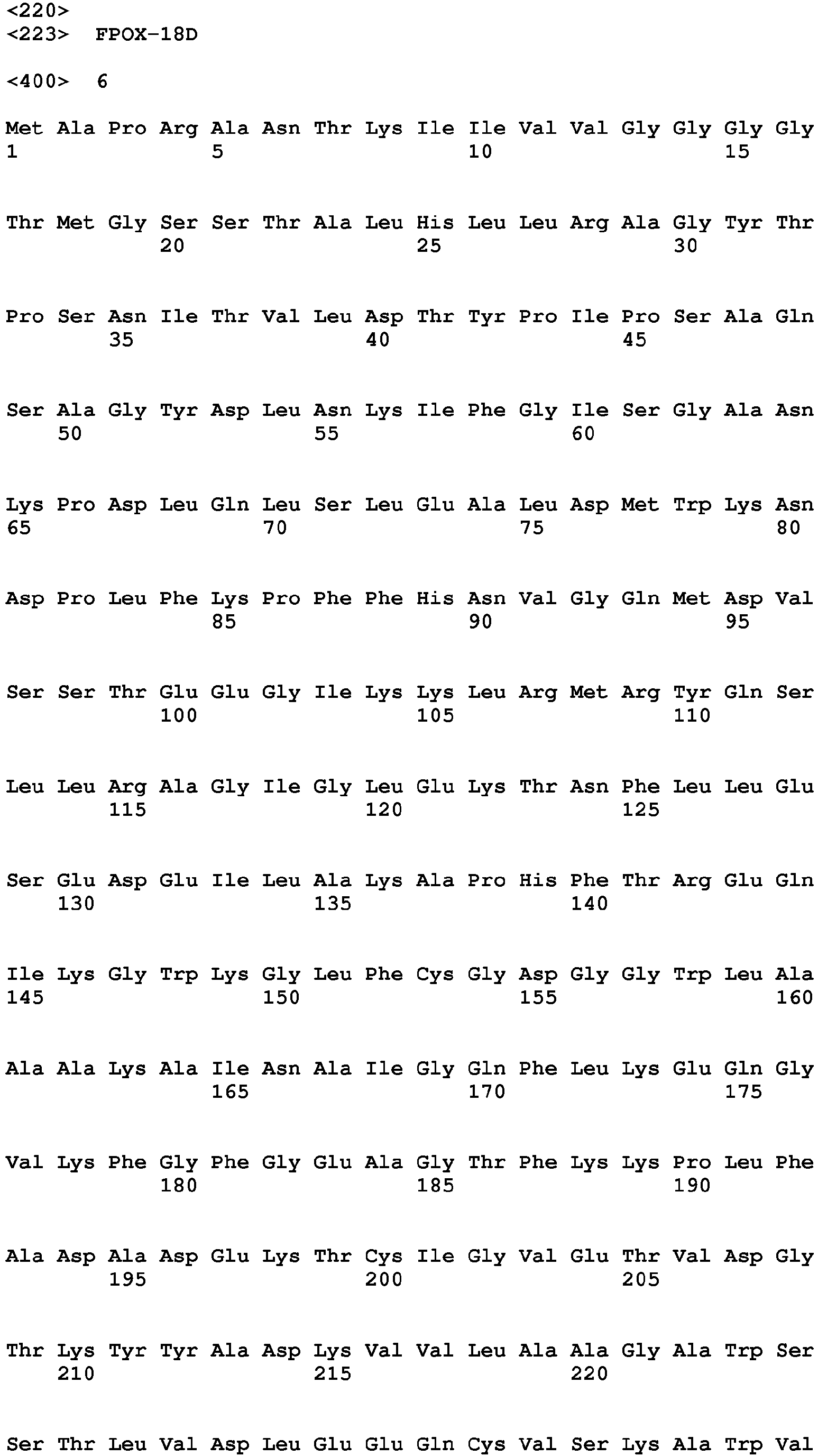


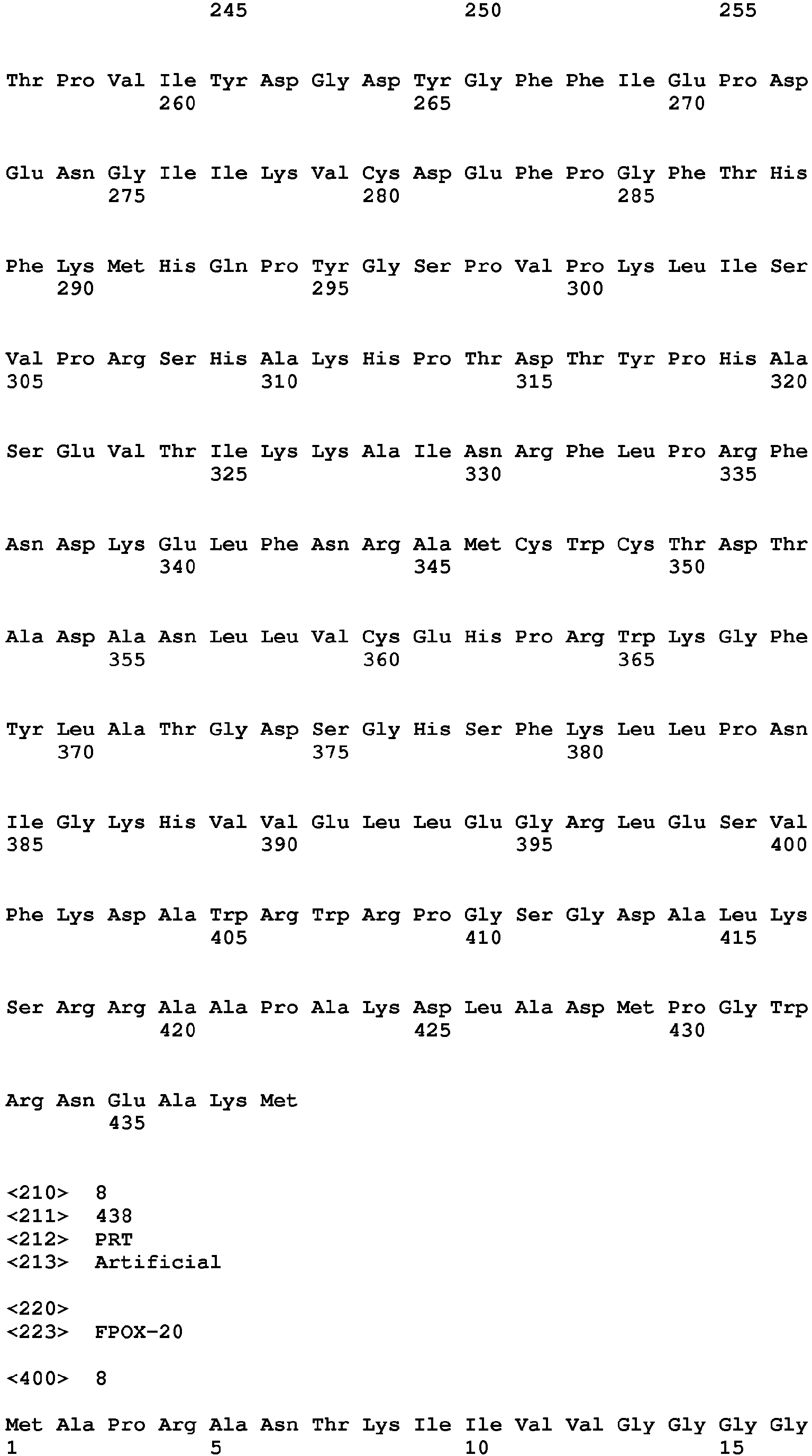


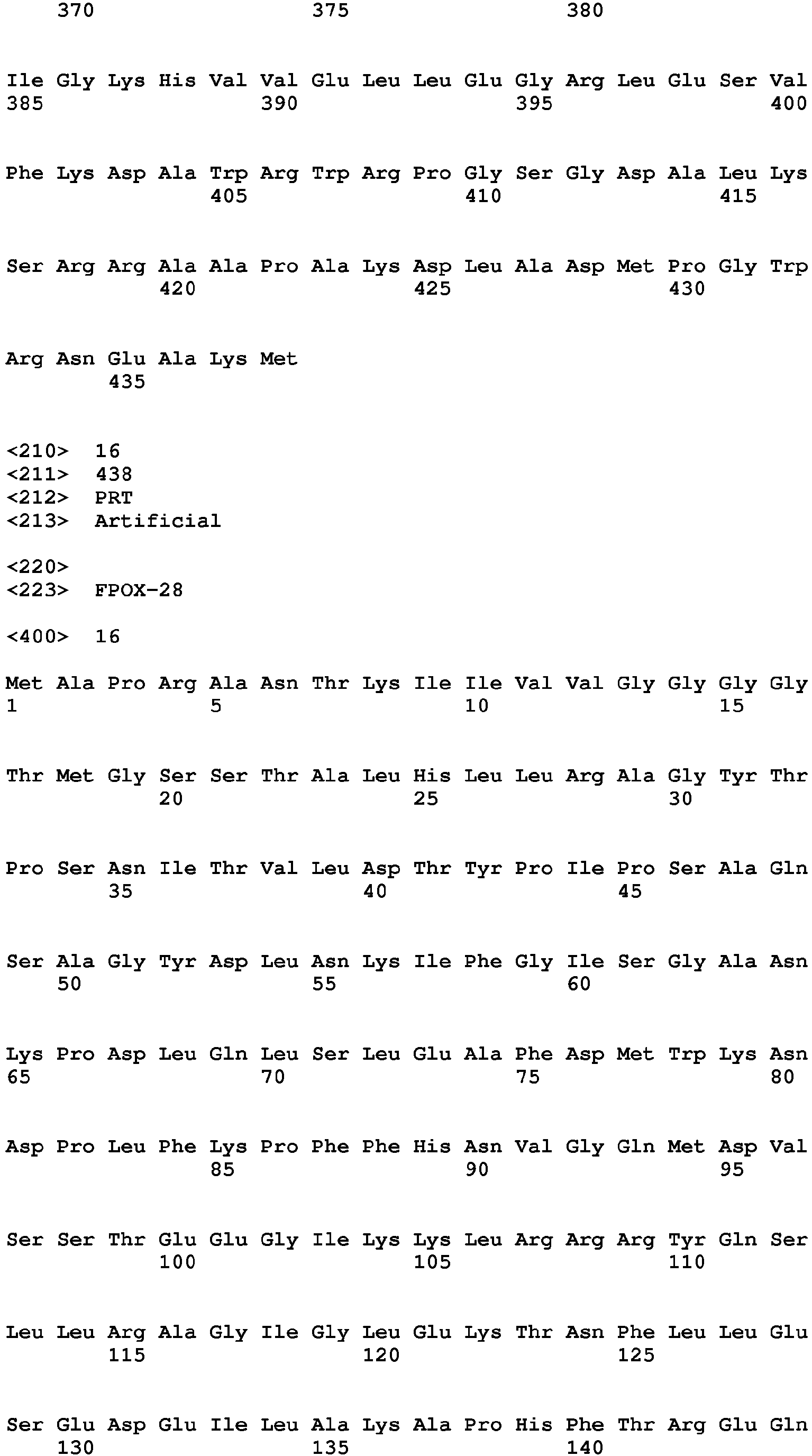


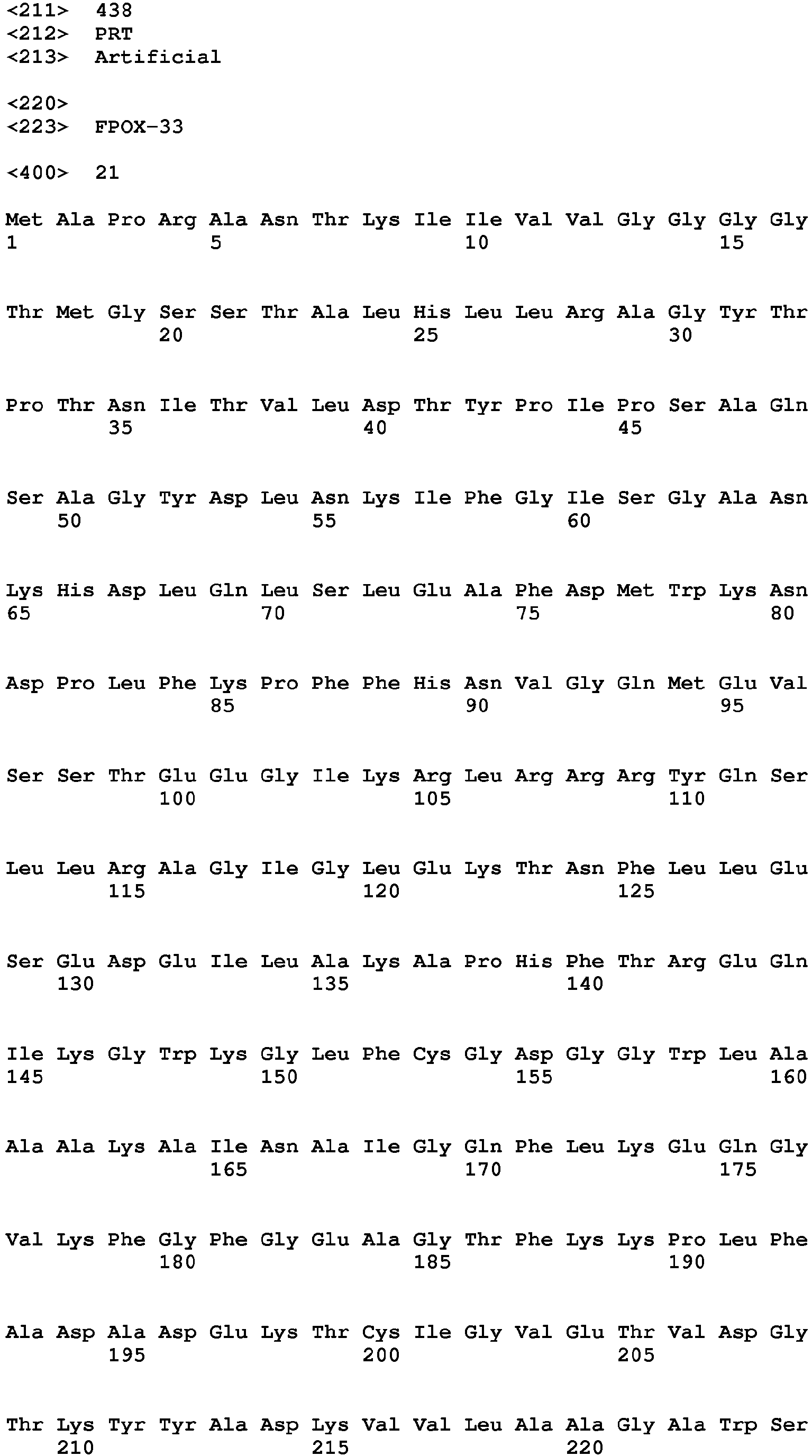

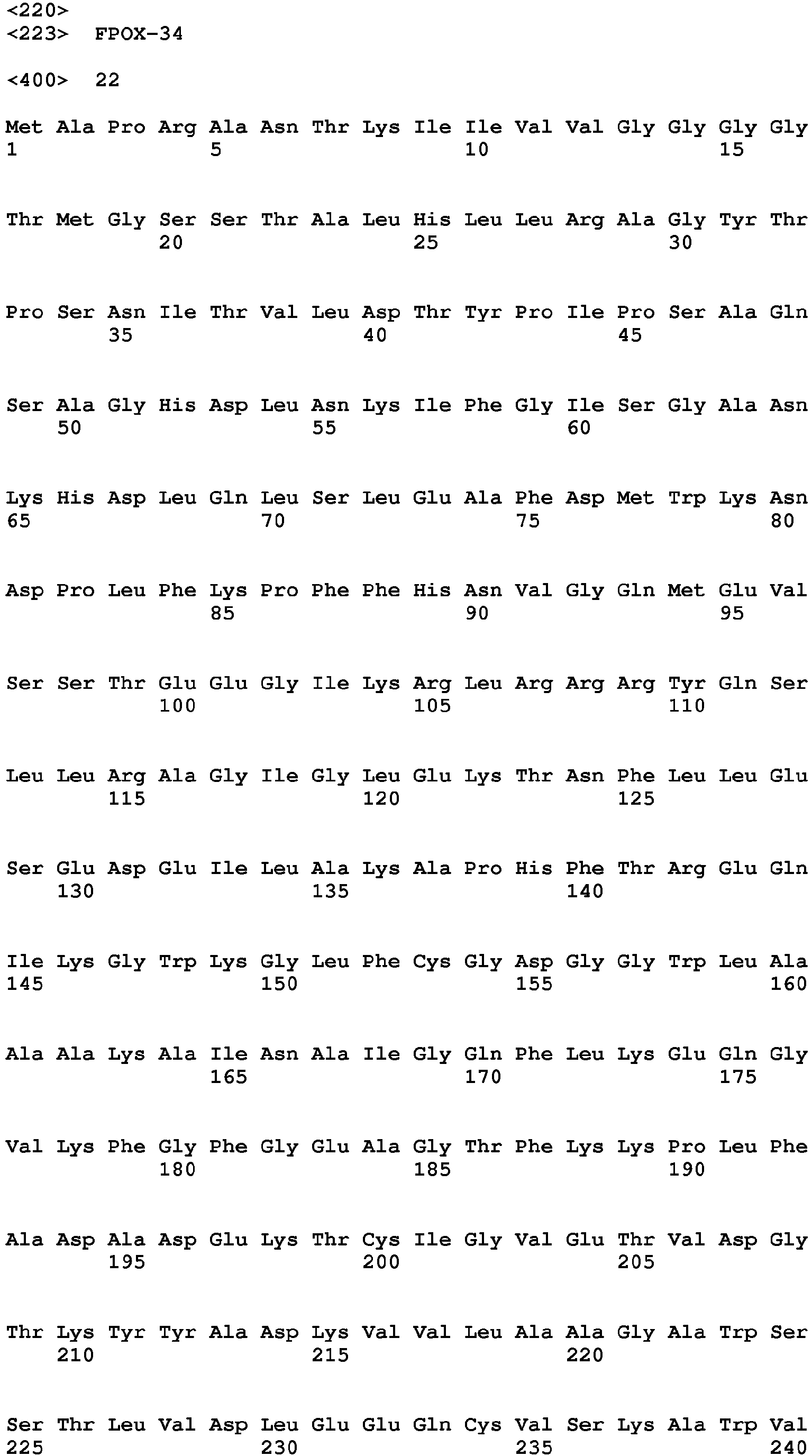


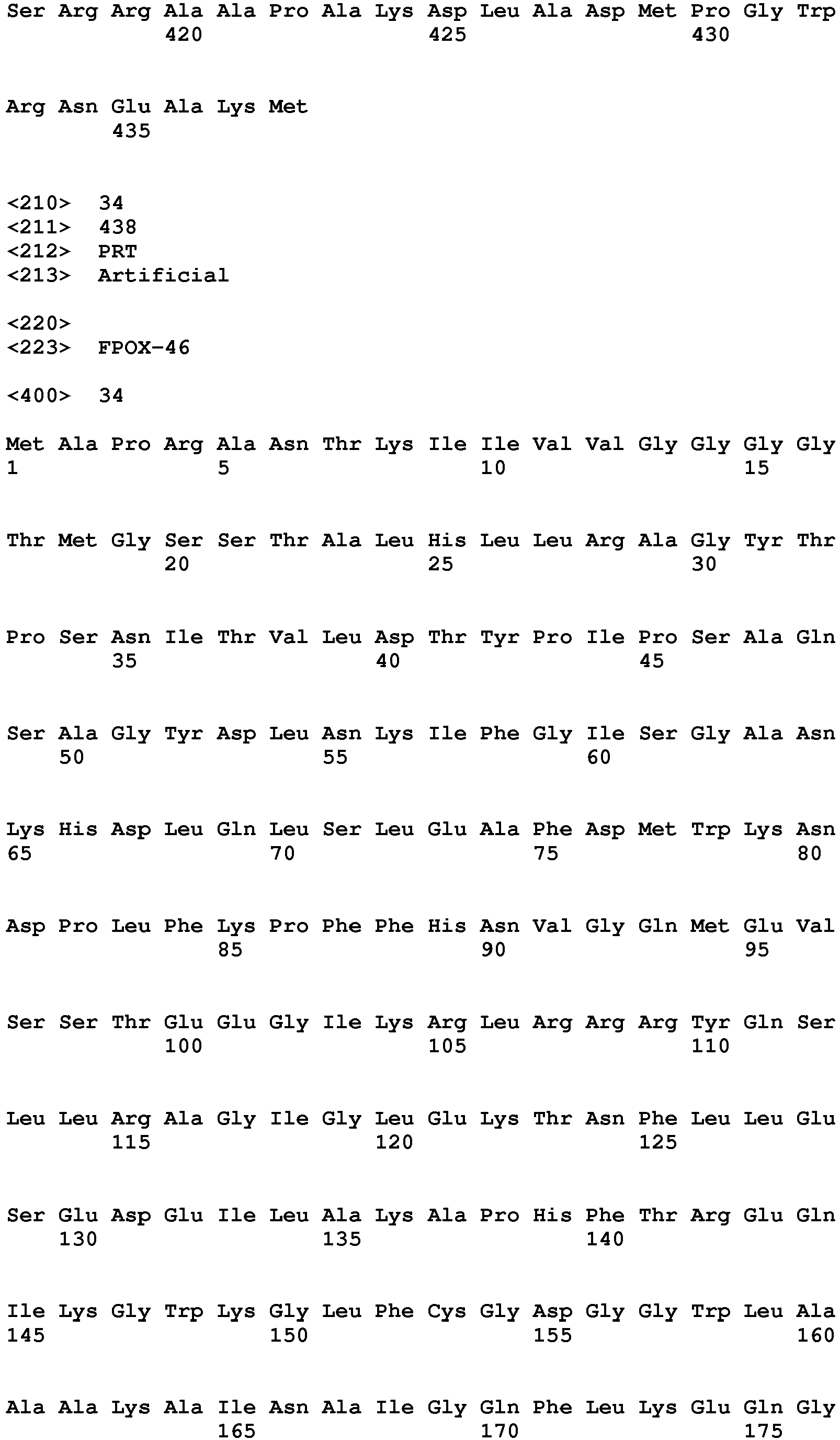


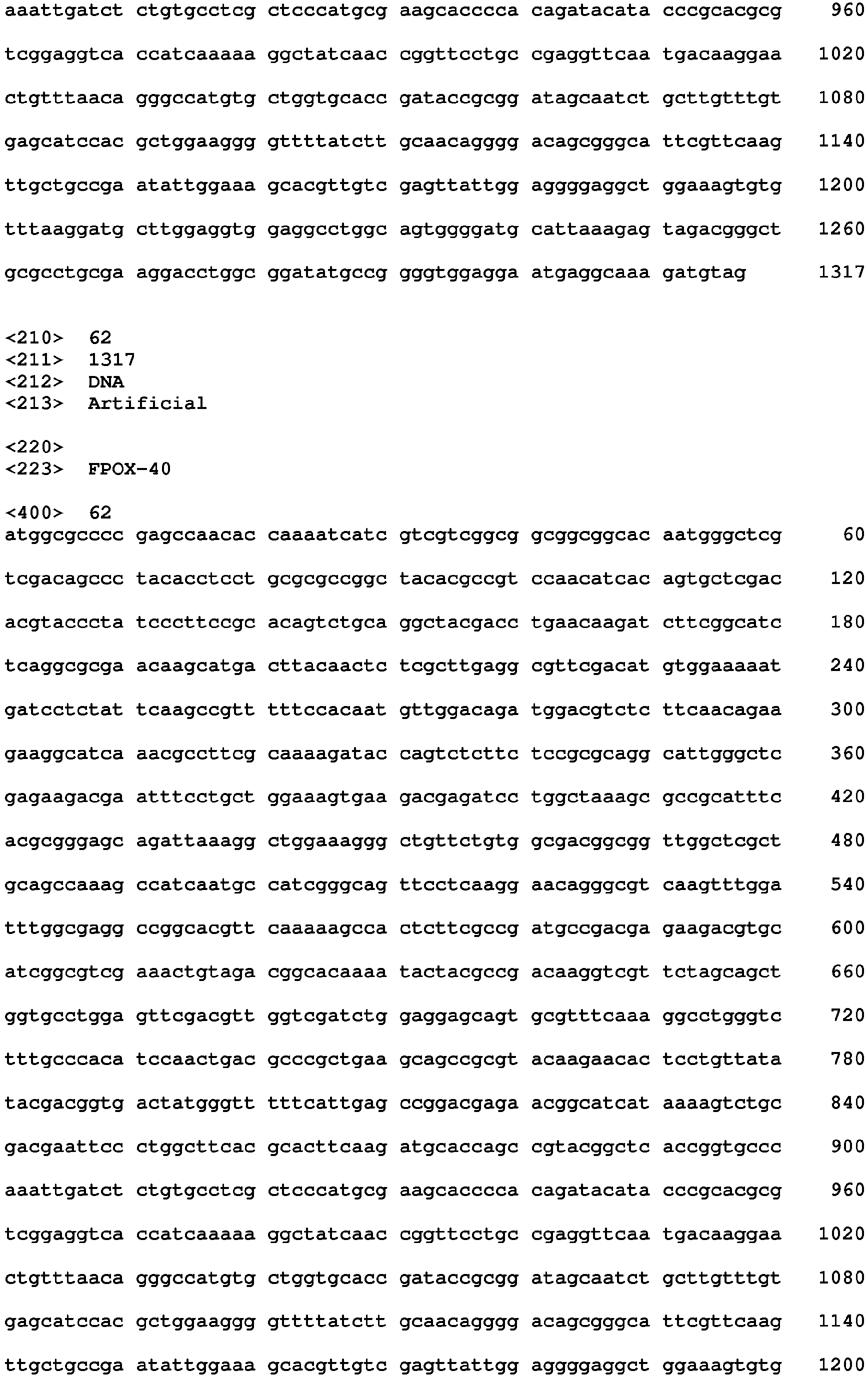


Claims (4)
- A method for measuring glycated hemoglobin in a sample, wherein the method comprises directly oxidizing glycated hemoglobin in a sample, and measuring a substance produced or consumed by the oxidation.
- The method of claim 1, wherein the glycated hemoglobin is directly oxidized using an enzyme.
- The method of claim 1 or 2, wherein the produced substance is hydrogen peroxide.
- The method of any one of claims 1 to 3, wherein the glycated hemoglobin is hemoglobin A1c.
Applications Claiming Priority (2)
| Application Number | Priority Date | Filing Date | Title |
|---|---|---|---|
| JP2013143276 | 2013-07-09 | ||
| PCT/JP2014/068010 WO2015005257A1 (en) | 2013-07-09 | 2014-07-07 | Method for measuring glycated hemoglobin |
Publications (3)
| Publication Number | Publication Date |
|---|---|
| EP3020825A1 true EP3020825A1 (en) | 2016-05-18 |
| EP3020825A4 EP3020825A4 (en) | 2017-01-11 |
| EP3020825B1 EP3020825B1 (en) | 2020-02-19 |
Family
ID=52279939
Family Applications (1)
| Application Number | Title | Priority Date | Filing Date |
|---|---|---|---|
| EP14823357.0A Active EP3020825B1 (en) | 2013-07-09 | 2014-07-07 | Method for measuring glycated hemoglobin |
Country Status (5)
| Country | Link |
|---|---|
| US (1) | US10006923B2 (en) |
| EP (1) | EP3020825B1 (en) |
| JP (2) | JP6623488B2 (en) |
| CN (1) | CN105431545B (en) |
| WO (1) | WO2015005257A1 (en) |
Cited By (2)
| Publication number | Priority date | Publication date | Assignee | Title |
|---|---|---|---|---|
| EP3492600A4 (en) * | 2016-07-29 | 2020-05-13 | Hitachi Chemical Diagnostics Systems Co., Ltd. | METHOD FOR MEASURING GLYCATED HEMOGLOBIN |
| EP3887398A4 (en) * | 2018-11-29 | 2022-10-19 | Polymer Technology Systems, Inc. | SYSTEMS AND METHODS OF ELECTROCHEMICAL POINT OF HEMOGLOBIN DETECTION |
Families Citing this family (11)
| Publication number | Priority date | Publication date | Assignee | Title |
|---|---|---|---|---|
| EP3279323B1 (en) | 2015-04-03 | 2023-03-08 | Kikkoman Corporation | Amadoriase having improved specific activity |
| US11111517B2 (en) * | 2016-04-22 | 2021-09-07 | Kikkoman Corporation | HbA1c dehydrogenase |
| US11384381B2 (en) | 2016-07-13 | 2022-07-12 | Kikkoman Corporation | Reaction accelerating agent |
| JP7056577B2 (en) | 2016-11-30 | 2022-04-19 | 東洋紡株式会社 | Method for measuring the saccharification rate of hemoglobin |
| WO2018111829A1 (en) * | 2016-12-16 | 2018-06-21 | Siemens Healthcare Diagnostics Inc. | Simultaneous measurement of multiple analytes of a liquid assay |
| US20200200769A1 (en) | 2017-05-30 | 2020-06-25 | Hitachi Chemical Diagnostics Systems Co., Ltd. | Method for measuring glycated hemoglobin |
| EP3677681A4 (en) | 2017-08-31 | 2021-07-14 | Kikkoman Corporation | GLYCULATED HEMOGLOBIN OXIDASE VARIANT AND MEASUREMENT METHOD |
| CN109680036A (en) | 2017-10-02 | 2019-04-26 | 爱科来株式会社 | The measurement of glycated proteins |
| CN109682796A (en) * | 2017-10-02 | 2019-04-26 | 爱科来株式会社 | The measurement of glycated proteins |
| JP7226955B2 (en) * | 2017-10-02 | 2023-02-21 | アークレイ株式会社 | Measurement of glycated protein |
| CN113075143B (en) * | 2021-03-31 | 2023-01-03 | 奥研生物科技(南京)有限公司 | Glycosylated hemoglobin detection reagent and detection method thereof |
Family Cites Families (15)
| Publication number | Priority date | Publication date | Assignee | Title |
|---|---|---|---|---|
| US4372747A (en) | 1981-07-31 | 1983-02-08 | Children's Hospital Medical Center | Glycohemoglobin determination |
| JP2000333696A (en) | 1999-05-26 | 2000-12-05 | Arkray Inc | Measurement method of saccharified amine |
| JP3949854B2 (en) | 1999-10-01 | 2007-07-25 | キッコーマン株式会社 | Method for measuring glycated protein |
| CN101363044B (en) * | 2000-07-14 | 2013-01-09 | 爱科来株式会社 | Method of selectively determining glycated hemoglobin |
| JP4231668B2 (en) | 2001-09-04 | 2009-03-04 | キッコーマン株式会社 | Novel fructosyl peptide oxidase |
| WO2004029613A1 (en) | 2002-09-26 | 2004-04-08 | Koji Sode | Method of measuring glycoprotein |
| US7393549B2 (en) | 2002-10-23 | 2008-07-01 | Daiichi Pure Chemicals Co., Ltd. | Defructosylation method |
| EP1626088B1 (en) | 2003-05-21 | 2010-12-01 | Asahi Kasei Pharma Corporation | Method of measuring glycolated hemoglobin a1c, enzyme to be used therefor and process for producing the same |
| US7943385B2 (en) | 2006-07-25 | 2011-05-17 | General Atomics | Methods for assaying percentage of glycated hemoglobin |
| ES2404059T3 (en) | 2006-07-25 | 2013-05-23 | General Atomics | Procedures to analyze the percentage of glycated hemoglobin |
| JP2008125368A (en) * | 2006-11-16 | 2008-06-05 | Amano Enzyme Inc | Novel dipeptidase, production method thereof, method for measuring glycosylated protein or the like using the same, and reagent composition therefor |
| JP5442432B2 (en) | 2007-03-05 | 2014-03-12 | キッコーマン株式会社 | Method for measuring glycated hexapeptide |
| CA2739881A1 (en) | 2008-10-09 | 2010-04-15 | Kyowa Medex Co., Ltd. | Novel fructosyl peptide oxidase |
| JP5871800B2 (en) | 2010-08-11 | 2016-03-01 | 協和メデックス株式会社 | Method for measuring glycated hemoglobin |
| WO2013059293A1 (en) | 2011-10-17 | 2013-04-25 | Ohmx Corporation | Single, direct detection of hemoglobin a1c percentage using enzyme triggered redox altering chemical elimination (e-trace) immunoassay |
-
2014
- 2014-07-07 CN CN201480039190.6A patent/CN105431545B/en active Active
- 2014-07-07 US US14/897,907 patent/US10006923B2/en active Active
- 2014-07-07 JP JP2015526317A patent/JP6623488B2/en active Active
- 2014-07-07 WO PCT/JP2014/068010 patent/WO2015005257A1/en not_active Ceased
- 2014-07-07 EP EP14823357.0A patent/EP3020825B1/en active Active
-
2019
- 2019-10-16 JP JP2019189472A patent/JP6810874B2/en active Active
Cited By (5)
| Publication number | Priority date | Publication date | Assignee | Title |
|---|---|---|---|---|
| EP3492600A4 (en) * | 2016-07-29 | 2020-05-13 | Hitachi Chemical Diagnostics Systems Co., Ltd. | METHOD FOR MEASURING GLYCATED HEMOGLOBIN |
| US11168349B2 (en) | 2016-07-29 | 2021-11-09 | Hitachi Chemical Diagnostics Systems Co., Ltd. | Method for measuring glycated hemoglobin |
| EP3887398A4 (en) * | 2018-11-29 | 2022-10-19 | Polymer Technology Systems, Inc. | SYSTEMS AND METHODS OF ELECTROCHEMICAL POINT OF HEMOGLOBIN DETECTION |
| US11693016B2 (en) | 2018-11-29 | 2023-07-04 | Polymer Technology Systems, Inc. | Systems and methods for electrochemical point-of-care detection of hemoglobin |
| US12174202B2 (en) | 2018-11-29 | 2024-12-24 | Polymer Technology Systems, Inc. | Systems and methods for electrochemical point-of-care detection of hemoglobin |
Also Published As
| Publication number | Publication date |
|---|---|
| EP3020825A4 (en) | 2017-01-11 |
| US20160123999A1 (en) | 2016-05-05 |
| CN105431545A (en) | 2016-03-23 |
| HK1220738A1 (en) | 2017-05-12 |
| JP6810874B2 (en) | 2021-01-13 |
| JP2020031645A (en) | 2020-03-05 |
| EP3020825B1 (en) | 2020-02-19 |
| CN105431545B (en) | 2021-06-18 |
| WO2015005257A1 (en) | 2015-01-15 |
| JPWO2015005257A1 (en) | 2017-03-02 |
| JP6623488B2 (en) | 2019-12-25 |
| US10006923B2 (en) | 2018-06-26 |
Similar Documents
| Publication | Publication Date | Title |
|---|---|---|
| EP3020825B1 (en) | Method for measuring glycated hemoglobin | |
| JP4341852B2 (en) | Composition for measuring glycated protein | |
| CN109563534B (en) | Determination of Glycated Hemoglobin | |
| EP3020810B1 (en) | Glycated hexapeptide oxidase and use thereof | |
| WO2013118960A1 (en) | Hemolysis reagent composition for hemoglobin a1c quantitative analysis using enzymatic method | |
| JP7020484B2 (en) | Measurement method of glycated hemoglobin | |
| EP4585923A1 (en) | Method and kit for diagnosing midd | |
| JP7645238B2 (en) | Method for reducing the effects of hemoglobin, method for measuring glycated hemoglobin, reagent for measuring glycated hemoglobin, and kit for measuring glycated hemoglobin | |
| HK1220738B (en) | Method for measuring glycated hemoglobin | |
| JP7645237B2 (en) | Method for measuring glycated hemoglobin in a sample containing abnormal hemoglobin | |
| HK1148318A (en) | Compositions for assaying glycoprotein |
Legal Events
| Date | Code | Title | Description |
|---|---|---|---|
| PUAI | Public reference made under article 153(3) epc to a published international application that has entered the european phase |
Free format text: ORIGINAL CODE: 0009012 |
|
| 17P | Request for examination filed |
Effective date: 20160115 |
|
| AK | Designated contracting states |
Kind code of ref document: A1 Designated state(s): AL AT BE BG CH CY CZ DE DK EE ES FI FR GB GR HR HU IE IS IT LI LT LU LV MC MK MT NL NO PL PT RO RS SE SI SK SM TR |
|
| AX | Request for extension of the european patent |
Extension state: BA ME |
|
| DAX | Request for extension of the european patent (deleted) | ||
| A4 | Supplementary search report drawn up and despatched |
Effective date: 20161208 |
|
| RIC1 | Information provided on ipc code assigned before grant |
Ipc: C12Q 1/26 20060101AFI20161202BHEP |
|
| REG | Reference to a national code |
Ref country code: HK Ref legal event code: DE Ref document number: 1220738 Country of ref document: HK |
|
| STAA | Information on the status of an ep patent application or granted ep patent |
Free format text: STATUS: EXAMINATION IS IN PROGRESS |
|
| 17Q | First examination report despatched |
Effective date: 20180912 |
|
| GRAP | Despatch of communication of intention to grant a patent |
Free format text: ORIGINAL CODE: EPIDOSNIGR1 |
|
| GRAJ | Information related to disapproval of communication of intention to grant by the applicant or resumption of examination proceedings by the epo deleted |
Free format text: ORIGINAL CODE: EPIDOSDIGR1 |
|
| INTG | Intention to grant announced |
Effective date: 20190726 |
|
| INTC | Intention to grant announced (deleted) | ||
| GRAP | Despatch of communication of intention to grant a patent |
Free format text: ORIGINAL CODE: EPIDOSNIGR1 |
|
| STAA | Information on the status of an ep patent application or granted ep patent |
Free format text: STATUS: GRANT OF PATENT IS INTENDED |
|
| INTG | Intention to grant announced |
Effective date: 20190903 |
|
| RIN1 | Information on inventor provided before grant (corrected) |
Inventor name: KIMURA, TAKEHIDE Inventor name: MURATA, KOUSAKU Inventor name: UMEHARA, FUMI Inventor name: HASHIMOTO, WATARU Inventor name: OGAWA, NORIYUKI |
|
| RAP1 | Party data changed (applicant data changed or rights of an application transferred) |
Owner name: HITACHI CHEMICAL DIAGNOSTICS SYSTEMS CO., LTD. Owner name: KYOTO UNIVERSITY |
|
| GRAS | Grant fee paid |
Free format text: ORIGINAL CODE: EPIDOSNIGR3 |
|
| GRAA | (expected) grant |
Free format text: ORIGINAL CODE: 0009210 |
|
| STAA | Information on the status of an ep patent application or granted ep patent |
Free format text: STATUS: THE PATENT HAS BEEN GRANTED |
|
| AK | Designated contracting states |
Kind code of ref document: B1 Designated state(s): AL AT BE BG CH CY CZ DE DK EE ES FI FR GB GR HR HU IE IS IT LI LT LU LV MC MK MT NL NO PL PT RO RS SE SI SK SM TR |
|
| REG | Reference to a national code |
Ref country code: CH Ref legal event code: EP |
|
| REG | Reference to a national code |
Ref country code: DE Ref legal event code: R096 Ref document number: 602014061302 Country of ref document: DE |
|
| REG | Reference to a national code |
Ref country code: AT Ref legal event code: REF Ref document number: 1235009 Country of ref document: AT Kind code of ref document: T Effective date: 20200315 |
|
| REG | Reference to a national code |
Ref country code: IE Ref legal event code: FG4D |
|
| REG | Reference to a national code |
Ref country code: NL Ref legal event code: MP Effective date: 20200219 |
|
| PG25 | Lapsed in a contracting state [announced via postgrant information from national office to epo] |
Ref country code: RS Free format text: LAPSE BECAUSE OF FAILURE TO SUBMIT A TRANSLATION OF THE DESCRIPTION OR TO PAY THE FEE WITHIN THE PRESCRIBED TIME-LIMIT Effective date: 20200219 Ref country code: FI Free format text: LAPSE BECAUSE OF FAILURE TO SUBMIT A TRANSLATION OF THE DESCRIPTION OR TO PAY THE FEE WITHIN THE PRESCRIBED TIME-LIMIT Effective date: 20200219 Ref country code: NO Free format text: LAPSE BECAUSE OF FAILURE TO SUBMIT A TRANSLATION OF THE DESCRIPTION OR TO PAY THE FEE WITHIN THE PRESCRIBED TIME-LIMIT Effective date: 20200519 |
|
| REG | Reference to a national code |
Ref country code: LT Ref legal event code: MG4D |
|
| PG25 | Lapsed in a contracting state [announced via postgrant information from national office to epo] |
Ref country code: BG Free format text: LAPSE BECAUSE OF FAILURE TO SUBMIT A TRANSLATION OF THE DESCRIPTION OR TO PAY THE FEE WITHIN THE PRESCRIBED TIME-LIMIT Effective date: 20200519 Ref country code: GR Free format text: LAPSE BECAUSE OF FAILURE TO SUBMIT A TRANSLATION OF THE DESCRIPTION OR TO PAY THE FEE WITHIN THE PRESCRIBED TIME-LIMIT Effective date: 20200520 Ref country code: HR Free format text: LAPSE BECAUSE OF FAILURE TO SUBMIT A TRANSLATION OF THE DESCRIPTION OR TO PAY THE FEE WITHIN THE PRESCRIBED TIME-LIMIT Effective date: 20200219 Ref country code: LV Free format text: LAPSE BECAUSE OF FAILURE TO SUBMIT A TRANSLATION OF THE DESCRIPTION OR TO PAY THE FEE WITHIN THE PRESCRIBED TIME-LIMIT Effective date: 20200219 Ref country code: IS Free format text: LAPSE BECAUSE OF FAILURE TO SUBMIT A TRANSLATION OF THE DESCRIPTION OR TO PAY THE FEE WITHIN THE PRESCRIBED TIME-LIMIT Effective date: 20200619 Ref country code: SE Free format text: LAPSE BECAUSE OF FAILURE TO SUBMIT A TRANSLATION OF THE DESCRIPTION OR TO PAY THE FEE WITHIN THE PRESCRIBED TIME-LIMIT Effective date: 20200219 |
|
| PG25 | Lapsed in a contracting state [announced via postgrant information from national office to epo] |
Ref country code: NL Free format text: LAPSE BECAUSE OF FAILURE TO SUBMIT A TRANSLATION OF THE DESCRIPTION OR TO PAY THE FEE WITHIN THE PRESCRIBED TIME-LIMIT Effective date: 20200219 |
|
| PG25 | Lapsed in a contracting state [announced via postgrant information from national office to epo] |
Ref country code: ES Free format text: LAPSE BECAUSE OF FAILURE TO SUBMIT A TRANSLATION OF THE DESCRIPTION OR TO PAY THE FEE WITHIN THE PRESCRIBED TIME-LIMIT Effective date: 20200219 Ref country code: DK Free format text: LAPSE BECAUSE OF FAILURE TO SUBMIT A TRANSLATION OF THE DESCRIPTION OR TO PAY THE FEE WITHIN THE PRESCRIBED TIME-LIMIT Effective date: 20200219 Ref country code: EE Free format text: LAPSE BECAUSE OF FAILURE TO SUBMIT A TRANSLATION OF THE DESCRIPTION OR TO PAY THE FEE WITHIN THE PRESCRIBED TIME-LIMIT Effective date: 20200219 Ref country code: SM Free format text: LAPSE BECAUSE OF FAILURE TO SUBMIT A TRANSLATION OF THE DESCRIPTION OR TO PAY THE FEE WITHIN THE PRESCRIBED TIME-LIMIT Effective date: 20200219 Ref country code: PT Free format text: LAPSE BECAUSE OF FAILURE TO SUBMIT A TRANSLATION OF THE DESCRIPTION OR TO PAY THE FEE WITHIN THE PRESCRIBED TIME-LIMIT Effective date: 20200712 Ref country code: SK Free format text: LAPSE BECAUSE OF FAILURE TO SUBMIT A TRANSLATION OF THE DESCRIPTION OR TO PAY THE FEE WITHIN THE PRESCRIBED TIME-LIMIT Effective date: 20200219 Ref country code: CZ Free format text: LAPSE BECAUSE OF FAILURE TO SUBMIT A TRANSLATION OF THE DESCRIPTION OR TO PAY THE FEE WITHIN THE PRESCRIBED TIME-LIMIT Effective date: 20200219 Ref country code: RO Free format text: LAPSE BECAUSE OF FAILURE TO SUBMIT A TRANSLATION OF THE DESCRIPTION OR TO PAY THE FEE WITHIN THE PRESCRIBED TIME-LIMIT Effective date: 20200219 Ref country code: LT Free format text: LAPSE BECAUSE OF FAILURE TO SUBMIT A TRANSLATION OF THE DESCRIPTION OR TO PAY THE FEE WITHIN THE PRESCRIBED TIME-LIMIT Effective date: 20200219 |
|
| REG | Reference to a national code |
Ref country code: AT Ref legal event code: MK05 Ref document number: 1235009 Country of ref document: AT Kind code of ref document: T Effective date: 20200219 |
|
| REG | Reference to a national code |
Ref country code: DE Ref legal event code: R097 Ref document number: 602014061302 Country of ref document: DE |
|
| PLBE | No opposition filed within time limit |
Free format text: ORIGINAL CODE: 0009261 |
|
| STAA | Information on the status of an ep patent application or granted ep patent |
Free format text: STATUS: NO OPPOSITION FILED WITHIN TIME LIMIT |
|
| 26N | No opposition filed |
Effective date: 20201120 |
|
| PG25 | Lapsed in a contracting state [announced via postgrant information from national office to epo] |
Ref country code: AT Free format text: LAPSE BECAUSE OF FAILURE TO SUBMIT A TRANSLATION OF THE DESCRIPTION OR TO PAY THE FEE WITHIN THE PRESCRIBED TIME-LIMIT Effective date: 20200219 |
|
| PG25 | Lapsed in a contracting state [announced via postgrant information from national office to epo] |
Ref country code: PL Free format text: LAPSE BECAUSE OF FAILURE TO SUBMIT A TRANSLATION OF THE DESCRIPTION OR TO PAY THE FEE WITHIN THE PRESCRIBED TIME-LIMIT Effective date: 20200219 Ref country code: MC Free format text: LAPSE BECAUSE OF FAILURE TO SUBMIT A TRANSLATION OF THE DESCRIPTION OR TO PAY THE FEE WITHIN THE PRESCRIBED TIME-LIMIT Effective date: 20200219 Ref country code: SI Free format text: LAPSE BECAUSE OF FAILURE TO SUBMIT A TRANSLATION OF THE DESCRIPTION OR TO PAY THE FEE WITHIN THE PRESCRIBED TIME-LIMIT Effective date: 20200219 |
|
| REG | Reference to a national code |
Ref country code: CH Ref legal event code: PL |
|
| REG | Reference to a national code |
Ref country code: BE Ref legal event code: MM Effective date: 20200731 |
|
| PG25 | Lapsed in a contracting state [announced via postgrant information from national office to epo] |
Ref country code: LI Free format text: LAPSE BECAUSE OF NON-PAYMENT OF DUE FEES Effective date: 20200731 Ref country code: LU Free format text: LAPSE BECAUSE OF NON-PAYMENT OF DUE FEES Effective date: 20200707 Ref country code: CH Free format text: LAPSE BECAUSE OF NON-PAYMENT OF DUE FEES Effective date: 20200731 Ref country code: IE Free format text: LAPSE BECAUSE OF NON-PAYMENT OF DUE FEES Effective date: 20200707 |
|
| PG25 | Lapsed in a contracting state [announced via postgrant information from national office to epo] |
Ref country code: BE Free format text: LAPSE BECAUSE OF NON-PAYMENT OF DUE FEES Effective date: 20200731 |
|
| PG25 | Lapsed in a contracting state [announced via postgrant information from national office to epo] |
Ref country code: TR Free format text: LAPSE BECAUSE OF FAILURE TO SUBMIT A TRANSLATION OF THE DESCRIPTION OR TO PAY THE FEE WITHIN THE PRESCRIBED TIME-LIMIT Effective date: 20200219 Ref country code: MT Free format text: LAPSE BECAUSE OF FAILURE TO SUBMIT A TRANSLATION OF THE DESCRIPTION OR TO PAY THE FEE WITHIN THE PRESCRIBED TIME-LIMIT Effective date: 20200219 Ref country code: CY Free format text: LAPSE BECAUSE OF FAILURE TO SUBMIT A TRANSLATION OF THE DESCRIPTION OR TO PAY THE FEE WITHIN THE PRESCRIBED TIME-LIMIT Effective date: 20200219 |
|
| PG25 | Lapsed in a contracting state [announced via postgrant information from national office to epo] |
Ref country code: MK Free format text: LAPSE BECAUSE OF FAILURE TO SUBMIT A TRANSLATION OF THE DESCRIPTION OR TO PAY THE FEE WITHIN THE PRESCRIBED TIME-LIMIT Effective date: 20200219 Ref country code: AL Free format text: LAPSE BECAUSE OF FAILURE TO SUBMIT A TRANSLATION OF THE DESCRIPTION OR TO PAY THE FEE WITHIN THE PRESCRIBED TIME-LIMIT Effective date: 20200219 |
|
| REG | Reference to a national code |
Ref country code: DE Ref legal event code: R081 Ref document number: 602014061302 Country of ref document: DE Owner name: CANON MEDICAL DIAGNOSTICS CORPORATION, JP Free format text: FORMER OWNERS: HITACHI CHEMICAL DIAGNOSTICS SYSTEMS CO., LTD., TOKYO, JP; KYOTO UNIVERSITY, KYOTO, JP Ref country code: DE Ref legal event code: R081 Ref document number: 602014061302 Country of ref document: DE Owner name: KYOTO UNIVERSITY, JP Free format text: FORMER OWNERS: HITACHI CHEMICAL DIAGNOSTICS SYSTEMS CO., LTD., TOKYO, JP; KYOTO UNIVERSITY, KYOTO, JP |
|
| REG | Reference to a national code |
Ref country code: DE Ref legal event code: R081 Ref document number: 602014061302 Country of ref document: DE Owner name: CANON MEDICAL DIAGNOSTICS CORPORATION, JP Free format text: FORMER OWNER: CANON MEDICAL DIAGNOSTICS CORPORATION, TOKYO, JP Ref country code: DE Ref legal event code: R081 Ref document number: 602014061302 Country of ref document: DE Owner name: KYOTO UNIVERSITY, JP Free format text: FORMER OWNER: CANON MEDICAL DIAGNOSTICS CORPORATION, TOKYO, JP |
|
| PGFP | Annual fee paid to national office [announced via postgrant information from national office to epo] |
Ref country code: DE Payment date: 20250528 Year of fee payment: 12 |
|
| PGFP | Annual fee paid to national office [announced via postgrant information from national office to epo] |
Ref country code: GB Payment date: 20260601 Year of fee payment: 13 |
|
| PGFP | Annual fee paid to national office [announced via postgrant information from national office to epo] |
Ref country code: IT Payment date: 20260622 Year of fee payment: 13 |
|
| PGFP | Annual fee paid to national office [announced via postgrant information from national office to epo] |
Ref country code: FR Payment date: 20260608 Year of fee payment: 13 |