EP2987993A1 - System bestehend aus einem steuerventil mit von einem steuergerät gesteuerter elektromagnetischer betätigung - Google Patents
System bestehend aus einem steuerventil mit von einem steuergerät gesteuerter elektromagnetischer betätigung Download PDFInfo
- Publication number
- EP2987993A1 EP2987993A1 EP15175501.4A EP15175501A EP2987993A1 EP 2987993 A1 EP2987993 A1 EP 2987993A1 EP 15175501 A EP15175501 A EP 15175501A EP 2987993 A1 EP2987993 A1 EP 2987993A1
- Authority
- EP
- European Patent Office
- Prior art keywords
- valve
- magnetic force
- force reduction
- control valve
- electromagnet
- Prior art date
- Legal status (The legal status is an assumption and is not a legal conclusion. Google has not performed a legal analysis and makes no representation as to the accuracy of the status listed.)
- Granted
Links
Images


Classifications
-
- F—MECHANICAL ENGINEERING; LIGHTING; HEATING; WEAPONS; BLASTING
- F02—COMBUSTION ENGINES; HOT-GAS OR COMBUSTION-PRODUCT ENGINE PLANTS
- F02M—SUPPLYING COMBUSTION ENGINES IN GENERAL WITH COMBUSTIBLE MIXTURES OR CONSTITUENTS THEREOF
- F02M21/00—Apparatus for supplying engines with non-liquid fuels, e.g. gaseous fuels stored in liquid form
- F02M21/02—Apparatus for supplying engines with non-liquid fuels, e.g. gaseous fuels stored in liquid form for gaseous fuels
- F02M21/0218—Details on the gaseous fuel supply system, e.g. tanks, valves, pipes, pumps, rails, injectors or mixers
- F02M21/0248—Injectors
- F02M21/0251—Details of actuators therefor
- F02M21/0254—Electric actuators, e.g. solenoid or piezoelectric
-
- F—MECHANICAL ENGINEERING; LIGHTING; HEATING; WEAPONS; BLASTING
- F02—COMBUSTION ENGINES; HOT-GAS OR COMBUSTION-PRODUCT ENGINE PLANTS
- F02D—CONTROLLING COMBUSTION ENGINES
- F02D19/00—Controlling engines characterised by their use of non-liquid fuels, pluralities of fuels, or non-fuel substances added to the combustible mixtures
- F02D19/02—Controlling engines characterised by their use of non-liquid fuels, pluralities of fuels, or non-fuel substances added to the combustible mixtures peculiar to engines working with gaseous fuels
- F02D19/021—Control of components of the fuel supply system
- F02D19/023—Control of components of the fuel supply system to adjust the fuel mass or volume flow
- F02D19/024—Control of components of the fuel supply system to adjust the fuel mass or volume flow by controlling fuel injectors
-
- F—MECHANICAL ENGINEERING; LIGHTING; HEATING; WEAPONS; BLASTING
- F02—COMBUSTION ENGINES; HOT-GAS OR COMBUSTION-PRODUCT ENGINE PLANTS
- F02D—CONTROLLING COMBUSTION ENGINES
- F02D41/00—Electrical control of supply of combustible mixture or its constituents
- F02D41/20—Output circuits, e.g. for controlling currents in command coils
-
- F—MECHANICAL ENGINEERING; LIGHTING; HEATING; WEAPONS; BLASTING
- F02—COMBUSTION ENGINES; HOT-GAS OR COMBUSTION-PRODUCT ENGINE PLANTS
- F02M—SUPPLYING COMBUSTION ENGINES IN GENERAL WITH COMBUSTIBLE MIXTURES OR CONSTITUENTS THEREOF
- F02M21/00—Apparatus for supplying engines with non-liquid fuels, e.g. gaseous fuels stored in liquid form
- F02M21/02—Apparatus for supplying engines with non-liquid fuels, e.g. gaseous fuels stored in liquid form for gaseous fuels
- F02M21/0218—Details on the gaseous fuel supply system, e.g. tanks, valves, pipes, pumps, rails, injectors or mixers
- F02M21/0248—Injectors
- F02M21/0257—Details of the valve closing elements, e.g. valve seats, stems or arrangement of flow passages
- F02M21/0272—Ball valves; Plate valves; Valves having deformable or flexible parts, e.g. membranes; Rotatable valves
-
- F—MECHANICAL ENGINEERING; LIGHTING; HEATING; WEAPONS; BLASTING
- F02—COMBUSTION ENGINES; HOT-GAS OR COMBUSTION-PRODUCT ENGINE PLANTS
- F02D—CONTROLLING COMBUSTION ENGINES
- F02D41/00—Electrical control of supply of combustible mixture or its constituents
- F02D41/20—Output circuits, e.g. for controlling currents in command coils
- F02D2041/202—Output circuits, e.g. for controlling currents in command coils characterised by the control of the circuit
- F02D2041/2041—Output circuits, e.g. for controlling currents in command coils characterised by the control of the circuit for controlling the current in the free-wheeling phase
-
- H—ELECTRICITY
- H01—ELECTRIC ELEMENTS
- H01F—MAGNETS; INDUCTANCES; TRANSFORMERS; SELECTION OF MATERIALS FOR THEIR MAGNETIC PROPERTIES
- H01F7/00—Magnets
- H01F7/06—Electromagnets; Actuators including electromagnets
-
- Y—GENERAL TAGGING OF NEW TECHNOLOGICAL DEVELOPMENTS; GENERAL TAGGING OF CROSS-SECTIONAL TECHNOLOGIES SPANNING OVER SEVERAL SECTIONS OF THE IPC; TECHNICAL SUBJECTS COVERED BY FORMER USPC CROSS-REFERENCE ART COLLECTIONS [XRACs] AND DIGESTS
- Y02—TECHNOLOGIES OR APPLICATIONS FOR MITIGATION OR ADAPTATION AGAINST CLIMATE CHANGE
- Y02T—CLIMATE CHANGE MITIGATION TECHNOLOGIES RELATED TO TRANSPORTATION
- Y02T10/00—Road transport of goods or passengers
- Y02T10/10—Internal combustion engine [ICE] based vehicles
- Y02T10/30—Use of alternative fuels, e.g. biofuels
Definitions
- the invention relates to a system consisting of a control valve with controlled by a control unit electromagnetic actuation, in particular a gas injection valve for a gas-powered internal combustion engine, comprising a at least one coil and an armature comprehensive electromagnet, which cooperates with a medium metering determining valve, wherein an opening movement of the valve is adjusted by the electromagnet and a closing movement of the valve by a control valve spring.
- Such a system is from the DE 199 05 721 A1 known.
- This system comprises a gas injection valve for a gas-fueled internal combustion engine.
- the gas injection valve essentially consists of an electromagnet and a valve operated by the electromagnet for gas metering.
- the electromagnet via a punch with a sealing element, which in turn cooperates with a valve seat, together.
- the punch comprises a disc-shaped end part, which is supported on the sealing element in the region of the valve seat.
- a closing spring of the gas injection valve is supported on the disk-shaped end part.
- the disk-shaped end part is intended to prevent deformation of the preferably loose sealing element.
- the invention is based on the object to provide a system consisting of a control valve controlled by a controller electromagnetic actuation, in which the closing operation is improved.
- the system additionally has an electronic magnetic force reduction system supporting the closing movement.
- This refinement is based, first of all, on the knowledge that a switching off or closing of the control valve and thus of the valve actuated therefrom takes place by the current or the voltage, which actuates the electromagnet, being switched off. As a result, the force of the electromagnet decreases in time. In this process, finally, the sum of spring force and gas force is greater than the magnetic force and the valve closes.
- the opening cross-sections to be released are relatively large (typically some 100 mm 2 ) and the static flow reaches 1000 kg / h and more.
- the valve must be relatively large dimensions (the diameter of the valve seat and valve disc is typically a few cm, up to about 15 to 20 cm). These dimensions create large pressurized surfaces, which must be opened against the prevailing differential pressure (medium pressure on the supply side against the pressure in the intake manifold) of typically 2 to 6 bar.
- the stroke is typically 100 to 300 microns and the residual air gap typically 50 microns, so that the electromagnet must be able to produce high forces (some 100 Newton to about 1000 Newton). At the end of the holding phase, therefore, a considerable amount of electromagnetic energy is stored in the electromagnet, which must be dissipated before the valve closes.
- the delay between the end of the energization and the beginning of the mechanical closing or the impact of the moving valve disk in the valve seat can therefore be a few milliseconds.
- a closing movement supporting electronic magnetic force reduction system is provided, this closing operation is shortened. This shortening is ensured even with pressure fluctuations in the medium, whereby an increased dosing accuracy of the medium is achieved with the valve or the entire system.
- the magnetic force reduction system is at least one active and / or passive component and / or circuits thereof. This solution is particularly advantageous because regardless of the type of control device used for the control (and in particular its output stage or power amplifiers including their overvoltage protection), a faster and more reproducible closing process can be realized.
- the magnetic force reduction system causes a reduction of a Ausschaltzeitverzögerung of the electromagnet and in a further embodiment, a reduction of Ausschaltzeitstreuung the electromagnet.
- the component is a passive component of a combination of a resistor and a capacitor, voltage-dependent resistors, varistors, spark gaps, arresters, surge arresters, glow lamps, tubes and possibly other similar components.
- a resistor and a capacitor voltage-dependent resistors
- varistors varistors
- spark gaps ignition gaps
- arresters surge arresters
- glow lamps tubes and possibly other similar components.
- various types, embodiments and variants are known.
- the component as an active component is a semiconductor component, such as a semiconductor diode, zener diode, transistor and / or an element utilizing an avalanche effect.
- a semiconductor component such as a semiconductor diode, zener diode, transistor and / or an element utilizing an avalanche effect.
- transistors also subspecies come into question.
- various types, embodiments and variants are known.
- the aforementioned active and passive components can be integrated individually or in discrete circuits in a corresponding system. Likewise, components can be combined into integrated circuits.
- the magnetic force reduction system optionally has at least one resistor.
- the magnetic force reduction system comprises two current paths each controlled by a switch, wherein each current path has an active and / or passive component and a resistor.
- the switches are controlled by a programmable module.
- components for example a capacitor or groups of components, to be present, which have the property of storing and discharging electrical energy. This achieves buffering.
- the magnetic force reduction system is connected in parallel to the coil. This ensures that a rapid voltage reduction takes place in the coil after the end of the energization.
- the magnetic force reduction system is integrated in the control unit, in an electrical and mechanical interface of the control unit, in an electrical and mechanical interface of the control valve, and / or in the control valve.
- a selection is made according to the local conditions and / or other requirements.
- control valve may be any control valve that controls any medium
- the preferred application is with a gas valve, particularly a gas injection valve for a gas powered internal combustion engine.
- a gas-fueled internal combustion engine can be achieved by the use of the inventively designed system with the closing movement of the gas injection valve supporting electronic magnetic power reduction system, an improvement of the operation of the internal combustion engine with a reduction of gas consumption and a reduction of exhaust emissions.
- FIG. 1 shows a designed as a gas injection valve control valve 1 for controlling the flow rate of a gaseous medium.
- the control valve 1 is used in particular in a gas-fueled internal combustion engine, wherein the internal combustion engine may be, for example, a large engine, which is used in stationary operation or transient operation.
- the control valve 1 has a valve housing 2, in which an electromagnet 3 is arranged.
- the electromagnet 3 has at least one coil 4 which, when energized, moves an armature 5 axially in the valve housing 2.
- a valve plate 7 of a valve 8 is fastened to the armature 5 by means of an anchor bolt 6, wherein the valve disk 7 is seated on a valve seat 9 of the valve 8 when the coil 4 is not energized.
- the valve disk 7 is lifted off the valve seat 9 and releases a flow connection 10 through the valve 8. In this operating state, gas flows from a reservoir through the control valve 1 to the internal combustion engine.
- a closing movement of the control valve 1 is initiated by switching off the power supply or voltage supply to the coil 4.
- the magnetic field acting on the armature 5 is reduced and the valve disk 7 can be pressed by a control valve spring 11 onto the valve seat 9.
- a control valve 1 used in a large engine is designed to be relatively large due to the opening cross sections to be released, the valve disc 7 may have a diameter of up to 20cm and a stroke of up to 300 ⁇ m to release the necessary flow area with the valve 8 open. Accordingly, the solenoid 3 must be powerfully dimensioned to move the valve disk 7 against the force of the control valve spring 11 and against the gas pressure forces to release the flow connection 10.
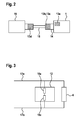
- FIG. 1 possible installation options of the electronic magnetic power reduction system 12 in the region of the control valve 1 are shown.
- the electronic magnetic power reduction system 12 may be arranged in a first variant 13a in the valve housing 2 above the coil 4.
- a second variant 13b provides to integrate the electronic magnetic power reduction system 12 in a connector 14 for a control line 15 or to arrange in a variant 13c in a separate housing between the control line 15 and the connector 14.
- a further variant 13d provides for the electronic magnetic power reduction system 12 to be arranged in the region of the control unit-side end of the control line 15.
- FIG. 3 shows a first embodiment of the electronic magnetic power reduction system 12.
- the coil 4 in the control valve 1 has electrical connections 17a, 17b, which are connectable via the control line 15 to the control unit 16. Parallel to the coil 4, the electronic magnetic power reduction system 12 is connected to the terminals 17a, 17b.
- the electronic magnetic force reduction system 12 according to the first embodiment has at least one device 18a with a voltage-dependent resistor.
- a resistor 19a is connected in series, whereby a current limitation takes place through the resistor 19a.
- Suitable passive components 18a are: combinations of at least one resistor and one Capacitor, voltage dependent resistors / varistors / spark gaps / arresters / surge arresters, glow lamps and tubes.
- active components 18a in particular semiconductor devices in question, such as semiconductor diodes, zener diodes, transistors with their subspecies and devices that use the avalanche effect.
- These exemplified components 18a may be installed individually or in discrete circuits on the inventively designed control valve 1. Likewise, components 18a may be combined into integrated circuits. As has already been stated, the components 18a (together with the at least one resistor 19a) cause a faster voltage reduction in the coil 4 and, consequently, a faster closing of the valve 8.
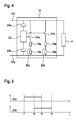
- FIG. 4 shows a particularly advantageous circuit of the electronic magnetic power reduction system 12.
- the electronic magnetic power reduction system 12 has at least two current paths 20a, 20b, wherein each current path 20a, 20b includes a switch 21a, 21b.
- each current path 20a, 20b includes a switch 21a, 21b.
- the switches 21a, 21b are driven by a programmable module 22.
- an element 23a, or groups of elements 23a, 23b may optionally be present, which have the property of storing and discharging electrical energy. This causes buffering.
- An example of an element 23a, 23b is a capacitor.
- the switches 21a, 21b can be operated independently of each other.
- the circuits of the electronic magnetic power system 12 may be implemented in several forms. They may be freely wired, on conventional single or multi-layer printed circuit boards, single-layer or multilayer flexible printed circuit boards, and any combination thereof.
- the electronic magnetic force reduction systems 12 may include further arrangements.
- cooling devices / heat sinks for thermal management, or housing / encapsulation / encapsulation for protection against media and environmental influences may be present.
- Plugs and other electrical and mechanical embroidery sites may contain devices to prevent accidental disconnection of the electrical connections.
- FIG. 6 shows in diagram form the falling of the magnetic forces of the electromagnet 3 for different magnetic force drop curves 24a, 24b, 24c.
- the magnetic force drop curves 24a, 24b, 24c depend on the characteristics and characteristics of the corresponding electromagnet 3. Material constants, geometrical dimensions and dimensions play a role as well as magnetic properties.
- the magnetic forces act in the direction of an opening movement of the valve 8 and thus the closing movement of the valve 8.
- the movable assembly of anchor 5 valve plate 7 and possibly other components will then be closing in motion, if the sum of gas-related forces (in FIG. 6 schematically represented by de gas curve 26) and spring forces is greater than the prevailing at that time magnetic force (possibly attenuated by existing inertia masses).
- causes of the gas-related forces absolute pressures and / or pressure fluctuations before or be after the valve 8 specifically pressure fluctuations in a gas rail or in gas lines between the gas rail and gas injection valve according to the invention, as well as valve output side absolute pressures and pressure fluctuations.
- the magnetic force drop curve 24a According to the magnetic force drop curve 24a, the magnetic forces are degraded only slowly.
- the magnetic force drop curve 24a intersects the spring force curve 25 at a shallow angle.
- the flat angle of intersection of the magnetic force drop curve 24a of the spring force curve 25, in conjunction with the random portions of the gas curve 26, results in a wide spread in the stroke progression between H1a and H1b.
- This scattering between H1a and H1b (dt1) is the cause of scattering in the metered amount of gas.
- the gas curve 26 defines systematic as well as random temporal variations of the gas-related forces acting on the movable valve group (5 and 7).
- the main cause of the fluctuations in the forces are pressure fluctuations before and after the valve 8.
- intersection angle of the magnetic force drop curve 24b with the spring force curve 25 is larger, and consequently the difference between H2a and H2b (dt2) is smaller.
- the magnetic force drop curve 24c with dt3 and h3a and h3b are realized in the control valve 1 according to the invention by the electronic magnetic power reduction system 12.
- the intersection angle between the magnetic force drop curve 24c and the spring force curve 25 is much steeper, dt3 is smaller, and the gas quantity spread resulting from the difference between h3a and h3b is significantly less than in the other two previously described cases of the magnetic force drop curves 24a, 24b.
- This acceleration of the closing while reducing the failure time dispersion is achieved by the described integration of passive and / or active electronic magnetic power reduction systems 12 in the control valve 1 according to the invention.
Landscapes
- Engineering & Computer Science (AREA)
- Chemical & Material Sciences (AREA)
- Combustion & Propulsion (AREA)
- Mechanical Engineering (AREA)
- General Engineering & Computer Science (AREA)
- Chemical Kinetics & Catalysis (AREA)
- General Chemical & Material Sciences (AREA)
- Oil, Petroleum & Natural Gas (AREA)
- Analytical Chemistry (AREA)
- Magnetically Actuated Valves (AREA)
Description
- Die Erfindung betrifft ein System bestehend aus einem Steuerventil mit von einem Steuergerät gesteuerter elektromagnetischer Betätigung, insbesondere einem Gaseinspritzventil für eine gasbetriebene Brennkraftmaschine, aufweisend einen zumindest eine Spule und einen Anker umfassenden Elektromagneten, der mit einem eine Mediumzumessung bestimmenden Ventil zusammenwirkt, wobei eine Öffnungsbewegung des Ventils von dem Elektromagneten und eine Schließbewegung des Ventils von einer Steuerventilfeder eingestellt wird.
- Ein derartiges System ist aus der
DE 199 05 721 A1 bekannt. Dieses System umfasst ein Gaseinspritzventil für eine gasbetriebene Brennkraftmaschine. Das Gaseinspritzventil besteht im Wesentlichen aus einem Elektromagneten und einem von dem Elektromagneten betätigten Ventil zur Gaszumessung. Dabei wirkt der Elektromagnet über einen Stempel mit einem Dichtelement, das seinerseits mit einem Ventilsitz zusammenwirkt, zusammen. Der Stempel umfasst ein scheibenförmiges Endteil, das sich auf dem Dichtelement im Bereich des Ventilsitzes abstützt. Weiterhin stützt sich auf dem scheibenförmigen Endteil eine Schließfeder des Gaseinspritzventils ab. Das scheibenförmige Endteil soll Verformungen des vorzugsweise losen Dichtelements verhindern. - Der Erfindung liegt die Aufgabe zu Grunde, ein System bestehend aus einem Steuerventil mit von einem Steuergerät gesteuerter elektromagnetischer Betätigung bereitzustellen, bei dem der Schließvorgang verbessert ist.
- Diese Aufgabe wird dadurch gelöst, dass das System zusätzlich ein die Schließbewegung unterstützendes elektronisches Magnetkraftabbausystem aufweist. Dieser Ausgestaltung liegt zunächst einmal die Erkenntnis zu Grunde, dass ein Abschalten bzw. Schließen des Steuerventils und damit des davon betätigten Ventils erfolgt, indem der Strom bzw. die Spannung, der bzw. die den Elektromagneten betätigt, abgeschaltet wird. Dadurch nimmt die Kraft des Elektromagneten zeitlich ab. Bei diesem Vorgang wird schließlich die Summe aus Federkraft und Gaskraft größer als die Magnetkraft und das Ventil schließt. Für bestimmte Anwendungen sind die freizugebenden Öffnungsquerschnitte relativ groß (typisch sind einige 100 mm2) und der statische Durchfluss erreicht 1000 kg/h und mehr. Deshalb muss das Ventil relativ groß dimensioniert werden (der Durchmesser von Ventilsitz und Ventilteller beträgt typisch einige cm, bis zu ca. 15 bis 20 cm). Diese Dimensionen erzeugen große druckbeaufschlagte Flächen, die gegen den herrschenden Differenzdruck (Mediumdruck zuführseitig gegen den Druck im Saugrohr) von typisch 2 bis 6 bar geöffnet werden müssen. Der Hub beträgt typisch 100 bis 300 µm und der Restluftspalt typisch 50 µm, so dass der Elektromagnet in der Lage sein muss, hohe Kräfte zu erzeugen (einige 100 Newton bis ca. 1000 Newton). Am Ende der Haltephase ist also in dem Elektromagneten eine beträchtliche elektromagnetische Energie gespeichert, die abgebaut werden muss, bevor das Ventil schließt. Die Verzögerung zwischen dem Ende der Bestromung und dem Beginn des mechanischen Schließens bzw. des Auftreffens des bewegten Ventiltellers im Ventilsitz kann deshalb einige Millisekunden betragen. Dadurch, dass erfindungsgemäß ein die Schließbewegung unterstützendes elektronisches Magnetkraftabbausystem vorgesehen ist, wird dieser Schließvorgang verkürzt. Diese Verkürzung wird auch bei Druckschwankungen in dem Medium gewährleistet, wodurch mit dem Ventil bzw. dem gesamten System eine erhöhte Dosiergenauigkeit des Mediums erreicht wird.
- In Weiterbildung der Erfindung ist das Magnetkraftabbausystem zumindest ein aktives und/oder passives Bauelement und/oder Schaltungen hiervon. Diese Lösung ist besonders vorteilhaft, weil unabhängig von der Art des für die Ansteuerung verwendeten Steuergeräts (und insbesondere dessen Endstufe bzw. Endstufen inklusive deren Überspannungsschutz) ein schneller und reproduzierbarer Schließvorgang realisiert werden kann.
- In Weiterbildung der Erfindung bewirkt das Magnetkraftabbausystem eine Verringerung eines Ausschaltzeitverzögerung des Elektromagneten und in weiterer Ausgestaltung auch eine Verringerung einer Ausschaltzeitstreuung des Elektromagneten.
- In Weiterbildung der Erfindung ist das Bauelement als passives Bauelement eine Kombination aus einem Widerstand und einem Kondensator, spannungsabhängigen Widerständen, Varistoren, Funkenstrecken, Ableitern, Überspannungsableitern, Glimmlampen, Röhren und ggf. weiteren ähnlichen Bauelementen. Von diesen elektronischen Bauelementen sind verschiedene Typen, Ausführungsformen und Varianten bekannt.
- In weiterer Ausgestaltung der Erfindung ist das Bauelement als aktives Bauelement ein Halbleiterbauelement, wie eine Halbleiterdiode, Zenerdiode, Transistor und/oder ein einen Avalanche-Effekt nutzendes Element. Bei den Transistoren kommen auch Unterarten in Frage. Auch hierzu sind verschiedene Typen, Ausführungsformen und Varianten bekannt. Die zuvor genannten aktiven und passiven Bauelemente können einzeln oder in diskreten Schaltungen in ein entsprechendes System integriert sein. Ebenso können Bauelemente zu integrierten Schaltungen zusammengefasst sein.
- In Weiterbildung der Erfindung weist das Magnetkraftabbausystem optional zumindest einen Widerstand auf.
- In weiterer Ausgestaltung der Erfindung weist das Magnetkraftabbausystem zwei von je einem Schalter gesteuerte Strompfade auf, wobei jeder Strompfad ein aktives und/oder passives Bauelement und einen Widerstand aufweist. Dabei werden die Schalter von einem programmierbaren Baustein angesteuert. Zur Energieversorgung bzw. Spannungsversorgung des programmierbaren Schalters können optional Bauelemente, zum Beispiel ein Kondensator oder Gruppen von Bauelementen vorhanden sein, die die Eigenschaft aufweisen, elektrische Energie zu Speichern und wieder abzugeben. Dadurch wird eine Pufferung erreicht. In Weiterbildung der Erfindung ist das Magnetkraftabbausystem parallel zu der Spule geschaltet. Dadurch ist sichergestellt, dass ein schneller Spannungsabbau in der Spule nach der Beendigung der Bestromung erfolgt.
- In Weiterbildung der Erfindung ist das Magnetkraftabbausystem in das Steuergerät, in eine elektrische und mechanische Schnittstelle des Steuergeräts, in eine elektrische und mechanische Schnittstelle des Steuerventils, und/oder in das Steuerventil integriert. Hierbei erfolgt eine Auswahl nach den jeweiligen örtlichen Gegebenheiten und/oder sonstigen Anforderungen.
- Wenn auch das Steuerventil ein beliebiges Steuerventil, das ein beliebiges Medium steuert, sein kann, ist die bevorzugte Anwendung bei einem Gasventil, insbesondere einem Gaseinspritzventil für eine gasbetriebene Brennkraftmaschine gegeben. Bei einer solchen gasbetriebenen Brennkraftmaschine kann durch den Einsatz des erfindungsgemäß ausgestalteten Systems mit dem die Schließbewegung des Gaseinspritzventils unterstützenden elektronischen Magnetkraftabbausystems eine Verbesserung des Betriebs der Brennkraftmaschine mit einer Verringerung des Gasverbrauchs und einer Reduzierung der Abgasemissionen erreicht werden.
- Weitere vorteilhafte Ausgestaltungen der Erfindung sind der Zeichnungsbeschreibung zu entnehmen, in der in den Figuren dargestellte Ausführungsbeispiele näher beschrieben sind.
- Es zeigen:
-
Figur 1 eine Schnittdarstellung eines Steuerventils mit einer Darstellung von Einbaumöglichkeiten eines elektronischen Magnetkraftabbausystems zur Verbesserung einer Dosiergenauigkeit des Steuerventils, -
Figur 2 ein Blockschema mit möglichen Anbaumöglichkeiten eines elektronischen Magnetkraftabbausystems, -
Figur 3 ein Blockschaltbild einer ersten Ausführungsform eines elektronischen Magnetkraftabbausystems, -
Figur 4 ein Blockschaltbild einer zweiten Ausführungsform eines elektronischen Magnetkraftabbausystems, -
Figur 5 ein Zeitdiagramm der Schaltzeiten eines Magnetkraftabbausystems gemäß dem Blockschaltbild nachFigur 4 und -
Figur 6 ein Diagramm mit einer Darstellung der in einem Gaseinspritzventil wirkenden Kräfte. -
Figur 1 zeigt ein als Gaseinspritzventil ausgebildetes Steuerventil 1 zum Steuern des Durchsatzes eines gasförmigen Mediums. Das Steuerventil 1 wird insbesondere bei einer gasbetriebenen Brennkraftmaschine angewendet, wobei die Brennkraftmaschine beispielsweise ein Großmotor sein kann, der im stationären Betrieb oder instationären Betrieb eingesetzt wird. Das Steuerventil 1 weist ein Ventilgehäuse 2 auf, in dem ein Elektromagnet 3 angeordnet ist. Der Elektromagnet 3 weist zumindest eine Spule 4 auf, die bei einer Bestromung einen Anker 5 axial in dem Ventilgehäuse 2 bewegt. An dem Anker 5 ist mittels einer Ankerbolzenschraube 6 ein Ventilteller 7 eines Ventils 8 befestigt, wobei der Ventilteller 7 bei einer nicht bestromten Spule 4 auf einem Ventilsitz 9 des Ventils 8 aufsitzt. Wird die Spule 4 bestromt, wird der Ventilteller 7 von dem Ventilsitz 9 abgehoben und gibt eine Strömungsverbindung 10 durch das Ventil 8 frei. In diesem Betriebszustand strömt Gas von einem Vorratsbehälter durch das Steuerventil 1 zu der Brennkraftmaschine. - Eine Schließbewegung des Steuerventils 1 wird durch eine Abschaltung der Stromzufuhr bzw. Spannungszufuhr zu der Spule 4 eingeleitet. Dadurch wird das auf den Anker 5 einwirkende Magnetfeld abgebaut und der Ventilteller 7 kann von einer Steuerventilfeder 11 auf den Ventilsitz 9 gedrückt werden. Ein bei einem Großmotor eingesetztes Steuerventil 1 ist aufgrund der freizugebenden Öffnungsquerschnitte relativ groß ausgebildet, wobei der Ventilteller 7 einen Durchmesser von bis zu 20cm und einen Hub von bis zu 300µm aufweisen kann, um den nötigen Strömungsquerschnitt bei geöffnetem Ventil 8 freizugeben. Entsprechend muss der Elektromagnet 3 leistungsstark dimensioniert sein, um den Ventilteller 7 gegen die Kraft der Steuerventilfeder 11 und gegen die Gasdruckkräfte zur Freigabe der Strömungsverbindung 10 zu bewegen. Dementsprechend ist am Ende der Öffnungsphase in dem Elektromagneten 3 eine beträchtliche elektromagnetische Energie gespeichert, die abgebaut werden muss, bevor das Ventil 8 schließt. Die Verzögerung zwischen dem Ende der Bestromung und dem Beginn des mechanischen Schließens beziehungsweise dem Auftreffen des bewegten Ventiltellers 7 in dem Ventilsitz 9 kann daher einige Millisekunden betragen. Um diese Verzögerung zu verringern ist ein elektronisches Magnetkraftabbausystem 12 vorgesehen, das letztendlich die Magnetkräfte des Elektromagneten 3 schneller abbaut. Dieses elektronische Magnetkraftabbausystem wird in den nachfolgenden Figuren noch genauer erläutert.
- In
Figur 1 sind mögliche Einbaumöglichkeiten des elektronischen Magnetkraftabbausystems 12 im Bereich des Steuerventils 1 dargestellt. Das elektronische Magnetkraftabbausystem 12 kann in einer ersten Variante 13a in dem Ventilgehäuse 2 oberhalb der Spule 4 angeordnet sein. Eine zweite Variante 13b sieht vor, das elektronische Magnetkraftabbausystem 12 in einen Anschlussstecker 14 für eine Steuerleitung 15 zu integrieren oder aber auch in einer Variante 13c in einem eigenen Gehäuse zwischen der Steuerleitung 15 und dem Anschlussstecker 14 anzuordnen. Eine weitere Variante 13d sieht vor das elektronische Magnetkraftabbausystem 12 im Bereich des steuergeräteseitigen Endes der Steuerleitung 15 anzuordnen. - Diese möglichen Varianten 13a bis 13d sind auch in dem Blockschema gemäß
Figur 2 dargestellt, wobei hier zusätzlich ein eine Endstufe aufweisendes Steuergerät 16 dargestellt ist, das über die Steuerleitung 15 mit dem Steuerventil 1 verbunden ist und das das Steuerventil 1 in der zuvor beschriebenen Art und Weise ansteuert. -
Figur 3 zeigt eine erste Ausführungsform des elektronischen Magnetkraftabbausystems 12. Die Spule 4 in dem Steuerventil 1 weist elektrische Anschlüsse 17a, 17b auf, die über die Steuerleitung 15 mit dem Steuergerät 16 verbindbar sind. Parallel zu der Spule 4 ist das elektronische Magnetkraftabbausystem 12 mit den Anschlüssen 17a, 17b verschaltet. Das elektronische Magnetkraftabbausystem 12 gemäß der ersten Ausführungsform weist mindestens ein Bauelement 18a mit einem spannungsabhängigen Widerstand auf. Optional ist zusätzlich zu dem Bauelement 18a ein Widerstand 19a in Reihe geschaltet, wobei durch den Widerstand 19a eine Strombegrenzung erfolgt. Als passive Bauelemente 18a kommen in Frage: Kombinationen aus mindestens einem Widerstand und einem Kondensator, spannungsabhängige Widerstände/Varistoren/Funkenstrecken/Ableiter/Überspannungsableiter, Glimmlampen und Röhren. Als aktive Bauelemente 18a kommen insbesondere Halbleiterbauelemente in Frage, wie beispielsweise Halbleiterdioden, Zenerdioden, Transistoren mit ihren Unterarten und Bauelemente, die den Avalanche-Effekt nutzen. Diese beispielhaft genannten Bauelemente 18a können einzeln oder in diskreten Schaltungen an dem erfindungsgemäß ausgestalteten Steuerventil 1 verbaut sein. Ebenso können Bauelemente 18a zu integrierten Schaltungen zusammengefasst sein. Wie schon zuvor ausgeführt worden ist, bewirken die Bauelemente 18a (zusammen mit dem zumindest einen Widerstand 19a) einen schnelleren Spannungsabbau in der Spule 4 und demzufolge ein schnelleres Schließen des Ventils 8. -
Figur 4 zeigt eine besonders vorteilhafte Schaltung des elektronischen Magnetkraftabbausystems 12. Das elektronische Magnetkraftabbausystem 12 gemäß diesem Ausführungsbeispiel weist zumindest zwei Strompfade 20a, 20b auf, wobei jeder Strompfad 20a, 20b einen Schalter 21a, 21b enthält. In jedem der beiden Strompfade 20a, 20b ist zumindest ein inFigur 3 beschriebenes Bauelement 18a, 18b und optional ein Widerstand 19a, 19b eingeschaltet. Die Schalter 21a, 21b werden von einem programmierbaren Baustein 22 angesteuert. Zur Energieversorgung bzw. Spannungsversorgung des Bausteins 22 können optional ein Element 23a, oder Gruppen von Elementen 23a, 23b vorhanden sein, die die Eigenschaft aufweisen, elektrische Energie zu speichern und wieder abzugeben. Dadurch erfolgt eine Pufferung. Ein Beispiel für ein Element 23a, 23b ist ein Kondensator. Mit dieser erfindungsgemäßen Schaltung können die Schalter 21a, 21b unabhängig voneinander betätigt werden. - In dem Zeitdiagramm gemäß
Figur 5 ist dies beispielhaft dargestellt. Bei dem Zeitpunkt t1 schließt der Schalter 21a den Strompfad über das Element 18a und in dem Elektromagneten 3 gespeicherte Energie wird über diesen Strompfad 20a abgeführt. Bei dem Zeitpunkt t2 schließt auch der Schalter 21b und bei t3 öffnet wiederum der Schalter 21a. Folglich wird von t2 bis t3 Energie über beide Strompfade 20a, 20b abgeführt. Von t3 bis t4 ist nur der Schalter 21b geschlossen, und somit wird in dem Elektromagneten 3 gespeicherte Energie nur über den Strompfad 20b abgeführt. - Durch diese unabhängige Betätigung der Schalter 21a, 21b und die Auslegung der Strompfade 20a, 20b durch die jeweiligen Bauelemente 18a, 18b kann auf unterschiedliche Anforderungen aufgrund unterschiedlicher Elektromagnete 3 wesentlich flexibler reagiert werden, ohne die Schaltung an sich zu ändern. Hierbei braucht nur die Programmierung des Bausteins 22 adaptiert werden, was in Anbetracht einer möglichen Typenvielfalt von Steuerventilen 1 bei überschaubaren Stückzahlen besondere Vorteile bietet.
- Bei Implementierungen von mehr als zwei Strompfaden 20a, 20b, 20n über eine entsprechende Anzahl von Schaltern 21a, 21b, 21n ist es möglich, ein sogenanntes Rate-Shaping des Stromverlaufs und damit des Magnetkraftabbaus zu realisieren. Die Schaltungen des elektronischen Magnetkraftabbausystems 12 können in mehreren Formen ausgeführt sein. Sie können frei verdrahtet, auf konventionellen ein- oder mehrlagigen Leiterplatten, einlagigen oder mehrlagigen flexiblen Leiterplatten auf Folienbasis sowie beliebigen Kombinationen hiervon ausgeführt sein. Optional können die elektronischen Magnetkraftabbausysteme 12 weitere Anordnungen aufweisen. So können zum Beispiel Kühleinrichtungen/Kühlkörper zum thermischen Management, oder Gehäuse/Umgießungen/Umspritzungen zum Schutz vor Medien und Umwelteinflüssen vorhanden sein. Stecker und andere elektrische und mechanische Stickstellen können Einrichtungen gegen unbeabsichtigtes Lösen der elektrischen Verbindungen enthalten.
-
Figur 6 zeigt in Diagrammform das Abfallen der Magnetkräfte des Elektromagneten 3 für verschiedene Magnetkraftabfallkurven 24a, 24b, 24c. Dabei hängen die Magnetkraftabfallkurven 24a, 24b, 24c von den Eigenschaften und Charakteristiken des entsprechenden Elektromagneten 3 ab. Hierbei spielen Werkstoffkonstanten, geometrische Abmessungen und Dimensionen ebenso eine Rolle wie magnetische Eigenschaften. Die Magnetkräfte wirken in Richtung einer Öffnungsbewegung des Ventils 8 und somit der Schließbewegung des Ventils 8 entgegen. Der bewegliche Verband aus Anker 5 Ventilteller 7 und ggf. weiteren Bauteilen wird sich dann schließend in Bewegung setzen, wenn die Summe aus gasbedingten Kräften (inFigur 6 schematisch dargestellt durch de Gaskurve 26) und Federkräften größer ist als die zu diesem Zeitpunkt herrschende Magnetkraft (gedämpft ggf. durch vorhandene Massenträgheiten). Ursache für die gasbedingten Kräfte können Absolutdrücke und/oder Druckschwankungen vor beziehungsweise nach dem Ventil 8 sein, konkret Druckschwankungen in einem Gas-Rail oder in Gasleitungen zwischen dem Gas-Rail und erfindungsgemäßen Gaseinspritzventil, ebenso ventilausgangsseitige Absolutdrücke und Druckschwankungen. - Gemäß der Magnetkraftabfallkurve 24a werden die Magnetkräfte nur langsam abgebaut. Die Magnetkraftabfallkurve 24a schneidet die Federkraftkurve 25 in einem flachen Winkel. Der flache Schnittwinkel der Magnetkraftabfallkurve 24a der Federkraftkurve 25 hat in Verbindung mit den zufälligen Anteilen der Gaskurve 26 zur Folge, dass eine breite Streuung im Hubverlauf zwischen H1a und H1b auftritt. Diese Streuung zwischen H1a und H1b (dt1) ist Ursache für Streuungen in der zu dosierten Gasmenge. Die Gaskurve 26 definiert systematische wie auch zufällige zeitliche Schwankungen der gasbedingten Kräfte, die auf die bewegliche Ventilgruppe (5 und7) wirken. Hauptursache für die Schwankungen in den Kräften sind Druckschwankungen vor und nach dem Ventil 8.
- Der Schnittwinkel der Magnetkraftabfallkurve 24b mit der Federkraftkurve 25 ist größer und demzufolge fällt die Differenz zwischen H2a und H2b (dt2) kleiner aus.
- Die Magnetkraftabfallkurve 24c mit dt3 und h3a sowie h3b sind bei dem erfindungsgemäßen Steuerventil 1 durch das elektronische Magnetkraftabbausystem 12 verwirklicht. Der Schnittwinkel zwischen der Magnetkraftabfallkurve 24c und der Federkraftkurve 25 ist wesentlich steiler, dt3 ist kleiner und die aus der Differenz zwischen h3a und h3b resultierende Gasmengenstreuung ist signifikant geringer als in den beiden anderen zuvor beschriebenen Fällen der Magnetkraftabfallkurven 24a, 24b. Diese Beschleunigung des Schließens bei gleichzeitiger Reduktion der Ausfallzeitstreuung wird erzielt durch die beschriebene Integration von passiven und/oder aktiven elektronischen Magnetkraftabbausystemen 12 in das erfindungsgemäße Steuerventil 1.
Claims (10)
- System bestehend aus einem Steuerventil (1) mit von einem Steuergerät (16) gesteuerter elektromagnetischer Betätigung, insbesondere einem Gaseinspritzventil für eine gasbetriebene Brennkraftmaschine, aufweisend einen zumindest eine Spule (4) und einen Anker (5) umfassenden Elektromagneten (3), der mit einem eine Mediumzumessung bestimmenden Ventil (8) zusammenwirkt, wobei eine Öffnungsbewegung des Ventils (8) von dem Elektromagneten (3) und eine Schließbewegung des Ventils (8) von einer Steuerventilfeder (11) eingestellt wird,
dadurch gekennzeichnet, dass das System zusätzlich eine die Schließbewegung unterstützendes elektronisches Magnetkraftabbausystem (12) aufweist. - System nach Anspruch 1,
dadurch gekennzeichnet, dass das Magnetkraftabbausystem (12) zumindest ein aktives und/oder passives Bauelement (18a, 18b) aufweist. - System nach Anspruch 1 oder 2,
dadurch gekennzeichnet, dass das Magnetkraftabbausystem (12) eine Verringerung einer Ausschaltzeitverzögerung des Elektromagneten (3) bewirkt. - System nach einem der vorherigen Ansprüche,
dadurch gekennzeichnet, dass das Magnetkraftabbausystem (12) eine Verringerung einer Ausschaltzeitstreuung des Elektromagneten (3) bewirkt. - System nach einem der Ansprüche 2, 3 oder 4,
dadurch gekennzeichnet, dass das passive Bauelement (18a, 18b) eine Kombination aus einem Widerstand und Kondensatoren, spannungsabhängigen Widerständen, Varistoren, Funkenstrecken, Ableitern, Überspannungsleitern, Glimmlampen und/oder Röhren ist. - System nach einem der Ansprüche 2, 3 oder 4,
dadurch gekennzeichnet, dass das aktive Bauelement (18a, 18b) ein Halbleiterbauelement wie eine Halbleiterdiode, eine Zenerdiode, ein Transistor und/oder ein einen Avalanche-Effekt nutzendes Element ist. - System nach einem der vorherigen Ansprüche,
dadurch gekennzeichnet, dass das Magnetkraftabbausystem (12) zumindest einen Widerstand (19a, 19b) aufweist. - System nach einem der vorherigen Ansprüche,
dadurch gekennzeichnet, dass das Magnetkraftabbausystem (12) zumindest zwei von je einem Schalter (21a, 21b) gesteuerte Strompfade (20a, 20b) aufweist und dass jeder Strompfad (20a, 20b) ein aktives und/oder passives Bauelement (18a, 18b) und einen Widerstand (19a, 19b) aufweist. - System nach einem der vorherigen Ansprüche,
dadurch gekennzeichnet, dass das Magnetkraftabbausystem (12) parallel zu der Spule (4) geschaltet ist. - System nach einem der vorherigen Ansprüche,
dadurch gekennzeichnet, dass das Magnetkraftabbausystem (12) in das Steuergerät (16), in eine elektrische und mechanische Schnittstelle des Steuergeräts (16), in eine elektrische und mechanische Schnittstelle des Steuerventils (1) und/oder in das Steuerventil (1) integriert ist.
Applications Claiming Priority (1)
| Application Number | Priority Date | Filing Date | Title |
|---|---|---|---|
| DE102014214655.0A DE102014214655A1 (de) | 2014-07-25 | 2014-07-25 | System bestehend aus einem Steuerventil mit von einem Steuergerät gesteuerter elektromagnetischer Betätigung |
Publications (2)
| Publication Number | Publication Date |
|---|---|
| EP2987993A1 true EP2987993A1 (de) | 2016-02-24 |
| EP2987993B1 EP2987993B1 (de) | 2018-09-19 |
Family
ID=53761188
Family Applications (1)
| Application Number | Title | Priority Date | Filing Date |
|---|---|---|---|
| EP15175501.4A Active EP2987993B1 (de) | 2014-07-25 | 2015-07-06 | System bestehend aus einem steuerventil mit von einem steuergerät gesteuerter elektromagnetischer betätigung |
Country Status (2)
| Country | Link |
|---|---|
| EP (1) | EP2987993B1 (de) |
| DE (1) | DE102014214655A1 (de) |
Citations (5)
| Publication number | Priority date | Publication date | Assignee | Title |
|---|---|---|---|---|
| WO1998004823A2 (en) * | 1996-07-26 | 1998-02-05 | Siemens Automotive Corp Lp | Armature motion control method and apparatus for a fuel injector |
| DE19905721A1 (de) | 1998-02-24 | 1999-08-26 | Hoerbiger Ventilwerke Gmbh | Gasventil |
| EP1256709A2 (de) * | 2001-05-08 | 2002-11-13 | Robert Bosch Gmbh | Magnetventil zur Steuerung eines Einspritzventils einer Brennkraftmaschine |
| EP1270930A1 (de) * | 2001-06-28 | 2003-01-02 | Robert Bosch Gmbh | Magnetventil zur Steuerung eines Einspritzventils einer Brennkraftmaschine |
| EP2647825A1 (de) * | 2012-04-02 | 2013-10-09 | Robert Bosch Gmbh | Hochdruckpumpe für ein Kraftstoffeinspritzsystem |
Family Cites Families (4)
| Publication number | Priority date | Publication date | Assignee | Title |
|---|---|---|---|---|
| US5363270A (en) * | 1992-09-18 | 1994-11-08 | General Motors Corporation | Rapid response dual coil electromagnetic actuator with capacitor |
| DE19808780A1 (de) * | 1998-03-03 | 1999-09-09 | Bosch Gmbh Robert | Verfahren und Vorrichtung zur Ansteuerung eines Verbrauchers |
| US20070188967A1 (en) * | 2006-02-10 | 2007-08-16 | Eaton Corporation | Solenoid driver circuit |
| JP5541225B2 (ja) * | 2011-05-23 | 2014-07-09 | 株式会社日本自動車部品総合研究所 | 電磁弁駆動装置 |
-
2014
- 2014-07-25 DE DE102014214655.0A patent/DE102014214655A1/de not_active Withdrawn
-
2015
- 2015-07-06 EP EP15175501.4A patent/EP2987993B1/de active Active
Patent Citations (5)
| Publication number | Priority date | Publication date | Assignee | Title |
|---|---|---|---|---|
| WO1998004823A2 (en) * | 1996-07-26 | 1998-02-05 | Siemens Automotive Corp Lp | Armature motion control method and apparatus for a fuel injector |
| DE19905721A1 (de) | 1998-02-24 | 1999-08-26 | Hoerbiger Ventilwerke Gmbh | Gasventil |
| EP1256709A2 (de) * | 2001-05-08 | 2002-11-13 | Robert Bosch Gmbh | Magnetventil zur Steuerung eines Einspritzventils einer Brennkraftmaschine |
| EP1270930A1 (de) * | 2001-06-28 | 2003-01-02 | Robert Bosch Gmbh | Magnetventil zur Steuerung eines Einspritzventils einer Brennkraftmaschine |
| EP2647825A1 (de) * | 2012-04-02 | 2013-10-09 | Robert Bosch Gmbh | Hochdruckpumpe für ein Kraftstoffeinspritzsystem |
Also Published As
| Publication number | Publication date |
|---|---|
| DE102014214655A1 (de) | 2016-01-28 |
| EP2987993B1 (de) | 2018-09-19 |
Similar Documents
| Publication | Publication Date | Title |
|---|---|---|
| DE60223341T2 (de) | Direkt angetriebenes Pneumatikventil mit luftunterstütztem Rückhub | |
| WO2001038722A1 (de) | Brennstoffeinspritzventil | |
| DE102011109207B4 (de) | Elektromagnetisches Druckregelventil zur Ansteuerung von druckgesteuerten Komponenten im Kfz-Bereich | |
| DE60115766T2 (de) | Selbstkompensierender piezoelektrischer Aktuator für ein Steuerventil | |
| EP3478957B1 (de) | Ventil zum eindüsen von gasförmigem kraftstoff | |
| DE3713697A1 (de) | Ultraschnelles steuerventil | |
| DE102007052254B4 (de) | Ventiltriebvorrichtung | |
| EP2525122A1 (de) | Elektromagnetventil sowie ein Verfahren zur Ansteuerung eines derartigen Elektromagnetventils | |
| WO2002075143A1 (de) | Magnetventil | |
| DE102012109094A1 (de) | Regelventilvorrichtung für einen Hydraulikkreislauf sowie Verfahren zur Regelung des Förderdrucks einer variablen Ölpumpe | |
| EP2987993B1 (de) | System bestehend aus einem steuerventil mit von einem steuergerät gesteuerter elektromagnetischer betätigung | |
| EP2427649A1 (de) | Vorrichtung zum einspritzen von kraftstoff | |
| DE102020103476B4 (de) | Ventilantrieb und Ventil | |
| DE102014113065B4 (de) | Antriebseinrichtung zur Ansteuerung einer Stellbewegung eines Steuerelementes | |
| DE102014220877B3 (de) | Kraftstoffeinspritzventil | |
| EP3446006A1 (de) | VENTIL ZUM VERSCHLIEßEN UND ÖFFNEN EINES LEITUNGSSYSTEMS | |
| EP3698383B1 (de) | Elektromagnetische aktuatorvorrichtung und verwendung einer solchen | |
| DE102012000766A1 (de) | Regelanordnung zum Regeln der Position eines Ankers eines Magnetaktors und Detektionsanordnung zum Detektieren der Position eines Ankers eines Magnetaktors | |
| DE202016102136U1 (de) | Ventilvorrichtung | |
| DE19908102C1 (de) | Ventil mit variablem Ventilquerschnitt | |
| EP3834221B1 (de) | Schaltvorrichtung zum gesteuerten schalten einer elektrischen verbindung und verfahren zum gesteuerten schalten einer elektrischen verbindung | |
| EP1664525A1 (de) | Dosiervorrichtung | |
| DE102013104642A1 (de) | Elektromagnetische Stellvorrichtung, Verwendung einer solchen elektromagnetischen Stellvorrichtung und System aufweisend eine solche elektromagnetische Stellvorrichtung | |
| DE102010026135A1 (de) | Magnetventilsystem, Magnetventil und Verfahren zur Herstellung eines Magnetventils | |
| DE10319882A1 (de) | Leistungssteller mit Fail-Safe-Vorrichtung |
Legal Events
| Date | Code | Title | Description |
|---|---|---|---|
| PUAI | Public reference made under article 153(3) epc to a published international application that has entered the european phase |
Free format text: ORIGINAL CODE: 0009012 |
|
| AK | Designated contracting states |
Kind code of ref document: A1 Designated state(s): AL AT BE BG CH CY CZ DE DK EE ES FI FR GB GR HR HU IE IS IT LI LT LU LV MC MK MT NL NO PL PT RO RS SE SI SK SM TR |
|
| AX | Request for extension of the european patent |
Extension state: BA ME |
|
| 17P | Request for examination filed |
Effective date: 20160824 |
|
| RBV | Designated contracting states (corrected) |
Designated state(s): AL AT BE BG CH CY CZ DE DK EE ES FI FR GB GR HR HU IE IS IT LI LT LU LV MC MK MT NL NO PL PT RO RS SE SI SK SM TR |
|
| STAA | Information on the status of an ep patent application or granted ep patent |
Free format text: STATUS: EXAMINATION IS IN PROGRESS |
|
| 17Q | First examination report despatched |
Effective date: 20170828 |
|
| GRAP | Despatch of communication of intention to grant a patent |
Free format text: ORIGINAL CODE: EPIDOSNIGR1 |
|
| STAA | Information on the status of an ep patent application or granted ep patent |
Free format text: STATUS: GRANT OF PATENT IS INTENDED |
|
| INTG | Intention to grant announced |
Effective date: 20180223 |
|
| GRAJ | Information related to disapproval of communication of intention to grant by the applicant or resumption of examination proceedings by the epo deleted |
Free format text: ORIGINAL CODE: EPIDOSDIGR1 |
|
| STAA | Information on the status of an ep patent application or granted ep patent |
Free format text: STATUS: EXAMINATION IS IN PROGRESS |
|
| GRAP | Despatch of communication of intention to grant a patent |
Free format text: ORIGINAL CODE: EPIDOSNIGR1 |
|
| STAA | Information on the status of an ep patent application or granted ep patent |
Free format text: STATUS: GRANT OF PATENT IS INTENDED |
|
| INTC | Intention to grant announced (deleted) | ||
| INTG | Intention to grant announced |
Effective date: 20180514 |
|
| GRAS | Grant fee paid |
Free format text: ORIGINAL CODE: EPIDOSNIGR3 |
|
| GRAA | (expected) grant |
Free format text: ORIGINAL CODE: 0009210 |
|
| STAA | Information on the status of an ep patent application or granted ep patent |
Free format text: STATUS: THE PATENT HAS BEEN GRANTED |
|
| AK | Designated contracting states |
Kind code of ref document: B1 Designated state(s): AL AT BE BG CH CY CZ DE DK EE ES FI FR GB GR HR HU IE IS IT LI LT LU LV MC MK MT NL NO PL PT RO RS SE SI SK SM TR |
|
| REG | Reference to a national code |
Ref country code: GB Ref legal event code: FG4D Free format text: NOT ENGLISH |
|
| REG | Reference to a national code |
Ref country code: CH Ref legal event code: EP |
|
| REG | Reference to a national code |
Ref country code: AT Ref legal event code: REF Ref document number: 1043534 Country of ref document: AT Kind code of ref document: T Effective date: 20181015 |
|
| REG | Reference to a national code |
Ref country code: IE Ref legal event code: FG4D Free format text: LANGUAGE OF EP DOCUMENT: GERMAN |
|
| REG | Reference to a national code |
Ref country code: DE Ref legal event code: R096 Ref document number: 502015005940 Country of ref document: DE |
|
| REG | Reference to a national code |
Ref country code: NL Ref legal event code: MP Effective date: 20180919 |
|
| PG25 | Lapsed in a contracting state [announced via postgrant information from national office to epo] |
Ref country code: FI Free format text: LAPSE BECAUSE OF FAILURE TO SUBMIT A TRANSLATION OF THE DESCRIPTION OR TO PAY THE FEE WITHIN THE PRESCRIBED TIME-LIMIT Effective date: 20180919 Ref country code: SE Free format text: LAPSE BECAUSE OF FAILURE TO SUBMIT A TRANSLATION OF THE DESCRIPTION OR TO PAY THE FEE WITHIN THE PRESCRIBED TIME-LIMIT Effective date: 20180919 Ref country code: LT Free format text: LAPSE BECAUSE OF FAILURE TO SUBMIT A TRANSLATION OF THE DESCRIPTION OR TO PAY THE FEE WITHIN THE PRESCRIBED TIME-LIMIT Effective date: 20180919 Ref country code: NO Free format text: LAPSE BECAUSE OF FAILURE TO SUBMIT A TRANSLATION OF THE DESCRIPTION OR TO PAY THE FEE WITHIN THE PRESCRIBED TIME-LIMIT Effective date: 20181219 Ref country code: RS Free format text: LAPSE BECAUSE OF FAILURE TO SUBMIT A TRANSLATION OF THE DESCRIPTION OR TO PAY THE FEE WITHIN THE PRESCRIBED TIME-LIMIT Effective date: 20180919 Ref country code: GR Free format text: LAPSE BECAUSE OF FAILURE TO SUBMIT A TRANSLATION OF THE DESCRIPTION OR TO PAY THE FEE WITHIN THE PRESCRIBED TIME-LIMIT Effective date: 20181220 Ref country code: BG Free format text: LAPSE BECAUSE OF FAILURE TO SUBMIT A TRANSLATION OF THE DESCRIPTION OR TO PAY THE FEE WITHIN THE PRESCRIBED TIME-LIMIT Effective date: 20181219 |
|
| REG | Reference to a national code |
Ref country code: LT Ref legal event code: MG4D |
|
| PG25 | Lapsed in a contracting state [announced via postgrant information from national office to epo] |
Ref country code: AL Free format text: LAPSE BECAUSE OF FAILURE TO SUBMIT A TRANSLATION OF THE DESCRIPTION OR TO PAY THE FEE WITHIN THE PRESCRIBED TIME-LIMIT Effective date: 20180919 Ref country code: HR Free format text: LAPSE BECAUSE OF FAILURE TO SUBMIT A TRANSLATION OF THE DESCRIPTION OR TO PAY THE FEE WITHIN THE PRESCRIBED TIME-LIMIT Effective date: 20180919 Ref country code: LV Free format text: LAPSE BECAUSE OF FAILURE TO SUBMIT A TRANSLATION OF THE DESCRIPTION OR TO PAY THE FEE WITHIN THE PRESCRIBED TIME-LIMIT Effective date: 20180919 |
|
| PG25 | Lapsed in a contracting state [announced via postgrant information from national office to epo] |
Ref country code: IS Free format text: LAPSE BECAUSE OF FAILURE TO SUBMIT A TRANSLATION OF THE DESCRIPTION OR TO PAY THE FEE WITHIN THE PRESCRIBED TIME-LIMIT Effective date: 20190119 Ref country code: ES Free format text: LAPSE BECAUSE OF FAILURE TO SUBMIT A TRANSLATION OF THE DESCRIPTION OR TO PAY THE FEE WITHIN THE PRESCRIBED TIME-LIMIT Effective date: 20180919 Ref country code: PL Free format text: LAPSE BECAUSE OF FAILURE TO SUBMIT A TRANSLATION OF THE DESCRIPTION OR TO PAY THE FEE WITHIN THE PRESCRIBED TIME-LIMIT Effective date: 20180919 Ref country code: EE Free format text: LAPSE BECAUSE OF FAILURE TO SUBMIT A TRANSLATION OF THE DESCRIPTION OR TO PAY THE FEE WITHIN THE PRESCRIBED TIME-LIMIT Effective date: 20180919 Ref country code: CZ Free format text: LAPSE BECAUSE OF FAILURE TO SUBMIT A TRANSLATION OF THE DESCRIPTION OR TO PAY THE FEE WITHIN THE PRESCRIBED TIME-LIMIT Effective date: 20180919 Ref country code: RO Free format text: LAPSE BECAUSE OF FAILURE TO SUBMIT A TRANSLATION OF THE DESCRIPTION OR TO PAY THE FEE WITHIN THE PRESCRIBED TIME-LIMIT Effective date: 20180919 Ref country code: NL Free format text: LAPSE BECAUSE OF FAILURE TO SUBMIT A TRANSLATION OF THE DESCRIPTION OR TO PAY THE FEE WITHIN THE PRESCRIBED TIME-LIMIT Effective date: 20180919 Ref country code: IT Free format text: LAPSE BECAUSE OF FAILURE TO SUBMIT A TRANSLATION OF THE DESCRIPTION OR TO PAY THE FEE WITHIN THE PRESCRIBED TIME-LIMIT Effective date: 20180919 |
|
| PG25 | Lapsed in a contracting state [announced via postgrant information from national office to epo] |
Ref country code: PT Free format text: LAPSE BECAUSE OF FAILURE TO SUBMIT A TRANSLATION OF THE DESCRIPTION OR TO PAY THE FEE WITHIN THE PRESCRIBED TIME-LIMIT Effective date: 20190119 Ref country code: SM Free format text: LAPSE BECAUSE OF FAILURE TO SUBMIT A TRANSLATION OF THE DESCRIPTION OR TO PAY THE FEE WITHIN THE PRESCRIBED TIME-LIMIT Effective date: 20180919 Ref country code: SK Free format text: LAPSE BECAUSE OF FAILURE TO SUBMIT A TRANSLATION OF THE DESCRIPTION OR TO PAY THE FEE WITHIN THE PRESCRIBED TIME-LIMIT Effective date: 20180919 |
|
| REG | Reference to a national code |
Ref country code: DE Ref legal event code: R097 Ref document number: 502015005940 Country of ref document: DE |
|
| PLBE | No opposition filed within time limit |
Free format text: ORIGINAL CODE: 0009261 |
|
| STAA | Information on the status of an ep patent application or granted ep patent |
Free format text: STATUS: NO OPPOSITION FILED WITHIN TIME LIMIT |
|
| PG25 | Lapsed in a contracting state [announced via postgrant information from national office to epo] |
Ref country code: DK Free format text: LAPSE BECAUSE OF FAILURE TO SUBMIT A TRANSLATION OF THE DESCRIPTION OR TO PAY THE FEE WITHIN THE PRESCRIBED TIME-LIMIT Effective date: 20180919 |
|
| 26N | No opposition filed |
Effective date: 20190620 |
|
| PG25 | Lapsed in a contracting state [announced via postgrant information from national office to epo] |
Ref country code: SI Free format text: LAPSE BECAUSE OF FAILURE TO SUBMIT A TRANSLATION OF THE DESCRIPTION OR TO PAY THE FEE WITHIN THE PRESCRIBED TIME-LIMIT Effective date: 20180919 |
|
| PG25 | Lapsed in a contracting state [announced via postgrant information from national office to epo] |
Ref country code: MC Free format text: LAPSE BECAUSE OF FAILURE TO SUBMIT A TRANSLATION OF THE DESCRIPTION OR TO PAY THE FEE WITHIN THE PRESCRIBED TIME-LIMIT Effective date: 20180919 |
|
| REG | Reference to a national code |
Ref country code: CH Ref legal event code: PL |
|
| GBPC | Gb: european patent ceased through non-payment of renewal fee |
Effective date: 20190706 |
|
| PG25 | Lapsed in a contracting state [announced via postgrant information from national office to epo] |
Ref country code: TR Free format text: LAPSE BECAUSE OF FAILURE TO SUBMIT A TRANSLATION OF THE DESCRIPTION OR TO PAY THE FEE WITHIN THE PRESCRIBED TIME-LIMIT Effective date: 20180919 |
|
| REG | Reference to a national code |
Ref country code: BE Ref legal event code: MM Effective date: 20190731 |
|
| PG25 | Lapsed in a contracting state [announced via postgrant information from national office to epo] |
Ref country code: GB Free format text: LAPSE BECAUSE OF NON-PAYMENT OF DUE FEES Effective date: 20190706 |
|
| PG25 | Lapsed in a contracting state [announced via postgrant information from national office to epo] |
Ref country code: LU Free format text: LAPSE BECAUSE OF NON-PAYMENT OF DUE FEES Effective date: 20190706 Ref country code: CH Free format text: LAPSE BECAUSE OF NON-PAYMENT OF DUE FEES Effective date: 20190731 Ref country code: LI Free format text: LAPSE BECAUSE OF NON-PAYMENT OF DUE FEES Effective date: 20190731 Ref country code: BE Free format text: LAPSE BECAUSE OF NON-PAYMENT OF DUE FEES Effective date: 20190731 |
|
| PG25 | Lapsed in a contracting state [announced via postgrant information from national office to epo] |
Ref country code: FR Free format text: LAPSE BECAUSE OF NON-PAYMENT OF DUE FEES Effective date: 20190731 |
|
| PG25 | Lapsed in a contracting state [announced via postgrant information from national office to epo] |
Ref country code: IE Free format text: LAPSE BECAUSE OF NON-PAYMENT OF DUE FEES Effective date: 20190706 |
|
| PG25 | Lapsed in a contracting state [announced via postgrant information from national office to epo] |
Ref country code: CY Free format text: LAPSE BECAUSE OF FAILURE TO SUBMIT A TRANSLATION OF THE DESCRIPTION OR TO PAY THE FEE WITHIN THE PRESCRIBED TIME-LIMIT Effective date: 20180919 |
|
| PG25 | Lapsed in a contracting state [announced via postgrant information from national office to epo] |
Ref country code: MT Free format text: LAPSE BECAUSE OF FAILURE TO SUBMIT A TRANSLATION OF THE DESCRIPTION OR TO PAY THE FEE WITHIN THE PRESCRIBED TIME-LIMIT Effective date: 20180919 Ref country code: HU Free format text: LAPSE BECAUSE OF FAILURE TO SUBMIT A TRANSLATION OF THE DESCRIPTION OR TO PAY THE FEE WITHIN THE PRESCRIBED TIME-LIMIT; INVALID AB INITIO Effective date: 20150706 |
|
| REG | Reference to a national code |
Ref country code: AT Ref legal event code: MM01 Ref document number: 1043534 Country of ref document: AT Kind code of ref document: T Effective date: 20200706 |
|
| PG25 | Lapsed in a contracting state [announced via postgrant information from national office to epo] |
Ref country code: AT Free format text: LAPSE BECAUSE OF NON-PAYMENT OF DUE FEES Effective date: 20200706 |
|
| PG25 | Lapsed in a contracting state [announced via postgrant information from national office to epo] |
Ref country code: MK Free format text: LAPSE BECAUSE OF FAILURE TO SUBMIT A TRANSLATION OF THE DESCRIPTION OR TO PAY THE FEE WITHIN THE PRESCRIBED TIME-LIMIT Effective date: 20180919 |
|
| PGFP | Annual fee paid to national office [announced via postgrant information from national office to epo] |
Ref country code: DE Payment date: 20250924 Year of fee payment: 11 |