EP2987397B1 - Vegetation determination program, vegetation determination device and vegetation determination method - Google Patents
Vegetation determination program, vegetation determination device and vegetation determination method Download PDFInfo
- Publication number
- EP2987397B1 EP2987397B1 EP13882303.4A EP13882303A EP2987397B1 EP 2987397 B1 EP2987397 B1 EP 2987397B1 EP 13882303 A EP13882303 A EP 13882303A EP 2987397 B1 EP2987397 B1 EP 2987397B1
- Authority
- EP
- European Patent Office
- Prior art keywords
- vegetation
- assessing
- pasture
- state
- step count
- Prior art date
- Legal status (The legal status is an assumption and is not a legal conclusion. Google has not performed a legal analysis and makes no representation as to the accuracy of the status listed.)
- Not-in-force
Links
Images





Classifications
-
- A—HUMAN NECESSITIES
- A01—AGRICULTURE; FORESTRY; ANIMAL HUSBANDRY; HUNTING; TRAPPING; FISHING
- A01K—ANIMAL HUSBANDRY; AVICULTURE; APICULTURE; PISCICULTURE; FISHING; REARING OR BREEDING ANIMALS, NOT OTHERWISE PROVIDED FOR; NEW BREEDS OF ANIMALS
- A01K29/00—Other apparatus for animal husbandry
- A01K29/005—Monitoring or measuring activity
-
- G—PHYSICS
- G01—MEASURING; TESTING
- G01N—INVESTIGATING OR ANALYSING MATERIALS BY DETERMINING THEIR CHEMICAL OR PHYSICAL PROPERTIES
- G01N33/00—Investigating or analysing materials by specific methods not covered by groups G01N1/00 - G01N31/00
- G01N33/0098—Plants or trees
-
- G—PHYSICS
- G06—COMPUTING OR CALCULATING; COUNTING
- G06Q—INFORMATION AND COMMUNICATION TECHNOLOGY [ICT] SPECIALLY ADAPTED FOR ADMINISTRATIVE, COMMERCIAL, FINANCIAL, MANAGERIAL OR SUPERVISORY PURPOSES; SYSTEMS OR METHODS SPECIALLY ADAPTED FOR ADMINISTRATIVE, COMMERCIAL, FINANCIAL, MANAGERIAL OR SUPERVISORY PURPOSES, NOT OTHERWISE PROVIDED FOR
- G06Q10/00—Administration; Management
- G06Q10/06—Resources, workflows, human or project management; Enterprise or organisation planning; Enterprise or organisation modelling
-
- G—PHYSICS
- G06—COMPUTING OR CALCULATING; COUNTING
- G06Q—INFORMATION AND COMMUNICATION TECHNOLOGY [ICT] SPECIALLY ADAPTED FOR ADMINISTRATIVE, COMMERCIAL, FINANCIAL, MANAGERIAL OR SUPERVISORY PURPOSES; SYSTEMS OR METHODS SPECIALLY ADAPTED FOR ADMINISTRATIVE, COMMERCIAL, FINANCIAL, MANAGERIAL OR SUPERVISORY PURPOSES, NOT OTHERWISE PROVIDED FOR
- G06Q50/00—Information and communication technology [ICT] specially adapted for implementation of business processes of specific business sectors, e.g. utilities or tourism
- G06Q50/02—Agriculture; Fishing; Forestry; Mining
-
- Y—GENERAL TAGGING OF NEW TECHNOLOGICAL DEVELOPMENTS; GENERAL TAGGING OF CROSS-SECTIONAL TECHNOLOGIES SPANNING OVER SEVERAL SECTIONS OF THE IPC; TECHNICAL SUBJECTS COVERED BY FORMER USPC CROSS-REFERENCE ART COLLECTIONS [XRACs] AND DIGESTS
- Y02—TECHNOLOGIES OR APPLICATIONS FOR MITIGATION OR ADAPTATION AGAINST CLIMATE CHANGE
- Y02A—TECHNOLOGIES FOR ADAPTATION TO CLIMATE CHANGE
- Y02A40/00—Adaptation technologies in agriculture, forestry, livestock or agroalimentary production
- Y02A40/70—Adaptation technologies in agriculture, forestry, livestock or agroalimentary production in livestock or poultry
Definitions
- the present invention relates to a vegetation assessing program, a vegetation assessing apparatus, and a vegetation assessing method.
- Cattle have grass preferences and if a grass of low preference increases in a pasture, the cattle may fail to consume a sufficient volume of grass, negatively affecting productivity.
- cattle raisers manage pastures to ensure sufficient growth of feed grasses such as by sowing seeds of grasses highly preferred and suitable for the pastures. Further, since vegetation varies according to climate and changes in the weather, cattle raisers periodically look around the pastures to observe the vegetation.
- Patent Document 1 Japanese Laid-Open Patent Publication No. H11-12821
- an object of the present invention is to provide a vegetation assessing program, a vegetation assessing apparatus, and a vegetation assessing method that can assess the state of vegetation of a pasture.
- a vegetation assessing program, a vegetation assessing apparatus, and a vegetation assessing method are proposed that assess whether a state of vegetation of a pasture is a state suitable for pasturing, based on temporal change of step count measurement results obtained by a step measuring device attached to a livestock animal pastured in the pasture; and output an obtained assessment result.
- an effect is achieved in that the state of vegetation of a pasture can be assessed.
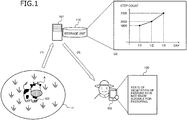
- FIG. 1 is a diagram depicting an example of the vegetation assessing method according to an embodiment.
- a vegetation assessing apparatus 101 is a computer that assesses the state of vegetation of a pasture.
- a pasture is a place where livestock animals are released and kept.
- Livestock animals are, for example, cattle, pigs, and horses that are raised.
- Vegetation is plants growing in a pasture.
- Concentrated feed is feed that is low in fiber and water, and high in protein, fat, carbohydrates, etc. such as, for example, rice bran, soy beans, corn, etc. Roughage high in fiber such as, for example, fresh grass, silage, hay, rice straw, etc. is also feed.
- Livestock animals have grass preferences and if a grass of a low preference increases in a pasture, the livestock animals may fail to consume a sufficient volume of grass, negatively affecting productivity.
- a livestock raiser manages pastures to ensure sufficient growth of highly preferred grasses by sowing seeds of grasses that are highly preferred by the livestock, while assessing the pasture vegetation, which varies with the climate and changes in the weather.
- the vegetation assessing apparatus 101 assesses the state of the pasture vegetation from upward trends in step counts measured by step measuring devices attached to livestock animals pastured in a pasture and outputs the state, thereby enabling the livestock raiser to determine the state of the vegetation without having to look around the pasture.
- step measuring devices attached to livestock animals pastured in a pasture and outputs the state, thereby enabling the livestock raiser to determine the state of the vegetation without having to look around the pasture.
- the vegetation assessing apparatus 101 enables the state of the vegetation of the pasture H to be assessed based on temporal changes in the step count measurement results obtained by the step measuring device 102 attached to the livestock animal A.
- the livestock raiser can determine the state of the vegetation of the pasture H without having to go to the pasture H to observe the vegetation, enabling the work load of the livestock raiser to be reduced.
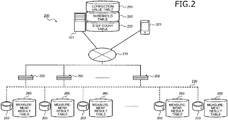
- FIG. 2 is a diagram depicting an example of system configuration of the rearing support system 200.
- the rearing support system 200 includes the vegetation assessing apparatus 101, a client apparatus 201, and a relay apparatus 202.
- the vegetation assessing apparatus 101, the client apparatus 201, and the relay apparatus 202 are connected via a cabled or wireless network 210.
- the network 210 for example, is a local area network (LAN), a wide area network (WAN), the Internet, etc.
- the vegetation assessing apparatus 101 has a step count table 230, a threshold table 240, and a correction value table 250, and assesses the state of the vegetation of pastures H1 to Hm (m: natural number of 1 or greater).
- the pastures H1 to Hm are pastures managed by a livestock raiser. More specifically, for example, the vegetation assessing apparatus 101 is a server included in a cloud computing system. Contents of the various tables 230, 240, and 250 will be described hereinafter with reference to FIGs. 7 to 9 .
- the client apparatus 201 is a computer used by the livestock raiser. More specifically, for example, the client apparatus 201 is a smartphone, a mobile telephone, a tablet personal computer (PC), a Personal Handy-phone System (PHS) device, a PC, a note PC, etc.
- the communications terminal 103 depicted in FIG. 1 corresponds to the client apparatus 201.
- the relay apparatus 202 is a computer that has a communications function.
- the relay apparatus 202 for example, is installed in each pasture Hj.
- the relay apparatus 202 is connected to a communications apparatus 203 via a wireless network 220, and relays communication of the communications apparatus 203 and the vegetation assessing apparatus 101.
- the communications apparatus 203 is a computer that has a measurement result table 260 and wirelessly communicates with the relay apparatus 202 via the wireless network 220. Further, the communications apparatus 203 is attached to, for example, an ankle of a cattle Ai and has a function of measuring a step count of the cattle Ai.
- the step measuring device 102 depicted in FIG. 1 corresponds to the communications apparatus 203.
- the communications apparatus 203 further transmits obtained step count measurement results to the vegetation assessing apparatus 101, via the relay apparatus 202. More specifically, for example, the communications apparatus 203 refers to the measurement result table 260, and transmits to the vegetation assessing apparatus 101, the step count measurement result obtained for a given time interval t.
- the given time interval t for example, is 1 hour, 1 day, etc.
- the given time interval t is assumed to be "1 hour”. Further, configuration may be such that in response to a transmission request from the vegetation assessing apparatus 101, the communications apparatus 203 transmits a step count measurement result to the vegetation assessing apparatus 101. Contents of the measurement result table 260 will be described with reference to FIG. 6 .
- the communications apparatus 203 may be attached to each member of a herd in the pasture Hj, or a member selected from the herd (e.g., the alpha).
- a member selected from the herd e.g., the alpha
- calves tend to scamper about and have a high step count and consequently, may be excluded from being subject to attachment of the communications apparatus 203.
- FIG. 3 is a block diagram depicting an example of hardware configuration of the vegetation assessing apparatus 101.
- the vegetation assessing apparatus 101 has a central processing unit (CPU 301), memory 302, an interface (I/F) 303, a magnetic disk drive 304, and a magnetic disk 305, respectively connected by a bus 300.
- the CPU 301 governs overall control of the vegetation assessing apparatus 101.
- the memory 302 includes read-only memory (ROM), random access memory (RAM), and flash ROM. More specifically, for example, the flash ROM and ROM store various types of programs; and the RAM is used as a work area of the CPU 301.
- the programs stored in the memory 302 are loaded onto the CPU 301, whereby coded processes are executed by the CPU 301.
- the I/F 303 is connected to the network 210 through a communications line, and to other computers (e.g., the client apparatus 201 and the relay apparatus 202 depicted in FIG. 2 ) via the network 210.
- the I/F 303 administers an internal interface with the network 210 and controls the input and output of data from other computers.
- a modem or LAN adapter for example, can be used as the I/F 303.
- the magnetic disk drive 304 under the control of the CPU 301, controls the reading and writing of data with respect to the magnetic disk 305.
- the magnetic disk 305 stores data written thereto under the control of the magnetic disk drive 304.
- the vegetation assessing apparatus 101 may have a solid state drive (SSD), a keyboard, a mouse, a display, etc. in addition to the above components.
- SSD solid state drive
- the relay apparatus 202 depicted in FIG. 2 can also be realized by, for example, by a hardware configuration similar to that of the vegetation assessing apparatus 101 described above.
- FIG. 4 is a block diagram of an example of hardware configuration of the client apparatus 201.
- the client apparatus 201 has a CPU 401, memory 402, a magnetic disk drive 403, a magnetic disk 404, an I/F 405, a display 406, and a keyboard 407, respectively connected by a bus 400.
- the CPU 401 governs overall control of the client apparatus 201.
- the memory 402 for example, includes ROM, RAM, etc. More specifically, for example, the ROM stores various types of programs and the RAM is used as a work area of the CPU 401.
- the magnetic disk 404 stores the data written thereto under the control of the magnetic disk drive 403.
- the I/F 405 is connected to the network 210 through a communications line, and is connected to other computers (e.g., the vegetation assessing apparatus 101) via the network 210.
- the I/F 405 administers an internal interface with the network 210 and controls the input and output of data from other computers.
- the display 406 displays text, images, functional information, etc. in addition to a cursor, icons, and toolboxes.
- a liquid crystal display, an organic electroluminescence (EL) display, etc. can be used as the display 406.
- the keyboard 407 has keys for inputting text, numerals, various instructions, etc. and performs data input.
- the keyboard 407 for example, may be a touch panel input pad, a numeric pad, etc.
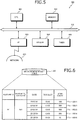
- FIG. 5 is a block diagram of an example of hardware configuration of the communications apparatus 203.
- the communications apparatus 203 has a CPU 501, memory 502, an I/F 503, a sensor 504, and a timer 505, respectively connected by a bus 500.
- the CPU 501 governs overall control of the communications apparatus 203.
- the memory 502 includes ROM, RAM, etc. More specifically, for example, the ROM stores various types of programs and the RAM is used as a work area of the CPU 501.
- the I/F 503 is connected to the wireless network 220 and is connected to other computers (e.g., the relay apparatus 202) via the wireless network 220.
- the I/F 503 administers an internal interface with the wireless network 220 and controls the input and output of data from other computers.
- the sensor 504 outputs information for detecting a behavior of the communications apparatus 203. For example, when the sensor 504 is implemented by a gyro sensor, a triple axis accelerometer, etc. and the communications apparatus 203 accelerates, the sensor 504 outputs information corresponding to the acceleration that occurred.
- the timer 505 has a function of measuring time. More specifically, for example, the timer 505 measures the actual time. The timer 505 may further measure the time that elapses from a given time point.
- the communications apparatus 203 may further include, for example, a global positioning system (GPS) unit that receives radio signals from satellites and outputs GPS information indicating the current position of the apparatus thereof.
- GPS global positioning system
- the measurement result table 260 for example, is realized by the memory 502 of the communications apparatus 203 depicted in FIG. 5 .
- description will be given taking the measurement result table 260 of the communications apparatus 203 attached to a given cattle in the pasture H1 as an example.
- FIG. 6 is a diagram depicting an example of the contents of the measurement result table 260.
- the measurement result table 260 has fields for pasture IDs, pastured_cattle IDs, dates, time slots, and step counts. By setting information into each of the fields, the 5 most recent measurement data (e.g., measurement data 600-1 to 600-5) are stored as records.
- a pasture ID is an identifier that identifies the pasture Hj in which a cattle Ai to which the communications apparatus 203 is attached is pastured.
- a pastured_cattle ID is an identifier that identifies the cattle Ai to which the communications apparatus 203 is attached. Dates indicate the year, month, day when each step count was measured for the cattle Ai to which the communications apparatus 203 is attached.
- Time slots are time slots during which the step counts were measured for the cattle Ai to which the communications apparatus 203 is attached. For example, 00:00 represents a time slot from 00:00.00 to 00:59.59.
- Each step count is a step count measurement result obtained for the cattle Ai by the communications apparatus 203.
- measurement data 600-1 indicates a step count of "100" for the 00:00 time slot on 2012/1/1, for a cattle Ax1 pastured in the pasture H1.
- the reference time point for example, is set to 00 minutes 00 seconds of each time slot.
- the actual time measured by the timer 505 of each of the communications apparatuses 203 is assumed to be synchronized.
- the communications apparatus 203 increments the measured value C when the sensor 504 (refer to FIG. 5 ) detects acceleration that occurs with each step, at the instant that a cattle Ai takes a step.
- the communications apparatus 203 deletes the oldest measurement data stored in the measurement result table 260.
- the communications apparatus 203 can measure a step count of a cattle Ai hourly.
- the communications apparatus 203 further transmits measurement results stored in the measurement result table 260 to the vegetation assessing apparatus 101, via the relay apparatus 202, for example.
- the communications apparatus 203 may transmit the 5 most recent measurement data (e.g., measurement data 600-1 to 600-5) stored to the measurement result table 260, or may transmit the single most recent measurement data (e.g., measurement data 600-5).
- Transmission timing of the measurement data can be set arbitrarily. More specifically, for example, configuration may be such that when new measurement data is stored to the measurement result table 260, the communications apparatus 203 transmits the measurement data stored in the measurement result table 260 to the vegetation assessing apparatus 101. Thus, step count measurement data of a cattle Ai can be transmitted to the vegetation assessing apparatus 101 hourly.
- the number of the most recent measurement data to be stored in the measurement result table 260 can be set arbitrarily.
- the step count table 230 for example, is realized by the memory 302 of the vegetation assessing apparatus 101 depicted in FIG. 3 .
- FIG. 7 is a diagram depicting an example of the contents of the step count table 230.
- the step count table 230 has fields for pasture IDs, pastured_cattle IDs, dates, step counts, and total step counts.
- step count data e.g., step count data 700-1, 700-2 are stored as records.
- a pasture ID is an identifier that identifies a pasture Hj.
- a pastured_cattle ID is an identifier that identifies a cattle Ai pastured in a pasture Hj.
- Each date indicates the year, month, day when a step count was measured for a cattle Ai.
- Each step count is a step count measured for a cattle Ai, for each time slot 00:00 to 23:00.
- Each total step count is a total step count for 1 day, for a cattle Ai.
- a total step count can be obtained by cumulating the step counts of each time slot 00:00 to 23:00.
- a step count for each time slot 00:00 to 23:00 and a total step count of "2000" on 2012/1/1 can be specified for the cattle Ax1 pastured in the pasture H1, by step count data 700-1.
- the number of days of step count data to be stored in the step count table 230 can be arbitrarily set.
- the threshold table 240 for example, is stored in the memory 302 of the vegetation assessing apparatus 101.
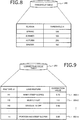
- FIG. 8 is a diagram depicting an example of the contents of the threshold table 240.
- the threshold table 240 stores a threshold X for each season.
- an interval from March to May 3 is assumed to be "spring”; an interval from June to August is assumed to be “summer”; an interval from September to November is assumed to be “autumn”; and an interval from December to February is assumed to be "winter”.
- the threshold X is a value used to assess the state of the vegetation of a pasture Hj.
- the threshold X for summer when plants that have grown large make walking difficult and the threshold X for winter when walking is difficult when snow accumulates are set to low values compared to the thresholds X for spring and autumn. Nonetheless, a common value may be used for the threshold X throughout the year.
- the correction value table 250 for example, is stored in the memory 302 of the vegetation assessing apparatus 101.
- FIG. 9 is a diagram depicting an example of the contents of the correction value table 250.
- the correction value table 250 has fields for pasture IDs, land features, and correction values. By setting information into each of the fields, correction value data 900-1 to 900-m are stored as records.
- a pasture ID is an identifier that identifies a pasture Hj.
- a land feature is a land feature that characterizes a pasture Hj.
- a correction value is a value for correcting the step count of a cattle Ai pastured in a pasture Hj, according to the land features of the pasture Hj. For example, correction value data 900-1 indicates land features "many steep slopes" and a correction value "0.70" for the pasture H1.
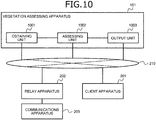
- FIG. 10 is a block diagram of an example of a functional configuration of the vegetation assessing apparatus 101.
- the vegetation assessing apparatus 101 is configured to include an obtaining unit 1001, an assessing unit 1002, and an output unit 1003.
- the obtaining unit 1001 to the output unit 1003 are functions forming a control unit and more specifically, for example, these functions are realized by executing on the CPU 301, a program stored in a storage apparatus such as the memory 302, the magnetic disk 305, etc. depicted in FIG. 3 , or by the I/F 303. Further, process results of the respective functional units, for example, are stored to a storage apparatus such as the memory 302, the magnetic disk 305, etc.
- the obtaining unit 1001 has a function of obtaining measurement data that includes step count measurement results obtained by the communications apparatus 203 attached to a cattle Ai pastured in a pasture Hj.
- a step count measurement result for example, is the measured value C of the step count measured during the given time interval t.
- measurement data may include, for example, information indicating the date and time of measurement of the step count, the pastured_cattle ID of the cattle Ai, information related to the location of the cattle Ai, in addition to the step count measurement result.
- the information related to the location of the cattle Ai is the pasture ID of the pasture Hj in which the cattle Ai pastured.
- GPS information indicating the current position of the communications apparatus 203 may be included in the measurement data as information related to the location of the cattle Ai.
- the measurement data for example, is the measurement data 600-1 to 600-5 depicted in FIG. 6 .
- the obtaining unit 1001 receives from the relay apparatus 202, measurement data that includes step count measurement results obtained by the communications apparatus 203. Further, for example, the obtaining unit 1001 may obtain the measurement data, which includes step count measurement results obtained by the communications apparatus 203, consequent to an input operation by the user using a non-depicted keyboard or mouse.
- the obtaining unit 1001 may further classify the step count measurement results based on information that is included in the obtained measurement data and related to the location of the cattle Ai. More specifically, for example, the obtaining unit 1001 classifies the step count measurement results for each pasture Hj indicated by the information related to the location of the cattle Ai.
- the obtained measurement data for example, is stored to the step count table 230 depicted in FIG. 7 .
- the assessing unit 1002 has a function of assessing based on temporal changes of the step measurement results included in the measurement data obtained by the obtaining unit 1001, whether the state of the vegetation of the pasture Hj is a suitable state for pasturing. More specifically, for example, when the step counts for each given time interval T increase with the elapse of time, the assessing unit 1002 assesses that the state of the vegetation of the pasture Hj is not suitable for pasturing.
- the given time interval T for example, is 1 hour, 1 day, 1 week, 1 month, etc.
- pastured cattle tend to exhibit a behavior of ruminating when ingesting feed grass and sleeping after ruminating, multiple times during a single day.
- the rumination time for example, is 1 hour.
- the sleeping period for example, is 2 hours.
- the time interval T is preferably set as a time interval on the order of 1 day or 1 week.
- the assessing unit 1002 may assess that the state of the vegetation of a pasture Hj is not suitable for pasturing, when the value of the step count measurement results of a first interval less the step count measurement results of a second interval that is before the first interval is a given threshold or greater.
- the first and the second intervals are intervals separated by the given time interval T.
- time interval T is assumed to be “1 day (24 hours)". Further, a day when assessment of whether the state of the vegetation of a pasture Hj is a suitable state for pasturing is performed may be indicated as "assessment day”.
- the assessing unit 1002 may assess that the state of the vegetation of a pasture Hj is not a state suitable for pasturing, when a difference d of a step count S for the assessment day less a reference step count S b is the threshold X or greater.
- the assessing unit 1002 may assess that the state of the vegetation of pasture Hj is a state suitable for pasturing, when the difference d is less than the threshold X.
- the step count S may be an average of the total step counts of 1 day for the cattle A1 to An pastured in a pasture Hj, or an average of the total step counts of 1 day for plural heads of cattle selected from the cattle A1 to An. Further, for example, the step count S further may be the total step count of 1 day for a specific cattle among the cattle A1 to An.
- the specific cattle for example, may be the highest ranking alpha in the herd, or a lowest ranking cattle in the herd.
- the reference step count S b is a value that is based on the step count S of another day that is before the assessment day.
- the reference step count S b may be the step count S of the day before the assessment day, or the step count S of the day when pasturing in a pasture Hj begins.
- the reference step count S b may be an average of the step counts S of several days after pasturing in the pasture Hj begins, among the days before the assessment day.
- the reference step count S b may be the step count S a few days after pasturing in the pasture Hj begins, among the days before the assessment day.
- the threshold X for example, is set to a value that enables determination that when the step count S of the assessment day, with respect to the step count S b , increases to the threshold X or more, there is little feed grass in the pasture Hj, or since there is no feed grass, the pastured cattle are searching for preferred grass.
- the threshold X for example, can be specified from the threshold table 240 depicted in FIG. 8 .
- the assessing unit 1002 may assess whether the state of the vegetation of the pasture Hj is a state suitable for pasturing, based on temporal changes of the step count measurement results for the remaining cattle among the cattle A1 to An pastured in the pasture Hj exclusive of cattle of a specified state.
- cattle of a specified state are cattle in estrus, sick cattle, etc.
- Cattle of a specified state have per unit time step counts that tend to increase and decrease compare to cattle of a normal state.
- cattle in estrus have per unit time step counts that tend to increase compared to cattle of a normal state.
- sick cattle have per unit step counts that tend to decrease compared to cattle of a normal state. Therefore, the assessing unit 1002 may exclude as processing subjects, the step count measurement results of cattle of a specified state.
- Cattle of a specified state may be specified by operational input by the user using a non-depicted keyboard or mouse. Further, the assessing unit 1002 may refer to the step count table 230 to assess whether a cattle Ai is in a specified state. More specifically, for example, the assessing unit 1002 assesses whether the step count of the cattle Ai satisfies a given condition and if the given condition is satisfied, assesses that the cattle Ai is in a specified state.
- the given condition can be set arbitrarily according states such as estrus, illness, etc. For example, when a cattle Ai is assessed to be in estrus, the step count of the cow in estrus increases and using this characteristic, the given condition is set as a condition "step count of cattle Ai is threshold ⁇ or greater".
- the step count of the cattle Ai here, for example, is an average of the per unit time step counts of the cattle Ai, for 1 day. Further, for example, when the cattle Ai is assessed to be sick, the step count of the sick cattle decreases and using this characteristic, the given condition is set as a condition "step count of cattle Ai is less than threshold ⁇ ".
- the assessing unit 1002 may detect based on the step count measurement results for each time slot of the assessment day, a time slot TZ for which the step count continues to be a given number Q or less for a given period P or longer.
- the pastured cattle tend to perform a series of behaviors including ruminating and sleeping multiple times during a single day.
- the number of times that the pastured cattle perform the series of behaviors of ruminating and sleeping is presumed to decrease when there is little feed grass in the pasture Hj. In other words, when the number of times that the series of behaviors of ruminating and sleeping is few, it can be determined that the state of the vegetation of the pasture Hj is not a state suitable for pasturing.
- configuration may be such that when a count k of the detected time slots TZ is less than a given number K, the assessing unit 1002 assesses that the state of the vegetation of the pasture Hj is not a state suitable for pasturing. Further, the assessing unit 1002 may assess that the state of the vegetation of the pasture Hj is suitable for pasturing, when the count k of the detected time slots TZ is the given number K or greater.
- the given period P is set to a period that is a sum of the average rumination time and the average sleep time, e.g., 3 hours. Further, the step count of pastured cattle that are ruminating or sleeping is a value nearly 0. Therefore, the given number Q, for example, is set to a value on the order of 10 to 30. Further, the given number K is set to an average count of the number times that pastured cattle perform the series of behaviors of ruminating and sleeping in a single day, e.g., 3 times.
- the accuracy in assessing the state of the vegetation of a pasture Hj can be improved. More specifically, for example, even when the step count of a cattle Ai rapidly increases consequent to an external factor such as thunder, the appearance of a natural predator, etc., if the count k of the time slots TZ is the given number K or greater, the state of the vegetation of the pasture Hj can be assessed to be a suitable state for pasturing.
- the assessing unit 1002 may assess whether the state of the vegetation of each pasture Hj is a state suitable for pasturing, based on temporal changes in the step count measurement results classified according pasture Hj by the obtaining unit 1001. Thus, the state of vegetation of the respective pastures Hj located at multiple locations can be assessed. Processing details of the assessing unit 1002 will be described hereinafter with reference to FIG. 11 .
- the output unit 1003 has a function of outputting assessment results obtained by the assessing unit 1002.
- Forms of output by the output unit 1003, for example, include storage to a storage apparatus such as the memory 302, the magnetic disk 305, etc.; display on a non-depicted display; non-depicted printout; transmission by the I/F 303 to an external computer; etc.
- the output unit 1003 may generate information indicating that the state of the vegetation of a pasture Hj is a state suitable for pasturing and transmit the information to the client apparatus 201, when the state of the vegetation of the pasture Hj is assessed to be a state suitable for pasturing. As a result, information indicating that the state of the vegetation of the pasture Hj is a state suitable for pasturing is displayed on the display 406 at the client apparatus 201.
- the output unit 1003 may generate information indicating that the state of the vegetation of a pasture Hj is not a state suitable for pasturing and transmit the information to the client apparatus 201, when the state of the vegetation at the pasture Hj is assessed to not be a state suitable for pasturing. As a result, information indicating that the state of the vegetation of the pasture Hj is not a state suitable for pasturing is displayed on the display 406 at the client apparatus 201.
- a screen example of information displayed on the display 406 will be described hereinafter with reference to FIG. 12 .
- the address of the client apparatus 201 which is the transmission destination, for example, is correlated with the pasture ID of the pasture Hj managed by the livestock raiser using the client apparatus 201 and stored to a storage apparatus such as the memory 302, the magnetic disk 305, etc.
- the reference step count S b may be preset as a common value for the pastures H1 to Hm. More specifically, for example, an averaged total step count of a cattle Ai, for 1 day in the past and measured when the state of the vegetation of the pasture Hj is a state suitable for pasturing may be set as the reference step count S b common to the pastures H1 to Hm.
- configuration may be such that step count measurement results are corrected. More specifically, for example, configuration may be such that the assessing unit 1002 refers to the correction value table 250 depicted in FIG. 9 and multiplies the step count measurement results of the cattle Ai by a correction value specific to each pasture Hj to correct the step count measurement results of the cattle Ai.
- the assessing unit 1002 refers to the correction value table 250 depicted in FIG. 9 and multiplies the step count measurement results of the cattle Ai by a correction value specific to each pasture Hj to correct the step count measurement results of the cattle Ai.
- step count average an average of the total step counts of 1 day, for the cattle A1 to An pastured in a pasture Hj.
- the assessing unit 1002 refers to the step count table 230 and for each pasture Hj, calculates a daily step count average of the cattle A1 to An pastured in the pasture Hj.
- the calculated daily step count average for example, is stored to a step count average table 1100 depicted in FIG. 11 .
- FIG. 11 is a diagram depicting an example of the contents of the step count average table 1100.
- the step count average table 1100 has fields for pasture IDs, dates, and step count averages. By setting information into each of the fields, daily step count averages for each pasture Hj are stored.
- a screen example of information displayed on the display 406 of the client apparatus 201 will be described.
- a screen example of information indicating that the state of the vegetation of a pasture Hj is not a state suitable for pasturing will be described.
- FIG. 12 is a diagram depicting a screen example of information depicted on the display 406.
- an alarm screen 1200 indicating that the state of the vegetation of the pasture H1 is not a state suitable for pasturing is displayed on the display 406 of the client apparatus 201.
- the livestock raiser can determine that at the time point of 2012/1/5, the state of the vegetation of the pasture H1 is not a state suitable for pasturing.
- the obtaining process is a process of obtaining measurement data of a cattle Ai pastured in a pasture Hj.
- the obtaining process for example, is executed periodically (e.g., 1 hour) for each pasture Hj.
- FIG. 13 is a flowchart depicting an example of the procedure of the obtaining process of the vegetation assessing apparatus 101.
- the vegetation assessing apparatus 101 determines whether measurement data of a cattle Ai pastured in a pasture Hj has been received from the relay apparatus 202, via the network 210 (step S1301).
- the vegetation assessing apparatus 101 waits for measurement data of a cattle Ai to be received (step S1301: NO).
- the vegetation assessing apparatus 101 registers the received measurement data into the step count table 230 (step S1302).
- the vegetation assessing apparatus 101 determines whether measurement data for the entire herd of the pasture Hj has been received (step S1303). Here, if measurement data for the entire herd has not been received (step S1303: NO), the vegetation assessing apparatus 101 returns to step S1301. On the other hand, if measurement data for the entire herd has been received (step S1303: YES), the vegetation assessing apparatus 101 ends the series of operations according to the flowchart. Thus, step count measurement results of the cattle A1 to An pastured in a pasture Hj can be obtained.
- the vegetation assessing process is a process of assessing whether the state of the vegetation of a pasture Hj is a state suitable for pasturing.
- the vegetation assessing process for example, is executed at an arbitrary timing or periodically.
- FIG. 14 is a flowchart depicting an example of a procedure of the vegetation assessing process of the vegetation assessing apparatus 101.
- the vegetation assessing apparatus 101 executes an estrus assessing process (step S1403).
- the estrus assessing process is a process of assessing the possibility of a cattle Ai pastured in the pasture Hj being in estrus. A procedure of the estrus assessing process will be described hereinafter with reference to FIG. 15 .
- the vegetation assessing apparatus 101 calculates the step count average of the assessment day, based on the total step counts of the assessment day, for the remaining cattle among the cattle A1 to An pastured in the pasture Hj exclusive of cattle potentially in estrus (step S1404).
- the vegetation assessing apparatus 101 registers the calculated step count average of the assessment day into the step count average table 1100 (step S1405).
- the vegetation assessing apparatus 101 refers to the step count average table 1100 and calculates the difference d of the step count average of the assessment day less the step count average of the day before the assessment day (step S1406).
- the vegetation assessing apparatus 101 determines if the calculated difference d is the threshold X or greater (step S1407).
- the vegetation assessing apparatus 101 assesses that the state of the vegetation of the pasture Hj is not a state suitable for pasturing (step S1408).
- the vegetation assessing apparatus 101 generates screen information for an alarm screen and transmits the screen information to the client apparatus 201 (step S1409).
- the alarm screen is a screen indicating that the state of the vegetation of the pasture Hj is not a state suitable for pasturing and, for example, is the alarm screen 1200 depicted in FIG. 12 .
- the vegetation assessing apparatus 101 increments "j" of the pasture Hj (step S1410), and determines whether “j" is greater than “m” (step S1411). Here, if “j" is "m” or less (step S1411: NO), the vegetation assessing apparatus 101 returns to step S1402.
- step S1411 YES
- step S1411 YES
- step S1407 if the difference d is less than the threshold X (step S1407: NO), the vegetation assessing apparatus 101 assesses that the state of the vegetation of the pasture Hj is a state suitable for pasturing (step S1412), and transitions to step S1410.
- the state of the vegetation can be assessed for each pasture Hj, based on step count measurement results of a cattle Ai, for each of the pastures Hj located at multiple locations.
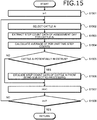
- FIG. 15 is a flowchart depicting an example of a procedure of the estrus assessing process.
- the vegetation assessing apparatus 101 extracts from the step count table 230, step count data of the assessment day, for the cattle Ai (step S1503).
- the vegetation assessing apparatus 101 calculates an average of the per unit time step counts, based on the extracted step count data of the assessment day, for the cattle Ai (step S1504).
- the vegetation assessing apparatus 101 determines if the calculated average of the step counts is the threshold ⁇ or greater and thereby, determines whether the cattle Ai has the potential of being in estrus (step S1505). Here, if the cattle Ai has no potential of being in estrus (step S1505: NO), the vegetation assessing apparatus 101 transitions to step S1507.
- the vegetation assessing apparatus 101 excludes the step count data of the cattle Ai from being subject to processing (step S1506). More specifically, for example, the vegetation assessing apparatus 101 may delete from the step count table 230, the step count data of the cattle Ai that has a potential of being in estrus.
- the vegetation assessing apparatus 101 increments "i" of the cattle Ai (step S1507), and determines whether “i” is greater than “n” (step S1508). Here, if “i” is "n” or less (step S1508: NO), the vegetation assessing apparatus 101 returns to step S1502.
- step S1508 YES
- the vegetation assessing apparatus 101 ends the series of operations according to the flowchart and returns to the step at which the estrus assessing process was called.
- the step count data of a cattle Ai that has a potential of being in estrus among the cattle A1 to An pastured in a pasture Hj can be excluded from being subject to processing when assessing whether the state of the vegetation of the pasture Hj is a state suitable for pasturing.
- the vegetation assessing apparatus 101 enables assessment of whether the state of vegetation of a pasture Hj is a state suitable for pasturing, based on temporal changes of step count measurement results obtained by the communications apparatus 203 attached to a cattle Ai pastured in the pasture Hj. Further, the vegetation assessing apparatus 101 enables obtained assessment results to be transmitted to the client apparatus 201 used by the livestock raiser.
- the livestock raiser can determine the state of the vegetation of the pasture Hj, enabling the work load of the livestock raiser to be reduced. Further, even if the livestock raiser does not have knowledge related to the vegetation of a meadow, the livestock raiser can determine the state of the vegetation of the pasture Hj, enabling personnel costs for management of the pasture Hj to be greatly suppressed.
- the vegetation assessing apparatus 101 further enables assessment that the state of the vegetation of a pasture Hj is not a state suitable for pasturing, when the step count measurement results for each given time interval T increase with the elapse of time.
- the state of the vegetation of the pasture Hj can be assessed to not be a state suitable for pasturing.
- the vegetation assessing apparatus 101 enables classification of step count measurement results according to each pasture Hj identified from information related to the location of a cattle Ai.
- the vegetation assessing apparatus 101 further enables assessment of whether the state of the vegetation of each pasture Hj is a state suitable for pasturing, based on temporal changes of the step count measurement results for each pasture Hj.
- the state of vegetation of the respective pastures Hj located at multiple locations can be assessed.
- the vegetation assessing apparatus 101 further enables assessment of whether the state of the vegetation of a pasture Hj is suitable for pasturing, based on temporal changes of the step count measurement results of the remaining cattle among the cattle A1 to An pastured in the pasture Hj exclusive of cattle of a specified state.
- the step count data of a cattle whose per unit time step count, compared to a normal state, is increasing consequent to factors other than preferences for feed grass, such as estrus and illness can be excluded from being subject to processing, thereby enabling drops in the accuracy to be prevented when assessment of the state of the vegetation of a pasture Hj is performed.
- the vegetation assessing apparatus 101 enables assessment that the state of the vegetation of a pasture Hj is not a state suitable for pasturing, when the difference d of the step count average of the assessment day less the step count average of the day before the assessment day is the threshold X or greater.
- the state of the vegetation of a pasture Hj can be assessed to not be a state suitable for pasturing, when the step count of a cattle Ai pastured in the pasture Hj rapidly increases.
- the vegetation assessing apparatus 101 enables the time slot TZ, for which the step count continues to be the given number Q or less for the given period P or longer, to be detected based on the step count measurement results of a cattle Ai, for each time slot of the assessment day. Further, the vegetation assessing apparatus 101 enables assessment that the state of the vegetation of a pasture Hj is not a state suitable for pasturing, when the count k of the detected time slots TZ is less than the given number K.
- the accuracy in assessing the state of the vegetation of a pasture Hj can be improved. For example, when the step count of a cattle Ai rapidly increases consequent to an external factor such as thunder, the appearance of a natural predator, etc., an assessment that the state of the vegetation of the pasture Hj is not a state suitable for pasturing can be prevented.
- the vegetation assessing program, the vegetation assessing apparatus, and the vegetation assessing method according to the embodiment enable a livestock raiser to comprehend the state of the vegetation of a pasture Hj and take measures according to the state of the vegetation of the pasture Hj. More specifically, for example, when the state of the vegetation of the pasture Hj has become poor, the livestock raiser can quickly take countermeasures such as sowing in the pasture Hj, seeds of grasses highly preferred by the cattle Ai, changing the pasture to be used for pasturing, etc., thereby enabling productivity to be increased.
- the vegetation assessing method described in the present embodiment may be implemented by executing a prepared program on a computer such as a personal computer and a workstation.
- the vegetation assessing program is stored on a, computer-readable recording medium such as a hard disk, a flexible disk, a CD-ROM, an MO, and a DVD, read out from the computer-readable medium, and executed by the computer.
- the program may be distributed through a network such as the Internet.
Landscapes
- Life Sciences & Earth Sciences (AREA)
- Engineering & Computer Science (AREA)
- Business, Economics & Management (AREA)
- Health & Medical Sciences (AREA)
- General Physics & Mathematics (AREA)
- Physics & Mathematics (AREA)
- Strategic Management (AREA)
- Human Resources & Organizations (AREA)
- Economics (AREA)
- Environmental Sciences (AREA)
- Animal Husbandry (AREA)
- General Health & Medical Sciences (AREA)
- Theoretical Computer Science (AREA)
- Chemical & Material Sciences (AREA)
- Tourism & Hospitality (AREA)
- General Business, Economics & Management (AREA)
- Marketing (AREA)
- Entrepreneurship & Innovation (AREA)
- Biodiversity & Conservation Biology (AREA)
- Botany (AREA)
- Agronomy & Crop Science (AREA)
- Marine Sciences & Fisheries (AREA)
- Mining & Mineral Resources (AREA)
- Primary Health Care (AREA)
- Biochemistry (AREA)
- Medicinal Chemistry (AREA)
- Wood Science & Technology (AREA)
- Food Science & Technology (AREA)
- Analytical Chemistry (AREA)
- Biophysics (AREA)
- Immunology (AREA)
- Pathology (AREA)
- Development Economics (AREA)
- Educational Administration (AREA)
- Quality & Reliability (AREA)
- Game Theory and Decision Science (AREA)
- Operations Research (AREA)
- Management, Administration, Business Operations System, And Electronic Commerce (AREA)
- Ecology (AREA)
- Forests & Forestry (AREA)
Priority Applications (1)
| Application Number | Priority Date | Filing Date | Title |
|---|---|---|---|
| PL13882303T PL2987397T3 (pl) | 2013-04-18 | 2013-04-18 | Program do określania roślinności, urządzenie do określania roślinności i sposób określania roślinności |
Applications Claiming Priority (1)
| Application Number | Priority Date | Filing Date | Title |
|---|---|---|---|
| PCT/JP2013/061549 WO2014170996A1 (ja) | 2013-04-18 | 2013-04-18 | 植生判定プログラム、植生判定装置および植生判定方法 |
Publications (3)
| Publication Number | Publication Date |
|---|---|
| EP2987397A1 EP2987397A1 (en) | 2016-02-24 |
| EP2987397A4 EP2987397A4 (en) | 2016-04-13 |
| EP2987397B1 true EP2987397B1 (en) | 2016-12-07 |
Family
ID=51730965
Family Applications (1)
| Application Number | Title | Priority Date | Filing Date |
|---|---|---|---|
| EP13882303.4A Not-in-force EP2987397B1 (en) | 2013-04-18 | 2013-04-18 | Vegetation determination program, vegetation determination device and vegetation determination method |
Country Status (7)
| Country | Link |
|---|---|
| US (1) | US20160029601A1 (pl) |
| EP (1) | EP2987397B1 (pl) |
| JP (1) | JP5962852B2 (pl) |
| KR (1) | KR101734744B1 (pl) |
| CN (1) | CN105101781A (pl) |
| PL (1) | PL2987397T3 (pl) |
| WO (1) | WO2014170996A1 (pl) |
Families Citing this family (6)
| Publication number | Priority date | Publication date | Assignee | Title |
|---|---|---|---|---|
| US10354563B2 (en) * | 2017-05-12 | 2019-07-16 | HKC Corporation Limited | Curved display device and assembling method therefor |
| US20230337631A1 (en) * | 2020-02-07 | 2023-10-26 | Sony Group Corporation | Information processing device and information processing method |
| CN113111672A (zh) * | 2021-04-13 | 2021-07-13 | 中国科学院东北地理与农业生态研究所 | 一种真湿地植物的判定方法 |
| CN113222453B (zh) * | 2021-05-28 | 2024-01-16 | 中国农业科学院草原研究所 | 一种基于北斗导航的天然草地草畜平衡评估方法、系统、设备及存储介质 |
| KR102571221B1 (ko) * | 2021-06-02 | 2023-08-29 | 주식회사 에스비솔루션 | 동물 데이터 관리 방법 및 시스템 |
| WO2025183305A1 (ko) * | 2024-02-29 | 2025-09-04 | 주식회사 바딧 | 개체의 행동에 관한 정보에 기초하여 목초지를 관리하기 위한 방법 및 시스템 |
Family Cites Families (9)
| Publication number | Priority date | Publication date | Assignee | Title |
|---|---|---|---|---|
| JPS6488350A (en) * | 1987-09-30 | 1989-04-03 | Sochi Shikenjo | Measuring method for existing quantity of plant by radiating microwave from side face |
| JPH11128210A (ja) * | 1997-10-29 | 1999-05-18 | Matsushita Electric Works Ltd | 動物の運動量管理装置及び運動量管理システム並びに動物の運動量管理プログラムを記録した記録媒体 |
| JP2004334572A (ja) * | 2003-05-08 | 2004-11-25 | Seiko Epson Corp | 生産物販売仲介システム及び方法、生産物販売仲介装置、ならびに、コンピュータプログラム |
| JP2005063083A (ja) * | 2003-08-11 | 2005-03-10 | Kyocera Mita Corp | 状態変化シミュレーションシステム、状態変化シミュレーション装置、その制御方法及びその制御プログラム |
| JP2008148569A (ja) | 2006-12-14 | 2008-07-03 | Oki Electric Ind Co Ltd | 飼育支援システム |
| CN102217468B (zh) * | 2010-04-14 | 2013-02-27 | 中国农业科学院农业环境与可持续发展研究所 | 高寒草原地区适应气候变化的草地保护方法 |
| CN101894220A (zh) * | 2010-07-28 | 2010-11-24 | 江南大学 | 一种畜禽健康状况数据采集系统 |
| JP5510833B2 (ja) * | 2011-02-16 | 2014-06-04 | カシオ計算機株式会社 | 携帯端末装置及びプログラム |
| CN102598970A (zh) * | 2011-12-08 | 2012-07-25 | 新疆畜牧科学院草业研究所 | 牲畜追耕法退化草地改良技术 |
-
2013
- 2013-04-18 EP EP13882303.4A patent/EP2987397B1/en not_active Not-in-force
- 2013-04-18 KR KR1020157029996A patent/KR101734744B1/ko not_active Expired - Fee Related
- 2013-04-18 JP JP2015512255A patent/JP5962852B2/ja not_active Expired - Fee Related
- 2013-04-18 CN CN201380075568.3A patent/CN105101781A/zh active Pending
- 2013-04-18 PL PL13882303T patent/PL2987397T3/pl unknown
- 2013-04-18 WO PCT/JP2013/061549 patent/WO2014170996A1/ja not_active Ceased
-
2015
- 2015-10-15 US US14/884,400 patent/US20160029601A1/en not_active Abandoned
Also Published As
| Publication number | Publication date |
|---|---|
| EP2987397A1 (en) | 2016-02-24 |
| EP2987397A4 (en) | 2016-04-13 |
| KR101734744B1 (ko) | 2017-05-11 |
| US20160029601A1 (en) | 2016-02-04 |
| PL2987397T3 (pl) | 2017-03-31 |
| KR20150133247A (ko) | 2015-11-27 |
| JPWO2014170996A1 (ja) | 2017-02-16 |
| WO2014170996A1 (ja) | 2014-10-23 |
| CN105101781A (zh) | 2015-11-25 |
| JP5962852B2 (ja) | 2016-08-03 |
Similar Documents
| Publication | Publication Date | Title |
|---|---|---|
| EP2987397B1 (en) | Vegetation determination program, vegetation determination device and vegetation determination method | |
| Goopy et al. | A new approach for improving emission factors for enteric methane emissions of cattle in smallholder systems of East Africa–Results for Nyando, Western Kenya | |
| Goetsch et al. | Invited review: Feeding behavior of goats | |
| González-García et al. | Circannual body reserve dynamics and metabolic profile changes in Romane ewes grazing on rangelands | |
| US20190141959A1 (en) | System for monitoring pasture intake | |
| Stadig et al. | An automated positioning system for monitoring chickens’ location: Effects of wearing a backpack on behaviour, leg health and production | |
| Andonovic et al. | Precision livestock farming technologies | |
| Lee et al. | Effect of diet phase change, dietary Ca and P level and phytase on bird performance and real-time gizzard pH measurements | |
| Keeling et al. | Use of mechanical rotating brushes in dairy cows–a potential proxy for performance and welfare? | |
| Stackhouse-Lawson et al. | Effects of growth-promoting technology on feedlot cattle behavior in the 21 days before slaughter | |
| Imaz et al. | Using automated in-paddock weighing to evaluate the impact of intervals between liveweight measures on growth rate calculations in grazing beef cattle | |
| De Mol et al. | The relation between eating time and feed intake of dairy cows | |
| EP2832217A1 (en) | Estrus notification method, estrus notification device, and estrus notification program | |
| Hao et al. | Effects of rotational and continuous grazing on herbage quality, feed intake and performance of sheep on a semi-arid grassland steppe | |
| Hasan et al. | Monitoring cattle liveweight using a mobile, in-paddock weigh platform: Validation, attendance and utility | |
| Müller et al. | Individual consistency of dairy cows’ activity in their home pen | |
| EP3603388A1 (en) | Behavior specifying device, behavior specifying method and program | |
| JP7410200B2 (ja) | 特定装置、特定方法、及びプログラム | |
| CN108935186A (zh) | 一种动物采食观测设备以及观测方法 | |
| Piasentier et al. | Dietary selection and ingestive behaviour of fallow deer and sheep grazing on adjacent monocultures of white clover and tall fescue | |
| Michie et al. | Herdsman+: artificial intelligence enabled systems and services for livestock farming | |
| Landau et al. | Energy expenditure in Awassi sheep grazing wheat stubble in the northern Negev Desert of Israel | |
| JP2020036627A (ja) | 行動特定装置、行動特定方法、及びプログラム | |
| Dickson et al. | Evaluating equine feeding behavior utilizing GrowSafe Systems: a pilot study | |
| Greter et al. | Effect of frequency of feed delivery on the feeding behaviour, growth, and rumen temperature of limit-fed dairy heifers |
Legal Events
| Date | Code | Title | Description |
|---|---|---|---|
| PUAI | Public reference made under article 153(3) epc to a published international application that has entered the european phase |
Free format text: ORIGINAL CODE: 0009012 |
|
| 17P | Request for examination filed |
Effective date: 20151016 |
|
| AK | Designated contracting states |
Kind code of ref document: A1 Designated state(s): AL AT BE BG CH CY CZ DE DK EE ES FI FR GB GR HR HU IE IS IT LI LT LU LV MC MK MT NL NO PL PT RO RS SE SI SK SM TR |
|
| AX | Request for extension of the european patent |
Extension state: BA ME |
|
| A4 | Supplementary search report drawn up and despatched |
Effective date: 20160315 |
|
| RIC1 | Information provided on ipc code assigned before grant |
Ipc: A01G 7/00 20060101AFI20160309BHEP Ipc: G06Q 50/02 20120101ALI20160309BHEP |
|
| REG | Reference to a national code |
Ref country code: DE Ref legal event code: R079 Ref document number: 602013015216 Country of ref document: DE Free format text: PREVIOUS MAIN CLASS: A01G0007000000 Ipc: A01G0001000000 |
|
| RIN1 | Information on inventor provided before grant (corrected) |
Inventor name: OKAMOTO, KOUKI Inventor name: YAMANO, DAIJI Inventor name: MOTOSHIMA, TOSHIMI Inventor name: KANAMORI, AKIHITO |
|
| GRAP | Despatch of communication of intention to grant a patent |
Free format text: ORIGINAL CODE: EPIDOSNIGR1 |
|
| RIC1 | Information provided on ipc code assigned before grant |
Ipc: A01G 7/00 20060101ALI20160527BHEP Ipc: G06Q 50/02 20120101ALI20160527BHEP Ipc: G01N 33/00 20060101ALI20160527BHEP Ipc: A01G 1/00 20060101AFI20160527BHEP Ipc: A01K 29/00 20060101ALI20160527BHEP |
|
| DAX | Request for extension of the european patent (deleted) | ||
| INTG | Intention to grant announced |
Effective date: 20160629 |
|
| GRAS | Grant fee paid |
Free format text: ORIGINAL CODE: EPIDOSNIGR3 |
|
| GRAA | (expected) grant |
Free format text: ORIGINAL CODE: 0009210 |
|
| AK | Designated contracting states |
Kind code of ref document: B1 Designated state(s): AL AT BE BG CH CY CZ DE DK EE ES FI FR GB GR HR HU IE IS IT LI LT LU LV MC MK MT NL NO PL PT RO RS SE SI SK SM TR |
|
| REG | Reference to a national code |
Ref country code: GB Ref legal event code: FG4D |
|
| REG | Reference to a national code |
Ref country code: CH Ref legal event code: EP Ref country code: AT Ref legal event code: REF Ref document number: 850887 Country of ref document: AT Kind code of ref document: T Effective date: 20161215 |
|
| REG | Reference to a national code |
Ref country code: IE Ref legal event code: FG4D |
|
| REG | Reference to a national code |
Ref country code: RO Ref legal event code: EPE |
|
| REG | Reference to a national code |
Ref country code: DE Ref legal event code: R096 Ref document number: 602013015216 Country of ref document: DE |
|
| PG25 | Lapsed in a contracting state [announced via postgrant information from national office to epo] |
Ref country code: LV Free format text: LAPSE BECAUSE OF FAILURE TO SUBMIT A TRANSLATION OF THE DESCRIPTION OR TO PAY THE FEE WITHIN THE PRESCRIBED TIME-LIMIT Effective date: 20161207 |
|
| REG | Reference to a national code |
Ref country code: LT Ref legal event code: MG4D |
|
| REG | Reference to a national code |
Ref country code: NL Ref legal event code: MP Effective date: 20161207 |
|
| PG25 | Lapsed in a contracting state [announced via postgrant information from national office to epo] |
Ref country code: SE Free format text: LAPSE BECAUSE OF FAILURE TO SUBMIT A TRANSLATION OF THE DESCRIPTION OR TO PAY THE FEE WITHIN THE PRESCRIBED TIME-LIMIT Effective date: 20161207 Ref country code: LT Free format text: LAPSE BECAUSE OF FAILURE TO SUBMIT A TRANSLATION OF THE DESCRIPTION OR TO PAY THE FEE WITHIN THE PRESCRIBED TIME-LIMIT Effective date: 20161207 Ref country code: GR Free format text: LAPSE BECAUSE OF FAILURE TO SUBMIT A TRANSLATION OF THE DESCRIPTION OR TO PAY THE FEE WITHIN THE PRESCRIBED TIME-LIMIT Effective date: 20170308 Ref country code: NO Free format text: LAPSE BECAUSE OF FAILURE TO SUBMIT A TRANSLATION OF THE DESCRIPTION OR TO PAY THE FEE WITHIN THE PRESCRIBED TIME-LIMIT Effective date: 20170307 |
|
| REG | Reference to a national code |
Ref country code: AT Ref legal event code: MK05 Ref document number: 850887 Country of ref document: AT Kind code of ref document: T Effective date: 20161207 |
|
| PG25 | Lapsed in a contracting state [announced via postgrant information from national office to epo] |
Ref country code: FI Free format text: LAPSE BECAUSE OF FAILURE TO SUBMIT A TRANSLATION OF THE DESCRIPTION OR TO PAY THE FEE WITHIN THE PRESCRIBED TIME-LIMIT Effective date: 20161207 Ref country code: ES Free format text: LAPSE BECAUSE OF FAILURE TO SUBMIT A TRANSLATION OF THE DESCRIPTION OR TO PAY THE FEE WITHIN THE PRESCRIBED TIME-LIMIT Effective date: 20161207 Ref country code: HR Free format text: LAPSE BECAUSE OF FAILURE TO SUBMIT A TRANSLATION OF THE DESCRIPTION OR TO PAY THE FEE WITHIN THE PRESCRIBED TIME-LIMIT Effective date: 20161207 Ref country code: RS Free format text: LAPSE BECAUSE OF FAILURE TO SUBMIT A TRANSLATION OF THE DESCRIPTION OR TO PAY THE FEE WITHIN THE PRESCRIBED TIME-LIMIT Effective date: 20161207 |
|
| PG25 | Lapsed in a contracting state [announced via postgrant information from national office to epo] |
Ref country code: NL Free format text: LAPSE BECAUSE OF FAILURE TO SUBMIT A TRANSLATION OF THE DESCRIPTION OR TO PAY THE FEE WITHIN THE PRESCRIBED TIME-LIMIT Effective date: 20161207 |
|
| PG25 | Lapsed in a contracting state [announced via postgrant information from national office to epo] |
Ref country code: IS Free format text: LAPSE BECAUSE OF FAILURE TO SUBMIT A TRANSLATION OF THE DESCRIPTION OR TO PAY THE FEE WITHIN THE PRESCRIBED TIME-LIMIT Effective date: 20170407 Ref country code: CZ Free format text: LAPSE BECAUSE OF FAILURE TO SUBMIT A TRANSLATION OF THE DESCRIPTION OR TO PAY THE FEE WITHIN THE PRESCRIBED TIME-LIMIT Effective date: 20161207 Ref country code: EE Free format text: LAPSE BECAUSE OF FAILURE TO SUBMIT A TRANSLATION OF THE DESCRIPTION OR TO PAY THE FEE WITHIN THE PRESCRIBED TIME-LIMIT Effective date: 20161207 Ref country code: SK Free format text: LAPSE BECAUSE OF FAILURE TO SUBMIT A TRANSLATION OF THE DESCRIPTION OR TO PAY THE FEE WITHIN THE PRESCRIBED TIME-LIMIT Effective date: 20161207 |
|
| PG25 | Lapsed in a contracting state [announced via postgrant information from national office to epo] |
Ref country code: IT Free format text: LAPSE BECAUSE OF FAILURE TO SUBMIT A TRANSLATION OF THE DESCRIPTION OR TO PAY THE FEE WITHIN THE PRESCRIBED TIME-LIMIT Effective date: 20161207 Ref country code: PT Free format text: LAPSE BECAUSE OF FAILURE TO SUBMIT A TRANSLATION OF THE DESCRIPTION OR TO PAY THE FEE WITHIN THE PRESCRIBED TIME-LIMIT Effective date: 20170407 Ref country code: BG Free format text: LAPSE BECAUSE OF FAILURE TO SUBMIT A TRANSLATION OF THE DESCRIPTION OR TO PAY THE FEE WITHIN THE PRESCRIBED TIME-LIMIT Effective date: 20170307 Ref country code: AT Free format text: LAPSE BECAUSE OF FAILURE TO SUBMIT A TRANSLATION OF THE DESCRIPTION OR TO PAY THE FEE WITHIN THE PRESCRIBED TIME-LIMIT Effective date: 20161207 Ref country code: BE Free format text: LAPSE BECAUSE OF FAILURE TO SUBMIT A TRANSLATION OF THE DESCRIPTION OR TO PAY THE FEE WITHIN THE PRESCRIBED TIME-LIMIT Effective date: 20161207 Ref country code: SM Free format text: LAPSE BECAUSE OF FAILURE TO SUBMIT A TRANSLATION OF THE DESCRIPTION OR TO PAY THE FEE WITHIN THE PRESCRIBED TIME-LIMIT Effective date: 20161207 |
|
| REG | Reference to a national code |
Ref country code: DE Ref legal event code: R097 Ref document number: 602013015216 Country of ref document: DE |
|
| PLBE | No opposition filed within time limit |
Free format text: ORIGINAL CODE: 0009261 |
|
| STAA | Information on the status of an ep patent application or granted ep patent |
Free format text: STATUS: NO OPPOSITION FILED WITHIN TIME LIMIT |
|
| REG | Reference to a national code |
Ref country code: DE Ref legal event code: R119 Ref document number: 602013015216 Country of ref document: DE |
|
| 26N | No opposition filed |
Effective date: 20170908 |
|
| REG | Reference to a national code |
Ref country code: DE Ref legal event code: R079 Ref document number: 602013015216 Country of ref document: DE Free format text: PREVIOUS MAIN CLASS: A01G0001000000 Ipc: A01G0002000000 |
|
| PG25 | Lapsed in a contracting state [announced via postgrant information from national office to epo] |
Ref country code: DK Free format text: LAPSE BECAUSE OF FAILURE TO SUBMIT A TRANSLATION OF THE DESCRIPTION OR TO PAY THE FEE WITHIN THE PRESCRIBED TIME-LIMIT Effective date: 20161207 Ref country code: SI Free format text: LAPSE BECAUSE OF FAILURE TO SUBMIT A TRANSLATION OF THE DESCRIPTION OR TO PAY THE FEE WITHIN THE PRESCRIBED TIME-LIMIT Effective date: 20161207 |
|
| REG | Reference to a national code |
Ref country code: CH Ref legal event code: PL |
|
| GBPC | Gb: european patent ceased through non-payment of renewal fee |
Effective date: 20170418 |
|
| REG | Reference to a national code |
Ref country code: IE Ref legal event code: MM4A |
|
| REG | Reference to a national code |
Ref country code: FR Ref legal event code: ST Effective date: 20171229 |
|
| PG25 | Lapsed in a contracting state [announced via postgrant information from national office to epo] |
Ref country code: MC Free format text: LAPSE BECAUSE OF FAILURE TO SUBMIT A TRANSLATION OF THE DESCRIPTION OR TO PAY THE FEE WITHIN THE PRESCRIBED TIME-LIMIT Effective date: 20161207 Ref country code: FR Free format text: LAPSE BECAUSE OF NON-PAYMENT OF DUE FEES Effective date: 20170502 Ref country code: DE Free format text: LAPSE BECAUSE OF NON-PAYMENT OF DUE FEES Effective date: 20171103 |
|
| PG25 | Lapsed in a contracting state [announced via postgrant information from national office to epo] |
Ref country code: LI Free format text: LAPSE BECAUSE OF NON-PAYMENT OF DUE FEES Effective date: 20170430 Ref country code: GB Free format text: LAPSE BECAUSE OF NON-PAYMENT OF DUE FEES Effective date: 20170418 Ref country code: LU Free format text: LAPSE BECAUSE OF NON-PAYMENT OF DUE FEES Effective date: 20170418 Ref country code: CH Free format text: LAPSE BECAUSE OF NON-PAYMENT OF DUE FEES Effective date: 20170430 |
|
| PG25 | Lapsed in a contracting state [announced via postgrant information from national office to epo] |
Ref country code: IE Free format text: LAPSE BECAUSE OF NON-PAYMENT OF DUE FEES Effective date: 20170418 |
|
| PGFP | Annual fee paid to national office [announced via postgrant information from national office to epo] |
Ref country code: RO Payment date: 20180327 Year of fee payment: 6 |
|
| PGFP | Annual fee paid to national office [announced via postgrant information from national office to epo] |
Ref country code: PL Payment date: 20180315 Year of fee payment: 6 |
|
| PGFP | Annual fee paid to national office [announced via postgrant information from national office to epo] |
Ref country code: TR Payment date: 20180416 Year of fee payment: 6 |
|
| PG25 | Lapsed in a contracting state [announced via postgrant information from national office to epo] |
Ref country code: MT Free format text: LAPSE BECAUSE OF NON-PAYMENT OF DUE FEES Effective date: 20170418 |
|
| PG25 | Lapsed in a contracting state [announced via postgrant information from national office to epo] |
Ref country code: HU Free format text: LAPSE BECAUSE OF FAILURE TO SUBMIT A TRANSLATION OF THE DESCRIPTION OR TO PAY THE FEE WITHIN THE PRESCRIBED TIME-LIMIT; INVALID AB INITIO Effective date: 20130418 |
|
| PG25 | Lapsed in a contracting state [announced via postgrant information from national office to epo] |
Ref country code: CY Free format text: LAPSE BECAUSE OF FAILURE TO SUBMIT A TRANSLATION OF THE DESCRIPTION OR TO PAY THE FEE WITHIN THE PRESCRIBED TIME-LIMIT Effective date: 20161207 |
|
| PG25 | Lapsed in a contracting state [announced via postgrant information from national office to epo] |
Ref country code: MK Free format text: LAPSE BECAUSE OF FAILURE TO SUBMIT A TRANSLATION OF THE DESCRIPTION OR TO PAY THE FEE WITHIN THE PRESCRIBED TIME-LIMIT Effective date: 20161207 |
|
| PG25 | Lapsed in a contracting state [announced via postgrant information from national office to epo] |
Ref country code: RO Free format text: LAPSE BECAUSE OF NON-PAYMENT OF DUE FEES Effective date: 20190418 |
|
| PG25 | Lapsed in a contracting state [announced via postgrant information from national office to epo] |
Ref country code: AL Free format text: LAPSE BECAUSE OF FAILURE TO SUBMIT A TRANSLATION OF THE DESCRIPTION OR TO PAY THE FEE WITHIN THE PRESCRIBED TIME-LIMIT Effective date: 20161207 |
|
| PG25 | Lapsed in a contracting state [announced via postgrant information from national office to epo] |
Ref country code: PL Free format text: LAPSE BECAUSE OF NON-PAYMENT OF DUE FEES Effective date: 20190418 |
|
| PG25 | Lapsed in a contracting state [announced via postgrant information from national office to epo] |
Ref country code: TR Free format text: LAPSE BECAUSE OF NON-PAYMENT OF DUE FEES Effective date: 20190418 |