EP2987347B1 - Apparatus and methods for signaling out-of-standard capability in wireless communication networks - Google Patents
Apparatus and methods for signaling out-of-standard capability in wireless communication networks Download PDFInfo
- Publication number
- EP2987347B1 EP2987347B1 EP14719493.0A EP14719493A EP2987347B1 EP 2987347 B1 EP2987347 B1 EP 2987347B1 EP 14719493 A EP14719493 A EP 14719493A EP 2987347 B1 EP2987347 B1 EP 2987347B1
- Authority
- EP
- European Patent Office
- Prior art keywords
- network
- network entity
- pdu
- capability
- standard
- Prior art date
- Legal status (The legal status is an assumption and is not a legal conclusion. Google has not performed a legal analysis and makes no representation as to the accuracy of the status listed.)
- Active
Links
Images





Classifications
-
- H—ELECTRICITY
- H04—ELECTRIC COMMUNICATION TECHNIQUE
- H04W—WIRELESS COMMUNICATION NETWORKS
- H04W8/00—Network data management
- H04W8/22—Processing or transfer of terminal data, e.g. status or physical capabilities
- H04W8/24—Transfer of terminal data
-
- H—ELECTRICITY
- H04—ELECTRIC COMMUNICATION TECHNIQUE
- H04W—WIRELESS COMMUNICATION NETWORKS
- H04W8/00—Network data management
- H04W8/22—Processing or transfer of terminal data, e.g. status or physical capabilities
-
- H—ELECTRICITY
- H04—ELECTRIC COMMUNICATION TECHNIQUE
- H04W—WIRELESS COMMUNICATION NETWORKS
- H04W24/00—Supervisory, monitoring or testing arrangements
- H04W24/02—Arrangements for optimising operational condition
Definitions
- aspects of the present disclosure relate generally to wireless communication systems, and more particularly, to mechanism of signaling non-standard capability in a wireless communication network.
- Wireless communication networks are widely deployed to provide various communication services such as telephony, video, data, messaging, broadcasts, and so on.
- Such networks which are usually multiple access networks, support communications for multiple users by sharing the available network resources.
- UTRAN UMTS Terrestrial Radio Access Network
- the UTRAN is the radio access network (RAN) defined as a part of the Universal Mobile Telecommunications System (UMTS), a third generation (3G) mobile phone technology supported by the 3rd Generation Partnership Project (3GPP).
- UMTS Universal Mobile Telecommunications System
- 3GPP 3rd Generation Partnership Project
- UMTS which is the successor to Global System for Mobile Communications (GSM) technologies, currently supports various air interface standards, such as Wideband-Code Division Multiple Access (W-CDMA), Time Division-Code Division Multiple Access (TD-CDMA), and Time Division-Synchronous Code Division Multiple Access (TD-SCDMA).
- W-CDMA Wideband-Code Division Multiple Access
- TD-CDMA Time Division-Code Division Multiple Access
- TD-SCDMA Time Division-Synchronous Code Division Multiple Access
- UMTS also supports enhanced 3G data communications protocols, such as High Speed Packet Access (HSPA), which provides higher data transfer speeds and capacity to associated UMTS networks.
- HSPA High Speed Packet Access
- a user equipment also referred to as a mobile station, wireless terminal, mobile terminal, etc.
- a UTRAN For signaling purposes, a lot of information is transmitted between the UE and UTRAN.
- the signaling between the UE and UTRAN is carried out using the radio interface protocols defined in the 3GPP standards. These radio interface protocols include the Media Access Control (MAC) protocol, the Radio Link Control (RLC) protocol, the Packet Data Convergence Protocol (PDCP), the broadcast/multicast control protocol, the multimedia broadcast multicast control protocol, and the Radio Resource Control (RRC) protocol.
- MAC Media Access Control
- RLC Radio Link Control
- PDCP Packet Data Convergence Protocol
- the broadcast/multicast control protocol the broadcast/multicast control protocol
- multimedia broadcast multicast control protocol the Multicast multicast control protocol
- RRC Radio Resource Control
- the UE and UTRAN generally are designed to communicate with each other in accordance with the signaling protocols defined and sanctioned in the current 3GPP standards.
- US 2009/0098892 describes a method of sending a signaling message related to a predetermined OSI layer of a wireless communication system.
- the message is adapted to transmit signaling information specific of the OSI layer and for transmitting data different from the signaling information.
- the invention relates to methods of signaling in a wireless communication network, an apparatus for wireless communication and a user equipment for wireless communication as set forth in the claims.
- aspects of the present disclosure provide a number of approaches to deploy out-of-standard (or proprietary) features/enhancements that are not supported in the current communication standards.
- Mobile terminal and network equipment vendors can mutually agree to support certain out-of-standard features/enhancements.
- the mobile terminal can signal its support of such out-of-standard or non-standard features/enhancements to the network by adapting currently unused (or reserved) signaling data, and the network can recognize such adapted or repurposed signaling data, without interfering with any legitimate signaling.
- These approaches are also designed to minimize or avoid forward-compatibility risk.
- a first network entity e.g., a mobile terminal transmits a protocol data unit (PDU) to a second network entity (e.g., a network) in accordance with a communication standard.
- the standard may correspond to a Universal Terrestrial Radio Access Network (UTRAN), an evolved UMTS Terrestrial Radio Access Network (e-UTRAN), a GSM EDGE Radio Access Network (GERAN), a CDMA2000 radio access network (RAN), or any other suitable wireless communication network, and the PDU may be configured to conform with the applicable standard.
- UTRAN Universal Terrestrial Radio Access Network
- e-UTRAN evolved UMTS Terrestrial Radio Access Network
- GERAN GSM EDGE Radio Access Network
- RAN CDMA2000 radio access network
- a data field of the PDU may be configured to support a first function conforming to the communication standard, and a second function for communicating support of at least one mutually agreed feature that is different from features defined in the communication standard.
- the second function is not supported or defined in the communication standard.
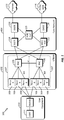
- a UMTS network includes three interacting domains: a core network 104, a radio access network (RAN) (e.g., the UMTS Terrestrial Radio Access Network (UTRAN) 102), and a user equipment (UE) 110.
- RAN radio access network
- UE user equipment
- the illustrated UTRAN 102 may employ a W-CDMA air interface for enabling various wireless services including telephony, video, data, messaging, broadcasts, and/or other services.
- the UTRAN 102 may include a plurality of Radio Network Subsystems (RNSs) such as an RNS 107, each controlled by a respective Radio Network Controller (RNC) such as an RNC 106.
- RNC Radio Network Controller
- the UTRAN 102 may include any number of RNCs 106 and RNSs 107 in addition to the illustrated RNCs 106 and RNSs 107.
- the RNC 106 is an apparatus responsible for, among other things, assigning, reconfiguring, and releasing radio resources within the RNS 107.
- the RNC 106 may be interconnected to other RNCs (not shown) in the UTRAN 102 through various types of interfaces such as a direct physical connection, a virtual network, or the like using any suitable transport network.
- the geographic region covered by the RNS 107 may be divided into a number of cells, with a radio transceiver apparatus serving each cell.
- a radio transceiver apparatus is commonly referred to as a Node B in UMTS applications, but may also be referred to by those skilled in the art as a base station (BS), a base transceiver station (BTS), a radio base station, a radio transceiver, a transceiver function, a basic service set (BSS), an extended service set (ESS), an access point (AP), or some other suitable terminology.
- BS basic service set
- ESS extended service set
- AP access point
- three Node Bs 108 are shown in each RNS 107; however, the RNSs 107 may include any number of wireless Node Bs.
- the Node Bs 108 provide wireless access points to a core network 104 for any number of mobile apparatuses.
- a mobile apparatus include a cellular phone, a smart phone, a session initiation protocol (SIP) phone, a laptop, a notebook, a netbook, a smartbook, a personal digital assistant (PDA), a satellite radio, a global positioning system (GPS) device, a multimedia device, a video device, a digital audio player (e.g., MP3 player), a camera, a game console, or any other similar functioning device.
- SIP session initiation protocol
- PDA personal digital assistant
- GPS global positioning system
- multimedia device e.g., a digital audio player (e.g., MP3 player), a camera, a game console, or any other similar functioning device.
- MP3 player digital audio player
- the mobile apparatus is commonly referred to as user equipment (UE) in UMTS applications, but may also be referred to by those skilled in the art as a mobile station (MS), a subscriber station, a mobile unit, a subscriber unit, a wireless unit, a remote unit, a mobile device, a wireless device, a wireless communications device, a remote device, a mobile subscriber station, an access terminal (AT), a mobile terminal, a wireless terminal, a remote terminal, a handset, a terminal, a user agent, a mobile client, a client, or some other suitable terminology.
- the UE 110 may further include a universal subscriber identity module (USIM) 111, which contains a user's subscription information to a network.
- USIM universal subscriber identity module
- DL downlink
- UL uplink
- the core network 104 can interface with one or more access networks, such as the UTRAN 102. As shown, the core network 104 is a UMTS core network. However, as those skilled in the art will recognize, the various concepts presented throughout this disclosure may be implemented in a RAN, or other suitable access network, to provide UEs with access to types of core networks other than UMTS networks.
- the illustrated UMTS core network 104 includes a circuit-switched (CS) domain and a packet-switched (PS) domain.
- Some of the circuit-switched elements are a Mobile services Switching Centre (MSC), a Visitor Location Register (VLR), and a Gateway MSC (GMSC).
- Packet-switched elements include a Serving GPRS Support Node (SGSN) and a Gateway GPRS Support Node (GGSN).
- Some network elements, like EIR, HLR, VLR, and AuC may be shared by both of the circuit-switched and packet-switched domains.
- the core network 104 supports circuit-switched services with a MSC 112 and a GMSC 114.
- the GMSC 114 may be referred to as a media gateway (MGW).
- MGW media gateway
- the MSC 112 is an apparatus that controls call setup, call routing, and UE mobility functions.
- the MSC 112 also includes a visitor location register (VLR) that contains subscriber-related information for the duration that a UE is in the coverage area of the MSC 112.
- VLR visitor location register
- the GMSC 114 provides a gateway through the MSC 112 for the UE to access a circuit-switched network 116.
- the GMSC 114 includes a home location register (HLR) 115 containing subscriber data, such as the data reflecting the details of the services to which a particular user has subscribed.
- HLR home location register
- the HLR is also associated with an authentication center (AuC) that contains subscriber-specific authentication data.
- AuC authentication center
- the illustrated core network 104 also supports packet-switched data services with a serving GPRS support node (SGSN) 118 and a gateway GPRS support node (GGSN) 120.
- General Packet Radio Service GPRS
- the GGSN 120 provides a connection for the UTRAN 102 to a packet-based network 122.
- the packet-based network 122 may be the Internet, a private data network, or some other suitable packet-based network.
- the primary function of the GGSN 120 is to provide the UEs 110 with packet-based network connectivity. Data packets may be transferred between the GGSN 120 and the UEs 110 through the SGSN 118, which performs primarily the same functions in the packet-based domain as the MSC 112 performs in the circuit-switched domain.
- a high speed packet access (HSPA) air interface includes a series of enhancements to the 3G/W-CDMA air interface between the UE 110 and the UTRAN 102, facilitating greater throughput and reduced latency for users.
- HSPA utilizes hybrid automatic repeat request (HARQ), shared channel transmission, and adaptive modulation and coding.
- HARQ hybrid automatic repeat request
- the standards that define HSPA include HSDPA (high speed downlink packet access) and HSUPA (high speed uplink packet access, also referred to as enhanced uplink or EUL).
- the UTRAN 102 is one example of a RAN that may be utilized in accordance with the present disclosure.
- FIG. 2 by way of example and without limitation, a simplified schematic illustration of a RAN 200 in a UTRAN architecture is illustrated.
- the system includes multiple cellular regions (cells), including cells 202, 204, and 206, each of which may include one or more sectors.
- Cells may be defined geographically (e.g., by coverage area) and/or may be defined in accordance with a frequency, scrambling code, etc. That is, the illustrated geographically-defined cells 202, 204, and 206 may each be further divided into a plurality of cells, e.g., by utilizing different scrambling codes.
- cell 204a may utilize a first scrambling code
- cell 204b while in the same geographic region and served by the same Node B 244, may be distinguished by utilizing a second scrambling code.
- the multiple sectors within a cell can be formed by groups of antennas with each antenna responsible for communication with UEs in a portion of the cell.
- antenna groups 212, 214, and 216 may each correspond to a different sector.
- antenna groups 218, 220, and 222 may each correspond to a different sector.
- antenna groups 224, 226, and 228 may each correspond to a different sector.
- the cells 202, 204, and 206 may include several UEs that may be in communication with one or more sectors of each cell 202, 204, or 206.
- UEs 230 and 232 may be in communication with Node B 242
- UEs 234 and 236 may be in communication with Node B 244,
- UEs 238 and 240 may be in communication with Node B 246.
- each Node B 242, 244, and 246 may be configured to provide an access point to a core network 204 (see FIG. 2 ) for all the UEs 230, 232, 234, 236, 238, and 240 in the respective cells 202, 204, and 206.
- the UE 236 may monitor various parameters of the source cell as well as various parameters of neighboring cells. Further, depending on the quality of these parameters, the UE 236 may maintain communication with one or more of the neighboring cells. During this time, the UE 236 may maintain an Active Set, that is, a list of cells to which the UE 236 is simultaneously connected (i.e., the UTRAN cells that are currently assigning a downlink dedicated physical channel DPCH or fractional downlink dedicated physical channel F-DPCH to the UE 236 may constitute the Active Set).
- Active Set that is, a list of cells to which the UE 236 is simultaneously connected (i.e., the UTRAN cells that are currently assigning a downlink dedicated physical channel DPCH or fractional downlink dedicated physical channel F-DPCH to the UE 236 may constitute the Active Set).
- the UTRAN air interface may be a spread spectrum Direct-Sequence Code Division Multiple Access (DS-CDMA) system, such as one utilizing the W-CDMA standards.
- DS-CDMA Spread spectrum Direct-Sequence Code Division Multiple Access
- the W-CDMA air interface for the UTRAN 102 is based on such DS-CDMA technology and additionally calls for a frequency division duplexing (FDD).
- FDD uses a different carrier frequency for the uplink (UL) and downlink (DL) between a Node B 108 and a UE 110.
- Another air interface for UMTS that utilizes DS-CDMA, and uses time division duplexing (TDD), is the TD-SCDMA air interface.
- TDD time division duplexing
- the communication protocol architecture may take on various forms depending on the particular application.
- the signaling protocol stack is divided into a Non-Access Stratum (NAS) and an Access Stratum (AS).
- the NAS provides the upper layers, for signaling between the UE 110 and the core network 104 (referring to FIG. 1 ), and may include circuit switched and packet switched protocols.
- the AS provides the lower layers, for signaling between the UTRAN 102 and the UE 110, and may include a user plane and a control plane.
- the user plane or data plane carries user traffic
- the control plane carries control information (i.e., signaling).
- Layer 1 is the lowest layer and implements various physical layer signal processing functions. Layer 1 will be referred to herein as the physical layer 306.
- the data link layer, called Layer 2 308, is above the physical layer 306 and is responsible for the link between the UE 210 and Node B 208 over the physical layer 306.
- the RRC layer 316 handles the control plane signaling between the UE 210 and the Node B 208.
- RRC layer 316 includes a number of functional entities for routing higher layer messages, handling broadcasting and paging functions, establishing and configuring radio bearers, etc.
- the L2 layer 308 is split into sublayers.
- the L2 layer 308 includes two sublayers: a media access control (MAC) sublayer 310 and a radio link control (RLC) sublayer 312.
- the L2 layer 308 additionally includes a packet data convergence protocol (PDCP) sublayer 314.
- PDCP packet data convergence protocol
- the UE may have several upper layers above the L2 layer 308 including a network layer (e.g., IP layer) that is terminated at a PDN gateway on the network side and an application layer that is terminated at the other end of the connection (e.g., far end UE, server, etc.).
- the PDCP sublayer 314 provides multiplexing between different radio bearers and logical channels.
- the PDCP sublayer 314 also provides header compression for upper layer data packets to reduce radio transmission overhead, security by ciphering the data packets, and handover support for UEs between Node Bs.
- the RLC sublayer 312 generally supports an acknowledged mode (AM) (where an acknowledgment and retransmission process may be used for error correction), an unacknowledged mode (UM), and a transparent mode for data transfers, and provides segmentation and reassembly of upper layer data packets and reordering of data packets to compensate for out-of-order reception due to a hybrid automatic repeat request (HARQ) at the MAC layer.
- AM acknowledged mode
- UM unacknowledged mode
- HARQ hybrid automatic repeat request
- RLC peer entities such as an RNC and a UE may exchange various RLC protocol data units (PDUs) including RLC Data PDUs, RLC Status PDUs, and RLC Reset PDUs, among others.
- PDUs RLC protocol data units
- packet may refer to any RLC PDU exchanged between RLC peer entities.
- the MAC sublayer 310 provides multiplexing between logical and transport channels.
- the MAC sublayer 310 is also responsible for allocating the various radio resources (e.g., resource blocks) in one cell among the UEs.
- the MAC sublayer 310 is also responsible for HARQ operations.
- the MAC sublayer 310 includes various MAC entities, including but not limited to a MAC-d entity and MAC-hs/ehs entity.
- the Radio Network Controller houses protocol layers from MAC-d and above. For the high speed channels, the MAC-hs/ehs layer is housed in the Node B.
- the MAC-d entity is configured to control access to all the dedicated transport channels, to a MAC-c/sh/m entity, and to the MAC-hs/ehs entity. Further, from the UE side, the MAC-hs/ehs entity is configured to handle the HSDPA specific functions and control access to the HS-DSCH transport channel. Upper layers configure which of the two entities, MAC-hs or MAC-ehs, is to be applied to handle HS-DSCH functionality.
- a UE 110 may communicate its support of out-of-standard (non-standard sanctioned) features/enhancements by sending an uplink RLC acknowledged mode (AM) or unacknowledged mode (UM) data protocol data unit (PDU) with special padding bits.
- the UE 110 communicates with the network (e.g., UTRAN 102) in accordance with the UTRAN standard.
- the UE may communicate with the network in accordance with other standards such as e-UTRAN, GERAN, CDMA2000 RAN standards, etc.
- the out-of-standard (non-standard sanctioned) features/enhancements refer to any features/enhancements that are not defined or supported in the communication standard by which the UE 110 communicates with the network (e.g., UTRAN 102).
- FIG. 4 is a conceptual diagram illustrating an RLC AM data PDU 400 with a data field repurposed to signal support of out-of-standard features/enhancements in accordance with an aspect of the disclosure.
- the RLC PDU 400 includes a number of data fields such as a D/C bit 402, a Length Indicator 404, an E bit 406, and a PAD field 408.
- data concatenation is not applicable and the remaining data to be transmitted do not fill an entire RLC PDU of a given size, the remainder of the data field is filled with padding bits in the PAD field 408.
- these fields may be set as follows.
- Length Indicator (LI) "1111111” (7-bit) or "111111111111111” (15-bit).
- E bit 1 attached to the last "Length Indicator". This bit is used by the receiver to avoid unnecessary "special signaling/PAD pattern" checking.
- the PAD field 408 contains a special signaling pattern (padding bits) that identifies the out-of-standard features/enhancements supported by the UE 110.
- the UE and the network e.g., UTRAN 102 both need to mutually agree and recognize this special signaling pattern.
- a radio network controller (RNC) 106 receives the specially padded RLC data PDU 400 and decodes the special signaling pattern to determine the out-of-standard features/enhancements supported by the UE.
- the PAD field 408 is repurposed to communicate the out-of-standard features/enhancements between the UE and the network.
- the non-standard signaling approach illustrated in FIG. 4 may be applied in both RLC AM and UM data PDUs in both uplink (UL) and downlink (DL) directions to communicate out-of-standard features/enhancements between the UE and the network.
- the UE 110 may communicate its support of out-of-standard (non-standard sanctioned) features/enhancements by transmitting an uplink RLC (or piggybacked) status PDU with special padding bits.
- FIG. 5 is a conceptual diagram illustrating an uplink RLC status PDU 500 with a data field repurposed to signal support of out-of-standard features/enhancements in accordance with an aspect of the disclosure.
- An RLC status PDU is used by the RLC transmitting entity to request its peer receiving entity to move the reception window. It is also used by the RLC receiving entity to notify the transmitting peer about missing and received PDUs.
- the D/C field 502 is set to zero to indicate that this is a control PDU.
- the PAD field 504 contains a special signaling pattern (padding bits) to signal the supported out-of-standard features/enhancements, their relevant commands, and their relevant parameters.
- the RLC status PDU 500 contains one or more SUFIs fields 506.
- the SUFIs carry information about successfully and unsuccessfully received PDUs and window sizes.
- Each SUFI is divided into a type field, a length field, and a value field.
- the length field describes the length of the value field, which contains status information defined by the type field.
- the SUFI type can be any suitable types, e.g., NO_MORE data, ACK, etc.
- FIG. 6 is a conceptual diagram illustrating an uplink RLC piggybacked status PDU 600 in accordance with an aspect of the disclosure.
- the piggybacked status PDU is a status PDU conveyed within a data PDU.
- the RLC piggybacked status PDU 600 has a R2 field 602, a PDU type field 604, a PAD field 606, and SUFI fields 608.
- the R2 field is a 1-bit reserved field and is always set to 0.
- the PDU type field is coded in 3 bits and indicates the type of control PDU (e.g., status, reset, or reset ACK). In this example, the PDU type field may be set to 000.
- the PAD field 606 contains a special signaling pattern (padding bits) to signal the out-of-standard features/enhancements, their relevant commands, and their relevant parameters.
- the SUFI fields 608 may be any suitable types, e.g., NO_MORE data, ACK, etc.
- the network receives the above specially padded RLC piggybacked status PDU 600 and decodes the special signaling pattern of the PAD field 606 to determine the supported out-of-standard features/enhancements.
- the non-standard signaling approach illustrated in FIG. 6 may be applied in both uplink and downlink directions to communicate supported out-of-standard features/enhancements between the UE and the network.
- the UE 110 may borrow the padding bits of an uplink MAC-e/MAC-i PDU to signal out-of-standard features/enhancements, their relevant commands, and their relevant parameters.
- FIG. 7 is a simplified conceptual diagram illustrating a MAC-e PDU 700 and a MAC-i PDU 710 with a data field repurposed (borrowed) to signal support of out-of-standard features/enhancements in accordance with aspects of the disclosure.
- the MAC-e PDU 700 has a MAC-e header 702, a number of MAC-es PDUs 704, and an optional padding field 706.
- the padding field 706 contains a suitable number of padding bits to fit the current transport block size.
- the MAC-i PDU 710 has a MAC-i header 712, a number of MAC-is PDUs 714, and an optional padding field 716.
- the padding field 716 contains a suitable number of padding bits to fit the current transport block size.
- the padding field of the MAC-e PDU 700 or MAC-i PDU 702 may have a special signaling pattern (e.g., a predetermined pattern mutually agreed by the UE and the network in advance) to signal out-of-standard features/enhancements. That is the padding field 706 or 716 is repurposed for non-standard signaling.
- the specially padded MAC-e/i PDU may be sent once or more from the UE to the network.
- the padding bits with the special signaling pattern will be decoded by the network (e.g., Node-B/RNC) to trigger a certain out-of-standard features/enhancements, its relevant commands, and its relevant parameters.
- the special signaling approach illustrated in FIG. 7 may be applied in both uplink and downlink directions to communicate out-of-standard features/enhancements between the UE and the network.
- the RLC based approaches of FIGs. 4-6 can be executed at an RNC 106, and the MAC based approach of FIG. 7 can be executed at an RNC 106 and or a Node-B 108.
- these approaches may be combined in a hybrid mechanism, where the RLC based approaches may be used for signaling out-of-standard features/enhancements involving the Node-B, RNC, and more; and the MAC based approach may be used for signaling out-of-standard features/enhancements only involving the Node-B.
- the UE 110 may send an uplink RLC control PDU 500 (see FIG. 5 ) with a repurposed/borrowed reserved PDU type in the PDU type field 508 to signal the support of out-of-standard features/enhancements.
- PDU types 011-111 are reserved.
- the UE may borrow any of the 011-111 reserved PDU types to signal a supported out-of-standard feature/enhancement.
- the RNC 106 will decode and populate such signaling to the Node-B/RNC to trigger a certain out-of-standard enhancement with its relevant commands and parameters.
- the repurposed PDU type may be sent once or more from the UE to the network.
- this non-standard signaling approach using repurposed reserved PDU type may be applied in both uplink and downlink directions to communicate out-of-standard features/enhancements between the UE and the network.
- the UE 110 may send an uplink RLC control PDU 500 (see FIG. 5 ) with a repurposed/borrowed reserved SUFI type in the SUFI field 506 to signal the support of out-of-standard features/enhancements.
- SUFI type 1001-1111 are reserved.
- the UE may repurpose/borrow any of the 1001-1111 reserved SUFI types to signal a supported out-of-standard feature/enhancement.
- the RNC 106 will decode and populate such signaling to the Node-B/RNC to trigger a certain out-of-standard enhancement with its relevant commands and its relevant parameters.
- the repurposed SUFI type may be sent once or more from UE to the network.
- this non-standard signaling approach using repurposed SUFI type may be applied in both uplink and downlink directions to communicate out-of-standard features/enhancements between the UE and the network.
- the UE 110 may send an RRC message with repurposed/borrowed dummy bits to signal the support of out-of-standard features/enhancements.
- some messages may include one or more information elements (IEs) named "dummy" that are included only in the Abstract Syntax Notation One (ASN.1).
- ASN.1 is a standard and notation that describes rules and structures for representing, encoding, transmitting, and decoding data in telecommunications and computer networking. In the current standards, the UE 110 should avoid sending IEs that are named "dummy" to the UTRAN 102.
- the UTRAN should avoid sending IEs named "dummy" to the UE. If the UE receives an IE named "dummy,” it shall ignore such IE and process the rest of the message as if the dummy IE was not included.
- the IE named "dummy” concerns an information element that was (erroneously) included in a previous version of the specification and has been removed by replacing it with a dummy of the same type.
- FIG. 8 is a conceptual diagram illustrating a UE 802 and a UTRAN 804 signaling out-of-standard features/enhancements by utilizing an RRC dummy IE in accordance with an aspect of the disclosure.
- the UE 802 may be the same as the UE 110, and the UTRAN 804 may be the same as the UTRAN 102.
- the UE 802 transmits repurposed/borrowed dummy IEs 806 to signal out-of-standard features/enhancements, their relevant commands, and their relevant parameters.
- some dummy bits in the RRC ASN.1 may be borrowed/repurposed to signal out-of-standard features/enhancements, their relevant commands, and their relevant parameters.
- the dummy IEs 806 may be set to various mutually agreed bit patterns to signal out-of-standard enhancements and features.
- the network can use a device specific identification number to identify a certain UE that can support out-of-standard features/enhancements.
- each 3GPP UE is identified by a unique International Mobile Station Equipment Identity (IMEI) number that includes information on the origin, model, and serial number of the device.
- FIG. 9 is a conceptual diagram illustrating a UE 902 and a UTRAN 904 signaling out-of-standard features/enhancements by utilizing an IMEI number in accordance with an aspect of the disclosure.
- the UE 902 may be the same as the UE 110, and the UTRAN 904 may be the same as the UTRAN 102.
- the UTRAN 904 maintains a database 906 that contains device identification numbers (e.g., IMEI numbers) of UEs supporting out-of-standard features/enhancements.
- the UE 902 transmits its IMEI number 908 to the UTRAN 904.
- the UTRAN 904 compares the received IMEI number 908 to the entries in the database 906. If the UE's IMEI matches one of those stored in the database 906, the UTRAN 904 may enable, for example, its Node B and or RNC to support the corresponding out-of-standard features/enhancements.
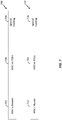
- FIG. 10 is a conceptual diagram illustrating a two-step signaling approach between a UE 1002 and a UTRAN 1004 for signaling out-of-standard features/enhancements in accordance with an aspect of the disclosure.
- the UE 1002 may be the same as the UE 110, and the UTRAN 1004 may be the same as the UTRAN 102.
- both the UE and UTRAN do not support a certain feature X (e.g., uplink open loop transmit diversity).
- the UE sends an enhanced capability enabling message 1006 to signal that the UE can support non-standard signaling.
- the enhanced capability enabling message 1006 may confirm with a standard communication signaling protocol such as 3GPP access stratum (AS) RRC layer signaling or 3GPP non-access stratum (NAS) layer signaling.
- AS 3GPP access stratum
- NAS 3GPP non-access stratum
- the enhanced capability enabling message 1006 may be an NAS layer message such as an Attach Accept message, an Attach Complete message, an Identity Request message, or an Identity Response message, (e.g., 3GPP Technical Specification 24.008).
- feature X TRUE
- both the UE and the UTRAN do not actually support feature X, but the UE and UTRAN may mutually agree in advance to use this fictitious indication of support of feature X to signal the UE's support of non-standard signaling.
- the UTRAN side 1008 it interprets the UE's fictitious support of feature X in the enhanced capability enabling message 1006 as a trigger to initiate non-standard signaling.
- the UE may use any of the one-step signaling approaches described in FIGs.
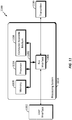
- FIG. 11 is a conceptual diagram illustrating an example of a hardware implementation for an apparatus 1100 employing a processing system 1114.
- an element, or any portion of an element, or any combination of elements may be implemented with a processing system 1114 that includes one or more processors 1104.
- the apparatus 1100 may be the UE as illustrated in any one or more of FIGs. 1 , 2 , 8 , 9 , and/or 10.
- the apparatus 1100 may be a radio network controller (RNC) or Node B in a UTRAN as illustrated in any one or more of FIG. 1 , 2 , 8 , 9 , and/or 10.
- RNC radio network controller
- processors 1104 include microprocessors, microcontrollers, digital signal processors (DSPs), field programmable gate arrays (FPGAs), programmable logic devices (PLDs), state machines, gated logic, discrete hardware circuits, and other suitable hardware configured to perform the various functionality described throughout this disclosure. That is, the processor 1104, as utilized in an apparatus 1100, may be used to implement any one or more of the processes described and illustrated in FIGs. 4-10 .
- the processing system 1114 may be implemented with a bus architecture, represented generally by the bus 1102.
- the bus 1102 may include any number of interconnecting buses and bridges depending on the specific application of the processing system 1114 and the overall design constraints.
- the bus 1102 links together various circuits including one or more processors (represented generally by the processor 1104), a memory 1105, and computer-readable media (represented generally by the computer-readable storage medium 1106).
- the bus 1102 may also link various other circuits such as timing sources, peripherals, voltage regulators, and power management circuits, which are well known in the art, and therefore, will not be described any further.
- a bus interface 1108 provides an interface between the bus 1102 and a transceiver 1110.
- the transceiver 1110 provides a communication interface for communicating with various other apparatus over a transmission medium.
- a user interface 1112 e.g., keypad, display, speaker, microphone, joystick
- FIG. 12 is a conceptual diagram illustrating the processor 1104 and computer-readable storage medium 1106 in more detail in accordance with an aspect of the disclosure.
- the processor 1104 may include padding bits repurposing circuitry 1202, PDU type repurposing circuitry 1204, SUFI type repurposing circuitry 1206, dummy IE repurposing circuitry 1208, and IMEI circuitry 1210.
- the computer-readable storage 1106 may include a padding bits repurposing routine 1222, a PDU type repurposing routine 1224, a SUFI type repurposing routine 1226, a dummy IE repurposing routine 1228, and an IMEI routine 1230.
- the processor 1104 may execute these routines to configure these circuitries to perform the various processes and functions illustrated in FIGs. 4-10 . These circuitries and routines will be described in more detail below in reference to FIGs. 13 and 14 .
- the processor 1104 is responsible for managing the bus 1102 and general processing, including the execution of software stored on the computer-readable storage medium 1106.
- the software when executed by the processor 1104, causes the processing system 1114 to perform the various functions described infra for any particular apparatus.
- the computer-readable storage medium 1106 may also be used for storing data that is manipulated by the processor 1104 when executing software.
- One or more processors 1104 in the processing system may execute software.
- Software shall be construed broadly to mean instructions, instruction sets, code, code segments, program code, programs, subprograms, software modules, applications, software applications, software packages, routines, subroutines, objects, executables, threads of execution, procedures, functions, etc., whether referred to as software, firmware, middleware, microcode, hardware description language, or otherwise.
- the software may reside on a computer-readable storage medium 1106.
- the computer-readable storage medium 1106 may be a non-transitory computer-readable storage medium.
- a non-transitory computer-readable storage medium includes, by way of example, a magnetic storage device (e.g., hard disk, floppy disk, magnetic strip), an optical disk (e.g., a compact disc (CD) or a digital versatile disc (DVD)), a smart card, a flash memory device (e.g., a card, a stick, or a key drive), a random access memory (RAM), a read only memory (ROM), a programmable ROM (PROM), an erasable PROM (EPROM), an electrically erasable PROM (EEPROM), a register, a removable disk, and any other suitable medium for storing software and/or instructions that may be accessed and read by a computer.
- a magnetic storage device e.g., hard disk, floppy disk, magnetic strip
- an optical disk e.g., a compact disc (CD) or a digital versatile disc (DVD)
- a smart card e.g., a flash memory device (e.g
- the computer-readable storage medium 1106 may reside in the processing system 1114, external to the processing system 1114, or distributed across multiple entities including the processing system 1114.
- the computer-readable storage medium 1106 may be embodied in a computer program product.
- a computer program product may include a computer-readable storage medium in packaging materials.
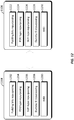
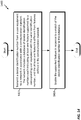
- FIG. 13 is a flowchart illustrating a method 1300 of signaling support of out-of-standard (non-standard) features/enhancements by repurposing a data field of an enhanced capability enabling message in accordance with an aspect of the disclosure.
- the method 1300 may be implemented with the UE 110 and the UTRAN 102.
- a first network entity e.g., the UE 110
- transmits an enhanced capability and configuration message e.g., PDU 400, 500, 600, 700, 710, or dummy IE 806
- a communication standard e.g., UTRAN standard
- a second network entity e.g., the network or UTRAN 102
- a data field of the enhanced capability and configuration message is configured to provide a first function according to the communication standard, and a second function for communicating information related to or support of at least one mutually agreed feature (out-of-standard features/enhancements) that is different from features defined in the communication standard. That is, the data field of the enhanced capability and configuration message, while maintaining conformity with its communication standard, is additionally repurposed to communicate information, parameters, and/or support of features/enhancements not defined or supported in the communication standard by which the first network entity communicates with the second network entity.
- the enhanced capability and configuration message may be an RLC control PDU, an RLC data PDU, a MAC-e/i PDU, or an RRC PDU.
- the UE first network entity
- the padding bits repurposing routine 1222 may configure the padding bits repurposing circuitry 1202 to repurpose the padding bits of an RLC control/data PDU or MAC-e/i PDU to signal support of out-of-standard features/enhancements.
- the UE may execute the PDU type repurposing routine 1224 to configure the PDU type repurposing circuitry 1204 to repurpose a reserved PDU type of an RLC status (or piggybacked) PDU to signal support of out-of-standard features/enhancements.
- the UE may execute the SUFI type repurposing routine 1226 to configure the SUFI type repurposing circuitry 1206 to repurpose a reserved SUFI type to signal support of out-of-standard features/enhancements.
- the UE may execute the dummy information element (IE) repurposing routine 1228 to configure the dummy IE repurposing circuitry 1208 to repurpose an RRC dummy IE to signal support of out-of-standard features/enhancements.
- IE information element
- the first network entity may optionally transmit an enhanced capability enabling message that conforms with the communication standard to the second network entity (block 1304).
- This enhanced capability enabling message is configured to enable or disable support of the least one mutually agreed feature.
- the enhanced capability enabling message may be the message 1006 (e.g., an RRC UE capability report) that includes a capability flag fictitiously indicating support of a feature by both the UE and the network.
- FIG. 14 is a flowchart illustrating a method 1400 of signaling support of out-of-standard features using a unique device identification number in accordance with an aspect of the disclosure.
- the method 1400 may be implemented with the UE 110 and the UTRAN 102.
- a UE transmits a device identification number (e.g., IMEI 908 of FIG. 9 ) to a UTRAN (network) in accordance with a communication standard (e.g., UTRAN standard).
- the UTRAN includes a database (e.g., database 906 of FIG. 9 ) of device identification numbers each indicating at least one feature supported by a corresponding UE with the same identification number.
- the at least one feature is different from features defined or supported in the communication standard by which the UE communicates with the network.
- the UE enables the supported non-standard sanctioned feature in response to a match of the device identification number in the database.
- the non-standard sanctioned feature is not defined or supported in the communication standard by which the UE communicates with the UTRAN.
- the UE may execute the IMEI routine 1230 to configure the IMEI circuitry 1210 to transmit the IMEI number to the network. While the methods 1300 and 1400 are described with the UE initiating the communication, these methods may be equally applicable in applications with the network initiating the communication. That is, these methods may be applied in the uplink or downlink directions.
- LTE Long Term Evolution
- LTE-A LTE-Advanced
- CDMA2000 Evolution-Data Optimized
- UMB Ultra Mobile Broadband
- IEEE 802.11 Wi-Fi
- IEEE 802.16 WiMAX
- IEEE 802.20 Ultra-Wideband
- Bluetooth Bluetooth
- the actual telecommunication standard, network architecture, and/or communication standard employed will depend on the specific application and the overall design constraints imposed on the system.
Landscapes
- Engineering & Computer Science (AREA)
- Computer Networks & Wireless Communication (AREA)
- Signal Processing (AREA)
- Databases & Information Systems (AREA)
- Mobile Radio Communication Systems (AREA)
Applications Claiming Priority (3)
| Application Number | Priority Date | Filing Date | Title |
|---|---|---|---|
| US201361813788P | 2013-04-19 | 2013-04-19 | |
| US14/083,053 US9585008B2 (en) | 2013-04-19 | 2013-11-18 | Apparatus and methods for signaling out-of-standard capability in wireless communication networks |
| PCT/US2014/031356 WO2014172061A1 (en) | 2013-04-19 | 2014-03-20 | Apparatus and methods for signaling out-of-standard capability in wireless communication networks |
Publications (2)
| Publication Number | Publication Date |
|---|---|
| EP2987347A1 EP2987347A1 (en) | 2016-02-24 |
| EP2987347B1 true EP2987347B1 (en) | 2019-11-06 |
Family
ID=51728938
Family Applications (1)
| Application Number | Title | Priority Date | Filing Date |
|---|---|---|---|
| EP14719493.0A Active EP2987347B1 (en) | 2013-04-19 | 2014-03-20 | Apparatus and methods for signaling out-of-standard capability in wireless communication networks |
Country Status (6)
| Country | Link |
|---|---|
| US (1) | US9585008B2 (https=) |
| EP (1) | EP2987347B1 (https=) |
| JP (1) | JP6461098B2 (https=) |
| KR (1) | KR20150144325A (https=) |
| CN (1) | CN105144765B (https=) |
| WO (1) | WO2014172061A1 (https=) |
Families Citing this family (10)
| Publication number | Priority date | Publication date | Assignee | Title |
|---|---|---|---|---|
| US10558958B2 (en) * | 2013-05-17 | 2020-02-11 | Visa International Service Association | Contactless message transmission |
| US20150173118A1 (en) * | 2013-12-18 | 2015-06-18 | Qualcomm Incorporated | Flexible extended signaling |
| US10779035B2 (en) * | 2014-01-09 | 2020-09-15 | Samsung Electronics Co., Ltd. | Method and apparatus of transmitting media data related information in multimedia transmission system |
| CN105519040B (zh) * | 2014-11-05 | 2019-08-20 | 华为技术有限公司 | 用户设备管理方法、设备及系统 |
| US20160255545A1 (en) * | 2015-02-27 | 2016-09-01 | Qualcomm Incorporated | Flexible extended signaling |
| CN108616909B (zh) * | 2017-01-05 | 2023-11-10 | 华为技术有限公司 | 数据传输方法及装置 |
| US10555310B2 (en) * | 2017-05-01 | 2020-02-04 | Qualcomm Incorporated | Forward compatibility in new radio systems |
| WO2020091057A1 (en) * | 2018-11-02 | 2020-05-07 | Nec Corporation | Integrity protection schemes in mobile communication |
| US11190956B2 (en) | 2020-01-24 | 2021-11-30 | Cisco Technology, Inc. | Association-rules based on BSS- and affinity-coloring |
| EP4190113A4 (en) * | 2020-10-13 | 2023-09-13 | ZTE Corporation | Methods, apparatuses and systems for user equipment capability confirmation enquiry procedure |
Family Cites Families (24)
| Publication number | Priority date | Publication date | Assignee | Title |
|---|---|---|---|---|
| US5751723A (en) * | 1996-07-01 | 1998-05-12 | Motorola, Inc. | Method and system for overhead bandwidth recovery in a packetized network |
| US7580707B2 (en) | 1997-04-04 | 2009-08-25 | Nortel Networks Limited | Wireless communication system that supports multiple standards, multiple protocol revisions, multiple extended services and multiple extended services delivery options and method of operation therefor |
| GB2370189B (en) * | 2000-12-13 | 2002-11-27 | Ericsson Telefon Ab L M | Radio link monitoring in a telecommunications network |
| US20040100918A1 (en) | 2002-11-27 | 2004-05-27 | Antti Toskala | Method and system for forwarding a control information |
| JP2005184058A (ja) * | 2003-12-16 | 2005-07-07 | Canon Inc | 無線通信システム |
| KR100643272B1 (ko) * | 2004-04-26 | 2006-11-10 | 삼성전자주식회사 | 조정자 기반 무선 네트워크 간의 네트워크 통신 방법 및장치 |
| JP4676204B2 (ja) * | 2005-01-12 | 2011-04-27 | 富士通株式会社 | 通信システム及び通信端末装置 |
| WO2006103093A2 (en) * | 2005-03-31 | 2006-10-05 | Telefonaktiebolaget Lm Ericsson (Publ) | Technique for coordinating cs and ps registrations in a multi-operator core network |
| EP1720365A1 (en) | 2005-05-06 | 2006-11-08 | Siemens S.p.A. | Method to exchange capability information between UMTS users |
| EP1952587B1 (en) * | 2005-11-15 | 2011-10-05 | Telecom Italia S.p.A. | Method for exploiting signalling messages in a wireless communication network |
| KR101430439B1 (ko) | 2007-01-10 | 2014-08-18 | 엘지전자 주식회사 | 이동 통신 시스템에서의 제어 정보 전송 방법 |
| BRPI0806396B1 (pt) | 2007-02-02 | 2020-04-28 | Interdigital Tech Corp | método e aparato para melhorar o rlc para tamanho flexível de pdu do rlc |
| KR101600218B1 (ko) * | 2007-03-16 | 2016-03-04 | 인터디지탈 테크날러지 코포레이션 | 무선 링크 제어 파라미터의 재구성을 지원하기 위한 무선 통신 방법 및 장치 |
| EP2026523A1 (en) | 2007-08-13 | 2009-02-18 | Nokia Siemens Networks Oy | Method and device for piggybacked status PDU with flexible lenght RLC PDU |
| US9391997B2 (en) * | 2007-08-23 | 2016-07-12 | Intel Deutschland Gmbh | Message processing apparatus, wireless device and method of storing a message in a wireless device |
| US20090074088A1 (en) * | 2007-09-13 | 2009-03-19 | Zhifeng Tao | Adaptive Fragmentation for HARQ in Wireless OFDMA Networks |
| MX2010007316A (es) | 2008-01-04 | 2010-09-30 | Nokia Corp | Sub-cabecera de relleno simulado en unidades de datos del protocolo del mac. |
| CN101616493B (zh) * | 2008-06-27 | 2011-12-07 | 华为技术有限公司 | 一种数据传输方法、网络系统及相应装置 |
| US20100121974A1 (en) * | 2008-11-11 | 2010-05-13 | Einarsson Torbjoem | Stepwise probing for adaptive streaming in a packet communication network |
| EP2282480B1 (en) * | 2009-07-28 | 2016-08-31 | ST-Ericsson SA | Apparatuses, method and computer program for adapting a telecommunication service to traffic load in the network |
| EP2742429A4 (en) * | 2011-08-09 | 2015-03-25 | Lsi Corp | I / O DEVICE AND INTERACTION WITH DATA PROCESSING HOST |
| GB2498539A (en) * | 2012-01-18 | 2013-07-24 | Renesas Mobile Corp | Base station assisted asymmetric device-to-device communications |
| US8665870B2 (en) * | 2012-05-30 | 2014-03-04 | Apple Inc. | Method and apparatus for handling push messages |
| US20130322370A1 (en) * | 2012-06-01 | 2013-12-05 | Qualcomm Incorporated | Signaling reduced user equipment performance in wireless communication systems |
-
2013
- 2013-11-18 US US14/083,053 patent/US9585008B2/en active Active
-
2014
- 2014-03-20 KR KR1020157032190A patent/KR20150144325A/ko not_active Ceased
- 2014-03-20 EP EP14719493.0A patent/EP2987347B1/en active Active
- 2014-03-20 JP JP2016508945A patent/JP6461098B2/ja not_active Expired - Fee Related
- 2014-03-20 CN CN201480021896.XA patent/CN105144765B/zh not_active Expired - Fee Related
- 2014-03-20 WO PCT/US2014/031356 patent/WO2014172061A1/en not_active Ceased
Non-Patent Citations (1)
| Title |
|---|
| None * |
Also Published As
| Publication number | Publication date |
|---|---|
| EP2987347A1 (en) | 2016-02-24 |
| US20140313988A1 (en) | 2014-10-23 |
| KR20150144325A (ko) | 2015-12-24 |
| WO2014172061A1 (en) | 2014-10-23 |
| JP6461098B2 (ja) | 2019-01-30 |
| US9585008B2 (en) | 2017-02-28 |
| JP2016517239A (ja) | 2016-06-09 |
| CN105144765B (zh) | 2019-04-23 |
| CN105144765A (zh) | 2015-12-09 |
Similar Documents
| Publication | Publication Date | Title |
|---|---|---|
| EP2987347B1 (en) | Apparatus and methods for signaling out-of-standard capability in wireless communication networks | |
| US11664931B2 (en) | Duplication transmission method and apparatus | |
| US9338713B2 (en) | Apparatus and method for enhanced tune-away operation | |
| US8902833B2 (en) | System and method for performing a radio link control (RLC) reset in a downlink multipoint system | |
| US9210688B2 (en) | Enhanced tune-away mechanism during signaling procedure in multiple subscription communications | |
| CN110809866B (zh) | 命令接收方法、装置及通信系统 | |
| US9313756B2 (en) | Apparatus and methods for managing hyper frame number (HFN) de-synchronization in radio link control (RLC) unacknowledged mode (UM) | |
| KR102323312B1 (ko) | 무선 통신에서 다중의 활성 접속들의 모뎀 보조 경합 처리 | |
| US20150085749A1 (en) | Mechanism to exchange proprietary signaling messages between a ue and a network | |
| KR20130050346A (ko) | 다중-링크 rlc 서브층을 활용하는 다중-포인트 hsdpa 통신을 위한 시스템 및 방법 | |
| KR20130054984A (ko) | 다중-포인트 hsdpa 통신 네트워크에서의 이동성 | |
| KR20120043084A (ko) | 무선 네트워크 서브시스템 재배치를 서빙하는 동안 코어 네트워크 상태를 유지하는 시스템들 및 장치들 | |
| JP5933819B2 (ja) | セルブロードキャストメッセージをスケジュールするための装置および方法 | |
| US20150245214A1 (en) | Enhanced polling for security mode procedures | |
| US9820179B2 (en) | Devices and methods for facilitating uplink transmissions on two or more carriers | |
| EP2862396B1 (en) | Method and apparatus for dynamically configuring a cell update message | |
| US20150245348A1 (en) | Apparatus and method for handling a mac entity reset and uplink modulation scheme operation | |
| US20260046734A1 (en) | Mobility With Pre-Configuration of Handover Preparation Information at DUS | |
| WO2016032686A1 (en) | Cell update procedure enhancements |
Legal Events
| Date | Code | Title | Description |
|---|---|---|---|
| PUAI | Public reference made under article 153(3) epc to a published international application that has entered the european phase |
Free format text: ORIGINAL CODE: 0009012 |
|
| 17P | Request for examination filed |
Effective date: 20150918 |
|
| AK | Designated contracting states |
Kind code of ref document: A1 Designated state(s): AL AT BE BG CH CY CZ DE DK EE ES FI FR GB GR HR HU IE IS IT LI LT LU LV MC MK MT NL NO PL PT RO RS SE SI SK SM TR |
|
| AX | Request for extension of the european patent |
Extension state: BA ME |
|
| DAX | Request for extension of the european patent (deleted) | ||
| STAA | Information on the status of an ep patent application or granted ep patent |
Free format text: STATUS: EXAMINATION IS IN PROGRESS |
|
| 17Q | First examination report despatched |
Effective date: 20170203 |
|
| GRAP | Despatch of communication of intention to grant a patent |
Free format text: ORIGINAL CODE: EPIDOSNIGR1 |
|
| STAA | Information on the status of an ep patent application or granted ep patent |
Free format text: STATUS: GRANT OF PATENT IS INTENDED |
|
| RIC1 | Information provided on ipc code assigned before grant |
Ipc: H04W 8/24 20090101ALI20190502BHEP Ipc: H04W 8/22 20090101AFI20190502BHEP Ipc: H04W 24/02 20090101ALN20190502BHEP |
|
| INTG | Intention to grant announced |
Effective date: 20190528 |
|
| GRAS | Grant fee paid |
Free format text: ORIGINAL CODE: EPIDOSNIGR3 |
|
| GRAA | (expected) grant |
Free format text: ORIGINAL CODE: 0009210 |
|
| STAA | Information on the status of an ep patent application or granted ep patent |
Free format text: STATUS: THE PATENT HAS BEEN GRANTED |
|
| AK | Designated contracting states |
Kind code of ref document: B1 Designated state(s): AL AT BE BG CH CY CZ DE DK EE ES FI FR GB GR HR HU IE IS IT LI LT LU LV MC MK MT NL NO PL PT RO RS SE SI SK SM TR |
|
| REG | Reference to a national code |
Ref country code: GB Ref legal event code: FG4D |
|
| REG | Reference to a national code |
Ref country code: CH Ref legal event code: EP Ref country code: AT Ref legal event code: REF Ref document number: 1200539 Country of ref document: AT Kind code of ref document: T Effective date: 20191115 |
|
| REG | Reference to a national code |
Ref country code: IE Ref legal event code: FG4D |
|
| REG | Reference to a national code |
Ref country code: DE Ref legal event code: R096 Ref document number: 602014056252 Country of ref document: DE |
|
| REG | Reference to a national code |
Ref country code: NL Ref legal event code: MP Effective date: 20191106 |
|
| REG | Reference to a national code |
Ref country code: LT Ref legal event code: MG4D |
|
| PG25 | Lapsed in a contracting state [announced via postgrant information from national office to epo] |
Ref country code: LT Free format text: LAPSE BECAUSE OF FAILURE TO SUBMIT A TRANSLATION OF THE DESCRIPTION OR TO PAY THE FEE WITHIN THE PRESCRIBED TIME-LIMIT Effective date: 20191106 Ref country code: PL Free format text: LAPSE BECAUSE OF FAILURE TO SUBMIT A TRANSLATION OF THE DESCRIPTION OR TO PAY THE FEE WITHIN THE PRESCRIBED TIME-LIMIT Effective date: 20191106 Ref country code: NL Free format text: LAPSE BECAUSE OF FAILURE TO SUBMIT A TRANSLATION OF THE DESCRIPTION OR TO PAY THE FEE WITHIN THE PRESCRIBED TIME-LIMIT Effective date: 20191106 Ref country code: GR Free format text: LAPSE BECAUSE OF FAILURE TO SUBMIT A TRANSLATION OF THE DESCRIPTION OR TO PAY THE FEE WITHIN THE PRESCRIBED TIME-LIMIT Effective date: 20200207 Ref country code: FI Free format text: LAPSE BECAUSE OF FAILURE TO SUBMIT A TRANSLATION OF THE DESCRIPTION OR TO PAY THE FEE WITHIN THE PRESCRIBED TIME-LIMIT Effective date: 20191106 Ref country code: BG Free format text: LAPSE BECAUSE OF FAILURE TO SUBMIT A TRANSLATION OF THE DESCRIPTION OR TO PAY THE FEE WITHIN THE PRESCRIBED TIME-LIMIT Effective date: 20200206 Ref country code: NO Free format text: LAPSE BECAUSE OF FAILURE TO SUBMIT A TRANSLATION OF THE DESCRIPTION OR TO PAY THE FEE WITHIN THE PRESCRIBED TIME-LIMIT Effective date: 20200206 Ref country code: PT Free format text: LAPSE BECAUSE OF FAILURE TO SUBMIT A TRANSLATION OF THE DESCRIPTION OR TO PAY THE FEE WITHIN THE PRESCRIBED TIME-LIMIT Effective date: 20200306 Ref country code: SE Free format text: LAPSE BECAUSE OF FAILURE TO SUBMIT A TRANSLATION OF THE DESCRIPTION OR TO PAY THE FEE WITHIN THE PRESCRIBED TIME-LIMIT Effective date: 20191106 Ref country code: LV Free format text: LAPSE BECAUSE OF FAILURE TO SUBMIT A TRANSLATION OF THE DESCRIPTION OR TO PAY THE FEE WITHIN THE PRESCRIBED TIME-LIMIT Effective date: 20191106 |
|
| PG25 | Lapsed in a contracting state [announced via postgrant information from national office to epo] |
Ref country code: RS Free format text: LAPSE BECAUSE OF FAILURE TO SUBMIT A TRANSLATION OF THE DESCRIPTION OR TO PAY THE FEE WITHIN THE PRESCRIBED TIME-LIMIT Effective date: 20191106 Ref country code: IS Free format text: LAPSE BECAUSE OF FAILURE TO SUBMIT A TRANSLATION OF THE DESCRIPTION OR TO PAY THE FEE WITHIN THE PRESCRIBED TIME-LIMIT Effective date: 20200306 Ref country code: HR Free format text: LAPSE BECAUSE OF FAILURE TO SUBMIT A TRANSLATION OF THE DESCRIPTION OR TO PAY THE FEE WITHIN THE PRESCRIBED TIME-LIMIT Effective date: 20191106 |
|
| PG25 | Lapsed in a contracting state [announced via postgrant information from national office to epo] |
Ref country code: AL Free format text: LAPSE BECAUSE OF FAILURE TO SUBMIT A TRANSLATION OF THE DESCRIPTION OR TO PAY THE FEE WITHIN THE PRESCRIBED TIME-LIMIT Effective date: 20191106 |
|
| PG25 | Lapsed in a contracting state [announced via postgrant information from national office to epo] |
Ref country code: CZ Free format text: LAPSE BECAUSE OF FAILURE TO SUBMIT A TRANSLATION OF THE DESCRIPTION OR TO PAY THE FEE WITHIN THE PRESCRIBED TIME-LIMIT Effective date: 20191106 Ref country code: ES Free format text: LAPSE BECAUSE OF FAILURE TO SUBMIT A TRANSLATION OF THE DESCRIPTION OR TO PAY THE FEE WITHIN THE PRESCRIBED TIME-LIMIT Effective date: 20191106 Ref country code: RO Free format text: LAPSE BECAUSE OF FAILURE TO SUBMIT A TRANSLATION OF THE DESCRIPTION OR TO PAY THE FEE WITHIN THE PRESCRIBED TIME-LIMIT Effective date: 20191106 Ref country code: DK Free format text: LAPSE BECAUSE OF FAILURE TO SUBMIT A TRANSLATION OF THE DESCRIPTION OR TO PAY THE FEE WITHIN THE PRESCRIBED TIME-LIMIT Effective date: 20191106 Ref country code: EE Free format text: LAPSE BECAUSE OF FAILURE TO SUBMIT A TRANSLATION OF THE DESCRIPTION OR TO PAY THE FEE WITHIN THE PRESCRIBED TIME-LIMIT Effective date: 20191106 |
|
| REG | Reference to a national code |
Ref country code: DE Ref legal event code: R097 Ref document number: 602014056252 Country of ref document: DE |
|
| REG | Reference to a national code |
Ref country code: AT Ref legal event code: MK05 Ref document number: 1200539 Country of ref document: AT Kind code of ref document: T Effective date: 20191106 |
|
| PG25 | Lapsed in a contracting state [announced via postgrant information from national office to epo] |
Ref country code: SK Free format text: LAPSE BECAUSE OF FAILURE TO SUBMIT A TRANSLATION OF THE DESCRIPTION OR TO PAY THE FEE WITHIN THE PRESCRIBED TIME-LIMIT Effective date: 20191106 Ref country code: SM Free format text: LAPSE BECAUSE OF FAILURE TO SUBMIT A TRANSLATION OF THE DESCRIPTION OR TO PAY THE FEE WITHIN THE PRESCRIBED TIME-LIMIT Effective date: 20191106 |
|
| PLBE | No opposition filed within time limit |
Free format text: ORIGINAL CODE: 0009261 |
|
| STAA | Information on the status of an ep patent application or granted ep patent |
Free format text: STATUS: NO OPPOSITION FILED WITHIN TIME LIMIT |
|
| 26N | No opposition filed |
Effective date: 20200807 |
|
| PG25 | Lapsed in a contracting state [announced via postgrant information from national office to epo] |
Ref country code: MC Free format text: LAPSE BECAUSE OF FAILURE TO SUBMIT A TRANSLATION OF THE DESCRIPTION OR TO PAY THE FEE WITHIN THE PRESCRIBED TIME-LIMIT Effective date: 20191106 |
|
| REG | Reference to a national code |
Ref country code: CH Ref legal event code: PL |
|
| PG25 | Lapsed in a contracting state [announced via postgrant information from national office to epo] |
Ref country code: SI Free format text: LAPSE BECAUSE OF FAILURE TO SUBMIT A TRANSLATION OF THE DESCRIPTION OR TO PAY THE FEE WITHIN THE PRESCRIBED TIME-LIMIT Effective date: 20191106 Ref country code: AT Free format text: LAPSE BECAUSE OF FAILURE TO SUBMIT A TRANSLATION OF THE DESCRIPTION OR TO PAY THE FEE WITHIN THE PRESCRIBED TIME-LIMIT Effective date: 20191106 |
|
| REG | Reference to a national code |
Ref country code: BE Ref legal event code: MM Effective date: 20200331 |
|
| PG25 | Lapsed in a contracting state [announced via postgrant information from national office to epo] |
Ref country code: LU Free format text: LAPSE BECAUSE OF NON-PAYMENT OF DUE FEES Effective date: 20200320 |
|
| PG25 | Lapsed in a contracting state [announced via postgrant information from national office to epo] |
Ref country code: LI Free format text: LAPSE BECAUSE OF NON-PAYMENT OF DUE FEES Effective date: 20200331 Ref country code: CH Free format text: LAPSE BECAUSE OF NON-PAYMENT OF DUE FEES Effective date: 20200331 Ref country code: IT Free format text: LAPSE BECAUSE OF FAILURE TO SUBMIT A TRANSLATION OF THE DESCRIPTION OR TO PAY THE FEE WITHIN THE PRESCRIBED TIME-LIMIT Effective date: 20191106 Ref country code: IE Free format text: LAPSE BECAUSE OF NON-PAYMENT OF DUE FEES Effective date: 20200320 |
|
| PG25 | Lapsed in a contracting state [announced via postgrant information from national office to epo] |
Ref country code: BE Free format text: LAPSE BECAUSE OF NON-PAYMENT OF DUE FEES Effective date: 20200331 |
|
| PGFP | Annual fee paid to national office [announced via postgrant information from national office to epo] |
Ref country code: FR Payment date: 20210219 Year of fee payment: 8 |
|
| PGFP | Annual fee paid to national office [announced via postgrant information from national office to epo] |
Ref country code: GB Payment date: 20210311 Year of fee payment: 8 Ref country code: DE Payment date: 20210210 Year of fee payment: 8 |
|
| PG25 | Lapsed in a contracting state [announced via postgrant information from national office to epo] |
Ref country code: TR Free format text: LAPSE BECAUSE OF FAILURE TO SUBMIT A TRANSLATION OF THE DESCRIPTION OR TO PAY THE FEE WITHIN THE PRESCRIBED TIME-LIMIT Effective date: 20191106 Ref country code: MT Free format text: LAPSE BECAUSE OF FAILURE TO SUBMIT A TRANSLATION OF THE DESCRIPTION OR TO PAY THE FEE WITHIN THE PRESCRIBED TIME-LIMIT Effective date: 20191106 Ref country code: CY Free format text: LAPSE BECAUSE OF FAILURE TO SUBMIT A TRANSLATION OF THE DESCRIPTION OR TO PAY THE FEE WITHIN THE PRESCRIBED TIME-LIMIT Effective date: 20191106 |
|
| PG25 | Lapsed in a contracting state [announced via postgrant information from national office to epo] |
Ref country code: MK Free format text: LAPSE BECAUSE OF FAILURE TO SUBMIT A TRANSLATION OF THE DESCRIPTION OR TO PAY THE FEE WITHIN THE PRESCRIBED TIME-LIMIT Effective date: 20191106 |
|
| REG | Reference to a national code |
Ref country code: DE Ref legal event code: R119 Ref document number: 602014056252 Country of ref document: DE |
|
| GBPC | Gb: european patent ceased through non-payment of renewal fee |
Effective date: 20220320 |
|
| PG25 | Lapsed in a contracting state [announced via postgrant information from national office to epo] |
Ref country code: GB Free format text: LAPSE BECAUSE OF NON-PAYMENT OF DUE FEES Effective date: 20220320 Ref country code: FR Free format text: LAPSE BECAUSE OF NON-PAYMENT OF DUE FEES Effective date: 20220331 Ref country code: DE Free format text: LAPSE BECAUSE OF NON-PAYMENT OF DUE FEES Effective date: 20221001 |