EP2976356B1 - Aspartat-proteasen - Google Patents
Aspartat-proteasen Download PDFInfo
- Publication number
- EP2976356B1 EP2976356B1 EP14715461.1A EP14715461A EP2976356B1 EP 2976356 B1 EP2976356 B1 EP 2976356B1 EP 14715461 A EP14715461 A EP 14715461A EP 2976356 B1 EP2976356 B1 EP 2976356B1
- Authority
- EP
- European Patent Office
- Prior art keywords
- cardosin
- psi
- plant
- domain
- cell
- Prior art date
- Legal status (The legal status is an assumption and is not a legal conclusion. Google has not performed a legal analysis and makes no representation as to the accuracy of the status listed.)
- Active
Links
Images





Classifications
-
- C—CHEMISTRY; METALLURGY
- C12—BIOCHEMISTRY; BEER; SPIRITS; WINE; VINEGAR; MICROBIOLOGY; ENZYMOLOGY; MUTATION OR GENETIC ENGINEERING
- C12N—MICROORGANISMS OR ENZYMES; COMPOSITIONS THEREOF; PROPAGATING, PRESERVING, OR MAINTAINING MICROORGANISMS; MUTATION OR GENETIC ENGINEERING; CULTURE MEDIA
- C12N9/00—Enzymes; Proenzymes; Compositions thereof; Processes for preparing, activating, inhibiting, separating or purifying enzymes
- C12N9/14—Hydrolases (3)
- C12N9/48—Hydrolases (3) acting on peptide bonds (3.4)
- C12N9/50—Proteinases, e.g. Endopeptidases (3.4.21-3.4.25)
- C12N9/63—Proteinases, e.g. Endopeptidases (3.4.21-3.4.25) derived from plants
-
- A—HUMAN NECESSITIES
- A23—FOODS OR FOODSTUFFS; TREATMENT THEREOF, NOT COVERED BY OTHER CLASSES
- A23C—DAIRY PRODUCTS, e.g. MILK, BUTTER OR CHEESE; MILK OR CHEESE SUBSTITUTES; MAKING OR TREATMENT THEREOF
- A23C19/00—Cheese; Cheese preparations; Making thereof
- A23C19/02—Making cheese curd
- A23C19/04—Making cheese curd characterised by the use of specific enzymes of vegetable or animal origin
- A23C19/041—Proteolytic or milk clotting enzymes from plants or vegetables, e.g. papain, ficin, bromelain
-
- A—HUMAN NECESSITIES
- A23—FOODS OR FOODSTUFFS; TREATMENT THEREOF, NOT COVERED BY OTHER CLASSES
- A23C—DAIRY PRODUCTS, e.g. MILK, BUTTER OR CHEESE; MILK OR CHEESE SUBSTITUTES; MAKING OR TREATMENT THEREOF
- A23C9/00—Milk preparations; Milk powder or milk powder preparations
- A23C9/12—Fermented milk preparations; Treatment using microorganisms or enzymes
- A23C9/1203—Addition of, or treatment with, enzymes or microorganisms other than lactobacteriaceae
- A23C9/1209—Proteolytic or milk coagulating enzymes, e.g. trypsine
-
- C—CHEMISTRY; METALLURGY
- C12—BIOCHEMISTRY; BEER; SPIRITS; WINE; VINEGAR; MICROBIOLOGY; ENZYMOLOGY; MUTATION OR GENETIC ENGINEERING
- C12Y—ENZYMES
- C12Y304/00—Hydrolases acting on peptide bonds, i.e. peptidases (3.4)
- C12Y304/23—Aspartic endopeptidases (3.4.23)
Definitions
- the present invention relates to aspartic proteases and particularly recombinant Cardosin B.
- Aspartic proteases are peptidases present in animals, plants, fungi and viruses and exhibit a wide range of functions and activities, including: mammalian digestion e.g. chymosin and pepsin A, activation and degradation of polypeptide hormones and growth factors e.g. cathepsin D, regulation of blood pressure e.g. rennin, degradation of haemoglobin by parasites e.g. plasmepsins, proteolytic processing of the HIV polyprotein e.g. retropepsin, involvement in pollen-pistil interactions in plants e.g. Cardosin A.
- mammalian digestion e.g. chymosin and pepsin A
- activation and degradation of polypeptide hormones and growth factors e.g. cathepsin D
- regulation of blood pressure e.g. rennin
- haemoglobin by parasites e.g. plasmepsins
- Aspartic proteases are synthesised as preproenzymes and contain a signal peptide, which is cleaved resulting in a proenzyme which can be secreted and activated autocatalytically.
- aspartic proteases consist of a single peptide chain of approximately 320-360 amino acid residues, composed mainly of ⁇ -strand structures arranged into two lobes. The catalytic site of the enzyme is located between these two lobes, each containing an aspartate residue which are within hydrogen-bonding distance of each other and act together to activate a water molecule which results in cleavage of the substrate peptide bond (via nucleophilic attack).
- Plant aspartic proteases differ from other aspartic proteases in that they comprise a Plant Specific Insert which is cleaved out during protein maturation, besides a signal peptide (responsible for translocation to the ER); a prosegment of 40-50 amino acid residues (involved in the correct folding, stabilisation and sorting of the enzyme); and a mature enzyme possessing two catalytic sequence motifs;.
- the two catalytic aspartate residues in plant aspartic proteases are contained within Asp-Thr-Gly and Asp-Ser-Gly motifs. With a few exceptions, the majority of plant aspartic protease identified so far are synthesized with a prepro-domain and subsequently converted to mature two-chain enzymes.
- Proteolytic processing of plant aspartic proteases starts with removal of the signal sequence upon translocation to the ER lumen.
- the following conversion steps include cleavage of the prosegment and total or partial removal of the internal PSI domain to produce mature two-chain forms of the enzymes.
- In the mature two-chain form both polypeptide chains are held together by hydrophobic interactions and hydrogen bonds (see Sim ⁇ es and Faro (2004) 3 ).
- PSI plant-specific insert
- the PSI typically has about 104 amino acids.
- phytepsin from barley, removal of the PSI led to secretion of the mutated phytepsin when expressed in Tobacco protoplasts, whilst retaining enzymatic activity 4 .
- the presence of PSI was shown to be at least necessary for vacuolar sorting 4 .
- the PSI of Cardosin A has been shown to be an inducer of vesicle leakage 18 .
- the final destination of a protein after synthesis is a highly complex and regulated process and is usually dependent on the presence of specific targeting information (e.g. sorting signals, post-translational modifications) which is specifically recognized by receptors that target nascent proteins to their final localizations in the cell 1 .
- specific targeting information e.g. sorting signals, post-translational modifications
- VSS vacuolar sorting signals
- ssVSS's sequence-specific VSS
- C-terminal propeptides C-terminal propeptides
- psVSS's physical structure VSS [e.g. plant specific insert (PSI) of phytepsin] 3 .
- PSI plant specific insert
- the ability to manipulate protein sorting is particularly important if considering high value-protein expression in heterologous or homologous systems. Specifically sorting a selected protein to storage vacuoles may be highly advantageous for accumulation of large quantities of recombinant proteins and, thereby, increase the food value of a plant. Conversely, redirecting a native vacuolar protein for secretion may be particularly useful considering, for example, expression in heterologous systems like yeasts where protein secretion into the media greatly facilitates recombinant protein handling and purification.
- vacuolar sorting signals in various applications is confirmed by different issued patents: US69723504 , US73686285 , US53607266 and US60546377 , where the last two describe the VSS's of lectin and chitinase, respectively.
- Typical aspartic proteases are widely distributed in plants and have been purified from a variety of tissues. In general, these enzymes share high levels of amino acid sequence identity (over 60%) and the majority of them accumulate inside plant vacuoles. However, there are exceptions to this intracellular localization and several plant aspartic proteases were shown to be extracellular 8 .
- Plant aspartic proteases have been used in cheese manufacture for many years. Indeed, this is amongst the earliest application of enzymes in food processing, dating back to approximately 6000 BC (see Fox and McSweeney 1999 cited in Claverie-Martin and Vega-Hernandez (2007) 19 ). Plant extracts, including dried flowers, have been added to milk to act as a coagulant. Although efforts have been made to produce recombinant plant aspartic proteases, these are not yet commercially available due to the large volumes of culture or high number of culture steps to obtain a significant amount of recombinant protein.
- the inventors have determined that the normal VSS function of the ⁇ 100 amino acid plant specific insert (PSI) may be inactivated by recombinant DNA manipulation to enhance secretion of plant aspartic proteases in either homologous or heterologous expression systems (preferably heterologous, non-plant, expression systems), whilst retaining the aspartic protease activity of the secreted protein.
- PSI ⁇ 100 amino acid plant specific insert
- the present disclosure provides methods for the expression in cells of mutant plant aspartic proteases modified such that the PSI domain is inactivated, the expression preferably being in non-plant eukaryotic cells.
- the mutant plant aspartic proteases retain their protease activity.
- the present invention therefore provides a plant aspartic protease that is modified so as to lack a plant specific insert (PSI) domain.
- PSI domain is entirely deleted.
- the PSI domain may be wholly replaced with a linker, such as a linker of 1, 2, 3, 4, 5, 6, 7, 8, 9, 10 or more amino acid residues.
- the amino acids of the linker may be all the same, for example, they may all be glycine residues.
- the linker may comprise a plurality of different amino acids. However, this linker does not comprise all, or substantially all, the amino acid residues of the functional PSI domain.
- the modification to the PSI domain may confer altered trafficking on the plant aspartic protease.
- trafficking of the plant aspartic protease within a cell may be modified as compared to the trafficking of a plant aspartic protease which does not have a modified PSI domain, such as a wild type plant aspartic protease.
- the plant aspartic proteases according to the invention have caseinolytic activity.
- the plant aspartic protease according to the invention may have a pro segment.
- the N-terminal of the plant aspartic protease may not be modified with respect to, or different to, wild-type plant aspartic protease.
- the plant aspartic protease according to the invention may be modified at the C-terminus.
- the plant aspartic protease of the invention is cardosin B.
- the plant aspartic protease according to the invention has at least 95% or at least 98% identity to SEQ ID NO: 1.
- a plant aspartic protease according to the invention may have been expressed in a eukaryotic cell.
- the plant aspartic protease may have been expressed in a yeast cell, for example a Kluyveromyces lactis cell.
- the plant aspartic protease according to the invention has not been produced in a plant protoplast.
- the plant aspartic protease has not been produced in E. coli.
- the invention also provides nucleic acid encoding a plant aspartic protease according to the invention.
- nucleic acid encoding a plant aspartic protease which lacks a PSI domain; a polypeptide having amino acid sequence SEQ ID NO: 1, or a polypeptide having at least 98% sequence identity to SEQ ID NO: 1, wherein the polypeptide lacks a plant specific insert (PSI) domain.
- a vector comprising the nucleic acid is also provided, for example a yeast expression vector.
- the cell which encodes a plant aspartic protease according to the invention.
- the cell may have a genome modified to encode the plant aspartic protease, or may include a vector that encodes the plant aspartic protease.
- the cell may have nucleic acid, for example, its genome may be modified to include nucleic acid, which encodes a plant aspartic protease which lacks a PSI domain; the polypeptide of SEQ ID NO: 1, or a polypeptide having at least 98% sequence identity to SEQ ID NO: 1, wherein the polypeptide encoded lacks a plant specific insert (PSI) domain.
- the cell may be a yeast cell, such as Kluyveromyces lactis.
- the disclosure also provides a method for producing a plant aspartic protease in which a cell, preferably a cell which is not a plant cell, or a plant protoplast, or an E.coli, which expresses a plant aspartic protease which lacks a functional plant specific insert (PSI) domain.
- a cell preferably a cell which is not a plant cell, or a plant protoplast, or an E.coli, which expresses a plant aspartic protease which lacks a functional plant specific insert (PSI) domain.
- PSI plant specific insert
- the plant aspartic protease is secreted from the cell
- the method may comprise collecting the plant aspartic protease that has been secreted from the cell, for example by partitioning the secreted plant aspartic protease from other components secreted from the cell or otherwise contained within the media in which the cells are growing.
- the method may comprise expressing the plant aspartic protease from a vector contained within the cell, or from the genome of the cell.
- the cell may be a eukaryotic cell.
- the cell may be a fungal cell such as a yeast cell, for example Kluyveromyces lactis.
- the plant aspartic proteases according to the invention may be used in clotting or coagulating milk, for example for use in making cheese.
- the invention further provides methods for clotting or coagulating milk, and/or for making cheese.
- the disclosure further provides a method for promoting the accumulation of a polypeptide of interest in the vacuole of a cell.
- the method may comprise expressing a polypeptide construct in the cell, the polypeptide construct comprising an amino acid sequence encoding the protein of interest covalently linked to an amino acid sequence encoding a PSI domain.
- the PSI domain of cardosin A.
- the PSI domain may have at least 70% sequence identity to SEQ ID NO: 3 or SEQ ID NO: 4.
- Vectors comprising such constructs are also provided, along with cells that include such vectors, or cells which have been modified by such vectors to express the protein construct from their genome.
- the invention includes the combination of the aspects and preferred features described except where such a combination is clearly impermissible or expressly avoided.
- Enzymatic milk coagulation is a two-phase process. Stage one involves hydrolysation of Phe 105 -Met 106 bond of bovine k-casein, splitting the protein molecule into two parts - para-k-casein (hydrophobic) and the macropeptide (hydrophilic). In the second phase, the para-k-casein micelles (which were destabilised during proteolysis) are coagulated.
- Chymosin extracted from the abomasum of suckling calves, is specific for k-casein.
- Aps present in plant extracts cleave ⁇ , ⁇ and ⁇ -caseins. This causes excessive acidity, bitterness and texture defects in cheese, but these characteristics are responsible for the special flavour, smell and consistency of the cheese varieties produced using these enzymes.
- Methods of making cheese may involve adding a coagulant enzyme such as a plant aspartic protease to induce coagulation, separating the milk into solid curds and liquid whey.
- a coagulant enzyme such as a plant aspartic protease to induce coagulation
- a plurality of different enzymes may be used, for example Cardosin A and Cardosin B.
- the plurality of different enzymes may be obtained from different sources, for example a plant aspartic protease and an aspartic protease of animal origin. Alternatively, the enzymes may be obtained from the same source.
- the curds are separated from the whey. "cutting" may be used to enhance the separation of the curds from the whey, by increasing the surface area of the curds. Salt may be added.
- the curds are then pressed, often into a mold, to further promote the separation of the curds from the whey.
- the pressed curds are then optionally wrapped, and
- the plant aspartic proteases of the present invention are suited to the coagulation of milk and/ or to cheese making because they may be readily produced in vitro, yet retain their specificity to ⁇ -casein and ability to clot milk.
- plant aspartic protease refers to and includes aspartic proteases that can be obtained from plant cells, or tissue, including whole plants.
- Plant aspartic proteases include cardosins, cyprosins, cenprosins, phytepsins and cynarases.
- the plant aspartic protease of the invention is recombinant Cardosin B.
- plant aspartic protease includes mutants of such proteases, particularly mutants in which the PSI domain has been made non-functional. It is preferred that the mutation does not inactivate the aspartic protease function of the protein.
- the mutation is such that the resulting polypeptide retains at least 50%, more preferably one of at least 60%, 65%, 70%, 75%, 80%, 85%, 86%, 87%, 88%, 89%, 90%, 91%, 92%, 93%, 94%, 95%, 96%, 97%, 98% or 99% sequence identity with the amino acid sequence of the wild type aspartic protease.
- modified plant aspartic protease as used herein describes a plant aspartic protease which contains one or more modifications as compared with a wild type plant aspartic protease. For example, it may contain one or more amino acid deletions, substitutions or additions as compared to the sequence of the plant aspartic protease as produced in a plant.
- Cardosins are examples of plant aspartic proteases, obtained from cardoon (Cynara cardunculus). The amino acid sequence of Cardosin A and Cardosin B is known (see SEQ ID NOs: 5 and 6).
- the inventors have developed a heterologous method of production for plant aspartic proteases in a GRAS yeast (K. lactis) that could be effectively transferred to scale-up production. They have used the K. lactis Protein Expression System from New England Biolabs and several optimization procedures were undertaken in order to enhance protein expression and secretion levels. Cardosin A and Cardosin B (a vacuolar and an extracellular aspartic protease from cardoon (Cynara cardunculus), respectively) were used as working models.
- the PSI is an insertion of approximately 100 amino acids located between the N-terminal domain and a C-terminal domain of the precursor "preproenzymes" of the majority of plant aspartic proteases so far identified.
- the PSI is only identified in plant aspartic proteases, and is highly similar to saposins and saposin-like proteins, whose biological function has not been completely established.
- the PSI comprises five amphipathic ⁇ -helices folded into a compact globular domain and linked with each other by three disulphide bridges (discussed in Simoes and Faro 2004 3 ).
- the PSI sequence shows no homology with mammalian or microbial aspartic proteases but is highly similar to that of saposin-like proteins (SAPLIPs).
- SAPLIPs saposin-like proteins
- a unique feature of the PSI is the swap of the N- and C-terminal portions of the saposin-like domain, where the C-terminal portion of one saposin is linked to the N-terminal portion of the other saposin. Hence the PSI is not a true saposin but a swaposin.
- the plant aspartic proteases described herein may lack a functional PSI domain.
- the PSI domain may be entirely or partially deleted, or mutated such that it is rendered non functional. Mutation may involve modification of an oligonucleotide sequence encoding the aspartic protease.
- the modification may be an addition, deletion, insertion or substitution in the coding sequence.
- a PSI domain may have substantial identity to SEQ ID NO: 3, or SEQ ID NO: 4.
- a PSI domain may have at least 70% identity, at least 75% identity, at least 80% identity, at least 85% identity, at least 90% identity, at least 95% identity, at least 98% identity, or 100% identity to SEQ ID NO: 3 or SEQ ID NO: 4.
- the PSI domain may have a length of any one of 60, 61, 62, 63, 64, 65, 66, 67, 68, 69, 70, 71, 72, 73, 74, 75, 76, 77, 78, 79, 80, 81, 82, 83, 84, 85, 86, 87, 88, 89, 90, 91, 92, 93, 94, 95, 96, 97, 98, 99, 100, 101, 102, 103, 104, 105, 106, 107, 108, 109, 110, 111, 112, 113, 114, 115, 116, 117, 118, 119, 120, 121, 122, 123, 124, 125, 126, 127, 128, 129, 130, 131, 132, 133, 134, 135, 136, 137, 138, 139, 140, 141, 142, 143, 144, 145, 146,
- the PSI domain may have a length in the range 80, to 120 amino acids, or 90 to 110 amino acids, or 95 to 105 amino acids, or 98 to 108 amino acids.
- the PSI domain may have a minimum length of about 80 amino acids, more preferably one of 81, 82, 83, 84, 85, 86, 87, 88, 89, 90, 91, 92, 93, 94, 95, 96, 97, 98, 99, 100, 101, 102, 103, 104, 105, or 106 amino acids.
- the PSI domain may have a maximum length of about 130 amino acids, more preferably one of 100, 101, 102, 103, 104, 105, 106, 107, 108, 109, 110, 111, 112, 113, 114, 115, 116, 117, 118, 119, 120, 121, 122, 123, 124, 125, 126, 127, 128, or 129 amino acids.
- the PSI domain of a plant aspartic protease functions to regulate trafficking of cardosins in the cell, for example targeting the protein to the vacuole.
- plant aspartic proteases according to the disclosure which lack a functional PSI domain have altered trafficking, for example as compared to plant aspartic proteases that contain a complete PSI domain.
- a modified aspartic protease that lacks a functional PSI domain may not be targeted to the vacuole, whereas the unmodified aspartic protease, such as the wild type protein, might be targeted to the vacuole.
- an aspartic protease lacks a functional PSI domain by any suitable method known in the art.
- agents known to affect protein trafficking e.g. glycosidases
- subcellular fractionation may be used to determine whether the modified and complete, or wild-type, aspartic proteases are present in a similar distribution within a cell.
- immunocytochemistry may be used to determine whether the protein is secreted from the cell, or present in a different cellular compartment, to a complete, or wild type, plant aspartic protease.
- the lack of a functional PSI domain may be sufficient to stop the plant aspartic protease collecting in the vacuole and/or to increase secretion of the plant aspartic protease from the cell. In some cases, the lack of a functional PSI domain may entirely prevent the plant aspartic protease being localised to the vacuole such that substantially all of the plant aspartic protease produced by the cell is secreted from the cell.
- the plant aspartic acid which lacks a functional PSI domain may be any plant aspartic acid.
- the plant aspartic acid is from the Cardosin family of plant aspartic proteases, i.e. a mutant or modified Cardosin that lacks a functional PSI domain.
- the plant aspartic protease may be further mutated.
- Modification of the PSI domain to render it non-functional may affect the kinetic properties of the plant aspartic protease.
- the modified plant aspartic protease may be less caseinolytic as compared to the naturally occurring, or wild-type, plant aspartic protease.
- modification of the PSI may increase the specificity of the plant aspartic protease for a substrate. For example, it may increase the specificity of the plant aspartic protease for ⁇ -casein.
- the prosegment is located in the N-terminal of plant aspartic proteases. It is present in the precursor protein and is normally removed by proteolysis during production of the mature, active, enzyme from the inactive zymogen. In some cases, the plant aspartic proteases according to the disclosure are expressed with a prosegment.
- the prosegment comprises approximately 44 amino acids.
- the C-terminal sequence is a putative enzyme sorting signal.
- Certain plant aspartic proteases may lack 1, 2, 3, 4, 5, 6, 7, 8, 9 or 10 amino acid residues, preferably 4 amino acids, from the C terminus, as compared to the naturally occurring form of the aspartic protease.
- modified cardosin A according to the disclosure may lack AEAA from the C-terminus and cardosin B may lack AEAV.
- linker denotes a series of amino acid resides which are introduced into a protein sequence to replace amino acid residues which have been removed.
- the plant aspartic proteases of the present disclosure lack a functional PSI domain.
- the PSI domain is fully or partially deleted from the plant aspartic protease of the disclosure, the deleted amino acids may be replaced by a linker.
- the linker may allow two or more regions of the protein containing it to fold into the correct three dimensional configuration.
- the linker may comprise one or more amino acids.
- the amino acids may all be the same, for example a plurality of glycine residues. Alternatively, the amino acids may be different.
- the linker may comprise a sequence corresponding to a scrambled sequence of the PSI domain.
- the linker may comprise between 1 and 100, between 1 and 50, between 1 and 25 or between 1 and 10 amino acids.
- the linker may comprise 2, 3, 4, 5, 6, 7, 8, 9 or 10 amino acids. In some cases, the linker consists of 1 to 7 amino acid residues.
- the presence of a linker may affect the kinetic properties of the plant aspartic protease.
- the introduction of a linker may render the plant aspartic protease less caseinolytic as compared to the naturally occurring, or wild-type, plant aspartic protease.
- the linker may increase the specificity of the plant aspartic protease for a substrate.
- the introduction of a linker may increase the specificity of the plant aspartic protease for ⁇ -casein.
- a Cardosin nucleic acid may be any nucleic acid (DNA or RNA) having a nucleotide sequence which encodes a polypeptide having a specified degree of sequence identity to one of SEQ ID No.s 5 and 6 to an RNA transcript of any one of these sequences, to a fragment of any one of the preceding sequences or to the complementary sequence of any one of these sequences or fragments.
- a Cardosin nucleic acid may be one that hybridises to one of these sequences under high or very high stringency conditions.
- the specified degree of sequence identity may be from at least 60% to 100% sequence identity.
- the specified degree of sequence identity may be one of at least 65%, 70%, 75%, 80%, 85%, 86%, 87%, 88%, 89%, 90%, 91%, 92%, 93%, 94%, 95%, 96%, 97%, 98% or 99% identity.
- a Cardosin polypeptide may be any peptide, polypeptide or protein having an amino acid sequence having a specified degree of sequence identity to one of SEQ ID NO.s 1, 2, 5 or 6 or to a fragment of one of these sequences.
- the cardosin may be, or have a specified degree of sequence identity to, cardosin A as deposited at GenBank under accession number Q9XFX3.1 (GI: 75267434).
- the cardosin may be, or have a specified degree of sequence identity to, cardosin B as deposited at GenBank under accession number Q9XFX4.1 (GI: 75338567).
- the specified degree of sequence identity may be from at least 60% to 100% sequence identity. More preferably, the specified degree of sequence identity may be one of at least 65%, 70%, 75%, 80%, 85%, 86%, 87%, 88%, 89%, 90%, 91%, 92%, 93%, 94%, 95%, 96%, 97%, 98% or 99% identity.
- Percentage (%) sequence identity is defined as the percentage of amino acid residues in a candidate sequence that are identical with residues in the given listed sequence after aligning the sequences and introducing gaps if necessary, to achieve the maximum sequence identity, and not considering any conservative substitutions as part of the sequence identity. Sequence identity is preferably calculated over the entire length of the respective sequences.
- Alignment for purposes of determining percent amino acid sequence identity can be achieved in various ways known to a person of skill in the art, for instance, using publicly available computer software such as ClustalW 1.82. T-coffee or Megalign (DNASTAR) software. When using such software, the default parameters, e.g. for gap penalty and extension penalty, are preferably used.
- the disclosure concerns compounds which are isolated peptides/polypeptides comprising an amino acid sequence having a sequence identity of at least 60% with a given sequence.
- this identity may be any of 70, 71, 72, 73, 74, 75, 76, 77, 78, 79, 80, 81, 82, 83, 84, 85, 86, 87, 88, 89, 90, 91, 92, 93, 94, 95, 96, 97, 98, 99 or 100% sequence identity.
- Identity of nucleic acid sequences may be determined in a similar manner involving aligning the sequences and introducing gaps if necessary, to achieve the maximum sequence identity, and calculating sequence identity over the entire length of the respective sequences.
- the disclosure concerns compounds which are isolated nucleic acids comprising a nucleotide sequence having a sequence identity of at least 60% with a given sequence.
- this identity may be any of 70, 71, 72, 73, 74, 75, 76, 77, 78, 79, 80, 81, 82, 83, 84, 85, 86, 87, 88, 89, 90, 91, 92, 93, 94, 95, 96, 97, 98, 99 or 100% sequence identity.
- Cardosin A may have an amino acid sequence having a specified degree of sequence identity to SEQ ID NO: 3
- Cardosin B may have an amino acid sequence having a specified degree of sequence identity to SEQ ID NO: 4.
- the plant aspartic proteases of the disclosure lack a functional PSI domain.
- Cardosin B may have an amino acid sequence having a specified degree of sequence identity to SEQ ID NO: 1
- Cardosin A may have an amino acid sequence having a specified degree of sequence identity to SEQ ID NO: 2.
- a fragment may comprise a nucleotide or amino acid sequence encoding a portion of the corresponding full length sequence.
- the corresponding full length sequence may be one of SEQ ID No.s 1, 2, 5, or 6.
- Said portion may be of defined length and may have a defined minimum and/or maximum length.
- the fragment may comprise at least, i.e. have a minimum length of, 10, 11, 12, 13, 14, 15, 16, 17, 18, 19, 20, 25, 30, 40, 50, 60, 70, 80, 85, 90, 95, 96, 97, 98 or 99% of the corresponding full length sequence.
- the fragment may have a maximum length, i.e. be no longer than, 10, 11, 12, 13, 14, 15, 16, 17, 18, 19, 20, 25, 30, 40, 50, 60, 70, 80, 85, 90, 95, 96, 97, 98 or 99% of the corresponding full length sequence.
- the fragment may have a length anywhere between the said minimum and maximum length.
- the fragment may comprise at least, i.e. have a minimum length of, at least 100, 120, 140, 160, 180, 200, 220, 240, 260, 280, 300, 320, 340, 360, 377, 380, 383, 400, 420, 440, 460, 480 or 500 amino acids.
- the fragment may have a maximum length, i.e. be no longer than, 220, 240, 260, 280, 300, 320, 340, 360, 377, 380, 383, 400, 420, 440, 460, 480 or 483 amino acids.
- the plant aspartic protease may be a mutant or modified plant aspartic protease, such as a mutant or modified Cardosin.
- the plant aspartic protease may be mutated relative to the wild-type or genomic plant aspartic protease, carrying one or more alterations to the nucleic acid encoding the plant aspartic protease and/or to the amino acid sequence of the plant aspartic protease.
- the alteration may take the form of an addition, insertion, substitution or deletion.
- the plant aspartic protease is mutated such that it does not have a functional PSI domain.
- the PSI domain is entirely or substantially absent.
- at least one mutation is included in the protein and/or nucleic acid sequence such that the PSI domain of the aspartic protease is not fully transcribed, is incorrectly transcribed, or is otherwise non functional. Mutations may be point mutations or larger mutations, wherein one or more base pairs of the nucleic acid sequence encoding the aspartic protease are added, substituted, deleted or inserted.
- the mutation is one that causes the subsequent nucleic acids to be transcribed out of frame, thereby producing a non-functional protein product.
- mutation of a single base pair causes an alteration in the protein sequence such that the protein product is non functional.
- mutation causes subsequent nucleic acids to be transcribed out of frame it may be necessary to include a further change downstream of the first mutation in order to restore transcription of a subsequent part of the protein, e.g. after some or all of the PSI domain, back into frame.
- mutations are introduced by site directed mutagenesis, for example through PCR mutagenesis.
- PCR mutagenesis is a method for generating point mutations on a double stranded plasmid and involves the use of two synthetic oligonucleotide primers containing the desired mutation, each complementary to the opposite strands of a vector containing the plant aspartic protease to be mutated.
- Plant aspartic proteases may be produced according to any method known in the art, such as microbial fermentation, plant, insect or mammalian cell culture.
- Certain methods according to the disclosure involve expressing a plant aspartic protease that lacks a functional PSI domain in a cell.
- the method optionally further comprises the step of collecting plant aspartic protease that has been secreted from the cell.
- the plant aspartic protease may be expressed from a nucleotide sequence encoding the plant aspartic protease.
- the nucleotide sequence may be contained in a vector present in the cell, or may be incorporated into the genome of the cell.
- a "vector” as used herein is an oligonucleotide molecule (DNA or RNA) used as a vehicle to transfer foreign genetic material into a cell.
- the vector may be an expression vector for expression of the foreign genetic material in the cell.
- Such vectors may include a promoter sequence operably linked to the nucleotide sequence encoding the gene sequence to be expressed.
- a vector may also include a termination codon and expression enhancers. Any suitable vectors, promoters, enhancers and termination codons known in the art may be used to express plant aspartic proteases from a vector according to the disclosure.
- Suitable vectors include plasmids, binary vectors, viral vectors and artificial chromosomes (e.g. yeast artificial chromosomes).
- operably linked may include the situation where a selected nucleotide sequence and regulatory nucleotide sequence (e.g. promoter and/or enhancer) are covalently linked in such a way as to place the expression of the nucleotide sequence under the influence or control of the regulatory sequence (thereby forming an expression cassette).
- a regulatory sequence is operably linked to the selected nucleotide sequence if the regulatory sequence is capable of effecting transcription of the nucleotide sequence.
- the resulting transcript may then be translated into a desired protein or polypeptide.
- the cell may be a prokaryote or eukaryote.
- the cell is a eukaryotic cell such as a yeast cell, a plant cell, insect cell or a mammalian cell.
- the cell is not a prokaryotic cell because some prokaryotic cells do not allow for the same post-translational modifications as eukaryotes.
- very high expression levels are possible in eukaryotes and proteins can be easier to purify from eukaryotes using appropriate tags.
- Specific plasmids may also be utilised which enhance secretion of the protein into the media.
- the cell is not a plant cell, or a plant protoplast cell.
- the cell is a fungi (including yeasts and molds) or microbial eukaryote, or single cell eukaryote, preferably a yeast of the genus Kluyveromyces , Rhizomucor , Endothia , Apergillus or Saccharomyces .
- Suitable yeast cells include Kluyveromyces lactis , Kluyveromyces marxianus , Rhizomucor meihei , Endothia parasitica , Rizomucor pusillus , Pichia pastoris , Aspergillus niger , Apsergillus oryzae and Saccharomyces cerevisae.
- the yeast may be a GRAS (Generally Regarded As Safe) yeast, i.e. a yeast that has GRAS status from the Food and Drug Administration (FDA).
- FDA Food and Drug Administration
- Methods of producing the plant aspartic protease may involve culture or fermentation of a eukaryotic cell modified to express the plant aspartic protease.
- the culture or fermentation may be performed in a bioreactor provided with an appropriate supply of nutrients, air/oxygen and/or growth factors.
- Secreted proteins can be collected by partitioning culture media/fermentation broth from the cells, extracting the protein content, and separating individual proteins to isolate secreted aspartic protease. Culture, fermentation and separation techniques are well known to those of skill in the art.
- Bioreactors include one or more vessels in which cells may be cultured. Culture in the bioreactor may occur continuously, with a continuous flow of reactants into, and a continuous flow of cultured cells from, the reactor. Alternatively, the culture may occur in batches.
- the bioreactor monitors and controls environmental conditions such as pH, oxygen, flow rates into and out of, and agitation within the vessel such that optimum conditions are provided for the cells being cultured.
- the plant aspartic protease is preferably isolated. Any suitable method for separating proteins from cell culture known in the art may be used. In order to isolate a protein of interest from a culture, it may be necessary to first separate the cultured cells from media containing the protein of interest. If the protein of interest is secreted from the cells, the cells may be separated from the culture media that contains the secreted protein by centrifugation. If the protein of interest collects within the cell, for example in the vacuole of the cell, it will be necessary to disrupt the cells prior to centrifugation, for example using sonification, rapid freeze-thaw or osmotic lysis. Centrifugation will produce a pellet containing the cultured cells, or cell debris of the cultured cells, and a supernatant containing culture medium and the protein of interest.
- Proteins of different solubilities are precipitated at different concentrations of precipitating agent such as ammonium sulfate. For example, at low concentrations of precipitating agent, water soluble proteins are extracted. Thus, by adding different increasing concentrations of precipitating agent, proteins of different solubilities may be distinguished. Dialysis may be subsequently used to remove ammonium sulfate from the separated proteins.
- precipitating agent such as ammonium sulfate
- a plant aspartic protease that has been isolated from a cell may be mixed with a carrier, adjuvant or diluent to form a product comprising a composition containing the plant aspartic protease.
- the product formed may be of any kind, e.g. liquid, solid, powder, cream and may be suitable for at least any of the following uses: as a detergent or washing powder, as a food modifier, as a meat tenderiser, as a milk coagulant, as a stain remover, as a leather softener, as a rennet substitute.
- the disclosure also provides methods for promoting the accumulation of a polypeptide of interest in the vacuole of a cell, particularly a plant cell.
- Such methods involve expressing a polypeptide construct in the cell, the construct comprising the amino acid sequence of the polypeptide of interest and the amino acid sequence of a PSI domain.
- the amino acid sequences are preferably covalently linked to form a single contiguous amino acid sequence forming the polypeptide construct.
- the polypeptide construct may be a fusion protein.
- the PSI domain may be included in the amino acid sequence of the construct at any position. In some embodiments the PSI domain may be added at any one of the N-terminus, C-terminus or a position between the N- and C- termini.
- the polypeptide of interest can be any polypeptide, but is preferably not a polypeptide that normally (i.e. in the wild type sequence) encodes a PSI domain.
- the polypeptide of interest is not an aspartic protease, and in some embodiments the polypeptide of interest is not a plant aspartic protease.
- the polypeptide of interest is preferably a polypeptide that forms a protein having a measurable activity, e.g. binding to another molecule, or enzyme activity.
- the polypeptide construct preferably retains such a measurable activity, although the level of activity may be reduced or increased compared to the wild type polypeptide of interest.
- the polypeptide will typically have a minimum length of at least about 50 amino acids, and more preferably one of about 60, 70, 80, 90, 100, 110, 120, 130, 140, 150, 160, 170, 180, 190, 200, 210, 220, 230, 240, 250, 260, 270, 280, 290, or 300 amino acids.
- polypeptide of interest may be a small peptide, and may have a length of less than about 50 amino acids.
- the polypeptide construct may be expressed from a nucleotide sequence encoding the polypeptide construct.
- the nucleotide sequence may be contained in a vector present in the cell, or may be incorporated into the genome of the cell.
- lactis cells were grown and maintained in YPD media (2% bactopeptone, 1 % yeast extract, 2% glucose) whereas the expression experiments were performed in YPGal (2% bactopeptone, 1 % yeast extract, 4% galactose) as culture media, both at 30°C with shaking.
- the recombinant K. lactis cells were selected on solid Yeast Carbon Base (New England Biolabs) supplemented with 5mM acetamide (New England Biolabs) plates.
- the cloning and subcloning procedures were performed according to the manufacturers' instructions and using standard molecular biology cloning techniques.
- the construct proCardosinB lacking the PSI region (pCB ⁇ PSI, also referred to herein as Bwo) was amplified by PCR, using the construct pCB ⁇ PSI /TA as template, in order to introduce upstream and downstream of the cDNA the restriction sites Xhol and Sall, respectively.
- the pair of oligonucleotides used in the PCR reaction were: pCB-Xhol ( CTCGAG AAAAGAATGGTCTCCAACGGCGGATTGCTTC [SEQ ID NO:7]) and pCB-Sall ( GTCGAC TCAAACTGCTTCTGCAAATCCCACTCGTAAC [SEQ ID NO:8]).
- pCB-Xhol CTCGAG AAAAGAATGGTCTCCAACGGCGGATTGCTTC [SEQ ID NO:7]
- pCB-Sall GTCGAC TCAAACTGCTTCTGCAAATCCCACTCGTAAC [SEQ ID NO:8]
- pGEM Promega
- the recombinant plasmid pCB ⁇ PSI/pKLAC1 was linearized by Sacll (NEB) digestion, in order to obtain the insertion cassette fragments that were afterwards used in K . lactis transformation step.
- a total of 2 ⁇ g DNA was used in K. lactis GG799 transformation.
- This process was performed by electroporation with a "Gene Pulser” (BioRad) apparatus, using the following electroporation conditions: 1.5KV, 25mF and 200 Ohm.
- the positive transformants were selected based on their ability to growth on YCB acetamide media, and the multi-integrants clones selected by whole-cell PCR, following the instructions described on the " K. lactis expression Kit” protocols (NEB).
- the fractions with milk clotting activity were pooled and applied to an ionic exchange on a Mono Q, using the buffer 20mM Tris-HCl pH7.5.
- the proteins were then eluted with a linear gradient of 0-0.5M NaCl, at a flow rate of 0.75ml/min. Both expression and purification procedures were followed by SDS-PAGE analysis (see Figure 1 ).
- the milk clotting activity was tested by using a skim milk solution at 12% in 10mM CaCl 2 .
- the supernatants and the purified fractions were mixed with the milk solution and incubated at 37°C.
- the clotting time was determined by visual observation.
- This expression and purification method results in the production of a plant origin-based enzyme in considerable amounts (3 mg/L) and with a high purity level.
- the recombinant strain described in Example 1 was grown in YPD medium and the enzyme expression was induced by changing the medium to YPGal. After enzyme production, the culture medium was isolated from the cellular material by centrifugation and filtration, and it was acidified to pH 5.0 in order to activate the enzyme (this processed supernatant is the rennet preparation and it is hereby named VRen).
- the milk clotting activity of VRen was initially tested using a skim milk solution, in test tubes, at 37°C.
- a sample of 100 ⁇ l culture medium resultant from pCB construct expression in a yeast expression system was added to 1ml of 12% skim milk solution prepared in 10mM CaCl 2 .
- the mixture was incubated at 37°C and the milk clotting time was determined by visual observation.
- the cheese manufacture using VRen as milk clotting agent was tested using three types of milk: sheep, goat and cow and the cheesemaking procedure was similar for all types of cheeses.
- Each cheese was produced by using 3L of milk, and depending on the milk type different quantities of VRen were used (table I) in order to obtain a clotting time of approximately 40 minutes.
- the process was initiated by the addition of both VRen and salt (15g/L) to the milk sample and subsequently incubation of the mixture in a water-bath at 32°C, allowing the curd formation and syneresis initiation. Once formed, the curd was cut both ways - horizontally and vertically - with a spatula, accelerating the syneresis process.
- Recombinant cardosin B ( pCB ⁇ PSI ) displayed a more restricted specificity towards this milk protein which results in the formation of a reduced number of proteolytic fragments in comparison with native cardosin B (nCB, black line).
- the constructs were obtained by standard recombinant DNA methodologies and the cDNA of each construct was introduced into genomic DNA of K . lactis.
- the integration was performed by homologous recombination, confirmed by colony PCR and then several clones of each construct were randomly selected for protein production.
- After enzyme production in YPGal medium the cultures were isolated from the cellular material by centrifugation and then acidified to pH 4.5, in order to activate the recombinant enzyme. These activated samples were used in ⁇ -casein hydrolysis experiments. For milk-clotting studies the activated samples were additionally subjected to a concentration step.
- cardosin A constructs The caseinolytic activity of cardosin A constructs was demonstrated by detection of a 15 kDa band after the incubation period. As shown in Figure 6 , the enzymatic activity towards ⁇ -casein was slower for clone pCA_FAEAV.
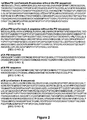
- the pCB ⁇ PSI clone (VRen) contains a linker of 3 Glycine residues between the heavy chain and light chain of enzyme. Based on this, different mutants were designed for each group of constructs as shown in Table VI below. An alignment of partial sequences of the construct corresponding to the PSI/linker region of each construct is shown in Figure 7 .
- Table VI Description of cardosin B constructs Group of constructs Clone Description I pCB ⁇ PSI_4G Linker with different size (4 Glycine residues) I pCB ⁇ PSI_6G Linker with different size (6 Glycine residues) I pCB ⁇ PSI_NQG Linker with same size but different sequence (NQG) II pCB ⁇ PSI ⁇ LK Deletion of the entire PSI domain (without linker) III pCB ⁇ PSI_2C Partial removal of PSI: construct identical to the activated form of recombinant cardosin A, produced in E.
- the PSI domain is composed by 5 ⁇ -helices and a loop region localized between the third and fourth ⁇ -helices. This construct contains a PSI without the loop region.
- the cDNA of each construct was introduced into genomic DNA of expression yeast, by homologous recombination. The integration was confirmed by colony PCR and ten clones of each construct were randomly selected for protein production in YPGal medium. After enzyme production, the culture medium was isolated from the cellular material by centrifugation and then acidified to pH 4.5, in order to activate the enzyme. These activated samples were used in the following experiments.
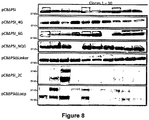
- cardosin B mutants were observed by Western blot. Samples were incubated with denaturant solution and loaded in 12.5% polyacrylamide gels for SDS-PAGE. Following electrophoretic separation, proteins were blotted into a PVDF membrane and immunodetected using an antibody specific for cardosin B (see Figure 8 ). The results have shown that all constructs were expressed and secreted, however some differences in the secretion levels were observed. Both constructs pCB ⁇ PSI_2C and pCB ⁇ PSI ⁇ loop (group III) displayed lower levels of secretion in comparison with the remaining constructs, suggesting an influence of the PSI region in the secretion levels of the enzyme. Moreover, the processing of these constructs is also different, with the detection of a band with lower molecular weight.
- each construct was tested using a skim milk solution, in test tubes, at 37°C.
- a sample of 100 ⁇ l culture medium resultant from pCB construct expression in a yeast expression system was added to 1 ml of 12% skim milk solution, prepared in 10 mM CaCl 2 .
- the mixture was incubated at 37°C and the milk-clotting time was determined by visual observation, and the results are shown in Figure 10 .
Landscapes
- Life Sciences & Earth Sciences (AREA)
- Chemical & Material Sciences (AREA)
- Engineering & Computer Science (AREA)
- Health & Medical Sciences (AREA)
- Organic Chemistry (AREA)
- Zoology (AREA)
- Genetics & Genomics (AREA)
- Bioinformatics & Cheminformatics (AREA)
- Wood Science & Technology (AREA)
- General Engineering & Computer Science (AREA)
- Microbiology (AREA)
- Biochemistry (AREA)
- General Health & Medical Sciences (AREA)
- Botany (AREA)
- Food Science & Technology (AREA)
- Polymers & Plastics (AREA)
- Biotechnology (AREA)
- Biomedical Technology (AREA)
- Molecular Biology (AREA)
- Medicinal Chemistry (AREA)
- Micro-Organisms Or Cultivation Processes Thereof (AREA)
- Enzymes And Modification Thereof (AREA)
Claims (11)
- Rekombinantes Cardosin B, wobei im Vergleich zum Wildtyp-Cardosin-B die pflanzenspezifische Insert- (PSI-) Domäne vollständig deletiert ist oder wobei die PSI-Domäne vollständig durch ein Linkerpeptid aus 1, 2, 3, 4, 5, 6, 7, 8, 9 oder 10 Aminosäuren ersetzt ist.
- Rekombinantes Cardosin B nach einem der vorangegangenen Ansprüche, wobei das rekombinante Cardosin mit einem Pro-Segment exprimiert wird.
- Rekombinantes Cardosin B nach Anspruch 1, das zumindest 95 % oder zumindest 98 % Identität zu SEQ ID NO: 1 aufweist.
- Rekombinantes Cardosin B nach Anspruch 1, das in Kluyveromyces lactis exprimiert wurde.
- Nucleinsäure, die für Folgendes kodiert:i. ein rekombinantes Cardosin B, wobei die PSI-Domäne im Vergleich zur Sequenz des Wildtyp-Cardosin-B vollständig deletiert ist oder wobei die PSI-Domäne vollständig durch ein Linkerpeptid aus 1, 2, 3, 4, 5, 6, 7, 8, 9 oder 10 Aminosäuren ersetzt ist;ii. das Polypeptid von SEQ ID NO: 1 oderiii. ein Polypeptid mit zumindest 98 % Sequenzidentität zu SEQ ID NO: 1, wobei das kodierte Polypeptid keine pflanzenspezifische Insert- (PSI-) Domäne aufweist.
- Vektor, der eine Nucleinsäure nach Anspruch 5 umfasst.
- Vektor nach Anspruch 6, der ein Hefeexpressionsvektor ist.
- Hefezelle, die Folgendes exprimiert:i. ein Cardosin B, wobei die PSI-Domäne im Vergleich zur Sequenz des Wildtyp-Cardosin-B vollständig deletiert ist oder wobei die PSI-Domäne vollständig durch ein Linkerpeptid aus 1, 2, 3, 4, 5, 6, 7, 8, 9 oder 10 Aminosäuren ersetzt ist;ii. das Polypeptid von SEQ ID NO: 1 oderiii. ein Polypeptid mit zumindest 98 % Sequenzidentität zu SEQ ID NO: 1, wobei das kodierte Polypeptid keine pflanzenspezifische Insert- (PSI-) Domäne aufweist.
- Zelle nach Anspruch 8, wobei die Hefe der Gattung Kluyveromyces angehört.
- Verwendung von Cardosin B nach einem der vorangegangenen Ansprüche zur Milchgerinnung.
- Verfahren zur Herstellung von Käse, wobei das Verfahren das Aussetzen der Milch gegenüber rekombinantem Cardosin B nach einem der Ansprüche 1 bis 4 umfasst.
Applications Claiming Priority (2)
| Application Number | Priority Date | Filing Date | Title |
|---|---|---|---|
| GBGB1305025.7A GB201305025D0 (en) | 2013-03-19 | 2013-03-19 | Aspartic proteases |
| PCT/PT2014/000017 WO2014148931A2 (en) | 2013-03-19 | 2014-03-19 | Aspartic proteases |
Publications (2)
| Publication Number | Publication Date |
|---|---|
| EP2976356A2 EP2976356A2 (de) | 2016-01-27 |
| EP2976356B1 true EP2976356B1 (de) | 2019-09-25 |
Family
ID=48226676
Family Applications (1)
| Application Number | Title | Priority Date | Filing Date |
|---|---|---|---|
| EP14715461.1A Active EP2976356B1 (de) | 2013-03-19 | 2014-03-19 | Aspartat-proteasen |
Country Status (9)
| Country | Link |
|---|---|
| US (1) | US10196624B2 (de) |
| EP (1) | EP2976356B1 (de) |
| BR (1) | BR112015024120A2 (de) |
| CA (1) | CA2942785C (de) |
| DK (1) | DK2976356T3 (de) |
| ES (1) | ES2763650T3 (de) |
| GB (1) | GB201305025D0 (de) |
| PT (1) | PT2976356T (de) |
| WO (1) | WO2014148931A2 (de) |
Families Citing this family (2)
| Publication number | Priority date | Publication date | Assignee | Title |
|---|---|---|---|---|
| GB201305023D0 (en) | 2013-03-19 | 2013-05-01 | Biocant Associa O De Transfer Ncia De Tecnologia | Aspartic proteases |
| ES2673702B2 (es) * | 2016-12-23 | 2018-10-05 | Universidade De Santiago De Compostela | Cepa recombinante, método de producción de proteasas aspárticas de Galium verum y uso en la industria láctea. |
Family Cites Families (3)
| Publication number | Priority date | Publication date | Assignee | Title |
|---|---|---|---|---|
| PT102318A (pt) * | 1999-06-09 | 2000-12-29 | Inst De Ciencia Aplic E Tecnol | Producao por levedura de proteinase asparticas de origem vegetal com actividade proteolitica e de coagulacao de leite de ovelha de vaca e de cabra dentre outros |
| PT103839B (pt) | 2007-09-28 | 2008-10-23 | Ecbio Investigacao E Desenvolv | Composições farmacêuticas contendo a enzima ciprosina, uma peptidase aspártica de cynara cardunculus, e a sua inclusão em formulações antitumurais |
| GB201305023D0 (en) | 2013-03-19 | 2013-05-01 | Biocant Associa O De Transfer Ncia De Tecnologia | Aspartic proteases |
-
2013
- 2013-03-19 GB GBGB1305025.7A patent/GB201305025D0/en not_active Ceased
-
2014
- 2014-03-19 ES ES14715461T patent/ES2763650T3/es active Active
- 2014-03-19 US US14/777,847 patent/US10196624B2/en active Active
- 2014-03-19 EP EP14715461.1A patent/EP2976356B1/de active Active
- 2014-03-19 BR BR112015024120A patent/BR112015024120A2/pt not_active Application Discontinuation
- 2014-03-19 WO PCT/PT2014/000017 patent/WO2014148931A2/en not_active Ceased
- 2014-03-19 PT PT147154611T patent/PT2976356T/pt unknown
- 2014-03-19 CA CA2942785A patent/CA2942785C/en active Active
- 2014-03-19 DK DK14715461.1T patent/DK2976356T3/da active
Non-Patent Citations (1)
| Title |
|---|
| P. CASTANHEIRA ET AL: "Activation, Proteolytic Processing, and Peptide Specificity of Recombinant Cardosin A", JOURNAL OF BIOLOGICAL CHEMISTRY, vol. 280, no. 13, 1 April 2005 (2005-04-01), US, pages 13047 - 13054, XP055331165, ISSN: 0021-9258, DOI: 10.1074/jbc.M412076200 * |
Also Published As
| Publication number | Publication date |
|---|---|
| CA2942785A1 (en) | 2014-09-25 |
| DK2976356T3 (da) | 2020-01-02 |
| BR112015024120A2 (pt) | 2017-10-24 |
| ES2763650T3 (es) | 2020-05-29 |
| US20160083711A1 (en) | 2016-03-24 |
| PT2976356T (pt) | 2020-01-10 |
| WO2014148931A3 (en) | 2014-12-31 |
| GB201305025D0 (en) | 2013-05-01 |
| US10196624B2 (en) | 2019-02-05 |
| WO2014148931A2 (en) | 2014-09-25 |
| EP2976356A2 (de) | 2016-01-27 |
| CA2942785C (en) | 2021-07-13 |
Similar Documents
| Publication | Publication Date | Title |
|---|---|---|
| Yegin et al. | Progress in the field of aspartic proteinases in cheese manufacturing: structures, functions, catalytic mechanism, inhibition, and engineering | |
| Mohanty et al. | Bovine chymosin: production by rDNA technology and application in cheese manufacture | |
| Vallejo et al. | Cloning and expression of buffalo active chymosin in Pichia pastoris | |
| EP2844750B1 (de) | Verbesserte chymosinvarianten | |
| JP5436225B2 (ja) | 新規シアリダーゼ | |
| Almeida et al. | Engineering a cardosin B-derived rennet for sheep and goat cheese manufacture | |
| EP1261697B1 (de) | Kälteaktive beta galaktosidase, verfahren zu ihrer herstellung und verwendungen davon | |
| CN100549169C (zh) | 酵母中来自Tritirachium album的重组蛋白酶K的表达 | |
| Beppu | The cloning and expression of chymosin (rennin) genes in microorganisms | |
| CN107338234B (zh) | 一种新型米黑根毛霉天冬氨酸蛋白酶的生产方法及其应用 | |
| EP2976356B1 (de) | Aspartat-proteasen | |
| US7741438B2 (en) | Methods and compositions involving endopeptidases PepO2 and PepO3 | |
| Feng et al. | Codon optimization of the calf prochymosin gene and its expression in Kluyveromyces lactis | |
| US20220162619A1 (en) | Preparation of wheat cysteine protease triticain-alpha produced in soluble form and method of producing same | |
| RU2670071C1 (ru) | Рекомбинатная плазмида pET21a-ProChym, обеспечивающая синтез химерного белка прохимозина В Bos taurus, и штамм Escherichia coli BL21(DE3)pLysE pET21a-ProChym - продуцент химерного белка прохимозина В Bos Taurus | |
| JP5757555B2 (ja) | 新規酸性プロテアーゼ及びその用途 | |
| CN113801867B (zh) | 骆驼凝乳酶原突变蛋白及其编码基因和应用 | |
| RU2729403C1 (ru) | Рекомбинантная плазмида pET32-Trex Vic, обеспечивающая синтез химерного белка прохимозина Vicugna pacos, и штамм Escherichia coli BL21(DE3)pLysE pET32-Trx Vic-продуцент химерного белка прохимозина Vicugna pacos | |
| CN115558655B (zh) | 一种具有凝乳活性的米黑根毛霉天冬氨酸蛋白酶及其制备方法与应用 | |
| US9890372B2 (en) | Aspartic proteases | |
| CN111172139B (zh) | 一种小牛皱胃凝乳酶及基因与菌株和应用 | |
| WO2024256611A1 (en) | Production of an alphas1-casein in a yeast or a filamentous fungus host | |
| WO2025099224A1 (en) | Improved enzyme variants | |
| JP3516318B2 (ja) | 新規エンドペプチダーゼ | |
| WO2025099225A1 (en) | Improved enzyme variants |
Legal Events
| Date | Code | Title | Description |
|---|---|---|---|
| PUAI | Public reference made under article 153(3) epc to a published international application that has entered the european phase |
Free format text: ORIGINAL CODE: 0009012 |
|
| 17P | Request for examination filed |
Effective date: 20151014 |
|
| AK | Designated contracting states |
Kind code of ref document: A2 Designated state(s): AL AT BE BG CH CY CZ DE DK EE ES FI FR GB GR HR HU IE IS IT LI LT LU LV MC MK MT NL NO PL PT RO RS SE SI SK SM TR |
|
| AX | Request for extension of the european patent |
Extension state: BA ME |
|
| DAX | Request for extension of the european patent (deleted) | ||
| STAA | Information on the status of an ep patent application or granted ep patent |
Free format text: STATUS: EXAMINATION IS IN PROGRESS |
|
| 17Q | First examination report despatched |
Effective date: 20170104 |
|
| GRAP | Despatch of communication of intention to grant a patent |
Free format text: ORIGINAL CODE: EPIDOSNIGR1 |
|
| STAA | Information on the status of an ep patent application or granted ep patent |
Free format text: STATUS: GRANT OF PATENT IS INTENDED |
|
| INTG | Intention to grant announced |
Effective date: 20190418 |
|
| GRAS | Grant fee paid |
Free format text: ORIGINAL CODE: EPIDOSNIGR3 |
|
| GRAA | (expected) grant |
Free format text: ORIGINAL CODE: 0009210 |
|
| STAA | Information on the status of an ep patent application or granted ep patent |
Free format text: STATUS: THE PATENT HAS BEEN GRANTED |
|
| AK | Designated contracting states |
Kind code of ref document: B1 Designated state(s): AL AT BE BG CH CY CZ DE DK EE ES FI FR GB GR HR HU IE IS IT LI LT LU LV MC MK MT NL NO PL PT RO RS SE SI SK SM TR |
|
| REG | Reference to a national code |
Ref country code: GB Ref legal event code: FG4D |
|
| REG | Reference to a national code |
Ref country code: CH Ref legal event code: EP |
|
| REG | Reference to a national code |
Ref country code: AT Ref legal event code: REF Ref document number: 1183736 Country of ref document: AT Kind code of ref document: T Effective date: 20191015 |
|
| REG | Reference to a national code |
Ref country code: IE Ref legal event code: FG4D |
|
| REG | Reference to a national code |
Ref country code: DE Ref legal event code: R096 Ref document number: 602014054191 Country of ref document: DE |
|
| REG | Reference to a national code |
Ref country code: DK Ref legal event code: T3 Effective date: 20191217 |
|
| REG | Reference to a national code |
Ref country code: PT Ref legal event code: SC4A Ref document number: 2976356 Country of ref document: PT Date of ref document: 20200110 Kind code of ref document: T Free format text: AVAILABILITY OF NATIONAL TRANSLATION Effective date: 20191223 |
|
| REG | Reference to a national code |
Ref country code: NL Ref legal event code: FP |
|
| PG25 | Lapsed in a contracting state [announced via postgrant information from national office to epo] |
Ref country code: NO Free format text: LAPSE BECAUSE OF FAILURE TO SUBMIT A TRANSLATION OF THE DESCRIPTION OR TO PAY THE FEE WITHIN THE PRESCRIBED TIME-LIMIT Effective date: 20191225 Ref country code: BG Free format text: LAPSE BECAUSE OF FAILURE TO SUBMIT A TRANSLATION OF THE DESCRIPTION OR TO PAY THE FEE WITHIN THE PRESCRIBED TIME-LIMIT Effective date: 20191225 Ref country code: FI Free format text: LAPSE BECAUSE OF FAILURE TO SUBMIT A TRANSLATION OF THE DESCRIPTION OR TO PAY THE FEE WITHIN THE PRESCRIBED TIME-LIMIT Effective date: 20190925 Ref country code: LT Free format text: LAPSE BECAUSE OF FAILURE TO SUBMIT A TRANSLATION OF THE DESCRIPTION OR TO PAY THE FEE WITHIN THE PRESCRIBED TIME-LIMIT Effective date: 20190925 Ref country code: HR Free format text: LAPSE BECAUSE OF FAILURE TO SUBMIT A TRANSLATION OF THE DESCRIPTION OR TO PAY THE FEE WITHIN THE PRESCRIBED TIME-LIMIT Effective date: 20190925 Ref country code: SE Free format text: LAPSE BECAUSE OF FAILURE TO SUBMIT A TRANSLATION OF THE DESCRIPTION OR TO PAY THE FEE WITHIN THE PRESCRIBED TIME-LIMIT Effective date: 20190925 |
|
| REG | Reference to a national code |
Ref country code: LT Ref legal event code: MG4D |
|
| PG25 | Lapsed in a contracting state [announced via postgrant information from national office to epo] |
Ref country code: GR Free format text: LAPSE BECAUSE OF FAILURE TO SUBMIT A TRANSLATION OF THE DESCRIPTION OR TO PAY THE FEE WITHIN THE PRESCRIBED TIME-LIMIT Effective date: 20191226 Ref country code: RS Free format text: LAPSE BECAUSE OF FAILURE TO SUBMIT A TRANSLATION OF THE DESCRIPTION OR TO PAY THE FEE WITHIN THE PRESCRIBED TIME-LIMIT Effective date: 20190925 Ref country code: LV Free format text: LAPSE BECAUSE OF FAILURE TO SUBMIT A TRANSLATION OF THE DESCRIPTION OR TO PAY THE FEE WITHIN THE PRESCRIBED TIME-LIMIT Effective date: 20190925 |
|
| REG | Reference to a national code |
Ref country code: AT Ref legal event code: MK05 Ref document number: 1183736 Country of ref document: AT Kind code of ref document: T Effective date: 20190925 |
|
| PG25 | Lapsed in a contracting state [announced via postgrant information from national office to epo] |
Ref country code: RO Free format text: LAPSE BECAUSE OF FAILURE TO SUBMIT A TRANSLATION OF THE DESCRIPTION OR TO PAY THE FEE WITHIN THE PRESCRIBED TIME-LIMIT Effective date: 20190925 Ref country code: AL Free format text: LAPSE BECAUSE OF FAILURE TO SUBMIT A TRANSLATION OF THE DESCRIPTION OR TO PAY THE FEE WITHIN THE PRESCRIBED TIME-LIMIT Effective date: 20190925 Ref country code: EE Free format text: LAPSE BECAUSE OF FAILURE TO SUBMIT A TRANSLATION OF THE DESCRIPTION OR TO PAY THE FEE WITHIN THE PRESCRIBED TIME-LIMIT Effective date: 20190925 Ref country code: PL Free format text: LAPSE BECAUSE OF FAILURE TO SUBMIT A TRANSLATION OF THE DESCRIPTION OR TO PAY THE FEE WITHIN THE PRESCRIBED TIME-LIMIT Effective date: 20190925 Ref country code: AT Free format text: LAPSE BECAUSE OF FAILURE TO SUBMIT A TRANSLATION OF THE DESCRIPTION OR TO PAY THE FEE WITHIN THE PRESCRIBED TIME-LIMIT Effective date: 20190925 |
|
| PG25 | Lapsed in a contracting state [announced via postgrant information from national office to epo] |
Ref country code: IS Free format text: LAPSE BECAUSE OF FAILURE TO SUBMIT A TRANSLATION OF THE DESCRIPTION OR TO PAY THE FEE WITHIN THE PRESCRIBED TIME-LIMIT Effective date: 20200224 Ref country code: CZ Free format text: LAPSE BECAUSE OF FAILURE TO SUBMIT A TRANSLATION OF THE DESCRIPTION OR TO PAY THE FEE WITHIN THE PRESCRIBED TIME-LIMIT Effective date: 20190925 Ref country code: SK Free format text: LAPSE BECAUSE OF FAILURE TO SUBMIT A TRANSLATION OF THE DESCRIPTION OR TO PAY THE FEE WITHIN THE PRESCRIBED TIME-LIMIT Effective date: 20190925 Ref country code: SM Free format text: LAPSE BECAUSE OF FAILURE TO SUBMIT A TRANSLATION OF THE DESCRIPTION OR TO PAY THE FEE WITHIN THE PRESCRIBED TIME-LIMIT Effective date: 20190925 |
|
| REG | Reference to a national code |
Ref country code: ES Ref legal event code: FG2A Ref document number: 2763650 Country of ref document: ES Kind code of ref document: T3 Effective date: 20200529 |
|
| REG | Reference to a national code |
Ref country code: DE Ref legal event code: R097 Ref document number: 602014054191 Country of ref document: DE |
|
| PG2D | Information on lapse in contracting state deleted |
Ref country code: IS |
|
| PG25 | Lapsed in a contracting state [announced via postgrant information from national office to epo] |
Ref country code: IS Free format text: LAPSE BECAUSE OF FAILURE TO SUBMIT A TRANSLATION OF THE DESCRIPTION OR TO PAY THE FEE WITHIN THE PRESCRIBED TIME-LIMIT Effective date: 20200126 |
|
| PLBE | No opposition filed within time limit |
Free format text: ORIGINAL CODE: 0009261 |
|
| STAA | Information on the status of an ep patent application or granted ep patent |
Free format text: STATUS: NO OPPOSITION FILED WITHIN TIME LIMIT |
|
| 26N | No opposition filed |
Effective date: 20200626 |
|
| PG25 | Lapsed in a contracting state [announced via postgrant information from national office to epo] |
Ref country code: MC Free format text: LAPSE BECAUSE OF FAILURE TO SUBMIT A TRANSLATION OF THE DESCRIPTION OR TO PAY THE FEE WITHIN THE PRESCRIBED TIME-LIMIT Effective date: 20190925 |
|
| PG25 | Lapsed in a contracting state [announced via postgrant information from national office to epo] |
Ref country code: SI Free format text: LAPSE BECAUSE OF FAILURE TO SUBMIT A TRANSLATION OF THE DESCRIPTION OR TO PAY THE FEE WITHIN THE PRESCRIBED TIME-LIMIT Effective date: 20190925 |
|
| PG25 | Lapsed in a contracting state [announced via postgrant information from national office to epo] |
Ref country code: LU Free format text: LAPSE BECAUSE OF NON-PAYMENT OF DUE FEES Effective date: 20200319 |
|
| PG25 | Lapsed in a contracting state [announced via postgrant information from national office to epo] |
Ref country code: IE Free format text: LAPSE BECAUSE OF NON-PAYMENT OF DUE FEES Effective date: 20200319 |
|
| PG25 | Lapsed in a contracting state [announced via postgrant information from national office to epo] |
Ref country code: TR Free format text: LAPSE BECAUSE OF FAILURE TO SUBMIT A TRANSLATION OF THE DESCRIPTION OR TO PAY THE FEE WITHIN THE PRESCRIBED TIME-LIMIT Effective date: 20190925 Ref country code: MT Free format text: LAPSE BECAUSE OF FAILURE TO SUBMIT A TRANSLATION OF THE DESCRIPTION OR TO PAY THE FEE WITHIN THE PRESCRIBED TIME-LIMIT Effective date: 20190925 Ref country code: CY Free format text: LAPSE BECAUSE OF FAILURE TO SUBMIT A TRANSLATION OF THE DESCRIPTION OR TO PAY THE FEE WITHIN THE PRESCRIBED TIME-LIMIT Effective date: 20190925 |
|
| PG25 | Lapsed in a contracting state [announced via postgrant information from national office to epo] |
Ref country code: MK Free format text: LAPSE BECAUSE OF FAILURE TO SUBMIT A TRANSLATION OF THE DESCRIPTION OR TO PAY THE FEE WITHIN THE PRESCRIBED TIME-LIMIT Effective date: 20190925 |
|
| PGFP | Annual fee paid to national office [announced via postgrant information from national office to epo] |
Ref country code: FR Payment date: 20230223 Year of fee payment: 10 Ref country code: DK Payment date: 20230324 Year of fee payment: 10 |
|
| PGFP | Annual fee paid to national office [announced via postgrant information from national office to epo] |
Ref country code: PT Payment date: 20230316 Year of fee payment: 10 Ref country code: IT Payment date: 20230327 Year of fee payment: 10 Ref country code: GB Payment date: 20230221 Year of fee payment: 10 Ref country code: DE Payment date: 20230223 Year of fee payment: 10 |
|
| PGFP | Annual fee paid to national office [announced via postgrant information from national office to epo] |
Ref country code: NL Payment date: 20230324 Year of fee payment: 10 |
|
| PGFP | Annual fee paid to national office [announced via postgrant information from national office to epo] |
Ref country code: ES Payment date: 20230401 Year of fee payment: 10 Ref country code: CH Payment date: 20230401 Year of fee payment: 10 |
|
| PGFP | Annual fee paid to national office [announced via postgrant information from national office to epo] |
Ref country code: BE Payment date: 20230331 Year of fee payment: 10 |
|
| REG | Reference to a national code |
Ref country code: DE Ref legal event code: R119 Ref document number: 602014054191 Country of ref document: DE |
|
| PG25 | Lapsed in a contracting state [announced via postgrant information from national office to epo] |
Ref country code: PT Free format text: LAPSE BECAUSE OF NON-PAYMENT OF DUE FEES Effective date: 20240919 |
|
| REG | Reference to a national code |
Ref country code: DK Ref legal event code: EBP Effective date: 20240331 |
|
| PG25 | Lapsed in a contracting state [announced via postgrant information from national office to epo] |
Ref country code: PT Free format text: LAPSE BECAUSE OF NON-PAYMENT OF DUE FEES Effective date: 20240919 |
|
| REG | Reference to a national code |
Ref country code: CH Ref legal event code: PL |
|
| REG | Reference to a national code |
Ref country code: NL Ref legal event code: MM Effective date: 20240401 |
|
| GBPC | Gb: european patent ceased through non-payment of renewal fee |
Effective date: 20240319 |
|
| PG25 | Lapsed in a contracting state [announced via postgrant information from national office to epo] |
Ref country code: NL Free format text: LAPSE BECAUSE OF NON-PAYMENT OF DUE FEES Effective date: 20240401 |
|
| REG | Reference to a national code |
Ref country code: BE Ref legal event code: MM Effective date: 20240331 |
|
| PG25 | Lapsed in a contracting state [announced via postgrant information from national office to epo] |
Ref country code: NL Free format text: LAPSE BECAUSE OF NON-PAYMENT OF DUE FEES Effective date: 20240401 |
|
| PG25 | Lapsed in a contracting state [announced via postgrant information from national office to epo] |
Ref country code: DE Free format text: LAPSE BECAUSE OF NON-PAYMENT OF DUE FEES Effective date: 20241001 |
|
| PG25 | Lapsed in a contracting state [announced via postgrant information from national office to epo] |
Ref country code: BE Free format text: LAPSE BECAUSE OF NON-PAYMENT OF DUE FEES Effective date: 20240331 |
|
| PG25 | Lapsed in a contracting state [announced via postgrant information from national office to epo] |
Ref country code: GB Free format text: LAPSE BECAUSE OF NON-PAYMENT OF DUE FEES Effective date: 20240319 |
|
| PG25 | Lapsed in a contracting state [announced via postgrant information from national office to epo] |
Ref country code: FR Free format text: LAPSE BECAUSE OF NON-PAYMENT OF DUE FEES Effective date: 20240331 |
|
| PG25 | Lapsed in a contracting state [announced via postgrant information from national office to epo] |
Ref country code: GB Free format text: LAPSE BECAUSE OF NON-PAYMENT OF DUE FEES Effective date: 20240319 Ref country code: FR Free format text: LAPSE BECAUSE OF NON-PAYMENT OF DUE FEES Effective date: 20240331 Ref country code: DE Free format text: LAPSE BECAUSE OF NON-PAYMENT OF DUE FEES Effective date: 20241001 Ref country code: BE Free format text: LAPSE BECAUSE OF NON-PAYMENT OF DUE FEES Effective date: 20240331 Ref country code: CH Free format text: LAPSE BECAUSE OF NON-PAYMENT OF DUE FEES Effective date: 20240331 |
|
| PG25 | Lapsed in a contracting state [announced via postgrant information from national office to epo] |
Ref country code: DK Free format text: LAPSE BECAUSE OF NON-PAYMENT OF DUE FEES Effective date: 20240331 |
|
| PG25 | Lapsed in a contracting state [announced via postgrant information from national office to epo] |
Ref country code: IT Free format text: LAPSE BECAUSE OF NON-PAYMENT OF DUE FEES Effective date: 20240319 |
|
| REG | Reference to a national code |
Ref country code: ES Ref legal event code: FD2A Effective date: 20250508 |
|
| PG25 | Lapsed in a contracting state [announced via postgrant information from national office to epo] |
Ref country code: ES Free format text: LAPSE BECAUSE OF NON-PAYMENT OF DUE FEES Effective date: 20240320 |