EP2970052B1 - Process to manufacture 2-chloro-1,1,1,2-tetrafluoropropane (hcfc-244bb) - Google Patents
Process to manufacture 2-chloro-1,1,1,2-tetrafluoropropane (hcfc-244bb) Download PDFInfo
- Publication number
- EP2970052B1 EP2970052B1 EP14768936.8A EP14768936A EP2970052B1 EP 2970052 B1 EP2970052 B1 EP 2970052B1 EP 14768936 A EP14768936 A EP 14768936A EP 2970052 B1 EP2970052 B1 EP 2970052B1
- Authority
- EP
- European Patent Office
- Prior art keywords
- reactor
- hfc
- kpag
- psig
- reaction
- Prior art date
- Legal status (The legal status is an assumption and is not a legal conclusion. Google has not performed a legal analysis and makes no representation as to the accuracy of the status listed.)
- Active
Links
Images
Classifications
-
- C—CHEMISTRY; METALLURGY
- C07—ORGANIC CHEMISTRY
- C07C—ACYCLIC OR CARBOCYCLIC COMPOUNDS
- C07C17/00—Preparation of halogenated hydrocarbons
- C07C17/07—Preparation of halogenated hydrocarbons by addition of hydrogen halides
- C07C17/08—Preparation of halogenated hydrocarbons by addition of hydrogen halides to unsaturated hydrocarbons
-
- C—CHEMISTRY; METALLURGY
- C07—ORGANIC CHEMISTRY
- C07C—ACYCLIC OR CARBOCYCLIC COMPOUNDS
- C07C17/00—Preparation of halogenated hydrocarbons
- C07C17/07—Preparation of halogenated hydrocarbons by addition of hydrogen halides
- C07C17/087—Preparation of halogenated hydrocarbons by addition of hydrogen halides to unsaturated halogenated hydrocarbons
-
- C—CHEMISTRY; METALLURGY
- C07—ORGANIC CHEMISTRY
- C07C—ACYCLIC OR CARBOCYCLIC COMPOUNDS
- C07C17/00—Preparation of halogenated hydrocarbons
- C07C17/093—Preparation of halogenated hydrocarbons by replacement by halogens
- C07C17/20—Preparation of halogenated hydrocarbons by replacement by halogens of halogen atoms by other halogen atoms
- C07C17/202—Preparation of halogenated hydrocarbons by replacement by halogens of halogen atoms by other halogen atoms two or more compounds being involved in the reaction
- C07C17/206—Preparation of halogenated hydrocarbons by replacement by halogens of halogen atoms by other halogen atoms two or more compounds being involved in the reaction the other compound being HX
-
- C—CHEMISTRY; METALLURGY
- C07—ORGANIC CHEMISTRY
- C07C—ACYCLIC OR CARBOCYCLIC COMPOUNDS
- C07C17/00—Preparation of halogenated hydrocarbons
- C07C17/23—Preparation of halogenated hydrocarbons by dehalogenation
-
- C—CHEMISTRY; METALLURGY
- C07—ORGANIC CHEMISTRY
- C07C—ACYCLIC OR CARBOCYCLIC COMPOUNDS
- C07C17/00—Preparation of halogenated hydrocarbons
- C07C17/25—Preparation of halogenated hydrocarbons by splitting-off hydrogen halides from halogenated hydrocarbons
Definitions
- HFOs hydrofluoroolefins
- CFCs chlorofluorocarbons
- HCFCs hydrochlorofluorocarbons
- HFCs hydrofluorocarbons
- Some HFOs are prepared by multiple steps that involve fluorinating a chlorinated organic compound with a fluorination agent such as hydrogen fluoride in the presence of a fluorination catalyst. These reactions may be conducted in either the liquid or gas phase or a combination of these.
- liquid phase fluorination is preferred because the reaction can be controlled at relatively lower temperatures, which, in turn, results in less by-product formation due, e.g., to decomposition.
- the liquid phase fluorination of HCFO-1233xf to produce HCFC-244bb no hydrochloric acid (HCl) co-product, or at least no meaningful amount of HCl co-product, is produced because the reaction is strictly a hydrofluorination reaction where HF adds across the double bond of 1233xf. This lack of meaningful HCl by-product formation is unique when compared to other well-known liquid phase fluorination reactions that produce CFCs (e.g.
- HFC-245cb an overfluorinated side-product, HFC-245cb, forms in Step (2) of the reaction, and that HFC-245cb is inert in this reaction system, and is non-condensable under certain reaction conditions and, thus, is a suitable mixing gas for the Step (2) reaction and provides the above described benefits otherwise generally ascribable to HCl.
- HFC-245cb other compounds can be used in addition to HFC-245cb.
- additional compounds are inert and recoverable materials.
- recoverable it is meant a species that can be recycled without causing yield loss.
- inert gases such as nitrogen or argon would not be useful as they would cause an unacceptable yield loss or require large capital expenditure to reduce yield losses.
- these compounds have the following normal boiling point ranges: between -70°C to -10°C; between -60°C and -20°C; between -50°C and -30°C; and - 40°C.
- Representative compounds include in this regards without limitation: CFC-12 (dichlorodifluoromethane),, HCFC-22 (chlorodifluoromethane), HFC-32 (difluoromethane), HCC-40(chloromethane) HFC-41 (fluoromethane), CFC-115(chloropentafluoroethane), FC-116 (hexafluoroethane), HCFC-124 (2-chloro-1,1,1,2-tetrafluoroethane), HFC-125 (pentafluoroethane), HFC-134a(1.1.1.2-tetrafluoroethane), HFC-143a (1,1,1-trifluoroethane), HFC-152a (1,1-difluor
- any species inert (used in combination) in the Step (2) reaction system may be utilized provided the normal boiling point of the species is less than 0 °C, for example. In a preferred embodiment the normal boiling point of the species is less than -10 °C. To be useful the species should be separable and recoverable from 244bb via conventional means such as distillation and the like.
- the 245cb is added at a pressure of at least 689 kPag (100 psig); more preferably, at a pressure of between 689 kPag to 3450 kPag (100 psig to 500 psig); still more preferably, at a pressure of between 827 kPag and 2070 kPag (120 psig and 300 psig).
- the 245cb is added to maintain, in the reaction zone, a mole ratio of 245cb to 1233xf of between 0.005:1 to 1:1; preferably, this mole ratio is between 0.01:1 to 0.5:1; more preferably, this mole ratio is between 0.04:1 to 0.25:1.
- Liquid phase fluorination uses and generates corrosive compounds, such as hydrogen fluoride, hydrogen chloride, and Lewis acid catalysts, which form super acids. These super acids tend to corrode the reactor vessel in which the reaction is conducted, even reactors comprised of corrosion-resistant materials such as Inconel TM 600, NAR25-50MII, Hastelloy TM C, Hastelloy TM G-30, duplex stainless steel, and Hastelloy TM C-22. Due to the corrosive nature of the reaction mixture, the reactor for the Step (2) reaction is preferably lined with a fluoropolymer such as PFA or PTFE or other suitable material.
- a fluoropolymer such as PFA or PTFE or other suitable material.
- a liquid phase catalyst as e.g. described below, is charged into a fluorination reactor prior to heating the reactor.
- Any reactor suitable for a fluorination reaction may be used in the invention; such liquid phase fluorination reactors are well known in the art.
- the HF, HFC-245cb and the HCFO-1233xf are fed to the reactor after the reactor reaches the desired temperature.
- the reaction is conducted at a temperature of from about 30 °C to about 200 °C, more preferably from about from about 50 °C to about 150 °C, and still more preferably from about 75 °C to about 125 °C.
- the pressure of the reaction varies depending on the temperature, quantity of HFC-245cb and hydrogen fluoride used, and conversion of HCFO-1233xf.
- Convenient operating pressure ranges from about 30 kPaa (5 psia) to about 1000 kPaa (200 psia), and preferably from 200 to about 1210 kPaa (30 to about 175 psia), and most preferably 410 kPaa to about 1030 kPaa (about 60 psia to about 150 psia).
- the initial amount of HFC-245cb may be produced in the same reactor by selecting the appropriate reaction conditions or may be procured elsewhere.
- the required mole ratio of HF to HCFO-1233xf is at least equal to the number of double bonds in the starting organic material and preferably is present in an excess.
- the mole ratio of HF to HCFO-1233xf ranges from at least about 1:1 to about 50:1, more preferably from about 1:1 to about 30:1 and most preferably from about 2:1 to about 15:1.
- Any water in the HF will typically react with and deactivate the catalyst. Therefore, substantially anhydrous HF is preferred.
- substantially anhydrous HF is meant that the HF contains less than about 0.05 weight % water and preferably contains less than about 0.02 weight % water.
- the presence of water in the catalyst can be compensated for by increasing the amount of catalyst used.
- the liquid phase fluorination reaction is conducted with a sufficient amount of HFC-245cb and/or other co-feed species to elevate the pressure in the reactor, above the pressure achieved compared to a similar liquid phase reaction without adding HFC-245cb and/or other co-feed species.
- the mole ratio of HFC-245cb and/or other co-feed species to HCFO-1233xf ranges from 0.005:1 to 1:1, more preferably from 0.01:1 to 0.5:1 and most preferably from 0.04:1 to 0.25:1.
- the HFC-245cb and/or other co-feed species is added into the reaction from an external source at a pressure of 689 kPag (100 psig) or more; preferably from 689 kPag to 3450 kPag (100 psig to 500 psig), and more preferably from 830 kPag to 2000 kPag (120 psig to 300 psig). It may be supplied as a liquid and vaporized at the required pressure by the use of a heating medium such as steam or it may be supplied as a vapor and compressed to the required pressure.
- liquid phase fluorination catalyst may be used in the invention.
- a nonexhaustive list includes Lewis acids, transition metal halides, transition metal oxides, Group IVb metal halides, a Group Vb metal halides, or combinations thereof.
- Non-exclusive examples of liquid phase fluorination catalysts are an antimony halide, a tin halide, a tantalum halide, a titanium halide, a niobium halide, and molybdenum halide, an iron halide, a fluorinated chrome halide, or combinations thereof.
- liquid phase fluorination catalysts are SbCl 5 , SbCl 3 , SbF 5 , SnCl 4 , TaCl 5 , TiCl 4 , NbCl 5 , MoCl 6 , FeCl 3 , a fluorinated species of SbCl 5 , a fluorinated species of SbCl 3 , a fluorinated species of SnCl 4 , a fluorinated species of TaCl 5 , a fluorinated species of TiCl 4 , a fluorinated species of NbCl 5 , a fluorinated species of MoCl 6 , a fluorinated species of FeCl 3 , or combinations thereof.
- Liquid phase fluorination catalyst comprises SbCl 5 , SbCl 3 , SbF 5 , SnCl 4 , TaCl 5 , TiCl 4 , NbCl 5 , MoCl 6 , FeCl 3 , a fluorinated species of SbCl 5 , a fluorinated species of SbCl 3 , a fluorinated species of SnCl 4 , a fluorinated species of TaCl 5 , a fluorinated species of TiCl 4 , a fluorinated species of NbCl 5 , a fluorinated species of MoCl 6 , a fluorinated species of FeCl 3 , or combinations thereof.
- the resulting HCFC-244bb, as well as HF, HFC-245cb or other co-feed species, and HCl if any, may be recovered from the reaction mixture via any separation or purification method known in the art such as neutralization and distillation.
- the HCFC-244bb can be used in pure form, or optionally in partially pure form or impure form with the entire effluent from the HCFC-244bb production step used as an intermediate in the production of 2,3,3,3-tetrafluoropropene HFO-1234yf.
- the HFC-245cb or other co-feed species may be recovered, stored and recycled back to the Step (2) reaction.
- the process of the invention is carried out in continuous mode.
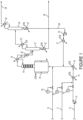
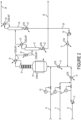
- the overhead from column 21 is fed to the 245cb recycle column 24 having condenser 25, from which is derived waste gas 26, and reboiler 27.
- the compound 245cb is substantially recovered from column 24 as bottoms stream 29 which is then recycled back to reactor 16 passing through pump 30 and vaporizer 31.
- the process of the invention can be the second step of the three-step process to make 1234yf as described above.
- the present invention comprises a step of an integrated manufacturing process for making 2,3,3,3-tetrafluoropropene.
- the starting material for this process is one or more chlorinated compounds according to Formulae I, II and/or III:
- CX 2 CCl-CH 2 X (Formula I)
- CX 3 -CCl CH2
- X 3 -CHCl-CH 2 X (Formula III) wherein X is independently selected from F, Cl, Br, and I, provided that at least one X is not fluorine;
- these compounds contain at least one chlorine, more preferably a majority of X is chlorine, and even more preferably all X is chlorine.
- the method generally comprises at least three reaction steps.
- the Step (1) reaction may be conducted in any reactor suitable for a vapor or liquid phase fluorination reaction.
- the reactor is constructed from materials which are resistant to the corrosive effects of hydrogen fluoride and catalyst such as Hastelloy TM , Inconel TM , Monel TM and vessels lined with fluoropolymers.
- the reactor is filled with a vapor phase fluorination catalyst. Any fluorination catalysts known in the art may be used in this process.
- Suitable catalysts include, but are not limited to chromium, aluminum, cobalt, manganese, nickel and iron oxides, hydroxides, halides, oxyhalides, inorganic salts thereof and their mixtures.
- Combinations of catalysts suitable for the present invention nonexclusively include Cr 2 O 3 , Cr 2 O 3 /Al 2 O 3 , Cr 2 O 3 /AlF 3 , Cr 2 O 3 /carbon, CoCl 2 /Cr 2 O 3 /Al 2 O 3 , NiCl 2 /Cr 2 O 3 /Al 2 O 3 , CoCl 2 /AlF 3 , NiCl 2 /AlF 3 and mixtures thereof.
- Chromium oxide/aluminum oxide catalysts are described in U.S. Pat. No. 5,155,082 which is incorporated herein by reference. Chromium (III) oxides such as crystalline chromium oxide or amorphous chromium oxide are preferred with amorphous chromium oxide being most preferred. Chromium oxide (Cr 2 O 3 ) is a commercially available material which may be purchased in a variety of particle sizes. Fluorination catalysts having a purity of at least 98% are preferred. The fluorination catalyst is present in an excess but in at least an amount sufficient to drive the reaction.
- Chromium (III) oxides such as crystalline chromium oxide or amorphous chromium oxide are preferred with amorphous chromium oxide being most preferred.
- Chromium oxide (Cr 2 O 3 ) is a commercially available material which may be purchased in a variety of particle sizes. Fluorination catalysts having a purity of at least 98% are preferred. The fluorination catalyst
- a starting composition including one or more compounds having Formula (I), (II) or (III), preferably 1,1,2,3-tetrachloropropene (HCC-1230xa, or TCP) and/or 2,3,3,3-tetrachloropropene (HCC-1230xf, or TCP) and/or 1,1,1,2,3-pentachloropropane (240db) and HF may be fed to the reactor at any convenient temperature and pressure.
- either or both of the TCP (HCC-1230xa and/or HCC-1230xf) and/or HCC-240db and the HF are pre-vaporized or preheated to a temperature of from 30 °C to 300 °C prior to entering the reactor.
- the TCP and/or HCC-240db and HF are vaporized in the reactor.
- the HF and TCP and/or HCC-240db feeds are then adjusted to the desired mole ratio.
- the HF to TCP and/or HCC-240db mole ratio preferably ranges from 3:1 to 100:1; more preferably from 4:1 to 50:1 and most preferably from 5:1 to 20:1.
- the vapor phase fluorination reaction is conducted at a preferred temperature ranging from 80 °C to 400 °C; more preferably from 100 °C to 350 °C and most preferably from 200 °C to 330 °C.
- Reactor pressure is not critical and can be superatmospheric, atmospheric or under vacuum.
- the vacuum pressure can be from 0.7 kPaa [5 torr (0.0966 psia)] to 100 kPaa [760 torr (14.69 psia)].
- TCP and/or HCC-240db and HF are reacted in a vapor phase in the presence of the fluorination catalyst.
- the reactant vapor is allowed to contact the fluorination catalyst for from 1 to 120 seconds or more preferably from 1 to 20 seconds.
- contact time is the time required for the gaseous reactants to pass through the catalyst bed assuming that the catalyst bed is 100% void.
- the process flow is in the down direction through a bed of the catalyst.
- the catalyst Before each use, the catalyst is preferably dried, pre-treated and activated. It may also be advantageous to periodically regenerate the catalyst after prolonged use while in place in the reactor. Pre-treatment can be done by heating the catalyst to 250 °C to 430 °C in a stream of nitrogen or other inert gas. The catalyst may then be activated by treating it with a stream of HF diluted with a large excess of nitrogen gas in order to obtain high catalyst activity. Regeneration of the catalyst may be accomplished by any means known in the art such as using an oxidizing agent such as O 2 or chlorine (Cl 2 ). For example, passing air or air diluted with nitrogen over the catalyst at temperatures of from 100 °C to 400 °C, preferably from 200 °C to 375 °C, for from 8 hours to 3 days, depending on the size of the reactor.
- an oxidizing agent such as O 2 or chlorine (Cl 2 ).
- the HCFO-1233xf may be recovered from the fluorination reaction product mixture comprised of unreacted starting materials, by-products including HCl, HF, and the HCFO-1233xf by any means known in the art, such as by distillation.
- the distillation may be preferably conducted in a standard distillation column at a pressure which is less than 2070 kPag (300 psig), preferably less than 1380 kPag (200 psig) and most preferably less than 1030 kPag (150 psig).
- the pressure of the distillation column inherently determines the distillation operating temperature.
- HCl may be recovered by operating the distillation column at from - 40 °C.
- HCFO-1233xf may be recovered by operating the distillation column at from -10 °C to 60 °C. Single or multiple distillation columns may be used.
- the distillate portion includes substantially all the HCl, and HCFO-1233xf produced in the reaction and the bottoms portion includes the HF and other impurities.
- HFCO-1233xf produced in Step (1) is combined with HF, HFC-245cb, by recycle and/or fresh feed, under conditions effective to convert the HCFO-1233xf into the HCFC-244bb as described above.
- the dehydrohalogenation reaction may be conducted in any suitable reaction vessel or reactor, but it should preferably be constructed from materials which are resistant to the corrosive effects of hydrogen chloride (to the extent that such material is formed under the dehydrohalogenation conditions) such as nickel and its alloys, including Hastelloy TM , Inconel TM , Incoloy TM , and Monel TM or vessels lined with fluoropolymers and may employ single or multiple tubes packed with a dehydrohalogenation catalyst.
- materials which are resistant to the corrosive effects of hydrogen chloride to the extent that such material is formed under the dehydrohalogenation conditions
- nickel and its alloys including Hastelloy TM , Inconel TM , Incoloy TM , and Monel TM or vessels lined with fluoropolymers and may employ single or multiple tubes packed with a dehydrohalogenation catalyst.
- the catalysts may be metal halides, halogenated metal oxides, neutral (or zero oxidation state) metal or metal alloy, or activated carbon in bulk or supported form.
- metal halides or metal oxides catalysts preferably mono-, bi-, and trivalent metal halides, oxide and their mixtures/combinations, and more preferably mono-, and bi-valent metal halides and their mixtures/combinations.
- Component metals include, but are not limited to, Cr 3+ , Fe 3+ , Mg 2+ , Ca 2+ , Ni 2+ , Zn 2+ , Pd 2+ , Li + , Na + , K + , and Cs + .
- the conversion of the HCFC-244bb is at least 10%, more preferably at least 20%, and even more preferably at least 30%.
- the selectivity to HFO-1234yf is at least 70%, more preferably at least 85% and more preferably at least 95%.
- the effluent from the dehydrohalogenation reaction step may be processed to achieve desired degrees of separation and/or other processing.
- the reactor effluent comprises HFO-1234yf
- the effluent will generally also include HCl and unreacted HCFC-244bb.
- hydrogen chloride is then recovered from the result of the dehydrochlorination reaction. Recovering of hydrogen chloride is conducted by conventional distillation where it is removed from the distillate.
- HCl can be recovered or removed by using water or caustic scrubbers.
- HCl is removed as an aqueous solution.
- caustic HCl is removed from system as a chloride salt in aqueous solution.
- dehydrohalogenation of HCFC-244bb can also be accomplished by reacting it with a strong caustic solution that includes, but is not limited to KOH, NaOH, Ca(OH) 2 and CaO at an elevated temperature.
- a strong caustic solution that includes, but is not limited to KOH, NaOH, Ca(OH) 2 and CaO at an elevated temperature.
- the strength of the caustic solution is from 2 wt % to 100 wt %, more preferably from 5 wt % to 90 wt % and most preferably from 10 wt % to 80 wt %.
- a solvent or phase transfer catalyst such as Aliquat 336 may optionally be used to help dissolve the organic compounds in the caustic solution. This optional step may be conducted using solvents that are well known in the art for said purpose.
- HFO-1234yf may be recovered from the reaction product mixture comprised of unreacted starting materials and by-products by any means known in the art, such as by extraction and preferably distillation.
- the mixture of HFO-1234yf and any by-products are passed through a distillation column.
- the distillation may be preferably conducted in a standard distillation column at atmospheric pressure, super-atmospheric pressure or a vacuum.
- Teflon TM -lined liquid phase reactor (Teflon is a trademark of E.I. duPont de Nemours & Co) equipped with a catalyst stripper, a 5 cm (2-inch) ID (inside diameter) packed column with attached condenser whose function is to return entrained catalyst, some of the unreacted HF, and some of the unreacted 2-chloro-3,3,3-trifluoropropene (HCFO-1233xf) back to the reactor when the system is running in continuous reaction mode.
- the reactor is 6.99 cm (2.75-inch) ID x 91 cm (36-inch) L (length) and is not equipped with a mixer/agitator.
- the reactor is heated to about 85° C - 87° C.
- the catalyst is then activated by the addition of 1500 grams of HF.
- HCl generated by the fluorination of the catalyst raises the reaction system pressure to about 689 kPag (100 psig) where it will be controlled while running the continuous reaction.
- a continuous gaseous HF feed to the reactor is started first.
- the HF is pumped through a vaporizer and superheater prior to being bubbled into the liquid catalyst through a dip tube at a rate of 0.26 kg/hr (0.57 lb/hr), and when 0.5 kg (1.0 lbs) of HF has been added, the gaseous 245cb and liquid HCFO-1233xf organic co-feeds are started.
- the HFC-245cb and HCFO-1233xf are fed continuously at rates of 50 g/hr (0.11 lb/hr) and 400 g/hr (0.9 lb/hr) respectively.
- the mole ratio of HF to 1233xf is 4.1:1 and the mole ratio of 245cb to 1233xf is 0.12:1.
- the reaction temperature is maintained at 85 °C - 87 °C and the pressure is maintained at 689 kPag (100 psig).
- the HFC-245cb is gaseous at these conditions and is inert (i.e. does not react).
- a 9000 litre (2000 gallon) commercial scale reactor is charged with antimony pentachloride catalyst.
- HCFO-1233xf and HF are fed continuously to the reactor vessel.
- HF is fed in excess.
- HFC-245cb is added as an additional component to aid mixing and to aid in volatilizing the product.
- HCFC-244bb, HF and HFC-245cb exit the vessel and are recovered.
Landscapes
- Chemical & Material Sciences (AREA)
- Organic Chemistry (AREA)
- Chemical Kinetics & Catalysis (AREA)
- Organic Low-Molecular-Weight Compounds And Preparation Thereof (AREA)
- Low-Molecular Organic Synthesis Reactions Using Catalysts (AREA)
Priority Applications (2)
| Application Number | Priority Date | Filing Date | Title |
|---|---|---|---|
| EP22214003.0A EP4215514A1 (en) | 2013-03-15 | 2014-03-13 | Process to manufacture 2-chloro-1,1,1,2-tetrafluoropropane (hcfc-244bb) |
| HRP20241219TT HRP20241219T1 (hr) | 2013-03-15 | 2014-03-13 | Postupak proizvodnje 2-kloro-1,1,1,2-tetrafluoroprana (hcfc-244bb) |
Applications Claiming Priority (2)
| Application Number | Priority Date | Filing Date | Title |
|---|---|---|---|
| US201361790206P | 2013-03-15 | 2013-03-15 | |
| PCT/US2014/025325 WO2014151270A1 (en) | 2013-03-15 | 2014-03-13 | PROCESS TO MANUFACTURE 2-CHLORO-1,1,1,2-TETRAFLUOROPROPANE (HCFC-244bb) |
Related Child Applications (2)
| Application Number | Title | Priority Date | Filing Date |
|---|---|---|---|
| EP22214003.0A Division-Into EP4215514A1 (en) | 2013-03-15 | 2014-03-13 | Process to manufacture 2-chloro-1,1,1,2-tetrafluoropropane (hcfc-244bb) |
| EP22214003.0A Division EP4215514A1 (en) | 2013-03-15 | 2014-03-13 | Process to manufacture 2-chloro-1,1,1,2-tetrafluoropropane (hcfc-244bb) |
Publications (3)
| Publication Number | Publication Date |
|---|---|
| EP2970052A1 EP2970052A1 (en) | 2016-01-20 |
| EP2970052A4 EP2970052A4 (en) | 2016-11-02 |
| EP2970052B1 true EP2970052B1 (en) | 2024-07-24 |
Family
ID=51580921
Family Applications (2)
| Application Number | Title | Priority Date | Filing Date |
|---|---|---|---|
| EP22214003.0A Pending EP4215514A1 (en) | 2013-03-15 | 2014-03-13 | Process to manufacture 2-chloro-1,1,1,2-tetrafluoropropane (hcfc-244bb) |
| EP14768936.8A Active EP2970052B1 (en) | 2013-03-15 | 2014-03-13 | Process to manufacture 2-chloro-1,1,1,2-tetrafluoropropane (hcfc-244bb) |
Family Applications Before (1)
| Application Number | Title | Priority Date | Filing Date |
|---|---|---|---|
| EP22214003.0A Pending EP4215514A1 (en) | 2013-03-15 | 2014-03-13 | Process to manufacture 2-chloro-1,1,1,2-tetrafluoropropane (hcfc-244bb) |
Country Status (14)
| Country | Link |
|---|---|
| US (1) | US9242910B2 (pl) |
| EP (2) | EP4215514A1 (pl) |
| JP (2) | JP6463329B2 (pl) |
| KR (1) | KR20150132531A (pl) |
| CN (2) | CN105050988B (pl) |
| DK (1) | DK2970052T3 (pl) |
| ES (1) | ES2986004T3 (pl) |
| FI (1) | FI2970052T3 (pl) |
| HR (1) | HRP20241219T1 (pl) |
| HU (1) | HUE068290T2 (pl) |
| MX (1) | MX2015011268A (pl) |
| PL (1) | PL2970052T3 (pl) |
| PT (1) | PT2970052T (pl) |
| WO (1) | WO2014151270A1 (pl) |
Families Citing this family (10)
| Publication number | Priority date | Publication date | Assignee | Title |
|---|---|---|---|---|
| US9024092B2 (en) * | 2006-01-03 | 2015-05-05 | Honeywell International Inc. | Method for producing fluorinated organic compounds |
| US20230150900A1 (en) * | 2004-04-29 | 2023-05-18 | Honeywell International Inc. | Method for producing fluorinated organic compounds |
| US9416073B2 (en) * | 2014-10-06 | 2016-08-16 | Honeywell International Inc. | Method to improve halogenation reactions |
| KR102847526B1 (ko) | 2015-05-21 | 2025-08-20 | 더 케무어스 컴퍼니 에프씨, 엘엘씨 | SbF5에 의한 1233xf의 244bb로의 히드로플루오린화 |
| US10125066B1 (en) * | 2017-11-29 | 2018-11-13 | Honeywell International Inc. | Process for making high purity 2-chloro-1,1,1,2-tetrafluoropropane (HCFC-244bb) |
| JP2021527055A (ja) * | 2018-06-06 | 2021-10-11 | ハネウェル・インターナショナル・インコーポレーテッドHoneywell International Inc. | HCFC−244bbを脱塩化水素化してHFO−1234yfを製造する方法 |
| FR3084078B1 (fr) * | 2018-07-18 | 2020-06-19 | Arkema France | Procede de production du trans-1-chloro-3,3,3-trifluoropropene. |
| CN121135559A (zh) * | 2019-11-06 | 2025-12-16 | 霍尼韦尔国际公司 | Hcfc-244bb和水的共沸物或类共沸物组合物 |
| CN115093307A (zh) * | 2022-07-18 | 2022-09-23 | 福建三农新材料有限责任公司 | 全氟烷基乙烯及其连续制备方法和连续生产设备 |
| CN116375555B (zh) * | 2022-09-22 | 2025-07-08 | 浙江埃克盛化工有限公司 | 一种使用CH4和C2CL2F4为原料联产R244bb和R1234yf的工艺 |
Citations (2)
| Publication number | Priority date | Publication date | Assignee | Title |
|---|---|---|---|---|
| WO2009003084A1 (en) * | 2007-06-27 | 2008-12-31 | Arkema Inc. | Process for the manufacture of hydrofluoroolefins |
| WO2009137658A2 (en) * | 2008-05-07 | 2009-11-12 | E. I. Du Pont De Nemours And Company | Compositions comprising 2,3-dichloro-1,1,1-trifluoropropane, 2-chloro-1,1,1-trifluoropropene, 2-chloro-1,1,1,2-tetrafluoropropane or 2,3,3,3-tetrafluoropropene |
Family Cites Families (25)
| Publication number | Priority date | Publication date | Assignee | Title |
|---|---|---|---|---|
| US5155082A (en) | 1991-04-12 | 1992-10-13 | Allied-Signal Inc. | Catalyst for the manufacture of chlorofluorocarbons, hydrochlorofluorocarbons and hydrofluorocarbons |
| US7102040B2 (en) | 2003-04-04 | 2006-09-05 | Honeywell International Inc. | Fluoropolymer lined metallic vessel design |
| US8530708B2 (en) * | 2003-07-25 | 2013-09-10 | Honeywell International Inc. | Processes for selective dehydrohalogenation of halogenated alkanes |
| US8058486B2 (en) | 2004-04-29 | 2011-11-15 | Honeywell International Inc. | Integrated process to produce 2,3,3,3-tetrafluoropropene |
| US8084653B2 (en) | 2004-04-29 | 2011-12-27 | Honeywell International, Inc. | Method for producing fluorinated organic compounds |
| US8067649B2 (en) * | 2004-04-29 | 2011-11-29 | Honeywell International Inc. | Method for producing fluorinated organic compounds |
| US8952208B2 (en) * | 2006-01-03 | 2015-02-10 | Honeywell International Inc. | Method for prolonging a catalyst's life during hydrofluorination |
| EP2546225B1 (en) * | 2006-01-03 | 2017-12-20 | Honeywell International Inc. | Method for producing fluorinated organic compounds |
| US8664455B2 (en) | 2008-08-08 | 2014-03-04 | Honeywell International Inc. | Process to manufacture 2-chloro-1,1,1,2-tetrafluoropropane (HCFC-244bb) |
| US8258355B2 (en) | 2007-07-25 | 2012-09-04 | Honeywell International Inc. | Processes for preparing 1,1,2,3-tetrachloropropene |
| CN101597209A (zh) * | 2008-03-20 | 2009-12-09 | 霍尼韦尔国际公司 | 用于制备2,3,3,3-四氟丙烯的一体式方法 |
| US8916733B2 (en) * | 2008-06-17 | 2014-12-23 | Honeywell International Inc. | Processes for hydrofluorination of 2-chloro-3,3,3-trifluoropropene to 2-chloro-1,1,1,2-tetrafluoropropane |
| US8975454B2 (en) | 2008-07-31 | 2015-03-10 | Honeywell International Inc. | Process for producing 2,3,3,3-tetrafluoropropene |
| ES2365303T3 (es) * | 2008-08-08 | 2011-09-28 | Honeywell International Inc. | Proceso mejorado para fabricar 2-cloro-1,1,1,2-tetrafluoropropano (hcfc-244bb). |
| US8252965B2 (en) | 2008-08-22 | 2012-08-28 | Honeywell International Inc. | Method for separating halocarbons |
| CN102216245B (zh) | 2008-11-19 | 2014-04-23 | 阿科玛股份有限公司 | 用于制造氢氟烯烃的方法 |
| JP5477011B2 (ja) | 2009-02-03 | 2014-04-23 | セントラル硝子株式会社 | (z)−1−クロロ−3,3,3−トリフルオロプロペンの精製方法 |
| US8618340B2 (en) * | 2009-11-03 | 2013-12-31 | Honeywell International Inc. | Integrated process for fluoro-olefin production |
| US9045386B2 (en) | 2010-02-18 | 2015-06-02 | Honeywell International Inc. | Integrated process and methods of producing (E)-1-chloro-3,3,3-trifluoropropene |
| US8927791B2 (en) | 2010-04-29 | 2015-01-06 | Honeywell International Inc. | Method for producing tetrafluoropropenes |
| WO2012056263A1 (en) * | 2010-10-25 | 2012-05-03 | Arkema France | Process for the manufacture of 2-chloro-1,1,1,2-tetrafluoropropane by liquid phase fluorination of 2-chloro-3,3,3-trifluoropropane |
| JP5817373B2 (ja) | 2010-11-10 | 2015-11-18 | セントラル硝子株式会社 | トランス−1,3,3,3−テトラフルオロプロペンの製造方法 |
| US8436217B2 (en) | 2011-04-25 | 2013-05-07 | Honeywell International Inc. | Integrated process to co-produce 1,1,1,3,3-pentafluoropropane, trans-1-chloro-3,3,3-trifluoropropene and trans-1,3,3,3-tetrafluoropropene |
| FR2977584B1 (fr) | 2011-07-08 | 2014-12-05 | Arkema France | Procede de separation et recuperation du 2,3,3,3-tetrafluoropropene et de l'acide fluorhydrique |
| CN104159879A (zh) * | 2011-11-10 | 2014-11-19 | 马里奥·约瑟夫·纳帕 | 制备氢卤烷烃的催化氟化方法 |
-
2014
- 2014-03-13 HU HUE14768936A patent/HUE068290T2/hu unknown
- 2014-03-13 KR KR1020157029893A patent/KR20150132531A/ko not_active Ceased
- 2014-03-13 HR HRP20241219TT patent/HRP20241219T1/hr unknown
- 2014-03-13 CN CN201480016101.6A patent/CN105050988B/zh active Active
- 2014-03-13 PT PT147689368T patent/PT2970052T/pt unknown
- 2014-03-13 EP EP22214003.0A patent/EP4215514A1/en active Pending
- 2014-03-13 ES ES14768936T patent/ES2986004T3/es active Active
- 2014-03-13 EP EP14768936.8A patent/EP2970052B1/en active Active
- 2014-03-13 JP JP2016501821A patent/JP6463329B2/ja active Active
- 2014-03-13 US US14/208,411 patent/US9242910B2/en active Active
- 2014-03-13 FI FIEP14768936.8T patent/FI2970052T3/fi active
- 2014-03-13 CN CN201711319931.8A patent/CN107827707A/zh active Pending
- 2014-03-13 WO PCT/US2014/025325 patent/WO2014151270A1/en not_active Ceased
- 2014-03-13 DK DK14768936.8T patent/DK2970052T3/da active
- 2014-03-13 PL PL14768936.8T patent/PL2970052T3/pl unknown
- 2014-03-13 MX MX2015011268A patent/MX2015011268A/es unknown
-
2018
- 2018-12-27 JP JP2018244690A patent/JP2019069995A/ja active Pending
Patent Citations (2)
| Publication number | Priority date | Publication date | Assignee | Title |
|---|---|---|---|---|
| WO2009003084A1 (en) * | 2007-06-27 | 2008-12-31 | Arkema Inc. | Process for the manufacture of hydrofluoroolefins |
| WO2009137658A2 (en) * | 2008-05-07 | 2009-11-12 | E. I. Du Pont De Nemours And Company | Compositions comprising 2,3-dichloro-1,1,1-trifluoropropane, 2-chloro-1,1,1-trifluoropropene, 2-chloro-1,1,1,2-tetrafluoropropane or 2,3,3,3-tetrafluoropropene |
Also Published As
| Publication number | Publication date |
|---|---|
| MX2015011268A (es) | 2015-12-03 |
| EP2970052A4 (en) | 2016-11-02 |
| US20140343331A1 (en) | 2014-11-20 |
| FI2970052T3 (fi) | 2024-09-11 |
| CN105050988B (zh) | 2018-01-02 |
| CN107827707A (zh) | 2018-03-23 |
| PL2970052T3 (pl) | 2024-12-09 |
| CN105050988A (zh) | 2015-11-11 |
| HRP20241219T1 (hr) | 2024-12-06 |
| HUE068290T2 (hu) | 2024-12-28 |
| WO2014151270A1 (en) | 2014-09-25 |
| JP2016516709A (ja) | 2016-06-09 |
| JP6463329B2 (ja) | 2019-01-30 |
| PT2970052T (pt) | 2024-09-12 |
| KR20150132531A (ko) | 2015-11-25 |
| US9242910B2 (en) | 2016-01-26 |
| EP4215514A1 (en) | 2023-07-26 |
| DK2970052T3 (da) | 2024-09-23 |
| EP2970052A1 (en) | 2016-01-20 |
| JP2019069995A (ja) | 2019-05-09 |
| ES2986004T3 (es) | 2024-11-08 |
Similar Documents
| Publication | Publication Date | Title |
|---|---|---|
| US10112879B2 (en) | Process to manufacture 2-chloro-1,1,1,2-tetrafluoropropane (HCFC-244bb) | |
| EP2970052B1 (en) | Process to manufacture 2-chloro-1,1,1,2-tetrafluoropropane (hcfc-244bb) | |
| US9067856B2 (en) | Method for producing fluorinated organic compounds | |
| US8952208B2 (en) | Method for prolonging a catalyst's life during hydrofluorination | |
| CN101665403B (zh) | 生产2-氯-1,1,1,2-四氟丙烷(HCFC-244bb)的改进方法 | |
| US9233895B2 (en) | Process to manufacture 2-chloro-1,1,1,2-tetrafluoropropane (HCFC-244bb) |
Legal Events
| Date | Code | Title | Description |
|---|---|---|---|
| PUAI | Public reference made under article 153(3) epc to a published international application that has entered the european phase |
Free format text: ORIGINAL CODE: 0009012 |
|
| 17P | Request for examination filed |
Effective date: 20150818 |
|
| AK | Designated contracting states |
Kind code of ref document: A1 Designated state(s): AL AT BE BG CH CY CZ DE DK EE ES FI FR GB GR HR HU IE IS IT LI LT LU LV MC MK MT NL NO PL PT RO RS SE SI SK SM TR |
|
| AX | Request for extension of the european patent |
Extension state: BA ME |
|
| DAX | Request for extension of the european patent (deleted) | ||
| A4 | Supplementary search report drawn up and despatched |
Effective date: 20160929 |
|
| RIC1 | Information provided on ipc code assigned before grant |
Ipc: C07C 17/38 20060101ALI20160923BHEP Ipc: C07C 19/12 20060101ALI20160923BHEP Ipc: C07C 17/04 20060101AFI20160923BHEP |
|
| STAA | Information on the status of an ep patent application or granted ep patent |
Free format text: STATUS: EXAMINATION IS IN PROGRESS |
|
| 17Q | First examination report despatched |
Effective date: 20191115 |
|
| P01 | Opt-out of the competence of the unified patent court (upc) registered |
Effective date: 20230414 |
|
| GRAP | Despatch of communication of intention to grant a patent |
Free format text: ORIGINAL CODE: EPIDOSNIGR1 |
|
| STAA | Information on the status of an ep patent application or granted ep patent |
Free format text: STATUS: GRANT OF PATENT IS INTENDED |
|
| INTG | Intention to grant announced |
Effective date: 20230929 |
|
| GRAJ | Information related to disapproval of communication of intention to grant by the applicant or resumption of examination proceedings by the epo deleted |
Free format text: ORIGINAL CODE: EPIDOSDIGR1 |
|
| STAA | Information on the status of an ep patent application or granted ep patent |
Free format text: STATUS: EXAMINATION IS IN PROGRESS |
|
| GRAP | Despatch of communication of intention to grant a patent |
Free format text: ORIGINAL CODE: EPIDOSNIGR1 |
|
| STAA | Information on the status of an ep patent application or granted ep patent |
Free format text: STATUS: GRANT OF PATENT IS INTENDED |
|
| INTC | Intention to grant announced (deleted) | ||
| INTG | Intention to grant announced |
Effective date: 20240214 |
|
| GRAS | Grant fee paid |
Free format text: ORIGINAL CODE: EPIDOSNIGR3 |
|
| GRAA | (expected) grant |
Free format text: ORIGINAL CODE: 0009210 |
|
| STAA | Information on the status of an ep patent application or granted ep patent |
Free format text: STATUS: THE PATENT HAS BEEN GRANTED |
|
| AK | Designated contracting states |
Kind code of ref document: B1 Designated state(s): AL AT BE BG CH CY CZ DE DK EE ES FI FR GB GR HR HU IE IS IT LI LT LU LV MC MK MT NL NO PL PT RO RS SE SI SK SM TR |
|
| REG | Reference to a national code |
Ref country code: GB Ref legal event code: FG4D |
|
| REG | Reference to a national code |
Ref country code: CH Ref legal event code: EP |
|
| REG | Reference to a national code |
Ref country code: IE Ref legal event code: FG4D Ref country code: DE Ref legal event code: R096 Ref document number: 602014090558 Country of ref document: DE |
|
| REG | Reference to a national code |
Ref country code: FI Ref legal event code: FGE |
|
| REG | Reference to a national code |
Ref country code: PT Ref legal event code: SC4A Ref document number: 2970052 Country of ref document: PT Date of ref document: 20240912 Kind code of ref document: T Free format text: AVAILABILITY OF NATIONAL TRANSLATION Effective date: 20240906 |
|
| REG | Reference to a national code |
Ref country code: SE Ref legal event code: TRGR |
|
| REG | Reference to a national code |
Ref country code: NL Ref legal event code: FP |
|
| REG | Reference to a national code |
Ref country code: DK Ref legal event code: T3 Effective date: 20240917 |
|
| REG | Reference to a national code |
Ref country code: ES Ref legal event code: FG2A Ref document number: 2986004 Country of ref document: ES Kind code of ref document: T3 Effective date: 20241108 |
|
| REG | Reference to a national code |
Ref country code: LT Ref legal event code: MG9D |
|
| REG | Reference to a national code |
Ref country code: GR Ref legal event code: EP Ref document number: 20240402070 Country of ref document: GR Effective date: 20241111 |
|
| REG | Reference to a national code |
Ref country code: HR Ref legal event code: T1PR Ref document number: P20241219 Country of ref document: HR |
|
| REG | Reference to a national code |
Ref country code: HU Ref legal event code: AG4A Ref document number: E068290 Country of ref document: HU |
|
| PG25 | Lapsed in a contracting state [announced via postgrant information from national office to epo] |
Ref country code: IS Free format text: LAPSE BECAUSE OF FAILURE TO SUBMIT A TRANSLATION OF THE DESCRIPTION OR TO PAY THE FEE WITHIN THE PRESCRIBED TIME-LIMIT Effective date: 20241124 |
|
| PG25 | Lapsed in a contracting state [announced via postgrant information from national office to epo] |
Ref country code: RS Free format text: LAPSE BECAUSE OF FAILURE TO SUBMIT A TRANSLATION OF THE DESCRIPTION OR TO PAY THE FEE WITHIN THE PRESCRIBED TIME-LIMIT Effective date: 20241024 |
|
| PG25 | Lapsed in a contracting state [announced via postgrant information from national office to epo] |
Ref country code: RS Free format text: LAPSE BECAUSE OF FAILURE TO SUBMIT A TRANSLATION OF THE DESCRIPTION OR TO PAY THE FEE WITHIN THE PRESCRIBED TIME-LIMIT Effective date: 20241024 Ref country code: IS Free format text: LAPSE BECAUSE OF FAILURE TO SUBMIT A TRANSLATION OF THE DESCRIPTION OR TO PAY THE FEE WITHIN THE PRESCRIBED TIME-LIMIT Effective date: 20241124 |
|
| REG | Reference to a national code |
Ref country code: HR Ref legal event code: ODRP Ref document number: P20241219 Country of ref document: HR Payment date: 20250227 Year of fee payment: 12 |
|
| PGFP | Annual fee paid to national office [announced via postgrant information from national office to epo] |
Ref country code: SE Payment date: 20250328 Year of fee payment: 12 |
|
| PGFP | Annual fee paid to national office [announced via postgrant information from national office to epo] |
Ref country code: PT Payment date: 20250227 Year of fee payment: 12 Ref country code: DE Payment date: 20250328 Year of fee payment: 12 Ref country code: HR Payment date: 20250227 Year of fee payment: 12 |
|
| PG25 | Lapsed in a contracting state [announced via postgrant information from national office to epo] |
Ref country code: SM Free format text: LAPSE BECAUSE OF FAILURE TO SUBMIT A TRANSLATION OF THE DESCRIPTION OR TO PAY THE FEE WITHIN THE PRESCRIBED TIME-LIMIT Effective date: 20240724 |
|
| PGFP | Annual fee paid to national office [announced via postgrant information from national office to epo] |
Ref country code: DK Payment date: 20250328 Year of fee payment: 12 Ref country code: FI Payment date: 20250325 Year of fee payment: 12 Ref country code: RO Payment date: 20250304 Year of fee payment: 12 Ref country code: NL Payment date: 20250328 Year of fee payment: 12 |
|
| PGFP | Annual fee paid to national office [announced via postgrant information from national office to epo] |
Ref country code: BG Payment date: 20250325 Year of fee payment: 12 Ref country code: LU Payment date: 20250328 Year of fee payment: 12 |
|
| PGFP | Annual fee paid to national office [announced via postgrant information from national office to epo] |
Ref country code: HU Payment date: 20250321 Year of fee payment: 12 |
|
| PGFP | Annual fee paid to national office [announced via postgrant information from national office to epo] |
Ref country code: IE Payment date: 20250328 Year of fee payment: 12 |
|
| PG25 | Lapsed in a contracting state [announced via postgrant information from national office to epo] |
Ref country code: EE Free format text: LAPSE BECAUSE OF FAILURE TO SUBMIT A TRANSLATION OF THE DESCRIPTION OR TO PAY THE FEE WITHIN THE PRESCRIBED TIME-LIMIT Effective date: 20240724 |
|
| PGFP | Annual fee paid to national office [announced via postgrant information from national office to epo] |
Ref country code: LV Payment date: 20250325 Year of fee payment: 12 Ref country code: BE Payment date: 20250328 Year of fee payment: 12 Ref country code: AT Payment date: 20250331 Year of fee payment: 12 Ref country code: GR Payment date: 20250328 Year of fee payment: 12 |
|
| PGFP | Annual fee paid to national office [announced via postgrant information from national office to epo] |
Ref country code: PL Payment date: 20250228 Year of fee payment: 12 Ref country code: FR Payment date: 20250328 Year of fee payment: 12 Ref country code: CZ Payment date: 20250306 Year of fee payment: 12 |
|
| REG | Reference to a national code |
Ref country code: DE Ref legal event code: R097 Ref document number: 602014090558 Country of ref document: DE |
|
| PG25 | Lapsed in a contracting state [announced via postgrant information from national office to epo] |
Ref country code: SK Free format text: LAPSE BECAUSE OF FAILURE TO SUBMIT A TRANSLATION OF THE DESCRIPTION OR TO PAY THE FEE WITHIN THE PRESCRIBED TIME-LIMIT Effective date: 20240724 |
|
| PGFP | Annual fee paid to national office [announced via postgrant information from national office to epo] |
Ref country code: GB Payment date: 20250314 Year of fee payment: 12 |
|
| PGFP | Annual fee paid to national office [announced via postgrant information from national office to epo] |
Ref country code: MT Payment date: 20250325 Year of fee payment: 12 Ref country code: TR Payment date: 20250304 Year of fee payment: 12 |
|
| PLBE | No opposition filed within time limit |
Free format text: ORIGINAL CODE: 0009261 |
|
| STAA | Information on the status of an ep patent application or granted ep patent |
Free format text: STATUS: NO OPPOSITION FILED WITHIN TIME LIMIT |
|
| 26N | No opposition filed |
Effective date: 20250425 |
|
| PGFP | Annual fee paid to national office [announced via postgrant information from national office to epo] |
Ref country code: ES Payment date: 20250429 Year of fee payment: 12 |
|
| PGFP | Annual fee paid to national office [announced via postgrant information from national office to epo] |
Ref country code: NO Payment date: 20250331 Year of fee payment: 12 |
|
| PGFP | Annual fee paid to national office [announced via postgrant information from national office to epo] |
Ref country code: IT Payment date: 20250328 Year of fee payment: 12 |
|
| PGFP | Annual fee paid to national office [announced via postgrant information from national office to epo] |
Ref country code: CH Payment date: 20250403 Year of fee payment: 12 |
|
| PG25 | Lapsed in a contracting state [announced via postgrant information from national office to epo] |
Ref country code: MC Free format text: LAPSE BECAUSE OF FAILURE TO SUBMIT A TRANSLATION OF THE DESCRIPTION OR TO PAY THE FEE WITHIN THE PRESCRIBED TIME-LIMIT Effective date: 20240724 |
|
| REG | Reference to a national code |
Ref country code: AT Ref legal event code: UEP Ref document number: 1706209 Country of ref document: AT Kind code of ref document: T Effective date: 20240724 |
|
| PGFP | Annual fee paid to national office [announced via postgrant information from national office to epo] |
Ref country code: CY Payment date: 20250306 Year of fee payment: 12 |