EP2969183B1 - Rauchgassorptionsmittel, verfahren zu deren herstellung und deren verwendung zur entfernung von quecksilber aus gasströmen - Google Patents
Rauchgassorptionsmittel, verfahren zu deren herstellung und deren verwendung zur entfernung von quecksilber aus gasströmen Download PDFInfo
- Publication number
- EP2969183B1 EP2969183B1 EP14719991.3A EP14719991A EP2969183B1 EP 2969183 B1 EP2969183 B1 EP 2969183B1 EP 14719991 A EP14719991 A EP 14719991A EP 2969183 B1 EP2969183 B1 EP 2969183B1
- Authority
- EP
- European Patent Office
- Prior art keywords
- sorbent
- organic compound
- bromine
- aliphatic
- compounds
- Prior art date
- Legal status (The legal status is an assumption and is not a legal conclusion. Google has not performed a legal analysis and makes no representation as to the accuracy of the status listed.)
- Active
Links
Images

Classifications
-
- B—PERFORMING OPERATIONS; TRANSPORTING
- B01—PHYSICAL OR CHEMICAL PROCESSES OR APPARATUS IN GENERAL
- B01J—CHEMICAL OR PHYSICAL PROCESSES, e.g. CATALYSIS OR COLLOID CHEMISTRY; THEIR RELEVANT APPARATUS
- B01J20/00—Solid sorbent compositions or filter aid compositions; Sorbents for chromatography; Processes for preparing, regenerating or reactivating thereof
- B01J20/30—Processes for preparing, regenerating, or reactivating
-
- B—PERFORMING OPERATIONS; TRANSPORTING
- B01—PHYSICAL OR CHEMICAL PROCESSES OR APPARATUS IN GENERAL
- B01J—CHEMICAL OR PHYSICAL PROCESSES, e.g. CATALYSIS OR COLLOID CHEMISTRY; THEIR RELEVANT APPARATUS
- B01J20/00—Solid sorbent compositions or filter aid compositions; Sorbents for chromatography; Processes for preparing, regenerating or reactivating thereof
- B01J20/22—Solid sorbent compositions or filter aid compositions; Sorbents for chromatography; Processes for preparing, regenerating or reactivating thereof comprising organic material
-
- B—PERFORMING OPERATIONS; TRANSPORTING
- B01—PHYSICAL OR CHEMICAL PROCESSES OR APPARATUS IN GENERAL
- B01D—SEPARATION
- B01D53/00—Separation of gases or vapours; Recovering vapours of volatile solvents from gases; Chemical or biological purification of waste gases, e.g. engine exhaust gases, smoke, fumes, flue gases, aerosols
- B01D53/02—Separation of gases or vapours; Recovering vapours of volatile solvents from gases; Chemical or biological purification of waste gases, e.g. engine exhaust gases, smoke, fumes, flue gases, aerosols by adsorption, e.g. preparative gas chromatography
-
- B—PERFORMING OPERATIONS; TRANSPORTING
- B01—PHYSICAL OR CHEMICAL PROCESSES OR APPARATUS IN GENERAL
- B01D—SEPARATION
- B01D53/00—Separation of gases or vapours; Recovering vapours of volatile solvents from gases; Chemical or biological purification of waste gases, e.g. engine exhaust gases, smoke, fumes, flue gases, aerosols
- B01D53/34—Chemical or biological purification of waste gases
- B01D53/46—Removing components of defined structure
- B01D53/48—Sulfur compounds
- B01D53/50—Sulfur oxides
- B01D53/508—Sulfur oxides by treating the gases with solids
-
- B—PERFORMING OPERATIONS; TRANSPORTING
- B01—PHYSICAL OR CHEMICAL PROCESSES OR APPARATUS IN GENERAL
- B01D—SEPARATION
- B01D53/00—Separation of gases or vapours; Recovering vapours of volatile solvents from gases; Chemical or biological purification of waste gases, e.g. engine exhaust gases, smoke, fumes, flue gases, aerosols
- B01D53/34—Chemical or biological purification of waste gases
- B01D53/46—Removing components of defined structure
- B01D53/64—Heavy metals or compounds thereof, e.g. mercury
-
- B—PERFORMING OPERATIONS; TRANSPORTING
- B01—PHYSICAL OR CHEMICAL PROCESSES OR APPARATUS IN GENERAL
- B01J—CHEMICAL OR PHYSICAL PROCESSES, e.g. CATALYSIS OR COLLOID CHEMISTRY; THEIR RELEVANT APPARATUS
- B01J20/00—Solid sorbent compositions or filter aid compositions; Sorbents for chromatography; Processes for preparing, regenerating or reactivating thereof
- B01J20/02—Solid sorbent compositions or filter aid compositions; Sorbents for chromatography; Processes for preparing, regenerating or reactivating thereof comprising inorganic material
- B01J20/0203—Solid sorbent compositions or filter aid compositions; Sorbents for chromatography; Processes for preparing, regenerating or reactivating thereof comprising inorganic material comprising compounds of metals not provided for in B01J20/04
- B01J20/027—Compounds of F, Cl, Br, I
-
- B—PERFORMING OPERATIONS; TRANSPORTING
- B01—PHYSICAL OR CHEMICAL PROCESSES OR APPARATUS IN GENERAL
- B01J—CHEMICAL OR PHYSICAL PROCESSES, e.g. CATALYSIS OR COLLOID CHEMISTRY; THEIR RELEVANT APPARATUS
- B01J20/00—Solid sorbent compositions or filter aid compositions; Sorbents for chromatography; Processes for preparing, regenerating or reactivating thereof
- B01J20/02—Solid sorbent compositions or filter aid compositions; Sorbents for chromatography; Processes for preparing, regenerating or reactivating thereof comprising inorganic material
- B01J20/04—Solid sorbent compositions or filter aid compositions; Sorbents for chromatography; Processes for preparing, regenerating or reactivating thereof comprising inorganic material comprising compounds of alkali metals, alkaline earth metals or magnesium
- B01J20/046—Solid sorbent compositions or filter aid compositions; Sorbents for chromatography; Processes for preparing, regenerating or reactivating thereof comprising inorganic material comprising compounds of alkali metals, alkaline earth metals or magnesium containing halogens, e.g. halides
-
- B—PERFORMING OPERATIONS; TRANSPORTING
- B01—PHYSICAL OR CHEMICAL PROCESSES OR APPARATUS IN GENERAL
- B01J—CHEMICAL OR PHYSICAL PROCESSES, e.g. CATALYSIS OR COLLOID CHEMISTRY; THEIR RELEVANT APPARATUS
- B01J20/00—Solid sorbent compositions or filter aid compositions; Sorbents for chromatography; Processes for preparing, regenerating or reactivating thereof
- B01J20/02—Solid sorbent compositions or filter aid compositions; Sorbents for chromatography; Processes for preparing, regenerating or reactivating thereof comprising inorganic material
- B01J20/20—Solid sorbent compositions or filter aid compositions; Sorbents for chromatography; Processes for preparing, regenerating or reactivating thereof comprising inorganic material comprising free carbon; comprising carbon obtained by carbonising processes
-
- B—PERFORMING OPERATIONS; TRANSPORTING
- B01—PHYSICAL OR CHEMICAL PROCESSES OR APPARATUS IN GENERAL
- B01J—CHEMICAL OR PHYSICAL PROCESSES, e.g. CATALYSIS OR COLLOID CHEMISTRY; THEIR RELEVANT APPARATUS
- B01J20/00—Solid sorbent compositions or filter aid compositions; Sorbents for chromatography; Processes for preparing, regenerating or reactivating thereof
- B01J20/30—Processes for preparing, regenerating, or reactivating
- B01J20/3085—Chemical treatments not covered by groups B01J20/3007 - B01J20/3078
-
- B—PERFORMING OPERATIONS; TRANSPORTING
- B01—PHYSICAL OR CHEMICAL PROCESSES OR APPARATUS IN GENERAL
- B01J—CHEMICAL OR PHYSICAL PROCESSES, e.g. CATALYSIS OR COLLOID CHEMISTRY; THEIR RELEVANT APPARATUS
- B01J20/00—Solid sorbent compositions or filter aid compositions; Sorbents for chromatography; Processes for preparing, regenerating or reactivating thereof
- B01J20/30—Processes for preparing, regenerating, or reactivating
- B01J20/32—Impregnating or coating ; Solid sorbent compositions obtained from processes involving impregnating or coating
- B01J20/3202—Impregnating or coating ; Solid sorbent compositions obtained from processes involving impregnating or coating characterised by the carrier, support or substrate used for impregnation or coating
- B01J20/3204—Inorganic carriers, supports or substrates
-
- B—PERFORMING OPERATIONS; TRANSPORTING
- B01—PHYSICAL OR CHEMICAL PROCESSES OR APPARATUS IN GENERAL
- B01J—CHEMICAL OR PHYSICAL PROCESSES, e.g. CATALYSIS OR COLLOID CHEMISTRY; THEIR RELEVANT APPARATUS
- B01J20/00—Solid sorbent compositions or filter aid compositions; Sorbents for chromatography; Processes for preparing, regenerating or reactivating thereof
- B01J20/30—Processes for preparing, regenerating, or reactivating
- B01J20/32—Impregnating or coating ; Solid sorbent compositions obtained from processes involving impregnating or coating
- B01J20/3231—Impregnating or coating ; Solid sorbent compositions obtained from processes involving impregnating or coating characterised by the coating or impregnating layer
- B01J20/3242—Layers with a functional group, e.g. an affinity material, a ligand, a reactant or a complexing group
- B01J20/3244—Non-macromolecular compounds
- B01J20/3246—Non-macromolecular compounds having a well defined chemical structure
-
- B—PERFORMING OPERATIONS; TRANSPORTING
- B01—PHYSICAL OR CHEMICAL PROCESSES OR APPARATUS IN GENERAL
- B01D—SEPARATION
- B01D2251/00—Reactants
- B01D2251/10—Oxidants
- B01D2251/108—Halogens or halogen compounds
-
- B—PERFORMING OPERATIONS; TRANSPORTING
- B01—PHYSICAL OR CHEMICAL PROCESSES OR APPARATUS IN GENERAL
- B01D—SEPARATION
- B01D2253/00—Adsorbents used in seperation treatment of gases and vapours
- B01D2253/10—Inorganic adsorbents
- B01D2253/102—Carbon
-
- B—PERFORMING OPERATIONS; TRANSPORTING
- B01—PHYSICAL OR CHEMICAL PROCESSES OR APPARATUS IN GENERAL
- B01D—SEPARATION
- B01D2253/00—Adsorbents used in seperation treatment of gases and vapours
- B01D2253/25—Coated, impregnated or composite adsorbents
-
- B—PERFORMING OPERATIONS; TRANSPORTING
- B01—PHYSICAL OR CHEMICAL PROCESSES OR APPARATUS IN GENERAL
- B01D—SEPARATION
- B01D2257/00—Components to be removed
- B01D2257/60—Heavy metals or heavy metal compounds
-
- B—PERFORMING OPERATIONS; TRANSPORTING
- B01—PHYSICAL OR CHEMICAL PROCESSES OR APPARATUS IN GENERAL
- B01D—SEPARATION
- B01D2257/00—Components to be removed
- B01D2257/60—Heavy metals or heavy metal compounds
- B01D2257/602—Mercury or mercury compounds
Definitions
- This invention relates to sorbents having superior performance characteristics especially when used as mercury sorbents in semi-dry (CDS), high moisture (SDA), and fully wet SO 2 scrubbers, and to the use of such novel sorbents in the removal of mercury and possibly one or more other heavy metals from gaseous streams.
- Gas-phase brominated powdered activated carbons are effective sorbents for mercury emission control in gaseous streams containing mercury.
- B-PAC gas-phase brominated powdered activated carbons
- WL water leachable
- This leachable bromine negatively influences the performance of the brominated carbonaceous sorbents in semi-wet SO 2 scrubbers such as Circulation Absorber Scrubbers (CDS), high moisture scrubbers such as Spray Dryer Absorbers (SDA), and in fully-wet SO 2 scrubbers because the sorbent is recycled to the System.
- CDS Circulation Absorber Scrubbers
- SDA Spray Dryer Absorbers
- SO 2 scrubbers fully-wet SO 2 scrubbers because the sorbent is recycled to the System.
- the dissolved bromine species could have negative impacts on the discharged wastewaters from these SO 2 scrubbers.
- This invention provides in one of its embodiments a method for increasing the fraction of non-water-leachable (NWL) bromine species on the surface of a brominated carbonaceous sorbent.
- NWL non-water-leachable
- a method for increasing the resistance of a brominated carbonaceous sorbent to water leaching of bromine species comprises contacting a carbonaceous substrate with at least one organic compound in liquid or gaseous form that contains at least one olefinic double bond, wherein bromination of the carbonaceous substrate using a bromine-containing compound is conducted prior to, during, and/or after said treatment with the organic compound, wherein said organic compound that contains at least one olefinic double bond is in an amount in the range of 0.5 wt% to 20 wt% relative to the total weight of the brominated carbonaceous sorbent, and wherein the sorbent has a content in the range of 0.1 to 20 wt.% bromine, based on the weight of the brominated carbonaceous sorb
- a carbonaceous substrate is treated (contacted) prior to, during, and/or following bromination (preferably gas-phase bromination) with an organic compound that contains at least one olefinic double bond in the molecule, in an amount that is sufficient to increase the resistance of the sorbent to water leaching of bromine species.
- bromination preferably gas-phase bromination
- the contact time between these materials should be long enough to achieve the desired level of bromination. This in turn assists in preventing loss of effectiveness of the sorbent due to water leaching of the bromine content of the sorbent.
- the olefinic treating agent is taken up by and becomes firmly associated or bonded somehow with the carbonaceous sorbent, whether the sorbent itself is brominated before, during, and/or after the treatment with the olefinic treating agent.
- such treatments before, during, and/or after bromination increase the amount of water-tolerant (resistant to extraction by water) bromine species on the surfaces of the brominated carbonaceous sorbent.
- the actual mechanism by which this advantageous result is achieved is presently unknown.
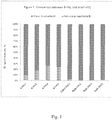
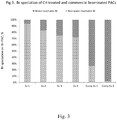
- this invention has enabled the formation of brominated carbonaceous sorbents in which the amount of water leachable bromine species decreased from 70% to less than 10%.
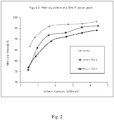
- the mercury capture performance of such treated NWL brominated powdered activated carbon sorbents is similar to that of brominated powdered activated carbon sorbent which has not been subjected to such treatment (i.e., commercial B-PAC).
- the treatment with the olefinic treating agent itself in experimental work conducted to date has had no significant adverse effect on the mercury sequestration effectiveness resulting from the bromination.
- each of the terms "sequestration, sequestering, and sequestered” and also the term “capture” means or refers to removal.
- a brominated carbonaceous sorbent composition having increased resistance to water leaching when exposed to water, water Solutions, and/or water suspensions during handling or use, wherein said sorbent has been formed by the method for increasing the resistance of a brominated carbonaceous sorbent to water leaching of bromine species described above.
- Such contacting is conducted using an amount of olefinic treating agent sufficient to increase the resistance of the brominated sorbent to water leaching of bromine species.
- Bromination is preferably gas-phase bromination.
- Still another embodiment of this invention is a method for removing mercury and/or mercury-containing compounds and/or species from a gaseous stream, and/or for removing one or more other heavy metals or other contaminants from a gaseous stream and/or a scrubber, the method comprising the steps of:
- a method for manufacturing a brominated carbonaceous sorbent having increased resistance to water leaching of bromine species comprises contacting a carbonaceous substrate with a bromine-containing compound in gas or liquid form for a sufficient time to increase the ability of the carbonaceous substrate to adsorb mercury and/or mercury-containing compounds and/or species, and contacting said carbonaceous substrate with an olefinic treating agent in an amount sufficient to increase the resistance of the brominated sorbent to loss of bromine species due to water leaching.
- the method comprises contacting a brominated carbonaceous sorbent with at least one olefinic treating agent.
- the total amount of bromine-containing compound and/or of olefinic treating agent fed should be sufficient to achieve a suitable target quantity that provides the functions for which they are being used. That is, the targeted total amount of bromine-containing compound to be fed should be at least sufficient to improve the mercury removal effectiveness of the resultant brominated and olefin treated carbonaceous substrate. Similarly, the total amount of the olefinic treating agent to be fed should be at least sufficient to improve the resistance of the brominated and olefin treated carbonaceous substrate to water leaching of bromine species.
- the rate of the respective feeds of bromine-containing compound and of the olefinic treating agent should be controlled so that the respective times of feeding are of sufficient duration to provide suitable targeted amounts of the respective substances within a suitable period of time.
- the higher the rate of a feed the shorter the time of the feed, and conversely, the lower the rate of a feed, the longer the time of the feed.
- organic compound that contains one or more olefinic double bonds in the molecule is often referred to hereinafter as the "olefinic treating agent", whether or not this term is further modified with “of this invention”.
- olefinic treating agent whether or not so modified refers to a case where only a single organic compound that contains one or more olefinic double bonds in the molecule is being referred to and also to a case where a mixture (plurality) of organic compounds that contain one or more olefinic double bonds in the molecule is being referred to.
- brominated sorbent and “brominated sorbents” as used throughout this document refer to the brominated carbonaceous sorbents of this invention, unless otherwise noted.
- the carbonaceous substrate is a carbon-based adsorbent.
- This invention is deemed applicable to most, if not all, carbon-based adsorbent compositions produced from different feedstocks, although some differences in effectiveness are to be expected.
- the suitability of such a substrate can be determined by the simple expediency of performing a few laboratory experiments of water extractability of such compositions using techniques as those referred to hereinafter or elsewhere in the prior art.
- Suitable carbonaceous substrates include activated carbon, activated charcoal, activated coke, carbon black, char, unburned or partially-burned carbon from a combustion process, and the like. Mixtures of carbonaceous substrates can be employed.
- a preferred carbonaceous substrate is activated carbon, more preferably powdered activated carbon (PAC). It is sometimes preferred that the powdered activated carbon is produced from coconut shells, wood, brown coal, lignite, anthracite, subbituminous coal, and/or bituminous coal. Still other sources for the PAC may prove useful.
- Suitable powdered activated carbon substrates are the following:
- PACs can be enhanced pursuant to this invention by use of the combination of (i) bromination with bromine, and especially by gas-phase bromination, and (ii) treatment with an olefinic treating agent with the bromination occurring before, during, and/or after the treatment with the olefinic treating agent.
- the degree of enhancement from carbonaceous substrate to carbonaceous substrate will probably differ because of differences in the make-up, properties, and characteristics of the different carbonaceous substrates.
- the olefinic treating agent is at least one organic compound containing at least one olefinic double bond.
- olefinic treating agents there are five basic types of olefinic treating agents that are recommended for use in the practice of this invention. These are as follows:
- Non-limiting illustrative examples of the above Type 1) organic compounds include such linear aliphatic monounsaturated compounds as 1-pentene; 2-pentene; a mixture of 1-pentene and 2-pentene; 1-hexene; 2-hexene; 3-hexene; a mixture any two of or all three of 1-hexene, 2-hexene, and 3-hexene; 1-heptene; 2-heptene; 3-heptene; a mixture any two of or all three of 1-heptene, 2-heptene, and 3-heptene; one or more liquid octene isomers such as 1-octene; one or more liquid nonene isomers such as 1-nonene; one or more liquid decene isomers such as 1-decene; and mixtures of any two or more of the foregoing linear aliphatic compounds such as a mixture of pentene and hexene isomers, a mixture of hexene and
- Non-limiting illustrative examples of the above Type 1) organic compounds further include such remotely branched open chain aliphatic compounds non-limiting examples of which include 3-3-dimethyl-1-pentene; 3-methyl-1-pentene; 4-methyl-1-pentene; 4-methyl-1-hexene; 5-methyl-1-hexene; 5-methyl-2-hexene; and mixtures of two or more of the foregoing remotely branched open chain monounsaturated aliphatic compounds.
- cyclic monoolefins non-limiting examples of which include cyclopentene; cyclohexene; cycloheptene; and mixtures of any two or all three of cyclopentene, cyclohexene, and cycloheptene. Additionally, mixtures composed of one or more open chain monoolefins with one or more cyclic monoolefins satisfying the formula of above Type 1) organic compounds may be used, if desired.
- Type 2) compounds are similar to Type 1) compounds except that one of the carbon atoms of the double bond is substituted by a C 1-3 alkyl group.
- a few non-limiting illustrative examples of such Type 2) compounds include 2-methyl-1-pentene; 2-ethyl-1-pentene; 2,3-dimethyl-1-pentene; 2,4-dimethyl-1-pentene; 2-methyl-2-pentene; 2,3-dimethyl-2-pentene; 3,4-dimethyl-2-pentene.
- Non-limiting illustrative examples of the above Type 3) diene-containing organic compounds include 1,3-pentadiene (a representative conjugated liquid diene) and 1,4-pentadiene (a representative non-conjugated liquid diene).
- Non-limiting illustrative examples of the above Type 4) diene-containing cycloaliphatic organic compounds that contain a conjugated pair of double bonds in an otherwise saturated aliphatic 5-membered ring or a conjugated or non-conjugated pair of double bonds in an otherwise saturated aliphatic 6 to 10-membered ring system include 1,3-cyclopentadiene, cyclopentadiene dimer, 1,3-cyclohexadiene, and 1,4-cyclohexadiene.
- Non-limiting illustrative examples of the above Type 5) organic compounds include styrene, at least one C 1-4 -monoalkyl-ring-substituted styrene, divinylbenzene, or a mixture of divinylbenzene and ethylvinylbenzene isomers.
- One such mixture which is available from Sigma-Aldrich is comprised of 55% of a mixture of divinylbenzene isomers (CAS® No. 1321-74-0) with the remainder being mainly 3-and 4-ethylvinylbenzene.
- One or more compounds of Type 1) through Type 5) may contain functional substituents which do not interfere with their performance pursuant to this invention. Ether functionality (-O-) serves as a typical example. Taking into consideration costs and availability, hydrocarbon compounds of Type 1) through Type 5) are usually preferred.
- the olefinic treating agent can be used in liquid form or gaseous form; liquid form is preferred.
- Amounts of the olefinic treating agent relative to the total weight of the brominated carbonaceous sorbent are typically in the range of 0.5 wt% to 20 wt%, more preferably in the range of 1 wt% to 15 wt%, still more preferably in the range of 1.5 wt% to 10 wt%, and even more preferably 2.5 wt% to 7.5 wt% relative to the total weight of the brominated carbonaceous sorbent.
- all of the olefinic treating agent is incorporated into the brominated carbonaceous sorbent.
- liquid and gaseous is meant that the compound is in the liquid state and/or the gaseous state at the temperature to which the compound is being exposed under actual service conditions.
- the compound may be a solid at room temperature, provided that it is in the liquid state and/or gaseous state under temperatures encountered during the actual service or use conditions.
- One factor that may affect the reaction conditions selected is the flash point of the olefinic treating agent.
- the bromine-containing compound is elemental bromine (Br 2 ) and/or hydrogen bromide (HBr), which are usually used in gaseous form or liquid form. Elemental bromine and/or hydrogen bromide are normally and preferably used in gaseous form. Elemental bromine is a preferred bromine-containing compound. Typically elemental bromine, especially when used in gaseous form, is the preferred source of bromine for use in practicing the various embodiments of this invention. As noted in U.S. Pat. No. 6,953,494 , gaseous hydrogen bromide may be used. Similarly, mixtures of gaseous bromine and gaseous hydrogen bromide may be used.
- the sorbent has a content in the range of 0.1 to 20 wt.% bromine, based on the weight of the brominated carbonaceous sorbent after contact with the bromine-containing compound (bromination).
- the brominated sorbent has 0.5 wt% to 15 wt% bromine, more preferably 2 wt% to 12 wt% bromine based on the weight of the brominated sorbent.
- All of the bromine from the bromine-containing compound is usually incorporated into the brominated sorbent.
- Preferred brominated carbonaceous sorbents are brominated powdered activated carbons, especially those having 2 wt% to 12 wt% bromine; such sorbents are available commercially from Albemarle Corporation as B-PAC, C-PAC, and H-PAC.
- the bromination is typically a gas-phase bromination conducted at elevated temperatures by both batch and in-flight methods.
- the bromine should be heated and maintained above 60°C. Temperatures in the range of 60°C up to 140°C are typical for use in the gas-phase bromination of the powdered activated carbon sorbent for mercury with gaseous elemental bromine.
- Treatment with gaseous bromine is advantageous because, in the gaseous state, the bromine more uniformly contacts the powdered activated carbon sorbent and in use in mercury-containing gaseous streams interacts readily with the mercury impurities normally present therein.
- a preferred method of converting the liquid bromine to a bromine-containing gas is to use a heated lance.
- Liquid bromine can be metered into such a heated-lance system at one end and be distributed as a gas to the substrate materials at the other end. See in this connection U.S. Pat. No. 6,953,494 , for a further detailed description of gas-phase bromination.
- this invention involves separate feeding of a bromine-containing compound in liquid or gaseous form, and of an olefinic treating agent of this invention.
- the minimum number of separate feeds therefore, is two, one feed therefore providing a sufficient amount of the bromine-containing compound, and the other feed providing a sufficient amount of the olefinic treating agent of this invention.
- the desired total quantities of the bromine-containing compound and of the olefinic treating agent of this invention can be achieved through multiple feeds of either or both of these materials.
- this invention is not limited to any particular number of the respective feeds provided that the respective feeds provide in the finished product or resultant product quantities of the materials fed that are sufficient to provide the advantages of this invention, namely improved mercury removal effectiveness of the sorbent for mercury because of the bromination and increased resistance to water leaching of bromine species because of the treatment with an olefinic treating agent of this invention.
- Bromination of the carbonaceous substrate can be carried out before, during, and/or after the treatment with the olefinic treating agent.
- bromination is conducted before or after the treatment with an olefinic treating agent; more preferably, bromination is conducted after the treatment with an olefinic treating agent.
- PAC3 sorbent and B-PAC3 sorbent two commercially available products produced by Albemarle Corporation were used in these experiments.
- PAC3 sorbent is comprised of unbrominated powdered activated carbon
- B-PAC3 sorbent is comprised of a brominated powdered activated carbon produced via gas-phase bromination with bromine by Albemarle Corporation. Samples of both products were separately pre-dried in an oven at 130°C for 2 hours.
- An olefinic treating agent of this invention cyclohexene
- cyclohexene was transferred to two 3 mL vials, each of which was then placed individually in the bottom center of a glass bottle that contained a sample of pre-dried PAC3 sorbent or B-PAC3 sorbent, The sample bottles were then capped tightly and placed in an oven maintained at 80°C. The sample bottles were agitated after all the liquid cyclohexene had vaporized and then the samples were allowed to cool down to room temperature. Examples 1 and 2 consisted of PAC3 treated with cyclohexene and then brominated with gas-phase bromine.
- Examples 3 and 4 consisted of samples of PAC3 sorbent which had previously been subjected to gas-phase bromination with bromine and which were then individually treated in a bottle with a targeted quantity of cyclohexene.
- the gas-phase bromination followed the procedure disclosed in U.S. Pat. No. 6,953,494 .
- the targeted values of cyclohexene for these four samples was 3 or 6 wt.% of cyclohexene on the finished sorbent.
- the total actual bromine content of Examples 1, 2, 3, and 4 was 5.32, 5,85, 6.62, and 6.86 wt.% of sorbent, respectively.
- the cyclohexene-treated samples were extracted with water following a standard solvent extraction method.
- the non-water-leachable (NWL) bromine species of cyclohexene-treated B-PAC3 increased significantly.
- the results of these experiments can be seen in Table 1 and are represented in the bar chart in Figure 3 .
- the mercury sequestration performance of cyclohexene-treated B-PAC3 was comparable to that of the commercially available B-PAC3 ( Figure 4 ).
- the treatment with the cyclohexene olefinic treating agent had no significant adverse effect on the performance of the cyclohexene-treated B-PAC3.
- the mercury adsorption efficiency of these samples was slightly lower. It should be noted that the kinetics of mercury adsorption by the cyclohexene-treated samples was somewhat slower.
- these brominated sorbents of the invention are injected into a gaseous stream upstream of the scrubber device, and at least a portion of the brominated sorbent will circulate in the system numerous times.
- the brominated sorbents When injected into a gaseous stream, the brominated sorbents are typically injected at a rate of about 0.5 to about 15 lb/MMacf (8x10 -6 to 240x10 -6 kg/m 3 ), Preferred injection rates are about 1 to about 10 lb/MMacf (16x10 -6 to 160x10 -6 kg/m 3 ); more preferred are injection rates of about 2 to about 5 lb/MMacf (32x10 -6 to 80x10 -6 kg/m 3 ), though it is understood that the preferred injection rate varies with the kinetics of reaction for mercury species with the sorbent, the mercury capacity of the sorbent, the relevant mercury emission limit, and the particular system configuration.
- the brominated sorbents will be in cyclical short-term (as in CDS case) and long-term (as in SDA case) contact with water. Since their bromine content is not leachable, these sorbents maintain their high mercury capture capabilities throughout their application (bromine is the active species for mercury removal or capture). In fully-wet SO 2 scrubbers, the brominated sorbents are either injected into the gaseous stream upstream of the wet scrubber or directly into the liquid of the scrubber.
- gaseous stream refers to a quantity of gas that is moving in a direction.
- gaseous streams include combustion gas and flue gas, both of which often contain mercury species and/or other contaminants.
- non-water-leachable brominated sorbents of this invention may be useful to remove contaminants other than or in addition to mercury, such as other heavy metals.
- the NWL brominated carbonaceous sorbents of this invention will typically be exposed to temperatures of less than 300°F ( ca. 149°C).
- the NWL brominated carbonaceous sorbents are deemed thermally stable under these temperature conditions.
- the sorbent particles are carried by the gas stream to a particulate collection device, where the sorbent particles are collected.
- Typical particulate collection devices include electrostatic precipitators (ESP) and fabric filters (baghouse filters). For use in semi-dry, high moisture, and wet applications, fabric filters are a preferred collection device.
- adsorbent for mercury As used in connection with the methods and/or compositions of this invention, where such use occurs anywhere herein including the claims, the terms "adsorbent for mercury”, “sorbent for mercury”, “mercury adsorbent”, and “mercury sorbent” mean the same thing. These are simply different modes of expression for the same thing.
- the invention may comprise, consist, or consist essentially of the materials and/or procedures recited herein.
Landscapes
- Chemical & Material Sciences (AREA)
- Analytical Chemistry (AREA)
- Chemical Kinetics & Catalysis (AREA)
- Organic Chemistry (AREA)
- Engineering & Computer Science (AREA)
- Inorganic Chemistry (AREA)
- General Chemical & Material Sciences (AREA)
- Oil, Petroleum & Natural Gas (AREA)
- Health & Medical Sciences (AREA)
- Biomedical Technology (AREA)
- Environmental & Geological Engineering (AREA)
- Solid-Sorbent Or Filter-Aiding Compositions (AREA)
- Treating Waste Gases (AREA)
- Gas Separation By Absorption (AREA)
- Organic Low-Molecular-Weight Compounds And Preparation Thereof (AREA)
Claims (17)
- Verfahren zur Erhöhung des Widerstandes eines bromierten, kohlenstoffhaltigen Sorbens gegen Auslaugen von Bromspezies durch Wasser, bei dem das Verfahren In-Kontakt-Bringen eines kohlenstoffhaltigen Substrats mit mindestens einer organischen Verbindung in flüssiger oder gasförmiger Form, die mindestens eine olefinische Doppelbindung enthält, umfasst, wobei Bromierung des kohlenstoffhaltigen Substrats unter Verwendung einer bromhaltigen Verbindung vor, während und/oder nach der Behandlung mit der organischen Verbindung durchgeführt wird, wobei die organische Verbindung, die mindestens eine olefinische Doppelbindung enthält, in einer Menge von 0,5 Gew.-% bis 20 Gew.-% relativ zu dem Gesamtgewicht des bromierten, kohlenstoffhaltigen Sorbens vorliegt und wobei das Sorbens einen Gehalt im Bereich von von 0,1 bis 20 Gew.-% Brom aufweist, bezogen auf das Gewicht des bromierten, kohlenstoffhaltigen Sorbens nach dem Kontakt mit der bromhaltigen Verbindung.
- Verfahren nach Anspruch 1, bei dem die Bromierung mit gasförmigem, elementarem Brom durchgeführt wird.
- Verfahren nach Anspruch 2, bei dem die Bromierung nur vor der Behandlung mit der organischen Verbindung, nur während der Behandlung mit der organischen Verbindung oder nur nach der Behandlung mit der organischen Verbindung durchgeführt wird.
- Verfahren nach Anspruch 3, bei dem die organische Verbindung in flüssiger Form vorliegt.
- Verfahren nach einem der Ansprüche 1 bis 4, bei dem das kohlenstoffhaltige Substrat gepulverter, aktivierter Kohlenstoff ist.
- Verfahren nach einem der Ansprüche 1 bis 5, bei dem die organische Verbindung, die mindestens eine olefinische Doppelbindung enthält,1) eine organische aliphatische oder cycloaliphatische Verbindung ist, die einen aliphatischen oder cycloaliphatischen Anteil enthält, der eine einzelne olefinische Doppelbindung enthält, wobei der Anteil durch die Formel
-CH=CH-
dargestellt ist, oder eine Mischung von zwei oder mehr solcher Verbindungen ist, oder2) eine organische aliphatische oder cycloaliphatische Verbindung ist, die einen aliphatischen oder cycloaliphatischen Anteil enthält, der eine einzelne olefinische Doppelbindung enthält, wobei der Anteil durch die Formel
-CR1=CR2-
dargestellt ist, in der R1 eine C1-3-Alkylgruppe ist und R2 unabhängig eine C1-3-Alkylgruppe oder eine Wasserstoffatom ist, oder eine Mischung von zwei oder mehr solcher Verbindungen ist, oder3) eine nicht-cyclische aliphatische organische Verbindung ist, die ein konjugiertes oder nicht-konjugiertes Paar von Doppelbindungen enthält und die durch die Formel
R1CH2=CH-(R3)n-CH=CHR2
dargestellt ist, in der R1 ein Wasserstoffatom oder eine Alkylgruppe ist, die im Bereich von 1 bis 4 Kohlenstoffatome enthält, R2 unabhängig eine Wasserstoffatom oder eine Alkylgruppe ist, die im Bereich von 2 bis 4 Kohlenstoffatome enthält, und R3 eine Alkylengruppe ist, die im Bereich von 1 bis 4 Kohlenstoffatome enthält, und n entweder 0 oder 1 ist, oder eine Mischung von zwei oder mehr solcher Verbindungen ist, oder4) eine cycloaliphatische organische Verbindung ist, die ein konjugiertes Paar von Doppelbindungen in einem ansonsten gesättigten, aliphatischen 5-gliedrigen Ring enthält oder ein konjugiertes oder nicht-konjugiertes Paar von Doppelbindungen in einem ansonsten gesättigten, aliphatischen 6- bis 10-gliedrigen Ringsystem enthält, oder eine Mischung von zwei oder mehr solcher Verbindungen ist, oder5) eine organische Verbindung ist, die einen oder zwei Vinylsubstituenten direkt gebunden an ein aromatisches Ringsystem enthält, oder eine Mischung von zwei oder mehr solcher Verbindungen ist. - Verfahren nach Anspruch 6, bei dem das aromatische Ringsystem der organischen Verbindung von 5), die einen oder zwei Vinylsubstituenten direkt gebunden an ein aromatisches Ringsystem enthält, ein substituierter oder unsubstituierter Benzolring ist.
- Verfahren nach Anspruch 6, bei dem die organische Verbindung, die mindestens eine olefinische Doppelbindung enthält, eine organische aliphatische oder cycloaliphatische Verbindung ist, die einen aliphatischen oder cycloaliphatischen Anteil enthält, der eine einzelne olefinische Doppelbindung enthält, wobei der Anteil durch die Formel
-CH=CH-
dargestellt ist, oder eine Mischung von zwei oder mehr solcher Verbindungen ist. - Verfahren nach Anspruch 8, bei dem die organische Verbindung, die mindestens eine olefinische Doppelbindung enthält, Cyclohexen ist.
- Verfahren nach einem der Ansprüche 1 bis 9, bei dem die organische Verbindung, die mindestens eine olefinische Doppelbindung enthält, in einer Menge im Bereich von 1 Gew.-% bis 15 Gew.-% relativ zu dem Gesamtgewicht des bromierten, kohlenstoffhaltigen Sorbens vorliegt, oder bei dem das Sorbens einen Gehalt von 0,5 bis 15 Gew.-% Brom aufweist, bezogen auf das Gewicht des bromierten, kohlenstoffhaltigen Sorbens nach dem Kontakt mit der bromhaltigen Verbindung.
- Bromiertes, kohlenstoffhaltiges Sorbens mit einem erhöhten Widerstand gegen Auslaugen mit Wasser, wenn es Wasser, Wasserlösungen und/oder Wassersuspensionen während der Handhabung oder des Gebrauchs ausgesetzt ist, wobei des Sorbens durch das Verfahren zur Erhöhung des Widerstands von bromiertem, kohlenstoffhaltigem Sorbens gegen Auslagen von Bromspezies durch Wasser gemäß einem der Ansprüche 1 bis 3 gebildet worden ist.
- Sorbens nach Anspruch 11, bei dem die organische Verbindung, die mindestens eine olefinische Doppelbindung enthält,1) eine organische aliphatische oder cycloaliphatische Verbindung ist, die einen aliphatischen oder cycloaliphatischen Anteil enthält, der eine einzelne olefinische Doppelbindung enthält, wobei der Anteil durch die Formel
-CH=CH-
dargestellt ist, oder eine Mischung von zwei oder mehr solcher Verbindungen ist, oder2) eine organische aliphatische oder cycloaliphatische Verbindung ist, die einen aliphatischen oder cycloaliphatischen Anteil enthält, der eine einzelne olefinische Doppelbindung enthält, wobei der Anteil durch die Formel
-CR1=CR2-
dargestellt ist, in der R1 eine C1-3-Alkylgruppe ist und R2 unabhängig eine C1-3-Alkylgruppe oder eine Wasserstoffatom ist, oder eine Mischung von zwei oder mehr solcher Verbindungen ist, oder3) eine nicht-cyclische aliphatische organische Verbindung ist, die ein konjugiertes oder nicht-konjugiertes Paar von Doppelbindungen enthält und die durch die Formel
R1CH2=CH-(R3)n-CH=CHR2
dargestellt ist, in der R1 ein Wasserstoffatom oder eine Alkylgruppe ist, die im Bereich von 1 bis 4 Kohlenstoffatome enthält, R2 unabhängig eine Wasserstoffatom oder eine Alkylgruppe ist, die im Bereich von 2 bis 4 Kohlenstoffatome enthält, und R3 eine Alkylengruppe ist, die im Bereich von 1 bis 4 Kohlenstoffatome enthält, und n entweder 0 oder 1 ist, oder eine Mischung von zwei oder mehr solcher Verbindungen ist, oder4) eine cycloaliphatische organische Verbindung ist, die ein konjugiertes Paar von Doppelbindungen in einem ansonsten gesättigten, aliphatischen 5-gliedrigen Ring enthält oder ein konjugiertes oder nicht-konjugiertes Paar von Doppelbindungen in einem ansonsten gesättigten, aliphatischen 6- bis 10-gliedrigen Ringsystem enthält, oder eine Mischung von zwei oder mehr solcher Verbindungen ist, oder5) eine organische Verbindung ist, die einen oder zwei Vinylsubstituenten direkt gebunden an ein aromatisches Ringsystem enthält, oder eine Mischung von zwei oder mehr solcher Verbindungen ist. - Sorbens nach Anspruch 12, bei dem das aromatische Ringsystem der organischen Verbindung von 5) ein substituierter oder unsubstituierter Benzolring ist.
- Sorbens nach Anspruch 12, bei dem die organische Verbindung, die mindestens eine olefinische Doppelbindung enthält, eine organische aliphatische oder cycloaliphatische Verbindung ist, die einen aliphatischen oder cycloaliphatischen Anteil enthält, der eine einzelne olefinische Doppelbindung enthält, wobei der Anteil durch die Formel
-CH=CH-
dargestellt ist, oder eine Mischung von zwei oder mehr solcher Verbindungen ist. - Sorbens nach Anspruch 14, bei dem die organische Verbindung, die mindestens eine olefinische Doppelbindung enthält, Cyclohexen ist.
- Sorbens nach einem der Ansprüche 11 bis 15, bei dem die organische Verbindung, die mindestens eine olefinische Doppelbindung enthält, in einer Menge im Bereich von 1 Gew.-% bis 15 Gew.-% relativ zu dem Gesamtgewicht des bromierten, kohlenstoffhaltigen Sorbens vorliegt oder bei dem das Sorbens einen Gehalt im Bereich von von 0,5 bis 15 Gew.-% Brom aufweist, bezogen auf das Gewicht des bromierten, kohlenstoffhaltigen Sorbens nach dem Kontakt mit der bromhaltigen Verbindung.
- Verfahren zur Entfernung von Quecksilber und/oder Quecksilber enthaltenden Verbindungen und/oder Spezies aus einem gasförmigen Strom und/oder zur Entfernung von einem oder mehreren anderen Schwermetallen oder anderen Verunreinigungen aus einem gasförmigen Strom und/oder einem Schrubber, wobei das Verfahren die Schritte umfasst:a-i) Einspritzen eines Sorbens wie definiert in Anspruch 11 in einen gasförmigen Strom, der Quecksilber und/oder ein oder mehrere andere Schwermetalle oder andere Verunreinigungen enthält, wodurch eine Menge des Sorbens in mindestens einem Teil des gasförmigen Strom weit verteilt wird in einer Menge, die ausreicht, um Quecksilber und/oder Quecksilber enthaltende Verbindungen und/oder ein oder mehrere andere Schwermetalle oder andere Verunreinigungen aus dem gasförmigen Strom zu adsorbieren, unda-ii)Sammeln und Entfernen des Sorbens aus dem so behandelten gasförmigen Strom, oderb) Einspritzen eines Sorbens mit einer Rate von 8 x 10⁻⁶ bis 240 x 10-6 kg/m3 in einen gasförmigen Strom stromaufwärts von der Schrubber-Vorrichtung, wobei die Schrubber-Vorrichtung ein Gaswäscher oder ein Schrubber mit hoher Feuchtigkeit ist, oderc) Einspritzen eines Sorbens mit einer Rate von 8 x 10⁻⁶ bis 240 x 10-6 kg/m3 in den gasförmigen Strom stromaufwärts von einem Nasswäscher oder direkt in eine Flüssigkeit eines Nasswäschers.
Priority Applications (1)
| Application Number | Priority Date | Filing Date | Title |
|---|---|---|---|
| PL14719991T PL2969183T3 (pl) | 2013-03-15 | 2014-03-14 | Sorbenty spalin, sposoby ich wytwarzania, oraz ich zastosowanie w usuwaniu rtęci ze strumieni gazowych |
Applications Claiming Priority (2)
| Application Number | Priority Date | Filing Date | Title |
|---|---|---|---|
| US201361794650P | 2013-03-15 | 2013-03-15 | |
| PCT/US2014/028795 WO2014144401A1 (en) | 2013-03-15 | 2014-03-14 | Flue gas sorbents, methods for their manufacture, and their use in removal of mercury from gaseous streams |
Publications (2)
| Publication Number | Publication Date |
|---|---|
| EP2969183A1 EP2969183A1 (de) | 2016-01-20 |
| EP2969183B1 true EP2969183B1 (de) | 2020-02-12 |
Family
ID=50588895
Family Applications (1)
| Application Number | Title | Priority Date | Filing Date |
|---|---|---|---|
| EP14719991.3A Active EP2969183B1 (de) | 2013-03-15 | 2014-03-14 | Rauchgassorptionsmittel, verfahren zu deren herstellung und deren verwendung zur entfernung von quecksilber aus gasströmen |
Country Status (11)
| Country | Link |
|---|---|
| US (1) | US9573115B2 (de) |
| EP (1) | EP2969183B1 (de) |
| JP (1) | JP6379174B2 (de) |
| KR (1) | KR102237849B1 (de) |
| CN (1) | CN105263615B (de) |
| AR (1) | AR095355A1 (de) |
| AU (1) | AU2014227592C1 (de) |
| PL (1) | PL2969183T3 (de) |
| RU (1) | RU2655329C2 (de) |
| TW (1) | TWI619550B (de) |
| WO (1) | WO2014144401A1 (de) |
Families Citing this family (2)
| Publication number | Priority date | Publication date | Assignee | Title |
|---|---|---|---|---|
| CN118988959A (zh) | 2018-05-04 | 2024-11-22 | 雅宝公司 | 降低环境污染物的环境有效性的工艺 |
| WO2021243210A1 (en) * | 2020-05-28 | 2021-12-02 | Albemarle Corporation | Method of reducing environmental methylmercury and limiting its uptake into plants and organisms |
Family Cites Families (49)
| Publication number | Priority date | Publication date | Assignee | Title |
|---|---|---|---|---|
| CA1242684A (en) | 1983-07-20 | 1988-10-04 | Hidefumi Hirai | Solid adsorbent for unsaturated hydrocarbon and process for separation of unsaturated hydrocarbon from gas mixture |
| JPS61242901A (ja) * | 1985-04-17 | 1986-10-29 | Toyo Soda Mfg Co Ltd | 臭素回収用吸着剤及び臭素回収方法 |
| US5158582A (en) | 1988-05-30 | 1992-10-27 | Hitachi Zosen Corporation | Method of removing NOx by adsorption, NOx adsorbent and apparatus for purifying NOx-containing gas |
| US5202301A (en) * | 1989-11-22 | 1993-04-13 | Calgon Carbon Corporation | Product/process/application for removal of mercury from liquid hydrocarbon |
| US5536302A (en) | 1994-03-23 | 1996-07-16 | Air Products And Chemicals, Inc. | Adsorbent for removal of trace oxygen from inert gases |
| JP3537581B2 (ja) * | 1996-03-04 | 2004-06-14 | クラレケミカル株式会社 | 水銀吸着剤 |
| US5859304A (en) | 1996-12-13 | 1999-01-12 | Stone & Webster Engineering Corp. | Chemical absorption process for recovering olefins from cracked gases |
| KR100279881B1 (ko) | 1998-06-29 | 2001-03-02 | 손재익 | 탄화수소혼합물로부터에틸렌및프로필렌,그리고불포화탄화수소분리용흡착제제조방법,그리고이흡착제를이용한분리방법 |
| US6297414B1 (en) | 1999-10-08 | 2001-10-02 | Stone & Webster Process Technology, Inc. | Deep selective hydrogenation process |
| JP4493824B2 (ja) | 2000-09-28 | 2010-06-30 | 日本パイオニクス株式会社 | 有害ガスの浄化方法及び浄化剤 |
| US6797038B2 (en) | 2001-11-23 | 2004-09-28 | Indian Petrochemicals Corporation Limited | Adsorbents, method for the manufacture thereof and process for the separation of unsaturated hydrocarbons from gas mixture |
| US7018434B2 (en) | 2002-04-18 | 2006-03-28 | Southwest Research Institute | Removal of drag reducer additive from fuel by treatment with selected activated carbons and graphites |
| ATE437246T1 (de) * | 2002-05-06 | 2009-08-15 | Sorbent Technologies Corporati | Verfahren zur entfernung von quecksilber aus verbrennungsgasen |
| US7435286B2 (en) | 2004-08-30 | 2008-10-14 | Energy & Environmental Research Center Foundation | Sorbents for the oxidation and removal of mercury |
| US8069797B2 (en) | 2003-06-03 | 2011-12-06 | Alstom Technology Ltd. | Control of mercury emissions from solid fuel combustion |
| US7264640B2 (en) | 2003-06-03 | 2007-09-04 | Southwest Research Institute | Method for improving the performance of engines powered by liquid hydrocarbon fuel |
| US7364599B2 (en) | 2003-06-03 | 2008-04-29 | Southwest Research Institute | Methods for increased removal of drag reducer additives from liquid hydrocarbon fuel |
| US7261747B2 (en) | 2004-03-08 | 2007-08-28 | Southwest Research Institute | Removal of drag reducer additive from liquid hydrocarbon fuel using attapulgus clay |
| JP2007530255A (ja) * | 2004-03-22 | 2007-11-01 | ザ・バブコック・アンド・ウイルコックス・カンパニー | 煙道ガスから水銀を除去するための収着剤の動的ハロゲン化 |
| RU2440179C2 (ru) * | 2005-03-17 | 2012-01-20 | НОКС II ИНТЕНЭШНЛ, эЛТиДи. | Способ уменьшения содержания серы и/или ртути в дымовых газах (варианты), композиция сорбента, способ сжигания угля с уменьшенным количеством выброса в окружающую среду вредных элементов (варианты), угольная зола, полученная вышеуказанными способами, и цемент, пуццолан, бетонная смесь и ее раствор, бетонная конструкция, способ получения цементирующей смеси, полученные на основе упомянутой золы или посредством нее |
| US20070234902A1 (en) | 2006-03-29 | 2007-10-11 | Fair David L | Method for mercury removal from flue gas streams |
| US8057576B1 (en) | 2008-06-10 | 2011-11-15 | Calgon Carbon Corporation | Enhanced adsorbents and methods for mercury removal |
| US20070265161A1 (en) | 2006-05-11 | 2007-11-15 | Gadkaree Kishor P | Activated carbon honeycomb catalyst beds and methods for the manufacture of same |
| JP5553966B2 (ja) * | 2008-03-19 | 2014-07-23 | 千代田化工建設株式会社 | 水銀吸着材およびその吸着材を用いた排煙処理方法 |
| US7767007B2 (en) | 2006-12-08 | 2010-08-03 | Praxair Technology, Inc. | Mercury adsorbents compatible as cement additives |
| MXPA06015023A (es) | 2006-12-19 | 2008-10-09 | Mexicano Inst Petrol | Aplicacion de material adsorbente microporoso de carbon, para reducir el contenido de benceno de corrientes de hidrocarburos. |
| US8080088B1 (en) | 2007-03-05 | 2011-12-20 | Srivats Srinivasachar | Flue gas mercury control |
| US8906823B2 (en) * | 2007-09-24 | 2014-12-09 | Basf Corporation | Pollutant emission control sorbents and methods of manufacture and use |
| US7766997B2 (en) | 2007-12-21 | 2010-08-03 | Alstom Technology Ltd | Method of reducing an amount of mercury in a flue gas |
| US7833315B2 (en) | 2008-02-26 | 2010-11-16 | General Electric Company | Method and system for reducing mercury emissions in flue gas |
| US7854789B1 (en) | 2008-03-31 | 2010-12-21 | Ash Grove Cement Company | System and process for controlling pollutant emissions in a cement production facility |
| US7887618B2 (en) | 2008-04-15 | 2011-02-15 | Albemarle Corporation | Methods and sorbents for utilizing a hot-side electrostatic precipitator for removal of mercury from combustion gases |
| US8277542B2 (en) | 2008-07-23 | 2012-10-02 | Srivats Srinivasachar | Method for capturing mercury from flue gas |
| JP2010023004A (ja) * | 2008-07-24 | 2010-02-04 | Babcock Hitachi Kk | 排ガス処理装置 |
| JP2012503546A (ja) * | 2008-09-24 | 2012-02-09 | アルベマール・コーポレーシヨン | 燃焼ガス流からの水銀放出を削減するための吸着剤組成物およびプロセス |
| JP2012503545A (ja) | 2008-09-24 | 2012-02-09 | アルベマール・コーポレーシヨン | 燃料の燃焼中に生成された放出物から水銀を除去するための塩化臭素組成物 |
| CA2658469C (en) | 2008-10-03 | 2012-08-14 | Rajender P. Gupta | Bromination process |
| JP2010202461A (ja) | 2009-03-04 | 2010-09-16 | Shinshu Univ | 有機化合物の吸脱着能に優れた活性炭、該活性炭の製造方法、有機化合物の吸脱着装置並びに吸脱着方法 |
| RU2400456C1 (ru) * | 2009-04-13 | 2010-09-27 | Учреждение Российской академии наук Институт органической и физической химии им А.Е. Арбузова Казанского научного центра Российской академии наук (ИОФХ им. А.Е. Арбузова КазНЦ РАН) | Гидрофобизатор строительных материалов на основе длинноцепных олефинов |
| PL2482970T3 (pl) | 2009-09-28 | 2019-01-31 | Calgon Carbon Corporation | Formulacja sorbentu do usuwania rtęci z gazów spalinowych |
| DE102009057432A1 (de) | 2009-12-09 | 2011-06-16 | Rheinbraun Brennstoff Gmbh | Verfahren zur Abscheidung von Quecksilber aus Rauchgasen von Hochtemperaturanlagen |
| BR112012028100A2 (pt) * | 2010-05-04 | 2016-08-23 | Albemarle Corp | redução de emissões de mercúrio de fábricas de cimento |
| TWI549737B (zh) | 2010-08-26 | 2016-09-21 | 片片堅俄亥俄州工業公司 | 過濾介質及其應用 |
| WO2012030559A1 (en) | 2010-08-30 | 2012-03-08 | Albemarle Corporation | Improved brominated sorbents for removing mercury from emissions produced during fuel combustion |
| US20130272936A1 (en) * | 2010-11-22 | 2013-10-17 | Christopher J. Nalepa | Brominated Inorganic Sorbents For Reduction of Mercury Emissions |
| KR20140009252A (ko) | 2010-12-17 | 2014-01-22 | 알베마를 코포레이션 | 시멘트 플랜트로부터 수은 방출의 감소 |
| JP2012206016A (ja) * | 2011-03-29 | 2012-10-25 | Mitsubishi Heavy Ind Ltd | 排ガス処理装置及び処理方法、石炭改質プロセス設備 |
| DE102011103829A1 (de) | 2011-06-01 | 2012-12-06 | Rheinbraun Brennstoff Gmbh | Verfahren zur Abscheidung von Quecksilber aus Rauchgasen von Hochtemperaturanlagen |
| US8551431B1 (en) | 2013-01-28 | 2013-10-08 | Cabot Corporation | Mercury removal from flue gas streams using treated sorbents |
-
2014
- 2014-03-10 TW TW103108065A patent/TWI619550B/zh active
- 2014-03-14 RU RU2015144058A patent/RU2655329C2/ru active
- 2014-03-14 JP JP2016502900A patent/JP6379174B2/ja active Active
- 2014-03-14 WO PCT/US2014/028795 patent/WO2014144401A1/en not_active Ceased
- 2014-03-14 EP EP14719991.3A patent/EP2969183B1/de active Active
- 2014-03-14 KR KR1020157020170A patent/KR102237849B1/ko active Active
- 2014-03-14 CN CN201480013268.7A patent/CN105263615B/zh active Active
- 2014-03-14 AR ARP140101059A patent/AR095355A1/es unknown
- 2014-03-14 US US14/770,671 patent/US9573115B2/en active Active
- 2014-03-14 AU AU2014227592A patent/AU2014227592C1/en active Active
- 2014-03-14 PL PL14719991T patent/PL2969183T3/pl unknown
Non-Patent Citations (1)
| Title |
|---|
| None * |
Also Published As
| Publication number | Publication date |
|---|---|
| KR102237849B1 (ko) | 2021-04-07 |
| AU2014227592A1 (en) | 2015-07-16 |
| AU2014227592C1 (en) | 2018-01-18 |
| US20160001261A1 (en) | 2016-01-07 |
| US9573115B2 (en) | 2017-02-21 |
| AR095355A1 (es) | 2015-10-07 |
| TWI619550B (zh) | 2018-04-01 |
| RU2015144058A (ru) | 2017-04-24 |
| TW201500109A (zh) | 2015-01-01 |
| CN105263615A (zh) | 2016-01-20 |
| EP2969183A1 (de) | 2016-01-20 |
| KR20150128657A (ko) | 2015-11-18 |
| JP6379174B2 (ja) | 2018-08-22 |
| AU2014227592B2 (en) | 2017-06-15 |
| CN105263615B (zh) | 2018-08-03 |
| PL2969183T3 (pl) | 2020-07-13 |
| RU2655329C2 (ru) | 2018-05-25 |
| JP2016513586A (ja) | 2016-05-16 |
| WO2014144401A1 (en) | 2014-09-18 |
Similar Documents
| Publication | Publication Date | Title |
|---|---|---|
| US9108186B2 (en) | Phosphoric acid treatment of carbonaceous material prior to activation | |
| AU2016205029B2 (en) | Carbon sorbents for the removal of nitrogen oxides and methods for making the same | |
| RU2002135590A (ru) | Способ и сорбенты для удаления серы | |
| CA2904039A1 (en) | Activated carbon sorbent including nitrogen and methods of using the same | |
| Kumar et al. | Removal of atrazine, metribuzin, metolachlor and alachlor by granular carbon | |
| KR102348345B1 (ko) | 산 가스의 개선된 흡착 | |
| EP2969183B1 (de) | Rauchgassorptionsmittel, verfahren zu deren herstellung und deren verwendung zur entfernung von quecksilber aus gasströmen | |
| CA2921527C (en) | Method of rejuvenating biomass conversion catalyst | |
| KR20170096895A (ko) | 바이오차를 이용한 염색폐수의 정화방법 | |
| KR102219716B1 (ko) | 수은 방출 제어를 위하여 습식 스크러버를 공급하는 덕트배관 내 수착제의 주입 | |
| WO2016031474A1 (ja) | 吸着剤 | |
| US6752919B2 (en) | Promoted absorbents for the removal of contaminants | |
| Hilal et al. | Removal of acid dye (AR37) by adsorption onto potatoes and egg husk: a comparative study | |
| KR101164666B1 (ko) | Fcc 공정 중 c4 유분에 존재하는 황 화합물 및 질소 화합물 동시 제거를 위한 흡착제 및 이의 제조 방법 | |
| WO2010074894A3 (en) | Adsorption of dibenzothiophenes from hydrocarbon and model diesel feeds | |
| DE102020117667B4 (de) | Ein Herstellungsverfahren eines imprägnierten Sorbens zum Oxidieren und Sorbieren von Quecksilber | |
| Reddy et al. | Removal of manganese by using activated carbon as biosorbent | |
| Baker | Evaluation of Jordanian treated natural zeolite for the uptake of p-nitrophenol from wastewater by continuous column method | |
| Businova et al. | Adsorption studies of methyl blue and Cu2+ ions on lignite pellets | |
| TH83746A (th) | กระบวนการดูดซับที่มีการนำเอาสิ่งดูดซับในสายออก | |
| Reyes et al. | Sorption and Desorption of Chromium (III) from Aqueous Solution by Agro-Waste Materials | |
| PL130756B1 (en) | Method of modification of surface properties of mineral-carbon adsorbents produced by thermal decomposition of methylene chloride |
Legal Events
| Date | Code | Title | Description |
|---|---|---|---|
| PUAI | Public reference made under article 153(3) epc to a published international application that has entered the european phase |
Free format text: ORIGINAL CODE: 0009012 |
|
| 17P | Request for examination filed |
Effective date: 20150707 |
|
| AK | Designated contracting states |
Kind code of ref document: A1 Designated state(s): AL AT BE BG CH CY CZ DE DK EE ES FI FR GB GR HR HU IE IS IT LI LT LU LV MC MK MT NL NO PL PT RO RS SE SI SK SM TR |
|
| AX | Request for extension of the european patent |
Extension state: BA ME |
|
| DAX | Request for extension of the european patent (deleted) | ||
| STAA | Information on the status of an ep patent application or granted ep patent |
Free format text: STATUS: EXAMINATION IS IN PROGRESS |
|
| 17Q | First examination report despatched |
Effective date: 20161024 |
|
| GRAP | Despatch of communication of intention to grant a patent |
Free format text: ORIGINAL CODE: EPIDOSNIGR1 |
|
| STAA | Information on the status of an ep patent application or granted ep patent |
Free format text: STATUS: GRANT OF PATENT IS INTENDED |
|
| RIC1 | Information provided on ipc code assigned before grant |
Ipc: B01J 20/20 20060101AFI20190905BHEP Ipc: B01D 53/02 20060101ALI20190905BHEP Ipc: B01J 20/22 20060101ALI20190905BHEP Ipc: B01D 53/64 20060101ALI20190905BHEP Ipc: B01J 20/30 20060101ALI20190905BHEP Ipc: B01D 53/50 20060101ALI20190905BHEP Ipc: B01J 20/02 20060101ALI20190905BHEP Ipc: B01J 20/32 20060101ALI20190905BHEP |
|
| INTG | Intention to grant announced |
Effective date: 20190918 |
|
| GRAS | Grant fee paid |
Free format text: ORIGINAL CODE: EPIDOSNIGR3 |
|
| GRAA | (expected) grant |
Free format text: ORIGINAL CODE: 0009210 |
|
| STAA | Information on the status of an ep patent application or granted ep patent |
Free format text: STATUS: THE PATENT HAS BEEN GRANTED |
|
| AK | Designated contracting states |
Kind code of ref document: B1 Designated state(s): AL AT BE BG CH CY CZ DE DK EE ES FI FR GB GR HR HU IE IS IT LI LT LU LV MC MK MT NL NO PL PT RO RS SE SI SK SM TR |
|
| REG | Reference to a national code |
Ref country code: GB Ref legal event code: FG4D |
|
| REG | Reference to a national code |
Ref country code: CH Ref legal event code: EP |
|
| REG | Reference to a national code |
Ref country code: AT Ref legal event code: REF Ref document number: 1231368 Country of ref document: AT Kind code of ref document: T Effective date: 20200215 |
|
| REG | Reference to a national code |
Ref country code: DE Ref legal event code: R096 Ref document number: 602014060856 Country of ref document: DE |
|
| REG | Reference to a national code |
Ref country code: IE Ref legal event code: FG4D |
|
| PG25 | Lapsed in a contracting state [announced via postgrant information from national office to epo] |
Ref country code: FI Free format text: LAPSE BECAUSE OF FAILURE TO SUBMIT A TRANSLATION OF THE DESCRIPTION OR TO PAY THE FEE WITHIN THE PRESCRIBED TIME-LIMIT Effective date: 20200212 Ref country code: NO Free format text: LAPSE BECAUSE OF FAILURE TO SUBMIT A TRANSLATION OF THE DESCRIPTION OR TO PAY THE FEE WITHIN THE PRESCRIBED TIME-LIMIT Effective date: 20200512 Ref country code: RS Free format text: LAPSE BECAUSE OF FAILURE TO SUBMIT A TRANSLATION OF THE DESCRIPTION OR TO PAY THE FEE WITHIN THE PRESCRIBED TIME-LIMIT Effective date: 20200212 |
|
| REG | Reference to a national code |
Ref country code: LT Ref legal event code: MG4D |
|
| REG | Reference to a national code |
Ref country code: NL Ref legal event code: MP Effective date: 20200212 |
|
| PG25 | Lapsed in a contracting state [announced via postgrant information from national office to epo] |
Ref country code: BG Free format text: LAPSE BECAUSE OF FAILURE TO SUBMIT A TRANSLATION OF THE DESCRIPTION OR TO PAY THE FEE WITHIN THE PRESCRIBED TIME-LIMIT Effective date: 20200512 Ref country code: IS Free format text: LAPSE BECAUSE OF FAILURE TO SUBMIT A TRANSLATION OF THE DESCRIPTION OR TO PAY THE FEE WITHIN THE PRESCRIBED TIME-LIMIT Effective date: 20200612 Ref country code: HR Free format text: LAPSE BECAUSE OF FAILURE TO SUBMIT A TRANSLATION OF THE DESCRIPTION OR TO PAY THE FEE WITHIN THE PRESCRIBED TIME-LIMIT Effective date: 20200212 Ref country code: GR Free format text: LAPSE BECAUSE OF FAILURE TO SUBMIT A TRANSLATION OF THE DESCRIPTION OR TO PAY THE FEE WITHIN THE PRESCRIBED TIME-LIMIT Effective date: 20200513 Ref country code: LV Free format text: LAPSE BECAUSE OF FAILURE TO SUBMIT A TRANSLATION OF THE DESCRIPTION OR TO PAY THE FEE WITHIN THE PRESCRIBED TIME-LIMIT Effective date: 20200212 Ref country code: SE Free format text: LAPSE BECAUSE OF FAILURE TO SUBMIT A TRANSLATION OF THE DESCRIPTION OR TO PAY THE FEE WITHIN THE PRESCRIBED TIME-LIMIT Effective date: 20200212 |
|
| PG25 | Lapsed in a contracting state [announced via postgrant information from national office to epo] |
Ref country code: NL Free format text: LAPSE BECAUSE OF FAILURE TO SUBMIT A TRANSLATION OF THE DESCRIPTION OR TO PAY THE FEE WITHIN THE PRESCRIBED TIME-LIMIT Effective date: 20200212 |
|
| PG25 | Lapsed in a contracting state [announced via postgrant information from national office to epo] |
Ref country code: SM Free format text: LAPSE BECAUSE OF FAILURE TO SUBMIT A TRANSLATION OF THE DESCRIPTION OR TO PAY THE FEE WITHIN THE PRESCRIBED TIME-LIMIT Effective date: 20200212 Ref country code: EE Free format text: LAPSE BECAUSE OF FAILURE TO SUBMIT A TRANSLATION OF THE DESCRIPTION OR TO PAY THE FEE WITHIN THE PRESCRIBED TIME-LIMIT Effective date: 20200212 Ref country code: DK Free format text: LAPSE BECAUSE OF FAILURE TO SUBMIT A TRANSLATION OF THE DESCRIPTION OR TO PAY THE FEE WITHIN THE PRESCRIBED TIME-LIMIT Effective date: 20200212 Ref country code: PT Free format text: LAPSE BECAUSE OF FAILURE TO SUBMIT A TRANSLATION OF THE DESCRIPTION OR TO PAY THE FEE WITHIN THE PRESCRIBED TIME-LIMIT Effective date: 20200705 Ref country code: LT Free format text: LAPSE BECAUSE OF FAILURE TO SUBMIT A TRANSLATION OF THE DESCRIPTION OR TO PAY THE FEE WITHIN THE PRESCRIBED TIME-LIMIT Effective date: 20200212 Ref country code: CZ Free format text: LAPSE BECAUSE OF FAILURE TO SUBMIT A TRANSLATION OF THE DESCRIPTION OR TO PAY THE FEE WITHIN THE PRESCRIBED TIME-LIMIT Effective date: 20200212 Ref country code: ES Free format text: LAPSE BECAUSE OF FAILURE TO SUBMIT A TRANSLATION OF THE DESCRIPTION OR TO PAY THE FEE WITHIN THE PRESCRIBED TIME-LIMIT Effective date: 20200212 Ref country code: SK Free format text: LAPSE BECAUSE OF FAILURE TO SUBMIT A TRANSLATION OF THE DESCRIPTION OR TO PAY THE FEE WITHIN THE PRESCRIBED TIME-LIMIT Effective date: 20200212 Ref country code: RO Free format text: LAPSE BECAUSE OF FAILURE TO SUBMIT A TRANSLATION OF THE DESCRIPTION OR TO PAY THE FEE WITHIN THE PRESCRIBED TIME-LIMIT Effective date: 20200212 |
|
| REG | Reference to a national code |
Ref country code: CH Ref legal event code: PL |
|
| REG | Reference to a national code |
Ref country code: DE Ref legal event code: R097 Ref document number: 602014060856 Country of ref document: DE |
|
| REG | Reference to a national code |
Ref country code: AT Ref legal event code: MK05 Ref document number: 1231368 Country of ref document: AT Kind code of ref document: T Effective date: 20200212 |
|
| PG25 | Lapsed in a contracting state [announced via postgrant information from national office to epo] |
Ref country code: MC Free format text: LAPSE BECAUSE OF FAILURE TO SUBMIT A TRANSLATION OF THE DESCRIPTION OR TO PAY THE FEE WITHIN THE PRESCRIBED TIME-LIMIT Effective date: 20200212 |
|
| PLBE | No opposition filed within time limit |
Free format text: ORIGINAL CODE: 0009261 |
|
| STAA | Information on the status of an ep patent application or granted ep patent |
Free format text: STATUS: NO OPPOSITION FILED WITHIN TIME LIMIT |
|
| REG | Reference to a national code |
Ref country code: BE Ref legal event code: MM Effective date: 20200331 |
|
| PG25 | Lapsed in a contracting state [announced via postgrant information from national office to epo] |
Ref country code: LU Free format text: LAPSE BECAUSE OF NON-PAYMENT OF DUE FEES Effective date: 20200314 |
|
| 26N | No opposition filed |
Effective date: 20201113 |
|
| PG25 | Lapsed in a contracting state [announced via postgrant information from national office to epo] |
Ref country code: CH Free format text: LAPSE BECAUSE OF NON-PAYMENT OF DUE FEES Effective date: 20200331 Ref country code: IE Free format text: LAPSE BECAUSE OF NON-PAYMENT OF DUE FEES Effective date: 20200314 Ref country code: IT Free format text: LAPSE BECAUSE OF FAILURE TO SUBMIT A TRANSLATION OF THE DESCRIPTION OR TO PAY THE FEE WITHIN THE PRESCRIBED TIME-LIMIT Effective date: 20200212 Ref country code: FR Free format text: LAPSE BECAUSE OF NON-PAYMENT OF DUE FEES Effective date: 20200412 Ref country code: LI Free format text: LAPSE BECAUSE OF NON-PAYMENT OF DUE FEES Effective date: 20200331 Ref country code: AT Free format text: LAPSE BECAUSE OF FAILURE TO SUBMIT A TRANSLATION OF THE DESCRIPTION OR TO PAY THE FEE WITHIN THE PRESCRIBED TIME-LIMIT Effective date: 20200212 |
|
| PG25 | Lapsed in a contracting state [announced via postgrant information from national office to epo] |
Ref country code: SI Free format text: LAPSE BECAUSE OF FAILURE TO SUBMIT A TRANSLATION OF THE DESCRIPTION OR TO PAY THE FEE WITHIN THE PRESCRIBED TIME-LIMIT Effective date: 20200212 Ref country code: BE Free format text: LAPSE BECAUSE OF NON-PAYMENT OF DUE FEES Effective date: 20200331 |
|
| GBPC | Gb: european patent ceased through non-payment of renewal fee |
Effective date: 20200512 |
|
| PG25 | Lapsed in a contracting state [announced via postgrant information from national office to epo] |
Ref country code: GB Free format text: LAPSE BECAUSE OF NON-PAYMENT OF DUE FEES Effective date: 20200512 |
|
| PG25 | Lapsed in a contracting state [announced via postgrant information from national office to epo] |
Ref country code: TR Free format text: LAPSE BECAUSE OF FAILURE TO SUBMIT A TRANSLATION OF THE DESCRIPTION OR TO PAY THE FEE WITHIN THE PRESCRIBED TIME-LIMIT Effective date: 20200212 Ref country code: MT Free format text: LAPSE BECAUSE OF FAILURE TO SUBMIT A TRANSLATION OF THE DESCRIPTION OR TO PAY THE FEE WITHIN THE PRESCRIBED TIME-LIMIT Effective date: 20200212 Ref country code: CY Free format text: LAPSE BECAUSE OF FAILURE TO SUBMIT A TRANSLATION OF THE DESCRIPTION OR TO PAY THE FEE WITHIN THE PRESCRIBED TIME-LIMIT Effective date: 20200212 |
|
| PG25 | Lapsed in a contracting state [announced via postgrant information from national office to epo] |
Ref country code: MK Free format text: LAPSE BECAUSE OF FAILURE TO SUBMIT A TRANSLATION OF THE DESCRIPTION OR TO PAY THE FEE WITHIN THE PRESCRIBED TIME-LIMIT Effective date: 20200212 Ref country code: AL Free format text: LAPSE BECAUSE OF FAILURE TO SUBMIT A TRANSLATION OF THE DESCRIPTION OR TO PAY THE FEE WITHIN THE PRESCRIBED TIME-LIMIT Effective date: 20200212 |
|
| P01 | Opt-out of the competence of the unified patent court (upc) registered |
Effective date: 20230526 |
|
| PGFP | Annual fee paid to national office [announced via postgrant information from national office to epo] |
Ref country code: PL Payment date: 20250220 Year of fee payment: 12 |
|
| PGFP | Annual fee paid to national office [announced via postgrant information from national office to epo] |
Ref country code: DE Payment date: 20260327 Year of fee payment: 13 |