EP2968261B1 - Zusammensetzung zur immunmodulation - Google Patents
Zusammensetzung zur immunmodulation Download PDFInfo
- Publication number
- EP2968261B1 EP2968261B1 EP14786476.3A EP14786476A EP2968261B1 EP 2968261 B1 EP2968261 B1 EP 2968261B1 EP 14786476 A EP14786476 A EP 14786476A EP 2968261 B1 EP2968261 B1 EP 2968261B1
- Authority
- EP
- European Patent Office
- Prior art keywords
- cells
- composition
- viability
- cell
- prenylnaringenin
- Prior art date
- Legal status (The legal status is an assumption and is not a legal conclusion. Google has not performed a legal analysis and makes no representation as to the accuracy of the status listed.)
- Active
Links
- 239000000203 mixture Substances 0.000 title claims description 25
- 230000008102 immune modulation Effects 0.000 title description 2
- 210000000822 natural killer cell Anatomy 0.000 claims description 48
- 230000035899 viability Effects 0.000 claims description 22
- 238000011282 treatment Methods 0.000 claims description 20
- 230000000694 effects Effects 0.000 claims description 12
- 235000008694 Humulus lupulus Nutrition 0.000 claims description 9
- 235000013305 food Nutrition 0.000 claims description 8
- 230000003308 immunostimulating effect Effects 0.000 claims description 8
- 208000037265 diseases, disorders, signs and symptoms Diseases 0.000 claims description 6
- 210000000987 immune system Anatomy 0.000 claims description 6
- 206010028980 Neoplasm Diseases 0.000 claims description 5
- 201000010099 disease Diseases 0.000 claims description 5
- 239000013543 active substance Substances 0.000 claims description 4
- 239000008194 pharmaceutical composition Substances 0.000 claims description 4
- 230000000638 stimulation Effects 0.000 claims description 4
- 208000023275 Autoimmune disease Diseases 0.000 claims description 3
- 208000036142 Viral infection Diseases 0.000 claims description 2
- 230000009385 viral infection Effects 0.000 claims description 2
- LPEPZZAVFJPLNZ-SFHVURJKSA-N sophoraflavanone B Chemical compound C1([C@@H]2CC(=O)C=3C(O)=CC(O)=C(C=3O2)CC=C(C)C)=CC=C(O)C=C1 LPEPZZAVFJPLNZ-SFHVURJKSA-N 0.000 description 139
- YHWNASRGLKJRJJ-UHFFFAOYSA-N sophoraflavanone B Natural products C1C(=O)C2=C(O)C(CC=C(C)C)=C(O)C=C2OC1C1=CC=C(O)C=C1 YHWNASRGLKJRJJ-UHFFFAOYSA-N 0.000 description 77
- 210000004027 cell Anatomy 0.000 description 37
- YHWNASRGLKJRJJ-KRWDZBQOSA-N 6-Prenylnaringenin Natural products C1([C@H]2OC3=CC(O)=C(C(=C3C(=O)C2)O)CC=C(C)C)=CC=C(O)C=C1 YHWNASRGLKJRJJ-KRWDZBQOSA-N 0.000 description 18
- 210000004881 tumor cell Anatomy 0.000 description 13
- 238000002474 experimental method Methods 0.000 description 11
- 239000004480 active ingredient Substances 0.000 description 10
- 210000003819 peripheral blood mononuclear cell Anatomy 0.000 description 10
- 229930008679 prenylflavonoid Natural products 0.000 description 10
- 150000007951 prenylflavonoids Chemical class 0.000 description 9
- 244000025221 Humulus lupulus Species 0.000 description 8
- 230000004913 activation Effects 0.000 description 7
- 230000008901 benefit Effects 0.000 description 7
- 201000001441 melanoma Diseases 0.000 description 7
- 239000000693 micelle Substances 0.000 description 7
- 230000002519 immonomodulatory effect Effects 0.000 description 6
- 239000002955 immunomodulating agent Substances 0.000 description 6
- 229940121354 immunomodulator Drugs 0.000 description 6
- 210000005007 innate immune system Anatomy 0.000 description 6
- 239000000126 substance Substances 0.000 description 6
- 230000004083 survival effect Effects 0.000 description 6
- 238000003556 assay Methods 0.000 description 5
- 229930003935 flavonoid Natural products 0.000 description 5
- 150000002215 flavonoids Chemical class 0.000 description 5
- 235000017173 flavonoids Nutrition 0.000 description 5
- VOXZDWNPVJITMN-ZBRFXRBCSA-N 17β-estradiol Chemical compound OC1=CC=C2[C@H]3CC[C@](C)([C@H](CC4)O)[C@@H]4[C@@H]3CCC2=C1 VOXZDWNPVJITMN-ZBRFXRBCSA-N 0.000 description 4
- 208000026310 Breast neoplasm Diseases 0.000 description 4
- 241000196324 Embryophyta Species 0.000 description 4
- 150000001875 compounds Chemical class 0.000 description 4
- 238000012790 confirmation Methods 0.000 description 4
- 239000003814 drug Substances 0.000 description 4
- 210000002865 immune cell Anatomy 0.000 description 4
- 238000009169 immunotherapy Methods 0.000 description 4
- 238000000338 in vitro Methods 0.000 description 4
- 239000003075 phytoestrogen Substances 0.000 description 4
- 238000003786 synthesis reaction Methods 0.000 description 4
- 238000002560 therapeutic procedure Methods 0.000 description 4
- 206010006187 Breast cancer Diseases 0.000 description 3
- 208000005176 Hepatitis C Diseases 0.000 description 3
- 102000000588 Interleukin-2 Human genes 0.000 description 3
- 108010002350 Interleukin-2 Proteins 0.000 description 3
- 206010027480 Metastatic malignant melanoma Diseases 0.000 description 3
- 206010060862 Prostate cancer Diseases 0.000 description 3
- 208000000236 Prostatic Neoplasms Diseases 0.000 description 3
- 230000006907 apoptotic process Effects 0.000 description 3
- 235000013405 beer Nutrition 0.000 description 3
- 230000015572 biosynthetic process Effects 0.000 description 3
- 230000030833 cell death Effects 0.000 description 3
- 229940079593 drug Drugs 0.000 description 3
- 238000009472 formulation Methods 0.000 description 3
- 239000003112 inhibitor Substances 0.000 description 3
- 230000002401 inhibitory effect Effects 0.000 description 3
- 230000002503 metabolic effect Effects 0.000 description 3
- 208000021039 metastatic melanoma Diseases 0.000 description 3
- 238000000034 method Methods 0.000 description 3
- 230000008092 positive effect Effects 0.000 description 3
- 230000003389 potentiating effect Effects 0.000 description 3
- 230000004936 stimulating effect Effects 0.000 description 3
- 230000009885 systemic effect Effects 0.000 description 3
- 238000003026 viability measurement method Methods 0.000 description 3
- BHVPNRLTCRTLSX-UHFFFAOYSA-N 5,6-dihydroxy-2-(4-hydroxyphenyl)-6-(3-methylbut-2-enyl)-3,5-dihydro-2H-chromen-4-one Chemical compound OC1C=2C(CC(OC=2C=CC1(CC=C(C)C)O)C1=CC=C(C=C1)O)=O BHVPNRLTCRTLSX-UHFFFAOYSA-N 0.000 description 2
- 102100033350 ATP-dependent translocase ABCB1 Human genes 0.000 description 2
- 238000005821 Claisen rearrangement reaction Methods 0.000 description 2
- 102000003964 Histone deacetylase Human genes 0.000 description 2
- 108090000353 Histone deacetylase Proteins 0.000 description 2
- 241000218228 Humulus Species 0.000 description 2
- 102000014150 Interferons Human genes 0.000 description 2
- 108010050904 Interferons Proteins 0.000 description 2
- 108010047230 Member 1 Subfamily B ATP Binding Cassette Transporter Proteins 0.000 description 2
- 102100021339 Multidrug resistance-associated protein 1 Human genes 0.000 description 2
- 229920004890 Triton X-100 Polymers 0.000 description 2
- 239000013504 Triton X-100 Substances 0.000 description 2
- 238000004458 analytical method Methods 0.000 description 2
- 230000033115 angiogenesis Effects 0.000 description 2
- 230000001028 anti-proliverative effect Effects 0.000 description 2
- 230000003833 cell viability Effects 0.000 description 2
- FUSADYLVRMROPL-UXBLZVDNSA-N desmethylxanthohumol Chemical compound CC(C)=CCC1=C(O)C=C(O)C(C(=O)\C=C\C=2C=CC(O)=CC=2)=C1O FUSADYLVRMROPL-UXBLZVDNSA-N 0.000 description 2
- 238000011161 development Methods 0.000 description 2
- 239000012636 effector Substances 0.000 description 2
- 229960005309 estradiol Drugs 0.000 description 2
- LNBHUCHAFZUEGJ-UHFFFAOYSA-N europium(3+) Chemical compound [Eu+3] LNBHUCHAFZUEGJ-UHFFFAOYSA-N 0.000 description 2
- 230000002584 immunomodulator Effects 0.000 description 2
- 229960001438 immunostimulant agent Drugs 0.000 description 2
- 238000001727 in vivo Methods 0.000 description 2
- 208000015181 infectious disease Diseases 0.000 description 2
- 230000005764 inhibitory process Effects 0.000 description 2
- 229940079322 interferon Drugs 0.000 description 2
- 239000002502 liposome Substances 0.000 description 2
- 238000004519 manufacturing process Methods 0.000 description 2
- 239000000463 material Substances 0.000 description 2
- 230000007246 mechanism Effects 0.000 description 2
- 108010066052 multidrug resistance-associated protein 1 Proteins 0.000 description 2
- 201000006417 multiple sclerosis Diseases 0.000 description 2
- 238000004806 packaging method and process Methods 0.000 description 2
- 150000008442 polyphenolic compounds Chemical class 0.000 description 2
- LPEPZZAVFJPLNZ-UHFFFAOYSA-N rac 8-Prenylnaringenin Chemical compound O1C=2C(CC=C(C)C)=C(O)C=C(O)C=2C(=O)CC1C1=CC=C(O)C=C1 LPEPZZAVFJPLNZ-UHFFFAOYSA-N 0.000 description 2
- 230000009467 reduction Effects 0.000 description 2
- 150000003431 steroids Chemical class 0.000 description 2
- 230000000699 topical effect Effects 0.000 description 2
- WAEXFXRVDQXREF-UHFFFAOYSA-N vorinostat Chemical compound ONC(=O)CCCCCCC(=O)NC1=CC=CC=C1 WAEXFXRVDQXREF-UHFFFAOYSA-N 0.000 description 2
- 229960000237 vorinostat Drugs 0.000 description 2
- GKOWEQNADRJYIA-HNNXBMFYSA-N (2s)-5,7-dihydroxy-2-(4-hydroxyphenyl)-6-(2-methylbut-3-en-2-yl)-2,3-dihydrochromen-4-one Chemical compound C1([C@H]2OC3=CC(O)=C(C(=C3C(=O)C2)O)C(C)(C=C)C)=CC=C(O)C=C1 GKOWEQNADRJYIA-HNNXBMFYSA-N 0.000 description 1
- HBAQYPYDRFILMT-UHFFFAOYSA-N 8-[3-(1-cyclopropylpyrazol-4-yl)-1H-pyrazolo[4,3-d]pyrimidin-5-yl]-3-methyl-3,8-diazabicyclo[3.2.1]octan-2-one Chemical class C1(CC1)N1N=CC(=C1)C1=NNC2=C1N=C(N=C2)N1C2C(N(CC1CC2)C)=O HBAQYPYDRFILMT-UHFFFAOYSA-N 0.000 description 1
- 244000198134 Agave sisalana Species 0.000 description 1
- 235000011624 Agave sisalana Nutrition 0.000 description 1
- 230000007730 Akt signaling Effects 0.000 description 1
- 208000011691 Burkitt lymphomas Diseases 0.000 description 1
- 108010078791 Carrier Proteins Proteins 0.000 description 1
- 102000003952 Caspase 3 Human genes 0.000 description 1
- 108090000397 Caspase 3 Proteins 0.000 description 1
- 102000011727 Caspases Human genes 0.000 description 1
- 108010076667 Caspases Proteins 0.000 description 1
- 102000016362 Catenins Human genes 0.000 description 1
- 108010067316 Catenins Proteins 0.000 description 1
- DQFBYFPFKXHELB-UHFFFAOYSA-N Chalcone Natural products C=1C=CC=CC=1C(=O)C=CC1=CC=CC=C1 DQFBYFPFKXHELB-UHFFFAOYSA-N 0.000 description 1
- 102000018832 Cytochromes Human genes 0.000 description 1
- 108010052832 Cytochromes Proteins 0.000 description 1
- 102000004127 Cytokines Human genes 0.000 description 1
- 108090000695 Cytokines Proteins 0.000 description 1
- HDFDQMFITYCMDM-UHFFFAOYSA-N Desmethylisoxanthohumol Natural products CC(C)=CCC1=C(O)C=C(O)C(C(=O)C=CC=2C=CC=CC=2)=C1O HDFDQMFITYCMDM-UHFFFAOYSA-N 0.000 description 1
- 102000007594 Estrogen Receptor alpha Human genes 0.000 description 1
- 108010007005 Estrogen Receptor alpha Proteins 0.000 description 1
- 102000003974 Fibroblast growth factor 2 Human genes 0.000 description 1
- 108090000379 Fibroblast growth factor 2 Proteins 0.000 description 1
- 241000233866 Fungi Species 0.000 description 1
- 102000006992 Interferon-alpha Human genes 0.000 description 1
- 108010047761 Interferon-alpha Proteins 0.000 description 1
- 102000003996 Interferon-beta Human genes 0.000 description 1
- 108090000467 Interferon-beta Proteins 0.000 description 1
- 206010027476 Metastases Diseases 0.000 description 1
- 108090001099 Multi drug resistance-associated proteins Proteins 0.000 description 1
- 102000003993 Phosphatidylinositol 3-kinases Human genes 0.000 description 1
- 108090000430 Phosphatidylinositol 3-kinases Proteins 0.000 description 1
- 235000009413 Ratibida columnifera Nutrition 0.000 description 1
- 240000003392 Rudbeckia amplexicaulis Species 0.000 description 1
- GLNADSQYFUSGOU-GPTZEZBUSA-J Trypan blue Chemical compound [Na+].[Na+].[Na+].[Na+].C1=C(S([O-])(=O)=O)C=C2C=C(S([O-])(=O)=O)C(/N=N/C3=CC=C(C=C3C)C=3C=C(C(=CC=3)\N=N\C=3C(=CC4=CC(=CC(N)=C4C=3O)S([O-])(=O)=O)S([O-])(=O)=O)C)=C(O)C2=C1N GLNADSQYFUSGOU-GPTZEZBUSA-J 0.000 description 1
- 108010073929 Vascular Endothelial Growth Factor A Proteins 0.000 description 1
- 102000005789 Vascular Endothelial Growth Factors Human genes 0.000 description 1
- 108010019530 Vascular Endothelial Growth Factors Proteins 0.000 description 1
- 230000002159 abnormal effect Effects 0.000 description 1
- 230000003213 activating effect Effects 0.000 description 1
- 239000000654 additive Substances 0.000 description 1
- 230000001464 adherent effect Effects 0.000 description 1
- 239000002671 adjuvant Substances 0.000 description 1
- 235000010208 anthocyanin Nutrition 0.000 description 1
- 229930002877 anthocyanin Natural products 0.000 description 1
- 239000004410 anthocyanin Substances 0.000 description 1
- 150000004636 anthocyanins Chemical class 0.000 description 1
- 230000001093 anti-cancer Effects 0.000 description 1
- 230000000259 anti-tumor effect Effects 0.000 description 1
- 230000003078 antioxidant effect Effects 0.000 description 1
- 230000001640 apoptogenic effect Effects 0.000 description 1
- 239000008293 association colloid Substances 0.000 description 1
- 239000011230 binding agent Substances 0.000 description 1
- 230000009702 cancer cell proliferation Effects 0.000 description 1
- 229910052799 carbon Inorganic materials 0.000 description 1
- 125000004432 carbon atom Chemical group C* 0.000 description 1
- 238000006555 catalytic reaction Methods 0.000 description 1
- 238000004113 cell culture Methods 0.000 description 1
- 230000010261 cell growth Effects 0.000 description 1
- 230000001413 cellular effect Effects 0.000 description 1
- 238000006243 chemical reaction Methods 0.000 description 1
- 210000003711 chorioallantoic membrane Anatomy 0.000 description 1
- 230000001684 chronic effect Effects 0.000 description 1
- 238000004140 cleaning Methods 0.000 description 1
- 239000000512 collagen gel Substances 0.000 description 1
- 239000006071 cream Substances 0.000 description 1
- 238000005686 cross metathesis reaction Methods 0.000 description 1
- 208000035250 cutaneous malignant susceptibility to 1 melanoma Diseases 0.000 description 1
- 208000030381 cutaneous melanoma Diseases 0.000 description 1
- 230000034994 death Effects 0.000 description 1
- 231100000517 death Toxicity 0.000 description 1
- 230000007123 defense Effects 0.000 description 1
- 230000008260 defense mechanism Effects 0.000 description 1
- FUSADYLVRMROPL-UHFFFAOYSA-N demethylxanthohumol Natural products CC(C)=CCC1=C(O)C=C(O)C(C(=O)C=CC=2C=CC(O)=CC=2)=C1O FUSADYLVRMROPL-UHFFFAOYSA-N 0.000 description 1
- 239000002270 dispersing agent Substances 0.000 description 1
- 239000002612 dispersion medium Substances 0.000 description 1
- 230000003828 downregulation Effects 0.000 description 1
- 230000035622 drinking Effects 0.000 description 1
- 235000014134 echinacea Nutrition 0.000 description 1
- 102000015694 estrogen receptors Human genes 0.000 description 1
- 108010038795 estrogen receptors Proteins 0.000 description 1
- 239000000284 extract Substances 0.000 description 1
- 229930182497 flavan-3-ol Natural products 0.000 description 1
- 150000002206 flavan-3-ols Chemical class 0.000 description 1
- 229930003944 flavone Natural products 0.000 description 1
- 150000002213 flavones Chemical class 0.000 description 1
- 235000011949 flavones Nutrition 0.000 description 1
- YTAQZPGBTPDBPW-UHFFFAOYSA-N flavonoid group Chemical class O1C(C(C(=O)C2=CC=CC=C12)=O)C1=CC=CC=C1 YTAQZPGBTPDBPW-UHFFFAOYSA-N 0.000 description 1
- HVQAJTFOCKOKIN-UHFFFAOYSA-N flavonol Natural products O1C2=CC=CC=C2C(=O)C(O)=C1C1=CC=CC=C1 HVQAJTFOCKOKIN-UHFFFAOYSA-N 0.000 description 1
- 150000002216 flavonol derivatives Chemical class 0.000 description 1
- 235000011957 flavonols Nutrition 0.000 description 1
- 239000006260 foam Substances 0.000 description 1
- 210000004211 gastric acid Anatomy 0.000 description 1
- 239000000499 gel Substances 0.000 description 1
- 230000012010 growth Effects 0.000 description 1
- 125000002887 hydroxy group Chemical group [H]O* 0.000 description 1
- 230000028993 immune response Effects 0.000 description 1
- 239000003022 immunostimulating agent Substances 0.000 description 1
- 230000006698 induction Effects 0.000 description 1
- 210000004969 inflammatory cell Anatomy 0.000 description 1
- 238000002347 injection Methods 0.000 description 1
- 239000007924 injection Substances 0.000 description 1
- 229960001388 interferon-beta Drugs 0.000 description 1
- 238000011835 investigation Methods 0.000 description 1
- 208000032839 leukemia Diseases 0.000 description 1
- 239000003446 ligand Substances 0.000 description 1
- 239000007788 liquid Substances 0.000 description 1
- 239000006210 lotion Substances 0.000 description 1
- 238000005259 measurement Methods 0.000 description 1
- 230000001404 mediated effect Effects 0.000 description 1
- 239000002207 metabolite Substances 0.000 description 1
- 230000009401 metastasis Effects 0.000 description 1
- 244000005700 microbiome Species 0.000 description 1
- 230000003278 mimic effect Effects 0.000 description 1
- 238000012544 monitoring process Methods 0.000 description 1
- 210000005087 mononuclear cell Anatomy 0.000 description 1
- 230000000877 morphologic effect Effects 0.000 description 1
- 238000010606 normalization Methods 0.000 description 1
- 239000002674 ointment Substances 0.000 description 1
- 238000001543 one-way ANOVA Methods 0.000 description 1
- 230000008621 organismal health Effects 0.000 description 1
- 230000036542 oxidative stress Effects 0.000 description 1
- 239000006072 paste Substances 0.000 description 1
- 210000005259 peripheral blood Anatomy 0.000 description 1
- 239000011886 peripheral blood Substances 0.000 description 1
- 239000000546 pharmaceutical excipient Substances 0.000 description 1
- 229940124531 pharmaceutical excipient Drugs 0.000 description 1
- 235000013824 polyphenols Nutrition 0.000 description 1
- 239000013641 positive control Substances 0.000 description 1
- 239000000843 powder Substances 0.000 description 1
- 239000002243 precursor Substances 0.000 description 1
- 125000001844 prenyl group Chemical group [H]C([*])([H])C([H])=C(C([H])([H])[H])C([H])([H])[H] 0.000 description 1
- 230000013823 prenylation Effects 0.000 description 1
- 230000008569 process Effects 0.000 description 1
- 230000002035 prolonged effect Effects 0.000 description 1
- 150000003180 prostaglandins Chemical class 0.000 description 1
- 238000011158 quantitative evaluation Methods 0.000 description 1
- 239000002994 raw material Substances 0.000 description 1
- 102000005962 receptors Human genes 0.000 description 1
- 108020003175 receptors Proteins 0.000 description 1
- 230000001105 regulatory effect Effects 0.000 description 1
- 230000004044 response Effects 0.000 description 1
- 238000007363 ring formation reaction Methods 0.000 description 1
- 150000003839 salts Chemical class 0.000 description 1
- 230000035945 sensitivity Effects 0.000 description 1
- 238000009097 single-agent therapy Methods 0.000 description 1
- 235000021055 solid food Nutrition 0.000 description 1
- 239000000243 solution Substances 0.000 description 1
- 239000002904 solvent Substances 0.000 description 1
- 238000010186 staining Methods 0.000 description 1
- 230000002195 synergetic effect Effects 0.000 description 1
- 230000008685 targeting Effects 0.000 description 1
- 238000012360 testing method Methods 0.000 description 1
- 230000001225 therapeutic effect Effects 0.000 description 1
- DQFBYFPFKXHELB-VAWYXSNFSA-N trans-chalcone Chemical compound C=1C=CC=CC=1C(=O)\C=C\C1=CC=CC=C1 DQFBYFPFKXHELB-VAWYXSNFSA-N 0.000 description 1
- 230000003827 upregulation Effects 0.000 description 1
- 210000004291 uterus Anatomy 0.000 description 1
- 231100000747 viability assay Toxicity 0.000 description 1
- XLYOFNOQVPJJNP-UHFFFAOYSA-N water Substances O XLYOFNOQVPJJNP-UHFFFAOYSA-N 0.000 description 1
Images






Classifications
-
- A—HUMAN NECESSITIES
- A61—MEDICAL OR VETERINARY SCIENCE; HYGIENE
- A61K—PREPARATIONS FOR MEDICAL, DENTAL OR TOILETRY PURPOSES
- A61K31/00—Medicinal preparations containing organic active ingredients
- A61K31/33—Heterocyclic compounds
- A61K31/335—Heterocyclic compounds having oxygen as the only ring hetero atom, e.g. fungichromin
- A61K31/35—Heterocyclic compounds having oxygen as the only ring hetero atom, e.g. fungichromin having six-membered rings with one oxygen as the only ring hetero atom
- A61K31/352—Heterocyclic compounds having oxygen as the only ring hetero atom, e.g. fungichromin having six-membered rings with one oxygen as the only ring hetero atom condensed with carbocyclic rings, e.g. methantheline
- A61K31/353—3,4-Dihydrobenzopyrans, e.g. chroman, catechin
-
- A—HUMAN NECESSITIES
- A23—FOODS OR FOODSTUFFS; TREATMENT THEREOF, NOT COVERED BY OTHER CLASSES
- A23L—FOODS, FOODSTUFFS OR NON-ALCOHOLIC BEVERAGES, NOT OTHERWISE PROVIDED FOR; PREPARATION OR TREATMENT THEREOF
- A23L33/00—Modifying nutritive qualities of foods; Dietetic products; Preparation or treatment thereof
- A23L33/10—Modifying nutritive qualities of foods; Dietetic products; Preparation or treatment thereof using additives
-
- A—HUMAN NECESSITIES
- A61—MEDICAL OR VETERINARY SCIENCE; HYGIENE
- A61K—PREPARATIONS FOR MEDICAL, DENTAL OR TOILETRY PURPOSES
- A61K9/00—Medicinal preparations characterised by special physical form
- A61K9/10—Dispersions; Emulsions
- A61K9/107—Emulsions ; Emulsion preconcentrates; Micelles
- A61K9/1075—Microemulsions or submicron emulsions; Preconcentrates or solids thereof; Micelles, e.g. made of phospholipids or block copolymers
-
- A—HUMAN NECESSITIES
- A61—MEDICAL OR VETERINARY SCIENCE; HYGIENE
- A61P—SPECIFIC THERAPEUTIC ACTIVITY OF CHEMICAL COMPOUNDS OR MEDICINAL PREPARATIONS
- A61P31/00—Antiinfectives, i.e. antibiotics, antiseptics, chemotherapeutics
- A61P31/12—Antivirals
-
- A—HUMAN NECESSITIES
- A61—MEDICAL OR VETERINARY SCIENCE; HYGIENE
- A61P—SPECIFIC THERAPEUTIC ACTIVITY OF CHEMICAL COMPOUNDS OR MEDICINAL PREPARATIONS
- A61P35/00—Antineoplastic agents
-
- A—HUMAN NECESSITIES
- A61—MEDICAL OR VETERINARY SCIENCE; HYGIENE
- A61P—SPECIFIC THERAPEUTIC ACTIVITY OF CHEMICAL COMPOUNDS OR MEDICINAL PREPARATIONS
- A61P37/00—Drugs for immunological or allergic disorders
-
- A—HUMAN NECESSITIES
- A61—MEDICAL OR VETERINARY SCIENCE; HYGIENE
- A61P—SPECIFIC THERAPEUTIC ACTIVITY OF CHEMICAL COMPOUNDS OR MEDICINAL PREPARATIONS
- A61P37/00—Drugs for immunological or allergic disorders
- A61P37/02—Immunomodulators
-
- A—HUMAN NECESSITIES
- A61—MEDICAL OR VETERINARY SCIENCE; HYGIENE
- A61P—SPECIFIC THERAPEUTIC ACTIVITY OF CHEMICAL COMPOUNDS OR MEDICINAL PREPARATIONS
- A61P37/00—Drugs for immunological or allergic disorders
- A61P37/02—Immunomodulators
- A61P37/04—Immunostimulants
-
- A—HUMAN NECESSITIES
- A23—FOODS OR FOODSTUFFS; TREATMENT THEREOF, NOT COVERED BY OTHER CLASSES
- A23V—INDEXING SCHEME RELATING TO FOODS, FOODSTUFFS OR NON-ALCOHOLIC BEVERAGES AND LACTIC OR PROPIONIC ACID BACTERIA USED IN FOODSTUFFS OR FOOD PREPARATION
- A23V2002/00—Food compositions, function of food ingredients or processes for food or foodstuffs
Definitions
- the present invention relates to a composition for immunomodulation and related uses and methods.
- Immunotherapy is a form of treatment that affects an organism's immune system.
- the immune modulation can serve to dampen the immune system, for example after transplants and to avoid a rejection reaction, or also to stimulate the immune system, that is, to increase the natural immune response.
- the active substances in immunotherapy are generally referred to as immunomodulators.
- immunomodulators can be immune stimulants or immune inhibitors.
- An example of a prominent immunostimulant is interferon, which is used in the treatment of hepatitis C diseases.
- Plant immunomodulators are also described, for example extracts from the hemp plant or the red coneflower.
- interferon ⁇ is used in adjuvant melanoma therapy in stages II and III or interleukin 2 (IL-2) for the treatment of metastatic melanoma in stage IV.
- IL-2 interleukin 2
- Immunomodulatory substances are also used in other diseases, for example pegylated interferon for the treatment of hepatitis C or interferon ⁇ for the treatment of multiple sclerosis.
- the immunomodulatory substances used up to now have mostly not proven themselves in practice. This applies in particular to melanoma therapy. There, the immunotherapies carried out so far generally only show moderate response rates of less than 10% with simultaneous considerable side effects, such as drug-related deaths with systemic IL-2 therapy in stage IV. Also In the area of infections or autoimmune diseases, the currently approved therapies show considerable difficulties. In spite of intensive immunotherapy, chronic courses are the norm, such as with hepatitis C or multiple sclerosis.
- the prior art discloses an inhibitory effect of 6- and 8-prenylnaringenin on the cytokine and prostaglandin production of inflammatory cells, e.g. B. Peluso et al., Planta Medica, Vol. 76, No. 14, 2010 ; Cho et al., International Immunopharmacology, Vol. 10, No. 5, 2010 ; WO 02/39960 .
- this is accompanied by an immune-inhibiting effect.
- composition for use in immunostimulation which has 6- and / or 8-prenylnaringenin (PN) as the active ingredient.
- Prenyl flavonoids belong to the group of flavonoids, a large group of low molecular weight polyphenolic compounds. Flavonoids are found in plants and consist of flavones, flavonols, flavonones, flavan-3-ols and anthocyanins. These secondary plant metabolites play a role in the plant's defense against microorganisms or fungi and in the protection against oxidative stress.
- PN prenylnaringenin
- the inventors were able to show impressively in cell culture that 6 and / or 8-prenylnaringenin stimulates the immune system.
- the prenylnaringenin and the specific compounds according to the invention which come under it can be the sole active ingredient (s) i.S.e. Act monotherapy. However, additional active ingredients can be provided, if necessary, so that synergistic effects may result.
- composition has 6-prenzylnaringenin (6-PN) and / or 8-prenylnaringenin (8-PN).
- 6-PN and 8-PN are so-called prenylflavonoids. These are found in low concentrations in hops and beer, for example.
- the structure of this class of flavonoids is derived from 2-phenylchrom-4-one.
- 6-PN and 8-PN are isomers. The difference is in the position of the five carbon atom prenyl group.
- 6-PN and 8-PN are products of a ring closure reaction of a common precursor molecule, desmethylxanthohumol, a polyphenol based on the structure of 1,3-diphenyl-2-propen-1-one. Both molecules exist as enantiomers (R, S).
- 8-PN has a strong binding affinity for estrogen receptors of the rat uterus and has been identified as a potent phytoestrogen due to a characteristic spacing of the hydroxyl groups that mimic beta-estradiol; see. Milligan et al. (1999), Identification of potent phytoestrogen in hops (Humulus lupulus L.) and beer, J. Clin. Endocrinol. Metab. 84, 2249-2252 .
- flavonoids In addition to the antioxidant properties, some flavonoids also have anti-cancer properties; see. Hodek et al. (2002) Flavonoids-potent and versatile biologically active compounds interacting with cytochromes p. 450, Chem. Biol. Interact. 139, 1-21 . 8-PN inhibits angiogenesis, induced by the basic fibroblast growth factor and vascular endothelial growth factor, in a three-dimensional collagen gel in vitro and in chorioallantoic membrane assays in vivo; see. Hepper et al. (2004), 8-Prenylnaringenin, A novel phytoestogen, inhibits angiogenesis in vitro and in vivo, J. Cell Physiol. 199, 98-107 .
- 8-PN mimics the effects of 17 ⁇ -estradiol on MCF-7 breast cancer cells; see. Rrong et al. (2001), 8-Prenylnaringenin, the phytoestrogen in hops and beer, upregulates the function of the e-cadherin / catenin complex in human mammary carcinoma cells, Eur. J. Cell Biol. 80, 5 180-585 . 8-PN also induces apoptosis in MCF7 cells and in a variety of drug-resistant leukemia blasts; see. Brunelli et al. (2007), 8-Prenylnaringenin, inhibits estrogen receptor- ⁇ -mediated cell growth and induces apoptosis in MCF-7 breast cancer cells, J.
- 8-PN directly inhibits the activation of the PI (3) K / Akt signaling pathway in MCF-7 cells in vitro; Brunelli et al. (2009), 8-Prenylnaringenin inhibits epidermal growth factorinduced MCF-7 breast cancer cell proliferation by targeting phosphatidylinositol-3-OH kinase activity, J. Steroid. Biochem. Mol. Biol. 113, 163-170 . 6-PN and 8-PN show antiproliferative effects on the human prostate cancer cell lines PC-3 and DU145 in vitro; Delmulle et al.
- 6-PN and 8-PN are distinct inhibitors of class I, II and IV histone deacetylases (HDACs).
- the inventors were able to demonstrate impressively that 6-PN and 8-PN have immunostimulatory effects on the innate immune system and on natural killer cells (NK cells).
- NK cells natural killer cells
- the prenylnaringenins massively increase the viability of NK cells, extend the overall survival of NK cells and cause an increased "killing" of modified cells, such as virus-infected or tumor cells.
- the prenylnaringenins therefore activate the NK cells directly or indirectly.
- the invention therefore relates to immune stimulation.
- This measure has the advantage that the targeted activation of the innate immune system stimulates the endogenous defense mechanisms and the organism is thus better protected against diseases.
- the immune stimulation is one of the innate immune system.
- the advantage of this measure is that it has a positive effect on the part of the immune system through which a large part of infections and diseases can be warded off.
- the immune stimulation stimulates and / or increases the viability and / or increases the lifespan and / or increases the activity of the natural killer cells (NK cells).
- NK cells natural killer cells
- This measure has the advantage that the central cell type of the innate immune system is stimulated. This strengthens the body and is able to recognize and kill abnormal cells such as tumor cells or virus-infected cells.
- the activation of the NK cells occur both through the direct activation of the NK cells, for example through upregulation of stimulatory mechanisms. In this way, specific surface ligands or receptors on target cells, for example tumor or virus-infected cells, can be up-regulated, which are recognized by cells of the innate immune system and thus lead to increased activity. Furthermore, the activation of the NK cells can take place by indirect activation, for example by down-regulation of inhibitory mechanisms.
- composition according to the invention is preferably a pharmaceutical composition which is further preferably designed for the treatment of a disease which is selected from the group consisting of viral infections, autoimmune diseases or tumor diseases.
- the pharmaceutical composition according to the invention can have a pharmaceutically acceptable formulation.
- Pharmaceutically acceptable formulations are well known in the art. An example is the treatise by Kibbe A. (2000), Handbook of Pharmaceutical Excipients, 3rd edition, American Pharmaceutical Association and Pharmaceutical Press , referred.
- the pharmaceutical composition according to the invention can also contain additives. These comprise any compound or composition which is advantageous for the use according to the invention, including salts, binders, solvents, dispersing agents and other substances which are customarily used in connection with the formulation of medicaments.
- composition according to the invention can be in an application form which enables systemic or topical application, for example as a solution for injection or drinking, as an ointment, cream, lotion, gel, paste, transdermal therapeutic system, foam, powder.
- the active ingredient can also be encapsulated, for example in liposomes.
- the composition according to the invention is a food product.
- the food product can contain the prenyl flavonoid or 6-PN and / or 8-PN in a naturally occurring concentration. However, the food product can also be enriched with regard to these active ingredients, so that there is an increased positive effect on the health of the organism.
- the food product can be both a liquid and a solid food.
- the food product is a hop-based one.
- This measure has the advantage that a natural "raw material" for the prenylflavonoids or 6-PN and / or 8-PN is used, which is available in large quantities and from which the active compounds can be isolated or enriched.
- the active ingredient i.e. the prenylflavonoid or prenylnaringenin (PN), preferably 6-PN and / or 8-PN, is present in micellated form or packaged in micelles.
- PN prenylflavonoid or prenylnaringenin
- Micelles also called association colloids, are aggregates of amphiphilic molecules or surface-active substances that spontaneously accumulate in a dispersion medium, e.g. water. They have a significantly smaller diameter than liposomes. This is on average in the nanometer range, between approximately 1 nm and approximately 100 nm, preferably between approximately 20 nm and 80 nm, further preferably approximately 35 nm and 65 nm, most preferably approximately 30 nm or 50 nm. " in this context means ⁇ 10%.
- Packaging the active ingredient in micelles has the advantage that it significantly increases the bioavailability in the organism.
- the micelles that contain the active ingredient are in a solubilizate. The active ingredient is, so to speak, "solubilized”.
- Another object of the present disclosure relates to the use of a prenylflavonoid, preferably of prenylnaringenin, more preferably of 6- and / or 8-prenylnaringenin, as an immunomodulator, preferably an immunostimulator, further preferably for stimulating and / or increasing the viability and / or increasing the Lifespan of natural killer cells (NK cells).
- a prenylflavonoid preferably of prenylnaringenin, more preferably of 6- and / or 8-prenylnaringenin
- an immunomodulator preferably an immunostimulator
- the present disclosure further relates to a method for immunomodulation, preferably for immunostimulation, further preferably for stimulating and / or increasing the viability and / or increasing the lifespan and / or increasing the activity of the natural killer cells (NK cells) in a living being , preferably a human, which has the following steps: (1) providing the composition according to the invention, and (2) applying the composition in or to the living being, and (3) optionally repeating steps (1) and (2), preferably application is systemic and / or topical.
- a method for immunomodulation preferably for immunostimulation, further preferably for stimulating and / or increasing the viability and / or increasing the lifespan and / or increasing the activity of the natural killer cells (NK cells) in a living being , preferably a human, which has the following steps: (1) providing the composition according to the invention, and (2) applying the composition in or to the living being, and (3) optionally repeating steps (1) and (2), preferably application is systemic and / or topical.
- Human NK cells were treated with 6.25, 12.5, 25 or 50 ⁇ M of 6-PN or 8-PN for 48 hours. A viability measurement was then carried out (CellTiterBlue Viability Assay, Promega, Madison, United States of America). The clinically used and established HDACi SAHA (vorinostat) was used in low concentrations as the reference dye for the two natural HDACi 6-PN and 8-PN. The result is in the Fig. 2 reproduced. The mean values with standard deviation from three independent experiments with expanded NK cells from three healthy human donors are shown. The horizontal solid line visualizes the value of the untreated control; a drop in the fluorescence signal means a reduction in viability.
- HDACi SAHA vorinostat
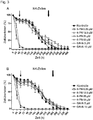
- Human NK cells were treated with 6.25, 12.5, 25 or 50 ⁇ M from 6-PN or 8-PN.
- the overall survival of the NK cells was then measured using trypan blue staining and daily microscopic counting in standardized C-chip counting chambers.
- the HDACi SAHA vorinostat
- the mean value with standard deviation from three independent experiments with expanded NK cells from three healthy human donors is shown.
- the left arrow visualizes ⁇ 10% living cells in the SAHA treatment group; the right arrow visualizes ⁇ 10% living cells in the untreated control group. It shows that the survival rate of the NK cells over all of the tested concentrations of 6-PN ( Figure 3A ) and 8-PN ( Figure 3B ) compared to the untreated control and the cells treated with SAHA.
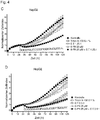
- NK activity on human HepG2 tumor cells was analyzed using real-time cell monitoring (Roche Applied Science xCELLigence SP-System, Mannheim, Germany). HepG2 tumor cells are characterized by a low sensitivity to 6-PN or 8-PN. The cellular impedance of the adherent tumor cells was measured as a parameter for the cell status (cell number, viability, morphology, adhesion). Triton X-100 was used as a positive control for the induction of cell death.
- Three independent experiments with expanded NK cells from three healthy human donors were carried out. The result is in the Fig. 4 shown. The mean values with standard deviation from an exemplary experiment are shown.
- the normalization took place at the start of treatment and a decrease in impedance (normalized cell index) means a reduction in cell viability or cell status.
- Triton X-100 it can be seen that treatment with 6-PN ( 4A, B ) as well as 8-PN ( 4C, D ) there is an increased activity of the human NK cells compared to human tumor cells.
- E: T ratio eg 5: 1
- another tumor cell line eg Hep3B
- 6-PN and 8-PN activate primary human immune cells and reduce the tumor mass of a metastatic malignant melanoma.
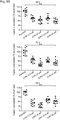
- the result of this experiment is in the Fig. 5 shown: A microscopic images in 200x magnification, which show the melanoma tumor cells with attached immune cells; treatment with 12.5 ⁇ M or 25 ⁇ M 6-PN or 8-PN significantly reduces the number of vital tumor cells (red arrows).
- NK cells from two healthy donors were treated once with 12.5 ⁇ M or 25 ⁇ M 6-PN or 8-PN and then examined daily for viability over a period of 336 h at independent times using a Nucleocounter NC-250 cell counter; shown mean +/- SD.
- PBMCs peripheral blood
- 6-PN and 8-PN were shown to increase / prolong the viability of PBMCs from healthy donors as measured in an automated viability / cell counting device.
- the result is in the Fig. 7 shown: PBMCs from three healthy donors were treated once with 12.5 ⁇ M or 25 ⁇ M 6-PN or 8-PN and then examined daily for viability over a period of 336 h at independent times using a Nucleocounter NC-250 cell counter; shown mean +/- SD.
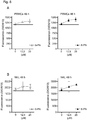
- 6-PN and 8-PN increase the metabolic activity of PBMCs from healthy donors or the standardized, commercially available NK cell line NKL, measured with the Promega CellTiter-Blue Assay Fig. 8 shown: A PBMCs from two healthy donors were treated once with 12.5 ⁇ M or 25 ⁇ M 6-PN or 8-PN and examined after 48 h. B NKL cells were treated once with 12.5 ⁇ M or 25 ⁇ M 6-PN or 8-PN and examined after 48 h. An increase in metabolic activity can be detected in both immune cell populations and in both treatments; shown mean +/- SD.
- 6-PN and 8-prenylnaringenin (8-PN) exert immunostimulatory effects on the innate immune system and NK cells.
- These natural HDACi (i) massively increase the viability of NK cells, (ii) extend the overall survival of NK cells, and (iii) activate NK cells or cause an increased "killing" of human degenerate or infected cells NK cells.
Landscapes
- Health & Medical Sciences (AREA)
- Life Sciences & Earth Sciences (AREA)
- Chemical & Material Sciences (AREA)
- Public Health (AREA)
- Pharmacology & Pharmacy (AREA)
- Veterinary Medicine (AREA)
- General Health & Medical Sciences (AREA)
- Medicinal Chemistry (AREA)
- Animal Behavior & Ethology (AREA)
- Immunology (AREA)
- Organic Chemistry (AREA)
- Nuclear Medicine, Radiotherapy & Molecular Imaging (AREA)
- General Chemical & Material Sciences (AREA)
- Chemical Kinetics & Catalysis (AREA)
- Engineering & Computer Science (AREA)
- Epidemiology (AREA)
- Bioinformatics & Cheminformatics (AREA)
- Mycology (AREA)
- Food Science & Technology (AREA)
- Polymers & Plastics (AREA)
- Nutrition Science (AREA)
- Biophysics (AREA)
- Molecular Biology (AREA)
- Dispersion Chemistry (AREA)
- Virology (AREA)
- Communicable Diseases (AREA)
- Oncology (AREA)
- Pharmaceuticals Containing Other Organic And Inorganic Compounds (AREA)
Description
- Die vorliegende Erfindung betrifft eine Zusammensetzung zur Immunmodulation sowie damit zusammenhängende Verwendungen und Verfahren.
- Immuntherapien sind Behandlungsformen, bei denen das Immunsystem eines Organismus beeinflusst wird. Die Immunmodulation kann zur Dämpfung des Immunsystems, etwa nach Transplantationen und zur Vermeidung einer Abstoßungsreaktion dienen, oder auch zur Immunstimulation, also einer Erhöhung der natürlichen Immunreaktion. Die Wirkstoffe der Immuntherapie werden allgemein als Immunmodulatoren bezeichnet. Immunmodulatoren können demnach Immunstimulanzien oder Immuninhibitoren sein. Ein Beispiel für ein prominentes Immunstimulanz ist das Interferon, welches bei der Therapie von Hepatitis C-Erkrankungen eingesetzt wird. Auch pflanzliche Immunmodulatoren werden beschrieben, beispielsweise Extrakte aus der Hanfpflanze oder dem Roten Sonnenhut.
- Für das maligne Melanom existieren bereits verschiedene in der Klinik eingesetzte immunmodulatorische Substanzen, die die Aktivität der natürlichen Killerzellen (NK-Zellen) modulieren. So kommt zu diesem Zwecke Interferon α in der adjuvanten Melanomtherapie in den Stadien II und III oder Interleukin 2 (IL-2) für die Behandlung des metastasierenden Melanoms im Stadium IV zum Einsatz.
- Auch bei anderen Erkrankungen werden immunmodulatorische Substanzen einsetzt, zum Beispiel pegyliertes Interferon für die Behandlung von Hepatitis C oder Interferon β zur Behandlung der Multiplen Sklerose.
- Die bisher eingesetzten immunmodulatorischen Substanzen haben sich in der Praxis meist nicht bewährt. Dies gilt insbesondere für die Melanomtherapie. Dort zeigen die bisher durchgeführten Immuntherapien in der Regel nur moderate Ansprechraten von kleiner 10 % mit gleichzeitig erheblichen Nebenwirkungen, wie zum Beispiel medikamentenbedingten Todesfällen bei systemischer IL-2-Therapie im Stadium IV. Auch im Bereich von Infektionen oder Autoimmunerkrankungen zeigen sich bei den derzeit zugelassenen Therapien erhebliche Schwierigkeiten. Trotz intensiver Immuntherapie sind chronische Verläufe der Regelfall, wie zum Beispiel bei Hepatitis C oder der Multiplen Sklerose.
- Hinzu kommt, dass viele derzeit verwendete Immunmodulatoren teuer in der Herstellung sind. Sie bedingen aufwändige Synthesen und Reinigungsverfahren, so dass die Bereitstellung größerer Mengen letztlich auch für den Patienten größere Investitionen erfordern.
- Im Stand der Technik wird eine inhibitorische Wirkung von 6- und 8-Prenylnaringenin auf die Zytokin- bzw. Prostaglandinproduktion von Entzündungszellen offenbart, z.B. Peluso et al., Planta Medica, Bd. 76, Nr. 14, 2010; Cho et al., International Immunopharmacology, Bd. 10, Nr. 5, 2010;
WO 02/39960 - Vor diesem Hintergrund ist es eine Aufgabe der vorliegenden Erfindung, einen neuen Immunmodulator bereitzustellen, mit dem die im Stand der Technik beschriebenen Probleme vermieden oder zumindest vermindert werden.
- Diese Aufgabe wird durch die Bereitstellung einer Zusammensetzung zur Verwendung in der Immunstimulation gelöst, die als Wirkstoff 6- und/oder 8- Prenylnaringenin (PN) aufweist.
- Prenylflavonoide gehören zu der Gruppe der Flavonoiden, einer großen Gruppe von niedermolekulargewichtigen polyphenolischen Verbindungen. Flavonoide werden in Pflanzen gefunden und bestehen aus Flavonen, Flavonolen, Flavononen, Flavan-3-olen und Anthocyaninen. Diese sekundären Pflanzenmetabolite spielen eine Rolle in der Abwehr der Pflanze gegen Mikroorganismen oder Pilzen und dem Schutz vor oxidativem Stress.
- Ein wichtiger Vertreter der Prenylflavonoide ist das Prenylnaringenin (PN).
- Die Erfinder konnten in der Zellkultur eindrucksvoll aufzeigen, dass 6 und/oder 8-Prenylnaringenin eine Stimulation des Immunsystems bewirkt.
- Bei dem Prenylnaringenin und den spezifischen hierunter fallenden erfindungsgemäßen Verbindungen kann es sich um den bzw. die alleinigen Wirkstoffe i.S.e. Monotherapie handeln. Es können jedoch ggf. weitere Wirkstoffe vorgesehen werden, so dass sich ggf. synergistische Wirkungen ergeben.
- Die der Erfindung zugrundeliegende Aufgabe wird hiermit vollkommen gelöst.
- Die Zusammensetzung weist 6-Prenzylnaringenin (6-PN) und/oder 8-Prenylnaringenin (8-PN) auf.
- 6-PN und 8-PN sind sogenannte Prenylflavonoide. Diese finden sich in niedrigen Konzentrationen beispielsweise im Hopfen und in Bier. Die Struktur dieser Klasse von Flavonoiden leitet sich vom 2-Phenylchrom-4-on ab. 6-PN und 8-PN sind Isomere. Der Unterschied liegt in der Position der aus fünf Kohlenstoffatomen bestehenden Prenylgruppe. 6-PN und 8-PN sind Produkte einer Ringschlussreaktion eines gemeinsamen Vorläufermoleküls, Desmethylxanthohumol, einem Polyphenol, das auf der Struktur von 1,3-Diphenyl-2-propen-1-on basiert. Beide Moleküle existieren als Enantiomere (R,S).
- 8-PN weist eine starke Bindeaffinität zu Östrogenrezeptoren des Rattenuterus auf und ist als potentes Phytoestrogen aufgrund einer charakteristischen Beabstandung der Hydroxylgruppen identifiziert worden, die Beta-Estradiol imitieren; vgl. Milligan et al. (1999), Identification of potent phytoestrogen in hops (Humulus lupulus L.) and beer, J. Clin. Endocrinol. Metab. 84, 2249-2252.
- Neben den antioxidativen Eigenschaften zeigen einige Flavonoide auch Antikrebseigenschaften; vgl. Hodek et al. (2002) Flavonoids-potent and versatile biologically active compounds interacting with cytochromes p. 450, Chem. Biol. Interact. 139, 1-21. 8-PN inhibiert die Angiogenese, induziert durch den basischen Fibroblastenwachstumsfaktor und vaskulären endothelialen Wachstumsfaktor, in einem dreidimensionalen Collagengel in vitro und in Chorioallantoismembran assays in vivo; vgl. Hepper et al. (2004), 8-Prenylnaringenin, A novel phytoestogen, inhibits angiogenesis in vitro and in vivo, J. Cell Physiol. 199, 98-107. 8-PN imitiert die Wirkungen von 17β-Estradiol auf den Brustkrebszellen MCF-7; vgl. Rrong et al. (2001), 8-Prenylnaringenin, the phytoestrogen in hops and beer, upregulates the function of the e-cadherin-/catenin complex in human mammary carcinoma cells, Eur. J. Cell Biol. 80, 5 180-585. 8-PN induziert ferner die Apoptose in MCF7-Zellen und in einer gegen eine Vielzahl von Wirkstoffen resistenten Leukämieblaste; vgl. Brunelli et al. (2007), 8-Prenylnaringenin, inhibits estrogen receptor-α-mediated cell growth and induces apoptosis in MCF-7 breast cancer cells, J. Steroid. Biochem. Mol. Biol. 107, 140-148, und Diller et al. (2007), Ability of prenylflavanones present in hops to induce apoptosis in a human Burkitt lymphoma cell line, Planta Med. 73, 755-761. Vor Kurzem wurde ferner die Inhibition des P-Glycoproteins, dem mit einer Multiresistenz assoziierten Transporterprotein, und die Inhibition von MRP1 durch 8-PN beschrieben; vgl. Wesolowska et al. (2010), 8-Prenylnaringenin is an inhibitor of multidrug resistance-associated transporters, P-glycoprotein and MRP1, Eur. J. Pharmacol. 644, 32-40. Ferner inhibiert 8-PN direkt die Aktivierung des PI (3) K/Akt-Signalweges in MCF-7-Zellen in vitro; Brunelli et al. (2009), 8-Prenylnaringenin inhibits epidermal growth factorinduced MCF-7 breast cancer cell proliferation by targeting phosphatidylinositol-3-OH kinase activity, J. Steroid. Biochem. Mol. Biol. 113, 163-170. 6-PN und 8-PN zeigen antiproliferative Wirkungen auf die humanen Prostatakrebszelllinien PC-3 und DU145 in vitro; Delmulle et al. (2006), Anti-proliferative properties of prenylated flavonoids from hops (Humulus lupulus L.) in human prostate cancer cell lines, Phytomedicine 13, 732-734. Dies erfolgt in Abwesenheit einer Caspase-3-Aktivierung und typischen apoptotischen morphologischen Merkmalen; Delmulle et al. (2008), Treatment of PC-3 and DU145 prostate cancer cells by prenylflavonoids from hop (Humulus lupulus L.) induces a caspase-independent form of cell death, Phytother. Res. 22, 197-203.
- In der deutschen Patentanmeldung
DE 10 2013 104 342 wird die Verwendung von 6-PN und 8-PN zur Behandlung eines Melanoms und einer Melanomvorstufe der Haut sowie einer Schleimhautmetastase beschrieben. Dort wird außerdem beschrieben, dass es sich bei 6-PN und 8-PN um distinkte Inhibitoren von Histondeacetylasen (HDACs) der Klassen I, II und IV handelt. - Die Eignung von 6-PN und 8-PN als Immunstimulator ist im Stand der Technik bisher nicht beschrieben.
- Die Erfinder konnten eindrucksvoll demonstrieren, dass 6-PN und 8-PN immunstimulatorische Wirkungen auf das angeborene Immunsystem bzw. auf natürliche Killerzellen (NK-Zellen) ausüben. Die Prenylnaringenine erhöhen massiv die Viabilität von NK-Zellen, verlängern das Gesamtüberleben von NK-Zellen und bewirken ein gesteigertes "Killing" von veränderten Zellen, wie Virus-infizierten oder Tumorzellen. Die Prenylnaringenine aktivieren demnach direkt oder indirekt die NK-Zellen.
- Die Erfindung betrifft deshalb eine Immunstimulation.
- Diese Maßnahme hat den Vorteil, dass über eine gezielte Aktivierung des angeborenen Immunsystems eine Stimulation der endogenen Abwehrmechanismen erfolgt und der Organismus dadurch verbessert gegen Krankheiten geschützt ist.
- Nach einer bevorzugten Weiterentwicklung handelt es sich bei der immunstimulation um eine solche des angeborenen Immunsystems.
- Diese Maßnahme hat den Vorteil, dass zielgerichtet auf den Teil des Immunsystems positiv eingewirkt wird, über den ein Großteil von Infektionen und Erkrankungen abgewehrt werden kann.
- Nach einer erfindungsgemäßen Weiterentwicklung bewirkt die Immunstimulation eine Stimulation und/oder Erhöhung der Viabilität und/oder der Erhöhung der Lebensdauer und/oder Erhöhung der Aktivität der natürlichen Killerzellen (NK-Zellen).
- Diese Maßnahme hat den Vorteil, dass auf den zentralen Zelltyp des angeborenen Immunsystems stimulierend eingewirkt wird. Der Körper wird dadurch gestärkt und ist in der Lage, verbessert abnormale Zellen, wie Tumorzellen oder Virusinfizierte Zellen, zu erkennen und abzutöten. Dabei kann die Aktivierung der NK-Zellen sowohl durch die direkte Aktivierung der NK-Zellen erfolgen, z.B. durch Hochregulation stimulatorischer Mechanismen. So können spezifische Oberflächenliganden bzw. Rezeptoren auf Zielzellen, bspw. Tumor- oder virusinfizierten Zellen, hochreguliert werden, welche durch Zellen des angeborenen Immunsystems erkannt werden und somit zu einer gesteigerten Aktivität führen. Ferner kann die Aktivierung der NK-Zellen durch indirekte Aktivierung erfolgen, z.B. durch Herunterregulierung inhibitorischer Mechanismen.
- Bei der erfindungsgemäßen Zusammensetzung handelt es sich vorzugsweise um eine pharmazeutische Zusammensetzung, die weiter vorzugsweise zur Behandlung einer Krankheit ausgestaltet ist, die ausgewählt ist aus der Gruppe bestehend aus viralen Infektionen, Autoimmunerkrankungen oder Tumorerkrankungen.
- Es versteht sich, dass die erfindungsgemäße pharmazeutische Zusammensetzung eine pharmazeutisch akzeptable Formulierung aufweisen kann. Pharmazeutisch akzeptable Formulierungen sind im Stand der Technik hinreichend bekannt. Beispielhaft wird auf die Abhandlung von Kibbe A. (2000), Handbook of Pharmaceutical Excipients, 3. Auflage, American Pharmaceutical Association and Pharmaceutical Press, verwiesen. Die erfindungsgemäße pharmazeutische Zusammensetzung kann ferner Zusätze enthalten. Diese umfassen jedwede Verbindung oder Zusammensetzung, die für die erfindungsgemäße Verwendung vorteilhaft sind, worunter Salze, Bindemittel, Lösungsmittel, Dispersionsmittel und weitere in Zusammenhang mit der Formulierung von Arzneimittel üblicherweise verwendete Stoffe fallen.
- Die erfindungsgemäße Zusammensetzung kann in einer Applikationsform vorliegen, die eine systemische oder eine topische Applikation ermöglicht, wie beispielsweise als Injektions- oder Trinklösung, als Salbe, Creme, Lotion, Gel, Paste, transdermales therapeutisches System, Schaum, Puder. Der Wirkstoff kann außerdem verkapselt, beispielsweise in Liposomen, vorliegen.
- Nach einer alternativen Ausführungsform handelt es sich bei der erfindungsgemäßen Zusammensetzung um ein Lebensmittelprodukt.
- Diese Maßnahme hat den Vorteil, dass die von den Erfindern erkannten positiven Eigenschaften der Prenylflavonoide über die Nahrung aufgenommen werden können. Die Bereitstellung eines aufwändig synthetisierten und zuzulassenden Arzneimittels ist nicht erforderlich. Das Lebensmittelprodukt kann das Prenylflavonoid bzw. 6-PN und/oder 8-PN in natürlich vorkommender Konzentration enthalten. Das Lebensmittelprodukt kann jedoch auch bezüglich dieser Wirkstoffe angereichert sein, so dass sich ein erhöhter positiver Effekt auf die Gesundheit des Organismus ergibt. Das Lebensmittelprodukt kann sowohl eine Flüssigkeit als auch ein festes Nahrungsmittel sein.
- Dabei ist es bevorzugt, wenn es sich bei dem Lebensmittelprodukt um ein solches auf Hopfenbasis handelt.
- Diese Maßnahme hat den Vorteil, dass ein natürlicher "Rohstoff" für die Prenylflavonoide bzw. 6-PN und/oder 8-PN verwendet wird, der in großen Mengen verfügbar ist und aus dem sich die Wirkstoffe gut isolieren bzw. anreichern lassen.
- Dabei ist es bevorzugt, wenn in der erfindungsgemäßen Zusammensetzung der Wirkstoff, d.h. das Prenylflavonoid bzw. Prenylnaringenin (PN), vorzugsweise 6-PN und/oder 8-PN, in micellierter Form bzw. verpackt in Micellen vorliegt.
- Micellen, auch Assoziationskolloide genannt, sind Aggregate aus amphiphilen Molekülen bzw. grenzflächenaktiven Substanzen, die sich in einem Dispersionsmedium, bspw. Wasser, spontan zusammenlagern. Sie weisen gegenüber Liposomen einen deutlich geringeren Durchmesser auf. Dieser liegt durchschnittlich im Nanometerbereich, zwischen ca. 1 nm- ca. 100 nm, vorzugsweise zwischen ca. 20 nm - 80 nm, weiter vorzugsweise ca. 35 nm - 65 nm, höchst vorzugsweise ca. 30 nm oder 50 nm. "Ca." bedeutet in diesem Zusammenhang ± 10%. Die Verpackung des Wirkstoffs in Micellen hat den Vorteil, dass dadurch die Bioverfügbarkeit im Organismus deutlich erhöht wird. Die Micellen, die den Wirkstoff enthalten, liegen in einem Solubilisat vor. Der Wirkstoff ist sozusagen "solubilisiert". Als besonders geeignet hat sich eine Verpackung in Micellen erwiesen, die von der Fa. Aquanova, Darmstadt, Deutschland, unter der Bezeichnung "Produkt-Micelle" angeboten werden. Die erhaltenen Solubilisate werden unter der Bezeichnung NovaSOL® geführt. Die Produkt-Micellen sind thermisch, mechanisch und auch in der Magensäure stabil und weisen durchschnittlich einen Durchmesser von nur ca. 30 nm auf.
- Ein weiterer Gegenstand der vorliegenden Offenbarung betrifft die Verwendung eines Prenylflavonoids, vorzugsweise von Prenylnaringenin, weiter vorzugsweise von 6- und/oder 8-Prenylnaringenin, als Immunmodulator, vorzugsweise Immunstimulator, weiter vorzugsweise zur Stimulation und/oder Erhöhung der Viabilität und/oder der Erhöhung der Lebensdauer der natürlichen Killerzellen (NK-Zellen).
- Ein weiterer Gegenstand der vorliegenden Offenbarung betrifft ein Verfahren zur Immunmodulation, vorzugsweise zur Immunstimulation, weiter vorzugsweise zur Stimulation und/oder Erhöhung der Viabilität und/oder der Erhöhung der Lebensdauer und/oder Erhöhung der Aktivität der natürlichen Killerzellen (NK-Zellen) bei einem Lebewesen, vorzugsweise einem Menschen, das folgende Schritte aufweist: (1) Bereitstellung der erfindungsgemäßen Zusammensetzung, und (2) Applikation der Zusammensetzung in bzw. an das Lebewesen, und (3) gegebenenfalls Wiederholung der Schritte (1) und (2), wobei vorzugsweise die Applikation systemisch und/oder topisch erfolgt.
- Es versteht sich, dass die vorstehend genannten und die nachstehend noch zu erläuternden Merkmale nicht nur in der jeweils angegebenen Kombination, sondern auch in anderen Kombinationen oder in Alleinstellung verwendbar sind, ohne den Rahmen der vorliegenden Erfindung zu verlassen.
- Die Erfindung wird nun anhand von Ausführungsbeispielen näher erläutert, aus denen sich weitere Eigenschaften, Merkmale und Vorteile ergeben. Die Ausführungsbeispiele sollen die Erfindung illustrieren, schränken jedoch deren Reichweite nicht ein. Dabei wird Bezug genommen auf die beigefügten Figuren, in denen Folgendes dargestellt ist:
- Fig. 1
- Chemische Strukturen von 6-PN und 8-PN. Dargestellt sind die chemischen Strukturen von 6-Prenylnaringenin (5,6-Dihydroxy-2-(4-Hydroxy-Phenyl)-6-(3-Methyl-But-2-enyl)-Chroman-4-on) und 8-Prenylnaringenin (5,7-Dihydroxy-2-(4-Hydroxy-Phenyl)-8-(3-Methyl-But-2-enyl)-Chroman4-on).
- Fig. 2
- Viabilitätsmessung an NK-Zellen nach 48 Stunden Behandlung mit verschiedenen Konzentrationen von 6-PN oder 8-PN.
- Fig. 3
- Messung des gesamten Überlebens von NK-Zellen nach einmaliger Behandlung mit verschiedenen Konzentrationen von 6-PN oder 8-PN.
- Fig. 4
- Analyse der Aktivität von NK-Zellen auf humanen HepG2-Tumorzellen.
- Fig. 5
- 6-PN und 8-PN aktivieren primäre humane Immunzellen und reduzieren die Tumormasse eines metastasierten malignen Melanoms.
- Fig. 6
- 6-PN und 8-PN erhöhen/verlängern die Viabilität von NK-Zellen von gesunden Spendern, gemessen in einem automatisierten Viabilitäts-/Zellzähl-Gerät.
- Fig. 7
- 6-PN und 8-PN erhöhen/verlängern die Viabilität von PBMCs von gesunden Spendern, gemessen in einem automatisierten Viabilitäts-/Zellzähl-Gerät.
- Fig. 8
- 6-PN und 8-PN erhöhen die metabolische Aktivität von PBMCs von gesunden Spendern oder der standardisierten, käuflichen NK-Zelllinie NKL, gemessen mit dem Promega CellTiter-Blue Assay.
- 8-Prenylnaringenin und 6-Prenylnaringenin wurden gemäß Gester et al. (2001), An efficient synthesis of the potent phytoestrogens 8-prenylnaringenin und 6-(1,1-dimethylallyl)naringenin by europium (III)-catalyzed Claisen rearrangement, Tetrahedron 57, 1015-1018 bzw. Tischer und Metz (2007), Selective C-6 prenylation of flavonoids via europium(III)-catalyzed Claisen rearrangement and cross-metathesis, Advanced Synthesis & Catalysis 349, 147-151, synthetisiert. Der Inhalt der beiden vorstehenden Publikationen ist durch Inbezugnahme Bestandteil der vorliegenden Anmeldung.
- Humane NK-Zellen wurden 48 Stunden mit 6,25, 12,5, 25 oder 50 µM von 6-PN oder 8-PN behandelt. Anschließend wurde eine Viabilitätsmessung durchgeführt (CellTiterBlue Viability Assay, Promega, Madison, Vereinigte Staaten von Amerika). Als Referenzfarbstoff für die beiden natürlichen HDACi 6-PN und 8-PN wurde der klinisch eingesetzte und etablierte HDACi SAHA (Vorinostat) in geringen Konzentrationen verwendet. Das Ergebnis ist in der
Fig. 2 wiedergegeben. Dargestellt sind die Mittelwerte mit Standardabweichung aus drei unabhängigen Experimenten mit expandierten NK-Zellen von drei gesunden humanen Spendern. Die waagerechte durchgezogene Linie visualisiert den Wert der unbehandelten Kontrolle; ein Abfall des Fluoreszenzsignals bedeutet Reduktion der Viabilität. Dabei zeigt sich, dass in Konzentrationsbereichen zwischen 6,25 und 50 µM 6-PN oder 8-PN (Fig. 2A, B ) eine zum Teil deutliche Erhöhung der Viabilität von humanen NK-Zellen gegenüber dem Kontrollansatz sowie den mit SAHA behandelten Zellen messbar ist. Die SAHA-Behandlungsgruppe zeigt hingegen über den gesamten Konzentrationsbereich eine deutliche Abnahme der Viabilität der NK-Zellen (Fig. 2C ). - Humane NK-Zellen wurden mit 6,25, 12,5, 25 oder 50 µM von 6-PN oder 8-PN behandelt. Anschließend wurde über Trypanblau-Färbung und tägliche mikroskopische Auszählung in standardisierten C-Chip-Zählkammern das Gesamtüberleben der NK-Zellen gemessen. Als Referenzwirkstoff wurde erneut der HDACi SAHA (Vorinostat) verwendet. Das Ergebnis ist in der
Fig. 3 dargestellt. Dargestellt ist der Mittelwert mit Standardabweichung aus drei unabhängigen Experimenten mit expandierten NK-Zellen von drei gesunden humanen Spendern. Der linke Pfeil visualisiert < 10 % lebende Zellen in der SAHA-Behandlungsgruppe; der rechte Pfeil visualisiert < 10 % lebende Zellen in der unbehandelten Kontrollgruppe. Dabei zeigt sich, dass die Überlebensrate der NK-Zellen über sämtliche der getesteten Konzentrationen von 6-PN (Fig. 3A ) und 8-PN (Fig. 3B ) hinweg gegenüber der unbehandelten Kontrolle und den mit SAHA behandelten Zellen deutlich erhöht wird. - In einem weiteren Experiment wurde die NK-Aktivität auf humanen HepG2-Tumorzellen mittels Real-time-Cell-Monitoring (Roche Applied Science xCELLigence SP-System, Mannheim, Deutschland) analysiert. HepG2-Tumorzellen zeichnen sich durch eine geringe Sensitivität gegenüber 6-PN bzw. 8-PN aus. Gemessen wurde die zelluläre Impedanz der adhärenten Tumorzellen als Parameter für den Zellstatus (Zellzahl, Viabilität, Morphologie, Adhäsion). Als Positivkontrolle für die Induktion von Zelltod wurde Triton X-100 verwendet. Es wurden drei unabhängige Experimente mit expandierten NK-Zellen von drei gesunden humanen Spendern durchgeführt. Das Ergebnis ist in der
Fig. 4 gezeigt. Dargestellt sind die Mittelwerte mit Standardabweichung von einem exemplarischen Versuch. Die HepG2-Tumorzellen (Target) wurden ab dem Behandlungsstart (24 Stunden) mit 25 µM von 6-PN oder 8-PN bzw. mit NK-Zellen (Effektor) inkubiert (Effektor zu Target-Verhältnis (E:T) = 1,25:1 oder 2,5:1) oder mit der Kombination aus HDACi und NK-Zellen. Die Normalisierung erfolgte zum Behandlungsstart und ein Abfall der Impedanz (normalisierter Zellindex) bedeutet Reduktion der Zellviabilität bzw. des Zellstatus. Dabei zeigt sich im Vergleich zur Kontrolle für den induzierten Zelltod (Triton X-100), dass es sowohl bei einer Behandlung mit 6-PN (Fig. 4A, B ) als auch 8-PN (Fig. 4C, D ) zu einer gesteigerten Aktivität der humanen NK-Zellen gegenüber humanen Tumorzellen kommt. Versuche mit anderen Konzentrationen von 6-PN oder 8-PN (z.B. 6,25 µM) oder einem anderen E:T-Verhältnis (z.B. 5:1) sowie einer weiteren Tumorzelllinie (z.B. Hep3B) ergaben äquivalente Ergebnisse. - In einem weiteren Experiment an primärem Patientenmaterial wurde demonstriert, dass 6-PN und 8-PN primäre humane Immunzellen aktivieren und die Tumormasse eines metastasierten malignen Melanoms reduzieren. Das Ergebnis dieses Experiments ist in der
Fig. 5 gezeigt: A Mikroskopische Aufnahmen in 200x Vergrößerung, welche die Melanom-Tumorzellen mit anhaftenden Immunzellen zeigen; bei Behandlung mit 12,5 µM oder 25 µM 6-PN bzw. 8-PN reduziert sich die Anzahl der vitalen Tumorzellen deutlich (rote Pfeile). B Die Quantitative Auswertung der Tumorzellen 48, 72 und 96 h nach Behandlungsbeginn zeigt eine signifikante Abnahme der Melanomzellen unter Behandlung mit 12,5 µM oder 25 µM 6-PN bzw. 8-PN; 3 unabhängige Zählungen in Triplikaten; One-way ANOVA Dunnetts multiple comparison test, **P<0.01. - In einem Folgeexperiment wurde gezeigt, dass 6-PN und 8-PN die Viabilität von NK-Zellen von gesunden Spendern erhöhen/verlängern, gemessen in einem automatisierten Viabilitäts-/Zellzähl-Gerät. Die Untersuchung ist damit unabhängig von dem Experimentator. Das Ergebnis ist in der
Fig. 6 dargestellt. NK-Zellen von zwei gesunden Spendern wurden einmalig mit 12,5 µM oder 25 µM 6-PN bzw. 8-PN behandelt und anschließend täglich zu unabhängigen Zeitpunkten mittels eines Nucleocounter NC-250 Zellzählgerätes auf Viabilität über einen Zeitraum von 336 h untersucht; gezeigt Mittelwert +/- SD. - In einem weiteren Experiment wurde gezeigt, dass 6-PN und 8-PN die Viabilität von PBMCs von gesunden Spendern erhöhen/verlängern, gemessen in einem automatisierten Viabilitäts-/Zellzähl-Gerät. Das Ergebnis ist in der
Fig. 7 dargestellt: PBMCs von drei gesunden Spendern wurden einmalig mit 12,5 µM oder 25 µM 6-PN bzw. 8-PN behandelt und anschließend täglich zu unabhängigen Zeitpunkten mittels eines Nucleocounter NC-250 Zellzählgerätes auf Viabilität über einen Zeitraum von 336 h untersucht; gezeigt Mittelwert +/- SD. - In einem anderen Experiment wurde gezeigt, dass 6-PN und 8-PN die metabolische Aktivität von PBMCs von gesunden Spendern oder der standardisierten, käuflichen NK-Zelllinie NKL erhöhen, gemessen mit dem Promega CellTiter-Blue Assay Das Ergebnis ist in der
Fig. 8 gezeigt: A PBMCs von zwei gesunden Spendern wurden einmalig mit 12,5 µM oder 25 µM 6-PN bzw. 8-PN behandelt und nach 48 h untersucht. B NKL-Zellen wurden einmalig mit 12,5 µM oder 25 µM 6-PN bzw. 8-PN behandelt und nach 48 h untersucht. Bei beiden Immunzellpopulationen und bei beiden Behandlungen ist ein Anstieg der metabolischen Aktivität zu detektieren; gezeigt Mittelwert +/- SD. - Die Erfinder konnten demonstrieren, dass 6-Prenylnaringenin (6-PN) und 8-Prenylnaringenin (8-PN) immunstimulatorische Wirkungen auf das angeborene Immunsystem bzw. NK-Zellen ausüben. Diese natürlichen HDACi (i) erhöhen massiv die Viabilität von NK-Zellen, (ii) verlängern das Gesamtüberle ben von NK-Zellen und (iii) aktivieren NK-Zellen bzw. bewirken ein gesteigertes "Killing" von humanen entarteten bzw. infizierten Zellen durch NK-Zellen.
Claims (8)
- Zusammensetzung aufweisend 6- und/oder 8-Prenylnaringenin als Wirkstoff zur Verwendung in der Immunstimulation.
- Zusammensetzung nach Anspruch 1, zur Verwendung nach Anspruch 1, dadurch gekennzeichnet, dass es sich bei der Immunstimulation um eine solche des angeborenen Immunsystems handelt.
- Zusammensetzung nach einem der vorherigen Ansprüche, zur Verwendung nach einem der vorherigen Ansprüche, dadurch gekennzeichnet, dass die Immunstimulation eine Stimulation und/oder Erhöhung der Viabilität und/oder der Erhöhung der Lebensdauer und/oder Erhöhung der Aktivität der Natürlichen Killerzellen (NK-Zellen) bewirkt.
- Zusammensetzung nach einem der vorherigen Ansprüche, zur Verwendung nach einem der vorherigen Ansprüche, dadurch gekennzeichnet, dass es sich bei der Zusammensetzung um eine pharmazeutische Zusammensetzung handelt.
- Zusammensetzung nach Anspruch 4 zur Verwendung nach Anspruch 4 in der Behandlung einer Krankheit, die ausgewählt ist aus der Gruppe bestehend aus: viralen Infektionen, Autoimmunerkrankungen, Tumorerkrankungen.
- Zusammensetzung nach einem der Ansprüche 1 bis 3, zur Verwendung nach einem der Ansprüche 1 bis 3, dadurch gekennzeichnet, dass es sich bei der Zusammensetzung um ein Lebensmittelprodukt handelt.
- Zusammensetzung nach Anspruch 6, zur Verwendung nach Anspruch 6, dadurch gekennzeichnet, dass es sich bei der Zusammensetzung um ein Lebensmittelprodukt auf Hopfenbasis handelt.
- Zusammensetzung nach einem der vorherigen Ansprüche, zur Verwendung nach einem der vorherigen Ansprüche, dadurch gekennzeichnet, dass der Wirkstoff in micellierter Form vorliegt.
Applications Claiming Priority (2)
| Application Number | Priority Date | Filing Date | Title |
|---|---|---|---|
| DE201310017165 DE102013017165A1 (de) | 2013-10-16 | 2013-10-16 | Zusammensetzung zur Immunmodulation |
| PCT/EP2014/071971 WO2015055623A1 (de) | 2013-10-16 | 2014-10-14 | Zusammensetzung zur immunmodulation |
Publications (2)
| Publication Number | Publication Date |
|---|---|
| EP2968261A1 EP2968261A1 (de) | 2016-01-20 |
| EP2968261B1 true EP2968261B1 (de) | 2020-08-05 |
Family
ID=51752105
Family Applications (1)
| Application Number | Title | Priority Date | Filing Date |
|---|---|---|---|
| EP14786476.3A Active EP2968261B1 (de) | 2013-10-16 | 2014-10-14 | Zusammensetzung zur immunmodulation |
Country Status (6)
| Country | Link |
|---|---|
| US (1) | US9855242B2 (de) |
| EP (1) | EP2968261B1 (de) |
| DE (1) | DE102013017165A1 (de) |
| DK (1) | DK2968261T3 (de) |
| ES (1) | ES2829623T3 (de) |
| WO (1) | WO2015055623A1 (de) |
Citations (2)
| Publication number | Priority date | Publication date | Assignee | Title |
|---|---|---|---|---|
| EP1543834A1 (de) * | 2003-12-16 | 2005-06-22 | Biodynamics | Herstellung von Hopfenextrakten mit östrogener und antiproliferativer Bioaktivität |
| US20080031986A1 (en) * | 2005-12-09 | 2008-02-07 | Metaproteomics, Llc | Protein kinase modulation by hops and acacia products |
Family Cites Families (6)
| Publication number | Priority date | Publication date | Assignee | Title |
|---|---|---|---|---|
| US6399579B1 (en) * | 2000-08-15 | 2002-06-04 | Hauser, Inc. | Compositions comprising icariside I and anhydroicaritin and methods for making the same |
| GB0027769D0 (en) * | 2000-11-14 | 2000-12-27 | Unilever Plc | Cosmetic method of treating skin |
| US20050032882A1 (en) * | 2002-03-06 | 2005-02-10 | Sophie Chen | Botanical extract compositions and methods of use |
| EP1698332A1 (de) * | 2005-03-02 | 2006-09-06 | KAIROSmed GmbH | 8-Prenylnaringenin enthaltende orale Formulierungen mit modifizierter Freisetzung für die kontinuierliche Estrogen-Substitution |
| DE202009016292U1 (de) * | 2009-12-01 | 2011-04-07 | Aquanova Ag | Als Emulgator wirkende Zusammensetzung für wasserlösliche Solubilisate hydrophober Verbindungen |
| DE102013104342A1 (de) | 2013-04-29 | 2014-10-30 | Eberhard Karls Universität Tübingen Medizinische Fakultät | Pharmazeutische Zusammensetzung |
-
2013
- 2013-10-16 DE DE201310017165 patent/DE102013017165A1/de not_active Ceased
-
2014
- 2014-10-14 EP EP14786476.3A patent/EP2968261B1/de active Active
- 2014-10-14 DK DK14786476.3T patent/DK2968261T3/da active
- 2014-10-14 ES ES14786476T patent/ES2829623T3/es active Active
- 2014-10-14 WO PCT/EP2014/071971 patent/WO2015055623A1/de not_active Ceased
-
2016
- 2016-04-15 US US15/130,556 patent/US9855242B2/en not_active Expired - Fee Related
Patent Citations (2)
| Publication number | Priority date | Publication date | Assignee | Title |
|---|---|---|---|---|
| EP1543834A1 (de) * | 2003-12-16 | 2005-06-22 | Biodynamics | Herstellung von Hopfenextrakten mit östrogener und antiproliferativer Bioaktivität |
| US20080031986A1 (en) * | 2005-12-09 | 2008-02-07 | Metaproteomics, Llc | Protein kinase modulation by hops and acacia products |
Non-Patent Citations (1)
| Title |
|---|
| ADRIANA ALBINI ET AL: "Mechanisms of the antiangiogenic activity by the hop flavonoid xanthohumol: NF- B and Akt as targets", THE FASEB JOURNAL, FEDERATION OF AMERICAN SOCIETIES FOR EXPERIMENTAL BIOLOGY, US, vol. 20, no. 3, 1 March 2006 (2006-03-01), pages 527 - 529, XP008144152, ISSN: 0892-6638, DOI: 10.1096/FJ.05-5128FJE * |
Also Published As
| Publication number | Publication date |
|---|---|
| WO2015055623A1 (de) | 2015-04-23 |
| US9855242B2 (en) | 2018-01-02 |
| DE102013017165A1 (de) | 2015-04-16 |
| DK2968261T3 (da) | 2020-11-09 |
| ES2829623T3 (es) | 2021-06-01 |
| US20160303070A1 (en) | 2016-10-20 |
| EP2968261A1 (de) | 2016-01-20 |
Similar Documents
| Publication | Publication Date | Title |
|---|---|---|
| Pieme et al. | Antiproliferative activity and induction of apoptosis by Annona muricata (Annonaceae) extract on human cancer cells | |
| DE60115032T2 (de) | Verwendung von spermatophyte pflanzenextrakte mit immunomoduelierender wirkung | |
| Oršolić et al. | Water-soluble derivative of propolis and its polyphenolic compounds enhance tumoricidal activity of macrophages | |
| MOHAN G et al. | Free radical scavenging, immunomodulatory activity and chemical composition of Luffa acutangula var: Amara (Cucurbitaceae) Pericarp | |
| DE102008059523A1 (de) | Kosmetische Mixtur, die Ascorbinsäure-2-Glucosid und Ergothionein enthält | |
| Medeiros et al. | Chemical constituents and evaluation of cytotoxic and antifungal activity of Lantana camara essential oils | |
| JP5990058B2 (ja) | エストロゲン受容体β活性化剤 | |
| Olugbuyiro et al. | Antimicrobial activities and phytochemical properties of Annona muricata leaf | |
| Orodan et al. | Phytochemical analysis, antimicrobial and antioxidant effect of some gemmotherapic remedies used in respiratory diseases | |
| DE60113418T2 (de) | Anti-karzinogene aktivität von aus der lakritzenwurzel isolierten hydroxylierten chalcon-verbindungen | |
| EP2968261A1 (de) | Zusammensetzung zur immunmodulation | |
| EP3299026B1 (de) | Extrakte aus samen von aframomum-arten und deren verwendung | |
| EP1448179B1 (de) | Substituierte bicyclo 3.3.1 nonan-2,4,9-trione als pharmazeutische wirkstoffe | |
| US20160193139A1 (en) | Composition having A. paniculata for wound healing and skin whitening, and method by using the same | |
| EP2026781A2 (de) | Pharmazeutische zubereitung auf der basis von myrtucommulon a zur selektiven tumor- und krebstherapie | |
| EP2268294B1 (de) | Propolis-extrakt | |
| WO2014177335A1 (de) | Prenylflavonoide zur behandlung eines melanoms | |
| EP3290044A1 (de) | Antibakterielle zusammensetzung, umfassend einen pflanzenextrakt, verfahren zur gewinnung des extrakts, pharmazeutische zusammensetzung und deren verwendung | |
| Papang et al. | Pharmacological Properties and Therapeutic Potential of Urtica dioica: A Comprehensive Review | |
| LU500687B1 (de) | Nahrungs- oder diätische zusammensetzung | |
| KR101023400B1 (ko) | 상처 치료 또는 상처 치료 촉진용 약학 조성물 | |
| EP2066314B1 (de) | Verwendung von theogallin zur behandlung von mentalen konzentrationsleistungsstörungen, depression und demenz | |
| D'Souza et al. | Primary screening of multipotent therapeutic properties exhibited by Indian propolis | |
| Susanto et al. | The Effect of Bajakah (Spatholobus Littoralis Hassk) Stem Extract on Calculation of Leukocyte in Mice (Mus Musculus) | |
| WO2005058338A1 (de) | Verwendung eines extraktes von aloysia/verbena/lippia triphylla/citriodora zur behandlung chronischer und/oder entzündlicher erkrankungen |
Legal Events
| Date | Code | Title | Description |
|---|---|---|---|
| PUAI | Public reference made under article 153(3) epc to a published international application that has entered the european phase |
Free format text: ORIGINAL CODE: 0009012 |
|
| 17P | Request for examination filed |
Effective date: 20150909 |
|
| AK | Designated contracting states |
Kind code of ref document: A1 Designated state(s): AL AT BE BG CH CY CZ DE DK EE ES FI FR GB GR HR HU IE IS IT LI LT LU LV MC MK MT NL NO PL PT RO RS SE SI SK SM TR |
|
| AX | Request for extension of the european patent |
Extension state: BA ME |
|
| RIN1 | Information on inventor provided before grant (corrected) |
Inventor name: BUSCH, CHRISTIAN Inventor name: VENTURELLI, SASCHA |
|
| DAX | Request for extension of the european patent (deleted) | ||
| STAA | Information on the status of an ep patent application or granted ep patent |
Free format text: STATUS: EXAMINATION IS IN PROGRESS |
|
| 17Q | First examination report despatched |
Effective date: 20170831 |
|
| GRAP | Despatch of communication of intention to grant a patent |
Free format text: ORIGINAL CODE: EPIDOSNIGR1 |
|
| STAA | Information on the status of an ep patent application or granted ep patent |
Free format text: STATUS: GRANT OF PATENT IS INTENDED |
|
| INTG | Intention to grant announced |
Effective date: 20200220 |
|
| GRAS | Grant fee paid |
Free format text: ORIGINAL CODE: EPIDOSNIGR3 |
|
| GRAA | (expected) grant |
Free format text: ORIGINAL CODE: 0009210 |
|
| STAA | Information on the status of an ep patent application or granted ep patent |
Free format text: STATUS: THE PATENT HAS BEEN GRANTED |
|
| AK | Designated contracting states |
Kind code of ref document: B1 Designated state(s): AL AT BE BG CH CY CZ DE DK EE ES FI FR GB GR HR HU IE IS IT LI LT LU LV MC MK MT NL NO PL PT RO RS SE SI SK SM TR |
|
| REG | Reference to a national code |
Ref country code: GB Ref legal event code: FG4D Free format text: NOT ENGLISH |
|
| REG | Reference to a national code |
Ref country code: CH Ref legal event code: EP |
|
| REG | Reference to a national code |
Ref country code: AT Ref legal event code: REF Ref document number: 1297734 Country of ref document: AT Kind code of ref document: T Effective date: 20200815 |
|
| REG | Reference to a national code |
Ref country code: DE Ref legal event code: R096 Ref document number: 502014014584 Country of ref document: DE |
|
| REG | Reference to a national code |
Ref country code: IE Ref legal event code: FG4D Free format text: LANGUAGE OF EP DOCUMENT: GERMAN |
|
| REG | Reference to a national code |
Ref country code: FI Ref legal event code: FGE |
|
| REG | Reference to a national code |
Ref country code: DK Ref legal event code: T3 Effective date: 20201103 |
|
| REG | Reference to a national code |
Ref country code: CH Ref legal event code: NV Representative=s name: TROESCH SCHEIDEGGER WERNER AG, CH |
|
| REG | Reference to a national code |
Ref country code: NO Ref legal event code: T2 Effective date: 20200805 |
|
| REG | Reference to a national code |
Ref country code: NL Ref legal event code: FP |
|
| REG | Reference to a national code |
Ref country code: SE Ref legal event code: TRGR |
|
| REG | Reference to a national code |
Ref country code: LT Ref legal event code: MG4D |
|
| PG25 | Lapsed in a contracting state [announced via postgrant information from national office to epo] |
Ref country code: PT Free format text: LAPSE BECAUSE OF FAILURE TO SUBMIT A TRANSLATION OF THE DESCRIPTION OR TO PAY THE FEE WITHIN THE PRESCRIBED TIME-LIMIT Effective date: 20201207 Ref country code: LT Free format text: LAPSE BECAUSE OF FAILURE TO SUBMIT A TRANSLATION OF THE DESCRIPTION OR TO PAY THE FEE WITHIN THE PRESCRIBED TIME-LIMIT Effective date: 20200805 Ref country code: HR Free format text: LAPSE BECAUSE OF FAILURE TO SUBMIT A TRANSLATION OF THE DESCRIPTION OR TO PAY THE FEE WITHIN THE PRESCRIBED TIME-LIMIT Effective date: 20200805 Ref country code: BG Free format text: LAPSE BECAUSE OF FAILURE TO SUBMIT A TRANSLATION OF THE DESCRIPTION OR TO PAY THE FEE WITHIN THE PRESCRIBED TIME-LIMIT Effective date: 20201105 Ref country code: GR Free format text: LAPSE BECAUSE OF FAILURE TO SUBMIT A TRANSLATION OF THE DESCRIPTION OR TO PAY THE FEE WITHIN THE PRESCRIBED TIME-LIMIT Effective date: 20201106 |
|
| PG25 | Lapsed in a contracting state [announced via postgrant information from national office to epo] |
Ref country code: LV Free format text: LAPSE BECAUSE OF FAILURE TO SUBMIT A TRANSLATION OF THE DESCRIPTION OR TO PAY THE FEE WITHIN THE PRESCRIBED TIME-LIMIT Effective date: 20200805 Ref country code: RS Free format text: LAPSE BECAUSE OF FAILURE TO SUBMIT A TRANSLATION OF THE DESCRIPTION OR TO PAY THE FEE WITHIN THE PRESCRIBED TIME-LIMIT Effective date: 20200805 Ref country code: PL Free format text: LAPSE BECAUSE OF FAILURE TO SUBMIT A TRANSLATION OF THE DESCRIPTION OR TO PAY THE FEE WITHIN THE PRESCRIBED TIME-LIMIT Effective date: 20200805 Ref country code: IS Free format text: LAPSE BECAUSE OF FAILURE TO SUBMIT A TRANSLATION OF THE DESCRIPTION OR TO PAY THE FEE WITHIN THE PRESCRIBED TIME-LIMIT Effective date: 20201205 |
|
| PG25 | Lapsed in a contracting state [announced via postgrant information from national office to epo] |
Ref country code: CZ Free format text: LAPSE BECAUSE OF FAILURE TO SUBMIT A TRANSLATION OF THE DESCRIPTION OR TO PAY THE FEE WITHIN THE PRESCRIBED TIME-LIMIT Effective date: 20200805 Ref country code: SM Free format text: LAPSE BECAUSE OF FAILURE TO SUBMIT A TRANSLATION OF THE DESCRIPTION OR TO PAY THE FEE WITHIN THE PRESCRIBED TIME-LIMIT Effective date: 20200805 Ref country code: RO Free format text: LAPSE BECAUSE OF FAILURE TO SUBMIT A TRANSLATION OF THE DESCRIPTION OR TO PAY THE FEE WITHIN THE PRESCRIBED TIME-LIMIT Effective date: 20200805 Ref country code: EE Free format text: LAPSE BECAUSE OF FAILURE TO SUBMIT A TRANSLATION OF THE DESCRIPTION OR TO PAY THE FEE WITHIN THE PRESCRIBED TIME-LIMIT Effective date: 20200805 |
|
| REG | Reference to a national code |
Ref country code: DE Ref legal event code: R097 Ref document number: 502014014584 Country of ref document: DE |
|
| PG25 | Lapsed in a contracting state [announced via postgrant information from national office to epo] |
Ref country code: AL Free format text: LAPSE BECAUSE OF FAILURE TO SUBMIT A TRANSLATION OF THE DESCRIPTION OR TO PAY THE FEE WITHIN THE PRESCRIBED TIME-LIMIT Effective date: 20200805 |
|
| REG | Reference to a national code |
Ref country code: ES Ref legal event code: FG2A Ref document number: 2829623 Country of ref document: ES Kind code of ref document: T3 Effective date: 20210601 |
|
| PLBE | No opposition filed within time limit |
Free format text: ORIGINAL CODE: 0009261 |
|
| STAA | Information on the status of an ep patent application or granted ep patent |
Free format text: STATUS: NO OPPOSITION FILED WITHIN TIME LIMIT |
|
| PG25 | Lapsed in a contracting state [announced via postgrant information from national office to epo] |
Ref country code: MC Free format text: LAPSE BECAUSE OF FAILURE TO SUBMIT A TRANSLATION OF THE DESCRIPTION OR TO PAY THE FEE WITHIN THE PRESCRIBED TIME-LIMIT Effective date: 20200805 Ref country code: SK Free format text: LAPSE BECAUSE OF FAILURE TO SUBMIT A TRANSLATION OF THE DESCRIPTION OR TO PAY THE FEE WITHIN THE PRESCRIBED TIME-LIMIT Effective date: 20200805 |
|
| 26N | No opposition filed |
Effective date: 20210507 |
|
| PG25 | Lapsed in a contracting state [announced via postgrant information from national office to epo] |
Ref country code: SI Free format text: LAPSE BECAUSE OF FAILURE TO SUBMIT A TRANSLATION OF THE DESCRIPTION OR TO PAY THE FEE WITHIN THE PRESCRIBED TIME-LIMIT Effective date: 20200805 |
|
| PG25 | Lapsed in a contracting state [announced via postgrant information from national office to epo] |
Ref country code: IE Free format text: LAPSE BECAUSE OF NON-PAYMENT OF DUE FEES Effective date: 20201014 |
|
| PGFP | Annual fee paid to national office [announced via postgrant information from national office to epo] |
Ref country code: NL Payment date: 20211020 Year of fee payment: 8 |
|
| PGFP | Annual fee paid to national office [announced via postgrant information from national office to epo] |
Ref country code: AT Payment date: 20211021 Year of fee payment: 8 Ref country code: SE Payment date: 20211020 Year of fee payment: 8 Ref country code: FI Payment date: 20211021 Year of fee payment: 8 Ref country code: DK Payment date: 20211022 Year of fee payment: 8 Ref country code: ES Payment date: 20211224 Year of fee payment: 8 Ref country code: NO Payment date: 20211022 Year of fee payment: 8 Ref country code: LU Payment date: 20211020 Year of fee payment: 8 |
|
| PGFP | Annual fee paid to national office [announced via postgrant information from national office to epo] |
Ref country code: CH Payment date: 20211020 Year of fee payment: 8 Ref country code: BE Payment date: 20211020 Year of fee payment: 8 |
|
| PG25 | Lapsed in a contracting state [announced via postgrant information from national office to epo] |
Ref country code: TR Free format text: LAPSE BECAUSE OF FAILURE TO SUBMIT A TRANSLATION OF THE DESCRIPTION OR TO PAY THE FEE WITHIN THE PRESCRIBED TIME-LIMIT Effective date: 20200805 Ref country code: MT Free format text: LAPSE BECAUSE OF FAILURE TO SUBMIT A TRANSLATION OF THE DESCRIPTION OR TO PAY THE FEE WITHIN THE PRESCRIBED TIME-LIMIT Effective date: 20200805 Ref country code: CY Free format text: LAPSE BECAUSE OF FAILURE TO SUBMIT A TRANSLATION OF THE DESCRIPTION OR TO PAY THE FEE WITHIN THE PRESCRIBED TIME-LIMIT Effective date: 20200805 |
|
| PG25 | Lapsed in a contracting state [announced via postgrant information from national office to epo] |
Ref country code: MK Free format text: LAPSE BECAUSE OF FAILURE TO SUBMIT A TRANSLATION OF THE DESCRIPTION OR TO PAY THE FEE WITHIN THE PRESCRIBED TIME-LIMIT Effective date: 20200805 |
|
| PGFP | Annual fee paid to national office [announced via postgrant information from national office to epo] |
Ref country code: FR Payment date: 20221028 Year of fee payment: 9 |
|
| PGFP | Annual fee paid to national office [announced via postgrant information from national office to epo] |
Ref country code: IT Payment date: 20221028 Year of fee payment: 9 Ref country code: GB Payment date: 20221125 Year of fee payment: 9 Ref country code: DE Payment date: 20221118 Year of fee payment: 9 |
|
| REG | Reference to a national code |
Ref country code: DK Ref legal event code: EBP Effective date: 20221031 |
|
| REG | Reference to a national code |
Ref country code: NO Ref legal event code: MMEP Ref country code: SE Ref legal event code: EUG |
|
| REG | Reference to a national code |
Ref country code: CH Ref legal event code: PL |
|
| REG | Reference to a national code |
Ref country code: NL Ref legal event code: MM Effective date: 20221101 |
|
| REG | Reference to a national code |
Ref country code: AT Ref legal event code: MM01 Ref document number: 1297734 Country of ref document: AT Kind code of ref document: T Effective date: 20221014 |
|
| REG | Reference to a national code |
Ref country code: BE Ref legal event code: MM Effective date: 20221031 |
|
| PG25 | Lapsed in a contracting state [announced via postgrant information from national office to epo] |
Ref country code: LU Free format text: LAPSE BECAUSE OF NON-PAYMENT OF DUE FEES Effective date: 20221014 |
|
| PG25 | Lapsed in a contracting state [announced via postgrant information from national office to epo] |
Ref country code: NO Free format text: LAPSE BECAUSE OF NON-PAYMENT OF DUE FEES Effective date: 20221031 Ref country code: NL Free format text: LAPSE BECAUSE OF NON-PAYMENT OF DUE FEES Effective date: 20221101 Ref country code: LI Free format text: LAPSE BECAUSE OF NON-PAYMENT OF DUE FEES Effective date: 20221031 Ref country code: CH Free format text: LAPSE BECAUSE OF NON-PAYMENT OF DUE FEES Effective date: 20221031 Ref country code: AT Free format text: LAPSE BECAUSE OF NON-PAYMENT OF DUE FEES Effective date: 20221014 |
|
| PG25 | Lapsed in a contracting state [announced via postgrant information from national office to epo] |
Ref country code: SE Free format text: LAPSE BECAUSE OF NON-PAYMENT OF DUE FEES Effective date: 20221015 |
|
| PG25 | Lapsed in a contracting state [announced via postgrant information from national office to epo] |
Ref country code: BE Free format text: LAPSE BECAUSE OF NON-PAYMENT OF DUE FEES Effective date: 20221031 |
|
| PG25 | Lapsed in a contracting state [announced via postgrant information from national office to epo] |
Ref country code: DK Free format text: LAPSE BECAUSE OF NON-PAYMENT OF DUE FEES Effective date: 20221031 |
|
| REG | Reference to a national code |
Ref country code: ES Ref legal event code: FD2A Effective date: 20231128 |
|
| PG25 | Lapsed in a contracting state [announced via postgrant information from national office to epo] |
Ref country code: ES Free format text: LAPSE BECAUSE OF NON-PAYMENT OF DUE FEES Effective date: 20221015 |
|
| PG25 | Lapsed in a contracting state [announced via postgrant information from national office to epo] |
Ref country code: ES Free format text: LAPSE BECAUSE OF NON-PAYMENT OF DUE FEES Effective date: 20221015 |
|
| PG25 | Lapsed in a contracting state [announced via postgrant information from national office to epo] |
Ref country code: FI Free format text: LAPSE BECAUSE OF NON-PAYMENT OF DUE FEES Effective date: 20221014 |
|
| REG | Reference to a national code |
Ref country code: DE Ref legal event code: R119 Ref document number: 502014014584 Country of ref document: DE |
|
| GBPC | Gb: european patent ceased through non-payment of renewal fee |
Effective date: 20231014 |
|
| PG25 | Lapsed in a contracting state [announced via postgrant information from national office to epo] |
Ref country code: GB Free format text: LAPSE BECAUSE OF NON-PAYMENT OF DUE FEES Effective date: 20231014 |
|
| PG25 | Lapsed in a contracting state [announced via postgrant information from national office to epo] |
Ref country code: GB Free format text: LAPSE BECAUSE OF NON-PAYMENT OF DUE FEES Effective date: 20231014 Ref country code: FR Free format text: LAPSE BECAUSE OF NON-PAYMENT OF DUE FEES Effective date: 20231031 Ref country code: DE Free format text: LAPSE BECAUSE OF NON-PAYMENT OF DUE FEES Effective date: 20240501 |
|
| PG25 | Lapsed in a contracting state [announced via postgrant information from national office to epo] |
Ref country code: IT Free format text: LAPSE BECAUSE OF NON-PAYMENT OF DUE FEES Effective date: 20231014 |
|
| PG25 | Lapsed in a contracting state [announced via postgrant information from national office to epo] |
Ref country code: IT Free format text: LAPSE BECAUSE OF NON-PAYMENT OF DUE FEES Effective date: 20231014 |