EP2968235B1 - Combination of canagliflozin and probenecid for the treatment of hyperuricemia - Google Patents
Combination of canagliflozin and probenecid for the treatment of hyperuricemia Download PDFInfo
- Publication number
- EP2968235B1 EP2968235B1 EP14717246.4A EP14717246A EP2968235B1 EP 2968235 B1 EP2968235 B1 EP 2968235B1 EP 14717246 A EP14717246 A EP 14717246A EP 2968235 B1 EP2968235 B1 EP 2968235B1
- Authority
- EP
- European Patent Office
- Prior art keywords
- probenecid
- canagliflozin
- hyperuricemia
- amount
- range
- Prior art date
- Legal status (The legal status is an assumption and is not a legal conclusion. Google has not performed a legal analysis and makes no representation as to the accuracy of the status listed.)
- Active
Links
Images

Classifications
-
- A—HUMAN NECESSITIES
- A61—MEDICAL OR VETERINARY SCIENCE; HYGIENE
- A61K—PREPARATIONS FOR MEDICAL, DENTAL OR TOILETRY PURPOSES
- A61K31/00—Medicinal preparations containing organic active ingredients
- A61K31/33—Heterocyclic compounds
- A61K31/38—Heterocyclic compounds having sulfur as a ring hetero atom
- A61K31/381—Heterocyclic compounds having sulfur as a ring hetero atom having five-membered rings
-
- A—HUMAN NECESSITIES
- A61—MEDICAL OR VETERINARY SCIENCE; HYGIENE
- A61K—PREPARATIONS FOR MEDICAL, DENTAL OR TOILETRY PURPOSES
- A61K31/00—Medicinal preparations containing organic active ingredients
- A61K31/185—Acids; Anhydrides, halides or salts thereof, e.g. sulfur acids, imidic, hydrazonic or hydroximic acids
- A61K31/19—Carboxylic acids, e.g. valproic acid
-
- A—HUMAN NECESSITIES
- A61—MEDICAL OR VETERINARY SCIENCE; HYGIENE
- A61K—PREPARATIONS FOR MEDICAL, DENTAL OR TOILETRY PURPOSES
- A61K31/00—Medicinal preparations containing organic active ingredients
- A61K31/185—Acids; Anhydrides, halides or salts thereof, e.g. sulfur acids, imidic, hydrazonic or hydroximic acids
- A61K31/19—Carboxylic acids, e.g. valproic acid
- A61K31/195—Carboxylic acids, e.g. valproic acid having an amino group
-
- A—HUMAN NECESSITIES
- A61—MEDICAL OR VETERINARY SCIENCE; HYGIENE
- A61K—PREPARATIONS FOR MEDICAL, DENTAL OR TOILETRY PURPOSES
- A61K31/00—Medicinal preparations containing organic active ingredients
- A61K31/70—Carbohydrates; Sugars; Derivatives thereof
- A61K31/7042—Compounds having saccharide radicals and heterocyclic rings
-
- A—HUMAN NECESSITIES
- A61—MEDICAL OR VETERINARY SCIENCE; HYGIENE
- A61P—SPECIFIC THERAPEUTIC ACTIVITY OF CHEMICAL COMPOUNDS OR MEDICINAL PREPARATIONS
- A61P19/00—Drugs for skeletal disorders
- A61P19/06—Antigout agents, e.g. antihyperuricemic or uricosuric agents
Definitions
- the present invention is directed to canagliflozin, probenecid, or canagliflozin and probenecid for use in methods for treating hyperuricemia and related disorders, comprising co-therapy with canagliflozin and probenecid.
- Hyperuricemia is a condition of high serum total urate levels.
- uric acid is the final oxidation product of purine catabolism. In most other mammals, however, the enzyme uricase further oxidizes uric acid to allantoin.
- purine metabolites such as xanthine and hypoxanthine are oxidized by xanthine oxidase to uric acid.
- uric acid concentrations between 3.6 mg/dL ( ⁇ 214/ mol/L) and 8.3 mg/dL ( ⁇ 494/ mol/L) are considered normal by the American Medical Association.
- the presence of total urates including uric acid in the serum is important because these compounds are potent antioxidants. In humans, about half the antioxidant capacity of plasma comes from total urates including uric acid.
- high serum total urate levels are often associated with several maladies.
- high serum total urate levels can lead to a type of arthritis known as gout.
- Gout is a condition created by a buildup of monosodium urate or uric acid crystals on the articular cartilage of joints, tendons and surrounding tissues due to elevated concentrations of total urate levels in the blood. The build-up of urate or uric acid on these tissues provokes an inflammatory reaction of these tissues.
- Hyperuricemia is also associated with high or saturating levels of uric acid in urine may result in one form of kidney stones when the uric acid or urate crystallizes in the kidney. These uric acid stones are radiolucent and so do not appear on an abdominal x-ray. Therefore, their presence must be diagnosed by ultrasound. Some patients with gout eventually develop uric kidney stones.
- Hyperuricemia is caused either by accelerated generation of total urates and uric acid through purine metabolism or by impaired excretion of total urates in the urine. Consumption of purine-rich diets is one of the causes of hyperuricemia. High levels of fructose in the diet may also cause hyperuricemia. Other dietary causes are ingestion of high protein and fat, and starvation. Starvation results in the body metabolizing its own muscle mass for energy, in the process releasing purines into the bloodstream. Hyperuricemia may lead to renal diseases and may also exacerbate existing renal conditions.
- Conventional chronic, prophylactic treatments of gout or other high uric acid-associated diseases include administering to a patient an uricosuric drug, which augments urinary uric acid excretion, such as probenecid, sulfinpyrazone, or benzbromarone; and/or an inhibitor of xanthine oxidase, such as allopurinol, febuxostat, or oxypurinol.
- a xanthine oxidase inhibitor reduces total urate production in the body. Allopurinol, the most commonly used xanthine oxidase inhibitor, is associated with side-effects in up to 20% of patients. Thus, there remains a need for additional safe and effective treatments for hyperuricemia.
- WO 2011/120923 A1 relates to a pharmaceutical composition comprising an SGLT2 inhibitor and a PPAR ⁇ agonist.
- the present invention is directed towards canagliflozin for use in a method for treating hyperuricemia or a related disorder, wherein the method comprises administering to a subject in need thereof, a therapeutically effective amount of co-therapy comprising canagliflozin and probenecid, wherein the term "hyperuricemia or a related disorder" is defined as any disease, disorder or condition characterized by elevated (i.e. above normal) levels serum uric acid.
- the present invention is also directed towards probenecid for use in a method for treating hyperuricemia or a related disorder, wherein the method comprises administering to a subject in need thereof, a therapeutically effective amount of co-therapy comprising canaglifozin and probenecid, wherein the term "hyperuricemia or a related disorder" is defined as any disease, disorder or condition characterized by elevated (i.e. above normal) levels serum uric acid.
- the present invention is also directed towards canagliflozin and probenecid for use in a method for treating hyperuricemia or a related disorder, wherein the method comprises administering to a subject in need thereof, a therapeutically effective amount of co-therapy comprising canaglifozin and probenecid, wherein the term "hyperuricemia or a related disorder" is defined as any disease, disorder or condition characterized by elevated (i.e. above normal) levels serum uric acid.
- the present invention is directed to canagliflozin and probenecid for use as discussed above, wherein the treatment prevents symptoms of gout.
- the present invention is directed to canagliflozin and probenecid for use as discussed above, wherein the hyperuricemia or related disorder is selected from the group consisting of gout, urate nephropathy, chronic kidney disease, hypertension due to hyperurecemia, and kidney stones.
- the present invention is directed to canagliflozin and probenecid for use as discussed above, wherein the hyperuricemia or related disorder is selected from the group consisting of gout, urate nephropathy, chronic kidney disease, hypertension due to hyperurecemia, and kidney stones.
- the present invention is directed to canagliflozin for use in a method for the treatment of gout, comprising administering to a subject in need thereof, a therapeutically effective amount of co-therapy comprising canagliflozin and probenecid.
- the present invention is directed to probenecid for use in a method for treating gout, wherein the method comprises administering to a subject in need thereof, a therapeutically effective amount of co-therapy comprising canaglifozin and probenecid.
- the present invention is directed to canagliflozin and probenecid for use in a method for treating gout, wherein the method comprises administering to a subject in need thereof, a therapeutically effective amount of co-therapy comprising canaglifozin and probenecid.
- the present invention is directed to a pharmaceutical composition
- a pharmaceutical composition comprising (a) canagliflozin, (b) probenecid and (c) a pharmaceutically acceptable carrier.
- An illustration of the invention is a pharmaceutical composition made by mixing (a) canagliflozin, (b) probenecid and (c) a pharmaceutically acceptable carrier.
- Disclosed is a process for making a pharmaceutical composition comprising mixing (a) canagliflozin, (b) probenecid and (c) a pharmaceutically acceptable carrier.
- canagliflozin in combination with probenecid for use as a medicament.
- canagliflozin in combination with probenecid in the preparation of a medicament for treating: (a) hyperuicemia, (b) gout, (c) urate nephropathy, (d) chronic kidney disease, (e) hypertension, or (f) kidneys stones in a subject in need thereof.
- the present invention is directed to canagliflozin, probenecid, or canagliflozin and probenecid for use in a method for the treatment of hyperuricemia or a related disorder, as defined in the claims, comprising administering to a subject in need thereof a therapeutically effective amount of a co-therapy comprising canagliflozin and probenecid.
- canagliflozin, probenecid, or canagliflozin and probenecid for use in methods of lowering serum total urate (uric acid) levels, comprising administering to a subject in need thereof, a therapeutically effective amount of co-therapy comprising canagliflozin and probenecid.
- the present invention is directed to canagliflozin, probenecid, or canagliflozin and probenecid for use in a method for the treatment of gout (due to hyperuricemia), hypertension (due to hyperuricemia) or urate nephropathy or kidney stones (due to hyperuricemia), comprising administering to a subject in need thereof a therapeutically effective amount of co-therapy comprising canagliflozin and probenecid.
- the present invention is further directed to canagliflozin, probenecid, or canagliflozin and probenecid for use in a method for the treatment of gout comprising administering to a subject in need thereof a therapeutically effective amount of co-therapy comprising canagliflozin and probenecid.
- canagliflozin, probenecid, or canagliflozin and probenecid for use in a method for lowering serum uric acid levels or lowering serum total urate, comprising administering to a subject in need thereof a therapeutically effective amount of co-therapy comprising canagliflozin and probenecid.
- the present invention is directed to canagliflozin, probenecid, or canagliflozin and probenecid for use in a method for the treatment of hyperuricemia or a related disorder, as claimed wherein the subject in need thereof is diabetic (preferably, the subject in need thereof is also suffering from TYPE II diabetes mellitus or Syndrome X).
- the present invention is directed to canagliflozin, probenecid, or canagliflozin and probenecid for use in a method for the treatment of hyperuricemia or a related disorder, as claimed, wherein the subject in need thereof is non-diabetic.
- the present invention is directed to a pharmaceutical composition
- a pharmaceutical composition comprising canagliflozin and probenecid; and a pharmaceutically acceptable carrier; wherein the canagliflozin is in an amount in the range of from about 50 to about 500 mg, preferably in an amount in the range of from about 100 mg to about 300 mg.
- the present invention is directed to a pharmaceutical composition
- a pharmaceutical composition comprising canagliflozin and probenecid; and a pharmaceutically acceptable carrier, wherein the probenecid is in an amount in the range of from about 250 to about 1000 mg.
- canagliflozin shall mean a compound of formula (I-X) or a crystalline hemihydrate form of the compound of formula (I-X).
- the compound of formula (I-X) exhibits inhibitory activity against sodium-dependent glucose transporter, such as for example SGLT2; and may be prepared according to the process as disclosed in Nomura, S. et al., US Patent Publication, US 2005/0233988 A1, published October 20, 2005 .
- the term “canagliflozin” shall further include a mixture of stereoisomers, or each pure or substantially pure isomer.
- the term “canagliflozin” shall include an intramolecular salt, hydrate, solvate or polymorph thereof.
- canagliflozin shall mean the crystalline hemihydrate form of the compound of formula (I-X), as described in WO 2008/069327 .
- the present invention is directed to canagliflozin, probenecid, or canagliflozin and probenecid for use in methods for the treatment of hyperuricemia and related disorders, wherein the probenecid is present at a dosage amount in the range of from about 10 mg to about 1000 mg, preferably from about 25 mg to about 500 mg, or any amount or range therein.
- the present invention is directed to canagliflozin, probenecid, or canagliflozin and probenecid for use in methods for the treatment of hyperuricemia and related disorders, wherein the canagliflozin is present at a dosage amount in the range of from about 25 mg to about 300 mg, preferably selected from the group consisting of about 50 mg, about 75 mg, about 100 mg, about 150 mg, about 200 mg, about 300 mg and about 500 mg.
- the present invention is directed to canagliflozin, probenecid, or canagliflozin and probenecid for use in methods for the treatment of hyperuricemia and related disorders, wherein the probenecid is administered in an amount in the range of from about 250 mg to about 1000 mg, or any amount or range therein.
- the present invention is directed to canagliflozin, probenecid, or canagliflozin and probenecid for use in methods for the treatment of hyperuricemia and related disorders, wherein the canagliflozin is administered in an amount in the range of from about 50 mg to about 500 mg, preferably from about 100 mg to about 300mg.
- Probenecid also known as 4-[(dipropylamino)sulfonyl]benzoic acid, is a uricosuric and renal tubular transport blocking agent. Probenecid tablets are indicated for the treatment of the hyperuricemia associated with gout and gouty arthritis.
- Probenecid is a uricosuric and renal tubular blocking agent. It inhibits the tubular reabsorption of urate, thus increasing the urinary excretion of uric acid and decreasing serum urate levels. Effective uricosuria reduces the miscible urate pool, retards urate deposition, and promotes resorption of urate deposits. Probenecid inhibits the tubular secretion of penicillin and usually increases penicillin plasma levels by any route the antibiotic is given. A 2-fold to 4-fold elevation has been demonstrated for various penicillins.
- Probenecid also has been reported to inhibit the renal transport of many other compounds including aminohippuric acid (PAH), aminosalicylic acid (PAS), indomethacin, sodium iodomethamate and related iodinated organic acids, 17-ketosteroids, pantothenic acid, phenolsulfonphthalein (PSP), sulfonamides, and sulfonylureas.
- PAH aminohippuric acid
- PAS aminosalicylic acid
- PPS phenolsulfonphthalein
- SFP sulfonamides
- sulfonylureas Probenecid decreases both hepatic and renal excretion of sulfobromophthalein (BSP).
- BSP sulfobromophthalein
- the tubular reabsorption of phosphorus is inhibited in hypoparathyroid but not in euparathyroid individuals.
- Probenecid does not influence plasma concentrations of salicylates
- probenecid therapy typically should not be started until an acute gouty attack has subsided. However, if an acute attack is precipitated during therapy, probenecid may be continued without changing the dosage, and full therapeutic dosage of colchicine, or other appropriate therapy, typically is also given to control the acute attack.
- the recommended adult dosage is 250 mg (e.g., 1/2 probenecid tablet), twice a day for one week, followed by 500 mg (1 tablet) twice a day thereafter.
- Some degree of renal impairment may be present in patients with gout.
- a daily dosage of 1000 mg may be adequate. However, if necessary, the daily dosage may be increased by 500 mg increments every 4 weeks within tolerance (and usually not above 2000 mg per day) if symptoms of gouty arthritis are not controlled.
- Probenecid may not be effective in chronic renal insufficiency particularly when the glomerular filtration rate is 30 mL/minute or less. Probenecid should be continued at the dosage that will maintain normal serum urate levels. When acute attacks have been absent for 6 months or more and serum urate levels remain within normal limits, the daily dosage may be decreased by 500 mg every 6 months. The maintenance dosage should not be reduced to the point where serum urate levels tend to rise.
- the present invention is directed to canagliflozin, probenecid, or canagliflozin and probenecid for use in methods for the treatment of hyperuricemia and related disorders as described herein, wherein probenecid is present at a dosage amount in the range of from about 10 mg to about 1000 mg, preferably from about 50 mg to about 500 mg, preferably from about 250 mg to about 500 mg, or any amount or range therein and canagliflozin is present at a dosage amount in the range of from about 25 mg to about 300 mg, preferably selected from the group consisting of about 50 mg, about 75 mg, about 100 mg, about 150 mg, about 200 mg, about 300 mg and about 500 mg.
- the present invention is directed to canagliflozin, probenecid, or canagliflozin and probenecid for use in methods for the treatment of hyperuricemia and related disorders, comprising administering to a subject in need thereof co-therapy comprising canagliflozin and probenecid, wherein the therapeutically effective amount of co-therapy is sufficient to treat the hyperuricemia or related disorder without inducing hypouricemia.
- canagliflozin, probenecid, or canagliflozin and probenecid for use in the methods of the present invention are directed to the treatment of hyperuricemia and related disorders in non-diabetic, as well as diabetic patients.
- the therapeutically effective amount of co-therapy in the methods of the present invention will not cause hypoglycemia in the diabetic and / or non-diabetic patients (more particularly, will not disturb the patient's plasma glucose homeostasis).
- uricosurics such as e,g., benzbromarone or sulfinpyrazone may be used in place of probenecid in combination with canagliflozin for the treatment of hyperuricemia and related disorders in a subject in need thereof in accordance with the present invention.
- hyperuricemia or a related disorder shall include any disease, disorder or condition characterized by elevated (i.e. above normal) levels serum uric acid.
- examples include, but are not limited to gout, urate nephropathy, chronic kidney disease, hypertension, and kidney stones.
- the hyperuricemia or related disorder is selected from the group consisting of gout, urate nephropathy, chronic kidney disease, hypertension, and kidney stones.
- Syndrome X shall mean a disorder that presents risk factors for the development of Type 2 diabetes mellitus and cardiovascular disease and is characterized by insulin resistance and hyperinsulinemia and may be accompanied by one or more of the following: (a) glucose intolerance, (b) Type II diabetes mellitus, (c) dyslipidemia, (d) hypertension and (e) obesity.
- subject refers to an animal, preferably a mammal, most preferably a human, who has been the object of treatment, observation or experiment. Preferably, the subject has experienced and / or exhibited at least one symptom of the disease or disorder to be treated and / or prevented.
- treating shall include the management and care of a subject or patient (preferably mammal, more preferably human) for the purpose of combating a disease, condition, or disorder and includes the administration of a compound of the present invention to prevent the onset of the symptoms or complications, alleviate the symptoms or complications, or eliminate the disease, condition, or disorder.
- prevention shall include (a) reduction in the frequency of one or more symptoms; (b) reduction in the severity of one or more symptoms; (c) the delay or avoidance of the development of additional symptoms; and / or (d) delay or avoidance of the development of the disorder or condition.
- a subject in need of thereof shall include any subject or patient (preferably a mammal, more preferably a human) who has experienced or exhibited at least one symptom of the disorder, disease or condition to be prevented.
- a subject in need thereof may additionally be a subject (preferably a mammal, more preferably a human) who has not exhibited any symptoms of the disorder, disease or condition to be prevented, but who has been deemed by a physician, clinician or other medical profession to be at risk of developing said disorder, disease or condition.
- the subject may be deemed at risk of developing a disorder, disease or condition (and therefore in need of prevention or preventive treatment) as a consequence of the subject's medical history, including, but not limited to, family history, pre-disposition, co-existing (comorbid) disorders or conditions, genetic testing, and the like.
- therapeutically effective amount means that amount of active compound or pharmaceutical agent that elicits the biological or medicinal response in a tissue system, animal or human that is being sought by a researcher, veterinarian, medical doctor or other clinician, which includes alleviation of the symptoms of the disease or disorder being treated.
- the present invention is directed to co-therapy or combination therapy, comprising administration of (a) canagliflozin and (b) probenecid
- therapeutically effective amount shall mean that amount of the combination of agents taken together so that the combined effect elicits the desired biological or medicinal response.
- the therapeutically effective amount of co-therapy comprising administration of (a) canagliflozin and (b) probenecid, would be the amount of (a) canagliflozin and (b) probenecid that when taken together or sequentially have a combined effect that is therapeutically effective.
- the amount of the (a) canagliflozin and / or the amount of the (b) probenecid individually may or may not be therapeutically effective.
- Optimal dosages for canagliflozin, probenecid and / or co-therapy comprising canagliflozin and probenecid
- Optimal dosages may be readily determined by those skilled in the art, and will vary with for example, the mode of administration, the strength of the preparation, and the advancement of the disease condition.
- factors associated with the particular patient being treated including patient age, weight, diet and time of administration, will result in the need to adjust dosages.
- composition is intended to encompass a product comprising the specified ingredients in the specified amounts, as well as any product which results, directly or indirectly, from combinations of the specified ingredients in the specified amounts.
- the present invention further comprises pharmaceutical compositions containing (a) canagliflozin, (b) probenecid and one or more pharmaceutically acceptable carrier(s).
- Pharmaceutical compositions containing one or more of the compounds of the invention described herein as the active ingredient can be prepared by intimately mixing the compound or compounds with a pharmaceutical carrier according to conventional pharmaceutical compounding techniques.
- the carrier may take a wide variety of forms depending upon the desired route of administration (e.g., oral, parenteral).
- suitable carriers and additives include water, glycols, oils, alcohols, flavoring agents, preservatives, stabilizers, coloring agents and the like;
- suitable carriers and additives include starches, sugars, diluents, granulating agents, lubricants, binders, disintegrating agents and the like.
- Solid oral preparations may also be coated with substances such as sugars or be enteric-coated so as to modulate major site of absorption.
- the carrier will usually consist of sterile water and other ingredients may be added to increase solubility or preservation.
- injectable suspensions or solutions may also be prepared utilizing aqueous carriers along with appropriate additives.
- compositions of this invention one or more compounds of the present invention as the active ingredient is intimately admixed with a pharmaceutical carrier according to conventional pharmaceutical compounding techniques, which carrier may take a wide variety of forms depending of the form of preparation desired for administration, e.g., oral or parenteral such as intramuscular.
- a pharmaceutical carrier may take a wide variety of forms depending of the form of preparation desired for administration, e.g., oral or parenteral such as intramuscular.
- any of the usual pharmaceutical media may be employed.
- suitable carriers and additives include water, glycols, oils, alcohols, flavoring agents, preservatives, coloring agents and the like;
- suitable carriers and additives include starches, sugars, diluents, granulating agents, lubricants, binders, disintegrating agents and the like. Because of their ease in administration, tablets and capsules represent the most advantageous oral dosage unit form, in which case solid pharmaceutical carriers are obviously employed. If desired, tablets may be sugar coated or enteric coated by standard techniques.
- the carrier will usually comprise sterile water, through other ingredients, for example, for purposes such as aiding solubility or for preservation, may be included.
- injectable suspensions may also be prepared, in which case appropriate liquid carriers, suspending agents and the like may be employed.
- the pharmaceutical compositions herein will contain, per dosage unit, e.g., tablet, capsule, powder, injection, teaspoonful and the like, an amount of the active ingredient necessary to deliver an effective dose as described above.
- compositions herein will contain, per unit dosage unit, e.g., tablet, capsule, powder, injection, suppository, teaspoonful and the like, from about 10 mg to about 1000 mg of probenecid, preferably from about 25 mg to about 500 mg of probenecid, or any amount or range therein (preferably selected from the group consisting of about 125 mg, about 250 mg, about 500 mg and about 1000 mg of probenecid) and from about 25 mg to about 500 mg of canagliflozin or any amount or range therein (preferably selected from the group consisting of about 50 mg, about 75 mg, about 100 mg, about 150 mg, about 200 mg, and about 300 mg of canagliflozin.
- the dosages may be varied depending upon the requirement of the patients, the severity of the condition being treated and the compound being employed. The use of either daily administration or post-periodic dosing may be employed.
- compositions are in unit dosage forms from such as tablets, pills, capsules, powders, granules, sterile parenteral solutions or suspensions, metered aerosol or liquid sprays, drops, ampoules, autoinjector devices or suppositories; for oral parenteral, intranasal, sublingual or rectal administration, or for administration by inhalation or insufflation.
- a pharmaceutical carrier e.g.
- a solid preformulation composition containing a homogeneous mixture of a compound of the present invention, or a pharmaceutically acceptable salt thereof.
- the two active ingredients can be formulated together, e.g., in a bi-layer tablet formulation.
- these preformulation compositions as homogeneous, it is meant that the active ingredients are dispersed evenly throughout the composition so that the composition may be readily subdivided into equally effective dosage forms such as tablets, pills and capsules.
- This solid preformulation composition is then subdivided into unit dosage forms of the type described above containing from about 10 mg to about 1000 mg of probenecid, preferably from about 25 mg to about 500 mg of probenecid, or any amount or range therein and from about 25 mg to about 500 mg of canagliflozin or any amount or range therein.
- the tablets or pills of the composition can be coated or otherwise compounded to provide a dosage form affording the advantage of prolonged action.
- the tablet or pill can comprise an inner dosage and an outer dosage component, the latter being in the form of an envelope over the former.
- the two components can be separated by an enteric layer which serves to resist disintegration in the stomach and permits the inner component to pass intact into the duodenum or to be delayed in release.
- outer dosage component and the inner dosage component can include different active ingredients (e.g., the outer can include canagliflozin and the inner can include probenecid, the outer can include probenecid and the inner can include canagliflozin, and the like).
- Suitable dispersing or suspending agents for aqueous suspensions include synthetic and natural gums such as tragacanth, acacia, alginate, dextran, sodium carboxymethylcellulose, methylcellulose, polyvinyl-pyrrolidone or gelatin.
- a pharmaceutical composition comprising any of the compounds as defined herein and a pharmaceutically acceptable carrier may be used for use in the method of treating hyperuricemia and related disorders described in the present invention.
- Carriers include necessary and inert pharmaceutical excipients, including, but not limited to, binders, suspending agents, lubricants, flavorants, sweeteners, preservatives, dyes, and coatings.
- Compositions suitable for oral administration include solid forms, such as pills, tablets, caplets, capsules (each including immediate release, timed release and sustained release formulations), granules, and powders, and liquid forms, such as solutions, syrups, elixers, emulsions, and suspensions.
- Forms useful for parenteral administration include sterile solutions, emulsions and suspensions.
- compounds of the present invention may be administered in a single daily dose, or the total daily dosage may be administered in divided doses of two, three or four times daily.
- the active drug component can be combined with an oral, non-toxic pharmaceutically acceptable inert carrier such as ethanol, glycerol, water and the like.
- suitable binders include, without limitation, starch, gelatin, natural sugars such as glucose or beta-lactose, corn sweeteners, natural and synthetic gums such as acacia, tragacanth or sodium oleate, sodium stearate, magnesium stearate, sodium benzoate, sodium acetate, sodium chloride and the like.
- Disintegrators include, without limitation, starch, methyl cellulose, agar, bentonite, xanthan gum and the like.
- the liquid forms in suitably flavored suspending or dispersing agents such as the synthetic and natural gums, for example, tragacanth, acacia, methylcellulose and the like.
- suspending or dispersing agents such as the synthetic and natural gums, for example, tragacanth, acacia, methylcellulose and the like.
- sterile suspensions and solutions are desired.
- Isotonic preparations which generally contain suitable preservatives are employed when intravenous administration is desired.
- canagliflozin and probenecid as the active ingredients, may be intimately admixed with a pharmaceutical carrier according to conventional pharmaceutical compounding techniques, which carrier may take a wide variety of forms depending of the form of preparation desired for administration (e.g. oral or parenteral).
- a pharmaceutical carrier may take a wide variety of forms depending of the form of preparation desired for administration (e.g. oral or parenteral).
- Suitable pharmaceutically acceptable carriers are well known in the art. Descriptions of some of these pharmaceutically acceptable carriers may be found in The Handbook of Pharmaceutical Excipients, published by the American Pharmaceutical Association and the Pharmaceutical Society of Great Britain .
- Compounds of this invention may be administered in any of the foregoing compositions and according to dosage regimens established in the art whenever treatment of hyperuricemia or a related disorder is required.
- compositions are preferably provided in the form of tablets containing, about 25, about 50, about 100, about 150, about 200, about 250, about 300 or about 500 milligrams of canagliflozin and about 50, about 125, about 250, about 500, or about 1000 milligrams of probenecid.
- the tablets may be administered on a regimen of 1 to 4 times per day, preferably 1 or 2 times per day.
- Reasons for subject withdrawal from the study could include the following: (a) Lost to follow-up; (b) Withdrawal of consent; (c) Withdrawal of consent for pharmacogenomic research (Part 1); (d) Subject was not in compliance with requirements of the study and prohibitions and restrictions; and / or (e) A subject could be discontinued from study treatment (final assessments were to be obtained) if the investigator believed that for safety reasons (eg, adverse event) it was in the best interest of the subject to stop study treatment.
- Canagliflozin was supplied as a 300-mg, capsule-shaped, film-coated white tablet oral, debossed with "CFZ" on one side and "300" on the other side (Lot No.: 1DG4510-X; Expiration date: November 013).
- Probenecid was supplied as United States Pharmacopeia (USP) 500 mg tablet from a single lot (Lot No.: 394148A; Expiration date: January 2013).
- USP United States Pharmacopeia
- Canagliflozin was administered as a single 300-mg tablet on Days 1 to Day 17.
- Probenecid was administered b.i.d. as one 500-mg tablet from Day 15 to Day 17.
- subjects received study drug under fasted conditions, and standardized lunch approximately 4 hours after study drug administration.
- subjects received canagliflozin and/or probenecid 1 hour before they received a standardized meal.
- the study diet was standardized by the site dietician in order to minimize the effect on uric acid levels. Subjects were also advised not to consume high purine-enriched foods from screening to completion of the study.
- Laboratory data were summarized by type of laboratory test. Normal reference ranges and abnormal results were used in the summary of laboratory data. Descriptive statistics were calculated for each laboratory analyte at vaseline, Day 18, and end-of-study.
- Table 1 below lists mean serum urate levels and calculated mean decrease through the course of the study. At baseline, all patients tested exhibited serum urate levels within the clinically normal range. Figure 1 illustrates said mean serum urate levels ( ⁇ standard deviation) as a function of study day.
- Table 1 Serum Urate Levels (mmol /d) - 14 patients Mean ( ⁇ mol / L) Mean Decrease ( ⁇ mol / L) Screen 291.452 Day - 2 290.177 Day - 1 298.675 Mean ( ⁇ mol / L) Mean Decrease ( ⁇ mol / L) Day 1 293.151 -5.523 Day 2 241.580 -57.650 Day 3 228.769 -70.461 Day 14 229.684 -69.546 Day 15 245.851 -52.541 Day 16 139.778 -158.613 Day 17 121.438 -176.953 Day 18 116.977 -181.414
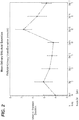
- Table 2 below, lists mean urine uric acid excretion and calculated mean changes through the course of the study.
- Figure 2 illustrates said mean uric acid excretion ( ⁇ standard deviation) as a function of study day.
- Table 2 Urine Urate Excretion (mmole/day)- 12 patients Mean (mmol/d) Mean Change from Day-1 ( ⁇ mol/d) Day -1 4.047 - Day 1 5.068 0.796 Day 2 4.544 0.273 Day 13 4.319 0.048 Day 14 4.208 -0.064 Day 15 6.836 2.633 Day 16 5.642 1.440 Day 17 4.807 0.605
- Mean urinary urate excretion (mmol/day) increased compared to baseline on Days 1, 2, and 13 (by approximately 19%, 6%, and 1%, respectively) during treatment with canagliflozin alone.
- mean urinary urate excretion increased (by approximately 63% from baseline), and then declined towards baseline levels on Day 16 and Day 17 during continued probenecid co-administration (to 34% and 14% increase from baseline).
Landscapes
- Health & Medical Sciences (AREA)
- Life Sciences & Earth Sciences (AREA)
- Chemical & Material Sciences (AREA)
- Medicinal Chemistry (AREA)
- Pharmacology & Pharmacy (AREA)
- Animal Behavior & Ethology (AREA)
- General Health & Medical Sciences (AREA)
- Public Health (AREA)
- Veterinary Medicine (AREA)
- Epidemiology (AREA)
- Molecular Biology (AREA)
- Pain & Pain Management (AREA)
- Engineering & Computer Science (AREA)
- Bioinformatics & Cheminformatics (AREA)
- Physical Education & Sports Medicine (AREA)
- Chemical Kinetics & Catalysis (AREA)
- General Chemical & Material Sciences (AREA)
- Nuclear Medicine, Radiotherapy & Molecular Imaging (AREA)
- Organic Chemistry (AREA)
- Rheumatology (AREA)
- Pharmaceuticals Containing Other Organic And Inorganic Compounds (AREA)
- Acyclic And Carbocyclic Compounds In Medicinal Compositions (AREA)
Applications Claiming Priority (2)
| Application Number | Priority Date | Filing Date | Title |
|---|---|---|---|
| US201361786738P | 2013-03-15 | 2013-03-15 | |
| PCT/US2014/020958 WO2014149789A1 (en) | 2013-03-15 | 2014-03-06 | Combination of canagliflozin and probenecid for the treament of hyperuricemia |
Publications (2)
| Publication Number | Publication Date |
|---|---|
| EP2968235A1 EP2968235A1 (en) | 2016-01-20 |
| EP2968235B1 true EP2968235B1 (en) | 2017-09-13 |
Family
ID=50483479
Family Applications (1)
| Application Number | Title | Priority Date | Filing Date |
|---|---|---|---|
| EP14717246.4A Active EP2968235B1 (en) | 2013-03-15 | 2014-03-06 | Combination of canagliflozin and probenecid for the treatment of hyperuricemia |
Country Status (6)
| Country | Link |
|---|---|
| US (2) | US20160022632A1 (enExample) |
| EP (1) | EP2968235B1 (enExample) |
| JP (2) | JP2016512817A (enExample) |
| CA (1) | CA2907079C (enExample) |
| ES (1) | ES2647526T3 (enExample) |
| WO (1) | WO2014149789A1 (enExample) |
Families Citing this family (10)
| Publication number | Priority date | Publication date | Assignee | Title |
|---|---|---|---|---|
| CN105548378B (zh) * | 2015-12-03 | 2017-12-26 | 上海应用技术学院 | 一种卡格列净α、β异构体的分离方法 |
| WO2019087239A1 (ja) * | 2017-10-30 | 2019-05-09 | 合同会社カルナヘルスサポート | 腎症治療剤 |
| US11547685B2 (en) * | 2017-12-11 | 2023-01-10 | Mayo Foundation For Medical Education And Research | Using probenecid to treat polycystic kidney disease |
| US11554112B2 (en) | 2018-06-07 | 2023-01-17 | Herum Therapeutics International Limited | Combinations of β-lactam compounds and probenecid and uses thereof |
| CN113164439A (zh) | 2018-12-06 | 2021-07-23 | 安索治疗公司 | 用于治疗或预防痛风或高尿酸血症的方法 |
| JP2022511800A (ja) | 2018-12-06 | 2022-02-01 | アースローシ セラピューティクス,インク. | 痛風または高尿酸血症を処置または予防するための化合物の結晶形態 |
| CN112739330A (zh) | 2019-02-13 | 2021-04-30 | 伊泰伦治疗国际有限公司 | β-内酰胺化合物和丙磺舒的组合及其用途 |
| CN111057049B (zh) * | 2019-11-18 | 2021-06-01 | 杭州华东医药集团新药研究院有限公司 | 一种卡格列净半水化合物的制备方法 |
| KR20230024354A (ko) * | 2020-06-10 | 2023-02-20 | 아쓰로시 테라퓨틱스, 인크. | 만성 신장 질환을 치료 또는 예방하는 방법 |
| CN112957318A (zh) * | 2021-02-02 | 2021-06-15 | 河北科星药业有限公司 | 丙磺舒溶液及其制备方法 |
Family Cites Families (4)
| Publication number | Priority date | Publication date | Assignee | Title |
|---|---|---|---|---|
| CN104109155A (zh) | 2003-08-01 | 2014-10-22 | 田边三菱制药株式会社 | 新颖化合物 |
| UY30730A1 (es) | 2006-12-04 | 2008-07-03 | Mitsubishi Tanabe Pharma Corp | Forma cristalina del hemihidrato de 1-(b (beta)-d-glucopiranosil) -4-metil-3-[5-(4-fluorofenil) -2-tienilmetil]benceno |
| EP2291189B1 (en) * | 2008-05-22 | 2014-10-01 | AstraZeneca AB | Method for treating hyperuricemia employing an sglt2 inhibitor and composition containing same |
| JP2013523681A (ja) * | 2010-03-30 | 2013-06-17 | ベーリンガー インゲルハイム インターナショナル ゲゼルシャフト ミット ベシュレンクテル ハフツング | Sglt2インヒビター及びppar−ガンマアゴニストを含む医薬組成物並びにその使用 |
-
2014
- 2014-03-06 WO PCT/US2014/020958 patent/WO2014149789A1/en not_active Ceased
- 2014-03-06 US US14/774,779 patent/US20160022632A1/en not_active Abandoned
- 2014-03-06 CA CA2907079A patent/CA2907079C/en active Active
- 2014-03-06 ES ES14717246.4T patent/ES2647526T3/es active Active
- 2014-03-06 JP JP2016500694A patent/JP2016512817A/ja not_active Withdrawn
- 2014-03-06 EP EP14717246.4A patent/EP2968235B1/en active Active
-
2017
- 2017-09-07 US US15/698,062 patent/US20170368025A1/en not_active Abandoned
-
2019
- 2019-02-12 JP JP2019022272A patent/JP2019089825A/ja active Pending
Non-Patent Citations (1)
| Title |
|---|
| None * |
Also Published As
| Publication number | Publication date |
|---|---|
| CA2907079C (en) | 2021-06-22 |
| WO2014149789A1 (en) | 2014-09-25 |
| US20160022632A1 (en) | 2016-01-28 |
| ES2647526T3 (es) | 2017-12-22 |
| EP2968235A1 (en) | 2016-01-20 |
| US20170368025A1 (en) | 2017-12-28 |
| JP2019089825A (ja) | 2019-06-13 |
| JP2016512817A (ja) | 2016-05-09 |
| CA2907079A1 (en) | 2014-09-25 |
Similar Documents
| Publication | Publication Date | Title |
|---|---|---|
| CA2907079C (en) | Combination of canagliflozin and probenecid for the treatment of hyperuricemia | |
| CN102834099B (zh) | Dgat1抑制剂的用途 | |
| EP2291189B1 (en) | Method for treating hyperuricemia employing an sglt2 inhibitor and composition containing same | |
| US7834056B2 (en) | Pharmaceutical composition for gout | |
| US20030055027A1 (en) | Epoxy-steroidal aldosterone antagonist and calcium channel blocker combination therapy for treatment of congestive heart failure | |
| CA2737163C (en) | Methods of treatment of hyperuricemia and associated disease states | |
| TW201249432A (en) | Methods and compositions for treating hyperuricemia and metabolic disorders associated with hyperuricemia | |
| UA122974C2 (uk) | Комбінований лікарський засіб, який містить канагліфлозин і фентермін, для лікування ожиріння й пов'язаних з ожирінням порушень | |
| Wehring et al. | Diabetes mellitus associated with clozapine therapy | |
| EP1385509A1 (en) | Method of treatment | |
| US20070287685A1 (en) | Medicinal composition containing FBPase inhibitor | |
| JPH11507012A (ja) | 心臓血管系病気の処置におけるアンギオテンシン変換酵素阻害薬と副作用軽減量のアルドステロン拮抗薬との組合わせ治療 | |
| JP7668386B2 (ja) | 1-(3-シアノ-1-イソプロピル-インドール-5-イル)ピラゾール-4-カルボン酸を含む薬学的組成物 | |
| WO2007007757A1 (ja) | PPARγアゴニストを含有する医薬組成物 | |
| JP2616845B2 (ja) | システノール酸又はその胆汁酸抱合体を含有する血中コレステロール低下剤 | |
| WO2024141073A1 (en) | Pharmaceutical combinations and compositions, and methods of use thereof | |
| CN112512526B (zh) | 化合物a与化合物b联合在制备治疗痛风或高尿酸血症的药物中的用途 | |
| JPH01216931A (ja) | 血中尿酸濃度低減用治療剤 | |
| Hassan | Drugs Used in GOUT | |
| TW202103709A (zh) | 用於治療患有慢性腎臟病之對象的方法 | |
| HK40044975A (en) | Joint use of compound a and compound b in preparation of medications for treatment of gout or hyperuricemia | |
| WO1999007412A1 (en) | Remedies for diseases associated with bone resorption | |
| EP1990053A1 (en) | Pharmaceutical composition for enhancing adiponectin production | |
| HK1080381A (en) | Drug composition for prevention or inhibition of advance of diabetic complication |
Legal Events
| Date | Code | Title | Description |
|---|---|---|---|
| PUAI | Public reference made under article 153(3) epc to a published international application that has entered the european phase |
Free format text: ORIGINAL CODE: 0009012 |
|
| 17P | Request for examination filed |
Effective date: 20151007 |
|
| AK | Designated contracting states |
Kind code of ref document: A1 Designated state(s): AL AT BE BG CH CY CZ DE DK EE ES FI FR GB GR HR HU IE IS IT LI LT LU LV MC MK MT NL NO PL PT RO RS SE SI SK SM TR |
|
| AX | Request for extension of the european patent |
Extension state: BA ME |
|
| 17Q | First examination report despatched |
Effective date: 20160708 |
|
| GRAP | Despatch of communication of intention to grant a patent |
Free format text: ORIGINAL CODE: EPIDOSNIGR1 |
|
| INTG | Intention to grant announced |
Effective date: 20161103 |
|
| GRAJ | Information related to disapproval of communication of intention to grant by the applicant or resumption of examination proceedings by the epo deleted |
Free format text: ORIGINAL CODE: EPIDOSDIGR1 |
|
| GRAP | Despatch of communication of intention to grant a patent |
Free format text: ORIGINAL CODE: EPIDOSNIGR1 |
|
| INTG | Intention to grant announced |
Effective date: 20170324 |
|
| GRAS | Grant fee paid |
Free format text: ORIGINAL CODE: EPIDOSNIGR3 |
|
| GRAA | (expected) grant |
Free format text: ORIGINAL CODE: 0009210 |
|
| AK | Designated contracting states |
Kind code of ref document: B1 Designated state(s): AL AT BE BG CH CY CZ DE DK EE ES FI FR GB GR HR HU IE IS IT LI LT LU LV MC MK MT NL NO PL PT RO RS SE SI SK SM TR |
|
| AX | Request for extension of the european patent |
Extension state: BA ME |
|
| REG | Reference to a national code |
Ref country code: GB Ref legal event code: FG4D |
|
| REG | Reference to a national code |
Ref country code: CH Ref legal event code: EP Ref country code: CH Ref legal event code: NV Representative=s name: E. BLUM AND CO. AG PATENT- UND MARKENANWAELTE , CH |
|
| REG | Reference to a national code |
Ref country code: IE Ref legal event code: FG4D |
|
| REG | Reference to a national code |
Ref country code: AT Ref legal event code: REF Ref document number: 927490 Country of ref document: AT Kind code of ref document: T Effective date: 20171015 |
|
| REG | Reference to a national code |
Ref country code: DE Ref legal event code: R096 Ref document number: 602014014538 Country of ref document: DE |
|
| REG | Reference to a national code |
Ref country code: ES Ref legal event code: FG2A Ref document number: 2647526 Country of ref document: ES Kind code of ref document: T3 Effective date: 20171222 |
|
| REG | Reference to a national code |
Ref country code: NL Ref legal event code: MP Effective date: 20170913 |
|
| REG | Reference to a national code |
Ref country code: LT Ref legal event code: MG4D |
|
| PG25 | Lapsed in a contracting state [announced via postgrant information from national office to epo] |
Ref country code: HR Free format text: LAPSE BECAUSE OF FAILURE TO SUBMIT A TRANSLATION OF THE DESCRIPTION OR TO PAY THE FEE WITHIN THE PRESCRIBED TIME-LIMIT Effective date: 20170913 Ref country code: LT Free format text: LAPSE BECAUSE OF FAILURE TO SUBMIT A TRANSLATION OF THE DESCRIPTION OR TO PAY THE FEE WITHIN THE PRESCRIBED TIME-LIMIT Effective date: 20170913 Ref country code: NO Free format text: LAPSE BECAUSE OF FAILURE TO SUBMIT A TRANSLATION OF THE DESCRIPTION OR TO PAY THE FEE WITHIN THE PRESCRIBED TIME-LIMIT Effective date: 20171213 Ref country code: SE Free format text: LAPSE BECAUSE OF FAILURE TO SUBMIT A TRANSLATION OF THE DESCRIPTION OR TO PAY THE FEE WITHIN THE PRESCRIBED TIME-LIMIT Effective date: 20170913 Ref country code: FI Free format text: LAPSE BECAUSE OF FAILURE TO SUBMIT A TRANSLATION OF THE DESCRIPTION OR TO PAY THE FEE WITHIN THE PRESCRIBED TIME-LIMIT Effective date: 20170913 |
|
| REG | Reference to a national code |
Ref country code: AT Ref legal event code: MK05 Ref document number: 927490 Country of ref document: AT Kind code of ref document: T Effective date: 20170913 |
|
| REG | Reference to a national code |
Ref country code: FR Ref legal event code: PLFP Year of fee payment: 5 |
|
| PG25 | Lapsed in a contracting state [announced via postgrant information from national office to epo] |
Ref country code: BG Free format text: LAPSE BECAUSE OF FAILURE TO SUBMIT A TRANSLATION OF THE DESCRIPTION OR TO PAY THE FEE WITHIN THE PRESCRIBED TIME-LIMIT Effective date: 20171213 Ref country code: LV Free format text: LAPSE BECAUSE OF FAILURE TO SUBMIT A TRANSLATION OF THE DESCRIPTION OR TO PAY THE FEE WITHIN THE PRESCRIBED TIME-LIMIT Effective date: 20170913 Ref country code: RS Free format text: LAPSE BECAUSE OF FAILURE TO SUBMIT A TRANSLATION OF THE DESCRIPTION OR TO PAY THE FEE WITHIN THE PRESCRIBED TIME-LIMIT Effective date: 20170913 Ref country code: GR Free format text: LAPSE BECAUSE OF FAILURE TO SUBMIT A TRANSLATION OF THE DESCRIPTION OR TO PAY THE FEE WITHIN THE PRESCRIBED TIME-LIMIT Effective date: 20171214 |
|
| PG25 | Lapsed in a contracting state [announced via postgrant information from national office to epo] |
Ref country code: NL Free format text: LAPSE BECAUSE OF FAILURE TO SUBMIT A TRANSLATION OF THE DESCRIPTION OR TO PAY THE FEE WITHIN THE PRESCRIBED TIME-LIMIT Effective date: 20170913 |
|
| PG25 | Lapsed in a contracting state [announced via postgrant information from national office to epo] |
Ref country code: RO Free format text: LAPSE BECAUSE OF FAILURE TO SUBMIT A TRANSLATION OF THE DESCRIPTION OR TO PAY THE FEE WITHIN THE PRESCRIBED TIME-LIMIT Effective date: 20170913 Ref country code: PL Free format text: LAPSE BECAUSE OF FAILURE TO SUBMIT A TRANSLATION OF THE DESCRIPTION OR TO PAY THE FEE WITHIN THE PRESCRIBED TIME-LIMIT Effective date: 20170913 Ref country code: CZ Free format text: LAPSE BECAUSE OF FAILURE TO SUBMIT A TRANSLATION OF THE DESCRIPTION OR TO PAY THE FEE WITHIN THE PRESCRIBED TIME-LIMIT Effective date: 20170913 |
|
| PG25 | Lapsed in a contracting state [announced via postgrant information from national office to epo] |
Ref country code: AT Free format text: LAPSE BECAUSE OF FAILURE TO SUBMIT A TRANSLATION OF THE DESCRIPTION OR TO PAY THE FEE WITHIN THE PRESCRIBED TIME-LIMIT Effective date: 20170913 Ref country code: EE Free format text: LAPSE BECAUSE OF FAILURE TO SUBMIT A TRANSLATION OF THE DESCRIPTION OR TO PAY THE FEE WITHIN THE PRESCRIBED TIME-LIMIT Effective date: 20170913 Ref country code: IS Free format text: LAPSE BECAUSE OF FAILURE TO SUBMIT A TRANSLATION OF THE DESCRIPTION OR TO PAY THE FEE WITHIN THE PRESCRIBED TIME-LIMIT Effective date: 20180113 Ref country code: SM Free format text: LAPSE BECAUSE OF FAILURE TO SUBMIT A TRANSLATION OF THE DESCRIPTION OR TO PAY THE FEE WITHIN THE PRESCRIBED TIME-LIMIT Effective date: 20170913 Ref country code: SK Free format text: LAPSE BECAUSE OF FAILURE TO SUBMIT A TRANSLATION OF THE DESCRIPTION OR TO PAY THE FEE WITHIN THE PRESCRIBED TIME-LIMIT Effective date: 20170913 |
|
| REG | Reference to a national code |
Ref country code: DE Ref legal event code: R097 Ref document number: 602014014538 Country of ref document: DE |
|
| PLBE | No opposition filed within time limit |
Free format text: ORIGINAL CODE: 0009261 |
|
| STAA | Information on the status of an ep patent application or granted ep patent |
Free format text: STATUS: NO OPPOSITION FILED WITHIN TIME LIMIT |
|
| PG25 | Lapsed in a contracting state [announced via postgrant information from national office to epo] |
Ref country code: DK Free format text: LAPSE BECAUSE OF FAILURE TO SUBMIT A TRANSLATION OF THE DESCRIPTION OR TO PAY THE FEE WITHIN THE PRESCRIBED TIME-LIMIT Effective date: 20170913 |
|
| 26N | No opposition filed |
Effective date: 20180614 |
|
| PG25 | Lapsed in a contracting state [announced via postgrant information from national office to epo] |
Ref country code: MC Free format text: LAPSE BECAUSE OF FAILURE TO SUBMIT A TRANSLATION OF THE DESCRIPTION OR TO PAY THE FEE WITHIN THE PRESCRIBED TIME-LIMIT Effective date: 20170913 Ref country code: SI Free format text: LAPSE BECAUSE OF FAILURE TO SUBMIT A TRANSLATION OF THE DESCRIPTION OR TO PAY THE FEE WITHIN THE PRESCRIBED TIME-LIMIT Effective date: 20170913 |
|
| REG | Reference to a national code |
Ref country code: IE Ref legal event code: MM4A |
|
| PG25 | Lapsed in a contracting state [announced via postgrant information from national office to epo] |
Ref country code: LU Free format text: LAPSE BECAUSE OF NON-PAYMENT OF DUE FEES Effective date: 20180306 |
|
| PG25 | Lapsed in a contracting state [announced via postgrant information from national office to epo] |
Ref country code: IE Free format text: LAPSE BECAUSE OF NON-PAYMENT OF DUE FEES Effective date: 20180306 |
|
| PG25 | Lapsed in a contracting state [announced via postgrant information from national office to epo] |
Ref country code: MT Free format text: LAPSE BECAUSE OF NON-PAYMENT OF DUE FEES Effective date: 20180306 |
|
| PG25 | Lapsed in a contracting state [announced via postgrant information from national office to epo] |
Ref country code: TR Free format text: LAPSE BECAUSE OF FAILURE TO SUBMIT A TRANSLATION OF THE DESCRIPTION OR TO PAY THE FEE WITHIN THE PRESCRIBED TIME-LIMIT Effective date: 20170913 |
|
| PG25 | Lapsed in a contracting state [announced via postgrant information from national office to epo] |
Ref country code: PT Free format text: LAPSE BECAUSE OF FAILURE TO SUBMIT A TRANSLATION OF THE DESCRIPTION OR TO PAY THE FEE WITHIN THE PRESCRIBED TIME-LIMIT Effective date: 20170913 |
|
| PG25 | Lapsed in a contracting state [announced via postgrant information from national office to epo] |
Ref country code: CY Free format text: LAPSE BECAUSE OF FAILURE TO SUBMIT A TRANSLATION OF THE DESCRIPTION OR TO PAY THE FEE WITHIN THE PRESCRIBED TIME-LIMIT Effective date: 20170913 Ref country code: MK Free format text: LAPSE BECAUSE OF NON-PAYMENT OF DUE FEES Effective date: 20170913 Ref country code: HU Free format text: LAPSE BECAUSE OF FAILURE TO SUBMIT A TRANSLATION OF THE DESCRIPTION OR TO PAY THE FEE WITHIN THE PRESCRIBED TIME-LIMIT; INVALID AB INITIO Effective date: 20140306 |
|
| PG25 | Lapsed in a contracting state [announced via postgrant information from national office to epo] |
Ref country code: AL Free format text: LAPSE BECAUSE OF FAILURE TO SUBMIT A TRANSLATION OF THE DESCRIPTION OR TO PAY THE FEE WITHIN THE PRESCRIBED TIME-LIMIT Effective date: 20170913 |
|
| P01 | Opt-out of the competence of the unified patent court (upc) registered |
Effective date: 20230527 |
|
| REG | Reference to a national code |
Ref country code: CH Ref legal event code: U11 Free format text: ST27 STATUS EVENT CODE: U-0-0-U10-U11 (AS PROVIDED BY THE NATIONAL OFFICE) Effective date: 20260401 |
|
| PGFP | Annual fee paid to national office [announced via postgrant information from national office to epo] |
Ref country code: GB Payment date: 20260202 Year of fee payment: 13 |
|
| PGFP | Annual fee paid to national office [announced via postgrant information from national office to epo] |
Ref country code: DE Payment date: 20260204 Year of fee payment: 13 |
|
| PGFP | Annual fee paid to national office [announced via postgrant information from national office to epo] |
Ref country code: BE Payment date: 20260216 Year of fee payment: 13 Ref country code: IT Payment date: 20260220 Year of fee payment: 13 |
|
| PGFP | Annual fee paid to national office [announced via postgrant information from national office to epo] |
Ref country code: FR Payment date: 20260209 Year of fee payment: 13 |
|
| PGFP | Annual fee paid to national office [announced via postgrant information from national office to epo] |
Ref country code: ES Payment date: 20260414 Year of fee payment: 13 |
|
| PGFP | Annual fee paid to national office [announced via postgrant information from national office to epo] |
Ref country code: CH Payment date: 20260401 Year of fee payment: 13 |