EP2961804B1 - Kratz- und abriebfeste uv-licht-blockierende glasbeschichtung - Google Patents
Kratz- und abriebfeste uv-licht-blockierende glasbeschichtung Download PDFInfo
- Publication number
- EP2961804B1 EP2961804B1 EP14705959.6A EP14705959A EP2961804B1 EP 2961804 B1 EP2961804 B1 EP 2961804B1 EP 14705959 A EP14705959 A EP 14705959A EP 2961804 B1 EP2961804 B1 EP 2961804B1
- Authority
- EP
- European Patent Office
- Prior art keywords
- blend
- coupling agent
- silane coupling
- absorber
- functional silane
- Prior art date
- Legal status (The legal status is an assumption and is not a legal conclusion. Google has not performed a legal analysis and makes no representation as to the accuracy of the status listed.)
- Active
Links
Images

Classifications
-
- C—CHEMISTRY; METALLURGY
- C09—DYES; PAINTS; POLISHES; NATURAL RESINS; ADHESIVES; COMPOSITIONS NOT OTHERWISE PROVIDED FOR; APPLICATIONS OF MATERIALS NOT OTHERWISE PROVIDED FOR
- C09D—COATING COMPOSITIONS, e.g. PAINTS, VARNISHES OR LACQUERS; FILLING PASTES; CHEMICAL PAINT OR INK REMOVERS; INKS; CORRECTING FLUIDS; WOODSTAINS; PASTES OR SOLIDS FOR COLOURING OR PRINTING; USE OF MATERIALS THEREFOR
- C09D183/00—Coating compositions based on macromolecular compounds obtained by reactions forming in the main chain of the macromolecule a linkage containing silicon, with or without sulfur, nitrogen, oxygen, or carbon only; Coating compositions based on derivatives of such polymers
- C09D183/02—Polysilicates
-
- C—CHEMISTRY; METALLURGY
- C09—DYES; PAINTS; POLISHES; NATURAL RESINS; ADHESIVES; COMPOSITIONS NOT OTHERWISE PROVIDED FOR; APPLICATIONS OF MATERIALS NOT OTHERWISE PROVIDED FOR
- C09D—COATING COMPOSITIONS, e.g. PAINTS, VARNISHES OR LACQUERS; FILLING PASTES; CHEMICAL PAINT OR INK REMOVERS; INKS; CORRECTING FLUIDS; WOODSTAINS; PASTES OR SOLIDS FOR COLOURING OR PRINTING; USE OF MATERIALS THEREFOR
- C09D183/00—Coating compositions based on macromolecular compounds obtained by reactions forming in the main chain of the macromolecule a linkage containing silicon, with or without sulfur, nitrogen, oxygen, or carbon only; Coating compositions based on derivatives of such polymers
- C09D183/04—Polysiloxanes
- C09D183/06—Polysiloxanes containing silicon bound to oxygen-containing groups
-
- C—CHEMISTRY; METALLURGY
- C03—GLASS; MINERAL OR SLAG WOOL
- C03C—CHEMICAL COMPOSITION OF GLASSES, GLAZES OR VITREOUS ENAMELS; SURFACE TREATMENT OF GLASS; SURFACE TREATMENT OF FIBRES OR FILAMENTS MADE FROM GLASS, MINERALS OR SLAGS; JOINING GLASS TO GLASS OR OTHER MATERIALS
- C03C17/00—Surface treatment of glass, not in the form of fibres or filaments, by coating
- C03C17/006—Surface treatment of glass, not in the form of fibres or filaments, by coating with materials of composite character
- C03C17/007—Surface treatment of glass, not in the form of fibres or filaments, by coating with materials of composite character containing a dispersed phase, e.g. particles, fibres or flakes, in a continuous phase
-
- C—CHEMISTRY; METALLURGY
- C03—GLASS; MINERAL OR SLAG WOOL
- C03C—CHEMICAL COMPOSITION OF GLASSES, GLAZES OR VITREOUS ENAMELS; SURFACE TREATMENT OF GLASS; SURFACE TREATMENT OF FIBRES OR FILAMENTS MADE FROM GLASS, MINERALS OR SLAGS; JOINING GLASS TO GLASS OR OTHER MATERIALS
- C03C17/00—Surface treatment of glass, not in the form of fibres or filaments, by coating
- C03C17/006—Surface treatment of glass, not in the form of fibres or filaments, by coating with materials of composite character
- C03C17/008—Surface treatment of glass, not in the form of fibres or filaments, by coating with materials of composite character comprising a mixture of materials covered by two or more of the groups C03C17/02, C03C17/06, C03C17/22 and C03C17/28
- C03C17/009—Mixtures of organic and inorganic materials, e.g. ormosils and ormocers
-
- C—CHEMISTRY; METALLURGY
- C08—ORGANIC MACROMOLECULAR COMPOUNDS; THEIR PREPARATION OR CHEMICAL WORKING-UP; COMPOSITIONS BASED THEREON
- C08K—Use of inorganic or non-macromolecular organic substances as compounding ingredients
- C08K3/00—Use of inorganic substances as compounding ingredients
- C08K3/34—Silicon-containing compounds
- C08K3/36—Silica
-
- C—CHEMISTRY; METALLURGY
- C08—ORGANIC MACROMOLECULAR COMPOUNDS; THEIR PREPARATION OR CHEMICAL WORKING-UP; COMPOSITIONS BASED THEREON
- C08K—Use of inorganic or non-macromolecular organic substances as compounding ingredients
- C08K5/00—Use of organic ingredients
- C08K5/0008—Organic ingredients according to more than one of the "one dot" groups of C08K5/01 - C08K5/59
- C08K5/005—Stabilisers against oxidation, heat, light, ozone
-
- C—CHEMISTRY; METALLURGY
- C08—ORGANIC MACROMOLECULAR COMPOUNDS; THEIR PREPARATION OR CHEMICAL WORKING-UP; COMPOSITIONS BASED THEREON
- C08K—Use of inorganic or non-macromolecular organic substances as compounding ingredients
- C08K5/00—Use of organic ingredients
- C08K5/04—Oxygen-containing compounds
- C08K5/13—Phenols; Phenolates
- C08K5/132—Phenols containing keto groups, e.g. benzophenones
-
- C—CHEMISTRY; METALLURGY
- C08—ORGANIC MACROMOLECULAR COMPOUNDS; THEIR PREPARATION OR CHEMICAL WORKING-UP; COMPOSITIONS BASED THEREON
- C08K—Use of inorganic or non-macromolecular organic substances as compounding ingredients
- C08K5/00—Use of organic ingredients
- C08K5/54—Silicon-containing compounds
- C08K5/541—Silicon-containing compounds containing oxygen
- C08K5/5415—Silicon-containing compounds containing oxygen containing at least one Si—O bond
- C08K5/5419—Silicon-containing compounds containing oxygen containing at least one Si—O bond containing at least one Si—C bond
-
- C—CHEMISTRY; METALLURGY
- C08—ORGANIC MACROMOLECULAR COMPOUNDS; THEIR PREPARATION OR CHEMICAL WORKING-UP; COMPOSITIONS BASED THEREON
- C08L—COMPOSITIONS OF MACROMOLECULAR COMPOUNDS
- C08L83/00—Compositions of macromolecular compounds obtained by reactions forming in the main chain of the macromolecule a linkage containing silicon with or without sulfur, nitrogen, oxygen or carbon only; Compositions of derivatives of such polymers
-
- C—CHEMISTRY; METALLURGY
- C08—ORGANIC MACROMOLECULAR COMPOUNDS; THEIR PREPARATION OR CHEMICAL WORKING-UP; COMPOSITIONS BASED THEREON
- C08L—COMPOSITIONS OF MACROMOLECULAR COMPOUNDS
- C08L83/00—Compositions of macromolecular compounds obtained by reactions forming in the main chain of the macromolecule a linkage containing silicon with or without sulfur, nitrogen, oxygen or carbon only; Compositions of derivatives of such polymers
- C08L83/02—Polysilicates
-
- C—CHEMISTRY; METALLURGY
- C03—GLASS; MINERAL OR SLAG WOOL
- C03C—CHEMICAL COMPOSITION OF GLASSES, GLAZES OR VITREOUS ENAMELS; SURFACE TREATMENT OF GLASS; SURFACE TREATMENT OF FIBRES OR FILAMENTS MADE FROM GLASS, MINERALS OR SLAGS; JOINING GLASS TO GLASS OR OTHER MATERIALS
- C03C2217/00—Coatings on glass
- C03C2217/40—Coatings comprising at least one inhomogeneous layer
- C03C2217/43—Coatings comprising at least one inhomogeneous layer consisting of a dispersed phase in a continuous phase
- C03C2217/44—Coatings comprising at least one inhomogeneous layer consisting of a dispersed phase in a continuous phase characterized by the composition of the continuous phase
-
- C—CHEMISTRY; METALLURGY
- C03—GLASS; MINERAL OR SLAG WOOL
- C03C—CHEMICAL COMPOSITION OF GLASSES, GLAZES OR VITREOUS ENAMELS; SURFACE TREATMENT OF GLASS; SURFACE TREATMENT OF FIBRES OR FILAMENTS MADE FROM GLASS, MINERALS OR SLAGS; JOINING GLASS TO GLASS OR OTHER MATERIALS
- C03C2217/00—Coatings on glass
- C03C2217/40—Coatings comprising at least one inhomogeneous layer
- C03C2217/43—Coatings comprising at least one inhomogeneous layer consisting of a dispersed phase in a continuous phase
- C03C2217/46—Coatings comprising at least one inhomogeneous layer consisting of a dispersed phase in a continuous phase characterized by the dispersed phase
- C03C2217/47—Coatings comprising at least one inhomogeneous layer consisting of a dispersed phase in a continuous phase characterized by the dispersed phase consisting of a specific material
- C03C2217/475—Inorganic materials
- C03C2217/478—Silica
-
- C—CHEMISTRY; METALLURGY
- C03—GLASS; MINERAL OR SLAG WOOL
- C03C—CHEMICAL COMPOSITION OF GLASSES, GLAZES OR VITREOUS ENAMELS; SURFACE TREATMENT OF GLASS; SURFACE TREATMENT OF FIBRES OR FILAMENTS MADE FROM GLASS, MINERALS OR SLAGS; JOINING GLASS TO GLASS OR OTHER MATERIALS
- C03C2217/00—Coatings on glass
- C03C2217/40—Coatings comprising at least one inhomogeneous layer
- C03C2217/43—Coatings comprising at least one inhomogeneous layer consisting of a dispersed phase in a continuous phase
- C03C2217/46—Coatings comprising at least one inhomogeneous layer consisting of a dispersed phase in a continuous phase characterized by the dispersed phase
- C03C2217/48—Coatings comprising at least one inhomogeneous layer consisting of a dispersed phase in a continuous phase characterized by the dispersed phase having a specific function
- C03C2217/485—Pigments
-
- C—CHEMISTRY; METALLURGY
- C03—GLASS; MINERAL OR SLAG WOOL
- C03C—CHEMICAL COMPOSITION OF GLASSES, GLAZES OR VITREOUS ENAMELS; SURFACE TREATMENT OF GLASS; SURFACE TREATMENT OF FIBRES OR FILAMENTS MADE FROM GLASS, MINERALS OR SLAGS; JOINING GLASS TO GLASS OR OTHER MATERIALS
- C03C2217/00—Coatings on glass
- C03C2217/70—Properties of coatings
- C03C2217/74—UV-absorbing coatings
-
- C—CHEMISTRY; METALLURGY
- C03—GLASS; MINERAL OR SLAG WOOL
- C03C—CHEMICAL COMPOSITION OF GLASSES, GLAZES OR VITREOUS ENAMELS; SURFACE TREATMENT OF GLASS; SURFACE TREATMENT OF FIBRES OR FILAMENTS MADE FROM GLASS, MINERALS OR SLAGS; JOINING GLASS TO GLASS OR OTHER MATERIALS
- C03C2217/00—Coatings on glass
- C03C2217/70—Properties of coatings
- C03C2217/78—Coatings specially designed to be durable, e.g. scratch-resistant
-
- C—CHEMISTRY; METALLURGY
- C03—GLASS; MINERAL OR SLAG WOOL
- C03C—CHEMICAL COMPOSITION OF GLASSES, GLAZES OR VITREOUS ENAMELS; SURFACE TREATMENT OF GLASS; SURFACE TREATMENT OF FIBRES OR FILAMENTS MADE FROM GLASS, MINERALS OR SLAGS; JOINING GLASS TO GLASS OR OTHER MATERIALS
- C03C2218/00—Methods for coating glass
- C03C2218/10—Deposition methods
- C03C2218/11—Deposition methods from solutions or suspensions
- C03C2218/118—Deposition methods from solutions or suspensions by roller-coating
Definitions
- the present invention relates to UV blocking coatings for glass that are scratch and abrasion resistant, and to methods of producing the same.
- the glass coatings may be used for applications which benefit from both UV blocking and scratch resistance, such as art displays, glazing for picture frames and photographs, architectural and window glazing, opthalmic lenses, automotive glass and sunglasses.
- Organic polymer coatings such as acrylics and urethanes, can efficiently block ultraviolet ("UV") radiation.
- UV ultraviolet
- organic polymer coatings can be soft and scratch easily, when compared to an uncoated glass surface.
- inorganic materials such as vacuum deposited ceramic oxide optical coatings, can be hard and scratch resistant. Inorganic materials, however, do not efficiently block UV radiation and can result in an undesirable yellow appearance in various applications, including when used to glaze artwork.
- the UV coatings can include a UV absorber that has compounds to absorb radiation of wavelengths starting in the near visible portion of the electromagnetic spectrum, which has a wavelength of around 400 nanometers, to the so-called vacuum ultraviolet portion of the spectrum, which can travel through a vacuum but is blocked by air and has a wavelength of around 200 nanometers in wavelength.
- UV absorber that has compounds to absorb radiation of wavelengths starting in the near visible portion of the electromagnetic spectrum, which has a wavelength of around 400 nanometers, to the so-called vacuum ultraviolet portion of the spectrum, which can travel through a vacuum but is blocked by air and has a wavelength of around 200 nanometers in wavelength.
- These UV compounds can be used to protect items underlying transparent, semitransparent, and/or translucent substrates from the degradative effects of ultraviolet radiation absorption.
- abrasion-resistant coatings See, for example, U.S. Patent Nos. 6,649,212 and 6,001,163 .
- Hybrid sol gel or Ormosil coatings have been developed to combine features of both the organic polymer coatings and the inorganic coatings.
- Such hybrid sol-gel coatings can have better scratch resistance than organic polymer coatings and more effectively block UV light when compared to inorganic coatings.
- U.S. Patent No. 5,371,138 discloses a hybrid sol-gel UV blocking coating. This patent also discloses the uses of methyltrimethoxysilane (MTMS) as an inorganic binder and glycols as a stabilizer in uncured resin.
- MTMS methyltrimethoxysilane
- hybrid sol-gel coatings include, but are not limited to, glass panes in paintings, art prints, and the like.
- hybrid sol-gel coatings based upon a formulation of MTMS binder using glycols are not sufficiently scratch resistant and require careful and experienced handling, especially when cutting the coating glass with a hand or wall cutter, and during assembly of an art picture frame. Therefore, further development is needed to improve the scratch and abrasion resistance for the UV blocking glass coatings so that custom picture framers and art glass fabricators can more easily handle the coated glass products.
- US 2009/004482 A1 discloses a stabilized colloidal silica solution for coating glass, prepared from a bifuntional silane and a UV stabilizer in a solvent, to which is added TEOS followed by colloidal silica in a solvent.
- Embodiments described herein may provide scratch and abrasion resistant UV blocking glass coatings and methods for preparing the coatings.
- a method for preparing the coatings.
- the method includes some of the following steps: (a) preparing a first blend of aqueous colloidal silica and a solvent selected from glycols and glycol ethers; (b) adding a bi-functional silane coupling agent to the first blend to form a second blend; optionally (c) heating the second blend to a first elevated temperature such that the bi-functional silane coupling agent hydrolyzes to form a mixture of colloidal silica and a first silanol; (d) adding tetraethylorthosilicate (TEOS) to the second blend over a period of time to hydrolyze the TEOS to form a third blend of a second silanol, the first silanol, and the colloidal silica; (e) optionally maintaining the third blend below a second elevated temperature, to avoid over-condensation of silanols; (f) adding a fourth blend to the third blend to form a fifth
- the fourth blend can further include dyes and/or flow agents in the solvent.
- One suitable solvent which has a boiling of 230°C or lower, is 2-propoxyethanol (2-PE), also known as ethylene glycol monopropyl ether or ethylene glycol phenyl ether (EGPE).
- 2-PE 2-propoxyethanol
- EGPE ethylene glycol monopropyl ether
- EGPE ethylene glycol phenyl ether
- Other suitable solvents are alpha-hydroxyl glycol ethers (like 2-propoxyl ethanol).
- Another suitable solvent is propylene glycol.
- any suitable bi-functional silane coupling agent may be used. Suitable examples include glycidoxypropyltrimethoxysilane (GOPS, aka GPMS or GLYMO), or glycidoxypropyltriethoxysilane (GLEO), or isocyanatopropyltrimethoxysilane (Momentive A-1310).
- the UV absorber can be of the benzophenone, benzotriazole, or benzothiazole classes, such as Tinuvin 328, Tinuvin, 928, Tinuvin 1130, 2,2'-dihydroxybenzophone, and includes 2,2',4,4'-tetrahydroxybenzophenone (BP-2).
- the method also includes blending each of the first blend, second blend, third blend, fourth blend, and the fifth blend at temperatures between about 20°C and about 50°C.
- the curing temperature is between about 150°C and about 230°C, more preferably between about 175°C and 200°C.
- the first elevated temperature is about 30°C, while the second elevated temperature is about 60°C, more preferably the first elevated temperature is about 40°C and the second about 50°C.
- the period of time is about one hour.
- a resin for making abrasion and scratch resistant UV blocking glass coating.
- the resin includes an inorganic polysiloxane polymer matrix formed from water-based colloidal silica ranging from about 0% to about 40% by weight, and tetraethylorthosilicate (TEOS) ranging from about 15% to about 40% by weight.
- the resin can also include a bi-functional silane coupling agent coupled to the inorganic polysiloxane polymer matrix, the coupling agent ranging from about 5% to about 15% by weight.
- the resin can further include a UV absorber conjugated to the bi-functional silane coupling agent, where the UV absorber ranges from about 3% to about 7% by weight.
- the resin also includes a solvent ranging from about 0% to about 35% by weight with a boiling point of about 230°C or lower, where the solvent is compatible with the colloidal silica, TEOS, bi-functional silanol agent, and UV absorber.
- the solvent is selected from glycols and glycol ethers. This includes propylene glycol, hexylene glycol, ethylene glycol, butyl cellosolve (aka ethylene glycol monobutyl ether), carbitol (aka diethylene glycol monoethyl ether), methyl carbitol (aka diethylene glycol monomethyl ether), and/or 2-propoxyethanol (2-PE, aka ethylene glycol monopropyl ether or EGPE).
- the UV absorber can include a benzophenone, such as 2,2',4,4'-tetrahydroxybenzophenone (BP-2).
- the bi-functional silane coupling agent can be glycidoxypropyltrimethoxysilane (GOPS), glycidoxypropyltriethoxysilane (GLYEO), and/or Momentive A-1130.
- the resin can include solvent-based colloidal silica ranging from about 0% to about 25% by weight, the solvent-based colloidal silica having about 20-40% SiO2 in the solvent.
- the resin can include solvent at about 0-30% by weight.
- the resin also can include water-based colloidal silica of about 0-40% by weight, the water-based colloidal silica being about 20-40% SiO2 in water.
- the resin further can includes TEOS of about 15-40% by weight, UV absorber of about 3-7% by weight, and the bi-functional silane coupling agent of about 5-20% by weight.
- the resin can also include a flowing agent of about 0-1% by weight, a red dye of about 0-0.05% by weight, and a blue dye of about 0-0.05% by weight.
- the present disclosure may be understood by reference to the following detailed description.
- the present disclosure provides a hybrid inorganic-organic glass coating and method of preparing such a coating.
- the hybrid inorganic-organic glass coating is scratch resistant and also blocks UV radiation without adversely affecting the appearance of glazed artwork.
- the coating can include an inorganic polysiloxane polymer matrix made from colloidal silica and a tetraethylorthosilicate (TEOS) binder or primary monomer.
- TEOS tetraethylorthosilicate
- the hard, inorganic TEOS matrix may be infused with a UV absorbing agent, such as a benzophenone which can conjugate to a bi-functional silane coupling agent, for example, ⁇ -glycidoxypropyltrimethoxysilane (or GOPS, aka GPMS, aka GLYMO).
- a UV absorbing agent such as a benzophenone which can conjugate to a bi-functional silane coupling agent, for example, ⁇ -glycidoxypropyltrimethoxysilane (or GOPS, aka GPMS, aka GLYMO).
- the resin formula using TEOS is compatible with other UV absorbers, and does not require bi-functional organic acids.
- the uncured resin can be diluted in a solvent, such as an alpha-hydroxy glycol or glycol ether, to stabilize the uncured resin.
- a solvent such as an alpha-hydroxy glycol or glycol ether
- the cured coating when cast on a glass and baked at a temperature below about 230°C, such as about 200°C, to a cured film of about 1-5 ⁇ m thick, can block at least about 97% of the UV, and more preferably at least 99% of the UV in the wavelength ranging from about 300 nm to about 380 nm.
- the cured coating is also resistant to scratching, for example, with a metal stylus such as a paper clip, and does not mar when rubbed with fine steel wool, for example, grade #0000.
- the resin can include one or more of colloidal silica, TEOS, an ultraviolet-absorbing material, such as 2, 2', 4, 4' tetrahydroxybenzophenone, a bi-functional silane coupling agent, and a solvent selected from glycol and glycol ethers with a boiling point equal to about 230°C or lower, such as propylene glycol or 2-propoxyethanol (2-PE, aka ethylene glycol monopropyl ether, EGPE).
- the addition of colloidal silica to the resin or coating composition can enhance the abrasion resistance of the cured coating composition, and can also contribute to the overall stability of the coating composition.
- TEOS can increase the cross-linking density of the cured film.
- the bi-functional silane coupling agent can couple the UV absorber to the inorganic polysiloxane polymer matrix or blend of the colloidal silica and TEOS.
- the resin may also include a red dye and a blue dye for correcting the color of a film formed from the resin composition.
- the resin may further include a flowing agent, which can decrease viscosity of the uncured resin before casting on a glass substrate. The resin may be cured at a temperature below about 230 °C, or between about 175°C and about 200°C. The coating then can be formed from the resin on the glass substrate.
- the hybrid inorganic-organic coatings of the present disclosure combine the features of both organic polymer coatings and inorganic coatings.
- the hybrid inorganic-organic coating of the present disclosure both efficiently blocks UV radiation and is scratch resistant.
- the scratch and abrasion resistant coating of the present disclosure provides several benefits over the conventional coating, including that the coating is able to provide at least about 97% or higher protection from UV radiation without adversely impacting transmitted color, while still being hard and resistant to scratching. These coatings are useful for art display applications, because the art display needs to have very hard coatings so that the coatings do not scratch when placed into a metal wall cutter or assembled into a picture frame.
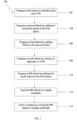
- FIG. 1 is a flow chart illustrating the steps of certain embodiments of the invention for preparing a UV blocking and scratch resistance coating.
- Process 100 starts with preparing a first blend of colloidal silica and 2-PE at operation 102, followed by preparing a second blend by adding bi-functional silane coupling agent to the first blend at operation 104.
- the method continues with preparing a third blend by adding TEOS to the second blend at operation 106, and preparing a fourth blend by adding UV absorber to 2-PE at operation 108, followed by preparing a fifth blend by mixing the third blend and the fourth blend at operation 110.
- the fifth blend can be cast on a glass substrate at operation 112 and cured on the glass substrate at an elevated temperature to form the UV blocking and scratch resistance coating at operation 114.
- each of dyes or flow agent may be added to form the fourth blend with 2-PE and then mixed with the third blend.
- FIG. 2 is an alternative flow chart illustrating steps for preparing resin in accordance with certain embodiments of the present disclosure.
- Process 200 starts with preparing a first blend by mixing UV absorber in 2-PE at operation 202, followed by preparing a second blend by adding bi-functional silane coupling agent to the first blend at operation 204.
- the method continues with preparing a third blend by adding colloidal silica to the second blend at operation 206, and preparing a fourth blend by adding TEOS to the third blend at operation 208, followed by casting the fourth blend on a glass substrate at operation 210 and forming a coating by curing on the glass substrate at operation 212.
- the process for preparing the present resin includes the following steps: (a) Preparing a first blend aqueous colloidal silica (e.g. Nalco -1034A, available from Nalco Company of Naperville, IL, or Nissan ST-O-40, available from Nissan Chemical America Corporation of Houston, TX) with 2-PE, (b) Adding to the first blend a bi-functional silane coupling agent, such as GOPS, in one aliquot to form a second blend, (c) Allowing the second blend to warm to about 40°C, while the bi-functional silane coupling agent such as GOPS hydrolyzes to form a mixture of a colloidal silica and a first silanol, (d) Adding TEOS to the second blend slowly over a period of about 1 hour to hydrolyze the TEOS to form a mixture of the first silanol, a second silanol, and the colloidal silica, which is a third blend, (e) Keeping the third blend below about 50°
- TEOS is harder to process than MTMS.
- One challenge in the processing of TEOS is its solubility.
- the MTMS may be more attractive for use in the hybrid inorganic-organic coating due to its better solubility.
- UV absorber such as BP-2.
- the present disclosure provides solutions to improve solubility of TEOS and the bonding with the UV absorber.
- the present process uses an alpha-hydroxy solvent such as 2-PE or propylene glycol to improve solubility of TEOS.
- This solvent is compatible with each of the components in the resin, including colloidal silica, bi-functional silane coupling agent, UV absorber, dyes, and flowing agents.
- a bi-functional silane coupling agent can couple the UV absorber to the TEOS, and may help improve chemical bonding of TEOS to the UV absorber.
- a blending process may be used to provide uniform blending.
- the blending process may be controlled within a certain temperature range.
- the blending temperature may not be too low, as higher temperature helps with better blending.
- Blending tempertaure should not be so high as to cause polymerization, which can affect viscocity and can affect scratch resistance.
- Blending temperatures may be between about 30°C and about 50°C to provide uniform blending while avoiding polymerization.
- some methanol and ethanol may be created by the hydrolysis reaction of TEOS and the bi-functional silane coupling agent with water from the water-based colloidal silica, and may be lost by evaporation.
- the resin may be cured at a higher temperature to increase scratch resistance.
- curing temperatures may be controlled at about 230°C or below. Lower curing temperatures, below about 200°C, may help reduce the loss of UV absorber BP-2, because the BP-2 is unstable at elevated temperature, and may, for example, evaporate or decompose during curing at temperatures above about 230°C. In one embodiment, the curing temperature may be between about 175°C and about 200°C.
- Colloidal silica may be water-based, for example, Nissan ST-O-40 (available from Nissan Chemical America Corporation of Houston, TX) containing about 40% silicon oxide (SiO 2 ) in water (H 2 O).
- the water-based colloidal silica may range up to about 50% by weight, or about 39% by weight.
- Colloidal silica may be dispersed in an organic alpha-hydroxy solvent with relative lower boiling point, such as 2-propoxyethanol, for example, Nissan NPC-ST-30 (available from Nissan Chemical America Corporation of Houston, TX) containing about 30% SiO 2 in 2-propoxyethanol may be used.
- the solvent based colloidal silica may range from about 0% to about 30% by weight. In one embodiment, there is little to no SiO 2 in 2-propoxyethanol.
- the primary solvent may be 2-propoxyethanol (aka ethylene glycol monopropyl ether) or propylene glycol, which ranges up to 35% by weight. In one embodiment, the primary solvent is about 17.0% by weight.
- a secondary solvent may be used for help with the stability of the uncured resin.
- the secondary solvent may be propylene glycol at or less than about 20% by weight. In one embodiment, the secondary solvent is about 0% by weight, or is absent.
- the primary silane monomer is TEOS ranging from about 10% to about 40% by weight.
- the TEOS may be about 25% by weight to provide proper cross-linking density for desired abrasion resistance.
- the bi-functional silane coupling agent may be used for coupling the UV absorber to the inorganic polysiloxane polymer matrix or blend of the colloidal silica and TEOS.
- the bi-functional silane coupling agent may be gammaglycidoxypropyltrimethoxysilane (GOPS, also called GLYMO), which ranges from about 5% to about 15% by weight. In a particular embodiment, the bi-functional silane coupling agent is about 11.5% by weight.
- the ultraviolet (UV) absorber may be 2,2',4,4'-tetrahydroxybenzophenone (BP-2, also called Uvinul D-50), which ranges from about 3% to about 7% by weight. In a specific embodiment, the UV absorber is about 6.1% by weight. UV absorbers can exhibit a yellow hue or color when they are not fully dispersed.
- the UV absorber can conjugate to the bi-functional silane coupling agent, such as GOPS/GLYMO.
- the present resin can eliminate the use of a bi-functional organic acid, such as a succinic acid or an itaconic acid, which could be used to conjugate to the bi-functional silanol coupling agent (GOPS/GLYMO).
- the color effect of UV absorber may require correction by adding traces of dyes or tinting agents to correct the color.
- a first tinting agent may be added to the present resin to help correct for glass hue.
- the first tinting agent may include red dye.
- a second tinting agent may also be added to help correct for UV absorber hue.
- the second tinting agent may include blue dye.
- the effective amount of the first tinting agent may be controlled, for example, to around 0.024%, depending upon desired hue correction.
- the effective amount of the second tinting agent may be controlled, for example, to around 0.0063%, also depending upon desired hue correction.
- the present resin may also include flow agent for viscosity control during the monomer reaction and curing stages of film preparation.
- Flow control or leveling agents can be higher molecular weight oligomers.
- Flow and leveling agent may use Dow Coming 190 fluid (also known as Xiameter 190).
- the flow control agents may impact the physical properties of the cured films, such as causing reduction in hardness or scratch and abrasion resistance. Therefore, the flow agent may be controlled to be at an effective amount, for example, about 0.10% by weight, which may vary with the application method.
- the resin may be cast on a glass substrate to form a coating on the glass substrate, such as by roll coating.
- the coating process such as roll coating, may affect the quality of the film, including scratch and abrasion resistance, UV blocking and optical clarity.
- the following examples are presented as illustrations of forming coatings on a glass substrate by using the methods disclosed above.
- the coatings described herein provide better mechanical properties, such as hardness, modulus, and scratch resistance, and still substantially maintain the UV resistance as conventional coatings.
- the coatings were tested according to ASTM standard tests as mentioned earlier or other standard methods for hardness, modulus, scratch resistance, and UV resistance.
- the coating of the present disclosure has improved bulk film properties compared to the conventional coatings.
- the bulk film properties of the present coating include a Young's Modulus (E r ) of around 20 GPa and an indentation hardness (H) of about 1.5 GPa when indented at less than 15% of the coating thickness.
- the indentation hardness may be measured with a 10 ⁇ m diameter diamond berkovich indenter tip.
- the bulk film properties also include a brittle index of about 0.07 for the present coating(brittle index is defined as a ratio of Hardness to Modulus).
- the mechanical properties further include critical loads to adhesion failure at an interface of a film to a substrate.
- the critical loads may be determined with a 10 ⁇ m radius cono-spherical diamond tip, and were found to be over about 100 mN.
- the critical loads correspond to the scratch/abrasion resistance of coated films along with the other bulk film properties
- the soda lime glass used as substrate for the coated articles reportedly has a hardness of 5.5 GPa, Young's modulus of 74 GPa, and a brittle index of around 0.075.
- coatings of the new invention can have a brittle index of about 0.07, a hardness of 1.5 GPa, and a Modulus of about 20 GPa.
- the "critical load of adhesion" is measured using a nano-scratch tester.
- the present coatings have critical loads ranging from 40 mN to 160 mN, normally greater than 100 mN.
- the critical loads of the coatings of U.S. Patent No. 5,371,138 have critical loads around 40 mN, much lower than the critical loads of 100 mN to 160 mN
- the inductive activation of the alcohol by the propoxy functionality in 2-PE may enhance the leaving group during the condensation process of polymerizing silanols and silyl alcohol ethers present in the uncured resin, so that cross-linking density may be increased, thus improving scratch and abrasion resistance.
Landscapes
- Chemical & Material Sciences (AREA)
- Chemical Kinetics & Catalysis (AREA)
- Organic Chemistry (AREA)
- Health & Medical Sciences (AREA)
- Medicinal Chemistry (AREA)
- Polymers & Plastics (AREA)
- Life Sciences & Earth Sciences (AREA)
- Engineering & Computer Science (AREA)
- Materials Engineering (AREA)
- Composite Materials (AREA)
- General Chemical & Material Sciences (AREA)
- Geochemistry & Mineralogy (AREA)
- Wood Science & Technology (AREA)
- Inorganic Chemistry (AREA)
- Dispersion Chemistry (AREA)
- Paints Or Removers (AREA)
- Laminated Bodies (AREA)
Claims (15)
- Verfahren zur Herstellung einer Harzzusammensetzung, wobei das Verfahren umfasst:Herstellen einer ersten Mischung aus wässrigem kolloidalem Siliziumdioxid und einem Lösungsmittel, das ausgewählt ist aus Glykolen und Glykolethern;Zugeben eines bifunktionellen Silan-Kupplungsmittels zu der ersten Mischung, um eine zweite Mischung zu bilden;Zugeben von Tetraethylorthosilikat zu der zweiten Mischung über einen Zeitraum, um das Tetraethylorthosilikat zu hydrolysieren, um eine dritte Mischung aus einem zweiten Silanol, dem ersten Silanol und dem kolloidalen Siliziumdioxid zu bilden; undZugeben einer vierten Mischung zu der dritten Mischung, um eine fünfte Mischung zu bilden, wobei die vierte Mischung ein UV-Absorptionsmittel in dem Lösungsmittel enthält.
- Verfahren nach Anspruch 1, ferner umfassend das Erwärmen der zweiten Mischung auf eine erste erhöhte Temperatur, so dass das bifunktionelle Silan-Kupplungsmittel hydrolysiert, um eine Mischung aus kolloidalem Siliciumdioxid und einem ersten Silanol zu bilden.
- Verfahren nach Anspruch 1, ferner umfassend das Gießen der fünften Mischung auf ein Glassubstrat und das Härten der fünften Mischung.
- Verfahren nach Anspruch 1, wobei das Lösungsmittel einen Siedepunkt von etwa 230 °C oder niedriger aufweist und mindestens eines von 2-Propoxyethanol, Ethylenglykolmonopropylether und Ethylenglykolphenylether umfasst.
- Verfahren nach Anspruch 1, wobei das bifunktionelle Silan-Kupplungsmittel Glycidoxypropyltrimethoxysilan ist.
- Verfahren nach Anspruch 1, wobei das UV-Absorptionsmittel Benzophenon, Benzotriazol, Benzothiazol, 2,2'-Dihydroxybenzophon oder 2,2',4,4'-Tetrahydroxybenzophenon umfasst.
- Verfahren nach Anspruch 1, ferner umfassend das Mischen von jeder der ersten Mischung, der zweiten Mischung, der dritten Mischung, der vierten Mischung und der fünften Mischung bei einer Temperatur zwischen etwa 30 °C und etwa 50 °C.
- Verfahren nach Anspruch 1, wobei die Härtungstemperatur zwischen etwa 150 °C und etwa 230 °C liegt.
- Verfahren nach Anspruch 2, wobei die erste erhöhte Temperatur etwa 40 °C beträgt.
- Verfahren nach Anspruch 1, wobei der Zeitraum etwa eine Stunde beträgt.
- Harzzusammensetzung, umfassend:eine anorganische Polysiloxan-Polymermatrix, die aus kolloidalem Siliziumdioxid auf Wasserbasis in einem Bereich von bis zu etwa 50 Gew.-% und Tetraethylorthosilikat (TEOS) in einem Bereich von etwa 10 bis etwa 40 Gew.-% gebildet ist;ein bifunktionelles Silan-Kupplungsmittel, das an die anorganische Polysiloxan-Polymermatrix gekuppelt ist, wobei das Kupplungsmittel im Bereich von etwa 5 bis etwa 20 Gew.-% liegt;ein Ultraviolett (UV)-Absorptionsmittel, das mit dem bifunktionellen Silan-Kupplungsmittel konjugiert ist, wobei das UV-Absorptionsmittel in einem Bereich von etwa 3 bis etwa 7 Gew.-% liegt; undein Lösungsmittel, das ausgewählt ist aus Glykolen und Glykolethern, in einem Bereich von bis zu etwa 40 Gew.-% mit einem Siedepunkt von etwa 230 °C oder niedriger, wobei das Lösungsmittel mit dem kolloidalen Siliziumdioxid, TEOS, dem bifunktionellen Silan-Kupplungsmittel und dem UV-Absorptionsmittel kompatibel ist.
- Harz nach Anspruch 11, wobei das Lösungsmittel 2-Propoxyethanol, Ethylenglykolmonopropylether, Ethylenglykolphenylether oder Propylenglykol umfasst.
- Harz nach Anspruch 11, wobei das UV-Absorptionsmittel 2,2',4,4'-Tetrahydroxybenzophenon umfasst oder wobei das bifunktionelle Silan-Kupplungsmittel Glycidoxypropyltrimethoxysilan, Glycidoxypropyltriethoxysilan oder Isocyanatopropyltrimethoxysilan ist.
- Verfahren zur Herstellung einer Harzzusammensetzung, wobei das Verfahren umfasst:Herstellen einer ersten Mischung durch Mischen eines UV-Absorptionsmittels in einem Lösungsmittel, das ausgewählt ist aus Glykolen und Glykolethern;Zugeben eines bifunktionellen Silan-Kupplungsmittels zu der ersten Mischung, um eine zweite Mischung zu bilden;Zugeben von wässrigem kolloidalem Siliziumdioxid zu der zweiten Mischung, um eine dritte Mischung zu bilden; undZugeben von Tetraethylorthosilikat zu der dritten Mischung, um eine vierte Mischung zu bilden.
- Verfahren nach Anspruch 14, ferner umfassend das Gießen der vierten Mischung auf ein Glassubstrat und das Härten der vierten Mischung.
Applications Claiming Priority (2)
| Application Number | Priority Date | Filing Date | Title |
|---|---|---|---|
| US13/779,029 US9255213B2 (en) | 2013-02-27 | 2013-02-27 | Scratch and abrasion resistant UV blocking glass coating |
| PCT/US2014/015743 WO2014133748A1 (en) | 2013-02-27 | 2014-02-11 | Scratch and abrasion resistant uv blocking glass coating |
Publications (2)
| Publication Number | Publication Date |
|---|---|
| EP2961804A1 EP2961804A1 (de) | 2016-01-06 |
| EP2961804B1 true EP2961804B1 (de) | 2023-07-19 |
Family
ID=50151421
Family Applications (1)
| Application Number | Title | Priority Date | Filing Date |
|---|---|---|---|
| EP14705959.6A Active EP2961804B1 (de) | 2013-02-27 | 2014-02-11 | Kratz- und abriebfeste uv-licht-blockierende glasbeschichtung |
Country Status (4)
| Country | Link |
|---|---|
| US (1) | US9255213B2 (de) |
| EP (1) | EP2961804B1 (de) |
| AU (1) | AU2014221349A1 (de) |
| WO (1) | WO2014133748A1 (de) |
Families Citing this family (11)
| Publication number | Priority date | Publication date | Assignee | Title |
|---|---|---|---|---|
| US20140363683A1 (en) | 2013-02-27 | 2014-12-11 | Tru Vue, Inc. | Scratch and abrasion resistant uv blocking glass coating |
| EP2878641A1 (de) * | 2013-11-25 | 2015-06-03 | Eczacibasi Yapi Gerecleri Sanayi Ve Ticaret Anonim Sirketi | Hydrophobe Beschichtungszusammensetzung für Oberflächen und Verfahren zur Herstellung und Auftragung dieser Beschichtungszusammensetzung auf Oberflächen |
| AU2015207982B2 (en) * | 2014-08-22 | 2019-04-11 | Tru Vue, Inc. | Scratch and Abrasion Resistant UV Blocking Glass Coating |
| KR101673720B1 (ko) * | 2014-12-30 | 2016-11-23 | 현대자동차주식회사 | 김서림 방지용 다공성 실리카 박막의 제조방법 |
| WO2016143308A1 (ja) * | 2015-03-06 | 2016-09-15 | 日本板硝子株式会社 | 透明物品とその製造方法、及びそれに用いる膜形成溶液 |
| JP6880557B2 (ja) * | 2016-03-11 | 2021-06-02 | 株式会社リコー | 活性エネルギー線硬化型組成物、活性エネルギー線硬化型インク、2次元又は3次元の像の形成方法及び形成装置、並びに硬化物 |
| CN109337575B (zh) * | 2018-10-10 | 2020-12-18 | 南京悠谷知识产权服务有限公司 | 一种卫星外表面隔热涂料的制备方法 |
| US12240990B2 (en) | 2018-10-11 | 2025-03-04 | Eastman Chemical Company | Coatings with improved scratch resistance |
| CN112789324B (zh) * | 2018-10-11 | 2023-05-05 | 伊士曼化工公司 | 耐刮擦热固性涂层组合物 |
| EP3864100A4 (de) | 2018-10-11 | 2022-08-10 | Eastman Chemical Company | Wärmehärtende beschichtungszusammensetzung mit verbesserter kratzfestigkeit |
| CN116023042B (zh) * | 2021-10-25 | 2025-04-04 | 武汉苏泊尔炊具有限公司 | 水杯 |
Family Cites Families (10)
| Publication number | Priority date | Publication date | Assignee | Title |
|---|---|---|---|---|
| US4122233A (en) | 1975-05-08 | 1978-10-24 | E. I. Du Pont De Nemours And Company | Ultraviolet screening agents and coating materials containing organosilane ester groups |
| US4495360A (en) | 1982-04-30 | 1985-01-22 | General Electric Company | Ultraviolet light absorbing agents, method for making, compositions and articles containing same |
| US5371138A (en) | 1990-07-24 | 1994-12-06 | Tru Vue, Inc. | Ultraviolet blocking polysiloxane resin and process for making the same |
| US6001163A (en) | 1997-04-17 | 1999-12-14 | Sdc Coatings, Inc. | Composition for providing an abrasion resistant coating on a substrate |
| EP1346962A4 (de) * | 2000-12-18 | 2008-12-31 | Bridgestone Corp | Filmverstärkte gläser |
| US6649212B2 (en) | 2001-07-30 | 2003-11-18 | Guardian Industries Corporation | Modified silicon-based UV absorbers useful in crosslinkable polysiloxane coatings via sol-gel polymerization |
| FR2886309B1 (fr) * | 2005-05-31 | 2007-08-17 | Airbus France Sas | Sol pour le revetement par voie sol-gel d'une surface et procede de revetement par voie sol-gel le mettant en oeuvre |
| WO2008141981A1 (en) * | 2007-05-18 | 2008-11-27 | Essilor International (Compagnie Generale D'optique) | Curable coating compositions providing antistatic abrasion resistant coated articles |
| US20090004482A1 (en) | 2007-06-28 | 2009-01-01 | Guardian Industries Corp. | Method of making a stabilized colloidal silica, compositions comprising the same, and coated articles including the same |
| JP5316300B2 (ja) * | 2009-08-07 | 2013-10-16 | 信越化学工業株式会社 | 耐摩耗性シリコーンコーティング組成物並びに被覆物品及びその製造方法 |
-
2013
- 2013-02-27 US US13/779,029 patent/US9255213B2/en not_active Expired - Fee Related
-
2014
- 2014-02-11 AU AU2014221349A patent/AU2014221349A1/en not_active Abandoned
- 2014-02-11 EP EP14705959.6A patent/EP2961804B1/de active Active
- 2014-02-11 WO PCT/US2014/015743 patent/WO2014133748A1/en not_active Ceased
Also Published As
| Publication number | Publication date |
|---|---|
| WO2014133748A1 (en) | 2014-09-04 |
| US9255213B2 (en) | 2016-02-09 |
| EP2961804A1 (de) | 2016-01-06 |
| AU2014221349A1 (en) | 2015-09-17 |
| US20140242272A1 (en) | 2014-08-28 |
Similar Documents
| Publication | Publication Date | Title |
|---|---|---|
| US9255213B2 (en) | Scratch and abrasion resistant UV blocking glass coating | |
| US10266707B2 (en) | Scratch and abrasion resistant UV blocking glass coating | |
| JP4037753B2 (ja) | 乳化液およびその被覆製品 | |
| CN102421862B (zh) | 紫外线吸收膜形成用涂布液及紫外线吸收用玻璃物品 | |
| US20130109261A1 (en) | Coating systems capable of forming ambiently cured highly durable hydrophobic coatings on substrates | |
| KR101053815B1 (ko) | 저굴절률 및 발수성을 갖는 피막 | |
| CN101283067A (zh) | 具有中和高折射率的基于硅氧烷的涂料组合物、其制备方法以及由其制备的光学透镜 | |
| WO2010082566A1 (ja) | コーティング組成物、該組成物の製造方法、およびハードコート層を有する積層体 | |
| US8216670B2 (en) | Heat ray shielding glass for vehicle and process for producing the same | |
| KR101138672B1 (ko) | 저굴절률 및 큰 수접촉각을 갖는 피막 | |
| CN109321050A (zh) | 一种耐候涂液、耐候性汽车玻璃及其制造方法 | |
| EP2368950B1 (de) | Wärmehärtbare Zusammensetzungen für färbbare, abriebfeste, transparente Hartbeschichtungen | |
| KR100947720B1 (ko) | 내마모성, 투명성 및 염색성이 우수한 실록산계 피복조성물, 그 제조 방법 및 그 조성물이 피복된 광학렌즈 | |
| US8273811B2 (en) | Coating material composite and coated article | |
| AU2015207982B2 (en) | Scratch and Abrasion Resistant UV Blocking Glass Coating | |
| JP5661844B2 (ja) | コーティング組成物、硬化膜及び樹脂積層体 | |
| CN1950472B (zh) | 涂料组合物 | |
| JPWO2018105212A1 (ja) | 着色被膜付ガラス物品 | |
| CN105907299B (zh) | 树脂镜片用涂料组合物及其制备方法 | |
| US8916328B2 (en) | Coated glass substrate with ultraviolet blocking characteristics and including a rheological modifier | |
| KR101308883B1 (ko) | 유색 투명 코팅액, 그 제조 방법 및 코팅된 기재 | |
| JP2009280748A (ja) | コーティング材組成物及び反射防止基材 |
Legal Events
| Date | Code | Title | Description |
|---|---|---|---|
| PUAI | Public reference made under article 153(3) epc to a published international application that has entered the european phase |
Free format text: ORIGINAL CODE: 0009012 |
|
| 17P | Request for examination filed |
Effective date: 20150902 |
|
| AK | Designated contracting states |
Kind code of ref document: A1 Designated state(s): AL AT BE BG CH CY CZ DE DK EE ES FI FR GB GR HR HU IE IS IT LI LT LU LV MC MK MT NL NO PL PT RO RS SE SI SK SM TR |
|
| AX | Request for extension of the european patent |
Extension state: BA ME |
|
| DAX | Request for extension of the european patent (deleted) | ||
| STAA | Information on the status of an ep patent application or granted ep patent |
Free format text: STATUS: EXAMINATION IS IN PROGRESS |
|
| 17Q | First examination report despatched |
Effective date: 20191107 |
|
| GRAP | Despatch of communication of intention to grant a patent |
Free format text: ORIGINAL CODE: EPIDOSNIGR1 |
|
| STAA | Information on the status of an ep patent application or granted ep patent |
Free format text: STATUS: GRANT OF PATENT IS INTENDED |
|
| INTG | Intention to grant announced |
Effective date: 20230202 |
|
| GRAS | Grant fee paid |
Free format text: ORIGINAL CODE: EPIDOSNIGR3 |
|
| GRAA | (expected) grant |
Free format text: ORIGINAL CODE: 0009210 |
|
| STAA | Information on the status of an ep patent application or granted ep patent |
Free format text: STATUS: THE PATENT HAS BEEN GRANTED |
|
| P01 | Opt-out of the competence of the unified patent court (upc) registered |
Effective date: 20230531 |
|
| AK | Designated contracting states |
Kind code of ref document: B1 Designated state(s): AL AT BE BG CH CY CZ DE DK EE ES FI FR GB GR HR HU IE IS IT LI LT LU LV MC MK MT NL NO PL PT RO RS SE SI SK SM TR |
|
| REG | Reference to a national code |
Ref country code: GB Ref legal event code: FG4D |
|
| REG | Reference to a national code |
Ref country code: CH Ref legal event code: EP |
|
| REG | Reference to a national code |
Ref country code: DE Ref legal event code: R096 Ref document number: 602014087670 Country of ref document: DE |
|
| REG | Reference to a national code |
Ref country code: IE Ref legal event code: FG4D |
|
| REG | Reference to a national code |
Ref country code: LT Ref legal event code: MG9D |
|
| REG | Reference to a national code |
Ref country code: NL Ref legal event code: MP Effective date: 20230719 |
|
| REG | Reference to a national code |
Ref country code: AT Ref legal event code: MK05 Ref document number: 1589465 Country of ref document: AT Kind code of ref document: T Effective date: 20230719 |
|
| PG25 | Lapsed in a contracting state [announced via postgrant information from national office to epo] |
Ref country code: NL Free format text: LAPSE BECAUSE OF FAILURE TO SUBMIT A TRANSLATION OF THE DESCRIPTION OR TO PAY THE FEE WITHIN THE PRESCRIBED TIME-LIMIT Effective date: 20230719 |
|
| PG25 | Lapsed in a contracting state [announced via postgrant information from national office to epo] |
Ref country code: GR Free format text: LAPSE BECAUSE OF FAILURE TO SUBMIT A TRANSLATION OF THE DESCRIPTION OR TO PAY THE FEE WITHIN THE PRESCRIBED TIME-LIMIT Effective date: 20231020 |
|
| PG25 | Lapsed in a contracting state [announced via postgrant information from national office to epo] |
Ref country code: IS Free format text: LAPSE BECAUSE OF FAILURE TO SUBMIT A TRANSLATION OF THE DESCRIPTION OR TO PAY THE FEE WITHIN THE PRESCRIBED TIME-LIMIT Effective date: 20231119 |
|
| PG25 | Lapsed in a contracting state [announced via postgrant information from national office to epo] |
Ref country code: SE Free format text: LAPSE BECAUSE OF FAILURE TO SUBMIT A TRANSLATION OF THE DESCRIPTION OR TO PAY THE FEE WITHIN THE PRESCRIBED TIME-LIMIT Effective date: 20230719 Ref country code: RS Free format text: LAPSE BECAUSE OF FAILURE TO SUBMIT A TRANSLATION OF THE DESCRIPTION OR TO PAY THE FEE WITHIN THE PRESCRIBED TIME-LIMIT Effective date: 20230719 Ref country code: PT Free format text: LAPSE BECAUSE OF FAILURE TO SUBMIT A TRANSLATION OF THE DESCRIPTION OR TO PAY THE FEE WITHIN THE PRESCRIBED TIME-LIMIT Effective date: 20231120 Ref country code: NO Free format text: LAPSE BECAUSE OF FAILURE TO SUBMIT A TRANSLATION OF THE DESCRIPTION OR TO PAY THE FEE WITHIN THE PRESCRIBED TIME-LIMIT Effective date: 20231019 Ref country code: LV Free format text: LAPSE BECAUSE OF FAILURE TO SUBMIT A TRANSLATION OF THE DESCRIPTION OR TO PAY THE FEE WITHIN THE PRESCRIBED TIME-LIMIT Effective date: 20230719 Ref country code: LT Free format text: LAPSE BECAUSE OF FAILURE TO SUBMIT A TRANSLATION OF THE DESCRIPTION OR TO PAY THE FEE WITHIN THE PRESCRIBED TIME-LIMIT Effective date: 20230719 Ref country code: IS Free format text: LAPSE BECAUSE OF FAILURE TO SUBMIT A TRANSLATION OF THE DESCRIPTION OR TO PAY THE FEE WITHIN THE PRESCRIBED TIME-LIMIT Effective date: 20231119 Ref country code: HR Free format text: LAPSE BECAUSE OF FAILURE TO SUBMIT A TRANSLATION OF THE DESCRIPTION OR TO PAY THE FEE WITHIN THE PRESCRIBED TIME-LIMIT Effective date: 20230719 Ref country code: GR Free format text: LAPSE BECAUSE OF FAILURE TO SUBMIT A TRANSLATION OF THE DESCRIPTION OR TO PAY THE FEE WITHIN THE PRESCRIBED TIME-LIMIT Effective date: 20231020 Ref country code: FI Free format text: LAPSE BECAUSE OF FAILURE TO SUBMIT A TRANSLATION OF THE DESCRIPTION OR TO PAY THE FEE WITHIN THE PRESCRIBED TIME-LIMIT Effective date: 20230719 Ref country code: AT Free format text: LAPSE BECAUSE OF FAILURE TO SUBMIT A TRANSLATION OF THE DESCRIPTION OR TO PAY THE FEE WITHIN THE PRESCRIBED TIME-LIMIT Effective date: 20230719 |
|
| PG25 | Lapsed in a contracting state [announced via postgrant information from national office to epo] |
Ref country code: PL Free format text: LAPSE BECAUSE OF FAILURE TO SUBMIT A TRANSLATION OF THE DESCRIPTION OR TO PAY THE FEE WITHIN THE PRESCRIBED TIME-LIMIT Effective date: 20230719 |
|
| REG | Reference to a national code |
Ref country code: DE Ref legal event code: R097 Ref document number: 602014087670 Country of ref document: DE |
|
| PG25 | Lapsed in a contracting state [announced via postgrant information from national office to epo] |
Ref country code: ES Free format text: LAPSE BECAUSE OF FAILURE TO SUBMIT A TRANSLATION OF THE DESCRIPTION OR TO PAY THE FEE WITHIN THE PRESCRIBED TIME-LIMIT Effective date: 20230719 |
|
| PG25 | Lapsed in a contracting state [announced via postgrant information from national office to epo] |
Ref country code: SM Free format text: LAPSE BECAUSE OF FAILURE TO SUBMIT A TRANSLATION OF THE DESCRIPTION OR TO PAY THE FEE WITHIN THE PRESCRIBED TIME-LIMIT Effective date: 20230719 Ref country code: RO Free format text: LAPSE BECAUSE OF FAILURE TO SUBMIT A TRANSLATION OF THE DESCRIPTION OR TO PAY THE FEE WITHIN THE PRESCRIBED TIME-LIMIT Effective date: 20230719 Ref country code: ES Free format text: LAPSE BECAUSE OF FAILURE TO SUBMIT A TRANSLATION OF THE DESCRIPTION OR TO PAY THE FEE WITHIN THE PRESCRIBED TIME-LIMIT Effective date: 20230719 Ref country code: EE Free format text: LAPSE BECAUSE OF FAILURE TO SUBMIT A TRANSLATION OF THE DESCRIPTION OR TO PAY THE FEE WITHIN THE PRESCRIBED TIME-LIMIT Effective date: 20230719 Ref country code: DK Free format text: LAPSE BECAUSE OF FAILURE TO SUBMIT A TRANSLATION OF THE DESCRIPTION OR TO PAY THE FEE WITHIN THE PRESCRIBED TIME-LIMIT Effective date: 20230719 Ref country code: CZ Free format text: LAPSE BECAUSE OF FAILURE TO SUBMIT A TRANSLATION OF THE DESCRIPTION OR TO PAY THE FEE WITHIN THE PRESCRIBED TIME-LIMIT Effective date: 20230719 Ref country code: SK Free format text: LAPSE BECAUSE OF FAILURE TO SUBMIT A TRANSLATION OF THE DESCRIPTION OR TO PAY THE FEE WITHIN THE PRESCRIBED TIME-LIMIT Effective date: 20230719 |
|
| PLBE | No opposition filed within time limit |
Free format text: ORIGINAL CODE: 0009261 |
|
| STAA | Information on the status of an ep patent application or granted ep patent |
Free format text: STATUS: NO OPPOSITION FILED WITHIN TIME LIMIT |
|
| PG25 | Lapsed in a contracting state [announced via postgrant information from national office to epo] |
Ref country code: IT Free format text: LAPSE BECAUSE OF FAILURE TO SUBMIT A TRANSLATION OF THE DESCRIPTION OR TO PAY THE FEE WITHIN THE PRESCRIBED TIME-LIMIT Effective date: 20230719 |
|
| 26N | No opposition filed |
Effective date: 20240422 |
|
| PG25 | Lapsed in a contracting state [announced via postgrant information from national office to epo] |
Ref country code: SI Free format text: LAPSE BECAUSE OF FAILURE TO SUBMIT A TRANSLATION OF THE DESCRIPTION OR TO PAY THE FEE WITHIN THE PRESCRIBED TIME-LIMIT Effective date: 20230719 |
|
| REG | Reference to a national code |
Ref country code: DE Ref legal event code: R119 Ref document number: 602014087670 Country of ref document: DE |
|
| PG25 | Lapsed in a contracting state [announced via postgrant information from national office to epo] |
Ref country code: MC Free format text: LAPSE BECAUSE OF FAILURE TO SUBMIT A TRANSLATION OF THE DESCRIPTION OR TO PAY THE FEE WITHIN THE PRESCRIBED TIME-LIMIT Effective date: 20230719 |
|
| REG | Reference to a national code |
Ref country code: CH Ref legal event code: PL |
|
| PG25 | Lapsed in a contracting state [announced via postgrant information from national office to epo] |
Ref country code: LU Free format text: LAPSE BECAUSE OF NON-PAYMENT OF DUE FEES Effective date: 20240211 |
|
| PG25 | Lapsed in a contracting state [announced via postgrant information from national office to epo] |
Ref country code: CH Free format text: LAPSE BECAUSE OF NON-PAYMENT OF DUE FEES Effective date: 20240229 |
|
| PG25 | Lapsed in a contracting state [announced via postgrant information from national office to epo] |
Ref country code: LU Free format text: LAPSE BECAUSE OF NON-PAYMENT OF DUE FEES Effective date: 20240211 Ref country code: CH Free format text: LAPSE BECAUSE OF NON-PAYMENT OF DUE FEES Effective date: 20240229 |
|
| PG25 | Lapsed in a contracting state [announced via postgrant information from national office to epo] |
Ref country code: BG Free format text: LAPSE BECAUSE OF FAILURE TO SUBMIT A TRANSLATION OF THE DESCRIPTION OR TO PAY THE FEE WITHIN THE PRESCRIBED TIME-LIMIT Effective date: 20230719 |
|
| PG25 | Lapsed in a contracting state [announced via postgrant information from national office to epo] |
Ref country code: BG Free format text: LAPSE BECAUSE OF FAILURE TO SUBMIT A TRANSLATION OF THE DESCRIPTION OR TO PAY THE FEE WITHIN THE PRESCRIBED TIME-LIMIT Effective date: 20230719 |
|
| REG | Reference to a national code |
Ref country code: BE Ref legal event code: MM Effective date: 20240229 |
|
| PG25 | Lapsed in a contracting state [announced via postgrant information from national office to epo] |
Ref country code: DE Free format text: LAPSE BECAUSE OF NON-PAYMENT OF DUE FEES Effective date: 20240903 |
|
| PG25 | Lapsed in a contracting state [announced via postgrant information from national office to epo] |
Ref country code: BE Free format text: LAPSE BECAUSE OF NON-PAYMENT OF DUE FEES Effective date: 20240229 |
|
| PG25 | Lapsed in a contracting state [announced via postgrant information from national office to epo] |
Ref country code: FR Free format text: LAPSE BECAUSE OF NON-PAYMENT OF DUE FEES Effective date: 20240229 |
|
| PG25 | Lapsed in a contracting state [announced via postgrant information from national office to epo] |
Ref country code: IE Free format text: LAPSE BECAUSE OF NON-PAYMENT OF DUE FEES Effective date: 20240211 |
|
| PG25 | Lapsed in a contracting state [announced via postgrant information from national office to epo] |
Ref country code: IE Free format text: LAPSE BECAUSE OF NON-PAYMENT OF DUE FEES Effective date: 20240211 Ref country code: FR Free format text: LAPSE BECAUSE OF NON-PAYMENT OF DUE FEES Effective date: 20240229 Ref country code: DE Free format text: LAPSE BECAUSE OF NON-PAYMENT OF DUE FEES Effective date: 20240903 Ref country code: BE Free format text: LAPSE BECAUSE OF NON-PAYMENT OF DUE FEES Effective date: 20240229 |
|
| PG25 | Lapsed in a contracting state [announced via postgrant information from national office to epo] |
Ref country code: CY Free format text: LAPSE BECAUSE OF FAILURE TO SUBMIT A TRANSLATION OF THE DESCRIPTION OR TO PAY THE FEE WITHIN THE PRESCRIBED TIME-LIMIT; INVALID AB INITIO Effective date: 20140211 |
|
| PG25 | Lapsed in a contracting state [announced via postgrant information from national office to epo] |
Ref country code: HU Free format text: LAPSE BECAUSE OF FAILURE TO SUBMIT A TRANSLATION OF THE DESCRIPTION OR TO PAY THE FEE WITHIN THE PRESCRIBED TIME-LIMIT; INVALID AB INITIO Effective date: 20140211 |
|
| PG25 | Lapsed in a contracting state [announced via postgrant information from national office to epo] |
Ref country code: TR Free format text: LAPSE BECAUSE OF FAILURE TO SUBMIT A TRANSLATION OF THE DESCRIPTION OR TO PAY THE FEE WITHIN THE PRESCRIBED TIME-LIMIT Effective date: 20230719 |
|
| PGFP | Annual fee paid to national office [announced via postgrant information from national office to epo] |
Ref country code: GB Payment date: 20251218 Year of fee payment: 13 |