EP2954070B1 - Method for evaluating an immunorepertoire - Google Patents
Method for evaluating an immunorepertoire Download PDFInfo
- Publication number
- EP2954070B1 EP2954070B1 EP14749095.7A EP14749095A EP2954070B1 EP 2954070 B1 EP2954070 B1 EP 2954070B1 EP 14749095 A EP14749095 A EP 14749095A EP 2954070 B1 EP2954070 B1 EP 2954070B1
- Authority
- EP
- European Patent Office
- Prior art keywords
- artificial sequence
- dna
- description
- synthetic primer
- cells
- Prior art date
- Legal status (The legal status is an assumption and is not a legal conclusion. Google has not performed a legal analysis and makes no representation as to the accuracy of the status listed.)
- Active
Links
- 238000000034 method Methods 0.000 title claims description 69
- 201000010099 disease Diseases 0.000 claims description 88
- 208000037265 diseases, disorders, signs and symptoms Diseases 0.000 claims description 88
- 238000006243 chemical reaction Methods 0.000 claims description 60
- 230000003321 amplification Effects 0.000 claims description 51
- 238000003199 nucleic acid amplification method Methods 0.000 claims description 51
- 210000004027 cell Anatomy 0.000 claims description 46
- 238000012163 sequencing technique Methods 0.000 claims description 40
- 230000008707 rearrangement Effects 0.000 claims description 36
- 210000003719 b-lymphocyte Anatomy 0.000 claims description 28
- 210000001744 T-lymphocyte Anatomy 0.000 claims description 27
- 108091093088 Amplicon Proteins 0.000 claims description 24
- 108091008874 T cell receptors Proteins 0.000 claims description 23
- 102000016266 T-Cell Antigen Receptors Human genes 0.000 claims description 22
- 108091033319 polynucleotide Proteins 0.000 claims description 19
- 102000040430 polynucleotide Human genes 0.000 claims description 19
- 239000002157 polynucleotide Substances 0.000 claims description 19
- 108010047041 Complementarity Determining Regions Proteins 0.000 claims description 11
- 238000005070 sampling Methods 0.000 claims description 11
- 210000000265 leukocyte Anatomy 0.000 claims description 8
- 239000002773 nucleotide Substances 0.000 claims description 8
- 102000006496 Immunoglobulin Heavy Chains Human genes 0.000 claims description 7
- 108010019476 Immunoglobulin Heavy Chains Proteins 0.000 claims description 7
- 241001465754 Metazoa Species 0.000 claims description 7
- 125000003729 nucleotide group Chemical group 0.000 claims description 7
- 238000003757 reverse transcription PCR Methods 0.000 claims description 6
- 108020003175 receptors Proteins 0.000 claims description 4
- 238000000684 flow cytometry Methods 0.000 claims description 3
- 210000003519 mature b lymphocyte Anatomy 0.000 claims description 3
- 210000001806 memory b lymphocyte Anatomy 0.000 claims description 3
- 210000003071 memory t lymphocyte Anatomy 0.000 claims description 3
- 230000001186 cumulative effect Effects 0.000 claims description 2
- 108020004414 DNA Proteins 0.000 description 360
- 101100112922 Candida albicans CDR3 gene Proteins 0.000 description 73
- 239000000203 mixture Substances 0.000 description 33
- 108090000623 proteins and genes Proteins 0.000 description 18
- 229960005486 vaccine Drugs 0.000 description 17
- 239000000523 sample Substances 0.000 description 14
- 210000004369 blood Anatomy 0.000 description 13
- 239000008280 blood Substances 0.000 description 13
- 108091032973 (ribonucleotides)n+m Proteins 0.000 description 11
- 230000000875 corresponding effect Effects 0.000 description 10
- 238000011161 development Methods 0.000 description 9
- 230000018109 developmental process Effects 0.000 description 9
- 230000028993 immune response Effects 0.000 description 9
- 230000002441 reversible effect Effects 0.000 description 9
- 239000011324 bead Substances 0.000 description 8
- 238000004422 calculation algorithm Methods 0.000 description 8
- 206010028980 Neoplasm Diseases 0.000 description 7
- 239000000427 antigen Substances 0.000 description 7
- 102000036639 antigens Human genes 0.000 description 7
- 108091007433 antigens Proteins 0.000 description 7
- 239000003795 chemical substances by application Substances 0.000 description 7
- 238000001914 filtration Methods 0.000 description 7
- 238000002474 experimental method Methods 0.000 description 6
- 206010003805 Autism Diseases 0.000 description 5
- 208000020706 Autistic disease Diseases 0.000 description 5
- 201000011510 cancer Diseases 0.000 description 5
- 230000006870 function Effects 0.000 description 5
- 208000015181 infectious disease Diseases 0.000 description 5
- 230000035772 mutation Effects 0.000 description 5
- 230000008569 process Effects 0.000 description 5
- 230000006798 recombination Effects 0.000 description 5
- 238000005215 recombination Methods 0.000 description 5
- 238000012408 PCR amplification Methods 0.000 description 4
- 230000007613 environmental effect Effects 0.000 description 4
- 229920001519 homopolymer Polymers 0.000 description 4
- 210000000987 immune system Anatomy 0.000 description 4
- 238000006467 substitution reaction Methods 0.000 description 4
- 102000040650 (ribonucleotides)n+m Human genes 0.000 description 3
- 208000023275 Autoimmune disease Diseases 0.000 description 3
- 108060003951 Immunoglobulin Proteins 0.000 description 3
- 238000004458 analytical method Methods 0.000 description 3
- 238000010367 cloning Methods 0.000 description 3
- 230000001351 cycling effect Effects 0.000 description 3
- 238000001514 detection method Methods 0.000 description 3
- 230000008030 elimination Effects 0.000 description 3
- 238000003379 elimination reaction Methods 0.000 description 3
- 238000005516 engineering process Methods 0.000 description 3
- 239000012634 fragment Substances 0.000 description 3
- 230000002068 genetic effect Effects 0.000 description 3
- 238000012165 high-throughput sequencing Methods 0.000 description 3
- 102000018358 immunoglobulin Human genes 0.000 description 3
- 230000002458 infectious effect Effects 0.000 description 3
- 102000005962 receptors Human genes 0.000 description 3
- 238000004088 simulation Methods 0.000 description 3
- 208000024891 symptom Diseases 0.000 description 3
- 238000002560 therapeutic procedure Methods 0.000 description 3
- YBJHBAHKTGYVGT-ZKWXMUAHSA-N (+)-Biotin Chemical compound N1C(=O)N[C@@H]2[C@H](CCCCC(=O)O)SC[C@@H]21 YBJHBAHKTGYVGT-ZKWXMUAHSA-N 0.000 description 2
- 108090000790 Enzymes Proteins 0.000 description 2
- 102000004190 Enzymes Human genes 0.000 description 2
- 241000282412 Homo Species 0.000 description 2
- 101000649128 Homo sapiens T cell receptor delta variable 1 Proteins 0.000 description 2
- 108091034117 Oligonucleotide Proteins 0.000 description 2
- 201000004681 Psoriasis Diseases 0.000 description 2
- 102100027949 T cell receptor delta variable 1 Human genes 0.000 description 2
- 108010006785 Taq Polymerase Proteins 0.000 description 2
- 101000980463 Treponema pallidum (strain Nichols) Chaperonin GroEL Proteins 0.000 description 2
- 101150117115 V gene Proteins 0.000 description 2
- 238000013459 approach Methods 0.000 description 2
- 239000002299 complementary DNA Substances 0.000 description 2
- 230000002596 correlated effect Effects 0.000 description 2
- 238000007405 data analysis Methods 0.000 description 2
- 238000012217 deletion Methods 0.000 description 2
- 238000013461 design Methods 0.000 description 2
- 238000010586 diagram Methods 0.000 description 2
- 230000000694 effects Effects 0.000 description 2
- 238000011156 evaluation Methods 0.000 description 2
- 210000004602 germ cell Anatomy 0.000 description 2
- 208000019622 heart disease Diseases 0.000 description 2
- 238000009396 hybridization Methods 0.000 description 2
- 210000002865 immune cell Anatomy 0.000 description 2
- 230000036039 immunity Effects 0.000 description 2
- 239000012678 infectious agent Substances 0.000 description 2
- 238000004519 manufacturing process Methods 0.000 description 2
- 230000009467 reduction Effects 0.000 description 2
- 230000010076 replication Effects 0.000 description 2
- 239000012146 running buffer Substances 0.000 description 2
- 230000000392 somatic effect Effects 0.000 description 2
- 238000003860 storage Methods 0.000 description 2
- 230000008685 targeting Effects 0.000 description 2
- RTKIYNMVFMVABJ-UHFFFAOYSA-L thimerosal Chemical compound [Na+].CC[Hg]SC1=CC=CC=C1C([O-])=O RTKIYNMVFMVABJ-UHFFFAOYSA-L 0.000 description 2
- 239000002699 waste material Substances 0.000 description 2
- 206010069754 Acquired gene mutation Diseases 0.000 description 1
- 208000024893 Acute lymphoblastic leukemia Diseases 0.000 description 1
- 208000014697 Acute lymphocytic leukaemia Diseases 0.000 description 1
- 201000001320 Atherosclerosis Diseases 0.000 description 1
- 208000035473 Communicable disease Diseases 0.000 description 1
- 206010011219 Costochondritis Diseases 0.000 description 1
- 108010014303 DNA-directed DNA polymerase Proteins 0.000 description 1
- 102000016928 DNA-directed DNA polymerase Human genes 0.000 description 1
- 208000001640 Fibromyalgia Diseases 0.000 description 1
- 208000017604 Hodgkin disease Diseases 0.000 description 1
- 208000010747 Hodgkins lymphoma Diseases 0.000 description 1
- 101000772111 Homo sapiens T cell receptor alpha variable 2 Proteins 0.000 description 1
- 101000794417 Homo sapiens T cell receptor alpha variable 3 Proteins 0.000 description 1
- 101000794420 Homo sapiens T cell receptor alpha variable 4 Proteins 0.000 description 1
- 101000794371 Homo sapiens T cell receptor alpha variable 5 Proteins 0.000 description 1
- 241000722343 Human papillomavirus types Species 0.000 description 1
- 208000022559 Inflammatory bowel disease Diseases 0.000 description 1
- 101150076359 Mhc gene Proteins 0.000 description 1
- 108700015679 Nested Genes Proteins 0.000 description 1
- 238000009004 PCR Kit Methods 0.000 description 1
- 208000006664 Precursor Cell Lymphoblastic Leukemia-Lymphoma Diseases 0.000 description 1
- 239000013614 RNA sample Substances 0.000 description 1
- 238000003559 RNA-seq method Methods 0.000 description 1
- 102100029486 T cell receptor alpha variable 2 Human genes 0.000 description 1
- 102100030199 T cell receptor alpha variable 3 Human genes 0.000 description 1
- 102100030196 T cell receptor alpha variable 4 Human genes 0.000 description 1
- 102100030178 T cell receptor alpha variable 5 Human genes 0.000 description 1
- 208000026317 Tietze syndrome Diseases 0.000 description 1
- 208000036142 Viral infection Diseases 0.000 description 1
- 230000002159 abnormal effect Effects 0.000 description 1
- 238000009825 accumulation Methods 0.000 description 1
- 238000000137 annealing Methods 0.000 description 1
- 230000009286 beneficial effect Effects 0.000 description 1
- 239000000090 biomarker Substances 0.000 description 1
- 229960002685 biotin Drugs 0.000 description 1
- 235000020958 biotin Nutrition 0.000 description 1
- 239000011616 biotin Substances 0.000 description 1
- 239000000872 buffer Substances 0.000 description 1
- 238000004364 calculation method Methods 0.000 description 1
- 230000001364 causal effect Effects 0.000 description 1
- 230000011748 cell maturation Effects 0.000 description 1
- 230000008709 cellular rearrangement Effects 0.000 description 1
- 239000003153 chemical reaction reagent Substances 0.000 description 1
- 230000001684 chronic effect Effects 0.000 description 1
- 238000004140 cleaning Methods 0.000 description 1
- 238000005094 computer simulation Methods 0.000 description 1
- 238000013479 data entry Methods 0.000 description 1
- 230000003247 decreasing effect Effects 0.000 description 1
- 206010012601 diabetes mellitus Diseases 0.000 description 1
- 230000004069 differentiation Effects 0.000 description 1
- 231100000676 disease causative agent Toxicity 0.000 description 1
- 238000009826 distribution Methods 0.000 description 1
- 239000000839 emulsion Substances 0.000 description 1
- 230000001747 exhibiting effect Effects 0.000 description 1
- 230000000899 immune system response Effects 0.000 description 1
- 230000006872 improvement Effects 0.000 description 1
- 238000013383 initial experiment Methods 0.000 description 1
- 208000032839 leukemia Diseases 0.000 description 1
- 206010025135 lupus erythematosus Diseases 0.000 description 1
- 238000007403 mPCR Methods 0.000 description 1
- 239000003550 marker Substances 0.000 description 1
- 208000030159 metabolic disease Diseases 0.000 description 1
- 239000011325 microbead Substances 0.000 description 1
- 239000004005 microsphere Substances 0.000 description 1
- 201000006417 multiple sclerosis Diseases 0.000 description 1
- 230000001537 neural effect Effects 0.000 description 1
- LCCNCVORNKJIRZ-UHFFFAOYSA-N parathion Chemical compound CCOP(=S)(OCC)OC1=CC=C([N+]([O-])=O)C=C1 LCCNCVORNKJIRZ-UHFFFAOYSA-N 0.000 description 1
- 210000005259 peripheral blood Anatomy 0.000 description 1
- 239000011886 peripheral blood Substances 0.000 description 1
- 108090000765 processed proteins & peptides Proteins 0.000 description 1
- 230000001681 protective effect Effects 0.000 description 1
- 102000004169 proteins and genes Human genes 0.000 description 1
- 238000012175 pyrosequencing Methods 0.000 description 1
- 230000036647 reaction Effects 0.000 description 1
- 239000011541 reaction mixture Substances 0.000 description 1
- 230000004044 response Effects 0.000 description 1
- 230000035945 sensitivity Effects 0.000 description 1
- 230000037439 somatic mutation Effects 0.000 description 1
- 230000001960 triggered effect Effects 0.000 description 1
- 230000009385 viral infection Effects 0.000 description 1
- 230000003612 virological effect Effects 0.000 description 1
Images



Classifications
-
- C—CHEMISTRY; METALLURGY
- C12—BIOCHEMISTRY; BEER; SPIRITS; WINE; VINEGAR; MICROBIOLOGY; ENZYMOLOGY; MUTATION OR GENETIC ENGINEERING
- C12Q—MEASURING OR TESTING PROCESSES INVOLVING ENZYMES, NUCLEIC ACIDS OR MICROORGANISMS; COMPOSITIONS OR TEST PAPERS THEREFOR; PROCESSES OF PREPARING SUCH COMPOSITIONS; CONDITION-RESPONSIVE CONTROL IN MICROBIOLOGICAL OR ENZYMOLOGICAL PROCESSES
- C12Q1/00—Measuring or testing processes involving enzymes, nucleic acids or microorganisms; Compositions therefor; Processes of preparing such compositions
- C12Q1/68—Measuring or testing processes involving enzymes, nucleic acids or microorganisms; Compositions therefor; Processes of preparing such compositions involving nucleic acids
- C12Q1/6876—Nucleic acid products used in the analysis of nucleic acids, e.g. primers or probes
- C12Q1/6883—Nucleic acid products used in the analysis of nucleic acids, e.g. primers or probes for diseases caused by alterations of genetic material
-
- G—PHYSICS
- G16—INFORMATION AND COMMUNICATION TECHNOLOGY [ICT] SPECIALLY ADAPTED FOR SPECIFIC APPLICATION FIELDS
- G16B—BIOINFORMATICS, i.e. INFORMATION AND COMMUNICATION TECHNOLOGY [ICT] SPECIALLY ADAPTED FOR GENETIC OR PROTEIN-RELATED DATA PROCESSING IN COMPUTATIONAL MOLECULAR BIOLOGY
- G16B30/00—ICT specially adapted for sequence analysis involving nucleotides or amino acids
-
- G—PHYSICS
- G16—INFORMATION AND COMMUNICATION TECHNOLOGY [ICT] SPECIALLY ADAPTED FOR SPECIFIC APPLICATION FIELDS
- G16B—BIOINFORMATICS, i.e. INFORMATION AND COMMUNICATION TECHNOLOGY [ICT] SPECIALLY ADAPTED FOR GENETIC OR PROTEIN-RELATED DATA PROCESSING IN COMPUTATIONAL MOLECULAR BIOLOGY
- G16B35/00—ICT specially adapted for in silico combinatorial libraries of nucleic acids, proteins or peptides
-
- G—PHYSICS
- G16—INFORMATION AND COMMUNICATION TECHNOLOGY [ICT] SPECIALLY ADAPTED FOR SPECIFIC APPLICATION FIELDS
- G16B—BIOINFORMATICS, i.e. INFORMATION AND COMMUNICATION TECHNOLOGY [ICT] SPECIALLY ADAPTED FOR GENETIC OR PROTEIN-RELATED DATA PROCESSING IN COMPUTATIONAL MOLECULAR BIOLOGY
- G16B40/00—ICT specially adapted for biostatistics; ICT specially adapted for bioinformatics-related machine learning or data mining, e.g. knowledge discovery or pattern finding
-
- G—PHYSICS
- G16—INFORMATION AND COMMUNICATION TECHNOLOGY [ICT] SPECIALLY ADAPTED FOR SPECIFIC APPLICATION FIELDS
- G16B—BIOINFORMATICS, i.e. INFORMATION AND COMMUNICATION TECHNOLOGY [ICT] SPECIALLY ADAPTED FOR GENETIC OR PROTEIN-RELATED DATA PROCESSING IN COMPUTATIONAL MOLECULAR BIOLOGY
- G16B50/00—ICT programming tools or database systems specially adapted for bioinformatics
-
- G—PHYSICS
- G16—INFORMATION AND COMMUNICATION TECHNOLOGY [ICT] SPECIALLY ADAPTED FOR SPECIFIC APPLICATION FIELDS
- G16B—BIOINFORMATICS, i.e. INFORMATION AND COMMUNICATION TECHNOLOGY [ICT] SPECIALLY ADAPTED FOR GENETIC OR PROTEIN-RELATED DATA PROCESSING IN COMPUTATIONAL MOLECULAR BIOLOGY
- G16B50/00—ICT programming tools or database systems specially adapted for bioinformatics
- G16B50/30—Data warehousing; Computing architectures
-
- G—PHYSICS
- G16—INFORMATION AND COMMUNICATION TECHNOLOGY [ICT] SPECIALLY ADAPTED FOR SPECIFIC APPLICATION FIELDS
- G16C—COMPUTATIONAL CHEMISTRY; CHEMOINFORMATICS; COMPUTATIONAL MATERIALS SCIENCE
- G16C20/00—Chemoinformatics, i.e. ICT specially adapted for the handling of physicochemical or structural data of chemical particles, elements, compounds or mixtures
- G16C20/60—In silico combinatorial chemistry
-
- C—CHEMISTRY; METALLURGY
- C12—BIOCHEMISTRY; BEER; SPIRITS; WINE; VINEGAR; MICROBIOLOGY; ENZYMOLOGY; MUTATION OR GENETIC ENGINEERING
- C12Q—MEASURING OR TESTING PROCESSES INVOLVING ENZYMES, NUCLEIC ACIDS OR MICROORGANISMS; COMPOSITIONS OR TEST PAPERS THEREFOR; PROCESSES OF PREPARING SUCH COMPOSITIONS; CONDITION-RESPONSIVE CONTROL IN MICROBIOLOGICAL OR ENZYMOLOGICAL PROCESSES
- C12Q1/00—Measuring or testing processes involving enzymes, nucleic acids or microorganisms; Compositions therefor; Processes of preparing such compositions
- C12Q1/68—Measuring or testing processes involving enzymes, nucleic acids or microorganisms; Compositions therefor; Processes of preparing such compositions involving nucleic acids
- C12Q1/6869—Methods for sequencing
-
- G—PHYSICS
- G16—INFORMATION AND COMMUNICATION TECHNOLOGY [ICT] SPECIALLY ADAPTED FOR SPECIFIC APPLICATION FIELDS
- G16B—BIOINFORMATICS, i.e. INFORMATION AND COMMUNICATION TECHNOLOGY [ICT] SPECIALLY ADAPTED FOR GENETIC OR PROTEIN-RELATED DATA PROCESSING IN COMPUTATIONAL MOLECULAR BIOLOGY
- G16B40/00—ICT specially adapted for biostatistics; ICT specially adapted for bioinformatics-related machine learning or data mining, e.g. knowledge discovery or pattern finding
- G16B40/10—Signal processing, e.g. from mass spectrometry [MS] or from PCR
Definitions
- the invention relates to a method to identify and characterise the immunoprofile of a patient and predict the likelihood of which disease the patient might have.
- the human genome comprises a total number of 567-588 IG (immunoglobulin) and TR (T cell receptor) genes (339-354 IG and 228-234 TR) per haploid genome, localized in the 7 major loci. They comprise 405-418 V, 32 D, 105-109 J and 25-29 C genes.
- the number of functional IG and TR genes is 321-353 per haploid genome. They comprise 187-216 V, 28 D, 86-88 J and 20-21 C genes (http://imgt.cines.fr). Through rearrangement of these genes, an estimated 2.5x10 7 possible antibodies or T cell receptors can be generated.
- WO2012/097374 discloses a method for identifying normal vs. abnormal immune status in an individual based on CDR3 sequencing data, wherein the diversity of clonotypes is analysed by calculating a diversity index (claim 4, [0007], [0015]).
- the method comprises the steps of (a) isolating a subpopulation of white blood cells from at least one human or animal subject, (b) isolating RNA from the subpopulation of cells, (c) amplifying the RNA using RT-PCR in a first amplification reaction to produce amplicons using nested primers, at least a portion of the nested primers comprising additional nucleotides to incorporate into a resulting amplicon a binding site for a communal primer, (d) separating the amplicons from the first amplification reaction from one or more unused primers from the first amplification reaction, (e) amplifying, by the addition of communal primers in a second amplification reaction, the amplicons of the first amplification reaction having at least one binding site for a communal primer, and (f) sequencing the amplicons
- the step of isolating a subpopulation of white blood cells may be performed by flow cytometry to separate naive B cells, mature B cells, memory B cells, naive T cells, mature T cells, and memory T cells.
- the recombinations in the subpopulation of cells are rearrangements of B-cell immunoglobulin heavy chain (IgH), kappa and/or lambda light chains (IgK, IgL), T-cell receptor Alpha, Beta, Gamma, Delta.
- the method may optionally comprise an additional step comprising (g) comparing the rearrangements identified for a population of individuals to whom a vaccine has been administered with the rearrangements identified for a population of individuals to whom the vaccine was not administered to evaluate the efficacy of the vaccine in producing an immune response.
- the method may also optionally comprise the additional step of (g) comparing the rearrangements identified for a population of normal individuals with the rearrangements identified for a population of individuals who have been diagnosed with a disease to determine if there is a correlation between a specific rearrangement or set of rearrangements and the disease.
- the method can produce semi-quantitative amplification of polynucleotides comprising complementarity determining region 3 (CDR3s), which result from genetic rearrangements within T or B cells and are responsible for the affinity and specificity of antibodies and/or T cell receptors for specific antigens.
- CDR3s complementarity determining region 3
- Semi-quantitative amplification provides a method to not only detect the presence of specific CDR3 sequences, but also determine the relative abundance of cells which have produced the necessary recombination events to produce those CDR3 sequences.
- the method for producing an immune status report comprising the steps of (a) identifying one or more distinct CDR3 sequences that are shared between a subject's immunoprofile and a cumulative immunoprofile from a disease library stored in a database, summing a total number of a subject's detected sequences corresponding to those shared distinct CDR3 sequences, and computing the percentage of the total number of detected sequences in the subject's immunoprofile that are representative of those distinct CDR3s shared between the subject's immunoprofile and the disease library to create one or more original sharing indices; (b) randomly selecting sequences from a public library stored in a database to form a sub-library, the sub-library comprising a number of sequences that is approximately equal to the number of distinct CDR3 sequences in the disease library, identifying one or more distinct CDR3 sequences that are shared between the subject's immunoprofile and the sub-library, summing a total
- the inventors have developed methods for evaluating antibody and T cell receptor rearrangements from a large number of cells, the methods being useful for comparing rearrangements identified in populations of individuals to determine whether there is a correlation between a specific rearrangement or set of rearrangements and a disease, or certain symptoms of a disease.
- the method is also useful for establishing a history of the immune response of an individual or individuals in response to infectious and/or environmental agents, as well as for evaluating the efficacy of vaccines.
- the method comprises the steps of (a) isolating a subpopulation of white blood cells from at least one human or animal subject, (b) isolating RNA from the subpopulation of cells, (c) amplifying the RNA using RT-PCR in a first amplification reaction to produce amplicons using nested primers, at least a portion of the nested primers comprising additional nucleotides to incorporate into a resulting amplicon a binding site for a communal primer, (d) separating the amplicons from the first amplification reaction from one or more unused primers from the first amplification reaction, (e) amplifying, by the addition of communal primers in a second amplification reaction, the amplicons of the first amplification reaction having at least one binding site for a communal primer, and (f) sequencing the amplicons of the second amplification reaction to identify
- a peripheral blood sample is taken from a patient and the step of isolating a subpopulation of white blood cells may be performed by flow cytometry to separate naive B cells, mature B cells, memory B cells, na ⁇ ve T cells, mature T cells, and memory T cells.
- the recombinations in the subpopulation of cells are rearrangements of B-cell immunoglobulin heavy chain (IgH), kappa and/or lambda light chains (IgK, IgL), T-cell receptor Beta, Gamma, or Delta.
- the method may comprise an additional step (g) comparing the rearrangements identified for a population of normal individuals with the rearrangements identified for a population of individuals who have been diagnosed with a disease to determine if there is a correlation between a specific rearrangement or set of rearrangements and the disease.
- the method may comprise an additional step comprising (g) comparing the rearrangements identified for a population of individuals to whom a vaccine has been administered with the rearrangements identified for a population of individuals to whom the vaccine was not administered to evaluate the efficacy of the vaccine in producing an immune response.
- the step of separating the amplicons from the first amplification reaction from one or more unused primers from the first amplification reaction may be omitted and the two amplification reactions may be performed in the same reaction tube.
- tem-PCR a PCR method known as tem-PCR
- arm-PCR a method for detecting target polynucleotides in a sample
- the apparatus comprising a first amplification chamber for thermocycling to amplify one or more target polynucleotides to produce amplicons using nested primers, at least a portion of the nested primers comprising additional nucleotides to incorporate into a resulting amplicon a binding site for a communal primer; a means for separating the amplicons from the first amplification reaction from one or more unused primers from the first amplification reaction; and a second amplification chamber for thermocycling to amplify one or more amplicons produced during the first amplification reaction by the addition of communal primers in a second amplification reaction, the amplicons of the first amplification reaction having
- a PCR chip comprising a first PCR chamber fluidly connected to both a waste reservoir and a second PCR chamber, the waste reservoir and second PCR chamber each additionally comprising at least one electrode, the electrodes comprising a means for separating amplicons produced from the first PCR chamber.
- the second PCR chamber is fluidly connected to a hybridization and detection chamber, the hybridization and detection chamber comprising microspheres, or beads, arranged so that the physical position of the beads is an indication of a specific target polynucleotide's presence in the sampled analyzed by means of the chip.
- the tem-PCR, and especially the arm-PCR, methods provide semi-quantitative amplification of multiple polynucleotides in one reaction. Additionally, arm-PCR provides added sensitivity. Both provide the ability to amplify multiple polynucleotides in one reaction, which is beneficial in the present method because the repertoire of various T and B cells, for example, is so large.
- Clonal expansion due to recognition of antigen results in a larger population of cells which recognize that antigen, and evaluating cells by their relative numbers provides a method for determining whether an antigen exposure has influenced expansion of antibody-producing B cells or receptor-bearing T cells. This is helpful for evaluating whether there may be a particular population of cells that is prevalent in individuals who have been diagnosed with a particular disease, for example, and may be especially helpful in evaluating whether or not a vaccine has achieved the desired immune response in individuals to whom the vaccine has been given.
- 454A and 454B primers are linked onto PCR products either during PCR or ligated on after the PCR reaction.
- 454A and 454B primers may be used as communal primers in the amplification reactions.
- PCR products usually a mixture of different sequences, are diluted to about 200 copies per ⁇ l.
- emulsion PCR (a semisolid gel like environment) the diluted PCR products are amplified by primers (454A or 454B) on the surface of the microbeads.
- PCR templates are so dilute, usually only one bead is adjacent to one template, and confined in the semisolid environment, amplification only occurs on and around the beads.
- the beads are then eluted and put onto a plate with specially designed wells. Each well can only hold one bead. Reagents are then added into the wells to carry out pyrosequencing.
- a fiber-optic detector may be used to read the sequencing reaction from each well and the data is collected in parallel by a computer.
- One such high throughput reaction could generate up to 60 million reads (60 million beads) and each read can generate about 300bp sequences.
- One aspect disclosed herein involves the development of a database of "personal immunorepertoires," or immunoprofiles, so that each individual may establish a baseline and follow the development of immune responses to antigens, both known and unknown, over a period of years.
- This information may, if information is gathered from a large number of individuals, provide an epidemiological database that will produce valuable information, particularly in regard to the development of those diseases, such as cancer and heart disease, which are thought to often arise from exposure to viral or other infectious agents or transformed cells, many of which have as yet been unidentified.
- One particularly important use for the method disclosed herein involves the evaluation of children to determine whether infectious disease, environmental agents, or vaccines may be the cause of autism. For example, many have postulated that vaccine administration may trigger the development of autism.
- Imbalances of the immunoprofile may lead to many diseases, including cancers, leukemia, neuronal diseases (Alzheimer's, Multiple Sclerosis, Parkinson's, autism etc.), autoimmune diseases, and metabolic diseases. These diseases may be called immunoprofile diseases.
- immunoprofile diseases There may be two immunoprofile disease forms. (1) a "loss of function” form, and (2) a "gain of function” form.
- a “loss of function” form a person is susceptible to a disease because his/her restricted and/or limited immunoprofile lacks the cells that produce the most efficient and necessary IGs and TRs.
- gain of function a person is susceptible to a disease because his/her immunoprofile gained cells that produce IGs and TRs that normally should not be there.
- LEF loss of a function
- a method comprising (a) amplifying and sequencing one or more RNAs from the T cells and/or B cells from one or more individuals, (b) inputting the sequences into a database to provide data which may be stored on a computer, server, or other electronic storage device, (c) inputting identifying information and characteristics for an individual corresponding to the sequences of the one or more RNAs as data which may also be stored on a computer, server, or other electronic storage device, and (d) evaluating the data of step (b) and step (e) for one or more individuals to determine whether a correlation exists between the one or more RNA sequences and one or more characteristics of the individual corresponding to the sequence(s).
- Identifying information may include, for example, a patient identification number, a code comprising the patient's HLA type, a disease code comprising one or more clinical diagnoses that may have been made, a "staging code" comprising the date of the sample, a cell type code comprising the type of cell subpopulation from which the RNA was amplified and sequenced, and one or more sequence codes comprising the sequences identified for the sample.
- the described method includes a novel primer design that not only allows amplification of the entire immunorepertoire, but also allows amplification in a highly multiplex fashion and semiquantitatively.
- Multiplex amplification requires that only a few PCR or RT-PCR reactions will be needed.
- all IGs may be amplified in one reaction, or it could be divided into two or three reactions for IgH, IgL or IgK.
- the T-cell receptors (TRs) may be amplified in just one reaction, or may be amplified in a few reactions including TRA, TRB, TRD, and TRG.
- Semi-quantitative amplification means that all the targets in the multiplex reaction will be amplified independently, so that the end point analysis of the amplified products will reflect the original internal ratio among the targets.
- the method can produce semi-quantitative amplification of polynucleotides comprising complementarity determining regions (CDRs), which result from genetic rearrangements within T or B cells and are responsible for the affinity and specificity of antibodies and/or T cell receptors for specific antigens.
- CDRs complementarity determining regions
- Semi-quantitative amplification provides a method to not only detect the presence of specific CDR3 sequences, but also determine the relative numbers of cells which have produced the necessary recombination events to produce those CDR3 sequences.
- the method for producing an immune status report comprising the steps of (a) identifying one or more distinct CDR3 sequences that are shared between a subject's immunoprofile and a disease library stored in a database, summing the total of those shared CDR3 sequences and computing the percentage of the total number of sequences in the subject's immunoprofile that are shared between the subject's immunoprofile and the disease library to create one or more original sharing indices; (b) randomly selecting sequences from a public library stored in a database to form a sub-library, the sub-library comprising a number of sequences that is approximately equal to the number of distinct sequences in the disease library, identifying one or more distinct CDR3 sequences that are shared between the subject's immunoprofile and the sub-library, summing the total of those shared CDR3 sequences and calculating the percentage of the total number of sequences in the subject's immunoprofile that are shared between the subject'
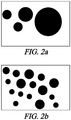
- Figure 2 is a cartoon illustrating the difference that may be observed between, for example, the distinct type and number of T-cells present in a blood sample from a cancer patient ( Fig. 2a ) and a healthy patient ( Fig.
- each circle represents a distinct type of T-cell, as represented by an amplified and sequenced recombined cDNA of the complementarity determining region of the T-cell receptor (e.g., CDR3), and the relative number of cells which are determined, by PCR amplification and sequencing, to share the same CDR3 sequence.
- CDR3 complementarity determining region of the T-cell receptor
- Fig. 2 a indicates, there may be fewer distinct cells of different specificities, but larger numbers of cells of certain specificities, as represented by the CDR3 sequences.
- Fig. 2b illustrates a normal profile of more different cells, but fewer numbers of each type of cell sharing the same CDR3 sequence.
- each distinct CDR3-expressing cell can constitute an immunoprofile for that human or animal.
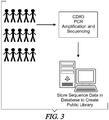
- Compiling the immunoprofiles from a group of humans for example, the group comprising both healthy individuals and individuals with various different diseases may provide a "public library" that is representative of the type of diversity found in a normal population ( Fig. 3 ).
- compiling the immunoprofiles of a group of individuals who have been clinically diagnosed with a particular disease may provide a "disease library" that is representative of the lack of diversity, the specific CDR3s of the expanded populations of cells, etc. ( Fig. 4 ).
- These immunoprofiles may be stored in a database, accessible via computer access to the internet, for example, so that the information may be used in the method of the invention to analyze the immune status of a patient.
- An immunoprofile comprising a listing of distinct CDR3-expressing cells ("distinct CDR3s", those cells sharing a unique CDR3 sequence) and the numbers of each distinct CDR3 present in a blood or tissue sample from an individual may be produced for an individual patient.
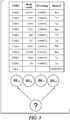
- the patient's immunoprofile is compared to the combined immunoprofiles of a group of patients who have been diagnosed with a particular disease (a disease library, stored in a database). This can be done for a series of disease libraries, and shown in Fig. 5 .
- the number of distinct CDR3s represented by unique peptide sequence of CDR3 fragments, should be approximately equal to the number of distinct CDR3s identified in the disease library, or an average calculated from more than one disease library.
- Producing a significant number of sub-libraries increases the presence of a variety of distinct CDR3s and produces a result that is statistically significant effective for identifying and characterizing an individual patient's immunoprofile as normal ("healthy") or characterized by the presence of a type and number of cells that have been associated with a particular disease.
- a patient supplies a clinical sample comprising, for example, blood or tissue, from which distinct CDR3s are semi-quantitatively amplified and sequenced. This provides the identity and the relative abundance of each CDR3 for all distinct CDR3s.
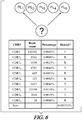
- This information may be entered into a program which accesses a database containing at least one public library and one or more disease libraries. Software used for data entry and/or analysis may be accessed via internet access to the database, or may be located on an individual personal computer, with internet access to the sequence information in the database. Comparisons are obtained between the individual immunoprofile and the various libraries and sub-libraries, and results are generated as generally illustrated in Fig. 5 and Fig.
- a P-value is calculated as the probability that a random percentage would be greater than or equal to the percentage noted for a particular disease library, and a significant result is noted when the fraction of times the sampling sharing indices exceeds the original sharing index for a particular library is less than 0.01, for instance. If that sharing index represents the relationship between the individual's immunoprofile and a disease library, the individual may then be informed of the likelihood that the individual/patient has the disease represented by the specific disease library. If P-values computed against all disease libraries is greater than 0.01, the individual's report may indicate that the immune profile looks normal and the disease state has not been detected.
- sequence data is compiled and stored in one or more databases for multiple populations of individuals, it may additionally be possible to associate certain sharing indexes with libraries representing populations with pre-conditions or predispositions to certain diseases.
- the immune system is both proactive and reactive, and changes in the immune system, reflected in the immunoprofile, may provide the first-and sometimes the only-signal that a predisposition, a precondition, or even an established disease is present.
- the inventors have utilized the method to demonstrate that certain types of cancers, inflammatory bowel disease, and certain viral infections may be detected by determining the sharing index between a patient and an established disease library, obtained by sequencing CDR3s using the ARM-PCR method to produce a subset of the immunorepertoire representing the CDR3s present.
- results are even more reliable when a filter is applied to the sequence data.
- the inventors have developed a "SMART" filter for the sequence data that aids in the generation of significantly more reliable results. This is described further in the Examples.
- Blood samples may be taken from children prior to administration of any vaccines, those blood samples for each child establishing a "baseline" from which future samples may be evaluated.
- the future samples may be utilized to determine whether there has been an exposure to an agent which has expanded a population of cells known to be correlated with a disease, and this may serve as a "marker" for the risk of development of the disease in the future. Individuals so identified may then be more closely monitored so that early detection is possible, and any available treatment options may be provided at an earlier stage in the disease process.
- blood samples may be taken from children prior to administration of any vaccines, those blood samples from each child establishing a "baseline" from which future samples may be evaluated.
- those baselines may be compared to the results of RNA sequencing of T and B cells using target-specific primers to amplify antibody and T-cell receptor, after vaccine administration.
- the comparison may further involve the evaluation of data regarding symptoms, diagnosed diseases, and other information associated for each individual with the corresponding antibody, and T-cell receptor sequences. If a relationship exists between the administration of a vaccine and the development of a particular disease, individuals who exhibit symptoms of that disease may also share a corresponding antibody or T-cell receptor, for example, or a set of corresponding antibodies or T-cell receptors.
- the method disclosed herein may be especially useful for identifying commonalities between individuals with autoimmune diseases, for example, and may provide epidemiological data that will better describe the correlation between infectious and environmental factors and diseases such as heart disease, atherosclerosis, diabetes, and cancer-providing "biomarkers" that signal either the presence of a disease, or the tendency to develop disease.
- the method may also be useful for development passive immunity therapies. For example, following exposure to an infectious agent, certain antibody-producing B cells and/or T cells are expanded.
- the method enables the identification of protective antibodies, for example, and those antibodies may be utilized to provide passive immunity therapies in situations where such therapy is needed.
- the method may also provide the ability to accomplish targeted removal of cells with undesirable rearrangements, the method providing a means by which such cells rearrangements may be identified.
- T-cell-specific primers are shown in Table 1
- antibody-specific primers are shown in Table 2.
- An additional embodiment disclosed herein is a method of using any one or a combination of primers of Table 1 or Table 2, to amplify RNA from a blood sample, and more particularly to identify antibodies, T-cell receptors, and HLA molecules within a population of cells.
- Arm-PCR or tem-PCR may be used to amplify genes coding for the immunoglobulin superfamily molecules in am amplification method described previously by the inventor ( Han et al., 2006. Simultaneous Amplification and Identification of 25 Human Papillomavirus Types with Templex Technology. J. Clin. Micro. 44(11). 4157-4162 ).
- a tem-PCR reaction nested gene-specific primers are designed to enrich the targets during initial PCR cycling. Later, universal "Super" primers are used to amplify all targets.
- Primers are designated as F o (forward out), F i (forward in), R i (reverse in), R o (reverse out), FS (forward super primer) and RS,(reverse super primer), with super primers being common to a variety of the molecules due to the addition of a binding site for those primers at the end of a target-specific primer.
- the gene-specific primers (F o , F i , R i , and R o ) are used at extremely low concentrations. Different primers are involved in the tem-PCR process at each of the three major stages. First, at the "enrichment" stage, low-concentration gene-specific primers are given enough time to find the templates.
- the enrichment stage is typically carried out for 10 cycles.
- the annealing temperature is raised to 72°C, and only the long 40-nucleotide inside primers (F i and R i ) will work.
- all PCR products are "tagged" with the universal super primer sequences.
- high-concentration super primers work efficiently to amplify all targets and label the PCR products with biotin during the process.
- Specific probes may be covalently linked with Luminex color-coated beads.
- the inventor designed nested primers based on sequence information in the public domain. For studying B and T cell VDJ rearrangement, the inventor designed primers to amplify rearranged and expressed RNAs. Generally, a pair of nested forward primers is designed from the V genes and a set of reverse nested primers are designed from the J or C genes. The average amplicon size is 250-350bp. For the IgHV genes, for example, there are 123 genes that can be classified into 7 different families, and the present primers are designed to be family specific. However, if sequencing the amplified cDNA sequences, there are enough sequence diversities to allow further differentiation among the gene within the same family. For the MHC gene locus, the intent is to amplify genomic DNA.
- each CDR3 has its own frequency s 1 , s 2 , ... s n .
- D is a disease library, which is the sum of a certain number of patients' immunoprofile with M unique CDR3s. All patients in the disease library were diagnosed to have the same disease.
- P is a public library, which is the sum of a large number of control's immunoprofile.
- the S haring I ndex is defined as the sum of s x , s y , ... s z , where CDR3 x , CDR3 y , ... CDR3 z are shared in the subject's immunoprofile and a library. Note that s x , s y , ... s z is the frequency of CDR3s in the subject's immunoprofile, not in the library.
- M unique CDR3s in the public library are randomly selected and used to create a sub-library P1 and the sharing index ( SI p1 ) between the subject and the sub-library computed according to above formula.
- the sampling procedure is repeated 1000 or more times and 1000 or more SI px are computed.
- the sharing index SI d between the subject and the disease library are computed in the same manner.
- the P-value is defined as the fraction of all SI s ( SI p1 , SI p2 , ... SI px , SI d , (Note that SI d is included), which is equal to or greater than SI d . Note that, when sampling CDR3s in the public library, CDR3s found in x control's immunoprofiles are given x times of chances to be sampled.
- All oligos were resuspended using 1x TE. All oligos except 454A and 454B were resuspended to a concentration of 100pmol/ ⁇ L 454A and 454B were resuspended to a concentration of 1000pmol/ ⁇ L 454A and 454B are functionally the same as the communal primers described previously, the different sequences were used for follow up high throughput sequencing procedures.
- An Alpha Delta primer mix included 82 primers (all of TRAV-C + TRDV-C), a Beta Gamma primer mix included 79 primers (all of TRBVC and TRGV-C) and a B cell primer mix that included a total of 70 primers.
- F o , F i , and R i primers were at a concentration of 1pmol/ ⁇ L.
- R o primers were at a concentration of 5 pmol/ ⁇ L.
- 454A and 454B were at a concentration of 30 pmol/ ⁇ L.
- RNA samples were ordered from ALLCELLS (www.allcells.com). All samples were diluted down to a final concentration of 4 ng/uL. The samples ordered were: Cell type: Source: ALL-PB-MNC A patient with acute lymphoblastic leukemia NPB-Pan T Cells Normal T cells NPB-B Cells Normal B cells
- RT-PCR was performed using a Qiagen One-Step RT-PCR kit. Each sample contained the following:
- the order of samples placed in the gel shown in Fig. 1a was: (1) Ladder (500bp being the largest working down in steps of 20bp, the middle bright band in Fig. 1a is 200bp); (2) ⁇ + ⁇ primer mix with 10ng Pan T Cells Template; (3) ⁇ + ⁇ primer mix with 10ng Pan T Cells Template; (4) B Cell primer mix with 10ng B Cells Template; (5) B Cell primer mix with 10ng ALL Cells Template; (6) ⁇ + ⁇ primer mix with 10ng ALL Cells Template; (7) ⁇ + ⁇ primer mix with 10ng ALL Cells Template; 8. ⁇ + ⁇ primer mix blank; (9) ⁇ + ⁇ primer mix blank; (10) B Cell primer mix blank; (11)Running buffer blank.
- These samples were run on a pre-cast ClearPAGE® SDS 10% gel using 1X ClearPAGE® DNA native running buffer.
- the initial experiment showed that a smear is generated from PCR reactions where templates were included.
- the smears indicate different sizes of PCR products were generated that represented a mixture of different VDJ rearrangements. There is some background amplification from the B cell reaction. Further improvement on that primer mix was required to clean up the reaction.
- PCR products generated from the Alpha Delta mix and the Beta Gamma mix were diluted 1:1000 and a 2 ⁇ l aliquot used as PCR template in the following reaction. Then, instead of using a mixture of primers that targeting the entire repertoire, one pair of specific Fi and Ri primers were used (5 pmol each) to amplify only one specific PCR product. The following cycling conditions were used to amplify the samples: 95°C for 5 minutes 30 cycles of
- the Master Mix used for the PCR contained the following: Per Reaction Master Mix x 12 10x PCR Buffer 5 ⁇ L 60 ⁇ L dNTP 1 ⁇ L 12 ⁇ L HotStartTaq Plus 0.25 ⁇ L 3 ⁇ L H 2 O 39.75 ⁇ L 477 ⁇ L
- the photograph of the gel in Fig. 1b shows the PCR products of the following reactions: (1) Ladder; (2) TRAV1Fi+TRACRi with alpha delta Pan T PCR product; (3) TRAV2Fi+TRACRi with alpha delta Pan T PCR product; (4) TRAV3F i +TRACR i with alpha delta Pan T PCR product; (5) TRAV4F i +TRACR i with alpha delta Pan T PCR product; (6) TRAV5F i +TRACR i with alpha delta Pan T PCR product; (7) TRAV1F i +TRACR i with alpha delta Pan T PCR product; (8) TRAV2F i +TRACR i with alpha delta Pan T PCR product; (9) TRAV3F i +TRACR i with alpha delta Pan T PCR product; (10) TRAV4F i +TRACR i with alpha delta Pan T PCR product; (11) TRAV5F i +TRACR i with alpha delta Pan T
- a single PCR product was generated from each reaction. Different size bands were generated from different reactions.
- This PCR cloning approach is successful for two major reasons-(1)
- the PCR templates used in this reaction were diluted PCR products (1:1000) of previous reactions that used primer mixes to amplify all possible VDJ rearrangements (for example, a primer mix was used that included total of 82 primers to amplify T cell receptor Alpha and Delta genes) and (2) Only one pair of PCR primers, targeting a specific V gene, are used in each reaction during this "cloning" experiment. Some of these products were gel purified and sequenced. The following are example sequences obtained from the protocol described above. In every case, a single clone was obtained, and a specific T cell receptor V gene that matched the Fi primer was identified.
- the inventors conducted control experiments using chemically synthesized TCR ⁇ CDR3 templates. For this, the inventors chemically synthesized four distinct clones, clonally purified each clone, and prepared different mixes of the four constructs as templates for amplicon rescue multiplex (ARM)-PCR. Two different reaction mixtures were subjected to two independent ARM-PCR reactions, and the pooled PCR products were sequenced at a length of 100bp from both ends using the Illimuna HiSeq2000®. The inventors first joined together paired-end reads through overlapping alignment with a modified Needleman-Wunsch algorithm, and then mapped the merged sequences to germline V, D and J reference sequences.
- ARM amplicon rescue multiplex
- the inventors devised a paired-end strategy that affords double-strand sequencing of complete TCR CDR3 segments on the basis of the Illumina® technology.
- forward and reverse sequencing primers are positioned at the framework region 3 and at the TCR J region or the 5' end of the C region, respectively.
- this design enables the complete sequencing of both strands that define a CDR3 segment.
- the forward and reverse reads are then analyzed for sequence mismatches and CDR3 sequences that exhibit non-identity of both strands are eliminated using a newly developed paired-end filtering algorithm.
- the inventors implemented a PCR filter after computational simulation experiments to better understand four variables: the impact of the initial template number, the replication efficiency of each cycle, the cycle number (n), and the DNA polymerase error rate ( ⁇ ) on the total end-point error rate.
- the inventors noted that the PCR polymerase error rate has a pronounced effect on the number of accumulated errors
- PCR amplification was performed with 15 cycles and 45 cycles in the first and second reaction, using Taq polymerase.
- the PCR efficiency was set to decreased 5% per cycle for the first 25 cycles and 10% per cycle for the remaining cycles.
- the PCR efficiency was reset to 1.0 for each fresh PCR reaction.
- the inventors allowed mutation at the second position. Published substitution error rates for Taq enzyme, expressed as errors per bp per cycle, range from 0.023 x10 -4 to 2.1 x10 -4 .
- the substitution error rate was set at 2.7 x10 -5
- the insertion-deletion (indel) error rate was set as 1.0 x10 -6 .
- Taq polymerase is known to have a much higher insertion-and-deletion (indel) mutation rate in homopolymeric region of templates.
- Indel insertion-and-deletion
- the indel error rate in a homopolymeric region was set as n x ⁇ , where n is the length of the homopolymeric region and ⁇ is 1.0 x 10 -6 .
- the cutoff error rates ( ⁇ ) were empirically set as error rates at the 9999th 10000-quantiles point for each category. For two similar CDR3 sequences, A and B, of frequency NA and NB (NA >> NB) that differ in less than three positions, if NA ⁇ ⁇ ⁇ NB, where ⁇ is the corresponding cutoff error rate, CDR3 sequence B will be excluded.
- CDR3 variants which differed from their most similar input template sequences at multiple positions. Because the occurrence of PCR substitution and/or indel mutation at multiple positions of CDR3 fragments is extremely rare according to simulation experiments, those CDR3 variants must arise from other source of artifacts. Intriguingly, the inventors noted that some of these sequences were composed of the fragments of two distinct input templates and exhibited clear breakpoints, which identified them as chimeras. Chimeric sequences are PCR artifacts that arise from incomplete primer extension or template switching during PCR and form mosaic-like structures.
- the inventors developed a computational "mosaic filter.” Using this filtering algorithm, the inventors identified a total of 17 and 15 chimeric sequences in template mixtures I and II, respectively. Of note, some of these CDR3 chimeras displayed sequence copy numbers >1000, indicating that the inventors' algorithm for the filter is capable of identifying high-abundance chimeric CDR3 sequences.
- IgHV-J IgHV1aFo 250 250 IgHV1bFo 251 251 IgHV1aFi 252 253 IgHV1bFi 254 255 IgHV1cFi 256 257 IgHV1dFi 258 259 IgHV2Fo 260 260 IgHV2Fi 261 262 IgHV3aFo 263 263 IgHV3bFo 264 264 IgHV3cFo 265 265 IgHV3dFo 266 266 IgHV3aFi 267 268 IgHV3bFi 269 270 IgHV3cFi 271 272 IgHV3dFi 273 274 IgHV3eFi 275 276 IgHV4Fo 277 277 IgHV4Fi 278 279 IgHV5Fo 280 280 IgHV5Fi 281 282 IgHV6Fo 283
Landscapes
- Life Sciences & Earth Sciences (AREA)
- Health & Medical Sciences (AREA)
- Engineering & Computer Science (AREA)
- Physics & Mathematics (AREA)
- Chemical & Material Sciences (AREA)
- General Health & Medical Sciences (AREA)
- Bioinformatics & Cheminformatics (AREA)
- Theoretical Computer Science (AREA)
- Biophysics (AREA)
- Biotechnology (AREA)
- Medical Informatics (AREA)
- Bioinformatics & Computational Biology (AREA)
- Evolutionary Biology (AREA)
- Spectroscopy & Molecular Physics (AREA)
- Proteomics, Peptides & Aminoacids (AREA)
- Organic Chemistry (AREA)
- Analytical Chemistry (AREA)
- Databases & Information Systems (AREA)
- Bioethics (AREA)
- Wood Science & Technology (AREA)
- Zoology (AREA)
- Genetics & Genomics (AREA)
- Molecular Biology (AREA)
- Biochemistry (AREA)
- Immunology (AREA)
- Microbiology (AREA)
- General Engineering & Computer Science (AREA)
- Pathology (AREA)
- Evolutionary Computation (AREA)
- Epidemiology (AREA)
- Data Mining & Analysis (AREA)
- Software Systems (AREA)
- Computer Vision & Pattern Recognition (AREA)
- Artificial Intelligence (AREA)
- Computing Systems (AREA)
- Crystallography & Structural Chemistry (AREA)
- Medicinal Chemistry (AREA)
- Public Health (AREA)
- Library & Information Science (AREA)
- Measuring Or Testing Involving Enzymes Or Micro-Organisms (AREA)
Applications Claiming Priority (2)
| Application Number | Priority Date | Filing Date | Title |
|---|---|---|---|
| US201361763451P | 2013-02-11 | 2013-02-11 | |
| PCT/US2014/015841 WO2014124451A1 (en) | 2013-02-11 | 2014-02-11 | Method for evaluating an immunorepertoire |
Publications (3)
| Publication Number | Publication Date |
|---|---|
| EP2954070A1 EP2954070A1 (en) | 2015-12-16 |
| EP2954070A4 EP2954070A4 (en) | 2016-10-26 |
| EP2954070B1 true EP2954070B1 (en) | 2020-04-01 |
Family
ID=51300201
Family Applications (1)
| Application Number | Title | Priority Date | Filing Date |
|---|---|---|---|
| EP14749095.7A Active EP2954070B1 (en) | 2013-02-11 | 2014-02-11 | Method for evaluating an immunorepertoire |
Country Status (9)
| Country | Link |
|---|---|
| US (1) | US20160034637A1 (enExample) |
| EP (1) | EP2954070B1 (enExample) |
| JP (1) | JP6460343B2 (enExample) |
| KR (1) | KR102228488B1 (enExample) |
| CN (1) | CN105164277B (enExample) |
| CA (1) | CA2900776C (enExample) |
| ES (1) | ES2798119T3 (enExample) |
| PT (1) | PT2954070T (enExample) |
| WO (1) | WO2014124451A1 (enExample) |
Families Citing this family (9)
| Publication number | Priority date | Publication date | Assignee | Title |
|---|---|---|---|---|
| WO2016144776A1 (en) * | 2015-03-06 | 2016-09-15 | Cb Biotechnologies, Inc. | Method for measuring a change in an individual's immunorepertoire |
| US20160333409A1 (en) * | 2015-03-09 | 2016-11-17 | Cb Biotechnologies, Inc. | Method for identifying disease-associated cdr3 patterns in an immune repertoire |
| US11047011B2 (en) * | 2015-09-29 | 2021-06-29 | iRepertoire, Inc. | Immunorepertoire normality assessment method and its use |
| WO2017193097A1 (en) | 2016-05-06 | 2017-11-09 | Girihlet Inc. | Methods and compositions for determining specifc tcr and bcr chain pairings |
| CN106283201B (zh) * | 2016-09-20 | 2019-08-06 | 中国医学科学院肿瘤医院 | 基于高通量测序的tcr多样性检测和文库构建 |
| US20200199650A1 (en) * | 2017-05-18 | 2020-06-25 | Geneplus-Beijing | Analysis system for peripheral blood-based non-invasive detection of lesion immune repertoire diversity and uses of system |
| WO2019046817A1 (en) * | 2017-09-01 | 2019-03-07 | Life Technologies Corporation | COMPOSITIONS AND METHODS FOR IMMUNOLOGICAL REPERTOIRE SEQUENCING |
| EP3824103A1 (en) | 2018-07-18 | 2021-05-26 | Life Technologies Corporation | Compositions and methods for immune repertoire sequencing |
| WO2020236745A1 (en) * | 2019-05-17 | 2020-11-26 | iRepertoire, Inc. | Immunorepertoire wellness assessment systems and methods |
Family Cites Families (10)
| Publication number | Priority date | Publication date | Assignee | Title |
|---|---|---|---|---|
| CA2257152C (en) * | 1996-06-03 | 2009-01-27 | Linda M. Pilarski | Methods for detection of rearranged dna |
| CN107385040B (zh) | 2008-04-03 | 2022-02-15 | 艾瑞普特公司 | 用于扩增多个靶标的扩增子拯救多重聚合酶链式反应 |
| CN102066578B (zh) * | 2008-04-16 | 2016-07-06 | 哈森阿尔法生物技术研究院 | 用于评价和比较免疫组库的方法 |
| GB2483810B (en) * | 2008-11-07 | 2012-09-05 | Sequenta Inc | Methods for correlating clonotypes with diseases in a population |
| US8691510B2 (en) * | 2008-11-07 | 2014-04-08 | Sequenta, Inc. | Sequence analysis of complex amplicons |
| EP3456847B1 (en) | 2010-05-06 | 2024-12-25 | Adaptive Biotechnologies Corporation | Monitoring solid transplant rejection using clonotype profiles |
| CA2796822C (en) * | 2010-05-07 | 2021-10-05 | The Board Of Trustees Of The Leland Standford Junior University | Measurement and comparison of immune diversity by high-throughput sequencing |
| US20120183969A1 (en) | 2011-01-14 | 2012-07-19 | Jian Han | Immunodiversity Assessment Method and Its Use |
| KR20200003235A (ko) * | 2011-09-28 | 2020-01-08 | 씨비 바이오테크놀로지스, 인크. | arm-PCR 및 고속 처리 서열 분석을 이용한 항원 특이적 후천성 면역 반응의 확인 |
| CN106103711A (zh) * | 2013-11-21 | 2016-11-09 | 组库创世纪株式会社 | T细胞受体和b细胞受体库分析系统及其在治疗和诊断中的应用 |
-
2014
- 2014-02-11 US US14/767,178 patent/US20160034637A1/en not_active Abandoned
- 2014-02-11 KR KR1020157023530A patent/KR102228488B1/ko active Active
- 2014-02-11 CN CN201480020810.1A patent/CN105164277B/zh active Active
- 2014-02-11 CA CA2900776A patent/CA2900776C/en active Active
- 2014-02-11 JP JP2015557201A patent/JP6460343B2/ja active Active
- 2014-02-11 PT PT147490957T patent/PT2954070T/pt unknown
- 2014-02-11 EP EP14749095.7A patent/EP2954070B1/en active Active
- 2014-02-11 ES ES14749095T patent/ES2798119T3/es active Active
- 2014-02-11 WO PCT/US2014/015841 patent/WO2014124451A1/en not_active Ceased
Non-Patent Citations (1)
| Title |
|---|
| None * |
Also Published As
| Publication number | Publication date |
|---|---|
| US20160034637A1 (en) | 2016-02-04 |
| ES2798119T3 (es) | 2020-12-09 |
| HK1212735A1 (zh) | 2016-06-17 |
| CA2900776C (en) | 2023-08-15 |
| EP2954070A1 (en) | 2015-12-16 |
| CN105164277B (zh) | 2021-05-28 |
| JP6460343B2 (ja) | 2019-01-30 |
| KR102228488B1 (ko) | 2021-03-15 |
| KR20150141939A (ko) | 2015-12-21 |
| JP2016506750A (ja) | 2016-03-07 |
| EP2954070A4 (en) | 2016-10-26 |
| CA2900776A1 (en) | 2014-08-14 |
| PT2954070T (pt) | 2020-06-22 |
| CN105164277A (zh) | 2015-12-16 |
| WO2014124451A1 (en) | 2014-08-14 |
Similar Documents
| Publication | Publication Date | Title |
|---|---|---|
| EP2954070B1 (en) | Method for evaluating an immunorepertoire | |
| DK2281065T3 (en) | PROCEDURE TO EVALUATE AND COMPARE IMMUNE REPERTOIRS | |
| RU2766004C1 (ru) | Способ оценки нормального состояния иммунного репертуара и его применение | |
| EP2663864B1 (en) | Immunodiversity assessment method and its use | |
| JP2018531044A6 (ja) | 免疫レパートリーの正常性の評価方法およびその使用 | |
| CN114424291A (zh) | 免疫组库健康评估系统和方法 | |
| HK1212735B (zh) | 用於评估免疫组库的方法 | |
| HK40084342A (en) | Immunorepertoire normality assessment method and its use | |
| WO2024118105A1 (en) | Methods and compositions for mitigating index hopping in dna sequencing | |
| US20180051336A1 (en) | Methods for diagnosing multiple sclerosis using vh4 antibody genes |
Legal Events
| Date | Code | Title | Description |
|---|---|---|---|
| PUAI | Public reference made under article 153(3) epc to a published international application that has entered the european phase |
Free format text: ORIGINAL CODE: 0009012 |
|
| 17P | Request for examination filed |
Effective date: 20150903 |
|
| AK | Designated contracting states |
Kind code of ref document: A1 Designated state(s): AL AT BE BG CH CY CZ DE DK EE ES FI FR GB GR HR HU IE IS IT LI LT LU LV MC MK MT NL NO PL PT RO RS SE SI SK SM TR |
|
| AX | Request for extension of the european patent |
Extension state: BA ME |
|
| A4 | Supplementary search report drawn up and despatched |
Effective date: 20160928 |
|
| RIC1 | Information provided on ipc code assigned before grant |
Ipc: G06F 19/24 20110101ALI20160921BHEP Ipc: C12Q 1/68 20060101AFI20160921BHEP Ipc: C40B 30/02 20060101ALI20160921BHEP Ipc: G06F 19/28 20110101ALI20160921BHEP Ipc: G06F 19/22 20110101ALI20160921BHEP |
|
| STAA | Information on the status of an ep patent application or granted ep patent |
Free format text: STATUS: REQUEST FOR EXAMINATION WAS MADE |
|
| STAA | Information on the status of an ep patent application or granted ep patent |
Free format text: STATUS: EXAMINATION IS IN PROGRESS |
|
| 17Q | First examination report despatched |
Effective date: 20171211 |
|
| REG | Reference to a national code |
Ref country code: DE Ref legal event code: R079 Ref document number: 602014063165 Country of ref document: DE Free format text: PREVIOUS MAIN CLASS: C12Q0001680000 Ipc: C12Q0001686900 |
|
| GRAP | Despatch of communication of intention to grant a patent |
Free format text: ORIGINAL CODE: EPIDOSNIGR1 |
|
| STAA | Information on the status of an ep patent application or granted ep patent |
Free format text: STATUS: GRANT OF PATENT IS INTENDED |
|
| INTG | Intention to grant announced |
Effective date: 20190411 |
|
| RIC1 | Information provided on ipc code assigned before grant |
Ipc: C12Q 1/6869 20180101AFI20190329BHEP Ipc: C12Q 1/6883 20180101ALI20190329BHEP |
|
| RAP1 | Party data changed (applicant data changed or rights of an application transferred) |
Owner name: IREPERTOIRE, INC. |
|
| GRAJ | Information related to disapproval of communication of intention to grant by the applicant or resumption of examination proceedings by the epo deleted |
Free format text: ORIGINAL CODE: EPIDOSDIGR1 |
|
| STAA | Information on the status of an ep patent application or granted ep patent |
Free format text: STATUS: EXAMINATION IS IN PROGRESS |
|
| GRAP | Despatch of communication of intention to grant a patent |
Free format text: ORIGINAL CODE: EPIDOSNIGR1 |
|
| STAA | Information on the status of an ep patent application or granted ep patent |
Free format text: STATUS: GRANT OF PATENT IS INTENDED |
|
| INTG | Intention to grant announced |
Effective date: 20190905 |
|
| GRAS | Grant fee paid |
Free format text: ORIGINAL CODE: EPIDOSNIGR3 |
|
| GRAA | (expected) grant |
Free format text: ORIGINAL CODE: 0009210 |
|
| STAA | Information on the status of an ep patent application or granted ep patent |
Free format text: STATUS: THE PATENT HAS BEEN GRANTED |
|
| AK | Designated contracting states |
Kind code of ref document: B1 Designated state(s): AL AT BE BG CH CY CZ DE DK EE ES FI FR GB GR HR HU IE IS IT LI LT LU LV MC MK MT NL NO PL PT RO RS SE SI SK SM TR |
|
| AX | Request for extension of the european patent |
Extension state: BA ME |
|
| REG | Reference to a national code |
Ref country code: GB Ref legal event code: FG4D |
|
| REG | Reference to a national code |
Ref country code: AT Ref legal event code: REF Ref document number: 1251393 Country of ref document: AT Kind code of ref document: T Effective date: 20200415 Ref country code: CH Ref legal event code: EP |
|
| REG | Reference to a national code |
Ref country code: DE Ref legal event code: R096 Ref document number: 602014063165 Country of ref document: DE |
|
| REG | Reference to a national code |
Ref country code: IE Ref legal event code: FG4D |
|
| REG | Reference to a national code |
Ref country code: PT Ref legal event code: SC4A Ref document number: 2954070 Country of ref document: PT Date of ref document: 20200622 Kind code of ref document: T Free format text: AVAILABILITY OF NATIONAL TRANSLATION Effective date: 20200615 |
|
| PG25 | Lapsed in a contracting state [announced via postgrant information from national office to epo] |
Ref country code: BG Free format text: LAPSE BECAUSE OF FAILURE TO SUBMIT A TRANSLATION OF THE DESCRIPTION OR TO PAY THE FEE WITHIN THE PRESCRIBED TIME-LIMIT Effective date: 20200701 |
|
| REG | Reference to a national code |
Ref country code: NL Ref legal event code: MP Effective date: 20200401 |
|
| REG | Reference to a national code |
Ref country code: LT Ref legal event code: MG4D |
|
| PG25 | Lapsed in a contracting state [announced via postgrant information from national office to epo] |
Ref country code: CZ Free format text: LAPSE BECAUSE OF FAILURE TO SUBMIT A TRANSLATION OF THE DESCRIPTION OR TO PAY THE FEE WITHIN THE PRESCRIBED TIME-LIMIT Effective date: 20200401 Ref country code: SE Free format text: LAPSE BECAUSE OF FAILURE TO SUBMIT A TRANSLATION OF THE DESCRIPTION OR TO PAY THE FEE WITHIN THE PRESCRIBED TIME-LIMIT Effective date: 20200401 Ref country code: IS Free format text: LAPSE BECAUSE OF FAILURE TO SUBMIT A TRANSLATION OF THE DESCRIPTION OR TO PAY THE FEE WITHIN THE PRESCRIBED TIME-LIMIT Effective date: 20200801 Ref country code: FI Free format text: LAPSE BECAUSE OF FAILURE TO SUBMIT A TRANSLATION OF THE DESCRIPTION OR TO PAY THE FEE WITHIN THE PRESCRIBED TIME-LIMIT Effective date: 20200401 Ref country code: NO Free format text: LAPSE BECAUSE OF FAILURE TO SUBMIT A TRANSLATION OF THE DESCRIPTION OR TO PAY THE FEE WITHIN THE PRESCRIBED TIME-LIMIT Effective date: 20200701 Ref country code: GR Free format text: LAPSE BECAUSE OF FAILURE TO SUBMIT A TRANSLATION OF THE DESCRIPTION OR TO PAY THE FEE WITHIN THE PRESCRIBED TIME-LIMIT Effective date: 20200702 Ref country code: LT Free format text: LAPSE BECAUSE OF FAILURE TO SUBMIT A TRANSLATION OF THE DESCRIPTION OR TO PAY THE FEE WITHIN THE PRESCRIBED TIME-LIMIT Effective date: 20200401 Ref country code: NL Free format text: LAPSE BECAUSE OF FAILURE TO SUBMIT A TRANSLATION OF THE DESCRIPTION OR TO PAY THE FEE WITHIN THE PRESCRIBED TIME-LIMIT Effective date: 20200401 |
|
| REG | Reference to a national code |
Ref country code: AT Ref legal event code: MK05 Ref document number: 1251393 Country of ref document: AT Kind code of ref document: T Effective date: 20200401 |
|
| PG25 | Lapsed in a contracting state [announced via postgrant information from national office to epo] |
Ref country code: HR Free format text: LAPSE BECAUSE OF FAILURE TO SUBMIT A TRANSLATION OF THE DESCRIPTION OR TO PAY THE FEE WITHIN THE PRESCRIBED TIME-LIMIT Effective date: 20200401 Ref country code: RS Free format text: LAPSE BECAUSE OF FAILURE TO SUBMIT A TRANSLATION OF THE DESCRIPTION OR TO PAY THE FEE WITHIN THE PRESCRIBED TIME-LIMIT Effective date: 20200401 Ref country code: LV Free format text: LAPSE BECAUSE OF FAILURE TO SUBMIT A TRANSLATION OF THE DESCRIPTION OR TO PAY THE FEE WITHIN THE PRESCRIBED TIME-LIMIT Effective date: 20200401 |
|
| REG | Reference to a national code |
Ref country code: ES Ref legal event code: FG2A Ref document number: 2798119 Country of ref document: ES Kind code of ref document: T3 Effective date: 20201209 |
|
| PG25 | Lapsed in a contracting state [announced via postgrant information from national office to epo] |
Ref country code: AL Free format text: LAPSE BECAUSE OF FAILURE TO SUBMIT A TRANSLATION OF THE DESCRIPTION OR TO PAY THE FEE WITHIN THE PRESCRIBED TIME-LIMIT Effective date: 20200401 |
|
| REG | Reference to a national code |
Ref country code: DE Ref legal event code: R097 Ref document number: 602014063165 Country of ref document: DE |
|
| PG25 | Lapsed in a contracting state [announced via postgrant information from national office to epo] |
Ref country code: RO Free format text: LAPSE BECAUSE OF FAILURE TO SUBMIT A TRANSLATION OF THE DESCRIPTION OR TO PAY THE FEE WITHIN THE PRESCRIBED TIME-LIMIT Effective date: 20200401 Ref country code: SM Free format text: LAPSE BECAUSE OF FAILURE TO SUBMIT A TRANSLATION OF THE DESCRIPTION OR TO PAY THE FEE WITHIN THE PRESCRIBED TIME-LIMIT Effective date: 20200401 Ref country code: AT Free format text: LAPSE BECAUSE OF FAILURE TO SUBMIT A TRANSLATION OF THE DESCRIPTION OR TO PAY THE FEE WITHIN THE PRESCRIBED TIME-LIMIT Effective date: 20200401 Ref country code: EE Free format text: LAPSE BECAUSE OF FAILURE TO SUBMIT A TRANSLATION OF THE DESCRIPTION OR TO PAY THE FEE WITHIN THE PRESCRIBED TIME-LIMIT Effective date: 20200401 Ref country code: DK Free format text: LAPSE BECAUSE OF FAILURE TO SUBMIT A TRANSLATION OF THE DESCRIPTION OR TO PAY THE FEE WITHIN THE PRESCRIBED TIME-LIMIT Effective date: 20200401 |
|
| PLBE | No opposition filed within time limit |
Free format text: ORIGINAL CODE: 0009261 |
|
| STAA | Information on the status of an ep patent application or granted ep patent |
Free format text: STATUS: NO OPPOSITION FILED WITHIN TIME LIMIT |
|
| PG25 | Lapsed in a contracting state [announced via postgrant information from national office to epo] |
Ref country code: PL Free format text: LAPSE BECAUSE OF FAILURE TO SUBMIT A TRANSLATION OF THE DESCRIPTION OR TO PAY THE FEE WITHIN THE PRESCRIBED TIME-LIMIT Effective date: 20200401 Ref country code: SK Free format text: LAPSE BECAUSE OF FAILURE TO SUBMIT A TRANSLATION OF THE DESCRIPTION OR TO PAY THE FEE WITHIN THE PRESCRIBED TIME-LIMIT Effective date: 20200401 |
|
| 26N | No opposition filed |
Effective date: 20210112 |
|
| PG25 | Lapsed in a contracting state [announced via postgrant information from national office to epo] |
Ref country code: SI Free format text: LAPSE BECAUSE OF FAILURE TO SUBMIT A TRANSLATION OF THE DESCRIPTION OR TO PAY THE FEE WITHIN THE PRESCRIBED TIME-LIMIT Effective date: 20200401 |
|
| PG25 | Lapsed in a contracting state [announced via postgrant information from national office to epo] |
Ref country code: MC Free format text: LAPSE BECAUSE OF FAILURE TO SUBMIT A TRANSLATION OF THE DESCRIPTION OR TO PAY THE FEE WITHIN THE PRESCRIBED TIME-LIMIT Effective date: 20200401 |
|
| REG | Reference to a national code |
Ref country code: BE Ref legal event code: MM Effective date: 20210228 |
|
| PG25 | Lapsed in a contracting state [announced via postgrant information from national office to epo] |
Ref country code: CH Free format text: LAPSE BECAUSE OF NON-PAYMENT OF DUE FEES Effective date: 20210228 Ref country code: LU Free format text: LAPSE BECAUSE OF NON-PAYMENT OF DUE FEES Effective date: 20210211 Ref country code: LI Free format text: LAPSE BECAUSE OF NON-PAYMENT OF DUE FEES Effective date: 20210228 |
|
| PG25 | Lapsed in a contracting state [announced via postgrant information from national office to epo] |
Ref country code: IE Free format text: LAPSE BECAUSE OF NON-PAYMENT OF DUE FEES Effective date: 20210211 |
|
| PG25 | Lapsed in a contracting state [announced via postgrant information from national office to epo] |
Ref country code: BE Free format text: LAPSE BECAUSE OF NON-PAYMENT OF DUE FEES Effective date: 20210228 |
|
| PG25 | Lapsed in a contracting state [announced via postgrant information from national office to epo] |
Ref country code: HU Free format text: LAPSE BECAUSE OF FAILURE TO SUBMIT A TRANSLATION OF THE DESCRIPTION OR TO PAY THE FEE WITHIN THE PRESCRIBED TIME-LIMIT; INVALID AB INITIO Effective date: 20140211 |
|
| PG25 | Lapsed in a contracting state [announced via postgrant information from national office to epo] |
Ref country code: CY Free format text: LAPSE BECAUSE OF FAILURE TO SUBMIT A TRANSLATION OF THE DESCRIPTION OR TO PAY THE FEE WITHIN THE PRESCRIBED TIME-LIMIT Effective date: 20200401 |
|
| PG25 | Lapsed in a contracting state [announced via postgrant information from national office to epo] |
Ref country code: MK Free format text: LAPSE BECAUSE OF FAILURE TO SUBMIT A TRANSLATION OF THE DESCRIPTION OR TO PAY THE FEE WITHIN THE PRESCRIBED TIME-LIMIT Effective date: 20200401 |
|
| PG25 | Lapsed in a contracting state [announced via postgrant information from national office to epo] |
Ref country code: TR Free format text: LAPSE BECAUSE OF FAILURE TO SUBMIT A TRANSLATION OF THE DESCRIPTION OR TO PAY THE FEE WITHIN THE PRESCRIBED TIME-LIMIT Effective date: 20200401 |
|
| PG25 | Lapsed in a contracting state [announced via postgrant information from national office to epo] |
Ref country code: MT Free format text: LAPSE BECAUSE OF FAILURE TO SUBMIT A TRANSLATION OF THE DESCRIPTION OR TO PAY THE FEE WITHIN THE PRESCRIBED TIME-LIMIT Effective date: 20200401 |
|
| PGFP | Annual fee paid to national office [announced via postgrant information from national office to epo] |
Ref country code: PT Payment date: 20250218 Year of fee payment: 12 Ref country code: DE Payment date: 20250228 Year of fee payment: 12 |
|
| PGFP | Annual fee paid to national office [announced via postgrant information from national office to epo] |
Ref country code: ES Payment date: 20250305 Year of fee payment: 12 |
|
| PGFP | Annual fee paid to national office [announced via postgrant information from national office to epo] |
Ref country code: FR Payment date: 20250228 Year of fee payment: 12 |
|
| PGFP | Annual fee paid to national office [announced via postgrant information from national office to epo] |
Ref country code: IT Payment date: 20250228 Year of fee payment: 12 Ref country code: GB Payment date: 20250301 Year of fee payment: 12 |