EP2949325A1 - Verwendung einer antimikrobiellen Zusammensetzung - Google Patents
Verwendung einer antimikrobiellen Zusammensetzung Download PDFInfo
- Publication number
- EP2949325A1 EP2949325A1 EP14170308.2A EP14170308A EP2949325A1 EP 2949325 A1 EP2949325 A1 EP 2949325A1 EP 14170308 A EP14170308 A EP 14170308A EP 2949325 A1 EP2949325 A1 EP 2949325A1
- Authority
- EP
- European Patent Office
- Prior art keywords
- silver
- antimicrobial composition
- vitamin
- use according
- ruthenium
- Prior art date
- Legal status (The legal status is an assumption and is not a legal conclusion. Google has not performed a legal analysis and makes no representation as to the accuracy of the status listed.)
- Granted
Links
Images


Classifications
-
- A—HUMAN NECESSITIES
- A61—MEDICAL OR VETERINARY SCIENCE; HYGIENE
- A61K—PREPARATIONS FOR MEDICAL, DENTAL OR TOILETRY PURPOSES
- A61K33/00—Medicinal preparations containing inorganic active ingredients
- A61K33/24—Heavy metals; Compounds thereof
- A61K33/38—Silver; Compounds thereof
-
- A—HUMAN NECESSITIES
- A61—MEDICAL OR VETERINARY SCIENCE; HYGIENE
- A61K—PREPARATIONS FOR MEDICAL, DENTAL OR TOILETRY PURPOSES
- A61K31/00—Medicinal preparations containing organic active ingredients
- A61K31/33—Heterocyclic compounds
- A61K31/335—Heterocyclic compounds having oxygen as the only ring hetero atom, e.g. fungichromin
- A61K31/365—Lactones
- A61K31/375—Ascorbic acid, i.e. vitamin C; Salts thereof
-
- A—HUMAN NECESSITIES
- A61—MEDICAL OR VETERINARY SCIENCE; HYGIENE
- A61K—PREPARATIONS FOR MEDICAL, DENTAL OR TOILETRY PURPOSES
- A61K33/00—Medicinal preparations containing inorganic active ingredients
- A61K33/24—Heavy metals; Compounds thereof
-
- A—HUMAN NECESSITIES
- A61—MEDICAL OR VETERINARY SCIENCE; HYGIENE
- A61K—PREPARATIONS FOR MEDICAL, DENTAL OR TOILETRY PURPOSES
- A61K9/00—Medicinal preparations characterised by special physical form
- A61K9/0012—Galenical forms characterised by the site of application
- A61K9/0014—Skin, i.e. galenical aspects of topical compositions
-
- A—HUMAN NECESSITIES
- A61—MEDICAL OR VETERINARY SCIENCE; HYGIENE
- A61L—METHODS OR APPARATUS FOR STERILISING MATERIALS OR OBJECTS IN GENERAL; DISINFECTION, STERILISATION OR DEODORISATION OF AIR; CHEMICAL ASPECTS OF BANDAGES, DRESSINGS, ABSORBENT PADS OR SURGICAL ARTICLES; MATERIALS FOR BANDAGES, DRESSINGS, ABSORBENT PADS OR SURGICAL ARTICLES
- A61L15/00—Chemical aspects of, or use of materials for, bandages, dressings or absorbent pads
- A61L15/16—Bandages, dressings or absorbent pads for physiological fluids such as urine or blood, e.g. sanitary towels, tampons
- A61L15/18—Bandages, dressings or absorbent pads for physiological fluids such as urine or blood, e.g. sanitary towels, tampons containing inorganic materials
-
- A—HUMAN NECESSITIES
- A61—MEDICAL OR VETERINARY SCIENCE; HYGIENE
- A61L—METHODS OR APPARATUS FOR STERILISING MATERIALS OR OBJECTS IN GENERAL; DISINFECTION, STERILISATION OR DEODORISATION OF AIR; CHEMICAL ASPECTS OF BANDAGES, DRESSINGS, ABSORBENT PADS OR SURGICAL ARTICLES; MATERIALS FOR BANDAGES, DRESSINGS, ABSORBENT PADS OR SURGICAL ARTICLES
- A61L15/00—Chemical aspects of, or use of materials for, bandages, dressings or absorbent pads
- A61L15/16—Bandages, dressings or absorbent pads for physiological fluids such as urine or blood, e.g. sanitary towels, tampons
- A61L15/42—Use of materials characterised by their function or physical properties
- A61L15/44—Medicaments
-
- A—HUMAN NECESSITIES
- A61—MEDICAL OR VETERINARY SCIENCE; HYGIENE
- A61L—METHODS OR APPARATUS FOR STERILISING MATERIALS OR OBJECTS IN GENERAL; DISINFECTION, STERILISATION OR DEODORISATION OF AIR; CHEMICAL ASPECTS OF BANDAGES, DRESSINGS, ABSORBENT PADS OR SURGICAL ARTICLES; MATERIALS FOR BANDAGES, DRESSINGS, ABSORBENT PADS OR SURGICAL ARTICLES
- A61L15/00—Chemical aspects of, or use of materials for, bandages, dressings or absorbent pads
- A61L15/16—Bandages, dressings or absorbent pads for physiological fluids such as urine or blood, e.g. sanitary towels, tampons
- A61L15/42—Use of materials characterised by their function or physical properties
- A61L15/46—Deodorants or malodour counteractants, e.g. to inhibit the formation of ammonia or bacteria
-
- A—HUMAN NECESSITIES
- A61—MEDICAL OR VETERINARY SCIENCE; HYGIENE
- A61L—METHODS OR APPARATUS FOR STERILISING MATERIALS OR OBJECTS IN GENERAL; DISINFECTION, STERILISATION OR DEODORISATION OF AIR; CHEMICAL ASPECTS OF BANDAGES, DRESSINGS, ABSORBENT PADS OR SURGICAL ARTICLES; MATERIALS FOR BANDAGES, DRESSINGS, ABSORBENT PADS OR SURGICAL ARTICLES
- A61L26/00—Chemical aspects of, or use of materials for, wound dressings or bandages in liquid, gel or powder form
- A61L26/0061—Use of materials characterised by their function or physical properties
- A61L26/0066—Medicaments; Biocides
-
- A—HUMAN NECESSITIES
- A61—MEDICAL OR VETERINARY SCIENCE; HYGIENE
- A61P—SPECIFIC THERAPEUTIC ACTIVITY OF CHEMICAL COMPOUNDS OR MEDICINAL PREPARATIONS
- A61P31/00—Antiinfectives, i.e. antibiotics, antiseptics, chemotherapeutics
- A61P31/04—Antibacterial agents
-
- A—HUMAN NECESSITIES
- A61—MEDICAL OR VETERINARY SCIENCE; HYGIENE
- A61P—SPECIFIC THERAPEUTIC ACTIVITY OF CHEMICAL COMPOUNDS OR MEDICINAL PREPARATIONS
- A61P31/00—Antiinfectives, i.e. antibiotics, antiseptics, chemotherapeutics
- A61P31/10—Antimycotics
-
- A—HUMAN NECESSITIES
- A61—MEDICAL OR VETERINARY SCIENCE; HYGIENE
- A61P—SPECIFIC THERAPEUTIC ACTIVITY OF CHEMICAL COMPOUNDS OR MEDICINAL PREPARATIONS
- A61P31/00—Antiinfectives, i.e. antibiotics, antiseptics, chemotherapeutics
- A61P31/12—Antivirals
-
- A—HUMAN NECESSITIES
- A61—MEDICAL OR VETERINARY SCIENCE; HYGIENE
- A61P—SPECIFIC THERAPEUTIC ACTIVITY OF CHEMICAL COMPOUNDS OR MEDICINAL PREPARATIONS
- A61P31/00—Antiinfectives, i.e. antibiotics, antiseptics, chemotherapeutics
- A61P31/12—Antivirals
- A61P31/20—Antivirals for DNA viruses
- A61P31/22—Antivirals for DNA viruses for herpes viruses
-
- A—HUMAN NECESSITIES
- A61—MEDICAL OR VETERINARY SCIENCE; HYGIENE
- A61P—SPECIFIC THERAPEUTIC ACTIVITY OF CHEMICAL COMPOUNDS OR MEDICINAL PREPARATIONS
- A61P43/00—Drugs for specific purposes, not provided for in groups A61P1/00-A61P41/00
-
- A—HUMAN NECESSITIES
- A61—MEDICAL OR VETERINARY SCIENCE; HYGIENE
- A61L—METHODS OR APPARATUS FOR STERILISING MATERIALS OR OBJECTS IN GENERAL; DISINFECTION, STERILISATION OR DEODORISATION OF AIR; CHEMICAL ASPECTS OF BANDAGES, DRESSINGS, ABSORBENT PADS OR SURGICAL ARTICLES; MATERIALS FOR BANDAGES, DRESSINGS, ABSORBENT PADS OR SURGICAL ARTICLES
- A61L2300/00—Biologically active materials used in bandages, wound dressings, absorbent pads or medical devices
- A61L2300/10—Biologically active materials used in bandages, wound dressings, absorbent pads or medical devices containing or releasing inorganic materials
- A61L2300/102—Metals or metal compounds, e.g. salts such as bicarbonates, carbonates, oxides, zeolites, silicates
-
- A—HUMAN NECESSITIES
- A61—MEDICAL OR VETERINARY SCIENCE; HYGIENE
- A61L—METHODS OR APPARATUS FOR STERILISING MATERIALS OR OBJECTS IN GENERAL; DISINFECTION, STERILISATION OR DEODORISATION OF AIR; CHEMICAL ASPECTS OF BANDAGES, DRESSINGS, ABSORBENT PADS OR SURGICAL ARTICLES; MATERIALS FOR BANDAGES, DRESSINGS, ABSORBENT PADS OR SURGICAL ARTICLES
- A61L2300/00—Biologically active materials used in bandages, wound dressings, absorbent pads or medical devices
- A61L2300/10—Biologically active materials used in bandages, wound dressings, absorbent pads or medical devices containing or releasing inorganic materials
- A61L2300/102—Metals or metal compounds, e.g. salts such as bicarbonates, carbonates, oxides, zeolites, silicates
- A61L2300/104—Silver, e.g. silver sulfadiazine
-
- A—HUMAN NECESSITIES
- A61—MEDICAL OR VETERINARY SCIENCE; HYGIENE
- A61L—METHODS OR APPARATUS FOR STERILISING MATERIALS OR OBJECTS IN GENERAL; DISINFECTION, STERILISATION OR DEODORISATION OF AIR; CHEMICAL ASPECTS OF BANDAGES, DRESSINGS, ABSORBENT PADS OR SURGICAL ARTICLES; MATERIALS FOR BANDAGES, DRESSINGS, ABSORBENT PADS OR SURGICAL ARTICLES
- A61L2300/00—Biologically active materials used in bandages, wound dressings, absorbent pads or medical devices
- A61L2300/40—Biologically active materials used in bandages, wound dressings, absorbent pads or medical devices characterised by a specific therapeutic activity or mode of action
- A61L2300/404—Biocides, antimicrobial agents, antiseptic agents
-
- A—HUMAN NECESSITIES
- A61—MEDICAL OR VETERINARY SCIENCE; HYGIENE
- A61L—METHODS OR APPARATUS FOR STERILISING MATERIALS OR OBJECTS IN GENERAL; DISINFECTION, STERILISATION OR DEODORISATION OF AIR; CHEMICAL ASPECTS OF BANDAGES, DRESSINGS, ABSORBENT PADS OR SURGICAL ARTICLES; MATERIALS FOR BANDAGES, DRESSINGS, ABSORBENT PADS OR SURGICAL ARTICLES
- A61L2300/00—Biologically active materials used in bandages, wound dressings, absorbent pads or medical devices
- A61L2300/40—Biologically active materials used in bandages, wound dressings, absorbent pads or medical devices characterised by a specific therapeutic activity or mode of action
- A61L2300/428—Vitamins, e.g. tocopherol, riboflavin
-
- Y—GENERAL TAGGING OF NEW TECHNOLOGICAL DEVELOPMENTS; GENERAL TAGGING OF CROSS-SECTIONAL TECHNOLOGIES SPANNING OVER SEVERAL SECTIONS OF THE IPC; TECHNICAL SUBJECTS COVERED BY FORMER USPC CROSS-REFERENCE ART COLLECTIONS [XRACs] AND DIGESTS
- Y02—TECHNOLOGIES OR APPLICATIONS FOR MITIGATION OR ADAPTATION AGAINST CLIMATE CHANGE
- Y02A—TECHNOLOGIES FOR ADAPTATION TO CLIMATE CHANGE
- Y02A50/00—TECHNOLOGIES FOR ADAPTATION TO CLIMATE CHANGE in human health protection, e.g. against extreme weather
- Y02A50/30—Against vector-borne diseases, e.g. mosquito-borne, fly-borne, tick-borne or waterborne diseases whose impact is exacerbated by climate change
Definitions
- the invention relates to the use of an antimicrobial composition for the topical treatment or prevention of diseases of the skin, skin appendages or mucous membrane, which are caused by the infection with at least one microorganism.
- the invention further relates to a dressing or wound dressing comprising an antimicrobial composition.
- WO 2008 046513 A2 is a bioactive, silver, ruthenium and a vitamin-containing metallic coating known that is used for the sterilization, disinfection and decontamination of water or aqueous solutions.
- the combination of silver with ruthenium and a vitamin or its derivative leads to a faster and more efficient kill of microorganisms.
- these bioactive metal surfaces prevent colonization by microorganisms and the attachment or stable deposition of problematic biomolecules such as DNA, RNA or proteins.
- the coating creates a self-cleaning surface which, when in contact with water or aqueous solutions, very quickly and efficiently produces its sterility and maintains it for longer periods of time.
- herpes infections More than 85% of all Germans are infected with the herpes simplex virus type 1 (HSV-1), in about 12 million affected the disease breaks out regularly (about 20%). For other countries, the figures from Germany should be approximately transferable.
- Herpesviruses are considered the most widespread viruses worldwide. The cold sore is one of the most common diseases of the skin in Germany. The first infection usually goes unnoticed as droplet or smear infection before the age of 6 years. After the initial infection, the virus remains in the body of the person for life. The outbreak of herpes lasts about 10 to 14 days and takes place in 5 different stages: itching stage, blistering stage, wetness / wound stage, crust stage and healing stage.
- herpes simplex-1 disease is set to two different strategies worldwide: antivirals (ointments, tablets, suspensions) and herpes patch with ingredients to reduce the discomfort of the disease.
- active ingredients are, for example, acyclovir and penciclovir. Both active ingredients are available in the form of creams and tablets and inhibit the metabolism of the cell, whereby the active ingredient is activated only in infected cells.
- Herpes patches work on the basis of hydrocolloid therapy and are applied to the appropriate site of the disease. They must adhere well and should be as little as possible visible. At the same time, substances are applied to the plaster which facilitate the course of the disease and reduce symptoms such as itching, swelling and redness.
- the object of the invention is to provide alternative active ingredients and / or materials for the topical treatment or avoidance of diseases of the skin, skin appendages or mucosa caused by the infection with at least one microorganism.
- an antimicrobial composition which comprises metallic silver and metallic ruthenium and at least one vitamin or at least one derivative of a vitamin. It has surprisingly been found that a combination of the precious metals silver and ruthenium, which was activated by means of a vitamin, has a germicidal effect on all microorganisms tested and is ideal for the topical treatment of corresponding infections of the skin, skin appendages or mucous membranes. This applies to both humans and animals. It can be cured quickly and gently by the topical application of the antimicrobial composition on the one hand caused by microorganisms and on the other hand vulnerable areas of the skin such. For example, open wounds can be effectively treated preventively to prevent infections.
- the metallic silver and metallic ruthenium as well as at least one vitamin or at least one derivative of a vitamin comprehensive composition acts specifically against the microorganisms and is safe for the treated skin or mucosal cells and skin appendages.
- the microorganism may be, for example, a virus, a bacterium or a fungus.
- the effectiveness of the antibacterial composition against these types of microorganisms and possibly their spore stages has been demonstrated in numerous tests.
- the antibacterial composition unlike z.
- silver very efficiently against antibiotic-resistant bacteria and extremely efficient prevents the formation of biofilms.
- the antibacterial composition also acts against fungi and even algae.
- HSV-1 herpes simplex virus type 1
- the metallic silver and metallic ruthenium, as well as at least one antibacterial composition comprising at least one vitamin or derivative of a vitamin have been shown to be effective against herpes simplex virus type 1 so efficiently that it completely restricts herpes within a day of the onset of the first symptoms.
- the herpes disease can be shortened by the antimicrobial composition by several days (8.5 - 12 days).
- HSV-2 human herpesvirus 2
- the metallic silver and metallic ruthenium and at least one vitamin or at least one derivative of a vitamin comprehensive antibacterial composition also acts very efficiently against the herpes simplex virus type 2 and is therefore an effective remedy for genital herpes (genital herpes).
- the antimicrobial composition is applied to at least one surface of a carrier material.
- the carrier material can be for example a tissue, a foil, a net, a dressing material, a compress or a wound dressing ("plaster").
- the carrier material can also consist, for example, at least partially of metal, plastic, glass, ceramic, natural fibers, synthetic fibers or other suitable materials.
- the carrier material may be, for example, such that it is wettable and / or permeable to moisture. Moisture enhances or enhances the effect of the antimicrobial composition, so it is advantageous if the carrier material can absorb moisture and practically serve as a moisture reservoir. Additionally or alternatively, the carrier material may also be such as to allow moisture to pass through, so that the antimicrobial composition and / or the skin / mucosal surface to be treated may be moistened externally with moisture even though it is / are covered by the carrier material.
- the carrier material may in an advantageous embodiment of the invention also comprise a material for storing moisture, for example water-containing, but water-insoluble polymers (so-called “hydrogels").
- a material for storing moisture for example water-containing, but water-insoluble polymers (so-called “hydrogels”).
- the carrier material is gas- and / or air-permeable, since, for example, oxygen is of particular advantage for the effectiveness of the antibacterial composition.
- the antimicrobial composition comprises at least one silver layer with at least one ruthenium layer applied thereto, the silver layer being uncovered by the ruthenium layer in at least one partial area.
- the ruthenium layer for example in the form of islands or nests, so to speak cluster-shaped, be applied to the silver layer. This ensures optimum effectiveness of the antibacterial composition become.
- the antibacterial composition may be, for example, by the application of a ruthenium layer on a silver-containing surface or a silver-containing carrier material, or the application of a silver coating on the carrier material and subsequent application of a ruthenium layer on the silver coating, or the application of ruthenium Silver particles on a surface or the carrier material to be produced.
- the Ag / Ru surface thus produced is then activated by the application of at least one vitamin or at least one derivative of a vitamin.
- the layers, i. the ruthenium layer and a possibly required silver underlayer (i.d.R. with a thickness of 2-10 ⁇ m) are preferably applied or deposited galvanically.
- Other coating methods such as PVD, CVD, sputtering, sol-gel and reduction techniques, are also suitable plating methods.
- the antimicrobial composition comprises at least one silver wire or at least silver-coated wire, which is partially covered with a ruthenium layer.
- a silver wire for example, a silver-coated stainless steel wire can be used, which is then partially coated with ruthenium. Subsequently, this Ag / Ru wire is then activated by the application of at least one vitamin or at least one derivative of a vitamin.
- the wireline antimicrobial composition may then be processed and used, for example, as part of a mesh or screen.
- the surface to be coated with ruthenium which may comprise, for example, a silver-containing surface or silver surface, may be any material (such as metal or plastic) with an applied, thin, silver-containing coating, which together with the applied outer ruthenium Layer forms an effective ruthenium-silver sandwich system with a silver or silver alloy underlayer or underlayer and a moisture or wet-permeable ruthenium outer layer, overcoat or topcoat.
- the antimicrobial composition comprises silver-ruthenium-bimetallic particles which have been post-treated with the vitamin or vitamin derivative.
- Such particles can be used, for example, as a constituent of a powder, a suspension, a cream, an ointment or a gel.
- the antimicrobial composition whichever form, is contained in a suspension, a cream, an ointment, a gel or a powder and for the topical treatment of microbial diseases of the skin, skin appendages or mucous membrane of a Humans or an animal is used.
- the vitamin is at least one compound from the group of water-soluble vitamins or a salt or acidic derivative of this compound.
- the antimicrobial effect of the composition is considerably improved due to a completely different mechanism of action or significantly enhanced by the combination of silver with ruthenium and a vitamin, such as ascorbic acid or its derivatives.
- the antibacterial composition results in faster and more efficient kill of microorganisms.
- such antibacterial compositions prevent the infection of sensitive or weakened skin and mucosal surfaces with microorganisms and the attachment or stable deposition of biomolecules such as DNA, RNA or proteins on the skin or mucosa.
- a silver / ruthenium surface may be treated with at least one water-soluble vitamin, or include the additional substance (s) so that the surface becomes activated by these substances and an unexpectedly strong antimicrobial effect of the composition occurs.
- the additional substance (s) so that the surface becomes activated by these substances and an unexpectedly strong antimicrobial effect of the composition occurs.
- it has been found that only an undegraded water-soluble vitamin has the unexpected antimicrobial effect in the Interaction with silver and ruthenium causes. From many measurements, it has been found that by the post-treatment of a ruthenium-coated silver surface with z. As ascorbic acid significantly changes the surface and the antimicrobial effect by a very different mechanism than in the classical silver technology (classic, oligodynamic silver technology release of silver ions) expires.
- the vitamin is ascorbic acid or a derivative of ascorbic acid.
- a dressing material or a wound dressing which comprises an antimicrobial composition comprising metallic silver and metallic ruthenium and at least one vitamin or at least one derivative of a vitamin.
- an antimicrobial composition comprising metallic silver and metallic ruthenium and at least one vitamin or at least one derivative of a vitamin.
- Topical treatment in the sense of the invention refers to the use of mechanisms of action where they are to have a therapeutic effect, in contrast to the so-called systemic treatment, d. H. the administration of medicines, for example as an infusion or tablet.
- the topical treatment thus represents a local form of therapy, which is used in particular in dermatology, ophthalmology, otorhinolaryngology and gynecology, d. H. in areas of the body that are accessible from the outside, such as skin, cornea (of the eye) or mucous membranes.
- Topical forms of treatment have the advantage that the active ingredients or mechanisms of action act only where they are needed, while the healthy skin or mucous membrane is spared. Local application also helps to avoid many systemic side effects.
- skin in the sense of the invention comprises the external organ of a human or animal body, which u. a. the demarcation of the inside of the body serves to the outside.
- skin encompasses all layers of the organ, in particular epidermis (epidermis), dermis (dermis) and subcutis (subcutis).
- skin includes in particular the surfaces of the lips and labia, as well as the outer and middle ear.
- skin appendage within the meaning of the invention includes the hair with its sebaceous glands and Haarbalgmuskel (Musculus arrector pili), nails, horns and sweat glands (including mammary glands) of a human or animal body.
- macous membrane in the sense of the invention comprises the protective layers (lat. Med. Tunica mucosa), which line the interior of hollow organs of a human or animal body and produce mucilages (mucins) or secrete, especially the conjunctiva of the eye, the oral mucosa, the top layer of the glans and the mucous membrane of the vagina.
- FIG. 1 shows a photographic image of a coated with the antimicrobial composition self-adhesive film with hydrogel background.
- a carrier material for the activated antimicrobial Ag / Ru composition is used in this embodiment, a self-adhesive film, by means of which the composition is easily applied to a surface to be treated, for. As the skin can be applied.
- the antibacterial composition can be applied in the form of a wound dressing or plaster.
- the hydrogel substrate serves to store moisture which enhances or enhances the action of the antimicrobial composition.
- FIG. 2 shows a photographic image of an applied carrier material with antimicrobial composition.
- the carrier material was applied here for the purpose of the topical treatment of cold sores on the lip skin of a human.
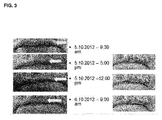
- FIG. 3 shows photographic illustrations of the healing process of a cold sore under treatment with the antimicrobial composition.
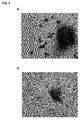
- FIG. 4 shows photographic images of culture media with microorganism colonies around antimicrobial composition coated substrates. It was shown that the antimicrobial composition has a broad spectrum effect against bacteria (a: E. coli) and fungi (b: pathogenic yeast and c: brush mold).
- the antimicrobial composition is used here in the form of coated wire nets, which were placed on colonized with the respective microorganisms nutrient media. After an incubation of 36 hours (106 / ml, 30 ° C.), clear zones of inhibition were evident all around the wire mesh sections according to the invention, which evidence the antimicrobial effect of the coated wire nets.
- a wire net provided with a microporous silver coating (a (left): control) can not kill the germs and is completely overgrown.
- FIG. 5 shows dead yeasts after 15 minutes exposure time of a powdered antibacterial composition (dark area).
- the aqueous solution in which the yeasts were contained contained a dye (methylene blue), which could only have passed through the cell wall into the killed cells. Due to the pH value changed in the cell, the dye reacts and forms its characteristic blue color.
- Yeast fungi have been brought into contact with activated Ag / Ru powder. After 15 minutes, all yeasts in the environment of about 50 microns are the powdered antimicrobial Composition dyed by the dye methylene blue. The staining shows that the yeasts were killed, because the dye can only enter the cell when the cells are dead and their cell wall is damaged.
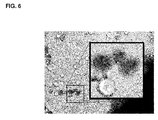
- FIG. 6 shows an enlarged section (rectangular box) with killed yeast cells (dark gray) and a cell before the onset of staining (light cell).
- the dark spots in the cell walls can be interpreted as pores. Since the blue colouration takes some time after the cells have been killed, the bright cell seen in the enlarged cutout, as can be seen from the first dark spots in the membrane, may already be dead but not yet blue.
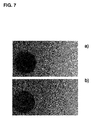
- FIG. 7 Microscopic images of algae cells around a bead coated with the antimicrobial composition ("Bead", dark circle). At the beginning of the experiment ( Figure 7a ), the algae are intact, while dead algae cells around the globule show up 3 minutes later ( FIG. 7b ). It thus turns out that the use according to the invention of an activated Ag / Ru composition also leads to a killing of algae cells.
- Bead dark circle
- the use according to the invention of the activated Ag / Ru composition is safe for the persons or animals treated with it.
- investigations on MRC-5 cell lines were performed. The investigations were carried out according to ISO 10993, ISO 10993-12 and USP Chapter 87 and 1031. The investigation revealed a cytotoxic effect of stage 1 (mild cytotoxicity), which is considered harmless and allows application to humans.
- Herpes simplex-1 is a self-limiting disease. Antiviral therapy is not mandatory. Many patients who suffer from recurrences do not consult a doctor and take OTC supplements. With an almost 90% infection of the European population with herpes simplex viruses and an annual incidence of up to 30% of the affected population, the question of the most effective therapy arises again and again. Specifically, herpes simplex virus type I (HSV-1) is widespread and burdened by the typical infections of skin epithelial cells and associated neurons in the oral region. An American study showed endogenous re-infection in about 30% of infected patients, with a recurrent infection rate of about 1%. The infection essentially takes place in the lip area and surroundings.
- HSV-1 herpes simplex virus type I
- the herpes simplex disease is not only a health, but also a social burden for the affected persons due to the widespread use.
- the previously on the market herpes products only lead to a small reduction in the duration of the disease and can alleviate the symptoms of cold sore outbreak at best.
- the advantageous possibility of being able to apply activated Ag / Ru composition to a wide variety of carrier materials makes it possible to design a completely new herpes patch.
- the basic carrier is a commercially available microporous polymer film which is provided on one side with a skin-compatible adhesive. Then a thin film of hydrogel is applied, which ensures sufficient adhesion of an activated silver / ruthenium-coated carrier material (eg tissue) and serves as a moisture reservoir.
- Moisture increases the effectiveness of the antimicrobial composition.
- the Ag / Ru fabric can easily be redissolved from the gel to apply it to a new carrier sheet as soon as the adhesion of the herpetic patch to the site to be treated has been lost.
- the novel Ag / Ru plaster is applied to the affected area of the face in the same way as in the case of classic patches. Since the effectiveness of the antimicrobial composition is supported by moisture, moisture can also be applied to the moisture-permeable plaster and thus to the activated Ag / Ru tissue and the skin by moistening with water from outside.
- a disadvantage of the penciclovir active ingredient is that it has to be applied every 2 hours.
- the known herpes patch have on the herpes site a maximum liability of 8 h. Thereafter, the herpes patch must be changed.
- Ag / Ru plaster according to the invention the duration of adhesion of the patch on the herpes is about the same time.
- the active medium (Ag / Ru tissue) is merely transferred from one adhesive plaster carrier to the next, without having to use a new Ag / Ru fabric. This means that you can get by with only one Ag / Ru active medium during the entire healing period. Only the primer carrier is renewed, which represents a significant cost advantage.
- the application is very easy to perform.
- the following application forms are also possible:
- Ointment including fatty ointments
- cream lotion / milk
- liquid including solution and / or suspension, aqueous, alcoholic or aromatic
- shake-mix including solution and / or suspension, aqueous, alcoholic or aromatic
- solid eg powder
- paste suppositories
- eye drops or eye ointments or as a means of local therapy to the ears, nose and oral cavity in drops or spray.
Landscapes
- Health & Medical Sciences (AREA)
- Life Sciences & Earth Sciences (AREA)
- Chemical & Material Sciences (AREA)
- Animal Behavior & Ethology (AREA)
- General Health & Medical Sciences (AREA)
- Public Health (AREA)
- Veterinary Medicine (AREA)
- Epidemiology (AREA)
- Medicinal Chemistry (AREA)
- Pharmacology & Pharmacy (AREA)
- Engineering & Computer Science (AREA)
- Materials Engineering (AREA)
- Inorganic Chemistry (AREA)
- Hematology (AREA)
- Chemical Kinetics & Catalysis (AREA)
- Nuclear Medicine, Radiotherapy & Molecular Imaging (AREA)
- Organic Chemistry (AREA)
- General Chemical & Material Sciences (AREA)
- Virology (AREA)
- Communicable Diseases (AREA)
- Oncology (AREA)
- Dermatology (AREA)
- Biotechnology (AREA)
- Molecular Biology (AREA)
- Bioinformatics & Cheminformatics (AREA)
- Medicinal Preparation (AREA)
- Pharmaceuticals Containing Other Organic And Inorganic Compounds (AREA)
- Medicines That Contain Protein Lipid Enzymes And Other Medicines (AREA)
- Agricultural Chemicals And Associated Chemicals (AREA)
- Materials For Medical Uses (AREA)
Abstract
Description
- Die Erfindung betrifft die Verwendung einer antimikrobiellen Zusammensetzung zur topischen Behandlung oder Vermeidung von Erkrankungen der Haut, Hautanhangsgebilde oder Schleimhaut, die durch die Infektion mit mindestens einem Mikroorganismus verursacht werden. Die Erfindung betrifft ferner ein Verbandmaterial oder einen Wundschnellverband, das oder der eine antimikrobielle Zusammensetzung umfasst.
- Aus der
WO 2008 046513 A2 ist eine bioaktive, Silber, Ruthenium und ein Vitamin enthaltende metallische Beschichtung bekannt, die zur Entkeimung, Desinfektion und Dekontamination von Wasser oder wässrigen Lösungen verwendet wird. Die Kombination von Silber mit Ruthenium und einem Vitamin oder dessen Derivat führt zu einer schnelleren und effizienteren Abtötung von Mikroorganismen. Gleichzeitig verhindern diese bioaktiven Metalloberflächen die Besiedelung mit Mikroorganismen und die Anheftung oder stabile Ablagerung von problematischen Biomolekülen wie zum Beispiel DNA, RNA oder Proteinen. Durch die Beschichtung entsteht eine sich selbst reinigende Oberfläche, die bei Kontakt mit Wasser oder wässrigen Lösungen sehr schnell und effizient dessen Keimfreiheit herstellt und über längere Zeiträume aufrechterhält. - Antibiotika-Resistenzen vieler pathogener Bakterien stellen weltweit ein schwerwiegendes Problem bei der Behandlung von Patienten dar, für das es derzeit häufig keine zufriedenstellenden Lösungen mehr gibt. Insbesondere urologischen Infektionen und Infektionen der Haut verursachen dabei die größten Probleme (WHO Library Cataloguing-in-Publication Data (2014): Antimicrobial resistance: global report on surveillance, World Health Organization, ISBN 978 92 4 156474 8). Es besteht daher ein immer größer werdender Bedarf an Therapien zur Behandlung von bakteriellen Infektionen, die ohne Antibiotika auskommen.
- Aber auch bei viralen Infektionen fehlen häufig Alternativen zu den bereits bekannten Therapien. Ein Beispiel hierfür sind Herpes-Infektionen. Mehr als 85% aller Deutschen sind mit dem Herpes simplex-Virus Typ 1 (HSV-1) infiziert, bei etwa 12 Millionen Betroffenen bricht die Erkrankung regelmäßig aus (ca. 20 %). Für andere Länder dürften die Zahlen aus Deutschland in etwa übertragbar sein. Herpesviren gelten weltweit als die am weitesten verbreiteten Viren. Der Lippenherpes zählt in Deutschland zu den häufigsten Erkrankungen der Haut. Die Erstinfektion verläuft meist unbemerkt als Tröpfchen- oder Schmierinfektion vor dem 6. Lebensjahr. Nach der Erstinfektion bleibt das Virus lebenslang im Körper des Betroffenen. Der Ausbruch von Herpes dauert ca. 10 - 14 Tage und verläuft in 5 verschiedenen Stadien: Juckreizstadium, Bläschenstadium, Nässe/Wundstadium, Krustenstadium und Heilungsstadium.
- Derzeit wird weltweit bei der Behandlung der Herpes simplex-1-Erkrankung auf zwei unterschiedliche Strategien gesetzt: Virostatika (Salben, Tabletten, Suspensionen) und Herpespflaster mit Inhaltsstoffen zur Reduzierung der Beschwerden beim Krankheitsverlauf. Bekannte Wirkstoffe sind beispielsweise Aciclovir und Penciclovir. Beide Wirkstoffe sind in Form von Cremes und Tabletten erhältlich und hemmen den Stoffwechsel der Zelle, wobei der Wirkstoff nur in infizierten Zellen aktiviert wird. Herpespflaster arbeiten auf der Grundlage der Hydrokolloid-Therapie und werden auf die entsprechende Erkrankungsstelle appliziert. Sie müssen gut haften und sollen möglichst wenig sichtbar sein. Gleichzeitig sind auf dem Pflaster Stoffe aufgebracht, die den Krankheitsverlauf erleichtern und Symptome wie Juckreize, Schwellungen und Rötungen reduzieren.
- Die bisher eingesetzten Behandlungsmethoden und Wirkstoffe können jedoch den Krankheitsverlauf nicht entscheidend beeinflussen, sondern nur die unangenehmen Symptome des Lippenherpes lindern. Es wird daher immer noch ein Therapieansatz gesucht, der den Ausbruch der Herpeserkrankung gleich nach deren ersten Auftreten (Kribbeln, Hautspannung oder Schwellung) zurückdrängt und die Bläschenbildung als nachfolgendes Stadium gar nicht erst eintreten lässt.
- Der Erfindung liegt die Aufgabe zugrunde, alternative Wirkstoffe und/oder Materialien zur topischen Behandlung oder Vermeidung von Erkrankungen der Haut, Hautanhangsgebilde oder Schleimhaut, die durch die Infektion mit mindestens einem Mikroorganismus verursacht werden, bereitzustellen.
- Diese Aufgabe wird erfindungsgemäß durch die entsprechende therapeutische und präventive Verwendung einer antimikrobiellen Zusammensetzung gelöst, welche metallisches Silber und metallisches Ruthenium sowie mindestens ein Vitamin oder mindestens ein Derivat eines Vitamins umfasst. Es hat sich überraschender Weise herausgestellt, dass eine Kombination der Edelmetalle Silber und Ruthenium, die mittels eines Vitamins aktiviert wurde, eine keimabtötende Wirkung auf alle getesteten Mikroorganismen hat und sich hervorragend zur topischen Behandlung von entsprechenden Infektionen der Haut, Hautanhangsgebilde oder Schleimhäute eignet. Dies gilt sowohl für den Menschen als auch für Tiere. Dabei können durch die topische Anwendung der antimikrobiellen Zusammensetzung einerseits durch Mikroorganismen verursachte Erkrankungen schnell und schonend kuriert und andererseits gefährdete Hautbereiche, wie z. B. offene Wunden, zur Vermeidung von Infektionen sehr effektiv präventiv behandelt werden. Die metallisches Silber und metallisches Ruthenium sowie mindestens ein Vitamin oder mindestens ein Derivat eines Vitamins umfassende Zusammensetzung wirkt dabei spezifisch gegen die Mikroorganismen und ist für die behandelten Haut- oder Schleimhautzellen sowie Hautanhangsgebilde unbedenklich.
- Der Mikroorganismus kann beispielsweise ein Virus, ein Bakterium oder ein Pilz sein. Die Wirksamkeit der antibakteriellen Zusammensetzung gegen diese Arten von Mikroorganismen und ggf. deren Sporen-Stadien konnte in zahlreichen Tests nachgewiesen werden. Wie in einer Untersuchung an der antibakteriellen Zusammensetzung und Silber von 13 Mikrobiologen aus Deutschland und Spanien mit 29 verschiedenen Bakterien gezeigt worden ist, wirkt die antibakterielle Zusammensetzung, anders als z. B. Silber, sehr effizient auch gegen Antibiotika resistente Bakterien und verhindert äußerst effizient die Bildung von Biofilmen. Wie unter näher ausgeführt, wirkt die antibakterielle Zusammensetzung auch gegen Pilze und sogar Algen.
- Der Mikroorganismus kann beispielsweise auch das Herpes simplex-Virus Typ 1 (Humanes Herpesvirus 1 = HSV-1) sein, das in erster Linie als Erreger des Lippenherpes (Herpes labialis) bekannt ist. Aber auch etwa 20-30% der genitalen Herpes-Infektionen (Genitalherpes = Herpes genitalis) werden durch HSV-1 verursacht. Ohne die Behandlung eines Lippenherpesausbruchs beträgt die Zeit bis zur Abheilung 10 -14 Tage. Studien haben gezeigt, dass herkömmliche Herpes-Cremes den Heilungsverlauf nicht oder nur geringfügig verkürzen (0,5-2,0 Tage). Herpesbläschen an den Lippen bzw. im Gesicht stellen aber für den Erkrankten eine physische, psychische und soziale Belastung dar. Daher kommt der Verkürzung des Krankheitsverlaufs für den Patienten die höchste Priorität zu. Die metallisches Silber und metallisches Ruthenium sowie mindestens ein Vitamin oder mindestens ein Derivat eines Vitamins umfassende antibakterielle Zusammensetzung wirkt nachweislich derart effizient gegen das Herpes simplex-Virus Typ 1, dass es den Herpes innerhalb eines Tages nach dem Auftreten der ersten Symptome vollkommen zurückdrängt. Im Gegensatz zu den bereits am Markt verfügbaren Herpes-Behandlungs-Lösungen, kann die Herpeserkrankung durch die antimikrobielle Zusammensetzung um mehrere Tage (8,5 - 12 Tage) verkürzt werden.
- Der Mikroorganismus kann aber beispielsweise auch das Herpes simplex-Virus Typ 2 (Humanes Herpesvirus 2 = HSV-2) sein, das für die überwiegenden Mehrzahl der genitalen Herpes-Manifestationen (am Penis, an der Scheide und im Analbereich) verantwortlich ist. Die metallisches Silber und metallisches Ruthenium sowie mindestens ein Vitamin oder mindestens ein Derivat eines Vitamins umfassende antibakterielle Zusammensetzung wirkt ebenfalls sehr effizient gegen das Herpes simplex-Virus Typ 2 und ist daher auch ein effektives Mittel gegen Genitalherpes (Herpes genitalis).
- In vorteilhafter Ausgestaltung der Erfindung ist vorgesehen, dass die antimikrobielle Zusammensetzung auf mindestens eine Oberfläche eines Trägermaterials aufgebracht ist. Das Trägermaterial kann beispielsweise ein Gewebe, eine Folie, ein Netz, ein Verbandmaterial, eine Kompresse oder ein Wundschnellverband ("Pflaster") sein. Das Trägermaterial kann ferner beispielsweise zumindest teilweise aus Metall, Kunststoff, Glas, Keramik, Naturfasern, Kunstfasern oder anderen geeigneten Materialen bestehen.
- Das Trägermaterial kann beispielsweise so beschaffen sein, dass es benetzbar und/oder durchlässig für Feuchtigkeit ist. Feuchtigkeit fördert bzw. steigert die Wirkung der antimikrobiellen Zusammensetzung, so dass es von Vorteil ist, wenn das Trägermaterial Feuchtigkeit aufnehmen und praktisch als Feuchtigkeitsspeicher dienen kann. Zusätzlich oder alternativ kann das Trägermaterial auch so beschaffen sein, dass Feuchtigkeit durchlässt, so dass die antimikrobielle Zusammensetzung und/oder die zu behandelnde Haut-/Schleimhautoberfläche von außen mit Feuchtigkeit benetzt werden kann, obwohl sie von dem Trägermaterial bedeckt ist/sind.
- Das Trägermaterial kann in vorteilhafter Ausgestaltung der Erfindung auch ein Material zur Speicherung von Feuchtigkeit umfassen, beispielsweise Wasser enthaltende, aber wasserunlösliche Polymere (sogenannte "Hydrogele").
- In weiterer vorteilhafter Ausgestaltung der Erfindung ist vorgesehen, dass das Trägermaterial gas- und/oder luftdurchlässig ist, da beispielsweise Sauerstoff für die Wirksamkeit der antibakteriellen Zusammensetzung von besonderem Vorteil ist.
- In weiterer vorteilhafter Ausgestaltung der Erfindung ist vorgesehen, dass die antimikrobielle Zusammensetzung mindestens eine Silberschicht mit mindestens einer darauf aufgebrachten Ruthenium-Schicht umfasst, wobei die Silberschicht von der Ruthenium-Schicht in mindestens einem Teilbereich unbedeckt ist. So kann die Ruthenium-Schicht beispielsweise in Form von Inseln oder Nestern, sozusagen Cluster-förmig, auf der Silberschicht aufgebracht sein. Hierdurch kann eine optimale Wirksamkeit der antibakteriellen Zusammensetzung gewährleistet werden.
- Die antibakterielle Zusammensetzung kann beispielsweise durch das Aufbringen einer Ruthenium-Schicht auf eine silberhaltige Oberfläche oder ein silberhaltiges Trägermaterial, oder das Aufbringen einer Silber-Beschichtung auf das Trägermaterial und anschließendes Aufbringen einer Ruthenium-Schicht auf die Silber-Beschichtung, oder das Aufbringen von Ruthenium-Silber-Partikeln auf eine Oberfläche oder das Trägermaterial, hergestellt werden. Die derart erzeugte Ag/Ru-Oberfläche wird dann durch das Aufbringen von mindestens einem Vitamin oder mindestens einem Derivat eines Vitamins aktiviert. Die Schichten, d.h. die Ruthenium-Schicht und eine ggf. erforderliche Silberunterschicht (i.d.R. mit einer Dicke von 2-10 µm), werden vorzugsweise galvanisch aufgebracht oder abgeschieden. Andere Beschichtungsverfahren, wie PVD-, CVD-, Sputter-, Sol-Gel- und Reduktionsverfahren, sind ebenfalls hierfür geeignete Plattierverfahren.
- In weiterer vorteilhafter Ausgestaltung der Erfindung ist vorgesehen, dass die antimikrobielle Zusammensetzung mindestens einen Silberdraht oder zumindest silberbeschichteten Draht umfasst, der teilweise mit einer Ruthenium-Schicht bedeckt ist. Anstelle eines Silberdrahts kann beispielsweise auch ein silberbeschichteter Edelstahldraht verwendet werden, der dann teilweise mit Ruthenium beschichtet wird. Anschließend wird dieser Ag/Ru-Draht dann durch das Aufbringen von mindestens einem Vitamin oder mindestens einem Derivat eines Vitamins aktiviert. Die drahtförmige antimikrobielle Zusammensetzung kann dann beispielsweise als Bestandteil eines Netzes oder Siebes verarbeitet und verwendet werden.
- Bei der mit Ruthenium zu beschichtenden Oberfläche, die beispielsweise eine silberhaltige Oberfläche oder Silberoberfläche umfassen kann, kann es sich um ein beliebiges Material (wie z.B. Metall oder Kunststoff) mit einer aufgebrachten, dünnen, silberhaltigen Beschichtung handeln, die zusammen mit der aufgebrachten äußeren Ruthenium-Schicht ein wirksames Ruthenium-Silber-Sandwich-System mit einer Silber- oder Silberlegierungs-Unterschicht oder-Unterlage und einer feuchtigkeits- oder nässedurchlässigen Ruthenium-Außenschicht, -Oberschicht oder -Deckschicht bildet.
- In weiterer vorteilhafter Ausgestaltung der Erfindung ist vorgesehen, dass die antimikrobielle Zusammensetzung Silber-Ruthenium-Bimetall-Partikel umfasst, die mit dem Vitamin bzw. Vitaminderivat nachbehandelt wurden. Solche Partikel können beispielsweise als Bestandteil eine Pulvers, einer Suspension, einer Creme, einer Salbe oder eines Gels eingesetzt werden.
- In weiterer vorteilhafter Ausgestaltung der Erfindung ist vorgesehen, dass die antimikrobielle Zusammensetzung, welcher Form auch immer, in einer Suspension, einer Creme, einer Salbe, einem Gel oder einem Pulver enthalten ist und zur topischen Behandlung von mikrobiellen Erkrankungen der Haut, Hautanhangsgebilde oder Schleimhaut eines Menschen oder eines Tieres verwendet wird.
- In weiterer vorteilhafter Ausgestaltung der Erfindung ist vorgesehen, dass das Vitamin mindestens eine Verbindung aus der Gruppe der wasserlöslichen Vitamine oder ein Salz oder saures Derivat dieser Verbindung ist. Bei dieser Ausgestaltung der Erfindung wird, anders als beim bekannten oligodynamischen Effekt des Silbers, die antimikrobielle Wirkung der Zusammensetzung aufgrund eines völlig anderen Wirkmechanismus erheblich verbessert bzw. durch die Kombination von Silber mit Ruthenium und einem Vitamin, beispielsweise Ascorbinsäure oder deren Derivaten, erheblich verstärkt. Die antibakterielle Zusammensetzung führt zu einer schnelleren und effizienteren Abtötung von Mikroorganismen. Gleichzeitig verhindern solche antibakteriellen Zusammensetzungen die Infektion empfindlicher oder geschwächter Haut- und Schleimhautoberflächen mit Mikroorganismen und die Anheftung oder stabile Ablagerung von Biomolekülen, wie DNA, RNA oder Proteinen auf der Haut oder Schleimhaut.
- Beispielsweise kann eine Silber-/Ruthenium-Oberfläche mit mindestens einem wasserlöslichen Vitamin behandelt werden bzw. umfasst den oder die zusätzlichen Stoffe, so dass die Oberfläche durch diese Stoffe aktiviert wird und eine unerwartet starke antimikrobielle Wirkung der Zusammensetzung eintritt. Überraschender Weise hat sich herausgestellt, dass nur ein nicht abgebautes wasserlösliches Vitamin die unerwartete antimikrobielle Wirkung im Zusammenspiel mit Silber und Ruthenium bewirkt. Aus vielen Messungen hat sich ergeben, dass sich durch die Nachbehandlung einer mit Ruthenium beschichteten Silberoberfläche mit z. B. Ascorbinsäure die Oberfläche signifikant verändert und die antimikrobielle Wirkung nach einem ganz anderen Mechanismus als bei der klassischen Silbertechnologie (klassische, oligodynamische Silbertechnologie = Abgabe von Silberionen) abläuft. Es gibt Hinweise darauf, dass die Wirkung der antimikrobiellen Zusammensetzung von einem mikroelektrischen Feld ausgeht und das Benetzungsverhalten der Oberfläche beispielsweise deutlich verändert ist, wenn man eine reine Silber-/Ruthenium-Oberfläche mit der aktivierten antimikrobiellen Zusammensetzung vergleicht. Bei EM-Atom-Kraft-Mikroskop-Messungen wurden ebenfalls entscheidende Unterschiede festgestellt, die einen deutlichen Hinweise darauf geben, dass sich durch die Kombination von Silber/Ruthenium mit einem wasserlöslichen Vitamin ein mikroelektrisches Feld aufbaut, das bei reinen Silber-/Ruthenium -Oberflächen nicht beobachtet wird. Es kommt dabei zu einer kathodischen Sauerstoff-Reduktion, die zu einer Bildung freier Sauerstoffradikale ("Reaktive Sauerstoffspezies"; englisch: reactive oxygen species = ROS) wie beispielsweise H2O2 führt. Gleichzeitig bildet sich durch die antibakterielle Zusammensetzung eine chemisch sehr stabile Oberfläche aus, die z. B. gegen Sulfide und Chloride reaktionsfest ist. Die hohe Stabilität gepaart mit einer langanhaltenden, starken antimikrobiellen Wirksamkeit ist durch mehrjährige antimikrobielle Einsätze der antibakterielle Zusammensetzung in diversen wässrigen Lösungen (z.B. Kühlschmiermittellösungen, Prozesswässern mit Korrosionsschutzmitteln und Emulgatoren der unterschiedlichsten Art oder Urin) bestätigt worden.
- In weiterer vorteilhafter Ausgestaltung der Erfindung ist vorgesehen, dass das Vitamin Ascorbinsäure oder ein Derivat der Ascorbinsäure ist.
- Die Aufgabe wird erfindungsgemäß ferner durch Verbandmaterial oder einen Wundschnellverband gelöst, das oder der eine antimikrobielle Zusammensetzung umfasst, welche metallisches Silber und metallisches Ruthenium sowie mindestens ein Vitamin oder mindestens ein Derivat eines Vitamins umfasst. Ein solcher Verband bzw. ein solches Pflaster eignet sich in vorteilhafter Weise für das Applizieren und topische Anwenden der antimikrobiellen Zusammensetzung zur effektiven Behandlung von durch pathogene Mikroorganismen verursachten Erkrankungen der Haut, Hautanhangsgebilde oder Schleimhaut sowie zum Schutz gefährdeter Hautbereiche, wie z. B. offenen Wunden, vor entsprechenden Infektionen.
- "Topische Behandlung" im Sinne der Erfindung bezeichnet die Anwendung von Wirkmechanismen dort, wo sie therapeutisch wirken sollen, im Gegensatz zur sogenannten systemischen Behandlung, d. h. der Gabe von Arzneimitteln beispielsweise als Infusion oder Tablette. Die topische Behandlung stellt also eine lokale Therapieform dar, die insbesondere in der Dermatologie, der Augenheilkunde, der Hals-Nasen-Ohrenheilkunde und der Frauenheilkunde angewendet wird, d. h. in Bereichen des Körpers, die von außen zugänglich sind, wie beispielsweise Haut, Hornhaut (des Auges) oder Schleimhäute. Topische Behandlungsformen haben den Vorteil, dass die Wirkstoffe oder Wirkmechanismen nur dort wirken, wo sie benötigt werden, während die gesunde Haut bzw. Schleimhaut geschont wird. Durch die lokale Anwendung können darüber hinaus viele systemische Nebenwirkungen vermieden werden.
- Der Begriff "Haut" im Sinne der Erfindung umfasst das äußere Organ eines menschlichen oder tierischen Körpers, das u. a. der Abgrenzung des Körperinneren nach Außen dient. Der Begriff "Haut" umfasst dabei alle Schichten des Organs, insbesondere Epidermis (Oberhaut), Dermis (Lederhaut) und Subcutis (Unterhaut). Im Sinne der Erfindung umfasst der Begriff "Haut" insbesondere auch die Oberflächen der Lippen und Schamlippen sowie des Außen- und Mittelohrs.
- Der Begriff "Hautanhangsgebilde" im Sinne der Erfindung umfasst die Haare mit ihren Talgdrüsen und dem Haarbalgmuskel (Musculus arrector pili), Nägel, Hörner und Schweißdrüsen (einschl. Milchdrüsen) eines menschlichen oder tierischen Körpers.
- Der Begriff "Schleimhaut" im Sinne der Erfindung umfasst die Schutzschichten (lat.-med. Tunica mucosa), die das Innere von Hohlorganen eines menschlichen oder tierischen Körpers auskleiden und Schleimstoffe (Mucinen) produzieren bzw. absondern, insbesondere auch die Bindehaut des Auges, die Mundschleimhaut, die Deckschicht der Eichel und die Schleimhaut der Vagina.
- Die Erfindung wird im Folgenden anhand der Abbildungen beispielhaft näher erläutert.
- Es zeigt:
-
Figur 1 eine fotographische Abbildung einer mit der antimikrobiellen Zusammensetzung beschichteten selbstklebenden Folie mit Hydrogel-Untergrund (Feuchtigkeitsspeicherung); -
Figur 2 eine fotographische Abbildung eines applizierten Trägermaterials mit antimikrobieller Zusammensetzung; -
Figur 3 fotographische Abbildungen des Heilungsverlaufs eines Lippenherpes unter der Behandlung mit der antimikrobiellen Zusammensetzung; -
Figur 4 fotographische Abbildungen von Nährböden mit Mikroorganismus-Kolonien rund um mit der antimikrobiellen Zusammensetzung beschichteten Trägermaterialien ("AgXX" = aktivierte Ag/Ru-Zusammensetzung),- a) Escherichia coli (zusätzlich Silber ("Ag") als Kontrolle),
- b) Candida parapsilosis,
- c) Penicillium notatum;
-
Figur 5 mikroskopische Abbildungen von Hefezellen nach 15 Minuten Einwirkdauer einer pulverförmigen antibakteriellen Zusammensetzung und von Nano-Silber (dunkle Bereiche),- a) aktivierte Ag/Ru-Zusammensetzung,
- b) Nano-Silber (Kontrolle);
-
Figur 6 einen vergrößerten Ausschnitt (rechteckiger Kasten) mit abgetöteten Hefezellen (dunkelgrau) sowie von einer Zelle vor dem Beginn der Färbung (helle Zelle); und -
Figur 7 mikroskopische Abbildungen von Algenzellen rund um ein mit der antimikrobiellen Zusammensetzung beschichtetes Kügelchen ("Bead", dunkler Kreis),- a) zu Beginn des Versuchs,
- b) nach 3 Minuten.
-
Figur 1 zeigt eine fotographische Abbildung einer mit der antimikrobiellen Zusammensetzung beschichteten selbstklebenden Folie mit Hydrogel-Untergrund. Als Trägermaterial für die aktivierte antimikrobielle Ag/Ru-Zusammensetzung dient in diesem Ausführungsbeispiel eine selbstklebende Folie, mittels der die Zusammensetzung leicht auf eine zu behandelnde Oberfläche, z. B. die Haut, aufgebracht werden kann. Auf diese oder ähnliche Weise kann die antibakterielle Zusammensetzung in Form eines Wundschnellverbandes bzw. Pflasters appliziert werden. Der Hydrogel-Untergrund dient dabei der Speicherung von Feuchtigkeit, welche die Wirkung der antimikrobiellen Zusammensetzung fördert bzw. steigert. -
Figur 2 zeigt eine fotographische Abbildung eines applizierten Trägermaterials mit antimikrobieller Zusammensetzung. Das Trägermaterial wurde hier zum Zwecke der topischen Behandlung von Lippenherpes auf die Lippenhaut eines Menschen aufgebracht. -
Figur 3 zeigt fotographische Abbildungen des Heilungsverlaufs eines Lippenherpes unter der Behandlung mit der antimikrobiellen Zusammensetzung. Nach dem Auftreten der ersten Symptome eines beginnenden Lippenherpes wurde ein Trägermaterial mit aktivierter antimikrobieller Ag/Ru-Zusammensetzung auf die Lippenhaut eines Manschen aufgebracht (Abbildungen rechts) und der Verlauf der Erkrankung im Abstand weniger Stunden dokumentiert (Abbildungen links). Es stellte sich heraus, dass die erfindungsgemäße Verwendung der antimikrobiellen Zusammensetzung in topischer Anwendung auf der Haut bereits innerhalb von knapp 24 Stunden zu einem vollständigen Abklingen der Symptome führt. Durch Verwendung eines erfindungsgemäßen Herpespflasters gelingt eine deutliche Verkürzung des Krankheitsverlaufs, wobei die Stadien 2-5 des Herpesausbruchs bei rechtzeitiger Pflasterapplikation gar nicht mehr durchlaufen werden. Durch die Wiederverwendbarkeit des Trägermaterials während der Herpesbehandlung ergibt sich gegenüber den bisherigen Herpesprodukten ein klarer Vorteil. Beide Faktoren bedeuten für die Betroffenen einen deutlichen Zugewinn an Lebensqualität und Kostenersparnis. -
Figur 4 zeigt fotographische Abbildungen von Nährböden mit Mikroorganismus-Kolonien rund um mit der antimikrobiellen Zusammensetzung beschichteten Trägermaterialien. Es zeigte sich hierbei, dass die antimikrobielle Zusammensetzung eine Breitbandwirkung gegen Bakterien (a: E. coli) und Pilze (b: pathogene Hefe und c: Pinselschimmel) hat. Eingesetzt wird die antimikrobielle Zusammensetzung hier in Form von beschichteten Drahtnetzen, die auf mit den jeweiligen Mikroorganismen besiedelte Nährböden gelegt wurden. Nach einer Inkubation von 36 Stunden (106/ml, 30°C), zeigten sich rund um die erfindungsgemäßen Drahtnetzabschnitte deutliche Hemmhöfe, welche die antimikrobielle Wirkung der beschichten Drahtnetze belegen. Dagegen zeigte sich, dass ein mit einer mikroporösen Silberbeschichtung versehenes Drahtnetz (a (links): Kontrolle) die Keime nicht abtöten kann und vollständig überwachsen wird. -
Figur 5 zeigt abgetötete Hefepilze nach 15 Minuten Einwirkdauer einer pulverförmigen antibakteriellen Zusammensetzung (dunkler Bereich). Die wässrige Lösung, in der sich die Hefepilze befanden, enthielt einen Farbstoff (Methylenblau), der nur durch die Zellwand in die abgetöteten Zellen gelangt sein kann. Durch den in der Zelle veränderten pH-Wert reagiert der Farbstoff und bildet seine charakteristische blaue Farbe aus. InFigur 5a sind Hefepilze in den Kontakt mit aktiviertem Ag/Ru-Pulver gebracht worden. Nach 15 Minuten sind alle Hefepilze im Umfeld von ca. 50 µm um die pulverförmige antimikrobielle Zusammensetzung durch den Farbstoff Methylenblau gefärbt. Die Einfärbung zeigt, dass die Hefepilze abgetötet wurden, denn der Farbstoff kann nur in die Zelle gelangen, wenn die Zellen tot und ihre Zellwand geschädigt ist. Da der Färbevorgang einige Zeit in Anspruch nimmt, sind die Hefezellen in weniger als 15Minuten abgetötet worden. Im Gegensatz dazu sind durch Nano-Silber (Figur 5b : Kontrolle) selbst nach 60 Minuten keine Keime abgetötet worden. Die einzelnen toten Hefepilze sind bereits von Versuchsbeginn an abgetötet gewesen und zeigen lediglich an, dass in dieser wässrigen Lösung der Farbstoff für die abgetöteten Keime auch enthalten war. -
Figur 6 zeigt einen vergrößerten Ausschnitt (rechteckiger Kasten) mit abgetöteten Hefezellen (dunkelgrau) sowie einer Zelle vor dem Beginn der Färbung (helle Zelle). Die dunklen Punkte in den Zellwänden können als Poren interpretiert werden. Da die Blaufärbung nach der Abtötung der Zellen einige Zeit in Anspruch nimmt, ist die in dem vergrößerten Ausschnitt zu sehende helle Zelle, wie anhand der ersten dunklen Punkte in der Membran abgelesen werden kann, möglicherweise bereits tot, aber noch nicht blau eingefärbt. -
Figur 7 mikroskopische Abbildungen von Algenzellen rund um ein mit der antimikrobiellen Zusammensetzung beschichtetes Kügelchen ("Bead", dunkler Kreis). Zu Beginn des Experiments (Figur 7a ) sind die Algen intakt, während sich bereits 3 Minuten später tote Algenzellen rund um das Kügelchen zeigen (Figur 7b ). Es zeigt sich also, dass die erfindungsgemäße Verwendung einer aktivierten Ag/Ru-Zusammensetzung auch zu einer Abtötung von Algenzellen führt. - In weiteren, hier nicht bildlich dargestellten Versuchen konnte auch gezeigt werden, dass die erfindungsgemäße Verwendung einer aktivierten Ag/Ru-Zusammensetzung auch eine antimikrobielle Wirkung gegen Legionellen hat.
- Alle durchgeführten Versuche machen deutlich, dass die antimikrobielle Zusammensetzung offensichtlich zu einer Zerstörung der Zellwand und/oder Zellmembran der jeweiligen Mikroorganismen führt, welche zu einer irreversiblen Schädigung der Zellen führt und diese dadurch effektiv abtötet.
- Trotz dieser starken antimikrobiellen Wirkung ist die erfindungsgemäße Verwendung der aktivierten Ag/Ru-Zusammensetzung für die damit behandelten Personen oder Tiere unbedenklich. In einer Studie zur Zelltoxizität mit antimikrobiell beschichteten Glaskugeln wurden Untersuchungen an MRC-5-Zelllinien durchgeführt. Die Untersuchungen wurden nach ISO 10993, ISO 10993-12 und USP Chapter 87 und 1031 durchgeführt. Die Untersuchung ergab einen zytotoxischen Effekt der Stufe 1 (leichte Zytotoxizität), der als unbedenklich gilt und eine Anwendung am Menschen zulässt.
- Erste in vivo - Versuch an Ratten haben die Verträglichkeit der antimikrobiellen Zusammensetzung bestätigt. Die Versuche wurden mit aktivierten Ag/Ru-Glaskugeln in Blasen von Ratten durchgeführt. Es ergab sich kein zytotoxisch negativer Befund, der einer Verwendung der antimikrobiellen Zusammensetzung für urologische Zwecke entgegenstehen würde.
- Herpes-simplex-1 ist eine selbstlimitierende Erkrankung. Die antivirale Therapie ist nicht zwingend erforderlich. Viele Patienten, die unter Rezidiven leiden, konsultieren keinen Arzt und nehmen OTC-Präparate. Bei einer nahezu 90%-igen Durchseuchung der europäischen Bevölkerung mit Herpes simplex-Viren und einer jährlichen Inzidenz von bis zu 30 % der betroffenen Bevölkerung stellt sich immer wieder die Frage nach der effektivsten Therapie. Speziell Herpes simplex-Virus Typ I (HSV-1) ist weit verbreitet und belastet Betroffene durch die typischen Infektionen von Epithelzellen der Haut und assoziierter Neuronen in der Mundregion. Eine amerikanische Studie zeigte eine endogene Re-Infektion bei ca. 30% der infizierten Patienten, die rekurrierende Infektionsrate liegt bei ca. 1%. Die Infektion spielt sich im Wesentlichen im Lippenbereich und Umgebung ab. Die Herpes simplex-Erkrankung ist aufgrund der weiten Verbreitung nicht nur eine gesundheitliche, sondern auch ein soziale Belastung für die betroffenen Personen. Die bisher auf dem Markt befindlichen Herpes-Produkte führen lediglich zu einer geringen zeitlichen Verringerung des Krankheitsverlaufs und können allenfalls die Symptome des Lippenherpesausbruchs lindern.
Die vorteilhafte Möglichkeit, aktivierte Ag/Ru-Zusammensetzung auf die unterschiedlichsten Trägerwerkstoffe auftragen zu können, ermöglicht die Konzeption eines völlig neu aufgebauten Herpespflasters. Grundträger ist eine in der Medizintechnik handelsübliche mikroporöse Polymerfolie, die einseitig mit einem hautverträglichen Kleber versehen ist. Darauf wird ein dünner Film eines Hydrogels aufgebracht, das eine ausreichende Haftung eines mit aktiviertem Silber/Ruthenium beschichteten Trägermaterials (z. B. Gewebe) gewährleistet und als Feuchtigkeitsspeicher dient. Feuchtigkeit erhöht die Wirksamkeit der antimikrobiellen Zusammensetzung. Gleichzeitig lässt sich das Ag/Ru-Gewebe von dem Gel leicht wieder lösen, um es auf eine neue Trägerfolie zu applizieren, sobald die Haftung des Herpespflasters von der zu behandelnden Stelle verloren gegangen ist. - Das neuartige Ag/Ru-Pflaster wird in gleicher Weise wie bei den klassischen Pflastern auf die betroffene Stelle im Gesicht appliziert. Da die Wirksamkeit der antimikrobiellen Zusammensetzung durch Feuchtigkeit unterstützt wird, kann Feuchtigkeit auch durch Befeuchten mit Wasser von außen auf das feuchtigkeitsdurchlässige Pflaster und somit auf das aktivierte Ag/Ru-Gewebe und die Haut gebracht werden.
- Ein Nachteil des Penciclovir-Wirkstoffes ist, dass er alle 2 Stunden appliziert werden muss. Die bekannten Herpespflaster haben auf der Herpesstelle eine Haftungszeit von maximal 8 h. Danach muss das Herpespflaster gewechselt werden. Beim erfindungsgemäßen Ag/Ru-Pflaster liegt die Haftungsdauer des Pflasters auf dem Herpes etwa in der gleichen Zeit. Allerdings wird das Wirkmedium (Ag/Ru-Gewebe) lediglich von einem Haftpflasterträger zum nächsten transferiert, ohne dass ein neues Ag/Ru-Gewebe benutzt werden muss. Das bedeutet, dass man während der gesamten Heilungsperiode mit nur einem Ag/Ru-Wirkmedium auskommen kann. Lediglich der Haftgrundträger wird erneuert, was einen deutlichen Kostenvorteil darstellt. Ferner ist die Anwendung sehr einfach durchzuführen.
- In diversen Eigenversuchen konnte die hohe Wirksamkeit des erfindungsgemäßen Ag/Ru-Herpespflasters mehrfach bestätigt werden (siehe
Figur 3 ). - Vorteile des erfindungsgemäßen Ag/Ru-Pflasters und dessen erfindungsgemäßer Verwendung:
- Kurze Anwendungsdauer bis zur erfolgreichen Herpeszurückdrängung,
- Einfache Handhabung,
- Keine Nebeneffekte zu erwarten,
- Im Vergleich zu den herkömmlichen Anti-Herpessystemen völlig neuer Wirkmechanismus,
- Das Ag/Ru-Herpespflaster basiert auf einem speziell aufgebauten Beschichtungssystems aus Edelmetallen und einem Vitaminderivat. Diese strukturierte Materialkombination verleiht dem aktivierten Ag/Ru-System eine sehr hohe Wirksamkeit gegen Mikroorganismen. Eine wichtige Rolle spielt dabei die Ausbildung eines mikroelektrischen Feldes an der Ag/Ru-Oberfläche, das die katalytische Wirkung der Ag/Ru-Oberfläche verstärkt.
- Die Ag/Ru-Oberfläche wird für die Herpespflaster in einem Rolle-zu-Rolle-Beschichtungsprozess weitgehend automatisiert hergestellt.
- Alternativ zur Verwendung der antimikrobiellen Zusammensetzung in Form eines Wundschnellverbandes sind auch folgende Anwendungsformen möglich:
- Salbe (einschl. Fettsalben), Creme, Lotion / Milch, Flüssigkeit (einschl. Lösung und/oder Suspension; auf wässriger, auf alkoholischer oder auf aromatischer Grundlage), Schüttelmixtur (Lotio), Feststoff (z.B. Pulver), Paste, Zäpfchen, Augentropfen oder Augensalben, oder als Mittel zur Lokaltherapie an Ohren, Nase und in der Mundhöhle in Tropfen- oder Sprayform.
Claims (15)
- Verwendung einer antimikrobiellen Zusammensetzung, welche metallisches Silber und metallisches Ruthenium sowie mindestens ein Vitamin oder mindestens ein Derivat eines Vitamins umfasst, zur topischen Behandlung oder Vermeidung von Erkrankungen der Haut, Hautanhangsgebilde oder Schleimhaut, die durch die Infektion mit mindestens einem Mikroorganismus verursacht werden.
- Verwendung nach Anspruch 1, dadurch gekennzeichnet, dass der Mikroorganismus ein Virus, ein Bakterium oder ein Pilz ist.
- Verwendung nach Anspruch 1 oder 2, dadurch gekennzeichnet, dass der Mikroorganismus das Herpes-Simplex 1-Virus ist.
- Verwendung nach einem der vorhergehenden Ansprüche, dadurch gekennzeichnet, dass die antimikrobielle Zusammensetzung auf mindestens eine Oberfläche eines Trägermaterials aufgebracht ist.
- Verwendung nach Anspruch 4, dadurch gekennzeichnet, dass das Trägermaterial ein Gewebe, eine Folie, ein Netz, ein Verbandmaterial, eine Kompresse oder ein Wundschnellverband ist.
- Verwendung nach Anspruch 4 oder 5, dadurch gekennzeichnet, dass das Trägermaterial benetzbar und/oder durchlässig für Feuchtigkeit ist.
- Verwendung nach einem der Ansprüche 4 bis 6, dadurch gekennzeichnet, dass das Trägermaterial ein Material zur Speicherung von Feuchtigkeit umfasst.
- Verwendung nach einem der Ansprüche 4 bis 7, dadurch gekennzeichnet, dass das Trägermaterial gas- und/oder luftdurchlässig ist.
- Verwendung nach einem der vorhergehenden Ansprüche, dadurch gekennzeichnet, dass die antimikrobielle Zusammensetzung mindestens eine Silberschicht mit mindestens einer darauf aufgebrachten Ruthenium-Schicht umfasst, wobei die Silberschicht von der Ruthenium-Schicht in mindestens einem Teilbereich unbedeckt ist.
- Verwendung nach einem der vorhergehenden Ansprüche, dadurch gekennzeichnet, dass die antimikrobielle Zusammensetzung mindestens einen Silberdraht oder zumindest silberbeschichteten Draht umfasst, der teilweise mit einer Ruthenium-Schicht bedeckt ist.
- Verwendung nach einem der vorhergehenden Ansprüche, dadurch gekennzeichnet, dass die antimikrobielle Zusammensetzung Silber-Ruthenium-Bimetall-Partikel umfasst.
- Verwendung nach einem der vorhergehenden Ansprüche, dadurch gekennzeichnet, dass die antimikrobielle Zusammensetzung in einer Suspension, einer Creme, einer Salbe, einem Gel oder einem Pulver enthalten ist.
- Verwendung nach einem der vorhergehenden Ansprüche, dadurch gekennzeichnet, dass das Vitamin mindestens eine Verbindung aus der Gruppe der wasserlöslichen Vitamine oder ein Salz oder saures Derivat dieser Verbindung ist.
- Verwendung nach Anspruch 12, dadurch gekennzeichnet, dass das Vitamin Ascorbinsäure oder ein Derivat der Ascorbinsäure ist.
- Verbandmaterial oder Wundschnellverband, dadurch gekennzeichnet, dass dieses oder dieser eine antimikrobielle Zusammensetzung umfasst, welche metallisches Silber und metallisches Ruthenium sowie mindestens ein Vitamin oder mindestens ein Derivat eines Vitamins umfasst.
Priority Applications (6)
| Application Number | Priority Date | Filing Date | Title |
|---|---|---|---|
| ES14170308T ES2927928T3 (es) | 2014-05-28 | 2014-05-28 | Uso de una composición antimicrobiana |
| EP14170308.2A EP2949325B1 (de) | 2014-05-28 | 2014-05-28 | Verwendung einer antimikrobiellen Zusammensetzung |
| US15/314,129 US20170087182A1 (en) | 2014-05-28 | 2015-05-28 | Use of an antimicrobial composition |
| JP2016569753A JP2017517519A (ja) | 2014-05-28 | 2015-05-28 | 抗菌性組成物の使用 |
| PCT/EP2015/061797 WO2015181271A1 (de) | 2014-05-28 | 2015-05-28 | Verwendung einer antimikrobiellen zusammensetzung |
| US17/463,654 US20210393680A1 (en) | 2014-05-28 | 2021-09-01 | Use of an antimicrobial composition |
Applications Claiming Priority (1)
| Application Number | Priority Date | Filing Date | Title |
|---|---|---|---|
| EP14170308.2A EP2949325B1 (de) | 2014-05-28 | 2014-05-28 | Verwendung einer antimikrobiellen Zusammensetzung |
Publications (2)
| Publication Number | Publication Date |
|---|---|
| EP2949325A1 true EP2949325A1 (de) | 2015-12-02 |
| EP2949325B1 EP2949325B1 (de) | 2022-08-03 |
Family
ID=50841620
Family Applications (1)
| Application Number | Title | Priority Date | Filing Date |
|---|---|---|---|
| EP14170308.2A Active EP2949325B1 (de) | 2014-05-28 | 2014-05-28 | Verwendung einer antimikrobiellen Zusammensetzung |
Country Status (5)
| Country | Link |
|---|---|
| US (2) | US20170087182A1 (de) |
| EP (1) | EP2949325B1 (de) |
| JP (1) | JP2017517519A (de) |
| ES (1) | ES2927928T3 (de) |
| WO (1) | WO2015181271A1 (de) |
Cited By (4)
| Publication number | Priority date | Publication date | Assignee | Title |
|---|---|---|---|---|
| EP3915377A1 (de) * | 2020-05-26 | 2021-12-01 | AgXX Intellectual Property Holding GmbH | Antiseptische hybride auflage zur lokalen wundbehandlung |
| EP3915376A1 (de) * | 2020-05-26 | 2021-12-01 | AGXX Intellectual Property Holding GmbH | Partikuläres antimikrobielles hybridsystem |
| EP3949736A1 (de) * | 2020-08-05 | 2022-02-09 | AGXX Intellectual Property Holding GmbH | Partikuläres antimikrobielles hybridsystem |
| EP4187004A1 (de) * | 2021-11-25 | 2023-05-31 | AGXX Intellectual Property Holding GmbH | Fasermaterial mit antimikrobieller und geruchsneutralisierender wirkung |
Citations (2)
| Publication number | Priority date | Publication date | Assignee | Title |
|---|---|---|---|---|
| WO2008046513A2 (de) | 2006-10-13 | 2008-04-24 | Agxx Intellectual Property Holding Gmbh | Bioaktive, rutheniumhaltige beschichtung und vorrichtung |
| DE102012218233A1 (de) * | 2012-10-05 | 2013-08-01 | Henkel Ag & Co. Kgaa | Kosmetische Seifengelstifte mit antibakterieller Wirkung |
Family Cites Families (3)
| Publication number | Priority date | Publication date | Assignee | Title |
|---|---|---|---|---|
| US4671266A (en) * | 1986-02-05 | 1987-06-09 | The Kendall Company | Blister bandage |
| GB0425152D0 (en) * | 2004-11-15 | 2004-12-15 | Middlesex Silver Co Ltd | Fabric structure |
| FI123878B (fi) * | 2011-01-19 | 2013-11-29 | Silvergreen Oy Ltd | Antimikrobinen haavaside ja menetelmä sen valmistamiseksi |
-
2014
- 2014-05-28 EP EP14170308.2A patent/EP2949325B1/de active Active
- 2014-05-28 ES ES14170308T patent/ES2927928T3/es active Active
-
2015
- 2015-05-28 JP JP2016569753A patent/JP2017517519A/ja active Pending
- 2015-05-28 US US15/314,129 patent/US20170087182A1/en not_active Abandoned
- 2015-05-28 WO PCT/EP2015/061797 patent/WO2015181271A1/de not_active Ceased
-
2021
- 2021-09-01 US US17/463,654 patent/US20210393680A1/en not_active Abandoned
Patent Citations (2)
| Publication number | Priority date | Publication date | Assignee | Title |
|---|---|---|---|---|
| WO2008046513A2 (de) | 2006-10-13 | 2008-04-24 | Agxx Intellectual Property Holding Gmbh | Bioaktive, rutheniumhaltige beschichtung und vorrichtung |
| DE102012218233A1 (de) * | 2012-10-05 | 2013-08-01 | Henkel Ag & Co. Kgaa | Kosmetische Seifengelstifte mit antibakterieller Wirkung |
Non-Patent Citations (2)
| Title |
|---|
| "Antimicrobial resistance: global report on surveillance", 2014, WORLD HEALTH ORGANIZATION, article "WHO Library Cataloguing-in-Publication Data" |
| NSÁNCHEZ-NAJERA ROSA ISELA 1 ET AL: "Ascorbic Acid On Oral Microbial Growth and Biofilm Formation", THE PHARMA INNOVATION, 1 June 2013 (2013-06-01), New Delhi, XP055125663, Retrieved from the Internet <URL:http://search.proquest.com/docview/1366365936> [retrieved on 20140702] * |
Cited By (10)
| Publication number | Priority date | Publication date | Assignee | Title |
|---|---|---|---|---|
| EP3915377A1 (de) * | 2020-05-26 | 2021-12-01 | AgXX Intellectual Property Holding GmbH | Antiseptische hybride auflage zur lokalen wundbehandlung |
| EP3915374A1 (de) * | 2020-05-26 | 2021-12-01 | AGXX Intellectual Property Holding GmbH | Bioaktive zusammensetzung zur abtötung von zellen |
| EP3915376A1 (de) * | 2020-05-26 | 2021-12-01 | AGXX Intellectual Property Holding GmbH | Partikuläres antimikrobielles hybridsystem |
| WO2021239851A1 (de) * | 2020-05-26 | 2021-12-02 | Agxx Intellectual Property Holding Gmbh | Antiseptische hybride auflage zur lokalen wundbehandlung |
| WO2021239842A1 (de) * | 2020-05-26 | 2021-12-02 | Agxx Intellectual Property Holding Gmbh | Bioaktive zusammensetzung zur abtötung von zellen |
| WO2021239845A1 (de) * | 2020-05-26 | 2021-12-02 | Agxx Intellectual Property Holding Gmbh | Partikuläres antimikrobielles hybridsystem |
| CN115666248A (zh) * | 2020-05-26 | 2023-01-31 | Agxx知识产权控股有限公司 | 用于杀死细胞的生物活性组合物 |
| EP4279552A3 (de) * | 2020-05-26 | 2024-01-03 | AGXX Intellectual Property Holding GmbH | Partikuläres antimikrobielles hybridsystem |
| EP3949736A1 (de) * | 2020-08-05 | 2022-02-09 | AGXX Intellectual Property Holding GmbH | Partikuläres antimikrobielles hybridsystem |
| EP4187004A1 (de) * | 2021-11-25 | 2023-05-31 | AGXX Intellectual Property Holding GmbH | Fasermaterial mit antimikrobieller und geruchsneutralisierender wirkung |
Also Published As
| Publication number | Publication date |
|---|---|
| US20210393680A1 (en) | 2021-12-23 |
| JP2017517519A (ja) | 2017-06-29 |
| US20170087182A1 (en) | 2017-03-30 |
| ES2927928T3 (es) | 2022-11-11 |
| EP2949325B1 (de) | 2022-08-03 |
| WO2015181271A1 (de) | 2015-12-03 |
Similar Documents
| Publication | Publication Date | Title |
|---|---|---|
| EP0648114B1 (de) | Liposomen, verfahren zu ihrer herstellung und ihre verwendung zur herstellung eines arzneimittels | |
| DE69737144T2 (de) | Antimikrobielle behandlung von herpes simplex viren und anderer infektioser erkrankungen | |
| DE60025369T2 (de) | Unterchlorige säure enthaltendes superoxidiertes wasser zur behandlung von wunden | |
| EP2214658B1 (de) | Osmolythaltige zubereitung zur anwendung bei trockenen schleimhäuten | |
| US20210393680A1 (en) | Use of an antimicrobial composition | |
| DE69613063T2 (de) | Zusammensetzungen und Verfahren zur Wirkungsverstärkung von Antibiotika mit Polyphenolen | |
| DE68917186T2 (de) | Verwendung von Ofloxacin oder dessen Salzen zur Herstellung eines Lokalpräparats für die Behandlung von Otopathie. | |
| EP2782612A1 (de) | Vorrichtung zum verhindern und/oder behandeln von harnwegsinfektionen | |
| DE69914911T2 (de) | Pharmazeutische präparate zur bekämpfung oder prophylaxe von mikroorganismen infizierten oberflächen | |
| DE69825279T2 (de) | Verwendung von glukosamin und glukosaminderivaten zur schnellen linderung von juckreiz oder lokalisiertem schmerz | |
| EP1450825A1 (de) | Verwendung von selenithältigen verbindungen zur topischen oder bukkalen anwendung | |
| WO2003053456A1 (de) | Verwendung von hyperforin oder extrakten aus johanniskraut gegen anaphylaktische schockzustände sowie zur aufrechterhaltung und verbesserung der gesundheit von knochen | |
| DE2619100A1 (de) | Verwendung von glucuronsaeure oder glucuronsaeure-gamma-lacton als hemmstoff fuer beta-glucuronidase | |
| EP1196159A1 (de) | Verwendung von tosylchloramid(en) zur behandlung von erkrankungen der haut, der schleimhaut, von organen und geweben | |
| DE69811810T2 (de) | Zusammensetzung auf Basis von verdünntem Meerwasser zur Behandlung der nasalen Fossae | |
| EP0403575B1 (de) | Acyl-carnitin zur behandlung und zur verhütung von virusinfektionen | |
| DE202012005650U1 (de) | Kombinationstherapeutikum für die Behandlung von Rhinitis | |
| DE69925158T2 (de) | Zusammensetzung zur behandlung von verbrennungen | |
| DE4024155A1 (de) | Erweiterung der verwendung eines - nur fuer den externen, antibakteriellen gebrauch bekannten - allicin-urotropin produktes fuer den bereich der inneren behandlung (oral, injektionen und dauertropfinfusionen) von menschen und tiere bei bakteriell-, viren-, pilz-- und krebserkrankungen | |
| EP2268294B1 (de) | Propolis-extrakt | |
| DE2415750A1 (de) | Mittel zur bekaempfung von mikroorganismen | |
| DE102011115884A1 (de) | Milchdrüseneinlage zur Behandlung vonMastitiden | |
| DE69118796T2 (de) | Vernarbungsfördernde pharmazeutische Verbindung | |
| DE4236064C2 (de) | Selektiv-toxisches Mittel und seine Verwendung | |
| DE2301211B2 (de) | Synthetisches naehrmedium fuer mikroorganismen |
Legal Events
| Date | Code | Title | Description |
|---|---|---|---|
| AK | Designated contracting states |
Kind code of ref document: A1 Designated state(s): AL AT BE BG CH CY CZ DE DK EE ES FI FR GB GR HR HU IE IS IT LI LT LU LV MC MK MT NL NO PL PT RO RS SE SI SK SM TR |
|
| AX | Request for extension of the european patent |
Extension state: BA ME |
|
| PUAI | Public reference made under article 153(3) epc to a published international application that has entered the european phase |
Free format text: ORIGINAL CODE: 0009012 |
|
| 17P | Request for examination filed |
Effective date: 20160602 |
|
| RBV | Designated contracting states (corrected) |
Designated state(s): AL AT BE BG CH CY CZ DE DK EE ES FI FR GB GR HR HU IE IS IT LI LT LU LV MC MK MT NL NO PL PT RO RS SE SI SK SM TR |
|
| STAA | Information on the status of an ep patent application or granted ep patent |
Free format text: STATUS: EXAMINATION IS IN PROGRESS |
|
| 17Q | First examination report despatched |
Effective date: 20180319 |
|
| RAP1 | Party data changed (applicant data changed or rights of an application transferred) |
Owner name: AGXX INTELLECTUAL PROPERTY HOLDING GMBH |
|
| GRAP | Despatch of communication of intention to grant a patent |
Free format text: ORIGINAL CODE: EPIDOSNIGR1 |
|
| STAA | Information on the status of an ep patent application or granted ep patent |
Free format text: STATUS: GRANT OF PATENT IS INTENDED |
|
| RIC1 | Information provided on ipc code assigned before grant |
Ipc: A61P 43/00 20060101ALI20220208BHEP Ipc: A61P 31/22 20060101ALI20220208BHEP Ipc: A61L 26/00 20060101ALI20220208BHEP Ipc: A61L 15/46 20060101ALI20220208BHEP Ipc: A61L 15/18 20060101ALI20220208BHEP Ipc: A61K 9/00 20060101ALI20220208BHEP Ipc: A61K 33/24 20060101ALI20220208BHEP Ipc: A61K 33/38 20060101ALI20220208BHEP Ipc: A61P 31/04 20060101ALI20220208BHEP Ipc: A61P 31/10 20060101ALI20220208BHEP Ipc: A61P 31/12 20060101ALI20220208BHEP Ipc: A61K 31/375 20060101AFI20220208BHEP |
|
| INTG | Intention to grant announced |
Effective date: 20220307 |
|
| GRAS | Grant fee paid |
Free format text: ORIGINAL CODE: EPIDOSNIGR3 |
|
| GRAA | (expected) grant |
Free format text: ORIGINAL CODE: 0009210 |
|
| STAA | Information on the status of an ep patent application or granted ep patent |
Free format text: STATUS: THE PATENT HAS BEEN GRANTED |
|
| AK | Designated contracting states |
Kind code of ref document: B1 Designated state(s): AL AT BE BG CH CY CZ DE DK EE ES FI FR GB GR HR HU IE IS IT LI LT LU LV MC MK MT NL NO PL PT RO RS SE SI SK SM TR |
|
| REG | Reference to a national code |
Ref country code: AT Ref legal event code: REF Ref document number: 1508183 Country of ref document: AT Kind code of ref document: T Effective date: 20220815 Ref country code: CH Ref legal event code: EP |
|
| REG | Reference to a national code |
Ref country code: DE Ref legal event code: R096 Ref document number: 502014016331 Country of ref document: DE |
|
| REG | Reference to a national code |
Ref country code: IE Ref legal event code: FG4D Free format text: LANGUAGE OF EP DOCUMENT: GERMAN |
|
| REG | Reference to a national code |
Ref country code: ES Ref legal event code: FG2A Ref document number: 2927928 Country of ref document: ES Kind code of ref document: T3 Effective date: 20221111 |
|
| REG | Reference to a national code |
Ref country code: LT Ref legal event code: MG9D |
|
| REG | Reference to a national code |
Ref country code: NL Ref legal event code: MP Effective date: 20220803 |
|
| PG25 | Lapsed in a contracting state [announced via postgrant information from national office to epo] |
Ref country code: SE Free format text: LAPSE BECAUSE OF FAILURE TO SUBMIT A TRANSLATION OF THE DESCRIPTION OR TO PAY THE FEE WITHIN THE PRESCRIBED TIME-LIMIT Effective date: 20220803 Ref country code: RS Free format text: LAPSE BECAUSE OF FAILURE TO SUBMIT A TRANSLATION OF THE DESCRIPTION OR TO PAY THE FEE WITHIN THE PRESCRIBED TIME-LIMIT Effective date: 20220803 Ref country code: PT Free format text: LAPSE BECAUSE OF FAILURE TO SUBMIT A TRANSLATION OF THE DESCRIPTION OR TO PAY THE FEE WITHIN THE PRESCRIBED TIME-LIMIT Effective date: 20221205 Ref country code: NO Free format text: LAPSE BECAUSE OF FAILURE TO SUBMIT A TRANSLATION OF THE DESCRIPTION OR TO PAY THE FEE WITHIN THE PRESCRIBED TIME-LIMIT Effective date: 20221103 Ref country code: NL Free format text: LAPSE BECAUSE OF FAILURE TO SUBMIT A TRANSLATION OF THE DESCRIPTION OR TO PAY THE FEE WITHIN THE PRESCRIBED TIME-LIMIT Effective date: 20220803 Ref country code: LV Free format text: LAPSE BECAUSE OF FAILURE TO SUBMIT A TRANSLATION OF THE DESCRIPTION OR TO PAY THE FEE WITHIN THE PRESCRIBED TIME-LIMIT Effective date: 20220803 Ref country code: LT Free format text: LAPSE BECAUSE OF FAILURE TO SUBMIT A TRANSLATION OF THE DESCRIPTION OR TO PAY THE FEE WITHIN THE PRESCRIBED TIME-LIMIT Effective date: 20220803 Ref country code: FI Free format text: LAPSE BECAUSE OF FAILURE TO SUBMIT A TRANSLATION OF THE DESCRIPTION OR TO PAY THE FEE WITHIN THE PRESCRIBED TIME-LIMIT Effective date: 20220803 |
|
| PG25 | Lapsed in a contracting state [announced via postgrant information from national office to epo] |
Ref country code: PL Free format text: LAPSE BECAUSE OF FAILURE TO SUBMIT A TRANSLATION OF THE DESCRIPTION OR TO PAY THE FEE WITHIN THE PRESCRIBED TIME-LIMIT Effective date: 20220803 Ref country code: IS Free format text: LAPSE BECAUSE OF FAILURE TO SUBMIT A TRANSLATION OF THE DESCRIPTION OR TO PAY THE FEE WITHIN THE PRESCRIBED TIME-LIMIT Effective date: 20221203 Ref country code: HR Free format text: LAPSE BECAUSE OF FAILURE TO SUBMIT A TRANSLATION OF THE DESCRIPTION OR TO PAY THE FEE WITHIN THE PRESCRIBED TIME-LIMIT Effective date: 20220803 Ref country code: GR Free format text: LAPSE BECAUSE OF FAILURE TO SUBMIT A TRANSLATION OF THE DESCRIPTION OR TO PAY THE FEE WITHIN THE PRESCRIBED TIME-LIMIT Effective date: 20221104 |
|
| PG25 | Lapsed in a contracting state [announced via postgrant information from national office to epo] |
Ref country code: SM Free format text: LAPSE BECAUSE OF FAILURE TO SUBMIT A TRANSLATION OF THE DESCRIPTION OR TO PAY THE FEE WITHIN THE PRESCRIBED TIME-LIMIT Effective date: 20220803 Ref country code: RO Free format text: LAPSE BECAUSE OF FAILURE TO SUBMIT A TRANSLATION OF THE DESCRIPTION OR TO PAY THE FEE WITHIN THE PRESCRIBED TIME-LIMIT Effective date: 20220803 Ref country code: DK Free format text: LAPSE BECAUSE OF FAILURE TO SUBMIT A TRANSLATION OF THE DESCRIPTION OR TO PAY THE FEE WITHIN THE PRESCRIBED TIME-LIMIT Effective date: 20220803 Ref country code: CZ Free format text: LAPSE BECAUSE OF FAILURE TO SUBMIT A TRANSLATION OF THE DESCRIPTION OR TO PAY THE FEE WITHIN THE PRESCRIBED TIME-LIMIT Effective date: 20220803 |
|
| REG | Reference to a national code |
Ref country code: DE Ref legal event code: R097 Ref document number: 502014016331 Country of ref document: DE |
|
| PG25 | Lapsed in a contracting state [announced via postgrant information from national office to epo] |
Ref country code: SK Free format text: LAPSE BECAUSE OF FAILURE TO SUBMIT A TRANSLATION OF THE DESCRIPTION OR TO PAY THE FEE WITHIN THE PRESCRIBED TIME-LIMIT Effective date: 20220803 Ref country code: EE Free format text: LAPSE BECAUSE OF FAILURE TO SUBMIT A TRANSLATION OF THE DESCRIPTION OR TO PAY THE FEE WITHIN THE PRESCRIBED TIME-LIMIT Effective date: 20220803 |
|
| PLBE | No opposition filed within time limit |
Free format text: ORIGINAL CODE: 0009261 |
|
| STAA | Information on the status of an ep patent application or granted ep patent |
Free format text: STATUS: NO OPPOSITION FILED WITHIN TIME LIMIT |
|
| PG25 | Lapsed in a contracting state [announced via postgrant information from national office to epo] |
Ref country code: AL Free format text: LAPSE BECAUSE OF FAILURE TO SUBMIT A TRANSLATION OF THE DESCRIPTION OR TO PAY THE FEE WITHIN THE PRESCRIBED TIME-LIMIT Effective date: 20220803 |
|
| 26N | No opposition filed |
Effective date: 20230504 |
|
| PG25 | Lapsed in a contracting state [announced via postgrant information from national office to epo] |
Ref country code: SI Free format text: LAPSE BECAUSE OF FAILURE TO SUBMIT A TRANSLATION OF THE DESCRIPTION OR TO PAY THE FEE WITHIN THE PRESCRIBED TIME-LIMIT Effective date: 20220803 |
|
| REG | Reference to a national code |
Ref country code: DE Ref legal event code: R119 Ref document number: 502014016331 Country of ref document: DE |
|
| REG | Reference to a national code |
Ref country code: CH Ref legal event code: PL |
|
| PG25 | Lapsed in a contracting state [announced via postgrant information from national office to epo] |
Ref country code: MC Free format text: LAPSE BECAUSE OF FAILURE TO SUBMIT A TRANSLATION OF THE DESCRIPTION OR TO PAY THE FEE WITHIN THE PRESCRIBED TIME-LIMIT Effective date: 20220803 |
|
| GBPC | Gb: european patent ceased through non-payment of renewal fee |
Effective date: 20230528 |
|
| REG | Reference to a national code |
Ref country code: BE Ref legal event code: MM Effective date: 20230531 |
|
| PG25 | Lapsed in a contracting state [announced via postgrant information from national office to epo] |
Ref country code: MC Free format text: LAPSE BECAUSE OF FAILURE TO SUBMIT A TRANSLATION OF THE DESCRIPTION OR TO PAY THE FEE WITHIN THE PRESCRIBED TIME-LIMIT Effective date: 20220803 Ref country code: LU Free format text: LAPSE BECAUSE OF NON-PAYMENT OF DUE FEES Effective date: 20230528 Ref country code: LI Free format text: LAPSE BECAUSE OF NON-PAYMENT OF DUE FEES Effective date: 20230531 Ref country code: CH Free format text: LAPSE BECAUSE OF NON-PAYMENT OF DUE FEES Effective date: 20230531 |
|
| REG | Reference to a national code |
Ref country code: IE Ref legal event code: MM4A |
|
| PG25 | Lapsed in a contracting state [announced via postgrant information from national office to epo] |
Ref country code: IE Free format text: LAPSE BECAUSE OF NON-PAYMENT OF DUE FEES Effective date: 20230528 |
|
| PG25 | Lapsed in a contracting state [announced via postgrant information from national office to epo] |
Ref country code: IT Free format text: LAPSE BECAUSE OF NON-PAYMENT OF DUE FEES Effective date: 20230528 Ref country code: IE Free format text: LAPSE BECAUSE OF NON-PAYMENT OF DUE FEES Effective date: 20230528 Ref country code: DE Free format text: LAPSE BECAUSE OF NON-PAYMENT OF DUE FEES Effective date: 20231201 Ref country code: GB Free format text: LAPSE BECAUSE OF NON-PAYMENT OF DUE FEES Effective date: 20230528 |
|
| PG25 | Lapsed in a contracting state [announced via postgrant information from national office to epo] |
Ref country code: FR Free format text: LAPSE BECAUSE OF NON-PAYMENT OF DUE FEES Effective date: 20230531 Ref country code: BE Free format text: LAPSE BECAUSE OF NON-PAYMENT OF DUE FEES Effective date: 20230531 |
|
| REG | Reference to a national code |
Ref country code: ES Ref legal event code: FD2A Effective date: 20240705 |
|
| REG | Reference to a national code |
Ref country code: AT Ref legal event code: MM01 Ref document number: 1508183 Country of ref document: AT Kind code of ref document: T Effective date: 20230528 |
|
| PG25 | Lapsed in a contracting state [announced via postgrant information from national office to epo] |
Ref country code: ES Free format text: LAPSE BECAUSE OF NON-PAYMENT OF DUE FEES Effective date: 20230529 |
|
| PG25 | Lapsed in a contracting state [announced via postgrant information from national office to epo] |
Ref country code: AT Free format text: LAPSE BECAUSE OF NON-PAYMENT OF DUE FEES Effective date: 20230528 |
|
| PG25 | Lapsed in a contracting state [announced via postgrant information from national office to epo] |
Ref country code: ES Free format text: LAPSE BECAUSE OF NON-PAYMENT OF DUE FEES Effective date: 20230529 Ref country code: AT Free format text: LAPSE BECAUSE OF NON-PAYMENT OF DUE FEES Effective date: 20230528 |
|
| PG25 | Lapsed in a contracting state [announced via postgrant information from national office to epo] |
Ref country code: BG Free format text: LAPSE BECAUSE OF FAILURE TO SUBMIT A TRANSLATION OF THE DESCRIPTION OR TO PAY THE FEE WITHIN THE PRESCRIBED TIME-LIMIT Effective date: 20220803 |
|
| PG25 | Lapsed in a contracting state [announced via postgrant information from national office to epo] |
Ref country code: BG Free format text: LAPSE BECAUSE OF FAILURE TO SUBMIT A TRANSLATION OF THE DESCRIPTION OR TO PAY THE FEE WITHIN THE PRESCRIBED TIME-LIMIT Effective date: 20220803 |
|
| PG25 | Lapsed in a contracting state [announced via postgrant information from national office to epo] |
Ref country code: CY Free format text: LAPSE BECAUSE OF FAILURE TO SUBMIT A TRANSLATION OF THE DESCRIPTION OR TO PAY THE FEE WITHIN THE PRESCRIBED TIME-LIMIT; INVALID AB INITIO Effective date: 20140528 |
|
| PG25 | Lapsed in a contracting state [announced via postgrant information from national office to epo] |
Ref country code: HU Free format text: LAPSE BECAUSE OF FAILURE TO SUBMIT A TRANSLATION OF THE DESCRIPTION OR TO PAY THE FEE WITHIN THE PRESCRIBED TIME-LIMIT; INVALID AB INITIO Effective date: 20140528 |
|
| PG25 | Lapsed in a contracting state [announced via postgrant information from national office to epo] |
Ref country code: TR Free format text: LAPSE BECAUSE OF FAILURE TO SUBMIT A TRANSLATION OF THE DESCRIPTION OR TO PAY THE FEE WITHIN THE PRESCRIBED TIME-LIMIT Effective date: 20220803 |