EP2925154B1 - Treating soluble coffee - Google Patents
Treating soluble coffee Download PDFInfo
- Publication number
- EP2925154B1 EP2925154B1 EP13819069.9A EP13819069A EP2925154B1 EP 2925154 B1 EP2925154 B1 EP 2925154B1 EP 13819069 A EP13819069 A EP 13819069A EP 2925154 B1 EP2925154 B1 EP 2925154B1
- Authority
- EP
- European Patent Office
- Prior art keywords
- coffee
- oil
- soluble coffee
- water
- soluble
- Prior art date
- Legal status (The legal status is an assumption and is not a legal conclusion. Google has not performed a legal analysis and makes no representation as to the accuracy of the status listed.)
- Active
Links
Images

Classifications
-
- A—HUMAN NECESSITIES
- A23—FOODS OR FOODSTUFFS; TREATMENT THEREOF, NOT COVERED BY OTHER CLASSES
- A23F—COFFEE; TEA; THEIR SUBSTITUTES; MANUFACTURE, PREPARATION, OR INFUSION THEREOF
- A23F5/00—Coffee; Coffee substitutes; Preparations thereof
- A23F5/24—Extraction of coffee; Coffee extracts; Making instant coffee
- A23F5/36—Further treatment of dried coffee extract; Preparations produced thereby, e.g. instant coffee
- A23F5/40—Further treatment of dried coffee extract; Preparations produced thereby, e.g. instant coffee using organic additives, e.g. milk, sugar
-
- A—HUMAN NECESSITIES
- A23—FOODS OR FOODSTUFFS; TREATMENT THEREOF, NOT COVERED BY OTHER CLASSES
- A23F—COFFEE; TEA; THEIR SUBSTITUTES; MANUFACTURE, PREPARATION, OR INFUSION THEREOF
- A23F5/00—Coffee; Coffee substitutes; Preparations thereof
- A23F5/24—Extraction of coffee; Coffee extracts; Making instant coffee
- A23F5/36—Further treatment of dried coffee extract; Preparations produced thereby, e.g. instant coffee
- A23F5/40—Further treatment of dried coffee extract; Preparations produced thereby, e.g. instant coffee using organic additives, e.g. milk, sugar
- A23F5/405—Further treatment of dried coffee extract; Preparations produced thereby, e.g. instant coffee using organic additives, e.g. milk, sugar comprising ground coffee or ground coffee substitute particles
-
- A—HUMAN NECESSITIES
- A23—FOODS OR FOODSTUFFS; TREATMENT THEREOF, NOT COVERED BY OTHER CLASSES
- A23F—COFFEE; TEA; THEIR SUBSTITUTES; MANUFACTURE, PREPARATION, OR INFUSION THEREOF
- A23F5/00—Coffee; Coffee substitutes; Preparations thereof
- A23F5/46—Coffee flavour; Coffee oil; Flavouring of coffee or coffee extract
-
- A—HUMAN NECESSITIES
- A23—FOODS OR FOODSTUFFS; TREATMENT THEREOF, NOT COVERED BY OTHER CLASSES
- A23F—COFFEE; TEA; THEIR SUBSTITUTES; MANUFACTURE, PREPARATION, OR INFUSION THEREOF
- A23F3/00—Tea; Tea substitutes; Preparations thereof
Definitions
- This disclosure relates to a method of treating soluble coffee powders.
- the disclosure relates to a treatment process whereby the appearance, flowability and aroma properties of the soluble coffee powder are improved.
- WO 98/32339 discloses a process for incorporating an aroma-containing substrate into a beverage powder.
- roast and ground consumers still reject these products due to their 'dead' appearance (small, dry, light coloured, dusty granules) whereas roast and ground coffee (R&G) is considered to have a more 'alive' appearance.
- R&G roast and ground coffee
- the surface texture, colour, and appearance are hurdles that prevent some consumers from even trying soluble coffee. In order to provide a commercial soluble coffee product to these customers it is necessary to overcome these problems.
- the present disclosure provides a method for treating soluble coffee, the method comprising:
- Soluble coffees are well known in the art and include spray-dried and freeze-dried coffees.
- the soluble coffee powder is spray-dried coffee powder.
- Spray dried coffees have typically had the hardest time being accepted by consumers due to their fine powdery appearance. Accordingly, the method described herein has a particularly pronounced benefit when used in combination with spray-dried coffee.
- these techniques have generally been found to struggle to provide an even coating. It is therefore difficult to obtain an even coating with the low level of coffee oil added.
- the soluble coffee powder is a foaming soluble coffee powder and/or comprises finely ground roasted coffee particles.
- Foaming soluble coffees are those containing trapped gas within pores of the coffee. Techniques for making such coffees include the addition of gas before drying and the addition of gas under pressure to the warmed coffee powder (above its Tg). Coffees that comprise finely ground roasted coffee particles are also well known and include, for example, Millicano TM coffee. The benefits of using foaming and/or R&G containing coffee in combination with the appearance and aroma boost provided with the method disclosed herein lead to a closer to authentic espresso coffee experience.
- Coffee oil is derived from the oils contained within coffee beans. It is preferably extracted from roasted coffee beans and may be obtained by compressing the beans.
- the coffee oil preferably comprises Coloma oil and/or spent ground oil.
- Coloma oil is an aromatised coffee oil, composed of coffee oils extracted from coffee beans, together with additional coffee aroma compounds added to it. The production and collection of coffee aroma compounds is well known in the art. Production of Coloma oil is limited due to the cost and difficulties of obtaining a significant amount of concentrated aroma.
- Spent ground oil is made from extracting any remaining oil from extracted coffee beans.
- This product is currently low-value oil and may be used for reducing dusting and gaining yield points.
- This low value product may also be used to create the surface texture needed at a lower cost while still providing an improved desirable aroma.
- the coffee oil is in an amount of from 0.5 to 4wt% relative to the soluble coffee powder, preferably in an amount of about 0.6wt% to 2wt%, and most preferably from 0.8 to 1wt%. If the amount of coffee oil is too high, then slicks of oil may be seen on the surface of the soluble coffee. If the amount is too low, then the aroma benefits are not displayed for the final product.
- coffee oil on its own does not give the same level desirable aroma when simply applied to soluble coffee compared to the method disclosed herein. Instead, the inventors have discovered that the subsequent addition of water serves to unlock the aromatic profile of the coffee oils and boost the aroma of the product.
- Water is mixed into the soluble coffee in an amount of from 1 to 3wt% relative to the soluble coffee powder.
- the water is added in an amount sufficient to provide a final moisture content of the soluble coffee of from 2.5 to 6wt%, preferably from 3 to 5wt%, preferably about 5wt%. This amount of moisture permits a long shelf life for the product while maximising the aroma impact of the coffee product.
- Spray dried coffee generally has a moisture content of from 1.5-3wt% after spray drying.
- the water is preferably added to the coffee as a fine spray during mixing.
- the water may be in the form of pure (tap or distilled) water or may be in the form of a coffee extract.
- the coffee solids form up to 50wt% of the aqueous extract, more preferably from 30 to 45wt%. If the solids are too high then the pumpability of the extract is reduced.
- the method is carried out with substantially no agglomeration of the soluble coffee powder.
- the D90 of the soluble coffee powder does not substantially increase, that is, the D90 of the particles after the treatment is within 10%, more preferably within 5% of the value before treatment.
- Methods of measuring D90 values are well known in the art.
- the method is carried out at a temperature of from 10 to 40°C, and preferably at about room temperature.
- the step of mixing is sequential. That is, the soluble coffee powder must first be coated with the coffee oil and then with the water. If the coffee oil is not pre-coated onto the coffee then it has been found that the water tends to form isolated clumps in the coffee (due to partially dissolving the coffee). Without wishing to be bound by theory, it is speculated that the coffee oil serves to protect the coffee surface from the addition of the water. In addition, it has been found that the addition of a blend of water and coffee oil, i.e. simultaneous mixing with these components, does not provide the improved aroma in the final soluble coffee product.
- soluble coffee is commonly sold in clear glass jars.
- the consumer can instantly notice the fine dusty powder granules generated from spray dry production or small, dry, porous granules made from freeze dry production.
- Both of these products also have an extremely high flowability, which is essential for moving within the factory using the standard transport systems.
- this flowability emphasises the difference between these products and roast and ground coffee.
- the present disclosure provides a method that creates a product with reduced flowability that is closer to roast and ground coffee, or is even less flowable than roast and ground coffee, so that the consumer can see the appreciable difference.
- Roast and ground coffee is removed from the container using a scoop and the product of the method disclosed herein has similar flow properties, such that it encourages scooping behaviour.
- the process also serves to create a product with a darker colour than the starting soluble coffee.
- This appearance of roast and ground coffee is significantly dark than current soluble coffee and has a sheen from the oil present.
- the process for making the surface textured product described herein achieves a darker colour and alive appearance for all of the soluble coffees tested. The alive appearance is also achieved through the elimination of dust.
- Conventional or untreated spray dry powder produces dust when poured or spooned.
- the coffee treated with the method disclosed herein has reduced or eliminated dust from the surface coating, similar to roast and ground coffee which also does not contain dust.
- the process disclosed herein also serves to create a product with an aroma more similar to that of roast and ground coffee than conventional soluble coffee.
- the aroma experienced by the consumer when opening the jar is a key indication of coffee freshness.
- a 'dead' product, such as soluble coffee does not have the same aroma that is perceived from opening a new package of roast and ground coffee.
- the method further comprises a step of grinding or milling the treated soluble coffee.
- the milling step can be conducted to ensure that the final coffee product has the desired particle size. Preferably there is no final milling step since this might disturb the improved surface texture.
- the method is of particular use when applied to less porous coffee particles. It is speculated that this is because the treatment has a greater effect on the surface of each granule, rather than being absorbed into the pores of the coffee.
- the soluble coffee powder has a particle size such that the mean longest diameter (measured by Sympatec Laser diffraction system) is less than 300 microns, preferably less than 250 microns and preferably from 50 to 200 microns.
- the method further comprising packaging the soluble coffee powder.
- suitable packaging for the product includes tins, glasses, pods, cartridges, sachets and the like. Since the process improves the appearance and flow properties of the product, it is especially preferred that the product is provided in a jar and is visible to the consumer.
- a soluble coffee powder obtainable by the method disclosed herein.
- the coffee powder produced according to the method disclosed herein is discernibly different from soluble coffees that have not been so-treated.
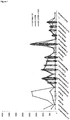
- the surface of the coffee is darker, there are fewer fines, the aroma impact is increased (see figure 1 ) and the flowability of the powder is reduced.
- the coffee powder has a flowability of wet sand.
- a method of preparing a beverage comprising contacting the treated soluble coffee powder with an aqueous medium.
- the aqueous medium is preferably water or milk and is preferably hot (80 to 95°C).
- the aroma compounds in the graphs labelled with a red oval show data where the samples containing Coloma oil with added water and also samples with just Coloma oil added have statistically higher concentrations than the control samples with no added Coloma oil. Showing that the levels of these compounds detected in the jar aroma increase due to the Coloma oil, but are not significantly higher when water is added.
- the aroma compounds in the graphs that are not labelled with an oval show data where there is not statistical difference between the control sample or the 2 test samples with increased Coloma oil.
- step A a soluble coffee is provided.
- step B coffee oil is provided.
- step C water (or a coffee extract) is provided.
- step D the soluble coffee and the coffee oil are mixed together.
- step E the soluble coffee (and coffee oil) and water are mixed together to provide a surface textured and aroma-improved soluble coffee F.
- the planetary mixer used for all examples was a Hobart planetary mixer using a whisk (wire whip) attachment.
- CM oil (addition rate: 1.14 - 3.33 g/min) in a planetary mixer. This material was tested for flowability, colour, and aroma. It was found that 0.5% CM oil - 4% CM oil levels were acceptable for beneficial texture, with a preference being 0.8% - 2.0% CM oil due to oil slicking on the surface at higher levels.
- Coffee extract could be a range of concentrations (0.5% - 50%) and must be pumpable to enable it to be sprayed onto the product.
- the amount of coffee extract added was based on the initial moisture content of the product, with a desired coffee extract addition level to create a ⁇ 1-3% increase in the final moisture of the product, such that the product remains less than 5% moisture (total).
- the amount of water added was based on the initial moisture content of the product, with a desired coffee extract addition level to create a ⁇ 1-3% increase in the final moisture of the product, such that the product remains less than 5% moisture (total).
- Aroma was not increased, which may be attributed to the fact that the water was locked into the oil emulsion and not able to dissolve any surface volatiles from the coffee or oil.
- SA5 spray dried coffee was blended with 0.5% and 4.0% CM oil (addition rate: 1.14-3.28 g/min) in a planetary mixer. Then water was added while the mixer was mixing (addition rate: ⁇ 1.38 g/min). The water was added to create the aroma boost. The amount of water added was based on the initial moisture content of the product, with a desired water addition level to create a ⁇ 1-3% increase in the final moisture of the product, and the product must remain less than 5% moisture (total). The colour was significantly darker (25-26La) compared to the starting product (35 La). The desired range for SA5 would be higher levels of oil (closer to 1.5-3%) as it is a larger starting particle and thus requires a higher volume of fluid for coating.
- Particle size was measuring using a Sympatec Laser diffraction system (trigger conditions at 1.5% optical concentration, R6 lens for 20 seconds). Starting particles of SD dark had d90 ⁇ 260um, and SA5 ⁇ 500um (d90).
- the US Pharmacopia offers several ways to measure powder flowability as bulk density and tapped density and angle of repose are recommended. These do not measure the intrinsic properties of the powders, but rather are used to compare the different powders in relation to their behaviour. Because of this, the methods are dependent on extrinsic properties, the method for measuring bulk and tapped density was repeated in triplicate or more. Compression index is believed to be an indirect measurement of bulk density, size, shape, surface area, moisture content, and cohesiveness as these all indirectly affect how well the material is able to pack into a container.
- a 250mL glass volumetric flask was used and 50 g (+/- 0.1g) of powder was used.
- the powder was gently poured into the flask using a funnel and was lightly scraped on the top surface to smooth out any mound that may have been observed due to the pouring.
- the flask was secured and tapped for 70 taps using a jolting volumeter.
- Carr's Compression index is described in Carr, R.L. Evaluating Flow Properties of Solids. Chem. Eng. 1965, 72, 163-168 .
- Carr ′ s compression index 100 % ⁇ ⁇ _tapped ⁇ ⁇ _bulk / ⁇ _tapped (where p is density)
- the Hausner ratio ⁇ _tapped / ⁇ _bulk .
- the samples consistently showed an increase in the Carrs compression index when treated with an oil treatment and then a water treatment. The increases were greater than that observed for separate water or oil treatments.
- the flowability generally improved by a flow-character category compared to the untreated material.
- Standard Kenco soluble coffee (SA5) is categorized as an example of an excellent flowing powder. This is normally considered good as the powders need to be easily flowing into the jars (for packing) and easily out (for the consumer). The powder is small spheres created by spray drying and these easily flow past one another.
- Roast and ground coffee is considered to be less flowable than standard spray dried coffee (SA5), but still classified as a 'good' flowing powder. This is due to the inherent oil present, as well as the more irregular particle sizes and shapes created by grinding.
- the process of creating a wet-sand texture in the spray dry product makes the appearance look more 'alive'.
- the flowability is reduced so that it does not seem similar to current spray dry powder and rather, acts more like roast and ground (good flowability) or goes even a step further (fair flowability) to get further differentiation.
- the aroma is similar to roast and ground which is a key driver for the consumer to believe that the product is more 'alive' and closer to Roast and Ground.
- the colour is darker in all cases from the surface treatment process and this is desirable from the consumer.
- the key to the process is to use a surface coating of oil prior to a surface coating of a water-based second coat (water or coffee extract).
- the oil is essential to creating the texture which does not rapidly dissolve when the water is added.
- the water is essential for creating the desirable aroma. When the oil is emulsified into the water (80/20 blend), this gives a desirable texture with a 1-step process, but does not provide a free water for a desirable aroma (no aroma
Landscapes
- Chemical & Material Sciences (AREA)
- Life Sciences & Earth Sciences (AREA)
- Engineering & Computer Science (AREA)
- Food Science & Technology (AREA)
- Polymers & Plastics (AREA)
- Tea And Coffee (AREA)
- Oil, Petroleum & Natural Gas (AREA)
Priority Applications (1)
| Application Number | Priority Date | Filing Date | Title |
|---|---|---|---|
| PL13819069T PL2925154T3 (pl) | 2012-11-28 | 2013-11-15 | Obróbka rozpuszczalnej kawy |
Applications Claiming Priority (2)
| Application Number | Priority Date | Filing Date | Title |
|---|---|---|---|
| GB1221415.1A GB2508352B (en) | 2012-11-28 | 2012-11-28 | Treating soluble coffee |
| PCT/IB2013/002817 WO2014083422A2 (en) | 2012-11-28 | 2013-11-15 | Treating soluble coffee |
Publications (2)
| Publication Number | Publication Date |
|---|---|
| EP2925154A2 EP2925154A2 (en) | 2015-10-07 |
| EP2925154B1 true EP2925154B1 (en) | 2017-05-03 |
Family
ID=47560825
Family Applications (1)
| Application Number | Title | Priority Date | Filing Date |
|---|---|---|---|
| EP13819069.9A Active EP2925154B1 (en) | 2012-11-28 | 2013-11-15 | Treating soluble coffee |
Country Status (17)
| Country | Link |
|---|---|
| US (1) | US10609936B2 (pl) |
| EP (1) | EP2925154B1 (pl) |
| JP (1) | JP6195626B2 (pl) |
| KR (1) | KR101811929B1 (pl) |
| CN (1) | CN104797140B (pl) |
| AR (1) | AR093632A1 (pl) |
| AU (1) | AU2013350899B2 (pl) |
| BR (1) | BR112015012081B1 (pl) |
| CA (1) | CA2888761C (pl) |
| ES (1) | ES2628376T3 (pl) |
| GB (1) | GB2508352B (pl) |
| MX (1) | MX368622B (pl) |
| NZ (1) | NZ706983A (pl) |
| PL (1) | PL2925154T3 (pl) |
| RU (1) | RU2636347C2 (pl) |
| UA (1) | UA112132C2 (pl) |
| WO (1) | WO2014083422A2 (pl) |
Families Citing this family (8)
| Publication number | Priority date | Publication date | Assignee | Title |
|---|---|---|---|---|
| EP3071044A1 (en) * | 2013-11-19 | 2016-09-28 | Koninklijke Douwe Egberts B.V. | Coffee product |
| KR101684053B1 (ko) * | 2015-01-20 | 2016-12-08 | 씨제이헬스케어 주식회사 | 벤즈이미다졸 유도체의 신규 결정형 및 이의 제조방법 |
| EP4413871A3 (de) | 2015-02-17 | 2024-10-30 | Symrise AG | Verfahren zur herstellung von aromatisierten nahrungsmittelpartikeln |
| MX2017016833A (es) | 2015-06-23 | 2018-04-30 | Douwe Egberts Bv | Cafe soluble que retiene el aroma. |
| NL2015070B1 (en) | 2015-07-01 | 2017-01-30 | Douwe Egberts Bv | A froth wand. |
| GB2580323B (en) | 2018-12-28 | 2021-06-16 | Douwe Egberts Bv | Coffee extraction process |
| GB2597905B (en) | 2020-06-25 | 2022-12-14 | Douwe Egberts Bv | Spray-dried coffee product and production method |
| CN115769848A (zh) * | 2022-12-09 | 2023-03-10 | 苏州金猫咖啡有限公司 | 一种速溶咖啡及其生产方法和生产装置 |
Family Cites Families (24)
| Publication number | Priority date | Publication date | Assignee | Title |
|---|---|---|---|---|
| CA837021A (en) * | 1970-03-17 | General Foods Corporation | Process for aromatization of coffee | |
| US2998316A (en) | 1958-12-09 | 1961-08-29 | Standard Brands Inc | Process of improving the flow characteristics of an instant coffee composition |
| US3493388A (en) | 1966-11-30 | 1970-02-03 | Procter & Gamble | Process for preparing instant coffee |
| SE390371B (sv) * | 1971-12-20 | 1976-12-20 | D E J Int Research | Sett att aromatisera vattenlosliga pulver |
| US4606921A (en) | 1980-06-03 | 1986-08-19 | Nestec S. A. | Process for improving the flavor and aroma of instant coffee |
| EP0047169A3 (en) * | 1980-09-02 | 1983-01-12 | THE PROCTER & GAMBLE COMPANY | Single-serving packets of aromatized instant coffee and method of manufacture thereof |
| US4594256A (en) | 1985-03-11 | 1986-06-10 | General Foods Corporation | Product and process for producing an agglomerated instant coffee having a roast ground appearance |
| US5079026A (en) * | 1988-08-12 | 1992-01-07 | Kraft General Foods, Inc. | Oil or colloidal containing gasified coffee product and process |
| CH681680A5 (pl) | 1991-01-17 | 1993-05-14 | Nestle Sa | |
| CA2090169A1 (en) * | 1992-03-12 | 1993-09-13 | Jerome F. Trumbetas | Colloidal roasted coffee as aromatizer |
| EP0806903B1 (en) | 1995-02-01 | 2000-10-11 | Societe Des Produits Nestle S.A. | Encapsulated sensory agents |
| BR9707419A (pt) | 1996-02-12 | 1999-06-01 | Nestle Sa | Aromatização de bebidas solúveis |
| US5741538A (en) * | 1996-02-22 | 1998-04-21 | The Procter & Gamble Company | Low density soluble coffee products having increased particle strength and rapid hot water solubility |
| US5750178A (en) * | 1996-06-18 | 1998-05-12 | Nestec S.A. | Method of making coffee particles containing aroma |
| KR100504524B1 (ko) * | 1997-01-29 | 2005-08-03 | 소시에떼 데 프로듀이 네슬레 소시에떼아노님 | 음료 분말을 향기롭게 하는 방법 |
| US6544576B2 (en) * | 2000-12-21 | 2003-04-08 | Kraft Foods Holdings, Inc. | Coffee beverage preparation aroma system |
| ES2355365T3 (es) | 2003-10-09 | 2011-03-25 | KRAFT FOODS R & D, INC. ZWEIGNIEDERLASSUNG MÜNCHEN | Partículas de aromatización que contienen constituyentes de aroma de café. |
| PL1600461T3 (pl) * | 2004-05-24 | 2013-05-31 | Nestec Sa | Arabinogalaktanowy izolat z zielonej i prażonej kawy do żywności i zastosowań w dostarczaniu, oraz sposób jego wytwarzania |
| US20060035000A1 (en) | 2004-08-10 | 2006-02-16 | Bunke Paul R | Soluble coffee product having improved flavor and aroma |
| PL2194795T5 (pl) * | 2007-09-28 | 2022-08-16 | Société des Produits Nestlé S.A. | Proszek napoju typu instant |
| KR101551508B1 (ko) * | 2007-11-08 | 2015-09-08 | 네스텍 소시에테아노님 | 인스턴트 음료 제품 |
| EP2141139A1 (en) | 2008-07-03 | 2010-01-06 | L'AIR LIQUIDE, Société Anonyme pour l'Etude et l'Exploitation des Procédés Georges Claude | Ceramic foams with gradients of composition in heterogeneous catalytic |
| US8043645B2 (en) | 2008-07-09 | 2011-10-25 | Starbucks Corporation | Method of making beverages with enhanced flavors and aromas |
| HUE025469T2 (en) | 2010-03-03 | 2016-04-28 | Orgen Gida Sanayi Ticaret Anonim Sirketi | Instant coffee preparation and preparation containing ground coffee |
-
2012
- 2012-11-28 GB GB1221415.1A patent/GB2508352B/en active Active
-
2013
- 2013-11-15 BR BR112015012081-4A patent/BR112015012081B1/pt active IP Right Grant
- 2013-11-15 CN CN201380059608.5A patent/CN104797140B/zh active Active
- 2013-11-15 RU RU2015113322A patent/RU2636347C2/ru active
- 2013-11-15 ES ES13819069.9T patent/ES2628376T3/es active Active
- 2013-11-15 EP EP13819069.9A patent/EP2925154B1/en active Active
- 2013-11-15 JP JP2015541253A patent/JP6195626B2/ja active Active
- 2013-11-15 PL PL13819069T patent/PL2925154T3/pl unknown
- 2013-11-15 WO PCT/IB2013/002817 patent/WO2014083422A2/en not_active Ceased
- 2013-11-15 AU AU2013350899A patent/AU2013350899B2/en active Active
- 2013-11-15 UA UAA201503067A patent/UA112132C2/uk unknown
- 2013-11-15 CA CA2888761A patent/CA2888761C/en active Active
- 2013-11-15 US US14/646,658 patent/US10609936B2/en not_active Expired - Fee Related
- 2013-11-15 KR KR1020157013389A patent/KR101811929B1/ko active Active
- 2013-11-15 NZ NZ706983A patent/NZ706983A/en unknown
- 2013-11-15 MX MX2015006388A patent/MX368622B/es active IP Right Grant
- 2013-11-27 AR ARP130104373A patent/AR093632A1/es active IP Right Grant
Also Published As
| Publication number | Publication date |
|---|---|
| KR20150072452A (ko) | 2015-06-29 |
| US20150296829A1 (en) | 2015-10-22 |
| ES2628376T3 (es) | 2017-08-02 |
| GB2508352A (en) | 2014-06-04 |
| GB201221415D0 (en) | 2013-01-09 |
| WO2014083422A2 (en) | 2014-06-05 |
| AU2013350899B2 (en) | 2016-04-21 |
| CA2888761A1 (en) | 2014-06-05 |
| AU2013350899A1 (en) | 2015-05-07 |
| US10609936B2 (en) | 2020-04-07 |
| BR112015012081B1 (pt) | 2020-12-01 |
| PL2925154T3 (pl) | 2017-10-31 |
| MX368622B (es) | 2019-10-08 |
| CA2888761C (en) | 2017-07-18 |
| WO2014083422A3 (en) | 2014-09-12 |
| RU2015113322A (ru) | 2017-01-11 |
| MX2015006388A (es) | 2015-07-21 |
| BR112015012081A2 (pt) | 2017-07-11 |
| UA112132C2 (uk) | 2016-07-25 |
| NZ706983A (en) | 2016-05-27 |
| CN104797140A (zh) | 2015-07-22 |
| JP2015533513A (ja) | 2015-11-26 |
| RU2636347C2 (ru) | 2017-11-22 |
| KR101811929B1 (ko) | 2018-01-25 |
| EP2925154A2 (en) | 2015-10-07 |
| CN104797140B (zh) | 2019-09-06 |
| GB2508352B (en) | 2017-08-16 |
| JP6195626B2 (ja) | 2017-09-13 |
| AR093632A1 (es) | 2015-06-17 |
Similar Documents
| Publication | Publication Date | Title |
|---|---|---|
| EP2925154B1 (en) | Treating soluble coffee | |
| RU2644227C2 (ru) | Растворимый кофе | |
| CA2697179C (en) | Coffee composition | |
| KR20190125514A (ko) | 저장 안정성을 갖는 우려낸 음료 농축물 및 그의 제조 방법 | |
| JP2022183261A (ja) | コーヒー抽出プロセス及びコーヒー製品 | |
| AU2024202979A1 (en) | Spray-dried coffee product and production method | |
| MX2007001484A (es) | Producto de cafe soluble que tiene mejor sabor y aroma. | |
| WO2017060215A1 (en) | Process for micronizing coffee particles | |
| WO2023198841A1 (en) | Coffee beverage | |
| CN119403452A (zh) | 咖啡饮料 | |
| GB2607790A (en) | Spray-dried coffee product and production method |
Legal Events
| Date | Code | Title | Description |
|---|---|---|---|
| PUAI | Public reference made under article 153(3) epc to a published international application that has entered the european phase |
Free format text: ORIGINAL CODE: 0009012 |
|
| 17P | Request for examination filed |
Effective date: 20150428 |
|
| AK | Designated contracting states |
Kind code of ref document: A2 Designated state(s): AL AT BE BG CH CY CZ DE DK EE ES FI FR GB GR HR HU IE IS IT LI LT LU LV MC MK MT NL NO PL PT RO RS SE SI SK SM TR |
|
| AX | Request for extension of the european patent |
Extension state: BA ME |
|
| DAX | Request for extension of the european patent (deleted) | ||
| RAP1 | Party data changed (applicant data changed or rights of an application transferred) |
Owner name: KONINKLIJKE DOUWE EGBERTS B.V. |
|
| 17Q | First examination report despatched |
Effective date: 20160629 |
|
| GRAP | Despatch of communication of intention to grant a patent |
Free format text: ORIGINAL CODE: EPIDOSNIGR1 |
|
| INTG | Intention to grant announced |
Effective date: 20161123 |
|
| GRAS | Grant fee paid |
Free format text: ORIGINAL CODE: EPIDOSNIGR3 |
|
| GRAA | (expected) grant |
Free format text: ORIGINAL CODE: 0009210 |
|
| AK | Designated contracting states |
Kind code of ref document: B1 Designated state(s): AL AT BE BG CH CY CZ DE DK EE ES FI FR GB GR HR HU IE IS IT LI LT LU LV MC MK MT NL NO PL PT RO RS SE SI SK SM TR |
|
| REG | Reference to a national code |
Ref country code: GB Ref legal event code: FG4D |
|
| REG | Reference to a national code |
Ref country code: AT Ref legal event code: REF Ref document number: 888949 Country of ref document: AT Kind code of ref document: T Effective date: 20170515 Ref country code: CH Ref legal event code: EP |
|
| REG | Reference to a national code |
Ref country code: IE Ref legal event code: FG4D |
|
| REG | Reference to a national code |
Ref country code: DE Ref legal event code: R096 Ref document number: 602013020768 Country of ref document: DE |
|
| REG | Reference to a national code |
Ref country code: CH Ref legal event code: NV Representative=s name: KIRKER AND CIE S.A., CH |
|
| REG | Reference to a national code |
Ref country code: NL Ref legal event code: FP |
|
| REG | Reference to a national code |
Ref country code: ES Ref legal event code: FG2A Ref document number: 2628376 Country of ref document: ES Kind code of ref document: T3 Effective date: 20170802 |
|
| REG | Reference to a national code |
Ref country code: AT Ref legal event code: MK05 Ref document number: 888949 Country of ref document: AT Kind code of ref document: T Effective date: 20170503 |
|
| REG | Reference to a national code |
Ref country code: LT Ref legal event code: MG4D |
|
| PG25 | Lapsed in a contracting state [announced via postgrant information from national office to epo] |
Ref country code: GR Free format text: LAPSE BECAUSE OF FAILURE TO SUBMIT A TRANSLATION OF THE DESCRIPTION OR TO PAY THE FEE WITHIN THE PRESCRIBED TIME-LIMIT Effective date: 20170804 Ref country code: HR Free format text: LAPSE BECAUSE OF FAILURE TO SUBMIT A TRANSLATION OF THE DESCRIPTION OR TO PAY THE FEE WITHIN THE PRESCRIBED TIME-LIMIT Effective date: 20170503 Ref country code: FI Free format text: LAPSE BECAUSE OF FAILURE TO SUBMIT A TRANSLATION OF THE DESCRIPTION OR TO PAY THE FEE WITHIN THE PRESCRIBED TIME-LIMIT Effective date: 20170503 Ref country code: LT Free format text: LAPSE BECAUSE OF FAILURE TO SUBMIT A TRANSLATION OF THE DESCRIPTION OR TO PAY THE FEE WITHIN THE PRESCRIBED TIME-LIMIT Effective date: 20170503 Ref country code: AT Free format text: LAPSE BECAUSE OF FAILURE TO SUBMIT A TRANSLATION OF THE DESCRIPTION OR TO PAY THE FEE WITHIN THE PRESCRIBED TIME-LIMIT Effective date: 20170503 Ref country code: NO Free format text: LAPSE BECAUSE OF FAILURE TO SUBMIT A TRANSLATION OF THE DESCRIPTION OR TO PAY THE FEE WITHIN THE PRESCRIBED TIME-LIMIT Effective date: 20170803 |
|
| REG | Reference to a national code |
Ref country code: FR Ref legal event code: PLFP Year of fee payment: 5 |
|
| PG25 | Lapsed in a contracting state [announced via postgrant information from national office to epo] |
Ref country code: RS Free format text: LAPSE BECAUSE OF FAILURE TO SUBMIT A TRANSLATION OF THE DESCRIPTION OR TO PAY THE FEE WITHIN THE PRESCRIBED TIME-LIMIT Effective date: 20170503 Ref country code: IS Free format text: LAPSE BECAUSE OF FAILURE TO SUBMIT A TRANSLATION OF THE DESCRIPTION OR TO PAY THE FEE WITHIN THE PRESCRIBED TIME-LIMIT Effective date: 20170903 Ref country code: LV Free format text: LAPSE BECAUSE OF FAILURE TO SUBMIT A TRANSLATION OF THE DESCRIPTION OR TO PAY THE FEE WITHIN THE PRESCRIBED TIME-LIMIT Effective date: 20170503 Ref country code: SE Free format text: LAPSE BECAUSE OF FAILURE TO SUBMIT A TRANSLATION OF THE DESCRIPTION OR TO PAY THE FEE WITHIN THE PRESCRIBED TIME-LIMIT Effective date: 20170503 Ref country code: BG Free format text: LAPSE BECAUSE OF FAILURE TO SUBMIT A TRANSLATION OF THE DESCRIPTION OR TO PAY THE FEE WITHIN THE PRESCRIBED TIME-LIMIT Effective date: 20170803 |
|
| PG25 | Lapsed in a contracting state [announced via postgrant information from national office to epo] |
Ref country code: DK Free format text: LAPSE BECAUSE OF FAILURE TO SUBMIT A TRANSLATION OF THE DESCRIPTION OR TO PAY THE FEE WITHIN THE PRESCRIBED TIME-LIMIT Effective date: 20170503 Ref country code: EE Free format text: LAPSE BECAUSE OF FAILURE TO SUBMIT A TRANSLATION OF THE DESCRIPTION OR TO PAY THE FEE WITHIN THE PRESCRIBED TIME-LIMIT Effective date: 20170503 Ref country code: SK Free format text: LAPSE BECAUSE OF FAILURE TO SUBMIT A TRANSLATION OF THE DESCRIPTION OR TO PAY THE FEE WITHIN THE PRESCRIBED TIME-LIMIT Effective date: 20170503 Ref country code: CZ Free format text: LAPSE BECAUSE OF FAILURE TO SUBMIT A TRANSLATION OF THE DESCRIPTION OR TO PAY THE FEE WITHIN THE PRESCRIBED TIME-LIMIT Effective date: 20170503 Ref country code: RO Free format text: LAPSE BECAUSE OF FAILURE TO SUBMIT A TRANSLATION OF THE DESCRIPTION OR TO PAY THE FEE WITHIN THE PRESCRIBED TIME-LIMIT Effective date: 20170503 |
|
| REG | Reference to a national code |
Ref country code: DE Ref legal event code: R097 Ref document number: 602013020768 Country of ref document: DE |
|
| PG25 | Lapsed in a contracting state [announced via postgrant information from national office to epo] |
Ref country code: IT Free format text: LAPSE BECAUSE OF FAILURE TO SUBMIT A TRANSLATION OF THE DESCRIPTION OR TO PAY THE FEE WITHIN THE PRESCRIBED TIME-LIMIT Effective date: 20170503 Ref country code: SM Free format text: LAPSE BECAUSE OF FAILURE TO SUBMIT A TRANSLATION OF THE DESCRIPTION OR TO PAY THE FEE WITHIN THE PRESCRIBED TIME-LIMIT Effective date: 20170503 |
|
| PLBE | No opposition filed within time limit |
Free format text: ORIGINAL CODE: 0009261 |
|
| STAA | Information on the status of an ep patent application or granted ep patent |
Free format text: STATUS: NO OPPOSITION FILED WITHIN TIME LIMIT |
|
| 26N | No opposition filed |
Effective date: 20180206 |
|
| PG25 | Lapsed in a contracting state [announced via postgrant information from national office to epo] |
Ref country code: SI Free format text: LAPSE BECAUSE OF FAILURE TO SUBMIT A TRANSLATION OF THE DESCRIPTION OR TO PAY THE FEE WITHIN THE PRESCRIBED TIME-LIMIT Effective date: 20170503 |
|
| PG25 | Lapsed in a contracting state [announced via postgrant information from national office to epo] |
Ref country code: MC Free format text: LAPSE BECAUSE OF FAILURE TO SUBMIT A TRANSLATION OF THE DESCRIPTION OR TO PAY THE FEE WITHIN THE PRESCRIBED TIME-LIMIT Effective date: 20170503 |
|
| PG25 | Lapsed in a contracting state [announced via postgrant information from national office to epo] |
Ref country code: LU Free format text: LAPSE BECAUSE OF NON-PAYMENT OF DUE FEES Effective date: 20171115 |
|
| REG | Reference to a national code |
Ref country code: BE Ref legal event code: MM Effective date: 20171130 |
|
| REG | Reference to a national code |
Ref country code: IE Ref legal event code: MM4A |
|
| PG25 | Lapsed in a contracting state [announced via postgrant information from national office to epo] |
Ref country code: MT Free format text: LAPSE BECAUSE OF NON-PAYMENT OF DUE FEES Effective date: 20171115 |
|
| PG25 | Lapsed in a contracting state [announced via postgrant information from national office to epo] |
Ref country code: IE Free format text: LAPSE BECAUSE OF NON-PAYMENT OF DUE FEES Effective date: 20171115 |
|
| PG25 | Lapsed in a contracting state [announced via postgrant information from national office to epo] |
Ref country code: BE Free format text: LAPSE BECAUSE OF NON-PAYMENT OF DUE FEES Effective date: 20171130 |
|
| PG25 | Lapsed in a contracting state [announced via postgrant information from national office to epo] |
Ref country code: HU Free format text: LAPSE BECAUSE OF FAILURE TO SUBMIT A TRANSLATION OF THE DESCRIPTION OR TO PAY THE FEE WITHIN THE PRESCRIBED TIME-LIMIT; INVALID AB INITIO Effective date: 20131115 |
|
| PG25 | Lapsed in a contracting state [announced via postgrant information from national office to epo] |
Ref country code: CY Free format text: LAPSE BECAUSE OF FAILURE TO SUBMIT A TRANSLATION OF THE DESCRIPTION OR TO PAY THE FEE WITHIN THE PRESCRIBED TIME-LIMIT Effective date: 20170503 |
|
| PG25 | Lapsed in a contracting state [announced via postgrant information from national office to epo] |
Ref country code: MK Free format text: LAPSE BECAUSE OF FAILURE TO SUBMIT A TRANSLATION OF THE DESCRIPTION OR TO PAY THE FEE WITHIN THE PRESCRIBED TIME-LIMIT Effective date: 20170503 |
|
| PG25 | Lapsed in a contracting state [announced via postgrant information from national office to epo] |
Ref country code: TR Free format text: LAPSE BECAUSE OF FAILURE TO SUBMIT A TRANSLATION OF THE DESCRIPTION OR TO PAY THE FEE WITHIN THE PRESCRIBED TIME-LIMIT Effective date: 20170503 |
|
| PG25 | Lapsed in a contracting state [announced via postgrant information from national office to epo] |
Ref country code: PT Free format text: LAPSE BECAUSE OF FAILURE TO SUBMIT A TRANSLATION OF THE DESCRIPTION OR TO PAY THE FEE WITHIN THE PRESCRIBED TIME-LIMIT Effective date: 20170503 |
|
| PG25 | Lapsed in a contracting state [announced via postgrant information from national office to epo] |
Ref country code: AL Free format text: LAPSE BECAUSE OF FAILURE TO SUBMIT A TRANSLATION OF THE DESCRIPTION OR TO PAY THE FEE WITHIN THE PRESCRIBED TIME-LIMIT Effective date: 20170503 |
|
| P01 | Opt-out of the competence of the unified patent court (upc) registered |
Effective date: 20230505 |
|
| REG | Reference to a national code |
Ref country code: CH Ref legal event code: U11 Free format text: ST27 STATUS EVENT CODE: U-0-0-U10-U11 (AS PROVIDED BY THE NATIONAL OFFICE) Effective date: 20251201 |
|
| PGFP | Annual fee paid to national office [announced via postgrant information from national office to epo] |
Ref country code: NL Payment date: 20251126 Year of fee payment: 13 |
|
| PGFP | Annual fee paid to national office [announced via postgrant information from national office to epo] |
Ref country code: DE Payment date: 20251128 Year of fee payment: 13 |
|
| PGFP | Annual fee paid to national office [announced via postgrant information from national office to epo] |
Ref country code: GB Payment date: 20251127 Year of fee payment: 13 |
|
| PGFP | Annual fee paid to national office [announced via postgrant information from national office to epo] |
Ref country code: FR Payment date: 20251125 Year of fee payment: 13 |
|
| PGFP | Annual fee paid to national office [announced via postgrant information from national office to epo] |
Ref country code: CH Payment date: 20251201 Year of fee payment: 13 |
|
| PGFP | Annual fee paid to national office [announced via postgrant information from national office to epo] |
Ref country code: PL Payment date: 20251024 Year of fee payment: 13 |
|
| PGFP | Annual fee paid to national office [announced via postgrant information from national office to epo] |
Ref country code: ES Payment date: 20251201 Year of fee payment: 13 |